Summary of latest statistics
Published 26 November 2026

© Crown copyright 2026
This publication is licensed under the terms of the Open Government Licence v3.0 except where otherwise stated. To view this licence, visit nationalarchives.gov.uk/doc/open-government-licence/version/3 or write to the Information Policy Team, The National Archives, Kew, London TW9 4DU, or email: psi@nationalarchives.gov.uk.
Where we have identified any third party copyright information you will need to obtain permission from the copyright holders concerned.
This publication is available at https://www.gov.uk/government/statistics/immigration-system-statistics-year-ending-september-2026/summary-of-latest-statistics
Back to ‘Immigration system statistics, year ending September 2026’ contents page
This Accredited Official Statistics publication provides comprehensive statistics on the operation of the UK immigration system.
The UK immigration system undertakes a wide range of activities including issuing visas to those outside of the UK, changes to visas, and grants of settlement and citizenship to those already in the UK. It also provides safe and legal (humanitarian) routes of entry, as well as granting asylum and carrying out enforcement action.
The “latest year” relates to the year ending September 2026 unless otherwise stated. The “year ending” period includes the 12 months up to and including the YE month. For example, YE September 2026 includes the 12 months between 1 October 2025 and 30 September 2026.
Additional information is provided in the user guide.
1. The majority of foreign nationals enter the UK on legal routes, predominantly on Visit visas and electronic travel authorisations
- in the YE September 2026 there were 137.1 million arrivals to the UK, the majority (58%) were British nationals
- most foreign nationals come to the UK for short-term visits; there were 2.2 million Visitor visas and 22.6 million electronic travel authorisations (ETAs) granted in the YE September 2026, which allow eligible individuals to visit the UK for short periods
- people also come to the UK for other reasons, such as work, study, join family members and for humanitarian reasons, and usually require an entry clearance visa – there were 692,000 visas issued for a non-visit reason in the latest year
Figure 1: Total numbers of visas granted in key categories and people detected entering via illegal routes, in the YE September 2026
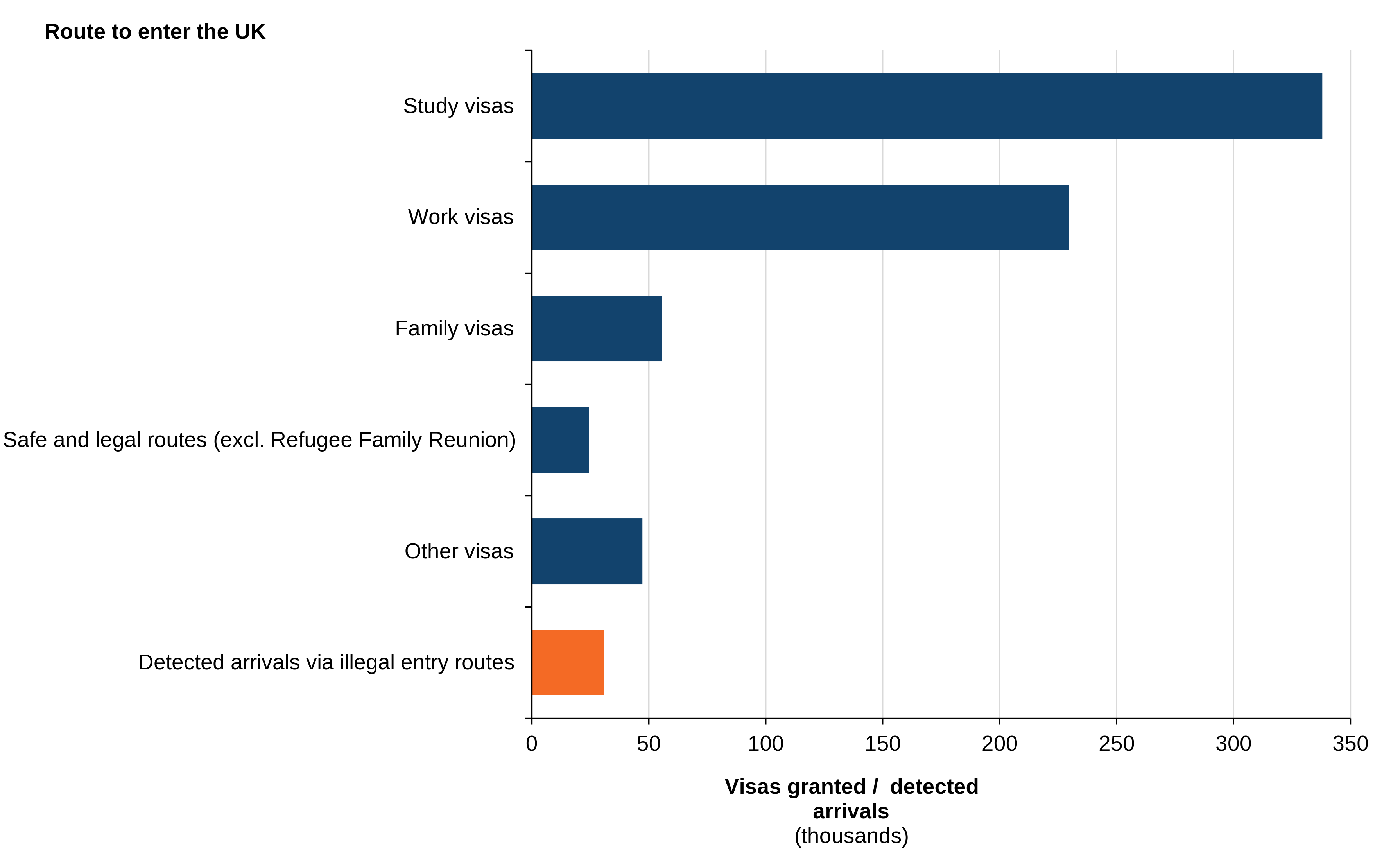
Source: Entry clearance visa applications and outcomes - Vis_D02; Safe and legal (humanitarian) routes summary tables - Hum_01; Illegal entry routes to the UK - IER_D01
For further details see ‘How many people come to the UK each year?’.
2. The number of work, study and family visas issued have fallen over recent years
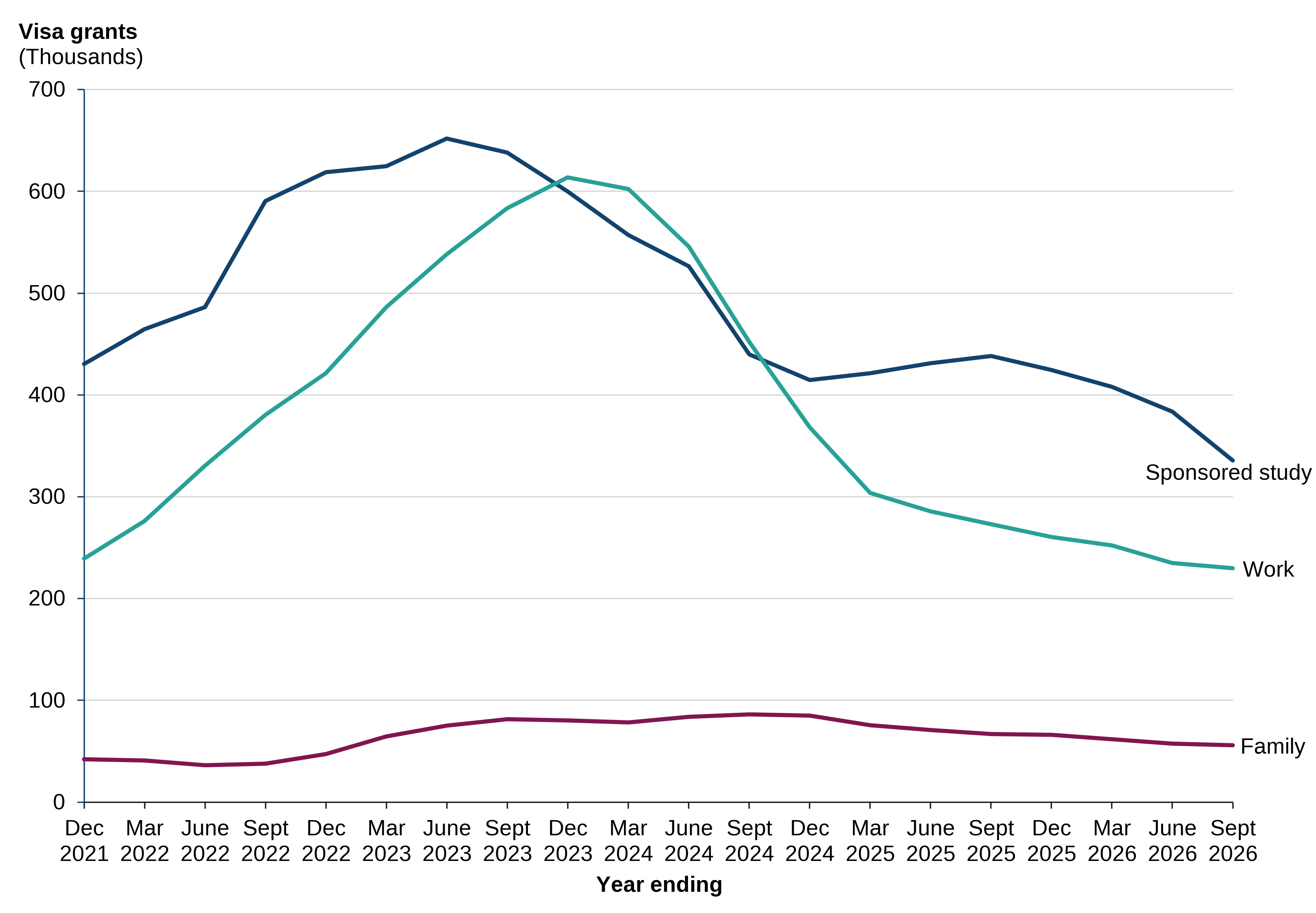
- there were 230,000 work visas granted (including dependants) in the YE September 2026, 16% fewer than the previous year and 63% fewer than in the YE December 2023, when the number of work visas issued peaked; this fall was due to decreases in Health and Care Worker visas (primarily care workers) – down 44% to 31,000 – and Skilled Worker visas issued - down 27% to 57,000 - over the latest year
- in the YE September 2026, there were 336,000 sponsored study visas grants, 23% less than the previous year, and 49% fewer than the peak in YE June 2023; the decrease in the latest year is predominantly due to visas issued to main applicants falling (down 96,000 to 322,000; 23% fewer the previous year)
- there were 56,000 family visas granted in the YE September 2026, down 17% from the previous year; this was mainly due to a 55% fall in Refugee Family Reunion grants following the temporary suspension of new applications in September 2025. Partner visa grants increased by 4%
Figure 2: Work, Sponsored study, and Family visas issued (main applicants and dependants), between YE December 2021 and YE September 2026
Source: Entry clearance visa applications and outcomes - Vis_D02
For further details see ‘Why do people come to the UK - Work?’, ‘Why do people come to the UK - Study?’ and ‘Why do people come to the UK - Family?’.
3. The number of extensions of stay granted has remained high despite falling in the latest year
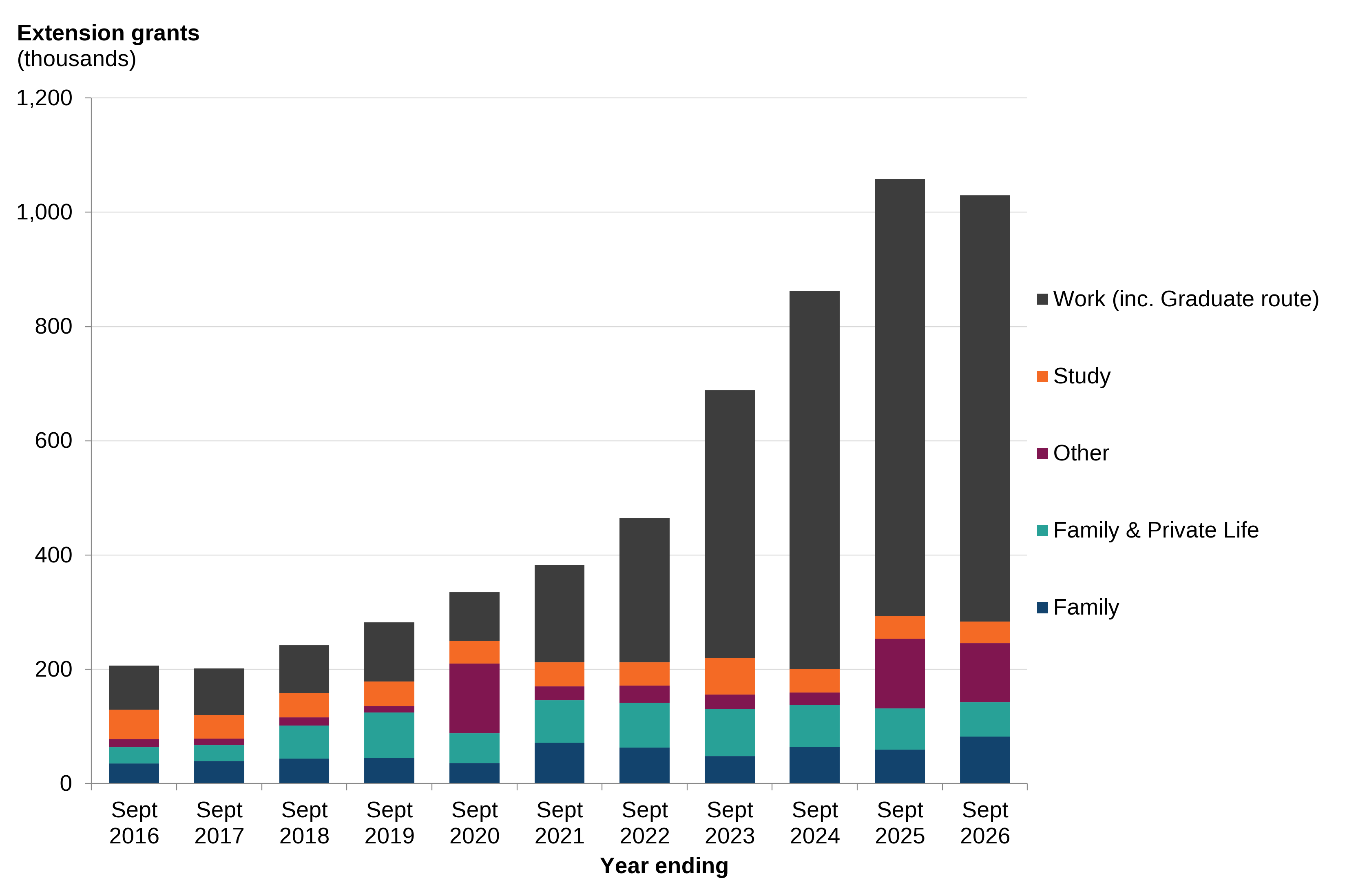
- there were 1.03 million extensions of stay granted in the YE September 2026, remaining one of the highest annual totals on record despite a 3% fall compared with the YE September 2025; this reflects the large increase in entry clearance grants in recent years, particularly work and study visas, which has subsequently led to higher work extension volumes
- extensions for Health and Care Workers increased by 15% to 342,000, while those for Skilled Workers rose by 8% to 198,000
- grants of extension onto the Graduate route fell by 31% to 163,000 in the YE September 2026; the fall should be considered in the context of declining Student visa grants to both main applicants and dependants in recent years, alongside changes to Student dependant eligibility introduced in January 2024
Figure 3: Extension of stay grants in the UK, by category of leave (main applicants and dependants), between YE September 2016 and YE September 2026
Source: Grants and refusals of extensions of stay in the UK - Exe_D01
For further details see ‘Why do people come to the UK - Work?’, ‘Why do people come to the UK - Study?’, ‘Why do people come to the UK - Family?’ and ‘How many people come to the UK via safe and legal (humanitarian) routes?’.
4. Both out-of-country and in-country grants on safe and legal routes have decreased in the latest year
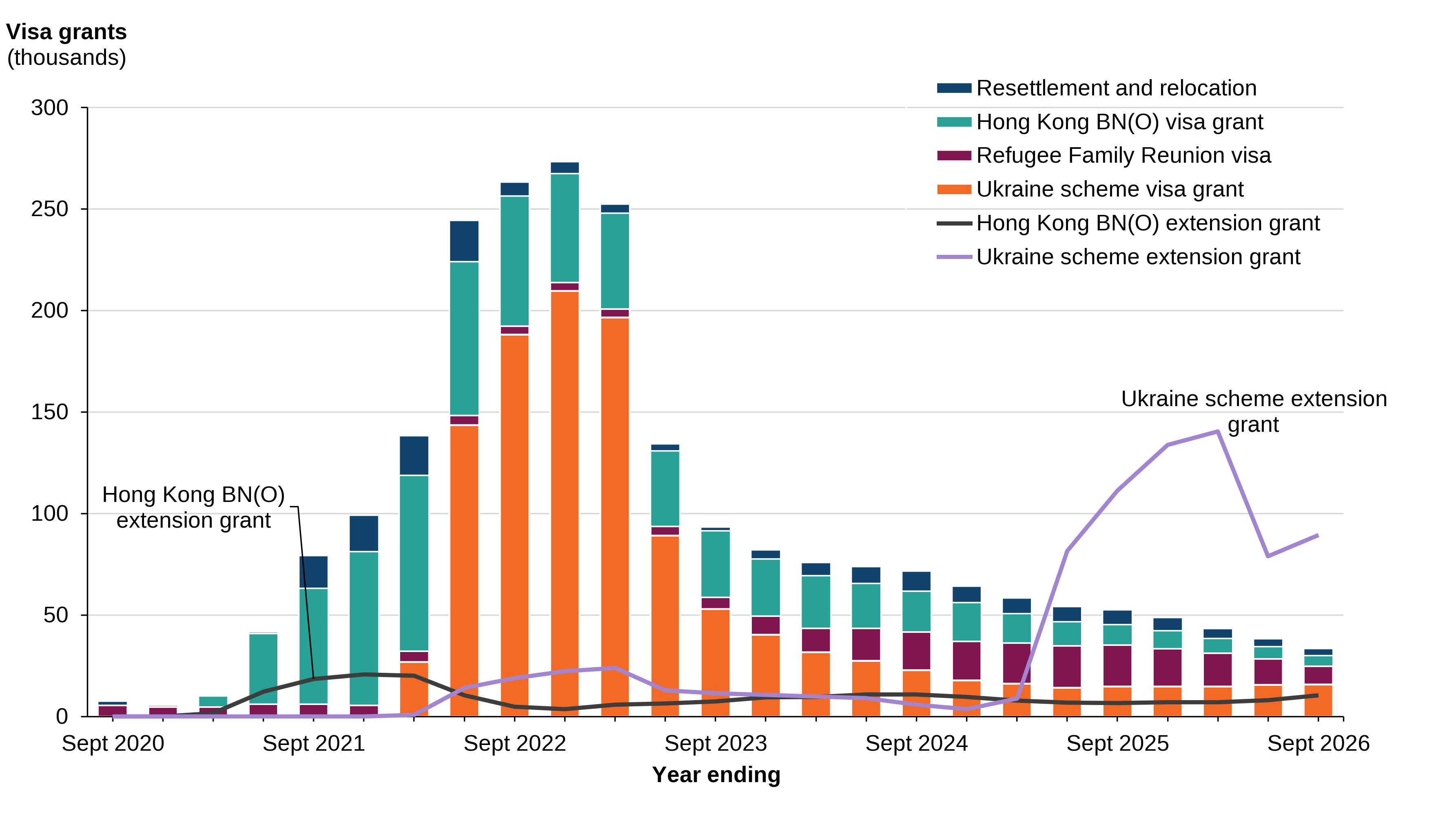
- there were 133,000 grants of leave on safe and legal (humanitarian) routes, allowing people to come to or remain in the UK, in the YE September 2026; this was 22% lower than in the YE September 2025, largely due to fewer in-country Ukraine Permission Extension grants, fewer grants of Refugee Family Reunion visas and out-of-country British National (Overseas) visas, as well as fewer arrivals under the Afghan Resettlement Programme
- grants to those already in the country accounted for three-quarters of the total in the YE September 2026 (99,000), with most (89%) being on the Ukraine Permission Extension Scheme
- there were 34,000 out-of-country grants, predominantly on Ukraine (47%) and Refugee Family Reunion (27%) routes; out-of-country grants were 36% fewer than the previous year
Figure 4: Grants of leave on safe and legal (humanitarian) routes to the UK (main applicants and dependants), by route, between YE September 2020 and YE September 2026
Source: Safe and legal (humanitarian) routes summary tables – Hum_01
For further details see ‘How many people come to the UK via safe and legal (humanitarian) routes?’.
5. The number of disruptions to Organised Immigration Crime (OIC) continued to increase in the latest year
- 3,900 disruptions to OIC (offences which have the effect of exploiting vulnerable migrants by smuggling them across borders for profit) were recorded in the YE September 2026, 32% higher than the previous year, continuing the recent upward trend
- this included almost 100 major disruptions in the YE September 2026, similar to the previous year
- moderate and minor disruptions increased by 54% and 30% respectively in the latest year
For further details see ‘What is being done to stop organised immigration crime?’.
6. The number of people detected arriving to the UK via illegal entry routes has decreased in the latest year
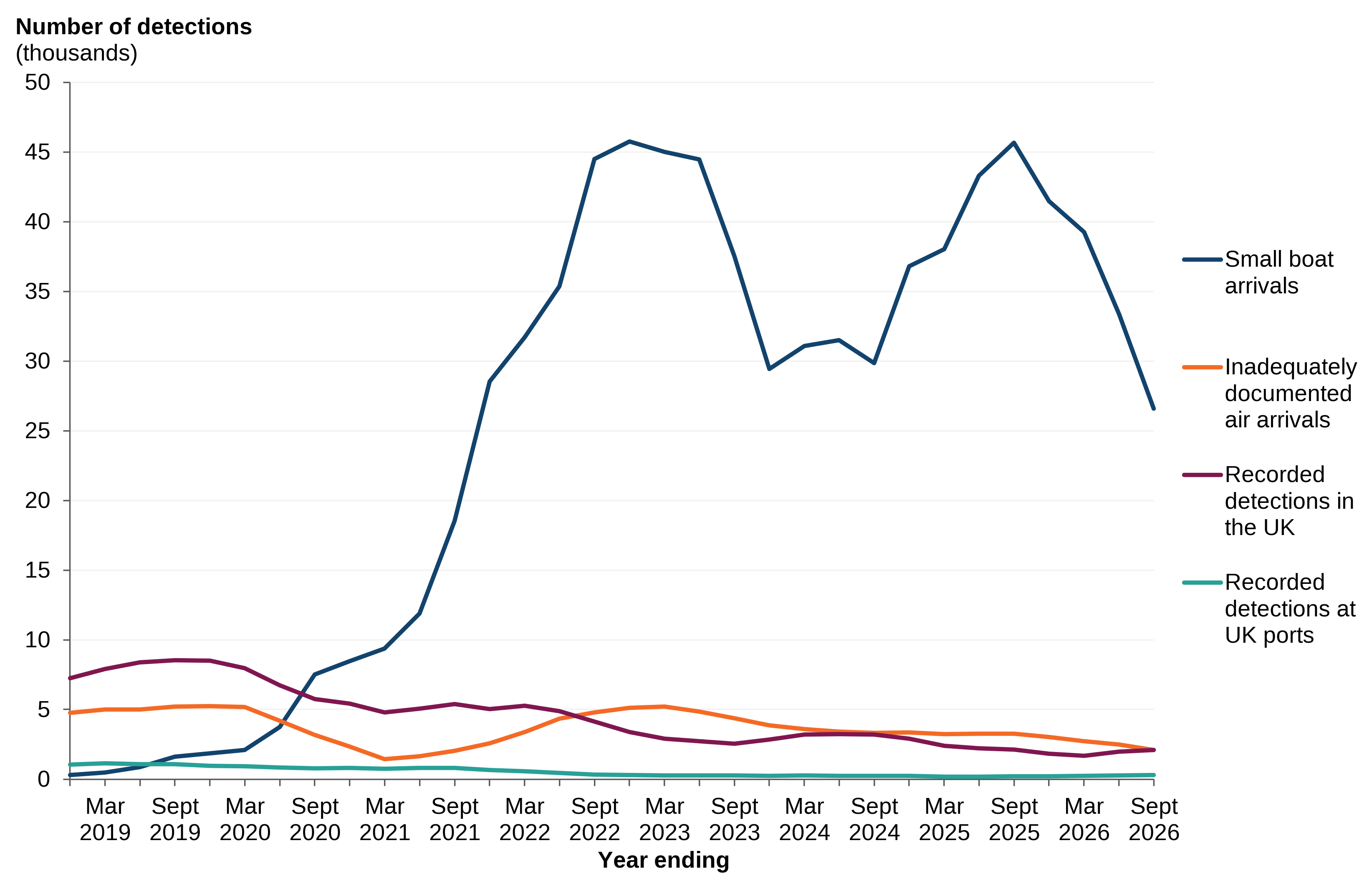
- there were 31,000 people detected arriving via illegal entry routes in the YE September 2026 – people arriving via small boat accounted for 27,000 (86%) of these
- the number of people arriving via small boat was 42% fewer than the previous year; however, the average number of people per boat has increased year-on-year, reaching 67 people per boat in the YE September 2026
- the top 5 most common nationalities (Eritrean, Sudanese, Somali, Afghan and Iranian) arriving via small boat in the YE September 2026 accounted for more than two-thirds of all small boat arrivals in that period
Figure 5: People detected entering the UK by illegal method of entry, YE December 2018 to YE September 2026
Source: Illegal entry routes to the UK detailed dataset, year ending September 2026 - IER_D01
For further details see ‘How many people come to the UK via illegal entry routes?’.
7. The number of people claiming asylum has fallen in the latest year, mostly due to fewer claims from people arriving via illegal entry routes
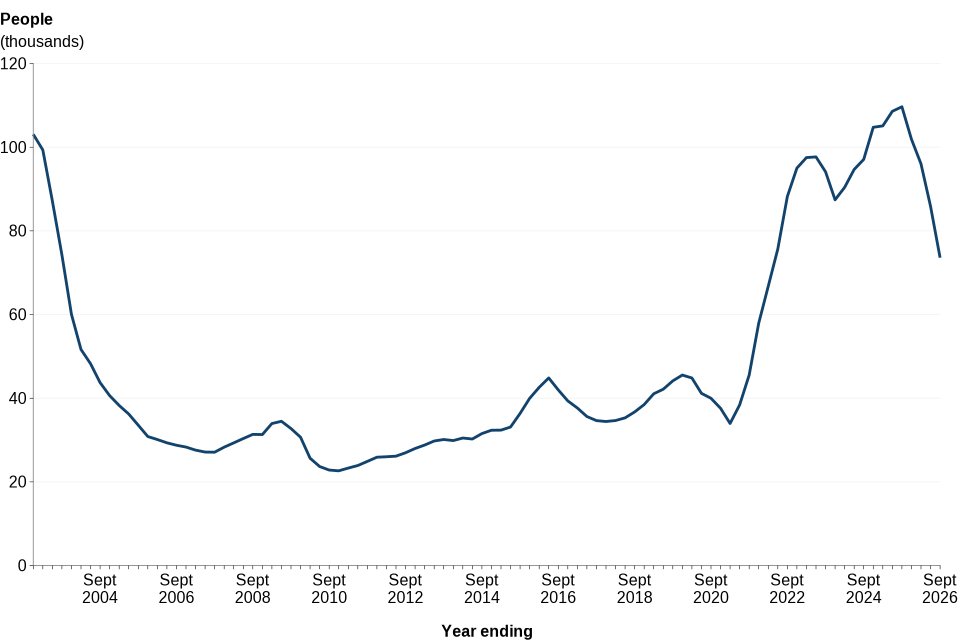
- in the YE September 2026, 74,000 people claimed asylum in the UK, a third (33%) fewer than in the previous year; however, the number of claims remain above levels seen between 2004 and 2021
- the number of asylum claims from people arriving on illegal entry routes fell by 23,000 (39%) in the latest year and the number of asylum claims by people who held a visa or other leave prior to claiming fell by 8,800 (22%)
- however, illegal entry routes (the majority of which are small boat arrivals) remain the most common type of route for people claiming asylum in the UK, accounting for just under half (49%) of asylum seekers
Figure 6: Number of people (main applicants and dependants) claiming asylum in the UK, YE December 2002 to YE September 2026
Source: Asylum claims and initial decisions - Asy_D01
For further details see ‘How many people claim asylum in the UK?’.
8. The number of people granted asylum fell in the latest year because there were both fewer initial decisions and a lower grant rate
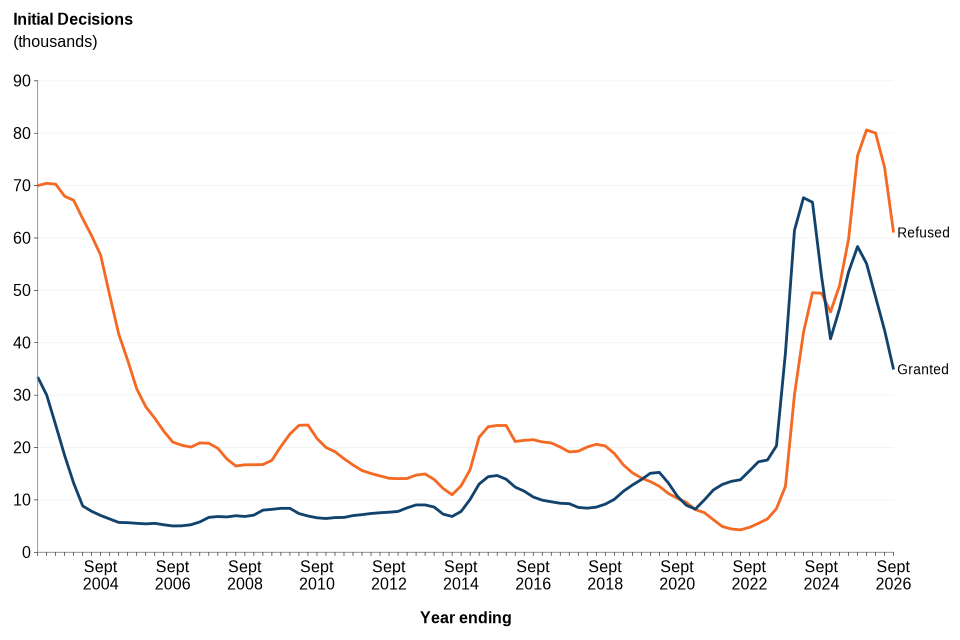
- in the YE September 2026, 35,000 people were granted refugee protection or other leave at initial decision, 40% less than in the previous year and 48% below the peak of 68,000 in the YE March 2024
- there were 96,000 initial decisions in the YE September 2026, 28% fewer than the previous year; this fall is partly explained by a reduction in the overall caseload, with fewer new claims and fewer people awaiting an initial decision
- the grant rate fell to 38% in the latest year, the lowest level since 2018 and down from a peak of 77% in 2022
Figure 7: Number of people (main applicants and dependants) granted or refused protection following an asylum claim in the UK, YE December 2002 to YE September 2026
Source: Asylum claims and initial decisions - Asy_D02
For further details see ‘How many people are granted asylum in the UK?’.
9. The asylum initial decision caseload decreased in the latest year while the appeals caseload has continued to rise
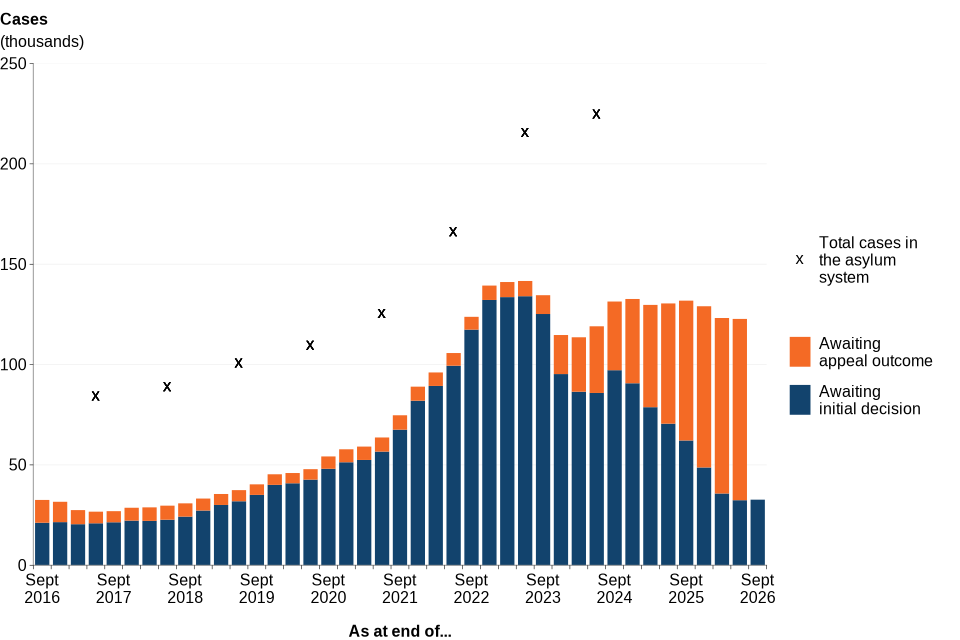
- at the end of September 2026, 41,000 people (33,000 cases) were awaiting an initial decision, down 49% on the previous year and 77% from the June 2023 peak
- the overall fall in the number of people awaiting an initial decision corresponds to a notable and sustained increase in initial decisions and a fall in claims in recent years
- HMCTS data shows that the First-tier Tribunal Immigration and Asylum Chamber’s open Asylum/Protection/Revocation of Protection caseload increased from 6,300 at the end of June 2022 to 90,000 at the end of June 2026; this follows a higher volume of refusals at initial decision and a decreasing grant rate in recent years
Figure 8: Asylum main applicants awaiting an initial decision or appeal outcome, and total cases in the asylum system, as at 30 September 2016 to as at 30 September 20261
Source: Asylum claims awaiting a decision – Asy_D03; Migration Transparency Data collection – ASY_03; Tribunal Statistics Main Tables, Ministry of Justice - FIA_4
Notes:
- The crosses show the total number of cases in the asylum system, including those awaiting an initial decision, post-decision, with an outstanding appeal, subject to removal action, or on hold.
For further details see ‘How many people are in the UK asylum system?’.
10. The number of people receiving asylum support has fallen in the latest year, predominantly due to fewer asylum seekers in hotels
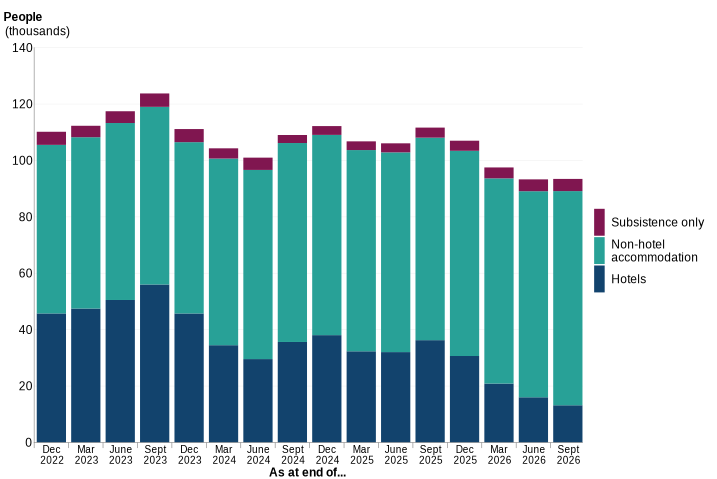
- at the end of September 2026, 93,000 people were receiving asylum support, 16% fewer than a year earlier and 24% below the September 2023 peak of 124,000
- 13,000 people (14%) were in hotel accommodation at the end of September 2026, 64% lower than a year earlier, and 76% lower than the peak of 56,000 at the end of September 2023
- 23,000 fewer people were in hotels than a year earlier, outweighing the increase of 4,100 more people in non-hotel accommodation
- 1,195, around 1% of those receiving support, were accommodated across 2 former military sites: Wethersfield (in Braintree), and Crowborough Training Camp (in Wealden)
Figure 9: Number of people in receipt of asylum support, by the type of support, as at 31 December 2022 to as at 30 September 2026
Source: Asylum seekers in receipt of support – Asy_D09
For further details see ‘How many people are in the UK asylum system?’.
11. Grants of Indefinite leave to enter or remain (ILE/ILR) increased in the latest year, driven by rising settlement grants
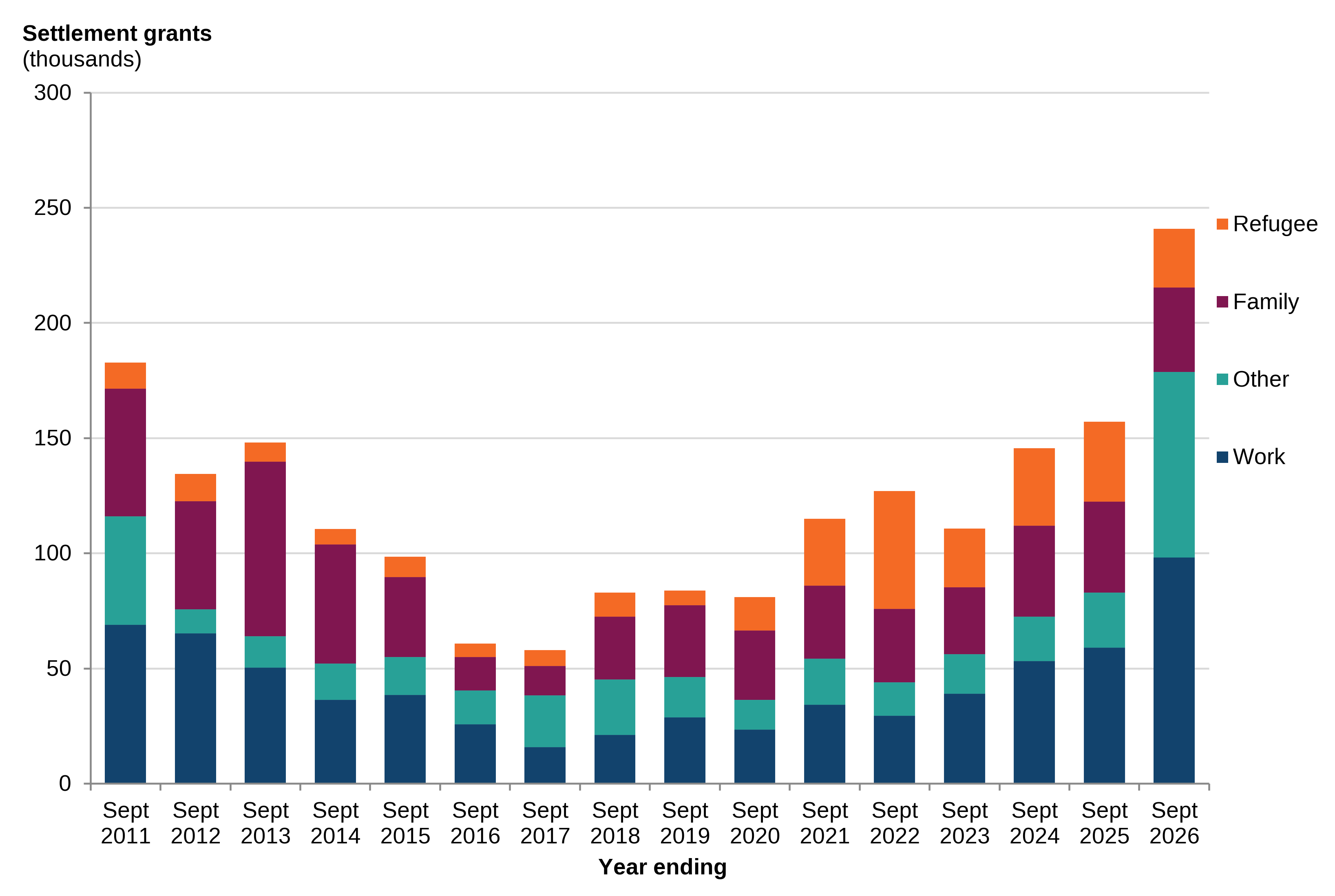
- grants of indefinite leave, comprising settlement (ILR), alongside immediate settlement (ILE) and settled status under the EU Settlement Scheme (ILR or ILE), increased by 11% to 545,000 in the year ending September 2026
- settlement grants have accounted for a growing proportion of all indefinite leave grants over the last 3 years, reflecting rising settlement volumes while EUSS settled status grants fell 8% in the latest year
- settlement grants reached a near record high of 241,000 in the YE September 2026, the highest since 2010, and an increase of 53% from the YE September 2025; this increase was largely driven by more grants to individuals who held leave on Skilled Worker (including Health and Care Worker) and British National (Overseas) (BN(O)) routes, immediately prior to their settlement application
Figure 10: Settlement grants by previous leave type, YE September 2011 to YE September 2026
Source: Grants of settlement by category, nationality, applicant type and refusals of settlement - Se_D01
For further details see ‘How many Indefinite Leave (Settlement and EUSS settled status) grants were issued in the UK?’.
12. British citizenship grants increased to near-record levels in the latest year
- applications for British citizenship reached a record high of 320,000 in the year ending September 2026, an increase of 17% on the previous year, continuing an upward trend since 2016
- grants of British citizenship increased by 10% to 265,000, just below the record high reached in the year ending December 2024. Recent increases are likely to reflect, in part, higher numbers of people granted indefinite leave through settlement and the EU Settlement Scheme in previous years subsequently applying for British Citizenship
- Indian and Pakistani nationals remained the largest groups granted British citizenship, with 27,700 and 19,400 grants respectively
For further details see ‘How many Citizenship grants have been issued in the UK?’.
13. Entries into immigration detention fell in the latest year
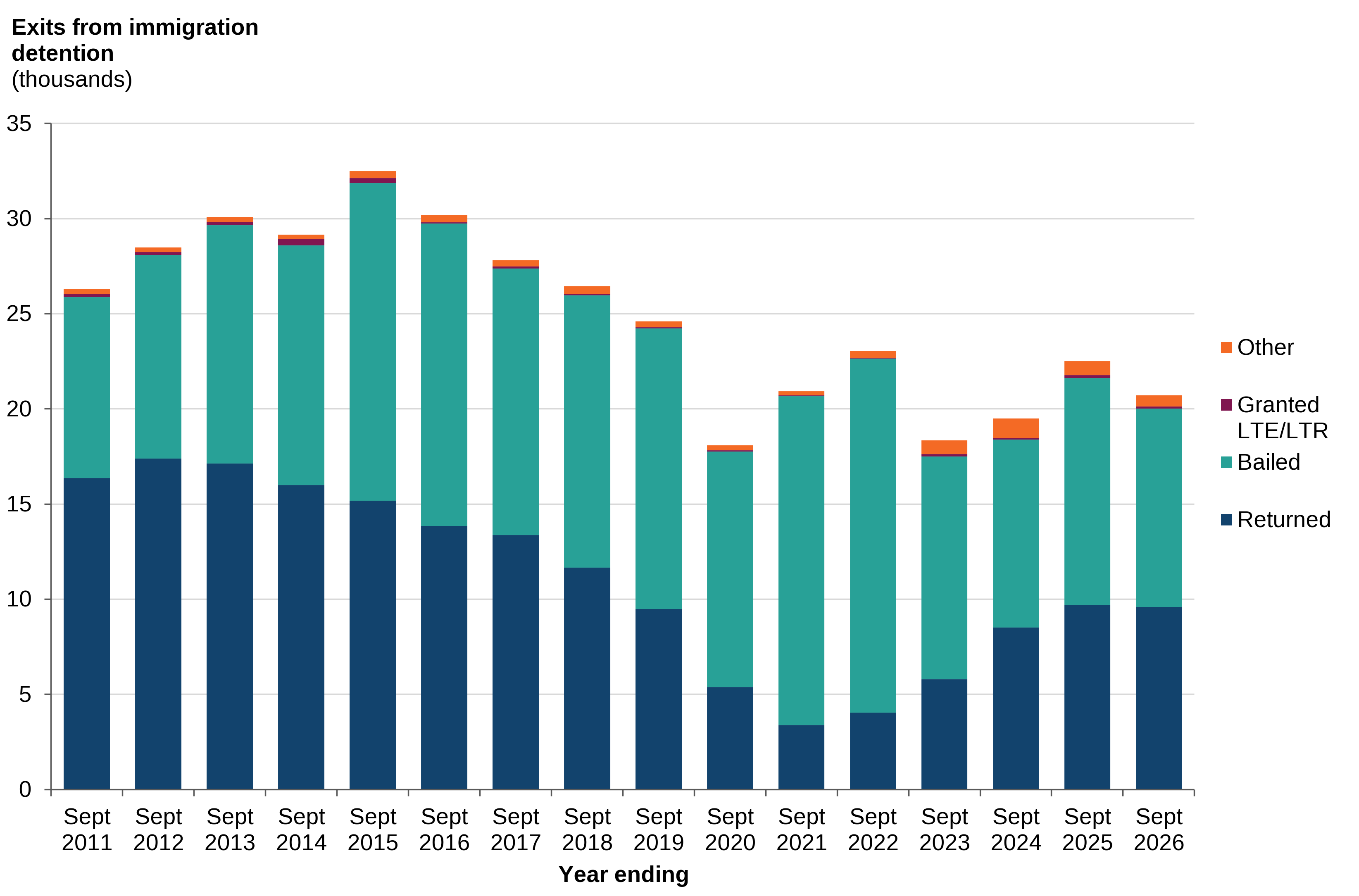
- falls in the number of entries to and exits from immigration detention (both down 8%), and changes in the nationality profile, occurred alongside changes to the use of the detention estate, including the prioritised use under the UK-France agreement
- half of the occurrences of people leaving detention in the YE September 2026 were bailed, while 46% were removed from the UK upon leaving detention; despite falls in the number of people leaving detention, the number of returns from detention has remained relatively stable
- a greater proportion of people leaving detention had been detained for longer periods in the latest year, with the proportion detained for 1 to 3 months increasing from 25% to 33% and falls in those detained for less than a month (from 67% to 58%)
Figure 11: Exits from immigration detention by reason for leaving, from the YE September 2011 to the YE September 2026
Source: Immigration detention - Det_D03
For further details see ‘How many people are detained under immigration powers in the UK?’.
14. The number of enforced and voluntary returns of people with no legal right to be in the UK has continued to increase since 2022
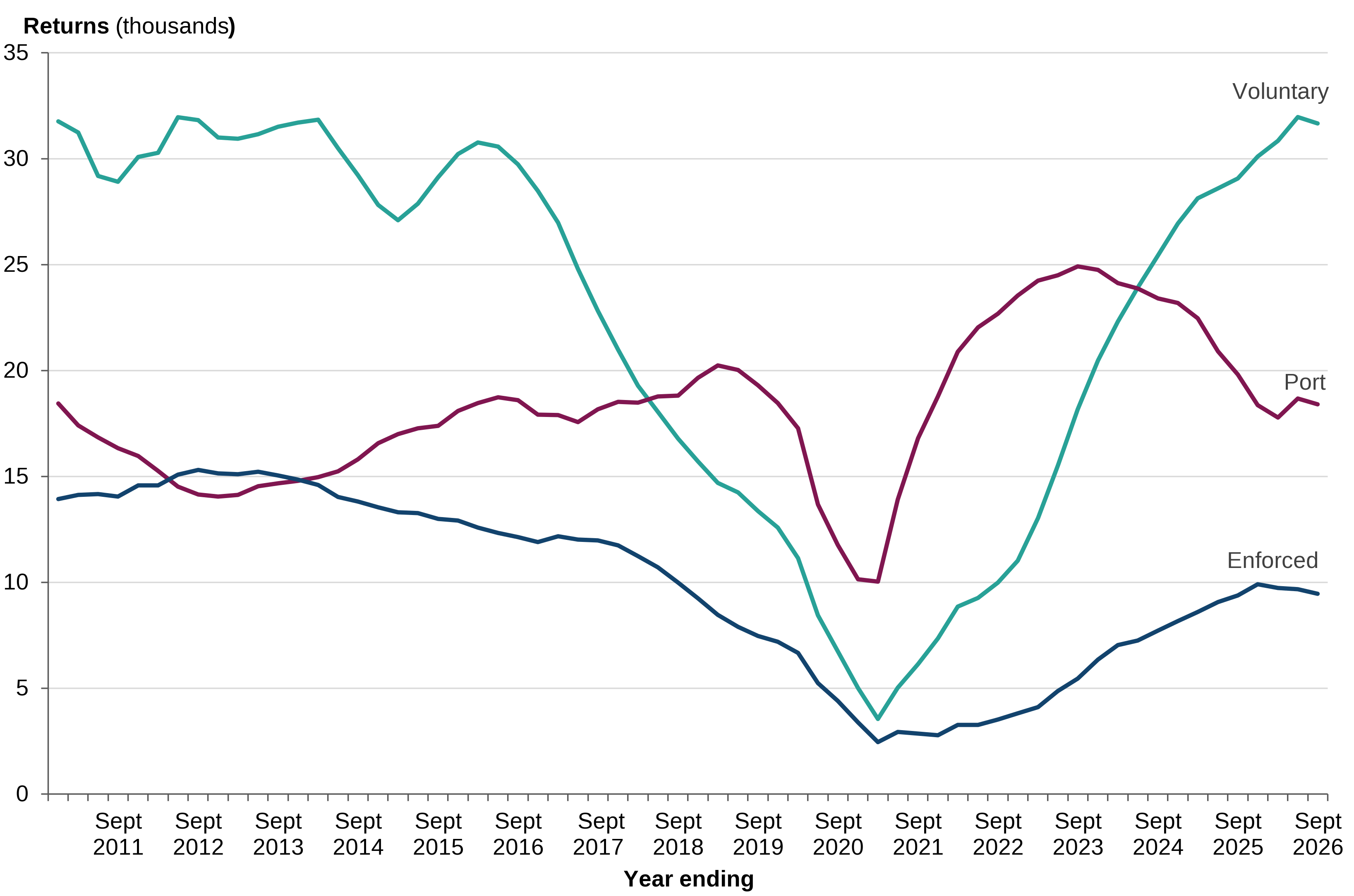
- returns (enforced and voluntary) continue to increase, with 41,100 in the YE September 2026, up 7% compared with 38,500 in the previous year continuing an upward trend since 2022
- there were 9,500 enforced returns in the YE September 2026, similar to the previous year (increase of 1%) and continuing the longer-term increase since 2021
- returns of small boat arrivals continue to increase with over 4,000 in the YE September 2026, up by 56% compared with the previous year and the highest in the statistical series starting 2018; the most recent increase follows the introduction of the UK-France Agreement on the prevention of dangerous journeys
Figure 12: Returns from the UK, by type of return, YE December 2010 to YE September 2026
Source: Returns - Ret_D01
For further details see ‘How many people are returned from the UK?’.
16. Additional Home Office migration statistics
For more details on new statistics and breakdowns added to this release see section 2 of ‘About this release’.
The Home Office publishes a range of research and statistics which can be found on the migration analysis pages.
Details on the developments and future plans for Home Office ‘Immigration system statistics’ can be found in ‘Developments in migration statistics’.
Migration transparency
Figures on performance against service standards and processing times are published as part of the Home Office migration transparency. For further details see ‘Migration transparency data’.
Migrant journey
The Migrant journey report provides an analysis of the behaviour of migrants entering the UK immigration system under the main routes of entry to the UK and the common pathways leading to settlement. The Migrant journey report is published annually in May.
Monthly entry clearance visa applications
The Monthly entry clearance visa applications report contains the most up-to-date statistics on visa applications for people coming to the UK on work, study and family routes.
Visa holder earnings, employment and income tax statistics, year ending March 2026
Statistics on visa holder earnings, employment and income tax. The analysis is based on data matching between Home Office visa records and HMRC Pay As You Earn (PAYE) Real Time Information (RTI) data. It covers both entry clearance visas and extensions of stay, and includes both main applicants and dependants.
We welcome your feedback
If you have any comments or suggestions on this publication, please email MigrationStatsEnquiries@homeoffice.gov.uk. Please include the words ‘PUBLICATION FEEDBACK’ in the subject of your email.