How many Indefinite Leave (Settlement and EUSS settled status) grants have been issued in the UK?
Published 26 November 2026

© Crown copyright 2026
This publication is licensed under the terms of the Open Government Licence v3.0 except where otherwise stated. To view this licence, visit nationalarchives.gov.uk/doc/open-government-licence/version/3 or write to the Information Policy Team, The National Archives, Kew, London TW9 4DU, or email: psi@nationalarchives.gov.uk.
Where we have identified any third party copyright information you will need to obtain permission from the copyright holders concerned.
This publication is available at https://www.gov.uk/government/statistics/immigration-system-statistics-year-ending-september-2026/how-many-indefinite-leave-settlement-and-euss-settled-status-grants-have-been-issued-in-the-uk
Back to ‘Immigration system statistics, year ending September 2026’ contents page
This release covers the year ending (YE) September 2026. The “year ending” period includes the 12 months up to and including the YE month. For example, YE September 2026 covers the period from 1 October 2025 to 30 September 2026. All annual comparisons are with the YE September 2025, unless otherwise stated.
This chapter was previously part of “How many Indefinite Leave to Remain (Settlement and EUSS settled status) and Citizenship grants have been issued in the UK?”
Since the August 2026 publication, citizenship statistics have been presented in a separate chapter from indefinite leave statistics, see How many Citizenship grants have been issued in the UK?. This change has been introduced to improve the clarity of reporting by reflecting citizenship as a distinct stage of the migration journey. The change affects the structure of the publication only and does not affect the underlying statistics, which remain unchanged.
Additional information is provided in the ‘About the statistics’ section and in the user guide.
1. Indefinite Leave
Indefinite Leave is an immigration status that allows a person to live, work and study in the UK without any time limit on their stay.
Indefinite Leave to Enter or Remain (ILE/ILR), also known as ‘settlement’, allows individuals to live in the UK without time restrictions on their immigration status. Settlement is generally granted to individuals who have completed the required qualifying period of residence on an eligible immigration route and meet the relevant eligibility criteria. Some individuals may qualify for immediate settlement without completing a qualifying period, while others are granted indefinite leave under the EU Settlement Scheme (EUSS), where it is referred to as ‘settled status’.
Table 1: Number of grants issued for Settlement, EUSS settled status and Immediate settlement (Family), YE September 2017 to YE September 2026
| YE September | Settlement | EUSS settled status | Immediate settlement (Family) | Total |
|---|---|---|---|---|
| 2017 | 57,914 | z | 2,683 | 60,597 |
| 2018 | 82,978 | 182 | 2,457 | 85,617 |
| 2019 | 83,773 | 931,974 | 2,660 | 1,018,407 |
| 2020 | 81,053 | 1,239,924 | 1,569 | 1,322,546 |
| 2021 | 115,021 | 855,044 | 1,729 | 971,794 |
| 2022 | 127,053 | 332,380 | 1,659 | 461,092 |
| 2023 | 110,832 | 299,985 | 2,515 | 413,332 |
| 2024 | 145,548 | 347,391 | 3,267 | 496,206 |
| 2025 | 157,078 | 329,678 | 2,533 | 489,289 |
| 2026 | 240,921 | 302,076 | 1,735 | 544,732 |
Source: Table EUSS_QTR, EU Settlement Scheme summary tables, YE September 2026, Settlement dataset - Se_D01 and Entry Clearance dataset - Vis_D02.
Notes:
- EUSS was launched on 28 August 2018 and became fully operational on 30 March 2019. The total for grants of settled status includes 132,580 automated EUSS settled status grants, of which 52,610 were in the YE September 2025 figure and 77,950 were in YE September 2026. The table excludes 2,030 automated grants where the decision date could not be identified within the administrative data.
- z = not applicable
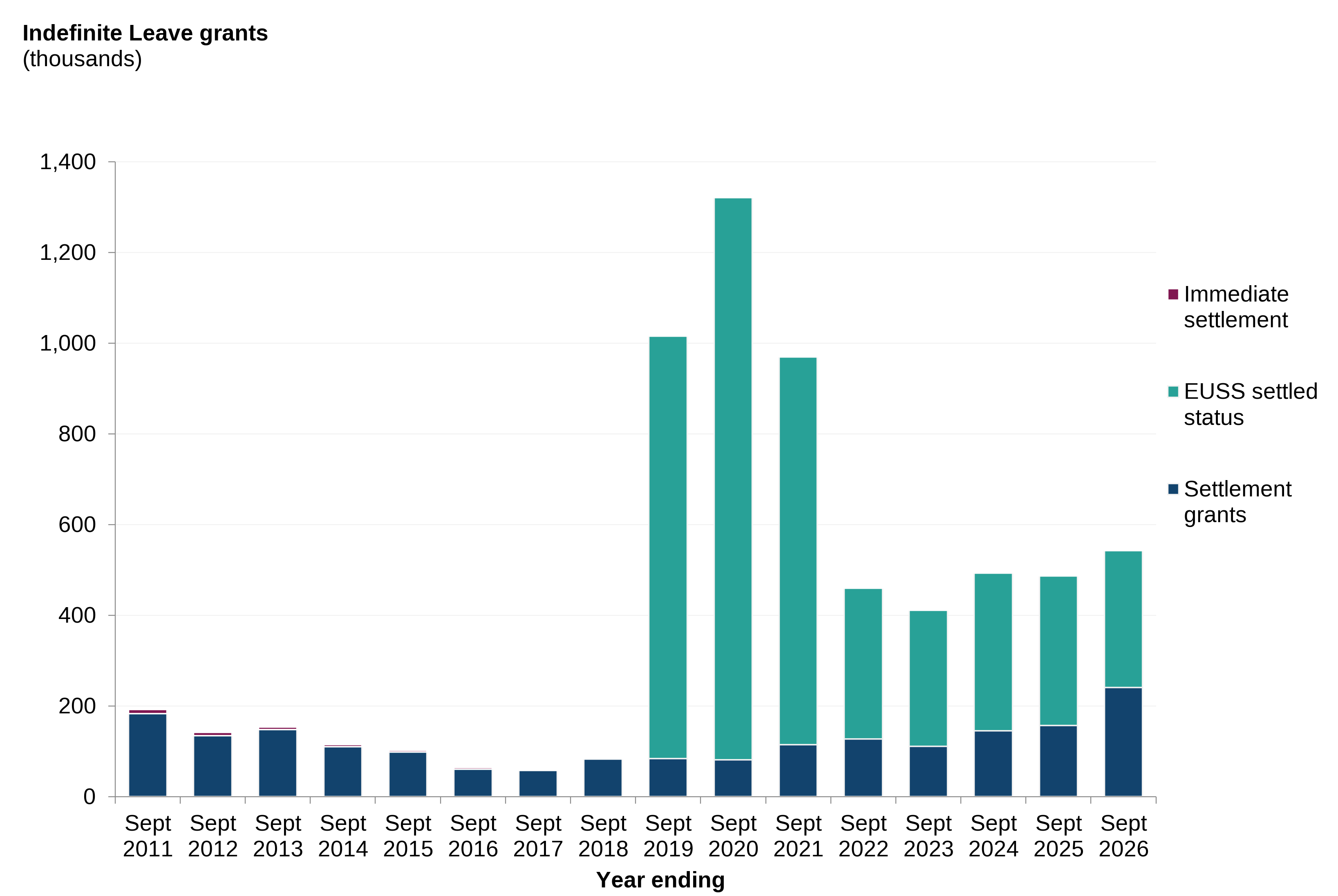
The number of indefinite leave grants has been strongly influenced by the introduction of the EU Settlement Scheme (EUSS), which opened to applicants through phased testing in 2018 before formally opening in March 2019. Grants of settled status peaked at 1.68 million in the year ending March 2020 and have accounted for almost 80% of all indefinite leave grants recorded between the year ending September 2018 and the year ending September 2026. Although grants have since fallen substantially from this peak, annual volumes have remained relatively stable since the year ending September 2022, averaging just over 300,000 grants per year.
In the YE September 2026, there were a total of 544,732 grants of indefinite leave, an 11% increase from the YE September 2025. This increase was driven by a rise in settlement grants, which have accounted for a growing proportion of all indefinite leave grants over the last 3 years.
Figure 1: Grants of Indefinite Leave in the UK, YE September 2011 to YE September 2026
Source: Table EUSS_QTR, EU Settlement Scheme summary tables, YE September 2026, Settlement dataset - Se_D01 and Entry Clearance dataset - Vis_D02.
2. Settlement grants (excluding EU Settlement Scheme)
‘Settlement’ is the general term for being granted indefinite leave to enter or remain (ILE/ILR) in the UK. It gives people the right to stay in the UK permanently and, where eligible, apply for citizenship.
This section primarily focuses on indefinite leave to remain (ILR), which is generally granted to people already living in the UK after completing a qualifying period of residence. Individuals may be granted indefinite leave to enter (ILE), providing settlement on entry to the UK. These grants are presented separately within the Immediate Settlement (Family) subsection. For the EU Settlement Scheme statistics, see Section 3.
The number of settlement grants issued each year is influenced by migration patterns in earlier years, alongside the qualifying residence periods and eligibility requirements that apply to different immigration routes.
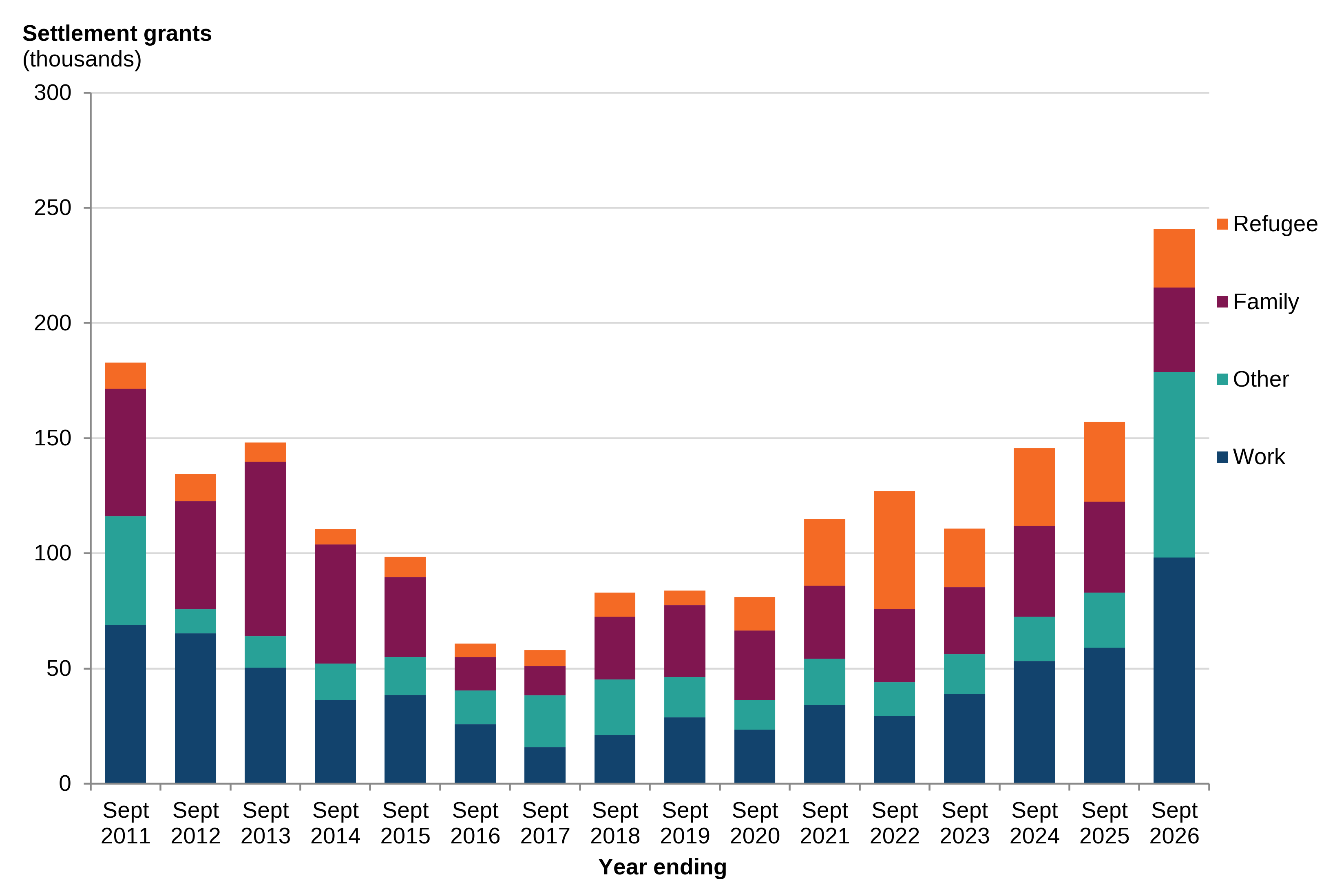
Settlement grants in the YE September 2026 reached near record levels, due to large increases in grants to Skilled Worker visa holders (which includes Health and Care Worker) and British National (Overseas) (BN(O)) visa holders.
Figure 2: Grants of ‘settlement’ (excluding immediate settlement) in the UK, by leave type 1,2,3 YE September 2011 to YE September 2026
Source: Settlement - Se_D01
Notes:
- ‘Leave type’ relates to type of leave to remain in the UK held immediately prior to being granted ‘settlement’.
- The category ‘Other’ includes grants based on Long Residence, Private Life, BN(O) routes and grants on a discretionary basis. It also includes a small number of cases where the category of leave immediately prior to the grant of settlement has not been recorded.
- The ‘Refugee’ category includes individuals granted settlement in the UK who previously held refugee status, humanitarian protection or other asylum-related leave, including leave granted under the Refugee Family Reunion route.
In the YE September 2026, there were 240,921 settlement grants, an increase of 53% compared with the previous year and the highest annual total since the YE September 2010. Settlement grants have generally increased since the YE September 2017, with more pronounced growth in recent years. This has partly reflected increasing numbers of people arriving in the UK for work in earlier years and subsequently becoming eligible for settlement. Growth in the latest year was larger, reflecting higher numbers of grants to individuals who previously held leave on Work and BN(O) routes.
Settlement grants to individuals who previously held leave on a Work route increased by 66% to 98,218 in the YE September 2026. This was primarily driven by individuals who held leave on the Skilled Worker (including Health and Care Worker) routes immediately prior to applying for settlement, rising by 90% from 43,042 to 81,927 in the latest year. The increase follows the increase in individuals arriving on these routes following the introduction of the Health and Care visa in August 2020 and the Skilled Worker route in December 2020, and who have subsequently become eligible for settlement. Further information on work-related immigration can be found in ‘Why do people come to the UK - Work?’.
Settlement grants to individuals whose previous leave was on the BN(O) route rose from 637 to 57,040 in the latest year. Settlement grants to BN(O) visa holders accounted for almost a quarter of all grants in the YE September 2026. Introduced in January 2021, the BN(O) route allows eligible people from Hong Kong and their family members to live and work in the UK. The route has now reached the point where many of the earliest cohorts have completed the 5-year qualifying period of continuous residence required for settlement.
In contrast, settlement granted to individuals with Refugee status (or other protection-based leave) declined by 26% to 25,517 in the YE September 2026. This reflects lower numbers of protection grants in 2020, when disruption during the COVID-19 pandemic led to fewer decisions. This category includes individuals previously granted refugee status, humanitarian protection or other asylum-related leave, including under the Refugee Family Reunion route. Settlement grants to individuals previously on Family routes also decreased by 7% in the latest year.
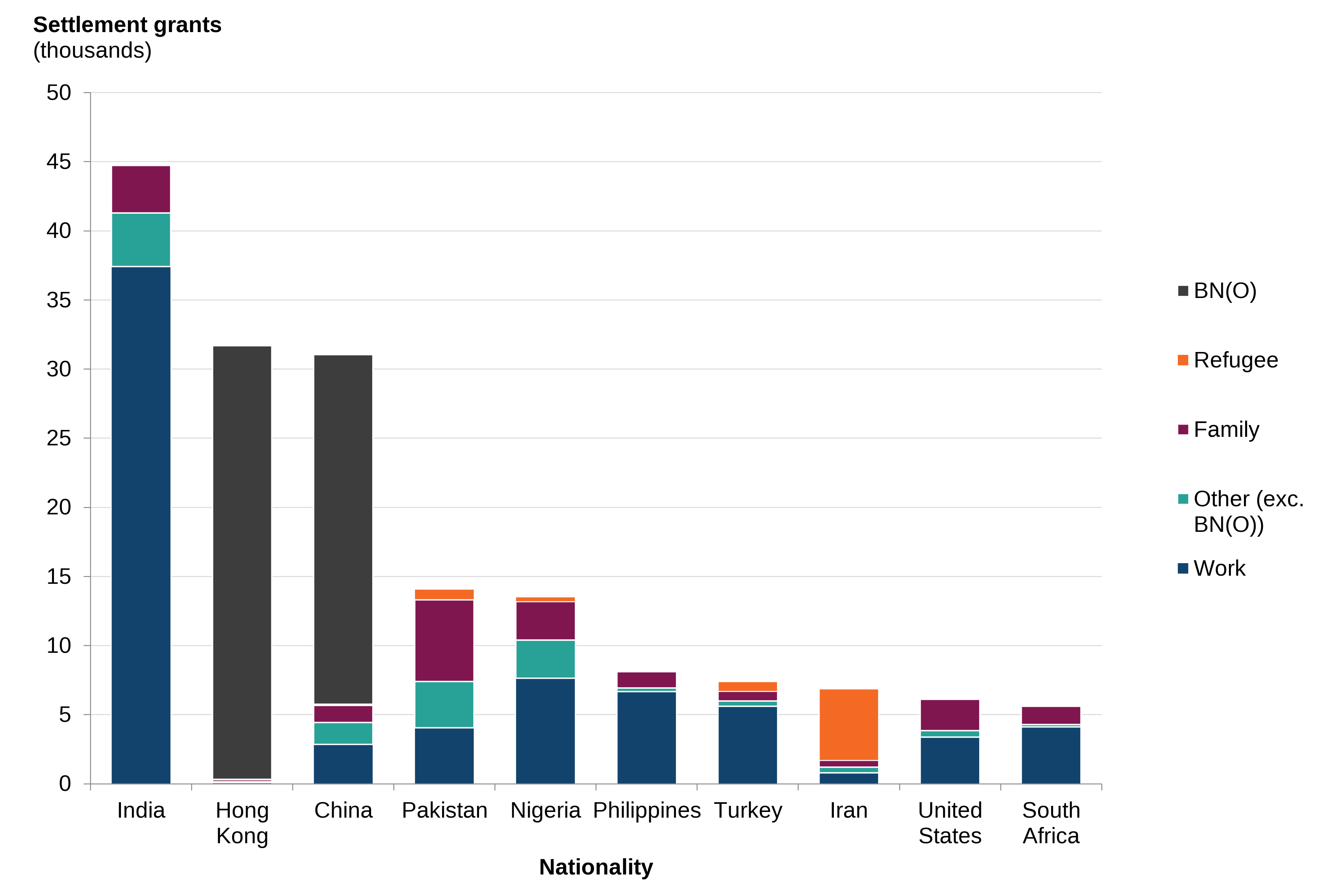
Figure 3: Grants of ‘settlement’ (excluding immediate settlement) in the UK, by leave type and nationality, YE September 2026 1,2,3
Source: Settlement - Se_D01
Notes:
- ‘Leave type’ relates to type of leave to remain in the UK held immediately prior to being granted ‘settlement’.
- The category ‘Other (exc. BN(O))’ includes grants based on Long Residence, Private Life and grants on a discretionary basis, as well as a small number of cases where previous leave has not been recorded. BN(O) grants are shown separately in this figure to illustrate their contribution to settlement grants by nationality but are included within the ‘Other’ category in other figures.
- The ‘Refugee’ category includes individuals granted settlement in the UK who previously held refugee status, humanitarian protection or other asylum-related leave, including leave granted under the Refugee Family Reunion route.
In the YE September 2026, Indian nationals remained the largest nationality group granted settlement, with 44,793 grants, almost double the previous year. The increase largely reflected higher numbers of settlement grants to individuals previously on Skilled Worker (including Health and Care visa) routes, with Indian nationals (36,102) accounting for 44% of all grants in this group.
Settlement grants to Hong Kong nationals increased substantially from 760 in the YE September 2025 to 31,703 in the YE September 2026, making them the second-largest nationality group granted settlement. Grants to Chinese nationals also increased, from 5,506 to 31,042. These increases reflected BN(O) visa holders completing the qualifying period of continuous residence required for settlement, with Hong Kong and Chinese nationals accounting for almost all grants. Many Hong Kong residents eligible under the BN(O) route have Chinese nationality recorded on their passports and are therefore reported as Chinese nationals.
Immediate settlement (Family)
Individuals may be granted indefinite leave to enter (ILE), also known as immediate settlement, under a Family route, typically where an applicant is applying from outside the UK based on their relationship to a person who is already settled in the UK or is a British citizen, with the intention of settling in the UK. In the YE September 2026, there were 1,735 immediate settlement grants, a 32% decrease from the YE September 2025, with children accounting for the majority (86%) of grants.
Further information about immediate settlement can be found in the ‘Why do people come to the UK – Family?’ topic, and table Vis_D02, Entry Clearance dataset.
3. EU Settlement Scheme
The EUSS enables EU, other European Economic Area (EEA) and Swiss citizens who were resident in the UK before the end of the post-EU exit transition period at 11pm on 31 December 2020, as well as their family members, to obtain permission to remain in the UK. The scheme was launched on 28 August 2018 and became fully operational on 30 March 2019.
The deadline for most people to apply to the EUSS was 30 June 2021, but certain family members can apply after that to join an EU, other EEA or Swiss citizen in the UK. The deadline for joining family members is generally 3 months after their arrival. In both cases, late applications may be accepted where there are reasonable grounds for the delay.
Individuals who were resident in the UK by 31 December 2020 but had not yet lived here for 5 years are generally granted pre-settled status (leave to enter or remain). Pre-settled status may also be granted to joining family members. Individuals granted pre-settled status can apply for settled status once they have completed the relevant qualifying period of residence, usually 5 years. There is no deadline for such applications. Further data on pre-settled status grants can also be found in the EUSS data tables. More information on the scheme can be found on the EU Settlement Scheme webpage.
3.1 Overview
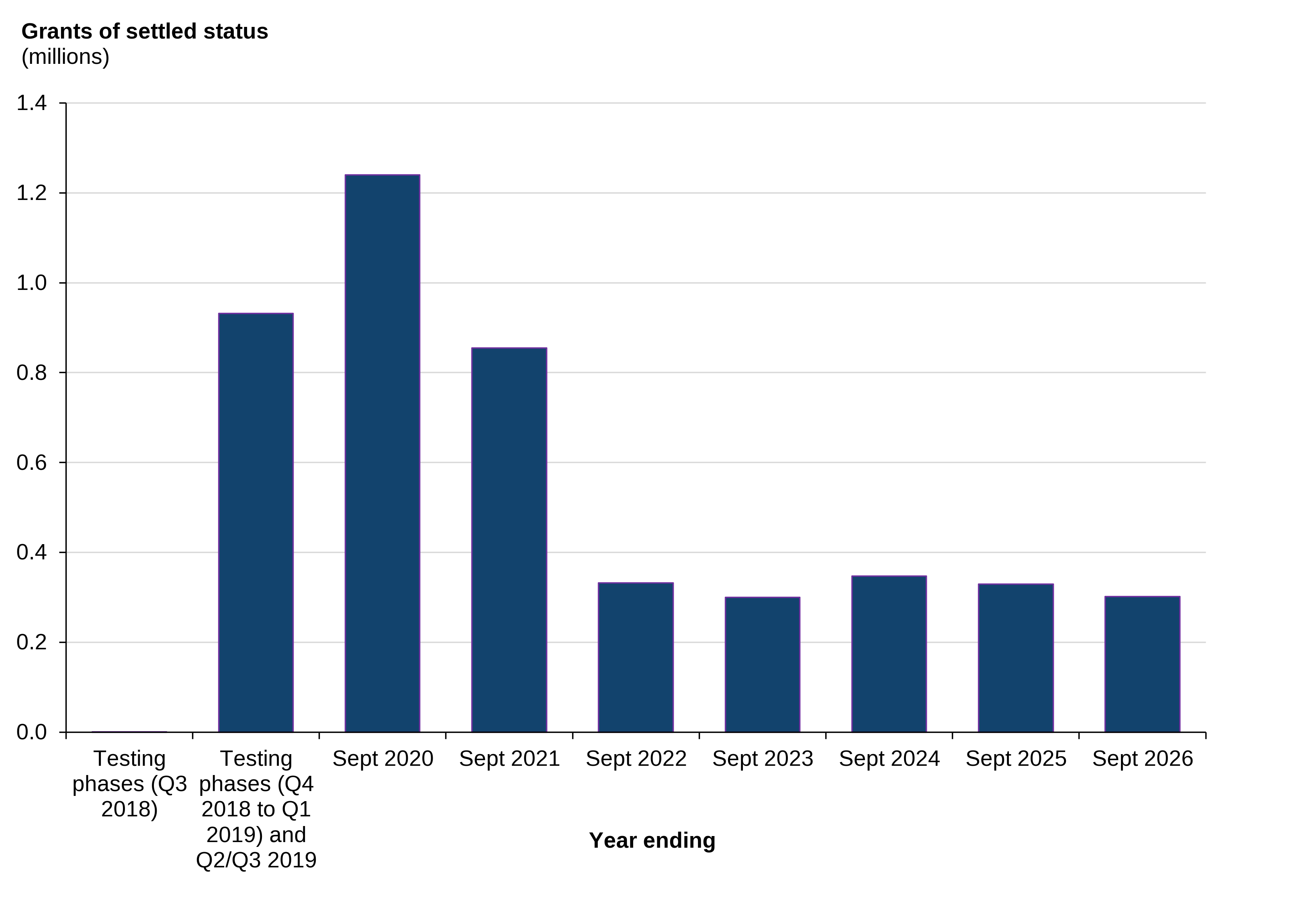
Since the scheme was launched in 2018, 4.6 million settled status grants have been issued.
Nearly two-thirds (61%) of settled status grants were issued before the 30 June 2021 application deadline. Following the peak in grants in 2020, annual grant volumes have fallen considerably, before stabilising from the YE September 2022 at an average of just over 300,000 per year. There were 302,076 settled status grants in the YE September 2026, a fall of 8% from the YE September 2025, with most granted to individuals previously holding pre-settled status.
From January 2025, some pre-settled status holders meeting relevant criteria may be granted settled status automatically, without submitting a further application. These are reported as automated grants of settled status and are included in the total, which should be considered when comparing grant volumes before and after their introduction.
While the number of settled status grants has remained broadly stable in recent years, EUSS applications have continued to decline. There were 345,041 applications in the YE September 2026, down 23% compared with the previous year and the lowest annual total since the introduction of the scheme. This is substantially below the peak of over 3.2 million applications in the year ending March 2020, a period spanning the months before and immediately after the UK’s departure from the EU on 31 January 2020.
The fall is likely to reflect the diminishing pool of individuals eligible to apply from the original resident population, following the initial rollout of the scheme and the 30 June 2021 application deadline. Applications are increasingly likely to reflect applications for settled status from eligible individuals previously granted pre-settled status.
Figure 4: Total number of EUSS settled status grants, 28 August 2018 to 30 September 2026
Source: Table EUSS_QTR, EU Settlement Scheme summary tables, YE September 2026
3.2 What types of application have been granted settled status since the 30 June 2021 deadline?
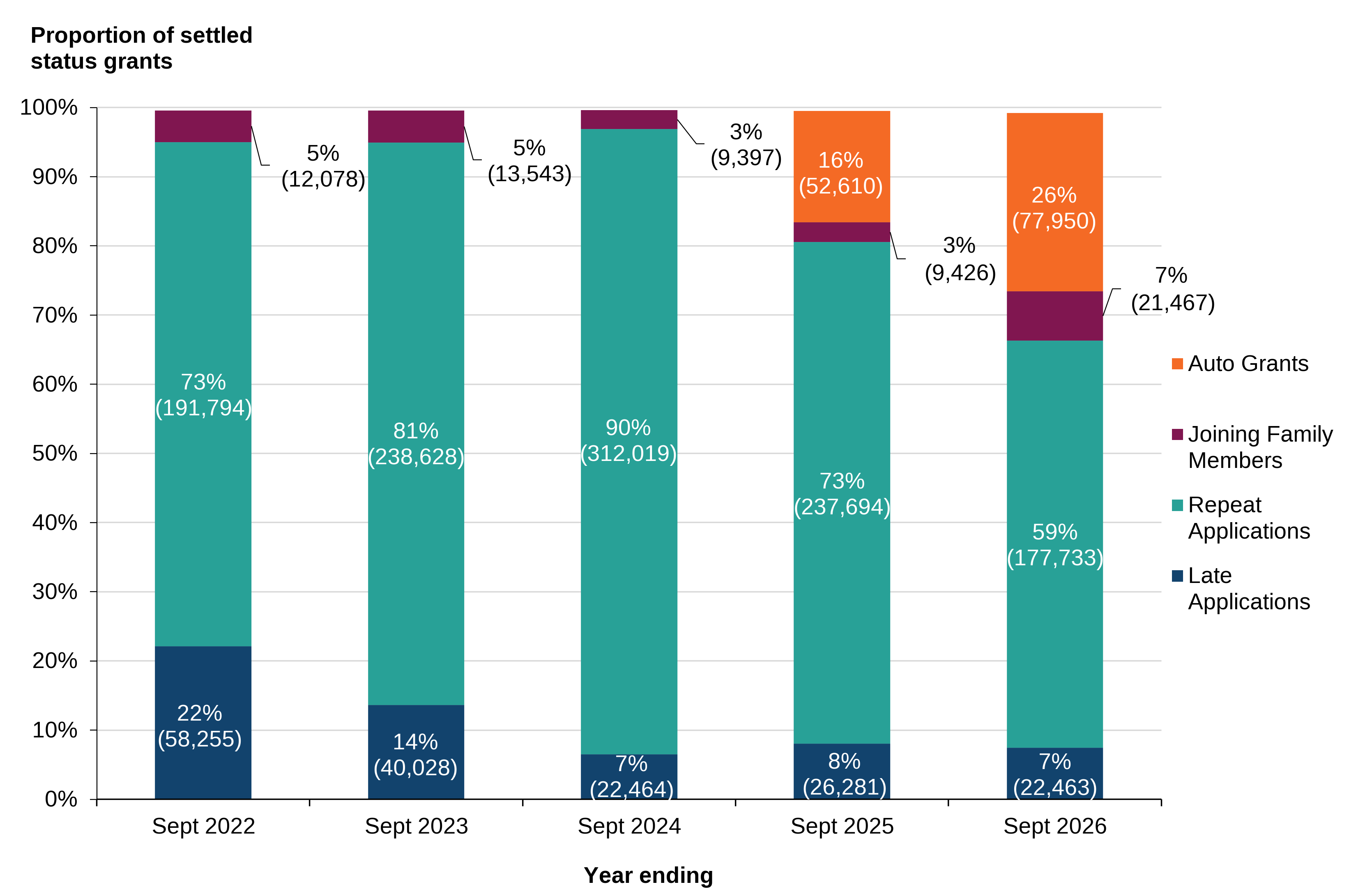
Figure 5: Proportion of EUSS settled status grants by application type, YE September 2022 to YE September 2026
Source: Joining family members, Repeat applications and Late applications - Table EUSS_POST_30_JUNE, EU Settlement Scheme summary tables, YE September 2026
Notes:
- Derivative rights conclusions consistently account for less than 1% of annual settled status grants. As a result, they are not visually distinguishable within the stacked bar chart and are too small to support meaningful data labels.
- The chart excludes 2,030 automated grants where the decision date could not be identified within the administrative data.
- Automated grants are a subset of the data presented in Table EUSS_RA_01 – EUSS_RA_04 of the EU Settlement Scheme summary tables, YE September 2026.
The deadline to apply to the EUSS, for those who were resident in the UK by the end of the EU exit transition period (31 December 2020), was 30 June 2021. Certain applications can be made beyond the 30 June 2021 deadline. Since the deadline, there have been 1.6 million grants of settled status, mainly issued to those holding pre-settled status.
In the year ending September 2026, the sum of settled status grants across the application types presented in the tables for applications concluded after 30 June 2021 was 301,924, which is 152 fewer than the overall settled status total of 302,076 for the same period. This difference is due to the use of different data extracts to produce the tables. Work is underway to align these extracts in future releases.
Repeat applications
In the YE September 2026, 177,733 settled status grants were issued to repeat applicants (individuals who have applied to the scheme more than once), a fall of 25% from the YE September 2025. Most ‘repeat applications’ are from people who were previously granted pre-settled status applying for settled status. The decline in settled status grants to repeat applicants partly reflects the introduction of EUSS automation, whereby eligible pre-settled status holders may be granted settled status automatically, without submitting a further application. These grants are recorded separately as automated grants of settled status, rather than as grants to repeat applicants.
Automated grants of settled status
From January 2025, pre-settled status holders meeting relevant criteria may be granted settled status automatically, without submitting a further application. These are reported as automated grants of settled status.
In the YE September 2026, there have been an estimated 77,950 automated grants of settled status. Since the introduction of automated grants, an estimated 132,580 individuals have been granted settled status automatically. Estimates of automated settled status grants are rounded to 10 and therefore breakdowns may not match overall totals.
Joining family members
Close family members are eligible to apply to the EUSS as the relevant family member of an EU, other EEA, or Swiss citizen who was resident in the UK before the end of the transition period (and who generally holds EUSS status), provided the relationship existed on 31 December 2020 (unless the person is a child, and born or adopted since then) and the relationship continues to exist at the date of application.
In the YE September 2026, there were 21,467 grants of settled status to joining family members, more than double the 9,426 granted in the previous year and the highest annual total since the 30 June 2021 application deadline. This increase reflects higher numbers of joining family members who were granted pre-settled status in 2021 and have subsequently become eligible for settled status.
Late applications
Late applications may be accepted where there are reasonable grounds for a delay in applying. This includes some applicants who have made a repeat application post-deadline and subsequently gained pre-settled or settled status. In the YE September 2026, 22,463 late applications resulted in a grant of settled status, a fall of 15% compared to the YE September 2025. However, decisions made in the YE September 2026 will also include applications submitted in earlier years.
Derivative Rights
This refers to applicants who did not qualify for a right of residence under the Free Movement Directive but may have had a right to reside in the UK under other provisions of EU law prior to the end of the transition period.
In the YE September 2026, there were 2,311 settled status grants issued to individuals with a derivative right to reside in the UK, a 36% increase compared with the YE September 2025. This increase is consistent with more individuals becoming eligible to apply for settled status after completing the required qualifying period of continuous residence following the end of the EU exit transition period on 31 December 2020.
3.3 How many pre-settled status holders have transitioned to settled status since the scheme began?
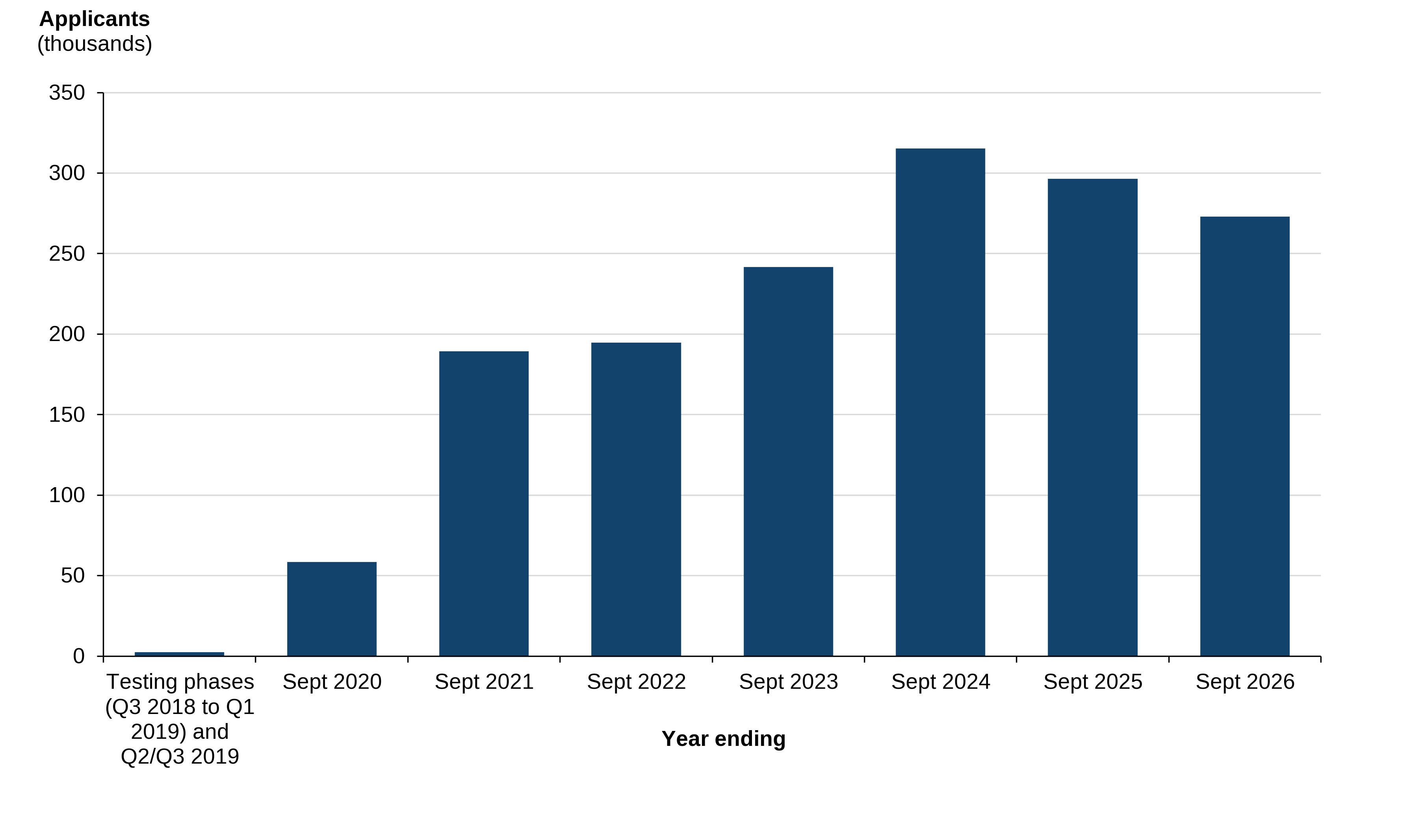
Figure 6: Applicants transitioning from EUSS pre-settled to settled status, 28 August 2018 to 30 September 2026
Source: Table EUSS_QTR, EU Settlement Scheme summary tables, YE September 2026
Figure 6 shows that an estimated 273,000 individuals transitioned from pre-settled to settled status in the YE September 2026, with 1.6 million transitioning since the scheme began. This includes individuals who have applied for settled status and those who have been automatically converted without an application. Transitions from pre‑settled to settled status had generally risen since the scheme’s launch but have fallen in the last 2 years.
As of 30 September 2026, an estimated 1.2 million people held pre-settled status, though this figure does not necessarily reflect the current resident population, as some may have left the UK. For further information, refer to the ‘Note on the difference between ONS population estimates by nationality and Home Office EU Settlement Scheme statistics’
4. About the statistics
The underlying casework systems on which this data is based are undergoing a process of change and therefore the published numbers may change in future quarters. In some cases, data will be unavailable. For more information see section 2.7 of the user guide.
Indefinite leave to enter or remain can be granted to individuals, subject to immigration control, to allow them to live, work, study and travel into and out of the UK without restriction. To be granted indefinite leave to remain, individuals generally must have lived in the UK for a certain length of time in a qualifying category. Those granted indefinite leave to enter or remain can access state benefits and register their UK-born children as British citizens. It does not entitle the individual to a British passport (which requires British citizenship) or to vote in a general election (which requires British, Commonwealth, or Irish Republic citizenship).
On 2 November 2026, the government published the findings of the Earned settlement: Consultation findings - GOV.UK consultation. The proposals have not affected the statistics presented in this release but may be relevant to future settlement trends.
4.1 Settlement (excluding EU Settlement Scheme)
Settlement is the general term for a person being granted indefinite leave to enter or remain (ILE/ILR) in the UK. It applies across a range of immigration routes, including Work, Family, Protection and Long Residence, and means the individual no longer has time limits on their stay, can access services on the same basis as British citizens, and may be eligible to apply for citizenship. In Section 2, settlement under the EUSS is excluded, as the EUSS operates as a distinct route with its own rights, instead, allotted its own focus in Section 3.
The statistics in this section mainly show the number of grants of indefinite leave to remain in the UK, with indefinite leave to enter grants outlined in the ‘Immediate settlement (Family)’ subsection. They take account of the outcomes of reconsiderations and appeals.
Refugee Family Reunion
Although Refugee Family Reunion grants are recorded under the ‘Family’ category in the entry clearance tables, see - Why do people come to the UK - Family?; individuals granted settlement who previously held leave under this route are categorised under refugee or protection-based settlement. This reflects differences in how cases are categorised and processed within the underlying administrative data systems.
4.2 EU Settlement Scheme
Since May 2022, EUSS statistics have been classified as Official Statistics. Most figures are unrounded, except for estimated repeat applicants.
The publication includes all EUSS decisions from 28 August 2018 to 30 September 2026, including those of repeat applications, as individuals move from pre-settled to settled status. Each decision is recorded separately, as casework systems do not contain a single identifier to track individuals across multiple applications. Probabilistic data matching has been developed to estimate the total number of unique applicants and their outcomes.
While most applicants are EU, other EEA, or Swiss nationals, some non-EEA national family members are also included. Applications may also be made by eligible individuals living outside the UK, and individuals may still hold EUSS status despite having left the UK. Therefore, these figures are not directly comparable with UK resident population estimates, which do not reflect migration intentions.
Provisional data on 132,580 automated grants of settled status up to 30 September 2026 is included in the topic narrative and charts but is not yet included in the published data tables. Work is ongoing to integrate these grants into future versions of the tables. Where the Home Office is unable to grant settled status automatically, pre-settled status is automatically extended. Following a pre-settled status extension, the Home Office has begun to identify those who no longer meet the requirements due to excess absences from the United Kingdom and curtail their status. Statistics relating to these processes will be published as soon as possible on GOV.UK.
Differences in settled status grant totals between EUSS detailed tables (EUSS_D02 and D03)
For the latest reporting year (YE September 2026), the settled status grant totals presented in tables EUSS_D02 and EUSS_D03 differ slightly because they are derived from different data extracts. These differences are confined to the final month of the reporting period. Throughout this section, the YE September 2026 settled status total has been taken from table EUSS_D03, as this aligns with the published breakdown by application type provided by the Home Office.
5. Data tables
Data referred to here can be found in the following tables:
- Settlement summary tables
- Detailed settlement datasets
- Entry clearance summary tables
- Entry clearance datasets
- EU Settlement Scheme – summary tables
- EU Settlement Scheme – local authority summary tables
- EU Settlement Scheme – detailed tables
We welcome your feedback
If you have any comments or suggestions for the development of this report, please provide feedback by emailing MigrationStatsEnquiries@homeoffice.gov.uk. Please include the words ‘PUBLICATION FEEDBACK’ in the subject of your email.
We’re always looking to improve the accessibility of our documents. If you find any problems or have any feedback relating to accessibility, please email us.
See Section 6 of the ‘About this release’ section for more details.