Transport Statistics Great Britain: 2024 Domestic Travel
Published 17 December 2025

© Crown copyright 2025
This publication is licensed under the terms of the Open Government Licence v3.0 except where otherwise stated. To view this licence, visit nationalarchives.gov.uk/doc/open-government-licence/version/3 or write to the Information Policy Team, The National Archives, Kew, London TW9 4DU, or email: psi@nationalarchives.gov.uk.
Where we have identified any third party copyright information you will need to obtain permission from the copyright holders concerned.
This publication is available at https://www.gov.uk/government/statistics/transport-statistics-great-britain-2025/transport-statistics-great-britain-2024-domestic-travel
About this release
Transport Statistics Great Britain (TSGB) presents an annual summary of statistics for cross-modal transport topics, mostly relating to the calendar year 2024. This condensed set of highlights focuses on domestic travel, and is complemented by other Department for Transport (DfT) releases presenting more detailed and recent statistics. See the Transport Statistics Finder to explore what other statistics are published by DfT.
Other cross-modal topics of TSGB, can be found in separate articles:
These are accredited official statistics and were independently reviewed by the Office for Statistics Regulation in July 2010. For more information, see the About these statistics section.
Headline figures in 2024
How much people travel in Great Britain:
- in 2024, people travelled a total of 813 billion passenger kilometres, 2% higher than 2023
- 89% of all passenger kilometres travelled were by road
- in 2024, the average person completed 922 trips across all modes of transport, 1% higher than 2023
- the majority of trips were completed using private modes of transport
- buses were the most commonly used public transport mode
Why people travel in England:
- the most common reason for travel was shopping
- the most common method of commuting to work was by car
- the most common method of getting to and from school was walking
How much people travel in Great Britain
Data source: TSGB0101
This section covers the total distance travelled in Great Britain in passenger kilometres.
Considerations
This section focuses on distance travelled in terms of passenger kilometres, which are calculated using various sources of data including the Office for National Statistics population estimates.
In this section and in tables TSGB0101 and TSGB0102, the rail data relates to financial years. Other transport modes relate to calendar years. For further details see tables TSGB0101 and TSGB0102.
Of the 813 billion passenger kilometres travelled in Great Britain in 2024:
- road modes accounted for 89% of distance travelled, which includes:
- cars, vans and taxis (85% of total distance travelled)
- buses and coaches (4% of total distance travelled)
- motorcycles and pedal cycles (1% of total distance travelled each)
- rail accounted for 9%
- air accounted for 1%
Chart 1: Proportion of passenger transport kilometres by mode: Great Britain, 2024
| Mode | Percentage |
|---|---|
| Road | 89 |
| Rail | 9 |
| Air | 1 |
Percentages might not add up to 100% due to rounding.
Chart 2: Passenger transport by car, vans and taxis compared to other modes (billion passenger kilometres): Great Britain, 1952 to 2024
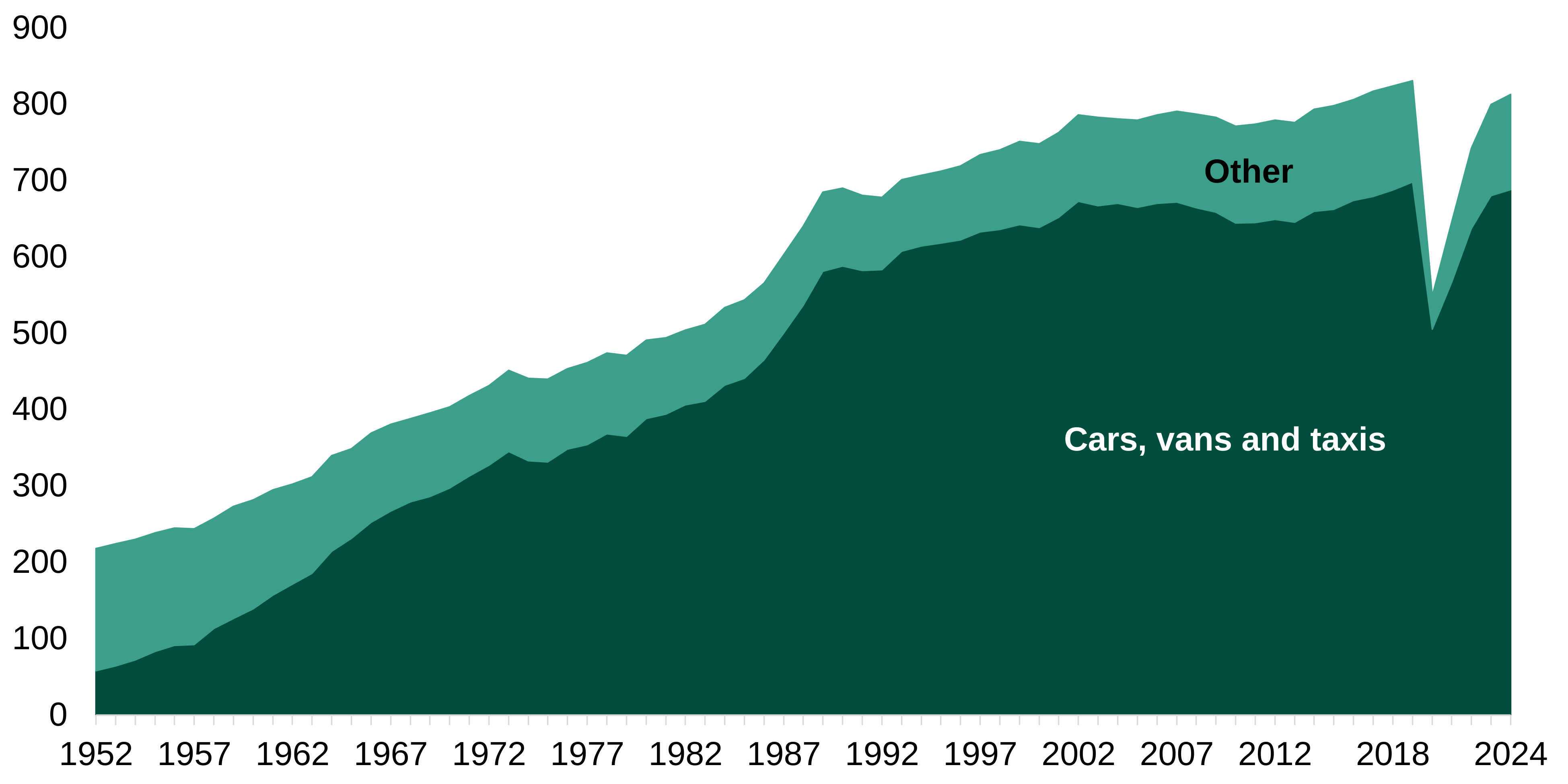
Chart 2 notes
Other modes include buses, rail, pedal cycles, motorcycles and scheduled and non-scheduled domestic flights by UK airlines.
Walking and passenger traffic by water are excluded in this section.
Chart 2 is a line chart showing the total passenger kilometres travelled by cars, vans and taxis against all other modes, since 1952. This chart shows that a very large majority of passenger kilometres are travelled by cars, vans and taxis. From 2012 to 2019 the number of passenger kilometres travelled by cars, vans and taxis fluctuated between 649 and 698 billion, compared to 130 to 138 billion for all other modes. In 2020, the distance travelled by cars, vans and taxis decreased by 28% compared to 2019 as a result of the onset of the coronavirus (COVID-19) pandemic and associated restrictions on travel. Between 2021 and 2024, the figures increased, and by 2024 the distance travelled by cars, vans, and taxis reached 688 billion passenger kilometres, around 1% (10 billion passenger kilometres) lower than in 2019.
Chart 3: Passenger transport by mode, excluding cars, vans and taxis (billion passenger kilometres): Great Britain, 1952 to 2024
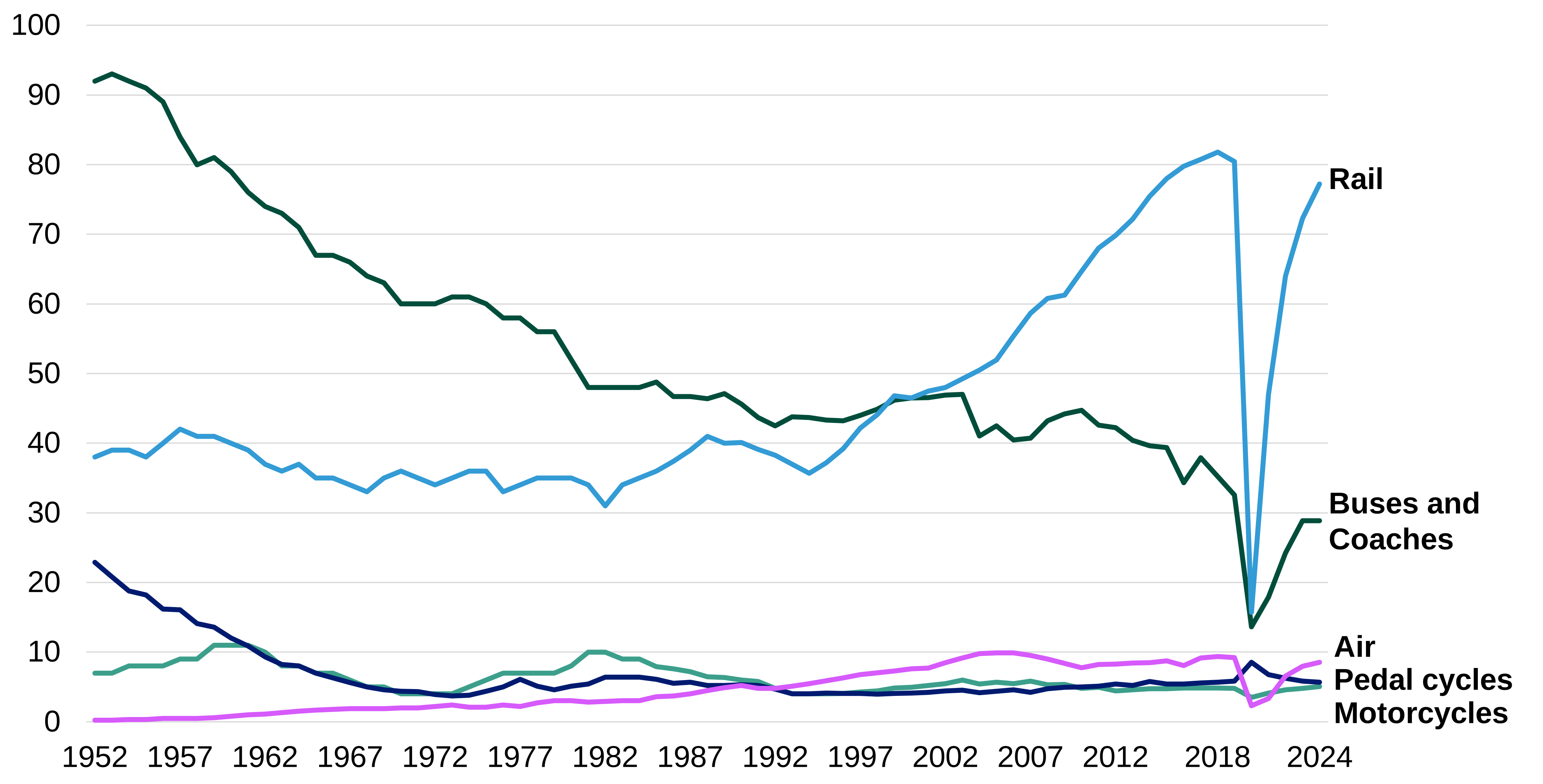
Chart 3 is a line chart presenting total passenger kilometres travelled since 1952, broken down by transport mode, excluding cars, vans and taxis. This chart shows that, except for pedal cycles, there was a sharp decrease in passenger kilometres for all modes in 2020 due to the onset of the COVID-19 pandemic and associated restrictions on travel. In the years since then, trends in all modes have gradually returned towards pre-pandemic levels, with total passenger kilometres for these modes in 2024 standing at 6%, or 7 billion passenger kilometres, lower than in 2019.
Further information about how COVID-19 and the associated restrictions impacted transport modes over 2020 can be found in Transport Statistics Great Britain: 2021.
Passenger journeys in Great Britain
Data source: TSGB0102
This section explores passenger journeys on public transport.
Considerations
Air figures in this section relate to calendar years, up to 2024. All other series are on a year ending March basis, up to March 2025.
In the year ending March 2025 in Great Britain, a total of 7 billion passenger journeys were completed using public transport vehicles, of which:
- 4 billion passenger journeys were completed using local buses
- 3 billion journeys were completed by rail, of which:
- 1.7 billion journeys were on National Rail
- 1.2 billion journeys were on the London Underground and Glasgow Subway
- 0.2 billion passenger journeys were completed on light rail and tram systems
- 0.019 billion (19 million) passenger journeys were completed on domestic flights
Chart 4: Passenger journeys by mode (billions): Great Britain, year ending March 2005 to the year ending March 2025
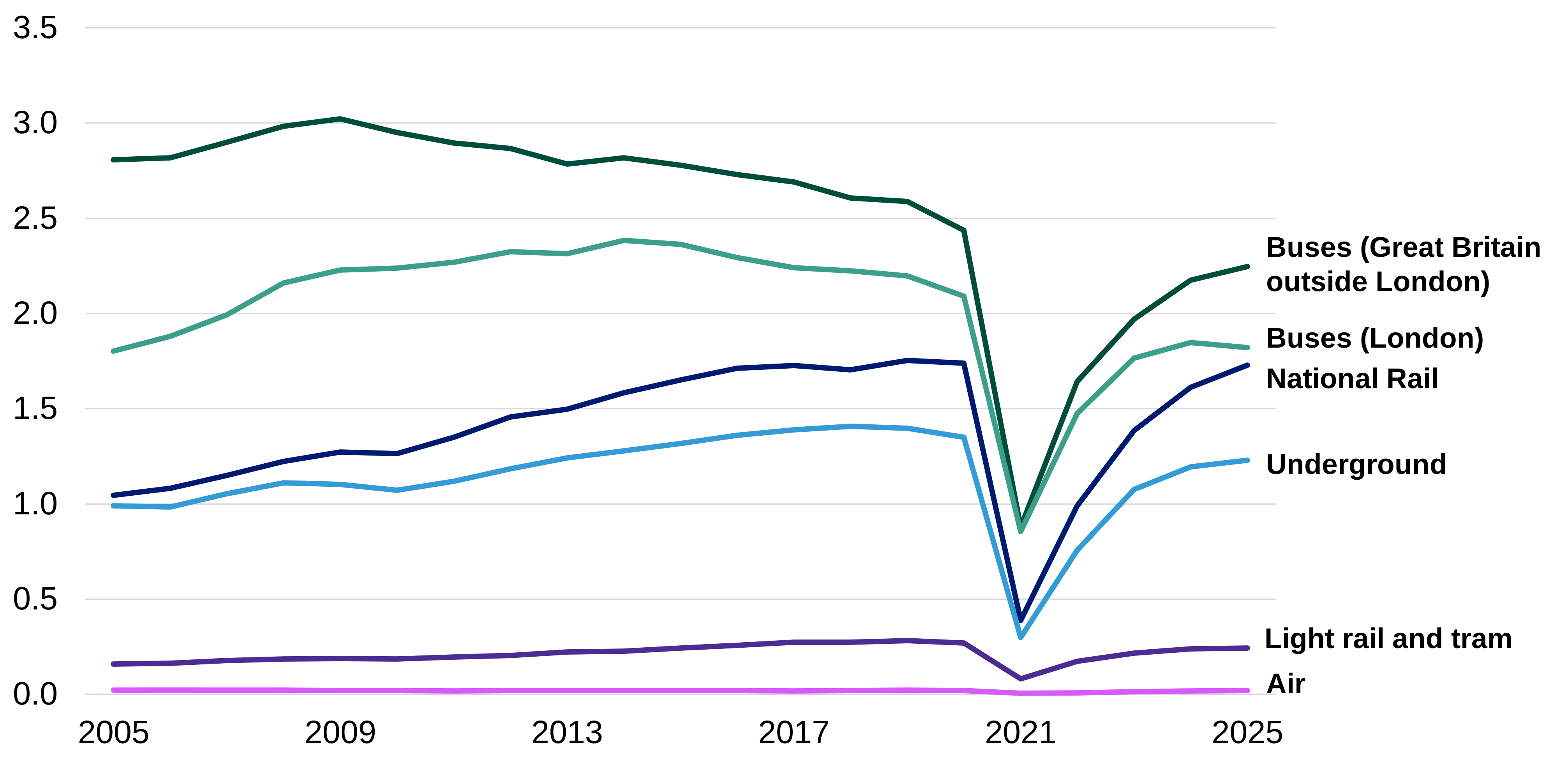
Chart 4 notes
Underground includes passenger journeys on the London Underground and the Glasgow Subway.
Light rail and tram includes passenger journeys on light rail, and modern and first generation trams.
Chart 4 is a line chart showing changes in passenger journeys by mode between the year ending March 2005 and year ending March 2025. The chart shows that up to 2019, total journeys on rail, underground and tram modes gradually increased before a sharp decline in 2020 and subsequent recovery. Journeys on buses outside London gradually decreased up to 2019, and London buses increased up to a peak in 2014 before a gradual decline. Following the drop in passenger journeys in 2020, figures for different modes have recovered at different rates, with National Rail journeys closer to pre-pandemic levels than other modes.
Personal travel in England
Data source: TSGB0103
This section explores personal travel for the average person in England. It includes trips on all transport modes, including private, public and active travel.
Chart 5: Average number of active, private and public transport trips (trips per person per year): England, 2002 to 2024
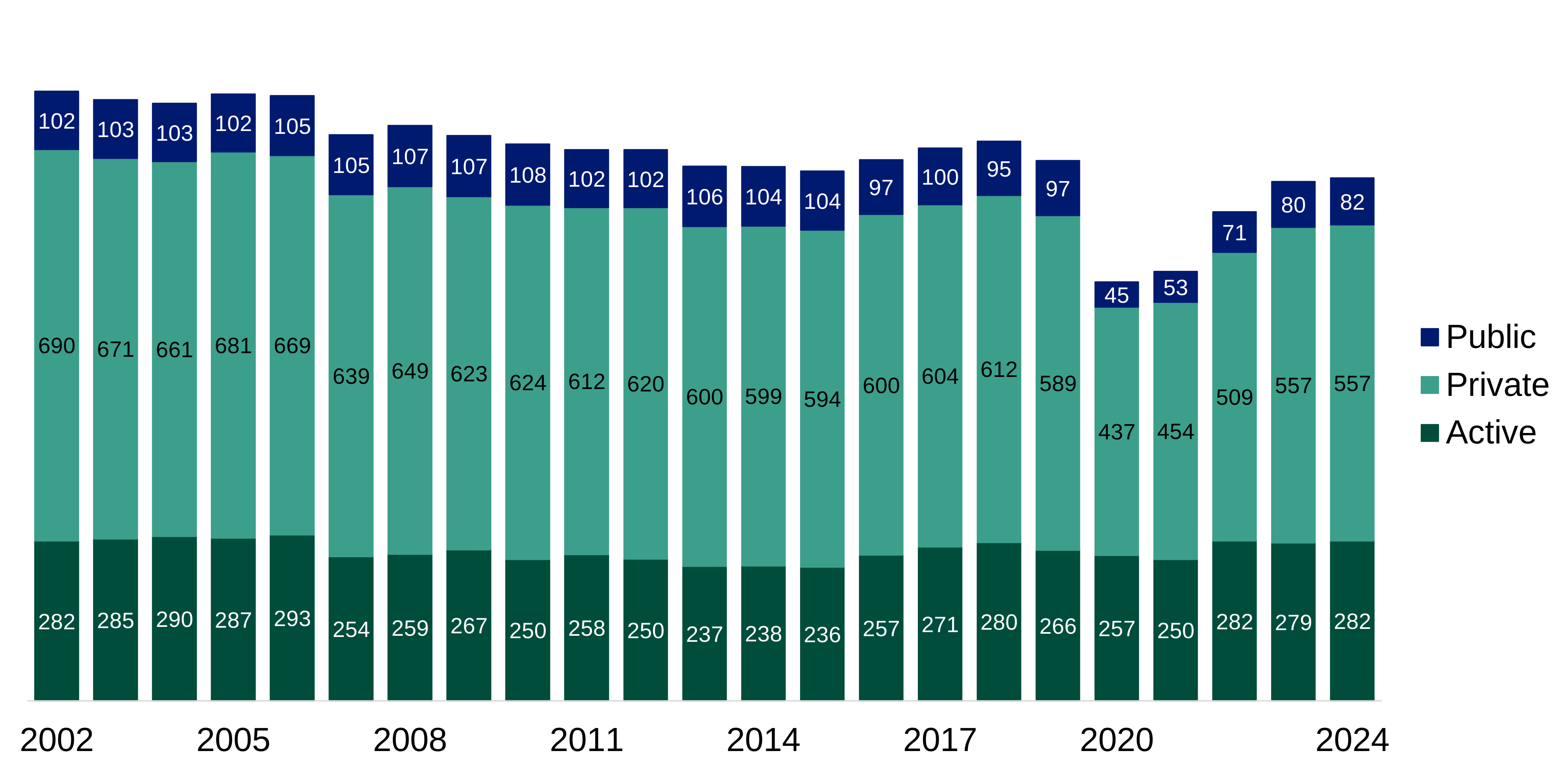
Chart 5 notes
Active travel includes walking, which includes all travel on foot plus non-motorised wheelchairs, and pedal cycling including e-bikes. Private transport includes car, van, motorcycle and other private transport.
Public transport includes local bus, non-local bus, London Underground, surface rail, taxi, ferry and domestic air travel.
The legend in this chart is presented in the same order as the categories within each bar.
Chart 5 is a stacked bar chart showing the average number of trips per person per year by active, private and public transport between 2002 and 2024. Private transport modes consistently account for the majority of travel for the average person, representing 60% of personal travel trips in 2024, or 557 trips per person per year. The chart shows clear decreases in both private and public transport modes in 2020 with gradual recovery in the number of trips since then. Active travel has remained relatively consistent over the time period and overall was less affected by the pandemic than private or public transport.
Why people travel
This section explores the reasons why people travel in England using all modes of transport.
In 2024:
- shopping was the most common reason for travel in England (18% of trips), followed by visiting friends (14%) and education (13%)
- commuting accounted for 12% of trips
- personal business accounted for 9%
Most modes of travel are used for a mixture of purposes, however, just under half (45%) of all trips by rail were for either commuting or business purposes in 2024.
Why people travel: By type of transport
Chart 6: Proportion of trips for each purpose by active, private and public transport modes (trips per person per year): England, 2024
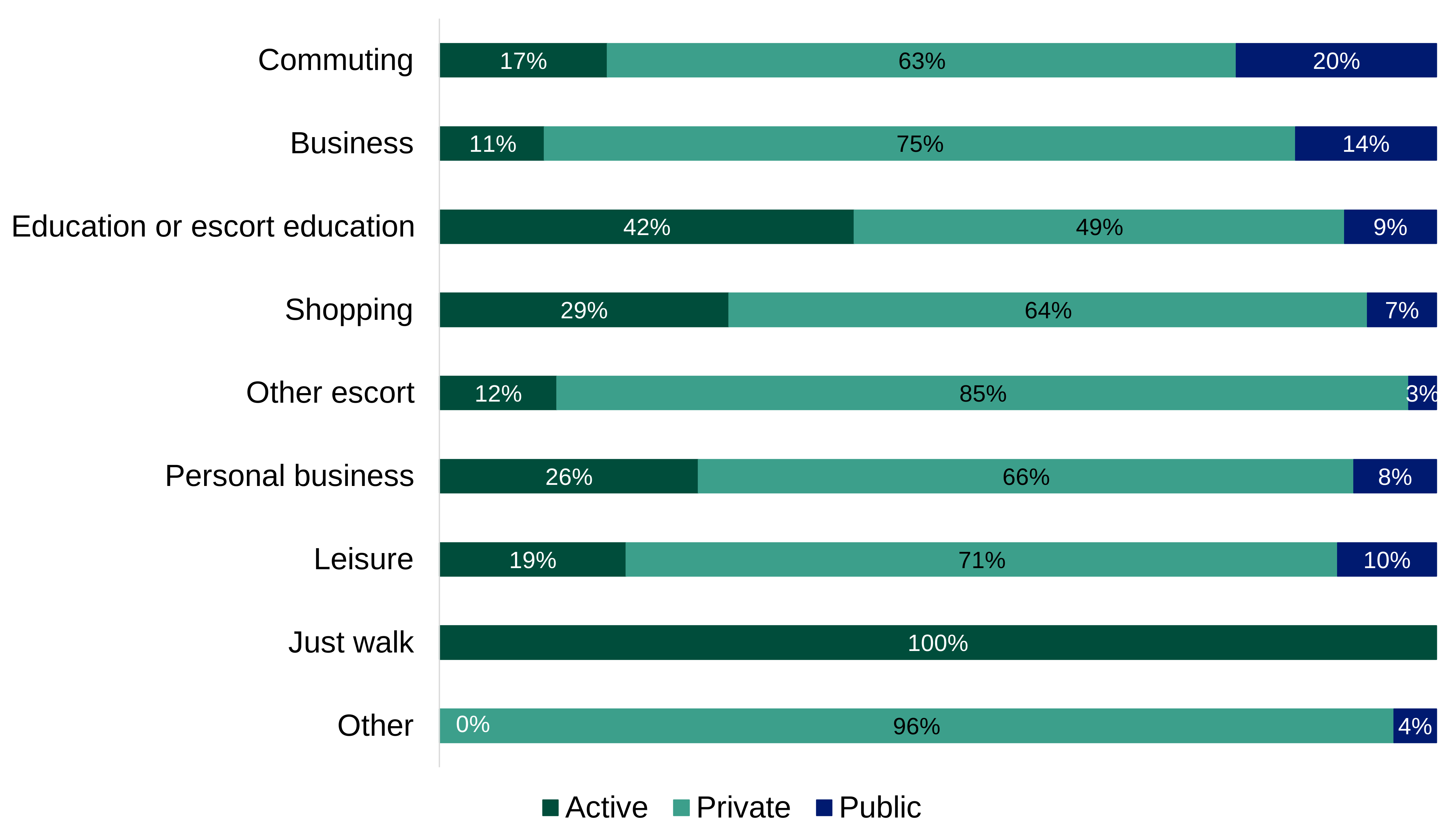
Chart 6 is a stacked bar chart showing the proportion of trips for each type of transport, for each purpose of travel. This chart shows that in 2024, private transport was used for more than half of trips for most purposes, except for education (49%) and just walk purpose (0%).
Public transport modes were most commonly used within the following trip purposes:
- commuting (20%)
- business (14%)
- leisure (10%)
Apart from ‘just walk’, active travel modes were most commonly used within the following trip purposes:
- education (42%)
- shopping (29%)
- personal business (26%)
Travel to school
Data source: NTS0613
Chart 7: Trips to and from school by main mode, ages 5 to 16: England, 2019 and 2024
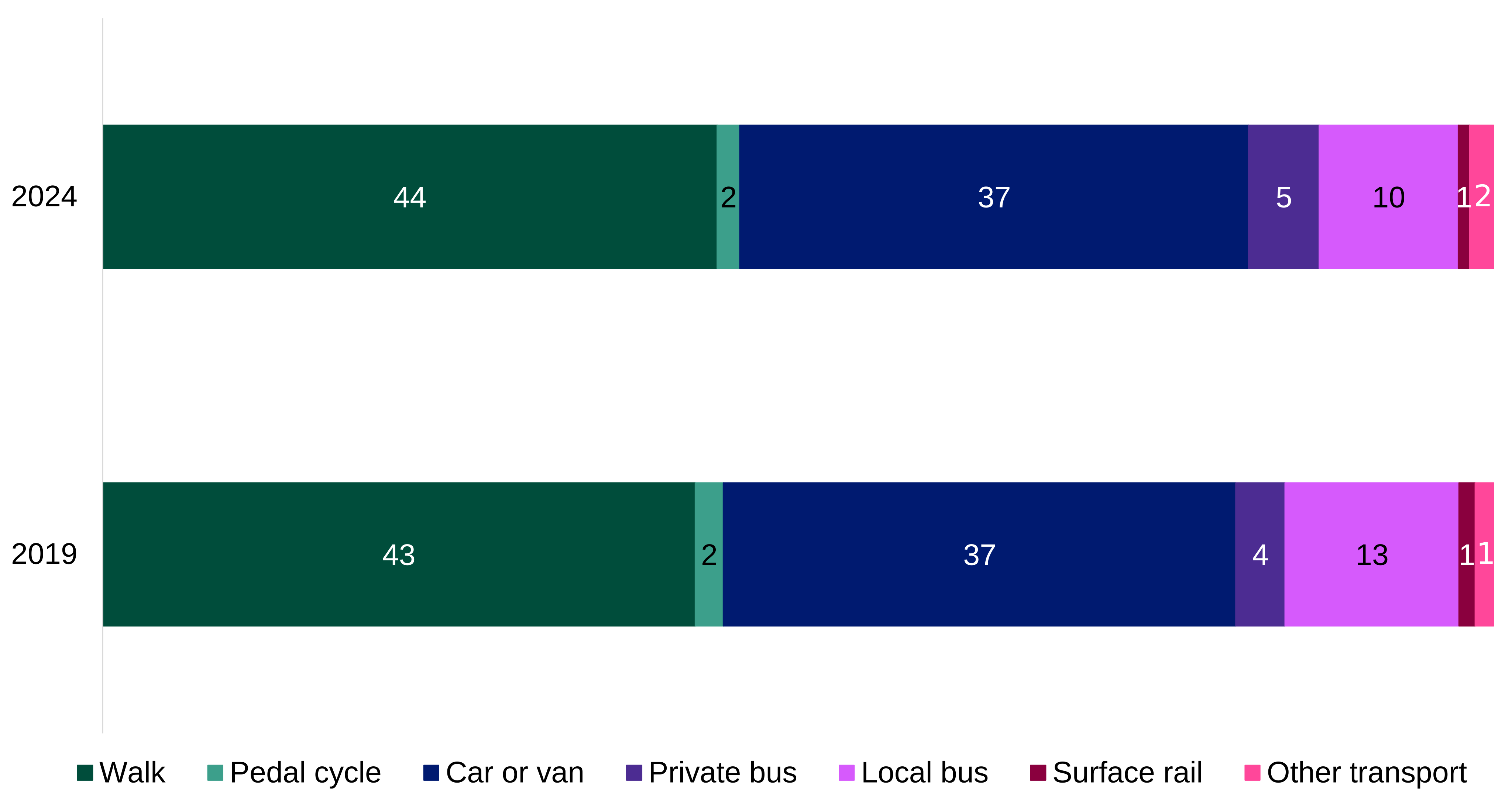
Chart 7 is a bar chart showing the main mode of travel to school for children aged 5 to 16 for 2019 and 2024, as recorded in travel diaries. The chart shows that walking has consistently been the most popular mode of travel to school, with travel by car the second most common. This does vary by age, children aged 11 to 16 made around 26% of trips to and from school by private or public bus, compared with 4% among those aged 5 to 10. Younger children are more likely to walk or be taken to school by car.
Why people travel: Travelling to work
Data source: TSGB0108 to TSGB0112
Considerations
Statistics in this section are sourced from the Office for National Statistics’ (ONS) Labour Force Survey (LFS). We note that the ONS have highlighted that ongoing challenges with response rates and weighting approach mean that labour market statistics derived from the LFS will be labelled as ‘official statistics in development’ until further review.
Further information on the quality and methodology for the LFS is published in the ONS quality and methodology information note.
In October to December of each year, the LFS contains questions on travel to work patterns, and the resulting data are then provided to DfT by the ONS for further analysis.
Differences in methodology, and sampling error, may mean that figures presented here differ from those found in other data sources, such as DfT’s National Travel Survey statistics.
Travelling to work: time spent commuting
It took on average 28 minutes to commute to work in Great Britain in 2024. This was a slight decrease on the average of 29 minutes in 2023.
Commuting time varied substantially depending on the mode of transport:
- 15 minutes by walking
- 26 minutes by car
- 40 minutes by bus or coach
- 64 minutes by National Rail
Travelling to work: method of transport
The 3 most common methods of travel for commuting in Great Britain, in descending order, were:
- car (67%)
- walk (11%)
- rail, including National Rail, underground, light rail and tram (11%)
Chart 8: Usual method of travel to work in Great Britain, 2024
| Mode | Percentage |
|---|---|
| Car | 67 |
| Walk | 11 |
| Rail | 11 |
| Bus or coach | 7 |
| Other | 5 |
Chart 8 notes
Percentages may not sum to 100% due to rounding.
Other includes bicycle, motorcycle and taxi or private hire vehicle.
Travel to work: commuting in the regions
When comparing the nations and regions of Great Britain, there are some variations in the usual method of commuting. Wales (79%) and Scotland (70%) have higher rates of commuting by car than England (66%).
London has much lower rates of commuting by car than other regions (25%) and is the only region where a majority commute using public transport.
Related statistics
Use the Transport Statistics Finder to explore, download and view the statistical content published by the department.
| Chapter section | Related topics |
|---|---|
| How much people travel in Great Britain |
Aviation Buses National Travel Survey Rail Taxis Vans |
| Passenger journeys in Great Britain |
Aviation Buses Light rail and tram National Travel Survey Rail |
| Personal travel in England | National Travel Survey |
| Why people travel | National Travel Survey |
Background information
We would welcome any feedback on these statistics by transport.statistics@dft.gov.uk. We will attempt to address any comments in a subsequent release.
Notes and definitions for each of the topics covered in TSGB are available.
About these statistics
The majority of the annual, official statistics in this release were independently reviewed by the Office for Statistics Regulation in July 2010. They comply with the standards of trustworthiness, quality and value in the Code of Practice for Statistics and should be labelled accredited official statistics. They undergo regular quality assurance reviews to ensure they meet customer needs.
Instructions for printing and saving
Depending on which browser you use and the type of device you use (such as a mobile or laptop) these instructions may vary.
You will find your print and save options in your browser’s menu. You may also have other options available on your device. Tablets and mobile device instructions will be specific to the make and model of the device.
How to search
Select Ctrl and F on a Windows laptop or Command and F on a Mac.
This will open a search box in the top right-hand corner of the page. Type the word you are looking for in the search bar and press enter.
Your browser will highlight the word, usually in yellow, wherever it appears on the page. Press enter to move to the next place it appears.
Contact details
Publications, dissemination and Transport Statistics Great Britain
Email transport.statistics@dft.gov.uk
Media enquiries 0300 7777 878
To hear more about DfT statistical publications as they are released, follow us on X at DfTstats.