Transport Statistics Great Britain: 2024 International Travel
Published 17 December 2025

© Crown copyright 2025
This publication is licensed under the terms of the Open Government Licence v3.0 except where otherwise stated. To view this licence, visit nationalarchives.gov.uk/doc/open-government-licence/version/3 or write to the Information Policy Team, The National Archives, Kew, London TW9 4DU, or email: psi@nationalarchives.gov.uk.
Where we have identified any third party copyright information you will need to obtain permission from the copyright holders concerned.
This publication is available at https://www.gov.uk/government/statistics/transport-statistics-great-britain-2025/transport-statistics-great-britain-2024-international-travel
About this release
Transport Statistics Great Britain (TSGB) presents an annual summary of statistics for cross-modal transport topics, mostly relating to the calendar year 2024. This condensed set of highlights focuses on international travel and is complemented by other Department for Transport (DfT) releases which present more detailed and recent statistics. See the Transport Statistics Finder to explore what other statistics are published by DfT.
Other cross-modal topics of TSGB, can be found in separate articles:
TSGB is an accredited official statistics publication and was independently reviewed by the Office for Statistics Regulation in July 2010. For more information, see the About these statistics section.
Headline figures in 2024
- 258.5 million passengers travelled internationally to or from UK airports
- 18.4 million passengers travelled internationally by sea (including cruise and ferry passengers)
- 18.6 million passengers travelled internationally via rail (Channel Tunnel)
- 70% of international air passengers at UK airports travelled to or from Europe
- all short sea (ferry) routes are to and from Europe with the majority (74%) of passenger movements between France and the UK
- travelling trends throughout the year, for air and sea, have returned to pre-pandemic patterns with passenger numbers tending to peak during the summer holidays
How we travel
Data sources: AVI0105, SPAS0101, SPAS0108
In 2024, in the UK:
- the majority of international passengers travelled by air
- the number of international passenger movements increased marginally between 2023 and 2024 across air, sea and rail modes
- there were slightly more international air passenger movements in 2024 than in 2019, but fewer sea and rail movements, resulting in the total number of international passenger movements remaining below 2019 levels
Definitions
Passenger data is collected differently across modes of transport.
Air: air passenger data is collected from UK airports by the Civil Aviation Authority (CAA). The CAA counts a terminal passenger as a passenger joining or leaving an aircraft at the UK reporting airport. International Air passengers include those travelling between UK airports and the Crown Dependencies (Jersey, Guernsey and the Isle of Man).
In this chapter, air passengers travelling to or from oil rigs are counted as international passengers. This aligns with the approach taken by the CAA in their UK airport data, and with the aviation data tables accompanying this release.
Sea: international short sea routes include all ferry routes between Great Britain or Northern Ireland and the rest of Europe. See DfT’s port freight notes and definitions for further information on which countries are included in these regions. International Sea passengers do not include passengers travelling between ports in the UK and ports in crown dependencies, such as the Isle of Man, these are included under domestic sea passenger figures.
Sea passenger figures include tourists, leisure travel, business travel, and freight drivers accompanying cargo.
Rail: rail passenger data is collected by the Office of Rail and Road and includes Eurotunnel and Eurostar passengers.
Chart 1: Number of international passengers, in millions, by air and other modes, between 2014 and 2024
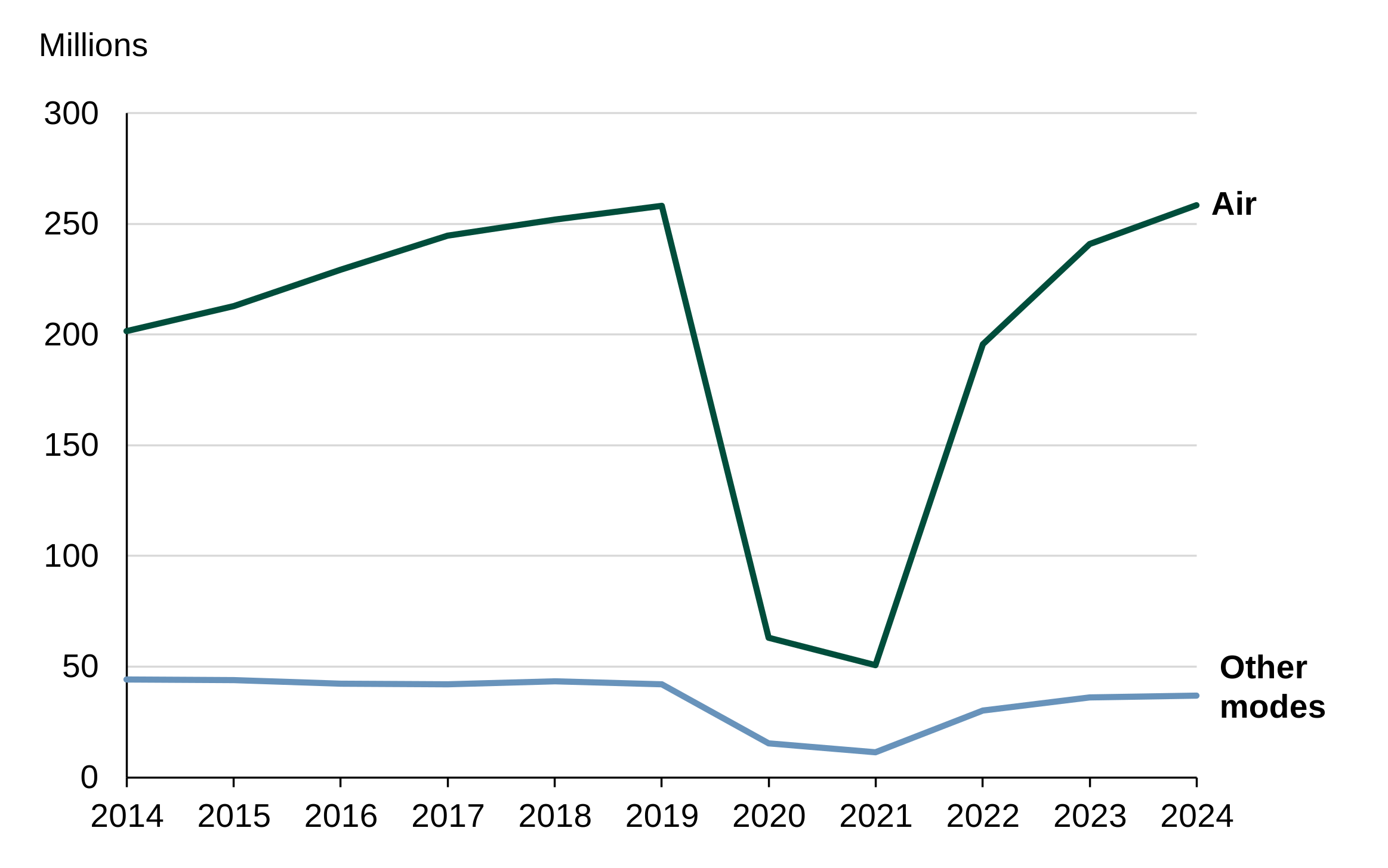
Chart 1 notes
Other modes include sea and rail.
Data sources for passenger data are different across modes of transport.
Chart 1 is a line chart showing the total number of international air passenger movements compared to other modes (sea and rail), between 2014 and 2024. This chart shows that the number of international passengers is substantially higher for air compared to other modes. International air travel serves routes worldwide, whereas sea and rail serve travel to Europe only, with the exception of some international cruise voyages.
The number of international air passengers steadily increased between 2014 and 2019, from 201.7 million to 258.3 million. In 2020, the number of international passengers decreased sharply to 63.2 million, and 50.6 million in 2021, in line with travel restrictions being imposed during the COVID-19 pandemic. In 2022, the number of passengers increased again sharply, to 195.6 million, and by 2024 had reached 258.5 million, slightly above the number of passengers in 2019.
Chart 2: Number of rail and sea international passengers, in millions, between 2014 and 2024

Chart 2 note
Data sources for passenger data are different across modes of transport.
Chart 2 presents 2 line charts, showing the total number of international passengers for rail and sea. This chart shows that the number of passengers for both rail and sea was relatively stable between 2014 and 2019, ranging from 20.5 to 23.2 million passengers for sea and from 20.6 to 21.6 million passengers for rail. In 2020 and 2021, the number of sea and rail passengers decreased sharply, down to 5.6 million for sea, and 5.8 million for rail in 2021.
In 2024, international passenger numbers steadily increased across both modes but are still lower than 2019 levels. International passengers travelling by:
- rail increased by 1% from 18.3 million in 2023 to 18.6 million in 2024
- sea increased by 3% from 17.9 million in 2023 to 18.4 million in 2024
Where we travel
Data sources: AVI0105, SPAS0101, SPAS0108
Travel across the world
Of the 258.5 million international passengers at UK airports in 2024:
- 70% travelled to and from Europe
- 10% travelled to and from North America
- less than 1% travelled to and from oil rigs
- 20% travelled to and from other parts of the world
Of the 18.4 million international sea passenger movements in 2024, 15.3 million (83%) were international short sea (ferry) passengers and 3.1 million (17%) were international cruise passengers.
Of the 15.3 million short sea passengers:
- 74% travelled between France and the UK
- 26% travelled on other international ferry routes between Europe and the UK
Most international cruises travel to Europe and Mediterranean countries, however DfT does not collect data on cruise calls and destinations.
Chart 3: International passenger volumes, in millions, by origin and destination, by air, sea and rail, from 2014 to 2024
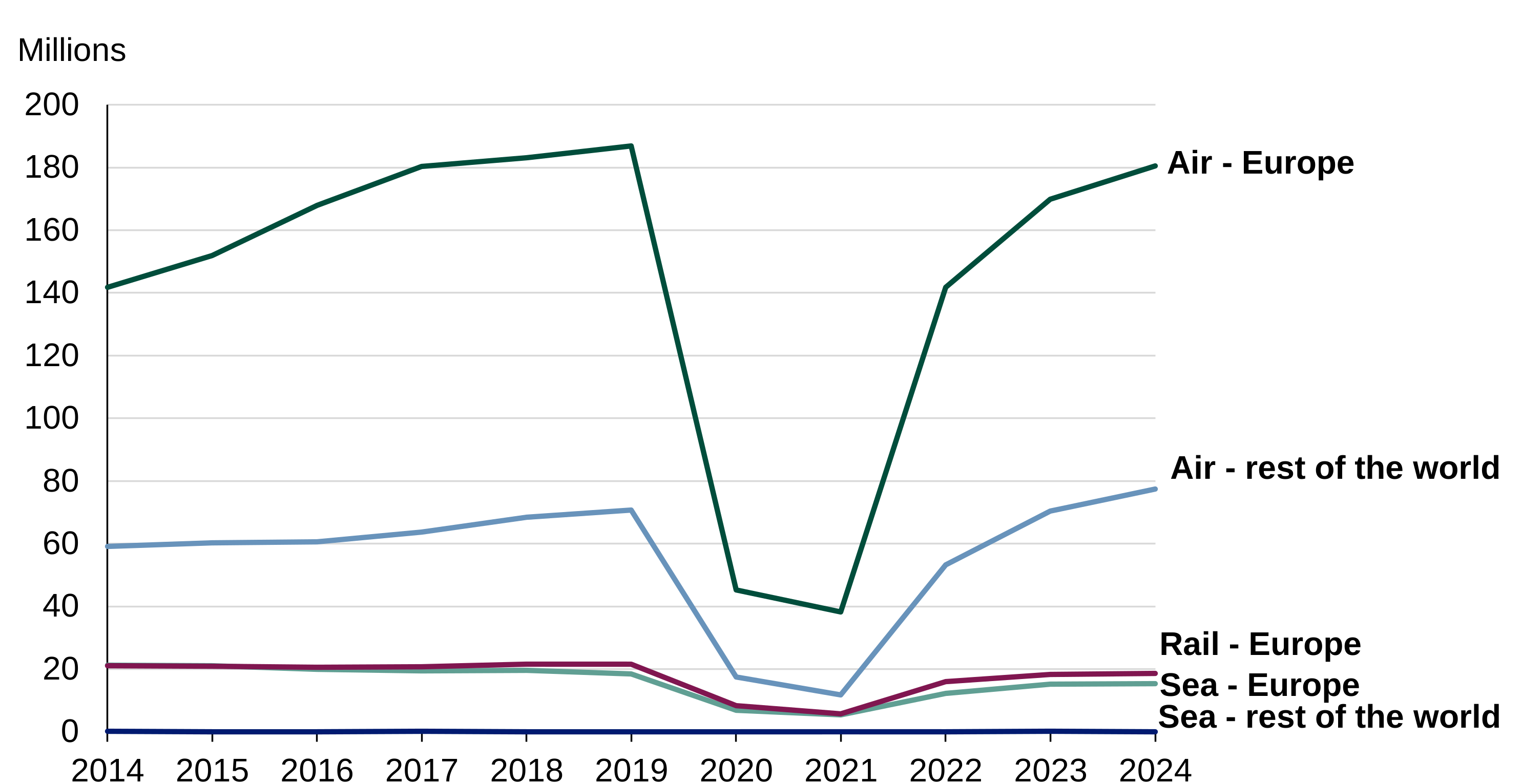
Chart 3 notes
This chart does not show rail passengers to the rest of the world because the Channel Tunnel only serves European destinations.
Sea passenger volumes in this chart only include short sea ferry passengers and long sea passengers as destination breakdowns for international cruise passengers by Europe and rest of the world are not available.
Chart 3 is a line chart showing the number of international passengers, broken down by world region and mode. This chart shows that the majority of international passengers are air passengers travelling to and from Europe. Between 2019 and 2021, the number of passengers across all modes and destinations decreased sharply, due to travel restrictions being imposed during the COVID-19 pandemic, before increasing again in 2022, 2023 and 2024.
Between 2014 and 2019, international air passengers to or from Europe increased by 32%, more than the increase in passengers to or from the rest of the world (20%).
Between 2014 and 2019, the number of international sea passengers to and from the rest of the world fluctuated between 50,000 and 90,000, with 75,000 passengers travelling in 2019, 10% less than in 2014.
Compared to 2019 levels, in 2024:
- air passenger volumes between the UK and Europe were around 3% lower, but 9% higher for travel between the UK and the rest of the world
- sea passengers between the UK and Europe were 17% lower, but sea passengers between the UK and the rest of the world were 51% lower
- rail passengers between the UK and Europe were 14% lower
Travel within Europe
Chart 4: UK air passenger volumes, by European region, from 2014 to 2024, indexed at 2014 levels
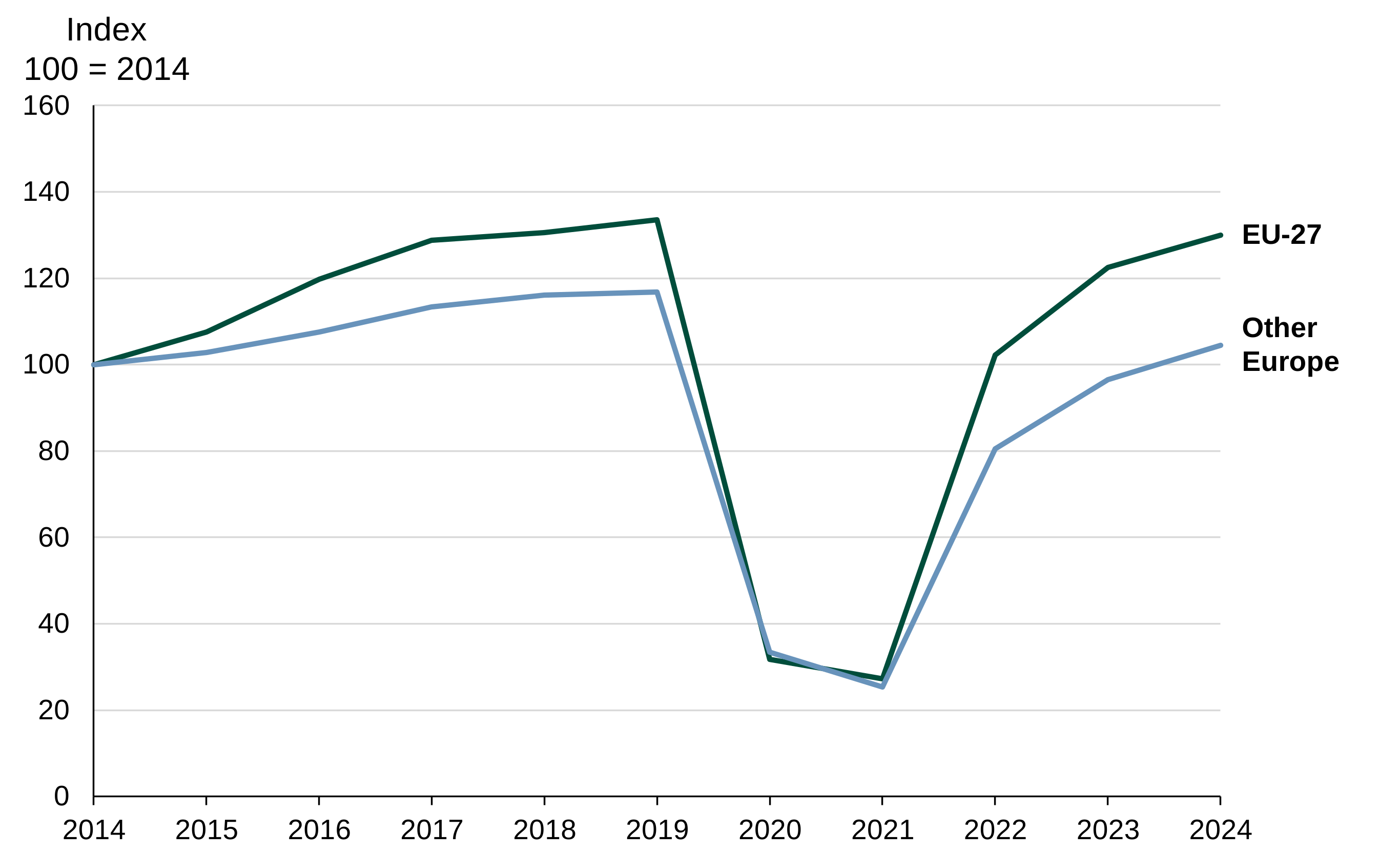
Chart 4 is a line chart showing air passenger volumes, indexed at 2014 levels for EU-27 countries compared to other European countries. The chart shows that between 2014 and 2019, air passenger volumes between the UK and EU-27 countries increased at a higher rate than for other European countries. Between 2019 and 2021, air passenger volumes decreased sharply for all European countries. In 2022, 2023 and 2024, relative to 2014, air passenger volumes to and from EU-27 countries recovered more than for the rest of Europe. Passenger travel to some rest of Europe countries has been affected by airspace closures and travel restrictions caused by the Russian invasion of Ukraine since 2022.
Chart 5: Sea passenger volumes to and from Europe, from 2014 to 2024, indexed at 2014 levels
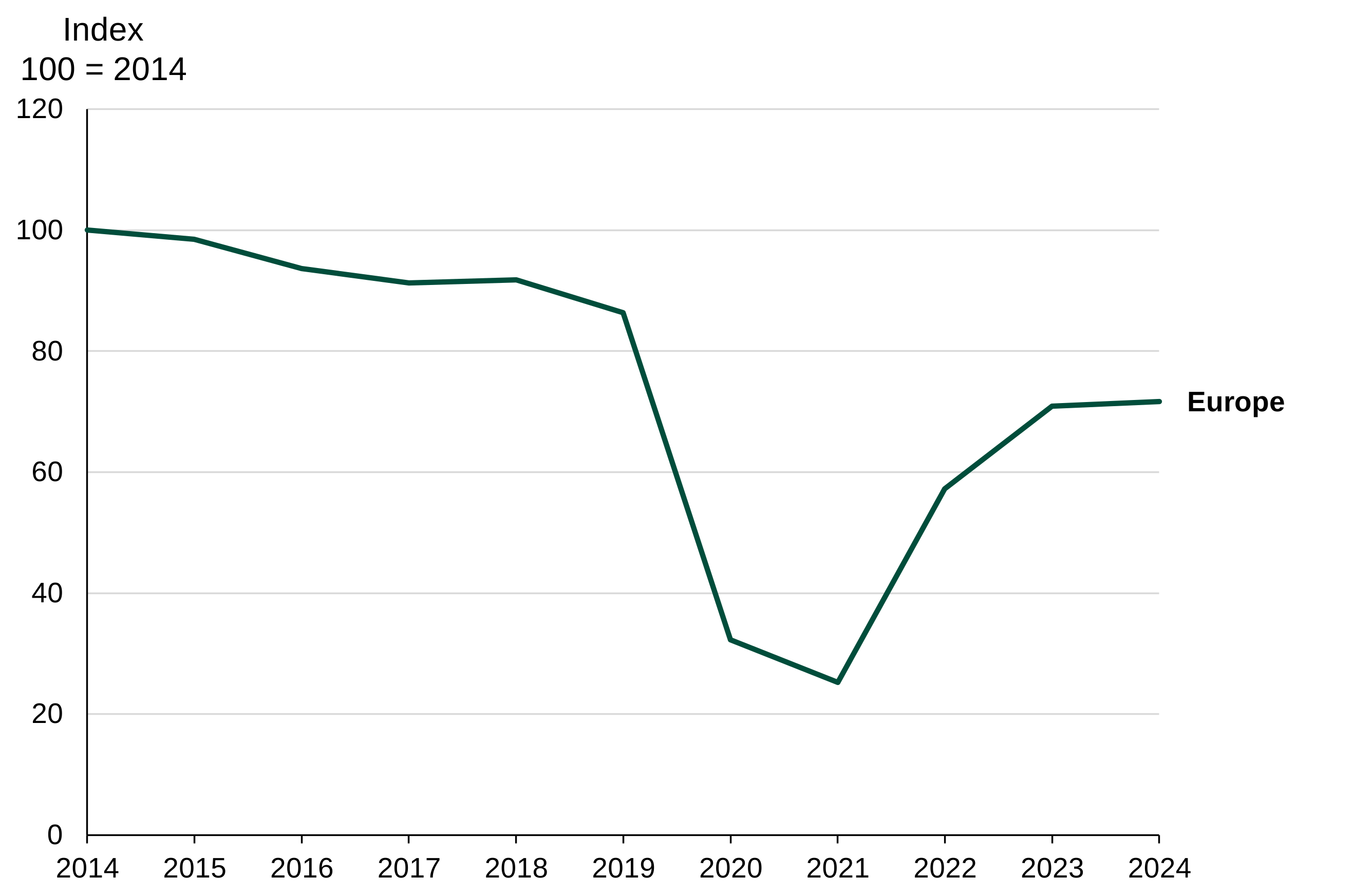
Chart 5 is a line chart showing sea passenger volumes, indexed at 2014 levels for European countries. The chart shows that between 2014 and 2019, sea passenger volumes decreased steadily, before sharply plummeting between 2019 to 2020. Between 2020 and 2021, sea passenger volumes decreased further, before increasing sharply between 2021 and 2023. In 2024, sea passenger volumes to all European countries stayed relatively stable compared to 2023.
When we travel
Data sources: SPAS0107, monthly international air passenger data is available from CAA airport data
Considerations
This section focuses on air and short sea travel only. A monthly breakdown of Channel Tunnel figures is not available.
Chart 6: Monthly international air and short sea passenger movements in 2019, 2023 and 2024
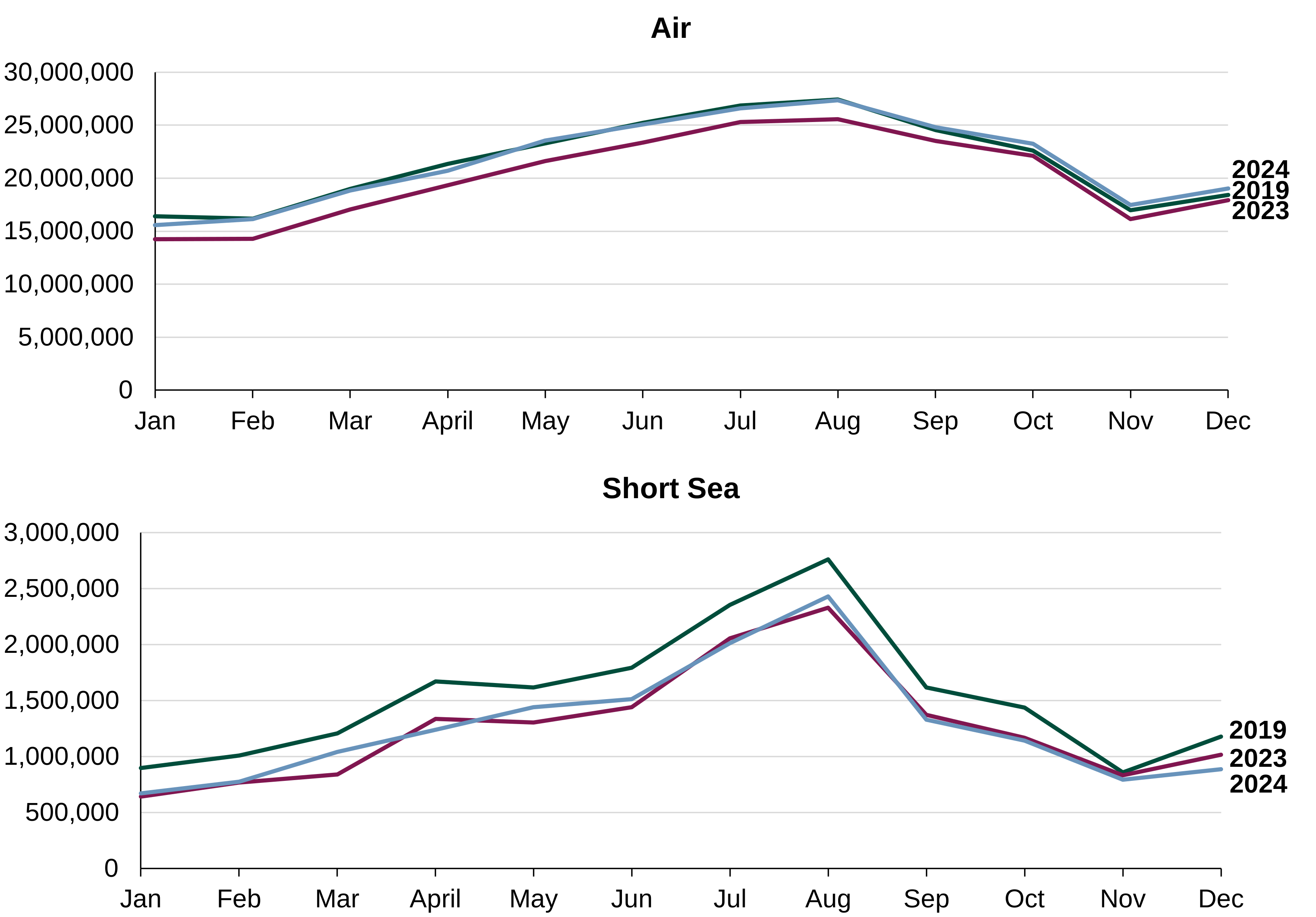
Chart 6 presents 2 line charts, comparing the number of air and sea passenger movements across the calendar year separately, for 2019, 2023 and 2024. The chart shows that for both international air and short sea routes, passenger numbers are continuing to follow pre-pandemic trends. Air passenger numbers in 2024 were closer to 2019 than 2023, sometimes exceeding 2019 levels, while sea passenger numbers were close to 2023 numbers for most of 2024.
This chart also shows seasonal patterns throughout the year, in 2019, 2023 and 2024. The number of air passengers typically steadily increases throughout the year before decreasing after August, whereas the number of sea passengers increases more sharply in the summer months, then decreases in the autumn. The number of sea and air passengers increases again slightly in December reflecting travel for Christmas.
Related statistics
Use the Transport Statistics Finder to explore, download and view the statistical content published by the department.
The sea passenger statistics, all routes 2024 release covers the impact of the pandemic on sea passenger routes, as well as a timeline of events relating to international travel.
Other published, related DfT statistics are:
Background information
We would welcome any feedback on these statistics by transport.statistics@dft.gov.uk. We will attempt to address any comments in a subsequent release.
Notes and definitions for each of the topics covered in TSGB are available.
About these statistics
The majority of the annual, official statistics in this release were independently reviewed by the Office for Statistics Regulation in July 2010. They comply with the standards of trustworthiness, quality and value in the Code of Practice for Statistics and should be labelled accredited official statistics. They undergo regular quality assurance reviews to ensure they meet customer needs.
Instructions for printing and saving
Depending on which browser you use and the type of device you use (such as a mobile or laptop) these instructions may vary.
You will find your print and save options in your browser’s menu. You may also have other options available on your device. Tablets and mobile device instructions will be specific to the make and model of the device.
How to search
Select Ctrl and F on a Windows laptop or Command and F on a Mac.
This will open a search box in the top right-hand corner of the page. Type the word you are looking for in the search bar and press enter.
Your browser will highlight the word, usually in yellow, wherever it appears on the page. Press enter to move to the next place it appears.
Contact details
Publications, dissemination and Transport Statistics Great Britain
Email transport.statistics@dft.gov.uk
Media enquiries 0300 7777 878
To hear more about DfT statistical publications as they are released, follow us on X at DfTstats.