Transport Statistics Great Britain: 2024 Freight
Published 17 December 2025

© Crown copyright 2025
This publication is licensed under the terms of the Open Government Licence v3.0 except where otherwise stated. To view this licence, visit nationalarchives.gov.uk/doc/open-government-licence/version/3 or write to the Information Policy Team, The National Archives, Kew, London TW9 4DU, or email: psi@nationalarchives.gov.uk.
Where we have identified any third party copyright information you will need to obtain permission from the copyright holders concerned.
This publication is available at https://www.gov.uk/government/statistics/transport-statistics-great-britain-2025/transport-statistics-great-britain-2024-freight
About this release
Transport Statistics Great Britain (TSGB) presents an annual summary of statistics for cross-modal transport topics, mostly relating to the calendar year 2024. This condensed set of highlights focuses mainly on domestic freight and is complemented by other Department for Transport (DfT) releases presenting more detailed and recent statistics. Some international freight cross-modal comparisons are also included, which have been calculated using DfT analysis of HMRC Trade data. See the Transport Statistics Finder to explore what other statistics are published by DfT.
Other cross-modal topics of TSGB, can be found in separate articles:
These are accredited official statistics and were independently reviewed by the Office for Statistics Regulation in July 2010. For more information, see the About these statistics section.
Headline figures in 2024
Domestic freight in the UK:
- 206 billion tonne-kilometres of goods moved
- the majority (82%) was moved by road
- 1.59 billion tonnes was the total amount of goods lifted by GB-registered heavy goods vehicles
- 8% of total goods lifted by road were inter-modal freight journeys
DfT’s analysis of HMRC Trade data showed that, for UK international freight:
- by weight, around 70% was imports and 30% was exports
- by value, around 61% was imports and 39% was exports
- sea accounted for the majority of freight by volume (86%) and value (54%)
- air accounted for less than 1% of freight by volume but 33% of the total value of freight moved
Domestic freight
Data source: TSGB0401 to TSGB0403
Considerations
In this section, and in table TSGB0401, the rail data relates to financial years. Other transport modes relate to calendar years.
Goods moved
Definitions
Goods moved: the weight of goods carried, multiplied by the distance hauled, measured in tonne kilometres. This is a measure of the total freight activity, accounting for both the distance travelled and the weight of goods carried.
206 billion tonne-kilometres of domestic freight were moved in the UK in 2024, which is broadly similar to 2023 (207 billion tonne-kilometres).
In 2024, in the UK, 168 billion tonne-kilometres were moved by roads, 21 by water and 17 by rail.
Chart 1: Proportion of domestic freight moved in the UK in 2024, by transport mode (billion tonne-kilometres)
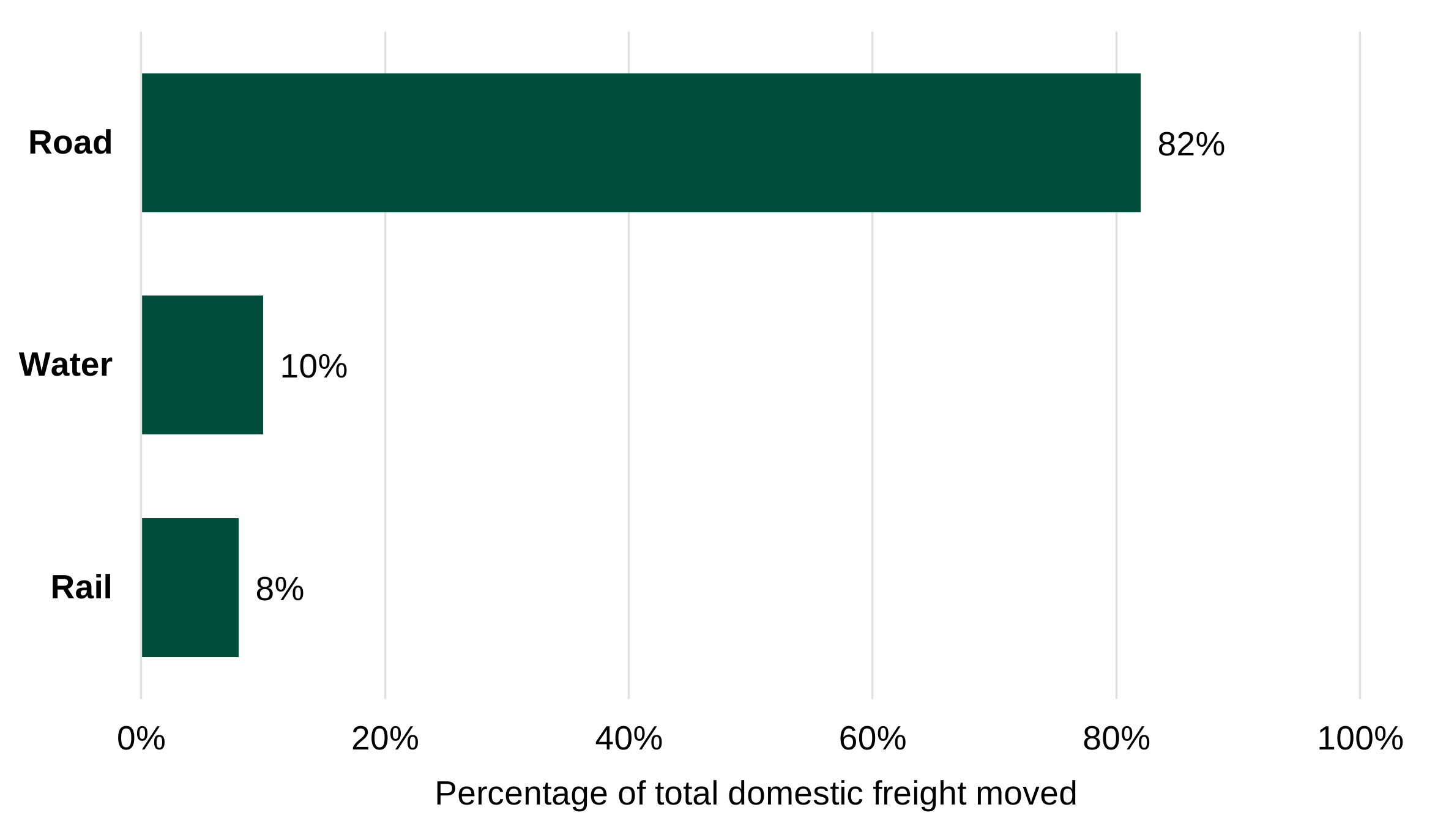
Chart 1 is a horizontal bar chart showing the proportion of domestic freight moved in the UK by transport mode. This chart shows that, in 2024, 82% of domestic freight was moved by road, 10% by water and 8% by rail.
Road freight has consistently accounted for the largest share of domestic freight movement in the UK, followed by goods transported by water, with rail freight representing the smallest proportion. Despite fluctuations in overall trends, the relative proportions of these modes of transport have remained stable since data comparisons began in 2000.
Chart 2: Goods moved by domestic freight mode, from 2014 to 2024 (billion tonne-kilometres)
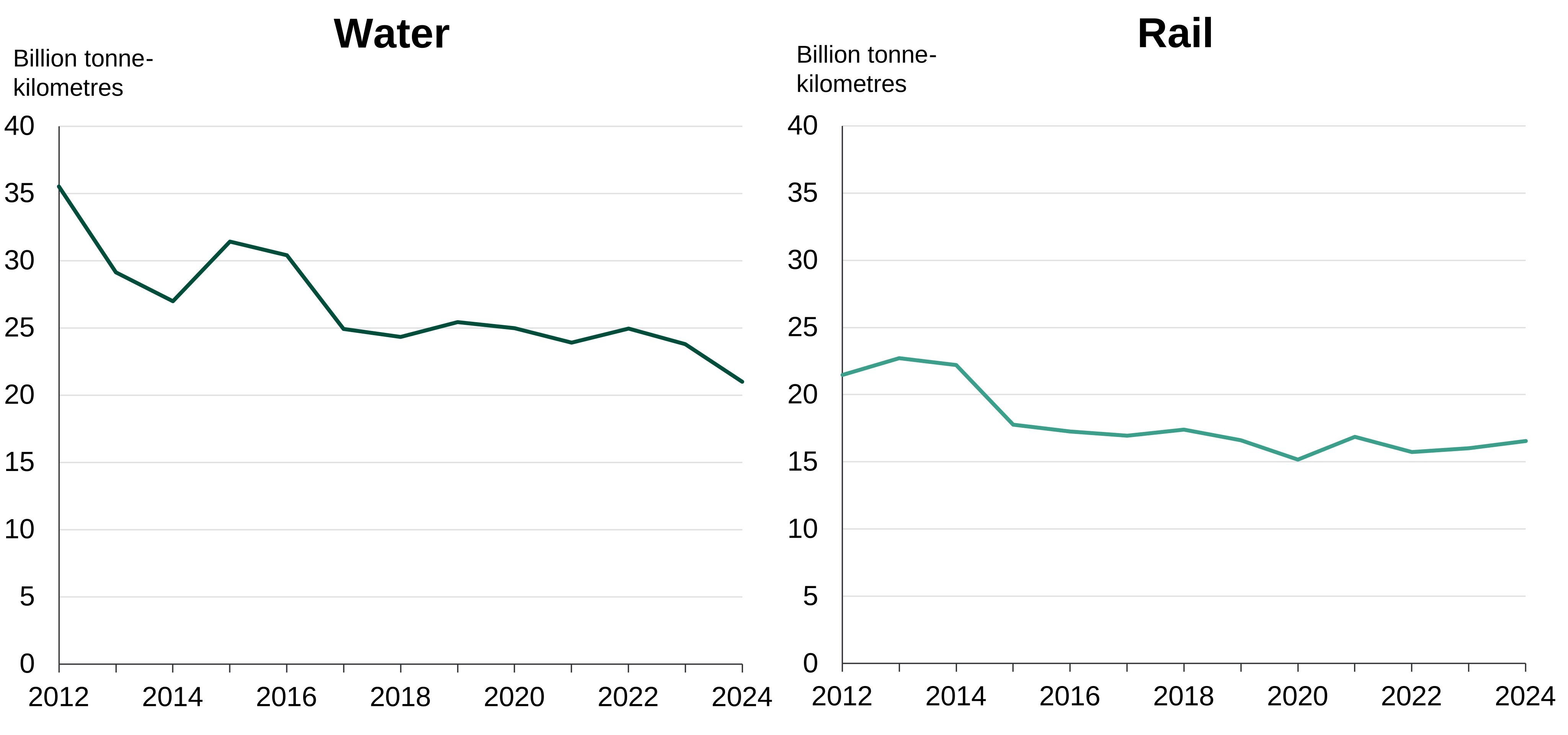
Chart 2 notes
This chart does not include a time series for road freight. This is due to a methodology change in road freight data in 2021 which means data before and after 2021 should not be compared.
More information can be found in the methodology note. This means no long-term data trends are available for domestic road freight statistics.
Chart 2 presents 2 line charts, showing domestic goods moved by water and rail, between 2014 and 2024. This chart shows that goods moved by sea and rail have both generally declined over the past 10 years. Over this period, water volumes have remained greater than the volume moved by rail.
Domestic goods moved by road increased by 1% between 2023 and 2024, rising from 167 to 168 billion tonne kilometres. Quarterly goods moved in 2023 varied from 39 to 44 billion tonne kilometres, with a low point in quarter 1 before recovering later in the year. In 2024, quarterly totals were more stable, ranging from 42 to 43 billion tonne kilometres throughout the year.
Domestic goods moved by water broadly decreased between 2012 and 2017, from 36 to 25 billion tonne kilometres then remained stable between 2018 and 2023, ranging from 24 to 25 billion tonne kilometres. In 2024, the volume of domestic goods moved by water declined to 21 billion tonne-kilometres, representing a 12% decrease compared with 2023. This reduction was primarily driven by lower movements of both domestic liquid bulk and dry bulk goods. A similar pattern was observed in UK international sea freight, where liquid bulk and dry bulk tonnage also fell over the same period. However, international container traffic by sea have continued to grow in this period – this type of cargo is more likely be moved by rail, than water, domestically, leading to increased rail freight traffic.
Domestic goods moved by rail rose from 21 to 23 billion-tonne kilometres between 2012 and 2013, before falling to 18 billion tonne kilometres by 2015. From 2016 to 2019, volumes remained stable at 17 billion-tonne kilometres. In 2020 there was a slight dip to 15 billion tonne kilometres. Since then, domestic goods moved increased to 17 billion-tonne km. In 2024 there was a 5% increase compared with the previous year. Recent growth has been driven mainly by intermodal maritime and construction traffic, following the 2015 policy decision to phase out coal use in power stations, reducing coal traffic, which has historically made up the large proportion of rail freight.
Goods lifted
Definitions
Goods lifted: the weight of goods carried, measured in tonnes. This is a measure of the amount of goods transported around the UK.
In 2024, 1.59 billion tonnes of goods were lifted in the UK by GB-registered heavy goods vehicles (HGVs) an increase of 2% compared to 2023 (1.55 billion tonnes) (Domestic road freight statistics, United Kingdom: 2024). In 2023, quarterly totals fluctuated substantially, with a high of 411 million tonnes in quarter 3 and a low of 360 million tonnes in quarter 4. This pattern was more stable in 2024, when quarterly figures ranged between 388 and 408 million tonnes.
The total amount of goods lifted by water decreased by 1% to 90 million tonnes in 2024 from 2023 (91 million tonnes). Over the same period, the total amount of goods lifted by rail (73 million tonnes) increased by 6% compared to 2023 (69 million tonnes).
Definitions
Inter-modal road freight journey: a heavy goods vehicle (HGV) journey where a different mode of transport is used to transfer goods to or from the HGV. Here, a journey is defined as goods transported from an origin to a destination by an HGV.
In 2024, inter-modal road freight journeys accounted for 8% (122 million tonnes) of the 1.59 billion tonnes of goods lifted by domestic road freight. For these inter-modal road freight journeys, 71% of goods lifted (87 million tonnes) were carried on journeys that began or ended at a shipping dock, 28% (34 million tonnes) on journeys that began or ended at a rail siding or terminal, and the remaining 2% (3 million tonnes) at airports (table RFS0132).
International freight
Data source: DfT analysis of HMRC Trade data
In 2024, UK international freight was made up of 70% imports and 30% exports by weight, and 61% imports and 39% exports when measured by value (in pounds sterling).
The amount of international freight moved varied by mode of transport, with notable differences depending on whether goods were measured by weight or by value.
By weight:
- sea accounted for the majority, 86%, of all freight movements
- fixed installations, such as gas pipelines, accounted for 9%
- freight traded by sea/rail (such as Eurotunnel) accounted for 2%
- rail traded around 1%
- air freight accounted for the smallest amount at just less than 1%
By value:
- sea accounted just over half at 54%
- air freight accounted 33%
- freight traded by sea/rail accounted for 8%
- rail traded around 3%
- fixed installations accounted for 2%
International freight imports and exports by weight
Chart 3: Proportion of UK international freight by direction and modes of transport in 2024 (million tonnes)
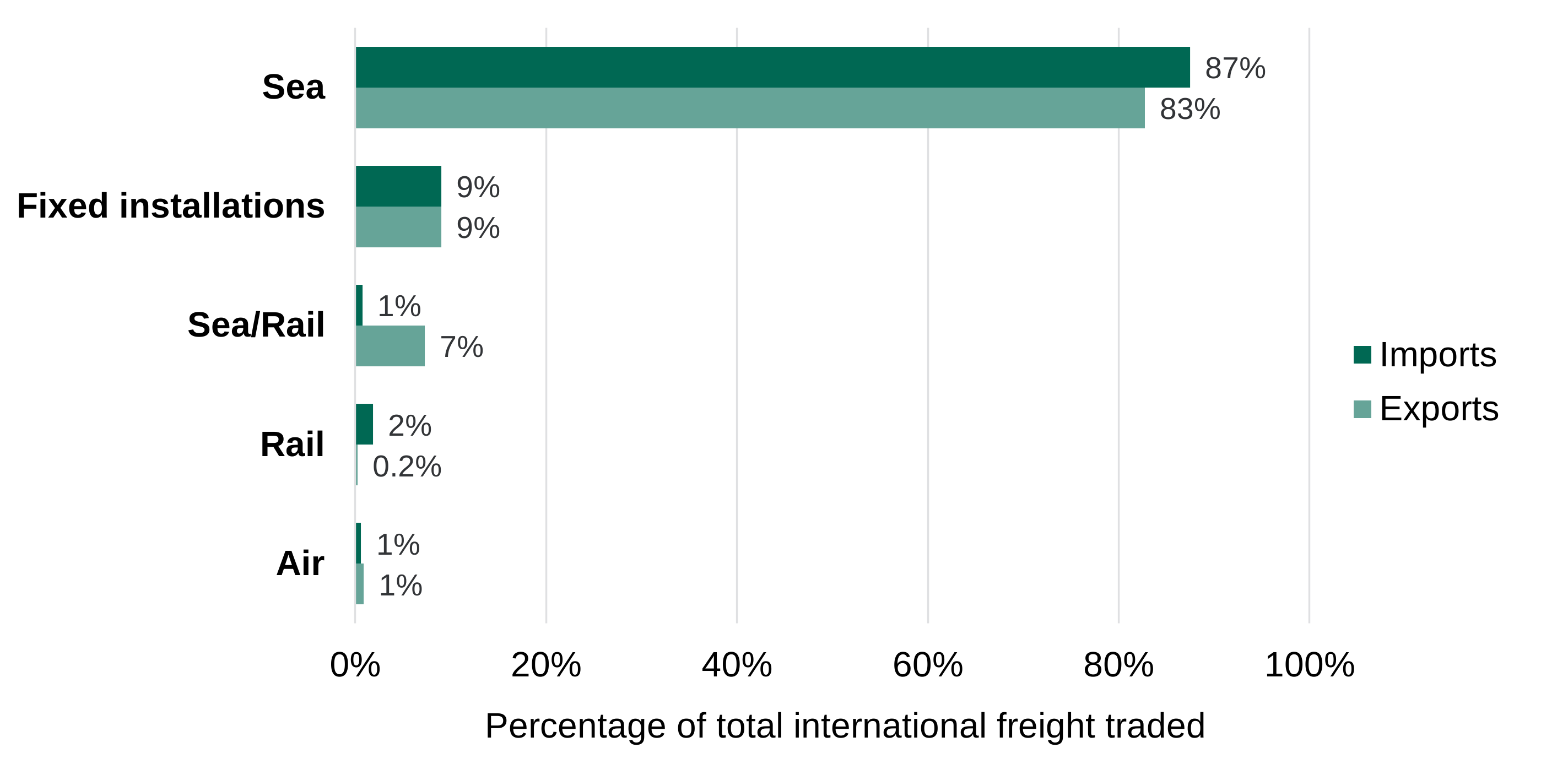
Chart 3 notes
The figures in this chart have been calculated using DfT analysis of HMRC Trade data. More information on DfT analysis of the HMRC trade data can be found in the notes and definitions.
Fixed installations are pipelines or electric power lines which are used for the continuous transport of goods (for example, gas).
HMRC allow a port of entry/exit as “Dover/Eurotunnel” when mode of transport is not known at the point of submitting the customs declaration, hence the combining of sea/rail as a mode of transport in cases when it is not possible to precisely estimate the modal split.
Chart 3 is a horizontal bar chart showing the proportion of international freight traded with the UK by transport mode by direction.
Both sea and rail modes accounted for higher proportions of imported freight than exported freight. Goods imported by sea accounted for 87% of imports, compared to 83% exports. Rail accounted for 2% of imported freight compared to 0.2% of exported.
Goods traded by sea/rail had the opposite trend, with exported sea/rail freight (7%) accounting for a higher proportion than imported (1%). Fixed installations, such as gas pipelines, and air freight moved similar amounts across imports and exports (9% and 1% respectively).
Related statistics
Use the Transport Statistics Finder to explore, download and view the statistical content published by the department.
Other published, related DfT statistics are:
Background Information
We would welcome any feedback on these statistics by transport.statistics@dft.gov.uk. We will attempt to address any comments in a subsequent release.
Notes and definitions for each of the topics covered in TSGB are available.
About these statistics
The majority of the annual, official statistics in this release were independently reviewed by the Office for Statistics Regulation in July 2010. They comply with the standards of trustworthiness, quality and value in the Code of Practice for Statistics and should be labelled accredited official statistics. They undergo regular quality assurance reviews to ensure they meet customer needs.
Instructions for printing and saving
Depending on which browser you use and the type of device you use (such as a mobile or laptop) these instructions may vary.
You will find your print and save options in your browser’s menu. You may also have other options available on your device. Tablets and mobile device instructions will be specific to the make and model of the device.
How to search
Select Ctrl and F on a Windows laptop or Command and F on a Mac.
This will open a search box in the top right-hand corner of the page. Type the word you are looking for in the search bar and press enter.
Your browser will highlight the word, usually in yellow, wherever it appears on the page. Press enter to move to the next place it appears.
Contact details
Publications, dissemination and Transport Statistics Great Britain
Email transport.statistics@dft.gov.uk
Media enquiries 0300 7777 878
To hear more about DfT statistical publications as they are released, follow us on X at DfTstats.