Summary of latest statistics
Published 26 February 2026

© Crown copyright 2026
This publication is licensed under the terms of the Open Government Licence v3.0 except where otherwise stated. To view this licence, visit nationalarchives.gov.uk/doc/open-government-licence/version/3 or write to the Information Policy Team, The National Archives, Kew, London TW9 4DU, or email: psi@nationalarchives.gov.uk.
Where we have identified any third party copyright information you will need to obtain permission from the copyright holders concerned.
This publication is available at https://www.gov.uk/government/statistics/immigration-system-statistics-year-ending-december-2025/summary-of-latest-statistics
Back to ‘Immigration system statistics, year ending December 2025’ contents page
This is not the latest release. View latest release.
This Accredited Official Statistics publication provides comprehensive statistics on the operation of the UK immigration system.
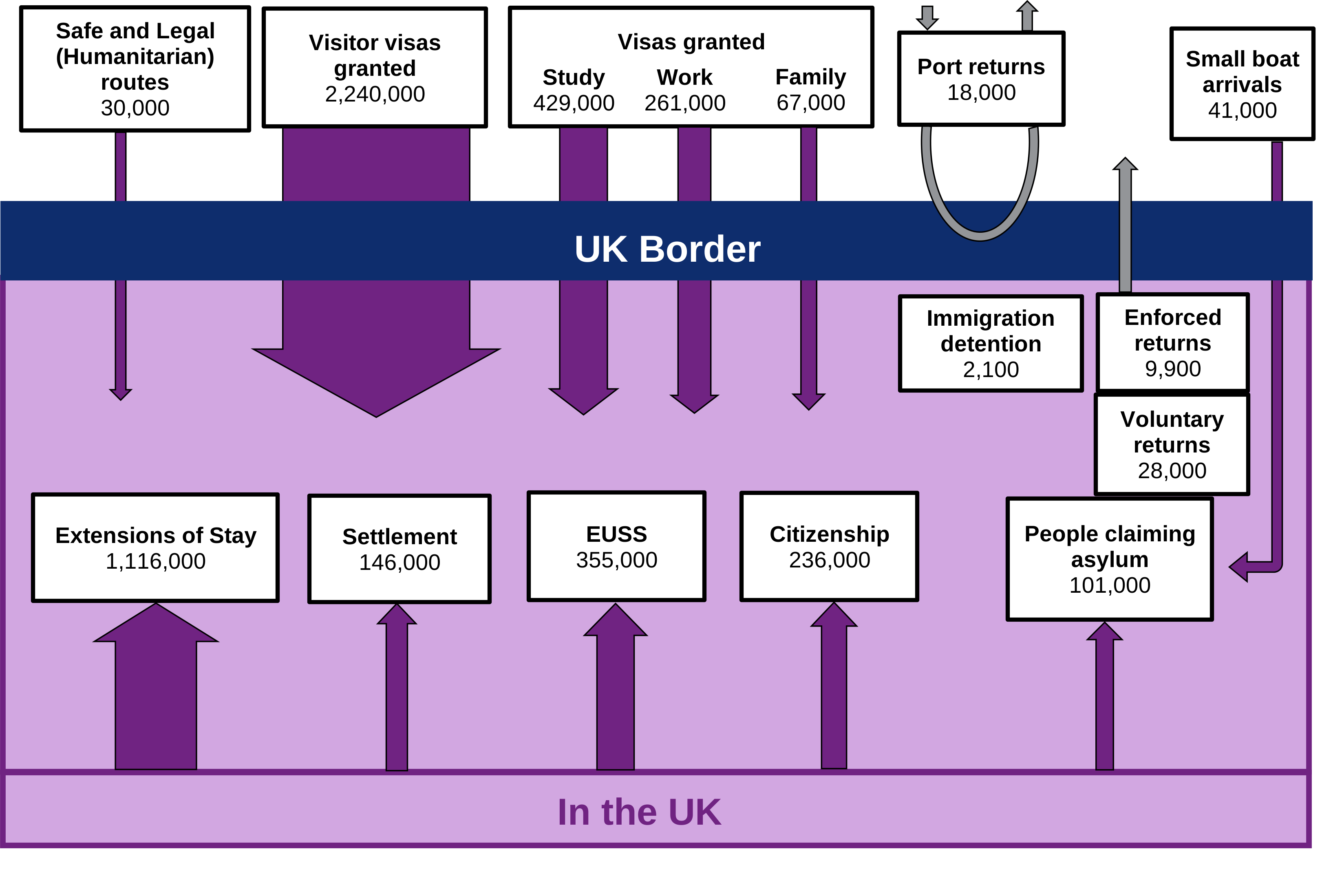
The UK immigration system undertakes a wide range of activities including issuing visas to those outside of the UK, changes to visas, and grants of settlement and citizenship to those already in the UK. It also provides safe and legal (humanitarian) routes of entry, as well as granting asylum and carrying out enforcement action. Figure 1 illustrates the different aspects of the immigration system and provides the numbers of people dealt with by each in the year ending (YE) December 2025.
Figure 1: Summary of the UK immigration system, YE December 2025
Notes:
- This diagram is a simplification and doesn’t include all parts of the immigration system, such as people crossing the border who do not require a visa, or have entered via an illegal route. Data in different parts of the immigration system is not always comparable.
- The EU Settlement Scheme (EUSS) figure relates to grants of settled status and the estimated figure for automated grants of settled status, in the YE December 2025.
1. How many people come to the UK each year?
In the YE December 2025 there were 136.6 million arrivals to the UK. The majority (57%) were British nationals. Of the non-British arrivals, most will be short-term visitors, with smaller numbers arriving for other reasons such as work, study, family and humanitarian protection.
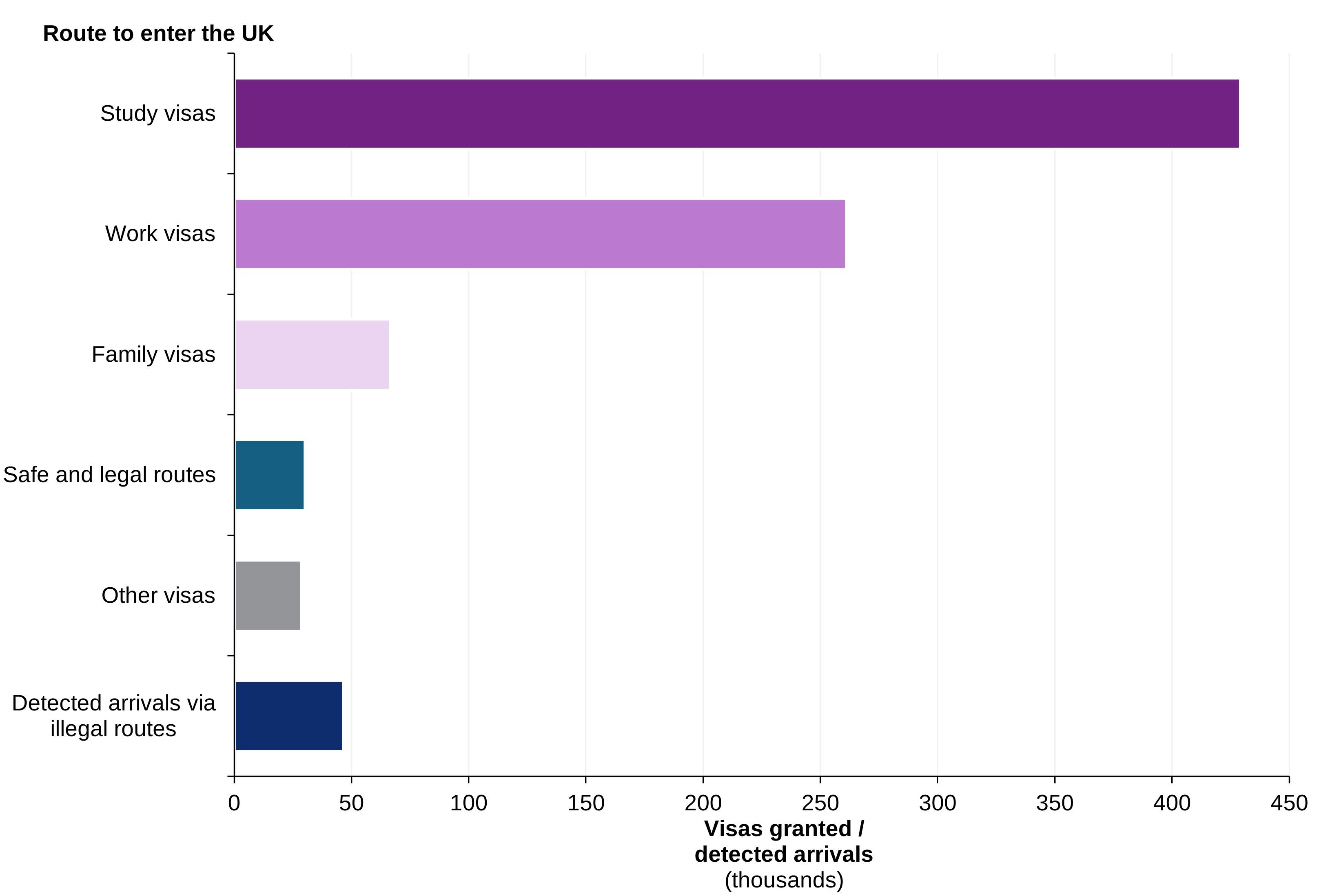
- there were 2.2 million visitor visas and 20,000 transit visas granted in the YE December 2025
- in addition, 24.8 million Electronic Travel Authorisations (ETAs) have been issued since the launch of the scheme (October 2023) up to the end of 2025, which allow eligible individuals to visit the UK for short periods
- people also come to the UK for other reasons, such as work, study, family and humanitarian reasons, and usually require an entry clearance visa – there were 809,000 visas issued for a non-visit reason in the latest year
Figure 2: Total numbers of visas granted in key categories and people detected entering via illegal routes, in the YE December 2025
Source: Entry clearance visa applications and outcomes - Vis_D02; Safe and legal (humanitarian) routes summary tables - Hum_01; Illegal entry routes to the UK - IER_D01
For further details see ‘How many people come to the UK each year?’.
2. Why do people come to the UK - Work?
- there were 168,000 visas granted to main applicants in all work categories in the YE December 2025, 19% fewer than the previous year and 50% fewer than in the YE December 2023 when the number of work visas peaked
- work-related visa grants have decreased over the last 2 years, largely due to the decline in Health and Care visas – there were 13,000 Health and Care visas issued to main applicants in the latest year, down 91% from the peak in the YE December 2023
- visas granted to main applicants on other skilled ‘Worker’ routes (excluding Health and Care) also fell in the latest year, with 48,000 visas issued (down 36%) - largely driven by fewer applications for Skilled Worker visas
- the number of grants of permission to stay in the UK on work routes, including those who extend or switch visas, increased by 12% in the latest year to 782,000 - this reflects the high number of entry clearance grants issued in 2022 and 2023, many of which now require extensions of leave to remain
For further details see ‘Why do people come to the UK - Work?’.
3. Why do people come to the UK - Study?
- there were 407,000 sponsored study visas granted to main applicant foreign students in the YE December 2025, 4% more than the previous year, but 18% fewer than the peak in the YE June 2023
- in the YE December 2025, there were 20,000 visas issued to dependants of students, 10% fewer than the previous year - visas granted to dependants have been low since January 2024 following policy changes restricting students ability to bring dependants
For further details see ‘Why do people come to the UK - Study?’.
4. Why do people come to the UK - Family?
- there were 67,000 family-related visas granted in the YE December 2025, 22% fewer than in the YE December 2024, mainly due to a fall in Partner visas (down 27% to 41,000)
- Refugee Family Reunion visa grants fell by 2% to 19,000, as grants declined from September 2025 due to the temporary pause to new applications of the route
- there were 72,000 Family extensions of stay in the UK in the YE December 2025, a 16% increase on the YE December 2024; almost all family extensions were Partner visas
For further details see ‘Why do people come to the UK - Family?’.
5. How many people come to the UK via safe and legal (humanitarian) routes?
- there were 190,000 grants of leave on safe and legal (humanitarian) routes, allowing people to come to, or remain in, the UK in the YE December 2025; this was 2.5 times higher than in the YE December 2024, largely due to grants on the Ukraine Permission Extension (UPE) scheme which will have been granted to people on existing Ukraine schemes
- most (141,000) of those grants were in-country extensions, predominantly on the UPE (which has driven the increase)
- the rest (49,000) were out-of-country grants, predominantly on refugee family reunion (19,000) and Ukraine (15,000) routes; out-of-country grants were 23% fewer than the previous year
For further details see ‘How many people come to the UK via safe and legal (humanitarian) routes?’.
6. What is being done to stop organised immigration crime (OIC)?
- 3,600 OIC disruptions were recorded in the YE December 2025, 37% higher than the previous year, continuing the recent upward trend
- this included over 100 major disruptions in the YE December 2025, a 40% increase on the previous year
- moderate and minor disruptions increased by 79% and 32% respectively in the latest year
For further details see ‘What is being done to stop organised immigration crime?’.
7. How many people come to the UK via illegal entry routes?
- there were 46,000 detected arrivals via illegal routes, such as small boats and other clandestine routes, in the YE December 2025 - small boat arrivals accounted for 41,000 (89%) of these, 13% more than the previous year but 9% lower than the peak in 2022
- the top 5 most common nationalities (Eritrean, Afghan, Iranian, Sudanese, and Somali) arriving on small boats in the YE December 2025 accounted for more than three-fifths of all small boat arrivals in that period
- since 2018, 95% of the people arriving in the UK on a small boat have claimed asylum - small boat arrivals accounted for around two-fifths of the total number of people claiming asylum in the UK in YE December 2025
For further details see ‘How many people come to the UK via illegal entry routes?’. For more recent data on daily small boat arrivals see ‘Small boat activity in the English Channel’.
8. Asylum claims, outcomes and system
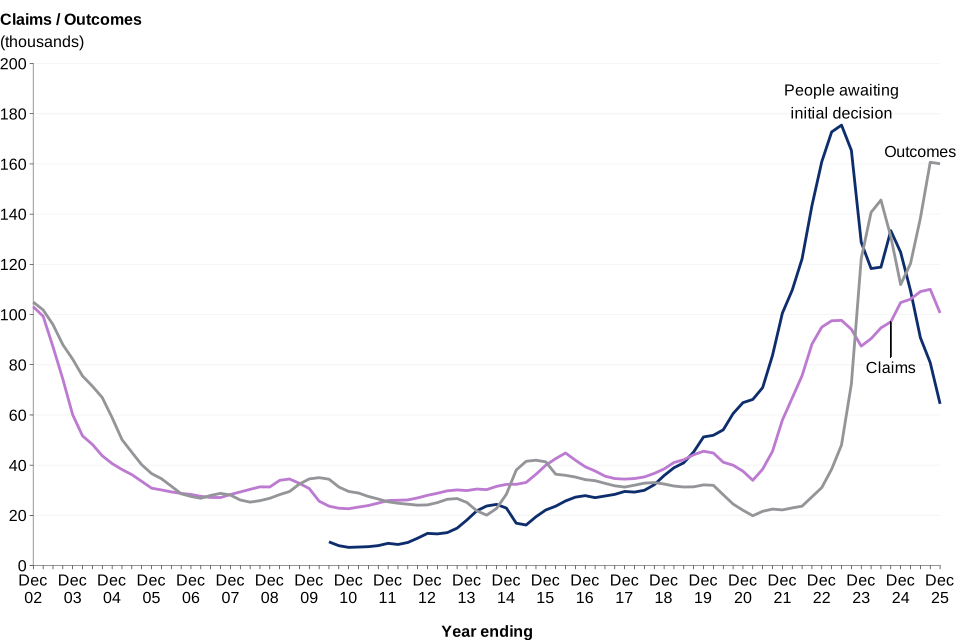
Figure 3: Asylum claims, outcomes and people awaiting an initial decision, YE December 2002 to YE December 2025
Source: Asylum claims and decisions – Asy_D01, Asy_D02 and Asy_D03
8.1 How many people claim asylum in the UK?
- 101,000 people claimed asylum in the YE December 2025, 4% less than the previous year
- half of asylum seekers arrived through illegal entry routes, such as small boats, while a further 39% of claimants had previously arrived in the UK on a visa or with other leave
- in the YE September 2025, the UK received the fifth largest number of asylum seekers in the EU+, after Germany, France, Spain and Italy and the fifteenth largest intake when measured ‘per head of population’
For further details see ‘How many people claim asylum in the UK?’.
8.2 How many people are granted asylum in the UK?
- 135,000 people received initial decisions on asylum claims in the YE December 2025, 56% higher than the previous year and the highest since comparable records began in 2002
- the grant rate in the YE December 2025 was 42%, down from 47% in the previous year, although this was higher than the decade prior to 2019 where the grant rate was between 23% and 41% each year
For further details see ‘How many people are granted asylum in the UK?’.
8.3 How many people are in the UK asylum system?
- at the end of December 2025 there were 64,000 people awaiting an initial decision, (relating to 49,000 cases), 48% fewer than at the end of December 2024, and 63% lower than the peak at the end of June 2023 (175,000 people)
- at the end of December 2025 there were 107,000 individuals in receipt of asylum support, 5% lower than a year prior
- 31,000 supported asylum seekers (29%) were in hotel accommodation, 19% lower than a year earlier
For further details see ‘How many people are in the UK asylum system?’.
9. How many Indefinite Leave (Settlement and EUSS settled status) and Citizenship grants have been issued in the UK?
- 146,000 settlement grants were issued in the YE December 2025, a 10% decrease from the YE December 2024; while settlement grants generally increased between 2018 and 2024, the recent decline largely reflects lower entry clearance and protection grant volumes in 2020, due to COVID-19 disruption
- there were 355,000 grants of settled status under the EU Settlement Scheme, 2% higher than in the YE December 2024; most grants were to people that previously held pre-settled status
- there were 236,000 British citizenship grants in the YE December 2025; despite a 13% decrease in the latest year, this remains the second highest annual total since 2005
For further details see ‘How many Indefinite Leave (Settlement and EUSS settled status) and Citizenship grants were issued in the UK?’.
10. How many people are detained under immigration powers in the UK?
- 23,000 entered detention in the YE December 2025, 11% more than in the YE December 2024, continuing the upward trend since 2023
- the increase in numbers of individuals entering detention may reflect the use of detention to facilitate the rising number of returns from the UK
For further details see ‘How many people are detained under immigration powers in the UK?’.
11. How many people are returned from the UK?
- in the YE December 2025 there were 9,900 enforced returns, an increase of 21% compared with the previous year, continuing an increase seen since 2020
- in the YE December 2025 there were 28,000 voluntary returns, an increase of 5% compared with the previous year, mainly driven by an increase in asylum-related returns and assisted returns
- there were 5,600 FNO returns in the YE December 2025, an increase of 11% compared to the previous year
For further details see ‘How many people are returned from the UK?’.
12. Additional Home Office migration statistics
The Home Office publishes a range of research and statistics which can be found on the migration analysis pages.
Details on the developments and future plans for Home Office ‘Immigration system statistics’ can be found in ‘Developments in migration statistics’.
12.1 Migration transparency
Figures on performance against service standards and processing times are published as part of the Home Office migration transparency. For further details see ‘Migration transparency data’.
12.2 Migrant journey
The Migrant journey report provides an analysis of the behaviour of migrants entering the UK immigration system under the main routes of entry to the UK and the common pathways leading to settlement. For the latest publication see ‘Migrant journey’.
12.3 Monthly entry clearance visa applications
The Monthly entry clearance visa applications report contains the most up-to-date statistics on visa applications for people coming to the UK on work, study and family routes.
We welcome your feedback
If you have any comments or suggestions on this publication, please email MigrationStatsEnquiries@homeoffice.gov.uk. Please include the words ‘PUBLICATION FEEDBACK’ in the subject of your email.