Why do people come to the UK? Study
Published 26 February 2026

© Crown copyright 2026
This publication is licensed under the terms of the Open Government Licence v3.0 except where otherwise stated. To view this licence, visit nationalarchives.gov.uk/doc/open-government-licence/version/3 or write to the Information Policy Team, The National Archives, Kew, London TW9 4DU, or email: psi@nationalarchives.gov.uk.
Where we have identified any third party copyright information you will need to obtain permission from the copyright holders concerned.
This publication is available at https://www.gov.uk/government/statistics/immigration-system-statistics-year-ending-december-2025/why-do-people-come-to-the-uk-study
Back to ‘Immigration system statistics, year ending December 2025’ contents page
This is not the latest release. View latest release.
This release goes up to the year ending (YE) December 2025. The “year ending” period includes the 12 months up to and including the YE month. For example, YE December 2025 includes the 12 months between 1 January 2025 and 31 December 2025.
1. Sponsored study visas
Sponsored study visa grants have increased slightly over the last year, despite a decline in grants to dependants of students
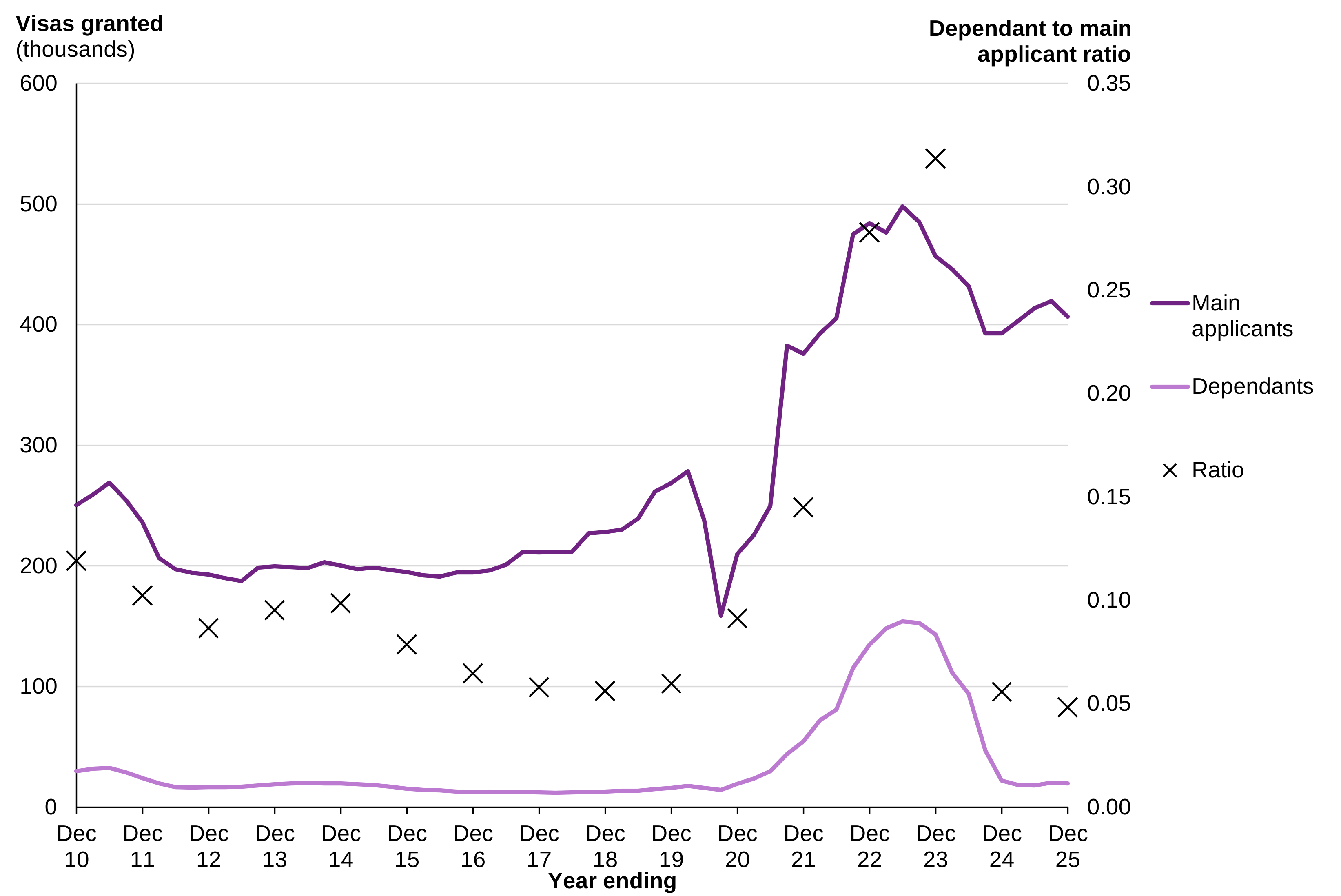
In the YE December 2025, there were 426,471 sponsored study visas grants, 3% more than the previous year, but 35% fewer than the peak in YE June 2023. This included 406,824 main applicants – 4% more than YE December 2024 – and 19,647 dependants – 10% fewer than the previous year. The number of sponsored study visas granted to dependants have been lower since January 2024 following policy changes restricting students ability to bring dependants, and were 87% lower in the latest year compared to the peak in the YE June 2023, before the policy changes were introduced.
Between 2011 and 2016 sponsored study visa grants to foreign students and their dependants were relatively stable at around 200,000 per year with the majority (92%) being main applicants. After 2016 the numbers steadily increased, reaching 284,721 in the YE December 2019. Following a fall during the COVID-19 pandemic, the number of visas issued increased sharply, to a peak of 652,072 in the YE June 2023. This increase followed the lifting of COVID-19 related travel restrictions, along with changes to the Immigration System following the UK’s departure from the EU, including the introduction of the Graduate route allowing eligible students to remain in the UK for 2 to 3 years. At the same time, the International Education Strategy introduced a target for the UK to receive 600,000 international students per year by 2030.
The number of visas issued has since decreased, falling to 426,471 in the YE December 2025, largely due to there being fewer dependants accompanying main applicants, and falls in main applicants from YE December 2023 to YE December 2024 (although numbers have remained stable in the latest year). The decrease followed a policy change limiting who can bring dependants for courses starting on or after 1 January 2024. Policy changes are one of a number of factors that affect visa application volumes.
Figure 1: Sponsored study visas granted by applicant type, YE December 2010 to YE December 2025
Source: Entry clearance visa applications and outcomes – Vis_D02
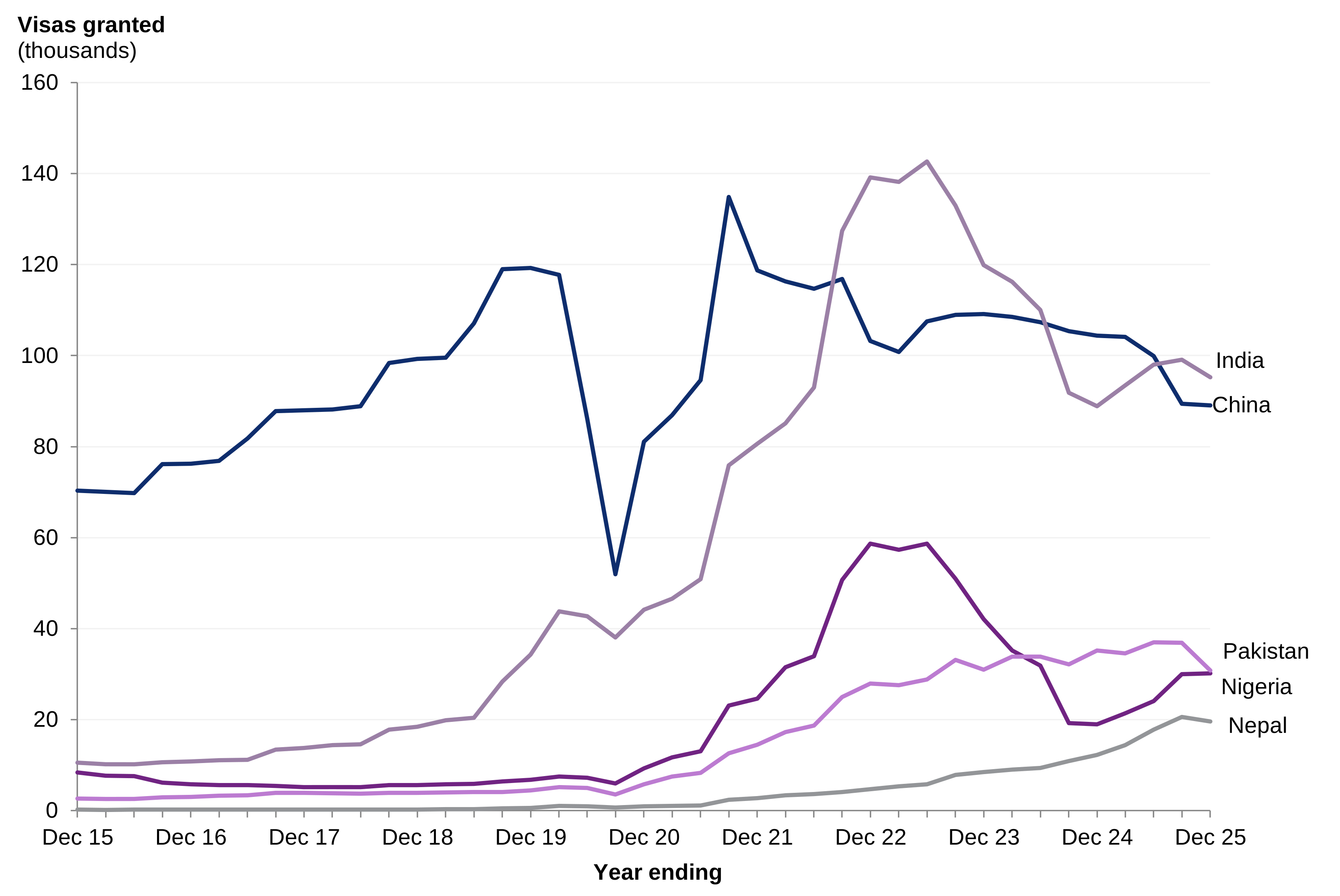
Figure 2: Sponsored study visas granted to the top 5 nationalities (main applicants), YE December 2015 to YE December 2025
Source: Entry clearance visa applications and outcomes – Vis_D02
Figure 2 shows Indian nationals were the most common nationality being granted sponsored study visas in the YE December 2025, with 95,231 visas issued to main applicants (23% of the total). These were closely followed by Chinese students with 89,019 (22%) visas granted. The third most common nationality was Pakistan with 30,781 (8%) study visas granted.
In the YE December 2025, grants to Chinese nationals were 15% less than the previous year and 34% less than their peak in the YE September 2021. Notable increases in the latest year include Nepali students (up 60% to 19,553), Nigerian students (up 59% to 30,204) and Bangladeshi students (up 71% to 10,828).
Previously, the United States had been a top 5 nationality for sponsored study grants for main applicants. However, their numbers have remained relatively stable since the YE December 2020, and have been replaced by Nepal in the top 5. This may be due to higher education institutions targeting students from a range of different countries, including Nepal.
The majority of students (63%) come to the UK to study masters. The number of grants to students coming to study at masters level increased each year following the pandemic and the UK leaving the EU, but fell in the last 2 years – down 19% to 256,303 in the YE September 2025 (latest published data).
2. Extensions of Study
Study-related extensions to main applicants were slightly lower this year compared to the previous year, but there was a larger decrease for dependants, likely due to the January 2024 policy changes restricting eligibility.
In the YE December 2025, just over 34,538 main applicants who were already in the UK were granted an extension of stay in the UK to study, enabling individuals to continue their studies or, for those not previously studying, to switch onto a sponsored study route. This was 5% lower than the previous year.
During the same period, 5,138 dependants of individuals studying in the UK were granted an extension of stay, 21% lower than the previous year. This reduction may reflect the changes introduced in January 2024, restricting most international students from bringing dependants to the UK. The grants observed in the latest year likely relate to those who remain eligible under the current rules, such as students on postgraduate research programmes, including PhDs.
Chinese (11,076), Indian (5,968), and Nigerian (3,894) nationals were the most common nationality extending on the student route in the latest year. Together, these three nationalities accounted for over half of all sponsored study extensions, reflecting the higher numbers of these nationals granted study visas in recent years.
Extensions onto the Graduate route fell by 6% to 221,335 in the latest year. The Graduate route allows eligible international students who have successfully completed an eligible UK degree to remain in the UK for up to 2 years (3 years for PhD graduates) to work or look for work, or 18 months for those apply on or after 1 January 2027.
2.1 Additional insights from the Migrant journey: 2024 report
The Migrant journey: 2024 report shows that 14% of non-EU nationals who initially arrived on a study visa between 2007 and 2014 continued to hold valid or indefinite leave 10 years after arrival; however, more recent student cohorts appear more likely to remain in the UK beyond the completion of their studies.
The 2020 cohort was the first able to transfer directly to the Graduate route. For the 2020 and 2021 arrival cohorts, 57% and 59% respectively continued to hold valid or indefinite leave 3 years later, compared with 39% for the 2019 cohort and an average of 34% for students arriving between 2011 and 2018.
In 2024, 87% of those extending onto a study route previously held another study visa, while a further 10% had previously held a work visa, indicating that most extensions relate to continued study rather than movement from other routes.
3. About these statistics
The statistics in this section provide an indication of the number of people who have an intention to enter the UK for study reasons. Further information on the statistics in this section can be found in the user guide. Before 2021, due to freedom of movement for European Union (EU) nationals, the vast majority of UK immigration control statistics related to non-European Economic Area (EEA) nationals. From 2021, unless otherwise stated, the statistics in this release relate to both EEA and non-EEA nationals.
Entry clearance visas allow an individual to enter and stay in the UK within the period for which the visa is valid. Data in this section refers to the number of Entry clearance visas granted for study reasons within the period. If an individual was granted a visa more than once in a given period, this has been counted as multiple grants in the statistics.
Year-on-year comparisons of the number of decisions can be affected by quarterly fluctuations in the data. These fluctuations can be examined in the quarterly data in the published tables. Year ending comparisons will also include impacts resulting from the travel restrictions put in place during the COVID-19 pandemic.
3.1 Confirmation of Acceptance for Studies
In order to be granted a sponsored study visa, a main applicant must get a ‘Confirmation of Acceptance for Studies’ (CAS) from their educational provider as evidence of an unconditional offer to study a course with a licensed student sponsor. Around 9 in 10 sponsored study visa applications are for the Higher Education Sector (such as universities), which has accounted for most of the growth in students in recent years.
3.2 Extension of temporary stay in the UK
Extensions of temporary stay in the UK relate to individuals inside the UK extending or changing the status of their right to stay in the UK. An individual is required to apply for an extension or change in status before their existing permission to enter or stay in the UK expires.
The statistics in this section show the number of grants and refusals on applications for extension of temporary stay in the UK. One individual may have made multiple applications for an extension, so may account for multiple decisions. Data in this section accounts for the outcomes of reconsiderations and appeals. The statistics do not show the number of people applying to extend their temporary stay in the UK, nor do they show how long an individual stayed in the UK following their extension.
3.3 Other sources
The Home Office also publishes monthly updates on study applications, from 2022 onwards - see ‘Monthly statistical releases on migration’ for further information.
The Office for National Statistics (ONS) publish long-term international migration estimates. These are statistics under development that estimate the number of people immigrating to and emigrating from the UK for 12 months or more.
In January 2026, HESA published its latest ‘Higher Education Student Statistics UK’ for the academic year 2024 to 2025. HESA publishes data on new entrants to UK higher education providers for both EEA and non-EEA nationals.
In December 2025, the Migration Advisory Committee (MAC) published their sixth annual report. This report includes analysis of how the immigration system is being used within and across the nations of the UK.
4. Data tables
Data on student immigration can be found in the following tables:
- Entry clearance visas summary tables
- Detailed Entry clearance visa datasets
- Sponsorship summary tables
- Detailed sponsorship datasets
- Detailed education datasets
- Admissions summary tables
- Extensions summary tables
- Detailed extensions datasets
- Migrant journey summary tables
- Migrant journey: 2024 dataset
We welcome your feedback
If you have any comments or suggestions for the development of this report, please provide feedback by emailing MigrationStatsEnquiries@homeoffice.gov.uk. Please include the words ‘PUBLICATION FEEDBACK’ in the subject of your email.
We’re always looking to improve the accessibility of our documents. If you find any problems or have any feedback relating to accessibility, please email us.
See Section 6 of the ‘About this release’ section for more details.