How many people are returned from the UK?
Published 26 February 2026

© Crown copyright 2026
This publication is licensed under the terms of the Open Government Licence v3.0 except where otherwise stated. To view this licence, visit nationalarchives.gov.uk/doc/open-government-licence/version/3 or write to the Information Policy Team, The National Archives, Kew, London TW9 4DU, or email: psi@nationalarchives.gov.uk.
Where we have identified any third party copyright information you will need to obtain permission from the copyright holders concerned.
This publication is available at https://www.gov.uk/government/statistics/immigration-system-statistics-year-ending-december-2025/how-many-people-are-returned-from-the-uk
Back to ‘Immigration system statistics, year ending December 2025’ contents page
This is not the latest release. View latest release.
This release goes up to the year ending (YE) December 2025. The “year ending” period includes the 12 months up to and including the YE month. For example, YE December 2025 includes the 12 months between 1 January 2025 and 31 December 2025. Additional information is provided in the ‘About the statistics’ section and in the user guide.
1. Returns
The Home Office seeks to return people who do not have a legal right to stay in the UK to another country. Returns are reported in 3 main groups:
- enforced returns (people subject to administrative removal or deportation action which is carried out by the Home Office)
- voluntary returns (people who were liable to removal action or subject to immigration control but have left of their own accord, sometimes with support from the Home Office)
- port returns (people who are refused entry to the UK at a place of arrival and have subsequently departed)
Foreign national offenders (FNOs) and asylum-related returns (including failed asylum seekers) can appear in enforced, voluntary and port return statistics. Returns of small boat arrivals are included in voluntary and enforced return statistics. These are counted in those numbers as well as being reported separately in Section 5 and Section 6 respectively.
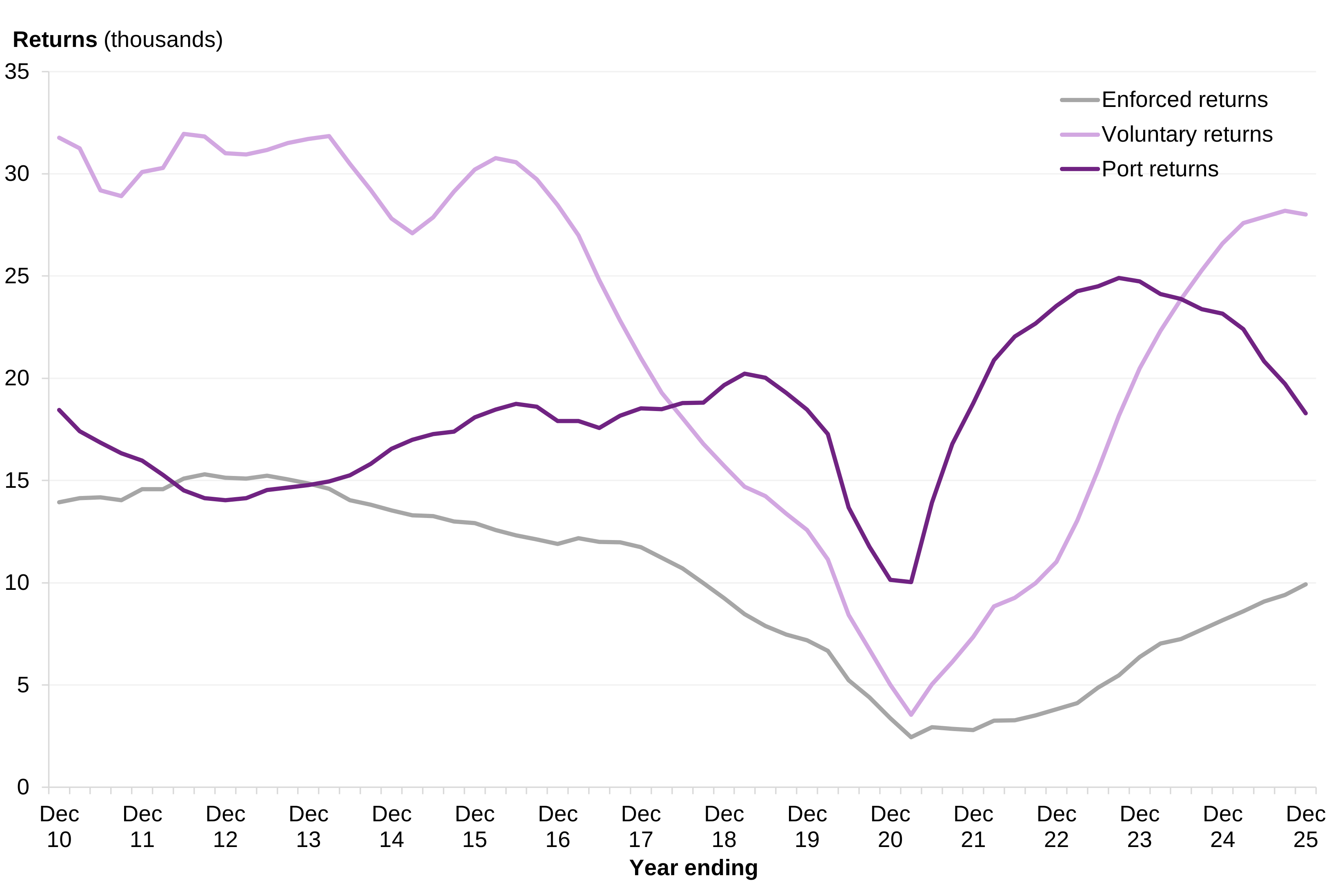
Figure 1: Returns from the UK, by type of return, YE December 2010 to YE December 2025
Source: Returns - Ret_D01
2. Enforced returns
There were almost 10,000 enforced returns in YE December 2025, continuing an upward trend since 2021.
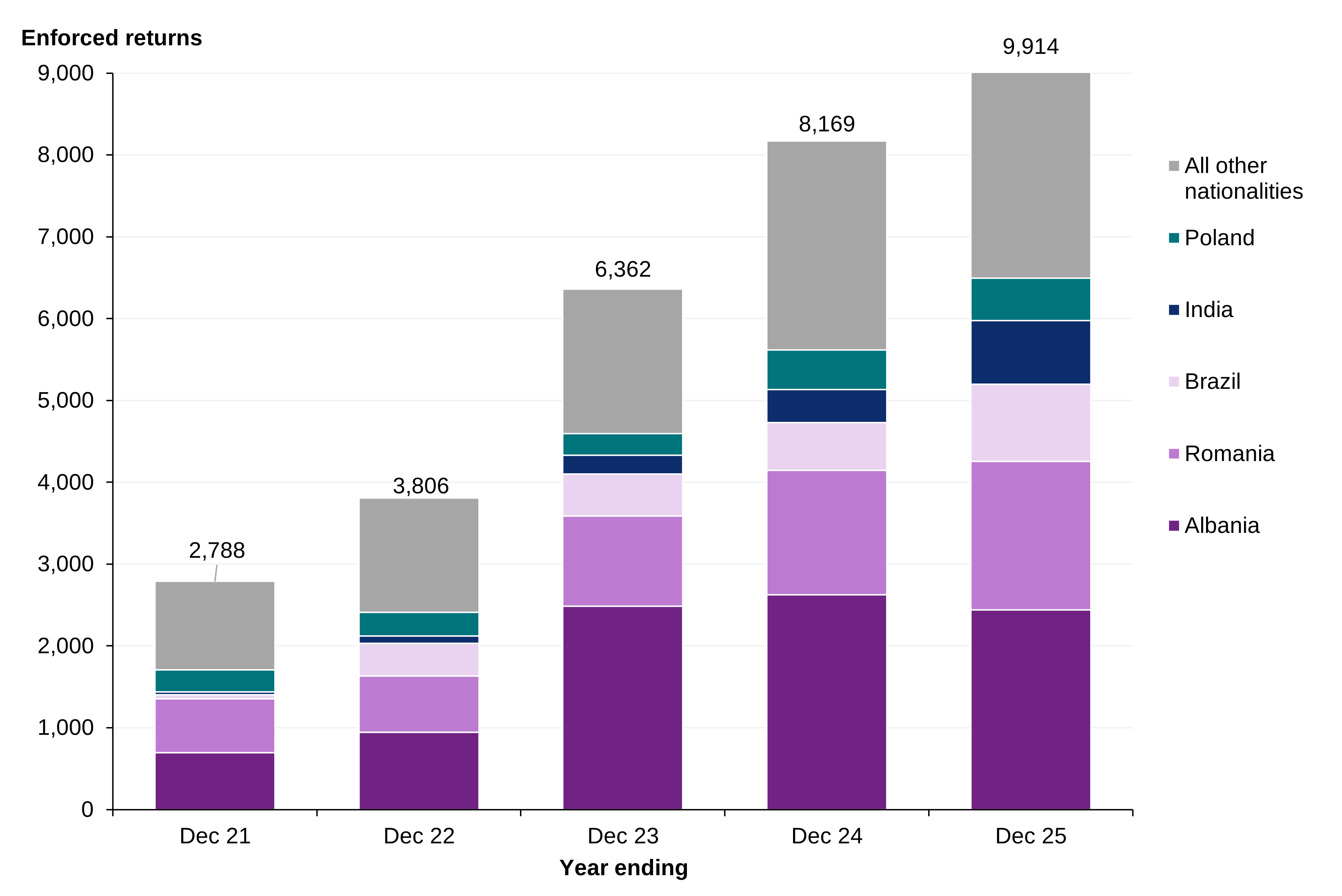
Figure 1 shows that enforced returns have increased steadily following the low number of returns during the COVID-19 pandemic in 2020 and 2021. There were 9,914 enforced returns in YE December 2025, 21% higher than the previous year (8,169).
The increase in enforced returns has been partially driven by increases in asylum-related returns (See Section 6). Other factors driving the increase in enforced returns include returns agreements with countries outside the UK, schemes to remove foreign offenders (See Section 5). and schemes to return small boat arrivals (See Section 6.1). More generally, 1,000 staff were reallocated to immigration enforcement in 2024 to strengthen the government’s Plan for Change, aiming to ‘secure borders’ through increasing the number of returns. For more information on these, please see the policy timeline document.
Albanian nationals have been consistently the most common nationality of enforced returns over the last 5 years. Albanian nationals accounted for a quarter (2,440) of all enforced returns in the latest 12 months. The number of enforced returns of Albanian nationals increased following the signing of the UK Albanian Joint Communique in December 2022, which was a response to the substantial numbers of Albanian small boat arrivals in 2022.
Despite the prominence of Albanian nationals in enforced returns, numbers fell 7% in the YE December 2025 compared with the previous year. Enforced returns of other prominent nationalities have increased, with numbers of Romanians up 20% to 1,818, Brazilians up 61% to 939 and Indians almost doubling to 781 over the latest year. Foreign national offenders (FNOs) accounted for over half of Albanian and Romanian enforced returns in the latest year. Whereas FNO returns account for a much smaller proportion of Brazilian and Indian enforced returns.
Figure 2: Enforced returns from the UK, by nationality1; YE December 2021 to YE December 2025
Source: Returns - Ret_D01
Notes:
- Nationalities shown are the top 5 most common nationalities for enforced returns in the latest 12-month period.
Detention was used to facilitate the majority (97%) of enforced returns in the YE December 2025. The number of individuals who have left detention and then subsequently returned from the UK has increased by 22%. For information about detention statistics and trends please see ‘How many people are detained under immigration powers in the UK’.
3. Voluntary returns
Voluntary returns increased in the YE December 2025, driven by a large increase in asylum related returns and returns assisted by the Home Office.
These statistics categorise voluntary returns in 3 different ways: those made with assistance from the Home Office, including via the Voluntary Returns Service (‘assisted returns’); returns made where the Home Office was notified of the departure, in the form of self-funded (‘controlled’) returns; and those discovered through matching our database against passenger departures data (‘other verified returns’). Definitions of returns subcategories can be found in the glossary section of the user guide.
In YE December 2025, there were 28,004 voluntary returns, an increase of 5% (up 1,415) compared with the YE December 2024, similar to 2016 levels (28,474). This was driven by substantial increases in asylum-related voluntary returns (up 1,405), while non-asylum voluntary returns remained unchanged compared to the previous year. As shown in Figure 1, voluntary return numbers have risen substantially since the end of the COVID-19 pandemic and now exceed pre-pandemic levels, although are still below the levels in the first half of the previous decade.
Together, voluntary returns of Indians (8,652), Brazilians (4,759) and Albanians (1,884) accounted for just over half (55%) of all voluntary returns in YE December 2025. Indian voluntary returns increased by 22%, of which almost two-thirds of Indian nationals returning voluntarily during this period departed the UK without informing the Home Office (‘other verified returns’). Brazilian national voluntary returns were up 8% respectively compared to YE December 2024, whereas voluntary returns of Albanians decreased by 37% over the same period.
‘Assisted returns’ made up 37% (10,260) of voluntary returns in the YE December 2025, a 49% increase compared to 2024, of which nearly half (43%) were Brazilian nationals. ‘Other verified returns’ are down 17% in the same period, but make up 43% of all voluntary returns (those who departed the UK without informing the Home Office), which is the largest proportion of voluntary returns.
4. Refusals of entry at port and subsequent return (port returns)
Port returns have declined over the last 2 years, following an increase between 2020 and 2023.
There were 18,279 port returns in the YE December 2025, 21% fewer than the previous year. The decline in port returns over the last 2 years follows what was a sharp increase following 2020 restrictions.
Of the top 20 most common nationalities to be refused entry at the border in the YE December 2025, 17 have seen decreases in port returns compared to the previous year. Colombian and Jordanian nationals have seen some of the largest percentage decreases in these returns in the YE December 2025, with Colombian port returns down 84% (from 665 to 106) and Jordanian port returns falling by 98% (from 703 to 13).
UK Border Force take decisions to stop passengers on arrival based on the information that they receive. Nationality does not play a part in these decisions, but the nationalities of those refused entry at ports and subsequently returned has changed since 2020.
Non-visa nationals such as those from EU countries can be refused entry because they do not have the necessary immigration permission to carry out the activities they intend to undertake while they are in the UK.
Prior to the end of Freedom of Movement with the EU, port returns of EU nationals accounted for between 6% and 21% of annual port returns between 2012 and 2020. However, in YE December 2025 EU nationals accounted for 56% of port refusals. Romanians have been the top EU nationality for port returns since 2012, making up over a quarter (29%) of the total port returns in the latest year.
5. Returns of foreign national offenders
Total FNO returns include enforced, voluntary and port returns. FNOs that are returned may have arrived in the UK some years earlier, may have claimed asylum and may have lived in the UK for some time prior to their conviction and subsequent return.
Returns of FNOs in the YE December 2025 are higher than any levels of returns observed since 2018.
There were 5,634 FNO returns in the YE December 2025, an increase of 11% compared to the previous year. FNO returns during this period were almost evenly split between EU (49%) and Non-EU (51%) nationals.
Figure 3 shows that Albanian nationals represented the most common nationality for FNO returns in each of the last 4 years. The UK-Albania Joint Communique signed in December 2022 strengthened cooperation between the UK and Albania and has supported the removal of Albanian national offenders.
In addition to Albanians; Romanian, Polish, Lithuanian and Bulgarian nationals make up the remaining top 5 most common nationalities of foreign offenders returned from the UK in the YE December 2025 (See Figure 3). Albanian, Polish, Romanian, and Lithuanian nationals are also some of the most common foreign nationalities in prisons in England and Wales according to the latest prison population statistics from the Ministry of Justice and HM Prison and Probation Service.
The Early Removal Scheme (ERS), introduced in 2004, enables the return of FNOs at an earlier point in their custodial sentence than would otherwise be possible. In January 2024, the scheme was extended to include FNOs who had up to 18 months remaining on their sentence, rather than 12 months or less. In September 2025, this was further expanded to ease prison capacity and allow removal up to 4 years before custodial release date, subject to having served 30% of the sentence, increasing the pool of FNOs eligible for early return.
Alongside this, the Standard Determinate Sentence 40% (SDS40) scheme was introduced in September 2024. This temporary measure allows offenders serving determinate sentences to be conditionally released after 40% of their sentence, rather than 50%, subject to eligibility criteria. For FNOs, ERS applies to this reduced term, meaning removal can occur even sooner. For more information on these, please see the policy timeline document. For ERS return statistics, please see the ‘Returns from the UK from December 2022’ statistical release.
In addition, the Facilitated return scheme (FRS) is a voluntary Home Office scheme established in 2006 which supports FNOs to leave the UK at the earliest possible opportunity and resettle in their home country. The FRS encourages FNOs to cooperate with their early removal from the UK.
Figure 3: Returns of FNOs1 from the UK, by nationality2; YE December 2021 to YE December 2025

Source: Returns - Ret_D03
Notes:
- An FNO is someone who is not a British citizen and is, or was, convicted in the UK of any criminal offence, or convicted abroad for a serious criminal offence.
- Nationalities shown are the top 5 nationalities for FNO returns in the latest 12-month period.
Returns of FNOs averaged around 5,500 per year during the period from 2010 to 2019. FNO returns reached a peak in 2016 at 6,437, subsequently falling to below 3,000 per year during the pandemic in 2020 to 2021. Since then, returns of FNOs have been gradually increasing, although in the latest year were still 12% below the 2016 peak.
6. Asylum-related returns
Asylum-related returns relate to cases where there has been an asylum claim or further submission at some stage prior to the return. This will include asylum seekers whose asylum claims have been withdrawn, refused and who have exhausted any rights of appeal, those returned under third-country provisions, as well as a small number of those granted asylum/protection but who had to be removed for other reasons, (such as criminality).
Asylum-related returns include enforced and voluntary returns, unless stated otherwise.
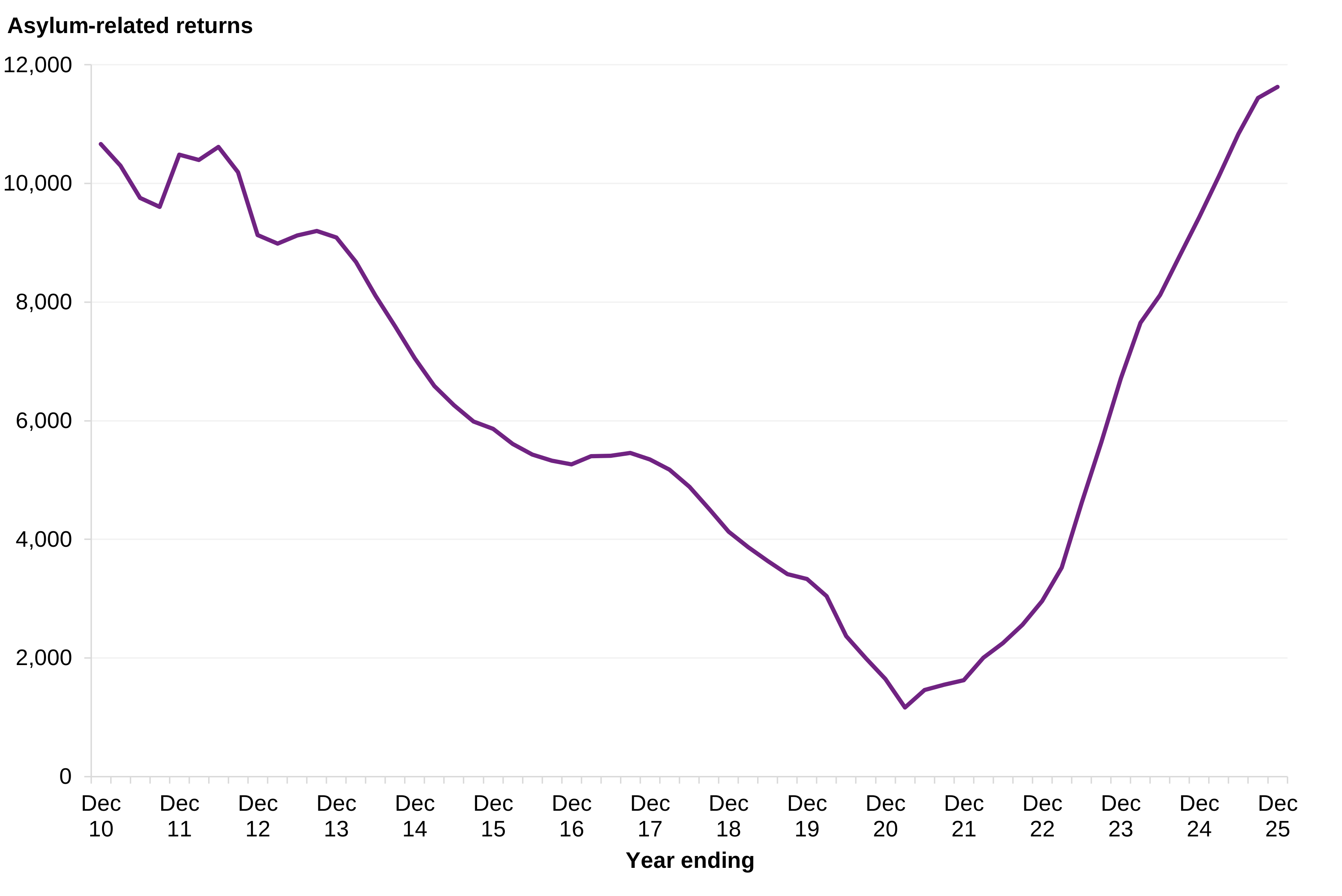
Enforced and voluntary asylum-related returns in the YE December 2025 continue to rise from the previous year, up substantially since 2021.
In the YE December 2025, there were 11,631 asylum-related returns, 23% more than in YE December 2024. Nearly a third (31%) of total returns were asylum-related – a proportion that has risen steadily from 15% in 2021. This rise may be partially driven by the increase in decisions on asylum applications, as individuals with withdrawn or refused applications who have exhausted any rights of appeal may have no “leave to remain” and the Home Office will seek their return from the UK. For more information on trends in asylum case processing, please see the ‘How many people are granted asylum in the UK?’ topic.
Asylum-related returns in the YE December 2025 exceeded numbers observed in YE December 2010, up by 10%. Albanian nationals are the most common nationality for asylum-related returns and they account for just over a quarter (26% or 2,986) of asylum-related returns in YE December 2025, despite being down by 22%. Brazilian asylum-related returns have almost doubled over the last year (from 920 to 1,799). Indian (1,123), Pakistani (445) and Colombian (414) nationals are the next most common nationalities for asylum-related returns. Vietnamese asylum-related returns have tripled over the last year (from 63 to 203) following an agreement regarding returns with Vietnam and a new comprehensive strategic partnership.
Figure 4: Asylum-related returns from the UK; YE December 2010 to YE December 2025
Source: Subset of data in Returns - Ret_05
6.1. Returns of small boat arrivals
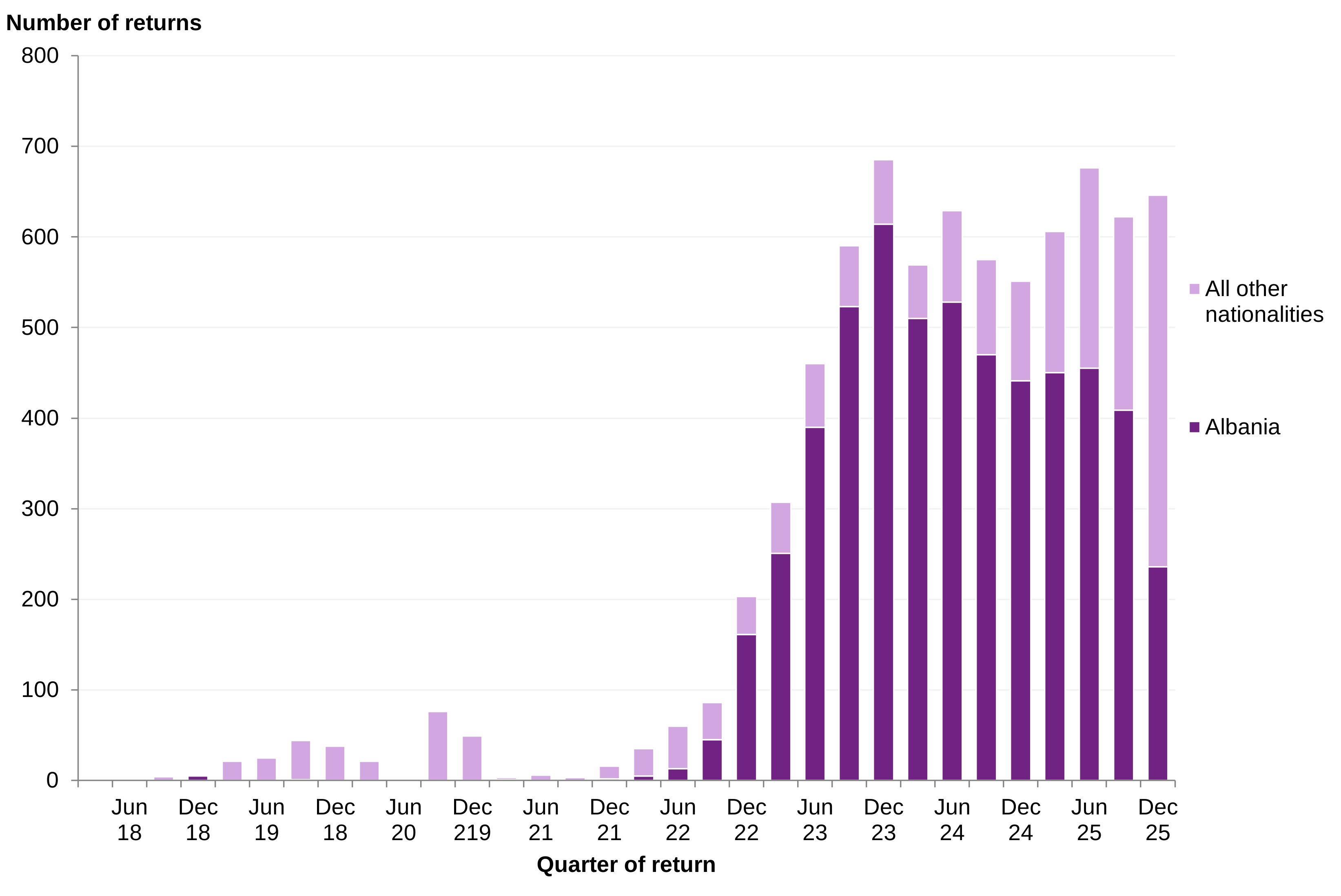
Returns of small boat arrivals in YE December 2025 are the highest in a 12 month period since recording small boat arrivals began in 2018.
In the YE December 2025, there were 2,550 returns of people who had arrived by small boat, 10% more than the previous year. A UK-France Agreement on the prevention of dangerous journeys came into effect in August 2025 following the signing of a treaty by the UK and French Interior Ministers. This treaty enables the return of arrivals from the UK to France, with an equal number of individuals eligible to come to the UK through a new legal route.
Of the return of small boat arrivals in the latest year, 61% were Albanian nationals (Figure 5). While prominent, the number of Albanian nationals arriving by small boat that are returned from the UK has declined in the last year, mirroring the decline in arrivals via this illegal entry route. Turkish and Iraqi nationals are the next 2 most common nationalities of small boat arrivals returned from the UK, together accounting for a further 15% of small boat returns in the YE December 2025.
A total of 7,612 people who arrived on a small boat between 2018 and the YE December 2025 have been returned from the UK, representing 4% of the total number of small boat arrivals over the same period. For the vast majority (95%) of small boat arrivals that claim asylum, there will be a period of time for their claim to be assessed, prior to it being known whether they will be subject to return. Of the 178,988 small boat arrivals who have claimed asylum since 2018, 70,912 claims (40%) were refused at initial decision or their application was withdrawn, while 13% were still awaiting an initial decision.
Afghan and Sudanese nationals were the second and fourth most common nationalities respectively arriving to the UK by small boat in the YE December 2025. However, returns to both countries are currently on hold. Iran (the third most common small boat arrival nationality over the same period) and Syria are currently not accepting enforced returns. See Home Office ‘Country returns guides’ for more information on the returns process for individual countries of origin.
Further information about small boat arrivals can be found in the ‘How many people come to the UK via illegal entry routes?’ chapter and information on how long people wait for an asylum decision can be found in the chapter ‘How many people are in the UK asylum system?’
Figure 5: Returns of small boat arrivals of Albanians and other nationalities, by quarter of return, January 2018 to December 2025
Source: Subset of data in Returns - Ret_06
The underlying data systems on which measures of arrivals to the UK via illegal entry routes is based are undergoing a process of change. As the department works through this transition, some recent data is unavailable for inclusion. As a result, return of small boat arrivals may be subject to revisions in future releases.
7. About the statistics
The latest 8 quarters of data are revised in each release. Therefore, the most recent quarters should be considered provisional.
Provisional numbers have been published on Returns from the UK and illegal working activity to the end of January 2026.
Data on voluntary returns is subject to upward revision, so comparisons over time should be made with caution. In some cases, individuals who have been told to leave the UK will not notify the Home Office of their departure from the UK. In such cases, it can take some time for the Home Office to become aware of such a departure and update the system. As a result, data for more recent periods will initially undercount the total number of returns. ‘Other verified returns’ are particularly affected by this. Further details on the revisions can be found in the returns section of the user guide.
The statistics in this section show the number of returns from the UK. One individual may have been returned more than once in a given period and, if that was the case, would be counted more than once in the statistics.
The Home Office seeks to return people who do not have a legal right to stay in the UK. This includes people who:
- enter, or attempt to enter, the UK illegally (including people entering by means of deception on entry)
- are subject to deportation action; for example, due to a serious criminal conviction
- overstay their period of legal right to remain in the UK
- breach their conditions of leave
- have been refused asylum
The published statistics refer to enforced returns which include deportations, as well as cases where a person has breached UK immigration laws, and those removed under other administrative and illegal entry powers that have declined to leave voluntarily.
As outlined in this intention to publish statement released by the Home Office in April, following upgrades to FNO data collection and infrastructure currently underway, the Home Office proposes to publish additional statistical reporting on FNOs in the immigration system at a later point.
8. Data tables
Data referred to here can be found in the following tables:
We welcome your feedback
If you have any comments or suggestions for the development of this report, please provide feedback by emailing MigrationStatsEnquiries@homeoffice.gov.uk. Please include the words ‘PUBLICATION FEEDBACK’ in the subject of your email.
We’re always looking to improve the accessibility of our documents. If you find any problems or have any feedback relating to accessibility, please email us.
See Section 6 of the ‘About this release’ section for more details.