How many people are detained under immigration powers in the UK?
Published 26 February 2026

© Crown copyright 2026
This publication is licensed under the terms of the Open Government Licence v3.0 except where otherwise stated. To view this licence, visit nationalarchives.gov.uk/doc/open-government-licence/version/3 or write to the Information Policy Team, The National Archives, Kew, London TW9 4DU, or email: psi@nationalarchives.gov.uk.
Where we have identified any third party copyright information you will need to obtain permission from the copyright holders concerned.
This publication is available at https://www.gov.uk/government/statistics/immigration-system-statistics-year-ending-december-2025/how-many-people-are-detained-under-immigration-powers-in-the-uk
Back to ‘Immigration system statistics, year ending December 2025’ contents page
This is not the latest release. View latest release.
This release goes up to the year ending (YE) December 2025. The “year ending” period includes the 12 months up to and including the YE month. For example, YE December 2025 includes the 12 months between 1 January 2025 and 31 December 2025.
An individual may be detained under immigration powers under certain circumstances. This includes detention in support of the return of the individual with no legal right to be in the UK. In some cases, individuals may be detained whilst their identity is being established or where there is a risk of absconding.
1. People entering immigration detention
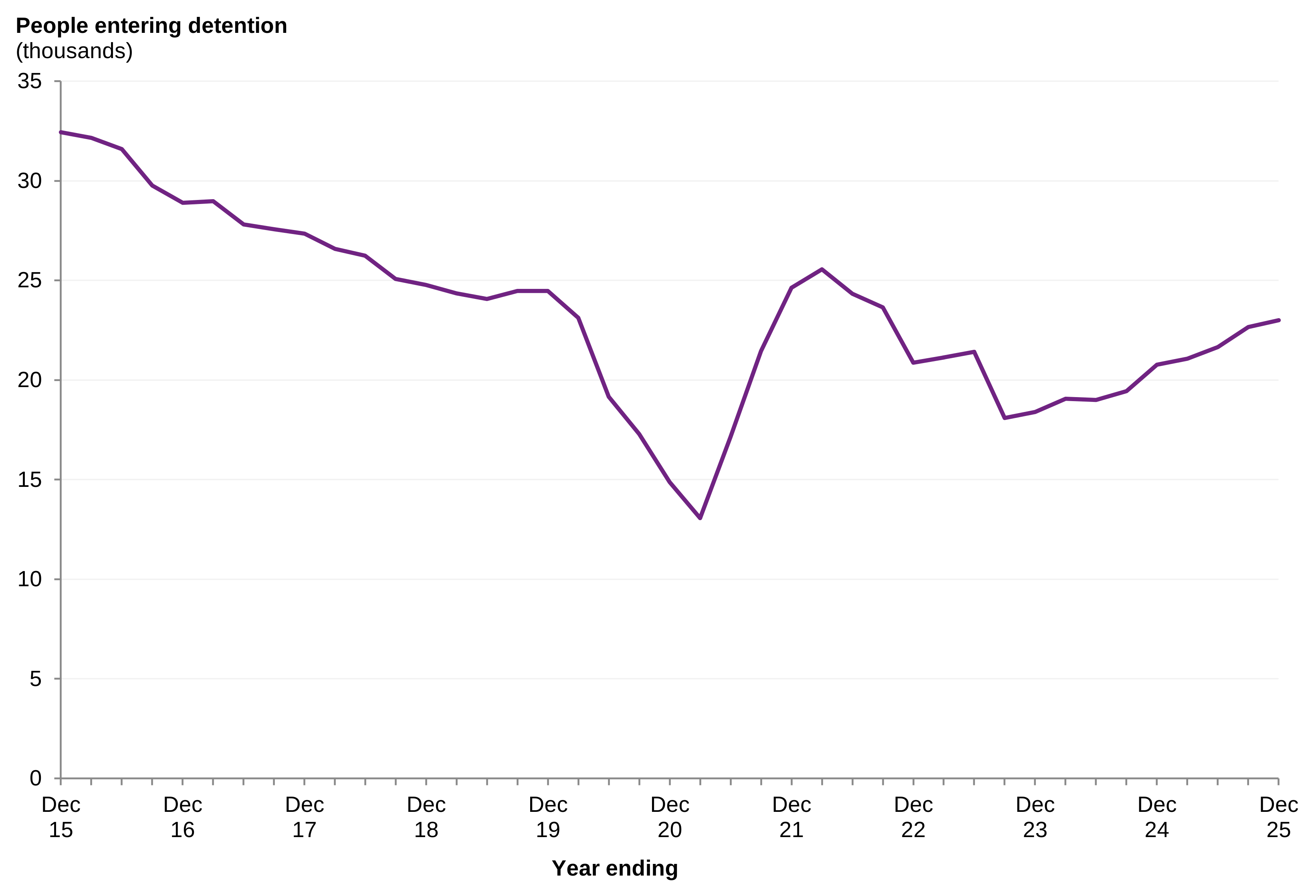
The number of people entering detention increased in the YE December 2025, continuing the recent upward trend since 2023.
A total of 22,996 people entered immigration detention in the YE December 2025, 11% more than the previous year. This increase continues an upward trend since 2023.
This increase, in part, reflects the use of detention to facilitate increasing numbers of returns from the UK. The increase in detention intake in the latest year coincides with a 20% rise in returns from detention over the same period (see ‘How many people are returned from the UK?’ for more information). This includes an increased number of foreign national offenders (FNOs) in prisons becoming immediately eligible for removal through the Early Removal Scheme (ERS), in most cases facilitated via the detention estate. In addition, since August 2025, the detention estate has been increasingly used to detain individuals under the UK-France agreement. Further details can be found in the policy timeline accompanying this release.
Figure 1: People entering immigration detention in the UK, from the YE December 2015 to the YE December 2025
Source: Immigration detention - Det_D01
Figure 1 shows a reduced use of immigration detention compared to a decade earlier, with a fall in numbers of people entering detention from 32,447 people in 2015 to 24,480 in 2019. This fall can in part be linked to the Government’s response to the 2016 Stephen Shaw review of detention, which proposed a range of changes in the use of detention and greater use of alternatives.
Although the COVID-19 pandemic impacted the use of detention in 2020 and 2021, the general downward trend in the number of people entering detention continued up to the YE September 2023. This decline occurred against the backdrop of detained individuals more commonly raising issues while in detention (such as asylum or modern slavery claims), combined with ongoing efforts to minimise the use of detention following the Shaw review, which contributed to decisions to manage such individuals in the community rather than within the detention estate.
Although detention is typically used to facilitate a return from the UK, in 2021 many entrants were small boat arrivals detained for initial processing on arrival. From 2022, the Manston immigration centre opened to process small boat arrivals, which meant that such people were no longer being held within the detention estate for initial processing, leading to a further decline in numbers entering. The Manston facility allowed more individuals to move directly to community-based accommodation following the initial examination and checks.
Albanians represented nearly a quarter (21%) of people entering detention in the YE December 2025.
Despite Albanians remaining the most common nationality entering detention (4,811 entries), this is 38% below the peak in 2022 (7,698) when a record number of Albanians arrived by small boat and many were either detained on arrival, or returned from the UK. The lower numbers entering detention in recent years may reflect a declining population of Albanians eligible for removal, given the fewer number arriving via illegal routes to the UK, shrinking asylum-seeker caseload and declining prison populations of these nationals.
The next most common nationalities entering immigration detention were India (15%) and Brazil (12%), which have seen entries into immigration detention increase by 79% and 47% respectively in the last year to 3,350 and 2,799 respectively.
2. People in immigration detention
The number of people in detention on 31 December 2025 was 8% higher than a year prior.
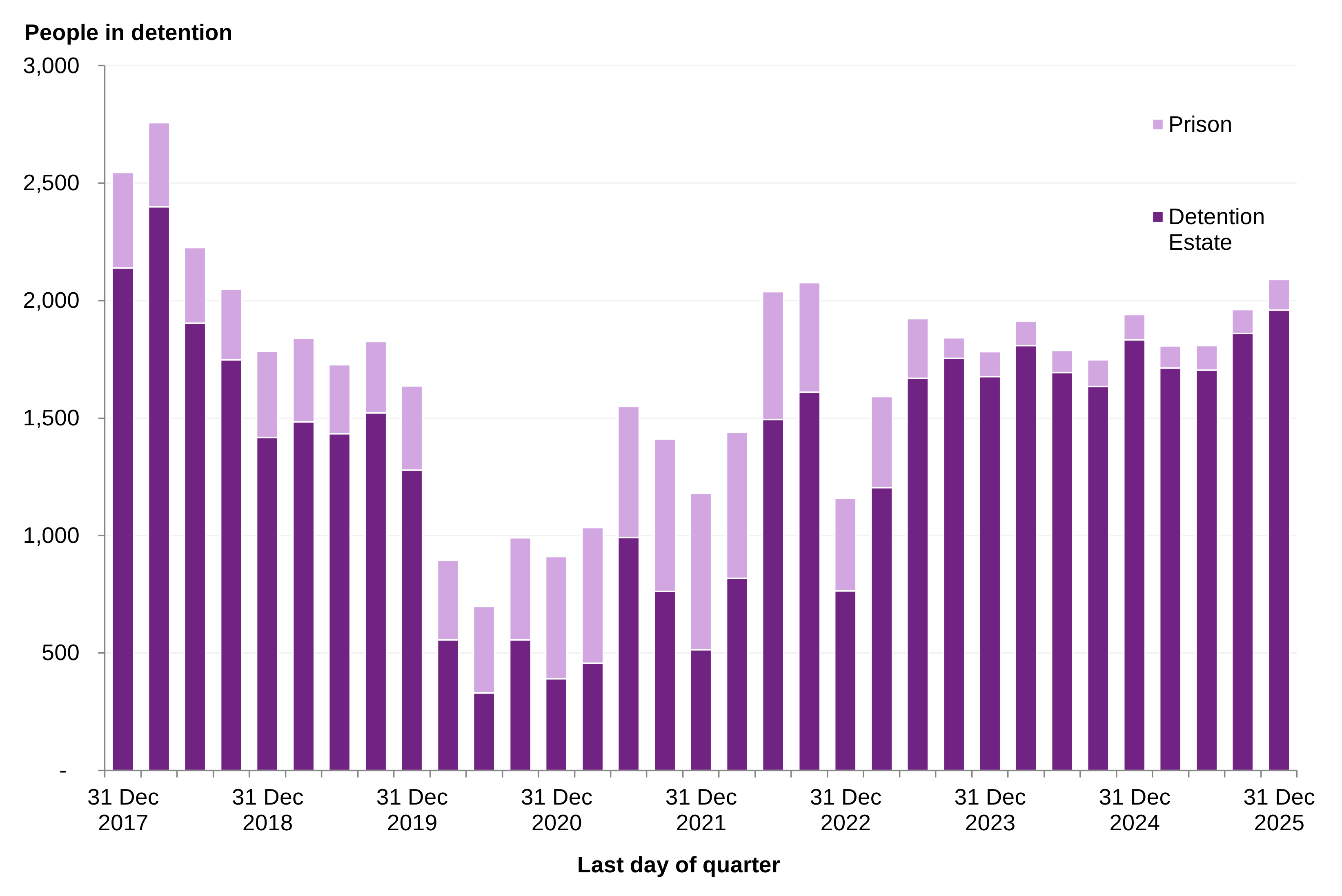
There were 2,090 people being held in detention (at an immigration detention facility or in prisons under immigration powers) at the end of December 2025, 8% more than on 31 December a year earlier.
Figure 2 shows that while there has been relative stability in numbers held in detention over the last 2 and a half years, numbers have increased in the last 2 quarters exceeding levels last seen in September 2022.
On 1 December 2025, Campsfield Immigration Removal Centre was reopened providing additional bed spaces for detainees.
The vast majority of people detained under immigration powers are held in the detention estate rather than prisons. Historically, the number of FNOs detained in the prison estate had been much higher, ranging between 300 and 700 between the end of 2017 and start of 2023. Reducing the number of FNOs held in prisons, by expediting their removal from the UK, has been a key priority to reduce pressures on prison capacity. On 31 December 2025 there were 130 FNOs detained in prisons, up 21% from the previous year, an increase compared to levels since the second half of 2023, which were around 100.
While many FNOs subject to deportation action are detained in the detention estate and prisons, many are also managed in the community. For data on those managed in the community, see the Immigration Enforcement Transparency statistics.
The total number of foreign nationals held in prison for criminal offences can be found in the latest prison population statistics, published by the Ministry of Justice and HM Prison and Probation Service.
Figure 2: People detained under immigration powers in the UK, on the last day of the quarter, 31 December 2017 to 31 December 20251,2
Source: Immigration detention - Det_D02
Notes:
- The ‘detention estate’ comprises Immigration Removal Centres (IRC), Short-Term Holding Facilities (STHF) and Pre-departure Accommodation (PDA). It is separate to those who are detained under immigration powers in prisons – these are shown separately on the chart.
- Prisons data from 31 December 2022 includes prisons in England and Wales only.
The number of people in detention is a snapshot relating to a single point in time, therefore, numbers fluctuate daily. If a large number of people entered detention just before the end of a reporting period, the number of people in detention would be higher than if the same people entered a few days later.
3. People leaving immigration detention
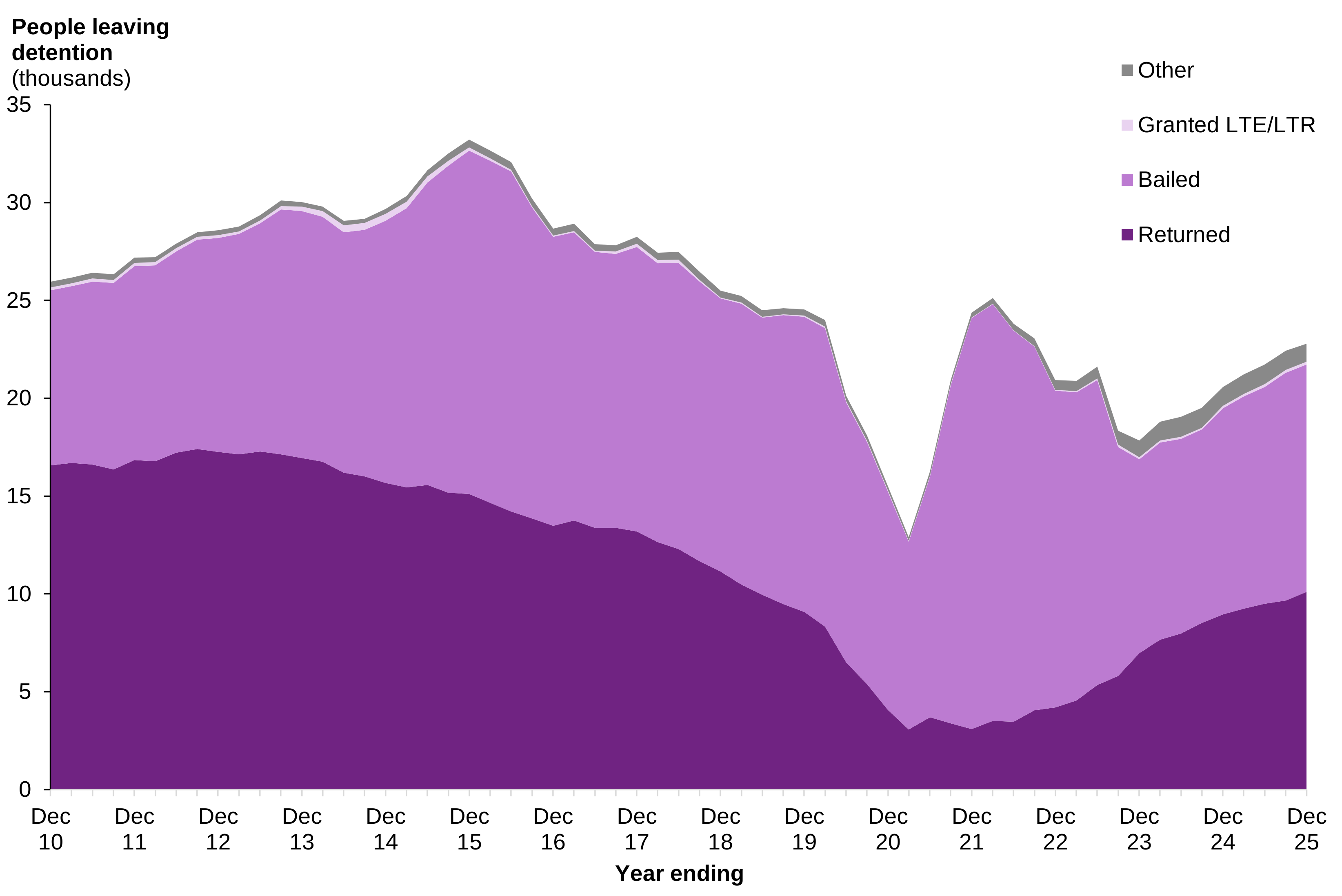
Just over half of those leaving detention (51% of leavers) left on immigration bail.
Figure 3 shows that the most common reason for leaving detention in the YE December 2025 was immigration bail, with 11,628 leaving detention for that reason in the latest year. Despite proportions fluctuating over the last few years, bail has been the most common reason for leaving detention since 2015; prior to 2015 the most common reason for leaving detention was to be returned.
People are bailed for a variety of reasons, including where there is no immediate prospect for their removal from the UK, or while their asylum claim is being considered, if they have made one.
Detained individuals who claim asylum, or raise other claims (for example, modern slavery or human trafficking) or further submissions (for example, appeals) which affect the progress of their removal, are usually bailed into the community. From there they will be monitored until their claims are concluded. If a claim is refused, the individual may depart the country voluntarily or re-enter detention if required to facilitate enforced removal.
Figure 3: People leaving detention by reason for leaving1,2 from the YE December 2010 to the YE December 2025
Source: Immigration detention - Det_D03
Notes:
- Other reasons for leaving detention include being sectioned under the Mental Health Act, entering criminal detention, being detained in error and people whose reason for leaving was not available at the time of publication. See the user guide for more details.
- The legend follows the same order and orientation as the stacks within the chart.
Just under half (44%) of people leaving detention were returned from the UK in the YE December 2025 returning to the proportion last seen in the YE December 2018.
There were 10,099 cases of people leaving detention to be returned from the UK in the latest year, constituting 44% of total leavers from detention. The number of people who leave detention to be returned has increased by nearly 2.5 times over the last 3 years. Enforced returns from detention are the most common type of enforced return and have been rising steadily since the pandemic in 2020 and 2021. For more information about this trend, and the reasons behind it, see the ‘How many people are returned from the UK?’ topic.
For the top 3 nationalities leaving detention in the YE December 2025 (Albania, India, Brazil), the majority of individuals (59%) were bailed.
Reasons for leaving detention varied across nationalities. Nationalities featuring prominently in FNO returns, such as Romanian and Polish nationals, had a higher proportion returned on leaving detention than leaving on bail in the latest year. Some nationalities who commonly claim asylum, including Indians and Pakistanis, left detention on bail in greater proportions. People may leave detention on bail whilst their claims are being considered.
Albanians were the most common nationality leaving detention in the YE December 2025 (4,951 or 22% of total leavers). Albanians are prominent across both the FNO and asylum claiming cohorts with a similar number returned from detention and leaving on bail.
For more information about asylum claim statistics, see the ‘How many people claim asylum in the UK?’ topic.
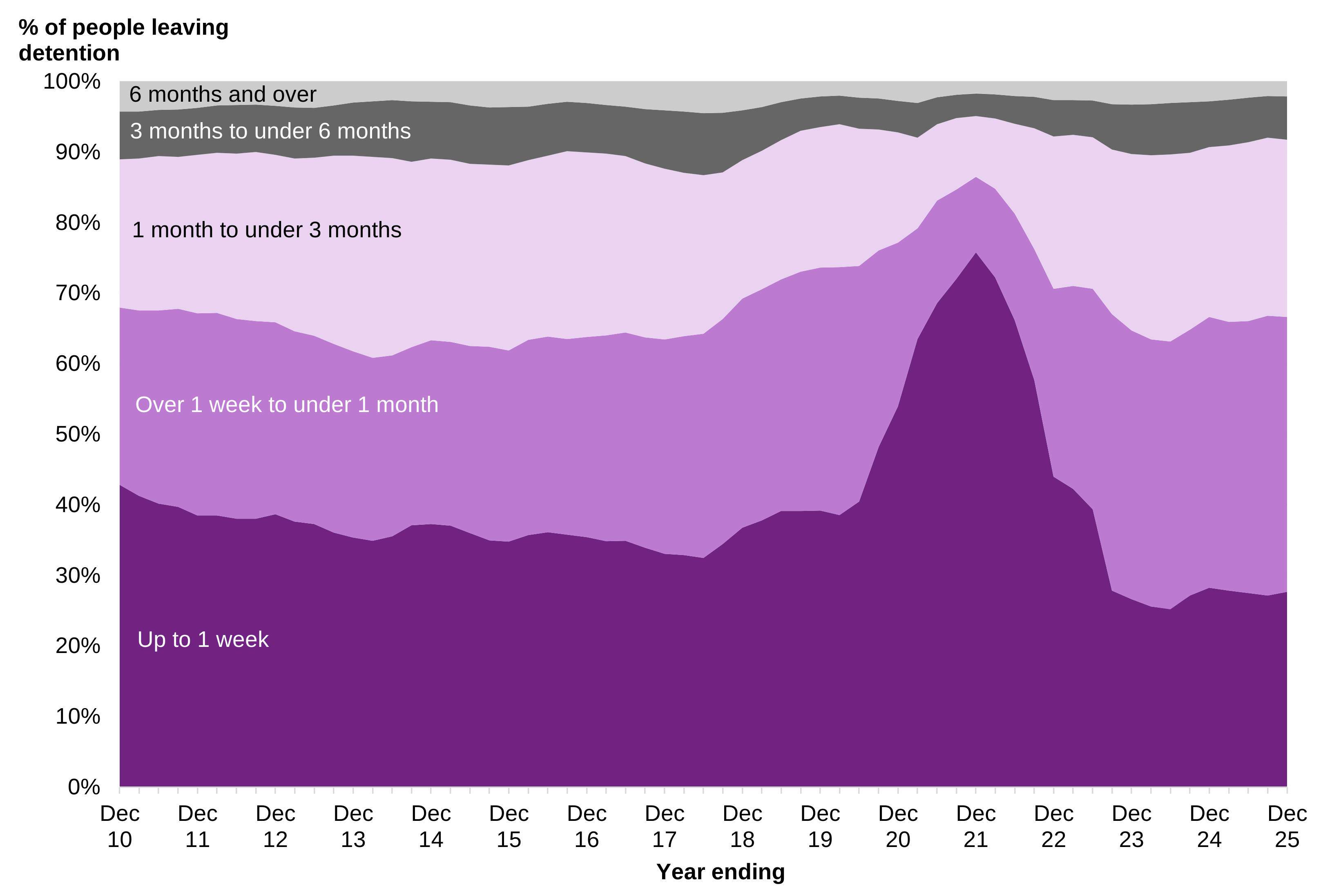
Figure 4: People leaving immigration detention, by length of detention1, proportions of rolling annual totals, from the YE December 2010 to the YE December 2025
Source: Immigration detention - Det_D03
Notes:
- Month duration refers to a period of 30 days.
Two-thirds (68%) of individuals leaving immigration detention in the YE December 2025 had been detained for less than a month, of which two-fifths (41%) were detained for less than a week.
Most people leaving detention in the YE December 2025 were detained for less than one month. Figure 4 shows shorter durations were more common from mid 2020 to the end of 2022, during which time small boat arrivals were undergoing initial processing in the detention estate, and the COVID-19 pandemic disrupted normal detention estate operations.
Individuals being returned from detention during the YE December 2025 were more commonly held for shorter periods of under a month in detention compared to those being bailed (72% compared to 64% respectively). Of the cohort of leavers being returned, 35% spent under a week in detention, compared to 20% of leavers being bailed.
Longer stays in detention (3 months and over) have ranged between 7% and 10% of numbers leaving over the last 4 years. In the YE December 2025, 7% of people leaving stayed over 3 months.
4. About the statistics
The statistics in this section relate to detention under immigration powers.
One individual may enter or leave detention multiple times in a given period and will therefore have been counted multiple times in the statistics.
As outlined in the intention to publish statement released by the Home Office in April 2025, there are changes to FNO data collection and infrastructure currently underway, and once complete the Home Office expects to publish further statistics on FNOs in the immigration system.
5. Data tables
Data referred to here can be found in the following tables:
We welcome your feedback
If you have any comments or suggestions for the development of this report, please provide feedback by emailing MigrationStatsEnquiries@homeoffice.gov.uk. Please include the words ‘PUBLICATION FEEDBACK’ in the subject of your email.
We’re always looking to improve the accessibility of our documents. If you find any problems or have any feedback relating to accessibility, please email us.
See Section 6 of the ‘About this release’ section for more details.