How many people come to the UK via safe and legal (humanitarian) routes?
Published 26 February 2026

© Crown copyright 2026
This publication is licensed under the terms of the Open Government Licence v3.0 except where otherwise stated. To view this licence, visit nationalarchives.gov.uk/doc/open-government-licence/version/3 or write to the Information Policy Team, The National Archives, Kew, London TW9 4DU, or email: psi@nationalarchives.gov.uk.
Where we have identified any third party copyright information you will need to obtain permission from the copyright holders concerned.
This publication is available at https://www.gov.uk/government/statistics/immigration-system-statistics-year-ending-december-2025/how-many-people-come-to-the-uk-via-safe-and-legal-humanitarian-routes
Back to ‘Immigration system statistics, year ending December 2025’ contents page
This is not the latest release. View latest release.
This release goes up to the year ending (YE) December 2025. The “year ending” period includes the 12 months up to and including the YE month. For example, YE December 2025 includes the 12 months between 1 January 2025 and 31 December 2025.
This chapter covers the safe and legal humanitarian schemes allowing eligible people to come to, or remain in, the UK. It includes both out-of-country grants to individuals overseas and in-country extensions for people already in the UK, either to switch onto one of these schemes from another type of leave or to extend their stay on the same route. The schemes covered are:
- Ukraine Scheme visas (including Ukraine Family, Sponsorship, and Extension Schemes): introduced in 2022 following the Russian invasion of Ukraine to allow persons affected by the war to come to the UK
- British National (Overseas) (BN(O)) visas: introduced in 2021 to provide those with BN(O) status the opportunity for them and their family members to live, work and study in the UK
- Refugee resettlement schemes: which allow for the transfer of refugees from other countries to the UK
- Refugee Family Reunion visas: which allow the partners and children of refugees in the UK to join them
1. Overview of safe and legal (humanitarian) routes
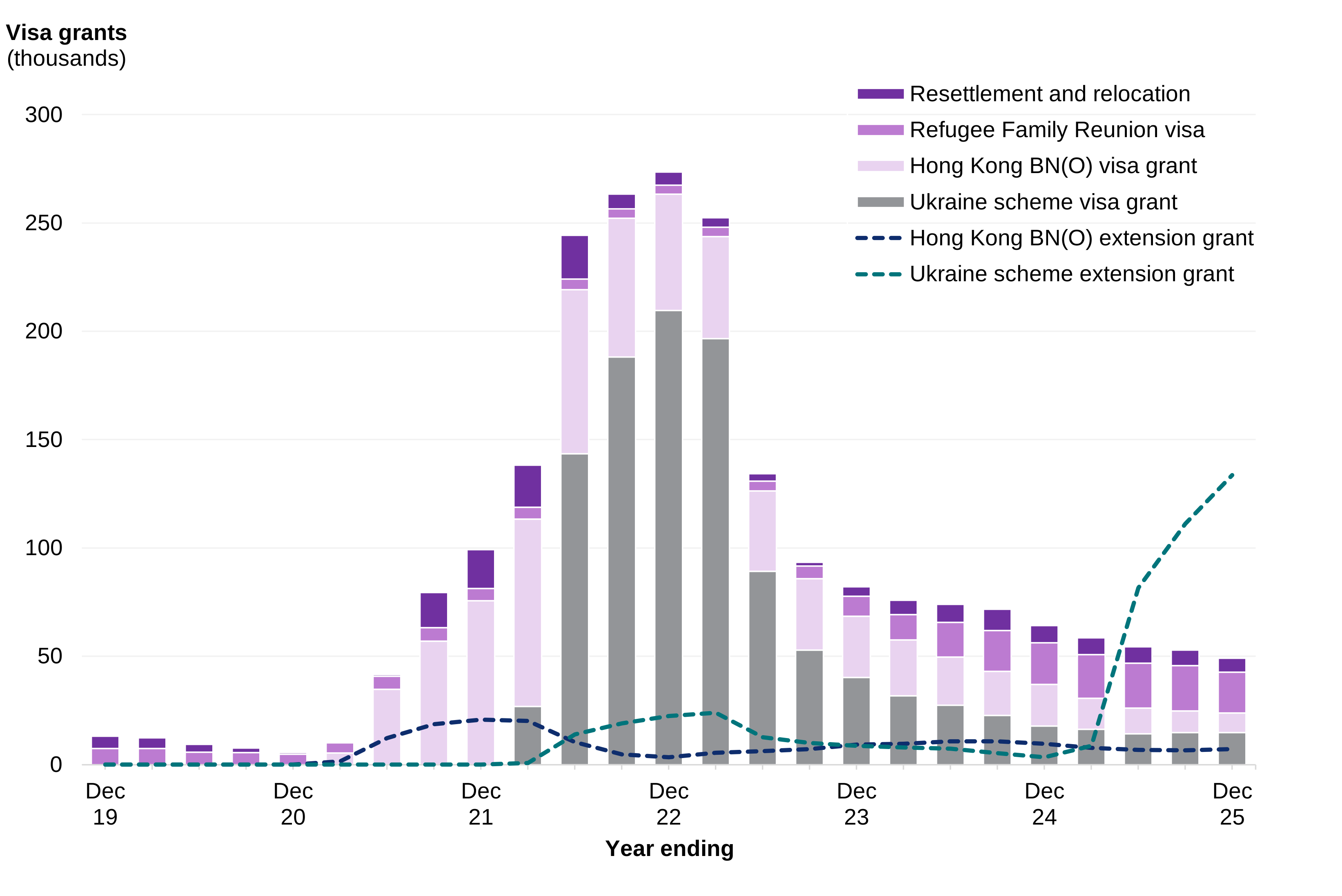
Out-of-country grants have been declining since their peak in 2022. However, in-country extensions have increased in the YE December 2025 following the launch of the Ukraine Permission Extension scheme.
In the YE December 2025, there were 189,823 grants of leave on safe and legal (humanitarian) routes, allowing people to come to, or remain in, the UK. This was 2.5 times higher than in the YE December 2024, largely due to grants on the Ukraine Permission Extension (UPE) scheme which will have been granted to people on existing Ukraine schemes.
Of these, 49,081 were out-of-country grants, issued to individuals outside of the UK. This is 23% fewer than in the YE December 2024. Of which, there were:
- 14,868 out-of-country visa grants through Ukraine schemes
- 8,927 out-of-country visa grants through the BN(O) route
- 6,417 refugees resettled
- 18,869 grants of Refugee Family Reunion visas
In addition, there were 140,742 in-country extensions, issued to individuals already in the UK, in the YE December 2025. This is a substantial increase from 13,043 in-country extensions in the YE December 2024. The rise is linked to the introduction of the Ukraine Permission Extension (UPE), which allows people previously on the Ukraine Scheme to extend their leave. Prior to the introduction of the UPE, most people extending in country would have been switching onto a safe and legal route for the first time. Of the 140,742 in-country extensions, there were:
- 133,644 in-country extensions through the Ukraine schemes; 133,519 were through the Ukraine Permission Extension Scheme
- 7,098 in-country extensions through the BN(O) route
Figure 1: Grants of leave on safe and legal (humanitarian) routes to the UK, by route, years ending December 2019 to December 2025 1,2
Source: Safe and legal (humanitarian) routes summary tables – Hum_01
Notes:
- Includes main applicants and dependants.
- Resettlement and relocation include the Afghan Resettlement Programme, UK Resettlement Scheme and Mandate Scheme. It also includes previous schemes such as the Vulnerable Persons Resettlement Scheme and Vulnerable Children Resettlement Scheme which closed in February 2021. Figures include those sponsored through Community Sponsorship.
2. Ukraine Schemes
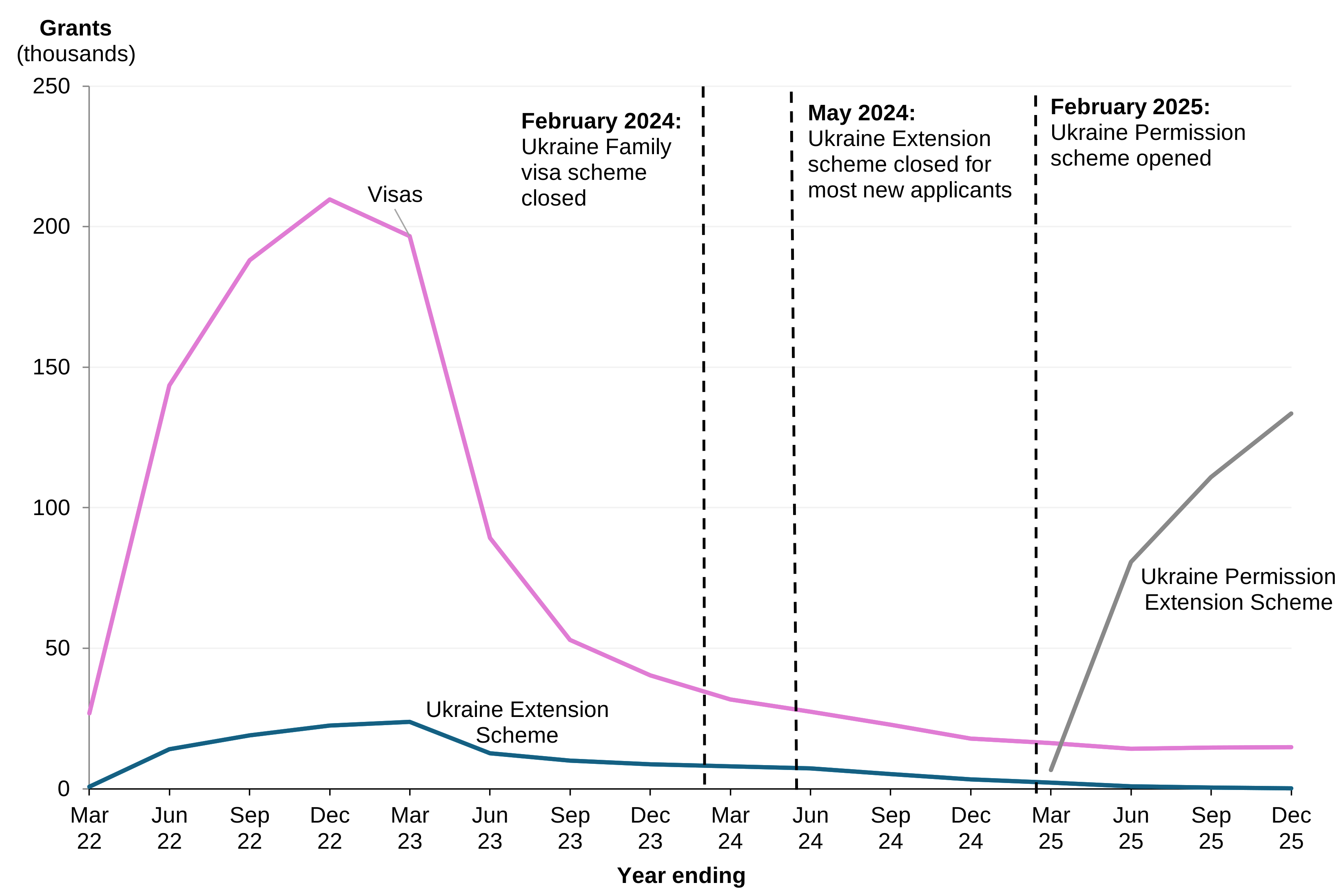
The Ukraine Family Scheme closed to new applications from 19 February 2024 and the Ukraine Extension Scheme closed for most new applications on 16 May 2024, however, remains open for children born in the UK to parents with existing, valid visas. Some applications received decisions after these dates.
The Ukraine Sponsorship Scheme remains open but has a stricter eligibility (sponsors must be British/Irish citizens or must be settled in the UK) and a reduced visa length (18 months rather than 36 months). This change was announced in February 2024.
Following the initial peak when the scheme opened, visa applications, grants and arrivals on the Ukraine Schemes have continued to decrease since 2022.
There were 14,868 grants of out-of-country visas under the Ukraine Schemes in the YE December 2025, bringing the total grants to 282,687 visas since the schemes opened in March 2022. There were 209,706 visas granted in the YE December 2022 following the introduction of the schemes in March of that year, falling to 40,287 in the YE December 2023. Visas have continued to gradually fall since.
There were a further 133,644 in-country extensions granted in the YE December 2025, following the opening of the Ukraine Permission Extension Scheme on 4 February 2025. Under this scheme, there were 133,519 extensions granted to people previously on one of the Ukraine schemes, many of whom will have come to the end of their initial 3 years leave.
Figure 2: Out-of-country visa grants and in-country extension grants on Ukrainian Visa Schemes, year ending March 2022 to year ending December 20251,2,3
Source: Safe and legal (humanitarian) routes summary tables - Ukr_01
Notes:
- Visa grants include the Ukraine Family Scheme and the Ukraine Sponsorship Scheme, which both opened March 2022.
- The Ukraine Extension Scheme includes grants on the Ukraine Family Extension Scheme. The Ukraine Extension Scheme opened in May 2022 and closed to most new applications in May 2024. The scheme remains open for children born in the UK to parents with existing, valid visas.
- The Ukraine Permission Extension Scheme opened in February 2025.
Figure 2 shows grants on the Ukraine visa schemes peaked in the YE December 2022 with 209,706 grants. The number of visas granted has since fallen and has remained below 30,000 per year since the YE June 2024. The Ukraine Extension Scheme peaked in the YE March 2023 with 23,864 and has been steadily decreasing since the YE June 2023. The Ukraine Permission Extension Scheme opened in February 2025, and 133,519 extensions have been granted since (to the end of December 2025).
Not everyone granted a visa will have used it, either because they have not yet arrived in the UK or may have chosen to go elsewhere or remain in Ukraine. The number of arrivals follows a similar trend to visas granted, peaking not long after the introduction of the schemes, at 110,000 in the YE December 2022. Visas granted were initially higher than arrivals in the first year of the scheme opening, suggesting some people in the early days of the scheme may not have used their visa, however numbers have been broadly aligned since.
Some of those who arrived from Ukraine will have since left the UK either temporarily or permanently. Management information indicates that as of the end of 2025, around 102,100 people (44%) who had previously arrived on the Ukraine schemes had exited the UK and were believed to be out of the country, although some may subsequently return.
As of the end of 2025, adult females aged 18 to 64 accounted for just under half (46%) of the people who have arrived from Ukraine since the schemes began, children (aged 17 and under) accounted for a further 26%, adult males aged 18 to 64 accounted for 22% and other adults aged 65 and over accounted for 6%.
3. British National Overseas (BN(O)) route
Following the initial peak when the scheme opened in 2021, visa applications and grants on the BN(O) route have decreased every year since.
On 31 January 2021, British National (Overseas) (BN(O)) passport holders from Hong Kong were given the opportunity along with their family members to live, work and study in the UK.
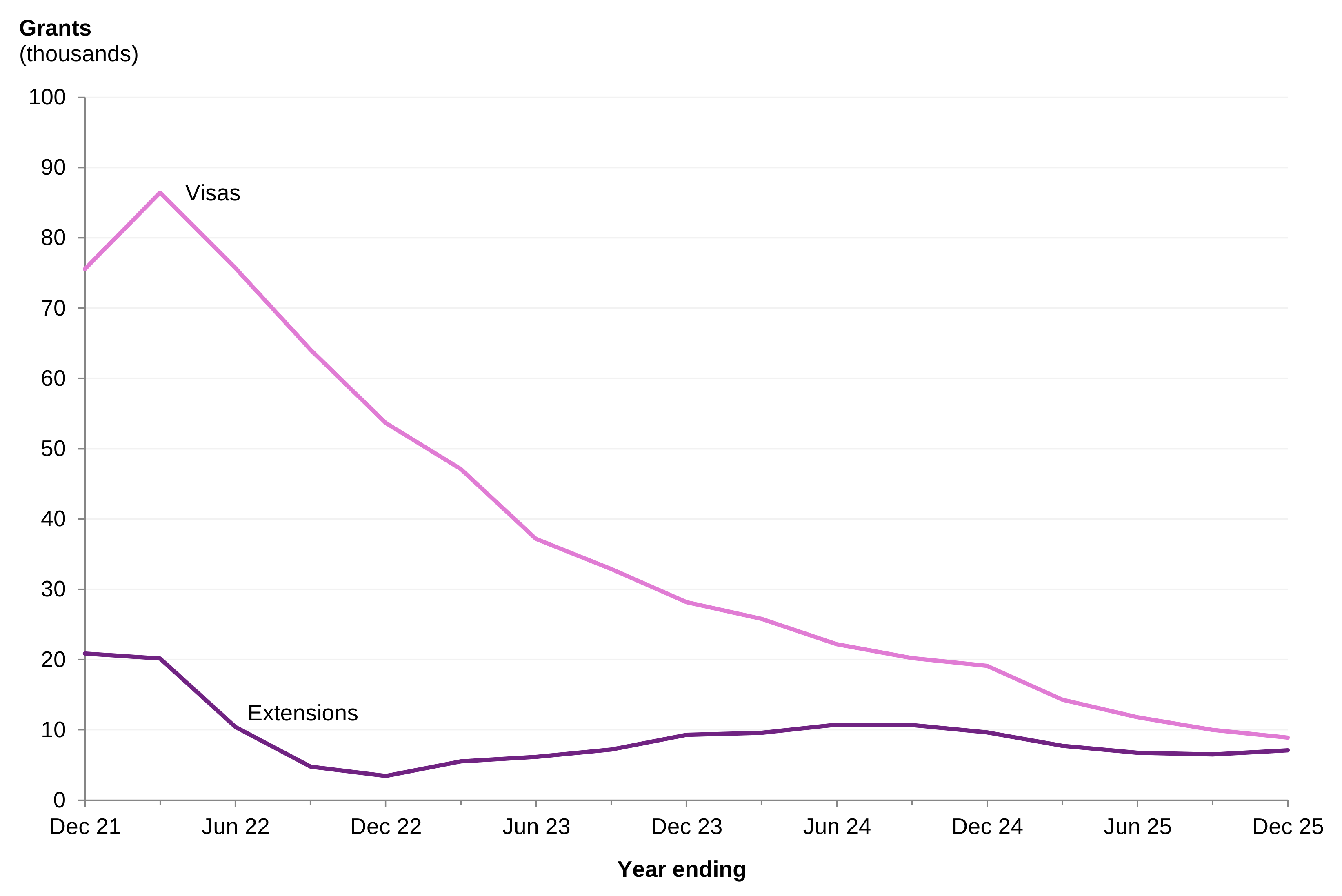
BN(O) out-of-country visas peaked in the YE March 2022, with 86,439 granted, soon after the scheme opened. The general trend since this period has seen BN(O) visa grants decrease each year since.
There were 8,927 grants of BN(O) visas in the YE December 2025, bringing the total number of grants to 185,507 since the scheme opened.
In addition, there have been 50,296 in-country grants for people already in the UK to extend their stay, with 7,098 in the YE December 2025. Extensions peaked in the YE December 2021, with 20,839 grants.
Figure 3: Out-of-country visa grants and in-country extension grants on the British National (Overseas) route, year ending December 2021 to year ending December 2025
Source: Safe and legal (humanitarian) routes summary tables - BNO_01
While numbers remain relatively small, in the YE December 2025 there have been 670 grants of settlement to individuals whose most recent leave was on the BN(O) route. The BN(O) route came into effect in January 2021 and typically requires 5 years of continuous residence in the UK before becoming eligible for settlement. Some individuals may be qualifying earlier, where time spent on other eligible visa routes, prior to moving onto the BN(O) route, counts towards their 5-year residence period.
4. Resettlement
The UK runs a range of resettlement schemes to bring refugees from other countries to the UK. Information on the different resettlement schemes and the differences between resettlement and relocation can be found in the user guide.
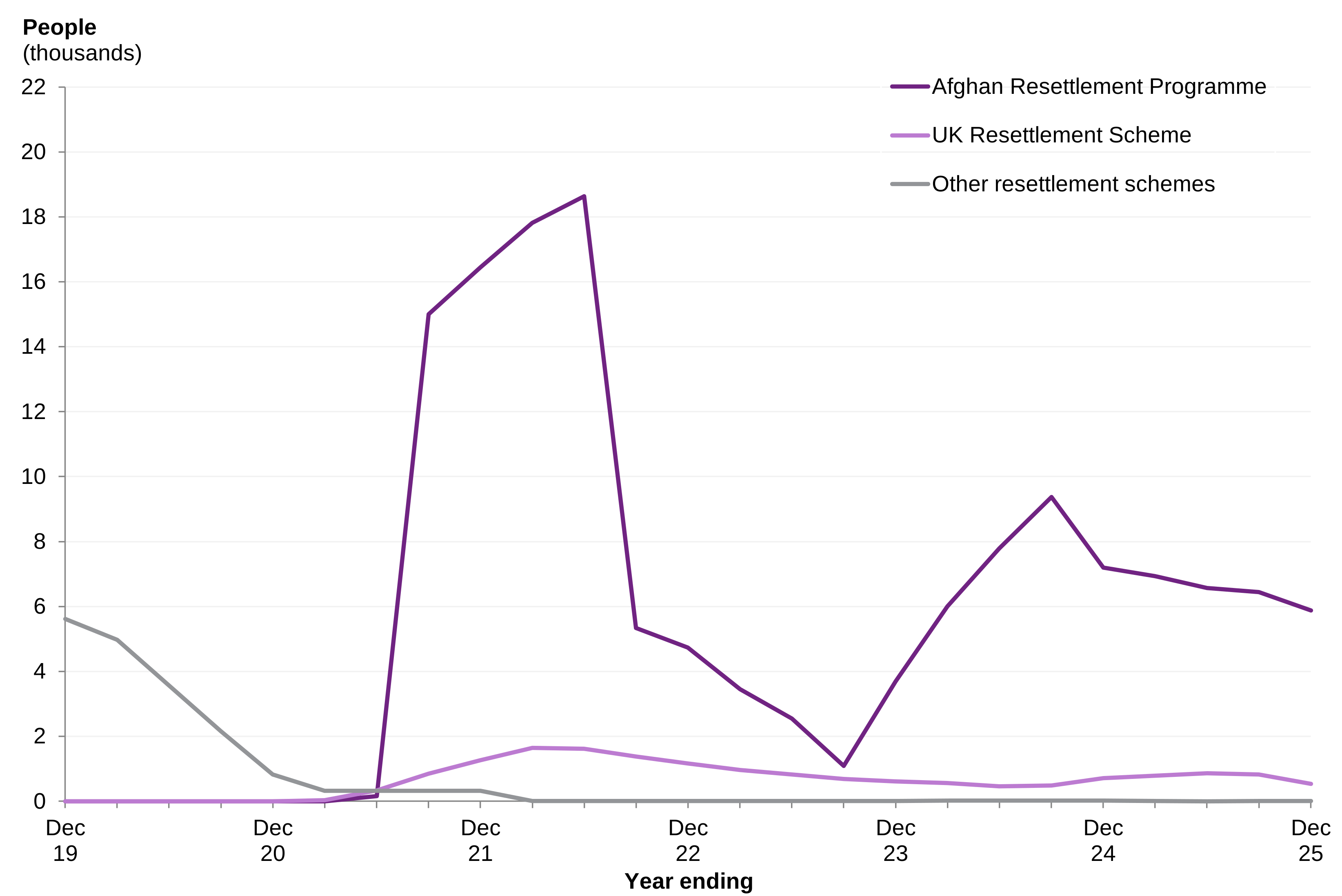
The number of refugees being resettled has decreased since the peak in 2021, which saw high volumes of resettlement through the Afghan Resettlement Programme.
There were 6,417 people resettled in the YE December 2025. This is 19% fewer than the YE December 2024. Of those resettled in the YE December 2025:
- 92% (5,874) arrived through the Afghan Resettlement Programme; the remaining 8% (543) arrived through the UK Resettlement Scheme and Mandate Scheme
- the most common nationality was Afghan (92%), whereas prior to 2021 the most common resettled nationality was Syrian most of whom were resettled under the now closed Vulnerable Persons Resettlement Scheme (VPRS)
Figure 4: People resettled and relocated, by scheme, years ending December 2019 to year ending December 2025 1,2
Source: Resettlement – Res_D02
Notes:
- Date at which the refugee arrived in the UK.
- ‘Other resettlement schemes’ include the Vulnerable Persons Resettlement Scheme, the Vulnerable Children Resettlement Scheme, the Gateway Protection Programme and the Mandate Scheme
A total of 22,157 people were resettled between 2014 and 2021 under the Vulnerable Persons Resettlement Scheme and Vulnerable Children’s Resettlement Scheme (VCRS) schemes, the majority of whom were Syrian nationals, while the UK Resettlement Scheme has resettled 4,293 refugees since its launch in 2021.
4.1 Afghan Resettlement Programme
Since the first arrivals in 2021, the Afghan Resettlement Programme has resettled a total of 37,950 people.
The Afghan Resettlement Programme contains the following Afghan Resettlement Schemes:
- The Afghan Relocations and Assistance Policy (ARAP)
- The Afghan Citizens Resettlement Scheme (ACRS)
- Afghanistan Response Route (ARR)
In July 2025, the Government confirmed that there will be no further ACRS pathways or referrals, ARAP is closed to new applicants and that ARR is discontinued. However, existing applications on these schemes will continue to be processed and therefore, there will be arrivals in future quarters. For further detail please see guidance on the Afghan Resettlement Programme.
Since the first arrivals in 2021, the Afghan Resettlement Programme has resettled a total of 37,950 people. Of these, 39% (14,842) were brought to the UK in July to September 2021, immediately following the Taliban takeover in Afghanistan in August 2021.
Table 1: Annual arrivals on the Afghan Resettlement Programme, by Scheme, up to December 2025
| 2021 | 2022 | 2023 | 2024 | 2025 | Total | |
|---|---|---|---|---|---|---|
| ACRS | 9,258 | 497 | 797 | 2,061 | 1,271 | 13,884 |
| ARAP | 7,171 | 4,238 | 2,898 | 3,950 | 1,538 | 19,795 |
| ARR | z | z | z | 1,180 | 3,061 | 4,241 |
| Total ARP arrivals | 16,445 | 4,737 | 3,695 | 7,199 | 5,874 | 37,950 |
Source: Safe and Legal summary tables – Res_01
Notes:
- ‘z’ in the table indicates that the scheme was not open during that time period.
4.2 International comparisons of refugee resettlement
International resettlement data is sourced from UNHCR and is accurate as of December 2025.
Between 2010 and December 2025, the UK resettled just over 35,000 individuals through UNHCR resettlement schemes – the sixth largest number in the world (after the United States, Canada, Australia, Germany and Sweden) and third in Europe.
International comparisons should be made with caution as available data from the UN Refugee Agency (UNHCR) relates only to UNHCR resettlement schemes (the UK Resettlement Scheme, Community Sponsorship Scheme, Mandate Scheme and ACRS Pathway 2). The UNHCR data does not include ARAP, ARR or ACRS Pathway 1 and 3 cases, meaning it is an undercount for the UK in terms of total resettlement and relocation. Information on the different resettlement schemes can be found in the user guide.
4.3 What happens after a refugee is resettled in the UK?
Upon arrival in the UK through a resettlement programme, individuals are supported to integrate into mainstream systems for housing, benefits, health care, and education.
Further information on integration outcomes, including employment, language proficiency and housing, is provided in the ‘How many people come to the UK via safe and legal (humanitarian) routes?’ chapter of the year ending September 2025 release.
5. Refugee Family Reunion
A Refugee Family Reunion visa allows partners and children of individuals previously granted refugee status or humanitarian protection in the UK to come to the UK to live.
On 4 September 2025, the Refugee Family Reunion route was paused. Outstanding applications, submitted before the pause, will continue to be progressed under the rules in place prior to the pause.
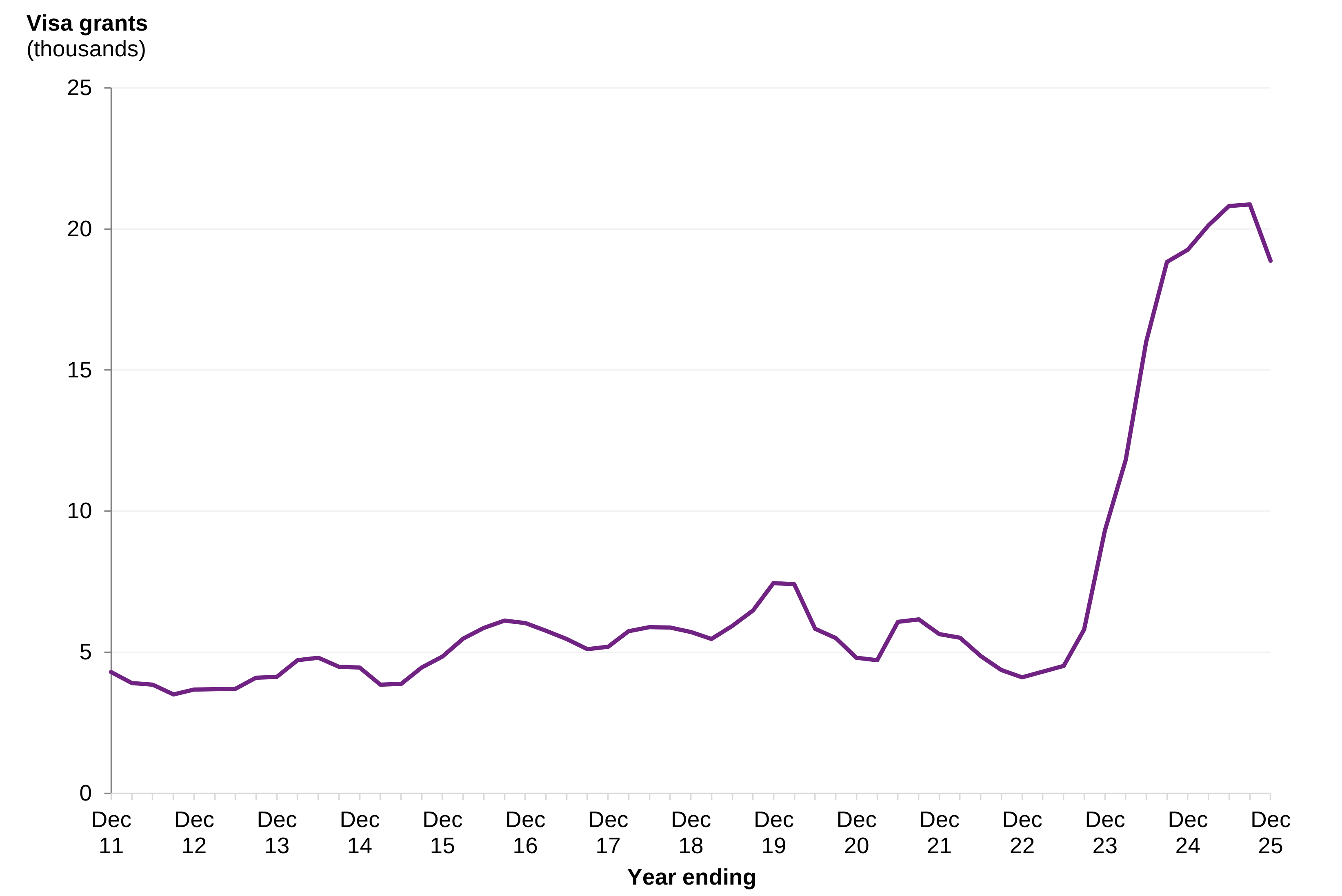
The number of people coming to reunite with refugee family members in the UK in recent years remains high compared to historic volumes.
Since late 2023, an increasing number of individuals have been granted refugee status and have therefore become eligible to sponsor partners and children under the Refugee Family Reunion route. This contributed to a rise in the number of family reunion visas granted, and an upward trend continued throughout most of the latest year. In September 2025, the UK Government announced an immediate temporary pause to new applications. A marked reduction of grants in the final quarter of 2025 followed the pause; however, higher volumes earlier in the year meant that the total grants in 2025 (18,869) were only 2% lower than the previous year.
Figure 5: Refugee Family Reunion visa grants, year ending December 2011 to year ending December 2025
Source: Refugee Family Reunion Visa Grants - Fam_D01
The most common nationalities granted Refugee Family Reunion in 2025 were Afghanistan (15%), Iran (13%) and Syria (12%). Trends in Refugee Family Reunion visas are partly driven by the number of individuals granted refugee status or humanitarian protection in preceding years.
6. About these statistics
6.1 Arrivals
Arrival figures linked to a Ukraine visa scheme or an out-of-country BN(O) visa are rounded to the nearest 100. Where individuals have multiple visits, only the first arrival after the visa grant has been counted. This data therefore counts people, rather than arrivals. Individuals arriving during the latest quarter may have received their grant in an earlier quarter.
The data used to record arrivals may undercount the total number of arrivals. For example, arrivals of those travelling into the UK from the Common Travel Area (from Ireland) will not be captured in the data. See the Home Office statistics on exit checks: user guide for more details.
6.2 Ukraine Visa and Extension Schemes
During March 2022, the UK government introduced 2 new visa routes to allow persons affected by the crisis in Ukraine to come to the UK. Introduced on 4 March 2022, the Ukraine Family Scheme allows applicants to join family members or extend their stay in the UK. The Ukraine Sponsorship Scheme was introduced on 18 March 2022 and allows Ukrainian nationals and their family members to come to the UK if they have a named sponsor under the Homes for Ukraine Scheme.
The Ukraine Family Scheme closed to new applications from 19 February 2024 and the Ukraine Extension Scheme closed for most new applications on 16 May 2024, however children who are born in the UK can apply for permission to stay after this date.
On 4 February 2025, the UK government launched the Ukraine Permission Extension (UPE) scheme. A Ukrainian national, or family member of Ukrainian nationals, who are living in the UK with existing permission on one of the Ukraine schemes, may be eligible to apply to continue living in the UK for up to a further 18 months through this scheme.
6.3 British National Overseas (BN(O)) route
In January 2021, the UK government introduced a new immigration route for British National (Overseas) (BN(O)) status holders, providing the opportunity for them and their family members to live, work and study in the UK. This route opened on 31 January 2021 and is open to individuals who hold a BN(O) passport and are, or have recently been, resident in Hong Kong, and their dependants.
6.4 Resettlement
Refugees in other countries can be given protection in the UK via resettlement schemes. The UK works with the UN Refugee Agency (the ‘UNHCR’) to arrange for the transfer of refugees from an asylum country to the UK, with the aim of ultimately granting them permanent residence. Information on the different resettlement schemes can be found in the user guide.
6.5 Refugee Family Reunion
Refugee Family Reunion visas allow partners and children aged 17 and under to join those granted refugee status or humanitarian protection in the UK if they formed part of the family unit before their sponsor fled their country.
The family members do not receive refugee status themselves. Leave is given in line with the sponsor, so that the family member’s leave will expire at the same time as the sponsor. Individuals are allowed to work, study and have recourse to public funds.
On 4 September 2025, the Refugee Family Reunion route was paused. Those seeking reunification may apply through other family routes, if they believe they meet the relevant immigration rules. Outstanding applications, submitted before the pause, will continue to be progressed under the family reunion rules in place prior to the commencement of the suspension, including those that are at appeal.
Applications submitted before 4 September 2025 may still appear in the data in the following months. This is because applicants have up to 240 days to attend a Visa Application Centre and provide their biometrics. An application is only counted in the statistics once biometrics have been taken.
7. Data tables
Data referred to here can be found in the following tables:
- Safe and legal (humanitarian) routes
- Entry clearance visa applications and outcomes
- Extensions
- Resettlement and relocation
- Refugee Family Reunion
Sponsorship Scheme data split by parts of the UK and local authorities, provided by the Ministry for Housing, Communities and Local Government, is available.
Demographic Data for Ukraine Visas Schemes, split by parts of the UK, is provided by the Ministry for Housing, Communities and Local Government.
Regional and local authority data, for individuals on the Homes for Ukraine scheme, those under the Afghan resettlement Programme, and asylum seekers receiving support, is published by the Home Office and the Ministry for Housing, Communities and Local Government.
We welcome your feedback
If you have any comments or suggestions for the development of this report, please provide feedback by emailing MigrationStatsEnquiries@homeoffice.gov.uk. Please include the words ‘PUBLICATION FEEDBACK’ in the subject of your email.
We’re always looking to improve the accessibility of our documents. If you find any problems or have any feedback relating to accessibility, please email us.
See Section 6 of the ‘About this release’ section for more details.