Why do people come to the UK? Work
Published 26 February 2026

© Crown copyright 2026
This publication is licensed under the terms of the Open Government Licence v3.0 except where otherwise stated. To view this licence, visit nationalarchives.gov.uk/doc/open-government-licence/version/3 or write to the Information Policy Team, The National Archives, Kew, London TW9 4DU, or email: psi@nationalarchives.gov.uk.
Where we have identified any third party copyright information you will need to obtain permission from the copyright holders concerned.
This publication is available at https://www.gov.uk/government/statistics/immigration-system-statistics-year-ending-december-2025/why-do-people-come-to-the-uk-work
Back to ‘Immigration system statistics, year ending December 2025’ contents page
This is not the latest release. View latest release.
This release goes up to the year ending (YE) December 2025. The “year ending” period includes the 12 months up to and including the YE month. For example, YE December 2025 includes the 12 months between 1 January 2025 and 31 December 2025.
1. Work-related visas
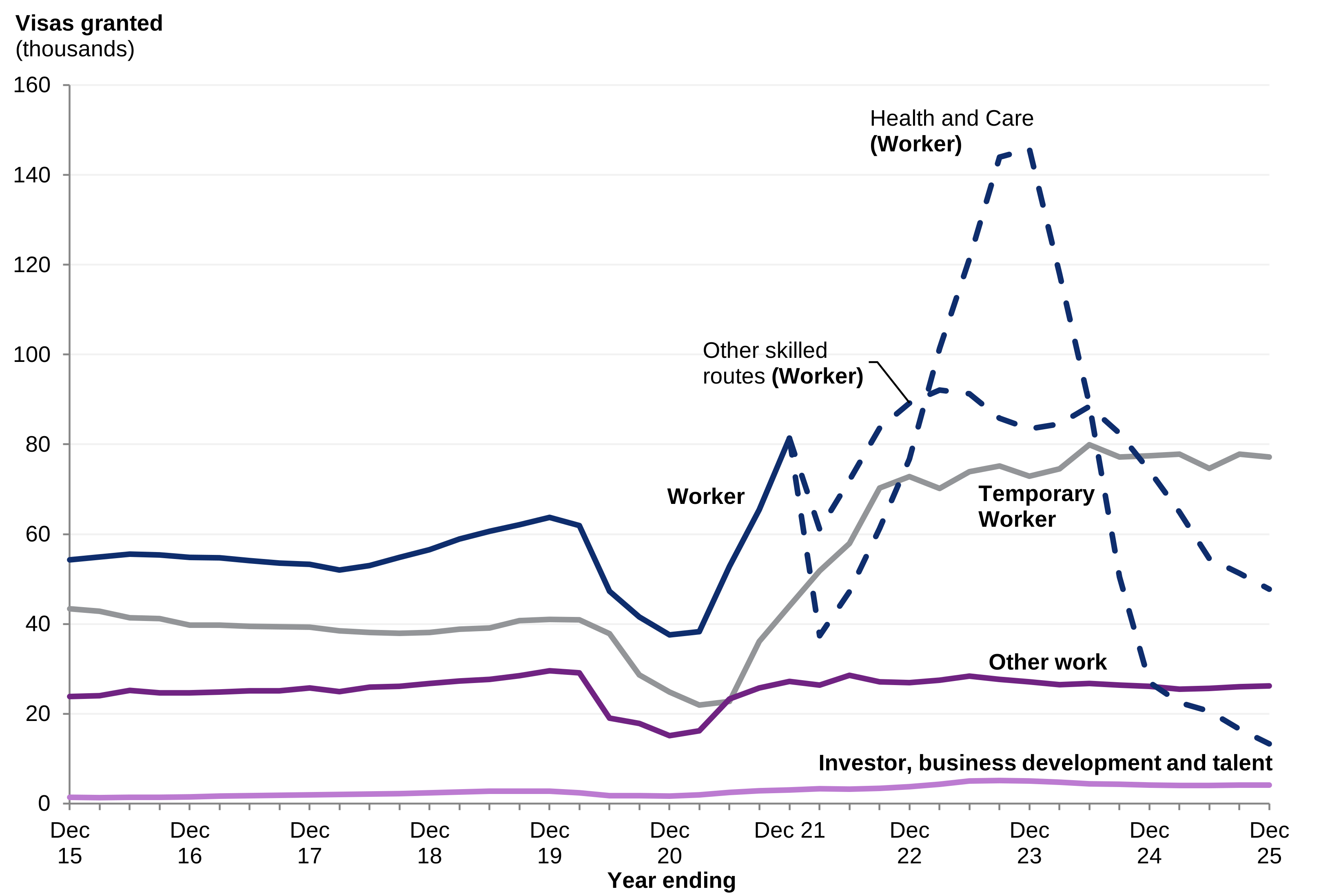
Work-related visa grants have decreased over the last 2 years, largely due to the decline in Health and Care Worker visas.
There were 168,471 visas granted to main applicants in all work categories in the YE December 2025, 19% fewer than the previous year and 50% fewer than YE December 2023 when the number of work visas peaked.
Between YE December 2009 and YE December 2020 there were less than 140,000 work visas issued to main applicants each year. From the beginning of 2021, there was an increase in the number of work visas granted. Health and Care Worker visa numbers in particular grew sharply following the expansion of the route in February 2022 to boost the social care workforce, although Skilled Worker visas also increased. The growth in these routes was accompanied by a large increase in the number of work-related dependant visas, with the majority of all work dependants (61%) over the latest 3 years being on the Health and Care Worker visa.
The fall in work visa numbers which began towards the end of 2023, was driven by a decrease in Health and Care Worker visas, likely due to more scrutiny applied by the Home Office to employers in the health and social care sector, and compliance activity taken against employers who did not fulfil their obligations as employers of migrant workers.
In December 2023, the Home Office announced policy changes for work visas, which came into effect at various points in 2024. Health and Care Worker main applicant visas had fallen prior to the changes, however numbers on this route and the Skilled Worker route continued to fall steadily following the changes. Additional policy changes targeting the Skilled Worker and Health and Care Worker visa routes were announced in the Immigration White Paper and the first changes were implemented on 22 July 2025, following which there has been a further decline in numbers.
The Home Office has published monthly updates on applications for key work visa types - see ‘Monthly statistical releases on migration’ for further information on these changes.
The fall in grants on the Health and Care Worker and Skilled Worker routes is primarily due to a reduction in the number of applications (from 228,917 for main applicants in YE December 2023 to 55,704 in YE December 2025) but there has also been an increase in the proportion of applications being refused (19% in YE December 2025 compared with 7% in YE December 2023).
‘Temporary Worker’ visas also increased following the pandemic and have since remained at similar levels. ‘Temporary Worker’ (primarily Seasonal Worker and Youth Mobility) visas issued now outnumber visas issued to main applicants for Health and Care and other skilled work routes.
Figure 1: Work visas granted to main applicants between the YE December 2015 and YE December 2025
Source: Entry clearance visa applications and outcomes – Vis_D02
Notes:
- The ‘Worker’ visa line divides after 2021 (denoted by the dashed lines), when the Health and Care Worker visa was introduced alongside other skilled work. Prior to this, the ‘Worker’ category is comprised of visas under the previous ‘Tier 2’ points-based system.
1.1 Health and Care workers and other skilled work routes
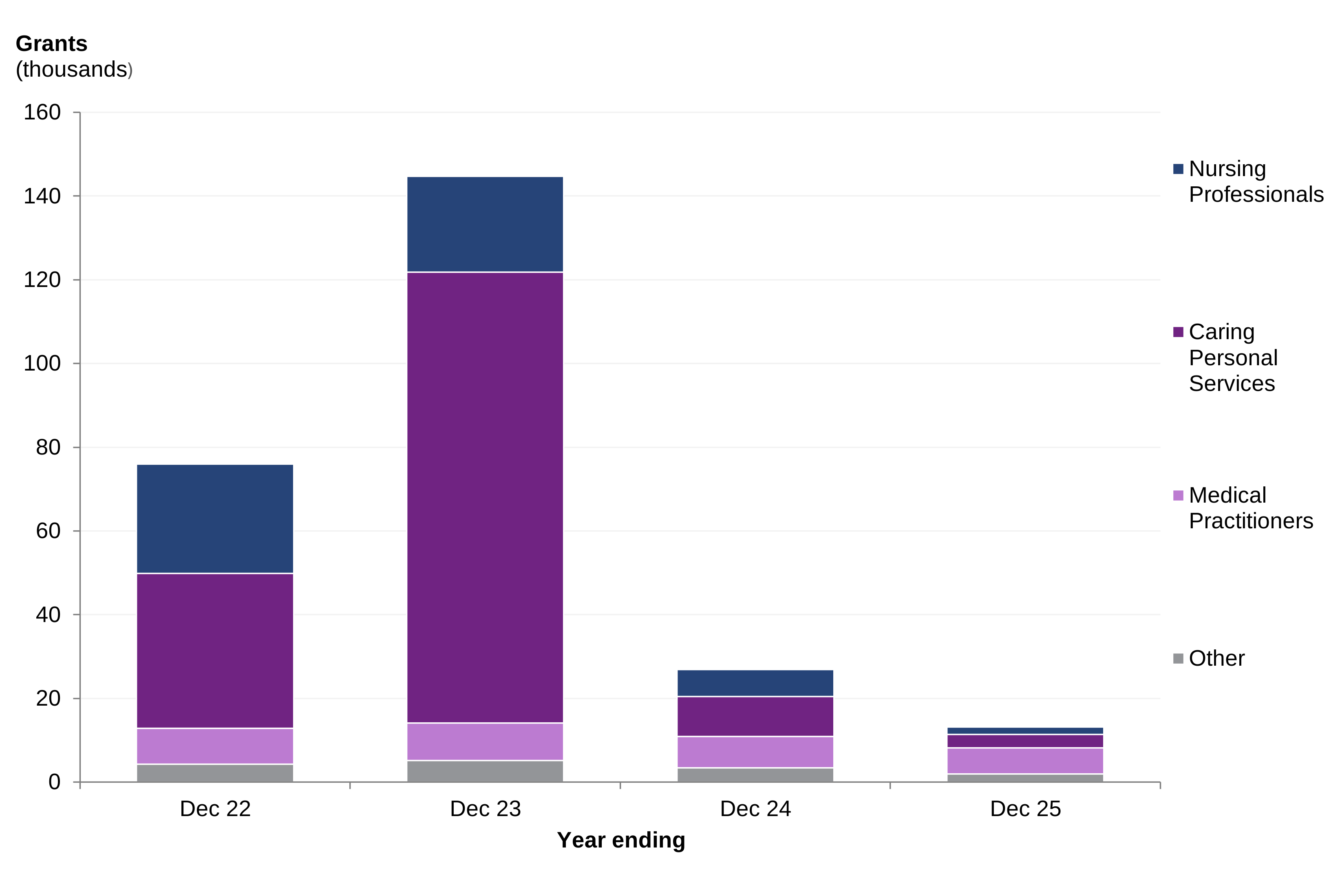
The number of Health and Care Worker visa grants has continued to decrease in the latest year, with the largest falls coming from the Caring Personal Service and Nursing Professional occupations.
The number of Health and Care Worker visas issued to main applicants has fallen by 51% to 13,286 in the YE December 2025. Dependant visas have also fallen by 58%, to 35,444, over the same period.
The number of Health and Care Worker visas issued to main applicants increased from 31,800 in YE December 2021 to a peak of 145,823 in the YE December 2023. The rise was primarily due to an increase in South Asian (Indian, Pakistani, and Bangladeshi) and Sub-Saharan African (Zimbabwean, Ghanaian, and Nigerian) nationals coming to work as care workers. The number of Health and Care Worker visas issued to migrant workers in a Caring Personal Service occupation fell by 67% to 3,172 in YE December 2025, with marked falls in the latest 6 months, following the end to overseas recruitment of care workers.
The number of Health and Care Worker visas issued to Nursing Professionals fell by 73% to 1,777 in the YE December 2025, which may be attributable to, according to the Department for Health and Social Care, the end of the centrally supported nurse international recruitment programme and changes in demand for international staff.
Figure 2: Health and Care Worker visas granted to main applicants by occupation, between the YE December 2022 and YE December 2025
Source: Sponsored work visas by occupation and industry (SOC 2020) – Occ_D02
The number of grants to main applicants on other routes in the ‘Worker’ category has decreased by 36% in the YE December 2025 and the number of grants to dependants has fallen by 25%, largely driven by fewer applications on the Skilled Worker visa route.
Decreases can be seen across a range of occupations, but the majority of the fall to main applicants in the latest year is accounted for by fewer grants for Food Preparation and Hospitality Trades, down 83% to 1,337. Food Preparation and Hospitality Trades had been increasing since 2021 but have seen large falls in the most recent years. Following the UK’s exit from the European Union and the COVID-19 pandemic there was a large increase in recruitment in the tech sector (mainly IT professionals), with falls since 2023 reflecting market saturation and falls in demand. Visas issued for IT Professionals continued to fall and were down 18% to 9,671 in the YE December 2025.
Following increases to the skill level requirements, over 100 occupations are no longer eligible for the Skilled Worker visa route. Affected roles could no longer be sponsored on this route from 22 July 2025, leading to a reduced number of Skilled Worker applications and grants in the latest quarter.
1.2 Temporary workers
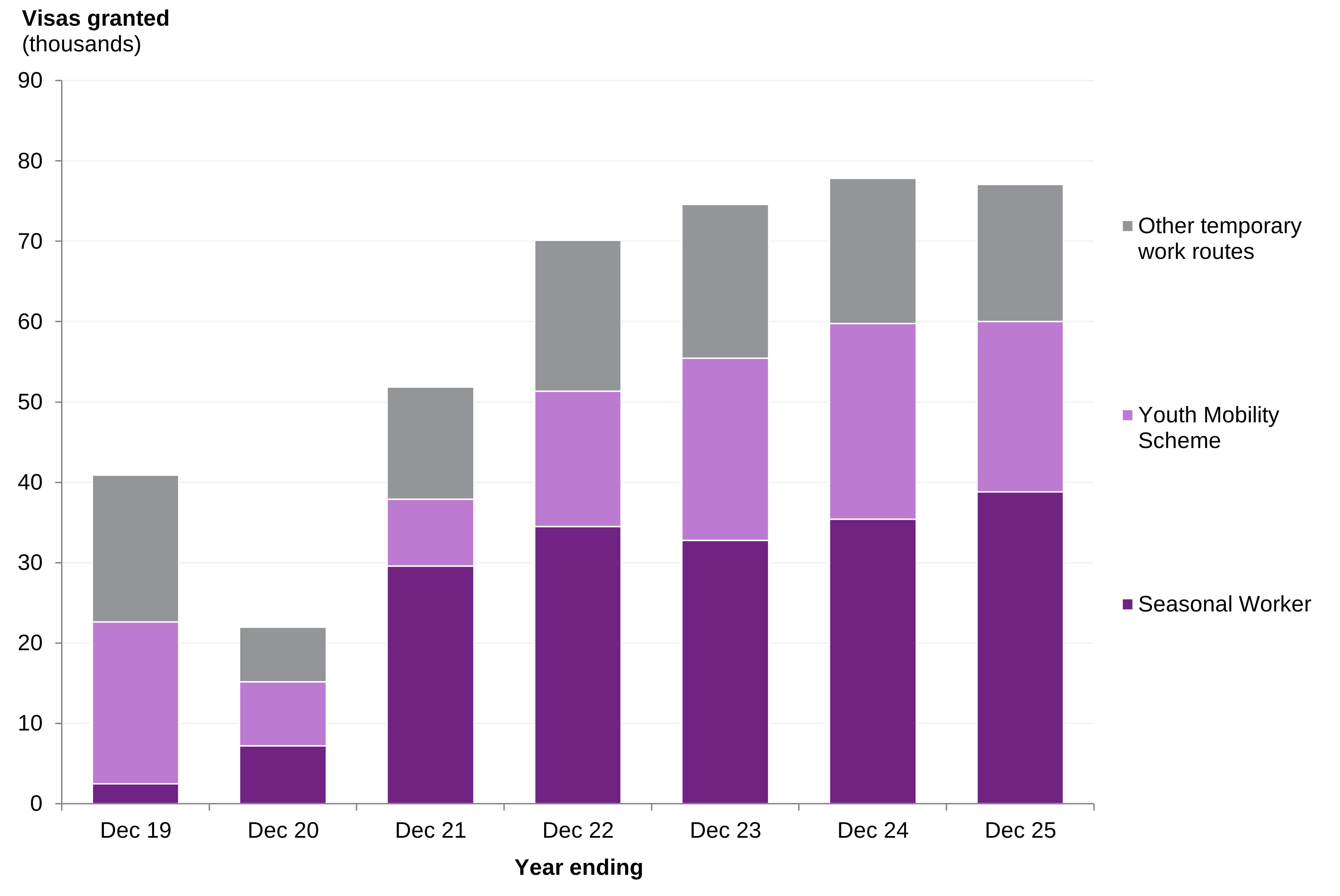
‘Temporary Worker’ visas granted to main applicants have remained broadly consistent over the last 3 years, with Seasonal Worker the most common route.
In the YE December 2025, half of ‘Temporary Worker’ visas granted to main applicants were for seasonal work, 28% were under the Youth Mobility Scheme and the remaining 22% were for other temporary work.
There were 77,097 ‘Temporary Worker’ visas granted to main applicants in the YE December 2025. This is comparable to the previous year but 88% higher than in the YE December 2019, largely due to the increase in visas granted on the Seasonal Worker route.
Figure 3: ‘Temporary Worker’ visas granted to main applicants, between the YE December 2019 and YE December 2025
Source: Entry clearance visa applications and outcomes – Vis_D02
Figure 3 shows grants of Seasonal Worker visas in the YE December 2025 at 38,805 were 10% higher than the previous year. The Seasonal Worker route was launched in March 2019 with the number of visas that could be granted limited to 2,500 that year. The annual quota has since increased to 47,000 for 2024 and 45,000 for 2025, which partly explains the overall growth in ‘Temporary Worker’ visas issued over the last few years.
Central Asian nationalities (such as Kyrgyzstan, Tajikistan, Uzbekistan and Kazakhstan) together represent over three-quarters (79%) of grants of Seasonal Worker visa grants in the latest year. Ukrainian nationals were the largest recipients of Seasonal Worker visas prior to the start of the war in Ukraine and the launch of the Ukraine visa schemes in 2022, but there were only 530 Seasonal Worker visas granted to Ukrainians in the YE December 2025.
The number of Youth Mobility Scheme visas issued in the YE December 2025 was 13% lower than the previous year at 21,209. However, Youth Mobility Scheme numbers have grown since the YE December 2020. This reflects a bounce-back for the scheme which was heavily impacted by travel restrictions during the pandemic. Australia was the most common nationality to be granted Youth Mobility Scheme visas, accounting for 39% of grants (8,198) in the latest year. Numbers also include the India Young Professionals Scheme, which held its first ballot in February 2023. In the YE December 2025 there were 2,448 grants to Indian nationals under this scheme.
2. Work-related extensions
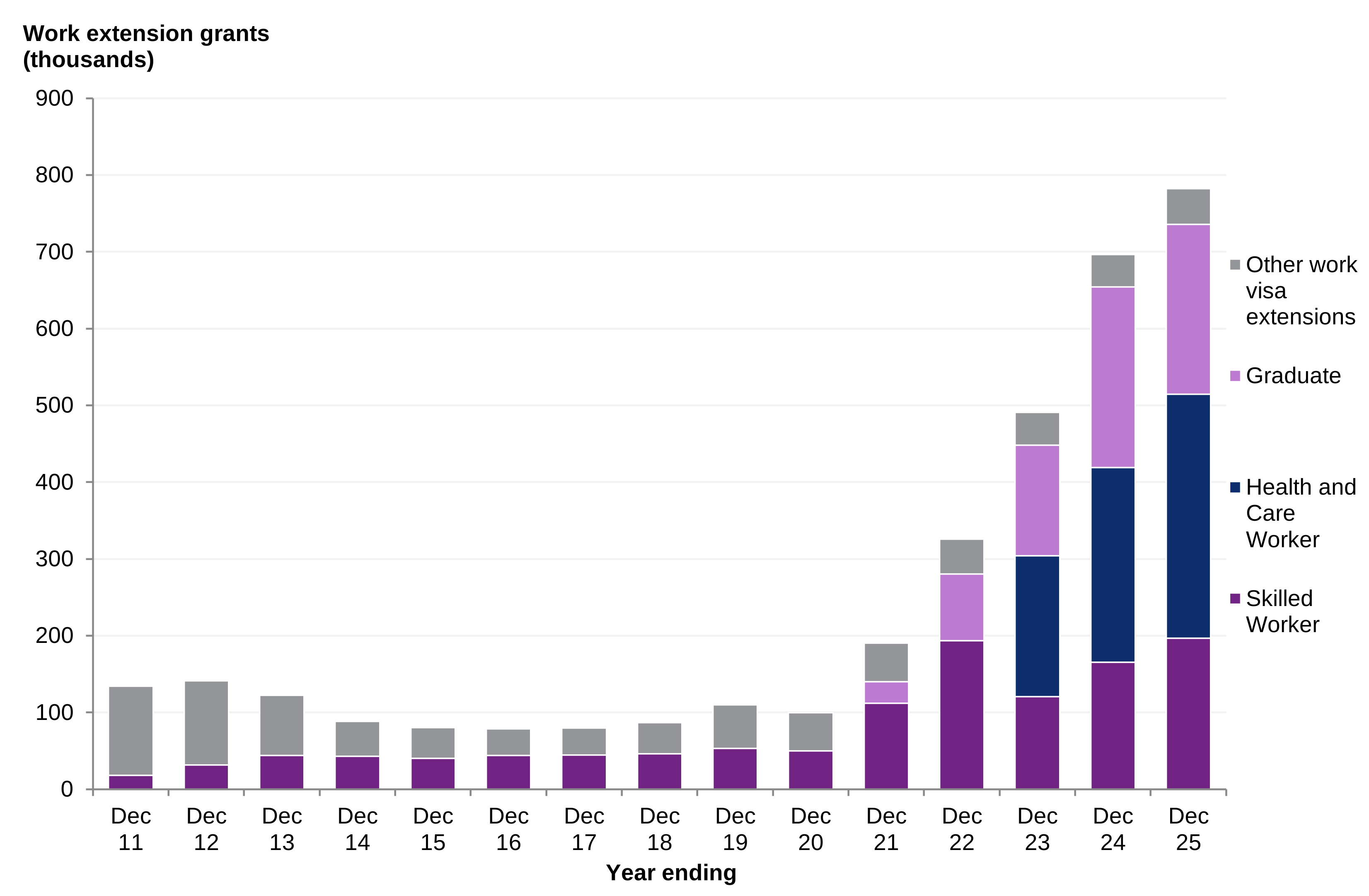
Graduate, Health and Care Worker and Skilled Worker extensions comprise nearly 95% of all work-route grants of further leave to remain, with increases observed in the latest year in Health and Care Worker and Skilled Worker routes.
Figure 4: Work-related extension grants, by main subcategories of leave, YE December 2011 to YE December 2025
Source: Extensions detailed tables – Exe_D01
Notes:
- The ‘Skilled Worker’ subcategory in the chart incorporates Tier 2 (General) route extensions before 2023, and the combined Skilled Worker and Health and Care extensions up to 2022, before these could be separately identified from the data
- ‘Other work visa extensions’ represents the remaining work extension subcategories which are not shown separately in the chart
Extension of stay grants for work routes increased by 12% in the latest year and are more than 7 times higher than 2019. In contrast to recent changes in entry clearance volumes, extension grants for both Health and Care Workers and Skilled Workers continued to rise.
In addition to the increase in grants for work extensions, there has been a notable increase in refusals for both main applicants and dependants, which have more than doubled from 6,231 to 15,839 in the latest year. As was the case for grants, most of these refusals related to the Graduate, Skilled Worker and Health and Care Worker routes.
Health and Care Worker extension grants increased by 26% to 317,878 and Skilled Worker extensions increased 19% to 196,718, reflecting the high number of entry clearance grants issued to people in 2022 and 2023, many of whom will have initially arrived to work in the UK and require an extension to continue working in the UK.
The highest numbers of Health and Care Worker extensions in the YE December 2025 were issued to Indian (104,555), Nigerian (88,461) and Zimbabwean (28,914) nationals. The highest numbers of Skilled Worker extensions in the YE December 2025 were issued to Indian (90,031), Pakistani (16,098) and Nigerian (12,485) nationals. These totals reflect the high number of these nationals coming on entry clearance visas for these routes, in previous years.
Graduate route extension grants decreased by 6% to 221,335 in the latest year. The highest numbers of Graduate extensions in the YE December 2025 were issued to Indian (90,153), Nigerian (42,220) and Pakistani (30,464) nationals. Previous category of leave data, (available up to and including 2024), indicates that since 2022, the largest proportion of those extending onto a work visa have previously held a study visa, reflecting growth in transitions from study to work via the Graduate route. The route allows eligible international students to live and work, or look for work, in the UK for up to 2 years after completing their course (3 years for PhDs).
2.1 Additional insights from the Migrant journey: 2024 report
Analysis from the Migrant journey: 2024 report shows that, in 2024, 20% of the work cohort that arrived in the UK 5 years earlier had been granted indefinite leave to remain. While this continues an upward trend, which can be observed since the 2015 cohort, it suggests that most workers do not remain in the UK on a permanent basis. Recent changes in work-related UK arrivals, including more skilled workers and changing demographics of those arriving, are likely to affect how many permanently stay in future years.
The proportion who remains, and are granted indefinite leave, varies by route, and is considerably higher in the ‘Investor, business development and talent’ visa category where, in 2024, 75% of main applicants that arrived 5 years earlier held valid leave to remain or indefinite leave to remain. Temporary workers by the nature of their visa are less likely to stay long term, needing to obtain a new type of visa to do so, and only 17% who arrived in 2019 on a ‘Temporary Worker’ visa still held leave 5 years later.
3. Other related data
The Home Office publishes the number of Skilled Worker and Health and Care Worker visa applications by month in the Monthly entry clearance visa applications publication.
The Office for National Statistics (ONS) publish long-term international migration estimates. These are statistics under development that estimate the number of people immigrating to and emigrating from the UK for 12 months or more.
3.1 Sponsorship licensing for work and study
At the end of 2025, there were 126,579 organisations and institutions registered as licensed sponsors for work and study, compared to 31,899 in 2019 before the introduction of the new Immigration system following the UK’s departure from the EU.
This data also shows that there were 34,698 sponsor licences decided in 2025, compared to 42,991 in 2024. Of these, 18,407 licences were granted (37% fewer than the year before), and 16,291 were not granted (including both applications withdrawn and those rejected).
4. About these statistics
The statistics in this section provide an indication of the number of people who have an intention to enter the UK for work reasons. Further information and definitions can be found in the user guide.
Entry clearance visas allow an individual to enter and stay in the UK within the period for which the visa is valid. Data in this section refers to the number of Entry clearance visas granted for work reasons within the period. If an individual was granted a visa more than once in a given period, this has been counted as multiple grants in the statistics.
Year-on-year comparisons of the number of decisions can be affected by quarterly fluctuations in the data. These fluctuations can be examined in the quarterly data in the published tables. Year ending comparisons will also include impacts resulting from the travel restrictions put in place during the COVID-19 pandemic.
Extensions of temporary stay in the UK relate to individuals inside the UK extending or changing the status of their right to stay in the UK. An individual is required to apply for an extension or change in status before their existing permission to enter or stay in the UK expires.
The statistics in this chapter show the number of grants and refusals on applications for extension of temporary stay in the UK. One individual may have made multiple applications for an extension, so may account for multiple decisions. Data in this section includes dependants and takes account of the outcomes of reconsiderations and appeals.
Before 2023, extensions under the ‘Skilled Worker’ and ‘Skilled Worker Health and Care Worker’ visas were not separated into specific subcategories; instead, they were reported as a single, combined figure. Since 2023, however, these extensions have been classified under distinct categories: either ‘Skilled Worker’ or ‘Skilled Worker Health and Care Worker’.
5. Data tables
Data on immigration for work can be found in the following tables:
- Detailed occupation datasets
- Entry clearance visas summary tables
- Detailed entry clearance visas datasets
- Extensions summary tables
- Detailed extensions datasets
- Migrant journey: 2024 report
We welcome your feedback
If you have any comments or suggestions for the development of this report, please provide feedback by emailing MigrationStatsEnquiries@homeoffice.gov.uk. Please include the words ‘PUBLICATION FEEDBACK’ in the subject of your email.
We’re always looking to improve the accessibility of our documents. If you find any problems or have any feedback relating to accessibility, please email us.
See Section 6 of the ‘About this release’ section for more details.