The MHCLG Appraisal Guide
Updated 18 February 2026
Applies to England

© Crown copyright 2026
This publication is licensed under the terms of the Open Government Licence v3.0 except where otherwise stated. To view this licence, visit nationalarchives.gov.uk/doc/open-government-licence/version/3 or write to the Information Policy Team, The National Archives, Kew, London TW9 4DU, or email: psi@nationalarchives.gov.uk.
Where we have identified any third party copyright information you will need to obtain permission from the copyright holders concerned.
This publication is available at https://www.gov.uk/government/publications/the-mhclg-appraisal-guide/the-mhclg-appraisal-guide
Foreword
This Guide represents the fourth edition of the Ministry of Housing, Community and Local Government (MHCLG) Appraisal Guide. The aim is to ensure that Ministers and other decision makers have robust evidence on value for money when making policy and investment decisions.
Previous versions of the Guide have been widely used within MHCLG, other government departments and at local level, to inform spending decisions on housing, commercial property and land use and funding decisions by local authorities.
This version of the Guide updates the previous version published in March 2025 by including advice on how to appraise the health impacts of urban developments. Good building design, access to the natural environment, quality community infrastructure and access to safe and active travel can all prevent poor health outcomes. It follows that good urban design has a key role to play upstream in reducing pressures on health services.
- This version of the Guide incorporates work done by the TRUUD consortium of universities who have developed an economic valuation model to assess health impacts and value their total societal benefits.
- In addition to updating the MHCLG Appraisal Guide, the economic model that the TRUUD team has developed to assess and value health impacts from specific urban design interventions is also being published alongside two case studies of how the tool has been applied.
- Finally, a separate Technical Annex is also being published with provides more detail on how to appraise some of the key non-health related impacts of MHCLG and partner organisation interventions.
I am very pleased to recommend the use of this Guide and related documents as a means of helping to deliver better evidence-based policy making. The Guide is a living document and I look forward to future improvements that should make it even more helpful.
I would like to thank TRUUD colleagues including Professor Sarah Ayres and Dr Geoff Bates, Dr Eleanor Eaton and Dr Alistair Hunt for their support in developing the new guidance and every analyst in the Department (including those from Homes England) who have contributed to it.
Stephen Aldridge
Director for Analysis and Data
Ministry of Housing, Communities and Local Government
List of abbreviations
AH Affordable Housing
AONB Area of Outstanding Natural Beauty
AST Appraisal Summary Table
BAU Business as Usual
BCR Benefit Cost Ratio
BRE Building Research Establishment
CORE Continuous Recording of Lettings and Sales in England (MHCLG survey)
GMCA Greater Manchester Combined Authority
GHG Greenhouse Gas
GVA Gross Value Added
HE Homes England
LVU Land Value Uplift
MV Market value
NAO National Audit Office
NPSV Net present social value
OB Optimism bias
PDL Previously Developed Land
PRP Private Registered Providers
PRS Private Rented Sector
PVB Present Value of Benefits
PVC Present Value of Costs
PWF Preferred Way Forward
RCF Reference Class Forecasting
SR Spending Review
SRS Social Rented Sector
TA Temporary Accommodation
VfM Value for Money
VOA Valuation Office Agency
MHCLG Appraisal Group
The MHCLG appraisal group is responsible for overseeing the development of appraisal guidance in MHCLG and ensuring it is communicated and applied effectively within MHCLG and across partner organisations. The group covers all areas of appraisal relevant to MHCLG and Homes England.
- Stephen Aldridge, Chief Analyst at MHCLG
- Prajesh Bij, Deputy Director, Central Analysis, Data Exploration & Support & Co-Chair of the Appraisal Group
- Shayan Moftizadeh, Deputy Director, Central Analysis, Data Exploration & Support & Co-Chair of the Appraisal Group
- Andrew Charlesworth-May, Lead Co-ordinator & Analyst for Appraisal Guide
- Stephen Meredith, Deputy Director, Housing Investment, Supply & Planning Analysis
- Scott Dennison, Deputy Director, Housing Analysis for Homelessness, Resettlement, Tenure & Social Housing
- Andrew Wallis, Chief Economist, Homes England
- Ben Toogood, Deputy Director, Local Government Finance Analysis
- Catherine Barham, Deputy Director, Evaluation and Research
- Fay Graves, Deputy Director, Communities, Devolution & Growth Analysis
- Paul Vickers, Deputy Director, Buildings Resilience & Fire Analysis
- Amy Sippitt, Head of Elections Research & Analysis
- Jo Brotherhood, Head of Economics, Homes England
- Chris Holton, Senior Economist, Housing Analysis for Homelessness, Resettlement, Tenure & Social Housing
- Gemma Weston, Senior Economist, Housing Analysis for Homelessness, Resettlement, Tenure & Social Housing
- Jen Fleming, Senior Economist, Housing Analysis for Homelessness, Resettlement, Tenure & Social Housing
- Amy Lee, Senior Economist, Buildings Resilience & Fire Analysis
- David Craine, Senior Economist, Buildings Resilience & Fire Analysis
- Thomas Annable, Senior Economist, Buildings Resilience & Fire Analysis
- Daniel Kirby, Senior Economist, Communities, Devolution & Growth Analysis
- Chloe Mitchell, Senior Economist, Communities, Devolution & Growth Analysis
- James Caddick, Senior Economist, Local Government Finance Analysis
- Stephen Smith, Senior Economist, Local Government Finance Analysis
- Danny Fellowes, Senior Economist, Housing Investment, Supply & Planning Analysis
- Ollie Popescu, Senior Economist, Housing Investment, Supply & Planning Analysis
- Robert Mills, Senior Economist, Housing Investment, Supply & Planning Analysis
- Lesley Smith, Head of Evaluation, MHCLG
Chapter 1: Introduction
The role of economic appraisal
1.1 Appraisal is an essential part of the policy making process, represented by HM Treasury’s Green Book ROAMEF framework in the figure below. It is about finding the best way to meet policy objectives.
Figure 1: ROAMEF model
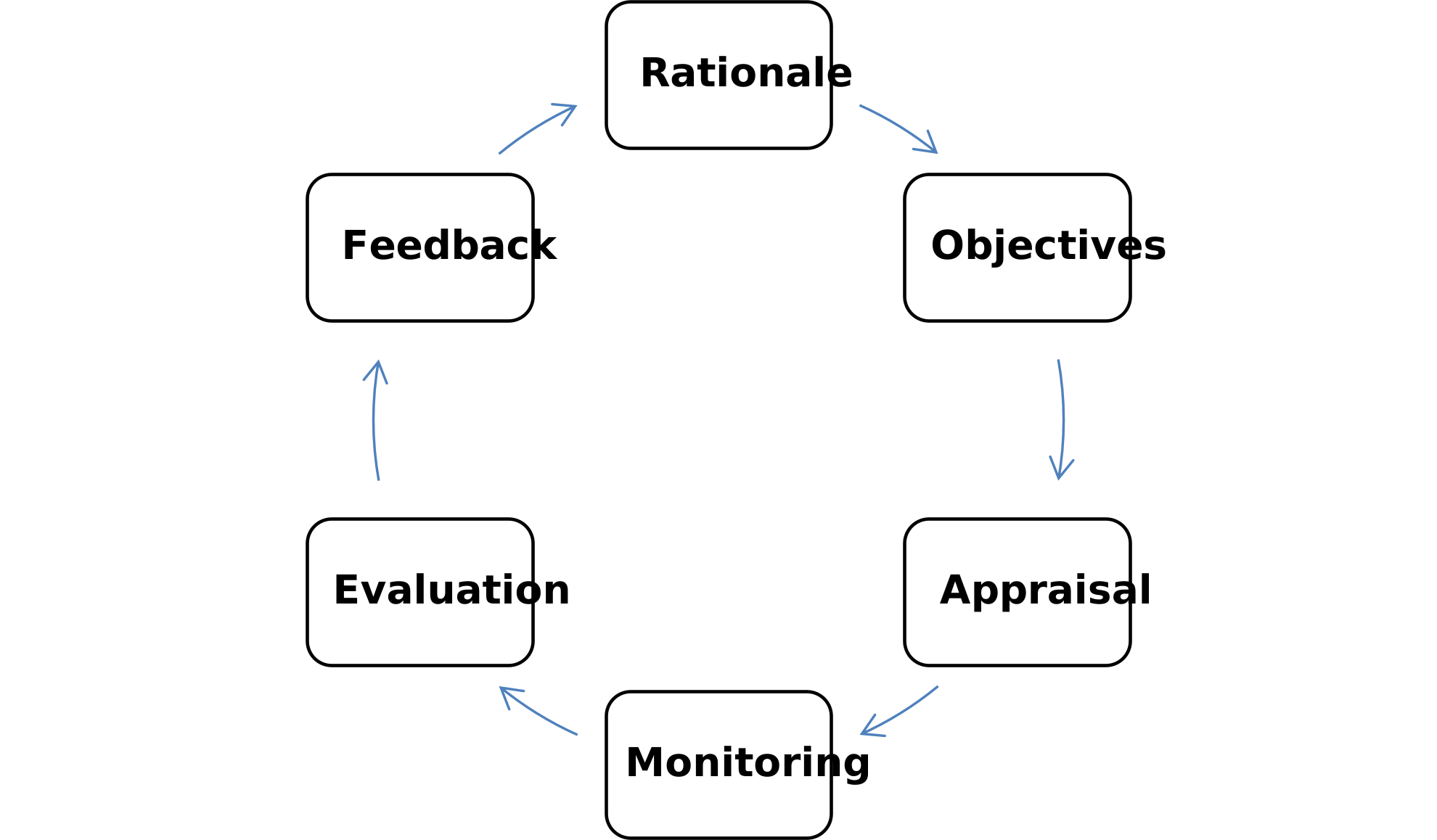
The 6 components are Rationale, Objectives, Appraisal, Monitoring, Evaluation, and Feedback.
1.2 Appraisal is a two step process, conducted through longlisting then shortlisting analysis, following HM Treasury’s Five Case Business Case model[footnote 1].
1.3 MHCLG uses the Green Book (PDF, 1,320 KB) for its appraisal. This guide sets out specific appraisal issues that arise in MHCLG policy areas and is focused on the economic dimension of the business case, providing specific guidance on the quantification of impacts in the economic dimension. The appraisal approaches set out are also applicable to the assessment of options in Regulatory Impact Assessments.
1.4 Effective economic appraisal involves estimating costs and benefits in a consistent manner so they can be compared, particularly at the shortlist stage. Good appraisal will take account of uncertainties and risks and build them into the assessment. It will also assess which demographic groups and places are likely to be impacted by options and support the development of the Equalities Impact Assessment.
1.5 Once a policy has been chosen and implemented its impact is monitored and its performance evaluated. This provides feedback which can be used to improve the policy further or to make decisions about whether the policy should be expanded or discontinued. Note that Monitoring and Evaluation are not the subject of this guidance; further details on Monitoring and Evaluation can be found in MHCLG’s published Evaluation Strategy and in the Magenta Book.
Objectives of this guidance
1.6 This 1. Appraisal Guide is intended to be read in conjunction with the Green Book and aims to:
- help ensure consistency in MHCLG appraisals
- update and develop the methods and assumptions employed in MHCLG appraisals
The content and use of this guidance
1.7 The Guide sets out default assumptions, the theoretical framework and the metrics to be adopted by analysts in MHCLG, its agencies, Mayoral Strategic Authorities and Local Authorities when carrying out or scrutinising an appraisal.
1.8 The Guide is a technical document designed for analysts at MHCLG, its agencies, Mayoral Strategic Authorities and Local Authorities but may in some contexts be of use to analysts in other departments or sectors. The focus is on all policy areas covered by MHCLG. These include policies to promote local growth and regeneration, support housing and commercial development, reduce rough sleeping and homelessness and support the work of Local Authorities.
1.9 It builds on the key principles and application of appraisal methodology set out in HM Treasury’s Green Book, providing in depth appraisal tools for the policy areas covered by MHCLG and its partners. As such it can be seen as a bolt on to the Green Book. The guidance is consistent with other departmental guidance, in particular it should be noted that it is consistent with the Department for Transport’s (DfT) recommended approach to appraising dependent development which is set out in unit A2.2 of its Transport Analysis Guidance (TAG).
1.10 The assumptions set out in the Appraisal Guide are provided as defaults when carrying out appraisal for policy development and advice, business cases and regulatory impact assessments. Users are free to adopt different assumptions and metrics where they have better evidence to hand. However, the rationale for doing so must be evidence based and clearly documented in the relevant business case (or regulatory impact assessment if a regulatory change is being considered).
Development of this guidance
1.11 The Appraisal Guide is overseen by an Appraisal Group (members of which are listed at the beginning of this Guide). The following version of the Guide is the fourth edition and it updates the third edition published in March 2025 to:
- include improved techniques for the measurement of health impacts from housing and commercial developments
- simplify the metrics used for the reporting of Value for Money and to include a greater focus on confidence in the analysis
1.12 A number of other documents are also being published alongside this Guide including:
- a Technical Guide setting out further details on the techniques discussed in this document
- a HAUS Health Model and User Guide that can be used to estimate the health impacts of different urban development designs
- two case studies showing how the health impacts from different urban development designs have been assessed using the HAUS health model
1.13 This Guide is a ‘living’ document and will be updated from time to time, as new evidence and methodologies develop. We would welcome feedback or suggestions for improvement on any aspect of this guidance so we can enhance the quality of our appraisals. Please send these to AppraisalGuidance@communities.gov.uk
Structure
1.14 The Appraisal Guide is structured as follows:
Chapter 2 outlines the business case model and the role that appraisal plays within it;
Chapter 3 sets out what appraisal information is needed and how it should be presented for all policies;
Chapter 4 sets out the methodology and theoretical basis for appraising and valuing development, both residential and non-residential;
Chapter 5 sets out the approach to valuing external impacts from new developments, both residential and non-residential, which impact on existing residents within an area;
Chapter 6 discusses place based appraisal and includes an illustrative example of how to report place based results;
Chapter 7 sets out useful sources of information;
Chapter 2: The Business Case Model
Introduction
2.1 The Five Case Business Case Model is the required framework for considering the use of public resources. This chapter:
- Introduces the Five Case Business Case Model and the role that appraisal plays within it;
- Sets out some key issues that appraisals of MHCLG interventions need to be aware of including: ensuring there is a clear rationale for intervention; that options selection follows the Green Book long-listing and short-listing approach; that options are assessed against a clearly defined counterfactual and that additionality is allowed for when appraising the impact of options.
2.2 If you are producing or reviewing a business case, in addition to reading the Green Book (PDF, 1320KB), you must read and familiarise yourself with the relevant programme or project business case guidance. All those involved in appraisal, and in development of business cases, and in their review and approval must be trained and accredited. Details of the appropriate HM Treasury approved training and accreditation scheme are given on the Green Book Training page.
2.3 The Five “cases” or dimensions are different ways of viewing the same proposal. In brief the:
a. Strategic Dimension – sets out the case for change, including the rationale for intervention and SMART objectives;
b. Economic Dimension – sets out the net value to society of the intervention compared to continuing with Business As Usual (defined as the continuation of current arrangements, as if the proposal under consideration were not to be implemented);
c. Financial Dimension – looks at the impact of the proposal on the public sector budget;
d. Commercial Dimension – assesses whether a realistic and credible commercial deal can be struck and who will manage which risks; and
e. Management Dimension – sets out the approach to delivery, assesses key risks, and presents the monitoring and evaluation and benefits realisation plans.
The role of appraisal in the strategic and economic dimensions
2.4 Appraisal plays a particularly important role in the strategic and economic dimensions. This is discussed fully in the HMT Green Book, however in summary:
- The strategic dimension sets out the case for change and the rationale for intervention. It asks the questions: What is the current situation? What is to be done? What outcomes are expected? How do these fit with wider government policies and objectives? These require a strategic assessment supported by sound appraisal based on robust but proportionate analysis. The elements of the strategic assessment which are supported by appraisal activity are set out in the Box below.[footnote 2],[footnote 3]
The Strategic dimension of the Business Case requires a Strategic Assessment key steps in which are:
- A quantitative understanding of the current situation known as Business As Usual (BAU).
- Identification of SMART objectives that embody the objective of the proposal.
- Identification of the changes that need to be made to the organisation’s business to bridge the gap from BAU to attainment of the SMART objectives. These are known as the business needs.
- An explanation of the logical change process i.e. the chain of cause and effect whereby meeting the business needs will bring about the SMART objectives.
- This all needs to be supported by reference to appropriate objective evidence in support of the data and assumptions used including the change mechanisms involved. It should include:
- the source of the evidence;
- explanation of the robustness of the evidence; and
- of the relevance of the evidence to the context in which it is being used.
- This provides a clear testable proposal that can be the subject of constructive challenge and review. Single point estimates at this stage would be misleading and inaccurate and objectively based confidence ranges should be used.
- The economic dimension is the analytical heart of a business case where detailed option development and selection through use of appraisal takes place. It is driven by the SMART objectives and delivery of the business needs that are identified in the strategic dimension. It estimates the social value of different options at both the UK level and, where necessary on different parts of the UK or on groups of people within the UK. Longlist appraisal and selection of the shortlist is a crucial function of the economic dimension. The selection of the preferred option from the shortlist uses social cost benefit analysis or where appropriate social cost effectiveness analysis[footnote 4].
When assessing options, those which do not meet key strategic objectives cannot represent Value for Money.
2.5 It is important to ensure that there are clear links between the strategic and economic dimensions and other dimensions too.
- The commercial dimension concerns the commercial strategy and arrangements relating to services and assets that are required by the proposal and to the design of the procurement tender where one is required. The procurement specification comes from the strategic and economic dimensions. The commercial dimension feeds information on costs, risk management and timing back into the economic and financial dimensions as a procurement process proceeds.
- The financial dimension is concerned with the net cost to the public sector of the adoption of a proposal, taking into account all financial costs and benefits that result. It covers affordability, whereas the economic dimension assesses whether the proposal delivers the best social value. It is exclusively concerned with the financial impact on the public sector. It is calculated according to National Accounts rules.
- The management dimension is concerned with planning the practical arrangements for implementation. It demonstrates that a preferred option can be delivered successfully. It is important in supporting the development of metrics and targets as well as being clear on how each intervention will be monitored and evaluated.
2.6 These links mean that analysts will need to work across dimensions - and with other professions - if appraisal is to be done effectively and decisions made using robust information.
The rationale for intervention
2.7 As noted above, the strategic dimension sets out the rationale for intervention. This defines the purpose of the intervention. There are a number of potential purposes including:
- Maintaining service continuity, arising from the need to replace some factor in the existing delivery process;
- Improving the efficiency of service provision;
- Increasing the quantity or improving the quality of a service;
- Providing a new service;
- Complying with regulatory changes; or
- A mix of all the above.
2.8 A key rationale for government intervention may be to improve the welfare efficiency of existing private sector markets. For example, intervening to ensure provision of a service or investment which would not occur because wider social benefits are ignored by firms. This represents an example of market failure.
2.9 In economic theory, when economic efficiency is achieved nobody can be made better off without someone else being made worse off. Economic efficiency enhances social welfare by ensuring resources are allocated and used in the most productive manner possible.
2.10 Improving equity may also be another reason for intervention as social welfare might be increased if resources are redistributed from those with a lower marginal utility of income to those with a higher marginal utility. An example of this is given in Technical Annex H.
2.11 If there is no market failure or equity justification, government intervention compared to market provision may be welfare reducing. Although this would not be the case if the intervention is correcting an existing ‘government failure’ that itself has resulted in an inefficient allocation of resources.[footnote 5]
2.12 Based on the rationale, specific intervention objectives will be defined. These will be used to assess options alongside the four other business case lenses – value for money, commercial viability, affordability and deliverability – to arrive at a preferred option.
Appraisal of options
2.13 Appraisal is about finding the best way to meet policy objectives. This is a key theme of the Green Book.
2.14 Policy objectives are set out in the strategic dimension. They must be SMART. The economic dimension then uses the longlist approach in the Green Book to create an initial shortlist for comparison through cost benefit analysis, or social cost effectiveness analysis.
Longlist appraisal
2.15 Longlist appraisal allows a wide range of alternatives for meeting SMART Objectives to be considered so that a short list can be identified for more detailed Cost Benefit Analysis.
2.16 Options are generated using the Options Framework Filter which identifies options across 5 separate aspects (see table below). These are then assessed against critical success factors using SWOT analysis.
Option choices – broad description
1. Scope - coverage of the service to be delivered
2. Solution - how this may be done
3. Delivery - who is best placed to do this
4. Implementation - when and in what form can it be implemented
5. Funding - what this will cost and how it shall be paid for
2.17 “Critical Success Factors” are the attributes that any successful proposal must have, if it is to achieve successful delivery of its objectives. These include Strategic Fit, meeting SMART objectives, potential value for money, supplier capacity and capability, potential affordability and achievability.
2.18 When identifying and considering options, constraints, dependencies, collateral or unintended effects and equality, distributional and placemaking effects should be examined.
2.19 The result of the longlisting will be a short list of 5 or 6 options. The short-listed options should include a:
- Quantified BAU for use as a benchmark counterfactual;
- Do minimum option (that just meets the business needs required by the SMART objectives);
- Preferred Way Forward (that may or may not be the Do Minimum);
- A more ambitious preferred way forward (this may be more expensive, deliver more value, but at higher costs with increased risks); and
- A less ambitious preferred way forward, unless the preferred option is a do minimum (this option may take longer, deliver less value but cost less and / or carry less risk).
2.20 The process of identifying and assessing options is a complex task and must be carried out by an expert.
2.21 The Green Book and its links provides comprehensive guidance on long listing and choosing the short list together with examples. It should be consulted for further detail on how to go about long listing before starting the process.
Shortlist options appraisal
2.22 At short list stage a much narrower range of options are being considered. This allows more detailed analysis to be carried out and in particular the application of Cost Benefit Analysis. This compares the social benefits that options yield to the costs of the option (both are measured relative to the counterfactual).
2.23 The specific methods used to appraise costs and benefits for MHCLG policies are set out in Chapter 3 and following chapters. More context on shortlist options appraisal is provided in the Green Book.
Options and the counterfactual
2.24 Individual options will need to be assessed against an appropriate baseline or counterfactual. This should be the business as usual and be a clear articulation of how things will evolve in the absence of the alternative option being considered. The costs and benefits of that alternative option should always be compared relative to the counterfactual. Clearly defining the counterfactual allows analysts to understand how far individual policy options change impacts and desired objectives rather than being deadweight – that is, what would have happened anyway. It is important because there is no additional economic benefit from government providing support for an outcome which would have happened anyway (though, there may be if the outcome happens quicker, is of a better quality than it otherwise would be or it redistributes outcomes to different places).
2.25 Once a credible counterfactual has been established, this should be compared against each of the other options. For each option this involves understanding what outcomes can be expected with the policy in place over the lifetime of the intervention.
2.26 The degree to which a market failure is present can provide some insight into the expected additionality of an intervention. A common example is the existence of externalities which impose costs (or benefits) on third parties. For example, the existence of a brownfield site which cannot be developed due to the presence of contaminated land, but which once developed could provide an amenity benefit to society and improved environmental outcomes. In this case, one might expect the deadweight of an intervention to unlock the site’s development to be zero, as the land would not have been developed in the absence of the intervention. Information failures, such as consumers not knowing the standard to which buildings are built, represent another type of market failure.
Assessing the Impact of An Option Against the Counterfactual
Example 1
A policy is expected to result in the provision of 1,000 housing units. Only 400 of these units are expected to be delivered in the business as usual. Then:
Net impact of the policy = 1,000 units – 400 units = 600 units
The 600 units are additional, whilst the 400 units are referred to as deadweight.
Example 2
A policy is expected to result in the provision of 1,000 housing units. However 1000 of these units will also be delivered in the business as usual.
If 1,000 units are expected to be delivered in the business as usual, there are no additional benefits, unless the units are delivered faster or are of a higher quality with government intervention.
Net impact of the policy = 1,000 units – 1,000 units = 0 units
In this example there is zero additionality and 100% deadweight.
2.27 Given the importance of market failure in determining the level of additionality, analysts should ensure that the rationale for public sector intervention is clear and is supported by solid evidence. A more detailed discussion of additionality is set out in Technical Annex E whilst the full list of market failures is set out in Technical Annex G.
Chapter 3: Assessing The Value For Money (VfM) Of MHCLG Interventions
Introduction
3.1 This chapter outlines what measures of Value for Money (VfM) should be calculated in an MHCLG appraisal and how this appraisal information should be presented. The chapter:
- Shows the importance of understanding the social value an option adds when considering its VfM;
- Sets out the key elements of social value likely to be relevant for MHCLG appraisals; and
- Shows how social value impacts should be presented when assessing VfM.
What Represents VfM
3.2 Value for Money is a judgment about the optimal use of public resources to achieve stated objectives embodied in the SMART objectives of a proposal (be it a policy, a portfolio, a programme, or a project), based on consideration of the following factors:
- Performance against SMART objectives. Each shortlisted option must achieve the SMART objectives. Options which do not deliver against SMART objectives cannot be included in a shortlist, or represent VfM for the proposal being considered
- Net present value to society of all social, economic and environmental benefits – these may be qualitative or quantitative
- Net present public resource costs as measured by whole life costs, including capital and operating costs and the opportunity cost of existing assets employed
- Risk costs associated with managing and mitigating risks that are associated with a proposed option
What Makes Up Social Value
3.3 Social value includes all costs and benefits that affect the welfare and wellbeing of the UK population. These may arise through:
- Changes in the level of goods and services produced by firms, the public sector or third sector; or
- From the indirect impacts on workers, families and communities of an intervention not measured through the market (called externalities).
3.4 Three broad categories of impact from an intervention are relevant:
- Economic impacts – on public sector organisations, businesses and workers;
- Social impacts - on individuals, families and communities; and
- Environmental impacts – including on land, air, climate, rivers and sea.
3.5 These impacts are discussed below in more detail.
Types of Impact Relevant to MHCLG Interventions
3.6 MHCLG covers a wide range of policy areas so the range of impacts considered across its appraisals is wide.
3.7 Economic impacts include:
- the whole life costs[footnote 6] to the public sector (central and local government) from delivering services, as well as tax revenues[footnote 7] or cost avoidance through early intervention
- increases in the value of goods and services produced:
- many of the interventions in which MHCLG, Homes England and other partners engage involve developing land into more productive residential and commercial uses. These create uplifts in the productive value of the land (see Chapter 4). For commercial developments these reflect increases in the profits firms get from occupying the development.
- new developments may result in additional economic growth from creating opportunities for workers to move to more productive jobs either through the creation of new commercial space in high productivity industries or through reducing barriers to accessing jobs better suited to using their skills[footnote 8]
- new developments may also lead to agglomeration benefits from creating larger clusters of businesses and greater job density[footnote 9]
- finally policies may facilitate further economic growth by stimulating the supply side e.g. reductions in business rates may encourage business activity to grow
3.8 Social impacts include changes in:
- homelessness and temporary accommodation leading to changes in wellbeing and government support for individuals and families
- reduced levels of addiction, crime and risky behaviour through targeted social programmes on vulnerable people
- health and safety related impacts e.g. from improved housing conditions such as better insulation (these may also affect economic outcomes through changes in labour market activity)
3.9 Box 1 below provides more detail on the assessment of interventions that have social and fiscal outcomes.
Box 1: Social and fiscal outcomes
MHCLG leads on a number of the government’s major social programmes. These include the Supporting Families programme; policies to deal with homelessness, rough sleeping and domestic abuse and policies to encourage public service improvement.
These programmes aim to transform the way services are delivered for vulnerable people and communities through joined up and early intervention. By doing so the aim is to deliver a step change in life outcomes and yield savings to the tax payer through reduced need for longer term intervention. Detailed guidance on appraising public service improvement and social policies is set out in Supporting Public Service Transformation: cost benefit analysis for local partnerships.
Alongside this guidance, the Greater Manchester Combined Authority (GMCA) Research Team has developed a Unit Cost Database, to help with the appraisal of service transformation and social policies. Using the best available research from various government and academic sources, the database provides fiscal, economic, and social cost estimates for over 600 outcome measures covering a range of issues from crime, education, employment, fire, health, housing and social services. The database provides costs which can be used to monetise outcomes relevant to social policies in terms of costs to public services (fiscal costs) and the wider economy and society. The database is widely recognised across government as the best available source for information on the costs of a number of issues and is being extensively used for various appraisal projects across government departments and local authorities.
In addition to the guidance and the Unit Cost Database, the GMCA Research Team has also produced a model which acts as a template for carrying out cost benefit analysis.
Finally many social programmes are likely to have impacts on wellbeing. The Green Book supplementary wellbeing guidance provides examples of how wellbeing analysis can be applied to a range of interventions to support a fuller appraisal of the impacts of policies.
3.10 Environmental impacts - many MHCLG interventions will have impacts on the environment. The assessment of environmental impacts is based on the concept of natural capital and the “ecosystem services” that flow from it. Box 2 below explains the concept of natural capital.
Box 2: Natural capital
Stocks of natural capital provide flows of environmental or ‘ecosystem’ services over time. These services, often in combination with other forms of capital (human, produced and social) create a wide range of benefits.
These include use values that involve interaction with the resource and which can have a market value (minerals, timber, freshwater) or non-market value (such as outdoor recreation, landscape amenity).
They also include non-use values, such as the value people place on the existence of particular habitats or species.
To consider the impact of an intervention on natural capital the following questions should be asked. Is the option likely to affect, directly or indirectly:
- the use or management of land, or landscape?
- the atmosphere, including air quality, greenhouse gas emissions, noise levels or tranquillity?
- an inland, coastal or marine water body?
- wildlife and/or wild vegetation, which are indicators of biodiversity?
- the supply of natural raw materials, renewable and non-renewable, or the natural environment from which they are extracted?
- opportunities for recreation in the natural environment, including in urban areas?
If the answer to one or more of these questions is “yes” or “maybe”, further assessment is recommended using the following four steps:
- step 1: understand the environmental context to the proposal
- step 2: consider how natural assets might be affected
- step 3: consider the welfare implications, that is, how changes to the assets identified in Step 2 affect benefits provided to society by natural capital
- step 4: consider uncertainties and optimise outcomes
DEFRA supplies templates for assessing each of these four steps.
3.11 The types of impacts on the environment that can result from MHCLG interventions include:
- removal of greenfield land, changes in biodiversity and water quality from land take associated with new developments
- in some cases, improvements in amenity from the removal of brownfield land and redevelopments of areas (called placemaking)
- impacts on the heritage environment for example buildings of historic interest or monuments. Various MHCLG funded schemes take place in areas with heritage assets/environments or might include refurbishing heritage buildings (for example, Ancoats in Manchester). The DCMS Cultural and Heritage Capital Framework is helpful here[footnote 10]
- greenhouse gas impacts through changes in the energy efficiency of homes, land take and construction impacts from new developments (see Box 3 below).
- air quality and noise impacts from, for example, changes in traffic flows following development.
3.12 Where investments are likely to impact on natural capital including land, forests, biodiversity, fisheries, rivers or minerals then impacts should be assessed in line with HMT green book supplementary guidance developed by the Dept for Environment, Food and Rural Affairs (DEFRA).
3.13 For new residential developments Homes England has developed environmental guidance that can be used to assess natural capital impacts (see chapter 5). Box 3 provides guidance on the assessment of greenhouse gases and climate change.
Box 3: Greenhouse gases and climate change
Analysts should where possible quantify and appraise the impact of options on carbon emissions. Carbon emissions may arise for a number of reasons including:
- materials used in the development of sites and refurbishment of structures
- transport of materials or changes in trip patterns from new residential or commercial sites
- consumption of fossil fuels for heating, lighting or powering electrical appliances
Some policies – such as better insulation or home generation of renewal energy – may reduce carbon emissions. Newer buildings will generally be built to higher energy efficiency standards than older ones and it is important to factor in renewal of the building stock when assessing impacts.
Policy appraisal on climate change mitigation in MHCLG should use the Supplementary Green Book guidance on “Valuation of energy use and greenhouse gas emissions for appraisal”.
The guidance provides details on how to quantify and value energy use and emissions of greenhouse gases. It is intended to aid the assessment of proposals that have a direct impact on energy use and supply and those with an indirect impact through planning, land use change, construction or the introduction of new products that use energy.
It contains sections on:
- identifying the energy and emissions counterfactual and then policy interactions;
- quantifying and valuing changes in energy use and in emissions
- identifying and quantifying other impacts, such as air quality
- how to present findings and report for Carbon Budgets
The guidance is accompanied by 19 data tables containing detailed estimates out to the year 2100 for carbon values and sensitivities, retail and long run energy prices, variable energy supply costs, and a GDP deflator. While the central estimates should be used in core analysis, care should be taken to reflect uncertainty in these estimates, for instance through sensitivity testing.
The guidance is updated regularly and so analysts should check that the latest version of the guidance is used in analysis.
For assessing how a policy / programme could be impacted by a changing climate, Supplementary Green Book Guidance on “Accounting for the Effects of Climate Change” should be used. This supports the appraisal of policy options in the face of climate risks and uncertainty, and how adaptation of policies, programmes and projects can build resilience and enable flexibility in decision making.
The uncertainty over the future impacts of climate change and the importance of interconnections mean that climate resilience can prove important in unexpected areas of policy. Defra’s supplementary guidance supports analysts in identifying whether and how their appraisal should include climate risks.
3.14 All relevant impacts should be assessed. Figure 2 lists some types of impacts commonly included in MHCLG appraisals, although the figure is not exhaustive.
Figure 2: MHCLG interventions can have a range of impacts on social value
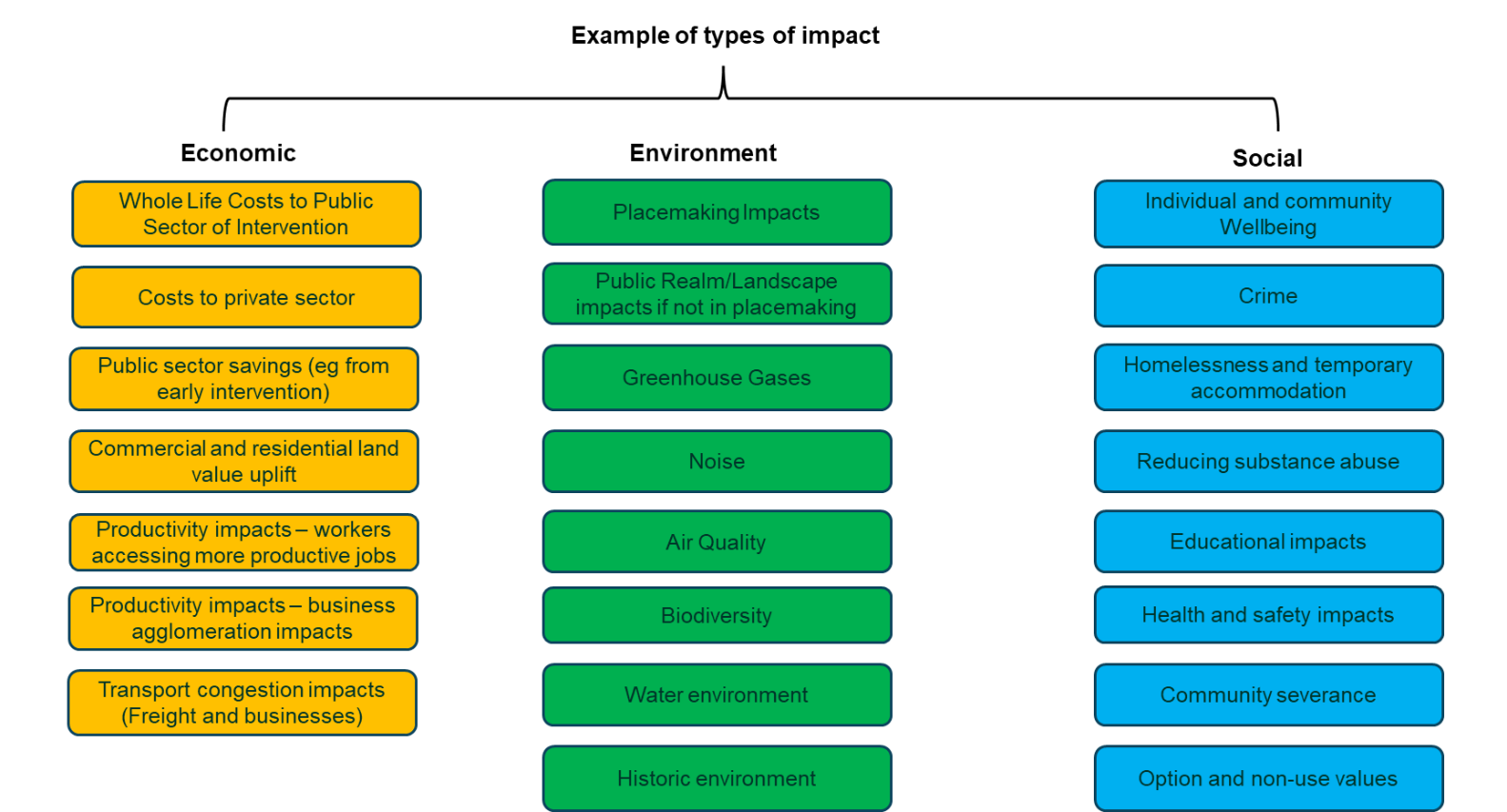
Alt text: Examples of types of impact
Economic
- Whole Life Costs to public sector of intervention
- Costs to private sector
- Public sector savings (eg from early intervention)
- Commercial and residential land value uplift
- Productivity impacts - business agglomeration impacts
- Transport congestion impacts (freight and businesses)
Environment
- Placemaking impacts
- Public Realm / Landscape impacts if not in placemaking
- Greenhouse Gases
- Noise
- Air quality
- Biodiversity
- Water environment
- Historic environment
Social
- Individual and community Wellbeing
- Crime
- Homelessness and temporary accommodation
- Reducing substance abuse
- Educational impacts
- Health and safety impacts
- Community severance
- Option and non-use values
Note that the appraisal of many of these impacts is covered by other departmental guidance eg DfT publishes guidance on the appraisal of transport congestion and productivity impacts and Defra publishes guidance on environmental impacts. This evidence is summarised in the HMT Green Book. This publication concentrates on providing guidance on core MHCLG activities such as development and shows how other departmental guidance might be applied to MHCLG interventions.
Measurement of Impacts
3.15 In order to identify all relevant impacts, a theory of change or logic model should be developed at the outset linking inputs to outputs and outcomes (see the Magenta Book on how to do this and for examples). Once impacts have been identified these can be valued using appropriate guidance.
3.16 Attempts should be made to monetise all impacts where possible so they can be compared in a common metric. However in practice not all impacts can be valued because either:
- the analysis is at too early a stage to apply the tools fully; or because
- techniques have not been developed
3.17 Where full monetary valuation cannot be carried out, the direction and magnitude of impact of these types of impacts should be assessed and these should be incorporated into the VfM assessment.
3.18 The HMT Green Book makes clear that where they exist market prices should be used to value impacts. The market price represents the opportunity cost to the supplier of the marginal good or service traded and the willingness to pay for the good or service of the marginal purchaser.
3.19 In some cases a market price that can be used to value the impact of a good or service might not exist or market prices might not fully reflect the impacts that occur.
3.20 A particularly important class of impacts for MHCLG interventions not valued through the market is externalities. When externalities exist a good or service has an impact on the wider community or society which is not reflected in the market price.
3.21 For example, a developer may sell a new house to a family. The price represents the value of the house to the family but there will also be impacts on existing residents in the area which are not accounted for in the price. Those might include:
- landscape and biodiversity impacts from reclaiming land or building on it
- air quality and greenhouse gas emissions from land take, construction and occupation of the new house
- transport impacts from new developments which might increase local road congestion
- crime impacts because of changes in the environment (such as from better lighting)
- health impacts from healthier urban design
- positive benefits from the removal of brownfield land and creation of nicer places
3.22 These impacts need to be taken into account using non-market valuation methods. The HMT Green Book (PDF, 1320 KB) sets out alternative ways of valuing costs and benefits where prices do not exist. These include the use of revealed preference, stated preference or wellbeing analysis.
3.23 Tools for valuing specific impacts have been developed across a range of government departments and are also set out in the Green Book as well as supplementary Green Book guidance.
3.24 Guidance on how to value residential and commercial developments and their external impacts together with other MHCLG policy impacts not covered elsewhere in guidance are set out here in Chapters 4 and 5.
MHCLG Appraisal Summary Table (AST)
3.25 The 2020 Green Book Review says ‘the appraisal process is not a decision making algorithm and its objective is to support decision-making…’. The assessment should move beyond a narrow focus on Benefit Cost Ratios (BCRs) which, though important, do not reflect all the impacts interventions may have on the strategic objectives that decision makers are trying to achieve. There are likely to be a number of impacts which cannot be monetised and so cannot be included in a BCR. The use of VfM categories, which allow decisions to incorporate non-monetised impacts alongside the BCR, enables a fuller assessment of interventions to be made.
3.26 All impacts included in the VfM assessment (monetised and non-monetised) should be grounded in solid evidence and based on a robust theory of change or logic model, linking inputs and activities to outcomes. It is important that all relevant impacts and outcomes identified by the theory of change are considered in the VfM assessment and adequate allowance is made for additionality when making the assessment. Failure to do this will result in incorrect conclusions being drawn.
3.27 An appraisal should provide clear and transparent advice to decision makers on different policy options, taking account of costs, benefits, risks, uncertainties and significant non-monetised impacts. The objective of appraisal should be to provide a consistent comparison of benefits and costs. Presenting such information in summary form is crucial if complex technical information is to be communicated effectively.
3.28 Table 1 on the next page is a recommended Appraisal Summary Table (AST) which should be used for all spending proposals. It should feature in business cases and in all documents where appraisal information is contained. The AST aims to capture all the important appraisal information including on benefits and costs, risks and an overall VfM assessment for each of the options. It presents information on the Benefit Cost Ratio (BCR) and Net Present Social Value (NPSV)[footnote 11] alongside other impacts that cannot be monetised although they are part of the overall VfM judgement.
3.29 Table 1 sets out the main elements in an AST and these are discussed below. This is based on the summary AST set out in the HMT Green Book. The AST includes five short-list policy options which are the minimum recommended at Short Listing Stage. An example of how to complete an AST for a hypothetical scenario is given in Technical Annex B.
Benefits
3.30 The MHCLG AST includes a single line for the present value of benefits. All elements of social value set out in figure two which can be quantified and monetised should be reported within the line. Benefits are calculated over the lifetime of the investment (see Technical Annex A).
3.31 The benefits line in the AST represents the best estimate of benefits. However there will be uncertainty around all impacts arising from the models and data used and forecasts of the future. The AST includes a space to record key uncertainties and assumptions and take their impact into account using switching values. How uncertainty is dealt with and reported is set out later in this chapter.
Table 1: Recommended MHCLG appraisal summary table
| Option 1 Business As Usual (baseline) | Option 2 Do Minimum | Option 3 Preferred Way Forward (PWF) | Option 4 More Ambitious PWF | Option 5 Less Ambitious PWF | ||
|---|---|---|---|---|---|---|
| A | Present Value of Monetised Benefits (£m) | |||||
| B | Present Value Public Sector Costs (£m) | |||||
| C | Net present social value (£m) [A-B] | |||||
| D | Benefit-Cost Ratio [A /B] | |||||
| E | Significant non-monetised impacts | |||||
| F | Switching values & rationale for final VfM judgement | |||||
| G | Most likely VfM Category | |||||
| H | Key Assumptions and uncertainties that might affect VfM | |||||
| I | MHCLG Financial Cost (£m) | |||||
| J | Residual risk & optimism bias allowances | |||||
| K | Life span of project |
3.32 In some cases, for example increases in carbon emissions or blight, benefits may be negative, in which case they are called disbenefits and are netted off other benefits.
3.33 Some interventions will have significant non-monetised benefits or disbenefits. To prevent these impacts being overlooked it is important they are documented and their likely significance assessed using the evidence available. The final VfM assessment should take these impacts into account (see non-monetised impacts section). Impacts are less likely to be monetised early on in business case development where a wider range of options are being assessed at a higher level. However non-monetised impacts can still be significant at full business case stage.
3.32 In some cases, for example increases in carbon emissions or blight, benefits may be negative, in which case they are called disbenefits and are netted off other benefits.
3.33 Some interventions will have significant non-monetised benefits or disbenefits. To prevent these impacts being overlooked it is important they are documented and their likely significance assessed using the evidence available. The final VfM assessment should take these impacts into account (see non-monetised impacts section)[footnote 12]. Impacts are less likely to be monetised early on in business case development where a wider range of options are being assessed at a higher level. However non-monetised impacts can still be significant at full business case stage.
Costs
3.34 For MHCLG spending proposals, the relevant measure is net costs to the public sector. This means all exchequer costs – for example, changes in Universal Credit (including Housing Benefit) as well as any local authority costs and revenues – should be accounted for when estimating net public sector costs. If costs are related to a transfer – like Universal Credit or a government grant – an identical and offsetting value should feature in the benefits figure unless it is already reflected in a different variable such as land value uplift. For appraisal purposes net public sector costs are converted into present value terms and labelled the present value of costs (PVC).
Net present social value (NPSV) and the benefit cost ratio (BCR)
3.35 Two summary welfare measures are presented in the Appraisal Summary Table:
a) Net Present Social Value
The NPSV of a project is defined as the present value of benefits (PVB) less the present value of costs (PVC).[footnote 13], [footnote 14] This measures the overall level of public welfare generated by a policy and so is an important measure of impact:
NPSV = PVB – PVC
b) Benefit Cost Ratio
The BCR of a project is represented as:
BCR = PVB / PVC
3.36 The BCR can be interpreted as the estimated level of benefit per £1 of cost. It is used as the core element in the measure of VfM when interventions involve a net cost to the public sector. The reason for its use is that public sector budgets are fixed through the Spending Review process and so not all interventions with a potentially positive NPSV can be chosen.[footnote 15] The BCR allows different proposals to be ranked alongside each other – when the strategic objectives are the same – on the basis of benefit per £1 of public sector spend to maximise the social impact of the budget. (Non-monetised impacts also need to be taken into account using switching values – see section on Estimating VfM.)
3.37 Where the PVC is negative then the NPSV represents a better measure of impact.[footnote 16] In the case where PVC is negative the VfM of the intervention is often very high, although this might not be the case where reductions in costs come with reductions in benefits.[footnote 17] The approach to measuring VfM for the special case of negative spend is set out in Technical Annex I.
3.38 The BCR is used in the vast majority of projects covering MHCLG and local government as in most cases PVC>0.
3.39 When estimating the BCR, it is important that there is transparency in what is included in the benefits and costs. This means being clear about the robustness of the underlying evidence base and the appraisal values being used. It also means being clear when more subjective values are included in the appraisal .
3.40 In calculating a BCR it is important to account properly for different types of funding streams including income receipts. The table below shows which are counted as benefits and which as costs. A square bracket means the value is subtracted.
| Consumer and business impacts | External impacts and public sector finance impacts | |
|---|---|---|
| Present Value Benefits (numerator) | Private benefits for example land value uplift [Private sector costs if not captured in land value] [footnote 18] Public sector grant or loan if not captured in land value[footnote 19] [Public sector loan repayments if not captured in land value] Distributional benefits |
External benefits [External costs] |
| Present Value of Costs (denominator) | Public sector grant or loan [Public sector loan repayments] Other public sector costs [Other public sector revenues] |
3.41 Once a BCR is calculated, it is important users assess its plausibility. For example, if the estimated BCR is high and consists mainly of private impacts, then it is important to consider why such a project would not have happened in the absence of the intervention. This will mean ensuring there is a sound market failure underpinning the rationale for intervention as set out in the strategic dimension. Where there is no market failure, this may mean there is significant deadweight (see Additionality section) and therefore users should re-visit the underlying additionality assumptions.
3.42 It should be noted that all the impacts in this calculation should be risk adjusted. In the early stages of policy development this will primarily be through Optimism Bias (OB) adjustments to both costs and benefits. Further guidance on OB is given in Technical Annex F.
Financial Transactions
3.43 Additionality is a particularly important consideration for financial transactions. Loans and guarantees often appear to be very high value for money because they involve limited expenditure over the lifetime of the financial transaction. However, care must be taken to understand the degree to which government activity displaces activity by financial institutions. Displacement of private sector investors is particularly likely to occur where the risk associated with an investment is low. To address this issue 3 questions should be asked:
- Is there a specific reason why the private sector would not be interested in this financial transaction? If the answer is no then additionality is likely very low;
- What are the benefits of the intervention once additionality has been allowed for?
- To what degree does the financial transaction achieve strategic objectives once additionality has been taken into account? Where additionality is low strategic objectives are unlikely to be fully achieved even if the Benefit Cost Ratio is high and therefore the proposed intervention will not be good value for money.
Hypothetical examples of how to calculate the NPSV and BCRs
3.44 The examples below set out the calculations for three hypothetical policies to illustrate how the NPSVs and BCRs of MHCLG policies would be calculated. For simplicity, assume all figures have been discounted to the appropriate year, are all in real prices and Optimism Bias has already been applied to both costs and benefits.
Example 1: A MHCLG grant to support a development
One policy option being considered is a £5m grant to support a development on a brownfield site. The rationale for intervention is the external benefits that may be generated by intervening e.g. improved amenity benefits for existing residents of the area.* These external benefits are estimated to be around £5m. However, the development is unlikely to take place in the absence of the intervention because of the high upfront costs of ‘cleaning up’ the land. These high upfront costs are estimated to be £5m and their existence makes the development commercially unviable. As such the Gross Development Value does not cover the development costs and provide a minimum level of profit. Assume that once the land is ‘cleaned up’ the value of the land in its new use is £5m. Also assume for simplicity that the value of land in its current use is zero and there are no wider external impacts or monetised impacts associated with the intervention other than the improved amenity impacts for existing residents of the area. Also assume for simplicity that there is no displacement of other economic activity.
In this example the present value of quantified benefits is £10m, made up of the sum of:
- the land value in its new use (£5m) minus the value of the land in its previous use (£0m).
- Improved amenity and health benefits estimated to be around £5m.
The estimated cost is the £5m grant to clean up and develop the land.
The NPSV would be PVB-PVC = £10m-£5m = £5m and the BCR is £10m/£5m=2.0.
*Note that changes in amenity values for new residents following the development will be reflected in the price they pay for property and so will be reflected in the Land Value Uplift. Chapter 5 discusses the difference between private impacts – which are reflected in the Land Value Uplift – and external impacts.
Example 2: A MHCLG loan to support brownfield land clean-up and development
MHCLG is approached for a loan to support the redevelopment of a brownfield site. The rationale for intervention is that there is evidence of market failure in the lending market which is restricting firms access to finance. The development is expected to provide an external amenity and health benefit.
The site is suitable for 1,000 houses but the high upfront ‘clean-up’ costs and difficulties in accessing financing make the development commercially unviable. The land value in its new use is £85m based on a financing arrangement which enables the firm to borrow £100m and repay £50m over the appraisal period from sale of the developed site. Once developed, there are potential net external benefits of £10m. Assume for simplicity the value of the site in its current use is £10m.
For the purposes of this example, assume there is no deadweight or displacement from intervening.
In this case, by MHCLG providing a loan the present value benefits would be £85m. This is the the sum of:
- the land value in its new use (£85m) less the value of the land its current use (£10m); and
- Net external benefits of £10m
The present value costs would be the initial loan of £100m less expected repayments of £50m from the firm (that is £50m net exchequer costs).
The NPSV would therefore be £85m-£50m=£35m and the BCR would be equal to £85m/£50m=1.7.
Example 3: MHCLG will invest £20m to increase the number of polling stations to make voting more accessible to the public
This will help reduce the barriers to voting by making it more accessible for people to vote, especially for those who do not have access to cars, or those who may find it challenging to access public transport. This is expected to increase the turnout of people coming to vote at UK elections and improve the democracy of UK elections. Some novel analysis has been conducted to look at the potential monetised benefit of an increase in elector turnout, and this is expected to yield an economic benefit of £5m (based on time-to-vote analysis).
In this example, the Net Present Social Value will be £5m-£20m =-£15m. The BCR = £5m/£20m=0.25.
Given a negative NPSV and BCR below 1 the question becomes whether non-monetised impacts are large enough to justify an Acceptable VfM category (see the next section).
Non-monetised impacts
3.45 BCR and NPSV measures only capture monetised impacts. When performing options analysis there are likely to be a number of impacts which are difficult to quantify and monetise. This might reflect the nature of the impact as some environmental impacts are more difficult to monetise. Alternatively it might be because the analysis is at an early stage, before modelling can be developed and applied.
3.46 It is essential that where monetisation is not possible, a qualitative assessment of the potential impacts is carried out and considered alongside BCR or NPSV measures when arriving at an assessment of overall VfM.
3.47 Users will need to form an assessment of the likely magnitude and direction of impact of non-monetisable impacts. The following seven-point scale could be used to make an assessment:
Table 2: Qualitative Assessment Scale for Non-Monetised Impacts
| Impact | Commentary |
|---|---|
| Large Adverse | Large disbenefit likely to materially impact on VfM |
| Moderate Adverse | Important disbenefit but will not on its own significantly impact on VfM |
| Slight Adverse | Small disbenefit unlikely to have material impact on VfM |
| Neutral | No impact |
| Slight beneficial | Small benefit unlikely to have material impact on VfM |
| Moderate Beneficial | Important benefit but will not on its own significantly impact on VfM |
| Large Beneficial | Large benefit likely to materially impact on VfM |
3.48 The advantage of using the 7-point scale is that it allows a set of criteria to be applied to assess size and direction of an impact, providing increased transparency when reaching conclusions.
3.49 Large beneficial or large adverse impacts should be given special attention when assessing the VfM of a project. Similarly, if there are several moderate beneficial or moderate adverse impacts these should also be considered in the VfM assessment. This is discussed in more detail in the Estimating VfM section.
3.50 Looking at non-monetised metrics such as output data - for example, number of trees ‘lost’ as a result of a development or the number of people who visit a particular attraction - could help inform decisions on whether such impacts are large or not and the direction of impact.
3.51 It is essential that where monetisation is not possible, a full qualitative assessment of the potential impacts is carried out and this is considered alongside monetised impacts when arriving at an assessment of VfM. In the context of MHCLG appraisals this could include a discussion on the potential environmental and other amenity impacts of changes in land use. For example, if one option appraisal largely consists of non-monetisable impacts due to the lack of data or the underlying nature of the policy, this will be assessed fairly against other options (which have monetised impacts) by judging into which VfM category it falls into and providing a robust justification for it.
3.52 When carrying out an assessment, it is essential that it is done robustly involving stakeholders with local knowledge but also independent experts who are able to assess potential magnitude of impact. Where there is considerable uncertainty as to magnitude of impact this should be noted and accounted for in the VfM assessment.
Value for money categories
3.53 VfM categories are recommended as the main way of summarising the VfM of an option as they combine all of the monetised and non-monetised impacts into an overarching summary measure. When deciding on VfM categories the impact of risks and uncertainties should also be taken into account before coming to an overall assessment of VfM. [footnote 20] They are a core feature of the Appraisal Summary Table.
3.54 To produce a VfM category appraisers should:
- where possible monetise the expected impacts of the intervention – this allows estimation of the BCR
- assess non-monetisable impacts for both direction and scale using the seven-point scale in Table 2 – when taken with the BCR these allow a central estimate of VfM to be created
- assess the impact of varying key assumptions and uncertainties in the analysis through sensitivity analysis on the BCR and VfM rating
- analysts should use switching values as part of their analysis to understand the scale of change needed for the scheme’s BCR to move to another VfM category and whether non-monetised impacts or changes in key assumptions will likely result in such a change. (See the next section on Estimating VfM for a discussion of switching values.)
Figure 3: Steps for deciding on a VfM category
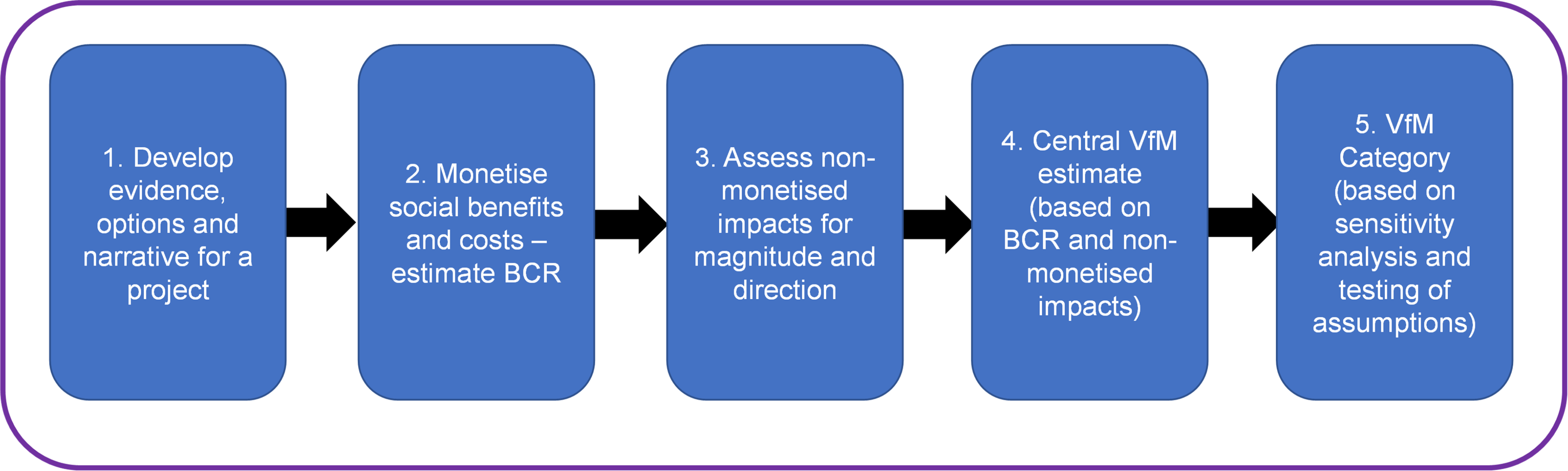
- Develop evidence, options and narrative for a project.
- Monetise social benefits and costs – estimate BCR.
- Assess non-monetised impacts for magnitude and direction.
- Central VfM estimate (based on BCR and non-monetised impacts).
- VfM Category (based on sensitivity analysis and testing of assumptions.
3.55 The following VfM categories can be defined where public sector costs are positive[footnote 21]:
| VfM Category | Intervention likely to have[footnote 22]…. |
| Very High | BCR greater than or equal to 4 |
| High | BCR greater than or equal to 2 and less than 4 |
| Medium | BCR greater than or equal to 1.5 and less than 2 |
| Acceptable | BCR greater than or equal to 1 and less than 1.5 |
| Poor | BCR greater than or equal to 0 and less than 1 |
| Very Poor[footnote 23] | BCR below 0 |
3.56 In the special case where the present value of costs is negative then the NPSV should be used alongside the categories in Technical Annex I to define VfM.
3.57 As noted in the introduction to this section whilst the above bandings can be used to communicate the analysis, nothing should ever be described as VfM if it does not meet the policy objectives. Appraisal is a two-step process and all options that do not meet policy objectives must be filtered out at the longlist stage using the Options Framework, as per Green Book guidance.
Estimating VfM
3.58 To estimate VfM, monetised and non-monetised impacts need to be combined. The simplest approach to obtaining a central VfM estimate is to start with the BCR given by the monetised impacts and then ask the question:
How large do the non-monetised impacts have to be to shift the value for money of the policy to a different category, for example, from High to Medium (where the BCR is less than 2) or in the opposite direction from Medium to High?
3.59 The next stage is to assess all of the non-monetised impacts using the seven- point qualitative scale in Table 2 and ask the question:
Are any of the non-monetised impacts on their own or in combination large enough to shift the VfM category?
3.60 This requires:
- the calculation of a switching value which shows how much benefits or disbenefits would have to change to shift the option to the next VfM category
- comparison of the non-monetised impacts with the switching value to see if that size of change was likely
3.61 For example, suppose the BCR for a £10 million investment is 0.9. It would require a £1 million extra benefit to increase the BCR to 1 and for the investment to be categorised in a higher VfM category. Suppose there was a single non- monetised benefit and that it was assessed – on the basis of user and independent expert opinion - as being likely large so that it was likely greater than £1 million. In this case the correct VfM category to use is Acceptable rather than Poor (which is what it would have been had only monetised impacts been considered).[footnote 24]
Examining the impact of uncertainty on VfM
Types of uncertainty
3.62 In reality there is likely to be significant uncertainty associated with costs and benefits which may mean that a range of VfM categories rather than a single VfM category is the best assessment. For this reason, key uncertainties in the analysis should be explored and their impact on VfM assessed.
3.63 For monetised impacts uncertainty may arise from several different factors:
- the degree to which an option has been fully defined, for example, the design of an investment is likely to be more uncertain at earlier business case stages
- the methods used to monetise impacts, in particular, the:
- robustness of the measure used
- models used to estimate impacts for a particular option can often take considerable time to fully develop or may be based on key assumptions which are subject to uncertainty. At early stages of analysis (for example the Strategic Outline Case) results may be subject to more uncertainty because the models are less developed
- some issues are inherently complex – perhaps involving multiple economic actors - so are more difficult to model
- the evidence base underlying the theory of change may be less developed resulting in a lack of clear economic model to assess impacts or outcomes
- the quality of data on which the modelling of options is based
- uncertainty about the future and how it will impact on key variables (including input, output and outcome variables) and economic behaviour
3.64 For non-monetised impacts there is inherent uncertainty caused by the inability to monetise the impacts.
3.65 There is a range of literature dealing with these issues. In particular, the Aqua Book sets out the importance of understanding uncertainty, developing robust models and ensuring that results are properly quality assured. The National Audit Office (NAO) reviewed how uncertainty is modelled, assessed and communicated across government and ways in which that can be improved (see Financial modelling in government (PDF, 380KB) and Why quality assurance is important in modelling). Both these documents should be read by the user to support the assessment of uncertainty.
Assessing uncertainty
3.66 Uncertainty in each of the elements set out in the previous section should be examined when drawing conclusions about the VfM of an option. This includes:
- identifying key uncertainties and risks in data, assumptions, models and the design of the options being developed
- assessing whether they are likely to be significant
- for significant areas of uncertainty, testing to understand the impact on VfM
3.67 At a minimum, the impact of changes in key assumptions and inputs should be tested through sensitivity analysis. In particular:
- switching analysis should be used to assess how sensitive the VfM rating is to changes in costs and benefits
- for large schemes, where uncertainty may have a larger impact on the costs and/or benefits of a scheme, other techniques such as scenario or Monte Carlo analysis could be considered.[footnote 25]
- for more detailed guidance on how to handle uncertainty in appraisal including Monte Carlo and scenario modelling see the Uncertainty Toolkit for Analysts in Government.
Confidence in the analysis
3.68 In addition to assessing uncertainty it is important that the analysis is done well and properly assured. MHCLG explicitly assesses three aspects of the quality of analysis:
- capability and capacity to do good analysis – reflecting the degree to which analysis is carried out by qualified analysts, there is enough time to carry out the analysis and analysis has been peer reviewed
- models and data quality – reflecting the degree to which models are suitable for the analysis, the data is robust, and the modelling has been checked for errors
- reporting of uncertainty – the degree to which uncertainty in data, forecasts, modelling and economic assumptions is understood and key uncertainties and impacts on analysis are clearly communicated in the VfM assessment
3.69 MHCLG includes an explicit assessment of analytical robustness alongside VfM assessments. The level of robustness is divided into 3 categories based on considering how well the analysis meets the three aspects of quality – capability and capacity, models and data and reporting of uncertainty. It uses 3 summary categories to report on the robustness of the analysis:
- Robust – meets all three criteria of capability and capacity, models and data and communication of uncertainty fully for the decision at hand;
- Reasonable – generally meets the three criteria of capability and capacity, models and data and communication of uncertainty for the decision at hand but some minor areas where improvements could be made;
- Limited – serious concerns in one or more of the three criteria of capability and capacity, models and data and communication of uncertainty that impact adversely on the quality of the evidence presented. For example, this might include analysis being carried out by unqualified people, no quality assurance of analysis, poor data and failure to assess and/or communicate the uncertainty in the results.
3.70 Examples of how robustness of analysis is reported alongside VfM statements are set out in box 4 below.
Communicating VfM
3.71 It is essential that any approach and subsequent judgement is transparent and clear to decision makers when non-monetised impacts are considered to imply a different VfM category compared to the BCR alone. To make the judgement transparent, VfM categories and BCRs should be communicated in a Value for Money statement (which should be included with the relevant AST and should be written in plain English). A Value for Money statement will lay out what the estimated VfM category is and why this has been decided.
3.72 If the VfM rating is different from the BCR because of the existence of significant non-monetised impacts or a VfM range is adopted because of significant risk and uncertainty, the Value for Money statement will need to explain this.
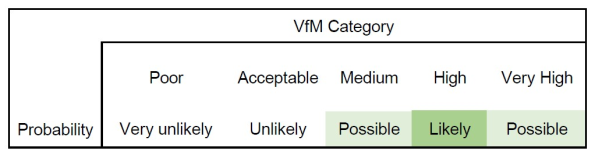
3.73 As noted above a VfM rating may represent a range of VfM categories rather than a single category. The full range should be reported (for example Acceptable to Medium or Poor to Acceptable).
3.74 Where it is possible to allocate likelihoods to different VfM categories this should done. An example of how that might be presented is shown below.
3.75 Alongside an assessment of VfM it is important to be clear about the quality of the analysis. This should highlight any issues with the approach taken, whether there was enough time to do the analysis, fitness for purpose of the modelling, gaps in data or other significant risks to the conclusions of the analysis.
3.76 Three examples of how judgement has been used to inform a VfM category are set out in the Value for Money statements below.
Box 4: Examples of a value for money statement
Value for money statement example 1
The estimated value for money of this policy is Acceptable to Medium.
The costs of the policy are £100 million. While the estimated BCR of this policy is 1.15 (implying Acceptable VFM) there is a potential for wider area impacts from the intervention which would have significant benefits. The switching value to move the VfM rating from Acceptable to Medium is £35 million. The non-monetised impacts from wider area impacts are judged to have a reasonable probability of being greater than this.
The modelling that has been carried out quickly using high level modelling. Whilst it has been undertaken by experienced analysts there are concerns about the robustness of the approach. Consequently, the results need to be treated with some caution.
Value for money statement example 2
The estimated value for money of this policy is Medium to High.
The benefits of this policy are reduced CO2 emissions (central estimate equal to £10 million) and increased land value (central estimate equal to £190 million). The cost of the policy is the grant of £100 million. There are no significant non-monetised impacts estimated for this policy.
The BCR of 2 indicates there is £2 worth of benefits per £1 of net public expenditure.
There are some uncertainties around increased land value which could be less than £190 million if the local housing market slows. This would result in a fall in the BCR below 2 and Medium VfM.
The modelling is robust using appropriate techniques and local data. It has been carried out and assured by analysts and reflects key uncertainties.
Value for money statement example 3
The estimated value for money of this option is Poor to Acceptable.
The costs of this option are £100 million compared to benefits of £130 million giving a BCR of 1.3 which would equate to a VfM category of Acceptable.
However, there are significant non-monetised biodiversity and landscape disbenefits. In addition, there is some uncertainty over costs which might rise to £120 million.
- For costs of £100 million, biodiversity and landscape disbenefits of above £30 million would change the VfM category to Poor. This is judged to be unlikely.
- However, if costs rise to £120 million then disbenefits need only rise by just over £10 million for the BCR to fall below 1 and VfM to become Poor. This is judged possible.
The options being developed are at an early stage which is why some impacts have not been monetised. The analysis has been carried out quickly – although by experienced analysts – and there are likely to be large changes in results as options and modelling develop.
Chapter 4: Land value uplift approach to appraising development
Introduction
4.1 For new residential and non-residential developments there are two types of impacts:
- the direct impacts on the households and firms who occupy the new development
- the external impact of the new development on the rest of the rest of the area
4.2 The main direct impacts of new residential and non-residential investments occur through land value uplift, where development increases the value of the land above its previous use, allowing for production costs. This chapter outlines how land value uplift might be calculated and used in cost benefit analysis.
4.3 The next chapter discusses how the external impacts of the new development on an existing area are appraised.
4.4 A step-by-step guide for how to appraise residential development is given in Technical Annex C and for non-residential development in Technical Annex D. Technical Annex E presents more detail on measuring additionality.
Land value uplift explained
4.5 Land value uplift, when used in appraisals, represents the private benefit, or change in economic efficiency, of one form of development on a particular site compared to its previous use. In a housing context, land value uplift is the value of land when used for housing minus the value of land in its current use. Generally, land value uplift will be higher where housing is of higher benefit to society, for example, in locations where housing supply is constrained relative to demand and/or where a site is near to local amenities or well-developed transport infrastructure. In short, the value of land is determined by a number of factors, but most significantly by its use and location.
4.6 The Gross Development Value (GDV) of a site is used in determining land values and therefore land value uplift. GDV is the estimated total revenue a developer could obtain from the land. In the context of housing, it would effectively be:
GDV=House prices×number of dwellings
4.7 A developer will also incur costs and would expect a minimum level of profit from developing a site. The residual method of land valuation gives the maximum price a firm is willing to pay for the land. In a competitive market, the firm will pay a price that gives a normal level of profit. The land price is therefore equal to:[footnote 26]
Land price=GDV-(Development costs+fees+profit)
4.8 The uplift when land changes use is an estimate of the change, often increase, in economic efficiency arising from that change of use. In turn as discussed above this reflects the relative demand for and supply of land in its previous and new uses.
4.9 In an economic appraisal, analysts should seek to capture all costs and benefits of a policy. Costs should be economic costs and therefore capture the opportunity cost of the investment. For the developer investing money in the site results in foregone profits from investing the money elsewhere[footnote 27]. This foregone profit is a cost and should be subtracted off the land price. Similarly wage costs reflect the opportunity cost of using labour in the development and should be subtracted off land price.
4.10 A simple example illustrates how land value uplift is calculated. Assume the economic value of land in its current use is low, for example, 50 owing to being an ex-industrial use brownfield site. Planning permission is then granted on that same site for a number of new homes. In its new use, assume the total obtainable revenue from the site is 300 (the GDV or sales revenue from the homes accruing to the developer), development costs to build the homes are 130 and the fees the developer occurs (such as legal fees, professional fees such as hiring quantity surveyors) are 30. Assume also that the market is competitive and that the level of normal profit is 40 – without this level of developer profit, the developer may instead choose not to develop this site and put their resources elsewhere. The new land value would then be:
Land price=GDV-(Development costs+fees+profit)
Land price=300-(130+30+40)=100
4.11 The developer is therefore willing to pay 100 for the land in order to earn a normal level of profit of 40. In an appraisal, the net private benefits from this development is therefore 50 (the land value in its new use, 100, less the land value in its previous use, 50).
4.12 The key point is that the land value is derived demand and means the land value includes the returns to all factors of production less economic costs, that is, returns to capital, land and labour (300) less construction costs (130) less fees (30) less expected profit (40). Therefore, changes in land values as a result of a change in land-use for a development reflect the economic efficiency benefits of converting land into a more productive use.[footnote 28]
4.13 In practice some of the land value uplift is captured for the benefit of wider society through taxation and affordable housing requirements. If such obligations are included in developer costs or reflected in reduced income, they should be added to the land value as although they are a cost to the developer, they are a benefit to the recipient, such as for affordable housing.
4.14 Other planning obligations (Section 106, Section 278, Community Infrastructure Levy) can relate to both on- site and off-site infrastructure.
-
On-site infrastructure is often designed to benefit new residents and in such cases the benefit of this is likely to be captured already in the GDV of the proposals and so the land value uplift.
-
The purpose of off-site obligations is typically to mitigate for negative externalities caused by the development. In these circumstances, because the off-site obligation just removes the negative externality caused by the development, there would be no need to adjust the land value calculation.
-
However, on-site infrastructure may also benefit existing residents and off-site infrastructure could potentially provide wider societal benefits beyond mitigating for the negative externalities of development. Where this is the case and planning obligations have been included in developer costs, it may be appropriate to treat all or a proportion of these costs as additional transferred land value. The assumptions adopted in calculating this additional benefit must be clearly set out and justified.
4.15 Where local land value data is available, this should be used in the first instance to support land value uplift calculations. This could be informed by a site-specific development appraisal. Where this information is not available the VOA values published in MHCLG “Land value estimates for policy appraisal” can be used. These values do not assume any affordable housing. They also do not include any atypical costs or CIL, S106, S278 payments and need to be adjusted for these when used. In such cases ‘atypical’ private costs should feature as a negative number in the present value benefits as they represent a disbenefit to the private sector.
4.16 In summary:
-
Land price reflects the value of the land in its new use. In appraisal terms, the difference between this new value - once all costs of changing its use have been allowed for - and its previous value is the land value uplift and this represents the net private benefits of a development.
-
Land value data should be the primary means of assessing the private benefits of a development. Land value data is a rich source of information because it is actual market data on individuals’ / firms’ willingness to pay for a piece of land. Assuming individuals and firms are rational in their decision- making, market prices should reveal the ‘true’ private benefit of a development. This information can be used to undertake cost benefit analysis to quantify the potential welfare implications of a development.
-
Land value uplift is concerned purely with the net private benefits of a development (which accrue to the development’s new residents). External impacts – which affect existing residents of an area - should be accounted for separately and summed with the net private impacts to give the net social impact. See Chapter 5 for a fuller discussion of the difference between private and external impacts.
Accounting for external impacts
4.17 Once the private benefits of a development have been calculated, external impacts should be assessed. The value to society of a change in use of the land may be separated into: (a) the private benefit associated with the change in land use, which is capitalised in the uplift in land value, and (b) the net external impact of the resulting development. The net social impact is then the summation of these two impacts.
4.18 The external impacts in (b) are in addition to the land value uplift. Examples of external impacts might include any amenity effects to existing residents of an area from changes in landscape or regeneration of the area. A full list is provided in Chapter 5.
Using land value uplift in cost benefit analysis
4.19 Consider a hypothetical market for residential floor space (this example is also applicable to commercial floorspace). There is a supply curve S1 and demand curve D1 as per the diagram below.[footnote 29]
4.20 The initial market equilibrium is where D1=S1, at which point price= P1 and quantity supplied=Q1. At this initial equilibrium point, the total market value of residential floor space is P1 x Q1 or A + E.
Figure 4: Supply and demand diagram for residential floor space
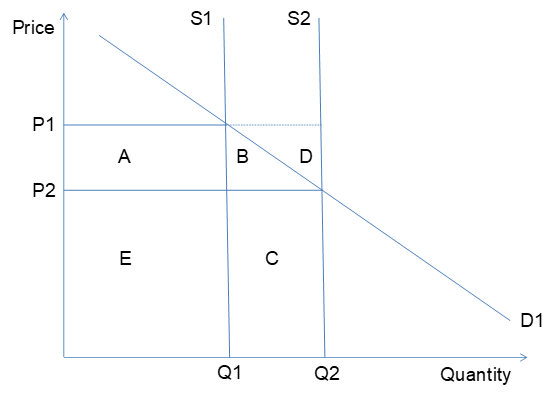
4.21 Assume government intervention is required to correct for a particular market failure which creates additional residential floor space (perhaps the government has provided financial support to ‘clean up’ a contaminated brownfield site thus correcting a negative externality). As a result of the intervention the supply curve shifts from S1 to S2. This results in a new market price of P2 and quantity supplied Q2. Consumer surplus[footnote 30] increases by A+B while the total market value of the residential floor space is now P2 x Q2 or E + C (in other words the change in the total market value of the residential floor space is C - A). How this is then captured in an economic appraisal is discussed below.
Estimating the gross land value uplift impact from an intervention[footnote 31]
4.22 A new development creates economic value which is reflected in the uplift of the value of the land. In this example, area C effectively measures the GDV of the development - the amount of residential floor space multiplied by the market price - so the land value uplift is equal to area C less development costs less profit less the value of the land in its previous use. This effectively goes to the existing land owners because land prices are bid up by developers.
4.23 For large changes in supply there are likely to be changes in the market price – shown as the reduction from P1 to P2 in Figure 4. This leads to two other welfare impacts represented by A and B:
- Area A shows a transfer of benefits from sellers to buyers of existing floorspace as a result of lower prices. The overall impact on welfare nets to zero.
- Area B is additional consumer surplus that goes to ‘new’ buyers from being able to access the market at lower prices.[footnote 32]
4.24 Many developments are local and small scale, so are likely to have a limited impact on the market price even within sub-national areas. In this case, Areas A and B are not counted when assessing welfare impacts. Where interventions are larger – particularly regional and national interventions - there may be some change in price. In this case Areas A and B need to be assessed. Larger scale developments are discussed in more detail in the section on displacement below.
4.25 Actual land value data for calculating land value uplift (LVU) may not be available in many instances and therefore illustrative values provided by the department can be used (these are explained in Technical Annex C for residential development and Technical Annex D for non-residential development). When using such values, the department would expect to see appropriate sensitivity analysis around these values to ensure a robust estimate of the (net) private benefit is made.
Estimating the net impact of an intervention
4.26 As Chapter 2 and Chapter 3 explain, all costs and benefits of an intervention should be compared against the business as usual counterfactual. The above example is based on a partial equilibrium analysis in the area where a development takes place. It therefore attempts to estimate the gross impact of an intervention. However, in a general equilibrium context, there are potential impacts that need to be considered in other markets / places. For example, as there will be development in the business as usual, it is important to account for the possibility that some of the benefits associated with this development would have happened anyway (deadweight) and that some benefits which would have occurred no longer do (displacement). Each of these is discussed below.
Estimating deadweight
4.27 Estimating the net impact of a policy requires any impacts which would have happened anyway to be subtracted from the gross estimates of a policy. In the example above, a critical issue is whether the expansion of floor space – and crucially the land value created – would have happened without government intervention, either in the location where the intervention takes place or somewhere else in the economy. In other words, ‘while an investment may be additional to the area in which it takes place, it may not be to a wider area or to the country as a whole’ (see Venables and others (PDF, 864 KB), 2014, p 45). Therefore, it is important that when appraising an intervention a correct counterfactual is established (see Chapter 2 and Technical Annex E.
4.28 A key question to ask when trying to establish a counterfactual like the above is: why does the private sector require government support and would the private investment genuinely not happen without it? If there is a genuine market failure that means the development would not otherwise have happened without government support then there is no deadweight. It may also be the case that the development would have happened without government support but on a smaller scale, in which case there is some deadweight loss. Without a sound rationale for intervention (e.g. market failure), a high BCR consisting of mainly private impacts is potentially a sign of significant deadweight, that is, in the absence of the intervention the market would deliver the same outcomes. In this instance, it would be appropriate to revisit the additionality assumptions underlying the BCR calculation.
4.29 In some instances, it may only be appropriate to include the external impact of a development – such as the positive external (amenity) value of redeveloping a previously derelict site or wider area regeneration impacts – in the additional economic benefits because the development would have gone ahead somewhere in the country but not necessarily on a brownfield site. Strategic considerations will be important in determining this. For example, the clustering of economic activity of a particular sector in a particular area may mean a firm is unlikely to want to locate somewhere else (see Technical Annex E).
Estimating displacement
4.30 As well as potential deadweight, some developments will result in economic activity being displaced from one location to another. An appraisal should seek to capture the gross impact of a development (as measured by the land value uplift) and deduct any reduction in economic activity elsewhere from displaced activity (as well as any deadweight). This will give the net change in land value (or overall additionality).
4.31 There are various ways to take displacement into account. The level of assessment should be proportionate to the scale of the intervention. [footnote 33]
4.32 Smaller scale interventions - where the constant price assumption holds – should follow the detailed approach set out in Technical Annex E.
4.33 Larger scale interventions are likely to require additional analysis:
- For interventions large enough to result in changes in prices at the local level but not regionally the land value uplift should be adjusted down. An assessment of impacts on land value uplift for other planned developments in the local area should also be made.[footnote 36] Effectively this means calculating an ‘additionality factor’ across the local area;
- For very large interventions which are likely to have significant regional impacts a structural economy model could be used to examine impacts including:
- The total change in land prices for new developments across all areas; and
- The spatial and sectoral distribution of economic activity.
4.34 Structural economy models have different strengths and limitations and can take time to set up and run effectively so the choice of which to use should be made carefully.[footnote 34] When these models are being used it is very important to state assumptions, be clear about key uncertainties and carry out sensitivity testing around key parameters.
Distributional considerations
4.35 As noted above, large developments are likely to result in changes in the price of residential and non-residential property. These changes in price will have distributional implications:
-
In a housing context, the release of new land for development reduces the scarcity of residential land, and so reduces the value of existing residential land. This reduction in value should be regarded as having purely distributional effects – there is a transfer from the asset-rich who lose out from new development, to the asset-poor, including non-homeowners, who gain.
-
The economic benefit of expanding non-residential space is captured by existing companies that use that space in the form of rents being lower than they otherwise would have been. Income is thus transferred from existing owners of the floorspace to users of the floorspace (see Venables and others, 2014, p 48).
4.36 If Figure 4 was to be applied separately to both residential and non-residential floorspace, the size of the distributional transfer in both cases would be equal to area A.
4.37 However, any additional (gross) land value generated by new development (Q2- Q1 in Figure 4) is not a transfer as the land has been developed into a more productive use.[footnote 35]
Other issues to consider
4.38 Any private costs associated with the development should be included in the appraisal as a disbenefit and therefore feature in the numerator of the BCR calculation (unless such costs have already been accounted for in the residual land value estimate (see the BCR section for further details)). All public sector costs should also be included and feature in the denominator of the BCR.
4.39 When carrying out an appraisal it is essential that there is no double counting of impacts. This could be an issue where local land value data is used. Land value data captures the full net private benefit of a change in land value. For example, any utility derived from being close to open space may be reflected in the value of the land. For non-residential interventions too, in theory, the full private (commercial) benefit of a development will be reflected in the land value, though there may be an external impact on others such as through agglomeration impacts (see chapter 5).[footnote 36]
Chapter 5: Externalities associated with development
Introduction
5.1 An economic appraisal should seek to capture all the benefits and costs of an intervention. This includes private benefits – such as land value uplift – and external impacts which often represent an important element of overall impacts. Where possible these impacts should be monetised.
5.2 There are a number of external impacts that are likely to result from a development including environmental, cultural and amenity impacts of development, placemaking and regeneration impacts, potential agglomeration impacts on third parties, health impacts of additional affordable housing, educational impacts of additional housing and transport externalities (see Figure 5 below).
Determining whether an impact is an externality
5.3 When assessing externalities, it is important to consider whether an impact is already captured in land value uplift. If it is not then it is an additional impact that needs assessing. The framework below in Figure 5 sets out an approach to doing this.
5.4 The key question to ask of a potential impact is, “Who does it affect?”
- if the impact affects the welfare of an individual or firm moving to an area, then this impact may be fully reflected in the price they pay for the thing they are buying, for example a home. Where this is the case, these impacts should not be considered an externality
- if the impact affects the welfare of individuals or firms already in the area, then this impact will not be accounted for in land value uplift and is therefore an externality
- if the impact affects society as a whole (so not exclusively existing individuals or firms in an area), then this impact will not be accounted for in land value uplift and is therefore an externality
5.5 Thus when locating to an area a firm will consider whether there are any potential spill-over benefits to it from co-location with other firms (agglomeration impacts) and the costs to the firm from local road congestion. This will affect the price it is prepared to pay for a development. Individuals moving to an area will also factor the characteristics of the external local environment such as any congestion or amenity benefits when they are deciding how much to offer for a property and this will also be factored into land value uplift.
5.6 However, land value uplift will not account for impacts which affect existing firms or individuals in an area (or society as a whole). These are externalities. For example, any knowledge spill-over impacts enjoyed by existing firms from a new development will not be taken into account by the firm deciding to locate in an area so are in addition to land value uplift. Similarly, the firm or individual deciding to locate in an area will not take into account the congestion cost they impose on others. These impacts are externalities which need to be accounted for in addition to land value uplift.
Examples of valuation of externalities
5.7 To help guide users, this chapter provides illustrative examples of the calculation of 4 types of externality:
- environmental and amenity impacts resulting from changes in land use
- assessment of wider placemaking impacts in regeneration areas
- assessment of the health impacts of urban design
- the impacts of affordable housing on health and rough sleeping impacts
Figure 5: Framework for assessing externalities
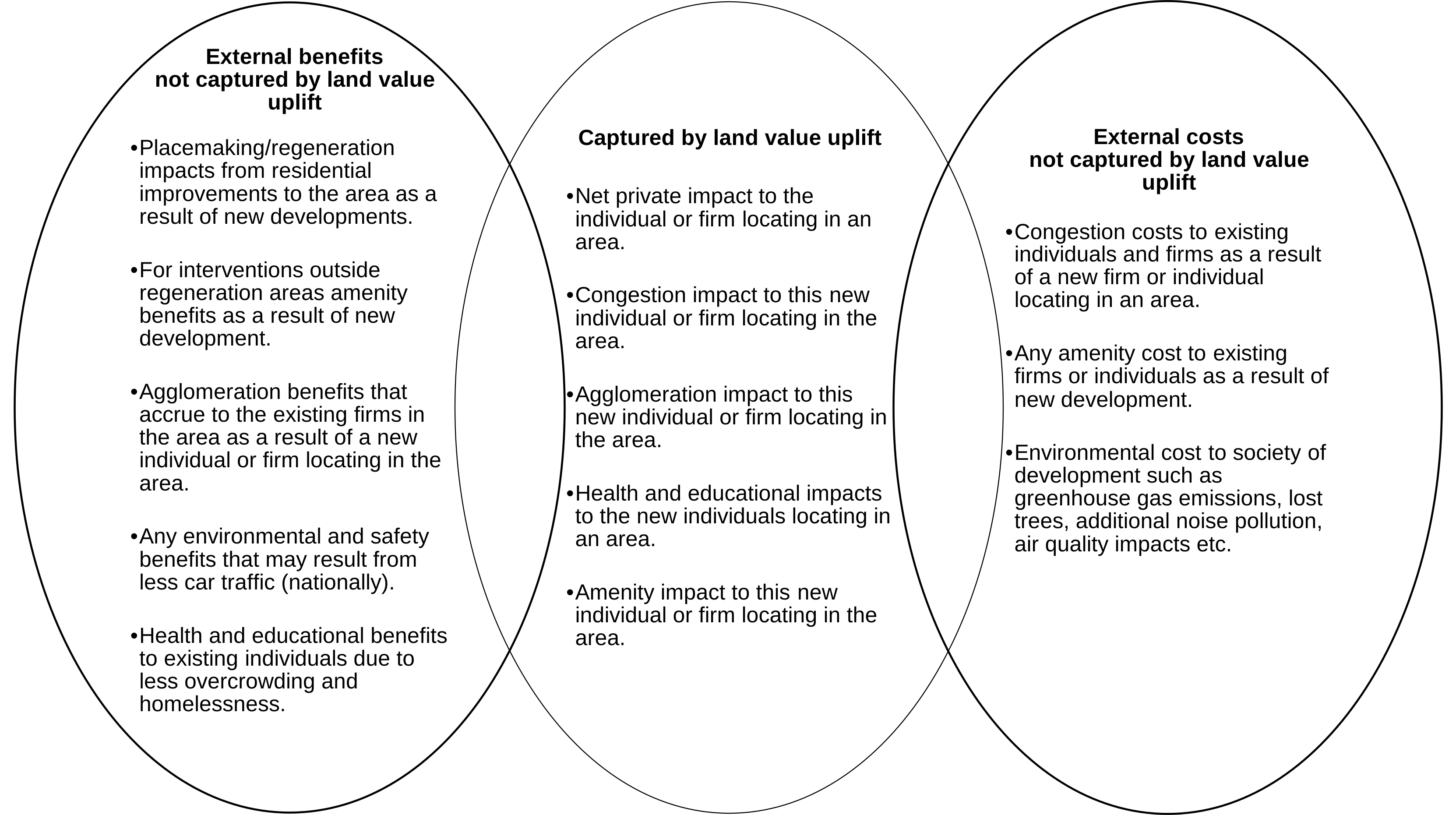
External benefits not captured by land value uplift
- Placemaking/regeneration impacts from residential improvements to the area as a result of new developments.
- For interventions outside regeneration areas amenity benefits as a result of new development.
- Agglomeration benefits that accrue to the existing firms in the area as a result of a new individual or firm locating in the area.
- Any environmental and safety benefits that may result from less car traffic (nationally).
- Health and educational benefits to existing individuals due to less overcrowding and homelessness.
Captured by land value uplift
- Net private impact to the individual or firm locating in an area.
- Congestion impact to this new individual or firm locating in the area.
- Agglomeration impact to this new individual or firm locating in the area.
- Health and educational impacts to the new individuals locating in an area.
- Amenity impact to this new individual or firm locating in the area.
External costs not captured by land value uplift
- Congestion costs to existing individuals and firms as a result of a new firm or individual locating in an area.
- Any amenity cost to existing firms or individuals as a result of new development.
- Environmental cost to society of development such as greenhouse gas emissions, lost trees, additional noise pollution, air quality impacts etc.
i. Environmental and amenity impacts resulting from changes in land use
Introduction
5.8 New developments are likely to have environmental and amenity impacts associated with:
- Land Take – impacts resulting from changes to land use. Most commonly from greenfield and brownfield land uses to residential and/or commercial development
- Construction – impacts resulting from the construction of buildings and infrastructure, such as the embodied carbon associated with building materials
- Occupancy – impacts related to the occupation of a development, such as those due to the energy or water consumed
5.9 Those impacts which are experienced by new occupants of the development will be reflected in the market price. However the existing community and UK as a whole will also be impacted by new developments. These impacts are not included in market prices and separate estimates should be made of them.
5.10 Homes England has developed guidance[footnote 37] on how to appraise the full range of external environmental and amenity impacts resulting from land take, construction and occupancy associated with housing development. A separate Environmental Impact of Housing Development Appraisal Tool (ENHAT)[footnote 38] has also been developed. The guidance and tool are consistent with the natural capital approach set out in the HMT Green Book and the Dept for Environment, Food and Rural Affairs (DEFRA) Enabling a Natural Capital Approach (ENCA)[footnote 39] guidance.[footnote 40]
5.11 Figure 6 shows the different impacts considered in the Homes England guidance and ENHAT tool. Changes in land take, construction and occupation result in a number of different outcomes such as changes in land amenity/disamenity which then lead to changes in social value. The task that ENHAT undertakes is to understand the size of these impacts then monetise them.
Figure 6: Logic chain map for appraising environmental impacts of new housing.
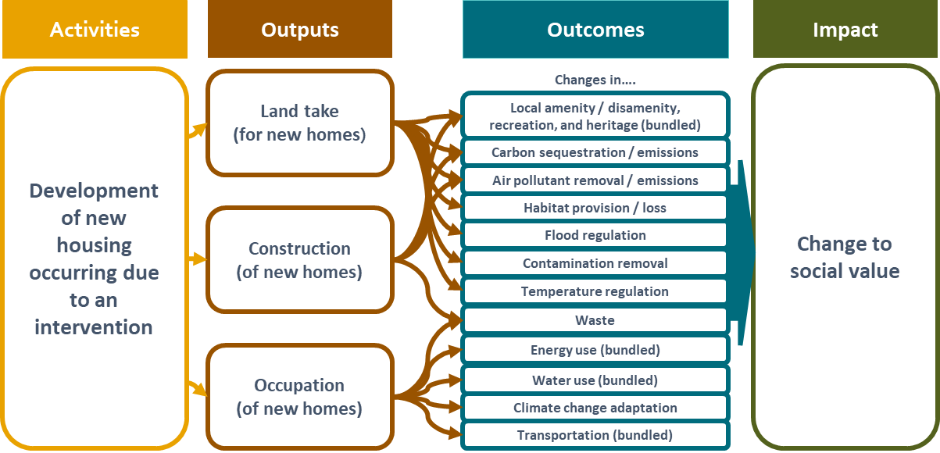
Activities
- Development of new housing occurring due to an intervention
Outputs
- Land take (for new homes)
- Construction (of new homes)
- Occupation (of new homes)
Outcomes
Changes in…
- Local amenity / disamenity, recreation, and heritage (bundled)
- Carbon sequestration / emissions
- Air pollutant removal / emissions
- Habitat provision / loss
- Flood regulation
- Contamination removal
- Temperature regulation
- Waste
- Energy use (bundled)
- Water use (bundled)
- Climate change adaptation
- Transportation (bundled)
Impact
- Change to social value
Application of the guidance and tool
5.12 The Homes England guidance provides detail on the methods and assumptions that have been used to assess environmental outcomes. It also details specific considerations, such as key sensitivity tests, that should be taken into account when applying the guidance and using the ENHAT tool. Users should refer to the Homes England guidance for those details whenever applying ENHAT.
5.13 In general terms, the Homes England guidance and ENHAT has been provided to aid the appraisal of the environmental impacts of housing development at OBC stage, with a particular focus on the consideration and comparison of options. Consideration should be given to whether more detail analysis is required at FBC stage and at earlier stages for interventions involving more complex environmental outcomes. While not designed to inform the appraisal of other forms of development (e.g. commercial), there are elements of the guidance that can be used. These are discussed further below.
5.14 The table below summarises the range of impacts considered within the guidance and ENHAT tool.
Table 3: Categorisation of environmental outcomes from new housing intervention outputs
| Category | Land take outcomes | Construction outcomes | Occupation |
|---|---|---|---|
| outcomes | |||
| General description | Permanent net changes to ecosystem service provision resulting from land use change | One-off/temporary impacts from the production, use, transport and waste of materials used in the construction of housing | On-going impacts of occupant energy use, water consumption, transport and waste for the duration of the properties’ life |
| Examples | - Amenity/disamenity. - Recreation. - Carbon sequestration/emissions. - Air pollutant removal/emissions. - Habitat provision/loss. - Blue green infrastructure provision (bundled). - Timber production. - Agricultural production. - Flood regulation. - Contamination removal. - Heritage. - Temperature regulation. |
- Embodied carbon. - Amenity/disamenity. - Waste (bundled). - Transport (bundled). |
- Energy use (bundled). - Water used (bundled). - Climate change adaptation. - Transportation (bundled). - Waste (bundled). |
| Generalised characteristics of impacts in the category | - Permanent changes to ecosystem service provision or local environmental amenity. - Most benefits or costs accrue to households beyond the intervention “red line” boundary. |
- Temporary changes to local amenity/environmental quality. - Permanent and/or temporary costs specifically due to use of construction materials. - Benefits or costs that accrue to households beyond the intervention “red line” boundary. |
- Annual costs or benefits due to resident occupation of the new homes. - Benefits or costs that are generated within and beyond the intervention “red line” boundary. |
5.15 The ENHAT tool has been produced to simplify the application of the guidance. Figure 7 below summarises the structure of the tool.
Figure 7: ENHAT structure and flow chart. (The tabs within ENHAT are given in parentheses)[footnote 41].
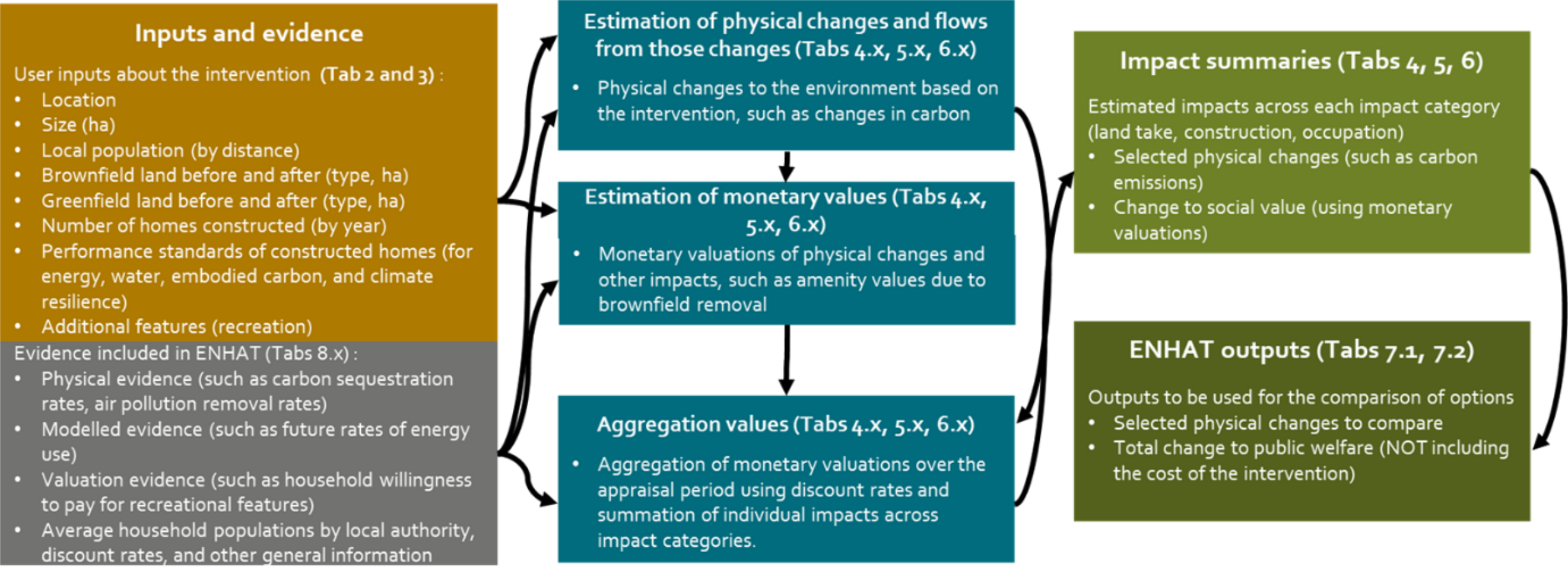
Inputs and evidence
User inputs about the intervention (Tab 2 and 3):
- Location
- Size (ha)
- Local population (by distance)
- Brownfield land before and after (type, ha)
- Greenfield land before and after (type, ha)
- Number of homes constructed (by year)
- Performance standards of constructed homes (for energy, water, embodied carbon, and climate resilience)
- Additional features (recreation)
Evidence included in ENHAT (Tabs 8.x):
- Physical evidence (such as carbon sequestration rates, air pollution removal rates)
- Modelled evidence (such as future rates of energy use)
- Valuation evidence (such as household willingness to pay for recreational features)
- Average household populations by local authority, discount rates, and other general information
Estimation of physical changes and flows from those changes (Tabs 4.x, 5.x, 6.x)
- Physical changes to the environment based on the intervention, such as changes in carbon
Estimation of monetary values (Tabs 4.x, 5.x, 6.x)
- Monetary valuations of physical changes and other impacts, such as amenity values due to brownfield removal
Aggregation values (Tabs 4.x, 5.x, 6,x)
- Aggreation of monetary valuations over the appraisal period using discount rates and summation of individual impacts across impact categories
Impact summaries (Tabs 4, 5, 6)
Estimated impacts across each impact category (land take, construction, occupation)
- Selected physical changes (such as carbon emissions)
- Change to social value (using monetary valuations)
ENHAT outputs (Tabs 7.1, 7.2)
Outputs to be used for the comparison of options
- Selected physical changes to compare
- Total change to public welfare (NOT including the cost of the intervention)
Example
5.16 Two examples are used through the Homes England guidance to explain the methodology in relation to each of the impacts being considered. The below provides a summary of Example A from that guidance. Example A is based on a development on a small, 0.82 ha brownfield site in the North East. The future development will include 76 homes with 150 occupants.
5.17 Table 4 summarises the present value of the impacts estimated by ENHAT relative to a counterfactual in which the homes are delivered around 10 years later to a lower environmental standard.
Table 4: The present value of impacts for Example A
| Category of environmental impact | Difference in environmental outcomes due to the intervention option over the option without intervention |
|---|---|
| Impacts from land take | £2.17 million |
| Impacts from constructions | -£0.03 million |
| Impacts from occupation | £0.08 million |
| Net environmental cost/benefit (discounted) | £2.23 million |
Note: A positive value denotes a benefit, a negative value a cost or disbenefit.
5.18 The guidance provides further detail against each of the three categories of impact in table 4. Table 5 provides the breakdown for the land take category.
Table 5: Breakdown of Land Take Impacts for Example A
| Category of environmental impact | Difference in environmental outcomes due to the intervention option over the option without intervention (2024 present values) |
|---|---|
| Local environmental amenity due to brownfield | £0.26 million |
| Local environmental amenity due to greenfield | £0 |
| Local environmental amenity due to specific features | £1.88 million |
| Air pollutant removal | £0 |
| Carbon sequestration (from habitats) | £0 |
| Habitat provision | £0 |
| Blue Green Infrastructure bundled outcomes | £0.03 million |
| Net environmental cost/benefit from land take | £2.17 million |
Note: A positive value denotes a benefit, a negative value a cost or disbenefit.
5.19 The guidance goes on to provide details against each of the categories considered in Table 5. For the local environmental amenity, due to the removal of brownfield land the benefit associated with the proposed intervention is estimated to be £0.94 million. Under the counterfactual the brownfield land is assumed to be removed 10 years later, with an estimated benefit of £0.68 million resulting in a net effect of £0.26 million. Combined with the environmental amenity benefit associated with specific features of £1.88 million, this results in a net impact of £2.14 million.
5.20 The examples then highlight the need to consider sensitivity tests on these values - in this case particularly in relation to the number of households affected by the environmental impacts. It highlights that under the high scenario considered within the guidance and ENHAT, the net impact is £2.72 million.
Commercial and other development
5.21 The Homes England guidance and tool focuses on new housing development. While elements of the guidance and tool will be of relevance to the appraisal of commercial and other developments, careful consideration is needed to determine where the methods and assumptions being used should be varied. The below provides a high-level summary of how the Homes England guidance may be applied for commercial and other uses. Consideration should also be given to impacts related to the commercial or other use that may be important but fall outside of the Homes England guidance (e.g. if the other use were to generate externalities from noise or pollution).
Land take
5.22 Generally, we would expect the land take impacts related to the removal or provision of green space to be the same for a commercial development as for a residential development. Where an intervention involves developing brownfield land for a commercial or other use, the analyst should consider whether the findings from the Homes England study on brownfield amenity values[footnote 42] are applicable to the specific case. That study focused on assessing the amenity improvement associated with replacing a brownfield site with a housing or mixed-use development. Where a future use is expected to materially differ from the context of the study, the amenity impacts are also likely to differ and so it may not be appropriate to apply the amenity values from that study.
Construction
5.23 The general approach taken to the appraisal of construction impacts might be expected to be the same for commercial as for residential development. The approach to the monetisation of embodied carbon taken in the guidance and ENHAT could therefore be replicated for a commercial or other development. However, the estimates made by ENHAT are based on an assessment of the embodied carbon involved in the construction of a residential building. Bespoke estimates of the embodied carbon associated with the commercial or other development will therefore be required before the monetisation methodology can be applied.
5.24 The non-quantified impacts associated with construction in the Homes England guidance should also be considered.
Occupation
5.25 As with construction impacts, many of the monetisation methods from the Homes England guidance can be applied in the context of the occupation of a commercial or other development, however bespoke estimates will be required to provide the inputs to the analysis. For example, a bespoke estimate of the expected water or energy use will be needed before applying the method from the Homes England guidance to monetise those impacts.
Assessment of wider area impacts in regeneration areas
5.26 This section describes how the wider area impacts of supply-side housing interventions with explicit placemaking and regeneration objectives can be assessed and monetised as part of the assessment of value for money.[footnote 43] For wider area impacts to be relevant, the intervention must be part of a programme of funding that has clear placemaking and regeneration objectives and has explicitly established the importance of housing as a mechanism for supporting regeneration plans. The criteria for inclusion are set out in the next section. All of these must be demonstrated to have been met using robust evidence otherwise wider area impacts cannot be considered in the VfM assessment.
Criteria for inclusion
5.27 The wider area impacts of housing interventions should only be assessed for projects that fulfil the following criteria:
- are supply-side housing interventions and address housing needs
- are located in a place where housing has been identified as a driver for regeneration
- are located within an urban area, that is a town or city setting, and typically would be brownfield sites
- are of a significant scale relative to the local housing market, and not anticipated to be below 50 units
- have clear placemaking and regeneration objectives that are likely to result in new uses and activities that make the surrounding area become more desirable
5.28 The justification for including wider area impacts must be clearly linked to the programme funding objectives, the underlying rationale for the intervention, the socio-economic context and the objectives of the project as set out in the strategic dimension of the business case. The market failures should also be clearly set out and are likely to relate to providing positive externalities or extensive public good provision.
5.29 Based on the underlying research and previous housing interventions with wider area impacts, it is anticipated that such impacts are only likely to be relevant where schemes exhibit one or more of the following attributes:
- a prominent site that will address significant negative externalities caused on site that impact the surrounding area, such as removing existing blight or remediating brownfield land
- a housing scheme that as well as addressing housing needs delivers a range of other significant amenity benefits such as open space, active transport (cycleways, pathways), other recreational uses and employment opportunities that will serve and benefit existing residents in the wider area
- a scheme that is part of a wider placemaking strategy and aims to transform a particular place to help restore and enhance the perception and viability of that location. This could be in the form of providing a critical mass of housing, education, leisure, employment uses and/or delivering a broader range of community infrastructure.
5.30 Importantly, in all cases it must be clearly evidenced how the intervention addresses the needs of the surrounding area. This should be set out in the Theory of Change for the project which clearly demonstrates how the intervention will give rise to positive wider placemaking impacts. This will include setting out the following:
0. Strategic context, underlying rationale, and project objectives: to understand how the intervention is addressing key challenges in the local area and beyond the site itself.
1. Inputs: to the project, such as the level of investment, complementary activity and private sector investment leveraged.
2. Activities: that will be covered by the project. Wider area impacts are only likely to be relevant if the following types of activities are included, which improve wider placemaking:
i. Removal of blight, which could be for instance through demolition and remediation works or relocation of bad neighbour uses.
ii. Provision of high-quality development (residential, commercial, or mixed use) of sufficient scale to enhance the overall image and perceptions of the wider area.
iii. Provision of housing supply that addresses barriers to growth, in particular labour market constraints.
iv. Provision of employment floorspace that facilitates the attraction of new, high value economic activity.
v. Infrastructure provision, in sufficient scale to clearly benefit the surrounding local area. This is likely to comprise one or more of the following:
- provision of green or blue space[footnote 44]
- public realm improvements
- connectivity improvements such as walkways, cycleways, canals, and bridges
- significant community infrastructure, that is expected to benefit the wider area
3. Outputs: of the project, which should link to the underlying rationale for intervention, such as redevelopment of brownfield land, and new economic, environmental, and social opportunities.
4. Outcomes: of the project, which should clearly include long term economic and regeneration goals that the intervention is seeking to achieve. For larger projects this could relate to transforming the entire area as a place to live, work and visit, supporting wider city growth and creating markets for new, high-quality housing. For smaller projects it is likely to relate to enhanced townscape, enhancement of community assets and improved amenity of the local area.
5. Impacts: of the project, as measured by improved wellbeing across the wider area. For wider area impacts this can be measured through higher house prices in the surrounding area, which act as a proxy for this welfare gain.
5.31 In cases where the project is part of a wider set of interventions which collectively address underlying socio-economic challenges, the justification for including wider area impacts must be clearly explained in relation to the role of the project in isolation and combined with other interventions. The dependencies and costs associated with the wider public sector intervention and other funding programmes should be clearly identified, and impacts attributed accordingly.
The approach
5.32 The gross wider area impacts should be monetised by estimating the potential uplift to the capital value of the surrounding housing stock. The impact will then need to be adjusted for deadweight and displacement as set out below (and in Technical Annex E).
5.33 This is based on estimating the existing housing stock and its residential capital value within a defined impact area and then applying an uplift factor. The uplift factors detailed in Table 6 below differ according to location (grouped by region), the size of the development and local rates of development.
Table 6: Impacts table - % uplift to residential capital value within the impact area
| Region | No. of gross units | Low Development (LD) | Medium Development (MD) | High Development (HD) |
|---|---|---|---|---|
| North (North East, North West, Yorkshire and the Humber) | <100 | 0.80% | 0.55% | 0.12% |
| 100-250 | 1.50% | 1.24% | 0.82% | |
| 250-500 | 2.76% | 2.50% | 2.08% | |
| 500+ | 2.05% | 1.67% | 1.39% | |
| Midlands (East Midlands, West Midlands) | <100 | 0.96% | 0.71% | 0.28% |
| 100-250 | 1.66% | 1.40% | 0.98% | |
| 250-500 | 2.92% | 2.66% | 2.24% | |
| 500+ | 2.21% | 1.78% | 1.49% | |
| East & South West (East of England, South West) | <100 | 0.66% | 0.53% | 0.32% |
| 100-250 | 1.01% | 0.88% | 0.67% | |
| 250-500 | 1.94% | 1.68% | 1.30% | |
| 500+ | 1.49% | 1.15% | 1.01% | |
| South East | <100 | 1.31% | 1.06% | 0.63% |
| 100-250 | 2.01% | 1.75% | 1.33% | |
| 250-500 | 3.27% | 3.01% | 2.59% | |
| 500+ | 2.56% | 2.01% | 1.87% | |
| London | <100 | 0.00% | 0.00% | 0.00% |
| 100-250 | 0.00% | 0.00% | 0.00% | |
| 250-500 | 0.61% | 0.35% | 0.00% | |
| 500+ | 0.41% | 0.29% | 0.15% |
Note: Rate of development refers to total % change in the stock of houses in the impact area over the last 4 years, low (<4%), medium (4%-12%), high (12%+). See further guidance below.
Step by step guide
5.34 Once it has been confirmed that wider area impacts are relevant for the project, the following steps should be undertaken to monetise the impacts as part of the BCR calculation. Table 8 details the accompanying data sources which have been based on publicly available data. In some cases, the user may be able to justify using different data (e.g. local bespoke data, to estimate residential capital stock and value, which is acceptable if fully sourced).
1.) Identify the impact area
5.35 The impact area should be initially identified as a 1.5km or 2.5km radius of the scheme, using the centroid of the site, and based on the constituent Lower Layer Super Output Areas (LSOAs).
5.36 A variety of postcode/LSOA lookup tables are available online or from the Office of National Statistics (ONS) but where possible it is recommended that the impact area should be clearly mapped using Geographical Information Systems (GIS), to understand the area included. [footnote 45]
5.37 As a starting point, schemes below 1,000 units should use a 1.5km impact area whilst schemes over 1,000 units can use a 2.5km impact area but must include the 1.5km impact area as a sensitivity test. The 2.5km area should only be used if fully justified by local analysis of the impact area.
5.38 A best fit LSOA approach should be used based on a population centroid approach, so that LSOAs where the majority of the population is located within the impact area are included. This should then be supplemented carefully by further analysis of the geography and local knowledge and consider excluding / including certain LSOAs where relevant, for instance:
- where the project is clearly unlikely to influence certain areas within the impact area. For example, a city centre scheme which incorporates a large element of the city centre that may be already regenerated, and the scheme is unlikely to have a significant impact
- where there is a clear demarcation between an area and the site, for example a large park, river, or road, and the two areas are not closely linked
- where the opposite may be true and the impact area appears too narrow given the importance of the scheme, for example a scheme that is transformational and will have a significant impact on a town’s image.
5.39 The impact area should be clearly explained and justified, with careful analysis of the impact of including / excluding certain areas where necessary. This is particularly important for larger schemes when justifying the selection of the 2.5km impact area.
2.) Calculate the quantity of the existing residential housing stock
5.40 The existing housing stock within the impact area should be calculated by using, Valuation Office Agency (VOA) Council Tax: Stock of Properties data provided by LSOA, to identify the number of properties (by property type) in the footprint. Property types should include flats, terraced, semi- detached/bungalow and detached.
5.41 The latest data should be selected to calculate existing stock as well as a comparison to 4 years ago to understand how stock has changed. For example, in 2024, the latest full year’s data on the housing stock will be 2023/24 and the comparison should be to the 2019/20 housing stock (as the data is provided by financial year). This should not include any non-residential property.
3.) Calculate the rate of development
5.42 The absolute growth in total units in the impact area over the last 4 years should then be calculated to identify the rate of development:
- low development – less than 4% growth
- medium development – 4% to 12% growth
- high development – over 12% growth
4.) Calculate the current stock value
5.43 The current stock value should then be estimated by LSOA by property type. The Land Registry Price Paid database provides the most granular detail by location and property type and can be used to match sales values by type by postcode to LSOAs.
5.44 In some instances (especially for detached properties) there are missing entries in the Price Paid data and the user will need to proxy the median price by type based on other values, for instance these could be the Middle Layer Super Output Area (MSOA), the surrounding LSOAs or if these do not exist the average LSOA or MSOA property price.
5.45 Once the geographies are matched and sales values identified, the current stock value should then be estimated by multiplying the housing stock by type by median sales value by LSOA and summing the totals.
5.) Select an uplift factor
5.46 Based on the rate of development (Step 3), the size of the scheme and location, select the relevant uplift factor as detailed in Table 6: Impacts table - percentage uplift to residential capital value within the impact area.
6.) Apply the uplift factor and calculate the gross impacts
5.47 Multiply the current stock value by the uplift factor to calculate the gross economic gain.
7.) Incorporate impacts into the Cost-Benefit Analysis and adjust for additionality
5.48 The gross wider area impacts should then be incorporated within the wider benefits of the economic appraisal, inputted in the correct price base, adjusted for growth in real terms GDP and discounted over time. Unless there is supporting evidence to suggest otherwise, the gross impacts should be inputted on a pro rata basis against the profile of units delivered.
5.49 The gross wider area impacts should then be adjusted for additionality to derive the net impacts. This should consider both:
- Deadweight in terms of the wider area impacts that would have occurred without the intervention. The default is for this to be based on the same assumptions as for the overall housing delivery, e.g. if 10% of the housing is delivered under the counterfactual, 10% of the wider area impacts should be counted as deadweight. In some cases, there may be strong justification to vary this, but this would need to be clearly set out.
- Displacement in terms of the wider area impacts that would have occurred elsewhere from displaced housing activity. Prudently the default is to assume that displaced activity would have the same level of wider area impacts. Therefore, again, as a rule of thumb, it should be assumed that the displacement rate applied to the number of housing units delivered should also be applied to the wider area impacts.
8.) Sensitivity analysis
5.50 Sensitivity testing should be undertaken, including to reflect project specific circumstances where local evidence is available and where there is uncertainty in local plans.
5.51 Alongside scheme specific sensitivity testing, particularly around the size of the impact area, it is recommended the following impact value ranges based on the rate of development category and unit numbers of the scheme should be applied, as shown in Table 7. These are based on the research findings regarding underlying development and location features. The sensitivity testing should apply the positive and negative percentage adjustment to discounted wider area impacts to understand how the BCR would change
Table 7: Sensitivity analysis – impact value ranges
| Number of units | Low Development (LD) | Medium Development (MD) | High Development (HD) |
|---|---|---|---|
| <250 | +/- 5% | +/- 10% | +/- 15% |
| 250 – 500 | +/- 10% | +/- 15% | +/- 20% |
| 500+ | +/- 15% | +/- 20% | +/- 25% |
Further adjustments and clarifications
Adjustments to reflect local circumstances
5.52 The modelling upon which the guidance is based reflects the underlying profile of development schemes included in the original research. It is inevitable that circumstances will arise in which proposed developments are atypical and may exhibit significant characteristics that, based on detailed local analysis, could arguably provide wider area impacts above those recorded in the original research. In this situation, the above analysis should be undertaken to provide a baseline for discussion with an opportunity to introduce additional evidence as to local impacts. For example, the existing site may have very substantial negative externalities associated with them such as adverse visual and odour effects. The removal of these may well have a more significant placemaking impact than those identified through the impact factors in Table 6: Impacts table - % uplift to capital value above.
5.53 In these atypical cases, a higher or lower impact rate should be applied based on local evidence, but the impact using the standard uplift rates shown in Table 6 should also be included in the appraisal as part of sensitivity testing. Strong evidence must be provided to apply a higher uplift than in Table 6.
5.54 As outlined under Step 1, it may also be relevant to adapt the impact area to reflect the local market and scheme characteristics. This should be clearly set out and justified as well as presenting the values for the default radius impact area.
Option appraisal
5.55 Due to the available sample data, the effects and therefore impact uplifts have been assessed for a broad range of unit outputs and thus it may be difficult to differentiate between options where, for example, all of them deliver over say 1,000 homes. In these cases, it is proposed that the placemaking impact is assessed for the largest option and that the appraiser then uses project specific evidence to adjust the scale of impact accordingly for each alternative option. As a rule of thumb, it is recommended that this is based on a pro-rata basis using the number of housing units. Applying the impact model to a programme or multiple projects in the same local area
5.56 There may be circumstances where a programme is proposed or there are multiple connected projects. Care will need to be taken not to ‘double count’ the wider placemaking impact. The appraiser will need to use local evidence to determine the most appropriate way to ensure that this does not happen. For example, it may be appropriate to model the impact area around a number of postcode/LSOA areas to reflect the broad spread of projects/programmes and then allocate the impacts on a pro-rata basis between individual projects.
Potential for double counting
5.57 There will be potential for double counting with other external impacts that result in the wider area becoming more desirable.
- Transport benefits – if a scheme includes significant transport provision the appraiser should carefully consider the scope for double counting if including both transport and wider area impacts. This will depend on the nature and scale of the transport provision and who the ultimate beneficiaries are, with the scope for double counting likely to be highest where the transport scheme directly benefits the residents of the surrounding area. The appraiser would need to clearly identify and categorise the type of benefits arising from a scheme with housing and transport impacts and the best approach to monetising these, including any potential duplication[footnote 46].
- Amenity Impacts – new developments will have a range of environmental impacts. For new residential developments, analysts should apply the Homes England ENHAT model - discussed in the previous section – to appraise environmental impacts. However, the ENHAT model includes brownfield, greenfield and feature amenity land take impacts. These impacts are double counted in the wider area impacts model and should be removed when applying the ENHAT model in line with the approach set out in Figure 8 below. A sensitivity test could be carried out including the land take impacts but excluding the wider area impacts results. However, where application of the wider area impacts model is relevant it reflects a fuller set of development factors than the land take impacts in the ENHAT model so should be used as the core estimate.
Figure 8: Dealing With Double Counting of Wider Area and Amenity Impacts
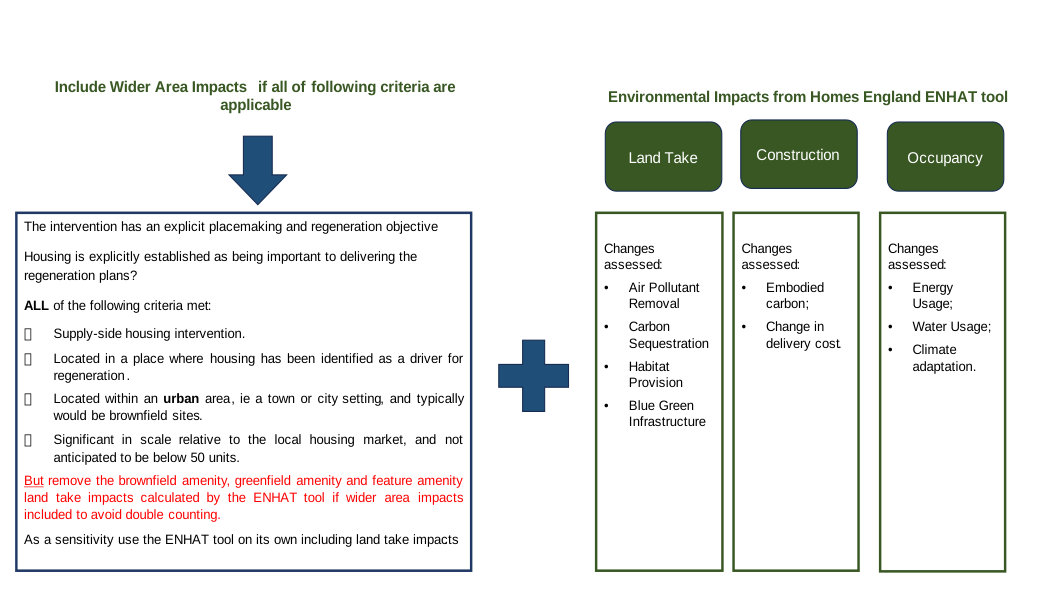
Include Wider Area Impacts if all of following criteria are applicable
The intervention has an explicit placemaking and regeneration objective
Housing is explicitly established as being important to delivering the regeneration plans?
ALL of the following criteria met:
- Supply-side housing intervention .
- Located in a place where housing has been identified as a driver for regeneration.
- Located within an urban area, ie a town or city setting, and typically would be brownfield sites.
- Significant in scale relative to the local housing market, and not anticipated to be below 50 units .
But remove the brownfield amenity, greenfield amenity and feature amenity land take impacts calculated by the ENHAT tool if wider area impacts included to avoid double counting .
As a sensitivity use the ENHAT tool on its own including land take impacts.
PLUS
Environmental Impacts from Homes England ENHAT tool
Land take
Changes assessed:
- Air Pollutant Removal
- Carbon Sequestration
- Habitat Provision
- Blue Green Infrastructure
Construction
Changes assessed:
- Embodied carbon;
- Change in delivery cost.
Occupancy
Changes assessed:
- Energy Usage;
- Water Usage;
- Climate adaptation.
Worked example
5.58 A residential development will deliver 1,500 units on a brownfield site, on the edge of a city centre. The site has been stalled for decades and is causing significant blight issues, given its prominent gateway position. The remediation of the site will significantly improve the quality of the local environment. The housing to be developed is also critical for the sustainable growth of the city centre and will help transform the wider area in which it is located. The site will clearly have wider impacts on the surrounding area, which have been estimated as follows:
1) Impact area: the default impact area is identified as a 2.5km radius given the size of the scheme and all constituent LSOAs (using the population centroid method) are identified. Based on local knowledge of the area a final list of LSOAs at the 2.5km radius is identified.
2) Existing housing stock is calculated based on the final list of LSOAs by house type.
3) The rate of housing development based on growth over the last 4 years is identified as medium (between 4% and 12%).
4) The current stock value is calculated based on the median price by property type. In this example a figure of approximately £7,000 million is used.
5) An uplift value of 1.67% is selected based on location (North), rate of development (medium) and size (500+ units).
6) The gross placemaking benefit is approximately £116.9 million.
7) Additionality is assessed as 60%, reducing the net impact to £70.1 million.
8) The discounted placemaking benefit for the preferred option, once profiled in line with the housing and adjusted for additionality, is £44.4 million. This is included in the BCR and the VfM assessment.
5.59 Based on Table 7: Sensitivity tests, further analysis is performed with the gross wider area impacts ranging from £93.5 million to £140.3 million. The analysis above should then also be re-run at the smaller impact area of 1.5km as part of the sensitivity testing.
Data sources
5.60 The Homes England Wider Area Impacts (WAI) tool has been published alongside this guidance which enables users to monetise the gross wider area impacts of housing interventions using the latest data.
5.61 This includes the underlying data estimates of the residential stock and capital stock values by LSOA across England, based on the HM Land Registry Price Paid database and the VOA stock of properties data by property type. Where HM Land Registry Price Paid data by LSOA by type is missing (e.g. where no terrace homes have sold in a certain LSOA over the time period covered), the default is either the median MSOA or LA price by type.
5.62 The data sources are fully detailed below in Table 8.
Table 8: Data sources
| Category | Data Source |
|---|---|
| Housing stock | Valuation Office Agency (VOA) Council Tax: Stock of Properties data (currently 1 April 2023 to 31 March 2024) (Table CTSOP 3.1), provided by LSOA. Total are used for Terraced, Flats and Detached Properties, whilst Bungalows and Semi-detached are combined. This is compared to the data covering 1 April 2019 to 31 March 2020 for the four-year comparison. https://www.gov.uk/government/statistics/council-tax-stock-of- properties-2024 |
| House prices | Price Paid Data (PP), HM Land Registry, using the last available financial year (currently 1 April 2023 to 31 March 2024, to bring the stock value data into line with the VOA stock of properties data), provided by postcode. https://www.gov.uk/government/statistical-data-sets/price-paid-data-downloads |
| Population Centroids | Lower Layer Super Output Areas Population Weighted Centroids, ONS, 2021. This data is used to identify the centroid of the constituent LOSAs within the impact area. Available at: https://www.data.gov.uk/dataset/1b61943c-f5e1-4398- babe-5c487257864e/lower-layer-super-output-areas-december-2021-ew-population-weighted-centroids |
Assessment of the Health Impacts of Urban Design
Introduction
5.63 The urban design of an area has significant health and quality of life impacts. The design and quality of buildings and the characteristics of the neighbourhoods they are built in, such as urban green space, air quality, transport infrastructure, street layout, leisure facilities and the food and drink environment can all have a protective or harmful effect on our health. For example, exposure to damp and mould in the home can cause serious respiratory diseases and, in severe cases, deaths. Having access to good quality green spaces in an urban area has benefits for physical activity levels and mental health. This also has significant impacts on health and societal inequalities, as those who are most disadvantaged often experience the poorest quality urban environments.
5.64 Good urban design will also have wider benefits. For example, enhancing the resilience of buildings and infrastructure to climate change will support economic resilience and growth. This builds on the individual economic impacts from supporting people to participate in the labour market. The design of urban areas should therefore be informed by evidence around what works to reduce the risks to health, and to protect and promote it through healthier development.
5.65 This is an area that has been substantially investigated in ‘Tackling the Root causes Upstream of Unhealthy Urban Development (TRUUD). TRUUD is a major research programme funded by the UK Prevention Research Partnership to design policy interventions to support the development of healthier urban environments.
HAUS model overview
5.66 TRUUD have developed a model to examine the health impacts from a number of types of interventions that change the design of urban areas. TRUUD’s Health Appraisal of Urban Systems (HAUS) model quantifies and values the health impacts of a wide range of characteristics of the urban environment. These include conditions indoors as well as those around our homes.
5.67 HAUS covers 6 themes - building design, the natural environment (including air pollution and green space), transport, socio-economic factors (such as crime or deprivation), climate change and community infrastructure (such as public transport and access to healthy food). Across these six themes HAUS provides over 200 environment-health impact pathways, each representing a causal path from a specific change in the urban environment to a health outcome.
5.68 Each impact pathway includes an estimate of the effect of a characteristic of the urban environment on a health outcome based on data taken from published medical studies. They include detail on the direction of this effect, the mechanism which results in a health change, and the evidence which informs the pathway (Figure 9 below).
Figure 9: Impact pathway method used in HAUS
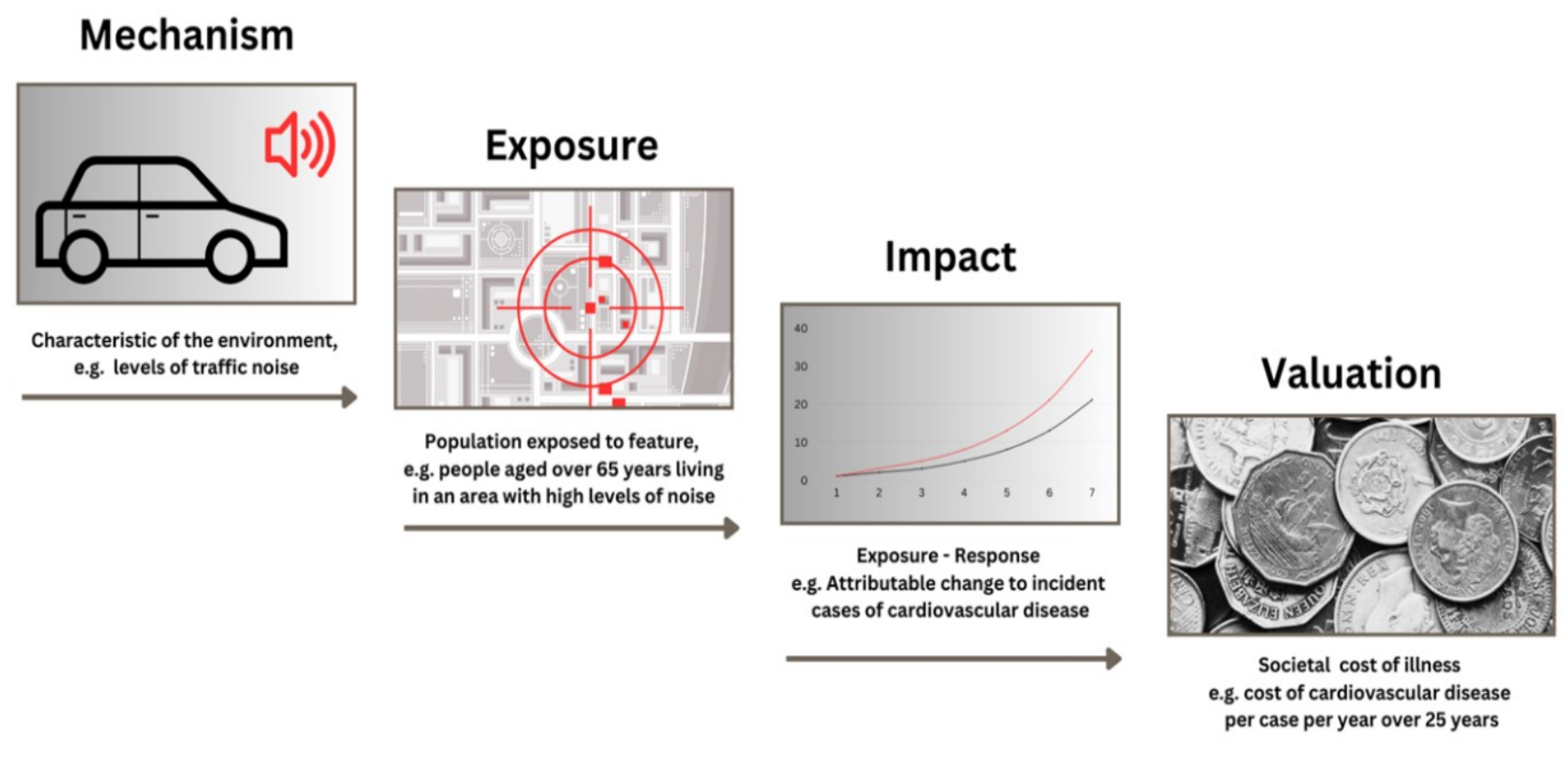
Mechanism
Characteristic of the environment, eg. levels of traffic noise
>
Exposure
Population exposed to feature, eg. people aged over 65 years living in an area with high levels of noise
>
Impact
Exposure - Response eg. attributable change to incident cases of cardiovascular disease
>
Valuation
Societal cost of illness eg. cost of cardiovascular disease per case per year over 25 years
5.69 HAUS values the impacts of an intervention on changes in health status in terms of attributable cases of illness and premature life years lost. It uses a societal cost approach, comprising the sum of:
- direct costs (health and social care),
- indirect costs (productivity and informal care), and
- disutility costs (pain and suffering associated with disease and premature mortality).
Better urban design reduces societal costs which are the equivalent of benefits.
5.70 HAUS provides a bank of more than 70 societal unit costs of health, derived from published economic valuation studies. It includes information on the unit used, the range of uncertainty for each cost and whether a proxy value has been applied.
Application
5.71 A technical version of HAUS has been developed to specification with MHCLG. The latest version of the model, together with a user guide, is available on the University of Bath’s website. The latest version of the model includes a total of 149 impact pathways with a description of their characteristics. A summary of the main characteristics covered by the pathways is set out below:[footnote 47]
Figure 10: Example characteristics considered in the HAUS model
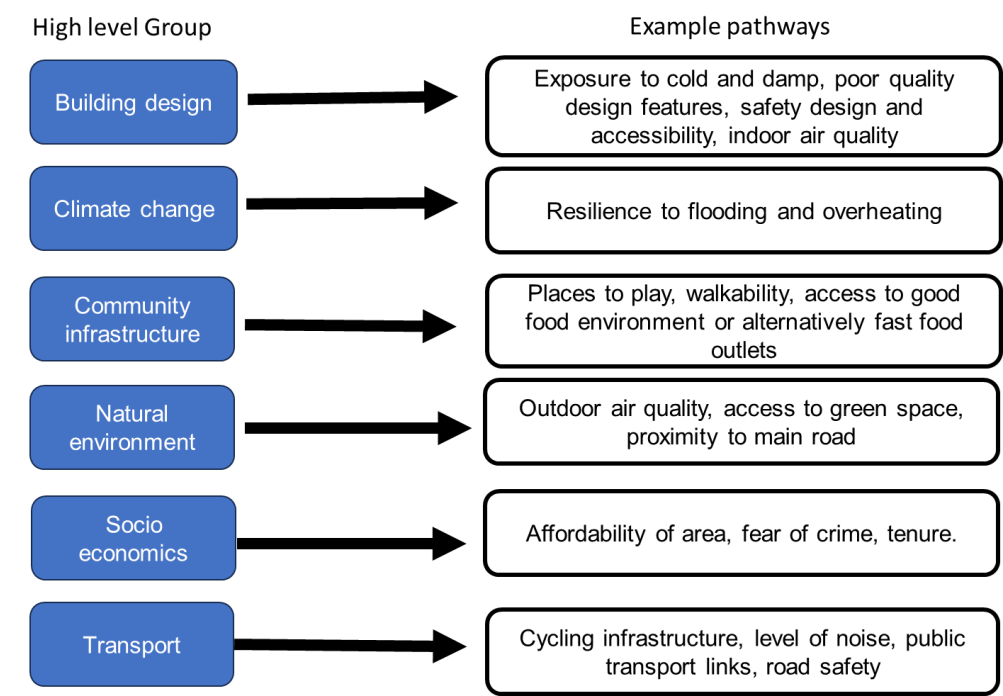
| High level group | Example pathways |
|---|---|
| Building design | Exposure to cold and damp, poor quality design features, safety design and accessibility, indoor air quality |
| Climate change | Resilience to flooding and overheating |
| Community infrastructure | Places to play, walkability, access to good food environment or alternatively fast food outlets |
| Natural environment | Outdoor air quality, access to green space, proximity to main road |
| Socio economics | Affordability of area, fear of crime, tenure |
| Transport | Cyling infrastructure, level of noise, public transport links, road safety |
5.72 HAUS is applicable to the redevelopment, extension and creation of all types of urban area. How it is used depends on the nature of the options being considered and care must be taken to avoid double counting. The final column of Figure 11 shows which tools can be used to assess impacts for each type of intervention. For new developments in regeneration areas double counting of ENHAT and wider area impacts should be avoided using the approach set out in Figure 8.
Figure 11: How to use HAUS for different types of intervention

New Development
In regeneration area > Use wider area impacts, ENHAT and HAUS model
Not in regeneration area > Use ENHAT and HAUS model
Other Urban Design Interventions > Use HAUS model
5.73 An example of how HAUS is applied to a new development in a regeneration area is shown below. The HAUS User guide provides further details on how to fill in the relevant worksheets of the HAUS model.
Worked example
5.74 This (hypothetical) example case study involves an urban regeneration project for a brownfield site surrounded by major roads contributing to noise and air pollution. In the example the impact of the existing levels of noise on health is assessed and compared with changes in health under two alternative development options which impact on noise and pollution. Two types of health impact are assessed:
- morbidity which is long run health problems that individuals live with
- early mortality
The impacts of changes in health are valued using the social cost of ill health discussed earlier in this section.
5.75 In this hypothetical case, a survey reveals that 75% of residents are exposed to noise levels above 55dBA. This case tests what could be the benefit of reducing noise pollution for this area on depression and depression related mortality in a sub-group of residents particularly vulnerable to noise (153 men aged 45-59). Three options are modelled based on the expected outcome of noise reduction measures over 25 years: Baseline (present day levels), Intervention A (10% noise reduction), and Intervention B (noise below 55dBA).
Table 9: Assumptions on exposure to noise in each scenario
| Option | Fraction of Population exposed | Mechanism |
|---|---|---|
| Baseline (Present day) | 0.75 | Busy roads to the north and south of the site |
| (75% of residents exposed to high levels of noise) | ||
| Intervention A | 0.68 | Traffic calming measures (10% reduction in noise levels) |
| Intervention B | 0.0 | Downgrade of major road. (All noise levels below 55dBA) |
Estimation of Mortality and Morbidity Effects Using HAUS:
5.76 HAUS estimates the impacts of environmental exposure on health by applying baseline rates and adjusting them with exposure-health response functions derived from medical literature.
5.77 In this case study of 153 men aged 45–59, the average annual incidence rate of depression is 1.5%, resulting in approximately (153 × 0.015 = 2.30) new cases (C) per year. To account for the impact of noise exposure, this rate is adjusted using an exposure-health response function - here, an odds ratio (OR) of 1.98, which reflects the increased likelihood of depression for those exposed to high noise levels. The exposure-health response function describes the relationship between an environmental stressor or agent, such as noise, and a health outcome, such as depression, given a specific level of exposure over time. This is identified from observations in the medical evidence, normally expressed as changes in the odds or risk of disease.
5.78 The adjusted incidence rate becomes (0.015 × 1.98 = 0.03), giving (Ce = 0.03 × (153 × 0.75) = 3.40) cases among the 75% of 45-59 year old men exposed to high levels of noise. For the 25% not exposed to high noise levels the relevant calculation is Cu = 0.015 × (153 × 0.25) = 0.57). Attributable cases are (Ca = (3.40 + 0.57) – 2.30 = 1.68 per year).
5.79 Ca is adjusted for mortality as below, (1.68-0.02), leaving 1.66 cases per year or 38.27 Years of Life with Disability (YLDs) over a 25-year project period (adjusted for effect lag).
Estimation of Attributable Mortality and Combined Burden:
5.80 The same method is used to estimate depression-related mortality. Using a baseline mortality rate (MR) of 0.00018 and applying the OR of 1.98, the adjusted mortality rate for the exposed group is (MRe = 0.00018 × 1.98 = 0.00037), while the unexposed rate remains (MRu = 0.00018).
5.81 Expected deaths in the full population are (D = 0.00018 × 153 = 0.03), with deaths among the exposed (De = 0.00037 × (153 × 0.75) = 0.04) and unexposed (Du = 0.00018 × (153 × 0.25) = 0.01). Attributable deaths are (Da = (0.04 + 0.01) – 0.03 = 0.02 per year).
5.82 Assuming an average remaining life expectancy of 32 years, this gives (YLLa= 0.02 × 32 = 0.66) years of life lost annually, or 14.71 years of life lost over 25 years (adjusted for effect lag).
5.83 To avoid double-counting those who both become ill and die, the total health burden is calculated as (Da + (Ca – Da) = 0.02 + (1.68 – 0.02) = 1.68 individuals affected per year), reflecting the combined impact of morbidity and mortality associated with depression linked to environmental noise exposure. (Table 10).
Table 10: Attributable health impacts related to noise and depression
| Morbidity | Mortality | |||
|---|---|---|---|---|
| Options | Depression cases (pa) | Morbidity YLDs (25yrs) | Deaths (pa) | Mortality YLLs (25 yrs) |
| Baseline (Present day) | 1.66 | 38.27 | 0.02 | 14.71 |
| Intervention A | 1.50 | 34.45 | 0.02 | 13.24 |
| Intervention B | 0.00 | 0.00 | 0.00 | 0.00 |
Cases relate to new incidences of disease, or deaths related to depression per year.
YLDs (Years of life lived with disability), YLLs (Years of premature life lost) over project lifetime (25 years).
5.84 HAUS indicates that baseline noise levels may be leading to 1.668 new depression cases annually. Over 25 years this could result in 38.27 years spent with the illness, and almost 15 premature life years lost.
5.85 These results are then valued by applying a unit cost for depression and mortality:
HAUS valuation of health effect
Duration of project: 25 years
Depression YLDs: 38.27 over 25 years
Depression YLLs: 14.71 over 25 years
Unit cost of illness depression: £30,439
Value of a Life Year: £61,019
Cost of depression morbidity: (38.27 * £30,439) = £ 1,165,009
Cost of depression mortality: (14.71 * £61,019) = £ 897,623
Total cost of health impact over 25 years is £2,062,632 (NPV £1,697,596).
5.86 After discounting for 1.5% NPV, reducing noise by 10% in Intervention A could save around £169,760 in health costs. Completely reducing noise to below safe levels could save £1.7 million over 25 years.
Uncertainty and Robustness of the analysis
5.87 There are often uncertainties relating to the size of the health change and the unit cost of illness. This is discussed in the section below.
5.88 There may also be considerable uncertainty in terms of option design. This should be tested through alternative design scenarios to reflect potential alternative design outcomes. This is discussed in case study 2.
a) Standard approach to dealing with uncertainty
5.89 The HAUS tool presents data on the range of uncertainty. In the example above, HAUS indicates the following ranges of uncertainty in values adjusted for NPV:
| Scenario | Midpoint (£) | Range Low (£) | Range High (£) |
|---|---|---|---|
| Baseline | 1,697,596 | 807,628 | 3,514,156 |
| Intervention A | 1,527,837 | 726,866 | 3,162,741 |
| Intervention B | 0 | 0 | 0 |
5.90 Sensitivity analysis should also test assumptions around incidence and duration of disease. The incidence rate applied here (1.5%), is a conservative estimate, derived from GP data. An alternative measure (Global Burden of Disease) gives incidence of Depressive Disorders at around 6.3%. With this incident rate the estimated cost of depression due to traffic noise in the baseline would be around £4,828,560 (NPV). The measures to reduce noise impacts by 10% (Intervention A) could reduce health costs by around £482,856.
5.91 The user may also wish to carry out further sensitivity analysis to test other key assumptions.
b) High Levels of Uncertainty
5.92 In some cases it may be better not to report monetisable impacts. This is particularly the case where there are high levels of uncertainty either because:
- options are at a very early stage of definition e.g. at Strategic Outline Business Case;
- the HAUS evidence base is less developed and therefore less robust
- there are very wide ranges in the estimates produced. A good rule of thumb is that if the range is greater than 4 times the midpoint estimate the monetised impacts should not be reported. In such a case the impact of HAUS health effects should be tested on the VfM category using switching values analysis (see chapter 3.)
5.93 For example, suppose that the total present value of benefits of a project was £9m excluding HAUS health estimates and the present value of costs was £5m, giving a benefit cost ratio of 1.8. The option being appraised is assessed as likely to have significant health benefits but there is considerable variation in the estimates. HAUS estimates the midpoint health benefit at £2m with a low range of £0.5m and a high range of £10m. Using a switching value analysis gives a VfM category of Medium to High with a central VfM category of High. The health impacts are not included in the BCR estimates so that undue weight is not given to the specific figures.
Double Counting of HAUS, ENHAT and Wider Area Impacts
5.94 There is potential for some of the HAUS health impacts to double count ENHAT and wider area impacts:
- Double counting particularly arises with brownfield and greenfield amenity impacts and with the air quality impacts included in the ENHAT model.
- Double counting is unlikely to arise between the direct and indirect impacts measured in HAUS, ENHAT and wider area impacts.
5.95 Where there is double counting then HAUS impacts should be removed. The approach to doing this is set out in the user guide here.
Case studies
5.96 Two detailed case study applications of HAUS are available here:
- Case study 1: Assessed the health impacts of an urban regeneration site situated in the centre of Bristol. In this study, the model was used to monetise the health impacts of developments proposed by the council’s Strategic Regeneration Framework. Four different options were analysed. This case study describes how the model was calibrated and used by the appraiser, the results, the model’s capabilities and limitations. Overall, there is an improvement in most health outcomes as the options become more ambitious, leading to a reduction in most of the direct, indirect and wellbeing costs associated with ill health.
- Case study 2: Provides an application of HAUS to a single large urban regeneration scheme in East Norwich, a site that has received grant funding through Homes England. The case study looked at how HAUS can be used to appraise a scheme where only limited information about a site may be available, by using high-level assumptions about typical levels of exposure to environmental characteristics. It involved developing standard typologies for three levels of environmental conditions in the UK (average, good and poor), applying these to standard population demographics to estimate unit values, and applying these values in a high-level assessment of the value of the attributable changes to health in a before and after study of the East Norwich scheme. It demonstrates how data can be used in addition to the existing Homes England CBA model and explores the range of values through sensitivity analysis.
Future plans
5.97 In the medium-term, plans are to extend this work further to improve HAUS and support its use by a range of stakeholders. This includes to further develop the evidence base where it is weaker to improve the robustness of evidence on existing pathways and to extend the range of pathways examined, to develop a user-friendly version of the model, and to support stakeholders to use HAUS.
Further guidance
- a link to the HAUS model and user guide is provided here
- an overview of the evidence-base and methodology
- a detailed description of the development of the HAUS model
iv Health and rough sleeping impacts of additional rented affordable housing
5.98 This section discusses the external impacts of additional rented affordable housing on health and rough sleeping.
5.99 As the diagram below illustrates, there are a number of benefits associated with an additional rented affordable housing (AH) unit. There is the private benefit – as measured by land value uplift which captures the efficiency benefit of converting land into a more productive use – and a potential distributional impact associated with the progressive nature of AH (see Technical Annex H). Both these impacts are captured separately in an appraisal.
5.100 However, there are also several impacts which are harder to monetise or are only qualitatively assessed in appraisals. These include fiscal savings from the potential savings on health care, improved labour mobility – increased housing supply lowers housing costs and therefore enables people to live in areas they might otherwise not be able to live – and potentially improved educational outcomes by reducing overcrowding. Finally, it can result in savings to the exchequer from avoiding expensive temporary accommodation (TA) costs.
Figure 12 shows the potential benefits of additional rented affordable housing
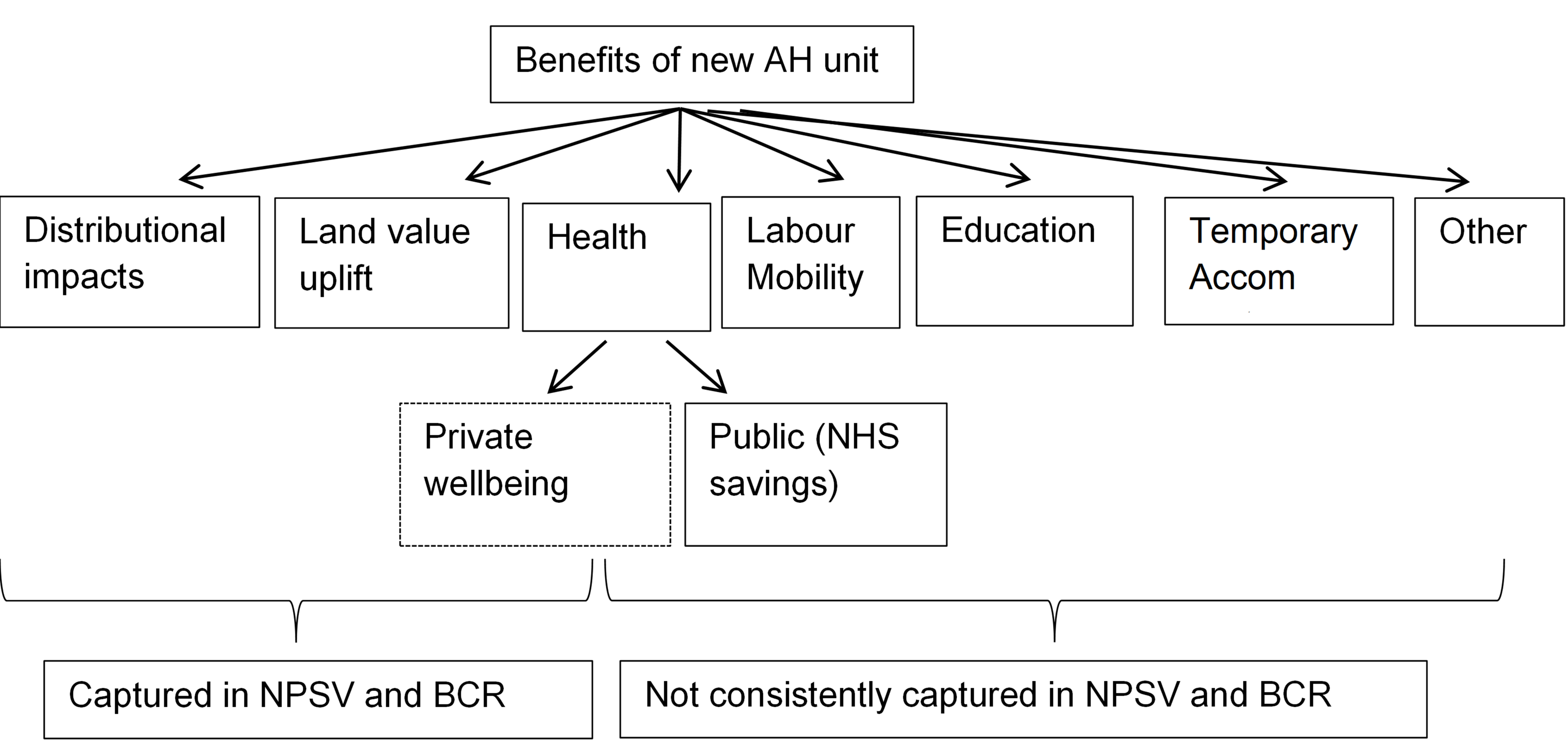
5.101 This section focuses only on monetising potential health and rough sleeping impacts from additional affordable rented housing. Assessing the potential significance of these impacts is problematic as these impacts are only likely to materialise if a new rented AH unit (a) enables a household to move away from a housing situation that was imposing an external cost and (b) another household does not then move into the same housing situation and instead this property is made either more habitable or could even be demolished (if the latter there may not be any land value uplift associated with the new rented AH unit as it would not be an additional housing unit).
5.102 Therefore to estimate the potential health impact of additional rented affordable housing, the probability of a new tenant that had previously been living in a poor condition or overcrowded property needs to be calculated. In addition, as there are large negative health impacts from rough sleeping, an additional house that is allocated to a rough sleeper can be expected to deliver relatively large health impacts. This should be factored into the probability calculations.[footnote 48]
Estimating probabilities
5.103 To estimate the probability that a new tenant had previously been living in either poor or overcrowded conditions, the following working assumptions are made:
- within the social rented sector (SRS), it is assumed that those living in overcrowded accommodation are prioritised first
- 10% of vacated properties are filled by a newly formed household (HH)
- 2.0% of new lets go to rough sleepers[footnote 49]
5.104 The formula for estimating the probability that an additional dwelling reduces overcrowding is:
Probability new unit reduces overcrowding=(98%-10% household formation)
Where the 98% figure is derived from 100% less 2.0% of new lets going to rough sleepers.
Estimating the impact of overcrowding on health
5.105 The Building Research Establishment (BRE) estimates the number of homes with Category 1 Housing Health and Safety Rating System (HHSRS) hazards and the cost to the NHS associated with them. The study estimates the direct (medical) costs to the NHS that are likely to result from the presence of these hazards, using NHS data on costs of treating and caring for related health conditions up to a year following a health incident.[footnote 50]
5.106 There are 29 identified HHSRS hazards, including the risks from cold, damp, falls on stairs and overcrowding. The latest estimates from BRE for 2019 reveal that leaving vulnerable people in the poorest 10% of England’s housing costs the NHS £1.25 billion per annum in first year treatment costs (in 2024 prices). The methodology for estimating these is outlined in BRE’s 2016 report on the cost of poor housing which can be found here.
5.107 Table 11 shows BRE estimates of the impacts of different Category 1 hazards on NHS costs in a single year. It can be used to look at the savings to the NHS from removing Category 1 hazards through improving housing quality. For affordable housing it identifies the financial savings to the NHS from removing overcrowding as £165 per year per person (in 2024 prices).
Table 11: BRE cost estimates for 2019 (2024 prices)
| Hazard | No. of Cat 1 Hazards | NHS annual saving if hazard fixed (£000s) | Per Unit Annual Saving (MHCLG estimate) (£s) | ||
|---|---|---|---|---|---|
| Excess cold | 719,324 | 639,320 | 889 | ||
| Falls on stairs | 1,014,373 | 258,922 | 255 | ||
| Falls on the level | 400,081 | 124,221 | 310 | ||
| Falls between levels | 205,747 | 70,837 | 344 | ||
| Dampness | 64,708 | 40,487 | 626 | ||
| Fire | 126,918 | 24,387 | 192 | ||
| Lead | 68,200 | 17,762 | 260 | ||
| Hot surfaces | 46,120 | 15,554 | 337 | ||
| Radon | 89,497 | 12,678 | 142 | ||
| Collision and entrapment | 14,716 | 7,667 | 521 | ||
| Overcrowding | 45,440 | 7,490 | 165 | ||
| Entry by intruders | 10,943 | 6,533 | 597 | ||
| Pests (Domestic hygiene) | 20,505 | 5,103 | 249 | ||
| Sanitation (Personal hygiene) | 19,265 | 4,906 | 255 | ||
| Food safety | 18,507 | 4,710 | 254 | ||
| Electrical problems | 11,146 | 2,854 | 256 | ||
| Ergonomics | 10,718 | 2,768 | 258 | ||
| Structural collapse | 13,789 | 2,610 | 189 | ||
| Noise | 2,683 | 1,604 | 598 | ||
| Carbon monoxide | 5,403 | 1,236 | 229 | ||
| Excess heat | 3,131 | 503 | 161 | ||
| Total with any Category 1 hazard | 2,447,678 | 1,252,149 | 512 |
Note that:
- The total sum of all dwellings with Category 1 hazards will be less than the sum of the individual hazards as some dwellings will have more than one Category 1 hazard.
- The total sum required to remedy all Category 1 hazards is less than the total number of Category 1 hazards multiplied by the average costs; this is because the modelling avoids the double counting of costs where repair work/energy improvements mitigate more than one hazard.
- For some Category 1 hazards, like explosions, no cases were identified in the survey. These are excluded from the table.
Homelessness evidence
5.108 Estimates for the typical per person cost of homelessness vary, as do estimates of the costs that remain even if they are housed. The best available evidence is available from the rough sleeping questionnaire which collected data from 563 respondents who had slept rough within the period February 2019 to 2020 (before Covid). The survey collected information on details of their homelessness experience, support needs and vulnerabilities, and their use of public services.
5.109 Use of public services were then costed using the Greater Manchester Combined Authority Unit Cost Database. Over half the costs related to health services including physical and mental health, substance treatment, GP and A&E services.
5.110 The estimated average annual fiscal cost of an individual that sleeps rough was £14,690 in 2024 prices. (Note this excludes quality of life/wellbeing impacts which are likely substantial.) This compares to a fiscal cost of £4,060 in 2024 prices for all individuals in a similar age range who were not rough sleepers, and able to access comparable services (based on Bramley et al, 2015).
5.111 The net fiscal cost of an extra rough sleeper per year is £14,690-£4,060 = £10,630.
Final calculation
5.112 The formula for estimating the fiscal impacts from additional rented affordable housing is therefore:
Annual health impact
=Impact of reduced overcrowding
×probability of new unit reducing overcrowding
+Impact of reduced rough sleeping
×probability new unit reduces homelessness
=£165×(98%-10% household formation)
+£10,630×2% reduced homelessness
5.113 Essentially the annual fiscal impact is the annual £10,630 extra cost for a rough sleeper multiplied by the probability that someone is a former rough sleeper (2%) plus the probability of a new rented affordable housing (AH) unit reducing overcrowding (88%) multiplied by the annual impact of reduced overcrowding from Table 11 (£165).
5.114 Based on the above assumptions, the external health impact of an additional AH unit is equal to £358 per year or £6,808 in present value terms over 30 years. This value can be incorporated into the BCR and VfM case for each additional affordable or social rented house.
Chapter 6: The appraisal of place based initiatives
Introduction
6.1 Appraisal of place based impacts is particularly important for MHCLG policies aimed at increasing local growth and reducing regional inequalities.
6.2 Six key capitals together likely explain much of the disparity in economic performance across geographies:
- physical capital – infrastructure, machines and housing
- human capital – the skills, health and experience of the workforce
- intangible capital – innovation, ideas and patents
- financial capital – resources supporting the financing of companies
- social capital – the strength of communities, relationships and trust
- institutional capital – local leadership, capacity and capability
6.3 Low levels of capital formation in specific geographies – often in multiple sectors – lead to underperformance relative to the UK economy as a whole. These capitals are interrelated, with sustained feedback loops, so that a fall in the stock of one type of capital impacts on others. Poorly performing areas will often face multiple capital shortfalls.
6.4 Natural capital constraints will also play an important role in deciding how to address shortfalls in other capitals at local level and are a key element of options generation and appraisal.
6.5 Within this context effective appraisal must be able to:
a. Provide policy makers with an understanding of how policy options impact on local areas, regions and different groups; and
b. Deal with multiple and complex interventions covering a range of different issues caused by low levels of capital formation.
Chapter aims
6.6 This chapter aims to show how:
- to appraise place based initiatives so that informed decisions can be made on which policies to pursue to deliver local objectives
- multiple policies can be appraised together to reach a single view on their costs and benefits
6.7 The chapter builds on the Green Book which includes a new expectation that appraisals assess the likelihood and extent of differential place based impacts. Place based analysis will be needed when either:
a. The objective of the proposal is aimed at a particular place, area or type of area; or
b. The proposal is likely to have different impacts on different areas.
Structure
6.8 This chapter is structured in the following way:
- The next section discusses the role of place based analysis in appraisal and sets out the key analytical questions to ask when assessing interventions aimed improving local outcomes or which have a significant impact on those places. The section makes clear that to adequately appraise impacts there needs to be a strong focus on place and the people in the place.
- The following section discusses some key issues when appraising place based interventions - including the relationship between strategic objectives and social welfare, the assessment of employment impacts and the importance of understanding wellbeing impacts.
- The penultimate section presents an illustrative example of place based analysis using a hypothetical intervention covering labour market, business support, housing and transport interventions. It provides an example of how to respond to the key questions defined for the strategic and economic dimensions of business cases in the next section.
- The final section identifies some areas where it is intended to develop both place based analysis.
The role of place based analysis in appraisal
6.9 The Green Book says that where a proposal has geographically defined objectives, then place based analysis can be the primary frame of reference for appraisal. This should be supplemented with UK level appraisal or analysis wherever possible:
- place based analysis may involve consideration of local employment effects, distributional impacts on demographic/protected groups and on intervention target groups
- it should be based on a robust understanding of local conditions, constraints and plans and consider both the positive and negative impacts of policy options
6.10 Place based analysis where it is applied to business cases is likely to form a key element of the:
- strategic dimension – setting out the place based nature of the problem that needs to be dealt with, and key place based objectives
- economic dimension – looking at the economic impacts across different areas and groups
- management dimension – showing how place based effects will be monitored and evaluated
6.11 Place based analysis may also be important for the:
- financial dimension – where income is raised locally
- commercial dimension – where there is a focus on the local market to deliver the services set out in the business case
6.12 What follows concentrates only on the strategic and economic dimensions as they are the main focus of appraisal. However the importance in the management dimension of having an appropriate evaluation framework that allows identification of place based impacts and place based metrics to monitor performance should be emphasised.
Proportionality
6.13 The degree of analysis should depend on the relative importance of the programme (e.g. the amount of money involved), the degree of importance attached to local outcomes and whether there are any key local delivery risks.
Robustness of analysis
6.14 Local data and models constructed for specific one-off purposes may be less developed than nationally available data sets or long standing models. For this reason, it is important throughout the analysis to report on the robustness of the modelling and data used in any place based analysis.
Key questions
6.15 The following key questions could be used to support the development of place based appraisal. These have been separated into questions that could be posed in the strategic dimension and the economic dimension of a business case, respectively:
a) Strategic dimension
1. What are the key issues that are being addressed by the policy? To what extent do those reflect issues in specific places, areas or types of area?
2. What are the key spatially focused objectives which address the issues above that options must look to satisfy?
3. What do the different options look like spatially? What does the preferred option look like compared to the counterfactual and what is its spatial coverage? To what extent is it focused on specific places, areas or people?
4. What is the spatial impact of the intervention:
- on specific places, areas or people?
- on the UK as a whole?
For this careful consideration needs to be given of any shift in activity between the area of focus and the rest of the UK, such as employment.
5. What are the key local risks that might impact on the delivery of a policy at local level?
b) Economic dimension
6. What are the costs and benefits of the leading intervention:
- on specific places, areas or people?
- on the UK economy?
Where firms shift economic activity from one area to another the impacts on the area from which they move need to be understood too and the degree to which that is beneficial or not, for example if the shift is from an area of greater economic need.
7. How has additionality been assessed in particular:
- deadweight - what would have happened in the absence of the intervention
- substitution - where firms substitute one type of labour for another to benefit from an intervention
- displacement – where outputs shift from firms not benefiting from an intervention to those that benefit from it
- leakage – the impacts leaking out of the target area or target group (if the aim is to improve prospects for certain people, e.g. low skills/disabled)
8. How does the intervention impact on different target groups, for example:
- local residents versus commuters or people moving in
- different income (e.g. age, need) groups
- employment impacts if it is thought that there are any
9. What are the key uncertainties and what is their implication for impacts and VfM?
6.16 Where possible maps should be used to demonstrate problems, set out how interventions would work and to look at the impact on people.
Issues in appraising place based initiatives
Links between strategic policy objectives and social welfare
6.17 Place based appraisal involves assessing two key separate but related criteria:
- the achievement of strategic policy objectives – these may be local objectives or national objectives which have a local impact. This explicitly comes into the strategic dimension.
- social welfare from pursuing a particular option linked to the policy. This explicitly comes into the economic dimension[footnote 51].
6.18 The strategic objectives a policy pursues will generally be linked to social welfare but need not necessarily be exactly the same. For example, a key objective may be to raise the level of output in an area or to raise the level of employment. These objectives are related to social welfare but not the same generally.
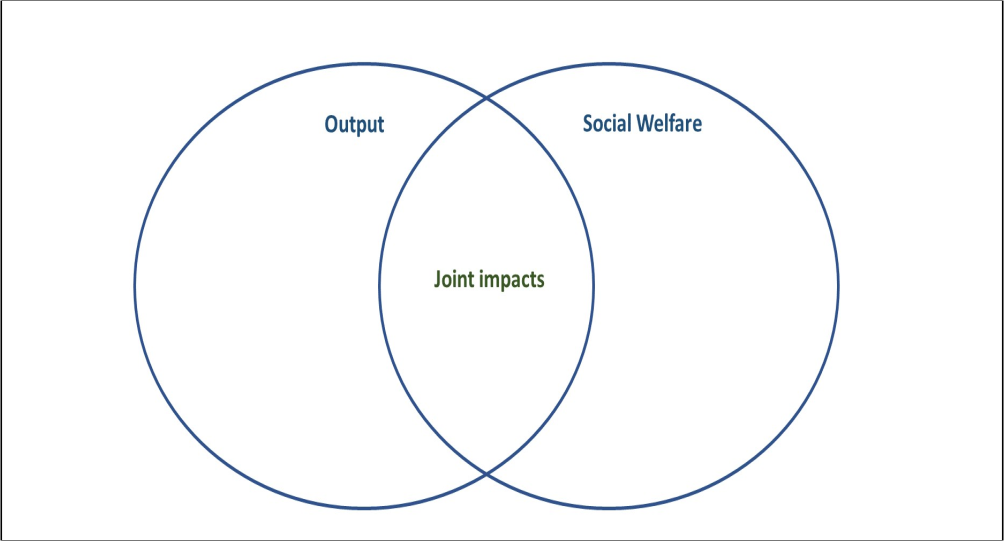
Economic output
6.19 Economic output ignores a number of factors that enter into social welfare:
- Although the value of what workers produce is included in output as the wages paid to them (reflecting their productivity), the social welfare that workers receive from the job will be different because they have to give up leisure to work (a disbenefit) and receive personal wellbeing from being in employment (a benefit). Evidence from the 2021 supplementary guidance on valuing wellbeing indicates that the overall impact of moving from involuntary unemployment to being in work (after income, health and other standard factors have been allowed for) is positive, with a central value of £5,980 per annum in 2019 prices. This means the market value of their output is less than their social welfare from employment. If there are net employment impacts then wellbeing impacts need to be taken into account when assessing social welfare in the economic dimension;
- Some things are excluded from economic output which impact on social welfare measures. Important examples of these are:
- Environmental impacts such as amenity, noise and pollution impacts (including carbon impacts);
- Social impacts such as on crime levels and health from changes in the physical environment;
- Community wellbeing impacts which spillover from individual impacts and reflect greater social cohesion and greater levels of optimism; and
- Any costs to workers of getting to work, such as the value of time and uncertainty caused by congestion and reliability issues.
Many of these impacts can be monetised and included in BCRs and the VfM assessment(see the Green Book).
6.20 However some types of impact are included in both social welfare and economic output measures. These include Land Value Uplift, increases in productivity as a result of skills policies or economic agglomeration and taxes on economic production (e.g. labour taxes).
6.21 Given that some impacts do not impact on social welfare they are better left to the strategic dimension than to the economic dimension. This does not mean that they are excluded from the decision on which option to select as all options must meet strategic objectives. Rather, it reflects a need to account for impacts in the right place.
Employment
6.22 Increasing local employment is often a key strategic objective of place based initiatives. In line with HM Treasury’s Green Book the default assumption is that any jobs created by a policy resulting from government expenditure do not increase aggregate UK employment as these employment effects are already largely determined by macroeconomic decisions on the level of overall public expenditure (though they may have an important local impact). However, if there is a supply side impact which raises overall productivity or increases entry into the labour force (once additionality has been allowed for) these impacts can be counted at the UK level in the appraisal.
6.23 It is, however, permissible to include local labour demand effects in place based analysis where an intervention has geographically targeted employment objectives. Where local growth initiatives are concerned, then regional and local employment effects may form a key part of the analysis and, if so, should be considered.
6.24 When considering employment effects the analysis needs to allow for:
- deadweight - what would have happened in the absence of the intervention
- substitution - where firms substitute one type of labour for another to benefit from an intervention
- displacement – where outputs shift from firms not benefiting from an intervention to those that benefit from it
- leakage – the impacts leaking out of the target area or target group (if the aim is to improve prospects for certain people, e.g. low skills/disabled)
6.25 The analysis may also take account of multiplier effects. The appropriate multipliers to use will depend on the local labour market and the sector in which employment changes. Where the employment rate is at or above the national average and/or projected local employment numbers are large relative to the local unemployment rate, multipliers at the lower end of the range would be expected as the likely level of displacement will be greater.
6.26 The illustrative example in the next section includes a discussion of employment impacts and allows for deadweight, substitution, displacement, leakage and the application of multiplier impacts. It shows how employment impacts are reported in the strategic dimension of a business case and how to report the welfare impacts associated with changes in employment across areas in the economic dimension. In the illustrative example demand impacts net to zero across areas in line with HM Treasury guidance, however supply side impacts are positive.
Range of impacts covered by place focused policies
6.27 The capitals framework outlined in the introduction to this chapter covers a wide range of policy areas and impacts. The appraisal of many of these policy impacts is covered by other departments’ supplementary guidance. A summary of the types of impacts on which other departments offer guidance is set out in the Green Book and users should consult it for the appraisal of impacts not covered in this guide.
An illustrative example of place based analysis
6.28 This section sets out an example of how place based analysis might be conducted by answering the different questions set out in the previous section. The example is purely illustrative, and the case study area does not relate to any existing administrative boundary.
6.29 The example covers a complex programme of interventions on purpose to show how these might be dealt with together. In practice many interventions are likely to have a simpler structure. A proportionate approach to the analysis should be adopted. Smaller, less expensive interventions with lower levels of risk should adopt a proportionate approach to monetisation.
a) Strategic dimension
The key issues that are being addressed by the policy
6.30 The example relates to Place A. Place A experiences significant deprivation caused by high levels of structural unemployment with unemployed workers lacking the skills needed by local industry. Most workers are employed in low skilled jobs. Much of the industrial and commercial business area is derelict or underutilised. There is significant blight from dereliction, some of the industrial land is contaminated and requires remediating before it can be used again. Residents experience poor health outcomes and wellbeing from low levels of social capital. Place A faces high demand for public services but local resources needed to meet those demands are limited because of the low tax base. It is difficult for Place A to attract new business to the area because of the problems the area faces.
The map below shows the existing area before the intervention
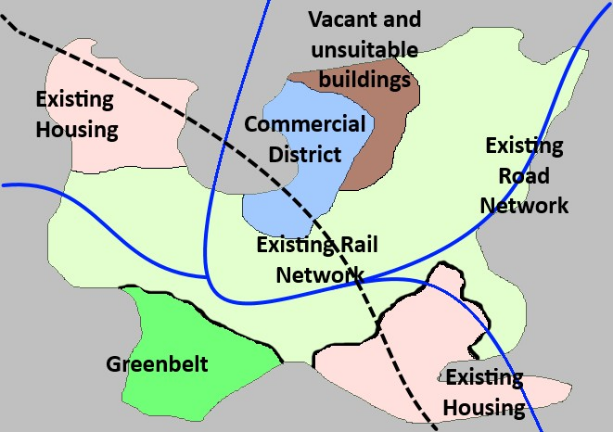
Rationale for investment
6.31 Without government intervention Place A is likely to remain an underperforming area. This is because:
- local unemployed and low skilled workers do not have the resources to retrain - there is a credit constraint
- blight makes the area unattractive to developers and to new business
- the complexity of the problem to be dealt with creates a co-ordination problem which will not be solved if left to itself
Key objectives for the intervention
6.32 The key local objectives are to improve economic outcomes for local residents by:
- increasing the number of jobs for residents in Place A over the next 5 years and thereby reducing levels of unemployment - particularly long-term unemployment - towards UK national averages
- increasing the level of skills of the local workforce so that wages will increase to UK national average levels over the next 5 years
- regenerating the local area by redevelopment and removal of blight over the next two years
- attracting high skilled firms to the local area so that overall productivity and output increases over the next five years to the UK average
- improving the level of wellbeing in the area through creating more positive outcomes for local people over the next 5 years.
6.33 The chosen option must also meet wider Critical Success Factors (see the HM Treasury Green Book) in particular, it must:
- provide Value for Money – so that social benefits exceed costs nationally
- be affordable – money must be available to fund the option
- be commercially viable – so that suppliers are able and willing to deliver relevant elements of the chosen option
- be achievable – both in terms of implementing the programme and delivering key objectives
Description of the options considered and spatial coverage of the preferred option.
6.34 A number of options have been considered including the following:
- Business As Usual – continue as is with no intervention
- Preferred Way Forward (PWF) - This involves several intervention strands, for example:
Strand 1 – Redevelopment of 25,000 sq. metres of commercial space and 2,000 homes, including removal of blight from the local area. Costs £35 million over 2 years;
Strand 2 – A new road to support access to the redeveloped site. Costs £30 million over 2 years;
Strand 3 – £22 million over 5 years for the provision of skills training to:
- Help local long-term unemployed workers get into work; and
- Offer an apprenticeship scheme for low skilled workers to raise their productivity and make the area more attractive to new firms.
Strand 4 – Business tax rate reductions in Place A over a period of 5 years to attract new business. The estimated public sector cost is £10 million;
Strand 5 – Business support to local firms to make them more competitive by supporting innovation. Costs £4 million over 5 years;
Strand 6 – Community involvement in the design of the programme to make sure it meets local needs. Costs £2 million over 5 years.
- Do Minimum – A less ambitious version of the preferred option. This might involve redevelopment of a smaller area and skills training for a smaller number of people.
- Ambitious PWF – A more ambitious version of the preferred option. This might involve widening the scope of the intervention to include additional incentives for businesses to locate to the area.
6.35 In the example that follows only the preferred option is compared relative to the BAU to save space.
The map below shows the new infrastructure interventions in the area
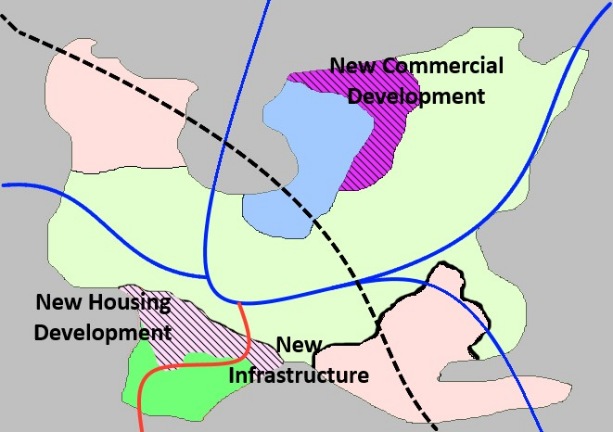
The spatial impact of the preferred option on key objectives:
6.36 Jobs – By Year 5, the initiative will result in 740 new jobs for local residents (see chart 1). New jobs come from 3 sources:
- improving the skills of the long-term unemployed and unskilled workers
- attracting new firms to Place A who employ local residents
- indirect multiplier employment effects in traded and non-traded sections
6.37 Increased competitiveness through better business support may also raise the level of employment amongst residents.
6.38 Although local employment effects are significant, national effects are somewhat smaller. In particular, it is assumed that jobs that go to local workers as a result of firms relocating are all displaced from other areas in the rest of the UK. Similarly, there will be negative multiplier effects in other areas from displacement. For this reason the rest of the UK experiences a fall in the level of employment. (It should be noted that allowance has been made for the fact that some employment will go to commuters who live outside Place A but work in it).
6.39 The rest of UK and national impacts on employment over the 5 years covered by the strategic objective are shown in chart 1 below. The rest of the UK impact partially offsets Place A’s impact.
Chart 1: Change in employment by area (Years 1 to 5)
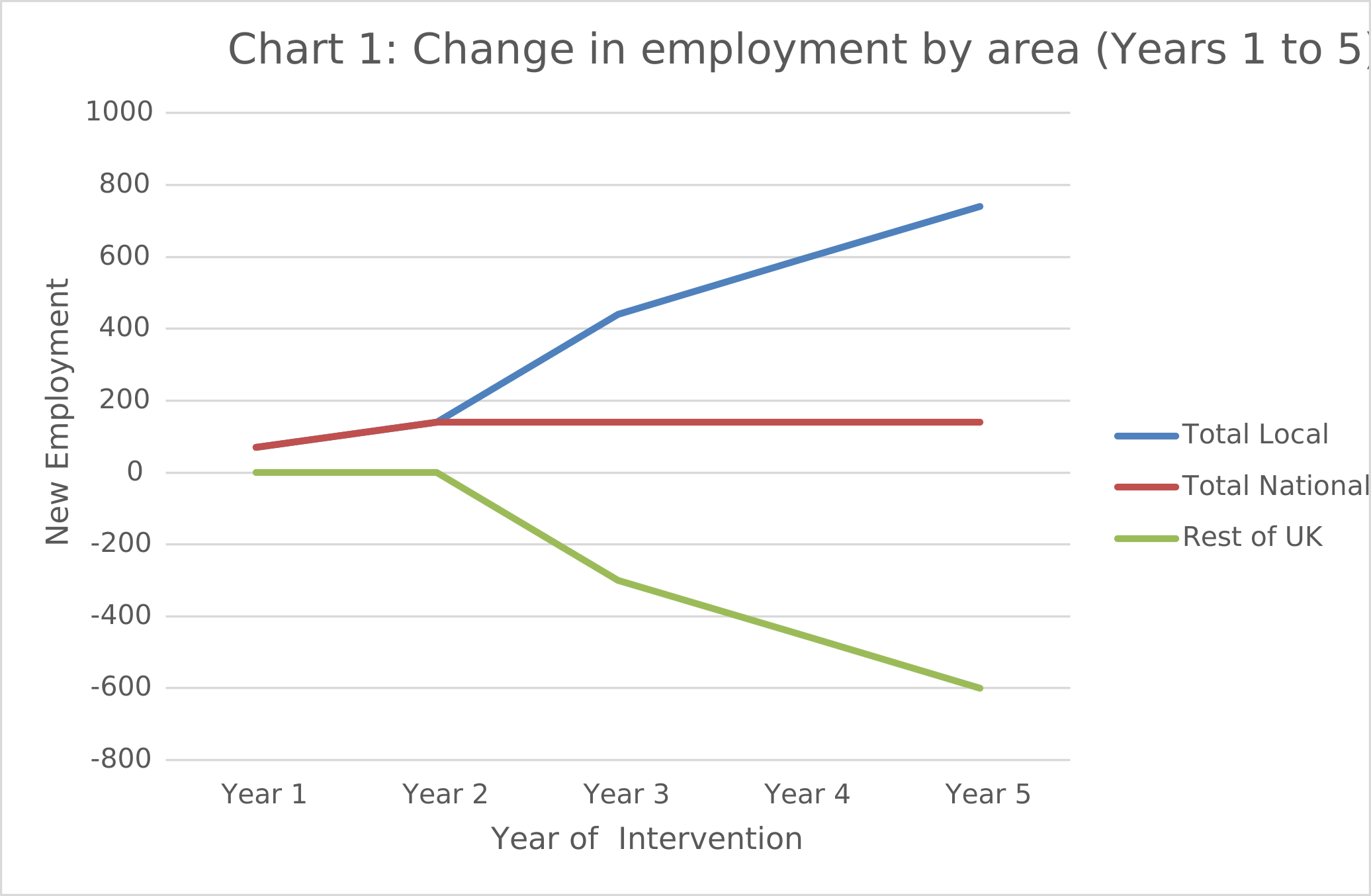
Productivity and skills
6.40 Approximately 500 people will complete level 2 apprenticeship training and move into higher skilled jobs. In this illustrative example, the wage increase is assumed to be £10,000 per worker per annum.
6.41 There are also likely to be a general increase in productivity from the business support programme which is focused on innovative training. Finally there will be a general increase in productivity for the area from agglomeration impacts, although these will be offset to some extent from disagglomeration impacts in the rest of the UK.[footnote 52]
Regeneration of the local area
6.42 The redevelopment will result in the removal of 15,000 m2 of substandard buildings and its replacement with 25,000 m2 of commercial space and 2,000 houses. In addition, the surrounding area which is subject to blight will be landscaped and turned into a park. There are likely to be significant positive impacts to existing residents from the improved local environment.
Improved wellbeing
6.43 Increased access to employment is likely to significantly improve wellbeing. As noted above the 2021 Wellbeing Guidance for Appraisal indicates that a worker who has a job receives a wellbeing effect of nearly £6,000 a year (in 2019 prices). This is assessed in the economic dimension appraisal;
- similarly access to better quality jobs for workers who have gone through apprenticeships is likely to raise wellbeing, as will the improved environment and greater social cohesion
- increased income for low income workers may also improve health outcomes which raises wellbeing
- there will be an increase in positive outcomes in the area generally which will improve the level of wellbeing for local residents
- finally it should be noted that some of these impacts are likely to be offset nationally (e.g. displacement of jobs will reduce wellbeing in other areas)
Social and institutional capital
6.44 Under the preferred option:
- the local community will be involved in the design of the redevelopment and in the labour market programme aimed at tackling unemployment and low skills
- similarly local businesses will also be involved in the design of the overall programme
- the programme will be led by the LA in Place A and will involve input from other key public sector partners
- post implementation there will be a local governance forum with the responsibility of overseeing the implementation the programme
6.45 As a result of all the actions above the programme will support the development of a stronger community identity and pride in place.
Key risks that might impact on the delivery of a policy
6.46 Five major risks are identified in this illustrative example:
i. Commercial and residential values and consequently land value uplift might be lower than estimated because of adverse local economic conditions – this is assessed through sensitivity tests
ii. Costs of the project might be higher than anticipated – this is dealt with in the economic dimension through the application of optimism bias and cost sensitivity tests
iii. Failure to adequately target the employment based initiatives on those who need the initiative most – this is dealt with by involving local community in design of programme and active programme monitoring
iv. Failure to engage properly with the local community resulting in poor design of the programme and lower levels of effectiveness and community wellbeing – this is dealt with through active stakeholder engagement in design and implementation of the option; and
v. The valuation of wellbeing benefits may be too optimistic – this is mitigated by carrying out a sensitivity test with a lower well-being value.
b) Economic dimension
Assumptions used to calculate costs and benefits of the leading intervention
6.47 Costs and benefits are calculated over the relative lifetime of the different interventions. All costs and benefits in this illustrative example are valued in current year present value terms.
6.48 Table 10 provides a breakdown of monetised and non-monetised impacts for relevant costs and benefits for this option. [footnote 53] All impacts are measured relative to the business as usual counterfactual (that is they take account of deadweight). Some grouping of impacts has been done to simplify presentation. Only large and medium scale non-monetised impacts are reported as only these are likely to influence the VfM assessment.
6.49 In this illustrative example costs and benefits are reported for Place A (the local area of interest), for the rest of the UK and at UK level. (This approach could easily be extended to further spatial tiering, for example, multiple LAs, region and UK level).
- where possible, relevant impacts should be estimated in line with appropriate departmental guidance. For example, transport benefits would require a transport model and use DfT guidance, carbon impacts would use Department for Energy Security and Net Zero guidance, and Wellbeing estimation would use the relevant supplementary guidance.
- the illustrative figures represent central assumption estimates
- for employment and wage impacts of people with low incomes, distributional weights have been applied in line with Technical Annex H of this guidance
Additionality
6.50 In addition to allowing for deadweight, full allowance is made for:
- substitution of existing workers with unemployed workers who are going through the apprenticeship training scheme – it is assumed that 20% of apprenticeship jobs displace existing workers
- displacement – some economic activity which occurs in Place A is likely to displace activity outside of the area. In particular the following sectors are likely to be impacted:
- commercial and housing – 25% displacement after applying the additionality guidance in Technical Annex E
- benefits from employment – all jobs that move to Place A from outside result in a net zero effect across the UK, that is, they are displaced. Multiplier impacts for these jobs also represent displacement between rest of UK and Place A
- leakage – is allowed for with 10% of new employment jobs being filled by commuters into Place A (based on existing travel to work statistics). Note that skills and unemployed worker programmes are targeted on Place A residents and impacts take place within the area.
Estimated costs and benefits of the leading intervention
6.51 Overall the total present value of monetised benefits for Place A in this illustrative example are £334 million. The major impacts are from:
- Land Value Uplift as a result of commercial and residential redevelopment and associated regeneration of the area from removing blight and improving landscape
- employment benefits from enabling unemployed workers to get jobs through improving their skills. This results in increased income to them and welfare gains from having a job, as well as employment tax benefits to the UK government (not shown separately)
- wage gains to workers whose skills increase and to the exchequer from increased taxes
- employment benefits to local workers as a result of firms shifting location to Place A from the rest of the UK. This results in income and employment tax benefits. There are also employment multiplier impacts.
- there are also some transport benefits from the creation of a new link road to the commercial site and improved journey time reliability
6.52 For the rest of the UK the picture is much less positive. In particular:
- there will be some employment losses because of displacement;
- similarly some of the commercial development in Place A will crowd out other development;
- welfare impacts will be negative because of reduced employment; and
- this emphasises the importance of understanding displacement effects and the impact on the rest of the economy.
Table 10: Present Value of Benefits and Costs of Example (£ms)
| Place A Impact | Rest of UK Impact | UK Impact | |
|---|---|---|---|
| Total Benefits, of which | 334 | -135 | 198 |
| Land Value Uplift (Commercial & Residential) | 71 | -18 | 53 |
| Transport User Benefits | 37 | 9 | 46 |
| Carbon | -19 | -1 | -20 |
| Employment | |||
| Long term unemployed Programme | 17 | 0 | 17 |
| Skills training | 15 | 0 | 15 |
| Employment opportunities (Firms relocating & multiplier impacts) | 84 | -84 | 0 |
| Productivity gains from innovation | 20 | -5 | 15 |
| Agglomeration | 10 | -2 | 8 |
| Wellbeing impacts (Community & individual) | 66 | -35 | 31 |
| Wider regeneration impacts (landscape) | 22 | 0 | 22 |
| Other | 11 | 0 | 11 |
| Total Costs | 96 | 0 | 96 |
| Net present social value | 238 | -135 | 103 |
| Benefit Cost Ratio | 3.5 | NA | 2.1 |
| Distributional Weighted Sensitivity | |||
| Total Benefits | 391 | -171 | 220 |
| BCR with Distributional Weights | 4.1 | NA | 2.3 |
| Significant Non-monetised Impacts | |||
| Biodiversity | Moderate Adverse | Neutral | Moderate Adverse |
| Wellbeing | Large Beneficial | Neutral | Large Beneficial |
| Crime | Moderate Beneficial | Neutral | Moderate Beneficial |
| Health | Moderate Beneficial | Neutral | Moderate Beneficial |
| Value for Money (VfM) Category | Very High | NA | High |
| Switching Value Category (unweighted) | Very High | NA | Medium |
| Benefits Change Required | 49 | NA | -7 |
| Costs Change Required | -12 | NA | 3 |
| Switching Value Category (weighted) | High | NA | Medium |
| Benefits Change Required | -8 | NA | -29 |
| Costs Change Required | 2 | NA | 14 |
Overall value for money of the preferred option
6.53 Two measures of VfM are assessed:
- VfM to Place A – reflecting the fact that the programme of interventions is focused on Place A
- VfM to the UK economy – reflecting the fact that the programme should yield more for the UK taxpayer than it costs (that is BCR>1 allowing for non- monetised impacts)
6.54 In this illustrative example:
- the overall BCR for the UK is 2.1, so that the programme yields over £2 of benefit per £1 spent
- the impact on Place A is £3.5 of benefit per £1 spent which is higher, reflecting the transfer of employment from residents in the rest of the UK to residents in Place A
- non-monetised impacts are on balance positive, with large beneficial wellbeing impacts and moderate crime and health impacts outweighing moderate adverse biodiversity impacts
- for Place A the overall conclusion is that the VfM of the project is Very High. However, the VfM rating falls to High for the UK as a whole
Distributional impacts
6.55 The blue lines in Table 10 allow for distributional impacts from applying the welfare weights in Technical Annex H to unemployed and low skilled workers who benefit from the investment package. Doing this results in an increase in benefits within Place A to £391 million and increases the BCR to 4.1. The UK BCR increases to 2.3. The overall effect of applying distributional weights in this particular illustrative example is to confirm the assessment of the investment package as representing Very High VfM for Place A and High VfM for the UK.
The impact of the preferred option on different target groups
6.56 The target groups picked in Table 11 include those covered by the policy objectives and protected groups and are shown below. Overall, the impacts tend to be positive on target and protected groups supporting further the choice of the preferred option in this illustrative example.
Table 11: Impact of option on different groups
| Impact | Commentary | |
|---|---|---|
| Local Community | Positive | Option aimed at supporting better outcomes for local residents through lowering unemployment, increasing wages and improving local wellbeing. |
| Long-term Unemployed | Positive | Tailored programme increases job opportunities for long-term unemployed. |
| Age | Positive | Positive for 16-24 through increased apprenticeships and for older workers as many unemployed are over 50. |
| Gender reassignment | Neutral | No distinction in application of option made on basis of gender reassignment. |
| Sex | Positive | Option applied equally to different sexes. |
| Being married or in a civil partnership | Neutral | Marital status not a feature of the option. |
| Being pregnant or on maternity leave | Positive | Support given to access programmes. |
| Disability. | Positive | Support given to access programmes. |
| Race including colour, nationality, ethnic or national origin | Positive | Support given to access programmes. |
| Religion or belief | Neutral | Religious belief not a feature of the option. |
Key risks and the impact of their crystallisation on VfM
6.57 The impact of the crystallisation of the five key risks identified above is analysed in Table 12 below. The probability of these risks occurring is shown on the right assuming that all possible mitigation procedures have been put in place. This is assumed to be based on a thorough analysis of the evidence on risks by the programme team.
Table 12: Impact of five different risks on the VfM of the Preferred Option
| Place A | UK | Probability of risk occurring | |||
|---|---|---|---|---|---|
| BCR | VfM | BCR | VfM | ||
| Commercial and Residential Land Values 15% lower | 3.37 | High | 1.99 | High | Medium |
| Costs of Redevelopment increase by 50% | 2.64 | High | 1.57 | Medium | Medium |
| Costs of Redevelopment reduce by 50% | 5.13 | Very High | 3.05 | High | Low |
| Employment/skills training 20% less effective than planned | 3.34 | High | 1.93 | High | Medium |
| Failure to engage with local community | 3.19 | High | 1.78 | High | Low |
| Wellbeing Value Low range | 3.36 | High | 2.01 | High | Medium |
6.58 In this example, the preferred option provides at least Medium VfM under all options and consequently is relatively robust to risk challenges.
Further analytical research
Understanding future needs
6.59 Analysis of placed based impacts is still at an early stage. Further work is being done to:
- develop the measurement of the different capitals important for local areas success
- Look at how shortfalls in different capital levels interact and impact local economic performance, and what mixtures of programmes best address those shortfalls
6.60 Research in these areas will be incorporated in future appraisal guidance.
Transformational impacts
6.61 In some cases, transformational change programmes may be required to level up the area where there are shortfalls across multiple capitals.
6.62 The Green Book says that a proposal brings about transformational change if it causes a radical, permanent and qualitative change in a particular subject, such that the subject has very different properties and behaves in a different way.
6.63 This involves a practically irreversible change in a system that causes self-sustaining internal feedback effects that result in continuing change, or a new stable state, but not reversion to the original state. This transformation persists after the initial stimulus is withdrawn
6.64 Such change is only likely to occur in areas where there are multiple capital deficiencies and they are of significant magnitude. The achievement of transformational change will require all of those deficiencies to be addressed. Consequently, strategic investment portfolios will likely be required, rather than single interventions, even if those interventions are of significant scale. The area of intervention needs to reflect adequately the level of need.
6.65 The issue of how to assess transformational change is one where there is currently limited consensus or evidence, although DfT has done some work exploring the transformational impacts of transport interventions. This is an area that MHCLG is actively seeking to develop going forward with DfT, HMT and other government departments. This work will look at:
- further developing logic mapping approaches to better think through how large and complex interventions might lead to transformational change. These will need to assess key conditions required for change to occur and key uncertainties, set out what happens when change does not occur and show who benefits – both people and place
- developing appraisal approaches to assess the benefits and costs of large scale, multi-dimensional programmes and portfolios of investment
- developing the tools to assess transformational impacts. This includes not only the ability to model significant changes in behaviour at scale and over time but also the ability to understand why changes in behaviour occur and how behaviour varies between different economic actors
- building up case study evidence on transformational impacts, the drivers of that change and what sorts, combinations and level of programme intervention are likely to lead to change
Chapter 7: Useful Sources Of Information And Values
Better Regulation Framework:
Better Regulation Framework - GOV.UK
Toolkit for valuing carbon emissions:
DCMS Cultural and Heritage Capital Framework
Embedding a Culture and Heritage Capital Approach - GOV.UK
DEFRA Enabling a Natural Capital Approach
https://www.gov.uk/guidance/enabling-a-natural-capital-approach-enca
Department for Transport TAG databook:
https://www.gov.uk/government/publications/tag-data-book
Health Appraisal of Urban Systems (HAUS) Tool and User Guide
The HAUS (Health Appraisal of Urban Systems) Model
Homes England Environmental Impact of New Housing Research and Tool
https://www.gov.uk/government/publications/environmental-impact-of-new-housing-development
MHCLG Evaluation Strategy
https://www.gov.uk/government/publications/MHCLG-evaluation-strategy/MHCLG-evaluation-strategy
English Housing Survey (EHS):
https://www.gov.uk/government/collections/english-housing-survey
Aqua Book on Producing Quality Analysis for Government
HM Treasury Business Case Guidance
Business case guidance for projects and programmes - GOV.UK
Treasury GDP deflator:
https://www.gov.uk/government/collections/gdp-deflators-at-market-prices-and-money-gdp
HM Treasury Green Book and Supplementary and Departmental guidance:
Magenta Book Central Government Guidance on Evaluation https://assets.publishing.service.gov.uk/government/uploads/system/uploads/attachment_data/file/879438/HMT_Magenta_Book.pdf
Office of Budget Responsibility macroeconomic forecasts:
RICS Red Book
Uncertainty Toolkit for Analysts in Government
https://analystsuncertaintytoolkit.github.io/UncertaintyWeb/index.html
Wellbeing Guidance for Appraisal:
https://www.gov.uk/government/publications/green-book-supplementary-guidance-wellbeing
Footnotes
-
The 5 “cases” or dimensions are the strategic, economic, financial, commercial and management dimensions. These are discussed in Chapter 2. ↩
-
Chapter 2 of the Magenta Book shows how to construct a logical chain process or theory of change. ↩
-
See also the [MHCLG Evaluation Strategy]. ↩
-
Social Cost-Effectiveness Analysis (CEA) is a variant of Social CBA which compares the costs of alternative ways of producing the same or similar outputs. Social CEA may sometimes be appropriate where: Wider social costs or benefits will remain broadly unchanged or for the delivery of a public good, such as defence; Output may not be proportionately quantified. For the majority of MHCLG interventions CBA is the best tool to use and so is covered in depth in this guide. Further guidance on CEA can be found in the HMT Green Book. ↩
-
Examples of corrective action to remove government failure might be removing a subsidy for production of a good which causes high levels of pollution or removing regulations which are overly onerous and lead to shortages of a good or service. ↩
-
Whole life costs to the public sector are calculated differently in the economic and financial dimensions of business cases. The appropriate approach should be used for each dimension. See the Green Book for how to treat whole life costs in the economic dimension. ↩
-
Tax revenues represent a disbenefit to individuals and firms paying them as well as a benefit to government. This disbenefit needs to be taken into account too. ↩
-
These impacts are similar in nature to those outlined in Unit A2 of DfT’s Transport Appraisal Guidance. However, the impacts covered in DfT’s guidance result from improvements to transport bringing workers closer to higher productivity jobs and increasing effective employment density. MHCLG is carrying out further work to explore the nature and size of productivity impacts from new developments to feed into further guidance. ↩
-
Ibid. ↩
-
The DCMS Cultural and Heritage Capital Framework sets out the different types of cultural and heritage assets, the services they provide, approaches to assessing their impacts and links to empirical studies of impact. ↩
-
The Net Present Social Value (NPSV) is the present value of the total stream of future benefits to UK society from a proposal less the present value of the total stream of future costs to UK society. ↩
-
Even though evidence has not been monetised it is important that the assessment of magnitude and direction of impact is made using the most robust evidence available. The impacts assessed and evidence collected should be based on a well thought through theory of change. This should assess local context and could involve discussions with relevant subject experts. ↩
-
Note that costs are different from a disbenefit. Costs represent a use of public sector resources, disbenefits represent an impact on social welfare for example arising from an increase in carbon emissions. Costs may be upfront capital costs and/or costs from running a service. In some cases, an intervention will also result in savings or receipts to the public sector which should be netted off costs. ↩
-
For MHCLG spending proposals, the budget constraint should be real discounted net costs to the public sector. This means all exchequer costs should be accounted for when estimating net public sector costs. ↩
-
It should be noted that transfers - like Job Seekers Allowance, a government grant or Housing Benefit for example – are treated differently when calculating a BCR compared to the NPSV. For the BCR they represent a cost to government of the initial payment and so enter the PVC denominator. They also represent an equal and offsetting benefit to the recipient and enter the numerator. If an NPSV was used the transfer would net off to zero. ↩
-
Negative costs may occur because there are receipts or efficiency savings of sufficient size to offset initial public sector costs. As two examples, receipts might come from leasing of public property, whilst savings might come from new ways of working. ↩
-
Financial Transactions often have a negative PVC but can be Poor Value for Money if low additionality is not guarded against as they will fail to achieve strategic objectives. These are discussed in greater detail in the next the section. ↩
-
The land valuation of a particular development will already account for the private costs (and possibly the benefits of potential government support) associated with a development as it is equal to the Gross Development Value of a site less any development costs less a minimum level of profit that is needed. Therefore, care should be taken to avoid double counting of costs (and benefits associated with government support). If the land value data accounts for all costs and the impact of any government support, then there is no need to separately account for further costs or the potential benefits to a firm from government support in the present value benefits. However, if the appraisal is using illustrative Valuation Office Agency land value uplift data, then this data will only account for ‘typical’ development costs. It will not account for any ‘atypical’ costs - such as those where there are large ‘clean-up’ costs associated with brownfield land for example - or the benefits of government support. These impacts will need to be accounted for separately in the appraisal. These ‘atypical’ private costs should feature as a negative number in the present value benefits as they represent a dis-benefit to the private sector. Any government grant or subsidised loan (less repayments) to the private sector should feature as a positive number in the present value benefits and as a positive number in the present value costs. ↩
-
As noted above, land value data may already account for the impact of a government grant or loan. If it does not, this should be included separately in the appraisal. ↩
-
Note that the assessment should be proportionate, reflecting the importance of the decision. How much resource is used to monetise impacts and assess risks and uncertainty is left to the judgement of the analyst doing the appraisal. The focus of the appraisal should always be on investigating the costs and benefits relevant to the decision being made. ↩
-
These introduce additional granularity over the categories used in the 2016 DCLG appraisal guidance by breaking down both its Acceptable and High Categories into two separate categories. This allows improved assessment of VfM. ↩
-
See next section on how to include non-monetised impacts in this assessment. ↩
-
This category would occur where an increase in expenditure results in negative benefits. ↩
-
It should be noted that the NPSV calculated in the example above will move from -£1m to positive with the introduction of the large non-monetised benefit. ↩
-
Monte Carlo Analysis is a simulation-based risk modelling technique that produces expected values and confidence intervals as a result of many simulations that model the collective impact of a number of uncertainties. ↩
-
Note that development costs are broken down into a number of elements including build costs, externals, sale and financing costs. Paragraph C8 gives the full equation. ↩
-
In a competitive economy these are normal profits as there is no market power. ↩
-
Note this only holds where the value of the land in its new use is greater than its previous use. It is possible for a land use change to produce a negative uplift. ↩
-
For simplicity an inelastic supply curve is assumed. ↩
-
Consumer surplus is defined as the difference between the total amount that consumers are willing and able to pay for a good or service (indicated by the demand curve) and the total amount that they actually do pay. ↩
-
As noted above, land value uplift only covers private benefits to developers and buyers/renters of new property. It does not cover any external impacts which may arise from the development, e.g. wider area impacts, nor public sector costs in supporting schemes. These also need to be taken account of when measuring total welfare impacts from developments (see Technical Annexes C and D). ↩
-
The change in consumer welfare for new property owners is equal to 0.5(Q2-Q1)(P1-P2). ↩
-
A useful definition of proportionality can be found in TAG. ↩
-
Consideration will also need to be given as to whether changes in land value are due to existence of transfers, e.g. the possibility that the land may benefit from tax-breaks. This could cause the value of the land to change but would represent a transfer from the exchequer to landowners. If the land value increases simply due to the existence of a transfer then this will need to be offset by an equal amount as transfers should have no impact on the NPSV. ↩ ↩2
-
The two main structural economy models currently in use are Land Use Transport Interaction models and Spatial Computable General Equilibrium models. The former gives more local granularity in terms of changes in employment, residential and commercial activity including rents and prices. SCGE models are based on a much fuller representation of economic activity but the analysis tends to be at regional or higher level because of the amount of data required to set up the economic relationships in the model. See a fuller explanation of the different model types. ↩
-
Note this is the net effect once displacement and deadweight has been allowed for – see Technical Annex E for further guidance.. ↩
-
https://www.gov.uk/government/publications/environmental-impact-of-new-housing-development ↩
-
https://www.gov.uk/government/publications/environmental-impact-of-new-housing-development ↩
-
https://www.gov.uk/guidance/enabling-a-natural-capital-approach-enca ↩
-
The guidance and ENHAT tool include earlier research commissioned by Homes England on the value of removing brownfield land to existing residents impacted by the development. ↩
-
Note table references refer to the ENHAT guidance not to this appraisal guide. ↩
-
https://www.gov.uk/government/publications/brownfield-development-values ↩
-
Similar work has recently been completed by Homes England on the impact of commercial-led development on wider area placemaking impacts. This found limited evidence of placemaking impacts – although it should be noted that the evidence base was small covering only 11 studies. ↩
-
Blue space refers to natural and manmade outdoor environments that prominently feature water, such as rivers lakes and the sea. ↩
-
The following link provides access to the ONS data portal with an interactive map to download relevant LSOAs: Lower layer Super Output Areas (December 2021) EW Population Weighted Centroids - Open Geography Portal (statistics.gov.uk) ↩
-
This should be undertaken with reference to the levels of transport analysis as set out in Transport Appraisal Guidance (TAG) on wider economic impacts: TAG Unit A2.1: Wider Economic Impacts Appraisal, DfT, May 2024 ↩
-
The Building Design pathways in HAUS do not relate to addressing category 1 hazards - they are about tackling specific quality aspects of design for new buildings. However, the Building Research Establishment have developed work to examine the costs to the NHS of category 1 hazards in existing homes and estimated the costs of removing these hazards. Their work is discussed in the next section and should be used where there are category 1 hazards in existing homes. ↩
-
We have concentrated on the impact of an additional affordable housing unit so have not accounted for the potential benefits of improving the condition of existing poor quality housing. ↩
-
MHCLG CORE data for 2022/23 shows around 2.0% of new lets to General Needs Private Registered Providers (PRP) go to those who say they were previously rough sleeping. ↩
-
This work is distinct from the HAUS model which looks at the health impacts of new building design. BRE’s work looks at the impact of Category 1 hazards in existing properties on NHS costs. ↩
-
Although, the Green Book makes it clear that for an option to represent value for money it must also satisfy its strategic objectives. Longlist appraisal is mandatory and ensures options that don’t meet objectives are filtered out during the appraisal prior to shortlist analysis. ↩
-
The impact of firms moving to an area on the area they leave needs to be very carefully considered. It might be that there are significant adverse impacts from displacement, including on the local supply chain, employment and the physical and social fabric. ↩
-
Note that Table 10 is much more detailed than the simple Appraisal Summary Table presented in chapter 3 because of the need to report area based impacts. Where there are no area based effects a simpler Appraisal Summary Table along the lines of chapter 3 should be presented. ↩