Supporting vaccination of people experiencing homelessness: A multi-agency toolkit for planning and delivery
Published 1 October 2026

© Crown copyright 2026
This publication is licensed under the terms of the Open Government Licence v3.0 except where otherwise stated. To view this licence, visit nationalarchives.gov.uk/doc/open-government-licence/version/3 or write to the Information Policy Team, The National Archives, Kew, London TW9 4DU, or email: psi@nationalarchives.gov.uk.
Where we have identified any third party copyright information you will need to obtain permission from the copyright holders concerned.
This publication is available at https://www.gov.uk/government/publications/supporting-vaccination-of-people-experiencing-homelessness/supporting-vaccination-of-people-experiencing-homelessness-a-multi-agency-toolkit-for-planning-and-delivery
Executive Summary
People experiencing homelessness face some of the worst health outcomes in society, reflecting increased need but also limited access to and engagement with healthcare services. Improving vaccination uptake in this population represents a high-impact prevention opportunity that supports Core20PLUS5, inclusion health priorities and wider initiatives to reduce avoidable healthcare utilisation, as well as objectives of the Rough Sleeping Programme and infectious disease elimination agendas.
In 2026, following advice from the Joint Committee on Vaccination and Immunisation, individuals aged 16 years and over sleeping rough or using homeless hostels or night shelters became eligible for seasonal influenza and pneumococcal vaccination in England. People in these groups may also be considered for hepatitis A and B vaccine in certain circumstances. Other vaccines may be offered opportunistically to the wider population experiencing homelessness in line with national guidance, particularly where vaccination history is uncertain.
This toolkit brings together evidence, national guidance, practical resources and examples of local practice to support stakeholders planning, commissioning and delivering vaccination services for this population. It includes suggested actions for integrated care boards (ICBs), local authority public health and housing teams, healthcare providers (primary and secondary care, and community pharmacies) and other service providers, including outreach teams, substance misuse services, accommodation settings and voluntary and community sector organisations (see Appendix 2).
The toolkit is structured around 5 priority areas for action, across the immunisation pathway:
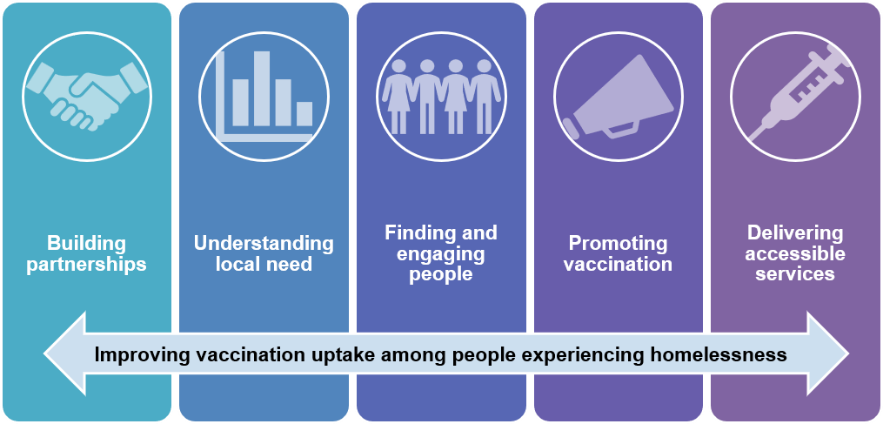
- Building partnerships: working together to plan and coordinate vaccination
- Understanding local need: identifying who needs vaccination and where gaps exist
- Finding and engaging people: reaching eligible people through trusted services and networks
- Promoting vaccination: supporting informed decisions with accessible information
- Delivering accessible services: making vaccination easy to access and convenient to receive
By adopting the approaches set out in this toolkit, local systems can improve vaccination access, coverage and uptake, reduce inequities and better protect people experiencing homelessness from vaccine-preventable disease. However, it is important to use all opportunities to provide these services and not to delay the delivery of vaccination to eligible individuals where other opportunities arise. The UKHSA and Groundswell have also co-developed vaccination promotional materials for people experiencing homelessness to complement this toolkit.
Introduction
What do we know about people experiencing homelessness in England?
The concept of ‘core’ homelessness describes people sleeping rough, as well as those staying in places not intended as residential accommodation, living in homeless hostels, refuges and shelters, placed in unsuitable temporary accommodation and sofa surfing. In England, ‘core’ homelessness is estimated to have increased 45% since 2012, to 299,100 people in 2024 (1). The most recent estimates from the Homeless Monitor Research programme indicate that there were 11,719 people sleeping rough, 17,539 people in unconventional accommodation and 46,733 people using hostels in 2022 (2).
In the UK, people experiencing homelessness are younger than the general population and die at a younger age. People identified as homeless in the 2021 census were around 8 years younger on average (median age: 32 years) than the rest of the population of England and Wales (median age: 40 years) (3). In 2019, the mean age at death was lower for men (46 years) and women (43 years) experiencing homelessness compared with men (76 years) and women (81 years) in the general population in England and Wales (4).
In 2026, the UK Prime Minister launched the national Rough Sleeping Programme, intended to provide immediate accommodation for people sleeping rough with intensive wraparound support, including addressing unmet health needs (5).
What is the rationale for improving vaccine uptake among people experiencing homelessness?
People experiencing homelessness have:
- elevated rates of infectious diseases, including those that are vaccine-preventable, such as influenza, pneumonia and viral hepatitis (6-11)
- increased prevalence of early onset chronic disease (including cardiovascular disease, chronic respiratory disease and liver disease), which can be exacerbated by, and lead to more severe outcomes of, vaccine-preventable diseases (VPDs) (6, 12, 13)
- disproportionately high rates of emergency hospitalisation from VPDs and death (9, 10, 14-18) - notably, hospitalisation for Streptococcus pneumoniae (S. pneumoniae) in homeless adults exceeds those observed in adults aged 65 years and older (9)
- an increased risk of exposure to and transmission of VPDs in communal overcrowded settings, often resulting in outbreaks of infections including S. pneumoniae, influenza, diphtheria, COVID-19 and hepatitis A (19-24)
- higher levels of injecting drug use and blood borne viruses and exposure to others with these risk factors (11, 24, 25)
- multiple, intersecting vulnerabilities – not only unstable housing, but also substance misuse, poor mental health, migration, trauma, poverty, domestic abuse, social isolation and experiences with the justice system (26)
- poor access to care leading to under-diagnosis and inadequate management of chronic conditions and underuse of preventative interventions (12, 27-29)
Uptake and coverage of vaccination in people experiencing homelessness are not routinely monitored. However, research studies indicate suboptimal coverage, lower than in the general population, particularly for respiratory infections (12, 27-29).
In 2026, following Joint Committee on Vaccination and Immunisation (JCVI) advice (30), all people sleeping rough or using homeless hostels or night-shelters aged 16 years and over became eligible for seasonal influenza and pneumococcal vaccination in England (31-34). This subgroup is also likely to be eligible for hepatitis B vaccination, which is recommended for people who inject drugs (PWID), those at a high risk of needlestick injury, those in a close network with or household contacts of PWID or people living with hepatitis B and those with hepatitis C infection or liver disease (35). Similarly, they are likely also eligible for hepatitis A vaccination, which is recommended for PWID, people with chronic liver disease, people living with hepatitis B and/or C and residents of institutions where standards of personal hygiene may be poor (36). Hepatitis A vaccine is also offered during community outbreaks amongst people experiencing homelessness. Other vaccines may be offered opportunistically to the wider population experiencing homelessness, in line with national guidance, particularly where vaccination history is uncertain (37).
What are the barriers to vaccination facing people experiencing homelessness?
A multitude of barriers can directly impact vaccination uptake among people experiencing homelessness (12, 38-49).
Individual barriers:
- limited access to accessible vaccine information, including language, literacy and misinformation barriers
- lower vaccine confidence, often linked to concerns around COVID-19 vaccines
- distrust of healthcare services and formal institutions arising from previous experiences of stigma, discrimination or exclusion
- lack of a fixed address, inhibiting primary care registration and linked to difficulties in receiving vaccination invitations
- limited access to digital technologies and communication devices
- competing priorities such as meeting basic survival and/or addiction related needs
- multiple complex health problems, including physical health, mental health and drug and alcohol misuse issues
- poverty and/or destitution (for example, a lack of funds to travel to services)
- increased risk of exploitation, abuse, trafficking, and involvement in gang and/or criminal activity or sex work
- history of trauma
Structural barriers:
- fragmented health and support services for people experiencing homelessness
- poor coordination and data sharing between healthcare, homelessness and other relevant services
- inflexible and complex healthcare systems (such as limited opening hours and location of services)
- reliance on people attending fixed sites
- staff being unclear about identification requirements for general practice (GP) registration
- lack of vaccination service provision in familiar settings by trusted staff
- limited incentives or enabling resources (for example, transport vouchers, food, safe spaces)
- challenges in accessing welfare payments, local council or housing association accommodation or social care services
- lack of staff specialist knowledge about engaging people experiencing homelessness
- insufficient cultural competence or training around specific homeless subgroups (for example, migrants, LGBTQ+ people, women, young people)
- difficulty in ascertaining vaccination status due to the transient nature of the population
- wider legal context (such as eligibility for healthcare, fear of disclosure of criminalised activities such as drug use, sex work or irregular migration)
What is the purpose of this toolkit and who is it for?
This toolkit is designed to support multi-agency stakeholders to develop, strengthen or deliver vaccination services for people experiencing homelessness in England by highlighting key priority areas for action and setting out enablers for improving coverage and uptake.
The toolkit brings together existing evidence, guidance, insights from those with lived experience and subject matter expertise, tools, resources and examples of local practice (Appendix 1 for more details)). The toolkit aligns with national policy priorities on homelessness, prevention, inclusion health and health inequalities (5, 43, 50, 51), including Core20PLUS5 (52). It also supports implementation of JCVI advice and Green Book recommendations, as well as immunisation quality standards (30, 33-36, 53).
This toolkit is intended for use by stakeholders working across the wider system supporting people experiencing homelessness including:
- commissioners and system leaders: Integrated Care Boards (ICBs), local authority public health teams and adult social care, National Health Service (NHS) England and commissioners of inclusion health services
- service providers: primary care providers (GPs), community pharmacies, outreach teams (for example, street outreach, mobile health services) and secondary care teams, where relevant
- voluntary, community and social enterprise (VCSE) organisations: homelessness charities and accommodation providers, peer-led and advocacy organisations
- others: shelter and hostel staff, substance misuse and mental health services and criminal justice services
The toolkit is designed to support collaborative working across these groups, recognising that maximising vaccination coverage requires coordinated action across the system rather than isolated interventions. It should be used alongside the UK Health Security Agency immunisation equity toolkit, which helps those with oversight of immunisation programmes to consider equity in the local planning and delivery of services (54).
What is the scope of this toolkit?
This toolkit covers vaccination delivery across multiple service settings, including primary care (GPs and specialist homeless health services), secondary care, community pharmacy and outreach services. However, the settings in which vaccination can be offered will vary according to the vaccine, local commissioning arrangements, workforce models and clinical governance requirements. In England, GPs are commissioned to provide core routine early childhood and specific adult and targeted immunisation programmes. Local authorities commission sexual health services and drug services to provide hepatitis A and B vaccination. Community pharmacies are commissioned to provide influenza vaccination, and, in some areas, specialist outreach teams are commissioned to administer vaccination to people experiencing homelessness.
The toolkit focuses on vaccines that are particularly relevant and recommended for the adult population experiencing homelessness due to increased risk of exposure, transmission and underlying health conditions, specifically seasonal influenza, pneumococcal, hepatitis A and hepatitis B vaccines and others where vaccination history is uncertain (31-37). However, it does not provide detailed clinical guidance on vaccination, which should be sought from the Green Book.
This toolkit is organised around 5 priorities for action across the immunisation pathway, as seen in Figure 1:
- Building partnerships: working together to plan and coordinate vaccination
- Understanding local need: identifying who needs vaccination and where gaps exist
- Finding and engaging people: reaching eligible people through trusted services and networks
- Promoting vaccination: supporting informed decisions with accessible information
- Delivering accessible services: making vaccination easy to access and convenient to receive
Figure 1: Priorities and considerations for supporting vaccination of people experiencing homelessness
These priorities reflect key enablers associated with successful vaccination delivery among people experiencing homelessness.
Appendix 2 sets out specific actions for local stakeholders that may increase vaccination coverage and uptake for those experiencing homelessness including actions for:
- ICBs
- local authority public health and housing teams
- primary care providers
- secondary care providers
- community pharmacies
- outreach and mobile health teams
- substance misuse services
- VCSE organisations
- accommodation providers
- peer advocates and people with lived experience
These actions are intended to support local planning and delivery and should be adapted to local needs, resources and service configurations. They are not intended to be prescriptive and should not delay vaccination where opportunities arise.
How was this toolkit developed?
This toolkit was developed through extensive engagement with stakeholders working across immunisation, inclusion health and homelessness in local and national government, regional and national NHS England, ICBs, and NHS provider organisations. Groundswell, a homeless health peer advocacy organisation in the UK, also provided input.
Priorities and actions were informed by an existing systematic review outlining strategies to improve vaccination uptake among people experiencing homelessness (55), an update of this review synthesising evidence published to December 2025, relevant national guidance and practical learning from local services across England.
Priorities and considerations for increasing vaccination among people experiencing homelessness
The approaches and considerations described in this toolkit are intended to support and optimise vaccination activity among people experiencing homelessness, based on evidence of known facilitators. They should not be viewed as prerequisites for delivery. Local partners should take a pragmatic approach and begin vaccinating eligible individuals as soon as opportunities arise, even where partnership arrangements, population intelligence or service models are still being developed. Vaccination activity and system development can, and often should, proceed in parallel.
Local systems vary considerably in terms of population needs, existing services and available resources. While all 5 priorities described below are important, stakeholders may wish to initially focus on a small number of high-impact actions that are likely to provide the greatest foundation for improving vaccination uptake among people experiencing homelessness.
Core actions:
- establish partnerships between vaccination providers, homelessness services and relevant VCSE organisations
- develop an understanding of the local population experiencing homelessness and the services they access
- use trusted settings, co-produced promotional materials, services and relationships to identify, engage and offer vaccination to eligible individuals
- deliver vaccination in ways that minimise practical barriers and maximise opportunities for uptake
The toolkit also outlines a range of further actions that may help strengthen delivery, including enhanced data collection, peer-led approaches, outreach models, integrated service delivery and formal governance arrangements. These may be particularly relevant to systems with additional capacity, resources or established partnerships.
1. Building partnerships
In this section:
Why is this important?
Improving vaccination coverage and uptake among people experiencing homelessness requires coordinated action across multiple organisations and sectors (56). No single organisation has complete visibility of the population or the capacity to address all barriers to vaccination independently. Each stakeholder will bring their own distinct knowledge, contacts and opportunities for engagement.
Conditions for high uptake include integrated service delivery, clear coordination across organisations and effective intelligence sharing, ensuring that individuals are not overlooked and that every contact represents an opportunity to support vaccination. Effective partnership working enables organisations to develop a shared understanding of local need, align service delivery, establish coordinated pathways for identification, invitation, vaccination and follow-up and combine skills and resources to better meet community needs (57, 58).
In England, partnership working is a statutory requirement of both ICBs and the NHS more broadly (58) and is recommended by the National Institute for Health and Care Excellence (NICE) to ensure people experiencing homelessness are identified and have opportunities to access relevant vaccinations (59).
Developing the infrastructure to support vaccination planning and delivery is equally important (60). This includes governance arrangements, data sharing processes, workforce capacity, commissioning arrangements and systems for monitoring and evaluation (54). Building effective partnerships and supporting infrastructure enables stakeholders to triangulate local intelligence and turn it into coordinated action for inclusion health (61).
What works in practice?
Establishing multi-agency partnerships
Stakeholders across the immunisation pathway should come together to develop coordinated approaches for identifying and engaging people experiencing homelessness with unmet vaccination needs (46). Existing partnership structures should be utilised where possible (for example, a local immunisation equity partnership group, or Health and Wellbeing Board). Where possible this should be linked to broader initiatives outlined in the NHS Framework for Action on Inclusion Health and initiatives to end rough sleeping (for example, the Rough Sleeping Programme) (5, 51).
The UKHSA has produced a toolkit to aid stakeholders to understand and address immunisation inequities, which includes a chapter on partnership working and a list of relevant vaccination stakeholders (54). Relevant local partners working specifically with people experiencing homelessness may include:
- ICBs
- local authority teams (public health, housing and others)
- GPs, GP Federations and Primary Care Networks (PCNs)
- NHS Trusts and integrated health organisations (for example, Foundation Trusts)
- community pharmacies and local pharmaceutical committees
- community health services and outreach teams
- substance misuse and mental health services
- neighbourhood health services
- accommodation providers
- regional health and justice partnerships groups for delivery of prison health services including vaccination
- local prison and probation service
- VCSE organisations, including faith and community networks
- peers and/or people with lived experience
Any newly formed partnership group should agree early on its overarching scope and ways of working, to ensure clarity of purpose and shared accountability across all partners (54).
Clear roles and responsibilities should be agreed for all stakeholders. There should be shared goals and priorities for vaccinating people experiencing homelessness and coordinated approaches for identifying and engaging individuals with unmet vaccination needs. Box 1 presents an example of partnership working in Nottingham that facilitated delivery of influenza vaccinations to people sleeping rough accessing drug services (see Appendix 1 for more details).
Box 1: Integration of influenza vaccination offer with drug treatment services for people sleeping rough in Nottingham
A pilot project in Nottingham demonstrates how organisations can work together to improve vaccination access for people sleeping rough. Recognising that no single service had the relationships, infrastructure or reach to deliver the programme alone, partners from the local pharmaceutical committee, community pharmacy, Nottingham City Care, Nottinghamshire Healthcare Foundation Trust, Nottingham University Hospitals, Framework and the ICB collaborated to design and deliver a targeted influenza vaccination initiative.
Seasonal influenza vaccination was integrated into an existing respiratory clinic held within a local drug treatment service for people sleeping rough. Partners worked collectively to identify a suitable clinical environment, agree responsibilities, manage vaccine storage requirements and ensure delivery complied with existing policies and procedures.
Over 2 clinic sessions delivered during a 6-week pilot period, 12 people sleeping rough received influenza vaccination, with every individual offered vaccination choosing to accept it. The pilot highlighted the value of collaborative, multi-agency working in reaching underserved populations and showed how combining the expertise, resources and networks of different organisations can create practical and effective vaccination opportunities. Key learning included the importance of shared objectives, clear governance arrangements, strong relationships between partners and a willingness to work flexibly to meet the needs of the population. Next steps include expansion of the pilot and creation of a multi-agency task-and-finish group to coordinate planning and delivery.
In 2021, during the COVID-19 pandemic, the Protect and Vaccinate scheme funded the provision of emergency accommodation for people sleeping rough and outreach and mobile vaccination initiatives (62). Local systems successfully increased vaccine uptake among people experiencing homelessness through coordinated multi-agency approaches involving healthcare providers, local authorities, accommodation providers, VCSE organisations, outreach teams and people with lived experience. The London Homelessness and Rough Sleeping Mobilisation Support Pack provides practical examples of partnership working and service coordination that may be transferable to other immunisation programmes (56).
The 2026 national Rough Sleeping Programme advocates effective partnership working between housing and homelessness services, NHS bodies and providers, adult social care, substance misuse services, the Prison and Probation Service, accommodation providers, police, domestic abuse and sexual violence services, safeguarding partners and VCSE organisations (5).
Using participatory approaches and engaging communities
It is important to include VCSE organisations, people with lived experience of homelessness and accommodation providers in health partnerships and throughout planning, implementation and evaluation of immunisation initiatives. This can build trust with the community and provide valuable insight into barriers and facilitators to vaccination, as well as practical considerations for delivery that may not be visible to service providers (46, 56, 63). Roles for peers specifically can include participation in service design, supporting initial engagement, supporting people to access vaccination services (including reminding and accompanying to appointments) and, under appropriate governance arrangements and clinical supervision, delivery of vaccines (for example, influenza).
NICE and the National Institute for Health and Care Research (NIHR) have both published guidance supporting community engagement and co-production (64-67). Further resources on community involvement and inclusive approaches to health protection have also been published by the UKHSA (43, 54, 68).
Developing information sharing
People experiencing homelessness frequently come into contact with a range of health, housing, support and voluntary sector services. As such, information for this population in relation to vaccination eligibility, risk factors, healthcare access and engagement is often dispersed across multiple organisations. Effective partnership working requires clear and proportionate arrangements for data and intelligence sharing, supported by appropriate information governance processes, so opportunities for vaccination are not missed (54).
Stakeholders should establish straightforward pathways and/or sign-posting into vaccination services (for example, GPs and pharmacies offering vaccination) so that individuals experiencing homelessness can be linked quickly to appropriate vaccination opportunities.
Building workforce capability and confidence
Staff and volunteers across a range of services can play an important role in improving vaccination uptake among people experiencing homelessness and protecting them from VPDs, even where vaccination is not part of their core role.
Individuals delivering interventions for people experiencing homelessness should be adequately trained in:
- cultural competence (69)
- trauma-informed care (70)
- making every contact count (71)
- inclusion health principles (72)
- understanding vaccination principles and eligibility (73)
- communication skills for discussing vaccination and challenging misinformation (for example, empathetic refutational interview training (74))
- working with homeless populations (75)
This training will help ensure that vaccination interventions are clinically robust, safe and responsive to the needs of people experiencing homelessness. The knowledge, skills and competencies required will vary according to an individual’s role in the immunisation pathway.
Training should extend beyond healthcare staff and may include outreach workers, hostel staff, support workers and peer advocates. The NHS England e-learning for healthcare portal has a variety of relevant training courses (see links above). The UKHSA has produced national minimum standards and a core curriculum for vaccination training for all healthcare staff with a role in delivering immunisation programmes (76) and is developing a framework and action plan for immunisation training for wider groups, including VCSE organisations. The UKHSA also produces guidance on pneumococcal and influenza vaccination specifically for healthcare practitioners (77, 78).
VCSE organisations also offer training courses. For example, Groundswell, a homeless health peer advocacy organisation in the UK, also offers peer-led learning and development training (79).
Monitoring, evaluation and continuous improvement
Monitoring and evaluation are essential to understanding whether actions to improve vaccination coverage and uptake are working, or not (80) and should be considered from the outset, before interventions begin. The UKHSA has developed a standard evaluation framework, in response to an ask from local service providers, specifically for interventions designed to reduce inequities in vaccination (81).
The UKHSA toolkit on understanding and addressing immunisation inequities, includes a step by step guide to planning and implementing monitoring and evaluation for immunisation equity work (54). It also outlines how evaluation findings can be used to refine and scale-up successful approaches.
Who can act and how?
Appendix 2 outlines some practical actions stakeholders can take to foster partnership working to plan and deliver effective vaccination interventions to people experiencing homelessness.
2. Understanding local vaccination needs
In this section:
Why is this important?
Local populations experiencing homelessness vary in size, characteristics and vaccination needs (uptake, coverage and burden of VPDs), reflecting differences in geography, service provision and patterns of population movement. Developing a clear understanding of the local context and need, informed by both quantitative and qualitative data, is therefore essential for planning and delivering equitable vaccination services.
This can be challenging in practice. There is no single, comprehensive dataset on people experiencing homelessness and data is often fragmented across health, housing and VCSE organisations. These datasets can use inconsistent definitions of homelessness and, as they often rely on service use, can under-identify individuals who are not engaged with services (82). In some areas, populations are highly mobile, making it difficult to build an accurate and up-to-date picture of need (83). Vaccination history may be incomplete or uncertain, making it difficult to assess coverage and uptake in the population.
There are existing tools and resources to aid local stakeholders in assessing vaccination need in their homelessness populations. To support local authorities and ICBs, the UKHSA has produced guidance on how to carry out an immunisation equity health needs assessment (54).
What works in practice?
Using multiple sources of local intelligence
There are a variety of data sources that can be brought together to assess the size and characteristics of the local homeless population, including routine and bespoke data from:
- local authorities (84)
- GP systems (see Appendix 3 for list of SNOMED codes for homelessness)
- outreach teams
- hostel and temporary accommodation providers (85)
- substance misuse and mental health services
- Combined Homelessness and Information Network (CHAIN) – London only (86)
- Census 2021 (3)
- local Homeless Health Needs Audits (if vaccination status was collected) (87)
This data may have already been synthesized in the local Homeless Strategy or Joint Strategic Needs Assessment (88, 89), both statutory requirements for local authorities.
In the absence of local data, information can be sourced from national data collections including the rough sleeping snapshot (90), Women’s Rough Sleeping Census (91), Office for Health Inclusion and Disparities (OHID) inclusion health dashboard (92) and Homeless Monitor (1).
Information on vaccination uptake and coverage among people experiencing homelessness may be available from local services (for example, GPs, outreach teams). Homeless Link publishes national data on self-reported uptake of hepatitis B and influenza vaccination among people experiencing homelessness in their Unhealthy State of Homelessness report (12). The Unlinked Anonymous Monitoring Survey collects self-reported uptake of hepatitis B vaccination among people who inject drugs (93). Breakdowns for people experiencing homelessness by locality can be requested from the UKHSA Drugs and Infections Team via uampwidsurvey@ukhsa.gov.uk. Local authorities and ICBs may consider commissioning bespoke quantitative data collection to fill gaps (for example, surveys of people in homeless accommodation). Regional UKHSA Field Service teams hold local data on outbreaks of VPDs, and national UKHSA subject matter expert teams may have additional information on VPDs through enhanced surveillance if homelessness is recorded.
Mapping current service provision
As part of the immunisation needs assessment process, it is also important to map current service provision for people experiencing homelessness and take stock of the organisations housing and supporting this population. Homeless Link runs Homeless England, a comprehensive database of homelessness services across the country (85). The London Housing Foundation Atlas of Homelessness Services is an interactive resource that provides a clear, up-to-date overview of homelessness services across the capital (94).
Existing vaccination delivery and engagement activity may include specialist homeless health GPs, outreach teams, community pharmacies offering vaccination alongside needle and syringe programmes, substance misuse services, mobile health units, peer advocates and local health champions. Mapping out who is already delivering, supporting or promoting vaccination can help identify existing assets, avoid duplication and highlight opportunities to expand or better coordinate provision. Creating links between stakeholders can help ensure relevant services are aware of the ongoing vaccination activity, have access to existing promotional materials (95-97) and, where outreach vaccination is commissioned, support delivery.
Incorporating lived experience and frontline insight
Barriers and facilitators of vaccination among people experiencing homelessness have been well documented (12, 38-43). Engagement with VCSE organisations and people with lived experience of homelessness, as well as frontline staff (for example, outreach workers, hostel staff), can provide local context and inform service design and delivery, to overcome barriers.
Further rapid community intelligence work, such as focus groups or interviews, can provide information on reasons for low vaccine confidence, communication needs and feedback on the accessibility and availability of vaccination services (including transportation and behavioural considerations).
Considering segmentation of the local population where appropriate
Segmentation is a concept in population health management that involves dividing a broad population into manageable, homogeneous groups with similar healthcare needs, risks, or socioeconomic characteristics (98).
Within the local population of people experiencing homelessness, different subgroups may face distinct barriers to vaccination and may require different approaches. Examples include:
- people sleeping rough – limited engagement with services and high mobility
- those in hostels or temporary accommodation – opportunities for on-site delivery
- people who inject drugs – higher risk of blood-borne viruses (for example, hepatitis B) and facing competing priorities opportunities and multiple complex health problems - opportunities to engage through drug services
- people released from prison or on community sentences and engaging with probation services - disrupted healthcare engagement during transition into the community and competing priorities
- migrants or people with no recourse to public funds – potential barriers related to access, eligibility or trust
- older people – acute need for a variety of vaccinations but less visible
- women, young people, or LGBTQ+ individuals – specific health needs (for example, vaccines in pregnancy for women) and potential experiences of exclusion or stigma
Triangulating data to identify gaps in access and coverage
Data on the size, characteristics and vaccination needs of the local population experiencing homelessness should be triangulated and reviewed, alongside community insight and service maps. This can help to:
- identify groups or locations with low vaccination uptake
- highlight populations not currently engaged with services
- understand mismatches between service provision and need
- prioritise areas for targeted outreach or service redesign
- ensure promotional materials can be distributed effectively to services mapped (95-97)
Data will often be incomplete or imperfect. However, triangulating multiple sources of intelligence is usually sufficient to inform proportionate and timely action, particularly in rapidly changing or highly mobile populations. Waiting for the ‘perfect’ data risks delaying action and may perpetuate avoidable inequities. Findings should be used to inform local prioritisation, service design and commissioning decisions, including where, how, and to whom vaccination services are delivered. Box 2 describes an example of work to understand and address vaccination needs of people experiencing homelessness in the South East.
Box 2: Understanding and addressing the vaccination needs of people experiencing homelessness in the South East
In the South East, commissioners have used two national data sets analysed at upper-tier local authority level to build a picture of homelessness and rough sleeping across the region: the autumn 2025 annual rough sleeping snapshot and 2024 statutory homelessness statistics. Recognising the limitations of these datasets, ICB teams have worked closely with community, charity and local authority partners to validate findings and better understand local need. This collaborative approach has helped identify areas of greatest vulnerability, enabling resources and support to be targeted where they are likely to have the greatest impact and highlighting opportunities to improve vaccine access.
A key principle has been to build on existing services and trusted relationships rather than creating new pathways. By aligning vaccination activity with settings and services already used by people experiencing homelessness, partners have been able to reach communities in a more accessible and acceptable way.
In Thames Valley ICB, plans for influenza and pneumococcal vaccination in 2026 will build on the previous approaches for influenza and COVID-19 vaccination, which focused on a mixed network of primary care and Trust led community outreach models, bolstered by tailored communications and engagement. Delivery focused on bringing outreach services directly into trusted, familiar environments, such as community centres and VCSE organisations. Significant emphasis was placed on listening to communities, adapting engagement approaches and working at the pace required to build trust and confidence.
One example comes from Newbury Soup Kitchen, which hosted an outreach vaccination session in January 2026. Reflecting on the initiative, the organisation said:
We were delighted to welcome the Buckinghamshire Healthcare NHS Trust Flu Defenders team from Stoke Mandeville Hospital, who offered influenza and COVID vaccinations to our clients. Around 20% took up the offer, a great start. Building trust takes time, and with this new regular collaboration, we hope to support even more people going forward.
Strong feedback mechanisms will be in place throughout the 2026 autumn and winter period to capture learning, identify challenges and inform ongoing improvements as the programme develops.
Who can act and how?
Appendix 2 outlines some practical actions stakeholders can take to contribute towards understanding the vaccination needs of the local population experiencing homelessness.
3. Finding and engaging people
In this section:
Why is this important?
Finding and engaging eligible individuals is a critical step in improving vaccination coverage and uptake among people experiencing homelessness. Unless individuals are identified, informed about vaccination opportunities and offered support to access services, they may remain systematically excluded from immunisation programmes (99).
Traditional immunisation pathways often rely on GP registration, fixed addresses and routine invitation systems, such as letters, texts or online communication (100, 101). However, many people experiencing homelessness face barriers to registration, have incomplete health records, lack reliable access to communication channels or move frequently between locations and services (12, 39, 42, 102, 103). These factors can make both the identification of eligibility and delivery of vaccination invitations difficult.
As a result, people experiencing homelessness are less likely to be identified through standard systems, less likely to receive invitations and recalls and more likely to miss follow-up for multi-dose vaccination schedules (102, 104). Improving vaccination uptake requires proactive, flexible, opportunistic and partnership-based approaches through trusted services and routine contacts. People who are rough sleeping or using hostels or night shelters likely have contact with outreach teams, accommodation providers, day centres and other support services. Engagement via these services is therefore key to raising awareness of vaccine eligibility in this population.
What works in practice?
Supporting GP registration and inclusion in healthcare records
In the UK, people experiencing homelessness are legally entitled to register with a GP without needing a fixed address, proof of identity or immigration status (105, 106). They can register using a temporary address, which may be a friend’s address or a day centre. If a patient cannot produce any supportive documentation but state that they reside within the practice boundary then the practice should accept the registration. Pathway, a UK homeless and inclusion health charity, published guidance for GP receptionists and practice managers on working with people experiencing homelessness (107), as well as a training pack for reception staff (108).
The Homeless Health London Partnership, Healthwatch London and Groundswell have produced My right to access healthcare cards to help homeless adults register and receive treatment at GPs (109, 110). There is also a How to register with a doctor (GP) leaflet for people experiencing homelessness from NHS England (111). Vaccination promotional materials for people experiencing homelessness, co-designed by the UKHSA and Groundswell, also include information on registering with a GP (95-97).
It is important to note that for influenza, GPs can administer vaccination to people experiencing homelessness who are unregistered or are registered with another practice (112).
Using multiple routes to identify eligible individuals
Relying on a single data source (for example primary care records) to identify individuals eligible for vaccination will miss a significant proportion of people experiencing homelessness. Using multiple sources enables services to identify individuals who may not be visible to mainstream healthcare systems.
In practice, the most effective approaches combine information from:
- GP records (including specialist homeless health services)
- local authority housing and rough sleeping registers
- outreach lists
- accommodation providers (for example, hostels, night shelters)
- day centres
- VCSE organisations in contact with, as well as advocating for, people experiencing homelessness (for example, food banks, soup kitchens, mental health charities)
- substance misuse and mental health services
- accident and emergency (A&E) departments and other secondary care services (inpatient and/or outpatient)
People experiencing homelessness with unmet vaccination need can be identified as eligible and signposted during street outreach and engagement activities and/or routine contacts with other services, as well as through partnership working between primary care and accommodation providers.
Making every contact count
Given the high levels of unmet need and inconsistent engagement with services among people experiencing homelessness, every interaction with health or support services represents an important opportunity to identify vaccination need and offer vaccination, information or signposting, making every contact count (56, 59, 113).
Simple checks for vaccination eligibility should be incorporated into routine interactions with this group across settings (59), including:
- primary care consultations
- outreach contacts
- hostel, night shelter or day centre engagement
- substance misuse and mental health appointments
- secondary care attendances (inpatient and outpatient)
- community pharmacy interactions
Staff, volunteers and peers should be trained and encouraged to routinely ask brief, relevant questions about homelessness status, health conditions, risk factors and vaccination history (where known). Eligible individuals can then be signposted to relevant vaccination services or even supported to attend vaccination appointments where possible. Simple and standardised prompts or checklists should be used across services to support consistent identification of eligibility.
There is some evidence that automated computerised alerts can help to identify people experiencing homelessness with unmet vaccination needs attending A&E (55, 114-117).
A holistic approach should be taken wherever possible (43). Contact made to discuss vaccination may also provide opportunities to identify wider health and social needs, support access to healthcare services, facilitate GP registration or connect individuals with housing, mental health, substance misuse and other support services. Similarly, interactions relating to other health or support needs can provide opportunities to identify unmet vaccination need and promote uptake. Box 3 describes an example of embedding vaccination delivery into routine inclusion health outreach (see Appendix 1 for more detail).
Box 3: Guy’s and St Thomas’ Homeless and High-Intensity User Service
The Homeless and High-Intensity User Service at Guy’s and St Thomas’ NHS Foundation Trust demonstrates how vaccination can be embedded within routine inclusion health outreach to improve access for people experiencing homelessness. Working across Southwark, Lambeth, Lewisham and the City of London, the service provides nurse-led healthcare in homeless hostels, day centres, substance misuse services and through street outreach, reaching people who may have limited engagement with mainstream healthcare.
Vaccination is integrated into routine health needs assessments and opportunistic clinical contacts. Nurse practitioners and community nurse specialists review vaccination histories, identify gaps in protection and offer vaccination during the same encounter wherever possible, minimising the need for additional appointments. Where individuals choose not to be vaccinated, the offer remains open and can be revisited during future contacts. Vaccines delivered through the service include hepatitis B, hepatitis A, seasonal influenza, pneumococcal, measles, mumps and rubella (MMR) and diphtheria, tetanus and polio vaccines.
The team has been delivering vaccines to patients facing homelessness for many years. Between August 2025 and August 2026, the service administered 334 vaccines, with hepatitis B and influenza vaccines accounting for most doses delivered. The programme highlights the value of taking vaccination to people rather than expecting them to navigate complex healthcare systems. Key learning includes the importance of trusted relationships, flexible outreach delivery, continuity of care and partnership working to create repeated opportunities for vaccination and wider health engagement.
Using trusted intermediaries to support invitation
VCSE organisations, hostel staff, case managers, key workers, outreach teams and peer advocates often have strong, trusted relationships with people experiencing homelessness that can help overcome barriers to vaccination (118). These trusted intermediaries can play an important role in supporting identification, engagement, invitation and follow-up, particularly for individuals who have limited contact with mainstream healthcare services or who have experienced stigma, discrimination or exclusion (119).
Moving from passive to active invitation approaches
Standard approaches that rely on letters, digital messaging or individuals presenting themselves for vaccination are often insufficient to invite people experiencing homelessness to be vaccinated. More appropriate approaches involve proactive, in-person invitations delivered during routine contact with services, reinforced through the use of co-produced promotional materials (59, 95-97, 104). This may include inviting individuals directly during outreach encounters, healthcare appointments or engagement within accommodation settings. Where written invitations are utilised, reading age and preferred language should be considered.
Taking a pragmatic approach to eligibility
Immunisation programmes should aim to minimise exclusion resulting from incomplete records, uncertain vaccination history or undocumented risk factors, which may be common among people experiencing homelessness. Clinical judgement should support decision-making where eligibility is likely but not fully recorded.
Seasonal influenza and pneumococcal vaccination can be offered on the basis of homelessness status (individuals who are sleeping rough or using homeless hostels or night-shelters) as per national guidance (31-34). Health and social care providers should work to improve recording of housing status to support this (48).
Individuals are not required to provide proof of homelessness in order to access vaccination where eligibility is based on homelessness status. Services should take a pragmatic and inclusive approach, relying on self-declaration, to minimise barriers to access and avoid excluding eligible individuals.
The UKHSA has developed guidance for individuals with uncertain or incomplete vaccination history to ensure that they are not excluded due to gaps in documentation (37). In general, unless there is a documented or reliable verbal vaccine history, individuals should be assumed to be unimmunised and a full course of vaccinations planned.
Who can act and how?
Appendix 2 outlines some practical actions stakeholders can take to contribute towards identifying and inviting eligible individuals experiencing homelessness for vaccination.
4. Promoting vaccination and communicating effectively
In this section:
Why is this important?
Identifying and inviting eligible individuals does not always result in vaccination. People experiencing homelessness may face barriers related to trust, concerns about vaccine safety, limited access to accurate information and previous negative experiences of healthcare (38-40). Vaccination decisions are also often influenced by the wider experiences of exclusion, stigma and trauma common in this population.
People experiencing homelessness are more likely than the general population to experience speech, language and communication difficulties, as well as other conditions and social circumstances that can affect communication (120, 121). These additional needs, combined with low basic, digital and health literacy and experiences of digital exclusion, can create challenges to understanding health information and engaging with services.
Improving vaccination coverage and uptake among people experiencing homelessness requires building trust and communicating effectively through accessible and relevant information tailored to local need (54, 122-124). Homeless Link, Groundswell and Pathway have developed a toolkit to support vaccine uptake among people experiencing homelessness (125), specific to COVID-19, but with learnings relevant across immunisation programmes.
What works in practice?
Building trust and confidence in vaccination
Many people experiencing homelessness have experienced stigma, discrimination or exclusion when accessing healthcare services (39). Building trust is often a prerequisite for successful vaccination discussions and may require repeated interactions over time and continuity to develop relationships (43, 63). Trust can be strengthened through meaningful community engagement, partnership working with local organisations, open and honest communication, targeted education and awareness activities and active involvement of healthcare professionals (126-128).
Partnering with organisations that are already trusted by, and familiar to, people experiencing homelessness can help increase vaccination uptake, particularly when accompanied by targeted community education initiatives (39, 119). Trusted messengers, including VCSE organisations, accommodation providers, outreach teams and peers may be better placed to initiate conversations about vaccination and reinforce messages over time through channels that communities trust (63, 129-131). Consistent messaging from trusted individuals across different services can help reduce missed opportunities for vaccination (38, 130).
Peer support is one example of this approach and recognised as a promising strategy for increasing advocacy and improving health outcomes (61). There is some evidence that the use of peers as advocates, navigators or vaccine ambassadors, can be effective to improve vaccination uptake among people experiencing homelessness through the provision of education and materials and the sharing of personal experiences of vaccination (55, 132-135).
Staff who are trained in the needs of people experiencing homelessness should provide culturally sensitive, trauma-informed and non-judgemental care (43, 48). Where appropriate, vaccination conversations should be embedded within broader, person-centred support that addresses wider health and social needs, as this may help build trust and support engagement with healthcare services (43, 48, 136). Box 4 presents an example of building trust and vaccine confidence through a local outreach team (see Appendix 1 for more details).
Box 4: Islington Health Outreach Team
The Islington Health Outreach Team (IHOT) uses trusted relationships and tailored communication to help improve vaccine confidence and uptake among people experiencing homelessness. Recognising that many individuals have experienced barriers to healthcare and may be hesitant to engage with vaccination services, the team has embedded vaccination promotion within its wider outreach and support work.
Seasonal influenza vaccination is offered through a community hub that is already well known and regularly used by people experiencing homelessness. Rather than relying solely on formal invitations or appointments, staff use existing relationships to start conversations about vaccination in a familiar and supportive environment. These discussions provide opportunities to answer questions, address concerns and share information about the benefits of vaccination in a way that is responsive to individual needs and circumstances.
The approach places particular emphasis on trust, recognising that confidence in healthcare services is often built over time through repeated positive interactions. Staff are able to draw on their knowledge of the local community and the relationships they have developed with service users to encourage informed decision-making and support vaccine uptake. Delivering vaccination alongside wider health and wellbeing support also helps normalise vaccination as part of routine care.
To further promote participation, vaccination was offered to staff and volunteers alongside people accessing the service. This helped create a sense of inclusion and shared experience, reinforcing positive messages about vaccination.
Communicating clearly and accessibly
NICE has produced national guidance for health and care professionals working with people experiencing homelessness, highlighting the importance of using appropriate language and addressing individual communication and information needs (48). Specific recommendations include:
- being empathetic and non-judgemental during consultations
- avoiding language that includes jargon and acronyms
- using an individual’s preferred communication methods, taking into consideration their access to a phone and the internet (for example, phone call, text message, email, letter, face to face)
- providing translation and interpretation services, as needed
- ensuring that written information is available in different formats and languages, including Easy Read
- providing extra support for people with low literacy levels or with speech, language and communication difficulties
- considering involving an advocate to support communication
Information should be tailored to the communication needs of the local community (123). Accessible communication may include the use of plain language, visual materials, translated resources, interpreters, verbal explanations and opportunities for questions and discussion (137).
Co-developing key messages with the community
Co-production with VCSE organisations and people with lived experience enables the creation of vaccination resources that are accessible and grounded in real preferences and concerns of the communities (63, 127, 138). Existing communication resources should be reviewed to show previous engagement is valued, prior to co-developing messaging from scratch.
In 2025, Groundswell, with funding by the UKHSA, co-developed key messages with people experiencing homelessness to raise awareness of the importance of vaccines, and how, where and when to access vaccinations (131). Key vaccination communication principles identified during focus groups included:
- providing concise information with clear, specific language
- using bullet points, appropriate pictures (especially graphics or drawings) and colours that are dyslexia friendly
- using case studies and personal experience to make content relatable
- developing a dedicated leaflet for people experiencing homelessness, with mainstream materials also acknowledging homelessness
- focussing on what the vaccine is, why it is important and the effect of the vaccine (reducing risk of infection, or reducing risk of severity or both)
- using mixed media to reach a diverse audience (for example, short videos, social media campaigns, leaflets)
- using a variety of messaging mechanisms (for example, communicating via day centres and services)
- training hostel staff to discuss vaccines
- recruiting peer health champions as vaccine ambassadors
This work also resulted in some key co-designed messages for vaccination in general, as well as specific messaging around the influenza and pneumococcal vaccines.
The UKHSA has since built on this project, again in collaboration with Groundswell, co-producing a suite of resources, including a poster (product code: 126546ACEN001), a pocket guide (product code: 126546ADEN001) and a leaflet (product code: 126546AEEN001), to promote vaccination among people experiencing homelessness available via the Find public health resources service (95-97). These resources are designed to be used by accommodation providers, VCSEs, primary care, community pharmacies and others and can be downloaded, or printed copies ordered, free of charge.
Addressing concerns and supporting informed vaccination decisions
The aim of vaccination promotion should be to support individuals to make informed decisions about vaccination. Education and counselling are key in improving vaccine uptake (39, 63). People should be given sufficient time, information and opportunity to ask questions and consider their options (131, 139). Approaches should avoid coercion and recognise the importance of individual choice.
Concerns about vaccine safety, side effects, eligibility and effectiveness should be acknowledged and discussed openly (131, 139). Staff should be equipped to respond to misinformation using evidence-based, empathetic approaches that support informed decision-making rather than confrontation. A single conversation is often insufficient to influence vaccination decisions. Consistent messages delivered across multiple settings and by different trusted individuals can help reinforce understanding and confidence (140).
A range of communication and behaviour change approaches can be used to support effective vaccine conversations with people experiencing homelessness and increase vaccine confidence (54). St Mungo’s, a UK homelessness charity, has developed a motivational interviewing tool (141). Although specific to COVID-19, it can support conversations covering a variety of vaccinations. Empathetic Refutational Interview training, developed as part of the JITSUVAX project, is an example of another structured, motivational interviewing informed approach (74). The Vaccine Confidence Hub, developed by NHS England South West, also provides communication tools and training to support non-clinical staff to have meaningful conversations about vaccines (142).
Who can act and how?
Appendix 2 outlines some practical actions stakeholders outlines some practical actions stakeholders can take to promote vaccination of people experiencing homelessness.
5. Delivering accessible vaccination services
In this section:
Why is this important?
Even when individuals are identified as eligible, invited and willing to be vaccinated, practical barriers for people experiencing homelessness can prevent uptake. Conventional vaccination delivery models often rely on individuals attending appointments in fixed healthcare settings at a specific time, for example in primary care. However, these fixed-site appointment models can systematically exclude people from inclusion health groups (39).
People experiencing homelessness may have difficulty reaching clinics due to having limited access to transport and/or insufficient funding (39, 44, 143). Lack of consistent access to a communication device (for example a phone, mobile device or the internet) can prevent individuals being able to book appointments or be reached for reminders (39). The fear of stigmatising and discriminatory attitudes, and multiple competing priorities, as well as previous negative experiences of healthcare, can prevent people from turning up to appointments (44).
This section focuses on how vaccination services can be designed and delivered to maximise accessibility, including service models, settings, operational considerations and approaches that bring vaccination closer to people experiencing homelessness.
What works in practice?
NICE has published guidance on integrated health and social care for people experiencing homelessness to improve access to healthcare more generally that is applicable to vaccination services (48). Commissioners and providers should consider ways to reduce barriers to access and engagement including:
- ensuring care is person-centred, empathetic, non-judgemental and trauma-informed
- co-design and co-delivery of services
- utilising homelessness multidisciplinary teams to provide and coordinate care across outreach, primary, secondary and emergency care, social care and housing services
- embedding homelessness leads in mainstream services
- providing outreach and drop-in services (particularly for vaccination)
- ensuring services are low threshold
- flexible opening and appointment times, as well as longer contact times
- providing ‘one-stop shops’ for multiple services
- using incentives and providing help to access care, such as transport support, vouchers or digital connectivity
- engaging advocates and peer support workers
These recommendations have been echoed by people with lived experience of diverse forms of exclusion in the UK, who took part in a co-production process to develop recommendations to address barriers to health protection and broader healthcare for inclusion health groups. The resulting report from the UKHSA, Insights from people with lived experience to inform inclusive approaches to health protection, lists facilitators to improve accessibility of services (43):
- drop-in services, those without the need for an appointment, in convenient locations and times
- outreach
- support to access care
- a focus on building trust (including through peers)
- reassurances on the confidentiality of services
- ensuring healthcare workers understood their needs
- providing holistic and integrated people-centred approaches to meet wider needs and to minimise the need for multiple appointments with multiple providers
- care tailored to the needs of individuals and groups
- lived experience input into the design and delivery of services
Taking vaccination to where people are
As described above, people experiencing homelessness may be more likely to engage with vaccination when it is offered in settings they already use and trust. Outreach and in-reach models can help reduce barriers associated with travel, appointment systems and limited engagement with mainstream healthcare services. There is strong evidence that delivering vaccination through mobile services, street outreach, accommodation settings (for example, hostels, day centres, temporary accommodation) or alongside existing support services may increase uptake among individuals who are unlikely to access traditional healthcare services (55, 132-135, 140, 143-178).
However, these approaches may require dedicated commissioning and funding arrangements, as vaccination delivery is not covered by existing programme funding mechanisms in all settings. ICBs should consider how outreach and opportunistic vaccination activity will be commissioned, reimbursed and integrated within local immunisation pathways. NHS England has released a commissioning and delivery guide on NHS Futures (log in required) for targeted outreach to improve vaccine uptake in underserved groups, including a checklist for the commissioning and delivery of outreach services (179).
Providing flexible and opportunistic vaccination
Flexible approaches to access where vaccination is offered at fixed sites can help reduce missed opportunities. Considerations to increase access to the primary care offer may include walk-in clinics, no-appointment models, same-day vaccination, flexible clinic times and minimising administrative requirements wherever possible (131).
Vaccination should also be considered during routine contacts with health and support services whenever clinically appropriate (56, 59, 113). Opportunities may arise during primary care consultations, outreach encounters, A&E attendances, substance misuse appointments and other interactions with services. Making vaccination available when and where people are already engaging with services can reduce barriers and increase uptake. Box 5 describes a local practice example of embedding vaccination delivery into existing hostel outreach (see Appendix 1 for more detail).
Box 5: Seasonal influenza vaccine delivery through outreach nurses working in homeless hostels in Camden
An initiative by the Camden Adult Pathway Partnership (CAPP) Team, an Inclusion Health service based at University College London Hospitals (UCLH) NHS Foundation Trust, demonstrates how seasonal influenza vaccination can be integrated into routine outreach services for people experiencing homelessness. The team provides community healthcare to around 1,000 people across Camden through regular visits to homeless hostels, where nurses have established trusted relationships with residents and staff.
During winter 2025 to 2026, the team incorporated influenza vaccination into its existing outreach model, which already included health assessments, basic clinical observations, blood testing and support to access wider healthcare services. Working in partnership with Find&Treat, UCLH’s specialist peer-involved mobile outreach service, the team developed the necessary governance arrangements, staff training and vaccine supply processes to support delivery.
Overall, approximately 200 vaccines were delivered directly within hostels, enabling residents to access immunisation in a familiar and trusted environment without needing to attend a separate healthcare appointment. Hostel staff played an important role in promoting vaccination sessions, raising awareness among residents and helping estimate demand to support efficient vaccine use. Established systems for vaccine storage, transport and recording ensured vaccination could be delivered safely and consistently across outreach settings.
The initiative demonstrated that preventative healthcare can be successfully incorporated into existing inclusion health services by building on trusted relationships and routine clinical contacts. Key enablers included strong collaboration between outreach nurses, hostel staff and Find&Treat, alongside flexible delivery within familiar settings. The approach provides a practical model for reducing barriers to vaccination and creating opportunistic vaccination opportunities for people experiencing homelessness.
Integrating vaccination with wider health and support services
Vaccination may be more acceptable and accessible when delivered alongside other health or social support as part of a holistic service (131-133, 149, 151, 154-162, 164-171, 174, 175, 177, 180, 181). Integration can help maximise engagement and reduce the need for multiple appointments.
Services which could be offered alongside vaccination include:
- clinical assessments and treatment of minor illnesses, including oral health
- serological testing (for example, blood-borne viruses)
- drug services and harm reduction (for example, provision of needles and syringes, naloxone)
- sexual health services (for example, sexually transmitted infection screening, pre and post exposure prophylaxis)
- mental health support and screening
- referrals to secondary care
- case management
- health education and counselling on risk
- support with employment, food, language, housing, clothing, hygiene, domestic violence, immigration and social services
- veterinary checks for pets (for example, de-worming, microchipping, health assessments, vaccinations)
Vaccination should be incorporated into wider case management and care coordination arrangements wherever possible, allowing vaccination needs to be addressed alongside housing, physical health, mental health, substance misuse and social support needs.
Supporting attendance and reducing practical barriers
Practical barriers can prevent uptake even when individuals experiencing homelessness are willing to be vaccinated, including travelling to vaccination sites, competing priorities, uncertainty about where services are located or a lack of support to navigate healthcare systems (39, 44, 63, 143). Enablers for attendance can include transport support, accompaniment by trusted staff or peers and the use of reminder cards (131, 150).
In some circumstances, incentives may help support engagement with vaccination services (63, 131). Examples reported in the literature include the provision of refreshments, food vouchers, cash, hygiene products, haircuts, phone credits, clothing or other small incentives, particularly when delivered alongside broader health and support interventions (133, 150, 159-161, 164-166, 168, 177, 182-185). Any use of incentives should support informed choice and should not be coercive.
Adopting an accelerated vaccination schedule for hepatitis B where appropriate
In the UK, people experiencing homelessness are eligible for hepatitis B vaccination, if they inject drugs, have a high risk of needlestick injury, are in a close network or a household contact of someone who injects drugs or is living with hepatitis B and/or have certain clinical conditions (such as hepatitis C or liver disease) (35). The standard schedule for hepatitis B vaccination set out in the Green Book is 3 doses administered at 0, 1 and 6 months (35). However, there is a risk that, due to transience or inconsistent service use, people experiencing homelessness may be lost to follow up before completion and thus, not fully protected (181).
Accelerated hepatitis B vaccination schedules have been suggested to improve vaccination completion among this group (134, 135, 150, 160, 161, 167, 168, 180, 181, 185). The Green Book sets out an accelerated hepatitis B vaccination schedule of administration at 0, 1 and 2 months, followed by a fourth vaccination at 12 months and a super-accelerated schedule with vaccination at 0, 7 and 21 days (plus 12 months if at ongoing risk) (35). A 2-dose schedule can also be utilised with vaccine administration at 0 and 1 months, if compliance may be an issue.
Ensuring safe and effective vaccination delivery
Vaccination services should operate in accordance with national guidance, legal frameworks and local governance arrangements, including requirements relating to:
- vaccine storage and cold chain requirements
- consent
- administration, including who can vaccinate (186-190)
- documentation
- safeguarding
- management of adverse events and anaphylaxis
- Yellow Card reporting
These topics are covered in detail in Part 1 of the Green Book on principles, practices and procedures (191). The London Homelessness and Rough Sleeping Mobilisation Support Pack provides further guidance on capacity and consent for people experiencing homelessness (56).
Accurate recording of vaccinations is also a critical component of vaccination delivery for people experiencing homelessness and is important for continuity of care, monitoring uptake and ensuring completion of vaccination schedules where multiple doses are required (192). Services should ensure vaccinations delivered in non-traditional settings are recorded on relevant clinical systems and, where appropriate, communicated to the individual’s GP or usual healthcare provider. Processes for follow-up and recall should be established where additional doses are required.
Who can act and how?
Appendix 2 outlines some practical actions stakeholders can take to foster partnership working to plan and deliver effective vaccination interventions to people experiencing homelessness.
References
1. Watts-Cobbe B, Bramley G, Pawson H, Young G, Sims R, McMordie L, and others. The homelessness monitor: England 2025. London: Crisis; 2025.
2. Bramley G. Homelessness Monitor research programme: Technical report on updated baseline estimates and scenario projections 2023. Edinburgh Heriot-Watt University; 2023.
3. Yapp R, Trace S. People experiencing homelessness, England and Wales: Census 2021: Office for National Statistics; 2023 (accessed 2026 July 15).
4. Office for National Statistics. Deaths of homeless people in England and Wales: 2019 registrations. 2020 (accessed 2026 September 3).
5. Ministry of Housing, Communities and Local Government. Rough Sleeping Programme guidance, 2026. (accessed September 2 2026)
6. Aldridge RW, Story A, Hwang SW, Nordentoft M, Luchenski SA, Hartwell G, and others. Morbidity and mortality in homeless individuals, prisoners, sex workers, and individuals with substance use disorders in high-income countries: a systematic review and meta-analysis. Lancet. 2018;391(10117):241–50.
7. Leng G. The impact of homelessness on health - a guide for local authorities. London: Local Government Association; 2017.
8. Mosites E, Zulz T, Bruden D, Nolen L, Frick A, Castrodale L, and others. Risk for invasive streptococcal infections among adults experiencing homelessness, Anchorage, Alaska, USA, 2002-2015. Emerging Infectious Diseases. 2019;25(10):1911–8.
9. Shariatzadeh MR, Huang JQ, Tyrrell GJ, Johnson MM, Marrie TJ. Bacteremic pneumococcal pneumonia: a prospective study in Edmonton and neighboring municipalities. Medicine. 2005;84(3):147–61.
10. Waddell CJ, Saldana CS, Schoonveld MM, Meehan AA, Lin CK, Butler JC, and others. Infectious diseases among people experiencing homelessness: a systematic review of the literature in the United States and Canada, 2003-2022. Public Health Rep. 2024;139(5):532–48.
11. Beijer U, Wolf A, Fazel S. Prevalence of tuberculosis, hepatitis C virus, and HIV in homeless people: a systematic review and meta-analysis. Lancet Infect Dis. 2012;12(11):859–70.
12. Hertzberg D, Standing-Tattersall C, Boobis S. The unhealthy state of homelessness 2025 - Findings from the homeless health needs audit. London: Homeless Link; 2025.
13. Lewer D, Aldridge RW, Menezes D, Sawyer C, Zaninotto P, Dedicoat M, and others. Health-related quality of life and prevalence of six chronic diseases in homeless and housed people: a cross-sectional study in London and Birmingham, England. BMJ Open. 2019;9(4):e025192.
14. Luchenski SA, Böhning D, Aldridge R, Stevenson F, Tariq S, Hayward AC. Estimating the scale of hospital admissions for people experiencing homelessness in England: a population-based multiple systems estimation study using national Hospital Episode Statistics. BMJ Public Health. 2025;3(2):e002978.
15. Hwang SW. Mortality among men using homeless shelters in Toronto, Ontario. JAMA. 2000;283(16):2152–7.
16. Miyawaki A, Hasegawa K, Tsugawa Y. Lessons from influenza outbreaks for potential impact of COVID-19 outbreak on hospitalizations, ventilator use, and mortality among homeless persons in New York state. Journal of General Internal Medicine. 2020;35(9):2781–3.
17. Nilsson SF, Laursen TM, Osler M, Hjorthøj C, Benros ME, Ethelberg S, and others. Adverse SARS-CoV-2-associated outcomes among people experiencing social marginalisation and psychiatric vulnerability: A population-based cohort study among 4,4 million people. Lancet Regional Health Europe. 2022;20:100421.
18. Shariff SZ, Reid JN, Boozary AS, Booth R. SARS-CoV-2 testing and complications across 6 waves of the COVID-19 pandemic among individuals recently experiencing homelessness in Ontario, Canada. JAMA Network Open. 2023;6(5):e2312394.
19. Dinwoodie R, Turner-Moss E, Carville S, Harrison S, Hill J, Kerr K, and others. The risk of infectious disease transmission posed by communal accommodation settings: A rapid review. London: UK Health Security Agency; 2024.
20. Ogbonna O, Bull F, Spinks B, Williams D, Lewis R, Edwards A. The impact of being homeless on the clinical outcomes of COVID-19: systematic review. International Journal of Public Health. 2023;68.
21. Ngui SL, Granerod J, Jewes LA, Crowcroft NS, Teo CG. Outbreaks of hepatitis A in England and Wales associated with two co-circulating hepatitis A virus strains. Journal of Medical Virology. 2008;80(7):1181–8.
22. Perrett K, Granerød J, Crowcroft N, Carlisle R. Changing epidemiology of hepatitis A: should we be doing more to vaccinate injecting drug users? Communicable Disease and Public Health. 2003;6(2):97–100.
23. Syed NA, Hearing SD, Shaw IS, Probert CS, Brooklyn TN, Caul EO, and others. Outbreak of hepatitis A in the injecting drug user and homeless populations in Bristol: control by a targeted vaccination programme and possible parenteral transmission. European Journal of Gastroenterology and Hepatology. 2003;15(8):901–6.
24. Ly TDA, Castaneda S, Hoang VT, Dao TL, Gautret P. Vaccine-preventable diseases other than tuberculosis, and homelessness: A scoping review of the published literature, 1980 to 2020. Vaccine. 2021;39(8):1205–24.
25. Advisory Council on the Misuse of Drugs. Drug-related harms in homeless populations and how they can be reduced. London: ACMD; 2019.
26. Greater Manchester Combined Authority GMICP. Greater Manchester multiple disadvantage framework. Manchester: GMCA; 2024.
27. Story A, Aldridge RW, Gray T, Burridge S, Hayward AC. Influenza vaccination, inverse care and homelessness: cross-sectional survey of eligibility and uptake during the 2011/12 season in London. BMC Public Health. 2014;14:44.
28. Thomas I, Mackie P. Assessing the coverage and timeliness of coronavirus vaccination among people experiencing homelessness in Wales, UK: a population-level data-linkage study. BMC Public Health. 2023;23(1):1494.
29. Wiersma P, Epperson S, Terp S, LaCourse S, Finton B, Drenzek C, and others. Episodic illness, chronic disease, and health care use among homeless persons in Metropolitan Atlanta, Georgia, 2007. Southern Medical Journal. 2010;103(1):18–24.
30. Joint Committee on Vaccination and Immunisation. Minute of the meeting held on 05 June 2024. London: JCVI; 2024.
31. UK Health Security Agency, NHS England. People experiencing homelessness eligible for pneumococcal vaccination letter 2026. (accessed 2026 July 17).
32. UK Health Security Agency, NHS England, Department for Health and Social Care. Amendment to national flu immunisation programme 2026 to 2027 letter 2026. (accessed 2026 July 17)
33. UK Health Security Agency. Influenza: the green book chapter, 2026. (accessed 2026 June 5)
34. UK Health Security Agency. Pneumococcal: the green book, chapter 25, 2026. (accessed 2026 August 3)
35. UK Health Security Agency. Hepatitis B: the green book, chapter 18: GOV.UK; 2026. (accessed 2026 June 9)
36. UK Health Security Agency. Hepatitis A: the green book, chapter 17 2024. (accessed 2026 June 23)
37. UK Health Security Agency. Vaccination of individuals with uncertain or incomplete immunisation: GOV.UK; 2026. (accessed 2026 June 9).
38. Armstrong M, Shulman C, Hudson B, Stone P, Hewett N. Barriers and facilitators to accessing health and social care services for people living in homeless hostels: a qualitative study of the experiences of hostel staff and residents in UK hostels. BMJ Open. 2021;11(10):e053185.
39. Mitevska E, Gill P, Ghosh M. Homelessness and vaccination strategies: Problems and potential solutions to vaccinate vulnerable populations. Oxford Research Encyclopedia of Global Public Health (Internet). 2023 2025-11-21.
40. Nguyen DA, Alagbo HO, Hassan TA, Mera-Lojano LD, Abdelaziz EO, The NPN, and others. Vaccine acceptance, determinants, and attitudes toward vaccine among people experiencing homelessness: a systematic review and meta-analysis. BMC Infectious Diseases. 2023;23(1):880.
41. UK Health Security Agency. Tackling TB in inclusion health groups: a toolkit for a multi-agency approach 2024. (accessed 2026 July 15)
42. UK Health Security Agency. Long read: winter vaccination for inclusion health groups in 2021: UKHSA; 2021 (2025-11-21).
43. UK Health Security Agency. Insights from people with lived experience to inform inclusive approaches to health protection 2025. (accessed 2026 July 15)
44. Gorski D, Alves da Costa F, Fuertes R, Gama-Marques J, Tavoschi L, Tonin FS. Barriers to and facilitators of healthcare access among people experiencing homelessness: a systematic scoping review. International Journal for Equity in Health. 2026;25(1).
45. Begum T, Murrell K, Robinson-Barella A. Tackling inequalities in access to medicines for people experiencing homelessness: a meta-ethnography and qualitative systematic review. Health Expectations. 2024;27(5):e70076.
46. Montgomery MP, Eckert M, Hofmeister MG, Foster MA, Weng MK, Augustine R, and others. Strategies for successful vaccination among two medically underserved populations: lessons learned from hepatitis A outbreaks. American Journal of Public Health. 2021;111(8):1409–12.
47. eClinicalMedicine. Equitable health care for people experiencing homelessness. EClinicalMedicine. 2023;63:102242.
48. National Institute for Health and Care Excellence. Integrated health and social care for people experiencing homelessness (NG214) 2022. (accessed 2026 June 26)
49. NHS England. COVID-19 and flu vaccinations for inclusion health populations in London for 2023-2024, 2023. (accessed 2026 September 3)
50. Department for Health and Social Care, Prime Minister’s Office, National Health Service. Fit for the future: 10 Year Health Plan for England 2025. (accessed 2026 July 15)
51. NHS England. A national framework for NHS – action on inclusion health 2023. ( accessed 2026 September 2)
52. NHS England. Core20PLUS5 (adults) – an approach to reducing healthcare inequalities, 2021. (accessed 2026 January 9)
53. UK Health Security Agency. Quality criteria for an effective immunisation programme, 2025. (accessed 2026 August 18)
54. UK Health Security Agency. Understanding and addressing immunisation inequities: a practical toolkit for a collaborative, multi-agency approach: GOV.UK; 2026. (accessed 2026 June 22)
55. McCosker LK, El-Heneidy A, Seale H, Ware RS, Downes MJ. Strategies to improve vaccination rates in people who are homeless: A systematic review. Vaccine. 2022;40(23):3109–26.
56. Transformation Partners in Health and Care. COVID-19 vaccination programme - JCVI Cohort 6 - Homelessness and rough sleeping - Mobilisation support pack, 2021. (accessed 2026 June 26).
57. Alderwick H, Hutchings A, Briggs A, Mays N. The impacts of collaboration between local health care and non-health care organizations and factors shaping how they work: a systematic review of reviews. BMC Public Health. 2021;21(1):753.
58. NHS England. Working in partnership with people and communities: Statutory guidance, 2023. (accessed 2026 February 13
59. National Institute for Health and Care Excellence. Vaccine uptake in the general population (NG218): NICE; 2022. (accessed 2026 February 4)
60. Aunger JA, Millar R, Greenhalgh J, Mannion R, Rafferty AM, McLeod H. Why do some inter-organisational collaborations in healthcare work when others do not? A realist review. Systematic Reviews. 2021;10(1):82.
61. Luchenski S, Maguire N, Aldridge RW, Hayward A, Story A, Perri P, and others. What works in inclusion health: overview of effective interventions for marginalised and excluded populations. Lancet. 2018;391(10117):266–80.
62. Hughes E, Department for Levelling Up HaC. Push to protect and vaccinate rough sleepers with £28 million government funding boost, 2021. (accessed 2026 September 4)
63. Monty Ghosh S, Turnbull J, MacDonald N, Bond A, Orkin A. Key strategies to vaccinating homeless populations: Royal Society of Canada; 2021. (accessed 2026 June 26)
64. National Institute for Health and Care Excellence. Community engagement: improving health and wellbeing and reducing health inequalities (NG44), 2016. (accessed 2026 January 26)
65. National Institute for Health and Care Excellence. Community engagement: improving health and wellbeing (QS148), 2017 (accessed 2026 January 26).
66. National Institute for Health and Care Research. Guidance for CEI budgeting and the reward and recognition of community members, 2025. (accessed 2026 January 28)
67. National Institute for Health and Care Research. Community engagement and involvement, No date. (accessed 2026 January 28)
68. UK Health Security Agency. Community engagement approach for health protection, 2026. (accessed 2026 June 4)
69. NHS England. Core cultural competence, 2023. (accessed 2026 February 20)
70. Burgess-Dawson R. Trauma-informed approaches to healthcare: NHS Learning Hub, 2024. (accessed 2026 February 20)
71. NHS England. Making Every Contact Count (MECC), 2026. (accessed 2026 July 7)
72. NHS England. All Our Health: Inclusion Health, 2024. (accessed 2026 July 7)
73. NHS England. Immunisation (IMM), 2021. (accessed 2026 February 20)
74. JITSUVAX. Empathetic refutational interview (ERI) training, No date. (accessed 2026 February 20)
75. NHS England. All Our Health: Homelessness, 2019. (accessed 2026 July 7)
76. UK Health Security Agency. National minimum standards and core curriculum for vaccination training, 2025. (accessed 2026 July 15)
77. UK Health Security Agency. Pneumococcal vaccination for older adults and for individuals in a clinical risk group: information for healthcare practitioners, 2026. (accessed 2026 September 15)
78. UK Health Security Agency. Flu vaccination programme 2026 to 2027: healthcare practitioners, 2025. (accessed 2026 August 10)
79. Groundswell. Training. No date. (accessed 2026 July 7)
80. Office for Health Improvement and Disparities. Evaluation in health and wellbeing : GOV.UK, 2021. (accessed 2026 February 20).
81. UK Health Security Agency. Immunisation evaluation framework: GOV.UK, 2023. (accessed 2026 February 20).
82. Meehan AA, Waddell CJ, Marx GE, Clarke KEN, Bratcher A, Montgomery MP, and others. Considerations for defining homelessness in public health data collection. Public Health Reports. 2024;139(4):412–6.
83. Iwundu CN, Heck JE, Aliyu MH. Addressing the needs of individuals experiencing homelessness: An epidemiological perspective. Biosocial Health Journal. 2025;2(1):3–5.
84. Ministry of Housing, Communities and Local Government, Department for Levelling Up, Housing and Communities. Tables on homelessness, 2026. (accessed 2026 June 23)
85. Homeless Link. Homeless England, 2026. (accessed 2026 June 23)
86. Homeless Link. CHAIN. No date. (accessed 2026 June 23)
87. Homeless Link. Assessing the health needs of people experiencing homelessness - Homeless Health Needs Audit. No date. (accessed 2026 June 23)
88. Department of Health. Statutory guidance on joint strategic needs assessments and joint health and wellbeing strategies, 2013. (accessed 2026 July 15)
89. Ministry of Housing, Communities and Local Government. A local plan to end homelessness - local performance and accountability: a toolkit for developing homelessness strategies and action plans, 2026. (accessed 2026 June 23)
90. Ministry of Housing, Communities and Local Government and Department for Levelling Up, Housing and Communities. Tables on rough sleeping, 2026. (accessed 2026 June 23)
91. Single Homeless Project. Women’s Rough Sleeping Census, 2026. (accessed 2026 June 23)
92. Office for Health Improvement and Disparities. Inclusion health data and intelligence resource for England: GOV.UK, 2026. (accessed 2026 February 10)
93. UK Health Security Agency. People who inject drugs: HIV and viral hepatitis monitoring: GOV.UK, 2024. (accessed 2026 February 10)
94. London Homelessness Foundation. Atlas of London’s Homelessness Services, 2026. (accessed 2026 July 17)
95. UK Health Security Agency. People experiencing homelessness pocket guide to vaccines, 2026. (accessed 2026 September 17)
96. UK Health Security Agency. People experiencing homelessness guide to vaccines leaflet, 2026. (accessed 2026 September 17)
97. UK Health Security Agency. People experiencing homelessness vaccines poster, 2026. (accessed 2026 September 17)
99. NHS England, Public Health England, NHS Digital. Population health management flatpack: a guide to starting population health management. London: NHS England; 2018.
99. Rowley F, Cottrell S, Howard C, Meredith N, Song J, Barrasa A, and others. Use of invitations and reminders are associated with higher levels of Herpes zoster (shingles) vaccination uptake. A cross-sectional survey of general practices in Wales, and ecological analysis of uptake data, 2022. Vaccine. 2024;42(7):1682–9.
100. NHS England. General practice vaccination and immunisation services: standards and core contractual requirements, 2024. (accessed 2026 June 24).
101. Rough E. UK vaccination policy: House of Commons Library, 2022. (accessed 2026 June 24)
102. Simon C, Kirk M. Bridging the gap between health care and no care: the homelessness crisis. British Journal of General Practice. 2024;74(749):534–5.
103. Good Things Foundation, Homeless Link. Doing digital: How it can help improve wellbeing in the homelessness sector, 2026. (accessed 2026 June 25).
104. McCann LJ. Vaccinating the vulnerable: How do we protect those experiencing homelessness?. Journal of Primary Care and Community Health. 2021;12.
105. British Medical Association. Patient registration, 2024. (accessed 2026 June 25)
106. NHS England. You and your general practice, 2025. (accessed 2026 August 21)
107. Pathway CQC, Faculty for Homeless and Inclusion Health. Working with people who are homeless: a guide for receptionists and practice managers, 2023. (accessed 2026 June 26)
108. Faculty for Homeless and Inclusion Health, Care Quality Commission, Pathway, Health London Partership, NHS. Homelessness and access to general practice, 2017. (accessed 2026 July 17)
109. Healthy London Partnership, Healthwatch, Groundswell. ‘My right to access healthcare’ cards. No date. (accessed 2026 June 25)
110. Healthy London Partnership, Healthwatch, Groundswell. ‘My right to access healthcare’ card - Guidance, 2017. (accessed 2026 June 25)
111. NHS England. People who are homeless: How to register with a doctor (GP). No date. (accessed 2026 July 15)
112. NHS England. General practice: seasonal vaccination programmes – additional guidance 2026/27, 2026. (accessed 2026 September 3)
113. Public Health England, NHS England, Health Education England. Making Every Contact Count (MECC): consensus statement, 2016. (accessed 2026 July 15)
114. Castillo EM, Chan TC, Tolia VM, Trumm NA, Powell RA, Brennan JJ, and others. Effect of a computerized alert on emergency department hepatitis A vaccination in homeless patients during a large regional outbreak. Journal of Emergency Medicine. 2018;55(6):764–8.
115. Ford JS, Rouleau SG, Wagner JL, Adams CB, May LS, Parikh AK, and others. Assessment of a COVID-19 vaccination protocol for unhoused patients in the emergency department. Vaccine. 2023;41(9):1611–5.
116. James TL, Aschkenasy M, Eliseo LJ, Olshaker J, Mehta SD. Response to hepatitis A epidemic: emergency department collaboration with public health commission. Journal of Emergency Medicine. 2009;36(4):412–6.
117. Kang M, Horman SF, Taplitz RA, Clay B, Millen M, Sitapati A, and others. Public health role of academic medical center in community outbreak of hepatitis A, San Diego County, California, USA, 2016-2018. Emerging Infectious Diseases. 2020;26(7):1374–81.
118. Perkin S, Visram S, Lindsey L. ‘What does good look like’-exploring access to healthcare for the homeless population in Gateshead, England. Journal of Public Health. 2023;45(3):e486–e93.
119. Vlahov D, Coady MH, Ompad DC, Galea S. Strategies for improving influenza immunization rates among hard-to-reach populations. Journal of Urban Health. 2007;84(4):615–31.
120. Ward A, Andrews L, Black A, Williamson AE. Communicating effectively with inclusion health populations: 2022 ICCH symposium. Patient Education and Counseling. 2023;117:107977.
121. Andrews L, Botting N. The speech, language and communication needs of rough sleepers in London. International Journal of Language and Communication Disorders. 2020;55(6):917–35.
122. Royal Society for Public Health. Moving the needle: How to increase vaccine uptake, 2019. (accessed 2026 July 13).
123. Bol N, Smit ES, Lustria MLA. Tailored health communication: Opportunities and challenges in the digital era. Digital Health. 2020;6:2055207620958913.
124. European Centre for Disease Prevention and Control. Communication on immunisation – building trust. Stockholm: ECDC; 2012.
125. Homeless Link, Groundswell, Pathway. Toolkit to support vaccine uptake, 2022. (accessed 2026 July 15).
126. Mugisha EK. Building trust in vaccination programs: community engagement strategies. Eurasian Experiment Journal of Medicine and Medical Sciences. 2025;6(1):25–30.
127. Sommers T, Dockery M, Burke N, D’Souza S, Troupe B, Agbonyinma T, and others. Building trust and equity in vaccine communication through community engagement. Human Vaccines and Immunotherapeutics. 2025;21(1):2518636.
128. World Health Organization Regional Office for Europe. Vaccination and trust, 2017. (accessed 2026 July 13)
129. Stiehl E, Borg A, Cullen JP, Mendiola A, Dominguez O, Pester D, and others. Engaging trusted messengers in public health response: Key strategies to building community trust among CDC’S prevention research center’s vaccine confidence network. Vaccine. 2025;60:127474.
130. Abdelkader S, Jefferson AA. Trust, a key to counter vaccine hesitancy. Journal of Infectious Diseases. 2025;232(2):274–7.
131. Groundswell. Co-developing key messages to support vaccine uptake amongst people experiencing homelessness. London: Groundswell; 2025.
132. Shover CL, Rosen A, Mata J, Robie B, Alvarado J, Frederes A, and others. Engaging same-day peer ambassadors to increase coronavirus disease 2019 vaccination among people experiencing unsheltered homelessness in Los Angeles County: a hybrid feasibility-evaluation study. Journal of Infectious Diseases. 2022;226(Suppl 3):S346–S52.
133. Berner-Davis L, Chiaramonte K, Hensley CH, Price S, Henson T, Smith N, and others. Access through community health worker engagement: summary of a vaccine ambassador program to address vaccine hesitancy. Journal of Health Care for the Poor and Underserved. 2025;36(3):1062–73.
134. Nyamathi A, Salem BE, Zhang S, Farabee D, Hall B, Khalilifard F, and others. Nursing case management, peer coaching, and hepatitis a and B vaccine completion among homeless men recently released on parole: randomized clinical trial. Nursing Research. 2015;64(3):177–89.
135. Nyamathi AM, Zhang S, Salem BE, Farabee D, Hall B, Marlow E, and others. A randomized clinical trial of tailored interventions for health promotion and recidivism reduction among homeless parolees: outcomes and cost analysis. Journal of Experimental Criminology. 2016;12(1):49–74.
136. Faculty for Homeless and Inclusion Health, Pathway. Homeless and Inclusion Health standards for commissioners and service providers, 2018. (accessed 2026 July 13)
137. National Voices. Accessible and inclusive communication within primary care: What matters to people with diverse communication needs. National Voices; 2023. (accessed 2026 July 13)
138. Friends, Families and Travellers. Methodology report of vaccination films for Gypsy, Roma and Traveller communities. London: FFT; 2025.
139. World Health Organization. How to talk about vaccines, 2025. (accessed 2026 July 15)
140. Beers L, Filter M, McFarland M. Increasing influenza vaccination acceptance in the homeless: A quality improvement project. Nurse Practitioner. 2019;44(11):48–54.
141. St Mungo’s. Motivational interviewing and COVID-19 vaccination. No date. (accessed 2026 July 15)
142. NHS England South West. Vaccine Confidence Hub. No date. (accessed 2026 February 17)
143. Metcalfe SE, Sexton EH. An academic-community partnership to address the flu vaccination rates of the homeless. Public Health Nursing. 2014;31(2):175–82.
144. Bennett-Daly G, Unwin M, Dinh H, Dowlman M, Harkness L, Laidlaw J, and others. Development and initial evaluation of a nurse-led healthcare clinic for homeless and at-risk populations in Tasmania, Australia: a collaborative initiative. International Journal of Environmental Research and Public Health. 2021;18(23).
145. Berrou I, Hamilton K, Cook C, Armour C, Hughes S, Hancock J, and others. Leaving no one behind: interventions and outcomes of the COVID-19 Vaccine Maximising Uptake Programme. Vaccines. 2022;10(6).
146. Brouqui P, Lagier J-C, Cassir N, Badiaga S, Gadelius H. H1N1 2009 pandemic flu vaccination campaign: The Homeless lesson. PLoS Currents. 2010;2:RRN1146.
147. Brown SH, Fisher EL, Taylor AQ, Neuzil KE, Trump SW, Sack DE, and others. Influenza vaccine community outreach: Leveraging an interprofessional healthcare student workforce to immunize marginalized populations. Preventive Medicine. 2021;147:106460.
148. Currie J, Hollingdrake O, Grech E, McEnroe G, McWilliams L, Le Lievre D. Optimizing access to the COVID-19 vaccination for people experiencing homelessness. International Journal of Environmental Research and Public Health. 2022;19(23).
149. Goode J-VR, Cook P, Cuttino S, Gatewood SBS. Early experience with COVID-19 vaccine in a Federally-Qualified Healthcare Center for the homeless. Vaccine. 2021;39(49):7131–4.
150. Haley N, Roy E, Belanger L, Crago A-L. A hepatitis B vaccination outreach project for street youths in Montreal. Canadian Journal of Human Sexuality. 1998;7(4):331–8.
151. Goode J-VR, Cook P, Cuttino S, Pollard S. Evaluation of a team-based quality improvement initiative for influenza vaccination in an underserved population. Journal of the American Pharmacists Association. 2023;63(2):667–71.
152. Kaplan-Weisman L, Waltermaurer E, Crump C. Assessing and improving zoster vaccine uptake in a homeless population. Journal of Community Health. 2018;43(6):1019–27.
153. Kong KL, Chu S, Giles ML. Factors influencing the uptake of influenza vaccine vary among different groups in the hard-to-reach population. Australian and New Zealand Journal of Public Health. 2020;44(2):163–8.
154. Lashley M, Stoltzfus KD. Protecting persons experiencing homelessness through a global pandemic. Public Health Nursing. 2022;39(2):456–63.
155. McCoy M, Lynch KA, Gabrielian S, Capone-Newton P, Altman L, DeFraites E, and others. Encampment medicine: innovating care delivery in a community of tiny shelters on veterans affairs grounds. Psychiatric Services. 2025;76(10):926–9.
156. Mitchell CL, Ramirez V, Santos E, Noumeh D, VerSchave S, Escheman H, and others. Integrating human-animal care through a public health-driven one health clinic model in Pima County, Arizona, October 2023-February 2024. Public Health Reports. 2025:333549251367579.
157. Morrone A, Buonomini AR, Sannella A, Pimpinelli F, Rotulo A. Unequal access to testing and vaccination services for the homeless and undocumented population during COVID-19 pandemic. International Journal of Public Health. 2022;67:1604851.
158. Moses S, Mestery K, Kaita KDE, Minuk GY. Viral hepatitis in a Canadian street-involved population. Canadian Journal of Public Health. 2002;93(2):123–8.
159. Nyamathi A, Liu Y, Marfisee M, Shoptaw S, Gregerson P, Saab S, and others. Effects of a nurse-managed program on hepatitis A and B vaccine completion among homeless adults. Nursing Research. 2009;58(1):13–22.
160. Nyamathi AM, Marlow E, Branson C, Marfisee M, Nandy K. Hepatitis A/B vaccine completion among homeless adults with history of incarceration. Journal of Forensic Nursing. 2012;8(1):13–22.
161. Nyamathi AM, Sinha K, Saab S, Marfisee M, Greengold B, Leake B, and others. Feasibility of completing an accelerated vaccine series for homeless adults. Journal of Viral Hepatitis. 2009;16(9):666–73.
162. Partida D, Powell J, Gonzalez D, Khalili M. Gaps in hepatitis A and hepatitis B vaccination among hepatitis C antibody-positive individuals experiencing homelessness. Open Forum Infectious Diseases. 2022;9(5):ofac175.
163. Phillips G, Racine E, Naughton AM, Lane J, Kearney PM. Understanding uptake of the COVID-19 vaccination among the homeless: A mixed methods evaluation. PloS One. 2025;20(1):e0312617.
164. Rosen AD, Beltran J, Thomas E, Miller J, Robie B, Walseth S, and others. COVID-19 vaccine acceptability and financial incentives among unhoused people in Los Angeles County: a three-stage field survey. Journal of Urban Health. 2022;99(3):594–602.
165. Rosen AD, Howerton I, Brosnan HK, Stefanescu A, Gomih A, Ngo C, and others. Financial incentives for COVID-19 vaccines among people experiencing homelessness. American Journal of Preventive Medicine. 2023;65(1):12–8.
166. Rosen AD, Senturia A, Howerton I, Kantrim EU, Evans V, Malluche T, and others. A COVID-19 vaccination program to promote uptake and equity for people experiencing homelessness in Los Angeles County. American Journal of Public Health. 2023;113(2):170–4.
167. Schick V, Grace A, Quan FT, Troisi C, Tsai J. Optimizing community-based hepatitis B and C care for engaging housing-insecure individuals. Cancer Control. 2025;32:10732748251374419.
168. Schwarz K, Garrett B, Lee J, Thompson D, Thiel T, Alter MJ, and others. Positive impact of a shelter-based hepatitis B vaccine program in homeless Baltimore children and adolescents. Journal of Urban Health. 2008;85(2):228–38.
169. Sileci ACB, Cioffi CC, Trevino S, Fernandes L, Capron CG, Mauricio AM. Colocation of COVID-19 Vaccination Services at Syringe Service Programs for People Who Inject Drugs and People Experiencing Houselessness in Oregon. Public Health Reports. 2024.
170. Steele RW, Ramgoolam A, Evans J, Jr. Health services for homeless adolescents. Seminars in Pediatric Infectious Diseases. 2003;14(1):38–42.
171. Tietje L, Ghinai I, Cooper A, Tung EL, Borah B, Funk M, and others. Interventions to mitigate the impact of COVID-19 among people experiencing sheltered homelessness: Chicago, Illinois, March 1, 2020-May 11, 2023. American Journal of Public Health. 2024;114(S7):S590–S8.
172. Tjon GMS, Gotz H, Koek AG, de Zwart O, Mertens PLJM, Coutinho RA, and others. An outbreak of hepatitis A among homeless drug users in Rotterdam, The Netherlands. Journal of Medical Virology. 2005;77(3):360–6.
173. Tominc BL, Francis KL, Sawyer SM, Heerde JA, O’Neill J, Henning D. Immunization coverage in young people experiencing homelessness and the impact of a nurse-led program. Journal of Primary Care and Community Health. 2023;14:21501319231204581.
174. Yi S, Wiesmann C, Truong D, Sharma S, Conway B. Harnessing the power of the community to increase vaccination among homeless populations in inner-city Vancouver. Future Virology. 2024;19(12-13):465–71.
175. Zeien J, Vieira J, Hanna J, Ramirez A, Miller C, Hartmark-Hill J, and others. Utilization of street-based COVID-19 vaccination clinics in Phoenix’s homeless population. Community Health Equity Research and Policy. 2025;45(3):265–73.
176. Zeien J, Vieira J, Hanna J, Surendra L, Stenzel J, Ramirez A, and others. Mpox case reports in an urban homeless population and a proof of concept for a street-based mobile mpox vaccination clinic. Journal of Primary Care and Community Health. 2023;14:21501319231169991.
177. Zhang SX, Shoptaw S, Reback CJ, Yadav K, Nyamathi AM. Cost-effective way to reduce stimulant-abuse among gay/bisexual men and transgender women: a randomized clinical trial with a cost comparison. Public Health. 2018;154:151–60.
178. Paudyal V, Racine M, Hwang SW. COVID-19 vaccination amongst persons experiencing homelessness: practices and learnings from UK, Canada and the US. Public Health. 2021;199:e2–e3.
179. NHS England. Commissioning and delivery guide for targeted outreach to improve vaccine uptake in underserved groups. Futures: NHS England; 2026. (accessed 2026 June 1)
180. Poulos RG, Ferson MJ, Orr KJ, McCarthy MA, Botham SJ, Stern JM, and others. Vaccination against hepatitis A and B in persons subject to homelessness in inner Sydney: vaccine acceptance, completion rates and immunogenicity. Australian and New Zealand Journal of Public Health. 2010;34(2):130–5.
181. Wright NMJ, Campbell TL, Tompkins CNE. Comparison of conventional and accelerated hepatitis B immunisation schedules for homeless drug users. Communicable Disease and Public Health. 2002;5(4):324–6.
182. McCosker LK, Ware RS, Seale H, Hooshmand D, O’Leary R, Downes MJ. The effect of a financial incentive on COVID-19 vaccination uptake, and predictors of uptake, in people experiencing homelessness: A randomized controlled trial. Vaccine. 2024;42(10):2578–84.
183. Washington-Brown L, Cirilo RW. Advancing the health of homeless populations through vaccinations. Journal of the American Association of Nurse Practitioners. 2020;33(10):824–30.
184. Cook J. Protect and Vaccinate incentives: Department for Levelling Up, Housing and Communities, 2022. (accessed 2026 July 15).
185. Sidebotham E, Caldwell DM, Davies SR, Thornton ZA, Aiton E, Emsley E, and others. Interventions to increase vaccine uptake among socially excluded groups: A systematic review. Vaccine. 2026;76:128314.
186. UK Health Security Agency. Influenza vaccine group direction (VGD) template, 2026. (accessed 2026 July 17)
187. UK Health Security Agency. Influenza vaccine (IIV and LAIV) patient group direction (PGD), 2026. (accessed 2026 July 17)
188. UK Health Security Agency. Pneumococcal polysaccharide conjugate vaccine (PCV20) PGD template, 2026. (accessed 2026 August 15)
189. UK Health Security Agency. Hepatitis B vaccine: patient group direction template, 2025. (accessed 2026 July 17)
190. UK Health Security Agency. Hepatitis A vaccine: patient group direction (PGD) template, 2023. (accessed 2026 July 17)
191. UK Health Security Agency. The Green Book Part 1: principles, practices and procedures, 2025. (accessed 2026 July 17)
192. UK Health Security Agency. Immunisation procedures: the green book, chapter 4, 2013. (accessed 2026 July 17).
Acknowledgements
Prepared by: Sara Croxford and Andrew Hayward. For queries relating to this document, please contact: healthequityinclusionhealth@ukhsa.gov.uk. With thanks to Groundswell and the Immunisation and Vaccine Preventable diseases division of UKHSA.