Understanding and addressing immunisation inequities: a practical toolkit for a collaborative, multi-agency approach
Published 10 June 2026

© Crown copyright 2026
This publication is licensed under the terms of the Open Government Licence v3.0 except where otherwise stated. To view this licence, visit nationalarchives.gov.uk/doc/open-government-licence/version/3 or write to the Information Policy Team, The National Archives, Kew, London TW9 4DU, or email: psi@nationalarchives.gov.uk.
Where we have identified any third party copyright information you will need to obtain permission from the copyright holders concerned.
This publication is available at https://www.gov.uk/government/publications/understanding-and-addressing-immunisation-inequities-toolkit/understanding-and-addressing-immunisation-inequities-a-practical-toolkit-for-a-collaborative-multi-agency-approach
Understanding and addressing immunisation inequities: toolkit summary
Immunisation equity is concerned with reducing unfair and avoidable differences in immunisation outcomes. Although immunisation coverage in England remains high by international standards, uptake of several vaccines has declined in recent years, with persistent and widening inequities between communities.
This practical toolkit has been produced as part of the UKHSA Immunisation Equity Strategy 2025-30. It is designed to support local colleagues (including those working in Integrated Care Boards and Local Authorities) to understand and act on immunisation inequities in the populations they serve.
The toolkit is built around an immunisation equity cycle in 5 steps:
- Preparation: build the foundations - establish governance, roles and resources for immunisation equity work.
- Situational analysis: understand the problem - review data to identify inequities in vaccination uptake and understand behavioural and structural drivers.
- Planning and co-design: develop the best solution - partner with communities to develop targeted interventions.
- Implementation: intervene to reduce inequities - deliver interventions to reduce immunisation inequities.
- Evaluation and refinement: determine what did and didn’t work - continuously monitor process and outcome indicators to identify areas for intervention refinement.
Applying approaches set out in the toolkit will promote local action on immunisation inequities and support local compliance with the Public Sector Equality Duty.
Introduction
What is immunisation equity and why is it important?
Immunisation equity is concerned with reducing unfair and avoidable differences in immunisation outcomes (1). Achieving this requires ensuring high vaccination uptake overall and reducing gaps between communities. It also depends on a wide range of supporting activities, including effective disease surveillance, and timely identification and response to cases and outbreaks of vaccine-preventable disease (VPD).
Although coverage for immunisation programmes in England is high by international standards, uptake of many vaccines has steadily decreased in recent years. There are significant and persistent gaps in uptake between communities, as well as differences in health outcomes of VPD, such as cases, hospitalisations and deaths (2, 3). These inequities are evident across the life course. Vaccination coverage varies in complex ways by vaccine and population characteristics, including geography, ethnicity and socioeconomic status, among others.
Addressing immunisation inequities will help ensure that everyone has the same opportunities to receive vaccinations, supporting them to lead healthy lives, no matter where they live or who they are (1).
What is the purpose and scope of this toolkit?
This practical toolkit is a product of the UK Health Security Agency (UKHSA) Immunisation Equity Strategy 2025-2030 (4). It aims to support local and regional stakeholders, such as integrated care boards (ICBs) and local authorities, to understand and act on immunisation inequities in the populations they serve. It presents pragmatic guidance on how to identify and reduce local immunisation inequities within operational and capacity constraints, at a time of significant change in the wider immunisation system. By April 2027, commissioning responsibilities for vaccination will be delegated to ICBs, with Offices of Pan-ICB Commissioning (OPICs) established in each region to provide support and expertise to commissioning and service delivery (5, 6).
This toolkit draws together existing evidence, recommendations and expert opinion on effective approaches to planning and delivering equitable immunisation programmes, highlighting the importance of community engagement. Local practice examples are provided in boxes throughout for illustration only. The toolkit can be applied to all immunisations under the UK National Immunisation Programme, for both adults and children (7). It complements NHS England’s commissioning and delivery guide for targeted outreach to improve vaccine uptake in underserved communities (8) and supports a population health management approach (9). Using this tool will contribute to compliance with statutory duties on health inequalities and requirements of the Equality Act 2010 (10, 11).
Who is this toolkit for?
The primary audience of this toolkit is those with responsibility for, and oversight of, immunisation activities at a local and/or regional level. This includes ICBs, local authority public health teams and other NHS colleagues.
A glossary of key terms and abbreviations used throughout the toolkit is provided in Appendix 1 to support accessibility for readers from different organisational and professional backgrounds.
How is this toolkit structured and how should it be used?
This toolkit encourages the use of the NHS England Core20PLUS framework to help identify population groups at greatest risk of suboptimal vaccination coverage and lower uptake (12). The toolkit is built around an immunisation equity action cycle, an adaptation of the World Health Organization (WHO) Tailoring Immunisation Programmes tool, to guide users through the process of understanding and addressing immunisation equities (Figure 1)
Figure 1: UKHSA immunisation equity action cycle
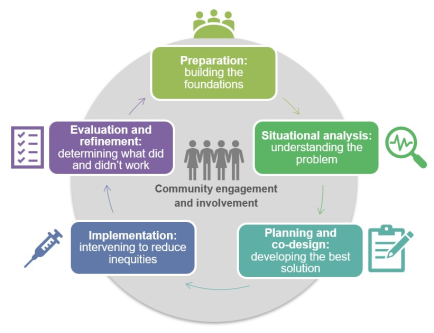
Adapted from: WHO Tailoring Immunisation Programmes (13)
In summary, the 5 phases of the immunisation equity action cycle are:
- Preparation: build the foundations - establish governance, roles and resources for immunisation equity work.
- Situational analysis: understand the problem - review data to identify inequities in vaccination uptake and understand behavioural and structural drivers.
- Planning and co-design: develop the best solution - partner with communities to develop targeted interventions.
- Implementation: intervene to reduce inequities - deliver interventions to reduce immunisation inequities.
- Evaluation and refinement: determine what did and didn’t work - continuously monitor process and outcome indicators to identify areas for intervention refinement.
Community engagement is crucial across all 5 phases of the action cycle and should be integrated throughout rather than treated as a standalone activity, in line with National Institute for Health and Care Excellence (NICE) guidance and quality standards (14, 15).
Each section of the toolkit corresponds to one phase of the action cycle and includes:
- suggested practical actions that stakeholders can take to improve equity
- reflective questions to support critical thinking and planning as well as guidance on how to implement the suggested practical actions
- links to existing tools and resources
- examples of local, rather than best, practice showing how approaches have been applied in different settings (embedded in the toolkit text, with additional examples and more detail in Appendix 2)
Together, these components are intended to provide a pragmatic, flexible resource that supports local systems in understanding and addressing inequities in vaccination coverage and uptake. Users can work through the toolkit in full or focus on the sections most relevant to their local context and priorities.
How can this toolkit contribute to outbreak response?
While the primary focus of this toolkit is supporting the long‑term, iterative process to strengthen systems, relationships and understanding of trends in inequities, it can be used to complement incident and outbreak response arrangements. The principles and phased approach set out in the immunisation equity action cycle align with the operating framework for communicable disease outbreak management, which emphasises preparedness, local intelligence, partnership working, community engagement and continuous learning (16). The toolkit can help identify priority populations at highest risk and mobilise trusted partners to support the design and delivery of equitable immunisation responses alongside urgent health protection measures as part of outbreak response.
Community engagement and involvement
Community engagement is a process of building and sustaining relationships, enabling stakeholders to work together to develop more efficient and effective solutions that address health protection risks and contribute to improved health outcomes (17).
The UKHSA has co-produced a community engagement model with people with lived experience of social exclusion (Figure 1) to explain what is meant by engagement with communities and provide guidance on how to manage expectations and build trust (18). The model should be used to identify what type of engagement is appropriate and feasible to be able to meet the “public promises” described below. If this is “informing” or “consulting”, consider how engagement can be strengthened by including elements of co-production (for example, co-producing vaccination communication materials – see Section 3.2.3, Box 5).
Figure 2: Community engagement model
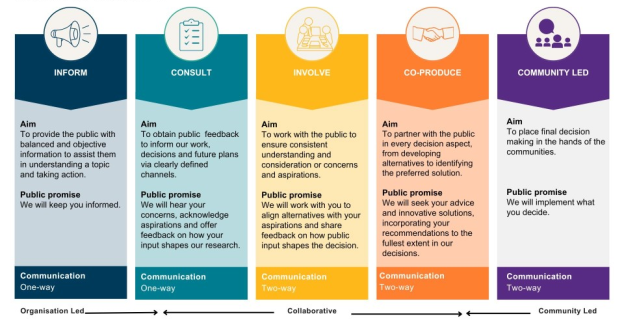
Evidence shows that community engagement can improve health behaviours, outcomes (including self-efficacy) and perceived social support for disadvantaged groups (19). In addition, it can enhance health awareness, strengthen community capacity to respond to health issues, and improve the acceptability of health services (20, 21).
Meaningful community engagement, initiated early and sustained across the action cycle, is essential for understanding and addressing immunisation inequities, particularly among underserved groups (15, 22-24). It helps build trust, improve relevance and identify barriers not captured through routine data. It also ensures that interventions reflect the lived experiences and priorities of those most affected by inequities, enabling the identification of barriers that may not be visible from within the health system and the co-creation of solutions.
Working with community members and voluntary, community, and social enterprise (VCSE) organisations (15) can:
- build trust and strengthen relationships
- improve cultural competence within the system
- challenge assumptions and uncover overlooked drivers of inequities
- support the design of immunisation services that are culturally appropriate, acceptable and accessible
- enhance communication and reduce misinformation around immunisation
- improve the sustainability of interventions to improve uptake
The extent to which communities can be involved will vary across each phase of the immunisation equity action cycle, from consultation to co-production. Levels of engagement will depend on:
- available time, capacity and funding
- existing relationships and networks
- urgency and scope of the work
- potential burden on communities
- community priorities
The aim is to ensure that engagement is meaningful, not tokenistic, while remaining practical and sustainable. To achieve this, community partners will need clarity on:
- their expected level of involvement (for example, advisory role, core partnership member, engagement facilitator or other)
- what decision-making power they will have and where and how they will influence priorities
- what the system will offer in return, which could include: recognition and visibility of their contribution, opportunities for training or skills development, access to shared intelligence and networks and/or appropriate reimbursement, where relevant and feasible, especially for lived‑experience contributors
NICE have produced national guidance on using community engagement to improve health and wellbeing and reduce inequalities (15), alongside community engagement quality standards (14).
The National Institute for Health and Care Research (NIHR) have also produced community engagement and involvement guidance, as well as recommendations for appropriate reimbursement rates for community partners (25, 26).
Working in partnership with people and communities is a legal duty for ICBs and the NHS more broadly (27, 28) and an essential component of population health management (9). NHS England has produced statutory guidance on working with people and communities which highlights the benefits of partnership, as well as the variety of approaches to community involvement that can be taken (27). Benefits of partnership include improved health outcomes, value for money, better decision-making, improved quality of services, accountability, transparency, participating for health, meeting legal requirements and reducing health inequalities.
1. Preparation: building the foundations
Good preparation is essential to establish the conditions for meaningful and coordinated activity, ensuring that the appropriate partners, structures and resources are in place from the onset. This phase focuses on bringing partners together and agreeing a shared purpose, fostering collective ownership across the immunisation system. A robust governance structure with clear roles and responsibilities for partners enables alignment and reduces duplication.
1.1 Suggested steps
| Steps | Go to section |
|---|---|
| Identify and engage cross-sector partners across the immunisation pathway to align efforts and avoid duplication | Section 1.2.1 |
| Decide on the levels and forms of community engagement that are desirable and feasible | Section 1.2.2 |
| Establish an immunisation equity partnership group or strengthen an existing board to provide oversight and coordination |
Section 1.2.1 Appendix 3: Template invitation email for immunisation equity partnership group Appendix 3: Template terms of reference for the immunisation equity partnership group |
| Define the group governance structures (roles, responsibilities and decision‑making processes), with clear lines of accountability | Section 1.2.3 |
| Develop a shared vision and collective understanding of the purpose, value and benefits of addressing immunisation inequities | Section 1.2.4 |
| Agree the scope, methodology, resources and timelines for the situational analysis and subsequent phases of the action cycle | Section 1.2.3 |
| Set out a clear meeting schedule for the immunisation equity partnership group, including cadence, format and expectations for attendance and preparation |
Section 1.2.3 Appendix 3: Template agenda for immunisation equity partnership group meetings |
1.2 Questions to consider
1.2.1. Which stakeholders should be involved and to what extent?
Identifying and engaging key stakeholders across the immunisation pathway early on reduces the risk of duplication, conflict and delays. Stakeholder analysis provides a structured approach to achieving this (29) and involves systematically identifying the people and organisations that need to be brought together to understand and address inequities in vaccination coverage and uptake at a local and/or regional level. Stakeholders can then be mapped according to their roles, interests and level of influence to inform proportionate engagement and effective collaboration.
A systematic stakeholder analysis should consider:
- who is involved in commissioning, delivering and supporting immunisation services
- who holds links to the community and relevant insight into gaps and barriers to access (for example VCSE organisations and community leaders)
- who is influential in shaping policy, practice and resource allocation
- who represents populations with unmet need or lower coverage
The wider immunisation system is undergoing significant change with the delegation of commissioning responsibilities to ICBs due by April 2027 alongside the creation of regional OPICs to provide commissioning support and expertise (5, 6, 30). This is likely to mean material change over time to the list of stakeholders who may be relevant to engage.
Examples of key stakeholders who may be relevant (at the time of publication) include:
1) System leadership and commissioning:
- NHS England regional and/or national immunisation teams
- NHS England Screening and Immunisation Teams
- ICBs (5)
- Director of Public Health (DPH) and local authority public health teams
- UKHSA Health Protection Teams (HPTs) and VPD leads within them
- regional OPICs (to be established) (6)
2) Service delivery:
- general practice (GP), GP Federations and primary care networks (PCNs)
- NHS Trusts and integrated health organisations (for example, Foundation Trusts)
- community pharmacies
- school-aged immunisation service providers
- community health services and outreach teams
- maternity and health visiting services
- occupational health services
- sexual health services
- community interest companies
- independent sector providers
- neighbourhood health services (to be established as part of the 10 Year Health Plan) ( 31, 32)
- regional health and justice partnership groups for delivery of prison health services including vaccination
3) Data and insight:
- Office for Health Improvement and Disparities (OHID) regional teams
- UKHSA regional teams – field epidemiology services
- local authority public health intelligence teams
- Child Health Information Service (CHIS) (dependent on data sharing and commissioning arrangements)
4) Community and voluntary sector:
- VCSE organisations supporting people experiencing financial vulnerability, minority ethnic communities, inclusion health groups, faith communities or people with long-term conditions
- faith and community leaders
- peer link workers
- people with lived experience or VCSE organisations that embed lived experience in their roles (peer-led or community-led)
- parents, carers and service users
5) Wider system:
- other local authority teams (for example, housing, education, social care)
- schools, early years settings, colleges and universities
- regional Department for Education teams
- employers and occupational health providers
- academia
This list is not exhaustive and should be adapted to reflect local context, system arrangements and scope (for example, childhood, adult or life‑course immunisation programmes).
Not all stakeholders identified need to be involved to the same extent. Stakeholder analysis can help determine who to engage closely, who to consult and who to keep informed, making sure effort is targeted where it will have the greatest impact on reducing inequities (29). It is important to have open and transparent conversation with stakeholders about the level of engagement planned to manage expectations and build trust.
Fostering partnership between stakeholders at all levels of the immunisation system is essential to address inequities and partnership working is part of ICB statutory guidance (27). It may be that there is a relevant multi-agency stakeholder group or partnership board that already exists. If so, consider building on this structure rather than creating a new one, ensuring its membership, purpose and ways of working are expanded or adapted to support a focused approach to immunisation equity.
1.2.2. How should the community and voluntary sector be involved during this phase?
Decisions will need to be made as to the level and form of community engagement that is feasible across the immunisation equity action cycle, considering practical constraints and the scope of the work. Early involvement in the ‘preparation’ phase ensures that community perspectives are embedded in decisions about governance, priorities and ways of working and that subsequent phases of the action cycle are grounded in community realities rather than assumptions made within the system (15, 33). The UKHSA has co-developed a community engagement planning tool with people with lived experience of social exclusion to support organisations in planning engagement (34).
Community and voluntary sector partners can support the ‘preparation’ phase by:
- informing governance structures, advising on how community voices can be represented meaningfully and in a supportive, non-extractive way (for example, through sitting on partnership groups or advisory panels and any additional support that might be required to enable this)
- identifying population subgroups who may be underrepresented or overlooked, using their insight to refine stakeholder mapping
- highlighting barriers to participation, such as language, digital exclusion, stigma and distrust and advising on practical ways to reduce these
- acting as connectors by linking system partners, trusted community leaders, existing networks and any ongoing and relevant workstreams
- shaping the early community engagement plan, helping determine preferred communication channels, feedback loops and what good involvement looks like locally
- defining ethical engagement principles (for example, safeguarding, trauma‑informed practice, safe handling of lived‑experience insights) that guide all subsequent phases
- identifying where power imbalances may limit future co‑production or evaluation and advising on mechanisms for shared decision‑making
It is important for collective agreement early on as to how community insight will be captured, shared and used. Even if full co‑production is not feasible at this stage, inviting a small number of VCSE representatives already working in immunisation or with communities of interest to participate in early discussions signals commitment to equitable partnership working.
VCSE organisations vary widely in size, capacity and resources. To support VCSE organisational involvement, there needs to be clarity around the expected commitment and plans for remuneration. To avoid overburdening community partners, it can be helpful to use a mix of engagement channels (for example, virtual meetings, short advisory consultations, option to provide written feedback) and support participation through accessible meeting times, travel expense reimbursement and digital access. Avoid assuming all VCSE organisations can commit to regular meetings and continue to review who does not have a seat at the table.
All individuals participating in groups may bring lived experience and learnt experience. Consider how all stakeholders can be encouraged to use their full experience to inform their contributions and ensure no one is required to share their lived experience. Where explicit lived experience input is required, seek VCSE organisational advice on the most appropriate approaches, whether that be through VCSE organisations that are peer-led or community-led or through direct involvement of people with lived experience.
Where contributors with specific lived experience are invited to be members of groups:
- ensure there is clarity regarding the purpose of including an individual with lived experience on the group
- make certain those invited know they are not required to share their lived experiences
- recognise that individuals cannot speak on behalf of others with similar experiences, but can provide an informed view based on their experiences
- ensure contributions are respected and valued equally to professional input
- provide options for reimbursement or recognition (financial or non-financial), in line with best practice (26)
- offer or identify appropriate support before and after meetings or requests to enable active and full participation, including reviewing papers in advance and ensuring safeguarding and trauma-informed support is in place
- make participation accessible by considering the format and structure of the meeting (for example, how introductions take place to remove perceived hierarchies), and by providing plain language meeting materials, avoiding unnecessary jargon
It is the responsibility of the chair and secretariat of any immunisation equity partnership group formed to ensure these principles are met.
Where possible, engagement around immunisation should be considered as part of wider, ongoing approaches to engaging with communities about their health and access to health and care services (33). This is important because lower vaccination uptake is often observed in communities that are also less likely to access other public health interventions, such as screening (35). In addition, communities may not always view VPDs and immunisation as immediate priorities, particularly where there are broader or more pressing health, social or access-related concerns (36). Embedding immunisation engagement within broader health engagement initiatives can help build trust, strengthen relationships over time and create more sustainable mechanisms for dialogue, insight sharing and action.
Ultimately, the ‘preparation’ phase is an opportunity to strengthen relationships with local communities and VCSE organisations, supporting ongoing collaboration and partnership and building trust.
1.2.3. What needs to be considered when forming an immunisation equity partnership group?
Partnership working to address immunisation inequities, coordinated through a dedicated group or integrated into the workstreams of an existing board, should have clear aims and objectives. Action to ensure equitable immunisation outcomes should go beyond improving vaccination coverage and should include work to enable effective VPD surveillance, prompt local action on cases and outbreaks and, to some extent, the overall health of the population, considering the role of co-morbid disease in influencing VPD outcomes. It is also important to consider broader factors that may influence vaccination uptake and opportunities for collaboration. Communities with lower vaccination uptake are often less likely to engage with other preventive services and may benefit from a “Making Every Contact Count” (MECC) approach, for example integrated screening or health checks (36, 37).
Any newly formed immunisation equity partnership group should agree early on its overarching scope (for example, childhood immunisation programmes or inequities in a given locality) and ways of working to ensure clarity of purpose and shared accountability across all partners. This includes confirming the group’s governance arrangements, such as membership, roles and responsibilities, decision‑making processes, reporting lines and how community voices will be represented, as well as practical operating expectations. Data sharing arrangements, confidentiality policies and approval processes for any outputs should also be agreed.
The group should also determine the frequency of its meetings, ideally convening on a quarterly basis, or at a minimum every 6 months where capacity is constrained. Establishing an agreed schedule for how often key immunisation equity data will be refreshed and reviewed is equally important, enabling the group to monitor emerging trends, respond to widening inequities and maintain a dynamic, up‑to‑date understanding of need. Setting these parameters at the outset supports consistency and transparency across the life of the partnership.
See Box 1 and Box 2 for examples illustrating ways in which local partnership working has supported action on immunisation equity (more detail can be found in Appendix 2).
Box 1: Childhood immunisation steering group in Slough
Slough has lower childhood immunisation uptake than regional and national averages, with particularly low coverage in specific wards, schools and GPs. Contributing factors include population and geographical inequities, access challenges for busy or mobile families, and low vaccine confidence influenced by misinformation, language or cultural barriers and trust concerns. Local partners recognised the need for stronger collaboration, improved data sharing and support for professionals to deliver confident vaccine messages.
In response, a multi-agency Childhood Immunisation Steering Group was created, chaired by the local authority children and young people’s public health lead. Membership includes local authority public health, NHS providers, NHS England, the ICB, CHIS, school-aged immunisation teams, primary care, education and the voluntary sector. Meeting every 6 weeks, the group reviews preschool and school-aged immunisation data via a CHIS Power BI dashboard to identify low-uptake areas and agree targeted actions. These have included strengthening school engagement, supporting a flu vaccination pilot, promoting vaccine-confidence training and delivering targeted communications. Partners also work with schools, early years settings and community and faith groups to promote vaccination and explore behavioural approaches to reach underserved families.
The group has strengthened partnership working, improved data sharing and enabled coordinated, targeted action. Regular meetings support monitoring of uptake, engagement activity, training and progress. Key enablers have been strong multi-agency leadership, shared accountability, timely CHIS data and established community networks. Challenges include variable GP engagement and access barriers among diverse populations. Next steps include deeper engagement with low‑coverage GPs, linking neighbourhood projects, expanding targeted work with schools and early years settings, building on successful initiatives and scaling effective approaches across additional wards.
Box 2: Strengthening local system leadership and accountability through Maximising Immunisation Uptake Groups, Southwest England
In 2022, the NHS England Southwest Vaccination and Screening Team (VST) spearheaded the formation of Maximising Immunisation Uptake Groups (MIUGs) to bring together local stakeholders to develop coordinated plans to tackle disparities in vaccination coverage aimed at improving uptake and reducing inequalities.
MIUGs had 4 aims: create a community of practice and foster learning, use local intelligence to address inequalities across all immunisation programmes, work with underserved communities to remove barriers to access to vaccination services and use relationships and insight into the needs of the local population to deliver acceptable immunisations.
Each MIUG developed its own evidence-based action plan. Based on local knowledge, the MIUG set its core priorities, with clear roles, responsibilities, and reporting mechanisms for each of the partners. This structure promoted accountability and coordination, avoiding duplication of efforts while ensuring alignment towards shared outcomes. The Southwest VST provided coordination and support, connecting MIUGs with broader regional inequalities work and facilitating the sharing of lessons and good practices across the wider health system.
MIUGs have proven successful at improving coordination and reducing overlap at regional and local levels. Stronger system leadership not only improved opportunities for input from community groups but led to greater understanding of how to improve uptake and reduce barriers. By putting a focus on shared leadership, accountability, and evaluation, and with the support of the regional team, they have been able to reach deeper into communities to understand and address complex inequalities in access and uptake.
1.2.4. What are the benefits of addressing immunisation inequities?
The immunisation equity partnership group should develop a shared vision and collective understanding of the purpose and value of addressing immunisation inequities in the ‘preparation’ phase to direct action and ensure alignment, making sure everyone is on the same page. This vision may take into account that many of those communities with the lowest vaccination uptake also have lower than average uptake of other preventive services (for example, screening) and may experience multiple disadvantage affecting aspects of their life beyond immediate health outcomes (35, 38). A working list of benefits of strengthened immunisation equity, below, can be utilised or adapted as needed.
Equity in immunisation benefits individuals, communities and society, contributing to:
- improved trust between marginalised communities and healthcare providers (39, 40)
- improved health outcomes overall - reduced illness and deaths from VPDs among groups who are at higher risk of VPDs or who face systemic barriers to access, prevention of outbreaks in communities in vulnerable circumstances and stronger herd immunity, protecting those who cannot be immunised (for example, immunocompromised individuals, infants) (41-43)
- narrowing the gap in health outcomes across socioeconomic, ethnic, geography and marginalised groups, while promoting social justice and upholding the right to health for all populations (41, 42)
- economic benefits – increased workforce stability and economic productivity, a reduction in direct healthcare costs through prevention of hospitalisation and the long-term consequences of VPDs and a reduction in lost income for affected families and communities, who may be more likely to be deprived (41-44)
- societal benefits – greater school attendance and educational attainment for all children (41, 42)
- health security – prevention of disease transmission across geographies, as well as contribution to global VPD elimination and eradication goals (45)
2. Situation analysis: understanding the problem
The ‘situational analysis’ phase focuses on developing a clear, evidence‑based understanding of who is experiencing lower vaccination uptake and why. Building on the foundations established during the ‘preparation’ phase, this stage involves bringing together quantitative and qualitative data, including community perspectives to identify inequities, diagnose underlying behavioural and structural drivers and highlight unmet needs. A robust situational analysis ensures that subsequent planning and co‑design activities are based on an accurate interpretation of local realities rather than assumptions, supporting targeted and effective action to reduce immunisation inequities. It is important to acknowledge that the focus of the situational analysis may already be shaped by the agreed remit and priorities of the immunisation equity partnership group (for example, childhood immunisation programmes).
2.1 Suggested steps
| Steps | Go to section |
|---|---|
| Conduct a needs assessment by analysing a range of quantitative and qualitative data sources to identify immunisation inequities and mapping current activity, services and community links |
Sections 2.2.1 to 2.2.6 Appendix 4: Immunisation equity needs assessment checklist Appendix 4: Sources of quantitative immunisation data and the dimensions of inequity captured |
| Explore underlying causes of inequities using existing evidence, qualitative data and conceptual frameworks to understand facilitators and barriers to vaccination | Section 2.2.7 and 2.2.8 |
| Engage stakeholders, including frontline staff and community partners, to validate findings and identify data gaps | Section 2.2.9 |
| Consider commissioning bespoke analysis or insight work where needed to better understand the drivers of observed inequities | Section 2.2.6 and 2.2.7 |
| Where gaps in data exist, work with system partners to improve data reporting | Section 2.2.5 |
2.2. Questions to consider
2.2.1. What is already known about gaps in vaccination coverage and uptake in England?
The UKHSA National Immunisation Programme Health Equity Audit sets out key findings with regard to immunisation equity in England, demonstrating lower vaccine uptake and suboptimal coverage among people who are: socially deprived, of an ethnic minority (particularly being of black ethnicity), pregnant, of a migrant background, living with certain long-term conditions or learning disabilities and resident in London (2). The audit highlights that for some communities, data quality and completeness are inadequate in their ability to support meaningful assessment of inequities or their drivers.
National‑level data provides a valuable overview of immunisation inequities across England, where available, but cannot fully capture the nuances that shape the immunisation picture within individual communities and localities. For this reason, national insights should be treated as a starting point rather than a definitive explanation of local disparities. A comprehensive local assessment of immunisation equity is essential to identify gaps in coverage and highlight unmet need.
What is a needs assessment and what questions can a needs assessment focussed on immunisation equity help answer?
A needs assessment involves systematically identifying the unmet health and healthcare needs within a population and determining how services should adapt to address those gaps (46). Local authorities and ICBs have equal and joint duties to prepare joint strategic needs assessments (JSNAs) through the Health and Wellbeing Board (47).
More specifically, an immunisation equity needs assessment is used to identify unmet immunisation needs within a defined population. It focuses on understanding who has low vaccination uptake, why disparities exist and what changes are required to make services equitable and accessible.
Immunisation equity needs assessments should include analysis of multiple sources of quantitative, qualitative and mapping data to answer the following questions:
- which population groups have the lowest vaccination coverage and/or uptake?
- which population groups have the highest rates and/or outbreaks of VPDs?
- how has vaccination uptake and coverage changed over time and have disparities across population groups changed?
- for which population groups, are there no reliable data to assess vaccination uptake and VPD burden?
- what are the drivers of the inequities in immunisation identified, including context‑specific barriers and facilitators that shape vaccination behaviours?
- what existing relationships with trusted community organisations and leaders can be mobilised to support work to address immunisation inequities?
- what services and/or initiatives are already in place to address immunisation inequities locally and how effective and/or accessible are these?
- what is already being done locally by system partners to understand gaps in provision and avoid duplication?
A robust immunisation equity needs assessment provides the evidence base required to design and commission effective strategies that address the underlying drivers of immunisation inequity and improve uptake among the populations who need it most.
2.2.3. What dimensions should be considered when assessing immunisation inequities?
The dimensions of inequity and protected characteristics that should be explored where possible are:
- socio-economic status including deprivation, employment, income, occupational status and educational attainment
- protected characteristics identified under the Public Sector Equality Duty in the 2010 Equality Act, including age, sex, gender, ethnicity, religion, sexual orientation, marriage and civil partnership, pregnancy and maternity disability and health status including learning and physical disabilities and mental and chronic physical illnesses (11)
- geography including factors affecting those living in urban and rural areas
- inclusion health group status including people seeking asylum, refugees and other migrants in vulnerable circumstances, people with experience of the justice system, people experiencing homelessness, sex workers, people subject to modern slavery, people who use drugs and Gypsy, Roma and Traveller communities (48)
- parental factors including lone parents, family size, parental age and parental illness
These dimensions reflect well‑established social, economic and structural determinants of health that influence people’s exposure to VPDs, their ability to access services and their likelihood of receiving timely immunisation (49). Many of these groups have been consistently shown to experience poorer health outcomes, barriers to healthcare access or lower trust in public services, which can compound disadvantages and widen gaps in vaccination coverage (50, 51). People may hold multiple overlapping identities or experience several sources of disadvantage at once. These intersecting factors can compound inequity (38).
The UKHSA has published a variety of resources and evidence on equity including a series of summaries describing the health protection risks for different inclusion health populations (52). OHID has recently released an Inclusion Health Dashboard (53).
2.2.4. How should a needs assessment focusing on immunisation equity be carried out?
There are several existing tools and guidance to aid in completing a health needs assessment more generally (46, 54-57). The NHS Learning Hub has an e-learning module on “Assessing Needs” (58). A health needs assessment checklist specific to immunisation equity can be found in Appendix 4 (55).
There are several key questions to consider before initiating an immunisation equity needs assessment to avoid duplication including:
- is anyone else locally conducting a needs assessment around the same topic?
- has a needs assessment been completed previously for the same or similar topic?
- is there a recent needs assessment available online from another area?
It is important to also set out the scope of the needs assessment, including the population and immunisation programme, taking into consideration what data is available and what current data ownership and sharing arrangements are in place.
A number of local authorities have carried out immunisation needs assessments with equity components (for example, highlighting differences in uptake by ethnicity, geography and others) in recent years (59-63). Box 3 highlights work from Lewisham to understand inequities in uptake of childhood measles, mumps and rubella (MMR) and pre-natal pertussis vaccination (see Appendix 2 for more detail).
Box 3: Lewisham JSNA topic assessment on inequalities in childhood MMR and pre-natal pertussis vaccination uptake
In 2023 and 2024, Lewisham Council’s Public Health Team carried out a JSNA topic assessment on inequalities in childhood MMR and prenatal pertussis vaccination, as part of wider system work responding to rising measles and pertussis cases in London. The topic was selected due to growing local concern and because the last assessment was completed in 2018. Although the steering group did not direct an inequalities focus, this emerged naturally given Lewisham’s diverse population and its strong health equity ethos.
The assessment, initiated in Autumn 2023 and signed off in Autumn 2024, did not have a formal steering group due to limited capacity, but key council and ICB stakeholders were engaged throughout. The Maternity and Neonatal Voices Partnership supported insight gathering by sharing a survey with their networks. Data sources included publicly available vaccination uptake data including Cover of Vaccination Evaluated Rapidly (COVER), local surveys of pregnant residents, engagement with GPs and parent groups and limited data extracted from GP systems to describe ethnicity and languages spoken.
A major enabler was strong system-wide interest, with NHS partners conducting parallel insight work with residents and GPs to address uptake, allowing findings to be synthesised and providing access to limited GP data and broad stakeholder engagement. The main challenge was lack of sufficiently granular local data for detailed inequalities analysis, with an ad hoc GP data extraction proving helpful but insufficient for comprehensive demographic breakdowns. Key lessons learned include the value of capitalising on system momentum, triangulating national quantitative data with local qualitative insights and preparing specific data requests to maximise opportunities for data access.
Conducting a comprehensive immunisation equity needs assessment can be time and resource intensive, particularly in areas with limited analytical capacity or access to high‑quality data. In such circumstances, local systems may opt to update or build on previous assessments, focusing on more recent data, new insights, emerging inequities or recent service changes, rather than undertaking a full assessment from scratch. The immunisation equity partnership group convened in the ‘preparation’ phase should agree the expected frequency of data refreshes and review updated data as part of its routine meetings, using updated insights to inform prioritisation, planning and timely refinement of local approaches.
When presenting equity data, it is important to avoid deficit narratives, describing a community by focussing on what it lacks. This can be stigmatising and undermine trust with communities, shifting responsibility onto individuals rather than recognising structural or systemic barriers. Ensuring that communities can sense-check interpretations and that appropriate language is used is essential (64). There are existing government guides on writing about ethnicity and disability that can help (65, 66).
2.2.5. What routine data and information sources are available to identify immunisation inequities?
Appendix 4 includes a brief overview of available quantitative data sources that can be reviewed to understand immunisation gaps and which dimensions of inequity they can help assess. This has been adapted from a UKHSA Immunisation inequalities: data and information sources guidance document published in 2023, which will be updated in 2027 (67). Consideration should be given to data on vaccination uptake, but also data on levels of VPDs, as a proxy of unmet need.
Routine quantitative vaccination data sets have important limitations that must be considered when interpreting inequities:
- incomplete recording of key demographic variables leading to incomplete or non‑representative analyses (for example, poor reporting of ethnicity)
- sparse data on inclusion health groups, with few data sets able to capture information on these populations
- small numbers within some groups reducing the reliability of analyses
- poor estimates of certain population sizes, especially mobile, unregistered or isolated communities which can distort coverage estimates
- variable data quality across programmes, providers and geographies
- lack of publicly available operational data for wider system use (such as the Federated Data Platform)
- infrequent data updates limiting the timely identification of emerging inequities and the ability to rapidly respond to widening gaps
- limitations to the disaggregation possible, with most data sets only able to provide information on variation by geography, making it impossible to assess equity across other important dimensions (for example, country of birth or ethnicity)
It is important that where issues in routine data sets are identified, system partners work together to action improvements in data quality and completeness (for example, ethnicity reporting in GP records).
2.2.6. What other data might be relevant to inform the needs assessment?
When routine data sets lack the detail needed to understand inequities, local systems can supplement them with targeted, locally generated quantitative information. Examples of options include:
- gathering data from multiple operational sources, such as bespoke GP system extracts, school immunisation teams, pharmacies, antenatal services, outreach service activity logs and CHIS (where permitted) (68)
- reviewing local service utilisation data (for example, missed appointment rates, referral patterns or engagement with maternity or health visiting services) to identify populations who may have unmet immunisation needs
- working with PCNs, local authorities or VCSE partners to generate small bespoke data sets for specific groups (for example, surveys of people in temporary accommodation, recent migrants or those attending outreach clinics)
- liaising with UKHSA regional field services and HPTs to access data on local trends and outbreaks of VPDs (69)
When creating or using additional quantitative data sources, local areas will usually need appropriate data‑sharing agreements, as these data sets often involve identifiable or sensitive information held across different organisations (for example, GPs, local authorities, VCSE partners, school immunisation teams). Data sharing agreements set out what data will be shared, for what purpose, how it will be protected and who is responsible for governance, ensuring that any bespoke local data set is both lawful and ethically robust. The format for data sharing agreements is often dictated by the organisation that has ownership of the data.
Local community demographic data can provide essential context for interpreting patterns seen in routine vaccination data sets. Understanding the size, distribution and characteristics of local populations, such as age structure, ethnicity profiles, migration flows, language needs, disability prevalence and housing, helps ensure that analyses of vaccination uptake are appropriately contextualised to the population living in the area. This data can highlight populations who may be under‑represented in routine vaccination data sets, support more accurate denominator estimates and guide more proportionate targeting of needs assessments and interventions. Community demographic data is available through the latest Census and the Public Health Outcomes Framework (70, 71).
Quantitative data alone rarely explains why inequities occur. Local areas can strengthen understanding by gathering qualitative insight through work with frontline workers, VCSE organisations and/or affected communities. There is a wealth of research and insights on the drivers of inequities in vaccination uptake at national, regional and local levels, across academia, the voluntary sector and the public sector (2, 72). To support in building trust with communities, start by reviewing this data to ensure any previous engagement has been valued, prior to identifying what additional gaps there may be. Further rapid community intelligence work, such as focus groups or interviews, can provide information on reasons for low vaccine confidence, communication needs and feedback on the accessibility and availability of immunisation services (including transportation and behavioural considerations). An example of qualitative work to understand barriers to coronavirus (COVID-19) vaccination can be found in Box 4 (see Appendix 2 for more detail). Discussions with frontline staff can provide contextual information on barriers to service delivery, as well as practical barriers faced by patients.
Box 4. ‘Living with COVID-19’ conversations in Dudley
During the COVID 19 pandemic, Dudley Council identified low engagement with public health messaging and services among several marginalised ethnic minority communities, linked to reduced trust in statutory organisations, barriers to accessing information and varied uptake of protective behaviours, including vaccination. To understand these issues and improve communication, a qualitative engagement programme, “Living with COVID,” was delivered between October 2021 and January 2022.
Trained community champions, including faith leaders and respected community representatives, facilitated discussions in partnership with the local authority, VCSE organisations and leaders from Black African, Black Caribbean, Pakistani, Roma and Arab communities. Resources included analytical staff, champion training, translation and interpretation and collaboration with community organisations for participant recruitment and hosting.
A total of 157 residents took part, identifying barriers such as mistrust, confusing messaging, language needs and reliance on informal community channels. Insights directly shaped local vaccination outreach, communication strategies and partnership work. Success was measured through participation levels, diversity of communities engaged, the practicality of recommendations and how effectively insights were integrated into public health planning. Using trusted community champions enabled participation from residents often under represented due to language or literacy barriers, digital exclusion and mistrust. The programme generated rich qualitative insight into lived experiences, information pathways and trust dynamics that quantitative data alone could not provide, informing service changes and strengthening culturally appropriate communication.
Key enablers included trusted leaders, strong VCSE partnerships and flexible, face to face engagement. Challenges included initial mistrust, language barriers, digital exclusion and rapidly changing national guidance. The approach will now be embedded into routine public health engagement, with champions supporting wider priorities such as vaccination, screening and prevention, and the model adapted for other inclusion health groups and future public health incidents.
Triangulation of the variety of quantitative, qualitative and mapping data across the needs assessment is key to ensure the validity and credibility of the findings, reduce bias and strengthen the overall evidence base. However, where high-quality local data are not available, it is acceptable and recommended to draw on national audits, published literature and professional and community insight, alongside knowledge of the characteristics of the local population to identify likely areas of unmet immunisation need. Waiting for “perfect” data risks delaying action and may perpetuate avoidable inequities.
2.2.7. What is known about barriers to vaccination uptake?
In 2022, NICE produced guidance on vaccine uptake in the general population (NG218) (73). As part of the development process, NICE carried out an evidence review of barriers to, and facilitators for, vaccine uptake (72).
Across all population groups, the most common barriers to vaccination, in no particular order, include (72, 74, 75):
- practical access difficulties such as inconvenient clinic hours, transport issues, or language barriers
- cultural or religious beliefs
- misinformation about immunisation
- negative past experiences with healthcare
- concerns about vaccine safety and side effects
- mistrust of government or pharmaceutical companies
- unclear or insufficient information (for example, lack of translated and culturally appropriate materials)
In contrast, the most common facilitators to help increase uptake include:
- strong trust in healthcare professionals
- clear and accessible information
- convenient and flexible vaccination opportunities (for example, through community clinics, pharmacies or home visits)
- positive previous experiences
- supportive social norms or encouragement from family, peers or community leaders
- continuity of care
- proactive reminders
Evidence on facilitators and barriers to vaccination among specific populations can be found in Section 8 and Table 6 of the recently published UKHSA National Immunisation Programme Health Equity Audit (2). This evidence was generated through a literature review of qualitative studies published between 2019 and 2025. NHS England is currently creating community factsheets summarising enablers and barriers to vaccination for specific populations.
When planning action to reduce immunisation inequities, it is essential that these barriers and facilitators are not assumed to operate uniformly across all immunisation programmes and settings. National‑level patterns provide an important foundation, but the specific drivers of low uptake can differ markedly between local areas and even between neighbourhoods, GPs or communities within the same system. Local assessment, drawing on intelligence from frontline providers and communities, is therefore critical to determine which barriers are actually influencing behaviour in that context. Without this step, there is a risk of implementing interventions that do not align with the lived experiences, priorities or realities of local populations, thereby limiting effectiveness and potentially exacerbating inequities.
There are several existing tools to support the collection of data on underlying behavioural and structural drivers of vaccination. The WHO has developed tools and practical guidance for understanding the behavioural and social drivers of vaccination (13, 76). The Tailoring Immunisation Programmes tool has been applied in London to guide the collection of behavioural insights to identify barriers and enablers to childhood immunisations in Jewish communities (77, 78). The European Centre for Disease Prevention and Control (ECDC) have also developed a survey tool to assist in the collection of behavioural data on vaccination acceptance and uptake (79).
2.2.8. What approach can be applied to understand facilitators and barriers to vaccination?
There are many ways of thinking through conceptually the range of barriers and facilitators to vaccination between communities. One such framework is the ‘5As taxonomy’, a model developed specifically to explore immunisation inequities (80). It can be applied to organise the possible root causes, or ‘non-sociodemographic determinants’, of suboptimal vaccination coverage.
The 5As are:
- access: the ability of individuals to be reached by, or to reach, recommended vaccines
- affordability: the ability of individuals to afford vaccination, both in terms of financial and non-financial costs (for example, time)
- awareness: the degree to which individuals have knowledge of the need for, and availability of, recommended vaccines and their objective benefits and risks
- acceptance: the degree to which individuals accept, question or refuse vaccination
- activation: the degree to which individuals are nudged towards vaccination uptake
It is important to also consider structural facilitators and barriers to vaccination. Though the ‘5A model’ may capture some system-level factors across the access, affordability and activation dimensions, it largely focuses on individual and proximal determinants rather than broader structural conditions, such as socioeconomic inequity and poverty, institutional and policy environments (for example, national policy), historical and political determinants (for example, racism and mistrust in institutions) and community-level infrastructure (for example, transport links and health system distribution).
Using a conceptual framework, like the ‘5As taxonomy’, during the situational analysis phase will help local systems move beyond describing who has lower uptake to understanding why gaps exist. Conceptual frameworks support the systematic identification of behavioural and structural drivers of inequity and help guide the selection of appropriate interventions (81).
2.2.9. How should the community and voluntary sector be involved during this phase?
The community and voluntary sector can provide valuable insight to contextualise the analysis of routine data sources. Involving VCSE partners in the ‘situational analysis’ phase helps avoid misdiagnosis, ensures that the proposed drivers for gaps reflect lived experience and strengthens the interpretation of emerging inequities.
Community and voluntary sector partners can contribute to the ‘situational analysis’ phase by:
- identifying potential harms or sensitivities in data collection (for example, stigma, confidentiality concerns, mistrust, disclosure) and advising on mitigation strategies
- identifying inequalities that are not visible in data and may have been overlooked in quantitative analysis due to gaps in routine data collection
- providing qualitative insight into why certain groups may experience lower vaccination uptake, revealing issues not visible in quantitative data or missing from the literature
- validating and challenging system assumptions, ensuring that interpretations of data resonate with community experiences
- bringing forward emerging concerns, misinformation or cultural beliefs regarding vaccination, enabling early identification of behavioural or structural drivers of inequity
- supporting access to underserved groups for qualitative research (for example, focus groups, interviews or rapid insight work) and advising on culturally appropriate approaches to engagement
- carrying out insights gathering and/or qualitative research where trained to do so (for example, peer interviewing)
- helping interpret findings through an equity and lived experience lens, ensuring that underlying causes are correctly understood
To ensure engagement is meaningful, local systems should provide clear expectations, practical support and proportionate asks of VCSE partners, recognising that smaller organisations may have limited capacity. It is also important to establish feedback loops so that emerging findings are shared back with VCSE organisations and community groups, allowing them to validate interpretations and ensure that insights are used accurately and respectfully, including sharing these more broadly to influence other parts of the system, where appropriate and with permission.
3. Planning and co-design: developing the best solution
The ‘planning and co‑design’ phase builds on the insights generated during situational analysis to develop targeted, evidence‑based and community‑informed interventions that are feasible within local system constraints. This phase is centred on partnership working, bringing together system stakeholders, frontline staff, VCSE partners and communities to ensure that proposed interventions address the behavioural and structural barriers identified, reflect lived experience and are culturally appropriate, practical and acceptable. Investing time in co‑design at this point supports the development of solutions that are more equitable, sustainable and likely to lead to meaningful improvements in vaccination uptake (82-84).
3.1. Suggested steps
| Steps | Go to section |
|---|---|
| Prioritise inequities based on need, risk and potential impact | Section 3.2.1 |
| Review the evidence base for interventions known to improve vaccination uptake and address barriers |
Section 3.2.2 Appendix 5: Strategies which may increase vaccination uptake in underserved groups |
| Co‑design and pilot locally relevant, evidence‑based interventions with communities and delivery partners, addressing both behavioural and structural barriers |
Section 3.2.3 Appendix 5: Existing resources to assist in designing intervention components |
| Co-develop a local immunisation equity action plan on delivering the interventions, including clear objectives and an evaluation framework |
Section 3.2.4 Sections 5.2.1 to 5.2.3 |
| Ensure staff and community partners are adequately trained and supported to deliver the interventions | Section 3.2.5 |
3.2. Questions to consider
3.2.1. How should decisions be made about where and how to intervene to reduce immunisation inequities?
The aim of the priority-setting process is to select which inequities in immunisation to focus on given the findings of the situational analysis and limited resources. Prioritising should be structured and transparent, as well as fair and inclusive.
Ways that local systems can approach prioritisation
The immunisation equity partnership group should use an agreed set of criteria to rank needs, developing or adopting simple, pragmatic criteria to ensure consistency and reduce subjective decision‑making.
Such as:
- size of the inequity (how large the gap is)
- likely impact of action on health outcomes (risk of severe disease, outbreaks, or avoidable morbidity)
- magnitude of unmet need (for example, low coverage, high missed opportunities)
- feasibility of action (workforce, funding, community links and capacity)
- urgency (for example, pending outbreaks, new service changes)
Using a simple scoring matrix or prioritisation tool such as a light touch scoring matrix (for example, low, medium or high need, impact and feasibility) will help the immunisation equity partnership group to appraise options and document the rationale for decisions. There are several existing prioritisation guides and tools not specific to immunisation:
- National Association of Country and City Health Officials: Guide to prioritisation techniques (85)
- Public Health Informatics Institute: Prioritisation criteria (86)
Priority‑setting should involve communities and frontline staff, tested with VCSE partners, people with lived experience and frontline staff and primary care teams. This will help validate whether the perceived priorities reflect lived realities and avoid focusing solely on what is easiest to measure.
The final priorities should be agreed collectively. The immunisation equity partnership group should discuss the ranked list, identify the top priorities, agree what is in scope now versus later and document the justification and assumptions.
Priorities should be proportionate to local capacity. Local areas with limited capacity may choose to focus on one or 2 priority groups, a single programme with widening inequities or a high‑risk neighbourhood, rather than attempting a wide set of actions that cannot be delivered effectively.
Priorities should be reviewed routinely - reassessed when refreshed data is available and inequities have shifted, as well as in response to emerging risks or new opportunities (for example, partnerships, funding), keeping planning dynamic and making sure action remains aligned with current need.
It is important to take into consideration during prioritisation that ensuring effective vaccination delivery and uptake through core programme offers is central to the attainment of high uptake across all population groups (4). By improving coverage overall, underserved populations will potentially benefit through reduced risk of exposure to agents that cause VPDs, and other mechanisms.
3.2.2. What interventions are known to improve uptake and address barriers to vaccination?
There is now good consensus on what works to improve vaccination uptake for the general population. NICE guidance on vaccine uptake in the general population (NG218) (73, 87-93) and increasing uptake of flu vaccination (NG103) (94-98), and other sources (99) highlight the value of:
- improving access and convenience (flexible appointments with extended hours, multiple settings, opportunistic offer, outreach)
- using systematic invitations and reminders, escalating contact where needed
- providing tailored education and information to address concerns, supported by trusted professionals
- developing multi‑component interventions combining reminders, education and access improvements
- integrating work on immunisation as part of broader health initiatives
However, often tailored, community-based approaches are needed to address the barriers experienced by underserved groups locally (100-102). As part of this toolkit, a literature review was carried out to explore strategies that may be effective at increasing vaccination uptake among population groups with poorer access to healthcare and/or lower coverage. The methodology and findings can be found in Appendix 5. It is important to note that this review is not comprehensive and did not include an assessment of study quality. There may be some interventions more relevant to specific immunisation programmes (for example, seasonal immunisation). Further evidence review work is planned under the implementation of the UKHSA Immunisation Equity Strategy (4).
There are several existing toolkits and resources to aid in intervention design and the development of specific intervention components. Examples can be found in Appendix 5, including links to national communication resources. These have been produced in 36 languages, in a range of accessible formats and designed to meet all accessibility standards and clinical accuracy requirements. Additional guidance on community engagement can be found in the community engagement and involvement section of this toolkit.
Case study repositories can also be useful to explore the variety of interventions undertaken in other local areas, focussing on immunisation equity. However, it is necessary to exercise caution when using these examples, as published case studies do not necessarily represent best practice. They may highlight activity rather than effectiveness and their impact is often highly context‑dependent. Existing case study repositories include:
- NHS: Futures Collaboration Platform (103)
- UKHSA: ‘How we did it’ section of the Vaccine Update circular (104)
- Local Government Association: Case studies (105)
- Local Government Association: COVID-19 vaccination case studies (106)
- ECDC: Catalogue of interventions addressing vaccine hesitancy (107)
- ECDC: Library of interventions to increase vaccination acceptance (79)
Appendix 2 presents detailed examples of local practice that have been collected through the development of this toolkit.
It is important to acknowledge that outreach can be an important and effective aspect of holistic interventions to address inequities but equity needs to be fully integrated into the core immunisation programme offer to maximise inclusivity and reach (for example, offering extended GP clinic hours for vaccinations to reach working-age adults or ensuring community pharmacies have translated vaccination resources).
Ultimately, decisions about which interventions to implement to address prioritised inequities should be made by the immunisation equity partnership group, combining the evidence on what works with a strong understanding of local context, including what existing assets can be leveraged to support the transferability of interventions to the relevant settings.
Before implementing an intervention at scale, it is essential to pilot proposed approaches on a small scale to assess feasibility, acceptability and potential unintended consequences. Piloting allows local systems and community partners to test core components, identify practical barriers, and refine delivery models in real-world conditions (108). Insights from piloting should be used to strengthen intervention design, inform resource planning and guide decisions about wider rollout.
3.2.3. How should the community and voluntary sector be involved during this phase?
The co-design of interventions to address immunisation inequity with the community and voluntary sector supports the design of services that are culturally appropriate, accessible and acceptable (82-84). This in turn, increases the likelihood that improvements in uptake are sustained, reducing inequities.
Community and voluntary sector partners can contribute to the ‘planning and co-design’ phase by:
- contributing to the prioritisation of which inequities or population groups to focus on, ensuring decisions reflect lived experience rather than solely system‑defined metrics
- co-designing intervention materials, ensuring their cultural appropriateness, inclusivity and practical relevance
- advising on the feasibility of interventions and intervention components, drawing on their understanding of resource constraints, community realities and known challenges
- ensuring representation of underserved groups, supporting recruitment for co-design workshops or lived experience panels
- helping to make co‑design workshops and activities accessible (for example, interpreters, accessible venues, childcare, trusted facilitators) and inclusive of multiple community voices
- supporting the development of service delivery models and service specifications, as part of market engagement for procurement and contracting
- supporting small‑scale feasibility testing or piloting to assess acceptability, accessibility and cultural relevance before wider rollout
- strengthening community ownership, encouraging peer to peer advocacy and supporting long-term sustainability
- acting as a critical friend regarding the appropriateness of the interventions to the challenges highlighted
- contributing to the development of the immunisation equity action plan described in Section 3.2.4
Community engagement and involvement at this stage strengthens legitimacy, avoids harmful assumptions and enhances intervention effectiveness. Box 5 gives an example of the co-design of vaccination communication resources for Gypsy, Roma and Traveller communities (109, 110). More detail can be found in Appendix 2.
Box 5. Developing vaccination resources with and for Gypsy, Roma and Traveller communities
Vaccination uptake is lower among Gypsy, Roma and Traveller communities due to literacy challenges, digital exclusion, language barriers, historic discrimination and mistrust in statutory services. Previous written resources were generic, text‑heavy and ineffective at building trust, contributing to persistent immunisation inequities. In the summer of 2024, outbreaks of measles and whooping cough further highlighted the need for accessible, culturally resonant communication.
A suite of short, animated films and a testimonial video on maternal and childhood immunisation were co‑developed with Gypsy, Roma and Traveller communities, led by Friends, Families and Travellers in partnership with the UKHSA and the Roma Support Group. A lived experience steering group and focus groups shaped the content, tone, imagery and language. Three co‑production workshops with a community illustrator refined scripts and visuals and highlighted the value of including elders’ testimonies to build trust. Community members recorded English voiceovers and translations were produced in 3 Romanesque languages. The project required staff time for engagement and coordination, partner input, professional illustration and animation, audio recording, translation fees and participant remuneration.
The project aimed to deliver a suite of materials more accessible, relatable and non-judgemental than previous written materials. Community feedback indicated that the resources reflect real concerns and clarified key questions about safety, eligibility and choice. Reach and engagement indicators included a national webinar (over 600 attendees) to launch the resources to health professionals and community organisations, publication of the maternal and childhood immunisation film by Traveller Times at the request of a local public health team, and use of the films on loop on a health bus during outreach in Enfield. Dissemination of the videos on community-controlled platforms prompted conversations, supporting peer-to-peer trust-building.
Co-production was embedded at every stage, positioning community members not as passive recipients but as co-designers with real influence over messages, imagery, formats and dissemination. By using community voiceovers, a community illustrator and elders’ testimonies, the project translated complex immunisation information into trusted, culturally resonant content while maintaining clinical accuracy. The approach strengthened trust, supported peer‑to‑peer conversations and provided “evergreen” assets for sustained use. Next steps include continued dissemination, gathering qualitative feedback and applying learning to future equity work.
3.2.4. What is an immunisation equity action plan and what should it include
An immunisation equity action plan is a practical, system‑owned roadmap that sets out how local partners will work together to reduce inequities in immunisation across priority groups, geographies and programmes. Building on the findings from the situational analysis and the co‑design process, the action plan translates insight into coordinated, achievable interventions and activity, ensuring that efforts to improve equity are intentional, measurable and embedded across the system rather than delivered through isolated or short‑term initiatives. The action plan should be co-developed with system partners, including community representatives, and can begin to take shape during the co-design process.
An effective action plan:
- aligns partners around a shared purpose, clearly articulating the collective ambition to reduce inequities in immunisation and the population groups, settings or programmes in scope
- sets out clear, prioritised objectives based on the inequities identified through the needs assessment and validated through community involvement. Ideally, objectives are specific, measurable, achievable, relevant and time-bound (SMART) and proportionate to system capacity
- describes the planned interventions and approaches for each priority area and how they are expected to address identified barriers
- clarifies roles, responsibilities and accountability, with each action having a clear owner, accountable leads, delivery partners and supporting stakeholders
- sets out required resources and enablers including staffing, community involvement mechanisms, digital and data requirements, funding arrangements (including commissioning of outreach where relevant) and any enabling policies or governance structures
- integrates a communications and community‑engagement plan, outlining how partners will ensure transparent, culturally appropriate communication, trusted‑messenger involvement, feedback loops with communities and co‑designed materials, aligning with wider immunisation campaigns and local intelligence
- defines monitoring, evaluation and learning mechanisms in a simple but robust framework for monitoring progress against equity-focused process and outcome indicators (see Section 5)
- considers the risk, feasibility and potential unintended consequences, documenting key risks (for example, workforce capacity, digital exclusion, community burden, service disruption) and mitigation approaches
- assesses and minimises the possibility of interventions inadvertently widening inequities
- commits to continuous improvement and adaptation
By ensuring the action plan is practical, co‑produced and embedded within existing system structures, local partners can create a sustainable and collaborative approach to reducing immunisation inequities, with clear accountability and measurable progress over time.
Box 6 describes the development of City and Hackney’s Immunisation Strategic Action Plan as a local practice example (111). More detail can be found in Appendix 2.
Box 6. Developing and implementing the City and Hackney Immunisation Strategic Action Plan
City and Hackney are diverse inner London areas with suboptimal vaccination coverage and recurring VPD outbreaks. Local inequities in immunisation uptake stem from cultural and language barriers, misinformation, low vaccine confidence, institutional mistrust and access challenges. In 2023, a collaborative effort led by the City and Hackney Public Health Team and the North East London Health and Care Partnership produced an Immunisation Strategic Action Plan 2024-2027.
Development involved reviewing vaccination data, assessing evidence on effective interventions and visiting GPs to gather qualitative insights on facilitators and barriers. The plan was aligned with national, regional and local priorities and shaped by wide stakeholder engagement, including partners across the North East London Integrated Care System and the voluntary and community sector. It was endorsed by the UKHSA and embedded within local governance structures, with overall accountability held by the City and Hackney Health and Care Board.
The plan aims to protect communities using community-, data- and system‑led insights. In year one, over half of the objectives were achieved, including reviewing outreach models, creating a health protection communications calendar, delivering an early years podcast, training health champions, contributing to the Bright Start to Life campaigns, developing MECC training, embedding immunisations in the Healthy Schools Award, producing a GP toolkit and completing most practice support visits. School‑based uptake has improved, and the decline in childhood coverage has slowed.
The plan demonstrates the importance of combining evidence with local intelligence, strong collaboration and a multi-layered, tailored approach across diverse communities. Key enablers included dedicated capacity to support coordination, proactive funding and strong system partnerships. Challenges included data gaps, a changing immunisation landscape and workforce continuity. Delivery continues, with a focus on embedding outputs into routine practice and expanding reach based on emerging needs.
3.2.5. What training is available to support staff and community partners to deliver the proposed intervention?
Ensuring staff delivering an intervention have the right skills and confidence is critical to addressing inequities. This includes access to high‑quality vaccination training, culturally competent practice, trauma‑informed communication and specific support to challenge misinformation. Any community champions and VCSE partners involved in delivery should also be offered equivalent training and support. There is good evidence that cultural competency, anti-racist, anti-stigma and health literacy training all improve staff knowledge, skills, and attitudes (112-114). However, there are few studies that explore the impact on patient outcomes.
The UKHSA has produced some national minimum standards and a core curriculum for vaccination training for all healthcare staff with a role in delivering immunisation programmes (115). The UKHSA is developing a framework and action plan for immunisation training, including training for wider groups involved in immunisation pathways, such as teachers, prison staff, VCSE organisations and others.
The NHS England e-learning for healthcare portal also has some helpful modules on immunisation, COVID-19 vaccination, cultural competence and trauma-informed care (116-119). The NHS Learning Hub has a module on co-production (120).
Strengthening Education and Knowledge on Immunisation (SEKI) is an online resource for healthcare professionals seeking high-quality educational content on vaccines and immunisation (121).
A range of communication and behaviour‑change approaches can be used to support effective vaccine conversations and increase vaccine confidence, depending on local context, workforce, population needs and delivery settings. Empathetic Refutational Interview (ERI) training, developed as part of the JITSUVAX project, is one example of a structured, motivational interviewing informed approach that has been applied in practice to support health workers have empathetic, confident conversations about vaccination (see Box 7 and Appendix 2 for more details) (122). However, it is important to recognise that no single methodology will be applicable in all contexts. The UKHSA is currently leading a review of motivational interviewing based approaches, including their impact on vaccine confidence and uptake, to assess the most effective and appropriate approaches to take forward and recommend as part of the Framework for Action on Immunisation training, which is currently in development.
Box 7. Strengthening vaccine conversations through training and collaboration in Bromley
Childhood vaccination uptake has declined in Bromley, mirroring national and global trends and driven by persistent vaccine misinformation and reduced vaccine confidence. Frontline professionals reported limited confidence discussing immunisations with families, highlighting the need for improved skills, consistent messaging and stronger cross‑sector collaboration.
The Bromley Public Health Team led a training initiative to strengthen staff skills in vaccine communication, using the evidence‑based ERI technique developed as part of the JITSUVAX project. Interactive workshops with role‑play helped staff build confidence and practise real‑life conversations. The initiative was first delivered to health care professionals such as health visitors and schools nurses. It was then expanded to non-healthcare workers including the Early Intervention and Family Support (EIFS) team, whose close contact with families uniquely positions them to influence health behaviours and turn routine interactions into opportunities to build vaccine confidence. The training required skilled facilitators, protected staff time and supporting materials such as communication guides and signposting resources.
Feedback showed significant increases in staff knowledge about vaccines and reliable information sources. Participants gained clearer understanding of the drivers of low vaccine confidence and how to use the ERI technique to support effective conversations. Many reported increased confidence discussing immunisations and intended to use the method in their roles. Although some initially felt unsure about giving advice as non‑clinical staff, the training was widely described as empowering and valuable.
The approach applies behavioural science to real communication challenges and enables a broader workforce to support vaccine confidence. It strengthened partnership working between public health and EIFS, demonstrating how consistent messaging can be extended by MECC. Enablers included strong partnership working, structured communication techniques and staff willingness to learn, while challenges included initial staff hesitancy, resource requirements and persistent misinformation. Ongoing sessions, refreshers and additional resources are planned to support sustained improvement.
4. Implementation: intervening to reduce inequities
Implementation is the stage at which plans, insights and co‑designed approaches are translated into action to reduce immunisation inequities. It focuses on delivering agreed activities in a coordinated and consistent way, supported by clear commissioning arrangements, practical delivery plans and strong partnership working. Successful implementation depends on having the right resources in place, involving trusted community partners and ensuring services are accessible and culturally appropriate (123). Continuous monitoring and feedback help identify issues early so delivery can be adapted to meet the needs of underserved groups.
4.1. Suggested steps
| Steps | Go to section |
|---|---|
| Confirm commissioning and resourcing arrangements to enable delivery of the interventions | Section 4.2.1 |
| Develop an operational delivery plan | Section 4.2.2 |
| Ensure evaluation plans, data capture, reporting and feedback loops are in place before implementation starts | Sections 5.2.1 and 5.2.2 |
| Deliver the intervention through local providers with trusted messengers and VCSE partners | Section 4.2.3 |
| Monitor delivery in real time by collecting evaluation data to identify barriers early and adjust delivery accordingly | Sections 5.2.1 to 5.2.4 |
4.2. Questions to consider
4.2.1. What commissioning and resourcing arrangements are needed to enable delivery of the immunisation equity action plan?
Maximising the effectiveness of core vaccination offers (for example, via GP, and for school-aged children) locally is central to raising uptake overall and to narrowing gaps between communities. These offers have the largest reach, high overall uptake and the additional benefit of offering improved protection even for those who are unvaccinated. Local colleagues should consider the range of measures available to help support service improvement to support improved equity in delivery of these core offers.
For local services (including targeted outreach), clear commissioning arrangements are essential to operationalise the immunisation equity action plan and its associated interventions. This may involve commissioning outreach, mobile provision, community partnership roles, enhanced call and recall or specialised training across settings. Legally compliant contract award mechanisms need to be considered for any new service delivery and pilots outside of the scope of current services. Commissioners should ensure that contractual arrangements reflect equity principles (for example, proportionate universalism, accessible delivery models, requirements for cultural competence and community involvement). If interventions included in the plan require ongoing engagement from VCSE organisations, this should be adequately resourced over a sufficiently long period to enable delivery and sustainability.
As of April 2027, ICBs will be responsible for the strategic commissioning of immunisation programmes in England (5, 6). Prior to this, NHS England regions, operating under shadow OPIC structures, are responsible for the commissioning. Any new contracts need to be awarded under Provider Selection Regime (PSR)-compliant mechanisms (124).
NHS England is ultimately responsible for providing guidance to ICBs regarding operational delivery and have recently released a commissioning guide for targeted outreach to improve vaccine uptake in underserved groups, including a checklist for the commissioning and delivery of outreach (8). In addition, the recently published Strategic Commissioning Framework details what NHS England expects from ICBs in their strategic commissioner role, as well as what support ICBs and providers can expect in return (125).
4.2.2. What is an operational delivery plan and what should it include?
An operational delivery plan outlines how sets of interventions will be delivered in practice to achieve overall improvements in outcomes at population and community level. It translates the immunisation equity action plan into clear, coordinated processes that ensure services are accessible, safe and responsive to the needs of underserved groups. NHS England has responsibility for assisting ICBs with operational delivery and releases regular operational guidance on NHS Futures Collaboration Platform and the NHS England external website, specific to each immunisation programme.
In general, an operational delivery plan could include:
- a clear description of the delivery model for each intervention (for example, fixed‑site, outreach, mobile, opportunistic)
- end‑to‑end workflows for each setting outlining how people will be identified as eligible for vaccination, contacted, booked, vaccinated and followed up
- named leads and responsibilities for each component of delivery, including clinical oversight, operational coordination, data entry and peer-led community engagement
- defined escalation routes for operational issues, safeguarding concerns and clinical queries
- consent processes appropriate to setting and population (for example, schools, outreach, vulnerable adults)
- safeguarding protocols, including support for people with additional needs or at higher risk of harm
- clear clinical governance arrangements covering vaccine storage, handling and cold chain requirements
- defined processes for data capture and recording, particularly for inclusion health groups
- staffing model and rotas, including clinical staff and administrators
- clear logistics arrangements, such as site requirements (for example, accessibility, waiting areas, privacy, infection prevention), vaccine supply, storage, transport and equipment needs
- contingency plans for vaccine shortages, cold chain breaches, digital failures, staff absence or changes in demand
- mechanisms for real‑time community feedback to identify and respond to concerns quickly
- routine review meetings with the immunisation equity partnership group to address challenges and make timely adjustments
- mechanisms for escalating recurrent issues or emerging inequities
- dissemination plans for clear and accessible communication materials
When established, OPIC teams will have knowledge and established partnership forums to lead and support immunisation equity plans at local level (6). Operational delivery needs to be led and informed by commissioned services, in line with agreed service specifications.
NHS England has published a series of workforce planning toolkits on the NHS Futures Collaboration Platform to share operational expertise that supports the efficient management and deployment of the immunisation workforce (126).
4.2.3. How should the community and voluntary sector be involved during this phase?
During implementation, community and voluntary sector partners play a critical bridging role between the health system and underserved populations. VCSE partners often have the trust and reach needed to help deliver interventions in a culturally competent way. It is important that they are appropriately funded and resourced to support this role. Where required, this should be built into any new service model or contract.
Community and voluntary sector partners can contribute to the ‘implementation’ phase by:
- being commissioned to deliver an intervention
- acting as trusted messengers, addressing misinformation and promoting immunisation through channels that communities trust
- helping disseminate accurate immunisation information using culturally appropriate language and communication methods
- supporting outreach activities, such as mobile clinics, community events or targeted campaigns
- providing peer support, community navigators, or peer advocates to accompany people through the vaccination process
- helping facilitate opportunistic vaccination in settings they manage (for example, homelessness services, drug and alcohol services)
- advising on trauma‑informed approaches, especially for inclusion health groups and people with negative experiences of the system
- identifying and sharing live intelligence about emerging concerns, such as appointment access issues, service acceptability concerns or emerging distrust or misunderstanding
- helping ensure accessibility, advising on locations, timings and formats that reduce practical barriers to uptake
- helping identify unintended consequences, such as stigma or exclusion
- strengthening community ownership, encouraging peer to peer advocacy
The local practice example in Box 8 demonstrates the added value of community engagement in the implementation of interventions to reduce immunisation inequities. More detail and other examples can be found in Appendix 2.
Box 8. Information workshops for Somali mothers in Camden
To improve local MMR uptake, Camden Council and the British Somali Community Centre organised information workshop sessions with Somali mothers in the summer of 2024. These early discussions highlighted a lack of trust between the community and the wider health system.
The series of 7 workshops was delivered over 2 years to build trust and address broader health concerns raised by Somali residents. Most sessions were run by a Somali GP, creating a culturally and linguistically familiar environment. Topics included childhood immunisation, autism and MMR (supported by clinicians from the local autism diagnostic service), breast screening, nutrition, fasting and menstrual issues. Each workshop, delivered in both Somali and English, consisted of a clinician‑led presentation followed by an hour of open discussion. Inequalities funding from the local ICB supported the British Somali Community Centre and clinicians. Translated MMR information sheets were provided for attendees to take home.
Attendance ranged from 7 to 23 women, with the autism and MMR session drawing the largest audience. Feedback, collected through a show of hands, suggested shifts in attitudes and understanding. The proportion of attendees who believed MMR caused more harm than good fell from 42% to 14%, understanding of measles symptoms increased from 42% to 100% and the proportion strongly believing MMR caused autism fell from 33% to 0%.
The programme reinforced that community engagement must be sustained and built on trusted relationships. Working through a local community centre, using a Somali GP and responding directly to the topics women wanted to discuss were key enablers, while mistrust, the limited scientific background of participants and language barriers remained challenges. The Public Health Team is now co‑creating bilingual videos on the MMRV vaccine with the Somali GP and community members.
5. Evaluation and refinement: determining what did and didn’t work
Effective evaluation is essential to understanding whether actions to improve immunisation equity are working, for whom and why (127, 128). Evaluation provides a structured way to assess how interventions were implemented, whether they achieved their intended outcomes and what components should be adapted, scaled or discontinued. It is not a one‑off endpoint but an ongoing process of learning, reflection and intervention refinement. Evaluation, considered at the outset and done well, can contribute to the evidence base of what works and be used to justify funding decisions.
5.1. Suggested steps
| Steps | Go to section |
|---|---|
| Establish the evaluation framework early in the planning phase to ensure clarity on measures and data flows | Section 5.2.1 |
| Track progress using equity‑focused indicators |
Section 5.2.2 Appendix 6: Comprehensive set of indicators for monitoring and evaluation of immunisation equity activities |
| Use real‑time analytics, community feedback and evaluation findings to refine strategies and improve delivery | Sections 5.2.2 to 5.2.4 |
| Scale up successful interventions and embed them into routine practice | Section 5.2.4 |
| Share learning with local, regional and national colleagues through established mechanisms to support wider system improvement | Section 5.2.5 |
5.2. Questions to consider
5.2.1. What framework should be used for the evaluation of immunisation equity interventions?
Evaluation of immunisation equity interventions should combine quantitative measures and qualitative insight to create a balanced assessment of impact, enabling an understanding of who benefits and who does not (127). It is also important to identify unintended consequences such as increased burden or widening gaps in access. The evaluation process should be proportionate to local capacity, ethically conducted, culturally competent and informed by VCSE partners who can validate findings.
The immunisation equity partnership group should agree on an evaluation design (for example, process and/or impact), based on the aims and objectives set out in the immunisation equity action plan, with appropriate resources allocated to carry out the evaluation.
The UKHSA has developed a standard evaluation framework, in response to an ask from local service providers, specifically for interventions designed to reduce inequities in immunisation uptake (129). It applies a behavioural change framework to help identify facilitators and barriers to vaccination uptake to feed into intervention design and direct focus to modifiable factors to address these inequities. The framework, formatted as a Microsoft Excel file template, is designed to be accessible to those with, and without, experience in evaluation and training materials have been developed to guide users in applying it. An example of an evaluation of an intervention in Dorset that utilised the UKHSA framework can be found in Box 9 (see Appendix 2 for more detail).
Box 9. Evaluating outreach COVID-19 vaccination clinics for urban and coastal communities in Dorset
As part of the 2023 autumn and winter COVID‑19 vaccination campaign, Dorset HealthCare worked with statutory and voluntary partners to pilot outreach clinics in trusted community locations alongside larger vaccination sites. Nine 3‑hour clinics were delivered in coastal and urban areas with the lowest uptake, including areas with higher proportions of ethnic minority residents, as well as opportunistic rural locations linked to local events.
In total, 151 vaccinations were delivered, between 3 and 26 vaccinations per clinic, some alongside co‑located health promotion offers such as blood pressure checks and smoking cessation support. A pragmatic evaluation, informed by the UKHSA immunisation evaluation framework and supported by public health colleagues, assessed the effectiveness of the outreach approach. Data collected included vaccination numbers by location, findings from a bespoke paper‑based patient survey and informal feedback from patients, staff and partners.
The evaluation survey achieved a 99% response rate and explored demographics, motivations for attendance and experience, including a question on whether individuals would have been vaccinated elsewhere. Results showed that 90% of respondents would not otherwise have received a COVID‑19 vaccine, rising to 94% among those aged 65 to 74 years. Attendees cited ease of access, lack of transport, cost of travel and difficulties using digital booking systems as key reasons for attending. Some participants reported reduced hesitancy due to the convenience and familiarity of the setting.
A key learning was that early consideration of evaluation adds clear value but requires a pragmatic approach within busy clinical environments where dedicated capacity may be limited. The UKHSA evaluation framework template supported creating a shared understanding of the intervention, the evaluation tasks required and respective roles and responsibilities. Paper‑based data collection was resource‑intensive for clinical staff, indicating a need for more sustainable digital approaches, while recognising that inclusive methods are required for underserved groups.
This evaluation informed future targeting of outreach clinics, strengthened collaboration with community partners and prompted further discussion on prioritising trust‑building engagement.
There are several other published resources available that give an overview of the principles behind successful evaluation and guide users through the evaluation process (for example, designing an evaluation, evaluation timing). OHID have produced a helpful guide to evaluation of health and wellbeing projects and programmes more generally (128). The NHS Institute for Innovation and Improvement has published a guide for evaluating improvement (127). The Magenta Book provides central government guidance on evaluation (130). There is also an evaluation training e-learning module on the NHS Learning Hub (131). Box 10 illustrates how the City of Wolverhampton Council evaluated a local intervention to increase access to primary care of people living in hostels, including access to vaccination (see Appendix 2 for more detail).
Box 10. Evaluating the Healthier Hostel pilot in Wolverhampton
The Healthier Hostel pilot was established in August 2021 following intelligence that poor access to primary care was negatively impacting the health and wellbeing of hostel residents with tuberculosis. A partnership between City of Wolverhampton Council, Black Country Integrated Care Board and Thornley Street Surgery was formed to deliver onsite, open‑access primary care clinics using health inequalities funding. Between February 2023 and March 2024, 2 to 4 monthly drop‑in clinics were held, with an average of 8 residents attending from the 28 living in the hostel. Clinics provided holistic care, addressing physical and mental health needs alongside preventive services including immunisation and screening.
The evaluation, led by the City of Wolverhampton Council, used mixed methods to assess impact. Quantitative analysis of anonymised GP patient records compared service use and interventions before and during the pilot for all registered residents (n=28), using routinely collected demographic, service use and SNOMED code data. Qualitative insight was gathered through questionnaires completed by hostel residents, using validated questions, and 6 semi‑structured interviews with hostel staff, the lead GP and the primary care commissioning lead. Findings from both strands were triangulated and thematically analysed.
Onsite access reduced barriers linked to complex needs and previous negative healthcare experiences, enabling more equitable engagement. With regard to vaccination, an increase in uptake of seasonal (COVID-19 and/or flu) vaccines was observed, with 13 eligible residents vaccinated during the pilot compared to 3 the previous year.
The evaluation demonstrated the value of routinely collected primary care data for assessing engagement within inclusion health populations, strengthened by mixed methods. Challenges included limitations in historic data quality, moderate questionnaire response rates and under‑representation of non‑engaging residents. Findings informed local decisions on place‑based outreach models, particularly for preventive programmes and supported wider system discussions on health inequalities and homelessness.
5.2.2. What process, output and outcome indicators should be used for evaluation and how frequently should they be measured?
UKHSA’s immunisation evaluation framework sets out a minimum set of process and outcome indicators to be measured at baseline and post-intervention (129).
Outcome indicators to be measured at least pre- and post-intervention:
- immunisation status (for example, proportion of population immunised - partial or full)
- proportion of eligible population who have been vaccinated (coverage)
- proportion who received a vaccine during a specific time period (uptake)
- participant knowledge (for example, of disease, of vaccine)
- participant intention to vaccinate
- acceptability or vaccine confidence in the target group
Process indicators to be measured post-intervention:
- number of interventions staged (for example, training sessions or outreach clinics held)
- number of people reached by intervention (for example, attendees at training session or clinic)
- details of any unexpected outcomes and/or adverse events
- participants’ feedback on the experience
- reasons for non-attendance at intervention
- acceptability or feasibility of process among professional stakeholders
- plans for sustainability (for example, will the service be offered going forward?)
To ensure interventions are equitable and allow the opportunity for refinement if needed, outcome indicators (coverage, uptake, knowledge, intention to vaccinate and vaccine confidence) should ideally be measured during the intervention, at least monthly or quarterly, as well as post-intervention. Continued monitoring for a further 3 to 6 months after the intervention can help determine whether effects are sustained and understand longer‑term impact. Process indicators should ideally be collected continuously during the implementation of the intervention and synthesized quarterly. Frequent monitoring allows for the identification of delivery failures and barriers to access.
An enhanced set of indicators that could be considered for comprehensive monitoring and evaluation can be found in Appendix 6.
5.2.3. How should the community and voluntary sector be involved during this phase?
Community and VCSE partners should be involved not only in generating insight but also in developing the evaluation framework, conducting the evaluation, interpreting evaluation findings and identifying unintended consequences. Their participation helps avoid misinterpretation of evaluation data, ensures that conclusions reflect lived experience and supports adaptations that remain culturally appropriate and acceptable.
Community and voluntary sector partners can contribute to the ‘evaluation’ phase by:
- advising on whether evaluation activities are feasible and acceptable for the communities involved
- co‑defining meaningful and measurable indicators of success
- ensuring evaluation methods are culturally sensitive and trauma‑informed and do not inadvertently cause harm or stigma
- co‑interpreting evaluation findings, validating whether observed changes in uptake, access or engagement reflect real community experiences and providing insight into why certain results were observed
- providing ongoing feedback loops, highlighting emerging concerns, community sentiment, shifting needs or unintended impacts
- supporting data collection, particularly qualitative insight gathering (for example, interviews, rapid intelligence), where appropriate and feasible
- co‑developing community‑friendly feedback materials, such as lay summaries, infographics or local briefings, to maintain transparency and build trust
- helping share learning, participating in local or regional forums and supporting dissemination of approaches that worked well for underserved groups
- contributing to decision‑making about what should be refined, discontinued or scaled and how, enabling communities to shape change
Community and VCSE partners can help interpret impact, ensure findings are meaningful to communities and support continuous improvement across the immunisation equity action cycle.
5.2.4. How can the evaluation findings be used to refine and scale-up immunisation equity interventions?
Evaluation findings should be used to:
- refine interventions based on real‑world evidence
- target resources and strategies where equity gaps persist
- strengthen systems and community engagement
- inform policy and funding decisions
- scale up only the most effective, context‑appropriate approaches
- create a continuous learning cycle for long-term improvements in immunisation equity
Identifying which interventions and/or intervention components improved immunisation equity, and the contextual factors that contributed to their success, can help determine which elements should be strengthened or expanded. Evaluation findings can also highlight activities that have limited impact, require adjustment or may be causing unintended effects, allowing responsible partners, such as the immunisation equity partnership group, to refine their approach and focus resources where they matter most. Scaling up of what worked should be seen as an ongoing cycle, with evaluation results guiding sustained progress in reducing inequities over time.
5.2.5. How should evaluation findings be disseminated and how can learning be shared?
Sharing examples of interventions, both those that have been found to be successful in reducing immunisation inequity and importantly those that have not worked, is essential for inspiring evidence‑based practice and supporting the scale‑up of strategies that may improve access and outcomes for underserved populations. Both the UKHSA and NHS England have committed to collating and distributing good practice evidence around increasing immunisation (4, 132). Links to existing case study repositories can be found in Section 3.2.2.
It is important that all those who were involved in the evaluation receive feedback on its findings, including community partners. The immunisation equity partnership group should also consider disseminating their evaluation findings, making them widely available through:
- a publicly available report or summary infographics
- conferences, workshops and community events
- publication in academic journals
- updates to local professional groups
- local media as sharing of good news stories
- submission to national case study repositories (for example, the NHS Futures Platform)
Acknowledgements
This toolkit was developed by the UKHSA as part of its commitment to reducing immunisation inequities across the life course and informed by collaboration with a wide range of partners, including NHS England, ICBs, local authorities and VCSE partners. We are grateful to all those who contributed their time, expertise and insight to support the creation of this resource.
References
1. Boyce T, Gudorf A, de Kat C, Muscat M, Butler R, Habersaat KB. Towards equity in immunisation. Euro Surveillance; 2019.
2. UK Health Security Agency. National immunisation programme: health equity audit 2025: GOV.UK; 2026 (Accessed: 5 March 2026).
3. Knights F, Carter J, Deal A, Crawshaw A, Bouaddi O, Sanchez-Clemente N, and others. Strengthening life-course immunisation in migrant populations: access, equity, and inclusion. Lancet Regional Health Europe. 2024.
4. UK Health Security Agency. Immunisation equity strategy - commitments for 2025 to 2030. London: UKHSA; 2025.
5. Russell S. Delegation proposals for vaccination and screening. NHS England; 2025 (Accessed: 9 January 2026).
6. NHS England. Direct commissioning update; 2026 (Accessed: 10 March 2026).
7. UK Health Security Agency, Department for Health and Social Care, Health Protection Scotland, Public Health Wales, Department of Health Social Services and Public Safety. Immunisation against infectious disease (The Green Book) London: UKHSA; 2025.
8. NHS England. Commissioning and delivery guide for targeted outreach to improve vaccine uptake in underserved groups. London: NHS England; 2025.
9. NHS England, Public Health England, NHS Digital. Population health management flatpack: a guide to starting population health management. London: NHS England; 2018.
10. NHS England. Health inequalities and equality legal duties: A reference document for NHS commissioners and providers; 2025. (Accessed: 9 January 2026).
11. The Equality Act 2010, 2010.
12. NHS England. Core20PLUS5 (adults) – an approach to reducing healthcare inequalities; 2021. (Accessed: 9 January 2026).
13. World Health Organization Regional Office for Europe. TIP: Tailoring immunization programmes. Copenhagen: World Health Organization Regional Office for Europe; 2019.
14. National Institute for Health and Care Excellence. Community engagement: improving health and wellbeing (QS148); 2017. (Accessed: 26 January 2026).
15. National Institute for Health and Care Excellence. Community engagement: improving health and wellbeing and reducing health inequalities (NG44); 2016. (Accessed: 26 January 2026).
16. UK Health Security Agency. Communicable disease outbreak management guidance: principles to support local health protection systems: GOV.UK; 2025. (Accessed: 8 April 2026).
17. World Health Organization. Community engagement: a health promotion guide for universal health coverage in the hands of the people. Geneva: WHO; 2020.
18. Pearce J, Kamal A. The TAPIE model for tailoring communication before, during and after communicable disease outbreaks. UK Health Security Agency, Kings College London, Birmingham City University; 2025.
19. O’Mara-Eves A, Brunton G, McDaid D, Oliver S, Kavanagh J, Jamal F, and others. Community engagement to reduce inequalities in health: a systematic review, meta-analysis and economic analysis. Public Health Research. Southampton (UK): NIHR Journals Library; 2013.
20. Gilmore B, Dsane-Aidoo PH, Rosato M, Yaqub NO, Jr., Doe R, Baral S. Institutionalising community engagement for quality of care: moving beyond the rhetoric. BMJ. 2023.
21. Haldane V, Chuah FLH, Srivastava A, Singh SR, Koh GCH, Seng CK, and others. Community participation in health services development, implementation, and evaluation: A systematic review of empowerment, health, community, and process outcomes. PLoS One. 2019.
22. Xie YJ, Liao X, Lin M, Yang L, Cheung K, Zhang Q, and others. Community engagement in vaccination promotion: systematic review and meta-analysis. JMIR Public Health Surveilance. 2024.
23. Jain M, Shisler S, Lane C, Bagai A, Brown E, Engelbert M. Use of community engagement interventions to improve child immunisation in low-income and middle-income countries: a systematic review and meta-analysis. BMJ Open. 2022.
24. MacDonald H, Martin M, Clark E, Dehn Lunn A, Gkiouleka A, Harasgama S, and others. What works: Community engagement and empowerment to address health inequalities. London: Health Equity and Evidence Centre; 2024.
25. National Institute for Health and Care Research. Community engagement and involvement; No date. (Accessed: 28 January 2026).
26. National Institute for Health and Care Research. Guidance for CEI budgeting and the reward and recognition of community members; 2025. (Accessed: 28 January 2026).
27. NHS England. Working in partnership with people and communities: Statutory guidance; 2023. (Accessed: 13 February 2026).
28. Section 13Q of the National Health Service Act; 2006.
29. NHS England, NHS Improvement. Quality, service improvement and redesign tools: Stakeholder analysis. London: NHS England; 2023.
30. UK Health Security Agency. UKHSA Advisory Board: future of the health protection system: GOV.UK; 2025. (Accessed: 26 February 2026).
31. Department for Health and Social Care, NHS England. Neighbourhood health framework; 2026. (Accessed: 7 April 2026).
32. NHS England. Fit for the future: towards population health delivery models; 2026. (Accessed: 7 April 2026).
33. Public Health Wales. Principles of community engagement for empowerment. Cardiff: Public Health Wales NHS Trust; 2019.
34. UK Health Security Agency. Community engagement planning tool: GOV.UK; 2026. (Accessed: 4 June 2026).
35. Tanton C, Soldan K, Beddows S, Mercer CH, Waller J, Field N, and others. High-risk human papillomavirus (HPV) infection and cervical cancer prevention in Britain: evidence of differential uptake of interventions from a probability survey. Cancer Epidemiology, Biomarkers and Prevention; 2015.
36. UK Health Security Agency. Insights from people with lived experience to inform inclusive approaches to health protection GOV.UK; 2025. (Accessed 20 February 2026).
37. Public Health England, NHS England, Health Education England. Making Every Contact Count (MECC): consensus statement. London: PHE; 2016.
38. Robards F, Kang M, Luscombe G, Hawke C, Sanci L, Steinbeck K, and others. Intersectionality: social marginalisation and self-reported health status in young people. International Journal of Environmental Research and Public Health.; 2020.
39. Virani A, Macevicius C, Jegathesan T, Laliberte N, Bharmal A, Wong J, and others. Equity in public health ethics: a community-engaged, empirical study of values, principles, and practices. Journal of Public Health; 2025.
40. Sommers T, Dockery M, Burke N, D’Souza S, Troupe B, Agbonyinma T, and others. Building trust and equity in vaccine communication through community engagement. Human Vaccines and Immunotherapies. 2025.
41. El Banhawi H, Chowdhury S, Neri M, Radu P, Hodgson S, Bell E. Socio-economic value of adult immunisation programmes: Office of Health Economics; 2024. (Accessed: 12 February 2026).
42. World Health Organization. Equity in immunisation; 2020. (Accessed: 12 February 2026).
43. Patikorn C, Cho JY, Lambach P, Hutubessy R, Chaiyakunapruk N. Equity-informative economic evaluations of vaccines: a systematic literature review. Vaccines. 2023.
44. Riumallo-Herl C, Chang AY, Clark S, Constenla D, Clark A, Brenzel L, and others. Poverty reduction and equity benefits of introducing or scaling up measles, rotavirus and pneumococcal vaccines in low-income and middle-income countries: a modelling study. BMJ Global Health. 2018.
45. World Health Organization Regional Office for Europe. Improving health security by removing barriers to vaccination – progress at the local level in the European Region; 2025. (Accessed: 12 February 2026).
46. Currie C, Bindra R. Faculty of Public Health Textbook: The uses of epidemiology and other methods in defining health service needs and in policy development: Faculty of Public Health; 2016. (Accessed: 6 February 2026).
47. Department of Health. Statutory guidance on joint strategic needs assessments and joint health and wellbeing strategies. London: DH; 2012.
48. NHS England. A national framework for NHS – action on inclusion health; 2023.(Accessed: 11 February 2026).
49. Dahlgren G, Whitehead M. Policies and strategies to promote social equity in health. Stockholm: Institute for Futures Studies; 1991.
50. UK Health Security Agency. Health inequalities in health protection report 2025: GOV.UK; 2025. (Accessed: 11 February 2026).
51. Public Health Wales NHS Trust. Inequalities in access to healthcare services: agile scoping report. Cardiff: Public Health Wales NHS Trust; 2023.
52. UK Health Security Agency. Health Equity in Health Protection Initiative: GOV.UK; No date. (Accessed: 10 March 2026).
54. Durham Insight. Health needs assessment toolkit. Durham: County Durham; 2025.
55. Primary Care One. Health needs assessment - checklist. Cardiff: NHS Wales; No date.
56. Cavanagh S, Chadwick K. Health needs assessment: a practical guide. London: Health Development Agency; 2005.
57. Hooper J, Longworth P. Health needs assessment workbook. London: Health Development Agency; 2002.
58. Cornish P, Godden S, Sinclair D. Assessing needs: NHS England e-learning for healthcare (elfh) ; 2024. (Accessed: 6 February 2026).
59. London Borough of Lewisham. Inequalities in immunisations uptake: a JSNA topic assessment. London: London Borough of Lewisham; 2024.
60. Lambeth Together. Lambeth’s childhood vaccination programme: Needs assessment. London: Lambeth Together; 2023.
61. Norton R. Childhood Immunisation Strengths and Needs Assessment (CHISANA). Southampton City Council; 2024.
62. Sharma M. Immunisations in Southwark: adult programmes - Southwark’s JSNA. London: Southwark Council; 2019.
63. Wandsworth Council. Joint strategic needs assessment: protect well; No date. (Accessed: 9 February 2026).
64. Calanan RM, Bonds ME, Bedrosian SR, Laird SK, Satter D, Penman-Aguilar A. CDC’s guiding principles to promote an equity-centered approach to public health communication. Preventing Chronic Disease. 2023.
65. Cabinet Office. Writing about ethnicity: GOV.UK; No date. (Accessed: 10 March 2026).
66. Cabinet Office, Disability Unit. Inclusive language: words to use and avoid when writing about disability: GOV.UK; 2021 (Accessed: 10 March 2026).
67. Roy P. Immunisation inequalities: data and information sources: GOV.UK London: UK Health Security Agency; 2023.
68. Local Government Association. Child Health Information Services; 2026. (Accessed: 10 February 2026).
69. UK Health Security Agency. Find your local health protection team in England: GOV.UK; No date.
70. Office for National Statistics. Census; No date. (Accessed: 10 February 2026).
71. Department for Health and Social Care. Fingertips Public Health Outcomes Framework; No date. (Accessed: 10 February 2026).
72. National Institute for Health and Care Excellence. Evidence review for the barriers to, and facilitators for, vaccine uptake: Vaccine uptake in the general population - Evidence review B. London: NICE; 2022.
73. National Institute for Health and Care Excellence. Vaccine uptake in the general population (NG218) NICE; 2022. (Accessed 4 February 2026).
74. Maassen A, Nejat A, de Zeeuw J, Tavoschi L, Karnaki P, Fiľakovská Bobáková D, and others. Why are Europe’s underserved still unprotected? A call to address structural barriers to immunisation. The Lancet Primary Care. 2025.
75. Royal College of Paediatrics and Child Health. Vaccination in the UK: access, uptake and equity. London: RCPCH; 2025.
76. World Health Organization. Behavioural and social drivers of vaccination: tools and practical guidance for achieving high uptake. Geneva: WHO; 2022.
77. Kasstan B, Letley L, Mounier-Jack S, Klynman N, Gaskell KM, Eggo RM, and others. Tailoring immunisation programmes in a time of SARS-CoV-2: What can be learnt by comparing the findings of childhood and COVID-19 vaccine evaluation studies in an underserved population? Public Health in Practice. 2022.
78. Letley L, Rew V, Ahmed R, Habersaat KB, Paterson P, Chantler T, and others. Tailoring immunisation programmes: Using behavioural insights to identify barriers and enablers to childhood immunisations in a Jewish community in London, UK. Vaccine. 2018.
79. European Centre for Disease Prevention and Control. Tools and methods for promoting vaccination acceptance and uptake: a social and behavioural science approach. Stockholm: ECDC; 2025.
80. Thomson A, Robinson K, Vallée-Tourangeau G. The 5As: A practical taxonomy for the determinants of vaccine uptake. Vaccine. 2016.
81. Crawshaw AF, Kitoko LM, Nkembi SL, Lutumba LM, Hickey C, Deal A, and others. Co-designing a theory-informed, multicomponent intervention to increase vaccine uptake with Congolese migrants: A qualitative, community-based participatory research study (LISOLO MALAMU). Health Expectations. 2024.
82. Grindell C, Coates E, Croot L, O’Cathain A. The use of co-production, co-design and co-creation to mobilise knowledge in the management of health conditions: a systematic review. BMC Health Services Research. 2022.
83. Silvola S, Restelli U, Bonfanti M, Croce D. Co-design as enabling factor for patient-centred healthcare: a bibliometric literature review. Clinicoecon and Outcomes Research; 2023.
84. Morley C, Jose K, Hall SE, Shaw K, McGowan D, Wyss M, and others. Evidence-informed, experience-based co-design: a novel framework integrating research evidence and lived experience in priority-setting and co-design of health services. BMJ Open. 2024.
85. National Association of Country and City Health Officials. Guide to prioritisation techniques NACCHO; No date. (Accessed: 11 February 2026).
86. Public Health Informatics Institute. Prioritisation criteria; 2026. (Accessed 11 February 2026).
87. National Institute for Health and Care Excellence. Evidence review for interventions to increase the uptake of routine vaccines by improving access: Vaccine uptake in the general population - Evidence review D. London: NICE; 2022.
88. National Institute for Health and Care Excellence. Evidence review for education interventions to increase the uptake of routine vaccines: Vaccine uptake in the general population - Evidence review E. London: NICE; 2022.
89. National Institute for Health and Care Excellence. Evidence review for interventions to increase the uptake of routine vaccines by improving infrastructure: Vaccine uptake in the general population - Evidence review G. London: NICE; 2022.
90. National Institute for Health and Care Excellence. Evidence review for multicomponent interventions to increase the uptake of routine vaccines: Vaccine uptake in the general population - Evidence review H. London: NICE; 2022.
91. National Institute for Health and Care Excellence. Evidence review for the acceptability and effectiveness of interventions to increase routine vaccine uptake: Vaccine uptake in the general population - Evidence review J. London: NICE; 2022.
92. National Institute for Health and Care Excellence. Evidence review for reminders interventions to increase the uptake of routine vaccines: Vaccine uptake in the general population - Evidence review C. London: NICE; 2022.
93. National Institute for Health and Care Excellence. Evidence review for interventions to increase vaccine uptake by targeting acceptability: Vaccine uptake in the general population - Evidence review I. London: NICE; 2022.
94. National Institute for Health and Care Excellence. Evidence review for increasing uptake in health and social care staff: Flu vaccination: increasing uptake. London: NICE; 2018.
95. National Institute for Health and Care Excellence. Evidence review for increasing uptake in carers: Flu vaccination: increasing uptake. London: NICE; 2018.
96. National Institute for Health and Care Excellence. Evidence review for increasing uptake in children: Flu vaccination: increasing uptake. London: NICE; 2018.
97. National Institute for Health and Care Excellence. Evidence review for increasing uptake in clinical risk groups: Flu vaccination: increasing uptake. London: NICE; 2018.
98. National Institute for Health and Care Excellence. Flu vaccination: increasing uptake; 2018. (Accessed: 16 February 2026).
99. Kassianos G, Ramsay M. Increasing vaccine uptake: Strategies for addressing barriers in primary care: UKHSA; 2019. (Accessed: 16 February 2026).
100. Datta SS, Martinón-Torres F, Berdzuli N, Cakmak N, Edelstein M, Cottrell S, and others. Addressing determinants of immunization inequities requires objective tools to devise local solutions. Vaccines. 2023.
101. Norman G, Kletter M, Dumville J. Interventions to increase vaccination in vulnerable groups: rapid overview of reviews. BMC Public Health.; 2024.
102. National Institute for Health and Care Research. Promoting vaccination: the right approach for the right group; 2023. (Accessed: 16 February 2026).
103. National Health Service. Futures Collaboration Platform; No date. (Accessed: 16 February 2026).
104. UK Health Security Agency. Vaccine update: GOV.UK; 2026. (Accessed: 24 February 2026).
105. Local Government Association. Case studies; No date. (Accessed: 16 February 2026).
106. Local Government Association. COVID-19: vaccination case studies; No date. (Accessed: 16 February 2026).
107. European Centre for Disease Prevention and Control. Catalogue of interventions addressing vaccine hesitancy. Stockholm: ECDC; 2017.
108. Thabane L, Cambon L, Potvin L, Pommier J, Kivits J, Minary L, and others. Population health intervention research: what is the place for pilot studies? Trials; 2019.
109. Friends Families and Travellers. Vaccination information for people from Gypsy, Roma and Traveller communities: YouTube; 2025. (Accessed 18 February 2026).
110. Friends Families and Travellers. Methodology report of vaccination films for Gypsy, Roma and Traveller communities. London: FFT; 2025.
111. City and Hackney Public Health Team, North East London Health and Care Partnership. City and Hackney Immunisations Strategic Action Plan 2024-2027. London: NHS North East London, City of London, Hackney Council; 2024.
112. Ford J, Harasgama S, Lamb D, Dehn Lunn A, Gajria C, Painter H, and others. What works: Empowering health care staff to address health inequalities. London: Health Equity Evidence Centre; 2024.
113. Vella E, White VM, Livingston P. Does cultural competence training for health professionals impact culturally and linguistically diverse patient outcomes? A systematic review of the literature. Nurse Education Today. 2022.
114. Yu H, Flores DD, Bonett S, Bauermeister JA. LGBTQ + cultural competency training for health professionals: a systematic review. BMC Medical Education. 2023.
115. UK Health Security Agency. National minimum standards and core curriculum for vaccination training: GOV.UK. London: UKHSA; 2025.
116. Burgess-Dawson R. Trauma-Informed approaches to healthcare: NHS Learning Hub; 2024. (Accessed: 20 February 2026).
117. NHS England. Core cultural competence; 2023. (Accessed: 20 February 2026).
118. NHS England. Immunisation (IMM); 2021. (Accessed: 20 February 2026).
119. NHS England. COVID-19 vaccination: NHS Learning Hub; 2025. (Accessed: 20 February 2026).
120. Traynor S. An introduction to co-production ; 2022.(Accessed: 10 April 2026).
121. Vaccine Safety Initiative, European Academy of Paediatrics. Strengthening Education and Knowledge on Immunisation (SEKI); No date. (Accessed: 20 February 2026).
122. JITSUVAX. Empathetic refutational interview (ERI) training; No date. (Accessed: 20 February 2026).
123. Bradley F, Nelson PA, Dumville J. Implementing targeted vaccination activities to address inequalities in vaccination: a qualitative study. Journal of Public Health. 2025.
124. NHS England. NHS Provider Selection Regime; 2024. (Accessed: 2 April 2026).
125. NHS England. Strategic commissioning framework; 2025. (Accessed: 25 February 2026).
126. NHS England. Workforce toolkits: NHS Futures; 2025. (Accessed: 26 February 2026).
127. NHS Institute for Innovation and Improvement. Evaluating improvement. Nottingham: NHS Institute for Innovation and Improvement; 2005.
128. Office for Health Improvement and Disparities. Evaluation in health and wellbeing: GOV.UK; 2021. (Accessed: 20 February 2026).
129. UK Health Security Agency. Immunisation evaluation framework: GOV.UK; 2023. (Accessed: 20 February 2026).
130. HM Treasury. The Magenta Book: GOV.UK; 2025. (Accessed: 2 April 2026).
131. Rowden C. Kent and Medway Integrated Care System Evaluation Training Tool; 2025. (Accessed: 9 April 2026).
132. NHS England. NHS vaccination strategy; 2024. (Accessed: 24 February 2026).