The annual report of His Majesty’s Chief Inspector of Education, Children’s Services and Skills 2024/25
Updated 5 December 2025
Applies to England

© Crown copyright 2025
This publication is licensed under the terms of the Open Government Licence v3.0 except where otherwise stated. To view this licence, visit nationalarchives.gov.uk/doc/open-government-licence/version/3 or write to the Information Policy Team, The National Archives, Kew, London TW9 4DU, or email: psi@nationalarchives.gov.uk.
Where we have identified any third party copyright information you will need to obtain permission from the copyright holders concerned.
This publication is available at https://www.gov.uk/government/publications/ofsted-annual-report-202425-education-childrens-services-and-skills/the-annual-report-of-his-majestys-chief-inspector-of-education-childrens-services-and-skills-202425
The annual report of His Majesty’s Chief Inspector of Education, Children’s Services and Skills 2024/25
Presented to Parliament pursuant to section 121 of the Education and Inspections Act 2006.
Ordered by the House of Commons to be printed on 2 December 2025.
© Crown copyright 2025

Ofsted
10 South Colonnade,
London
E14 4PU
2 December 2025
The Rt Hon. Bridget Phillipson MP
Secretary of State for Education
Department for Education
Sanctuary Buildings
Great Smith Street
London
SW1P 3BT
Dear Secretary of State,
The annual report of His Majesty’s Chief Inspector 2024/25
I am pleased to present my second annual report as His Majesty’s Chief Inspector of Education, Children’s Services and Skills – based on Ofsted’s work during the year September 2024 to August 2025.
In the autumn, Ofsted began inspections under the refreshed education inspection framework. As you know, this includes a brand new approach to reporting our inspection findings for schools, early years and further education. The new-look report cards will provide granular detail of performance across the education sector – detail that will be reflected in next year’s annual report.
This year, I would like to use this report to address the related themes of inclusion, disadvantage and vulnerability – as we encounter them through our inspection and regulatory work.
If there is a key message from this year’s annual report that we should dwell on as system leaders, it is the cumulative effect that these themes have on the experiences of children as they move through their lives and experience each phase of education and development.
The gap between disadvantaged children and their peers starts early and widens through education phases. Exacerbating this, disadvantaged children too often miss school and are unable to recover lost learning, ending up in alternative provision or out of education altogether. Many of them will have special educational needs or require social care support, at a time when these public services are under particular strain.
Finally, a poor experience in childhood can shape the transition into adulthood. We are seeing an increased number of young people who are not in education, employment or training. We must all seek to mitigate the pernicious impact that disadvantage and vulnerability have on young lives.
We are determined to play our part. We hope that our changes to education inspections will contribute to a system-wide behaviour shift on inclusion. We want to encourage the providers of education and social care to identify support needs early, intervene early, and deploy evidence-led interventions to support our most vulnerable children.
We must be relentless in our focus on raising standards for all children and young people from the early years through to adult education. It is critical that we incentivise early intervention and support from education, health and children’s services for those that need it if we are to prevent addressable issues becoming acute. No organisation or service can tackle these challenges on their own, which is why we need a strong coalition of education, health and children’s services to do so. We stand ready to do all we can to support the government in addressing these issues and holding organisations appropriately to account for the work they do.
Yours,
Sir Martyn Oliver His Majesty’s Chief Inspector
Annual report commentary
In September, at the start of the 2025/26 academic year, we set out our revised model for inspecting and grading providers in the education sector.
These reforms, which came into effect in November 2025, will help us towards our goal of raising standards and improving the lives of all children and learners.
I believe the changes we have now introduced will do three things:
-
help raise standards for all children and learners, putting those who are disadvantaged and vulnerable at the heart of everything we do
-
greatly improve the information and level of detail we provide to parents and carers, and indeed to policy-makers
-
be fairer and more helpful to education settings and professionals, by providing a balanced picture of strengths and areas for improvement instead of an overall judgement that risks being reductive and simplistic
Our more nuanced suite of grades also promises to give us richer information to inform this, our annual ‘state of the nation’ report, in future years, and our longer-term planning for improvement.
Within our new suite of grades is a particular focus on inclusion. Improving the lives and life chances of the children and young people who are facing the greatest barriers to success has been a theme throughout my career. I am determined that it will continue to be the theme of my time as His Majesty’s Chief Inspector.
Why inclusion matters
All children have one chance at childhood. For some, the path to adulthood is relatively smooth – and for the most part, these children are well served by our education system and the hard-working professionals who transform lives every day. For other children, those with a less fortunate or less supportive start in life, the path to adulthood can be strewn with obstacles.
Ofsted’s work encompasses the full sweep of childhood experience, and we know that maintaining a focus on the children facing the greatest challenge is not just a moral duty, but also sharpens the support, care and education received by all children.
The key to raising standards and improving lives is to be curious, whatever part of the system one works in; to understand the barriers experienced by children, depending on their background and circumstances. Here, our uniquely broad and detailed view of the education, children’s services and skills training provided to children and learners can help identify those barriers, highlight weaknesses to be addressed and recognise exceptional practice to be shared.
What we see through our work
The impact of disadvantage
Concepts and definitions of vulnerability and disadvantage are subject to debate. However, it remains the case that economic disadvantage has a huge impact on young people’s lives. Economic disadvantage has implications for access, opportunity, attainment and aspiration for the future. Sometimes these effects are felt by an individual, and sometimes they have a lasting impact on entire communities.
Access to good early years provision is an example of the latter. Our innovative and award-winning project to map childcare ‘deserts and oases’ across England highlighted significant disparities between areas of relative wealth and areas of relative deprivation. Childcare ‘oases’ tended to be in more affluent areas, with plenty of provision whereas more deprived areas were more likely to be childcare ‘deserts’.[footnote 1]
It’s clear that market forces play a significant role in the distribution of childcare and nursery education. And market forces have also shaped the grade profile in early years. Under our former model, it was long the case that early years providers were more likely to carry a good or outstanding grade than schools or further education (FE) and skills providers. Why so? It’s logical to suppose that providers that are not judged to be at least ‘good’ go out of business, as parents vote with their feet. As regulator, we cancelled nearly 1,950 early years registrations during the 2024–25 financial year. If those cancellations had all related to risks to children, that would be a truly heart-stopping figure. In fact, in 1,810 of those cases, non-payment of annual fees led to the cancellation of the childcare provider’s registration. Tackling the childcare deserts, even with the benefit of government-funded places, will only be effective if the provision is of a high enough quality to attract and retain families.
In schools, the attainment gap between disadvantaged and non-disadvantaged children remains stubborn, with disadvantaged pupils lagging months behind their peers.[footnote 2] Disadvantaged pupils are more than three times more likely to be severely absent from school (missing at least half of their schooling) and are five times more likely to be permanently excluded.[footnote 3]
In FE and skills, as we describe in this report, there is a need for improvement to careers education and guidance. When good-quality guidance is lacking, this can particularly affect learners from economically disadvantaged groups – where there are more limited opportunities for work experience in some communities and where learners aren’t always able to see clear future career paths for themselves.
This can curtail aspiration and, depressingly, we know that young people from disadvantaged backgrounds are more likely to drop out of post-16 education or training. The post-16 education and skills white paper will hopefully lead to improvements in quality and, ultimately, career prospects for all post-16 learners.
Special educational needs and/or disabilities

It’s become something of a truism to describe the special educational needs and/or disabilities (SEND) system as ‘broken’. While it’s hard to disagree with that, to describe it as such doesn’t do justice to the professionals who are trying their best to support some of the country’s most vulnerable children.
Nor does it give confidence to the parents and carers who are navigating – and often ‘fighting’ – the system for the best possible support for their child. We carried out 29 area inspections last year alongside the Care Quality Commission (CQC). Positive experiences and outcomes were the norm in just four areas of the country. In 16 areas, outcomes were inconsistent. And in nine areas of the country, we found systemic failings.
Given the widespread recognition of national issues, including problems linking up services and managing budgets in the face of huge demand, some have questioned whether our inspections of local areas add value – particularly at a time when the government is planning significant reform of the system.
I would argue that this context only serves to make our inspections more relevant and important – not just to highlight strengths and areas for improvement, but because taken together they bring systemic weaknesses to the government’s attention. That’s an important part of our role across education and social care provision. We don’t exist just to inspect and regulate at an institutional or organisational level – we are also charged with aggregating our insights to help national and local government direct energy and resources.
We want to pull at threads and highlight the connected issues that affect children and learners. We know that too often children with SEND are disproportionately affected by wider issues, like poor attendance and not being in school full time – a growing phenomenon. Last year, we highlighted the inappropriate use of part-time timetables as a long-term solution for children – and our inspections suggest the numbers have increased in the last 12 months.[footnote 4] We will soon be publishing our third area SEND thematic report focusing on children with SEND who are not in school. The report will explore the challenges that these children face to remain in school. It will also look at how local area partnerships support children with SEND and their families, to help them remain in or return to school.
Growing up in care
It remains the case that educational outcomes for young people growing up in care are far poorer than their peers. This group of children deserve better.
Only around half as many children known to social services reach the expected standard in reading, writing and maths at the end of primary school compared with their classmates.[footnote 5] Not only do children in need start behind their peers, but they also slip further back as they move through secondary school. The average Progress 8 score for children known to social care is consistently at least one grade lower per subject than that of other pupils.[footnote 6] In the renewed education inspection framework we place great importance on education providers effectively supporting this vulnerable group of children.
These children are not being held back simply because they are known to social care – many do succeed because of the great support they receive. The real issue is the lack of coordinated support across education, care and wider services. We need to do much more for these children. Their outcomes are the sharpest measure of how well our systems work together. As it stands, it’s not good enough.
Our inspections of children’s social care cover a wide range of provision – encompassing adoption and fostering support for the very youngest children, all the way through to children leaving care, on the cusp of adulthood.
We inspect local authority children’s services, which have overall responsibility for the looked-after children in their care. This year we have seen a slight improvement in the quality of services provided by local authorities. But these small improvements vary considerably across England, with some stark regional differences: 88% of local authorities in London are graded good or outstanding, while the figure in the North West stands at just 46%.
Perhaps the most intractable issue in children’s social care – which is also underpinned by significant regional disparities – is the supply of children’s homes.
I’m not the first Chief Inspector to comment on children’s homes and, sadly, I doubt I’ll be the last. If anything, the problem of supply versus demand seems to be gathering pace.
In the last year, we have seen a 15% increase in registrations of children’s homes. That means the number of children’s homes in England has now topped 4,000, up more than 500 from the previous year. That’s the highest number of homes that has ever been registered with Ofsted. On the face of it, that may seem like a good news story. But the rapid growth in the number of homes masks very significant problems with location, affordability and suitability. For example, more than a quarter of England’s children’s homes are in the North West – a region that accounts for just 18% of looked-after children.
Eighty-four percent of children’s homes are privately owned and operated. This is not in itself a bad thing. But it does raise concerns about the stability of the market. The top 10 largest owners of children’s homes own nearly 20% of all children’s homes. Issues with the viability of any one of these companies would have an enormous impact on the overall market.
The rapid growth in the number of homes and their concentration in areas where housing is cheaper suggests a strong profit motive in the market. Being motivated by profits, rather than the needs of children, bends the system out of shape. It leads to homes being created where they aren’t needed and it can tempt operators who are not properly prepared to run a children’s home to move into the sector. This can carry risks in a sector where management structures can change and ownership is often opaque.
Given the number of new children’s homes being created, it’s counter-intuitive that so many local authorities are finding it hard to place children in registered homes – particularly children with complex needs. This challenge in identifying the right places at the point when they are urgently needed only exacerbates the problem of unregistered children’s homes. This year, we’ve started nearly 900 investigations into potential unregistered homes, which often charge exorbitant fees to local authorities that have run out of options. This shadow market only exists because there aren’t enough of the right kinds of places in legitimate registered homes to take the children who most need specialist support.
Priorities for change
Profit or profiteering?
There’s nothing inherently wrong with running a social service for profit when it’s done well and with the needs of children put above everything else. But as a society we should stand against profiteering on the backs of vulnerable children. That goes as much for small operators that simply aren’t equipped to run a children’s home, but think it’s easy money, as it does for the multinational investment groups looking for a good return on their capital.
If profit is the only motive, we will never tackle the regional deserts that undoubtedly exist in the children’s home sector. Of course, our starting point should be to reduce the number of children requiring places – for example by harnessing the strengths of the child’s extended family network and boosting the number of foster carers. That will help reduce the pressure on registered homes and take away the urgency of need that is sustaining the unregistered market. But we also need to find the right way to incentivise homes that can support the children with the most complex needs without claiming a disproportionate slice of a local authority’s budget.
This year, nearly nine in 10 local authorities told us that they had placed children in unregistered homes because they could not find places in registered homes to cater for the children’s needs. This represents a crisis both for children and for local councils, whose budgets cannot hope to keep pace with the spiralling costs. The government must work with local authorities to drive out all use of unregistered children’s homes. Ofsted stands ready to play its role in this – and we have recently received funding for a project to quantify the sufficiency of children’s social care provision across England.
Attendance and behaviour
Attendance and behaviour are the foundation on which everything else rests. When children attend school regularly, and when classrooms are orderly, they are more likely to achieve, feel a sense of belonging and thrive. When they do not, the effects ripple far beyond one child or one lesson. Whole classrooms of pupils are affected and teaching plans are disrupted, affecting staff as well. Poor attendance and poor behaviour limit children’s life chances, for which society bears the wider costs.
The problem of absence remains endemic across the school system. Severe absence – when children miss half or more of their schooling – is almost three times higher than before the pandemic.[footnote 7] In the latest data, 2.26% of children were severely absent; this equates to some 166,000 pupils. These are the children whose education is most disrupted, and who are the most likely to disappear from the education system altogether.
Unsurprisingly, vulnerable and disadvantaged children are over-represented in the ranks of the severely absent. Children with SEND are four and a half times more likely to be severely absent, while children known to social care are over four times more likely, and children from economically disadvantaged backgrounds are more than three and a half times more likely.[footnote 8]
On our new report cards, attendance and behaviour sit together. In many ways, they are two sides of a coin. Too many children are spending too long out of school and falling out of step with the expectations of school life, which makes them more likely to cross boundaries, challenge teachers and disrupt the learning of others. This is a huge concern of parents, and always has been. But increasingly we are seeing commentary from education professionals describing the impact of behaviour and the part it plays in driving too many teachers out of the profession.
When we inspect, more often than not we see schools with good, consistently applied behaviour policies and approaches – and that is reflected in our historical judgements of behaviour and attitudes. Where we see schools taking good steps to tackle behaviour issues, we have tended to judge them ‘good’ or better. So, we need to ask the question: if the school is doing all the right things, why is behaviour such a growing concern among teachers?
Perhaps the answer lies in the prevalence of lower-level disruption. In the most recent national behaviour survey, carried out by the Department for Education (DfE), nearly three quarters of teachers reported that misbehaviour disrupts lessons, estimating that almost a quarter of teaching time is lost as a result of misbehaviour.[footnote 9]
Permanent exclusion rates in 2023/24 were the highest on record, and suspensions were up by a fifth – approaching one million.[footnote 10] Disruptive behaviour is a huge factor in these figures: four out of 10 permanent exclusions and five out of 10 suspensions resulted from persistent disruptive behaviour, for example.
Headteachers must have these sanctions available to them, and their use isn’t at odds with inclusiveness. There’s nothing inclusive about accepting lowered expectations or putting children’s education at risk because one child cannot behave. The most inclusive schools can and do have the calmest classrooms where all pupils can thrive.
So why then the disruptive behaviour? The influence of social media, whether by chipping away at attention spans and eroding the necessary patience for learning, or by promoting disrespectful attitudes and behaviours, clearly plays a part. Access to social media for young people and mobile phone use in schools have become perennial topics of discussion. It’s clear to me that schools need to help their pupils navigate the risks and pitfalls of their online lives, but there is no need to facilitate access on school grounds. Far better to provide children with sanctuary from their mobile devices once the school gates close.
We know that behaviour in schools is a priority issue for children and families. Under our new framework, I would like to strike a better balance between evaluating the policies and processes of the school and understanding the realities on the ground for pupils and teachers. In particular, using our focus on inclusion to look at how attendance and behaviour policies are working for different groups of children. We need to build a better understanding of the issues, find out what works in the best schools and make sure that insight is shared widely. This is one of the reasons for our new ‘exceptional’ grade, where we will find the very best practice and encourage that to be shared across the system.
Building from a position of strength
I have focused on areas for improvement, but across our work – in early years, schools, social care and FE and skills – we see fantastic, transformative work being done by committed professionals.
We also know that the education and social care sectors are forward-looking. In this report, we describe what we see in respect of the rapid impact of artificial intelligence (AI) on those we inspect and regulate. There are clear opportunities – and we also see providers being mindful of the risks. AI used well can be a huge benefit to children and society. Used poorly, it risks the quality of learning and so has the potential to entrench inequalities further.
And from our work we see a clear determination to tackle inequalities and be more inclusive, whether through small adaptations or more extensive partnership working.
Inclusion matters. It matters because addressing the needs of the most vulnerable and disadvantaged children demands a rigour and attention to detail that ultimately benefits all the children, pupils or learners in that setting – from those facing the greatest barriers, to those whose path to adulthood is more straightforward.
As a country, we should measure our successes in education, children’s services and skills, both by how well we support the most economically disadvantaged and vulnerable, and by how much further we can push forward the boundaries of knowledge through higher learning. We have a duty to improve the lives and life chances of every child and every learner.
The dedicated staff working in education and children’s social care are helping children and older learners achieve their potential – day by day and week by week. I would like to thank them all.
Sir Martyn Oliver His Majesty’s Chief Inspector
Inspection and regulatory activity
Ofsted’s aim is to raise standards in education and children’s social care and improve lives for all.
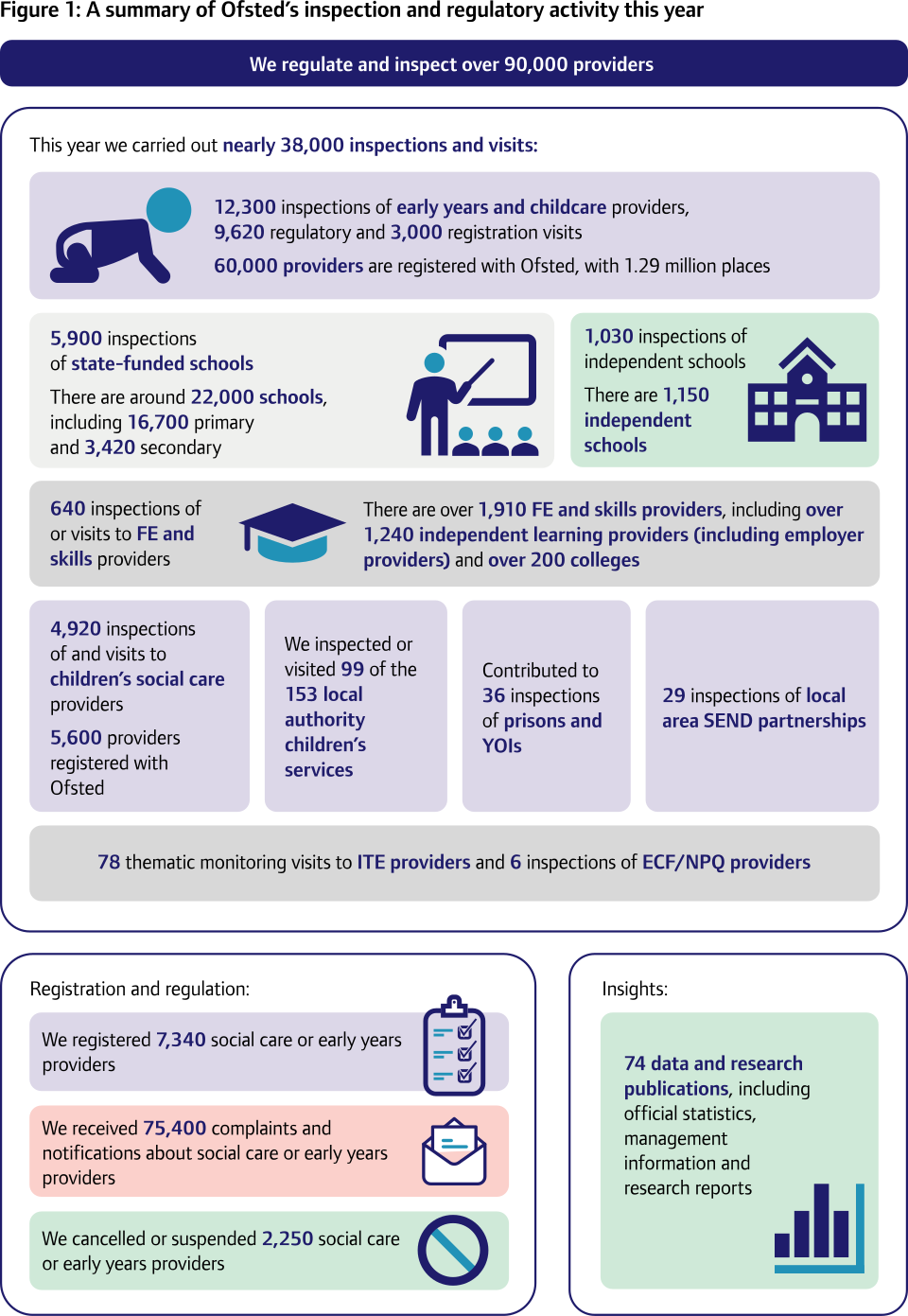
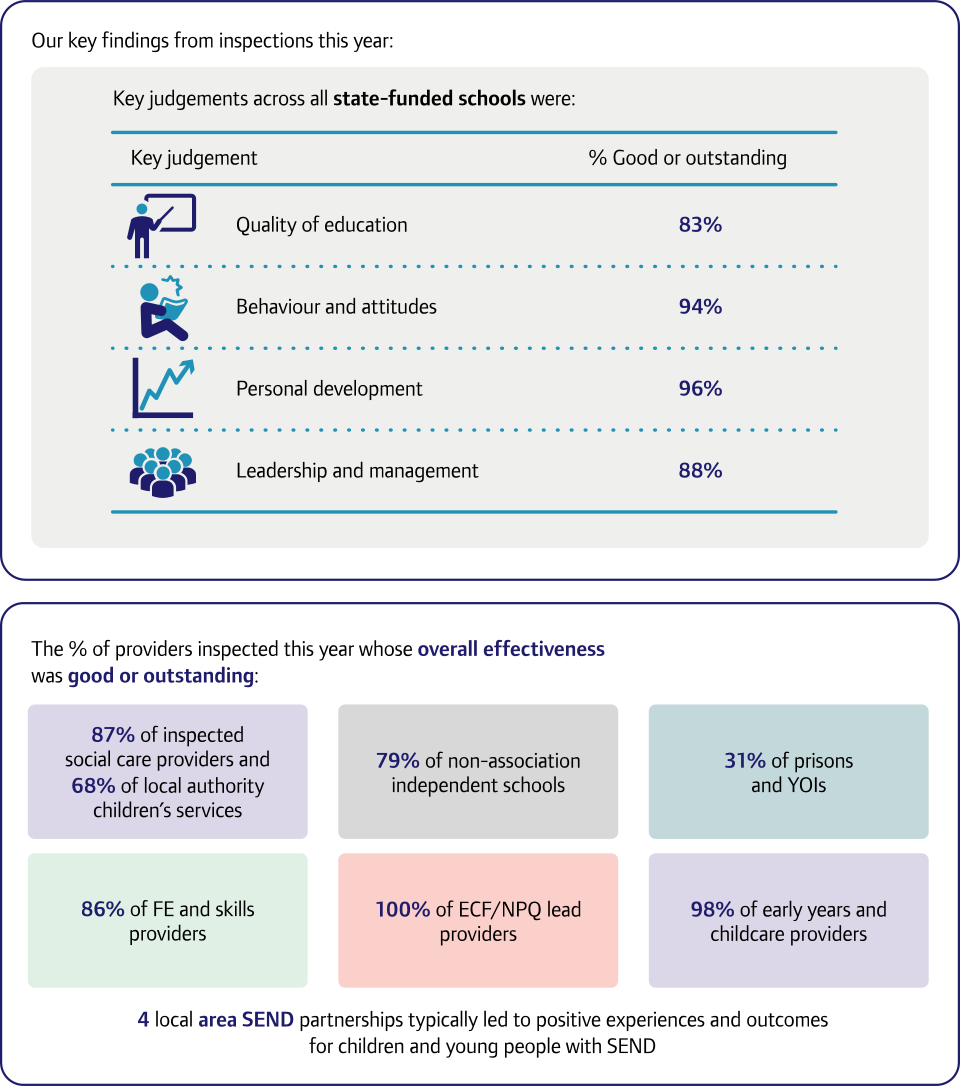
Figure 1 (see following page) presents a snapshot of Ofsted’s regulatory and inspection activities over this year, showcasing our commitment to raising standards in education and children’s social care. This year we carried out over 37,000 inspections and visits and over 7,000 new registrations. We continue to place disadvantaged and vulnerable children and learners at the heart of our work. From early years settings to schools, FE and social care, the data reflects our dedication to improving lives through rigorous oversight and evidence-based insights.
When we refer to ‘this year’ or 2024/25 throughout the annual report, this means inspections that took place between 1 September 2024 and 31 August 2025, with a report published by 30 September 2025. There are exceptions – for example, for social care providers and local authority children’s services, ‘this year’ refers to inspections that took place between 1 April 2024 and 31 March 2025, with a report published by 30 April 2025. Other exceptions are detailed in the annex.
This chapter presents information on our inspections and regulatory work this year, across all the areas we inspect and regulate. More information about this can be found in our official statistics.[footnote 11]
Figure 1
View data in an accessible table format.
Education

This section includes data on inspections that were carried out under the education inspection framework up until 31 August 2025, when we still made an overall effectiveness judgement (except for state-funded schools).
In September 2025, we published our revised inspection framework for education. [footnote 12] This will be the basis for our reporting in future annual reports.
Early years
We inspect and regulate early years and childcare providers.[footnote 13] Most providers that care for children aged under 5 must register on the Early Years Register (EYR).[footnote 14] This includes nurseries, pre-schools, holiday clubs, childminders and other private childcare. Since November 2024, childminders have been able to register to provide care in somewhere other than a home, such as a community or village hall. Providers who care for children aged 5 to 8 are registered on the compulsory part of the Childcare Register (CR). Providers caring for children who are older than 8, before- and after-school childcare and nannies can register on the voluntary part of the CR.
At the end of the academic year 2024/25, 60,000 early years and childcare providers were registered with Ofsted, offering 1.29 million places on the EYR. While the overall number of providers has continued to fall this year, by 1,270 providers, the number of registered nursery places has increased by around 24,000 places, supporting the government’s expansion of entitlement to childcare. Since September 2025, eligible working parents have been able to access up to 30 hours of government-funded childcare for children aged from 9 months old until they start school.
Figure 2
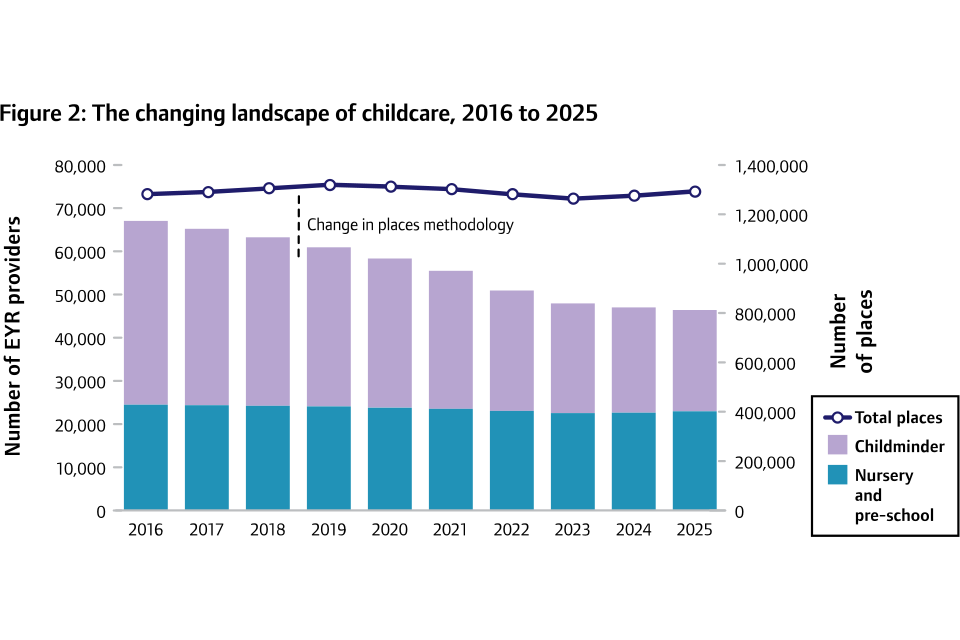
1. Childminder figures for 2025 include childminders and childminders without domestic premises.
2. Data refers to providers registered with Ofsted on the Early Years Register on 31 August in each year.
View data in an accessible table format.
This year, we carried out 3,000 registration visits to assess the suitability of providers, similar to the previous year, and 9,620 regulatory events, of which 63% related to nurseries and pre-schools. These included face-to-face events as well as remote events such as telephone calls with providers. This was a 22% increase on the previous year.
We also carried out 11,200 EYR inspections and 1,160 CR inspections. We take a risk-based approach to prioritising our inspections, which means that our sample of inspections each year is skewed and never the same.
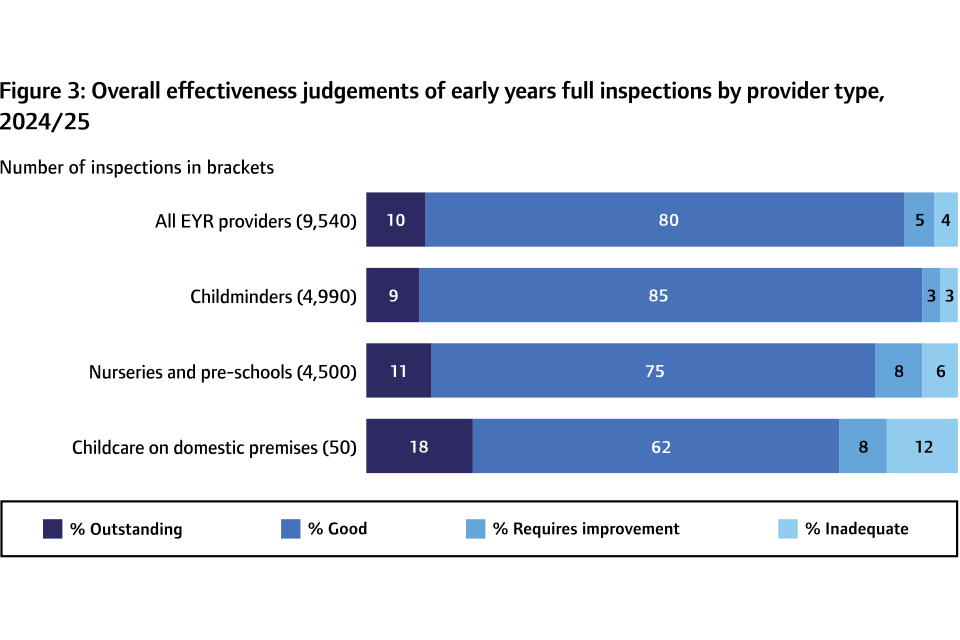
This year, around 9,540 of our inspections of providers registered on the EYR were full inspections, with 90% of providers judged good or outstanding for overall effectiveness. This was consistent with the outcomes of the key judgements: quality of education (91%), behaviour and attitudes (91%), personal development (90%) and effective leadership and management (90%). The remaining 1,640 EYR inspections were of out-of-school settings or providers with no children on roll at the time of the inspection.
We may carry out an inspection without warning. This could be when we have concerns about the childcare provided. During the year, 14% of EYR full inspections were unannounced.
We are pleased that from next year, we will increase the frequency of routine inspections for registered early years providers to a 4-year window (currently, this is a 6-year window) and we will inspect early years providers within 12 to 18 months of registering, down from the current wait of up to 30 months.
Figure 3
View data in an accessible table format.
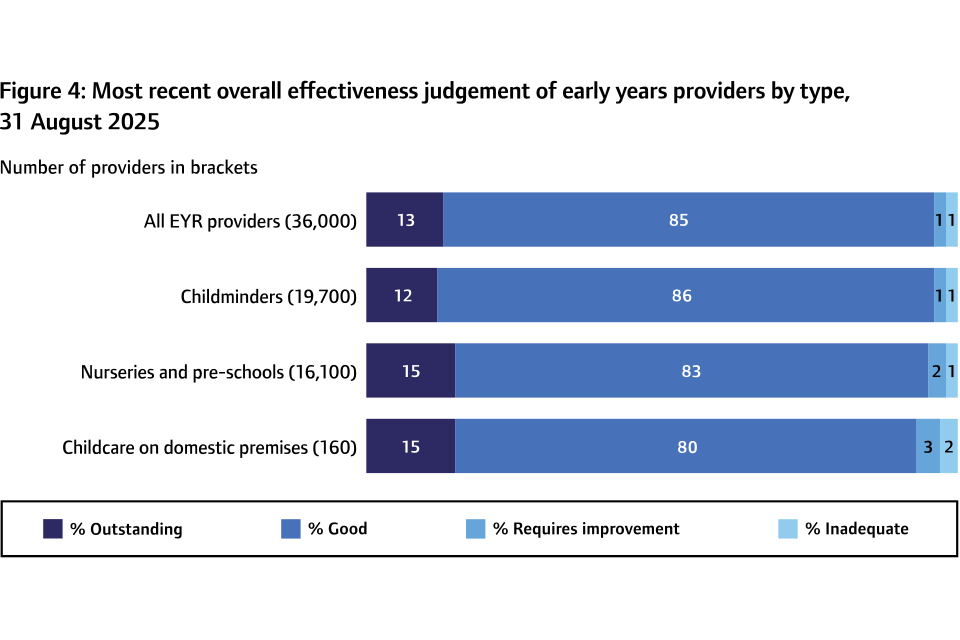
By 31 August 2025, over three quarters of providers on the EYR had had a full inspection. At their most recent inspection, 98% of providers were judged good or outstanding.
Figure 4
View data in an accessible table format.
Last year, our deserts and oases project introduced a new measure of access to childcare in local areas. It showed that access to childcare is not evenly spread across the country.[footnote 15] This year, we explored how access to childcare could be made fairer. We used a type of mathematical modelling to look at 2 local areas and tested what might happen if childcare providers could be moved around freely. This helped us understand how access could improve, especially for families who need it most. Our analysis showed that, in theory, simply redistributing existing childcare more evenly could make a real difference.[footnote 16] While the shape of the childcare market is largely driven by market forces, this analysis highlights opportunities for targeted action.
Compliance and enforcement
Our focus is on making sure children get the best possible start in life and promoting children’s safety and welfare. We regulate to help providers improve their practice so that they keep children safe. The early years foundation stage (EYFS) and CR requirements set out what childcare providers must do to help children learn and develop and keep them safe and well.[footnote 17]
In both our 2024–25 annual report and accounts and our financial year commentary about complaints and notifications, we reported that the number of complaints and notifications about providers has increased to around 21,300 since 2023–24. This was an increase of around 1,170 complaints and notifications since the previous year.[footnote 18],[footnote 19]
In almost half of all early years complaints and notification cases, we determined that the most proportionate course of action was to discuss the issue with the provider at the next visit or inspection.[footnote 20] This is the most common outcome for notifications from providers. As would be expected, complaints are more likely to result in further action. This could be having a telephone call with the provider, bringing forward an inspection or taking compliance and enforcement action. The number of events where actions were set has fallen from 16% in 2020–21 to 13% in 2024–25.
If we are concerned that children may be at risk of harm, we can suspend a provider’s registration. In 2024–25, we suspended 240 providers, slightly fewer than the previous year. Suspension gives us or other agencies, such as the police or the local authority, time to investigate concerns or carry out inquiries. It also gives time for us or the provider to reduce or remove any risk to children.
If a provider is unable to meet the requirements of registration, we can cancel their registration. In 2024–25, we cancelled around 1,950 registrations. This included 1,810 cancellations due to non-payment of their annual fees.
For more about early years, see the ‘Inclusion, disadvantage and vulnerability’ chapter in this annual report.
State-funded schools
As at 31 August 2025, there are nearly 22,000 state-funded schools, made up of:
- 16,700 primary schools
- 3,420 secondary schools
- 1,110 special schools
- 380 maintained nursery schools
- 330 alternative provision schools
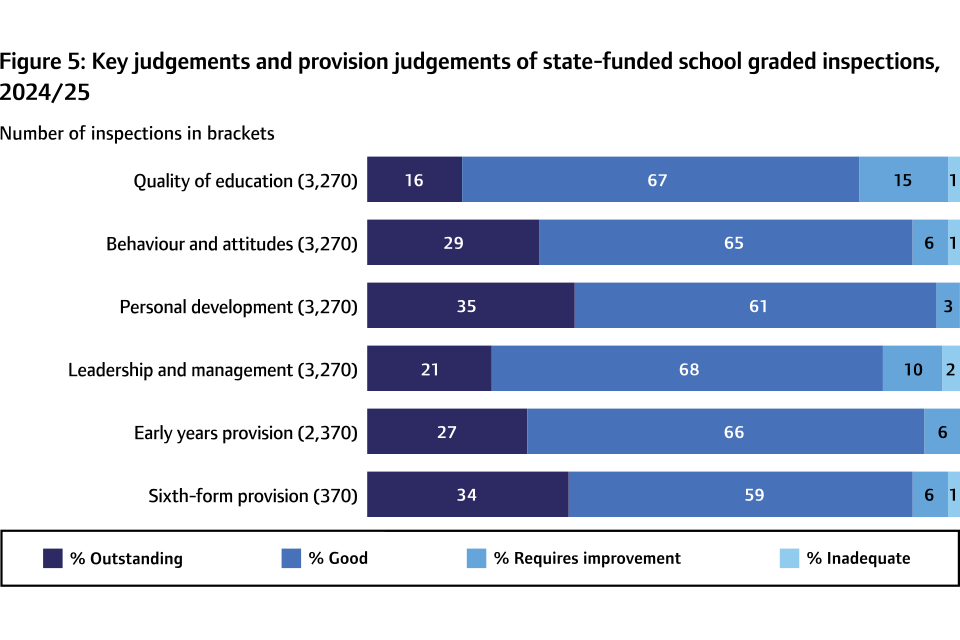
In September 2024, we stopped giving an overall effectiveness judgement for school inspections. We continued to make the 4 key judgements (quality of education, behaviour and attitudes, personal development and effectiveness of leadership and management), as well as judging early years and sixth-form provision, where relevant.
This year, we have carried out 5,900 inspections, including 3,270 graded inspections, 2,440 ungraded inspections and 200 monitoring or urgent inspections. Outcomes for behaviour and attitudes and personal development are more positive than outcomes for other key judgements (94% and 96% good or outstanding respectively). This has been the case each year since the education inspection framework began.
Our positive grades for behaviour and attitudes reflect the fact that schools often have good, consistently applied behaviour policies and approaches, as we take these into account when determining the grade. However, many schools are still struggling with disruptive behaviour and poor attendance. See the ‘Annual report commentary’ for further information on behaviour and attitudes in schools.
Figure 5
View data in an accessible table format.

This year, outcomes for each of the key judgements are very similar to those seen in 2023/24. The proportion judged good or outstanding is the same for quality of education (83%) and only differs by 1 to 2 percentage points for all other key judgements.[footnote 21] It should be noted that the schools inspected in a particular academic year are unlikely to be representative of schools as a whole. This means school inspection outcomes are not directly comparable between years.
As in previous years, primary schools achieved higher grades than secondary for all key judgements.[footnote 22] The biggest differences between primary and secondary schools are for quality of education (86% good or outstanding in primary, as against 73% in secondary), and behaviour and attitudes (96% good or outstanding in primary, as against 85% in secondary).
In the ungraded inspections we carried out this year, there were 4 possible outcomes:
- standards maintained [footnote 23]
- improved significantly [footnote 24]
- some aspects not as strong [footnote 25]
- the ungraded inspection converted to a graded inspection
In the vast majority of the 2,440 ungraded inspections, we found that either standards had been maintained, or the school may have improved significantly since its previous inspection (83% standards maintained, 11% improved significantly, and 5% some aspects not as strong).

Non-association independent schools
There are around 2,490 independent schools in England. We inspect independent schools that are not part of an association, of which there are just under 1,150. The Independent Schools Inspectorate (ISI) inspects schools that are members of an association. For simplicity, in the following section we will refer to non-association independent schools as ‘independent schools’.
There are 3 broad categories of independent schools:
- special schools (740 schools) [footnote 26]
- faith schools (220 schools), with a declared religious character or ethos [footnote 27]
- other independent schools (190 schools) [footnote 28]
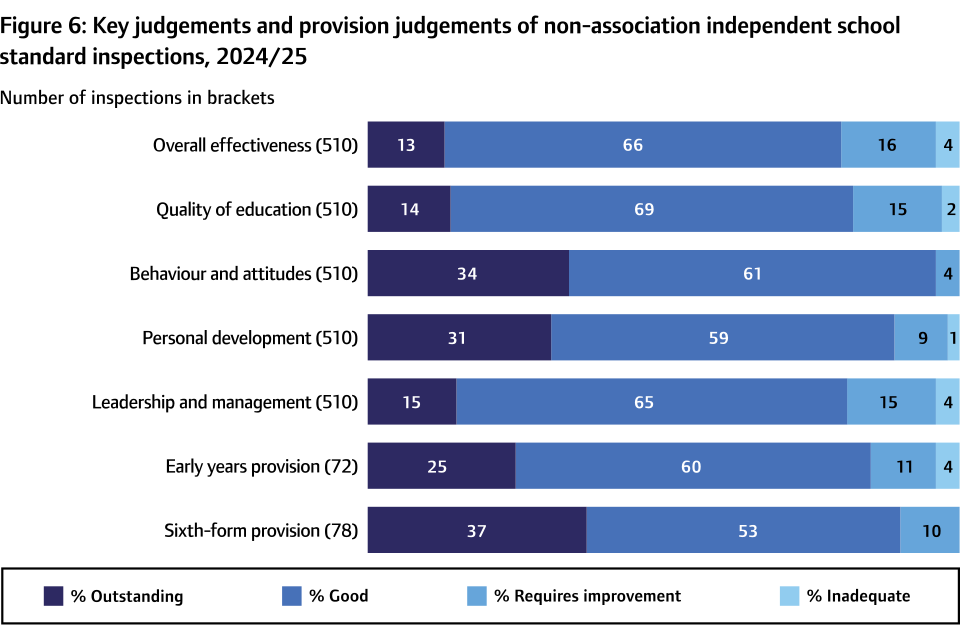
This year, we carried out 510 standard inspections, 400 additional inspections and 120 evaluations of school action plans.[footnote 29]
At the standard inspections, 79% of schools were judged good or outstanding for overall effectiveness and 86% met the independent school standards. The interaction between overall effectiveness and the key judgements follows a similar pattern to that seen in previous years.
Figure 6
View data in an accessible table format.
Of the standard inspections carried out this year, over half of schools (56%) that were previously judged inadequate or requires improvement improved to good or outstanding.
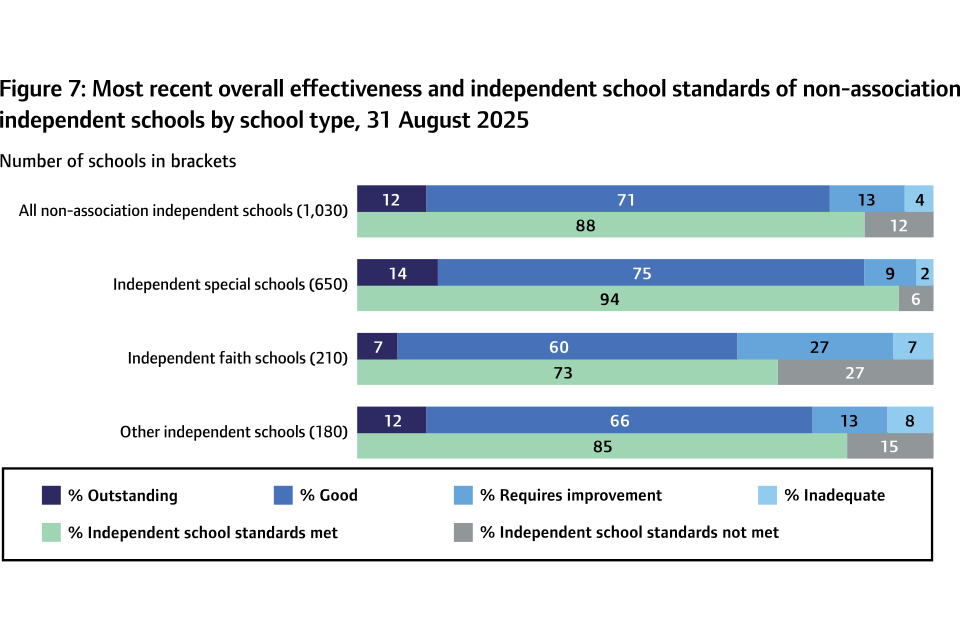
At their most recent standard inspection, 83% of independent schools were judged good or outstanding for overall effectiveness, similar to 31 August 2024 (82%). Independent special schools continue to be more likely to be judged good or outstanding (90%) than independent faith schools (67%) or other independent schools (79%).
All independent schools are required to meet the independent school standards. There are 8 parts to the independent school standards, which cover areas such as quality of education, student welfare, and leadership and management. At their most recent inspection, 12% of independent schools did not meet all the standards. This is a similar level of non-compliance to the level at 31 August 2024, when 13% did not meet all the standards. Independent faith schools are more likely to not meet the standards (27%) than independent special schools (6%) and other independent schools (15%).
Figure 7
1. Special faith schools are grouped with special schools.
View data in an accessible table format.
For more content on schools, see the ‘Inclusion, disadvantage and vulnerability’ in this annual report. For insights into how AI is used in some education settings, see the ‘Navigating the opportunities and challenges of AI’ chapter.
Area SEND
In area SEND inspections, we look at local area partnership arrangements for children and young people with SEND. We carry out these inspections jointly with CQC.
This year, we carried out 29 full inspections. In 4 of these, we found that the local area partnership’s SEND arrangements typically led to positive experiences and outcomes for children and young people with SEND. In 16, we found that the arrangements led to inconsistent experiences and outcomes. In the remaining 9, we concluded that there were widespread and/or systemic failings leading to significant concerns.
In the first 2 years of inspections under the revised framework, we found that:
- strong strategic leadership and governance enabled partnerships to provide more coherent services
- effective data-sharing helped education, health and care (EHC) services to be better coordinated
- joint commissioning worked well when it was based on a good knowledge of children and young people’s needs, but was often underdeveloped
- co-production with families and providers resulted in more inclusive services when it was done meaningfully with a focus on improving children’s outcomes and/or experiences
- delays in producing EHC plans remained widespread and many plans were poor quality
- long waits for health services, including child and adolescent mental health services (CAMHS) and speech therapy, were common
- early help and identification of children’s needs was inconsistent, leading to missed opportunities for early intervention
- preparation for adulthood was often weak, and children received limited support with transitioning to education, employment or independence
We carry out monitoring inspections with CQC in local areas that were found to have widespread and/or systemic failings at their full inspection and were required to produce a priority action plan. Monitoring inspections are carried out around 18 months from the date when the local area partnership received its final report following the full inspection. The purpose of a monitoring inspection is to assess the extent to which the partnership is taking effective action to address the areas for priority action set out in the inspection report.
This year, we carried out 1 monitoring inspection; 4 are planned in autumn 2025 and 3 in spring 2026.
As part of area SEND inspections this year, we also carried out thematic visits focusing on children who are not in school (see ‘Inclusion, disadvantage and vulnerability’ chapter).
Illegal unregistered schools
It is a criminal offence to run an unregistered school in England. Children attending these unregistered schools are at risk because there is no formal external oversight of safeguarding, health and safety or the quality of education provided.
Since January 2016, when we first set up an unregistered schools team to investigate settings suspected of operating illegally, we have carried out just under 1,680 investigations of nearly 1,500 suspected unregistered schools. Following our investigations, we have carried out over 990 inspections, issued around 220 warning notices and successfully prosecuted 7 unregistered schools, resulting in 21 convictions.
In the last 3 academic years, the number of referrals received has been higher than previous years. This year we received nearly 330 referrals, while in 2022/23 and 2023/24, the average number of referrals received each year was 210, and in 2015/16 to 2021/2022, the average was less than 150 per year. Overall, 56% of the referrals that we receive come from within Ofsted itself. We often identify suspected illegal schools through our inspections of other schools and providers.[footnote 30]
This year, we have opened over 280 investigations into suspected illegal schools. We have carried out nearly 120 inspections and issued 19 warning notices to settings that appeared to be breaking the law. For more information on our concerns in relation to illegal unregistered schools, see the ‘Inclusion, disadvantage and vulnerability’ chapter.
Online education accreditation scheme
In March 2023, the DfE introduced an online education accreditation scheme (OEAS). This is a way for online providers to become accredited by the DfE following quality assurance from Ofsted.[footnote 31] Our quality assurance involves suitability checks on proprietors and an accreditation visit to check whether the provider is complying with the DfE’s online education standards. There is no legal obligation for online providers to become accredited, but the DfE encourages eligible providers to apply.
Since the scheme was introduced in 2023, we have received 41 quality assurance commissions from the DfE. We have begun 22 suitability checks and completed 14 accreditation visits, of which 7 were completed in this academic year.[footnote 32] Of the 7 providers that received an accreditation visit this year, 3 met the relevant standards for accreditation. This is low compared with 2023/24, when all 7 providers we visited met the online education standards.
Since the OEAS was introduced in March 2023, 10 online providers have been accredited by the DfE (as at 31 August 2025).
Further education and skills
FE and skills providers train and educate an estimated 2.7 million learners aged 16 and over each year.[footnote 33] Different types of providers offer a wide variety of education and training to prepare learners for further study, employment or greater independence.
There are just over 1,900 FE and skills providers. These are made up of:
- 1,240 independent learning providers (including employer providers)
- 200 colleges [footnote 34]
- 140 adult community education providers
- 130 independent specialist colleges
- 110 higher education institutions
- 77 16 to 19 academies
- 16 dance and drama colleges
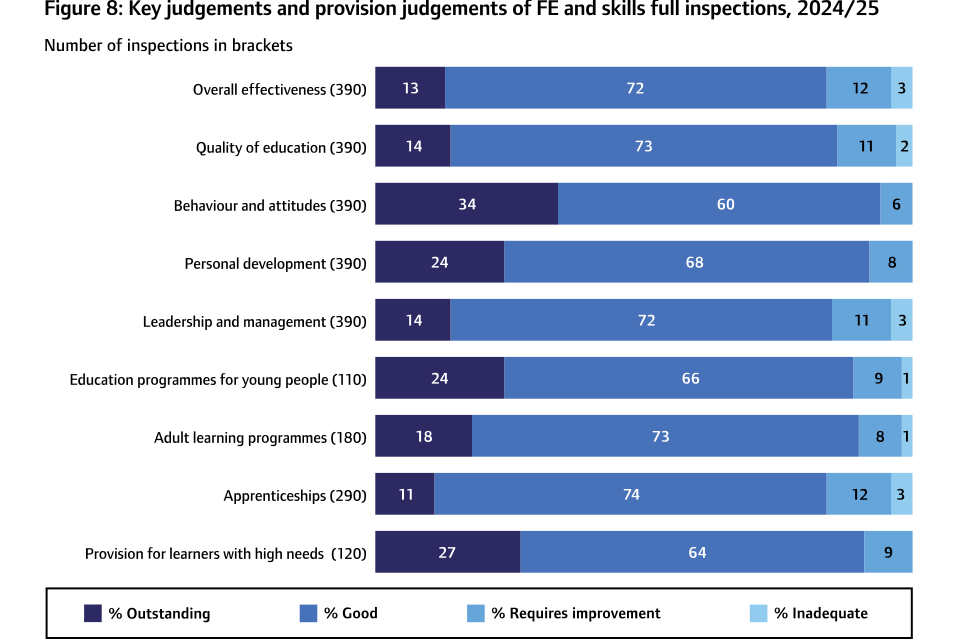
This year, we carried out over 390 full inspections, 37 short inspections and 130 new provider monitoring visits (including follow-up safeguarding visits).
At the full inspections this year, 85% of providers were judged good or outstanding for overall effectiveness. The relationship between overall effectiveness and the key judgements was similar to that seen in previous years. All providers judged good for overall effectiveness at full inspection were judged good or outstanding for the quality of education and leadership and management.
Figure 8
View data in an accessible table format.
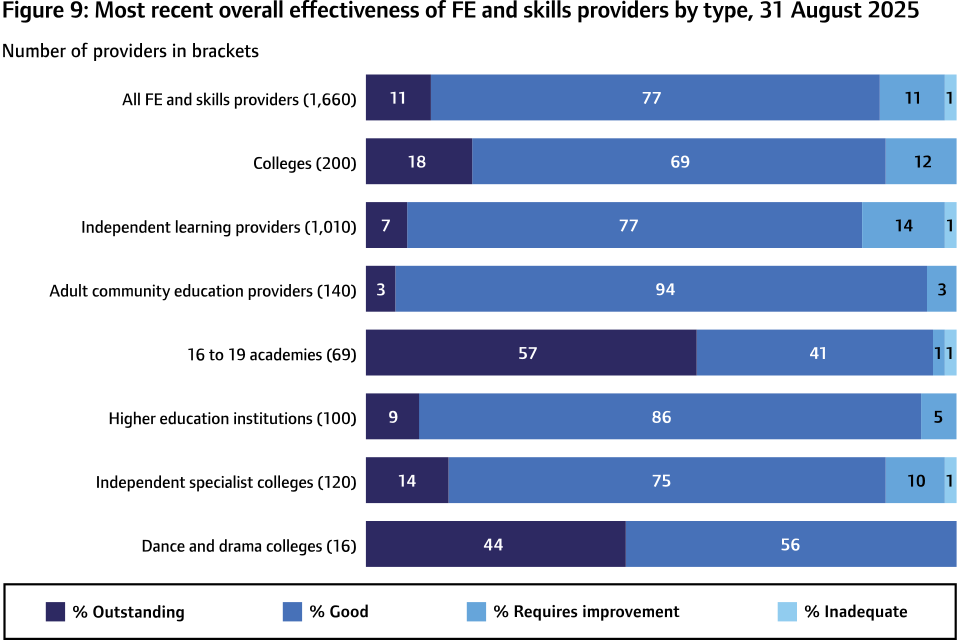
At their most recent full inspection, 88% of providers were judged good or outstanding for overall effectiveness. Outcomes vary by provider type, as can be seen in Figure 9.
Figure 9
1. ‘Colleges’ includes general FE colleges, sixth-form colleges and specialist FE colleges.
2.‘Independent learning providers’ includes employer providers.
View data in an accessible table format.
Of the 1,220 providers that have had a judgement made on their apprenticeship provision, 88% were judged good or outstanding at their most recent full inspection or were judged to be making at least reasonable progress at their new provider monitoring visits.
Of the 530 providers that have had a judgement made on their adult learning programmes, 93% were judged good or outstanding at their most recent full inspection or were judged to be making at least reasonable progress at their new provider monitoring visits.
For a discussion of our research findings on careers education focused on post-16 careers guidance for students and learners from economically disadvantaged backgrounds, see the ‘Inclusion, disadvantage and vulnerability’ chapter. For insights into how AI is used in some FE colleges, please see the ‘Navigating the opportunities and challenges of AI’ chapter.
Prisons
We inspect education, skills and work in prisons and young offender institutions (YOIs) as part of inspections carried out by His Majesty’s Inspectorate of Prisons (HMI Prisons).
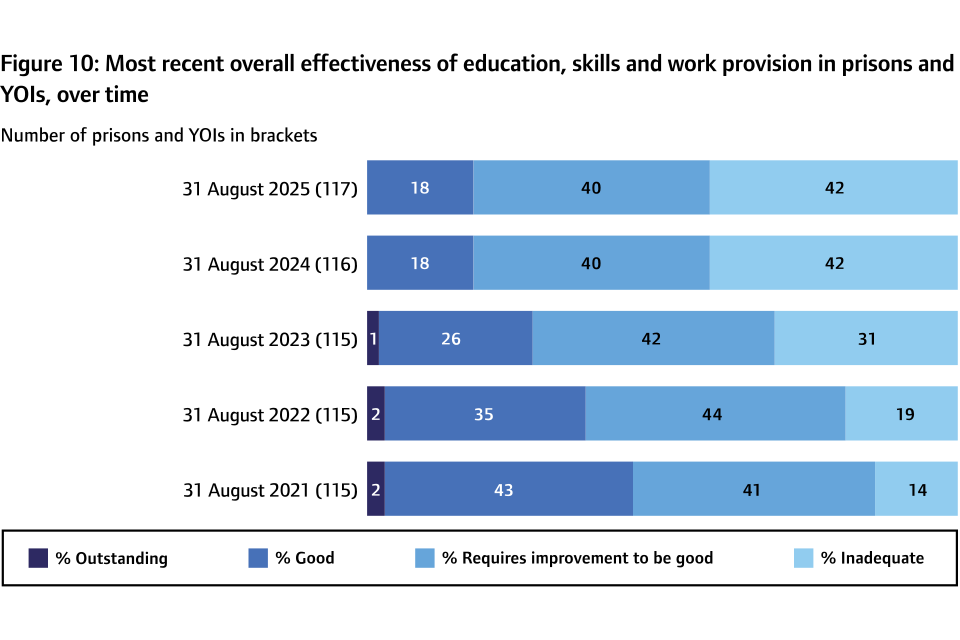
This year, we contributed to 36 inspections. Of these, 14 were judged inadequate for the overall effectiveness of their education, skills and work provision, 11 were judged requires improvement and 11 were judged good. No prison or YOI was judged outstanding, and the 2 children’s YOIs we inspected this year were judged inadequate.
This year, we found that too many prison leaders – including leaders at regional and national levels – had failed to improve the quality of education, skills and work since the previous inspection. Leaders had not prioritised improving this area of the prison, as demonstrated by the high number of recommendations that remained unaddressed. Of the 35 prisons we inspected this year that had previously been inspected, 9 had improved, 18 remained the same and 8 received a lower grade for the overall effectiveness of their education, skills and work provision.
Many inspected prisons failed to provide enough activity spaces to purposefully occupy their prisoners. In some cases, the spaces available in the prison were not allocated appropriately or used to ensure that prisoners accessed a full, purposeful day of work or education. This severely limited their chances to prepare well for employment on release.
The number of prisons that had successfully implemented a reading strategy increased among the prisons inspected this year. A few prison leaders had set up initiatives that promoted reading well and secured the right support for non-readers. However, there were still a significant number of prisons where reading was not as well supported.
Neurodiversity managers were having a positive impact in many prisons.[footnote 35] They worked well with prisoners who had learning difficulties and/or disabilities and with staff who provided support and strategies to help prisoners to remain in learning and progress with their education. However, in other cases, prisoners attending work and certain vocational areas did not access the same level of support. In these prisons, leaders did not ensure that the needs of prisoners with learning difficulties and/or disabilities were met well.
At their most recent full inspection, only 18% of prisons and YOIs were judged good for the overall effectiveness of their education, skills and work provision.
Figure 10
1. Inspections with reports published between 1 September and 31 August each year.
View data in an accessible table format.
For insights on children in the secure estate, see the ‘Older children facing specific challenges’ chapter.
Teacher development
Initial teacher education
Following a request by the Secretary of State for Education, we postponed the start of the next cycle of initial teacher education (ITE) inspections until the 2025/26 academic year.[footnote 36] As a result, there is no analysis of ITE inspection outcomes in this annual report. We did, however, carry out 2 ITE inspections of providers that had previously been judged requires improvement for overall effectiveness. Both improved to good.
During this pause, and at the request of the Secretary of State for Education, we carried out 78 thematic monitoring visits to providers. We published our findings in October 2025.[footnote 37] In the early years phase, it was evident that leaders value mentoring and have high expectations for their mentors. However, mentors often face challenges in taking time away from their settings for training and to support trainees. This issue is less pronounced in the primary and/or secondary phases of ITE, where statutory guidance clearly outlines mentoring expectations. Some mentors highlighted how their training equips them with useful strategies for their own professional development and enhances their teaching practice. In contrast, mentoring practices in the FE and skills phase of ITE are inconsistent.

Across all phases, most trainees benefit from a well-planned and sequenced ITE curriculum that prepares them to teach their subject(s) and phase. In the early years, leaders ensure the curriculum builds trainees’ understanding of the EYFS, including its learning and development requirements. Leaders of primary and/or secondary phase ITE provision carefully select themes that meet the new DfE requirements for intensive training and practice. In the FE and skills phase, leaders generally align the curriculums to the diploma in teaching framework or the relevant occupational standard. However, there are examples of trainees being taught outdated concepts without any critique or consideration of more evidence-based approaches to effective teaching.
Early career framework and national professional qualifications
Lead providers are contracted by the DfE to deliver the early career framework (ECF) and national professional qualification (NPQ) programmes. We inspect lead providers to find out how well they ensure that high-quality training and professional development are delivered through a national network of delivery partners. As at 31 August 2025, there were 9 ECF and/or NPQ lead providers in total. This was made up of 6 ECF providers, who also delivered NPQ programmes, and 3 providers who delivered NPQ programmes only.
This year, we carried out 6 full inspections of ECF lead providers. All were judged outstanding.
Social care

Local authority children’s services
We inspect local authority children’s services under the inspecting local authority children’s services (ILACS) framework.[footnote 38] Across England, local authorities support around 400,000 children (classed as ‘children in need’) each year, around 3% of the total child population.[footnote 39] Nearly 84,000 of these children are in care.[footnote 40]
Between 1 April 2024 and 31 March 2025, we visited 99 of the 153 local authorities, on 112 different occasions. These included:
- 22 standard inspections
- 30 short inspections
- 36 focused visits
- 24 monitoring visits
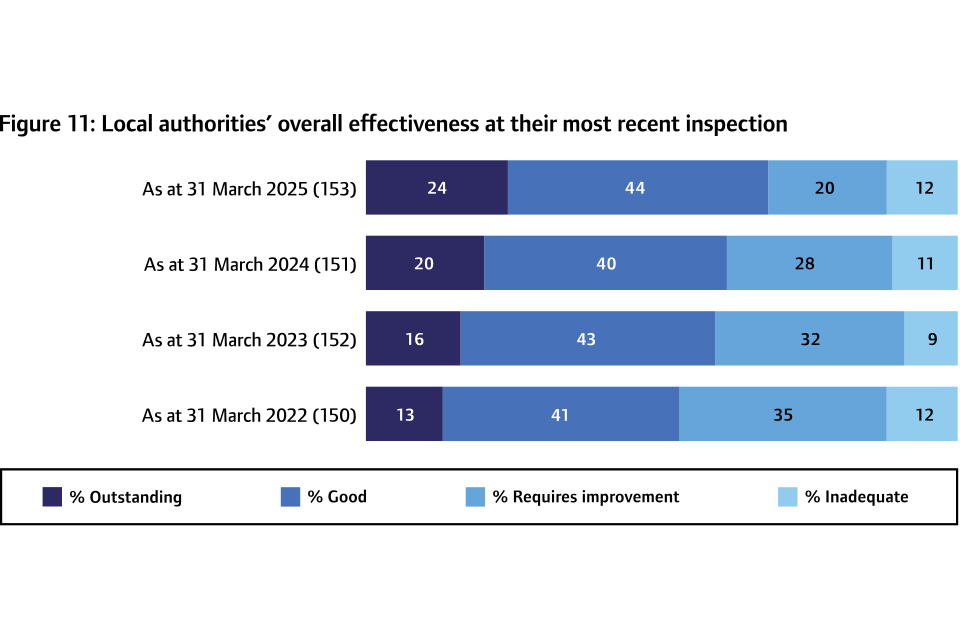
The overall quality of local authority children’s services in England has improved over the past few years. As at 31 March 2025, 67% of local authorities were judged to be good or outstanding at their most recent inspection, compared with 53% as at 31 March 2022.
Of the 114 local authorities that received more than 1 inspection under the ILACS framework, 45 (39%) improved their overall effectiveness judgement compared with their previous ILACS inspection, and 35 (31%) retained a good or outstanding judgement. There were 19 local authorities (17%) that had a decline in their overall effectiveness.
The quality of local authority children’s services showed substantial variation across different regions. However, compared to last year, the difference between regions has narrowed. The proportion of local authorities judged good or outstanding was highest in the London region (88%, previously 85%) and lowest in the North West (46%, previously 36%). See the ‘Older children facing specific challenges’ chapter for further information on the North West.
The quality of children’s services varied across the different judgement areas. For the experiences and progress of children who need help and protection, 61% of local authorities were judged good or outstanding, while for the experiences and progress of children in care, 73% were judged good or outstanding.
Figure 11
1. Numbers in brackets represent the number of local authorities with an overall effectiveness outcome as at 31 March 2025, 2024, 2023, and 2022, respectively.
View data in an accessible table format.
Ten local authorities have tested reforms to children’s social care as part of the DfE’s Families First for Children pathfinder programme. In 2024–25 we inspected one of these local authorities (Dorset) and carried out a focused visit to another (Wolverhampton), after they had implemented the reforms to their services. We inspected or visited 4 other pathfinder local authorities in 2024–25. These events took place before their pathfinder status had started, or the visit focused on parts of the local authority’s service that were not testing the reforms. We have not drawn conclusions about the pathfinder programme, as the small number of relevant inspections does not yet provide a sufficiently robust evidence base. We will inspect and visit the remaining pathfinder local authorities over the next few financial years.
In December 2023, the DfE published new statutory guidance – the national framework for children’s social care.[footnote 41] This sets out the principles behind children’s social care, its purpose, factors enabling good practice and what it should achieve. Since January 2025, our reports have included the outcome, enabler or principle from the children’s social care national framework that is most relevant to each of the local authority’s areas for improvement. Since April 2025 we have done the same in our focused visit letters.
Social care providers

We regulate and inspect children’s social care providers using the social care common inspection framework (SCCIF).
There are different types of social care providers that we inspect and regulate. On 31 March 2025, there were:
- 4,010 children’s homes, including 49 residential special schools that are registered as a children’s home, 13 secure children’s homes (SCHs), and 1 secure 16 to 19 academy
- 890 supported accommodation providers
- 340 independent fostering agencies
- 110 residential family centres
- 29 adoption support agencies
- 29 voluntary adoption agencies
- 10 residential holiday schemes for disabled children
In addition, we inspect 95 residential special schools, 51 boarding schools and 34 FE colleges with residential accommodation.
We also carry out joint inspections of secure training centres (STCs) with CQC and HMI Prisons. As at 31 March 2025, there was 1 STC.
This year, we carried out 4,920 full, assurance or monitoring inspections of 3,990 social care providers.
Figure 12
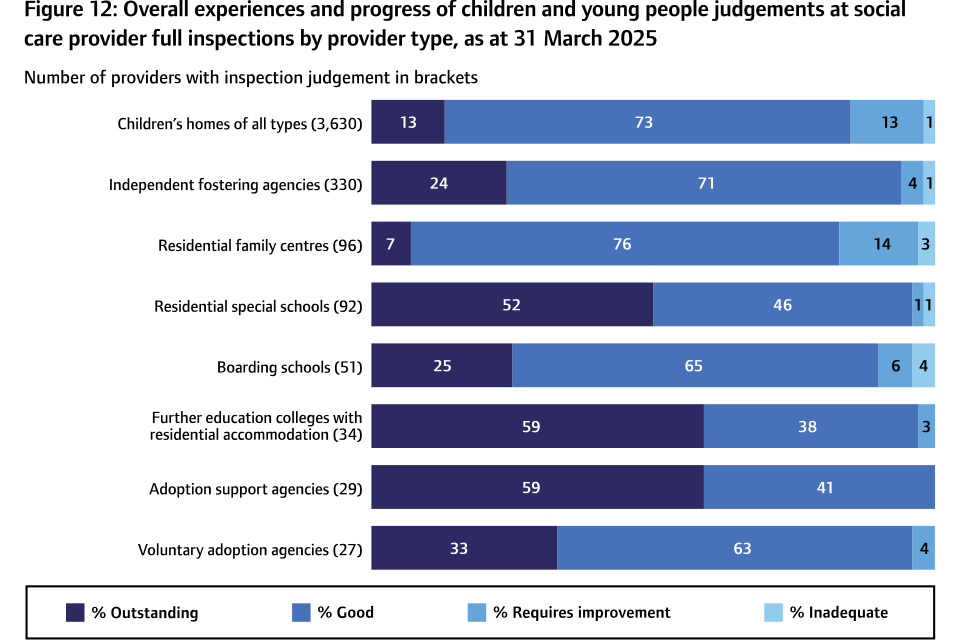
1. There were also 50 supported accommodation providers, 9 residential holiday schemes for disabled children and 1 secure training centre that had an inspection outcome as at 31 March 2025. We have not reported on these provider types individually in Figure 12, because the low numbers mean that percentage-based comparisons with other setting types are not meaningful.
View data in an accessible table format.
Children’s homes
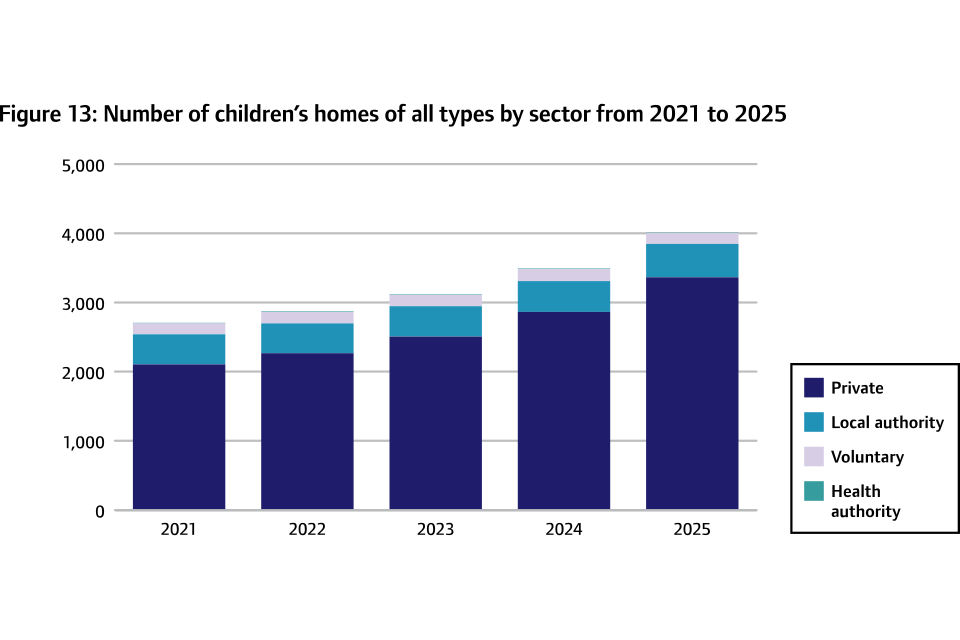
There were 4,010 children’s homes of all types as at 31 March 2025. This was a 15% increase (520 homes) from the previous year (3,490) and is the highest number ever registered with Ofsted.
Although the number of children’s homes increased in all regions this year, homes are still not evenly distributed across England. Similarly to last year, the North West accounts for a quarter of all children’s homes and almost a quarter of all places. Distribution of children’s homes does not align with demand. While 26% of children’s homes are in the North West, only 18% of looked-after children come from that region.[footnote 42]
The majority of children’s homes are privately owned. This trend has continued to grow steadily and reached 84% (3,350) in 2025. This year, the majority of new registrations have come from organisations that already operate other children’s social care provision registered with Ofsted.
Figure 13
View data in an accessible table format.
In the last year, the number of children’s homes of all types has increased by 15% and the number of places has increased by 9%. This continues the long-standing trend of the number of new homes rising faster than the number of new places.
Between 1 April 2024 and 31 March 2025, we carried out 4,460 full, assurance or monitoring inspections of 3,580 children’s homes of all types.
As at 31 March 2025, 85% of all children’s homes had an inspection judgement of outstanding or good, compared with 83% as at March 2024.
Regulatory activity in children’s homes
We investigate children’s homes and individuals in regulated posts when we have evidence that there is cause for concern or that they may not be complying with the regulations that govern the care they provide. In these cases, we take action where appropriate.
Between 1 April 2024 and 31 March 2025, we investigated 3,710 cases relating to 2,440 children’s homes of all types. During this period, 1 or more cases were logged against 61% of all children’s homes that were active during the year. Some of these cases fell into the most serious category, ‘child protection concerns’. Between 1 April 2024 and 31 March 2025, we recorded 510 child protection concerns, relating to 410 children’s homes of all types.
Of the 3,710 total cases, 2,350 (63%) had one or more actions recorded by the end of March 2025. Table 1 shows the number and type of actions recorded in 2024–25.
Table 1: Number and type of actions recorded in 2024–25 in children’s homes
| Action taken | Number of actions in 2024–25 |
|---|---|
| Continued monitoring by allocated inspector | 720 |
| Other action taken not included in other categories | 680 |
| Key line of enquiry for next inspection | 550 |
| Compliance and enforcement action | 370 |
| Inspection brought forward | 260 |
| Provider-led investigation | 260 |
| Referred to another agency | 210 |
| Monitoring visit | 180 |
| Referred to child protection team in the relevant local authority | 100 |
| Total actions taken | 3,320 |
Between 1 April 2024 and 31 March 2025, we carried out the following enforcement actions across all children’s homes:
- 75 restrictions of accommodation
- 36 suspensions
- 12 notices of cancellation
Incident notifications within children’s homes
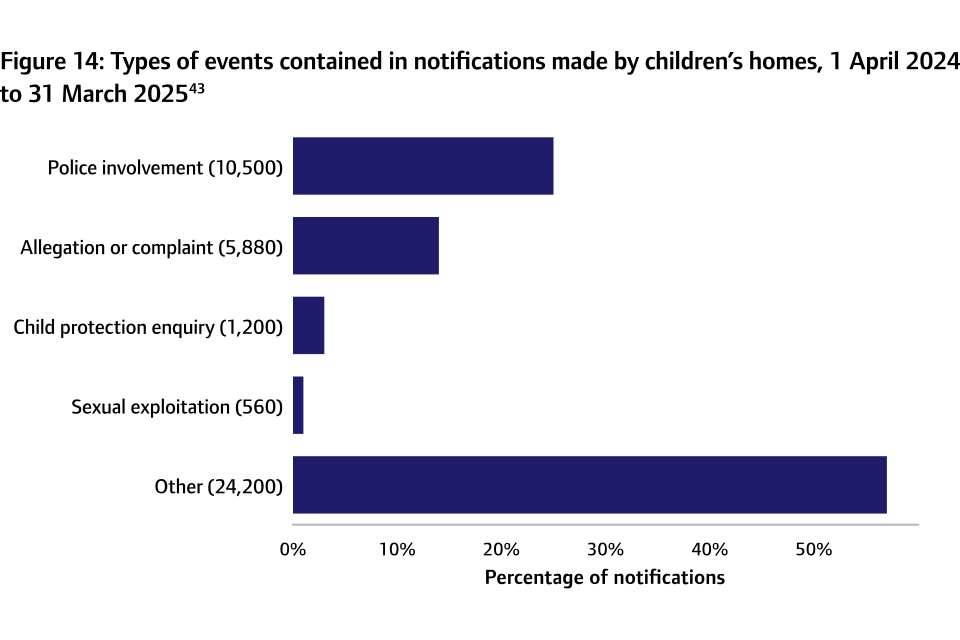
Providers must notify Ofsted, as the regulator for children’s social care, about certain types of serious incidents that happen to children living with them and what they have done in response. Between 1 April 2024 and 31 March 2025, we received 42,500 notifications from children’s homes. Over half of all notifications (57%) received were categorised as ‘other’. ‘Other’ notifications cover any incident that the registered person considers to be serious but that does not fit under one of the existing categories.
The second highest category is ‘police involvement’. When the police are called to the home, it is often because a child has gone missing, not because they have been involved in crime. When we inspect, we ask for information about police call-outs to make sure that these are appropriate, and that staff have not involved children in the criminal justice system unnecessarily.
Figure 14 [footnote 43]
View data in an accessible table format.
Unregistered children’s homes
Between 1 April 2024 and 31 March 2025, we opened 870 investigations into potential unregistered children’s homes. Local authorities tell us that, in most cases, children are placed in potentially unregistered children’s homes because the local authority cannot find a suitable registered home.
Fostering
Out of the 84,000 children in care on 31 March 2024, around two thirds were placed in foster care. This figure has slowly fallen since 2020, when 71% of children in care were in fostering households.
The number of fostering households has been consistently decreasing, with a fall of 7% over the last 5 years. The decrease has been partially offset by an increase of 9% in formal kinship care arrangements (or ‘family and friends carers’), which is the preferred route in many cases.
For more content on fostering, social care providers and local authority children’s services, please see the ‘Older children facing specific challenges’ and ‘Navigating the opportunities and challenges of AI’ chapters in this annual report.
Inclusion, disadvantage and vulnerability
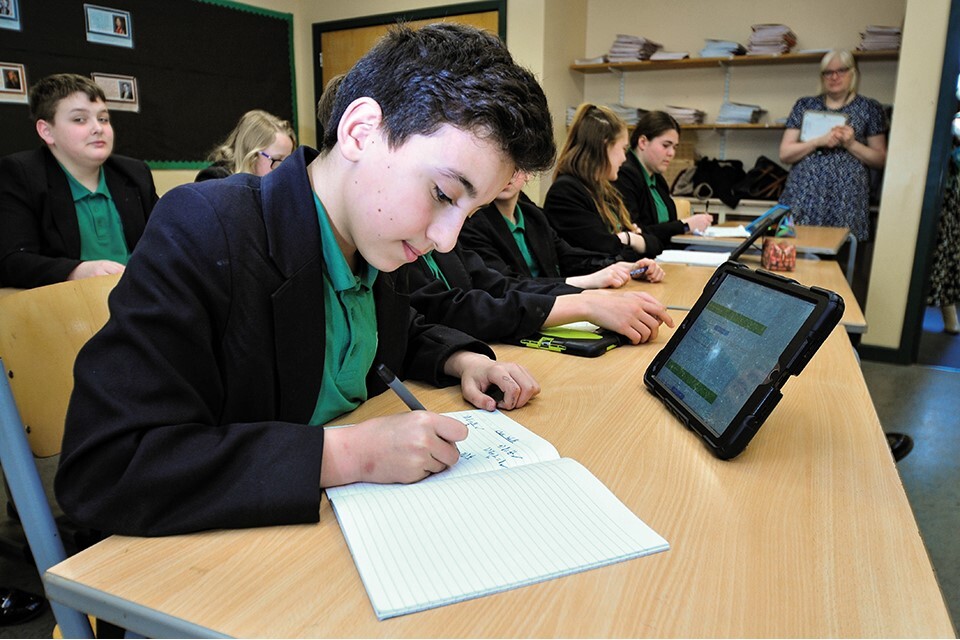
Children get one chance at childhood. We know that the quality of their education and care is crucial for their life chances. This is why our renewed education inspection framework, published in September this year, puts inclusion at the heart of what we do. [footnote 44] We are focusing on children and learners who, due to their circumstances, experience vulnerabilities. We have seen that when providers get it right for these children and learners, they get it right for everyone. That is because these providers know their children and learners well. They understand the importance of relationships, and they focus on children achieving well and having positive experiences that help them to thrive.
This chapter sets out the range of work that we have done to ensure that we focus more on inclusion during our inspection and regulation activities. Earlier this year, we consulted on our working definition of inclusion, and how best to reflect this in inspection practice. We published our response to the consultation in September 2025. [footnote 45] We are also highlighting the challenges faced by the most vulnerable children and learners, for example in our area SEND thematic work.[footnote 46]
Conceptualising vulnerability and focusing on inclusion
To inform and guide our thinking about inclusion and vulnerability in our inspection and regulation work, we wanted to better understand why children and learners might be considered vulnerable and how they are identified. We commissioned the National Children’s Bureau to carry out independent research, which was helpful in showing that vulnerability is a ‘state not a trait’ (that is, a condition that may be temporary, rather than an enduring characteristic); that it interacts with individual-, family- and community-level factors; and that it can be compounded when children and learners are exposed to more than one vulnerability.[footnote 47]
We are going further than ever before on inclusion and have included it as a new evaluation area in our renewed education inspection framework. The new evaluation area focuses on leadership – the effectiveness of the systems and processes leaders use to identify and support children who may be experiencing vulnerabilities. Inclusion also features across all other evaluation areas. For example, we look at the impact of a provider’s approach to inclusive practice on learning and wellbeing.
From the start of each inspection, inspectors work closely with leaders to understand the provider’s context and the children and learners that they support. Our inspections focus particularly on children and learners who typically face greater barriers to their learning and/or wellbeing, including children who:
- are socioeconomically disadvantaged [footnote 48]
- have SEND
- are known, or have been known, to children’s social care
Figure 15
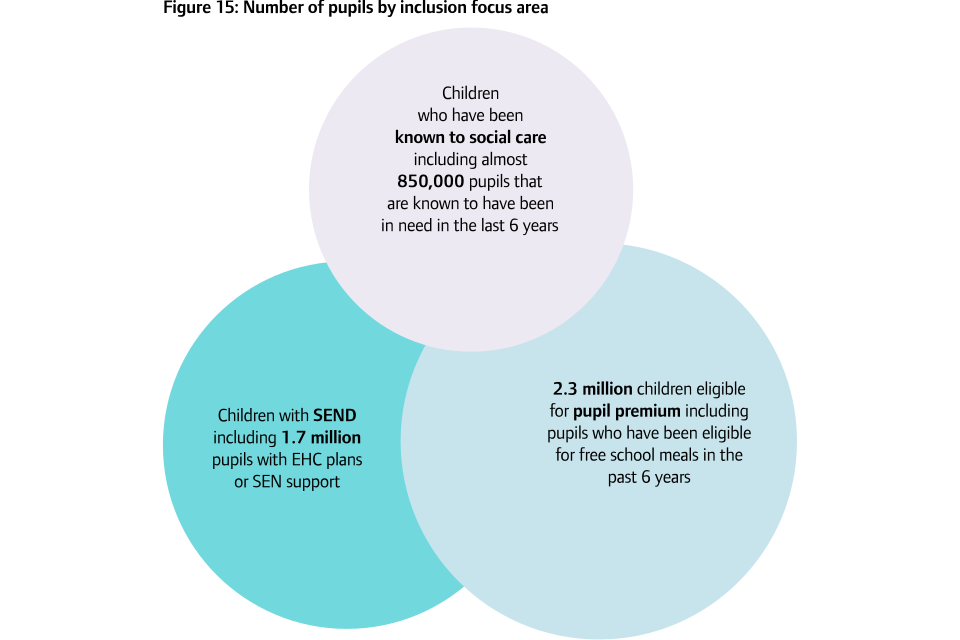
1. ‘Outcomes for children in need, including children looked after by local authorities in England’, Department for Education, April 2025 (updated July 2025). Refers to the data collected for the 2023–24 financial year, which covers children known to social care at any point in the 6 years to 31 March 2024. Includes pupils in state-funded primary, secondary, special or alternative provision schools (excludes other school types such as independent schools). See the accompanying methodology document for further details. This also includes an estimate that there were around 2 million children in need in at least once over an 11-year period (1 April 2011 to 31 March 2023).
2. ‘Special educational needs in England: January 2025’, Department for Education, June 2025 (updated October 2025). Data is for January 2025.
3. ‘Pupil premium: allocations and conditions of grant 2025 to 2026’, Department for Education, March 2025 (updated September 2025). Data is the number of pupils used for the pupil premium funding allocation for the 2025–26 financial year, and is based on multiple data collections.
View data in an accessible table format.

Inspectors consider various factors that may prevent children and learners from making progress, without relying on an exhaustive list. They collaborate with leaders to understand the specific context of the setting and identify any groups who face barriers to learning or wellbeing. This may include, for example, the provider’s approach to supporting children who have moved to the UK from overseas, so that they settle in quickly and develop their English-speaking skills, or how the provider supports children with caring responsibilities.[footnote 49] This area now receives sharper focus following the explicit identification of these groups of children in the new education inspection framework.
The children experiencing the effects of socioeconomic disadvantage may not neatly align with those eligible for pupil premium and free school meals above, but schools may be aware of the barriers and who needs additional support. For instance, the Department for Work and Pensions estimates that in 2023–24, 26% of children in the UK lived in households in ‘absolute low income’ after housing costs; 18% lived in ‘food insecure’ households; and 8% lived in a household that had accessed a foodbank within the last 12 months. Each of these figures had increased slightly from the year before.[footnote 50] In June 2025, the government announced a new strategy to tackle child poverty.[footnote 51]
The earliest years
The first 2 years of a child’s life are crucial to their all-round development. Our research report, ‘Getting it right from the start: how early years practitioners work with babies and toddlers’, highlights how practitioners can care for and educate babies and toddlers through high-quality interactions in early years provision.[footnote 52] We know that a well-trained workforce is fundamental in giving children the best start in life.
The workforce challenges faced by the early years sector, which we highlighted in our previous research, are ongoing and may be the reason for the lower-quality interactions we have observed between practitioners and babies and misconceptions held by practitioners.[footnote 53] The government has increased the number of places for children in early years, and its new experience-based route for early years staff is designed to alleviate some of the pressures and challenges of recruitment and retention.[footnote 54],[footnote 55] However, our most recent research found that early years practitioners holding qualifications at, or above, level 4 are likely to have a higher level of knowledge and understanding of high-quality education and care from birth than those who hold lower-level qualifications.[footnote 56] Therefore, staff with experience, together with a relevant qualification in early years, will ensure that the youngest children get the best start in life. Leaders must identify gaps in practitioners’ knowledge and understanding and develop bespoke and focused training plans for them.[footnote 57]
Other barriers to learning, development and wellbeing can affect children’s development at this early stage, and their future outcomes. We found that a range of factors significantly predict a child’s outcomes in the prime areas of learning (communication, daily living, socialisation and motor skills) at age 3. These include the child’s health, their home learning environment, whether they turned 3 during COVID-19, their ethnicity, their parents’ level of education, and financial strain in the home.[footnote 58] Our research also showed that barriers to learning can be cumulative. Children with 3 or more risk factors were 5 months behind their peers, even when the individual factors had a small effect on their own. Statistics show that there has been an overall increase in early years pupil premium (EYPP) funding.[footnote 59] However, our research suggests that some socioeconomically disadvantaged children may still not be accessing or benefiting from current support systems like the EYPP.
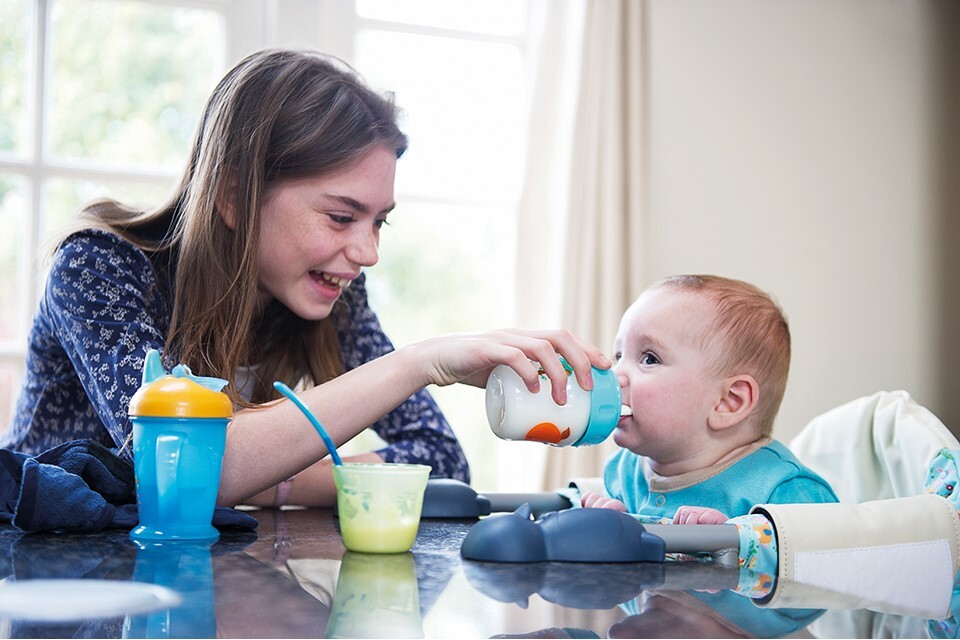
Our most serious case work has involved deeply distressing incidents, including the deaths of babies and very young children in early years settings. While such incidents are rare, they happen during routine care activities, such as sleep, feeding and nappy changing. In these cases, lapses in supervision, insufficient understanding of safe practices, ineffective whistleblowing practices, or inadequate staff training have led to devastating outcomes. The vulnerability of babies, particularly those under 1 year old, is starkly evident in our reviews of these incidents. Babies depend entirely on adults to meet their needs and protect them from harm. When care is inconsistent or unsafe, the consequences can be tragic.
We have considered the outcomes of our most serious case reviews, alongside our recent research, and have worked closely with the DfE to ensure safe feeding practices are included in the EYFS statutory framework. We have also revisited safer sleep practices in the training for our early years inspection workforce.[footnote 60] In developing the renewed education inspection framework, we drew on findings from our learning reviews, particularly those relating to safeguarding culture and suitability. The safeguarding evaluation area in the early years toolkit considers whether the setting establishes an open and positive safeguarding culture that prioritises children’s interests, alongside the extent to which leaders adopt an effective whole-setting approach to safeguarding. Updates to the EYFS requirements, particularly those concerning nutrition and safe sleep for babies, are clearly reflected in the children’s welfare and wellbeing evaluation area. We will continue to work with the DfE to encourage a stronger focus on babies within the EYFS.
Children who do not attend school on a full-time basis or are missing education

We are concerned that high numbers of children do not attend school on a full-time, permanent basis. The extent of this issue can be seen in Figure 16. We also raised concerns last year about children with unorthodox patterns of education, such as flexi-schooling and part-time timetables.[footnote 61] We are concerned that, this year, even more children are in some of these arrangements. For example, we have seen a rise in flexi-schooling through our inspection work, and according to government data:
- 24% more children are in alternative provision placements commissioned by local authorities
- 21% more children are recorded as being home educated
Most concerning of all, 19% more children are missing education entirely, compared to last year’s figures. This is a sharp year-on-year rise. As we know from the COVID-19 pandemic, the impact of missing education even for a short period can be huge, and it can take years for a child who has been out of school to catch up with their peers. This increase will therefore be a significant concern to everybody who works in education and children’s services.
Figure 16
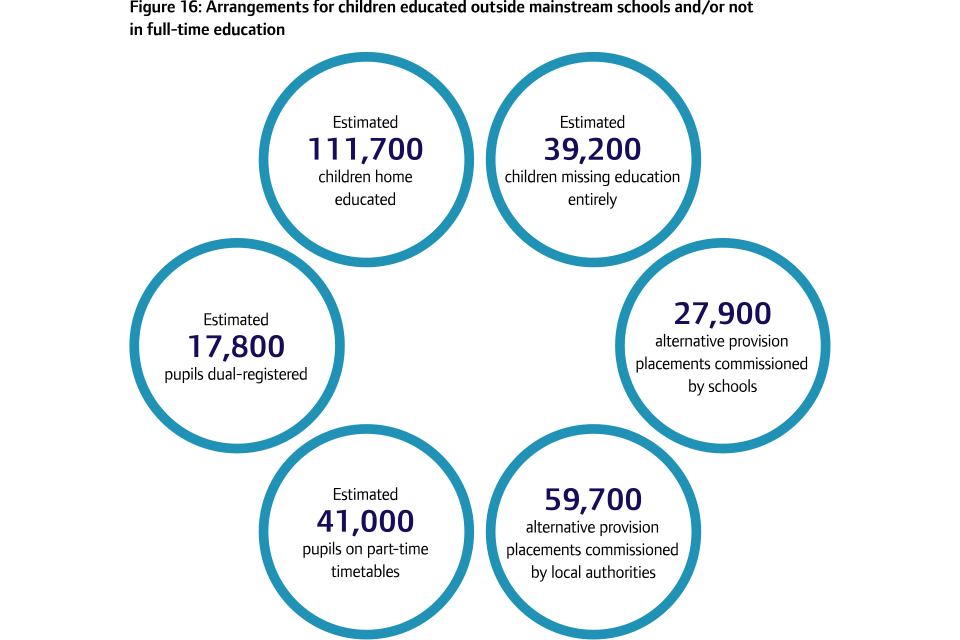
Data is from a variety of sources, at different points in time, and some data is estimated. The sources are as follows, going anti-clockwise from top left:
1. ‘Elective home education’, Department for Education, December 2024 (updated May 2025).
2. Dual registration data is an estimate that we have produced, using pupil-level data from the DfE’s schools census of January 2025.
3. ‘Part-time timetables and flexi-schooling in the autumn term’, FFT Education Datalab, January 2025. The figure for pupils on part-time timetables has been updated but is not comparable to previous years.
4. The figures on alternative provision commissioned by schools and local authorities are both taken from ‘Schools, pupils and their characteristics’, Department for Education, June 2025 (updated September 2025).
5. ‘Children missing education’, Department for Education, December 2024 (updated May 2025). This is a fairly new collection classed as ‘official statistics in development’, and the quality of the data is expected to improve over time. Children missing education are not registered pupils at a school and are not receiving suitable education elsewhere. Home-educated children includes those who are waiting for a school place and children receiving unsuitable education, including those children local authorities are supporting to place into suitable education.
View data in an accessible table format.
Each academic year, we carry out a series of thematic visits with CQC as part of our area SEND inspections.[footnote 62],[footnote 63] These visits explore a particular aspect of the SEND system in depth, in a small number of areas.[footnote 64] The theme that we explored in 2025 was children who are not in school.[footnote 65] We saw many children not in school who had a wide variety of SEND needs, including physical and mental health conditions. A significant number of children had been diagnosed with neurodevelopmental conditions or were waiting for a neurodevelopmental assessment. We will shortly publish a report setting out our findings from the thematic visits that we have carried out this year.
On these visits, we found the following:
- There were multiple missed opportunities to identify children’s needs early and arrange the support that could have helped them to remain in school
- Children were at a higher risk of leaving the school roll at key transition points, such as when moving from primary to secondary school. This was often because important information about the child was not passed on to the new setting
- Oversight of children who were not in school was inconsistent. Some areas lacked robust processes or capacity to oversee children who were not in school
- Children not in school struggled to access health services to meet their needs, such as mental health support or speech and language therapy. This made it less likely that they would return to mainstream education
- Children not in school and who lacked an EHC plan, or who were not supported by children’s social care, were less likely to receive oversight and support
- When alternative provision and specialist settings were used well, they enabled children to transition effectively into mainstream education. However, there were shortages of this provision
Case study 1: Daniel’s story
We spoke to Daniel, a primary-age child who is electively home educated, and his mum. Daniel had been waiting for a neurodevelopmental assessment for over 2 years when his mum decided to home educate him. Although some of his needs had been identified early, he had not received the support he needed while waiting for a formal diagnosis.
Daniel told us that he felt he could not fit in at school. He said he struggled to learn in a classroom environment where there were a lot of children, noise and distractions. As he got older, Daniel’s sensory needs affected his behaviour. As a result, he became more isolated and attended school less often. Daniel was initially supported by a teacher who recognised his needs and implemented strategies to support his needs well. This included allowing Daniel to take sensory breaks and checking in with him regularly. Daniel and his mum told us this was the happiest he had been at school. But this support did not continue as Daniel moved through school because he did not have a formal diagnosis or plan to meet his needs. This led to gaps in his learning that made it difficult for him to keep up with his peers.
It was by chance, at a health visitor appointment for his younger sibling, that Daniel’s parents were helped to recognise his neurodiversity. They were told how to self-refer to relevant services and where to find further support. However, health professionals did not share key information about Daniel’s needs with other relevant services, such as the local authority school attendance team.
Daniel’s mum eventually made the difficult decision to home educate him. It was at this point that the school and local authority offered support, but Daniel’s family felt it was too late. They described to us how they had reached ‘crisis point’. The local authority told our inspectors that they had not been made aware of Daniel’s escalating needs by the school or health services. Daniel’s parents did not receive any information about services available for home-educating families and told us that they have had to navigate the system alone.
Despite the commitment from dedicated practitioners, Daniel’s needs could not be met in school because earlier opportunities to support him had been missed. We found that this was because some staff did not understand Daniel’s emerging needs, and, at times, there were not enough staff with the right expertise available to provide the support he required.
As in previous years, our unregistered schools team has continued its work on finding and tackling illegal schools that have failed to register with the DfE. The concerns we have set out in previous annual reports remain. Children who attend unregistered schools are at risk because there is no formal external oversight of safeguarding, health and safety or the quality of education. Some unregistered schools take a chaotic and unstructured approach to teaching and learning that would never be acceptable in a registered school. A significant minority of the unregistered schools we inspect have either safeguarding or health and safety issues.

This year we received nearly 330 referrals – that is, items of information about suspected unregistered schools from various sources such as local authorities, Ofsted inspectors and members of the public. This is higher than ever before. It is higher than the average in the previous 2 years (around 210) and much higher than the period 2015/16 to 2021/22, when we received on average less than 150 per year.[footnote 66] (Further information about unregistered schools is available in the ‘Inspection and regulatory activity’ chapter.)
We review all referrals we receive to decide whether to open a criminal investigation.[footnote 67] This year, the type of settings we have investigated and then subsequently inspected has broadly matched the pattern of previous years, with alternative provision settings, general education settings and tuition centres accounting for the large majority of the settings inspected. The Children’s Wellbeing and Schools Bill currently before Parliament would, if enacted, give Ofsted stronger powers to investigate illegal schools and to close legal loopholes that enable some providers to operate. This would help us to protect children from inadequate education in unsafe, unregulated settings.
Children in school
Our work shows that some children face increased barriers to learning and wellbeing in schools.
SEND
The government has pledged to do more for children with SEND.[footnote 68] The number of children with SEND is continuing to increase, so it is critical that we evaluate their experiences as part of our inspections.[footnote 69] In most of our area SEND inspections this year, we found that existing arrangements have led either to inconsistent experiences and outcomes for children with SEND or to significant concerns due to widespread and/or systemic failings.[footnote 70] However, we still saw some pockets of good practice.
It has been 2 years since we introduced our revised area SEND inspection framework.[footnote 71] Over this period, we have found that children and young people with SEND receive better support and have their needs met earlier in local areas where local authorities, schools and health providers work well together.[footnote 72] For example, we inspected a local area partnership that had developed a communication advisory support service. The service provided schools with a whole-school approach to meeting children’s communication needs by training education staff and supporting improved early intervention. This helped to ensure that children’s speech, language and communication needs were identified and met in a timely way.
Collaborative work among local area partners is key to fostering inclusive education. In one area, a successful ‘belonging strategy’ – based on behaviour support and effective use of alternative provision – enabled children and young people with SEND to stay in or return to mainstream settings, where possible.
Through our ITE thematic monitoring visits, we explored how well prepared trainees are to teach pupils with SEND in primary and secondary schools.[footnote 73] We found that ITE leaders consider this to be an essential aspect of their curriculum. Some frontload their training on SEND, while others thread it through all the training they deliver. In many cases, leaders draw on the support of SEND specialists when designing and delivering their ITE curriculum. They often supplement this with first-hand experience, through visits to specialist settings or schools. Trainees told us they value these opportunities and comment on how it helps them to develop their teaching skills in this important area.[footnote 74]
Throughout their training, they learn essential principles of inclusive education, focusing on statutory guidance and adaptive teaching strategies for pupils with SEND. However, some providers cover topics too quickly for deep understanding. Trainees’ ability to apply SEND training varies and is often influenced by the practices of their placement schools. Where schools demonstrate strong approaches to SEND, trainees make greater progress in meeting pupils’ needs. Many headteachers note that trainees are well-prepared, reflective and committed to inclusion.
Looked-after children
Looked-after children typically have poorer academic outcomes than their peers, even when accounting for additional needs.[footnote 75],[footnote 76] Over half are identified as having SEND, most commonly social, emotional and mental health needs. To understand how mainstream schools and FE providers are supporting the academic and personal progress of looked-after children, we visited providers and spoke with children and young people, professionals and carers.
We found that it was important for providers to take an individualised approach to supporting looked-after children. Providers created positive educational experiences for children by taking the time to understand their individual circumstances and establishing what support they needed for both academic and personal development.
A quote from a research interview with a pupil shows the difference a provider can make:
Researcher: ‘What do you think are the best things about your school?’
Primary school learner: ‘It’s made of love and care.’
Alongside schools and colleges, virtual schools have a statutory duty to support the education of looked-after children. Providers regarded virtual schools as key strategic partners in monitoring children’s progress. Virtual schools provided looked-after children with access to specialist support, such as educational psychologists, trauma-informed practice and guidance on transitioning to post-16 study. Looked-after children who had trusted staff members to provide both pastoral and academic support were better able to engage with learning. Effective, regular and clear communication between staff, children and home helped providers to understand changes in needs or circumstances and respond efficiently. It is common for looked-after children to change education providers. Well-considered transition plans helped children to feel at ease, whether the change was at a standard point or part-way through a school or college. However, some providers struggled to obtain timely information about looked-after children. For example, many worked with multiple local authorities who differed in the processes and support that they offered.[footnote 77]
Inclusive practice in some schools across the country
On inspection, we saw that the barriers to learning and wellbeing facing children and young people were broadly similar across all regions. There were examples of exceptional provision in some schools, which provided good experiences for children and learners facing barriers. For example, leaders put robust processes in place during transition points in education. They communicated and shared information effectively with the next setting, and identified children’s needs quickly to ensure they got the strongest start. Staff understood wider vulnerabilities, and they had excellent working knowledge of the local communities and families they served. There was strong emphasis on building trust with families. For example, parents were invited in to give a talk about their profession to children, and there were regular strategic meetings involving parents. SEND coordinators and attendance staff created strong relationships with parents. Schools also took a considered and cautious approach when using language. For instance, they did not use terms like ‘monitoring lists’, to avoid stigmatising children and young people. Instead, they framed support as universal, so that they did not single out individuals.
Barriers for post-16 students
There are also barriers for post-16 students that can have a major impact on their employment and career prospects.
Our third report on careers education focused on the post-16 careers guidance provided for students and learners from economically disadvantaged backgrounds.[footnote 78] We found that careers guidance worked best when it was not an isolated aspect of college provision but was integrated into a course of study through the curriculum. There were challenges in providing meaningful and useful work experience for students/ learners. The quality of a provider’s careers guidance depended on the qualifications, knowledge and expertise of their careers adviser.
Despite this, many of the students/learners we spoke to were positive about the careers guidance they had received from their college staff. They said this was important in helping them to develop the knowledge and practical skills required for their next steps and future career pathways.
Some young people are very unlikely to receive any kind of careers education, advice or guidance after they have left school.
Older children facing specific challenges
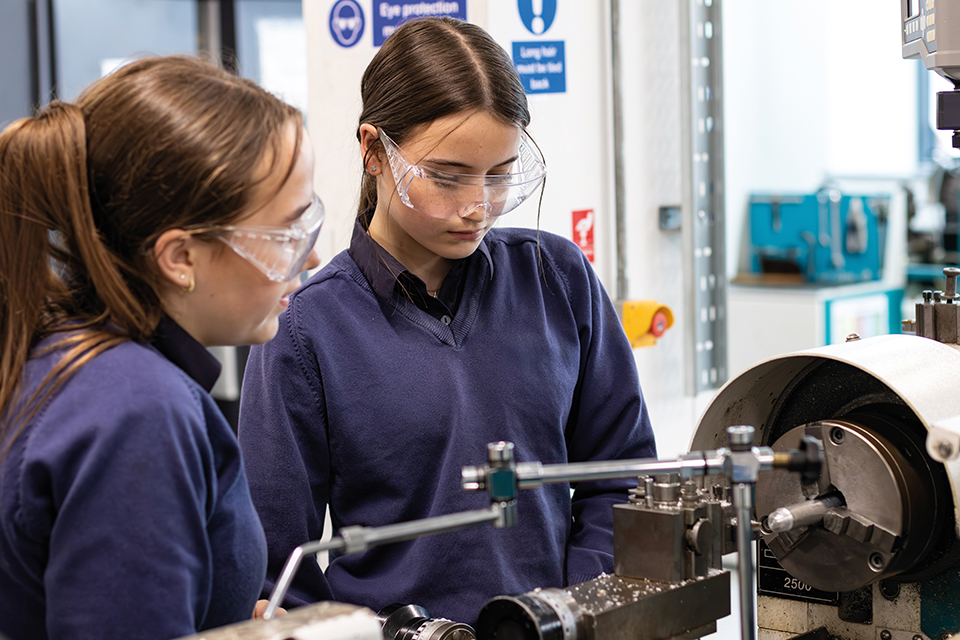
In a landscape shaped by evolving social and economic challenges, the wellbeing and future prospects of vulnerable children and young people remain at the heart of our work. Children of all ages can face difficult circumstances, but this chapter focuses on the main areas of concern for older children (aged 10 to 17), and how education and social systems meet their diverse needs. By highlighting key concerns, emerging trends and examples of effective practice, we aim to describe the challenges these young people face, and the collective efforts required to help them thrive.
Through our work with local authorities, for example as part of our ILACS framework, we know that in recent years there has been an increase in the number of older children who come to their attention. There are several reasons for this. One is an increase in the number of unaccompanied asylum-seeking children across the UK, who are mostly aged 16 and 17.[footnote 79] There has also been an increase in the number of older children who need support and care because of their complex needs, and a better awareness of children who are vulnerable to harm outside the home.[footnote 80] More than half (55%) of all children entering care in the year to 31 March 2024 were aged 10 or older. The proportion aged 16 and over has increased from 20% in 2020 to 29% in 2024.[footnote 81]
There are persistent and well-known challenges in finding suitable accommodation for children in care and those preparing to leave care. While this issue affects all children, older children and those with complex needs often face the greatest difficulties. Ensuring children have access to living arrangements that meet their needs is essential for providing stability and supporting their transition to independence. This is especially important for older children who are nearing adulthood but may not be ready to live independently. Health, social care, education and other partners need to coordinate their efforts to keep these children safe. We are continuing to revise and reform our children’s social care inspection frameworks, in line with government changes and new legislation, to raise standards across the sector.
Having the right support and accommodation in the right places
Older children aged 10 to 15 make up the largest group in children’s homes. This is due to the increase in behavioural and emotional needs that emerge during adolescence. Teenagers aged 16 and 17 also make up a significant and growing share of the children in residential care.
Although we have registered more children’s homes this year than last year, there has been a smaller increase in the number of places available. This is due to a shift towards smaller settings (see the ‘Inspection and regulatory activity’ chapter).
The geographical distribution of children’s homes and residential special schools often bears little resemblance to the pattern of need or demand.[footnote 82] This means that the increase in the number of children’s homes we register is not solving the problem of having provision in the wrong places. As in previous years, our analysis shows that growth has not been the same across regions. Some areas have significantly more new children’s homes than others, particularly in the North West, where the number of homes outstrips local demand. This is contributing to an ongoing imbalance in access, with some areas experiencing shortages in local provision, leading to children being placed far from their home.
A notable proportion of children’s homes are operated by a small number of larger owners. The 10 largest private owners of children’s homes in England are displayed in Table 2. Our analysis shows that, together, these owners operate nearly 20% of all children’s homes. This is important because this concentration of ownership may shape patterns of provision and development, including decisions about where new homes are opened. This ownership profile also raises concerns about the financial vulnerability of the children’s social care sector. We welcome the proposed new financial oversight regime set out in the Children’s Wellbeing and Schools Bill, and we are considering how the data we hold can contribute to the development of that system. No provider is immune from failure, however large they may be.

Table 2: Top 10 largest private children’s homes owners as at 31 March 2025
| Rank (largest to smallest) | Provider name | Number of homes | Percentage of all homes |
|---|---|---|---|
| 1 | Amalfi Midco Limited (CareTech) | 220 | 5% |
| 2 | G Square Healthcare Private Equity Llp (Keys) | 156 | 4% |
| 3 | Picnic Topco Limited (Esland) | 68 | 2% |
| 4 | HCS Group Limited | 59 | 1% |
| 5 | Liberi Topco Limited (Compass) | 52 | 1% |
| 6 | The Shaw Trust Limited | 51 | 1% |
| 7 | Aspris Holdco Limited | 50 | 1% |
| 8 | Care Today/Parallel Parents Limited | 44 | 1% |
| 9 | Range Topco Limited | 40 | 1% |
| 10 | Wordsworth Topco Limited (Witherslack) | 38 | 1% |
We extracted the ownership data for this release from the ‘get information about a company’ tool on Companies House. The information on Companies House is provided by companies themselves, and neither Companies House nor Ofsted verify its accuracy. The company names used throughout this release are presented as at source. If a company is better known by another name, the commonly recognised name appears in brackets.
We are also concerned that there is a shortage of providers with staff and carers who have the specialist skills to meet the needs of older children with single or multiple complex needs, or the ability to prepare them for independence. As children near adulthood, it is vitally important that they get help with accessing adult services, preparing to take care of themselves, and continuing in education and/or employment. Because there is a lack of accommodation in the right places to meet the needs of these children, local authorities often have little choice other than to spend large amounts of their looked-after children budget on accommodation. Between 2015–16 and 2023–24, local authority spending on looked-after children increased from £3.9bn to £8.1bn.[footnote 83] This took the average annual cost for each looked-after child to £97,200. This increase far outpaces inflation over the same period, which was around 33%, meaning the growth reflects significant real-terms pressures rather than just price changes.
Figure 17
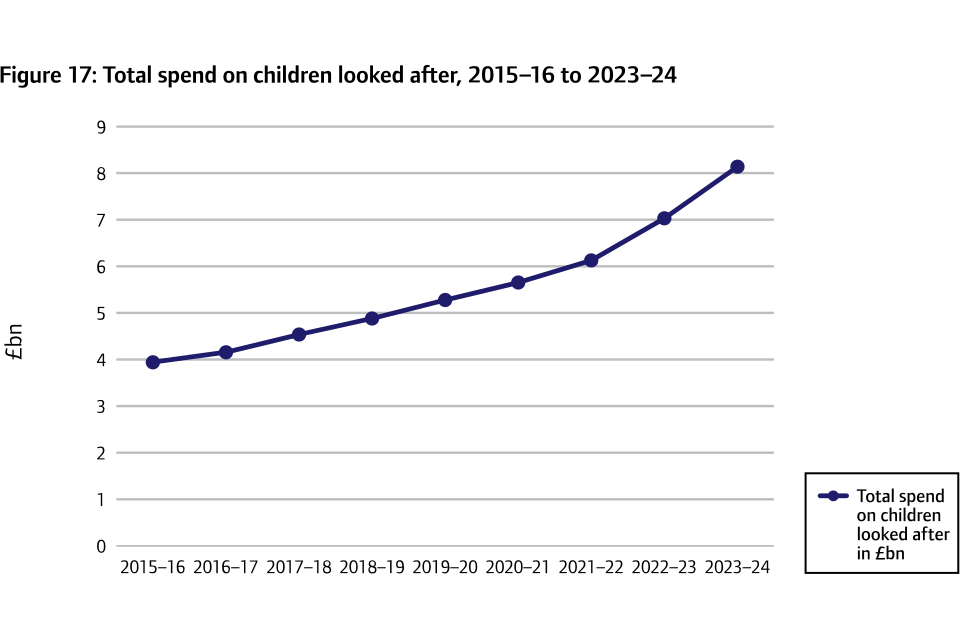
Source: ‘LA and school expenditure’, Department for Education, 2025.
1. Figures are calculated for total gross expenditure on children looked after.
View data in an accessible table format
There was an increase in the overall number of social care providers during the last year. This included substantial increases in the number of children’s homes and in the number of supported accommodation providers, which were not regulated before April 2023.[footnote 84]
Challenges in finding the right accommodation for children extend beyond residential care. We have seen a steady decline in fostering capacity, with fewer foster carers entering the system and increasing numbers leaving. The reduction in available foster placements is contributing to pressure on placements and limiting the options for children who could otherwise be supported in a family setting. However, the decrease in fostering households has been partially offset by an increase of 9% in formal kinship care arrangements (or ‘family and friends carers’), which is the preferred route in many cases (see ‘Inspection and regulatory activity’ chapter). The government has identified the need to provide better support to kinship carers through strengthened local offers, and this may lead to an increase in other permanency arrangements such as special guardianship orders.
At the same time, we have seen a rise in the use of unregistered provision (see the ‘Unregistered children’s homes’ section in this chapter, and the ‘Inspection and regulatory activity’ chapter), often as a last resort when no suitable placement at a registered provider is available. This is a clear indicator of strain within the system and raises concerns about the quality and oversight of care in these settings. The combination of fewer fostering placements, uneven growth in residential provision and increased reliance on unregistered arrangements suggests there is a wider challenge in providing sufficient places across children’s social care.
Supported accommodation
The most recent addition to our social care regulation and inspection activity is supported accommodation for 16- and 17-year-old looked-after children and care leavers.
Supported accommodation is intended for children who can manage the associated increased independence with the right support. It should not be the default option for all 16- and 17-year-olds in care; if children need the type of support or care provided by foster carers or children’s homes, that is where they should be living. Only children who are clearly ready at the point of referral should move into supported accommodation. We must also remember that those who are considered ready for this additional independence are still children and are managing a level of autonomy and responsibility that their peers are unlikely to have. The support and guidance offered through supported accommodation are therefore even more essential for these vulnerable children.
By the end of July 2025, we had received over 1,700 applications to register as a provider of supported accommodation.[footnote 85] During 2024–25, we registered 640 supported accommodation providers.
We worked with local authorities and the DfE to forecast the number of providers that would register with us as a supported accommodation provider. However, the large volume of applications far exceeded our forecasts and the number that could be dealt with by existing staff. This means that many applicants are waiting a very long time for their application to be processed. We remain committed to processing all applications as quickly as possible. However, we have revised our children’s homes registration policy to prioritise applications from providers that can meet the urgent need for accommodation in areas where there is clear evidence that the existing provision is insufficient.[footnote 86]
Between April 2024 and March 2025, we carried out 50 full inspections of supported accommodation providers, ahead of moving to a full programme of inspections in the 2025–26 inspection year. The profile of the outcomes of these inspections was broadly what we expected to see, given longstanding concerns about the variable quality of supported accommodation. Only half of the providers achieved an outcome of ‘consistently strong’.[footnote 87] However, with such a small inspection sample it is too early to identify any clear trends.
As well as a higher number of applications for supported accommodation than anticipated, we also saw considerable diversity in the categories of accommodation offered. This is also reflected in the number of premises operated by each provider.
As with children’s homes, a supported accommodation provider can operate several different premises where children can live. These are not necessarily situated in the same place as the provider. The supported accommodation providers registered with Ofsted are distributed fairly evenly across the country. However, there is a pronounced disparity in the distribution of premises, with the North West having the largest proportion.
Though the number of premises follows the same trend as we see with children’s homes, London has the second highest number of places for supported accommodation in the country. This reflects the higher number of category 3 premises in London, which are shared- or group-living premises that are not limited to accommodating looked-after children and care leavers.
Children in the secure estate
There are 4 different types of secure provision that together comprise the ‘secure estate’ for children. Secure provision that is inspected and/or regulated by Ofsted includes:
- secure children’s homes (SCH)
- secure training centres (STC)
- secure 16 to 19 academies
- young offender institutions (YOI) (Ofsted inspects the education provision only)
Children living in the secure estate are some of the most vulnerable children in society. They are placed in secure provision because they:
- have been remanded to custody by the courts
- have committed an offence and are serving a custodial sentence, or
- have been placed in an SCH by a local authority for welfare reasons because they are a risk to themselves or others and the family courts have decided that no other type of provision can keep them safe
SCHs and secure 16 to 19 academies are regulated and inspected by Ofsted. As these settings restrict children’s liberty, they also require approval from the Secretary of State for Justice. As of 30 September 2024, there were 13 SCHs and 1 secure 16 to 19 academy in England.
In the 12 months to 31 March 2025, there was a rise in the number of looked-after children placed in SCHs on welfare grounds.[footnote 88] However, as we have previously reported, the demand for SCH places outstrips availability – the number of approved places available for use has decreased from 220 in March 2024 to 211 in March 2025. A number of these places (101) are commissioned by the Youth Custody Service and are therefore not available for local authorities to place children on welfare grounds.
From our inspection and regulatory work, we know that approved places may be unavailable for various reasons. For example, some parts of the estate are old and cannot look after children with particular needs. Some homes have difficulties in recruiting and retaining staff. The complexity of some children’s needs means that they require higher staffing ratios, which puts some available places out of action. The number of truly ‘available’ places regularly varies and is often much lower than official figures suggest. This has meant that some children who need an SCH place may instead be subject to a deprivation of liberty (DoL) order through the Court of Protection. These children are increasingly being placed in unregistered children’s homes that do not provide the protections of a registered setting.
Our inspections this year have generally found that care, health and education provision in SCHs is of a good quality. Children’s needs are assessed on admission, and individualised plans and curriculum are put in place to ensure that children receive high-quality care, health services and teaching. Children in SCHs generally make good progress in all aspects of their lives.
Case study 2: Barton Moss Secure Care Centre
Barton Moss is an SCH that can care for up to 27 children aged between 10 and 18. In its last full inspection (December 2024) the home was judged to be good in all areas.
The home provides a good example of staff working together in partnership across all disciplines. This promotes consistency in practice and care. Health and education staff attend regular team meetings together, which allows for reflective discussions about children’s needs and emerging issues.
Education staff provide children with an environment that is welcoming and supportive. Many of the children in the home have experienced significant trauma in the past and staff make considerable efforts to meet their personal, social and emotional needs. This has had the positive result that most of the children, many of whom have struggled to engage in their previous schools, participate very well in their education. They attend lessons regularly, behave very well in class, and show respect towards each other, teachers and visitors.
Staff build positive relationships with the children in a short space of time and promote structure and boundaries in the children’s daily routine. This contributes to their goals of attending education, sleeping soundly and living harmoniously. One child said, ‘It feels like home here.’
Children living in other types of secure setting do not receive the same level of care and education as they would in an SCH. As of 30 September 2024, Oakhill Secure Training Centre was the only STC in operation in England.[footnote 89] We carried out a full inspection of Oakhill in October 2024 and judged the provision inadequate due to serious concerns about children’s care and education. In July 2025 we carried out another full inspection, and identified profoundly serious and systemic failures that meant children had been, and remained, at risk of harm. As a result, Sir Martyn Oliver wrote to the Secretary of State for Justice to invoke the urgent notification process.[footnote 90] Our concerns related to staff misconduct. For example, a high number of staff had been suspended due to allegations about their conduct towards children, staff were not following safeguarding processes, and children’s physical and mental health needs were not being met. Inspectors identified a clear deterioration in the prevailing culture at Oakhill, noting that it was no longer child-centred. The secure home has since developed an improvement plan and continues to be regularly monitored by Ofsted.
This year, we started registering secure 16 to 19 academies, a new type of provision. The Oasis Restore Trust was the first, and so far the only, secure academy to register. It accommodates children who are remanded in custody by the courts or who are serving a custodial sentence.[footnote 91] The first child was admitted in August 2024.
The academy had its first inspection under the education inspection framework in February 2025, where the judgement was ‘reasonable progress’. It also received its first full inspection under the SCCIF in March 2025. This included an inspection of its education provision. Sixteen children were living in the academy at the time of the inspection. The judgement was ‘requires improvement to be good’. A monitoring visit took place on 30 July 2025 and found a range of issues related to security and the fabric of the building. On 8 August 2025, the interim executive director of the Youth Custody Service wrote to us advising that the academy was closing temporarily in September 2025.
We support HMI Prisons’ inspections of YOIs, providing our education expertise. HMI Prisons reports that children receive poor care and have poor experiences in YOIs.[footnote 92] In a joint review of the quality of education in YOIs, published in October 2024, we found that they were not providing a good enough education for children.[footnote 93] At the time of the review there were 4 YOIs (3 in England and 1 in Wales), housing over 400 children. The report noted a bleak picture of steadily declining educational opportunities and quality, reduced work experience and work opportunities, and sharply reduced time out of cells for children. In the worst case, in one setting some children had only half an hour out of their locked cells each day. Children were receiving poor care and education in YOIs that failed to meet their needs.
We also inspect education in the adult prison estate, jointly with HMI Prisons. In 2024–25, two fifths (39%) of prison inspections found the overall effectiveness of education, skills and work provision to be inadequate. This included 2 YOIs that were inspected for their education provision, both of which were found to be inadequate. Further detail on the outcomes of our prisons inspections is included in our ‘Inspection and regulatory activity’ chapter.
Unregistered children’s homes
In 2024–25, we opened 870 cases to investigate potential unregistered children’s homes. Of these, 680 were determined to be unregistered homes. This is comparable to the previous year’s figures and shows that some local authorities are still choosing to place children in such settings. The large amount of supported accommodation provision being registered has not had an impact on this. In the same period there were 56 cases of possible unregistered supported accommodation, of which 40 were determined to be unregistered supported accommodation.
Almost a third (31%) of children living in unregistered children’s homes as at 1 September 2024 were subject to court-issued DoL orders.[footnote 94] DoL orders are permissive orders – that is, they use only the minimum level of restriction required to ensure the child’s wellbeing. For example, they often include conditions that allow staff to physically restrain a child, and/or lock doors to stop them from leaving a setting. As these settings are unregistered, we have no way of knowing whether staff are complying with the permissive nature of the DoL order or indeed whether the conditions of the DoL order are being inappropriately applied.
The average age of children placed in unregistered children’s homes last year was 15. This could mean that a large number of younger children are potentially living in unregistered homes that are not being inspected by Ofsted, and where we know nothing of the condition of the accommodation or how DoL conditions are being applied. It also means that they are unlikely to be getting the support that vulnerable children need.
When we identify unregistered settings, we issue warning letters to those operating them and make local authorities aware that the settings are operating unlawfully in their area. Currently, we do not have the power to fine these settings, though this is expected to change under new legislation (the Children’s Wellbeing and Schools Bill). We can already prosecute people who run unregistered children’s services. However, this is a resource-intensive process and can take a very long time. This new legislation will give us a wider range of powers that will help us to take more appropriate and timely action to tackle unregistered settings.
This year we have warned a small number of providers for operating unregistered supported accommodation, although unregistered children’s homes still make up most of the unregistered social care provision.
Some challenges of particular concern
Children with complex needs
The term ‘children with complex needs’ often refers to those with multiple, overlapping challenges who require support from various professionals. It can also apply to children with a particularly severe single need. Many of these children are aged 12 and over and face emotional and behavioural difficulties linked to early and ongoing adversity, such as abuse, neglect, poverty, racism and trauma. They may have a history of involvement with children’s services, mental health services and education services, including moves and/or breakdowns in their family or school placements. They may also have SEND, severe mental health needs, or safeguarding risks, including exploitation and serious youth violence. A significant number are subject to DoL orders.
Local authorities have told us they struggle to find suitable homes for children with complex and multiple needs. We need homes and agencies to feel confident in their ability to provide long-term, sustainable care for vulnerable children. Some providers continue to believe that caring for children with complex needs can result in lower inspection grades. This perception is understandable, but as we have previously communicated to the sector, caring for vulnerable children with complex needs will not negatively affect inspection outcomes.
When we inspect, we want to explore how managers and staff are equipped to provide the best support to these children.[footnote 95] There are no easy solutions to these challenges, but we know that the impact on children is significant. Local authorities often tell us that they place children in unregistered children’s homes because they cannot find a legal option that meets a child’s specific needs. Some extremely vulnerable children are placed alone, far from the people who are important to them, and experience multiple moves. Some children can wait months, or even years, for a settled and stable home.
We need providers to open homes where they are needed most, and to open homes that can look after children with the greatest need. In February 2025, we posted a blog for providers on setting up provision for children with complex needs. This provided tips, reassurance and a pre-registration online advice form.[footnote 96]
For 2025, we also made a commitment to look at how well providers work with partners, such as education, health and mental health services, through difficult times and achieve greater stability for children. We wanted to make sure that inspections promote and celebrate practice that leads to increased stability for children, especially for those with complex and multiple needs.
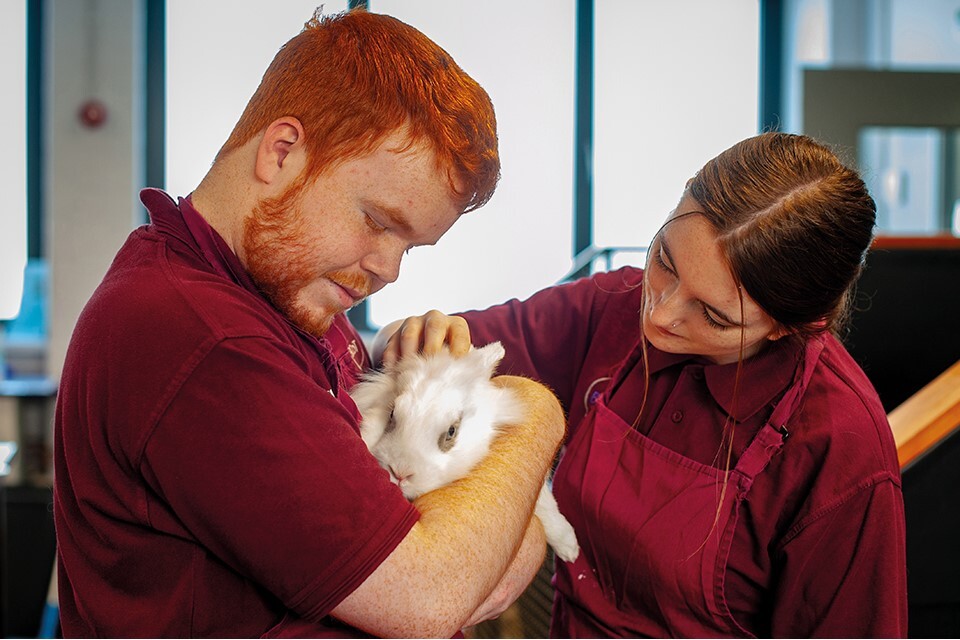
In April, we published updates to our SCCIF, which sharpened our focus on the difference providers make to the experiences and progress of children, and on keeping children safe and helping them to thrive.[footnote 97] This included clarity on:
- how providers promote and sustain stability for children, including those with high needs
- the timeliness of a provider’s work to prepare children for their next move
- how placement decisions reflect a home’s statement of purpose, and balance the needs of the child with the needs of those already living there
- how well providers work with partner agencies to manage risks
We have trained our social care regulatory workforce on the updates to ensure that inspection promotes a more inclusive approach to caring for children most at risk of instability. Through inspection and regulatory work, inspectors are looking more closely at how providers are sticking with children through difficult times and how well they are managing risk by being risk aware rather than risk averse. We are looking at the experiences of children who have had unplanned moves from the home and are exploring with providers how staff are equipped to best support children with complex needs. We are making sure that inspection outcomes reflect good practice in these areas and recognise providers who step up to support children with complex needs.
We have seen some excellent examples of how well children can thrive when the home focuses on meeting their needs.
Case study 3: Jay’s story
Jay is at considerable risk of child criminal exploitation. He has witnessed his friend being stabbed. He has appeared on social media with weapons, and has had suspected violence-related injuries. He is also involved in drug dealing. Jay has had repeated episodes of going missing from his home, and the home has notified us of incidents involving CCE.
Jay lives in a privately run home that provides care for up to 3 children. There is an experienced registered manager in post. We decided to make the inspection of this home a priority when planning which homes to visit. We wanted to understand the home’s circumstances and explore how it was managing risks. At the time of the inspection (May 2025), 3 children were living in the home and all of them engaged with the inspection.
This children’s home has continued to care for Jay and has been resolute in advocating for him. The home has worked well with partner agencies to help them recognise Jay’s risks and vulnerabilities. They have pushed for several multi-agency meetings and challenged the risk assessment when they thought it should be higher.
There are other children in the home, and we found that these children are not being drawn into the CCE risks that Jay experiences. The home has continued to engage with Jay, and he now confides in staff and does activities with them. They have demonstrated that they continue to persevere with Jay, recognising his vulnerabilities even when risks are increasing.
The setting was judged good for experiences and progress.
Serious youth violence

Serious youth violence is much more widespread than many people realise, and has been rising. Figures show that both perpetrators and victims of these offences are getting younger, with self-reported violence peaking at age 15. That is why this year we carried out, with partner inspectorates, a series of joint targeted area inspections (JTAIs) into the multi-agency response to serious youth violence.[footnote 98]
Serious youth violence happens in all areas of the country and in all demographics. But we found that not all the areas we visited were aware that there was an issue in their area. Some considered it a problem found only in inner city or urban areas. We found evidence that the fear of violence was very widespread, and that too many children routinely carried knives because they believed this was necessary to keep them safe.
Our inspections identified that some children were at a disproportionately higher risk from serious youth violence than others. These included children with SEND, children with social, emotional and mental health needs and children who are neurodivergent, including those diagnosed with autism and/or attention deficit hyperactivity disorder (ADHD). These children were much more likely than others to have been harmed by serious youth violence in the cases we saw. We sampled and tracked the experiences of hundreds of children across 6 areas. From these, we selected a smaller sample of 36 children whose experiences we tracked in detail. Of the 36 children in our case studies, only 5 had no additional needs relating to SEND or mental health. We also found that, in some areas, children from some ethnic groups were disproportionately represented among those harmed by serious youth violence, but not all local areas were addressing this. Risk factors associated with serious youth violence include childhood trauma, such as abuse and neglect, poverty and having a disrupted education, including being excluded from school.[footnote 99]
In our renewed education inspection framework, we continue to inspect safeguarding.[footnote 100] This is a separate core evaluation area and we judge if standards have been ‘met’ or ‘not met’. As part of our inspections of safeguarding, we will focus on gathering evidence relating to the factors that contribute most strongly to safeguarding, according to statutory and non-statutory guidance, research and inspection evidence.
We saw too many examples of serious youth violence not being seen as a safeguarding issue. This meant that children did not get the support and protection they needed. We saw some good examples of children involved in serious youth violence being viewed as victims first. For example, in one area we visited, the police took a trauma-informed approach to their work with these children. But in other areas, the initial response was usually a criminal justice response. Police did not consider the child’s circumstances, such as whether they had been groomed into carrying out the violent acts.
It is important to understand why children get involved in serious youth violence. We found that the risk of serious youth violence was reduced when statutory partners, including children’s social care, the police and health services, and the education and voluntary sectors, work together to maximise their impact by building trust with local communities. This helps them to identify children’s needs and support those working with them. Only by understanding local needs can partners ensure that systems are in place to meet these and reduce harm to children, families and communities.
If future harm is to be prevented, then children’s experiences need to be understood and all their needs addressed through a holistic safeguarding and protective response. In some areas, partners worked together well to meet the wider needs of children affected by serious youth violence. They had a shared understanding of the children’s backgrounds and experiences, including trauma and abuse. Effective initiatives focused on addressing the impact of abuse, supporting children to access education, giving them opportunities to develop interests and skills and helping them to stay safe.
Case study 4: Luke’s story
Luke was a young teenage boy who routinely carried a knife. A range of agencies worked with Luke and discovered that he was afraid of some of the older children in his area. He was too frightened to attend school and felt that he had no one to help keep him safe. At home, Luke experienced neglect and overcrowded conditions. He did not feel safe there. Children’s social care, a voluntary sector organisation and Luke’s school had a shared understanding of the needs of Luke and his family. They carefully planned and coordinated their work to help the family, and to keep Luke safe.
Luke’s mother was helped to apply for a new house with more space for the family. She was also being helped to understand how Luke was feeling and the important role she had in making her child feel loved and safe. Their relationship improved as a result. Luke moved to a new education provider – a safe space for him to go every day – and his attendance improved. As Luke was a child vulnerable to exploitation, professionals were helping to keep him safe. Luke developed good relationships with those who were working with him, which helped him to feel valued.
As a result of the multi-agency work, Luke’s life was more stable. He had structure, and he had people to talk to and to support him. Luke made friends and knew that if he was scared or worried, there were a range of people who could help. Significantly, Luke decided to stop carrying a knife. This meant that he, and others, were safer.
Homelessness
Some of the most vulnerable older children are those who find themselves homeless. As of June 2025, 172,400 children were homeless living in temporary accommodation.[footnote 101] In February this year, we published research that looked at local authorities’ response to homeless 16- and 17-year-old children.[footnote 102] We carried out this research because we were concerned that not all children were receiving the same level of care and support. When children aged 16 and 17 report to their local authority as homeless, the children’s services team have a legal obligation to offer a joint response with the housing department and carry out an assessment of the child’s needs. Local authority children’s services have a duty under section 20 of the Children Act 1989 to accommodate children under the age of 18 who are unable to live with their families.[footnote 103] A child accommodated under section 20 becomes a ‘looked-after child’ and the local authority takes on the role of a corporate parent.
Becoming looked after under section 20 is voluntary. This means that children need to fully understand their rights and entitlements under the different options and make the decision to become looked after. They should be appointed an independent advocate to help with this decision and with ongoing discussions with the local authority.
However, our research found that only 9% of children were offered an advocate and local authorities did not always record or monitor the uptake of their advocacy offer. Our findings echoed previous research (by the Children’s Commissioner and Coram) which found that only around 40% of children who present as homeless become looked after.[footnote 104],[footnote 105] In our research, we heard from advocates that local authorities were not always explaining the options properly and in some cases were steering children away from becoming looked after. Some of the children we heard from said that they had not been given a choice at all, or had never heard of an advocate.
As the inspectorate of local authority children’s services, we have a role to play in making sure they are carrying out their statutory duties towards children. In recent years we have focused more on homelessness in our inspections of local authority children’s services. We are now planning to look in more depth at the experiences of these children and the support and advocacy offered to them. We will also look at how we share learning and good practice with the sector and across our own remits in Ofsted.
Care leavers
In January 2023, we added a new, separate, judgement of the experiences and progress of care leavers to the ILACS framework. This followed a consultation in which 90% of those who responded supported having a separate judgement. We consulted on adding a separate judgement because in our previous research and engagement with the sector we had identified that decisions about care leavers’ experiences were not always adequately represented when they were included in the children in care judgement.[footnote 106]
Care leavers are particularly vulnerable, as when they leave care they often move into new accommodation, sometimes in areas they don’t know, away from family and friends, and are often living alone for the first time. Being prepared for adulthood, including through building support networks, is therefore vital. Having an ongoing relationship with a personal advisor they trust is a crucial part of this. It is therefore important that our inspections look at the experiences and progress of care leavers, and the local authority decision-making around this.
In early 2025, we carried out a review of the new judgement. We looked at all inspections that had included the care leaver judgement up to November 2024 (76 local authorities), and recommended improvements in 39 local authorities.
One of the main areas of concern was around the variability in support for young people who were transitioning out of care. Care leavers need to be adequately prepared for independence. Their social worker and, as they approach adulthood, a personal advisor, should offer them advice, support and information to help them move towards living independently. They should also be given support to access education, employment or training, as well as emotional support to develop their sense of self and resilience. Our review found that, for some care leavers, there were delays in providing the necessary documents and support for independence. Other care leavers didn’t meet their personal advisor early enough to build a meaningful relationship.
Another concern was a lack of suitable accommodation, with some care leavers living in temporary or unsuitable housing.
Insufficient planning and support for care leavers moving into independent living can lead to instability. Access to mental health services was inconsistent, with some care leavers facing long waits or not receiving the support they needed.
Some councils struggle to provide adequate support for care leavers who are parents, unaccompanied asylum-seeking children, or in custody. There is a need for more tailored support to address the specific vulnerabilities and risks faced by these groups.
Navigating the opportunities and challenges of AI
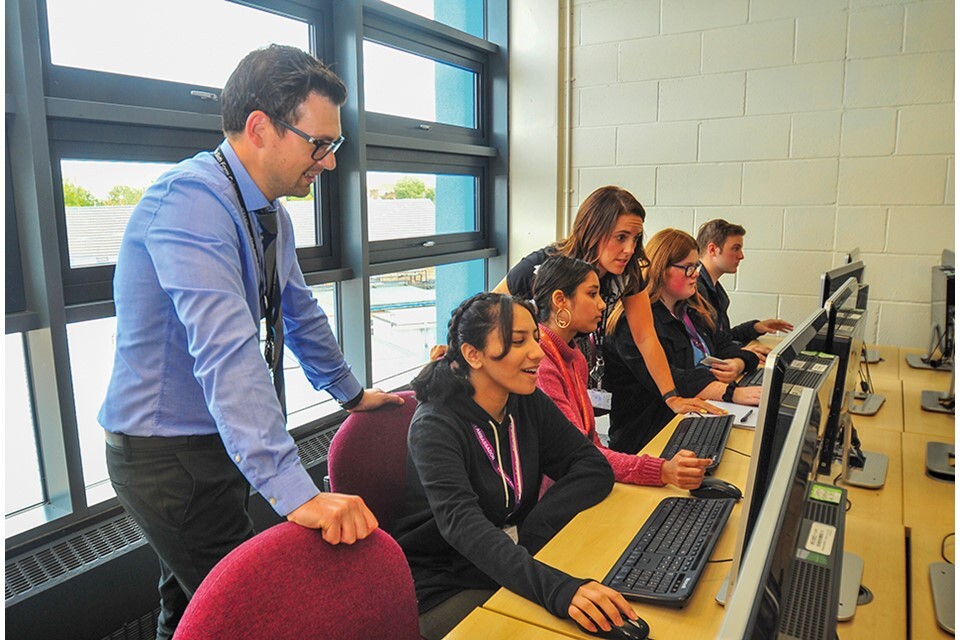
This is the first time our annual report has referred to artificial intelligence (AI). The fact that it has a dedicated chapter this year is an indication of how widely AI is affecting the education and care of children and learners. It also shows how fast AI is becoming part of how children and learners experience education and social care, and indeed our own work at Ofsted.
Ofsted’s approach to AI
The use of AI by education and social care providers, as well as how they address its associated risks for children, learners and apprentices, has implications for inspection and regulation. This year we published guidance on how we consider AI in inspection and regulation work.[footnote 107] Inspectors do not actively look for AI use or directly evaluate how good the use of AI, or any AI tool, is. If they come across AI, inspectors treat it as they would any other resource and/or tool and look at its impact on the outcomes and experiences of children and learners and how this relates to the criteria set out in our regulation and inspection frameworks. They evaluate whether providers have made sensible decisions. This may include considering whether use of AI:
- enhances engagement or access to learning
- improves progress or achievement
- jeopardises the safety or rights of children and learners
- reinforces barriers for underrepresented or disadvantaged groups
- affects how children and learners feel, behave or interact in their environment
We do not yet have a comprehensive understanding of how AI is used across the different providers that we inspect and regulate, so this year we started collecting evidence. What we have learned from providers and inspectors has helped shape inspector training as well as policy and guidance. Training helps inspectors understand the fundamentals of AI and how it works. It also addresses the strengths and risks of AI and makes sure inspectors can reassure themselves that where AI is used, it is in the best interest of children and learners.
This chapter sets out what we have learned from inspector surveys, from our inspections, and from our research into early adopter schools and FE colleges.[footnote 108]
The rise of AI in education and local authority social care
The government has identified AI as a way to reduce teachers’ workload so that they can focus more attention on providing high-quality teaching and working directly with pupils. The proportion of teachers in England using AI rose from 11% in April 2023[footnote 109],[footnote 110] to 50% in November 2024, and a further 21% say they plan to start using AI.[footnote 111] However, only 28% of leaders have made, or are in the process of making, any changes to account for their school’s or college’s use of AI.[footnote 112]
School and FE college leaders tell us the main reason for adopting AI is to reduce teachers’ workload. Teachers are largely positive about the impact of AI on their workload and the potential impact on teaching. They have told us that what previously might have taken hours to write can frequently be done in a matter of minutes using AI.
The rapid pace of AI development and the number of AI tools being developed means that some leaders have concerns about maintaining educational integrity. There is an abundance of tools that can promise solutions to the challenges they and their staff face. However, we know from leaders that in some cases products are over-sold and under-developed. AI is seen by many leaders as a tool, but not necessarily a solution.
We know from our research with early adopters that several FE colleges and multi-academy trusts have chosen to develop their own AI chatbots, rather than relying on those from commercial developers. These give providers control over how they are used, and maintain academic integrity. AI chatbots respond to questions from children and learners by generating verbal instructions similar to those a teacher might give to help solve a problem. Instead of giving the answer, the AI will use the learner’s prompts to clarify, expand, elaborate, verify and contextualise knowledge. Learners can then evaluate the different viewpoints and insights it gives them. These chatbots also provide additional security when processing learners’ data.
Local authorities are also increasingly adopting AI and using it in children’s social care for EHC plans, reports and managing large case files. Ninety-five percent of local authorities either use AI or have explored using it. They see children’s health and social care as one of the main areas where AI can offer the greatest opportunities.[footnote 113] However, 28% say they do not have a policy on using AI on corporate devices. This suggests that, like schools, social care staff may be using AI without local authority guidance to make sure they use it ethically, safely and legally.
Supporting inclusion and removing barriers to learning
The chapter on inclusion, disadvantage and vulnerability showed how some children and young people face barriers to learning and/or wellbeing. It is vital that they get the right support, so that they are not left behind. Removing these barriers is at the heart of our renewed education inspection framework.
During our research with early adopters, we heard how teachers in schools and FE colleges are using AI to adapt and personalise resources and their teaching. This is to ensure that all children and learners can access the full curriculum whatever their need or barrier to learning. In one FE college, teachers described how they use AI to create 10-minute podcasts of their lessons. This innovative use of AI is aimed at young carers who are not always able to attend lessons because of their caring responsibilities. We also heard how staff use AI to translate standard English into British Sign Language (BSL)-friendly syntax for students who use BSL, and vice versa.
Leaders in several schools told us that teachers use AI to adapt or summarise suitable texts to match children’s reading levels rather than spending time searching the internet for relevant source material at an appropriate level. This gives children and learners access to a wider range of texts to support learning in different curriculum subjects. Teachers can adapt resources so that all children can access the same task according to their reading ability. This means that everyone can use the same materials as the rest of the class, whatever their need. In some secondary schools, learning support assistants use AI to adapt or rewrite resources live during the lesson.
However, many of the leaders we interviewed for our research said using AI directly with children and learners in this way was still in its infancy. They said it is an aspect of AI they want to explore further to understand the impact on pupils. We do not yet know the potential negative or positive impact AI may have on learning. This may depend on understanding effective teaching strategies that integrate AI into learning so it enhances learning rather than preventing or undermining it. There are concerns that relying too much on AI may prevent children and learners from developing foundational skills such as essay writing or developing their own point of view. Rather than trying to stop children and learners from using AI, some of the leaders we spoke to are teaching them how to use it effectively. This included how they can use AI to support and enhance their work rather than using it to do the work for them.
Digital skills ready for work
FE college leaders talked about the importance of introducing AI into their curriculums to make sure learners and apprentices are ‘work ready’. Leaders recognised that as AI becomes common in a greater number of professions and workplaces, competent AI use will be highly valued by employers. Leaders and teachers on an art and design course told inspectors that failure to teach learners and apprentices about AI tools may put them at a disadvantage when they attend job interviews and/or tender for work. This is because AI use is increasingly becoming the norm in their industry.
Early intervention
Leaders in some schools told us they are beginning to explore how they can use AI to improve attendance. The number of pupils regularly not in school is a growing concern. Although overall absence and persistent absence rates are decreasing, they have yet to return to pre-pandemic levels. AI can produce detailed pictures of individual children’s attendance patterns, which can be used to identify at-risk children sooner.
Our inspections and the research with early adopters have shown that providers use AI to identify children and learners at risk of falling behind and put targeted interventions in place early. In one FE college, leaders had seen how AI could predict how likely learners were to meet lesson objectives and identify those at risk of not completing their courses. Rather than relying solely on academic measures, AI can include engagement, attendance, and behavioural data as part of these predictions. However, leaders are cautious about using AI in this way because of the sensitive data involved and the potential for bias.
Case study 5: Hull College’s AI story: staff buy-in and supporting inclusion with AI
Hull College is a large FE college in Kingston upon Hull. It provides vocational courses, apprenticeships, higher education and adult learning, serving more than 7,000 learners each year. Leaders have made digital transformation a priority. The college has won awards for its work in this area and was an early adopter of AI.
The principal and director of digital transformation recognised soon after the release of open access AI that it could reduce workload and improve teaching and learning. They were also clear that staff and students would need to be confident using AI so as not to be left behind in future employment. As the principal explained: ‘It will become ubiquitous in every job and in every function within every job. And so, my view is you can’t afford to ignore it.’
Leaders have promoted AI as a practical tool to improve inclusion. For example, they used AI to translate information for ESOL students into their home languages, preventing disadvantage in the early stages of learning. They are now exploring ways to support neurodiverse students and those with special educational needs.
Leaders created structured opportunities for staff to learn and experiment. Regular ‘AI academies’ allow staff to try out tools and share practice, while the senior team meets in an ‘AI policy club’ to review and adapt policies. Leaders share openly how they themselves use AI, modelling experimentation and learning from mistakes. This approach has encouraged staff to do the same.
The college has also extended this work beyond its own community. Through its AI academy for business, Hull College supports local employers to understand how AI might be applied in their workplaces. As the principal said: ‘Ultimately my students will become their employees.’
By embedding AI into teaching, learning, staff development and employer engagement, leaders have taken a pragmatic and inclusive approach. They see AI as a problem-solving tool, asking: ‘What works for the problems we’ve got and what might be useful for those we may face in the future?’
Safe, ethical and responsible use of AI
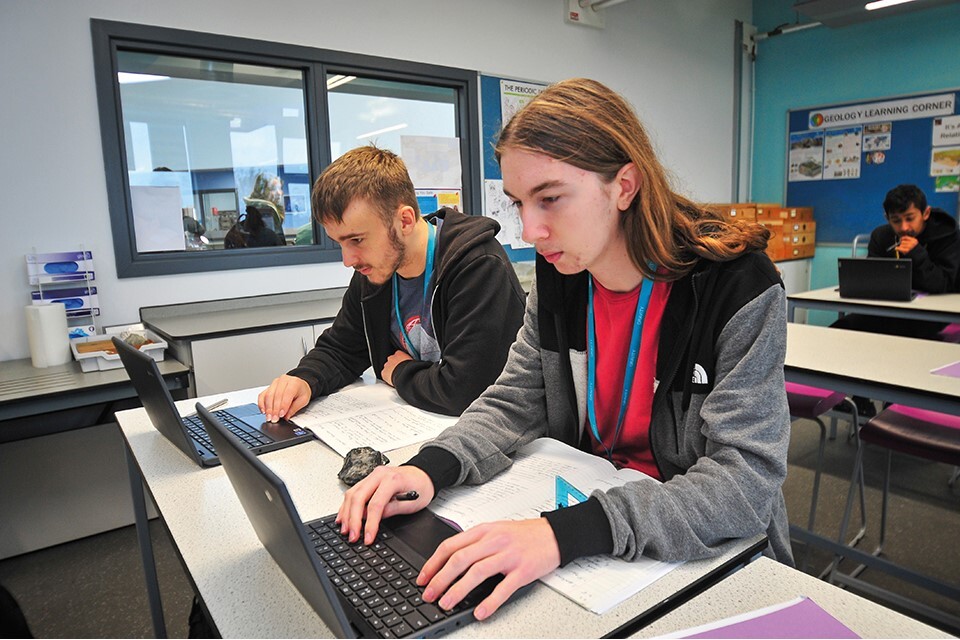
The way AI uses data to generate new content means there are particular risks related to safe, ethical and responsible use. Leaders need robust governance to manage these risks and keep users safe. We found that leaders have adopted different policies and procedures to scrutinise AI at a senior level and make sure staff and pupils use AI tools safely, ethically and responsibly. Leaders and teachers in FE providers described the challenges of managing AI use by older learners. They said that although they can restrict AI access on site, it is impossible to manage how learners use AI off site.
Feedback from inspectors who have come across AI during inspection highlights the concerns teachers in FE colleges have about the quality and accuracy of outputs generated by AI. English for speakers of other languages teachers said that they found that the low-stakes quizzes generated by AI typically contained 1 or 2 errors per 10 questions. In another college a teacher pointed out that generative AI tools had been trained on freely available resources rather than potentially more in-depth and insightful sources in academic journals and sources behind paywalls. This meant that outputs contained content that was too basic, particularly for higher-level courses.
We have also heard how teachers are concerned about the way AI tools trained on Western-focused data can introduce bias and a lack of diversity in their outputs. Many education settings addressed this directly with children and learners through open conversations and teaching them how to recognise the failings and limitations of AI. Inspectors heard how learners on an art and design foundation diploma course were taught that images generated by AI could often be stereotypical or inappropriate, such as objectified renderings of the female form. Learners were also shown how to recognise common visual irregularities in AI-rendered images, such as too many fingers in images of hands.
AI in local authority children’s social care
Children’s social care providers and local authority children’s services vary in the extent to which they use AI. Some early adopter local authorities and providers have embedded bespoke tools into their systems or are using ‘off the shelf’ AI tools to support aspects of their work. Others are at an exploratory stage where they are considering the opportunities and risks of AI but have not yet formally started using it.
Although the use of AI is children’s social care is at an early stage, discussions about its role are more widespread. There is a general acceptance that AI has the potential to help practitioners work more efficiently and effectively, increasing the time available to them to work directly with children and families. We have seen examples of local authorities and providers using AI to save time on administrative tasks such as planning resources, managing staff and scheduling. Staff also use AI to navigate the complex landscape of legislation and guidance. They are also using AI to support their work with children and young people more directly. For example, they use it to:
- analyse children’s case records and identify relevant information to inform decisions about help, protection and care
- draft plans, such as EHC plans
- format documents to make them more accessible to children and families, including translating them into different languages or reshaping them to meet the needs of neurodivergent children
- make predictions about outcomes and provide early help
However, there are concerns about how AI may affect the important interpersonal relationships between staff and children that are at the heart of social work. AI has the potential to give practitioners more time to spend with children and families. But it could also encourage generic and depersonalised responses that do not meet individual children’s needs. Over-reliance on AI may also lead to a lack of critical thinking rather than better-informed decisions about children.
In common with schools and FE providers, local authorities are also discussing the practical and ethical use of these new tools. We need to see how these conversations affect how local authorities use AI and how AI can assist with achieving better outcomes for children. We are beginning to see how local authorities are using AI to personalise and adapt guidance, reduce the amount of time social workers spend on paperwork, and scan through large amounts of information and pull out relevant information.
What we know from inspectors

In July 2025, we surveyed our inspectors to ask about their experience of AI on inspection, its impact and their concerns about its use. The results support what we know from providers and highlight where we need to collect further evidence so that we can understand differences between education and social care settings.
The survey also confirms that there is a gap in research around the impact of AI on outcomes. Very few inspectors who had seen AI on inspection felt that the way providers were using it was improving outcomes. It is concerning that some said AI was having a negative impact. However, only a small minority of inspectors have seen any safeguarding concerns relating to AI. This supports what we found in our research with early adopters. Leaders are well informed about the risks of AI and have established mechanisms and procedures that keep users safe.
We also asked inspectors about their concerns about AI. The areas they most frequently mentioned were:
- governance: how well users understood the safe and ethical use of AI, and the need for human oversight to check that AI outputs are accurate and unbiased
- impact: how leaders made sure that AI is used purposefully to support teachers and learners precisely and that it complements and enhances the curriculum and quality of education
We recognise how widely AI is affecting the education and care of children and learners and will continue to work closely with the sector and other regulators to inform our work and inspector training.
Annex
This report includes inspections that were carried out under the education inspection framework up until 31 August 2025, when the overall effectiveness judgement was still made, with the exception of state-funded schools.[footnote 114]
From September 2024, graded inspections of state-funded schools no longer included an overall effectiveness judgement, but the other judgements remained. More information can be found in the DfE press release ‘Single headline Ofsted grades scrapped in landmark school reform’.[footnote 115]
Inspections of social care providers are conducted under the SCCIF, while inspections of local authority children’s services are carried out in accordance with the ILACS framework.[footnote 116],[footnote 117]
Reference to ‘this year’ or 2024/25 includes inspections that took place between 1 September 2024 and 31 August 2025 and with a report published by 30 September 2025. The exceptions are social care providers, local authority children’s services, area SEND, prisons, unregistered schools and OEAS visits. The inspections ‘this year’ for social care providers and local authority children’s services include inspections that took place between 1 April 2024 and 31 March 2025 with a report published by 30 April 2025. The reports for area SEND inspections were published by 10 November 2025. Prisons includes all inspections published between 1 September 2024 and 31 August 2025. Unregistered schools includes investigations and inspections that took place between 1 September 2024 and 31 August 2025 (there is no published report for these inspections). OEAS includes accreditation visits between 1 September 2024 and 31 August 2025 with a report published by 31 August 2025. Some settings, schools or providers can be inspected more than once within the year. The figures show the number of inspections that took place during the year.
Reference to ‘this year’ or 2024–25 for social care regulatory activity and early years compliance and enforcement activity includes all activity that took place between 1 April 2024 and 31 March 2025. Early years registration visits and regulatory events took place between 1 September 2024 and 31 August 2025.
Inspection outcomes for individual academic years are not representative of all schools, settings or providers in the country and should be treated with caution. The mixture of providers selected for inspection can vary year to year, thereby affecting the outcomes that we see.
Reference to ‘most recent’ includes the latest inspection grades for all open settings. For early years, independent schools, state-funded schools, ITE and FE providers this refers to inspections carried out by 31 August 2025 and with a report published by 30 September 2025. For social care providers and local authority children’s services it refers to the latest inspection grade on 31 March 2025. For prisons, the reports for these inspections were published by 31 August 2025.
We have used data as at 31 March 2024 from the DfE for numbers of children looked after because, at the time of writing, these were the most recent official figures available.
Numbers over 100 have been rounded.
On charts, percentages have been rounded and may not add to 100.
Further information on how inspection data is counted and calculated can be found in the methodology documents that accompany our official statistics:
- early years: ‘Childcare providers and inspections as at 31 August 2025’
- state-funded schools: ‘State-funded schools inspections and outcomes as at 31 August 2025’
- independent schools: ‘Non-association independent schools inspections and outcomes in England 2025’
- ITE: ‘Teacher development inspections and outcomes as at 31 August 2025’
- FE and skills: ‘Further education and skills inspections and outcomes as at 31 August 2025’
- children’s social care providers: ‘Children’s social care in England 2025’
- local authority children’s services: ‘Local authority inspection outcomes as at 31 March 2025’
Bibliography: Ofsted’s publications this year
A list of Ofsted publications published on GOV.UK in this annual report’s reporting period, 1 September 2024 to 31 August 2025.
Research and analysis
‘Ofsted Big Listen: supporting documents’, 3 September 2024.
‘Welfare and duty of care in Armed Forces initial training’, 24 September 2024.
‘Thematic review of the quality of education in young offender institutions (YOIs)’, 2 October 2024.
‘Commissioned research on vulnerability and inclusion: terms of reference’, 3 October 2024.
‘Best start in life: a research review for early years’, 8 October 2024.
‘Strong foundations in the first years of school’, 8 October 2024.
‘Changes in access to childcare in England’, 16 October 2024.
‘Children’s social care questionnaires 2024: what children and young people told Ofsted’, 17 October 2024.
‘Children and families’ experiences of multi-agency support when impacted by serious youth violence’, 20 November 2024.
‘Multi-agency responses to serious youth violence: working together to support and protect children’, 20 November 2024.
‘Independent Schools Inspectorate (ISI): annual Ofsted report letters’, 29 November 2024.
‘Ofsted research on artificial intelligence in education: terms of reference‘, 10 December 2024.
‘Preparation for adulthood arrangements in local areas: a thematic review’, 16 December 2024.
‘Commissioned research to hear from children and learners, parents and carers, and staff during inspection: terms of reference, 14 January 2025.
‘Education inspection framework: implementation review’, 3 February 2025.
‘Inspectorates of British schools overseas: annual Ofsted report letters’, 3 March 2025.
‘Curriculum quality: evaluating the impact of the education inspection framework’, 6 March 2025.
‘Navigating post-16 careers guidance: supporting learners from lower socioeconomic backgrounds’, 2 April 2025.
‘Getting it right from the start: how early years practitioners work with babies and toddlers’, 30 April 2025.
‘How childcare could be optimised across local areas’, 14 May 2025.
‘Children missing education: exploration of census data’, 19 May 2025.
‘Unregistered schools investigations: statistical commentaries’, 24 June 2025.
‘AI in schools and further education: findings from early adopters’, 27 June 2025.
‘From trait to state: how Ofsted might consider conceptualising vulnerability for inspection and regulation’, 2 July 2025.
‘Area SEND review: what we heard and how we are improving’, 7 July 2025.
‘Area SEND framework: findings from the first 2 years of inspections’, 7 July 2025.
‘Five-Year Ofsted Inspection Data’, 24 July 2025.
‘Early years complaints and notifications data commentary’, 6 August 2025.
‘Initial teacher education thematic monitoring visits: overview report’, 1 October 2025.
Blogs
Early years
‘Who needs to submit an EY2 form, and tips for completing it’, 26 September 2024.
‘New changes for childminders coming soon’, 16 October 2024.
‘Best start in life curriculum roadshows – what does our research mean for you and what’s next?’, 29 November 2024.
‘When do you need to notify Ofsted?’, 14 February 2025.
‘How we look at the use of early years pupil premium (EYPP) in our inspections of early years settings’, 10 April 2025.
‘Applying to register with Ofsted: what you need to know’, 22 May 2025.
‘Nannies: what you need to know’, 11 July 2025.
‘Understanding outcome summaries’, 28 August 2025.
Education
‘The challenges of teacher recruitment and retention in England’, 17 September 2024.
‘Our review of the area SEND inspection framework’, 11 December 2024.
‘Testing our proposals to improve education inspections’, 26 February 2025.
‘Highlights from our area SEND inspection framework review’, 9 July 2025.
Social care
‘Inspections of supported accommodation: information for supported lodgings hosts’, 18 September 2024.
‘Regulation 45 reviews and reports – what you need to know’, 11 October 2024.
‘Our response to the government’s social care reform proposals’, 19 November 2024.
Official statistics and management information
‘Children’s social care statistics’.
‘Early years and childcare statistics’.
‘Further education and skills statistics’.
‘Teacher development statistics’.
‘Non-association independent schools statistics’.
‘OEAS quality assurance commissions: management information’.
‘Ofsted Parent View: management information’.
‘State-funded schools statistics’.
‘Unregistered schools management information’.
‘Responses to post inspection surveys’.
Speeches
‘Sir Martyn Oliver’s speech at the NASS conference’, 4 October 2024.
‘Sir Martyn Oliver’s speech to the Confederation of School Trusts’, 8 November 2024.
‘Martyn Oliver at the AoC conference: working together to shape the future skills system’, 12 November 2024.
‘Martyn Oliver’s speech at the 2024 National Children and Adult Services Conference’, 28 November 2024.
‘Martyn Oliver’s speech at the Sixth Form Colleges Association’, 5 February 2025.
‘Martyn Oliver’s speech at the Nursery World Business Summit’, 5 March 2025.
‘Martyn Oliver at the SEND and Inclusion Conference: getting it right for everyone’, 12 March 2025.
‘Martyn Oliver’s speech at the ASCL Annual Conference’, 14 March 2025.
‘Sir Martyn Oliver’s speech to Parentkind’, 26 March 2025.
‘Sir Martyn Oliver’s speech at the Guildhall’, 1 April 2025.
‘Martyn Oliver’s speech at the Festival of Education’, 3 July 2025.
Correspondence (published for transparency and information)
‘Education inspection reform: letter from HMCI to Secretary of State for Education’, 11 June 2025.
‘Letter from Martyn Oliver to the Secretary of State for Justice about Oakhill Secure Training Centre’, 31 July 2025.
Annex: data table for figures
Data for Figure 1: A summary of Ofsted’s inspection and regulatory activity this year
| Activity | Number of | Number of providers |
|---|---|---|
| Regulate and inspect | — | Over 90,000 |
| Early years & childcare inspections | 12,300 | 60,000 (1.29 million places) |
| Early years & childcare regulatory visits | 9,620 | 60,000 (1.29 million places) |
| Early years & childcare registration visits | 3,000 | 60,000 (1.29 million places) |
| State-funded school inspections | 5,900 | around 22,000 (including 16,700 primary and 3,420 secondary) |
| Independent school inspections | 1,030 | 1,150 |
| FE & skills provider inspections/visits | 640 | 1,910+ providers (including 1,240+ independent learning providers (including employer providers) and 200+ colleges) |
| Children’s social care provider inspections/visits | 4,920 | 5,600 |
| Local authority children’s service inspections/visits | 99 | 153 |
| Prison & YOI inspections contributed to | 36 | — |
| Local area SEND partnership inspections | 29 | — |
| ITE provider thematic monitoring visits | 78 | — |
| ECF/NPQ provider inspections | 6 | — |
| Social care/early years provider registrations | 7,340 | — |
| Social care/early years provider complaints/notifications received | 75,400 | — |
| Social care/early years providers cancelled/suspended | 2,250 | — |
| Data and research publications | 74 (including official statistics, management information and research reports) | — |
| State-funded school key judgement | Percentage of schools inspected this year who were good or outstanding |
|---|---|
| Quality of education | 83% |
| Behaviour and attitudes | 94% |
| Personal development | 96% |
| Leadership and management | 88% |
| Provider type | Percentage providers inspected this year who had good or outstanding overall effectiveness |
|---|---|
| Social care providers | 87% |
| Local authority children’s services | 68% |
| Non-association independent schools | 79% |
| Prisons and YOIs | 31% |
| FE and skills providers | 86% |
| ECF / NPQ lead providers | 100% |
| Early years and childcare providers | 98% |
4 local area SEND partnerships typically led to positive experiences and outcomes for children and young people with SEND.
See Figure 1.
Data for Figure 2: The changing landscape of childcare, 2016 to 2025
| Date | Childminders on the EYR | Nurseries and pre-schools on the EYR | Total number of childcare places offered |
|---|---|---|---|
| 31 August 2016 | 42,600 | 24,500 | 1,280,000 |
| 31 August 2017 | 40,800 | 24,400 | 1,290,000 |
| 31 August 2018 | 39,000 | 24,200 | 1,300,000 |
| 31 August 2019 | 36,800 | 24,100 | 1,320,000 |
| 31 August 2020 | 34,500 | 23,800 | 1,310,000 |
| 31 August 2021 | 32,000 | 23,500 | 1,300,000 |
| 31 August 2022 | 27,900 | 23,000 | 1,280,000 |
| 31 August 2023 | 25,400 | 22,500 | 1,260,000 |
| 31 August 2024 | 24,400 | 22,600 | 1,280,000 |
| 31 August 2025 | 23,500 | 23,000 | 1,290,000 |
See Figure 2.
Data for Figure 3: Overall effectiveness judgements of EYR full inspections by provider type, 2024/25
| Provider type (number of inspections in brackets) | % inspections judged outstanding | % inspections judged good | % inspections judged requires improvement | % inspections judged inadequate |
|---|---|---|---|---|
| All EYR providers (9,540) | 10 | 80 | 5 | 4 |
| Childminders (4,990) | 9 | 85 | 3 | 3 |
| Nurseries and pre-schools (4,500) | 11 | 75 | 8 | 6 |
| Childcare on domestic premises (50) | 18 | 62 | 8 | 12 |
See Figure 3.
Data for Figure 4: Most recent overall effectiveness judgement of early years providers by type, 31 August 2025
| Provider type (number of providers in brackets) | % providers judged outstanding | % providers judged good | % providers judged requires improvement | % providers judged inadequate |
|---|---|---|---|---|
| All EYR providers (36,000) | 13 | 85 | 1 | 1 |
| Childminders (19,700) | 12 | 86 | 1 | 1 |
| Nurseries and pre-schools (16,100) | 15 | 83 | 2 | 1 |
| Childcare on domestic premises (160) | 15 | 80 | 3 | 2 |
See Figure 4.
Data for Figure 5: Key judgements and provision judgements of state-funded school graded inspections, 2024/25
| Judgement | Number of inspections | % Outstanding | % Good | % Requires improvement | % Inadequate |
|---|---|---|---|---|---|
| Quality of education | 3,270 | 16 | 67 | 15 | 1 |
| Behaviour and attitudes | 3,270 | 29 | 65 | 6 | 1 |
| Personal development | 3,270 | 35 | 61 | 3 | 0 |
| Leadership and management | 3,270 | 21 | 68 | 10 | 2 |
| Early years provision | 2,370 | 27 | 66 | 6 | 0 |
| Sixth-form provision | 370 | 34 | 59 | 6 | 1 |
See Figure 5.
Data for Figure 6: Key judgements and provision judgements of non-association independent school standard inspections, 2024/25
| Judgement | Number of inspections | % Outstanding | % Good | % Requires improvement | % Inadequate |
|---|---|---|---|---|---|
| Overall effectiveness | 510 | 13 | 66 | 16 | 4 |
| Quality of education | 510 | 14 | 69 | 15 | 2 |
| Behaviour and attitudes | 510 | 34 | 61 | 4 | 0 |
| Personal development | 510 | 31 | 59 | 9 | 1 |
| Leadership and management | 510 | 15 | 65 | 15 | 4 |
| Early years provision | 72 | 25 | 60 | 11 | 4 |
| Sixth-form provision | 78 | 37 | 53 | 10 | 0 |
See Figure 6.
Data for Figure 7: Most recent overall effectiveness and independent school standards of non-association independent schools by school type, 31 August 2025
| School type | Number of schools | % Outstanding | % Good | % Requires improvement | % Inadequate | % Independent school standards met | % Independent school standards not met |
|---|---|---|---|---|---|---|---|
| All non-association independent schools | 1,030 | 12 | 71 | 13 | 4 | 88 | 12 |
| Independent special schools | 650 | 14 | 75 | 9 | 2 | 94 | 6 |
| Independent faith schools | 210 | 7 | 60 | 27 | 7 | 73 | 27 |
| Other independent schools | 180 | 12 | 66 | 13 | 8 | 85 | 15 |
See Figure 7.
Data for Figure 8: Key judgements and provision judgements of FE and skills full inspections, 2024/25
| Inspection judgement | Total number of providers with an inspection judgement | % Outstanding | % Good | % Requires improvement | % Inadequate |
|---|---|---|---|---|---|
| Overall effectiveness | 390 | 13 | 72 | 12 | 3 |
| Quality of education | 390 | 14 | 73 | 11 | 2 |
| Behaviour and attitudes | 390 | 34 | 60 | 6 | 0 |
| Personal development | 390 | 24 | 68 | 8 | 0 |
| Leadership and management | 390 | 14 | 72 | 11 | 3 |
| Education programmes for young people | 110 | 24 | 66 | 9 | 1 |
| Adult learning programmes | 180 | 18 | 73 | 8 | 1 |
| Apprenticeships | 290 | 11 | 74 | 12 | 3 |
| Provision for learners with high needs | 120 | 27 | 64 | 9 | 0 |
See Figure 8.
Data for Figure 9: Most recent overall effectiveness of FE and skills providers by type, 31 August 2025
| Provider type | Total number of providers with an inspection judgement | % Outstanding | % Good | % Requires improvement | % Inadequate |
|---|---|---|---|---|---|
| All FE and skills providers | 1,660 | 11 | 77 | 11 | 1 |
| Colleges | 200 | 18 | 69 | 12 | 0 |
| Independent learning providers | 1,010 | 7 | 77 | 14 | 1 |
| Adult community education providers | 140 | 3 | 94 | 3 | 0 |
| 16 to 19 academies | 69 | 57 | 41 | 1 | 1 |
| Higher education institutions | 100 | 9 | 86 | 5 | 0 |
| Independent specialist colleges | 120 | 14 | 75 | 10 | 1 |
| Dance and drama colleges | 16 | 44 | 56 | 0 | 0 |
See Figure 9.
Data for Figure 10: Most recent overall effectiveness of education, skills and work provision in prisons and YOIs, over time
| Date as at | Total number of providers with an inspection judgement | % Outstanding | % Good | % Requires improvement | % Inadequate |
|---|---|---|---|---|---|
| 31 August 2025 | 117 | 0 | 18 | 40 | 42 |
| 31 August 2024 | 116 | 0 | 18 | 40 | 42 |
| 31 August 2023 | 115 | 1 | 26 | 42 | 31 |
| 31 August 2022 | 115 | 2 | 35 | 44 | 19 |
| 31 August 2021 | 115 | 2 | 43 | 41 | 14 |
See Figure 10.
Data for Figure 11: Local authorities’ overall effectiveness at their most recent inspection
| Date | Number of local authorities with an overall effectiveness outcome | % Outstanding | % Good | % Requires improvement | % Inadequate |
|---|---|---|---|---|---|
| As at 31 March 2025 | 153 | 24 | 44 | 20 | 12 |
| As at 31 March 2024 | 151 | 20 | 40 | 28 | 11 |
| As at 31 March 2023 | 152 | 16 | 43 | 32 | 9 |
| As at 31 March 2022 | 150 | 13 | 41 | 35 | 12 |
See Figure 11.
Data for Figure 12: Overall experiences and progress of children and young people judgements at social care provider full inspections by provider type, as at 31 March 2025
| Provider type | Number of providers with inspection judgement in brackets | % Outstanding | % Good | % Requires improvement | % Inadequate |
|---|---|---|---|---|---|
| Children’s homes of all types | 3,630 | 13 | 73 | 13 | 1 |
| Independent fostering agencies | 330 | 24 | 71 | 4 | 1 |
| Residential family centres | 96 | 7 | 76 | 14 | 3 |
| Residential special schools | 92 | 52 | 46 | 1 | 1 |
| Boarding schools | 51 | 25 | 65 | 6 | 4 |
| Further education colleges with residential accommodation | 34 | 59 | 38 | 3 | 0 |
| Adoption support agencies | 29 | 59 | 41 | 0 | 0 |
| Voluntary adoption agencies | 27 | 33 | 63 | 4 | 0 |
See Figure 12.
Data for Figure 13: Number of children’s homes of all types by sector from 2021 to 2025
| Sector | 2021 | 2022 | 2023 | 2024 | 2025 |
|---|---|---|---|---|---|
| Private | 2,100 | 2,270 | 2,510 | 2,860 | 3,360 |
| Local authority | 440 | 430 | 440 | 450 | 480 |
| Voluntary | 160 | 170 | 160 | 170 | 160 |
| Health authority | 9 | 9 | 9 | 9 | 7 |
See Figure 13.
Data for Figure 14: Types of events contained in notifications made by children’s homes, 1 April 2024 to 31 March 2025
| Type of event | Percentage |
|---|---|
| Police involvement (10,500) | 25% |
| Allegation or complaint (5,880) | 14% |
| Child protection enquiry (1,200) | 3% |
| Sexual exploitation (560) | 1% |
| Other (24,200) | 57% |
See Figure 14.
Data for Figure 15: Number of pupils by inclusion focus area
| Focus area | Number of pupils |
|---|---|
| Known to social care | Children who have been known to social care including almost 850,000 pupils that are known to have been in need in the last 6 years |
| SEND | Children with SEND including 1.7 million pupils with EHC plans or SEN support |
| Pupil premium | 2.3 million children eligible for pupil premium including pupils who have been eligible for free school meals in the past 6 years |
See Figure 15.
Data for Figure 16: Arrangements for children educated outside mainstream schools and/or not in full-time education
| Arrangement type | Number of pupils or children |
|---|---|
| Children home educated | 111,700 (estimated) |
| Children missing education | 39,200 (estimated) |
| Alternative provision placements commissioned by schools | 27,900 |
| Alternative provision placements commissioned by local authorities | 59,700 |
| Pupils on part-time timetables | 41,000 (estimated) |
| Pupils dual-registered | 17,800 (estimated) |
See Figure 16.
Data for Figure 17: Total spend on children looked after, 2015/16 to 2023/24
| Year | Total spend on children looked after |
|---|---|
| 2015–16 | £3,941,586,826 |
| 2016–17 | £4,156,704,147 |
| 2017–18 | £4,536,594,422 |
| 2018–19 | £4,881,419,921 |
| 2019–20 | £5,278,063,831 |
| 2020–21 | £5,653,570,474 |
| 2021–22 | £6,127,411,318 |
| 2022–23 | £7,031,937,751 |
| 2023–24 | £8,139,343,017 |
See Figure 17.
-
‘Childcare accessibility by neighbourhood’, Office for National Statistics and Ofsted, June 2024. ↩
-
‘Key stage 2 attainment, Academic year 2024/25’, Department for Education, September 2025;
‘Key stage 4 performance, Academic year 2024/25’, Department for Education, October 2025. ↩ -
‘Pupil absence in schools in England’, Department for Education, October 2025. The latest data is for autumn term 2024 and spring term 2025. The proportion of pupils severely absent was 3.98% for those eligible for free school meals (FSM) and 1.10% for those not eligible. See also: ‘Suspensions and permanent exclusions in England’, Department for Education, July 2025 (updated October 2025). In 2023/24 the permanent exclusion rate for pupils eligible for FSM was 0.33%, compared with 0.06% for pupils not eligible. ↩
-
See Figure 16. FFT Education Datalab estimates that there are 41,000 children on part-time timetables. Estimates for previous years are not comparable. ↩
-
‘Outcomes for children in need, including children looked after by local authorities in England’, Department for Education, April 2025 (updated July 2025). The latest data is for 2023/24; pupils’ status is as at 31 March 2024. For the five groups known to social care that the department publishes data for, the proportion reaching the expected standard in all three subjects ranges from 29% to 34%. The department summarises this as ‘roughly half’ of the 61% for all pupils reaching the standard. ↩
-
‘Outcomes for children in need, including children looked after by local authorities in England’, Department for Education, April 2025 (updated July 2025). The latest key stage 4 data available for children known to social care is for 2023/24. The average Progress 8 score is lower for all key social care groups than for the overall pupil population. For the five groups known to social care that the DfE publishes data for, scores range from -1.31 to -2.17. One of the largest groups, children in need, have a Progress 8 score of -1.57 compared to the national figure for all pupils of -0.03. A Progress 8 score of 1.0 means pupils in the group make on average approximately a grade more progress than the national average. The DfE notes that the higher prevalence of SEN among looked-after children and children in need accounts for some of the difference in their attainment compared to the overall pupil population. ↩
-
‘Pupil absence in schools in England’, Department for Education, October 2025. The latest data is for autumn term 2024 and spring term2025. In 2018/19, the severe absence rate was 0.81%. ↩
-
See reference in previous footnote for pupils with SEND and eligible for FSM. Severe absence rates for autumn 2024 and spring 2025 were: 4.18% for pupils with SEN support; 7.30% for pupils with education, health and care plans; 1.11% for pupils without SEND; 3.98% for pupils eligible for FSM and 1.10% for pupils not eligible. For pupils known to social care see ‘Outcomes for children in need, including children looked after by local authorities in England’, Department for Education, April 2025 (updated July 2025). The latest data is for 2023/24; pupils’ status is as at 31 March 2024. Severe absence rates for the 5 groups known to social care vary from 5.7% to 15.6%. The largest group (children in need, including children on a child protection plan and children looked after) is 11.0%. The rate for all children in 2023/24 was 2.5%. ↩
-
‘National behaviour survey report: 2024 to 2025 academic year’, Department for Education, November 2025. ↩
-
‘Suspensions and permanent exclusions in England’, Department for Education, July 2025 (updated October 2025). The DfE records and publishes comparable data for 2006/07 to 2023/24; the permanent exclusion rate of 0.3 and suspension rate of 11.13 are the highest at any time in that period. (For details, see the ‘Explore data’ option in the release.) Rates are suspensions or exclusions per 100 pupils. Between 2022/23 and 2023/24 the number of exclusions increased by 16% and suspension increased by 21%. ↩
-
‘Education inspection framework: for use from November 2025’, Ofsted, September 2025. ↩
-
This does not include childminders registered with childminder agencies. ↩
-
Some school-based early years provision provided by state-funded and independent schools is exempt from registration. ↩
-
‘Childcare accessibility by neighbourhood’, Office for National Statistics and Ofsted, June 2024. ↩
-
‘How childcare could be optimised across local areas’, Ofsted, May 2025. ↩
-
‘Childminders and childcare providers: register with Ofsted’, Ofsted, October 2018 (updated September 2025). ↩
-
‘Ofsted corporate annual report and accounts 2024 to 2025’, Ofsted, July 2025. ↩
-
‘Early years complaints and notifications data commentary’, Ofsted, August 2025. ↩
-
Complaints about Ofsted-registered early years providers can be from parents, members of the public, other agencies, or members of staff. Ofsted-registered early years providers must notify us of any serious childcare incidents as soon as possible, and in any case within 14 days. ↩
-
‘Main findings: state-funded schools inspections and outcomes as at 31 August 2024’, Ofsted, November 2024. ↩
-
Based on inspections under the education inspection framework in 2019/20, 2021/22, 2022/23 and 2023/24. 2020/21 is not included, as graded inspections were largely paused due to the COVID-19 pandemic from 17 March 2020 to 31 August 2021. ↩
-
The school has taken effective action to maintain the standards identified at the previous inspection. ↩
-
Evidence gathered during inspection suggests that the school’s work may have improved significantly across all areas since the previous inspection. ↩
-
Evidence gathered during this inspection suggests that aspects of the school’s work may not be as strong as at the time of the previous inspection. ↩
-
Twenty special schools also identify themselves as faith schools. For the purposes of our analysis, we have grouped these schools with special schools and not faith schools. ↩
-
The faith of a school is defined by whether the school has declared a religious character or ethos on the DfE’s Get Information about Schools site. If the school does not declare a religious character or ethos, it is categorised in our statistics as ‘non-faith’, although it is possible that some of these schools operate as faith schools. ↩
-
‘Other independent schools’ have no declared religious character or ethos and are not registered with the DfE as special schools. ↩
-
‘Additional inspections of independent schools: handbook for inspectors’, Ofsted, October 2014 (updated January 2025). Additional inspections are inspections that occur outside the normal inspection cycle and cover emergency, progress monitoring, pre-registration and material change inspections. ↩
-
For additional analysis see ‘Insight from Ofsted’s investigations of unregistered schools’, Ofsted, June 2025. This includes data to 31 March 2025 so some numbers are lower than those shown above, which are to 31 August 2025. ↩
-
‘Accreditation for online education providers’, Department for Education, June 2021 (updated March 2023). ↩
-
Not all applications will result in an accreditation visit. It is possible for a provider to withdraw their application at any point in the process. An application might also be rejected if the provider is shown to be not suitable at any point. ↩
-
‘FE and skills provider participation, by provision type and learner characteristic’, Department for Education, September 2025. ↩
-
‘Colleges’ includes general FE colleges, sixth-form colleges and specialist FE colleges. ↩
-
His Majesty’s Prison and Probation Service introduced neurodiversity managers in every prison at the end of 2024. ↩
-
‘Ofsted to postpone initial teacher education inspection cycle’, Ofsted, November 2024. ↩
-
‘Initial teacher education thematic monitoring visits: overview report’, Ofsted, October 2025. ↩
-
‘Inspecting local authority children’s services’, Ofsted, November 2017 (updated August 2025). ↩
-
‘Children in need’, Department for Education, October 2025. ↩
-
‘Children looked after in England including adoptions’, Department for Education, November 2024. ↩
-
‘Children’s social care: national framework’, Department for Education, December 2023 (updated July 2025). ↩
-
‘Children looked after in England including adoptions’, Department for Education, November 2024. ↩
-
The following categories accounted for less than 1% of all notifications and have not been included in the above chart: referral, death of a child, missing, serious illness or accident, unauthorised contact and no reason listed as at 31 March. ↩
-
‘Education inspection framework: for use from November 2025’, Ofsted, September 2025. ↩
-
‘Improving the way Ofsted inspects education: report on the responses to the consultation’, Ofsted, September 2025. ↩
-
For information on our area SEND inspections more broadly, see the ‘Inspection and regulatory activity’ chapter. ↩
-
‘From trait to state: how Ofsted might consider conceptualising vulnerability for inspection and regulation’, Ofsted, July 2025. ↩
-
We use the term ‘socioeconomically disadvantaged’ because, in school-aged settings for example, pupil premium funding reflects not only economic disadvantage (such as eligibility for free school meals) but also social disadvantage, including children from service families or those in care. ↩
-
We recognise that not all children who have English as an additional language face additional barriers to their learning and/or wellbeing. ↩
-
‘Households below average income: an analysis of the UK income distribution: FYE 1995 to FYE 2024’, Department for Work and Pensions, May 2025. See section 7. The proportions of children in absolute low income after housing and in food insecure households have increased by 1 percentage point from the previous year, while children in households using foodbanks has increased by 2 points (all based on the published rounded percentages). ↩
-
‘Tackling child poverty: developing our strategy’, Department for Work and Pensions and Department for Education, June 2025. ↩
-
‘Getting it right from the start: how early years practitioners work with babies and toddlers’, Ofsted, April 2025. ↩
-
‘Maintaining quality early years provision in the face of workforce challenges’, Ofsted, May 2024 ↩
-
See the ‘Inspection and regulatory activity’ chapter in this annual report. ↩
-
‘Experience-based route for early years staff’, Department for Education, January 2025 (updated September 2025). ↩
-
A level 4 qualification is equivalent to the first year of bachelor’s degree – for example, a certificate of higher education, higher national certificate, higher apprenticeship, level 4 diploma or level 4 NVQ. ↩
-
In July 2025, the government published its own ‘Best start in life’ strategy to set out their plans to support parents and the early years sector: ‘Giving every child the best start in life’, Department for Education, July 2025 (updated September 2025). ↩
-
LA Outhwaite,‘Understanding early inequalities: Multiple dimensions of children’s developmental contexts predict age 3 outcomes’, in ‘British Journal of Developmental Psychology’, open access, 2025, pages 1 to 11. ↩
-
‘Funded early education and childcare: Reporting year 2025’, Department for Education, July 2025. ↩
-
‘Early years foundation stage (EYFS) statutory framework’, Department for Education, March 2014 (updated September 2025). ↩
-
‘Ofsted annual report: education and social care serving most children well, but system pressures bite for most disadvantaged’, Ofsted, December 2024. ↩
-
For information on area SEND inspections, see the ‘Inspection and regulatory activity’ chapter. ↩
-
Ofsted and CQC jointly inspect the arrangements in local areas for children and young people with SEND. ↩
-
For further details on the scope, see ‘Thematic reviews of children not in school in local areas’, Ofsted, January 2025. ↩
-
For the purposes of these visits, we defined ‘children not in school’ as children with SEND, of compulsory school age, who are not registered pupils at a registered independent school or any type of state-funded school. We also included children who are on a school roll but are flexi-schooled, on a part-time timetable, receiving education otherwise than at school, or severely absent. ↩
-
For further analysis see ‘Insight from Ofsted’s investigations of unregistered schools’, Ofsted, June 2025. This is based on inspections and investigations to 31 March 2025, whereas the text above is to 31 August 2025. ↩
-
Members of the public who think they know of a possible unregistered school should report the setting to Ofsted by visiting our ‘Report an unregistered school’ page or emailing the team at unregisteredschoolreferrals@ofsted.gov.uk. ↩
-
‘Special educational needs: support in England’, House of Commons, November 2025. ↩
-
‘Special educational needs in England’, Department for Education, June 2025 (updated October 2025). The latest data is for 2024/25 and shows that there are over 1.7 million pupils with SEND. This is an increase of 93,700 pupils (6%) since 2023/24; a fifth (20%) of pupils in schools have SEND, compared with 15% in 2018/19. There are almost 483,000 pupils in schools with an EHC (education, health and care) plan in 2024/25 and 1,284,000 pupils with special educational needs (SEN) support. Fifty-six percent of pupils who have EHC plans, and 91% of those with SEN support, are in state-funded primary and secondary schools. It is therefore critical that there is appropriate support for these 1.44 million children with SEND in mainstream schools. ↩
-
See the ‘Inspection and regulatory activity’ chapter. ↩
-
We will shortly publish a thematic report on this. ↩
-
See the ‘Inspection and regulatory activity’ chapter for more findings. ↩
-
During the period in which we did not carry out routine ITE inspections, we carried out 72 thematic monitoring visits in primary and secondary phase as an interim assurance activity (see the ‘Inspection and regulatory activity’ chapter). ↩
-
‘Initial teacher education thematic monitoring visits: overview report’, Ofsted, October 2025. ↩
-
This section only covers looked-after children, as the research focused on this cohort of children known to children’s social care. However, the education inspection framework takes into account all children known to children’s social care. ↩
-
Being in care can often act as a protective factor, increasing outcomes and attendance for looked-after children compared with other children in need, such as those who have a social worker but are not in care. For outcomes for looked-after children and children in need see: ‘Outcomes for children in need, including children looked after by local authorities in England’, Department for Education, April 2025 (updated July 2025). ↩
-
Our findings will be published in a research report in December. ↩
-
Navigating post-16 careers guidance: supporting learners from lower socioeconomic backgrounds’, Ofsted, April 2025. ↩
-
‘Illegal Migration Bill: children factsheet’, Home Office, March 2023 (updated July 2023). ↩
-
‘Studying the outcomes of different types of demand for children’s social care’, Nuffield Foundation and Kingston University, January 2024. ↩
-
‘Children looked after in England including adoption: 2023 to 2024’, Department for Education, November 2024. ↩
-
‘Main findings: children’s social care in England 2025’, Ofsted, July 2025 (updated August 2025). ↩
-
‘LA and school expenditure’, Department for Education, December 2024 (updated March 2025). ↩
-
‘Inspection and regulation of children’s social care providers’, Ofsted, January 2025. ↩
-
‘Ofsted corporate annual report and accounts 2024 to 2025’, Ofsted, July 2025. ↩
-
‘Registering children’s homes in an emergency: priority applications’, Ofsted, May 2020 (updated September 2025). ↩
-
‘Children’s social care in England 2025’, Ofsted, July 2025 (updated August 2025). ↩
-
Children accommodated in SCHs increased to 170 in 2025, up by 9% (14 more children) compared to 2024. From: ‘Children accommodated in secure children’s homes, reporting year 2025’, Department for Education, May 2025. ↩
-
STCs are for children who are remanded to custody or serving a custodial sentence. We do not regulate STCs. Inspections are carried out jointly with Her Majesty’s Inspectorate of Prisons and CQC. ↩
-
‘Letter from Martyn Oliver to the Secretary of State for Justice about Oakhill Secure Training Centre’, Ofsted, July 2025. ↩
-
Secure 16 to 19 academies have dual status. Ofsted registers, regulates and inspects them as secure children’s homes. The Ministry of Justice regulates them as 16 to 19 academies, and Ofsted inspects the academy element under the education framework. The Ofsted activities are carried out at the same time, as an ‘aligned inspection’. ↩
-
‘Children being failed in establishments dominated by violence, disorder and lack of education’, HMI Prisons press release, November 2024. ↩
-
‘A decade of declining quality of education in young offender institutions: the systemic shortcomings that fail children’, Ofsted and HMI Prisons, October 2024. ↩
-
‘Illegal children’s homes’, Children’s Commissioner, December 2024. ↩
-
‘How local authorities and children’s homes can achieve stability and permanence for children with complex needs’, Ofsted, January 2024. ↩
-
‘Setting up provision for children with the most complex needs – tips, reassurance and a new advice form’, Ofsted, February 2025. ↩
-
‘Changes to our SCCIF guidance to improve stability for vulnerable children’, Ofsted, March 2025. ↩
-
‘Multi-agency responses to serious youth violence: working together to support and protect children’, Ofsted, November 2024. ↩
-
‘Association between school exclusion, suspension, absence and violent crimes’, Youth Endowment Fund, May 2025. ↩
-
‘Education inspection framework: for use from November 2025’, Ofsted, May 2019 (updated September 2025). ↩
-
‘Statutory homelessness in England: April to June 2025’, Ministry of Housing, Communities and Local Government, October 2025. ↩
-
‘Good decisions: supporting children aged 16 and 17 who need help when they are homeless’, Ofsted, February 2025 (updated September 2025). ↩
-
Case law and statutory guidance are clear that children should be accommodated under section 20 except in exceptional circumstances where they are either assessed not to be in need, or they make an informed decision that they do not want to become looked after under section 20. If they choose not to be accommodated under section 20, they can be accommodated under either section 17 of the Children Act 1989 (which would result in no leaving care support offered to them after they turn 18) or under Part VII of the Housing Act 1996, which sets out local authority duties to prevent and relieve homelessness. ↩
-
‘Homeless 16- and 17-year olds in need of care’, Children’s Commissioner, November 2023. ↩
-
‘The door is still closed’, Coram Institute for Children, December 2024. ↩
-
‘“Ready or not”: care leavers’ views of preparing to leave care’, Ofsted, January 2022. ↩
-
‘How Ofsted looks at AI during inspection and regulation’, Ofsted, June 2025. ↩
-
‘AI in schools and further education: findings from early adopters’, Ofsted, June 2025. ↩
-
‘AI Opportunities Action Plan’, Department for Science, Innovation and Technology, January 2025. ↩
-
‘School and College Panel – April 2023’, Department for Education, April 2023. ↩
-
‘School and college voice: November 2024’, Department for Education, November 2024. ↩
-
See previous footnote. ↩
-
‘State of the sector: artificial intelligence – 2025 update’, Local Government Association, June 2025. In view of the fast-changing landscape, it is worth noting that some of this data will be a year old at the time this annual report is published. ↩
-
‘Education inspection framework (EIF)’, Ofsted, May 2019 (updated September 2025). ↩
-
‘Single headline Ofsted grades scrapped in landmark school reform’, Department for Education, September 2024. ↩
-
‘Social care common inspection framework’, Ofsted, February 2017 (updated March 2024). ↩
-
‘Inspecting local authority children’s services’, Ofsted, November 2017 (updated August 2025). ↩