The Rt Hon Andy Burnham MP
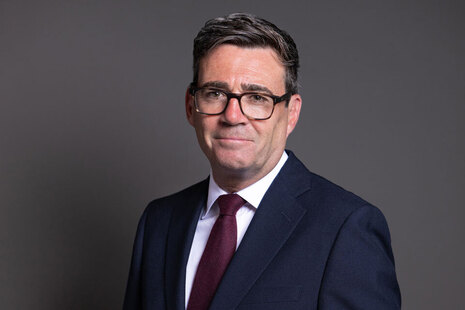
Biography
Andy Burnham became Prime Minister on 20 July 2026.
Andy was elected Member of Parliament for Leigh in June 2001. He served in government between 2007 and 2010 as Chief Secretary to the Treasury, Secretary of State for Culture, Media and Sport, and Secretary of State for Health.
In opposition, he served as Shadow Secretary of State for Health, Shadow Secretary of State for Education, and Shadow Home Secretary.
Andy was elected Mayor of Greater Manchester in May 2017, and re-elected in 2021 and 2024. As Mayor, he brought the bus network back under public control and oversaw Manchester becoming the fastest growing city-region in the UK.
He returned to Parliament as Member of Parliament for Makerfield in June 2026, and was elected Leader of the Labour Party on 16 July 2026.
Andy is married and has three children.
Prime Minister
The Prime Minister is the leader of His Majesty’s Government and is ultimately responsible for the policy and decisions of the government.
As leader of the UK government the Prime Minister also:
- oversees the operation of the Civil Service and government agencies
- chooses members of the government
- is the principal government figure in the House of Commons
Cabinet Office and Prime Minister's Office, 10 Downing Street
First Lord of the Treasury
The First Lord of the Treasury is one of the Lords Commissioners of the Treasury. This role is usually held by the Prime Minister.
Since the 17th century, the Lords Commissioners of the Treasury have collectively carried out duties that were previously held by the Lord High Treasurer (head of His Majesty’s Treasury).
The Lords Commissioners of the Treasury also include:
- the Second Lord of the Treasury - the Chancellor of the Exchequer, who has most of the functional financial responsibilities
- Junior Lords Commissioners of the Treasury - other members of the government, usually government whips in the House of Commons
10 Downing Street is the official residence of the First Lord of the Treasury, and not of the Prime Minister.
Cabinet Office and Prime Minister's Office, 10 Downing Street
Minister for the Civil Service
The Minister for the Civil Service is responsible for regulating the Civil Service.
The Civil Service (Management Functions) Act of 1992, allows the Minister for the Civil Service to delegate power to other ministers and devolved administrations.
This role was created in 1968 and is always held by the Prime Minister.
Minister for the Union
As Minister for the Union, the Prime Minister works to ensure that all of government is acting on behalf of the entire United Kingdom: England, Northern Ireland, Scotland, and Wales.
Cabinet Office and Prime Minister's Office, 10 Downing Street