PM speech at the Lord Mayor's Banquet: 16 November 2026
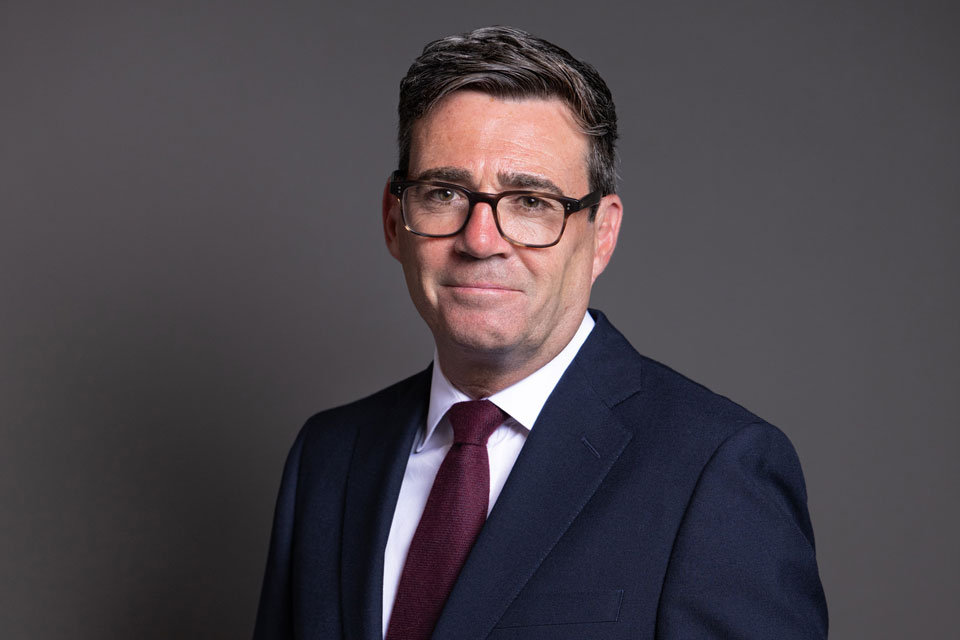
Prime Minister Andy Burnham delivers a speech to the Lord Mayor's Banquet.
My Lord Mayor
My late Lady Mayor
Honoured guests
Ladies and gentlemen
Tonight I want to talk about the Makerfield Test, which I appreciate might seem like a stretch whilst wearing white tie and having just received a trumpet salute.
But it is important to do.
It is a new approach to government - judging all policies through the lens of our least well-off communities and whether they will make life better there or worse.
This evening I want to apply the test to foreign policy, laying out for the first time our new approach as a government and specifically addressing whether the proposed deal on the table at Friday’s UK-EU Summit passes the test.
But first let me set the scene.
My mission as Prime Minister is simple.
To draw a line under a decade of drift and division and to set Britain on a more hopeful, unifying path.
I think we can all agree that we can’t afford another 10 years like the ones we’ve just lived through. At the very least, the Cenotaph would run out of space for former Prime Ministers.
Our Plan for Britain, published next month, will be the circuit-breaker. A 10-year roadmap to a resurgent Britain, rewired to put power into every postcode and the good growth that follows. Finally delivering the control for which people voted in 2016.
My constituency Makerfield voted by a clear majority to leave the EU, as did many deindustrialised communities across Britain.
In my view, it was a message aimed as much at Westminster as Brussels.
Globalisation was proving better for some places than others. Those with the biggest challenges were seeing greater insecurity in employment and downward pressure on wages. Living standards had been falling in the years between 2008 and 2016.
The Brexit vote should have brought about a reset of the political system to address all of those things.
And initially it did, with Theresa May focusing on “burning injustices” and a softer Brexit deal.
But that gave way to a more populist approach, with Britain eventually leaving on bad terms with bad feeling.
Bridges with old friends and neighbours were burnt.
The result was to damage our relationships and deliver a much harder Brexit than people had been led to expect at the Referendum.
Looking back, Brexit was the first domino to fall in a global move towards more isolationism and protectionism.
Vested interests rather than values driving international affairs.
And the saddest thing of all is this: it is exactly what our enemies wanted.
Russia wanted disunity within NATO and a weaker Europe less able to counter its plans for Ukraine.
And this is where it comes back to Makerfield.
The devastating effect on food and fuel prices caused by Russia’s illegal invasion, since compounded by the situation in the Middle East, hurts those on lower incomes the most.
The world is so interconnected now that it is impossible to disentangle decisions taken in Moscow with what happens on the ground in Makerfield.
And the impact is being felt all over the world.
Every single President and Prime Minister I have met in the four months I have been in this job has told me that cost-of-living is the number one political issue they face.
So after a decade of less cooperation between countries, this is where the whole world has ended up.
People on the lowest incomes struggling with high costs.
To improve lives in my constituency, and those of people everywhere, a new approach is needed. And the time is right for Britain to lead the way towards it.
Next year, we will be in the world’s spotlight as we take on the Presidency of the G20.
What an opportunity that is for us at just the right moment. To bring to life all of the things the Lord Mayor has just been speaking about. To showcase some of the incredible innovation happening here in London and across the country. To project a new outlook and win back some of the goodwill we have lost. To let the world know that the Britain it once knew is back.
We will go into it with confidence and our shoulders up because we are clear and consistent about what we stand for and where we are going.
Too often in foreign policy we pose a false choice between our values and our interests.
Either you are a starry-eyed idealist focused only on principles, or you are a cynical realist focused on power and interests alone.
But I see it differently. I think one reinforces the other.
Britain should always lead with our values – and a clear sense of what’s right and wrong – and, by doing that, we put ourselves in a stronger position to secure our interests in the long term.
The more we lead with our values, the greater goodwill we build around the world and the more we secure our interests.
Despite our difficulties over the last decade, people around the world still look to Britain to lead with its traditional sense of fair play, of decency. I heard that at the recent Commonwealth Heads of Government Meeting.
The call from there was for us to step forward more and do more.
Wars in Europe, the Middle East and Africa. Russia’s campaign of disruption across our continent – trying to sow division on our streets. Supply chains, tech and energy being weaponised. International institutions being weakened. Protectionism and aggressive export policies on the rise. The far right on the march.
It all requires a stronger response.
Our values are under threat and it is squarely in our interests to defend them – confident in the remarkable strengths and capabilities that we have as a nation, pragmatic where we need to be, and reaching out to those countries that feel the same as us.
So as the outlines of a new global order are being drawn – we must ensure that we are at the table, our voice multiplied by our alliances, shaping the future according to shared values and interests.
That is how I want the world to see Britain once again – in our traditional role as an honest broker and coalition builder.
A country that leads with our values – because it’s right to do so, and because it is in our interests.
This is a repositioning of British foreign policy, marking a clear break from the mistakes of the last ten years.
In the decade since Brexit, our standing in the world has diminished. We treated both allies and institutions with insufficient care. And the effects went beyond Europe.
We failed to engage properly and invest in the modernisation of the Commonwealth.
When it came to China, instead of building a consistent relationship for the long term, we blew hot and cold.
In the Middle East, while Britain rightly condemned Hamas and the appalling attacks of October 7th, our response to what followed in Gaza left many questioning our moral compass.
We created the impression that the Britain the world thought it knew had changed. It hadn’t – the people of this country are still as great and decent as they ever were.
But the political turbulence of our times created the impression that we had changed, causing confusion, and that is why now is the right time to set out our new approach.
And we can build from something we have got right.
Britain’s response to the war in Ukraine should set the standard to apply across the board.
Under both parties, we have been strong and consistent in standing with the Ukrainian people as they fight for their freedom. We have worked well with our European partners, putting up more of a united front than Russia expected, as we will demonstrate again at Thursday’s meeting of the Coalition of the Willing in Berlin.
We will continue to do so for as long as it takes. And we will continue to ramp up pressure on Russia to agree a full and immediate ceasefire.
It is why we announced a sweep of new sanctions on Thursday and why we are backing the talks that began in Abu Dhabi last week.
It will be difficult, but we will support Ukraine in those negotiations with everything we have. Everything.
Our stance here illustrates my point.
Our support for Ukraine is driven by our values. Standing up for the underdog and not expecting anything in return.
But at the same time there’s no doubt it serves our interests. If Russian aggression is not checked at the gates of Europe, it won’t be long before we face it more directly ourselves.
Moreover, by working so closely with Ukraine, we benefit from the incredible military and technological leaps that they are taking.
Last week we announced that a pioneering Ukrainian-founded drone producer is expanding production in the UK – creating high-skilled British jobs in engineering, AI and advanced manufacturing.
Leading with our values. Because it is right. And because it’s in our interests.
My Lord Mayor, we will keep supporting Ukraine.
We will drive up our defence spending, strengthen NATO and European security and maintain our unique bond with the United States as our largest single trading partner and our key ally in defence.
But we will reset relationships elsewhere and I am grateful to our Foreign Secretary, Ed Miliband, for leading this change.
The first is the Middle East.
Shortly after I became Prime Minister, we acted to address the Israeli Government’s actions in Gaza and the West Bank and stop trade with illegal settlements.
It is right to stand up for the two-state solution before it is rendered impossible by new settlements. Sceptics said nothing would change. In fact, we have built a coalition of a dozen countries who joined our position.
We will now work with all partners to support peace and security across the region. And that includes working with the new Israeli government if they end the violence, stop building settlements on Palestinian land, and allow humanitarian aid into Gaza in the volumes that are needed.
We will keep speaking frankly about these issues – including Iran.
We cannot allow Iran to have a nuclear weapon, nor to massacre their own people and threaten the region unchecked. Nor will we allow them to sponsor attacks on journalists, our Jewish communities here in Britain and airbases without response.
But at the same time, we cannot allow this war to continue indefinitely as it drives the prices of energy through the roof for ordinary people. It is against our values and our interests to do so.
So we are working to support the mediators in securing an agreement that ends the war, reopens the Strait of Hormuz and prevents Iran developing a nuclear weapon.
Again – leading with our values. Because it’s right. And because it is in our interests.
My Lord Mayor, the second reset is with our friends in the Commonwealth.
In 1948, Winston Churchill gave a speech in Llandudno in which he said Britain drew its strength as a nation from its position at the heart of what he called three majestic circles – the newly emerging Commonwealth, the English-speaking world, and a united Europe.
“We are the only country which has a great part in every one of them,” he said. And his wisdom holds to this day.
The Commonwealth is a source of strength for us all. 2.7 billion people here – linked by ties of history, family and friendship – with a combined GDP of around $16 trillion, accounting for up to 80% of the mining of some critical minerals.
It is a unique geopolitical forum, not including either the US or China, and yet we have failed to invest energy in modernising the Commonwealth. And when many Commonwealth members have wanted – quite rightly and fairly – to talk about the legacy of slavery, we ducked the issue again and again.
It is basic good manners, if a friend wants to talk about something that is unjust and unresolved, to listen and engage. It’s the British way.
So at the Commonwealth meeting this month I decided to take a different approach.
While we will not pay reparations, we will offer a structured dialogue over 2027. And we will initiate new work on debt and development finance – hopefully working with many people in this room tonight - putting these issues back on the G20 agenda.
This is leading with our values but it could also serve Britain’s interests through, for instance, better engagement with the new Commonwealth taskforce on critical minerals.
My Lord Mayor, our third reset is with Europe – the last of Churchill’s majestic circles.
The world has changed since 2016.
Back then, it was before the full-scale invasion of Ukraine, which reminded Europe of the values we share. Before Salisbury, and so many other attacks across our continent.
In 2016 it looked a lot easier to go it alone. Today not so much. We can’t ignore this reality, nor the fact that we have a club of democracies on our doorstep which shares so many of our values and our interests.
We have to consider whether the relationship we have is right for this moment – for our economy and for our security. Whether the status quo is good enough.
Now, I know it would be much easier to say nothing about the EU. That’s probably the conventional Westminster view. But, if we are going to be serious about growth, then we are going to have to have this conversation.
It’s like the Emperor’s new clothes – where no one is prepared to say the obvious truth.
Well, I do try to say things as I see them. And to be frank, we have lost more than we have gained in the last 10 years. The hard Brexit we were given is not good enough for Britain.
Some sectors like financial services and tech have adapted well and are thriving. But others have suffered. Taken as a whole, the OBR says Brexit has meant a 4% hit to the British economy. Others put it higher at up to 8% of GDP.
At a more fundamental level, what was broken a decade ago is still broken today. The people voted for change and it has not happened.
It has come down to that crucial word: control.
We need to put communities more in control of their own future. Give them the ability to bring in good jobs, revitalise the high street and make life more affordable.
It’s why the Plan for Britain will pave the way for the biggest transfer of power out of Westminster and Whitehall ever seen.
But I have to been honest. On its own, that won’t be enough.
If we want to restore living standards, we have to get much more serious about growth.
This is not about re-running the arguments of 2016, as I said at the by-election. The world has changed so much since then.
It is about making practical changes to the Brexit arrangements. And let’s be clear - Britain is not in a position to turn its back on a potential deal that could add up to 0.4% to GDP.
That is what is at stake at Friday’s UK-EU Summit in Brussels and I pay tribute to Keir Starmer for laying the groundwork.
Any deal has to pass three tests.
First, it has to be consistent with our manifesto and red lines.
Second, it has to improve the Brexit deal to bring it closer to what people thought they were getting in 2016.
Third, it has to pass the Makerfield Test – producing real improvements in people’s everyday lives in areas of the country that have felt neglected for too long.
For instance, helping with the cost of living and the price of the weekly shop, and the head of M&S Food believes that this deal will do precisely that.
Reducing red tape and the cost of doing business.
Making progress on bringing down electricity bills.
And increasing collaboration on tackling illegal immigration and small boat crossings.
If the deal delivers all of this, and I believe it can, it will easily pass the Makerfield Test and I will agree it.
It illustrates our new approach. Not adversarial. No longer burning bridges. But being constructive and positive – to deliver a win-win for Britain and the EU.
It will mean presenting legislation to Parliament next week. And we will do nothing that crosses our red lines this side of a General Election.
However, after the Summit, we will initiate a discussion with our EU partners about options for our long-term relationship, recognising that both Britain and the EU are very different to what they were.
This will take time and we will present those options and our assessment of them to inform decisions in the next Parliament. At every stage, the British people will be the boss.
My Lord Mayor, whatever the precise path we choose on Europe, we have already changed the weather.
We have new stability and are ready to take up the G20 Presidency – followed by the G7 Presidency in 2028.
We will go into this period in the right place and with renewed confidence.
We will use the G20 as a forum to make the progress we need – on growth and economic security – and seek a new consensus on perhaps the most contentious issue of our times: AI.
The opportunities of AI are huge – but so are the risks. With the world-leading AI Security Institute, and credit to Rishi Sunak for having the foresight to establish it, Britain is well-placed to lead the world towards new global guardrails – and that is what we will work towards at next November’s Leaders’ Summit: the Manchester Compact on AI.
So, my Lord Mayor, in summary, Britain is back in the game in a big way.
We are coming back stronger and bringing a new values-driven approach to a divided world.
Reaching out, building new alliances, true to the finest traditions of this great nation.
And finally facing up fully to all of the issues raised in 2016.
A country that meets the Makerfield Test will also pass the London Test – because we will be more equal, more contented, less prone to political shocks, more able to hold our own union of nations together and an even more successful capital city right at its heart.
This is Britain’s circuit-breaker, setting us on a better path and allowing people to have a greater level of hope for what lies ahead.
A Britain that can believe in itself again. And a Britain that the world can believe in too.
Thank you very much.