Review of Regulation 9A: visiting and accompanying in care homes, hospitals and hospices
Updated 18 March 2026

© Crown copyright 2026
This publication is licensed under the terms of the Open Government Licence v3.0 except where otherwise stated. To view this licence, visit nationalarchives.gov.uk/doc/open-government-licence/version/3 or write to the Information Policy Team, The National Archives, Kew, London TW9 4DU, or email: psi@nationalarchives.gov.uk.
Where we have identified any third party copyright information you will need to obtain permission from the copyright holders concerned.
This publication is available at https://www.gov.uk/government/calls-for-evidence/review-of-cqc-regulation-9a-visiting-and-accompanying-in-care-homes-hospitals-and-hospices/outcome/review-of-regulation-9a-visiting-and-accompanying-in-care-homes-hospitals-and-hospices
Ministerial foreword
We are united in our commitment to ensuring that everyone receiving care, whether in a care home, hospital or hospice, can maintain meaningful contact with those who matter most to them. Being visited and accompanied by loved ones is not simply a matter of comfort; it is a fundamental component of high-quality, person-centred care and, for many, essential to dignity, wellbeing and recovery. We also know that restrictions on visiting can be a warning sign of wider problems with the quality of care. That is why this department is committed to strengthening visiting rights for people in health and care settings as part of our wider strategy to radically improve quality of care, join up services at a neighbourhood level and provide people with greater choice and control.
The COVID-19 pandemic brought into sharp focus the profound impact that restrictions on visiting can have on individuals and families. While these measures were necessary to protect the most vulnerable, we have heard, time and again, how separation from loved ones caused distress and harm. It is our responsibility to ensure that the lessons of the pandemic are not forgotten.
Regulation 9A, introduced as a Care Quality Commission (CQC) fundamental standard in April 2024, has played an important role in setting clear expectations for visiting and accompanying. This review, conducted one year on, is part of our ongoing commitment to listen, learn and act. We are grateful to everyone who contributed their experiences and insights: patients, residents, families, carers, professionals and advocacy groups. Your voices have shaped this report.
Evidence from the review suggested that the regulation has reinforced the principle that visiting is essential to care. It has had a positive effect in clarifying expectations for providers, reinforced best practice and prompted organisations to review their processes. We also heard that some families have felt empowered by Regulation 9A to challenge providers when inappropriate blanket bans have been imposed. However, the review has made clear that more needs to be done to address gaps in awareness and understanding, variation in decision making, and weaknesses in monitoring and enforcement to ensure that the intentions of Regulation 9A are fully realised in practice. We need to continue to shift culture around appreciating the important role of visitors providing support, companionship and advocacy. Our task now is to ensure that the rights of people in health and care to see their loved ones are upheld consistently and transparently, wherever they receive care.
Building on these findings and the strong foundation of Regulation 9A, the department will take forward a programme of work to strengthen visiting rights and embed cultural change across health and care settings, where providers work collaboratively with residents, patients and their loved ones to ensure care and support is person-centred. This programme of work will be taken forward immediately to address the gaps identified in the review by harnessing the expertise of health and care experts and advocacy organisations to shift practice towards informed, person-centred decision making. This approach aims to prevent situations where providers adopt rigid positions and defer to legal processes rather than resolving issues collaboratively.
We want to harness sector expertise and advocacy to ensure transparency, consistency and person-centred care across all settings. We will convene a working group of individuals who have lived experience of the system to take forward the recommendations from the review and co-develop the resources. Producing tailored communications and awareness resources for health and care providers will be crucial to support providers to:
- communicate visiting rights and any restrictions clearly and consistently
- apply Regulation 9A consistently, following a transparent and public facing decision making process map
- increase awareness among staff, residents, patients and their loved ones
An important element of the department’s adult social care strategy is ensuring people, and their loved ones, have access to clear information and are genuine partners in decisions about their care; and these communications and awareness resources will provide greater transparency around how decisions are made, ensuring that a culture of open visiting and clear decision making is embedded across the sector.
This government wants to radically improve the quality of care and is driving wider changes in the health and care system. As Lord Darzi highlighted in his recent review of the NHS in England, the future of health and care must be built around the needs and experiences of people, not just systems. Making sure that people are supported by their loved ones is pivotal to achieving this.
Through the 10 Year Health Plan and the independent commission into adult social care, we are committed to giving more power to patients and people who draw on care, and their families and carers. We are committed to strengthening visiting rights and giving them more prominence in the wider reform work to improve personalised care, ensuring it’s a consideration in the Casey Commission deliberations. Alongside this package of work, we are committed to strengthening visiting rights by exploring bringing forward proposals for legislative changes that promote the importance of family and carers as equal partners in care as part of wider reform work, when parliamentary time allows.
Everyone deserves care that is safe, person-centred and rooted in respect for their rights. To those who have shared their stories and expertise as part of this review, thank you. Your contributions are helping us build a health and care system that is more open, compassionate, and responsive to the needs of every individual.
Stephen Kinnock, Minister of State for Care
Karin Smyth, Minister of State for Health (Secondary Care)
Baroness Gillian Merron, Parliamentary Under-Secretary of State for Women’s Health and Mental Health
Executive summary
Maintaining meaningful contact with family and friends is essential for the health and wellbeing of people in care settings. It is critical in supporting people to have genuine choice and control and in driving up the quality of care and support.
Following the COVID-19 pandemic, the Department of Health and Social Care (DHSC) introduced Regulation 9A, establishing a new CQC fundamental standard on visiting and accompanying in care homes, hospitals and hospices. Regulation 9A came into force in April 2024 to ensure that providers facilitate:
- visits
- patients to be accompanied to outpatient appointments by a family member, friend or a person providing support
In April 2025, DHSC launched a post-implementation review (PIR) of Regulation 9A, which was informed by a wide range of evidence.
When considering the findings, we need to keep in mind the biases and limitations of the review which make it difficult to fully assess compliance with Regulation 9A and its effectiveness. It is important to note that an assumption in this work is that people would be more likely to participate in the review where they have experienced restrictions to visiting and accompanying. The views captured may not be wholly representative of the views of all participants, and the proportion of organisations who engaged with the review is not representative of all health and care organisations. Despite these limitations, the review uncovered many important views and recommendations.
The importance of visiting and accompanying for wellbeing and relationships
There is strong consensus among the respondents of this review that the right to visiting and accompanying in care homes, hospitals and hospices is essential. Consistent access to loved ones supports wellbeing, trust and recovery, while restrictions cause distress, isolation and harm to mental and physical health, particularly for those with complex needs.
The effectiveness of Regulation 9A in practice
Regulation 9A has reinforced the principle that visiting is essential to care, however, the review found mixed views on the effectiveness of the regulation in practice. Of individuals who responded to the call for evidence, 31% reported experiencing restrictions to visiting or accompanying since the implementation of Regulation 9A, with significant variation between care homes, hospitals and hospices. However, there were common themes for the restrictions, with frequent reports that restrictions were linked to infection control. Data limitations and inconsistent reporting make it difficult to fully assess compliance or effectiveness.
The impact of Regulation 9A on providers
For most providers, Regulation 9A has consolidated existing good practice rather than driven major change. Professionals reported that its greatest value has been in clarifying expectations, reinforcing best practice, and prompting organisations to review their processes, and that it had not imposed a significant operational burden. There were reports of remaining challenges in implementing open visiting around infection control, visitor compliance, and balancing access with clinical needs.
Distinguishing between visitors and care supporters
Across all engagement, there was strong consensus on the need to distinguish between general visitors and essential care supporters. Health experts, advocacy groups and providers stressed that family members, unpaid carers and personal assistants should be recognised as ‘care partners’, not casual visitors, as their role is critical to wellbeing, recovery and safeguarding. Stakeholders recommended clear guidance to guarantee access for care supporters.
Awareness and understanding of Regulation 9A
The evidence suggests that awareness and understanding of Regulation 9A is inconsistent across settings. Advocacy groups and focus group discussions reported that knowledge is often limited to decision makers, with many residents, families and some frontline staff unaware of the regulation. A survey conducted by Rights for Residents and its partners in February 2025 showed that 42% of respondents were unaware of Regulation 9A despite having recent experiences of restrictions in health and care settings. Hospitals showed higher staff awareness, but patients and visitors reported feeling largely uninformed, leading to confusion and barriers for vulnerable patients. Across all settings, uncertainty persists about what constitutes ‘exceptional circumstances’, prompting calls for clearer communication, training and stronger legal protections.
Decision making and communication of visiting and accompanying policies
Evidence from the review suggests that decision making and communication around visiting and accompanying under Regulation 9A remain inconsistent across settings. Advocacy groups raised concerns that the regulation is often treated as guidance rather than law, with unclear accountability and limited transparency. Care homes reported using risk assessments and family engagement, but practices vary, and blanket restrictions during outbreaks persist, with residents and families often feeling excluded from decisions. In hospitals, decisions are typically made at organisational level, but patients frequently feel uninformed and excluded, with communication described as poor and inconsistent. CQC emphasises that providers must:
- document decisions
- ensure restrictions are lawful, proportionate and time-limited
- involve individuals and families in the process
Stronger guidance, staff training and standardised frameworks are needed to ensure fairness, transparency and compliance.
Monitoring, enforcement, and accountability
Monitoring and enforcement of Regulation 9A emerged as a significant concern. While formal complaints about visiting restrictions are rare, this may not be an indication of overall satisfaction and may suggest that there are obstacles to voicing concerns. Many individuals described fear of reprisals and a lack of clarity on complaint routes, and reported that current systems are slow, stressful and ineffective. Only 23% of those who challenged restrictions felt their issue was resolved. Advocacy groups highlighted power imbalances, limited awareness of rights, and criticised CQC for reduced inspections and lack of action on individual complaints. Ombudsman data shows very few cases progressed, and CQC is widely viewed by those responding to the review as monitoring rather than enforcing, with no visible consequences for breaches. Respondents suggested that stronger enforcement, clearer escalation routes and independent oversight are needed to ensure accountability and uphold visiting protections.
Areas for development and next steps
DHSC is committed to addressing these gaps to ensure Regulation 9A is more effective in delivering its objectives and will take forward a package of work to:
- improve the clarity of the Capacity Tracker visiting questions and associated completion instructions to strengthen the quality of data and help providers better understand their duties. The Capacity Tracker is a data capture platform used by DHSC and NHS England to collect information from care providers in real time
- produce communications and awareness resources tailored to different settings to support providers to refresh Regulation 9A awareness and encourage better inclusion of visiting preferences in care plans
- encourage care home, hospital and hospice providers to supplement existing training with these materials
- work closely with CQC to embed visiting into their longer-term reforms and improvement programme
- continue to monitor the situation and how well these measures address gaps and protect visiting
- strengthen visiting rights introduced through Regulation 9A by exploring bringing forward proposals for legislative changes that promote the importance of family and carers as equal partners in care as part of wider reform work, when parliamentary time allows
Introduction: the review of Regulation 9A
Following the COVID-19 pandemic, DHSC introduced Regulation 9A, establishing a new CQC fundamental standard on visiting and accompanying in care homes, hospitals and hospices. Regulation 9A came into force in April 2024 to ensure that providers facilitate:
- visits
- patients to be accompanied to outpatient appointments by a family member, friend or a person providing support
Providers are required to comply with the regulation unless there are exceptional circumstances which mean they cannot safely do so.
In April 2025, DHSC launched a PIR of Regulation 9A to consider:
- whether it is effective in meeting its objectives
- the impacts of the regulation
- whether further intervention is needed
The review was informed by a wide range of evidence including:
- a call for evidence
- focus groups
- intelligence from CQC and the ombudsmen
- research on visiting policies in other countries
How Regulation 9A came into force
Contact with family and friends plays a crucial role in maintaining good health and wellbeing for care home residents and patients and must remain a priority for all health and care providers. There is emerging evidence of unintended harm to people from restricted visiting, caused by the emotional and psychological distress and impact of people receiving care being separated from their family, friends and unpaid carers.
In response to the challenges and lessons learned during the COVID-19 pandemic, a public consultation on proposals for visiting legislation was held in 2023. The responses showed clear support for introducing a new fundamental standard for visiting and accompanying in law. The fundamental standards are the standards below which a person’s care must never fall.
In December 2023, DHSC introduced legislation under the Health and Social Care Act 2008 (Regulated Activities) Regulations 2014 to create Regulation 9A, the CQC fundamental standard on visiting and accompanying in care homes, hospitals and hospices. Regulation 9A came into force on 6 April 2024.
Regulation 9A’s objectives
The objectives of Regulation 9A are to ensure that:
- providers of care homes, hospitals and hospices facilitate visits
- visits out of care homes are not discouraged by providers
- providers facilitate patients to be accompanied by a family member, friend or someone providing support when attending a hospital or hospice for care or treatment which does not involve an overnight stay
Providers are required to comply with the regulation unless there are exceptional circumstances which mean that, despite any precautions taken to mitigate risks, they cannot safely do so. CQC guidance which accompanies Regulation 9A describes exceptional circumstances as being:
where, despite any precautions, a visit or accompaniment would still pose a serious risk to the health, safety or welfare of the person using the service or other people on the premises.
Regulation 9A’s scope
Regulation 9A applies to a registered person in respect of a relevant regulated activity carried on in a care home, hospital or hospice.
Regulation 9A defines ‘regulated activity’ for these purposes as all regulated activities except:
- personal care
- accommodation for persons who require:
- treatment for substance misuse
- any detoxification services for substance misuse
- management of supply of blood and blood derived products
- transport services, triage and medical advice provided remotely
This regulation does not apply to anyone who is detained:
- in a prison or similar institution to which the Prison Act applies
- under the Immigration Acts
However, the requirements of Regulation 9A do apply if someone detained in a prison or under the Immigration Acts is transferred to hospital and detained in that hospital under the Mental Health Act 1983.
Supported living settings and ‘extra care’ housing schemes are not covered by Regulation 9A. The accommodation aspect of these settings, including visiting, is not regulated by CQC. These settings generally have ‘exclusive possession’ regarding visiting, meaning that the people who use these services can decide who can enter their accommodation and when.
Purpose of the review
In April 2025, DHSC launched a PIR of Regulation 9A, in line with the commitment made in the Explanatory Memorandum to the Health and Social Care Act 2008 (Regulated Activities) (Amendment) Regulations 2023. The review covers all services encompassed in the regulation.
The review was conducted by DHSC, with support from NHS England and CQC.
The objectives of the review were to:
- consider whether Regulation 9A is effective in meeting its objectives
- identify any challenges and/or unintended consequences
- understand the impact on care home, hospital and hospice providers, and, where relevant, how they implemented restrictions
- understand the impact on people receiving care and their visitors
- consider how effectively CQC has enforced the new standard through monitoring, investigating, enforcing and promoting good practice
- consider whether further intervention is needed
The health and care partner policy
Separate to Regulation 9A, in response to the challenges brought about by the COVID-19 pandemic and the recognition that hospital restrictions impacted the presence of health and care partners, NHS England developed a health and care partner policy for the NHS in England. The health and care partner policy:
- was co-designed, tested and developed in partnership with people with lived experience, patients, carers and staff
- is aimed at consistently recognising and involving health and care partners, acknowledging their unique contribution to delivery of the best outcomes and experiences, enhancing the role of families and friends in the care process
- supports loved ones to be seen as ‘partners in care’ and contribute to the care needs of individuals while they are in hospital
In light of the announcement in March 2025 that NHS England will merge with DHSC, the work on finalising the health and care partner policy was paused. The policy is not within the scope of the review of Regulation 9A. Note that stakeholders, including the Patients Association and John’s Campaign, have commented on the positive benefits of this work throughout the review of Regulation 9A and have requested the reinstatement of the work.
Evidence gathering
The review was informed by a wide range of evidence, including:
- a call for evidence published in May 2025 to gather responses from individuals, professionals, and organisations on their experiences of visiting and accompanying since Regulation 9A commenced in April 2024. The standard call for evidence received 699 responses. An easy read translation was also published in July 2025 to ensure that the call for evidence was accessible to groups with additional needs. The easy read call for evidence received 170 responses
- a series of 10 focus groups held in June and July 2025, aimed at hearing the experiences of visiting and accompanying since Regulation 9A commenced
- Capacity Tracker data that is part of the data set providers are mandated to complete each month and is published in the DHSC adult social care provider statistics, England: quarterly update, which was reviewed to identify adult social care (ASC) providers who at any point from April 2024 to April 2025 reported that they had not been able to facilitate visits both into and off care home premises. North of England Care System Support (NECS) supported DHSC by surveying these providers through Capacity Tracker to understand their reasons and decision making process
- 10 case studies received from members of the public and advocacy organisations about visiting restrictions, shared with CQC policy leads for a consideration of whether available guidance sufficiently covered the issues raised in the complaints. Where information about a provider was supplied, CQC passed this on to relevant inspection teams for their review and monitoring. Given the level of detail provided in case studies, and in line with CQC monitoring and enforcement processes, CQC could not assess whether there was a breach of Regulation 9A in those cases
- intelligence from the Local Government and Social Care Ombudsman (LGSCO), Parliamentary and Health Service Ombudsman (PHSO), the Competition and Markets Authority (CMA) and CQC, which was reviewed to understand whether there have been any complaints about visiting in relevant settings, and if so, whether there are any recurring themes
- research on visiting policies in other countries to consider how similar measures have been implemented, including level of regulation, decision making power, and monitoring and enforcement
- additional evidence was provided over email from charity and advocacy organisations, including the Patients Association, Mencap, Rights for Residents, John’s Campaign and Care Rights UK
Further detail of the evidence and methodology is in annex A.
Summary of engagement
Standard call for evidence
Of the 699 responses to the standard call for evidence:
- 177 (25%) were from personal individuals
- 321 (46%) were from professional individuals
- 201 (29%) were from an organisation or charity
Respondents could share views on more than one setting, and therefore the total number is above the 699 respondents to the standard call for evidence. Of the 713 unique setting responses to the standard call for evidence:
- 517 (73%) were from respondents sharing views on a care home
- 189 (27%) were from respondents sharing views on a hospital
- 7 (1%) were from respondents sharing views on a hospice
Note that figures may not sum due to rounding.
Easy read call for evidence
Of the 170 responses to the easy read call for evidence:
- 38 (22%) were from personal individuals
- 45 (26%) were from professional individuals
- 79 (46%) were from a provider organisation (a care home, hospital or hospice)
- 8 (5%) were from an organisation for patients, care home residents or carers
Of the 170 unique setting responses to the easy read call for evidence:
- 160 (94%) were from respondents sharing views on a care home
- 6 (4%) were from respondents sharing views on a hospital
- 4 (2%) were from respondents sharing views on a hospice
Note that figures may not sum due to rounding.
Further detail on the engagement with the standard call for evidence, easy read call for evidence and focus groups is in annex B.
Assumptions and data limitations
This review was conducted one year on from Regulation 9A coming into force. As the regulation has had a limited time to embed and influence a culture change, longer-term effects of it will not be captured in this review.
An assumption in this work is that people would be more likely to participate in the review, through attending focus groups or completing the call for evidence, where they have experienced restrictions to visiting and accompanying.
The views captured in focus groups give an insight into the experiences of people and groups affected by visiting restrictions, though they may not be wholly representative of the views of all participants from those groups.
It is important to note that the data collected from the call for evidence only represents a small proportion of care homes, hospitals and hospices and therefore does not represent the sector as a whole. As of October 2025, there are approximately:
- 14,490 CQC registered care homes recorded on the CQC care directory (this number does not include non-CQC registered care homes)
- around 200 charitable hospices
- 202 NHS trusts (note that the number of NHS trusts does not correlate to the number of hospitals as many trusts run more than one hospital)
Only a very small portion of health and care organisations engaged with the review.
There were significant efforts to reach out to a wide range of individuals to respond to the call for evidence to make sure that a range of voices were heard, and as a result we received 699 responses to the standard call for evidence and 170 responses to the easy read call for evidence. The number of responses was lower than those to the 2023 consultation on plans to introduce Regulation 9A, which received 1,008 responses to the standard consultation and 750 responses to the easy read consultation, which may mean that the evidence gathered may not fully reflect the experiences of the wider affected population. Despite this, the findings were consistent across data sources such as the Capacity Tracker survey and focus groups, further reinforcing these results and strengthening the validity of the findings.
The majority of responses to the standard call for evidence were sharing views about their experiences in care homes (517 responses, 73%), with a lower number of sharing views about their experiences in hospitals (189 responses, 27%). Furthermore, the very low number of responses sharing views about hospice settings (7 responses, 1%) means that insights cannot be derived for that setting, and that they are excluded from any tables of results from the standard call for evidence. Similarly, very low easy read call for evidence responses regarding hospice (4 responses, 2%) and hospital (6 responses, 4%) settings means that insights cannot be derived for those settings, and that they are excluded from any tables of results from the easy read call for evidence (annex B, table 14).
Although we did extensive engagement and sought to hear from as many people as possible, towards the end of the review period we were made aware of a potential gap concerning the impacts of visiting restrictions on children’s mental health settings. We recognise the impact that admission to hospital for mental health treatment can have on the relationship between parents and children, particularly if the child or parent is placed far away from home or where the person is detained under the Mental Health Act. Visiting and maintaining contact with parents and family is vital to a patient’s care, treatment and recovery, and should be supported and facilitated. There was very limited evidence provided during the review period of restrictions in these settings since Regulation 9A came into force, however, we have considered the information available in the development of the recommendations of the review.
All CQC regulated adult social care providers are required to provide certain information using the Capacity Tracker platform under section 277A of the Health and Social Care Act 2012. The information required is set out in the formal notice of a mandate for all adult social care providers and currently asks care home locations to state whether:
- in the last month, all residents have been able to receive visits into the care home on any day
- in the last month, residents have been able to take part in visits off care home premises on any day
For the purposes of this review, a provider is considered to have been able to facilitate visits if they responded ‘yes’ to either or both questions. A provider is considered to have been unable to facilitate visits if they responded ‘no’ to both questions. The questions are not intended to monitor provider location compliance with Regulation 9A and should not be used for this purpose. Statistics covering responses, including response rates, methodology and considerations for data usage are available within the adult social care publication. The data is self-reported by providers, and the questions are open to interpretation, making it difficult to use the data to definitively ascertain if restrictions are in place or not. Response rates also vary and can affect comparability over time.
At the time that regulation 9A came into force, CQC had recently started the roll out of their Single Assessment Framework and Regulatory Platform. Concerns with the roll out of both of these, alongside low inspection numbers carried out by the regulator from 1 April 2024 to 31 March 2025, has meant that CQC has not been able to provide quality assured data to support this review. However, CQC has provided qualitative evidence of where visiting was assessed to department officials for their information.
Information from LGSCO and PHSO on visiting restrictions was limited because people need to have exhausted the local complaints process before they go to the ombudsmen. There is therefore a time lag between when the ombudsmen receive a complaint and when the incident the person is complaining about occurred. For this reason, it is unlikely that the ombudsmen will have seen the impact of the regulation yet.
What you told us: insights and analysis
Note that throughout this report, we use the terms ‘unpaid carers’ and ‘care supporters’. However, individuals who contributed to the review also described themselves as ‘care partners’, ‘essential carers’ or ‘essential care givers’, and these terms were often used interchangeably.
The importance of visiting and accompanying for wellbeing and relationships
Across all our engagement there was clear, strong, shared support for open visiting.
Visiting restrictions have a profound impact on patients, residents and families. Professionals reflected on the pandemic experience, underscoring the harm of isolation and the importance of maintaining contact with loved ones.
Respondents emphasised that consistent, supported access to loved ones is crucial. It fosters trust, reduces anxiety and improves care outcomes. By contrast, those who experienced restrictions described negative effects on wellbeing, significant distress, isolation and decline in physical and mental health, especially for those with complex needs.
One hospital patient said:
It was actually depressing for me while in the hospital… you need some sort of motivation. You need people to be around you so that you can speed up your recovery, and I did not have that opportunity. I did not have that right.
Rights for Residents survey
During the review, we were made aware of a February 2025 survey conducted by Rights for Residents and partners, ‘Our awareness of visiting rights in health and care settings’. The survey was active in February 2025 and was shared with Rights for Residents supporters through Facebook, X, newsletters, direct emails and through other supporting organisations. There were 322 responses to the survey from people who reported that they had spent time in, supported someone or visited someone in a health and care setting since 6 April 2024.
Responses highlighted the harm of restricting visits from family and friends, who often form a vital part of a resident’s or patient’s care. Separation was linked to deterioration in mental and physical health, and respondents emphasised that relatives and friends are essential for advocacy, feeding, hydration and emotional support. Many respondents also expressed concern that, without family involvement, overstretched staff may miss important care needs.
The effectiveness of Regulation 9A in practice
Regulation 9A has reinforced the principle that visiting is essential to care, however, the review found mixed views on the regulation’s effectiveness. While the results from the call for evidence may not be representative, 31% of individuals sharing their personal views reported experiencing restrictions to visiting or accompanying since the implementation of Regulation 9A, with significant variation between care homes, hospitals and hospices. We assume that individuals who completed the call for evidence may have been more likely to have experienced restrictions to visiting and accompanying, so these figures will likely not fully represent the whole population. However, there were common themes for the restrictions, with frequent reports that restrictions were linked to infection control. Data limitations and inconsistent reporting make it difficult to fully assess compliance or effectiveness. The review found mixed views on whether respondents consider Regulation 9A has been effective in meeting its objectives (shown in table 1 below).
Table 1: standard call for evidence responses to the question ‘to what extent do you agree or disagree that Regulation 9A has been effective in ensuring that visiting and accompanying are facilitated?’
| Setting | Respondent category | Strongly agree | Agree | Neither agree nor disagree | Disagree | Strongly disagree | Don’t know |
|---|---|---|---|---|---|---|---|
| Care home | Individual sharing personal views | 11 (12%) | 16 (18%) | 22 (25%) | 14 (16%) | 17 (19%) | 9 (10%) |
| Care home | Individual sharing professional views | 57 (23%) | 87 (35%) | 89 (35%) | 11 (4%) | 3 (1%) | 5 (2%) |
| Care home | On behalf of an organisation | 58 (33%) | 50 (28%) | 52 (30%) | 8 (5%) | 5 (3%) | 3 (2%) |
| Hospital | Individual sharing personal views | 10 (10%) | 22 (23%) | 20 (21%) | 19 (20%) | 16 (17%) | 9 (9%) |
| Hospital | Individual sharing professional views | 14 (20%) | 20 (28%) | 24 (34%) | 6 (8%) | 1 (1%) | 6 (8%) |
| Hospital | On behalf of an organisation | 4 (18%) | 12 (55%) | 3 (14%) | 1 (5%) | 2 (9%) | 0 (0%) |
Across all settings, respondents agreed that Regulation 9A reinforces the principle that visiting is essential to care. While some respondents reported little change in visiting restrictions due to pre-existing open policies, others revealed that several barriers persist, including:
- insufficient distinction between ‘visitor’ and ‘care supporter’
- limited awareness and understanding of Regulation 9A
- inconsistent application across organisations
- a lack of monitoring, enforcement and accountability
These issues continue to affect patients, residents and visitors.
In the standard call for evidence, 31% of individuals reported having experienced a restriction to visiting or accompanying since 6 April 2024, with large variation by setting (tables 2 and 3). The findings from the survey conducted by Rights for Residents are broadly in line with this, with 25% of respondents reporting periods since April 2024 when visiting was not allowed. In the call for evidence, the restrictions reported commonly involved limits on visiting hours and numbers of visitors in care homes and hospitals, whereas minimal restrictions were reported in hospices.
Various sources of evidence suggest that, since the implementation of Regulation 9A in April 2024, there have been fewer restrictions. This is supported by both the published Capacity Tracker data and findings from the call for evidence (table 4), suggesting that Regulation 9A may have had some impact in reducing restrictions. However, it should be noted that there was limited evidence of restrictions prior to Regulation 9A, and the evidence remains low.
The lack of consistent reporting and the limited availability of data on restrictions to visiting and accompanying across settings present challenges in assessing the extent of restrictions since the implementation of Regulation 9A. It is important to acknowledge the assumption that people who participated in the call for evidence and focus groups are more likely to have experienced restrictions, so findings should be considered in that light. Additionally, limited data from CQC and ombudsmen on reported restrictions and breaches make it difficult to evaluate whether restrictions constituted breaches of Regulation 9A or whether the restrictions were justified by exceptional circumstances.
Table 2: standard call for evidence responses on the experiences of restrictions since 6 April 2024
| Setting | Respondent category | Has experienced restrictions | Has not experienced restrictions |
|---|---|---|---|
| Care home | Individual sharing personal views | 28 (31%) | 51 (57%) |
| Care home | Individual sharing professional views and provider organisations | 18 (4%) | 386 (94%) |
| Hospital | Individual sharing personal views | 32 (33%) | 51 (53%) |
| Hospital | Individual sharing professional views and provider organisations | 31 (34%) | 55 (60%) |
Table 3: easy read call for evidence responses on the experiences of restrictions since 6 April 2024
| Setting | Respondent category | Has experienced restrictions | Has not experienced restrictions |
|---|---|---|---|
| Care home | Individual sharing personal views | 3 (9%) | 31 (91%) |
| Care home | Individual sharing professional views and provider organisations | 7 (6%) | 112 (94%) |
Table 4: standard call for evidence responses on the differences in experiences of restrictions before 6 April 2024 and after 6 April 2024
| Setting | Respondent category | Experienced restrictions before April 2024 | Experienced restrictions after April 2024 |
|---|---|---|---|
| Care home | Individual sharing personal views | 56 (63%) | 28 (31%) |
| Care home | Individual sharing professional views and provider organisations | 44 (11%) | 18 (4%) |
| Hospital | Individual sharing personal views | 59 (61%) | 32 (33%) |
| Hospital | Individual sharing professional views and provider organisations | 52 (57%) | 31 (34%) |
Care homes
The review highlighted inconsistent reports of restrictions, with notable variations in perspectives. Some accounts emphasise widespread or severe restrictions, while others suggest these were limited or applied selectively. These responses highlight the complexity and inconsistency in both the reporting and the personal interpretation of care home visiting restrictions.
In the standard call for evidence, 31% of individuals reported experiencing a restriction, compared with 4% of professionals reporting restrictions in their setting. A higher share of easy-read respondents reported no experience of restrictions (tables 2 and 3).
In contrast, latest data published on visiting in care homes taken from Capacity Tracker shows 99.3% of care homes in England were able to facilitate visits, with this figure remaining stable since September 2022 (figure 1). Since April 2024, when Regulation 9A came into force, care homes report that they are facilitating visits if all residents have been able to receive visits into the home or take visits off care home premises.
Figure 1: Capacity Tracker data on visiting restrictions, proportion of care homes accommodating or limiting visits for residents, England, 4 January 2022 to 16 February 2026
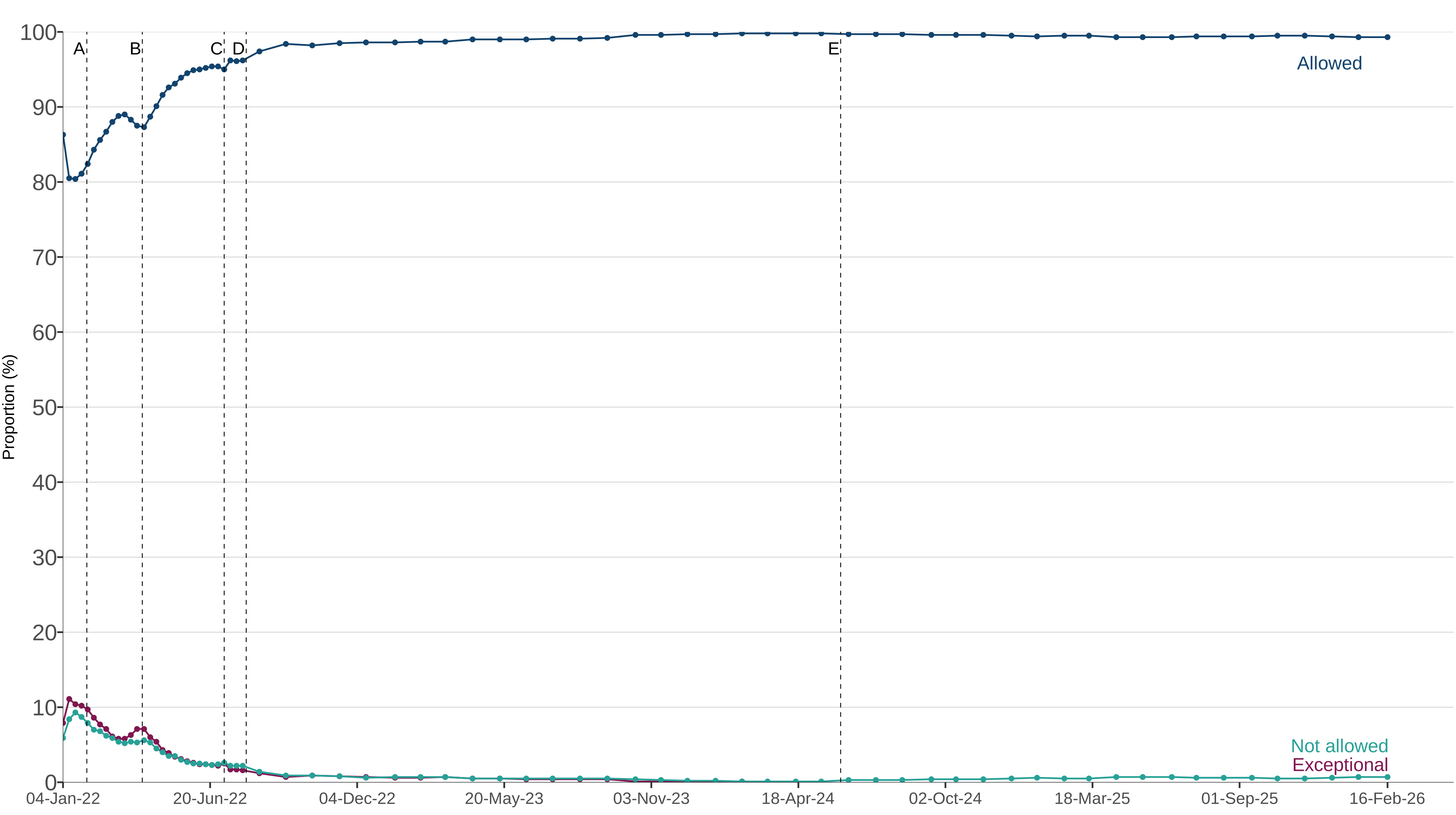
Figure 1 shows that the proportion of care homes accommodating visiting for residents has broadly increased since mid January 2022, with the exception of slight decreases in early April 2022 and early July 2022. This number has remained stable since September 2022 and has remained between 99.3% to 99.8% since April 2024. Note the dotted lines in this chart represent the implementation of the changes in care home visiting guidance or changes to the visiting question in Capacity Tracker. Early data points for this figure are available in table 1 of the accompanying ‘Occupancy, visiting and workforce statistics, December 2025: data tables’ on the Adult social care in England, monthly statistics: December 2025 page. The most recent data points are available on the Adult social care provider statistics, England: quarterly update to February 2026 page. These sources also include data by region and local authority.
Among the respondents who reported restrictions, the most common restrictions were:
- restricted visiting hours
- limits on numbers of visitors
- limits on leaving or returning to the facility
- blanket stops to visiting - most often for infection control during outbreaks of illnesses such as COVID-19, norovirus or flu
Other cited reasons included:
- internal care home policies
- concerns about visitor behaviour
- safeguarding concerns
- staff or resource limitations
Care home professionals commonly described open visiting policies, restricting only during outbreaks or for security reasons. Health protection teams (HPTs), who work with care homes during outbreaks, also described visiting as largely unproblematic in care home settings and maintained during outbreaks, although some care homes still interpreted any infectious disease outbreak as grounds for blanket bans, regardless of the regulation’s intent. Individuals and advocacy organisations reported blanket bans and restrictions to control or exclude ‘problem relatives’ based on staff perspectives.
To understand the reasons behind visiting restrictions, NECS arranged a survey for the 710 provider locations that had reported in Capacity Tracker that they had been unable to facilitate visiting at any point since the introduction of Regulation 9A. Of these locations, 121 (17%) responded. Among respondents that had recorded being unable to facilitate visiting, the most common explanation was that they had selected the incorrect option rather than there being a restriction. Among the remaining respondents, the most cited reason was public health. These follow-up survey findings should not be taken as representative of all care homes due to the small sample size and the self-selecting nature of survey participants and respondents.
Capacity Tracker survey responses
Note that these questions were multiple choice. The 121 respondents could select multiple answers.
Question
What was the reason(s) you have not been able to facilitate visiting in your care home?
In response to this question:
- 88 (73%) respondents selected incorrect option, visiting has not been restricted into the care home
- 20 (17%) respondents selected other (note that ‘other’ represents written responses, most of which were about there being no restrictions)
- 13 (11%) respondents selected public health restrictions, such as an outbreak
- 4 (3%) respondents selected told to stop visits by health protection teams or local authority
- 3 (2%) respondents selected concerns from family/residents about safety
- 3 (2%) respondents selected currently have no residents
- 3 (2%) respondents selected location is closed
- 2 (2%) respondents selected regulator restrictions (CQC)
- 1 (1%) respondent selected staff shortages
- 1 (1%) respondent selected visitor non-compliance with safety protocols
- 1 (1%) respondent selected location is a college
- 1 (1%) respondent selected location is a registered children’s home
Question
What was the reason(s) your residents have been unable to take part in visits off care home premises on any day, where requested?
In response to this question:
- 92 (76%) respondents selected incorrect option, visiting has not been restricted off care home premises
- 12 (10%) respondents selected other (note that ‘other’ represents written responses, most of which were about there being no restrictions)
- 9 (7%) respondents selected public health restrictions, such as an outbreak
- 5 (4%) respondents selected told to stop visits by health protection teams or local authority
- 3 (2%) respondents selected currently have no residents
- 2 (2%) respondents selected location is closed
- 2 (2%) respondents selected concerns from family/residents about safety
- 1 (1%) respondent selected staff shortages
Hospitals
Hospitals reported wide variations in visiting and accompanying policies between organisations, often driven by ward culture and differences between staff on duty. In the standard call for evidence, 33% of individuals and 34% of professionals reported experiencing or imposing a restriction (see table 2).
Reported restrictions included:
- mealtime restrictions
- set visiting times
- limits on numbers of visitors, frequently justified by infection control during outbreaks or periods of illnesses
Many hospital professionals described full, open visiting operating in most areas, with special visiting policies for vulnerable populations, such as open visiting for partners in maternity wards and closed visiting in mental health wards where a patient is detained under the Mental Health Act. Providers noted that visiting guidance has been developed to assist patients and families during visits and that any restrictions are communicated to patients’ families.
Professionals also noted necessary clinical and safety-driven limits to visiting, such as:
- restricted visiting times
- caps on numbers at the bedside to reduce overcrowding, especially in elderly care and stroke units
The experiences reported by individuals were mixed. Some praised staff recognition of the importance of their presence, while others described rigid enforcement of visiting hours, regardless of patient vulnerability, reporting they had to “fight” to remain with loved ones with complex needs, dementia, or anxiety. Some respondents cited restrictions linked to hospital policy and insurance issues, such as personal assistants not being insured in the hospital setting. In the Patients Association focus groups, individuals echoed this sentiment and described significant negative impacts, with some stating that restrictions did not balance safety and wellbeing well and that reasons for restrictions were outdated, inconsistent or impersonal, leading to stress for patients, families and staff and, at times, unsafe situations. Additionally, several hospitals referenced the positive benefits of the care partner work in creating a more open visiting culture and environment.
Hospices
In the focus group, hospice professionals reported restricting visiting only in exceptional circumstances, for instance, where a visitor posed a risk to patients or staff, or during outbreaks when restricted visiting guidance advised against visiting where possible while continuing to provide personal protective equipment (PPE) and facilitate visiting where patients were reaching end of life. These restrictions were very rare.
Response numbers to the call for evidence were very low for hospices. One of 6 respondents reported experiencing a restriction.
Overall, the data suggests that visiting restrictions are less of an issue in hospices, and we know that visiting issues have not historically been raised as a cause of concern in hospice settings. However, more data is needed to draw actionable conclusions.
The impact of Regulation 9A on providers
For most providers, Regulation 9A has consolidated existing good practice rather than driven major change. Professionals reported that its greatest value has been in clarifying expectations, reinforcing best practice and prompting organisations to review their processes, and had not imposed a significant operational burden. There were reports of remaining challenges around:
- implementing open visiting around infection control
- visitor compliance
- balancing access with clinical needs
When asked whether Regulation 9A has impacted their settings, 81% of professionals said that it had not (table 5), with many reporting that they had gone back to pre-COVID visiting and accompanying policies.
Table 5: standard call for evidence responses from individuals sharing professional views and organisations to whether Regulation 9A has impacted health and care settings
| Setting | Yes | No | Don’t know |
|---|---|---|---|
| Care home | 30 (7%) | 356 (87%) | 12 (3%) |
| Hospital | 17 (19%) | 48 (53%) | 26 (29%) |
Care homes
In focus groups and call for evidence responses, care home professionals consistently reported that Regulation 9A has not significantly altered day-to-day practice as most had already adopted open visiting policies post-COVID. The regulation was generally seen as low burden for providers. However, it was noted that the regulation may have been more impactful for care providers who previously restricted visits. Several respondents noted that the regulation has provided clearer guidance and clarified responsibilities and expectations, reinforcing that visitors are ‘essential parts of care and wellbeing’. Some settings reported that it prompted them to review internal processes and adopt a more person-centred, individualised risk-assessment approach, moving away from blanket restrictions.
A minority reported challenges such as:
- additional costs, for example for PPE
- administrative burden
- increased pressure on staff
- visitors expecting access despite infection risks
Many professionals and organisations mentioned that while they maintain open visiting policies, they continue to request that symptomatic visitors:
- postpone their visits
- use hand sanitiser
- follow appropriate precautions
Hospitals
Hospital professionals described mixed experiences of the impact of Regulation 9A on their organisations. Many respondents and focus group participants reported minimal or no impact as hospital facilities already had high standards and visitor-friendly policies in place. Some provider organisations said that that the regulation prompted hospitals to extend visiting hours and formalise exceptions for maternity, paediatrics, end-of-life care and emergency departments. Additionally, all providers informed us in the focus group they had not been inspected against Regulation 9A by CQC or had any impact from it, but believed it consolidated best practice.
However, several respondents highlighted challenges around open visiting that included:
- visitors not following hand hygiene protocols
- increased difficulty in controlling infections due to higher visitor numbers
- disruption to established clinical practices such as ‘quiet time’ in intensive care
- difficulty with overcrowding and the presence of families during wards rounds
Hospices
Hospice professionals and provider organisations reported little impact from Regulation 9A as their practices already aligned with its principles. Nonetheless, they welcomed the regulation for reinforcing patient-centred care and raising awareness among other providers about inclusive visiting policies.
Distinguishing between visitors and care supporters
The need to differentiate between general visitors and essential care supporters was a recurring theme across all engagement. This differentiation is not currently reflected in either the published Capacity Tracker data or the follow-up Capacity Tracker survey which was conducted, thus limiting the conclusions we could draw from the data.
Health experts emphasised the importance of recognising family members and unpaid carers as care supporters, not casual visitors, because their involvement is essential to wellbeing, recovery and safeguarding. They called for clearer definitions and guidance to ensure care supporters are afforded appropriate access.
Individuals, advocacy organisations and providers echoed this view, arguing that all care supporters, whether unpaid carers or paid personal assistants (PAs), should be treated as integral to care, with a role equal to paid staff. However, this recognition is not explicit in the current regulation.
One health and care expert said:
Family as care partners, struggle with the word visitor. Family are more than visitors.
Some patients reported that while family members or PAs are usually allowed during standard visiting hours, overnight stays are rarely accommodated, and hospitals often fail to recognise the essential role of personal assistants as professional carers, creating unsafe conditions for disabled patients.
One hospital patient said:
I have to explain what a PA is every time and why I need them in hospital.
However, it is important to note that many unpaid carers do not identify as carers themselves, instead seeing themselves as family or friends. This can lead to them potentially missing out on vital support and resources, despite a significant portion of the UK population providing unpaid care.
Staff and managers cited the lack of differentiation in guidance as creating confusion about how to apply Regulation 9A to different types of supporters, particularly in outbreaks. Advocacy groups, patients and residents strongly recommended that clear guidance should distinguish unpaid carers from general visitors, ensuring that those supporting essential needs are always allowed access in health and care settings.
The future role of Regulation 9A in health emergencies
The role of Regulation 9A in future pandemics was a point of debate in focus groups. Health experts stressed the need to balance infection control with quality of life, highlighting the emotional and physical toll of prolonged restrictions during the COVID-19 pandemic. Some HPTs viewed the regulation as a protective measure for visiting, while others were sceptical, suggesting that emergency legislation would override it.
Awareness and understanding of Regulation 9A
Awareness of Regulation 9A varies significantly across settings and roles. Focus groups and call for evidence responses revealed limited and inconsistent understanding, particularly among individuals, families and some frontline staff. Advocacy organisations expressed concerns that awareness of Regulation 9A is generally limited to those directly involved in decision making and that not all relevant people are aware of the regulation or broader visiting expectations. They have called for clearer information and training for staff, service users and families on how to challenge visiting restrictions and understand their rights.
A recurring theme across care home, hospital and hospice settings was uncertainty about what constitutes ‘exceptional circumstances’ under Regulation 9A and what forms of visiting were allowed in these circumstances.
Care homes
Evidence from the review suggests that awareness among residents and their loved ones was generally low. According to the Rights for Residents survey, 42% of respondents were unaware of Regulation 9A, despite having recent experiences of restrictions in health and care settings. This survey was mainly publicised among Rights for Residents supporters, so awareness in the wider population is likely even lower. Loved ones often reported learning about the regulation when seeking support from advocacy groups, such as Rights for Residents, in response to visiting restrictions and that they had to advocate strongly to uphold their rights, with some saying that citing the regulation had little effect as care home staff often lacked awareness of the regulation.
Among care home staff and providers, evidence points to awareness being inconsistent. Some registered managers and staff were aware of the regulation and reported engaging with it through CQC returns or sector communications, while others were unaware of it. However, there was a strong feeling that enabling open visiting was standard practice, even if they were unaware of the formal requirements under Regulation 9A. HPTs suggested that insufficient communication about Regulation 9A when it was introduced contributed to the low awareness.
When managers were asked about training and support in applying the regulation, they reported that it was unnecessary.
One care home professional said:
[We] have always welcomed families into the home… it isn’t a problem.
The responsibility of the provider to communicate information about the regulation to families was unclear, with some providers unsure whether this lay with them, individuals or government. Some mentioned sharing information with residents and family members through monthly meetings and information sheets on notice boards. Advocacy groups and individuals argued that providers should take a more active role.
A loved one of a care home resident said:
I don’t know how people are supposed to know about the Reg unless the care home makes them aware, unless management send the information to every care home member.
Feedback from care home staff revealed a common misunderstanding of the ‘accompanying’ provision in Regulation 9A. Staff reported interpreting ‘accompanying’ as a requirement for care homes to provide staff escorts to hospital appointments and A&E rather than recognising it as a right for individuals to be accompanied to an outpatient appointment by a family member or supporter.
One care organisation representative said:
the misinterpretation that the care home is responsible to provide staffing for visits is a concern… This regulation is quoted stating that we have to if the resident requests a staff member but is not what the regulation says.
Individuals and advocacy groups stressed that visiting ‘rights’ should be legally protected, not treated as guidance. Many respondents reported that Regulation 9A is often treated as optional guidance rather than enforceable legislation, conflating it with public health or infection prevention control advice received during outbreaks, and applied flexibly depending on circumstances or deferred to external agencies. This misunderstanding of the regulation’s legal status potentially undermines its intended role in safeguarding visiting and accompanying.
There was a strong call from individuals responding in a personal capacity and advocacy organisations for Regulation 9A to be an essential fundamental right enshrined in law, with additional protections for individuals lacking capacity.
One advocacy organisation representative said:
There needs to be a legal right to support that sits with the person receiving care that they can enforce, rather than a duty contained in secondary legislation.
Hospitals
Hospital staff who attended the focus group were all aware of Regulation 9A, though this may reflect the nature of the group. Professionals reported that organisations had made efforts to raise awareness, but many felt that more communication is needed across all levels and were unsure of how aware patients and visitors were of Regulation 9A and what they were entitled to. Some staff noted a disconnect between the regulation and day-to-day work, with awareness often coming through internal policies rather than being aware of the regulation itself. However, other professionals reported holding engagement sessions to understand what works best for all stakeholders in relation to visiting.
Patients, however, were mostly unaware of Regulation 9A. They reported feeling uninformed of rules or not included in decision making, leading to confusion and frustration. In their focus group report, the Patients Association reported that one hospital patient said:
there is kind of a lack of information there. People don’t know their rights. People don’t know when people are supposed to see them. People don’t understand the reasons why this has been done. It is not made public for everybody to know that.
Visitors accompanying vulnerable patients reported barriers where staff were unaware of the regulation, raising concerns for patients with learning disabilities, autism or cognitive impairments being left unsupported.
The loved one of one hospital patient said:
My son has extremely complex needs but I’ve never been stopped from staying with him. He’d be at great risk without me or a carer with him.
There was consensus among the staff focus group that though they understood the regulation for the most part and that it did not cause them any problems, there was confusion about what counts as ‘exceptional circumstances’ and what evidence CQC requires to understand the assessment process.
Hospices
Hospice staff who engaged with the review were aware of Regulation 9A and described flexible visiting policies in line with the regulation that work well for:
- patients and their loved ones
- the staff facilitating visits
They raised questions about:
- how Regulation 9A interacts with human rights
- whether risks to the safety of staff would qualify as an ‘exceptional circumstance’
There was a request for:
- strengthened guidance around ‘exceptional circumstances’
- clearer guidance on:
- balancing rights when determining that a situation is ‘exceptional’
- restricting visiting
CQC
As part of CQC’s review of case studies of restrictions shared with them by DHSC, CQC noted that some cases concerned situations where health and care providers had been instructed to restrict visiting by other organisations, such as local authorities or public health leads. Guidance published on the CQC website states that:
Providers must put in place any measures or precautions necessary and proportionate to ensure that visiting and accompaniment can continue to happen safely. […] The provider, in partnership with people involved in the decision, should regularly review any precautions that have been implemented and should remove them as soon as possible.
Where CQC does not know the details of why another organisation or agency might have concluded that a complete restriction of visiting was the only safe option, the onus would still be on the providers impacted to carry out adequate risk assessments and balancing of individual over collective needs, as per published CQC guidance on this. Providers are also expected to keep a record of any assessment and decisions on visiting.
CQC guidance on exceptional circumstances is not exhaustive or prescriptive because it is recognised that governance processes and business models for providers are not all the same. CQC consider that it is not appropriate to publish specific examples of ‘exceptional circumstances’ through guidance and/or examples, as each case needs to be managed in a person-centred way. The circumstances of each case will differ as will the suitable alternatives, mitigations and risk management.
Notably, the exceptional circumstances threshold may include health and safety considerations of:
- other service users
- staff
- people visiting the relevant premises
These considerations may be for the protection of public order, health and morals and the rights and freedoms of others. A balance is required between the preferences of the individual under Regulation 9A and the needs of another, or of the wider community.
Decision making and communication on the application of visiting and accompanying policies
Evidence from the call for evidence and focus groups shows that decision making processes and responsibilities for restricting visiting and accompanying under Regulation 9A vary widely by setting.
Advocacy organisations raised concerns that:
- decisions to impose restrictions and application of Regulation 9A remain inconsistent and sometimes arbitrary across:
- hospitals
- care homes
- local HPTs
- Regulation 9A is often treated as guidance rather than enforceable law
Advocacy organisations also:
- highlighted the differences between settings and emphasised that one set of guidance does not fit all
- called for clearer, human rights-based guidance on how decisions should be made and challenged, ensuring restrictions are only used in the most serious circumstances and that decisions are transparent, collaborative and well documented
Individuals sharing personal views reported high levels of dissatisfaction with both the reasons given for restrictions and how decisions were communicated (table 6).
Both professionals and advocacy organisations highlighted barriers to open visiting and accompanying, such as a lack of suitable spaces.
Table 6: standard call for evidence responses from individuals sharing their personal views about the satisfaction with the reason given for the decision to bring in restrictions and with how the decision was communicated
| Setting | Satisfied with the reason given for the decision to bring in restrictions | Unsatisfied with the reason given for the decision to bring in restrictions | Satisfied with how the decision to bring in restrictions was communicated | Unsatisfied with how the decision to bring in restrictions was communicated |
|---|---|---|---|---|
| Care home | 2 (7%) | 24 (86%) | 6 (21%) | 21 (75%) |
| Hospital | 1 (3%) | 29 (91%) | 2 (6%) | 26 (81%) |
Care homes
Care home professionals described their decision making process as person-centred, aiming to balance the needs of residents, loved ones and staff. They reported that decisions were made following risk assessments, informed by knowledge of individual circumstances and relationships, and family and community engagement through best-interest meetings.
During outbreaks, managers reported following advice from the UK Health Security Agency, infection prevention and control (IPC) and public health teams. Some described feeling constrained by external protocols during outbreaks, perceiving advice as instruction to restrict visiting.
Others noted that the mental health benefits of allowing visits outweigh the potential infection control risks, and said that they now feel more inclined to push back on advice that instructed a blanket ban to visiting.
One care home professional said:
I don’t think decisions are taken lightly. Over Covid it wasn’t understood and the risk of reducing visiting wasn’t seen. Now would push back much more
HPTs described supporting care homes with decision making during an outbreak, noting that the decision making authority varies by region and outbreak timing. Responsibility may rest with:
- providers
- public health teams
- IPC leads
- local authorities
However, the prevailing view was that Regulation 9A leaves the final decision to the care home, with other bodies offering guidance rather than directives. The guidance shared by HPTs in an outbreak is often a standard template, depending on the outbreak, with professionals engaging in direct conversations with homes in some situations. HPTs reported rarely advising blanket bans, instead encouraging providers to inform visitors and allow choice.
Professionals rarely described the process of documenting decisions. Health and care experts reported that there is no standardised framework or expectation for recording decisions related to visiting restrictions, and that while risk assessments are commonly used, the criteria vary. Managers expressed a need for clearer templates and examples of good practice to support consistent documentation.
Respondents to the Capacity Tracker survey who reported restricting visiting in their organisation described similar decision making processes. When reporting how Regulation 9A helps with the decision making process, the majority of respondents reported that it provides a clear basis for supporting visiting rights.
Capacity Tracker survey responses
Note that these questions were multiple choice. The 121 respondents could select multiple answers.
Question
How did you make the decision to restrict visiting in or out of your care home?
In response to this question:
- 38 (64%) respondents selected other (note that ‘other’ represents written responses, most of which were about there being no restrictions)
- 16 (27%) respondents selected followed local/organisation management guidance
- 13 (22%) respondents selected consulted with local health authorities
- 7 (12%) respondents selected in consultation with residents and/or families
- 5 (8%) respondents selected based on an internal risk assessment
- 3 (5%) respondents selected recommendations from clinical lead
- 1 (2%) respondent selected made in coordination with other care homes
Question
How does Regulation 9A help when making decisions?
In response to this question:
- 35 (56%) respondents selected provides a clear legal basis for supporting visiting rights
- 33 (53%) respondents selected helps balance risks with residents’ wellbeing
- 24 (39%) respondents selected promotes consistency in how visiting decisions are made
- 22 (35%) respondents selected encourages timely reviews of restrictions
- 20 (32%) respondents selected other (note that ‘other’ represents written responses, most of which were about there being no restrictions)
- 13 (21%) respondents selected doesn’t significantly influence our decisions
There were persistent concerns raised by those responding to the review that care homes continue to impose blanket restrictions during outbreaks without conducting individual risk assessments, resulting in family members being denied access even when residents are particularly vulnerable or lack capacity and rely on advocates. Individuals sharing their personal experiences and advocacy groups highlighted that:
- residents and families are often excluded from the decision making process
- decisions were arbitrary
- care home providers and public health teams held all the power
One advocacy organisation representative said:
This is about ignorance and power, and it comes from a large organisation saying that you can’t come in… Stop hiding behind the idea that it is in our best interest as it isn’t, and who has the right to say this.
A lack of transparency and clarity about who makes the decision, and the basis of the decision, were raised as concerns. Some respondents noted that care homes exploit regulatory grey areas, applying rules inconsistently and without clear communication or appeals processes.
When providing more detail about whether they were satisfied with the reason for restriction some respondents accepted IPC rationales during an outbreak to prevent the spread of infection and protect the health of them and their loved one. Most respondents, however, were unsatisfied and described poor communication, with restrictions imposed without any meaningful dialogue or explanation, feeling that the decision was unjust. Many respondents reported that the restriction failed to recognise the role of carers and family members as essential partners in care, rather than casual visitors.
When providing more detail about whether they were satisfied with the way in which the decision was communicated, those who were satisfied cited:
- telephone calls
- emails
- signs on arrival being clear
Those unsatisfied described being unhappy with:
- the reasons given for the restrictions
- a lack of communication and explanation from the care home
- learning about the restrictions upon arrival with little or no prior notice
Care home professionals reported efforts to:
- keep residents and loved ones informed about restrictions to visiting through:
- posters and signs on doors
- direct phone calls and conversations with residents, loved ones and staff
- use measures to mitigate restrictions and maintain contact between residents and families
This was echoed by responses to the Capacity Tracker survey. There was a strong sentiment among staff that that transparency and empathy were important in communication, and some respondents mentioned translating guidance for non-English speakers or those with sensory impairments.
One care home professional said:
I think it is about knowing your relatives and helping them to understand why you are doing the things you are doing.
Despite a view that visiting should remain open, professionals reported that there are persisting practical challenges which need to be considered in decision making, such as:
- balancing infection control with open access
- staffing constraints for accompanying residents to appointments
One important finding from the engagement was that there was a misunderstanding of the ‘accompanying’ provision in Regulation 9A. Respondents reported interpreting ‘accompanying’ as a requirement for care homes to provide staff escorts to hospital appointments and A&E rather than recognising it as a right for individuals to be accompanied to an outpatient appointment by a family member or supporter.
Individuals who described the difficulty caused by restrictions, particularly in end-of-life situations, highlighted that although there was a need for restrictions in exceptional cases, exceptions should have been allowed in such circumstances to offer comfort and dignity.
Capacity Tracker survey responses
Note that these questions were multiple choice. The 121 respondents could select multiple answers.
Question
How have you communicated restrictions to your residents and families?
In response to this question:
- 35 (59%) respondents selected other (note that ‘other’ represents written responses, most of which were about there being no restrictions)
- 22 (37%) respondents selected phone calls to families
- 19 (32%) respondents selected email updates to families
- 12 (20%) respondents selected letters or printed notices on the premises
- 11 (19%) respondents selected resident meeting or phone call
- 10 (17%) respondents selected letters or printed notices sent to families
- 8 (14%) respondents selected updates on the website, social media and so on
- 5 (8%) respondents selected group meetings (on-line or in-person)
- 5 (8%) respondents selected newsletter or bulletin
- 3 (5%) respondents selected communication was not formalised or consistent
Question
What measures were put in place to maintain contact between residents and families?
In response to this question:
- 31 (52%) respondents selected other (note that ‘other’ represents written responses, most of which were about there being no restrictions)
- 23 (38%) respondents selected mobile devices provided to residents
- 22 (37%) respondents selected visits facilitated for some residents in their rooms or outside
- 20 (33%) respondents selected visits facilitated for some residents as normal
- 16 (27%) respondents selected individual plans established suitable for each resident and/or family
- 13 (22%) respondents selected on-line meetings (video)
- 10 (17%) respondents selected family meetings with care home management to take feedback
- 9 (15%) respondents selected staff aligned to specifically coordinate contact
- 9 (15%) respondents selected surveys and questionnaires to staff and residents
Hospitals
Given the nature of hospital settings and the different functions across wards, standardised decision making is not realistic as there needs to be flexibility to make sure that decisions are based on the situation to ensure that they are reasonable and proportionate. Decisions regarding visiting restrictions were generally made at the organisational level with variation as to who and how these decisions were made, including whether they were undertaken in partnership with the patient, family or care partner.
Professionals acknowledged the varied awareness and implementation of Regulation 9A. There were reports of decisions being made using:
- risk assessments
- incident control groups
- multidisciplinary team reviews
- various other procedures at different organisational levels
Some trusts described using documentation to support decisions, for example ‘About Me’ documents, and updating internal policies. Others described that they had outdated visiting policies.
Mental health settings showed particularly wide variation, and an advocacy organisation highlighted the difficulties with the Mental Capacity Act and that families are not always involved as they should be in ‘best interests’ decisions. Among professionals there was a strong call for:
- clearer protocols
- better staff training
- consistent implementation across facilities
There was also a theme that while the importance of visiting is conceptually understood, the practical implementation varies significantly, citing:
- funding constraints for accommodation
- inconsistent application in mental health wards for dementia patients
- unclear guidelines in emergency care settings
In the patient focus group, it was felt among some there was a lack of clear communication around visitation policies which caused frustration, mistakes and embarrassment, resulting in some visitors being turned away. However, it was noted patients had more of a positive experience being accompanied to hospital appointments with visitors or carers where they were restricted less.
Patients reported often feeling excluded from any shared decision making process. The experience was frequently described as a ‘lottery’, with decisions varying not only between hospitals but also between individual staff members. Rigid application of policies was reported as causing distress. One participant reported that their friends and family were turned away with no explanation from hospital staff. Another individual described being forced to have a member of staff from their residential rehabilitative placement stay with them during surgery against their will.
Some, however, reported understanding the need to restrict visiting is due to obvious safety reasons and reported feeling more involved and supported in decision making.
One hospital patient said:
My needs were mostly respected, which was great. The doctor was cool with my wife being there and even asked if she had any questions which made us both feel included.
Hospital professionals described briefing staff in meetings and through internal communication methods, and reported communicating decisions and rationale to patients and loved ones through:
- public communications from the trust
- posters and signs at the entrance to hospitals or wards
- open discussions with the patient and visitors where appropriate
Many individuals described being unsatisfied with the reason given, citing false allegations and improper grounds. There was also frequent mention that the visiting policies were restrictive. Respondents highlighted that missed opportunities for family support, such as assistance with oral care and shaving, resulted in neglected essential personal care. Many individuals described:
- poor communication
- a lack of clarity on appeals
- confusion about Regulation 9A
One hospital patient said:
There weren’t any formal explanations, like no one sat me down and said, yeah, you’re right. It was more like, I pieced it together from the website and the receptionist comments.
Another hospital patient said:
It was a bit better at admission because they handed me a small flyer about Regulation 9A… but it was pretty basic… just the rules. No details about what to do if I had issues. They could have been more proactive.
Some patients felt it was unclear who to contact for support around visiting and accompanying if they had any questions and had to go out of their way. One participant noted that information was communicated to them clearly around restrictions, but that staff acted in a contradictory way. This lack of transparency around visiting policies caused confusion in focus groups, with participants left worrying they have been treated unfairly.
One hospital patient said:
I was told that nobody could stay with me but not given a reason as to why not. I was just told a flat no.
Staff recognised the benefits of visiting for patient wellbeing but also cited challenges such as privacy, rest periods and staffing pressures. Cultural sensitivity and person-centred approaches are highlighted as essential.
One hospital professional said:
As a professional I have found this to be crucial to the wellbeing of the individual. It provides comfort, support and familiarity easing stress and fear.
Individuals echoed these challenges and raised the importance of considering the individuals occupying adjacent beds when considering their own visitors.
Hospices
Hospice professionals reported that when the rare decision was made to restrict visiting, the decision making process involved an individual risk assessment which was kept under constant review. Staff described having protocols in place on outbreak management while continuing to welcome care supporters by providing mitigations, such as providing PPE, to continue to enable visiting to patients who are at the end of life. Staff also reported taking frequent feedback from visitors and patients.
Communication was described as transparent and empathetic, and staff talked about providing early communication and advance notices wherever possible during periods of restriction due to exceptional circumstances. Staff participants noted that their approach to communication is largely evidence-based, using IPC guidance and local trust advice to explain decisions.
Individuals consistently described hospices as welcoming and inclusive and reported feeling supported both during and after their loved ones’ care. One respondent praised the hospice’s empathetic environment, and the flexibility offered during personal care moments:
I was made welcome at all times, whether or not accompanied. If my friend (the patient) was receiving personal care, I/we used the family room. My friend was in and out of the hospice over an unusually long period as she defied medical expectations; the welcome to me/us and family members was consistently warm, inclusive and empathetic, as well as clinically assured. The support to all of us during and after death was immeasurable.
CQC
CQC’s review of the case studies of restrictions shared with them generally considered the process and behaviours providers should be demonstrating when making and implementing decisions. This included:
- thoroughly assessing the risks for each person
- considering people’s needs and wishes and the impacts of decisions on people
- communicating with and involving people and their loved ones in the decision making process
CQC noted that in some of the case studies shared, it appears that the providers have not generally followed these processes or demonstrated these behaviours, though a thorough assessment could not be made as the only information available was from the one point of view provided.
The wording of the regulation and CQC guidance clearly sets out these expectations for providers. Providers must keep a record of any assessment and decisions on visiting restrictions. They should be able to demonstrate:
- the preferences of the individual
- how decisions were made and who was involved
- how individuals’ rights have been considered
- whether the restrictions are lawful, legitimate and proportionate
- whether they have implemented mitigations to make sure they have used the least restrictive, most reasonable option
Restrictions should be kept under review and revoked as soon as it is safe to do so.
CQC also noted from some of the cases that there generally appears to be a risk that low numbers of staffing or limited staff training on decision making may be contributing to behaviour not in line with the regulation and could be contributing to poor practice. For example, where a manager is not on duty, staff may feel they are only left with limited options which may not be the least restrictive. Insufficient staffing should not be used as an excuse or reason for breaching Regulation 9A but does highlight this as a wider known issue in the sector and may suggest a need for comprehensive training for all staff about making decisions in line with CQC regulations.
Monitoring, enforcement, and accountability
Monitoring and enforcement of Regulation 9A emerged as a significant concern across the call for evidence and focus groups.
Professionals reported that formal complaints about visiting restrictions are rare, reported by 17% of care home professionals and 35% of hospital professionals in the standard call for evidence (table 8). Although a large proportion of individuals (79% in care homes, 59% in hospitals) said that they had challenged restrictions (table 7), only 20% felt their issue was resolved. Respondents stressed the importance of quick resolution, particularly in acute settings.
The lack of formal complaints regarding Regulation 9A may not be an indication of overall satisfaction; it could suggest that there are obstacles to voicing concerns or limited awareness of the regulation among service users and their families. Barriers to raising complaints were a recurring theme and families reported:
- fear of repercussions, particularly in settings where relationships with staff are critical to ongoing care
- a lack of clarity on complaints routes
Additionally, advocacy organisations highlighted power imbalances that make it difficult to challenge restrictions and may disadvantage people who struggle to have their voices heard, such as those with learning disabilities and their families.
Some visitors who raised concerns about care quality were reported as being subsequently labelled as ‘intimidating’, with little recourse, and others described being monitored during visits or facing threats of eviction when challenging restrictions.
There was a strong sentiment from individuals that the current complaints system in care homes and hospitals is not working effectively, with many reporting feeling it creates additional stress rather than resolving problems. Advocacy groups highlighted a lack of clear, effective routes for challenging restrictions under Regulation 9A and criticised CQC for failing to uphold the regulation, citing reduced inspections and no investigation of individual complaints, and calling for independent oversight to ensure fairness.
However, advocacy groups also cited examples of good practice, such as staff facilitating hospital visits or maintaining connections during lockdowns.
One advocacy organisation representative said:
We’ve heard of 9A being successfully used to challenge visiting restrictions, but usually only in cases where an inappropriate blanket ban was imposed…Our adviceline has supported people facing restrictions on access to their loved ones where the care provider shares that they are aware of Regulation 9A but choosing not to comply with it.
Commonly, we are supporting people facing individual restrictions, sometimes applied with little to no justification, and/or following a loved one raising concerns about the person’s care. Regulation 9A risks enabling providers to exploit the vague exceptions available to restrict access, especially given the power imbalance in care settings.
Table 7: standard call for evidence responses from individuals sharing personal views on whether complaints and challenge about the decision to restrict visiting were made
| Setting | Yes | No |
|---|---|---|
| Care home | 22 (79%) | 6 (21%) |
| Hospital | 19 (59%) | 13 (41%) |
Table 8: standard call for evidence responses from individuals sharing professional views and organisations on whether complaints and challenge about the decision to restrict visiting were received
| Setting | Yes | No |
|---|---|---|
| Care home | 3 (17%) | 15 (83%) |
| Hospital | 11 (35%) | 15 (48%) |
Table 9: standard call for evidence responses on how effective or ineffective respondents think the current complaints routes are
| Setting | Respondent category | Effective | Somewhat effective | Somewhat ineffective | Ineffective | Don’t know |
|---|---|---|---|---|---|---|
| Care home | Individual sharing personal views | 3 (4%) | 13 (15%) | 15 (17%) | 27 (30%) | 30 (34%) |
| Care home | Individual sharing professional views | 108 (43%) | 46 (18%) | 9 (4%) | 6 (2%) | 83 (33%) |
| Care home | On behalf of an organisation | 98 (56%) | 27 (15%) | 4 (2%) | 4 (2%) | 43 (24%) |
| Hospital | Individual sharing personal views | 3 (3%) | 18 (19%) | 16 (17%) | 35 (36%) | 24 (25%) |
| Hospital | Individual sharing professional views | 26 (37%) | 20 (28%) | 9 (13%) | 4 (6%) | 12 (17%) |
| Hospital | On behalf of an organisation | 11 (50%) | 8 (36%) | 0 (0%) | 3 (14%) | 0 (0%) |
Care homes
Care home professionals largely reported receiving no complaints about visiting in care settings. Some professionals reported receiving complaints about staff not accompanying residents to hospital, which lies outside of Regulation 9A. Other respondents reported complaints about:
- restrictions during outbreaks
- insufficient staffing during emergencies
- family members wanting more involvement in care decisions
Many professionals and organisations described having clear, structured complaints procedures with information displayed throughout their facilities and multiple feedback channels for visitors to leave comments. Several respondents mentioned escalation pathways in the complaints process, noting that complaints can be addressed internally first, and then escalated to external bodies like CQC or local authorities if needed.
Some highlighted challenges with the complaints system such as concerns about:
- the impartiality of the procedures
- difficulties for older family members using online systems
- potential abuse of restrictions under pretexts like illness outbreaks
While most respondents considered current complaint routes effective, a few expressed concerns that residents or families might be hesitant to complain directly to providers who have already implemented restrictions. For some, there were concerns that complaining would negatively impact the care of their loved ones, or that complaints do not result in action but get stuck in a loop with little information back to complainants, especially once it reaches CQC.
However, most individuals expressed significant concerns about complaints routes, and some mentioned not knowing about complaints procedures at all. Many respondents criticised the complaints systems outside the care home (CQC, local authorities and ombudsmen) for being slow and ineffective, potentially taking years to resolve issues, and expressed frustration that CQC does not address individual complaints. There was a predominant theme across respondents of a fear of reprisal against loved ones if families complain, with care homes perceived as having disproportionate power: one case involved someone banned from visiting their friend after raising concerns about wellbeing. Families described often feeling unsupported and unsure where to turn if they have concerns.
One advocacy organisation representative said:
If you’re a family member or resident who has capacity, who do you talk to other than the care home manager?
While a few respondents described the ability to reference Regulation 9A when challenging decisions as an improvement, many felt that without stronger legal enforcement, the rights of residents and their loved ones remain precarious.
The loved one of one care home resident said:
It is guidance… There is no legal power for the resident to have the right to see that person they want to see.
Advocacy groups raised challenges for self-funders, who may lack access to formal redress mechanisms. This highlighted the lack of clarity in the complaints process, as self-funders have redress to the provider, CQC and ombudsmen.
Respondents noted that there is little evidence of systematic monitoring of Regulation 9A. HPTs did not discuss monitoring mechanisms and providers reported minimal oversight. While some care homes described conducting internal reviews or using digital systems to track visitor access, these are not standardised or externally validated. Health experts noted that risk assessments are sometimes reviewed, but criteria vary and are not consistently documented.
Hospitals
Hospital professionals reported complaints or concerns around visiting policies such as:
- the number of visitors permitted at bedside
- visiting hours
- unrestricted visiting
- staff capacity
- noise
However, there were few reports of complaints directly citing the regulation.
Hospital professionals described the complaints process within healthcare settings. Many respondents mentioned resolving issues locally at a ward level, and several respondents reported escalation pathways such as formal complaint procedures and escalation to the ombudsmen, including the Patient Advice and Liaison Service (PALS) who offer immediate support. There were mixed perceptions about the effectiveness of the complaints system: some professionals reported that complaints are left unresolved, while others believe the process works well. Several professionals indicated that patients and families may not be fully aware of their rights or how to raise concerns.
When describing the complaints procedures in hospitals, individuals expressed frustration, describing them as bureaucratic, ineffective and burdensome, with some individuals being unsure about where to go to complain. Similar to the experiences in care homes, respondents expressed concerns about retaliation and frustration that CQC does not conduct necessary inspections or investigate individual complaints, and it was also raised that PALS have a minimal influence on improving care.
Hospices
One hospice professional reported receiving a complaint about restrictions on visits by family members where the patient had expressed wishes for them not to visit. However, those who responded to the call for evidence reported that no complaints have been received around visiting, highlighting that their settings have robust, transparent, open, and fair complaints processes in place.
Information on visiting complaints from the Local Government and Social Care Ombudsman and the Parliamentary and Health Service Ombudsman
As part of the review, we requested information from LGSCO and PHSO about complaints made about visiting restrictions in care homes, hospitals and hospices.
PHSO identified a very small number of cases (24) involving complaints about visiting restrictions that were made between April 2024 and April 2025. Most of these cases concerned periods of care before April 2024.
Of the complaints that may have been relevant to the review, complaints concerned:
- restrictions on visits out of mental health settings
- restricted visiting in maternity units and outside of visiting hours
- conflicting wishes about visiting between patients and relatives
None of these cases were taken forward for investigation (either because the person had not completed the local complaints process, or they did not follow up and make their complaint in writing), so PHSO could not say whether they would have found fault with the providers concerned. PHSO have conducted research around why some complainants do not follow up on their complaints.
LGSCO does not record ‘visiting’ as a category or sub-category against complaints, however, anecdotally, they noted that visiting issues are usually brought up as a secondary issue to the main complaint. Of the 664 published decisions on the LGSCO website, we identified 44 complaints which explicitly mentioned concerns about visiting restrictions. Two of those concerned periods of care after April 2024. These were:
- a complaint about a resident being coerced into not seeing the complainant. This complaint was closed after initial enquiries as the investigation found that the resident had capacity to make that decision
- a complaint about restrictions being placed on visits, after a complaint was made but not upheld. The investigation found that the provider implemented restrictions because of disruptive behaviour and the complainant was able to continue to visit during working hours, with an offer made to extend that to an accompanied visit outside those hours. The restrictions were reviewed, and the decision was made in conjunction with the resident and other relatives
For reports made about periods of care before the introduction of Regulation 9A, complaints concerned:
- limited visiting hours
- supervised visits
- visits in communal areas
- restrictions during outbreaks of infectious diseases
- not having plans for reviewing restrictions in line with CQC guidance
CQC
CQC is widely viewed as passive in its approach to Regulation 9A by respondents.
Care home professionals responding to the call for evidence had mixed views on CQC’s effectiveness, with some respondents finding them responsive and supportive, while others criticised them as ‘not functioning’ or approaching complaints with a presumption of guilt against the care homes.
Both care home providers and hospital staff reported infrequent inspections and uncertainty about what CQC will assess under the new framework.
One care home manager said:
We haven’t had an inspection from CQC in 6 years… we are flying quite blind in what CQC will see as good.
In focus groups and the call for evidence, advocacy groups and health and care experts echoed this, describing CQC as monitoring but not enforcing.
Participants raised that CQC is not seen as actively enforcing compliance of Regulation 9A, and that there are no visible consequences for breaches. There was a common perception that the lack of enforcement from CQC undermines the regulation’s credibility and contributes to inconsistent practice, and families and campaigners called for stronger accountability measures and clearer expectations for providers.
As part of the review, CQC provided a summary description of its monitoring and enforcement processes.
CQC cannot prosecute for a breach of Regulation 9A, but they can take regulatory action, including civil enforcement action where appropriate. Regulatory and civil enforcement actions include:
- action plan requests
- warning notices and/or section 29A warning notices (legal formal notices CQC can issue to an NHS trust or NHS foundation trust when the quality of health and care requires significant improvement)
- imposing, varying or removing conditions of or cancelling registration
- urgent procedures
- special measures
Full details of the regulatory and civil powers available to CQC are outlined in CQC’s enforcement policy.
CQC do not have the remit to address and act on individual complaints and concerns, unless complaints relate to the use of the Mental Health Act 1983. However, where complaints and concerns are received by CQC they use that information to inform their monitoring of the health and social care providers they regulate and can signpost the individual to the appropriate ombudsman. CQC may also use information of concern to prompt areas of inquiry during an assessment.
When assessing providers, CQC may request information such as a review of visiting policies, how a provider supports visiting in and out of a service, and any complaints they have received about visiting to inform their assessment of a service.
During an on-site inspection, CQC may speak to people using a service (and their friends, families, and/or care supporters) about their feedback on visiting. CQC do not assess visiting on all inspections and assessments. CQC assess providers using their assessment framework and visiting may be assessed using the quality statement of independence, choice and control. Where this quality statement is assessed, CQC’s findings will be published in the inspection report on the CQC website. CQC are currently consulting on changes to their assessment framework; therefore, the ways in which Regulation 9A is assessed may be subject to change.
Gaps in Regulation 9A
In focus groups and additional evidence, advocacy groups raised that supported living settings are a gap in Regulation 9A. While Regulation 9A provides guidance on visiting and accompanying in care homes, hospitals and hospices, it does not extend to supported living environments, even those regulated by CQC. This means there is currently no clear guidance to ensure that approaches to visits in supported living settings respect the rights of individuals and their families.
It was noted that supported living settings, where many people with learning disabilities live, require tailored guidance to address issues such as restrictions on visits to ensure that meaningful, family-centred visiting arrangements are in place.
Supported living settings lie outside of the scope of Regulation 9A as the accommodation is under private tenancies and is not regulated by CQC. People living in supported living settings should be able to decide who can enter their accommodation and when.
Lessons from other countries
International approaches to visiting and accompanying policies
International comparisons show variance in how visiting policies are embedded, with some countries enshrining policy in legislation, and others opting for guidance. However, in practice the application and enforcement of visiting policies are very similar. We chose to examine the approaches taken by the UK nations, Canada and Denmark as a sample because the practice and enforcement of visiting policies in these countries are broadly comparable. This allowed us to assess how similar challenges arising during the COVID-19 pandemic were addressed internationally, and to identify any regulations or legislation that were introduced in response to those issues.
At the time of writing, several countries had introduced new visiting policies or amended existing policies to address concerns from the COVID-19 pandemic. England and Scotland have both introduced new legislation on visiting since the pandemic, and Wales has amended the statutory guidance for their pre-existing regulations. Primary legislation in Scotland builds on existing guidance and 2 additional health and care standards on visiting that were introduced in 2022. The regulations under the new legislation are expected to come into force in 2026.
In Canada, delivery of care is the responsibility of individual provinces, but as part of the response to the pandemic, new national standards were released to provide guidance. These standards include duty on providers to promote visitor-friendly culture that considers safety and wellbeing.
Scotland, Wales and Northern Ireland also place the duty on providers to facilitate visiting, and the decision making process is led by the providers. In Denmark delivery of care sits with individual municipal councils but is guided by primary legislation (in Danish). The legislation sets out that individuals can choose who they are visited by, but the councils can restrict this mainly for safeguarding reasons. In all international comparisons there are set grounds for restricting visiting - in Scotland and Wales these are defined as ‘exceptional circumstances’ in a similar way as in Regulation 9A. Scotland defines exceptional circumstances for restricting visiting as ‘where providers have reasonable cause to believe that doing so is essential to prevent a serious risk to life, health or wellbeing’. In both Scotland and Wales, visiting policies are also monitored and enforced through the Care Inspectorate, which have similar roles to CQC in England. In Northern Ireland visiting guidance is enforced by the Public Health Agency (PHA), and restricting visiting is also based on advice from PHA or the Department of Health.
The main difference to Regulation 9A in the international comparisons was the distinction made between visitors, carers and care supporters. While Regulation 9A legislates for the term ‘visitors’, rather than a single care supporter or named visitor, Scotland sets care providers a duty to identify at least one essential care supporter for each resident, and legislation creates a presumption that restricting access to an essential care supporter is always likely to cause serious harm to the resident’s health and wellbeing. In Northern Ireland, a care partner arrangement is in place during outbreaks, and the national standards in Canada set out that policies should differentiate between essential care partners, general visitors and professional advisers. Wales introduced a ‘designated visitor’ during the COVID-19 pandemic, but this is not in place outside of pandemics.
Making Regulation 9A more effective: areas for development and next steps
Findings and opportunities for improvement
The review found that Regulation 9A has played a positive role in setting a clear expectation for visiting and accompanying across health and care sectors. Its introduction has reinforced the principle that maintaining meaningful contact with loved ones is essential for wellbeing, dignity and recovery of people in care homes, hospitals and hospices. For many providers who engaged with the review, Regulation 9A consolidated existing good practice, clarified responsibilities and promoted organisations to review their processes, without imposing a significant operational burden. Throughout the review, professionals consistently reported that Regulation 9A’s greatest value has been in clarifying expectations and reinforcing best practice, helping to ensure that visiting and accompanying are recognised as fundamental aspects of care.
However, mixed views were expressed on whether the regulation has been fully effective in meeting its objectives. Some respondents reported that there has been little change due to pre-existing open visiting policies, while others highlighted persistent barriers to visiting and accompanying. Therefore, although the review found that Regulation 9A has set a clear expectation and strengthened the framework for visiting and accompanying, whether it has been fully effective in meeting its objectives remains contested.
When considering the findings, we need to keep in mind the limitations of the review, including that:
- much of the evidence was self-reported
- the proportion of organisations who engaged with the review is not representative of all health and care organisations
- the regulation had only been in force for a year when the review commenced
- there were low response rates from some groups
- there was limited information from CQC
Despite these limitations, the review uncovered many important views and themes to consider. Providers generally reported adopting an ‘open visiting approach’, with many stating that they have always done so, and CQC consider the current guidance offers sufficient information to providers and people who use services, in line with other published regulatory guidance. By contrast, advocates for residents and patients described a sense of powerlessness, numerous restrictions and that their right to see loved ones is not being met.
Although Regulation 9A provides legislative protection for visiting and accompanying, the findings show that there is scope to improve its implementation.
The review has identified the following 6 important areas for development:
- data
- awareness and understanding
- decision making processes
- communication of restrictions by providers
- distinction between ‘visitor’ and ‘care supporter’
- monitoring and enforcement
Next steps for improving the effectiveness of Regulation 9A
We are committed to taking immediate action to ensure Regulation 9A is more effective in delivering its objectives, recognising that further work is needed to support a change in culture and practice to embed Regulation 9A in health and care settings. Alongside this package of work, we are committed to strengthening visiting rights by exploring bringing forward proposals for legislative changes that promote the importance of family and carers as equal partners in care as part of wider reform work, when parliamentary time allows. This work will support wider work the department is doing to improve the quality of health and care and provide people with greater choice and control, while aiming to balance the importance of personalised care with public health imperatives and provider burden.
DHSC will:
- improve the clarity of the Capacity Tracker visiting questions and associated completion instructions to strengthen the quality of data and help providers better understand their duties
- produce communications and awareness resources tailored to different settings to support providers to refresh Regulation 9A awareness and encourage better inclusion of visiting preferences in care plans
- encourage care home, hospital and hospice providers to supplement existing training with these materials
- work closely with CQC to embed visiting into their longer term reforms and improvement programme
- continue to monitor the situation and how well these measures address gaps and protect visiting
- strengthen visiting rights introduced through Regulation 9A by exploring bringing forward proposals for legislative changes that promote the importance of family and carers as equal partners in care as part of wider reform work, when parliamentary time allows
Improving the clarity of Capacity Tracker visiting questions and associated instructions
We currently collect data from care home providers using the Capacity Tracker. These questions ask providers to self-report if they have been able to facilitate visits into and off care home premises. However, the review highlighted that the questions are open to interpretation when being answered, especially when considering any restrictions, which calls into question the ability to use the data to definitively ascertain if restrictions are in place or not.
Working with sector representatives, we will explore revising and clarifying the Capacity Tracker visiting questions, ensuring that definitions are clear and that the data is more reliable.
These amendments will help providers better understand what constitutes a restriction. We expect these changes to improve the quality of data insight gained from care home providers, to provide a clearer picture of what is happening in practice around awareness and compliance and enable the department to direct providers to guidance where relevant.
We expect this to have a low burden on providers as the Capacity Tracker visiting questions are already a mandatory requirement for CQC registered providers. The revised questions will be developed collaboratively with providers to ensure they are helpful and practical, and any changes will be introduced with a 3-month notice period before any new questions become mandatory.
Note that we do not have a similar mechanism for collecting data from hospitals and hospices because it is difficult to meaningfully measure visiting in those settings.
There is currently no formal, systematic mechanism for collecting data on visiting practices in hospitals. Unlike care homes, each NHS trust has local visiting policies, and there can be variation in practice between or within providers, wards and departments. Therefore, there would be limited benefits of collecting data on visiting as it would likely not be reflective of the overarching picture. While services like PALS capture complaints, these are not designed to provide comprehensive oversight of visiting policies and the review showed that there are limited complaints about visiting.
Palliative and end of life care services are broad, holistic services provided by a range of professionals and providers, generalist and specialist, across the NHS, social care and voluntary sector organisations. Therefore, collecting data from hospice settings is difficult and the commissioning and contracting processes do not consistently support data collection.
Co-developing tailored communications and awareness resources for different settings and encouraging updated training for staff on Regulation 9A
The review highlighted that awareness of Regulation 9A varied. Of those who engaged with the review, we found that care home staff and health protection officials showed inconsistent knowledge, while hospice and hospital staff were generally aware. Residents, patients and family members often lacked knowledge of Regulation 9A and learned about it mainly through advocacy groups.
As well as highlighting that improvements are needed in awareness of Regulation 9A, the review found that there were inconsistencies in the decision-making process. Individuals called for more transparent decisions which give weight to the difference between a ‘visitor’ and someone providing essential care and support in decision making. Individuals also reported being unsatisfied with how decisions to restrict are communicated to those affected.
Tailored communications and awareness resources for care homes, hospitals and hospices will be co-developed with a working group comprising people with lived experience of the system and issues with Regulation 9A to improve understanding and encourage better inclusion of visiting preferences in care plans.
As part of the tailored resources for different settings, we will produce:
- draft notification templates for messages, emails and social media posts for care home, hospital and hospice providers to use to explain any restrictions to residents, patients and family members
- a Regulation 9A explainer sheet or poster for individuals detailing their visiting ‘rights’ under Regulation 9A and routes for redress
- a public-facing decision-making process map which sets out important considerations for providers when making decisions about restrictions. This process map will be co-produced with providers, people with lived experience, local authorities and CQC
As part of the production of the communications and awareness resources, we will explore ways to encourage providers to refresh or update care plans for all residents and patients to record a named person who should be facilitated to visit or accompany the resident or patient.
We will also be encouraging care home, hospital, and hospice providers to supplement existing training with the materials produced to improve understanding of Regulation 9A and support decision making and communication.
We will recommend that registered managers use these materials to support internal training:
- around the emotional and practical importance of:
- visits and accompaniment
- compassionate communication
- trauma informed care
- cultural competencies
- on how to make decisions about visiting restrictions if a manager is unavailable
Alongside the tailored resources, we will work with local authorities and HPTs to produce materials for webinars and facilitate sessions with providers on sharing lessons across the sector to highlight best practice and lessons learned when making decisions in difficult situations.
To ensure that these resources are distributed across the health and care sector and used to inform training, we will:
- work with CQC to ensure that all new registrants receive the package of materials
- share the resources with third sector partners to support with distributing them to their members
CQC will also work to improve sector communication and understanding of Regulation 9A, including raising awareness of visiting rights and complaints processes using the resources.
Tailored communications and awareness resources will help improve awareness, transparency, and accountability in decision making, and empower individuals to better understand and exercise their rights. By encouraging managers to use these materials to support training and encouraging local authorities and HPTs to facilitate sessions sharing lessons across the sector, this will further work to standardise decision making and promote best practice sharing.
We expect the burden on providers to be relatively low, as resources will be produced by the department with support from partners and sector representatives. Throughout the review, providers welcomed additional aids to support knowledge and understanding.
Planning and coordination of training and information sharing is likely to be more complicated given there is no standardisation across the sector, and each setting will have slightly different processes or training tailored to their specifications. We will explore working with sector partners to set-up central coordination or advice, and these materials will be intended to supplement, not replace, existing training.
Embedding visiting into CQC’s wider reforms as CQC is re-developing its assessment approach
Following independent reviews conducted by Dr Penny Dash, Professor Sir Mike Richards and the Care Provider Alliance into CQC’s ways of working, CQC is undertaking a significant programme of improvement work. As part of this work, CQC is:
- making changes to its provider assessment approach
- restructuring operational teams under 4 chief inspectors
- undertaking significant redevelopment of supporting technology and data platforms and processes
The changes that CQC are undertaking will support it to be a trusted and effective regulator across the sectors they regulate.
As part of this reform, we will work with CQC to:
- ensure Regulation 9A duties are factored into the new assessment framework
- review Regulation 9A considerations in inspector training and internal guidance
- ensure Regulation 9A is included in the data strategy, with consideration on how feedback in relation to visiting will be captured on the new platform and used to inform engagement, monitoring and regulatory action
CQC undertook research into indicators of closed cultures in health and care settings in 2022, highlighting the impact of closed cultures on people’s rights and raising awareness of the signs CQC looks for that may suggest closed cultures. Visiting restrictions are noted as a warning sign, especially where blanket restrictions are in place, people have less opportunities for friends and families to visit, and where there are a lack of initiatives to support regular contact with loved ones.
Building on this, CQC are looking to embed these findings into long-term reforms of the assessment framework and inspector training. This will drive wider benefits and cultural changes outside of visiting alone and strengthen overall outcomes for those in health and care settings. We expect this work to result in more consistent inspector practice and improve the monitoring and enforcement of Regulation 9A.
Continuing to monitor the situation and considering how well the culture change is embedded
Given the limitations of the review set out above, we will continue monitoring the situation with regards to visiting restrictions and, at a later point once CQC changes have also been implemented, consider how well the actions taken address those concerns.
While the longer-term CQC reforms are underway, we will establish a way of sharing intelligence with CQC to provide a clearer picture of what is happening in health and care settings, including drawing insights from regional teams. We will also set up informal discussions with sector partners, including advocacy organisations, provider representatives and CQC as part of the roll-out of the next steps outlined.
We will continue to monitor concerns and compliance using CQC intelligence, alongside other public information and the updated Capacity Tracker data to consider how well the actions outlined in this report address the gaps in Regulation 9A and protect visiting.
Alongside working to strengthen Regulation 9A to ensure it is consistently applied across health and care settings, we have been testing the policy to ensure that it is fit for purpose in the event of a pandemic. The aim is to publish a post-exercise report on Exercise Pegasus in winter 2026, and in the meantime, we are ensuring that visiting is an important consideration in pandemic planning.
Strengthening visiting rights
The review highlighted concerns about the imbalance of power between residents, patients, their loved ones, care supporters and providers. A recurring theme throughout the review was the importance of holistic personalised support, with services that are joined up and responsive to individual needs.
Giving more power to patients and people who draw on care, and their families and care supporters, is a central focus of the 10 Year Health Plan and Baroness Casey’s Independent Commission which will shape the reforms needed to progress towards a National Care Service.
These wider reforms aim to address the issues raised in this review:
- improving user experience
- tackling power imbalances
- ensuring that care is truly person-centred
The findings from this review will be shared with the relevant teams leading these reforms, so that the lived experiences and recommendations captured here can inform future policy and practice.
Alongside this package of work, we are committed to strengthening visiting rights introduced through Regulation 9A by exploring bringing forward proposals for legislative changes that promote the importance of family and carers as equal partners in care as part of wider reform work, when parliamentary time allows.
Health and care partner policy
Throughout the review, stakeholders commented on the positive benefits of the NHS England health and care partner policy. Advocacy groups, patients and professionals expressed disappointment that the development of the health and care partner policy was paused and called for its reinstatement.
In light of these findings, NHS England will consider the next steps for the health and care partner policy, taking into account the evidence and recommendations from this review.
Glossary
Accompanying
Accompanying means being supported at an outpatient appointment by a family member, friend or a person providing support or companionship. This is the definition used in CQC Regulation 9A.
Advocacy groups
Advocacy groups are charities, rights groups, or campaigner groups that represent or support the interests of people using health and social care services.
Capacity Tracker
Capacity Tracker is a cloud-based digital insight tool built by NECS in partnership with NHS England that enables care home, home care, in-patient community rehabilitation, substance misuse and hospice providers to easily and quickly share critical information in real time with both NHS and local authority commissioners as well as NHS England and DHSC. Capacity Tracker is also used by DHSC as its primary means of collecting data from adult social care providers. On 31 July 2022, the submission of a core subset of data through Capacity Tracker was made mandatory for all CQC registered adult social care providers to update. This included the questions about facilitating visiting.
Care home
Care home refers to a service registered with CQC as a care home, providing accommodation together with nursing or personal care to people who may be living with a range of needs, including older people, people with learning disabilities or people with mental health needs. This is the definition used in CQC Regulation 9A, as defined in Section 3 of the Care Standards Act 2000.
Hospice
Hospice refers to a setting registered with CQC as a hospice. This means an establishment other than a hospital whose primary function is the provision of palliative and end-of-life care, support and advice to people with life-limiting illnesses and their families. This is the definition used in CQC Regulation 9A.
Hospital
Hospital includes all NHS hospitals, such as acute hospitals, mental health hospitals and learning disability settings, as well as independent (private sector) healthcare providers registered with CQC, per Regulation 2 of the Health and Social Care Act 2008.
Individuals
Individuals are people responding about their own experiences as a care home resident, patient, visitor, family member, loved one, unpaid carer or advocate.
NHS health and care partner
NHS health and care partner is a defined practical role providing physical, psychological and emotional support throughout someone’s care journey, as deemed important by the person receiving care, regardless of the care settings. Health and care partners can contribute to improving the quality, safety and experience of care, and the health and wellbeing of the person receiving care and are complementary to the care delivered by staff and unpaid carers. This terminology is used in the draft NHS health and care partner policy.
Organisations
Organisations are provider organisations, such as care homes, hospitals or hospices, responding on behalf of the organisation rather than as individuals.
Professionals
Professionals are people responding as themselves who work in a care, health or support setting (such as care homes, hospitals, hospices or supported living), including clinical and non-clinical staff.
Restrictions
Restrictions refer to any limitations or conditions placed on visiting. In the surveys, data, and focus groups, ‘restrictions’ were understood broadly to include any instance where a person felt their ability to visit or be visited was limited in any way.
Unpaid carers
Unpaid carers are adults who care, unpaid, for an adult friend or family member who cannot cope without their support. This could be due to a lifelong condition, illness, disability, serious injury, a mental health condition or an addiction. Unpaid carers may not always live with the person they care for.
Note that throughout this report, we use the terms ‘unpaid carers’ and ‘care supporters’. However, individuals who contributed to the review also described themselves as ‘care partners’, ‘essential carers’ or ‘essential care givers’, and these terms were often used interchangeably.
Visiting
Visiting means a visit from a family member, a friend or a person visiting to provide support or companionship to the service user. References to ‘visiting’ includes accompanying patients to hospital outpatient and diagnostic appointments and to hospital emergency departments. This is the definition used in CQC Regulation 9A.
Annex A: evidence and methodology
Call for evidence
A call for evidence was published on GOV.UK from 28 May to 9 July 2025 and received 699 responses. The call for evidence gathered responses from providers and individuals on their experiences of visiting and accompanying since Regulation 9A came into force in April 2024.
The call for evidence asked a range of closed-ended, multiple choice questions, and open-ended free text questions for respondents to share their experiences. The call for evidence collected data on age, geographical location, sex and gender to help understand whether there are any links between these characteristics and experiences of or opinions on visiting.
An easy read version was also used to ensure that the call for evidence was accessible to groups with additional needs. The easy read call for evidence was published on GOV.UK from 15 July to 26 August 2025 and received 170 responses.
To advertise the call for evidence, communication materials were distributed through the Capacity Tracker to ASC providers and staff, newsletters and bulletins, through social media and directly to ASC, hospice and hospital partners to support in dissemination.
All the responses submitted were manually reviewed to remove any personally identifiable data. For participants who responded to multiple settings, each setting was listed as a separate response. Eight responses were excluded where respondents reported that they were not reporting about a health or care setting in England. The remaining responses were qualitatively and quantitatively analysed.
For the quantitative analysis of multiple-choice questions, duplicate setting responses from an individual were removed, keeping only the first instance. The analysis also looked into how responses varied by demographic group, setting and respondent group to enable an analysis of Regulation 9A’s effectiveness and perceptions across various groups and contexts.
For the qualitative analysis of open text questions, those with over 50 responses were analysed by artificial intelligence (AI) while those with fewer responses were manually analysed by a team within DHSC. The AI analysis was conducted by Anthropic’s Claude 3.7 sonnet model. The AI model reviewed the responses to identify important themes for each question and then coded each response, mapping it to the themes it contained. As part of the AI model validation, when the model mapped themes to the responses, it was asked to provide a reason for assigning that theme, and a short quote from the response that represented the theme. To quality assure the AI’s choices of themes and mapping of responses, the DHSC team manually reviewed the list of themes for each question and 10% of responses to see that the quotation could be found in the response text, the themes selected, and coding conducted by the AI was accurate and reliable. AI produced a summary of the themes that emerged by setting and respondent and how the themes raised differed by demographic groups. The manual analysis followed the same methodology: the responses were reviewed, themes were identified for each question and then each response was coded, mapping it to the themes it contained.
Focus groups
A series of focus groups held in June and July aimed at hearing the experiences of visiting and accompanying since Regulation 9A commenced. These included:
- 7 ASC focus groups with ASC providers, campaigners, people with lived experiences, health and care experts and CQC. These focus groups were facilitated by DHSC representatives, held online and lasted for 2 hours
- one focus group with hospice clinicians. This focus group was part of the wider National Clinical Leaders Group quarterly meeting, hosted by Hospice UK, which was joined by 18 hospice clinicians who agreed to take part in this exercise. The purpose of the focus group was to understand the perspectives of hospice clinical leaders on the impact and effectiveness of Reg 9A. It was led by 3 DHSC representatives - one facilitator and 2 note takers. This session lasted for approximately 20 minutes
- one hospital focus group with hospital providers from across the country. This focus group was co-facilitated by DHSC and NHS England nursing directorate, held online, and lasted 90 minutes
- one hospital focus group with a diverse group of patients and unpaid carers who have been visited in or accompanied to hospitals in England. This focus group was commissioned by NHS England and facilitated by the Patients Association. DHSC and NHS England colleagues did not attend this session to ensure participants felt at ease and were able to speak openly. The Patients Association produced a report, which outlined the learnings and opportunities for improvement, with recommendations to improve how Regulation 9A is applied in hospitals. Following this, the Patients Association met with the NHS England and DHSC team to identify any learnings and discuss opportunities to share the results and outcomes of this project
Participants were recruited with the support of ASC, hospice, and hospital partners and the Capacity Tracker team, who disseminated information to their networks to identify people who had experienced issues with Regulation 9A and restrictions on visiting and accompanying and health and care professionals.
A topic guide was developed by the DHSC team, with oversight from a social researcher. The questions were developed to be open-ended to explore the impact of Regulation 9A, experiences around visiting and accompanying, and how Regulation 9A could be more effective.
The DHSC-facilitated focus groups had multiple note takers to ensure the discussion was accurately captured. The notes were verified and coded to identify important themes. A meeting was then held between all the coders to agree on the themes and decide on important insights, similarities and differences.
Capacity Tracker
Capacity Tracker data that is part of the dataset providers are mandated to complete each month and is published in the DHSC monthly statistics for adult social care (England) publication, which was reviewed to identify ASC providers who at any point from April 2024 to April 2025 reported that they had not been able to facilitate visits both into and off care home premises. NECS supported DHSC by surveying these providers through Capacity Tracker to understand their reasons and decision making process.
CQC intelligence
DHSC shared with CQC 10 case studies received from members of the public and advocacy organisations about visiting restrictions for a consideration of whether available guidance sufficiently covered the issues raised in the complaints. Where information about a provider was supplied, CQC passed this on to relevant inspection teams for their review and monitoring. Given the level of detail provided in case studies, CQC could not assess whether there was a breach of Regulation 9A.
Ombudsmen intelligence
Intelligence from LGSCO, PHSO, CMA and CQC was reviewed to understand whether there have been any complaints about visiting in these settings, and if so, whether there are any recurring themes.
Research on international policies
Research on visiting policies in other countries and how similar measures have been implemented, covering topics such as level of regulation, decision making power and monitoring and enforcement. The research was conducted by:
- engagement with policy officials in Scotland, Northern Ireland and Wales. In addition to regular policy-level engagement, dedicated meetings to discuss visiting policy in this context took place in July and August 2025
- desk research on EU regulations and visiting policies in UK nations, Canada and Denmark undertaken in August and September 2025
Additional evidence
Additional evidence was provided over email from charity and advocacy organisations, including the Patients Association, Mencap, Rights for Residents, John’s Campaign and Care Rights UK.
Annex B: summary of engagement
Standard call for evidence
Table 10: responses to the standard call for evidence by respondent group
| Respondent group | Number of responses |
|---|---|
| Personal individual | 177 (25%) |
| Professional individual | 321 (46%) |
| An organisation or charity | 201 (29%) |
Table 11: unique responses to the standard call for evidence by setting
| Setting | Number of responses |
|---|---|
| Care home | 517 (73%) |
| Hospital | 189 (27%) |
| Hospice | 7 (1%) |
Respondents could share views on more than one setting, and therefore the total number is above the 699 respondents to the standard call for evidence. Note that figures may not sum due to rounding.
Table 12: responses by personal individuals to the standard call for evidence by circumstance
| Personal individual’s circumstance | Number of responses |
|---|---|
| A carer | 65 |
| A member of the public who has visited someone in a care home, hospital or hospice, or accompanied someone to an appointment | 84 |
| A patient or care home resident | 28 |
Table 13: responses by professional individuals to the standard call for evidence by circumstance
| Professional individual’s circumstance | Number of responses |
|---|---|
| A registered person or manager of a care home | 222 |
| A registered person or manager of a hospice | 1 |
| A registered person or nominated individual, or a member of a hospital board | 45 |
| Other | 54 |
Table 14: responses by organisations or charities to the standard call for evidence by organisation type
| Organisation or charity | Number of responses |
|---|---|
| A provider organisation (a care home, hospital or hospice) | 181 |
| An organisation for patients, care home residents or carers | 20 |
Easy read call for evidence
Table 15: responses to the easy read call for evidence by respondent group
| Respondent group | Number of responses |
|---|---|
| Personal individual | 38 (22%) |
| Professional individual | 45 (26%) |
| A provider organisation (a care home, hospital or hospice) | 79 (46%) |
| An organisation for patients, care home residents or carers | 8 (5%) |
Table 16: responses to the easy read call for evidence by setting
| Setting | Number of responses |
|---|---|
| Care home | 160 (94%) |
| Hospice | 4 (2%) |
| Hospital | 6 (4%) |
Focus groups
Table 17: focus group participants
| Focus group type | Number of participants |
|---|---|
| Health protection teams | 5 |
| Adult social care provider representatives and registered managers | 6 |
| Advocacy groups and charity representatives | 8 |
| Care home staff | 7 |
| Care home residents, family, supporters | 10 |
| Health and care experts | 8 |
| Mixed adult social care audience | 11 |
| Hospice clinicians | 18 |
| Hospital staff | 9 |
| Hospital patients and carers | 9 |