Family Resources Survey: background information and methodology
Published 26 March 2026

© Crown copyright 2026
This publication is licensed under the terms of the Open Government Licence v3.0 except where otherwise stated. To view this licence, visit nationalarchives.gov.uk/doc/open-government-licence/version/3 or write to the Information Policy Team, The National Archives, Kew, London TW9 4DU, or email: psi@nationalarchives.gov.uk.
Where we have identified any third party copyright information you will need to obtain permission from the copyright holders concerned.
This publication is available at https://www.gov.uk/government/statistics/family-resources-survey-financial-year-2024-to-2025/family-resources-survey-background-information-and-methodology
Introduction
This background report accompanies the main Family Resources Survey 2024 to 2025 publication. The Family Resources Survey (FRS) publishes annual information on a representative sample of individuals living in private households in the United Kingdom, providing detailed information on their incomes and circumstances.
The purpose of this report is to provide contextual information to aid understanding of the statistics presented in the main publication. In summary, it outlines:
- Statistical concepts and definitions used
- Adherence to the Code of Practice for Statistics
- Coherence and comparability of the data against other sources and previous years
- Strengths, limitations and trade-offs of the information presented
- Improvements and other changes in data collection
Our quality strategy aims to increase transparency and trust in our statistics. To support this, we include information on the quality of our statistics within our statistical bulletins and we have published Background Information and Methodology reports in line with Government Statistical Service Background Quality Report (GSS BQR) specifications since 2022 to 2023.
BQR specifications are intended to support our users in understanding both the strengths and limitations of the data, so that they can make the best decisions about how to use the data. This helps mitigate against the risk of data misuse. Therefore, this report assesses quality against the Quality Assurance Framework for the European Statistical System.
A detailed description of the FRS sampling methodology, fieldwork operations, data processing and data source quality management are detailed in the accompanying Quality Assessment Report.
This year, 2024 to 2025, and some previous years feature an improved approach to using administrative data in place of survey responses. Information on the major state benefits and tax credits is now based on administrative data. For further details, please access this technical paper.
Editorial team
Michael Agholor, Afrika Anfruns, Anna Britton, Claire Cameron, Mitch Chambers, Oliver Davies, Zeenath Lahrie, Freya Lawrence, Thejani Mahadiulwewa, Hannah Scaife, Priti Sunuwar
Acknowledgements
We wish to give special acknowledgement to:
- The respondents in households across the United Kingdom who agreed, and made time, to be interviewed
- The interviewers from the Office for National Statistics (ONS), National Centre for Social Research (NatCen) and the Northern Ireland Statistics and Research Agency (NISRA) who conducted and collated the interviews
- All those who have contributed to the 2024 to 2025 publication, through their provision of quality assurance and feedback
- Our web support team
- The UK Data Service (UKDS) and the Office for National Statistics Secure Research Service (ONS SRS), who distribute our research data
Feedback
Family Resources Survey statistics are published by the FRS Team, part of Surveys Branch, at the Department for Work and Pensions (DWP).
If you have any comments or questions about any aspect of the FRS, or are interested in receiving information on consultations, planned changes, and prior notice of future releases, please contact: team.frs@dwp.gov.uk
Lead Statistician: M A Vaughan
1. Overview of the statistic
1.1 History of the statistic
The FRS is a continuous survey collecting information on the incomes and circumstances of individuals living in a representative sample of private households in the United Kingdom. The survey has been running in Great Britain since October 1992 and was extended to cover Northern Ireland in the 2002 to 2003 survey year.
Over this period of over 30 years, the publication has evolved significantly; the publication has adapted to changes in information technology, publication standards (including internet standards) and user needs in the field of household income research. Several routes are now available for users to access these statistics, which are described in later sections.
1.2 Status of the statistics
These accredited official statistics were independently reviewed by the Office for Statistics Regulation (OSR) in 2011 and were then confirmed as National Statistics by the OSR in November 2012.
FRS statistics comply with the standards of trustworthiness, quality and value in the Code of Practice for Statistics.
You are welcome to contact us directly with any comments about how we meet these standards. Alternatively, you can contact the OSR by emailing regulation@statistics.gov.uk or via the OSR website.
The OSR published its Review of Income-based poverty statistics on 19 May 2021. This is a report aimed at ensuring that statistics on poverty provide a comprehensive evidence base for national and local policy development and decision making. Several recommendations were implemented in the 2021 to 2022 publication, which have been maintained in the publications for subsequent years.
Finally, from the FYE 2025 release onwards, the integration of administrative data into the FRS addresses further recommendations around making greater use of administrative data.
1.3 Recent improvements to the FRS
Auditing of processing methodology is a regular feature of survey-derived data. Subsequent changes to imputation methodology and the construction of derived variables have led to improvements in the quality of statistics.
This year, 2024 to 2025, and some previous years feature an improved approach to using administrative data in place of survey responses. Full information on the use of administrative data for state benefits and tax credits can be found at technical paper.
Some rows from the publication tables which have a breakdown by state support have been removed, where the migration of cases to Universal Credit means that the legacy benefit or tax credit no longer has enough observations to produce a reliable breakdown.
Scottish Child Payment (SCP) and Adult Disability Payment (ADP) are now included in the published methodology table M_6. This compares the grossed estimates of benefit recipients in the data, with the total caseload on SCP and ADP from Social Security Scotland. Note that table M_6 data for previous years has not been revised.
Cost of Living payments: the only cost of living support scheme to be retained for the 2024 to 2025 year was the Warm Home Discount scheme.
Warm Home Discount has been assigned to households interviewed between October 2024 and March 2025 where they met the eligibility criteria relating to a person in receipt of the Guarantee Credit element of Pension Credit, known as Core Group 1. From the 2023 to 2024 survey year, we have also been able to use administrative data to assign this payment to an additional number of households (not including tax-credit only households) in Core Group 2. Administrative data is used because we are not able to model these from FRS data, as we do not collect details such as the energy supplier and the energy-cost characteristics of the property.
This continues to form part of calculated income variables, within the FRS dataset. Warm Home Discount is given at a household level and therefore added to the FRS income variables ‘Total Household Gross Other Benefits’ (HHOTHBEN) and ‘Total Household Income’ (HHINC). Where our published tables relate to household or benefit unit income, they will also reflect these payments.
Council Tax Band and some other Council Tax block questions were removed from the field interview from April 2024. Instead, editing teams have input the Council Tax Band at collation, using data from the Valuation Office Agency and the Scottish Assessors Association websites. For other Council Tax related questions, the answers are then imputed during DWP’s validation processes, using the Council Tax Band variables and other responses across the survey.
Building on the changes to Council Tax Band and other Council Tax related variables, a stricter cleaning regime to responses on Council Tax Reduction (CTREB and CTREBAMT) has been applied. This has resulted in a lower average CTREBAMT for 2024 to 2025 compared to the previous survey year. Various checks have been performed to ensure that the distribution of CTREBAMT by Council Tax Band, benefit receipt and other associated variables is sensible.
A further check was introduced to bring greater consistency of hours worked, with the full-time / part-time flag FTPT, for those at work in the week of interview.
Savings and investments bands were published last year as two variations (Savings and Investments tables 7_9, 7_10, 7_11 and 7_12). Those with suffix ‘a’ showed the old savings and investments bands and those with suffix ‘b’ showed the new bands, which culminate in a £500,000 or more band. From the 2024 to 2025 survey year, only the new savings bands are used. Additionally, we have reinstated table 7.13 from this year.
Users are informed ahead of changes to the FRS publication. Please see the DWP Statistical Work Programme and the FRS Release Strategy for more details.
1.4 Fieldwork approach for 2024 to 2025
Survey fieldwork operations continued with face-to-face interviewing as the predominant mode of survey, as was the case for FRS 2023 to 2024. Interviewers aimed to complete the survey in respondents’ homes as a computer assisted personal interview.
Where respondents refused the interviewer entry to their home, but they were willing to take part in FRS, interviewers were permitted to conduct the FRS interview by telephone. Telephone interviews have been permitted as a data collection method for FRS since April 2020, initially to accommodate the effect on fieldwork of COVID-19. Whilst telephone interviewing is not the preferred approach for data collection on FRS, it remains permissible in order to maximise household participation.
For interviews conducted by ONS and NatCen 13,173 households were interviewed face-to-face (90% of the GB achieved sample) and 1,385 households (10% of the GB achieved sample) interviewed via telephone. NISRA increased their number of complete interviews that were conducted face-to-face, from 1,190 households for 2023 to 2024 to 1,384 for the 2024 to 2025 full survey year.
Overall, the method of data collection across the UK was split between 14,557 households interviewed face-to-face (89% of the UK achieved sample) and 1,742 households (11% of the UK achieved sample) interviewed via telephone, resulting in a total achieved sample size of 16,299.
The use of a mixed-mode approach to interviewing helped those who may have been unable to complete a face-to-face interview to still participate in the survey (e.g. larger families with children). This also helps to improve the overall representativeness of the achieved sample.
However, it is not known how many of those who responded by telephone would have responded face-to-face if that was the only available option. Illustrative analysis shows some differences in the types of people interviewed face-to-face or by telephone. For example, there are variations in family type, with pensioner couples more likely to be interviewed face-to-face and working-age couples with children more likely to be interviewed by telephone. As such, the different data collection methods, and the differences in demographics they captured should be considered when interpreting the results.
Response rates have continued to be challenging. An important challenge comes from recruitment and retention of interviewers, alongside increasing rates of respondent refusal and respondent apathy. At 16,299 households, the achieved sample is slightly smaller than that achieved in 2023 to 2024 (16,758). For 2024 to 2025, the issued sample was 59,044 (the same as in 2023 to 2024).
1.5 Questionnaire changes
Changes are routinely made to the FRS questionnaire through an annual consultation process. This is to improve the understanding of respondents’ circumstances, improve data quality through better informed data processing decisions, and to collect information to support future policy analysis.
A brief description of the new questions and approach are listed below:
- The approach to marital status has been updated by the GSS Harmonisation Team. The FRS questionnaire has been changed accordingly so as to coordinate with other major surveys as well as the Census.
- In 2023 to 2024, the survey was designed to ask 75% of households the updated material deprivation questions and 25% of households the old material deprivation questions to assess the break in the series. In 2024 to 2025 all households have been asked only the updated questions.
- Collective Defined Contribution (CDC) pension schemes are being introduced so collecting data on these new pensions will support us in showing the number of employees participating in these schemes.
- Enhancing current childcare attendance questions to confirm whether cost is for a term-time or school holiday week and hence, reducing the risk of under or overestimating.
- Removal of Class 2 National Insurance Contributions (NICs) as these are no longer mandatory for self-employed people from April 2024. The survey continues to capture voluntary contributions. Also, the reduction in the rate of Class 4 NICs payable will be taken into account in the processing of responses.
2. Background information
The primary objective of the FRS is to provide DWP with information that informs the development, monitoring and evaluation of social welfare policy. Detailed information is collected on respondents’ incomes, including:
- earnings from work including self-employment
- private pensions
- state pensions and state benefits
- other state and local government support
Information is also collected on:
- caring needs and responsibilities
- health and disability
- pensions saving (scheme participation)
- housing, including tenure and expenditure
- education
- childcare, family circumstances and child maintenance
- household food security and food bank usage
- savings, including investments
- debt, including credit card debt
Each year the questionnaire and data processing are updated to reflect the latest changes in social welfare policy.
2.1. Policy changes for 2024 to 2025
For further explanation of any of the following terms, please refer to the Glossary at the end of this document.
Council Tax and rates
The Ministry for Housing, Communities and Local Government (formerly known as the Department for Levelling Up, Housing and Communities prior to July 2024) estimated that the average Band D council tax set by local authorities in England for 2024 to 2025 had increased by 5.1% from 2023 to 2024 levels.
In Wales, the average band D council tax for 2024 to 2025 represented an increase of 7.7% from 2023 to 2024 levels. In Scotland, the average band D council tax for 2024 to 2025 was frozen from 2023 to 2024 levels. In Northern Ireland, the rates (poundage) for 2024 to 2025 represented an increase of 4% from 2023 to 2024 levels.
Income Tax
The annual personal allowance (£12,570) and its related income limit (£100,000) remained the same as in the previous, 2023 to 2024 year.
How much Income Tax a person pays in each tax year depends on how much of their income is above their Personal Allowance and how much of their income falls within each tax band.
The rates for Basic, Higher and Additional income tax for 2024 to 2025 were held at their 2023 to 2024 levels in England, Wales and Northern Ireland.
| Tax rate | Income band for 2023 to 2024 | Income band for 2024 to 2025 |
|---|---|---|
| Basic rate 20%. People with the standard Personal Allowance started paying this rate on income over £12,570 | £12,571 to £50,270 | £12,571 to £50,270 |
| Higher rate 40%. People with the standard Personal Allowance started paying this rate on income over £50,270 | £50,271 to £125,140 | £50,271 to £125,140 |
| Additional rate 45%. People who earn over this figure do not have a Personal Allowance | Over £125,140 | Over £125,140 |
In Scotland, the Advanced Rate was introduced from 6 April 2024 for the 2024 to 2025 tax year, applying to income between £75,001 and £125,140 at a rate of 45%. The Top Rate for incomes in excess of £125,140 increased from 47% in 2023 to 2024 to 48% in 2024 to 2025.
The income tax rates and bands in Scotland are shown in the following table:
| Band | Tax rate for 2023 to 2024 | Tax rate for 2024 to 2025 | Income band for 2023 to 2024 | Income band for 2024 to 2025 |
|---|---|---|---|---|
| Starter rate | 19% | 19% | £12,571 to £14,732 | £12,571 to £14,876 |
| Basic rate | 20% | 20% | £14,733 to £25,688 | £14,877 to £26,561 |
| Intermediate rate | 21% | 21% | £25,689 to £43,662 | £26,562 to £43,662 |
| Higher rate | 42% | 42% | £43,663 to £125,140 | £43,663 to £75,000 |
| Advanced rate | Not applicable | 45% | Not applicable | £75,001 to £125,140 |
| Top rate | 47% | 48% | Over £125,140 | Over £125,140 |
The UK dividend allowance reduced from £1,000 in 2023 to 2024 to £500 in 2024 to 2025. This measure reduced the tax-free allowance for dividend income. In 2024 to 2025, the rate of tax paid on dividends remained the same as in 2023 to 2024.
National Insurance Contributions (NICs)
For employees, the rate for class 1 NICs (based on earnings from PAYE income only and made up of a combination of employee salary deductions and employer payments) decreased from 12% to 10% on 6 January 2024 and then decreased by another 2 percentage points to 8% from 6 April 2024.
The rate for Class 2 NICs remained the same as in 2023 to 2024. The Small Profits Threshold amount remained at £6,725 per year. From April 2024, self‑employed people with profits above £12,750 are no longer required to pay Class 2 NICs. Those with profits below £6,725 however may still voluntarily pay Class 2 NICs.
For the self-employed, the applicable rates for class 4 NICs (payable on profits, above set thresholds) decreased from 9% to 6% for the ‘Rate between Lower Profits Limit to the Upper Profits Limit’ in the 2024 to 2025 tax year. The Rate above Upper Profits Limit remained at 2% for the year 2024 to 2025. The Lower Profits Limit (the floor for contributions, below which NICs were not payable) was £12,570, the same as in 2023 to 2024.
National Living Wage
On 1 April 2024, the National Living Wage age threshold was lowered from those aged 23 and over, to those aged 21 and over. The National Living Wage increased from £10.42 per hour in 2023 to 2024, to £11.44 per hour in 2024 to 2025.
In accordance with the change to the age threshold for the National Living Wage, only employees aged under 21 years receive the National Minimum Wage. On 1 April 2024, the National Minimum Wage increased:
- from £7.49 to £8.60 per hour for those aged 18 to 20 years inclusive
- from £5.28 to £6.40 per hour for those aged below 18 years (but over compulsory school leaving age)
Additionally, the National Minimum Wage rose from £5.28 to £6.40 per hour for apprentices, both those aged below 19 years and those aged 19 years and above who were in the first year of their apprenticeship.
Up-rating of benefit amounts
In April 2024:
- inflation-linked benefits and tax credits rose by 6.7% in line with the Consumer Prices Index (CPI) rate of inflation in September 2023
- the Basic State Pension and New State Pension increased by 8.5% in line with the earnings growth measure, used in the ‘triple lock’ policy. The ‘triple lock’ ensures that the Basic and New State Pension increased by the highest of the increase in earnings, price inflation as measured by the CPI, or 2.5%. The basic State Pension increased from £156.20 per week in 2023 to 2024 to £169.50 per week in 2024 to 2025, a cash increase of £13.30 per week. The New State Pension increased from £203.85 per week in 2023 to 2024 to £221.20 per week in 2024 to 2025, a cash increase of £17.35 per week
- the pension credit standard minimum guarantee increased by 8.5%. For those who were single this increased from £201.05 per week in 2023 to 2024 to £218.15 per week in 2024 to 2025, a cash increase of £17.10 per week. For couples, this increased from £306.85 per week in 2023 to 2024 to £332.95 per week in 2024 to 2025, a cash increase of £26.10 per week
- both the lower and higher Universal Credit Work Allowances increased. The lower rate increased by 6.6% (from £379.00 per week in 2023 to 2024 to £404.00 per week in 2024 to 2025) and the higher rate increased by 6.7% (from £631.00 per week in 2023 to 2024 to £673.00 per week in 2024 to 2025)
Household Support Fund
The Household Support Fund (HSF) has been running since October 2021. The sixth iteration of the scheme, HSF6, ran from 1 October 2024 to 31 March 2025, with £500 million of funding allocated to Local Authorities in England, plus additional funding for the Devolved Governments through the Barnett formula to be spent at their discretion. The aim of the HSF is to provide support to vulnerable households across England with essential costs, such as energy, water and food, wider essentials and, where existing support does not meet the needs, housing costs.
Cost of living payments
In 2024 to 2025 there were no cost-of-living payments to households through receipt of income-related benefits (including Universal Credit, Pension Credit and Tax Credits). The last payments of £299 had been paid in February 2024.
There were no cost-of-living payments to households through receipt of disability-related benefits (including Adult Disability Payment, Disability Living Allowance and Personal Independence Payment) for 2024 to 2025. The last payment of £150 was made in July 2023.
There were no cost-of-living payments to households through receipt of Winter Fuel Payment in 2024 to 2025. The last payment of £300 was made in December 2023.
Warm Home Discount
Between April 2024 and March 2025, eligible households received a one-off discount on their energy bill under the Warm Home Discount scheme. The rebate was set at £150. It was automatically discounted from energy bills for houses in England and Wales where households were eligible if they were either in receipt of the Guarantee Credit element of Pension Credit or received certain means-tested benefits and their energy supplier was part of the scheme.
In Scotland, households were eligible if they were either in receipt of the Guarantee Credit element of Pension Credit or were on a low income that met their energy supplier’s criteria for the scheme. The discount was not automatic; an application to the energy supplier was required.
The scheme was not available in Northern Ireland.
Winter Fuel Payments
Eligibility for Winter Fuel Payments changed in 2024 to 2025. Pensioners in England and Wales were eligible to receive a payment if they were either in receipt of Pension Credit, Universal Credit, Income Support, or another means-tested benefit. Eligible Pensioners were born on or before 21 September 1959 and lived in England or Wales during the qualifying week starting 16 September 2024. Those who lived abroad in an eligible country were also eligible for Winter Fuel Payments, depending on their circumstances. A payment of £200 was given for households with anyone born between 22 September 1945 and 21 September 1959, and a payment of £300 for households with someone born before 22 September 1945.
In Scotland, a new benefit called Pension Age Winter Heating Payment replaced the Winter Fuel Payment, making payments for Winter 2024. It had the same eligibility rules as the Winter Fuel Payment for Pensioners in England and Wales.
In Northern Ireland, the Emergency Fuel Payment Scheme by the Department for Communities (Northern Ireland) provided a one-off payment of £100 to all pensioner households who were no longer eligible for the Winter Fuel Payment.
Free childcare provision
Eligible working parents of 2-year-olds have been able to access 15 hours a week of early education and childcare since April 2024 over 38 weeks a year. In September 2024 this was extended to eligible working parents of children from 9 months to two years.
There is also a 15-hour entitlement for families with 2-year-olds receiving additional forms of support. Families (including single parents) are eligible if they claim Universal Credit and have a household earned income of £15,400 net or less, or a relevant legacy benefit.
People eligible for Universal Credit could claim up to 85% of their childcare costs, provided that both parents are working up to a maximum amount.
Child benefit
Child benefit is a non-means-tested benefit eligible to those bringing up a child under 16 or under 20, if they stay in approved education or training, and is paid every 4 weeks.
Child benefit weekly rates for the only or eldest child increased from £24.00 in 2023 to 2024 to £25.60 in 2024 to 2025. Rates for the subsequent child increased from £15.90 in 2023 to 2024 to £16.95 in 2024 to 2025.
High Income Child Benefit Charge (HICBC) is a tax charge for recipients of Child Benefit payments on higher incomes. HICBC increased from £50,000 in 2023 to 2024 to £60,000 in 2024 to 2025. The upper threshold for partial Child Benefit was increased from £60,000 in 2023 to 2024 to £80,000 in 2024 to 2025 so the income range over which the benefit is gradually withdrawn was extended. The rate at which HICBC is applied within the partial Child Benefit range was halved, from 1% of the total Child Benefit received for every £100 over the HICBC threshold in 2023 to 2024 to 1% for every £200 in 2024 to 2025.
2.2. Relevance
DWP uses: the Policy Simulation Model and other policy analysis
The FRS is used extensively within DWP. It underpins the Policy Simulation Model (PSM) which is used for the development and costing of policy options. FRS responses are uprated to current prices, benefits and earnings levels and can be calibrated to the DWP Departmental Report forecasts of benefit caseload. Using FRS data has made it possible to model some aspects of the benefit system that could not be achieved previously, an example being the removal of the two-child limit, amongst other elements of the Child Poverty Strategy. In addition to being used in formal modelling, FRS data plays a vital role in analysis of patterns of benefit receipt for policy monitoring and evaluation, and benefit forecasting as well as policy analysis relating to pension participation, disability and so on.
The FRS remains the basis for several other statistics; these are outlined below.
Other DWP publications
Households Below Average Income (HBAI)
This publication uses household disposable incomes, adjusted for household size and composition, as a proxy for material living standards (or, more precisely, for the level of consumption of goods and services that people could attain given the disposable income of the household in which they live). This report is available from Households below average income (HBAI) statistics
Pensioners’ Incomes Statistics
The FRS and HBAI datasets are used in the Pensioners’ Incomes Statistics, which are DWP’s analysis of trends in components and levels of pensioners’ incomes. This report is available from Pensioners’ Incomes Statistics
Income-Related Benefits: estimates of take-up
The FRS provides information about individual circumstances, which is used to estimate numbers of people who are not claiming benefits to which they may be entitled. The statistics are based on a combination of survey and also administrative data. This report is available from Income-related benefits: estimates of take-up
Separated families statistics
Official statistics relating to separated families and their child maintenance arrangements. This report is available from Separated families statistics
Below Average Resources
DWP are developing a new additional poverty measure named ‘Below Average Resources’ (BAR) based on the approach proposed by the Social Metrics Commission (SMC) and using FRS data.
DWP sought user feedback on developing the new measure through an analytical consultation running from 18 January to 11 April 2024. The consultation response was published in January 2025, alongside the latest Official Statistics in Development publication in the BAR series. The publication included data for the financial year ending 2023 but did not include any substantial changes to the methodology for the measure compared to the initial publication.
DWP will review the impact of the changes in the Family Resources Survey and Households Below Average Income statistics before producing further updates to the Below Average Resources Official Statistics in Development. This means DWP will not be publishing a standalone update to BAR to include data for the Financial Year Ending 2024.
Other government department uses
The FRS contains information used by other government departments, particularly for tax and benefit policy analysis by His Majesty’s Treasury (Intra-Governmental Tax and Benefit Microsimulation model (IGOTM)) and His Majesty’s Revenue and Customs. Other users include the Ministry of Justice, the Department for Education and the Department for Environment, Food and Rural Affairs.
The Office for National Statistics produces (model-based) small area income estimates. These are the official estimates of annual household income at the Middle layer Super Output Areas (MSOAs) level in England and Wales. The estimates are produced using a combination of survey data from the FRS, the Census, and administrative data sources.
The Cabinet Office Race Equality Unit has published a series of summaries of data, on their Ethnicity Facts and Figures website since June 2019. Ethnicity Facts and Figures provides information about the different experiences of people from a variety of ethnic backgrounds. It gathers data collected by government departments in one place, making it available to the public, specialists and charities. The FRS contributes data on state support, meaning type of benefit receipt by ethnicity.
The FRS Household Food Security data has been used as a UK indicator of Sustainable Development Goals. This data relates to Indicator 2.1.2 – ‘Prevalence of moderate or severe food insecurity in the population’, based on the Food Insecurity Experience Scale (FIES).
In Northern Ireland, the Department for Communities uses the FRS to produce similar reports to those from DWP, which are concentrated on Northern Ireland. For more information see the Northern Ireland Family Resources Survey.
In-depth analysis of FRS-based HBAI data for Scotland can be found in the Scottish Government report on Poverty and income inequality statistics in Scotland.
In-depth analysis of relative income poverty in Wales, based on HBAI data, can be found on the Relative income poverty page of the Welsh Government website, which also has links to material deprivation analysis.
Statistics published by Scotland, Wales and Northern Ireland have been classified as Official Statistics in-development to signal that the changes introduce uncertainty that is acute for estimates below UK level which needs to be reflected in their Official Statistics reporting.
The academic and research community
The FRS is used extensively by academics and research institutes. The FRS team within DWP engages with users in the following ways:
- Data and publication Quality Assurance Groups
- Expert Advisory Group consultations
- The annual Family Finance Surveys User conference, run in association with ONS and the UKDS
- A training module, Getting started with the Family Resources Survey (FRS), is available via the UKDS
- Responses to Parliamentary Questions and Freedom of Information requests
- team.frs@dwp.gov.uk for general enquiries
2.3 Accessibility and clarity
Accessibility
This release has been reviewed for compliance with the Public Sector Bodies (Websites and Mobile Applications) Accessibility Regulations 2018. This includes the publication tables and supporting guidance, to ensure accessibility to users. As a result, some formatting in the ODS tables, such as merged cells, has been avoided. For more information, please see the accessibility statement specific to DWP’s statistics: Accessibility statement for DWP statistics
Other measures to improve accessibility include the FRS report being released in HTML format. FRS data tables are released as both Excel and ODS versions.
Clarity
The following are provided in supporting documentation, including the Technical User Guide for the FRS and the FRS Quality Assessment Report:
- clarity on the strengths and limitations of the FRS data
- clarity on the appropriate uses and quality of the data
- transparency in how data may differ from other years, for example, a Technical User Guide for the FRS which details the assessment of the effect of the coronavirus (COVID-19) pandemic on the FRS data
- a Guidance and Notes page, within each published set of data tables, offering help in interpreting the data
- a glossary of terms, to aid interpretation, can be found at the end of this document
2.4 Documentation
See section 3 for how to access the FRS dataset. The documentation list available from the UK Data Service and ONS Secure Research Service contains the following metadata:
- Variable Listing
- Variable Metadata
- Derived Variable Summary
- Fixed Rate Constants
- Variable Rate Constants
- Documentation of Changes to FRS Dataset
- Benefits documentation
- Questionnaire (GB and NI)
- Guide to [questionnaire] changes (GB and NI)
- Interviewer pocket guide
- [Questionnaire] Showcards (GB and NI)
- Future [questionnaire] changes summary
2.5 Timeliness and punctuality
In terms of timeliness, data relating to any given financial year are released at the end of the following financial year (March). FRS data is used for producing HBAI, which is used for three of the four low-income measures for children included in the Welfare Reform and Work Act 2016. The Welfare Reform and Work Act 2016 requires the measures included in HBAI to be published by the end of the financial year. Prior to this, the FRS was regularly published in June.
In terms of punctuality, data has been released as planned in the release calendar. Each year since 2017, this has been in March.
2.6 Confidentiality, security, transparency
Treatment of a respondent’s personal information
Those who respond to the FRS questionnaire are provided with the FRS Privacy Notice containing guidance on how the results and their personal information are used:
Family Resources Survey: information for people taking part - GOV.UK
Prior to publication: Data handling and access control
Data is held securely. Access is only given to analysts who have completed internal data access, security training and who have a business need to access it.
The Code of Practice for Statistics T3.3 and T3.4 states that access should be limited before public release to those involved in the production of the statistics, the preparation of the output and for both quality assurance and operational purposes. Everyone is required to submit a declaration prior to being granted access and a list of those who have access to the statistics prior to their release is kept. No public indication of the statistics is given prior to their release, and they are not shared without permission from the Chief Statistician/Head of Profession for Statistics. Anyone with access to the statistics prior to their publication is made clear of their role and the need to prevent disclosure.
Everyone is expected to act in line with pre-release access rules set out in legislation when disseminating official statistics.
Post-publication: Limitation of the risk of disclosure of identities of data subjects
There are two types of FRS dataset made available for download via the UKDS:
- End User Licence (years 1994-95 – Present)
The End User Licence (EUL) version is a non-disclosive dataset. Following advice from the Statistical Disclosure Control team at ONS, several variables are treated (rounded, top-coded or removed) to ensure that the risk of identification of individuals is minimised. The list of variables which have been treated has changed over time, in line with changes to the questionnaire, and following improvements in disclosure control best practice. Note that the anonymisation process applied to the dataset means that EUL users may not be able to replicate published estimates exactly.
- Secure Access Files (years 2009-10 – Present)
The Secure Access File version contains several additional variables compared with the EUL copy and unlike EUL, no other treatment procedures are applied. The purpose of this file is to allow academics, analysts and researchers to carry out even more detailed analysis.
It can be accessed using the UKDS ‘Safe Room’. Any user wishing to access this version of the dataset must register with UKDS as an accredited researcher and then apply for use.
A copy of the FRS is deposited at ONS’ Secure Research Service on an ongoing basis. This copy is the same as the Secure Access File.
3. Statistical presentation
3.1 Overview of dissemination process
The FRS statistical release includes a report, which is divided into topic-specific chapters, accompanied by detailed Excel and ODS tables. These present a wide range of statistics from the FRS dataset. Additionally, users can create their own customised tabulations using the Stat-Xplore online tool. FRS on Stat-Xplore includes a wide range of variables, across six levels of data hierarchy, and with data from the financial year 2002 to 2003 to the latest published financial year.
Researchers and analysts outside of government can also access the FRS datasets via:
- The UK Data Service, and on application for the Secure Access File version of the datasets
- The ONS Secure Research Service, on application
3.2 Data description
The FRS dataset is a relational database. Data is organised within different tables, with different important variables depending on the table. ‘sernum’, ‘benunit’ and ‘person’ are examples of important variables and there are others. For further information the full listing of Tables and Variables can be referred to.
3.3 Statistical concepts and definitions
A guide to the different definitions of earnings and income is available with useful information on income and earning statistics as well as a guide to contrasting income and earnings statistics explaining the relationship between income and earnings data.
Definitions of groups used for analysis and presentation
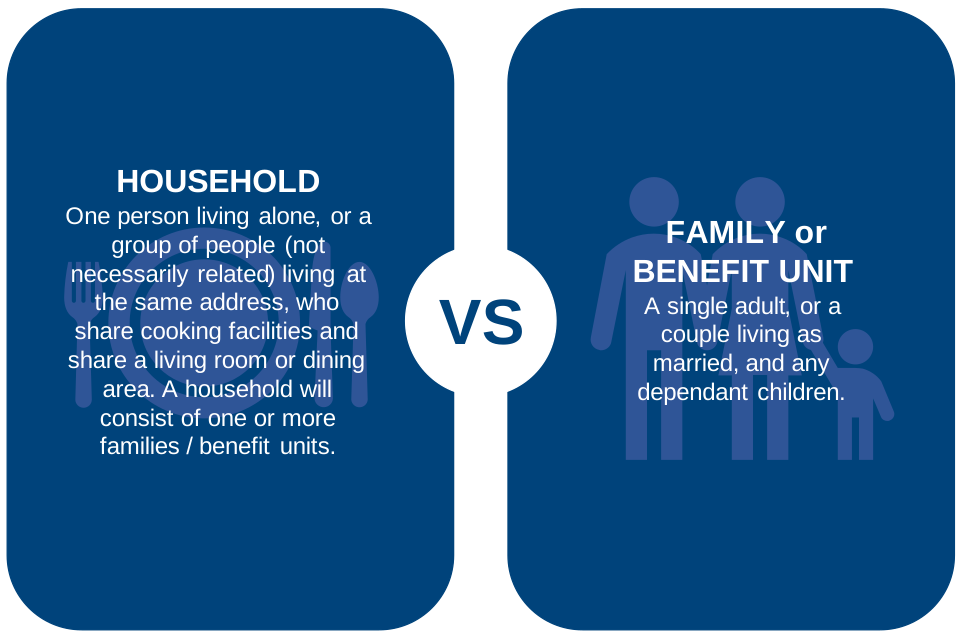
Results in the FRS publication, depending on the context, are presented at either the household level, family (benefit unit) level, or individual level.
- Household level definition
One person living alone, or a group of people (not necessarily related) living at the same address, who share cooking facilities and share a living room, sitting room or dining area. A household will consist of one or more families or benefit units.
- Family or benefit unit level definition
A single adult, or a couple living as married, and any dependent children.
4. Source data
4.1 Overview of sample
The FRS is designed to be representative of all private households in the United Kingdom. Private households are defined as those that are not communal settings, such that students in halls of residence, residents of nursing homes, individuals living in military barracks, those in prison and those living temporarily in bed and breakfast accommodation are excluded.
ONS and NatCen conducted Great Britain fieldwork on behalf of DWP. Fieldwork in Northern Ireland was conducted by NISRA.
The sampling frame and sample design, and how these differ between Great Britain and Northern Ireland, are explained in detail in the FRS Quality Assessment Report.
Great Britain
The Great Britain sample is drawn from the Royal Mail’s small users Postcode Address File (PAF). Addresses are then sampled from Primary Sampling Units (PSU). Each PSU consisted of 500 or more addresses in the same postcode sector. 28 addresses were drawn from each PSU, which were then assigned to field interviewers for them to contact.
The 2024 to 2025 survey was carried out with an issued GB sample size of 54,964 addresses. This sample retained the element of boosting the sample in Wales and Scotland, relative to England, at a rate which was broadly double the rate of sample in England.
Each address in GB had approximately a 1-in-534 chance of being included in the survey. For England each address had approximately a 1-in-575 chance of inclusion in the survey. In Wales each address had approximately a 1-in-333 chance of inclusion in the survey. In Scotland each address had approximately a 1-in-403 chance of inclusion in the survey.
Northern Ireland
The Northern Ireland sample is drawn from the NISRA Address Register. A systematic random sample of 4,080 addresses were selected for the 2024 to 2025 survey. Each address had approximately a 1-in-182 chance of being selected.
4.2 The FRS questionnaire
In 2024 to 2025 the FRS questionnaire continued to be coded as a Computer Assisted Personal Interviewing (CAPI) version, with the questionnaire also used for Computer Assisted Telephone Interviewing (CATI) when required.
The questionnaire is divided into three parts.
-
The first part is the household schedule which is addressed to one person in the household (usually the household reference person, although other members are encouraged to be present) and mainly asks household-level information, such as relationships of inhabitants to one another, and tenure and housing costs.
-
Next is the benefit unit (family) schedule which is addressed to each adult in turn. It asks questions about income from work and earnings, pensions, state benefits, investments, and any other income. Questions on household food security and material deprivation are also asked. Information on children is collected by proxy from a responsible adult.
-
A final section asks about respondents’ different accounts, any debts, and their savings and investments.
Information on how the questionnaire is reviewed and updated each year is given in the accompanying FRS Quality Assessment Report.
4.3 Data collection
As noted in earlier sections, fieldwork operations for FRS 2024 to 2025 continued to use face-to-face interviewing as the preferred method of data collection for the duration of the year. Telephone interviewing was retained for a minority of interviews, when this was a clear household preference.
Further information on the standard approach to FRS data collection, in both Great Britain and Northern Ireland, is available in the FRS Quality Assessment Report.
4.4 Response
Confidence intervals around FRS estimates are driven principally by the size of the achieved sample (as opposed to the response rate); full information on confidence intervals for FRS estimates, and how they communicate the precision of an estimate, can be found in the Quality Assessment Report.
Proxy interviews were accepted when a household member was unavailable for interview. In 2024 to 2025, for those households classed as fully co-operating, meaning a full interview (or set of interviews where there are multiple residents) was achieved, proxy responses were obtained for 24% of adults. This is slightly lower than the 2023 to 2024 proxy rate of 25%.
It should be noted that all data shown in the main body of this publication refer only to fully co-operating households.
Methodology Table M_1 summarises household response.
The UK-wide sample chosen for 2024 to 2025 consisted of 59,044 households. This was the same as in the 2023 to 2024 survey year.
In this year, 2024 to 2025, 5,758 addresses were classified as ineligible, resulting in a final eligible sample of 53,286 addresses.
Ineligible cases are calculated as shown below:
Ineligible cases = Ineligible known + Eligibility unknown x ((Ineligible known)/(Ineligible known + Eligible known))
In total 16,299 households fully co-operated. Every year some households are removed during DWP quality assurance processes. As such, the final useable dataset for 2024 to 2025 was 16,288.
The overall response rate for the FRS, as a percentage of the issued sample who were eligible to take part, was 31%. This was one percentage point lower than in 2023 to 2024 (32%).
For clarity, response rate is calculated using the formula below:
Response rate = (fully co-operating households / all eligible households) x 100
A further 507 households partially co-operated (one percent of the sample). A total of 25,142 households across the UK refused to co-operate (47%). Assigned interviewers were unable to contact 6,201 households, which has remained consistent with the 2023 to 2024 survey year at 12% of those issued.
Methodology Table M_2 shows response rates broken down by region/country.
Response rates in the South East, England and Scotland remained the same for 2024 to 2025 as in 2023 to 2024, at 31%, 30% and 28% respectively. Northern Ireland had the highest response rate, at 47% while London had the lowest response rate, at 23%.
Response rate in this table is calculated using the formula below:
Response rate = Successes / (Issued - Ineligibles)
Where the number of ineligibles is found from those either directly marked as ineligible by the interviewer or as a fraction of those whose eligibility is unknown who are likely to be ineligible.
Refusals and non-response
When sampled households in Great Britain refuse to participate in the FRS, interviewers record their reasons why.
People can give up to three reasons for refusal from the same household, so percentages do not sum to 100%. Some households do not give a reason for refusal. The percentage shown is of households where a resident gave a reason for refusal.
Reasons for refusal to participate in the FRS, 2024 to 2025, Great Britain
| Reason for refusal | Percentage of households |
|---|---|
| Can’t be bothered | 32 |
| Genuinely too busy | 19 |
| Doesn’t believe in surveys | 15 |
| Invasion of privacy | 14 |
| Concerns about confidentiality | 8 |
| Disliked survey of income | 8 |
| Personal problems | 6 |
| Anti-government | 5 |
| Other | 4 |
| Temporarily too busy | 4 |
| Survey too long | 3 |
| About to go away | 1 |
| Bad experience with previous surveys | 1 |
| Language difficulties | 1 |
| Total number who gave a reason for refusal | 15,444 |
4.5 Length of interview
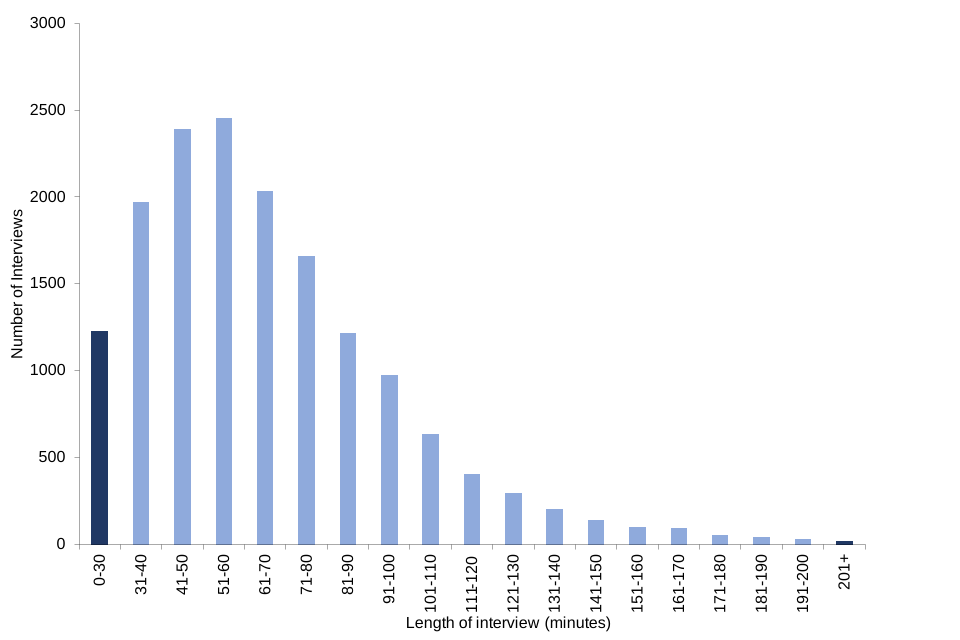
The length of each fully co-operating interview is recorded by the questionnaire program. In 2024 to 2025, the mean interview length for the United Kingdom was 65.9 minutes and the median was 59.7 minutes. However, the time varied according to the size of household and its circumstances. The mean interview length for Great Britain was 65.1 minutes, and the median time was 59.1 minutes.
The distribution of interview lengths in the United Kingdom is shown in Methodology Table M_7. The timings exclude interviewer time spent preparing for and completing administration tasks after the interview.
The timings are based on completed audit data from 15,963 fully productive interviews, with NISRA accounting for 1,631 of these. Full interviews were removed from the timings when they were outside of three standard deviations from the mean.
Distribution of FRS interview lengths, 2024 to 2025, United Kingdom
4.6 Respondent burden
The Code of Practice for Statistics states that producers of statistics should consider the burden on those providing their information. The FRS can measure the burden placed on respondents as shown below:
Respondent burden (minutes) = Number of responses x median interview time
For UK interviews, the median interview time for these 15,963 interviews was 59.7 minutes. Therefore, the respondent burden for the FRS in 2024 to 2025 was approximately 662 days. For Great Britain interviews, the median interview length was 59.1 minutes, for 14,332 interviews so the respondent burden was roughly 588 days.
In comparison, the median interview time for the 17,128 Great Britain interviews for the FRS in 2019 to 2020 (the last time that the FRS was fully face-to-face interviews) was 52.2 minutes. The respondent burden was therefore 621 days. Interview times were not collected in Northern Ireland prior to 2023 to 2024.
With respect to the Code of Practice for Statistics one of the aims of the Questionnaire Consultation process is to reduce the burden on those providing their information, and on those involved in collecting, recording and supplying data. The burden imposed should be proportionate to the benefits that arise from the use of the FRS statistics. Future removals in the questionnaire will be considered, especially as the use of administrative data linking is consolidated.
5. Data validation and processing
This year, 2024 to 2025, and some previous years feature an improved approach to using administrative data in place of survey responses. Information on both the major state benefits and tax credits is now based on administrative data. For further information please consult technical paper.
For details of validation conducted at interview stage and during pre-processing, please refer to the accompanying FRS Quality Assessment Report.
5.1 Imputation
Responses to some questions are much more likely to have missing values than others. Areas where missing values are a problem are typically income values such as employee earnings or self-employed income. This is because these values are required in the calculation of derived variables used for reporting income.
For example, for “Amount deducted for NI” in 2024 to 2025, 4,429 values were imputed. Methodology Table M_5 illustrates the extent of imputation.
The FRS employs imputation methods. A brief overview is given here and further detail is provided in the accompanying Quality Assessment Report.
- Bulk Edits – converting in bulk a batch of cases with missing values that satisfy a particular characteristic to an identical value
- Hot Decks – this is the main form of imputation used for the FRS. It involves matching the households with missing data (‘targets’) to very similar households without missing data (‘donors’) and using the information in the matched households to replace the missing data
- Algorithms – a process in which the missing value for a particular case can be predicted, by looking at other relevant characteristics and applying a pre-determined set of rules
In general, results in the tables provided in this release include imputed values.
Methodology Table M_4 illustrates the extent of missing values and the level at which each of the imputation methods is applied, including how many are left as missing.
Methodology Table M_4a summarises imputation in the FRS. Methodology Table M_4b summarises imputation in the FRS, including updated material deprivation questions.
As shown in Methodology Table M_4a, of the 10.2 million responses in the 2024 to 2025 FRS dataset, 2% were recorded as missing values. Out of 205,253 missing values, approximately 93% were imputed.
Material deprivation questions have been changed in recent years. In 2023 to 2024, the dataset featured a mix of responses on both the old and new bases; but for 2024 to 2025, only the new material deprivation questions have been included. Imputation processes used for these new questions mean that all variables will continue to be fully populated for analysis.
More detail about the extent of imputation of material deprivation variables is provided within the Imputation section of the Technical report: update to measures using material deprivation for households below average income FYE 2024.
Every year the components of the imputation processes are checked for changes in the underlying variable list. To ensure that real-world changes are reflected, the methodology applied to the imputation of specific income streams is also reviewed. This is carried out as part of our ongoing methodological development.
6. Grossing
The FRS publication presents tabulations where the percentages refer to sample estimates which have been grossed up to apply to the whole population.
Grossing up is the term given to the process of applying factors to sample data so that they yield estimates for the overall population. The simplest grossing system would be a single factor e.g. the number of households in the population divided by the number in the achieved sample. However, surveys are normally grossed by a more complex set of grossing factors that attempt to correct for differential non-response, at the same time as they scale up sample estimates.
The population estimates for different groups, chosen with the aims of DWP analysis in mind, are obtained from official data sources to provide control totals. The grossing factors are then calculated so that the FRS produces population estimates that are as close as possible to the control totals. As an example, a grossed FRS count of the number of men aged 35-39 would be consistent with the ONS population estimate of the same group who live in private households.
In developing the grossing regime, careful consideration has been given to the combination of control totals, and the way age ranges, Council Tax bands and so on, are grouped together. The aim has been to strike a balance so that the grossing system will provide, where possible, accurate estimates in different dimensions without significantly increasing variances.
Some adjustments are made to the original control total sources, so that definitions match those in the FRS. For example, an adjustment is made to the demographic data to exclude people whose residence is not a private household. It is also the case that some control totals must be adjusted to correspond to the FRS survey year which runs from April to March.
A software package called CALMAR, developed several years ago by the French National Statistics Institute, is used to reconcile control variables at different levels and estimate their joint population. This software makes the final weighted sample distributions match the population distributions through a process known as calibration weighting. It should be noted that if a few cases are associated with very small or very large grossing factors, grossed estimates will have relatively wide confidence intervals.
As the full set of inputs based on the 2021 Census (2022 for Scotland), which are required for grossing, were not available in time, the 2024 to 2025 publication is not based on the latest Census. Estimates for the 2024 to 2025 survey year instead have their basis in the 2011 Census, as rolled forward to the 2024 population by ONS’ mid-year estimates. All FRS based outputs will use these population estimates for 2024 to 2025. Full details of our plans to use 2021 Census outputs for the production of FRS grossing factors can be found in the FRS Release Strategy.
The mid-year estimates cover the usual resident population and were adjusted to reflect the population living in private households and covered by the FRS sample. This was achieved by deflating the usually resident population using data from the 2011 Census on the proportion of the usually resident (by local authority, age and sex) population, who live in private households.
Both Great Britain and Northern Ireland data use the same CALMAR software to reconcile control variables at different levels and estimate their joint population. There are minor differences between the methods used to gross the Northern Ireland sample as compared with the Great Britain sample:
- Local taxes in Northern Ireland are collected through the rates system, so Council Tax band is not applicable as a control variable.
- Northern Ireland housing data is based largely on small-sample surveys. It is not desirable to introduce the variance of one survey into another by using it to compute control totals; therefore, tenure type is not used as a control variable.
Details of the control variables used in the grossing methodology for Great Britain and Northern Ireland are shown below.
Grossing regime for Great Britain 2024 to 2025
Control variables used to generate grossing factors for private households
| Variable | Groupings | Source of data |
| Individuals (age, sex and Region) | Male children: 0-9, 10-19; Male adults: 16-24, 25-29, 30-34, 35-39, 40-44, 45-49, 50-59, 60-64, 65-74, 75-79, 80+; Female children: 0-9, 10-19; Female adults: 16-24, 25-29, 30-34, 35-39, 40-44, 45-49, 50-59, 60-69, 70-74, 75-79, 80+; Each grouping is further broken down by region: North East, North West, Yorkshire and the Humber, East Midlands, West Midlands, East, London, South East, South West, Scotland and Wales | ONS |
| Benefit units (with children) | England and Wales (combined), Scotland | DWP estimates using ONS population and HMRC Child Benefit data |
| Benefit units (with children) | Lone parents: Male, female | DWP estimates derived from the Labour Force Survey |
| Households (Tenure type) | Local Authority or Housing Association renters, private renters, owner occupiers | Ministry of Housing, Communities and Local Government (MHCLG), Welsh Government, Scottish Government |
| Households (Council Tax band) | Not Valued Separately and A, B, C-D, E-H (and band I in Wales only) | Valuation Office Agency, Scottish Government |
| Households (Region) | North East, North West, Yorkshire and the Humber, East Midlands, West Midlands, East, London, South East, South West, Scotland and Wales | ONS (England), Welsh Government (Wales), Scottish Government (Scotland) |
Grossing regime for Northern Ireland, 2024 to 2025
Control variables used to generate grossing factors for private households
| Variable | Groupings | Source of data |
| Individuals (age and sex) | Male children:0-19; Male adults: 16-24, 25-29, 30-34, 35-39, 40-44, 45-49, 50-59, 60-64, 65-74, 75-79, 80+; Female children:0-19; Female adults: 16-24, 25-29, 30-34, 35-39, 40-44, 45-49, 50-59, 60-69, 70-74, 75-79, 80+ | Office for National Statistics (ONS) |
| Lone parents | Lone parents in NI | Department for Communities Northern Ireland (DfCNI) |
| Households | n/a | Northern Ireland Statistics and Research Agency (NISRA) |
Comparisons are made between the achieved sample of FRS responses in Great Britain, and administrative data on the number of households within each Council Tax band. This is given in Methodology Table M_3, which demonstrates the part that grossing plays in achieving a representative sample.
For example, in 2024 to 2025, the achieved (ungrossed) FRS sample for England shows a lower proportion of households in Council Tax Band A compared with the administrative data, and higher proportions in Bands E and F.
7. Quality management
Information about quality management of FRS data, from collection and processing, through to analysis and publication can be found in the accompanying FRS Quality Assessment Report.
Details are provided on the following areas:
- sample design
- questionnaire design
- fieldwork management
- external assessors and the Expert Advisory Group
This was introduced in the survey year 2023 to 2024 and has been updated this year to reflect the use of administrative data in place of survey responses.
8. Accuracy and reliability
8.1 FRS interface
The HTML-led data management solution (FRESCO), introduced for the processing of data in the 2022 to 2023 survey year, has continued to be used for the 2024 to 2025 survey year. For the foreseeable future, this is expected to be the survey’s data management solution.
8.2 Document consultation
Interviewers encourage respondents to consult documentation at all stages of the interview to ensure that the answers provided are as accurate as possible. For some items, whether certain documents are consulted or not is recorded on the questionnaire. This assists FRS users in assessing the accuracy of the data.
Given the continuation of a mixed-mode approach to interviews this year, the consultation rates reported below may be less reliable than for a fully face-to-face interview survey year, as the interviewer cannot observe directly whether documents are being checked during a telephone interview (11% of UK interviews).
Information is collected by interviewers on the following aspects of document consultation:
-
Employees have consulted their latest payslip for 40% of jobs they have reported. Of all employees, 95% reported having one job only and 5% reported having more than one job
-
Employees did not have a payslip to consult for 6% of jobs they reported; 23% could not consult a payslip because their payslips were only received electronically
8.3 Comparisons of survey and administrative data
Several comparisons of FRS and administrative data are available. See Methodology tables M_6a and M_6b, for a summary of how FRS benefit caseloads and amounts compare with DWP administrative data. Whilst for some state benefits, there is only a small difference to administrative totals, for other benefits the undercount is material.
Because of the expansion in use of administrative data on state benefits and tax credits, the figures in these tables are materially different this year, versus previous years as the level of underreporting of benefits has reduced. For further information please see technical paper.
- Methodology Table M_6a This compares the grossed number of benefit recipients in the FRS 2024 to 2025 data, with the total caseload on benefit from administrative data sources. The difference varies by benefit.
- Methodology Table M_6b This compares the average weekly receipt of state support in the FRS 2024 to 2025 data, with average receipt from administrative data sources. Some benefit types have not been included in this analysis because no directly comparable administrative figure is available.
8.4 Sampling error
Results in this report are subject to a margin of error which can affect how changes should be interpreted, especially between groups and in the short term.
Results from surveys are estimates and not precise figures. In general terms, the greater the sample size, the smaller the uncertainty of the estimates.
For further information on both sampling and non-sampling error in the FRS please refer to the FRS Quality Assessment Report.
9. Coherence and comparability
The GSS Harmonised Standards and Guidance are tools for improving the comparability and coherence of statistics.
Harmonised standards include definitions, survey questions, suggested presentations and information for data users. The FRS uses these harmonised standards and guidance to be aligned with others, which in turn increases the usefulness of the statistics produced.
The Harmonised Standards and Guidance have been developed by topic groups, after wide consultation across the GSS and beyond. Further information on the Harmonised Standards and Guidance is available via the GSS pages.
Coherence reflects the degree of similarity between related statistics and the fuller insight achieved by drawing them together. Comparability reflects the degree to which statistics can be compared over time, geographies and between different sources.
This section outlines the coherence and comparability of FRS data with other data sources related to each FRS chapter.
9.1 Adjusting for inflation
Some figures in the main FRS report and the accompanying tables combine several years of income data. A variant of Consumer Price Index (CPI) is used to adjust for inflation by bringing values from previous years into current price terms.
9.2 Income and state support
All income figures are presented gross of tax, national insurance and before other deductions from wages except where noted.
It is thought that household surveys underestimate income from both self-employment and investment income. We rely on respondent recall of very detailed financial information across a comprehensive range of income sources. Some of these are hard for respondents to recall. The FRS interviewers ask respondents to check pay slips, tax returns and other financial paperwork at the time of the interview. This helps to improve the reliability of what respondents report they earn.
The FRS captures detailed information on benefit receipt. In most cases this is analysed at a benefit unit (family) level because income-related benefits are paid to families rather than being separately assessed for each individual. This year, 2024 to 2025, and some previous years feature an improved approach involving the use of administrative data in place of survey responses. Information on the major state benefits as well as tax credits is now based on administrative data. For further details, please access this technical paper.
Alternative data sources
Income and earnings statistics guide
Effects of taxes and benefits on UK household income
Cost of Living Payments Evaluation
Household total wealth in Great Britain
Stat-Xplore for Households Below Average Income and Pensioners’ Incomes statistics
Explaining income and earnings: important questions answered
Move to Universal Credit statistics
9.3 Tenure
As presented in the FRS, the “social rented sector” is a combination of the categories “Rented from Council” and “Rented from a Housing Association”. These categories are combined because some housing association tenants may misreport that they are council tenants. For instance, where their home used to be owned by the council and although ownership has now transferred to a housing association, the tenant may still think that their landlord is the council (local authority).
FRS outcomes are similar in composition to the English Housing Survey (EHS).
Alternative data sources
English Private Landlord Survey
Index of Private Housing Rental Prices
Private rent and house prices, UK
Housing affordability in England and Wales
9.4 Disability
The FRS does not record information on individuals in nursing or retirement homes, since it only surveys private households. This means that figures relating to people in older age groups may not be representative of the UK population, as some older people may have moved into homes where they can receive more frequent help. Therefore, it is likely that disability figures and impairments among all older people are higher than estimated from the FRS.
The way in which disabled people have been identified in the FRS has changed over time. From 2002 to 2003 statistics were based on responses to questions about barriers across several areas of life; thereafter until survey year 2011 to 2012 they were based on those reporting barriers across nine areas of life.
From the 2012 to 2013 survey year, a person is considered to have a disability if they regard themselves as having a long-standing illness, disability or impairment which causes substantial difficulty with day-to-day activities. This updated definition is consistent with the core definition of disability under the Equality Act 2010, and complies with harmonised standards for social surveys published in August 2011
An impairment is different to a medical condition. It looks at the functions that a person either cannot perform or has difficulty performing because of their health condition. For example, glaucoma is a medical condition but being unable to see or being partially sighted is an impairment.
Impairment harmonised standard – Government Analysis Function
Some people classified as disabled and having rights under the Equality Act 2010 are not captured by this definition, such as people with a long-standing illness or disability which is not currently affecting their day-to-day activities.
Long lasting health conditions and illness harmonised standard – Government Analysis Function
Figures in tables 4.1 to 4.6 are consistent with the Employment of Disabled People 2024 publication. Employment figures in table 4.7 are close to the Labour Force Survey, but the Labour Force Survey remains the preferred source of data on economic inactivity by reason.
Alternative data sources
Outcomes for disabled people in the UK 2021
The employment of disabled people 2025
Labour market data for protected groups in Wales and the UK, April 2004 to March 2021
Labour market statistics (Annual Population Survey): 2024
Labour Market Statistics for Scotland by Disability: January to December 2022
Disability Employment Gap in Northern Ireland 2020
Disability within the Northern Ireland Labour Market
Revisions to medical condition ICD high level grouping codes for ESA and IB/SDA
Labour market status of disabled people
9.5 Care
FRS respondents are asked if they receive care from anyone. This includes both professional help – paid-for care from the local authority, health professionals or domestic staff – but it also includes informal care. This is any care where their carer is not doing it as a paid job; it can be for many, or only a few hours a week, and can take several different forms. The survey is intentionally not prescriptive about what counts as care; it could, for example, include going shopping for someone, or helping them with paperwork.
The FRS does not record information on individuals in nursing or retirement homes. This means that figures relating to older people may not be representative of the UK population, as some older people may have moved into homes where they can receive more frequent help. Therefore, it is likely that care provision and receipt amongst older people is higher than estimated from the FRS.
Where a care recipient is receiving care at least once a week, further questions are asked to determine the care provider and the length of time spent providing care by each carer.
FRS respondents are also asked if they provide care to someone else on an informal basis. That person could be living with them, in their household, or they could live somewhere else (outside the household).
Alternative data sources
Unpaid care by age, sex and deprivation, England and Wales: Census 2021
Unpaid care expectancies, England
Health, disability, and unpaid care: Census 2021 in England and Wales
The geographic divide in general health, disability and unpaid care: Census 2021
Personal Social Services Adult Social Care Survey
Health Survey Northern Ireland
Sandwich carers, UK: January 2021 to May 2023
9.6 Pension participation
The FRS pension participation data tables present estimates for both ‘all adults’ and ‘all working-age adults’. The ‘all adults’ category allows data for those over State Pension age to be represented.
The data presented does not separate by eligibility for automatic enrolment. Therefore, the categories shown (i.e. employees) will include individuals both eligible and ineligible for automatic enrolment.
Those earning between the Lower Earnings Limit and the earnings trigger are still due employer contributions to their pensions if they choose to opt-in.
Employer-sponsored pensions comprise any company or occupational pension scheme run by an employer, including group personal pensions and group stakeholder pensions.
Individual pensions include individual stakeholder pensions and retirement annuity contracts as well as personal pensions.
Although the numbers are relatively small, self-employed people can contribute to an employer-sponsored pension scheme, for a variety of reasons. Doctors and dentists in private practice can be members of an occupational pension scheme if they are employed by an organisation offering one. People who have recently become self-employed can continue to contribute to their previous employer scheme and people whose main job is self-employed, may work part-time as an employee and contribute to an employer scheme. These circumstances are captured within the FRS tables under the ‘Self-Employed – Other’ category.
Alternative data sources
Funded occupational pension schemes in the UK
Employers’ pension provision survey
Personal pensions: contribution and tax relief statistics
Employee workplace pensions in the UK
Household total wealth in Great Britain
9.7 Savings and investment
The FRS captures information on liquid financial assets, referred to in the survey as “savings and investments”. Estimates should be treated with caution, as they are likely to be under-estimates, since respondents often inaccurately report their account details.
The process of gathering information on savings and investments is as follows:
- Adults who have at least one account are asked, as a benefit unit, to say which of several £ bands their total level of savings and investments are in. These bands range from zero; and up to £100; and £100 to £1,500; to higher figures, with bands of £200,000 to £500,000; and £500,000 or more
- Respondents have the option not to say
- Where the response is either £100 - £30,000 (for working-age respondents) or £100 to £200,000 (for state pension age respondents) or where they did not wish to say, they are then asked, for each of their accounts and assets, how much each is worth and how much interest they accrue. The total level of savings and investments is then calculated using this set of reported values
- Benefit units with reported savings and investments outside those limits are only asked how much interest each account and asset accrue. These respondents are also asked to estimate the value of all their current accounts and basic bank accounts combined
Alternative data sources
Household total wealth in Great Britain
9.8 Self-employment
The FRS asks a detailed set of questions to capture earnings from self-employment, as described in the Glossary, at the end of this document.
The FRS does not fully capture information on all types of income-in-kind accurately – for example, benefits of vehicles, computers and mobile phones purchased by the business – that are also for personal use. These benefits are likely to be more important for the self-employed than for employees. Therefore, the FRS earnings measures are likely to underestimate the true monetary and other benefits of self-employment. However, it is very difficult to quantify this.
Other benefits of self-employment compared to employment are not captured, such as flexibility in working patterns, independence and flexibility in the way money is drawn from the business. The complexity of self-employment circumstances, with irregular income and benefits-in-kind coming from a range of sources, could also contribute to inaccuracy of information capture.
For self-employed individuals, net income figures are presented after any deductions which include, but are not limited to income tax, national insurance and pension contributions. Where gross income figures are presented, these include all these elements.
One of the significant advantages of the FRS is that it has captured self-employment in a consistent way over time. Therefore, the trends in self-employment compared to employment are likely to be reasonably accurate.
Alternative data sources
Trends in self-employment in the UK
Employees and self-employed by industry
Understanding changes in self-employment in the UK
9.9 Household food security and food bank usage
Since the introduction of questions on household food security in the 2019 to 2020 survey year the FRS continues to provide evidence on this subject. From April 2021, the FRS asked additional questions on food bank usage. Food banks can provide support other than food, such as financial advice or mental health support, but the FRS records “usage” as visits to a food bank for the purpose of obtaining emergency food supplies only. From April 2023, the FRS added further questions on food support, from sources other than food banks: relatives and friends, local authorities, or some other charitable institution.
These questions are put to the person who has the best information about food preparation and shopping for the household. In common with the rest of the FRS, household food security questions concentrate on the period immediately before the interview (30 days).
For household food bank usage, questions are asked about two separate time periods: a lead-in question asks about usage within the 12 months prior to interview; and then households that report using a food bank in the last 12 months are asked about usage within the 30 days prior to the interview. The questions do not directly ask about the food bank usage needs of children, and it cannot be determined which individual or individuals the food parcels are for.
Caution is needed when comparing household food security status with 12-month food bank usage. The effect of household food security upon food bank usage, cannot be fully deduced because the former only asks about the household’s circumstances in the last 30 days.
The questions used by the FRS are like those used by other public bodies in the UK, and also internationally, but there are some differences in their application.
These statistics should be treated with caution when interpreting them:
- Where a household is food insecure, information about the individual experiences of food insecurity within the household is not available. A young child’s experience in a food insecure household may be very different from their parent’s, for example
- Household food security statistics do not directly measure hunger. They instead explore the financial situation of households and how that affects their access to food. Only households with very low food security would anticipate substantive disruption to their food intake
- The statistics presented exclude shared households, such as a house shared by a group of professionals
With both measures of household food bank usage captured in the FRS, caution should be taken when interpreting figures and comparing with other sources. Most other sources capture usage from a single period, so may only be comparable to one FRS measure, if at all. It should also be noted that some sources measure individual food bank usage rather than household.
Alternative data sources
United Kingdom Food Security Digest
9.10 Childcare
Questions on childcare have been present and available on the underlying FRS dataset for over ten years. Due to the increased interest in the topic, data tables were added to the main annual publication for the 2022 to 2023 year. A selection of childcare options have also been added to the FRS section of Stat-Xplore, enabling users to create their own tables of statistics.
The development of these tables has taken coherence into account, which is the approach to categorisation and naming in regard to other data sources which report on childcare. This includes the approach to banding childcare hours used and grouping of children’s ages. Furthermore, breakdowns by age include information for children aged from 0 to 16, because this is the range of ages covered by most policy areas relating to childcare costs, including eligibility on Universal Credit for childcare costs.
The scope of the data is all families with children, as the FRS questionnaire asks all if they use childcare. If they do, data on the type of childcare, its cost and number of hours is then captured. Then, within the FRS dataset, one record is created per child, per childcare provider used for that child. This means that a child can have more than one record on the FRS dataset, if (for example) the family uses a breakfast club and a childminder, then two detailed records will be created. Other types of childcare surveyed include after-school clubs and holiday clubs, and the FRS can also record whether a nanny or au pair is employed by the family. Overall, eighteen different types of childcare are listed; these have been categorised into two high-level categories (“formal” and “informal”), with further aggregated sub-groups.
Users are advised to familiarise themselves with all accompanying definitions in the Glossary and the Notes tab of published tables, to prevent any potential misinterpretation. The Notes tab included in the data tables also has some example interpretations for the breakdowns.
Alternative data sources
Childcare and early years survey of parents
Childcare and early years provider survey
Childrens Social Care Statistics for Northern Ireland 2024 to 2025
10. Data revision
DWP complies with the Code of Practice for Statistics. A policy on revisions of DWP Official Statistics has been published in accordance with the Code of Practice for Statistics.
Planned
Changes planned for the next or subsequent year are announced and described in the Release Strategy. Users are invited to consult with us regarding the likely effect of these changes. Please see the DWP Statistical Work Programme for more details.
Unplanned
Any unplanned changes are notified to users via our Collections page updates, when the date of the publication is announced on GOV.UK. For example, revisions were notified to users on 29 January 2026.
If any further changes occur between this point and publication, these are detailed within an update to the Collections Page on the day of publication and further detail provided in this Background, Information and Methodology report.
11. Trade-offs between output quality components
The FRS is produced under the Code of Practice for Statistics. Adhering to the Code gives users confidence that published government statistics have clear public value, are high quality, and can be trusted.
Trustworthiness relates to users having confidence in those who produce the statistics. Quality relates to using both appropriate data and methods to produce statistics that can be relied upon and meet user needs. Value means that statistics benefit users by informing decision making, action and debate.
The United Nations’ Canberra Group Handbook on Household Income Statistics states that income statistics are “inevitably some of the most complex statistics produced by national and international organisations”. This is reflected in the extensive production and validation procedures described in the accompanying FRS Quality Assessment Report. These procedures have been developed for three main reasons:
-
Statistics derived from the FRS are amongst the most high-profile produced by DWP and across government. The HBAI publication, based on FRS data, meets DWP’s statutory obligation to publish a measure of relative and absolute low income, and combined low income and material deprivation for children under section 4 of the Welfare Reform and Work Act 2016.
-
Because of the complexity of the analysis and the range of income sources and other variables used in the calculations, issues have arisen in some previous publications. The 2005 to 2006 HBAI publication was re-issued due to problems with the grossing factors being applied to the dataset. The role that the Institute for Fiscal Studies now has in quality assuring the HBAI dataset and results originally arose due to these sorts of quality concerns.
-
The datasets are used for a wide range of analyses beyond the published tables, and small groups of cases could affect these results. This requires a thorough examination of case-specific information. For many users, the dataset is more important than the statistical releases themselves.
Timeliness of the FRS has improved since 2017 with the move to a March publication window. Beforehand, the FRS was regularly published in June. This 12-month gap between the close of fieldwork and publication of results is comparable to or shorter than similar household surveys.
The time taken stems from the need to validate the whole dataset. Given the large number of variables used in the derivation of the HBAI and PI datasets, it is not possible simply to isolate the important variables to release headline results earlier. The length of time invested in production is an important mitigation to the risk that the eventual statistics and dataset are inaccurate in their portrayal of UK household incomes.
The use of the FRS dataset for policy modelling places a premium on accuracy, in that an inaccurate dataset could lead to policy costs or benefits being incorrectly assessed, and/or a suboptimal choice of policy option. It is therefore DWP’s view that the processes set out above are needed under the current survey model.
12. Glossary
This glossary provides a brief explanation for each of the important terms used in the FRS. Further details on these definitions, including full derivations of variables, are available on request from the FRS team at team.frs@dwp.gov.uk.
Adult
All individuals who are aged 16 and over are classified as an adult, unless the individual is defined as a dependent child. All adults in the household are interviewed as part of the FRS.
Age
Respondent’s age at last birthday (at the time of the interview).
Automatic enrolment
Automatic enrolment requires all employers to enrol their eligible workers into a workplace pension scheme if they are not already in one. This enrolment also means the employer plans to make contributions into the employee’s pension. The staged timetable began in October 2012 for larger firms, with enrolment for all employers completed in 2019. To preserve individual responsibility for the decision to save, workers can opt out of the scheme. To be eligible for automatic enrolment, the jobholder must be at least 22 years old, under State Pension age, earn above the earnings threshold for automatic enrolment, and work or usually work in the UK.
However, those not eligible for automatic enrolment may be entitled to opt in. People currently defined as self-employed could have been a member of an employer scheme from past auto-enrolment. They are entitled to remain in their auto-enrolled scheme and make their own contributions. Likewise, someone who is now an employee, who was previously self-employed can have employer contributions to their previous scheme.
For more information see this workplace pensions guide.
Benefit unit or family
A benefit unit may consist of a single adult, or a married or cohabiting couple, plus any dependent children. Same-sex partners (civil partners and cohabitees) have been included in the same benefit unit since January 2006. Where a total for a benefit unit is presented (such as total benefit unit income) this includes income from adults plus any income from children.
There are various types of benefit unit:
- Pensioner couple: Benefit units headed by a couple where the head of the benefit unit is over State Pension age. Note that this differs from definitions used in the Households Below Average Income, Income Dynamics and Pensioners’ Incomes Statistics reports. These publications define a benefit unit as a pensioner couple if either the head of the benefit unit or their partner is over State Pension age
- Pensioner couple, married or civil partnered: Benefit units headed by a couple where the head of the benefit unit is over State Pension age and the couple are either married or in a civil partnership
- Pensioner couple, cohabiting: Benefit units headed by a couple where the head of the benefit unit is over State Pension age, and the couple are neither married nor in a civil partnership
- Single male pensioner: Benefit units headed by a single male adult over State Pension age
- Single female pensioner: Benefit units headed by a single female adult over State Pension age
- Couple with children: Benefit units containing two adults, headed by a non-pensioner, with dependent children
- Couple with children, married or civil partnered: Benefit units containing two adults, headed by a non-pensioner, with dependent children and the couple are either married or in a civil partnership
- Couple with children, cohabiting: Benefit units containing two adults, headed by a non-pensioner, with dependent children and the couple are neither married nor in a civil partnership
- Couple without children: Benefit units containing two adults, headed by a non-pensioner, with no dependent children
- Couple without children, married or civil partnered: Benefit units containing two adults, headed by a non-pensioner, with no dependent children and the couple are either married or in a civil partnership
- Couple without children, cohabiting: Benefit units containing two adults, headed by a non-pensioner, with no dependent children and the couple are neither married nor in a civil partnership
- Single with children: Benefit units containing a single adult, headed by a non-pensioner, with dependent children
- Single male without children: Benefit units containing a single male adult, headed by a non-pensioner, with no dependent children
- Single female without children: Benefit units containing a single female adult, headed by a non-pensioner, with no dependent children
Benefits
Financial support from the government. Most of these benefits are administered by DWP. The major exceptions are Housing Benefit and Council Tax Reduction, which are administered by local authorities and certain Scottish benefits administered by Social Security Scotland. For more information see Devolved Benefits below.
Child Benefit is administered by HM Revenue and Customs. HMRC also administer Tax Credits. These are not treated as benefits, but both Tax Credits and benefits are included in the term State Support.
Benefits are often divided into income-related benefits and non-income-related benefits. In assessing entitlement to the former, the claimant’s income and savings will be checked against the rules of the benefit. In contrast, eligibility for non-income-related benefits is dependent on the claimant’s circumstances (a recent bereavement, for example), rather than their income and savings.
‘Disability-related benefits’ is the term used to describe all benefits paid on grounds of disability. These are: Personal Independence Payment, Disability Living Allowance, Severe Disablement Allowance, Attendance Allowance, the Armed Forces Compensation Scheme, Industrial Injuries Disablement Benefit, Troubles Permanent Disablement Payment Scheme, Adult Disability Payment and Child Disability Payment.
‘Legacy Benefits’ is the term used to refer collectively to the following benefits: Working Tax Credit, Child Tax Credit, Housing Benefit, Income Support, Income-based Jobseeker’s Allowance (JSA) and Income-Related Employment and Support Allowance (ESA), which are being phased out. These benefits are being replaced by Universal Credit. See separate entry.
Some benefits have sample sizes which are too small to be presented separately in this publication. A list of the main state benefits shown in “state support” tables in this publication can be found in the table below:
| Income-related benefits | Non-income-related benefits |
|---|---|
| Universal Credit | State Pension |
| Pension Credit | Child Benefit |
| Housing Benefit | Personal Independence Payment (Daily Living and Mobility components) |
| Council Tax Reduction | Disability Living Allowance (both mobility and care components) |
| Employment and Support Allowance (income-related element) | Employment and Support Allowance (contributory element) |
| Carer’s Allowance | |
| Attendance Allowance |
Child
A dependent child is defined as an individual aged under 16. A person will also be defined as a child if they are 16 to 19 years old and are:
- not married nor in a civil partnership nor living with a partner; and
- living with parents (or a responsible adult); and
- in full-time non-advanced education or in unwaged government training
Child Benefit
This is a non-income-related benefit in terms of eligibility (but remains taxable in households where one adult was earning more than £60,000 per year in the 2024 to 2025 survey year).
Childcare
‘Childcare’ is the care that is provided outside of educational hours for children under 16. In the FRS, questions are asked of people who have children in their benefit unit. Questions relate to the family’s use of childcare in the 7 days immediately before the interview. Respondents are asked about the circumstances of childcare use, for each child one at a time, collecting information about:
- the type of childcare provider used
- the number of hours of childcare (paid and unpaid)
- whether the childcare costs anything (if yes, how much?)
- how frequently the cost of childcare was paid
- whether the childcare is registered, approved, employer provided or not
Childcare provider types are not mutually exclusive, as one child can use multiple different types of childcare. There are several categories:
Formal
- Playgroup or pre-school: nursery education often run by a community/voluntary group, parents themselves, or privately. Fees are usually charged, with sessions of up to 4 hours. Pre-school is used to describe a type of playgroup.
- Day nursery or crèche: nursery education running for the whole working day but may be closed for a few weeks in the summer (if at all). They may be run by employers as a workplace crèche, private companies, community/voluntary groups or the Local Authority, and can take children who are a few months to 5-years-old.
- Nursery school: a school in its own right, with most children aged 3 to 5. Sessions normally run for 2 to 3 hours in the morning and/or afternoon.
- Nursery class: a class attached to a primary or infants’ school but is often a separate unit within the school, with those in the nursery class aged 3 or 4. Sessions normally run for 2 to 3 hours in the morning and/or afternoon.
- Reception class (at Primary/Infants school): a class that children go into when they first start school, with those in the reception class aged 4 or 5.
- Breakfast club: a club providing breakfast and activities for 4 to 16-year-olds before the start of the school day. They are usually, but not always, run by and physically located in schools. Fees may be charged.
- After school club/activities: After school clubs offer a variety of activities for 4 to 16-year-olds including arts and crafts, sports or games. May include homework clubs. The clubs are held in a variety of venues including schools and community centres or halls. They can serve several schools in the same area and are open from the end of the school day until 6pm. Fees are usually charged.
- Holiday scheme/club: These offer school-holiday childcare for 4 to 16-year-olds, via a variety of activities including arts and crafts, sports, games and outings. Meals may be provided and fees are usually charged.
- Special day school/nursery unit for children with special educational needs: a nursery, school or unit for children with special educational needs. This does not include regular school.
- Childminder: someone who uses their own home to look after others’ children.
- Nanny or au pair: a nanny is a paid employee and professional caregiver, who looks after a child in its own home. An au pair is usually on a form of exchange scheme (from another country), and helps with childcare on a casual basis, usually in exchange for food, accommodation and pocket money.
- Other formal: any other form of childcare provided by an official institution.
Informal
- Family members: a relative of the child being cared for who is not one of their primary caregivers. There are several sub-categories:
- grandparents
- non-resident parent/ex-spouse/ex-partner
- child’s brother or sister
- other relatives
- Non-relatives: someone who is not related to the child:
- friends or neighbours
- other non-relatives (includes babysitters)
Council Tax
The tax is based on the band that a property’s value falls into and is evaluated accordingly by each local or unitary authority. Its headline rate is based on two adults per household.
Devolved benefits
The Scotland Act 2016 gave Scottish Parliament powers over a number of social security benefits, transferring ownership from DWP to the Scottish Government. In September 2018, Carer’s Allowance became the first of these benefits to have policy ownership transferred from DWP to Scottish Ministers. On 1 April 2020, executive competence transferred to the Scottish Government for all remaining disability and industrial injuries benefits due to be devolved. Further details of these are given at Social Security Scotland - Benefits
Carer benefits
- Carer’s Allowance Supplement – an automatic payment made twice a year to people who get Carer’s Allowance through DWP.
- Young Carer Grant – an annual payment for 16, 17 or 18-year-olds caring for people who get a disability benefit for an average of 16 hours a week or more.
- Carer Support Payment – Carer Support Payment has replaced Carer’s Allowance; the amount is the same.
Disability benefits
-
Adult Disability Payment – extra money to help people who have a long-term illness or a disability that affects their everyday life. It replaces Personal Independence Payment for people in Scotland, as provided by DWP.
-
Child Disability Payment – extra money to help with the costs of caring for a child with a disability or ill-health condition. From 2021 to 2022 it began to replace Disability Living Allowance for children in Scotland, as provided by DWP. Many existing child DLA claims continued until 2025.
Family payments
From October 2018, the Sure Start Maternity Grant was replaced in Scotland by the Best Start Grant, comprising:
- Best Start Grant Pregnancy and Baby Payment – one off payment from 24 weeks in pregnancy up until a baby turns 6 months for families who get certain benefits.
- Best Start Grant Early Learning Payment – one off payment when a child is between two and three years and six months for families who get certain benefits.
- Best Start Grant School Age Payment – one off payment when a child would normally start ‘primary one’ for families who get certain benefits.
-
Best Start Foods – is broadly the Scottish equivalent of Healthy Start Vouchers: A pre-paid card from pregnancy up to when a child turns three for families on certain benefits to help buy healthy food.
- Scottish Child Payment – began in February 2021 for households with children under the age of six. Eligibility was extended to under 16-year-olds from 14 November 2022. SCP is paid every four weeks to help towards the costs of looking after each child under 16 for families who get certain benefits.
Heating benefits
- Child Winter Heating Payment – a payment to help families with the heating costs of a child or young person who receives the highest rate care component of Child Disability Payment or Disability Living Allowance for children, or young people under 19 on the enhanced daily living component of Personal Independence Payment or Adult Disability Payment.
- Winter Heating Payment – an annual payment to help people on income-related benefits who might have extra heating needs during the winter.
Other benefits
- Funeral Support Payment – money towards funeral costs for people on certain benefits who are responsible for paying these costs.
- Job Start Payment – for 16 to 24-year-olds who have been on certain benefits for six months or more to help with the costs of starting a job.
Disability
The definition of disability used in this publication is consistent with the core definition of disability under the Equality Act 2010. A person is considered to have a disability if they “have a physical or mental impairment that has a ‘substantial’ and ‘long-term’ negative effect on their ability to do normal daily activities”. Whereby ‘substantial’ means more than minor or trivial, and ‘long-term’ means 12 months or more. However, some individuals classified as disabled and having rights under the Equality Act 2010 are not captured by this definition:
- People with a long-standing illness or disability who would experience substantial difficulties without medication or treatment
- People who have been diagnosed with cancer, HIV infection or multiple sclerosis but who are not currently experiencing difficulties with their day-to-day activities
- People with progressive conditions, where the effect of the impairment does not yet impede their lives
- People who were disabled in the past but are no longer limited in their daily lives are still covered by the Equality Act 2010
This definition of disability differs from that used for Economic status.
Dividend
A person may get a dividend payment if they own shares in a company. They do not pay tax on any dividend income that falls within their Personal Allowance (the amount of income they can earn each year without paying tax). They also get a dividend allowance each year; tax is only payable on the dividend income above that dividend allowance.
Economic status
This classification follows the harmonised output category for economic status, based on respondents’ answers to the survey questions. All definitions conform to those of the International Labour Organization (ILO):
- Employee: where respondents have an arrangement with an employer, whereby work is done in exchange for a wage or salary. This would include those doing unpaid work in a business that a relative owns.
- Self-employed: where respondents report regular working activities, which over time are responsible only to themselves (and not an employer). Various groups are classified as self-employed, including farmers, doctors in private practice and some builders, as well as anyone whose job is habitually done on a freelance basis (e.g. journalists or musicians). The self-employed include anyone doing work for their own business, but which is currently unpaid.
Several respondents have more than one job. The FRS identifies which of these is their ‘main job’. This is the job which the respondent says is the dominant activity. Where they cannot decide, the number of hours worked will determine which is the main job. This process of categorisation also applies to respondents who are employees in one job but self-employed in another; whilst the survey will capture information on both jobs, only one can be their main job.
- Unemployed: Adults who are under State Pension age and not working but are available and have been actively seeking work in the last four weeks; includes those who were waiting to take up a job already obtained and were to start in the next two weeks.
- Economically inactive: Individuals who are both out of work and not seeking or not available to work. There are several sub-categories:
- Retired: individuals who are over State Pension age, or say they are now retired.
- Student: individuals who have not completed their education.
- Looking after family or home: working-age individuals who are looking after their family or their home.
- Permanently sick or disabled: working-age individuals who have been sick, injured or disabled for longer than 28 weeks.
- Temporarily sick or disabled: working-age individuals who have been sick, injured or disabled for less than 28 weeks. Note that the sick or disabled definitions are different to that used for Disability, as they are based on different questions that are only asked of working-age adults who are not working.
- Other inactive: all respondents not already classified above.
Employment status
This classification is equivalent to economic status but includes those in employment only.
Ethnic group
The ethnic group to which respondents consider that they belong. Ethnicity representation rates are now calculated from known declarations and exclude ‘choose not to declare’ and ‘unknown’.
Where respondents do volunteer their ethnicity, this is captured as one of several recognised groups. This is consistent with the harmonised principles for ethnicity, as set out by the Government Statistical Service, wherever social surveys are carried out.
- White
- Irish Traveller
- Gypsy or Irish Traveller
- Mixed or Multiple ethnic groups
- Asian or Asian British
- Indian
- Pakistani
- Bangladeshi
- Chinese
- Arab
- Any other Asian background
- Black or African or Caribbean or Black British
- Other ethnic group
Sample sizes for ‘Gypsy, Traveller or Irish Traveller’ are small. In Northern Ireland, ‘Irish Traveller’ is included in ‘Other ethnic group’ whereas elsewhere ‘Gypsy or Irish Traveller’ is included in ‘White’.
Food bank usage
See Household food bank usage
Food security
See Household food security
Full-time education
Individuals registered as full-time at an educational establishment. Students on sandwich courses are coded as working, or studying, depending on their position at the time of interview.
Harmonised principles
The harmonised principles contain harmonised definitions, survey questions, standards for administrative data and standards for presentation. They have been developed by topic groups, after wide consultation with producers and customers across the GSS and beyond. Further information is available via the Government Statistical Service pages.
Head of benefit unit
If the household reference person does not belong to the benefit unit, then the head of benefit unit is simply the first person from that benefit unit, in the order they were named in the interview. If the household reference person does belong to the benefit unit, they are also the head of that benefit unit.
Household
A household consists of one person living alone or a group of people (not necessarily related) living at the same address, who share cooking facilities and share a living room or sitting room or dining area. A household will consist of one or more benefit units. Where a total value for a household is presented, such as total household income, this includes income from adults plus any income from children.
Household food bank usage
Household food bank usage in the FRS refers only to visits to a food bank when emergency food supplies (food parcels) were obtained. This excludes visits to the food bank made only for other support (e.g. financial advice or mental health support). The FRS asks food bank usage questions relating to two time periods:
- usage within the 12 months prior to interview
- usage within the 30 days prior to interview
Only households that report using a food bank in the last 12 months are asked about 30-day usage.
Household food security
“Food security” as a concept is defined as “access by all people at all times to enough food for an active, healthy life”. Questions relate to the household’s experience in the 30 days immediately before the interview.
Each person in the household is asked who is best placed to answer about food shopping and preparation. That person is then asked the first three questions, on whether they are concerned about:
- food running out before they had enough money to buy more
- the food they had bought not lasting, and not having money to buy more
- not being able to afford balanced meals.
The possible answers are ‘often, ‘sometimes’ or ‘never’ true. If respondents say that all three statements are never true, they will not be asked further questions on food security. If respondents answer that any of these statements are sometimes or often true, they will be asked further questions on the extent of their food security.
Taking the responses together, a household ‘score’ for food security is then derived. This measure has four classifications:
- High food security (score=0): The household has no problem, or anxiety about, consistently accessing adequate food
- Marginal food security (score= 1 or 2): The household had problems at times, or anxiety about, accessing adequate food, but the quality, variety, and quantity of their food intake were not substantially reduced
- Low food security (score = 3 to 5): The household reduced the quality, variety, and desirability of their diets, but the quantity of food intake and normal eating patterns were not substantially disrupted
- Very low food security (score = 6 to 10): At times during the last 30 days, eating patterns of one or more household members were disrupted and food intake reduced because the household lacked money and other resources for food.
High and marginal food security households are considered to be “food secure”. Food secure households are considered to have sufficient, varied food to support an active and healthy lifestyle. Conversely, low and very low food security households are considered to be “food insecure”. Food insecure households are where there is risk of, or lack of access to, sufficient, varied food.
The broad structure and sequence of the questions is the same as those used internationally. They are used within the UK (Food Standards Agency) and are also used by other countries, including Statistics Canada and the United States Department of Agriculture, enabling broad international comparability of the results.
Household reference person (HRP)
The highest-income householder. This is defined by:
- In a single-adult household, the HRP is simply the sole householder (i.e. the person in whose name the accommodation is owned or rented).
- If there are two or more householders, the HRP is the householder with the highest personal income, taking all sources of income into account.
- If there are two or more householders who have the same income, the HRP is the elder.
Where we refer to ‘Head’ in tables relating to households, this is the HRP. The head of benefit unit will not necessarily be the HRP.
Household Support Fund
The Household Support Fund (HSF) supports households across England most in need by helping them with the cost of household essentials. In England, HSF is provided by Upper Tier Local Authorities (LAs) on behalf of the Department. LAs have discretion on where to concentrate the support they offer, provided this is in line with DWP’s Guidance. Consequently, there may be differences in eligibility criteria, application methods and the support allocated to individuals in different LAs. Many LAs offer schemes supporting families with children, children eligible for free school meals, pensioners, disabled people and other vulnerable households. The amount of support provided to each award recipient may vary across councils. Devolved Governments decide how to allocate their additional Barnett funding.
Individual
An adult or child. Where ‘people’ are presented, this is all adults and children.
Informal carers
Individuals who provide any regular service or help to someone. That person can be inside or outside of their household and might be sick or disabled or an older person; this description excludes those who give this help as part of a formal job.
Marital status
This is the person’s de facto marital status:
- Married or civil partnership: currently married or in a civil partnership, and not separated from spouse (excludes temporary absences)
- Cohabiting: not married nor in a civil partnership, but living as a couple
- Single: is not currently cohabiting and has never been married nor in a civil partnership
- Widowed: widowed and not currently cohabiting
- Separated: married or in a civil partnership, but separated from spouse and is not currently cohabiting
- Divorced or civil partnership dissolved: marriage or civil partnership legally dissolved and is not currently cohabiting
National Insurance Contributions (NICs)
The class of National Insurance a person pays depends on their employment status and how much they earn. For employees, the employer will automatically deduct Class 1 contributions from the employee’s pay if the employee is both: under State Pension age and earning more than the primary threshold amount from one job.
- If the employee earns between the lower earnings limit and the primary threshold amount from one job (a week), they do not usually pay National Insurance. If they earn less than the primary threshold amount from one job (a week), they can choose to pay voluntary Class 3 contributions to cover gaps in their National Insurance record.
For the self-employed, the class of National Insurance the person pays depends on their profits.
- If the person’s profits are more than the Lower Profits Limit a year, the person must pay Class 4 contributions.
- For the 2024 to 2025 publication period, Class 2 contributions were no longer mandatory.
Non-advanced education
Non-advanced education for benefits purposes includes:
- ‘A’ levels or similar qualifications (e.g. the International Baccalaureate and Pre-U)
- ‘T’ levels (introduced in September 2020)
- Scottish national qualifications at higher or advanced higher level
- NVQ at Level 3
- study programme in England
- national diploma
- ordinary national diploma
- national certificate of Edexcel
If the young person is studying for a course that is not classed as advanced education, the education is normally treated as non-advanced. Non-advanced education does not include university courses.
Pension
- Employer-sponsored pension: schemes that are set up and run by the employer.
- Occupational pension: an occupational pension scheme is an arrangement an employer makes to give their employees a pension when they retire. They are often referred to as ‘company pensions’. As of October 2017, the Occupational Pension Schemes regulations introduce restrictions on early exit charges for those aged 55 and over and who are eligible to access the pension freedoms.
There are two main types of occupational pension:
- Defined-benefit (DB) schemes (also called salary-related pension or superannuation schemes). In a defined benefit scheme, the pension is based on the number of years you belong to the scheme and how much you earn. Your employer contributes to the scheme and trustees look after scheme members’ interests. Employees often have to pay contributions into the scheme on top of those made by the employer. Some schemes are ‘non-contributory’: The employee either makes no contributions, or makes a small contribution, typically one to 2% of salary.
- Defined-contribution (DC) schemes (also called Money purchase schemes). A defined contribution scheme can be a personal pension arranged by the individual or a workplace pension arranged by the employer (such as NEST). Money is paid in by the individual or the employer over time and is then invested by the pension provider. The size of the pension available to take out when the individual retires depends on how much was paid in and the level of growth from the investments. With a defined contribution pension the individual can also decide how to take their money out.
- Group personal pension: some employers who do not offer an occupational pension scheme may arrange for a third-party pension provider to offer employees a pension instead. The employer may have negotiated special terms with the provider, which means that administration charges are lower than those for individual personal pensions. Although sometimes still referred to as ‘company pensions’, they are not run by employers and should not be confused with occupational pensions, which have different tax, benefit and contribution rules.
- Group stakeholder pension: like Group Personal Pensions, an employer can make an arrangement with a pension provider and offer their employees a Group Stakeholder Pension (see Stakeholder Pension).
- Personal pension: a pension provided through a contract between an individual and the pension provider. The pension which is produced will be based upon the level of contributions, investment returns and annuity rates; a personal pension can be either employer provided (see Group Personal Pension) or privately purchased (see Private pension).
- Private pension: includes occupational pensions (also known as employer-sponsored pensions) and personal pensions (including stakeholder pensions). People can have several different private pensions at once.
- Stakeholder pension: enables those without earnings, such as non-earning partners, carers, pensioners and students, to pay into a pension scheme. Almost anybody up to the age of 75 may take out a stakeholder pension and it is not necessary to make regular contributions.
For more information, see: GOV.UK pension guide.
Pension Credit
The primary income-related benefit for those of State Pension age and above.
Poundage
The district rate set by local authorities, the eleven district councils in Northern Ireland. It is for services such as refuse collections and disposal, leisure, parks and street cleaning.
Region (also see Rural-Urban classifications)
Regional classifications are based on the standard statistical geography of UK Regions: nine in England, and a single region for each of Wales, Scotland and Northern Ireland. Tables will also show statistics for the UK, Great Britain, and England as a whole. Some split London into Inner and Outer where there is sufficient data to provide meaningful comparisons.
- Inner London boroughs: Camden, Greenwich, Hackney, Hammersmith and Fulham, Islington, Kensington and Chelsea, Lambeth, Lewisham, Southwark, Tower Hamlets, Wandsworth, the City of Westminster; and the City of London.
- Outer London boroughs: Barking and Dagenham, Barnet, Bexley, Brent, Bromley, Croydon, Ealing, Enfield, Haringey, Harrow, Havering, Hillingdon, Hounslow, Kingston upon Thames, Merton, Newham, Redbridge, Richmond upon Thames, Sutton, Waltham Forest.
Rural-Urban classifications
England and Wales
The 2021 Census Rural Urban Classification updates the 2011 version and introduces the “Relative Access to major towns and cities” measure in place of the previous “sparsity” metric. The new classification replaces the 2011 version previously used in FRS published tables (compressed to two Urban and two Rural categories):
| Broad category | Detailed category | FRS published tables | Detailed category: Description |
|---|---|---|---|
| Urban | Urban: Nearer to a major town or city | Urban: Nearer to a major town or city | High address density or within/overlapping an Amalgamated Built-Up Area (≥ 10,000 population) and closer to a major town/city. |
| Urban | Urban: Further from a major town or city | Urban: Further from a major town or city | As above, but at greater distance from a major town/city. |
| Rural | Larger Rural: Nearer to a major town or city | Larger rural | Rural settlements larger in scale and relatively accessible to major towns/cities. |
| Rural | Larger Rural: Further from a major town or city | Larger rural | Larger rural settlements more remote from major towns or cities. |
| Rural | Smaller Rural: Nearer to a major town or city | Smaller rural | Smaller rural settlements (including villages/hamlets) with better access. |
| Rural | Smaller Rural: Further from a major town or city | Smaller rural | Smaller rural settlements with more limited access (i.e., more remote). |
Scotland
The 2022 Scottish Government Urban Rural Classification updates the 2020 version by incorporating 2022 Census‑based population data and revised settlement boundaries. While the overall classification structure remains the same, the underlying population and accessibility measures have been updated. This new classification replaces the version previously used in FRS published tables:
| FRS Data | FRS published tables | Description |
|---|---|---|
| Large urban areas | Urban Area | Settlements of over 125,000 people |
| Other urban areas | Urban Area | Settlements of 10,000 to 124,999 people |
| Accessible small towns | Small Town | Settlements of between 3,000 to 9,999 people, and within 30 minutes’ drive of a Settlement of 10,000 or more |
| Remote small towns | Small Town | Settlements of between 3,000 to 9,999 people and with a drive time of between 30 but less than or equal to 60 minutes to a |
| Settlement of 10,000 or more. | ||
| Very remote small towns | Small Town | Settlements of between 3,000 and 9,999 people, and with a drive time of over 60 minutes to a Settlement of 10,000 or more |
| Accessible rural | Rural Area | Areas with a population of less than 3,000 people, and within a drive time of 30 minutes to a Settlement of 10,000 or more. |
| Remote rural | Rural Area | Areas with a population of less than 3,000 people, and with a drive time of over 30 minutes but less than or equal to 60 minutes to a Settlement of 10,000 or more. |
| Very remote rural | Rural Area | Areas with a population of less than 3,000 people, and with a drive time of over 60 minutes to a Settlement of 10,000 or more. |
Northern Ireland
Since the 2015 review of the ‘Statistical classification and delineation of settlements’, urban settlements in Northern Ireland are classified as those with a population greater than or equal to 5,000 people (Bands A-E).
| FRS categories | Settlement (2015) Classification Bands |
|---|---|
| Belfast City | Band A: Belfast City |
| Other Urban | Band B: Derry City |
| Other Urban | Band C: Large Town, population greater than 18,000 people |
| Other Urban | Band D: Medium Town, population greater than 10,000 but fewer than 18,000 people |
| Other Urban | Band E: Small Town, population between 5,000 and 9,999 people |
| Rural | Band F: Intermediate Settlements, population between 2,500 and 4,999 people |
| Rural | Band G: Village, population between 1,000 and 2,499 people |
| Rural | Band H: Open countryside and small villages with population less than 1,000 people |
Sandwich carer
A sandwich carer is defined in the FRS as somebody who is aged 16 to 70 and:
- cares for a child within their household and/or has a child dependent on them within their household; and
- also cares for an adult relative.
Savings
The total value of all liquid assets, including fixed-term investments. Pound amounts are informed by responses to questions on the value of assets or, in some cases, estimated from the interest on the savings. Note that banded savings do not include assets held by children in the benefit unit or household.
The FRS asks questions about all saving and investment products, including bank and building society accounts, and shares. These products go by many names. In this publication, the products are labelled as follows:
- Basic bank account: This type of account is similar to a current account. Payments can be received from other sources, and it can pay bills by direct debit, but unlike a current account there are no overdraft facilities. Withdrawals can be made from cash machines and, in some cases, over the counter of the bank or building society itself.
- Child Trust Funds (CTFs) have been replaced by Junior ISAs (JISAs) as the main tax-free savings account for children. See ISA.
- Current account: This includes all accounts at both banks and building societies, which are used for day-to-day transactions; with a bank card. Overdraft facilities may be offered.
- Company share schemes (profit sharing): Some companies provide extra rewards or bonuses to their employees depending on the profitability of the company. In publicly traded companies, this often takes the form of shares in the company. This label is given to any scheme which follows this general principle.
- Credit union: A credit union is a financial co-operative similar in many respects to mainstream building societies. Its members both own and control the credit union, which is run solely for their benefit. All members of a specific credit union must share what is known as a “common bond” i.e. they must be connected in some way to the other members of that credit union. The members pool their savings into a single ‘pot’ from which loans can be made to members of the credit union. Members who have deposited money receive an annual dividend, while those to whom money is lent must pay interest on the loan.
- Endowment policy (not linked): An Endowment Policy taken out to repay a mortgage but no longer used to do so. This is where the mortgage has either been paid off or, more usually, converted to a different method of repayment. The respondent has decided to retain the endowment as an investment, even though it is no longer intended to repay the mortgage.
-
ISA: An Individual Savings Account (ISA) pays interest on a tax-free basis. There are 4 types of Individual Savings Accounts (ISA):
- cash ISA
- stocks and shares ISA
- innovative finance ISA
- Lifetime ISA
Tax is not deducted from interest on cash in an ISA, or income or capital gains from investments in an ISA
- Junior ISA: To be eligible children must be under 18 and living in the UK. Junior ISAs are now included at the question ChSave. There is a limit on annual payments into JISAs. As with Child Trust Funds, the Junior ISA is a long-term savings account which can only be accessed by the child on their 18th birthday. The Junior ISA is then transferred to an Adult ISA so that the child can access their money.
- Investment trust: See Unit trusts.
- National Savings & Investments (NS&I): All types of investments in this category are collected on the survey, including (Income) Bonds and Direct Saver.
- Premium Bonds: Investments which do not earn interest but are entered in a monthly draw for tax-free cash prizes.
- Other bank or building society account: Accounts belonging to adults recorded under categories “savings account, investment account or bond, any other account with bank building society, etc.”
- Stocks and shares: This includes all shares, bonds, debentures, and other securities which are usually traded on the financial markets. A share is a single unit of ownership in a company. If respondents are members of a shares club, they will be included with those owning stocks and shares. ‘Stocks’ is the general term for various types of security issued to raise financial support. Bonds issued by foreign governments, or local authorities would also be recorded here.
- Unit trusts: A collectively managed investment in the financial markets, where investors buy ‘units’ of a fund, which invests in shares, stocks, Gilts, etc. The data presented for unit trusts also includes investment trusts, since these two assets are combined in the FRS.
- Any other type of asset: This is a catch-all category for the small numbers who own other types of financial asset. This includes Gilts (HM Government bonds) which raise money for the UK Government by offering a secure investment, usually over a fixed term, and usually with a set rate of interest although some are index-linked. Interest is paid half-yearly.
The above products cover all types of savings and accounts. Some of them are grouped together in other ways in the tables, for example as a ‘direct payment account’ that can accept electronic payment of benefits via BACS (the Banker’s Automated Clearing System).
Sources of income
- Wages and salaries: for a respondent currently working as an employee, income from wages and salaries is equal to: gross pay before any deductions, less any refunds of income tax, any motoring and mileage expenses, any refunds for items of household expenditure and any Statutory Sick Pay or Statutory Maternity Pay, plus bonuses received over the last 12 months (converted to a weekly amount) and any children’s earnings from part-time jobs.
- Self-employed income: the total amount of income received from self-employment gross of income tax and national insurance payments, based on profits (where the individual considers themselves as running a business) or on estimated drawings otherwise. Excludes any profits due to other partners in the business. Any losses are recorded as such.
- Self-employed respondents are asked questions on their most recent business accounts as submitted to HMRC: dates of the accounts, profit or loss figures, and amounts paid in income tax and National Insurance Contributions.
- They are then asked if they draw money from their business accounts for non-business purposes, such as for payments to themselves, personal spending, paying domestic bills etc. and how much this is per month on average. They are also asked if they receive other income from their business for personal use, e.g. cash in hand, and how much this is per month on average.
- Those who do not keep annual business accounts and do not draw money for non-business purposes are asked for their income after paying for materials, equipment, goods etc. and whether they make income tax and National Insurance payments on this amount.
- Investments: Interest and dividends received on savings and investments. See Savings for details of investments covered by the FRS. See separate entry for Dividend.
- Universal Credit: See separate entry.
- Tax Credits: have been replaced by Universal Credit.
- State Pension plus any Pension Credit: for any adults who are over State Pension age, any State Pension plus any Pension Credit which is received; these benefits are shown together because of known issues with separating these amounts for pensioners.
- Other pensions: payments received from pension schemes, including occupational, stakeholder or personal pension schemes; employee pensions for surviving spouses, annuity pensions, trusts and covenants.
- Disability benefits: payments received from any of the benefits payable due to disability – see Benefits.
- Other benefits: payments received from any of the other Benefits.
- Other sources: payments from all other sources including, for example, landlord income and royalties, odd jobs, sub-tenants, baby-sitting, allowances from absent spouses including child maintenance and alimony, organisations, educational grants and Healthy Start Vouchers.
State Pension age adult
State Pension age adult refers to someone who is of State Pension age during the 2024 to 2025 survey year. The term pensioner is also used to refer to this group interchangeably.
State Pension age
During the whole of the 2024 to 2025 survey year the State Pension age was 66.
Since 6 April 2010, the State Pension age had increased gradually for women and since December 2018 it increased for both men and women, reaching 66 by October 2020. The third State Pension age review began in 2025: see details of the State Pension age review and further planned changes to State Pension age.
State support
An individual or family is in receipt of state support if they receive one or more benefits.
Tax Credits
Working Tax Credits and Child Tax Credits were paid by HMRC. Tax Credits ended on 5 April 2025 and have been replaced by Universal Credit (UC). ‘Tax Credit only’ customers, under State Pension age, were sent migration letters from March 2023 and were given a period of three months within which to make a claim for UC.
Other combined benefit and tax-credit customers and those over State Pension age were sent migration notices at various stages from April 2024. Those over State Pension age were asked to apply to either UC or Pension Credit, depending on their circumstances.
Tenure
This is the basis on which the head of household is resident in their dwelling. Types of renting or ownership are classified as follows:
- Social renting: includes all cases where the landlord is either the local authority, or a housing association.
- Private renting: all cases where the property is rented from a private landlord, including those on a rent-free basis.
Rent-free accommodation is any provided free by an employer or by an organisation to a self-employed respondent, provided that the normal activities of the tenant are to further the cause of the organisation (e.g. Church of England clergy). Accommodation is not classed as rent-free if anyone, apart from an employer or organisation, is paying a rent or mortgage on a property on behalf of the respondent.
- Buying with a mortgage: includes local authority and housing association part-own-and-part-rent, and shared ownership arrangements.
- Owned outright: households who pay neither rent, nor any mortgage or loan used to purchase the property. These households may have other loans secured on their property for which information is collected on the FRS. However, these payments are excluded from the costs of housing.
Universal Credit
A single, usually monthly payment, administered by DWP. Universal Credit (UC) is now the primary working-age benefit. UC replaces all the following state support: income-based Jobseeker’s Allowance, income-related Employment and Support Allowance, Income Support, Working Tax Credit, Child Tax Credit and Housing Benefit.
Most claimants will be of working-age, though claimants can be over State Pension age if their partner is still of working-age. UC supports those on low incomes with their housing and living costs, as well as child and childcare support where appropriate. It is not just for those who are out of work; it is also for those who are working, but whose earnings are low enough to qualify. Claimants must have capital of less than a set limit to be eligible.
UC completed its roll-out for new claims in Great Britain at the end of 2018 and was thereafter available for new claims throughout the UK. The majority of legacy benefit claimants have now moved to Universal Credit, as part of ‘managed migration’. Statistics on UC.
Working
All respondents whose employment status was employed or self-employed, irrespective of full-time or part-time working patterns.
Working-age
Adults (see Adult and Child) under State Pension age