International Comparisons of Disability Benefits and Disability Employment
Published 26 February 2026

© Crown copyright 2026
This publication is licensed under the terms of the Open Government Licence v3.0 except where otherwise stated. To view this licence, visit nationalarchives.gov.uk/doc/open-government-licence/version/3 or write to the Information Policy Team, The National Archives, Kew, London TW9 4DU, or email: psi@nationalarchives.gov.uk.
Where we have identified any third party copyright information you will need to obtain permission from the copyright holders concerned.
This publication is available at https://www.gov.uk/government/publications/international-comparisons-of-disability-benefits-and-disability-employment/international-comparisons-of-disability-benefits-and-disability-employment
DWP research report no. 1123
A report of research carried out by National Centre for Social Research on behalf of the Department for Work and Pensions.
Crown copyright 2026.
You may re-use this information (not including logos) free of charge in any format or medium, under the terms of the Open Government Licence. To view this licence, visit: Open Government Licence or write to the Information Policy Team, The National Archives, Kew, London TW9 4DU, or email: psi@nationalarchives.gov.uk.
This publication is also available on our website at: Research at DWP - Department for Work and Pensions - GOV.UK
If you would like to know more about DWP research, email socialresearch@dwp.gov.uk
First published February 2026.
ISBN 978-1-78659-946-9
Views expressed in this report are not necessarily those of the Department for Work and Pensions or any other government department.
Executive summary
This report presents the findings of a comparative literature review exploring disability benefits and disability employment support across selected Organisation for Economic Co-operation and Development (OECD) countries. The review was commissioned by the Department for Work and Pensions (DWP) to strengthen the evidence base on international approaches to supporting disabled people into work, and to inform future UK policy development.
Background
In recent years, the UK has seen a substantial rise in health-related income replacement benefit claims, with over 800,000 additional recipients since 2019 (DWP, 2025a). The disability employment rate remains 29 percentage points lower than that of non-disabled people. In response, the UK government has committed to improving employment support for disabled people, as outlined in the 2025 Spring Statement and Pathways to Work: Reforming Benefits and Support to Get Britain Working Green Paper (DWP, 2025a and 2025c). This review contributes to that effort by examining international models of disability support and employment policy.
Research aims
The review aimed to answer 4 key questions:
- what approaches do different countries take to the structure and administration of disability benefits, and why?
- what approaches do different countries take to supporting disabled people to start and stay in work, and how effective are these approaches?
- what approaches do different countries take to engaging employers about disability employment, and why?
- what examples of best practice exist in supporting disabled people on benefits to move into or remain in employment?
Methods
The review involved 2 stages: first, a review of comparative literature to provide an overview of the range of international approaches; and second, the development of 4 case studies on Denmark, Australia, Norway, and the Netherlands, to provide more detailed findings. Countries were selected based on 3 main criteria: broad comparability to the UK, innovative practices or models, and the availability of evidence. They were selected in consultation with DWP and subject-matter experts. Following these scoping discussions with subject-matter experts and DWP, the United States was deemed less comparable than other countries due to its distinctive labour market context and was therefore de-prioritised from the longlist. Annex A provides an overview of the UK. Academic and grey literature published since 2021 was screened for relevance and quality. A total of 20 sources were included in the comparative literature review, supplemented by targeted searches for each case study. Evidence was extracted into a thematic framework and synthesised narratively.
Findings
What approaches do different countries take to the structure and administration of disability benefits, and why?
Across OECD countries, disability benefit systems differ widely in design, but most share a common emphasis on reduced work capacity as the basis for eligibility (Baptista & Marlier, 2022). Conditionality is widespread, linking benefits to participation in vocational rehabilitation. Most countries have undergone reforms to their benefit systems, with a pattern of reducing generosity and tightening eligibility. Across the case study countries, disability benefits are delivered through a mix of central and local arrangements and eligibility is often based on assessed work capacity, and benefits may be linked to participation in vocational rehabilitation or employer-led return-to-work efforts.
What approaches do different countries take to supporting disabled people to start and stay in work, and how effective are these approaches?
International approaches to disability employment interventions fall into 3 broad categories:
Early transitional support
These interventions aim to prevent individuals from exiting the labour market after becoming ill or disabled. For example, in Norway, employers must initiate a structured return-to-work process within the first month of an employee’s illness. Although there was little evidence on the specific impact of this structured return-to-work process, the system delays inflow to benefits (Garcia-Mandico, et al., 2022).
Conditional and unconditional employment programmes
These programmes support disabled people to enter or remain in work, either through mandatory participation (conditional) or voluntary engagement (unconditional). In the Netherlands, 53.9% of those with partial capacity to work who were mandated to take part in employment programmes remained in paid employment after 2 years (Van Ooijen et al., 2024).
Targeted work placements
These schemes place disabled individuals into subsidised or flexible roles to build experience and confidence. Denmark’s Flexi-job scheme allows people with reduced capacity to work in subsidised part-time roles, with the state covering up to two-thirds of wages, contributing to a low disability employment gap.
What approaches do different countries take to engaging employers about disability employment, and why?
Legal frameworks and financial incentives are widely used to encourage employer participation, but their effectiveness depends on enforcement and cultural fit. Anti-discrimination laws and recruitment quotas are common, yet weak penalties often undermine impact, as seen in Norway (Osterud & Vedeler, 2024; Ulstein, 2025). Recurring financial incentives, such as Denmark’s generous wage subsidies, have proven more effective than one-off payments like those in Australia (Hwang, et al., 2024). The literature highlights that legislation must be enforceable (Eurofound, 2021; Hwang et al., 2024). Denmark, Norway and the Netherlands all require employers to engage with disabled employees as soon as they become ill through mandated and subsidised periods of sick leave, requiring employers to assist disabled people back into work, which delays the application of benefits.
Implications for UK policy and lessons from the case studies
How does the UK compare?
Compared to Denmark, Norway and the Netherlands, the UK’s disability benefit system combines contributory and means-tested elements with partial integration between employment and health support. For example, Employment Advisers in NHS Talking Therapies are available across England, but their support is not fully integrated with benefit systems or wider employment programmes. In the UK, some initiatives to help people stay in work, such as Access to Work, are not formally linked to benefit eligibility. In contrast, in some countries eligibility for some benefits is conditional on having made efforts to remain in work. Structurally, the UK aligns most closely with Australia, sharing a flat-rate model and a strong emphasis on work capacity assessments. The UK is shifting towards a model that pairs conditionality with increased support, aligning more with Dutch and Nordic approaches with a move toward greater integration.
The impact of tightening eligibility depends on what other benefits and services are available
There is evidence that it can lead to increased labour market participation, especially when accompanied by significant expansions in the provision of employment support. But there is also evidence that it can lead to displacement onto other benefits.
Across many countries, health-related income replacement benefits have undergone substantial reform since the early 2000s. These reforms typically fall into 3 categories: tightening eligibility, increasing conditionality, and reducing generosity. In the Netherlands, a package of reforms was introduced to tighten eligibility and to require employers to pay wages and facilitate return-to-work efforts for up to 2 years before individuals can be assessed for further disability benefits.
The reforms reduced disability benefit applications by 40% and increased labour market participation by 1.2 percentage points, while also increasing claims for unemployment insurance (Koning and Vethaak, 2022; Kantarci et al., 2023). The tightening of eligibility in Australia led to a significant fall in the number of people claiming the main disability benefit, from around 54 per 1000 people to around 47. Over the same period, the number of people claiming the main unemployment benefit with impaired work capacity increased by a similar amount, from around 8 per 1000 people to around 16, while the employment rate increased at the same time. In Denmark, reforms to tighten eligibility and conditionality were followed by a substantial increase in labour market participation, from a 78.1% employment rate to an 81%. These reforms also included a substantial expansion of the ‘flexi-jobs’ scheme, which offers people with reduced work capacity part-time jobs with wage subsidies, and as of 2025 covers around 4% of the workforce.
Taken together, these case studies suggest that the impact of tightening eligibility is complex and depends on the wider context and other services and support available. Especially when paired with significant expansions of employment support, tightening eligibility can lead to increases in employment, alongside some displacement to other benefits. Beyond eligibility, reforms introducing greater conditionality and linking benefit receipt to participation in vocational rehabilitation programmes (as in Denmark and Norway) have delayed income replacement and successfully supported transitions into employment.
Activation must be tailored and embedded within support systems
Activation measures are policies and programmes that support disabled people to move closer to employment, such as vocational rehabilitation, training, and work placements. These are most effective when designed around individual needs and supported by adequate resources. Structured and targeted placements, like Denmark’s Flexi-job scheme and the Netherlands’ Fit-for-Work and Ready-to-Work trajectories, demonstrate positive outcomes by aligning support with individual capacity. This aligns with recommendations for the UK which suggest tailored support for younger, middle-aged and older workers (DWP and DBT, 2025).
Employer engagement requires enforcement
Norway’s Inclusive Working Life Agreement mandates employer support for disabled workers, but weak enforcement has limited its effectiveness (Ulstein, 2025). In contrast, the Netherlands embeds employer responsibility within its insurance system, requiring employers to pay wages and facilitate reintegration for up to 2 years before benefits are assessed, which has successfully reduced the inflow into the benefit system (Bernasconi et al., 2024). Without strong enforcement mechanisms, the impact of initiatives incentivising employers in the UK, such as the Disability Confident Scheme, may be limited.
Integrated systems improve coordination and trust
Countries with integrated benefit and employment systems offer more coherent support. Denmark operates a decentralised model where municipal job centres and interdisciplinary rehabilitation teams coordinate benefit administration and employment support. The system is underpinned by strong collaboration between employers, unions, and disability organisations, which helps align support with individual needs and labour market opportunities (Kreiner and Svarer, 2022).
In contrast, Australia uses a market-based model where employment services are outsourced to private providers. While this approach aims to increase efficiency through competition, it has led to fragmented delivery and reduced trust among service users due to a lack of coordination between funders and providers (Devine et al., 2021). In the UK, benefit administration and employment support are integrated through Jobcentre Plus, with Work Coaches supporting claimants across both areas.
Support can be targeted to young people and those far from the labour market. Young disabled people often face barriers due to limited work history. The Netherlands provides a useful case study into targeted support for those who have never worked, often young people. The country offers support through the Wajong programme for those with no capacity to work, and the Participation Act for those with some capacity to work. Participation Act recipients engage in structured vocational rehabilitation. Since its introduction, employment rates rose slightly, although outcomes remain mixed (Goderis, 2022). Support for young people was recommended in the recent Keep Britain Working Discovery Report (DWP and DBT, 2025).
Stengths and limitations
This review benefits from a broad comparative scope, drawing on evidence from a wide range of OECD countries, with 4 detailed case studies providing depth (Denmark, Australia, Norway, and the Netherlands). Annex A provides an overview of the UK context. The inclusion of robust quantitative studies such as longitudinal analyses and quasi-experimental evaluations strengthens the reliability of findings and provides credible insights into the impact of major reforms.
However, the review is limited by the scope and availability of comparative literature, which often prioritises breadth over depth. While the case studies provide richer insights, they rely on publicly available sources and may overlook local variation in delivery. Evidence on the effectiveness of specific programmes is uneven, with limited robust impact evaluations and few qualitative studies capturing lived experience. To build on the findings of this review, DWP could engage directly with the governments of countries whose disability employment policies show promising outcomes. This would allow for deeper understanding of implementation practices, delivery mechanisms, and contextual factors not captured in publicly available literature.
Acknowledgements
The authors would like to thank the extended team of researchers at NatCen who helped with screening and data extraction. This includes Yasmin Spray, George Leeder, Charlotte Lilley and Matilda North. Additional thanks are extended to Anh Vu, and members of our panel of subject matter experts for providing their expertise throughout the project.
Author details
This report was produced by the Communities, Work and Income team at the National Centre for Social Research.
The authors of the report were Aisling Draper, Thomas Freegard and Bernard Steen.
1. Introduction
This chapter provides an overview of the policy context in which this review was conducted, sets out the research questions it aimed to answer and provides an overview of the structure of the rest of the report.
1.1 Policy background
The UK’s disability welfare system is mainly non-contributory and provides benefits to support disabled people with income and extra costs. Health-related income replacement benefits such as Universal Credit (UC) and Employment and Support Allowance (ESA) are paid to those whose ability to work is limited by long-term health conditions (House of Commons Library, 2022). Eligibility is assessed through functional assessments like the Work Capability Assessment, which determines both benefit entitlement and work-related requirements. ‘Extra costs’ benefits are intended to contribute towards the extra costs associated with long-term health conditions or disabilities and include Personal Independence Payment (PIP) and Disability Living Allowance (DLA).
The employment rate for disabled people in June 2024 was 53%, 29 percentage points lower than that of non-disabled people (DWP, 2024a). Among working-age adults, the proportion of disabled people rose from 16% in 2013 to 2014 to 24% in 2023 to 2024 (ONS, 2025a). Over the same period (2019 to 2024) the number of people claiming health-related income replacement benefits such as Employment Support Allowance (ESA) and the health element of Universal Credit (UC), awarded following a formal assessment of limited capability for work, rose by 800,000, a 45% increase (DWP, 2025a). Consequently, this increase has contributed to a wider rise in total disability-related benefit expenditure, with the government spending an additional £20 billion annually since the onset of the pandemic (DWP, 2025a). This figure includes both health-related income replacement benefits such as ESA and the health element of UC and extra-cost benefits such as Personal Independence Payment (PIP) and is projected to rise by a further £18 billion over the next 5 years.
The rise in the number of disability benefit claimants has not only led to a greater financial cost to the state but may also contribute to poorer life outcomes for disabled individuals (DWP, 2025a). Unemployment is recognised as a significant factor driving poverty, which in turn exacerbates mental and physical health issues (British Medical Association 2017). Findings from the recent Work Aspirations survey highlighted that a significant percentage of people currently out of work due to ill health or disability felt they could work in the future if their health improved (27%). An additional 5% reported that they felt they could work now if the right job or support was available (DWP 2025b). This suggests a potential window of opportunity for intervention before individuals transition into long-term economic inactivity. Analysis from the Keep Britain Working discovery report shows that people who are temporarily off work due to sickness are slightly more likely to become economically inactive for health reasons within a year (7.6%) than those who move from sickness absence to unemployment (6.4%) (DWP and DBT, 2025).
In response to rising costs and persistent employment gaps, the government set out a range of welfare and employment support policies in the Spring Statement 2025 and published the Pathways to Work: Reforming Benefits and Support to Get Britain Working Green Paper (DWP, 2025a and 2025c). To support these plans, the Department for Work and Pensions (DWP), sought to strengthen its international evidence base and explore disability benefits and disability employment support across a range of OECD countries. Countries were selected based on 3 main criteria: broad comparability to the UK, innovative practices or models, and the availability of evidence. They were selected in consultation with DWP and subject-matter experts. Following these scoping discussions with subject-matter experts and DWP, the United States was deemed less comparable than other countries due to its distinctive labour market context and was therefore de-prioritised from the longlist. For a more detailed overview of the UK context see Annex A.
1.2 Research aims
A wide range of international policy approaches exist to support disabled people into employment, each shaped by distinct welfare models and labour market contexts. By identifying examples of effective, or ineffective practice, policymakers can better assess which interventions may be appropriate for adoption or adaptation within the UK system. To inform this evidence-based policy development, DWP commissioned the National Centre for Social Research (NatCen) to conduct an international comparative literature review.
The review aimed to answer the following research questions:
- Where relevant to disability employment support, what approaches do different countries take to the structure and administration of disability benefits and why?
- What approaches do different countries take to supporting disabled people to start and stay in work, and how effective are these approaches?
- What approaches do different countries take to engaging employers about disability employment and why?
- What are examples of best practice in supporting those on disability benefits to stay or move into employment?
1.3 Terminology
In this review, the term “disability benefits” is used as an umbrella term for international comparison. However, in the UK context, we distinguish between:
- health-related income replacement benefits: payments provided to individuals unable to work due to health conditions or disabilities (such as ESA, UC health element).
- disability-related benefits: Extra-cost benefits awarded to individuals with disabilities, regardless of work status (such as Personal Independence Payment (PIP))
Other countries may use “disability benefits” to refer to what the UK classifies as health-related benefits.
1.4 Overview of the report
The next chapter, Chapter 2, provides an overview of the methods used for identifying comparative literature for the review and the approach taken to create detailed case studies. Chapters 3, 4 and 5 then provide an overview of how other nations structure and administer disability benefits, what policies they put in place to enable disabled people to gain and maintain employment and ways in which they encourage employers to hire and support disabled people. Chapters 6, 7, 8 and 9 then provide deep dive case studies of the disability support systems in Denmark, Australia, Norway and the Netherlands. Lastly, Chapter 10 outlines the overall findings and limitations of the review. Annex A summarises the UK’s disability benefit and employment support system to help compare international findings with current UK policies and practices.
2. Methods
The review involved 2 stages: first, a review of comparative literature to provide an overview of the range of international approaches; and second, the development of 4 case studies on Denmark, Australia, Norway, and the Netherlands, to provide more detailed findings. A further description of the methodology, including the search strings and Preferred Reporting Items for Systematic Reviews and Meta-Analyses (PRISMA) flowchart, can be found in the accompanying technical report.
2.1 Phase one: broad comparisons
The review began with a short scoping phase. This involved engaging with subject-matter experts and representatives from DWP and helped us to design a longlist of relevant countries for inclusion in the review.
Our strategy for the initial phase was to search exclusively for comparative literature. Countries were selected based on 3 main criteria: broad comparability to the UK, innovative practices or models, and the availability of evidence. Following scoping discussions with subject-matter experts and DWP, the United States was deemed less comparable than other countries due to its distinctive labour market context and was therefore de-prioritised from the longlist. To be included in the review, sources had to meet the following criteria: they must include at least one of the following countries: Australia, Canada, Denmark, Germany, Sweden, the Netherlands, Switzerland, and Norway; they must discuss national-level policies for supporting relating to disability benefits or disability employment; they must compare policies between at least 2 countries; and they must be published after 2021 in English.
Academic literature was searched for on Scopus using complex search strings, developed in collaboration with an evidence search specialist. Grey literature was searched for across relevant organisation websites, such as the OECD and European Commission. This process identified an initial long list of 517 academic studies and 18 non-academic studies. Screening was conducted at both title and abstract and full text. The research team completed quality appraisal alongside full-text screening using a bespoke tool, based on the Weight of Evidence Framework (Gough, 2007). After screening was complete, 20 studies were included in phase one of the review, including 11 academic studies and 9 non-academic studies.
Data was extracted from each of the studies into a thematic framework based on the research questions and analysed thematically. Where the review draws on a broad comparative literature base, limitations in available evaluation evidence, particularly regarding specific programme or policy impacts are acknowledged. Where robust impact data is lacking, the review focuses on summarising best practice and policy design features.
Phase two: case studies
Following analysis of the findings from phase one, 4 countries (Denmark, Australia, Norway, and the Netherlands) were chosen for the case studies based on overall relevance to the research questions and to reflect a mix of systems that are broadly comparable to the UK as well as those offering contrasting approaches. The research team conducted further searches for each country, targeting both academic and grey literature. The evidence gathered from both the initial literature review and supplementary searches was used to develop comprehensive case studies. These case studies explore disability policy within the context of each country and offer insights on their transferability to the UK. Annex A summarises the UK’s disability benefit and employment support system to help compare international findings with current UK policies and practices.
3. What approaches do different countries take to the structure and administration of disability benefits and why?
This chapter summarises comparative evidence on disability benefit systems, outlining how benefits are structured and administered.
3.1 Structure of disability benefits
Health-related income replacement benefits for working-age individuals vary widely across Europe and OECD countries. To understand cross-country differences, 2 typologies are widely used to classify disability benefit systems:
- The European Social Policy Network (ESPN) distinguishes between Disability Insurance (DI) schemes, which are contribution-based and linked to employment history, and Disability Assistance (DA) schemes, which are non-contributory and typically tax-financed. Most countries operate both, but some rely solely on one type: for example, Germany and Slovakia offer only DI; Denmark and Turkey only DA (Garcia-Mandico, et al., 2022).
- The OECD classifies programmes by benefit design (MacDonald, et al., 2020):
- flat-rate programmes (e.g. Denmark, Ireland, UK) provide uniform payments regardless of prior earnings and are typically tax-financed.
- unemployment-type programmes (e.g. Netherlands, Sweden) link benefit levels to recent employment history. Individuals who have worked more recently or for longer periods receive higher payments.
- pension-type programmes (e.g. Finland, Poland) calculate entitlements based on lifetime earnings.
These typologies help clarify how benefit design influences access, adequacy, and integration with employment policies. For instance, in flat-rate systems like Ireland, individuals with no employment history may receive similar support to long-term workers, whereas in pension-type systems like Finland, benefit levels vary significantly based on lifetime earnings. Disability insurance schemes broadly align with unemployment- and pension-type programmes, while disability assistance schemes correspond to flat-rate models.
3.2 Eligibility, conditionality and assessments
Definitions of disability
ESPN countries use “reduced capacity for work” as a qualifying criterion (Baptista & Marlier, 2022). This functional definition shifts the focus from medical diagnosis to labour market capacity, influencing both assessment procedures and policy design. Some systems assess work capacity in terms of hours: for example, in Australia, eligibility for the Disability Support Pension requires that individuals be unable to work more than 15 hours per week for at least 2 years (Hwang et al., 2024). A smaller number of countries continue to rely primarily on medical definitions: in Austria and Belgium, eligibility is based on medical diagnosis and impairment ratings, often assessed by insurance or healthcare professionals (Garcia-Mandico, et al., 2022).
Eligibility
The minimum degree of disability required for benefit entitlement is relatively uniform, where most countries require a 35 to 40% reduction in work capacity. Systems like the Netherlands provide different support based on whether someone has partial capacity, meaning they retain some ability to work or is permanently and fully unable to work, now or in the future (Garcia-Mandico, et al., 2022). Australia’s Disability Support Pension (DSP) requires that claimants be unable to work more than 15 hours per week for at least 2 years. In Denmark, eligibility for the disability pension is contingent on being unable to work in either a regular or Flexi-job, a subsidised part-time role tailored to individuals with reduced work capacity (Barr et al., 2022).
Within unemployment and pension type programmes, eligibility is often shaped by contribution history. Austria requires 5 years of insurance contributions for those under 50, while Canada requires 4 of the last 6 years (Garcia-Mandico, et al., 2022).
Several countries relax eligibility criteria for young disabled people. For example, Austria reduces the required contribution period to 6 months for applicants under 27, and Slovenia waives contribution requirements entirely for those under 21. Likewise, Denmark, Australia, Netherlands, and Switzerland do not require a minimum contribution period for young disabled people (Garcia-Mandico, et al., 2022). For example, the Netherlands have designed distinct policies for those who have never worked, such as Wajong and the Participation Act (described in Chapter 9).
Conditionality
Benefit receipt is often linked to vocational rehabilitation and activation measures. Activation measures are discussed in Chapter 4, which explores how these programmes support transitions into employment. These programmes typically include job coaching, training, work trials, and career counselling with benefit receipt contingent on participation. For example, in Norway, lack of engagement in vocational rehabilitation activities can result in suspension, reduction, or termination of benefit payments (Garcia-Mandico, et al., 2022). Similarly in Australia, DSP recipients under 35 with an assessed capacity of at least 8 hours per week, must participate in compulsory activities to improve employability (Hwang et al., 2024).
Some countries allow individuals to work while receiving disability benefits, while others restrict employment entirely. Sweden allows up to 5 hours per week and earnings below one-eighth of the average income for a full-time worker before benefits are suspended. In Ireland, recipients of the Invalidity Pension cannot work; those returning to work must switch to the Partial Capacity Benefit, which adjusts payments based on assessed capacity (MacDonald, et al., 2020). In Norway, work is encouraged, as the combination of earnings and benefits is higher than the amount received through benefits alone (NAV, 2025a).
Assessments and delivery
Across most countries, disability benefit eligibility is determined through a combination of medical and functional assessments. These assessments aim to evaluate not only health status but also the claimant’s capacity to work. In Sweden, caseworkers can refer individuals for medical evaluations to unlock access to labour market programmes (Hall et al., 2024). In Italy, sickness absences are managed by general practitioners and verified by local authorities. After 60 days, the employee undergoes a formal examination to determine capacity and timeframe for return (Litsardopoulos, et al., 2025). There was no further evidence detailing these assessment processes.
Reassessment is a common feature, particularly in systems that have tightened eligibility criteria. In Denmark, participants of the Flexi-job scheme under the age of 40 are reassessed every 5 years to ensure continued eligibility (Hwang et al., 2024). Austria and Norway conduct annual reassessments for transitional benefits, income support provided to individuals with reduced work capacity who are expected to return to employment (Garcia-Mandico, et al., 2022). Repeated assessments have drawn criticism for undermining trust in disabled claimants and increasing burden.
Administrative arrangements also vary. In Norway, unemployment benefits are administered by the central government (Chhabra, 2021a; Rydland et al., 2023). Whereas, in Denmark, municipalities are directly involved in awarding and administering disability pensions through local employment committees composed of employers, unions, and disability organisations, adding a participatory dimension (Hwang et al., 2024). More detail on Denmark is provided in Case Study One.
3.3 Evidence on the effectiveness of disability benefits
The evidence base for this chapter draws on 20 diverse and high-quality sources, including peer-reviewed academic research, comparative policy analyses, and institutional reports from bodies such as the OECD, and the European Commission. The scope of this review, limited to papers with a specific comparative focus, means the included evidence offers breadth over depth, providing commentary on a wide range of disability benefit policies.
Given the breadth of comparative literature, evidence which provides overarching conclusions about the effectiveness of different benefit structures is limited. More specific evidence of policy impact is available in each case study. However, there is evidence within the included literature on the impacts of recent international reforms.
Impact of policy reforms
Most countries have followed a trend of tightening eligibility and introducing reforms, reducing the generosity of their disability benefit offering. Reforms have been successful at reducing the inflow into long term or permanent disability benefit schemes. In the Netherlands, the introduction of the Gatekeeper Act, which enforces employers to pay wages and facilitate return-to-work efforts for up to 2 years before individuals can be assessed for further disability benefits, reduced the inflow to disability benefits by 40% (Koning and Vethaak, 2022). In Denmark, 2013 reforms reduced the number of new Disability Pension claims from over 14,000 to under 8,000 after one year of implementation, though numbers have since risen again (Jensen, et al., 2024). In Australia, after significant eligibility changes in 2011 to 2012, including halving the work capacity threshold from less than 30 hours to less than 15, the number of new DSP recipients fell from almost 86,000 to around 32,000 by 2016 to 2017 (Jensen, et al., 2024).
While reforms have reduced inflows into disability benefits, there is limited evidence that these changes have improved employment outcomes for disabled people. In the Netherlands, labour participation among individuals who reported sickness increased by 1.2 percentage points post reforms which restricted the receipt of benefits. However, unemployment insurance claims also rose by 1.1 percentage points post reforms, signalling that many sick-listed individuals shifted to other forms of social welfare (Kantarci et al., 2023). OECD-wide regression analysis found no statistically significant relationship between reducing benefit generosity and higher employment among disabled people (Garcia-Mandico, et al., 2022).
Instead, policies may increase the number of disabled people who are not employed and no longer qualify for disability-specific social protection (Jensen, et al., 2024). For example, in Sweden, reforms affecting people with severe and moderate mental health conditions were followed by increased rates of poverty among that group. Comparisons between Australia and Denmark found that tightening reforms, leave disabled people at risk of being ‘caught in the middle’, not able to demonstrate adequate incapacity to work to qualify for benefits but lacking capacity, resources and support to work (Jensen, et al., 2024).
4. What approaches do different countries take to support disabled people to start and stay in work, and how effective are these approaches?
This chapter summarises the different disability employment policies used internationally to support disabled people to gain and retain employment.
4.1 Policy overview
Disability employment policies can be categorised into 3 types: early transitional support to prevent employed individuals from exiting the labour market due to illness; employment programmes designed to enhance disabled job seekers’ skills; and targeted work placement schemes providing real-life work experience.
Early transitional support
Early transitional support policies aim to help people to maintain employment after they first become sick or disabled.[footnote 1]
Usually, financial support is given by the employer for a fixed period after becoming too sick to work. The length of this period varies between countries. For example, in the Netherlands it lasts for up to 2 years, compared to just 15 weeks in Canada. In some countries the state will fund sick leave after a short period. For example, the Swedish state will pay 100% of an employee’s wage after 14 days of sick leave.
Return to work programmes often occur between receiving mandatory sick pay and applying for benefits, aiming to facilitate a smooth transition back to work. In some countries, employer and employee engagement in these measures is legally mandated. For instance, in Norway, employers and employees must discuss reasonable adjustments within the first 4 weeks of leave. Similarly, the Netherlands’ Gatekeeper Protocol requires employees to engage in therapeutic activities during the first 2 years of sick leave and create a return-to-work plan with their employer. In both countries, sick pay is conditional on the employee’s involvement, and lack of effort can lead to suspended payments. More detail on both Norway and the Netherlands is provided in the case studies. Conversely, Belgium and Switzerland require employees on long-term or repeated sick leave to participate in vocational rehabilitation but do not mandate employer engagement.
Some governments place stringent requirements on employers to try to maintain good health amongst their employees, to prevent illness and time off work in the first place. In Finland and France, employers must pay for workplace health services (Litsardopoulos, et al., 2025). These services include nurses and health specialists who support employees while they are still working.
Support for young people and individuals far from the labour market
Alongside early transitional support, several countries have developed targeted approaches for disabled individuals who have been out of work for extended periods or who have never worked. These interventions often focus on young disabled people, who face distinct barriers due to limited work history. For example, Austria relaxes contributory requirements for disability benefits for younger applicants from 5 years to just 6 months for applicants under 27. Slovenia waives contributory requirements entirely for those under 21 and applies a reduced threshold for those aged 21 to 30, requiring employment for only a quarter of the time since their 21st birthday. Denmark provides access to disability benefits from age 18 without a contribution period, complemented by child allowances and social assistance (Garcia-Mandico et al., 2022). The Netherlands offers differentiated support through the Wajong programme for young people with no capacity to work, and the Participation Act for those with partial capacity who receive structured vocational rehabilitation (Goderis, 2022). These approaches reflect a broader trend toward ensuring tailored employment support for those furthest from the labour market.
Employment programmes (conditional and unconditional)
Employment programmes are interventions designed to support economically inactive disabled people into employment by building their skills and encouraging job searches. They can be divided into 2 types: conditional programmes, requiring participation for continued receipt of benefits; and unconditional programmes, which are voluntary and not linked to benefit entitlement.
Conditional employment programmes require participants to engage in education or job searching behaviour (Garcia-Mandico, et al., 2022). Public employment services manage and monitor participation. In the Netherlands, for example, the Participation Act financially supports disabled young people who have some work capacity. To receive support, they must register locally and take part in activities like job coaching, one-to-one training, and sometimes sheltered work. In Australia, people applying for disability support must join the Disability Employment Services programme (DES) which supports with active job searching for up to 18 months (Hwang et al., 2024).
Unconditional employment programs help disabled people build skills through voluntary training and internships. The aim of these programmes is to strengthen the skills of participants, while also providing them with certificates and accreditations to improve their employability (Eurofound, 2021). In Norway, the public employment agency offers paid internships to disabled young people. These internships help people gain experience and build stronger CVs (Chhabra, 2021b). In Sweden, young people must agree to a medical assessment and to be officially recognised as occupationally disabled before joining support programmes. Once approved, Swedish young people can join training schemes that match current job shortages (Hall et al., 2024). The goal is to help people move into jobs that employers struggle to fill (Hall et al., 2024. Eurofound, 2021).
Targeted work placement schemes
Targeted work placement schemes place unemployed disabled people into flexible part time roles allowing them to gain practical experience of working. These placements are often subsidised by the government to make them more attractive to employers. Denmark’s Flexi-job scheme is for people with severe long-term disabilities that have exhausted all other employment options (Jensen, et al., 2024). Here participants work the number of hours they can manage, and the state covers up to two-thirds of their wages (Litsardopoulos, et al., 2025). In the Netherlands, the trial placement programme gives disabled people 2 months of subsidised work. Employers must then offer at least 6 months of paid work after the subsidy ends. Norway and Sweden also run similar schemes with the aim to give disabled people work experience that closely mirrors regular employment (Hall et al., 2024).
4.2 Evidence of impact
Overall, given the range and diversity of schemes presented in the comparative literature, it is difficult to draw overarching conclusions about their effectiveness. In general, the included literature does not suggest that certain types of policy are more effective than others – i.e. it does not suggest that early transitional support policies are more effective than targeted work placement schemes. Rather, the literature provides examples of how specific policies achieved certain outcomes and failed to achieve others, depending on the way the policy was implemented and the context in which it operated. Therefore, detailed findings on the impacts of specific policies are provided in the case studies.
4.2 Coordination between benefit providers and employment services
In some countries, employment policies are tied to provision of benefits. When this is the case, coordination between benefit providers and the providers of employment services is common. The degree of this coordination varies, with some countries simply outsourcing employment services to private companies, while others integrate multiple stakeholders more holistically.
Australia provides a clear example of the former approach. The Disability Support Pension (DSP) requires disabled people to go through extensive work capacity screening and if deemed to have some capacity for work, individuals are referred to employment programs via the DES (Hwang et al., 2024). Here private organisations, funded by the state, are contracted to quickly place disabled people into employment, and are financially incentivised based on their outcomes (Hwang et al., 2024).
Denmark, in contrast, provides an example of much more extensive coordination. Eligibility for disability benefits is assessed by local employment committees made up of local employers, trade unions and disability organisations (Hwang et al., 2024). These committees discuss what support an individual should receive as well as what employment services would best suit their specific needs.
Norway offers a centralised model through the Norwegian Labour and Welfare Administration (NAV), which combines benefit administration and vocational rehabilitation. NAV advisors assess work capacity, develop individualised activity plans, and monitor progress. This single-point-of-contact approach improves coordination and trust (Ulstein, 2025).
In the Netherlands, coordination is split between the central Employee Insurance Agency (UWV), which oversees benefits, and municipalities, which manage vocational rehabilitation. Commercial providers deliver activation programmes, and employers are legally required to support reintegration for up to 2 years before benefit eligibility is assessed (Koning & Vethaak, 2022). Structured vocational trajectories are used to tailor support, though coordination is stronger for individuals with work history than for young people who have never worked.
These findings are explored in more detail in the case studies.
5. What approaches do different countries take to engaging employers?
This chapter discusses the different ways countries encourage employers to support disabled people to gain and maintain employment.
5.1 Legal requirements
Many nations have enacted laws that prevent employers from discriminating against individuals with disabilities. These laws may broadly safeguard the rights of disabled persons or may specifically address different phases of employment.
National disability employment legislation
National disability employment legislation guarantees that individuals with disabilities have equal rights in all employment contexts (Heymann et al., 2021). 62% of UN member countries have implemented legal measures to prohibit employment discrimination based on disability. A notable global example is the UN Convention on the Rights of Persons with Disabilities (CRPD), adopted by the UN General Assembly in 2006 (Breznitz & Zehavi, 2022). This international treaty seeks to safeguard the human rights of individuals with disabilities, obligating ratifying nations to implement policies that promote inclusivity and accessibility.
Recruitment regulations
Recruitment regulations refer to legislation that explicitly forbids employers from discriminating against individuals with disabilities during the hiring process. Notably, 62% of UN member countries have enacted laws that specifically prohibit such discrimination in recruitment (Heymann et al., 2021).
Some nations actively promote positive discrimination in favour of disabled people. This is typically done through mandatory quotas that ensure an employer hires a minimum number of disabled people (Eurofound, 2021). This quota system is very common in European countries, featuring in 23 out of 27 EU nations.
Norway mandates that 5% of all new hires within an organisation must be individuals with disabilities (Osterud & Vedeler, 2024). France and Germany have similar quota systems, requiring that 5 to 6% of the workforce in organisations with more than 20 employees must be individuals with disabilities (Baptista & Marlier, 2022). In many countries with such quotas, companies that do not comply are subject to fines which are redistributed to support organisations that employ more than the required quota of disabled individuals (Eurofound, 2021).
Reasonable adjustments
These legal requirements obligate employers to ensure reasonable adjustments for their disabled workers, enabling them to perform their jobs effectively. Reasonable accommodations may include physical adjustments, such as assistive technology, or non-physical modifications, such as permitting remote working (Eurofound, 2021). 52% of UN member countries offer these legal guarantees (Heymann et al., 2021). The EU’s Equality Framework Directive aligns with the CRPD, requiring employers to provide reasonable accommodations for disabled individuals to perform their job, advance their career, and participate in training (Eurofound, 2021). It specifies that employers are not obligated to hire individuals who cannot perform essential job functions even with accommodations (Eurofound, 2021). Similarly, the United States’ Americans with Disabilities Act mandates reasonable adjustments for disabled workers unless it causes “undue hardship,” defined as significant expense or substantial disruption to business operations (Breznitz & Zehavi, 2022).
Legislated sick leave and return to work
These laws mandate that organisations continue to pay employees who become too sick or disabled to work. Additionally, some countries require employers to actively support a return to work for employees on sick leave. The aim of this legislation is to prevent employees from losing their jobs due to sickness and becoming dependent on disability benefits. Both Norway and the Netherlands mandate that employers pay sick leave for one or 2 years and work with their employees to develop a plan for supporting their return to work (Garcia-Mandico, et al., 2022).
5.2 Employer incentive schemes
Employer incentive schemes include policies that try to encourage employers to hire disabled people. These typically include subsidising the cost of disabled people employment or boosting awareness of the benefits of having a diverse workforce.
Wage subsidies
Wage subsidies offer financial incentives to employers for hiring individuals with disabilities. The aim is to offset the perceived or actual additional costs that may arise from accommodating and supporting a disabled employee (Eurofound, 2021).
One example of this is Denmark’s Flexi-job scheme. This scheme allows an employer to hire disabled people in part time flexible positions where up to two-thirds of the disabled employees wage is paid by the state (see Chapter 6 for more detail) (Hwang et al., 2024). Instead of offering continued wage subsidies, the Australian state offers one off payments for hiring a disabled person (Hwang et al., 2024). For instance, the Wage Subsidy Scheme offers a payment of up to A$1,650 to qualifying businesses that employ jobseekers participating in disability employment schemes, provided the job requires at least 8 hours of work per week over a duration of 13 weeks (Hwang et al., 2024).
Awareness schemes
Awareness schemes aim to enhance employers’ understanding of the benefits of hiring individuals with disabilities and celebrate organisations that do so successfully. In Croatia, an annual prize for the best employer of disabled people achieves significant media attention, promoting the benefits of employing disabled individuals and providing positive publicity for the winner (Eurofound, 2021). In Luxembourg, the Duoday initiative invites disabled people into company offices to demonstrate their skills to potential employers while the HandiCap Emploi initiative organises employment cafes for informal interactions between employers and disabled job seekers to discuss job opportunities (Eurofound, 2021).
5.3 Lessons learned
Some authors concluded that for legislation to be effective, it must be both specific and properly enforced. Among the 62% of UN countries with disability employment legislation, only 45% specifically define disability in terms of both physical and mental conditions (Heymann et al., 2021). Heymann et al., 2021 argue that this lack of precise definition could result in these laws not being applied in practice, as they leave room for individual employers to interpret what constitutes a disability.
Breznitz & Zehavi (2022) claimed that poor enforcement of the Americans with Disabilities Act, which prohibits discrimination against individuals with disabilities in public life including employment, contributes to inadequate provisions for reasonable adjustments. The authors noted that the government often accepts minimal efforts from employers, if they provide some form of assistive device to support disabled individuals. This leniency leads employers to supply outdated and ineffective devices to save money.
If fines for not meeting employment quotas are too low, larger organisations may choose to simply pay the fine rather than hire individuals with disabilities, according to Eurofound (2021). The authors argued that fines should be proportionate to the size of the organisation, as flat-rate fines have a weaker deterrent effect on larger firms, which are better able to absorb the cost.
Finally, there was a view that financial incentives must be carefully designed. Hwang et al., 2024 argued that the Australian Wage Start Subsidy Scheme offers an incentive, A$6,000 (£2,930) for a 26-week placement, that is too small to effectively encourage employers to hire disabled individuals. Conversely, Eurofound (2021) suggests that excessively high incentives could result in disabled people being perceived as commodities, hired solely for the financial benefit without adequate support to retain them. While no universal threshold is given, the report implies that subsidies between 30 to 75% of wage costs are common and potentially effective.
6. Case study one: Denmark
This chapter presents a case study of Denmark’s disability benefits and disability employment policies.
Summary of lessons learned
- In Denmark, the Flexi-job scheme helps people with reduced work capacity stay in work by offering part-time jobs with wage subsidies.
- The Flexi-job scheme helps reduce reliance on Disability Pensions (a permanent income replacement) and increase labour market participation.
- While reforms to expand the use of the Flexi-job scheme improved employment rates, many recipients struggled to transition into regular jobs. A substantial proportion eventually returned to Disability Pensions. Individuals with a higher capacity to work benefited most from these reforms, while those with lower capacity to work faced income penalties.
- Despite generous welfare provisions, disabled people in Denmark still face a 20-point employment gap, are overrepresented in part-time and subsidised roles, and experience higher poverty risks.
- While Denmark’s high unionisation and substantial financial investment in active labour market programmes present replication challenges for the UK, the Flexi-job scheme aligns well with the UK’s flexible labour market.
6.1 The Danish context
Denmark has a high disability rate in comparison to other OECD countries, ranging from 25 to 30%, but maintains 77.3% employment rate among those aged 15 to 64 as of Quarter 2 2025 (Statistics Denmark, 2025). The country allocates nearly 2% of its GDP to active labour market programmes, the highest among OECD countries, and is often cited as a successful example of integrating generous welfare support with high employment (Andersen, 2023).
Denmark’s system aligns with the Disability Assistance (DA) typology, as it is non-contributory and tax financed. According to the OECD classification, Denmark operates a flat-rate programme, with uniform payments regardless of prior earnings.
Denmark’s labour market is centred around a combination of limited employment protection and comprehensive social security and intensive active labour market policies, a model known as Flexicurity. Successful implementation of this model relies on a history of collective bargaining and tripartite agreements between the government, employer associations, and trade unions (Kreiner and Svarer, 2022).
The model operates on the principle of ‘right and duty’, where those who are unemployed have the right to receive income assistance but also a duty to actively engage in steps to move them closer to work (Kreiner and Svarer, 2022). The government, in turn, has the right to implement conditions for recipients of benefits but also the duty to actively provide support to move them closer to work.
6.2 Policy overview
A staged approach
Denmark’s disability employment system is structured to keep individuals engaged in the labour market for as long as possible before transitioning to permanent financial support. Disabled individuals will typically be required to pass through the following 4 stages: sick leave with vocational rehabilitation, Resource Clarification, the Flexi-job scheme and finally receipt of Disability Pension.
Delivery of each stage
The process is decentralised, with responsibility assigned to each of Denmark’s 98 municipalities who are legally required to run job centres following national rules and guidelines issued by the Danish Agency for Labour Market and Recruitment (STAR, 2025a; Kreiner and Svarer, 2022). When the municipalities became responsible for running job centres and activation programmes, local employment committees were established to facilitate strategic policy decisions between employers, trade unions, disability organisations and benefit recipients (Jensen, et al., 2024). All municipalities are required to establish additional interdisciplinary rehabilitation teams, who work directly with individuals. There is limited publicly available information on the specific qualifications or training of case workers and team members. Available evidence suggests that teams typically include employment officers, health professionals (such as doctors) and social service representatives (STAR, 2025d).
Stage one: Sick pay and vocational rehabilitation
After 30 days of employer-paid sick leave, municipalities may provide sickness benefits for up to 22 weeks, extendable in special cases. Once individuals have been on sick leave for 5 months, they must engage in vocational rehabilitation if assessed as capable of returning to work (Barr et al., 2022). This assessment includes reviewing updated medical documentation, evaluating the individual’s potential for return to work, and determining whether vocational rehabilitation or a job assessment process is appropriate. Assessments may involve consultations with medical professionals, job centre staff, or rehabilitation teams. Individuals are required to participate in follow-up meetings and services as part of this process. Municipal job centres manage sickness benefit cases, determining follow-up steps for absences and reassessing eligibility for benefits at the 22nd week. (STAR, 2025e).
Stage two: Resource clarification
This process, lasting from one to 5 years, involves the local authority assessing an individual’s work capacity, education, work experience, and health (Nordic Cooperation, 2025b). During this time individuals have the right to financial support if they adhere to the conditions outlined in their personal rehabilitation plan. These rehabilitation plans are created by the assigned case worker in collaboration with the individual and outline their work potential. The plans form a broader strategy to improve work capacity, including structured vocational or educational courses tailored to individual goals and needs. For those under 40, work ability is developed through multiple courses of up to 3 years each (STAR, 2025b).
Stage three: Flexi-job scheme
If an individual is assessed to have a reduced capacity to work, they can then move into the Flexi-job scheme (Bredgaard et al., 2025). To be eligible for a Flexi-job, individuals must be of below pension age, not receiving other pensions, have a permanently reduced work capacity confirmed by the municipality, and have exhausted all regular employment options (Nordic Cooperation, 2025a). Currently around 4% of the workforce, almost 100,000 individuals, are employed in a Flexi-job (Bredgaard et al., 2025).
Once an individual is deemed eligible for a Flexi-job, the municipality holds the formal responsibility to collaborate with the individual in securing and negotiating the job contract terms with potential employers. The Flexi-job market operates distinctly from the conventional job market, where employers usually look for full-time employees to fill pre-established roles. Flexi-jobs, in contrast, are typically established by approaching specific employers and convincing them to create a Flexi-job position. (Bredgaard et al., 2025). The negotiation process for Flexi-jobs differs from standard job negotiations in terms of wages and working conditions. In Flexi-jobs, wages are determined based on the proportion of a full-time workload an individual can perform. Employers only pay for actual hours worked and are entitled to a subsidy of one-third to two-thirds of wages depending on the degree of reduction of work capacity (Bredgaard et al., 2025).
Flexi-jobs in Denmark are designed to be temporary, with municipalities re-assessing eligibility after 5 years of employment in a Flexi-job. Rules vary depending on whether the employee is over or under 40 years of age as for those over 40 the Flexi-job can be made permanent (STAR, 2025c). As a result, during the Flexi-job scheme all individuals, regardless of age, are required to continue taking part in vocational rehabilitation, which involves a series of intensive support programmes, including job-skills training. Several people are involved throughout the process, including the individual, case workers and general practitioners (Martiny et al., 2025).
Stage four: Disability Pension
Municipalities have been mandated to exhaust all reintegration measures before awarding Disability Pension (Hwang et al., 2024). Disability Pension is available for over 40s who are permanently unable to work either a normal or Flexi-job. Under 40s are unlikely to be accepted. The pension is non-contributory and while there is no formal habitual residence test, eligibility is contingent on legal residence and registration in the Danish Civil Registration System and recipients must not earn a social pension from another country. Recipients can work, but this may affect the pension amount, and pensions can be put on hold if income consistently exceeds the limit. (Nordic Cooperation, 2025b).
2013 Reforms
To improve the financial sustainability of the Flexicurity model, which depends on maintaining high employment rates, a series of substantial reforms were introduced in 2013 (Mathisen et al., 2021; Barr et al., 2022). These intensified the principle of activation, by deepening reliance on the Flexi-job scheme. Changes included:
- tightened eligibility and conditionality for Disability Pension, especially for those under 40 who are unlikely to receive the permanent pension
- introduction of the resource clarification process, formalising assessments and rehabilitation planning for those at risk of being placed on a Disability Pension or unable to perform a Flexi-job (Barr et al., 2022)
- expansion of the Flexi-job scheme, introducing ‘mini’ Flexi-jobs, for people whose capacity is less than 12 hours a week (Hwang et al., 2024)
Other schemes
Wage subsidies and other vocational employment schemes exist to aid disabled individuals who do not qualify for Flexi-jobs. These include sheltered employment, which is organised locally, involves production-oriented tasks and is available for those not eligible for Flexi-jobs or wage subsidies. Funding for sheltered workshops is centrally regulated and allocated by Parliament (EASPD, 2019).
6.3 Quality and strength of the evidence
The evidence base on disability employment policies in Denmark is relatively robust, particularly in relation to major reforms such as the 2013 changes to the Disability Pension and Flexi-job schemes. For example, a nationwide cohort study of over 480,000 people with chronic illness used registry data to assess the impact of the tightening of eligibility in 2013 (Mathisen et al., 2021). In addition to academic research, there are several government-commissioned evaluations and European Commission reports (Madsen and Holm, 2024; Bengtsson, 2022).
However, while system-wide impacts and labour market outcomes are well studied, there was a notable lack of qualitative research exploring the lived experiences of disabled individuals or the perspectives of employers. Furthermore, the decentralised nature of service delivery means that national evaluations included in this review often overlooked local variation across municipalities.
6.4 Outcomes and impacts
Most of the evaluation evidence focuses on the effects of the 2013 reforms, which scaled up the Flexi-job system.
Impacts on the disability employment gap
Denmark maintains one of the smallest disability employment gaps in Europe, with 59.5% of disabled people employed in 2020 compared to 79.9% of non-disabled individuals (Bengtsson, 2023; Bengtsson, 2022). The Flexicurity model, and the 2013 reforms, played a central role in shaping these outcomes, with Flexi-jobs becoming the dominant inclusion tool.
Whilst this disability gap is smaller than other nations, survey findings from 2022 show that persons with disabilities are disproportionately represented in part-time and subsidised jobs (Bengtsson, 2022). The report also finds that persons with disabilities are more likely to experience precarious conditions, lower income, and higher risk of poverty, despite Denmark’s relatively generous welfare system. There is no consistently strong evidence on whether there is a net cost saving from the Flexi-job scheme, given the continued high expenditure on wage subsidies.
Impacts on the in-flow to the Disability Pension
Following the 2013 reforms, a quasi-experimental study demonstrated a statistically significant reduction of 50% in the probability of receiving a Disability Pension (Mathisen et al., 2021). Employment rates increased to 81.0% in the post-reform cohort compared to 78.1% in the pre-reform cohort. Unemployment rates also decreased from 4.9% to 2.8% and those receiving sickness absence benefits decreased from 6.5% to 4.1%.
Impacts on economic inactivity
While the reforms reduced the inflow to long-term benefits and raised employment rates, integration into regular jobs was limited. For example, 4 years after entry, more than 20% of those engaged in Flexi-jobs had transitioned back into Disability Pensions, underlining the limits of activation for individuals with severe or complex health conditions (Madsen & Holm, 2024). Around 80% of participants did not return to Disability Pensions in this period, which suggests a high rate of sustained employment. However, most remained in subsidised roles rather than moving into full-time employment. The impacts were uneven: those with higher capacity to work and higher-educated groups saw some gains, while the majority faced income penalties and precarious employment. For example, individuals entering the Resource Clarification or Flexi-job schemes post-reform had on average, 15% lower long-term incomes than those who received Disability Pensions prior to the reform (Bengtsson, 2022).
Comparative evidence highlights the strengths of Denmark’s protective system. Compared to Australia, Danish benefits provide stronger support for people in work, with higher income thresholds before benefits are reduced and more extensive in-work assistance. Reforms also reduced inactivity among older adults with severe mental health problems and lowered poverty risks for those with significant mental health limitations (Barr et al., 2022). This further highlights the uneven impacts of the reforms, suggesting that the income penalties described above vary depending on the severity of disability. However, risks remain for people “caught in the middle”: those with fluctuating or moderate impairments not eligible for Disability Pension (Jensen, et al., 2024).
How transferable is Denmark to the UK?
- The UK’s weaker union landscape may limit the feasibility of replicating local employment committees which rely on high levels of unionisation.
- Denmark spends around 2% of GDP on active labour market programmes compared to the UK’s investment of approximately 0.3% of GDP (OECD, 2024). Replicating outcomes would likely require increases in UK spending.
- The UK has flexible labour market and part time work culture, appropriate for policies similar to the Flexi-job scheme.
- Replication would require a shift to a model that pairs conditionality with increased intensive support, an area that UK policy is already leaning towards.
7. Case study two: Australia
This chapter presents a case study of Australia’s disability benefits and disability employment policies.
Summary of lessons learned
- Australia’s disability support system is categorised by long application processes with strict eligibility criteria and conditionality on participation in work related activities
- The evidence suggests that restricting disability benefits without adequate support to place people into secure work has shifted people onto unemployment benefits.
- Policy makers need to consider the administrative burden of applying for support. Too high a burden can lead to exclusion of more marginalised individuals.
- Discrimination by employers when applying for jobs and in the workplace may limit the effectiveness of government funded employment support programs.
7.1 The Australian context
Approximately 21.4% of Australians have a disability (Australian Institute of Health and Welfare 2024). In Australia, the employment gap between individuals with disabilities and those without is 33 percentage points, which is higher than the OECD average of 25 percentage points (Australian institute of Health and Welfare 2024, Statista 2024). Australia’s welfare system is particularly strict by international standards offering support only to the individuals most in need, with expectations for those with some capacity to work to engage in vocational rehabilitation activities (Jensen, et al., 2024). Since the early 2000s, the Australian government has tried to reduce the number of people relying on disability payments. Reforms to policies have consistently made it harder to qualify for support (Hwang et al., 2024).
Australia’s system is mixed but primarily reflects a Disability Assistance (DA) model under ESPN, with the Disability Support Pension (DSP) being means-tested and tax-financed. Under the OECD framework, it is best described as a flat-rate programme, offering standard payments not linked to prior earnings.
7.2 Policy overview
Australia’s disability support system has strict eligibility criteria, limiting support to those with severe disabilities. Disabled individuals must undergo multiple medical and work assessments before receiving income support and must participate in work-related activities if deemed able to work. The system offers 2 forms of support: disability benefit, available to all individuals with severe disabilities regardless of employment status; and work incapacity benefit, which has strict criteria and is limited to those unable to work.
Delivery of support
In Australia, disability support is funded by the central government, which contracts private and non-profit organisations to deliver services. The Disability Employment Services (DES) programme provides training and support to help disabled people find employment. While the DES is administered and funded by the Australian Department of Social Services, employment support is outsourced to external providers (Devine et al., 2021). Competition for government funding among these providers aims to drive innovation and improve outcomes for disabled people (Devine et al., 2021).
Disability benefits (National Disability Insurance Scheme)
Australian disability benefits aim to help disabled people participate in the community by providing funding to pay for services that meet specific needs related to their disability (Department of Parliamentary services, 2022). This is known as the National Disability Insurance Scheme (NDIS) and is delivered by the National Disability Insurance Agency (Department of Parliamentary services, 2022). The NDIS is available to all Australian citizens under the age of 65 with a severe disability regardless of employment status and whether they receive other state benefits or not (Dickinson and Yates, 2023). The service adopts a co-design approach where recipients are encouraged to help decide what support they receive (Dickinson and Yates, 2023).
Applicants must prove they have a serious and lasting disability to receive support, providing medical evidence from a qualified professional showing how their condition affects daily life (NDIS, 2025). Community based local area coordinators then work with applicants to create a support plan based on their personalised life goals (NDIS, 2023). Once approved, funding is provided for local services, which can include assistive technologies, personal care, home modifications, transport, finding and keeping a job, therapy, and help with household tasks (Department of Parliamentary Services, 2022).
Incapacity benefits (Disability Employment Services and Disability Support Pension)
Australia has strict income support provided only to citizens who have a permanent disability that limits their capacity to work. This support, known as the Disability Support Pension, (DSP), is delivered nationally by a government owned body called Centrelink. Individuals can receive both DSP and support through the NDIS concurrently. The amount offered depends on age and couple status and can be received indefinitely or until the age of 67 when recipients can choose to swap over to state pension (Services Australia 2025a).
To receive the payments, applicants must go through a lengthy and demanding application process in which they must meet strict eligibility criteria:
- First, the payment is means tested and only available to individuals with an income of less than A$2,518 (£1,229) a fortnight (Services Australia 2025a).
- Second, applicants must meet the certain medical criteria as assessed through the provision of evidence from a medical practitioner. Applicants who meet the “manifest medical rules” by having a severe condition such as permanent blindness or a terminal illness automatically receive the payment (The Care Side 2021). Otherwise, applicants’ must meet the “general medical rules” by having a fully diagnosed and treated medical condition that is expected to last at least 2 years.
- Third, applicants have to attend a disability medical assessment where a government contracted doctor reviews the evidence provided and discusses the impact the disability has on the applicant (Services Australia 2024).
- Fourth, if it is determined that an applicant meets the general medical rules their capacity for work must then be assessed (The Care Side 2021). This is done by a Centrelink-appointed assessor usually an accredited psychologist or occupational therapist (Australian Government 2025).The assessor carries out a formal job capacity assessment which involves reassessing medical evidence, carrying out interviews and ranking the applicants’ level of ability to function under 15 different categories (Australian Government 2025). Some examples of these categories include upper and lower limb function, mental health functioning and communication functioning (DSS 2025).
Australia uses a points-based system to assess eligibility for DSP, based on 15 impairment tables that measure functional capacity across areas like mobility, mental health, and communication (Collie et al., 2021a):
- Scoring 20 points in a single impairment table indicates severe impairment in one area. If the person is also unable to work more than 15 hours per week, they qualify for DSP.
- Scoring 20 points across multiple tables (for example 10 points in 2 categories) suggests broader but less severe impairment. These individuals are not eligible for DSP and must instead participate in the Disability Employment Services (DES) programme for up to 18 months.
The DES programme is a national initiative funded by the Australian government to support disabled people into employment. While DES is not required for all DSP recipients, it functions as a conditionality mechanism for those with partial capacity to work. Participants can choose from various organisations across Australia, including large national organisations providing general employment support and specialist disability organisations catering to specific needs (Devine et al., 2021, MyCarePlan 2024). Support typically involves preparing for work through CV writing and interview skills, and maintaining employment through workplace modifications and training (Services Australia, 2025b). Commissioned organisations receive financial incentives for each person they place in employment to encourage employment outcomes (Devine et al., 2021).
Reforms
Since 2003 the Australian government set out a series of reforms to reduce the number of people able to receive the DSP (Siewert & Rice, 2022). This approach was prompted by a substantial increase in public financial disability support spending which grew from 1% of GDP in the 1980s up to 2.4% in the 2000s (Collie et al., 2021a). The reforms as seen in Table 1 can be divided into 2 types: first, there were reforms that tighten the eligibility criteria for the DSP, making it more difficult for people to prove they qualified; and second, there were reforms that added additional requirements such as mandatory participation in activation schemes.
Table 1: Shows a list of all the reforms to the application process for receiving DSP (Siewert & Rice (2022), Collie et al., 2020, Collie et al., 2021)
| Year | Type of reform | Reform to the disability support pension |
|---|---|---|
| 2006 | Restricted eligibility | Requiring applicants to be unable to work more than 15 hours a week, which was reduced from 30 |
| 2011 | Additional conditionality | Requiring applicants deemed to have some capacity to work to take part in the DES program |
| 2012 | Restricted eligibility | Introducing stricter impairment tables where applicants must score a certain number of points in categories of functioning to be eligible. |
| 2014 | Additional conditionality | Requiring DSP recipients under the age of 35 who have a work capacity of 8 hours a week to take part in work related activities. |
| 2014 to 2016 | Additional conditionality | Introducing regular reviews for people receiving DSP to ensure they still meet the eligibility requirements. |
| 2015 | Restricted eligibility | Having a 2 stage eligibility assessment involving both a disability medical assessment and job capacity assessment. |
7.3 Quality of evidence
The literature included one high quality piece of evidence focused on the impact of reforms to the DSP, where the authors had access to a large longitudinal administrative dataset (Collie et al., 2020). Besides this, evidence is limited to a qualitative study, and some small surveys or policy papers without methodologies.
7.4 Outcomes and impacts
Impact of the reforms to DSP eligibility
The tightening of eligibility for DSP led to a significant fall in the number of people claiming DSP, from around 54 per 1000 people in 2012 to around 47 in 2018. Over the same period, the number of people claiming the main unemployment benefit (‘Newstart Allowance’, now ‘JobSeeker Payment’) with impaired work capacity increased by a similar amount, from around 8 per 1000 people to around 16 (Collie et al., 2021a). These findings indicate some degree of displacement from one benefit to the other following the reforms. Although not designed as a long-term solution for disabled people, the evidence suggests that, in practice, unemployment benefits have become a destination for those excluded from DSP, despite offering less generous support and failing to address long-term disability-related needs (Collie et al., 2021a; Siewert & Rice, 2022). It is important to note that the number of employed people in Australia increased by 1.5 percentage points over the same period, although the authors did not draw a direct link between the reforms and this increase.
Evidence from an Australian Senate consultation supports the conclusion that many disabled people now claim unemployment payments instead of DSP (Siewert & Rice, 2022). These payments offer less financial support and do not cover extra costs like medication or assistive equipment. Disabled people affected by this shift said they struggled to afford basic needs linked to their disability (Siewert & Rice, 2022).
The impact of high administrative burden on accessing support
The application for disability support in Australia places a high administrative and psychological burden on the most vulnerable applicants. Many find the process stressful and difficult especially those with lower education and poorer health (Collie et al., 2021). A survey of over 500 DSP applicants found that younger people and those with lower quality of life reported the highest psychological burden of the application process. Each additional medical condition an applicant had increased the chances of reporting feelings of greater psychological and administrative burden (Collie et al., 2021). The Senate consultation heard that people with fluctuating health conditions worry about losing support if they relapse (Siewert & Rice, 2022).
Furthermore, the NDIS also creates barriers for people who struggle with complex paperwork and bureaucracy. A policy paper by Dickinson and Yates (2023) suggests that the demands of dealing with multiple gate keepers such as local area coordinators and gathering detailed medical evidence can be difficult for those with cognitive impairments or living in poverty to manage. They argue that this likely results in the most marginalised groups being excluded from NDIS support.
The impact of employment support services on access to work
Despite major investment, Australia’s employment support programme has had mixed success in helping disabled people to find work. One study found that less than half of DES participants with mental health conditions were able to secure jobs after one year of support (Devine et al., 2021). While less than half of participants securing jobs may appear low, this is not necessarily out of line with international benchmarks for supported employment programmes. For example in the UK, the benchmark for IPS is that at least 40% of participants should move into employment (IPS Grow Key Performance and Outcome Framework - IPS Grow). The results for DES were even lower for people with physical disabilities, with only 29% placed in work. Discrimination by employers may be one reason why the DES struggles to deliver for disabled people. A survey of 397 DSP participants found that 39% continued to report experience of unfair treatment by potential employers during recruitment. A further 59% reported feeling discriminated against in their workplace by other employees or customers (Dimov et al., 2023).
Transferability to the UK
- Both the UK and Australia have a similar range of benefits including disability, incapacity and unemployment benefits.
Australia’s spending mirrors UK patterns where spending on health and disability benefits also rose from around 0.9% of GDP in the 1980s to 2% in the mid-1990s. In Australia, this stabilised in the 2020s whereas in the UK it continues to rise (DWP, 2025g). This shared fiscal context may help explain why both countries have introduced reforms aimed at changing eligibility and increasing conditionality.
-
In the UK, some commentators have argued that stricter and less generous unemployment benefits have led to more people claiming health-related income replacement benefits (Resolution Foundation, 2025). In Australia, the evidence suggests that tighter restrictions have shifted people onto unemployment benefits.
-
This suggests that disability and unemployment benefits need to be considered as part of a single interconnected system.
8. Case study three: Norway
This chapter presents a case study of Norway’s disability benefits and disability employment policies.
Summary of lessons learned
-
Norway’s disability employment model places legal obligations on employers to support disabled workers under the Inclusive Working Life (IA) Agreement. However, weak enforcement has limited its effectiveness.
-
Benefit administration is delivered through the centralised Norwegian Labour and Welfare Administration (NAV), integrated with vocational rehabilitation.
-
Despite evidence of reduced sick leave, disabled people still face persistent employment gaps and regional disparities.
-
While the UK may face similar enforcement challenges in implementing employer obligations, evidence supports the expansion of existing UK practices like Individual Placement and Support (IPS).
8.1 The Norwegian context
Norway has a moderately high employment rate compared to other OECD countries, at 69.7% among those aged 15 to 64 in July 2025, slightly below the OECD average of 70.1% (Statistics Norway, 2025). However, in 2023, the disability employment gap stood at 28.7%, the highest among Nordic countries (Ulstein, 2025, Bengtsson, 2023). This gap persists despite Norway’s high investment in its welfare system, where young disabled people are more likely to be covered by benefits compared to the European average (Berre, 2024; Garcia-Mandico, et al., 2022).
Norway’s system fits the Disability Insurance (DI) typology under ESPN, as it is contribution-based and linked to employment history. In OECD terms, it operates as an unemployment-type programme, with benefit levels determined by recent earnings and work history.
The disability benefits system is delivered centrally through the Norwegian Labour and Welfare Administration (NAV) (Dahl et al., 2024). NAV controls labour market policy and serves 2.8 million users annually, managing roughly one-third of the state budget (Stenberg Angeltun, 2025; Norwegian Government, 2025).
8.2 Policy overview
Employer engagement
Norway’s disability employment model begins with employer responsibility. Before income replacement is considered, employers must support disabled employees.
Legal requirements
Employers must initiate a structured return-to-work process within the first month of an employee’s illness. This involves discussing potential workplace adjustments that could support reintegration and developing a formal return plan (Garcia-Mandico, et al., 2022).
These obligations are reinforced by a nationally applied framework negotiated between the government, employers, and unions, known as the Inclusive Working Life (IA) Agreement. Individual workplaces are expected to follow its principles; however, the terms are negotiated nationally and apply uniformly across sectors (NAV, 2025f). The IA Agreement outlines shared goals for all parties to reduce reliance on sick pay and disability benefits, including a 10% reduction in sick leave from 2018 levels (IA Agreement, 2022; Hasting et al., 2022). Since 2018, participation is mandatory for all companies, but there are no sanctions for non-compliance (Ulstein, 2023).
Incentives
Employers in Norway are also supported through a range of financial and advisory incentives aimed at promoting the inclusion of disabled workers. One of the central mechanisms is the wage subsidy scheme, which allows employers to receive reimbursement for up to 60% of a disabled employee’s salary. These subsidies are typically granted when the employee is participating in a supported employment programme, rather than during temporary sickness leave (Litsardopoulos, et al., 2025). Subsidies are available for a maximum of 3 months at a time and can be renewed for up to one year (NAV, 2025c). Despite this, Norway subsidises only 0.3% of its workforce, indicating limited application, potentially due to a policy preference for supply-side interventions focused on improving individual employability, rather than demand-side measures that incentivise employers (Rydland et al., 2023).
In addition to wage subsidies, employers can receive financial compensation for workplace adjustments. NAV provides access to specialists who offer guidance on creating inclusive work environments and implementing accommodations (Litsardopoulos, et al., 2025).
Disability benefits
If employer-led retention efforts fail, disabled individuals move through a staged support system coordinated by NAV.
Delivery
Each stage is delivered by NAV which acts as both the benefit administrator and rehabilitation coordinator, delivering integrated vocational rehabilitation services (Dahl et al., 2024). NAV advisors are central to this model; they assess work capacity, develop individualised activity plans, and monitor progress. Information directly from NAV suggests that they typically hold degrees in social work, psychology and health sciences (NAV, 2025e; Arbeid & Inkludering, 2025).
Sick pay
Early intervention typically occurs during the sickness stage, often after a mandatory wage payment period but before benefits application (Garcia-Mandico, et al., 2022). A standard financial measure, the Basic Amount (BA), worth approximately €10,000, is used widely to calculate disability benefits and other social welfare payments (Hernæs et al., 2024). For those unable to work due to their health, the sick pay scheme provides income replacement of 100% of previous earnings for up to one year, limited to 6 times the BA (Heggebø and West Pedersen, 2023).
Work Assessment Allowance (WAA)
If an individual is unable to return to work after a period of sick leave, Norway offers support in the form of longer-term income replacement. Dependent on previous earnings, individuals receive compensation of 66% for earnings up to 6 times the BA. The minimum benefit offered to individuals without previous earnings is 2 times the BA (Heggebø and West Pedersen, 2023). This is known as the Work Assessment Allowance (WAA). The allowance is available for up to 3 years for individuals who have a diminished work capacity of at least 50%, typically assessed in terms of reduced ability to work full-time hours (Ulstein, 2025; Solstad, 2023). Eligibility is established either through a certificate issued by a doctor or through an evaluation conducted by NAV (Hall et al., 2024).
Receipt of WAA is conditional on engagement in vocational rehabilitation measures such as training, education, or job-seeking support (Ulstein, 2025; Heggebø and West Pedersen, 2023; Solstad, 2023). Lack of engagement can result in suspension, reduction, or termination of payments, although in practice, suspensions are rare (Garcia-Mandico, et al., 2022). These activities are delivered by a network of providers, including NAV, inclusion enterprises, educational institutions, and mental health services (Moe et al., 2021). The aim is to improve an individual’s qualifications and employment opportunities so that they no longer rely on income replacement.
Upon entering the WAA scheme, recipients collaborate with NAV advisors to develop an individualised activity plan that outlines the vocational rehabilitation measures that recipients are required to engage in, including a combination of medical treatment, work-oriented measures, education and job-seeking support (Hyggen and Vedeler, 2021). In Oslo, NAV offers paid internships to help disabled youth gain improve job readiness (Chhabra, 2021b).
Supported employment programmes following a ‘place and train’ model are also integrated into this phase. These are nationally funded interventions which place individuals into work and then provide support (Moe et al., 2021). These include Individual Placement and Support (IPS), Supported Employment (SE), and Customised Employment (CE). By the end of 2021, Norway had approximately 380 IPS employment specialists and 100 IPS teams (Moe et al., 2021).
Disability pension
Once an individual has exhausted vocational rehabilitation and income replacement, they may transition to receiving a permanent disability pension. The pension payment amount is set at 66% of the average income from the best 3 of the last 5 years before the onset of illness (NAV, 2025a). The pension is provided through the National Insurance Scheme and is available to those who have a permanently reduced work capacity of at least 50% (Ulstein, 2025; Hernæs et al., 2024).
Norway’s disability benefit system encourages continued participation in the labour market. Individuals receiving disability pension are allowed to work according to their capacity. For those who are unable to participate in competitive employment but still wish to engage in work, the system offers employment opportunities in sheltered or inclusion-focused enterprises: organisations which are outside of the open labour market and provide adapted work environments (Stenberg Angeltun, 2025). Limits on earnings exist but working remains financially beneficial (NAV, 2025a).
Reforms
For its fifth term in 2018, the IA agreement was extended to all companies. Before this point, it was voluntary and around 30% of companies were IA companies, covering around 60% of the workforce (Hasting et al., 2022). The same year, the Joint Inclusion Effort introduced soft quotas for hiring disabled people, but this was discontinued in 2022 due to only 3.1% of state employers complying (Barr et al., 2022; Ulstein, 2025). In line with broader international trends, Norway has also reduced the generosity of its benefits, shortening the maximum duration of WAA from 4 years to 3 (Heggebø and West Pedersen, 2023).
8.3 Quality and strength of evidence
The evidence base in Norway is relatively robust. Several peer-reviewed papers use quantitative methods, including longitudinal designs and difference-in-difference analysis, to assess the impact of labour market policies and welfare reforms (Hasting et al., 2022; Ulstein, 2023). There is also a growing body of qualitative and mixed-methods research exploring vocational rehabilitation, employer attitudes, and IPS (Moe et al., 2021; Stenberg Angeltun, 2025).
While the national-level evidence is comprehensive, particularly in relation to mental health and intellectual disability, there are some gaps. Most studies assessing the effectiveness of outcomes are concerned with employer engagement and the IA. Less attention is given to the effectiveness of WAA and disability pension specifically.
8.4 Outcomes and impacts
Employer engagement
Much of the included literature assessed the effectiveness of employer engagement strategies, and overall, the evidence is mixed.
Legal requirements
Employers in Norway rarely followed disability hiring quotas, and weak enforcement meant these policies had little impact. As outlined above, the Joint Inclusion Effort was cancelled after only 3.1% of state employers met their quota (Ulstein, 2025). Because there were no penalties, employers had little reason to comply. A quasi-experimental study found that disabled people were 2.8% more likely to be employed after the Joint Inclusion Effort was introduced, compared to what would have been expected without the policy. This effect was reported as modest in comparison to the overall disability employment gap, of 28.7% (Ulstein, 2025).
The IA Agreement has consistently reduced sick leave but has not raised employment for disabled people. Between 2001 and 2018, sick leave fell from 6.6% of working time to 5.8%, a 12% drop (Hasting et al., 2022). People in IA workplaces also had shorter absences for musculoskeletal and mental health problems (Hasting et al., 2022). Public sector employers who signed the agreement were more likely to interview applicants with mental health issues than private ones (Bjørnshagen and Ugreninov, 2021). However, the policy did not increase the number of disabled people in work in both the public and private sectors. For the included public sector companies, this may be partly due to the ‘qualification principle’ where public sector employers must justify their hiring (Bjørnshagen and Ugreninov, 2021). Again, lack of sanctions to enforce the agreements limits effectiveness.
Employer incentives
A quasi-experimental study found that wage subsidies in Norway improved transitions to regular employment for disabled individuals, with individuals’ likelihood of entering unsubsidised employment increasing from 8% to 15%, almost doubling compared to those participating in unpaid work programmes (Hall et al., 2024).
Employers still showed biases against disabled applicants. In a survey of 1,341 Norwegian employers, hypothetical job-seeker profiles were rated on a hiring scale from 0 to 10. All candidates were described as highly motivated, and profiles varied systematically in qualifications and disability status. Non-disabled candidates received an average score of 4.9, while those disclosing a disability scored 2.6 points lower on average, even when qualifications were held constant (Berre, 2024).
Vocational rehabilitation
In Oslo, state-facilitated paid internships for disabled youth were perceived positively by participants in qualitative interviews (Chhabra, 2021b). Interviewees reported gaining employment at the internship site or used the experience to access other jobs. However, these findings are based on a single qualitative study, there was no robust quantitative evidence of the impact of these internships.
Although Norway’s vocational rehabilitation programmes show some positive employability outcomes, young disabled people still face a low rate of transition into employment. Reforms reducing the duration of WAA have not been effective at increasing the rate at which young people exit disability programmes. Comparative OECD data showed that 22% of transitional benefit recipients in Norway are under 30, a disproportionately high share (Garcia-Mandico, et al., 2022). Furthermore, despite being obligated to attend vocational rehabilitation services, according to OECD data only 13% of WAA recipients participate in adult learning.
How transferable is Norway to the UK?
-
Legal obligations for Norwegian employers have limited success without strong enforcement. The UK would likely face similar challenges, especially given its lower levels of unionisation.
-
Norway spends more per person on health-related income replacements but supports fewer people than the UK where there are lower flat-rate payments provided to a larger group. This difference may impact how far Norway’s model could be applied in the UK.
-
Employer subsidies had positive effects in Norway. The UK could potentially benefit from scaling up any comparable wage subsidy schemes.
-
IPS is already used in the UK, particularly in mental health services. Evidence from Norway supports its continued use and expansion.
9. Case study four: the Netherlands
This chapter presents a case study of the Netherlands’ disability benefits and disability employment policies
Summary of lessons learned
- Dutch reforms have successfully shifted responsibility for reintegration to employers through legal obligations. The Gatekeeper Protocol reduced disability benefit applications by 40%.
- However, tightening eligibility and increasing employer duties also led to increased entry into other welfare support.
- Targeted support is provided to those far-removed from the labour market. This is delivered through the Wajong programme and Participation Act which target young disabled individuals.
- Support for disabled individuals who have already been employed has shown a positive effect at sustaining employment.
- While replicating employer mandates in the UK would require legislative reform, the Work Resumption for the Partially Disabled (WGA) scheme and trajectory models offer valuable insights for enhancing UK programmes such as IPS.
9.1 The Dutch context
The Netherlands has a relatively high overall labour market participation rate, but disabled individuals face persistent barriers. In 2023, 56% of disabled people in the Netherlands were in employment, compared to 82% of non-disabled individuals (The Health Foundation, 2024).
The Netherlands follows a Disability Insurance (DI) model under ESPN, with benefits contribution-based and tied to employment history. Under the OECD classification, it is an unemployment-type programme, where benefit amounts depend on prior earnings and duration of employment.
Historically, the country had one of the highest rates of disability benefits receipt among OECD countries, with nearly 11% of individuals with previous employment history receiving disability benefits in 2002 (Kantarci et al., 2023). This prompted a shift from a compensation-based model, centred around income-replacement, to an activation-based model, centred around encouraging individuals to enter or re-enter the labour market. This is underpinned by strong employment protection legislation and high active labour market spending (2.74% of GDP) (OECD, 2025).
9.2 Policy overview
The Dutch disability benefit system provides distinct support for 2 groups: disabled individuals who have never worked and disabled individuals who have worked. Most individuals entering the system without prior work experience are young, and policies for this group are specifically designed to support this demographic. Figure 1 maps the benefit structure for both groups, with each step detailed below.
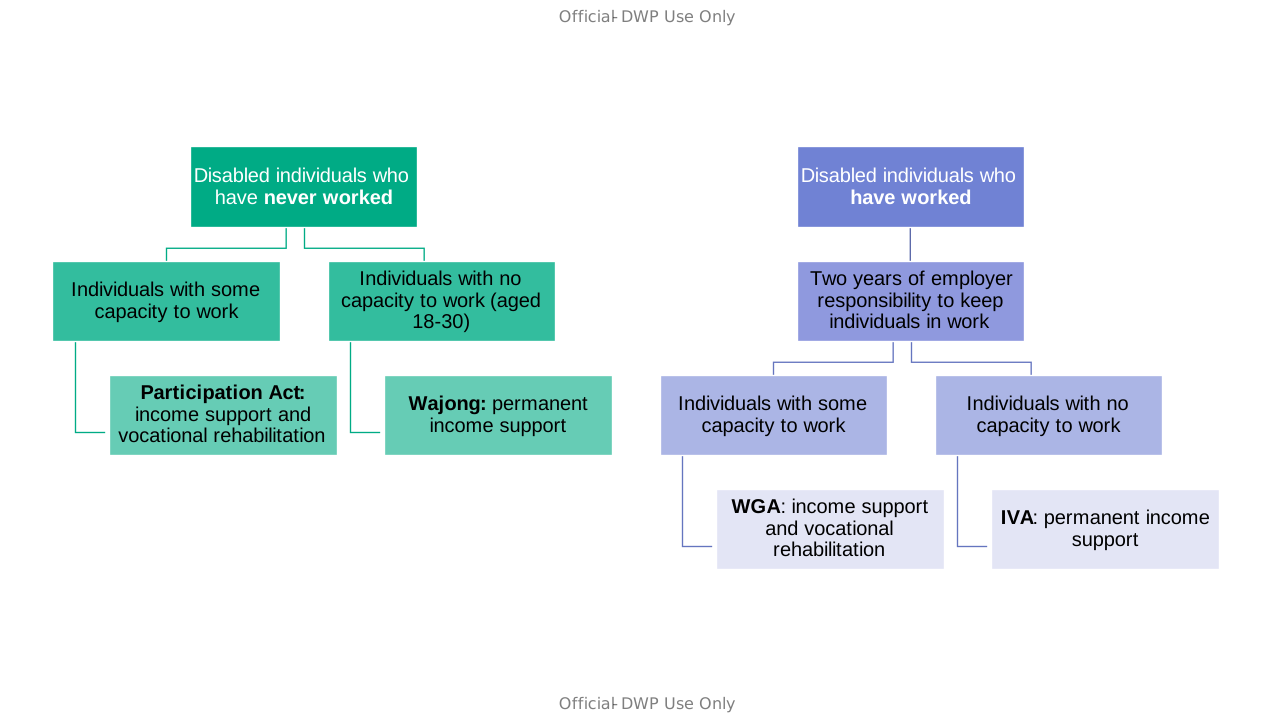
Delivery
Municipalities coordinate vocational rehabilitation services while unemployment and disability benefits are overseen centrally by the Employee Insurance Agency (UWV). Benefits for those who have never worked are tax-funded, while benefits for former workers are financed through employer insurance (Dutch Government, 2025).
Vocational rehabilitation and activation programmes are outsourced to commercial providers (Juznik Rotar, 2021). The services they provide include job coaching, wage subsidies, and sheltered employment (Goderis, 2022). Vocational rehabilitation experts assess client needs before rehabilitation service providers determine specific activities (Vonk, 2021). Activities are based on a “distance to labour market assessment” by caseworkers, considering factors such as health, education and work history. There is limited publicly available information detailing caseworker or provider qualifications.
Support for disabled individuals who have never worked
The Netherlands is distinctive in its targeted support for individuals who have not worked before. There are 2 policies, and eligibility depends on capacity and age, explained below and outlined in Figure 1.
Individuals with no capacity to work
The first policy provides income support and reintegration services to young disabled people, classified as fully incapacitated for work (Government of the Netherlands, 2025). This is delivered through a programme known as Wajong. It offers 75% of the minimum youth wage for those who became disabled before the age of 18, or before age 30 while still in education (Goderis, 2022; Garcia-Mandico, et al., 2022; UWV 2025a). If an individual is fully and permanently unable to work but does not meet the age requirements, they may be eligible for other forms of long-term support, such as general social assistance or care-based benefits.
Eligibility is determined through a work capacity evaluation conducted by UWV. Applicants must submit medical documentation and educational records (UWV, 2025a). If any capacity to work is identified, the applicant is not eligible for Wajong and may be redirected to other support programmes. This strict eligibility reflects the programme’s long-term nature, as most recipients continue receiving support until state pension age (UWV, 2025b). Wajong recipients do not face conditionality requirements such as work-search obligations.
Individuals with some capacity to work
The second policy targets those with residual work capacity, meaning individuals are still able to work reduced hours, and combines income support with strong activation requirements (Goderis, 2022; Garcia-Mandico, et al., 2022). The focus is on getting people into paid work and this support is delivered through the Participation Act. Income support is means-tested and provides monthly payments up to the “social minimum”, which is approximately €1,200 (£1,055) per month for a single adult, around 60% of the average wage and below the Dutch statutory minimum wage of €2,193 (£1,929) per month in 2025, with around 2.75% of the population receiving this in 2019 to 2020 (Goderis, 2022; Eurostat, 2025).
Recipients must be below retirement age, register as jobseekers and cooperate with municipalities to develop individual action plans. These outline obligations, including accepting suitable work and participating in reintegration activities.
Vocational rehabilitation measures are typically divided into 2 trajectories:
- Fit-for-Work: For those not yet ready to return to work, focusing on psychological resilience, social skills, and labour market positioning.
- Ready-to-Work: For those deemed ready to re-enter employment, focusing on job application skills, mediation, and employer support (de Geus, 2024).
Support for disabled individuals who have worked
For those who have worked before, disability benefits are available only to those who were employed and insured at the time they became ill or disabled (VMD Koster, 2025). Individuals who do not meet these conditions may instead need to apply for general social assistance through their municipality. These are explained below and outlined in Figure 1.
Employer responsibility to keep individuals in work
Before administering any benefits, Dutch policy places strong responsibility on employers to keep people in work. Employers are required to pay wages and facilitate return-to-work efforts for up to 2 years before individuals can be assessed for further disability benefits (Bernasconi et al., 2024). This is enforced through the Gatekeeper Protocol. If an employer has high rates of long-term sickness absence, they are required to contribute more through social insurance schemes, incentivising employers to help employees return to work (Van Ooijen et al., 2024). Subsidised employment is also a key incentive. The Trial Placement Scheme provides employers with 2 months of wage subsidies enabling them to hire employees with disabilities on a temporary basis (Litsardopoulos, et al., 2025). Employers hiring young benefit recipients also receive a discount of €3,500 (£3,078) per year for up to 2 years on their social insurance contributions (Juznik Rotar, 2021).
After 2 years employer responsibility
Those who cannot return to work after 2 years qualify for disability benefit support under the Work and Income According to Labour Capacity Act (WIA). Individuals undergo an assessment by the UWV, to establish their work capacity (Van Ooijen and Brouwer, 2025).
- Individuals with some capacity to work. Those who are assessed as partially disabled with some capacity to work are provided a combination of income support and vocational rehabilitation. This scheme is aimed at facilitating an eventual return to work and is known as the Work Resumption for the Partially Disabled (WGA). Recipients receive a benefit of 75% of their previous average monthly income in the first 2 months, reduced to 70% from month 3 (UWV, 2025c). The “Fit-for-Work” and “Ready-to-Work” trajectories apply at this stage (de Geus, 2024).
- Individuals with no capacity work. Those who are assessed as having no capacity to work are provided long-term income support, permanent until state pension age (UWV, 2025c). This is the Income Provision for Fully Disabled Persons (IVA), which provides 75% of previous earnings for income losses above 80%, calculated based on pre-sickness earnings (Sieling-Monas et al., 2025).
Reform trajectory: How the current system emerged
To tackle increased reliance on benefits, eligibility was tightened and employer responsibility increased.
- Support for disabled individuals who have never worked. Rapid growth of entries into Wajong led to major 2015 reforms making the scheme only available for those with no capacity to work. Those with capacity to work were moved into the Participation Act (Garcia-Mandico, et al., 2022).
- Support for disabled individuals who have worked. The Gatekeeper Protocol (2002) introduced employer reintegration duties during sickness period with an aim to reduce benefit inflow (Koning and Vethaak, 2022). The policy extended the sick leave waiting period from one to 2 years. Previously, individuals needed to demonstrate a 15% loss of earnings capacity to qualify, but this was raised to 35% through the WIA reforms (Kantarci et al., 2023).
9.3 Quality and strength of evidence
The Dutch evidence base is robust but largely focused on assessing the impact of reforms as opposed to the effectiveness of vocational rehabilitation measures. Evaluations draw on national administrative datasets, including longitudinal studies and quasi-experimental methods to isolate reform impacts (Peijen and Wilthagen, 2022, Juznik Rotar, 2021, Lammers and Kok, 2021). Despite this, some gaps remain. For example, there is a lack of qualitative data on participants’ experience and limited insight into local service delivery variations.
9.4 Outcomes and impacts
Disability benefit inflow impacts
Tightening eligibility and increasing employer responsibilities successfully led to a decrease in benefit applications. For example, the Gatekeeper Protocol reform led to a 40% reduction in application rates (Koning and Vethaak, 2022). Likewise, the WIA reform led to a 5.2 percentage point reduction in permanent disability benefit receipt, shown through difference-in-differences analysis of national administrative data (Kantarci et al., 2023). However, whilst labour participation increased by 1.2 percentage points post WIA reform, presented as a meaningful shift given the scale of reduction in disability claims, general unemployment insurance claims also rose by 1.1 percentage points (Kantarci et al., 2023).
Employment and income effects
The Netherlands maintains relatively strong labour market performance, with youth unemployment rates below 10% in recent years (Juznik Rotar, 2021). Young disabled people who would have been covered by the Wajong programme before the 2015 reform, but are now covered by the Participation Act, have reported higher employment rates than pre-reform (Garcia-Mandico, et al., 2022). However, this is marginal as between 2015 and 2017 the probability of recipients finding a job within one year rose only slightly from 7% to 8% (Goderis, 2022).
The WGA scheme showed effectiveness in helping individuals with partial work capacity, who were already engaged in the workforce, remain in paid employment. One year after entering the WGA scheme, 58.6% of partially disabled individuals were in paid employment, dropping to 53.9% after 2 years based on 6,000 employees (Van Ooijen et al., 2024). The sample included long-term sick-listed employees who were still employed shortly before their disability assessment (Van Ooijen et al., 2024).
Employer level impacts
Sick leave policies, occupational health services, and prevention measures were all statistically significantly associated with a higher likelihood of sustained employment over time (Van Ooijen et al., 2024). For those engaged in subsidised employment, short-term activation has been effective but long-term outcomes are less promising. Individuals aged 20 to 24 in subsidised jobs saw a 1.7% increase in re-employment probability after one year, but a 6.0% decrease 2 years later (Juznik Rotar, 2021). This decline may reflect structural challenges such as limited progression opportunities due to a focus on job entry as opposed to job quality, where individuals often remain in precarious roles or exit the labour market altogether.
Activation and vocational rehabilitation
Success rates varied across rehabilitation trajectories as part of the WIA scheme. For example, out of over 190 cases, those on the Fit-for-Work trajectory achieved their intended goals 60.8% of the time. This included either returning to work or education or progressing to the next stage of rehabilitation. In contrast, the Ready-to-Work trajectory led to sustained employment in 43% of cases (de Geus, 2024).
How transferable is the Netherlands to the UK?
- The Dutch “Fit-for-Work” and “Ready-to-Work” trajectories offer structured pathways that could be piloted in the UK. Implementation would require increased labour market spending and investment.
- The WGA scheme could inform UK reforms aimed at sustaining employment among disabled workers. Similar policies could be integrated with existing programmes like IPS in the UK.
- Mandating employer responsibility could significantly reduce disability benefit inflow in the UK but would require substantial legislative reform and cultural change in employer practices.
10. Discussion
This chapter draws together findings from the comparative literature and the 4 case studies on international disability benefit design and employment support.
10.1 Strengths and limitations
This review benefits from a broad comparative scope, drawing on evidence from a wide range of OECD countries, with 4 detailed case studies providing depth (Denmark, Australia, Norway, and the Netherlands). This enables meaningful cross-country comparisons and highlights common trends and policy innovations. The inclusion of robust quantitative studies such as longitudinal analyses and quasi-experimental evaluations strengthens the reliability of findings and provides credible insights into the impact of major reforms.
The review is limited by the scope and availability of comparative literature, which often prioritises breadth over depth. While the case studies provide richer insights, they rely on publicly available sources and may overlook local variation in delivery. Evidence on the effectiveness of specific programmes is uneven, with limited robust impact evaluations and few qualitative studies capturing lived experience. To build on the findings of this review, DWP could engage directly with the governments of countries whose disability employment policies show promising outcomes. This would allow for deeper understanding of implementation practices, delivery mechanisms, and contextual factors not captured in this report.
10.2 How does the UK compare?
Denmark and the Netherlands had the highest employment rates for disabled people among the case study countries. In Denmark, 59.5% of disabled people were in work in 2020, compared to 79.9% of non-disabled people. In the Netherlands, 56% of disabled people were employed in 2023, compared to 82% of non-disabled people. Norway had a lower rate, with a disability employment gap of 28.7% in 2023. Australia had the widest gap, with only 48% of disabled people in work compared to 81% of non-disabled people. The UK’s employment rate for disabled people was around 53% in 2024, with a gap of 29 percentage points compared to non-disabled people.
Compared to Denmark, Norway and the Netherlands, the UK’s disability benefit system has multiple benefits available and is more integrated into the wider welfare safety net through the introduction of Universal Credit and Jobcentre Plus. For individuals with health conditions, levels of integration with health services remains lower, though this has increased in recent years. Structurally, the UK aligns most closely with Australia, sharing a flat-rate model and a strong emphasis on work capacity assessments. In contrast, Denmark and Norway operate integrated systems with strong emphasis on vocational rehabilitation, employer responsibility, and collaborative governance, features potentially less feasible in the UK due to lower union density and public spending on active labour market programmes (0.3% GDP vs. Denmark’s 2%). In 2023 to 2024 the government spent £25.5 billion health-related income replacement benefits, almost all of which went to ESA claimants and UC claimants either in the limited capability for work (LCW) or limited capability for work and work-related activity (LCWRA) categories (DWP, 2025g).
The Netherlands presents a social insurance-based model with graded support based on work capacity and robust employer obligations (e.g., the Gatekeeper Protocol), offering transferable elements to the UK, such as structured vocational trajectories and expanded use of Individual Placement and Support (IPS) which is already implemented in the UK. Despite existing differences, the UK is shifting to a model that pairs conditional with increased support, aligning more with Dutch and Nordic approaches. This is reflected in the Pathways to Work: Reforming Benefits and Support to Get Britain Working Green Paper and range of welfare and support policies announced in the Spring Statement 2025.
10.3 Key findings
The impact of tightening eligibility depends on what other benefits and services are available
Disability benefit systems across countries in the included literature have undergone substantial reform since the early 2000s, driven by rising caseloads and fiscal pressures. These reforms typically fall into 3 categories: tightening eligibility, increasing conditionality, and reducing generosity. The evidence shows that tightening eligibility may reduce benefit inflow and is often followed by an increased labour market participation rate, especially when accompanied by significant expansions in the provision of employment support. However, there also evidence that it can lead to displacement onto other benefits. The evidence suggests that the effect on employment is larger when restrictions are accompanied by significant expansions in employment support, as in Denmark and the Netherlands where, reforms tightening eligibility were paired with vocational rehabilitation and employer incentives. The Netherlands successfully reduced the inflow to disability benefits by 40% through increased employer responsibility, and the labour market participation increased by 1.2 percentage points. However, there was also increased applications for general social protection. In Denmark reforms to tighten eligibility and conditionality were followed by a substantial increase in labour market participation, from a 78.1% employment rate to an 81%. These reforms also included a substantial expansion of the ‘flexi-jobs’ scheme, which offers people with reduced work capacity part-time jobs with wage subsidies, and as of 2025 covers around 4% of the workforce.
In other cases, such as Australia, reforms focused mainly on restricting access without expanding support. This led to a significant fall in the number of people claiming the main disability benefit, from around 54 per 1000 people to around 47. Over the same period, the number of people claiming the main unemployment benefit with impaired work capacity increased by a similar amount, from around 8 per 1000 people to around 16. In the same duration, there was an increase in labour market participation (Collie et al., 2021a).
It is possible that in the UK the inverse pattern has occurred, with reductions in the generosity of general income replacement benefits (UC standard allowance) being associated with increased demand for the health-related top-ups to the benefit (LCWRA). This pattern was acknowledged in the Pathways to Work Green Paper which set out intention to rebalance Universal Credit Standard Allowance (UC-SA) and Universal Credit Health Element (UC-HE) as a result and subsequently introduced the UC rebalancing Act (DWP, 2025c).
Beyond eligibility, many countries have introduced greater conditionality, linking benefit receipt to participation in vocational rehabilitation programmes. In Denmark and Norway, mandatory and subsidised return-to-work schemes have delayed income replacement and successfully supported transitions into employment by providing sufficient tailored support. However, similar reforms increasing conditionality without providing additional integrated vocational rehabilitation in Australia have been less successful, excluding those with more complex needs, highlighting the need for changes to be tailored for those facing multiple barriers.
Reduced generosity, through lower benefit levels or more frequent reassessments, has also been widely implemented. In Sweden and Denmark, these changes have disproportionately affected individuals with fluctuating impairments, leading to increased poverty risks and reduced long-term income (Barr et al. 2022).
In the UK, proposed reforms to incapacity-related benefits mirror international trends in changing eligibility, following a period in of growing relative generosity. The Work Capability Assessment (WCA), used to determine eligibility for Employment and Support Allowance (ESA) and the Universal Credit health element, is set to be scrapped in the future. Entitlement to extra financial support in Universal Credit will instead be based on the Daily Living criteria of the Personal Independence Payment (PIP) (House of Commons Library, 2025.). The proposed reforms will focus any health-related financial support in UC on those with long-term conditions and disabilities that have lasted for 3 months and are expected to last for at least a further 9 months, meaning that those with short term conditions will no longer be eligible, but those who are on PIP outside of the health journey will be eligible, if they are eligible for Universal Credit. Individuals will no longer need to go through 2 separate assessments, known to cause stress to claimants. Further details of this policy are yet to be worked through by the department. The UC rebalancing Act and review of PIP will influence this final design choices for ministers. Based on examples from the other countries studied, there is a risk that reforms such as the reduced health element in the rebalancing act (which increased the standard allowance in tandem) may reduce inflow but fail to improve employment outcomes, unless paired with substantial employment support, this was recognised in large increases to employment support funding in the Spring Statement 2025 (DWP, 2025a).
Activation works best when tailored to individual needs
Activation and vocational rehabilitation measures, including training, and work placements are central to disability employment strategies. However, their effectiveness depends on design, delivery, and population.
Targeted work placements appear more effective than training alone. In Norway and Sweden, subsidised placements led to better transitions into regular employment than vocational training (Hall et al., 2024). The case studies supported this finding, with Denmark’s Flexi-job scheme successful through its provision of part-time work with wage subsidies (Mathisen et al., 2021).
The Netherlands offers structured vocational trajectories, “Fit-for-Work” and “Ready-to-Work”, tailored to individual capacity. These show evidence of effectiveness, with 60.8% of Fit-for-Work participants achieving their goals (de Geus, 2024). This suggests that activation must be tailored to individual needs and supported by adequate resources. Conditionality without support risks deepening exclusion (Jensen, et al., 2024).
In the UK, these findings are particularly relevant given DWP’s £1.2 billion investment in the ‘Connect to Work’ programme. This initiative aims to support 300,000 disabled people through tailored employment services, including coaching and job matching, signalling a shift toward personalised activation (DWP, 2025e; DWP, 2024b). One of the fidelity models underpinning Connect to Work is IPS, which is already used in UK mental health services and is well evidenced internationally, including in Norway. The evidence from international practice suggests that for these interventions to succeed, they must be backed by sustained investment in specialist support and vocational pathways that reflect individual capacity and aspirations. The Keep Britain Working Discovery Report reached similar conclusions suggesting tailored support for younger, middle-aged and older workers (DWP and DBT, 2025).
Employer engagement requires strong enforcement
Employer engagement policies vary widely, from legal obligations to financial incentives and awareness campaigns. However, effectiveness depends on enforcement and institutional context.
The comparative evidence found that quota systems in France, Germany, and Norway show limited impact without enforcement. This was supported in the case studies where, although Norway places legal obligations on employers to support disabled workers under the IA Agreement, weak enforcement has limited its effectiveness.
The Netherlands and Denmark benefit from high union density and collaborative traditions. For example, in Denmark local employment committees are mostly effective and include employers and unions in benefit decisions (Kreiner and Svarer, 2022). Employer responsibility is built into the insurance systems within the Netherlands through employer contributions.
Financial incentives for employers appear more effective but need to be sufficient to encourage take-up. Denmark subsidises up to two-thirds of wages in Flexi-jobs; the Netherlands offers trial placements and employer discounts (Bredgaard et al., 2025); (Juznik Rotar, 2021). However, in Australia, one-off payments were deemed too low to influence hiring (Hwang et al., 2024).
In the UK, like in Norway, employer engagement remains a challenge despite a range of incentive schemes. Access to Work offers grants for specialist equipment, support workers, travel costs, and mental health support, supplementing employers’ legal duty to make reasonable adjustments (DWP, 2025f). The scheme is designed to supplement employers’ legal duty to make reasonable adjustments, but its use is entirely voluntary, and applications must be initiated by either the employee or employer. There is no requirement for employers to engage with it beyond their statutory obligations. Alongside Access to Work, the Disability Confident Scheme provides a voluntary framework for employers to improve workplace inclusivity.
Other recent reforms have introduced new duties under the Employment Rights Bill, including a requirement for employers to take “all reasonable steps” to prevent workplace harassment and discrimination, with enforcement powers being expanded through the Fair Work Agency (Faegre Drinker, 2025). There is no legal obligation for employers to hire disabled people or report on disability employment outcomes, unlike quota-based systems in other countries. However, the UK government has consulted on introducing mandatory disability pay gap reporting through the Equality (Race and Disability) Bill (DWP, 2025s). The Keep Britain Working Discovery Report highlights the same promising case studies as this report, with a strong emphasis on the importance of appropriate employer incentives, using Denmark and the Netherlands as key examples (DWP and DBT, 2025). However, the evidence in this report demonstrates that without strong enforcement mechanisms, the risk remains that the impact of initiatives incentivising employers, such as Access to Work and the Disability Confident Scheme, may be limited.
Integrated systems improve coordination and trust
Coordination between benefit providers, employment services, and employers is essential. Evidence suggested that fragmented systems, like Australia’s market-based model, reliant on private providers, struggle with coordination and trust (Devine et al., 2021). The competitive funding structure incentivises rapid job placements over sustained, tailored support, leading to service gaps and ineffective opportunity for information-sharing between providers and funders.
Norway’s centralised system, run by NAV, integrates benefit administration and vocational rehabilitation and offers a coherent pathway. NAV advisors assess capacity, develop activity plans, and monitor progress (Dahl et al., 2024). NAV combines benefit administration with vocational rehabilitation, offering a single point of contact for disabled individuals navigating income support and employment services. Because NAV oversees both benefit eligibility and rehabilitation delivery, advisors can align support with state requirements while responding to individual needs.
The UK’s disability benefit system combines contributory and means-tested elements with partial integration between employment and health support. For example, Employment Advisers in NHS Talking Therapies are available across England, but their support is not fully integrated with benefit systems or wider employment programmes. The UK is shifting from a sanctions-heavy model toward conditionality paired with increased support, aligning more with Dutch and Nordic approaches with a move toward greater integration. The Pathways to Work: Reforming Benefits and Support to Get Britain Working Green Paper proposes additional investment of £1 billion a year by 2029 to 2030 to improve join up between services within DWP and in local areas (DWP, 2025c). The Green Paper also includes a proposed review of the Access to Work scheme, exploring how its delivery can be better integrated with other services such as Acas, the Health and Safety Executive, and the Equality and Human Rights Commission (DWP, 2025g). These proposals reflect a growing recognition that joined-up support, similar to Norway’s NAV model, could improve both trust and effectiveness.
Support can be targeted to young people and those far from labour market
Young disabled people often face barriers due to limited work history. Countries like Austria, Slovenia, and Denmark relax eligibility for this group (Garcia-Mandico, et al., 2022). Austria reduces the contributory requirement for disability benefits from 5 years to just 6 months for applicants under 27 and offers child disability allowances that could extend beyond the legal age if the disability began in youth. Slovenia waives contributory requirements entirely for those under 21 and applies a reduced threshold for those aged 21 to 30, requiring employment for only a quarter of the time since their 21st birthday. Denmark provides access to disability benefits from age 18 without any contributory period and complements this with means-tested child allowances and accessible social assistance schemes. These relaxed eligibility pathways reflect a broader trend across European OECD countries to ensure income security for young disabled people, often through a combination of child allowances, disability benefits, and minimum income programmes. However, the design of these support offers varies significantly. In some cases, a greater reliance on means-tested social assistance may unintentionally discourage self-reliance.
The Netherlands provides a useful example of differentiated targeted support for those who have never worked, mostly young people aged 18 to 30. The Wajong programme offers long-term support for young people with no capacity to work. Eligibility is strict, but recipients face no conditionality (Goderis, 2022).
Beyond youth-specific interventions, some countries offer differentiated support for individuals who are far from the labour market, regardless of age. These include people with severe or long-term disabilities who have never been employed or who face significant structural barriers to entering work. The Netherlands again offers a useful example, where policy distinguishes between those with no work history due to their disability, and those with interrupted or limited employment experience. For those with some capacity to work, but no previous work history, the Participation Act provides support through structured vocational trajectories. Employment rates rose slightly through the Participation Act; however, the impact was marginal, suggesting this group still face barriers to employment.
These findings have important implications for the UK, where young disabled people and those far from the labour market often face challenges accessing mainstream employment support. The upcoming Milburn review will be launched to tackle the persistently high numbers of young people out of work, education and training (DWP, 2025t). Whilst young disabled people are beginning to benefit from new schemes such as the Youth Guarantee trailblazers, current UK incapacity benefit structures do not consistently differentiate between young people with no work history and older claimants with interrupted careers. The evidence from other countries suggests that targeted, differentiated support for young disabled people, with more granular eligibility criteria and non-conditional support for those with no capacity to work is possible. This was also a direct recommendation for the UK made in the Keep Britain Working Discovery Report, based on increases of 530,000 younger people whose main health condition was mental health related (DWP and DBT, 2025).
Transferability to the UK: Structural and cultural considerations
The case studies offer valuable insights into disability benefit and employment systems. Rather than viewing individual programmes in isolation, the evidence suggests that successful models rely on a combination of design features, governance arrangements, the wider benefits system and labour market context. When reflecting on whether similar policies could be effective in a UK context, it is important to consider the following factors:
- Legislative fit. Several international models would require substantial legislative reform to be implemented in the UK. For example, the Netherlands’ Gatekeeper Protocol, which mandates employer reintegration duties for up to 2 years, would necessitate changes to UK employment law and benefit eligibility frameworks (Koning & Vethaak, 2022). Similarly, Norway’s IA Agreement imposes legal obligations on employers to support disabled workers, but its limited enforcement highlights the need for robust legislative backing (Ulstein, 2025).
- Financial feasibility. Replicating high-investment models such as Denmark’s Flexi-job scheme, which covers up to two-thirds of wages for part-time disabled workers, would require significant increases in UK spending. Denmark allocates around 2% of GDP to active labour market programmes, compared to the UK’s 0.3% (OECD, 2025a). Without increased investment, similar outcomes are unlikely.
- Labour market compatibility. The UK’s flexible labour market and part-time work culture align well with Denmark’s Flexi-job model. However, structural differences, such as lower unionisation, may limit the feasibility of replicating Denmark’s collaborative delivery model, which relies on local employment committees and interdisciplinary teams (Kreiner & Svarer, 2022).
- Delivery capacity. Integrated systems such as Norway’s NAV, which combines benefit administration with vocational rehabilitation, demonstrate the value of coordinated service delivery. However, NAV’s effectiveness depends on high institutional capacity and skilled advisors, conditions that may not be fully met in the UK (Dahl et al., 2024). Scaling up UK programmes such as Individual Placement and Support (IPS) could offer a more feasible route, given existing infrastructure.
- Stakeholder acceptance. Employer mandates, such as those in the Netherlands and Norway, may face resistance in the UK without strong enforcement mechanisms and cultural alignment. Financial incentives, such as wage subsidies, are potentially more likely to gain support if sufficient in size. Denmark’s generous subsidies have proven effective, while Australia’s one-off payments were deemed insufficient to influence hiring behaviour (Eurofound, 2021; Hwang et al., 2024).
- Cultural alignment. UK social norms around benefits, work, and support differ from those in countries with more collectivist welfare models. For example, Denmark’s Flexicurity model is underpinned by high trust and strong union involvement, which may not translate directly to the UK context. However, the UK’s shift towards pairing conditionality with tailored support reflects a growing alignment with activation-based models (DWP, 2025a).
- Integration with existing programmes. Structured vocational rehabilitation models such as the Netherlands’ Fit-for-Work and Ready-to-Work trajectories and IPS in Norway have been effective. Given this evidence, it may be possible to adapt and embed similar approaches within existing UK programmes. Lessons from these models could be transferred to the design and delivery of existing forms of IPS, Connect to Work, and the Youth Guarantee Trailblazers (de Geus et al., 2024).
- Ability to track and measure impacts. Countries with robust administrative data systems, such as the Netherlands and Norway, have been able to evaluate reforms using longitudinal and quasi-experimental methods. The UK’s existing data infrastructure, including DWP administrative data has underpinned employment programme evaluations, for example Work and Health Programme and Work Choice.
10.4 Conclusion
Across the international evidence, Denmark and the Netherlands stand out for their relatively small employment gaps with relatively high employment rates for disabled people around 59.5% in Denmark and 56% in the Netherlands (Bengtsson, 2023; The Health Foundation, 2024) and smaller employment gaps than the UK. Both countries offer structured vocational pathways, supported by high investment and strong employer obligations. Norway’s integrated NAV system also offers a positive example of how to deliver coordinated and targeted vocational rehabilitation, but presents a system limited by enforcement challenges.
International comparisons show that no country has fully resolved the challenge of disability employment. Denmark and the Netherlands are often cited as successful models, but both countries still face persistent disparities: disabled people are overrepresented in part-time, low-paid, or subsidised roles, and reforms that tightened eligibility often displaced claimants to less appropriate forms of support (Kantarci et al., 2023; Mathisen et al., 2021). These limitations highlight that employment rates alone do not capture the full picture of success. For the UK, meaningful progress can be assessed against a combination of indicators: the disability employment gap (currently 29 percentage points), the total employment rate for disabled people (around 54%), alongside other measures of economic wellbeing such as poverty risk, income levels, and job quality (DWP, 2024a).
11. Annex A: UK Overview
This chapter presents an overview of the UK’s disability benefits and disability employment policies, produced by DWP.
11.1 The UK context
In 2023 to 2024 around 16.8 million people (25%) in the UK were disabled, up from 11.9 million (19%) in 2013 to 2014. Among working-age adults, over the same period, the proportion has risen from less than one-in-five (16%) to approximately one-in-four (24%) (ONS, 2025a).
The employment rate for people with disabilities is 53%—29 percentage points lower than for non-disabled individuals—which, while similar to Norway and Australia, exceeds the OECD average of 25 percentage points (DWP, 2024a).
Defining disability
In the UK, disability is defined through self-reports on national surveys such as the Labour Force Survey and the Annual Population Survey, both administered by the Office for National Statistics (ONS). These surveys use a harmonised definition of ‘disabled people’ as those who self-report as having physical and mental health conditions or illnesses lasting or expected to last more than 12 months, and whose condition or illness reduces their ability to carry out day to day activities (ONS, 2025b).This definition aligns with the Equality Act 2010’s core definition of disability.
A different approach is taken, for the purposes of determining eligibility for disability-related benefits (Government Equalities Office, 2013). In the UK, functional assessments such as the Work Capability Assessments (WCA) or Personal Independence Payment (PIP) assessments are used, and these focus on the impact of health conditions on day-to-day living (House of Commons Library, 2022). As with the method of defining disability for legal and statistical purposes, this reflects a shift away from the medical model to a social one.
The disability welfare system
The UK’s disability welfare system offers multiple support pathways and combinations of welfare benefits for customers. Using the ESPN classification method (Garcia-Mandico, et al., 2022), it is a mixed system reflecting both Disability Assistance (DA) and Disability Insurance (DI) models. Under the OECD groupings, it offers a flat-rate benefit programme, providing a uniform payment that is broadly similar across eligible individuals (MacDonald, et al., 2020)[footnote 2].
History
UK’s health and disability benefits system has evolved over the past century. The National Insurance Act (1911) introduced contributory benefits for sickness and employment, and is thought to be the foundation of the welfare state, but the 1942 Beveridge Report is recognised as the blueprint, proposing a comprehensive welfare state based on universal coverage and a contributory principle (Social Security Advisory Committee, 2023).
The current system has changed considerably since then. Table 1 outlines some of the defining points in the last fifty years.
Table 1: Shows major changes in the health and disability system over the last fifty years (Social Security Advisory Committee, 2023; OBR, 2024; DWP, 2025i).
| Year | Change in the system |
|---|---|
| 1970s to 1990s | Expansion of non-contributory benefits such as Disability Living Allowance (DLA) and Attendance Allowance (AA). Introduction of Invalidity Benefit to support people with long-term sickness. |
| 1990s | Incapacity Benefit replaced Invalidity Benefit, introducing stricter medical assessments. |
| 2008 | Employment and Support Allowance (ESA) replaced Incapacity Benefit and introduced Work Capability Assessments (WCA) and conditionality. |
| 2013 | Personal Independence Payment (PIP) began replacing DLA for working-age adults. |
| 2018 | Full national roll-out of Universal Credit (UC), merging multiple working-age benefits and new claims to income-related ESA ceased. |
| 2018 | The contributory element of ESA began to operate under the name ‘New Style ESA’. |
Devolution
The Scotland Act 2016 devolved powers over disability and carer benefits so that Scotland now administers its own disability benefits. The Scottish government replaced PIP with the Adult Disability Payment and introduced new benefits and different assessment processes not available elsewhere in the UK.
In Northern Ireland, social security remains devolved but aligned with Great Britain through a parity convention.
This case study focuses on the health and disability-related welfare system in England and Wales.
Aims
Overall, the social security system in the UK seeks to achieve various aims. In terms of disability welfare in particular, the main objectives include: relieving poverty, replacing income, meeting needs, helping with additional costs, and encouraging engagement with the labour market (House of Commons Library, 2022).
Delivery
The Department for Work and Pensions (DWP) has overall responsibility for much of Great Britain’s benefits system, including a range of working-age, disability and health-related benefits. (House of Commons Library, 2022). The latest figures show that DWP currently serves around 24 million claimants and customers overall; 10 million of these are of working age. (DWP, 2025i).
Many of DWP’s frontline services are delivered to customers by Jobcentre Plus (JCP) through a network of local offices known as ‘jobcentres’[footnote 3].
Current climate
The UK disability welfare system is under growing financial pressure, with rising caseloads and long-term benefit dependency contributing to escalating costs. DWP’s spend on working age disability and health related benefits in 2025 to 2026 is estimated to be around £55 billion, and it is forecast to rise by 10% in real terms by 2029 to 2030 (DWP, 2025g).
The government is pursuing reform to make the system more sustainable and work focused. There is also a focus on better support for disabled people to live independently and access employment.
Health and disability related benefits
The most common way that health and disability benefits are distinguished is based on the purpose for the benefit, so they might be income-replacement benefits or ‘extra costs’ benefits.
- Income-replacement benefits are intended to provide compensation for a loss of earning because of a person’s limited ability to work. Using this approach, UC Health and New Style ESA (the focus of this case study) are grouped together as benefits offered to people whose capacity to work, and therefore income, is affected by a long-term health condition. In this way, and to distinguish these from other income-replacement benefits unrelated to health[footnote 4], they might be referred to as ‘health-related income-replacement benefits’.
- ‘Extra costs’ benefits are intended to contribute towards the additional costs people face because of their long-term health conditions or disabilities. PIP is an extra costs benefit.
This distinction between extra costs and income support is fairly unique among OECD countries, particularly because extra costs benefits are uncommon internationally (Scottish Government, 2018). International comparison studies have concluded that the UK stands out in the extent to which it meets the additional costs of disability (New Policy Institute, 2014). Nevertheless, evidence from research with claimants suggests that, in practice, this distinction does not determine claimants use of benefits (DWP, 2023c).
The Office for Budget Responsibility (OBR) uses the terms ‘incapacity benefits’ (UC Health, New Style ESA) and ‘disability benefits’ (PIP, DLA) to draw this distinction (OBR, 2024). It is also the terminology used in various research publications and think tank reports (Institute for Government, 2025; Institute for Fiscal Studies, 2024; (Judge & Murphy, 2024).
This case study will focus on New Style ESA and UC Health. We have chosen to refer to them as ‘health-related income-replacement benefits[footnote 5]. Extra costs benefits (PIP; DLA and AA) are not in scope.
Health-related income-replacement benefits
Universal Credit
Universal Credit (UC) was introduced by the Welfare Reform Act 2012. Initially at a small scale, then expanded in 2014, and by 2018, availability was fully rolled out across the country. By March 2026, it will have replaced 6 outdated means-tested benefits and Tax Credits.
UC is a means-tested benefit paid to working age people who are either out of work or in work, but on a low income. It comprises a standard allowance, with additional amounts paid based on customers’ circumstances.
The health element of UC (UC Health) is paid to customers with a health condition or disability that restricts their ability to work. Eligibility is determined through a Work Capability Assessment (WCA), a functional assessment that looks at customers’ ability to perform a range of activities related to physical, mental, cognitive and intellectual functions (House of Commons Library, 2025).
Customers who receive the UC health element get £97.40 a week in 2025, in addition to the standard UC amount[footnote 6].
Employment and Support Allowance
Employment and Support Allowance (ESA) replaced Incapacity Benefit in 2008 for new claimants and was available to reassessed claimants from 2010. There were 2 types:
- income-related ESA, which was means-tested
- contributory ESA, which was available to people who had been paid or been credited with enough National Insurance (NI) contributions in the previous 2 years.
If they met the requirements, customers could claim both types.
With the introduction of UC, income-related ESA has been replaced, and contributory ESA, which remains as a separate benefit - ‘New Style’ ESA. (House of Commons Library, 2025). It operates alongside UC in a largely unreformed state, and there are ongoing calls to clarify its role, alongside other contributory benefits, and to integrate it with UC (Social Security Advisory Committee, 2023).
Customers who receive New Style ESA receive either only the basic allowance of £92.05, or an additional ‘support component’, on top of the basic allowance, worth £48.05.
Delivery of support
When applying for UC, claimants are asked if they have a health condition or disability that limits their ability to work. Claimants can self-certify for the first 7 days of illness. From day 8 onwards, they must provide medical evidence, or a fit note. Eligible claimants are then referred for a WCA (claimants with a terminal illness are usually exempt from a WCA). Ahead of the WCA, claimants are issued a Capability for Work questionnaire (UC50) to complete (GOV UK, 2025a).
To apply for New Style ESA, claimants need to provide their NI number, income and bank details, and a fit note. They are then invited to an appointment with a work coach. During this appointment, claimants must provide medical evidence, explain how their ability to work is affected and create an agreement known as a Claimant Commitment. Customers will then be asked to complete a similar Capability for Work questionnaire (ESA50).
Work Capability Assessment
The WCA was introduced in 2008 as a way of determining eligibility for ESA. It is unchanged in UC to determine receipt of the health element. The WCA is also used to determine what, if any, work-related requirements UC and New Style ESA claimants need to follow, placing people into conditionality groups (House of Commons Library, 2025).
These requirements are associated with the decision claimants receive following the WCA. They might be found to have:
-
Capability for work (or be ‘fit for work’), which means UC claimants remain on the standard allowance, and New Style ESA claimants are not eligible for the benefit. Claimants are required to search, apply and be available for work.
-
Limited capability for work (LCW), which, for UC claimants also means remaining on the standard allowance[footnote 7], and for New Style ESA claimants, means receiving the basic amount for one year only. Claimants are not required to be available for or start work but may be required to prepare for work.
-
Limited capability for work and work-related activities (LCWRA), which entitles UC claimants to the LCWRA element[footnote 8]) and New Style ESA claimants to the additional ESA support component (with no time-limit). Claimants have no work-related requirements.
Customers can claim both UC and New Style ESA, and if they do, they will only have one WCA.
11.2 Policy overview
Government policies
The Get Britain Working White Paper (2024) and the Pathways to Work Green Paper (2025) have, like previous policy commitments, focused on reform and considerable investments (House of Commons Library, 2024a). Some of the plans include:
- a commitment to raise employment to 80%
- investing £1 billion in tailored employment support
- a new Jobs and Careers Service
- protecting benefit entitlements for those trying to work, with a new Right to Try guarantee
- expansion of mental health services and Individual Placement Support (IPS)
- a Youth Guarantee for all 18 to 21 year olds to ensure access to education, training or employment.
- ending reassessments for people with lifelong conditions
- scrapping the WCA
Employment support programmes
In the UK there are several tailored programmes in place mainly funded by DWP and normally available through JCP. Some of the most recent programmes are:
- Work and Health Programme: Offered in England and Wales between November 2017 and September 2024, it replaced Work Programme and Work Choice, offering personalised support for disabled people to find and stay in work. (DWP, 2025k)
- Intensive Personalised Employment Support (IPES): IPES provided one-to-one coaching and job preparation for those with complex barriers to work in England and Wales. This programme officially ended September 2025. (DWP, 2021).
- WorkWell (2024): Jointly run by DWP and DHSC, this programme seeks to integrate health and employment support to prevent disabled people and people with health conditions from falling out of work or support those recently unemployed in 15 pilot areas across England (DWP and DHSC, 2023).
- Connect to Work: A work programme in England and Wales announced as part of the government’s 2024 Get Britain Working strategy. Connect to Work funding will support around 100,000 disabled people, people with health conditions and those with complex barriers to employment to help them get into and on in work (DWP, 2024b).
Jobcentre Plus support
Disabled people can receive specialist support from disability employment advisors (DEAs), as well as work coaches who can offer increased appointment time to support them to find employment. Personal Support Package and Flexible Support Fund both provide additional resources and flexibility which allows JCP staff to increase support for disabled claimants.
Support for young people
Providing employment support for young people who are disabled is a key priority area for the UK government, particularly in light of the significant growth in the proportion of 16 to 24 year old population who are not in employment, education or training (NEET) and are on incapacity and disability benefits (ONS, 2024).
In the Get Britain Working White Paper, the government announced a new Youth Guarantee for all young people in England aged 18 to 21 which will ensure access to education, work or apprenticeships. Eight Youth Guarantee Trailblazers, led by Mayoral Strategic Authorities in England are testing how more localised, place-based support can combine with national entitlements for young people to form a comprehensive offer for young people. More recently, it was announced that the Youth Guarantee will include a targeted backstop, where every eligible unemployed young person on Universal Credit for 18 months without earning or learning will be provided guaranteed paid work. Participants of the scheme will receive support to take advantage of available opportunities, with the aim of helping them transition into regular employment (UK Parliament, 2025).
Employer engagement
Legal requirements
Historically, government action to influence employers has focused on establishing a legal framework to prevent discrimination against disabled people and ensure that reasonable adjustments are in place to avoid putting disabled people at a disadvantage (GOV.UK, 2025b). Legislation protecting the employment rights of disabled people has evolved and been strengthened over time as shown in Table 2.
Table 2: Legislation protecting disabled people in the workplace (Gateley plc, 2023)
| Year | Legislation | Protections for disabled people in the workplace |
|---|---|---|
| 1944 | The Disabled Persons (Employment) Act | Introduced a quota system requiring employers with 20 or more employees to ensure that at least 3% of their workforce were registered disabled |
| 1995 | Disability Discrimination Act (DDA) | First legislation to outlaw disability discrimination in employment, and introduce the duty for employers to make reasonable adjustments |
| 2010 | Equality Act | Introduced protection against discrimination caused by ‘unfavourable treatment arising from disability’, which replaced the narrower ‘disability-related discrimination’ term. |
Government support
Alongside the legislative developments, the government has provided a range initiatives and policies to improve employer engagement.
- Disability Confident scheme: This was launched in 2013 as a voluntary scheme that provides guidance, case studies and resources to encourage employers to recruit and retain disabled people. Employers can also gain recognition through 3 levels: Committed, Employer, and Leader (DWP, 2024c).
- Workplace Adjustments: The government promotes awareness of reasonable adjustments and provides tools like the Health Adjustment Passport to facilitate conversations between employees and employers. (DWP, 2023a)
- Guidance: The government provides employer guidance on hiring disabled people and those with health conditions, including practical advice for accessible recruitment. (DWP, 2025l). It also provides tailored guidance, developed in collaboration with small businesses and disability organisations, to help businesses support employees to remain in work.
Access to Work
While Access to Work (AtW) is not primarily designed as an employer engagement initiative, it nonetheless plays an important role in encouraging employers to better support disabled people to move into or remain in work.
Launched in 1994, the scheme provides practical and financial support to disabled people in employment or starting a job. It aims to remove workplace barriers not covered by an employer’s duty to make reasonable adjustments. It can cover specialised equipment, support workers, travel costs and communication support for interviews. Employers can benefit from the scheme by receiving support for adjustments that go beyond legal obligations (DWP, 2025m) AtW is funded by the DWP, and therefore, unlike the other measures outlined above, it carries a significant cost to the government.
Experts have noted that many of these initiatives rely on voluntary standards and lack consistent regulation, with limited evidence of their effectiveness (Sayce, 2018) (Sayce, L., 2018). The Keep Britain Working Review proposes a “fundamental shift” to a model where the responsibility for health at work is shared by employers, employees and health services, instead of just between individuals and the NHS. (DWP, 2025n).
Reforms
Successive attempts to reform the health and disability benefit system have been aimed at improving support for disabled people, simplifying the system, encouraging work where possible and managing public spending.
Recently, rising caseloads and costs, likely driven by demographic shifts and increased mental health awareness, prompted the government to propose a new set of reforms, with similar aims. The Pathways to Work green paper seeks to address what it says is a situation that pushes people towards economic inactivity and disincentivises work. The government also highlights the risk of not curbing the unsustainable increase in spending forecast by the OBR for the coming years (DWP, 2025c).
12. References
Andersen, S., 2025. Raising Unemployment Insurance Benefits: Evidence from a Danish Policy Change. National Economic Journal , pp. 1-42.
Andersen, T., 2023. The Danish labor market, 2000-2022, Bonn: Institute of Labour Economics.
Arbeid & Inkludering, 2025. Arbeid & Inkludering (Accessed 15 September 2025).
Arendt, J. N. & Bolvig, I., 2024. Training the long-term unemployed on the margin for disability pension, s.l.: The Danish Center for Social Science Research.
Assmann, M.-L. & Broschinski, S., 2021. Mapping Young NEETs Across Europe: Exploring the Institutional Configurations Promoting Youth Disengagement form Education and Employment. Journal of Applied Youth Studies, Volume 4, pp. 95-117.
Australian Government, 2025. Social Security Guide (Accessed 15 September 2025).
Australian Institute of Health and Welfare, 2024. People with disability in Australia (Accessed 15 September 2025).
Baptista, I. & Marlier, E., 2022. Social protection for people with disabilities in Europe an analysis of policies in 35 countries , Luxembourg: Publications Office of the European Union.
Barr, B., McHale, P. & Bentley, L., 2022. The policy effects of disability benefit reforms: A comparative analysis of Denmark, the UK and Sweden, Liverpool: Department of Public Health and Policy.
Bengtsson, S., 2022. Striving for an inclusive labour market in Denmark: Positive actions and reasonable accommodation to facilitate hiring and employment of persons with disabilities involving employers and employer initiatives. Directorate-General for Employment, Social Affairs and Inclusion.
Bengtsson, S., 2023. European Semester 2022-2023 country fiche on disability equality, Luxembourg: Publications office of the European Union.
Bernasconi, M., Kantarci, T., van Sonsbeek, J.-M. & Van Soest, A., 2024. The Added worker effect: evidence from a disability insurance reform, s.l.: Department of Labor and Knowledge.
Berre, S., 2024. Exploring Disability Disadvantage in Hiring: A Factorial Survey among Norwegian Employers. Work Employment and Society, 38(4), pp. 1087-1106.
Bjornshagen, V. & Ugreninov, E., 2021. Labour Market inclusion of young people with mental health problems in Norway. European Journal of Disability Research, 14(10), pp. 46-60.
Blanck, J. M., Brzinsky-Fay, C. & Powell, J., 2025. Pathways to Inclusion? Labour Market Entry Trajectories of Persons With Disabilities in Europe. Social Inclusion, Volume 13, pp. 1-24.
Bredgaard, T., Olesen, V. K. & Skyum-Jensen, E., 2025. A Mirror to “Normal” Work- Abeism and the Construction of Flexjob. Scandinavian Journal of Disability Research, 21(1), pp. 359-372.
Breznitz, D. & Zehavi, A., 2022. Promoting inclusive innovation for disabled people in four countries: who does what and why?. Disability & Society, 29(4), pp. 827-849.
British Medical Association, 2017. Health at a price Reducing the impact of poverty, London: British Medical Association.
Chhabra, G., 2021a. Turning a blind eye to employers’ discrimination? Attitudinal barrier perceptions of vision impared youth from Oslo and Delhi. Disability & Society, 36(10), pp. 1688-1711.
Chhabra, G., 2021b. Social Resilience in the Labour Market: Learning from Young Adults with Visual Imparements in Oslo and Delhi. YOUNG, 29(5), pp. 508-528.
Collie, A., Sheehan, L. & Lane, T., 2020. Changes in access to Australian disability support benefits during a period of social welfare reform. , s.l.: MedRxiv.
Collie, A., Sheehan, L., McAllister, A. & Grant, G., 2021. The learning, compliance and psychological costs of applying for the Disability Support Pension. Australian Journal of Public Administration, 80(4), pp. 873-890.
Dahl, E., Lorentzen, T., Hermansen, A. & Roaldsnes, A., 2024. Trajectories among recipients of social assistance in Norway: A local approach. Social Policy Administration, 58(7), pp. 1075-1094.
de Geus, C. et al., 2024. Taylored vocational rehabilitation for people with a work disability pension in the Netherlands; an in-depth data analysis of the content and outcomes of vocational rehabilitation trajectories of the Social Security Institute. Disability and Rehabilitation, 46(26), pp. 6376-6383.
Dean, E., Garrels, V., Sigstad, H. & Wendelborg, C., 2022. Employer willingness to hire people with intellectual disability: The influance of employer experience, perception of work, and social responsibility. Journal of Vocational Rehabilitation, Volume 57, pp. 85-95.
Department for Education, 2025. Providing supported internships for young people with an EHC plan.
Department of Parliamentary Services, 2022. National Disability INsurance Scheme: a quick guide (Accessed 15 September 2025).
Devine, A. et al., 2021. Australia’s Disability Employment Services Program: Participant Perspectives on Factors Influencing Access to Work. International Journal of Environment Research and Public Health, 18(21), pp. 1-20.
Dickinson, H. & Yates, S., 2023. A decade on: The achievements and challanges of the National Disability Insurance Scheme’s implementation. Australian Journal of Social Issues, Volume 58, pp. 460-475.
Dicks, A. & Levels, M., 2022. NEET during the School-to-work Transition in the Netherlands. In: The Dynamics of Marginalized Youth. Oxon: Routledge, pp. 25-55.
Dimov, S. et al., 2023. Perceived Employment Discrimination Among People with Disability Accessing Australia’s Disability Employment Services. Journal of Social Inclusion, 14(1), pp. 1-14.
DSS, 2025. Disability Support Pension Imparement Tables (Accessed 15 September 2025).
Dutch Government, 2025. The WIA benefit for your employee. (Accessed 15 September 2025).
DWP and DBT, 2025. Keep Britain Working Review: Discovery.
DWP and DHSC, 2023. WorkWell Guidance.
DWP, 2016. New Style Employment and Support Allowance.
[Withdrawn] Intensive Personalised Employment Support provider guidance.
DWP, 2023a. Health Adjustment Passport.
DWP, 2023b. Disability Confident Scheme: findings from a survey of participating employers.
DWP, 2023c. Uses of Health and Disability Benefits.
DWP, 2024a. The employment of disabled people..
DWP, 2024b. Connect to Work Guidance.
DWP, 2024c. Disability Confident employer scheme.
DWP, 2024d. Access to Work statistics: April 2007 to March 2024.
DWP, 2025a. Spring Statement 2025 Health and disability benefit reforms- Impacts (Accessed 15 September 2025).
DWP, 2025b. The work aspirations and support needs of health and disability customers: Interim findings. (Accessed 15 September 2025).
DWP, 2025c. Pathways to Work: Reforming Benefits and Support to Get Britain Working Green Paper. (Accessed 15 September 2025).
DWP, 2025g. Benefit expenditure and caseload tables.
DWP, 2025h. Closed consultation: Pathways to Work: Evidence pack: Chapter 4 supporting employers.
DWP, 2025i. DWP benefits statistics: August 2025.
DWP, 2025j. Health conditions, disability and Universal Credit.
DWP, 2025k. Work and Health Programme statistics: background information and methodology.
DWP, 2025l. Employing disabled people and people with health conditions
DWP, 2025m. Access to Work factsheet for employers.
DWP, 2025n. Keep Britain Working Review, Final Report.
DWP, 2025t. Independent investigation to be launched to tackle rising youth inactivity.
EASPD, 2019. Denmark Fact Sheet on Social Care & Support. (Accessed 15 September 2025).
Eurofound, 2021. Disability and labour market integration: Policy trends and support in EU Member States, Luxembourg: Publications Office of the European Union.
European Commission, 2021. Study supporting the evaluation of the European Disability Stratergy (2010 to 2020), Brussles : s.n.
EuroStat, 2025. Now available: first 2025 data for minimum wages (Accessed September 2025).
Garcia-Mandico, S., Prinz, C. & Thewissen, S., 2022. Disability, Work and Inclusion Mainstreaming in all Policies and Practices, Paris: OECD Publishing .
Garrels, V., Sigstad, H., Wendelborg, C. & Dean, E., 2022. Work Opportunities and Workplace Characteristics for Employees with Intellectual Disabilities in the Norwegian Labour Market. International Journal of Disability, Development and Education, 71(5), pp. 814-830.
Gateley plc, 2023. UK Disability History Month: The history of disability in the workplace.
Gijsbert, V., 2021. Extending Social Insurance Schemes to “Non-Employees”. Social Law, Volume 74, pp. 147-170.
Goderis, B., 2022. Country fiche - The Netherlands, s.l.: ICF.
Gough, D., 2007. Weight of Evidence: a framework for the appraisal of the quality and relevance of evidence. Research Papers in Education.
GOV UK, 2025a. Health conditions, disability and Universal Credit.
Gov UK, 2025b. Disability Rights.
Government of the Netherlands, 2024. Applying for a Wajong benefit (Accessed 15 September 2025).
GSS Harmonisation Team, 2019. Measuring disability for the Equality Act 2010 harmonisation guidance.
Gugushvili, A., Grue, J. & Finnovold, J. E., 2025. The effects of anti-descrimination legislation on individuals with disabilities in Nordic countries. Social Science & Medicine, pp. 1-10.
Hakvaag, T., Knapstad, M. & Tjora, T., 2025. Office Level Variation in Benefit Duration for Service Users Receiving Work Assessment Allowance: A Norwegian Longitudinal Multilevel Register Study. Scandinavian Journal of Public Administration, 21(1), pp. 59-75.
Hall, C., Hardoy, I. & von Simson, K., 2024. Policies for young adults with reduced work capacity. Labour market impact in Sweden and Norway. Journal of population and Economics, 37(13), pp. 1-33.
Hansen, M. & Leschke, J., 2022. Reforming the Ideal(ised) Model(s) of Danish Labour Market policies. In: Public Governance in Denmark. s.l.:Emerald Publishing Limited, pp. 39-56.
Hasting, R. et al., 2022. Impact of the Norwegian Agreement for a More Inclusive Working Life on diagnosis specific sickness absence in young adults: a difference-in-difference analysis. BMC Public Health, Volume 22, pp. 1-13.
Heggebo, K. & Pedersen, A. W., 2023. The Norwegien welfare state adjusting to Crisis. Temporary changes in unemployment benefit regulations during the COVID-19 pandemic and their long-term implications. In: Citizenship and Social Exclusion at the Margins of the Welfare State. Oxton: Routledge, pp. 48-62.
Herneas, E., Markussen, S., Piggott, J. & Roed, K., 2024. The impact of pension reform on employment, retirement, and disability insurance claims. Journal of population economics, 37(76), pp. 1-27.
Heymann, J., Wong, E. & Waisath, W., 2022. A Comparative Overview of Disabilty Related Employment Laws and Policies in 193 Countries. Journal of Disability Policy Studies, 33(1), pp. 25-34.
House of Commons Library, 2020. The aims of ten years of welfare reform (2010-2020).
House of Commons Library, 2022. An introduction to social security in the UK.
House of Commons Library, 2024a. Disabled people in employment.
House of Commons Library, 2024b. UK disability statistics: Prevalence and life experiences. (Accessed 15 September 2025).
House of Commons Library, 2025. Changes to benefits for disabled people.
Hwang, G.-J., Jensen, N. K. & Wadiwel, D., 2024. Disability, employment and welfare reform: A comparative analysis of Australia and Denmark. Australian Journal of Social Issues, Volume 59, pp. 1013-1030.
Hyggen, C. & Vedeler, J. S., 2021. Employer Engagement and Active Labour Market Policies. Evidence from a Norwegian Multi-Method Study. Social Policy & Society, 20(4), pp. 548-560.
IA Agreement, 2022. Letter of Intent regarding a more inclusive working environment. (Accessed 15 September 2025).
Institute for Government, 2025. Incapacity benefits.
Jensen, N. K., Gyu-Jin, H. & Wadiwel, D., 2024. Caught in the middle? Comparing disability payment restructuring and workfare in Denmark and Australia. Disability & Society, 40(9), pp. 2494-2516.
Judge, L. & Murphy, L., 2024. Under Strain - Investigating trends in working-age disability and incapacity benefits, s.l.: Resolution Foundation.
Juznik Rotar, L., 2021. Evaluation of the Effectiveness of Employment Programmes on Young Unemployed People. Engineering Economics, 32(1), pp. 60-69.
Kantarci, T., Sonsbeek, J.-M. v. & Zhang, Y., 2023. The heterogeneous impact of stricter criteria for disability. Health Economics, Volume 32, pp. 1898-1920.
Kantarci, T., van Sonsbeek, J.-M. & Zhang, Y., 2023. The heterogeneous impact of stricter criteria for disability insurance. Health Economics, Volume 32, pp. 1898-1920.
Kjeldsen, L., Amby, F. & Agergaard, T., 2024. Organisational outputs of administrative reforms: disability in Danish job centres. Journal of Social Policy, pp. 1-9.
Koning, P. & Vethaak, H., 2021. Decomposing Employment Trends of Disabled Workers. Econ. Anal. Policy, 21(4), pp. 1217-1255.
Kreiner, C. T. & Svarer, M., 2022. Danish Flexicurity: Rights and Duties. Journal of Economic Perspectives, 36(4), pp. 81-102.
Lammers, M. & Kok, L., 2021. Are active labor market policies (cost) effective in the long run? Evidence from the Netherlands. Empirical Economics, Volume 60, pp. 1719-1746.
Litsardopoulos, N. et al., 2025. Work and Health: international Comparisons with the UK, Brighton: Institute for Employment Studies.
MacDonald, D., Prinz, C. & Immervoll, H., 2020. Can disability benefits promote (re)employment? Considerations for effective disability benefit design, s.l.: OECD Publishing.
Madsen, J. E. & Holm, A., 2024. From Disability Insurance to Workfare: Evidence from a. The ROCKWOOL Foundation Research Unit.
Martiny, F. et al., 2025. How Weak Relational Ties and Counterproductive Communication Sustain Collaborative Challenges in Vocational Rehabilitation for people on Long-term Sick Leave due to Common Mental Disorders: A Case Study in Denmark, s.l.: s.n.
Mathisen, J. et al., 2021. Disability pension among persons with chronic disease: Differential impact of a Danish policy reform. European Journal of Public Health, 31(1), pp. 186-192.
Miguel, M. & Rodriguez, V., 2022. Sheltered employment for people with disabilities: An international apprasial with ilustrations from the Spanish case, Munich: Munich Personal RePEc Archive.
Ministry of Justice, 2025. Disability rights.
Moe, C. et al., 2023. Implementing individual placement and support in Norway. From vocational rehabilitation to an employment scheme. Social Policy Administration, 57(5), pp. 610-625.
Moe, C. et al., 2021. Implementing individual placement support (IPS): the experiences of employment specialists in the early implementation phase of IPS in Northan Norway. The IPSNOR study. BMC Psychiatry, 21(1), pp. 1-13.
Morawski, L. & Akarsu, M., 2024. It will take time and resources: Changing disability benefits on the way to social model in CEE countries. Global Social Policy, 24(1), pp. 79-95.
My Care Plan, 2025. Best 10 Supported Employment Providers for People with Disabilities. (Accessed 15 September 2025).
NAV, 2025a. Disability benefit. (Accessed 15 September 2025).
NAV, 2025b. Want to reduce sick leave and keep employees in work?. (Accessed 15 September 2025).
NAV, 2025c. Temporary wage subsidy. (Accessed 15 September 2025).
NAV, 2025d. Workplace accommodation. (Accessed 15 September 2025).
NAV, 2025e. Qualification Programme. (Accessed 15 September 2025).
NAV, 2025f. New IA Agreement. (Accessed 15 September 2025).
NDIS.GOV, 2023. Local area coordination partners. (Accessed 15 September 2025).
NDIS.Gov, 2025. Providing evidence for your disability. (Accessed 15 September 2025).
Nordic Co-operation, 2025a. Back-to-work schemes in Denmark. (Accessed 15 September 20250.
Nordic Cooperation, 2025b. Danish disability pension. (Accessed 15 September 2025).
OECD , 2025a. Public spending on active labour market policies as a share of GDP. (Accessed 15 September 2025).
OECD, 2025b. OECD Economic Surveys: Netherlands. (Accessed 15 September 2025).
Office for Budget Responsibility, 2024. Welfare Trends Report
ONS, 2025a. Family Resources Survey: Financial year: 2023 to 2024..
ONS, 2025b. Disability variable: Census 2021.
Osterud, K. L. & Vedeler, J. S., 2024. Disability and Regulatory Approaches to Employer Engagement: Cross-National Challenges in Bridging the Gap between Motivation and Hiring Practice. Social Policy & Society, 23(1), pp. 124-140.
Pedersen, P. et al., 2025. Vocational Rehabilitation in Young Adults With Incident Schizophrenia- A Danish Retrospective Cohort Study. Early Intervention in Psychiatry, pp. 1-11.
Peijen, R. & Wilthagen, T., 2022. Labour Market Reintegration of Individuals with a Physical and Cognitive Disability by a Company Based Work-Experience Program. International Journal of Disability, Development and Education, 69(5), pp. 1795-1812.
Rabinovich, L., 2021. Work Capacity Assessments for Disability Benefit Determinations: An International Comparison, s.l.: Michigan Retirement and Disability Research Center.
Rydland, H. T. et al., 2023. Promoting labour market inclusion of the chronically ill: a scoping review of Scandinavian countries’ efforts. Scandinavian Journal of Public Health, Volume 51, pp. 1097-1107.
Sayce, L., 2018. Switching Focus - Whose responsibility to improve disabled people’s employment and pay, s.l.: London School of Economics and Political Science.
Scottish Government, 2018. International comparison of disability benefits paper: FOI release.
Services Australia, 2024. What happens at the assessment. (Accessed 15 September 2025).
Services Australia, 2025a. Income test. (Accessed 15 September 2025).
Services Australia, 2025b. Disability Employment Services. (Accessed 15 September 2025).
Sieling-Monas, S. M., Jorgensen, A., Kaya, H. & Bonfils, I. S., 2025. Supported employment- ensuring flexibility or introducing new demands? a longitudinal case from Denmark. Nordic Social Work Research, pp. 1-16.
Siewert, R. & Rice, J., 2022. Purpose, intent and adequacy of the Disability Support Pension, Canberra: The Senate Printing Unit.
Social Security Advisory Committee, 2022. Out of work disability benefit reform.
Social Security Advisory Committee, 2025. Our initial advice on disability benefit reform.
Solstad, A., 2023. NAV-a guarantee or a challange for egalitarianism in Norway? . In: The End of Norwegian Egalitarianism? . s.l.:Universitetsforlaget, pp. 140-153.
STAR , 2025a. About The Danish Agency for Labour Market and Recruitment. (Accessed 15 September 2025).
STAR , 2025c. Flex job. (Accessed 15 September 2025).
STAR, 2025b. Resource process. (Accessed 15 September 2025).
STAR, 2025d. Rehabilitation team. (Accessed 15 September 2025).
STAR, 2025e. Follow-up of sickness benefits. (Accessed 15 September 2025).
Statistica, 2024. The Employment Gap for people with disabilities. (Accessed 15 September 2025).
Statistics Denmark, 2025. Labour Force Survey (LFS). (Accessed 15 September 2025).
Statistics Norway, 2025. Statistics on Labour Force Survey. (Accessed 15 September 2025).
Stenberg Angeltun, I., 2025. The right to the right kind of work? A qualitative study exploring how actors in the field of work inclusion understand and interpret the right to work for persons with intellectual disabilities in Norway, s.l.: University of South-Eastern Norway.
The Care Side, 2021. Australia’s Disability Support Pension System Explained. (Accessed 15 September 2025).
The Health Foundation , 2024. Unemployment rates for disabled and non-disabled people. (Accessed 2015 September 2025).
The Norwegian Government, 2025. The Norwegian Labour and Welfare Service (NAV). (Accessed 15 September 2025).
UK Parliament, 2025. Employment: Young People - Question for DWP.
UK Parliament, 2025. Employment: Young People: Question for Department for Work and Pensions.
Ukenazor, O., 2024. Impact of the new pensions act in the Netherlands: the employers’ perspective, s.l.: s.n.
Ulstein, J., 2023. The Impact of Employer Characteristics on Sustaining Employment for Workers with reduced capacity: Evidence from Norwegian Register Data. Social Policy and Society, pp. 1-16.
Ulstein, J., 2025. The Impact of Norwegian Labor Market Policy on Disability Employment. Nordic Journal of working life studies, pp. 1-21.
UWV, 2025a. Applying for a Wajong benefit. (Accessed 15 September 2025).
UWV, 2025b. While receaving a Wajong benefit. (Accessed 15 September 2025).
UWV, 2025c. Two types of WIA benefit: the WGA and the IVA benefit. (Accessed 15 September 2025).
van der Zwan, R. & de Beer, P., 2021. The disability employment gap in European countries: What is the role of labour market policy?. Journal of European Social Policy, 31(4), pp. 473-486.
van Oijen, R., Koning, P., Boot, C. & Brouwer, S., 2024. Implemented disability-related policies and practices and sustained employment of partially disabled employees: evidence from linked survey and register data. Scandinavian Journal of Work, Environment and Health, 50(6), pp. 437-446.
van Ooijen, R. & Brouwer, S., 2025. Disability and Retirement Income: Evidence from Register Data in the Netherlands, s.l.: Netspar.
van Ooijen, R., Koning, P., Boot, C. & Brouwer, S., 2021. The contribution of employer characteristics to continued employment of employees with residential work capacity: evidence from register data in teh Netherlands. Scandinavian Journal of Work, Environment & Health, 47(6), pp. 435-445.
Vonk, G., 2021. Extending Social Insurance Schemes to “Non-Employees” : The Dutch Example.. Social Law 4.0: New Approaches for Ensuring and Financing Social, pp. 147-170.
VWD Koster, 2025. WIA and WGA Legislation. (Accessed 15 September 2025).
Wittund, S., 2023. Mental Health, Work, Welfare and Vocational Rehabilitation , s.l.: The Arctic University of Norway.Andersen, S., 2025. Raising Unemployment Insurance Benefits: Evidence from a Danish Policy Change. National Economic Journal , pp. 1-42.
-
The findings in this section are all drawn from Garcia-Mandico et al. (2022), which provides an extensive description of these policies. ↩
-
‘Uniform payments’ refers to broadly similar rates applied across eligible recipients, as opposed to recipients receiving equal payment amounts. This is in contrast to unemployment-type or pension-type programmes that calculate entitlements based on each individual’s recent or lifetime employment earnings. ↩
-
For many disability and health-related benefit customers (including PIP customers) DWP services are not delivered through JCP, and they might have very little contact with the department once their benefit is awarded. ↩
-
Examples include Jobseeker’s Allowance, State Pension, Universal Credit, Maternity Allowance, etc ↩
-
For the purpose of this report, we use the term ‘health-related income-replacement health-related benefits’ to refer to the benefits in scope. While the term ‘incapacity benefits’ is helpful for indicating the type and purpose of benefit in question, it might be confused with the contributory sickness benefit Incapacity Benefit (IB) introduced in 1995 and phased out in 2005. ↩
-
Currently, the health element is higher than the standard amount, so UC health element claimants receive more than double what those on just the standard allowance receive. ↩
-
These claimants are eligible for the “work allowance” which means that they can earn a certain amount each month before their UC payments begin to be deducted. In addition, in couple claims, access to help with childcare costs is available. ↩
-
As for claimants with LCW, those with LCWRA can access a Work allowance and if in a couple, help with childcare costs. ↩