Quarterly epidemiological commentary: mandatory Gram-negative bacteraemia, MRSA, MSSA and C. difficile infections (data up to July to September 2025)
Updated 9 July 2026
Applies to England

© Crown copyright 2026
This publication is licensed under the terms of the Open Government Licence v3.0 except where otherwise stated. To view this licence, visit nationalarchives.gov.uk/doc/open-government-licence/version/3 or write to the Information Policy Team, The National Archives, Kew, London TW9 4DU, or email: psi@nationalarchives.gov.uk.
Where we have identified any third party copyright information you will need to obtain permission from the copyright holders concerned.
This publication is available at https://www.gov.uk/government/statistics/mrsa-mssa-gram-negative-bacteraemia-and-cdi-quarterly-report/quarterly-epidemiological-commentary-mandatory-gram-negative-bacteraemia-mrsa-mssa-and-c-difficile-infections-data-up-to-july-to-september-2025
Main points
Escherichia coli (E. coli) bacteraemia
During the latest quarter:
- the all-reported incidence rate of E. coli bacteraemia was 84.4 per 100,000 population
- this was a 6.2% increase compared with the same quarter last year and no substantial difference when compared to the corresponding pre-COVID-19 pandemic quarter (July to September 2018)
- where E. coli was contracted, the place of onset setting remained fairly stable over the surveillance period, with the majority of cases being community-onset (82.3%), while a smaller proportion were hospital-onset (17.7%)
Klebsiella species (spp.) bacteraemia
During the latest quarter:
- the all-reported incidence rate of Klebsiella spp. bacteraemia was 26.4 per 100,000 population
- this was a 5.1% increase compared with the same quarter last year and a 24.9% increase since the corresponding quarter in 2019
- K. pneumoniae is the most common cause of Klebsiella spp. bacteraemia, accounting for 75.2% of cases and has been the primary contributor to the recent increases, and predominantly due to community cases
Pseudomonas aeruginosa (P. aeruginosa) bacteraemia
During the latest quarter:
- the all-reported incidence rate of P. aeruginosa bacteraemia was 9.2 per 100,000 population
- this was a 7.3% increase compared with the same quarter last year and 8.7% since the corresponding quarter in 2019
- the rate saw a small sustained increase, despite observed fluctuations since the start of surveillance
Meticillin-resistant Staphylococcus aureus (MRSA) bacteraemia
During the latest quarter:
- the all-reported incidence rate of MRSA bacteraemia was 2.0 per 100,000 population
- this was a 10.6% increase compared with the same quarter last year and a 43.8% increase since the corresponding quarter in 2019. Case numbers remain relatively low at 295 cases in the most recent quarter
- the all-reported rate has been steadily increasing since the COVID-19 pandemic and to a lesser degree for hospital-onset cases
- in the past year there was a small sustained increase in the proportion of community-onset community-associated cases
Meticillin-sensitive Staphylococcus aureus (MSSA) bacteraemia
During the latest quarter:
- the all-reported incidence rate of MSSA bacteraemia was 23.8 per 100,000 population during the latest quarter
- there was no substantial change compared with the same quarter last year and a 6.4% increase since the corresponding quarter in 2019
- when compared with the previous quarter, hospital-onset counts decreased by 5.0% and rates decreased by 5.1%
- overall, cases remain at their highest with increases predominately attributed to community-onset cases
Clostridioides difficile infection (CDI)
During the latest quarter:
- the all-reported incidence rate of CDI was 32.3 per 100,000 population
- this was a 12.7% decrease compared with the same quarter last year but a 26.0% increase since the corresponding quarter in 2019
- both community and hospital-onset rates have declined compared to the same quarter last year, with community-onset rates decreasing by 11.9% (from 21.3 to 18.8 per 100,000 population) and hospital-onset rates decreasing by 13.8% (from 25.7 to 22.1 per 100,000 bed-days)
- the recent declines since the April to June 2025 quarter across hospital-onset and community-onset rates are a reversal of the previously observed increasing trajectory in CDI cases
Rolling case counts for all collections
Figure 1 describes the 12-month rolling percentage change in case counts for each data collection, compared to the baseline 12-month period ending in December 2012.
Figure 1. 12-month rolling percent change since calendar year 2012 for MRSA, MSSA and E. coli bacteraemia and CDI, and from FY 2017 for Klebsiella spp. and P. aeruginosa bacteraemia, December 2012 to September 2025
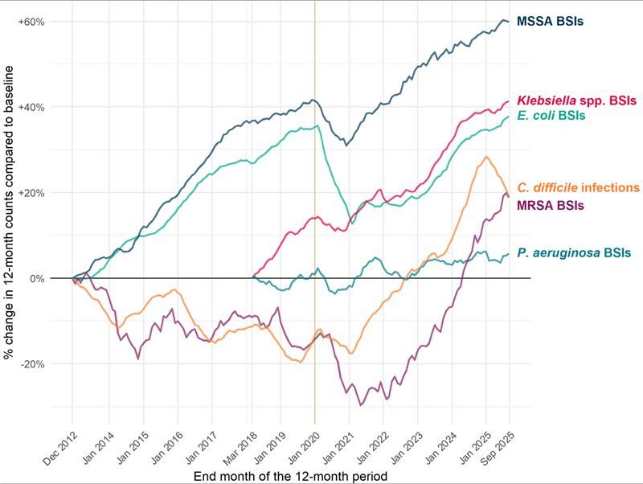
Since the 12-month period ending in December 2012 all 6 organisms have surpassed records of 12-month rolling case counts since their respective data collection began. (Figure 1, Table S7 in the accompanying data tables). The highest percentage increases in 12-month rolling case counts have been observed for MSSA bacteraemia, which continued to increase in 2025. The start of 2025 saw a flattening of trends in E. coli and Klebsiella spp. bacteraemia, with a recent return to increasing case counts. There has been a sustained decrease in CDI rolling case counts in 2025, reversing the upward trend that began in January 2021.
Epidemiological analyses of Gram-negative bacteraemia (E. coli, Klebsiella spp. and P. aeruginosa) data
E. coli bacteraemia
There were 12,268 total reported cases of E. coli bacteraemia in financial quarter (FQ) July to September 2025 (Figure 2). There was an increase of 36.5% in the incidence rate from 61.8 to 84.4 cases per 100,000 population compared to July to September 2011 (the corresponding quarter in the starting year of surveillance).
This increase was primarily due to an increase in community-onset cases. There were 10,100 community-onset cases in July to September 2025. This corresponded to a 48.1% increase in the community-onset incidence rate, from 46.9 to 69.5 cases per 100,000 population since July to September 2011. Over the same period, there were 2,168 hospital-onset cases, and the hospital-onset incidence rate increased by 3.0% from 23.6 to 24.3 per 100,000 bed-days.
When comparing July to September 2025 with the equivalent pre-COVID-19 pandemic period (July to September 2019), there was an increase of 1.1% in the incidence rate from 83.5 to 84.4 cases per 100,000 population (Figure 2).
Figure 2. Quarterly rates of E. coli bacteraemia, total reported and hospital-onset cases, July 2011 to September 2025
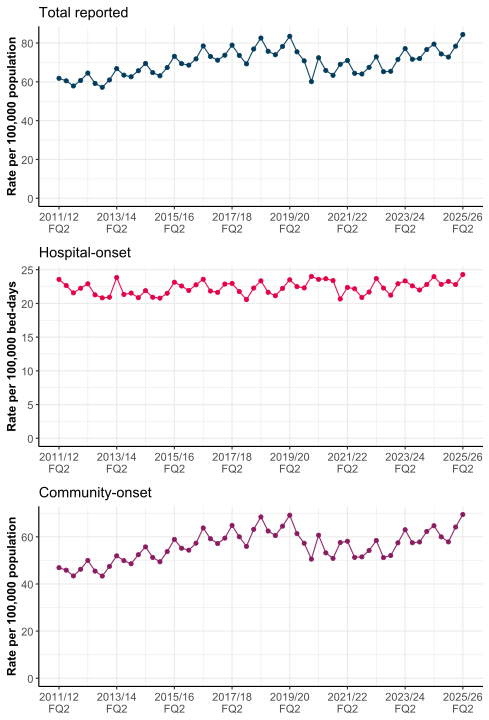
The incidence rate of community-onset cases showed no substantial change, increasing by 0.4% from 69.2 to 69.5 cases per 100,000 population. The hospital-onset incidence rate increased by 3.3% from 23.5 to 24.3 cases per 100,000 bed-days. The steady increase in cases following the initial drop observed at the beginning of the COVID-19 pandemic highlights the slower return to pre-pandemic levels than was seen for some of the other pathogens, particularly with community-onset counts and rates. In the latest quarter, the number of E. coli bacteraemia cases were at levels comparable to pre-pandemic.
When comparing the most recent quarter to last year’s corresponding quarter, the incidence rate of total reported cases increased by 6.2% from 79.4 to 84.4 per 100,000 population (Figure 2).
The recent increase was due to an increase in community-onset cases; these increased by 7.3% from 64.7 to 69.5 per 100,000 bed days. Over the same period, the incidence rate of hospital-onset E. coli bacteraemia cases increased by 1.3% from 24.0 to 24.3 per 100,000 population (Table S1 in the accompanying data tables).
A strong seasonal trend is visible with total reported E. coli bacteraemia, whereby the highest rates are observed between July to September of each year, although there were more fluctuations during the pandemic years. The same seasonal trend is apparent among hospital-onset rates since July 2011, excluding the period January 2020 to December 2021.
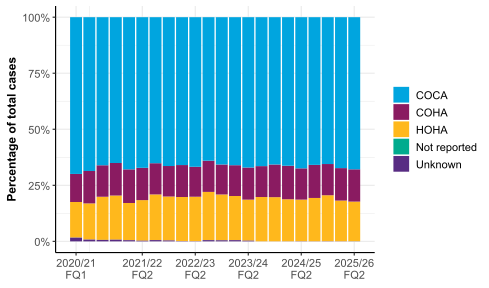
Since April 2020, community-onset E. coli bacteraemia cases have been further categorised into healthcare- or community- associated, based on whether each patient had been previously discharged from the same reporting acute trust in the preceding 28 days (see our quality and methodology information (QMI) report for more details).
Community-onset community-associated (COCA) cases accounted for the majority of reported community-onset E. coli bacteraemia from April 2020. While there have been some fluctuations, the proportion of COCA cases has remained similar at around two-thirds of all cases since January 2020.
The distribution of cases by these categories has remained broadly stable since 2021. In the current quarter, 67.9% of cases were COCA, 14.4% were community-onset healthcare-associated (COHA), and 17.7% were hospital-onset healthcare-associated (HOHA) (Figure 3, Table S1a in the accompanying data tables).
Figure 3. Percentage of E. coli bacteraemia cases by prior trust exposure, April 2020 to September 2025
Klebsiella spp. bacteraemia
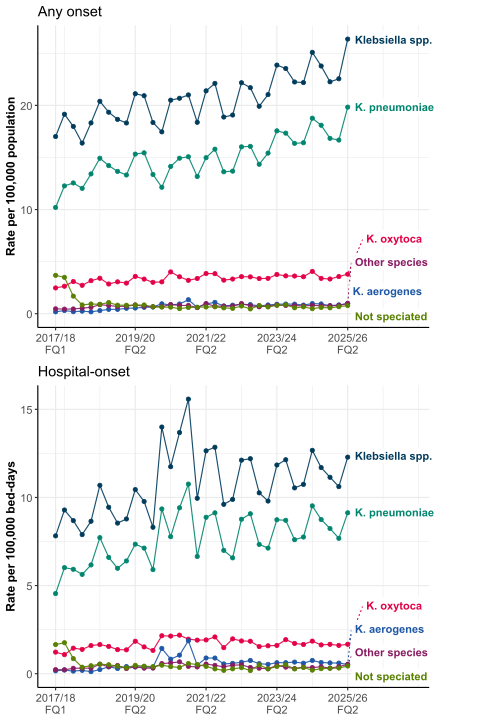
There were 3,834 total reported cases of Klebsiella spp. bacteraemia in July to September 2025. This corresponded to an increase of 37.7% in the incidence rate from 19.2 to 26.4 cases per 100,000 population when compared with July to September 2017 (the corresponding quarter in the starting year of surveillance).
There were 1,097 hospital-onset cases, an increase in incidence of 32.3% from 9.3 to 12.3 per 100,000 bed-days. There were 2,737 community-onset cases, which was a 39.8% increase in incidence rate from 13.5 to 18.8 cases per 100,000 population compared with July to September 2017.
When comparing the most recent quarter (July to September 2025) with the equivalent pre-COVID-19 pandemic quarter (July to September 2019), there was an increase of 24.9% in the incidence rate from 21.1 to 26.4 cases per 100,000 population (Figure 4, Table S2 in the accompanying data tables). The incidence rate of community-onset cases increased by 27.5% from 14.8 to 18.8 cases per 100,000 population. Finally, the hospital-onset rate increased by 17.6% from 10.4 to 12.3 cases per 100,000 bed-days (Figure 4, Table S2 in the accompanying data tables). Trends returned to pre-pandemic levels at the start of 2022, continuing on an upward trajectory.
Comparing the most recent quarter to the same quarter in the previous year, the total reported incidence rate increased by 5.1%, from 25.1 to 26.4 per 100,000 population (Figure 4). The recent increase was due to an increase in community-onset cases, for which the rate increased by 8.8%, from 17.3 to 18.8 per 100,000 population. There was a decrease of 3.0% in the hospital-onset incidence rate, from 12.7 to 12.3 per 100,000 bed-days (Table S2 in the accompanying data tables).
During July to September 2025, 75.2% of the total reported Klebsiella spp. bacteraemia were due to K. pneumoniae, 14.4% to K. oxytoca, and 3.7% to K. aerogenes (Figure 4, Table S2 in the accompanying data tables). Since the previous quarter (April to June 2025), hospital-onset Klebsiella genus rates have seen a 15.8% increase from 10.6 to 12.3 cases per 100,000 bed-days. This increase was predominantly due to an increase of 15.9 % in K. pneumoniae from 16.7 to 19.8 cases per 100,000 bed-days. During the COVID-19 pandemic, K. pneumoniae and K. aerogenes saw peaks at 10.8 and 1.8 per 100,000 bed-days, respectively.
There is a seasonal trend of total reported Klebsiella spp. bacteraemia cases, with higher rates normally observed in July to December and lower rates observed from January to June of each year (Figure 4).
Figure 4. Quarterly rates of Klebsiella spp. bacteraemia, all-reported and hospital-onset cases, by species, April 2017 to September 2025
Since the addition of prior trust exposure classifications in April to June 2020, COCA cases have made up slightly more than half of all Klebsiella spp. bacteraemia. The proportion of HOHA cases peaked at 39.6% in January to March 2021. This coincided with the increase in COVID-19 cases and associated hospitalisations observed in January 2021, where an increase in Klebsiella spp. bacteraemia was observed in the hospital setting. This proportion has since decreased and was 28.6% in the latest quarter. In the same period, the proportion of COHA cases was 15.0% (Figure 5, Table S2a in the accompanying data tables).
Figure 5. Percentage of Klebsiella spp. bacteraemia cases by prior trust exposure, April 2020 to September 2025
Pseudomonas aeruginosa bacteraemia
There were 1,336 total reported cases of P. aeruginosa bacteraemia in July to September 2025. The incidence rate increased by 8.5% from 8.5 to 9.2 cases per 100,000 population compared with July to September 2017. There were 476 hospital-onset cases, corresponding to an increase in incidence rate of 8.0% from 4.9 to 5.3 per 100,000 bed-days. There were 860 community-onset cases, with an 8.7% increase in incidence rate from 5.4 to 5.9 cases per 100,000 population compared to July to September 2017.
When comparing July to September 2025 with the equivalent pre-COVID-19 pandemic quarter (July to September 2019), there was an increase of 8.7% in the incidence rate from 8.5 to 9.2 cases per 100,000 population (Figure 6). Community-onset incidence rates increased by 5.4% from 5.6 to 5.9 cases per 100,000 population. The hospital-onset incidence rate increased by 14.1% from 4.7 to 5.3 cases per 100,000 bed-days (Figure 6). There was an increase in the counts of bed-days denominator compared with the previous financial year.
When comparing the most recent quarter to last year’s corresponding quarter, the total reported incidence rate increased by 7.3% from 8.6 to 9.2 per 100,000 population (Figure 6).
Figure 6. Quarterly rates of P. aeruginosa bacteraemia, total reported and hospital-onset cases, April 2017 to September 2025
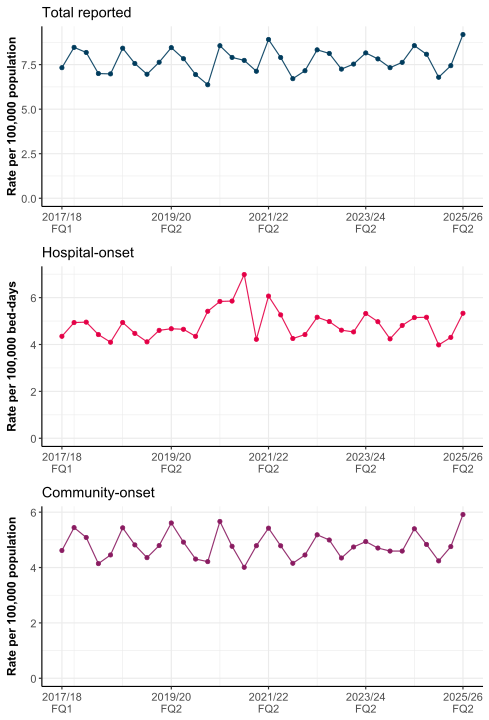
The hospital-onset incidence rate increased by 3.6% from 5.1 to 5.3 per 100,000 bed-days. The incidence rate of community-onset P. aeruginosa bacteraemia cases increased by 9.5%, from 5.4 to 5.9 per 100,000 population (Table S3 in the accompanying data tables).
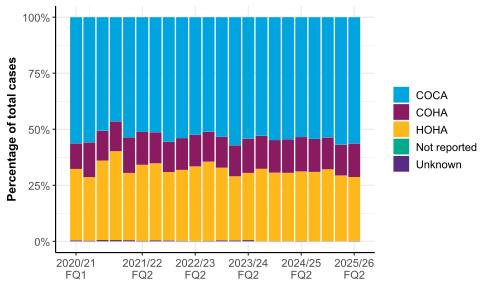
Similarly to E. coli and Klebsiella spp., COCA cases make up the highest proportion of P. aeruginosa bacteraemia cases. In the latest quarter, 45.5% of the total belonged to COCA, 18.9% were COHA and 35.6% were HOHA (Figure 7), Table S3a in the accompanying data tables).
Figure 7. Percentage of P. aeruginosa bacteraemia cases by prior trust exposure, April 2020 to September 2025
Epidemiological analyses of Staphylococcus aureus bacteraemia data
MRSA bacteraemia
In July to September 2025, there were 295 cases of MRSA bacteraemia. Due to the low incidence of MRSA bacteraemia, proportions should be interpreted with caution. There has been a considerable decrease in the incidence rate of total reported MRSA bacteraemia since the enhanced mandatory surveillance of MRSA bacteraemia began in April 2007 (Figure 8, Table S4 in the accompanying data tables).
Figure 8. Quarterly rates of MRSA bacteraemia, total reported cases (April 2007 to September 2025) and hospital-onset cases (April 2008 to September 2025)
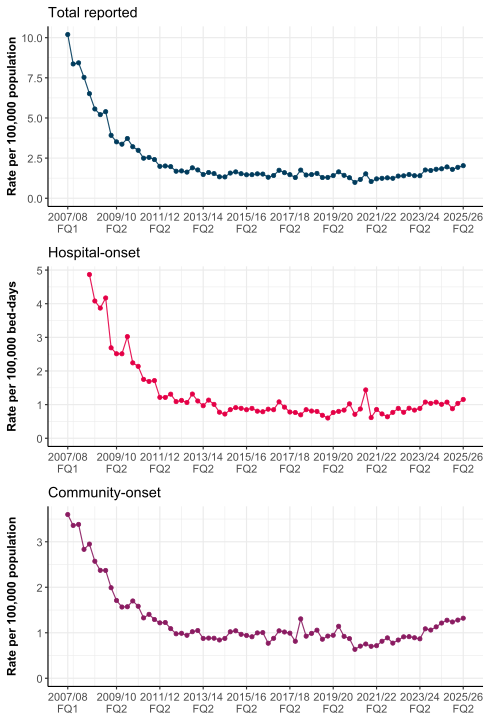
The incidence rate of total reported cases fell by 86.9% from 10.2 cases per 100,000 population in January to March 2007 to 1.3 cases per 100,000 in January to March 2014. Since then, until the latest quarter, it has increased to 2.0 cases per 100,000 population, with increases seen following the beginning of the COVID-19 pandemic.
A similar trend was observed with the incidence rate of hospital-onset cases (Figure 8, Table S4 in the accompanying data tables). There was a steep decrease of 79.3% from 4.9 cases per 100,000 bed-days in April to June 2008 to 1.0 January to March 2014. Since then, until the latest quarter, the rate has increased to 1.2 cases per 100,000 bed-days.
When comparing July to September 2025 with the equivalent pre-COVID-19 pandemic period (July to September 2019), there was an increase of 43.8% in the incidence rate from 1.4 to 2.0 cases per 100,000 population (Figure 8). Community-onset MRSA bacteraemia incidence rate increased by 39.7% from 0.9 to 1.3 cases per 100,000 population (Figure 8).
Comparing the most recent quarter with last year’s corresponding quarter, the incidence rate of total reported cases increased by 10.6% from 1.8 to 2.0 per 100,000 population, reaching levels not seen since financial year 2011 to 2012 (Figure 8). The rise was more pronounced in the community-onset cases. The incidence rate of community-onset MRSA bacteraemia increased by 8.8%, from 1.2 to 1.3 per 100,000 population. Over the same period, the incidence rate of hospital-onset cases increased by 14.3% from 1.0 to 1.2 per 100,000 bed-days (Table S4 in the accompanying data tables).
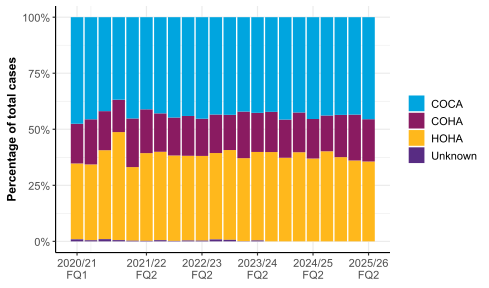
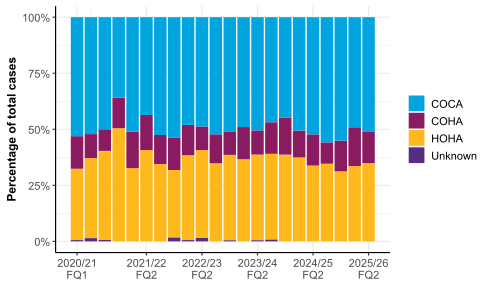
In the current quarter, 51.2% of cases were community-onset community-associated (COCA), 13.9% were community-onset healthcare-associated (COHA), and 34.9% were hospital-onset healthcare-associated (HOHA) (Figure 9, Table S4a in the accompanying data tables).
Figure 9. Percentage of MRSA bacteraemia cases by prior trust exposure, April 2020 to September 2025
MSSA bacteraemia
There were 3,459 cases of MSSA bacteraemia reported from July to September 2025. There has been a general trend of increasing incidence of MSSA bacteraemia since mandatory reporting began in 2011, with the exception of a temporary decline in cases during the initial stages of the COVID-19 pandemic Since July to September 2011, there was an increase of 43.0% in incidence rate, from 16.6 to 23.8 per 100,000 population (Figure 10, Table S5 in the accompanying data tables).
Figure 10. Quarterly rates of MSSA bacteraemia, total reported and hospital-onset cases, January 2011 to September 2025
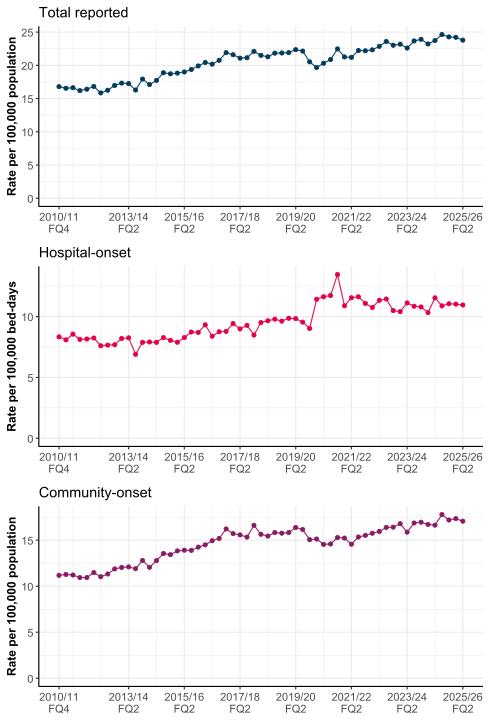
This increase is primarily due to the increase in community-onset cases. Between these 2 quarters, the incidence rate of community-onset cases increased by 52.6% from 11.2 to 17.1 cases per 100,000 population. Over the same period, the incidence rate of hospital-onset cases increased by 28.0% from 8.6 to 11.0 cases per 100,000 bed-days.
Comparing the latest quarter with the corresponding pre-pandemic quarter of July to September 2019, the incidence rate of MSSA bacteraemia has increased by 6.4% from 22.4 to 23.8 cases per 100,000 population. For community-onset MSSA bacteraemia, there was a 4.2% increase in incidence rate from 16.4 to 17.1 per 100,000 population.
Comparing the most recent quarter (July to September 2025) to the same period in the previous year, the incidence rate showed no substantial change, increasing by 0.2% from 23.7 to 23.8 per 100,000 population. Hospital-onset MSSA bacteraemia cases decreased by 5.1% in incidence rate from 11.5 to 11.0 per 100,000 bed-days. The community-onset incidence rate increased by 2.6% from 16.6 to 17.1 cases per 100,000 population.
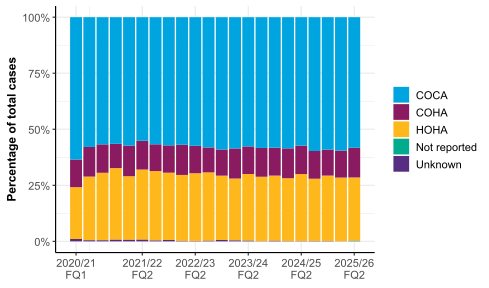
In the current quarter, 58.3% of cases were community-onset community-associated (COCA), 13.3% community-onset healthcare-associated (COHA), and 28.3% hospital-onset healthcare-associated (HOHA) (Figure 11, Table S5a in the accompanying data tables).
Figure 11. Percentage of MSSA bacteraemia cases by prior trust exposure, April 2020 to September 2025
Laboratory blood cultures
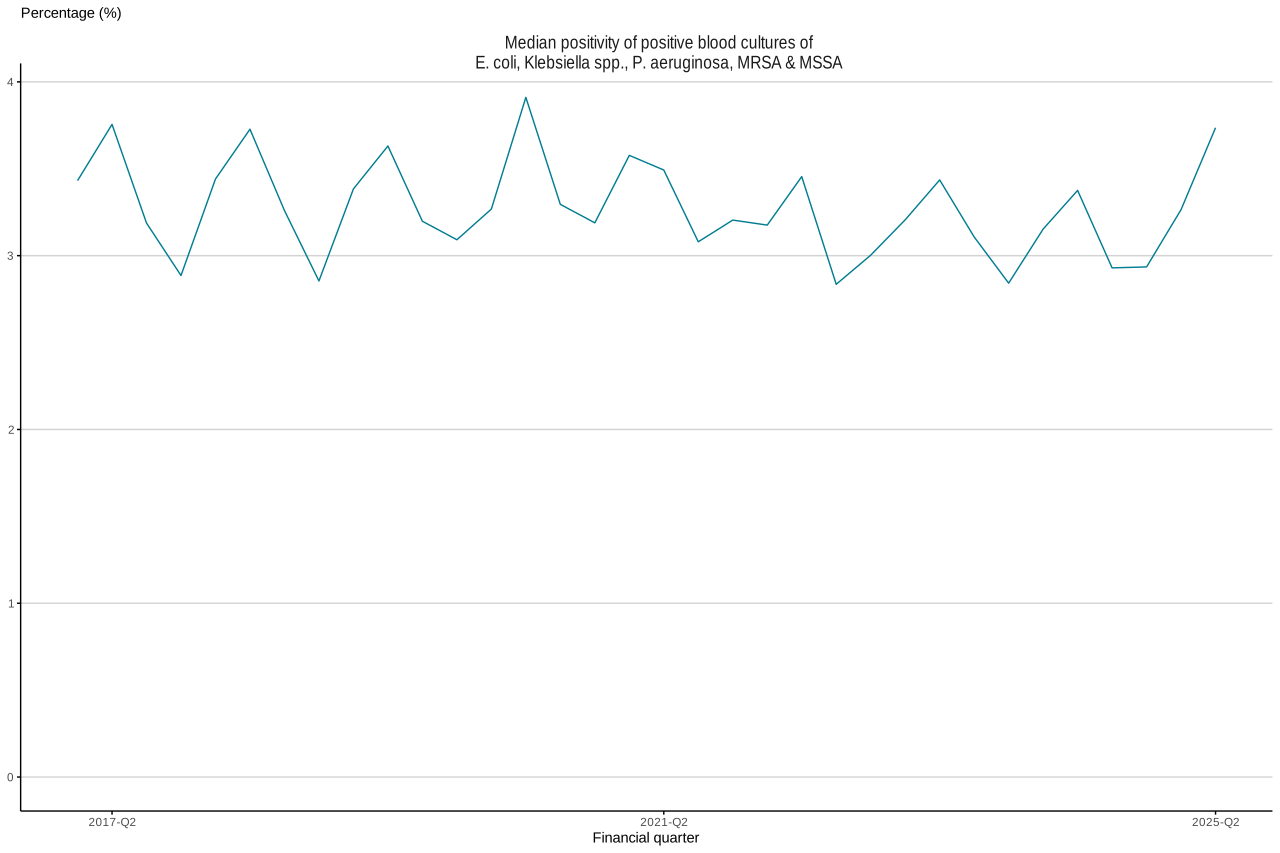
On a quarterly basis, NHS acute trusts are mandated to report the total number of blood culture sets tested. The pooled blood culture positivity of E. coli, Klebsiella spp., P. aeruginosa, MRSA and MSSA bacteraemia increased slightly from 3.5% at the start of the surveillance, in April to June 2017, to 4.3% in the latest quarter of July to September 2025. There were some minor fluctuations in the intervening quarters (Figure 12, Table S9 in the accompanying data tables).
Figure 12. Trends in pooled E. coli, Klebsiella spp., P. aeruginosa, MRSA and MSSA blood culture median positivity, England, by financial year: July to September 2017 to July to September 2025
The numbers of trusts submitting quarterly is variable: for example, 120 trusts submitted in April to June 2025 versus 107 in July to September 2025.
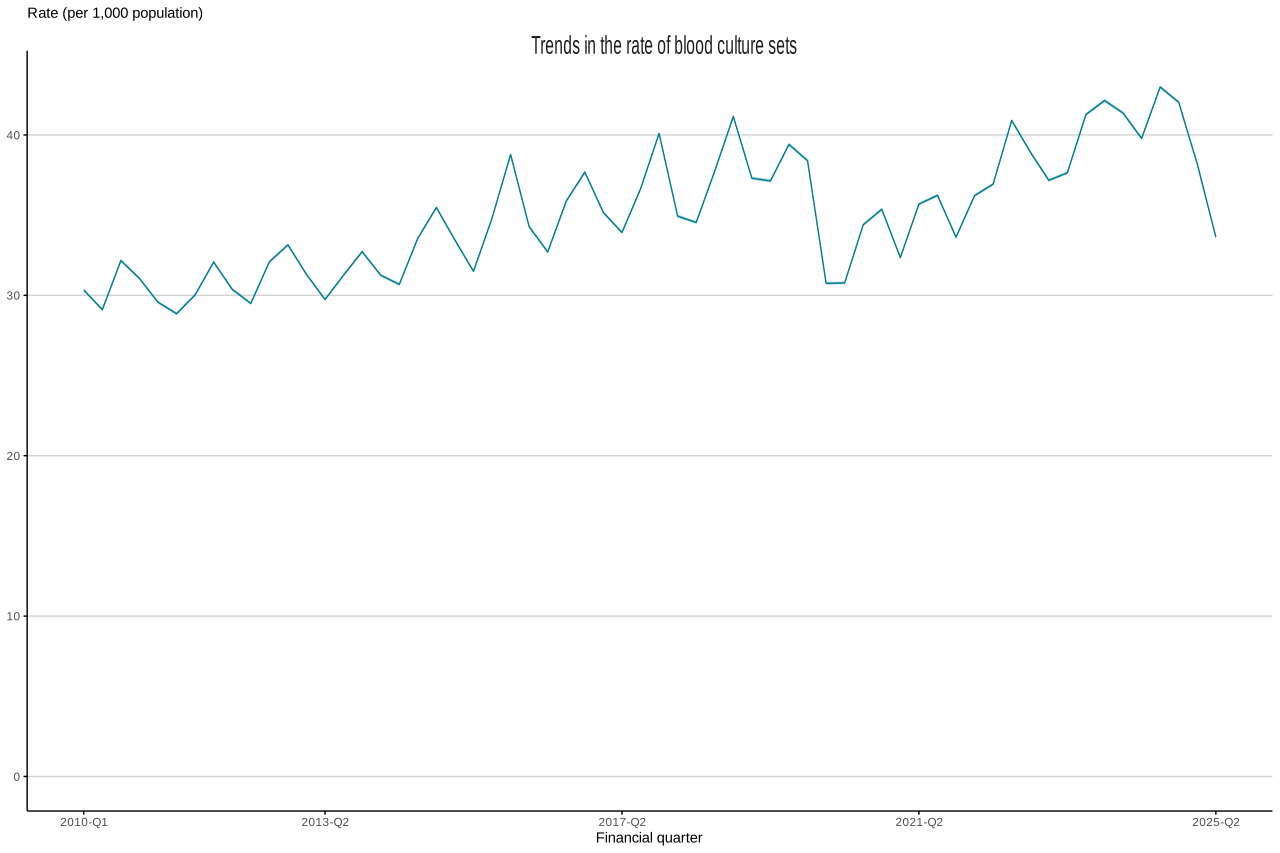
The rate of blood culture sets tested gradually increased from April to June 2010, rising by 21.7% from 30.3 to 36.9 blood culture sets examined per 1,000 population by April to June 2019. This was followed by a decline at the start of the COVID-19 pandemic, to 30.4 blood culture sets examined per 1,000 population in the corresponding quarter in 2020. Since then, the blood culture sampling rate has returned to an upward trajectory, increasing to 33.6 tests per 1,000 population in July to September 2025, which is 10.9% higher than the start of surveillance (Figure 13, Table S9 in the accompanying data tables).
Figure 13. Trends in the rate of blood culture sets, England, by financial year: April to June 2010 to July to September 2025
The numbers of trusts submitting quarterly is variable: for example, 120 trusts submitted in April to June 2025 versus 107 in July to September 2025.
While the sampling rate has increased concurrently with the overall increase in bacteraemia incidence, this does not appear to have impacted positivity, which has remained relatively stable between 2.9 to 4.3% during the surveillance period. However, there may be variation by data collection or at trust-level. Notably, we have also observed a sharp decline in the testing rate in the latest quarter compared to the previous quarter. This is currently under investigation, as the reduction in the number of trusts reporting during this period may have contributed to this observed decrease. This is particularly if trusts with historically higher rates that usually submit data did not report this quarter. This may in turn have affected the observed increase in blood culture positivity rate.
Epidemiological analyses of Clostridioides difficile infection (CDI) data
There were 4,704 cases of CDI reported from July to September 2025. Since the initiation of CDI surveillance in April 2007, there have been substantial decreases in the incidence of CDI. Compared to July to September 2007, the overall incidence rate decreased by 68.8%, from 103.6 to 32.3 per 100,000 population. The community-onset incidence rate decreased by 51.8% from 39.0 to 18.8 per 100,000 population. The hospital-onset incidence rate decreased by 75.1% from 88.9 to 22.1 per 100,000 population.
Comparing the latest quarter with the corresponding pre-pandemic quarter of July to September 2019, the overall incidence rate increased by 25.9% from 25.7 to 32.3 per 100,000 population. For community-onset cases, the incidence rate increased by 17.9% from 15.9 to 18.8 per 100,000 population. For hospital-onset cases, the incidence rate increased by 37.9% from 16.0 to 22.1 per 100,000 population.
However, when comparing the most recent quarter (July to September 2025) to the same period in the previous year, the incidence rate decreased by 12.7%, from 37.1 to 32.3 cases per 100,000 population (Figure 14, Table S6 in the accompanying data tables).
Figure 14. Quarterly rates of C. difficile infection, total reported and hospital-onset cases, April 2017 to September 2025
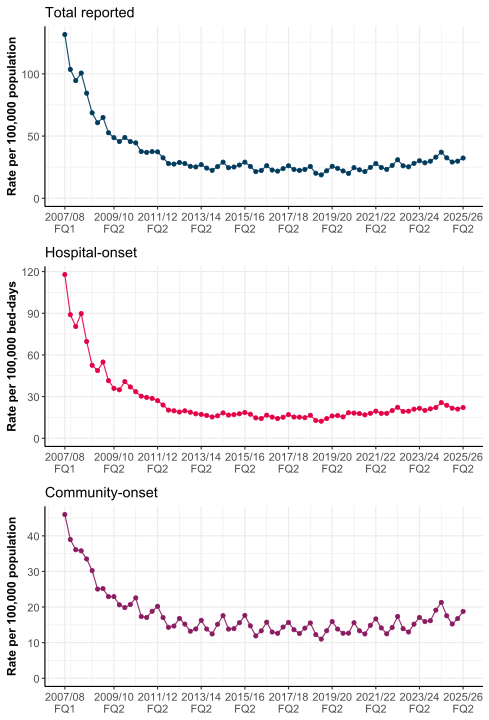
However, the incidence rate subsequently reversed course, rebounding to 29.8 and increasing further to 32.3 for most recent quarter, indicating a shift from a downward to an upward trend. Hospital-onset CDI cases decreased by 13.8% in incidence rate from 25.7 to 22.1 per 100,000 population. The community-onset incidence rate decreased by 11.9% from 21.3 to 18.8 per 100,000 population (Figure 14, Table S6 in the accompanying data tables).
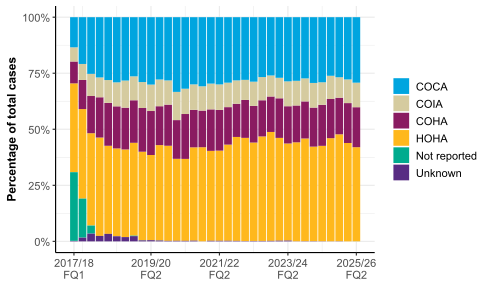
The largest proportion of cases in the latest quarter were HOHA accounting for 42.0% of the total (Figure 15, Table S6a in the accompanying data tables). COCA cases in the latest quarter are 29.2% of the total. COHA and community-onset indeterminate-association (COIA) cases constituted 17.8% and 10.9% in the last quarter respectively.
Figure 15. Percentage of C. difficile infection cases by prior trust exposure, April 2020 to September 2025
Laboratory stool specimens
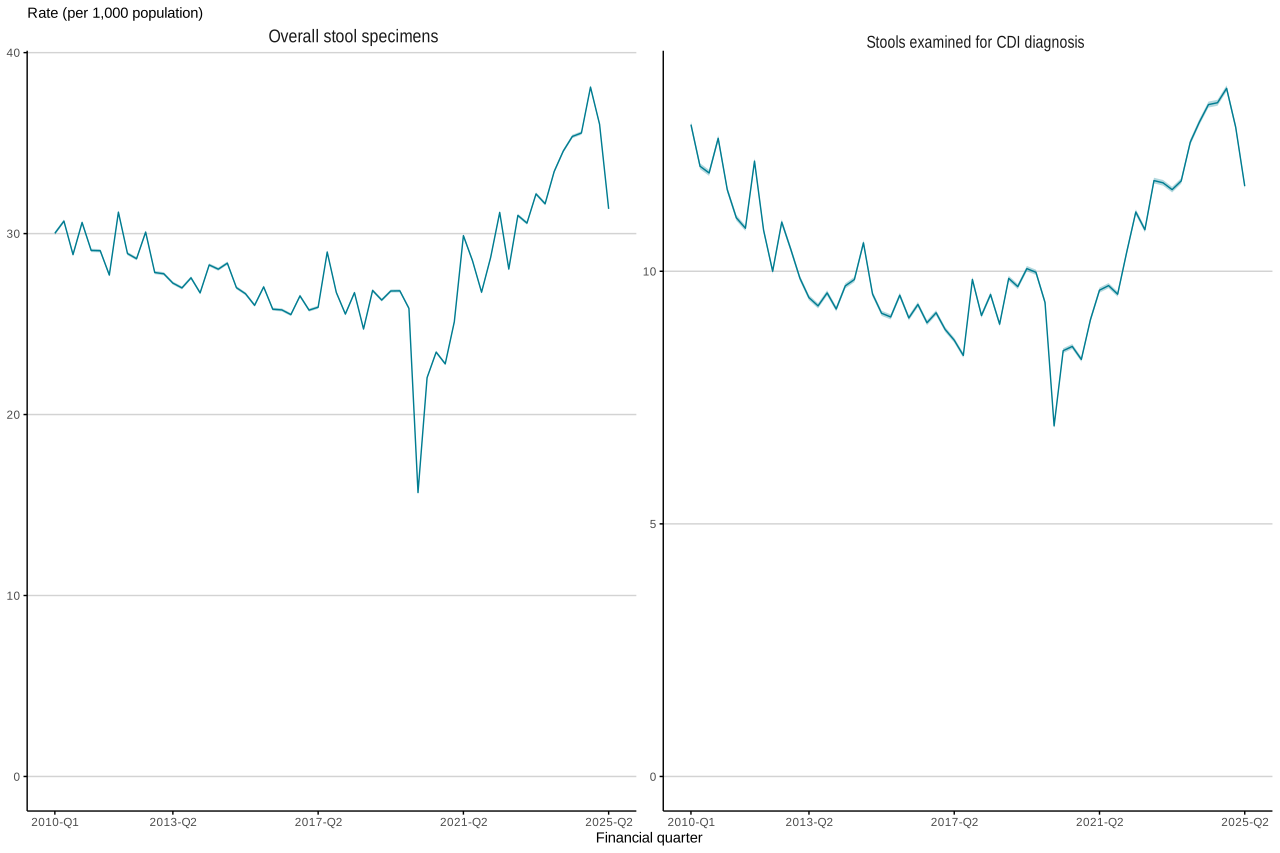
On a quarterly basis NHS acute trusts are mandated to report the total number of stool specimens tested and the total number of stool specimens tested for diagnosis of CDI. The overall stool specimen sampling rate declined by 12.6% from a rate of 30.0 per 1,000 population in April to June 2010 to 26.2 in the corresponding quarter in 2019. This was followed by a sharper 40.5% decline to 15.6 at the start of the pandemic in April to June 2020. Since the COVID-19 pandemic, the testing rate has steadily increased, surpassing 2010 levels to reach 31.4 tests per 1,000 population in July to September 2025. Notably, we have observed a sharp decline in the testing rate in the latest quarter compared to the previous quarter. This is currently under investigation, as the reduction in the number of trusts reporting during this period may have contributed to this observed decrease – particularly if trusts with historically higher rates that usually submit data did not report this quarter (Figure 16, Table S8 in the accompanying data tables).
Figure 16. Trends in the rate of stool specimens examined for CDI diagnosis and overall stool specimens examined, England, by financial year: April to June 2010 to July to September 2025
The numbers of trusts submitting quarterly is variable: for example, 120 trusts submitted in April to June 2025 versus 107 in July to September 2025.
At the start of surveillance, in April to June 2010, the sampling rate of stool specimens examined for C. difficile diagnosis was 12.9 per 1,000 population. By the same quarter in 2019, the rate saw a similar decline by 24.9% to 9.7. This downward trend continued into the start of the pandemic, with a further 28.5% decline to 6.9.
Since the COVID-19 pandemic, the sampling rate has returned to an upward trend, increasing to 11.6 per 1,000 population in July to September 2025, levels similar to those seen in 2010. We have observed a sharp decline in sampling rate in the latest quarter compared to the previous quarter. This is currently under investigation, as the reduction in the number of trusts reporting during this period may have contributed to this observed decrease – particularly if trusts with historically higher rates that usually submit data did not report this quarter. This may in turn have affected the observed increase in CDI positivity rate.
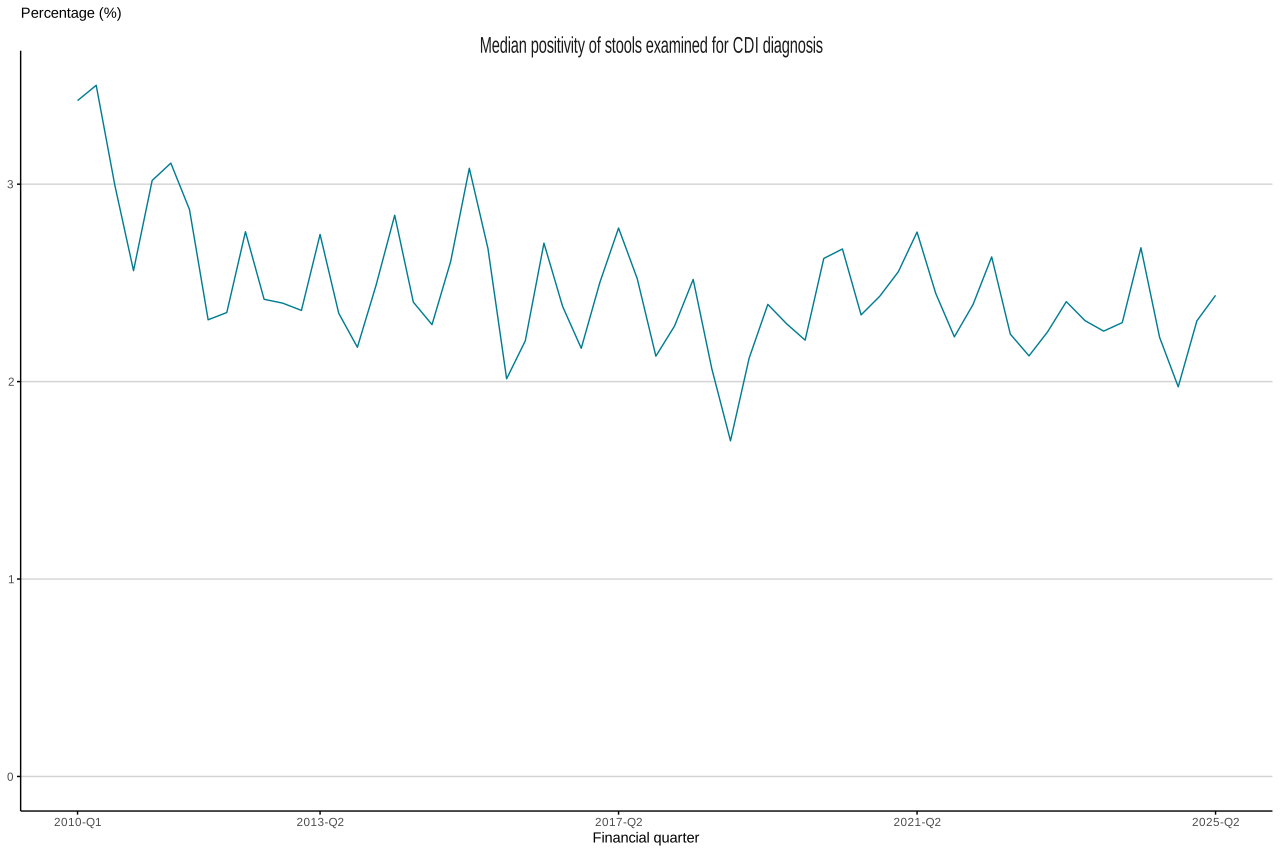
The CDI positivity was initially 3.5% in April to June 2010 before declining by 28.0% to 2.5% by the same quarter in 2012. Since then, the CDI positivity rate has been predominately stable, with a positivity of 2.8% in the latest quarter of July to September 2025 (Figure 17, Table S9 in the accompanying data tables). While the sampling rate has increased concurrently with the increase in CDI incidence, this does not appear to have impacted positivity which has remained relatively stable between 1.9% to 3.2% during this period. However, there may be variation by data collection or at trust-level.
Figure 17. Trends in median percentage positivity of stool specimens examined for CDI diagnosis, England, by financial year: April to June 2010 to July to September 2025
The numbers of trusts submitting quarterly is variable: for example, 120 trusts submitted in April to June 2025 versus 107 in July to September 2025.
Data sources and methodology
For detailed information about the data sources and methodology used to analyse data in this report, please refer to our QMI report. Some additional information related to this publication is summarised below.
Data sources
Numerator data
Infection episode data used in this report were extracted from UKHSA’s HCAI data capture system (DCS) on 5 November 2025.
Population data
Mid-year resident population estimates released by the Office for National Statistics and based on the 2021 census for England are used to derive the population denominator for the total reported incidence rates and the community-onset incidence rates.
Bed-day data
For bacteraemia and CDI, the average bed-day activity reported by NHS England’s KH03 returns is used to derive the bed-day denominator for hospital-onset incidence rates. As of Q1 FY 2010 to 2011, bed-day data has been available on a quarterly basis and has been used as such since Q2 FY 2011 to 2012.
The KH03 data used for this report were published by NHS England on 20 November 2025. This may include revisions of previously published KH03 data used in earlier reports.
On 1 December 2015, UKHSA has reviewed its policy for processing KH03 data. Data irregularities identified have been flagged with colleagues at NHS England. Until we receive confirmation that any identified change in the occupied overnight bed-days for an acute trust is anomalous, UKHSA now uses the data as published in the KH03 data set. Incidence rate rates published before December 2015 will differ slightly as a result.
For the KH03 data used to calculate rates included in this report to be consistent over the full-time period, previously amended KH03 data for trust United Lincolnshire Hospitals (trust code: RWD) for FY 2014 to 2015 has been altered to reflect that published in the KH03 data set. This could lead to slight differences in hospital-onset assigned rates when compared with publications prior to 1 December 2015.
Missing data for acute trusts in the KH03 returns will continue to be processed as before, where the KH03 return for the same quarter from the previous year will be used as a proxy. The following acute trusts were therefore affected:
- Moorfields Eye Hospital NHS Foundation Trust (RP6) FY 2007 to 2008, and FY 2008 to 2009 KH03 figures: replaced with FY 2006 to 2007 KH03 figure
- Rotherham NHS Foundation Trust (RFR): FY 2009 to 2010 and from April to June 2010, to April to June 2011 KH03 figures: replaced with FY 2008 to 2009 KH03 figure
- Sheffield Teaching Hospitals NHS Foundation Trust (RHQ) from April to June 2010, to April to June 2011 KH03 figures: replaced with FY 2009 to 2010 KH03 data
- The Princess Alexandra Hospital NHS Trust (RQW) April to June 2014, and October to December 2014 KH03 figures: replaced with April to June 2013, to October to December 2013 KH03 figures, respectively
- Ipswich Hospital NHS Trust (RGQ) January to March 2016 KH03 figure: replaced with January to March 2015 figures
- West Suffolk NHS Foundation Trust (RGR) April to June 2016, to October to December 2016 and April to June 2017 KH03 figures: replaced with April to June 2015, to October to December 2015 KH03 figures
- Gloucestershire Hospitals NHS Foundation Trust (RTE) October to December 2016, to January to March 2017 KH03 figures: replaced with October to December 2015, to January to March 2016 KH03 figures
COVID-19 and these data
Marked differences in general trends of all the data collections were observed over the course of the SARS-CoV-2 (COVID-19) pandemic. In general, we observed a reduction in the number of counts, compared with what would have been expected, across all bloodstream infection and CDI cases in the initial stages, followed by various fluctuations. This is likely to result from changes in hospital activity (with an influx of patient critically ill with respiratory infection and cancellation or delays applied to elective procedures), reduction in overnight bed occupancy, and general restrictions on movement and social mixing. Many of these collections have now returned to or exceeded pre-pandemic levels.
Background information
UK Health Security Agency and this report
Since the UK Health Security Agency (UKHSA) was created in April 2021, it has been responsible for protecting every member of every community from the effect of infectious diseases, chemical, biological, radiological, and nuclear incidents, and other health threats. We provide intellectual, scientific, and operational leadership at national and local level, as well as on the global stage, to make the nation’s health secure.
The agency replaces Public Health England (PHE) and is an executive agency of the Department of Health and Social Care (DHSC). The transition to UKHSA included the integration of both staff and systems. Accordingly, the systems and processes responsible for the publication of the previous annual epidemiological commentaries were incorporated into UKHSA. The same methods of data capture, analysis and dissemination have been employed in the production of this report.
Report summary
This document contains quarterly, national-level epidemiological commentaries for meticillin-resistant Staphylococcus aureus (MRSA), meticillin-susceptible Staphylococcus aureus (MSSA), Escherichia coli (E. coli), Klebsiella spp. and Pseudomonas aeruginosa (P. aeruginosa) bacteraemia and Clostridioides difficile infection (CDI). These include analyses on counts and incidence rates of total reported, hospital-onset (previously referred to as trust-apportioned) and community-onset (previously referred to as non-trust-apportioned) cases of MRSA, MSSA, E. coli, Klebsiella spp. and P. aeruginosa bacteraemia and CDI. All data tables associated with this report are included in an OpenDocument spreadsheet. Data revisions are covered by a data-specific revisions and correction policy.
If this data is used for publication elsewhere, citation to UKHSA, healthcare-associated infections (HCAI) and antimicrobial resistance (AMR) division is required, using the content below.
Further information and contact details
This publication forms part of the range of accredited Official Statistics outputs routinely published by UKHSA which include monthly and annual reports on the mandatory surveillance of MRSA, MSSA and E. coli, Klebsiella spp. and P. aeruginosa bacteraemia and CDI.
Annual report output
Further epidemiological analyses by financial year can be found in UKHSA’s annual epidemiological commentary.
Monthly report outputs
The following reports are produced by UKHSA monthly.
- Gram-negative, MRSA and MSSA bacteraemia, and CDI – monthly data trends
- E. coli, Klebsiella spp., P. aeruginosa, MRSA and MSSA bacteraemia – counts of total reported, hospital-onset healthcare-associated, community-onset healthcare-associated, community-onset community-associated for each bacteraemia by organisation
- CDI – counts of total reported, hospital-onset healthcare-associated, community-onset healthcare-associated, community-onset of indeterminate association, community-onset community-associated CDI by organisation.
Feedback and contact information
For any enquiries or feedback on this report, or to request copies of this report in PDF format, please contact mandatory.surveillance@ukhsa.gov.uk
Accredited official statistics
Our statistical practice is regulated by the Office for Statistics Regulation (OSR). OSR sets the standards of trustworthiness, quality and value in the Code of Practice for Statistics that all producers of Official Statistics should adhere to. You are welcome to contact us directly by emailing mandatory.surveillance@ukhsa.gov.uk with any comments about how we meet these standards. Alternatively, you can contact OSR by emailing regulation@statistics.gov.uk or via the OSR website.
UKHSA is committed to ensuring that these statistics comply with the Code of Practice for Statistics. This means users can have confidence in the people who produce UKHSA statistics because our statistics are robust, reliable and accurate. Our statistics are regularly reviewed to ensure they support the needs of society for information.
Citation
Please cite this document as follows: UK Health Security Agency. Quarterly epidemiology commentary: mandatory MRSA, MSSA and Gram-negative bacteraemia and C. difficile infection in England (up to July to September 2025). London: UK Health Security Agency, January 2026.