Understanding HIV testing in England: 2025 report
Updated 9 January 2026
Applies to England

© Crown copyright 2026
This publication is licensed under the terms of the Open Government Licence v3.0 except where otherwise stated. To view this licence, visit nationalarchives.gov.uk/doc/open-government-licence/version/3 or write to the Information Policy Team, The National Archives, Kew, London TW9 4DU, or email: psi@nationalarchives.gov.uk.
Where we have identified any third party copyright information you will need to obtain permission from the copyright holders concerned.
This publication is available at https://www.gov.uk/government/publications/understanding-hiv-testing-in-england/understanding-hiv-testing-in-england-2025-report
Main messages
HIV testing in England
The main findings are:
- as of 2023, 95% of people living with HIV had been diagnosed, 99% of those diagnosed were on treatment and 98% of those on treatment had an undetectable viral load
- the greatest potential for improvement is boosting the proportion of people with HIV who are diagnosed by scaling up testing
- HIV testing surveillance relies on overlapping systems that collectively provide more comprehensive picture of testing coverage and uptake, each with its own strengths and weaknesses
- most HIV testing annually is reported in:
- donor screening at blood donation services with 1.7 million tests
- targeted testing in sexual health services (SHSs) with 1.3 million
- emergency department (ED) opt-out testing contributing just under one million tests
HIV testing in SHSs, general practice (GP) and EDs
The main findings are:
- testing in SHSs amongst certain groups has not returned to the 2019 level, such as the number of people attending following partner notification
- SHSs and GP would benefit from targeted testing of older adults, as they are under-represented but show high test positivity
- ED opt-out testing suggested better reach to groups who would not otherwise be tested elsewhere, similar approaches in SHSs and GP could reduce inequalities in access to testing
- high positivity in GPs in low prevalence areas suggests high and very high prevalence areas may not be the most suitable targets for targeted HIV testing in GP settings (for example positivity outside London was twice as high as in London)
- better understanding of testing skew in GPs should help understand why younger people are being tested more while positive tests appear to be highest in the oldest age groups
- Black African women are more likely to test than Black African men in GPs and were more likely to test positive in contrast to pattern seen in SHSs potentially suggesting that GP may be most acceptable setting to test this population group
Community and other testing settings
The main findings are:
- community testing survey would benefit from improved testing reporting from outside of London to understand trends
- HIV positivity has steadily increased over time in drug dependency services suggesting improved targeted testing or potential ongoing transmission in these groups, further work is needed to understand reasons behind this increase and inform prevention interventions
- HIV positivity in prison settings was similar or higher in women compared to men
Findings from this report will inform the new HIV Action Plan 2025 to 2030 to be published in December 2025, alongside this report.
Understanding HIV testing in England
HIV testing is critical to ending HIV transmission by 2030, as outlined in the Towards Zero 2022 to 2025 action plan on HIV. As of 2024, it is provisionally estimated that 95% of people living with HIV had been diagnosed, 99% of those diagnosed were on treatment and 98% of those on treatment had an undetectable viral load. Whilst the UK exceeds the UNAIDS target of reaching 95% in each of these domains, it is notable that the broadest room for improvement is in increasing the proportion of those with HIV who are diagnosed. Testing is key to effective management of HIV; a negative test means that people can be reassured and offer pre-exposure prophylaxis (PrEP), whilst a positive test means that an individual can be started on treatment, contacts traced an onward transmission reduced.
There is evidence to suggest that the epidemiology of HIV is changing. The HIV Action Plan monitoring and evaluation framework 2024 report showed that there has been a plateauing in the number of new diagnoses in gay and bisexual men who have sex with men (referred to as ‘gay and bisexual men’) between 2019 and 2023, and an increase in heterosexual populations. The most significant rise in new diagnoses first made in England has been in the Black African and Black Caribbean heterosexual populations, with a 64% and 48% increase in diagnoses respectively between 2022 and 2023. This compares to just a 3% increase in the number of diagnoses in White heterosexual groups. Concerningly, women as a group were the most likely to decline a HIV test when offered it in a specialist SHSs, with 36% of non-Black African heterosexual women declining a test compared to just 16% of non-Black African heterosexual men.
HIV testing in England needs to keep pace with the changing epidemiology of newly diagnosed HIV to end transmission by 2030. There is also some evidence to suggest that current testing and surveillance could be better aligned with guidelines produced on adults HIV testing from the British HIV Association (BHIVA) and National Institute of Clinical Excellence (NICE). This report aims to conduct an analysis of current HIV testing provision in England and make recommendations on how we can scale up testing to reduce the proportion of people living with HIV in England who are undiagnosed.
Aims
The main aims of this project are:
- to describe and evaluate the system of HIV testing in England, presenting the strengths and weaknesses of each surveillance system
- to present existing data on HIV testing by setting, including descriptive statistics outlining the population offered testing, test positivity and number needed to test
- to identify areas to improve current HIV testing offer based on gap analysis of current testing offer and uptake compared to BHIVA and NICE guidelines
Methods
This report focuses on published evidence on HIV testing, outlining the strengths and weaknesses of the different surveillance systems and reconcile current testing practices with BHIVA and NICE guidelines. It extracts existing descriptive statistics from published and unpublished UK Health Security Agency (UKHSA) reports and various surveillance systems to discuss HIV testing by setting. Qualitative interviews with stakeholders were used to explore the strengths and weaknesses of different surveillance systems, incorporated in findings below.
Background
BHIVA guidelines
The combined BHIVA, British Association for Sexual Health and HIV and British Infection Association Adult HIV testing guidelines were published in 2020 and provide a set of overarching principles and recommendations relating to who should be tested, how often, in what contexts and through what approaches. Key recommendations include the implementation of universal opt-out testing when comprehensive coverage is desirable, annual testing for those in high-risk groups, provision of community testing in areas of high seroprevalence and a range of groups in which HIV testing is recommended, including gay and bisexual men, Black African people, trans women and others.
NICE guidelines
NICE guidelines on ‘HIV testing: increasing uptake among people who may have undiagnosed HIV’ published in 2016 provides a range of recommendations on who should be offered testing. These include recommendations based around community testing in areas of high and very high prevalence (over 2 diagnosed HIV per 1,000 aged 15 to 59 years), testing all people attending specialist SHSs for testing or treatment, and some people at higher risk in secondary and emergency care, GP surgeries, community settings and prisons.
Estimated undiagnosed population
It is estimated that 4,700 people (95% credible interval (CrI) 3,700 to 6,300) with HIV in England had an undiagnosed infection in 2023. Almost a quarter (1,200, 95% CrI 900 to 1,800) of the estimated number of people living with undiagnosed HIV lived in London, with the remainder (3,400, 95% CrI 2,600 to 4,800) living elsewhere in England. In 2023, the estimated number of people living with undiagnosed HIV increased, ending a trend of steady year on year decline since 2019.
There are an estimated 600 Black African heterosexual men and 1,000 Black African heterosexual women living with undiagnosed HIV in England. This suggests that 34% of all undiagnosed HIV is in the Black African community, which constitutes just 2.6% of the population of England.
Surveillance systems with HIV testing data
GUMCAD STI Surveillance System
GUMCAD STI Surveillance System is the mandatory surveillance system for sexually transmitted infections (STIs) (including HIV) and collects data on STI tests, diagnoses and services from all commissioned SHSs in England. It is an electronic, pseudonymised patient-level data set reported by about 200 services. All commissioned specialist (Level 3) and non-specialist (Level 2) SHSs are required to complete and return GUMCAD data to UKHSA. Data on HIV testing activity is submitted quarterly. Breakdown of data is available nationally, regionally and at local authority level annually. Clinic level data (see HIV testing in England: 2017 report) is also reported and shared with SHSs and their commissioners but it is not published.
The main strengths of GUMCAD are:
- broad coverage with 1.27 million tests in 2023
- range of information on attendances, tests, gender identity, sexual orientation, ethnicity and country of birth
- rapid rise in testing in gay, bisexual and men who have sex with men (referred thereafter gay and bisexual men) post-2019 due to targeted campaigns and engagement in online testing
The main weaknesses of GUMCAD are:
- annual reporting making it difficult to use for real-time surveillance (quarterly data is available and shared on a quarterly basis with SHSs and their commissioners in local authorities, but not published)
- does not include testing outside SHSs due to confidentiality safeguards at SHSs, it is not possible to link people between clinics using GUMCAD data, including where people attend in-person clinics and use online services, limiting our ability to accurately understand the ‘number of people’ tested
- no reliable way to record details such as female partners of men who have sex with men
- provides data for England only, although similar surveillance systems are used in other nations of the UK
- testing depends on individuals actively seeking care and, as a result, it does not capture people who do not or cannot access SHSs
Sentinel Surveillance of Blood Borne Virus (SSBBV)
SSBBV testing began in 2002 to supplement routine hepatitis surveillance. There are now 23 participating laboratories accounting for approximately 40% of diagnostic testing and both, positive and negative tests are reported. Inclusion of HIV testing data began in 2011. HIV numbers and positivity are collected by participating laboratories who provide services to a range of primary and secondary care settings in England. Where information is available, testing data can be linked to requesting hospital setting (for example ward and speciality). Quarterly returns are collected and data is reported annually.
Data is collected monthly from participating laboratories. Patients are assigned a unique patient identification number that links all tests performed for an individual.
The main strengths of SSBBV are:
- information on testing is reported from a wide range of settings which are not otherwise available such as primary care (including GP) and secondary care
- data is frequently updated (quarterly) which allows near real-time updates on testing uptake
- denominator data is available (previously called the denominator study) as all positive and negative tests are reported
The main weaknesses of SSBBV are that:
- ethnicity data is added using census data (Onomap using forename and surname) and so may not accurately reflect ethnicity
- it does not give complete national coverage, but it provides coverage from a wide range of settings
- it does not give information on sexual orientation or route of exposure
- trends over time can be difficult to interpret given expansion of sentinel surveillance sites over time
- information on the test type taken is not provided, which does not allow distinction between reactive and confirmatory HIV testing, which may mean positive tests are over-reported (for example, this may happen when reactive and confirmatory tests are performed at different sites)
UKHSA Community Testing Survey
In 2017, UKHSA worked with the National AIDS Trust (NAT) and Terrence Higgins Trust (THT) to carry out the first ever survey of community HIV testing. Over 20,000 HIV tests were carried over by 33 service providers in community settings in 2016 (see HIV testing in England: 2017 report).
Community-based testing has an important role in facilitating the government’s ambition of ending new HIV transmission in England by 2030. Since 2022, there has been an increase in new HIV diagnoses and in late-diagnosed HIV cases, particularly among people of Black African ethnicity, highlighting the importance of targeted testing within specific demographic groups who are less likely to access SHSs.
Eligible community HIV testing services were identified through relevant external and internal stakeholders including third sector voluntary organisations and UKHSA sexual health facilitators.
The main strengths of the community testing survey are:
- community testing provides opportunities to diagnose HIV in populations who may not access testing via SHSs
- a variety of testing methods are utilised that are suitable to the needs of different populations groups; for instance, online testing, point of care testing and venepuncture
- community groups organising testing are often run by members of the target community who may specific community insights that can facilitate testing
- community testing uptake is highest amongst heterosexual groups, a group in which HIV testing is becoming increasingly important
- there is a high test reactivity in people of Black African and Black Caribbean and other Black ethnicities, as well as people born in high diagnosed HIV prevalence countries and people residing in areas of high diagnosed HIV prevalence
- community testing rates are high in areas of high diagnosed HIV prevalence
The main weaknesses of the community testing survey are:
- data collection is captured by a voluntary survey and so may not report on HIV testing carried out by all community groups in England nationally
- voluntary reporting limits the breadth of information that can be collected given the need to make the survey
- levels of community testing in 2023 identified by the UKHSA survey had dropped by 20% since 2019
- only 25% of tests are amongst people being tested for HIV for the first time – as of 2023, this was lower than in 2019
- the largest number of tests are carried out in London however, this region is already well covered by GUMCAD – there is relatively little coverage of the North East, North West, West Midlands, East of England and South East
- reactive tests (non-confirmatory) are highest in people aged 35 to 49 years, but the highest number of tests are in people aged 25 to 34 years with very few tests in people aged 50 years and over
- reliance on reactive tests for community testing is a disadvantage given need for the individual testing to report any reactive tests to initiate follow-up diagnostic testing
- the demographic profile of people tested in community settings is arguably similar to that seen in other settings such as SHSs (for example male, gay and bisexual men, and those based in London), but the value of community testing lies in its capacity to reach individuals who may not otherwise come forward for testing
- it does not include questions identifying testing in key groups, such as sex workers
- major providers (SH24, PreventX) are not included in community testing data but are instead reported through GUMCAD, despite conducting testing in the community
ED bloodborne virus (BBV) opt-out testing
The ED BBV opt-out testing programme launched in April 2022 in EDs in areas of very high HIV diagnosed prevalence in London, Manchester, Blackpool, and Brighton. London adopted a city-wide implementation approach to ED testing, including all Type 1 EDs (major EDs that provide a consultant-led 24-hour service with full facilities for resuscitating patients).
Testing and diagnosis data comes from SSBBV and it is linked to data on ED attendances and those with blood tests in the Emergency Care Data Set (ECDS). It is additionally linked the HIV surveillance data to understand new diagnoses and linkage to care.
This is a large-scale programme with over 7 million tests undertaken for a BBV over the first 33 months of the programme.
The main strengths of ED BBV opt-out testing are:
- large volume of HIV tests completed (at least 2.78 million HIV tests in the first 33 months of the programme)
- high uptake across 21 sites where complete surveillance data was available
- reached many who had no record of a previous HIV test (68.1%)
- women, older people, people of Black Caribbean ethnicity, people exposed through heterosexual sex and those from more deprived areas (Index of Multiple Deprivation) made up a higher proportion of people newly diagnosed with HIV than in other settings
- added benefits include identifying those previously diagnosed but not linked to care and the introduction of mandatory HIV training in Manchester, opportunity to integrate on other interventions and tests for more prevalent conditions
- expanding across an additional 47 emergency departments in 2025
The main weaknesses of ED BBV opt-out testing are:
- that relatively small number of new HIV diagnoses were made, although this is balanced out by people re-engaged in care which provides additional value in the context of ending HIV transmission by 2030
- the overall impact of ED opt-out testing on new HIV diagnoses is likely underestimated due to incomplete site data, which is particularly relevant given the relatively low estimated burden of undiagnosed HIV in England
- slower linkage to care for those newly diagnosed with HIV than nationally in first 14 days
- the economic evaluation is currently being carried out by Bristol University, but it is likely that there will be a relatively high cost per new HIV diagnosis (around £10,000 to £50,000)
- the NHS has completed a separate programmatic evaluation which found higher rates of new HIV diagnoses than reported through linkage of ED opt-out SSBBV data to HIV surveillance data – this is possibly due to self-reporting bias, incorrect identifiers that prevented linkage and some duplication of diagnoses
- diagnoses in certain risk groups such as trans men and women are not included in the data
Unlinked Anonymous Monitoring (UAM) Survey of HIV and viral hepatitis among people who inject drugs (PWID)
The UAM Survey of PWID aims to monitor the prevalence of HIV, hepatitis B virus (HBV) and hepatitis C virus (HCV) infections, as well as associated risk and protective behaviours among PWID. People who have ever injected psychoactive drugs, such as heroin, crack cocaine and amphetamines, are recruited through specialist drug and alcohol agencies across England, Wales, and Northern Ireland (EWNI).
The UAM Survey is an annual, cross-sectional, bio-behavioural survey that recruits PWID through specialist agencies within EWNI. These agencies provide a range of services to people who inject psychoactive drugs, from medical treatment to needle and syringe programmes and outreach work. People using these services, who are either currently injecting drugs or who have done so previously, are asked to take part in the survey by service staff. Those who consent to take part in the survey provide a dried blood spot (DBS) sample that is tested for HIV, HBV, and HCV infection or exposure.
Antenatal testing
The Integrated Screening Outcomes Surveillance Service (ISOSS) is commissioned by NHS England’s Infectious Diseases in Pregnancy Screening Programme (IDPS) to collect, analyse and report on all women who screen positive for HIV, syphilis and/or hepatitis B in England.
The UK National Screening Committee (UK NSC) recommends that systematic, population-based screening for HIV, hepatitis B and syphilis in pregnancy is offered and recommended to all eligible women.
The NHS IDPS programme aims to reduce the risk of vertical transmission of HIV, hepatitis B and syphilis by supporting high quality and accessible screening programmes throughout England which:
- ensure equal access to uniform and quality assured screening
- promote uptake of screening through understanding and awareness of the infections screened for
- ensure HIV, hepatitis B and syphilis are identified early in pregnancy to facilitate timely entry into specialist services for assessment and management
- ensure that neonatal management and follow up is appropriate and timely
Prison
In March 2018, opt-out testing of BBVs, including HIV, was implemented in all adult prisons in England. New arrivals and people transferring between prisons should now be offered HIV tests, unless they have been tested within the last year and are not at risk, or they have a known HIV positive status.
National tuberculosis (TB) surveillance system
TB is an indicator condition for HIV testing, and 96% of people notified with TB who had a previously unknown HIV status were tested in 2023. Positivity is available but this may be underestimated because of problems with matching of the data. There will be manual submission of HIV testing results in TB data submissions from 2025 onwards.
Blood donation services
NHS Blood and Transplant service carry out infectious disease screening on donated blood, including HIV, hepatitis B, hepatitis C, human T-cell lymphotropic virus and syphilis. Results are published in an annual report.
HIV testing by setting
Sexual health services
There has been 3% increase in HIV testing in all SHSs since 2023, with 1.32 million people tested in 2024 (Table 1). There were 1,301 new HIV diagnoses in SHSs in 2024, 45% of these were in heterosexual individuals.
Demographic characteristics
The largest group tested in 2024 were heterosexual and bisexual women with 569,229 women tested, an increase by 2% from 2023, but the number of women tested remains 8% below 2019 levels (615,653). Positivity has remained stable at 0.06% in 2024 compared to 0.05% in 2023.
Heterosexual men were second largest group tested in 2024 with 342,617 men tested. Testing has increased by 5% from 2023, but still 17% below 2019 levels (414,550). Positivity was 0.08% in 2024, the same as in 2023.
Gay and bisexual men had the highest ever number tested in 2024 with 207,295 men tested. This reflected a 38% increase since 2019 (150,413) and a 2% increase compared to 2023. Positivity in gay and bisexual men declined from 0.5% in 2019 to 0.2% in 2024, suggesting reduced transmission.
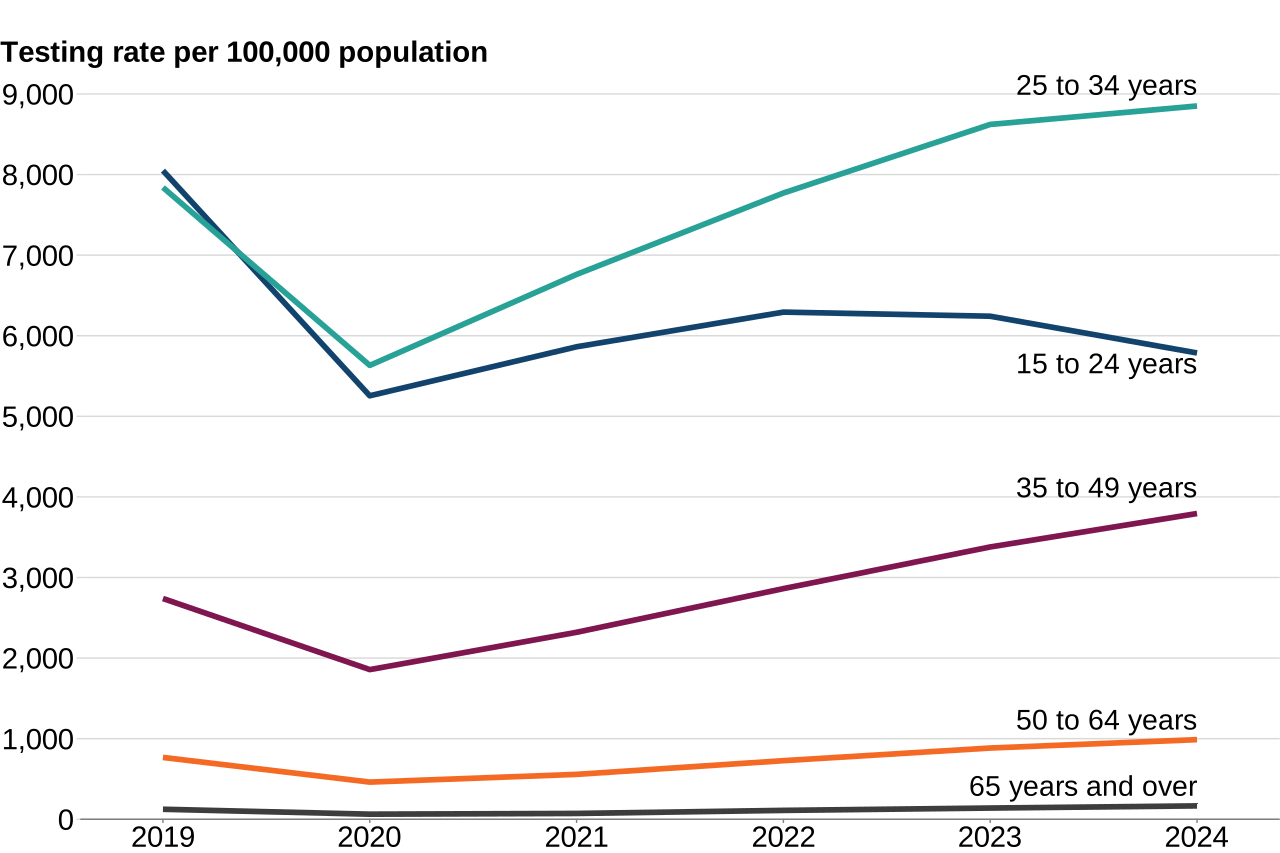
Testing among people aged 15 to 24 years dropped by 7% between 2023 and 2024, while other age groups saw increases in the testing rate (Figure 1). The highest rates of testing were in people aged 25 to 34 years (8,851 per 100,000) followed by people aged 15 to 24 years (5,786 per 100,000). The lowest rates of testing were in those aged 65 years and over (166 per 100,000).
Figure 1. HIV testing rate at all SHSs by age group, England, 2020 to 2024
Source: Data from routine returns to the GUMCAD STI Surveillance System.
Gay and bisexual men of White, Black and other ethnicities have seen a rise in the number of people tested and a decline in positivity. Testing in White gay and bisexual men increased from 153,058 in 2023 to 154,790 in 2024, and positivity remained stable at 0.2% in the period. This suggests stable transmission in this group.
Similarly, the number of Black gay and bisexual men tested increased by 4% from 8,381 in 2023 to 8,694 in 2024, and positivity remained stable at 0.6%. Gay and bisexual men of Asian ethnicity experienced a 9% increase in the number of men tested, from 18,090 in 2023 to 19,788 in 2024, and positivity remained stable at 0.4%.
Black African heterosexual people experienced increased testing between 2023 and 2024, with a 21% increase in men (27,753 to 33,509) and a 17% increase in women (33,943 to 39,674). They showed stable positivity (0.3% and 0.4% respectively), suggesting ongoing transmission. In 2023, Black African women were twice as likely to decline testing than Black African men (22% versus 8%).
There were 265 Black African heterosexual men diagnosed in 2024, compared to 418 Black African heterosexual women. There has been a decline in the proportion of Black African heterosexual women diagnosed late (10%, 174 to 157) in 2024 compared to 2023, but a rise in the proportion of Black African heterosexual men diagnosed late (21%, 106 to 128). New diagnoses in other non-White male heterosexual groups rose slightly in 2024 compared to 2023, except amongst men of Asian ethnicity which remained unchanged (53 diagnoses in both years) compared to Black Caribbean men (23 in 2024 and 16 in 2023) and other or mixed (44 in 2024 compared to 43 in 2023).
New diagnoses in non-White heterosexual females decreased or remained the same across all ethnic groups except amongst women of Asian ethnicity. Asian women with over 100% increase (44 in 2024 compared to 22 in 2023).
The number of sex workers tested in 2024 was 73% less than the number in 2019 (2,732 in 2019 decreasing to 1,995 in 2024). It should be noted that a drop in reporting in this group may not necessarily reflect a reduction in actual service use by sex workers. Similarly, the number of prisoners tested in 2023 was 65% of the number reported in 2019 (825 in 2019 decreasing to 538 in 2023).
Among trans and gender-diverse people in 2024, 12,527 were tested for HIV and 17 diagnoses were reported.
Testing and diagnoses in female partners of gay and bisexual men was not recorded, despite being recognised as a priority group in BHIVA guidelines.
Online testing
Online HIV testing grew rapidly from 19% in 2019 to 45% in 2024 of all SHS tests. Whilst high, this reflected a small decrease from 48% of tests in 2023. Women tested online more than men in 2024; men tested in-person more.
Partner notification
In 2024, a total of 975 people were reported by specialist SHSs as a contact following partner notification, a 4% increase from 935 in 2023. Of those, 85% were tested and 5% (43 of 830) were newly diagnosed with HIV in 2024. This high positivity of 5% demonstrates the effectiveness of partner notification. The number of people reported as a contact following partner notification remains 38% lower than in 2019 (1,564).
Regional distribution
The number of people testing for HIV in London has increased 6%, from 445,655 in 2023 to 458,037 in 2024. Outside of London the number of peopled tested has increased by 6%, from 782,840 in 2023 to 832,848 in 2024 but remained below 2019 level (867,297).
Testing amongst gay and bisexual men living in London remained stable between 2023 (96,750) and 2024 (97,237). Outside of London, the number of gay and bisexual men tested increased by 6% between 2023 and 2024 (99,662 to 105,862).
The number of heterosexual and bisexual women tested outside of London in 2024 was notably low compared to 2019 levels, with a 11% decrease (405,018 in 2019 compared to 358,978 in 2024).
New HIV diagnoses rose 6.4% outside of London between 2023 (689) and 2024 (733), and by 16% in London (456 in 2023 to 527 in 2024).
The main summary points are:
- testing in SHSs skews towards younger populations, with the highest rates of testing in those aged 25 to 34 years (8,851 per 100,00) compared to the lowest rates in those aged 65 and over (166 per 100,000)
- testing inside of London has recovered well post-pandemic, but testing outside of London has failed to return to 2019 levels
- testing in gay and bisexual men both inside and outside of London has recovered well post-pandemic
- overall testing uptake was highest in heterosexual and bisexual women
- heterosexual and bisexual Black African women are almost 3 times as likely to decline a HIV test in specialist SHSs as heterosexual Black African men (22% versus 8%)
- the number of Black African heterosexuals testing rose from 26,314 in 2019 to 33,509 in 2024 while the positivity rate has remained stable at 0.3%, which may be indicative of ongoing transmission
- data on certain groups is not available such as on the number of women testing who are sex partners of gay and bisexual men and positivity in key groups such as sex workers and prisoners
UKHSA Community Testing Survey
In 2023, a total of 19,699 tests were reported from 19 community HIV testing services resulting in 55 reactive tests (Table 1). The numbers of tests reported have decreased by 30% since 2019 (28,082 tests from 25 testing services in 2019). However, the number of tests has increased by 7% since 2022 and 40% (22 of 55) reactive tests had a confirmatory testing result, resulting in 15 new diagnoses. During national testing week, 902 tests were carried out resulting in one reactive test.
Demographic characteristics
People tested in the community tended to be younger with 33.7% of people aged 25 to 34 years. Test reactivity was highest in people aged 35 to 49 years with 0.5%. Males were more likely to be tested with 70% of overall tests undertaken, however, test reactivity was higher in women with 0.4%.
Approximately 45% of all tests were in gay and bisexual men with 52% in heterosexual and 3% in women who have sex with women. Test reactivity was similar between heterosexual and gay and bisexual groups at 0.3%.
People of Black African ethnicity received 14.1% of all tests, suggesting effective targeting of this group for testing. Test reactivity in this group almost doubled (0.49% to 0.84%) between 2019 and 2022. However, this difference was not statistically significant.
People of Black Caribbean and any other Black ethnicity made up only 4% of the total tests taken. However, test reactivity was 1%, which was the highest amongst any ethnic group. People of White ethnicity had 62% of all tests with the lowest test reactivity of 0.2%.
Regional distribution
The largest proportion of tests were carried out in London (32.6%) and Yorkshire and Humber (22.3%). Other regions were relatively poorly represented, particularly the North East (1.1%), West Midlands (3%), East of England (6.2%) and the North West (7.3%).
The main summary points are:
- community testing makes only a small contribution to overall HIV testing, resulting in a limited impact on HIV surveillance systems, although it remains highly valuable for community outreach
- it tends to reach younger gay and bisexual men living in London and does engage key populations, such as Black African individuals in testing
- the value of monitoring community testing could be increased by widening a pool of voluntary and community sector (VSC) organisations reporting to UKHSA and understanding if they do signposting to other services (SH:24 or Preventex) or conduct their own testing
- engaging with community groups conducting HIV testing in underserved regions with a particular focus on the North East and West Midlands and population groups such as women, older people and those of other Black ethnicities
- caution should be taken in over-interpreting trends in test reactivity over the years given small numbers and potential for random variation in reactivity year on year
- the community testing survey reported 1% of the tests of ED opt-out testing, however, new diagnoses were proportionally 4 times higher in community survey
ED BBV opt-out testing
This section provides a summary of ED BBV opt-out 33 months evaluation and the full report is available for more information.
Between April 2022 and December 2024, a total of 2,781,164 HIV tests were carried out across 34 EDs in England (Table 1). Testing resulted in 719 new HIV diagnoses across 24 sites and 441 people previously diagnosed with HIV and not in care. Almost 60% of attendees at ED had a blood test, 68% were tested for HIV across 21 sites where complete surveillance data is available. Over 73% of people tested had no record of a previous HIV test in SSSBV. The number needed to test for one new HIV diagnosis was 1,916.
Demographic characteristics
Those newly diagnosed through the ED opt-out programme tended to be older than those diagnosed in other settings, with 1 in 3 diagnoses in those aged 50 years and over. This is in contrast to testing in other settings where less than 1 in 5 are aged 50 years and over.
A higher proportion of new diagnoses were in women (35.3%, 253) compared to new diagnoses in women in other settings (30.1%, 1,383). This suggests that women are more likely to be diagnosed in ED than in other services such as SHSs. Most people newly diagnosed through the programme reported having acquired HIV through heterosexual sex compared to people diagnosed in other settings (65.3%, 363 versus 46.5%, 1,670).
People of Black Caribbean (19, 5.5% versus 132, 3.4%), and Black other (49; 13.8% versus 160; 4.1%) ethnicity were more likely to be newly diagnosed in ED compared to other settings. Newly diagnosed people were more likely to live in the most deprived quintile than those newly diagnosed (204, 33.3% versus 1,018, 26.8%).
Linkage to care
There were 441 people previously diagnosed with HIV but not engaged in care. Of those, 66% were subsequently linked to care (291). Linkage to care for those newly diagnosed was less effective than in other settings 42.2% within 14 days compared to 66.3% in all other settings.
The main summary points are that:
- ED opt-out testing resulted in a high volume of tests (2,781,164) over the course of the 33-month evaluation but a relatively modest number of new diagnoses at 719
- there is a relatively high cost of opt-out testing per new diagnosis, however, those new diagnoses were more likely to be in older, female, deprived, heterosexual and Black Caribbean and other groups than those newly diagnosed in other settings such as SHSs
- the evaluation is limited to 21 out of 34 participating sites, which means numbers referenced are an underestimate of the total number of people tested and newly diagnosed
- surveillance data quality could be improved by reporting on the number of tests by demographic group and positivity by group, in addition to number of new diagnoses
- additional information on testing in key groups (trans men and women, sex workers) would be of value but is limited by what can be shared through SSBBV
- coordination with separate NHS programmatic evaluation could be of value
General practice
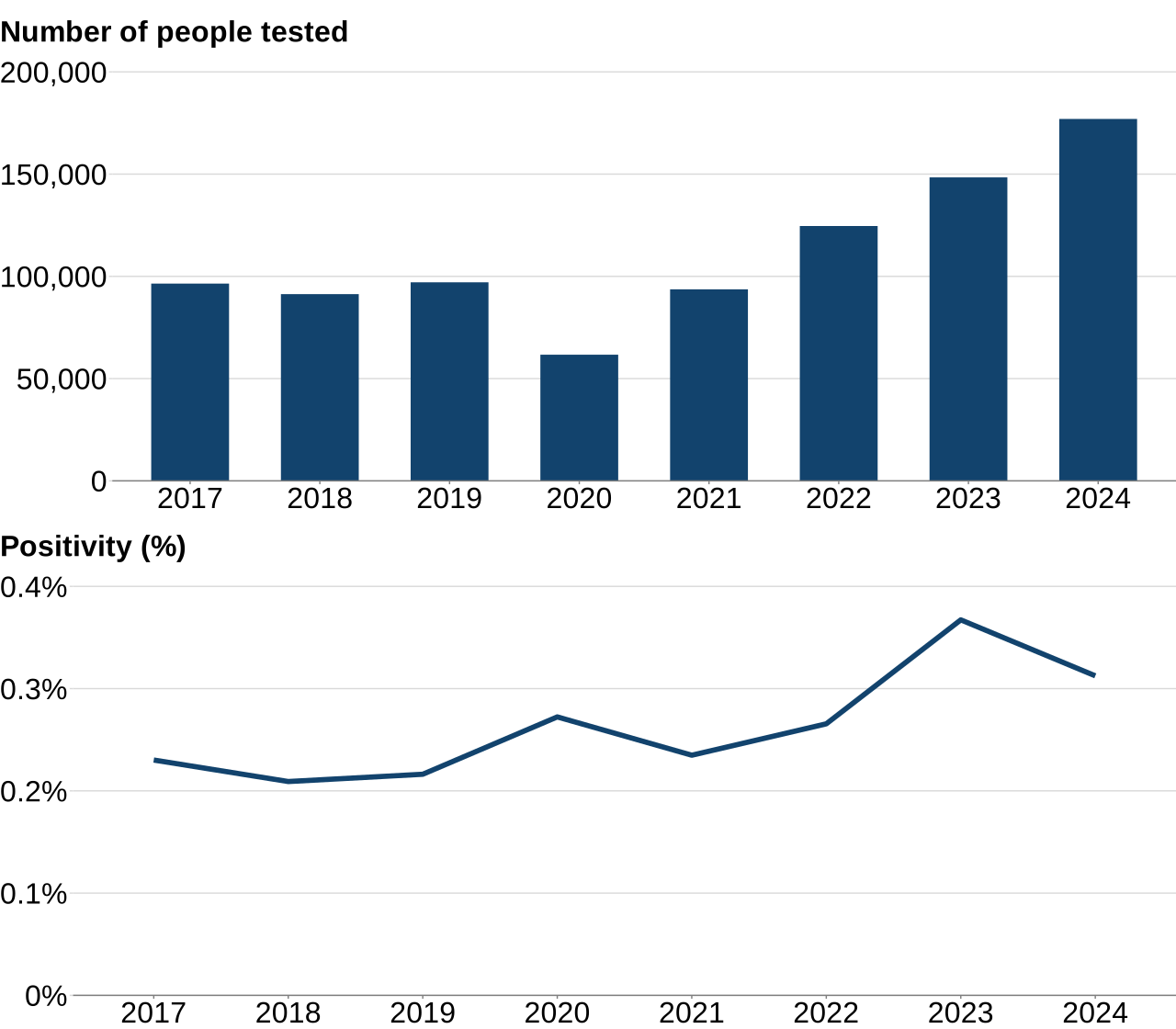
This data is based on SSBBV and it covers 40% of the GP population registered in England. There were 183,876 tests in participating GPs in 2024 amongst 176,968 people, an increase of 18.4% compared to 155,283 tests in 2023 and an 80% increase compared to 102,355 tests in 2019 (Table 1). This could be due to the expansion of SSBBV reporting rather than a true increase in HIV testing in GP.
There were 553 people who tested positive for HIV in 2024 and the overall positivity decreased from 0.37% in 2023 to 0.31% in 2024. However, this still represented an increase compared to 0.22% in 2019 (Figure 2).
Figure 2. Number of people tested for HIV in GP and test positivity, England, 2017 to 2024
Source: Data from routine returns to SSBBV.
Demographic characteristics
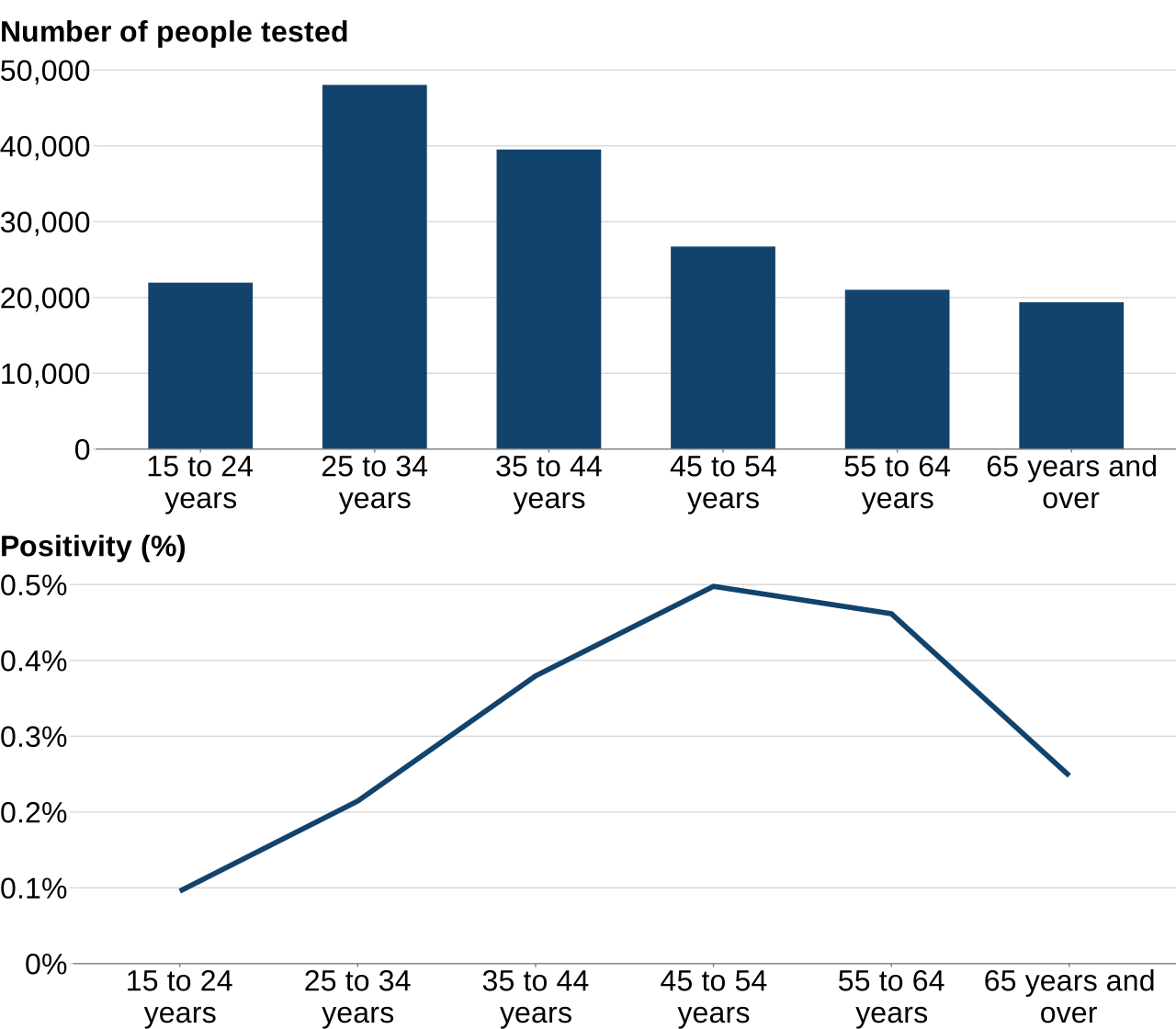
People tested in GPs in 2024 tended to be younger with 27% people aged 25 to 34 years, 22% aged 35 to 44 years and 15% aged 45 to 54 years. Positivity was highest in people aged 45 to 54 years (0.5%) and 55 to 64 age group (0.46%), compared to people aged 35 to 44 years (0.37%) and people aged 25 to 34 years (0.21%).
The proportion of tests in each age group has remained similar across the 2022 to 2024 period. Positivity in people aged 45 to 64 years was consistently higher than in people aged 25 to 44 years. Positivity decreased amongst all age groups between 2023 and 2024, except for people aged 65 years and above (positivity increased from 0.21% to 0.24%) (Figure 3).
Figure 3. Number of people tested for HIV in GP and test positivity, by age, England, 2024
Source: Data from routine returns to SSBBV.
In 2024, women were more likely to be tested in general practice than men (53.1% versus 46.0%), but men were more likely to test positive then women (0.39% versus 0.24%). Positivity decreased between 2023 and 2024 in both men and women from 0.28% in 2023 for women compared to 0.24% in 2024, and 0.47% to 0.38% in men.
The highest positivity by ethnic group in GPs in 2024 was in people of Black African ethnicity (0.64%, 49 of 7,667) and positivity had decreased from 0.97% in 2023 to 0.70% in 2022. Positivity was higher in Black African females (0.74%) than in Black African men (0.48%) in 2024.
Those of Black other ethnicity had the second highest positivity (0.35%, 12 of 3,455), although numbers of positive tests were relatively small. People of White British ethnicity had a positivity of 0.35% (128 of 36,257) and this had remained at a similar level in the period from 2022 to 2024. White British men had a higher positivity of 0.63% than White British females of 0.13%. There were a large number of people missing ethnicity data (53,7% 95,076 of 176,968).
Regional distribution and prevalence band
The highest number of people tested were in London (95,990) followed by the North West region (18,095). Positivity was low in London at 0.22% compared to outside of London at 0.41% and the England average of 0.31%. Positivity was highest in the North West (0.79%) and East of England (0.51%). Positivity was relatively low in London (0.22%) compared to the England average (0.31%).
Over the time, positivity has increased steadily in the North West (0.43% in 2022, 0.75% in 2023 and 0.79% in 2024) and East of England (0.0% in 2022, 0.13% in 2023 and 0.51% in 2024). Other regions saw a peak in positivity in 2023 and subsequent decline in 2024.
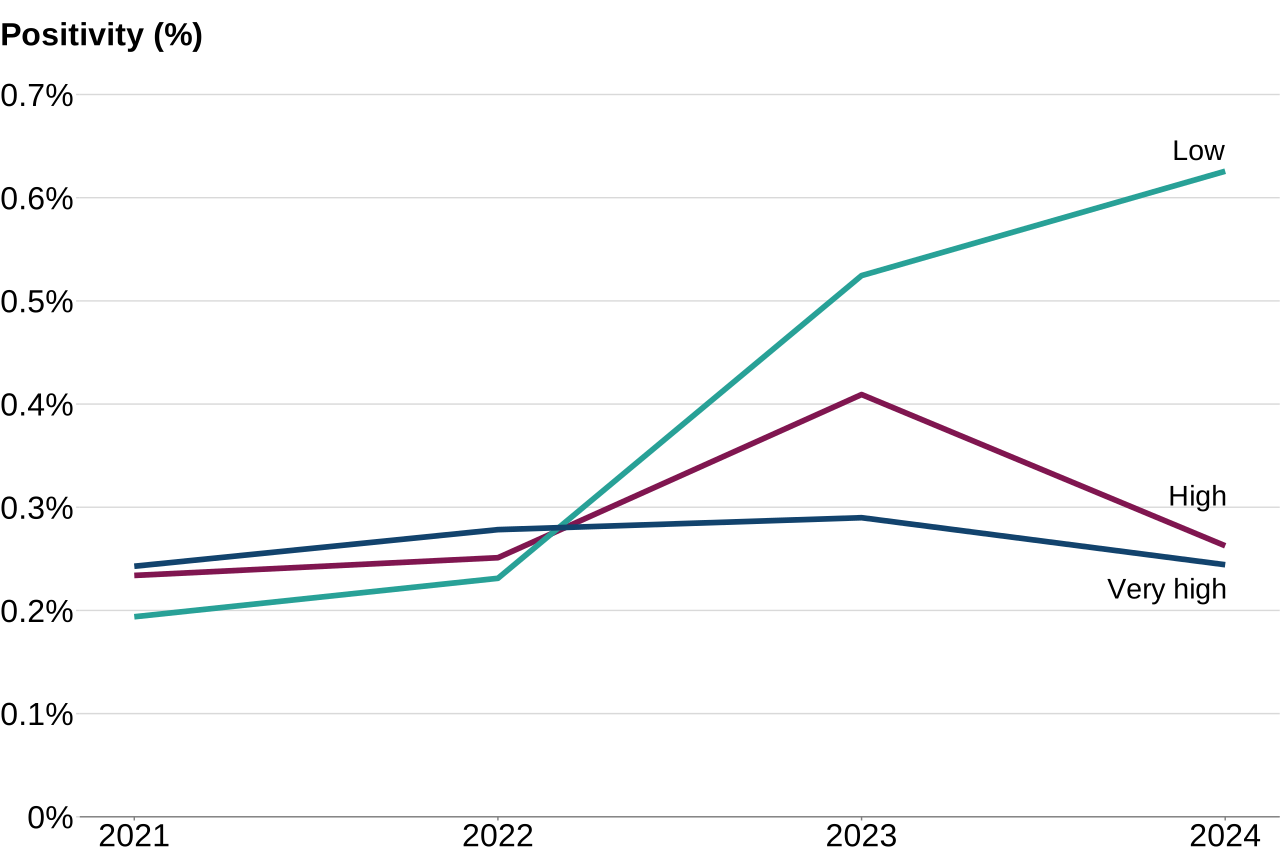
Positivity in low prevalence areas (0.63%) in 2024 was over twice that in high (0.26%) and very high prevalence areas (0.24%) (Figure 4). There were similar, if less dramatic differences in 2023 (0.52% positivity in low prevalence areas, 0.41% in high and 0.29% in very high). A more expected pattern was seen in 2022 (0.23% positivity in low prevalence, 0.25% in high prevalence and 0.28% in very high).
Figure 4. Test positivity in GP, by HIV prevalence band, England, 2024
Source: Data from routine returns to SSBBV.
The main summary points are:
- positivity has risen in GP settings from 0.22% in 2019 to 0.31% in 2024
- GPs test most in younger groups but positive tests are more likely to be in older groups
- positivity in GP has increased post-pandemic and was almost twice as high in GPs outside of London than in London (0.41% versus 0.22%), and twice as high in low prevalence areas (0.63%) compared to high (0.41%) and very high prevalence (0.24%) areas
- there has been a decline in positivity in people of Black African ethnicity (0.70% in 2022, 0.97% in 2023 and 0.64% in 2024)
- Black African women were more likely to test (4,449 tests versus 3,095 tests in Black African men) and more likely to test positive (0.74% compared to 0.48%)
Community outreach
Community outreach constitutes a test undertaken in a community setting and reported via SSBBV in settings such as The Hepatitis C Trust or Find and Treat team.
There were 9,383 tests in community outreach in 2024 amongst 8,915 people (Table 1). This represents a 57% increase in test numbers compared to 2023 (5,980) and a 682% increase compared to 2021 (1,199 tests).
In total, 59 people tested positive in 2024, compared to 47 in 2023 and 13 in 2022. Overall positivity amongst people tested was 0.63% in 2024, compared to 0.84% in 2023, 0.68% in 2022 and 0.46% in 2021.
Demographic characteristics
Testing was highest in people aged 35 to 44 years with 2,428 people tested and positivity of 0.45% in 2024, and positivity was highest in people aged 45 to 54 years with 2,233 people tested and positivity of 0.94%. The next highest positivity was 0.83% in people aged 55 to 64 years.
There were 3,384 women and 5,374 men tested in 2024. Positivity in men increased from 0.49% in 2022 to 0.81% in 2023 and subsequently decreased to 0.76% in 2024. Positivity in women increased from 0.49% in 2022 to 0.92% in 2023 and decreased to 0.47% in 2024.
The highest positivity by ethnic group in 2024 was in those missing ethnicity (0.91%, 40 of 4,384). There were limited number of positive tests in all other groups aside from White British, where positivity was 0.41% (12 of 2,936).
Regional distribution and prevalence band
London reported the highest number of 4,088 people tested followed by
2,389 in Yorkshire and Humber and 1,228 in South East that reported the highest individual positivity of 2.04% (25 of 1,228).
There were 3,107 people tested from areas of low HIV prevalence areas, with 2,707 reported from high prevalence areas and 3,101 from very high prevalence areas. Positivity was highest in ‘low’ prevalence areas in 2024 (1.16%) compared to high prevalence areas (0.59%) and very high prevalence areas (0.16%). This pattern was similar in 2023 (0.25% positivity in very high prevalence areas, 0.61% in high prevalence areas, and 1.09% in low) but reversed in 2022 (3.13% in very high prevalence areas, 0.49% in high prevalence areas, 0.44% in very high prevalence areas).
The main summary points are:
- there has been a substantial increase in reporting from community outreach settings since 2021 (682% rise)
- older people were more likely to test positive and the South East had very high levels of positivity in outreach at 2.04%
- low prevalence areas had the highest positivity
Occupational health
There were 19,014 tests in participating occupational health services in 2024 amongst 18,111 people (Table 1). This represents a 21.3% increase in test numbers compared to 2023 (15,852), and a 25.7% increase compared to 2019 (15,130 tests).
There were 36 people who tested positive in 2024, compared to 38 in 2023 and 27 in 2022. Overall positivity amongst people tested was 0.2% in 2024, compared to 0.25% in 2023 and 0.16% in 2022. This was higher than positivity of 0.1% in 2019.
Demographic characteristics
Testing was highest in people aged 25 to 34 years (0,14%, 7,621) in 2024, and positivity was highest people aged 45 to 54 years (0,73%, 1,502).
There were 12,315 women tested in 2024, compared to 5,294 men. Positivity amongst men increased from 0,30% in 2022 to 0.45% in 2023 and decreased to 0.34% in 2024. Positivity in women remained stable at 0.11% in 2022, 0.17% in 2023 and 0.13% in 2024.
Ethnicity records were missing for 73% of people and remaining numbers were too small to draw any conclusions.
Regional distribution and prevalence band
London reported the highest number of people tested (6,981), followed by the North West (3,347) and East Midlands (1,805).
The West Midlands reported the highest individual positivity (0.35%) with 5 positive tests amongst 1,414 people. Positivity in London was 0.17% and outside London 0.21%.
Most people tested in 2024 were from areas of very high (7,728) HIV prevalence areas, with 6,844 reported from high prevalence areas and 3,539 from low prevalence areas. Positivity of 0.25% was the same for very high and low prevalence areas and higher than 0.10% in high prevalence areas. Low prevalence areas had a consistently higher positivity than high prevalence areas since 2022.
The main summary point is:
- high positivity in people aged 45 to 54 years may reflect HIV testing among overseas workers in the health and social care sector, as supported by the gender imbalance observed in occupational health HIV tests
Prison
This data is received via SSBBV system. There were 40,779 tests in prison in 2024 amongst 36,768 people (Table 1). This represents a 5.8% increase in test numbers compared to 38, 554 tests in 2023 and a 50.5% increase compared to 27,094 tests in 2019. Of those, 191 people tested positive in 2024, 159 in 2023 and 58 in 2022. Overall positivity amongst people steadily increased from 0.27% in 2022 to 0.46% in 2023 and 0.52% in 2024. Positivity of 0.43% was higher than that recorded in 2019.
Demographic characteristics
Testing was highest in people aged 25 to 34 years with 6,196 people tested and positivity of 0.50% in 2024. Positivity of 1.04% was highest in people aged 55 to 64 years with 1,056 people tested. This is followed by 0.55% positivity in people aged 35 to 44 years. Age was missing for 49% of all entries.
There were 1,704 women and 21,817 men tested in 2024. Positivity in men had increased steadily from 0.26% in 2022, to 0.43% in 2023 and 0.47% in 2024. Positivity in women stayed steady across the 3 years (0.42% in 2022, 0.66% in 2023 and 0.47% in 2024). Women had consistently higher positivity than men in 2022 and 2023.
Ethnicity was missing for 70% of people. Positivity was highest in those of Mixed-White and Asian ethnicity (3.70%, 1 of 27) and any other ethnic group (1.79%, 4 of 223).
Regional distribution and prevalence band
North West region reported 14,451 people tested, North East had 7,106 and South East had 5,728 people tested. London reported the highest individual positivity of 1.10% with 52 positive tests amongst 4,725 people. East of England and Yorkshire and Humber also had high levels of positivity at 1.09% and 1.06% respectively. The average positivity outside of London was 0.43%.
Most people tested in 2024 were from areas of low HIV prevalence areas (21,776), with 13,585 reported from high prevalence areas and 1,407 from very high prevalence areas. Positivity was highest in very high prevalence areas in 2024 (1.28%) compared to high prevalence areas (0.54%) and low prevalence areas (0.46%). This pattern was similar in 2023 (0.80% positivity in very high prevalence areas, 0.54% in high prevalence areas, and 0.38% in low and in 2022 (0.32% in very high prevalence areas, 0.32% in high prevalence areas, 0.22% in very high prevalence areas).
The main summary points are:
- there has been a large rise in testing in Prison settings since 2019, alongside a steady increase in positivity, this could suggest ongoing transmission in prison settings
- HIV positivity in women in prison was higher than in men in 2022 and 2023, and similar in 2024 (0.46% compared to 0.47% in men), highlighting the importance of ensuring HIV testing continues to be made available to women
- many people were missing age and ethnicity in the SSBBV data
Prison testing reported via health and justice system
Opt-out testing for BBVs has been implemented in prisons since 2018. In 2023, 92% of new receptions and transferred, not already confirmed as HIV positive, were offered HIV testing within 7 days of reception (149,786 of 162,283). Of those, 120,957 received testing, of whom 73% (88,687) were tested within 2 weeks of reception. Of those tested, 0.7% had a positive test (651 of 88,687).
Secondary care
Secondary care includes all tests completed in:
- fertility services
- general medical or surgical departments
- obstetrics and gynaecology
- other ward types, paediatric services
- renal
- specialist HIV services
- specialist liver services
- unspecified wards reported via SSBBV
There were 435,511 tests in secondary care settings in 2024 amongst 373,624 people (Table 1). This represents a 29% increase in test numbers compared to 338,803 tests in 2023 and a 61% increase compared to 270,493 tests in 2019. Of those, 2,573 people tested positive in 2024, 2,050 in 2023 and 1,321 in 2022. Overall positivity amongst people tested was 0.68% in 2024, 0.71% in 2023 and 0.51% in 2022. This was similar to 0.54% positivity in 2019.
Demographic characteristics
Testing was highest in people aged 65 years and over (0, 26%, 81,262) in 2024, and positivity was highest in people aged 45 to 54 years (0,99%, 49,837). There were 195,575 women tested in 2024 (52.4%), 173,900 men (46.5%) and 4,149 records with missing information on sex (1.1%).
Positivity in men increased from 0.74% in 2022 to 0.82% in 2023 and 0.85% in 2024. Positivity in women increased from 0.29% in 2022 to 0.47% in 2023 and 0.44% in 2024.
Positivity was highest in those of Black African ethnicity (1.79%, 234 of 13,101) and similar in Black African men (1.87%) and Black African women (1.75%). Positivity had remained approximately stable with 1.97% in 2023 and 1.52% in 2022. Positivity in those of White British ethnicity in 2024 was 0.46% (544 of 117,736) and had gradually increased from 0.32% in 2022 to 0.43% in 2023 although this was driven by increases in positivity in male patients.
Regional distribution and prevalence band
London reported the highest number of people tested (178,492), followed by the North West (48,789). The North West reported the highest individual positivity of 1.75% with 854 positive tests amongst 48,789 people.
East of England had the second highest positivity at 0.71% with 198 people tested positive out of 27,887.
Most people tested in 2024 were from areas of high HIV prevalence areas (183,537), with 134,214 reported from very high prevalence areas and 55,873 from low prevalence areas. Positivity has steadily increased from 0.44% in 2022 to 1.14% in 2024. Positivity of 1.14% was highest in low prevalence areas compared to 0.98% in very high and 0.41% in high prevalence areas.
The main summary points are:
- positivity continues to be highest in older age groups
- positivity has gradually increased in low prevalence areas
General medical and surgical
There were 15,560 tests in participating general medical and surgical settings amongst 14,865 people reported to SSBBV in 2024 (Table 1). This represents a 32% increase in test numbers compared to 11,795 in 2023 but a 46% decrease compared to 28,575 in 2019. Of those, 84 people tested positive in 2024, 43 in 2023 and 51 in 2022. Overall positivity amongst people increased from 0.34% in 2022 to 0.38% in 2023 and 0.57% in 2024.
Demographic characteristics
Testing was highest in people aged 65 years and over with 4,272 people tested and positivity of 0.23% in 2024. Positivity was highest in people aged 35 to 44 years at 0.97% and 2,262 people tested. Positivity was also high in people aged 45 to 54 years with 0.84% and people aged 55 to 64 years at 0.61%. There were 6,721 women and 7,833 men tested in 2024.
Positivity in men increased almost two-fold in 2024 (0.65%) compared to 2022 (0.39%) and 2023 (0.37%). Positivity in women also increased steadily across all 3 years (0.27% in 2022, 0.41% in 2023 and 0.49% in 2024). Amongst those groups with over 100 people tested, positivity was highest in Black Caribbean (3.06%, 6 of 196) and Black African (2.16%, 9 of 417). Those of White British ethnicity had a positivity of 0.30% (16 of 5,358).
Regional distribution and prevalence band
London reported the highest number of people tested (3,478), followed by West Midlands (2,923) and East Midlands (2,512). The North West reported the highest individual positivity of 1.67% with 28 positive tests amongst 1,673 people. The North West has consistently had a high positivity rate compared to other areas in General Medical and Surgical patients (0.58% in 2022, 0.63% in 2023). East of England had the second highest positivity at 0.70% (8 of 1142).
Most people tested in 2024 were from areas of high (8,616) HIV prevalence areas, with only 3,939 reported from very high prevalence areas and 2,310 from low prevalence areas. Positivity was highest in very high prevalence areas at 1.12% compared to high prevalence areas of 0.34%. This pattern was similar in 2023 (0.59% versus 0.33%) and in 2022 (0.64% versus 0.24%). Positivity was higher in low prevalence areas in 2024 (0.48%) than in high prevalence areas, although it was consistently lower in 2022 and 2023.
The main summary points are:
- testing in general medical and surgical settings has declined since 2019 by 46% and this may reflect the impact of ED opt-out testing
- HIV testing in general medical and surgical settings reflects the demographics of hospital inpatients, with most tests in people aged 65 years and over in 2024 and high positivity rates in older age groups, particularly those aged 45 to 64 years at 0.84%
- the North West reported the highest individual positivity in 2024 (1.67%), with a consistently high positivity rate compared to other areas
Specialist liver services
There were 17,787 tests in participating specialist liver settings in 2024 amongst 16,677 people (Table 1). This is 27% increase in test numbers from 2023 (12,349). There were 461 people who tested positive in 2024, 278 in 2023 and 189 in 2022. Overall positivity amongst people tested increased steadily from 1.72% in 2022 and 2.1% in 2023 to 2.76% in 2024. This was higher than 1.2% positivity in 2019.
Demographic characteristics
Testing was highest in people aged 35 to 44 years with 3,947 people tested and positivity of 3.01% in 2024. Positivity was highest in people aged 25 to 34 years at 4.72% with 3,028 people tested. There were 6,385 women and 9,856 men tested in 2024. Positivity in men increased from 2.06% in 2022, 2.54% in 2023 to 2.98% in 2024. Positivity in women also increased from 1.25% in 2022, 1.60% in 2023 and 2.43% in 2024.
Data on ethnicity was missing in 43% of people who had high positivity of 4.19% (303 of 7227). Amongst those where ethnicity was known it was highest in Black other category (6.03%, 12 of 199) and Black African (5.36%, 26 of 485). Those of White British ethnicity had a positivity of 1.09% (68 of 6,240).
Regional distribution and prevalence band
West Midlands reported the highest number of people tested (6,034), followed by London (3,362) and the North West (2,470). The East of England reported the highest positivity of 12.70% with 55 positive tests amongst 433 people. London had the second highest positivity at 4.61% (155 of 3,362).
Most people tested in 2024 were from high HIV prevalence areas (11,101) with 4,159 reported from very high prevalence areas and 1,417 from low prevalence areas. Positivity was highest in very high prevalence areas (4.52%) compared to high prevalence areas (2.35%). This pattern was similar in 2023 (4.49% and 1.31%) and in 2022 (2.56% and 1.39%).
The main summary points are:
- there has been a steady increase in positivity in specialist liver services from 2.76% in 2024, 2.12% in 2023 and 1.72% in 2022
- those who had higher positivity rates were aged 25 to 34 years at 4.72% and male at 2.98%
- positivity was highest in Specialist Liver Services of any setting, which likely reflected the high burden of HIV co-infection in those with other BBV (such as hepatitis B and C)
- positivity was highest amongst Black other (6.03%, 12 of 199) and Black African people (5.36%, 26 of 485), particularly compared to those of White British ethnicity (1.09%, 68 of 6,240)
- testing has steadily increased in Specialist Liver Services from 2019, in contrast to the trend seen in General Medical and Surgical Settings
Drug dependency services
There were 63,764 tests in participating drug dependency services in 2024 amongst 59,968 people (Table 1). This represents a 10% decrease in test numbers compared to 2023 (71,007 tests), and a 263% increase compared to 2019 (17,549 tests). In 2024, 370 people tested positive, 356 in 2023 and 68 in 2022. Overall positivity amongst people tested increased with 0.25% positivity in 2022, 0.53% in 2023 and 0.62% in 2024. This was higher than positivity in 2019 (0.03%).
Demographic characteristics
Testing was highest in people aged 35 to 44 years (0, 66%, 20,067) in 2024, and positivity was highest in people aged 45 to 54 years (0, 67%, 17,849). There were 17,150 women tested in 2024, compared to 39,731 men.
Positivity in men increased from 0.31% in 2022 to 0.61% in 2023 and 0.75% in 2024. Positivity in women also increased steadily across all 3 years (0.16% in 2022 to 0.38% in 2023 and 0.41% in 2024). Ethnicity records were missing in 78% of people (0.68%, 318 of 46,905).
Regional distribution and prevalence band
North West reported the highest number of people tested (14,294), followed by the West Midlands (7,698) and London (6,998). London reported the highest individual positivity (1.03%) with 100 positive tests amongst 6,998 people. The average positivity outside London was 0.50%.
Most people tested in 2024 were from high HIV prevalence areas (16,837) with 8,608 reported from very high prevalence areas and 34,523 from low prevalence areas.
Positivity was highest in very high prevalence areas (1.21%) compared to high prevalence areas (0.67%). This pattern was similar in 2023 with 0.92% positive in very high prevalence areas, compared to 0.69% in high prevalence area and 0.50% in very high prevalence areas and 0.24% in high prevalence areas in 2022.
The main summary points are:
- reporting from drug dependency services has increased substantially since 2019 by 263% increase with 59,968 people tested in 2024; this may relate to changes in reporting or reflect real increases in HIV testing
- positivity was highest in people aged 45 to 54 years at 0.67% and it has steadily increased in both men and women between 2022 and 2024 to a high of 0.74% in men and 0.41% in women
- positivity was twice as high in London as outside of London (1.03% versus 0.50%)
UAM Survey of PWID
There were 3,361 tests amongst UAM Survey participants in 2023, which represents a 10% increase in tests compared to 2022 and a 5% increase in tests compared to 2019 (Table 1). There were 81% respondents who reported ever being tested for HIV, and 39% ever being tested in the previous year.
There were 34 respondents who reported living with HIV (1.0%), with prevalence stable over the last decade. Of those with antibodies to HIV, 88% were aware of their diagnosis (down from 100% in 2019, albeit with uncertainty from small numbers of respondents). There was 57% of respondents who injected drugs in the past year, 14% of respondents reported ever trading sex for money, goods or drugs, 64% reported ever being in prison and 41% reported being homeless in the past year. A large majority (74%) of respondents were male.
The main summary points are that:
- the UAM survey demonstrated higher positivity than surveillance in other settings, in keeping with the demographic reached
- reporting could further break down positivity amongst key groups (for example sex workers) to support HIV surveillance efforts
TB testing
In 2023, testing information was available for 96% (4,317 of 4,498) of people notified with TB who had a previously unknown HIV status and excluding those who were diagnosed with TB post-mortem. Of these people, 96% (4,157 of 4,317) were tested for HIV (testing coverage) (Table 1). The proportion of people notified with TB who were tested for HIV was highest in people born in countries with high HIV prevalence at 97.5% compared with people born in the UK (93.8%). In 2023 there were 172 people with TB coinfected with HIV (3.5%). This is similar to the proportion co-infected in 2019 (3.6%).
Blood donation services
In 2024 there were 1,492,302 donations screened from 801, 121 donors aged 17 years and over, 91% of which were from repeat donors (Table 1). Of those, 4% were of Asian ethnicity and 2% were of Black ethnicity. Positivity was very low with 9 donors tested positive for HIV and discarded (0.0006%). This is likely due to pre-donation questionnaires which screen for higher-risk behaviours (for example: ever had syphilis or in last 3 months had gonorrhoea, used drugs during sex or had anal sex with a new or multiple partners?).
Of those 9 who tested positive, 3 were new donors and 6 were repeat donors. Most donors (6 of 7) were men and they had a median age of 33 years (range 19 to 53 years). The 6 repeat donors had acquired HIV within the last 12 months, 5 in the UK, including 3 women.
The main summary points are:
- blood donation results in HIV testing for a large number of donors each year
- pre-donation screening is effective in excluding those with HIV from donating, leading to very low positivity
Antenatal services
The latest ISOSS HIV report was published in 2025 (covering pregnancies booked in 2022 to 2023), and BHIVA released guidelines on the management of HIV in pregnancy and the postpartum period in 2025. All HIV screen positive pregnancies are included; this includes pregnancies in women with established HIV diagnosis as well as those newly diagnosed through antenatal screening. Data around vertical transmissions also includes women who were diagnosed with HIV after delivery. Data presented on vertical transmissions, breastfeeding and trends includes pregnancies reported in previous years.
IDPS data shows that 660,338 pregnant women entered the antenatal HIV screening pathway from 2022 to 2023. This resulted in 71 new diagnoses of HIV. There were 0.13 newly diagnosed women per 1,000 eligible women. The majority of women living with HIV (86.7%) were diagnosed prior to pregnancy. The proportion of women known to have HIV before pregnancy has increased from approximately 40% between 2000 and 2023. Coverage for antenatal HIV, hepatitis B and syphilis screening was 99.8%.
Demographic characteristics
Among pregnancies booked in 2022 to 2023, 30.9% of women were aged 35 to 39 years at delivery followed by 29.6% of women aged 30 to 34 years.
Black African women made up a declining proportion of women with HIV in pregnancy, from 74.1% in 2012 to 2013 to 64.6% in 2022 to 2023. At the same time there has been an increase in the proportion of women of White ethnicity who have HIV in pregnancy (16.5% in 2012 to 2013 compared to 21.0% in 2022 to 2023). Almost 1 in 5 (19.2%) of pregnancies in 2022 to 2023 were to women born in the UK. Among women born outside the UK, the majority of pregnancies in 2022 to 2023 were in women who arrived in the UK more than 5 years before conception (54.1%). There were 70.7% of pregnancies to women who had one or more previous birth.
Setting of diagnosis
Over two-fifths (43.8%) of pregnancies to women living with HIV booked for antenatal care in 2022 to 2023 were diagnosed through antenatal screening, either in the current pregnancy or a previous pregnancy.
The main summary points are:
- antenatal screening and interventions during pregnancy have led a to a very low vertical HIV transmission rate, which has remained at less than 0.4% since 2012 among women diagnosed by delivery (from 2.1% in 2000 to 2001)
- despite the low positivity rate, antenatal testing at the latest available coverage (99.8%) is considered to be cost-effective when taking into account the benefit to both mother and child
- Black African women make up a high but declining proportion of women with HIV in pregnancy
- BHIVA standard for newly diagnosed women being seen by specialist HIV services is within 2 weeks of diagnosis
- in 2022 to 2023, 83.1% of women newly diagnosed in pregnancy were seen within 2 weeks of diagnosis
- ISOSS are now collecting data on women who decline HIV screening in pregnancy and these data will be included in future ISOSS reports
- IDPS handbook guidance on the management of declines includes referral to an infectious disease multidisciplinary team (as does BHIVA guidelines)
- since 2020 ISOSS covers England only due to the impact of GDPR and prior to this, the surveillance was all of the UK
Summary of HIV testing by setting
Table 1. Summary of HIV testing findings by setting of testing, England, 2022 to 2025
| Setting | Year | Number of tests | People tested | Number positive | Number needed to test [note 1] | Positivity |
|---|---|---|---|---|---|---|
| Emergency department | 2022 to 2025 | 2,781,164 | 1,377, 299 (attendees) | 8,624 (719 new diagnoses) |
1,915 [note 2] | 0.63% [note 3] |
| Blood donation | 2024 | 1,492,302 | 801,121 | 9 | 165,811 | 0.0006% |
| Sexual health services | 2024 | 1,318,795 | Not available | Not available | Not available | 0.10% |
| Antenatal screening | 2022 to 2023 | Not available | ∼660,000 | Not available | Not available | Not available [note 4] |
| Secondary care (SSBBV) | 2024 | 435,511 | 373,624 | 2,573 | 145 | 0.68% |
| GP (SSBBV) | 2024 | 183,876 | 176,968 | 553 | 320 | 0.31% |
| Prison (Health and Justice) | 2023 | Not available | 88,687 | 651 | 136 | 0.70% |
| Drug dependency services (SSBBV) | 2024 | 63,764 | 59,968 | 370 | 162 | 0.62% |
| Prison (SSBBV) | 2024 | 40,779 | 36,768 | 191 | 192 | 0.52% |
| Community (UKHSA Survey) | 2023 | 19,699 | Not available | 55 [note 5] |
Not available | 0.003% [note 5] |
| Occupational health (SSBBV) | 2024 | 19,014 | 18,111 | 36 | 503 | 0.20% |
| Specialist liver service (SSBBV) | 2024 | 17,787 | 16,677 | 461 | 36 | 2.76% |
| General medical and surgical (SSBBV) | 2024 | 15,560 | 14,865 | 84 | 177 | 0.57% |
| Community outreach (SSBBV) | 2024 | 9,383 | 8,915 | 59 | 151 | 0.66% |
| TB | 2023 | 4,157 | Not available | Not available | Not available | Not available |
| PWID (UAM) | 2023 | 3,361 | Not available | Not available | Not available | Not available |
Sources: Data from routine returns to SSBBV, blood donation services, GUMCAD, antenatal screening services, UAM and TB surveillances.
Note 1: number needed to test (NNT) are number of people tested to detect one positive.
Note 2: NNT for new HIV diagnoses only.
Note 3: 0.05% for 719 new HIV diagnoses.
Note 4: 62 new HIV diagnoses.
Note 5: reactivity 0.003%.
Guidelines
BHIVA Testing Guidelines 2020
Significant steps have been taken towards implementation of BHIVA guidelines on adult HIV testing, published in 2020. The introduction of ED opt-out testing has led to a rise in HIV diagnoses amongst groups seemingly unrepresented in HIV testing in other services, including older adults, those of Black African ethnicity, and heterosexual.
Evidence on what works
BHIVA recommends that HIV testing should be routinely recommended to gay and bisexual men. New diagnoses in gay and bisexual men groups have fallen dramatically in the period between 2015 and 2024, and 2024 saw the highest number of gay and bisexual men ever tested in a single year. Gay and bisexual men make up half of those reached through community testing and undergo high levels of testing in SHSs (both in-person and online).
BHIVA recommends that “self-testing and sampling should be made available to at-risk groups and in areas of high seroprevalence to increase testing uptake and testing frequency”. Online HIV testing that offers self-testing and self-sampling has grown rapidly from 19% in 2019 to 45% in 2024 of all SHS tests however inequalities in access persist and women tested online more than men in 2024.
BHIVA recommends that “in a broad range of healthcare settings, HIV testing programmes should employ a universal, opt-out approach when the local prevalence of undiagnosed HIV means that testing is cost-effective or where 100% testing coverage is desirable”. Opt-out testing has been introduced in over 80 emergency departments in since 2022 and in all adult prisons in England since 2018 and evaluation studies show that it can reduce inequalities by identifying those with HIV who may not consider themselves at risk and reduce stigma.
BHIVA highlights that cost-effectiveness of testing programmes may be relevant for some approaches but should not be universally applied as a cut-off threshold for testing programmes as we work towards ending HIV transmission. ED opt-out testing has demonstrated the added value of HIV testing beyond a straightforward ‘number needed to test’, including 719 people being newly diagnosed and further 441 previously diagnosed but not engaged in care; of those, 66% subsequently linked to care. Other positive benefits of ED opt-out testing include co-testing for other BBVs, rollout of HIV mandatory training for staff in some trusts and reducing stigma around HIV testing.
It is possible that interventions to increase HIV testing will become less cost-effective as progress is made towards ending HIV transmission as more people are needing to be tested to find one individual with HIV positive test. More cost-effective approach would be to scale up HIV testing in targeted population such as heterosexual Black African men and women to reduce inequalities in access.
What more could be done
BHIVA recommends testing for “all patients accessing primary and secondary healthcare in areas of high and very high HIV prevalence, including emergency departments”. Although there has been an increase in testing across EDs, all prisons, maternity services through antenatal testing and SHSs, there is a gap in GP where testing is not routinely offered.
Risk-based testing results in higher testing amongst younger age groups across most settings despite positivity being highest in older age groups in most settings described in this report in contrast to the highest number of new HIV diagnoses identified via opt-out testing in EDs in people aged 35 to 49 years and 50 to 64 years. Furthermore, people of Black ethnicity make up a large proportion of the undiagnosed population with HIV and are possibly more likely to be diagnosed in non-SHS settings, as demonstrated through ED opt-out testing. Previous UKHSA qualitative work around late diagnoses have demonstrated that low risk perception and limited access to SHS outside urban areas are major drivers of late diagnoses.
Several models of delivery for expanding HIV testing in GP are possible such as opt-out testing when accessing healthcare in areas of high HIV prevalence and undergoing venepuncture, with proactive invitations for testing in areas of very high HIV prevalence; integration of HIV testing with the NHS health checks for people aged40 years and overand opt-out testing for new registrants at GPs.
SHSs should also be encouraged to adopt opt-out HIV testing in order to reduce inequalities in testing access currently present.
BHIVA recommends that HIV testing be carried out in the presence of an indicator condition, including non-AIDs defining conditions associated with an undiagnosed HIV seroprevalence more than 1 per 1,000. Some recommendations are for testing in conditions that may present to pharmacy or GP such as community-acquired pneumonia and unexplained fever. It is not clear from surveillance the extent to which HIV testing is routinely requested in the context of these conditions.
Notifiable diseases (for instance hepatitis B, C and hepatitis A) could be used as an opportunity for people working in health protection to recommend HIV testing to primary or secondary care staff caring for a clinical case.
BHIVA identifies testing in several different groups as of important including female sexual contacts of gay and bisexual men, sex workers and trans women. HIV testing in sex workers has decreased by 27% in 2024 compared to 2019 in SHSs. Whilst this figure is dependent on the disclosure of sex work to services and may therefore underestimate the number of tests in this group, it may highlight that more needs to be done to proactively test commercial sex workers.
Data on HIV testing in trans women and female sexual contacts of gay and bisexual men was sparse and should be more systematically collected.
Several settings reported via SSBBV demonstrated rising positivity in low prevalence areas. It is possible that there is a growing mismatch between diagnosed and undiagnosed prevalence as progress is made towards the HIV action plan target of ending new transmissions by 2030. It would be worth considering re-assessing HIV prevalence areas in England.
NICE guidelines 2016
These guidelines refer to NICE guidelines on ‘HIV testing: increasing uptake among people who may have undiagnosed HIV’, released in 2016.
Evidence on what works
NICE recommends routine testing is specialist services to everyone attending their first appointment (followed by repeat testing) at drug dependency programmes, termination of pregnancy services, and services providing treatment for hepatitis B, hepatitis C, lymphoma and TB.
Drug dependency programmes have observed significant increase in testing since 2019. This could be either an increase in reporting or testing efforts due to drive towards hepatitis C elimination.
Positivity in drug dependency settings has steadily increased post-pandemic, suggesting ongoing transmission in this group. Services for hepatitis B, hepatitis C, lymphoma and TB have seen 96% of people notified with TB who had an unknown HIV status were tested for HIV; 27% increase in specialist liver settings since 2023 coupled with increasing positivity.
NICE recommends offering and testing for HIV on admission to hospital, including emergency departments, to everyone who has not previously been diagnosed with HIV. ED opt-out testing for all attendances has led to large scale offer of HIV testing in this setting in a range of more than 2.5 million between April 2022 and December 2024.
Recommendation on HIV testing in prison has been implemented as opt-out testing was introduced in 2018 with a significant increase however further audits may need to be undertaken to ascertain effectiveness of this scheme.
NICE recommendations for community testing (including outreach and detached services) have been implemented and reported via SSBBV with an 57% increase in test numbers compared to 2023 (5,997) and a 739% increase compared to 2021 (1,199 tests). However, reports of community testing from third sector organisations have declined by almost a third (30%) since 2019 (UKHSA Community Testing Survey).
NICE recommendation implementation to increase online testing and self-sampling is evident in an increase in online testing since 2019.
Ascertaining impact on testing awareness and reducing barriers to testing is difficult to ascertain through routine surveillance however HIV Prevention England and ED opt-out testing may have led to increased awareness of HIV testing overall.
What more could be done
NICE guidelines state that specialist SHSs should offer and recommend an HIV test to everyone who attends for testing or treatment for example opt-out testing. It is not clear if this is the case, particularly given the reduction in overall testing numbers in SHS in 2023 (3% below testing levels in 2024 compared to 2019). All attendees to SHSs should be offered HIV test either when venepuncture is performed for different reason and/or when STI testing and general screen is clinically indicated (either through venepuncture or via less invasive testing procedure).
NICE recommends that in areas of high and extremely high prevalence, HIV testing should be offered to everyone who has not previously been diagnosed with HIV and who registers with the practice or is undergoing blood tests for another reason and has not had an HIV test in the previous year. It does not appear that this advice is being implemented. The finding in this report of relatively high positivity in areas of low prevalence suggests that a prevalence-based approach may need to be re-thought.
Specialist SHSs should offer and recommend an HIV test to everyone who attends for testing or treatment and ensure fourth-generation serological and point-of-care testing are available. It is not clear if this is the case, particularly given the reduction in the overall testing numbers in SHS in 2024 (3% below testing levels in 2019).
NICE recommends that GP surgeries in all areas offer and recommend HIV testing to everyone who has not previously been diagnosed with HIV and who is in a high-risk group. NICE also recommends that GP surgeries in very high and high prevalence areas offer and recommend an HIV test to everyone who has not previously been diagnosed with HIV and who registers with the practice or is undergoing blood tests for another reason, provided they have not had an HIV test in the previous year. In areas of very high prevalence, GPs should also consider offering HIV testing opportunistically at each consultation, whether or not blood tests are being taken for another reason, based on clinical judgement. If a venous blood sample is declined, a less invasive form of specimen collection, such as a mouth swab or finger-prick test, should be offered.
Given the relatively low level of tests undertaken in GP practices and reported via SSBBV, it is unlikely that these recommendations are being fully implemented. Further work is needed with GPs to increase HIV testing and to strengthen links and signposting to online testing services, where appropriate.
Recommendations
Monitoring of HIV testing
Below are recommendations for consideration:
- ethnicity recording should be improved from all settings reporting to SSBBV as high levels of missing data limit the analyses that could inform tackling inequalities in access
- ethnicity recording could be improved in SSBBV by linking data with Hospital Episodes Statistics (HES) data set
- monthly frequency with which SSBBV is updated could be better utilised as a real time monitoring tool for interventions designed to increase uptake of HIV testing such as work done with GP
- the UKHSA Community Testing Survey could be improved by wider reach to voluntary and community sector across England currently not reporting HIV testing and better engagement with community groups to reach underserved communities, with a particular focus in the North East and West Midlands
- the UKHSA Community Testing Survey could increase reach to groups with higher positivity, including Black African communities, women and older people
- data relating to female sexual contacts of gay and bisexual men, sex workers and trans women should be made more available amongst UKHSA surveillance systems
Population groups needed to be tested
Below are recommendations for consideration:
- higher rates of new diagnoses in people aged 50 years and over in ED opt-out testing coupled with low testing in GP settings but high positivity suggest under-testing and under-diagnoses for this age group in GP
- further work needs to be done to encourage testing in people aged 50 years and over including education for GP, strengthening system-level interventions such as integration of HIV testing into the NHS Health Check and implementing opt-out testing, as per NICE guidelines
- explore reasons for high levels of declining testing in SHSs amongst Black African women
- explore and build on the features of testing in GP that might make this a more acceptable setting for HIV testing in Black African women, who test in GP at relatively higher rates than in other settings such as SHSs
- improve monitoring, reporting and awareness about HIV testing in indicator conditions (particularly non-AIDS defining condition) to ensure that this testing is carried out across primary and secondary care
- UKHSA could better support testing in indicator conditions by recommending testing for HIV to clinicians when notified about key indicator conditions (hepatitis A, B and C)
- partner notification, with a positivity of 5%, is the most effective way of making a new diagnosis and it should be increased back to 2019 levels, where practicable
Testing settings
Below are recommendations for consideration:
- testing in SHSs remains below 2019 levels, with testing in heterosexual and bisexual women 8% below 2019 levels suggesting consideration of implementing fully opt-out testing in this setting to progress efforts towards ending transmission by 2030
- growing mismatch between diagnosed and undiagnosed prevalence, as we are getting closer towards ending HIV transmission and epidemic is shifting, should be considered in prioritising new testing initiatives
- rise in positivity in drug dependency settings should be investigated further, particularly in London
- there has been a rapid rise in online testing since 2019 highlighting importance of maintaining access to variety of HIV testing modalities as online testing may not be the preferred option for some groups
- community testing is important vehicle for increasing testing rates in at risk groups and should be provided or commissioned as part of local HIV testing programmes
- UKHSA should work to increase the value of surveillance of community testing by expanding the range of organisations reporting to the community testing survey, with a particular focus on organisations supporting people of Black African ethnicity and other key populations
Acknowledgements
Alison Brown, Cuong Chau, Sharon Cox, Sarah Dermont, Tamara Đuretić, Kate Francis, James Lester, Neil Mackay, Sema Mandal, Debbie Mou, Hamish Mohammed, Sarah Murphy, Helen Peters, Matthew Quinn, Claire Reynolds, Victoria Schoemig, Ruth Simmons, Rebecca Till.
Suggested citation
Matthew Quinn, Tamara Đuretić, Neil Mackay, Victoria Schoemig, Ruth Simmons: Understanding HIV testing in England, 2022 to 2025. December 2025, UK Health Security Agency