ISOSS HIV report (for pregnancies between 1 April 2022- 31 March 2023)
Published 11 December 2025
Applies to England

© Crown copyright 2025
This publication is licensed under the terms of the Open Government Licence v3.0 except where otherwise stated. To view this licence, visit nationalarchives.gov.uk/doc/open-government-licence/version/3 or write to the Information Policy Team, The National Archives, Kew, London TW9 4DU, or email: psi@nationalarchives.gov.uk.
Where we have identified any third party copyright information you will need to obtain permission from the copyright holders concerned.
This publication is available at https://www.gov.uk/government/publications/isoss-hiv-report-for-pregnancies-between-1-april-2022-31-march-2023/isoss-hiv-report-for-pregnancies-between-1-april-2022-31-march-2023
1. Executive Summary
The rate of HIV vertical transmission in England remains low, reflecting effective antenatal screening and clinical management of HIV. Findings from the Clinical Expert Review Panel discussions show that among cases of vertical transmission, late antenatal booking and barriers to engagement with care continue to be key issues.
The number of pregnancies in women known to be living with HIV in England is unchanged, with the majority of pregnant women already diagnosed before pregnancy and on treatment at conception. However, in 2022-23 there was a small increase in the proportion of women newly diagnosed in pregnancy, which is consistent with the increasing numbers of new diagnoses in adults in England (UKHSA 2024 report).
Complex social factors contributing to health inequalities continue to affect some pregnant women living with HIV, with housing concerns, mental health issues and social services involvement being the most frequently reported issues. 8 in 10 pregnancies were in women born outside the UK, the majority from Africa. Almost a quarter of women born abroad arrived in the UK during pregnancy or the year prior, and this group were more likely to experience complex social issues, book late for antenatal care and give birth with a detectable viral load.
Almost all (98.7%) women received antiretroviral therapy (ART) during pregnancy and over 95% of women diagnosed before pregnancy were on ART prior to conception. There remains a small number of women diagnosed and living with HIV and prior to pregnancy, but not on ART, for whom pregnancy offers an opportunity to re-engage with HIV services.
Overall, 92% of women gave birth with an undetectable viral load, reflecting high levels of engagement with care and well-established clinical pathways. However, this is still below the UNAIDS 95-95-95 target set in 2020, to achieve viral suppression in over 95% of people on ART. Indeed, challenges remain, as evident in reports of ART adherence issues and viral load rebounds in pregnancy. Future ISOSS reports will include a more complete picture of viral load monitoring during pregnancy.
A high proportion of infants born to women living with HIV received the infant postnatal prophylaxis (PNP) regimens introduced in 2018 for low-transmission risk, reflecting the effectiveness and confidence in antenatal ART. But as surveillance data shows, there are still improvements to be made in the timeliness of PNP, with around 10% of infants receiving their first dose later than the recommended timeframe, with most delays attributed to service issues.
As the number of women choosing to breastfeed is continues to increase, ISOSS is able to provide a unique population-level picture to build on understanding of the impact of breastfeeding both in terms of transmission risk and the experiences of those who choose to breastfeed. Data so far provide insights into the wide variation of breastfeeding practice and challenges around education, support and clinical monitoring.
ISOSS continue to monitor the screening programme and the management of pregnancies to women living with HIV alongside clinical outcomes, as well as key areas of interest as they emerge, such as new HIV diagnoses, inequalities and changes in clinical practice.
By working closely with valued maternity and paediatric respondents across the country, ISOSS is able to provide high quality and timely data to inform the NHS Infectious Diseases in Pregnancy Screening programme (NHS IDPS) and national clinical guidelines.
2. Introduction
The Integrated Screening Outcomes Surveillance Service (ISOSS) is commissioned by the NHS England Infectious Diseases in Pregnancy Screening (NHSE IDPS) programme. Surveillance is conducted for pregnancies in women with human immunodeficiency virus (HIV), hepatitis B virus (HBV) and syphilis, their babies and other children diagnosed with HIV, vertically acquired HBV and congenital syphilis in England. HIV reporting has been running since 1989. It was known as the National Surveillance of HIV in Pregnancy and Childhood (NSHPC) until 2018, when ISOSS was established.
This report focuses on pregnancies among women living with HIV who booked for antenatal care in England from 1 April 2022 to 31 March 2023. The figures presented include all HIV screen positive pregnancies reported to ISOSS with data submitted by the end of June 2024, regardless of timing of HIV diagnosis (i.e. before or during pregnancy). Data on vertical transmissions also include women who were diagnosed with HIV after delivery. Data presented on vertical transmissions, breastfeeding and trends includes pregnancies reported in previous years.
Until 2020, ISOSS reports covered the whole of the UK. Data reported from 2020 onwards are for England only due to current governance arrangements (with the exclusion of some breastfeeding trend data and spotlight sections). Data are presented by financial year, in line with national screening programme data reports (unless otherwise indicated).
The Spotlight sections within the report are designed to enable a more in depth look at particular topics and trends and, as such, include ISOSS data covering longer time periods and/or populations different to those featured in the main report analyses.
3. NHS IDPS programme KPIs and standards summary statistics
For the screening year 1 April 2022 to 31 March 2023 in England Screening:
- 660,338 pregnant women (of 671,696 eligible) entered the antenatal HIV screening pathway
- screening coverage for antenatal HIV, hepatitis B and syphilis screening were each 99.8% (the same for all 3 infections)
- 0.91 eligible pregnant women per 1,000 tested received a screen positive result for HIV
- 0.13 eligible pregnant women per 1,000 tested received a new HIV diagnosis
Table 1: trends in screen positive rates for HIV in pregnant women, England, screening year ‘2018 to 2019’ to ‘2022 to 2023’
| 2018 to 2019 | 2019 to 2020 | 2020 to 2021 | 2021 to 2022 | 2022 to 2023 | |
|---|---|---|---|---|---|
| *Returns included/expected | 144/146 | 140/143 | 139/142 | 142/142 | 139/139 |
| Screen positive women: rate per 1,000 women tested | 1.26 | 1.19 | 0.96 | 0.92 | 0.91 |
| Newly diagnosed women: rate per 1,000 women tested | 0.14 | 0.13 | 0.11 | 0.11 | 0.13 |
Table 1 note 1: the rate for total screen positive women is based on a count that has been rounded to the nearest multiple of 5 for data for 2018 to 2019, 2019 to 2020, 2020 to 2021, 2021 to 2022 and 2022 to 2023 to prevent disclosure by comparison with other published data.
Table 1 note 2: *The number of expected and actual returns from maternity providers
In addition to the screening coverage KPIs, the NHSE IDPS programme set Screening standards to measure how well screening programmes are performing in important areas. Standards for the HIV screening programme focus on:
- screening coverage
- test turnaround time
- timeliness of screening result and information for women
For the screening period covered within this report, the standards data were submitted annually by 139 different maternity providers to NHS England. As the data was collected separately from ISOSS surveillance and there are some differences between the 2 data sources due to data quality issues including duplicate records and following transfers of care.
Since April 2023, ISOSS have collected standards data directly from maternity providers on behalf of the NHS IDPS to closely monitor these targets for NHSE.
4. HIV overview
In 2022 to 2023, 100% of maternity providers submitted their ISOSS data collection forms for women with screen positive results for HIV.
There were 534 pregnancies in women living with HIV with a booking date in the 2022-23 screening year, showing almost no change from the 536 pregnancies reported in the 2021-22 screening year.
4.1 Timing and setting of diagnosis
Women had been diagnosed with HIV prior to conception in 86.7% (463 of 534) of pregnancies (Table 2). The remaining women were diagnosed during the current pregnancy. The proportion of women with a known HIV diagnosis before pregnancy increased over time from 82.9% in 2011-12 and peaked at 90.4% in 2017-18. However, there has been a shift in recent years with an increase in the proportion of women diagnosed during their current pregnancy, increasingly steadily from 9.6% in 2017-18 (86 of 896) to 13.3% (71 of 534) in 2022-23, p<0.01 (see Figure 1).
Women were diagnosed in pregnancy through the IDPS programme in England, either in the current pregnancy or a previous pregnancy, was 43.8% in 2022-23 (Table 3). The proportion of women who had previously been diagnosed abroad increased from 9.9% (75 of 761) in 2017-18 to 14.8% (60 of 406) in 2022-23. The increase in new diagnoses reflects trends shown in the UKHSA 2024 testing, PrEP, new HIV diagnoses and care outcomes for people accessing HIV services report data.
Of the women diagnosed for the first time during pregnancy in 2022-2023, most (94.4%, 67 of 71) were diagnosed as a result of antenatal screening. Other settings of diagnosis included Emergency Departments (via emergency department bloodborne virus opt out testing) (two women), genitourinary medicine (GUM) clinics (one woman) and General Practice (one woman). All four women were tested in other settings before antenatal booking and booked for antenatal care a week later. Three of the four women booked late for antenatal care (after 20 weeks gestation).
Figure 1: timing of maternal diagnosis for pregnancies to women living with HIV in England (2011-2012 to 2022-2023)
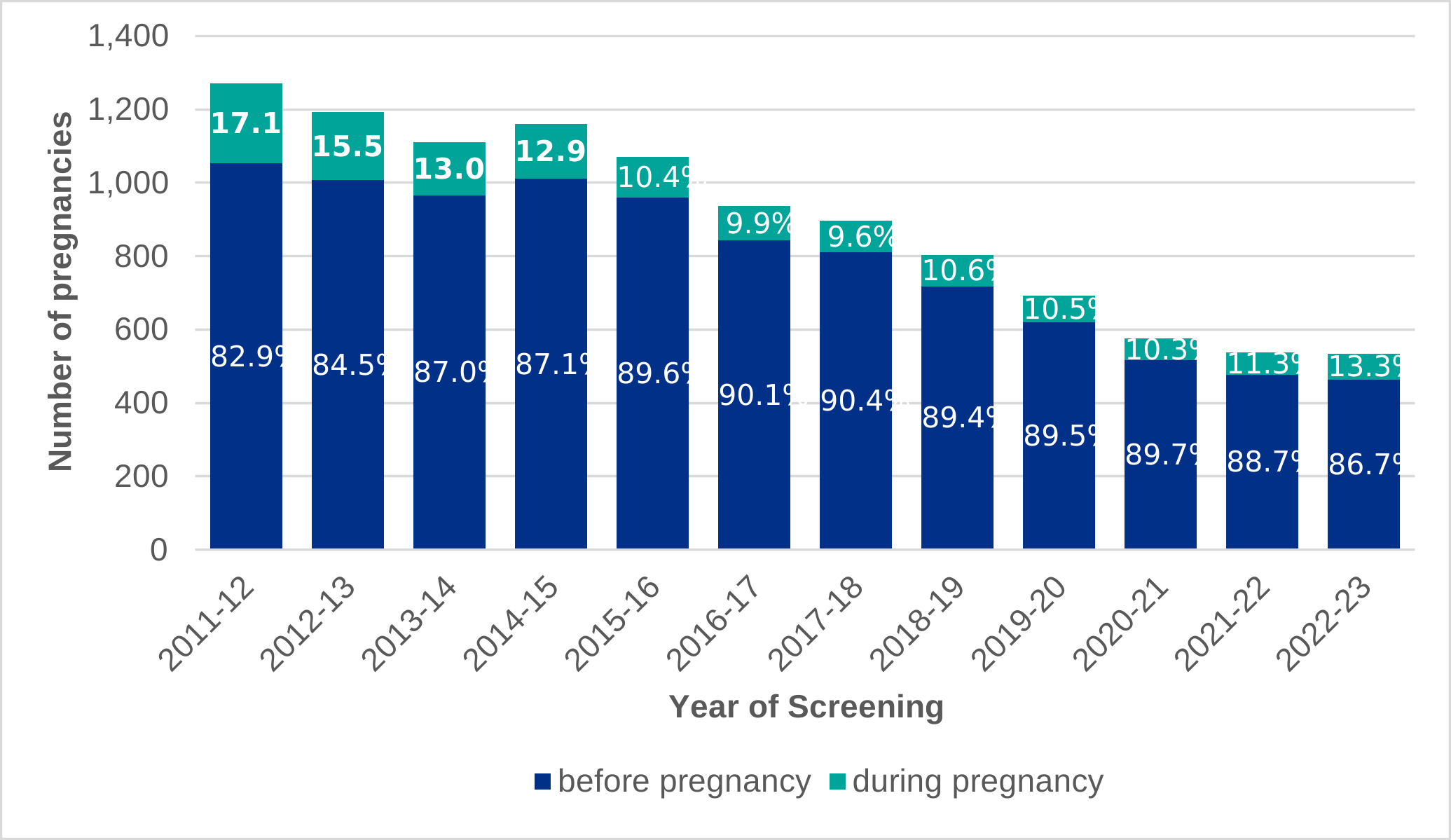
Figure 1 note 1: data includes 951 pregnancies with an estimated booking date. Booking date has been collected since 2008 and is a compulsory field since 2020.
Table 2: timing of maternal diagnosis, 2022-2023
| Timing of maternal diagnosis | Number of pregnancies | Percentage of pregnancies (%) |
|---|---|---|
| Before this pregnancy | 463 | 86.7 |
| During this pregnancy | 71 | 13.3 |
| Total pregnancies | 534 | 100 |
4.2 New diagnoses in pregnancy
Among the 71 women booked in 2022-23 and newly diagnosed during pregnancy, 19.7% (14 of 71) were born in the UK and 67.6% (48 of 71) in Africa. 41 women were diagnosed in the first trimester and 7 in the third trimester (7 of 7 booked after 30 weeks). None of the women diagnosed in pregnancy had had a previous negative screening test at booking. Overall, 88.7% (63 of 71) pregnancies resulted in a livebirth. There were 5 miscarriages, 2 terminations of pregnancy and one woman left the country before delivery.
Of women diagnosed during pregnancy, 91.5% (65 of 71) started ART in pregnancy (remaining 6 pregnancies resulted in a miscarriage/termination so ART information was not known). Median gestation at ART start was 16 weeks (interquartile range [IQR]13 to 20), 24 women started treatment within two weeks and a further 24 within four weeks of diagnosis (timing unknown for two women).
Among the 71 women diagnosed during pregnancy, 59 (83.1%) were seen by an HIV specialist within two weeks of diagnosis (British HIV Association (BHIVA) Standards of Care 2018). Among women seen after two weeks, reasons included:
- Women not engaging with services (3)
- Delayed lab results/confirmatory results (2)
- Clinic capacity issues (1)
- Follow-up after miscarriage (2)
- No reason (4)
Data in future reports will be more comprehensive as reason not seen within the BHIVA recommended two weeks is now a compulsory data item in ISOSS.
4.3 Spotlight on new diagnosis in pregnancy
To look at trends among women diagnosed with HIV in pregnancy, we combined data from women who booked for antenatal care between 1 April 2018 and 31 March 2023.
There were 342 women diagnosed during pregnancy, representing 11.0% (342 of 3106) of all pregnancies reported; this proportion increased from 10.2% [79 of 774] in 2018 to 13.5% [72 of 533] in 2022 (p=0.067 for trend over time in proportion). The absolute number of HIV diagnoses made during pregnancy fell by 25.3% (79 to 59) between 2018 and 2020 but rose by 22.0% (59 to 72) between 2020 and 2022.
Overall, 71.9% (246 of 342) of HIV diagnoses made during pregnancy were reported by non-London hospitals, increasingly from the North East and Yorkshire (3.8% [3 of 79] in 2018, 18.1% [13 of 72] in 2022, p=0.005) and decreasingly from the North West (15.2% [12 of 79] in 2018, 5.6% [4 of 72] in 2022, p=0.034). There were 305 (89.2%) live-births, 17 (5.0%) miscarriages, seven (2.0%) terminations, and 13 (3.8%) unknown outcomes (12 of 13 went abroad).
Median maternal age at booking was 31 years (IQR: 28 to 36). Most (84.0% [283 of 337]) women were born outside the UK: 59.6% (201 of 337) in Africa, 16.0% (54 of 337) elsewhere in Europe (42 of 54 in Eastern Europe), and 8.3% (28 of 337) in other regions. The proportion born in Africa increased from 51.9% [40 of 77] in 2018 to 68.1% [49 of 72] in 2022 (p=0.007) whilst the proportion born in Europe outside the UK declined from 24.7% [19 of 77] in 2018 to 5.6% [4 of 72] in 2022 (p<0.001).
Of 220 non-UK-born women with timing of arrival known, 18.2% (40 of 220) arrived in England during pregnancy and 31.4% (69 of 220) in the year before conception.
HIV diagnosis occurred at median 12 weeks gestation (IQR 9 to 15), via the IDPS programme for 90.9% (311 of 342). CD4 count in pregnancy was available for 310 (90.6%) women, with median first reported count of 356 cells/mm3 (IQR 236 to 528); first CD4 count was <200 cells/mm3 in 19.4% (60 of 310). All women delivering live-born infants received antenatal ART – started at a median of 16 weeks gestation (IQR 13 to 20) and a median 2.9 calendar weeks (IQR 1.1 to 4.4) following HIV diagnosis, with 9.7% (29 of 300) starting in the third trimester (≥27 weeks) (5 missing date) (28 of 29 diagnosed in the third trimester). Third trimester diagnoses increased from 5.6% (4 of 68) of all diagnoses made during pregnancy in 2018 to 12.5% (8 of 64) in 2022 (p=0.056). Overall, 88.5% (223 of 252) had delivery viral load of <50 copies/mL (compared to 93.6% [1748 of 1868] of those diagnosed before pregnancy, p=0.003). More women diagnosed in the third trimester had a delivery viral load of ≥50 copies/mL over time (1 of 4 in 2018 versus 4 of 7 in 2022).
This spotlight analysis demonstrates that although the majority of women diagnosed with HIV during pregnancy in England are diagnosed and initiated on ART promptly, late identification (in pregnancy as well as clinically) persists in a small number of cases.
Table 3: setting of diagnosis, 2022-2023
| Setting of diagnosis | Number of pregnancies | Percentage of pregnancies (%) |
|---|---|---|
| Antenatal services | 178 | 43.8 |
| Sexual health services | 107 | 26.4 |
| General Practice (GP) | 13 | 3.2 |
| Other hospital department | 39 | 9.6 |
| Tested abroad | 60 | 14.8 |
| Other | 9 | 2.2 |
| Total pregnancies | 406 | 100 |
Table 3 note 1: data not reported for 128 pregnancies (all women diagnosed before pregnancy).
4.4 Route of HIV acquisition
The majority of pregnancies were in women where the reported route of HIV acquisition was sexual contact (85.9%) (Table 4), but an increasing proportion of pregnancies were in women who had acquired HIV vertically themselves (see Spotlight on pregnancies to women with vertically acquired HIV, ISOSS HIV report 2022). In 2022-23, vertical route of maternal HIV acquisition accounted for 10.6% of pregnancies, compared to 7.5% in 2021-22 and 3.4% in 2017-18.
Table 4: route of HIV acquisition, 2022-2023
| Route of HIV transmission | Number of pregnancies | Percentage of pregnancies (%) |
|---|---|---|
| Sexual | 342 | 85.9 |
| Vertical | 42 | 10.6 |
| Other | 14 | 3.6 |
| Total pregnancies | 398 | 100 |
Table 4 note 1: data not reported or not known for 136 pregnancies.
Table 4 note 2: other route includes injecting drug use, blood transfusion and contaminated blood products.
5. Pregnancy management
5.1 Antenatal booking
Just under half (44.2%) of pregnant women with HIV first presented for antenatal care (booking appointment) before the recommended 10 weeks gestation (Table 5). This was substantially lower than the general pregnant population (61.3%).
10.7% of women (57 of 534, had their booking appointment after 20 weeks gestation compared to 3.7% in the general pregnant population (Table 5). Of the women who booked after 20 weeks gestation, 38.6% (22 of 57) booked after 30 weeks gestation, with 9 women booked within 7 days of delivery and 1 woman unbooked for antenatal care and first presenting to services in labour.
All women who booked after 30 weeks gestation were born abroad (20 of 22 in Africa), with 16 of 22 having arrived in the UK during the current pregnancy.
Six of 22 women were newly diagnosed during pregnancy (timing ranged from 29 to 38 weeks), of whom 5 arrived in the UK during pregnancy and 3 had multiple adverse social circumstances reported. All 6 women started ART, with timing of initiation ranging from 6 weeks before delivery to 3 days before delivery.
Among the 16 women diagnosed before pregnancy, all were born outside of the UK and 15 of 16 were known to have arrived in the UK during pregnancy at a range of 9 to 36 weeks gestation. 14 of the 16 were known to be on ART at conception, and 1 received treatment abroad, but timing was not known. 15 of the 16 women had an undetectable viral load (<50 copies/mL) at the time of their UK booking appointment.
Table 5: gestation at booking, 2022-2023
| Gestation at booking | Number of pregnancies | Percentage of pregnancies (%) | General population (%)(NHS Digital maternity statistics 2022 to 2023) |
|---|---|---|---|
| Less than 10+0 weeks | 236 | 44.2 | 61.3 |
| 10+0 weeks to 12+ 6 weeks | 154 | 28.8 | 26.9 |
| 13+0 weeks to 19+6 weeks | 87 | 16.3 | 8.1 |
| ≥20+0 weeks (including those unbooked arriving in labour) | 57 | 10.7 | 3.7 |
| Total pregnancies | 534 | 100 |
Region of booking
London had the highest number of bookings, accounting for 31.5% of pregnancies booked (Table 6) (no change from 2021-22). The proportion of pregnancies booked in London has decreased over time, with 43.9% booked in London in 2012-13. Concurrently, the proportion of pregnancies booked in the Midlands and the North West have increased over time.
Table 6: number of screen positive pregnancies by region of booking, 2022-2023
| Region of booking | Number of pregnancies | Percentage of pregnancies (%) |
|---|---|---|
| London | 168 | 31.5 |
| Midlands | 118 | 22.1 |
| North West | 62 | 11.6 |
| North East and Yorkshire | 60 | 11.2 |
| South East | 54 | 10.1 |
| East of England | 53 | 9.9 |
| South West | 19 | 3.6 |
| Total pregnancies | 534 | 100 |
Table 6 note 1: total proportion of pregnancies not equal to 100 due to rounding.
Transfer of care
Women who book at one maternity provider for antenatal care and change their maternity provider during pregnancy (whether by choice or due to clinical need) are considered transfers of care.
Among women who booked in 2022-2023 and had a live or stillbirth delivery, 4.9% (23 of 465) transferred care during pregnancy. This includes women who unexpectedly delivered at another maternity provider, for example following an in-utero transfer for specialist neonatal services. Of the women who transferred care during pregnancy, 78.3% (18 of 23) were Black African and 87.0% (20 of 23) were born outside the UK, 82.6% (19 of 23) were diagnosed during pregnancy and 83.3% (15 of 18) of women had undetectable viral load (<50c/ml) at delivery.
6. Maternal demographics
6.1 Age
The median age at expected date of delivery was 35 years (interquartile range (IQR): 30 to 39 years), with 18.8% of pregnancies being among women aged 40 years or older in 2022-23 (Table 7). The data demonstrates an increasing trend in maternal age over time, with almost double the number of all pregnancies in England in 2012-2013 (9.9%) among women aged 40 years or older.
Table 7: maternal age at expected date of delivery, 2022-2023
| Age group | Number of pregnancies | Percentage of pregnancies (%) |
|---|---|---|
| Less than 25 years | 26 | 4.9 |
| 25 to 29 years | 82 | 15.4 |
| 30 to 34 years | 158 | 29.6 |
| 35 to 39 years | 165 | 30.9 |
| 40 to 44 years | 77 | 14.4 |
| ≥45 years | 26 | 4.9 |
| Total pregnancies | 534 | 100 |
Table 7 note 1: total proportion of pregnancies not equal to 100 due to rounding.
6.2 Ethnicity and world region of birth
In 2022-2023, the highest proportion of pregnancies were in women from Black African backgrounds (64.6%), demonstrating a slight increase from 62.6% in 2021-2022 (Table 8).
In the years prior to this, the proportion of pregnancies in women from Black African backgrounds had gradually decreased from 74.1% (2012-2013). At the same time, pregnancies in women from White ethnic backgrounds had been increasing from 16.5% in 2012-2013 to 21.0% in 2022-2023.
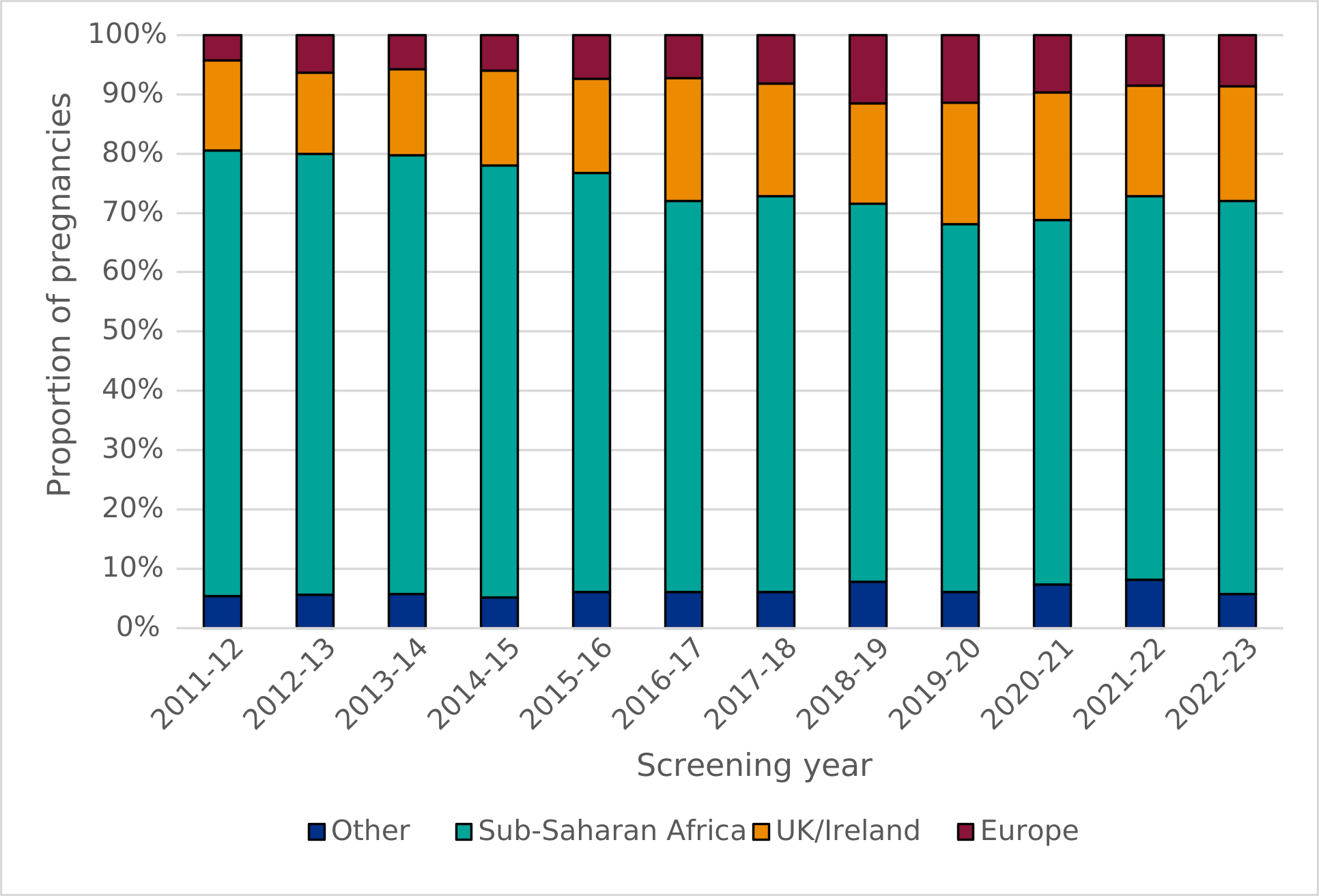
A further breakdown shows in 2022-2023, approximately 1 in 5 (19.2%) pregnancies were in women born in the UK and nearly two-thirds (64.2%) of pregnancies were in women who were born in Africa (similar to figures reported for 2021-22: 18.8% and 64.5%, respectively) (Table 9). Women born in Eastern Europe represented 5.7% of pregnancies in 2022-23 and 6.5% in 2021-22 and were mainly from Romania (16) and Ukraine (5).
Almost two-thirds of women from other White ethnic backgrounds were born in Eastern Europe (62.2%).
Of the women who were born outside of the UK, 10.1% arrived in the UK during their pregnancy and a further 13.0% in the year prior to conception (Table 10). Women who arrived in the UK during their pregnancy were less likely to be on ART at conception than those who had arrived in the UK five or more years prior to conception (67.6% versus 91.5%).
Table 8: ethnic origin, 2022-2023
| Ethnicity | Number of pregnancies | Percentage of pregnancies (%) |
|---|---|---|
| Asian | 21 | 3.9 |
| Black African | 345 | 64.6 |
| Any other Black background | 23 | 4.3 |
| Mixed | 25 | 4.7 |
| White British | 67 | 12.6 |
| Any other White background | 45 | 8.4 |
| Other | 8 | 1.5 |
| Total pregnancies | 534 | 100 |
Table 9: maternal world region of birth, 2022-2023
| World region of birth | Number of pregnancies | Percentage of pregnancies (%) |
|---|---|---|
| Africa | 352 | 66.2 |
| UK | 102 | 19.2 |
| Eastern Europe | 30 | 5.7 |
| Asia | 20 | 3.8 |
| Rest of Europe | 16 | 3.0 |
| Other | 9 | 1.7 |
| Abroad, not known where | 3 | 0.6 |
| Total pregnancies | 532 | 100 |
Table 9 note 1: data not reported for 2 pregnancies.
Table 9 note 2: total proportion of pregnancies does not equal 100 due to rounding.
Table 10: timing of UK arrival, 2022-2023
| Timing of UK arrival | Number of pregnancies | Percentage of pregnancies (%) |
|---|---|---|
| Greater than 5 years before conception | 204 | 54.1 |
| 1-5 years before conception | 86 | 22.8 |
| ≤1 year before conception | 49 | 13.0 |
| During pregnancy | 38 | 10.1 |
| Total pregnancies | 377 | 100 |
Table 10 note 1: data not reported for 55 pregnancies.
Figure 2: maternal region of birth by year of screening (2011-2012 to 2022-2023)
6.3 Parity
Overall, 70.7% of pregnancies were in women who had one or more previous births, compared to 76.0% in 2021-22 (Table 11).
Table 11: parity, 2022-2023
| Parity | Number of pregnancies | Percentage of pregnancies (%) |
|---|---|---|
| 0 | 155 | 29.3 |
| 1 | 156 | 29.5 |
| 2 or more | 218 | 41.2 |
| Total pregnancies | 529 | 100 |
Table 11 note 1: data not reported for 4 pregnancies.
There were 30 assisted conception pregnancies in women living with HIV and 13 of 30 were in women aged 45 years or older. Among these pregnancies, 28 of 30 were in women diagnosed prior to pregnancy and two in women diagnosed during pregnancy (not part of the assisted conception process). From 2025, ISOSS will collect more information on assisted conception so will report on this in future reports.
6.4 Body Mass Index
There were 338 pregnancies (63.3%, 338 of 534) where the woman had both booked by 12 weeks gestation and had a documented body mass index (BMI) measurement. The healthy range for BMI at the start of pregnancy is 18.5-24.9. The median BMI at booking for women who booked by 12 weeks was 28.1 (interquartile range (IQR): 24.0 to 33.2); 70.0% of women had a BMI of 25 or more where data were available (Table 12).
Table 12: BMI at booking, 2022-2023
| BMI group (kg/m2) | Number of pregnancies | Percentage of pregnancies (%) |
|---|---|---|
| Less than 18.5 | 8 | 2.1 |
| 18.5-24.9 | 107 | 27.9 |
| 25 – 29.9 | 122 | 31.8 |
| 30 – 39.9 | 129 | 33.6 |
| Greater than 40 | 18 | 4.7 |
| Total pregnancies | 384 | 100 |
Table 12 note 1: data restricted to 384 women who had booked for antenatal care by 12 weeks gestation and had height and weight available.
7. Social circumstances
There were complex social issues reported in 37.6% of pregnancies (192 of 510 with information available), with more than one issue reported among 89 of 192 (46.4%) (Table 13). Housing concerns were reported in 13.1% of all pregnancies and social services involvement in 11.2% (Table 14). These issues are likely to be underreported as they only represent those known to healthcare professionals at the time of the pregnancy.
Table 13: complex social factors, 2022-2023
| Complex social factors | Number of pregnancies | Percentage of pregnancies (%) |
|---|---|---|
| None | 318 | 62.4 |
| One or more social issues | 192 | 37.6 |
| Total pregnancies | 510 | 100 |
Table 13: data not reported for 24 pregnancies.
Table 14: complex social factors breakdown, 2022-2023
| Social / complicating factor | Number of pregnancies | Percentage of pregnancies (%) |
|---|---|---|
| Housing concerns | 70 | 13.1 |
| Social services involvement | 60 | 11.2 |
| Mental health issues | 49 | 9.2 |
| Financial concerns | 38 | 7.5 |
| Intimate partner violence | 30 | 5.6 |
| Immigration problems | 25 | 4.7 |
| Not engaging with healthcare services | 18 | 3.5 |
| Drug or alcohol misuse | 12 | 2.3 |
| Learning difficulties | 6 | 1.2 |
| Prison | 3 | 0.6 |
| Sex work | 1 | 0.2 |
| Other | 7 | 1.4 |
Table 14 note 1: more than one issue reported for some pregnancies; note 2: other category included known or suspected female genital mutilation (2), and disability- deaf (2).
Nearly two-thirds (61.4%) of women were reported as being employed (Table 15) which is consistent with the 62.1% in 2021-22. There were 14.6% of women reported as unemployed which was lower than reported numbers in 2021-22 of 18.5%. Of the pregnant women reporting a current partner, the partner was employed in 89.9% (337 of 375) of pregnancies.
Table 15: employment status in pregnancy, 2022-2023
| Employment status | Number of pregnancies | Percentage of pregnancies (%) |
|---|---|---|
| Employed (full or part time) | 319 | 61.4 |
| Home | 84 | 16.2 |
| Student | 39 | 7.5 |
| Not working due to illness | 2 | 0.4 |
| Unemployed | 76 | 14.6 |
| Total pregnancies | 520 | 100 |
Table 15 note 1: data not reported for 14 pregnancies.
Information on the woman’s main source of support during pregnancy was reported as being a partner for 83.4% (411 of 493), of whom 83.5% (343 of 411) were cohabiting and 16.5% (68 of 411) were not cohabiting. One in 10 (10.1%) pregnant women were reported to have their main support from family or friends, whilst 5.4% reported having no support in pregnancy (Table 16).
Table 16: main support in pregnancy, 2022-2023
| Main support | Number of pregnancies | Percentage of pregnancies (%) |
|---|---|---|
| Partner (cohabiting) | 343 | 69.6 |
| Partner (not cohabiting) | 68 | 13.8 |
| Family or friend | 50 | 10.1 |
| Other | 5 | 1.0 |
| None | 27 | 5.4 |
| Total pregnancies | 493 | 99.9 |
Table 16 note 1: data not reported for 41 pregnancies.
Table 16 note 2: total proportion of pregnancies does not equal 100 due to rounding.
7.1 Language
Nearly all women spoke English (96.1%, 513 of 534), and English was the first language for 273 women (53.5%, 273 of 510 where reported).
Translation services were required for 4.7% (25 of 533) of women where information was available. All but one woman who required translation services accepted and received a formal interpreter (96.0%, 24 of 25), with one woman miscarrying after booking so not seen by the screening team. 4 women spoke English but required translation services during their maternity care (3 out of the 4 received translation services). Since mid-2023, ISOSS has collected data on the language for which translation was required; more detail will be provided in future reports. Among the 25 women requiring translation, information on language was provided for 14: most common languages were Romanian (3), Russian (3), Portuguese (2) and Amharic (2).
7.2 Spotlight on migrants recently arriving in the UK
To look at trends in HIV among migrants recently arriving in the UK, we combined data on women booking into antenatal care between 1 April 2018 and 31 March 2023. Of 2618 women living with HIV with available data on country of birth and timing of arrival in the UK (where relevant) in this timeframe, 11.3% (296 of 2617) were migrants arriving in the UK during pregnancy or within one year prior to conception (hereafter referred to as ‘recent migrants’). Of these 296 recent migrants, 40.2% (119 of 296) arrived in the UK during pregnancy, while the remainder arrived within one year prior to conception. The proportion of recent migrants among pregnant women living with HIV has increased over time from 8.7% (55 of 631) in the screening year from 1 April 2018, to 18.2% (87 of 477) in the screening year from 1 April 2022
A higher proportion of recent migrants were born in Africa (79.4%, 235 of 296) compared to pregnancies to UK-born women or those born abroad and in the UK for over a year (60.2%, 1397 of 2320). At least one complex social issue was reported for 48.9% (90 of 184) of recent migrants, which is higher than among other pregnancies (36.6%, 447 of 1222). Recent migrants were also more likely to require translation services (16.2%, 34 of 210) compared to other pregnancies (5.4%, 74 of 1362).
Recent migrants were more likely to be diagnosed with HIV during pregnancy (37.2%, 110 of 296) and to start ART during pregnancy (41.0%, 120 of 293) compared to other pregnancies (7.2% diagnosed during, 166 of 2321; 12.9% started ART during, 295 of 2285). Late booking was more common among recent migrants than other pregnancies, with 34.6% (102 of 295) booking later than 20 weeks (compared to 3.9% among other pregnancies).
The proportion of women delivering with a detectable viral load was similar between recent migrants (10.5%, 22 of 209 with available data) and other pregnancies (7.0% (117 of 1667). When restricted to women diagnosed before pregnancy, the proportion remained similar between other pregnancies (6.5%) and recent migrants (7.0%); the same trend was seen among women diagnosed in pregnancy (13.2% in other pregnancies, 15.4% in recent migrants). The proportion with their first CD4 count in pregnancy below 200 cells/mm3 was also similar between recent migrants (10.6%, 28 of 265) and other pregnancies (7.1%, 136 of 1911) and did not differ significantly by timing of diagnosis.
8. Screening pathway
8.1 Screen positive results
The majority (86.7%) of pregnant women living with HIV accessing maternity services were already aware of their HIV status before pregnancy (Table 2).
Most women (70.4%) were seen (in person or via telephone) by the screening team within 10 working days of their screen positive result being communicated to maternity services (Table 17). Reasons for this being more than 10 days included:
- already known positive and under care of sexual health (48 women)
- did not attend appointments/unable to contact (21)
- miscarriage/termination before review (6)
- patient choice (9)
- transfer of care (3)
- sickness (2)
- staff shortages (2)
- not informed by laboratory (1)
In April 2023, IDPS Standard 5; the 10-working day window for women to be seen by the screening team, was reviewed as part of the IDPS Standards review and a decision made to reduce the timeframe to 5 working days. ISOSS now monitor Standard 5 directly for the IDPS so reporting will be comprehensive in future reports.
Table 17: communication of confirmed screen-positive results, 2022-2023
| Time to being seen by screening team | Number of pregnancies | Percentage of pregnancies (%) |
|---|---|---|
| 0 to 10 working days | 376 | 70.4 |
| 11 to 15 working days | 73 | 13.7 |
| 16 to 20 working days | 21 | 3.9 |
| Greater than 20 working days | 13 | 2.4 |
| After 10 working days, timing not known | 49 | 9.2 |
| Not seen in pregnancy | 2 | 0.4 |
| Total pregnancies | 534 | 100 |
9. Clinical characteristics and management
9.1 Treatment with antiretroviral therapy
Receipt and timing of antiretroviral therapy
Women received antenatal ART in 98.7% (520 of 527) of pregnancies where data were available (missing for 7, all pregnancies that results in miscarriage/termination). Most women who were diagnosed with HIV before pregnancy were on ART prior to conception (95.1%, 430 out of 452 with available information on both timing of diagnosis and ART) as recommended by BHIVA.
Twenty-one women diagnosed prior to pregnancy were not on ART at conception, but commenced or recommenced treatment during pregnancy (4.7%, 21 of 450 pregnancies) (Table 18), with a quarter starting in the first trimester and a median time of ART start of 15.8 gestational weeks (IQR: 12.8 to 20.1). Ten of these 21 women had a previous pregnancy reported to ISOSS and were on ART in their last pregnancy. See Spotlight on women diagnosed before pregnancy and not on ART at conception in the ISOSS 2023 HIV report.
Among the 69 women diagnosed during pregnancy, a fifth started ART in the first trimester and median start time was 16.0 gestational weeks (IQR: 13.0 to 20.4) (Table 18).
Seven women did not receive ART in pregnancy: six had pregnancies that did not continue to term (five miscarriages and one termination of pregnancy before treatment could be established) and one declined ART (diagnosed before pregnancy).
Table 18: timing of ART initiation, 2022-2023
| All pregnancies | Women diagnosed prior to pregnancy | Women newly diagnosed during pregnancy | ||||
|---|---|---|---|---|---|---|
| Timing of ART start | Number of pregnancies | Percentage of pregnancies (%) | Number of pregnancies | Percentage of pregnancies (%) | Number of pregnancies | Percentage of pregnancies (%) |
| Prior to pregnancy | 430 | 82.5 | 430 | 95.1 | - | - |
| First trimester | 20 | 3.8 | 5 | 1.1 | 15 | 21.7 |
| Second trimester | 55 | 10.6 | 15 | 3.3 | 40 | 58.0 |
| Third trimester | 9 | 1.7 | 1 | 0.2 | 8 | 11.6 |
| No treatment | 7 | 1.3 | 1 | 0.2 | 6 | 8.7 |
| Total pregnancies | 521 | 100 | 452 | 100 | 69 | 100 |
Table 18 note 1: ART in pregnancy missing for 8 pregnancies and timing of ART data not reported for 6 pregnancies.
Figure 3: timing of maternal diagnosis and ART
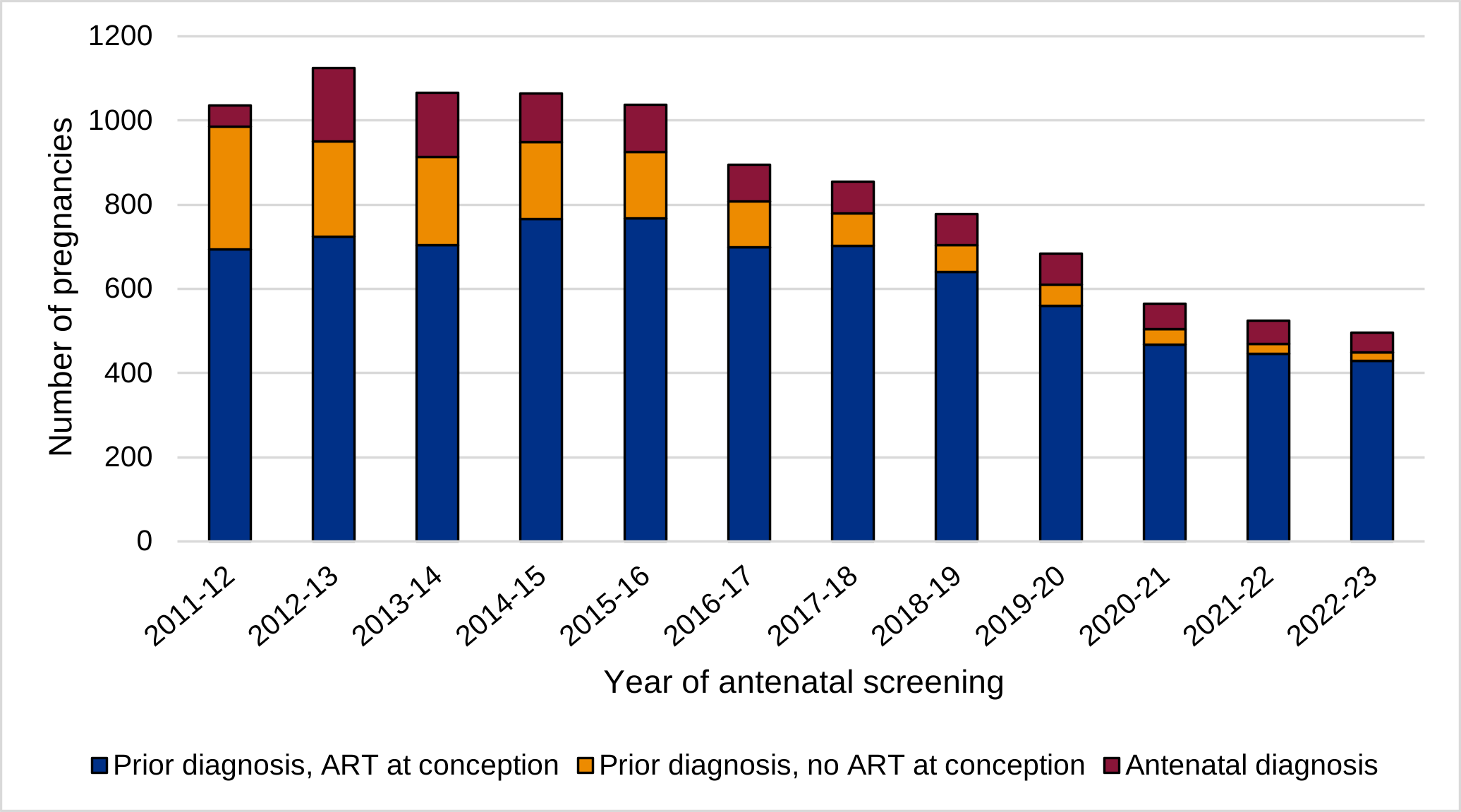
Figure 3 shows the number of pregnancies to women who were diagnosed prior to pregnancy and whether they were on ART at conception or not, and women diagnosed during their current pregnancy.
Type of antiretroviral therapy used in pregnancy
Of the 519 pregnancies where women were on ART, 507 (97.7%) had complete data on antiretroviral drugs received. The most common anchor drug class was integrase strand transfer inhibitors (INSTI), used in 56.8% (288 of 507) of pregnancies; dolutegravir (DTG) was used in 43.2% (219 of 507) of pregnancies. Protease inhibitors (PI) were used in 26.0% (132 of 507) and non-nucleoside reverse transcriptase inhibitors (NNRTI) in 26.4% (134 of 507) of pregnancies; 10.3% (52 of 507) received drugs from more than one anchor class during pregnancy. Nucleoside reverse transcriptase inhibitor (NRTI) use was reported in nearly all (98.4%, 499 out of 507 pregnancies with available information). Injectable ART was used in two pregnancies.
The most common first regimens in pregnancy were DTG+TDF+FTC (12.8%), DTG+ABC+3TC (11.4%), rilpivirine (RPV)+TDF+FTC (8.7%), efavirenz (EFV)+TDF+FTC (7.1%), darunavir/ritonavir (DRV/r)+TDF+FTC (5.9%) (Figure 4). The most common NRTI backbones received in the first regimen in pregnancy were tenofovir disoproxil fumarate (TDF) plus emtricitabine (FTC) (50.0%) and abacavir (ABC) plus lamivudine (3TC) (23.6%). Tenofovir alafenamide (TAF) was reported in the first regimen for 11.4% (58 of 507) of pregnancies and in 13.2% (67 of 507) of pregnancies overall.
Figure 4: first ART regimens in pregnancy , 2022-2023
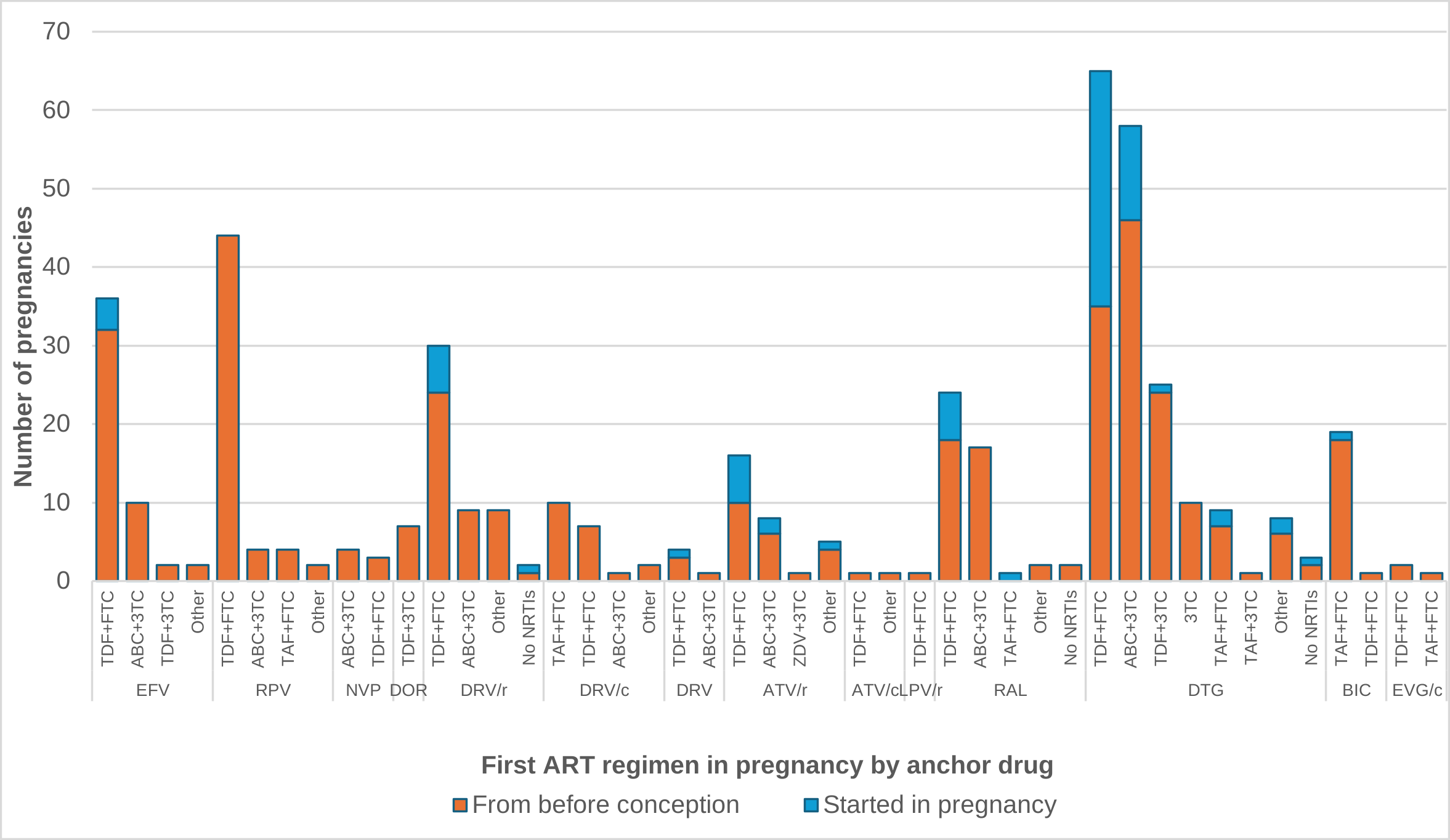
Figure 4 note 1: abbreviations: 3TC, lamivudine; ABC, abacavir; ATV/c, atazanavir/cobicistat; ATV/r, atazanavir/ritonavir; BIC, bictegravir; DOR, doravirine; DRV, darunavir; DRV/c, darunavir/cobicistat; DRV/r, darunavir/ritonavir; DTG, dolutegravir; EFV, efavirenz; EVG/c, elvitegravir/cobicistat; FTC, emtricitabine; LPV/r, lopinavir/ritonavir; NVP, nevirapine; RAL, raltegravir; RPV, rilpivirine; TAF, tenofovir alafenamide; TDF, tenofovir disoproxil fumarate; ZDV, zidovudine
Figure 4 note 2: figure excludes 33 pregnancies with other first ART regimens reported.
9.2 Clinical characteristics
A normal CD4 count is considered to be over 500 cells/mm3. When a CD4 count falls below 200 cells/mm3, there is a risk of opportunistic AIDS-defining infections and other illnesses. In general, CD4 monitoring is not required for individuals with a CD4 count above 350 cells/mm3 if on suppressive ART. The BHIVA Pregnancy 2018 guidelines recommend that CD4 count be measured in all pregnancies (one at delivery and one at booking/commencement of treatment).
There were 423 CD4 counts reported for pregnancies in women who booked 2022-23 and 111 (20.8%) pregnancies where no CD4 count was reported. Of those with a reported CD4 count, 82.5% (349 out of 423) CD4 counts were measured in pregnancy, with the remainder measured within the year prior to conception. The first CD4 count in pregnancy was ≥500 cells/mm3 for 55.6% of women (Table 19), which was consistent with the proportion of pregnancies with a normal CD4 count in 2021-22 (54.9%) and a small increase from 51.4% in 2017-18. The proportion of pregnant women with a CD4 count <200 cells/ mm3 was 7.4% in 2022-23, lower than reported in 2021-22 (12.5%). A higher proportion of women with a CD4 count <200 cells per mm3 in pregnancy were diagnosed before pregnancy compared to during (76.7% versus 23.3%).
Table 19: first CD4 count in pregnancy, 2022-2023
| First CD4 count in pregnancy (cells per mm3) | Number of pregnancies | Percentage of pregnancies (%) |
|---|---|---|
| ≥500 | 194 | 55.6 |
| 350 to 499 | 78 | 22.3 |
| 200 to 349 | 51 | 14.6 |
| Less than 200 | 26 | 7.4 |
| Total pregnancies | 349 | 99.9 |
Table 19 note 1: data not reported for 112 pregnancies.
Table 19 note 2: total proportion of pregnancies does not equal 100 due to rounding.
Table 19 note 3: 74 reported CD4 counts were taken pre-pregnancy.
At least one viral load measurement in pregnancy was reported to ISOSS for 94.4% (504 of 534) of pregnancies. Of the remaining 30 pregnancies, the pregnancy ended in miscarriage or termination before viral loads were taken for 28, 1 woman was unbooked and her viral load not available until after delivery, and for one pregnancy viral load information was not available on systems.
Among 430 women diagnosed and on ART at conception, 57.7% (248 of 430) had a first viral load reported in the first trimester and 85.3% (367 of 430) in the first two trimesters. First viral load was undetectable (<50copies/ml) for 91% (Table 20) and 94.3% (300 of 318) had undetectable viral load at delivery.
Table 20: first viral load in pregnancy among women conceiving on ART, 2022-2023
| First viral load in pregnancy (copies per ml) | Earliest viral load in 1st trimester | Percentage of pregnancies (%) | Earliest viral load in 1st or 2nd trimester | Percentage of pregnancies (%) |
|---|---|---|---|---|
| ≤50 | 228 | 91.9 | 355 | 91.3 |
| 51 to 399 | 12 | 4.8 | 18 | 4.9 |
| 400 to 999 | 3 | 1.2 | 6 | 1.6 |
| 1,000 to 9,999 | 2 | 0.8 | 3 | 0.8 |
| ≥10,000 | 3 | 1.2 | 5 | 1.4 |
| Total pregnancies | 248 | 100 | 367 | 100 |
Table 20 note 1: data not reported for 182 pregnancies in the first trimester and 63 in the first or second trimester.
9.3 Coinfections
Data on specific concurrent infections (syphilis, hepatitis B and hepatitis C) were available for almost all pregnancies in 2022-23 (530 out of 534): 5.7% of pregnant women had viral hepatitis or syphilis coinfection reported (30 of 530) (Table 21). Hepatitis B was reported in 3.8% of pregnancies and syphilis in 2.3%.
Table 21: coinfection in pregnancy, 2022-2023
| Coinfections in pregnancy | Number of pregnancies | Percentage of pregnancies (%) |
|---|---|---|
| Syphilis | 12 | 2.3 |
| Hepatitis B | 20 | 3.8 |
| Hepatitis C | 2 | 0.4 |
Table 21 note 1: data not reported for 4 pregnancies.
Table 21 note 2: women had more than one coinfection (hepatitis B and syphilis).
10. Pregnancy outcomes
Among the 534 pregnancies booked in 2022-23, 464 (86.9%) resulted in the live births of 476 infants (including 12 sets of twins or which 5 were IVF pregnancies), and one (0.2%) stillbirth (Table 22). ISOSS conducts data linkage with Mothers and Babies: Reducing Risk through Audits and Confidential Enquiries across the UK (MBBRACE-UK) on all stillbirths, neonatal deaths and maternal deaths to ensure comprehensive surveillance and to provide an opportunity to enrich understanding of these cases. Since April 2024, ISOSS has requested additional information on stillbirths and neonatal deaths, including the cause of death and possible relatedness to HIV. These data will be summarised in future reports.
Table 22: outcome per pregnancy, 2022-2023
| Pregnancy outcome | Number of pregnancies | Percentage of pregnancies (%) |
|---|---|---|
| Livebirth | 464 | 86.9 |
| Stillbirth | 1 | 0.2 |
| Miscarriage | 51 | 9.6 |
| Termination | 12 | 2.2 |
| Left UK before delivery | 6 | 1.1 |
| Total pregnancies | 534 | 100 |
Table 22 note 1: miscarriages are restricted to pregnancies where women had booked for antenatal care. 51 miscarriages: median gestation at pregnancy loss was 12 weeks (range: 5 weeks- 22 weeks).
10.1 Mode of delivery
The proportion of women having a vaginal delivery has remained at over 40% since 2011-12 (Figure 5 & Table 23). However recent years have seen a decline in the proportion of vaginal deliveries, dropping from a peak of 48.5% in 2020-21 to 42.4% in 2022-23. In contrast the proportion of delivery by elective caesarean has risen (27.7% in 2020-21 to 29.9% in 2022-23) while the proportion of delivery by emergency caesarean also increased (from 23.7% to 28.4%). The rise in deliveries by caesarean section may be reflective of an increasing trend in the general pregnant population in the last decade with maternal choice, maternal age and obstetric complications being common factors.
The most common reasons for elective caesarean were:
- previous caesarean section (77)
- maternal request/choice (23)
- prevention of vertical transmission (11): for high viral load in 10 of 11 and new diagnosis before delivery in 1 of 11
- other obstetric indication in pregnancy (14)
The most common reasons for emergency caesarean were:
- fetal distress/suboptimal CTG (37)
- failed induction (23)
- failure to progress (18)
- rupture of membranes (PROM) (10).
- other obstetric indication in labour (30)
Figure 5: mode of delivery over time, 2011-2023
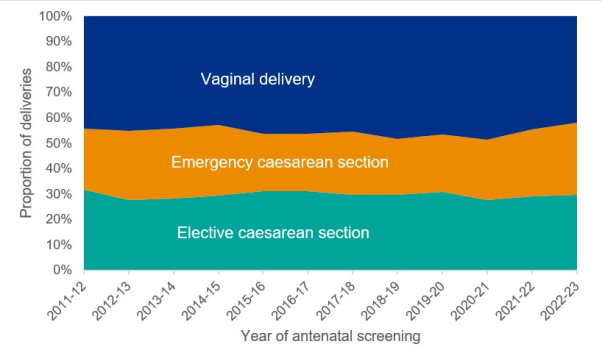
Figure 5 note 1: data presented for pregnancies resulting in a livebirth or stillbirth. Multiple pregnancies are counted once (per pregnancy, not per infant).
Table 23: mode of delivery per pregnancy, 2022-2023
| Mode of delivery | Number of deliveries | Percentage of deliveries (%) | Percentage of deliveries in the general population in England (2022 to 2023) (NHS Digital Maternity Statistics) |
|---|---|---|---|
| Vaginal | 194 | 41.7 | 61.9 |
| Elective caesarean | 139 | 29.9 | 16.6 |
| Emergency caesarean | 132 | 28.4 | 21.5 |
| Total deliveries | 465 | 100 |
Table 23 note 1: data reported for pregnancies resulting in a livebirth or stillbirth (registerable birth). Multiple pregnancies are counted once (per pregnancy, not per infant).
10.2 Pregnancy complications
Data on pre-eclampsia and gestational diabetes are explicitly requested on the pregnancy outcome data collection form. Pre-eclampsia was reported in 5.4% of deliveries. Gestational diabetes was reported for 14.6% of deliveries (Table 24. More than half of women with reported gestational diabetes in 2022-23 had a BMI greater than 30 (53%, 35 out of 66 women where available), which was significantly more than women without reported gestational diabetes (36%, 140 out of 387). See spotlight on gestational diabetes and pre-eclampsia in the ISOSS 2023 report.
Table 24: pregnancy complications, 2022-2023
| Pregnancy complication | Number of deliveries | Percentage of deliveries (%) |
|---|---|---|
| Pre-eclampsia | 25 | 5.4 |
| Gestational diabetes | 67 | 14.6 |
| Total deliveries | 460 |
Table 24 note 1: data not reported for 5 deliveries.
10.3 Invasive procedures
Among those not delivering via elective caesarean, rupture of membranes occurred in 64.0%, (201 of 314 with available data) (Table 25). Among these, 67.5% (133 of 197) had a duration of ruptured membranes of over 4 hours and 22 of 133 over 24 hours. An invasive procedure at delivery was performed in 21.3% of pregnancies (excluding elective caesarean deliveries), with most of these being artificial rupture of membranes (64 of 66) (table 27).
Among vaginal deliveries, 7.7% were an instrumental delivery, with the majority (10 of 15) using forceps.
Table 25: duration of membrane rupture (live births and stillbirths) among pregnancies progressing to registerable birth and membrane rupture, 2022-2023
| Duration membranes ruptured | Number of pregnancies | Percentage (%) |
|---|---|---|
| Less than 1 hr | 34 | 17.3 |
| 1to 4 hrs | 30 | 15.2 |
| 4 to 12 hrs | 62 | 31.5 |
| 12 to 24 hrs | 49 | 24.9 |
| 24 to 48 hrs | 15 | 7.6 |
| Over 48 hrs | 7 | 3.6 |
| Total pregnancies with a registerable birth and membrane rupture (excluding elective caesarean deliveries) | 197 | 100.1 |
Table 25 note 1: data not available for 4 pregnancies.
Table 25 note 2: total proportion of pregnancies does not equal 100 due to rounding.
Table 26: instrumental delivery, 2022-2023
| Instrumental delivery | Number of pregnancies | Percentage (%) |
|---|---|---|
| Forceps | 10 | 5.2 |
| Ventouse | 5 | 2.6 |
| None | 170 | 87.6 |
| Total vaginal deliveries | 194 | 100.0 |
10.4 Viral load at delivery
Among pregnancies resulting in a live or stillbirth, 86.2%, 402 of 465) were in women with viral load measured within 30 days prior to and 7 days after delivery (‘delivery viral load’). A further 37 women had a viral load reported between 4 and 6 weeks before delivery (Table 28). BHIVA guidelines state that maternal viral load should be monitored at 36 weeks and delivery to inform decisions around mode of delivery, additional ART in pregnancy and at delivery, and clinical management of the infant.
Maternity providers are required to specify if the 36-week viral load test was conducted as a mandatory data point (implemented in 2023). Reasons for no viral load at 36 week/within 6 weeks of delivery included: insufficient sample, sample lost in transit, preterm delivery, woman presented unbooked and information not available to maternity services.
Of pregnancies with a delivery viral load result reported, this was undetectable (≤50 copies/mL) in 92.5% (no change from 2021-22) (Table 27), which reflects the high coverage of ART in pregnancy but notably is still below the 95% target of those on ART to be fully suppressed, set by UNIAIDS in 2020. Of the 30 women with a detectable viral load: median viral load was 129, range 51-111,000), 20 had complex social issues reported, as did all nine with viral load ≥400 copies/ml.
ISOSS also collects data on whether there were any concerns about viral load in pregnancy. Among 400 pregnancies with this information available, concerns were reported in 64, including:
- blips reported in early/mid pregnancy (13)
- increased viral load in third trimester/prior to delivery, additional treatment given, triple PNP (9)
- issues with engagement or adherence (15)
- women already diagnosed and not on ART at conception, including 1 who declined ART (6)
- new diagnoses so high viral load initially (6)
- late booking for antenatal care >30 weeks (3)
- no viral load available a 36 week/delivery so treated as high risk (2)
- gastro issues/absorption/diet (3)
- ran out of medication (1)
Since October 2024 ISOSS has collected all viral loads in pregnancy so future reports will provide additional viral load data and insights.
Table 27: viral load at delivery, 2022-2023
| Viral load | Viral load within 30 days before and 7 days after delivery | Percentage of deliveries (%) | Viral load within 6 weeks and 7 days after delivery | Percentage of deliveries (%) |
|---|---|---|---|---|
| ≤50 copies/ml | 372 | 92.5 | 408 | 92.9 |
| 51 to 399 copies/ml | 21 | 5.2 | 21 | 4.8 |
| ≥400 copies/ml | 9 | 2.2 | 10 | 2.3 |
| Total deliveries | 402 | 99.9 | 439 | 100 |
Table 27 note 1: no viral load within 6 weeks before and 7 days after delivery reported for 26 deliveries.
Table 27 note 2: viral load not taken within the reporting timeframe (30 days prior to and 7 days post-delivery) for 63 deliveries.
Table 27 note 3: data only presented on pregnancies resulting in a livebirth or stillbirth.
Table 27 note 4: total proportion of pregnancies does not equal 100 due to rounding.
11. ART at delivery
ART was given to women during labour and delivery in 4.8% (21 out of 439, data not reported for 25) of pregnancies ending in live or stillbirth. Of these 21 women, 19.0% (4/21) delivered preterm (gestation ranged from 34-36 weeks). Viral load within 30 days of delivery was <50 for 10/21, 51-399 for 6/21, 400-999 for 3/21 and >1000 for 1/21. There was no viral load within 30 days of delivery for one woman (who delivered preterm). Some of the reported indications for additional ART were (multiple reasons reported for some):
- detectable viral load near delivery (12 deliveries)
- late booking for antenatal care >20 weeks (4)
- late diagnosis in pregnancy (1)
- no ART in pregnancy (1)
- concerns around viral load in pregnancy, i.e., detectable viral load in pregnancy (11)
From 2025 ISOSS will collect reasons for additional ART during labour/delivery and will provide further details in future reports.
Additional antiretroviral treatment given included:
- intravenous zidovudine (IV ZDV) in (17)
- IV ZDV and nevirapine (NVP) (1)
- Single dose NVP (1)
- not reported (2)
12. Infant outcomes
12.1 Gestation at delivery and birthweight
There were 477 infants born to women booked for care in 2022-2023. Preterm delivery (i.e., at less than 37 weeks gestation) occurred in 11.1% of deliveries, with 2.3% of all deliveries occurring before 34 weeks gestation (Table 28). This is a small increase compared to 2021-22 when the rate was 10.4%, and this remains higher than in the general population where the reported rate was 7.9% in 2022. Among preterm deliveries, the median gestational age was 35 weeks (Q1: 33, Q3: 36 weeks). Viral load within 30 days of delivery was available for 86.8% (46 of 53) of preterm deliveries, where available this was undetectable for 91.3% (42 of 46).
The proportion of infants with a low birthweight (i.e., less than 2.5 kg) was 12.2%, with 2.3% of all infants born to women living with HIV weighing less than 1.5 kg (i.e., very low birthweight) (Table 29).
Table 28: gestational age at delivery, 2022-2023
| Gestational age (completed weeks gestation) | Number of infants | Percentage of infants (%) |
|---|---|---|
| Term (≥37 weeks) | 424 | 88.9 |
| Late preterm (33-36 weeks) | 42 | 8.8 |
| Very preterm (28-32 weeks) | 9 | 1.9 |
| Extremely preterm (<28 weeks) | 2 | 0.4 |
| Total infants | 477 | 100 |
Table 28 note 1: table includes all liveborn and stillborn infants.
Table 29: birthweight, 2022-2023
| Birthweight | Number of infants | Percentage of infants (%) | Percentage of births in general population (England 2022-2023) |
|---|---|---|---|
| ≥4.0 kg | 24 | 5.0 | ≥2.5kg: 93% |
| 2.5 to 3.9 kg | 395 | 82.8 | |
| 1.5 to 2.4 kg | 47 | 9.9 | 6% |
| Less than 1.5 kg | 11 | 2.3 | 1% |
| Total infants | 477 | 100 |
12.2 Congenital conditions
Among live-born and stillborn infants, 14 out of 477 (2.9%, 95% CI: 1.6% to 4.9%) had one or more reported congenital conditions, defined using the International Statistical Classification of Diseases and Related Health Problems 10th revision (ICD-10). These included brain anomalies (3), skin conditions (2) and heart defects (2). Two infants had multiple conditions reported. Aggregated ISOSS data on exposure to ART in pregnancy and congenital conditions are reported to the Antiretroviral Pregnancy Registry and more details can be found in their interim report.
There were no neonatal deaths (i.e., death within 28 days of birth) reported among liveborn infants.
12.3 Infant postnatal prophylaxis
BHIVA 2018 guidelines state that infant postnatal prophylaxis (PNP) should be started based on a risk stratification system with respect to vertical transmission; two weeks of zidovudine ZDV for those meeting the criteria for very low risk, four weeks of ZDV for those who are low risk, and three drug PNP for those at high risk (BHIVA 2018 guidelines, section 9.1). The updated BHIVA pregnancy 2025 guidelines simplify the guidance into two pathways for low and high risk.
Information on infant PNP is collected on maternity outcome and paediatric notification forms, with duration of infant PNP reported only by paediatric respondents (Figure 6).
There were 476 live births in 2022-2023, of whom 471 infants were given PNP and1 infant was not. Data was not available for 4 infants. Of those given PNP, 444 received ZDV prophylaxis and 27 received three drug prophylaxis. From 2025 ISOSS have collected reason for three drug PNP and will provide insights in future reports.
Data were available on the medications administered as part of PNP for all infants receiving PNP, with duration available for 76.0% (358 out of 471). Most infants received oral or IV ZDV monotherapy (94.3%, 444 out of 471), and of the 444 infants who received oral or IV ZDV monotherapy, duration of treatment was available for 304 infants. Among the 304 infants who received oral or IV ZDV monotherapy and had a reported duration, 228 75.0%, 228 out of 304) were on treatment for 2 weeks and 75 (24.7%, 75 out of 304) were on treatment for 4 weeks. One infant received ZDV monotherapy for 5 weeks. Most of the infants given three drug PNP (88.9%, 24 out of 27) received a combination of ZDV, lamivudine (3TC) and NVP (figure 6). Of the three infants not receiving the standard three-drug PNP, two received a combination of ZDV, raltegravir (RAL), and NVP (both for 4 weeks). The other infant received lopinavir/ritonavir (LPV/r)/3TC/ZDV due to poor compliance and engagement.
Of 423 infants with available data, 89.6% (379 of 423) were started on PNP less than four hours after birth and 10.4% (44 of 423) were started between 4 and 72 hours after birth. Reasons PNP was given more than 4 hours after birth included:
- Baby in NICU/SCBU (3)
- Birth plan not followed by paediatric staff (1)
- Clinic capacity (9)
- Clinical error (1)
- Communication issues/Neonatal team not notified (3)
- Short delay (5-30 min) (4)
- Staff confirming correct dosage (1)
- Stock/supply issues (6)
- Under investigation (5)
- Not known/not documented (11)
Notably, many of these delays relate to service issues such as clinic capacity and communication problems. Incident reports were raised in response to five of these cases (3 of the cases under investigation, 1 case where the reason was unknown, and 1 case delayed due to communication issues/neonatal team not notified).
Figure 6: breakdown of infant PNP details from maternity and paediatric surveillance
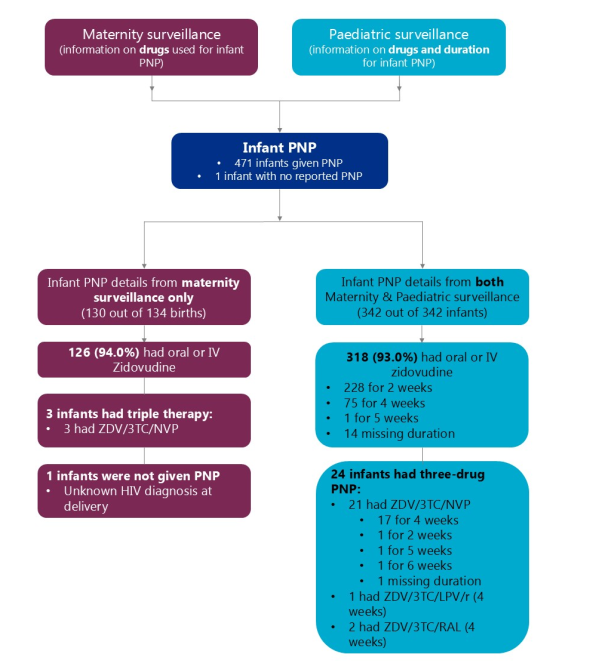
Figure 6 note 1: Abbreviations: 3TC, lamivudine; LPV/r = Lopinavir/ritonavir; NVP, nevirapine; PNP, postnatal prophylaxis; RAL, raltegravir; ZDV, zidovudine
Spotlight on infant postnatal prophylaxis, 2018-2023
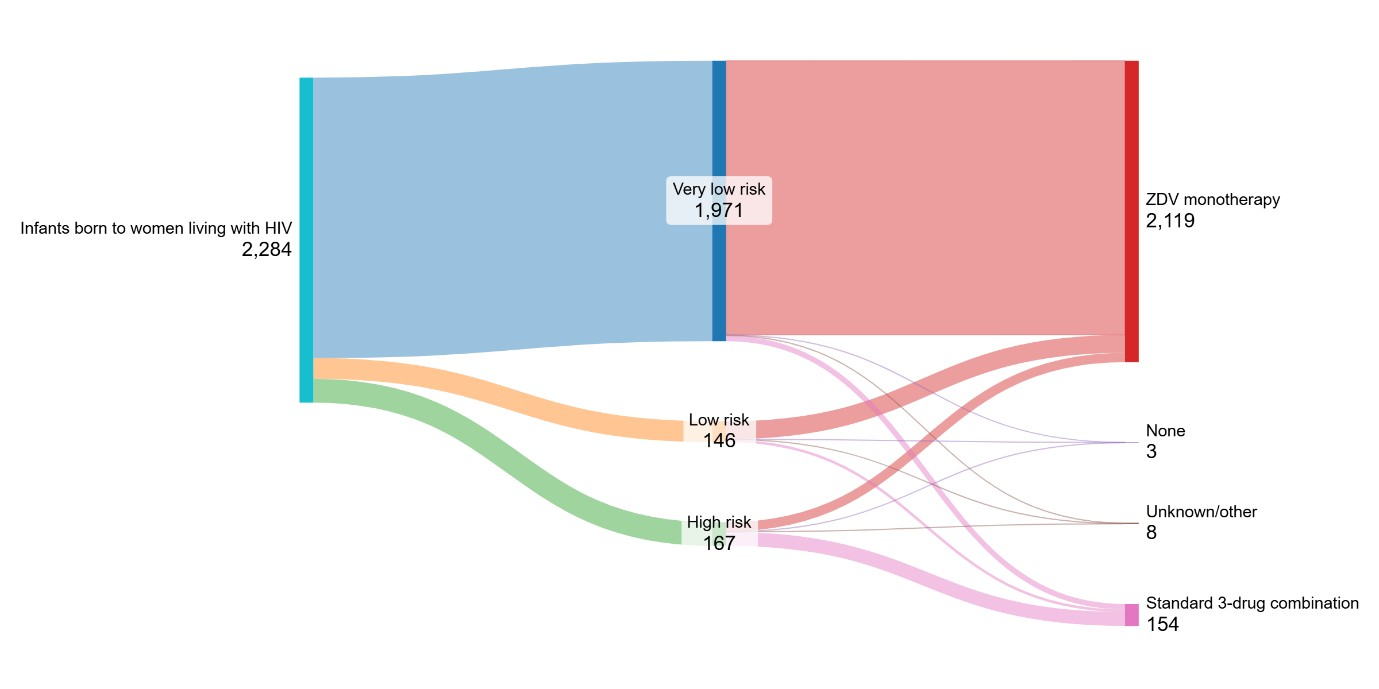
There were 2284 live-born infants from 2002 mothers between 1 Jan 2018 and 31 March 2023 (reported by end September 2024). We applied adapted risk strata based on BHIVA 2018 guidelines for this analysis (Table 31), reflecting current surveillance data availability. ISOSS did not collect all viral loads in pregnancy for this timeframe, so used delivery viral load for the adapted risk groups; however, moving forward, ISOSS will be collecting all viral loads which can improve our ability to determine BHIVA risk strata. Of 2284 infants, 86.3% (1971 of 2284) were born to women in the adapted ‘very low risk’ strata, 5.8% (146 of 2284) were born to women in the adapted ‘low risk’ strata, and 7.2% (167 of 2284) were born to women in the adapted ‘high risk’ strata. Median maternal delivery VL in the ‘high risk’ group was 104 copies/mL (range:51-1,083,193, IQR: 71 to 413). Overall, 92.8 % (2119/2284) of infants received ZDV alone, 6.7% (154 of 2284) received a three-drug PNP, and 3 did not receive PNP (Figure 7).
Among infants in the very low risk strata and low risk strata, 97.8% (1927 of 1971) and 86.3% (126 of 146) received ZDV alone, respectively. Among infants in the adapted high-risk strata, 58.7% (98 of 167) received three-drug PNP. Of 66 infants in this stratum who received ZDV alone, delivery maternal VL was >50 but <200 copies/mL for 51 (77.0%). None of these infants were born prematurely. Since we use adapted risk strata based on ISOSS data availability, the clinically-determined risk strata may differ from the adapted risk strata.
Among 1687 infants receiving ZDV monotherapy with available data on duration, 53.9% (910 of 1687) were on treatment for 2 weeks, 45.0% for 4 weeks (759 of 1687), 0.4% (7 of 1687) for 3 weeks, and 0.7% (11 of 1687) for 5-6 weeks. Among 121 infants receiving three-drug PNP and available data on duration, 90.1% (110 of 121) were on treatment for 4 weeks, 5.8% (7 of 121) for 2 weeks, and 3.3% (4 of 121) for 5-6 weeks.
Although caution is required due to limitations of surveillance data in determining risk strata, these data provide the first partial evidence for good clinical adherence to current policies on risk strata and PNP. Moving forward, ISOSS will collect all viral loads in pregnancy, improving estimation of risk strata from surveillance data.
Table 30: BHIVA pregnancy guidelines (as of 2018) for infant PNP and ISOSS-adapted risk-strata for analysis
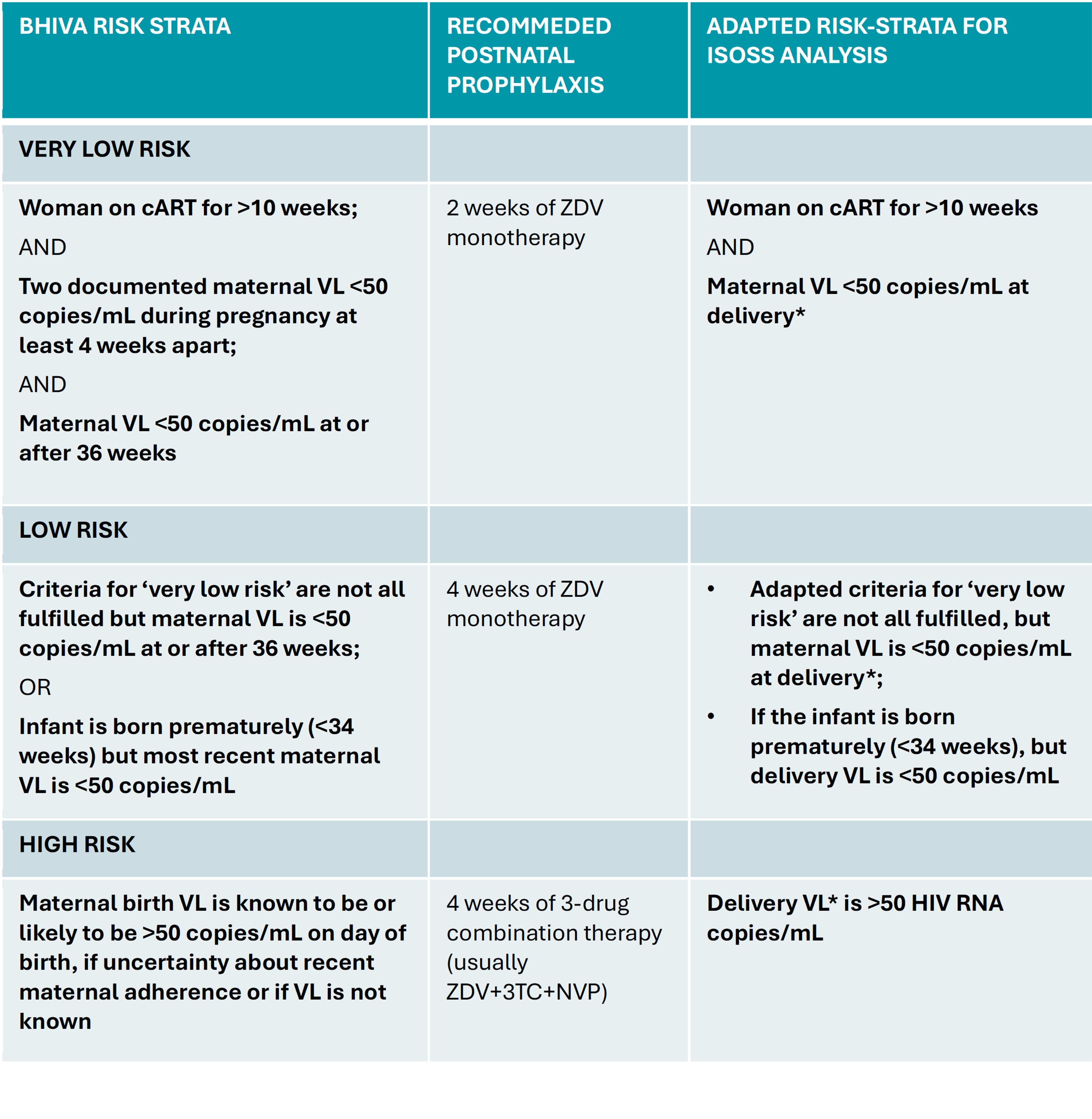
*within 30 days prior or 7 days after delivery; cART: combination antiretroviral therapy; VL: viral load; ZDV: zidovudine; 3TC: lamuvidine; NVP: nevirapine
Figure 7: postnatal prophylaxis among 2,284 infants by ISOSS-adapted risk strata, 2018-2023
12.4 Paediatric follow-up
Among 1044 infants born to women living with HIV from 1 January 2020 to 31 December 2021 and reported to ISOSS by end of 2024, 3 were diagnosed with HIV (see HIV vertical transmission section) and all were in CHARS follow-up receiving paediatric HIV follow-up care in England. Note that as with the vertical transmissions section this section covers the same time period as the infant follow-up section in the ISOSS HIV 2023 report but includes additional follow-up data so numbers have increased.
There were 1015 children reported as uninfected.4 of these infants were known to have died: two due to sudden infant death syndrome, and two due to cardiac problems, age at death ranged from 5 weeks to 5 months.
HIV status is still indeterminate for 26 infants (2.8%) at last follow-up. Among these:
- 16 were lost to follow-up
- 7 were known to have died (4 were neonatal deaths: gestation ranged from 36/40-41/40, age at death ranged from birth to 14 days, with cause of death reported as due to congenital anomalies for all)
- 2 were known to have left the UK
- 1 infant reported as discharged without final infection status
13. HIV and breastfeeding, 2012 to 2023
Data on ‘supported breastfeeding’ (i.e., breastfeeding with clinical support and involvement as per BHIVA 2018 guidelines, section 9.4) among women living with HIV have been collected since 2012. Information on planned mode of infant feeding and reasons for wanting to breastfeed for those intending to breastfeed, are collected via ISOSS pregnancy notification and/or outcome reports. Whether breastfeeding took place is confirmed using linked paediatric reports, with additional data collected for all cases of confirmed supported breastfeeding via the responsible paediatrician(s) or other managing clinician. ISOSS supported breastfeeding surveillance includes data on duration of breastfeeding, and results of all maternal viral load monitoring and infant diagnostic testing carried out as part of the clinical management.
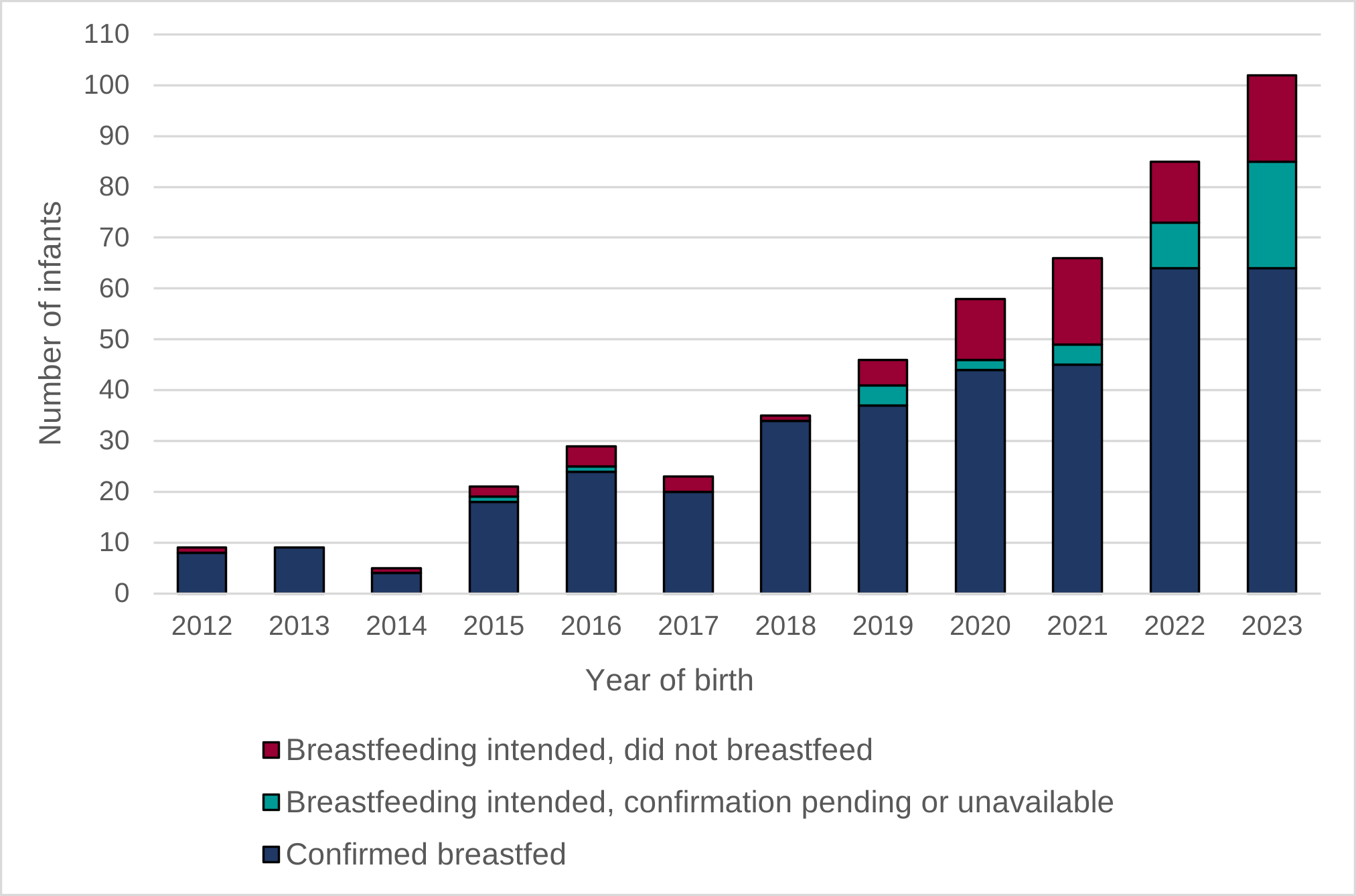
Supported breastfeeding was intended and/or confirmed for 488 infants born 01 January 2012 to 31 December 2023 and reported to ISOSS by December 2024.
Figure 8 shows the status of all 488 reported infants with intended and/or confirmed supported breastfeeding by year of delivery. Breastfeeding was confirmed to have occurred using linked paediatric reporting for a total of 371 infants. Of the remaining 117 infants, 75 were not breastfed despite an intention to breastfeed being indicated at either booking or after delivery, and 42 had a reported plan to breastfeed after delivery but confirmation was pending or unavailable.
Figure 8: reports of intended and/or confirmed supported breastfeeding, 2012-2023
13.1 Maternal breastfeeding circumstances
A total of 315 women breastfed 371 infants following 365 deliveries (6 twin deliveries). Most (93.7%) instances of supported breastfeeding were by women known to be living with HIV prior to pregnancy. Women born abroad made up 85.5% of confirmed reports, with the majority born in Africa. Of those women born abroad, 29.2% were born in Nigeria and 24.7% were born in Zimbabwe. The majority (81.0%) of women were black African, and 10.2% were white. The median age at delivery was 35 years (IQR: 31 to 39 years). Data were available on the mother’s previous pregnancies (number, outcomes) for 356 of the 365 deliveries: 267 (75.0%) women were parous at the time of the infant’s birth, with 117 (32.8% overall) having one previous birth and 150 (42.1% overall) having two or more previous births.
Sexual partners (where applicable) were unaware of the woman’s HIV status in 18.2% of pregnancies whilst GPs were unaware in 6.0%.
Reasons for wanting to breastfeed are based on information gathered during routine clinical care. Table 31 shows the reasons reported for pregnancies where women were supported to breastfeed. The most commonly reported reasons were bonding (70.9%) and health benefits (61.7%).
Table 31: reasons for wanting to breastfeed, 2012-2023
| Reason | Number of pregnancies with reason reported | Percentage of pregnancies with reason reported |
|---|---|---|
| Bonding | 222 | 70.9 |
| Health benefits | 193 | 61.7 |
| Concerns about disclosure of HIV status | 83 | 26.5 |
| Previously breastfed since diagnosis | 76 | 24.3 |
| Family or friends’ expectations or pressure | 72 | 23.0 |
| Previously breastfed before diagnosis | 42 | 13.4 |
| Concerns about finance | 19 | 6.1 |
| Other/additional reason | 23 | 7.4 |
| Total pregnancies | 313 | - |
Table 31 note 1: some had multiple reasons reported.
Table 31 note 2: data not reported for 52 pregnancies.
13.2 Feeding patterns, clinical monitoring, and infant outcomes
Breastfeeding was reported to have ended by December 2024 for 309 out of the 371 confirmed breastfed infants. In other cases, breastfeeding was either ongoing (5), data collection was still in progress (42), or the status was reported to be not known (15). Of those where the status was not known, seven were lost to follow-up and one had left the country; all others were either still in follow-up or had been discharged from follow-up.
Where breastfeeding had ended, the total duration of breastfeeding ranged from less than one day to 2.5 years, with a median duration of 84 days (IQR: 26 to 163). Overall, 17.5% (54 out of 309) of infants were breastfed for ≤7 days, and 84.1% (260 out of 309) were breastfed for ≤6 months. Breastfeeding stopped following evidence of maternal HIV viraemia in 14 infants. Mothers of 12 infants had documented lactational mastitis during the breastfeeding period.
BHIVA guidelines state that all women supported to breastfeed and their infants should undergo monthly clinical monitoring, regardless of maternal virological suppression. Monthly clinical monitoring per BHIVA 2018 guidelines was not applicable for 111 (35.9%) of the 309 mother-infant pairs due to short breastfeeding duration (<6 weeks). Table 32 summarises monthly clinical monitoring of the 198 mother-infant pairs where this was applicable.
Among the 74 mother-infant pairs where monthly testing was applicable but did not occur, 46 (62.2%) had attendance issues with clinical monitoring reported (e.g., missed or cancelled appointment(s), absence due to overseas travel, difficulty attending, etc.). In some of these cases, other factors such as scheduling errors were also present. Where monthly testing did not occur, but no attendance issues were reported, reasons for not having monthly testing reported in at least two mother-infant pairs included:
- practicalities and logistics,
- administrative errors in appointment scheduling,
- delayed testing due to staffing and/or clinic closures,
- miscommunication around need for testing,
- alternative testing schedules agreed, and
- testing for only mother or infant arranged.
Table 32: monthly clinical monitoring, where applicable and where breastfeeding had ended, 2012-2023
| Monthly monitoring occurred | Number of mother-infant pairs | Percentage of mother-infant pairs (%) |
|---|---|---|
| Yes | 119 | 60.1 |
| No | 74 | 37.4 |
| Not known | 5 | 3.0 |
| Total pairs | 198 | 100 |
Table 32 note 1: ‘No’ indicates one or more monthly monitoring visits did not occur.
Table 33 summarises infant HIV status by the end of December 2024 where breastfeeding was known to have ended. Definitions of infant infection status are as follows:
- Confirmed HIV negative: infant has negative antibody test dated after cessation of breastfeeding at ≥18 months of age
- Presumed HIV negative: infant has at least one documented negative PCR result dated after cessation of breastfeeding at ≥3 months of age but no negative antibody result dated after cessation of breastfeeding at ≥18 months of age
- Indeterminate: infant has no PCR results dated after cessation of breastfeeding at ≥3 months of age and no antibody test results after cessation of breastfeeding at ≥18 months of age
To date, there have been no vertical transmissions reported among the 309 mother-infant pairs supported to breastfeed and where breastfeeding was confirmed to have ended, but some infants are lost to follow-up with infection status unknown. However, historically, there have been instances of vertical transmission attributed to breastfeeding where clinicians were unaware of the feeding choices/practices.
Table 33: follow-up and infant HIV infection status (where breastfeeding had ended), 2012-2023
| Infant HIV infection status | Number of infants | Percentage of infants (%) |
|---|---|---|
| Confirmed HIV negative uninfected | 215 | 69.6 |
| Presumed HIV negative, discharged from follow-up without 18-24 month antibody testing | 21 | 6.8 |
| Presumed HIV negative, awaiting 18-24 month antibody testing | 64 | 20.7 |
| Presumed HIV negative, lost to follow-up | 7 | 2.2 |
| Indeterminate, still in follow-up | 1 | 0.3 |
| Indeterminate, lost to follow-up | 1 | 0.3 |
| Total infants | 309 | 100 |
Table 33 note: ‘Presumed HIV negative, lost to follow-up’ group includes one infant whose parents declined further testing.
14. HIV Vertical transmission
The HIV vertical transmission rate and infant follow-up is presented in 2-year intervals for infants born two years prior to the year this report is published. Data are presented in 2-year intervals to reduce the risk of disclosure and are presented by year of birth. This accommodates the confirmatory antibody test used to establish infant infection status at 18 to 24 months of age. Note that this section covers the same time period as the ISOSS HIV 2023 report vertical transmissions (infants born in 2020-21) but includes updated numbers as additional infants and follow-up data has been reported since.
Figure 9: vertical transmission rate by year of birth for infants born to diagnosed women in England, 2000-2021
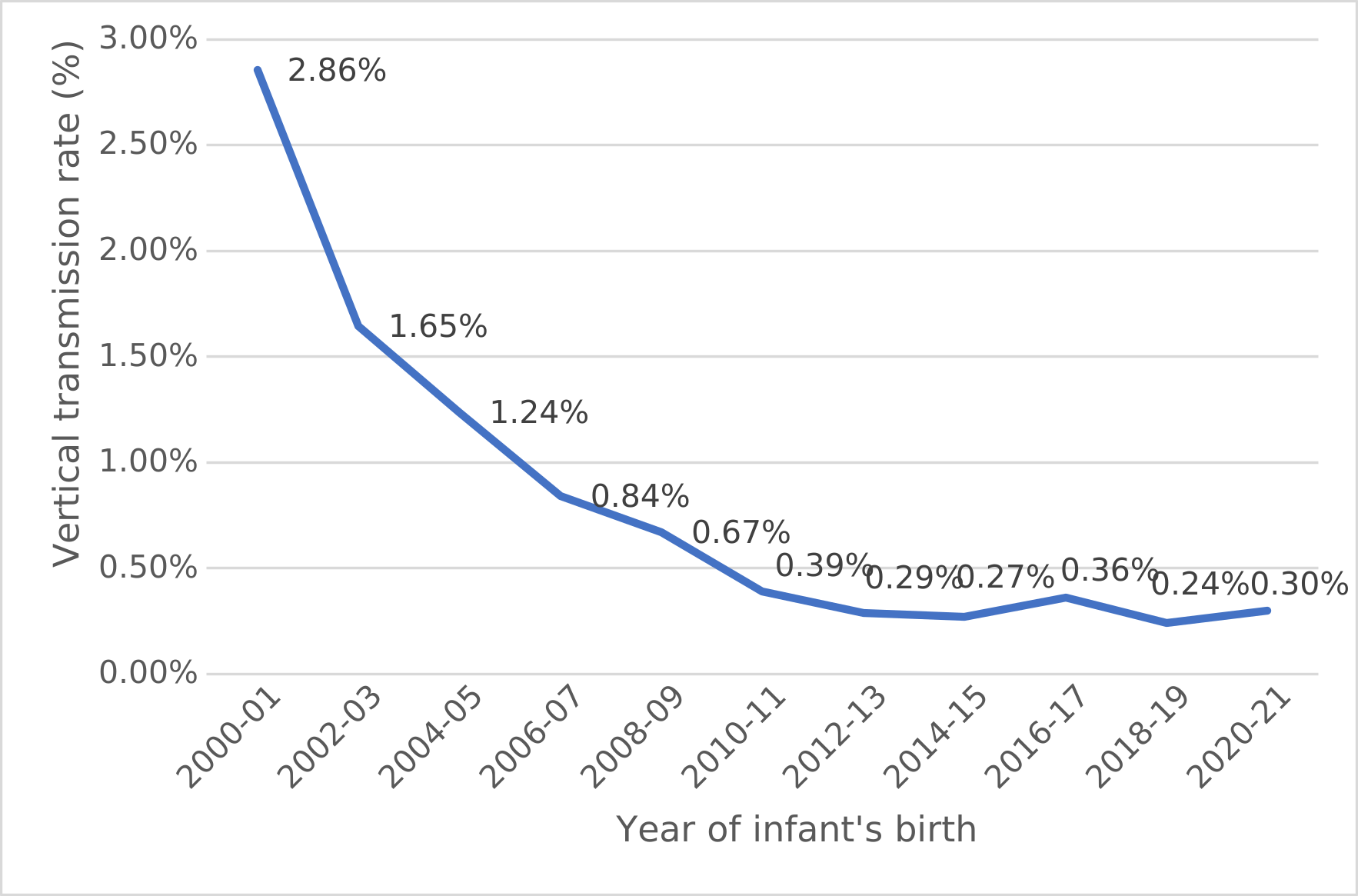
Figure 9 shows the vertical transmission rate for England by infant year of birth for the period 2000 to 2021. The vertical transmission rate has been below 0.4% in England since 2012, reducing from 2.86% (71 of 735) in 2000 to 2001.
There were three vertical transmissions among 1018 singleton infants with known HIV status born in the calendar years 2020 and 2021 to women with a known HIV diagnosis by delivery, with a vertical transmission rate of 0.30% (95% CI 0.06% to 0.09%). All infants had a positive PCR at birth so considered to be “in-utero” transmissions. Two of these three pregnancies were in women diagnosed with HIV before pregnancy and one where there was a diagnosis during pregnancy. One of the three infants was born to a woman who screened negative at booking and was then diagnosed later in pregnancy following retesting after partner’s diagnosis during pregnancy. Both women diagnosed before pregnancy were on treatment at conception but had issues with engagement and adherence during pregnancy. Both women had detectable viral load throughout pregnancy, peaking at 1.4million for one woman and 13,000 for the other.
There were no transmissions among 609 women on ART from conception with undetectable viral load at booking and delivery who delivered in 2020-21 (however this includes some women with detectable viral load at some point during pregnancy. From 2024, ISOSS have been collecting all viral loads in pregnancy so will be able to report on outcomes among women who had undetectable viral load throughout pregnancy in future reports.
15. HIV vertical transmission clinical expert review panel (CERP)
All children diagnosed with HIV and seen for paediatric care in England are reported to ISOSS. These children are born to women who are either:
- known to be living with HIV during pregnancy (captured in the routine maternity surveillance)
- diagnosed or identified after their pregnancy (not known to maternity surveillance)
ISOSS carry out additional data collection for all HIV vertical transmissions among children born in England (prior to 2020, reporting also covered Scotland, Wales and Northern Ireland). Anonymised care summaries are produced for each transmission and are reviewed by the CERP both individually, and in context of other cases, to build on our understanding of infant acquisition of the infection.
The panel consists of the NHSE IDPS screening programme team, alongside specialists from HIV and sexual health, obstetrics, paediatrics and laboratories. There is also representation from the British HIV Association (BHIVA).
The objectives of the CERPs are to:
- establish the circumstances surrounding each transmission and identify any contributing factors
- identify missed opportunities for preventing vertical HIV transmission
- identify common themes across cases for shared learning
- contribute these findings to:
- the development of new, or modification of existing NHS England IDPS programme guidance
- national clinical guidance, supporting the work of British HIV Association (BHIVA)
By March 2025, there were a total of 160 transmissions among children born between 2006 and 2023, reported to ISOSS and discussed by the CERP (shown in Figure 10). Of the 160 total cases, 108 (reported between 2006 and 2014 ) have been covered in detail in the previously published perinatal HIV audit and will not be included in this current report.
This report’s CERP section will include all the transmissions reported since the 2014 perinatal audit (52 transmissions).
Figure 10: All reported vertical transmissions by timing of maternal diagnosis and year of birth, 2006-2023 (reported to May 2025)
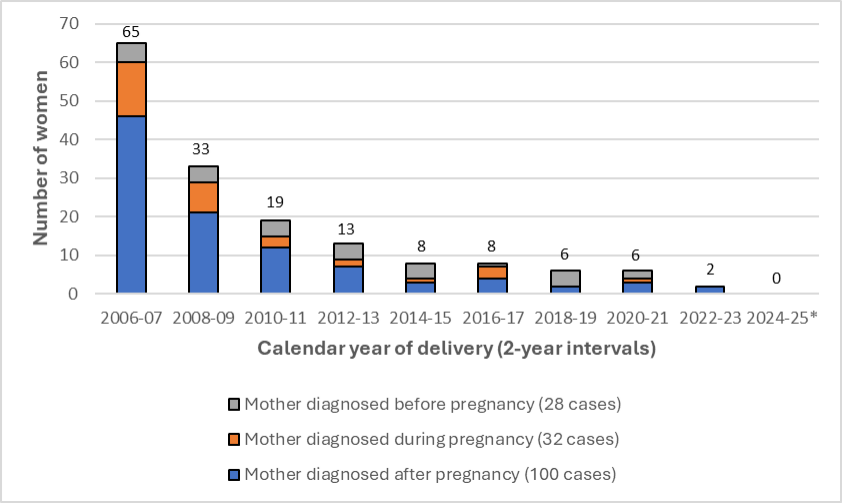
*The report is produced based on data submitted up to May 2025 so numbers for 2024-2025 may increase
15.1 Vertical HIV transmissions reported since 2014
There have been 52 cases of vertical HIV transmission in 50 women (one set of twins and one set of siblings) reported to ISOSS since 2014:
- 35 reported between 2014 and 2020 (ISOSS 2021 report)
- 13 reported between 2020 and 2021 (ISOSS 2022 HIV report)
- 4 reported between 2022 and 2025 (new for this ISOSS report)
Recent cases of vertical HIV transmission
Of the 4 cases reported between 2022 and 2025, 3 occurred recently in babies born between 2021 and 2023.
All 3 children were born to women who screened HIV negative at booking (between 9 and 16 weeks gestation) and were diagnosed under 4 years of age, following their mother’s diagnosis (1 in a subsequent pregnancy).
All 3 had been seen by health care professionals (including in the Emergency Department) for various reasons with no HIV testing undertaken. One child was seen with acute diarrhoea and another was symptomatic of congenital infection, but none of the 3 presented with symptoms of immune suppression.
It should be noted that the number of recorded transmissions may increase, particularly in recent years, since children born to women not diagnosed until after pregnancy may not yet have been identified as living with HIV (for example some children are not diagnosed until adolescence, see ‘age at diagnosis’ section).
15.2 Overview of transmissions since 2014
Infant year of birth:
Of the 52 children reported to ISOSS between 2014 and 2025:
- 16 were born in 2006-11
- 22 were born in 2012-17
- 14 were born in 2018-23
Timing of maternal HIV diagnosis:
- 18 of the 52 children (35%) were born to women diagnosed before delivery:
- 13 (25%) before pregnancy
- 5 (10%) during pregnancy
The remaining 34 children (65%) were born to women diagnosed after pregnancy. This is similar to the 2006-14 reported transmissions where 62% of infants were born to women diagnosed after pregnancy.
15.3 Maternal demographics
Among the 52 transmissions reported since 2014, median maternal age at delivery was 33 years (IQR: 28 years to 36 years), slightly higher than the median age of delivery in women living with HIV overall (31 years) (interquartile range [IQR] 28 to 36) and the general pregnant population in England of 31.2 years in 2022 (Office for National Statistics).
The majority (82%) of pregnancies were to women were born outside the UK (43 of 50) which is comparable with the general population of pregnant women living with HIV (80.8%).
68% (34) of those born abroad were from Africa, and 14% (7) from Eastern Europe (Table 34), demonstrating similar proportions of women from Africa and slightly higher from Eastern Europe when compared to the overall population of pregnant women living with HIV (66% and 6% respectively).
Duration of time living in the UK before delivery ranged from 2 days to 23 years (median duration 7 years), with 51% (21 of 41 women born abroad with known timing of UK arrival) having lived in the UK for over 5 years (Table 34). 5 (12%) arrived in the UK during pregnancy.
The highest number of vertical transmissions were seen in in London 43% (22 of 51, Table 34).
In 65% (33 of 51) of vertical transmissions, the woman booked late for care (over 10 weeks gestation). This is higher than the overall population of pregnant women living with HIV (56%) and notably higher than the general pregnant population (39%).
Table 34: Maternal demographics (per pregnancy, n=51)
| Number of pregnancies | Percentage of pregnancies | |
|---|---|---|
| World region of birth (n=50, 1 missing) | ||
| Africa | 34 | 68 |
| Eastern Europe | 7 | 14 |
| UK | 8 | 16 |
| Rest of Europe | 1 | 2 |
| Timing of UK arrival among women born abroad (n=41, 1 missing) | ||
| More than 5 years before conception | 21 | 51 |
| 1-5 years before conception | 15 | 37 |
| Equal to or less than 1 year before conception | - | - |
| During pregnancy | 5 | 12 |
| Ethnicity (n=51) | ||
| Black African | 36 | 70 |
| White British | 8 | 16 |
| Any other White background | 7 | 14 |
| Age at delivery (n=51) | ||
| Less than 25 years | 4 | 8 |
| 25 to 29 years | 13 | 25 |
| 30 to 34 years | 16 | 31 |
| 35 to 39 years | 12 | 24 |
| 40 to 44 years | 6 | 12 |
| Region of delivery (n=51) | ||
| London | 22 | 43 |
| North East and Yorkshire | 6 | 12 |
| East of England | 5 | 10 |
| North West | 4 | 8 |
| South East | 2 | 4 |
| South West | 2 | 4 |
| Midlands | 6 | 1 |
| Scotland, Wales, Northern Ireland | 4 | 8 |
Table 34 Note 1: reporting from Wales, Scotland, Northern Ireland ceased in 2019 however transmissions were included in CERPs prior to this date.
15.4 Complex social factors
Significant inequalities and potential barriers to care were identified in women diagnosed with HIV and those undiagnosed by time of delivery. Table 35 shows a breakdown of the complex social factors reported.
In over half of pregnancies (57%: 29 out of 51), there were complex social factors reported at the time of the pregnancy. This is consistent with the 108 2006 to 2014 reported cases, but notably higher than the 38% reported for the overall population of pregnant women living with HIV. Of the 17 women diagnosed by delivery (before or during pregnancy), over 75% (13) had one or more known complex social factors. Of the 34 women diagnosed after delivery, 47% (16) had one or more known complex social factors.
These numbers are likely to be under reported as they are based on information clinical teams had available at the time of the pregnancy.
Table 35. Complex social factor by timing of maternal diagnosis
| Diagnosed women | Undiagnosed | |||
|---|---|---|---|---|
| Complex social factors† | Number of pregnancies | Percentage of pregnancies (%) | Number of pregnancies | Percentage of pregnancies (%) |
| Social services/safeguarding | 7 | 41 | 5 | 15 |
| Mental health | 9 | 53 | 3 | 9 |
| Housing | 7 | 41 | 7 | 21 |
| Drug/alcohol | 2 | 12 | 2 | 6 |
| Intimate partner violence | 3 | 18 | 2 | 6 |
| Uncertain immigration status | 3 | 18 | 5 | 15 |
| Language comprehension | 5 | 29 | 1 | 3 |
| English language translation required^ | 2 | 12 | 2 | 6 |
| Financial | 4 | 23 | 2 | 6 |
| Prison | 1 | 3 | ||
| Sex work | 1 | 3 | ||
| Total | 17 | 34 |
† A woman may have had more than one complex social factor reported at the time of pregnancy.
^ Both received formal translation services
15.5 Maternal diagnosis
Mode of HIV acquisition was reported as likely through heterosexual contact for all women. Among the 17 women diagnosed by the time of delivery, 5 were as a result of antenatal screening (in the current or previous pregnancy), Table 36.
Of the 34 women diagnosed after delivery, 9 were diagnosed after the child was diagnosed, 9 as a result of their partner being diagnosed, 9 through antenatal screening (including in current pregnancy where the result was returned after delivery or subsequent pregnancies) and 7 due to the woman’s presentation with symptoms consistent with HIV, Table 36.
Table 36. Reason for maternal testing by timing of diagnosis (per pregnancy)
| Reason | Women diagnosed by delivery | Percentage | Women diagnosed after delivery | Percentage |
|---|---|---|---|---|
| Child symptomatic | - | - | 9 | 26 |
| Partner diagnosed (woman diagnosed in GUM/GP) | 2 | 12 | 9 | 26 |
| Antenatal screening | - | - | 4 | 11 |
| Antenatal screening in previous pregnancy | 1 | 6 | - | - |
| Antenatal screening in current pregnancy | 4 | 23 | - | - |
| Antenatal screening in in labour | - | - | 2 | 6 |
| Antenatal screening in subsequent pregnancy | - | - | 3 | 9 |
| Mother symptomatic (diagnosed in GUM or hospital) | 4 | 23 | 7 | 21 |
| Not known (tested abroad or GUM) | 6 | 35 | - | - |
| Number of transmissions | 17 | 99 | 34 | 99 |
Table 36 note 1: %s total to less than 100 due to rounding
15.6 Contributing factors
The CERP classified each transmission by the main contributing factor identified. These are outlined in Figure 11 and Table 37. The contributing factors are discussed below by classification and timing of maternal diagnosis.
Figure 11: flowchart of the 52 transmissions reported to ISOSS 2014-25 (infants born 2006-2023).
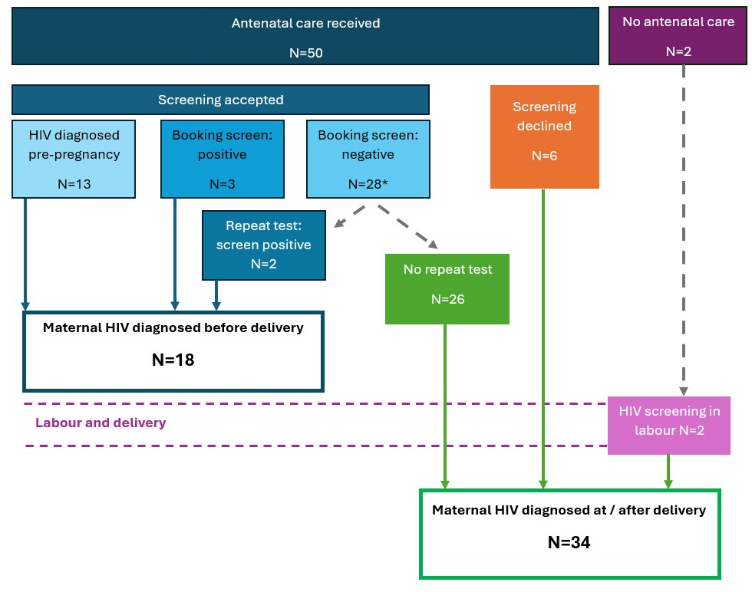
*3 negative screens reported but unconfirmed (i.e. ISOSS were unable to confirm the woman’s negative screening result because of disclosure issues - the maternity units were unaware of the woman’s subsequent HIV diagnosis)
Table 37. Main contributing factor by timing of maternal diagnosis (per transmission)
| Diagnosed women | Undiagnosed | |||
|---|---|---|---|---|
| Contributing factor | Number of transmissions | Percentage of transmissions (%) | Number of transmissions | Percentage of transmissions (%) |
| Woman declined antenatal HIV testing | - | - | 6 | 18 |
| Seroconversion in pregnancy/postnatal period (confirmed negative test) | 2 | 11 | 23 | 68 |
| Reported negative in pregnancy (not confirmed) | - | - | 3 | 9 |
| Postnatal transmission likely attributed to breastfeeding | 5 | 28 | - | - |
| Presented late for antenatal care | 2 | 11 | 2 | 6 |
| Engagement/adherence issues | 4 | 22 | - | - |
| No specific contributing factor | 5 | 28 | - | - |
| Total | 18 | 100 | 34 | 101 |
Table 37 note 1: %s total to more than 100 due to rounding
15.7 Women diagnosed prior to delivery
Among the 17 pregnancies where women were diagnosed prior to delivery, 12 were diagnosed before pregnancy (includes one twin pregnancy) and 5 during pregnancy. Figure 12 gives a breakdown of contributing factors by timing of diagnosis and ART start, and Table 38 a summary of pregnancy and clinical characteristics.
Figure 12. Contributing factors identified by the CERP among women diagnosed by delivery by timing of diagnosis/ART start
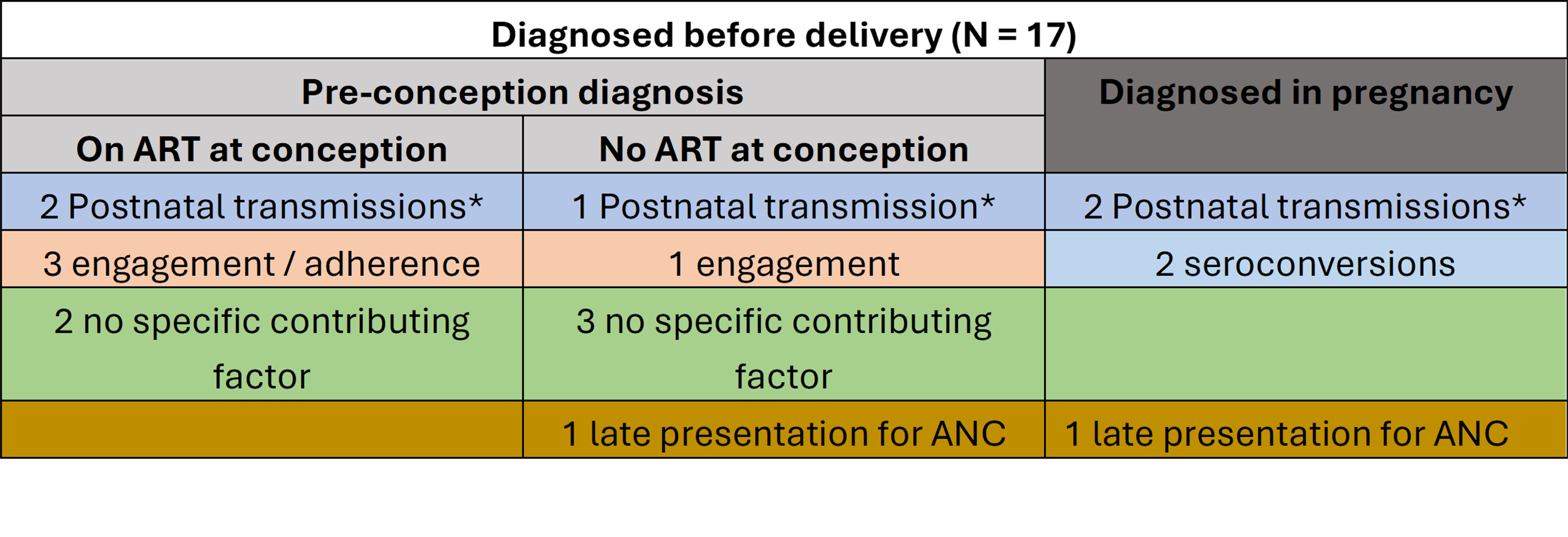
*Postnatal transmission likely due to breastfeeding
7 pregnancies were to women on ART at conception:
- 5 booked by 12 weeks gestation with the remaining 2 booking at 12-20 weeks gestation.
- first pregnancy viral load of < 50 copies/ml (i.e., undetectable) was reported in 4 pregnancies, 50-999 in 2 and 1000-99,999 in 1.
- first CD4 in pregnancy was available for 4 of the 7 pregnancies where 3 were 200-349 and 1 was >500
- delivery viral load was <50 for 4 and 1000-99,999 copies/ml for 3
Among the 5 pregnancies (includes one twin pregnancy) to women diagnosed before pregnancy and not on ART at conception:
- two were booked by 12 weeks gestation and three at 20 weeks or more
- first pregnancy viral load for one was 50-999, three were 1000-99,999 one was over 100,000
- first CD4 in pregnancy was available for 4 of the 5 pregnancies and was <200 for two and 350-499 for the remaining two
- viral load at delivery was < 50 for one, 50-999 for one and two >100,000 copies/ml (one not known)
Among the 5 pregnancies to women were diagnosed during pregnancy:
- booking ranged from 10 weeks to 31 weeks, with two women having a negative test at this point. For these two women both were retested later in the pregnancy (24 weeks and 37 weeks) following their partner’s diagnosis
- first viral load in pregnancy/at diagnosis was 50-999 for one, 1000-99,999 for two, and over 100,000 copies/ml for two
- CD4 count was available for four women, three of whom had counts below 350 cells/mm3
- two women delivered with undetectable viral load, one with viral load of 50-999, one 1000-999,999 and one over 100,0000 copies/ml (both women booked late and diagnosed late in pregnancy)
- all women were prescribed ART during pregnancy (starting at 22-37 weeks gestation)
Table 38. pregnancy and clinical characteristics among pregnancies to women diagnosed with HIV by delivery, by timing of diagnosis and ART start
| Dx before pregnancy, ART at conception (n=7) | Dx before pregnancy, not on ART at conception (n=5) | Dx during pregnancy (n=5) | |
|---|---|---|---|
| Gestation at booking | |||
| <12 weeks | 5 | 2 | 1 |
| 12-20 weeks | 2 | - | - |
| ≥20 weeks | - | 3 | 1 |
| First pregnancy viral load (copies/ml) | |||
| <50 | 4 | - | - |
| 50-999 | 2 | 1 | 1 |
| 1000-99,999 | 1 | 3 | 2 |
| ≥100,000 | - | 1 | 1 |
| First pregnancy CD4 (cells/mm3) | |||
| <200 | - | 2 | 2 |
| 200-349 | 3 | - | 1 |
| 350-499 | - | 2 | - |
| ≥500 | 1 | - | 1 |
| Not known/available | 3 | 1 | 1 |
| Viral load at delivery (copies/ml) | |||
| <50 | 4 | 1 | 2 |
| 50-999 | - | 1 | 1 |
| 1000-99,999 | 3 | - | 1 |
| ≥100,000 | - | 2 | 1 |
| Not known/available | - | 1 | - |
All 18 infants (including one set of twins) born to women diagnosed by delivery were given postnatal prophylaxis (PNP). 11 infants were given three-drug PNP (6 infants had a positive HIV PCR at birth) and seven were given single drug zidovudine (2 had a positive PCR at birth, given zidovudine and started combination antiretroviral therapy at 1 month). Of the 7 given single drug zidovudine, six were to women with undetectable viral load at delivery (one had a viral load of 53).
11 of the 18 infants were exclusively formula fed, 6 were likely breastfed (confirmed in 3 cases, likely in 3 cases where transmission was postnatal based on infant testing). None of the women communicated they were intended to breastfeed and breastfed without clinical teams’ awareness so were not supported to breastfeed. In one case, mode of infant feeding was not known.
The main factors contributing to transmission as identified by the CERP were:
- postnatal acquisition likely attributed to breastfeeding (5)
- engagement/adherence issues (4)
- seroconversion during pregnancy (2)
- late presentation for antenatal care (2)
- no specific contributing factor identified (5)
Postnatal transmission likely due to breastfeeding
In 5 cases, the transmission was classified by the CERP as likely to have occurred postnatally (infant negative HIV PCR after 6 weeks of age and a positive PCR thereafter) and likely due to breastfeeding where the clinical team were not aware. In all 5 cases the woman’s HIV status was known prior to delivery.
BHIVA guidelines for the management of HIV in pregnancy and the postpartum period first accommodated supported breastfeeding in 2012, with formula feeding still recommended practice for infant feeding. Since then, guidelines have been updated in 2018 and further in 2025, with the current recommendation that women exclusively formula feed their infant if they want zero risk of postnatal transmission, with more detailed guidance for clinicians to best support women who choose to breastfeed.
One of the 5 children thought to have acquired HIV through breastfeeding was born before the BHIVA 2012 guidance was introduced (at the time, any disclosure of breastfeeding may have resulted in a safeguarding referral). As none of the 5 women communicated they were intending to breastfeed and breastfed without clinical teams’ awareness, they did not receive support from the clinical team to do this as safely as possible. One woman was previously supported to breastfeed a child (with no vertical transmission) but was advised against breastfeeding this infant because of a detectable HIV viral load in pregnancy.
- 3 women were diagnosed before pregnancy (2 were on ART from conception and one declined ART in pregnancy as she didn’t believe she needed it)
- Among the 2 women diagnosed during pregnancy, one booked and screened positive after 30 weeks and delivered within a few days (shortly after arriving in the UK), and 1 booked and screened positive at 15 weeks and started ART 9 weeks later (diagnosed in sexual health service but the maternity team were not aware of the positive result).
4 of the 5 women had an undetectable viral load at delivery, and 1 had a viral load of 53 copies/ml. 1 woman on ART from conception had undetectable viral load throughout pregnancy (after 2012 so may have been eligible for supported breastfeeding).
Among the 5 women, 3 had complex social factors reported, including mental health issues, housing issues, and social services support, and 4 women had issues with engagement with HIV health services and adherence to ART in pregnancy.
All infants had PNP: three had single drug zidovudine PNP (one for 4 weeks), one infant was given three-drug PNP (NVP stopped at 2 weeks, continuing 3TC/ZDV for 4 weeks) and one was prescribed three drug postnatal prophylaxis for 4 weeks but this eventually required directly observed therapy. Two women went abroad after initial infant follow-up, and their two children were diagnosed abroad and subsequently seen in the UK for HIV follow-up.
Engagement/adherence issues:
In 4 transmissions the main contributing factor identified by the CERP was issues with engagement and/or adherence to ART. All 4 women were diagnosed before pregnancy. 3 out of 4 women were on ART at conception and 1 woman declined to take ART during the pregnancy despite multi-agency involvement throughout the pregnancy and postnatally and there were multiple MDT attempts to engage the woman
The 3 women on ART were all on protease inhibitor-based regimens. 2 of the 3 had a detectable viral load at booking and throughout pregnancy, and one was undetectable at booking. All women had detectable viral load at delivery (ranging from 1,300-13,000 copies/ml). Of the 3 women on ART, there were issues tolerating the medication and inconsistent adherence.
All 4 women had one or more complex social factors reported: all had pre-existing involvement with social services/safeguarding, 3 had mental health issues, 3 had housing issues, 1 had language comprehension issues (spoke English but struggled to process information), and 1 had financial issues. In 3 of the pregnancies there was significant multidisciplinary team involvement and multi-agency support. The remaining pregnancy was to the woman who declined treatment and engagement with all services (including HIV and antenatal).
HIV seroconversion during pregnancy
In 2 cases women had had a negative antenatal screening test at booking. 1 of the two women booked and screened negative at 10 weeks, then tested in hospital at 24 weeks due to symptoms consistent with HIV. The other woman booked and screened negative at 13 weeks. She was then retested at 37 weeks gestation following her partner’s diagnosis and screened positive (delivered one week later). 1 was born in Eastern Europe and one in central Africa and both had lived in the UK for over 5 years.
The women’s viral loads at diagnosis were 120,000 copies/ml and 2.5 million copies/ml. Both were started on ART within a few days of diagnosis (one woman was on an INSTI-based regimen and the other on a PI-based regimen). Both women had a detectable viral load at delivery (one 9,000 copies/ml and one 2.5million copies/ml). Both women had an elective caesarean section and IV ZDV at delivery and their babies were given three drug postnatal prophylaxis. Both infants were breastfed (against advice, reasons not known).
Late presentation for antenatal care
In 2 of the transmission cases the CERP classified late presentation for antenatal care as the main contributing factor:
1 woman, diagnosed prior to pregnancy, booked at 28 weeks gestation after arriving in the UK during pregnancy, and was not on ART with a booking viral load of 230,000 copies/ml. She delivered a few days later via emergency caesarean and was given IV ZDV and Raltegravir at delivery. The baby was given three drug postnatal prophylaxis.
The other woman booked at 20 weeks gestation and was diagnosed for the first time during the pregnancy. Her viral load at diagnosis was 3,000 copies per/ml and she was started on ART (Truvada/Darunavir/Ritonavir) within 2 weeks of diagnosis. She delivered vaginally at 38 weeks gestation undetectable viral load and was given IV ZDV at delivery. The infant was given 2 drug PNP.
No specific contributing factor
In five cases there was no one main contributing factor to the transmission identified (Table 39). In 4 cases (cases 1-4), the CERP identified multiple factors which may have contributed i.e. a combination of adherence/engagement issues and delivery complications. In the remaining case there were no known antenatal, delivery or postnatal risk factors identified by the CERP (case 5).
All women were diagnosed before pregnancy. 2 of the women were on ART from conception and 3 were diagnosed before pregnancy and started ART during pregnancy (all started at 11-12 weeks). Details are summarised in Table 39.
Table 39. Transmissions where there was no contributing factor identified by the CERP (n=5)
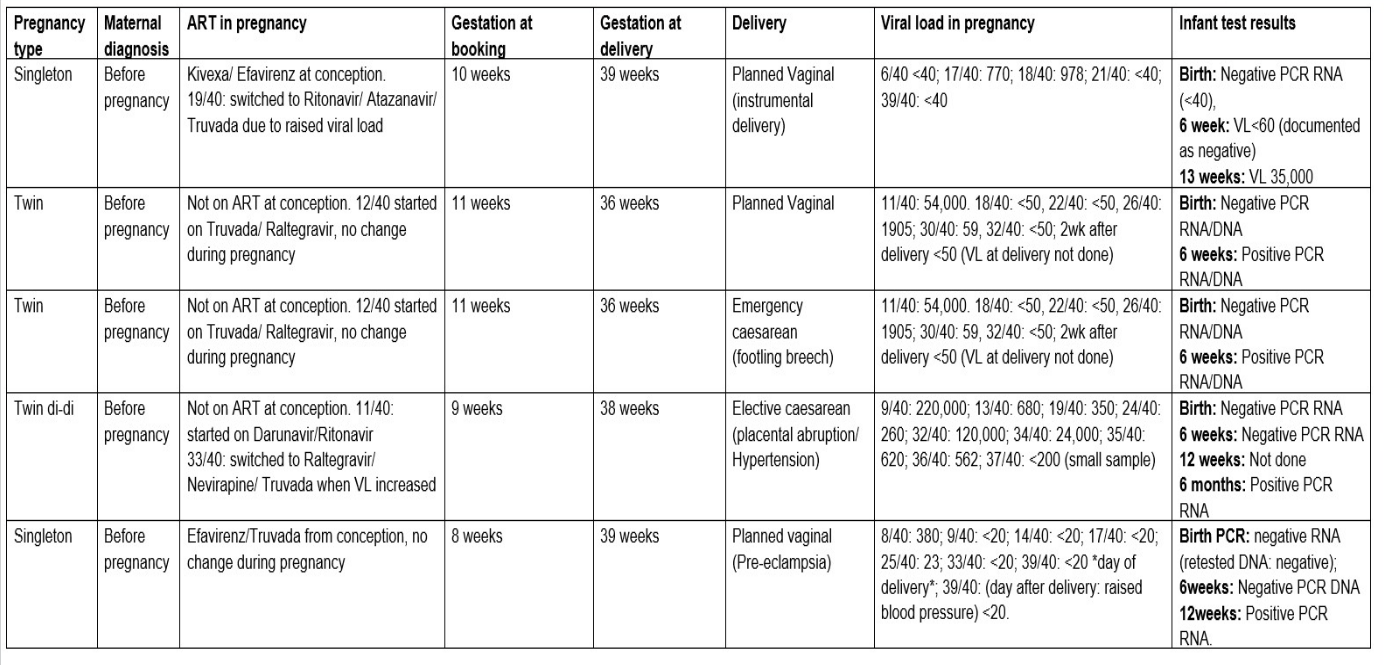
15.8 Women diagnosed after pregnancy (34 infants)
The 34 infants born to women diagnosed after delivery, including 2 where screening was carried out in labour and results returned after delivery (further details see: No antenatal care section ). The main contributing factors as identified by the CERP were:
- seroconversion during pregnancy or postnatally through breastfeeding following confirmed negative screening test in pregnancy (23)
- possible seroconversion during pregnancy or breastfeeding following reported but un-confirmed negative test* in pregnancy (3)
- declined HIV testing in pregnancy (6)
- women first presented in labour (no antenatal care) (2)
*Where maternity services were unaware of the transmission, ISOSS were unable to request information from antenatal notes that could confirm the negative testing in pregnancy.
Seroconversion during pregnancy or postnatally
There were 26 infants born to women who had either a confirmed negative HIV screening test in pregnancy (23) or reported negative test (3) (reported by the service but unconfirmed by antenatal notes) and acquired HIV later during pregnancy or postnatally through breastfeeding. Ten children were born in 2006-11: ten in 2012-17 and six in 2018-23.
7 of the 26 women were White UK-born.
15 of the 26 women were of Black African ethnicity (13 born in sub Saharan Africa, 1 North Africa, 1 Europe). One woman arrived in the UK during pregnancy, 6 women were in the UK for 1-5 years prior to pregnancy, 4 women 6-10 years and 3 more than 10 years (1 not known).
4 women were White Eastern European born (4 in the UK 1-5 years before pregnancy and one 6-10 years.
For the 23 women with confirmed negative-screen tests at booking, 7 of the 23 women booked later than the recommended 12 weeks gestation.
Partner status
Timing of partner diagnosis was available for 21 of 23 of the confirmed seroconversion cases. This was sometimes reported as coinciding with maternal diagnosis, but in 4 cases the partners already knew their status and had not shared this information (with the woman or anyone involved in the woman’s antenatal care), or it was not known whether they knew their HIV status (were not known to have been tested previously). In 3 cases partners died of an HIV related illness.
In 3 cases antenatal notes were unavailable for the ISOSS investigation as the maternity team were not aware of the transmission/woman’s subsequent diagnosis.
Breastfeeding
Of the 26 transmissions to women diagnosed after pregnancy where seroconversion was identified as a contributing factor, 23 children were breastfed (2 were formula fed and for 1, there was no information about infant feeding.
Complex social factors
Complex social factors at the time of the pregnancy were reported for 13 of 26 (not known for 6). In 7 cases there were multiple complex social factors reported. Issues included: housing concerns (5), safeguarding/social services involvement (3), uncertain immigration status (3), mental health issues (2), drugs/alcohol misuse (2), intimate partner violence (2), financial (2), prison (1), and language/comprehension (1).
Declined HIV testing in pregnancy:
There were 6 infants born to women who declined HIV screening in pregnancy and were diagnosed postnatally. One woman declined HIV screening in 2 pregnancies, with transmissions occurring in both siblings (the mother was diagnosed as an inpatient before both children were tested). All 6 women accepted screening for all other infectious diseases (syphilis and hepatitis B). 4 of the declines occurred at London antenatal units (one North East, one North West). All the women were Black African, from sub-Saharan Africa, 3 women had been in the UK 1-5 years and 3 for over 5 years.
It should be noted that 5 of the 6 children were born prior to 2010, before the IDPS Programme’s introduction of a formal reoffer of screening into their guidance. The formal reoffer is to be made by a member of the screening team for all screening declines. 1 child was born in 2012 and there was no documentation of whether a formal reoffer of screening for HIV had been made.
The reason for the screening decline was not documented in all 6 cases. 1 woman was reported to have multiple complex social factors including social services involvement, mental health issues, housing concerns and poor language comprehension. 5 of the women had no complex social factors reported this was not known for the remaining woman.
All 6 infants were breastfed and where duration was documented, this ranged from 7 months to 2 years. The children were diagnosed between 5 and 10 years of age, either following maternal diagnosis (4) or when presenting with symptoms consistent with HIV infection (2).
In 2016 the IDPS programme strengthened guidance around the formal re-offer, reducing the timeframe by which it must take place from 28 to 20 weeks and stipulating that it must be at a face-to-face meeting. Most recently guidance in the NHS infectious diseases in pregnancy screening programme handbook (2023) adds that the re-offer must be made within 2 weeks for any woman over 20 weeks gestation with the aim of encouraging earlier screening to enable timely interventions where necessary. Where a woman declines the formal re offer her case should be referred for discussion by the Infectious Diseases MDT who are responsible for further review and management.
From mid-2025 ISOSS started collecting data on IDPS screening declines in pregnancy, including the reason for the decline, MDT involvement and details of the formal reoffer. Future reports will include more insights into women who decline IDPS screening.
Women first presented in labour (no antenatal care)
Two women presented unbooked in labour; both arrived in the UK during pregnancy: 1woman, 2 days before delivery and 1 woman, 2 two weeks before delivery. Both women accepted and had screening in labour, with one diagnosed the same day as delivery, and one five days after delivery. Both women had a pre-term delivery (both at <32 weeks gestation), with one delivered by emergency caesarean section for obstetric reasons and one delivered vaginally. The infant whose mother was diagnosed on the day of delivery was given enfuvirtide within 72 hours followed by ZDV/3TC, and was formula-fed. The other infant was breastfed (mixed) for the first five days before switching to formula, then given ZDV on day 5 when the maternal result was available. Infants were subsequently diagnosed with HIV from blood taken at 1 day and 13 days of life, respectively.
15.9 Child outcomes
Timing of diagnosis and transmission
Age at diagnosis for these 52 children ranged from birth to 11 years. Among the 18 infants born to women diagnosed by delivery:
- 6 infants who tested PCR positive at birth and so are likely to have acquired HIV in utero
- 5 infant tested PCR negative at birth and 6 weeks and positive thereafter so were likely postnatal transmissions.
- 1 infant tested PCR negative at birth and positive at 6 weeks so likely intrapartum transmission.
- 1 infant had tested PCR negative at birth and positive at 10 days was either in utero/delivery (one birth PCR negative, positive 10 days)
- for the 5 transmissions where no contributing factor was identified, the CERP was also unable to establish timing of transmission. The infant test results for these 5 transmissions are summarised in Table 39.
Among the 34 children born to women diagnosed after pregnancy. 22 of the 34 had one or more clinical conditions prior to diagnosis, summarised in Table 40.
12 of the 22 had an HIV clinical indicator condition at diagnosis. 11 of these children were tested owing to symptoms, and 1 following their mother’s diagnosis. Among the 10 children with no symptoms at diagnosis all were diagnosed following maternal diagnosis.
In 7 of 12 cases the panel found that there were potential missed opportunities for earlier diagnosis, including the child being seen multiple times by clinical services and the mother being diagnosed but the child not being tested. For one child, there was a delay of testing and diagnosis due to the woman’s psychological issues relating to the woman’s own recent diagnosis and death of the child’s father. All the children were born to women who had screened negative in pregnancy.
Table 40. World Health Organisation (WHO) clinical staging of established HIV infection among HIV vertical transmissions
| HIV associated symptoms | WHO clinical stage | Clinical stage symptoms present | Number of children |
|---|---|---|---|
| Asymptomatic | 1 | no symptoms | 10 |
| Mild symptoms | 2 | recurrent ear and chest infections; chronic bulky lymphadenopathy diagnosed with EBV and chronic skin eruption - likely infection; Recurrent otitis media and upper respiratory infections, swelling of lymph nodes; | 3 |
| Advanced symptoms | 3 | severe recurrent bacterial pneumonia and oral candidiasis, and also sickle cell disease; recurrent otitis media and upper respiratory infections, severe dental decay, chronic dermatitis, failure to thrive; dermatitis, chronic thrombocytopenia; unexplained persistent diarrhoea, recurrent upper respiratory infections; persistent oral thrush, sepsis, hepatosplenomegaly; Symptomatic thrombocytopenia, splenomegaly; Recurrent ear infections, TB (site unknown) | 7 |
| Severe symptoms | 4 | Pneumocystis carinii pneumonitis - opportunistic infection; Pneumocystis carinii pneumonitis, disseminated cytomegalovirus, hepatosplenomegaly, anaemia, thrombocytopaenia, hemophagocytic lymph histiocytosis (HLH) - two opportunistic infections | 2 |
WHO clinical staging of established HIV infection
At the time of this report there have been no deaths among the 52 children included. Details of their ongoing management and care are collected by the Children’s HIV and AIDS Reporting System (CHARS) who follow-up all children living with HIV seen for paediatric care in England. The first annual CHARS report was published in 2024 focusing on clinical outcomes and quality of care for children seen for care in 2022.
16. Vertical Transmissions Summary
Of the 52 transmissions reported since 2014, two thirds of the children (65%) were born to women diagnosed after pregnancy. The main contributing factor in this group, as identified by the CERP, was seroconversion during pregnancy or breastfeeding following a confirmed negative antenatal screening test which accounted nearly half of all the transmissions overall (23 of 52). This was significantly higher than the 21% reported in the 2014 perinatal audit, highlighting the importance of raising awareness among both the women and health professionals, about risk of HIV infection during pregnancy and the need for targeted re-screening where a risk is identified. It should be acknowledged however, that a risk exposure will not always be reported by women and some may not be aware that they have been exposed to a risk. Indeed, partner HIV status and notification is an important consideration identified through CERP discussions as there were a number of cases where it was considered that non-disclosure by the partner was may have been a barrier to earlier maternal diagnosis.
Another significant factor was HIV screening declines which accounted for 6 of the transmissions, the majority of which occurred before the introduction of the IDPS formal re-offer in 2010 highlighting the positive impact of this programme change. Screening declines was also a significant theme reported in the 2014 Perinatal HIV audit. This highlights the ongoing importance of effective clinical management for this particularly challenging area of care. The new ISOSS IDPS declines data collection will offer insights into the current management of women who decline screening in pregnancy and further inform future guidance in this important area.
For those diagnosed before pregnancy the main contributing factors mirror those seen in the earlier perinatal audit; difficulties with engagement and adherence to ARVs, often combined with late booking and complex social factors both of which are experienced at a much higher rate than in the wider HIV pregnant population. However, while these difficulties significantly increase the risk, they do not always result in a transmission, as evident from the wider HIV pregnant population data. It is important to note too, that transmission of HIV can occur where there are no identifiable contributing factors and that many of these risk factors are present in pregnancies that don’t result in transmission.
Another important area identified was breastfeeding where clinicians were unaware. Whilst an increasing number of women are choosing to breastfeed and receive support and close monitoring to minimise the risk of transmission, the transmission cases demonstrate that women may still breastfeed without sharing the information with the clinical team and without meeting the supported breastfeeding criteria. This highlights the importance of antenatal infant feeding discussions for all women to give information and outline the risks, regardless of how they say they intend to feed their infants.
16.1 CERP Recommendations
CERP discussions involve the identification of key themes and areas for improvement around the management of infections in pregnancy. Past ISOSS reports have detailed a number of recommendations. The key recommendations were:
Negative Now and Seroconversion
Information should be available for women and their partners about protecting themselves from infections in pregnancy. The ‘negative now’ message should be included in all resources to ensure women are made aware that a negative screening result does not confer protection throughout pregnancy. Women should be made aware of how to access sexual health services.
Progress to date
‘Negative now’ messaging and guidance on sexual health in pregnancy is now in all professional and patient resources. This includes.
- IDPS programme handbook (updated 2023)
- IDPS laboratory handbook (updated 2022) ‘negative now’ messaging added to all negative screening results
- IDPS eLearning for healthcare (elfh) IDPS online training module
Guidance on the importance of negative now messaging and retesting following any risk in pregnancy is also discussed within the recently updated BHIVA HIV in pregnancy guidelines (2025).
Multidisciplinary Team (MDT) working
To strengthen guidance on the need for a clinically representative MDT to manage care effectively and improve communication through the use of birth plans.
Progress To Date
Additional information on what is meant by MDT working, suggested membership, ways of working and responsibilities of the MDT has been added to the updated IDPS programme handbook and IDPS service specification (2023).
The same guidance on MDT working and a new birth plan template has been included within the recently updated BHIVA guidelines for the management of HIV in pregnancy (2025).
Risk of transmission in pregnancy and while breastfeeding
The undetectable equals untransmittable (U=U) statement applies only to sexual transmission of HIV. Messaging out about U=U in pregnancy and while breastfeeding being not applicable should be stressed within clinical and patient information. This issue is already highlighted by BHIVA
Progress To Date
This is addressed in the recently updated BHIVA guidelines for the management of HIV in pregnancy (2025), with the following recommendation:
‘We recommend that the HIV MDT should discuss with all pregnant women/people the evidence that U=U does not apply to breast/chestfeeding, and that the risk of transmission is greatly reduced by ART but is not zero’.
16.2 New Recommendations
The last HIV CERP was held in March 2025 where the panel reviewed 2 recent transmissions. The panel made the following recommendations;
MDT and Multiagency collaboration
The panel discussed the responsibility of MDTs in the management of complex cases where engagement is an issue for women, either to attend for screening or remain engaged following a positive screening result.
The importance of having an MDT and communication with other services to management such cases is paramount. Improved links and information sharing between sexual health, maternity, safeguarding teams and the wider health professionals involved, would likely improve both the monitoring of women with ongoing potential risks for infection and engagement in care of those living with HIV.
Negative Now and Seroconversion
The panel recommend the need to review IDPS ‘Negative Now’ guidance to consider the inclusion of for those at risk of sexual exploitation in pregnancy. This does not currently form part of the list of risks to prompt repeat screening.
Feedback following CERP Review
The panel recommend the introduction of providing feedback for ISOSS respondents following the CERP vertical transmission case reviews. This will enable learning opportunities for maternity, paediatric and sexual health services.
An update on progress made will be included in the next annual ISOSS report.
17. ISOSS processes
ISOSS previously known as the National Surveillance of HIV in Pregnancy and Childhood (NSHPC), has been running for over 30 years and holds data on over 30,000 pregnancies to date. The programme was established initially to provide maternity surveillance of all pregnancies in women living with HIV who are diagnosed by delivery. And paediatric surveillance which includes all infants born in England to diagnosed women living with HIV, along with any children diagnosed with HIV (less than 16 years of age) who are born in England or abroad seen for paediatric care in the England.
In January 2020 Surveillance of pregnancies to women with a screen positive result for syphilis was commenced.
Surveillance for pregnancies to women with HBV in pregnancy commenced in April 2021 alongside the implementation of the HBV antenatal screening and selective neonatal immunisation pathway.
17.1 Data validation
The ISOSS team conduct extensive matching of infant and maternal reports across pregnancies and paediatric reports. Reports include complex clinical data and there are several data quality checks in place. Validations are in place for incoming reports, and data is checked at each stage and queried directly with respondents where inconsistencies are identified, or data is missing.
17.2 Reporting timeline
Figure 13: reporting timeline for ISOSS data collection for women during pregnancy and infants after birth
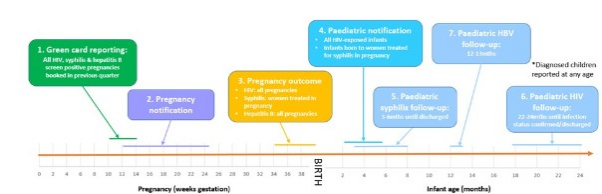
Figure 13 shows the timeline of data collection by ISOSS during pregnancy and after the baby is born, pregnancies. There are six data collection points.
- Green Card reporting (from approximately 12 weeks gestation): all HIV, syphilis and HBV screen positive pregnancies booked for antenatal care in the last quarter are reported to ISOSS. The green card can be edited throughout the quarter, but the submission happens at the end of a quarter.
- Pregnancy notification form (from approximately 12 weeks gestation): initial details of pregnant woman, care in pregnancy and pregnancy status. This form is generated for each woman following the submission of the green card.
- Pregnancy outcome form (birth): woman’s delivery details and initial care of the infant recorded and reported. This form is available around the expected date of delivery but can be released earlier on request in cases of premature birth.
- Paediatric notification form (one to six months after birth): initial details and test results of infants seen for HIV (three to six months) and syphilis (one to two months) paediatric follow-up. Generated using maternity reports where possible. (Diagnosed children reported to ISOSS at any age when seen for paediatric care.)
- Paediatric syphilis follow-up form (three to six months after birth): generated for all infants born to women treated for syphilis in pregnancy and/or infants requiring treatment for syphilis until discharged.
- Paediatric HIV follow-up form: generated for all HIV-exposed infants requesting 22-to-24-month confirmatory antibody test to establish infection status.
- Paediatric HBV follow up: data linkage with UKHSA’s Immunisation, Hepatitis and Blood Safety team at 12-13months after birth
18. Acknowledgements
NHS England would like to thank all those involved in collecting the data and producing the report, and most of all those from the NHS who deliver the NHS IDPS programme. We would like to acknowledge the important contributions made by our colleagues at UKHSA (HIV Section, Blood Safety, Hepatitis, Sexually Transmitted Infections and HIV Division); members of our Clinical Expert Review Panels and NHS providers in relation to surveillance of women with HIV in pregnancy and their infants.
19. HIV Clinical Expert Review Panel Members
The current IDPS HIV CERP members are:
- Dr Alasdair Bamford, Consultant and Speciality Lead in Paediatric Infectious Diseases, GOSH
- Lisa Bullows, Specialist Screening Midwife, Birmingham Women’s Hospital
- Dr Laura Byrne, Consultant in HIV Medicine, St George’s University Hospitals NHS Foundation Trust, Chair of the BHIVA HIV and Pregnancy Guidelines Writing Group
- Sarah Dermont, Antenatal Pathway Pathology Feasibility Manager, NHS England
- Temi Fayoyin, ANNB Screening and Immunisation Coordinator, Croydon University Hospital
- Kate Francis, ISOSS Coordinator, UCL GOS Institute of Child Health
- Dr Yvonne Gilleece, Honorary Clinical Professor and Consultant in HIV Medicine & Sexual Health, Brighton and Sussex Medical School and University Hospitals Sussex NHS Trust, Lead for HIV and Women, Lead for HIV and Hepatitis, Chair of BHIVA
- Dr Abha Govind, Consultant Obstetrician and Gynaecologist, North Middlesex University Hospital NHS Trust
- Julia Langley, ANNB Screening Specialise Midwife, Portsmouth Hospitals NHS Trust
- Dr Hermione Lyall, Consultant in Paediatric Infectious Disease, Imperial College Healthcare NHS Trust
- Dr Kim McLeod, Consultant Obstetrician, Manchester University Hospitals NHS Foundation Trust
- Dr Paddy McMaster, Consultant in Paediatric Infectious Diseases, North Manchester General Hospital Women and Children’s, Manchester University Hospitals NHS Foundation Trust
- Nadia Permalloo: Head of Quality Assurance Development (Clinical), Screening Quality Assurance Service, NHSE
- Helen Peters, ISOSS Manager, UCL GOS Institute of Child Health
- Dr Luciana Rubinstein, Consultant in GUM, London North West University Health Trust (Northwick Park, Ealing, Hillingdon)
- Professor Claire Thorne (Chair), Professor of Infectious Disease Epidemiology, Population, Policy and Practice Department, UCL, Great Ormond Street (GOS) Institute of Child Health
- Rebecca Till: Antenatal Pathway Implementation Lead, NHS England