Defra's annual report and accounts for 2023 to 2024: annual report
Updated 20 January 2026

© Crown copyright 2026
This publication is licensed under the terms of the Open Government Licence v3.0 except where otherwise stated. To view this licence, visit nationalarchives.gov.uk/doc/open-government-licence/version/3 or write to the Information Policy Team, The National Archives, Kew, London TW9 4DU, or email: psi@nationalarchives.gov.uk.
Where we have identified any third party copyright information you will need to obtain permission from the copyright holders concerned.
This publication is available at https://www.gov.uk/government/publications/defras-annual-report-and-accounts-2023-to-2024/defras-annual-report-and-accounts-for-2023-to-2024-annual-report
Performance Report
Foreword by the Permanent Secretary of the Department for Environment, Food and Rural Affairs
Since the last reporting period we have had a change in government, and with it a new set of priorities for the Department for Environment, Food and Rural Affairs.
Our Secretary of State’s priorities which are critical to delivering on Central Government Missions are to:
- clean up Britain’s rivers, lakes and seas
- create a roadmap to a circular economy
- support farmers to boost food security
- ensure nature’s recovery
- protect communities from the dangers of flooding
This document is retrospective and covers the 2023 to 2024 accounting period, which is prior to the change in government. During this period, the Department for Environment, Food and Rural Affairs, in conjunction with our Arm’s Length Bodies, continued to deliver on the previous government’s commitments. Those domestic and international commitments were delivered alongside the management of a number of unforeseen challenges and events.
The 2023 Environment Improvement Plan set out our key environmental commitments. This included planting 3,600 hectares of new woodland and trees outside of woodland – the highest planting rate for nearly a decade, and an almost 40 per cent increase on the previous year. Defra also enabled local authorities to develop Local Nature Recovery Strategies alongside providing support for the new Biodiversity Net Gain legal requirements for housing developments.
In March 2024, Defra awarded £25 million to projects under the Species Survival Fund, which will create and restore habitats including heathland, grassland and wetland to reverse the decline of species across England. Six new nature recovery projects covering 176,000 hectares of land across England and Wales were launched and bans on single-use plastics for waste were introduced.
On floods and water, Defra published a Plan for Water setting out changes to regulation, enforcement and investment in the water sector. The cap on penalties issued to polluters, including water companies, was also removed. Defra led the national response to several storms this winter, where investment in new and existing flood defences meant that 239,000 properties were protected from flooding from Storms Babet, Ciaran, Gerrit and Henk.
On climate, Defra published the third National Adaptation Programme (NAP3). This outlined plans to address 61 climate risks and opportunities.
Other key commitments include evolving the Environmental Land Management Schemes to provide a greater range of options to farmers to achieve environmental outcomes. Defra also conducted reviews of price fairness and transparency within the dairy, pig, egg and horticultural sectors.
To enable the smooth transfer of goods across all parts of the UK, Defra introduced new retail and plant schemes to move select goods via a green lane from Great Britain to Northern Ireland. These require less paperwork and reduce physical checks. New border controls were implemented for certificates and inspections on animals, plants and plant products imported to Great Britain from the EU.
Defra was involved in new international commitments at the international nature and climate discussions at the G7. These agreed to reduce plastic waste, improve air quality, resource efficiency, and halt and reverse biodiversity loss. At the UN Climate Change conference COP28 in Dubai, Defra was involved in a ‘nature day’ that committed to further action to secure the future of the world’s forests and tackle illegal deforestation.
Throughout the year Defra responded to a number of unforeseen events. Following public safety concerns, XL Bully type dogs were added to the types of dogs banned under the Dangerous Dogs Act. Defra also responded to several outbreaks of animal disease including managing cases of Avian Flu and Bluetongue, led the contingency response to the invasive non-native Asian Hornet and took action to contain or eradicate priority quarantine pests and diseases including Oak Processionary Moth, Sweet Chestnut Blight and outbreaks of European Spruce Bark Beetle.
The department has made good progress in reducing the level of the Annual Report and Accounts (ARA) qualifications and continues its work on removing the remaining qualification as early as possible. These matters are discussed in more detail in the Governance Statement and the Comptroller and Auditor General’s certificate and Report on Account.
Finally, I would like to thank all Defra Group staff, in what has been a busy year, for their unwavering professionalism and dedication across the delivery of our services and outcomes.
Tamara Finkelstein
Accounting Officer for the Department for Environment, Food and Rural Affairs
12 December 2024
Non-Executive Directors’ Report
For Defra, 2023 to 24 was a year of considerable change, and this report provides an overview of developments and areas of focus, rather than highlighting a specific case study.
In July 2023, I was appointed as the new Lead Non-Executive Director (NED) for Defra, joining the long serving Audit and Risk Assurance Committee (ARAC) chair Colin Day. Before the Board could meet after the summer vacation period, we had a change of Secretary of State. Subsequent to this, Chris Tyas was appointed as a further independent Board member in January 2024. By the end of the reporting year, therefore, Defra had a complement of three NEDs. During the financial year, the Board met only once, on 5 February 2024.
Colin Day has been a mainstay in the department since his appointment in 2018, and in the past year he has chaired five ARAC meetings and brought his characteristic clear thinking and problem solving approach to several areas of activity. Colin also kindly shouldered further lead NED responsibilities while the position was unfilled prior to my appointment, for which I and the department are very grateful.
Since his appointment, Chris Tyas has been active in the department, including representing Defra on the cross-government NED Climate Liaison Forum. Chris has provided insight and industry expertise to the Agri-Food Chain Directorate in relation to the Border Target Operating Model as it prepared to go live during this reporting period.
My own focus has been to support the department with the recruitment campaign for further NEDs and for key executive positions within the department. I have also attended the department’s Delivery Committee, providing advice and challenge on delivery issues, and in developing a focused and specific outcomes framework for the department and the wider group. I have attended the quarterly meetings of the chairs of Defra’s arm’s length bodies (ALBs), together with the Permanent Secretary. This is a valuable information-sharing forum that serves to strengthen the partnership between key leaders in the Defra group in support of group priorities. In addition, I have supported Ministers in exploring ways to further enhance ALB relationships at the policy and delivery level, in particular in relation to Natural England’s important contribution to Defra’s objectives.
It has been a pleasure getting to know highly committed and expert staff across Defra since my appointment, and on behalf of all three NEDs I offer our thanks for their positive and constructive engagement with Board members and congratulations on their delivery successes in the past year.
Heather Hancock
Lead Non-Executive Director
Performance Overview
This section describes how our department works, our vision, our Outcome Delivery Plan (ODP), our resources and the key risks that we face in achieving our outcomes. It includes a performance summary that shows our performance against key metrics across the Defra group.
Who we are
Department for Environment, Food & Rural Affairs (Defra) is the UK government department responsible for improving and protecting the environment. We aim to grow a green economy and sustain thriving rural communities. We also support our food, farming and fishing industries. Our broad remit means we play a major role in people’s day-to-day life, from the food we eat, and the air we breathe, to the water we drink. We are a ministerial department that is supported by and works collaboratively with our agencies and public bodies. Together we are the Defra group.
Our structure and business model
Our Permanent Secretary, Tamara Finkelstein, has responsibility for managing the department and safeguarding public funds provided under the Defra Estimate. She is supported by our second Permanent Secretary, Nick Joicey, who is also our Group Chief Operating Officer.
Defra is made up of the Core department and a network of agencies and public bodies. Defra’s public bodies vary in size, type, budget, remit and level of independence. The Core department and delivery bodies across the Defra group, work together to collaboratively deliver our outcomes. The Core department sets the policy and supports delivery bodies to develop capability and to deliver new and ongoing activities.[footnote 1]
Further information on our governance, including the Defra board and the four committees which support it, is set out in the Corporate Governance Report.
Our vision
Defra is here to make our air purer, our water cleaner, our land greener and our food more sustainable. Our ODP, together with the Environmental Improvement Plan 2023 (EIP23) set out in detail how we intend to achieve this.
Our Outcome Delivery Plan (ODP)
The ODP is a high-level Defra group plan, covering both the Core department and delivery bodies in an integrated way. It sets out the critical real-world outcomes we are seeking to achieve as a group and how we intend to reach them. This section is structured around the four priority outcomes and associated key performance indicators we agreed with HM Treasury in our Spending Review 2021 (SR21) settlement, alongside a set of four strategic enablers that work to strengthen our corporate capacity and capability.
Priority outcome 1: Improve the environment through cleaner air and water, minimised waste, and thriving plants and terrestrial and marine wildlife.
Priority outcome 2: Reduce greenhouse gas emissions and increase carbon storage in the agricultural, waste, peat and tree planting sectors to help deliver net zero.
Priority outcome 3: Reduce the likelihood and impact of flooding and coastal erosion on people, businesses, communities and the environment.
Priority outcome 4: Increase the sustainability, productivity and resilience of the agriculture, fishing, food and drink sectors, enhance biosecurity at the border and raise animal welfare standards.
Our environment outcome is cross-cutting and includes contributions from many other departments, with notable roles for Ministry of Housing, Communities & Local Government (MHCLG) [formerly known as the Department for Levelling Up, Housing and Communities (DLUHC)] and the Department for Transport (DfT). The Department for Energy Security and Net Zero (DESNZ) is government lead on the cross-cutting outcome which is to reduce UK greenhouse gas (GHG) emissions to net zero by 2050. Our net zero outcome reflects our contribution to the wider UK outcome.
Strategic Enablers
To deliver our priority outcomes, and reinforce the ambitions of the Declaration on Government Reform, we focused on 4 key strategic enablers:
- workforce, skills and location
- innovation, technology and data
- delivery, evaluation and collaboration
- sustainability
See the Performance Analysis section for further detail on what we have achieved under our priority outcomes and our strategic enablers.
Defra’s 25 Year Environment Plan and the Environmental Improvement Plan 2023
In 2018, the 25 Year Environment Plan (25 YEP) set out our vision for 25 years of action to help the natural world regain and retain good health. The goals of the 25 YEP[footnote 2] inform our priority outcomes, particularly for the environment, net zero and flooding. Since then, the Environment Act 2021 was passed, which sets a framework for legally binding, long-term targets to restore nature and the environment. These targets came into force in January 2023 when we launched our first revision of the 25 YEP in our Environmental Improvement Plan 2023 (EIP23).
Risks affecting delivery of our outcomes
Defra manages some of the most severe threats facing the UK which are recorded on the National Risk Register, including flooding, air quality, CBRN (Chemical, Biological, Radiological and Nuclear) emergency recovery, water supply and treatment, and plant and animal disease outbreaks. Defra continues to monitor and manage its corporate risks associated with cyber security, IT business resilience, physical infrastructure, procurement, financial and delivery of our long-term objectives, change programmes, staff wellbeing, and professional capability.
More detail on management of our principal risks is given in the Performance Analysis section.
Working with devolved governments
Defra and the devolved governments have continued to work together to deliver on our shared priorities. We have developed 14 provisional Common Frameworks to help ensure a joined-up approach to managing our shared natural resources and fulfilling international obligations, as well as to manage any divergence. Of these, eight have now completed legislative scrutiny across the four legislatures.
The Inter-Ministerial Group for Environment, Food and Rural Affairs (IMG EFRA) is the highest portfolio level engagement forum between the EFRA ministers of the four UK administrations. It provides central coordination and promotes collaboration in areas of shared interest such as agriculture, fisheries, environment, forestry, biodiversity and rural affairs, and includes policy, delivery, technical and legislative matters. During 2023-24, three meetings were held covering legislation, food supply, waste, biodiversity, and EFRA related aspects of trade. The IMG is just one of several engagement mechanisms alongside issue-specific ministerial meetings, senior official meetings, and policy level forums.
In February 2023, the UK and European Union (EU) reached an agreement on the future of the Northern Ireland Protocol, known as the Windsor Framework, as part of the post EU exit legal agreement. Defra were instrumental in supporting this deal, alongside a wider cross-government team. The implementation of the Framework is happening in stages and will continue into 2025, to provide businesses with time to adapt to new arrangements.
Our specific interest was in the creation of two new ‘green lanes’. One for food retailers, which eases the movement of agri-food goods subject to EU sanitary and phytosanitary (SPS) rules and checks (Northern Ireland Retail Movement Scheme) (NIRMS) and one which seeks to free traders from burdensome customs rules and checks (UK Internal Market Scheme). The NIRMS enables the free movement of chilled meats into Northern Ireland, which were previously banned under the old version of the Protocol; enables microchipped pets to travel freely with their owners across the UK; and creates a simpler process for the movement of previously banned plants such as English oak trees and seed potatoes.
Our resources
For the financial year 2023to 2024, the government provided £9.48 billion of funding, known as the net parliamentary (voted) funding. This is to cover current expenditure and new investment. The funding was broken down as follows:
- Departmental Expenditure Limit (DEL) (including depreciation): £7.49 billion of which:
* Net Resource DEL: £5.38 billion. This is all current expenditure, such as salaries or purchasing goods and services, and includes depreciation.
* Net Capital DEL: £2.11 billion. This is expenditure for new investment (e.g. buildings or other assets for long-term use) after deducting any agreed income.
-
Net Annually Managed Expenditure (AME): £1.78 billion. This is used mainly for movements in provisions, relating to Common Agricultural Policy Disallowance and delinked payments (area-based direct payments linked to 2023 claims). It also includes expenditure by Defra group levy funded bodies and Flood Re[footnote 3].
-
Net Non-Budget: £0.21 billion.
Further detail can be found in the Financial Analysis section.
Full-time Equivalent (FTE) employees by region
As at 31 March 2024, Defra group had 31,325.2 full-time equivalent (FTE) employees. For the same organisations, the comparable figure as at 31 March 2023 was 29,430.5. Defra’s FTE has increased in the past year to ensure the different organisations have the right skills and resource in place to meet delivery goals and support our priority outcomes. Staffing increases have been via an auditable process. The table below shows the regional distribution for these 2 years.
| Region | FTE 31 Mar 2024 | FTE 31 Mar 2023 (Note 2) |
|---|---|---|
| London | 4,416.2 | 4,014.6 |
| South East | 3,870.4 | 3,745.2 |
| East of England | 2,930.7 | 2,836.6 |
| East Midlands | 1,665.3 | 1,553.9 |
| West Midlands | 2,562.8 | 2,315.0 |
| Yorkshire and the Humber | 3,635.1 | 3,426.3 |
| North East | 1,871.5 | 1,731.2 |
| North West | 3,750.8 | 3,616.0 |
| Scotland | 299.6 | 287.4 |
| South West | 4,963.4 | 4,855.3 |
| Wales | 386.4 | 371.5 |
| Northern Ireland | 2.0 | 2.0 |
| Home Based | 970.9 | 675.4 |
| Total (Note 1) | 31,325.2 | 29,430.5 |
Note 1: the total does not reconcile as data has been rounded to the nearest decimal place at the last stage of any calculation.
Note 2: the 31,325.2 FTE figure is employment of payrolled staff as of 31 March 2024 for Agriculture and Horticulture Development Board (AHDB), Animal and Plant Health Agency (APHA), Consumer Council for Water (CCW), Centre for Environment, Fisheries and Aquaculture Science (Cefas), Core department, Environment Agency (EA), Joint Nature Conservation Committee (JNCC), Royal Botanic Gardens Kew (RBG Kew), Marine Management Organisation (MMO), Natural England (NE), National Forest Company (NFC), Rural Payments Agency (RPA), Veterinary Medicines Directorate (VMD) and Sea Fish Industry Authority (SFIA). The data in the above table does not include the FTE for the Office for Environmental Protection and Forestry England.
Note 3: a cleanse of Defra employee location data was undertaken in mid-2023, so locations for 31 March 2023 have been revised to improve reporting accuracy and enable comparison to 31 March 2024 data.
Performance at a glance
Through the Nature for Climate Peatland Grant Scheme (NCPGS), we have restored 4,894 hectares of peatlands to a natural and healthy state in 2023 to 2024.
At the end of December 2023, 95.7 per cent of herds were bTB free.
Added XL Bully breed types to the list of breeds prohibited by the Dangerous Dogs Act 1991.
Starting in 2023-24, we funded 21 marine biodiversity projects in the UK Overseas territories through our Darwin Plus main grant.
Defra maintained its Disability Confident Status accreditation at the highest Level 3. The first Civil Service department to achieve White Ribbon accreditation committing to tackling gender-based violence.
Defra group spent a total of £7,270 million in 2023-24 against a total Departmental Expenditure Limit (DEL) budget of £7,494 million. This represented a 97 per cent spend against the total DEL budget.
In 2023 to 2024, the Environment Agency enhanced and protected 2,520 kilometres of water.
We made a significant donation of flood protection equipment, including high volume pumps and flood barriers to the Ukraine, following the destruction of the Nova Kakhovka dam.
In 2023- to 2024, over 28,000 properties are better protected from flooding.
Supporting our farmers and producers to export, we issued 98 per cent of export health certificates and licences within agreed timescales, against a target of 97 per cent
Performance Analysis
This section is structured by the four priority outcomes in Defra’s 2023-24 Outcome Delivery Plan (ODP). Under each priority outcome, we explain how we intended to achieve those outcomes and the success of those intentions. We include key performance metrics, agreed at the 2021 Spending Review (SR21), to measure our success towards delivering those outcomes. Performance against these metrics was reported to the Cabinet Office and HM Treasury.
As part of the annual business planning process, we continually refine our performance framework so that it covers both our strategic, longer-term outcomes and the metrics we use at delivery and operational level. This explains why the list of indicators may change from one year to the next.
Performance by priority outcome
Priority outcome 1: Improve the environment through cleaner air and water, minimised waste, and thriving plants and terrestrial and marine wildlife.
In 2023, the Environmental Improvement Plan (EIP23) was published, in accordance with the Environment Act 2021. This was a revision of the 25 Year Environment Plan (25YEP) published in 2018. EIP23 is set out in 10 goals. Each goal has specific targets and commitments described in the EIP23 that contribute to the goal outcome, including the legally binding targets set under the Environment Act 2021.
EIP23 sets out the actions that will drive us towards reaching our long-term statutory targets and goals which also includes interim targets. In January 2024, we published a ‘One year on’ update setting out actions that had been delivered since the publication of EIP23.
In addition, we published the environmental principles policy statement which set out how policymakers should apply environmental principles to support environmental protection and enhancement. The final version of the strategic policy statement was laid in Parliament on 31 January 2023 and the duty came into effect from 1 November 2023.
Air Quality
The UK has met the current domestic and international emission reduction commitments for emissions of ammonia, non-methane volatile organic compounds (NMVOCs), nitrogen oxides, PM2.5, and sulphur dioxide. There has been a long-term decrease in emissions of air pollutants in the UK. In recent decades, emissions reductions have continued but the rate of decline has slowed. Emissions of ammonia have remained stable over the past decade. We recognise that more emission reductions are needed to meet our 2030 emission reduction commitments.
Our key activities were:
-
The Air Quality Strategy was published in April 2023. The Air Quality Strategy made clear that local authorities are key delivery partners in reaching legal limits and targets for air pollutants.
-
In July 2023, the first progress update with respect to the Environment Act 2021 PM2.5 targets was published, alongside detail about how the targets were calculated. This met a key requirement of the Environmental Targets (Fine Particulate Matter) (England) Regulations 2023 Targets legislation.
-
We are continuing to work with English local authorities as part of the NO2 programme, to meet NO2 concentration limits.
-
Awareness was raised about the impact of domestic burning on air quality and health through the ‘Burn Better, Breathe Better’ communications campaign in March 2023.
-
Roll-out of UK BAT (Best Available Techniques) continued. Industrial installations with specific types of activity must use BAT to prevent and reduce emissions to air, water, and land
Indicator: Key air pollutants emission
Emissions of nitrogen oxides have fallen by 23 per cent between 2018 and 2022. Emissions of NMVOCs have fallen by 12 per cent over the same period. Projections suggest that the UK is on track to achieve the emission reduction commitments for NMVOCs and nitrogen oxides in 2030. The series for nitrogen oxides and for NMVOCs excludes emissions from agricultural sources for compliance reporting purposes against the National Emission Ceilings Regulations (2018).
Figure 1a: Emissions of nitrogen oxides 2018-2022
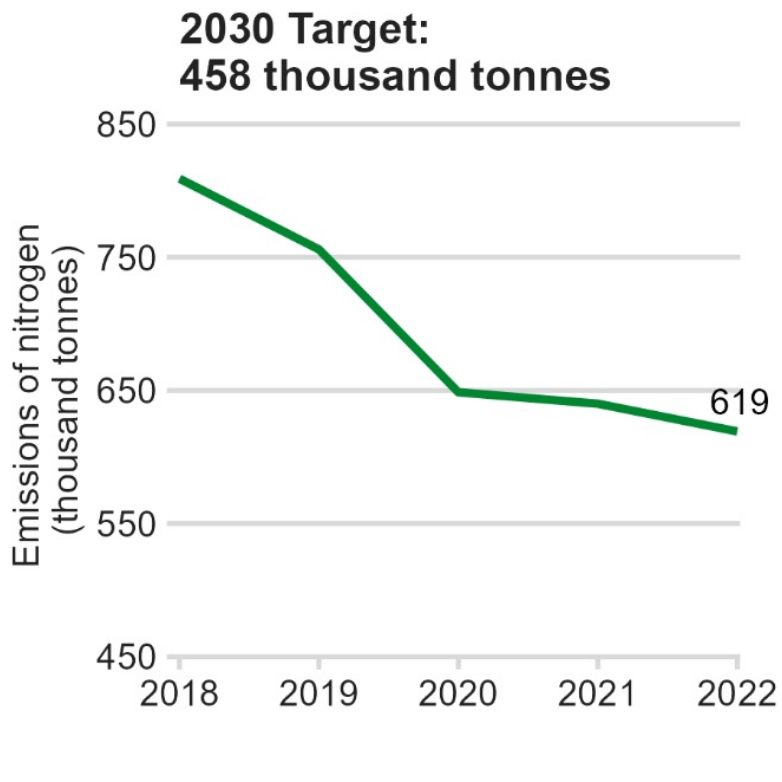
Line chart showing the trend in nitrogen oxide emissions from 2018 to 2022. Axis shows 450 to 850 thousand tonnes. There has been a reduction in nitrogen oxides emissions; the 2022 value is 619 thousand tonnes. The 2030 target is 458 thousand tonnes.
Figure 1b: Emissions of non-methane volatile organic compounds 2018-2022
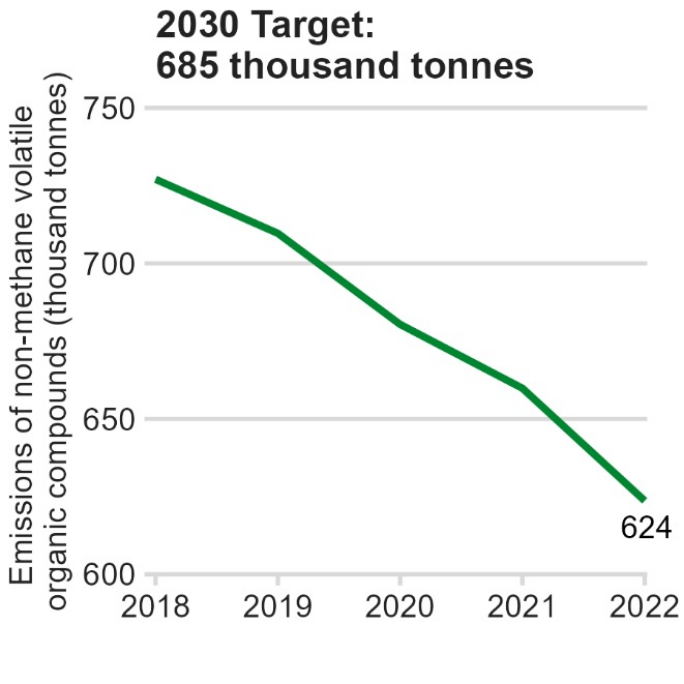
Line chart showing the trend in non-methane volatile organic compound emissions from 2018 to 2022. Axis shows 600 to 750 thousand tonnes. There has been a reduction in non-methane volatile organic compound emissions; the 2022 value is 624 thousand tonnes. The 2030 target is 685 thousand tonnes.
Emissions of ammonia[footnote 4] and PM2.5 have largely remained stable between 2018 and 2022, while emissions of sulphur dioxide have fallen by 30 per cent.
Figure 1c: Emissions of ammonia 2018-2022
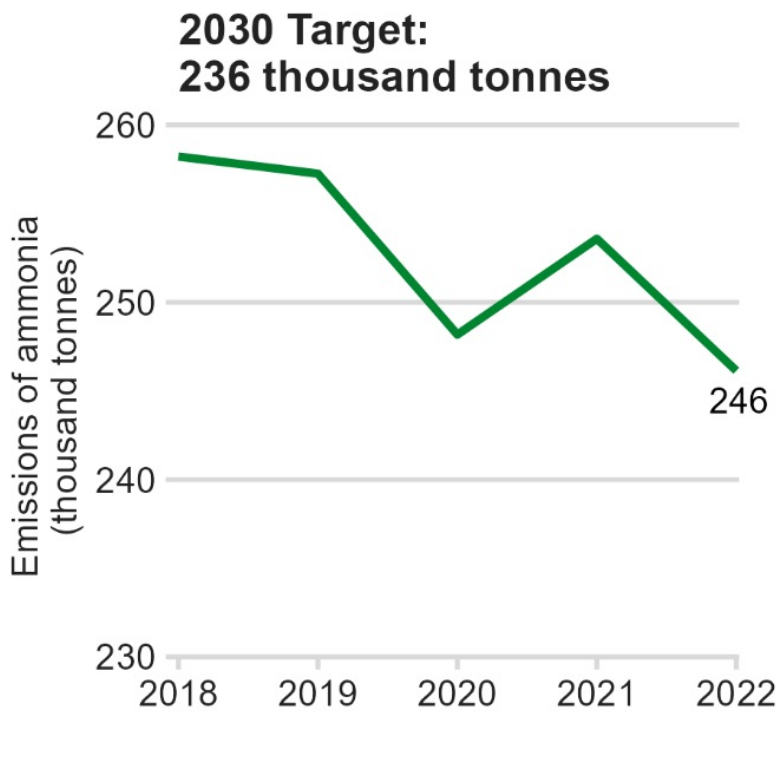
Line chart showing the trend in ammonia emissions from 2018 to 2022. Axis shows 230 to 260 thousand tonnes. There has been a reduction in ammonia emissions; the 2022 value is 246 thousand tonnes. The 2030 target is 236 thousand tonnes.
Figure 1d: Emissions of PM2.5 2018-2022
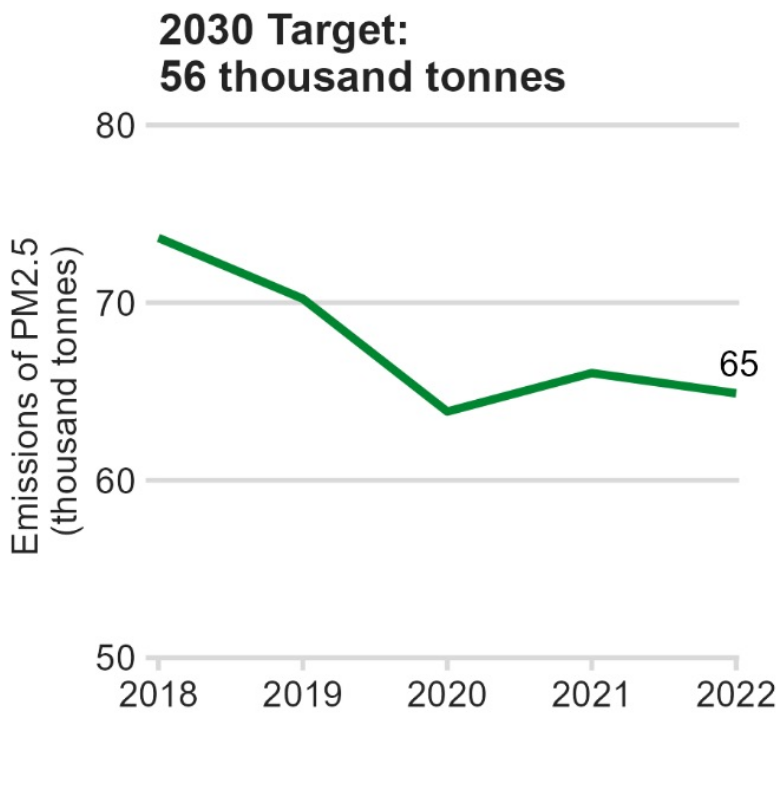
Line chart showing the trend in PM2.5 emissions from 2018 to 2022. Axis shows 50 to 80 thousand tonnes. PM2.5 emissions have largely remained stable; the 2022 value is 65 thousand tonnes. The 2030 target is 56 thousand tonnes.
Figure 1e: Emissions of sulphur dioxide 2018-2022
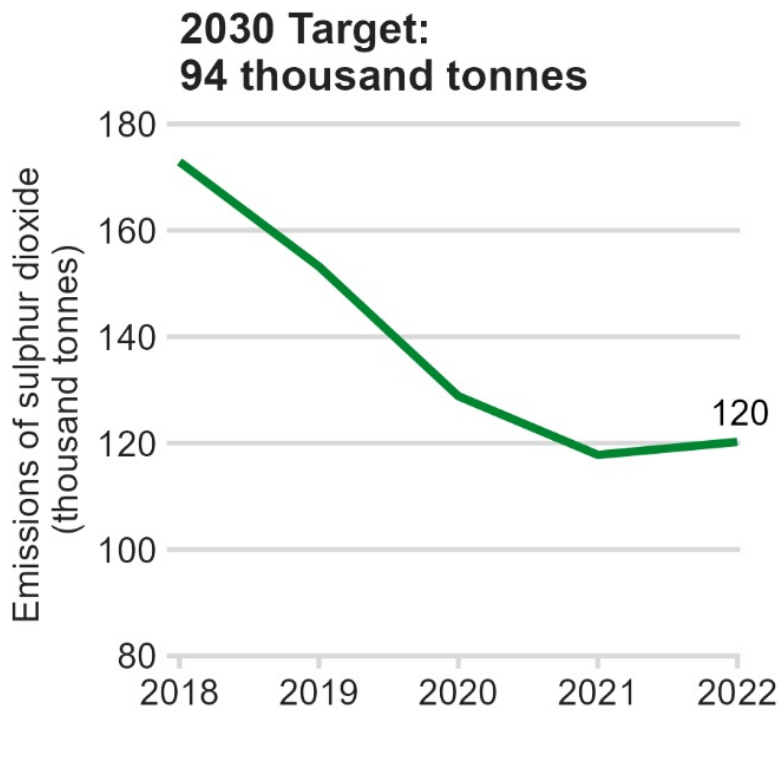
Line chart showing the trend in sulphur dioxide emissions from 2018 to 2022. Axis shows 80 to 180 thousand tonnes. Sulphur dioxide emissions have reduced; the 2022 value is 120 thousand tonnes. The 2030 target is 93 thousand tonnes.
Source: National Statistics Emissions of air pollutants
Water quality and resource
In April 2023, Defra published the Plan for Water[footnote 5], which built on the EIP23 and set out a plan to deliver clean and plentiful water through more investment, tighter regulation and more effective enforcement.
Over the year to 31 March 2024:
-
The Levelling Up and Regeneration Act 2023 (LURA) introduced a new requirement on water companies to upgrade wastewater treatment works to the highest technically achievable levels of nutrient removal in designated catchments by 1 April 2030. Provisions introduced by the LURA also require water companies to consider is using nature-based solutions and enable water companies to take a catchment permitting approach, where appropriate.
-
As part of the Price Review 2024 (PR24), draft water company business plans were published on 2 October 2023.
-
Water companies announced they would be fast-tracking investment of £180 million to prevent more than 8,000 sewage spills polluting English waterways.
-
We announced the expanded Storm Overflows Reduction Plan in September 2023 driving £60 billion capital investment over 25 years.
-
On agriculture, we increased the Catchment Sensitive Farming advice budget to £15 million a year, expanding its coverage to all of England. We opened an expanded Sustainable Farming Incentive (SFI) offer providing funding for 4-12 metre buffer strips and companion crops to intercept runoff and reduce soil erosion and the Slurry Infrastructure Grant made available £74 million to farmers.
-
On fines, we removed the £250,000 variable monetary penalty cap and applied penalties to wider environmental offences, strengthening regulation. There were 6 water company prosecutions between April 2023 and March 2024 by the Environment Agency (EA). We also consulted on banning the sale of wet wipes containing plastic.
-
We announced plans to increase water company inspections. Ofwat has consulted on banning water company bosses from receiving bonuses if a company has committed serious criminal breaches. EA launched a new whistleblowing portal for water industry staff to report wrongdoing within their organisations launched on 26 March 2024.
-
On water supply, demand and drought, we continued to deliver the roadmap for water efficiency in new developments and retrofits, and work with water companies and their regulators on the delivery of the 20 per cent reduction in water usage per person by 2038.
-
We announced funding to support water efficiency measures, including the set-up of a water credit market and retrofits, nature-based solutions and piloting agricultural water resources management plans to enable development in Cambridge.
Indicator: Number of kilometres of enhanced and protected water
We enhanced a total of 2,520 km across the year. Most of these enhancements have come from the Countryside Stewardship Programme. Under the Countryside Stewardship programme, we have a clear understanding that farmers receiving an agreement or standalone grant have taken specific action to improve the water environment, through implementation of one or more Countryside Stewardship measures. Whilst the individual enhancements are often small, together they make a difference to the local environment, reducing flood risk and reducing diffuse pollution.
Figure 2: Kilometres (km) of enhanced and protected water
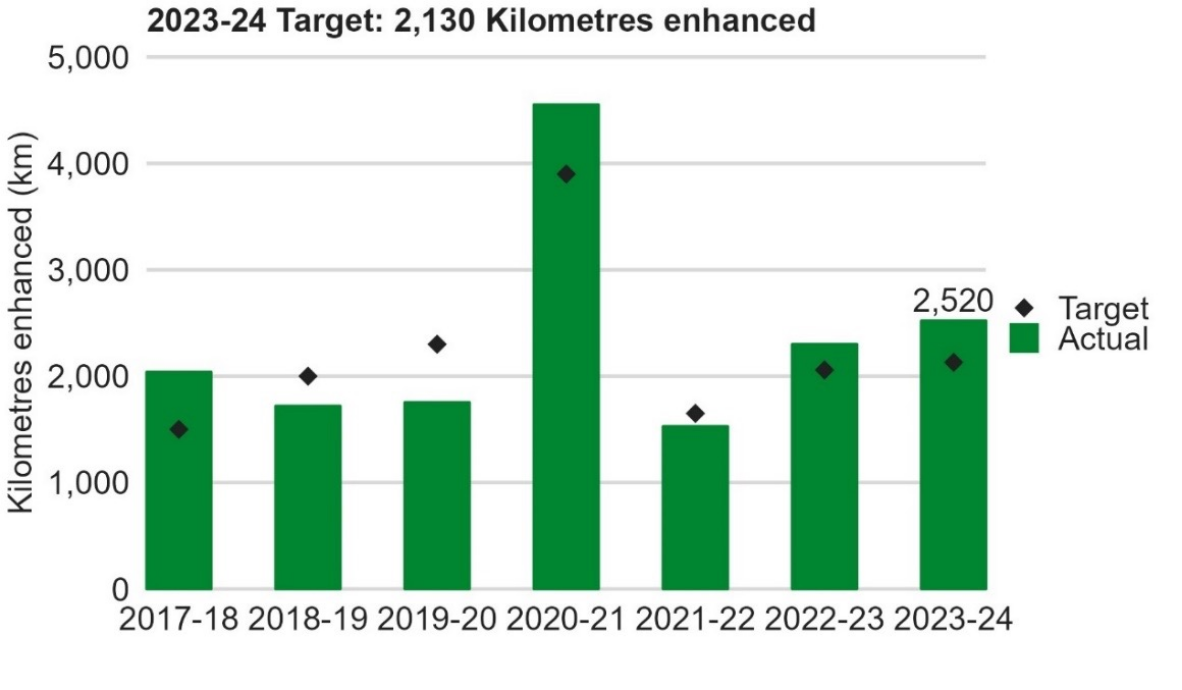
Bar chart showing the trend in the number of kilometres of waterbodies enhanced from financial year 2017-18 to 2023-24. Axis shows 0 to 5,000 kilometres. For the years 2017-18, 2020-21, 2022-23 and 2023-24 the number of kilometres enhanced has exceeded the target.
Source: Environment Agency Corporate Scorecard
Indicator: Percentage of bathing waters reaching minimum standard
In 2023, 95.7 per cent of bathing waters in England met minimum standards (2022: 97.1 per cent). Every designated bathing water in England is monitored for Escherichia coli and intestinal enterococci throughout the bathing season (15 May to 30 September).
Figure 3: Bathing waters reaching minimum standard in England
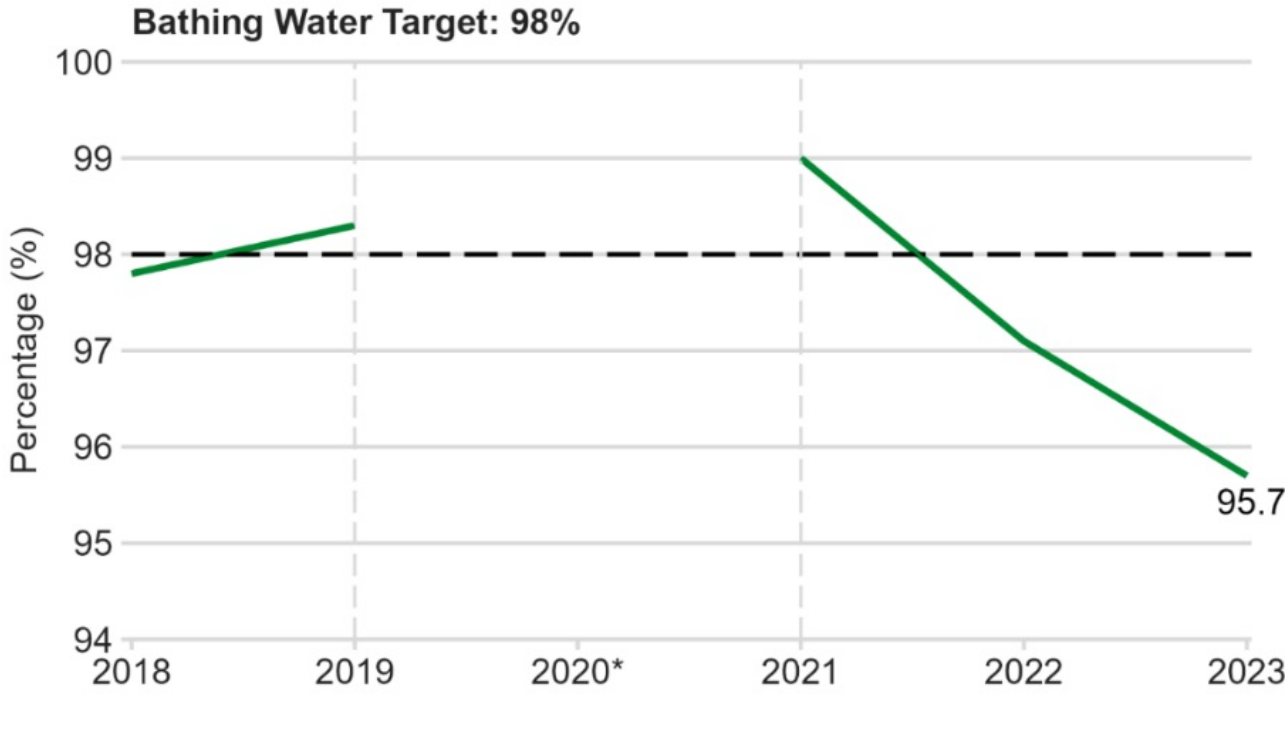
Line chart showing the trend in bathing waters reaching the minimum standard in England from 2018 to 2023. There is no data for 2020, due to Coronavirus restrictions. Axis shows 94 to 100 per cent. Between 2021 and 2023 there has been a reduction in the percentage of bathing waters reaching the minimum standard. The 2023 figure is 95.7 per cent reaching the minimum standard; the target is 98 per cent.
Source: Statistics on English coastal and inland bathing waters
Resources and waste
In April 2022, we consulted on proposals to ensure householders could deposit small-scale DIY waste for free at household waste recycling centres (HWRCs). The response was published in June 2023 followed by legislation which came into force from 31 December 2023. This helps remove any financial barrier for householders and supports responsible disposal of waste.
The maximum fine councils can issue for littering and fly-tipping has been increased. Fly tipping league tables have been published to increase transparency on the use of fly-tipping fines and regulations laid to ensure councils spend the income on enforcement and clean up.
Reducing the amount of biodegradable waste being sent to landfill has a key part to play in tackling climate change. In line with the commitment in the Net Zero Strategy, we are exploring options for the near elimination of municipal biodegradable waste to landfill from 2028 (see under Net Zero section below).
In July 2023, we published a new waste prevention programme. This set out actions to manage resource and waste in line with the waste hierarchy.
Bans and restrictions were introduced in October 2023 on range of single-use plastic items, including expanded and foamed extruded polystyrene food and drinks containers, cutlery, and balloon sticks.
Indicator: Number of high-risk illegal waste sites
The overall trend shows a long-term decline in the number of recorded high-risk illegal waste sites, with the number reducing to 141 which is below the current target of 151.
Figure 4: Number of high-risk illegal waste sites
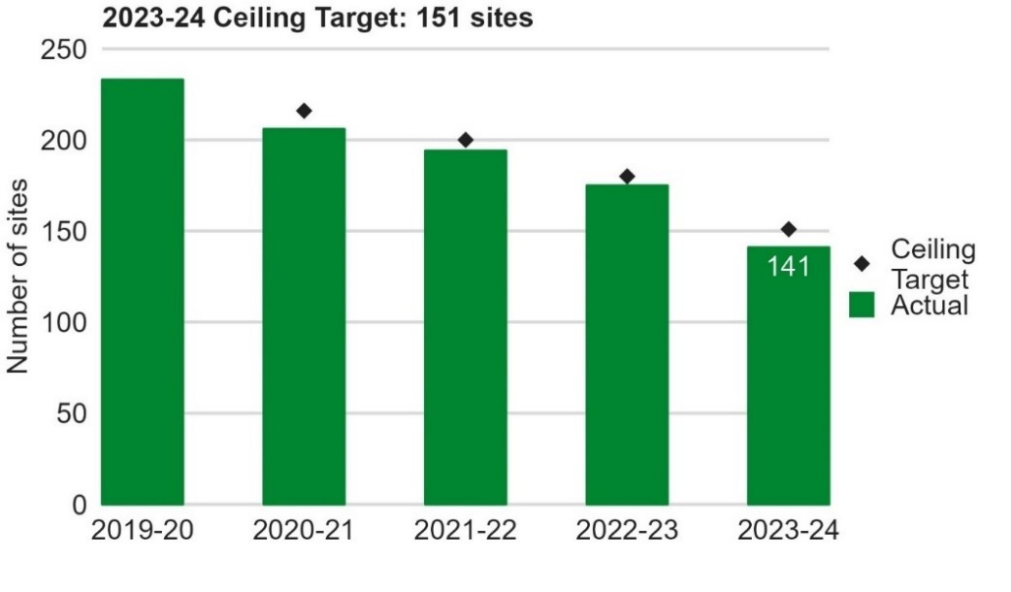
Bar chart showing the trend in the number of high-risk illegal waste sites from financial year 2019-20 to 2023-24. Axis shows 0 to 250 sites. There has been a reduction in the number of high-risk illegal waste sites. The number of high-risk illegal waste sites is consistency under the ceiling target.
Source: Environment Agency Corporate Scorecard
Domestic biodiversity
We have previously announced legally binding biodiversity targets to halt and reverse the decline in species abundance, reduce species extinction risk, and restore or create over 500,000 hectares of wildlife-rich habitat.
To support the delivery of these targets during 2023-24, we have achieved the following:
-
Natural England announced in September 2023 that 63 projects across the country have been awarded a share of £14.5 million. This will be used to help recover 150 species nationwide through its Species Recovery Programme.
-
In June 2023, we announced six further Nature Recovery Projects (NRPs) which cover over 176,000 hectares of land across England. This builds on the G7 legacy project in Cornwall and the five NRPs launched in 2022.
-
In June 2023, we launched a £25 million pound Species Survival Fund. Successful projects from round 1 of the fund were announced in March 2024.
-
In September 2023, Natural England (NE) declared the Lincolnshire Coronation Coast National Nature Reserve (NNR) that covers 33 square kilometres. Furthermore, the Mendip NNR was declared by NE and partners in October 2023.
-
In November 2023, we selected 34 projects through the second round of Landscape Recovery, which involve over 700 land managers and will aim to restore more than 35,000 hectares of peatland, create over 7,000 hectares of woodland, sustainably manage more than 20,000 hectares of woodland, and benefit more than 160 protected sites.
-
Three Environmental Land Management (ELM) schemes that reward environmental benefits have been introduced. There are 23 actions on offer under the new ELM schemes, including on soil health, moorland, hedgerows, integrated pest management, farmland wildlife, buffer strips, and low input grassland. Actions can be found in version 4 of Sustainable Farming Incentive (SFI) Handbook for the SFI 2023 offer, and in the 2024 Agricultural Transition Plan update.
-
Mandatory Biodiversity Net Gain (BNG) was introduced for developments under the Town and Country Planning Act through the Environment Act, and was made mandatory for major sites on 12 February 2024 with all guidance and legislation in place. Mandatory BNG will apply to small sites from 2 April 2024.
International biodiversity
Defra has continued to play a leading role in the implementation of the Kunming-Montreal Global Biodiversity Framework (GBF). UK was one of three initial contributors to a new GBF Fund, ensuring it became operational. Together with France, we established an independent International Advisory Panel on Biodiversity Credits to help shape nature markets and accelerate investment in nature. In the G7 Environment Track, we agreed collective commitment to the GBF’s implementation and at the G20 and COP28 we committed to halting and reversing forest loss by 2030, reflecting the goal of the Glasgow Leaders Declaration.
We have continued to build Defra’s Official Development Assistance (ODA) portfolio which is focused on achieving outcomes on biodiversity, climate change and poverty reduction in developing countries. This includes moving towards implementation of the Biodiverse Landscapes Fund which will support work in six of the world’s most important biodiversity hotspots, spanning 18 countries; delivery of the Blue Planet Fund’s projects including approval of a new marine challenge fund OCEAN which works to build resilience for coastal people and communities; and supporting governments and financial institutions to integrate nature into their decision making and funding to address critical research gaps through the new Global Centre for Biodiversity for Climate. Examples of programme impact include: 58,400 hectares of mangrove under sustainable development and livelihood benefits for 70,000 people through support to the Blue Forests Initiative (2016-2022); and 396,000 hectares of habitat managed more sustainably and 98,000 people more climate resilient due to Darwin Initiative support since 2021.
Access to nature
To date, 2,303 miles of the King Charles III England Coast Path have been approved, of which 1,228 miles have establishment works in hand or pending. 1,075 miles have been completed with just 26 miles that remain to be submitted to government for approval. When complete it will create 250,000 hectares of new open access land within the coastal margin.
Marine
We have introduced Highly Protected Marine Areas (HPMAs) that will enable nature to recover by removing harmful activities including fishing, construction and dredging. Three marine areas are now under the highest level of protection in our seas, with their designations as HPMAs.
Defra announced the next phase of Marine Management Organisation (MMO) offshore MPA byelaws on 31 January 2024. These will protect a further 13 offshore MPAs from bottom-towed fishing gears. Consultation continues on byelaws to manage further sites.
In October 2023, OSPAR[footnote 6] published its Quality Status Report (QSR) 2023 on the status of the North-East Atlantic for the period 2009-2021. The report is based on evidence gathered over more than a decade from over 400 international experts and demonstrates the importance of collaborative working between of experts from across the OSPAR region. UK experts from Defra, Centre for Environment, Fisheries and Aquaculture Science (Cefas), and Joint Nature Conservation Committee (JNCC) lead a high proportion of the assessments across the OSPAR work areas in the report.
We received Royal Assent in October 2023, to the clauses in the Energy Act which implement legislative elements of our Offshore Wind Environmental Improvement Package, which is designed to accelerate the deployment of offshore wind whilst protecting and enhancing the marine environment.
We have worked with colleagues across government, the offshore wind industry, Statutory Nature Conservation Bodies, Devolved Administrations (DA’s), and environmental non – governmental organisations to develop an initial set of strategic compensatory measures which were announced on 1 February 2024.
In February 2024, we launched a new UK-based environmental science network, to gather scientific data, and carry out research to help assess the environmental impacts of deep-sea mining. The network will work alongside the UK’s recent decision to support a moratorium on the granting of exploitation licences for deep sea mining projects by the International Seabed Authority.
Through our Darwin Plus Main grant, we funded 21 biodiversity and conservation projects in the UK Overseas Territories starting in 2023-24, including projects of benefit to marine environments (for example, mitigating the impacts of climate change on sea turtle populations, safeguarding Antarctic krill stocks for baleen whales, using satellite technology to monitor seabird populations at South Georgia).
Chemicals and pesticides (domestic and international)
Work is ongoing to implement our obligations under the UN Stockholm Convention on Persistent Organic Pollutants (POPs), as specified in our UK National Implementation Plan (NIP) (updated in 2022). In October 2023, Convention-level negotiations resulted in agreement that the UK-nominated substance ‘Medium Chained Chlorinated Paraffins’ (MCCPs) would be put to all Parties[footnote 7] for consideration for listing as a POP at the next Conference of the Parties in 2025. This was the penultimate step in a multi-year evaluation and listing process for this UK-nomination, during which the UK has played a key role. If adopted, this will lead to global elimination of MCCPs and reduce emissions to the global environment.
In September 2023, we adopted the Global Framework on Chemicals (GFC) at the Fifth Session of the International Conference on Chemicals Management. The GFC is unique in the way it attempts to comprehensively address all aspects of chemicals and waste issues through a multi-stakeholder approach. The newly adopted framework calls for the prevention of the illegal trade and trafficking of chemicals and waste, increased global action on highly hazardous pesticides, and the implementation of national legal frameworks. It also calls for the transition to safer and more sustainable chemical alternatives, the responsible management of chemicals in various sectors – including industry, agriculture, and healthcare – and the enhancement of transparency and access to information regarding chemicals and their associated risks.
An independent regulatory framework has been established for chemicals, known as UK REACH (Registration, Evaluation and Authorisation and Restriction of Chemicals). The publication of the Per- and polyfluoroalkyl substances (PFAS) Regulatory Management Options Analysis in April 2023 represents the UK’s efforts to protect people and the environment from the potential impacts of PFAS, and the UK REACH Work Programme is now taking forward the package of actions it recommended.
Rural
Defra, as lead department for rural affairs, works across government to ensure that we take account of rurality when designing and implementing policies, considering factors like sparsity, distance and connectivity.
In June 2023, we published Unleashing Rural Opportunity (URO), which outlined a package of measures targeted at supporting rural people and businesses. Since then, 18 of the 25 commitments have been delivered. Commitments already delivered include: important actions on planning and infrastructure such as the new National Planning Policy Framework (NPPF), published in December 2023, which supports rural exception sites to ease affordable house building in areas where it is most needed; and the November 2023 publication of the Connections Action Plan, which sets out a pathway to speed up connections to the grid.
In March 2024, we published our third report on rural proofing which provides an update on progress made since the previous report in 2022.
Defra has continued its support for community infrastructure through our new smaller grants element to the Platinum Jubilee Village Halls Fund.
Our contributions to the United Nations Sustainable Development Goals (SDGs)
Our priority outcome to improve the environment through cleaner air and water, minimised waste, and thriving plants and terrestrial and marine wildlife, contributes to the following United Nations SDGs[footnote 8]:
-
SDG3: Good Health and Well-Being - Ensure healthy lives and promote well-being for all at all ages.
-
SDG6: Clean Water and Sanitation - Ensure availability and sustainable management of water and sanitation for all.
-
SDG8: Decent Work and Economic Growth - Promote sustained, inclusive and sustainable economic growth, full and productive employment and decent work for all.
-
SDG9: Industry, Innovation and Infrastructure - Build resilient infrastructure, promote inclusive and sustainable industrialisation and foster innovation.
-
SDG11: Sustainable Cities and Communities - Make cities and human settlements inclusive, safe, resilient and sustainable.
-
SDG12: Responsible Consumption and Production - Ensure sustainable consumption and production patterns.
-
SDG14: Life Below Water - Conserve and sustainably use the ocean, seas and marine resources for sustainable development.
-
SDG15: Life On Land - Protect, restore and promote sustainable use of terrestrial ecosystems, sustainably manage forests, combat desertification, and halt and reverse land degradation and halt biodiversity loss.
Priority outcome 2: Reduce greenhouse gas (GHG) emissions and increase carbon storage in the agricultural, waste, peat and tree planting sectors to help deliver net zero.
We continue to contribute to the cross-cutting net zero ambition, led by DESNZ. Our key programmes take a dual approach: to minimise emissions or maximise carbon sequestration whilst taking account of our wider environmental commitments. We are responsible for reducing emissions from agriculture, land use (including peat), fluorinated greenhouse gases and waste (including wastewater), whilst simultaneously increasing England’s carbon sequestration potential through nature-based solutions. In EIP23, we set out our future ambitions for land use to support net zero alongside nature, biodiversity and climate adaptation goals.
Carbon budgets
In 2023-24, we have continued to implement the pathways set out in the Net Zero Growth Plan; part of the Powering up Britain plans published by DESNZ in March 2023. We have also continued our progress towards our net zero objectives across our sectors, as detailed below.
Indicator: Greenhouse gas (GHG) emissions by sector: waste, agriculture, land use, land use change, forestry (LULUCF), million tonnes of CO2 equivalent.
The latest GHG Inventory (the Inventory) was published in February 2024, including emissions for 2022, as well as updating historic emissions. It reports that UK emissions in Defra sectors in 2022 were 74.8 MtCO2e, a decrease of 1.6 MtCO2e (2 per cent) from 2021. The historical updates show a decrease of 2.2 MtCO2e (3 per cent) in 2021 compared to the previous Inventory.
For waste, emissions showed no significant changes between 2021 and 2022 or in the historical updates. For F-gases, UK emissions reduced to 7.6 MtCO2e in 2022. This represents a reduction of 0.6 MtCO2e (7 per cent) compared to 2021. To note, the Inventory updated the 2021 emissions, reducing them by 2.7 MtCO2e (25 per cent) compared to the previous Inventory. The reductions are mainly due to changes in the Hydrofluorocarbon (HFC) outlook model.
For Agriculture, UK emissions reduced to 47.7 MtCO2e in 2022. This represents a reduction of 1.2 MtCO2e (2 per cent) compared to 2021. The reductions in the yearly changes are mainly due to a reduction in fertiliser use and a decrease in emissions from agricultural machinery. To note, the Inventory updated the 2021 emissions, increasing them by 0.9 MtCO2e (2 per cent) compared to the previous Inventory. The reason for the historical increase is mainly due to changes in the levels of fuel use. The Inventory reports that for LULUCF, UK emissions increased to 0.8 MtCO2e in 2022. This represents a marginal increase of 0.3 MtCO2e compared to 2021. To note, the Inventory updated the 2021 emissions, reducing them by 0.6 MtCO2e compared to the previous Inventory. The reduction is mainly due to updates in forestry modelling.
Figure 5a: F-gas and waste greenhouse gas emissions 2018-2022

Stacked bar chart showing the trend in waste and F-gas greenhouse gas emissions from 2018 to 2022. Axis shows 0 to 40 million tonnes CO2 equivalent. There has been a reduction in both waste and F-gas emissions. Total waste and F-gas emissions in 2022 were 26.1 million tonnes CO2 equivalent. There is a target of 11.3 million tonnes CO2 equivalent for Carbon Budget 6, which covers the period of 2033 to 2037.
Figure 5b: LULUCF and agriculture greenhouse gas emissions 2018-2022

Stacked bar chart showing the trend in agriculture and land use, land use change, forestry (LULUCF) greenhouse gas emissions from 2018 to 2022. Axis shows 0 to 60 million tonnes CO2 equivalent. There has been a reduction in agriculture emissions. LULUCF emissions have remained relatively stable. Total agriculture and LULUCF emissions in 2022 were 48.4 million tonnes CO2 equivalent. There is a target of 34.3 million tonnes CO2 equivalent for Carbon Budget 6, which covers the period of 2033 to 2037.
Source: Final UK greenhouse gas emissions national statistics
Peatlands
Nature-based solutions, like restoring peat and planting trees, are of benefit to tackling climate change and averting its impacts.
The Nature for Climate Fund (NCF) has provided over £35 million to restore 27,000 hectares of peatlands to a natural and healthy state via the Peatland Grant Scheme. The latest round of which announced £16 million of funding for 12 new restoration projects in August 2023.
The report from the Lowland Agricultural Peat Task Force was published in June 2023. The independent chair provided 14 recommendations on how lowland agricultural peat soils can be responsibly managed to enable continued, productive farming whilst reducing greenhouse gas emissions. Our work to address the degradation of lowland peat includes: awarding grants through the Lowland Agricultural Peat Small Infrastructure Pilot and Water Discovery Pilot; undertaking a Lowland Peat Research and Development Programme; and addressing commercial barriers to paludiculture, or farming on rewetted peat, through the Paludiculture Exploration Fund.
Indicator: Hectares (ha) of peatland brought under restoration
In 2023-24, restoration works funded through the Nature for Climate Peatland Grant Scheme (NCPGS) restored 4,894 hectares of peatlands to a natural and healthy state increasing the cumulative total since 2020-21 to 15,658 hectares. The third round of the NCPGS awarded £16 million of funding to 12 new restoration projects in August 2023. £4.89 million was also awarded in discovery grants, which fund the exploration of further restoration potential. Overall, Natural England has awarded a total of £46.3 million in grants through NCPGS projects, with £20.4 million being claimed to date.
Other restoration activities will also contribute to the 35,000 hectares target; however, we are still in the process of determining the number of hectares that have been restored through these efforts.
Figure 6: Hectares of peatland brought under restoration per year
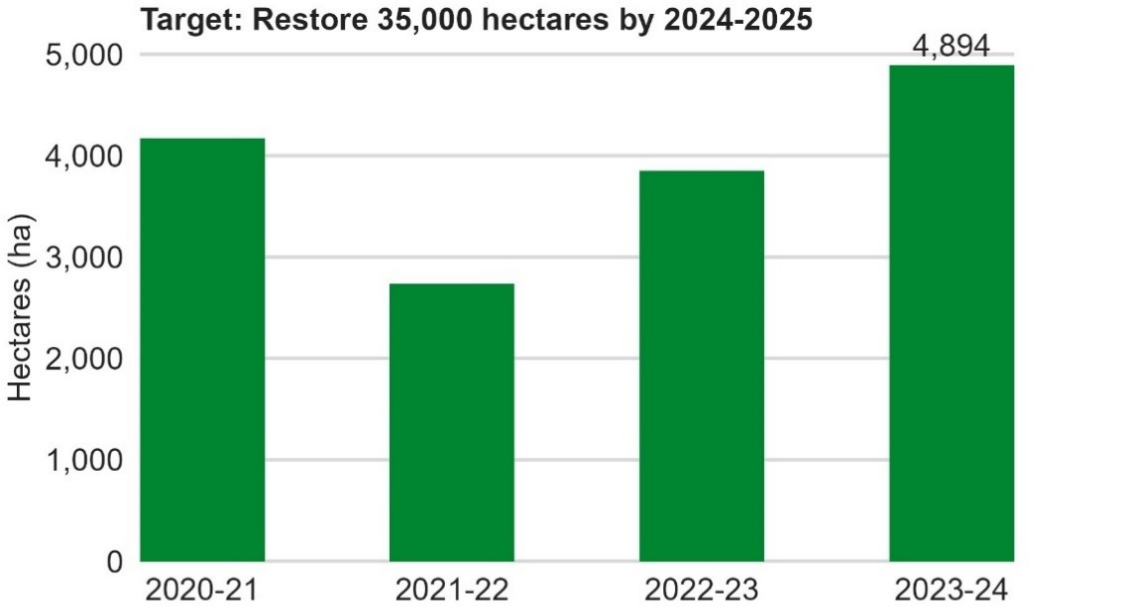
Bar chart showing the trend in the number of hectares of peatland restored from financial year 2020-21 to 2023-24. Axis shows 0 to 5,000 hectares. Between 2021-22 and 2023-24 there has been an increase in the number of hectares of peatland restored. In 2023-24 4,894 hectares were restored. The target is to restore 35,000 hectares by 2024-25.
The 2021-22 and 2022-23 hectarage figures have changed from last year’s ARA. This is due to a site change being reported after the original figures were published.
Source: Nature for Climate Peatland Grant Scheme (NCPGS)
Trees
Our statutory tree and woodland target is to increase tree canopy and woodland cover in England to 16.5 per cent by 2050.
To help achieve this target, we established two new Community Forests in the Tees Valley and Derbyshire. We opened a £2.5 million Forestry and Arboriculture Training Fund covering the costs of short technical skills courses, including handling plant and large machinery and deer management.
In December 2023, we published the Timber in construction roadmap which sets out the actions needed to safely utilise timber in construction as part of this decarbonisation journey.
Indicator: Hectares of trees planted (England only).
A total of 3,128 hectares of new woodland planting and a further 499 hectares of trees outside of Woodland was recorded in England in 2022-23, corresponding to about 4 million trees. This is a 40 per cent increase on the previous year. Schemes include the Community Forests and the Forestry Commission’s England Woodland Creation Offer, which make up just under 60 per cent of trees planted in 2022-23. Other contributions include the Countryside Stewardship, the Northern Forest Partnership, the Woodland Carbon Fund, the High Speed 2 Woodland Fund, Forestry England, the Environment Agency, and the National Forest Company.
Over the last five years there has been an upward trend in tree planting rates in England, with rates doubling since 2018-19 and the highest level of tree planting for over a decade.
Figure 7: Hectares of trees planted
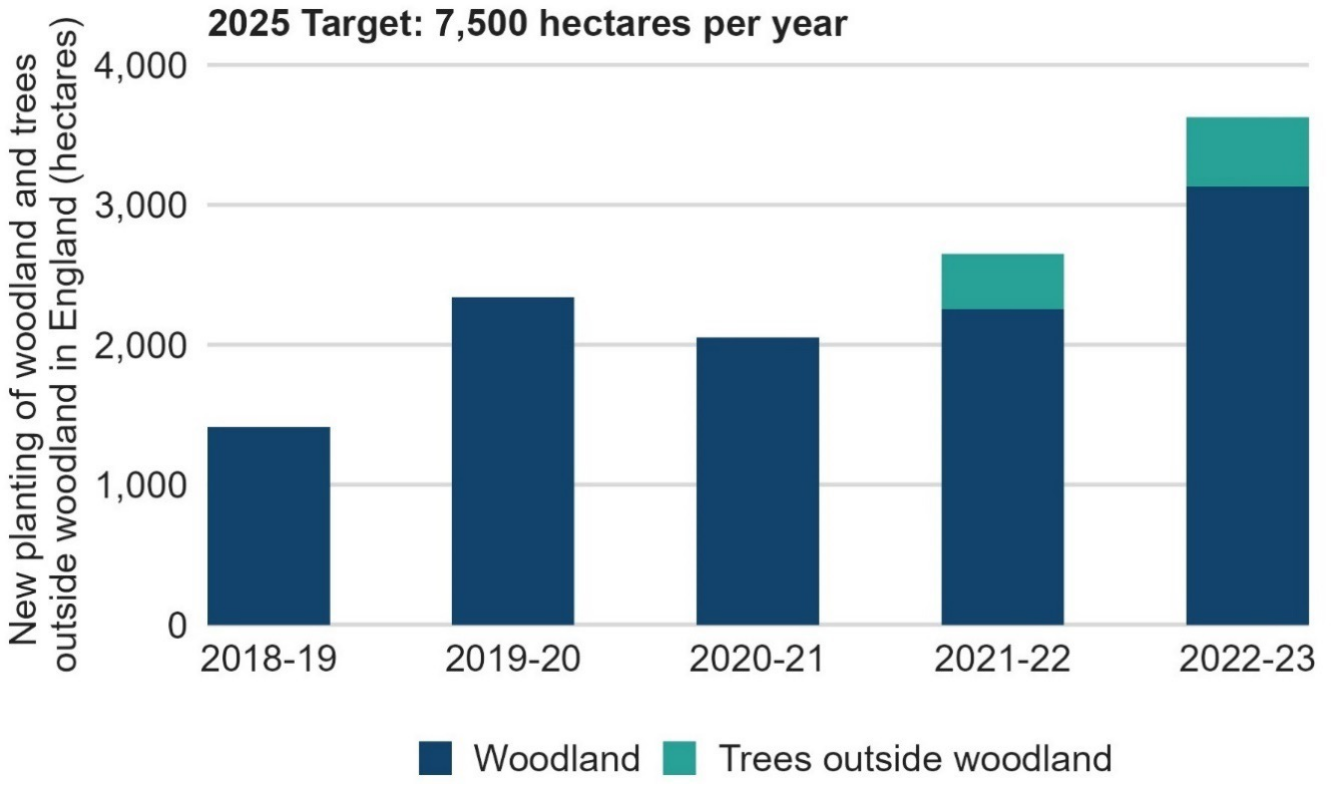
Stacked bar chart showing the trend in hectares of trees planted from financial year 2018-19 to 2022-23. Axis shows 0 to 4,000 hectares. There has been an increase in the hectares of trees planted. The target is to plant 7,500 hectares per year by 2025.
Source: Forestry Commission Key Performance Indicators
Agriculture
We have made progress on key Net Zero Strategy commitments. This includes designing ELM schemes to pay farmers for measures that can make their food producing businesses more resilient and productive, and improve water quality and management, air quality, climate emissions and biodiversity.
The Agriculture Transition Update, published January 2024, announced an expanded offer with updated payment rates. This includes payment for actions to reduce GHG emissions from agriculture, in the Sustainable Farming Incentive (SFI) ELM scheme and through grants, for instance through the deployment of precision farming and improved animal health.
We opened the £270 million Farming Innovation Programme in 2021. In partnership with UK Research and Innovation, we committed £134.5 million up to the end of 2023.
Waste and Wastewater
In December 2023, we published two rapid evidence assessments setting out options to improve our understanding and estimates of GHG emissions from wastewater treatment.
Please see the Resources and Waste section for further information on how waste policy development is supporting our Net Zero goals.
Fluorinated gases (F-gas)
A review of the F-gas Regulation has been underway during 2023-24. This has involved stakeholder engagement to gather further information on current F-gas demands and opportunities to move away from their use and reduce related emissions. The gathered information will inform the development of potential proposals for legislative change to secure increased abatement. Any proposed changes to the F-gas Regulation will be publicly consulted on.
Indicator: Change in Hydrofluorocarbons (HFC) greenhouse gas usage
The stepped HFC phasedown is reducing the amount of HFCs placed on the market and this resulted in a 69 per cent drop at the beginning of 2024, compared to a 2015 baseline. This is expected to be further reduced to 79 per cent by 2030.
Figure 8: Percentage change in HFC usage relative to 2015
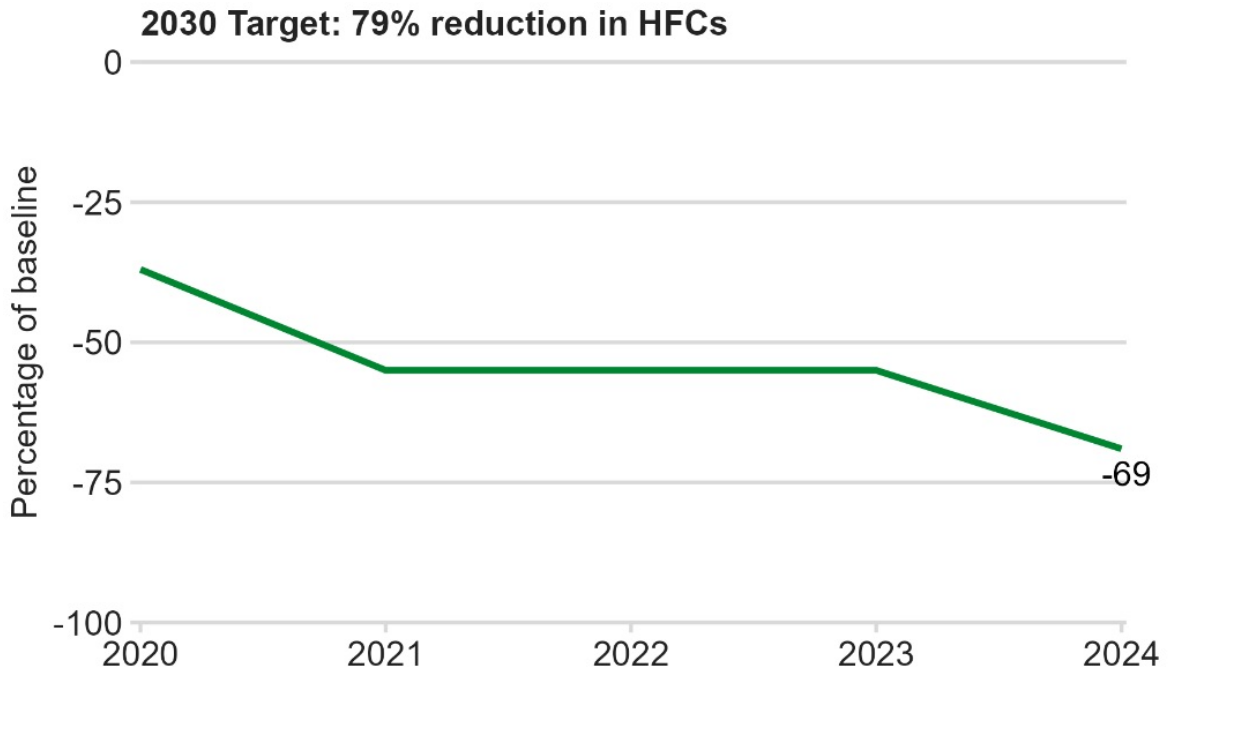
Line chart showing the percentage change in HFC usage relative to 2015. The chart is from 2020 to 2024. Axis shows 0 to negative 100 per cent. There has been a reduction in HFC usage. The 2024 figure is a 69 per cent reduction in HFC usage. The 2030 target is a 79 per cent reduction in HFC usage.
Source: legislation.gov.uk
Our contributions to the United Nations Sustainable Development Goals (SDGs)
Our priority outcome to reduce greenhouse gas emissions and increase carbon storage in the agricultural, waste, peat and tree planting sectors to help deliver net zero, contributes to the following United Nations SDGs:
-
SDG12: Responsible Consumption and Production - Ensure sustainable consumption and production patterns.
-
SDG13: Climate Action - Take urgent action to combat climate change and its impacts.
-
SDG15: Life On Land - Protect, restore and promote sustainable use of terrestrial ecosystems, sustainably manage forests, combat desertification, and halt and reverse land degradation and halt biodiversity loss.
Priority outcome 3: Reduce the likelihood and impact of flooding and coastal erosion on people, businesses, communities and the environment.
In 2023-24, the third year of the 6-year Flood and Coastal Defence Investment Programme, 135 flood protection schemes were delivered, resulting in over 28,000 properties being better protected from flooding.
Over 240,000 properties were protected from flooding by existing defences during storm events this year. In addition, the Property Flood Resilience Repair Grant Scheme was made available twice between April 2023 and March 2024 - for Storm Babet and Storm Henk. This enabled eligible flood-hit property owners to apply for up to £5,000 to help make their homes and businesses more resilient to future flooding.
For areas affected by Storm Henk, farmers who suffered uninsurable damage to their land will be able to apply for grants of up to £25,000 through the Farming Recovery Fund. Payments will go towards repair and reinstatement costs for farmers adversely affected by exceptional flooding.
In September 2023, it was announced three communities in the South West (Charmouth, Bude and Swanage) will be allocated £6 million to support adaptation to coastal erosion. This is part of the Coastal Transition Accelerator Programme to help communities to plan for the long term, including through interventions such as improving and replacing damaged community infrastructure like beach access or coastal transport links.
In February 2024, 40 successful projects were announced that will benefit from £25 million to support Natural flood management schemes across England. These schemes will use techniques such as planting trees and creating wetlands to slow and store water to reduce the risk of flooding while also providing benefits for habitats, biodiversity and water resources.
Indicator: Number of properties better protected from flooding in England
The Environment Agency (EA) achieved 28,921 properties better protected from flooding against its annual target of 28,000. This takes the cumulative total this programme to 88,272 properties better protected since April 2021.
Figure 9: Properties better protected from flooding in England (cumulative totals)
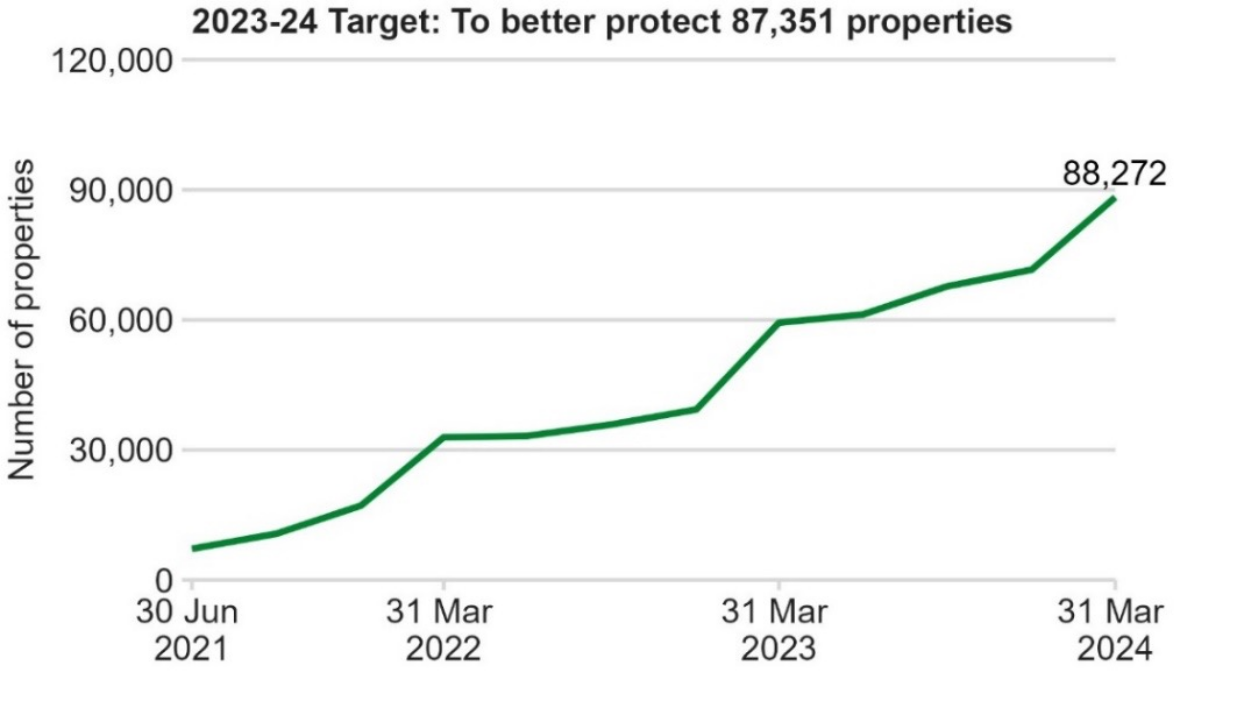
Line chart showing the cumulative number of properties better protected from flooding between 30 June 2021 and 31 March 2024. Axis shows 0 to 120,000 properties. The number of properties better protected from flooding has grown over time. As at 31 March 2024, 88,272 properties were better protected. The cumulative target is to better protect 87,351 properties by 2023-24.
Source: Environment Agency Corporate Scorecard
Indicator: Percentage of flood defence assets at required condition
Maintaining flood defence assets at the required condition is essential in our efforts to reduce flood risk. The EA categorise their assets as being High, Medium or Low consequence based on the impact of flooding on properties, or land use, should an asset in that system fail. The condition of the EA’s high consequence system assets decreased over 2023-24 to 92.6 per cent as a direct impact of successive storm damage at a greater rate than combined improvement from capital replacement and routine maintenance.
Figure 10: Flood and coastal risk management assets at or above the target condition

Start of the 2021-2026 Flood and Coastal Defence Programme.
Line chart showing the percentage of flood defence assets at required condition from financial year 2019-20 to 2023-24. Axis shows 0 to 100 per cent. As at 2023-24, 92.6 per cent are at the required condition. The Spending Review 2021 interim target is to for 94 to 95 per cent of flood defence assets to be at the required condition, this came into effect from 2022-23. The long-term target is for 98 per cent of flood defence assets to be at the required condition.
Figures for 2021-22 were impacted by a data quality issue arising from the transition to a new asset system.
Source: Environment Agency Corporate Scorecard
Climate Change Adaptation
Preparing for a changing climate, or climate adaptation, will help the UK to reduce negative consequences of climate change and take advantage of new opportunities. Building the UK’s preparedness and resilience to climate change impacts is a cost-effective and essential way to protect our people, economy and environment. The National Adaptation Programme sets out the actions that the government will take to adapt to the challenges of climate change in England over a five-year period.
The third National Adaptation Plan (NAP3) was published in July 2023. This details the policies developed across government to respond to each of the 61 climate risks and opportunities to the UK identified in the government’s Third Climate Change Risk Assessment. Alongside NAP3, the strategy for the fourth round of reporting under the Adaptation Reporting Power was published. This will improve the information that government gathers on the climate change preparedness of infrastructure sectors.
Flood, Water and Chemical, Biological, Radioactive or Nuclear (CBRN) incident response
During the last 12 months, Defra has responded to dozens of incidents, including floods and supply interruptions to drinking water. The Defra and Cabinet Office co-led National Flood Response Centre was activated for Storm Babet in October 2023, the first time since Storm Christoph in 2021. Storm Henk in January 2024 also required Defra to lead the cross-government response, which saw close working with the EA who managed the ‘on the ground’ response to protect impacted communities. Storm Henk required: over 300 concurrent flood warnings to communities; more than 1,000 EA staff working in affected communities; 125 pumps set up; and the deployment of over 12 kilometres of temporary and semi-permanent defences. The Flood Recovery Framework, used in exceptional circumstances to support councils and communities following severe flooding, and its associated schemes were activated after Storm Babet and Storm Henk to help flooded communities and farmers.
Approximately 5,600 properties were flooded during storms Babet and Ciarán in October and November 2023, while around 140,000 properties were better protected by flood and coastal risk management schemes. Over 102,000 properties were protected across the country during storm Henk in January 2024, and around 2,500 properties have reported as being flooded.
We continued working with water companies to identify and drive improvements to their resilience and emergency response capabilities. The focus over the last 12 months has been improving strategic resilience planning to prepare for risks such as energy disruption and interruptions to chemical supplies, as well as strengthening the protective security of Critical National Infrastructure. We are also working with partners to maintain capability for flood rescue in England and further develop enhanced recovery capability in the event of the release of CBRN material.
Our contributions to the United Nations Sustainable Development Goals (SDGs)
Our priority outcome to reduce the likelihood and impact of flooding and coastal erosion on people, businesses, communities and the environment, contributes to the following United Nations SDGs:
-
SDG11: Sustainable Cities and Communities - Make cities and human settlements inclusive, safe, resilient and sustainable.
-
SDG13: Climate Action - Take urgent action to combat climate change and its impacts.
Priority outcome 4: Increase the sustainability, productivity and resilience of the agriculture, fishing, food and drink sectors, enhance biosecurity at the border and raise animal welfare standards.
During 2023-24, a number of measures and packages have been implemented and announced in order to support the farming industry. The Rural Payments Agency (RPA) continued to make payments through the advanced Basic Payment Scheme (BPS), Countryside Stewardship (CS) revenue, and Environmental Stewardship schemes. These payments support farmers to run profitable and productive businesses while delivering environmental outcomes in a range of habitats.
At the National Farmers Union Conference in Birmingham on 20 February 2024, a new Food Security Index was announced, in addition to annualising the ‘No.10 Farm to Fork Summit’. During this period, Farming Equipment and Technology Fund guidance was also published. This helps farmers prepare to apply for support to improve productivity, slurry management, and animal health and welfare.
Whilst the 2023-24 Avian Influenza season has so far reported less Avian Influenza cases than last year, we have confirmed 126 Bluetongue cases (119 in Cattle and 7 in Sheep). To manage this, Bluetongue Temporary Control Zones have been implemented with Surveillance visits carried out by the Animal and Plant Health Agency (APHA).
Agriculture
Under the Agricultural Transition plan, we are gradually phasing out Direct Payments by 2027. Progressive reductions were introduced to the BPS in 2021, with the money saved going back to farmers through the rollout of future farming schemes.
Following the UK Farm to Fork Summit and announcement on support for tenant farmers, we set out improvements to farming schemes for upland farmers including revised options under CS. The second round of Landscape Recovery opened for applications to any land managers, including groups of farmers and tenants, who want to come together to deliver projects targeting net zero, protected sites and habitat creation across landscapes of at least 500 hectares.
£30 million has been awarded to 50 farming projects that will boost food production, support net zero, and create a more resilient and sustainable agricultural sector.
In order to support farming communities across the country, we issued BPS advanced payments to 97.19 per cent of our customers in August 2023. The RPA confirmed that 97 per cent of farmers received their final BPS payment in the first few days of the payment window. The announcement means that a further £525 million was released into the rural economy, building on the advance payments made earlier in the year.
The new SFI 2023, which has 23 actions on offer for farmers, started accepting applications from 18 September 2023. In recognition of the challenges faced with inflation and rising input costs, we acted on feedback to support farmers to improve their cashflow by releasing SFI payments early. Farmers who had a live SFI 2023 agreement before the end of the year received an accelerated payment worth 25 per cent of the annual value of their agreement in the first month of their agreement.
Indicator: Productivity of UK agricultural industry
Total factor productivity is estimated to have increased by 3.4 per cent between 2021 and 2022. This was driven by a 3.3 per cent decrease in the volume of all inputs which offset a very slight decrease in the volume of all outputs (less than 0.1 per cent). ‘All inputs’ captures items which are used in agricultural production e.g. fertiliser, energy and seeds. ‘All outputs’ captures agricultural commodities e.g. wheat, beef and milk. The volume of inputs decreased as rising costs of goods pressured farmers to cut down on costs where possible.
Figure 11: Productivity of the UK agricultural industry

Line chart showing the productivity of the UK agricultural industry between 2018 and 2022. Axis shows 100 to 175 total factor productivity. Total factor productivity has been calculated using 1973 as the reference period and equal to 100. There has been an increase in the productivity of the UK agricultural industry. In 2022 total factor productivity was 167.3.
Source: Total factor productivity of the agricultural industry
UK fishing
We published the first five Defra lead Fisheries Management Plans (FMP) in December 2023. FMPs support sustainable trade and domestic consumption of seafood and further FMPs are in development.
Since opening in 2021, the Fisheries and Seafood Scheme has invested £27 million in over 1,300 projects supporting England’s catching, aquaculture and processing sectors, as well as projects that are improving the marine environment.
The UK Seafood Fund has committed almost all its overall budget, awarding around 200 projects and individual grants across the UK. This commitment includes:
-
Over £54 million awarded to 29 projects to improve infrastructure and bring social and economic benefits to coastal communities.
-
Nearly £25 million awarded to over 100 projects delivering science and innovation through collaborative research and new technologies.
-
Nearly £5 million awarded to 11 projects that support the current and future skills and training needs of the sector.
-
£1 million in grants awarded to fishers for new or replacement engines to support fleet modernisation.
-
Over £1 million has also been allocated to boost seafood exports to new and existing markets.
Last year we reached agreements with the European Union, Norway and coastal States in the northeast Atlantic that secured the UK fleet with access to 750,000 tonnes of fishing opportunities in 2024, worth around £970 million based on historic landing prices. Further commitments to joint sustainable fisheries management were also made.
Sustainability has been at the heart of the UK’s approach to negotiations, pushing for decisions based on the best available science to protect key stocks and support the long-term viability of the UK fishing industry. For 2024, there has been a slight increase in the number of jointly managed stocks that have been set in line with or lower than the levels advised by ‘International Council for Exploration of the Sea’ scientists compared to last year.
Indicator: Percentage of total allowable catches (TACs) for quotas for fish stocks of UK interest that have been set consistent with maximum sustainable yield (MSY)
The assessment for 2024-25 shows that 52 per cent of the TACs which relate to MSY advice were set consistent with MSY advice (29 out of 56 TACs). The report published assessing the sustainability of fisheries catch limits negotiated by the UK for 2024 describes the assessment of TACs set during annual negotiations (that concluded in December 2023). TACs were set for 2024 and figure 12 shows the position that includes January to March 2024.
Figure 12: Percentage of TACs that have been set consistent with MSY.
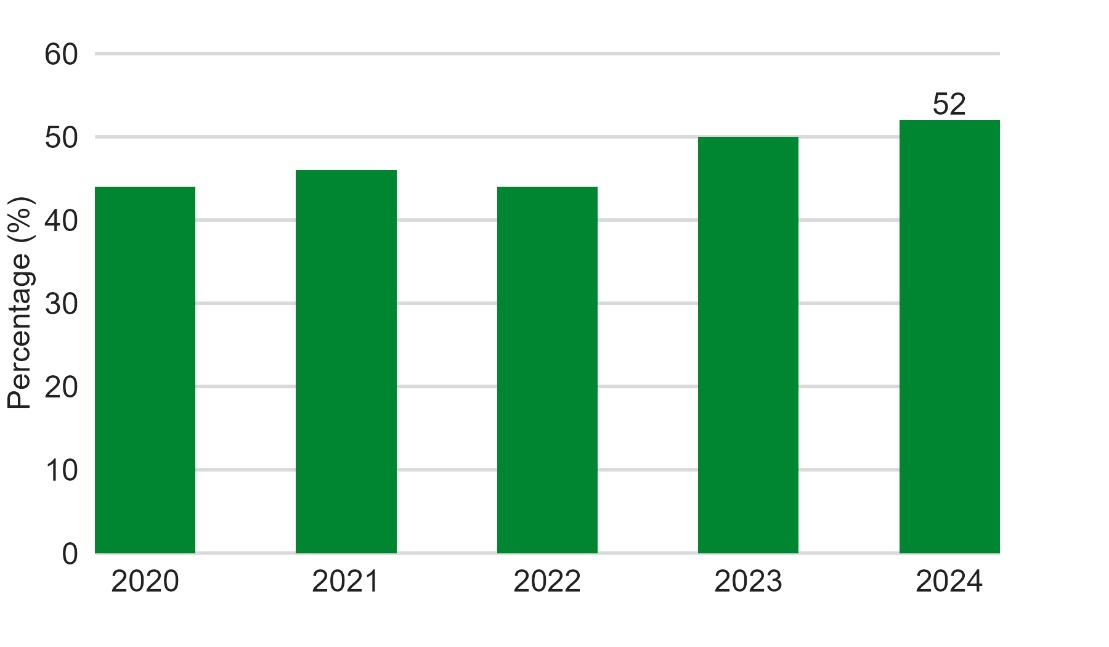
Bar chart showing the trend in the percentage of total allowable catches for quotas for fish stocks of UK interest that have been set consistent with maximum sustainable yield between 2020 and 2024. Axis shows 0 to 60 percentage. In 2024, 52 per cent of total allowable catches were set consistent with maximum sustainable yield advice.
Source: Assessing the sustainability of fisheries catch limits negotiated by the UK for 2024
Food industry
Ten farming innovation competitions have launched since January 2023, providing a total of £64 million of funding. We launched the £4 million Smaller Abattoir Fund (SAF) on 13 December 2023, to help support a sustainable smaller abattoir network. The SAF will do this by providing grants of between £2,000 and £60,000 at a 40 per cent intervention rate to support eligible smaller abattoirs to improve productivity, enhance animal health and welfare, add value to primary products, and encourage innovation and investment in new technologies. We have also launched a competition to support farmers to invest in solar installations to ease energy costs and provide more sustainable power alongside funding for automation and robotics.
Defra has published two key pieces of research to underpin government’s long-term policy making in Controlled Environment Horticulture, including: a review of the technology currently employed across the sector; and a foresight study exploring the costs, opportunities and viability of these different CEH growing models.
We published our response to the Rock Review on tenant farmers in May 2023, with commitments against all recommendations. We have established the Farm Tenancy Forum and are making good progress on many commitments, including adapting our Environmental Land Management schemes to be more accessible for tenants.
After securing an expansion of the Seasonal Worker visa route last year, we are continuing our work to ensure the industry can access the labour it needs, on farms and through the supply chain. The 2023 visa allocation met sector needs and will retain the same allocation in 2024. In June 2023, we published the Independent Review into labour shortages in the supply chain. This provides 10 key recommendations on how to ensure businesses can access the labour they require on a more effective basis, to put the sector on a more sustainable, long-term footing.
At the end of 2023, we made further reforms to retained European Union law by laying two Statutory Instruments (SIs) dealing with rules on wine. The first revoked a number of rules such as the need to cover the necks of sparkling wine bottles in foil; the second updated the techniques that winemakers in the UK can use to make wine as well as ensuring that the UK can benefit from the Comprehensive and Progressive Agreement for Trans-Pacific Partnership.
We are working closely with the Department for Business and Trade (DBT) to tackle the global barriers to exports, starting with the top 100 barriers, a third of which are in food and drink. We introduced a new £1 million export support fund for the dairy sector, with a particular focus on support for small and medium enterprises. The Dairy Export Programme was launched by the DBT in November 2023, with the aim of helping to grow agri-food exports in overseas markets through educational activities, trade missions and a UK Dairy Showcase.
Indicator: Productivity of UK food industry
In 2021, food chain total factor productivity increased by 3.7 per cent, reflecting the lessening of pandemic impacts in this period. Underlying this, food manufacturing productivity returned to 2019 levels. Catering did the same, as the restrictions which had impacted it so negatively in 2020 were removed. Retail productivity, which received a lockdown driven sales boost in 2020, continued its upward trend with an increase of 2.3 per cent, most likely due to a decline in employee numbers alongside record online sales. The lag in data is because this indicator relies on multiple administrative data sources.
Figure 13: Productivity of UK food industry

Line chart showing the productivity of the UK food industry between 2017 and 2021. Axis shows 100 to 115 total factor productivity. Total factor productivity has been calculated using 2000 as the reference period and equal to 100. There has been an increase in the productivity of the UK food industry. In 2021 total factor productivity was 111.1.
Source: Food chain productivity
Indicator: Value of UK food, feed and drink exported
The total value of agri-food exports from the UK in 2022-23 was £25.5 billion, an increase of 18 per cent from 2021-22.
Figure 14: Value of UK food and drink exported from the UK (£ billion)

Bar chart showing the trend in the value of UK food, feed and drink exported from financial year 2020/21 to 2022/23. Axis shows 0 to 30 in billions. There has been an increase in the value of UK food, feed and drink exported. In 2022-23 25.5 billion was exported.
Source: Food statistics pocketbook
Animal health and welfare
The following activities have been undertaken to deliver animal health and welfare outcomes:
-
Establishing the Animal Sentience Committee to provide accountability to Parliament for how well all government policy decisions pay due regard to the welfare needs of animals.
-
Delivering a legislative programme including:
* Enhanced companion animal welfare, by making microchipping compulsory for cats.
* Providing new protections for wild animals by announcing the extension of the Ivory Act to five further species.
* Banning trade in detached shark fins and banning the advertising and offering for sale here of unacceptably low animal welfare activities abroad.
* Ensuring that only those meeting zoo level standards are able to keep a primate under licence.
-
The Animal Welfare (Livestock Exports) Bill was introduced into Parliament in December 2023. The Bill, aimed at stopping unnecessary stress, exhaustion and injury will ban the live export of cattle, sheep, goats, pigs and horses for slaughter and fattening from Great Britain.
-
The Animals (Penalty Notices) Act 2022, which introduced to England a new system of financial penalties of up to £5,000 for offences relating to animal health, welfare, biosecurity and animal by-products, was implemented through secondary legislation in December 2023.
-
Taking decisive action to add XL Bully breed types to the list of breeds prohibited by the Dangerous Dogs Act 1991. This follows an increase in dog attacks in recent years, including those causing injuries and fatalities, with the XL Bully being disproportionately involved in this rise.
-
In September 2023, we launched the Calf Housing for Health and Welfare Grant. £10 million was made available to refurbish or build new calf housing, and small grants, as part of the Farming Investment Fund, committing £19 million for English businesses involved in farming pigs, dairy cattle, beef cattle, broilers, laying hens and sheep.
Biosecurity
Defra dealt with outbreaks of highly pathogenic avian influenza (HPAI) and bluetongue serotype 3 (BTV-3) during the year. There have been 37 confirmed cases of HPAI H5N1 in the 2023-24 financial year. This follows two years of an unprecedented scale of these outbreaks which placed significant pressure on both the Core department and APHA. Bird keepers and vets have played a vital role in keeping flocks safe, but it is more important than ever to be vigilant for signs of disease and maintain stringent standards of biosecurity.
In November and December 2023, following routine surveillance, BTV-3 was identified in Kent and Norfolk. Following active surveillance in the Temporary Control Zones that were declared around these cases, at least 126 animals were found to have been infected. As the risk reduced, the Zones were lifted, however we continue to plan for further incursions as temperatures increase.
In August 2023, the final Border Target Operating Model (BTOM) was published. The BTOM sets out a new approach to imports into Great Britain and the UK’s new Single Trade Window. The BTOM includes the introduction of a system of sanitary and phytosanitary controls (applying to imports of live animals, animal products, plants and plant products) at the border. The first piece of legislation to implement the Defra-led elements of the BTOM was made in January 2024.
Defra audited 15 trading partners between April 2023 to March 2024, to assure that imports of animals, food, animal products, and plants to the UK meet our food safety and biosecurity standards. To further protect UK biosecurity, over 8,000 overseas animal disease outbreaks were monitored during the year, with trade restrictions implemented as appropriate to manage emerging risks. 15 changes were made to phytosanitary import controls in response to newly identified threats posed by imports from overseas (including the EU).
There has also been ongoing work to support UK business and industry to open new markets, and expand existing markets for exports of plants and plant products as well as products of animal origin, for example, the lifting of EU prohibitions on 14 high risk plant species and negotiation of a new agreement that enables smoother trade of cooked poultry meat to Japan.
Under the free trade agreements (FTAs) negotiations in 2023-24, Defra led on the Sanitary and Phytosanitary (SPS) Chapters, working with DBT, to facilitate trade whilst maintaining UK biosecurity protections for public, animal and plant health from imported goods. Defra also represented the UK for SPS matters at three World Trade Organisation (WTO) SPS Committees; the thirteenth WTO Ministerial Conference (MC13), five FTA SPS Committees and provided contributions to a further 53 bilateral trade committees.
In May 2023, we ran our third Annual National Plant Health Week, raising awareness about plant health risks.
We also launched several new funding opportunities including:
-
The Coronation Living Heritage Fund (CLHF) - This £2.5 million government fund is supporting local tree planting initiatives in more than 50 local council areas to commemorate the Coronation of King Charles III.
-
In November 2023, we announced a new Plant Health innovation fund, a collaboration between Defra and UK Research and Innovation with up to £300,000 being made available for R&D solutions which enhance UK biosecurity.
-
New rounds of the Local Authority Treescapes Fund (LATF), the Tree Production Innovation Fund and Seed sourcing grant were also opened.
We launched phase 2 of our biosecure procurement requirement pilot to encompass the CLHF, LATF, Urban Tree Challenge Fund and HS2 Woodland Fund grant schemes. This brings on board suppliers of amenity trees, in addition to forestry tree suppliers who supply to England Woodland Creation and Tree Health Restocking grant schemes under phase 1 of the pilot. The requirement is based on the benchmark Plant Health Management Standard which forms the basis of the Plant Healthy Certification scheme. The phase 2 pilot has encouraged further uptake of the scheme with 74 businesses and organisations now fully certified and a further 7 in the pipeline.
We continue to respond to outbreaks of several regulated plant pests. In 2023, Defra, the Forestry Commission and APHA have taken action to eradicate outbreaks of forestry pests including Ips typographus and Oak Processionary Moth, as well as against an incursion of Colorado beetle discovered in a potato crop in Kent. We have also eradicated 72 Asian hornet nests found in 56 locations in 2023 (as of 17 November 2023). Evidence from previous years suggests there is not an established population in the UK with further analyses undertaken over winter 2023. Contingency plans are in place. When hornets are found, the National Bee Unit carries out surveillance to find and destroy any nests.
We have been involved in activity relating to securing agreement of the Windsor Framework and subsequently its implementation via the laying of four pieces of legislation. Alongside this, we have developed the new NI Plant Health Label and NI Retail Movements Scheme schemes, to give practical effect to these arrangements.
In October 2023, we published the latest official statistics: Plant Health: international trade and controlled consignments (2018-2022). The statistical release brings together information on the international trade in plants and plant products and on the controlled plants and plant products that are notified to plant health inspectorates (Forestry Commission and Plant Health and Seeds Inspectorate).
In August 2023, post-movement tuberculosis (TB) testing became compulsory for most cattle that are moved to the annual surveillance testing parts of the Edge Area from higher TB incidence areas of England and Wales. A small number of specific exemptions apply. APHA estimates that inward movements of cattle with undetected Mycobacterium Bovis (M. Bovis) infection are the source of around one fifth of all new TB breakdowns in the Edge Area, although this proportion varies from county to county. Post-movement TB testing will reduce the risk of disease spread through cattle movements and is an important tool to protect the lower TB incidence parts of the Edge Area. It will detect brought in cases of TB earlier, to minimise the scale and impact of the TB breakdown in the destination herd and reduce the risk of spread to other herds. In February 2024, the second phase of the Polymerase Chain Reactor (PCR) test for detection of M. Bovis in post-mortem tissue samples went live, following the success of the test in an initial rollout. The major advantage of this method is that it typically takes only three weeks to report a result compared to 6-22 weeks for the standard tests that use microbiological culture. This means that in certain situations, if the PCR test results were negative, APHA could lift herd movement restrictions much sooner than the previous protocols allowed.
The Science Capability in Animal Health Programme will deliver a state-of-the-art science hub at Weybridge, securing and future-proofing the UK’s biosecurity capability, replacing the current facilities which are in a very poor state of repair and will close without investment. Progress has been made on work to clear the site for construction.
Indicator: Percentage of cattle herds that are bovine tuberculosis (bTB) free
BTB is a slow-moving disease with a 25 year strategy for eradication. Our target is to be officially bTB free by 2038. At the end of December 2023, 95.7 per cent of herds were bTB free. The percentage of herds bTB free fluctuates on a quarterly basis: it is not unexpected to see small upward and downward swings.
Figure 15: Percentage of cattle herds that are bTB free.

Line chart showing the percentage of cattle herds that are bovine tuberculosis free between 31 March 2019 and 31 December 2023. Axis shows 0 to 100 percentage. The percentage of cattle herds that are bovine tuberculosis free has steadily increased over time. As at 31 December 2023, 95.7 per cent of cattle herds are bovine tuberculosis free. The target is for all cattle herds in England to be bovine tuberculosis free by 2038.
Source: Tuberculosis (TB) in cattle in Great Britain
Indicator: Number of high priority forest pests in the UK Plant Health Risk Register
Pests are ranked as high priority if they are assessed as having a mitigated relative risk rating of 15 or more. These high priority pests require actions, in addition to current mitigation measures, to help prevent them having a potentially substantial negative impact on England’s woodland.
Figure 16: Number of high priority forest pests in the UK Plant Health Risk Register.
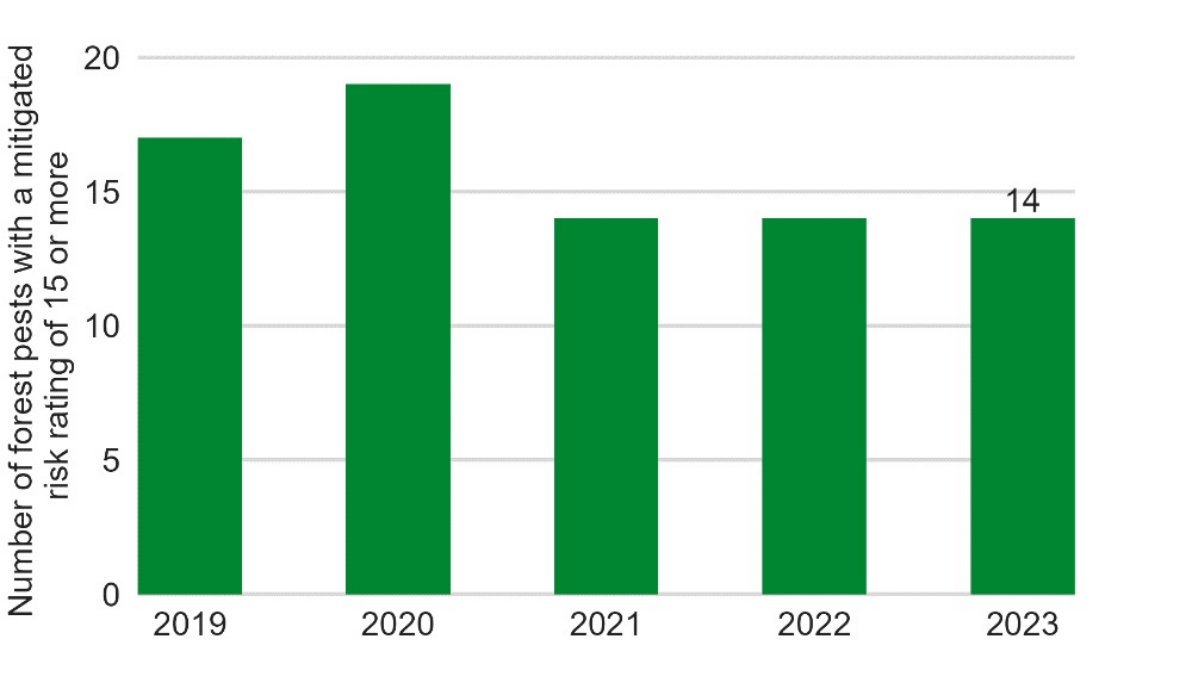
Bar chart showing the trend in the number of high priority forest pests in the UK Plant Health Risk Register between 2019 and 2023. Axis shows number of forest pests with a mitigated risk rating of 15 or more, 0 to 20. The number of high priority forest pests in the UK Plant Health Risk Register has remained at 14 since 2021.
Source: Forestry Commission Key Performance Indicators
Indicator: Percentage of export health certificates and licences issued within agreed timescales
Overall performance was 98 per cent for the year which exceeded the 97 per cent target.
Figure 17: Percentage of expert health certificates and licences issued within agreed timescales.

Line chart showing the percentage of export health certificates and licences issued within agreed timescales from financial year 2019/20 to 2023/24. Axis shows 75 to 100 percentage. The percentage of cattle herds that are bovine tuberculosis free has steadily increased over time. The target is for 97 per cent of export health certificates and licences to be issued within agreed timescales. In 2023-24, 98 per cent were issued within agreed timescales, we have been above the target since 2021-22.
Source: Animal and Plant Health Agency (APHA)
Our contributions to the United Nations Sustainable Development Goals (SDGs)
Our priority outcome to increase the sustainability, productivity and resilience of the agriculture, fishing, food and drink sectors, enhance biosecurity at the border and raise animal welfare standards, contributes to the following United Nations Sustainable Development Goals (SDGs):
-
SDG2: Zero Hunger - End hunger, achieve food security and improved nutrition and promote sustainable agriculture.
-
SDG3: Good Health and Well-Being - Ensure healthy lives and promote well-being for all at all ages.
-
SDG8: Decent Work and Economic Growth - Promote sustained, inclusive and sustainable economic growth, full and productive employment and decent work for all.
-
SDG12: Responsible Consumption and Production - Ensure sustainable consumption and production patterns.
-
SDG14: Life Below Water - Conserve and sustainably use the ocean, seas and marine resources for sustainable development.
-
SDG15: Life On Land - Protect, restore and promote sustainable use of terrestrial ecosystems, sustainably manage forests, combat desertification, and halt and reverse land degradation and halt biodiversity loss.
Our strategic enablers (SE)
Supporting outstanding delivery – providing effective and efficient strategic direction and change management, delivery support and corporate services.
Defra’s Group Corporate Services (GCS), Strategy Group and Science and Analysis provided the fundamental enablers that supported the department and our arm’s length bodies (ALBs) to effectively deliver our strategic plans and ambitions. Our portfolios of corporate services provided the necessary capability, workforce skills, IT and digital solutions, workplaces, resource management, strategic and organisational planning, cross-cutting and strategic analysis, legal and legislative support, communications framework, R&D and expert scientific advice and analysis to underpin the work of Defra group. These services deliver value for money for taxpayers, our partners and customers (including industry, delivery partners, public bodies, non-governmental organisation and Parliament).
We work with the Government Science and Engineering profession and the Analytical professions and Analysis Function to deliver the science and analytical capability and enable innovation that is critical to Defra policy outcomes. We have used our capability framework to attract, grow and retain diverse science and analysis talent, including development of science and analytical leaders, internships, academic secondments and apprenticeships. We have also launched the first R&D Fellowships programme, which will enhance our technical capability and capacity in Defra.
SE: Workforce, skills and location
During 2023-24, we have continued to make progress against Defra’s Thriving People goals. We have maintained focus on strategic workforce planning, including demand tracking, a focus on capability building in critical areas such as using data and line management capability.
Continuing to provide an inclusive and welcoming environment is priority and focus on the wider Employee Offer remains fundamental. We continue to see rates of representation in our staff above target for both disabled and female colleagues however we need to do more to achieve our target for representation of ethnic minorities.
The Defra People Survey highlighted ongoing staff concerns around pay that have impacted morale, wellbeing and workforce recruitment and retention. We agreed and implemented a Payflex case which improved the overall financial offering to our employees. We also continue to work on our longer term pay and reward strategy.
We have set a clear expectation for our staff to increase attendance in our office locations.
SE: Innovation, technology and data
We have delivered or enhanced public facing digital services that underpin our priority outcomes (such as the XL Bully digital service and the Sustainable Farming Incentive). We continued to address legacy technology in our applications and infrastructure, as well as improving our internal technology. We have established a Digital Transformation Leaders Group to bring together senior staff from across Defra group to oversee implementation of our Digital and Data Transformation Strategy. We continue to work with Ministry of Justice (MoJ), Home Office (HO), and Department for Work and Pensions (DWP) as part of the Synergy Cluster, developing our future approach to transforming shared services. This approach will improve the end user experience of those using shared services.
We continued to enhance the technical, data and skills capability of the Data Analytics and Science Hub as a service with many external users and organisations relying on our environmental data.
We worked with the Central Digital and Data Office at the Cabinet Office (CO) to implement programmes across Defra that increase the digital and data skills for all staff including Data Masterclass for senior civil servants, while driving up attendance and scope for opportunities through the digital academies; this was called ‘One Big Thing’. To further establish Defra as a data-driven organisation, we established a new position of Chief Data Officer in the Science and Analysis Group.
With the uplift in the research and development (R&D) budget in the 2021 Spending Review, we have increased our investment in research and innovation including the launch of a new partnership programme in Land Use for Net Zero a transdisciplinary research programme jointly developed by UK Research and Innovation (UKRI), Defra, DESNZ and the DA’s designed to deliver policy ready evidence to government. Additionally, we have invested in the Environment Monitoring Innovation Programme, a Defra and UKRI fund to support innovative companies developing new approaches to environmental monitoring. We have also continued to invest in our new flagship Natural Capital and Ecosystem Assessment programme, first launched in March 2022.
SE: Delivery, evaluation and collaboration
We continued to engage with the CO benchmarking exercises, looking at the corporate service functions across the group of larger Arm’s Length Bodies (ALBs). The findings demonstrate the efficiency of the consolidated Defra Group Corporate Services model.
We continued to partner with ALBs to develop improved performance reporting for Defra’s top ten ALBs. This is part of a wider accountability cycle which includes key touch points between senior sponsors, Ministers and the ALBs.
Defra’s evaluation capability and associated evidence base continues to grow as we strengthen our programme of research and evaluation to support the priority outcomes. Defra published its first evaluation strategy in September 2023. Defra works closely with the CO and HM Treasury Evaluation Task Force to deliver on expectations for departmental evaluation activity and is represented on the cross-government Evaluation and Trial Advice Panel.
SE: Sustainability
Group wide leadership
We continue to work on delivering our sustainability strategy which was agreed in 2022-23. It sets out the collective sustainability ambition of Defra group to 2033. We have surveyed sites that we plan to retain, identifying options for investing in lower carbon technology. Our new workplace design guide sets standards for sustainability, determining the most suitable accommodation in terms of scale, sustainability, suitability and flexibility.
We have launched Defra group’s Modern Slavery Project. The first phase will assess the risk of modern slavery in our operations and supply chain, and result in an action plan to address the risk.
Leadership across government
Defra leads the Government Digital Sustainability Alliance (GDSA) whose membership represents most of UK government Tier 1 and 2 suppliers, as well as some subject matter experts. Work to date has resulted in reductions of UK government Information and Communication Technology (ICT) waste, including reducing waste to landfill to just 0.85 per cent in addition to lowering costs and generating income for departments of £15.2 million.
Greening Government Commitments (GGC)
The GGC, relaunched in 2021, set key environmental sustainability targets for central government departments. A summary of Defra’s performance against some of these targets, measured against the baseline year of 2017-18, is as follows:
| Current Achievements | Target April 2025 | |
|---|---|---|
| Total GHG Reduction (Note) | 25% reduction | 50% reduction |
| Direct GHG from buildings (Note) | 15% reduction | 15% reduction |
| Landfill Waste Reduction (Note) | 7% sent to landfill | Less than 5% sent to landfill |
| Recycling Waste (Note) | 66% recycled | More than 70% recycled |
| Total Waste Reduction (Note) | 4% reduction | 15% reduction |
| Water Reduction (Note) | 8% reduction | 8% reduction |
| Domestic Flights Emissions Reduction (Note) | 43% reduction | 30% reduction |
| Paper Use Reduction (Note) | 78% reduction | 50% reduction |
| Conversion of Fleet and Hired Vehicles to Ultra Low Emissions (ULEV) | 25% converted to ULEV | 25% by End 2022 |
| Conversion of Fleet and Hired Vehicles to Zero Emission | 25% converted to zero emission | 100% by end 2027 |
Note: Reporting period from Quarter 4 2022-23 to Quarter 3 2023-24 (1 January 2023 to 31 December 2023)
For further commentary, context and detail on Defra’s sustainability performance see Annex 3.
Risks affecting delivery of our outcomes
This section outlines how Defra group’s principal risks link to our priority outcomes and strategic enablers (as shown in Performance Overview). It summarises the mitigating actions taken over the course of the financial year to control each risk and indicating future action planned.
Risk: Security failure
Defra group suffers from major security incidents and / or increased cyber-attacks.
Mitigating activities:
-
Improved our business continuity and incident management arrangements to reduce the impacts of any such incidents.
-
Ensured adequate revenue and capital investment in addressing technical debt and resourcing security function through Spending Review.
-
Delivered Security Strategy and stood up projects to support Spending Review (SR) 21 investment and addressing key control gaps such as training compliance and account management.
-
Delivered Year 2 of Legacy Applications Programme, continuing to modernise legacy applications and technology including moving applications to more secure hosting environments.
Risk: IT / business resilience
Defra group’s technology is not able to support its business resilience, operations or user experience due to under investment / lack of planning.
Mitigating activities:
-
Improved governance model for all digital and technology spend in Defra group.
-
Continue to address legacy technology in our applications and infrastructure (including migrating applications to more secure hosting environments) through Year 2 of our long-term Legacy Applications Programme and Infrastructure Programmes.
-
Delivered digital elements of Future Farming; Borders and Trade; and other major programmes, underpinning key policy and transformation outcomes for Defra group.
-
Published a refreshed Digital and Data Transformation Strategy for Defra group, agreed by ExCo and defining the role of Digital Data and Technology (DDaT) in Defra Strategy, Service and Transformation.
-
Improved our Business Continuity planning / testing arrangements and incident response capability to confirm resilience in the event of IT failure.
Risk: Infrastructure failure – Weybridge
Due to mechanical and electrical equipment and building fabric reaching end of life and the need for repairs and upgrades to infrastructure, the Defra Science Estate at Weybridge has to close on health and safety grounds or fails to operate.
Mitigating activities
-
Planned repairs and maintenance (routine and special capital) are being undertaken to priority buildings.
-
Implementing larger projects to extend end of life in key facilities whilst also maintaining science operations.
-
Implementing HSE intervention actions.
Risk: Aggregated delivery risk – failure to deliver Defra’s portfolio of programmes
Defra’s major projects portfolio – or multiple projects within the portfolio – fails to deliver the intended benefits, resulting in failure to deliver both our outcomes and legal requirements for the department and government.
Mitigating activities
-
Established a new Portfolio Delivery Director General Group, to provide oversight of the department’s major project portfolio.
-
Piloted a project initiation service to ensure projects are set up for success.
-
Regular tracking of projects and portfolio and reporting to the Delivery Committee continued.
-
Portfolio level analysis undertaken of projects delivery confidence and path to green approaches established.
-
Establish prioritisation criteria, to allow prioritisation of the portfolio and assess the impact of potential new items.
-
Develop options for implementing a Strategic Gateway and enhanced portfolio governance to ensure strategic alignment to outcomes and an agreed mandate for initiating projects.
-
Further mature project and portfolio data, undertaking analysis to identify early triggers of risks to delivery.
-
Pilot flexible resourcing models to improve resource planning and access to resources.
Risk: Professional capability
The business does not articulate its resource requirements within its workforce planning at a group level, we will fail to direct / prioritise existing resources effectively, and fail to grow, attract and retain capability in key professions (including Science, Commercial, Analysts, Project and Programme Management) which impacts Defra group’s ability to deliver its outcomes.
Mitigating activities
-
Identify and prioritise specialist capability gaps to address in 2023-24 through strategic workforce planning.
-
Develop priority professional skills to awareness-level for all staff e.g. data and digital literacy for Senior Civil Servants (SCS) – Grade 7 in 2023-24.
-
Engage staff regarding professional development and career development advice and pathways available, including apprenticeship solutions.
-
Launch of Defra group Learning Hub refresh.
-
Invest in Defra’s (group) individual organisation brands, career sites and material to support attraction, including outreach.
Risk: Business planning – delivering Defra group outcomes within our resource of allocations
Defra group’s plans (including activities, milestones and business performance targets) insufficiently reflect changes to resources (money and people), due to lack of a joined-up strategic planning approach, resulting in Defra group being unable to deliver its outcomes and / or good value for money.
Mitigating activities
-
We set out an interim Outcome Framework for 2023-24. With these outcomes we focused on for the remainder of the 2021 Spending Review period to March 2025 (Environment, Climate, and Farming and Sustainable Growth).
-
Coordinated Project Portfolio Management led Ambitious Outcomes programme of work to bring together change and ambitious outcomes for Defra group into one space, to update the interim framework over time.
-
Worked closely with central teams and the wider group to ensure that Ministerial decisions were reflected in business planning decisions and the implications of subsequent steers clearly communicated.
Risk: Concurrent incidents
If multiple risks materialise, with concurrent risks materialising, Defra’s ability to provide an effective emergency response will be stretched where there are multiple serious incidents occurring simultaneously (for example, conflict and / or supply chain failure, combined with major flooding and / or an animal or plant disease outbreak).
Mitigating activities
-
Longer term review of Defra’s approach to resilience, most notably through our Resilience Strategy.
-
Defra’s Concept of Operations and playbooks enables efficient use of available resource alongside our emergency reserves.
Risk: Research and Development (R&D) Procurement (Science and Analysis DG / commercial)
There is a risk to Defra’s ability to spend the increased R&D budget in full due to resource and procurement process constraints.
Mitigating activities
-
Optimisation of procurement processes to better reflect R&D procurement.
-
Additional short term contracted resource.
-
Introduction of new procurement tools, for example, use of frameworks and other agreements.
Risk: Outbreak of concurrent exotic animal diseases
We are unable to respond effectively to large or concurrent exotic animal disease incursions due to insufficient resource, capacity, capability, finances; the impact of successive outbreaks of Avian Influenza over recent years and the 2023 incursion of Bluetongue on general preparedness, sub-optimal outbreak response and inability to assure trading partners of the health status of UK livestock.
Mitigating activities
-
Horizon scanning, outbreak risk assessments, and both active and passive surveillance are key elements of our risk reduction portfolio.
-
Import controls, including more stringent controls for areas affected with Bluetongue, Epizootic Haemorrhagic Disease Virus, and African Swine Fever and post-import testing for those diseases from imports from neighbouring regions.
-
Import controls and export health certification for live animal and germinal products are an important part of our risk reduction portfolio and checks for Products of Animal Origin (POAO) in passenger luggage to prevent incursions of African Swine Fever and other important pathogens.
-
Identification and traceability of livestock across the UK, with ongoing development or replacement of existing IT platforms.
-
UK Contingency Plan regularly updated and published.
-
Additional scientific, veterinary, and APHA resource secured.
-
Building surge capacity through a cadre of trained volunteers, on-line library of key products, exercises, training, and development.
Risk: Organisational wellbeing, resilience and engagement
Positive health and wellbeing are crucial for improving organisational performance and achieving business outcomes. Lack of pro-active and prevention focused wellbeing strategy, intentional leadership and a cutting-edge wellbeing offer, results in employees becoming disengaged, unhealthy and less inclusive, threatening our ability to attract and retain talent and perform at our best.
Mitigating activities
-
Develop 5-year wellbeing strategy aligned to the Civil Service People Plan to set a consistent future direction and shared ambition for wellbeing across Defra group.
-
Develop wellbeing policies and resources that address and support common wellbeing challenges across Defra group.
-
Build manager confidence and capability in creating the conditions that enable teams and individuals to thrive in the workplace.
-
Ensure the wellbeing offer is accessible to everyone, regardless of place of work, and provides greater choice to meet new and emerging wellbeing challenges.
-
Make better use of new and existing technologies to improve employee health and workplace outcomes.
Risk: Compliance with environmental statutory targets
Failure to meet the government’s legally binding targets if the department is unable to put in place the requisite strategic and policy interventions in the required timescales.
Mitigating activities
-
Ensure established delivery plans align with frameworks such as the Environmental Improvement Plan.
-
Effective decision-making and oversight through governance structures.
-
Monitor performance across outcomes including through statutory annual progress reporting.
-
Due regard to the Environmental Principles Policy Statement (EPPS) which came into force in November 2023.
Risk: Accounts qualification
Failure to meet accounting compliance standards results in continued qualification of the Annual Report and Accounts in Defra group.
Mitigating activities
-
Technical accounting expertise was deployed to ensure accuracy of accounting treatment for high-risk areas, in preparation for the 2023-24 year-end.
-
Management activity, including review of EA Assets Under Construction (AUC) were prioritised to ensure that a sufficiently material value of AUC balances were reviewed to support accounting entries in the financial statements.
-
In response to an audit risk concerning the accounting for land and buildings valuations, management commenced a new programme of activity to ensure accurate books and records are maintained going forward for these transactions and balances.
Risk: Water resilience / regulation
Regulatory system fails to deliver safe drinking water, compliance with regulations, improvements in the water environment and water security – and makes it hard to adapt to climate change and meet the needs of a growing population.
Mitigating activities
-
Defra’s role is to set strategic direction and ensuring an effective regulatory environment, via the four main regulators:
-
Ofwat, the economic regulator, sets price controls (the amount companies spend and can recoup through water bills) and regulates the performance of companies.
-
EA and NE are the environmental regulators, for example on abstraction from, and discharges to, water bodies and on nutrient pollution.
-
The Drinking Water Inspectorate ensures the supply of water to households and businesses is safe.
-
In addition, we continue to deliver on a small number of programmes where the market cannot provide, such as on agriculture and rural land management to reduce water pollution, mitigate flood risk and promote sustainable water resource; tackle physical modification; programmes to address legacy pollution from metal mines; and to clean up our bathing waters and internationally important chalk streams.
Risk: Budget management and affordability
Due to high inflation, pressure on pay and external supplier costs, Defra cannot deliver against its outcomes or Ministerial priorities within its budget envelope, or Defra overspends against its budget and breaches control totals meaning qualified accounts and summons to the Public Accounts Committee.
Mitigating activities
-
Full and comprehensive internal business planning round to identify savings and efficiencies and try and set affordable budgets for Defra group Director General areas. Will need to be monitored closely through forecasts over the course of 2024-25.
-
During 2024-25, further work will be undertaken with relevant Defra budget holders to try and manage pressures and live within affordable budgets.
Risks De-escalated in 2023-24
-
Failure to regulate Environmental Outcomes.
-
International Trade Disruption.
-
Removal of EU Law (REUL) programme - removal of interpretive effects.
-
Inflation and Overspend.
Responding to Public Correspondence
Our Ministerial Contact Unit dealt with:
-
7,659 letters and emails from the public.
-
12,370 letters or emails from Members of Parliament and / or major stakeholders, answering 44 per cent within the target of 20 working days.
-
3,605 Parliamentary questions, 75 per cent of which were completed by the various deadlines.
-
21 e-petitions of which 11 per cent were completed before the 21-day deadline.
-
17,352 calls on our helplines, answering 75 per cent within the target of 60 seconds.
Defra’s executive agencies and non-departmental public bodies have enquiry centres that deal with public correspondence relating to their areas of work and expertise. Further information can be found within their individual Annual Report and Accounts.
Financial Analysis
This section provides an overview of our financial performance across 2023-24, including setting out our budget and confirming our spend against this, giving an overview of our Statement of Financial Position (SoFP).
Financial Performance
Defra group spent a total of £7,269.9 million in 2023-24 (£6,096.7 million in 2022-23) against a total Departmental Expenditure Limits (DEL) budget of £7,494.2 million (£6,504.7 million in 2022-23). Within this budget Defra spent £5,285.8 million resource DEL (RDEL) (£4,632.9 million in 2022-23) against £5,381.6 million budget (£4,743.1 million in 2022-23) and £1,984.1 million capital DEL (CDEL) (£1,463.7 million in 2022-23) against £2,112.6 million budget (£1,761.6million in 2022-23), overall, this represented a 97 per cent spend against the total DEL budget (98 per cent RDEL, 94 per cent CDEL).
Within these allocations our budget is split into ringfenced and non-ringfenced allocations. Our RDEL ringfenced underspend was £74 million, and non-ringfenced underspend was £22 million, with CDEL ringfenced underspend being £76 million and non-ringfenced underspend of £52 million.
A detailed breakdown and analysis is provided further below, along with Defra group Spend against Budgets table.
Defra Achievements
2023-24 has been a challenging year with significant economic uncertainty. In spite of this, we have continued to deliver to improve our environment, support our sectors and manage emergencies.
-
We have put a spotlight on water quality and rivers – our Plan for Water has helped to clean up our waters and ensure a plentiful supply for the future. We also established three new Highly Protected Marine Areas this year, covering almost 1,000 square kilometres of our most important marine environments.
-
The publication of the first Defra group corporate Sustainability Strategy, was a milestone for the department, a joint commitment by the Core department and its public bodies to a common vision, an agreed set of objectives, and our approach to delivering them, right up to 2033. This recognises the positive contribution we can make to national and global efforts towards a sustainable future.
-
The expanded and improved offer on the Sustainable Farming Incentive (SFI) has transformed the way we provide financial support for farmers and landowners to prioritise improving the environment. Farmers can now get paid for taking actions that support food production and improve farm productivity and resilience, while also protecting and improving the environment.
-
The first UK Farm to Fork Summit was a pivotal moment for agrifood trade. We have committed to protect farmers’ interests in future trade deals, provide support to boost domestic fruit and veg production and new investment in technologies.
-
Our £25 million Species Survival Fund has continued to boost the creation and restoration of natural habitats at scale, backed up by new, fully funded local nature recovery strategies and benefitting thousands of species.
-
At a corporate level, we have launched a number of important programmes and processes to support our people and help our teams work together more efficiently. Our Future Defra story, launched in April, outlines our vision of how we see ourselves changing in order to achieve our long-term ambitions. Ambitions which are broad, wide-ranging and vitally important, not only in our country but also around the world.
These are just some of the huge undertakings, and milestones from 2023-24 which give a flavour of how we are continuing to meet our ambitious outcomes.
The Defra group budget
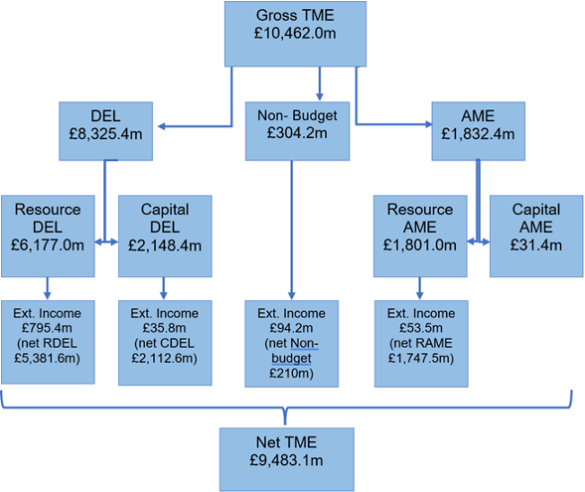
Diagram showing the breakdown of the Defra Group Budget.
The total amount the department spends is referred to as Total Managed Expenditure (TME); which splits into:
- Departmental Expenditure Limit (DEL)
- Annual Managed Expenditure (AME)
- Non-budget
DEL expenditure reflects the cost of front-line and back-office activities. Long-term DEL budgets are set through Spending Reviews which usually occur every three to five years.
AME expenditure is typically volatile, or demand led. AME budgets are agreed with HM Treasury on an annual basis.
Budgets are also classified into Resource and Capital.
Resource DEL includes a further split into:
- Programme budgets for front line service provision
- Admin budgets such as back-office functions
The total managed expenditure for the group is £10,462.0 million.
Departmental Expenditure Limit of £8,325.4 million breaks down between;
- Resource DEL of £6,177.0 million, which is £795.4 million external income and £5,381.6 million net Resource DEL.
- Capital DEL of £2,148.4 million, of which £35.8 million external income and £2,112.6 million net Capital DEL.
Annual Managed Expenditure of £1,832.4 million breaks down between;
- Resource AME of £1,801.0 million, which is £53.5 million external income and £1,747.5 million Resource AME.
- Capital AME of £31.4 million.
Non-budget of £304.2 million which is:
- £94.2 million external income and £210 million net non-budget.
Net Total Managed expenditure is £9,483.1 million.
Net Resource DEL £5,381.6 million
The net resource DEL budget of £5,381.6 million in 2023-24 (£4,743.1 million in 2022-23), of which £2,662.8 million ring-fenced (£380.1 million in 2022-23) includes the administrative costs of running the Defra group; and programme spend on delivering our outcomes in environmental quality; food, farming and biosecurity; floods and water; marine and fisheries; and natural environment and rural. It also includes an allowance for the consumption of our assets over time (depreciation budget £558.6 million in 2023-24). Since 2022-23, the resource DEL budget excluding depreciation has increased by £358.7 million. There was additional funding in year for the Windsor Framework, Biosecurity, Borders and Trade Programme, Flood management, Covent Garden Market Authority and Capital Works Expended in Year (CWEIY).
Net Capital DEL £2,112.6 million
The capital DEL budget of £2,112.6 million in 2023-24 (£1,761.6 million in 2022-23), of which £740 million is ring-fenced (£705.3 million in 2022-23) covers investment in the assets we need to deliver our objectives. This includes expenditure on flood defence assets, the Nature for Climate Fund, improving the Defra group Estate and the payment of capital grants, including through the Farming and Countryside Programme. Since 2022-23, the capital DEL budget has increased by £351 million. This is due to a range of new funding including: EU replacement funds for Farming, Nature for Climate Fund and Biosecurity, Borders and Trade Programme, and the Environment Bill.
External Income £978.9 million
Our gross spending in the economy exceeds our DEL budget in practice because it includes the income arising from grants, fees, levies and licences receivable by some of Defra’s group bodies. Total external income, providing spending power in excess of net budgets, was budgeted at £978.9 million in 2023-24 (£1,072.1 million in 2022-23) for the Departmental Group, breaking down as £249.1m for the Core department and Agencies, and £661.7m for other group bodies. This includes income from the European Commission in respect of Common Agricultural Policy (CAP) and rural development schemes, albeit on a significantly reduced basis in year as more payments become Exchequer Funded - budgeted EC income was £68 million in 2023-24 (budget of £244.9 million in 2022-23).
Net AME £1,778.9 million
The AME budget of 1,778.9 million in 2023-24 (£1,039.0 million in 2022-23) is mainly for movements in provisions. Compared to 2022-23, the AME budget has increased by £739.9 million. This increase mainly relates to the commitment to pay area-based direct payments for farmers linked to 2023 claims. These payments are being phased out from 2021 to 2028 and replaced by new schemes to support sectoral productivity, resilience, and environmental performance. The government has committed that from 2024 the residual direct payments due to farmers will be “delinked” from land area. Farmers will receive the delinked payment annually by virtue of having claimed in 2023 and will not need to submit further applications or evidence. The budget increase is partially offset by a decrease due to a machinery of government change that transferred responsibility for Copernicus, as well as the UK Principal role in the Intergovernmental Group on Earth Observation, to the Department for Science, Innovation and Technology on 1 July 2023.
The AME budget also includes cover for the expenditure by Defra group levy funded bodies – the Agriculture and Horticulture Development Board and Sea Fish Industry Authority, as well as the Defra group body Flood Re.
Net Non-Budget £210.0 million
The final area of Defra group funding is called non-budget (£210.0 million in 2023-24). Compared to 2022-23, Non-Budget has increased by £200.0 million. This is due to budget cover for a prior period adjustment. The prior period adjustment is needed to correct spend on Environment Agency (EA) projects where costs were categorised as capital when they should have been resource during financial years 2014-15 to 2022-23. These costs, on Assets Under Construction (AUC), were either: non-directly attributable to the assets being constructed; non-allowable for capitalisation (for example repairs); to recognise asset impairments; or for intangible projects where we do not have control of ‘software as a service’ assets.
Non-Budget is also held for any exchange rate differences that may arise on payments made by the Rural Payments Agency (RPA), in their role as the UK Funding Body, to the devolved administrations (DAs), due to the timing differences between the payment date and the date of actual reimbursement by the Commission. A further £94.2 million of income received from the Commission for the DAs was treated as non-budget rather than DEL as this does not represent spending by Defra. Non-budget funding for the payments to the DAs has reduced due to UK exiting the EU and a reduction of income received from the Commission.
Defra Group Gross Funding by Director General (DG) Group
The following table shows how our gross DEL funding of £8,325.4 million (£6,177.0 million resource DEL and £2,148.4 million capital DEL) was allocated to each DG Group. These are the groupings of Defra core directorates and ALBs which contribute to the delivery of outcomes and are used in planning and delivering our activities.
2023-24 Defra group gross DEL funding £m
| Director General Group | RDEL | CDEL | External Income | Total |
|---|---|---|---|---|
| Environment, Rural and Marine | 2,730 | 1,180 | (660) | 3,250 |
| Food, Farming and Biosecurity | 2,388 | 439 | (128) | 2,699 |
| Group Corporate Services | 719 | 150 | (2) | 867 |
| Science and Analysis | 9 | 19 | - | 28 |
| Strategy | 63 | - | - | 63 |
| Portfolio | 203 | 421 | - | 624 |
| Centrally Held Budgets | 65 | (61) | (41) | (37) |
| Defra group Total | 6,177 | 2,148 | (831) | 7,494 |
Spend Against Budget
This information has been subject to audit.
Defra group Spend Against Total Net Budgets (£m)
| Type | Budget | Spend | Variance | % of Budget |
|---|---|---|---|---|
| Total DEL | 7,494 | 7,270 | (224) | (2.99)% |
| Of which ring-fenced | 3,403 | 3,287 | (116) | (3.41)% |
| Of which non-ring-fenced | 4,091 | 3,983 | (108) | (2.64)% |
| Total AME | 1,779 | 1,455 | (324) | (18.21)% |
| Of which Resource AME | 1,748 | 1,442 | (306) | (17.51)% |
| Of which Capital AME | 31 | 13 | (18) | (58.06)% |
| Non-Budget | 210 | 177 | (33) | (15.71)% |
Defra group Spend Total DEL Budgets (£m)
| Type | Budget | Spend | Variance | % of Budget |
|---|---|---|---|---|
| Programme DEL – Total | 4,297 | 4,225 | (72) | (1.68)% |
| Of which ring-fenced – Depreciation | 402 | 435 | 33 | 8.21% |
| Of which ring-fenced – Other (Note) | 2,217 | 2,163 | (54) | (2.44)% |
| Of which non-ring-fenced | 1,678 | 1,627 | (51) | (3.04)% |
| Admin DEL – Total | 1,085 | 1,061 | (24) | (2.21)% |
| Of which ring-fenced – Other (Note) | 44 | 25 | (19) | (43.18)% |
| Of which non-ring-fenced | 1041 | 1036 | (5) | (0.48)% |
| Resource DEL | 5,382 | 5,286 | (96) | (1.78)% |
| Of which ring-fenced | 2,663 | 2,623 | (40) | (1.50)% |
| Of which non-ring-fenced | 2,719 | 2,663 | (56) | (2.06)% |
| Capital DEL – Total | 2,112 | 1,984 | (128) | (6.06)% |
| Of which ring-fenced (Note) | 740 | 664 | (76) | (10.27)% |
| Of which non-ring-fenced | 1372 | 1320 | (52) | (3.79)% |
Note: Other ring-fenced includes Green Finance, DAs, Marine EMFF Replacement, Mine Remediation, Official Development Assistance (ODA), Oversea Territories, Project Speed (delivering infrastructure projects better, greener and faster), Shared Outcome Fund, Science R&D, Farm Support, Nature for Climate, Weybridge, UK Fisheries Fund and IFRS16 (change in lease accounting standards).
DEL – £7,269.9 million
The final DEL outturn against the £7,494.2 million voted funding (£5,381.6 million resource DEL, £2,112.6 million capital DEL) net of £829.9 million external income received in year, was £7,269.9 million – an underspend of £224.3 million. Excluding ring-fenced items, this represents a £108 million underspend, which is 2.6 per cent of our DEL budget (excluding ring-fenced items of £3,286.6 million).
The key drivers for the RDEL ringfence underspend were a less severe Avian Influenza outbreak than anticipated, and it also cost less to implement the Windsor Framework Transitional Labelling Financial Assistance Scheme than was forecast.
The key drivers for the CDEL ringfence underspend were due to a reduced in-year spend on the Nature for Climate Fund ringfence where delivery was negatively impacted by the wettest winter on record, the major component for Farm Support was on Countryside Stewardship which is dependent on claimants behaviour as agreement holders are able to claim over multiple years, some of the underspend was reprofiled into 2024-25, and the UK Fisheries Fund due to a review in the programme and subsequent change to the cost profile.
The administration outturn against the £1,084.9 million budget was £1,060.8 million, an underspend of £24.1 million. Excluding ring-fenced items, this moves to an underspend of £5.5 million.
AME – £1,455.1 million
The total AME outturn was £1,455.1 million against the £1,778.9 million budget, an underspend of £323.8 million. This reflects the less predictable and controllable nature of AME spending compared with DEL.
The AME outturn includes an underspend of £142 million relating to Flood Re which reflects a credit outturn of £42.0 million against their budget of £100 million. This is due to the need to hold budget cover for Flood Re in the event that a significant flood event occurs.
In addition to this, the underspend included £143.5 million within the EA, mainly due to a lower than forecast charge on their active pension scheme, where the forecast was based on the previous year’s outturn. The majority of this was a reduction in the total defined benefit cost recognised, due to a decrease in the service cost and an increase in interest. The decrease in service cost was driven by a year-on-year change in financial assumptions, namely an increase in the discount rate and reduction in the inflation assumption. The increase in interest related to income on plan assets, due to the effect of an increase in the net discount rate and actual fund returns for 2023-24 being higher than the assumptions at the start of the year. The remaining reduction in charge was due to higher employer contributions than were expected at the start of the year as a result of higher than planned pensionable pay.
There was also an underspend of £69.3 million for the CAP disallowance provision. When the budget was set for the CAP disallowance provision in the Supplementary Estimate, we were awaiting letters from the EU to inform the treatment of the final balance of the provision. The letters weren’t received until March 2024 and resulted in £10.7 million utilised for rural development schemes and 2021 clearance of accounts, with the remainder being released to bring the value of the provision down to zero, as at 31 March 2024.
Non-Budget – £176.9 million
The final non-budget outturn against the £210.0 million budget was £176.9 million, an underspend of £33.0 million. This was mainly due to an underspend against the £200 million budget set for the prior period adjustment. The prior period adjustment was needed to correct spend on EA projects where costs were categorised as capital when they should have been resource during financial years 2014-15 to 2022-23. The value of non-budget cover requested was based on the error rate on projects reviewed at the time, extrapolated over the entire population being reviewed. The error rate on larger projects, which were finalised in Quarter 4 2023-24, was lower.
Net Cash Requirement (NCR)
In order to fund the spending set out above, we needed to work with HM Treasury to ensure that we had sufficient cash – this is called the Net Cash Requirement (NCR). Our actual cash requirement in 2023-24 was £954.4 million lower than our NCR of £7,418 million. This is mainly because when we agree the NCR, we make a prudent estimate in order to mitigate the risk of any Defra entities going overdrawn. The underspends against budget described above also contribute to this underspend where they have a cash impact.
All of the £209.0 million held in the bank accounts of Defra and the agencies is held within the Government Banking Service, therefore ensuring good value for the Exchequer as a whole, ensuring the Debt Management Office (DMO) has access to the funds.
Consolidated Statement of Financial Position
Over the 2023-24 financial year, Defra group’s total assets less liabilities decreased from £11,607.5 million to £10,768.5 million. This £839.0 million decrease was driven by:
-
The £875.7 million increase in the value of Defra group’s non-current assets is due to increases in PPE, intangible assets and net pension assets. The increase in Property, Plant and Equipment (PPE) is due to revaluation gains of the operational asset balance in the EA. In addition, there has been an increase in the Core department’s PPE balance due to the construction of border inspection facilities and capital works on Defra science portfolio. There has also been an increase in the Core department’s intangible asset balance due to spend on software systems including Extended Producer Responsibility system, Trade Platform and the Import Controls Platform. An increase in net pension assets, in the EA Active defined benefit pension scheme, has been recorded following strong investment returns in the current year and a change in financial assumptions.
-
Current assets value has increased by £379.3 million which mostly relates to increases in financial assets and trade, other receivables and contract assets. The increase in financial assets, primarily DMO Deposits, relates to Flood Re’s investment of levy and premium income after settlement of inward claims. There is an element of variability of the amount invested in each year depending on premium income and inward claims settled in year. In addition, to reduce risk, Flood Re has taken out re-insurance which following two large claims events (Storm Babet and Henk) in the current year has resulted in Flood Re making claims against the re-insurance which is recognised as a trade receivable.
-
The increase in current liabilities of £1,369.3 million mostly relates to movements in trade, other payables and contract liabilities in the Core department and RPA and provisions in Flood Re. The increase in the Core department’s trade payable balance is mostly due to one-off capital grants to local authorities to help prepare for the Simpler Recycling programme. In RPA, the increase relates to estimated outstanding payments relating to 2024’s claims for the de-linked payments scheme which was introduced in the current year. Flood Re saw the most material flood events since its inception in the 2023-24 financial year which has resulted in a significant increase in expected future claims which a provision has been recognised for.
-
A £724.6 million increase in non-current liabilities predominantly relates to a provision of expected future payments for the RPA de-linked payments scheme, whereby the amount is uncertain as the future progression reduction rates to be applied to future claims is unknown. This is partially offset by a reduction in non-current provision values in the Core department.
Core Tables
The Core Tables section of the accounts provides an analysis of departmental expenditure and plans covering the period 2018-19 to 2024-25. The expenditure is shown against the categories used for HM Treasury’s reporting system. These categories are different to the Outcome Systems which we report on internally. Analysis of the Core Tables can be found at Annex 1.
Reconciliation of contingent liabilities included in the Supply Estimate to the Annual Report and Accounts
This information is not subject to audit.
Quantifiable
| Description of Contingent Liability | Supply Estimate | Amount Disclosed in ARA | Variance (Estimate - Amount Disclosed in ARA) |
|---|---|---|---|
| £000 | £000 | £000 | |
| Small value | 1,900 | 700 | 1,200 |
| Total | 1,900 | 700 | 1,200 |
Unquantifiable
| Description of Contingent Liabilities | Included in Supply Estimate (Yes/ No) | Disclosed in the ARA? (Yes/ No) | Explanation of Difference |
|---|---|---|---|
| EA potential liability in relation to Shingle Replacement Contract. | No | Yes | This was identified after the submission of the supply estimate following management’s assessment against the IAS37 - Provisions, Contingent Liabilities and Contingent assets criteria. |
| EA potential liability on commercial contracts leading to cash outflow beyond the contracts. | Yes | No | This was removed after the submission of the supply estimate following, management’s assessment against IAS37 - Provisions, Contingent Liabilities and Contingent assets criteria. |
| EA potential liability relating to the Cyber Incident at Capita. | Yes | No | This was removed after the submission of the supply estimate following management’s assessment against IAS37 - Provisions, Contingent Liabilities and Contingent assets criteria. |
Tamara Finkelstein
Accounting Officer for the Department for Environment, Food and Rural Affairs
12 December 2024
Accountability Report
The requirements of the accountability report are based on the matters required to be dealt with in a Directors’ Report, as set out in Chapter 5 of Part 15 of the Companies Act 2006 and Schedule 7 of SI 2008 No 410, and in a Remuneration Report, as set out in Chapter 6 of the Companies Act 2006 and SI 2013 No. 1981.
Corporate Governance Report
Governance Statement
Introduction
The governance statement outlines how Defra group is governed. It sets out our decision-making structures, the effectiveness of our risk management and internal controls as well as our most significant challenges. This is informed by the work of Defra group officials, the Government Internal Audit Agency (GIAA), input from the National Audit Office (NAO), information from Defra group arm’s length bodies (ALBs) and Audit and Risk Assurance Committee (ARAC) views.
We work as Defra group to deliver outcomes for customers and for society. Further information on how Defra group works together to deliver for citizens can be found in the latest Accounting Officer System Statement on GOV.UK.
Defra Group Governance Structure for 2023-24
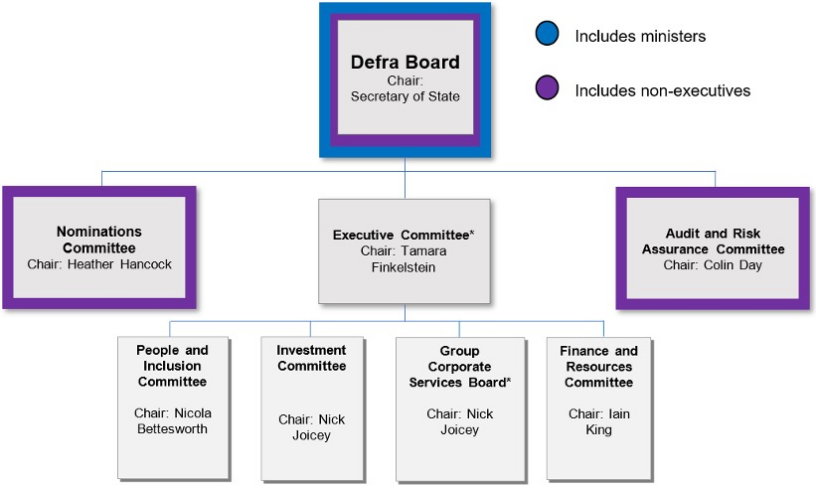
This picture is an Organogram of Defra Group Governance Structure for 2023-24.
The Defra Board heads this and includes ministers and non-executive directors and is chaired by the Secretary of State.
The Board is supported by three committees.
The Nominations Committee, chaired by Heather Hancock and The Audit and Risk Assurance Committee, chaired by Colin Day both include non-executive directors.
The third committee, the Executive Committee is chaired by Tamara Finkelstein. This committee does not include non-executive directors.
The Executive committee is supported by People and Inclusion Committee chaired by Nicola Bettesworth, The Investment Committee and Group Corporate Services Board both chaired by Nick Joicey, and the Finances and Resources Committee chaired by Iain King.
Note: Executive Committee meets as the Delivery Committee once a month with non-executives in attendance.
Departmental board membership and attendance
Board membership and attendance
Meetings attended out of those eligible to attend 1 April 2023 to 31 March 2024.
Ministerial Team
| No. of Meetings Held | No. of Meetings Attended | ||
|---|---|---|---|
| Steve Barclay MP | Secretary of State for Environment, Food and Rural Affairs (from 13 November 2023) | 1 | 1 |
| Mark Spencer MP | Minister of State | 1 | 1 |
| Lord Richard Benyon | Minister of State | 1 | 0 |
| Robbie Moore MP | Parliamentary Under Secretary of State (from 13 November 2023) | 1 | 1 |
| Rebecca Pow MP | Parliamentary Under Secretary of State | 1 | 1 |
| Lord Robbie Douglas-Miller | Parliamentary Under Secretary of State | 1 | 1 |
| Trudy Harrison MP | Parliamentary Under Secretary of State until 12 November 2023) | 0 | 0 |
| Dr Thérèse Coffey MP | Secretary of State for Environment, Food and Rural Affairs (until 12 November 2023) | 0 | 0 |
Non-Executive Directors
| No. of Meetings Held | No. of Meetings Attended | ||
|---|---|---|---|
| Heather Hancock | Lead Non-Executive Director and Chair of the Nominations Committee (from 4 September 2023) | 1 | 1 |
| Colin Day | Chair of the Audit and Risk Assurance Committee and Non-Executive Director | 1 | 1 |
| Chris Tyas | Non-Executive Director (from 8 January 2024) | 1 | 1 |
| Alan Lovell | Chair of the Environment Agency (Ex Officio), (until 2 February 2024) | 0 | 0 |
| Tony Juniper | Chair of Natural England (Ex Officio) (until 2 February 2024) | 0 | 0 |
| Lizzie Noel | Non-Executive Director (until 10 May 2023) | 0 | 0 |
Executive Members
| No. of Meetings Held | No. of Meetings Attended | ||
|---|---|---|---|
| Tamara Finkelstein | Permanent Secretary | 1 | 1 |
| Nick Joicey | Second Permanent Secretary and Group Chief Operating Officer (from 17 July 2023) | 1 | 1 |
| Lucy Smith | Director General for Strategy | 1 | 1 |
| Iain King | Chief Financial Officer | 1 | 1 |
| Sarah Homer | Chief Operating Officer (until 26 July 2023) | 0 | 0 |
Overview of the Board’s activities
The Board is chaired by the Secretary of State and brings together ministers, senior officials, and non-executive board members to provide collective strategic leadership. Membership and attendance are set out in the table above. In 2023-24, the Board met once. This was due to quoracy issues following the early departure of two non-executive board members, which precipitated a recruitment of new non-executives and short notice. When it met, the Board monitored progress towards achieving departmental objectives by reviewing performance and risk information. The Board also focused on advising on and providing oversight of the Farming Programme. Summaries of board meetings are published on GOV.UK.
Sub-committees of the Board
Some activities are undertaken on the Board’s behalf by its four committees which regularly report to the Board. These are the Executive Committee (ExCo) (which sits as Delivery Committee (DelCo) once a month), Audit and Risk Assurance Committee (ARAC) and Nominations Committee. ExCo is supported by four sub-committees: Finance and Resources Committee; Investment Committee (IC); People and Inclusion Committee (PIC), and Group Corporate Services (GCS) Board.
Executive Committee (ExCo)
ExCo is the senior decision-making body for the Core department and sets the strategic direction of the Defra group.
-
Chair: Tamara Finkelstein (Permanent Secretary).
-
Membership: Permanent Secretary, Second Permanent Secretary, all Directors General (DGs), Chief Financial Officer, Group HR Director and Group Director of Communications. The Strategy Director, Legal Director, Digital Director, and Strategic Change Projects Director all have a standing invite and attend as non-voting, members, as relevant to the scheduled agenda.
-
Members are asked to inform the committee of any conflicts of interest and agree the actions and minutes of the previous meeting at the start of every meeting.
-
Number of meetings in 2023-24: 34
-
Areas of focus in 2023-24: corporate leadership, finance, principal risks, performance and delivery, business transformation, people matters and strategic cross-cutting policy issues.
-
Sub-committees: ExCo’s four sub-committees report when necessary to ExCo. Their primary function is to consult, develop and advise on proposals for ExCo decision.
Senior Responsible Owners of programmes have authority to approve project spend of up to £10 million (unless it is novel or contentious). For all project spending requests above £10 million, ExCo has delegated authority to the Investment Committee to scrutinise and approve these requests, with escalation to ExCo where the spend is novel or contentious.
Delivery Committee (DelCo) is a mode of ExCo and its purpose is to foster a departmental focus on outcomes and drive delivery of Defra’s major projects portfolio and other activity needed to deliver those outcomes. Its membership is aligned with ExCo with the addition of some of the department’s delivery leads and the Lead Non-Executive Director. It meets monthly. The chair and membership are the same as ExCo.
-
Non-voting members: Lead Non-Executive Director, Defra Group Operational Delivery Head of Profession, Portfolio Director (and Defra Group Project Delivery Head of Profession), Strategy Director, Digital Director.
-
Members are asked to inform the committee of any conflicts of interest and agree the actions and minutes of the previous meeting at the start of every meeting.
-
Number of meetings in 2023-24: 10.
-
Areas of focus in 2023-24: Increased focus on Defra group outcomes (the Outcome Delivery Plan) and continued attention on the delivery of Defra’s major projects portfolio.
Audit and Risk Assurance Committee (ARAC)
The ARAC supports the Board, Principal Accounting Officer and ExCo by reviewing the comprehensiveness and reliability of governance; risk management; the control environment; the integrity of financial statements; and the Annual Report and Accounts.
-
Chair: Colin Day (Non-Executive Director).
-
Membership: Chair (Defra Non-Executive Director) and four non-executive members (ARAC chairs of APHA, RPA, EA and NE).
-
Number of meetings in 2023-24: 5.
-
Defra ARAC met five times in 2023-24 (April, June, October, November and February) and has therefore met the requirement of the ARAC Handbook to meet at least four times a year.
-
Areas of focus in 2023-24: NAO financial and value for money audits, GIAA audits, and reviews of cyber security, IT risks, data protection, Science Capability for Animal Health (SCAH) Programme, and counter fraud.
-
An ARAC effectiveness review is planned for 2024-25.
Nominations Committee
The Nominations Committee is an advisory committee of the Defra Board. It is responsible for ensuring there are satisfactory systems for identifying and developing leadership and high potential, and for scrutinising the incentive structure and succession planning for the Senior Civil Service (SCS) and CEOs of delivery bodies and Non-Executive Directors.
-
Chair: Colin Day (March-September 2023) Heather Hancock, Lead Non-Executive Director (September 2023 – present).
-
Membership: Chair, Permanent Secretary, Group Chief People Officer, HR Director – Talent and SCS Development.
-
Number of meetings in 2023-24: 3 (May, October and March).
-
Areas of focus in 2023-24: Director General performance; talent and succession planning; oversight of the broader SCS cohort, including CEOs of delivery bodies; SCS objective setting; SCS coaching and talent development; forward look of senior appointments; design of the ExCo staffing structure and portfolios.
Investment Committee
In 2023-24, the Investment Committee provided the internal assurance and approvals framework for Defra high risk, large spend business cases and investment decisions. The committee provides ExCo with assurance on business cases over £10 million, novel or contentious spend, where spend may be repercussive in Defra and where delegated authorities are exceeded across Defra group bodies. The committee is made up of senior functional experts who support, advise, scrutinise and challenge each investment proposal ensuring compliance with the HM Treasury Green Book and Managing Public Money (MPM) standards and to maximise the chances of successful delivery.
-
Between the 1 April 2023 and 31 March 2024, 64 Defra group business cases were scrutinised and approved against the HM Treasury five case methodology and Accounting Officer tests to ensure strategic alignment and value for money.
-
The consultancy governance board is a subgroup of the Investment Committee and controls consultancy and contingent labour spend approvals. Between 1 April 2023 and 31 March 2024, 36 requests to spend were approved and one was not approved.
-
No breaches of MPM were identified, however there has been one committee related Ministerial Direction, for the Pollack Compensation Scheme, which was published 10 April 2024; but this was below the threshold of schemes scrutinised by the Investment Committee.
People and Inclusion Committee
Defra People and Inclusion Committee is a sub-committee of ExCo and is responsible for ensuring that people are deployed, managed and supported to successfully deliver the outcomes of Defra’s ambitious business agenda. The committee has a critical role in cohering, harmonising and standardising people systems, policies and processes for Defra group, ensuring legal compliance and recognised professional practice. It is made up of senior functional leads from each organisation across Defra group who support, advise and scrutinise each proposition. They provide critical input on behalf of their organisation and play a key role in supporting the progression of proposals through their individual organisation’s governance and business change activity. Decisions are taken to ensure compliance with employment legislation, organisational HR policies and on the basis of risk, thereby safeguarding organisational reputation and maintaining employee and public trust. The HR Functional Framework provides a structured approach to the remit and scope of the committee.
In 2023-24, the committee oversaw the adoption of an overarching Workforce Strategy, refreshed and embedded a new people performance framework and delivered a bespoke leadership development programme in the organisation.
Finance and Resources Committee
The Finance and Resources Committee is a sub-committee of Defra’s ExCo. The committee meet to discuss and provide assurance to ExCo that Defra group’s resource is aligned with priority business outcomes, providing tax and charge payers with good value for money, and being used efficiently. The committee is made up of senior functional members who offer advice, scrutiny and input into the papers that are due to be presented at upcoming ExCo meetings.
Between 1 April 2023 and 31 March 2024, the committee have met on 12 occasions.
There have been no breaches of MPM identified.
Group Corporate Services (GCS) Board
The GCS Board is a sub-committee of ExCo that oversees and sets the direction for GCS. It is chaired by the Second Permanent Secretary and comprises GCS Directors, representative Directors from the Core department and senior executives from Defra group ALBs within the GCS model.
In 2023-24, the GCS Board continued to shape and inform the strategy for corporate services across the Defra group, as well as providing assurance to ExCo on the management of corporate services.
In 2023-24, the GCS Board:
-
Received regular assurance updates from the GIAA as well as conducting quarterly reviews of key performance areas and significant corporate service risks.
-
Focused on maturing the GCS model, endorsing a number of initiatives which improved financial oversight, governance approaches and enhancements to partnership working.
-
Sat as the Synergy Defra Senior Steering Committee, Defra group Commercial Supplier Board, and the Defra group Security Management Board.
The GCS Board had oversight of a review of GCS governance which has led to improvements to enhance its effectiveness starting in Quarter 4. These changes have enabled more focus on decision-making and assurance oversight. Changes also included agreeing to establishing sub-committees on specific operational areas, enabling operational focus and oversight at the right level. This approach will be further developed during 2024-25.
Compliance with governance code and board effectiveness
The Core department continues to operate in line with the principles set out in Corporate Governance in Central Government Departments: code of good practice (2017) (the Code). However, there were two points of departure from specific recommendations in the Code in this reporting period.
Firstly, the department was unable to complete a board effectiveness review for the reporting period following the announcement of the general election shortly after advice on undertaking the review was put to the former Secretary of State, Steve Barclay MP.
Secondly, the Board met once during the reporting period rather than the four meetings recommended in the Code. This was due to non-executive quoracy issues following the early departure of a number of non-executive directors and scheduling challenges with ministers following the reshuffle which meant that previously agreed dates were no longer viable. Instead, non-executives met regularly with senior officials and undertook various projects to provide their independent perspective and challenge to the work of the department; and the Board’s main subcommittees met regularly with progress and key areas of concern regularly discussed with ministers by the Permanent Secretary. However, had an effectiveness review been possible it would have had limited data to draw on for the reporting year.
While compliance with the Code is mandatory for ministerial departments only, Defra’s delivery bodies are encouraged to adopt the principles wherever relevant and practical.
Management Controls
Management of interests
Board members
Every six months, individual executive and non-executive board members are required to complete a declaration of interest statement in which they must disclose any financial and non-financial interests of their own or of family members that may create a conflict as they arise. They are also expected to declare new interests proactively as they arise. The full list of interests is published on GOV.UK.
Where a member’s interest is considered by the Board Secretariat and the Permanent Secretary to create a real or perceived conflict with Defra’s responsibilities or the discharge of their duties, specific arrangements are agreed and put in place to manage the risk. As a further safeguard, at the start of each Board meeting, members are asked to declare if they have any interests which they believe conflict with any item on the meeting agenda, and this is recorded in the minutes. Relevant senior staff are made aware where a potential conflict with a Non-Executive Director’s other interests exists and the mitigations that are in place.
Special advisers
In line with the current declaration of interests policy for special advisers, all special advisers declared any relevant interests or confirmed they did not consider they had any relevant interests. The Permanent Secretary considered these returns and there were no relevant interests to be published.
Management of interests and business appointments for all staff (including special advisers)
The department is committed to the highest standards of ethical conduct and integrity. Defra’s policy on declaring and handling outside interests is clearly outlined in the Defra Code of Conduct, and in its conflict of interest policy.
All staff are responsible for ensuring that there is no conflict of interest between their interests outside work and their role at the department.
All staff including SCS must make a declaration annually of outside interests.
The business appointment rules apply to serving civil servants and special advisers who intend to take up an outside role after leaving the Civil Service, and to former civil servants for up to two years after the last day of paid service. Policy and process is in place for managing applications that may require approval before a job or appointment is confirmed outside the Civil Service. The approval process for applications under the rules differs depending on the applicant’s seniority. For the majority of applications Defra applies a standard set of conditions, these are:
-
After your last day of service, you will not make use of privileged information, including for the purposes of lobbying (for SCS3/Directors General and above), obtained from your role in Defra at any time.
-
For one year (two years for SCS2/Directors and above) after leaving Defra, you must apply for permission to take up any appointment which meets the criteria set out in the business appointment rules.
| SCS 1 | SCS2 | SCS3 | Total | |
|---|---|---|---|---|
| Number of SCS leavers in 2023-24 (Note) | 24 | |||
| Number of BAR applications from SCS in 2023-24 | 2 | 3 | 0 | 5 |
| Number of BAR applications approved | 2 | 3 | 0 | 5 |
| Number of BAR applications where conditions were set by the department | 2 | 0 | 0 | 2 |
| Number of appointments found to be unsuitable | 0 | 0 | 0 | 0 |
| Number of breaches in 2022-23 | 0 |
Note: The figures for the number of SCS members leaving by grade in 2023-24 are not required to be disclosed.
Details of SCS Business appointment advice is published quarterly here.
Information on business appointment rules is also available to all staff on the departmental intranet and on gov.uk.
Risk
Effectiveness of risk management
Defra risk management operates according to the Defra Risk Strategy, in line with the government’s Orange Book. It also sets out roles and responsibilities, how risk reporting and oversight operate, and the risk escalation process. In 2023, the strategy was amended to reflect the recommendations of an internal audit, feedback from practitioners in the risk community and wider changes to risk management across government.
Through extensive engagement and research, the department identified a need for further efficiency in the join-up of risks, identifying interdependencies and the assessment of risks at lower levels of the department. The recent updates to the risk strategy have strengthened many core areas through effective guidance. A process of continuous improvement, through continuous stakeholder feedback, further audits, and wider best practice of risk management is now in place. This will help the department enhance its knowledge and implementation of good risk management in practice.
How we gain assurance on our risk management and internal controls
We draw assurance from multiple sources, following the Three Lines of Defence model. Risk owners carry out direct management of risks, supported by risk practitioners who assist with identifying, managing, and reporting their risks and issues. A central risk team sets policies and standards and assists ExCo to provide corporate oversight of the first line of defence. The GIAA provides an objective evaluation of the adequacy and effectiveness of our risk management and control framework. The Risk Control Framework in the Orange Book provides a set of 35 questions to support the evaluation and assurance of risk management within respective departments. These are reviewed and assessed periodically, then submitted for publication in the department’s Annual Report and Accounts.
Risk assessment
New and emerging risks are continually identified and assessed, with plans put in place to control them, in line with the principles outlined in the government’s Orange Book. Guidance and training videos to support effective risk assessment are provided via the Defra intranet risk page, as well as links to further training available.
Principal risks can also be identified from the top down, where ExCo, the Defra Board or ARAC identifies an area of cross-cutting risk that could have significant corporate, strategic, financial or reputational impact.
Defra group’s oversight and escalation of risk
The diagram below represents the hierarchy of escalation routes within Defra. The first point of escalation should always be to the directorate level via the relevant Deputy Director (DD). If the risk then exceeds its tolerance again, it should be escalated to DG level via the relevant director and then up to ExCo via the relevant DG if it were to exceed its tolerance again.
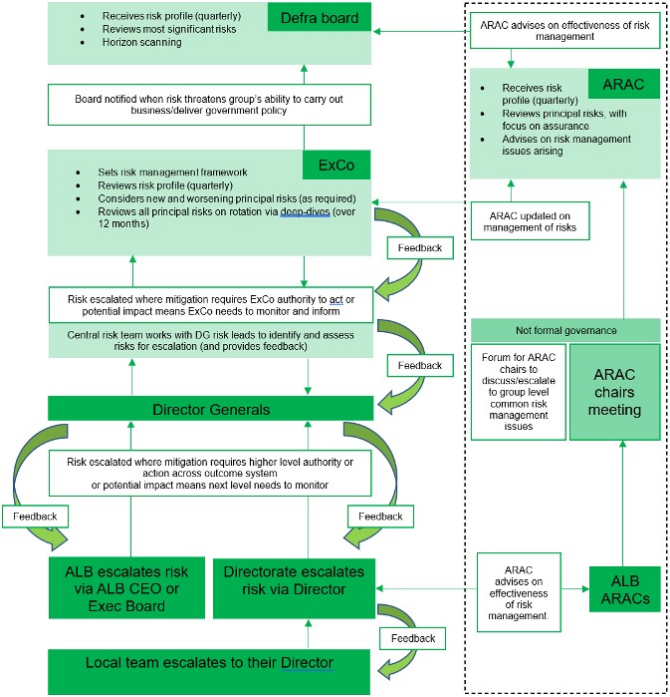
Defra board
-
Receives risk profile (quarterly)
-
Reviews most significant risks
-
Horizon scanning
Board notified when risk threatens group’s ability to carry out business/deliver government policy
ExCo
-
Sets risk management framework
-
Reviews risk profile (quarterly)
Feedback
-
Considers new and worsening principal risks (as required)
-
Reviews all principal risks on rotation via deep-dives (over 12 months)
Feedback
Risk escalated where mitigation requires ExCo authority to act or potential impact means ExCo needs to monitor and inform
Central risk team works with DG risk leads to identify and assess risks for escalation (and provides feedback)
Feedback
Director Generals
Risk escalated where mitigation requires higher level authority or action across outcome system or potential impact means next level needs to monitor
Feedback
ALB escalates risk via ALB CEO or Exec Board
Feedback
Directorate escalates risk via Director
Feedback
Local team escalates to their Director
ARAC advises on effectiveness of risk management
ARAC
-
Receives risk profile (quarterly)
-
Reviews principal risks, with focus on assurance
-
Advises on risk management issues arising
ARAC updated on management of risks
Not formal governance
ARAC chairs meeting
Forum for ARAC chairs to discuss/escalate to group level common risk management issues
ALB ARACs
ARAC advises on effectiveness of risk management.
Diagram text end))
The Risk Control Framework
The Orange Book provides 35 questions, categorised into five main principles, to assist government departments in assessing the risk management principles and their application to support the efficient and effective operation of their risk management framework. The five principles are:
- Governance and Leadership
- Integration
- Collaboration and Best Information
- Risk Management Processes
- Continual Improvement
The self-assessment below is a categorisation of the five principles with an overarching red, amber, green (RAG) rating based on the average (mode) RAG score of all the questions under that heading. Each principle is accompanied with a high-level overview of the department’s compliance in this area – what we are doing well, areas for improvement and plans in place to improve.
| Principle | RAG rating | Areas of good practice | Areas for improvement and plans for improvement |
|---|---|---|---|
| Overall | Amber-Red | Most questions (69%) were rated Amber-Red, followed by Amber-Green (23%), Red (7%) with no Green rated questions. For all headings, the average score was ‘Amber-Red’, although there were areas of good practice concentrated in ‘Governance and Leadership’ and ‘Collaboration and Best Information’. | Based on individual RAG ratings, particular areas for focus on are the main principals of Integration, Risk Management Process and Continuous Improvement. |
| Governance and Leadership | Amber-Red | There are well defined risk reporting structures and communication channels for quarterly updating, reporting and oversight of risks. | The following factors limit the effectiveness of Governance forums when assessing risk information: - Format of risk reports have not been consistent over the past few years and feedback from Governance forums indicate they could be improved to facilitate better decision making. - Risks are not effectively linked with business objectives. - Lack of departmental wide risk appetite and tolerance of framework. The department is in the process of implementing a risk tool in order to make risk data easier to consume and provide insights into risk interdependencies across the Defra group. |
| Integration | Amber-Red | Existing structures include: - Risks are assessed and scrutinised at multiple levels. - Recent improvements in risk escalation guidance for the Defra group. - Inclusion of National Risks and live risks and issues in the form of the National Security Risk Assessment and Situational Trend and Awareness Report with Principal Risk discussions to facilitate a bigger picture, holistic and joined up view of risks. | There are plans to improve the incorporation of risk in policy and strategy. As described under ‘Governance and Leadership’, the department plans to incorporate objectives more deliberately and formulaically into risk assessment. |
| Collaboration and best information | Amber-Red | Communication systems and engagement with internal stakeholders are well developed and promoted, enabling effective collaboration and sharing of good practice. There are clear channels of communication and regular stakeholder forums. Information and functional standards are available to support risk management at programme level and guidance of how risks Should be escalated and managed throughout the Defra group. | Feedback on risk information was identified as an area for improvement. There is awareness around need to improve structures and culture to facilitate feedback following risk escalation. The department is working closely with GIAA counterparts on this. |
| Risk Management Processes | Amber-Red | There is a formal and well defined Governance structure that provides routes of approval and scrutiny at various levels coordinated by the departments Central Risk Team. | There is a need for better ‘join up’ of risks and identifying interdependencies. Work is underway to understand and improve the various levels of assurance in Defra group for effective risk escalation and identification of interdependencies. Risk Assessment could be more dynamic at the lower levels in responding to changing risks. The department expects to see an improvement following improved risk escalation guidance. Lack of formal departmental wide risk appetite and tolerance guidance is a barrier to optimal risk management and limits the ability to assess Principal Risks against an overarching Risk Appetite and Tolerance Framework. The department is building an approach to utilise the Orange Book Risk Categories to manage Principal Risks. |
| Continual Improvement | Amber-Red | Existing ways of working and structures facilitate continuous improvement: - Feedback from audits and Governance forums are captured and acted upon. - Feedback is solicited from stakeholders using surveys and discussion forums which directly informs and enhances the departments risk culture strategy. | The department’s low risk-maturity and absence of an established risk appetite and tolerance framework for the Defra group, limits our ability to increase efficiencies that supports Continual Improvement. A GIAA audit is underway to review the risk management framework. |
Managing assurance
Directors in the Core department provided statements confirming that responsibilities delegated to them by the Principal Accounting Officer had been properly exercised in 2023-24 and explaining any non-compliance. A second line of assurance was conducted by subject matter experts, not involved in the delivery of business, who provided enhanced assurance on the overall picture across the department. This included the following areas: counter fraud, data protection, business continuity, finance, health and safety, performance, commercial, programmes and projects, risk, security, and staff conduct.
The responses from the 2023-24 assurance process were shared with ARAC for their review and assessment. Whilst a decrease in assurance has been observed in some areas, we have also seen others remain stable and some improvement overall. Through our continuous improvement process, we will focus our efforts on areas that require strengthening over the next reporting period.
Corporate Services
Defra group has a partnership model for delivering corporate services to the Core department and its larger ALBs. Continuing to deliver good functional services and maturing our partnership have been key focus areas in 2023-24. We have continued to progress our corporate services transformation portfolio to further improve our services.
Individual Partnership Agreements, the GCS Board and GIAA Audit Reports continue to provide assurance on the effectiveness of corporate services. Performance was regularly reported to and discussed with senior ALB representatives, the GCS Board, ExCo and ARAC as required. Functional leaders are available to provide advice and support to all levels as required. Defra GCS’s efficiency continues to benchmark favourably against other government departments and industry standards. Effectiveness is baselined against relevant Government Functional Standards.
While our partnership approach to delivering corporate services is seen as best practice across government, we have continued to focus on further developing the building blocks of our model. This has also included establishing a proportionate funding model to apportion costs across the group, refining our operating model and governance arrangements to improve the way decisions are made. Activities previously progressed have become part of the operating model – this includes improved change governance and refined service catalogues.
To further improve our understanding of user needs, we significantly improved the response rate to the annual Functions Quality Survey to give greater insight into the expectations and views of colleagues across the group.
The focus on transformation continues at pace with an ambitious programme of activities for current and future years. This includes ongoing business process improvements (including digitisation) and the pathway to implementing a new finance and human resource management system (Enterprise Resource Planning system) in the next spending review period. To support this aim, we have established an integrated governance structure to oversee our involvement in the cross-government Synergy Programme (working with the Department for Work and Pensions, Home Office and Ministry of Justice).
Aligned to the government ambition to manage headcount, staffing levels across enabling functions have been managed tightly. This sat alongside implementing a robust approach to business continuity to manage impacts of industrial action, increased levels of winter sickness and surge activities.
To support adapting to the post COVID-19 landscape and a greater focus on working from our office estate, we have ensured that it is safe, secure, and equipped with enabling technology to support blended and hybrid working.
The Defra group Sustainability Centre of Expertise has continued to mature and will oversee the Defra group Sustainability Strategy and underpinning targets, ensuring a comprehensive approach to meeting Greening Government Commitments.
Legacy technology in our application estate, security risks and improving digital services are particular areas of concern that require significant investment. Over the past year, we made steady progress in addressing legacy technology in our application estate and launching new digital services while improving others. Nonetheless, we still have significant volumes of legacy technology in our applications and areas of security improvement and our planned investment is essential to addressing these.
Group Corporate Services has a key role in managing the majority of Defra’s principal risks, of which more detail can be found in the Performance Analysis section. Security (including cyber security), business and technology resilience and science estate infrastructure failure, remain key risks. Risks which emerged during 2023-24 relating to inflationary pressures and organisational wellbeing continue to be managed.
Taskforce for Climate-related Financial Disclosure (TCFD)
Defra group has reported on climate-related financial disclosures consistent with HM Treasury’s TCFD-aligned application guidance which interprets and adapts the framework for the UK public sector. Defra’s TCFD disclosures focus on:
-
governance (all recommended disclosures)
-
metrics and targets (disclosures (b)); See sustainability performance annex 3.
This is in line with the TCFD aligned implementation timetable for central government departments. Defra plans to make disclosures for strategy, risk management and metrics and targets disclosures (a) and (c) in future reporting periods in line with the central government implementation timetable.
In March 2023, Defra group’s Sustainability Strategy was approved by ExCo. The strategy sets the strategic objectives for Defra group’s operational climate-related risk and opportunities, these objectives are:
-
Reducing scope 1 and 2 emissions: Achieve a science-based target of 42 per cent reduction in scope 1 and 2 emissions across Defra group by 2033.
-
Reducing scope 3 emissions: Develop an approach to measuring and reducing our scope 3 emissions in line with the science-based targets approach for a well below 2°C future.
-
Climate change risk assessment: Understand and quantify the risk to Defra group operations, assets and supply chain to projected future climate conditions.
-
Climate change adaptation: Plan for and implement adaptation measures across our operations, assets, and supply chain.
Defra is working towards meeting these objectives and embedding climate-related risk and opportunities into the central risk management process by 2025.
Defra group also reports on progress against the Greening Government Commitments that helps drive action across government specific climate related targets including:
-
A: Mitigating climate change: working towards net zero by 2050.
-
F: Adapting to climate change.
In January 2024, the risk to the delivery of Defra group’s shared services due to climate change was added to the corporate service risk watch list which gets reviewed quarterly by the GCS Board.
Regarding the delivery of Defra’s priority outcomes, the Defra Resilience Board has oversight of key Defra risks including those included in the National Security Risk Assessment (of which there are 14 related to natural and environmental hazards). Many of these are affected by climate change and the department is establishing a process through this board to review those risks and adjust the approach to mitigation of them accordingly.
Defra co-chairs, with Cabinet Office, the Climate Resilience Steering Board. This provides oversight and challenge to departments on their approaches to adapting to and managing climate risks. It also steers on strategic, cross-cutting climate adaptation and resilience issues to increase UK resilience to climate change. This board oversees the National Adaptation Programme which includes responses to 61 risks and opportunities with responsible risk-ownership held across government, about half of which are managed by Defra.
Defra group’s central sustainability team undertook a baselining exercise to understand how climate change risk is managed across the Defra group. This involved screening the climate-related risks across the Defra group, identifying the most material, and understanding how they were being managed through joint workshops and interviews. Defra group property function is now undertaking a vulnerability assessment of the Defra estate to tackle the most material climate-related risks due to be completed by 2025.
Defra’s commercial and Digital Data and transformation function both contain risks on business continuity in relation to extreme weather and disruption events with each having an accountable officer. These risks are managed accordingly by the respective risk owners. Currently, business continuity risk guidance is offered centrally through Defra group’s business continuity team.
Several ALBs have undertaken climate risk assessments, through the voluntary Adaptation Reporting Power framework. These Defra group bodies include: the Environment Agency, Natural England, Forestry Commission and the Marine Management Organisation. These public bodies are managing the most material risks within their organisation with directly accountable officers. For further detail, please review the reports received in the third round of Adaptation Reporting (ARP3). The fourth round of adaptation reporting is due in December 2024.
Defra is the lead department in coordinating the National Adaptation Programme. This is based on the Climate Change Risk Assessment (CCRA) which Defra commissions and will be updated in 2026. The CCRA sets out the risk framework on climate adaptation (61 risks and opportunities). The Defra climate adaptation team has asked policy teams to write adaptation pathways to address robustly and systematically each of the 30 risks and opportunities relevant to Defra. The completion and success of actions set out in these pathways will be monitored across the five-year programme and beyond by the climate adaptation team with oversight by the Climate Resilience Steering Board and a cross-government programme board.
Shared Services
Each Accounting Officer is provided with an annual Letter of Assurance on Shared Services Connected Ltd (SSCL) overall performance by Shared Services for Government (SSfG) as Framework Authority. The 2023-24 letter was issued on 31 May 2024, following the conclusion of the year’s Annual Audit Plan, which has progressed well. Of the nine novel SSCL government audits proposed (plus three follow up audits), all bar one have been completed. It was agreed to defer the scheduled manual workarounds audit to quarter 1 of 2024-25 to allow time to better scope this audit. There has been improvement in the 2023-24 audits ratings received throughout the year, over the previous year. It has been confirmed there is no material impact on any client financial accounts as a result of this year’s audit findings and, for government customers, there were no high or critical risks flagged during the year.
SSfG’s Annual Audit Plan is delivered by SSCL’s internal service auditors PricewaterhouseCoopers (PwC) for core SSCL system audits (ISAE3402) and by the GIAA for end-to-end audits that involve customers. In 2023-24, an improved level of assurance was provided by PwC in relation to the governance, risk management and control environment operating within SSCL. In light of this, PwC increased their opinion from the previous year to that of reasonable / moderate assurance. This reflects the ongoing and continued rigour that SSfG has exercised in holding SSCL to account and ensuring effective remedial action has been taken to address key areas of risk. The limited assurance rating from GIAA is consistent with last year’s rating based on their audit work relative to both departments and SSCL. The respective opinions indicate that whilst SSCL has improved its own internal governance, risk management and control environment during the 2023-24 audit period, opportunities for improvement remain regarding collaboration between SSCL and Independent Shared Service Centre 2 customers to manage and mitigate risk throughout the end-to-end processes.
Defra group Shared Services continue to work with SSfG to closely monitor the overall performance of SSCL and their delivery of the ‘standard’ service offering, ensuring contract KPIs and SLAs are met and the services provided to Defra group are in line with our contract and expectations when working with SSCL as a partner. We continue to ensure user experience improvements are made to both SOP and SSCL processes through the continuation and evolution of our Joint Improvement Plan with SSCL.
Reinforced Autoclaved Aerated Concrete
The reinforced autoclaved aerated concrete (RAAC) issue has been formally delegated back to departments to handle the associated risks. Defra is following the IStructE guidance and there is a dedicated RAAC meeting led by the Chief Engineer and interventions are made when required. At this stage, we have surveyed the vast majority of our estate and do not envisage this as being a material cost to the Defra group estate. We have four known cases in our 500 sites. One which is in-situ and safe, two partial closures that are not affecting our operations and one full building closure for which business continuity is in place.
Analytical models (business critical models)
Following a review, Defra has introduced a new process and guidance around identifying business critical models (and important but non-business-critical models) and the appropriate level of quality assurance that needs to be implemented in each instance. This follows best practice seen in other government departments and the principles set out in the HM Treasury Aqua Book. We are now working on embedding the new approach and standards with local analytical teams. We have increased the team’s level of resource, focusing on analytical quality assurance and ensuring best practice is being followed across the department.
Security and cyber security
During 2023-24, work has continued to improve our security and cyber security controls. Defra continues to drive those programmes that secured funding under spending review 2021 for security improvements and technology upgrades that will help to address cyber security risks including;
-
£78 million for the most critical Legacy Applications Programme (LAP). LAP has successfully migrated 123 legacy apps out of aging data centres and into the cloud with a further 50 decommissioned. One legacy data centre closed and we are in the advanced stages of exiting three more by January 2025 so that our data increasingly sits on secure cloud environments.
-
£45 million dedicated to security improvement projects. These have delivered improvements in privileged account management, increased security protective monitoring capability and new incident report tooling.
-
We continue to make good progress with this work but will not be able to mitigate all the risks within this spending cycle. Further investment will be needed in spending review 2024.
-
There are also external factors and threats that impact progress and risk; for example, the ongoing tension in the Middle East, war in Ukraine and the threat from Russia and China, and the increasing sophistication of malware attacks.
This is the first year of the introduction of our security strategy and underlining strategies for cyber and security education and awareness designed to help improve Defra’s security culture and improve security risk governance and awareness. New security policies including physical security policy; Defra group offshoring policy; cyber and IT security assurance policy will help to underpin ongoing compliance work.
However, as shown in this year’s departmental security health check, the department still needs to make further progress to comply with minimum baseline standards and mature its processes. As part of our ongoing work to drive compliance and reduce security risk, we will continue to monitor and drive the spending review 2021 project work along with progressing business as usual activities to meet the targets of our security strategy.
The majority of security beaches over the past year have involved information sent over email in error or travel breaches. There have been three breaches that have met the threshold for reporting to the Information Commissioner’s Office during this period.
Counter-fraud, whistleblowing and data protection
Counter-fraud
Defra will not tolerate fraud or economic crime and takes a risk-based approach to managing fraud, bribery, corruption, and error as set out in the group Fraud, Bribery and Corruption Policy that was refreshed this year. A network of counter fraud functional leads is embedded across Defra group organisations and key spending programmes to deliver a coordinated counter fraud response in line with that policy. Several organisations have invested in additional counter-fraud resources over the year, and the EA have completed the Continuous Improvement Framework Assessment against the Counter Fraud Standard (GovS013) to help them better understand their counter fraud maturity and identify areas for improvement.
Activity is assured by individual nominated board members to ensure adherence to the Counter Fraud Functional Standard and the mandate set by the Public Sector Fraud Authority (PSFA). In the Core department, this role is fulfilled by the Chief Financial Officer. Where applicable, internal scrutiny and monitoring of activity within group organisations is also provided by ARACs and governance forums such as senior leadership teams and the GCS Board.
Grant programmes and schemes continue to present the highest risk of fraud and error across the group. In recognition of this risk, a central Grants Hub was established this year and is now resourced to provide: a governance framework to improve the management and oversight of all Defra grants, expert advice and assurance on business cases, mandatory fraud risk assessments (FRAs) that are undertaken at individual grant scheme level as well as irregularity measurement and assurance. Initial fraud impact assessments (IFIAs) are also undertaken on Government Major Projects Portfolio (GMPP) spend in line with MPM and Green Book requirements.
In other areas of spend, Defra has implemented a rolling programme of fraud risk deep dives to embed an agile approach to fraud risk management and support appropriate governance and oversight across the Core department and those group organisations who receive shared corporate services.
Effectiveness of whistleblowing arrangements
Defra’s Speak Up case numbers have increased on last year. Defra group continues to promote Speak Up internally. Defra took part in the annual Speak Up campaign and provided tailored whistleblowing training from a specialist whistleblowing charity for nominated officers to strengthen their knowledge. This training was attended by 10 of the 13 Defra group nominated officers. We are looking to providing training for the three nominated officers who were unable to attend the training session. To provide resilience within the Defra group; the Environment Agency has four nominated officers; the Core department, Rural Payments Agency, Animal and Plant Health Agency and Natural England have two nominated officers each and Veterinary Medicines Directorate has one nominated officer. Defra’s guidance also highlights the Speak Up mailbox as an alternative route for employees to raise concerns.
Defra continues to share best practice with other departments and is looking to establish a nominated officer network.
Defra continues to use our whistleblowing register, established in 2021-22 for recording and tracking reported cases. In 2023-24:
| Department | Number of cases raised | Number of open cases | Number of closed cases | Outcome of cases | Recommendations |
|---|---|---|---|---|---|
| Defra | 12 | 4 | 8 | 0 cases were upheld. | 1 set of recommendations from a closed case were made and implemented following investigation. |
| Natural England | 2 | 0 | 0 | 0 cases were upheld. | Both cases concluded no further action was required after investigation completed. |
| Environment Agency | 47 instances; (instances will be when concerns have initially been raised. Not all concerns turn into cases). | 12 | 35 | 4 cases were closed as unable to be progressed through lack of information. 26 cases had no merit or were not qualifying disclosures, but useful learning resulted in management action from 16 of these. | 5 cases had merit and resulted in actions or recommendations for the business. |
| APHA | No cases raised. | ||||
| RPA | No cases raised. | ||||
| VMD | No cases raised. |
Data protection
During 2023-24, we continued activities to ensure compliance with data protection legislation and Information Commissioner’s Office (ICO) guidance. This work included completing the ICO recommended Accountability Framework for the third year, demonstrating that compliance is improving. The Defra Data Protection Officer, data protection teams and legal advisers continued to provide advice and guidance and raise awareness around data protection and privacy issues. In 2023-24, we are continuing our work with senior leaders to raise greater awareness about, and build, data protection due diligence into policy and delivery planning by design and default. There was one reported breach that met the threshold for ICO notification this year. In all cases where personal data breaches occurred or risks were identified, Defra worked with staff and suppliers to act quickly, to effectively address issues and revise our processes.
Arm’s length bodies (ALBs)
Issues arising within individual bodies are covered in their respective governance statements, with the most significant also highlighted below.
Cabinet Office Public Bodies Reform Programme 2020-2025
Throughout 2023, the department continued to work closely with its ALBs to put in place a strong relationship and sponsorship framework to assure delivery and promote joint working towards our ambitious shared goals. For example, we established regular, data-driven delivery meetings between key ALBs and lead ministers to strengthen delivery assurance.
Environment Agency (EA)
NAO qualification: Valuation of operational assets
In 2022-23, the EA delivered their first Depreciated Replacement Cost (DRC) valuation of over 60,000 operational assets at a value of £9.6 billion. For 2023-24, their operational asset base valued through DRC has increased to over 65,000 assets, at a value of £9.9 billion.
During the 2022-23 DRC valuation process, it was found that source data underpinning the valuation had errors due to the merging of multiple operational systems into a new modern asset management system. It was not practicable or affordable to complete all the necessary data reviews to resolve these issues affecting the valuation as at 31 March 2023. For this reason, the NAO qualified the valuation of operational assets.
During 2023-24, significant progress has been made on the data review and improvement programme, including the completion of critical foundational work such as updated asset data standards, improvements to the asset management system, and updated guidance for staff; ensuring that the measurement, capture and assurance of asset data is rigorous, consistent, and of a high quality.
Additionally, an asset management led review for duplicate entries, confirmation of EA asset control, and asset start dates (where applicable), has continued and has made strong progress. The EA have focused on priority activities such as incident management and recovery, and increased asset maintenance of vital operational assets.
During 2023-24, they also began a multi-year national programme of asset dimensional data improvements led by their National Data Team. The programme has seen very good progress, with work nearing completion on high value asset types. The work will continue throughout 2024-25, with outputs continuing to feed into the EA’s methodological approach utilising a range of source data, statistical sampling, and averaging, ensuring the accuracy of their DRC portfolio valuation.
Despite this progress, the operational asset data has not been sufficiently improved in time for the 2023-24 valuation. It was therefore agreed with the NAO that carrying out full testing was not a worthwhile use of time and resources and so this qualification has remained in place.
NAO qualification: Valuation of land and buildings
In 2020-21, the NAO expanded its qualification on the reported values of operational property to include those within the scope of the quinquennial revaluation of land and buildings (operational land, freehold land, dwellings and freehold buildings). This widening of the NAO qualification on asset values was due to a combination of issues with the quinquennial revaluation.
The EA’s property valuations are complex, with over 5,000 often small property assets and delivering the property valuation is challenging. During 2022-23, they moved to a series of rolling annual property asset valuations, largely delivered by internal RICS qualified valuers with knowledge of the bespoke nature of the holdings.
The revaluation programme will deliver the coverage of all assets within a given five-year period and has proven to be operationally easier to manage. It has also reduced the risk of errors compared to a large, one-off quinquennial valuation.
The NAO’s audit of the 2022-23 financial statements included work on both the 2022-23 and historic property valuations. Due to the historic nature of many land holdings, which were inherited from previous public organisations, it was challenging to provide sufficient evidence on the ownership and size of assets.
The C&AG did not qualify his opinion in respect of the valuation approach adopted, but gaining evidence for historic valuations was difficult. They also noted that there were £47 million of assets which had not been revalued within a five-year period. This meant that the 2022-23 valuation of land and buildings was qualified by the NAO.
During 2023-24, the EA focused their quinquennial review on high value assets and the population of £47 million which was not revalued in the last full valuation exercise before the rolling programme started in 2022-23. They improved the data on land the EA holds, meaning they could provide ownership and size evidence. The EA also reviewed the valuation techniques applied.
In some cases, parcels of land owned by the EA had been significantly valued upwards by external, third-party valuers, based on what the land might be sold for on the open market. However, this was using market rates for prime land parcels for development. On review by in-house specialist surveyors, with expert knowledge of the land the EA owns, it was noted that some of these parcels of land did not have development potential and therefore had been valued incorrectly. As described in Note 19 to the financial statements, the EA have processed portfolio level downwards revaluations to 2023-24, 2022-23 and 2021-22 operational land values.
The work they have completed has meant the NAO have removed their qualification on the valuation of land and buildings on all periods reported. The EA will continue to improve data held on their assets and continue with the rolling valuation programme.
NAO qualification: Categorisation of capital spend
The Environment Agency completes two types of capital works:
-
capital works on assets which are controlled by them (recognised as assets under construction (AUC) and then once commissioned as property, plant and equipment on completion),
-
and on assets which are not controlled them, where there is a significant public benefit in doing so, which is accounted for as capital works expensed in year (CWEIY).
From 1 April 2022, HM Treasury clarified the expenditure which could be included within CWEIY had to be capital in relation to International Accounting Standard 16 on Property, Plant and Equipment. This significantly reduced the amount of CWEIY expenditure for previously accepted repairs and maintenance works.
The decision was made, due to resource restrictions and value for money, that for 2022-23 the focus would be on ensuring that both CWEIY and in year AUC capital expenditure met these requirements. The EA contracted with an audit firm and in collaboration with in-house finance and project management teams, reviewed project spends to ensure that only expenditure they could be very confident under the clarified framework could be classified as capital in nature was recognised in CWEIY or in year AUC expenditure.
The NAO confirmed in their 2022-23 audit opinion that, unlike in the previous year, they received key audit evidence in respect of capital expenditure - including both CWEIY and AUC additions. This meant that the scope of the NAO’s 2022-23 qualification in this area was reduced compared to 2021-22.
The residual qualification issues on capital expenditure noted by the C&AG 2022-23 opinion were associated with uncertainties around whether spend should be treated as CWEIY or AUC additions and if the historic AUC balance included items which did not meet capital recognition criteria or assets which had been completed so should be transferred out of AUC.
As the qualification remained in place in respect of the classification of capital spend, a review was undertaken during 2023-24. As with the CWEIY phase one review, this was completed in partnership with an external audit firm, also utilising in-house finance and project management teams. As described in Note 19 to the financial statements, this resulted in significant prior period adjustments to 2021-22 and 2022-23, consistent with the treatment of capital spend in 2023-24.
The work the EA have completed has meant the NAO have removed their qualification on the categorisation of capital spend on all periods reported. The EA will continue to improve the guidance, processes and technical accounting support. They will also continue to consider if there are changes to their accounting policies which would remain compliant with accounting standards whilst ensuring they are sustainable operationally to deliver.
Previous NAO qualification over irregularity of expenditure:
In 2022-23, certain elements of FCERM programme expenditure procured under three supplier frameworks exceeded the level the frameworks had been set up for. This meant the EA was operating outside of the requirements of Cabinet Office spend controls and public contract regulations.
During 2022-23, £88 million was spent against the frameworks, taking the cumulative spend to £215 million - £64 million above the £151 million approved by the Cabinet Office. As these are long-term contracts there was £341 million of committed expenditure as at 31 March 2023, compared to a compliant limit of £151 million.
Following a clear decision by the Cabinet Office to not agree with a proposed extension to the given frameworks, the Accounting Officer directed that the EA return to a compliant position as quickly as possible and mitigate the impacts on delivery and in particular on any risk to life.
From 2023-24, the EA has proactively managed the forecast of call-off contractual commitments of the three supplier frameworks, of which the majority are long-term arrangements due to the nature of the works, through a National Transition Plan and subsequent mitigation actions. This has seen a reduction of the declared 2022-23 forecast of £341 million to below £325 million in 2023-24, which is in line with the Transition Plan shared with the Cabinet Office.
The forecast expenditure has been managed through a new governance structure, including a National Transition Triage Panel (NTTP) that met twice a week during 2023-24 and continued to meet weekly from quarter 1 of 2024-25 to ensure the appropriate management of legacy contracts in accordance with the Transition Plan. Through implementation of this plan, two new frameworks were awarded and commenced in 2023-24 and a further framework is progressing to market in 2024-25. Implementing lessons learned in Major Projects and Programme Delivery (MPPD) has resulted in earlier commencement of procurement activity to replace the existing Collaborative Delivery Framework (CDF) and subsequently improve long-term compliance.
Continuous improvement and lessons learned processes have been undertaken to ensure that the EA addresses and understands the requirements for compliance with PCR, the Cabinet Office Spend Controls and Managing Public Money. In collaboration with Defra group Commercial, improved ways of working have been established, including pro-active consideration of the spend in the long tail of legacy contracts, through to contract formation and framework management. Improved forecasting and monitoring of spend processes have been embedded, supported by improvements in contract and framework management practices, and reinforced by a centralised quarterly Commercial report that captures the critical spend figures and ensures strategic management and planning.
Flood Re
Flood Re is a hybrid organisation, owned and managed by the insurance industry, with direct Parliamentary accountability and its own governance structure as a not-for-profit reinsurance body. In December 2021, Flood Re was classified by the Office for National Statistics as a central government public body and should comply with Managing Public Money principles to the extent they apply to Flood Re. In March 2024, HM Treasury agreed a pay and benefits governance controls package for Flood Re. The agreement applies from 1 April 2024 and will be reflected in the updated and published Framework Document. These arrangements will cease on 31 March 2027 unless confirmed or revised through a review of the effectiveness of these freedoms that will take place before November 2026.
HM Treasury provided Defra with a retrospective pay exemption for 2023-24 for Flood Re. Flood Re continue to operate within the spirit of the original draft Framework Document until the new document is finalised.
Independent Assurance
The department is subject to independent oversight in several areas. This includes:
-
GIAA programme audits and opinion.
-
Infrastructure and Projects Authority (IPA) reviews.
-
NAO reports (including VFM) and the audit report for the Annual Report and Accounts.
Infrastructure and Projects Authority (IPA) reviews
In 2023-24, all our major projects were formally constituted with a business case, Senior Responsible Officer and project board, in accordance with the department’s integrated assurance and approvals strategy. The departmental Investment Committee oversees investment decisions on behalf of ExCo, and Delivery Committee oversees delivery of the department’s portfolio and Priority Outcomes. The level of project assurance was based on a risk potential assessment and captured in an Integrated Assurance and Approvals Plan (IAAP) for each project.
The IPA provide third line assurance for our Government Major Projects Portfolio (GMPP) projects and GIAA review our delivery activity at a project and portfolio level as per the audit plan agreed by ExCo. Defra Tier A GMPP projects are subject to IPA assurance reviews at key stage gates or as part of an annual review cycle. IPA reviews are coordinated with the IPA in accordance with the IAAPs for each project.
All programmes develop an IAAP which aligns to IPA and Defra guidance and covers all assurance and approvals activity for the three lines of defence. The IPA undertake at least an annual assurance review of all GMPP Tier A programmes. In addition, the GIAA undertake internal audit reviews for programmes/projects on the Defra Portfolio as per the audit plan agreed by ExCo at the start of the year, whilst the NAO undertake studies on the effectiveness, efficiency and economy of government spending, including some of the department’s major programmes.
Government Internal Audit Agency (GIAA) programme and opinion
The Group Chief Internal Auditor (GCIA) has provided a moderate opinion on the framework of governance, risk management and internal control for the Core department and across the Defra group for the 2023–24 financial year. High-level governance within Defra is effective, with an effective system of executive management committees in place. The opinion highlights the positive effects of Defra’s investment in financial improvements and in programme management, although there are improvements needed in some areas including operational governance and oversight, and the maturity of risk management.
The GCIA recognised that Defra faces increasing internal operational risk and significant external risks and that the control environment has been placed under pressure by financial and people resource constraints alongside a high level of ambition. Improvements were found in key areas but slightly more issues were identified in the control environment in light of these contextual factors which make effective control more difficult to achieve.
The GCIA’s opinion was informed by the outcomes from engagements on the 2023-24 Defra group internal audit plans, progress on agreed management actions from previous periods, and annual opinions from ALBs as well as other sources such as the Infrastructure and Projects Authority (IPA) and the National Audit Office (NAO). There was positive and productive engagement between audit teams and Defra’s staff and management.
NAO Value for Money reviews and Public Accounts Committee recommendations
The department was subject to three specific Defra focussed NAO reports from 2023-24, where it was the lead department. An overview of the recommendations made by the NAO and Public Accounts Committee (PAC) in 2023-24 are summarised in the table below[footnote 9]. The department will implement the recommendations where applicable.
NAO/PAC Recommendations
| Report title | Publication date | Recommendations | Planned Implementation Date |
|---|---|---|---|
| Regulating to achieve environmental outcomes | 21-04-2023 (NAO) | 6 | All accepted: 1 implemented (quarter 4 2023-24). 5 works in progress with implementation dates quarter 3 2024-25 and quarter 4 2024-25. |
| Resilience to flooding | 15-11-2023 (NAO) | 6 | 5 accepted, 1 under consideration. 1 implemented (quarter 4 2023-24). 5 works in progress with implementation dates quarter 1 2025-26 and quarter 2 2025-26. |
| The government’s resources and waste reforms for England | 30-06-2023 (NAO) | 7 | 5 accepted, 1 Partially accepted, 1 rejected. 1 Implemented (quarter 3 2023-24). 5 works in progress with implementation dates quarter 4 2024-25, and quarter 1 2025-26. |
| Government’s programme of waste reforms | 01-12-2023 (PAC) | 9 | All accepted. 2 implemented (quarter 3 2023-24). 7 works in progress with implementation dates quarter 1 2024-25, quarter 2 2024-25 and quarter 4 2024-25. |
| Resilience to flooding | 17-01-2024 (PAC) | 12 | All accepted. 5 implemented (quarter 3 2023-24, quarter 4 2023-24).7 works in progress with implementation dates quarter 1 2024-25, quarter 2 2025-26 and quarter 3 2025-26. |
| Tackling Defra’s ageing digital services | 18-04-2024 (PAC) | 7 | All accepted: 6 Implemented. 1 works in progress with implementation dates quarter 3 2024-25. |
NAO audit report
The NAO Annual Report and Accounts 2023-24 confirmed that following their recommendation that departments should nominate a single departmental lead for property portfolios the Cabinet Office implemented this, naming Defra as its lead for the ‘Land Portfolio’. Facilitated by Defra, the Land Group meets regularly to coordinate its management approach to develop consistent, standardised, baseline data to maximise the value obtained from holding land, including for meeting UK environmental policy obligations.
Ministerial Directions
During the 2023-24 financial year, and up to the date of this report, three ministerial directions were issued. The Pollack Compensation Scheme ministerial direction was linked to MPM and the EA ministerial directions were linked to legislation.
Pollack Compensation Scheme
In June 2023, the International Council for the Exploration of the Seas (ICES) provided advice that for pollack in western waters the Total Allowable Catch (TAC) for 2024 should be set at zero for the first time. Defra negotiated a UK-EU bycatch TAC of 832 tonnes to avoid ‘choking’ other fisheries. This would not, however, allow vessels to target pollack.
Pollack in western waters is fished along the Devon and Cornwall coast, and around the Isles of Scilly. The UK uptake for pollack in this region in 2023 was 600 tonnes (out of an annual catch limit or Total Allowable Catch (TAC) of 1506 tonnes), equating to £2.2 million landings value. When looking at how to support affected pollack fishers who predominantly target pollack, officials were asked to look at devising a compensation scheme for pollack fishers in the South-West. In line with the Permanent Secretary’s responsibilities as Principal Accounting Officer, she considered the proposal against the technical criteria as set out by HM Treasury in MPM and The Green Book. The appraisal process concluded that this would not meet the requirements of the Accounting Officer test for Value for Money, even after taking in to account the specific circumstances in the region. While previous compensation schemes for the fishing industry were to prevent a sector-wide collapse at a time when that sector had limited opportunities to diversify, it was deemed in this instance that many fishers will have had alternative income streams available, including publicly funded benefits payments, or the ability to diversify, enabling them to remain in business. In addition, a pollack compensation scheme might be repercussive and set an unhelpful precedent for industry expectations for additional compensation schemes, thereby opening the department up to unknown future claims. Nonetheless, the Permanent Secretary was aware that the former Secretary of State, Steve Barclay MP, deemed there to be circumstances that would override the formal assessment, specifically the economic circumstances of the sector locally and the communities that depend on it in the area concerned and he considered that fishers had not had adequate time to adapt to the changes. Therefore, a formal ministerial direction was requested.
Government response
A Ministerial Direction was published on 10 April 2024 for a new scheme to be stood up to compensate those fishers most reliant on pollack, to support fishers and provide an opportunity for those affected to move away from a reliance on the pollack fishery, while maintaining the ultimate goal of the long-term recovery of the fishery.
The key eligibility criterion for the scheme is that it is for fishers who were reliant on pollack for 30 per cent or more of their reported landings income in 2023, regardless of their vessel size, the fishing gear they used, or whether the vessel is still active. Compensation is set at 50 per cent of their pollack-derived landings income from 2023, with a maximum payment of £100,000. This design is intended to minimise any repercussive elements and reduce the risk of setting a precedent. The costs of the scheme are estimated to be around £400,000.
Controls in place
Marine Management Organisation (MMO) were asked to administer and deliver the compensation scheme on behalf of the former Secretary of State, Steve Barclay MP, through a delegation letter on 16 April. This letter set out the legal basis for the delegation, scheme design (including eligibility criteria and details on the verification of data) and a process for individuals under investigation by MMO.
MMO provide monthly management information on the delivery of the scheme, which is discussed at the monthly Fisheries Funding Board meetings. The Senior Responsible Officer, HM Treasury, Portfolio Office, legal, finance and communications teams are represented at the Board. A final report on expenditure will be provided on the closure of the scheme, which will include detail of any fraud mitigation (to align with the fraud risk assessment for the scheme) and any complaints.
Environment Agency ministerial directions
The EA has received two ministerial directions between April 2023 and May 2024.
A ministerial direction relating to determination of environmental permits for new waste incineration facilities in England was received on 4 April 2024. Former Minister for Food, Farming and Fisheries, Mark Spencer MP, issued this direction to the EA, under Regulation 62 of the Environmental Permitting (England and Wales) Regulations 2016, to temporarily pause the determination of environmental permits for new waste incineration facilities, including Energy from Waste and Advanced Thermal Treatment between 4 April and 24 May 2024. The direction applied to proposed developments that did not yet hold an environmental permit for waste incineration, regardless of whether they held planning permission from the relevant planning authority. The EA complied with the direction and paused determinations of the permits in scope temporarily during this time period. The EA has resumed its operations and determination after 24 May 2024 once this temporary pause lapsed.
On 22 May 2024, the second ministerial direction relating to the clearance of the illegal waste site at Hoad’s Wood, Kent was received. The Secretary of State for Environment, Food & Rural Affairs, Steve Barclay MP, issued this direction to the EA, under Section 40 of the Environment Act 1995, requiring the EA to immediately put in train actions to clear the waste from Hoad’s Wood and provide the Secretary of State with fortnightly updates on progress. This direction confirmed it would remain in place until the waste is cleared from the site. The EA continues to comply with the direction to clear the illegal waste.
Principal Accounting Officer Conclusion
I have reviewed the opinion of the GCIA and taken advice from the Defra group ARAC, based on the assurances it has considered during the year. I conclude that the department had satisfactory governance, risk management and internal control arrangements in place in 2023-24, and that we have continued to improve.
As Defra group continues to make progress in achieving its ambitious outcomes and developing the ways of working that will achieve these, alongside delivering crucial services, we continue to improve our framework of governance, risk management and the internal control environment.
Tamara Finkelstein
Accounting Officer for the Department for Environment, Food and Rural Affairs
12 December 2024
Statement of Accounting Officer’s Responsibilities
Under the Government Resources and Accounts Act 2000 (the GRAA), HM Treasury has directed Defra to prepare, for each financial year, consolidated resource accounts detailing the resources acquired, held or disposed of, and the use of resources, during the year by the department (inclusive of its executive agencies) and its sponsored non-departmental (and other arm’s length) public bodies designated by order made under the GRAA by Statutory Instrument 2023 no 352 as amended by Statutory Instrument 2023 no 1360 (together known as the Defra group, consisting of the department and sponsored bodies listed at Note 20 to the accounts). The accounts are prepared on an accruals basis and must give a true and fair view of the state of affairs of the department and the Defra group and of the income and expenditure, Statement of Financial Position and cash flows of the Defra group for the financial year.
In preparing the accounts, the Accounting Officer of the department is required to comply with the requirements of the Government Financial Reporting Manual (FReM) and in particular to:
-
observe the Accounts Direction issued by HM Treasury, including the relevant accounting and disclosure requirements, and apply suitable accounting policies on a consistent basis;
-
ensure that the department has in place appropriate and reliable systems and procedures to carry out the consolidation process;
-
make judgements and estimates on a reasonable basis, including those judgements involved in consolidating the accounting information provided by non-departmental (and other arm’s length) public bodies;
-
state whether applicable accounting standards as set out in the FReM have been followed, and disclose and explain any material departures in the accounts;
-
prepare the accounts on a going concern basis; and
-
confirm that the Annual Report and Accounts (ARA) as a whole is fair, balanced and understandable and take personal responsibility for the ARA and the judgements required for determining that it is fair, balanced and understandable.
HM Treasury has appointed the permanent head of the department as Accounting Officer of Defra. In addition, HM Treasury has appointed Richard Stanford as an additional Accounting Officer to be accountable for those parts of the department’s accounts relating to the Forestry Commission. Flood Re has an independently appointed chief executive who acts as SRO with accounting officer responsibilities for the body. Flood Re’s SRO is directly accountable to Parliament for its income and expenditure. However, because its accounts consolidate into the department’s, Flood Re must provide assurance to Defra’s accounting officer through its independent auditors that they represent a true and fair view and comply with propriety and regularity expectations as contained in Managing Public Money. These appointments do not detract from the Head of Department’s overall responsibility as Accounting Officer for the department’s accounts.
The Accounting Officer of the department has appointed the Chief Executives (or equivalents) of its sponsored non-departmental (and other arm’s length) public bodies as accounting officers of those bodies. The Accounting Officer of the department is responsible for ensuring that appropriate systems and controls are in place to ensure that any grants that the department makes to its sponsored bodies are applied for the purposes intended, and that such expenditure and the other income and expenditure of the sponsored bodies are properly accounted for, for the purposes of consolidation within the resource accounts. Under their terms of appointment, the Accounting Officers of the sponsored bodies are accountable for the use, including the regularity and propriety, of the grants received and the other income and expenditure of the sponsored bodies.
The responsibilities of an Accounting Officer, including responsibility for the propriety and regularity of the public finances for which they are answerable, for keeping proper records and for safeguarding the assets of the department or non-departmental (or other arm’s length) public body for which they are responsible, are set out in Managing Public Money published by HM Treasury.
As the Accounting Officer, I have taken all the steps that I ought to have taken to make myself aware of any relevant audit information and to establish that the auditors are aware of that information. So far as I am aware, there is no relevant audit information of which the auditors are unaware.
Directors Report
Our Ministers and Senior Officials
Details of Defra’s ministers and senior officials can be found in the departmental membership and attendance table in the Governance Statement.
Pension Liabilities
Details of pension liabilities can be found in Note 16 to the accounts.
Conflicts of Interest
Details of procedures in relation to conflicts of interest can be found in the Governance Statement.
Charities Act
Section 70 of the Charities Act 2006 sets out a power for ministers to give financial assistance to charitable, benevolent or philanthropic institutions. Defra and its delivery bodies are required to report to Parliament annually any financial assistance given to any charitable institution under the Charities Act. For 2023-24, no such payments were made by Defra or its delivery bodies (2022-23, £Nil).
Employee Health and Safety
Each organisation in the Defra group is legally accountable, via senior leadership, for the health and safety of their employees and have their own arrangements to fulfil their legal duties. Organisational level reporting is developed to suit each organisations risk profile and requirements of their senior leadership teams. However, Health and Safety leaders across the Defra group recognise the value in benchmarking to identify common trends. Defra’s Executive agencies, and NDPBs, voluntarily participate in benchmarking of reactive indicators such as reports of work-related injuries, ill health (including work-related stress), and non-injury events such as near misses and observations of unsafe conditions or hazards.
Reports of injury and ill health
In the reporting period 1,450 reports of work-related injuries or ill health were received across the Defra group from employees (this excludes reports of work-related stress which are summarised separately below). This is a minimal increase on 2022-23 where 1,434 reports were received. 36 injuries or ill-health were reported to the Health and Safety Executive (HSE) in accordance with the Reporting of Injuries, Diseases and Dangerous Occurrences Regulations (RIDDOR).
Dangerous Occurrences – which are significant, but non-injury events, are detailed separately below in ‘non-injury events’ section.
-
15 were injuries or illness resulting in more than seven days absence from work or normal duties.
-
13 were HSE specified injuries (e.g., fractures).
-
8 were HSE specified occupational disease.
This is an increase compared to the same period in 2022-23 where a total of 28 RIDDORs for injury or ill health were reported across the Defra group.
A new Defra group working group for work-related stress, has continued momentum on addressing stress as a health and safety risk. Across the Defra group 926 cases were reported collectively in 2023-24. This has more than doubled in comparison with 412 reported in 2022-23 but reflects increased awareness of stress as a health and safety matter and the importance of employees reporting it and receiving early support. The most common work-related root cause cited as the cause of stress is change followed by demands placed upon employees.
The most common cause of physical injury was slips, trips, or falls on the same level, with 202 reports (an increase on 2022-23 where 161 were reported) followed by injuries caused by Lifting, handling, carrying or physical overexertion with 153 reports received (increase on last year’s 92 reports). Injuries from contact with stationary or fixed objects and equipment (145) and animals/insects such as kicks, scratches, bites and stings (138) are also comparable.
| 1 FTE (from published data) | 2 All reports of injury/ill- health (Note 1) | 3 Number of RIDDORs from injury/ill-health (Note 2) | 4 Number of Lost time incidents from injury/ill-health (Note 3) | 5 Lost Time Frequency Rate (LTFR) (Note 4) | ||
|---|---|---|---|---|---|---|
| ADHB | 343.2 | 0 | 0 | 0 | 0.00 decrease | |
| APHA | 2,966.3 | 116 | 3 | 3 | 0.05 decrease | |
| CCW | 81.1 | 1 | 0 | 0 | 0.00 maintain | |
| Cefas | 609.1 | 10 | 1 | 4 | 0.37 increase | |
| Defra | 6,739.3 | 20 | 0 | 1 | 0.00 decrease | |
| EA | 12,784.4 | 839 | 19 | 45 | 0.20 increase | |
| FE | 1,120.0 | 92 | 7 | 2 | 0.10 increase | |
| JNCC | 306.1 | 9 | 0 | 2 | 0.38 increase | |
| Kew | 989.2 | 72 | 3 | 11 | 0.65 decrease | |
| MMO | 525.0 | 14 | 0 | 1 | 0.11 increase | |
| NE | 3,057.0 | 224 | 2 | 25 | 0.47 increase | |
| NFC | 41.1 | 3 | 0 | 0 | 0.00 maintain | |
| OEP | 82.8 | 0 | 0 | 0 | 0.00 maintain | |
| RPA | 2,625.4 | 48 | 1 | 16 | 0.34 decrease | |
| VMD | 169.2 | 0 | 0 | 0 | 0.00 increase | |
| SFIA | 88.8 | 2 | 0 | 0 | 0.00 maintain | |
| TOTAL | 32,528.0 | 1,450 | 36 | 110 | 0.19 decrease |
Note 1: Column 2 – Total reports of work-related injury / ill health received. EXCLUDES work-related stress, and non-injury events such as near misses.
Note 2: Column 3 – All RIDDOR defined ‘Specified Injuries’, ‘over 7 Day’, ‘Occupational Disease’. EXCLUDES Dangerous Occurrences which are NON-injury events.
Note 3: Column 4 – Number of injury / ill-health incidents resulting in absence from work. EXCLUDES work-related stress.
Note 4: Calculated using data in column 4. LTFR is the number of people injured over a period for every 100,000 hours worked by a group of employees which enables performance to be compared across organisations of different sizes. The increase / decrease / maintain since 2022-23 are noted.
‘Like for like’ comparisons between organisations are not necessarily achievable or helpful as reporting cultures and categories vary e.g., some organisations do not record cases of work-related stress (or sick absence associated with it) some have large operational workforces so reporting of near misses during high-risk operational activity is more embedded as part of the safe systems of work, and those with office-based workforces may see more incidence of posture issues from desk based work. For example, Core department is largely non-operational so will naturally see fewer physical incidents and injuries, the EA has a large operational workforce working outdoors facing physical risks, and APHA have many of their workforce in their laboratories so will be exposed to more biological hazards. It is not unusual for smaller, very low risk / non-operational organisations to have no reported incidents at all during a 12-month period.
At individual organisational level, steps are taken to investigate and action as needed to prevent further reoccurrence. This includes local and where applicable group level campaigns and review of control measures to eliminate or minimise risk and provision of protective clothing and equipment as a last resort when required.
Non-injury events
Defra group organisations encourage employees to report all non-injury events such as near misses and unsafe conditions[footnote 10]. Investigating these enables lessons to be learned, shared, and applied to prevent more serious incidents (possibly resulting in injury or ill health) occurring in the future.
5,007 non-injury events were reported across the Defra group in the reporting period. This equates to one in every six employees reporting a near miss incident during the reporting period (which is a positive increase comparable with last year of 4,277 and one in seven employees reporting an incident). This reflects a positive culture and awareness of the benefits of reporting non-injury events to prevent actual harm. No reports of Dangerous Occurrences had to be made to the HSE under RIDDOR. Non-injury reports included:
-
3,620 near miss incidents reported by employees across Defra group.
-
1,387 reports of hazards, or unsafe conditions or working practices, enabling faults to be repaired or rectified before any near miss, or more significant, incidents occurred.
Prosecutions/HSE Interventions
The following formal enforcement letters were received by Defra group organisations during the reporting period.
| Organisation /Month of enforcement | Type/Body e.g. HSE notice | Why enforcement/intervention received | Preliminary actions taken (if applicable) or lessons learned |
|---|---|---|---|
| APHA March 2024 | HSE letter: Cybersecurity | Non-compliance with HSE requirements for IACS (Industrial Automation and Control Systems) with respect to SAPO4 facilities. | Development and implementation of an IACS CSMS, including relevant policies, processes, procedures, and work instructions, to ensure the effective management of IACS cyber security at the Weybridge site. HSE visit in April 2024 confirmed no additional actions are required. APHA and Defra group Property are working collaboratively on actions required for the site. |
| APHA February 2024 | HSE letter: Starcross Laboratory | Site inspection identified improvements required for planned preventative maintenance assurance processes. | APHA reviewing and revising procedures to ensure assurance that during ppm shutdown periods, any issues are identified and remedied prior to the facilities being returned to operational use. This is relevant to all facilities across APHA sites where work with hazardous biological agents is undertaken. APHA and Defra group Property are working collaboratively on the actions and response. |
Complaints to the Parliamentary and Health Service Ombudsman (PHSO)
Complaints are received and dealt with at three levels within the Core department.
Level one - by the Defra Service Standards Complaints Adjudicator.
Level two - at a senior level within the relevant business unit.
Most complaints are resolved at levels one and two. Complainants who remain dissatisfied after level two can take their complaint to the PHSO.
Defra’s complaints procedure can be found online . Each part of Defra’s group has its own complaints procedures which can be viewed on its website.
Learning from complaints is a key priority for the entire Defra group. The Defra group is sharing information on ways of working and lessons learnt and working with PHSO to improve complaints handling.
From 1 April 2023 to 31 March 2024 1 complaint was accepted for investigation by the PHSO relating to the Defra group.
| Department for Environment, Food and Rural Affairs | Received | Concluded at preliminary/ assessment | Premature | Not properly made | Withdrawn | Other | Resolution | Early Consideration | Accepted for investigation |
|---|---|---|---|---|---|---|---|---|---|
| 2023-24 | 100 | 87 | - | - | - | 9 | 4 | 1 (with PHSO) | 1 (with PHSO) |
These figures are a snapshot of complaints with PHSO between April 2023 and March 2024. Not all complaints accepted for investigation in that period will be resolved in the same period and some cases resolved will have been accepted for investigation in the previous year.
Human Rights Disclosure
There has not been any successful litigation against Defra alleging a breach of the Human Rights Act 1998. All Defra primary legislation introduced into Parliament and all Defra statutory instruments during the relevant period which were subject to the affirmative procedure, or which amended primary legislation, have been accompanied by a statement of compatibility with the ECHR. No Parliamentary committee has adversely reported any Defra legislation for breach of the Human Rights Act 1998.
Staff and Remuneration Report
The staff and remuneration report provides information on people in Defra and sets out the entity’s remuneration policy for directors, how that policy has been implemented, sets out the amounts awarded to directors, and where relevant, the link between performance and remuneration. It also provides details on remuneration and staff that Parliament and others see as important to accountability.
Staff Report
People Survey
Civil Service People Survey 2023
The Civil Service People Survey ran from 19 September to 23 October 2023. The annual Civil Service People Survey looks at civil servants’ attitudes to, and experience of working in government departments. 2023 was the fifteenth consecutive year in which the Cabinet Office has conducted the annual Civil Service People Survey. The combined response rate for Defra and the participating agencies (Rural Payments Agency (RPA); Animal and Plant Health Agency (APHA); Veterinary Medicines Directorate (VMD) and Centre for Environment, Fisheries and Aquaculture Science (Cefas)) was 74 per cent (up from 66 per cent in 2022). The overall response rate for the Civil Service was 65 per cent (no change from 2022).
Summary of results
2023 was a challenging year for staff with ongoing dissatisfaction with pay, with the outcome of our pay remit case not known at the time of the survey. The Employee Engagement Index scores were below the Civil Service benchmark of 64 per cent across all Defra participating agencies. Our corporate Defra engagement index remained the same as 2022 at 60 per cent. In the Core department, our Engagement Index increased from 60 per cent in 2020 to 61 per cent in 2023.
Across the five organisations who take part in the survey, there was some variation in results, with the Core department, APHA and VMD seeing generally positive increases in results. Corporately, Defra’s performance across the nine survey themes remained similar compared with 2022. The scores across the nine themes of the 2023 survey and the engagement index for Defra and the participating agencies are set out below.
| Corporate | APHA | Cefas | Core | RPA | VMD | |
|---|---|---|---|---|---|---|
| Total Returns | 9,535 | 2,070 | 526 | 5,203 | 1,599 | 137 |
| Employee Engagement Index | 60% | 57% | 62% | 61% | 58% | 63% |
| My work | 75% | 73% | 82% | 77% | 69% | 82% |
| Organisational objectives and purpose | 79% | 81% | 73% | 77% | 84% | 94% |
| My manager | 78% | 73% | 74% | 77% | 77% | 75% |
| My team | 82% | 78% | 80% | 84% | 81% | 85% |
| Learning and development | 56% | 53% | 58% | 57% | 54% | 49% |
| Inclusion and fair treatment | 80% | 75% | 79% | 82% | 80% | 81% |
| Resources and workload | 71% | 68% | 71% | 71% | 72% | 74% |
| Pay and benefits | 20% | 15% | 21% | 21% | 21% | 20% |
| Leadership and managing change | 48% | 42% | 47% | 50% | 50% | 64% |
The most significant change in theme score at a corporate level was learning and development with an increase of 4 percentage points. Full results of the Civil Service People Survey are published on gov.uk.
Further Action
Defra’s executive and local leaders have reviewed all results collected in this year’s survey. We are taking a dual corporate and local approach to taking action, working across the organisation to understand what is working well and where we can improve. Over 500 line-managers have attended support sessions to become more confident in understanding the survey data, and in leading local changes in response to survey feedback. At an organisation level, we have three key priorities to progress during 2024:
-
Wellbeing: Focus on Bullying, Harassment and Discrimination, and factors influencing the Proxy Stress and Perma indexes.
-
Purpose: Focus on people’s personal connection to Defra’s purpose and leadership role in engaging people in our vision for the future.
-
Employee Offer: Focus on what it means to work in Defra and develop a new Employee Value Proposition with more focus on career development and pride.
Recruitment Practice
The Civil Service Order in Council 1995 sets out the legal basis for Defra and its agencies’ recruitment policies and practice. The Civil Service Commissioners’ Principles for Recruitment are mandatory and must be followed when any post is opened to competition from outside the Civil Service.
Employee Composition
Defra continues to monitor the make-up of its workforce by gender which is described in the table below. During recruitment and selection processes applications are anonymised up until the interview stage; interview panel members are required to undertake unconscious bias training; and single gender selection panels are allowed by exception only.
The table below shows the gender split as at 31 March 2024.
| Employee Composition | Male | Female |
|---|---|---|
| Senior officials on the Defra board | 2 | 2 |
| Ex Officio on the Defra board | 0 | 0 |
| Ministers | 5 | 1 |
| Non-executive directors for the Defra group1 (excluding Ex Officios on the Defra board) | 46 | 36 |
| Management employees (SCS grade or equivalent) for the Defra group (Note) (excluding senior officials on the Defra board) | 225 | 203 |
| All other employees for the Defra group (Note) | 15,339 | 17,388 |
| Total | 15,617 | 17,630 |
Note: Defra group includes the Core department, executive agencies, non-departmental public bodies (NDPBs), levy bodies, Flood Re, and the National Forest Company. Figures are by headcount.
Diversity and Inclusion
The Defra group Equality, Diversity and Inclusion (EDI) strategy 2020-24 sets five strategic objectives:
-
Create more inclusive cultures.
-
Build and sustain a diverse workforce.
-
Enhance our capability to make the UK a great place for living.
-
Improve EDI capability and confidence.
-
Communicate, raise awareness and report progress.
The Strategy encompasses all areas of inclusion, but identifies priorities where evidence indicates the greatest need for improvements, namely in relation to ethnic minority employees, disabled employees, and to respect at work.
The Strategy applies across all Defra organisations.
The Strategy aligns with the Civil Service Diversity and Inclusion Strategy published in 2022.
The Defra EDI Delivery plan for 2023-24 identified three key areas of focus to deliver the Strategy:
-
Enable an inclusive culture where all people can thrive in the workplace.
-
Build organisational and managerial capability and awareness of EDI.
-
Enable inclusive recruitment practices and processes.
Examples of key achievements in 2023-24 include:
-
Maintaining the highest level of Disability Confident status accreditation. Expanding our EDI for line managers learning offer, with 1,457 line managers attending the module between August and December 2023 from all Defra group organisations. In addition to this 75 per cent of SCS received Let’s Talk about Race training by December 2023.
-
Commissioning the Business Disability forum to complete a review of our workplace reasonable adjustments policies and practices, across Defra, its executive agencies, Environment Agency and Natural England – recommendations of which will be integrated into next year’s delivery.
-
HR EDI successfully led Defra groups participation in the Loughborough University / Cabinet Office Organisational Readiness Pilot to test staff perceptions of our readiness to implement change regarding bullying, harassment and discrimination (BHD). The 2,508 responses contribute to a robust dataset that we are using to strengthen our BHD support to staff and ensures our approach to EDI work is data-driven and evidence-led.
-
Development and implementation of Defra group’s principles of communication and establishment of the new intranet moderation process and panel. This brings together improved efficiency and visibility to the complaints process under the principles of communication, managing associated risk and ensuring employees communicate respectfully, professionally and inclusively.
-
Following a review of the Defra group Equality Impact Assessment (EqIA) processes, new supportive guidance, templates and the SharePoint site were launched in November 2023 to support Defra group organisations’ compliance with the Public Sector Equality Duty. The SharePoint site operates across Defra group and contains both video and written guidance, forms and a repository containing completed EqIA’s.
-
Completed EqIA’s can aid individuals with identification of potential assessment considerations for their own projects or to review their own assessments during project progress. The establishment of the EqIA supporters ensures support for colleagues who have not previously completed an EqIA.
The table below shows our declaration rates for disability, ethnic origin and sexual orientation. In 2023-24, we saw a decrease in declaration rate for ethnic origin, but have seen an increase in declaration rates for both disability and sexual orientation:
| Year end | Disability % | Ethnic Origin % | Sexual Orientation % |
|---|---|---|---|
| March 2020 | 88.0 | 87.5 | 74.9 |
| March 2021 | 88.4 | 87.8 | 76.3 |
| March 2022 | 88.2 | 87.5 | 77.1 |
| March 2023 | 85.8 | 92.4 | 80.2 |
| March 2024 | 86.8 | 91.0 | 81.5 |
| Variance to 2023 | 1pp (Note) | -1.4pp (Note) | 1.3pp (Note) |
Note: pp stands for percentage points.
Workforce Diversity
The overall diversity profile of employees across Defra, its executive agencies, the Environment Agency (EA) and Natural England (NE) is presented in the table below 1. This table shows comparisons between March 2021 and March 2024. Representation of each of these groups, except for ethnic minority groups, exceeds representation in the UK working age population. Ethnic minority representation has increased slightly year on year since March 2021, but there is clearly more to do to reflect the ethnic diversity of the communities we serve.
| Diversity characteristic | March 2021 % Representation | March 2022 % Representation | March 2023 % Representation | March 2024 % Representation | % in UK Working Age Population |
|---|---|---|---|---|---|
| Women | 50.5 | 49.4 | 52.0 | 52.3 | 50.0 |
| Disabled | 14.1 | 14.7 | 16.8 | 17.3 | 16.3 |
| Ethnic Minority | 6.5 | 7.0 | 7.5 | 8.3 | 15.0 |
| LGBO (Note) | 5.3 | 6.1 | 7.1 | 7.8 | 4.6 |
Note: when collecting data as to sexual orientation staff are offered the options of: Heterosexual / Straight; Lesbian or Gay; Bisexual; or Other Sexual Orientation. ‘LGBO’ refers to staff who have selected one of the latter three options.
Diversity by grade across Defra and its executive agencies (as at 31 March 2024) is shown in the following table – with AA/AO the most junior and SCS the most senior. ‘Other’ relates to grades in the EA where the grade structure does not map to Civil Service grades.
| Grade | % Disabled | % Women | % BAME | % LGBO |
|---|---|---|---|---|
| AA/AO | 21.7 | 57.1 | 9.9 | 9.9 |
| EO | 17.9 | 53.3 | 9.5 | 8.1 |
| HEO/SEO | 17.2 | 54.8 | 8.3 | 8.1 |
| G7/G6 | 15.2 | 49.6 | 6.9 | 6.0 |
| SCS | 14.2 | 49.0 | 6.9 | 7.9 |
| Other | 12.8 | 13.0 | 3.6 | 4.8 |
| Group Total | 17.3 | 52.3 | 8.3 | 7.8 |
Staff Policies
Defra follows the Civil Service Commission’s Recruitment Principles to ensure that all recruitment processes are fair and open. Defra has achieved Disability Confident accreditation at the highest level, and as part of that scheme offers interviews to all disabled candidates who meet the minimum requirements for the post advertised, and who have indicated on their application form that they are eligible under the scheme. Defra invites all candidates to indicate whether they will require any adjustments at interview and seeks to meet the needs of all such candidates, to ensure that they are able to participate fully and to give their best at interview. Representation of employees across the Defra group who have indicated a disability or long-term health condition has increased year on year from March 2021, and is now at 17.3 per cent of the workforce.
Defra provides workplace adjustments for all staff who are disabled, including staff who have become disabled during the period of their employment with Defra. Defra, in collaboration with our Disability Networks and Carers Network, has developed Disability and Carer Confident training for line managers, which addresses the role of line managers in supporting disabled staff, including offering workplace adjustments. Defra has a range of disability networks and has established a Disability Board bringing together Disability Champions from across Defra group, to ensure that the voice of disabled staff is heard, and their needs are addressed.
Following a comprehensive review of Workplace Adjustment policy and processes across Defra group, work has continued to develop one Defra group Workplace Adjustments policy and process. This will ensure greater consistency of application, provide greater clarity for employees, and address some organisational concerns regarding both the robustness and fairness of previous approaches. To improve our employee offer, a refresh of our Disability Leave Policy; an introduction of a Priority Moves on Medical Grounds Process (for CS organisations), and a refresh of Employee Moves on Medical Grounds (for Environment Agency and Natural England) will be implemented alongside the Workplace Adjustments policy / process. The new Workplace Adjustments policy and process was launched in October 2024.
Defra’s Attendance Management policies are under review as part of the new Modernising Attendance policy which is currently being developed. This will enable a harmonised policy on managing health for all, and improve the employee offer for employees with disabilities and long-term health conditions, ensuring they are adequately supported.
Defra participates in the cross government Beyond Boundaries development programme, targeting disabled staff as well as ethnic minority staff and staff from lower socio-economic backgrounds. Defra recognises that there is more to do to ensure proportionate representation of disabled staff at senior grades and has developed a new People Performance framework which went live in most Defra organisations in April 2023, and which has equality, diversity and inclusion at its heart. The framework has a strong emphasis on supporting all staff to develop and progress, with a particular emphasis on workplace adjustments and the needs of disabled staff.
Public Appointments
Defra has ambitious plans for improving the diversity of its public appointees to better reflect the communities our arm’s length bodies serve, but we need to do more. In 2023-24, nine per cent of candidates applying for Defra public appointments were of ethnic minority or disabled, with 6.6 per cent of those reaching the appointed stage. We note that there is more work to be done to support these candidates to progress further in the appointment process.
The team circulates a monthly newsletter to showcase diversity initiatives, has created a Talent Pool database of promising potential candidates and develops a bespoke candidate list for each recruitment campaign which focuses on candidates from underrepresented groups. We also continue to maintain a list of independent panel members from under-represented groups or who have expertise in diversity and inclusion.
We have also made significant progress with the Boardroom Apprenticeship pilot scheme which is now in its second year. Sponsored by the Department for Levelling Up, Housing and Communities, and strongly supported by our Permanent Secretary, the scheme provides a twelve-month learning and development placement that prepares people (all ages, backgrounds, and abilities) for board roles in the public and third sector.
| Diversity characteristic | % Representation of all current public appointments | % Representation of public appointments made in 2022-23 | % Representation of public appointments made in 2023-24 |
|---|---|---|---|
| Women | 40.5 | 56 | 46.6 |
| Disabled | 2.5 | 0 | 6.6 |
| Ethnic Minority | 5 | 0 | 6.6 |
Gender Pay Gap
The Defra Civil Service Gender Pay Gap Report for 2022-23 (published in November 2023) showed that there has been an increase in both the mean (6.6 per cent) and median (11 per cent) gender pay gaps of 1 percentage point and 4.4 percentage points respectively since 2022. This contrasts with the previous year on year decrease from 2017 to 2022.
Defra Civil Service mean and median pay gaps (2017-23)
| Defra Civil Service | 2017 | 2018 | 2019 | 2020 | 2021 | 2022 | 2023 | % Difference from 2022 |
|---|---|---|---|---|---|---|---|---|
| Mean Gender Pay Gap | 11.5 | 9.8 | 8.4 | 7.2 | 6.7 | 5.6 | 6.6 | 1 |
| Median Gender Pay Gap | 12.1 | 11.7 | 9.4 | 7.4 | 6.8 | 6.6 | 11 | 4.4 |
The table below shows the gender and grade split for Defra Civil Service as at 31 March 2024.
Defra Civil Service workforce split by grade and gender
| Grade (Increasing in seniority) | Number of women (Women as % of workforce at this grade) | Number of men (Men as % of workforce at this grade) |
|---|---|---|
| AA/AO | 1,523 (60%) | 1,008 (40%) |
| EO | 1,348 (60%) | 893 (40%) |
| HEO | 1,376 (57%) | 1,025 (43%) |
| SEO | 1,470 (56%) | 1,161 (44%) |
| G7 | 1,166 (52%) | 1,059 (48%) |
| G6 | 370 (48%) | 396 (52%) |
| SCS | 117 (49%) | 120 (51%) |
| Grade unknown | 18 (55%) | 15 (45%) |
| Grand Total | 7,388 (57%) | 5,677 (43%) |
We continue to work to narrow the pay gap further, and to seek parity between women and men at all grades. Our Defra group Gender Board, chaired by our Executive Gender Champion, works to promote gender equality.
Some examples of actions taken in 2023-24 include:
-
Embedding inclusive practices into our attraction, recruitment and selection processes.
-
Supporting career development through targeted opportunities.
-
Our diversity networks offer networking and peer support opportunities.
-
Ensuring transparent and consistent workplace policies focussing on workplace equality (for example, blended working, pregnancy loss, fertility treatment and shared parental leave).
-
Demonstrating our commitment to fair and inclusive cultures in the workplace by becoming a disability confident leader and carer confident.
-
Building capability and awareness of workplace equality, diversity and inclusion for all line managers through conscious inclusion training.
-
Promoting the benefits of job-sharing.
-
Reviewing our policies in relation to travel and personal safety to empower women to make decisions that put their safety first.
-
Introducing guidance and discussion toolkits to encourage informed conversations about menstruation and consideration of any workplace adjustments required.
-
Defra has secured White Ribbon accreditation, demonstrating our commitment to work to change the cultures that lead to abuse and violence and to promote gender equality.
Health and Wellbeing
An integrated approach to health and wellbeing can be a core enabler of employee engagement and organisational success. It is an outcome of many factors and requires a whole organisational response to be impactful. In Defra group we recognise that to make a difference and gain real benefit, wellbeing must be integrated consistently throughout the organisation, embedded in culture and values, leadership, people management and decision making. This is why we have set our wellbeing ambition around these aspects.
The operating environment remains complex with many challenges and pressures impacting our people and their wellbeing. While we have a range of measures in place to support our peoples’ health and wellbeing, these have been met with varying degrees of success across the Defra group organisations.
Our PERMA[footnote 11] Index, which tells us the extent to which our people are flourishing in the workplace has increased in the 2023 People Survey by one percentage point, and our Proxy Stress Index has remained the same.
Against the four national statistics for personal wellbeing, the positive measures, Life Satisfaction, Worthwhile and Happiness, have all increased, however, remain lower than the Civil Service benchmark.
In self-rated health, both mental health and physical health have remained largely static, with self-rated mental health now at 69 percent, and physical health at 70 percent. These both remain lower than the Civil Service benchmarks (-3 percentage points and -2 percentage points respectively). Additionally, levels of subjective anxiety in Defra continue to remain higher than the Civil Service average.
Encouragingly, 73 per cent of employees felt they achieved a good work-life balance, however, those feeling their workloads were unacceptable has risen by 2 percentage points in 2023, from 40 to 42 percent, a result of continuing pressures on the business and our people.
We have noted an upward trend in Average Working Days Lost (AWDL), and mental health absence, however, Defra’s AWDL remains significantly below the Civil Service benchmark.
Last year we set out our vision for health and wellbeing in the Defra group and invested time in raising awareness of the wellbeing offer across our workforce. In response, many more Defra colleagues accessed the wellbeing support for a range of interventions and services. This is a positive step and indicates that our people are being supported to pro-actively manage, maintain, and improve their wellbeing, however, we recognise there is still more progress to be made.
We have started to survey colleagues who access the wellbeing support offer and we are consistently seeing satisfaction rates of around 98 per cent with good clinical and workplace outcomes. However, we recognise there is more progress to be made in capturing colleagues who would benefit from support who are not currently accessing it. We have plans in place to empower our people through self-referral into the specialist services and we continue to adapt our offer to ensure it remains relevant and is adequately supporting business and employee needs.
This year we are developing a health and wellbeing strategy and delivery plan to drive consistency of approach and outcomes across Defra group. We will set priorities that align to this strategy, making intelligent use of data and other insights to understand the key drivers of wellbeing and what influences job, as well as life, satisfaction. We will ensure our approach and interventions are innovative, prevention focussed, respond to business, societal and colleague need, and are based on sound rationale.
Through our recently launched menopause and menstruation policy and framework, and the up-skilling we are providing managers and employees about neurodiversity and hidden disabilities, we are demonstrating our awareness of issues that are topical across society. We will continue to further develop these important subject areas. We continue to keep abreast of wider cross-government priorities, including the Civil Service Health and Wellbeing Standards, and regularly assess our own status against other government departments.
We have metrics in place to track the progress we are making in this important area and mitigate our wellbeing risk. We will continue to build on this by refining our health and wellbeing dashboard, which will continue to iterate as our approach to wellbeing across Defra group further matures.
Our Executive Team have recently agreed wellbeing as one of three priority areas in 2024 – focusing on the organisational factors that influence the Proxy Stress and PERMA indexes, plus bullying, harassment, and discrimination. This will help us make positive progress towards our vision for wellbeing in Defra group.
Managing Attendance
A corporate approach for managing attendance is in place across Defra, as part of supporting the wellbeing of our people and maintaining good levels of attendance at work. Our focus is on ensuring our people are getting the right support at the right time to help them attend work, or if they are absent due to ill health, to successfully return to the workplace. We advocate a pro-active approach to health and wellbeing, equipping both individuals and line managers to manage any issue related to health and wellbeing in a timely and proactive way so people who are able to work can do so.
Our options for support comprise extensive guidance and tools to equip line managers and staff to maintain their own and others’ wellbeing as part of delivering well. We also provide Occupational Health advice and intervention, counselling, access to Headspace, mental health first aiders, advisory services through our employee assistance programme and a network of colleague buddies. We aim to prevent work related ill-health and injury by implementing safe working practices, monitoring and addressing underlying causes.
For Defra and its executive agencies, an average of 4.4 working days per employee was lost to sickness absence during the year to 30 June 2023. In comparison, Civil Service is 7.8 days in the year ending 30 June 2023 down from 8.2 days in the year ending 30 June 2022.
The policy is currently undergoing a review and refresh. It is anticipated that the flexibility of the framework and work in improving manager capability will encourage managers to use the policy and improve the employee experience. This aligns to our future Defra commitment: thriving people, supporting people’s physical and mental health and wellbeing.
Trade Union (TU) Facility Time
The three unions recognised by the Core department and its agencies for the purposes of consultation and negotiation are the Public and Commercial Services union (PCS), Prospect and FDA. An employee relations framework helps define this relationship.
In accordance with the requirements of the TU (Facility Time Publication requirements) Regulations 2017, the following is a summary of facility time[footnote 12] in the Core department and its agencies during the 2023-24 year.
Number of employees who were relevant union officials during the relevant period.
| Total number | Number of FTE employees |
|---|---|
| 23 | 21.9 |
Number of employees who were union officials during the relevant period and the percentage of their working hours spent on facility time.
| Percentage | Number of employees |
|---|---|
| 0% | 0 |
| 1-50% | 23 |
| 51-99% | 0 |
| 100% | 0 |
Percentage of the total pay bill spent on facility time.
| Total cost of facility time | £123,982 |
| Total pay bill | £411,010,000 |
| Percentage of the total pay bill spent on facility time | 0.0302% |
Paid TU activities.
| Time spent by trade union officials during the financial year on paid trade union activities as a percentage of total paid facility time hours. | 0 |
There is no statutory entitlement to paid time off to undertake TU activities.
However, TU officials are entitled to reasonable paid time off to participate in TU duties.
TU information for our NDPBs which are in scope for this disclosure can be found in their individual Annual Report and Accounts (ARA).
Further guidance on the facility time publication requirements can be found online.
Number of Senior Civil Service Staff (or Equivalent) by Band
The table below includes information on NDPBs that are assessed through a different job evaluation system. To enable a consistent understanding of respective roles, and in line with previous years, salary has been used for comparison purposes. Work relating to talent and succession management provides additional assurance in terms of general comparability.
| Core department | Defra group | |
|---|---|---|
| SCS Permanent Secretary | 2 | 2 |
| SCS Pay band 3 or equivalent | 4 | 13 |
| SCS Pay band 2 or equivalent | 32 | 75 |
| SCS Pay band 1 or equivalent | 160 | 335 |
Flood Re employees are excluded as they cannot be allocated against SCS pay bands.
The figures stated are as at 31 March 2024.
Consultancy and Temporary Staff Expenditure
The table below shows the total consultancy and temporary staff expenditure incurred by the Defra group.
| 2023-24 Core department | 2023-24 Agencies | 2023-24 NDPBs | 2023-24 Departmental group | |
|---|---|---|---|---|
| £000 | £000 | £000 | £000 | |
| Consultancy expenditure | 34,502 | 7,876 | 119,067 | 161,445 |
| Temporary staff expenditure | 108,089 | 22,882 | 22,020 | 152,991 |
| Total | 142,591 | 30,758 | 141,087 | 314,436 |
| Restated 2022-23 Core department | Restated 2022-23 Agencies | Restated 2022-23 NDPBs | Restated 2022-23 Departmental Group | |
|---|---|---|---|---|
| £000 | £000 | £000 | £000 | |
| Consultancy expenditure | 23,508 | 5,651 | 106,721 | 135,880 |
| Temporary staff expenditure | 81,154 | 23,543 | 21,540 | 126,237 |
| Total | 104,662 | 29,194 | 128,261 | 262,117 |
Overall, consultancy expenditure has increased by £25.6 million and temporary staff costs have increased by £26.8 million compared with the prior year.
The increase in consultancy costs for 2023-24 has been driven by changes in the EA to the way that some project accounting costs can be treated, with costs being classified within consultancy during 2023-24 that were previously accounted for as capital works expensed in year (CWEIY).
In addition to this, consultancy staff costs in the Core department have also increased by £11 million due to an increased demand for consultancy staff providing technical support on key IT projects and the borders and boundaries programme. Additional specialist consultancy services were also required to support the GRASP project.
The Core department is the primary contributor to the increase in temporary staff costs, with costs raising by £26.8 million. The increase is largely due to an increase in temporary staff in order to carry out the Estates Critical works Programme and deliver key IT projects along with an increase in costs due to specialist works on the borders and boundaries programmes and on the Collections and Packaging Reform programme.
Staff Costs
The following staff costs, average number of persons employed and exit packages information is audited by the Comptroller and Auditor General.
Staff costs for Defra group comprise:
| Permanent Employed Staff | Others | Ministers | 2023-24 Total | Restated 2022-23 Total | |
|---|---|---|---|---|---|
| £000 | £000 | £000 | £000 | £000 | |
| Salaries and wages | 1,315,653 | 184,467 | 157 | 1,500,277 | 1,274,266 |
| Social security costs | 152,646 | 706 | 17 | 153,369 | 130,535 |
| Other pension costs | 200,659 | 821 | 4 | 201,484 | 173,856 |
| Sub total | 1,668,958 | 185,994 | 178 | 1,855,130 | 1,578,657 |
| Less: recoveries in respect of outward secondments | (3,888) | (1,716) | - | (5,604) | (4,033) |
| Net costs (cash) | 1,665,070 | 184,278 | 178 | 1,849,526 | 1,574,624 |
| Non-cash pension charges | 94,434 | - | - | 94,434 | 197,470 |
| Total net costs | 1,759,504 | 184,278 | 178 | 1,943,960 | 1,772,094 |
The prior year restatement relates to the EA project accounting prior period adjustment. Further detail is provided in Note 19.
Total staff costs, as shown in the table above, include staff time which has been capitalised in the financial statements as it relates to eligible project spend; the amounts shown in Note 3.1 are only those cash-based staff costs which have been expensed in year.
Defined benefit pension costs for those schemes recognised in the departmental group accounts (Note 16) are not included in Note 3.1 since they are non-cash; they appear instead at Note 3.2. Employer pension contributions for on-Balance Sheet schemes are not included either here or in the accounts to avoid double-counting but are disclosed at Note 16. The non-cash service costs related to these schemes have been included in Note 3.2, and are included in the previous table, and therefore appears in the table below as a reconciling item.
The following table reconciles these two presentations.
| Charged to Administration Budget | Charged to Programme Budgets | 2023-24 Total | Charged to Administration Budgets | Charged to Programme Budgets | Restated 2022-23 Total | |
|---|---|---|---|---|---|---|
| £000 | £000 | £000 | £000 | £000 | £000 | |
| Of which: | ||||||
| Core department and agencies | 520,468 | 381,510 | 901,978 | 443,718 | 331,358 | 775,076 |
| NDPBs | 35,985 | 857,947 | 893,932 | 97,954 | 653,269 | 751,223 |
| Net total cash-based SoCNE (Note 3.1) | 556,453 | 1,239,457 | 1,795,910 | 541,672 | 984,627 | 1,526,299 |
| Staff costs capital: | ||||||
| Core department and agencies | - | - | 12,075 | - | - | 12,269 |
| NDPBs | - | - | 47,145 | - | - | 40,089 |
| Less: recoveries in respect of outward secondments | - | - | (5,604) | - | - | (4,033) |
| Add: non-cash service charges for on Balance Sheet pension schemes (Notes 16 and 3.2) | - | - | 94,434 | - | - | 197,470 |
| Total net costs | - | - | 1,943,960 | - | - | 1,772,094 |
Defra board (the Board) remuneration is included in the Remuneration Report.
Special Advisers are temporary civil servants. In order to improve efficiency, the administration of staff costs for all Special Advisers across government is managed by the Cabinet Office, with corresponding budget cover transfers. Therefore, all Special Adviser costs are now reported in the Cabinet Office ARA. Special Advisers remain employed by the respective department of their appointing Minister.
Civil Service Pension Schemes
The Principal Civil Service Pension Scheme (PCSPS) and the Civil Servant and Other Pension Scheme (CSOPS) – known as “alpha” – are unfunded multi-employer defined benefit schemes but Defra is unable to identify its share of the underlying assets and liabilities. The scheme actuary valued the PCSPS as at 31 March 2020. You can find details in the resource accounts of the Cabinet Office: Civil Superannuation online.
For 2023-24, employers’ contributions of £186.8 million were payable to the PCSPS (2022-23 £165.5 million) at one of four rates in the range 26.6 per cent to 30.3 per cent of pensionable earnings, based on salary bands.
The Scheme Actuary reviews employer contributions usually every four years following a full scheme valuation. The contribution rates are set to meet the cost of the benefits accruing during 2023-24 to be paid when the member retires and not the benefits paid during this period to existing pensioners.
Other Pension Schemes
Employees can opt to open a partnership pension account, a stakeholder pension with an employer contribution. For 2023-24, employers’ contributions of £0.8 million (2022-23, £0.8 million) were paid to one or more of the panel of three appointed stakeholder pension providers. Employer contributions are age-related and ranged from 8 per cent to 14.75 per cent (2022-23, 8 per cent to 14.75 per cent). Employers also match employee contributions up to 3 per cent of pensionable earnings. In addition, employer contributions of £36,000 for 2023-24 (2022-23, £7,000), 0.5 per cent of pensionable pay, were payable to the PCSPS to cover the cost of the future provision of lump sum benefits on death in service or ill health retirement of these employees. Contributions due to the partnership pension providers at the reporting period date were £Nil (2022-23, £Nil). Contributions prepaid at that date were £Nil (2022-23, £Nil).
In addition to the schemes listed above, EA operates a funded defined benefit scheme, and some other delivery bodies operate small defined contribution schemes. The overall arrangements for these schemes are described in Note 16.1, and information on contributions paid and amounts chargeable to the SoCNE are disclosed in Note 16.2. Further details of these schemes can be found in the ARAs of the relevant delivery bodies.
There was one individual in the Core department (2022-23, none) who retired early on ill health grounds. Their total additional accrued pension liabilities in the year amounted to £35,705 (2022-23, £Nil).
Loans are made to employees to cover season ticket advances and to relocate. As at 31 March 2024, there were no outstanding balances from Core department senior officials.
Average Number of Persons Employed
The average number of whole-time equivalent persons employed within the Defra group during the year was as follows:
| Activity | Permanent Employed Staff | Others | Ministers | 2023-24 Total Number | 2022-23 Total Number |
|---|---|---|---|---|---|
| Environment Agency | 11,326 | 915 | - | 12,241 | 10,692 |
| Natural England | 2,944 | 90 | - | 3,034 | 2,795 |
| Animal and Plant Health Agency | 2,775 | 293 | - | 3,068 | 3,045 |
| Rural Payments Agency | 2,614 | 15 | - | 2,629 | 2,669 |
| Core department | 6,114 | 937 | 5 | 7,056 | 6,916 |
| Others | 4,043 | 290 | - | 4,333 | 4,010 |
| Staff engaged on capital projects | 947 | 85 | - | 1,032 | 996 |
| Total | 30,763 | 2,625 | 5 | 33,393 | 31,123 |
| Of which: | |||||
| Core department and agencies | 13,126 | 1,444 | 5 | 14,575 | 14,275 |
| NDPBs | 17,637 | 1,181 | - | 18,818 | 16,848 |
| Total | 30,763 | 2,625 | 5 | 33,393 | 31,123 |
As at 31 March 2024, the department had four Special Advisers working with Ministers and paid by the Cabinet Office.
Staff Turnover
The departmental staff turnover rate in the 12 months up to 31 March 2024 was 13.8 per cent, compared to 15.6 per cent up to 31 March 2023. This indicates a shift in the turnover trend of the past years as, between March 2022 to March 2023, we had observed a substantial increase in the turnover rate from 11.8 per cent to 15.6 per cent. In last year’s return, we have documented that the turnover rate up to March 2023 was accompanied by an increase in the number of fixed term appointment staff leaving the department at the end of their contracts who had been employed to support EU exit since 2017 and the COVID-19 Pandemic since March 2020. In this year’s return and for the turnover rate up to March 2024, we observed significantly fewer fixed term appointment staff leaving in comparison to the 12 months up to March 2023. Overall, the decrease in the departmental turnover between March 2023 and March 2024 was driven by a substantial drop in the number of staff leaving for employment outside government while the number of staff leaving for other government departments has remained steady. Lastly, the average mean length of service of staff leaving has considerably increased from approximately 4.8 years to 5.8 years but further assessment of this observation is needed to understand the underlying drivers and the impacts for the department.
Reporting of Civil Service and Other Compensation Schemes – Exit Packages
| Number of Compulsory Redundancies | Number of Other Departures Agreed | 2023-24 Total Number of Exit Packages | Number of Compulsory Redundancies | Number of Other Departures Agreed | 2022-23 Total Number of Exit Packages | |
|---|---|---|---|---|---|---|
| Cost band | ||||||
| < £10,000 | 4 | 2 | 6 | 5 | - | 5 |
| £10,000 - £25,000 | 1 | 1 | 2 | 2 | 1 | 3 |
| £25,001 - £50,000 | - | 1 | 1 | 4 | - | 4 |
| £50,001 - £100,000 | 1 | - | 1 | 1 | 3 | 4 |
| £100,001 - £150,000 | - | - | - | - | 1 | 1 |
| Total number of exit packages by type | 6 | 4 | 10 | 12 | 5 | 17 |
| Total resource cost (£000) | 103 | 52 | 155 | 287 | 397 | 684 |
| Of which: | ||||||
| Number of cases | ||||||
| Core department and agencies | - | - | - | - | 2 | 2 |
| NDPBs | 6 | 4 | 10 | 12 | 3 | 15 |
| Total | 6 | 4 | 10 | 12 | 5 | 17 |
| Resource cost (£000) | ||||||
| Core department and agencies | - | - | - | - | 190 | 190 |
| NDPBs | 103 | 52 | 155 | 287 | 207 | 494 |
| Total | 103 | 52 | 155 | 287 | 397 | 684 |
Redundancy and other departure costs have been paid in accordance with the provisions of the Civil Service Compensation Scheme, a statutory scheme made under the Superannuation Act 1972. Exit costs are accounted for in full in the year of departure. Where the department has agreed early retirements, the additional costs are met by the department and not by the Civil Service Pension Scheme. Ill-health retirement costs are met by the Pension Scheme and are not included in the table.
In line with the Constitutional Reform and Governance Act 2010 and the Model Contract for Special Advisers, a Special Adviser’s appointment automatically ends when their appointing Minister leaves office. Special Advisers are not entitled to a notice period but receive contractual termination benefits to compensate for this.
Termination benefits are based on length of service and capped at six months’ salary. If a Special Adviser returns to work for HM government following the receipt of a severance payment, the payment is required to be repaid, less a deduction in lieu of wages for the period until their return. Termination costs for Special Advisers are reported in the Cabinet Office Annual Report and Accounts.
Off-Payroll Appointments
Information on off-payroll engagements is set out in the following tables. Off-payroll means anyone who is working for the department or a delivery body but is not paying PAYE (Pay As You Earn) or National Insurance via the departmental payroll.
Highly paid off-payroll worker engagements as at 31 March 2024, earning £245 per day or greater.
| Core department | Agencies | ALBs | Departmental Group | |
|---|---|---|---|---|
| Number (No.) of existing engagements as of 31 March 2024 | 662 | 110 | 198 | 970 |
| Of which, no. that existed: | ||||
| less than 1 year | 427 | 67 | 94 | 588 |
| for between 1 and 2 years | 135 | 24 | 46 | 205 |
| for between 2 and 3 years | 49 | 10 | 29 | 88 |
| for between 3 and 4 years | 32 | 4 | 14 | 50 |
| for 4 or more years | 19 | 5 | 15 | 39 |
All highly paid off-payroll workers engaged at any point during the year ended 31 March 2024, earning £245 per day or greater.
| Core department | Agencies | ALBs | Departmental Group | |
|---|---|---|---|---|
| No. of temporary off-payroll workers engaged during the year to date 31 March 2024 | 1053 | 118 | 320 | 1491 |
| of which: | ||||
| Not subject to off-payroll legislation. | 1040 | 117 | 106 | 1263 |
| Subject to off-payroll legislation and determined as in-scope of IR35. | 5 | 0 | 47 | 52 |
| Subject to off-payroll legislation and determined as out-of-scope of IR35. | 8 | 1 | 167 | 176 |
| No. of engagements reassessed for compliance or assurance purposes during the year. | 838 | 1 | 178 | 1017 |
| of which: | ||||
| No. of engagements that saw a change to IR35 status following review. | 0 | 0 | 6 | 6 |
For any off-payroll engagements of board members, and / or, senior officials with significant financial responsibility, between 1 April 2023 and 31 March 2024.
| Core department | Agencies | ALBs | Departmental Group | |
|---|---|---|---|---|
| No. of off-payroll engagements of board members, and / or senior officials with significant financial responsibility, during the financial year. | 0 | 0 | 0 | 0 |
| Total number of individuals on payroll and off-payroll that have been deemed ‘board members, and / or senior officials with significant financial responsibility’, during the financial year. This figure should include both on payroll and off- payroll engagements. | 19 | 53 | 164 | 236 |
Remuneration Report
Remuneration Policy
The remuneration of the Senior Civil Service (SCS) is set by the Prime Minister following independent advice from the Senior Salaries Review Body (SSRB). The Cabinet Office advises the department each year of the government’s response to the SSRB recommendations and produces guidance for departments to follow.
The Core department develops its SCS reward strategy within the Cabinet Office framework, ensuring that the overall pay awards for the SCS are within the cost ceiling allowed.
Members of the SCS are eligible to be considered for individual levels of bonus as non-pensionable, non-consolidated variable pay (NCVP), based on their performance. NCVP is paid in the financial year after that in which it was earned. During 2023-24, NCVP for 2022-23 performance was paid to approximately 35 per cent of the SCS and was paid at £6,000 for deputy directors, directors and directors general receiving a box 1 marking, and £4,000 for those receiving a box 2 performance marking. NCVP values, informed by each individual’s appraisal grade, were paid within Cabinet Office guidelines. Departments also have discretion to make in-year non-consolidated award payments to recognise outstanding contribution for SCS staff. These are limited under Cabinet Office guidance to a maximum of £5,000.
The Permanent Secretary is eligible to be considered for a NCVP bonus award measured against achievement of objectives, which for performance in 2022-23 was subject to a maximum of £17,500. Such awards are made by the Permanent Secretaries’ Remuneration Committee, which comprises the Chairman of the SSRB (who acts as chair), two other members of the SSRB, the Cabinet Secretary and the Permanent Secretary of HM Treasury.
Ministerial salaries are determined by the Cabinet Office, under the Ministerial and Other Salaries Act 1997.
Service Contracts
The Constitutional Reform and Governance Act 2010 requires Civil Service appointments to be made on merit, on the basis of fair and open competition. The recruitment principles published by the Civil Service Commission specify the circumstances when appointments may be made otherwise.
Unless otherwise stated below senior officials covered by this report hold appointments which are open ended. Early termination, other than for misconduct, would result in the individual receiving compensation as set out in the Civil Service Compensation Scheme.
Further information about the work of the Civil Service Commission can be found on the Civil Service Commission website.
Remuneration (including salary) and Pension Entitlements
The following sections provide details of the remuneration and pension interests of the ministers and the board members who were employees of the department during 2023-24. The following tables in the Remuneration Report have been subject to audit.
Ministers (Audited)
| £ | 2023-24 Salary | 2022-23 Salary | 2023-24 Pension Benefits (Note 1) | 2022-23 Pension Benefits (Note 1) | 2023-24 Severance Payments | 2022-23 Severance Payments | 2023-24 Total (to nearest £1000) | 2022-23 Total (to nearest £1000) |
|---|---|---|---|---|---|---|---|---|
| Rt. Hon. Steve Barclay MP (from 13 November 2023) | 25,877 | - | 7,000 | - | - | - | 33,000 | - |
| Rt Hon Mark Spencer MP | 31,592 | 18,040 | 8,000 | 5,000 | - | - | 40,000 | 23,000 |
| Rt.Hon. Robbie Moore MP (from 13 November 2023) | 8,577 | - | 2,000 | - | - | - | 11,000 | - |
| Rt Hon Lord Benyon (Note 2) | - | 33,316 | - | 10,000 | - | - | - | 43,000 |
| Rebecca Pow MP (Note 3) | 22,375 | 15,578 | 5,000 | - | - | 5,593 | 28,000 | 21,000 |
| Lord Robbie Douglas-Miller (Note 4) (from 1 December 2023) | - | - | - | - | - | - | - | - |
Note 1: The value of pension benefits accrued during the year is calculated as the real increase in pension multiplied by 20 less the contributions made by the individual. The real increase excludes increases due to inflation or any increase or decrease due to a transfer of pension rights. Ministers’ pensions are disclosed to the nearest £000.
Note 2: From 13 November 2023, Rt. Hon. Lord Benyon became Minister of State jointly in the Foreign, Commonwealth and Development Office and the Department of Environment, Food, and Rural Affairs. His post at Defra has been unpaid since his move from Parliamentary Under-Secretary of State to Minister of State (unpaid) in October 2022.
Note 3: Rebecca Pow, who has previously chosen not to be covered by the pension scheme opted in to the pension scheme in 2023.
Note 4: Robbie Douglas-Miller’s position as Permanent Under Secretary of State is unpaid.
Ministers who have served during 2023-24 but were not in post as at 31 March 2024 (Audited)
| £ | 2023-24 Salary | 2022-23 Salary | 2023-24 Pension Benefits (Note) | 2022-23 Pension Benefits (Note) | 2023-24 Severance Payments | 2022-23 Severance Payments | 2023-24 Total (to nearest £1000) | 2022-23 Total (to nearest £1000) |
|---|---|---|---|---|---|---|---|---|
| Rt Hon Dr Thérèse Coffey MP (until 12 November 2023) | 41,628 | 28,127 | 10,000 | 7,000 | 16,876 | - | 68,000 | 35,000 |
| Trudy Harrison MP (until 12 November 2023) | 13,798 | 12,617 | 3,000 | 3,000 | 5,594 | - | 23,000 | 16,000 |
Note: The value of pension benefits accrued during the year is calculated as the real increase in pension multiplied by 20 less the contributions made by the individual. The real increase excludes increases due to inflation or any increase or decrease due to a transfer of pension rights. Ministers’ pensions are disclosed to the nearest £000.
Full year equivalent salary for ministers who served part year with Defra (Audited)
| £ | 2023-24 | 2022-23 |
|---|---|---|
| Rt. Hon. Steve Barclay MP (from 13 November 2023) | 67,505 | - |
| Rt.Hon. Robbie Moore MP (from 13 November 2023) | 22,375 | - |
| Rt. Hon. Dr Thérèse Coffey MP (until 12 November 2023) | 67,505 | 67,505 |
| Trudy Harrison MP (until 12 November 2023) | 22,375 | 22,375 |
| Lord Robbie Douglas-Miller (from 1 December 2023) | - | - |
| Rt. Hon. Mark Spencer MP | n/a | 31,680 |
| Rebecca Pow MP | n/a | 22,375 |
Senior Officials on the Board (Audited)
| £000 | 2023-24 Salary | 2022-23 Salary | 2023-24 Bonus Payment | 2022-23 Bonus Payment | 2023-24 Pension Benefit (Note 1) | 2022-23 Pension Benefit (Note 1) | 2023-24 Total | 2022-23 Total |
|---|---|---|---|---|---|---|---|---|
| Tamara Finkelstein Permanent Secretary | 180-185 | 170-175 | 10-15 | - | 181 | 2 | 370-375 | 175-180 |
| Nick Joicey (Note 2) Second Permanent Secretary (from 17 July 2023) | 110-115 | - | - | - | 9 | - | 120-125 | - |
| Lucy Smith Director General | 135-140 | 125-130 | - | - | 63 | 17 | 200-205 | 145-150 |
| Iain King Chief Financial Officer | 120-125 | 30-35 | 0-5 | - | 47 | 14 | 170-175 | 45-50 |
Note 1: The value of pension benefits accrued during the year is calculated as the real increase in pension multiplied by 20 less the contributions made by the individual. The real increase excludes increases due to inflation or any increase or decrease due to a transfer of pension rights. Ministers’ pensions are disclosed to the nearest £000.
Note 2: Nick Joicey continued to be paid by Cabinet Office until 31 July 2023. These payments are not included in the table above.
The pension benefits of any members affected by the public service pensions remedy which were reported in 2022-23 on the basis of alpha membership for the period between 1 April 2015 and 31 March 2022 are reported in 2023-24 on the basis of PCSPS membership for the same period.
Senior Officials who have served during 2023-24 but were not in post as at 31 March 2024 (Audited)
| £000 | 2023-24 Salary | 2022-23 Salary | 2023-24 Bonus Payment | 2022-23 Bonus Payment | 2023-24 Pension Benefit (Note) | 2022-23 Pension Benefit (Note) | 2023-24 Total | 2022-23 Total |
|---|---|---|---|---|---|---|---|---|
| Sarah Homer Director General (until 16 July 2023) | 45-50 | 145-150 | 0-5 | 0-5 | 18 | 58 | 65-70 | 210-215 |
Note: The value of pension benefits accrued during the year is calculated as the real increase in pension multiplied by 20 less the contributions made by the individual. The real increase excludes increases due to inflation or any increase or decrease due to a transfer of pension rights. Ministers’ pensions are disclosed to the nearest £000.
The pension benefits of any members affected by the public service pensions remedy which were reported in 2022-23 on the basis of alpha membership for the period between 1 April 2015 and 31 March 2022 are reported in 2023-24 on the basis of PCSPS membership for the same period.
Full year equivalent salary for part year officials (Audited)
| £000 | 2023-24 | 2022-23 |
|---|---|---|
| Nick Joicey Second Permanent Secretary (from 17 July 2023) | 165-170 | - |
| Sarah Homer Director General (until 16 July 2023) | 155-160 | - |
| Iain King Finance Director | n/a | 110-115 |
Ex Officio Board Members
The Board had two ex officio members, Alan Lovell, the chair of EA and Tony Juniper, the chair of NE. Both ex officios were stood down on 2 February 2024.
The ex officio members did not receive any payment from the Core department for their duties on the board. For details of the remuneration of these ex officio members, please see the EA and NE ARAs as they are paid by these entities.
Salary
‘Salary’ includes gross salary; overtime; reserved rights to London weighting or London allowances; recruitment and retention allowances; private office allowances and any other allowance to the extent that it is subject to UK taxation.
This report is based on accrued payments made by the Department and thus recorded in these accounts. In respect of Ministers in the House of Commons, departments bear only the cost of the additional Ministerial remuneration; the salary for their services as an MP £86,584 (from 1 April 2023) and various allowances to which they are entitled are borne centrally. However, the arrangement for Ministers in the House of Lords is different in that they do not receive a salary but rather an additional remuneration, which cannot be quantified separately from their Ministerial salaries. This total remuneration, as well as the allowances to which they are entitled, is paid by the Department, and is therefore shown in full in the figures above.
The information given above relates to members of the Board. Equivalent information relating to the entities consolidated into the departmental accounts (as per Note 20: executive agencies, NDPBs, National Forest Company, Flood Re, Forestry Commission and levy funded bodies) is given in their separate ARAs.
Bonuses
Bonuses are based on performance levels attained and are made as part of the appraisal process. The bonuses reported in 2023-24 relate to performance in 2022-23 and the comparative bonuses reported for 2022-23 relate to the performance in 2021-22.
Benefits in Kind
The monetary value of benefits in kind covers any benefits provided by the department and treated by HM Revenue and Customs as a taxable emolument. No Defra officials received benefits in kind during the 2023-24 year.
Non-Executive Directors (NEDs) (Audited)
| £ | 2023-24 Fees Entitlement | 2023-24 Fees Paid (Note) | 2023-24 Benefits in Kind | 2022-23 Fees Entitlement | 2022-23 Fees Paid (Note 2) | 2022-23 Benefits in Kind |
|---|---|---|---|---|---|---|
| Colin Day | 20,000 | 20,000 | - | 20,000 | 20,000 | - |
| Heather Hancock (from 4 September 2023) | 11,500 | 6,667 | - | - | - | - |
| Chris Tyas (from 8 January 2024) | 3,468 | - | - | - | - | - |
Non-Executive Directors who have served during 2023-24 but were not in post as at 31 March 2024 (Audited)
| £ | 2023-24 Fees Entitlement | 2023-24 Fees Paid (Note) | 2023-24 Benefits in Kind | 2022-23 Fees Entitlement | 2022-23 Fees Paid (Note 2) | 2022-23 Benefits in Kind |
|---|---|---|---|---|---|---|
| Lizzie Noel (until 10 May 2023) | 1,660 | 1,660 | - | 15,000 | 15,000 | - |
Note: Differences between the entitlements and amounts paid arise due to timing of claims. Where the amount paid exceeds the entitlement for the year, this relates to fees for previous periods.
Full year equivalent fees entitlement for part year Non-Executive Directors (Audited)
| £ | 2023-24 | 2022-23 |
|---|---|---|
| Heather Hancock (from 4 September 2023) | 20,000 | - |
| Chris Tyas (from 8 January 2024) | 15,000 | - |
| Lizzie Noel (until 10 May 2023) | 15,000 | - |
Pension Benefits
Ministers (Audited)
| £000 | Accrued Pension at Pension Age as at 31 March 2024 | Real Increase in Pension at Pension Age | CETV at 31 March 2024 (Note 1) | CETV at 31 March 2023 (Note 1) | Real Increase in CETV |
|---|---|---|---|---|---|
| Rt Hon Steve Barclay MP (from 13 November 2023) | 5-10 | 0-2.5 | 122 | 111 | 5 |
| Rt Hon Mark Spencer MP | 0-5 | 0-2.5 | 70 | 56 | 6 |
| Rt. Hon. Robbie Moore MP (from 13 November 2023) | 0-5 | 0-2.5 | 2 | - | 1 |
| Lord Benyon | - | - | - | - | - |
| Rebecca Pow MP (Note 2) | 0-5 | 0-2.5 | 7 | - | 5 |
| Lord Robbie Douglas-Miller (from 1 December 2023) | - | - | - | - | - |
Note 1: Start and end date of Cash Equivalent Transfer Value (CETV) is 31 March or date of joining or leaving the Board.
Note 2: Rebecca Pow, who has previously chosen not to be covered by the pension scheme opted in to the pension scheme in 2023.
Ministers who have served during 2023-24 but were not in post as at 31 March 2024 (Audited)
| Accrued Pension at Pension Age as at 31 March 2024 | Real Increase in Pension at Pension Age | CETV at 31 March 2024 (Note) | CETV at 31 March 2023 (Note) | Real Increase in CETV | |
|---|---|---|---|---|---|
| Rt Hon Dr Thérèse Coffey MP (until 12 November 2023) | 5-10 | 0-2.5 | 97 | 83 | 7 |
| Trudy Harrison MP (until 12 November 2023) | 0-5 | 0-2.5 | 14 | 10 | 2 |
Note: Start and end date of Cash Equivalent Transfer Value (CETV) is 31 March or date of joining or leaving the Board.
The CETV at 31 March 2023 may differ to the figure shown in the 2022-23 ARA. This is due to a change in the factors used in part of the calculation
Ministerial Pensions
Pension benefits for Ministers are provided by the Parliamentary Contributory Pension Fund (PCPF). The scheme is made under statute and the rules are set out in the Ministers’ etc. Pension Scheme 2015.
Those Ministers who are Members of Parliament may also accrue an MP’s pension under the PCPF (details of which are not included in this report).
Benefits for Ministers are payable from State Pension age under the 2015 scheme. Pensions are re-valued annually in line with Pensions Increase legislation both before and after retirement. The contribution rate from May 2015 is 11.1 per cent and the accrual rate is 1.775 per cent of pensionable earnings.
The figure shown for pension value includes the total pension payable to the member under both the pre and post 2015 Ministerial pension schemes.
Senior Officials on the Board (Audited)
| £000 | Accrued Pension as at 31 March 2024 and Related Lump Sum | Real Increase in Pension and Related Lump Sum at Pension Age | CETV at 31 March 2024 (Note) | CETV at 31 March 2023 (Note) | Real Increase in CETV | Employer Contribution to Partnership Pension Account (Nearest £100) |
|---|---|---|---|---|---|---|
| Tamara Finkelstein Permanent Secretary | 110-115 | 7.5-10 | 2,284 | 1,936 | 168 | - |
| Nick Joicey Second Permanent Secretary (from 17 July 2023) | 60-65 plus lump sum 145-150 | 0-2.5 plus lump sum 0-2.5 | 1,312 | 1,248 | 6 | - |
| Lucy Smith Director General | 45-50 | 2.5-5 | 856 | 742 | 41 | - |
| Iain King Chief Financial Officer | 30-35 | 2.5-5 | 421 | 346 | 25 | - |
Note: Start and end date of CETV is 31 March or date of joining or leaving the board. The CETV at 31 March 2023 may differ to the figure shown in the 2022-23 ARA. This is due to a change in the factors used in part of the calculation
Any members affected by the Public Service Pensions Remedy were reported in the 2015 scheme for the period between 1 April 2015 and 31 March 2022 in 2022-23, but are reported in the legacy scheme for the same period in 2023-24.
Senior Officials who have served during 2023-24 but were not in post as at 31 March 2024 (Audited)
| £000 | Accrued Pension as at 31 March 2024 and Related Lump Sum | Real Increase in Pension and Related Lump Sum at Pension Age | CETV at 31 March 2024 (Note) | CETV at 31 March 2023 (Note) | Real Increase in CETV | Employer Contribution to Partnership Pension Account (Nearest £100) |
|---|---|---|---|---|---|---|
| Sarah Homer Director General (until 16 July 2023) | 15-20 | 0-2.5 | 239 | 205 | 13 | - |
Note: Start and end date of CETV is 31 March or date of joining or leaving the board. The CETV at 31 March 2023 may differ to the figure shown in the 2022-23 ARA. This is due to a change in the factors used in part of the calculation.
Any members affected by the Public Service Pensions Remedy were reported in the 2015 scheme for the period between 1 April 2015 and 31 March 2022 in 2022-23, but are reported in the legacy scheme for the same period in 2023-24.
Civil Service Pensions
Pension benefits are provided through the Civil Service pension arrangements. Before 1 April 2015, the only scheme was the Principal Civil Service Pension Scheme (PCSPS), which is divided into a few different sections – classic, premium, and classic plus provide benefits on a final salary basis, whilst nuvos provides benefits on a career average basis. From 1 April 2015 a new pension scheme for civil servants was introduced – the Civil Servants and Others Pension Scheme or alpha, which provides benefits on a career average basis. All newly appointed civil servants, and the majority of those already in service, joined the new scheme.
The PCSPS and alpha are unfunded statutory schemes. Employees and employers make contributions (employee contributions range between 4.6 per cent and 8.05 per cent, depending on salary). The balance of the cost of benefits in payment is met by monies voted by Parliament each year. Pensions in payment are increased annually in line with the Pensions Increase legislation. Instead of the defined benefit arrangements, employees may opt for a defined contribution pension with an employer contribution, the partnership pension account.
In alpha, pension builds up at a rate of 2.32 per cent of pensionable earnings each year, and the total amount accrued is adjusted annually in line with a rate set by HM Treasury. Members may opt to give up (commute) pension for a lump sum up to the limits set by the Finance Act 2004. All members who switched to alpha from the PCSPS had their PCSPS benefits ‘banked’, with those with earlier benefits in one of the final salary sections of the PCSPS having those benefits based on their final salary when they leave alpha.
The accrued pensions shown in this report are the pension the member is entitled to receive when they reach normal pension age, or immediately on ceasing to be an active member of the scheme if they are already at or over normal pension age. Normal pension age is 60 for members of classic, premium, and classic plus, 65 for members of nuvos, and the higher of 65 or State Pension Age for members of alpha. The pension figures in this report show pension earned in PCSPS or alpha – as appropriate. Where a member has benefits in both the PCSPS and alpha, the figures show the combined value of their benefits in the two schemes but note that the constituent parts of that pension may be payable from different ages.
When the government introduced new public service pension schemes in 2015, there were transitional arrangements which treated existing scheme members differently based on their age. Older members of the PCSPS remained in that scheme, rather than moving to alpha. In 2018, the Court of Appeal found that the transitional arrangements in the public service pension schemes unlawfully discriminated against younger members.
As a result, steps are being taken to remedy those 2015 reforms, making the pension scheme provisions fair to all members. The Public Service Pensions Remedy is made up of two parts. The first part closed the PCSPS on 31 March 2022, with all active members becoming members of alpha from 1 April 2022. The second part removes the age discrimination for the remedy period, between 1 April 2015 and 31 March 2022, by moving the membership of eligible members during this period back into the PCSPS on 1 October 2023. This is known as “rollback”.
For members who are in scope of the public service pension remedy, the calculation of their benefits for the purpose of calculating their Cash Equivalent Transfer Value and their single total figure of remuneration, as of 31 March 2023 and 31 March 2024, reflects the fact that membership between 1 April 2015 and 31 March 2022 has been rolled back into the PCSPS. Although members will in due course get an option to decide whether that period should count towards PCSPS or alpha benefits, the figures show the rolled back position, for example, PCSPS benefits for that period.
The partnership pension account is an occupational defined contribution pension arrangement which is part of the Legal & General Mastertrust. The employer makes a basic contribution of between 8 per cent and 14.75 per cent (depending on the age of the member). The employee does not have to contribute but, where they do make contributions, the employer will match these up to a limit of 3 per cent of pensionable salary (in addition to the employer’s basic contribution). Employers also contribute a further 0.5 per cent of pensionable salary to cover the cost of centrally provided risk benefit cover (death in service and ill health retirement).
Further details about the Civil Service pension arrangements can be found at the Civil Service Pensions Scheme website.
Cash Equivalent Transfer Values
A CETV is the actuarially assessed capitalised value of the pension scheme benefits accrued by a member at a particular point in time. The benefits valued are the member’s accrued benefits and any contingent spouse’s pension payable from the scheme. A CETV is a payment made by a pension scheme or arrangement to secure pension benefits in another pension scheme or arrangement when the member leaves a scheme and chooses to transfer the benefits accrued in their former scheme. The pension figures shown relate to the benefits that the individual has accrued as a consequence of their total membership of the pension scheme, not just their service in a senior capacity to which disclosure applies.
The figures include the value of any pension benefit in another scheme or arrangement which the member has transferred to the Civil Service pension arrangements. They also include any additional pension benefit accrued to the member as a result of their buying additional pension benefits at their own cost.
CETVs are worked out in accordance with The Occupational Pension Schemes (Transfer Values) (Amendment) Regulations 2008 and do not take account of any actual or potential reduction to benefits resulting from Lifetime Allowance Tax which may be due when pension benefits are taken.
Real Increase in CETV
This reflects the increase in CETV that is funded by the employer. It does not include the increase in accrued pension due to inflation, or contributions paid by the employee (including the value of any benefits transferred from another pension scheme or arrangement) and uses common market valuation factors for the start and end of the period.
Fair Pay Disclosures (Audited)
Reporting bodies are required to disclose the relationship between the remuneration of the highest paid director in their organisation and the lower quartile, median and upper quartile remuneration of the organisation’s workforce.
Total remuneration includes salary, non-consolidated performance-related pay and benefits-in-kind. It does not include severance payments, employer pension contributions and the cash equivalent transfer value of pensions. The ratios shown below are in respect of total remuneration.
| 2023-24 | 2022-23 | |
|---|---|---|
| £000 | £000 | |
| Highest paid director total remuneration | 190-195 | 260-265 |
| Lowest paid staff member total remuneration | 15-20 | 15-20 |
| £ | £ | |
|---|---|---|
| Lower quartile salary | 27,599 | 25,915 |
| Lower quartile total remuneration | 29,224 | 26,174 |
| Median quartile salary | 35,857 | 32,717 |
| Median quartile total remuneration | 37,295 | 33,536 |
| Upper quartile salary | 45,525 | 44,066 |
| Upper quartile total remuneration | 47,159 | 44,428 |
| Ratio | Ratio | |
|---|---|---|
| Lower quartile | 6.6:1 | 10:1 |
| Median quartile | 5.2:1 | 7.8:1 |
| Upper quartile | 4.1:1 | 5.9:1 |
The 2023-24 ratios have reduced due to the difference in the highest paid directors remuneration and the additional prorated bonus of £1,500 for cost of living paid to eligible members of the workforce. In 2022-23, the highest paid director was an interim on a short term contract whose annualised remuneration was much higher than the usual pay scale.
Having followed public sector pay remit guidance for 2023-24, we believe that the median pay ratio is consistent with the pay, reward and progression policies for our employees.
Percentage change in total salary and bonuses for the highest paid director and the staff average.
| 2023-24 Total salary and allowances | 2023-24 Bonus Payments | 2022-23 Total salary and allowances | 2022-23 Bonus Payments | |
|---|---|---|---|---|
| Staff average | 6.30% | 67.05% | 2.62% | 0.06% |
| Highest paid director | -43.78% | 100% | 36.45% | -100% |
The majority of staff in eligible grades received a non-consolidated, prorated cost of living payment of £1,500. This has greatly influenced the rise in the percentage change. In 2022-23, the highest paid director did not receive a bonus, explaining the 100 per cent change shown.
The full year equivalent banded remuneration of the highest-paid director in the department in 2023-24 to 31 March 2024 was £190,000 - 195,000 (2022-23: £260,000 - 265,000). This was 5.2 times (2022-23: 7.8 times) the median remuneration of the workforce, which was £37,295 (2022-23: £33,536). No members of staff (2022-23: one member of staff) were paid more than the highest paid director.
In 2022-23, the highest paid director was an interim director on a short-term contact (less than six months). For more useful comparison purposes, the highest paid permanent member of staff at director level in 2022-23 to 31 March 2023 was £170,000 - 175,000. This was 5.1 times the median remuneration of the workforce, which was £33,536. Percentage change in total salary and bonuses for the highest paid director on this basis is 3.61 per cent against the staff average of 2.26 per cent.
Footnotes
-
For more information see the Accounting Officer System Statement (AOSS) where Annex A shows the wide range of bodies that are included in Defra’s system of accountability. ↩
-
There are 10 goals in the 25 YEP - see the 25 Year Environment Plan: Our targets at a glance ↩
-
Flood Re is a flood re-insurance scheme which provides reinsurance to promote affordability and availability of insurance for UK households at high flood risk and to manage the transition to risk-reflective pricing of flood insurance for household premises. ↩
-
The series for Ammonia excludes emissions from non-manure digestate spreading for compliance reporting purposes against the National Emission Ceilings Regulations (2018) ↩
-
Plan for Water: our integrated plan for delivering clean and plentiful water ↩
-
OSPAR is so named because of the original Oslo and Paris conventions (“OS” for Oslo and “PAR” for Paris). ↩
-
‘Parties’ are nation states which have agreed to be bound by the Stockholm Convention and it’s requirements. There are currently 186 Parties to the Convention ↩
-
For more information on the SDG goals, see 17 goals for Sustainable Development ↩
-
All NAO recommendations published since 1 April 2019 can be found on the NAO recommendations tracker – National Audit Office (NAO). ↩
-
an incident which could have caused an injury e.g., when someone slips on a wet floor but is not injured; when opening a gate, a person traps fingers but does not hurt themselves, when a car skids but does not crash; when a fixture falls from a ceiling but does not hit anyone etc. ↩
-
PERMA Index is a measure of wellbeing covering Positive Emotion, Engagement, Relationships, Meaning and Achievement. ↩
-
Facility time is when an employee takes time off from their normal role to carry out their duties and activities as a trade union official. ↩