Reforming Consumer Protection for Home Upgrade Schemes: consultation document (accessible webpage)
Published 17 June 2026

© Crown copyright 2026
This publication is licensed under the terms of the Open Government Licence v3.0 except where otherwise stated. To view this licence, visit nationalarchives.gov.uk/doc/open-government-licence/version/3 or write to the Information Policy Team, The National Archives, Kew, London TW9 4DU, or email: psi@nationalarchives.gov.uk.
Where we have identified any third party copyright information you will need to obtain permission from the copyright holders concerned.
This publication is available at https://www.gov.uk/government/consultations/reforming-consumer-protection-for-home-upgrade-schemes/reforming-consumer-protection-for-home-upgrade-schemes-consultation-document-accessible-webpage
Ministerial foreword
When I was appointed as Minister for Energy Consumers last September, one of the first reports waiting on my desk detailed the failures of the ECO4 and GBIS schemes which we inherited from the previous government.
Thousands of faulty insulations, terrible damage to peoples’ properties, damp, mould, unhealthy conditions and justified anger and frustration from blameless families who had signed up to a government scheme and suffered as a result.
This eroded trust, not just in the retrofit market, but in everything government claims to do to improve peoples’ lives.
I promised, when I first updated the House on our response, that it would never happen again.
And now I seek to keep that promise. We are taking action to ensure faulty insulation installed through ECO4 and GBIS is fixed. But to provide people with the confidence they need to make improvements to their homes, we must also take this chance to completely overhaul the consumer protection system for retrofit measures. Our guiding principles are that work is done right the first time, that customers are guaranteed the level of quality that they deserve, and that swift redress is available on the rare occasions those conditions are not met.
That means stronger central oversight, shifting the system towards prevention, clearer lines of accountability across government and industry, and a single, integrated consumer protection service with the power to achieve effective compensation for families on the rare occasions where things do go wrong.
This consultation is another step towards achieving these goals, with the aim of fundamentally resetting a system that simply hasn’t worked for working people.
We want to simplify the current fragmented landscape, establish a single, accessible, end-to-end consumer protection service, and strengthen government oversight of the market through contractual arrangements to enforce delivery obligations.
We are consulting on options to strengthen assurance frameworks, ensuring that more installations are carried out right first time, and on effective routes to support and redress under the proposed new system.
With the launch of this consultation we invite feedback from the public, installers, grant recipients, local authorities, and more – we welcome your views on how we can put this all into practice and shape a retrofit system that is fair, effective, fit for the future, and supports the successful rollout of the Warm Homes Plan.
With your help, we need to prove that governments have the will and the capacity to change people’s lives for the better, and we need to work hard to do so. That work starts here.
Martin McCluskey MP
Parliamentary Under-Secretary of State for Energy Consumers
General information
Why we are consulting
This consultation invites views on how consumer protection for home upgrades should be reformed to support delivery of the Warm Homes Plan. It focuses on how a simpler, easier-to-access system with clear accountability can help ensure installations are done right first time and that households have clear routes to remediation and redress when things go wrong. It also explores whether a more unified approach to oversight and quality assurance for government-supported schemes would better protect consumers and build confidence as delivery scales.
Consultation details
Issued: 17 June 2026
Respond by: 11.59pm on 10 September 2026
Enquiries to: consumer.protection.reform@energysecurity.gov.uk
Consultation reference: Reforming Consumer Protection for Home Upgrade Schemes
Audiences:
We welcome views from stakeholders in the home upgrade sector, including those involved in the installation of solar panels, insulation, batteries, and heat pumps. Views from consumers are also welcome, including existing and prospective participants in UK government funded schemes.
Territorial extent:
The proposals in this document primarily apply to oversight of UK government home upgrade schemes, funded by the Department for Energy Security and Net Zero (DESNZ). The territorial extent of these schemes varies. Some are active in England only, whereas others operate across the UK. Some of the oversight organisations in the current system operate to some extent across England, Wales, Scotland and Northern Ireland. Accordingly, we have engaged with the devolved administrations to consider broader impacts on their systems.
Building regulations are devolved. The wider system reforms set out in Chapter 2 primarily apply to England only. The self-certification scheme system operates in England and Wales. We will continue to consult devolved administrations separately on these reforms. Regulation for the placing or making available on the market of construction products is reserved to the UK Parliament.
How to respond
Respond online at: https://energygovuk.citizenspace.com/energy-security/home-upgrade-consumer-protection-reform
For questions, or if you are unable to respond via Citizen Space, please contact consumer.protection.reform@energysecurity.gov.uk
When responding, please state whether you are responding as an individual or representing the views of an organisation.
Your response will be most useful if it is framed in direct response to the questions posed, though further comments and evidence are also welcome.
Confidentiality and data protection
Information you provide in response to this consultation, including personal information, may be disclosed in accordance with UK legislation (the Freedom of Information Act 2000, the Data Protection Act 2018 and the Environmental Information Regulations 2004).
If you want the information that you provide to be treated as confidential, please tell us, but be aware that we cannot guarantee confidentiality in all circumstances. An automatic confidentiality disclaimer generated by your IT system will not be regarded by us as a confidentiality request.
We will process your personal data in accordance with all applicable data protection laws. See our privacy policy.
We will summarise all responses and publish this summary on GOV.UK. The summary will include a list of names or organisations that responded, but not people’s personal names, addresses or other contact details.
Quality assurance
This consultation has been carried out in accordance with the government’s consultation principles.
If you have any complaints about the way this consultation has been conducted, please email bru@energysecurity.gov.uk.
Executive summary
Why we are reforming the consumer protection system
The government is consulting on proposals to reform consumer protection for home upgrade schemes to support delivery of the Warm Homes Plan. Evidence from recent schemes highlights weaknesses in the current system, including fragmented oversight, unclear accountability and complex routes to redress.
These issues have led to poor outcomes for some households and reduced consumer confidence. The impacts are not experienced evenly, and vulnerable and fuel-poor households may face greater barriers to navigating the system and benefiting from existing information and advice. This underlines the need for strong protections and accessible, tailored support across the consumer journey.
The government considers that a simpler system with stronger oversight is needed to ensure work is delivered to a consistently high standard and that consumers are protected when things go wrong. We are therefore seeking views on reforms to bring the consumer protections for all home upgrade measures delivered through DESNZ schemes under closer government control. Under the proposals a new, single end-to-end service will be responsible for system oversight and performance, and the provision of advice, case management and support for consumers.
Our proposals
Chapter 2
1. Stronger protections for all consumers through wider reforms to building regulation, construction products and professional oversight, including through the creation of a new single construction regulator.
Chapter 3
2. A new integrated consumer protection service for government-supported home upgrades, covering advice, quality assurance, case management, remediation and redress, under DESNZ oversight and potentially delegated to the Warm Homes Agency, subject to final approvals.
3. Stronger binding agreements across the system to enforce delivery obligations and improve accountability for service quality, consumer experience and outcomes.
4. A government-owned data system to bring together information from multiple sources, support earlier identification of systemic risks, and improve oversight, audit targeting and performance management.
Chapter 4
5. A simpler and more accessible consumer journey from first enquiry to installation and, where needed, remediation and redress, with the needs of vulnerable consumers guiding design.
6. Access to impartial advice and information, including stronger signposting to approved installers and retrofit professionals.
Chapter 5
7. Clearer expectations of retrofit professional responsibilities and stronger arrangements to assure competence for both individuals and organisations.
8. Installer certification bodies would be subject to clearer and more consistent requirements through binding agreements, ensuring technical standards are implemented consistently to strengthen how competence, compliance and performance are monitored in practice.
9. Access to DESNZ‑supported schemes would be conditional on installers, retrofit professionals and their respective oversight bodies (including certification bodies) meeting higher system‑wide expectations for quality and performance.
Chapter 6
10. A stronger intelligence-led, risk-based approach to audit and inspection, targeting assurance where risks are highest.
11. Introduction of a clearer, graduated escalation model with a range of interventions from guidance and mandatory training, temporary or permanent suspension from DESNZ‑supported work, to referral to statutory regulators such as the single construction regulator and Trading Standards.
Chapter 7
12. A single complaints and case-management function to oversee remediation processes and outcomes, with an independent ombudsman as a final safeguard for unresolved disputes.
13. Reform of financial protection arrangements for DESNZ supported upgrades, including more consistent requirements and stronger consumer information on guarantees and protections.
The reforms apply primarily to DESNZ‑supported home upgrade schemes, with some aspects designed to support the wider market. The earliest implementation of a new system is expected from 2028, subject to consultation responses and further design and transition planning.
What the consultation seeks
The government is seeking views on:
- whether the proposed system will improve consumer protection and trust
- how responsibilities should be allocated across the system
- mechanisms for effective oversight, assurance, enforcement and redress arrangements
- the practical implications for installers, retrofit professionals, consumers and delivery partners
Chapter 1: The case for change
Failures in the design and delivery of Energy Company Obligation 4 and the Great British Insulation Scheme have highlighted significant weaknesses in the current consumer protection and oversight framework for home upgrades. The government has been taking immediate action to support households and ensure that all relevant businesses meet their obligations to remediate the affected homes. To ensure that this does not happen again, we are committed to reforming consumer protections across all home upgrade measures delivered through UK government schemes, building on existing strengths while addressing gaps in how the system works in practice.
Home upgrades are one of the most effective ways to lower household energy bills and reduce fuel poverty. Through the £15 billion investment announced in the Warm Homes Plan[footnote 1], the government is backing the rapid roll-out of technologies like solar, batteries, heat pumps and insulation, to millions of homes. This includes £5 billion for low-income households, delivered through the Warm Homes: Social Housing Fund (WHSHF) and the Warm Homes: Local Grant (WHLG) schemes and a future consolidated scheme for low-income households. When delivered well, these retrofit measures can make homes warmer, more efficient and cheaper to run, while improving health, reducing fuel poverty, creating green jobs and cutting emissions.
To deliver this ambition, consumers need confidence that work carried out in their homes will be completed to a high standard. Evidence from consumer advocacy bodies[footnote 2] shows that unclear accountability, limited access to impartial advice, and difficulty securing redress are acting as barriers to participation in government-supported schemes. In some cases, issues remain unresolved despite sustained consumer effort. These problems particularly affect more vulnerable households.
The government recognises that vulnerability is multifaceted. In addition to characteristics identified in the Fuel Poverty Strategy[footnote 3], this may include households facing poor housing conditions, financial constraints, language or digital barriers, or limited control over their homes, such as renters. These factors can compound the challenges of engaging in retrofit and navigating delivery and redress processes.
Recent failures in government‑supported energy efficiency schemes highlight significant weaknesses in the current consumer protection and oversight framework for home retrofit. Audits of the Energy Company Obligation 4 (ECO4) and the Great British Insulation Scheme (GBIS) found unacceptably high levels of poor‑quality solid wall insulation installation, undermining performance and, in some cases, posing risks to health and safety.
Evidence from the National Audit Office (NAO)[footnote 4] and the Public Accounts Committee[footnote 5] (PAC) shows that:
- 98% of homes with external wall insulation installed under ECO4 and GBIS had major issues requiring remediation
- 29% of homes with internal wall insulation installed under ECO4 and GBIS had major issues requiring remediation
Several root causes have been identified within the existing consumer protection system:
- limited central government oversight of the retrofit sector, combined with incomplete and uncoordinated data, has hindered early identification of non‑compliance and systemic risks
- inconsistent auditing and assurance practices by certification bodies and scheme providers have weakened incentives for high‑quality installation
- complex and overlapping responsibilities across multiple organisations have diluted accountability, leaving consumers without clarity on who is responsible for ensuring the quality of installations and acting when things go wrong - accountability for managing whole‑system performance in multi‑measure installations is particularly unclear
- inconsistent levels of workforce competence and understanding of obligations under building regulations and scheme rules
- commercial and financial incentives have not encouraged installers, retrofit professionals, certification bodies or scheme providers and other private actors to actively prevent fraud or meet quality standards where there is limited oversight
- weak and inconsistently applied enforcement levers have reduced deterrence and left consumers exposed when problems arise
- consumer protections and aftercare advice are not suitably communicated to consumers, are frequently inaccessible, and applied inconsistently across schemes and funding routes[footnote 6]
- unclear escalation routes and barriers to redress, particularly in cases where installers cease trading, partially install, or disengage from the remediation process
These issues have been less evident in government-supported installations delivered outside of ECO4 and GBIS. Other schemes have alternative delivery arrangements and are typically designed so that consumer have more direct relationships with delivery partners, underpinned by more established assurance frameworks. However, these approaches are not applied consistently, and planned improvements at individual scheme level will not fully resolve system-wide weaknesses and fragmentation. We are therefore committed to reforming the consumer protection framework for home upgrades across all technologies and schemes, building on existing strengths while addressing gaps in how the system works in practice.
The Warm Homes Plan outlines how government is already taking urgent action to support households negatively impacted by the ECO4 and GBIS failure. This includes taking immediate action to strengthen oversight, working with the system to deliver audits to all households that received external wall insulation under ECO4 and GBIS, so that faulty work can be identified and fixed. The ECO4 scheme will end in December 2026 following an orderly closedown period which will allow suppliers to meet existing obligations safely.
There will be no comparable successor funded by energy bill levies and delivered at arms-length from government. Instead, government is committed to public investment in home upgrades through the Warm Homes Plan.
Early steps taken to strengthen the consumer protection system include:
- offering a comprehensive on-site audit to all households where external wall insulation (EWI) was installed under ECO4 or GBIS. This check is provided at no cost to the consumer. Should any issues requiring action be found, these should be remediated by the original installer. Where the installer has ceased trading, protections under the installation guarantee policy should be invoked.
- introduction of regular engagement between DESNZ, Ofgem, TrustMark, certification bodies, self-certification schemes and installation businesses to resolve issues.
- updating technical standards so retrofit co‑ordinators must visit homes in person, adding an extra check on quality, and requiring higher qualifications for those designing retrofit work.
- supporting the British Standards Institution (BSI) to update national retrofit standards (PAS 2035 and PAS 2030), including clearer rules to require professionals act in the consumer’s best interests and avoid conflicts of interest.
- tightening certification rules so installers can only hold one PAS 2030 certification for each type of measure.
- the Microgeneration Certification Scheme (MCS) is in the process of strengthening quality assurance for microgeneration schemes (including heat pumps and solar installations) by clarifying processes, improving oversight and remediation, and adopting a risk‑based, data‑led approach to target issues. These reforms have recently been introduced, and their impact will become clearer over time as they are implemented.
Objectives
Our ambition is to address systemic failures by developing a simplified and more robust consumer protection system for DESNZ-supported home upgrade schemes. The reforms proposed in this consultation have three policy objectives, as set out in the Written Ministerial Statement made by the Minister for Energy Consumers[footnote 7] in October 2025:
- work should be right first time. Consumers must be able to trust that work will be done to a high standard in the first instance, in all but the rarest circumstances.
- simplification of the system. Consumers should have access to a clear and straightforward process when they want to upgrade their homes.
- swift remediation and a straightforward process for redress. In those rare cases where things do go wrong, there must be clear lines of accountability, so that consumers have defined routes to get work fixed and are protection financially.
A reformed system will provide DESNZ with the oversight and control it needs to deliver on these objectives and enable the delivery of the Warm Homes Plan. The system will be designed to integrate and support improvements across the wider landscape of building regulations, competency frameworks, and technical installation and building standards. A high level theory of change at the end of this consultation describes how these changes will collectively support wider government objectives to boost energy security, growth and support clean energy jobs (see page 73 of the PDF version of this document).
The proposed consumer protection service would be progressively implemented from 2028 onwards, allowing time to carefully consider responses to this consultation and transition arrangements for live schemes and actors in the market.
Consultation scope
Feedback is sought on proposals to reform the consumer protection system and consolidate oversight for DESNZ-supported home upgrade schemes within the Warm Homes Plan. A list of government-supported schemes and installations proposed to require the reformed framework for consumer protection is set out in Box 1, Chapter 3.
For installations which are self-funded in the wider market, the government is considering whether elements of the consumer protection and assurance system should be available on a voluntary basis. This would primarily involve installers, retrofit professionals and other market participants opting in, with consumers able to benefit from associated protections and services where these apply.
Other ways to engage
This consultation is the primary route for engagement on the policy of DESNZ consumer protection reforms. This is part of a wider package of engagement on aspects not covered in this policy consultation. These include:
- an early-stage market engagement exercise on delivery options took place prior to this consultation. This was open to all and advertised, via the Find a Tender Service platform providing market actors the opportunity to feed back to the Department on initial commercial aspects of this work, in line with our obligations under the Procurement Act 2023[footnote 8]. The market engagement was not a policy consultation and did not indicate a preferred delivery model. By running both a consultation and market engagement exercise, the Department is aiming to understand both the policy and commercial implications of consumer protection reforms. Further market engagement will take place for any elements of the future service that will be subject to procurement.
- MHCLG and the Building Safety Regulator (BSR) consultation activities are covered in Chapter 2.
Retrofit System Reform Advisory Panel
The government’s Retrofit System Reform Advisory Panel, set up in July 2025, has supported DESNZ to develop and test proposals. We will refer to this as “the Panel” throughout the consultation document.
The Panel gathers insight from industry, regulatory and consumer protection experts to support the development of options and to inform policy proposals on the retrofit consumer protection landscape[footnote 9]. The consultation content has been tested with the Panel, and their feedback has been incorporated into this document.
Question 1 Does the case for change accurately describe the root causes of issues with the current consumer protection system?
- Yes
- No
Please outline any additional issues with evidence where possible.
Question 2 To what extent do you think the proposed reforms would improve consumer protection outcomes in home upgrade schemes?
- Strongly improve
- Somewhat improve
- Neither improve nor worsen
- Somewhat worsen
- Significantly worsen
- Not sure
Please explain your answer.
Chapter 2: Championing retrofit in a reformed building regulation system
Government has begun to deliver a wider programme of regulatory and institutional reforms to reduce fragmentation in how the construction sector is regulated and drive cultural change within the industry. The MHCLG led reforms across building regulations, products, and professions will benefit all consumers implementing home upgrades, whether they are using DESNZ-supported schemes or not. DESNZ proposals would build on these reforms, through providing complimentary and tailored support for home upgrade works, enabled through close collaboration and data sharing arrangements with the single construction regulator and wider government departments involved in the oversight of the construction sector.
Background
Building regulations are devolved matters. England, Wales, Scotland, and Northern Ireland have distinct sets of building regulations (or standards in Scotland) and enforcement regimes, although all systems include key aspects such as safety and energy efficiency. In England, responsibility for building regulation policy sits with the Ministry of Housing Communities and Local Government (MHCLG). The Department for Business and Trade (DBT) have wider responsibilities for the construction sector, and oversee Trading Standards for consumer protection law, and the Competition and Markets Authority for competition law.
Following the fire at Grenfell Tower on 14 June 2017, which led to the loss of 72 lives, the Grenfell Tower Inquiry was established to investigate the circumstances surrounding the tragedy. The Inquiry concluded that all 72 deaths were avoidable, and that the national tragedy was a culmination of ‘decades of failure’ by central government and other bodies in the construction industry[footnote 10]. In February 2025, the then Secretary of State for Housing, Communities and Local Government acknowledged the profound personal impact on those bereaved, the survivors who lost their homes, and the community as a whole[footnote 11].
Findings of the inquiry highlighted the need to reduce fragmentation and strengthen the system of building oversight and enforcement. The Inquiry’s Phase 2 report made specific recommendations for the government to reform the regulatory landscape, including establishing a single construction regulator. On 26 February 2025, the government accepted all the Inquiry’s findings
The vast majority of installations carried out under the Warm Homes Plan will be work that is controlled by building regulations in England (and equivalent in other parts of the UK). This will require some form of notification under the associated building regulations.
Building regulations
Building regulations provide the foundation of oversight for the built environment in England, as set by The Building Act 1984[footnote 12]. The Building Regulations 2010 (the Building Regulations)[footnote 13] go into more detail about requirements for controlled building work. Most building work carried out in England must comply with the Building Regulations 2010. The legal term ‘building work’ generally includes constructing new buildings, making buildings bigger, materially altering them and changing what they are used for, and work on ‘fixed building services,’ including home upgrades (e.g. installation of solar panels, insulation, batteries, and heat pumps). Those responsible for carrying out building work have a duty to meet the requirements of the building regulations. The Building Safety Act 2022 introduced a new framework of oversight for higher-risk buildings and new dutyholder roles to improve accountability across building work[footnote 14].
In England, enforcement of the Building Regulations 2010 and the Building Safety Act 2022 is carried out by local authorities and by the BSR for higher-risk buildings[footnote 15].
Home upgrade installations are typically eligible to be installed through the Self Certification Scheme (SCS) system. This allows installers to self-certify works as compliant with building regulations, and to notify works through their scheme operator instead of requiring full building control approval. The scheme operator then informs the relevant local authority building control body.
Proposals to harmonise building and retrofit oversight
We will work across government to ensure DESNZ’s reformed consumer protection offer aligns with the building regulatory system. The shared government vision is for a building regulations and consumer protection system that safeguards residents, raises standards, and holds those responsible for buildings, building work and construction products to account when things go wrong. These principles will apply to work done under DESNZ-supported schemes and in the wider market as well. The priorities for delivering this vision are:
Clear lines of accountability between building regulation and retrofit consumer protection systems
MHCLG is accountable for overseeing the design, development and implementation of the building regulation framework. The government plans to integrate oversight of buildings, products and professionals under a single oversight system, led by a new single construction regulator. This will be the statutory regulator in the reformed system with ultimate accountability for legal enforcement. This consultation does not propose direct changes to the future building regulations system, and stakeholders are invited to consider the previous and forthcoming consultation exercises listed below.
DESNZ will be accountable for ensuring that the reformed consumer protection system for retrofit schemes provides additional, complementary services that ensure compliance with mandatory building regulations while delivering any further oversight and consumer-facing functions.
Appropriate governance will be established, building on and learning lessons from existing arrangements to ensure that the departments, regulators and consumer protection service provider(s) are held to account, that issue and risk management arrangements are clear, and that oversight is strengthened through close collaboration.
Single Construction Regulator
The first recommendation from Phase 2 of the Grenfell Inquiry was to create a single construction regulator (SCR) to reduce fragmentation in how the construction sector is regulated and to drive cultural change within the industry. The government is committed to delivering this recommendation.
The government published a prospectus in December 2025 setting out plans to establish a new single construction regulator[footnote 16]. The new regulator will create the right conditions for actors across the whole building ecosystem to play their role in achieving positive outcomes. This will give the market greater clarity and certainty, promote growth and avoid the need for costly interventions later down the line. The regulatory system needs to create incentives for all actors to behave responsibly and contribute to positive outcomes, through setting clear expectations of what is required. People and businesses who demonstrate they can be trusted should be able to benefit and those who fail to do the right thing and put people at risk should face consequences. This approach will support consumers across the retrofit market, including those upgrading their home outside of government schemes.
The BSR currently performs some of the functions named in the Inquiry’s recommendations for the new regulator. The new regulator will take over these responsibilities as part of a carefully phased transition.
The government will shortly publish a response to the consultation questions in the prospectus. Primary legislation will be required to implement several proposals in the document to establish this new regulatory framework, which will be brought forward as soon as parliamentary time allows.
Stronger data sharing across consumer protection service provider(s) and regulators
Efficient and proactive data sharing across systems will enable early identification of risk and appropriate enforcement measures where necessary. See Chapter 3 for further proposals on how this could be implemented.
Swift escalation routes and strong enforcement
Enforcement of safe and proper practice will be an essential cornerstone of both the future single construction regulator and the reformed consumer protection system. We are working with MHCLG and the BSR to ensure that decisive action will be taken against those who do not meet technical standards or performance requirements, enabled by detailed oversight of risks and interdependencies. Our broader approach to enforcement within government schemes is covered in Chapter 6.
The government does not propose creating new enforcement powers for retrofit schemes. Instead, enforcement within schemes would operate within existing statutory regimes, including building control. Close working with regulators will be critical, particularly where the consumer protection service provider(s) identifies systemic issues of non-compliance with the building regulations but does not itself hold statutory enforcement powers and where scheme‑level interventions are insufficient.
Formal referral pathways and data‑sharing arrangements would support timely escalation to regulators, investigatory and enforcement bodies. Under this approach, the role of statutory enforcement and referral to the criminal justice system would be preserved for the most serious cases. This approach is intended to provide faster resolution within schemes while preserving the role of statutory enforcement for the most serious cases.
Growing the competence of installers, retrofit professionals and other actors in the supply chain
Government published a call for evidence in May 2026[footnote 17], seeking views on how people and organisations work across the built environment, focusing on skills, behaviour and accountability. The outcomes will inform the publication of an overarching strategy for the built environment professions, trades and occupations in spring 2027. Additionally, Chapter 5 outlines proposals to introduce competence frameworks for retrofit professionals as defined in PAS 2035.
This will bring together a range of regulatory and non-regulatory changes, covering three core pillars of reform: skills, knowledge and experience; behaviour, conduct and culture; and accountability and personal responsibility. This will simplify the current patchwork of professional regulation and establish a central oversight function that focuses on a clear and coherent set of standards, expectations and outcomes, in order to enable people who do the right thing to thrive and to enforce consequences for those who put people at risk by failing to do the right thing.
Alongside this call for evidence, MHCLG and DBT, in close collaboration with DESNZ, are considering questions around whether more building professions, including trades and related occupations, should be subject to mandatory registration and licensing, what enforcement powers are required to support effective regulation and how a strengthened system of oversight could support greater accountability across the whole system.
We will continue to support MHCLG to address shortages in building safety professions which will support timely approvals and keep consumers safe, such as the £70 million recently announced to increase the number of Registered Building Inspectors and Fire Engineers[footnote 18].
Strengthening assurance processes in installations eligible for self-certification
Government will enhance building safety through improvements to self-certification schemes. This will include strengthening the requirements for approval as a self-certification scheme and improving regulation of schemes and their members, ensuring that they are sufficiently robust to support public safety across the market. DESNZ is working closely with MHCLG and BSR to ensure alignment between the consumer protection reform plans and the oversight of self-certification schemes.
Self-certification schemes (SCS)
Government-approved self-certification schemes[footnote 19] allow approved persons to self-certify that their work is compliant, where this is controlled work in buildings subject to the Building Regulations 2010.
SCS operators set scheme‑specific rules for membership and compliance and oversee participating installers through audits and checks. SCS requirements are laid out in a series of conditions of authorisation, set by the BSR. UKAS accredits SCS operators to ISO17065 standards and annually assesses compliance with the conditions of authorisation. In the reformed system, SCS operators delivering retrofit work would operate as part of a simplified and more coherent assurance landscape, supporting delivery of retrofit installations without delay while maintaining regulatory compliance.
This process removed the need to seek approval from building control before work starts, and is therefore essential to supporting the flow of building control approvals by taking pressure off local authority and registered building control approver capacity.
The BSR is reviewing the conditions of authorisation to ensure that requirements on SCS operators are fit for purpose. The BSR published a call for evidence in March 2026 to inform this review[footnote 20].
Conditions of authorisation (CoA)
These are the criteria that organisations must meet to be approved to run a self‑certification scheme. These criteria cover how schemes check competence, monitor quality, handle complaints and act when technical and performance standards are not met, helping to protect consumers (for example, households) and uphold the Building Regulations 2010. As they were published in 2016, the CoA are now being reviewed to ensure that they remain fit for purpose.
The United Kingdom Accreditation Service (UKAS)
UKAS is the national accreditation body and is overseen by DBT. UKAS are responsible for accrediting self-certification schemes against ISO/IEC 17065 and assessing against the conditions of authorisation on an annual basis. In the DESNZ system, UKAS also accredit certification bodies against recognised standards including ISO/IEC 17065, PAS 2031 and MCS standards.
The call for evidence sought views on how the CoA can best support a safe, competent and trustworthy self-certification framework for the future. The call for evidence closed on 5 June 2026. Responses received to this call for evidence will inform recommendations on how the CoA should be revised. The BSR’s intention is to publish a set of recommendations to inform a revised set of conditions before the end of the year 2026. This review will be central to ensuring that consumers across the market are protected when upgrading their homes with eligible measures. Following this, government will work to further review the operation of the SCS system to identify additional improvements.
Closing gaps in regulatory coverage of product safety standards, and ensuring safe use of products in retrofit installations
The Grenfell Tower Inquiry, alongside independent reviews by Dame Judith Hackitt, Paul Morrell OBE and Anneliese Day KC, revealed a construction products regulatory system that demonstrably failed to safeguard public safety. Unethical manufacturers were able to exploit systemic weaknesses with appalling consequences at Grenfell and for the thousands of people who have found themselves in homes clad with unsafe materials. There is a compelling case for fundamental and system-wide reform.
The government published the Construction Products White Paper[footnote 21] and a further consultation on the General Safety Requirement for construction products not overseen by specific standards[footnote 22] in February 2026. These publications set out measures to improve the products oversight regime, including new mandatory requirements, enhancing transparency, improved enforcement and stronger access to redress. Oversight of the new regulatory system will eventually be the responsibility of the single construction regulator.
Question 3: What are the main challenges in aligning the future consumer protection system with the reformed building oversight regime and, if applicable, how would you address them?
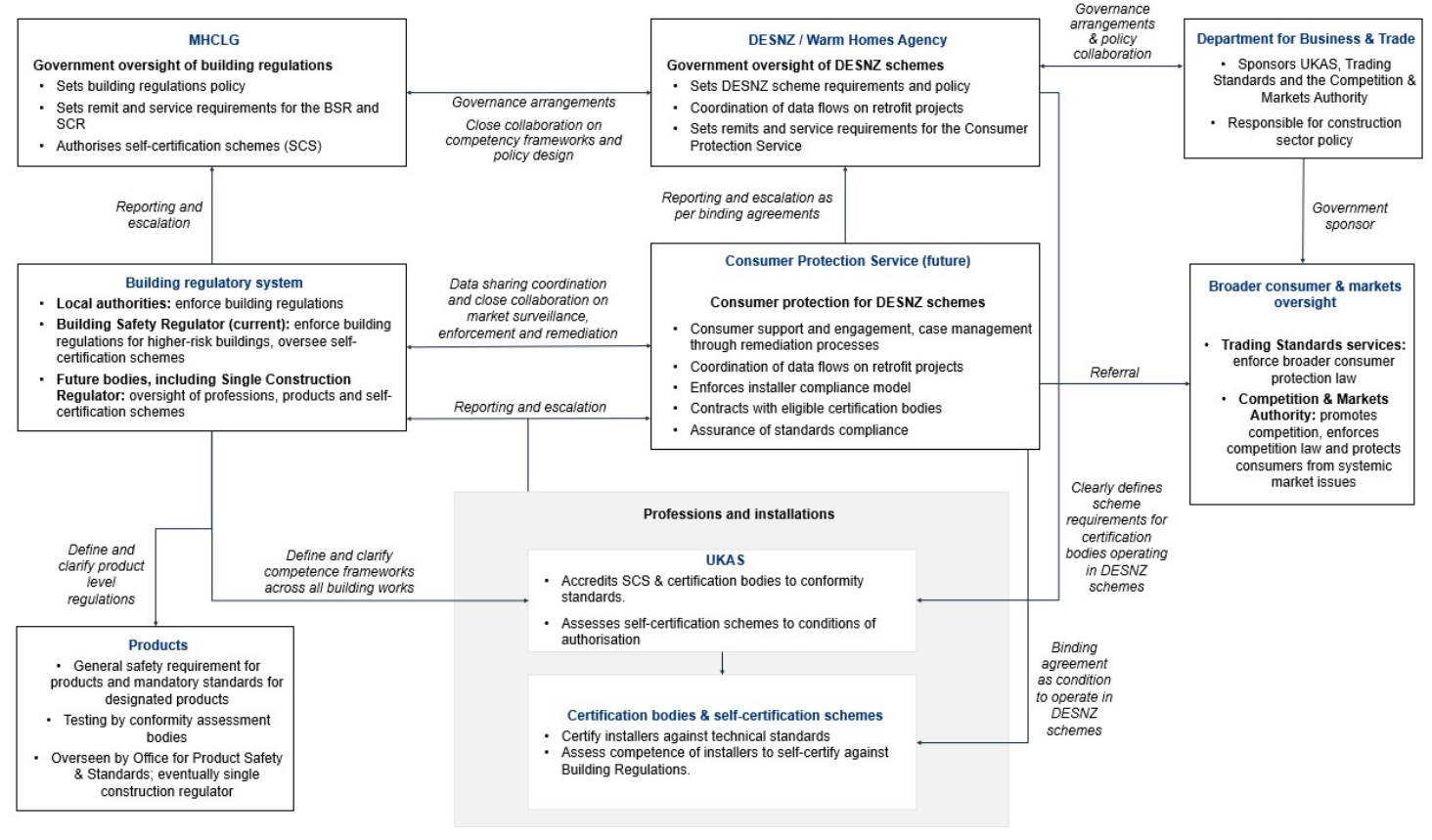
Figure 1: Overview of interactions across organisations responsible for oversight of the building regulation and retrofit systems
Chapter 3: A centralised oversight system for government-supported retrofit schemes
The government will set up a new, end-to-end consumer service for home upgrades and integrate provider(s) through binding agreements, holding them accountable for quality of service, consumer experience and satisfaction. This will be underpinned by government-owned digital and data infrastructure, bringing together information from multiple sources, enabling analytics to generate timely insights into quality assurance, audit prioritisation, fraud detection and early identification of emerging systemic risk. A phased transition will start at the latest from 2028, supporting continuous delivery of schemes in the Warm Homes Plan.
Background
The Warm Homes Plan commits to bringing the system under closer government control, including through the commitment, subject to final business case approvals, to establish a Warm Homes Agency.
The Warm Homes Agency (WHA)
The WHA will be a public body that supports delivery of the Warm Homes Plan. Its purpose is to drive consumer demand for warmer, greener homes, galvanise the supply chain, and coordinate delivery at national and devolved level, so households can access trusted advice, straightforward routes to funding and quality installations. The WHA is in development and subject to final approvals.
This consultation is focused on the policy principles that should underpin the future Consumer Protection Service. These proposals do not pre-empt a decision on the preferred delivery model for the new service, or details of the specific consumer protection service provider(s) which will be involved with delivery. Findings from the commercial market engagement exercise are being considered in parallel to inform the choice of delivery model.
Proposals to establish a centralised oversight system
Oversight of the consumer protection system for retrofit projects will be centralised under DESNZ/WHA
It is proposed that DESNZ will have central oversight of the new consumer protection system for DESNZ-supported schemes. Subject to final approvals DESNZ intends to delegate this responsibility to the WHA. This means DESNZ/WHA would act as the intelligent client, setting expectations and holding the consumer protection service provider(s) to account.
In this role, DESNZ/WHA would act as the single accountable owner for consumer outcomes across DESNZ-supported schemes, including quality of retrofit works, remediation and the timeliness of redress. This reflects the need for clear system-level accountability even where delivery functions are carried out by multiple organisations.
The government recognises that the provision of advice and support is currently delivered through a combination of national services, local delivery partners and third sector organisations. While the WHA may play a significant role in supporting consumers through their home decarbonisation projects, the reformed system will need to consider how the strengths of the current advice and support arrangements are retained and integrated to support different consumer needs effectively in the future.
DESNZ/WHA would:
- set clear expectations for how the consumer protection service provider(s) engage(s) with households across the consumer journey. DESNZ/WHA will act as an intelligent client, establishing performance expectations and service level agreements for any consumer protection service provider(s), and monitor and evaluate performance against these.
- develop a strategy for public communications to provide transparency and build trust, ensuring information and performance data is accurate and accessible’
- establish principles and requirements for audit, surveillance, and inspection across schemes’
- coordinate a feedback loop on buildings data, including outcome quality, linked with the National Buildings Database, and more effective coalition of existing datasets, such as Energy Performance Certificate (EPC) data[footnote 23].
Set up of a new integrated, end-to-end consumer protection service
We propose to set up a new consumer protection service. This will deliver unified, end-to-end consumer services and assurance processes, as set out in the consumer journey, for all DESNZ-supported home upgrades. By bringing together responsibilities for all retrofit measures under one service, the aim is to reduce fragmentation and provide a more consistent approach for retrofit professionals and consumers.
Many functions currently carried out by TrustMark and MCS would instead be performed by the new, integrated service. We will build on the strengths of the existing consumer protection models in the design and implementation of the future service. The future service must embrace innovation and AI and take a proactive ongoing approach to improving and evolving consumer protections.
The government preference is moving towards a model where a greater proportion of the service is delivered in-house. This would support the reform objective to have stronger control of the consumer protection system and reduce fragmentation. In this model, considering value for money and the opportunity to benefit from private sector experience and innovation, it is likely that some elements will be delivered by external providers in a hybrid approach. This is especially relevant for administrative services or those requiring specialised technical expertise and resources. We are consulting on this and will provide an update on the delivery arrangements as part of the government response.
In any model, DESNZ would act as the service integrator to ensure that operations are efficient, effective and provide a consistent, high-quality experience for consumers, installers and retrofit professionals. DESNZ/WHA and the consumer protection service provider(s) will have clear roles in setting standards of delivery (non-technical standards), monitoring compliance, and taking enforcement action alongside the single construction regulator and other relevant enforcement bodies where needed.
Establish stronger, binding agreements to enforce delivery obligations
Where necessary, DESNZ/WHA or the consumer protection service could have legally binding agreements with actors further downstream in the supply chain, which may include certification bodies and retrofit professionals. The extent and nature of these agreements would reflect factors such as the level of risk, the role of the actor within the system, and the need to ensure clear accountability for quality, remediation and consumer outcomes.
This will allow DESNZ/WHA and the consumer protection service provider(s) to have greater visibility of non-compliance risks and issues through robust risk mapping, monitoring and reporting, risk-based auditing, data sharing and analysis. DESNZ / WHA / the consumer protection service provider(s) would have clearer routes and mechanisms to intervene, including escalation and coordination with relevant regulators and scheme bodies. This would support stronger intervention in cases of systemic failure or repeated non-compliance with technical standards and competence frameworks (see Chapter 5).
Stakeholder feedback, including from the Panel, has highlighted that contractual arrangements in the current system often rely too heavily on process and output metrics and do not capture performance and consumer outcomes.
We therefore propose a review of the performance metrics used in the consumer protection system. This should draw on best practice in existing arrangements and comparable schemes. The resulting recommendations would be adopted in future binding agreements and contracts held by DESNZ/WHA and the consumer protection service provider(s). Independent spot checks, audits and in-person inspections would also continue to monitor performance and hold actors to account.
Managed transition period to the reformed consumer protection system, launching in 2028
The proposed consumer protection system would be progressively implemented, at the latest, from 2028 onwards. Based on early market engagement, we believe this will provide sufficient lead time to mobilise the new service with sufficient capacity and capability. This will enable clear and early signalling to consumers, installers, retrofit professionals and other actors in the market; impacts are set out in Chapter 8.
Careful transition arrangements will be implemented to ensure that strengthened consumer protections and oversight remain in place as the reformed system and Warm Homes Agency are established. These arrangements will also consider how to best support continued scheme delivery, and lessons learned from previous system transitions under our capital schemes.
Integrated data infrastructure for real-time monitoring
A reformed system would be underpinned by an integrated data system, with the ambition to collect data once and use it many times for relevant purposes. This system would link with the National Buildings Database and draw on data from multiple sources, including:
- consumer queries and complaints
- building control notifications and additional lodgements
- audit findings
- scheme data
- installer, retrofit professional and installation performance indicators
- guarantee claims and outcomes
- home condition data, energy use data before and after
This would require a means to bring together information held by the building regulatory system, consumer protection service provider(s), certification bodies, self-certification schemes, and scheme-specific delivery partners.
This would support real‑time monitoring, audit and risk‑based decision‑making across DESNZ-supported schemes, enabling emerging issues, poor practice or potential fraud to be identified earlier and addressed through preventative and targeted oversight (see Chapter 6 for further details). This approach would also support continuous learning, enabling controls and standards to be adapted as risks evolve. This is consistent with international best practice, which suggests effective consumer protection relies on timely, high‑quality data and robust digital systems.
Artificial intelligence in data management and fraud prevention
There is potential for data analytics and artificial intelligence (AI) to support a more effective consumer protection system, particularly in areas such as quality assurance, audit prioritisation, fraud detection and early identification of systemic risk as well as outcomes analysis linked to energy use data. AI could support automated techniques to validate audit evidence such as images and documentation, risk score installations and installers and retrofit professionals based on patterns across multiple data sources, and targeted and proportionate compliance activity. AI could also assist with analysing large volumes of information across the system to identify emerging issues earlier and reduce reliance on manual, retrospective checks.
However, the rapid evolution of machine learning presents challenges for policy development, particularly in ensuring that oversight, assurance and redress arrangements remain effective and proportionate as technologies mature.
The benefits of AI are highly dependent on the underlying data environment and governance. Effective use would require high‑quality, standardised and interoperable data flows across the built environment, with clear provenance marking or metadata[footnote 24], auditability and controls on how data can be amended or reused. Poor data integrity or fragmented systems, combined with weak guards against AI misuse or misinterpretation risk reinforcing existing failures rather than improving outcomes. AI should be treated as an enabling tool and that its use should be proportionate and tightly constrained within a robust data and governance framework. This framework should prioritise consumer protection, accountability and include transparent “human‑in‑the‑loop” oversight for any decision‑making that has a material impact on consumers or businesses.
Proposals for the scope of the consumer protection system
DESNZ reforms will directly target consumers taking part in DESNZ-supported home upgrade schemes
DESNZ oversight of the consumer journey would cover all schemes listed in Box 1, as well as any successor or new schemes operating at the time the new system comes into force from 2028. How this aligns with ongoing and emerging funding schemes is a core part of the transition planning for this work. Our ambition is that the reformed system also provides complementary benefits for the wider market.
Box 1: Home upgrade schemes where compliance with the reformed consumer protection system will be mandatory:
Warm Homes: Local Grant: A £500m government grant programme that supports local authorities in England to improve the energy performance of low-income owner-occupied or private rented sector households.
Warm Homes: Social Housing Fund: A government grant programme that supports local authorities and social housing landlords in England to improve the energy performance of social housing, previously known as the Social Housing Decarbonisation Fund.
Additional funding for low-income households: A new, consolidated scheme for low-income households, totalling a £5bn investment to 2030. Initially delivered through the Warm Homes Social Housing Fund and Local Grant, described above.
Warm Homes Loan Scheme: £2bn in low interest loans for heat pumps, solar panels, batteries and more, helping households meet the upfront costs of home improvements.
Boiler Upgrade Scheme: £2.7bn investment in grants (up to £7,500) to support installation of heat pumps, biomass boilers and heat batteries in homes and non-domestic buildings in England and Wales.
In addition, we also expect the proposed reforms to the consumer protection system to support:
Retrofit projects funded through integrated settlements to Mayoral Combined Authorities: as part of the government’s ambitions to increase English devolution, Mayoral Combined Authorities receive a share of some of the national level schemes in Box 1 through Integrated Settlements. As English devolution expands, an increasing number of home upgrades will be funded through this route. Mayoral Combined Authorities in receipt of integrated settlements acknowledge and adhere to the standards on consumer protections and domestic retrofit that apply to the devolved national schemes.
Heat pump installations generating a credit for the Clean Heat Market Mechanism (CHMM).
Consumer protection for heat networks is being addressed through a separate, system-level regulatory framework. Although some heat network retrofits may take place within the home, heat networks are often large-scale infrastructure that extend beyond the home, commissioned and managed at network level rather than at the level of individual retrofit measures.
The performance and outcomes of heat network projects depend on system-wide design, installation and operation, which cannot be meaningfully disaggregated to the individual property level. For this reason, the performance of heat network retrofits is due to be certified under the Heat Network Technical Assurance scheme (HNTAS), with Ofgem as regulator. The Department is working with Ofgem to ensure that, as regulation matures, Heat Network customers receive similar levels of protection as customers on other types of heating.
The reformed system should drive improvements across the whole home upgrade market, including for households funding their own installations
Our ambition is that the reformed consumer protection system provides additional benefits for self-funded installations. We will explore the extent to which consumers in this wider market can access some of the services, which as a minimum will include access to published databases and information. Installers and retrofit professionals may also choose to participate in these consumer protection and assurance systems on a voluntary basis. More robust quality assurance, enforcement and redress mechanisms should also help to drive out bad behaviour in the market and raise overall performance.
Question 4 To what extent do you agree that consumer protection functions for all DESNZ-supported home upgrade schemes should be delivered through a single integrated end-to-end service?
- Strongly agree
- Agree
- Neither agree nor disagree
- Disagree
- Strongly disagree
- Not sure
Please explain your answer.
Question 5 Should DESNZ and the Warm Homes Agency be directly responsible for delivering any specific functions to safeguard consumer protections?
- Yes
- No
If yes, please explain which functions should be delivered by DESNZ/the Warm Homes Agency.
Question 6What would be the main advantages or disadvantages of delivering through a single service provider versus multiple service providers?
Question 7 To what extent do you think the proposed service, under DESNZ oversight would reduce fragmentation in the current system?
- To a large extent
- To some extent
- To a limited extent
- Not at all
- Not sure
Please explain your answer.
Question 8What data and performance information is most important for monitoring the effectiveness of the system? Please select all that apply.
- consumer queries and complaints
- building control notifications and additional lodgements
- audit findings
- scheme data
- installer, retrofit professional and installation performance indicators
- guarantee claims and outcomes
- home condition data, energy use data before and after
- other (please specify in your written response)
Please explain your answer.
Question 9Do you agree with the proposed scope of schemes which would be covered on a mandatory basis by the consumer protection system?
- Yes
- No
- Not sure
If No, please explain your answer.
Question 10 Do you agree some elements of the reformed consumer protection system should also be available to the wider market on a voluntary basis?
- Yes
- No
- Not sure
Please explain your answer.
Chapter 4: Simplifying and improving the consumer journey for retrofit projects
The needs of consumers will be put at the heart of the reformed system, with particular focus on vulnerable consumers who much of the funding in the Warm Homes Plan is intended for. Consumers will have access to impartial advice at each stage of their retrofit journey, alongside high-quality, impartial information provided by government on measures available, funding, and trusted installers. If problems occur, consumers will have clear, easy‑to‑follow routes to raise concerns and get them resolved. The government is committed to transparency and will make the information widely available to the public so that all consumers can engage confidently in home upgrades and access effective protection and redress where needed.
Background
Consumer experience of retrofit installations has not been consistent across different measures and government schemes. Our understanding of the strengths and weaknesses of the current consumer journey draws on the Panel’s feedback, reports from the NAO and PAC, evidence provided to the Energy Security and Net Zero Committee and from consumer groups such as Citizens’ Advice[footnote 25].
Consumers
For the purposes of this consultation, references to the “consumer” are intended to refer consistently to the household benefiting from the installation. This reflects the policy aim of ensuring that, regardless of contractual structure or delivery model, households have access to clear protections, accountability, and effective routes to support and redress.
This usage does not fully align with the definition of consumers under consumer law, for example, Consumer Rights Act 2015. The legal meaning of “consumer” may vary depending on the nature of the arrangements. In some cases, the householder will enter a direct business‑to‑consumer contract for goods and services, while in others, retrofit works may be commissioned through business‑to‑business arrangements (for example, by landlords or delivery partners).
Furthermore, in government schemes, the consumer is not always the same as the grant recipient, as under some government schemes it is installers (for example, Boiler Upgrade Scheme), local authorities (for example, Warm Homes: Local Grant) or social housing landlords (for example, Warm Homes: Social Housing Fund) who receive grants. As grant recipients, they may act on behalf of the consumer at some stages of the consumer journey.
Other actors in the supply chain may also be users of assurance and oversight services. For example, installers are consumers of certification services. However, in this consultation, references to the consumer will only refer to the household, and other actors in the supply chain will be specified as such.
Existing weaknesses in the consumer journey
Stakeholder feedback, including insights collected through the Low Carbon Home Upgrades Data Insights Report (May 2026)[footnote 26] highlights specific challenges faced by consumers throughout their installation journey. Issues include:
- fragmented consumer journey: responsibilities are split across multiple bodies, leaving consumers unclear who to trust, who to contact, and who is responsible for different aspects of assurance, enforcement, and redress
- burdensome redress routes: consumers often lack the knowledge and information they need to pursue redress when issues arise
- gaps in data and records: works are often not notified or lodged correctly, and some work is performed by unregistered parties, with no paperwork being presented. Record-keeping of issues and complaints is inconsistent, making case tracking between organisations challenging
- vulnerable consumers: poor experience for vulnerable consumers, who are least able to navigate, challenge, or persist in a complex retrofit market, and therefore most exposed to harm
- fraudulent and unchecked activities: consumers can be targeted for unnecessary works, or subject to fraudulent practices - for example, some consumers have been targeted for removal of products like spray foam, and Cavity Wall Installation (CWI) where it is not needed
Proposals to improve the consumer experience
Consumers should be able to understand how schemes operate, make informed decisions, access impartial advice throughout the retrofit journey, and rely on effective protection and redress where needed. We will work closely with DBT to ensure alignment across wider provision of consumer advice and protections.
The needs of vulnerable consumers will guide the design of the consumer journey and protection services.
Many households supported through DESNZ-supported home upgrade schemes are on lower incomes or experiencing fuel poverty[footnote 27]. These households may be more exposed to harm where things go wrong and have greater difficulty in accessing support[footnote 28]. Further detail on priority groups and characteristics of vulnerability is set out in the Fuel Poverty Strategy, which provides the policy context for targeting support to those most in need[footnote 29].
The consumer journey should be designed around proactive support, recognising that not all consumers will have the time, confidence or resources to resolve issues independently. Some households will need more intensive, tailored or in-person support to engage effectively.
Consumer insight highlights the importance of trust, accessible information and confidence that problems will be resolved fairly if they arise[footnote 30]. Ensuring that consumer voice is reflected consistently in the system is therefore a key consideration,
The government does, and will continue to, engage with organisations and charities that represent and support consumers, including Citizens Advice and National Energy Action, to ensure the reforms reflect the needs and experiences of different consumer groups.
Consumers should experience a simple, clear and supportive journey from first enquiry through to installation and, where necessary, remediation and redress
A simpler, clearer consumer journey will support uptake of energy efficiency and clean heating measures and help deliver the Warm Homes Plan at scale. Households would primarily interact with the consumer protection service who would coordinate with the various parties across the system as shown in Figure 2, removing this burden from the consumer.
While the consumer may still interact with the actors, this critical coordination role provided by the consumer protection service would ensure consumers have a central point of contact, providing clear and consistent advice. Where it supports consumer protection, all actors in the system will have clear obligations on how they should engage and work with the consumer protection service.
The key stages of the consumer journey under our reforms are outlined below. These stages are intended to be broadly consistent across government-supported schemes, providing a clear and coherent experience for consumers. The specific roles played by different actors (such as local authorities or social housing landlords) may vary depending on the scheme and delivery model. For example, under some schemes, these actors may undertake certain steps on behalf of the household, such as selecting an installer or raising a complaint.
However, in all cases, these actors will be required to operate within the standards and requirements set by the consumer protection framework. Local or scheme-level delivery bodies will not be able to set alternative standards or designate ‘trusted’ retrofit professionals outside of this framework.
This approach will need to be considered alongside existing delivery arrangements, including pre-existing contractual and funding frameworks across government schemes. We would expect the consumer protection service provider(s) to have an ongoing role in supporting consumers who received installations as part of legacy government supported schemes.
Figure 2: role of an integrated, central consumer protection service in a simplified consumer journey
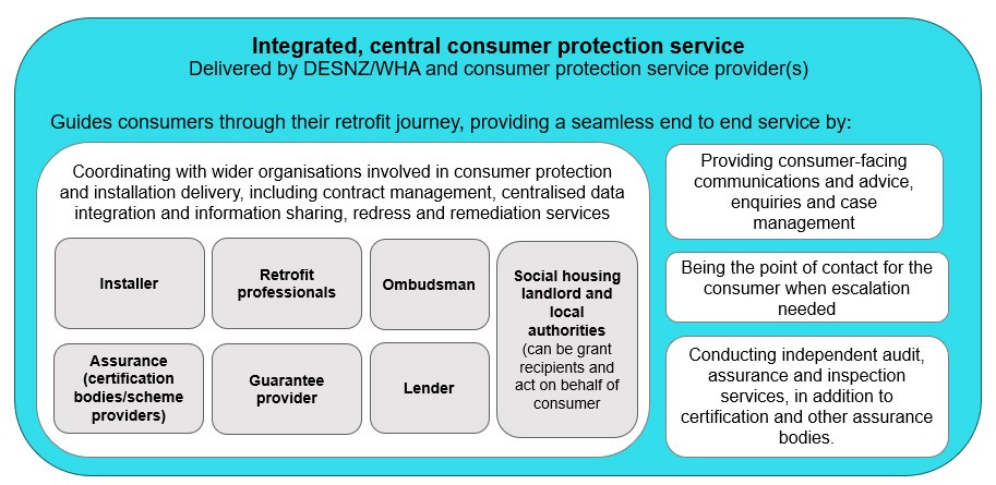
As demonstrated by Figure 2, without the wrap around support of the new service, consumers would often be required to coordinate directly with a large range of organisations
1. Finding out what support is available
Consumers can access clear, impartial information on the home upgrades available to them, such as insulation, heat pumps, solar panels or batteries. Support will improve awareness and engagement, linking to relevant government and local campaigns. It should also connect consumers to existing community-based services and trusted organisations, in addition to centralised or digital channels. This may involve referral pathways, partnerships with third sector organisations, or blended models of national and local provision.
Local government bodies, including local authorities and combined authorities, already play a key role in supporting consumers through government-supported schemes. As devolution of funding increases, the role of place-based advice and support is expected to grow, but local provision must be aligned to and delivered through a consistent national framework to ensure coherence and avoid fragmentation.
Information should explain:
- what measures may be suitable for their home.
- what outcomes these would be expected to deliver, including potential impact on house assessments, such as Energy Performance Certificates (EPCs).
- what financial support or schemes they may be eligible for.
- what standards and protections (legal, financial) apply.
- what to expect from the installation process.
The government is already taking steps to simplify this aspect of the consumer journey by creating a single-entry point for consumer home energy advice on GOV.UK. The new Home Energy Advice will help homeowners, landlords and tenants to find tailored, impartial and trusted advice on how to heat their homes and make them more energy efficient. Improved consumer information before and during installation can reduce mis‑selling, improve installer selection, and lower the likelihood of disputes escalating to formal redress[footnote 31].
For some households, particularly those experiencing vulnerability or fuel poverty, access to general information alone may not be sufficient to support engagement. In practice, trusted intermediaries, including local authorities, community organisations and third sector bodies, play a critical role in providing tailored advice, supporting decision-making, and helping households remain engaged through delivery and remediation processes. We are committed to collaborating with existing advice services and charities, including Citizens Advice, to draw on their expertise regarding how to specifically support vulnerable consumers through the retrofit process.
2. Assessment and design
Consumers (but most likely grant recipients and delivery agents acting on behalf of the consumer, for example local authority or social housing landlord) can choose a competent Retrofit Designer to carry out a rigorous assessment of their retrofit needs.
The assessment will confirm what measures are suitable, their energy performance, and how they should be installed through an agreed design. Designer responsibilities include ensuring that different measures work together safely and effectively, and that risks such as damp, ventilation, overheating, and other system interactions are addressed.
To inform their choice of designer, the consumer (or those acting on their behalf) will be signposted to the new Home Energy Advice service, a publicly available list of approved, retrofit professionals. The list will be managed by the consumer protection service and could include useful information on retrofit professionals such as contact information, customer reviews, risk ratings, number of installations, and when they were most recently audited. The government will work with Citizens Advice, local authorities, social housing organisations and consumer advocacy groups to develop widespread awareness of the official list, minimising the opportunity for misrepresentation by installers not approved. Consumers installing measures outside of government schemes will also be able to refer to this database of approved retrofit professionals and installers. Being accepted onto the list of approved retrofit professionals will require meeting certain standards of expectations, behaviour and auditing.
Retrofit professionals participating in government‑supported schemes would be required to enter into binding agreements with the integrated consumer protection service, replacing fragmented scheme‑by‑scheme arrangements.
Retrofit professionals
‘Retrofit professionals’ refers to named roles in PAS 2035: Retrofit Assessors, Coordinators, Designers and Evaluators[footnote 32].
All retrofit professionals are expected to meet defined competence requirements, and accountability should align with the BSR definitions for Principal Designer and Principal Contractor requirements.
Access and ongoing participation in government schemes will be conditional on retrofit professionals meeting government‑set requirements, relevant standards, and technical competence, and agreement to comply with data sharing, audit and assurance activities. The proposals in this consultation to improve accountability for quality work and remediation obligations, and the proposed enforcement mechanisms (Chapters 5, 6 and 7) would apply to both individuals and installation businesses.
3.Choosing a trusted retrofit installer
Consumers (or those acting on their behalf) can choose a local installer that is approved to operate on DESNZ-supported schemes to install the type of measure they seek. The assessment stage will have supported them to identify appropriate installers to deliver the recommended measures, and they will again be able to refer to the approved database provided by the Home Energy Advice service.
If the measures are not being self-certified through an SCS scheme, building control must be notified in advance of works commencing.
4. Installation
Installation is carried out by competent, certified installers, in line with building regulations, the required standards, and any agreed design. Clear job‑level contracts would be required for each installation, typically between the installer and the consumer (or grant recipients and delivery agents acting on behalf of the consumer, e.g. local authority or social housing landlord), and would be required to reflect scheme requirements, technical standards, remediation expectations and cooperation with assurance activity.
Consumers are kept informed about what work is being done, how long it will take, and what checks will follow by installers and retrofit professionals. Households may be visited by the consumer protection service provider(s), certification bodies, or other bodies undertaking on-site audits and inspections.
To support transparency and ongoing engagement, consumers (and grant recipients and delivery agents acting on their behalf, such as a local authority or social housing landlord) should have access to clear information from the start of the process. This could include installer and retrofit professional details, records of installed measures, associated documentation and protections, and information on how to raise issues. Making this information accessible supports understanding of installed systems and provides a foundation for ongoing maintenance.
5. Completion of works
After installation works finish, checks are undertaken to ensure the work has been carried out in compliance with building regulations and the relevant technical standards and has met the relevant design specification and expected performance standards. To carry out these checks:
- approved, competent installers must compile evidence of the installation (photos, documentation and records as stipulated by the consumer protection service provider).
- where required, a retrofit co-ordinator reviews the installation and confirms that all required documentation is complete and consistent, and that the installation meets the applicable technical standards and design requirements. They may verify this through on-site inspections.
- installation details, including signed warranties and information on the checks and tests conducted, are recorded in a central system, under the management of the consumer protection service provider(s). Notification to self-certification scheme operators and/or building control.
- oversight and assurance providers undertake spot checks or targeted inspections and audits to check that self-certified works are compliant, identifying and escalating one-off or systemic non-compliance for resolution. See Chapter 5 for further details of how these oversight and assurance functions will be reformed, including using digital and AI tools to assess compliance.
Any issues identified must be resolved before final approval and sign-off of the installation is confirmed. If no issues are identified, at sign‑off, the consumer receives:
- clear confirmation that the work meets required standards and regulations - this will be issued through the integrated consumer protection service, which will also send out future communications (if required)
- details of warranties, guarantees and protections
- information on how to use and maintain installed systems and access to ongoing guidance and advice, including details of how to engage in the future, should any longer-term issues emerge, and needed to be acted upon
6. After installation
The consumer experience of their retrofit installation extends beyond the point of sign-off, as they begin to benefit from the home improvements. Some installation or performance issues may only become apparent months or years after completion. Consumer protection services, including access to advice and redress routes will continue to be available for appropriate timeframes after installation.
We propose that annual reminders of maintenance and servicing requirements will be issued through the integrated consumer protection service and directed to the appropriate responsible party, which may be the householder or, where relevant, a managing organisation such as a landlord, local authority or social housing landlord.
7. When things go wrong: remediation and redress
Consumers should have clear, easy‑to‑follow routes to raise concerns and get them resolved. Households should not need to navigate multiple organisations to access this help and will be case managed by the consumer protection service. The system should be designed so that:
- issues are identified and addressed quickly
- responsibility and accountability for putting things right is clear
- remediation is carried out promptly and at no additional cost to the household where protections apply, including guarantees
- unresolved disputes can be escalated through a defined process (see Chapters 7), with access to redress by a third party if needed
Guarantee providers
Guarantee providers offer financial protection for consumers, via the installer, by covering the cost of rectifying defective work discovered after installation; subject to certain conditions.
Some policies include instances where an installer fails to remedy the defect in the first instance or where an installation business ceases trading. Guarantee providers are a key part of the redress and remediation landscape, with some regulated by the Financial Conduct Authority (FCA). Under the reforms, guarantee arrangements would continue to play an important role in protecting consumers, including by supporting adherence to required technical standards, and providing financial protection where installations do not meet these standards. Clearer alignment with the consumer protection system to ensure consumers can easily access support when things go wrong. See Chapter 7 for further detail on priorities for financial protections.
Question 11 To what extent do you agree that the proposed consumer journey would be clear and easy for consumers and installers to navigate?
- Strongly agree
- Agree
- Neither agree nor disagree
- Disagree
- Strongly disagree
- Not sure
Question 12 Which aspects of the proposed consumer journey are most likely to improve consumer outcomes? Select all that apply:
- Access to impartial advice
- Consumer protection service as the primary point of contact
- Clearer information on installers, retrofit professionals and processes
- Ongoing guidance after installation
- Centralised case management by the consumer protection service
- Other (please specify in your written response)
- None of the above
Please explain your answer.
Question 13What, if any, changes would improve how the system works for vulnerable consumers? Please share examples of the type of advice, support, referral mechanism and/or engagement models which are already effective in supporting vulnerable consumers.
Question 14 What, if any, changes would improve how the system works for installers and grant recipients, including local authorities and social housing organisations?
Chapter 5: Strengthening technical and professional frameworks
We will further define expectations of retrofit professional responsibilities and ensure that technical and professional competence requirements are capable of being consistently certified and assured for both organisations and individuals. Installer certification bodies will be subject to clearer and more consistent requirements through binding agreements, ensuring technical standards are implemented consistently to strengthen how competence, compliance and performance are monitored in practice. Access to DESNZ‑supported schemes will be conditional on installers, retrofit professionals and their respective oversight bodies (including certification bodies) meeting these higher system‑wide expectations for quality and performance. We will also explore options to strengthen oversight and transparency of installers and retrofit professionals, including whether a publicly accessible register should be introduced as part of the consumer protection service. This proposal is designed to incentivise these actors to compete for access to government schemes by delivering higher quality services.
Background
While standards have played an important role in professionalising the retrofit sector and bringing clarity and consistency to quality and performance expectations of installers and retrofit professionals, there are weaknesses in how these are assured by certification bodies and scheme providers.
Currently, building regulation duties, PAS, and MCS standards operate at the same time, with different roles, individuals, and organisations responsible for separate aspects of assessment, design, installation, and coordination. Responsibilities assigned to retrofit roles under the original PAS 2035 framework lie on top of the new duties and dutyholders introduced by the Building Safety Act 2022, creating potential confusion over who is ultimately accountable for meeting requirements. Roles and responsibilities become more confused in multi-measure projects, which involve multiple interacting technologies, their relationship with the wider building system, and input from different trades and disciplines.
Assurance of retrofit installer competence is split across multiple functions, with self-certification schemes providing assurance for building regulations compliance, and certification bodies providing assurance for PAS and MCS technical standards compliance. When these functions are not delivered by the same organisations, this fragmentation of oversight and assurance can create overlapping responsibilities and consumer protection risks.
Retrofit standards, competence frameworks and regulations
The following documents define the technical, safety, risk management and performance outcomes expected for individual measures or systems, typically based on design assumptions and standard conditions.
Building regulations place legal duties on designers and contractors to ensure that all controlled building work complies with the relevant functional requirements. All such work involves design, although for single‑measure installations this may be demonstrated through standardised approaches (for example, selecting compliant products or following prescribed methods) rather than a fully documented design. Responsibilities must be clearly allocated in all cases, including the appointment of dutyholder roles such as Principal Designer and Principal Contractor where required. Where multiple designers or contractors are involved, including in multi‑measure projects with several installers carrying out different installations under self‑certifying schemes, these dutyholder roles are intended to ensure coordination and overall compliance.
PAS 2035 is a publicly available standard required on many DESNZ schemes which defines retrofit professionals’ functions: assessing homes for the suitability of retrofit measures (Retrofit Assessors), designing appropriate retrofit solutions (Retrofit Designer), coordinating the delivery of works (Retrofit Coordinator), and evaluating the effectiveness of a completed project (Retrofit Evaluator). These roles do not need to be performed by separate individuals. The standard establishes a whole-house retrofit framework, explicitly requiring consideration by retrofit professionals of the interactions between measures (e.g. fabric, ventilation and heating systems). Under PAS 2035, the Retrofit Designer must ensure that all chosen products are fit for purpose and comply with the Building Regulations 2010. PAS 2035 requires each measure to be installed in compliance with the relevant measure-specific technical standard (for example, PAS 2030 or MCS standards). Under the current TrustMark framework, Retrofit Coordinators and Retrofit Assessors who are registered with scheme providers are deemed qualified to meet the requirements of their roles.
PAS 2030 is a publicly available specification which sets requirements for the installation of energy efficiency measures in existing buildings[footnote 33].
MCS standards are product standards for most microgeneration technologies (such as heat pumps or solar panels). These are based on building regulations, but also include additional safety and performance requirements, and integrate multiple competencies (for example heating, plumbing and electricity for heat pumps) into one holistic standard for that technology. MCS standards focus on individual microgeneration and low-carbon heating technologies while requiring installers to consider interfaces with the wider property and existing systems (including compliance with building regulations)[footnote 34].
The Mandatory Technical Competencies (MTCs) set out the defined standards of knowledge, skills, and behaviours required for individuals undertaking self-certification work under the Building Regulations. They help define areas of expertise, establish common competence standards, and ensure a consistent approach to registration. The MTC framework is designed to ensure consistency and clarity across all types of work approved under Schedule 3 of the Building Regulations, including where projects span multiple measures and therefore multiple MTCs apply. The MTC skills matrices set out the common mandatory technical competence requirements for different types of work where more than one MTC applies.
Competence frameworks for retrofit professionals are being developed by DESNZ in partnership with industry and will aim to define what it means for individuals and organisations to be competent to undertake specific work, defining how technical standards should be interpreted, applied and overseen in practice. They will seek to set out the skills, knowledge, experience and behaviours required for different activities and professions involved in retrofit delivery, recognising that competence varies by role, technology and context (system considerations and risk). In the current system, only knowledge of Retrofit Coordinators and Assessors is assured by scheme providers under the Trustmark framework, not competence.
We recognise that implementing the following may increase costs for parts of the sector, particularly where additional requirements relating to competence, assurance, or oversight are introduced. These costs may vary across different roles, business models and delivery contexts, and should be considered separately from baseline regulatory requirements (such as compliance with the Building Regulations). It is important that any changes support improved outcomes without creating unnecessary barriers to delivery or participation in the market.
The government is seeking views on these issues through this consultation and will undertake further detailed policy development to support implementation. Any changes to competence frameworks or role requirements under building regulations, the PAS Retrofit Standards Framework or any other technical standard will be subject to separate processes and consultation led by the appropriate organisations.
Proposals to strengthen the installer certification framework
Technical retrofit standards must be accessible, clearly understood, and kept up to date to reflect the latest best practice.
We expect technical standards to continue to play a vital role in providing a consistent baseline against which to design and carry out compliance, assurance and enforcement across government-supported schemes in the reformed system. These standards can also be used and referred to by the wider market operating outside of government schemes.
Under current DESNZ schemes, installers must be certified by certification bodies to Publicly Available Specification (PAS) 2030 or MCS standards. Installers are also expected to comply with PAS 2035.
Action is already underway to update and improve the technical standards. BSI are currently in the process of updating PAS 2035/2030 with a view to a public consultation in the Summer of 2026 and publication by the end of 2026/start of 2027. The BSI are overseen by DBT and DESNZ sponsors their work on these standards. MCS has a programme of planned updates to technical standards that extends into 2027, specifically seeking to address issues identified for multi-measure installations.
The government recognises that the credibility of the standards for these uses rests on them being developed through consultation with and by trusted experts on an ongoing basis. The future consumer protection service will help to co-ordinate government contributions and sponsorship of this work and ensure coherence.
Introduce more robust requirements on certification bodies as a condition of participation in government schemes
Certification bodies are currently responsible for certifying installers against technical standards, and for carrying out surveillance and audit activities to verify ongoing compliance. They play a key role in identifying installer non-compliance and escalating concerns, some will also support consumers during remediation processes. Certification bodies themselves are accredited and overseen by UKAS.
Reviews of the current system have suggested that the number and varied responsibilities and activities of certification bodies cause confusion for retrofit professionals and consumers. A contributing factor is that requirements on certification bodies to operate can be interpreted differently across the market and therefore implemented inconsistently.
Reports have also found that there are limited incentives for certification bodies to proactively identify fraudulent installers (NAO, 2025). Each certification body can set its own fees and audit levels and lower-cost certification does not necessarily provide the strongest oversight and can weaken incentives for robust auditing and consistent quality standards. Limitations in the data that certification bodies can access can also be a barrier to them carrying out their assurance duties.
The Warm Homes Plan proposed pursuing a reduction in the number of certification bodies to reduce fragmentation in the system. We propose to do that by introducing robust requirements on certification bodies through binding agreements so that only high performing certification bodies will remain in the market.
Government will clearly define scheme requirements for certification bodies operating in the market for DESNZ-supported home upgrades. This represents a change from the current system, where private companies have defined scheme requirements. The aim will be to ensure that there are, consistent and clear requirements across all measures. We envisage that UKAS would continue to accredit certification bodies (and self-certification schemes) against these requirements, providing an independent layer of assurance, while working alongside government and the consumer protection service provider to support a more robust and consistent assurance framework.
We will introduce a binding agreement between the future consumer protection service and certification bodies to strengthen accountability. Arrangements will include clearer and more consistent sets of requirements, reflecting the reformed system’s overall principles for prevention as a priority, and a sliding scale for enforcing compliance. Ongoing access to the market for government schemes would be subject to certification bodies demonstrating that they have a strong track record in meeting these requirements. Since government backed retrofit installations are a high share of the market, this strengthens the commercial incentives to provide high quality assurance processes[footnote 35]. It is proposed that agreements would include:
- requirements for certification bodies to implement standardised and robust risk-based auditing of installers, including onboarding checks
- clarity over the requirements for data collection, sharing and reporting processes.
- obligations to inform consumers and the central consumer protection service when installer non-compliance or non-conformity arises
- more clearly defined escalation routes and procedures for certification bodies when they or the consumer protection service provider(s) are not satisfied with installer performance, including clarity on the circumstances where certification bodies must suspend installers/support alongside remediation activities
We will explore whether certification bodies should also be required to act as self-certification schemes. This will streamline requirements for installers and support more consistent compliance with both building regulations, competence frameworks, and additional technical standards.
We will explore with MHCLG and BSR how individual installers within registered businesses[footnote 36] can be made more accountable, with greater direct oversight from self-certification schemes.
We will explore with MHCLG and the BSR how to make the process for authorising or withdrawing self-certification schemes faster and more responsive to demand.
Proposals to develop and assure competence frameworks for retrofit professionals
Competence frameworks for retrofit professionals will be introduced to support consistent, safe and high-quality retrofit delivery
Clear and well‑understood competence frameworks for retrofit professionals, and credible arrangements for their assurance, are essential to protecting consumers and supporting consistent delivery.
For retrofit roles within the PAS Retrofit Standards Framework, the government, working with the Industry Competence Committee (ICC), the Building Safety Regulator and the Retrofit Standards Task Group, has established a Task and Finish Group on Retrofit Competence[footnote 37]. The purpose of this group is to develop clear and comprehensive competence frameworks for key roles in the PAS 2035/2030 standards, with attention to filling existing gaps in coordination skills and responsibilities informed by the Building Regulations dutyholder framework. This will emphasise the importance of integration of multi-measure installations and a whole-house consideration of performance and safety impacts. This will be more reflective of how competence is defined and assessed within the wider construction competence regime introduced through the Building Safety Act 2022 – ensuring UK government funded retrofit work is delivered to the right standard by the right people, and with the right skills, knowledge, experience and behaviours to do the job well.
Alongside this, work is also underway by the Heat Pump Association UK with industry to further develop a heat pump competence framework which aims to improve the quality of training and ensures all installers are equipped with the skills required for MCS certification after completing the most common training pathways.
Building on these workstreams, we proposed to strengthen and align arrangements for competence and compliance across the system in the following areas:
Ensure more consistent approaches to competence oversight can be applied across all home upgrades
We will work with the British Standards Institution to undertake a review of the PAS Retrofit Standards Framework to ensure they support more consistent approaches to competence across retrofit roles. This will include considering how competence requirements and assurance approaches operate in practice across energy efficiency and microgeneration measures, and how greater consistency can be achieved at the level of system oversight, assurance processes and outcomes, and the role of UKAS in accrediting bodies to assess competence. We will also explore how PAS and MCS standards are applied and overseen within a more integrated framework, while recognising the different roles and structures of these standards.
Further define how accountability for retrofit professionals will be overseen and enforced in practice
We will consider how accountability for retrofit professionals can be strengthened within the reformed system, including how performance, compliance and conduct are monitored and acted upon. This will include exploring a range of options to improve allocation of responsibility, transparency and confidence, such as the introduction of a publicly accessible register of professionals operated by the consumer protection service provider or strengthening the role of scheme providers or other bodies to assess and assure retrofit professional competence, in step with the proposals above to strengthen certification of installers. We will consider how different approaches could operate effectively in practice, and how they align with wider system oversight and enforcement arrangements.
Providing clear guidance to support application of standards in practice
We will work with industry to update the existing Insulation Guides for Internal Wall Insulation, Underfloor Insulation, Room-in-Roof Insulation and Solid Floor Insulation. We recognise that these guides are useful to industry in supporting compliance with building regulations and PAS 2035/2030 requirements, however they require updating in line with changes to standards. We will explore the development of new guides focused on External Wall Insulation and Cavity Wall Insulation. Furthermore, we will explore how guidance from the Department and other organisations could be made easily accessible via the consumer protection service provider.
Question 15 To what extent do you think the proposed changes to oversight of standards and new competence frameworks would improve installation quality, including for multi-measure installations?
- To a large extent
- To some extent
- To a limited extent
- Not at all
- Not sure
Please explain your answer
Question 16What changes to standards, frameworks or associated guidance would most improve the clarity, consistency and practical application of competence requirements for retrofit professionals? Please provide examples where possible.
Question 17Which approaches would be most effective for strengthening oversight of installers and retrofit professionals? Select all that apply.
- Stronger audit requirements
- Clearer competence frameworks
- Public register of professionals
- Stronger role for certification bodies
- Greater government oversight
- Other (please specify in your written response)
Please explain your answer.
Question 18What impact do you expect the proposals to strengthen assurance would have on costs across the supply chain?
Please focus your response on costs associated with proposals for DESNZ-supported retrofit, and what government or industry actions could mitigate or manage these risks.
Question 19What expectations and requirements should apply to certification bodies to help prevent poor-quality or non-compliant work?
Please include views on audit activities, expertise, data sharing and links with self-certification schemes and building control.
Chapter 6: Earlier detection and stronger enforcement processes
Prevention will be the overarching priority of the new consumer protection service. Long term, sustainable improvements will involve a strategic independent audit approach targeting areas with the highest exposure to risks. This will be informed by enhanced data analytics, and additional data sharing requirements for organisations delivering DESNZ-supported schemes. Where issues persist, government will have contractual enforcement levers with actors across the supply chain and will work with regulators, certification bodies and other oversight bodies to take more robust enforcement actions, following a set escalation route and deploying a range of sanctions.
Background
Fraud, abuse and serious non-compliance present a material risk to consumer outcomes and confidence across both government-supported schemes and the wider retrofit market. These risks may include misrepresentation of eligibility, over‑claiming or inflated pricing, false declarations of competence, collusion across the delivery chain, and attempts to avoid remediation.
Fragmented oversight, and limited enforcement levers have reduced the system’s ability to prevent poor practice and respond quickly when issues arise.
While this consultation proposes stronger preventative controls through improved standards and oversight, the government recognises the need for a more coordinated approach to enforcement where those controls fail.
Some aspects of effective enforcement are made more challenging due to the range of individuals and organisations that may be involved in each project. Whilst installations are delivered by a certified company which holds overall responsibility for the installation, much of the on-site installation and some customer facing activity are carried out by affiliated or subcontracted firms and retrofit professionals (often managed through subcontracts). Such arrangements can help bring more installers into scope, create supervised routes for new entrants, and let central teams focus on administration, design, commissioning, training and technical support. They can also provide an easier route for smaller firms or infrequent installers, where the cost and overheads can be consolidated between businesses while maintaining accountability through the primary contractor.
However, splitting delivery across several businesses and individuals can blur responsibility, leading to fragmented competence (see chapter 5), complicated data sharing, and slow remediation, especially if a sub-contractor exits the market. Phoenixing is of particular concern in the retrofit market. Phoenixing, or phoenixism, are terms used to describe when the same business or directors trade successively through a series of companies which liquidate or dissolve leaving debts and other obligations e.g. for remediation unmet. Abusive phoenixism is when individuals use companies repeatedly to evade debts and sanctions or for fraudulent purposes.
Effective enforcement in a complex system depends not only on sanctions, but reliable market intelligence, and the ability to identify repeat behaviour. The current system’s reliance on late‑stage audits and post‑installation checks limits the oversight system’s ability to identify and address risks early, contributing to inconsistent outcomes and avoidable consumer harm.
Proposals to strengthen audit and enforcement arrangements
Implementation of an intelligence-led, risk‑based approach to audit and inspection, targeting assurance where risks are highest.
Evidence from recent schemes suggests that fraud, error and non‑compliance risks are not evenly distributed, and often cluster around particular delivery models, roles, behaviours or market conditions.
Risk-based auditing informed by robust data analytics should therefore be a key detective and deterrent control in a reformed system. The government will expand intelligence- and data-led approaches to target assurance and investigation where risks are highest, while maintaining some random audits to identify emerging risks. DESNZ/WHA will own a consolidated register of data for all installations completed under the reformed system.
A strategic and independent risk‑based auditing approach would combine human‑led intelligence with automated, data‑enabled risk indicators to better target assurance activity. While risk-based approaches already exist, enhanced data sharing and analysis, such as company and director information or credit‑related indicators, and improved data analysis could support earlier identification of potential risks and emerging patterns. Human judgement would remain central to interpreting context, assessing behaviour, and ensuring decisions are fair and proportionate. Audits must go beyond checklist-based compliance, particularly for complex measures where performance depends on property-specific conditions and occupant use. This approach would help prioritise assurance activity, support timely intervention, and improve prevention and deterrence, without imposing unnecessary burdens on compliant installers and retrofit professionals.
All parties will be required to share data on company performance, including information on high performing companies and those that have failed. In addition, certification bodies and scheme operators will be required to take a more rigorous and consistent approach to due diligence when onboarding businesses, including greater scrutiny of new applicants for any prior affiliation (such as directors or professionals) with failed companies, and enhanced checks and more careful consideration of onboarding where directors have a history of closed companies.
The government is seeking views on how risk management can be strengthened in a way to prevent and deter retrofit professionals from the behaviours outlined above, while remaining fair and proportionate. In particular, the government is interested in views on how such an approach could reduce the opportunity for persistent poor‑quality or non‑compliant behaviour, and examples of where current best practice operates within industry.
Increased coordination across public sector bodies to manage fraud risks
Business risks such as phoenixing, the use of shell companies, and opaque beneficial ownership structures, and failure to meet contractual and compliance obligations extend beyond DESNZ-supported schemes, but there is currently limited co-ordination to reduce fraud risks.
To address this, the government will therefore work with bodies such as the Insolvency Service, HMRC, Trading Standards, the Public Sector Fraud Authority and local authorities to strengthen intelligence-sharing, improve referrals and support more coordinated enforcement action. This, together with the list of approved installers and retrofit professionals, could support a more consistent approach to identifying, investigating and addressing fraud, with clearer escalation routes, stronger deterrence and improved recovery of public funds. For example, the Insolvency Service uses established criteria to assess cases of concern, including public interest considerations. The government will align its approach with the Public Sector Fraud Authority (PSFA), including exploring the use of the Public Sector Fraud, Error and Recovery (PAFER) framework and associated legislative powers.
Adopt a graduated compliance model, operating on a sliding scale from early identification and prevention, intervention to formal enforcement
The government’s approach to reform has been informed by international good‑practice principles for building regulation, including those developed by the International Building Quality Council (IBQC)[footnote 38]. These principles emphasise a clear public‑interest focus, unambiguous accountability, proportionate and risk‑based oversight, effective use of data, and credible enforcement and escalation routes.
Figure 3 sets out the proposed graduated escalation model. At the lower end of the scale, interventions could include reminders of standards and expectations, mandatory training, and increased monitoring. These measures are intended to correct issues early and support compliant behaviour. The government is particularly interested in views on whether allowing initial failures to be addressed without formal consequence risks weakening deterrence, and how the escalation framework can avoid creating a perception of a ‘free pass’ for early non‑compliance while remaining fair and proportionate. Where issues persist, formal actions could include warnings, compliance or stop notices, increased audits, and temporary suspension from government‑supported work. At the upper end, where issues have continued to persist following formal actions, or there is a serious breach, sanctions could include removal from approved supplier lists for government schemes, contractual remedies, or referral to statutory regulators for breaches of building regulations, fraud or consumer law. This includes the single construction regulator and Trading Standards.
Government will have leverage and control over the system to handle cases reflecting the seriousness of any emerging issues. This may mean bypassing lower‑level escalation routes where a case or cases require it, to enable timely and proportionate action.
Figure 3: Graduated compliance model
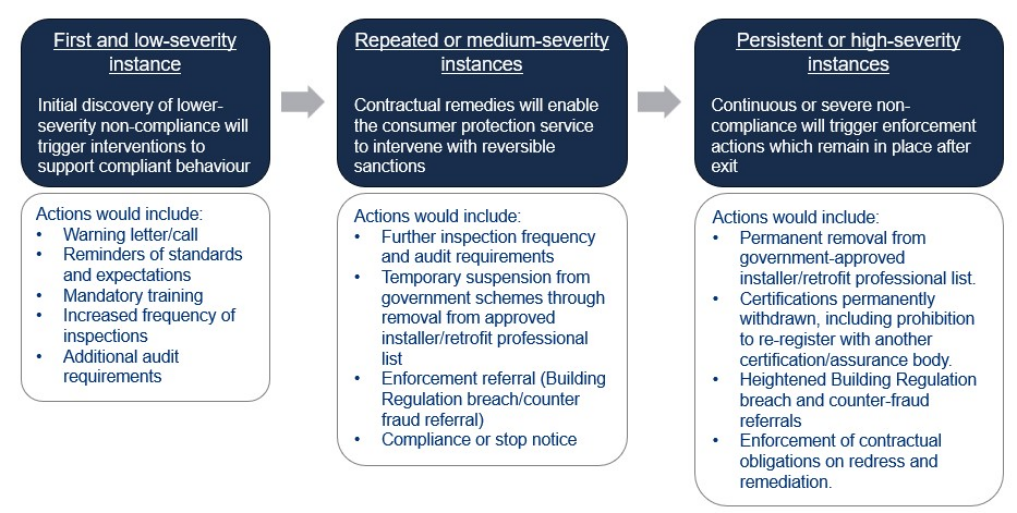
Binding agreements between DESNZ/WHA, the consumer protection service and installers/retrofit professionals
In the current system, installers are bound by licencing agreements with certification bodies to enable them to operate on government schemes. Additionally, installers of microgeneration measures under government schemes are being transitioned into contractual arrangements with MCS, as part of the programme of reforms at MCS. Retrofit professionals have membership agreements with their scheme provider, which indirectly binds them to the TrustMark Framework Operating Requirements[footnote 39].
In the reformed system, government is considering two options for binding arrangements to hold installers and retrofit professionals to account for the quality of work and obligations to remediate issues after installation. Government is seeking feedback on the benefits and trade-offs of these options.
Under either option, installers and retrofit professionals should:
- comply with technical standards, and consumer protection requirements.
- establish job-level contracts with consumer (or grant recipients and delivery agents acting on behalf of the consumer, for example, local authority or social housing landlord).
- notify consumers if certification is suspended or terminated.
- inform oversight bodies of known infringements by others.
- agree to information sharing with the consumer protection service provider(s).
- ensure staff and subcontractors are appropriately trained, qualified and competent for their roles.
- cease to perform new work on government schemes where certification suspended/ended.
- comply with remediation and consumer-facing duties, even where no longer operating under government schemes.
Option 1: Installer accountability is fully managed through certification bodies, with oversight of certification bodies underpinned by contractual arrangements with the central consumer protection service provider(s), and accreditation requirements by UKAS. Similarly, retrofit professionals could have contractual arrangements with their respective oversight body.
Option 2: Installers and retrofit professionals would have a direct contractual arrangement with the consumer protection service provider(s), as well as an agreement with their certification or oversight body. This is the approach government is minded to adopt.
DESNZ does not hold statutory, regulatory or prosecutorial powers in this area, and therefore contractual arrangements and binding agreements are the primary mechanism available for enforcement. While statutory enforcement of building regulations enforcement will remain with existing regulators, the proposed contractual enforcement is intended to introduce effective deterrence of non-compliance through the escalation model for operating on DESNZ-supported schemes, and data-sharing with regulators, as set out in Chapter 2.
A key concern is how to prevent installers from avoiding remediation by exiting certification bodies or self-certification schemes, dissolving companies or otherwise disengaging from the system. We therefore propose to introduce mechanisms where contractual obligations survive scheme exit, and where exiting the system triggers heightened scrutiny or referral to other bodies.
Question 20 To what extent do you agree that an intelligence-led, risk-based approach to audit and assurance would improve system performance?
- Strongly agree
- Agree
- Neither agree nor disagree
- Disagree
- Strongly disagree
- Not sure
Please explain your answer, including which data or risk indicators would be most useful.
Question 21 To what extent do you think the proposed graduated compliance model would provide an appropriate level of deterrence?
- To a large extent
- To some extent
- To a limited extent
- Not at all
- Not sure
Please explain your answer.
Question 22 What arrangements would best ensure that installers cannot avoid remediation responsibilities, including by leaving oversight bodies or dissolving companies?
Question 23 What additional measures (if any) would improve enforcement and compliance?
Question 24 Which option for contractual agreements would be more effective in underpinning installer and retrofit professional accountability?
- Option 1
- Option 2
- Neither
- Another approach
- Not sure
Please explain your answer, particularly if the most effective option differs between installers and retrofit professionals.
Question 25 What, if any, prevention and enforcement controls should subcontractors be subject to? Please explain your answer and outline whether controls on individuals or companies would be most effective.
Chapter 7: Swift remediation and redress
The new Consumer Protection Service will provide a unified case management function to oversee remediation processes and outcomes and apply contractual levers to drive timely and appropriate resolutions for consumers. As a final safeguard, an ombudsman will ensure that unresolved disputes will be independently and impartially decided. The government will also introduce standardised and strengthened financial protection products for DESNZ-supported schemes covering the needs of consumers around eligibility and complaints.
Background
When a fault is identified with work carried out, consumers can pursue redress options to resolve the issue, which may include remediation, compensation, refunds, or other actions to address harm or loss.
Remediation
Process of putting defective, incomplete or non‑compliant work right, so that installations meet required standards and deliver the intended outcomes. Remediation obligations are stated in contracts, and compliance with remediation procedures is and will remain a requirement for installers and retrofit professionals to maintain certified status and be eligible to participate in government schemes.
In instances where an installer has either ceased to trade or failed to rectify work, the consumer can pursue a claim for financial redress. FCA regulated Insurance, third-party warranties and captive cells are the current vehicles for financial protection that are used in DESNZ schemes.
Recent reviews indicate that fragmented redress arrangements significantly reduce the likelihood that households will pursue resolution at all, particularly where multiple organisations are involved and responsibilities are unclear[footnote 40]. Evidence also suggests that “remediation” is often interpreted differently across the system, with consumer expectations not always aligned with technical standards. As a result, consumers may experience a range of impacts, from poor workmanship to wider financial and emotional consequences.
Proposals for a new redress system
The government considers that a reformed redress system should:
- ensure that, wherever possible, problems should be put right by those who caused them
- make it easy for consumers to understand who is responsible for resolving a problem and how to access redress
- be swift and straightforward, so customers are guaranteed to get problems fixed quickly
- be accessible with no additional costs to the consumer
To achieve these objectives, the government is proposing various changes to redress arrangements, described below. This is backed by the practical consumer facing support described in Chapter 4, including clear sign-off of completed work, provision of information on redress processes and financial protections, and ongoing transparent communication with consumers.
Redress arrangements would be supported by clear legal underpinning
This may include contractual obligations within government‑supported schemes, alongside other appropriate legal or statutory mechanisms depending on final design choices. The consumer protection service provider(s) would be accountable to government and would in turn ensure that scheme participants are subject to clear, enforceable requirements to cooperate with redress outcomes. This approach is intended to provide certainty and enforceability of the redress arrangements.
The definition and scope of issues that require redress activities will be reviewed and updated
Scheme and installation contracts, warranties and guarantees can typically specify the situations in which redress is mandatory. Manufacturer warranties are typically linked to product performance, and eligibility may be subject to ongoing servicing, while scheme-backed installer guarantees are intended to cover installation quality.
We are seeking views on the scope of redress arrangements and what types of issues should trigger the requirement for redress activities within government schemes. The typical scope of mandatory redress covers non‑compliant installation work, failures to meet agreed technical standards, and breaches of consumer protection requirements linked to government‑supported schemes.
Some issues may fall outside of the current definitions of required redress in DESNZ schemes but still cause significant consumer detriment. Many of these issues are already governed, at least in part, by statutory consumer protection law including requirements relating to fair trading, accurate information, contract terms, cancellation rights, and remedies where things go wrong. Statutory consumer protection law applies across the market and provides baseline rights for all consumers, regardless of whether a scheme is government-supported.
Although these protections exist, in practice consumers may be uncertain about which protections apply, how to access them, and whether they will provide effective and timely resolution, particularly where issues arise after installation or relate to wider impacts on the home.
Examples of issues which can cause significant consumer harms, and which could be considered in scope of future redress frameworks under DESNZ schemes include:
- poor practice in sales and marketing including mis‑selling and misleading claims
- lack of contract clarity and fairness, including unclear or inadequate pre‑contract information, warranties and guarantees
- non‑compliance with cancellation and cooling‑off rights including how these should be communicated to consumers and respected
- inappropriate treatment of deposits and advance payments, including lack of proportionality and protection against loss
- problematic financial and contractual arrangements including financing or leasing models that create ongoing liabilities
- inadequate installer conduct outside technical installation including treating consumers fairly, engagement with complaints, aftercare, maintenance and obligations where firms exit the market
- issues relating to manufacturers and product providers including the transparency of information provided to consumers about manufacturer warranties and guarantees, how these operate alongside scheme backed guarantees, requirements for maintaining a warranty through annual servicing by approved installers, misleading product information, and failures to honour manufacturer warranties or guarantees
- damage to the wider building fabric - this may be outside of the remit of the installers obligations but may have been caused by a faulty installation
These issues are also not always captured by the assurance frameworks used in government‑supported schemes. Having defined the issues of concern, per the proposals in Chapters 5 and 6, we would seek to establish appropriate monitoring, assurance and enforcement arrangements to underpin the effective and fair redress.
Introduction of a single complaints and case management function owned by the consumer protection service, supported by the backstop of an independent ombudsman
Consumers (and organisations acting on their behalf), should always have the ability to engage directly with the installers and professionals that have carried out the work on their homes. Where an issue remains unresolved, where there is a complaint, or where a consumer might need support in understanding remediation and speaking to their installer, government will provide support.
We propose to centralise responsibility for consumer redress under government schemes, the consumer protection service, rather than this being split across multiple scheme bodies and certification organisations. The consumer protection service would manage a single, unified complaints process with clear timelines, case management and performance standards.
Acting in coordination with other bodies (Chapter 2), the consumer protection service provider(s) would provide a case management function to oversee remediation processes and outcomes. The consumer protection service provider(s) would be responsible for applying relevant contractual levers and sanctions. Where appropriate this could include invoking Alternative Dispute Resolution (ADR) routes. ADR refers to non‑court‑based processes for resolving disputes, such as investigation, mediation or adjudication, and is designed to provide a quicker, less adversarial and more accessible route to redress than formal legal action. As a final resort, for example in cases where the original installer has gone out of business, the consumer protection service may arrange for alternative installers to carry out corrective work. This does not remove the original installer’s liability.
Consumers would be able to escalate their issue to an independent ombudsman if the support co-ordinated through the consumer protection service provider(s) has been exhausted, or if they have a complaint with the consumer protection service provider(s) itself as a final stage of protections.
An ombudsman is an independent body that investigates complaints and provides impartial adjudication where disputes cannot be resolved through earlier stages of a process. Ombudsman schemes typically operate independently of government and industry, offering a trusted mechanism to resolve disputes fairly and transparently.
The ombudsman would review the case based on evidence from all parties, including relevant technical assessments and audit information, and determine an appropriate outcome. The ombudsman would combine alternative dispute resolution (ADR) functions with the ability to issue binding decisions. The ombudsman would not operate as a parallel complaints or case manager, but as a final safeguard to ensure unresolved disputes can be independently and impartially decided.
We are also exploring the feasibility of whether work prompted by wider regulatory requirements, such as minimum energy efficiency standards, could access or be referred to the redress support proposed in this consultation.
Simplify the landscape and strengthen the provision of financial protections
When consumers make home improvements and the work is carried out under DESNZ-supported schemes, it is a mandatory requirement for installers to provide a guarantee with a minimum level of financial protection. This financial protection is intended to protect consumers where there is an issue with the installation, and the original installer is unable to remediate.
The National Home Improvement Council (NHIC) Financial Protection Working Group conducted an in-depth review of financial protection mechanisms[footnote 41] and concluded that consumers face significant and often avoidable financial risks when undertaking home upgrades due to fragmented protections, unclear communication, and weak redress mechanisms. Fragmentation is caused, in part, by different frameworks for microgeneration and energy efficiency measures. The NIHC produced recommendations on how these weaknesses should be addressed, proposing a phased implementation plan delivering early consumer protections within 12 months and a fully standardised framework within five years.
Action is already underway, led by MCS, in their implementation of a new standard for financial protections for microgeneration installations.
The government is minded to accept and implement the NHIC recommendations across all DESNZ-supported works as part of the wider consumer protection reform package. This includes:
- actions to strengthen the provision of consumer information on guarantees and protections (see Chapter 4).
- collation and sharing of performance data and development of a national installation register.
- tiered redress routes, supported by greater case management so that consumers no longer need to exhaust all other avenues before claiming nor are restricted as to when claims can be lodged within the claims period.
- minimum standards for duration, adequacy of cover, affordability, and protections on deposits and costs across all home upgrade measures. Under MCS reforms, all financial protection products must now have a duration of six years, increasing from two, must provide cover in instances of system design failures, and the product must also cover 125% of the installation cost. Work is required to evaluate the impact of these changes and determine appropriate reforms for additional home upgrade measures.
Initial consideration is being given to whether a solidarity fund could have a role in future consumer protection arrangements. The fund would be a last resort and would only apply in the rare cases when other remediation routes have failed, ensuring that consumers do not remain financially disadvantaged. The focus of this consultation is on exploring high-level principles, potential benefits and risks, and whether further work is warranted. Fund design would need to address and mitigate the following:
- potential to introduce moral hazard to the system by reducing consequences for bad actors and therefore undermining the principle that those responsible for harms should be responsible for redress). If a fund were introduced, it would not remove the original installer’s liability or any enforcement action.
- potential for increased fraud risk if the availability of funding prompts false compensation claims. We will work closely with fraud experts on the design options and oversight procedures.
- high or disproportionate costs on government and/or other organisations and individuals within the system. We will consider options for how the solidarity fund could be funded on a sustainable and fair basis. There is a risk that additional requirement on installers could deter new entrants.
Question 26 To what extent do you agree with the proposal to centralise responsibility for redress under the consumer protection service?
- Strongly agree
- Agree
- Neither agree nor disagree
- Disagree
- Strongly disagree
- Not sure
Please explain your answer.
Question 27 Which additional consumer protection issues should fall within the scope of redress system arrangements? Select all that apply.
- Poor practice in sales and marketing
- Cancellation and cooling‑off rights
- Treatment of deposits and advance payments
- Financial and contractual arrangements
- Installer conduct
- Manufacturer and product obligations
- Impacts on wider building fabric
- Other (please specify in your written response)
Please explain your answer.
Question 28 Which features of the proposed redress system are most important for delivering effective outcomes? Select all that apply.
- Central case management
- Use of guarantees and financial protections
- Access to independent ombudsman
- Defined escalation routes
- Other (please specify in your written response)
Please explain your answer.
Question 29 Do you agree that the government should use the NHIC recommendations and principles as the basis for reforming financial protection arrangements?
- Yes
- No
- Not sure
Please explain your answer.
Question 30 Should government explore the creation of a solidarity fund to support consumers when other remediation routes are exhausted? - Yes - No - Not sure
Please explain your answer.
Chapter 8: Market impacts
The proposed reform of the retrofit consumer protection system is expected to have a positive impact on economic growth by enabling the effective delivery of the Warm Homes Plan and improving the functioning of the retrofit market. As consumer confidence increases, greater uptake of retrofit installations will enable investment, job creation and skills development. The government also recognises that the retrofit supply chain and those organisations and individuals involved in audits, assurance and standards development will be impacted in different ways, especially during the transition to the new system, making market engagement and careful planning essential to success.
This chapter sets out the government’s current assessment of the potential economic and market impacts of the proposed reforms for the retrofit supply chain and those organisations and individuals involved in audits, assurance, training and standards development. Through this consultation we are particularly keen to capture views on how government can implement reforms in a way that:
- minimises disruption during the transition period
- supports sufficient installer capacity and professional competence to deliver the programmes under the Warm Homes Plan and wider construction targets
- appropriately phases in new requirements, with clear transition arrangements, and minimal to no disruption to DESNZ scheme delivery during the transition period
- avoids creating disproportionate barriers to entry or participation for SMEs and new market entrants
- manages potential conflicts of interest and incentives where organisations operate across multiple parts of the system
- maintains a transparent, impartial and level playing field across different installer types and market participants
- provides clarity and certainty to market participants on future roles, responsibilities and oversight arrangements
- remains deliverable and enforceable in practice, with regulatory and oversight bodies able to operate effectively within their statutory and commercial constraints
Impacts on installers
Installers carrying out home upgrades currently engage with multiple certification bodies, consumer codes with a multitude of criteria, audit processes and data systems. This can contribute to the fragmentation and issues identified in Chapter 1.
For installers, reforms may mean:
- continued responsibility to ensure that installations are safe and good quality as standard.
- following regulations and guidance that are clear and effective, and standardised where appropriate. Clearer, more consistent requirements will encourage sustained efforts to grow installer competence and capacity, ultimately improving the reliability and quality of installations.
- streamlined ways of working with regulators and other organisations involved in monitoring and enforcement activities.
- a fairer regime, allowing firms that provide a quality service to compete on a level playing field, including in the delivery of DESNZ-supported schemes, supporting investment, innovation, and growth in the retrofit market. This includes considering how requirements apply consistently across the supply chain, including subcontracted delivery, to ensure that all parties contributing to installations are subject to appropriate standards, oversight and accountability.
- adapting to new contractual relationships and strengthened reporting requirements and compliance processes. This would happen in collaboration with MHCLG and with DBT, drawing on DBT’s their wider responsibilities for the construction sector, and elements of the consumer protection market including sponsorship of Trading Standards, UKAS, BSI and the TrustMark.
If reforms are overly bureaucratic or implemented too quickly, without sufficient transitional support, they could reduce installer capacity by making it harder for some businesses to continue operating or adapt. The government therefore recognises the importance of proportionate transitional arrangements, including:
- adequate lead‑in times
- recognition of existing good practice, where appropriate
- alignment with scheme delivery timelines
Impacts on retrofit professionals
The retrofit workforce operates across a wide range of roles, with differing routes to demonstrating competence. In some parts of the market, existing requirements, particularly where competence is evidenced primarily through specific qualifications, can act as a barrier for experienced professionals who have relevant skills but do not hold the prescribed credentials. Therefore, by clarifying expectations, competence frameworks can help support more coherent skills pathways, improve progression and professional recognition and underpin higher-quality, more sustainable jobs across the retrofit supply chain.
For retrofit professionals, reforms may mean:
- clearer and more consistent competence frameworks, allowing competence to be evidenced in a more flexible and holistic way, where it can be demonstrated safely and robustly.
- improved recognition of transferable skills, supporting wider participation in DESNZ-supported retrofit delivery, including for experienced construction workers, architects, building surveyors and other professionals.
- at the same time, reforms that introduce clearer or more demanding requirements may have short‑ to medium‑term impacts on workforce capacity, particularly if implemented quickly or where they interact with existing certification and assurance routes. These impacts may be felt most by smaller firms, those operating across multiple measures, and businesses in areas with limited access to training and assessment.
Over time, clearer and more consistent competence expectations may support a more professionalised workforce, with improved progression routes, supervision, and better alignment between skills development and delivery needs. We are also mindful of the importance of ensuring that there is adequate and timely access to relevant training to help professionals meet any future changes.
Impacts on commercial and third sector organisations in the consumer protection system
Commercial operators in the consumer protection system, including across certification, consumer protection, training providers, guarantees, remediation and auditing currently operate within a fragmented landscape, with varying requirements, standards and oversight arrangements.
Third sector organisations, including charities, also play an important role in supporting consumers, particularly those who are vulnerable or fuel poor. These organisations often act as trusted intermediaries, helping households to access advice, understand their options for support, and navigate delivery and redress processes. Reforms to the consumer protection system may have varying implications for third sector organisations, including increased demand for advice, new expectations on capability and knowledge, and potential impacts on funding and resourcing.
For these organisations, reforms may mean:
- clearer and more consistent expectations across schemes, reducing duplication and variation in requirements, audit processes and reporting
- a more streamlined landscape, with defined roles and responsibilities for quality assurance, monitoring and enforcement functions
- greater alignment of standards, processes and data requirements across DESNZ-supported schemes, supporting more efficient delivery and improved transparency
At the same time, reforms may have significant implications for the scale and type of activities carried out by commercial operators. Impacts may include:
- consolidation of functions and organisations, where roles are brought together into a more centralised system, potentially reducing the number of organisations operating in the market
- changes to existing business models, incentives and contractual arrangements, including reduced scope of activity or loss of functions currently delivered by individual bodies
- increased commercial uncertainty during transition, particularly where future roles, responsibilities and revenue streams are not yet fully defined
- additional requirements to adapt systems, governance and processes to meet new standards, including data, audit and reporting expectations
The impacts may differ or be felt more acutely for specialist organisations.
Managing administrative burdens
Through stakeholder engagement, the government is aware of concerns about duplicated audits, multiple data submissions, and differing interpretations of standards across schemes and bodies. While minimising and reducing unnecessary administrative burden is an important aim, government will maintain existing and introduce new processes and requirements where these are identified to support positive consumer protection outcomes. We are mindful that compliance costs, new accreditation and certification requirements or more complex administrative processes could fall disproportionately on smaller firms, particularly during transition. Larger firms may be better placed to absorb these costs or adapt quickly, potentially affecting competition.
SMEs play a central role in delivering home upgrades, often operating locally, as well as offering wider consumer facing, financial and consultancy services.
The government considers it essential that reforms do not unintentionally disadvantage SMEs or reduce regional diversity. In many cases, increased consumer protection and reduced administrative burden will be mutually complementary by:
- streamlining registration, audit and reporting processes
- adopting a “collect once, use many times” approach to data
- using risk‑based oversight to target assurance activity where it is most needed and
- providing clear, predictable requirements and timelines.
Costs and fees
Oversight, assurance and consumer protection functions are currently largely funded through fees paid by installers. However, evidence suggests that the overall cost burden on installers is complex and not always transparent, with costs varying significantly depending on the measures installed, business size, and the combination of requirements that apply.
At present, installers may face multiple fee types across the lifecycle of their work. These can include annual membership or accreditation fees, per‑measure or per‑project lodgement or registration fees, and additional costs associated with consumer protection or guarantees. In some cases, fees are bundled together by providers; in others, they are charged separately, making it difficult for installers to understand the full cost of compliance or to compare options. The government is mindful that changes to the system may impact income flows for existing organisations in the system.
Available evidence indicates that annual fixed costs for installers can range from several hundred to over a thousand pounds, with additional per‑installation costs varying from relatively small charges to more substantial amounts depending on the measure and any associated guarantee or assurance requirements.
The government is particularly mindful of the impact on small and medium‑sized enterprises and new market entrants, for whom fixed annual fees represent a higher relative burden. The government is also considering how installer fees may be passed through to consumers, and how fee design can support value for money and retrofit uptake while maintaining installer visibility. Following the approach taken by the Gas Safe Register[footnote 42], all fees will be publicly available online, ensuring transparency for installers and consumers.
There is also evidence that current fee structures may create incentives for a ‘race to the bottom’, whereby installers select certification or oversight providers primarily based on lowest fees rather than differences in quality, robustness of assurance or consumer protection. Where price competition is not sufficiently linked to consistent minimum standards or outcomes, this may risk undermining the effectiveness of oversight arrangements and confidence in the system.
The government recognises that this reflects a structural feature of the current system, where certification and oversight bodies are funded directly by the firms they oversee. This can create potential tensions between maintaining rigorous assurance and competing for business.
The reformed system therefore seeks to address these risks by strengthening system-level oversight, introducing more consistent requirements and performance expectations, and ensuring that accountability for outcomes does not rest solely on commercial relationships between installers and certification bodies.
The government is seeking views on how fee arrangements can best balance financial sustainability, fairness and the delivery of high‑quality outcomes for consumers.
Question 31 What are the most significant impacts of the proposed reforms on installers, retrofit professionals and other market participants? Please include any impacts on SMEs, third sector organisations, workforce capacity and market entry where relevant.
Question 32 To what extent do you think the proposed reforms would affect installer participation in government-supported schemes?
- Increase participation
- No impact
- Decrease participation
- Not sure
Please explain your answer.
Question 33 What practical steps could reduce administrative burden in the reformed system?
Question 34 What direct and indirect costs might arise from the proposed reforms for your organisation or others?
Question 35 How could the fee structures for certification, audit and assurance activities be designed to ensure that the oversight system is sustainable, affordable for businesses, and that those responsible for non-compliance bear the cost?
Next steps
Public responses to the questions in this consultation are due by 11:59pm on 10 September 2026. The government will then assess responses and use the information to consider next steps for delivering a reformed consumer protection system to achieve the objectives set out in this consultation.
The government’s response to the consultation will set out next steps and will be published on GOV.UK within 12 weeks of the closing date of this consultation.
Consultation questions
Chapter 1
Question 1: Does the case for change accurately describe the root causes of issues with the current consumer protection system?
[Yes / No]
Please outline any additional issues with evidence where possible.
Question 2: To what extent do you think the proposed reforms would improve consumer protection outcomes in home upgrade schemes?
[Strongly improve / Somewhat improve / Neither improve nor worsen / Somewhat worsen / Significantly worsen / Not sure]
Please explain your answer.
Chapter 2
Question 3: What are the main challenges in aligning the future consumer protection system with the reformed building oversight regime and, if applicable, how would you address them?
Chapter 3
Question 4: To what extent do you agree that consumer protection functions for all DESNZ-supported home upgrade schemes should be delivered through a single integrated end-to-end service?
[Strongly agree / Agree / Neither agree nor disagree / Disagree / Strongly disagree / Not sure]
Please explain your answer.
Question 5: Should DESNZ and the Warm Homes Agency be directly responsible for delivering any specific functions to safeguard consumer protections?
[Yes / No]
If yes, please explain which functions should be delivered by DESNZ/the Warm Homes Agency.
Question 6: What would be the main advantages or disadvantages of delivering through a single service provider versus multiple service providers?
Question 7: To what extent do you think the proposed service, under DESNZ oversight, would reduce fragmentation in the current system?
[To a large extent / To some extent / To a limited extent / Not at all / Not sure]
Please explain your answer.
Question 8: What data and performance information is most important for monitoring the effectiveness of the system? Please select all that apply. [consumer queries and complaints / building control notifications and additional lodgements / audit findings / scheme data / installer, retrofit professional and installation performance indicators / guarantee claims and outcomes / home condition data, energy use data before and after / other (please specify in your written response)] Please explain your answer.
Question 9: Do you agree with the proposed scope of schemes which would be covered on a mandatory basis by the consumer protection system?
[Yes / No / Not sure]
If No, please explain your answer.
Question 10: Do you agree some elements of the reformed consumer protection system should also be available to the wider market on a voluntary basis?
[Yes / No / Not sure]
Please explain your answer.
Chapter 4
Question 11: To what extent do you agree that the proposed consumer journey would be clear and easy for consumers and installers to navigate?
[Strongly agree / Agree / Neither agree nor disagree / Disagree / Strongly disagree / Not sure]
Question 12: Which aspects of the proposed consumer journey are most likely to improve consumer outcomes? Select all that apply:
[Access to impartial advice / Consumer protection service as the primary point of contact / Clearer information on installers, retrofit professionals and processes / Ongoing guidance after installation / Centralised case management by the consumer protection service / Other (please specify in your written response) / None of the above]
Please explain your answer.
Question 13:What, if any, changes would improve how the system works for vulnerable consumers? Please share examples of the type of advice, support, referral mechanism and/or engagement models which are already effective in supporting vulnerable consumers.
Question 14:What, if any, changes would improve how the system works for installers and grant recipients, including local authorities and social housing organisations?
Chapter 5
Question 15: To what extent do you think the proposed changes to oversight of standards and new competence frameworks would improve installation quality, including for multi-measure installations?
[To a large extent / To some extent / To a limited extent / Not at all / Not sure]
Please explain your answer.
Question 16: What changes to standards, frameworks or associated guidance would most improve the clarity, consistency and practical application of competence requirements for retrofit professionals? Please provide examples where possible.
Question 17: Which approaches would be most effective for strengthening oversight of installers and retrofit professionals? Select all that apply:
[Stronger audit requirements / Clearer competence frameworks / Public register of professionals / Stronger role for certification bodies / Greater government oversight / Other (please specify in your written response)]
Please explain your answer.
Question 18:What impact do you expect the proposals to strengthen assurance would have on costs across the supply chain? Please focus your response on costs associated with proposals for DESNZ-supported retrofit, and what government or industry actions could mitigate or manage these risks.
Question 19:What expectations and requirements should apply to certification bodies to help prevent poor-quality or non-compliant work? Please include views on audit activities, expertise, data sharing and links with self-certification schemes and building control.
Chapter 6
Question 20: To what extent do you agree that an intelligence-led risk-based approach to audit and assurance would improve system performance?
[Strongly agree / Agree / Neither agree nor disagree / Disagree / Strongly disagree / Not sure] Please explain your answer, including which data or risk indicators would be most useful.
Question 21: To what extent do you think the proposed graduated compliance model would provide an appropriate level of deterrence?
[To a large extent / To some extent / To a limited extent / Not at all / Not sure] Please explain your answer.
Question 22: What arrangements would best ensure that installers cannot avoid remediation responsibilities, including by leaving oversight bodies or dissolving companies?
Question 23: What additional measures (if any) would improve enforcement and compliance?
Question 24: Which option for contractual agreements would be more effective in underpinning installer and retrofit professional accountability?
[Option 1 / Option 2 / Neither / Another approach / Not sure]
Please explain your answer, particularly if the most effective option differs between installers and retrofit professionals.
Question 25: What, if any, prevention and enforcement controls should subcontractors be subject to? Please explain your answer and outline whether controls on individuals or companies would be most effective.
Chapter 7
Question 26: To what extent do you agree with the proposal to centralise responsibility for redress under the consumer protection service?
[Strongly agree / Agree / Neither agree nor disagree / Disagree / Strongly disagree / Not sure] Please explain your answer.
Question 27: Which additional consumer protection issues should fall within the scope of redress system arrangements? Select all that apply:
[Poor practice in sales and marketing / Cancellation and cooling-off rights / Treatment of deposits and advance payments / Financial and contractual arrangements / Installer conduct / Manufacturer and product obligations / Impacts on wider building fabric / Other (please specify in your written response)]
Please explain your answer.
Question 28: Which features of the proposed redress system are most important for delivering effective outcomes? Select all that apply:
[Central case management / Use of guarantees and financial protections / Access to independent ombudsman / Defined escalation routes / Other (please specify in your written response)]
Please explain your answer.
Question 29: Do you agree that the government should use the NHIC recommendations and principles as the basis for reforming financial protection arrangements?
[Yes / No / Not sure]
Please explain your answer.
Question 30: Should government explore the creation of a solidarity fund to support consumers when other remediation routes are exhausted?
[Yes / No / Not sure]
Please explain your answer.
Chapter 8
Question 31: What are the most significant impacts of the proposed reforms on installers, retrofit professionals and other market participants? Please include any impacts on SMEs, third sector organisations, workforce capacity and market entry where relevant.
Question 32: To what extent do you think the proposed reforms would affect installer participation in government-supported schemes?
[Increase participation / No impact / Decrease participation / Not sure]
Please explain your answer.
Question 33: What practical steps could reduce administrative burden in the reformed system?
Question 34: What direct and indirect costs might arise from the proposed reforms for your organisation or others?
Question 35: How could the fee structures for certification, audit and assurance activities be designed to ensure that the oversight system is sustainable, affordable for businesses, and that those responsible for non-compliance bear the cost?
Glossary and abbreviations
Accountability: Clear responsibility for the quality of work delivered and for ensuring issues are resolved, including having the authority to require remediation and uphold consumer protections.
ADR (Alternative Dispute Resolution): A way of resolving disputes without going to court, such as mediation or adjudication, used to reach decisions more quickly and fairly for consumers.
Boiler Upgrade Scheme:£2.7bn investment in grants (up to £7,500) to support installation of heat pumps, biomass boilers and heat batteries in homes and non-domestic buildings in England and Wales.
BSI (British Standards Institution): The UK’s national standards body overseen by the Department for Business and Trade, responsible for developing standards such as PAS 2030 and PAS 2035 through open consultation.
BSR (Building Safety Regulator): Established under the Building Safety Act 2022 to regulate higher-risk buildings, raise safety standards of all buildings, help professionals in design, construction, and building control, to improve their competence.
Building Regulations 2010: Regulations that apply to new buildings and most alterations of existing buildings in England and Wales, whether for domestic, commercial or industrial use. Compliance is a legal requirement. Any work undertaken through a self-certification scheme is also likely to be regulated and must comply with the Building Regulations 2010.
CB (Certification body): An organisation accredited to assess installer competence and certify compliance with standards such as PAS or MCS.
Competence framework: A set of requirements that defines the skills, knowledge, experience and behaviours needed for a person or organisation to carry out a specific role safely and effectively.
CoA (Conditions of Authorisation): Criteria that government‑authorised self‑certification scheme operators must meet to be approved and remain authorised. Include expectations for how schemes are governed, how members are vetted and monitored, how complaints and disputes are handled, and how sanctions are applied where requirements are not met.
Consumer: In the context of this consultation, the consumer is the householder who benefits from a retrofit installation.
Consumer protection: The systems, rules and processes in place to ensure households are treated fairly and protected when upgrading their homes.
Warm Homes Loan Scheme: £2bn in low interest loans for heat pumps, solar panels, batteries and more, helping households meet the upfront costs of home improvements.
Consumer protection service provider: The organisation proposed to provide centralised quality assurance, oversight, enforcement and redress for DESNZ-supported retrofit schemes. This could be undertaken by one or more providers.
ECO4 (Energy Company Obligation 4): A government scheme placing obligations on energy suppliers to install energy efficiency measures in homes, mainly for low‑income or vulnerable households.
GBIS (Great British Insulation Scheme): A government scheme supporting insulation installations to improve energy efficiency, which replaced parts of previous ECO programmes.
Grenfell Tower Inquiry (Inquiry): Public inquiry established to investigate the circumstances leading up to and surrounding the Grenfell Tower fire.
Heat pump: A low‑carbon heating system that uses electricity to move heat from the air, ground or water into a building.
HSE (Health and Safety Executive): Britain’s national regulator for workplace health and safety. It is responsible for protecting people from risks arising from work activities by setting standards, providing guidance, and enforcing health and safety law.
(Industry Competence Committee): Statutory advisory committee established under the Building Safety Act 2022. It advises the Building Safety Regulator and the built environment industry on matters of competence across the design, construction and management of buildings.
In-house (delivery): Delivery of a service, function or activity using the government’s or a public body’s own staff, resources and expertise, rather than procuring services from external suppliers.
Intelligence‑led or risk‑based oversight: An approach to monitoring and enforcement that uses data and evidence (such as complaints or audit findings) to focus activity on higher‑risk areas rather than applying the same checks everywhere.
Low-income households: Households with limited financial resources that may struggle to afford essential living costs, including heating and energy bills. In government programmes, this term is commonly used to describe households that are eligible for targeted support, often identified using income thresholds, benefit receipt, or property energy performance.
Mayoral Combined Authorities: A legal body set up using national legislation that enables a group of two or more councils to collaborate and take collective decisions overseen by the mayor.
MCS (Microgeneration Certification Scheme): A standards and quality assurance organisation in the UK for small scale renewable and low carbon technologies such as heat pumps, solar panels and batteries, and the installers who fit them.
MHCLG: Ministry of Housing, Communities and Local Government, responsible for building regulations and housing policy.
Microgeneration: Small‑scale technologies that generate electricity or heat at or near homes, such as solar panels, and heat pumps. Associated technologies, such as battery storage, may also be installed alongside these systems to store energy for later use.
Multi-measure installation: Multi‑measure installations are retrofit projects where more than one energy efficiency measure is installed in the same household, and where those measures interact with each other and with the building fabric as a system.
NAO (National Audit Office): The independent public body that scrutinises government spending and performance and reports to Parliament.
NHIC (National Home Improvement Council): Not-for-profit umbrella organisation established to promote high standards in residential repair, maintenance, and improvement (RMI) in the UK.
Ombudsman: An independent body that investigates complaints and provides binding decisions where disputes cannot be resolved through earlier stages of a process.
Outsourced (delivery): Delivery of consumer protection services, functions or activities through a contract with an external supplier, rather than using the government’s (or an arm’s length body’s) own resources, overseen by government.
PAC (Public Accounts Committee): A Parliamentary committee that examines the value for money, effectiveness and accountability of public spending.
PAS 2030: A publicly available specification setting requirements for the installation of energy efficiency measures in existing buildings.
PAS 2035: A publicly available specification covering the end‑to‑end process for retrofitting homes, including assessment, design, installation and evaluation.
Phoenixing: Where a business avoids responsibility for poor‑quality work or liabilities by closing and restarting under a new company name while continuing similar activities.
Redress: The remedies available to consumers when things go wrong, such as repairs, compensation or refunds.
Remediation: The process of putting defective, incomplete or non‑compliant work right so it meets required standards.
Retrofit: Improvements made to existing buildings to increase energy efficiency and reduce emissions.
Right first time: Work being carried out correctly the first time, minimising the need for rework, complaints or remediation.
Scheme administrator: For the purposes of this consultation.
SCR (Single Construction Regulator): The proposed new regulator intended to bring together oversight of the building regulatory system.
Self‑certification scheme (previously competent person scheme): A system allowing qualified installers to self‑certify certain types of work as compliant with building regulations without full local authority approval. Installers must be registered with a government‑authorised scheme and meet defined competence frameworks.
SME (Small and Medium Enterprises): Businesses that have revenues, assets, or a number of employees below a certain threshold.
Technical standards: For the purposes of this consultation, technical standards refer to the rules that set out what retrofit work must achieve. Technical standards include compliance with the building regulations and scheme‑specific standards such as PAS 2030, PAS 2035 and MCS.
TrustMark: A government‑endorsed quality scheme for trades carrying out work in and around homes, used in many energy efficiency programmes.
UKAS: United Kingdom Accreditation Service. The national accreditation body, responsible for accrediting certification bodies and self-certification schemes to recognised standards.
WHA (Warm Homes Agency): A new executive agency proposed to coordinate delivery of home upgrades and support consumers with advice and information under the Warm Homes Plan.
Warm Homes: Local Grant: A £500m government grant programme that supports local authorities in England to improve the energy performance of low-income owner-occupier or private rented sector households.
Warm Homes Plan: The government’s programme to scale up home energy efficiency and clean heating to cut bills, tackle fuel poverty and reduce
Warm Homes Social Housing Fund: A government grant programme that supports social housing landlords in England to improve the energy performance of social housing. It forms part of the Warm Homes Plan and was previously known as the Social Housing Decarbonisation Fund.
-
Stepping up: reforming protections in the retrofit market, Low Carbon Home Upgrades Data Insights Report - 2026 - Citizens Advice ↩
-
Energy efficiency installations under the Energy Company Obligation ↩
-
Written statements - Written questions, answers and statements - UK Parliament ↩
-
Retrofit System Reform Advisory Panel: terms of reference - GOV.UK ↩
-
Grenfell Tower Inquiry Phase 2 Report: Government response - GOV.UK ↩
-
The government recognises that different frameworks apply different approaches to risk. For example, PAS 2035 adopts a risk-based approach to retrofit at the dwelling level, which may identify a significant proportion of projects as higher risk in terms of design and delivery. This distinction reflects different regulatory objectives but may create complexity in how risk is defined and managed across the system. Criteria for determining whether a building is a higher-risk building during the occupation phase of the new higher-risk regime - GOV.UK ↩
-
Call for evidence: Strategy for the built environment professions, trades and occupations - GOV.UK ↩
-
£70m funding to address building safety professional shortages - GOV.UK ↩
-
Previously known as competent person schemes ↩
-
Review of the Conditions of Authorisation Call for Evidence - Health and Safety Executive - Citizen Space ↩
-
Consultation on the General Safety Requirement for Construction Products - GOV.UK ↩
-
Consumer attitudes to retrofit: Examining the barriers and motivators for consumers when making energy efficiency or low-carbon home upgrades - Citizens Advice ↩
-
Low Carbon Home Upgrades Data Insights Report - 2026 - Citizens Advice ↩
-
Consumer attitudes to retrofit: Examining the barriers and motivators for consumers when making energy efficiency or low-carbon home upgrades - Citizens Advice ↩
-
p.32 Energy efficiency installations under the Energy Company Obligation ↩
-
Stepping Up: Reforming protections in the retrofit market - Citizens Advice ↩
-
MCS – UK’s Quality Mark for Small-scale Renewables – Home - MCS ↩
-
Heat networks are due to have their own certification body for heat network performance through the Heat Network Technical Assurance Scheme (HNTAS). More details on these proposals are included in the 2026 heat networks technical standards consultation - Heat network technical standards - GOV.UK ↩
-
Currently, self-certification schemes only registered businesses or sole traders, not individual installers within registered businesses. ↩
-
Industry Competence Committee annual report 2024 to 2025 - GOV.UK ↩
-
IBQC Good Practice Principles for Building Regulation – IBQC ↩
-
National Audit Office Report: Energy efficiency installations under the Energy Company Obligation - October 2025 / Committee of Public Accounts: 62nd Report - Faulty energy efficiency installations - January 2026 ↩
-
NHIC Report on Financial Protection Mechanisms in Home Improvement ↩
-
Gas Safe registration feesReforming Consumer Protection for Home Upgrade Schemes: Consultation ↩