Fuel Poverty Strategy for England
Updated 26 January 2026
Applies to England

© Crown copyright 2026
This publication is licensed under the terms of the Open Government Licence v3.0 except where otherwise stated. To view this licence, visit nationalarchives.gov.uk/doc/open-government-licence/version/3 or write to the Information Policy Team, The National Archives, Kew, London TW9 4DU, or email: psi@nationalarchives.gov.uk.
Where we have identified any third party copyright information you will need to obtain permission from the copyright holders concerned.
This publication is available at https://www.gov.uk/government/publications/fuel-poverty-strategy-for-england/fuel-poverty-strategy-for-england--2
Presented to Parliament by the Secretary of State for Energy Security and Net Zero by Command of His Majesty
January 2026
CP 1497
ISBN 978-1-5286-6025-9
E03465297
Correction
We’ve updated the Fuel Poverty Strategy to correct an error in Figure 9.
For full details, see the correction slip.
Date of correction: 23 January 2026
Ministerial foreword

© House of Commons/Laurie Noble (CC BY 3.0)
Tackling the affordability crisis is the government’s number one priority. For too long, British families have paid the price for our nation’s energy insecurity. Energy bills remain too high and as always, it is the most vulnerable who are most affected – those 2.7 million households living below the poverty line in homes which are expensive to heat. In modern Britain, everyone should have the comfort of a warm and safe home. However, before we came into power last summer, progress on tackling fuel poverty had continually stalled.
That is why we are acting to bring bills down now and for the long term. At the last Budget, we took an average of £150 of costs off energy bills from this coming April. On top of this around 6 million households will receive the £150 Warm Home Discount, after we expanded the scheme for this winter – a total package of £300 to help ensure that those in the greatest need benefit the most from energy bill reductions.
This is also why we are sprinting to clean power by 2030, taking back control of our energy with clean, homegrown sources that we control. This is the only way to end our reliance on the fossil fuel markets which sparked the energy crisis, allowing us to build a fairer, more secure and more affordable energy system. But the energy transition will only be successful if everyone in our society – especially the most vulnerable – feel the direct benefits. We must ensure energy is affordable for all, and that low income households benefit from home upgrades.
This new strategy sets out how we will do just that; lifting a million more households out of fuel poverty by 2030, accelerating progress to the fuel poverty target. The strategy explains the major steps we are taking to upgrade and modernise our ageing, leaking housing stock for the 21st century. We are making an investment of £15 billion through the Warm Homes Plan, rolling out solar panels, batteries, heat pumps and insulation to millions of homes, as well as proposing to increase minimum energy efficiency standards for renters. With this strategy, government is determined to double the pace at which we slash fuel poverty. But 2030 is not the end goal. Within this Parliament, we will consult on a new statutory target that will drive us into the 2030s, because this government is committed to ending the cost-of-living crisis for good, and building a brighter, more secure future for all.
Martin McCluskey MP,
Minister for Energy Consumers
Executive summary
Fuel poverty is the issue of low income households who are unable to keep warm at a reasonable cost. This new fuel poverty strategy for England seeks to ensure that 1 million households are supported to achieve warm homes, reversing the trend of stalling progress under the previous government.
At a glance: Our plan to tackle fuel poverty
Reducing energy costs: the Budget 2025 acted to reduce energy costs by an average of £150. This includes moving 75% of the domestic costs of the Renewables Obligation to the exchequer from April 2026/27 to 2028/29. This shifts the balance from levies to public spending by £7 billion over 3 years. In addition, we have expanded the Warm Home Discount to provide a £150 rebate to a further 2.7 million of the poorest households with nearly 6 million households now eligible for the discount. This government is ensuring that lower income households benefit the most from energy bill reductions.
Tackling the cost of living: Our focus on cost of living to benefit fuel poor consumers goes beyond energy costs. We are boosting incomes through changes to the National Living Wage and National Minimum Wage and government has legislated for an above-inflation rise in Universal Credit. Fuel poverty is intrinsically linked to child poverty. High energy costs can be the difference between a household being in poverty or not, and can force decisions on which essentials are bought. As set out in the Child Poverty Strategy the government has removed the 2-child limit which will lift 450,000 children out of relative poverty within this Parliament, and benefit over one and a half million children more generally.
Improved energy performance: By focusing on the energy efficiency of homes, we are seeking to deliver long lasting change. Our plans to introduce minimum energy performance standards in the rental sectors will see around 650,000 households lifted out of fuel poverty. This will be complemented by the £5 billion allocated to low income households in the ‘Warm Homes Plan’. This will be initially delivered through existing schemes; the Warm Homes: Social Housing Fund and Warm Homes: Local Grant. Government intends to establish a single low-income capital scheme which will shift toward area-based delivery, learning the lessons from previous schemes, underpinned by a robust consumer protection regime and enhanced customer journey.
Chapter 1 confirms that this government is retaining the 2030 fuel poverty target to ensure as many fuel poor households as is reasonably practicable can live in a home with an energy performance rating of Band C or better. Lifting 1 million households out of fuel poverty by 2030 means doubling our level of delivery, but even with this ambitious step change, the reality of the inherited position means there may be 1.8m households living in fuel poverty. So 2030 should not be seen as the end goal. This government commits to consulting on a new fuel poverty target this Parliament to succeed the 2030 target, and to drive continued action into and over the 2030s.
Chapter 2 focuses on measuring fuel poverty confirming that the Low Income Low Energy Efficiency (LILEE) measure will also be retained as the most effective measure of progress towards the fuel poverty target. No household has been immune from the effects of the energy crisis, which has meant that energy has become less affordable for millions regardless of the quality of their home. This strategy adds weight to the importance of energy affordability and includes a new approach to monitoring the issue.
Chapter 3 focuses on the strategic approach, setting out the government’s vision to cut bills and improve comfort, health and well-being for families living in cold homes. This chapter sets out 5 strategic principles to guide policy making; supporting the worst homes; vulnerability; cost effectiveness; sustainability and a new consumer protection principle. Finally, this chapter sets out 6 priority outcomes the strategy seeks to achieve; delivering progress to the fuel poverty target; reducing the number of Energy Performance Certificate (EPC) E, F and G rated homes; making energy more affordable; reducing the number of children living in fuel poverty; increasing referrals from frontline services and improved health outcomes.
Chapter 4 outlines the policy plan to accelerate alleviating fuel poverty by 2030. The plan is split into 2 pillars, energy performance and energy affordability. The interventions to improve energy performance focus on rental sector regulations and housing sector standards complemented by continued support to upgrade home energy performance. The energy affordability policy plan sets out the intention that energy bill support will be continued through the Warm Home Discount through to winter 2030 to 2031 and summarises other key interventions to reduce household energy costs.
Chapter 5 turns to the implementation of the strategy emphasising the importance of taking a cross sector approach, including the links to child poverty and healthy life expectancy. The role of partnership, advice and referrals in addition to eligibility criteria, targeting and data are picked out as key enabling activities to ensure households in the greatest need can access the support they need to reduce their energy costs.
Finally, Chapter 6 summarises the approach to scrutinising progress. This includes the role of Parliament, the annual fuel poverty statistics and the Committee on Fuel Poverty to scrutinise and support our focus on delivery.
1. The fuel poverty target for England
The statutory fuel poverty target was set in December 2014:
The fuel poverty target is to ensure that as many fuel poor homes as is reasonably practicable achieve a minimum energy efficiency rating of Band C, by 2030.
This government is committed to retaining the 2030 fuel poverty target and accelerating progress towards it over the next 5 years.
The fuel poverty target has a clear focus on improving the energy efficiency of fuel poor homes. While we know that other factors can affect how much it costs to keep warm, such as energy prices and household incomes, tackling the structural issue of low income households living in the poorest quality housing remains the most effective and sustainable route to alleviating fuel poverty.
The ‘Warm Homes Plan’ sets out how we will improve the energy performance of homes. The measure mix for households will be dependent on their circumstances. Fabric measures, such as cavity and loft insulation, will continue to play an important role where they are needed, to keep people warm, prevent damp and mould and reduce energy bills. This will be complemented by technologies, such as solar, batteries and heat pumps to ensure that upgrades not only reduce energy costs, but also deliver homes that are compatible with our net zero future.
Making progress to alleviate fuel poverty will also require targeted energy bill support for those who most need it, as well as wider reforms to make energy more affordable. In response to the energy price peak following Russia’s invasion of Ukraine in 2022, and the continued impact this has had on energy prices, this new strategy places a stronger emphasis on energy affordability than the 2021 ‘Fuel Poverty Strategy’.
Both energy efficiency measures and direct bill support will drive progress to alleviate fuel poverty, which is why the policy plan set out under Chapter 4, is based upon 2 pillars ‘energy performance’ and ‘energy affordability.’
The current state of fuel poverty
Interim milestones
The 2015 fuel poverty strategy adopted 2 interim milestones:
Interim milestones:
- as many fuel poor homes as is reasonably practicable to Band E by 2020
- as many fuel poor homes as is reasonably practicable to Band D by 2025
According to the latest statistics, by 2024 93.2% of low income households in England were living in a property with a fuel poverty energy efficiency rating of Band D or above and 97.6% Band E or above[footnote 1]. This means there are around 462,000 fuel poor homes that remain rated E, F or G in 2024, of which approximately 160,000 live in F or G rated homes[footnote 2] (shown in Figure 1 below).
Whilst we recognise that the 2020 and 2025 milestones have passed, it remains important to drive a reduction in the poorest quality homes. The principle of ‘supporting the worst homes’, which is discussed in Chapter 3, considers how the next generation of fuel poverty schemes could contribute to improving the remaining Band E, F and G homes. Progress will be reported in our new annual outcomes scorecard to ensure that even when the milestones have passed, we do not lose sight of improving the least efficient homes.
Progress over the target period
At the start of the last Parliament in 2019, 3.2 million households in England were living in fuel poverty. In 2024, this had reduced to 2.7 million[footnote 3]. While progress has been made, this government is clear that we need to go much further to accelerate progress towards the fuel poverty target, which is why we will aim to double the pace of slashing fuel poverty compared to the previous Parliament.
Figure 1: Number of fuel poor households in England, by FPEER[footnote 4] Band (2019 to 2024[footnote 5])
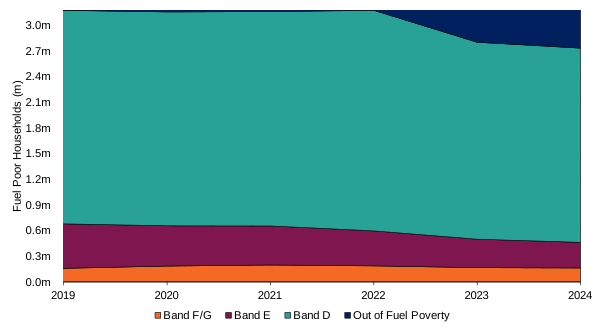
Description of figure 1: Stacked area chart showing the number of fuel poor households by EPC band from 2019 to 2024. The chart tracks progress in reducing fuel poverty. Most households are in Band D, which declines slightly from around 2.7 million in 2019 to about 2.3 million in 2024. Band E decreases from roughly 0.6 million to 0.4 million, and Band F/G remains very small at about 0.2 million. A dark blue section grows from 2022 onwards, representing households that have moved out of fuel poverty. Vertical axis shows households in millions (0 to 3m); horizontal axis shows years 2019–2024.
The future of the fuel poverty target
This government is committed to retaining the 2030 fuel poverty target. As set out in Chapter 4, our policy plan aims to lift up to 1 million households out of fuel poverty and many more households will benefit from lower bills and increased comfort.
This strategy aims to deliver a clear acceleration of progress, but sustained action will be required to tackle fuel poverty. As such, and to ensure progress is maintained, 2030 should not be seen as the end goal, but a key milestone as part of the efforts to alleviate fuel poverty. It will be necessary to set a legal framework to succeed the 2030 target to ensure that alleviating fuel poverty remains a priority for successive governments.
Within this Parliament we will consult on the future fuel poverty target, with an aim that the future legal framework will be in place to ensure continued momentum of delivery and alleviation of fuel poverty. This will consider relevant developments such as the reform of the EPC framework. If this work necessitates making updates to the fuel poverty target regulations before 2030, we will ensure that an objective equivalent to the 2030 target is retained as part of the fuel poverty target and strategy.
Commitment 1: Within the Parliament government will consult on a new fuel poverty target to succeed the 2030 target, driving continued action over the 2030s.
2. Measuring fuel poverty
Fuel poverty is the problem faced by households living on a low income in a home which cannot be kept warm at reasonable cost[footnote 6]. Fuel poverty can mean making stark choices between energy and other essentials or falling into debt. For some, the result is living in a cold home, which can have negative impacts on health and wellbeing.
In this chapter, we set out how we will measure progress toward the fuel poverty target and outline how we plan to monitor the related issue of energy affordability.
Measuring progress towards the fuel poverty target
We measure progress to the fuel poverty target using the Low Income Low Energy Efficiency (LILEE) metric[footnote 7].
A household is considered to be fuel poor if:
- it is living in a property with an energy efficiency rating of band D or below (as determined by FPEER); and
- its disposable income (after housing and energy costs) would be below the poverty line[footnote 8]
In 2024, there were an estimated 11% of households (2.7 million) in fuel poverty in England[footnote 9]. As LILEE is a measure of the number of homes below the fuel poverty target level this will be retained as the most effective measure of progress to 2030.
What type of households experience fuel poverty?
There is no such thing as a ‘typical’ fuel poor household. Fuel poverty cuts across regions, tenure types, household compositions and dwelling types, rurality and gas grid connection. The diversity of the fuel poor population in England calls for a variety of targeted and nuanced interventions, ensuring that fuel poor households can access a range of support based on their circumstances. The support available is detailed in our policy plan in Chapter 4.
Figure 2 presents a generalised overview of the difference between fuel poor and all households, using median incomes, required energy costs and Fuel Poverty Energy Efficiency Rating (FPEER)[footnote 10].
Figure 2: Comparison of all households and fuel poor households, 2024, England[footnote 11]
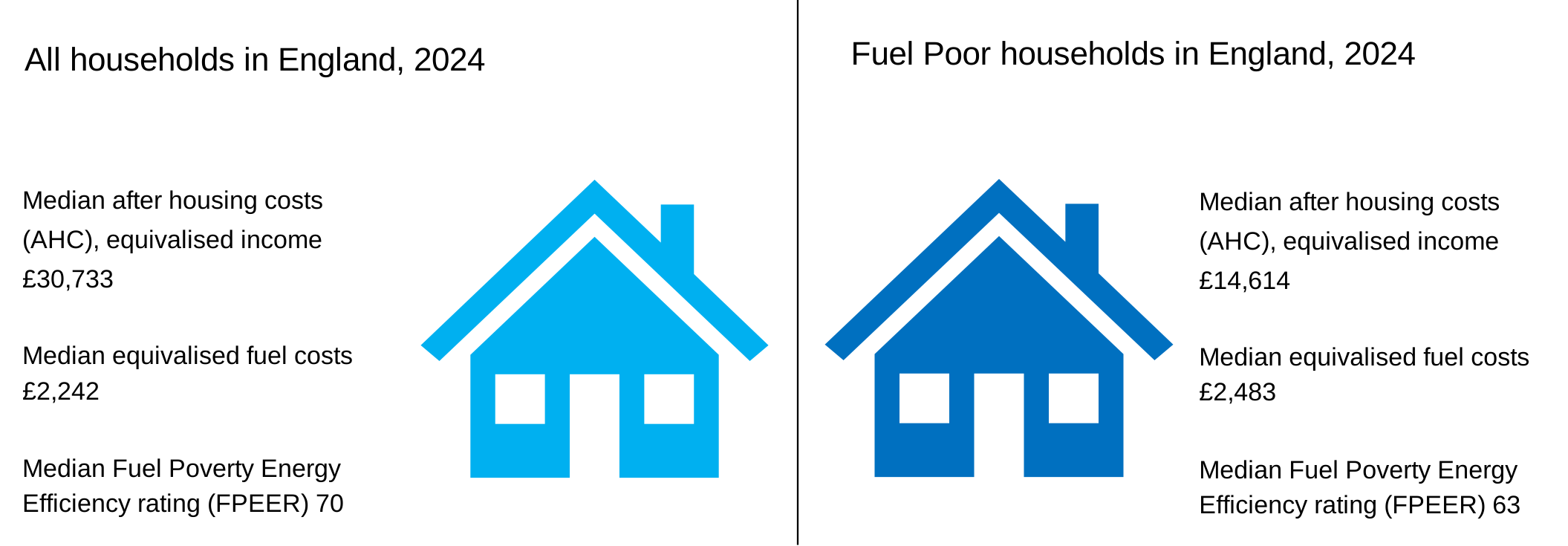
Description of figure 2: Graphic showing a comparison of all households and fuel poor households in England in 2024.
All households in England, 2024:
- Median after housing costs (AHC), equivalised income, £30,733
- Median equivalised fuel costs, £2,242
- Median Fuel Poverty Energy Efficiency rating (FPEER), 70
Fuel poor households in England, 2024:
- Median after housing costs (AHC), equivalised income, £14,614
- Median equivalised fuel costs, £2,483
- Median Fuel Poverty Energy Efficiency rating (FPEER), 63
Tenure type
The latest fuel poverty statistics show that in England in 2024, the prevalence of fuel poverty varies significantly by housing tenure, with 7.5% of owner occupied households, 21.5% of the private rented sector, and 13.1% of social housing sector being in fuel poverty[footnote 12].
Owner occupied households are the least likely to be in fuel poverty. This is primarily due to their higher median household incomes, which offset their typically higher median fuel costs. In 2024, the median annual fuel cost for owner occupiers was £2,370, compared to £2,100 for private renters and £1,940 for those in social housing. However, median household incomes were substantially higher for owner occupiers (£36,800), compared to private renters (£24,300) and those in social housing (£19,000). As a result, fuel costs represent a smaller proportion of income for owner occupiers, compared to the proportions for the private rented sector and social housing.
Energy efficiency also plays an important role. Social housing tends to be more energy efficient, with a median FPEER of 72 compared to 69 for both owner occupiers and the private rented sector. The more energy efficient housing stock contributes to social housing having a lower rate of fuel poverty compared to the private rented sector.
Although they have the lowest rate of fuel poverty, because owner occupied households account for 64.9% of all households in England,[footnote 13] they represent the largest share of fuel poor households – approximately 1.2 million out of the 2.7 million total. This is compared to approximately 993,000 fuel poor households in the private rented sector and 535,000 in social housing.
The interventions for each tenure type are detailed in our policy plan in Chapter 4.
Figure 3: Proportion of households in fuel poverty by tenure type, 2024, England[footnote 14]
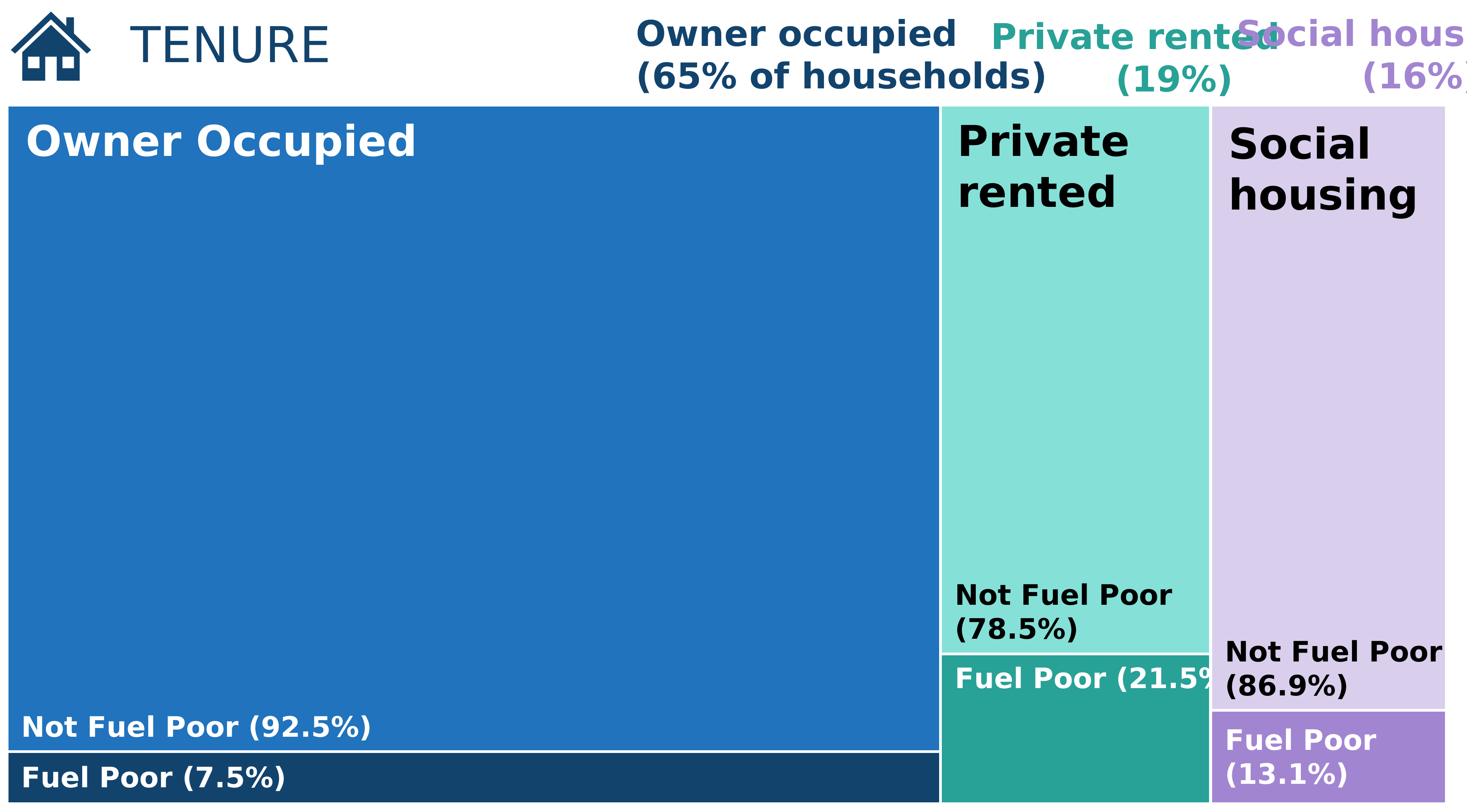
Description of figure 3: Treemap chart showing the proportion of households in fuel poverty by tenure type in England in 2024.
Owner occupied (65% of households):
- Not fuel poor, 92.5%
- Fuel poor, 7.5%
Private rented (19% of households):
- Not fuel poor, 78.5%
- Fuel poor, 21.5%
Social housing (16% of households):
- Not fuel poor, 86.9%
- Fuel poor, 13.1%
Dwelling type
Households living in converted flats had the highest rate of fuel poverty (18.8%)[footnote 15]. In contrast, households living in purpose-built flats had the second lowest likelihood of fuel poverty (8%). This could be explained by the difference in median energy efficiency ratings, with purpose-built flats having a median FPEER of 74, compared to 69 for converted flats. The different property characteristics resulted in a median fuel cost of £1,800 for purpose-built flats, compared to £2,080 for converted flats. Households living in detached properties had the lowest rate of fuel poverty (7.3%). This could be explained by much higher median income than other households (£41,100), compared to the average median income of all households (£30,700).
Figure 4: Proportion of households in fuel poverty by dwelling type, 2024, England[footnote 16]
| Dwelling type | Proportion of households in fuel poverty (%) |
|---|---|
| Detached | 7.3 |
| Semi-detached | 11.4 |
| End terrace | 17.5 |
| Mid terrace | 12.7 |
| Converted flat | 18.8 |
| Purpose-built flat | 8.0 |
Household composition
Single parent households have consistently had the highest proportion of households in fuel poverty. 24.7% of single parent households were in fuel poverty, likely due to their considerably lower median income (£17,400). In comparison, couples under 60 with no dependent children had the lowest rate of fuel poverty (5.2%). This low rate of fuel poverty was likely due to the high median income (£40,100) of this group.
Figure 5: Proportion of households in fuel poverty by household composition, 2024, England[footnote 17]
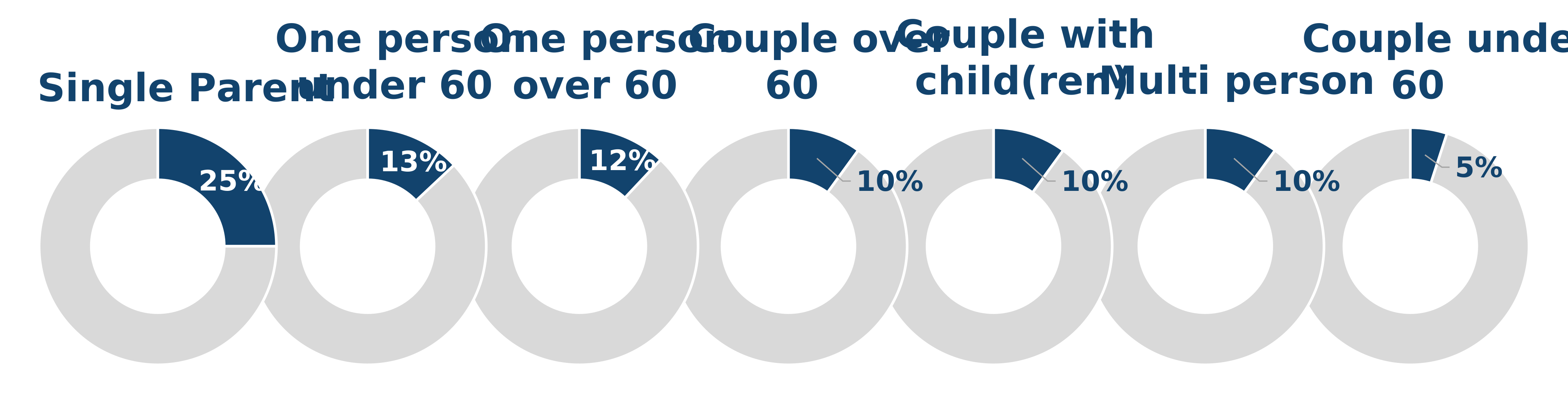
Description of figure 5: Pie charts showing the proportion of households in fuel poverty by household composition in England in 2024:
- Single parent, 25%
- 1 person under 60, 13%
- 1 person over 60, 12%
- Couple over 60, 10%
- Couple with child(ren), 10%
- Multi person, 10%
- Couple under 60, 5%
Rurality and gas grid connection
Households living in rural areas had a higher rate of fuel poverty, at 12.3%. Households in semi-rural areas had a lower rate of fuel poverty rate at 10.6%, and urban areas had the same rate as the overall population, at 11.0%. Households living in rural areas were much less energy efficient than other households on average, with a median fuel poverty energy efficiency rating of 64, compared to an overall median of 70. Households living in rural areas also occupy larger dwellings, with a median floor area of 115m2, compared to an overall median of 85m2. This combination of low energy efficiency and large floor area led to a very high median fuel cost of £2,740 in rural areas, driving the higher fuel poverty rate[footnote 18].
Figure 6: Proportion of households in fuel poverty by rurality, 2024, England[footnote 19]
| Rurality | Proportion of households in fuel poverty (%) |
|---|---|
| Urban | 11.0 |
| Semi-rural | 10.6 |
| Rural | 12.3 |
Households living in properties off the gas grid were also more likely to be fuel poor, with a rate of 17.0%. In contrast, households living in properties on the gas grid had a fuel poverty rate of 10.1 per cent. Households living in properties off the gas grid had a higher median fuel cost (£2,590) and lower median fuel poverty energy efficiency rating (63) compared to those living in properties on the gas grid (median fuel cost of £2,220 and a median fuel poverty energy efficiency rating of 70)[footnote 20].
Figure 7: Households in fuel poverty by gas grid connection, 2024, England[footnote 21]
| Gas grid connection | Proportion of households in fuel poverty (%) |
|---|---|
| Yes | 10.1 |
| No | 17.0 |
Regional variations
There was a high level of variation in fuel poverty rates between regions. The West Midlands had the highest rate of fuel poverty at 16.4%, compared to 9% in the East. The lower median incomes seen in northern regions and the West Midlands were likely key drivers of the higher rates of fuel poverty.
Figure 8: Proportion of households in fuel poverty by region, 2024, England[footnote 22]
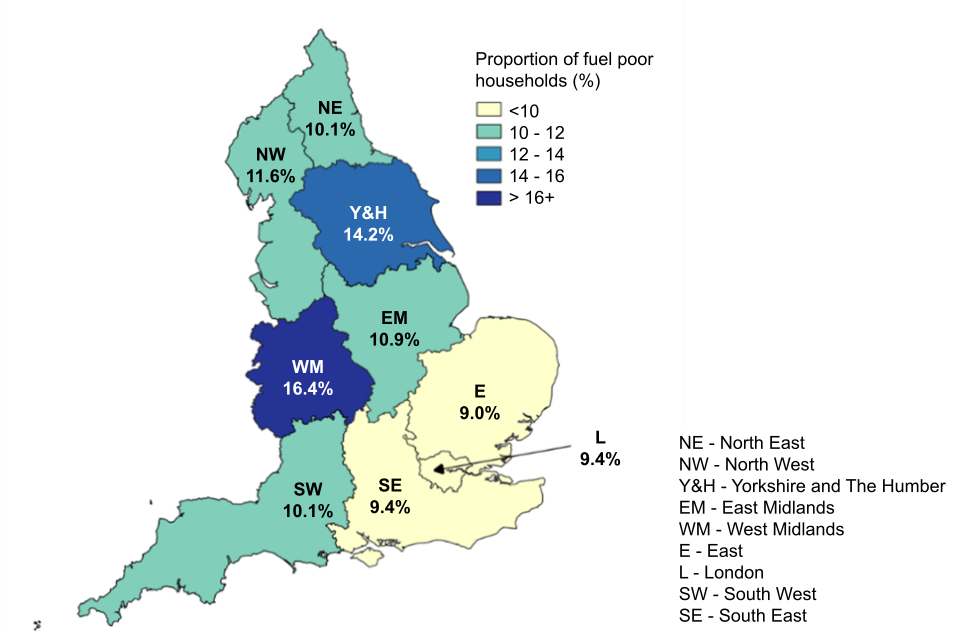
Description of figure 8: Choropleth map showing the proportion of households in fuel poverty by region in England in 2024:
| Region | Proportion of fuel poor households (%) |
|---|---|
| North East | 10.1% |
| North West | 11.6% |
| Yorkshire & The Humber | 14.2% |
| East Midlands | 10.9% |
| West Midlands | 16.4% |
| East | 9.0% |
| London | 9.4% |
| South West | 10.1% |
| South East | 9.4% |
Energy affordability
No household has been immune from the effects of the energy crisis, which has meant that energy has become less affordable for millions regardless of the quality of their home. For many low income households, the lived experience has meant similar trade-offs that fuel poor households faced before the energy price peak. This strategy therefore adds weight to the importance of energy market reform and targeted bill support to make energy more affordable, in particular for lower income households facing challenges in achieving warm and efficient homes. The policy plan outlined in Chapter 4 sets out ‘improving energy affordability’ as one of the 2 key pillars to address fuel poverty, alongside ‘improving energy performance.’
Within this strategy we are committed to incorporating the energy affordability challenges faced by households. To do this we will monitor the impact of energy affordability for all households and low-income households[footnote 23]. We will report annually on average (median) required energy costs[footnote 24] as a proportion of household income (after housing costs)[footnote 25]. Our central target remains the fuel poverty target so there is a clear singular focus for government. For all households in England in 2024, the median proportion of income spent on energy is estimated to be 7.7%. For low income households, this is more than twice as large at 16.4%, reflecting the greater energy affordability challenge faced by many low income households. In 2024, all households and low income households in England have similar median required energy costs, at £2,240 and £2,130, respectively. However, median required energy costs for low income households comprise a larger proportion of their median income. The median income after housing costs for all households is £30,730 but £14,410 for low income households.
Figure 9: Average required energy costs as a proportion of household income (England)
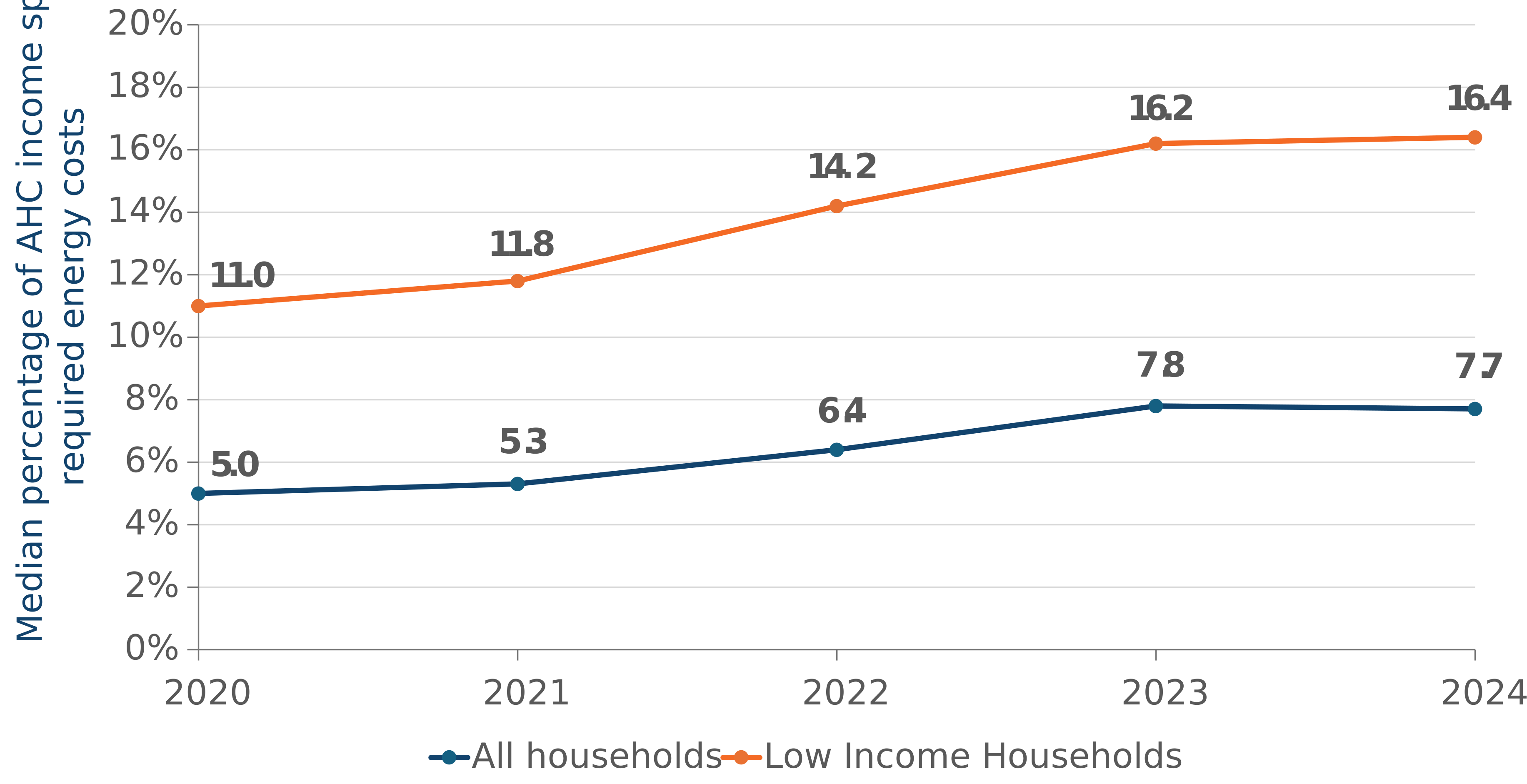
Description of figure 9: Line chart showing the average required energy costs as a proportion of household income in England from 2020 to 2024:
| Household income | 2020 | 2021 | 2022 | 2023 | 2024 |
|---|---|---|---|---|---|
| All households | 5.0% | 5.3% | 6.4% | 7.8% | 7.7% |
| Low income households | 11.0% | 11.8% | 14.2% | 16.2% | 16.4% |
Commitment 2: We will report on the average required energy cost as a proportion of household income to monitor the impact of energy prices on low income households.
3. Strategic approach
This strategy sets out a renewed approach to accelerating progress to alleviate fuel poverty and support the delivery of our priority missions to rebuild Britain:
- Make Britain a clean energy superpower: due to the global and interconnected nature of the energy market, geopolitical instability in other parts of the world can lead to rises in the price of oil and gas in the UK. Our current dependence on volatile and expensive fossil fuels is bad for energy bills, energy security, fuel poverty and climate change. The solution is cheap, clean power in the home through solar panels, battery storage and clean heat, alongside energy efficiency measures. That is why we are committed to our mission to boost energy independence, reduce bills for good, create jobs and, ensure taxpayers, billpayers and communities reap the benefits of clean, secure, home-grown energy.
- Kickstart economic growth: upgrading homes to alleviate fuel poverty requires an expansion of green jobs to retrofit homes, creating skilled jobs across the country. The investment of £15 billion through the ‘Warm Homes Plan’ will boost demand and require hundreds of thousands of jobs in the energy sector, and help to reduce people’s time off work due to their or their children’s illness caused by poor quality homes[footnote 26],[footnote 27].
- Build an NHS fit for the future: living in a cold or damp home significantly impacts respiratory, cardiovascular and mental health, with links to mortality rates. This exacerbates health inequalities and places an avoidable burden on health services and social care. Poor quality housing is estimated to cost the NHS £1.4 billion a year in first year treatment costs alone, of which £895 million a year is a result of cold and damp homes[footnote 28]. The long-term costs to the NHS and social care will far exceed this. Delivering warm homes is an integral part of the ‘10-Year Health Plan’s shift toward prevention and reducing health inequalities, by prioritising support for fuel-poor households most at risk from cold, damp, and energy-inefficient homes.
- Break down barriers to opportunity: this new fuel poverty strategy and our Child Poverty Strategy[footnote 29] ensures children across the country have what they need to get the best start in life, ensuring that living in a cold home does not create a ceiling on the ambition of young people. Tackling child poverty is at the heart of this government’s mission to break down barriers to opportunity.
Vision
Our vision is for fuel poor households to live in warm, efficient homes with reduced bills and improved comfort, health and well-being. We plan to not only lower bills in the short term, but to deliver homes that are fit for the future. Our Warm Homes Plan aims for every household to have the opportunity to benefit from clean energy technology in their home, harnessing the power of rooftop solar, battery storage, clean heat and energy efficiency to save millions of households hundreds of pounds on their bills.
The UK is more exposed to international energy price shocks than our peers. This vulnerability has driven inflation and a cost-of-living crisis and has been made worse by the UK’s relatively old, predominately gas-heated housing stock. With gas prices still considerably higher than their pre-energy crisis levels, the status quo is harming people’s finances, their health, and the nation’s energy security.
The effects of higher energy bills are felt most starkly for those on low incomes and with long-term health conditions or disabilities and age-related vulnerabilities, including older people and young children. For those living in fuel poverty, higher energy bills aren’t just a matter of cost; they can be the difficult choice between sufficiently heating and feeding their families. For those with long-term health conditions or a disability, those who rely on energy for treatment or management of their condition and who have little discretion over their energy use, the high cost of energy can place them under significant financial distress. Energy rationing, which leads to underheating can have significant health impacts, including increased risk of heart attack, stroke and respiratory illness as well as poor mental health. Underheating can also lead to the development of damp and mould which is also associated with significant health risks.
This new fuel poverty strategy, alongside our ‘Warm Homes Plan’ set out a new plan to decarbonise heating and improve the quality of the building stock alongside energy market interventions to make energy more affordable for lower income households.
Strategic principles
This strategy sets out 5 strategic principles. These principles will be used to guide policy decisions as part of tackling fuel poverty in England. When designing fuel poverty support schemes our primary objective will always be to reduce energy costs for low income households.
- Supporting the worst homes
- Vulnerability
- Cost effectiveness
- Sustainability
- Consumer protection
Supporting the worst homes
Over the past 10 years policies to tackle fuel poverty have focused on upgrading the worst performing homes first. More than 90% of low income households today live in homes rated Band D or above[footnote 30]. After 10 years of implementation, the ‘Worst First’ principle is being adapted. This revised approach emphasises ensuring the worst homes are not left behind as we deliver progress to the fuel poverty target.
This means no longer prioritising the worst homes at the expense of those in Band D properties, but seeking to accelerate progress through ensuring the maximum number of low income households can benefit from lower bills and more energy efficient homes by 2030. In implementing this principle, we remain committed to ensuring that the 462,000 low income households living in EPC E, F or G rated homes[footnote 31] are not excluded from policies and continue to receive support. This will help to ensure a retained focus on alleviating fuel poverty for those living in the worst quality homes, including those off the gas grid and in rural communities.
Reducing the number of the worst performing homes by 2030 has been included as one of the key outcomes of this strategy, with annual reporting to monitor the reduction in the number of the worst homes. This outcome aims to prevent any unintended consequence of these homes not seeing the support they need, just because their home cannot be cost effectively upgraded to Band C. As a result, a key outcome this strategy aims to achieve is a continued reduction in the number of fuel poor households living in the least energy efficient housing.
Vulnerability
The 2015 ‘Fuel Poverty Strategy’ introduced the vulnerability principle to recognise that some fuel poor households are more at risk from the impacts of living in a cold home than others. This complements ‘supporting the worst homes’ principle, which focuses on the housing stock, whilst the vulnerability principle considers the needs of people living in these homes.
Under the vulnerability principle, we specifically consider the needs of low income households most at risk from the impact of living in a cold home while designing fuel poverty policy. Based on the National Institute for Health and Care Excellence (NICE) NG6 guidance on Excess Winter Deaths and Illness and the Health Risks Associated with Cold Homes[footnote 32], we consider low income households to be vulnerable if at least 1 member of the household is:
- 65 or older
- Pregnant
- Younger than school age
- Living with a long-term health condition which makes them more likely to spend most of their time at home, such as mobility conditions which further reduce ability to stay warm
- Living with a long-term health condition which puts them at higher risk of experiencing cold-related illness – for example, a health condition which affects their cardiovascular, respiratory or immune system (including cancer), or mental health
Following the NG6 guidance we have included the previously omitted at risk vulnerable group of pregnant women. There has been a growing body of evidence[footnote 33] since the publication of the 2021 fuel poverty strategy highlighting a correlation between exposure to cold whilst pregnant with adverse birth outcomes such as preterm birth, low birth weight and stillbirth. Pregnant women and their unborn children are also at increased risk of more severe illness from damp and mould exposure.
It is expected that lowering the risk these vulnerable groups face from living in a cold home will improve health outcomes and proactively help improve their conditions or reduce their risk of developing any in the first place. This in turn will help government reach its health mission goals with a more comfortable, healthy home temperature acting as a preventative measure. As acknowledged in the NHS ‘10 Year Health Plan’, effective preventative support can both provide a solid foundation for a thriving life and reduce lifetime NHS costs. A vulnerability principle that includes households with children younger than school age, and the addition of pregnant women will reflect the importance of giving children a healthier start in life.
New fuel poverty policies will consider how to best support vulnerable households Some fuel poverty policies may specifically target or prioritise particular types of vulnerability. We will continue to monitor vulnerability in the annual fuel poverty statistics, so that we can track the level of vulnerable households in fuel poverty. At time of publication the English Housing Survey (the source of data for annual fuel poverty statistics) does not collect data on whether households contain pregnant women. If data becomes available that allows us to report on pregnancy within the statistical categorisation of vulnerability, then we would look to include this in our annual statistics publication.
Cost effectiveness
Alleviating fuel poverty involves funding from a range of actors, including central government, local authorities, energy companies, billpayers and taxpayers. It is essential that home upgrade interventions are cost effective, ensuring that public funds are used efficiently and result in tangible benefits for fuel poor households – primarily through reduced energy bills.
Given the diversity of the types of households in fuel poverty and their circumstances, illustrated in Chapter 2, a uniform approach to assessing cost effectiveness is not appropriate. Instead, schemes should establish cost control mechanisms that align with their policy objectives. These mechanisms should ensure cost effectiveness at the scheme level.
For example, applying a household-level Benefit to Cost Ratio (BCR) may not be practical for regulatory interventions in the rental sector. Property-level cost caps are a more practical method of cost control for simplicity of regulation, delivery and enforcement. Nevertheless, BCRs remain an important tool for evaluating the economic case during scheme design and when preparing impact assessments.
Not all homes will be cost effective to treat. To quantify cost effectiveness in the illustrations below, we have used both a BCR of greater than 1 and a £10,000 cost cap to be reflective of the decisions made by schemes when developing business cases, and the cost cap controls proposed for the private and social rented sector regulations.
We have illustrated 3 different home archetypes that can be brought out of fuel poverty under the value for money considerations and explored the measures estimated to be most cost effective[footnote 34] to bring them out of fuel poverty. The household archetypes are from different tenures type and starting bands but are not intended to be representative of the entire fuel poor population, who have diverse characteristics, even within specific tenures or starting bands. It is not possible to model a universally suitable package of measures for all households. Therefore, results may not be transferable to homes with similar features due to more discrete property features not discussed here.
Example 1: Band D, Semi-Detached Home, Gas Heated in Social Housing
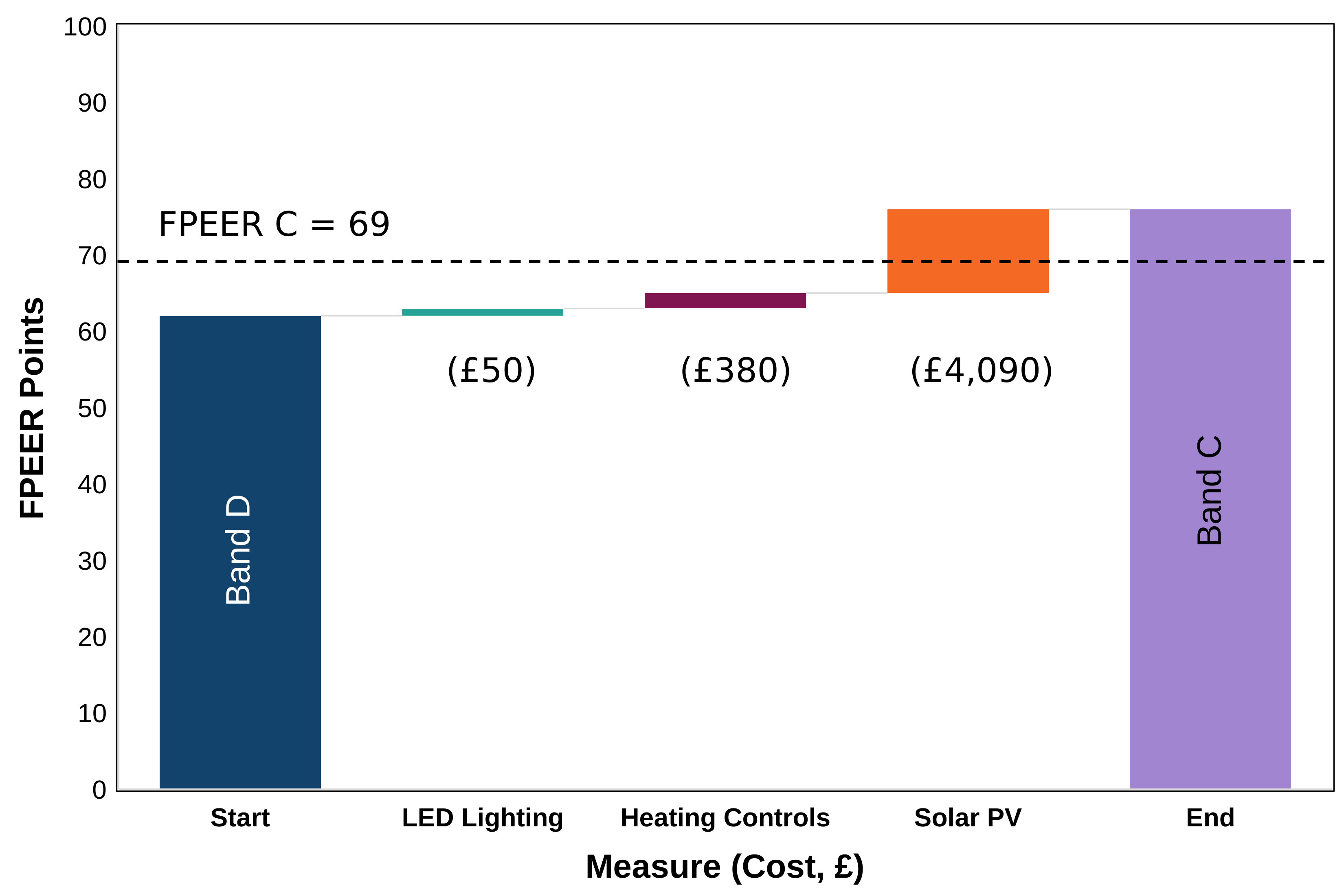
This represents around 2,500 of the 120,000 Band D semi-detached social homes.
- This household’s FPEER score improves from 62 to 76.
- The total cost of these installations is £4,730.
Example 2: Band E, Low Rise Flat, Electrically Heated in Private Rented Sector
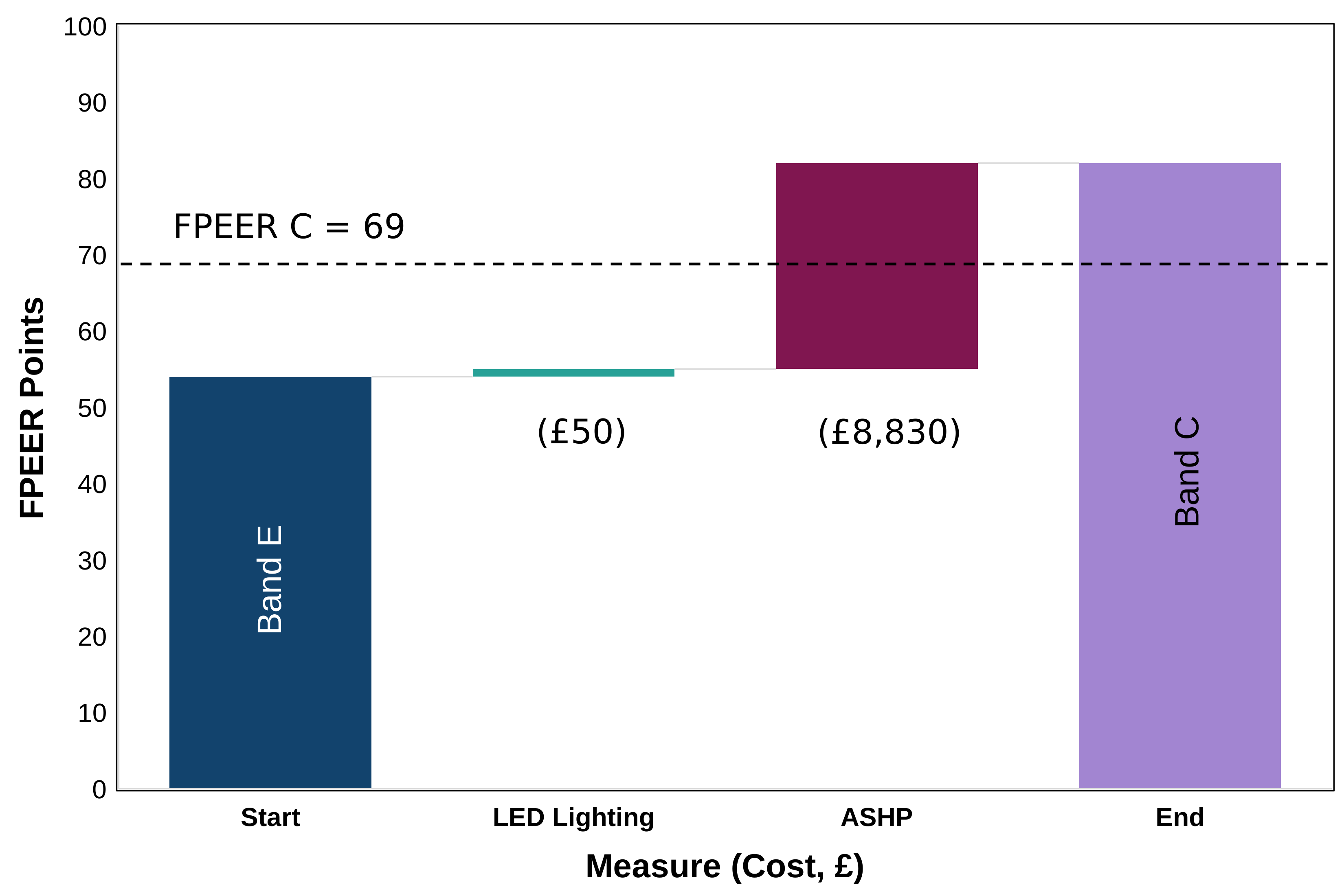
This represents around 2,400 of the 16,000 Band E low rise flats in the PRS.
- This household’s FPEER score improves from 54 to 82.
- The total cost of these installations is £8,880.
Example 3: Band F, Low Rise Flat, Electrically Heated in Owner Occupier Sector
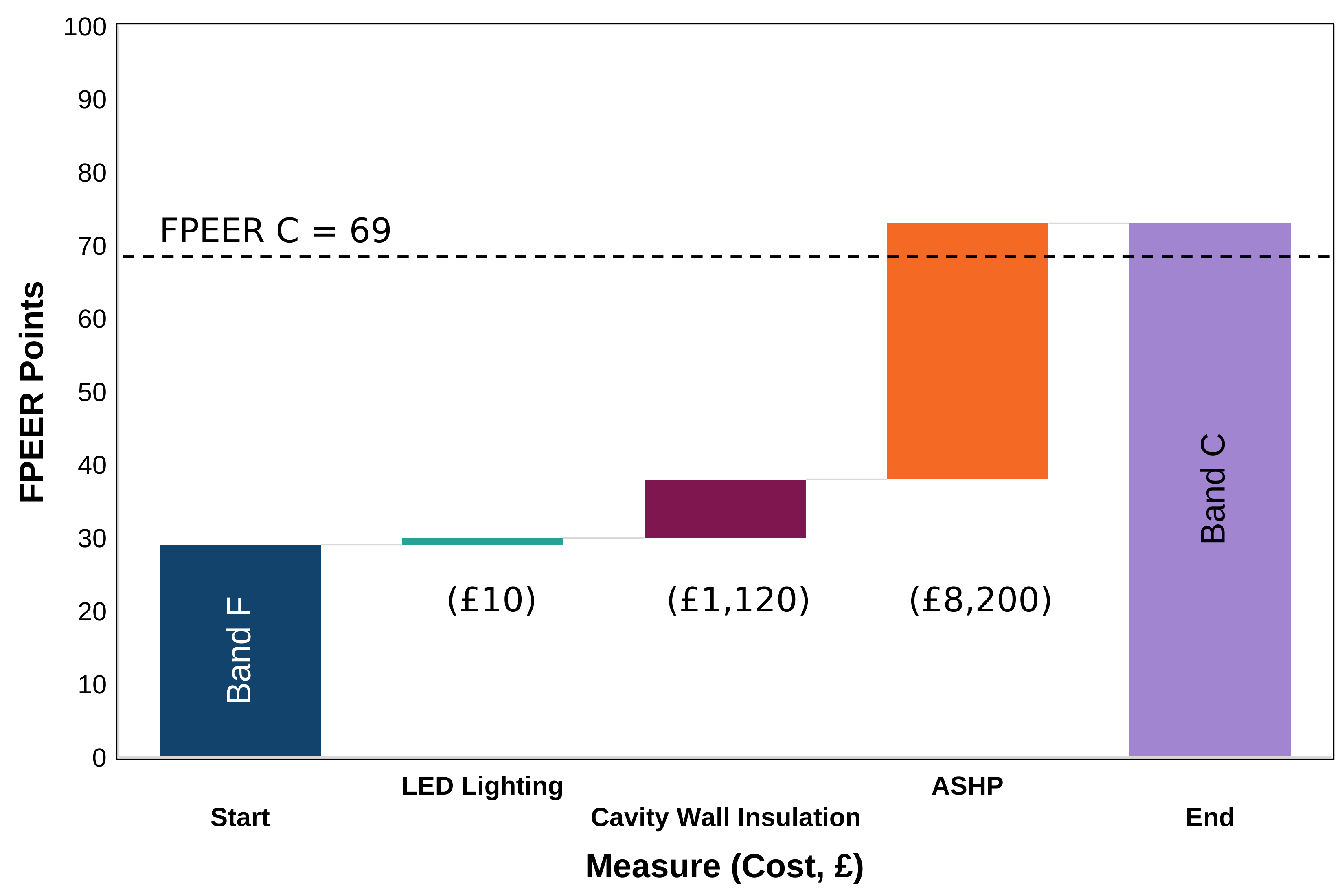
This represents all 2,800 Band F/G owner-occupied low rise flats in the OO.
- This household’s FPEER score improves from 29 to 73.
- The total cost of these installations is £9,330.
Description of examples:
Example 1: Bar chart showing the improvement in Fuel Poverty Energy Efficiency Rating (FPEER) for a semi-detached social home after installing energy measures. The starting score is 62 (Band D) and rises to 76 (Band C). Measures shown along the horizontal axis include LED lighting (£50), heating controls (£380), and solar PV (£4,090), with total cost £4,730. A dashed line marks the Band C threshold at 69 points. Vertical axis ranges from 0 to 100 FPEER points.
Example 2: Bar chart showing improvement in Fuel Poverty Energy Efficiency Rating (FPEER) for a low-rise flat in the private rented sector after installing energy measures. The starting score is 54 (Band E) and rises to 82 (Band C). Measures shown along the horizontal axis include LED lighting (£50) and an air source heat pump (£8,830), with total cost £8,880. A dashed line marks the Band C threshold at 69 points. Vertical axis ranges from 0 to 100 FPEER points.
Example 3: Bar chart showing improvement in Fuel Poverty Energy Efficiency Rating (FPEER) for an owner-occupied low-rise flat after installing energy measures. The starting score is 29 (Band F) and rises to 73 (Band C). Measures shown along the horizontal axis include LED lighting (£10), cavity wall insulation (£1,120), and an air source heat pump (£8,200), with total cost £9,330. A dashed line marks the Band C threshold at 69 points. Vertical axis ranges from 0 to 100 FPEER points.
Sustainability
The sustainability principle aims to ensure that the fuel poverty strategy is driving interventions that deliver sustainable change that is coherent with wider government work. This includes Net Zero, climate change adaptation, child poverty and preventative health care. These wider priorities should have a reciprocal relationship with supporting progress to alleviate fuel poverty, such as achieving net zero having consideration of a fair transition and ensuing that low-income households are early beneficiaries of the transition.
To deliver sustainable outcomes beyond 2030, government will have a reduced role in supporting the installation of fossil fuel-based heating. The next generation of fuel poverty policies will focus on ramping up the deployment of low carbon heating solutions alongside fabric energy efficiency measures, solar and batteries to start delivering homes that are compatible with our net zero future. This aims to ensure that fuel poor households living off the gas grid in rural areas heated by oil, LPG or coal heating systems as well as those with a gas boiler can benefit from cleaner energy and lower bills.
We do not see a role for new, first -time fossil fuel central heating systems, which will not be supported by the next generation of government support schemes. Government schemes focused on improving energy performance, will not ordinarily support fossil fuel based heating and instead look to deploy low carbon technologies that can cut energy bills at an increasing scale. We will however consider how to provide targeted support for low income and vulnerable consumers when their heating system breaks in crisis situations where low carbon heating is not be an immediately viable alternative, such as the support provided by energy suppliers under Warm Home Discount industry initiatives.
Consumer protection
This strategy sets out a new principle which reflects the ‘Warm Homes Plan’ and our strengthened approach to consumer protection and installation standards. Consumers will be at the forefront of this approach, with stronger consumer protection measures and a more robust consumer protection regime. As part of delivering better outcomes for consumers, we will:
- Strengthen consumer protections and installation standards: We will replace the current, failed protections system with one that can command public confidence. Immediate improvements to installation oversight are underway and we will consult this year on options for brining government scheme installations under closer government control.
- Improve the customer journey: Streamline the entire consumer journey to make home upgrades faster, simpler, and more accessible. These changes will be strengthened by the creation of a new Warm Homes Agency from 2027, to co-ordinate and oversee the delivery of millions of home upgrades, support consumers through their home upgrade journey and provide a trusted source of advice and support.
Outcomes
In implementing this strategic approach, the key outcome will be to accelerate progress to the fuel poverty target, supporting more low income households who are struggling to keep warm at a reasonable cost. The LILEE metric helps to measure progress as we work toward the fuel poverty target. In addition to the headline outcome of progress against the 2030 fuel poverty target, alleviating fuel poverty will drive other key outcomes:
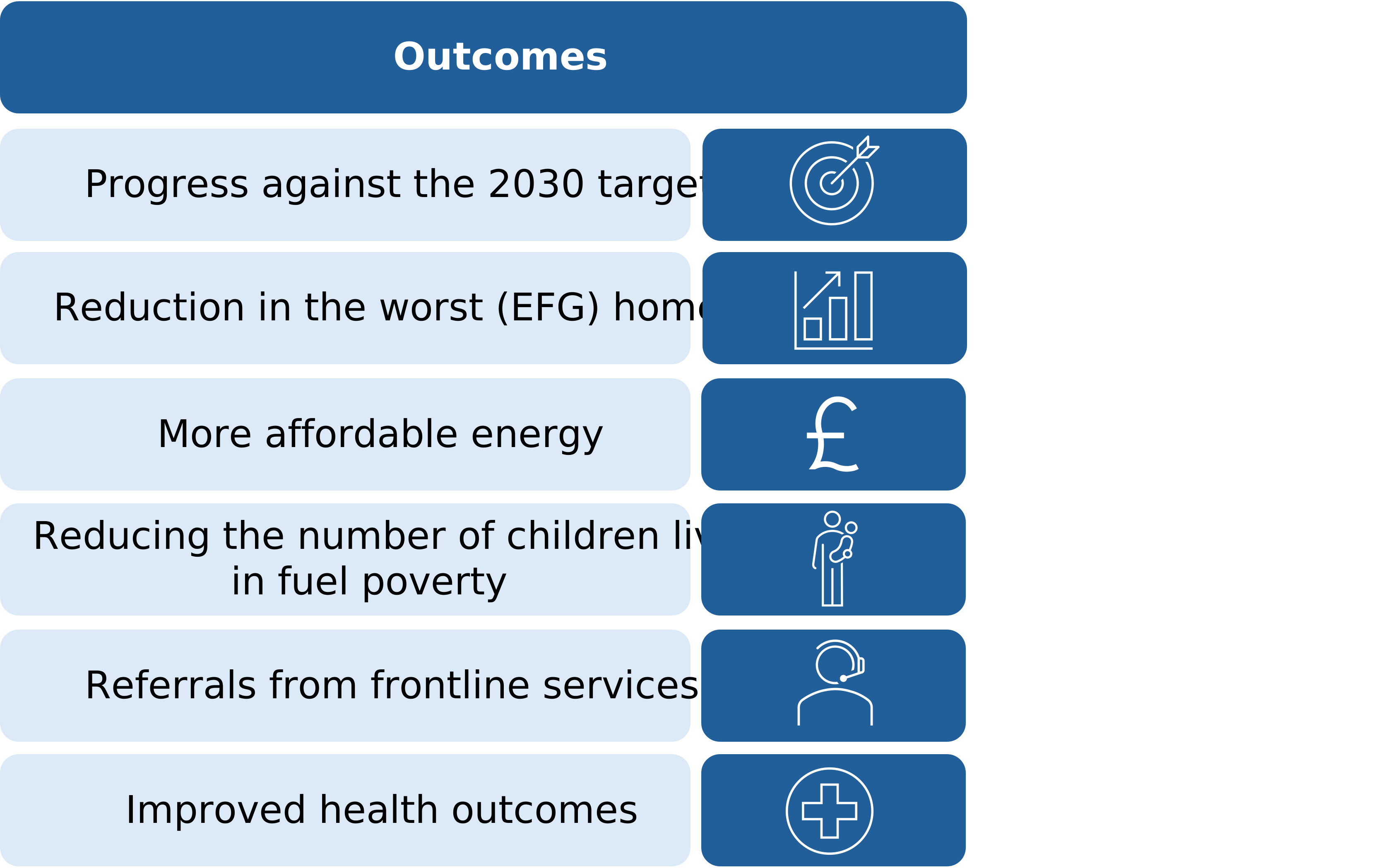
Description of figure:
Outcomes:
- Progress against the 2030 target
- Reduction in the worst (EFG) homes
- More affordable energy
- Reducing the number of children living in fuel poverty
- Referrals from frontline services
- Improved health outcomes
Government aims to make progress against these key outcomes and report on them where data is available, to complement the annual fuel poverty statistics.
This includes delivering progress to the target whilst ensuring the worst homes are not left behind, through a reduction on the number of E, F and G rated homes through the implementation of the energy performance policy plan as set out in Chapter 4. Alongside this we will monitor the impact of energy prices on low income households.
To support wider priorities to alleviate child poverty and health inequalities government also aim to reduce the number of children living in fuel poverty and improve health outcomes. To integrate these cross-sector metrics, we will work with local authorities, charities and frontline services to make every contact count through more holistic advice and integrated referrals.
4. Our policy plan to alleviate fuel poverty
This chapter sets out this government’s policy plan to accelerate alleviating fuel poverty this decade. The policy plan has 2 foundational pillars:
- Energy performance: Reducing the number of low-income households living in poor quality housing that can be the most expensive to keep warm.
- Energy affordability: Ensuring low-income households are protected from high energy prices and have access to a fair and functioning energy market.
Energy performance
In this section we outline current schemes and standards designed to improve the energy performance of fuel poor households. Through the Warm Homes Plan the government wants all households to have access to help with home upgrades to cut bills for millions of households by hundreds of pounds. This means new standards to protect renters, direct support for those on low incomes and universal grants and loans for homeowners.
As set out in Chapter 3, our priority is to ensure that all households can benefit from clean energy to reduce our current dependence on volatile and expensive fossil fuels. Delivering this will require a shift in the mix of measures that are delivered to upgrade homes. We will look to increasingly deliver packages of measures which include clean heat, solar, batteries and fabric insulation measures. Based upon the policies outlined in our forecast in this section we estimate there will be around 740,000 solar photovoltaic installations and a retained significant role for fabric measures to reduce heat loss with around 700,000 insulation measures[footnote 35].
The specific measure mix for each upgrade will depend on the needs of each building and household, and the final design of policies. Many properties already have good thermal performance and will benefit most from clean heat and flexibility technologies. Others will require fabric upgrades to bring down costs by reducing energy demand whilst also reducing the risk of underheating and instances of mould and damp, leading to better health outcomes.
Rental sector and housing sector standards
Private Rented Sector
The latest statistics show that 36.3% of fuel poor households in England are living in private rented accommodation[footnote 36]. It is not acceptable for landlords to let sub-standard properties that may have a negative impact on their tenants’ health and wellbeing, as well as contributing to fuel poverty. Government sees landlords as playing a significant role in investing in energy efficiency upgrades for their asset to ensure that their tenants are not living in fuel poverty.
Private Rented Sector Minimum Energy Efficiency Standards (PRS MEES): The existing domestic Minimum Energy Efficiency Standards in the Energy Efficiency (Private Rented Property) (England and Wales) Regulations 2015 require private landlords of F or G rated properties to improve their properties to a minimum energy performance rating of EPC E to be let, unless a valid exemption applies. If the landlord cannot source sufficient external funding, they are required to make a financial contribution of up to £3,500 including VAT, to meet the standard. This initial focus on the poorest quality rental properties is consistent with ‘supporting the worst homes’ principle of this strategy.
In February 2025, government launched a consultation on updates to the domestic Minimum Energy Efficiency Standards which reflect the fuel poverty target as well as government’s ambition to improve private rented homes to EPC C by 2030 or equivalent. The government response confirmed that government will take forward these proposals with a cost cap of £10,000. We anticipate that this could lift over 400,000 households out of fuel poverty by 2030. The government response confirms the following approach:
Privately rented homes in England will be required to meet a minimum standard of EPC C (or equivalent), by 1 October 2030, to be let, unless a valid exemption applies.
To support fuel poverty alleviation and decarbonisation, private rented homes will have to meet a primary fabric performance standard, followed by a secondary heating system or smart readiness standard, set against new EPC metrics to be introduced through EPC reform.
Landlords will be required to invest up to a maximum of £10,000 per property to meet the standard. If the property does not meet the standard after this investment, landlords may register a 10-year exemption to continue letting the property.
Utilising these new metrics means that landlords will be required to install measures that could improve the building’s heat retention, reduce the energy required to operate the building’s heating systems, and enable the occupier to optimise their energy use, to maximise the overall energy efficiency of the building and reduce its running costs.
For private rented homes that are rated C or above against the existing Energy Efficiency Rating (EER) metric on EPCs before 1 October 2029, these homes will be recognised as compliant with the higher standard until the EPC expires or is replaced. This provision rewards landlords that have already taken steps to improve their property’s energy efficiency and encourages early action, whilst still delivering towards the fuel poverty target by the end of 2030.
Social housing
19.6% of fuel poor households in England live in social housing[footnote 37]. Social housing tenants having lower average incomes that other sectors, however due in part to the positive impact of the introduction of the Decent Homes Standard alongside investments made through the Warm Homes: Social Housing Fund (formally the Social Housing Decarbonisation Fund) social housing has the highest rates of energy performance. However, as there remain over 500,000 fuel poor households living in socially rented accommodation, there is still work to do to improve fuel poor homes to Band C.
Social Rented Sector Minimum Energy Efficiency Standards (SRS MEES): In July 2025, government published a consultation on introducing a Minimum Energy Efficiency Standard in the social rented sector for the first time. The consultation proposed:
Social homes in England should be required to meet minimum standard set at EPC C (or equivalent), by 2030.
A primary fabric performance metric, followed by a secondary heating system or smart readiness metric, are proposed to measure compliance with SRS MEES.
If a social housing provider spends £10,000 on improving a property towards meeting SRS MEES but does not meet the standard, they would be exempt from any further spend on that property for 10 years.
Properties that have already met EER C by 2028 would be compliant with SRS MEES for the remainder of their EPC validity period.
Exemptions that are proposed in government’s consultation on a reformed ‘Decent Homes Standard’ would also apply to SRS MEES.
If the consultation approach for SRS MEES is implemented, it is expected that between 198,000 and 253,000 homes could be brought out of fuel poverty by 2030 and up to 347,000 to 403,000 over the course of the regulation, depending on how social housing providers choose to meet the secondary metric of the standard.
The consultation closed on 10 September 2025. The government is considering responses and a government response will be published in due course.
Warm Homes: Social Housing Fund (WH:SHF): The Warm Homes: Social Housing Fund (formerly SHDF) provides grant funding for social housing landlords to improve the energy performance of their properties through the installation of energy efficiency measures and low carbon technologies.
Since its introduction in 2020, the Social Housing Fund has delivered energy efficiency upgrades to around 1,000 properties under the SHDF Demonstrator Project and around 16,000 properties under SHDF Wave 1. Wave 2.1 and Wave 2.2 are still in the delivery phase with around 70,000 homes expected to be upgraded. So far, almost 100% of the homes that have been retrofitted as part of Wave 2.1 and 2.2 (that started at EPC D or lower) have been upgraded to EPC C.
Wave 3 of the WH:SHF was launched in April of this year and allocated around £1.29 billion to around 140 projects and 2 devolved Mayoral Combined Authorities across England to deliver until 2028. This has been more than matched by the sector meaning £2.6 billion is currently in delivery to support social housing tenants living in homes below the fuel poverty target level (D to G). In addition, the National Wealth Fund has guaranteed up to £1.65 billion of lending for social housing retrofit.[footnote 38]
Housing sector standards
Whether they live in social housing or the private rented sector, tenants deserve to live in decent homes, to be treated with fairness and respect and to have issues with housing quality resolved quickly.
Decent Homes Standard: The Decent Homes Standard has played a key role in setting the minimum standards that social homes are required to meet since the early 2000s ensuring that most social housing is safe warm and in good condition. Whilst many landlords are committed to providing safe and secure homes for their tenants, around 10% of homes in the sector do not meet the current Decent Homes Standard, with 4% containing the most dangerous hazards.
The government is currently consulting on updates to the Decent Homes Standard which will also apply to privately rented housing for the first time and remove the blight of poor-quality homes in local communities.
Housing Health and Safety Rating System: The Housing Health and Safety Rating System (HHSRS) is a risk based framework set out in regulation to assess residential premises and covers a range of 29 potential hazards. HHSRS assessments evaluate the potential risk of harm to an occupier and rates the seriousness of any hazard identified. Hazards are assessed as either ‘category 1’ or category 2’. Local authorities are legally required to take enforcement action under the Housing Act 2004 when category 1 hazards are found, including serious risks like fire. Despite this, many homes particularly in the private rented sector still contain category 1 hazards, with 2023 data showing 10% of private rentals, 8% of owner-occupied homes, and 4% of social housing affected. The HHSRS also underpins the Decent Homes Standard, which social housing fails if category 1 hazards are identified.
A 2023 review by the previous government proposed streamlining the system by reducing the number of hazards and simplifying the scoring process.[footnote 39] The review proposed non-statutory baselines (for example, ‘stairs must be safe, secure, in sound condition, free of defects and projections, well maintained’). These would not replace the whole risk assessment but are easier for tenants to understand and landlords to deliver. This government is considering the outcomes of the review. New regulations would be required to bring the conclusions of the HHSRS review into force. DESNZ and MHCLG will work together to ensure the HHSRS review aligns with wider government aims on energy efficiency and fuel poverty.
Renters’ Rights Act: The Renters’ Rights Act delivers our manifesto commitment to end Section 21 ‘no fault’ evictions and will improve the current system for both the 11 million private renters and 2.3 million landlords in England. It will give renters much greater security and stability and avoids the risk of homelessness.
Government published its implementation roadmap for the Renters’ Rights Act on 13 November 2025. The roadmap commits to a coming into force date of 1 May 2026 for a number of key measures in the Act, including the abolition of section 21 and the move from assured shorthold to assured periodic tenancies.
Awaab’s Law: Improved energy efficiency is crucial to tackling damp and mould which disproportionately affects the least energy efficient homes, with 20% of social rented dwellings in the least energy efficient homes suffering from damp problems, in comparison with only 6% of social renters in the most efficient homes[footnote 40]. The tragic death of 2-year old Awaab Ishak in 2020 highlights the potentially devastating impact of untreated damp and mould.
In June 2025, government laid regulations in Parliament to bring into force the first phase of Awaab’s Law and new Electrical Safety Standards in the social rented sector. Awaab’s Law came into force for the social rented sector on 27 October 2025, requiring social landlords to address all emergency hazards and damp and mould hazards that present a significant risk of harm to tenants within fixed timeframes.
Awaab’s Law will also be applied to the private rented sector and all landlords will have to comply. Residents will be able to take legal action through the courts for a breach of contract or seek redress through the Housing Ombudsman Service.
Future Homes Standard: By improving the energy efficiency of new homes, introducing solar panels by default and moving to cleaner sources of heat, we can reduce carbon emissions and minimise energy costs for consumers
The Future Homes Standard, will be introduced through the Building Regulations in the next few months. Homes constructed to this standard will have good quality building fabric, including insulation, and be fitted with low carbon heating technology, such as heat pumps. They will be ‘zero carbon ready,’ meaning that they will become zero carbon over time as the electricity grid fully decarbonises, without the need for any retrofitting.
Low income owner occupiers
44% of fuel poor households own their home, representing 1.2 million households in England. Many fuel poor owner occupiers, whilst owning an asset, do not have the resources available to invest in upgrading their home. Support will be required to ensure that those on the lowest incomes are not left behind in the transition to net zero.
Warm Homes: Local Grant: The Warm Homes: Local Grant provides energy performance measures and low carbon heating to low-income households in England to tackle fuel poverty and deliver progress towards Net Zero 2050 and the Carbon Budgets.
Energy cutting and bill saving measures available to eligible households include insulation measures, heat pumps, solar PV and batteries, and smart controls, alongside other energy performance measures such as draft proofing, windows, and doors.
The WH:LG has been allocated £500 million to be delivered from 2025 to 2028 by participating local authorities. This builds on the delivery by Local Authorities under the off-grid focused Home Upgrade Grant (HUG) and the broader support available under Local Authority Delivery (LAD). WH:LG is available to low-income households living in privately owned EPC D-G homes both on and off the gas grid in England.
Further funding for home upgrades: The Budget 2025 allocated an additional £1.5 billion to the Warm Homes Plan for the purposes of alleviating fuel poverty, bringing the Warm Homes Plan low income offer to over £5 billion. Low income grant funding will be delivered initially through the government’s Warm Homes: Local Grant and the Warm Homes: Social Housing Fund.
From 2027 to 2028 onwards, we intend to integrate the WH:SHF and WH:LG into a single low-income capital scheme which will shift toward area-based delivery, learning the lessons from previous obligation schemes. Planning and delivering at the local level also means taking a more deliberate approach to how home upgrades align with the wider energy network. We aim to build on the experience of local authorities and other partners, whilst aligning with network needs and capacity. This means looking at how we can best utilise Distribution Network Operators’ (DNOs) position to coordinate delivery with Local Authorities and align with delivery of Regional Energy Strategy Plans (RESPs) and Local Area Energy Plans (LAEPs). A joined-up systems approach will be more targeted and deliverable and develop more mature approaches to delivering at scale, supporting progress towards fuel poverty and emissions reduction goals. We will say more about the evolution of low-income schemes by March 2026.
Commitment 3: We will ensure support is in place to upgrade low-income owner occupied households through to at least 2030.
The schemes outlined above are focused on improving the energy efficiency of consumers’ homes, with a particular focus on supporting fuel poor households to ensure that millions of low-income households see energy bill savings and are early beneficiaries of the transition to net zero.
Many of these schemes and standards can work together to support individual fuel poor households in making their homes cheaper to heat and to support local authorities in targeting and delivering support for those most in need, delivering the best quality service for their community. By focusing on the energy efficiency of homes, we are seeking to deliver long lasting change and reduce fuel poverty in the long term.
Universal support: The ‘Warm Homes Plan’ ensures that there is an offer for all households to upgrade their homes. This includes universal grant support for households to switch to clean heat through the Boiler Upgrade Scheme (BUS). BUS will continue to provide grants of £7,500 towards the upfront cost of installing hydronic heat pumps to eligible applicants in England and Wales. It will also provide new £2,500 grants towards the cost of installing air-to-air heat pumps and heat batteries for central heating. The BUS provides £5,000 grants for biomass boilers for whole house heating and hot water, where strict rules require verified installation in a rural area and certification showing emissions are minimised. The scheme is also helping to encourage multi-technology systems that combine heat pumps with solar and batteries, which can result in very low running costs. Funding for BUS will expand each year out to 2029/30, totalling around £2.7 billion.
Alongside rising funding for the BUS, the Warm Homes Plan also allocates up to £5 billion for a new Warm Homes Fund (WHF) to make investments in and loans to the home upgrade sector. We intend to use around £600 million of the facility to target low‑income households. As a first investment, working with the finance industry, we intend to allocate up to £1.7 billion of the facility to new low- and zero-interest consumer loans, to help more households meet the upfront costs of improving their homes. This funding would be made available to lenders who apply to participate in the scheme and be combined with up to £300 million of other government funding to lower the cost of loans for consumers. Our vision for low-interest and zero-interest consumer loans is to make a range of low-cost finance solutions available for homeowners. The scheme could be used to fund the installation of a single technology or package of measures. This includes solar panels and batteries, facilitating immediate electricity bill savings, and heat pump installations, combined with the BUS grant. Government will launch a call for evidence early in 2026 to identify where else in the market the WHF can deliver the greatest impact.
Energy affordability
Energy bills are too high and this government is relentlessly focused on bringing them down. Budget 2025 acted to reduce energy bills by an average of £150. Combined with the expansion of the Warm Home Discount to provide a £150 rebate to nearly 6 million low income households this winter, government is ensuring those in the greatest need benefit the most from energy bill reductions.
This section of the policy plan sets out the approach to making energy bills more affordable. Whilst improving energy performance and decarbonising heating is essential to tackle fuel poverty over the long term and to achieve net zero, many low-income households need support to afford their energy in the shorter-term, and a smaller subset of vulnerable households may always need additional market and price protections regardless of the energy efficiency and energy performance of their home.
Some households have always struggled to afford energy, even when average bills were relatively more affordable for households on average incomes. This is especially the case for households with significant energy requirements, such as having a member with a disability or health condition which requires medical equipment. Following Russia’s invasion of Ukraine, energy bills soared, creating significant challenges for a larger pool of low-income households to afford the energy they need and exacerbates the problem for households who already struggled.[footnote 41] The volatility of fossil fuels extends to households off the mains gas grid, who can also face affordability challenges that can be more unique to rural communities, a further illustration of the need to move to cleaner cheaper home-grown energy sources.
To tackle this challenge, we need a new approach which delivers direct bill support through the energy system and ensures that our energy market protects and supports low income and vulnerable households.
We also set out the wider approach under this government in Chapter 5, which considers the role of the wider health and benefits system in delivering further support, increasing incomes and reducing or alleviating energy detriments.
Direct bill support
Direct bill support ensures that available funding is paid directly into household energy accounts, providing direct and immediate support with energy costs. Given that energy prices pose a challenge to many households we are expanding our direct bill support offer from this winter onwards until at least 2030 as part of our plan to meet the fuel poverty target.
Warm Home Discount
The Warm Home Discount started in 2011 and has been providing help with energy bills to millions of low income and vulnerable people ever since. This government has extended the Warm Home Discount (WHD) to an additional estimated 2.7 million low-income households this winter (2025 to 2026). The WHD is providing essential support this winter to reassure many households who are struggling to keep warm, that they can turn on their heating over the winter months. This expanded support also provides an important acceleration of progress towards the fuel poverty target, by keeping an estimated 430,000 households out of fuel poverty in winter 2025 to 2026, up from 282,000[footnote 42] in 2024 to 2025. The Warm Home Discount is applied as a rebate typically paid into electricity accounts, ensuring access to those off the mains gas grid.
Of course, given the nature of bill support these bill savings last only as long as the support is in place. Therefore, in September 2025 we consulted on the continuation of the Warm Home Discount. We plan to extend targeted energy bill support through to at least winter 2030 to 2031, building upon the reforms to the Warm Home Discount in 2025.
The Warm Home Discount also includes ‘Industry Initiatives’ through which energy suppliers provide alternative forms of immediate relief and support to families in crisis. Initiatives include debt support, emergency boiler replacement or repair and providing rebates to low income households living in park homes who do not have a direct relationship with an energy supplier.
Commitment 4: This government plans to extend targeted bill support through to winter 2030 to 2031.
Access to a fair and functioning energy market
With gas prices still significantly higher than historic levels, our exposure to international fossil fuel markets is still the main driver of high energy bills. This government believes that our mission to deliver clean home-grown energy by 2030 is the best way to break our dependence on global fossil fuel markets and protect billpayers permanently. The creation of Great British Energy will help us to harness clean energy and have less reliance on volatile international energy markets and help in our commitment to make Britain a clean energy superpower by 2030. This, combined with our ‘Warm Homes Plan’ to upgrade millions of homes to make them warmer and cheaper to run is how we will drive down energy bills and make cold homes a thing of the past.
Action on bills
The affordability crisis is the biggest issue facing this country. The government’s Autumn 2025 Budget acts to take an average £150 of costs off people’s energy bills from April 2026. Government is implementing 2 significant actions to reduce household energy costs and reform the way energy investments are funded:
- Removal of ECO: The Energy Company Obligation (ECO) scheme is being discontinued. Instead, the government is allocating an additional £1.5 billion in capital from HM Treasury to the Warm Homes Plan, making it the largest public investment in British history in home upgrades and tackling fuel poverty.
- Reform of the Renewables Obligation (RO): From April 2026/27 to 2028/29, 75% of the domestic costs of the Renewables Obligation will be moved to the Exchequer. This principled reform shifts the balance from levies on bills to public spending, resulting in an average £150 reduction in household energy costs. Over three years, £7 billion worth of historic RO levies will be funded through public expenditure, providing short-term relief and greater long-term benefits for consumers.
As a result of this action, families across Britain can expect to make a significant saving on their bills. The exact savings will depend on individual circumstances. Energy represents a greater proportion of household expenditure for low-income households, including those with young children, and so these savings will represent a greater saving as a proportion of their outgoings.
In England in 2024, 9 million households (36.3%) were required to spend more than 10% of their income (after housing costs) on energy. We estimate that the Autumn 2025 budget energy bills package would reduce this number by 1.1 million to 7.9 million households (32.0%).[footnote 43] While the typical household will save an average of £150, the savings will depend upon a household’s energy consumption. For example, a high demand rural household with poor energy efficiency could save £205, while a high-use electric storage heated household could save over £440.[footnote 44] This support comes on top of the expanded Warm Home Discount Scheme, which will provide a £150 bill discount to up to 6 million households (who are in receipt of means-tested benefits).
Making electricity cheaper: The action government took at the Budget to cut the cost of living and take an average of £150 of costs off peoples energy bills also supports our plan to reduce electricity costs. Our ambition is to ensure that clean heat is the most attractive and natural option for people when they come to upgrade or replace their heating system. That means driving down upfront costs, helping with financing and grants, and ensuring that everyone can reap the financial benefits with cheaper electricity and smart tariffs. Expanding our home upgrade policies to include generation and storage technologies is part of this, as we know that clean heat in combination with these technologies can offer huge savings. We are pushing the industry to go further still on improving efficiency of systems. And most importantly, we are taking action to make electricity cheaper.
We removed some policy costs from electricity bills to help consumers and because we recognise that some energy system costs falling disproportionately on electricity bills has led to an unfair distortion in relative gas and electricity prices. This distortion tilted the playing field away from electrification and disguised the efficiency of clean heating technologies. This was a principled decision, to pay for more of the historic costs of our energy system transition that still fell on bills through public spending instead. This change makes the distribution of costs fairer – including for those with traditional forms of electric heating – and supports households in adopting clean heating solutions. Ofgem are also reviewing cost recovery more widely in their Energy System Cost Allocation and Recovery Review.
The Budget took unprecedented steps to reduce electricity costs in a way that drove down costs for all households, with households with electric heating having benefited even further.
Energy Price Cap: This government is committed to ensuring fair energy prices for consumers. The energy price cap protects up to 11 million households on standard variable and default tariffs, ensuring that loyal customers are protected from poor value tariffs, and 4 million vulnerable consumers are protected by the safeguard tariff.
Smart meters: This government recognises the vital role that smart metering plays in the operation of a flexible and decarbonised power system and is driving industry to install smart meters in homes across Great Britain. Smart meters help households, including those who are fuel poor, to manage their energy use so that they can improve their efficiency and save money on their bills. As at September 2025, 70% of gas and electricity meters in homes and small businesses across Great Britain are now smart or advanced meters[footnote 45], making them the norm. Coverage of smart meters is progressing evenly across households including those in fuel poverty and those with pre-payment meters. To ensure that the benefits of smart metering are realised by those in fuel poverty, information on their benefits and how to book an installation has been provided to those in receipt of support from government energy efficiency schemes. As set out in the ‘Clean Flexibility Roadmap’[footnote 46] government views a smarter, more flexible clean energy system as part of our effort to bring down energy bills. Smart meters are a key enabler for consumers to save money by shifting some of their demand to when electricity is cheapest and renewable generation most abundant.
Pre-Payment Meters and self-disconnection: The scandal around poor supplier practices regarding the involuntary installation of prepayment meters must never be repeated. Ofgem has since introduced stringent rules for the involuntary installation of prepayment meters - this government is committed to holding poor practice to account, and we will continue to work with Ofgem and suppliers to ensure these rules are upheld and vulnerable households are protected. These licence requirements apply to both analogue and smart meters.
There are considerable benefits to smart prepayment, and the government requires suppliers to take all reasonable steps to ensure that all meter replacements or installations in new properties are smart meters. Unlike an analogue pre-payment meter, smart meters in pre-payment mode provide suppliers with near real-time consumption data. This enables them to quickly identify when customers go off supply and offer timely support. Smart meters in pre-payment mode also allow energy suppliers to set emergency credit and do-not-disconnect periods that automatically trigger once a customer runs out of credit, preventing them from going off supply.
Ofgem has now put additional protections in place for vulnerable customers, including to ensure that they do not pay more. This includes implementing tougher rules on involuntary prepayment meter installations and ensuring those on prepayment meters do not pay more for their energy than those on direct debit. Self-disconnection or self-rationing energy can be an indicator of a household’s financial vulnerability and fuel poverty risk.
Ofgem vulnerability and debt: To address high levels of domestic consumer energy debt Ofgem has published a debt strategy[footnote 47], including consultations on introducing a debt relief scheme and improving debt standards in the domestic energy retail market. As part of this Ofgem is also considering how to look at features of the energy market to prevent debt from being built up in the first place, whilst enabling appropriate debt recovery by energy suppliers.
Ofgem has also refreshed its ‘Consumer Vulnerability Strategy’. This provides a framework for how Ofgem and energy companies should identify and treat consumers in vulnerable situations, as well as embed consideration of vulnerability across the energy sector. It focuses on delivering better outcomes for consumers who are significantly less able to protect or represent their interests, or who are significantly more likely to suffer detriment. Through the strategy Ofgem aims to refocus the industry’s priorities to ensure consumers in vulnerable situations get the right support, build a collaborative way of working to maintain sufficient focus on the needs of consumers in vulnerable situations, and bring transparency to Ofgem’s priorities, work programmes and expectations of companies.
The heat networks market is expected to grow significantly over the coming years, driven by our ‘Warm Homes Plan’, as they can offer the lowest-cost clean heat in densely-populated places. Existing heat network consumers are more likely to be vulnerable and at risk of fuel poverty,[footnote 48] so we are taking steps to protect fuel poor and vulnerable heat network consumers. This will include Ofgem protections for the most vulnerable consumers from disconnection or involuntary installation of pre-payment meters.
2030 forecast
The inherited position makes the 2030 target challenging, but this government is taking action to slash fuel poverty by 2030 with the policy plan described in this chapter and its commitment to set a follow-on target.
Reasonably practicable
The fuel poverty target is to ensure as many fuel poor households ‘as is reasonably practicable’ achieve an energy performance rating on Band C by 2030. In practice, there are several factors which determine how many homes can achieve the target by 2030. This government is keen to ensure that there is a clearer understanding of the considerations that feed into what may be ‘reasonably practicable’ to achieve by 2030. Reasonably practicable considerations include, but are not limited to, the following considerations:
- Property characteristics: not all homes can be improved to the target standard through energy efficiency upgrades with current technology and planning requirements.
- Value for money: interventions should focus on socially cost effective measures which will reduce carbon emissions, improve households’ health and lower their energy bills.
The Technical Annex published alongside this strategy expands on these considerations and quantifies their impact, including that around 500,000 homes cannot reach the target level due to value for money and property characteristics. In addition to these constraints, there are several other considerations[footnote 49] that impact the number of households reasonably practicable to bring out of fuel poverty by 2030:
- Supply chain: the ability of the domestic retrofit supply chain to scale up to deliver the ‘Warm Homes Plan’. The supply chains and materials used by support schemes and meet planned regulatory requirements overlap with the wider retrofit and construction market. An expanded programme of support requires growth in the relevant skilled supply chains. As set out in the ‘Warm Homes Plan’, government is investing over £150 million of new funding for skills, manufacturing and innovation.
- Wider drivers impacting fuel poverty: energy prices and household income trends will impact rates of fuel poverty and progress to the target.
- Householder preferences: While there is significant support offered to many fuel poor households, this may not be universally desired by all households for legitimate reasons.
- Targeting of support: As set out in Chapter 5, government does not hold household level data on which specific households are living in fuel poverty, but is working to improve its data availability and remove targeting inefficiencies.
Given the breadth of the considerations and uncertainties of these conditions, it would not be sensible or desirable to seek to translate ‘as many as is reasonably practicable’ into a single percentage of anticipated progress, however below we seek to build consensus for the potential anticipated outcomes by 2030.
Anticipated outcomes
At the start of the last Parliament there were 3.2 million fuel poor households, falling to 2.7 million in 2024[footnote 50]. This strategy will accelerate progress to alleviate fuel poverty with a forecast of around 1 million households lifted out of fuel poverty by 2030 by energy efficiency schemes, the expanded Warm Homes Discount (WHD) and natural measure replacements. Including the 282,000 households that will continue to be kept out of fuel poverty by the existing WHD, this figure rises to 1.2 million. Through the implementation of this plan, government aims to double the pace of slashing fuel poverty. This would leave around 1.8 million remaining in 2030 but would reverse the trend of stalling progress under the previous government. As outlined in Chapter 1, the fuel poverty target does not represent the end goal. This government is committed to driving forwards an acceleration of alleviating fuel poverty and will consult on a legal framework to succeed the 2030 target to ensure continuation of policy to ensure that low income households can achieve warm and efficient homes. Figure 10 includes existing policies[footnote 51], policies from the ‘Warm Homes Plan’[footnote 52] and natural replacements[footnote 53].
This projection only includes announced policies that have at least reached the consultation stage. There are also policies in their early stages that have not been included but could reduce the number of remaining fuel poor households beyond what is estimated. This includes the £1.5 billion additional funding for the ‘Warm Homes Plan’, allocated at Budget 2025, which as outlined above has not been allocated in full and government will engage with stakeholders to design.
While there were 2.7 million households in fuel poverty in 2024, Figure 10 also includes the 282,000 households who would be in fuel poverty if they were not receiving the WHD. The forecast then illustrates the forward-looking impact of continuing the expanded WHD from the winter of 2025 to 2026 to the winter of 2030 to 2031 and brings the same proportion of remaining households out of fuel poverty. In the winter of 2025 to 2026, 430,000 households are projected to be lifted of fuel poverty compared to 290,000 in the winter of 2030 to 2031. The fall is because there are fewer fuel poor households remaining as more are brought out by other policies. More details on this, and the assumptions behind the projection can be found in Section 5 of the Technical Annex.
Figure 10: Households brought out of fuel poverty by 2030 from polices and natural replacements, by policy (millions, 2025 to 2030)
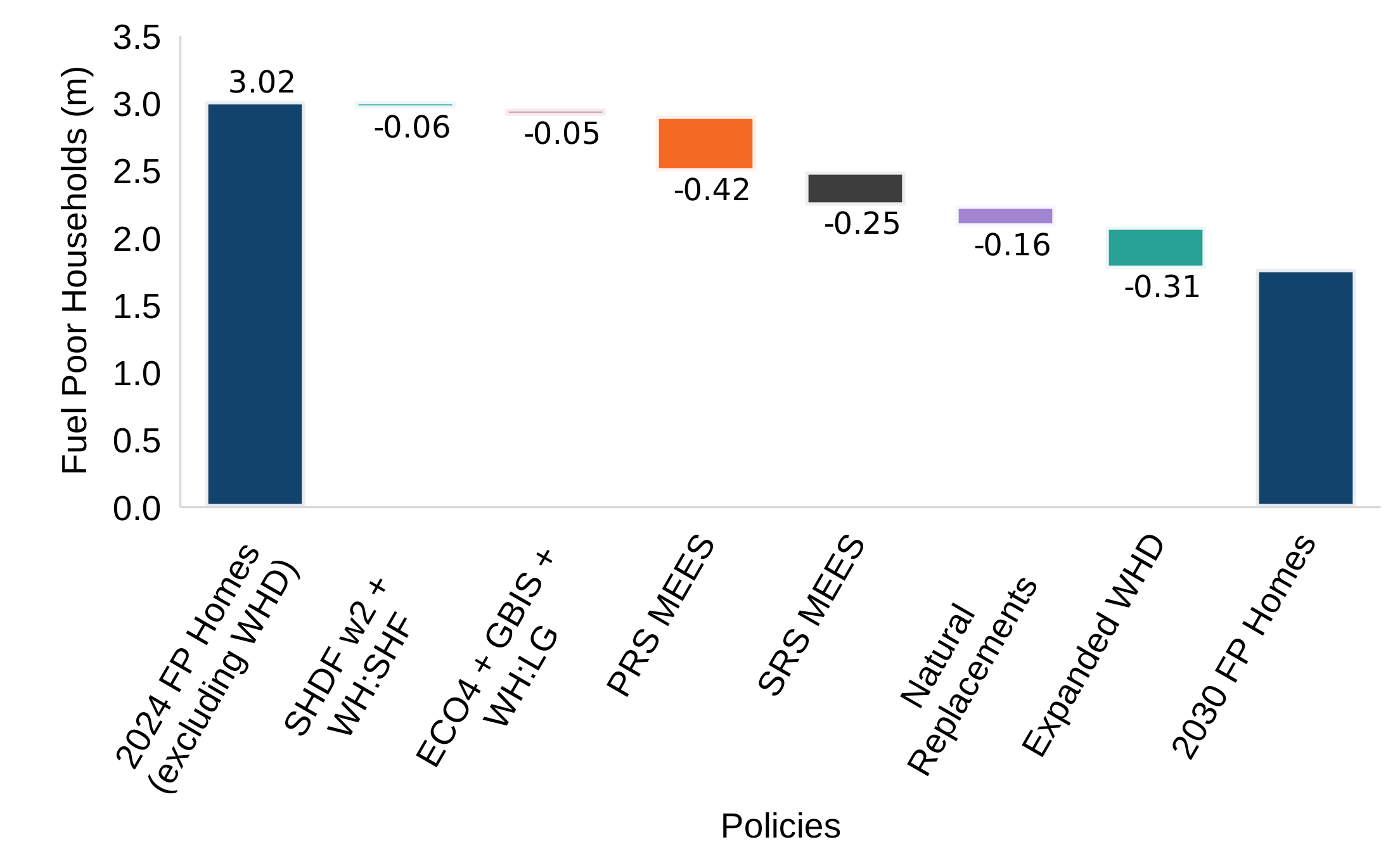
Description of figure 10: Bar chart showing the projected reduction in fuel poor households from 2024 to 2030 under different policies. The vertical axis shows fuel poor households in millions (0 to 3.5m). The first bar represents 2024 fuel poor homes excluding WHD at 3.02 million. Subsequent bars show estimated reductions from policies: SHDF w2 + WH:SHF (-0.06m), ECO4 + GBIS + WH:LG (-0.05m), PRS MEES (-0.42m), SRS MEES (-0.25m), Natural Replacements (-0.16m), and Expanded WHD (-0.31m). The final bar shows 2030 fuel poor homes at 1.77 million.
5. Strategic implementation
A cross sector approach
There are number of areas across government which are vital to supporting our efforts to tackle fuel poverty. Equally, tackling fuel poverty will play a key role in delivering on the UK government’s mission approach. Consequently, it is vital that we work closely across government to deliver a whole system approach and to better shape how we tackle fuel poverty so that it delivers on wider strategic objectives.
Boosting incomes and reducing essential costs
In addition to the action taken in the 2025 Budget to take around £150 off energy bills on average from April 2026, across this government, work is underway to support lower income and vulnerable households. Many of these policy initiatives will support households living in fuel poverty to better afford their energy bills.
National Living Wage (NLW) and National Minimum Wage (NMW)
The government increased the National Living Wage (for age 21 and over) by 6.7% to 12.21 per hour from April 2025, to provide a fair wage for the lowest-paid workers taking into account the cost of living for the first time.
On 1 April 2026, we will deliver an increase to the 18-20 National Minimum Wage rate of 8.5% to £10.85 per hour continuing progress on closing the gap with the NLW.
This represents an increase of over £1,500 to the gross annual earnings of a full-time worker on the NMW and is in line with the government’s plan to remove the discriminatory age bands and ensure that all adults benefit from a genuine living wage.
Job security
The Employment Rights Bill will end exploitative zero hours contracts by legislating for workers without security and predictability to be guaranteed a number of hours reflective of the hours they regularly work, and get reasonable notice of their shift patterns, with payment for shifts cancelled or curtailed at short notice, which will improve job security.
Benefits system
This government has also legislated for the first permanent, above-inflation rise in the Universal Credit (UC) standard allowance through the Universal Credit Act 2025. We are protecting those UC Health claimants who meet the severe conditions criteria and special rules for end of life. We are also committed to making sure that the Personal Independence Payment (PIP) is fair through the PIP review and supports disabled people to achieve better health, higher living standards and greater independence. We have set out ambitious plans for employment, including disability employment. The Get Britain Working White Paper, backed by an initial investment of £240 million in 2025 to 2026, will target and tackle economic inactivity and unemployment. This government is also delivering the biggest employment support package for disabled people, and people with health conditions, in more than a generation through a major investment in employment support backed by £1 billion a year of new, additional funding by 2030.
From 2025 to 2026 Winter Fuel Payments will be payable in England and Wales at £200 for households including someone between State Pension age and 79, and £300 for households including someone aged 80 or over. For higher income pensioners, those with an annual income of more than £35,000, the payment will be recovered via the tax system. Cold Weather Payments (CWPs) are targeted at those who are more vulnerable to severe weather such as older people, disabled people, and children under 5 who receive qualifying income-related benefits. Payments of £25 are made from 1 November to 31 March when the average temperature in a recipient’s postcode district is recorded as (or forecast to be) 0°C or below over 7 consecutive days.
Finally, from 1 April 2026, the government is introducing a new Crisis and Resilience Fund to reform crisis support in England. The fund will both provide immediate support to people on low incomes who experience a financial shock, and focus on preventing people from falling into crisis, or from falling further when they’re already struggling. Local Authorities will provide preventative support to communities by working with the voluntary and community sector to reinforce local networks that build individual financial resilience, including working with the advice sector.
Child Poverty Strategy
Fuel Poverty and energy affordability are intrinsically linked to child poverty. High energy costs can be the difference between a household being in poverty or not, and can force decisions on which essentials are bought. We also know that households with children typically require more energy than others, and that single parent households, households with young children (especially under 5) and households with pregnant women are amongst the most vulnerable to the impacts of a cold home. The link between child poverty and fuel poverty is further highlighted by fuel poverty rates. Currently households with a dependent child make up 34% of fuel poor households, and single parent households have the highest rate of fuel poverty[footnote 54].
The Child Poverty Taskforce’s recently published Child Poverty Strategy[footnote 55] sets out how the government intends to take the first step to eliminating child poverty. The strategy will lift 550,000 children out of relative low income in the final year of the Parliament, the largest reduction in child poverty by any government in a single Parliament. Around 7.1 million children will see their household incomes increase in the final year of the Parliament due to the strategy, including 1.4 million children in deep material poverty.
As part of this effort, the government has removed the 2-child limit which will lift 450,000 children out of relative poverty within this Parliament, and benefit over one and a half million children more generally, including over 600,000 children in households in deep material poverty.
Given the interaction between fuel poverty and child poverty we anticipate that the removal of the 2-child limit, and the broader measures set out in the Child Poverty Strategy, will have a positive impact on fuel poor households that contain a child and, as set out in Chapter 3, we will report on the number of children living in fuel poverty as a key outcome to monitor through the implementation of this strategy.
In addition, the ‘Fuel Poverty Strategy’ will also help to support the work of the Child Poverty Strategy by reducing fuel poverty, including for vulnerable households with dependent children. All children should have access to a warm safe home, and families should not have to choose between heating and eating. Young children are also at increased risk of more severe health impacts from living in a cold home, due to their developing organs and cognitive function, and the impact that a cold home can have on their mental health. Living in a cold home is also associated with reduced school attendance and poorer educational outcomes and reductions in future earning potential. As part of this approach, we are:
- Extending the Warm Home Discount in 2025 to 2026 to almost double the number of households with children that receive the Warm Home Discount, to 1.9m.
- Updating our vulnerability principle, which identifies both children under 5 and now recognises pregnant women as a vulnerable group.
- Working with other frontline services which support vulnerable households with children, to better enable advice and referrals such as Best Start Family Hubs so that these households can have better access to our ‘Warm Homes Plan’.
- Continuing to monitor outcomes related to children and fuel poverty to demonstrate the link between child poverty and fuel poverty and ensure that we tackle both issues effectively.
Health mission and healthy life expectancy
Fuel Poverty and poor health are strongly linked, as set out in the ‘10 Year Health Plan for England’. Energy costs can be higher due to health needs, including operating medical equipment, and in turn, cold and damp homes can either directly cause, or contribute to, health conditions including heart attacks, strokes and respiratory conditions.[footnote 56]
Moreover, as set out in our vulnerability principle, some people are more at risk of developing a new condition from a cold and damp home. This includes children under 5, the elderly, disabled and pregnant women. Effective preventative support can both provide a solid foundation for a thriving life and reduce lifetime NHS costs. In line with HMG’s mission approach, The ‘10 Year Health Plan’ outlines that DESNZ will work with DHSC to ensure health vulnerable households get the support they need to improve their homes.
In line with this approach, we will:
- optimise referral routes, including better targeting of health vulnerable groups and households experiencing fuel poverty
- better optimisation of national and local data
- track outcomes in the fuel poverty strategy related to health and energy costs.
- continue to engage with NICE, UKHSA and DHSC to ensure identification of vulnerable groups is based on the latest evidence
Net Zero, clean power and broader environmental work
Defra is the lead department on air quality. Defra have objectives that aim to reduce pollutants such as fine particulate matter from domestic combustion whilst DESNZ has objectives to phase out high carbon heating fuels. DESNZ will ensure they continue to work with Defra to enable these goals to be achieved without negatively impact on each other or those in fuel poverty, with low carbon heating being a viable solution to contributing to both air quality and decarbonisation objectives.
Partnership and advice
Partnership
By working together with other government agencies, the private sector, academic institutions, and civil society organisations, we can address complex challenges of fuel poverty more effectively. Partnerships also allow us to build on trust; trust built up by organisations over years of amazing work. In areas like energy, public health, and climate, strong partnerships enable us to respond in a coordinated way to tackle fuel poverty.
Local Authorities and Mayoral Strategic Authorities, with their understanding of their housing stock, communities and local supply chains, have an important role in planning delivery for their local areas. Many Local Authorities have, or are developing, Net Zero targets and strategies, plans for local regeneration and skills and in future it is expected they will have statutory responsibilities for improving health and health inequalities[footnote 57] and in some instances, Local Area Energy Plans. Beyond Strategic Authorities and Local Authorities, Distribution Network Operators, energy suppliers, housing associations, Gas Distribution Network Operators and Community Energy Groups will also play an important role.
We will work with stakeholders, including industry, consumer groups, DNOs and local government to review options for a more coherent delivery landscape to set out a new approach for how we will deliver additional capital spending by March 2026.There are a range of national and local charities and community organisations with a wealth of knowledge and evidence about fuel poverty, the groups in the population most affected, how to reach them, and the most effective ways to support them. Stronger partnerships and knowledge-sharing mechanisms would enable more effective targeting of support and better coordination of funding streams. Government will promote the better capturing and sharing of learning and best practice in fuel poverty and will explore with stakeholders how knowledge sharing platforms and forums could facilitate this.
Advice
We recognise that households experiencing fuel poverty, particularly those with vulnerabilities, need specific types of advice, support and routes to advice and that advice needs to lead to genuine, tangible improvements with improved access to support.
From 2027 we plan that our new Warm Homes Agency will support consumers through their home upgrade journey. It will seek to simplify and streamline the consumer experience whilst providing a trusted source of advice and support. The agency will offer impartial advice and clear information on home retrofit to consumers – online and by phone – so they can make informed decisions with confidence. We will consider how to integrate this with local advice services, thereby better targeting harder to reach communities and homes. A national phoneline will continue to support those consumers that require additional assistance or more specialised help. We are also developing a single online access point to provide information and advice on home upgrades. This will link consumers to trusted installers, options for finance and access to government support. The Warm Homes Agency, through its work delivering the Warm Homes Plan, will support wider government objectives to improve health and reduce health inequalities, by promoting delivery of decarbonisation schemes that will support vulnerable health groups.
Issues affecting fuel poor households could be wide-ranging, including possible debt, not claiming all the benefits they’re entitled to and undiagnosed mental and physical health issues. Fuel poverty related energy advice should be more holistic, working hand in hand with other advice services. Being able to discover and help treat other underlying issues will be crucial to improving the finances and health and wellbeing of the fuel poor. Energy advice should also be able to help to reduce bills and ease growing debts and physical and mental health concerns. We will look to work with other government departments and advice services to make advice a more interactive experience, able to point people to other types of advice that may be of use to them.
The WHD Industry Initiatives have played an important role in advice provision to support alleviating fuel poverty. These initiatives allow obligated energy suppliers to fund and deliver additional support to vulnerable and low-income households through trusted third-party organisations such as charities, local authorities, and community groups. We are looking at the best ways in which advice across government and national and local partners can interact in a meaningful way, including how we can better utilise the Industry Initiatives.
Eligibility, targeting and data
Meeting the fuel poverty target in a cost-effective way requires support to be targeted at those living in fuel poverty. Where appropriate, we should consider supporting the worst homes and vulnerability principles in the targeting of schemes as we seek to ensure that fuel poor and low-income households are prioritised in the delivery of existing and future fuel poverty schemes.
We also need to consider the changing landscape. In particular, the need for better use, and sharing, of data to improve the targeting of fuel poverty schemes, and more flexibility in the delivery of schemes such as exploring a local, area-based approach to upgrading communities.
Data matching
A key barrier to reaching households who need support has always been our ability to identify them through data. Government aims to make better use of data sharing to better reach the households most in need of support, going beyond using means tested benefits as the sole eligibility criteria.
To ensure those who need support get it, the government will continue to seek better and more innovative ways of matching and sharing data – including both application based and automated routes. We will also explore how both locally held and nationally held data can play a role. Delivering this will require action across government. It is a multifaceted challenge to automatically identify households by their combined income. It is also important to consider issues such as the risk of fraud and the protection of personal data when developing new data solutions.
We have brought together digital, data, legal and data protection experts across the government to look at how data can be used to identify people who need bill support. In particular:
- Explore possible verification models in order to target support based on household income data via application routes. This would enable the UK government to target more vulnerable households in advance of any progress on automated data, as well as being a potentially key tool in enhancing possible referral routes.
- During the next Warm Home Discount scheme period we will aim to explore incremental improvements, both in the level of support available and the reach of the scheme. This could include providing additional support to fuel poor households, and/or a digital applications route that would allow support to reach low-income households currently excluded from the scheme.
- We want to identify and prioritise support for households where residents are vulnerable to health risks and living in a cold home, as those conditions can aggravate existing illnesses. As part of this, DESNZ is working with DHSC to explore how best to align with the ‘10 Year Health Plan’ to reach vulnerable households with children, to enable access to our ‘Warm Homes Plan’.
Commitment 5: We will seek to expand data matching so that it can provide alternative ways to determine eligibility for support, including those not receiving means tested benefits.
Area-based approaches
Another alternative approach to using means-tested benefits as a proxy for fuel poor households is to use an area-based eligibility criteria such as the Indices of Multiple Deprivation income deciles (IMD:ID) approach. This approach has been used in the Home Upgrade Grant (HUG) Phase 2 and in the current Warm Homes: Local Grant (WH:LG). The IMD:ID approach makes all households in an economically deprived postcode area automatically eligible to receive upgrades, simplifying eligibility verification and delivery on the ground.
The government is interested in exploring a more local, area-based approach to the delivery of energy efficiency. This aims to upgrade communities, rather than individual households, within a specific area through local partnerships. Taking this approach can be cost effective by delivering at scale and overcoming some of the challenges around finding individual households. Adopting a local, area-based approach to delivery recognises the knowledge and expertise of local authorities and other local delivery bodies. Local government, including Mayoral Strategic Authorities, have a greater knowledge and understanding of their local area – the housing stock, the needs of their residents and local supply chains.
We understand the need to ensure that local authorities and other local delivery bodies have the support and capacity, such as funding and skills, to effectively deliver. We are keen to work with local authorities and Mayoral Strategic Authorities in the relevant areas to support area-based delivery.
Referrals
Enabling trusted third parties such as Local Authorities (LAs), healthcare professionals or charities to refer households for energy efficiency upgrades can help to better identify needs, target schemes and maximise their benefits. People experiencing fuel poverty may not seek support for a variety of reasons. For example, they may feel shame or experience stigma related to their position, or they may experience poor mental health, which can be exacerbated by living in a cold home and financial stress. Proactive referral mechanisms are particularly important for the people experiencing fuel poverty. Referrals can help to broaden access to support for households that are low-income, in fuel poverty or vulnerable to cold homes. The Warm Homes: Local Grant uses referrals to target low-income households living in the worst-performing homes (EPC D-G) for upgrades such as energy performance upgrades and low-carbon heating.
We are considering the most appropriate referral routes, from mortgage lenders to healthcare professionals to charity partners. Consumers engaging with healthcare professionals, for example, might be more in need of urgent support and therefore simple referral routes through healthcare professionals could enable us to support more vulnerable consumers earlier, in line with the vulnerability principle. Referrals need not only be for energy efficiency upgrades, and we will investigate how to incorporate referral mechanisms into bill support and energy advice, helping to reduce bills. Community support offering a wide range of services provide opportunities for referral routes through one-stop shops such as Neighbourhood Health Centres and Best Start Family Hubs.
We see proactive, easy-to-access referral routes as especially important for reaching vulnerable households. It is important that any referral mechanisms do not create undue burden on frontline workers involved and are quick and easy to implement. We are also considering how self-referral could play an increased role in fuel poverty schemes. Our aim is to empower and equip consumers to put themselves forward, and therefore self-referral must be inclusive and respond to the preferences of households living in fuel poverty. This will include different channels or routes to access help, rather than being digital only.
6. Scrutiny of progress
Scrutiny
We welcome public accountability from Parliament, expert advisors and the public. Progress toward the fuel poverty target and interim milestones is highlighted in the ‘Annual Fuel Poverty Statistics Report’.[footnote 58] In line with the statistics Code of Practice, DESNZ has sought to increase the timeliness of the ‘Annual Fuel Poverty Statistics Report’, to publishing fuel poverty statistics within 1 calendar year (for example, statistics for 2024 were reported in 2025). We see this as an important step towards increased public transparency.
The Warm Homes and Energy Conservation Act 2000 places a duty on the Secretary of State to implement this strategy. In this matter, as in all others, the Secretary of State is directly accountable to Parliament. Parliament may decide at any time to ask ministers to account for progress against the fuel poverty target and strategy implementation. We have previously committed to holding an annual parliamentary debate on fuel poverty in England. This commitment was made in the context of more stable and lower energy prices and steady progress against the fuel poverty target, meaning that there was less discourse on the impact of households not being able to afford their energy and there were fewer debates being brought forward by parliamentarians. Debates on fuel poverty and energy affordability now take place more regularly (at least once per annum), therefore in future we intend to implement a new approach to engaging with Parliament on fuel poverty.
Commitment 6: Following the publication of the annual fuel poverty statistics and fuel poverty scorecard we will publish a written ministerial statement to update Parliament on progress to alleviate fuel poverty in England.
The Committee on Fuel Poverty will continue to have an active role in relation to scrutiny of progress on fuel poverty. The Committee monitor and report on progress of the fuel poverty strategy and support and challenge the government on delivery. The Committee continues to monitor government’s progress toward the milestones and target and suggest appropriate actions to support delivery through their regular advisory reports and engagement with government officials and ministers. The Committee on Fuel Poverty will continue to have an active role in relation to scrutiny of progress on fuel poverty.
Commitment 7: Government will publish a response to the annual Committee on Fuel Poverty recommendations.
Reviewing the strategy
This strategy sets out our plan to accelerate alleviating fuel poverty and doing as much as is reasonably practicable to meet the 2030 target. We will keep the strategy under review and monitor implementation to guide whether any amendments are required in response to delivery challenges or wider global events that may impact the implementation of this strategy.
We acknowledge and have set out that this plan will not eradicate fuel poverty in 2030 and that there will need to be a statutory framework to succeed the 2030 target. We aim to consult on that framework this Parliament with a proposal for regulations to succeed the 2030 target. Should a successor target be set, we will set out a new strategy to meet this target within 6 months of the regulations coming into force as per the requirements of the Warm Homes and Energy Conservation Act.
-
DESNZ (2025) ‘Annual fuel poverty statistics report: 2025’, Section 2.3, GOV.UK ↩
-
DESNZ (2025) ‘Fuel poverty detailed tables 2025 (2024 data)’, Table 3, GOV.UK ↩
-
DESNZ (2025) ‘Fuel poverty trends 2025’, Table 1, GOV.UK ↩
-
Fuel Poverty Energy Efficiency Rating (FPEER) ↩
-
DESNZ (2025) ‘Fuel poverty trends 2025’, Table 3 and ‘Annual fuel poverty statistics report: 2025’, Figure 4.4, GOV.UK ↩
-
See the ‘Fuel poverty statistics methodology handbook’ for detail on the methodology of LILEE. ↩
-
The poverty line (income poverty) is defined as an equivalised disposable income of less than 60% of the national median in Section 2 of the ONS publication ‘Persistent poverty in the UK and EU: 2017’. ↩
-
DESNZ (2025) ‘Annual fuel poverty statistics report: 2025’, Headline statistics section, GOV.UK ↩
-
More detail on FPEER is available in the ‘Fuel poverty energy efficiency rating methodology’ ↩
-
DESNZ (2025) ‘Fuel poverty supplementary tables 2025 (2024 data)’, Supplementary table 1, GOV.UK ↩
-
DESNZ (2025) ‘Fuel poverty supplementary tables 2025 (2024 data)’, Supplementary table 12, GOV.UK ↩
-
DESNZ (2025) ‘Fuel poverty supplementary tables 2025 (2024 data)’, Supplementary table 19, GOV.UK ↩
-
DESNZ (2025) ‘Fuel poverty factsheet 2025’, GOV.UK ↩
-
DESNZ (2025) ‘Fuel poverty supplementary tables 2025 (2024 data)’, Supplementary table 6, GOV.UK ↩
-
DESNZ (2025) ‘Annual fuel poverty statistics report: 2025’, Figure 3.5, GOV.UK ↩
-
DESNZ (2025) ‘Fuel poverty supplementary tables 2025 (2024 data)’, Supplementary table 13, GOV.UK ↩
-
DESNZ (2025) ‘Fuel poverty supplementary tables 2025 (2024 data)’, Supplementary table 4, GOV.UK ↩
-
DESNZ (2025) ‘Annual fuel poverty statistics report: 2025’, Figure 3.12, GOV.UK ↩
-
DESNZ (2025) ‘Fuel poverty supplementary tables 2025 (2024 data)’, Supplementary table 9, GOV.UK ↩
-
DESNZ (2025) ‘Annual fuel poverty statistics report: 2025’, Figure 3.13, GOV.UK ↩
-
DESNZ (2025) ‘Annual fuel poverty statistics report: 2025’, Figure 3.10, GOV.UK ↩
-
Low income households have a disposable income (after housing and energy costs) below the poverty line ↩
-
Required energy costs are the modelled cost to heat a household’s dwelling to a satisfactory standard, based on household characteristics. See sections 5.1 and 5.2 of the ‘Fuel poverty statistics methodology handbook’ ↩
-
This metric is defined as the median proportion of AHC income spent on required energy costs. This proportion is calculated for each household as unequivalised required energy costs divided by unequivalised after housing costs income, multiplied by 100. AHC income is calculated as described in section 3 of the ‘Fuel poverty statistics methodology handbook’. ↩
-
Shelter (2021) Press Release: ‘Health of one in five renters harmed by their home’ ↩
-
Institute of Health Equity (2022) ‘Fuel Poverty, Cold Homes and Health Inequalities in the UK’, Page 17 ↩
-
Building Research Establishment (2021) ‘The Cost of Poor Housing in England’ ↩
-
Cabinet Office (2025) ‘Our Children, Our Future: Tackling Child Poverty’, GOV.UK ↩
-
DESNZ (2025) ‘Annual fuel poverty statistics report: 2025’, Section 2.3, GOV.UK ↩
-
DESNZ (2025) ‘Fuel poverty detailed tables 2025 (2024 data)’, Table 3, GOV.UK ↩
-
NICE (2015) ‘Excess winter deaths and illness and the health risks associated with cold homes’ ↩
-
UK Health Security Agency (2024) ‘Adverse weather and health plan equity review and impact assessment 2024’, Pregnancy and maternity section ↩
-
‘Cost effectiveness’ here is modelled as selecting measures that achieve the highest SAP score per £1 spent by the National Buildings Model (NBM). This is discussed further in Section 2.1 of the Technical Annex. ↩
-
Note this figure estimates the number of installations in fuel poor homes only, with more measures estimated to be delivered in non-fuel poor homes. ↩
-
DESNZ (2025) ‘Fuel poverty detailed tables 2025 (2024 data)’, Table 19, GOV.UK ↩
-
DESNZ (2025) ‘Fuel poverty detailed tables 2025 (2024 data)’, Table 19, GOV.UK ↩
-
National Wealth Fund (2025) ‘Financing growth, powering change: National Wealth Fund Impact Report 2025’ (PDF, 3.08 MB, 28 pages) ↩
-
DESNZ (2025) ‘Housing Health and Safety Rating System (HHSRS): review outcomes and next steps’, GOV.UK ↩
-
MHCLG (2025) ‘English Housing Survey 2023 to 2024: drivers and impacts of housing quality’, GOV.UK ↩
-
DESNZ ‘Annual domestic energy bills’, Table 2.2.5 and Table 2.3.5 ↩
-
DESNZ (2025) ‘Annual fuel poverty statistics report: 2025’, Section F.3, GOV.UK ↩
-
Under the official Low Income Low Energy Efficiency (LILEE) measure of fuel poverty, the energy bills package is estimated to have a small positive impact, reducing the proportion of households in fuel poverty from 11.0% to 10.9%. These estimates provide a comparison to the published figure for 2024 (holding other factors equal) by applying the reduction in fuel costs relating to the budget package to unit costs. Note, other changes between 2024 and 2026 are not reflected in these estimates, including: wider budget announcements such as removing the two-child limit on Universal Credit, the Warm Home Discount scheme expansion, and changes to incomes and energy efficiency. Updated fuel poverty statistics to be published in early 2026, will project the levels of fuel poverty and affordability in 2026, reflecting all changes to household incomes and energy efficiency measures. ↩
-
DESNZ (2025) News story: ‘What does the Autumn Budget mean for your energy bills?’, GOV.UK ↩
-
DESNZ (2025) ‘Smart meters in Great Britain, quarterly update September 2025’, GOV.UK ↩
-
DESNZ (2025) ‘Clean flexibility roadmap’, GOV.UK ↩
-
Ofgem (2025) ‘Debt Strategy: next steps’ ↩
-
The Heat Network Consumer and Operator Survey, carried out in 2022, found that 30% of heat network consumers were 65 or older, compared to 18% in the general population. 35% of consumers reported having a long-term physical or mental health condition or illness, compared to 24% of the general population from the Family Resources Survey, which was carried out in a similar period. ↩
-
These criteria are expanded on in Section 4 of the Technical Annex. ↩
-
DESNZ (2025) ‘Fuel poverty detailed tables 2025 (2024 data)’, Table 1, GOV.UK ↩
-
Existing policies included are the Energy Company Obligation (ECO) 4, Great British Insulation Scheme (GBIS) and Social Housing Decarbonisation Fund (SHDF) Wave 2 ↩
-
These are the Warm Homes: Social Housing Fund (WH:SHF) Wave 3 and 4, the Warm Homes: Local Grant (WH:LG), and Private and Social Rented Sector (PRS/SRS) Minimum Energy Efficiency Standards (MEES) ↩
-
Natural replacements represent boiler replacements for social housing and private rented sector households, and lighting replacements for all households. Further details can be found in Section 5.1 of the Technical Annex. ↩
-
DESNZ (2025) ‘Fuel poverty detailed tables 2025 (2024 data)’, Table 21, GOV.UK ↩
-
Cabinet Office (2025) ‘Our Children, Our Future: Tackling Child Poverty’, GOV.UK ↩
-
UK Health Security Agency (2024) ‘Adverse Weather and Health Plan’, Supporting evidence, Page 11, GOV.UK ↩
-
DESNZ (2025) ‘Fuel poverty statistics’, GOV.UK ↩