Fuel Poverty Strategy for England: Technical annex
Updated 26 January 2026
Applies to England

© Crown copyright 2026
This publication is licensed under the terms of the Open Government Licence v3.0 except where otherwise stated. To view this licence, visit nationalarchives.gov.uk/doc/open-government-licence/version/3 or write to the Information Policy Team, The National Archives, Kew, London TW9 4DU, or email: psi@nationalarchives.gov.uk.
Where we have identified any third party copyright information you will need to obtain permission from the copyright holders concerned.
This publication is available at https://www.gov.uk/government/publications/fuel-poverty-strategy-for-england/fuel-poverty-strategy-for-england-technical-annex
1. Introduction
This annex provides further information on the internal analysis presented in the Fuel Poverty Strategy, explaining the methodology, assumptions, caveats and sensitivities around key charts and figures. The annex provides an illustration of households that are not ‘reasonably practicable’ to be brought out of fuel poverty with measures due to value for money or property characteristics. It projects the number of households that will be brought out of fuel poverty following the impact of certain government policies. The annex also demonstrates the potential bill savings that a fuel poor household could experience under different packages of interventions delivered by future policies.
Section 2 sets out universal assumptions and methods used to estimate the analysis. Section 3 details which costs and benefits are monetised in the value for money assessment, and which are excluded. Section 4 illustrates the number and characteristics of some households not reasonably practicable to bring out of fuel poverty. Section 5 builds on this and provides a projection of how many households could be brought out of fuel poverty from policies and natural replacements. Section 6 provides a sensitivity analysis of the Section 4 assumptions and outlines key caveats to the analysis. Finally, Section 7 provides an updated analysis on the prevalence of protected characteristics in fuel poor households across England.
2. Analytical approach
This section outlines universal features of the analysis. All appraisal has been estimated in line with His Majesty’s Treasury (HMT) Green Book and supplementary guidance[footnote 1] unless specified. Sections 4 and 5 do not account for the latest price changes announced in the Autumn 2025 Budget[footnote 2].
2.1 National Buildings Model (NBM)
All of the analysis in this annex uses the National Buildings Model (NBM) to model the costs and benefits if installing energy efficiency measures in fuel poor households. This is a discrete event simulation model. The model uses the 2016 to 2017 and 2017 to 2018 English Housing Survey (EHS)[footnote 3], a survey of 13,000 face-to-face interviews and 12,320 physical surveys of households in England. Given a number of years old, the number of households in each tenure type and starting band have been scaled to reflect the 2024 Fuel Poverty Statistics[footnote 4]. The estimated impacts exclusively cover England.
The NBM allows the user to model the impacts of installing various combinations of measures to the housing stock and place restrictions on the homes and measures selected. It can estimate changes to Standard Assessment Procedure (SAP) scores[footnote 5] and dwellings’ Fuel Poverty Energy Efficiency Ratings (FPEERs). It also estimates the consumption changes of different fuel types, which can be combined with price data to model energy bill changes. For example, it could model how households’ bills and FPEERs change from installing double glazing to all homes in the social housing sector where technically possible.
In sections 4 and 5, the NBM is used to simulate the installation of measures that provide the highest SAP score per £ spent until a given target is reached. In Section 4 this continues until each home reaches Energy Efficiency Rating (EER[footnote 6]) C where possible but can differ in Section 5 depending on the policy being modelled. Models like the NBM provide only a best estimate of impacts but cannot reflect all the detailed nuances of real life. For example, this way of selecting measures might not reflect a range of preferences, such as measure aesthetics or certain household requirements that could lead to other measures installed.
2.2 Deployment of measures
The outputs from this analysis are derived from modelling the impact of measures on all households in fuel poverty. In Section 4, an even distribution of installations per year is assumed between 2025 to 2030. Once installed measures have reached the end of their lifetime, they are assumed to no longer accrue any benefits. Table 1 below shows the assumed lifetime of measures.
Table 1: Assumed measure lifetimes[footnote 7]
| Energy performance improvement measure | Lifetime (years) |
|---|---|
| Loft insulation | 42 |
| Cavity Wall Insulation | 42 |
| Solid Wall Insulation (external) | 36 |
| Floor insulation | 42 |
| Draught-proofing | 10 |
| First Time Central Heating | 42 |
| Boilers | 12 |
| Air source heat pump | 20 |
| Heating Controls | 12 |
| Hot Water Cylinder Insulation | 10 |
| Hot Water Thermostat | 12 |
| Low energy lighting | 10 |
| Double glazing | 20 |
| Solar PV | 30 |
2.3 Appraisal period and discounting
The appraisal period in the analysis within Section 4 extends from 2025 to 2072. This period was selected as it covers the maximum measure lifetime of the longest lasting measures, as shown in Table 1 above. For example, Cavity Wall Insulation (CWI) has an estimated lifetime of 42 years and if this measure is installed in 2030, it would expire in 2072. A proportion of the benefits would be missed if the appraisal period was ended any earlier. Costs and benefits are also discounted in line with Green Book methodology in Section 4. However, there are several uncertainties with estimating costs and benefits from measures this far into the future.
For example, there is increasing uncertainty around factors such as energy costs (this is explored in Section 6.2). It is also unlikely residents would occupy the same home from 2025 to 2072, and so the benefits may be transferred to non-fuel poor households (discussed in Section 6.3).
2.4 Equity weighted benefits
An equity weighting has been applied to several benefits. This is to reflect the difference in utility or wellbeing households with different incomes derive from the same change to their income. For example, a household with an annual income of £10,000 would typically benefit more from an additional £100 than a household with an annual income of £100,000. Equity weighting monetises this difference in utility for different income groups. This aims to capture the positive distributional benefits of bringing households out of fuel poverty and is consistent with HMT Green Book guidance[footnote 8].
The equity weights used are presented in Table 2 below. These were calculated in line with the distributional appraisal guidance with the HMT Green Book (2022)[footnote 9]. They are used in conjunction with estimates of fuel poor households’ After Housing Cost Equivalised Income decile distribution, estimated using data from the 2025 Fuel Poverty Statistics[footnote 10].
Table 2: Equity weights using after housing cost equivalised Income
| Income Decile | Equity Weight |
|---|---|
| 1 | 5.3 |
| 2 | 2.4 |
| 3 | 1.7 |
| 4 | 1.4 |
| 5 | 1.1 |
| 6 | 0.9 |
| 7 | 0.8 |
| 8 | 0.6 |
| 9 | 0.5 |
| 10 | 0.3 |
Where 1 is lowest and 10 is highest. Based on the 2017 to 2018 English Housing Survey.
The results presented in Section 4 of this annex and in the main document have had equity weights applied to certain benefits (indicated in Table 3 in Section 3.1). Private benefits, such as comfort taking, are equity weighted as lower income households are the recipients while societal benefits, such as air quality benefits are not equity weighted as they are estimated to impact different income groups evenly. Adding equity weighting significantly increases the scale of monetised benefits. Non-equity weighted figures are also available in Section 6.2 of this annex.
2.5 Optimism bias
Optimism bias adjustments have been applied to relevant costs of this analysis (Section 4). This is to account for the demonstrated, systematic tendency for appraisers to be over-optimistic about key project parameters, including capital costs, operating costs and project durations. Therefore, installation costs estimates have been increased by 10% in all the scenarios’ central estimates. Note, this is in addition to regular updates to The Department for Energy Security and Net Zero (DESNZ)’s measure cost assumptions. These are scrutinised and updated regularly, which is especially important given the levels of high inflation in recent years[footnote 11] that has impacted the growth in energy efficiency measure prices.
HMT Green Book optimism bias guidance[footnote 12] suggests that real costs for construction projects in standard buildings may be as much as 24% higher than initially estimated. The impact of adjusting for optimism bias around this level has been estimated in the ‘fewer’ sensitivity, where the cost estimates outlined above have been increased by +24%. A ‘more’ sensitivity has also been estimated, where no adjustments have been made to account for optimism bias. This represents a situation where the installation costs are equal to those estimated in the NBM. Details on the sensitivity scenarios can be found in Section 6.2.
3. Costs and benefits of a household reaching Band C
3.1 Summary of costs and benefits
This section details the costs and benefits realised when a household is brought out of fuel poverty with energy efficiency measures. These are summarised in Table 3 below, which delineates between those that can and cannot be monetised in Section 4.
Table 3: Summary of costs and benefits
| Group | Costs | Benefits |
|---|---|---|
| Monetised Impacts | – Measure installation costs – Hidden costs |
– Value of energy saved – Additional utility from lower bills in low-income households* – Carbon emission benefits – Air quality benefits – Comfort taking from installations – Health benefits* |
| Non-monetised Impacts | – Administrative costs – Search and targeting costs – Operational costs – Publicly Available Specifications (PAS) costs – Compliance, familiarisation, and enforcement costs |
– Community benefits – Wider economic benefits – Lower energy imports – Lower costs of meeting peak energy demand |
*Includes equity weighting
3.2 Description of costs
Installation Costs (monetised)
These represent costs to install the minimum number of measures required to bring a household to EER C. Installation costs are main costs incurred when installing energy efficiency measures. The NBM chooses measures for fuel poor households that it estimates will achieve the highest SAP score per £ spent. Measures will continue to be selected until the home is brought to EER C or higher (representing a SAP score of 69 or above). Monetised installation costs do not include search costs, targeting costs, administration costs or delivery costs associated with policy implementation. The ratios between these and installation costs can be found in Table 7 in Section 6.1.
DESNZ ensures the NBM’s measure cost assumptions are regularly updated and adjusted for different household archetypes. Prices were compiled using data on costs to insulate different dwelling archetypes (Bungalows, Flats, Terraced houses etc.), with cavity wall insulation and loft insulation collected from a survey of installers[footnote 13] carried out over November and December 2022. Data on installations from the 2020 to 2021 Green Homes Grant Vouchers Scheme were also used to validate the observed proportional differences of different archetypes and adjusted where appropriate. The Vouchers Scheme data estimated how costs to install cavity wall insulation or loft insulation should be scaled in proportion to property size, as measured by floor area. These prices were inflated to 2025 values using the HMT Green Book supplemental guidance GDP Deflator[footnote 14].
It is assumed real costs are constant over time for certain measures and fall for other measures. For example, measures with small but developing UK markets, such as air source heat pumps (ASHPs), are projected to have falling installation costs from projected technological improvements and increased competition in product markets. However, measures’ cost profiles generally are uncertain, and there is a risk certain measures’ real installation costs could also increase over time.
Hidden costs (monetised)
These costs value the hassle incurred by the occupants or landlords when measures are installed in homes they live in or own, respectively. These include the preparation of their homes for installations, liaising with installers, and any oversight. These are informed by the ECOFYS report (2009) that estimates these costs[footnote 15], with prices adjusted to 2025 values.
PAS costs (monetised)
As installations are made, there are likely going to be costs associated with complying with the Publicly Available Specification (PAS) 2035 framework. PAS 2035 is an industry standard that lays out the specifications retrofitting must meet to be compliant with funding regulations. Associated costs include lodgement fees and using a retrofit co-ordinator (including a design assessment, overheating assessment, air tightness test, and monitoring and evaluation costs). The costs of implementing the standard will change over time and will vary by policy mechanism. Given the latter is not defined in the cost effectiveness analysis, these costs have not been monetised.
Operational costs (non-monetised)
This covers the additional costs of running heating measures, and includes servicing and maintenance costs, but not the fuel or reinstallation costs. These will vary depending on the policy and extent of support offered and are expected to be very low relative to overall costs, so have not been monetised in this analysis.
Policy-Specific Costs (non-monetised)
The main reasonably practicable analysis does not include any policy, delivery, operating, administration, search or targeting costs. However, in Section 6.2 these are included as a sensitivity. These policy-specific costs increase overall costs to bring a household out of fuel poverty – though this varies depending on the policy – and their inclusion decreases the Benefit Cost Ratio (BCR) of the package of installations. Detailing these policy specific costs to meet the fuel poverty target is beyond the scope of the analysis, though estimates of the ratio between installation and unmonetised costs for selection of policies have been estimated in Table 7 in Section 6.1. Potential policy-specific costs are considered in more detail below:
Administrative costs:
These represent the policy costs to provide support to households and are incurred by government, delivery agents and suppliers. The policy mechanisms to deliver the target are not defined in this document and so the size of any administrative costs and their distribution between different bodies is uncertain. However, these are likely to include items such as the costs of running IT databases, staff time and reporting the measures installed. There will also be indirect administrative costs such as funding human resources and legal costs.
Search and targeting costs:
Fuel poor homes represent a diverse pool of households across the country. The costs accrued in policies meeting the fuel poverty target from searching for eligible households, identifying suitable properties, and verifying their eligibility are likely to be substantial. The proportion of targeting costs as a proportion of overall policy costs will also vary depending on a policy’s targeting of fuel poor households. For instance, a policy targeting households with an easily identifiable characteristic will have lower proportion of search costs than a policy designed to only treat fuel poor households under the LILEE definition.
Compliance, familiarisation, and enforcement costs:
New regulations such as the Minimum Energy Efficiency Standards (MEES) could contain costs for property owners to familiarise and comply with the new rules. There could also be costs incurred by government or local authorities to enforce any new regulations. These are highly dependent on the final design of the new regulations that are beyond the scope of this analysis. They have therefore not been monetised here.
3.3 Description of benefits
Value of energy saved (monetised)
One of the primary benefits from the installation of energy performance measures is a reduction in the energy required for a household to heat their home to a comfortable temperature. For example, fabric measures can reduce the level of escaped heat from a home, meaning households reduce the level of energy required bring their home to the same temperature.
This reduction in consumption at an aggregate level benefits society in the short run as it frees up energy that can be used elsewhere immediately. A sustained fall in energy consumption can also benefit society by reducing long run energy demand. Though it should be noted this benefit would not be equal to the full monetary value of a household’s retail bill savings, as these also include transfers such as energy supplier profits and the fixed costs of transmission, distribution and metering.
These benefits have been monetised in accordance with HMT Green Book supplementary guidance on valuing energy use and GHG emissions[footnote 16]. These societal benefits are calculated by multiplying the reduction in energy use by the Long Run Variable Cost (LRVC) of energy, for each energy source.
Distributional benefits from lower bills in low-income households (monetised and equity weighted)
Energy saving benefits discussed above do not consider the positive distributional impacts from lowering low income households’ bills. Low income households benefit more from reduced energy bills than a median income household. Therefore, this difference has been monetised by estimating the additional value an equity weighted households receives from lower bills compared to a non-equity weighted household. This is an entirely distributional benefit and is calculated by: [Energy Benefits x Retail price x Equity-weight of recipient households] – [Energy Benefits x Retail price]. On average, these benefits are around 3.4 times the value of the retail value of energy saved.
Comfort taking (monetised and equity weighted)
Energy improvement measures reduce the energy required and therefore costs to deliver the same level of thermal comfort. Given this, recipients household may want to consume more energy to reach a higher level of comfort than before. This is referred to as the rebound effect and leads to more comfort taking from households. This modelling therefore assumes energy consumption falls by 85% of the estimated amount if households continued to heat their homes to the same temperature[footnote 17], representing a 15% rebound effect. This additional thermal comfort is estimated to be valued at retail energy prices (in accordance with HMT Green Book supplementary guidance), which acts as a proxy for consumers’ willingness to pay for higher, more comfortable temperatures.
Note, the carbon, energy saving, and extra utility benefits discussed above consider households’ estimated energy usage after comfort taking has been accounted for, so there is no double counting of these benefits.
Carbon emission and air quality benefits (monetised)
Installation of measures reduce households’ energy use. For households with a non-renewable heating source, this reduces traded and non-traded greenhouse gas emissions. This contributes to the UK’s legally binding emission reduction targets that aim to limit the scale of global warming. Reduced energy use also improves the air quality. Better air quality can reduce adverse health impacts, and other long-term environmental impacts. These benefits have been calculated in accordance with HMT Green Book supplementary guidance.
Health benefits (monetised and partly equity weighted)
Many people in fuel poverty live at consistently low temperatures as they often must forgo heating their homes to a safe temperature to afford other essentials such as food. Living at low temperatures poses a risk to health, with a range of negative morbidity and mortality impacts associated with exposure to the cold. The Marmot Review Team report[footnote 18] on cold homes sets out a body of evidence linking low temperatures to negative health outcomes, in particular cardiovascular and respiratory illnesses. Bringing a fuel poor household to Band C with energy efficiency measures reduces the costs of heating their home, meaning households benefit from both the additional comfort from warmer temperatures (discussed above) and have a reduced risk of adverse health impacts from living in lower temperatures.
DESNZ recently commissioned University College London (UCL) to better quantify the health benefits from the installation of different measures by combining DESNZ’s NBM with UCL’s Health Impact of Domestic Energy Efficiency Measures (HIDEEM) model into NBM-Health[footnote 19]. NBM-Health is updated to include the latest data and evidence, including health data, healthcare cost data and regional ambient air pollution data. The empirically derived relationship between the housing characteristics and winter and summer time temperature exposures have been updated using indoor temperature data from the 2017 to 2019 Energy Follow-Up Survey (EFUS).
NBM-Health simulates the change in relative risk of a range of cold-related morbidity and mortality risks for people living in homes receiving energy efficiency improvements. It then estimates the health impacts and healthcare costs due to changes in indoor exposures related to the thermal, ventilative and heating performance of homes and the related energy expenditure and emissions. The changes in relative risk are then converted into Quality Adjusted Life Years (QALYs) and monetised in accordance with HMT’s Green Book guidance on health valuation[footnote 20]. Given these are private benefits to households, these benefits are equity weighted.
A healthcare cost module within NBM-Health also predicts disease specific healthcare costs to the National Health Service (NHS)[footnote 21]. The NHS National Cost Collection data[footnote 22] were used for the period 2021 to 2022 to identify total aggregate costs for selected health outcomes for England comprising: primary care, secondary care, emergency care, and community care. Social care, full primary care and public health and prevention are not included. Since these benefits are societal, NHS benefits are not equity weighted.
Non-monetised benefits
Wider economic benefits:
Meeting the fuel poverty target will necessitate a substantial stimulus to the supply chain. This will support green jobs in the sector and encourage research and development in energy efficiency technologies.
Reduced damp and mould aesthetic benefits:
Meeting the fuel poverty target can also limit the necessary conditions required for the spread of damp and mould. Poor energy efficiency is highly correlated with incidences of damp and mould, as condensation damp is most prevalent in cold, damp homes. Therefore, by improving the fabric and energy efficiency of fuel poor homes, they will be warmer and dryer. In addition to the health benefits from reduced damp and mould captured by NBM Health modelling, there are also aesthetic benefits from less mould as the appearance of the home is improved.
Community benefits:
Improving the well-being of vulnerable households by bringing them out of fuel poverty can have positive impacts to the communities in which they live. Certain measures can improve the appearance of communities in addition to the appearance of the dwelling. These physical improvements can improve the aesthetics of their community, improving its residents’ perceptions of where they live. For example, External Wall Insulation (EWI) can improve the appearance of the home both internally and externally, improving the appearance of the wider area.
Lower energy imports:
Installing energy efficiency measures reduces the amount of overseas imported energy required, in turn reducing the country’s reliance on imports and positivity impact the security of supply.
Lower costs of meeting peak energy demand:
Increasing households’ energy efficiency can reduce the peak energy demanded, particularly from electrically heated homes. This can reduce the electricity capacity required by the grid.
4. Reasonably practicable conditions
This section sets out several factors which determine how many homes are reasonably practicable to be lifted out of fuel poverty. It graphically illustrates how 2 reasonably practicable criteria, physical characteristics and cost effectiveness, could limit the number of households that can be brought out of fuel poverty with measure upgrades.
4.1 Progress over time
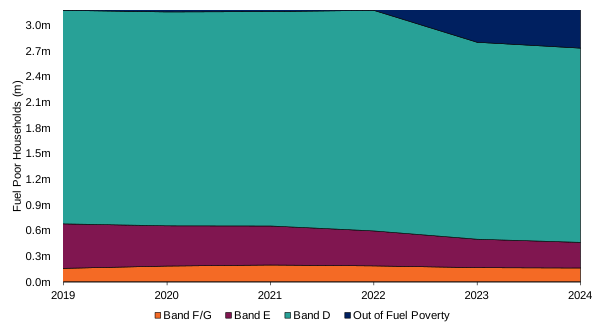
As shown in Figure 1, the number of fuel poor households has fallen modestly since the start of last parliament, from 3.2 million in 2019 to 2.7 million in 2024. This amounts to a reduction of 440,000 households, or 89,000 per year. There was a fall in the number of FPEER E households from 522,000 to 299,000 between 2019 to 2024 but the number of FPEER F and G households rose, from 158,000 to 163,000 over the same period.
Figure 1: Number of fuel poor households in England, by FPEER Band (2019 to 2024)[footnote 23]
Description of figure 1:
Stacked area chart showing the number of fuel poor households by EPC band from 2019 to 2024. The chart tracks progress in reducing fuel poverty. Most households are in Band D, which declines slightly from around 2.7 million in 2019 to about 2.3 million in 2024. Band E decreases from roughly 0.6 million to 0.4 million, and Band F/G remains very small at about 0.2 million. A dark blue section grows from 2022 onwards, representing households that have moved out of fuel poverty. Vertical axis shows households in millions (0 to 3m); horizontal axis shows years 2019–2024.
4.2 Quantified reasonably practicable considerations
This strategy intends to ramp up progress on the fuel poverty target, but it will not be possible to bring all households out of fuel poverty by 2030 due to a range of factors explored below. These include value for physical property characteristics and value for money:
Property characteristics:
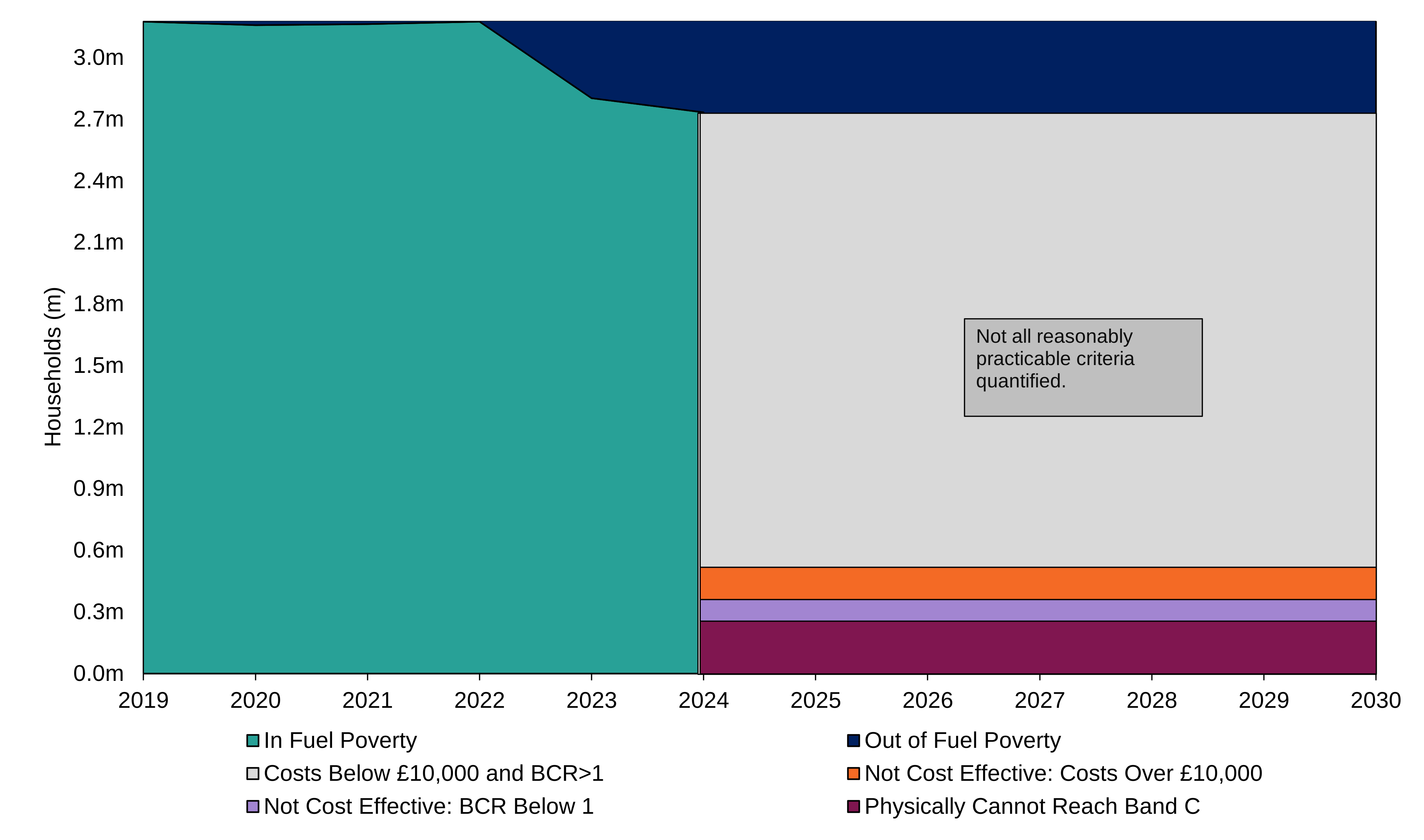
Around 260,000 fuel poor households are estimated to have physical characteristics that mean they cannot be brought to EER C with the measures listed in Table 1 (these homes are represented in dark orange in Figure 2 below). This could be for a variety of reasons such as being a listed building or due to planning requirements, but some typical characteristics are that:
- These homes are typically older, with 51% of the stock that cannot reach Band C built before 1950 compared to 70% of homes that can reach Band C +They have larger floor areas, with 75% of homes that cannot reach Band C = larger than 80m2 compared to 46% of homes that can reach Band EER C
- They are more likely to be owner occupied (OO) than other tenure types and Social Homes (SH) in particular, as 62% of homes that cannot reach Band C are OO while only 9% are in SH
Value for money:
Around 260,000 households are also estimated not to be reasonably practicable to bring out of fuel poverty with home upgrades due to not meeting value for money criteria. This analysis defines a household to meet the value for money threshold if the societal benefits of it reaching Band C exceed the societal costs of doing so. This assessment calculates each household archetype’s societal Benefit Cost Ratio (BCR) by using the costs and benefits discussed in Section 3. This includes societal benefits, like carbon abatement and NHS health impacts, in addition to benefits experienced by the household, like additional comfort taking. These benefits are included throughout the appraisal period between 2025 to 2072. These homes with a societal BCR below 1 are illustrated in the middle orange bar in Figure 2.
This analysis also includes a cost cap in its value for money considerations, with only homes who can be treated to Band C for under £10,000 (under 2025 prices) considered value for money (represented in light orange in Figure 2). This is reflective of policy controls like the private and social rented sector minimum energy efficiency standards, which will apply to the estimated 56% of fuel poor households who live in rented accommodation[footnote 24].
This should be viewed as a theoretical rather than prescriptive principle that societal costs should not exceed societal benefits of bringing a household out of fuel poverty. There may also be legitimate costs and benefits that have not been monetised here nor included in Figure 2. This analysis also assumes the number of homes that are value for money and are technically feasible to treat to Band C remains constant from 2024 to 2030, but this is likely to change with fluctuations to measure costs, energy prices and carbon prices. These impacts are explored in Section 6.2.
Figure 2: Households in fuel poverty (2019 to 2030), with illustrative cost effectiveness and physical characteristic limitations (2024 to 2030)
Description of figure 2:
Stacked area chart showing households in fuel poverty and cost-effectiveness categories from 2019 to 2030. From 2019 to 2023, around 3 million households are in fuel poverty. By 2024, the remaining fuel poor homes are splits into categories: costs below £10,000 and benefit-cost ratio (BCR) above 1 (grey), not cost-effective with BCR below 1 ( lilac), not cost-effective with costs over £10,000 (orange), and households that physically cannot reach Band C (purple). Vertical axis shows households in millions (0 to 3.0m); horizontal axis shows years 2019–2030.
4.3 Examples of reasonably practicable households
Three examples of homes have been identified that can be brought out of fuel poverty under value for money considerations (in the grey area of Figure 2 above). These are selected in England using the NBM’s dataset. This explores measures estimated to be the most cost effective[footnote 25] to improve their FPEER score to 69 or higher and bring them out of fuel poverty. The household archetypes are from different tenure types and starting bands. Note, fuel poor households have diverse characteristics, even within specific tenures or starting bands, and it remains challenging to model a package of measures that are universally suitable for all households. The results may therefore not be transferable to homes with similar features due to more discrete property features that are not discussed here.
Example 1: Band D, Semi-Detached Home, Gas Heated in Social Housing
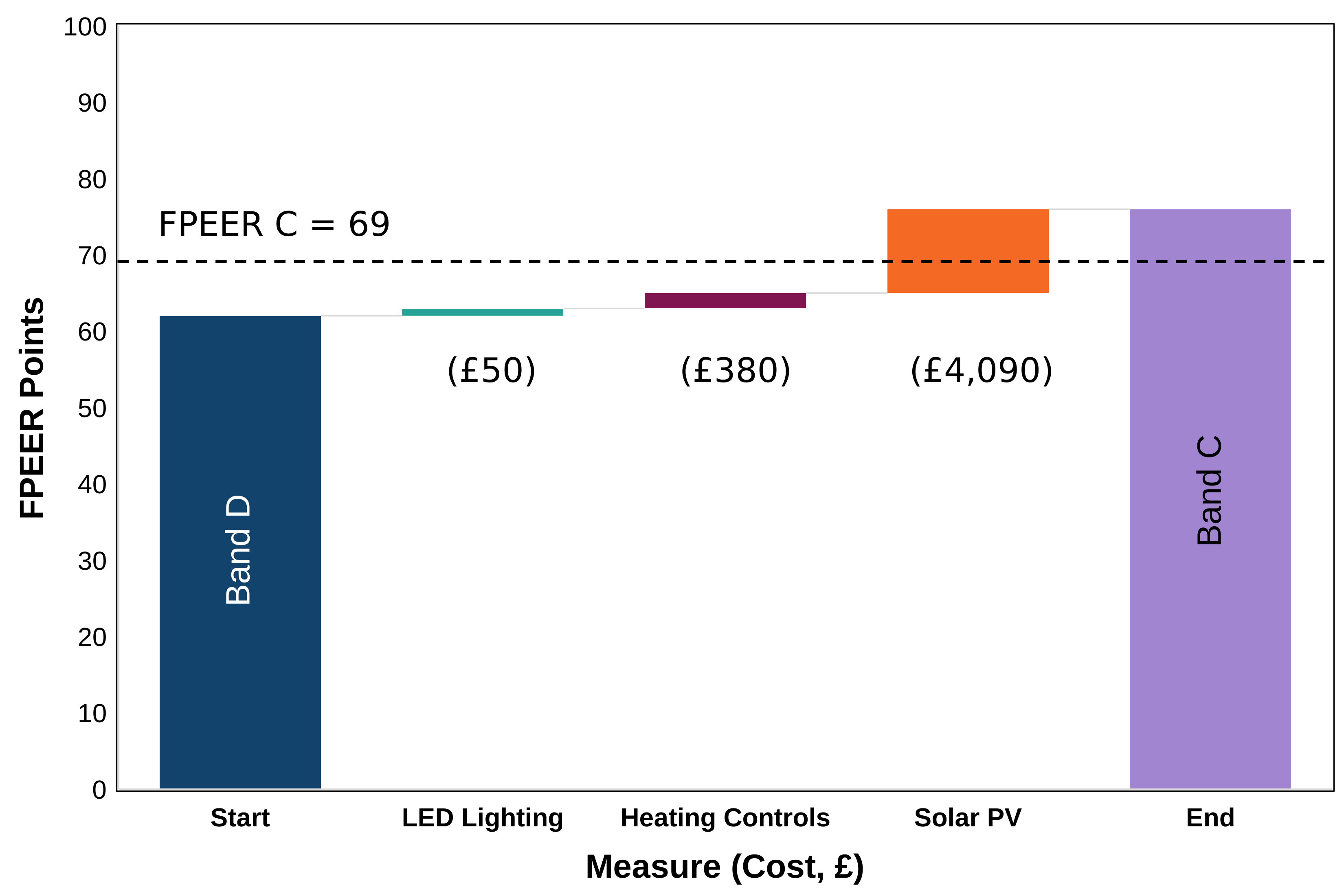
This represents around 2,500 of the 120,000 Band D[footnote 26] semi-detached social homes.
- This household’s FPEER score improves from 62 to 76
- The total cost of these installations is £4,730
Example 2: Band E, Low Rise Flat, Electrically Heated in Private Rented Sector
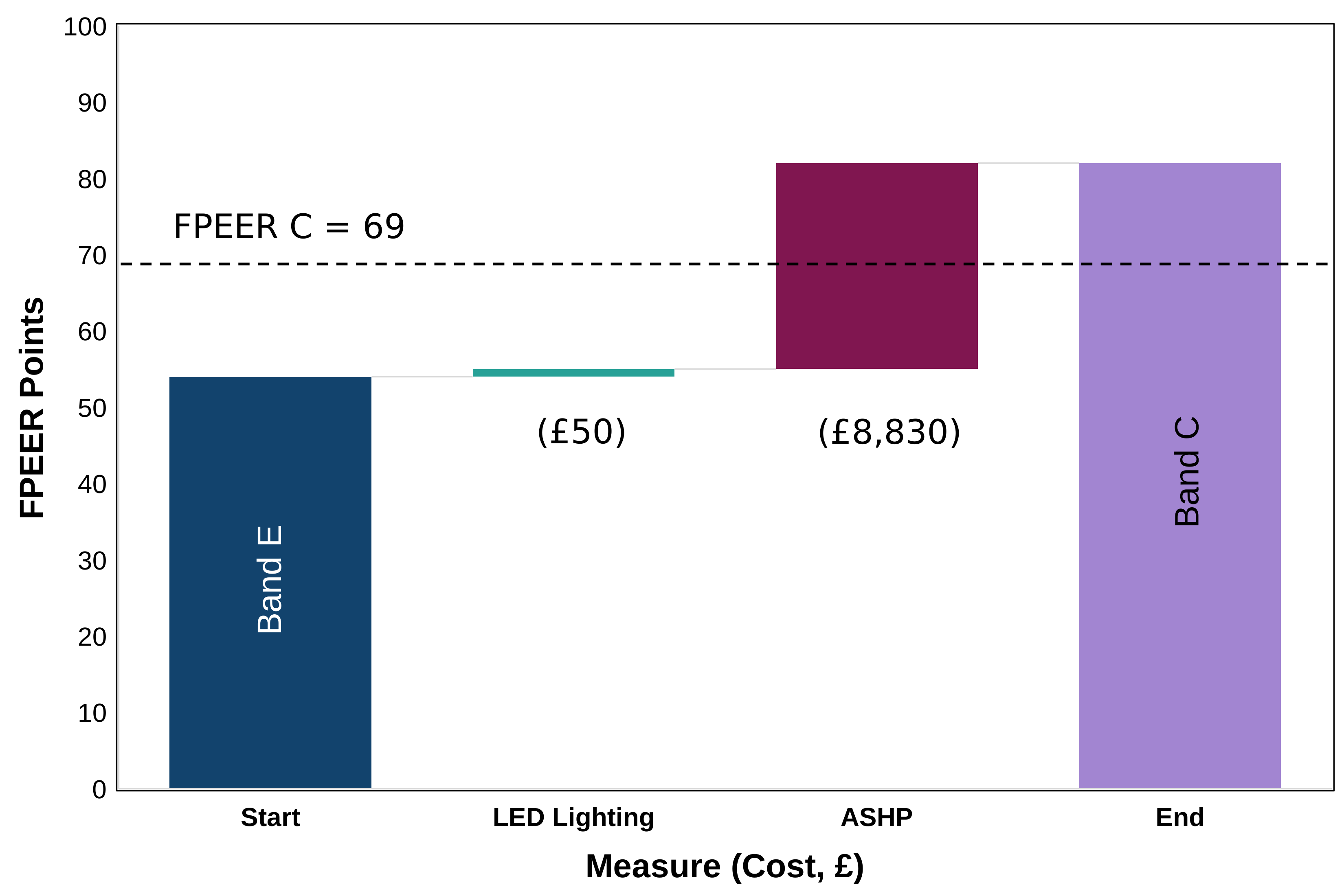
This represents around 2,400 of the 16,000 Band E low rise flats in the PRS.
- This household’s FPEER score improves from 54 to 82.
- The total cost of these installations is £8,880.
Example 3: Band F, Low Rise Flat, Electrically Heated in Owner Occupier Sector
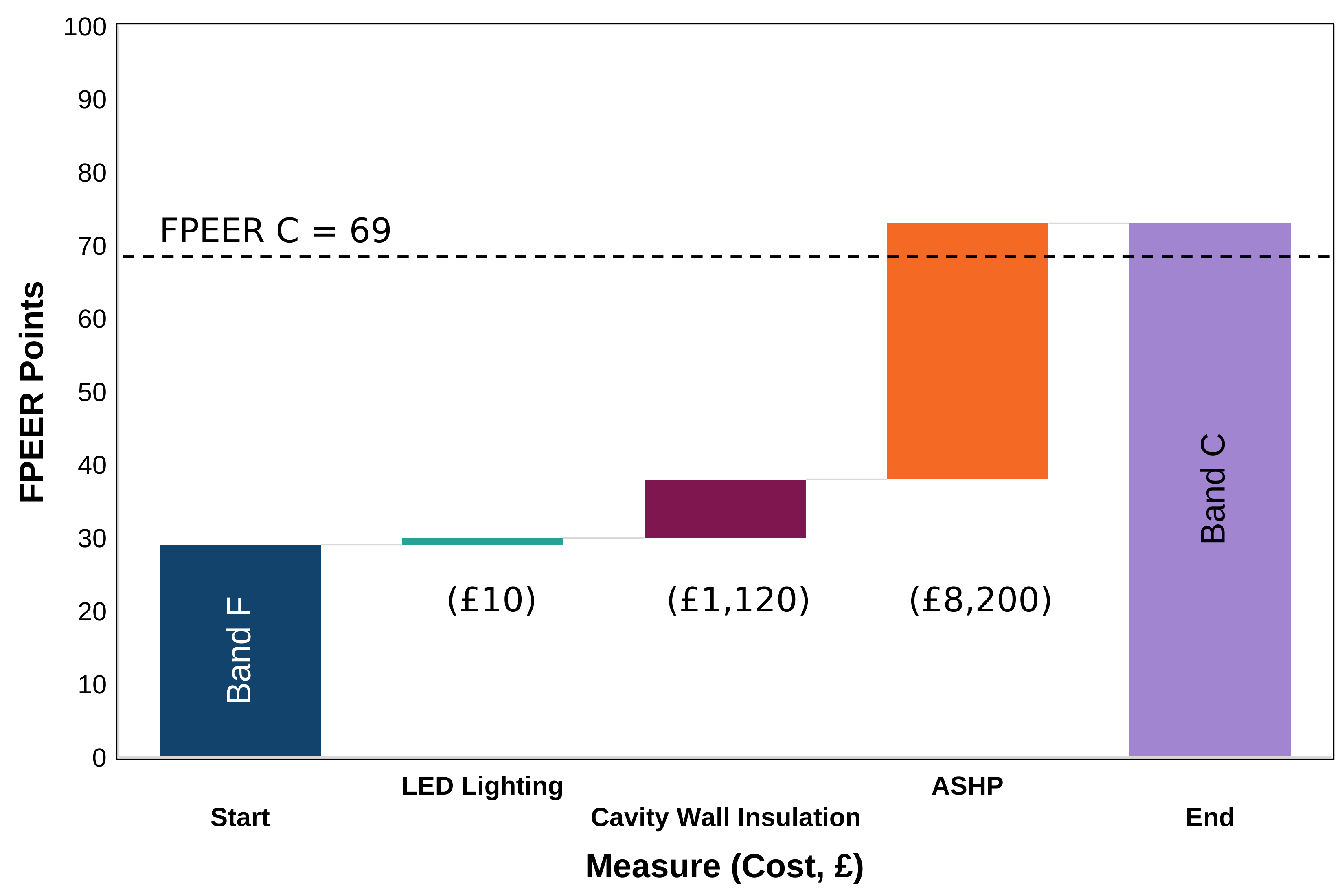
This represents all 2,800 Band F/G owner-occupied low rise flats in the OO.
- This household’s FPEER score improves from 29 to 73
- The total cost of these installations is £9,330
Description of examples:
Example 1: Bar chart showing the improvement in Fuel Poverty Energy Efficiency Rating (FPEER) for a semi-detached social home after installing energy measures. The starting score is 62 (Band D) and rises to 76 (Band C). Measures shown along the horizontal axis include LED lighting (£50), heating controls (£380), and solar PV (£4,090), with total cost £4,730. A dashed line marks the Band C threshold at 69 points. Vertical axis ranges from 0 to 100 FPEER points.
Example 2: Bar chart showing improvement in Fuel Poverty Energy Efficiency Rating (FPEER) for a low-rise flat in the private rented sector after installing energy measures. The starting score is 54 (Band E) and rises to 82 (Band C). Measures shown along the horizontal axis include LED lighting (£50) and an air source heat pump (£8,830), with total cost £8,880. A dashed line marks the Band C threshold at 69 points. Vertical axis ranges from 0 to 100 FPEER points.
Example 3: Bar chart showing improvement in Fuel Poverty Energy Efficiency Rating (FPEER) for an owner-occupied low-rise flat after installing energy measures. The starting score is 29 (Band F) and rises to 73 (Band C). Measures shown along the horizontal axis include LED lighting (£10), cavity wall insulation (£1,120), and an air source heat pump (£8,200), with total cost £9,330. A dashed line marks the Band C threshold at 69 points. Vertical axis ranges from 0 to 100 FPEER points.
Households with lower FPEERs, particularly those in Bands F/G, face greater challenges in being lifted out of fuel poverty through cost effective interventions. These properties often require more extensive upgrades to meet energy efficiency standards, which can limit the number of viable measures that satisfy both the BCR and cost cap thresholds, as shown by Table 4 below.
Table 4: Per cent of households that can be brought to Band C under reasonably practicable constraints, by tenure and starting Band
(% Homes To Band C)
Owner occupier:
| Band | Physically able | BCR > 1 |
BCR > 1 and costs below £10k |
|---|---|---|---|
| D | 94 | 91 | 89 |
| E | 63 | 60 | 44 |
| F/G | 54* | 54* | 13* |
| All | 87 | 84 | 78 |
Private Rented Sector:
| Band | Physically able | BCR > 1 |
BCR > 1 and costs below £10k |
|---|---|---|---|
| D | 96 | 90 | 90 |
| E | 75 | 72 | 53 |
| F/G | 74 | 74 | 47 |
| All | 92 | 87 | 83 |
Social housing:
| Band | Physically able | BCR > 1 |
BCR > 1 and costs below £10k |
|---|---|---|---|
| D | 98 | 94 | 93 |
| E | 79 | 78 | 69 |
| F/G | 48* | 48* | 9* |
| All | 96 | 92 | 90 |
*Indicates the percentage is derived from fewer than 10 EHS archetype dwellings. Archetypes represent dwellings with similar characteristics, and a low number of archetypes may suggest limited diversity in the sample, potentially affecting representativeness.
While it is not reasonably practicable to bring all households out of fuel poverty, those that cannot reach Band C will not be exempt from support. Many of these will still benefit from retrofit policies that will improve their energy performance, though not all will reach Band C. Many households that cannot reach Band C with measures will also benefit from bill support, which has been committed to up to the winter of 2030 to 2031. With the expanded WHD, around 940,000 households are estimated to be beneficiaries in 2030.
4.4 Unquantified reasonably practicable considerations
In addition to these quantified constraints, there are several other considerations that will impact the number of households that are reasonably practicable to bring out of fuel poverty by 2030. Figure 2 should not be viewed as indicating the number of households that are reasonably practicable to upgrade to Band C.
- Supply chain: There is a limit on the extent the domestic retrofit supply chain can scale up to deliver the Warm Homes Plan. The supply chains and materials used by support schemes and regulations overlap with the wider retrofit and construction market. Progress is constrained by the pace the supply chain can fulfil the expanded need and an expanded programme of support requires growth in the relevant skilled supply chains. The long-term certainty provided by the Warm Homes Plan will stimulate growth in British manufacturing, construction and retrofit sector via policies like the Warm Homes: Social Housing Fund (WH:SHF). We are committed to upskilling those in the home upgrade sector to meet our ambitions of accelerating progress towards the fuel poverty target through schemes such as the Heat Training Grant and the Low Carbon Heating Technician Apprenticeship.
The following criteria will also impact the number of remaining fuel poor households government can alleviate from fuel poverty by 2030. While government will utilise the available tools to shape the following criteria’s impact, they remain largely outside its direct control, contributing to future projections’ uncertainty:
- Householder preferences: Measures and works offered by the range of schemes provided to households may not be universally desired. This can be due to a combination of factors including: disruption that may be caused during measure installations; whether the works are offered at a time suitable for the household; obtaining permissions from the landlord or freeholder and trust in the works being offered. Our consumer promise ensures schemes prioritise consumers, with installation upgrades that are easier and higher quality, easy to access advice, and consideration of householder preferences.
- Targeting of support: Government does not hold household level data on which specific households are living in fuel poverty. Schemes delivering support to low income households utilise verifiable proxies that act as eligibility criteria, such as means tested benefits. These proxies have targeting inefficiencies. As set out in Chapter 5 of the main document, government is working to improve data availability and more accurately identify and verify fuel poor households. However, this may be accompanied by choices around withdrawing eligibility for other low income and vulnerable groups. Therefore, within the same fiscal envelope, data availability may not lead to fuel poverty targeting improvements, to ensure that households in the greatest need receive the required support. Also, by taking a more area-based approach to delivery of support should help ensure that a wider group of low income and vulnerable households receive support.
All of the reasonably practicable considerations set out above will influence the anticipated outcomes of the number of fuel poor households that are expected to reach the target level. There is a wide breadth of considerations and uncertainties that impact both, how many households can be considered reasonably practicable to lift from fuel poverty, and how much progress is made towards the target. Given this, it would not be sensible or desirable to translate ‘as many as is reasonably practicable’ into a single percentage of anticipated progress.
5. Projection of households out of fuel poverty
This section outlines the impacts certain policies and natural replacements could have on the projected number of fuel poor households by 2030. It estimates a significant acceleration of progress between 2025 to 2030 compared to that under the previous parliament.
5.1 Impact of natural replacements
Natural replacements are estimated to bring around 157,000 fuel poor homes to Band C by the installation of certain measures. For all homes, this includes:
- Existing lights will be replaced with more energy efficient Light Emitting Diode (LED) equivalents at the end of their lifetime. Replacement of existing lighting with low energy lighting is taken from the modelling underpinning Ecodesign requirement for lighting products[footnote 27]
For homes in the Private Rented Sector (PRS) and in Social Housing (SH) only:
- Existing boilers are replaced with Ecodesign compliant condensing boilers as they reach the end of their lifetimes
- When boilers are replaced, landlords or homeowners install appropriate heating controls as required by the Building Regulations
The differences between tenure types assume fuel poor Owner Occupiers (OO) are less likely than PRS or SH landlords to be able to replace their boilers. It also assumes no other measures are privately installed without government support schemes or regulations. This assumption is made because fuel poor households with a low income are less likely to be able to afford, or be able to borrow to afford, replacements for major energy efficiency measures.
This estimate has been calculated using the NBM, focusing on the above measures installed in fuel poor homes between 2025 and 2030. It has been scaled to account for the impact of recent policies not explicitly modelled within the NBM, that have contributed to a reduction in the number of fuel poor homes.
5.2 Policies included and excluded
The projection only includes announced policies that have progressed to consultation stage or further. This does not comprise an exhaustive list of policies expected to impact fuel poverty. For instance, the £1.5 billion additional funding for the Warm Homes Plan, allocated at Budget 2025 has not been included. The assumptions behind these policy projections are discussed below.
For the Private Rented Sector Minimum Energy Efficiency Standards (PRS MEES), the estimates align with a scenario where landlords ensure their properties meet a Fabric Performance metric and then a Smart or Heat metric under a £10,000 cost cap. This is set out in the government’s response to PRS MEES consultation in early 2025[footnote 28]. This is estimated to bring around 415,000 households out of fuel poverty by 2030, down from the 555,000 estimated in the OA. The reasons for this correction are due to a number of updated assumptions which discussed in the 2025 government response.
For Social Rented Sector Minimum Energy Efficiency Standards (SRS MEES), this analysis uses the upper bound of the preferred Scenario 1 from the recent 2025 consultation stage IA[footnote 29]. This requires all social housing landlords to ensure that their properties meet a primary Fabric Performance metric and choose to meet the secondary Smart Readiness metric. By 2030, this is estimated to bring around 253,000 homes out of fuel poverty, though this is a consultation stage estimate and is subject to change. The projection uses a lower range estimate for the Warm Homes: Social Housing Fund (WH:SHF). Fuel poverty reduction heavily depends on the fuel poverty hit rate, which has been conservatively estimated based proportion of households in fuel poverty within the eligible pool. Previous grant scheme waves have had higher fuel poverty hit rates than forecasted, so actual fuel poverty impacts could be higher. Impacts from potential future waves of the WH:SHF have not been included.
The estimate for Warm Homes: Local Grant (WH:LG) aligns with a £500m spend over 2025 to 2027, with delivery costs and grant recipient behaviours assumed to be comparable to those observed in past grant retrofit schemes. The fuel poverty hit rate has also been conservatively assumed for this scheme and is based on the fuel poverty rate within the eligible pool. This projection estimates that for the remainder of ECO4 and GBIS, there will be continuation of fuel poverty impacts as stated in their respective 2022[footnote 30] and 2023[footnote 31] Impact Assessments. These estimate ECO4 and GBIS will bring around 25,000 and 6,000 homes out of fuel poverty annually, respectively. Although the ECO4 and GBIS mid-scheme changes will support moving households out of fuel poverty, the impact of these changes on fuel poverty have not been quantified in this projection[footnote 32].
The Expanded Warm Home Discount (WHD), has expanded its eligibility for the winter of 2025 to 2026[footnote 33], with around 2.7 million more households now in scope and a greater share of the rebate recipients being in the lowest income deciles. It is assumed the scheme will continue to bring the same percentage of households out of fuel poverty between 2026 and 2030 as were in 2025, with 15% of households below FPEER C estimated to be kept out of fuel poverty. This percentage is estimated to stay constant up to 2030 in this projection and has been applied after the fuel poverty impact of the energy efficiency policies has been accounted for. Therefore, as more households are lifted out of fuel poverty by energy efficiency policies, the absolute number of households lifted out of fuel poverty by the WHD is projected to reduce over time.
This assumes the recipients of the other policies covered above will not be disproportionately likely or unlikely to receive WHD; if these schemes disproportionately target WHD recipients, there could be fewer households lifted out of fuel poverty by WHD than estimated. The WHD currently runs to March 2026, though this Strategy commits to extend bill support through to winter 2030 to 2031.
5.3 Policy specific projection
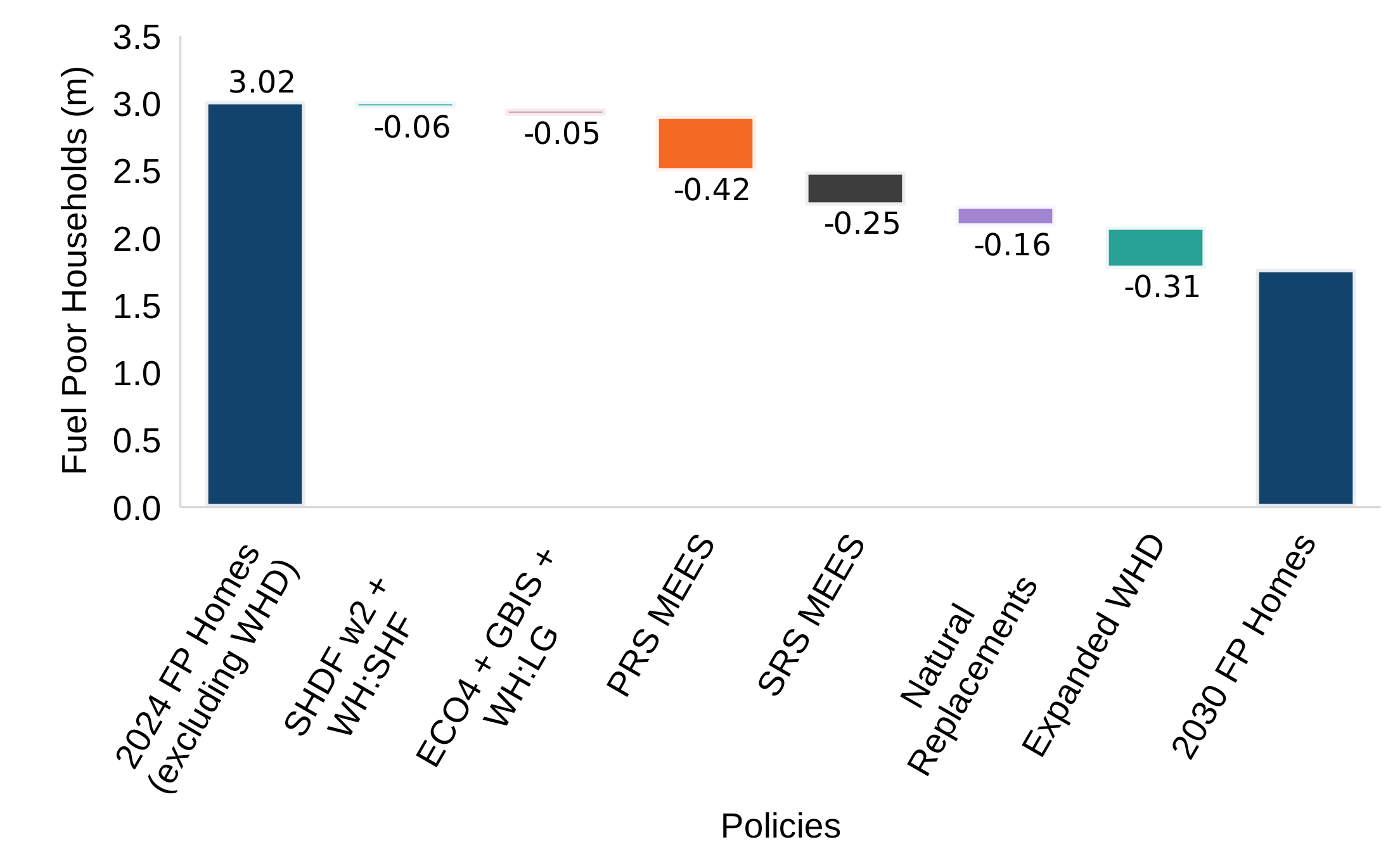
There were 2,733,000 households estimated to be in fuel poverty in 2024[footnote 34]. This figure accounts for the impacts of the existing Warm Home Discount in 2024 that was estimated to have kept 282,000 households out of fuel poverty. Its impacts have therefore been removed from the projection in Figure 3 below that is split by policy, resulting in 3,015,000 households starting in fuel poverty. Around 1 million households are estimated to be brought to Band C from energy efficiency policies listed above, the additional impact of the expanded Warm Home Discount (WHD) and by natural replacements, as illustrated in Figure 3:
Figure 3: Number of households brought out of fuel poverty by 2030 from announced policies and natural replacements (millions, 2025 to 2030)
Note, this only includes impacts from policies at consultation stage or further and should not be interpreted as an exhaustive list.
Description of figure 3:
Bar chart showing the projected reduction in fuel poor households from 2024 to 2030 under different policies. The vertical axis shows fuel poor households in millions (0 to 3.5m). The first bar represents 2024 fuel poor homes excluding WHD at 3.02 million. Subsequent bars show estimated reductions from policies: SHDF w2 + WH:SHF (-0.06m), ECO4 + GBIS + WH:LG (-0.05m), PRS MEES (-0.42m), SRS MEES (-0.25m), Natural Replacements (-0.16m), and Expanded WHD (-0.31m). The final bar shows 2030 fuel poor homes at 1.77 million.
These projections account for overlaps between different polices and so there may be discrepancies between policy impacts estimated here and those published elsewhere. The number of fuel poor households is also assumed to remain constant in this projection but could be altered by a range of other factors, some of which the government is not in direct control of. These include changes to people’s income, where they live, and their housing costs. Further details are outlined in Section 6.3.
5.4 Projected acceleration in progress
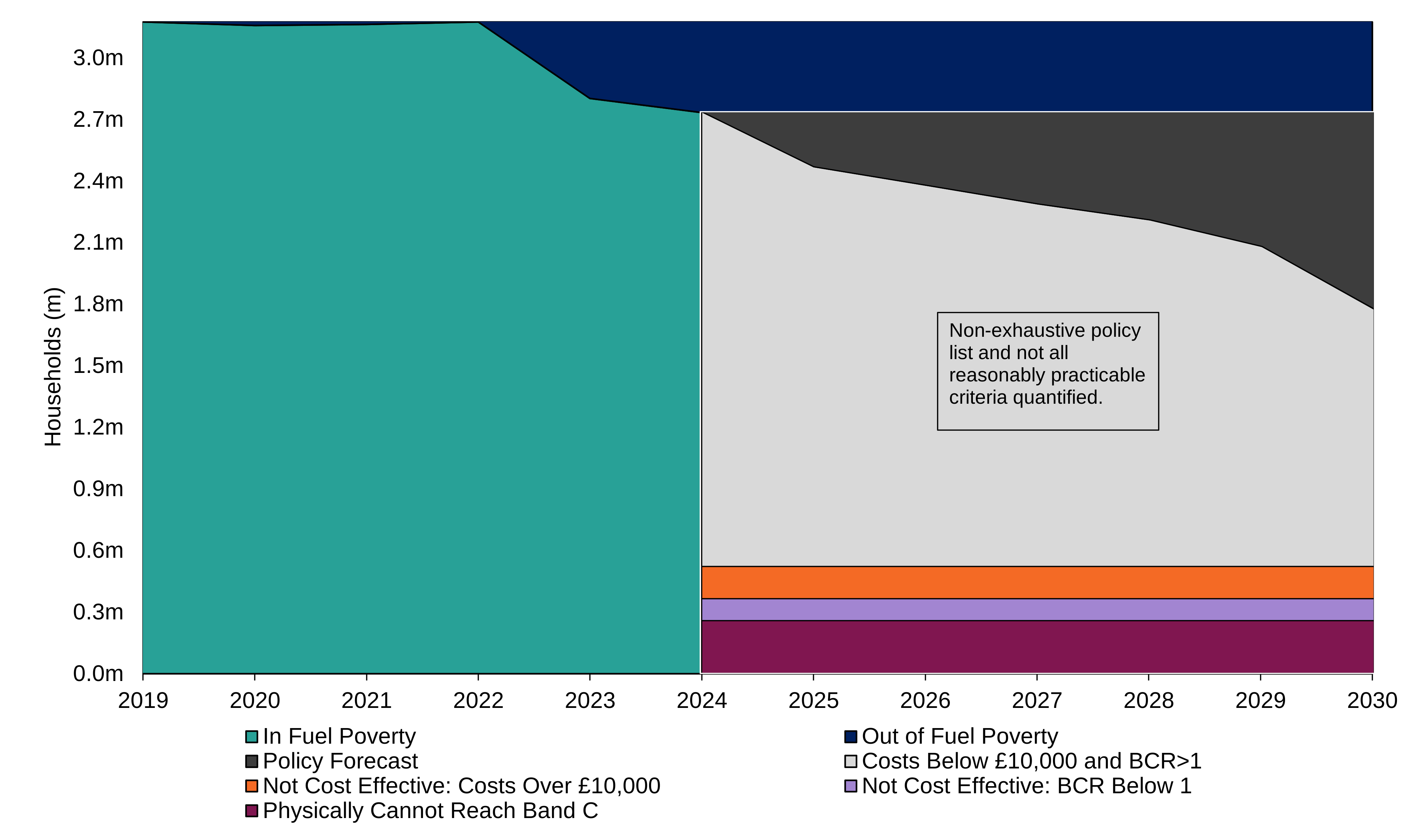
This rate of progress would represent a significant acceleration of delivery and drive progress toward the 2030 target, even with the non-exhaustive list of policies included. These alongside natural replacements would reduce the number of fuel poor households from 2.7m to 1.8m between 2025 to 2030, averaging around 160,000 households removed from fuel poverty per year, compared to an average of 89,000 households between 2020 to 2024 as shown in Figure 4 below.
Figure 4: Fuel poor households (2019 to 2030) with illustrative reasonably practicable limitations and projected impact of announced polices (2024 to 2030)
Note, this only includes impacts from policies at consultation stage or further and should not be interpreted as an exhaustive list.
Description of figure 4:
Stacked area chart showing households in fuel poverty and cost-effectiveness categories from 2019 to 2030. From 2019 to 2023, around 3 million households are in fuel poverty. By 2024, the remaining fuel poor homes are splits into categories: homes projected to be removed from fuel poverty (dark grey), costs below £10,000 and benefit-cost ratio (BCR) above 1 (grey), not cost-effective with BCR below 1 ( lilac), not cost-effective with costs over £10,000 (orange), and households that physically cannot reach Band C (purple). Vertical axis shows households in millions (0 to 3.0m); horizontal axis shows years 2019–2030.
6. Risk assessment
The key risks and assumptions for the analysis are outlined in this section.
6.1 Potential unmonetised costs
The costs used in the BCR ratio calculations, shown in Figure 2 of Section 4.2 do not include costs associated with implementing policies to treat fuel poor households. This is because it is uncertain how a given household would be brought to FPEER C: with a capital support scheme, bill support, regulation or through natural replacements. These options all give a very different ratio of non-monetised costs relative to costs monetised in this analysis. To illustrate, Table 5 below presents the ratios of installation and hidden costs (monetised in this analysis) and non-monetised costs (such as policy implementation costs) from recent policy publications.
Table 5: Ratios of monetised to non-monetised costs, by policy
| Policy | Monetised costs monetised in this analysis | Monetised costs not monetised in this analysis | Ratio (rounded to nearest %) |
|---|---|---|---|
| ECO4[footnote 35] | – Installation costs – Occupation hassle costs (hidden costs) |
– Reinstallation costs* – Natural boiler replacement costs – Supplier administration costs – PAS costs – Search costs – Operational costs |
34% |
| GBIS[footnote 36] | – Installation costs – Hassle (hidden) costs |
– Reinstallation costs* – PAS costs – Search costs – Energy suppliers’ administration costs – DESNZ and Ofgem admin costs – Economic rent (transfer payment) |
101% |
| PRS MEES[footnote 37] | – Installation costs – Tenant and landlord (hidden) costs |
– Reinstallation costs* – Familiarisation costs |
0% |
| SRS MEES[footnote 38] | – Installation costs – Tenant and landlord (hidden) costs |
– Reinstallation costs* – Admin costs – Surveying costs – Familiarisation costs |
10% |
*Reinstallation costs are not monetised in this analysis but have not been included in the ratios above because this analysis only includes measure benefits up to the end of their lifetimes.
Direct support schemes, such as the SHF, are likely to have a higher ratio of monetised to non-monetised costs, with regulations like PRS MEES and SRS MEES likely to be much lower. The relative expense of unmonetised costs is also highly dependent on the fuel poverty hit rate of any scheme. A fuel poverty hit rate is the number of fuel poor households treated as a proportion of total households. A policy with a low hit rate requires fewer eligibility checks and so typically has lower search and targeting costs than a policy with a higher hit rate. The analysis in this annex indirectly assumes a 100% fuel poverty hit rate while the policies in Table 5 have much lower hit rates. This is because the analysis is not policy specific and it would not make sense to also include the costs of bringing non-fuel poor homes to Band C.
6.2 Reasonably practicable sensitivity analysis
To reflect the sensitivity of the cost effectiveness criteria outlined in Section 4 to different parameters, the number of households not cost effective to bring out of fuel poverty with measures has estimated under ‘More’, ‘Central’, and ‘Fewer’ scenarios.
The parameters that have been changed are:
- An optimism bias adjustment to the installation costs of 24% and 10% is applied to the ‘Fewer’ and ‘Central’ scenarios, respectively, with no adjustments made for this in the ‘More’ scenario.
- Energy and carbon prices are altered based on the scenario and represent either the low, central, or high estimates presented in the HMT Green Book supplementary appraisal tables[footnote 39].
- Air quality prices are reduced or increased by 50% under the ‘Fewer’ and ‘More’ scenarios, respectively. This adjustment is in line with the methodology used for calculating the low and high carbon price estimates.
- Policy costs were included to demonstrate the proportion of fuel poor households that are value for money to bring out of fuel poverty when illustrative policy costs are included. Installation and hidden costs have been multiplied by a simple average of the ratios captured in Table 5 above, coming to 37%. Note, this does not imply that equal proportions of fuel poor households will be treated by these schemes, but is a simplifying assumption intended to reflect the variety of policies that be utilised to bring households out of fuel poverty. Policy costs are also not fixed and could change in future.
Table 6 below summaries differences between the sensitivity scenarios.
Table 6: Sensitivity Analysis Adjustments
| Scenario | Capex Optimism Bias | Energy Prices | Carbon Prices | Air Quality Prices | Policy cost uplift |
|---|---|---|---|---|---|
| Fewer | +24% | Low | Low | -50% | +37% |
| Central | +10% | Central | Central | 0% | 0% |
| More | 0% | High | High | +50% | 0% |
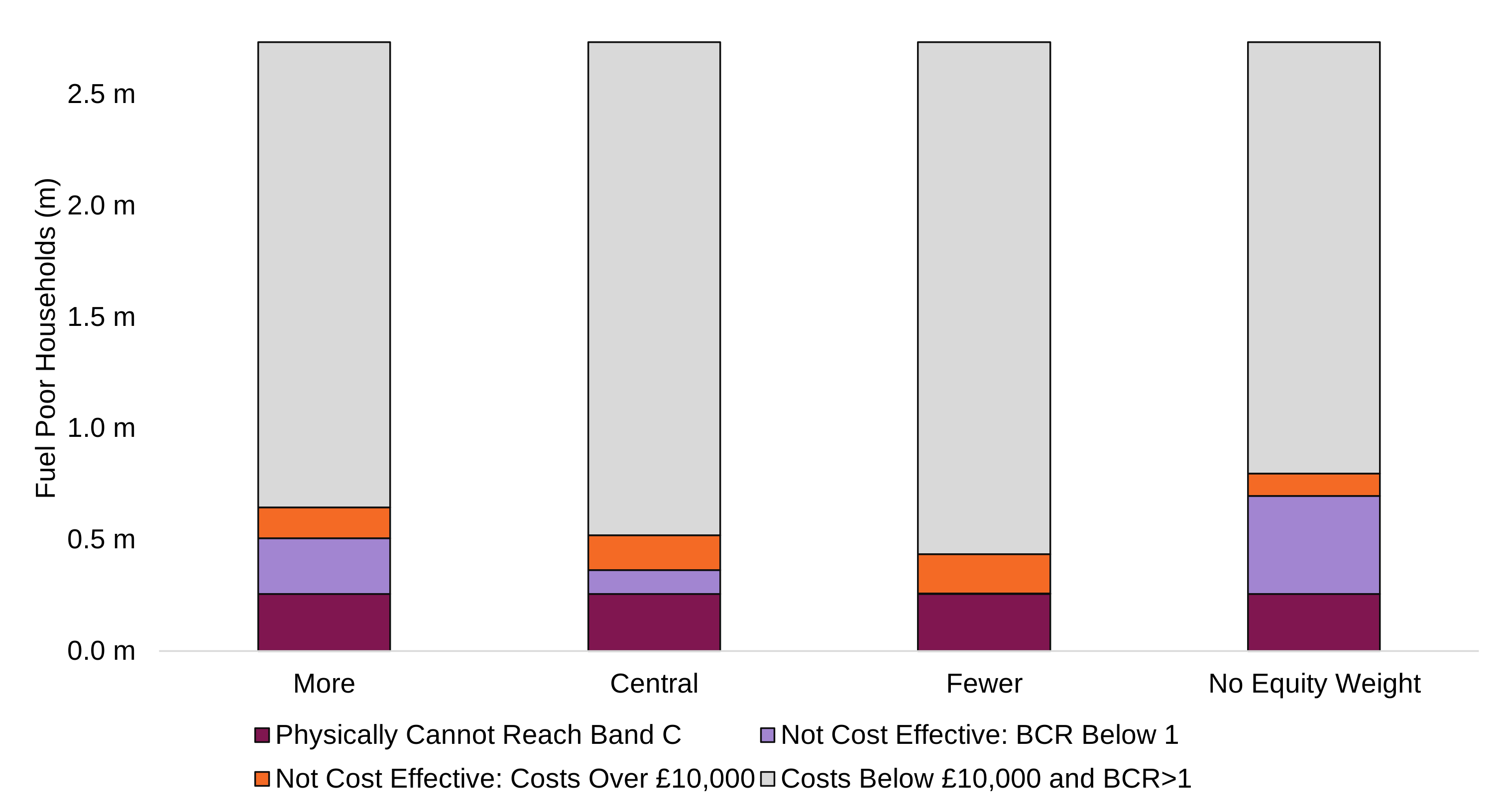
These impacts are graphically represented in Figure 5 below. This shows the proportion of households that are reasonably practicable to bring out of fuel poverty under the 3 scenarios described above, as well as an additional scenario using all central assumptions and no equity weighting applied to benefits (see Section 2.4 for details on equity weighting). While physical constraints are assumed to remain constant across scenarios, the economic feasibility is largely influenced by external economic factors such as energy prices, carbon valuations, air quality benefits, and optimism bias assumptions.
These impacts are illustrated below in Figure 5 and Table 7, showing estimates of the number of households with a BCR below 1 are very sensitive to changes to the parameters modelled. The effects of removing the equity weighting are particularly impactful, where the number of households that are not value for money doubles.
Figure 5: Number of fuel poor households, across different sensitivity scenarios and reasonably practicable limitations
Description of figure 5:
Stacked bar chart comparing fuel poor households under four scenarios: ‘More’, ‘Central’, ‘Fewer’, and ‘No Equity Weight’. Each bar represents around 2.7 million households and is divided into categories: physically cannot reach Band C (purple), not cost-effective with benefit-cost ratio (BCR) below 1 (lilac), not cost-effective with costs over £10,000 (orange), and costs below £10,000 with BCR above 1 (light grey). The vertical axis shows fuel poor households in millions (0 to 2.7m). Differences between scenarios are small, with most households in the light grey category. (see Table 7 for data).
Table 7: Number of fuel poor households, across different sensitivity scenarios and reasonably practicable limitations
| More | Central | Fewer | No Equity Weight | |
|---|---|---|---|---|
| Costs Below £10,000 and BCR>1 | 2,090,000 | 2,210,000 | 2,300,000 | 1,940,000 |
| Not Cost Effective: Costs Over £10,000 | 140,000 | 160,000 | 180,000 | 100,000 |
| Not Cost Effective: BCR Below 1 | 250,000 | 110,000 | - | 440,000 |
| Physically Cannot Reach Band C | 260,000 | 260,000 | 260,000 | 260,000 |
6.3 Unmodelled risks and sensitivities
This section discussed other risks that could affect the results but have not been tested:
Inflows and outflows of the fuel poor population
A range of unmodelled factors may influence fluctuations in the number of households in fuel poverty. These factors could either increase or decrease the number of households that need to be brought up to FPEER Band C by 2030 to meet the target, whether through energy efficiency measures and/or bill support. These factors include:
- People’s incomes and housing costs are likely to fluctuate, which would change households’ AHC equivalised incomes and the ‘LI’ of LILEE. Given the uncertainty of future incomes and housing costs, these effects have not been modelled.
- Similarly, there could be changes in household compositions – such as a child being born or leaving home – can also affect equivalised income and whether a household falls below the ‘LI’ threshold.
- The individuals in fuel poverty will also change. Even if it was assumed the number of fuel poor households did not change, the composition of households in fuel poverty in 2030 would be different to today. There are likely to be inflows from low-income households in above EER C homes moving into homes below EER C pushing them to below FPEER C overall. There are also outflows from fuel poor households moving into homes that are above EER C and being removed from fuel poverty. These flows have been considered but have not been accounted for in this analysis, given the high degree of uncertainty around the proportion of fuel poor people moving house, the home’s tenure that households would move out of and into, and how households’ propensity to move changes when their homes are retrofitted.
Measure costs
Within Section 4, the real costs of measures are generally assumed to remain constant throughout the delivery period between 2025 to 2030, except for heat pumps where the real price is expected to fall. Details of this, and other shared NBM assumptions can be found in the 2025 SRS MEES IA[footnote 40]. Measure costs may change over time due to numerous factors such as technological improvements, wider economy inflation and supply chain shocks.
Measure rollout
In Section 4 it is assumed measures are deployed uniformly from 2025 to 2030. However, in meeting the target, the deployment of measures could be clustered around certain years as shown in Section 5. Certain years could also have different macroeconomic conditions that would affect installation costs or measure take up, and therefore the distribution of benefits. For example, if there was relatively more deployment in 2026 than in later years and then benefits would be achieved sooner and could be discounted less.
Measure mix
The modelling in sections 4 and 5 assumes that suppliers will be able to provide measures that achieve the highest EER per £ spent, whereas the extent to which suppliers are able to do so in practice is uncertain. It is also assumed that all measures are accepted by the recipients. However, households are likely to refuse certain measures, and so more costly measures might need to be installed instead to bring the household out of fuel poverty. If this were to happen on a large scale this could increase the costs and reduce the overall cost effectiveness of bringing households out of fuel poverty.
Property characteristic, household preference and supply chain exemptions
The analysis in sections 4 and 5 assume all the households that are modelled to be suitable for measures receive them. However, as discussed in the Section 4.4, there are many reasons why a household currently included in this analysis may not be able to reasonably practicably be brought out fuel poverty.
These reasons include:
- Where a household cannot meet the minimum requirement for reasons not included in the NBM, such as being a listed building.
- Where households refuse certain measures due to personal preferences. Reasons for this might be due to households disliking the way a measure looks or not wanting to have installers enter their home.
- Where supply chains might be stretched in certain areas, reducing suppliers’ capability to deliver certain measures.
Supply chain impacts
There are a substantial number of measures required to meet the target. Delivering these measures could risk supply chains being overstretched in certain areas and measure costs rising. The projection in Section 5 only represents the number of fuel poor households brought to Band C and excludes the non-LILEE households that have measures installed. These policies, in addition to private installations, could be adversely affected by demands on the supply chain imposed by meeting the target. Conversely, meeting the fuel poverty target could stimulate the energy efficiency supply chain and reduce the costs of energy efficiency.
7. Equalities impacts
This section provides an analysis of how different groups of people with protected characteristics would be affected by being brought out of fuel poverty, in line with the government’s guidance on the Public Sector Equality Duty (PSED)[footnote 41]. This guidance ensures the policies’ distributional impacts are evaluated with regards to their impact on social groups with certain characteristics, namely:
- Age
- Disability
- Gender
- Gender reassignment
- Pregnancy and maternity
- Race – including ethnic or national origins.
- Religion or belief
- Sexual orientation
This analysis considers each characteristic, evaluating if households with that characteristic are disproportionately represented in the fuel poor population relative to the wider population. Disproportionately represented characteristics are more likely to benefit from government interventions aimed at tackling fuel poverty. There is fuel poverty data from 2024 on age (Tables 9-10), ethnicity (Table 11) and long-term illness and disabilities (Table 12). For these characteristics, there is only data on individuals within a household, rather than fuel poor people overall. This is a limitation to the analysis, as the characteristics of other people living in the household besides the household reference person are not known and could be distinct.
With respect to age, there are likely a disproportionate number of young people in fuel poverty, given in 3.7% of fuel poor households the oldest person is aged between 16-24 compared to 2.0% of the wider population. Also, in 12.0% of fuel poor households, the youngest person was 0-4, compared with 9.4% of households in the wider population.
Table 8 - Fuel poverty, all households in 2024[footnote 42]
| All households | Number of households (thousands) | Proportion of households that are in this group (%) |
|---|---|---|
| In fuel poverty | 2,733 | 11.0 |
| Not in fuel poverty | 22,007 | 89.0 |
Table 9 – Fuel poverty by age of youngest person in household, 2024[footnote 43]
| 0‑4 | 5‑10 | 11‑15 | 16‑24 | 2‑59 | 60‑74 | 75 or more |
|
|---|---|---|---|---|---|---|---|
| Fuel poor households | 12.0% | 9.3% | 9.9% | 10.0% | 27.2% | 20.2% | 11.4% |
| All households | 9.4% | 8.2% | 6.2% | 9.8% | 35.1% | 18.5% | 12.8% |
Table 10 – Proportion of households by oldest person in the household in 2024[footnote 44]
| 16‑24 | 25‑34 | 35‑49 | 50‑59 | 60‑74 | 75 or more |
|
|---|---|---|---|---|---|---|
| Fuel poor households | 3.7% | 11.8% | 24.9% | 19.4% | 25.1% | 15.1% |
| All households | 2.0% | 13.8% | 24.9% | 18.6% | 23.9% | 16.7% |
There are also a disproportionate number of fuel poor households where the household reference person is from an ethnic minority, with over one in 6 fuel poor households containing a household reference person from an ethnic minority background (16.9%) compared to 14.0% in the wider population (note, this measure excludes white gypsies and Irish travellers).
Table 11 – Proportion of households, by ethnicity of household reference person (HRP) in 2024[footnote 45]
| White | Asian | Black | Other | |
|---|---|---|---|---|
| Fuel poor households | 83.1% | 7.4% | 5.7% | 3.7% |
| All households | 86.0% | 6.7% | 4.2% | 3.1% |
A disproportionate number of fuel poor households also include someone with a disability or long-term illness, with more than half of fuel poor households containing someone with a long-term illness or disability (52.7%) compared to under 2 in 5 households within the wider population (39.1%).
Table 12 – Proportion of households, by whether a member of the household has a long-term illness or disability in 2024[footnote 46]
| Yes | No | |
|---|---|---|
| Fuel poor households | 52.7% | 47.3% |
| All households | 39.1% | 60.9% |
There is no available data for the prevalence of gender, gender reassignment, pregnancy and maternity, religion, and sexual orientation in fuel poor households. However, if people with any of the above protected characteristics were more likely to be in fuel poverty, the overall impacts of government intervention to tackle fuel poverty are likely be positive given the benefits highlighted above.
-
HM Treasury (2022) ‘The Green Book: appraisal and evaluation in central government’, GOV.UK ↩
-
DESNZ (2025) News story: ‘What does the Autumn Budget mean for your energy bills?’, GOV.UK ↩
-
MHCLG ‘English Housing Survey (EHS)’, GOV.UK ↩
-
DESNZ (2025) ‘Fuel poverty detailed tables 2025 (2024 data)’, Table 19, GOV.UK ↩
-
DESNZ ‘Standard Assessment Procedure’, GOV.UK ↩
-
An EER does not account for bill support while an FPEER does, specifically from the Warm Home Discount (WHD) scheme. The NBM does not account for the WHD, so bill support is not included as an intervention in Section 4. ↩
-
The assumptions on measures lifetimes are drawn from the latest Ofgem publication on ECO3 Measures Table. The measure lifetime assumptions are consistent with assumptions in other schemes, including SRS MEES and ECO4. ↩
-
The approach to equity weighting is consistent with analysis published for other DESNZ policies, such as the final impact assessments for ECO4 and the Warm Home Discount. ↩
-
HM Treasury (2022) ‘The Green Book: appraisal and evaluation in central government’, Annex A3, ‘Distributional Appraisal, Pages 96-98, GOV.UK ↩
-
DESNZ (2025) ‘Fuel poverty detailed tables 2025 (2024 data)’, Table 31, GOV.UK ↩
-
Office of National Statistics (ONS) ‘Inflation and price indices’ ↩
-
The ‘Green Book guidance on optimism bias’ suggests that real costs for construction projects in standard buildings may be as much as 24% higher than initially estimated, as a result of appraisers being overly optimistic. ↩
-
The survey of installers was carried out by Cambridge Architectural Research on behalf of BEIS (now DESNZ). Telephone interviews were carried out with 18 Cavity Wall Insulation (installers and 17 loft insulation installers from all parts of England, Scotland and Wales. The installer companies that took part in the survey ranged in scale, from 3 to 75 members of staff. ↩
-
HM Treasury (2023) ‘Green Book supplementary guidance: valuation of energy use and greenhouse gas emissions for appraisal’, Table 19, GOV.UK ↩
-
ECOFYS (2009) ‘The hidden costs and benefits of domestic energy efficiency and carbon saving measures’ (PDF) ↩
-
HM Treasury (2023) ‘Green Book supplementary guidance: valuation of energy use and greenhouse gas emissions for appraisal’, GOV.UK ↩
-
Details on this assumption are outlined on Page 132 of ‘The Green Deal and Energy Company Obligation Impact Assessment’ (PDF). ↩
-
Marmot Review Team (2011) ‘The Health Impacts of Cold Homes and Fuel Poverty’ ↩
-
UCL (2025) ‘Health impacts of net-zero housing in England’, GOV.UK ↩
-
HM Treasury (2013) ‘Green Book supplementary guidance: health’, GOV.UK ↩
-
HM Treasury (2022) ‘The Green Book: appraisal and evaluation in central government’, Section 9.3, GOV.UK ↩
-
National Health Service (NHS) (2022) ‘National Cost Collection for the NHS’ ↩
-
DESNZ (2025) ‘Fuel poverty trends 2025’, Table 19 and ‘Annual fuel poverty statistics report: 2025’, Figure 4.4, GOV.UK ↩
-
DESNZ (2025) ‘Fuel poverty detailed tables 2025 (2024 data)’, Table 19, GOV.UK ↩
-
‘Cost effectiveness’ here refers to selecting measures that achieve the highest SAP score per £1 spent by the National Buildings Model (NBM). This is discussed in Section 2.1. ↩
-
Band D homes have 59–68 FPEER points. Those with the highest scores can reach FPEER C with a single intervention. For example, LED lighting alone could lift 14% Band D homes to FPEER C. ↩
-
DESNZ/OPSS ‘Regulations: ecodesign of energy-consuming products’, GOV.UK ↩
-
DESNZ (2025) ‘Improving the energy performance of privately rented homes: Options assessment’, GOV.UK ↩
-
DESNZ (2025) ‘Improving the energy efficiency of socially rented homes in England: Consultation’, GOV.UK ↩
-
BEIS (2022) ‘Design of the Energy Company Obligation ECO4: 2022-2026’, ECO4 Final Impact Assessment, GOV.UK ↩
-
DESNZ (2023) ‘Design of the Energy Company Obligation (ECO): 2023-2026’, GB Insultation Scheme final Impact Assessment, GOV.UK ↩
-
DESNZ (2025) ‘Energy Company Obligation 4 and the Great British Insulation Scheme: mid-scheme changes - final stage impact assessment’, GOV.UK ↩
-
DESNZ (2025) ‘Expanding the Warm Home Discount Scheme, 2025 to 2026’, Impact assessment, GOV.UK ↩
-
DESNZ (2025) ‘Annual fuel poverty statistics report 2025 (2023 and 2024 data)’, GOV.UK ↩
-
BEIS (2022) ‘Design of the Energy Company Obligation ECO4: 2022-2026’, ECO4 Final Impact Assessment, Page 20, GOV.UK ↩
-
DESNZ (2023) ‘Design of the Energy Company Obligation (ECO): 2023-2026’, GB Insultation Scheme final Impact Assessment, Page 23, GOV.UK ↩
-
DESNZ (2025) ‘Improving the energy performance of privately rented homes: Options assessment’, Page 21, GOV.UK ↩
-
DESNZ (2025) ‘Improving the energy efficiency of socially rented homes in England: Consultation’, Pages 34-35, GOV.UK ↩
-
DESNZ (2023) ‘Green Book supplementary guidance: valuation of energy use and greenhouse gas emissions for appraisal’, GOV.UK ↩
-
DESNZ (2025) ‘Improving the energy efficiency of socially rented homes in England’, Consultation-Stage Impact Assessment, Pages 64-67, GOV.UK ↩
-
GEO (2023) ‘Public Sector Equality Duty: guidance for public authorities’, GOV.UK ↩
-
DESNZ (2025) ‘Fuel poverty detailed tables 2025 (2024 data)’, Table 1, GOV.UK ↩
-
DESNZ (2025) ‘Fuel poverty detailed tables 2025 (2024 data)’, Table 22, GOV.UK ↩
-
DESNZ (2025) ‘Fuel poverty detailed tables 2025 (2024 data)’, Table 23, GOV.UK ↩
-
DESNZ (2025) ‘Fuel poverty detailed tables 2025 (2024 data)’, Table 25, GOV.UK ↩
-
DESNZ (2025) ‘Fuel poverty detailed tables 2025 (2024 data)’, Table 26, GOV.UK ↩