The employment of disabled people 2025
Updated 24 March 2026

© Crown copyright 2026
This publication is licensed under the terms of the Open Government Licence v3.0 except where otherwise stated. To view this licence, visit nationalarchives.gov.uk/doc/open-government-licence/version/3 or write to the Information Policy Team, The National Archives, Kew, London TW9 4DU, or email: psi@nationalarchives.gov.uk.
Where we have identified any third party copyright information you will need to obtain permission from the copyright holders concerned.
This publication is available at https://www.gov.uk/government/statistics/the-employment-of-disabled-people-2025/the-employment-of-disabled-people-2025
1. Introduction
These statistics relate to the employment of working-age (aged 16 to 64) disabled people in the UK. They provide context for the government’s long-term ambition to achieve an 80% employment rate. The Get Britain Working White Paper set out plans to reform employment, health and skills support to tackle rising economic inactivity levels, support people into good work, and create an inclusive labour market in which everybody can participate and progress in work. The report highlights the need to reduce ill-health related economic inactivity and close the disability employment gap.
This is the sixth annual publication of Employment of disabled people and provides more detailed breakdowns of the labour market status of disabled people than those published on a quarterly basis by the Office for National Statistics (ONS). They provide context for the Department’s commitment to provide a range of support to help disabled people and people with health conditions to get into, stay in and thrive in work.
This release contains annual data mostly to March 2025 and quarterly data to June 2025.
The employment of disabled people data published on 4 November 2025 contained errors in the following underlying tables:
- NEE001
- NEE002
- NEE003
- NEE006
These errors have now been corrected, and we recommend that any analysis based on these tables is updated using the latest data.
2. Main Points
Since 2013, the earliest comparable year (see ‘What you need to know’), up to the start of the pandemic (March 2020) the general trend in disability employment was positive. There had been strong growth in the number and rate of disabled people in employment and a narrowing of the gap between the rate of disabled and non-disabled people in employment (the disability employment gap).
The pandemic initially reversed these trends with year-on-year changes showing a fall in the disability employment rate and a widening of the disability employment gap in 2020. The disability employment rate and gap have fluctuated around their pandemic rate since; the latest quarterly data from April to June 2025 shows that since the same quarter in 2024, the rate has decreased by 0.2 percentage points and the gap has increased by 1.1 percentage points (neither change is statistically significant).
The latest data shows that the number of people reporting a long-term health condition and the number classed as disabled continues to rise, though at a slower rate than previous years. Nearly one in four of the working-age population were classed as disabled in Q2 2025 (10.4 million). The increase in disability prevalence is associated with an increase in people reporting mental health conditions and “other health problems or disabilities”.
There were 5.5 million disabled people in employment in the UK in Q2 2025 and the disability employment rate was 52.8%, compared to 82.5% for non-disabled people. The increasing number of disabled people in employment (between 2013 and 2025) was driven by four main components of change: disability prevalence (60%); disability employment gap (20%); non-disabled employment rate (15%); and increases in the working-age population (5%). (see supplementary data table MSR002).
For all disabled people, the disability employment rate is lower for disabled people with a mental health condition and those with five or more health conditions. Disabled people were more likely than non-disabled people to be working in Health, Retail and Education, and lower-skilled occupations and to be self-employed, working part-time and in the public sector. They were also more likely to be underemployed, in low pay, on a zero-hour contract and in a job with fewer career opportunities and less employee involvement.
The disability employment gap was 29.7 percentage points in Q2 2025. For all disabled people, the disability employment gap is wider for males, older (aged 50 to 64) people, people with no qualifications, people living in social housing, people not living in a couple, and people living in Northern Ireland, Scotland, the North of England, West Midlands and Wales.
On average, between 2014 and 2024, disabled workers moved out of work at a higher rate (10.1%) compared with non-disabled workers (4.6%). Workless disabled people moved into work at nearly a quarter of the rate (7.6%) of workless non-disabled people (28.3%). Nearly one in three people classed as being disabled one year were no longer classed as being disabled the next year.
Disabled people were more likely to be economically inactive than non-disabled people and for those that were the majority gave long-term sickness as their main reason for being inactive. They were also more likely to want a job and less likely to have had a job in the last two years, with 1 in 5 having not worked for over 10 years.
3. Measures
This section looks at the three main measures used to monitor disability employment of the working-age population:
- the (absolute) number of disabled people in employment
- the disability employment rate (the number of disabled people in employment divided by the number of disabled people)
- the difference between the employment rates of disabled and non-disabled people (known as the disability employment gap)
Trends for each measure, starting from April 2013, when the current definition of disability began, are shown in Figures 1 to 3. The components or factors that may influence these measures are examined in Figure 4.
The number of disabled people in employment shows signs of falling
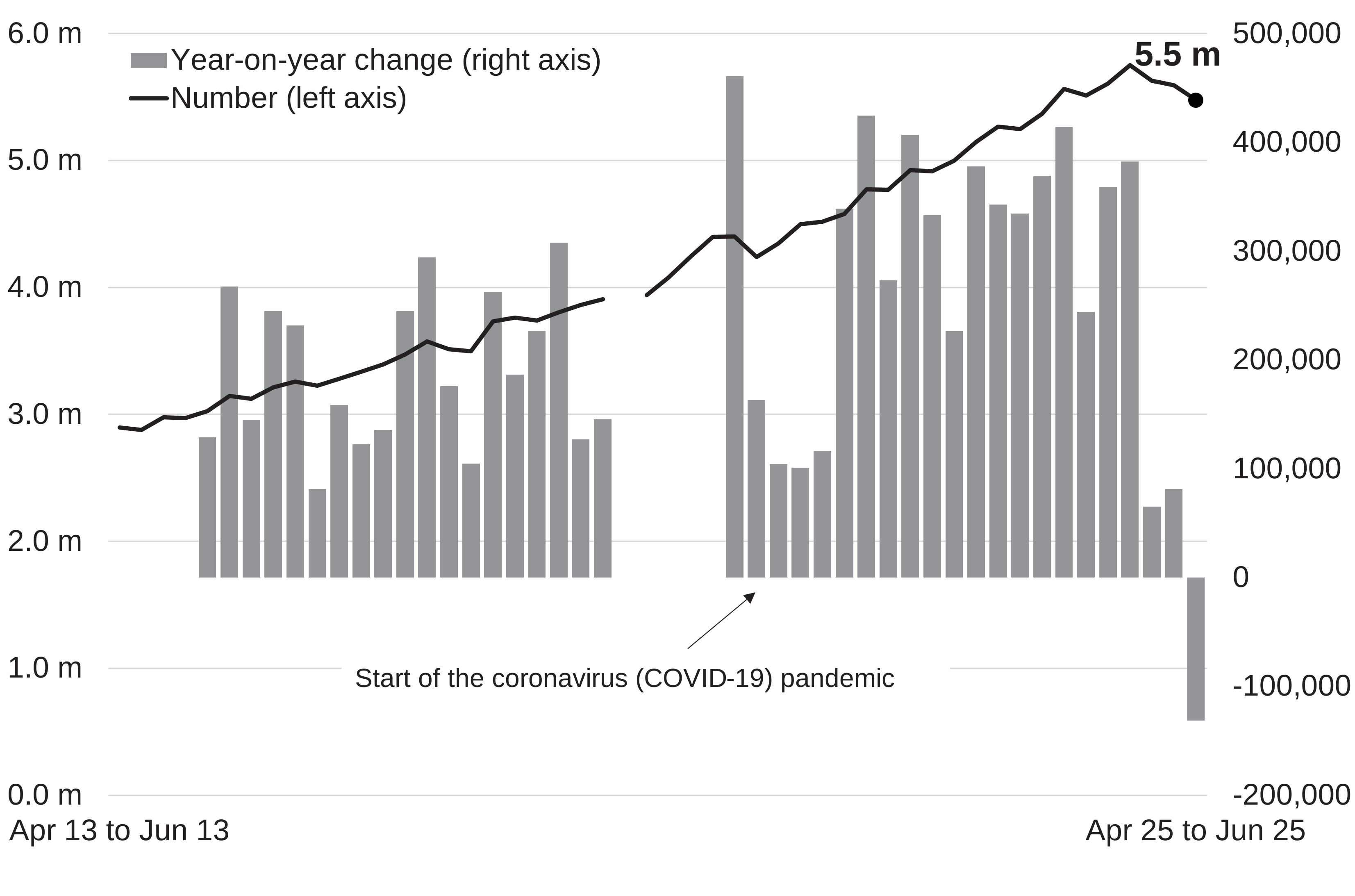
Figure 1: Number of disabled people in employment, people aged 16 to 64, UK, April to June 2013 to April to June 2025
Source: Labour Force Survey – data and definitions can be found in supplementary data table MSR001
Note: The ONS have only reweighted LFS data from January to March 2019 onwards with the latest estimates of the size and composition of the UK population. Data prior to and from January to March 2019 are not directly comparable.
The most recent data (April to June 2025) shows signs that the number of disabled people in employment may be starting to fall, with the first year-on-year decrease observed since at least 2013, although this decrease is not statistically significant. This may be linked to a decrease in disability prevalence; the number of disabled people decreased by 200,000 between April to June 2024 and April to June 2025 (although this change was not statistically significant).
The longer-term increases in disability employment can be linked to four main factors: disability prevalence; disability employment gap; non-disabled employment rate and working-age population. See Figure 4 for more details.
The disability employment rate continues to fluctuate around its pre-pandemic level
Figure 2: Disability employment rate, people aged 16 to 64, UK, April to June 2013 to April to June 2025

Source: Labour Force Survey – data and definitions can be found in supplementary data table MSR001
Note: The ONS have only reweighted LFS data from January to March 2019 onwards with the latest estimates of the size and composition of the UK population. Data prior to and from January to March 2019 are not directly comparable.
The disability employment rate reached a pre-pandemic high of 54.2% in October to December 2019. The rate has since increased and by 2024 had returned to levels similar to 2019 (54.0% in October to December 2024). The latest quarter (April to June 2025) showed the rate decreased by 0.2 percentage points (compared to the same quarter last year) to 52.8%, however this decrease is not statistically significant. Quarterly data is not seasonally adjusted, therefore it is advised to only compare the same quarters each year.
Historical downward trends in the disability employment gap have stalled in the last five years
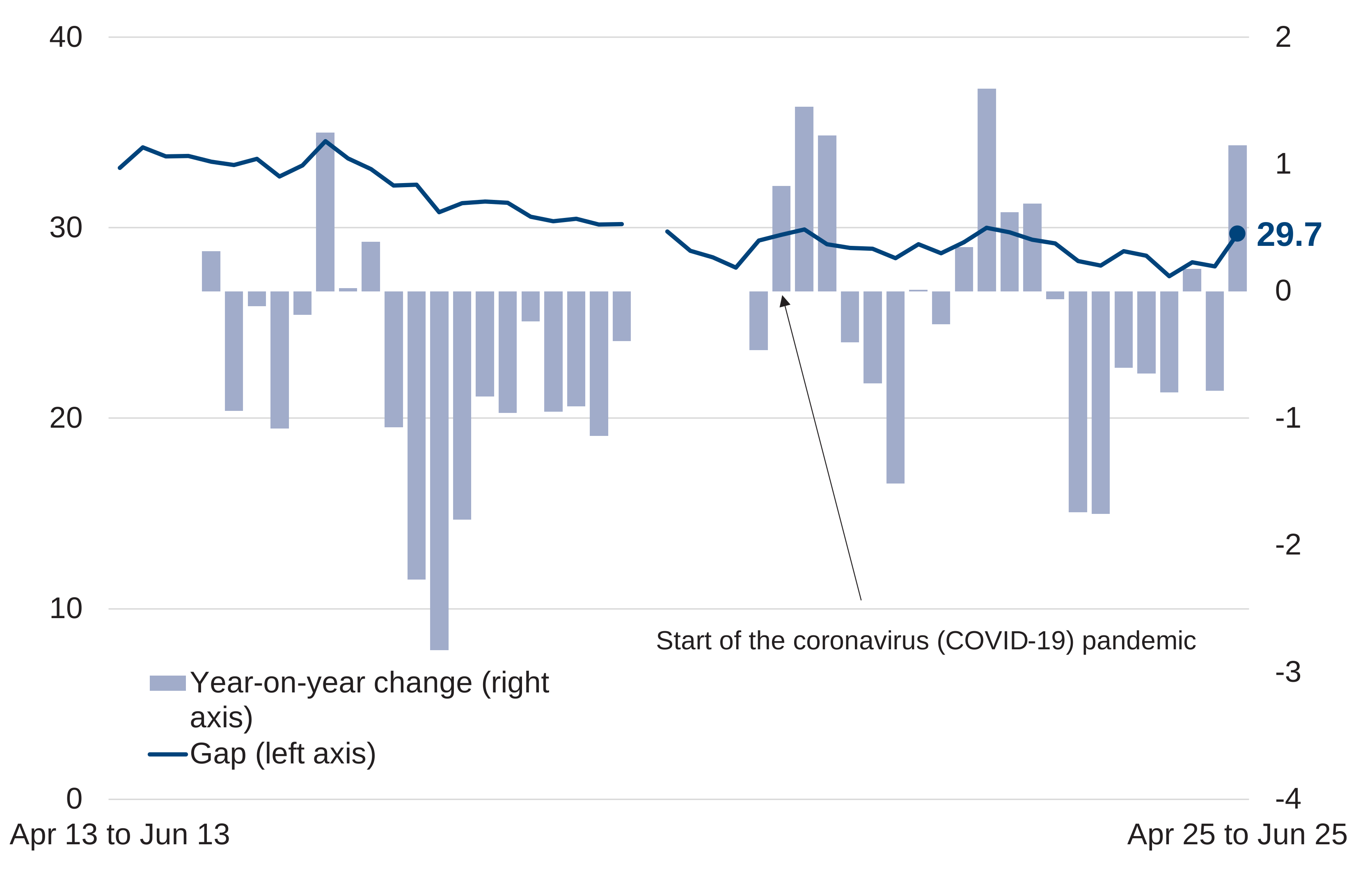
Figure 3: Disability employment gap (percentage point), people aged 16 to 64, UK, April to June 2013 to April to June 2025
Source: Labour Force Survey – data and definitions can be found in supplementary data table MSR001
Note: The ONS have only reweighted LFS data from January to March 2019 onwards with the latest estimates of the size and composition of the UK population. Data prior to and from January to March 2019 are not directly comparable.
The disability employment gap started to widen (year-on-year) at the start of the coronavirus (COVID-19) pandemic which was the first time this had happened in four years.
There had been some signs of the gap narrowing again; April to June 2024 showed the gap decreased by 0.6 percentage points compared to the same quarter the year before. This was driven partly by a small rise in the disability employment rate (0.2 percentage points), but mainly due to a decrease in the non-disabled employment rate (0.5 percentage points).
However, the most recent quarter (April to June 2025) shows the gap widening again, with an increase of 1.1 percentage points on the same quarter in 2024 and 0.9 percentage points since the same quarter of 2019 (neither change is statistically significant).
Current measures use the 16-64 age group to represent the working-age population, in line with the headline labour market statistics published by the ONS. However, the recently specified Get Britain Working outcome metrics will use the 18-66 age group to measure progress against the Government’s goal for an 80% employment rate and reducing the disability employment gap. This reflects recent increases in the state pension age and the expectation that 16 and 17 year olds will remain in full-time education or training.
Using the 18-66 age group results in higher values for the number of disabled people in employment and the disability employment gap, and lower disability employment rate, in 2024/25, reflecting the older age profile of this group. See supplementary table MSR003.
Table 1: Number of disabled people in employment, disability employment rate and disability employment gap by age group, UK, 2024/25
| Aged 16-64 | Aged 18-66 | |
|---|---|---|
| Number of disabled people in employment | 5.5 million | 5.6 million |
| Disability employment rate | 52.8% | 52.4% |
| Disability employment gap | 29.7 percentage points | 31.5 percentage points |
Source: Labour Force Survey – data and definitions can be found in supplementary data table MSR003
The increasing number of disabled people in employment is most associated with rising disability prevalence
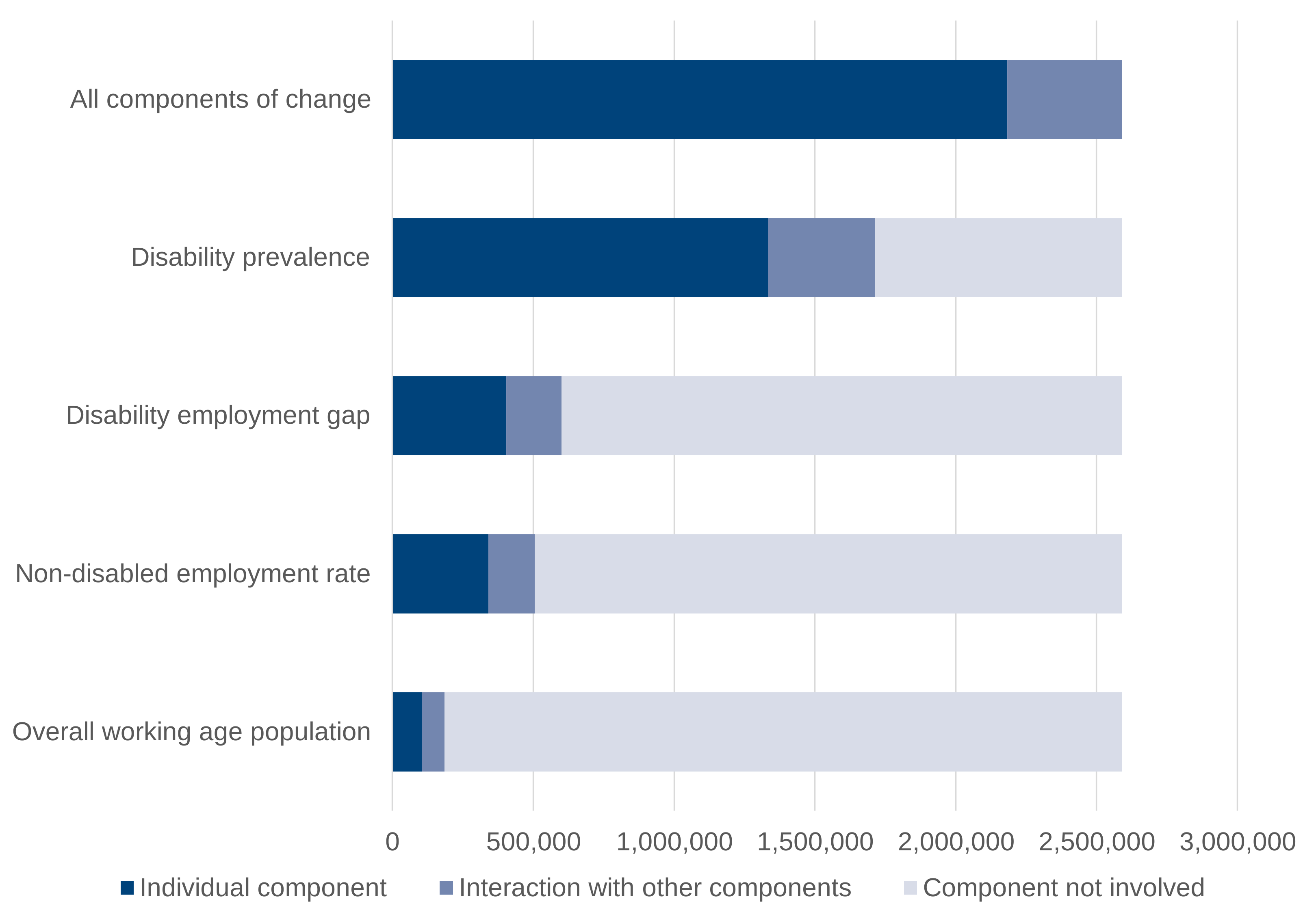
Figure 4: Number of disabled people in employment by component of change, people aged 16 to 64 years, UK, 2013/14 to 2024/25
Source: Annual Population Survey – data and definitions can be found in supplementary data table MSR002
Figure 4 shows how much of this increase may be attributed to the four components of change. Note this uses APS data for the comparison which has not been reweighted to the latest population estimates and will therefore be different to the increase reported by the LFS (which also includes a discontinuity for data prior to and after January to March 2019). For each component, a range is given. The lower end of the range shows the estimated impact of that component in isolation (dark blue bar); the upper end gives the impact including all interaction effects with the other components (mid-blue bar) and the light blue shaded area is any increase where the component is not involved. Therefore, the same interaction effects can appear in the chart under more than one component. However, taken as a whole, these interactions had a relatively small impact.
For an example calculation, and for more information on the method applied to calculate the components of change, see the background information and methodology.
The number of disabled people in employment increased by 2.6 million between 2013/14 and 2024/25. The impact of each component on the increase in the number of disabled people in employment is estimated as around:
- 60% for increased disability prevalence (1,300,000 to 1,700,000)
- 20% for decreased disability employment gap (400,000 to 600,000)
- 15% for increased non-disabled employment rate (340,000 to 510,000)
- 5% for increased working age population (100,000 to 190,000)
The increase in disability prevalence is associated with an increase in people reporting mental health conditions and “other health problems or disabilities” as a main or secondary condition. This is covered in more detail in the ‘Populations’ section.
International Comparisons
The OECD released a report in October 2022 that looked at rates of disability prevalence and employment across OECD nations. This showed that the disability employment gap in the UK had narrowed between 2012-2015 and 2016-2019 unlike in most other OECD countries. However, the UK gap was still above the OECD average in 2016-2019.
Statistics published by Eurostat show that the disability employment gap in the European Union in 2024 was 24.0 percentage points, although comparable data for the UK has not been available since 2018.
Caution should be used when making direct comparisons regarding disability statistics between countries due to differences in disability definitions and population demographics, as well as stigma, perception, and awareness of disability across countries and within countries over time.
4. Populations
This section looks at how the working-age population has changed over the last 11 years. In particular, the changes in the number of people who report having a long-term health condition or are classed as disabled, and how these are associated with different demographics.
Annual Population Survey figures are not reweighted to the most recent population estimates, but overall trends are expected to be unaffected.
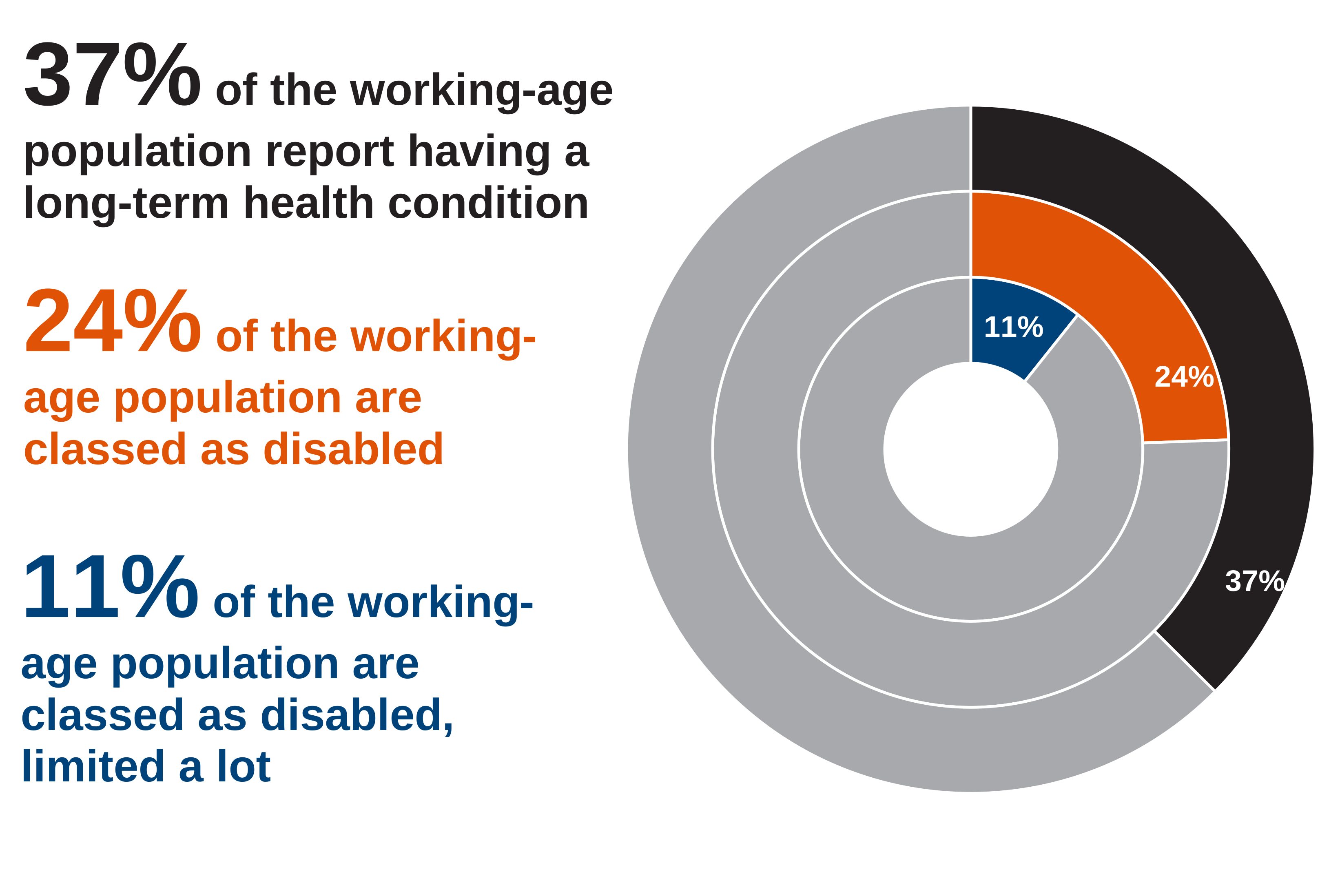
Nearly one in four of the working-age population are classed as disabled
Figure 5: Proportion of the population with a long-term health condition, or classed as disabled, including those limited a lot, people aged 16 to 64 years, UK, 2024/25
Source: Annual Population Survey – data and definitions can be found in supplementary data table POP001
For more information on the measurement of disability, see Review of disability data harmonised standards’
The number of people reporting a long-term health condition or classed as disabled has continued to rise
Figure 6: Number of people with a long-term health condition, classed as disabled, including those limited a lot, people aged 16 to 64, UK, 2013/14 to 2024/25

Source: Annual Population Survey – data and definitions can be found in supplementary data table POP001
The working-age population in the UK (aged 16 to 64 years) has increased by 1.3 million (3.3%) in the last 11 years from 40.6 million (2013/14) to 41.9 million (2024/25).
Annual Population Survey figures are not reweighted to the most recent population estimates, but overall trends are expected to be unaffected.
By comparison, between 2013/14 and 2024/25, the number of people reporting a long-term health condition increased by 4.0 million (34.3%). Of those with a long-term health condition, the number of people who reported their condition limited their day-to-day activities (classifying them as disabled) increased by 3.3 million (48.4%). Of those, the number who reported their day-to-day activities were limited a lot, increased by 1.6 million (57.1%). The number of people reporting a work-limiting health condition has also increased during this time, from 6.0 million in 2013/14 to 8.4 million in 2024/25. 1 in 5 working-age people now report having a work-limiting health condition.
The year to 2024/25 saw an increase in the number of people reporting a long-term health condition (by 590,000 or 3.9%), classified as disabled (by 450,000 or 4.6%) and disabled, limited a lot (by 340,000 or 8.3%). However, the most recent quarterly data for April to June 2025 (see Figure 1) indicates the increase in prevalence may be levelling off, with a decrease of 200,000 disabled people on the year (this change was not statistically significant).
The Health Foundation projects the number of people (in England) living with major illness is expected to increase by 37% – over a third – by 2040, nine times the rate at which the working age population (20–69-year-olds) is expected to grow (4%). For more information, see Health in 2040: projected patterns of illness in England.
The longer-term increase in the number of disabled people could be due to several factors, including changes in public awareness and attitudes towards disability. However, we have seen in other functional-based surveys (which do not rely on people self-reporting disability), that these are not the only factors. For example, the Adult Psychiatric Morbidity Survey (APMS) shows increases in prevalence across a range of indicators of poor mental health, including common mental health conditions, attention deficit hyperactivity disorder (ADHD) and post-traumatic stress disorder (PTSD).
The increase in disability prevalence is associated with an increase in people reporting mental health conditions and “other health problems or disabilities”
Musculoskeletal (MSK) conditions include problems or disabilities connected with the arms, hands, legs, feet, back or neck. Mental health (MH) conditions include depression, bad nerves, anxiety, and mental illness or other nervous disorders.
The number of disabled people with a mental health condition as their main condition has increased by 1.26 million (101.2%) between 2013/14 and 2024/25. This is mainly from people reporting depression, bad nerves or anxiety which saw an 850,000 (102.7%) increase.
Figure 7: Proportion of disabled people with and without ‘other health problems or disabilities’ by age and sex, people aged 16 to 64, 2024/25

Source: Annual Population Survey – data and definitions can be found in supplementary data table POP005
There has also been a large increase in disabled people reporting “other” health problems or disabilities as their main condition (980,000 or 141.0%) between 2013/14 and 2024/25, the majority of which has occurred since 2019/20. This category is likely to include a wide range of different health conditions, which could include conditions such as long-COVID or linked to menopause, although it is unclear to what extent these conditions have contributed to the increase.
Those who reported having “other” health problems or disabilities as their main or secondary condition were more likely than those who did not to be female (59.6% vs 53.5%), have a highest qualification at A level or higher (58.8 vs 54.8%) and live in London (12.2% vs 11.2%), the South East (13.1% vs 11.3%) and the South West (10.0% vs 7.7%) of England. They were also more than twice as likely to report having five or more health conditions than those who did not (26.5% compared to 10.6% in 2024/25). Further characteristics of those reporting “other” health problems or disabilities are included in supplementary table POP005.
This compares to musculoskeletal conditions (as a main condition) which have shown an increase of 120,000 (5.2%) for disabled people in the same period. This varies by condition with problems or disabilities connected with arms or hands increasing by 30.4% and problems or disabilities connected with back or neck decreasing by 4.0%. However, people with problems or disabilities connected with back or neck still makes up 41.1% of all people who reported a musculoskeletal condition as their main health condition in 2024/25. Overall, there are 2.5 million disabled people (24.5% of all disabled people) whose main health condition is musculoskeletal.
Many disabled people have more than one health condition which may limit their activity, that won’t be captured in the analysis of their main health condition. Some changes over time in main condition may reflect changes in the relative impacts of pre-existing conditions rather than the onset of new conditions. For example, there are 2.0 million disabled people (20.0%) who report having both a mental health and a musculoskeletal condition. Nearly a quarter of those with a progressive illness not reported elsewhere reported having five or more health conditions and nearly 40% of people reporting Autism as a main health condition also reported having a mental health condition. Data for all health conditions is provided in the supplementary tables POP003 and POP004 should alternative breakdowns be required.
The increase in the number of people being classed as disabled since 2013/14 has been greater for:
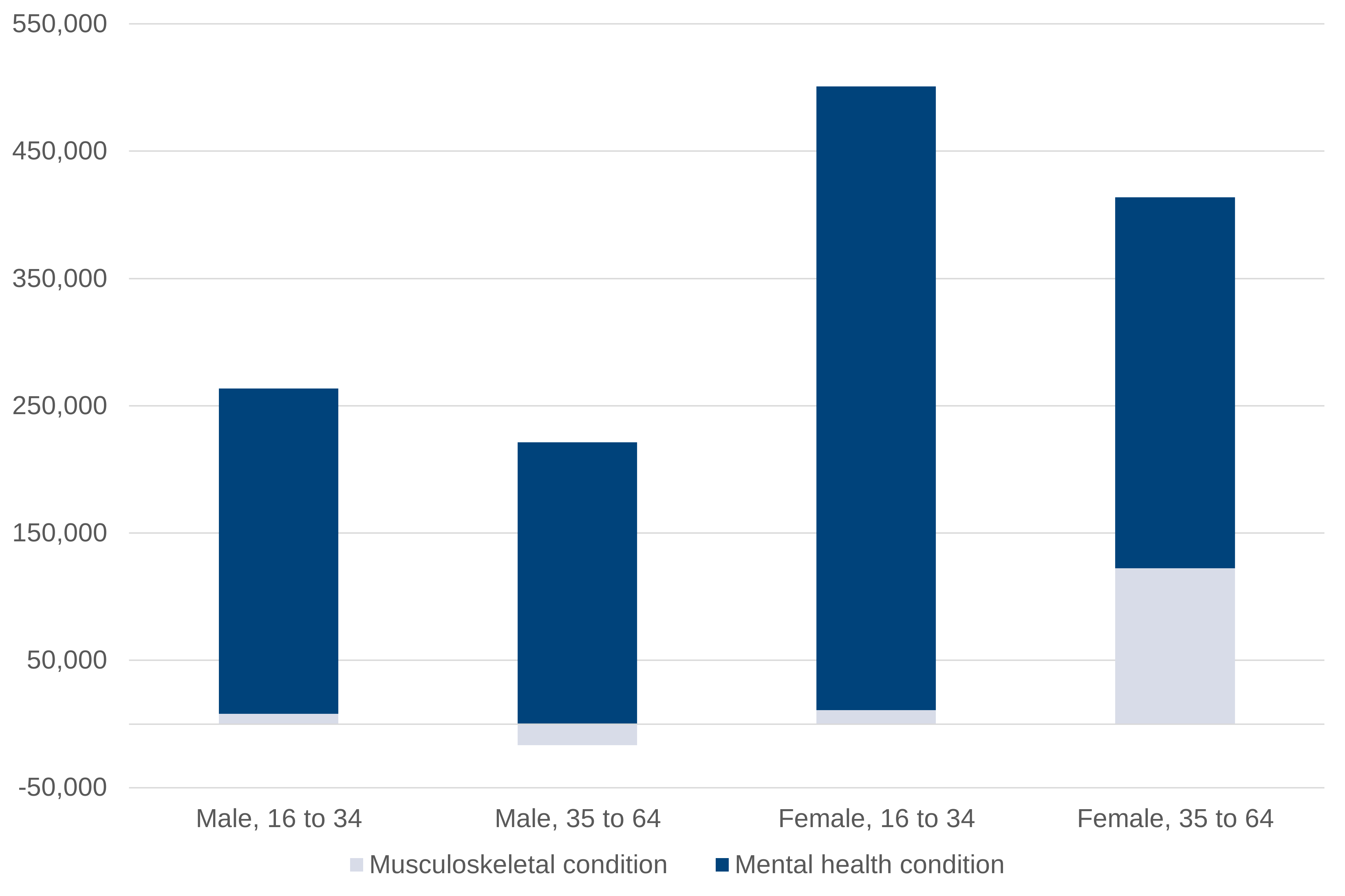
- females, 2.0 million (54.3%) increase, compared to males, 1.3 million (41.3%)
- younger people (aged 16 to 34), 1.6 million (94.9%) increase compared to older people (aged 35 to 64), 1.7 million (33.3%)
Figure 8: Change in the number of disabled people by age, sex and main health condition (MSK and MH only), people aged 16 to 64, UK, 2013/14 to 2024/25
Source: Annual Population Survey – data and definitions can be found in supplementary data table POP002
Since 2013/14, the largest increases across the age, sex and health condition groups shown in Figure 8 were for females aged 16 to 34 with a mental health condition (as their main condition) who saw an increase of 490,000 (189.4%).
Results from the APMS showed the proportion of 16 to 64 year olds, identified with a common mental health condition, increased from 17.6% in 2007 to 22.6% in 2023/4, with the proportion higher in women than men at each point. The proportion of young adults (aged 16 to 24), with a common mental health condition, rose from 17.5% in 2007 to 25.8% in 2023/4. Younger adults were also more likely to report lifetime non-suicidal self-harm and to screen positive for PTSD and ADHD than older age groups.
More information on mental health statistics can be found in the House of Commons Library summary, which provided further context, on “Mental health statistics: prevalence, services and funding in England” in March 2024. This asks “How common are mental health conditions? How long do people wait to access NHS therapy for depression and anxiety? Do statistics show that mental health services work for everyone? How much is spent on mental health services?”
Some long-term health conditions are associated with a greater impact on a person’s day-to-day activities
Figure 9: Proportion of people with a long-term health condition, classed as disabled, including those limited a lot, by main health condition, people aged 16 to 64 years, UK, 2024/25

Source: Annual Population Survey – data can be found in supplementary data table POP003
Data for all main and secondary health conditions is provided in supplementary data table POP004 should alternative breakdowns be required.
There are large differences in the impact a person’s main long-term health condition has on their day-to-day activities. For example, 8.3% of those who reported diabetes as their main condition said it affected their day-to-day activities a lot. In comparison, 52.8% of people with a progressive illness (not included elsewhere), 51.5% of those with mental illness or other nervous disorders and 50.0% of those with severe or specific learning difficulties said it affected their day-to-day activities a lot.
People with a mental health condition as their main long-term health condition were less likely to report that it limited their day-to-day activities a lot compared to people with a musculoskeletal condition (33.7% compared to 35.7%).
However, there is a large difference between the different groupings that make up the mental health condition figure. Of the people who reported depression, bad nerves, or anxiety, 26.2% said their condition limited their day-to-day activities a lot. This compares to people with a mental illness or other nervous disorder where around twice this figure (51.5%) said their day-to-day activities were limited a lot. This group makes up 29.6% of people who have a long-term health condition and report a mental health condition as their main condition.
Disabled people with Autism and severe or specific learning difficulties are more likely to be younger and have no qualifications
In 2024/25, nearly half (47.7%) of disabled people reporting Autism as a main or secondary health condition were aged 16-24, compared to 13.2% for all disabled people. Around a third (31.1%) of disabled people with severe or specific learning difficulties were aged 16-24.
Disabled people with Autism or severe or specific learning difficulties as a main or secondary health condition were also more likely to have no qualifications: around 1 in 5 disabled people with Autism (20.5%) had no qualifications and around 1 in 3 (34.4%) of those with severe or specific learning difficulties. This compares to 12.0% of all disabled people who had no qualifications.
Of those reporting Autism as their main health condition in 2024/25, 16.7% also reported having severe or specific learning difficulties. A similar proportion (16.5%) of those reporting severe or specific learning difficulties as their main health condition also reported having Autism.
Estimates for some long-term health conditions are based on small sample sizes and therefore subject to a higher degree of uncertainty. Sample sizes for all main long-term health conditions can be found in supplementary data table POP003U. The equivalent data for main or secondary long-term health conditions can be found in supplementary data table POP004 and supplementary data table POP004U.
5. Labour market status
This section looks at the labour market status of individuals, specifically whether they are in employment or not. Employment is defined as anyone who has done one or more hour of paid work and those who have a job that they are temporarily away from (for example, because they are on holiday or off sick).
The largest two categories within employment are employees and self-employed people; in recent years these two categories have accounted for most of the people in employment. People who are not in employment will be either unemployed or economically inactive.
These breakdowns are shown for different characteristics, by disability status and over time.
The disability employment gap increases with age
Figure 10: Proportion of people in employment by disability status and age, people aged 16 to 64 years, UK, 2024/25

Source: Annual Population Survey – data and definitions can be found in supplementary data table LMS001
Employment rates for disabled people, across all ages, are lower than those of non-disabled people. For both disabled and non-disabled people, employment rates generally increase with age up to the age of 50, where they start to decrease. 16 to 17-year-olds have the lowest employment rates but this is because they are more likely to be in education or training than in employment.
The disability employment gap increases with age, with those aged 50 to 64-years-old having the largest gap (32.5 percentage points compared with 21.1 percentage points for 18 to 24-year-olds).
The age-profile of the disabled population is skewed towards older individuals. For example, the 50 to 64-year-old age group makes up over 40% of the working-age disabled population, whilst the 18 to 24-year-old age group makes up around 11% of the working-age disabled population. In comparison, the 50–64-year-old age group makes up approximately 30% of the non-disabled working-age population.
Disabled females are as likely to be in employment as disabled males
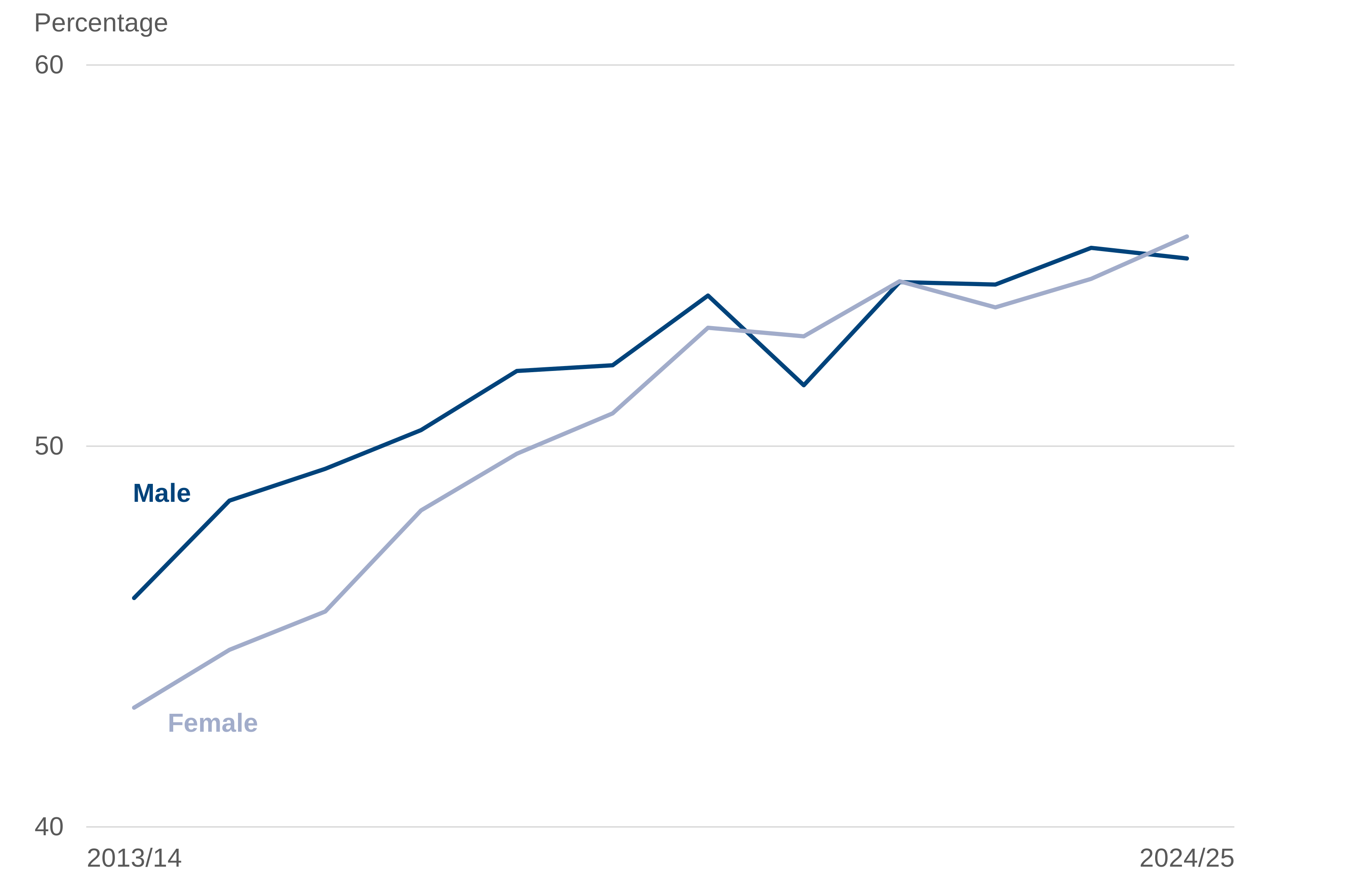
Figure 11: Proportion of people in employment by sex, disabled people aged 16 to 64 years, UK, 2013/14 to 2024/25
Source: Annual Population Survey – data and definitions can be found in supplementary data table LMS002
The gap between the employment rates of disabled females and males has been closing for several years, with disabled females having a higher employment rate in 2024/25. The rate for disabled males in 2024/25 was estimated at 54.9%, marginally less than for disabled females at 55.5%, but this difference is not statistically significant. This follows 2023/24, where the employment rate for disabled males was marginally higher than females, by 0.8 percentage points. Once again, this difference was not statically significant. The parity between males and females contrasts with non-disabled people, where in 2024/25, females had an employment rate of 78.6% compared to 85.2% for males, a difference of 6.6 percentage points.
The employment rate for disabled females has increased by 12.4 percentage points since 2013/14, up from 43.1%, with the rate for males increasing more slowly - by 8.9 percentage points from 46.0% in 2013/14.
Given the greater employment rate of non-disabled males compared to non-disabled females, the disability employment gap is narrower for females (23.1 percentage points compared to 30.3 percentage points for males).
The gap has closed at a similar rate for both males and females since 2013/14 (5.9 percentage points for males and 5.7 percentage points for females).
Disabled people with a musculoskeletal condition are more likely than those with a mental health condition to be in employment
Figure 12: Proportion of people in employment by main or secondary health condition, people aged 16 to 64 years, UK, 2024/25

Source: Annual Population Survey – data and definitions can be found in supplementary data tables LMS003 and LMS004
Musculoskeletal (MSK) conditions include problems or disabilities connected with the arms, hands, legs, feet, back or neck. Mental health (MH) conditions include depression, bad nerves, anxiety, mental illness or other nervous disorders.
Data for all health conditions is provided in the supplementary tables LMS003 and LMS004, should alternative breakdowns be required.
There is a lot of variation in employment rates of disabled people for different health conditions. For example, in 2024/25, people whose main health condition is stomach, liver, kidney or digestive problems are over twice as likely to be in employment compared to someone whose main health condition is Autism (68.8% compared to 31.4%). Disabled people with a musculoskeletal condition are more likely than those with a mental health condition to be in employment (61.1% compared to 48.4% where it is the main condition). However, 1.6m (or 16.1% of disabled people) report having both a musculoskeletal and a mental health condition.
Employment rates for health conditions where the condition is secondary are generally lower than those for main conditions. This is because people with a secondary condition will, by definition, have more than one health condition. We know that the more health conditions a person has the less likely they are to be in employment (see supplementary data table LMS005).
The likelihood a health condition impacts day-to-day activities is associated with the likelihood of being in employment
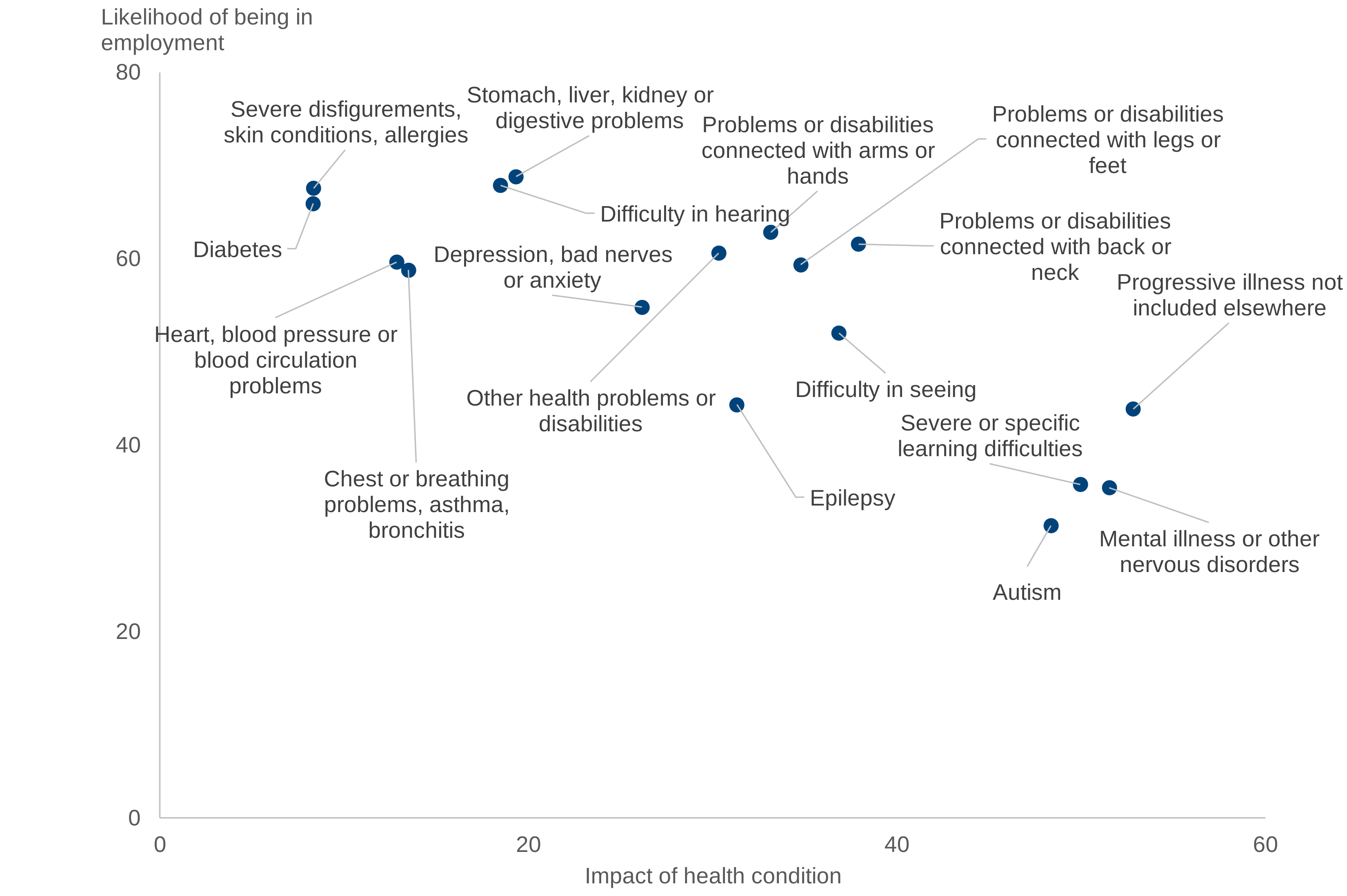
Figure 13: Proportion of disabled people in employment by proportion of individuals whose main condition limits their day-to-day activities a lot, people aged 16 to 64, UK, 2024/25
Source: Annual Population Survey – data and definitions can be found in supplementary data tables POP003 and LMS003
The difference in employment rates for different conditions is associated with the effect the condition has on a person’s day-to-day activities i.e., the greater the impact the lower chance they have of being in employment and vice-versa. Figure 13 displays a strong negative correlation (-0.7) between the employment rates of disabled people by main condition and the proportion of people with that condition who report that it limits their day-to-day activities “a lot”. A strong correlation does not necessarily mean that the impact of a health condition causes a person to be in or not in employment. This is because the impact of the health condition is unlikely to be the only factor impacting on the likelihood of being in employment.
For example, 52.8% of people with progressive illness not included elsewhere reported their main condition affected their day-to-day activities “a lot” - the highest proportion across the different long-term health conditions. However, people with this condition do not have the lowest likelihood of being in employment (see supplementary data table LMS003). Furthermore, Figure 13 shows that people with heart, blood pressure or blood circulation problems, or problems or disabilities connected with back or neck as their main condition have varying levels of impact of the health condition despite having a similar likelihood of being in employment.
Disabled people with one health condition are more than twice as likely to be in employment than those with five or more conditions
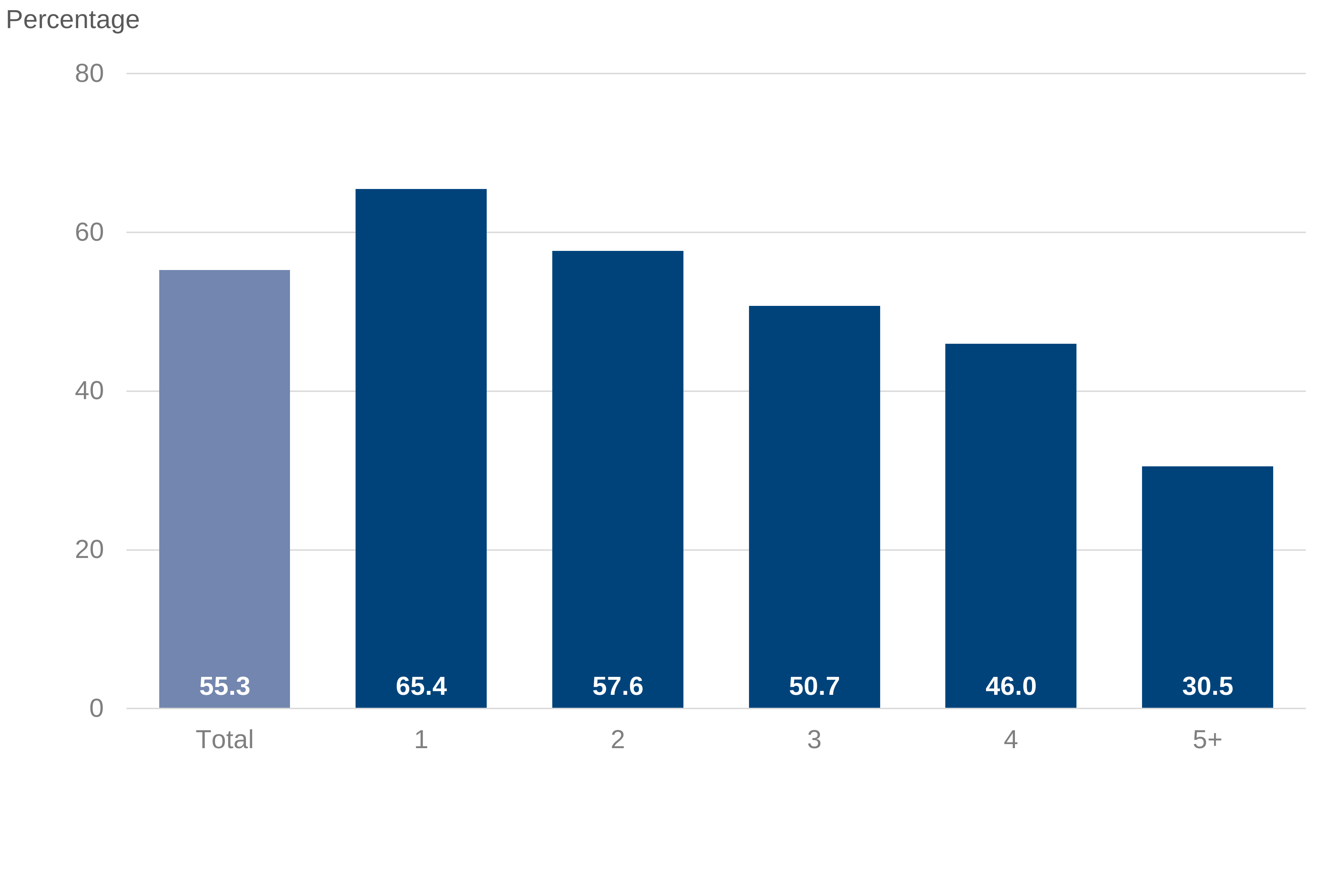
Figure 14: Proportion of people in employment by number of health conditions, people aged 16 to 64 years, UK, 2024/25
Source: Annual Population Survey – data and definitions can be found in supplementary data table LMS005
The proportion of disabled people reporting more than one long-term health condition was generally falling prior to the coronavirus (COVID-19) pandemic - from 60.5% in 2013/14 to 55.7% in 2019/20. In 2020/21 the proportion increased to 60.1%, and fell to 56.2% in 2024/25, remaining higher than the pre-pandemic figure, although this difference is not significant.
In 2024/25, 65.4% of disabled people with one health condition were in employment. This employment rate continues to increase (from 57.4% in 2013/14) and is 10.2 percentage points higher than the rate for all disabled people. Employment rates decline as the number of health conditions increases. Less than a third (30.5%) of disabled people with five or more health conditions were in employment in 2024/25.
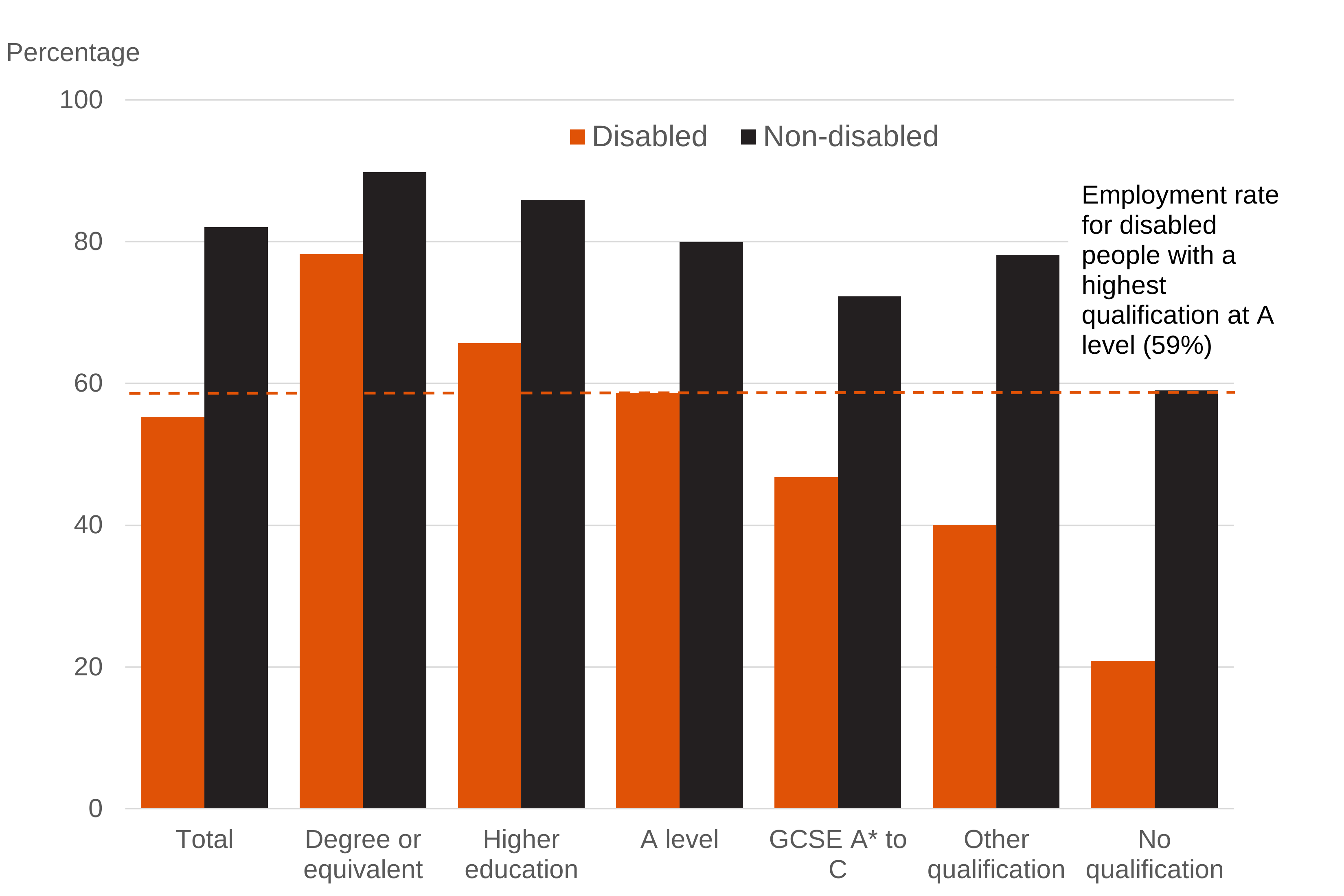
Non-disabled people with no formal qualifications are as likely to be employed as disabled people with a highest qualification at A Level
Figure 15: Proportion of people in employment by disability status and highest qualification, people aged 16 to 64, UK, 2024/25
Source: Annual Population Survey – data and definitions can be found in supplementary data table LMS006
In educational attainment, disabled people are less likely to have a degree or equivalent qualification than non-disabled people (27.1% for disabled people and 42.2% for non-disabled people), and more likely to have no qualifications (12.0% for disabled people and 4.9% for non-disabled people). However, since 2013/14, the proportion of disabled people reporting a degree as their highest qualification has risen by 11.8 percentage points, compared to a rise of 13.7 percentage points for non-disabled people.
Generally, the higher the qualification a person has the more likely they are to be in work. However, disabled people are less likely to be in work than non-disabled people at all qualification levels. Non-disabled people with a degree are around 11.5 percentage points more likely to be in work compared to their disabled counterparts. For those with no qualifications, the difference is more than three times greater with non-disabled people around 38.1 percentage points more likely to be in work. Disabled people with a highest qualification at A level are around as likely (58.7%) to be in employment as a non-disabled person with no qualifications (59.0%). Disabled people with a degree or higher education are more likely to be in employment than non-disabled people with no qualifications.
Further research on factors, including highest qualification, driving the disability employment gap can be found at: Unpacking the Disability Employment Gap – Economics (The University of Sheffield).
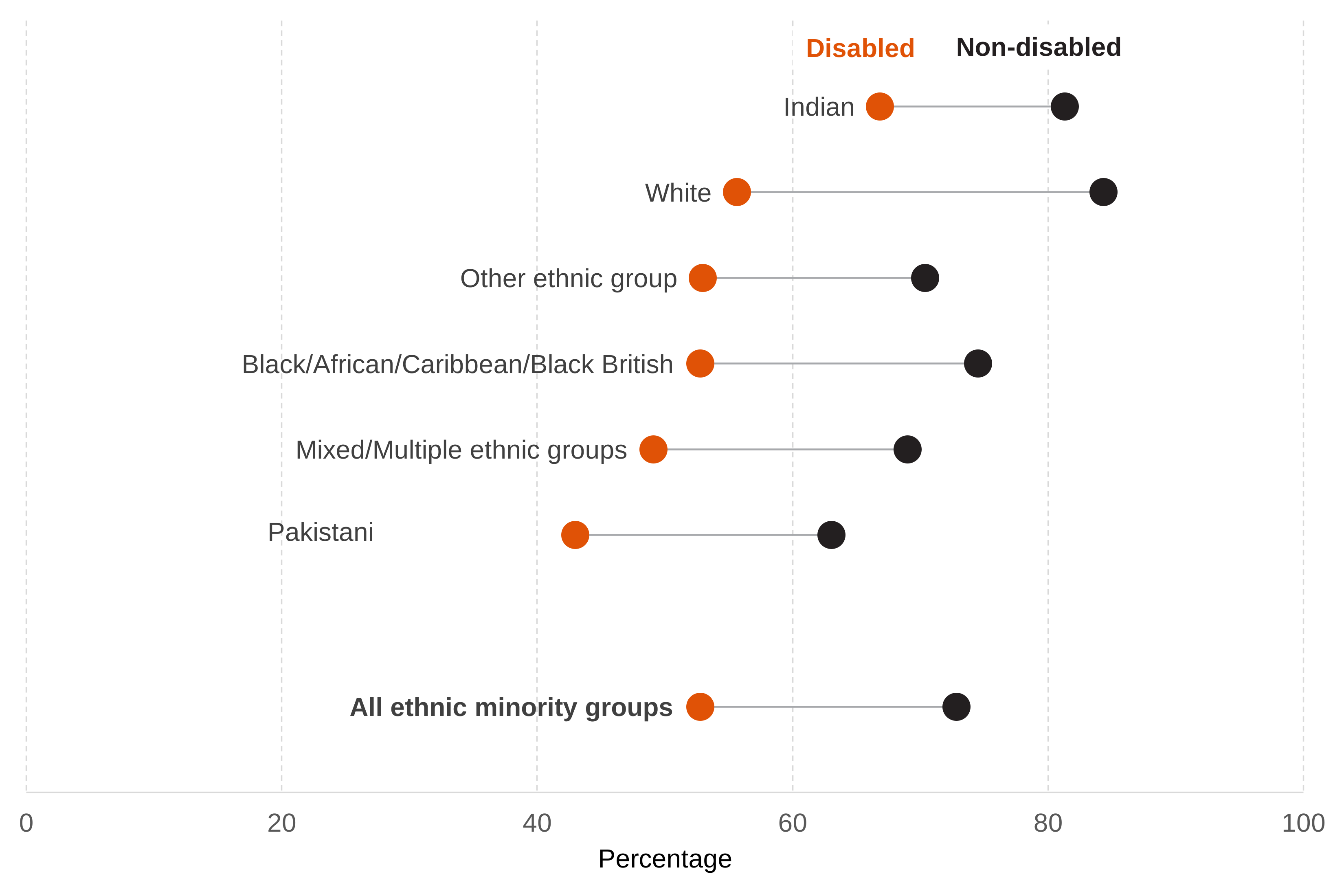
Disabled people of Black/African/Caribbean/Black British and White ethnicity have the largest disability employment gaps
Figure 16: Proportion of people in employment by disability status and ethnicity, people aged 16 to 64 years, UK, 2024/25
Source: Annual Population Survey – data and definitions can be found in supplementary data table LMS007
Disabled people of all ethnicities are less likely to be in employment compared to their non-disabled counterparts. People of Indian ethnicity have the highest disability employment rate (66.8%) whilst people of Pakistani ethnicity have the lowest (43.0%).
Disabled people of Black/African/Caribbean/Black British have the largest disability employment gap (21.7 percentage points) for any ethnic minority group. This gap is lower than the disability employment gap for people of White ethnicity (28.7 percentage points). Historically, the White ethnic population has had the widest disability employment gap. This is due in part to them also having the highest non-disabled employment rate, which is 84.3% in 2024/25. The disability employment gap for all ethnic minority (non-White) groups is 20.1 percentage points.
Estimates for Bangladeshi, Chinese and any other Asian background ethnic groups are based on small sample sizes and subject to a higher degree of uncertainty and are therefore not included in this analysis. The data for all groups can be found in supplementary data table LMS007.
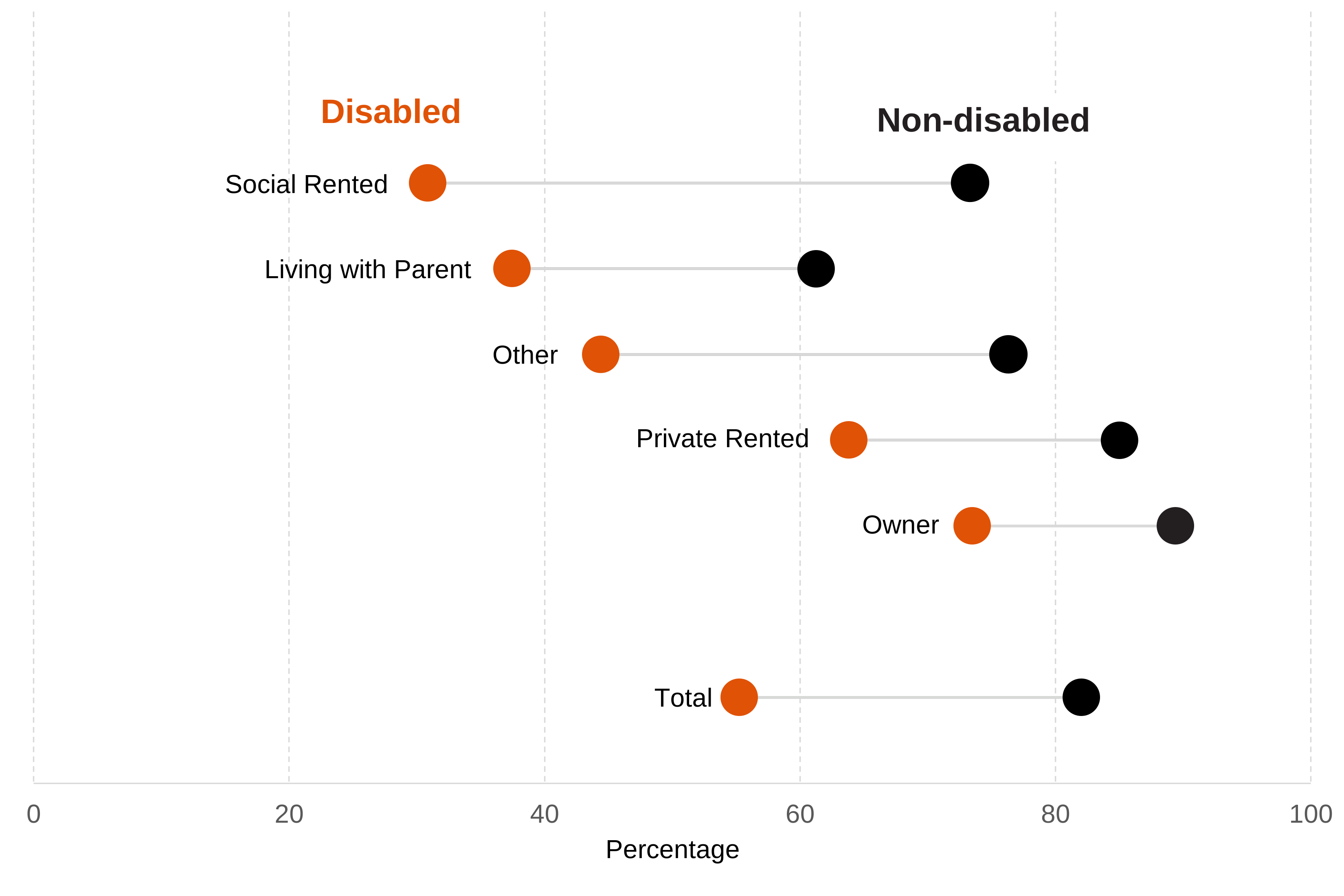
Disabled people living in social rented accommodation have the widest disability employment gap compared with other types of housing tenure
Figure 17: Proportion of people in employment by disability status and housing tenure, people aged 16 to 64 years, UK, 2024/25
Source: Annual Population Survey – data and definitions can be found in supplementary data table LMS011
Disabled people are less likely to own a home than non-disabled people (41.7% compared to 55.3%), and more likely to be living in social housing (24.2% compared to 7.2%). However, they are similarly likely to be privately renting or living with a parent.
Individuals who own their home are the most likely to be in work, regardless of their disability status (89.4% for non-disabled people and 73.5% for disabled people), followed by those living in private rented accommodation. Disabled people who are living with their parents, and disabled people living in social rented accommodation are less likely to be in employment compared with those living in other housing tenures.
However, disabled people are less likely to be in work across all tenures compared with non-disabled people. For example, non-disabled people living in a home they own are around 15.9 percentage points more likely to be in work compared to their disabled counterparts, the narrowest disability employment gap. For those living in social housing, the disability employment gap is widest, where non-disabled people living in social housing are 42.5 percentage points more likely to be in work compared to disabled people.
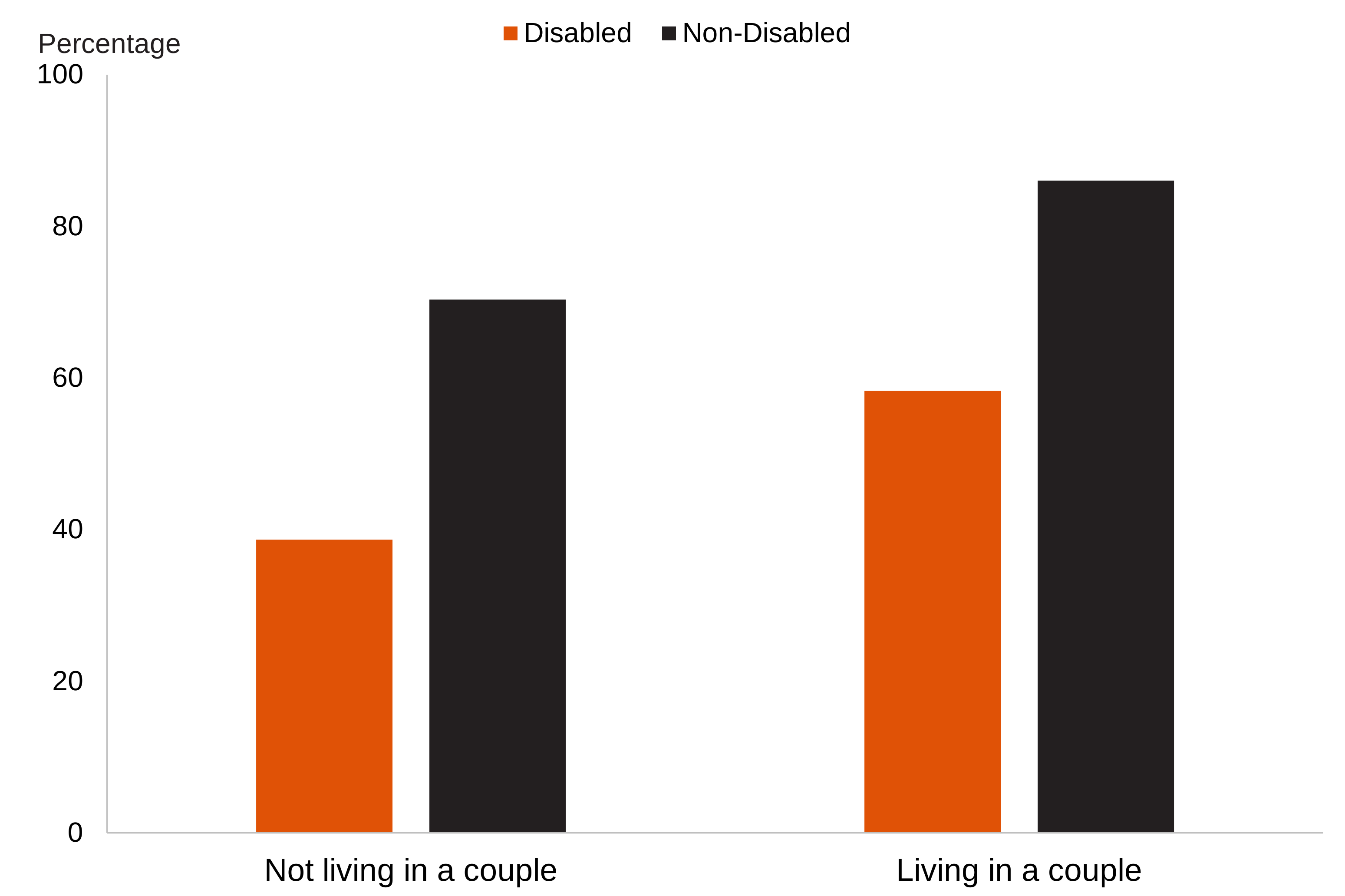
Disabled people not living in a couple are less likely to be employed and have a wider disability employment gap
Figure 18: Proportion of people in employment by disability and couple status, people aged 16 to 64, UK, April to June 2025
Source: Labour Force Survey – data and definitions can be found in supplementary data table LMS012
In April to June 2025, disabled individuals were less likely to be living in a couple than non-disabled individuals (51.9% compared to 63.6%).
Living in a couple is related to higher employment, regardless of disability status. Disabled individuals who are living in a couple are more likely to be in employment than disabled individuals who do not live in a couple (65.7% compared to 42.2%). This result holds for non-disabled individuals, but the difference is less pronounced (88.2% for living in a couple compared to 72.9% for not living in a couple).
However, the disability employment gap is wider for individuals who do not live in a couple when compared to individuals who do live in a couple (30.7 percentage points compared to 22.6 percentage points).
Since the same quarter last year, the gap has increased by 2.5 percentage points for individuals who are not living in a couple, driven by a 3.1 percentage point increase in the employment rate of non-disabled people. The gap for individuals who are living in a couple has remained stable.
Living in a couple includes people who are Single, Widowed or Divorced and co-habiting and people who are Married or in a Civil Partnership and are living with their partner.
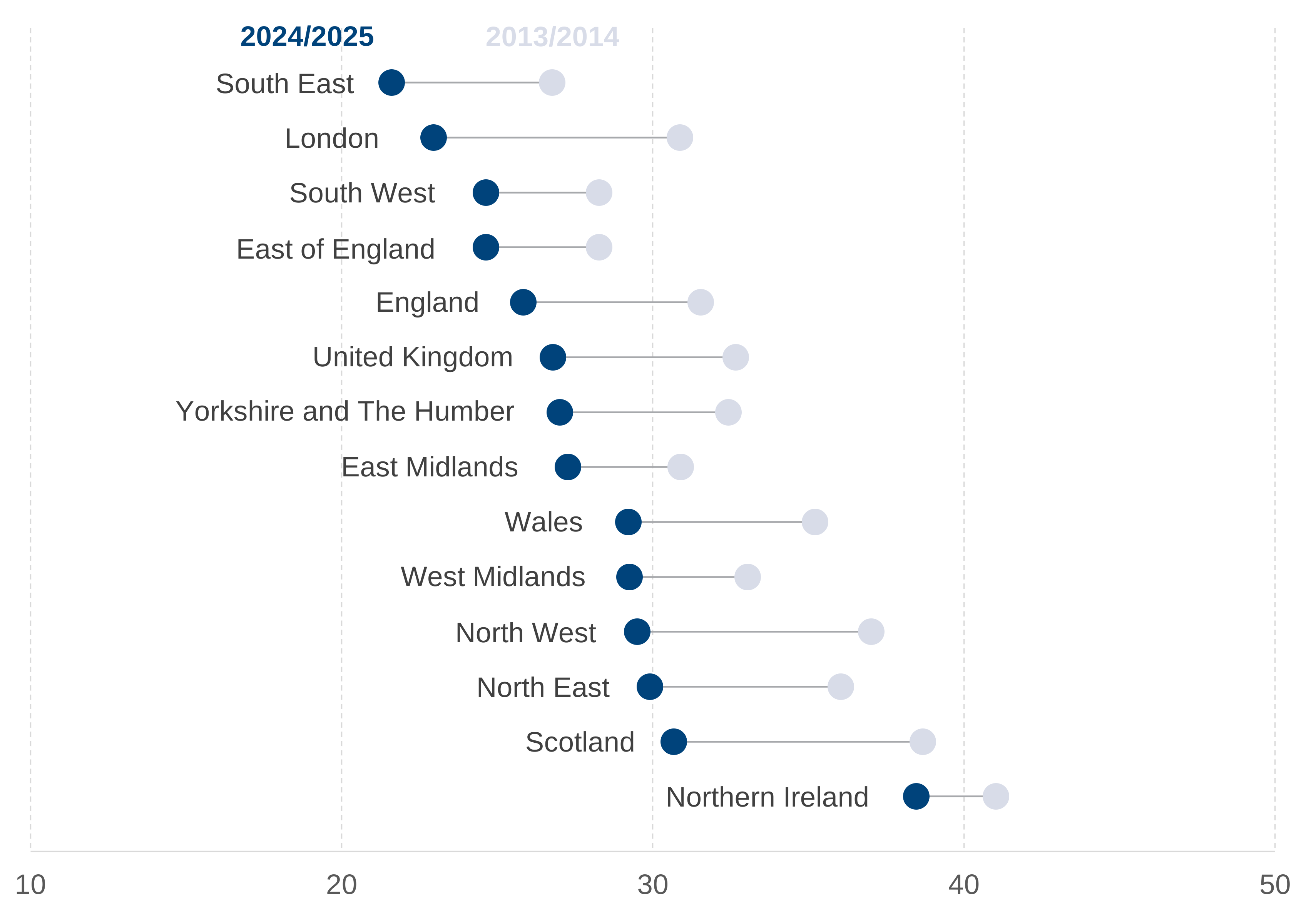
Despite falling across all areas of the UK, there are still large differences in the disability employment gap in different parts of the country
Figure 19: Disability employment gap (percentage points) by country and region, people aged 16 to 64 years, UK, 2013/14 and 2024/25
Source: Annual Population Survey – data and definitions can be found in supplementary data table LMS008
All areas of the UK have seen a reduction in the disability employment gap between 2013/14 and 2024/25.
The areas that ranked above the UK disability employment gap average in 2024/25 were Northern Ireland, Scotland, North East and North West of England, West Midlands, Wales, East Midlands and Yorkshire and The Humber. East of England, South West, London and South East ranked below.
North East (7.6 percentage points reduction) is the area that has seen the largest reduction in the disability employment gap in the past 12 months, a statistically significant difference. West Midlands (1.6 percentage points increase) and East Midlands (1.4 percentage points) have seen the largest increases in the same period, although these changes are not statistically significant.
Local authorities with the largest disability employment gaps tend to be concentrated within certain areas of the country
Figure 20: Disability employment gap (percentage points) by Local Authority, people aged 16 to 64 years, Great Britain, 2022 to 2024

These estimates are based on survey data. In general, there is a higher degree of uncertainty around estimates at a Local Authority level because at this granular level the sample sizes are small. Historic level trends can be volatile.
Source: Annual Population Survey – data and definitions can be found in supplementary data table LMS009
Local Authorities with the largest disability employment gaps can be found across most regions and countries of the UK. However, many of these are concentrated in Scotland, Wales, and the North West of England. For example, Local Authorities with the largest (top 20%) disability employment gaps include Dumfries and Galloway and Inverclyde in Scotland (43.6 and 40.9 percentage points), Blaenau Gwent and Merthyr Tydfil in Wales (43.1 and 42.6 percentage points) and Halton and Bolton in the North West of England (42.8 and 42.6 percentage points).
In contrast, Local Authorities with the smallest disability employment gaps tend to be found in the South and East of Great Britain. Local Authorities with the lowest disability employment gap (bottom 20%) include Cherwell (5.2 percentage points), Test Valley (6.0 percentage points) and Wokingham (7.6 percentage points), amongst others.
Research conducted by the Office for National Statistics (ONS) used 2021 census data to analyse health and disability, identifying higher rates of prevalence in parts of the North of England, the Midlands and Wales. The research paper proposes that geographic disparities in health outcomes may be connected to the legacy of the industrial revolution. This research used age-standardisation to account for the age-profile of the area when analysing prevalence.
Further research on factors, including geography, driving the disability employment gap can be found at: Unpacking the Disability Employment Gap – Economics (The University of Sheffield).
Data for Northern Ireland is not available below country level and is therefore not shown in the Local Authority map above (Figure 20). Data for all Local Authorities, regions and countries of the UK, including Northern Ireland, can be found in supplementary data table LMS009. The equivalent data for Parliamentary Constituencies can be found in supplementary data table LMS010.
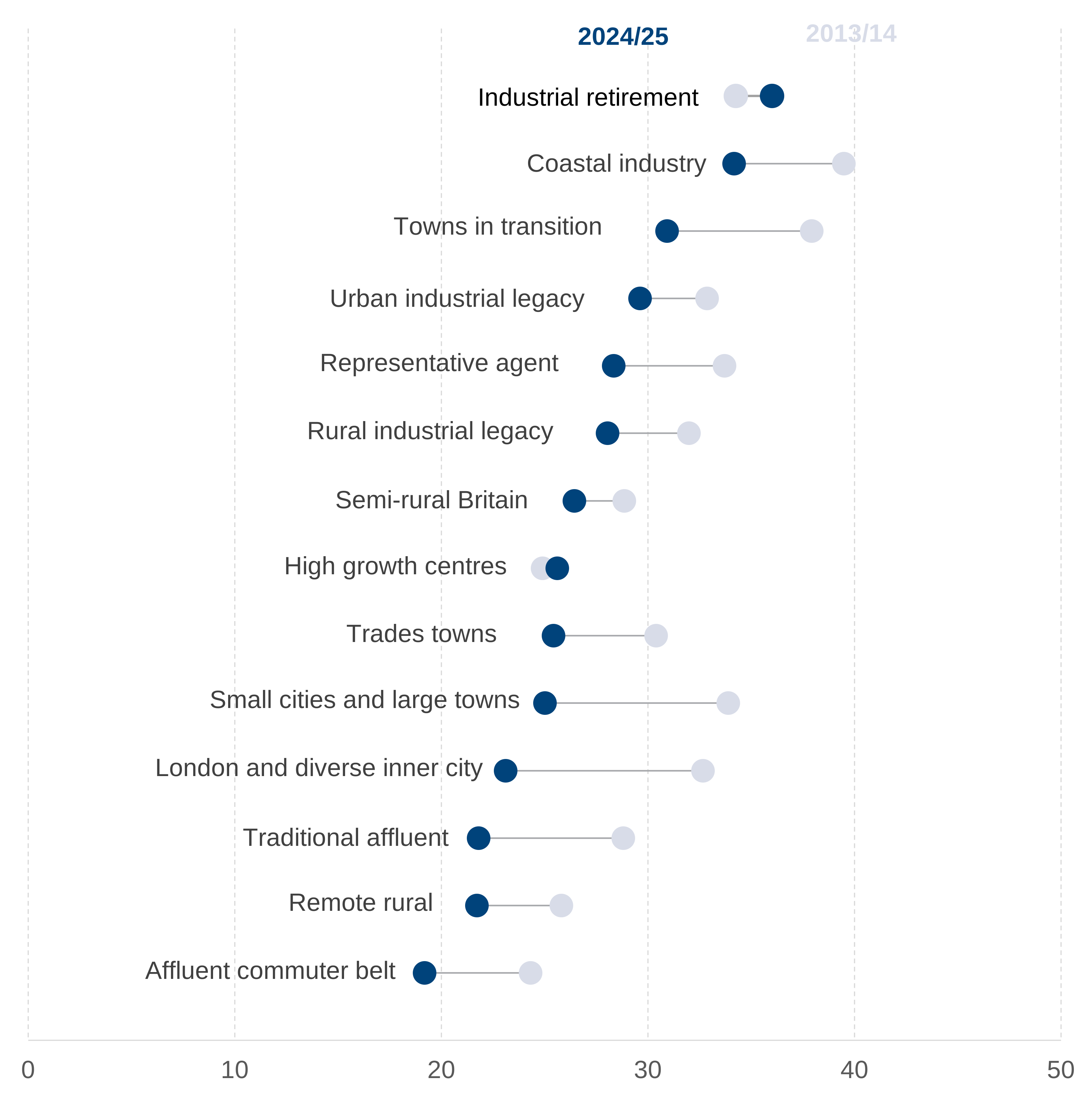
The largest disability employment gaps are seen in industrial retirement and coastal industry labour market clusters
Figure 21: Disability employment gap (percentage points) by labour market cluster, people aged 16 to 64 years, UK, 2013/14 and 2024/25
Source: Annual Population Survey – data and definitions can be found in supplementary data table LMS016
Distinct labour market types can be identified by grouping Local Authorities based on the characteristics of their workforce. The type of labour market in a local area appears to be a key determinant of how the disability employment gap has changed over the last 11 years, more so than the geographic location of the labour market.
Labour market clusters with the largest disability employment gaps in 2024/25 include industrial retirement (36.0 percentage points) and coastal industry (34.2 percentage points) clusters. The industrial retirement cluster includes places such as Blackpool and coastal industry includes places such as Inverclyde. In contrast, the labour market clusters with the smallest disability employment gaps include Affluent commuter belt (19.2 percentage points), Remote rural (21.7 percentage points) and Traditional affluent (21.8 percentage points) clusters. The affluent commuter belt cluster includes places such as St Albans, remote rural includes places such as Wiltshire and traditional affluent includes places such as Cheltenham.
The majority of labour market clusters have seen a decrease in the disability employment gap since 2013/14. Labour market types that have seen the greatest decreases in the disability employment gap from 2013/14 to 2024/25 include London and diverse inner city (9.5 percentage points) and Small cities and large towns (8.9 percentage points). London and diverse inner city includes places such as Newham and small cities and large towns includes places such as Sheffield. However, some labour market types have seen increases in their disability employment gaps, including Industrial retirement (1.7 percentage points) and High growth centres (0.7 percentage points). High growth centres includes places such as Oxford.
Details of the characteristics of each of the different labour market clusters, along with how these clusters were created, is provided in the background information and methodology. Detailed breakdowns for all labour market clusters are available in supplementary table LMS016.
Around 1 in 5 disabled people have not been employed for over 10 years
The data in this sub-section uses data on disabled people from the Family Resources Survey (FRS), which has been linked to employment and benefit records from the Registration and Population Interactions Dataset (RAPID). The FRS is an annual survey collecting information on private households in the UK. RAPID data provides an annualised view of all the interactions a person has with DWP and HMRC throughout the tax year. Further details on the data, definitions, limitations and methodology used in this section can be found in the background information and methodology.
Figure 22: Proportion of people who were disabled in 2022/23 by last financial year employed

Source: FRS-RAPID linked dataset – data and definitions can be found in supplementary data table LMS017
Of those people classed as disabled in the FRS in 2022/23, 18.2% did not have any employment activity recorded on RAPID from 2008/09 to 2023/24. Nearly a fifth (19.6%) of disabled people’s last employment record was over two financial years go and 10.7% within the last two financial years. Over half (51.5%) had an employment record after the year in which they reported their status as being disabled.
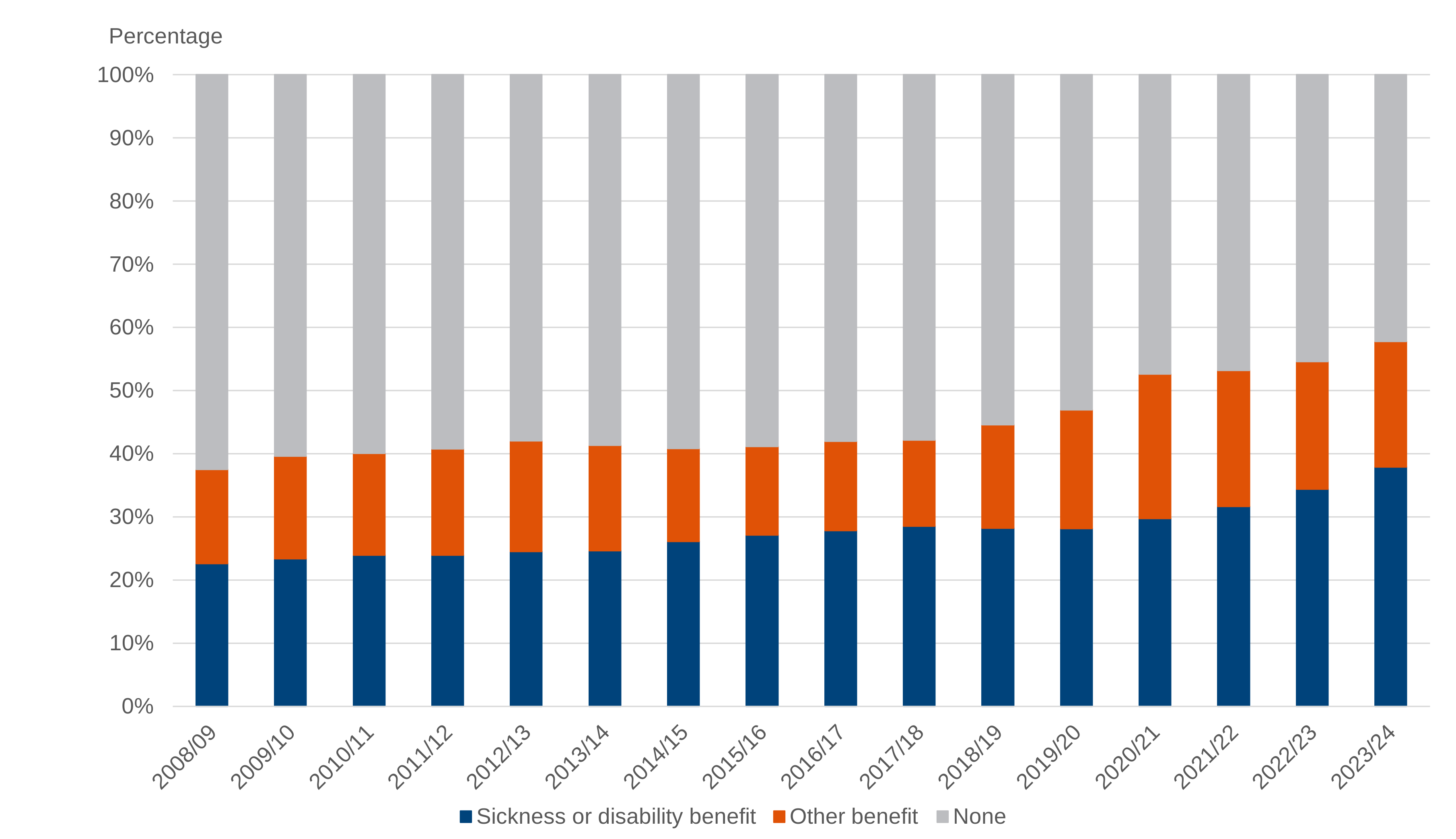
More than a third of disabled people are claiming a sickness or disability benefit
Figure 23: Proportion of disabled people in 2023/24 by benefit type claimed during each tax year, 2008/09 to 2023/24
Source: Source: FRS-RAPID linked dataset – data and definitions can be found in supplementary data table LMS018
Over a third of disabled people in the FRS in 2023/24 (37.9%) were claiming at least one sickness or disability benefit. This proportion has steadily increased since 2008/09, when 22.6% were claiming a sickness or disability benefit. Note that disability status is only measured in 2023/24 and may have changed since the beginning of the time series.
Nearly a fifth (19.8%) of disabled people were claiming another type of benefit in 2023/24. This has increased since 2008/9 when 14.9% were claiming other benefits and reached a high of 22.9% in 2020/21, during the coronavirus (COVID-19) pandemic. The proportion of people who were not claiming any benefit was 62.5% in 2008/09 and decreased to 42.2% in 2023/24. For details of which benefits have been included in the analysis, please see the background information and methodology.
6. Employment
This section looks at differences between disabled and non-disabled people who are in employment.
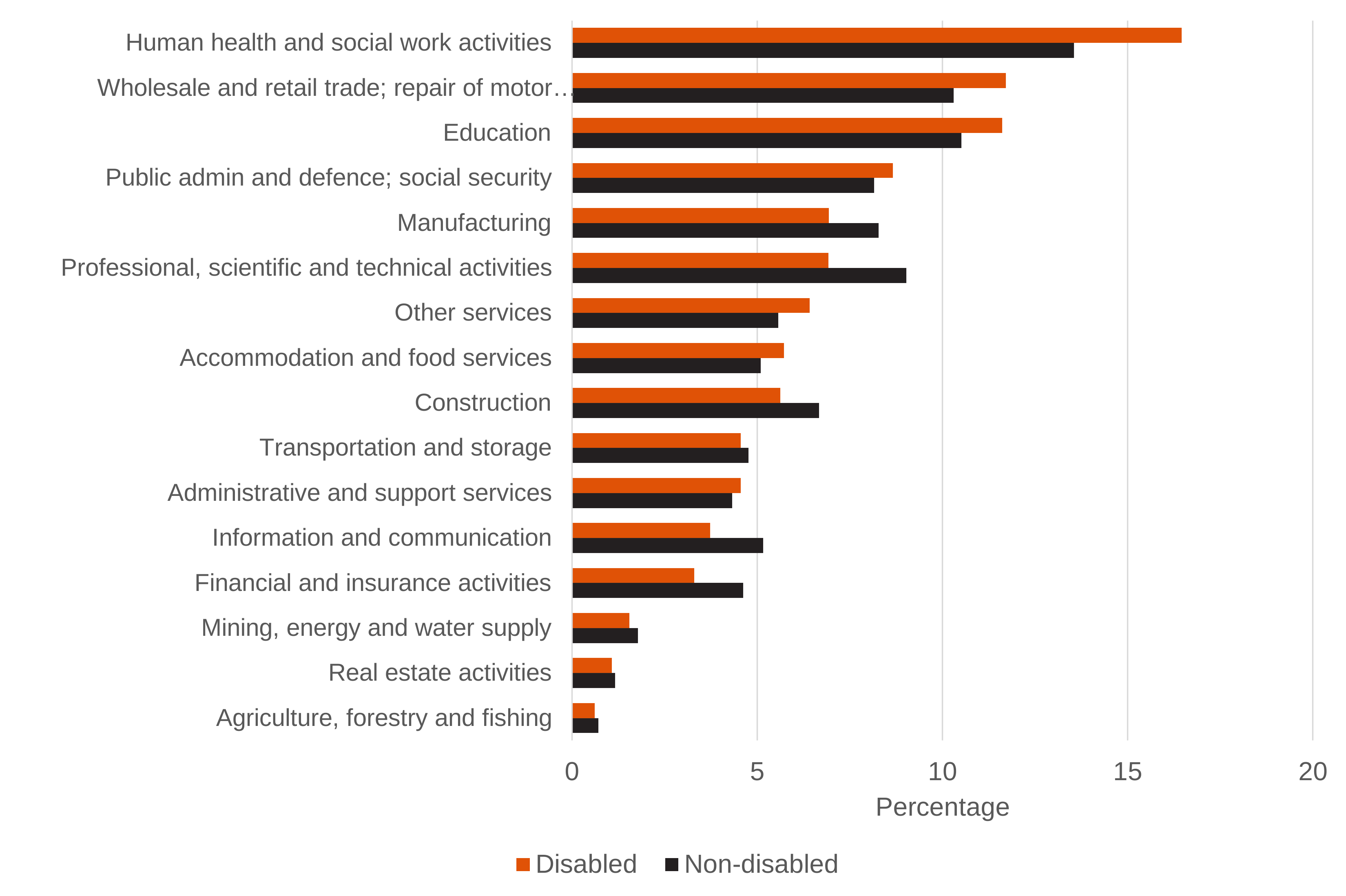
Disabled workers are more likely to work in the Health, Retail and Education industries
Figure 24: Percentage of people employed in each industry by disability status, people aged 16 to 64 years, UK, 2024/25
Source: Annual Population Survey – data and definitions can be found in supplementary data table EMP001
In 2024/25 both disabled and non-disabled workers (including those who are self-employed) were most likely to be working in the following industries:
-
Human health and social work activities
-
Wholesale, retail and repair of motor vehicles
-
Education
These three industries made up 39.8% of disabled people in employment and 34.4% of non-disabled people in employment. Disabled people are disproportionately more likely to work in these industries compared to non-disabled people.
Since 2013/14, the proportion of non-disabled people working in Professional, scientific and technical activities has increased by 2.0 percentage points to 9.0% in 2024/25, compared with disabled people where it increased by 1.1 percentage points to 6.9%.
The industries, in 2024/25, where disabled workers were most likely to be under-represented, compared with non-disabled workers, are:
-
Professional, scientific and technical activities (6.9% of disabled workers compared to 9.0% of non-disabled workers)
- Manufacturing (6.9% compared to 8.3%)
- Construction (5.6% compared to 6.7%)
-
Information and communication (3.7% compared to 5.2%)
- Financial and insurance activities (3.3% compared to 4.6%)
When analysing the age and sex demographics of disabled workers by industry, the notable differences (which were also seen for non-disabled workers) were:
- Accommodation and food services (10.1% of disabled workers aged 16-34 compared with 3.8% of disabled workers 35-64). For non-disabled people, this pattern is reversed with 5.1% of non-disabled workers aged 16-34 and 8.9% of non-disabled workers aged 25-64.
- Human health and social work activities (7.0% of disabled working males compared to 23.5% of disabled working females)
-
Construction (10.5% of disabled working males compared to 2.0% of disabled working females)
- Education (5.9% of disabled working males compared to 15.9% of disabled working females)
Disabled workers are less likely than non-disabled workers to be in professional occupations
Figure 25: Proportion of people employed in each occupation by disability status, people aged 16 to 64 years, UK, 2024/25

Source: Annual Population Survey – data and definitions can be found in supplementary data table EMP002
Both disabled and non-disabled workers were most likely to be working in Professional occupations. Disabled people are least likely to be working as Process, plant and machine operatives and non-disabled people are least likely to work in Sales and customer service occupations in 2024/25.
Disabled workers were less likely to be in higher skilled occupations such as Managers, directors and senior officials and Professional occupations compared with non-disabled workers. However, they were as likely to be in Associate professional and technical occupations as non-disabled workers. The proportion of disabled workers in these higher skilled occupations has increased over the past eleven years, from 37.5% in 2013/14 to 47.5% in 2024/25.
Disabled workers were also more likely than non-disabled workers to be working in Caring, leisure and other service occupations; Elementary occupations; Administrative and secretarial occupations and Sales and customer service occupations than non-disabled workers. Conversely, the proportion of disabled workers in these occupations has decreased over the past eleven years, from 44.8% in 2013/14 to 39.4% in 2024/25.
When analysing the age and sex demographics of disabled workers by occupation, the notable differences (which were also seen for non-disabled workers) were:
-
Elementary occupations (12.4% of disabled workers aged 16-34 compared to 7.2% of disabled workers 35-64)
-
Skilled trade occupations (14.8% of male disabled workers compared to 2.0% of female disabled workers)
-
Caring, leisure and other service occupations (4.3% of male disabled workers compared to 14.9% of female disabled workers)
Since 2013/14, the proportion of non-disabled people working in professional occupations has seen a larger increase compared to disabled people. Disabled people have seen a larger increase than non-disabled people in people working in associate professional and technical occupations, largely driven by younger disabled people. The proportion of 16 to 34 year old disabled people working in associate professional and technical occupations increased by 6.3 percentage points since 2013/14, compared with 2.5 percentage points for 35 to 64 year olds.
Occupation data for 2020/21 and 2021/22 has been revised following a coding error identified in the collection of Standard Occupational Classification 2020 (SOC20) data for the Office for National Statistics (ONS) Labour Force and Annual Population Surveys. More information can be found at: Revision of miscoded occupational data in the ONS Labour Force Survey, UK – Office for National Statistics
Disabled workers are more likely than non-disabled workers to be self-employed
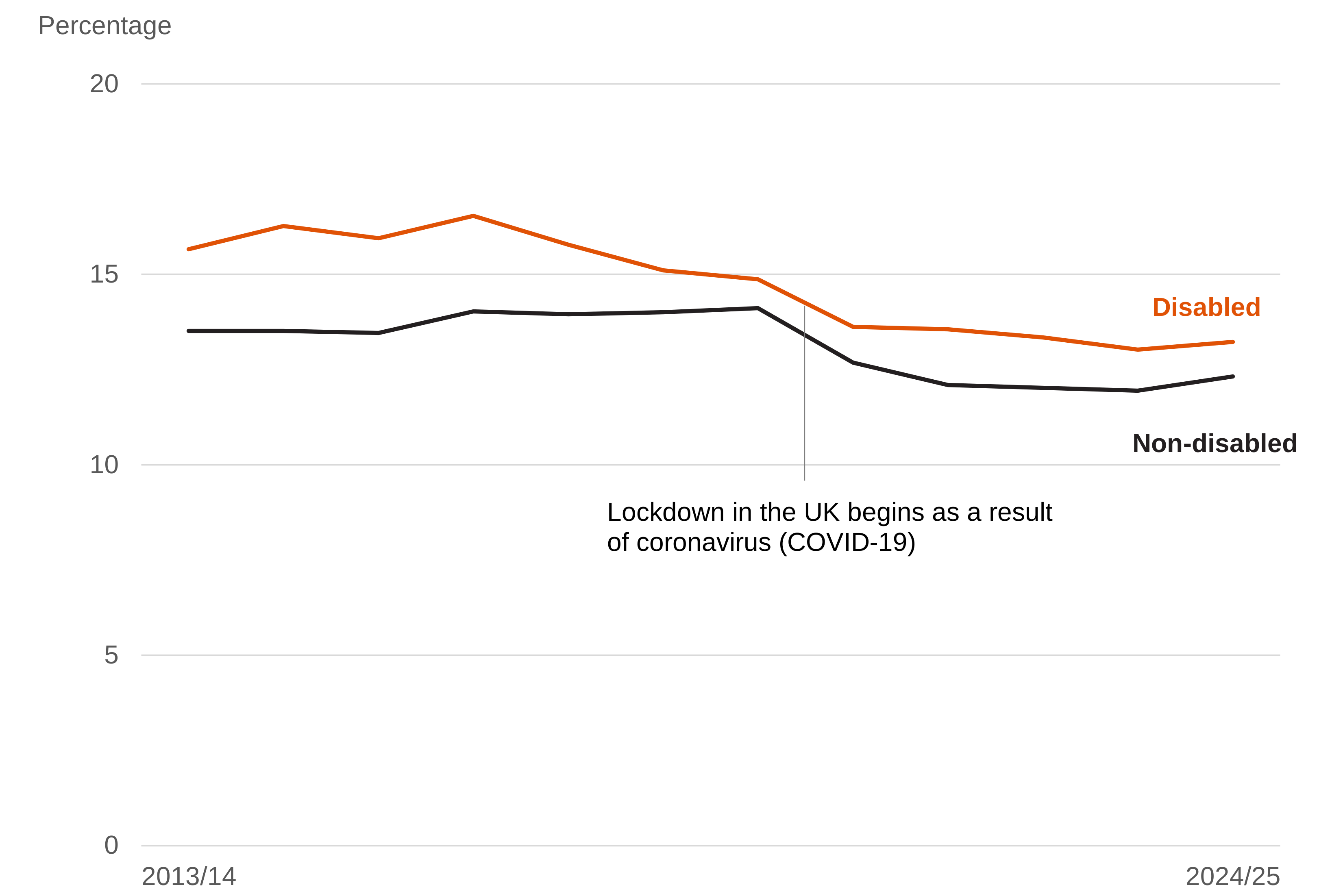
Figure 26: Proportion of people in employment who are self-employed by disability status, employed people aged 16 to 64 years, UK, 2013/14 to 2024/25
Source: Annual Population Survey – data and definitions can be found in supplementary data table EMP003
The proportion of disabled workers who are self-employed has decreased by 2.4 percentage points from 15.7% in 2013/14 to 13.2% in 2024/25. This compares to non-disabled workers where the proportion has fallen by 1.2 percentage points from 13.5% to 12.3% over the same period.
The difference between the proportion of disabled and non-disabled workers who are self-employed decreased to a seven-year low (0.8 percentage points) in 2019/20. However, the difference has fluctuated to up to 1.5 percentage points in 2021/22 but has since steadily decreased to stand at 0.9 percentage points in 2024/25.
Falls in self-employment during the coronavirus (COVID-19) pandemic, for disabled and non-disabled workers, may in part be explained by a shift in people reclassifying themselves from self-employed to employees. This coincided with the introduction of the furlough scheme. The following article covers this in more depth: Understanding changes in self-employment in the UK – Office for National Statistics
One in three disabled workers are working part-time
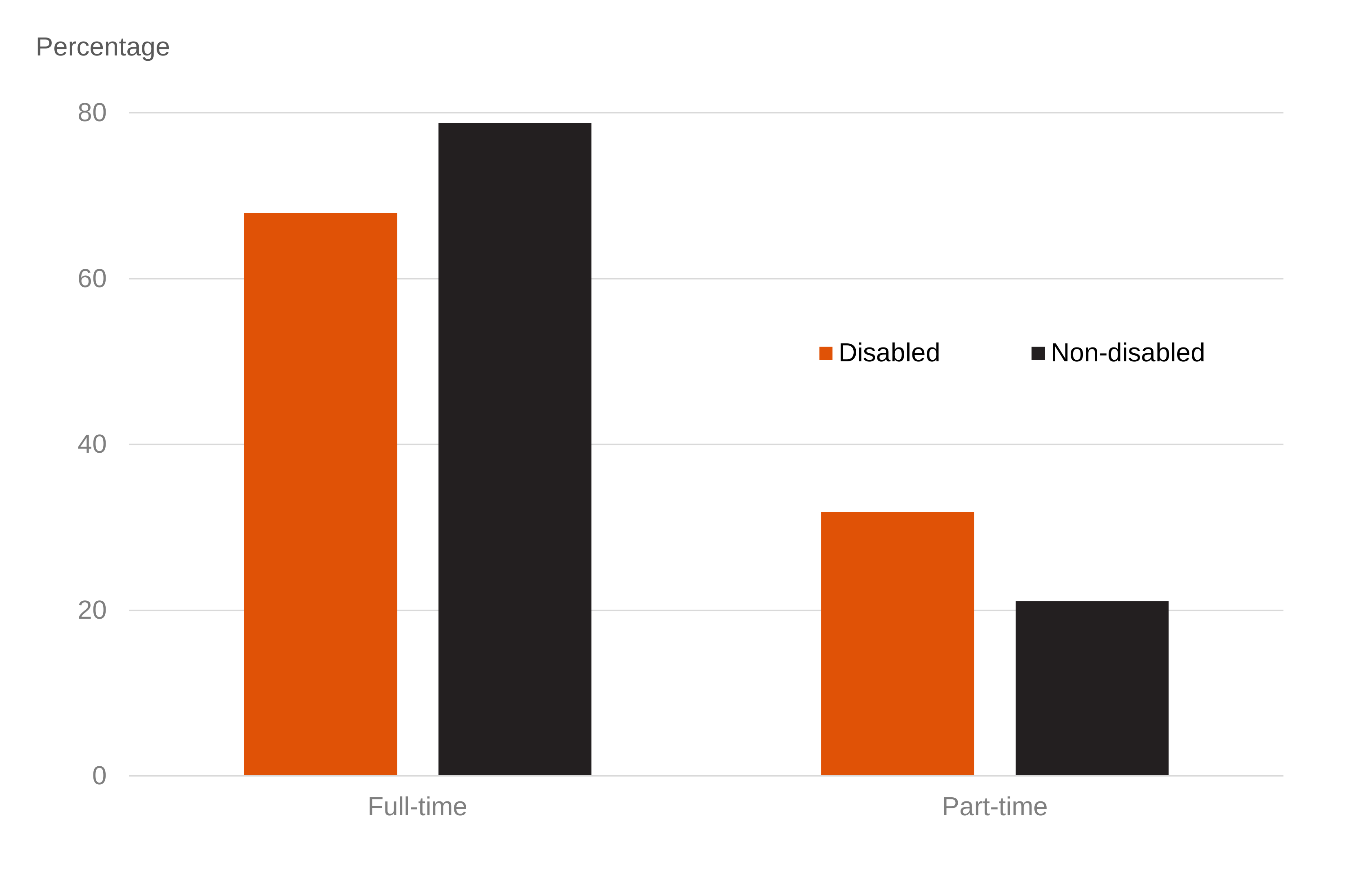
Figure 27: Percentage of people in employment by disability status and working pattern, people aged 16 to 64 years, UK, 2024/25
Source: Annual Population Survey – data and definitions can be found in supplementary data table EMP004
Disabled workers are more likely to be working part-time, with 31.9% of disabled workers and 21.1% of non-disabled workers working part-time. Between 2013/14 and 2024/25 these proportions have decreased for both disabled and non-disabled workers. However, the proportion of workers working part-time has decreased more slowly (by 1.9 percentage points) for disabled workers than for non-disabled workers (by 3.6 percentage points, after rounding). This is consistent with the latest data (April-June 2025) showing disabled people work on average 4.2 hours less per week than non-disabled people.
The split between full-time and part-time employment is based on respondents’ self-classification.
Disabled workers are more likely to be employed in the public sector than non-disabled workers
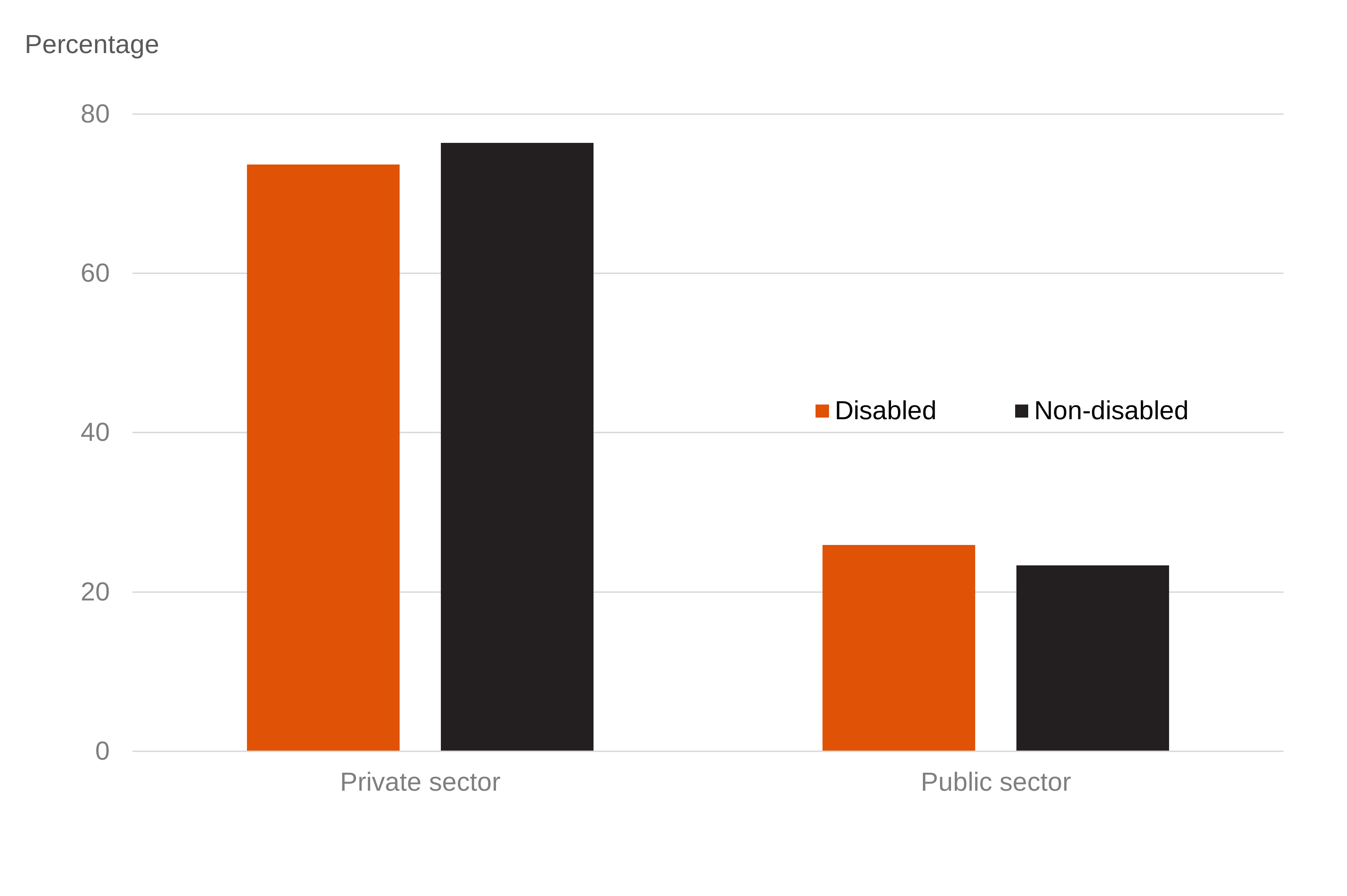
Figure 28: Proportion of people in employment by disability status and sector, employed people aged 16 to 64, UK, 2024/25
Source: Annual Population Survey – data and definitions can be found in supplementary data table EMP005
Disabled workers are less likely to be working in the private sector than non-disabled workers and consequently more likely to be working in the public sector. For both disabled and non-disabled workers, around three times as many people work in the private sector compared to the public sector.
These patterns are related to the industries people work in (see supplementary data table EMP001). For example, disabled people are more likely than non-disabled people to work in Human health and social work activities, Education and Public admin and defence and social security which are predominately public sector industries.
The proportion of disabled people working in the public sector remained relatively stable between 2014/15 and 2019/20 – 23.1% to 23.7%. In 2020/21 – the first year of the coronavirus (COVID-19) pandemic – the proportion increased to 26.5%. In 2024/25 the proportion was 25.9%, which is 2.2 percentage points above that seen prior to the pandemic. For more information on the classification of public and private sector, see Public sector or private sector: How the ONS decides – and why it matters.
Disabled employees are more likely than non-disabled employees to be working in small workplaces and less likely to be working in a large workplace
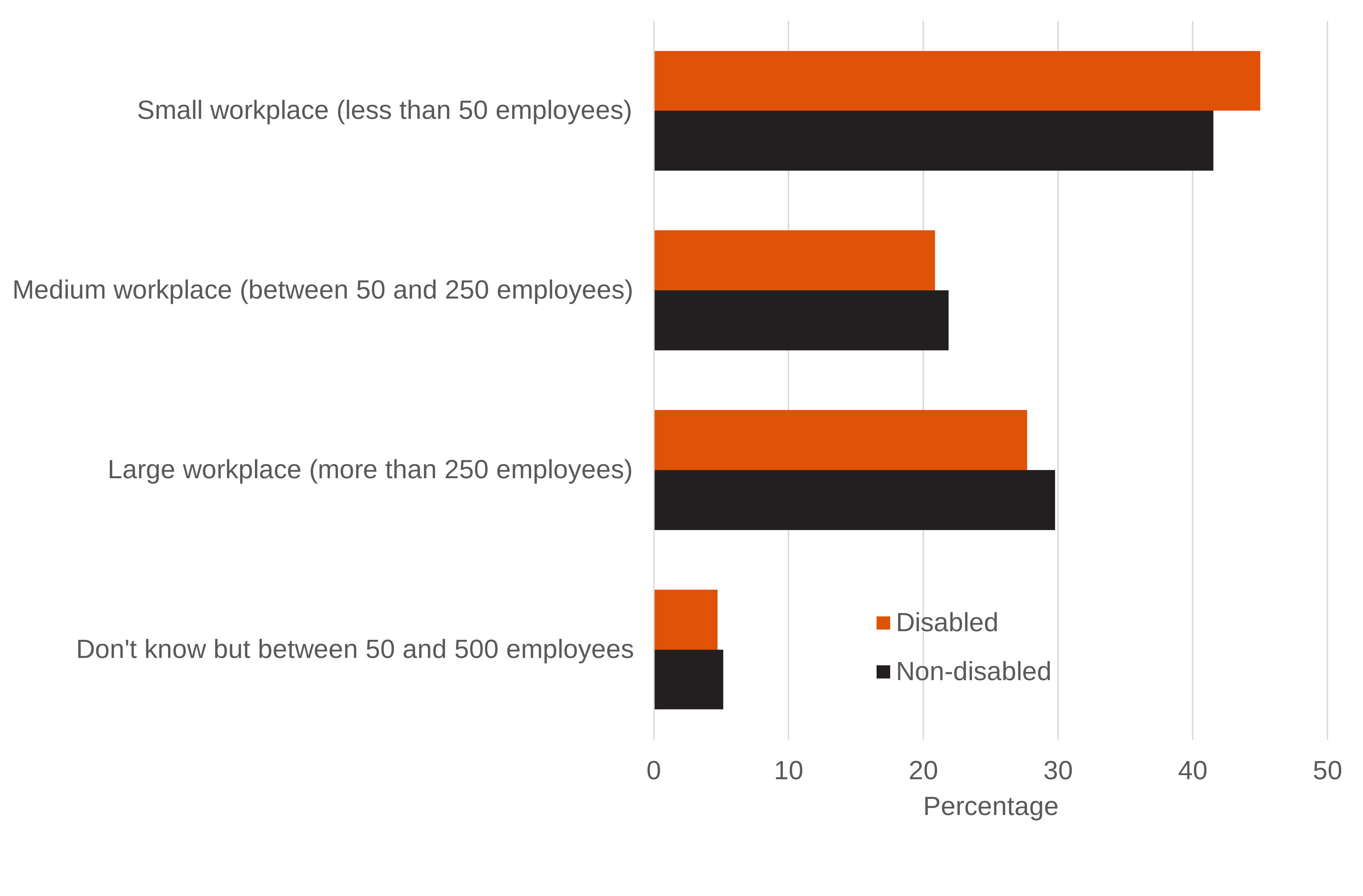
Figure 29: Proportion of people in employment by disability status and workplace size, employees aged 16 to 64, UK, 2024/25
Source: Annual Population Survey – data and definitions can be found in supplementary data table EMP006
Workplace size refers to the total number of employees at the respondent’s workplace, not just the section/department or the whole organization. In previous instalments of this publication this variable was referred to as ‘Employer size’, although the variable included in previous publications refers to the total number of employees at the respondent’s workplace. For more information, see background information and methodology.
Disabled employees (excluding people who are self-employed) are more likely than non-disabled employees to be working in small workplaces and less likely to be working in a large workplace. They were slightly less likely to work in a medium sized workplace.
There has been a shift since 2013/14 with both disabled and non-disabled employees more likely to work in large workplaces and less likely to work in a small workplace. Small workplaces however still make up the largest group – 42.1% of all employees in 2024/25.
Disabled employees are more likely than non-disabled employees to be underemployed
The underemployment rate for disabled workers in April to June 2025 was 10.0% compared to 7.7% for non-disabled workers. There has been an increase of 0.9 percentage points (from 9.1%) for disabled workers (this change was not statistically significant) and 1.0 percentage points (from 6.7%) for non-disabled workers (this change was statistically significant) compared to April to June 2024.
To be classed as underemployed, a person must either be looking for an additional job, looking for a new job with longer hours to replace their current (main) job, or wanting to work longer hours in their current job. In addition, they must also be available to start working longer hours within two weeks and their actual weekly hours worked must be 40 or less (for people aged under 18) or 48 or less (for people aged 18 and over).
7. Economic inactivity
This section looks at differences between disabled and non-disabled people who are in economic inactivity.
The number and percentage of economically inactive people classed as disabled has been rising since 2018/19 – after falling for two years in a row. The number increased by 760,000 between 2018/19 and 2024/25 from 3.4 million to 4.2 million. The percentage increased by 7.6 percentage points from 38.7% to 46.4% over the same period. In the last year, the number of economically inactive people who were disabled rose by 137,000 (or 1.2 percentage points). On average over the last 5 years the percentage of disabled people who are economically inactive increased by 1.2 percentage points a year.
The number and percentage of working-age people who state the main reason for being economically inactive as long-term sickness is no longer rising in the most recent year. This figure was 2.8 million in April-June 2025, 42,000 lower than estimates a year ago, although this decrease is not statistically significant.
A range of complex and interacting factors could be driving the rise in long-term sickness, as the main reason for being economically inactive, including NHS waiting lists, long COVID and changes in the demographics and health of the population.
The following Office for National Statistics (ONS) articles cover this in more depth: Half a million more people are out of the labour force because of long-term sickness and Rising ill-health and economic inactivity because of long-term sickness, UK.
In the second article the ONS say that “Long-term, self-reported ill health has been rising across the working-age population, especially since the onset of the coronavirus (COVID-19) pandemic. Also, between 2019 and 2022, the percentage of people who reported a long-lasting health condition that limits either the kind or amount of work they can do rose from 16.4% to 18.1%, and this rise in the work-limiting health conditions was the largest contributing factor to the rise in economic inactivity. For those individuals suffering with long-term health conditions who were in employment, the sickness absence rate in 2022 was 4.9%, the highest it has been since 2008 compared with 1.5% for those in employment without a long-term health condition.”
Changes in the age composition of the population are one important contribution to long-term sickness volumes with the large number of “baby boomers” approaching retirement. It is estimated that around 40,000 extra people would be expected to become inactive because of long-term sickness between 2019 and 2022 as a result of these changes, although the actual change during this period was much larger (460,000).
The NHS referral to elective treatment waiting list in England, which increased from 4.4 million in January 2020 to 7.6 million in July 2024, may also have contributed to this increase. The Opinions and Lifestyle Survey on winter pressures found that between 18th October 2023 and January 1st 2024, 34% of those inactive (excluding retired) were waiting for NHS treatment, of which 36% said it had “strongly impacted” their lives, 74% said it had affected their wellbeing and 45% said it had affected their mobility. During the same time period, for those of working age (16-64), 33% of people who were economically inactive (excluding retired) were on NHS waiting lists in comparison to 19% of those who were either employed or self-employed.
However, analysis published by the Office for Budget Responsibility (OBR) in July 2023 states that “the rising NHS waiting list itself looks unlikely to have been a significant causal driver of rising long-term sick inactivity in recent year”. One reason for this is that “there appears to be limited correlation in waiting list trends by age and ‘treatment function’ between mid-2021 and the end of 2022 and concurrent changes in inactivity due to long-term sickness.”
Independent analysis from the Institute for Fiscal Studies (IFS) assessed the hypothesis that deteriorating NHS performance has contributed to the recent increase in claims for health-related benefits. This showed that at the local level, there was no clear relationship between changes in NHS waits and changes in working-age health-related benefit claims. However, the analysis is subject to caveats with the IFS acknowledging that further research is needed to understand what factors are in fact driving increasing claimant numbers.
Research from the ONS found that among working-age people in England and Wales who reported being economically inactive due to long-term sickness at Census 2021, 97.4% received social security benefits at any point in the preceding 12 months. Those receiving benefits were found to be more likely to be disabled, report being in very bad health and have never worked.
Nearly three in every five economically inactive disabled people give long-term sickness as the main reason for being inactive
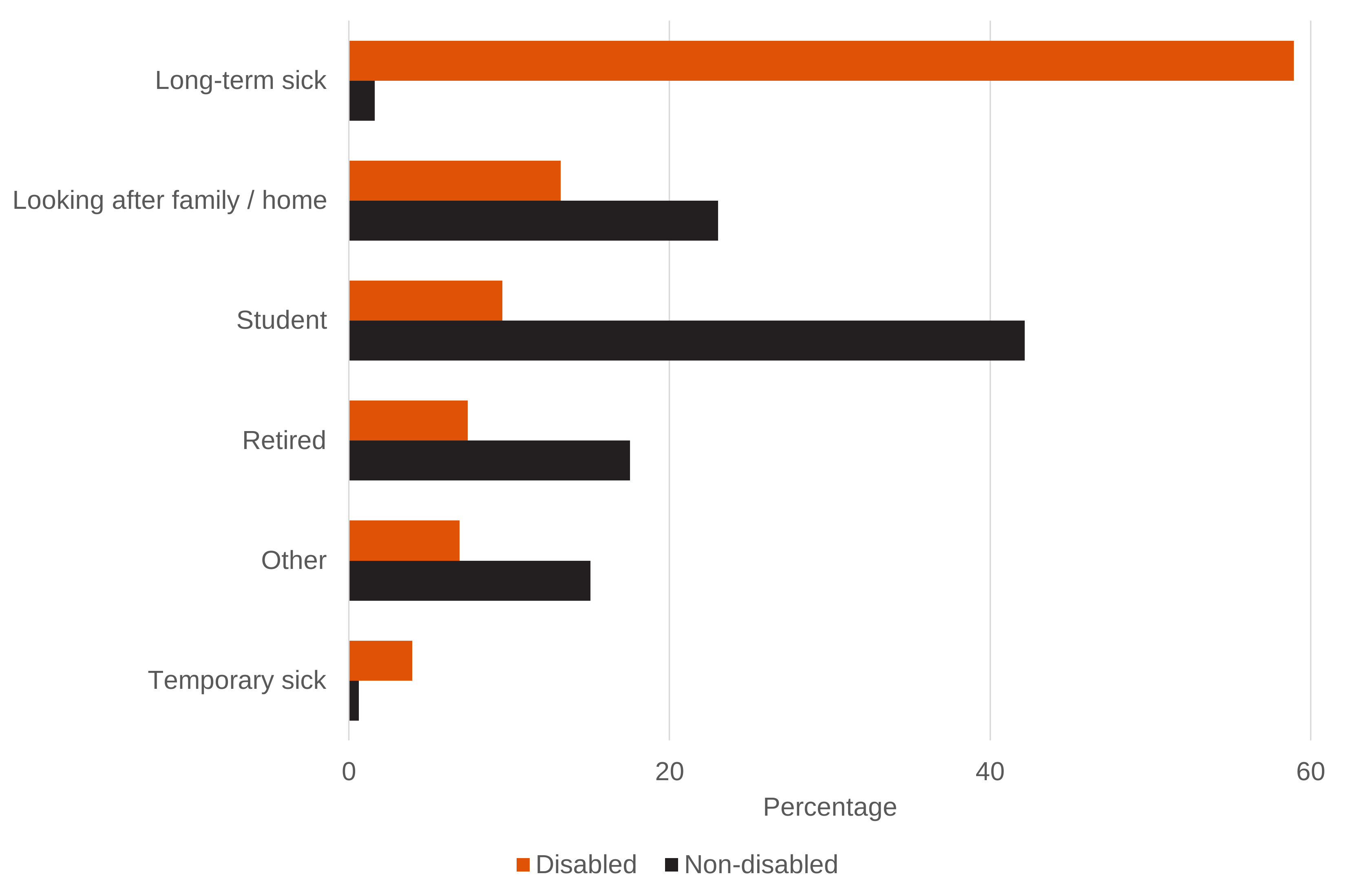
Figure 30: Proportion of economically inactive people by main reason and disability status, people aged 16 to 64, UK, 2024/25
Source: Annual Population Survey – data and definitions can be found in supplementary data table EIA001
Long-term sickness is the main reason given by disabled people for being economically inactive (59.0% in 2024/25). This has remained stable over the last eleven years (57.4% in 2013/14). The next three largest reasons given in 2024/25 were looking after family / home (13.2%), being a student (9.6%) and retirement (7.4%).
Economically inactive non-disabled people were more likely to state their main reason for being inactive as being a student (42.2%), looking after family/home (23.0%) and retirement (17.5%), with only 1.6% stating long-term sickness.
Conversely, 96.2% of people who gave long-term sickness as their main reason for being economically inactive in 2024/25 were disabled. This has remained stable at around 96% over the past eleven years. This compares to looking after family/home (33.4% were disabled) and being a student (16.6% were disabled), where the proportions who are disabled have increased by 12.3 and 7.6 percentage points respectively since 2013/14, and retirement which has decreased by 1.7 percentage points (27.0% were disabled).
For all economically inactive people the increase in the percentage classed as disabled between 2013/14 and 2024/25 was 10.2 percentage points.
Economically inactive people are more likely to want a job if they are disabled
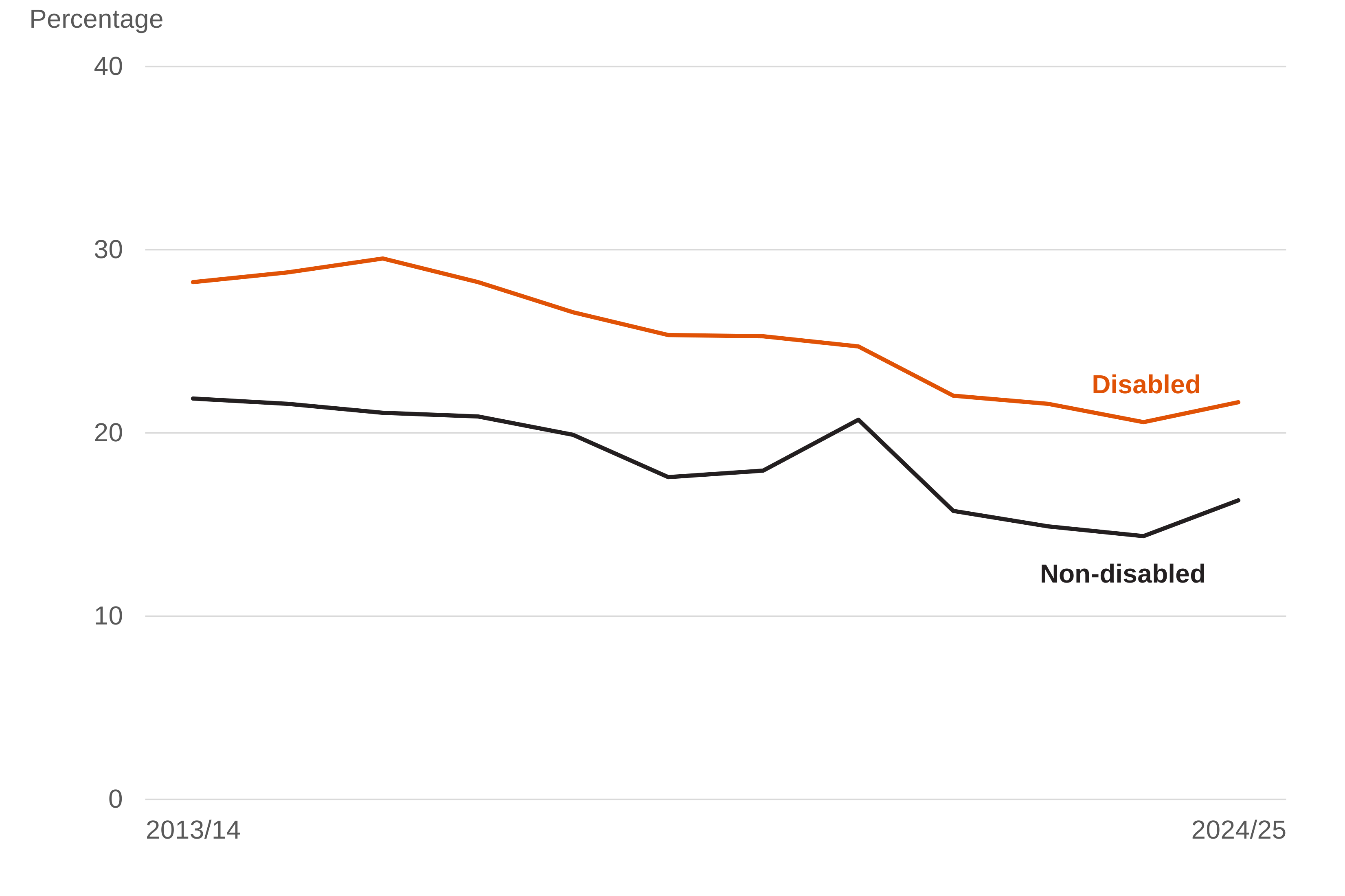
Figure 31: Proportion of economically inactive people who want a job by disability status, economically inactive people aged 16 to 64, UK, 2013/14 to 2024/25
Source: Annual Population Survey – data and definitions can be found in supplementary data table EIA002
The proportion of economically inactive disabled people who wanted a job in 2024/25 was 21.7%. This compares to economically inactive non-disabled people where the equivalent figure was 16.3%. This may be explained by the reasons disabled and non-disabled people are more likely to give for being inactive (see Figure 30). Disabled people are less likely to be a student or retired, but these groups together, regardless of disability status, make up 43.2% of all those who say they do not want a job (see supplementary data table EIA004 for figures by main reason for inactivity).
The proportions who want work have generally fallen, for both disabled and non-disabled people, over the past eleven years but the difference between the two is similar in 2024/25 (5.4 percentage points) as in 2013/14 (6.3 percentage points). The rate increased by 1.1 percentage points for disabled people from 2023/24 to 2024/25, which was not statistically significant and 2.0 percentage points for non-disabled people and this change was statistically significant.
This follows a decrease between 2020/21 and 2021/22, which was larger than in any other year since 2013/14. This was 2.7 percentage points for disabled people and 5.0 percentage points for non-disabled people (after rising during the first year of the coronavirus (COVID-19) pandemic).
Economically inactive disabled people are less likely to have had a job in the last two years
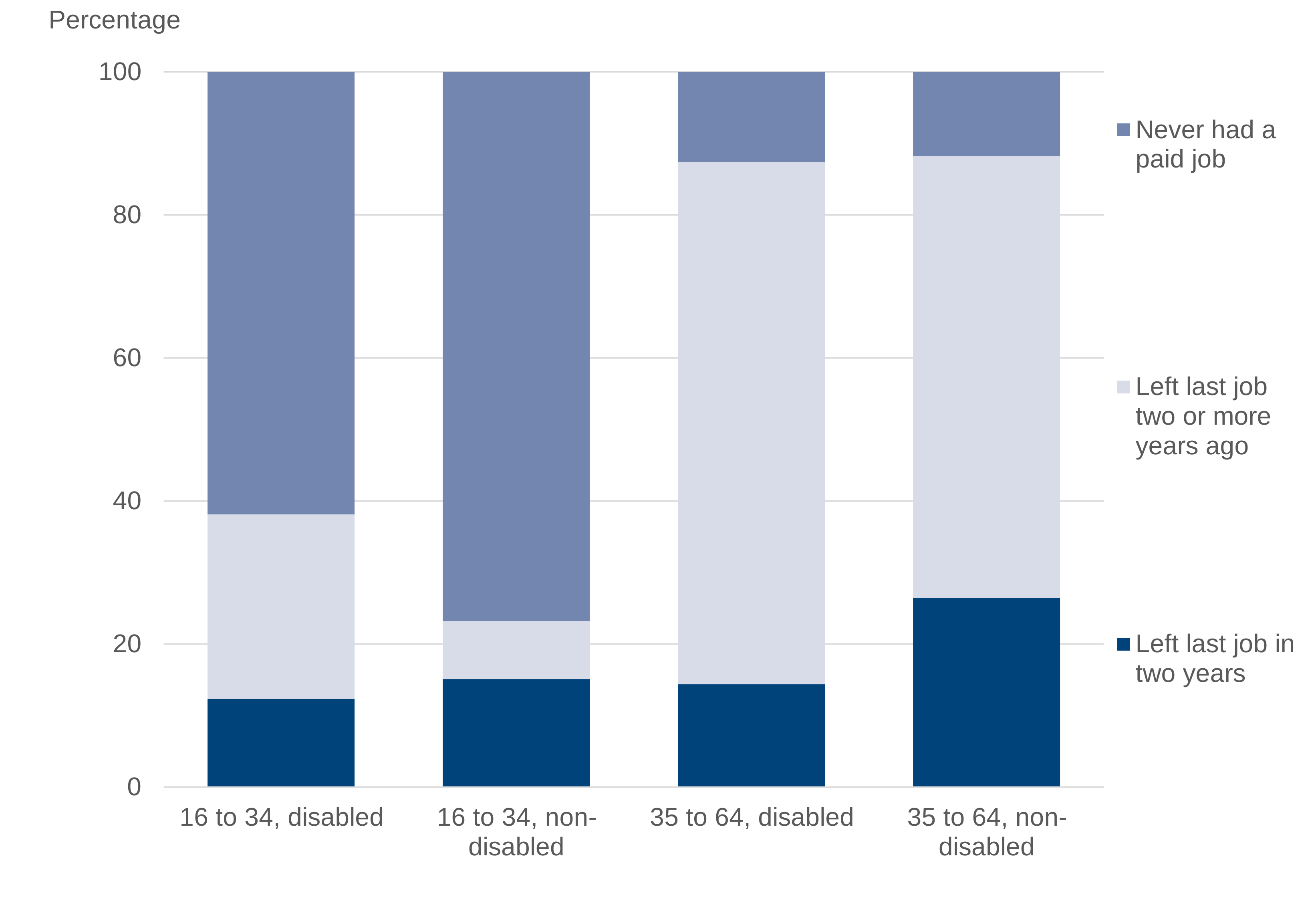
Figure 32: Proportion of economically inactive people by when left last job, age and disability status, people aged 16 to 64, UK, 2024/25
Source: Annual Population Survey – data and definitions can be found in supplementary data table EIA003
In 2024/25, 57.5% of economically inactive disabled people had left their last job two or more years ago compared to 31.6% of economically inactive non-disabled people.
Economically inactive disabled people were less likely to have never had a paid job (27.8% compared to 47.4% for non-disabled people). However, they were less likely to be younger (31.5% are aged 16 to 34 compared to 55.8% of non-disabled people) and were less likely to give the main reason for being inactive as being a student (see Figure 30). This means that non-disabled people were more likely to still be in full-time education and may not yet have entered the labour market. This may partly explain why they are more likely to have never had a paid job.
As Figure 32 shows, for economically inactive people aged 16 to 34, disabled people were more likely to have left their last job two or more years ago (25.8% compared to 8.1%) but less likely to have never had a paid job (61.9% v 76.8%) compared to non-disabled people. For the 35-to 64-year-old age group, disabled people were again more likely to have left their last job two or more years ago (73.0% v 61.8%) and were similarly as likely to have never had a job (12.6% v 11.7%) Around one in ten of both disabled and non-disabled people aged 35 to 64 who are economically inactive have never had a paid job.
Most economically inactive disabled people give long-term sickness as their main reason for being inactive. Data for those who are economically inactive due to long-term sickness can be found in supplementary data tables EIA012 to EIA021.
An increasing number of young people who are NEET are classed as disabled
Figure 33: Proportion of people who are NEET by disability status, people aged 16 to 24, UK, 2013/14 to 2024/25

Source: Annual Population Survey – data and definitions can be found in supplementary data table NEE001
The number of people not in education, employment or training (NEET) has shown an increasing trend following the pandemic, with an estimated 12.8% of all young people aged 16-24 now classed as NEET (April-June 2025). This includes people who are economically inactive and those who are unemployed (see background information and methodology for further details of how NEETs have been defined in the data).
In 2024/25, 45.0% of NEET young people (aged 16-24) were classed as disabled, an increase of 24.0 percentage points since 2013/14. In 2024/25, disabled young people were more than three times as likely to be NEET (29.6%) compared to non-disabled young people (8.7%).
Disability or ill-health was the most common reason given for being NEET for all young people who were NEET (30.6%) in 2024/25, followed by looking for work or a suitable course (28.5%). This was also the case for disabled people who were NEET, with 64.0% giving disability or ill-health as their main reason for being NEET, and 12.4% looking for work or a suitable course. Further details on reasons for being NEET are provided in supplementary data table NEE006.
In 2024/25, the most common main health condition reported by disabled NEET young people was depression, bad nerves or anxiety (24.4%), followed by Autism (22.4%) and mental illness or other nervous disorders (17.5%).
Further detailed breakdowns are available in supplementary data tables NEE001 to NEE006.
The employment of disabled people data published on 4 November 2025 contained errors in the following underlying tables:
- NEE001
- NEE002
- NEE003
- NEE006
These errors have now been corrected, and we recommend that any analysis based on these tables is updated using the latest data.
8. Wellbeing
This section looks at the average wellbeing scores of four key indicators for disabled people in and out of employment. It expands on the Outcomes for disabled people in the UK: 2021, which reported that disabled people aged 16 to 64 years had poorer ratings of wellbeing than non-disabled people on all four personal wellbeing measures (year ending 2021).
Wellbeing can be defined through four different key measures:
- Worth: Overall, the extent to which people feel like the things they do in their life are worthwhile
- Satisfaction: Overall, how satisfied people are with their life nowadays
- Happiness: How happy people felt the previous day
- Anxiety: How anxious people felt the previous day
This measure is subjective and each wellbeing question is answered by the respondent on a scale of 0 to 10. See the background information and methodology for more information.
To derive estimates of anxiety, respondents were asked “Overall, how anxious did you feel yesterday? Where 0 is ‘not at all anxious’ and 10 is ‘completely anxious’”. This differs to other wellbeing measures where a higher score indicates higher levels of wellbeing.
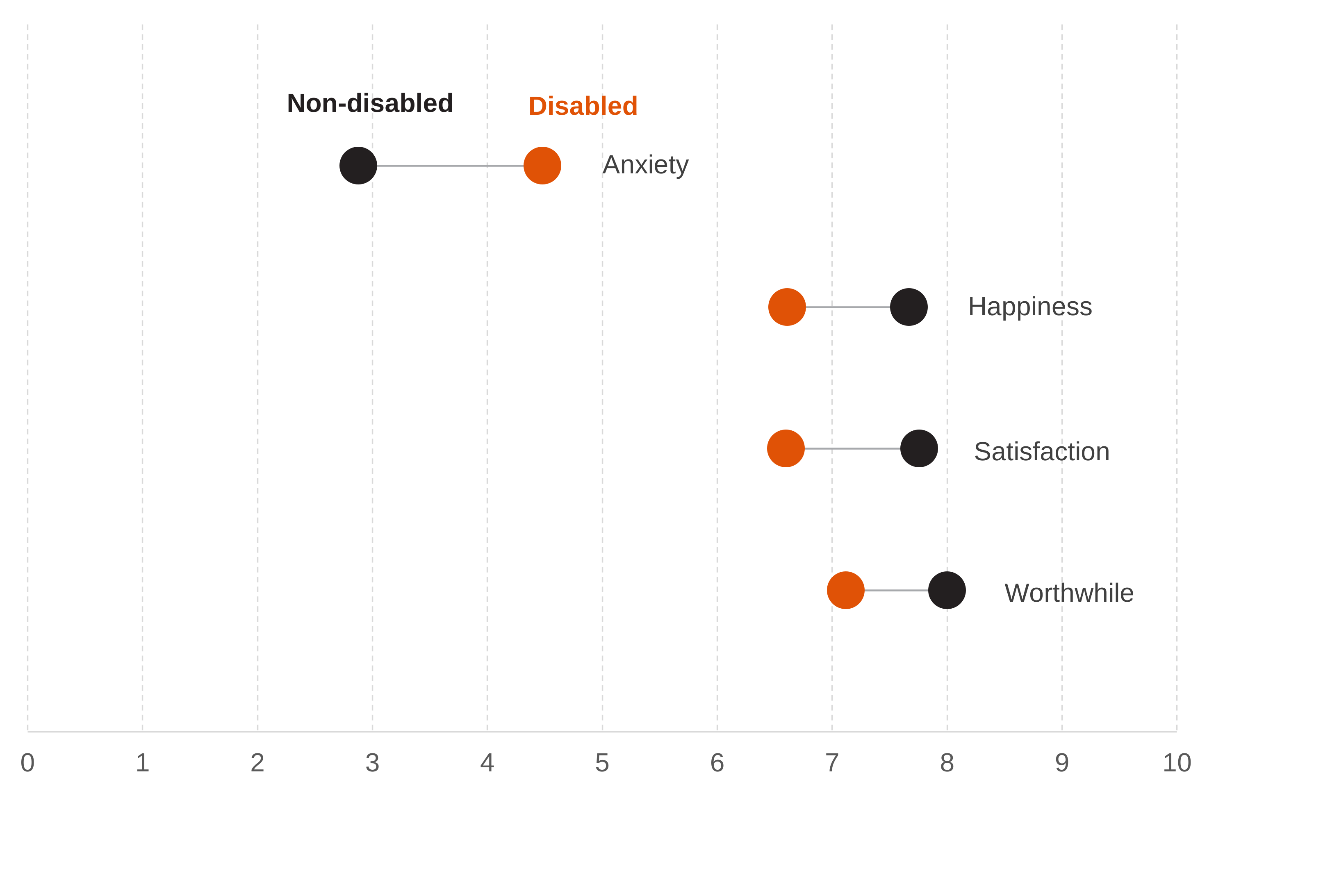
Figure 34: Average wellbeing scores of people by disability status, people aged 16 to 64, UK, 2024/25
Source: Annual Population Survey – data and definitions can be found in supplementary data table WEL001
Note: To derive estimates of anxiety, respondents were asked “Overall, how anxious did you feel yesterday? Where 0 is ‘not at all anxious’ and 10 is ‘completely anxious’”. This differs to other wellbeing measures where a higher score indicates higher levels of wellbeing.
The latest data shows that disabled people aged 16 to 64 years, both in and out of employment, have lower average wellbeing scores and higher average anxiety scores compared to those who were non-disabled. Average wellbeing scores were even poorer for disabled people not in employment.
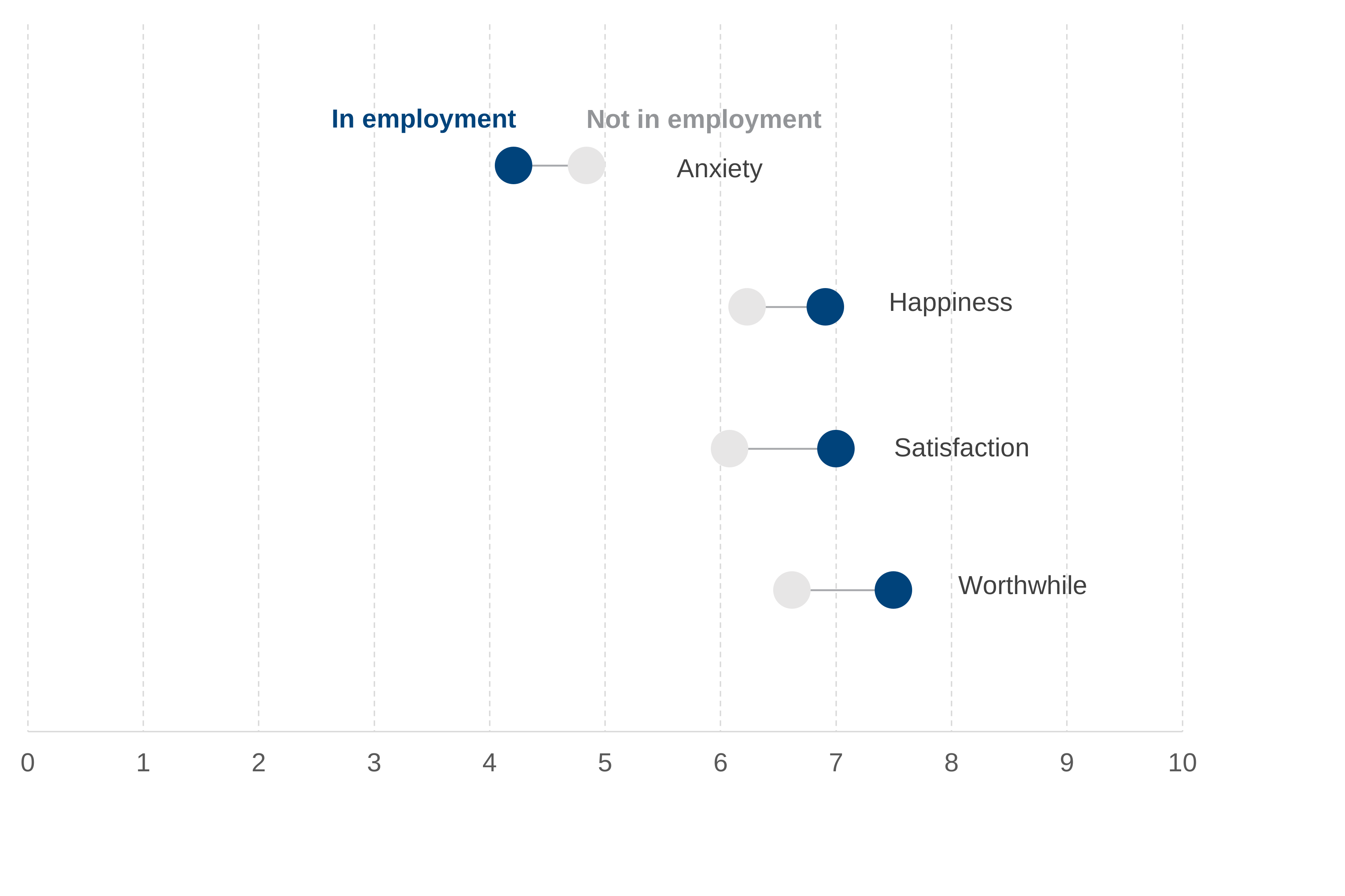
The largest disparity is for disabled people who felt anxiety the previous day compared to non-disabled people in and out of employment. The largest difference was for disabled people who were not in employment who had higher levels of anxiety on average, with a score of 4.84 compared with 2.85 for non-disabled people who were not in employment.
Figure 35: Average wellbeing scores of disabled people by employment status, people aged 16 to 64, UK, 2024/25
Source: Annual Population Survey – data and definitions can be found in supplementary data table WEL001
Note: To derive estimates of anxiety, respondents were asked “Overall, how anxious did you feel yesterday? Where 0 is ‘not at all anxious’ and 10 is ‘completely anxious’”. This differs to other wellbeing measures where a higher score indicates higher levels of wellbeing.
In 2024/25, disabled people who were in employment were on average more likely to have higher ratings of personal wellbeing and lower average levels of anxiety compared to those who were not in employment. There was little difference in overall wellbeing scores, including for anxiety scores, for non-disabled people who were in employment compared to those who were not in employment.
Between 2013/14 and 2024/25 happiness measure scores have generally remained steady for both non-disabled and disabled people, however the average anxiety score for disabled people has increased from 4.10 to 4.48 (3.75 to 4.21 for those in employment and 4.38 to 4.84 for those not in employment.
9. Flows
This section focuses mainly on the movements, or flows, between employment status (in work or not in work) from one year to the next. People not in work will be either unemployed or economically inactive.
Employment status is measured a year apart so will not include movements within the year. For example, a person may be in employment when they complete the survey in the first year, move out of employment (and then back in) and be in employment when they are surveyed the following year. In this scenario the person would be classed as having remained in employment. The same situation will apply to changes in disability status. Cases where the person moves from or to and unknown disability status are excluded from the data.
Estimates are generally averaged over more than one year to increase precision.
In general, disabled people are more likely to move out of work and less likely to move into work, compared to non-disabled people, over the course of a year:
- On average, between 2014 and 2019, around 330,000 disabled workers moved out of work each year and 380,000 workless disabled people moved into work (includes people who were classed as disabled at the start of the year)
- This trend was reversed in 2020 and 2021 when more disabled people moved out of work than into work, but in 2022 480,000 workless disabled people moved into work compared to 430,000 disabled workers moving out of work. In 2024, the difference in disabled people entering and leaving work has closed with 420,000 workless disabled people moved into work and 420,000 disabled workers moving out of work.
- On average, between 2014 and 2024, disabled workers moved out of work at more than twice the rate (10.1%) of non-disabled workers (4.6%). Workless disabled people moved into work at nearly one-third of the rate (7.6%) of workless non-disabled people (28.3%)
Nearly one in three people classed as being disabled one year were no longer classed as being disabled the next
Figure 36: Flows between disability and employment status, people aged 16 to 64 years, UK, 2014 to 2024
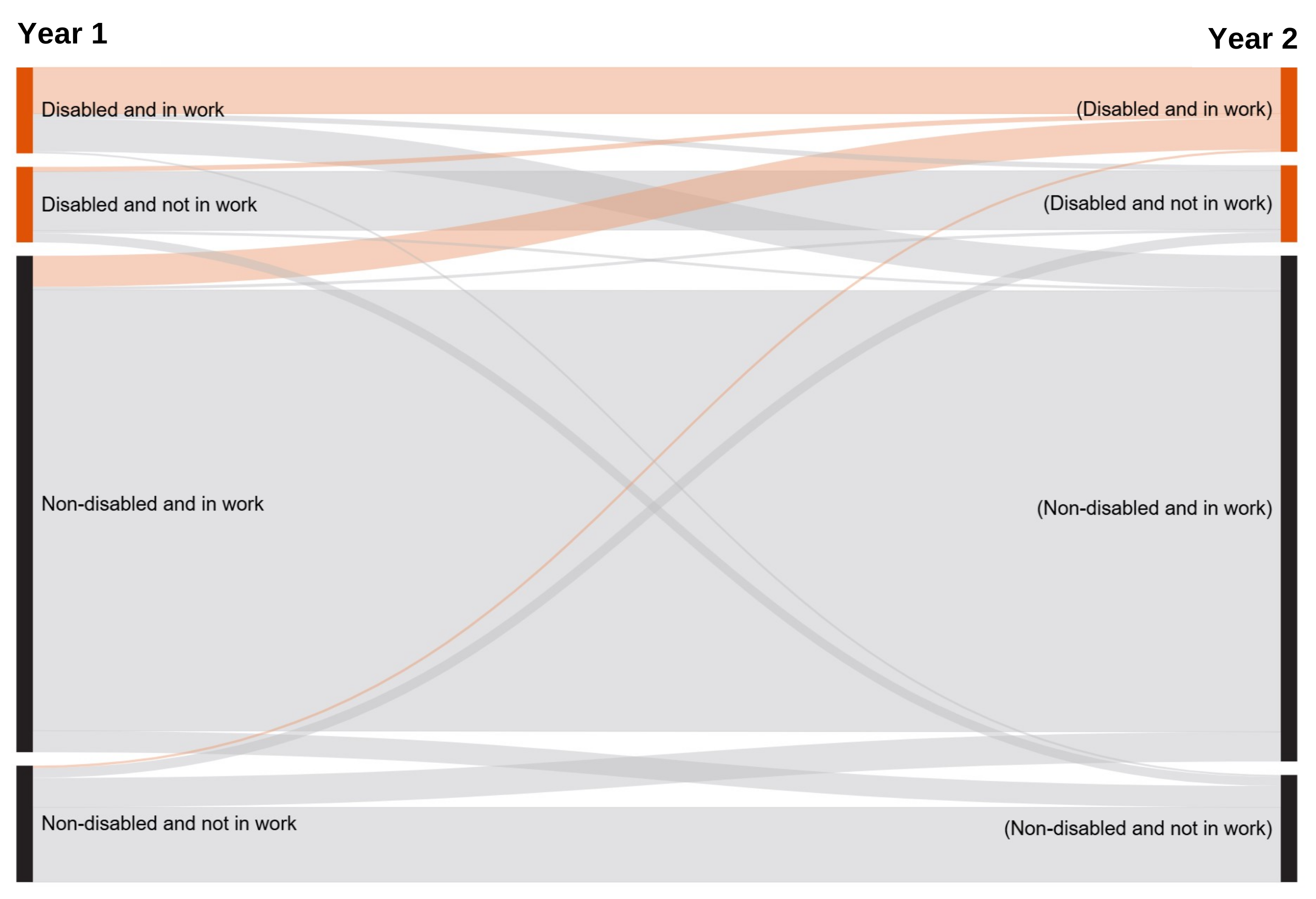
Source: Annual Population Survey – data and definitions can be found in supplementary data table FLW001
Figure 36 shows how people move between the different disability and employment states from one year to the next. This is taken as an average between 2014 and 2024 with the thickness of the line representing the number of people. The largest group is non-disabled people who are in work one year, and still in work and classed as non-disabled the next.
Nearly one in three (28.7%) people classed as being disabled one year were no longer classed as being disabled the next. This suggests that disability is not static and that it can change. For disabled people in work one year, 91.6% are still in work the following year. Of these, 41.3% are no longer classed as being disabled. For disabled people who are out of work one year and still out of work the following year, 13.4% are no longer classed as disabled which suggests that people are more likely to change their status from disabled to non-disabled if they are in work.
The orange lines in Figure 36 show the disability and employment status in year one of all the disabled people who were in work in year two. The majority (60.4%) of them are disabled people who have remained in work (54.7%) or moved into work (5.8%). The other 39.6% are non-disabled people who have remained in work (36.7%) or moved into work (2.8%) and are now classed as disabled.
Disabled workers are twice as likely to move out of work if they are working part-time
Figure 37: Proportion of people moving out of work by disability status and working pattern, employed people aged 16 to 64 years, UK, 2014 to 2024
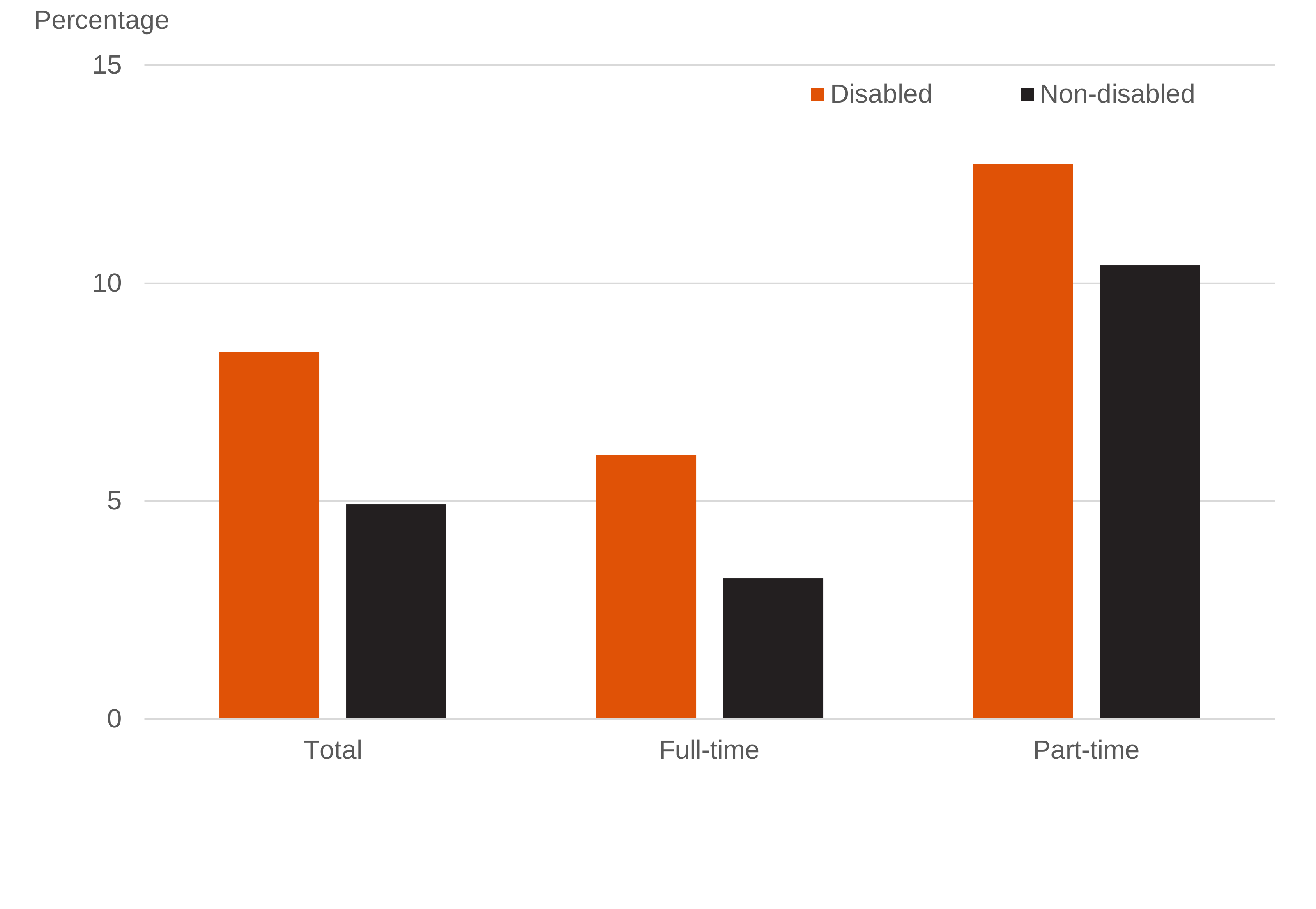
Source: Annual Population Survey – data and definitions can be found in supplementary data table FLW002
We know that disabled workers were more likely to be in part-time employment compared with non-disabled people (see the Employment section and supplementary data table EMP004). Disabled workers in part-time employment were twice as likely (12.7%) to move out of work compared to those working full-time (6.1%) between 2014 and 2024.
A similar pattern can be seen for non-disabled workers but to an even greater extent. Non-disabled workers in part-time employment were three times (10.4%) more likely to move out of work than those in full-time employment (3.2%).
Unlike in Figure 36, disability status is measured in the first year regardless of whether it changes the following year.
Disabled people are more likely to move both into and out of work if their main health condition is a mental health condition
Figure 38: Proportion of flows by employment status and main health condition, disabled people aged 16 to 64, UK, 2014 to 2024
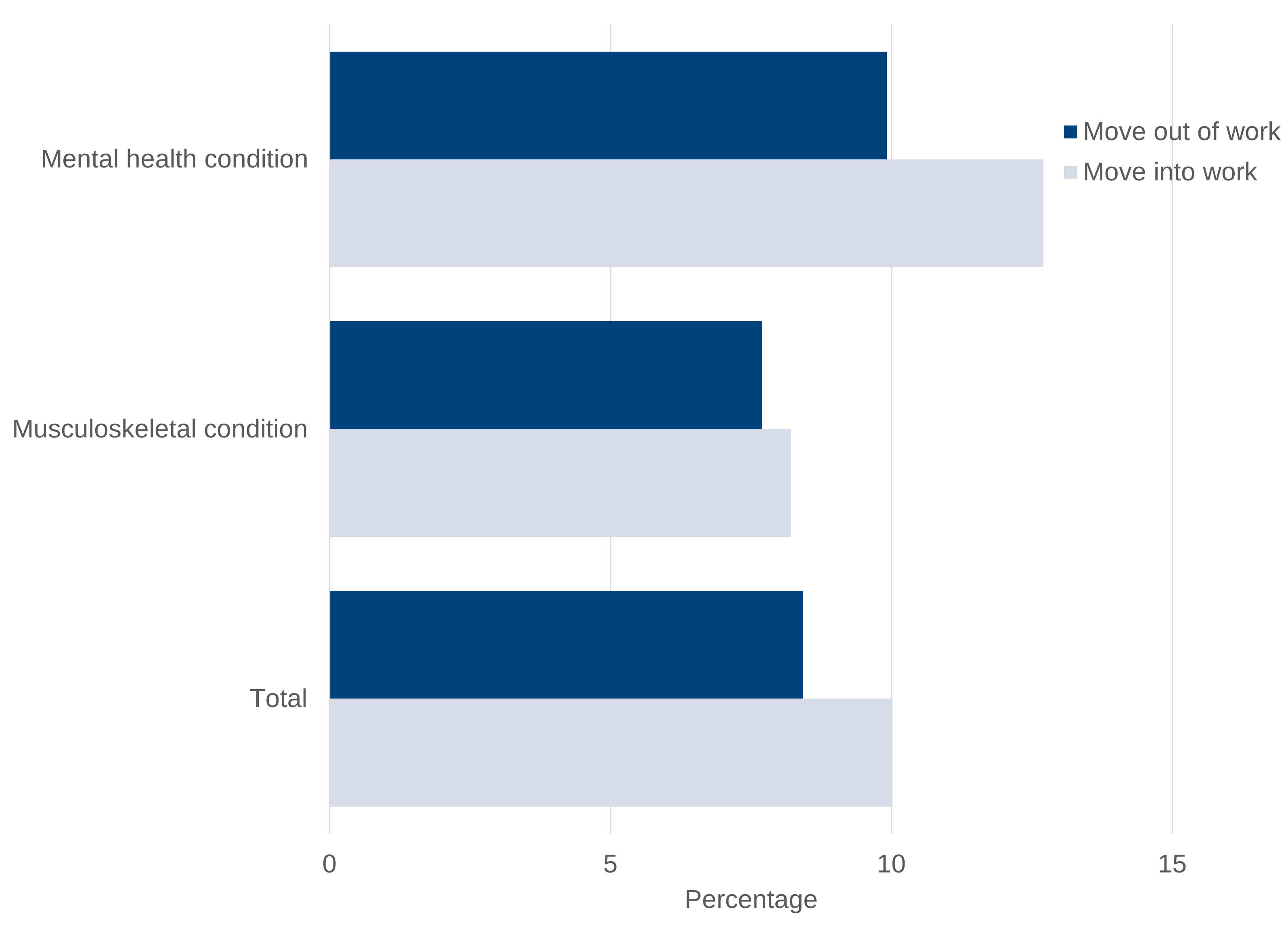
Source: Annual Population Survey – data and definitions can be found in supplementary data tables FLW003 and FLW004
Musculoskeletal (MSK) conditions include problems or disabilities connected with the arms, hands, legs, feet, back or neck. Mental health (MH) conditions include depression, bad nerves, anxiety, mental illness or other nervous disorders.
On average between 2014 and 2024, disabled people were more likely to move both into and out of work if their main condition was a mental health condition compared to those where the main condition was musculoskeletal.
- 12.7% of those not in work the previous year with a mental health condition moved into work compared to 8.2% for those with a musculoskeletal condition
- 9.9% of those in work the previous year with a mental health condition moved out of work compared to 7.7% for those with a musculoskeletal condition
This is not unexpected given disabled people with a mental health condition are more likely to be in the younger age groups (see supplementary data table POP002) and these age groups are more likely to move into and out of work (see supplementary data table FLW005).
Estimates for some health conditions are based on small sample sizes and therefore subject to a higher degree of uncertainty. The data for all health conditions can be found in supplementary data table FLW003. The equivalent data for main or secondary health conditions can be found in supplementary data table FLW004. Unlike in Figure 36 disability status is measured in the first year regardless of whether it changes the following year.
Figure 39: Flows between disability and employment status, students in full-time education aged 18 to 24 years, UK, 2014 to 2024
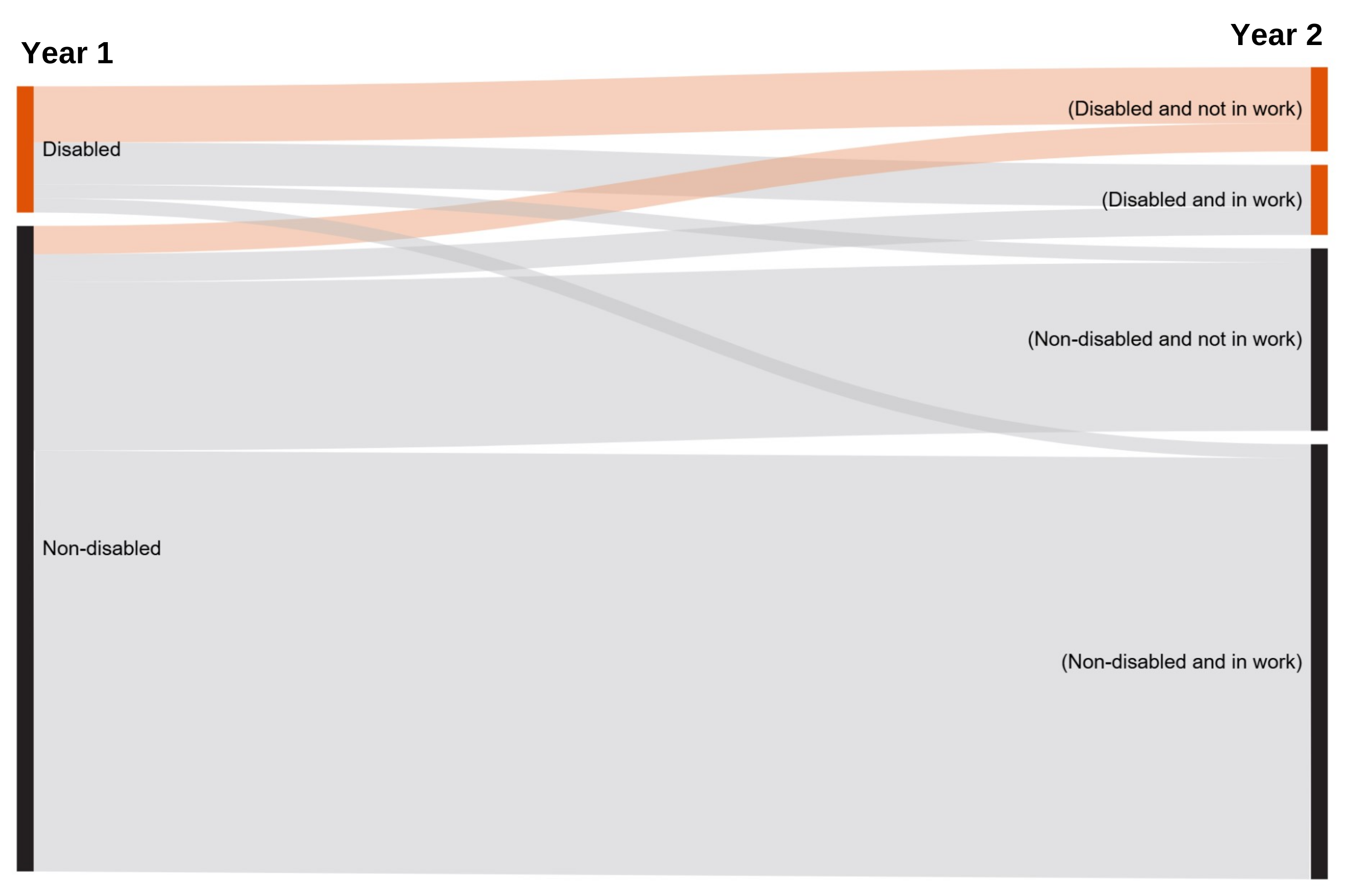
Source: Annual Population Survey – data and definitions can be found in supplementary data table FLW010
In 2024/25, nearly a quarter (22.2%) of people aged 18 to 24 years were economically inactive because they were a student. Between 2014 and 2024, on average 560,000 18- to 24-year-olds were economically inactive due to being a student in one year then no longer economically inactive due to being a student the next year. Disabled people who were economically inactive students were less likely to move into employment (41.1%) compared with non-disabled people (69.2%).
Figure 40: Flows between disability and employment status, people aged 16 to 24 years who are NEET, UK, 2014 to 2024
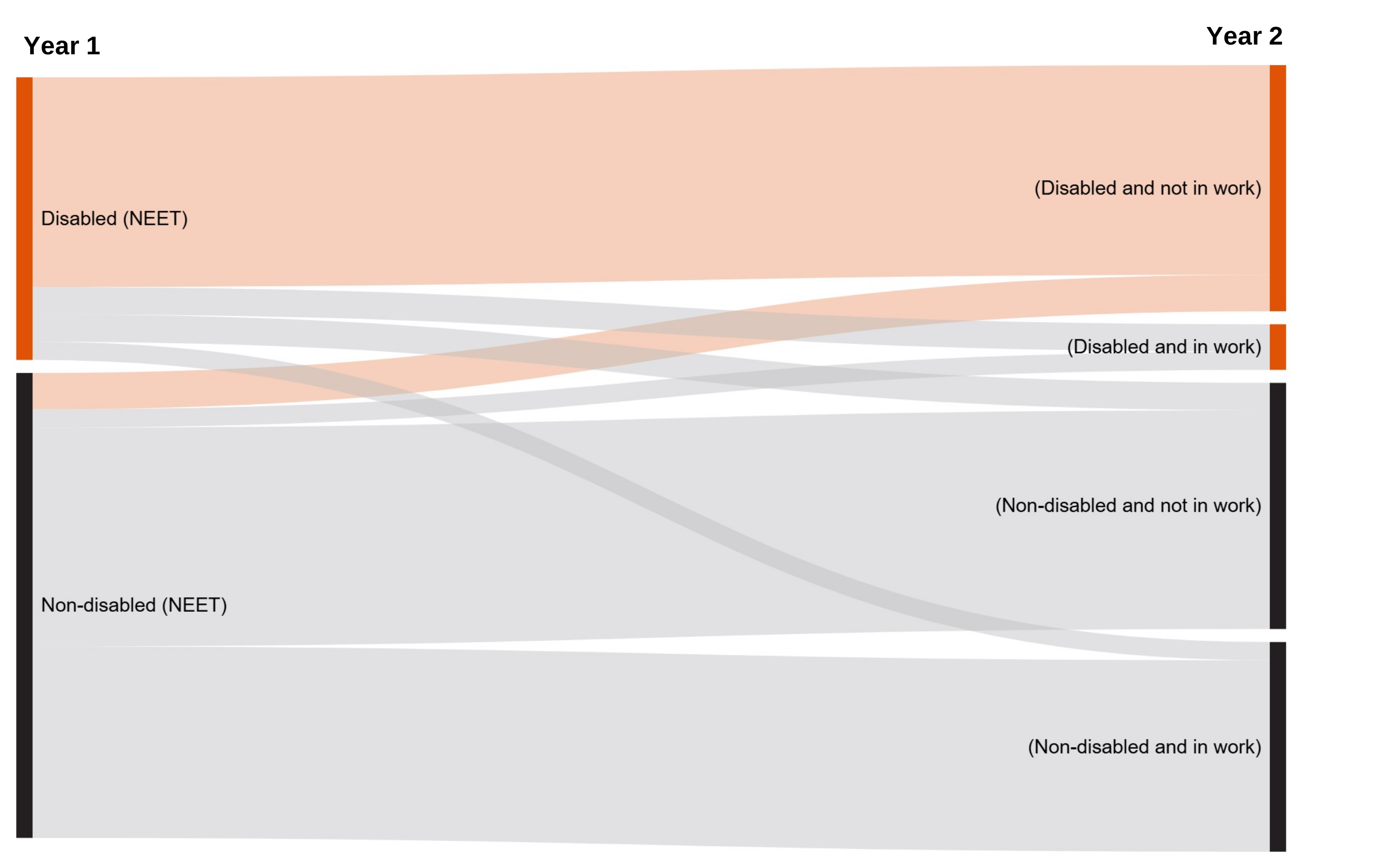
Source: Annual Population Survey – data and definitions can be found in supplementary data table FLW011
In 2024/25, 890,000, or more than 1 in 10, 16-24-year-olds were not in education, employment or training (NEET). Of these, 400,000 (45.0%) were classed as disabled. Between 2014 and 2024, on average 230,000 non-disabled young people who were NEET (44.6%) moved into employment each year. In contrast, disabled young people who were NEET moved into employment at less than half the rate (17.3%).
Additional flows data for the disabled and non-disabled working age population by age, sex and highest qualification can be found in supplementary data tables FLW005 to FLW007.
The employment of disabled people data published on 4 November 2025 contained errors in the following underlying tables:
- NEE001
- NEE002
- NEE003
- NEE006
These errors have now been corrected, and we recommend that any analysis based on these tables is updated using the latest data.
10. What you need to know
Disability
Estimates by disability status in this release are for working-age people (aged 16 to 64 years) from April 2013 onwards. They use the Government Statistical Service (GSS) Harmonised Standard definition, in line with the Equality Act 2010 (EA) core definition.
Estimates prior to April 2013, under different definitions of disability, are covered in-depth in the 2019 version of this publication.
Estimates are derived from people’s responses to the Labour Force and Annual Population Surveys. Figure 41 shows the long-term health condition and disability question routing based on people’s responses.
Figure 41: Labour Force and Annual Population Surveys long-term health condition and disability question routing
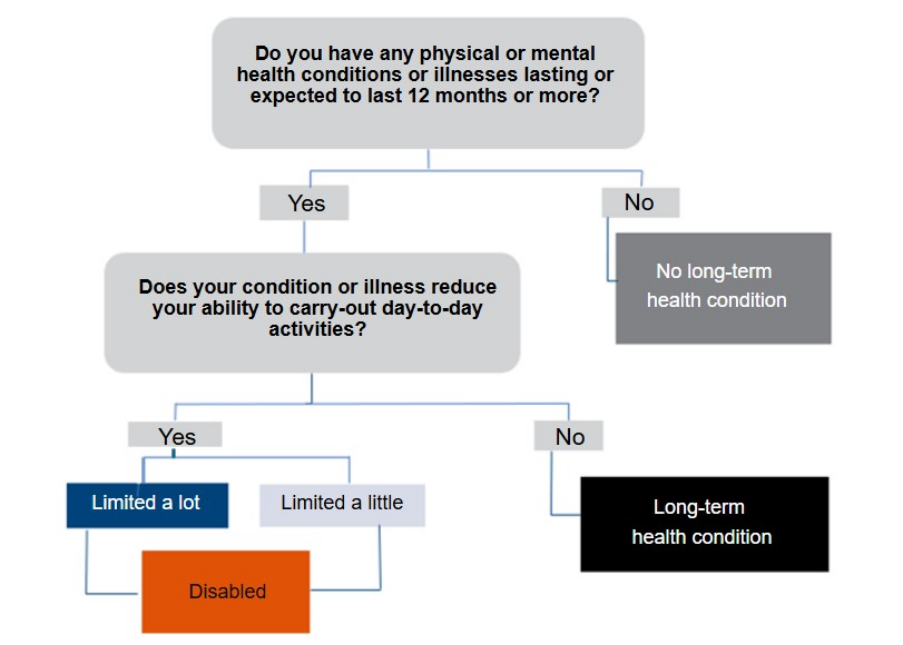
Less than 1% of the working-age population either don’t know or don’t answer both questions so have an unknown disability status.
Employment
Employment and other labour market concepts used in this release are defined in the same way as National Statistics published by the Office for National Statistics (ONS) in their Labour Market Overview. See background information and methodology. This in turn follows internationally agreed guidelines set out by the International Labour Organisation (ILO).
Seasonality
Quarterly estimates in this release are not seasonally adjusted. When comparing non-seasonally adjusted data over time it is best practice to compare the same 3-month period for different years (for example, compare April to June 2013 with April to June 2025 but do not compare April to June 2013 with January to March 2025).
Data sources
Full definitions are given in the background information and methodology. Annual estimates in this release are based on versions of the Annual Population Survey using old population weights. Annual Population Survey (person) data uses older population totals, aligned with the LFS approach which had been used prior to the partial reweighting first published in February 2024. It therefore does not incorporate population estimates updated since the 2021 censuses of England and Wales and Northern Ireland. As such, headline labour market statistics are not directly comparable with LFS data which is either weighted to a different population total (January to March 2019 onwards) or has had scaling adjustments applied (pre-July to September 2022). For more information, see Labour market transformation – update on progress and plans - Office for National Statistics.
The reweighted Labour Force Survey (LFS) quarterly estimates incorporate the latest estimates of the size and composition of the UK population, improving the representativeness of the LFS estimates. The ONS have only been able to reweight LFS data from January to March 2019 onwards. Therefore, disability employment data prior to and from January to March 2019 are not directly comparable. However, the overall direction of long-term trends may still hold despite the break in the series. Nonetheless, the ongoing challenges with response rates and levels mean that ONS publish LFS-based labour market statistics as official statistics in development until further review. This is also in line with the letter from the Office for Statistics Regulation (OSR), stating that LFS statistics should not be published as accredited official statistics until the OSR has reviewed them.
Reweighting does not address the volatility seen in recent periods which the ONS also expect to see to some extent going forwards. They therefore advise caution when interpreting short-term changes in headline rates and recommend using them as part of a suite of labour market indicators. These are official statistics in development. For more information on achieved sample sizes, see Labour Force Survey performance and quality monitoring report: April to June 2024.
The Office for National Statistics (ONS) are transforming the Labour Force Survey to increase the sample size (making it more representative of the population as a whole) and improve the methods for collecting data, including the flexibility to quickly change the questions so that they reflect the key needs of the day. The survey will move to an on-line first approach, supported by telephone collection and ‘knock to nudge’. This should provide more robust insights on the detailed characteristics of those within and outside work. The latest update on progress can be found at: Labour market transformation – update on progress and plans - Office for National Statistics (ons.gov.uk).
Statistical significance
All results in the commentary are statistically significant at the 95% level, unless stated. Differences in employment of groups with given characteristics are not necessarily caused by those characteristics.
We can use statistical significance to decide whether we think a difference between two survey-based estimates reflects a true change in the population rather than being attributable to random variation in our sample selection.
Statistical significance helps us to establish what observed changes or relationships we should pay attention to, and which apparent changes may have occurred only because of randomness in the sampling.
Rounding
Figures contained within this release are subject to rounding so may not sum to 100%, unless otherwise stated. The level of rounding applied, which is dependent on the magnitude of the figure being quoted, can be found in the background information and methodology.
Accessibility
The supplementary data tables accompanying this release have been developed using Government Statistical Service (GSS) guidance on releasing statistics in spreadsheets.
About these statistics
These ‘Official Statistics in Development’ have been compiled using data from the Labour Force Survey (LFS) and Annual Population Survey (APS). The LFS is produced by the Office for National Statistics (ONS) and follows the same definitions and UK coverage used in the ONS Labour Market Statistics bulletin.
As part of continuing work to improve Labour Force Survey estimates (which have been affected by changes to survey operation caused by the coronavirus (COVID-19) pandemic), typical weighting methodology was reinstated from 13 February 2024. The new reweighted LFS estimates incorporate latest estimates of the size and composition of the UK population, improving representativeness. Since December 2024, reweighting has been applied from January to March 2019 onwards. Find more information on reweighting.
Due to the ongoing challenges with response rates and levels, LFS-based labour market statistics will be badged as ‘Official Statistics in Development’ until further review. This is in line with the letter from the Office for Statistics Regulation (OSR).
Where to find out more
For more information see:
- the background information and methodology
- guidance about the background and methodology of the Labour Force Survey (LFS) and Annual Population Survey (APS)
Office for Statistics Regulation
Our statistical practice is regulated by the Office for Statistics Regulation (OSR). OSR sets the standards of trustworthiness, quality and value in the Code of Practice for Statistics that all producers of official statistics should adhere to.
Alternatively, you can contact OSR by emailing regulation@statistics.gov.uk or via the Office for Statistics Regulation website.
Statement of compliance with the Code of Practice for Statistics
The Code of Practice for Statistics (the Code) is built around three main concepts, or pillars:
- Trustworthiness – is about having confidence in the people and organisations that publish statistics
- Quality – is about using data and methods that produce assured statistics
- Value – is about publishing statistics that support society’s needs for information
The following explains how we have applied the pillars of the Code in a proportionate way.
Trustworthiness
Labour Force Survey, Annual Population Survey data have been produced in line with the Code.
The ongoing challenges with response rates and levels mean that ONS publish Labour Force Survey-based labour market statistics as official statistics in development until further review. This is also in line with the letter from the Office for Statistics Regulation (OSR), stating that LFS statistics should not be published as accredited official statistics until the OSR has reviewed them.
Quality
Several of the key series have been taken directly from a National Statistics publication (Labour Market Overview), produced by the Office for National Statistics (ONS). The data sources used for new analysis in this release are already used for similar analyses and are considered Official statistics in development by ONS. The specific analyses included here have been quality-assured, including through peer-review, plausibility checks and validation against other published sources.
Value
This release provides a detailed picture of disability employment up to 2025.
Making this information accessible provides ministers and stakeholders with an overview of disability employment, while helping to reduce the administrative burden of answering Parliamentary Questions, Freedom of Information requests and ad hoc queries.
By comparing high-level estimates from different data sources, this release also provides an evidence base drawing on several different sources, enabling a more rounded picture of broad trends.
Related Statistics
The following publications provide additional data, evidence and context on the topics of health, disability and employment.
Access to Work recipients: Statistics on the number of people who had Access to Work provision approved.
Adult Psychiatric Morbidity Survey: Provides data on the prevalence of both treated and untreated psychiatric disorder in the English adult population (aged 16 and over).
Adult Social Care Outcomes Framework (ASCOF): Measures how well care and support services achieve the outcomes that matter most to people.
Benefit recipients during the coronavirus (COVID-19) pandemic: Age-standardised percentages of people who received a social security benefit by health conditions and sociodemographic characteristics, using linked 2011 Census, primary care and benefits data.
Benefit recipients during the coronavirus (COVID-19) pandemic by health condition or sociodemographic characteristic, local authority and benefit type, England, November 2019 to March 2021: Numbers and percentages of people who received a social security benefit from November 2019 to March 2021 by health condition or sociodemographic characteristic, local authority and benefit type, using linked Census 2011, primary care and benefits data. Official statistics in development.
Coronavirus and the social impacts on disabled people in Great Britain: Indicators from the Opinions and Lifestyle Survey on the social impact of the coronavirus (COVID-19) pandemic on disabled people in Great Britain.
Disability, England and Wales: Census 2021: Information on disability in England and Wales, Census 2021 data.
DWP benefits statistics: National and Official statistics on the main benefits administered by the DWP.
Economic labour market status of individuals aged 50 and over: This publication details the trends over time, and comparisons with 35 to 49-year-olds, in the economic labour market status of individuals aged 50 and over.
Family Resources Survey: An annual report that provides facts and figures about the incomes and living circumstances of households and families in the UK.
Health Survey for England: Monitors trends in the nation’s health and care for adults aged 16 and over, and children aged 0 to 15, living in private households in England.
Households below average income (HBAI) statistics: Statistics on the number and percentage of people living in low-income households in the UK.
Labour market status of disabled people: Labour market status (employment, unemployment and inactivity) of disabled people. This table is updated 4 times a year in February, May, August and November. These estimates are sourced from the Labour Force Survey, a survey of households.
NHS Talking Therapies Monthly Statistics including Employment Advisors: This statistical release makes available the most recent NHS Talking Therapies for anxiety and depression monthly data, including activity, waiting times, and outcomes such as recovery.
Odds ratios for benefit receipts during the coronavirus (COVID-19) pandemic, England: 23 March 2020 to 31 March 2021: Regression analysis of people who received a social security benefit from 23 March 2020 to 31 March 2021, among people who had not received a benefit from 1 November 2019 to 22 March 2021, by health conditions and sociodemographic characteristics, using linked Census 2011, primary care and benefits data.
Outcomes for disabled people in the UK: Outcomes for disabled people across areas of life: education, employment, social participation, housing, well-being, loneliness and crime. Analysis by disability status and by age, sex, impairment type and severity, country and region based on survey data.
Personal Independence Payment: Includes numbers of claims in payment, new claim registrations, decisions and awards made.
Unpacking the Disability Employment Gap, University of Sheffield: A 3-year project, conducted by the University of Sheffield, investigating the gap in employment between disabled and non-disabled people in the UK.
Work and Health Programme: Statistics on people referred to and starting on the Work and Health Programme.
Contact information and feedback
Authors: Aniysa Ruhi, Caroline Parker-Smith and Mark Burley
Lead Analyst: Samantha MacDonald-Wright
For more information on disability employment statistics, contact the team at: team.workandhealthanalysis@dwp.gov.uk
Press enquiries should be directed to the DWP Press Office: 020 3267 5144
Pre-release access
In addition to staff who are responsible for the production and quality assurance of the statistics, up to 24-hour pre-release access is provided to Ministers and other officials. We publish the job titles and organisations of the people who have been granted up to 24-hour pre-release access to the latest disability employment statistics.
Next release
The next annual release of these statistics is expected in Autumn 2026. An exact publication date will be listed in the statistics release calendar.
ISBN: 978-1-78659-887-5