Subnational electricity and gas consumption summary report 2024
Updated 19 December 2025

© Crown copyright 2025
This publication is licensed under the terms of the Open Government Licence v3.0 except where otherwise stated. To view this licence, visit nationalarchives.gov.uk/doc/open-government-licence/version/3 or write to the Information Policy Team, The National Archives, Kew, London TW9 4DU, or email: psi@nationalarchives.gov.uk.
Where we have identified any third party copyright information you will need to obtain permission from the copyright holders concerned.
This publication is available at https://www.gov.uk/government/statistics/subnational-electricity-and-gas-consumption-summary-report-2024/subnational-electricity-and-gas-consumption-summary-report-2024--2
This publication provides national and subnational estimates of annual electricity and weather corrected gas consumption in Great Britain (GB). The latest estimates are for 2024. [footnote 1]
- After record falls in average (mean) domestic electricity (8.9 per cent) and gas (13.3 per cent) consumption between 2021 and 2022 (reflecting higher prices), slight rebounds followed for both electricity (up 2.6 per cent) and gas (up 1.1 per cent) between 2022 and 2024. Levels across all countries and regions in 2024 remain below 2021, by 5 to 8 per cent for electricity, and 11 to 13 per cent for gas.
- Between 2015 and 2024, total electricity consumption decreased in 97 per cent of local authorities, with over two-thirds experiencing reductions greater than 10 per cent; similarly, gas consumption decreased in 90 per cent of gas-consuming local authorities, and nearly half saw drops of over 10 per cent.
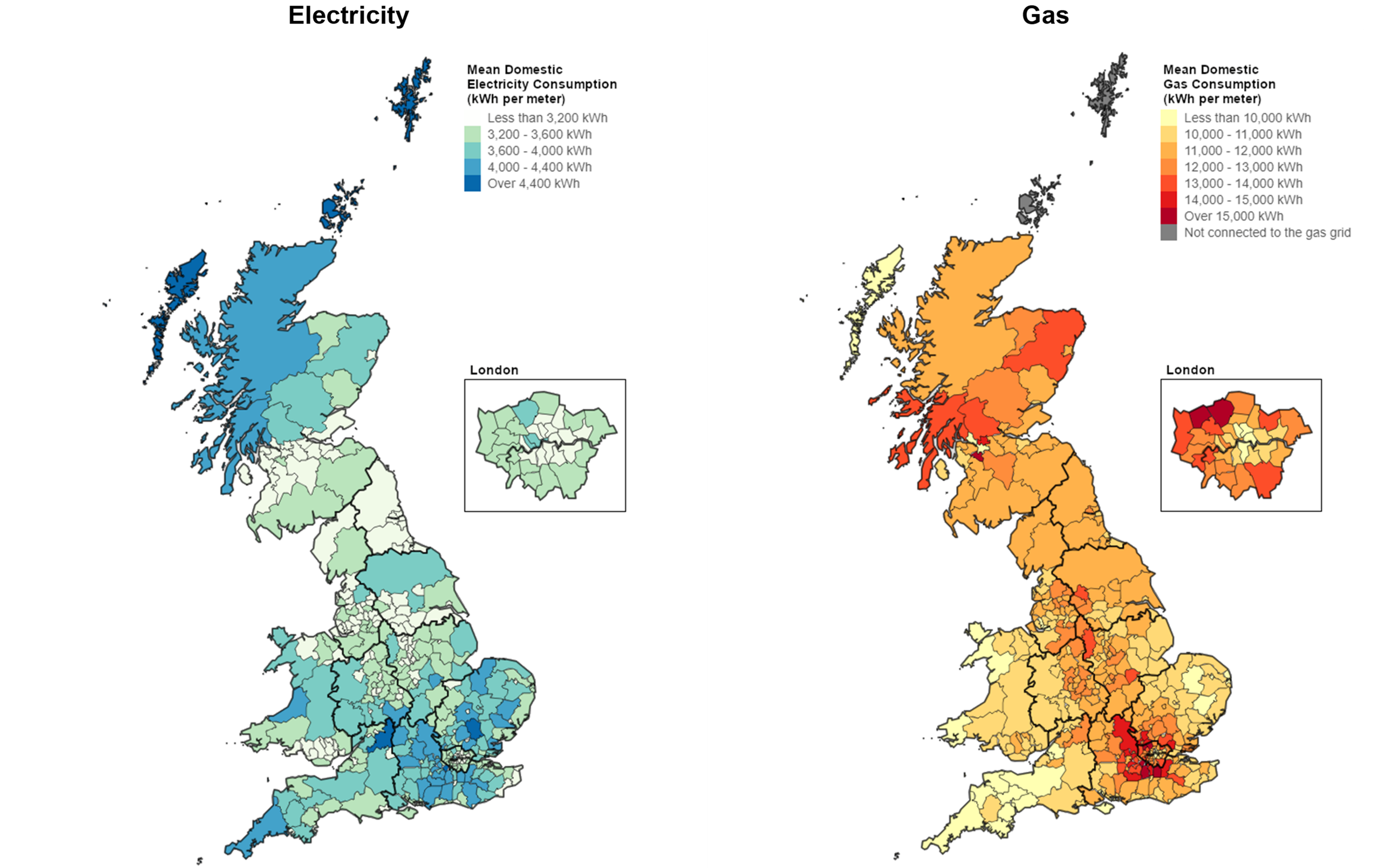
- The maps below illustrate how mean electricity and gas consumption varied across the country in 2024. The North East had the lowest proportion of domestic properties not connected to the gas grid (7 per cent compared to 16 per cent for GB) and the lowest mean domestic electricity use (15 per cent below the GB average). The South West had the highest proportion of domestic properties not connected to the gas grid (24 per cent) and the lowest mean domestic gas use (about 12 per cent below the GB average).
What you need to know about these statistics:
These statistics provide geographical breakdowns of electricity and gas consumption in Great Britain (GB). Estimates are based on meter point data provided by the electricity and gas industries from their administrative systems. The estimates for the years 2015 onwards are revised each year.
DESNZ also publishes similar subnational statistics at local government district level for Northern Ireland (NI) for both electricity and gas. For information on electricity and gas consumption for the UK as whole, users should refer to Energy Trends.
Gas meters consuming above the industry standard threshold of 73,200 kWh per annum are categorised as non-domestic, otherwise as domestic. This will result in some smaller commercial properties being classified as domestic and can affect the trends over time.
Visit the Domestic Energy Map – an interactive map which displays average domestic electricity and gas consumption as well as the proportion of domestic properties not on the gas grid. This map will be updated with 2024 consumption data in January 2026.
1. Introduction
1.1 Background
This publication presents Subnational estimates of electricity and weather corrected gas consumption for Great Britain. Estimates are based on meter point data provided by the electricity and gas industries from their administrative systems. In this publication, both the gas and electricity consumption years are referred to as 2024. It should be noted that the 2024 gas year runs from mid-May 2024 to mid-May 2025, whereas the electricity year more closely aligns to the calendar year; more detail is provided in the electricity and gas sections. All local authority tables from 2015 are based on the administrative boundaries as of 1 April 2025. A Subnational methodology and guidance note is published alongside this statistical release and provides further information on the collection and compilation of these subnational estimates of consumption.
Estimates are published for domestic and non-domestic meters by countries and regions[footnote 2] (within England), and local authorities. Data are also published at middle layer super output area (MSOA) and lower layer super output area (LSOA) for England and Wales, and intermediate zone (IZ) and data zone (DZ) for Scotland. These are based on the latest census geographies for England and Wales (2021) and Scotland (2022). Domestic electricity and gas consumption data is also provided by individual postcodes.
For national estimates of domestic consumption, Table C9 of ECUK should be used. Electricity and gas consumption estimates by property attributes, household characteristics and business characteristics are available as part of the National Energy Efficiency Data-Framework (NEED).
1.2 Users
The most significant use of the subnational consumption data is by Local Authorities and devolved administrations, and other external users such as academics and industry. These data have most commonly been used for targeting and monitoring the effectiveness of a range of carbon reduction and energy efficiency policies and initiatives, and to examine trends over time.
Internally, these data are used by the Department for Energy Security and Net Zero (DESNZ) to inform policy development and help with the monitoring and evaluation of DESNZ policies. The meter point gas and electricity data collected for subnational consumption outputs are also used in NEED.
Feedback from users of these data is welcomed. If you have any queries or suggestions, please contact us using the energyefficiency.stats@energysecurity.gov.uk.
2. Electricity
The statistics presented in this section are based on meter level electricity consumption data obtained from electricity data aggregators (who compile these data on behalf of electricity suppliers). The estimates presented for 2024 cover the following years:
-
Non-half hourly meters: February 2024 – January 2025
-
Half hourly meters: January 2024 – December 2024
This section presents electricity consumption by consuming sector (domestic and non-domestic) and geographic area (country, region and local authority). This report is accompanied by tables showing the full subnational electricity consumption statistics.
Electricity statistics: Background information
On site generation of electricity
An increasing proportion of domestic and non-domestic properties in the UK have installed electricity generators on-site, including solar panels and wind turbines. Some of this electricity is fed back into the grid and some is used on site. As the data reported on in this collection is based on meter readings, electricity consumed directly from on-site generation is not captured in these statistics.
Sectoral classification for electricity
The industry assigns a profile class (0-8) to each electricity meter:
| Profile class | Description |
|---|---|
| 1-2 | Standard and Economy 7 domestic meters, respectively. |
| 3-4 | Standard and Economy 7 non-domestic meters, respectively. |
| 5-8 | Higher consuming non-domestic meters. |
| 0 | These meters tend be the very highest consuming non-domestic meters and the consumption is monitored on a half-hourly basis. |
Profile class 1-8 meters are non-half hourly meters, and profile 0 meters are half hourly meters. For the purpose of these statistics, profile class 1-2 meters are assumed to be domestic (aside from a small number of exceptions – see section 3.1.2 of the methodology note), while the remainder of the profile classes are assumed to be non-domestic.
Domestic meters and domestic properties
In 2024 there were 29.3 million consuming domestic electricity meters. However, there were an estimated 28.2 million households[footnote 3] in Great Britain in 2024. Part of the reason for the difference between the number of domestic meters and households is likely to be due to non-domestic meters being incorrectly classified as being domestic, as well as some properties having more than one linked electricity meter point.
2.1 Total electricity consumption
For Great Britain as a whole, a total of 249,248 GWh of electricity was consumed in 2024 via 31.8 million meters. There was a 0.1 per cent increase in total electricity consumption in Great Britain between 2023 and 2024, with domestic consumption up 1.2 per cent and non-domestic consumption down 0.5 per cent (Chart 1). For individual countries and regions, the change in total consumption varied between a 0.6 per cent decrease and a 0.9 per cent increase.
Chart 1: Year on year change in domestic, non-domestic and total electricity consumption in recent years: Great Britain
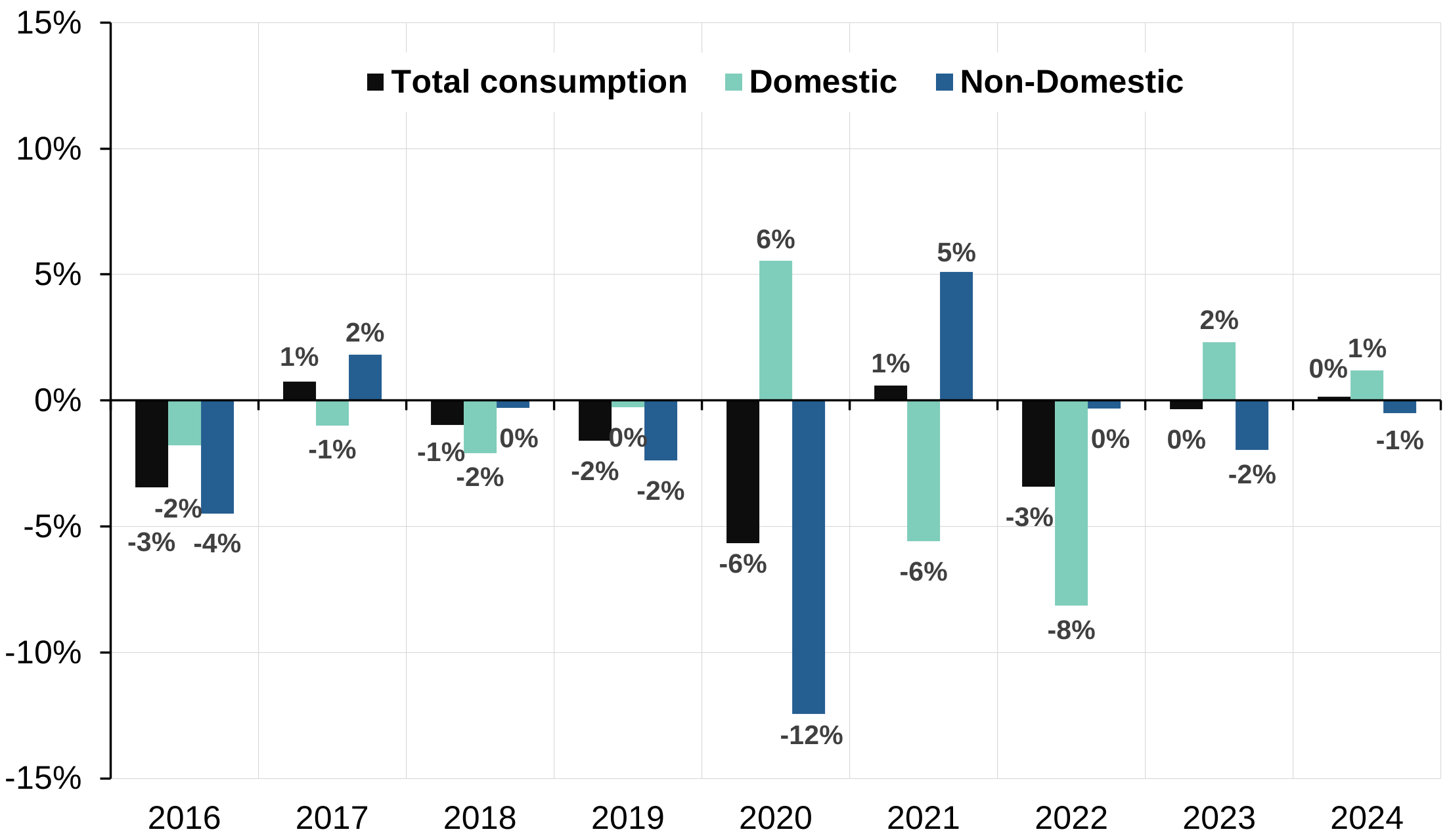
Following on from a record fall (8.2 per cent) in domestic electricity consumption in 2022, there has been a slight rebound in the following two years, with domestic consumption increasing by 3.5 per cent between 2022 and 2024. However, the domestic sector only makes up around 40 per cent of total electricity consumption in Great Britain. So, the increase in domestic consumption was offset by a 2.5 per cent decrease in non-domestic consumption, resulting in total electricity consumption remaining broadly flat (a 0.2 per cent reduction) between 2022 and 2024.
London saw the sharpest fall in total electricity consumption going into the COVID-19 pandemic, 2019 to 2020, (9.0 per cent compared to 5.7 per cent for Great Britain) and was the only region to see a subsequent increase between 2020 and 2024 (a 1.7 per cent increase compared to 3.1 per cent decrease for Great Britain), see Chart 2. This left London’s total consumption in 2024 7.5 per cent lower than in 2019, similar to Great Britain’s 8.5 per cent reduction. This mainly reflects London’s steepest initial fall in non-domestic consumption going into the pandemic followed by a prolonged recovery.
Over the longer term, total electricity consumption has been falling across all countries and regions (see Table 1 and Chart 2) with total consumption around a fifth lower in 2024 than in 2005. Similar reductions are seen in both the domestic and non-domestic sectors. Across both sectors, the reductions in total electricity consumption since 2005 were lowest in London and the surrounding regions (South East and East) and highest in the North East and Scotland.
Chart 2: Total electricity consumption by country/region, Great Britain, (Index: 2005 = 100)
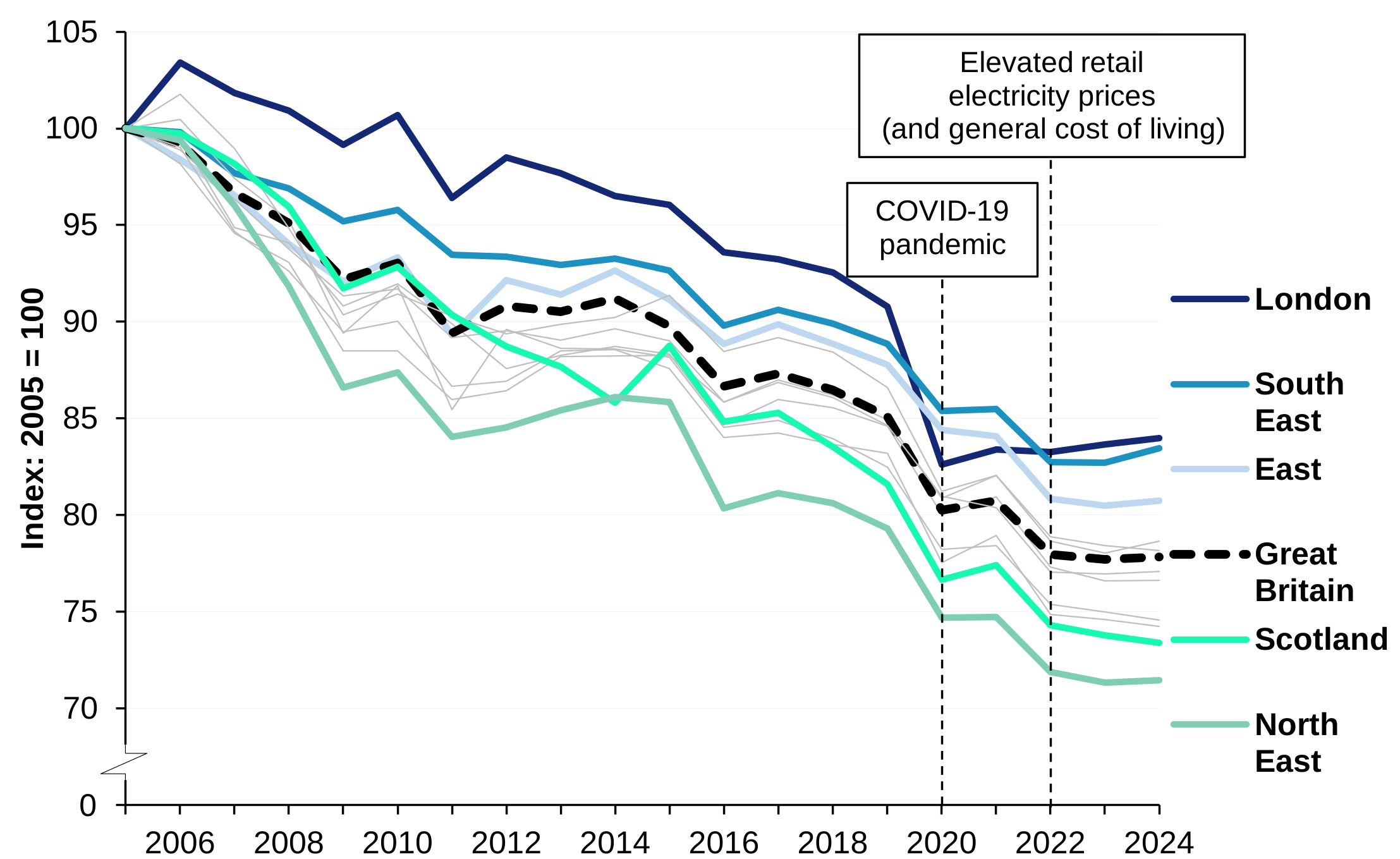
Table 1: Percentage change in total electricity consumption, since 2005 and 2022, by country/region, Great Britain
| Domestic 2022-2024 | Non-Domestic 2022-2024 | Total 2022-2024 | Domestic 2005-2024 | Non-Domestic 2005-2024 | Total 2005-2024 | |
|---|---|---|---|---|---|---|
| North East | 3.0% | -2.5% | -0.6% | -21.9% | -31.8% | -28.5% |
| North West | 3.5% | -3.8% | -1.1% | -19.4% | -28.9% | -25.4% |
| Yorkshire and The Humber | 4.2% | -3.7% | -0.9% | -21.5% | -24.5% | -23.4% |
| East Midlands | 4.3% | -2.5% | 0.0% | -16.5% | -24.1% | -21.4% |
| West Midlands | 4.2% | -4.1% | -0.9% | -16.7% | -25.0% | -21.8% |
| East | 3.6% | -2.8% | -0.1% | -16.1% | -21.5% | -19.3% |
| London | 3.4% | -0.4% | 0.9% | -13.0% | -17.5% | -16.0% |
| South East | 3.4% | -0.9% | 0.9% | -14.6% | -17.9% | -16.5% |
| South West | 3.2% | -2.3% | 0.0% | -18.3% | -26.3% | -22.9% |
| England | 3.6% | -2.4% | -0.1% | -17.0% | -23.3% | -20.9% |
| Wales | 4.3% | -3.4% | -0.8% | -19.5% | -28.8% | -25.8% |
| Scotland | 2.3% | -3.5% | -1.2% | -29.0% | -24.9% | -26.6% |
| Great Britain | 3.5% | -2.5% | -0.2% | -18.4% | -24.5% | -22.2% |
Chart 3: Non-domestic electricity consumption as a percentage of total electricity consumption, by country/region, Great Britain, 2024

Non-domestic electricity consumption accounts for more than half of the electricity consumed in Great Britain (61 per cent in 2024). This is also the case for each country/region, as shown in Chart 3. Within England, in general, this proportion is lowest in the more southern regions: South West (55 per cent), East (57 per cent) and South East (57 per cent). The notable exception to this is London (65 per cent).
Total electricity consumption was lower in 2024 than in 2015 for 97 per cent of individual local authorities (338 out of 350), with over two-thirds (250 out of 350) experiencing reductions greater than 10 per cent over this period.
Out of the 12 local authorities experiencing increased total electricity consumption between 2015 and 2024, Slough in the South East had by far the largest increase (82 per cent) in total electricity consumption entirely driven by a doubling (101 per cent increase) in non-domestic consumption. Slough is an example of a local authority where trends in total electricity consumption are largely driven by changes in consumption for a very small minority of high-consuming non-domestic sites, which in this case are data centres[footnote 4]. If the electricity consumption from data centres is removed, then Slough shows similar reductions in electricity consumption to other local authorities between 2015 and 2024 (a 15 per cent decrease in total electricity consumption and a 19 per cent decrease in total non-domestic electricity consumption).
2.2 Domestic electricity consumption
Between 2021 and 2022, mean domestic electricity consumption fell by 8.9 per cent across Great Britain (with similar falls seen across all countries and regions). This was likely a result of particularly elevated domestic electricity prices as well as the generally high cost of living during 2022. Between 2022 and 2024 there was a slight rebound (a 2.6 per cent increase), leaving mean domestic electricity consumption 6.5 per cent lower than in 2021. Across all countries and regions in 2024, mean domestic electricity consumption remained lower than in 2021, by 5 to 8 per cent.
Over the longer term, total domestic electricity consumption in Great Britain has been on a downward trend, with total domestic consumption 18.4 per cent lower in 2024 than in 2005. This reduction has happened despite a 13.1 per cent increase in the number of domestic meters, due to a 27.8 per cent reduction in mean domestic consumption per meter over this period.
Among all countries and regions, Scotland has experienced the largest percentage fall in total domestic electricity consumption between 2005 and 2024 (29.0 per cent). This is a result of Scotland experiencing the smallest increase in the number of domestic meters (4.7 per cent) combined with the largest reduction in mean consumption per meter over this period (32.2 per cent). A full country/region breakdown is provided in Table 2.
Table 2: Percentage change in domestic electricity consumption, since 2005 and 2022, by country/region, Great Britain
| Number of meters 2022-2024 | Mean cons per meter 2022-2024 | Total cons 2022-2024 | Number of meters 2005-2024 | Mean cons per meter 2005-2024 | Total cons 2005-2024 | |
|---|---|---|---|---|---|---|
| North East | 0.5% | 2.5% | 3.0% | 7.6% | -27.4% | -21.9% |
| North West | 1.0% | 2.5% | 3.5% | 15.5% | -30.3% | -19.4% |
| Yorkshire and The Humber | 1.0% | 3.2% | 4.2% | 9.0% | -28.0% | -21.5% |
| East Midlands | 1.4% | 2.9% | 4.3% | 13.6% | -26.5% | -16.5% |
| West Midlands | 1.0% | 3.2% | 4.2% | 20.1% | -30.7% | -16.7% |
| East | 1.3% | 2.3% | 3.6% | 14.7% | -26.8% | -16.1% |
| London | 1.3% | 2.1% | 3.4% | 14.8% | -24.2% | -13.0% |
| South East | 0.8% | 2.6% | 3.4% | 14.7% | -25.5% | -14.6% |
| South West | 0.7% | 2.4% | 3.2% | 15.5% | -29.3% | -18.3% |
| England | 1.0% | 2.6% | 3.6% | 14.4% | -27.4% | -17.0% |
| Wales | 0.2% | 4.1% | 4.3% | 9.6% | -26.5% | -19.5% |
| Scotland | 0.3% | 2.0% | 2.3% | 4.7% | -32.2% | -29.0% |
| Great Britain | 0.9% | 2.6% | 3.5% | 13.1% | -27.8% | -18.4% |
Chart 4: Mean domestic electricity consumption (kWh per meter) by country/region, Great Britain, 2005 to 2024

Chart 5: Mean domestic electricity consumption (kWh per meter) by country/region, Great Britain, 2015 and 2024

Chart 4 shows the trend in mean domestic electricity consumption since 2005, and Chart 5 shows domestic electricity consumption for individual countries and regions in 2024 compared to 2015. The North East has always had the lowest mean domestic electricity consumption per meter, consistently remaining at around 15 per cent below the Great Britain average. This is likely to be related to the North East having the lowest proportion of domestic properties not connected to the gas grid. Census (2021) data on the type of central heating used by each household shows that, within England and Wales, the North East has the lowest proportion of households only using electricity for central heating (5.1 per cent compared to 8.5 per cent for England and Wales as a whole).
At the other end of the scale, the most southern regions (with the exception of London) have consistently had the highest mean domestic electricity consumption. In 2024, mean domestic consumption in the South East was 10 per cent higher than the Great Britain average, while the East was 9 per cent higher and the South West was 6 per cent higher. In the case of the South West, the higher than average electricity consumption per meter is likely to be related to it having the highest percentage of domestic properties not connected to the gas grid. The Census data shows that, within England and Wales, besides London, the South West has the highest percentage of households only using electricity for central heating (10.3 per cent).
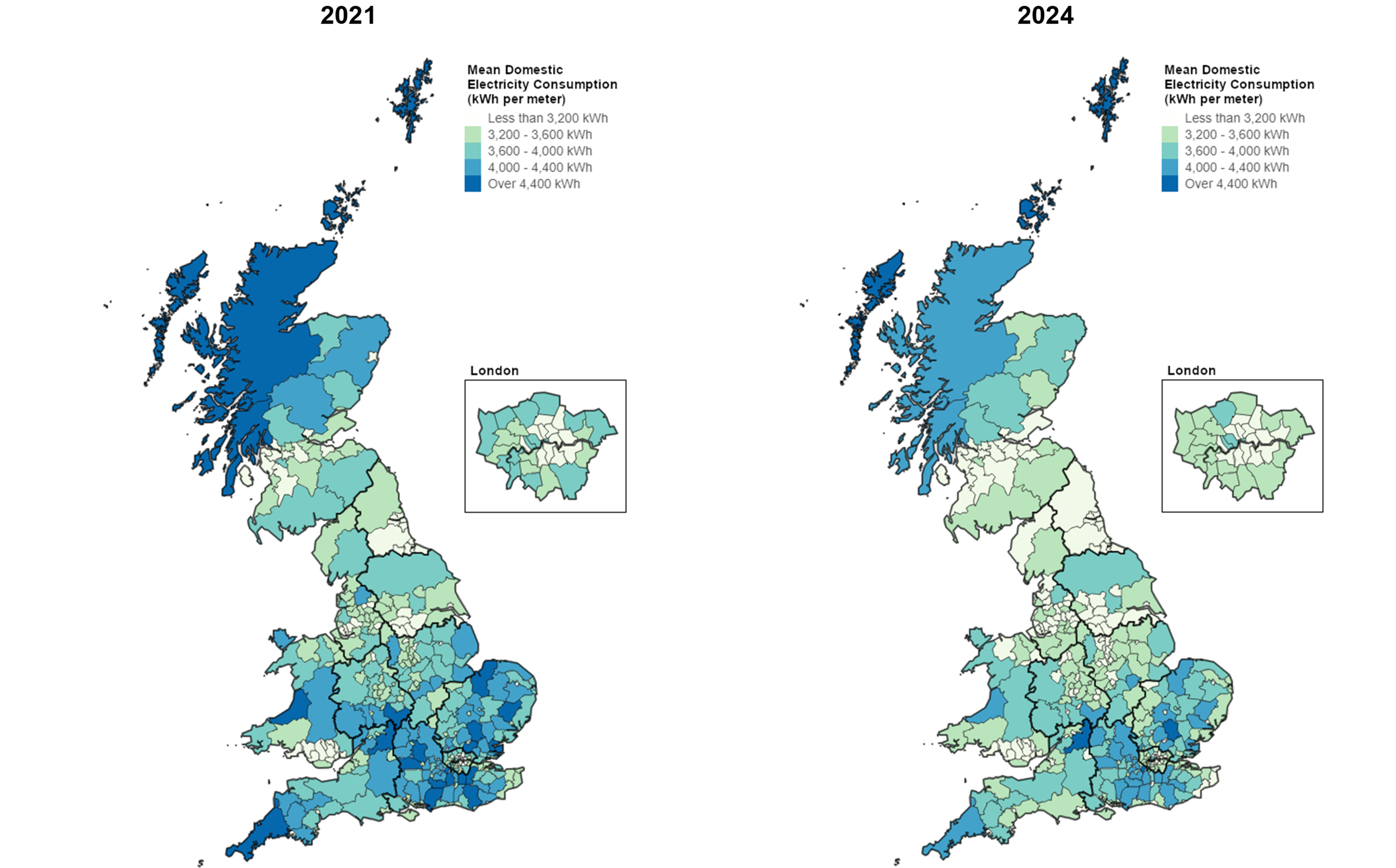
Map 1 shows how mean domestic electricity consumption per meter varied geographically at the level of individual local authorities in 2021 and 2024. No single factor can explain the geographical variation shown. The most northern parts of Scotland (Highland, Western Isles, Orkney Islands and Shetland Islands) all had a mean domestic consumption greater than 4,000 kWh in 2024 (compared to 3,323 kWh for Great Britain as a whole). These local authorities have among the highest proportion of properties off the gas grid and among the highest proportion of properties only using electricity for central heating (according to the 2022 Scotland Census). Other factors include the size of the property and household income. These maps also illustrate the change in electricity consumption between 2021 and 2024. For the vast majority (88 per cent) of local authorities, mean electricity consumption in 2024 was over 5 per cent lower than in 2021.
Map 1: Mean domestic electricity consumption per meter by local authority, 2021 (left map) and 2024 (right map)
In general, heating tends to be the main source of total energy consumption (from all energy sources) in domestic properties (61 per cent of domestic energy consumption in 2024[footnote 5] was for space heating). Properties not connected to the gas grid use alternative fuels to heat such as electricity, oil, bottled gas and wood. The English Housing Survey shows that properties with no gas meter are more likely to use electricity for heating[footnote 6], which will raise their electricity consumption. Therefore, some correlation between electricity consumption and the percentage of properties not connected to the gas grid is expected. For each local authority, Chart 6 shows the mean domestic electricity consumption per meter against the proportion of properties not connected to the gas grid. There is indeed a moderate correlation between these variables (a correlation coefficient of 0.67 and a correlation of 0.57 if the 3 local authorities with no properties connected to the gas grid are excluded).
Chart 6: Mean annual domestic electricity consumption (kWh per meter) against the proportion of properties not connected to the gas grid, by local authority, Great Britain, 2024
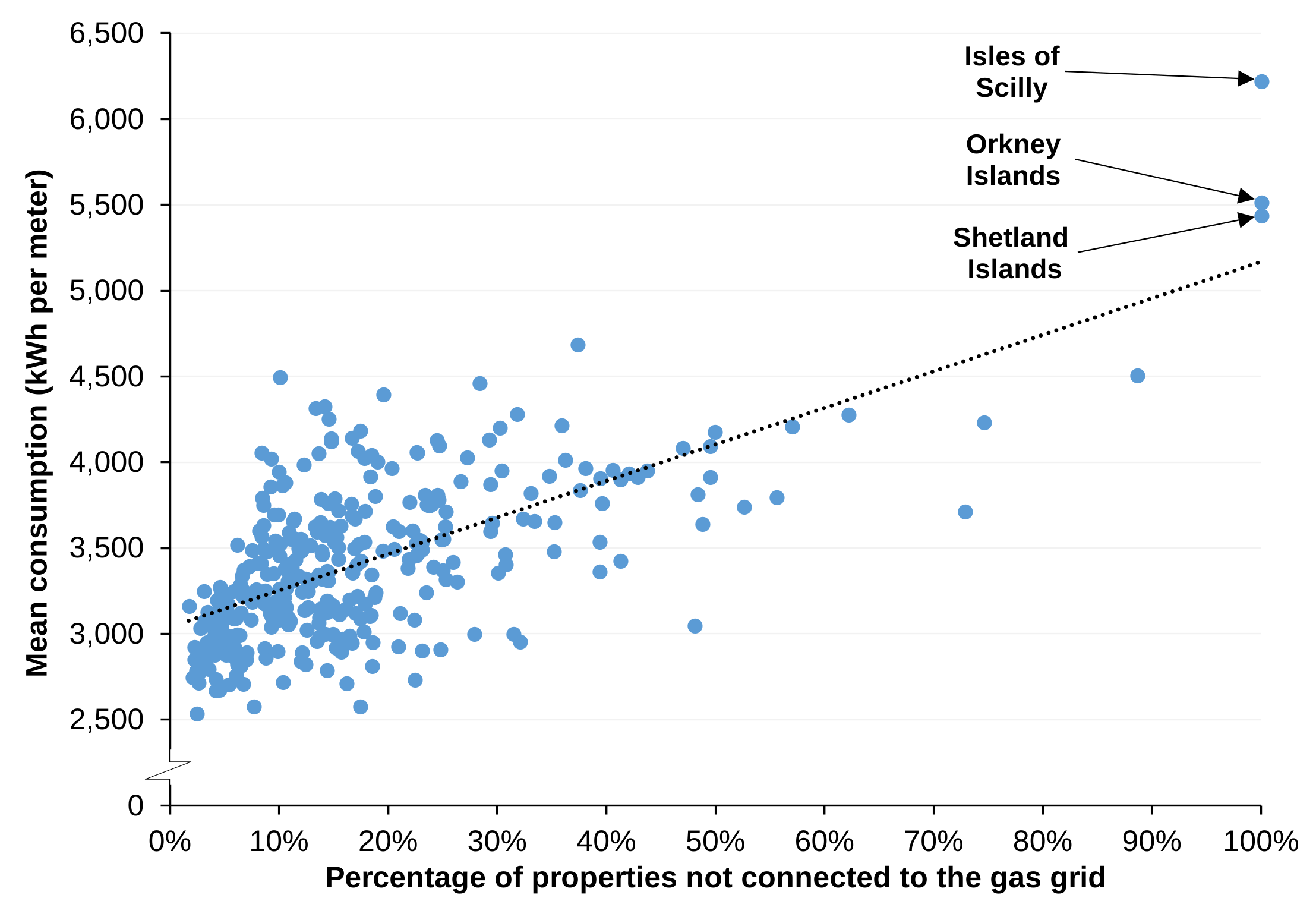
Chart 7 shows the distribution of domestic electricity consumption at the level of individual meters in 2024. While most (70 per cent) domestic electricity meters consumed between 500 and 4,000 kWh, 4 per cent consumed over 10,000 kWh. As a result of these few high consuming meters the mean domestic electricity consumption of 3,323 kWh is substantially higher than the median domestic electricity consumption (the value which half of meters are above, and half are below) of 2,471 kWh.
Chart 7: The distribution of domestic electricity consumption per meter, Great Britain, 2024

2.3 Non-domestic electricity consumption
Across Great Britain as a whole, total non-domestic electricity consumption decreased by 2.5 per cent between 2022 and 2024, driven by a 2.8 per cent reduction in the mean consumption per meter, which was slightly offset by a 0.4 per cent increase in the number of consuming non-domestic electricity meters. As shown in Table 3, all countries and regions experienced similar year-on-year falls in total non-domestic consumption except for London and South East which saw smaller falls of less than 1.0 per cent.
Over the longer term there has been a 24.5 per cent reduction in total non-domestic electricity consumption between 2005 and 2024, driven by a 25.1 per cent reduction in mean electricity consumption per meter. A full country/region breakdown is provided in Table 3.
Table 3: Percentage change in non-domestic electricity consumption, since 2005 and 2022, by country/region, Great Britain
| Number of meters 2022-2024 | Mean cons per meter 2022-2024 | Total cons 2022-2024 | Number of meters 2005-2024 | Mean cons per meter 2005-2024 | Total cons 2005-2024 | |
|---|---|---|---|---|---|---|
| North East | -0.4% | -2.1% | -2.5% | 1.6% | -32.9% | -31.8% |
| North West | -0.4% | -3.4% | -3.8% | 1.7% | -30.0% | -28.9% |
| Yorkshire and The Humber | -0.5% | -3.2% | -3.7% | 3.0% | -26.7% | -24.5% |
| East Midlands | 2.3% | -4.7% | -2.5% | 5.3% | -27.9% | -24.1% |
| West Midlands | 1.6% | -5.6% | -4.1% | 10.8% | -32.3% | -25.0% |
| East | 1.8% | -4.5% | -2.8% | 5.1% | -25.3% | -21.5% |
| London | -0.9% | 0.5% | -0.4% | -7.3% | -11.1% | -17.5% |
| South East | 1.3% | -2.2% | -0.9% | 1.2% | -18.9% | -17.9% |
| South West | 0.8% | -3.1% | -2.3% | 5.6% | -30.1% | -26.3% |
| England | 0.6% | -2.9% | -2.4% | 1.8% | -24.6% | -23.3% |
| Wales | -0.4% | -3.0% | -3.4% | -2.2% | -27.1% | -28.8% |
| Scotland | -0.9% | -2.6% | -3.5% | -4.5% | -21.3% | -24.9% |
| Great Britain | 0.4% | -2.8% | -2.5% | 0.8% | -25.1% | -24.5% |
Chart 8 shows the trend in mean non-domestic electricity consumption since 2005. The North East has consistently had the highest mean non-domestic consumption, while the South West has consistently had the lowest. However, with so many different factors involved it is difficult to make meaningful like for like comparisons, between different parts of the country. This is particularly the case for non-domestic consumption as businesses vary greatly in size and activity[footnote 7]. Moreover, changes to total and mean consumption can be heavily influenced by changes for a small number of large high consuming businesses.
Chart 8: Mean non-domestic electricity consumption (kWh per meter) by country/region, Great Britain, 2005 to 2024

While mean non-domestic electricity consumption may be heavily affected by a small number of very high consuming meters, the median consumption can give a better indication of changes in electricity consumption for more typical meters in the non-domestic sector. Trends in median non-domestic electricity consumption since 2012 are shown in Chart 9, where the impacts of COVID-19 restrictions can be seen more clearly in the time series.
Chart 9: Median non-domestic electricity consumption[footnote 8] (kWh per meter) by country/region, Great Britain, 2012 to 2024

3. Gas
This section presents gas consumption by domestic/non-domestic classification and geographic area (country, region and local authority). This report is accompanied by tables showing the full subnational gas consumption statistics.
Gas statistics: Background information
Sectoral classification for gas
To classify a gas meter as domestic or non-domestic, the gas industry cut-off point of 73,200 kWh is used. If a meter consumes less than 73,200 kWh within the gas year it is defined as domestic, or non-domestic if it consumes 73,200 kWh or more.
Unique sites in the gas consumption statistics
In addition to domestic and non-domestic meters, DESNZ is supplied with data on “Unique Sites” (also known as “Non-Standard Sites”). These are high consuming sites for which data was not available in earlier years, due to the complexities in their billing arrangements. Gas consumption from unique sites continues to be excluded in these statistics, to preserve consistency across the time series.
Break in trends
With the 2017 consumption figures, Xoserve introduced a new data collection system. Due to this, a large proportion of meters, which had not reported for some time, have had their consumption updated in 2017 leading to a sizeable increase in gas consumption reported in 2017. With most gas meters now providing timely meter readings, the figures from 2017 onwards give a more accurate reflection of gas consumption.
Weather correction
In the domestic sector, gas is predominantly used for heating purposes (75 per cent of domestic gas consumption was for space heating[footnote 9] in 2024). As a result, usage is driven by external temperatures and weather conditions. The weather correction enables more like-for-like comparisons of gas use over time, by adjusting for weather changes. However the weather correction process may not adequately compensate for extreme weather conditions as consumers may adjust their gas use sharply over short periods of time.
Gas years
The gas years used for in these statistics are not calendars years, but are as follows:
- Prior to 2015: October – September (same as for 2015)
- 2015: October 2014 – September 2015
- 2016: Mid-July 2016 – Mid-July 2017
- 2017: Mid-June 2017 – Mid-June 2018
- 2018: Mid-May 2018 – Mid-May 2019
- 2019 onwards: Mid-May – Mid-May (same as for 2018)
3.1 Total gas consumption
In Great Britain as a whole, a total of 438,005 GWh of gas was consumed in the 2024 gas year (via 24.9 million meters). There was a reduction in total gas consumption in Great Britain of 1.4 per cent between 2023 and 2024, with domestic consumption down 0.4 per cent and non-domestic consumption down 3.2 per cent (see Chart 10)[footnote 10]. For individual countries and regions, the change in total consumption varied between a 3.2 per cent decrease and a 0.1 per cent increase.
Chart 10: Year on year change in domestic, non-domestic and total gas consumption in recent years: Great Britain

The domestic sector is the larger consumer of gas, accounting for around 60 to 70 per cent of total gas consumption across all countries and regions (see Chart 12). Following a record fall (12.7 per cent) in 2022, there has been a slight rebound with domestic consumption increasing by 1.9 per cent between 2022 and 2024. However, the increase in domestic consumption between 2022 and 2024 was entirely offset by the 8.8 per cent decrease in non-domestic consumption, resulting in a 2.2 per cent fall in total gas consumption.
Over the longer term, total gas consumption has been falling across all countries and regions (see Chart 11 and Table 4), with total consumption around a third lower in 2024 than in 2005. Similar reductions were seen in both the domestic and non-domestic sectors.
Total gas consumption was lower in 2024 than in 2015 for 90 per cent of individual gas consuming local authorities (311 out of 347), with almost half (170 out of 347) experiencing reductions greater than 10 per cent over this period.
Chart 11: Total gas consumption by country/region, Great Britain, (Index: 2005 = 100)

Table 4: Percentage change in total gas consumption, since 2005 and 2022, by country/region, Great Britain
| Domestic 2022-2024 | Non-Domestic 2022-2024 | Total 2022-2024 | Domestic 2005-2024 | Non-Domestic 2005-2024 | Total 2005-2024 | |
|---|---|---|---|---|---|---|
| North East | 3.6% | -11.1% | -2.1% | -35.0% | -48.4% | -40.4% |
| North West | 2.4% | -7.9% | -2.0% | -36.6% | -38.2% | -37.2% |
| Yorkshire and The Humber | 2.2% | -12.1% | -3.9% | -33.7% | -45.7% | -39.0% |
| East Midlands | 2.2% | -9.6% | -2.7% | -30.0% | -27.8% | -29.2% |
| West Midlands | 2.2% | -6.8% | -1.2% | -31.6% | -37.5% | -33.8% |
| East | 2.1% | -7.1% | -1.2% | -28.0% | -39.2% | -32.1% |
| London | 0.0% | -5.4% | -1.9% | -32.0% | -31.9% | -32.0% |
| South East | 2.1% | -9.6% | -1.3% | -28.1% | -49.4% | -35.5% |
| South West | 1.7% | -10.1% | -2.5% | -29.8% | -39.8% | -33.4% |
| England | 1.9% | -8.6% | -2.0% | -31.6% | -39.9% | -34.8% |
| Wales | 1.6% | -6.3% | -1.7% | -37.9% | -42.0% | -39.6% |
| Scotland | 1.8% | -12.3% | -4.4% | -29.0% | -35.0% | -31.5% |
| Great Britain | 1.9% | -8.8% | -2.2% | -31.7% | -38.7% | -34.4% |
Chart 12: Domestic gas consumption as a percentage of total gas consumption, by country/region, Great Britain, 2024

Domestic gas consumption accounts for almost two-thirds of gas consumed in Great Britain (64 per cent in 2024), see Chart 12. Within England, in general, this proportion is highest in the more southern regions, particularly the South East (73 per cent).
3.2 Domestic gas consumption
Following a 13.3 per cent fall in mean domestic gas consumption across Great Britain between 2021 and 2022 (likely a result of elevated domestic gas prices as well as the generally high cost of living during 2022), there has been no sign of a sustained rebound. A 1.9 per cent increase in 2023 followed by a 0.8 per cent decrease in 2024, left mean domestic gas consumption still 12.3 per cent lower than in 2021. Across all countries and regions, in 2024, mean domestic gas consumption remained lower than in 2021, by 11 to 13 per cent.
Over the longer term, total domestic gas consumption in Great Britain has been on a downward trend with total domestic consumption 31.7 per cent lower in 2024 than in 2005. This reduction has happened despite a 14.4 per cent increase in the number of domestic meters, due to a 40.3 per cent reduction in mean domestic consumption per meter over this period. A full country/region breakdown is provided in Table 5.
Table 5: Percentage change in domestic gas consumption, since 2005 and 2022, by country/region, Great Britain
| Number of meters 2022-2024 | Mean cons per meter 2022-2024 | Total cons 2022-2024 | Number of meters 2005-2024 | Mean cons per meter 2005-2024 | Total cons 2005-2024 | |
|---|---|---|---|---|---|---|
| North East | 1.0% | 2.5% | 3.6% | 12.9% | -42.4% | -35.0% |
| North West | 0.7% | 1.6% | 2.4% | 10.6% | -42.7% | -36.6% |
| Yorkshire and The Humber | 0.7% | 1.5% | 2.2% | 12.1% | -40.8% | -33.7% |
| East Midlands | 1.4% | 0.8% | 2.2% | 19.2% | -41.2% | -30.0% |
| West Midlands | 0.8% | 1.4% | 2.2% | 12.9% | -39.4% | -31.6% |
| East | 1.1% | 1.0% | 2.1% | 18.6% | -39.3% | -28.0% |
| London | -0.1% | 0.1% | 0.0% | 3.4% | -34.2% | -32.0% |
| South East | 0.9% | 1.3% | 2.1% | 16.7% | -38.4% | -28.1% |
| South West | 0.9% | 0.8% | 1.7% | 22.6% | -42.7% | -29.8% |
| England | 0.8% | 1.1% | 1.9% | 13.6% | -39.8% | -31.6% |
| Wales | 0.5% | 1.1% | 1.6% | 12.9% | -45.0% | -37.9% |
| Scotland | 1.1% | 0.7% | 1.8% | 23.5% | -42.5% | -29.0% |
| Great Britain | 0.8% | 1.1% | 1.9% | 14.4% | -40.3% | -31.7% |
Chart 13 shows the trend in mean domestic gas consumption since 2005, and Chart 14 shows how mean domestic gas consumption for individual countries and regions in 2024 compared with 2015. The South West has always had the lowest mean domestic gas consumption per meter, consistently remaining around 12 per cent below the Great Britain average.
Map 2 shows the geographical variation in mean domestic gas consumption per meter at the level of individual local authorities in 2021 and 2024; and illustrates the changes between 2021 and 2024. For the vast majority (97 per cent) of gas-consuming local authorities, mean domestic gas consumption in 2024 was over 10 per cent lower than in 2021.
Chart 13: Mean domestic gas consumption (kWh per meter) by country/region, Great Britain, 2005 to 2024

Chart 14: Mean domestic gas consumption (kWh per meter) by country/region, Great Britain, 2015 and 2024

Map 2: Mean domestic gas consumption per meter by local authority, 2021 (left map) and 2024 (right map)
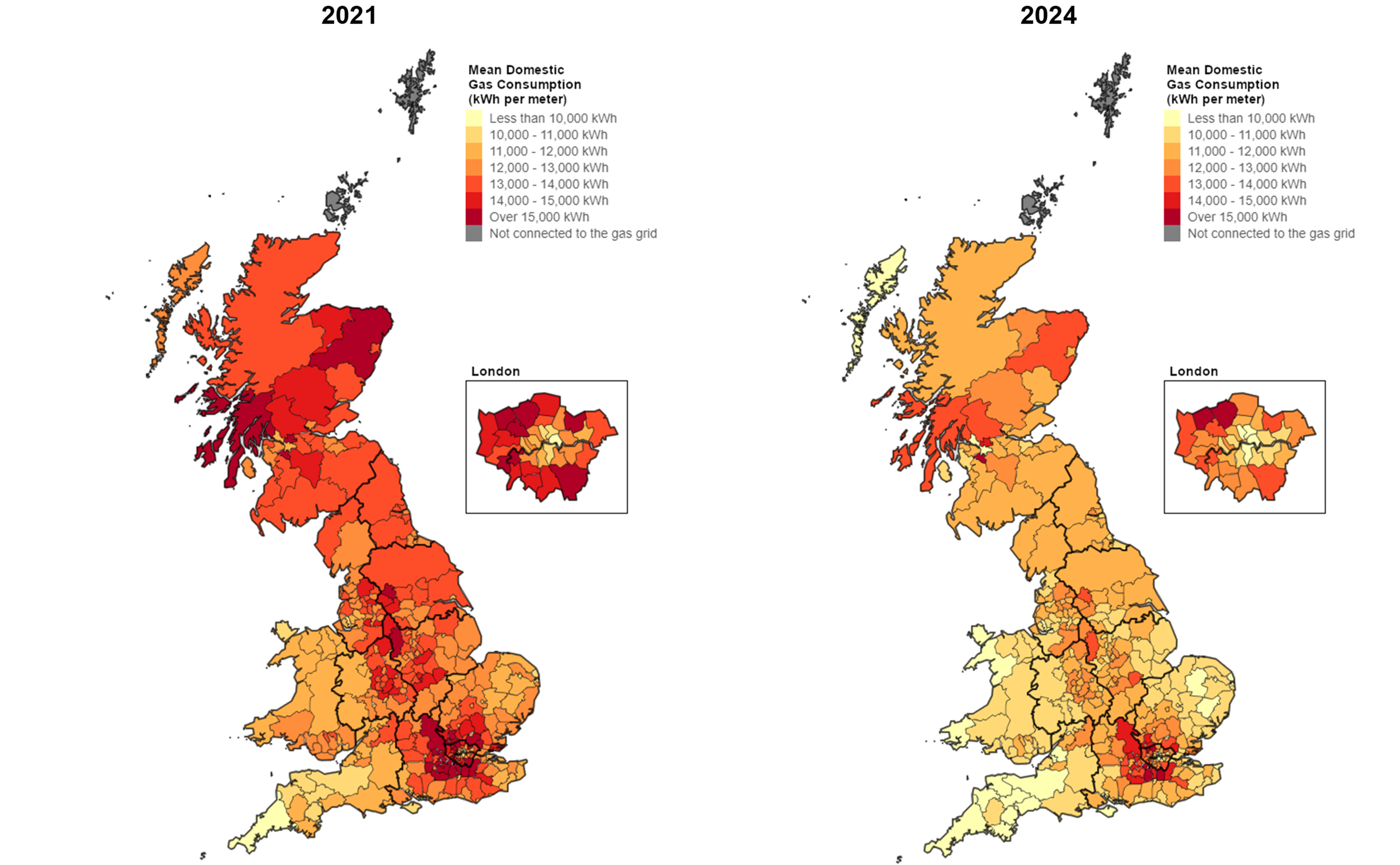
Chart 15: The distribution of domestic gas consumption per meter, Great Britain, 2024

Chart 15 shows the distribution of domestic gas consumption at the level of individual meters in 2024. While the majority of domestic gas meters (69 per cent) consumed between 3,000 kWh and 15,000 kWh, 3 per cent consumed over 30,000 kWh. Due to these few high consuming meters, the mean gas domestic consumption of 11,359 kWh is substantially higher than the median domestic gas consumption (the value for which half of meters are above, and half are below) of 9,859 kWh.
There are a variety of factors which may be influencing the variation in domestic gas consumption, for example property type, property age, energy efficiency of a property and number of occupants. Analysis presented in NEED Annex D: Determinants of domestic gas consumption (PDF, 1.46MB), looks at how various factors affect household gas use, including property age, property type, household income and number of occupants.
3.3 Non-domestic gas consumption
Across Great Britain, total non-domestic gas consumption decreased by 8.8 per cent between 2022 and 2024. Over the longer term, total non-domestic gas consumption in Great Britain has also been on a downward trend, with total non-domestic consumption in 2024 levels being 38.7 per cent lower than in 2005. A full country/region breakdown is provided in Table 6.
Gas statistics: The threshold for categorising meters as non-domestic
The use of the consumption threshold of 73,200 kWh for categorising gas meters as domestic or non-domestic means that some smaller commercial properties are classified as domestic. Additionally, while percentage changes in total consumption remain reliable, changes in the number of meters, and the mean and median for the non-domestic sector, can be distorted by meters crossing the classification threshold. For example, between 2022 and 2024, around 2,000 more meters rose above the threshold than the number of meters dropping below the threshold. This had the following impact:
- An artificial net loss in the number of meters classified as non-domestic of around 2,000 meters.
- An artificial uplift in mean non-domestic consumption, as a result of a net loss of around 2,000 meters with a consumption close to the threshold.
These statistics show an 8.8 per cent drop in total non-domestic consumption between 2022 and 2024, with a 3.6 per cent decrease in the mean non-domestic consumption. However based on a consistent set of meters which were consuming gas for both years and over 73,200 kWh for at least one of the two years, but also including the small number of new meters gained and old meters lost (not as a result of switching), gives a similar increase in total consumption (8.5 per cent), but a much larger reduction in mean consumption (7.7 per cent).
It is for this reason a breakdown of changes in non-domestic consumption has not been provided for gas in Table 6 as it has been for electricity in Table 3.
Estimates of domestic gas consumption are not affected in the same way, as the number of meters crossing the threshold is negligible in comparison to the total number of domestic meters.
While the trends in total gas consumption (mainly driven by the domestic sector) are fairly uniform across the countries and regions (see Chart 11), the same is not the case when looking at the non-domestic sector (see Chart 16). This is because gas consumption in the non-domestic sector is heavily influenced by a small number of high consuming industrial sites and power stations.
Table 6: Percentage change in total non-domestic gas consumption, since 2005 and 2022, by country/region, Great Britain
| Total cons 2022-2024 | Total cons 2005-2024 | ||
|---|---|---|---|
| North East | -11.1% | -48.4% | |
| North West | -7.9% | -38.2% | |
| Yorkshire and The Humber | -12.1% | -45.7% | |
| East Midlands | -9.6% | -27.8% | |
| West Midlands | -6.8% | -37.5% | |
| East | -7.1% | -39.2% | |
| London | -5.4% | -31.9% | |
| South East | -9.6% | -49.4% | |
| South West | -10.1% | -39.8% | |
| England | -8.6% | -39.9% | |
| Wales | -6.3% | -42.0% | |
| Scotland | -12.3% | -35.0% | |
| Great Britain | -8.8% | -38.7% |
Chart 16: Total non-domestic gas consumption by country/region, Great Britain,(Index: 2005 = 100)

4. Domestic properties not connected to the gas grid
This section presents estimates of the percentage of domestic properties not connected to the gas grid by geographic area (country, region and local authority). This report is accompanied by tables showing the full subnational estimates of the number of domestic properties not connected to the gas grid.
Properties not connected to the gas grid: Background information
There is no definitive source of information on domestic properties that are not connected to the gas grid. However, DESNZ produces estimates of the number of domestic properties not connected to the gas grid based on the difference between the number of domestic properties and the estimated number of domestic gas meters in each area.
DESNZ is not able to identify specific properties within an area which are not connected to the gas grid but estimates the identification of areas which have few or no gas meters. Some limitations which should be considered when using these estimates include:
- Each gas meter is assigned as domestic or non-domestic based on the gas industry threshold of 73,200 kWh, with all meters consuming below 73,200 kWh per gas year assumed to be domestic. This means that the meters for smaller consuming commercial/industrial consumers are inadvertently classified as domestic. Therefore, estimates of the number of properties without gas are an underestimate of the true number. The impact of this assumption on estimates will vary by area.
- Approximately 0.1 per cent of domestic meters could not be allocated to a local authority in 2024 as the postcode provided could not be matched to the National Statistics Postcode Lookup (NSPL). These unallocated meters are included in the overall estimates for Great Britain, England and Wales, and Scotland but excluded from all other geographical breakdowns.
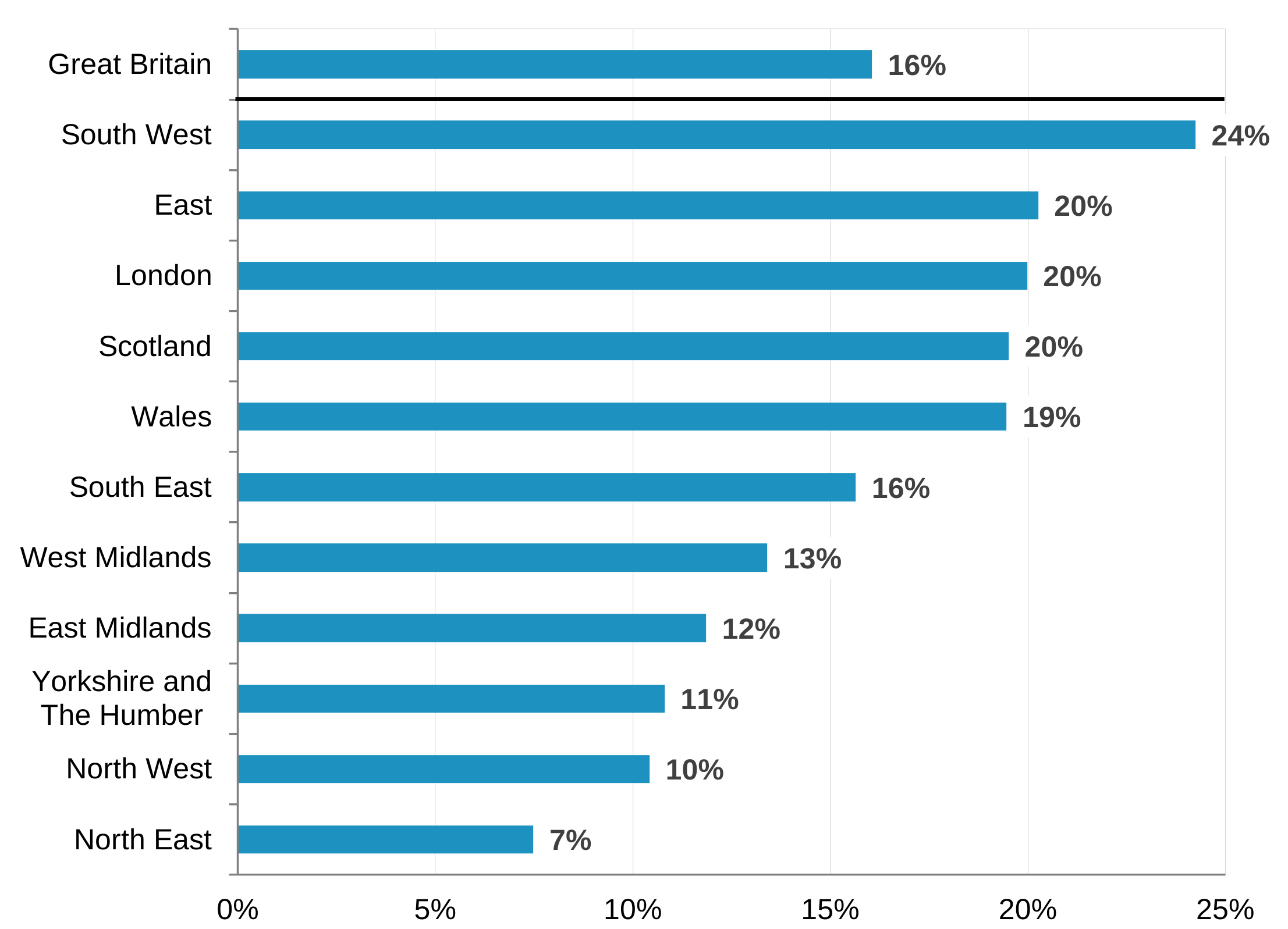
Chart 17 shows the estimated proportions of properties not connected to the gas grid for each country/region. Across Great Britain in 2024, an estimated 16 per cent of domestic properties were not connected to the gas grid, a similar proportion to 2015. The percentage not connected to the gas grid was lowest in the North of England: North East (7 per cent), North West (10 per cent) and Yorkshire and The Humber (11 per cent). The South West had by far the highest percentage of properties not connected to the gas grid (24 per cent). Within London, the percentage of domestic properties not connected to the gas grid was almost twice as large in Inner London (27 per cent) as in Outer London (15 per cent).
Chart 17: Percentage of domestic properties not connected to the gas grid, by country/region, Great Britain, 2024
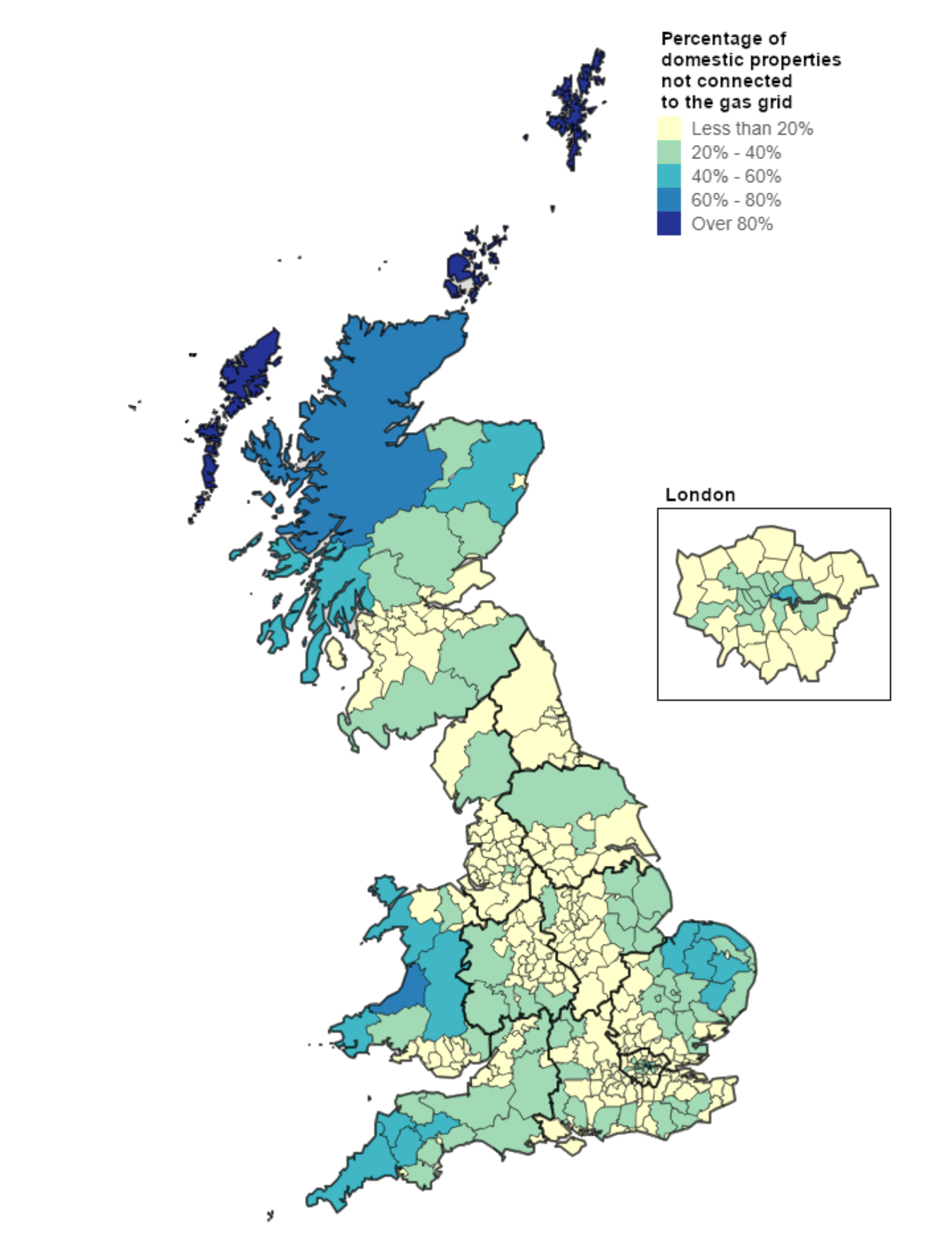
Map 3 shows how the proportion of domestic properties not connected to the gas grid varies geographically at the level of individual local authorities in Great Britain in 2024. There is no mains gas network in the Shetland Islands and the Orkney Islands north of mainland Scotland, nor the Isles of Scilly off the coast of Cornwall (all properties are therefore off the gas grid). Na h-Eileanan Siar (the Western Isles of Scotland) has the next highest proportion of domestic properties not connected to the gas grid (89 per cent in 2024).
Map 3: Percentage of domestic properties not connected to the gas grid, by local authority, Great Britain, 2024
5. Comparisons with other sources
The data within this publication provides geographical breakdowns of electricity and gas consumption in Great Britain (GB). DESNZ also publishes similar subnational statistics by local government districts for Northern Ireland (NI) for both electricity and gas. Collectively, these statistics are ‘bottom up’ estimates produced from meter level consumption data and are primarily used to provide geographical breakdowns of electricity and gas consumption.
DESNZ also publishes ‘top-down’ estimates of total UK consumption in Energy Trends, for both electricity (see ET 5.2) and gas (see ET 1.3)[footnote 11], based on aggregate figures provided by energy suppliers. Energy Trends provides detailed sectoral breakdowns of consumption, rather than geographical breakdowns. Despite the differences in the data sources used, the UK-wide consumption timeseries from Energy Trends is broadly consistent with the subnational statistics in this publication, as shown in Tables 7.1 and 7.2. However, users that are seeking the most accurate estimate of UK-wide consumption should take this from Energy Trends and instead use these subnational estimates for lower level geographical breakdowns.
Table 7.1: Total electricity consumption (GWh), non-weather-corrected, 2015 – 2024, Subnational (‘bottom-up’) estimates compared to Energy Trends (‘top-down’) estimates
| Year | Subnational: GB | Subnational: NI | Subnational: GB + NI | Energy Trends: UK |
|---|---|---|---|---|
| 2015 | 287,528 | 7,717 | 295,246 | 303,480 |
| 2016 | 277,578 | 7,709 | 285,287 | 304,033 |
| 2017 | 279,646 | 7,786 | 287,433 | 299,328 |
| 2018 | 276,919 | 7,684 | 284,603 | 300,364 |
| 2019 | 272,504 | 7,585 | 280,089 | 297,141 |
| 2020 | 257,100 | 7,296 | 264,395 | 279,556 |
| 2021 | 258,627 | 7,506 | 266,133 | 285,228 |
| 2022 | 249,762 | 7,222 | 256,984 | 271,786 |
| 2023 | 248,880 | 7,141 | 256,022 | 270,169 |
| 2024 | 249,248 | 7,182 | 256,430 | 272,356 |
| Average | 265,779 | 7,483 | 273,262 | 288,344 |
Table 7.2: Total gas consumption (GWh), weather corrected, 2015 – 2024, Subnational (‘bottom-up’) estimates compared to Energy Trends (‘top-down’) estimates
| Year | Subnational: GB | Subnational: NI | Subnational: GB + NI | Energy Trends: UK |
|---|---|---|---|---|
| 2015 | 488,387 | 5,924 | 494,311 | 498,354 |
| 2016 | 485,008 | 5,827 | 490,835 | 497,908 |
| 2017 | 499,706 | 6,562 | 506,268 | 512,662 |
| 2018 | 501,877 | 6,273 | 508,149 | 507,392 |
| 2019 | 500,242 | 7,074 | 507,316 | 499,702 |
| 2020 | 512,311 | 7,576 | 519,888 | 514,908 |
| 2021 | 495,761 | 7,248 | 503,008 | 505,048 |
| 2022 | 447,983 | 6,797 | 454,780 | 444,149 |
| 2023 | 444,407 | 6,924 | 451,332 | 455,320 |
| 2024 | 438,005 | 7,029 | 445,034 | 451,354 |
| Average | 481,369 | 6,723 | 488,092 | 488,680 |
5.1 Electricity
While there are some differences in estimates of electricity consumption between the two sources (with Subnational giving an average of 5 per cent less annual total electricity consumption than Energy Trends between 2015 and 2024), the broad trend is reasonably well aligned (as shown in Chart 18). One reason for the absolute difference in totals is that Energy Trends includes electricity that is generated and consumed on-site, which is excluded from Subnational estimates.
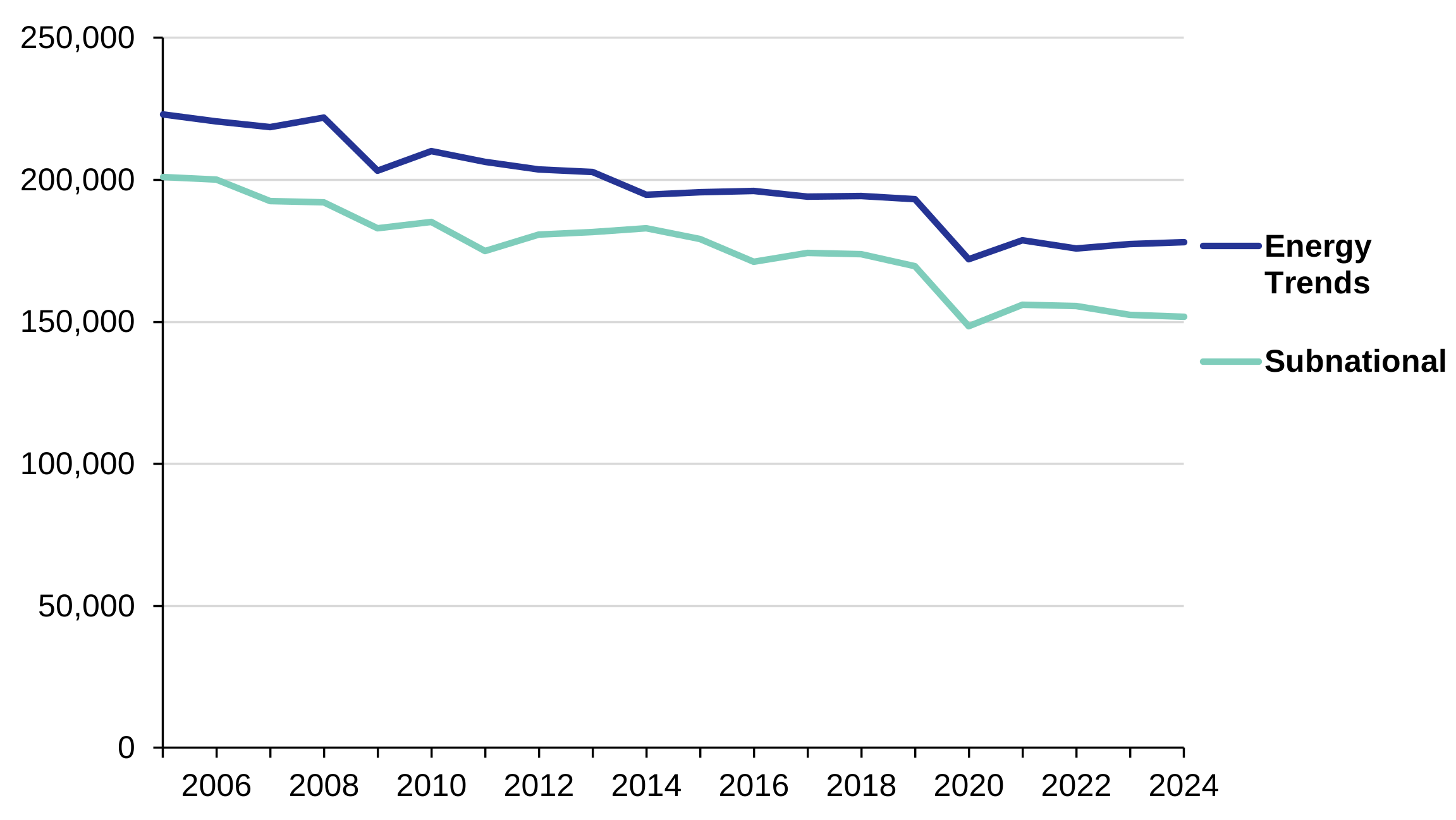
Charts 18-20 compare the trends in total consumption, total domestic consumption and total non-domestic consumption between the subnational estimates in this publication (GB) and the Energy Trends (UK) estimates. On this basis the changes in total consumption between 2005 and 2024 are:
- For total electricity consumption, Subnational (GB) estimates show a 22.2 per cent decrease compared to a 21.9 per cent decrease in Energy Trends
- For total domestic electricity consumption, Subnational (GB) estimates show a 18.4 per cent decrease compared to a 24.9 per cent decrease in Energy Trends
- For total non-domestic electricity consumption Subnational (GB) estimates show a 24.5 per cent decrease compared to 20.2 per cent decrease in Energy Trends
Chart 18: Total annual electricity consumption (GWh), non-weather-corrected, 2005 to 2024, Subnational (GB) compared with Energy Trends (UK)
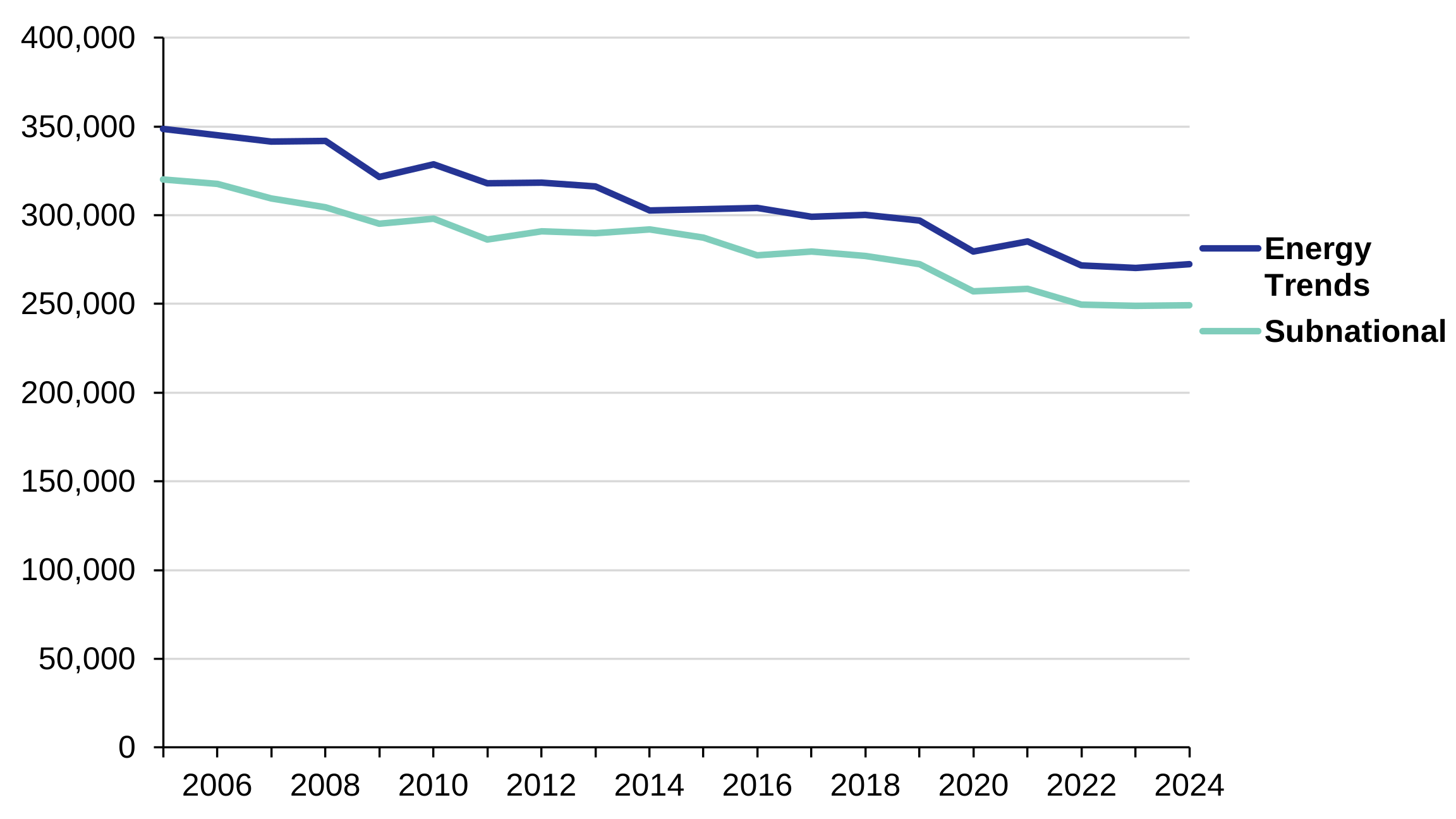
Chart 19: Total annual domestic electricity consumption (GWh), non-weather-corrected, 2005 to 2024, Subnational (GB) compared with Energy Trends (UK)
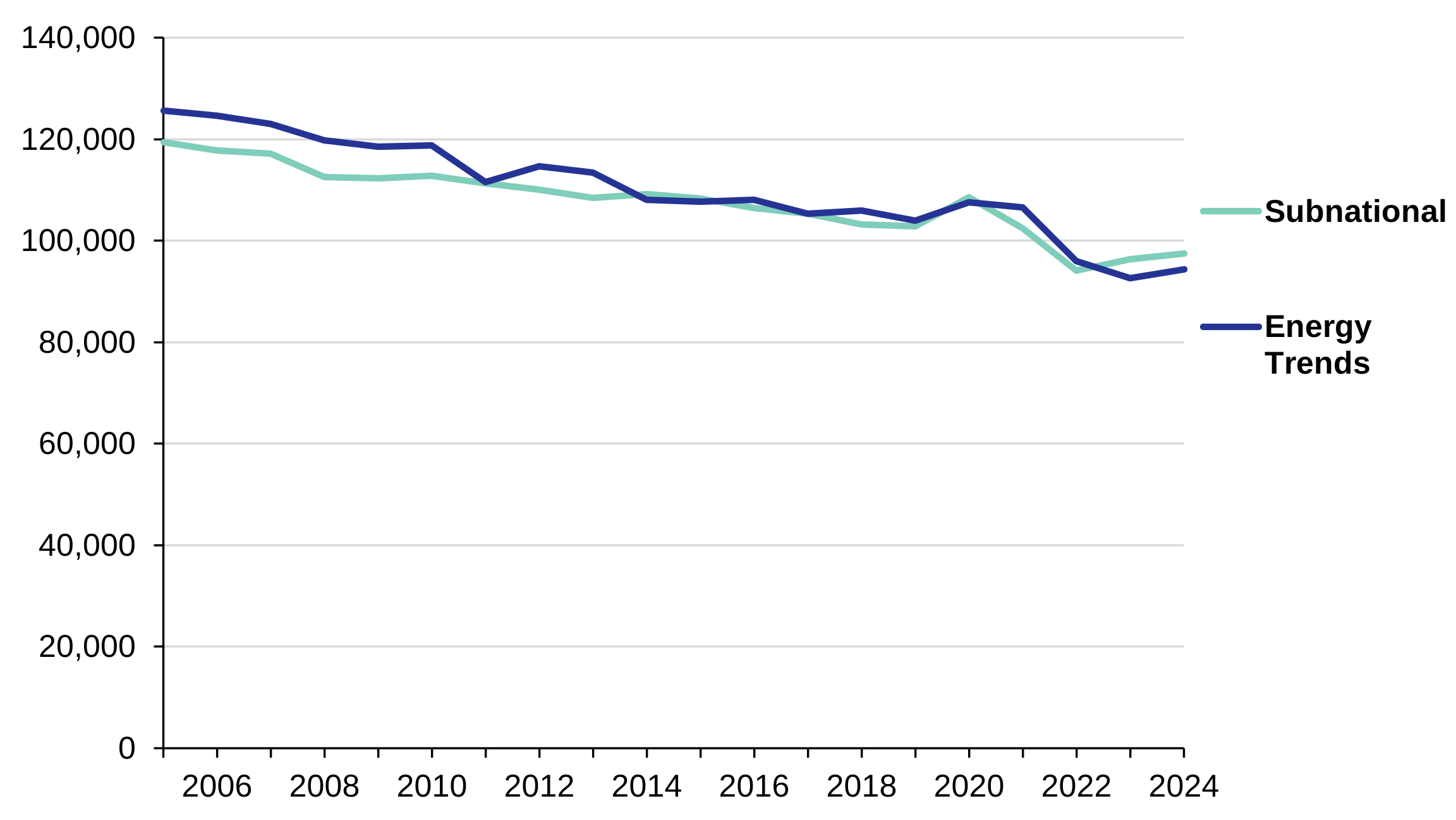
Chart 20: Total annual non-domestic electricity consumption (GWh), non-weather-corrected 2005 to 2024, Subnational (GB) compared with Energy Trends (UK)
5.2 Gas
While there are some differences in estimated gas consumption between the two sources (with Subnational giving an average of 0.1 per cent less annual total gas consumption than Energy Trends between 2015 and 2024), the longer-term trends tend to be closely aligned (as shown in Chart 21). One reason for this difference is that gas used for transformation and energy industry is not included in the final consumption estimates from Energy Trends, but some of this is included in Subnational estimates. In addition, as outlined below, slightly different time periods are being compared.
Charts 21-23 present weather corrected gas consumption from Subnational (GB) and Energy Trends (UK) with gas years (for example: 2024 = mid-May 2024 to mid-May 2025) used for the former and July to June (calculated from the quarterly estimates) used for the latter (e.g. 2024 = July 2024 to June 2025)[footnote 12]. On this basis the changes in total consumption between 2005 and 2024 are:
- For total gas consumption, Subnational (GB) estimates show a 34.4 per cent decrease compared to a 33.6 per cent decrease in Energy Trends
- For total domestic gas consumption, Subnational (GB) estimates show a 31.7 per cent decrease compared to a 35.4 per cent decrease in Energy Trends
- For total non-domestic gas consumption Subnational (GB) estimates show a 38.7 per cent decrease compared to 30.7 per cent decrease in Energy Trends
Chart 21: Total annual gas consumption (GWh), weather corrected, 2005 to 2024, Subnational (GB) compared with Energy Trends (UK)
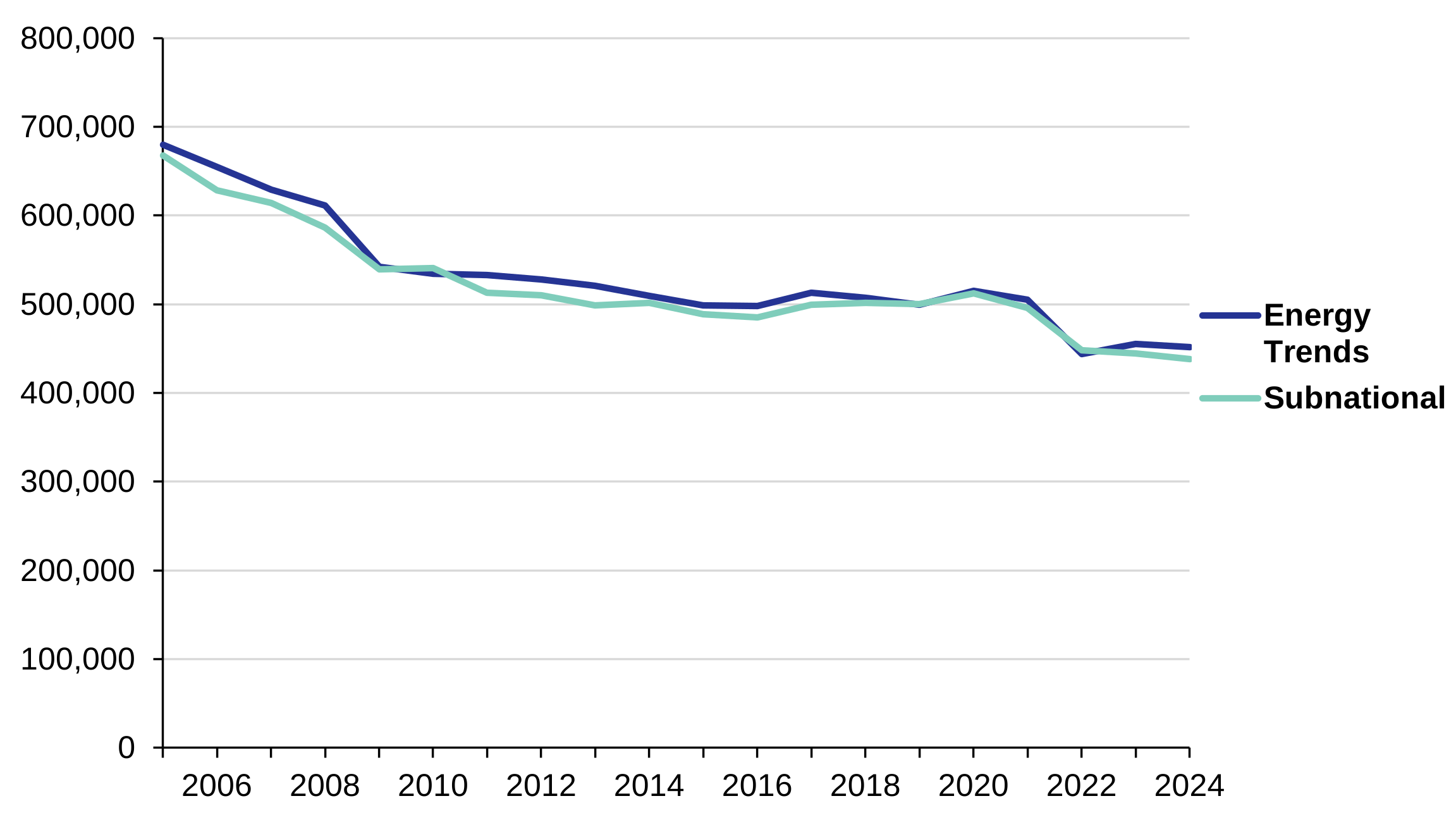
Chart 22: Total annual domestic gas consumption (GWh), weather corrected, 2005 to 2024, Subnational (GB) compared with Energy Trends (UK)
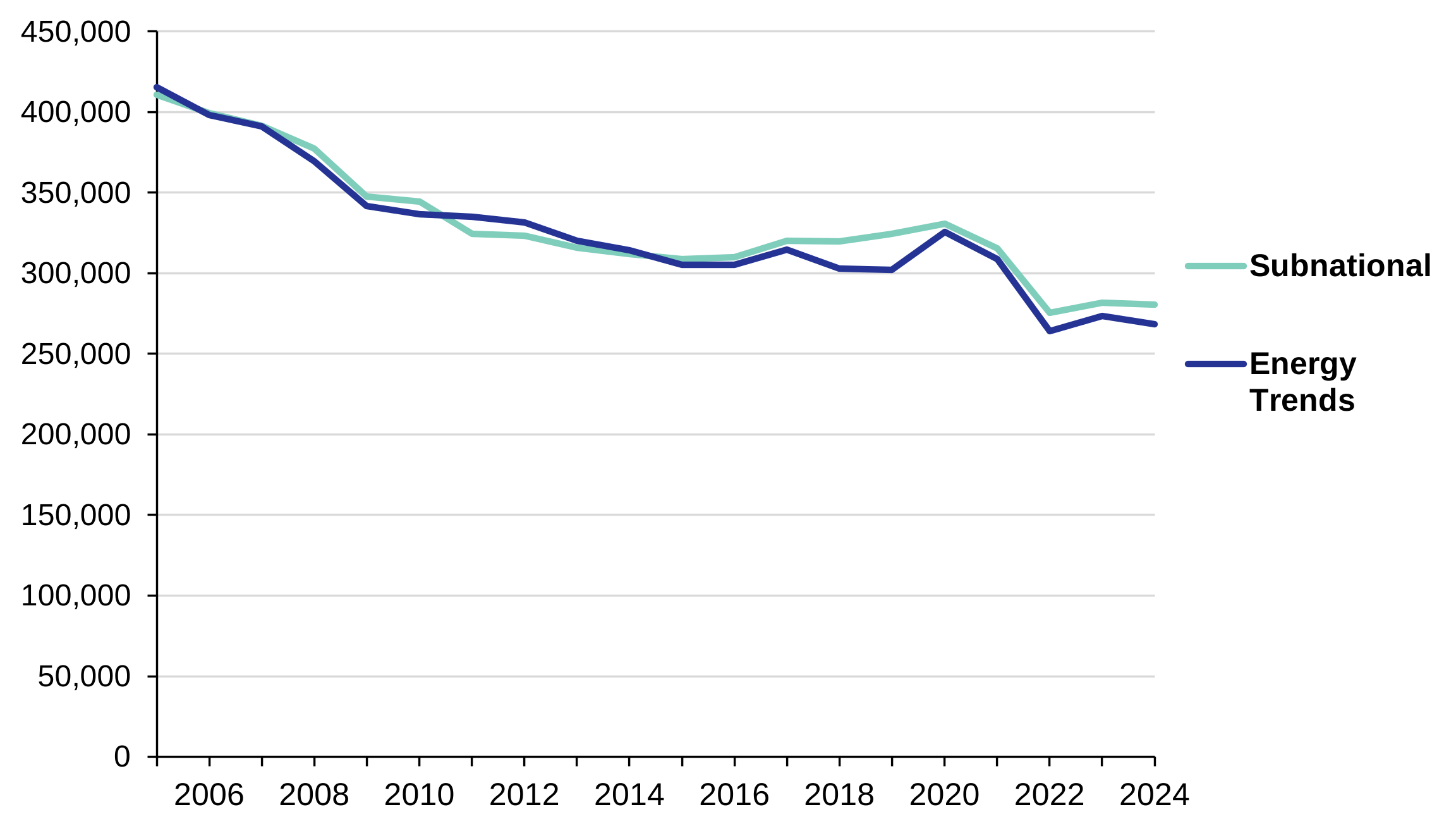
Chart 23: Total annual non-domestic gas consumption (GWh), weather corrected, 2005 to 2024, Subnational (GB) compared with Energy Trends (UK)

For gas, an additional factor to consider, is the methodology within Subnational (GB) used to classify meters as either being domestic or non-domestic. Those consuming meters with a consumption less than the industry cut-off of 73,200 kWh, are classified as domestic, with all other consuming meters classified as non-domestic, for the given year. This means that meters can switch between the two categories which distorts year on-year changes. This has much less of an impact on domestic consumption as, with the vast majority of gas meters being domestic, the consumption from meters switching classifications makes up a much smaller proportion of total domestic gas consumption in any given year.
Additionally, many low gas consuming meters which are in reality non-domestic meters, and consistently consume less than 73,200 kWh, will consistently be classified as domestic in Subnational (GB), having some effect on the domestic trends observed over the longer term.
Accompanying tables
The following electricity consumption tables accompany this publication:
- Regional and local authority electricity consumption (domestic and non-domestic)
- Middle Layer Super Output Areas electricity consumption (domestic and non-domestic)
- Lower Layer Super Output Areas electricity consumption (domestic)
- Stacked electricity consumption data (domestic and non-domestic)
- Postcode level electricity consumption (domestic).
The following gas consumption tables accompany this publication:
- Regional and local authority gas consumption (domestic and non-domestic)
- Middle Layer Super Output Areas gas consumption (domestic and non-domestic)
- Lower Layer Super Output Areas gas consumption (domestic)
- Stacked gas consumption data (domestic and non-domestic)
- Postcode level gas consumption (domestic).
The following estimates of domestic properties not connected to the gas grid tables accompany this publication:
- Regional and local authority estimates of domestic properties not connected to the gas grid
- Parliamentary constituency estimates of domestic properties not connected to the gas grid
- Middle Layer Super Output Area estimates of domestic properties not connected to the gas grid
- Lower Layer Super Output Area estimates of domestic properties not connected to the gas grid.
Technical information
For full details on the methodology, assumptions and data interpretation relating to these statistics, please refer to the methodology and guidance note. Users are highly advised to familiarise themselves with the material in the methodology note before using the data.
Related statistics
Comparison between subnational electricity and gas data
Subnational electricity and gas consumption statistics use varying methodologies to compile the datasets and cover different time periods. A key difference to bear in mind is that electricity consumption data are not weather corrected while gas consumption data have a weather correction factor applied to them. Despite these differences, the combined electricity and gas figures provide a good indication of overall annual household energy consumption in Great Britain at local authority, MSOA/IZ and LSOA/DZ level.
Comparison to Energy Trends and DUKES
Energy Trends and the Digest of United Kingdom Energy Statistics (DUKES) provide a detailed and comprehensive picture of energy production and use, with extensive tables, charts and commentary covering all the major aspects of energy.
There are differences in reported electricity and gas figures in the subnational and Energy Trends/DUKES publications as Energy Trends/DUKES data:
- Are based on different time periods – Energy Trends is quarterly, and DUKES is aligned to calendar years. Subnational electricity estimates cover the calendar year for half-hourly data, but an annual period starting on 31 January for non-half hourly data (see section 2 for details). The subnational gas year starts in mid-May (see section 3 for details).
- Covers consumption for the United Kingdom, whereas the subnational consumption statistics presented in this statistical release cover Great Britain.
- Are compiled using a top-down approach, where statistics are gathered by energy companies on a national level, whereas subnational datasets are created from aggregating the consumption figures for individual electricity and gas meters.
- Include electricity consumption from Central Volume Allocation (CVA) users and electricity generated and consumed onsite in its totals, which are not included in the subnational data.
- Include gas consumption from large power stations in its totals, which are not included in subnational data.
Comparison to ECUK
Energy Consumption in the UK (ECUK) is an annual DESNZ publication which includes a detailed overview of energy consumption at a UK-wide level.
Differences occur between ECUK and subnational figures as data in ECUK are, in many cases, modelled and obtained from secondary analysis performed by DESNZ on data from several sources, including DUKES. ECUK contains a more comprehensive sector split than subnational statistics and gives information on end use for majority of fuels. ECUK estimates cover the calendar year, whereas Subnational estimates use different time periods (see Energy Trends/DUKES section above for details).
Further information
Future updates to these statistics
Great Britain:
The next publication of subnational electricity and gas data will be in December 2026 when 2025 data will be available.
Northern Ireland:
The next publication of Northern Ireland electricity and gas data will be in December 2026 when 2025 data will be available.
Revisions policy
The DESNZ statistical revisions policy sets out the revisions policy for these statistics, which has been developed in accordance with the UK Statistics Authority Code of Practice for Statistics.
Uses of these statistics
The most significant use of the subnational consumption data is by local authorities and devolved administrations for targeting and monitoring a range of carbon reduction and energy efficiency policies. For example, they have told us they use these statistics to:
- identify areas with high consumption to identify reasons and target measures.
- enable more effective deployment of renewable energy schemes by knowing where energy is consumed.
- estimate the proportion of energy reduced or replaced through local sustainable energy projects.
- help identify areas off the gas grid.
- establish a baseline consumption figure to set targets for reduction.
- enable more efficient targeting of investments and interventions.
- help in planning to improve the energy efficiency of homes.
Other external users include academics and members of industry who use the data for a variety of purposes. Most commonly, data has been used to examine trends over time or assess the effectiveness of energy efficiency initiatives.
Internally, data are used by DESNZ policy colleagues and other analysts within the department to inform policy development and help with monitoring and evaluation of DESNZ policies. The meter point gas and electricity data collected for subnational consumption outputs are also the most important input for the National Energy Efficiency Data-Framework (NEED). They also form the basis of responses to parliamentary questions and general enquiries.
User engagement
Users are encouraged to provide comments and feedback on how these statistics are used and how well they meet user needs. Comments on any issues relating to this statistical release are welcomed and should be sent to the energyefficiency.stats@energysecurity.gov.uk.
The DESNZ statement on statistical public engagement and data standards sets out the department’s commitments on public engagement and data standards as outlined by the Code of Practice for Statistics.
Official Statistics designation
Accredited Official Statistics status means that our statistics meet the highest standards of trustworthiness, quality and public value, and it is our responsibility to maintain compliance with these standards.
The continued designation of these statistics as Accredited Official Statistics was confirmed in September 2018 following a compliance check by the Office for Statistics Regulation. The statistics last underwent a full assessment in 2014.
Pre-release access to statistics
Some ministers and officials receive access to these statistics up to 24 hours before release. Details of the arrangements for doing this and a list of the ministers and officials that receive pre-release access to these statistics can be found in the DESNZ statement of compliance with the Pre-Release Access to Official Statistics Order 2008.
Contact
Responsible statisticians: Hiten Shah and Paulina Baig
Email: energyefficiency.stats@energysecurity.gov.uk
Media enquiries: 020 7215 1000
-
The current gas year of 2024 covers the period of mid-May 2024 to mid-May 2025. See “Gas statistics: Background information” for more detail. The electricity year is more closely aligned with the calendar year. ↩
-
A region refers to areas previously known as Government Office Regions (GORs), which were the primary statistical subdivision of England in which the Government Offices for the region fulfilled their role. They closed on 31 March 2011 and have remained a static geography used for statistical reporting since then. Further information is available in section 1.3 of the Subnational methodology and guidance note. ↩
-
Through the Office for National Statistics, Welsh Government and Scottish Government statistics there are an estimated 28.2 million households in Great Britain. Household estimates for the year 2024 were not available for Wales at time of publication, therefore for each local authority in Wales, figures for the year 2024 were derived by applying growth factors to the number of households in 2023. The growth factors used were the average growth rates in the number of households between 2021 and 2023. ↩
-
Electricity consumption from data centres is also referenced in the Non-domestic NEED report 2025 (page 50). ↩
-
Source: Energy Consumption in the UK 2025, End uses data tables, Table U1. ↩
-
For those properties with no gas meter present, 53 per cent use electricity as their main fuel type. Among properties with mains gas, 1 per cent use electricity as their main fuel type. Source: English Housing Survey 2017/18, annex table 3.5. ↩
-
Further information on the non-domestic building stock and non-domestic building energy consumption in England and Wales can be found in the Non-Domestic National Energy Efficiency Data-Framework. ↩
-
The lower mean/median estimates prior to the time series break in 2015 reflect the fact that non-consuming meters were included in the estimates for these earlier years. ↩
-
Source: Energy Consumption in the UK 2025, End uses data tables, Table U2. ↩
-
Minor change to figures made on 19th December. ↩
-
Table 1.3 Seasonally adjusted and temperature corrected final energy consumption, quarterly data. ↩
-
In Subnational, pre 2016, the gas year was October to September, the same periods have been used from Energy Trends (Q4 to Q3). Using 2015 as an example, the Subnational gas year was October 2014 to September 2015, the Energy Trends period used as a comparison was therefore Q4 2014 to Q3 2015. ↩