Quarterly service personnel statistics: 1 January 2026
Updated 23 September 2026

© Crown copyright 2026
This publication is licensed under the terms of the Open Government Licence v3.0 except where otherwise stated. To view this licence, visit nationalarchives.gov.uk/doc/open-government-licence/version/3 or write to the Information Policy Team, The National Archives, Kew, London TW9 4DU, or email: psi@nationalarchives.gov.uk.
Where we have identified any third party copyright information you will need to obtain permission from the copyright holders concerned.
This publication is available at https://www.gov.uk/government/statistics/quarterly-service-personnel-statistics-2026/quarterly-service-personnel-statistics-1-january-2026
This publication provides information on the number of military personnel (defined as the Strength), joining (Intake) and leaving (Outflow) the UK Armed Forces. Detail is provided for both the Full-Time UK Regular Armed Forces (AF) and Reserves.
Further statistics can be found in the Excel tables which accompany this report. The historic trends in Reserve personnel numbers in this report relate to the targets outlined in the Future Reserves 2020 (FR20) programme.
1. Key Points and Trends
| ▲182,050 |
Strength of UK Armed Forces Service personnel at 1 January 2026, an increase of 1,270 (1 per cent) since 1 January 2025. |
|---|---|
| ▼126,440 |
Full-Time Trained Strength (RN/RM and RAF) and Full-Time Trade Trained Strength (Army) at 1 January 2026, a decrease of 600 (0.5 per cent) since 1 January 2025. |
| ▲14,340 |
People joined the UK Regular Armed Forces in the past 12 months (1 January 2025 - 31 December 2025), an increase of 1,500 (12 per cent) compared with the previous 12 month period. |
| ▼13,500 |
People left the UK Regular Armed Forces in the past 12 months (1 January 2025 - 31 December 2025), a decrease of 1,320 (9 per cent) compared with the previous 12 month period. |
| ▼29,060 |
Strength of the Trained Future Reserves 2020 at 1 January 2026, a decrease of 200 (1 per cent) since 1 January 2025. |
| ▲4,060 |
People joined the Future Reserves 2020 in the past 12 months (1 January 2025 - 31 December 2025), an increase of 380 (10 per cent) compared with the previous 12 month period. |
| ▼4,010 |
People left the Future Reserves 2020 in the past 12 months (1 January 2025 - 31 December 2025), a decrease of 270 (6 per cent) compared with the previous 12 month period. |
Responsible Statistician: Tri-Service Head of Branch
Email: Analysis-Tri-Hd@mod.gov.uk
2. Introduction
This publication contains information on the Strength, Intake, Outflow and Gains to Trained Strength (GTS) for the UK Armed Forces, both overall and for each of the Services; Royal Navy/Royal Marines (RN/RM), Army and Royal Air Force (RAF).
Detailed statistics, including unrounded figures, and historic time series can be found in the Excel tables which accompany this report. These include quarterly statistics on the number of Service and civilian personnel, Separated Service (the proportion of personnel breaching harmony guidelines), Applications to each of the Services, and military salaries. Historic statistics can be found in the following archived publications:
- Monthly personnel report
- Quarterly personnel report
- Annual personnel report
- UK Reserve Forces and Cadets
- Service personnel bulletin 2.01
- Service and civilian bulletin 2.03
- UK Armed Forces maternity report
- Diversity Dashboard
- Quarterly location statistics
The glossary contains definitions of terminology used in this publication.
A calendar of upcoming Ministry of Defence (MOD) statistical releases can be found on GOV.UK.
3. UK Service personnel
Strength is the number of personnel.
UK Regulars are Full-Time Service personnel, including Nursing Services, excluding Full-Time Reserve Service (FTRS) personnel, Gurkhas, mobilised Reservists, Military Provost Guarding Service (MPGS), Locally Engaged Personnel (LEP), and Non Regular Permanent Service (NRPS).
Volunteer Reserves voluntarily accept an annual training commitment and are liable to be mobilised to deploy on operations. They can be utilised on a part-time or full-time basis to provide support to the UK Regular Forces at home and overseas.
UK Service personnel are the total Strength of the military personnel employed by the Ministry of Defence (Excel table, Table 1). The current Strength (at 1 January 2026) of the UK Armed Forces is 182,050 which includes:
- All UK Regular personnel and all Gurkha personnel (77.5 per cent of UK Service personnel);
- Volunteer Reserve personnel (17.6 per cent of UK Service personnel);
- Other Personnel including the Serving Regular Reserve, Sponsored Reserve, Military Provost Guard Service, Locally Engaged Personnel and elements of the Full-Time Reserve Service (4.9 per cent of UK Service personnel).
The total Strength of the UK Armed Forces1 has increased between 1 January 2025 and 1 January 2026 by 0.7 per cent (1,270 personnel), as shown in Table 1. Since 1 January 2025, the total Strength of the UK Regular Forces, Gurkhas, and Other Personnel have all increased.
Table 1: Trends in UK Armed Forces Strength1
| 01-Jan-23 | 01-Jan-24 | 01-Jan-25 | 01-Jul-25 | 01-Oct-25 | 01-Jan-26 | % Change since 1 Jan 25 | |
|---|---|---|---|---|---|---|---|
| UK Forces personnel | 190,170 | 183,130 | 180,780 | 180,780 | 182,060 | 182,050 | 0.7% |
| UK Regular Forces | 143,560 | 138,100 | 136,120 | 136,030 | 137,100 | 136,960 | 0.6% |
| Gurkhas | 4,060 | 4,060 | 4,130 | 4,280 | 4,230 | 4,190 | 1.4% |
| Volunteer Reserve | 34,280 | 32,580 | 31,970 | 31,780 | 31,940 | 32,030 | 0.2% |
| Other Personnel | 8,260 | 8,390 | 8,570 | 8,690 | 8,790 | 8,880 | 3.7% |
| Royal Navy / Royal Marines | 38,990 | 37,730 | 37,600 | 37,680 | 37,880 | 38,130 | 1.4% |
| UK Regular Forces | 33,010 | 31,910 | 31,910 | 31,990 | 32,160 | 32,380 | 1.5% |
| Volunteer Reserve | 3,540 | 3,310 | 3,220 | 3,170 | 3,210 | 3,200 | -0.7% |
| Other Personnel | 2,440 | 2,510 | 2,480 | 2,520 | 2,520 | 2,560 | 3.1% |
| Army | 114,210 | 110,030 | 108,410 | 108,180 | 109,060 | 108,620 | 0.2% |
| UK Regular Forces | 78,060 | 75,170 | 73,850 | 73,490 | 74,270 | 73,790 | -0.1% |
| Gurkhas | 4,060 | 4,060 | 4,130 | 4,280 | 4,230 | 4,190 | 1.4% |
| Volunteer Reserve | 27,570 | 26,240 | 25,740 | 25,640 | 25,710 | 25,770 | 0.1% |
| Other Personnel | 4,520 | 4,560 | 4,700 | 4,760 | 4,840 | 4,870 | 3.7% |
| Royal Air Force | 36,970 | 35,380 | 34,760 | 34,920 | 35,130 | 35,300 | 1.5% |
| UK Regular Forces | 32,490 | 31,020 | 30,360 | 30,550 | 30,670 | 30,790 | 1.4% |
| Volunteer Reserve | 3,180 | 3,030 | 3,010 | 2,960 | 3,020 | 3,060 | 1.6% |
| Other Personnel | 1,300 | 1,320 | 1,390 | 1,410 | 1,430 | 1,460 | 4.5% |
- UK Armed Forces are all UK Regular, Gurkha, Volunteer Reserve, and Other Personnel. The constituents of “Other Personnel” are reported towards the top of this page.
4. Full-Time Trained Strength (RN/RM and RAF) and Full-Time Trade Trained Strength (Army)
The FTTS and FTTTS total has decreased between 1 January 2025 and 1 January 2026 by 0.5 per cent (600 personnel). The RN/RM has increased by 0.2 per cent, whilst the Army and RAF decreased by 0.7, and 0.5 per cent, respectively, as shown in Table 2.
Table 2: FTTS and FTTTS
| 01-Jan-23 | 01-Jan-24 | 01-Jan-25 | 01-Jul-25 | 01-Oct-25 | 01-Jan-26 | % Change since 1 Jan 25 | |
|---|---|---|---|---|---|---|---|
| Total | 134,530 | 130,660 | 127,040 | 126,180 | 125,680 | 126,440 | -0.5% |
| RN/RM (FTTS) | 29,410 | 28,920 | 28,080 | 27,950 | 27,820 | 28,140 | 0.2% |
| Army (FTTTS) | 75,710 | 73,190 | 71,150 | 70,640 | 70,300 | 70,630 | -0.7% |
| RAF(FTTS) | 29,410 | 28,550 | 27,800 | 27,590 | 27,560 | 27,670 | -0.5% |
FTTS and FTTTS includes all UK Regular personnel, Gurkhas, and the relevant elements of the Full-Time Reserve Service (FTRS) (see glossary for more details).
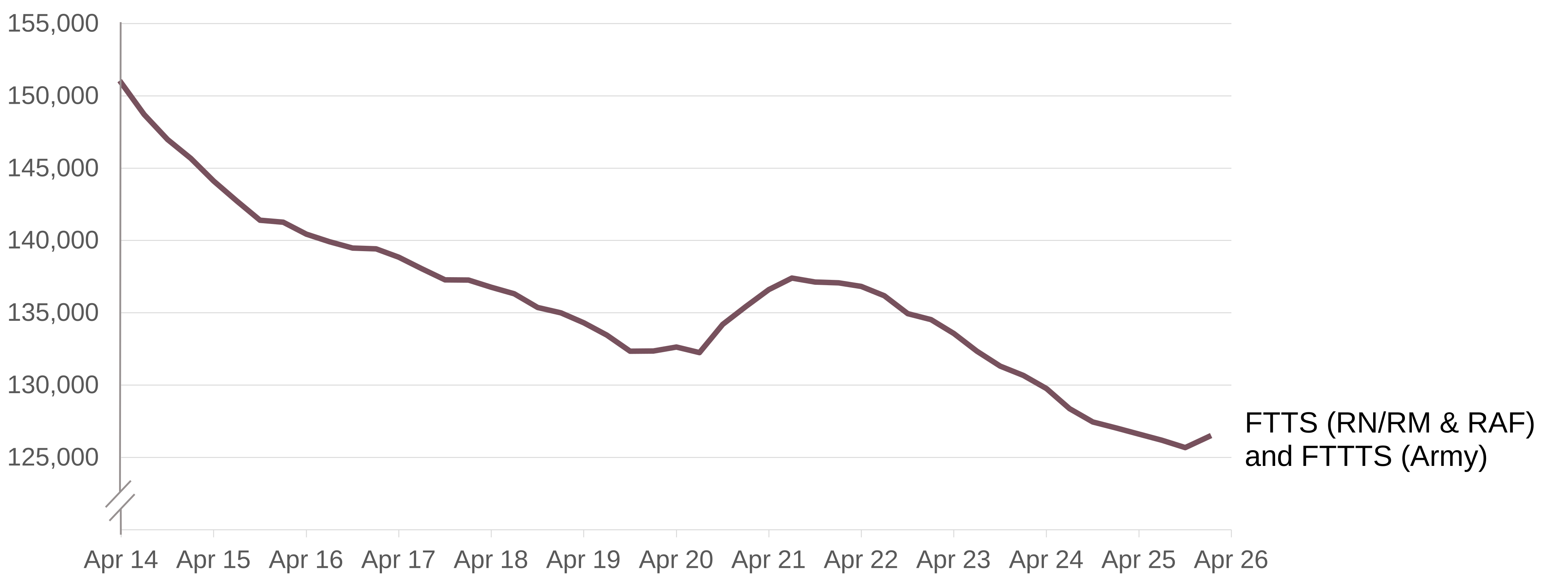
Full Time Trained/Trade Trained Strength has increased since 1 October 2025, although the long-term trend is still one of decline, other than an increase between 2019 and 2021.
Figure 1: Full-Time Trained (RN/RM and RAF) and Trade Trained (Army) Strength, April 2014 to January 2026
5. Full-Time Trained Strength (FTTS) and Full-Time Trade Trained Strength (FTTTS) - Army
Table 3: Comparison FTTS and FTTTS (Army)
| 01-Jan-25 | 01-Apr-25 | 01-Jul-25 | 01-Oct-25 | 01-Jan-26 | |
|---|---|---|---|---|---|
| Full-Time Trained Strength | 75,040 | 74,910 | 74,750 | 75,080 | 75,090 |
| of which Trade Trained | 71,150 | 70,860 | 70,640 | 70,300 | 70,630 |
Figure 2: FTTS and FTTTS in the Army since Trained Strength definition change in October 16
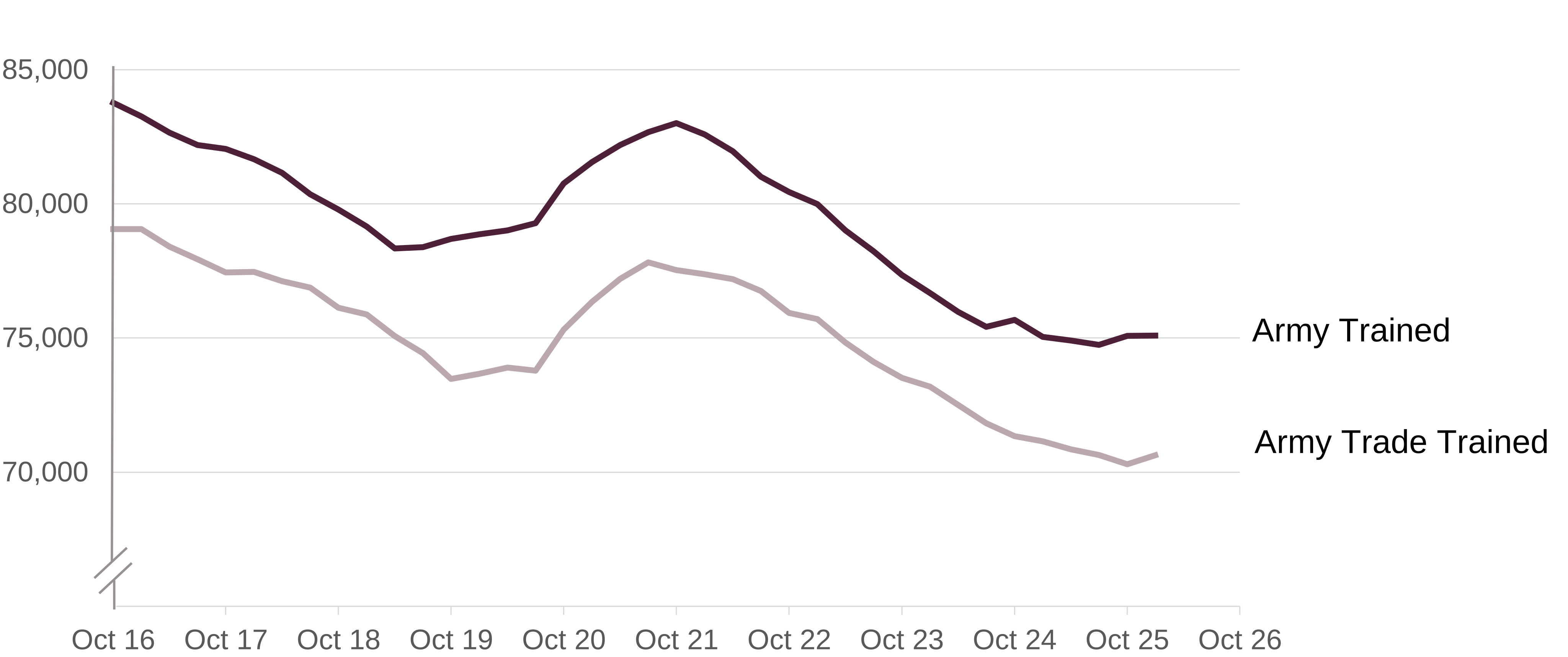
As can be seen from Figure 2 above, both Army FTTS and Army FTTTS saw an increase between 1 April 2019 and 1 October 2021, however, both have gradually decreased since. At 1 January 2026, whilst the Army FTTS is higher by 0.1 per cent, the Army FTTTS is lower by 0.7 per cent, than at 1 January 2025.
Table 4: Army Officers and Other Ranks by Training Status
| 01-Jan-23 | 01-Jan-24 | 01-Jan-25 | 01-Jul-25 | 01-Oct-25 | 01-Jan-26 | |
|---|---|---|---|---|---|---|
| Trained Officers | 12,840 | 12,490 | 12,250 | 12,220 | 12,260 | 12,300 |
| Trade Trained Officers | 12,450 | 12,200 | 11,940 | 11,960 | 11,900 | 11,940 |
| Trained Other Ranks | 67,160 | 64,180 | 62,800 | 62,530 | 62,820 | 62,790 |
| Trade Trained Other Ranks | 63,260 | 60,980 | 59,210 | 58,680 | 58,400 | 58,690 |
Since 1 January 2025, the Army Full-Time Trained Officers Strength has increased by 0.4 per cent, whilst Other Ranks has remained stable. The Trade Trained Strength indicates a change from the long-term decline, with Officers remaining at the same level as 1 January 2025 and Other Ranks reducing slightly but at a lower rate than in the previous 12 months.
6. UK Regular personnel
At 1 January 2026, the Trained and Untrained Strength of the UK Regular Forces was 136,960. The Service split for this figure can be found in Table 5 below.
There are 10,720 Untrained personnel in the UK Regular Forces, of which 4,480 are in the RN/RM, 3,080 in the Army and 3,160 are in the RAF. The Untrained Strength reflects the number of personnel who can potentially join the Trained Strength.
Table 5: UK Regular Forces by Service and Training Status
| 01-Jan-25 | 01-Jan-26 | |||
|---|---|---|---|---|
| RN/RM | 31,910 | 32,380 | ||
| of which Trained | 27,840 | 87.2% | 27,890 | 86.2% |
| Army | 73,850 | 73,790 | ||
| of which Trained | 70,750 | 95.8% | 70,710 | 95.8% |
| of which Trade Trained | 67,110 | 90.9% | 66,460 | 90.1% |
| RAF | 30,360 | 30,790 | ||
| of which Trained | 27,750 | 91.4% | 27,630 | 89.7% |
6.1 Intake and Outflow
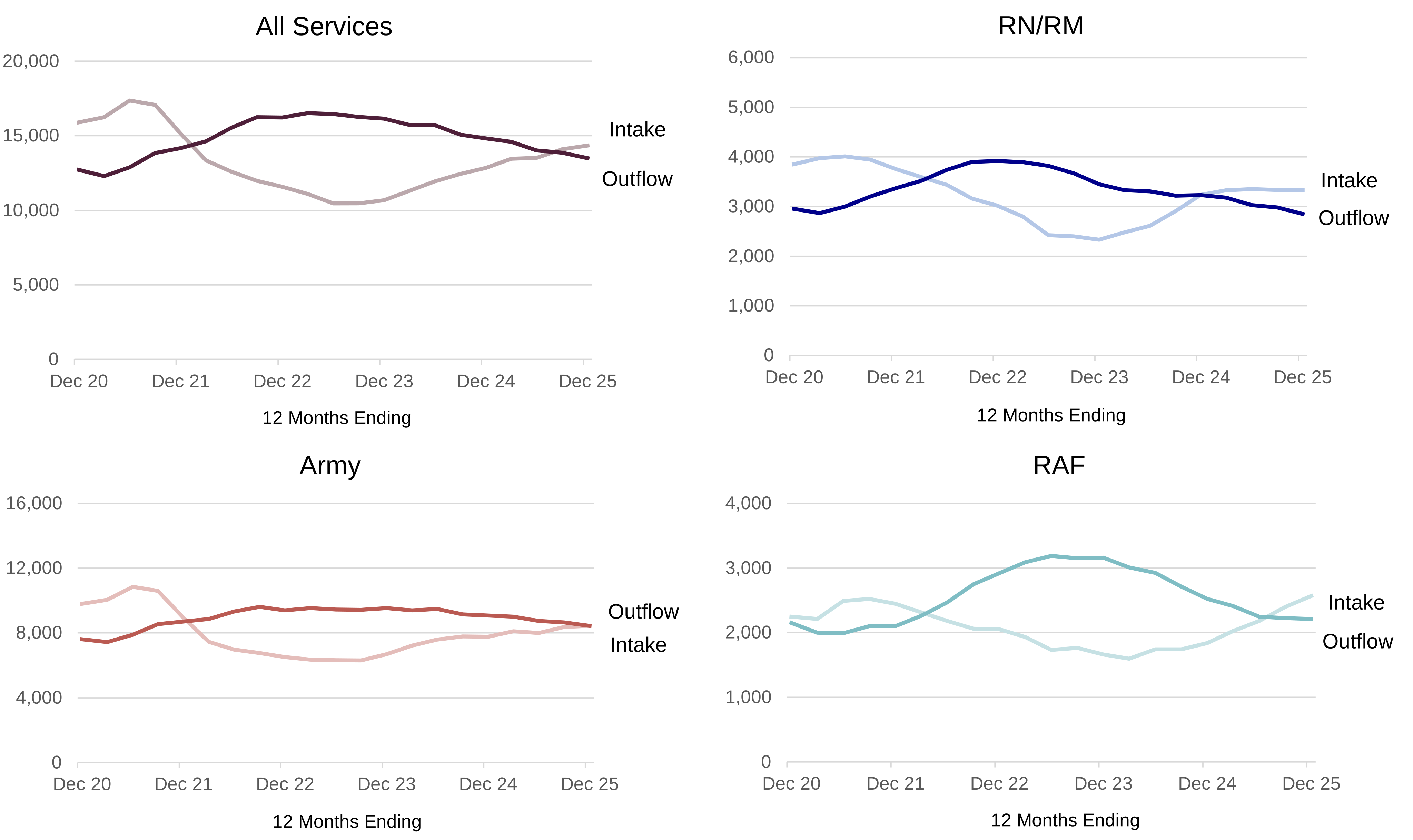
Intake has been greater than Outflow for the RN/RM since January 2025 and for the RAF since August 2025. For the Army, though Intake is still less than Outflow, the gap has been narrowing continuously since late 2023. Overall, growing Intake of the UK Regulars indicates stabilising levels in the UK Regular Strength. In the 12 months to 31 December 2025 Intake was higher than Outflow by 840 (compared to the 12 months to 31 December 2024, where Intake was lower than Outflow by 1,980). Outflow has decreased by 8.9 per cent and Intake has increased by 11.6 per cent since 31 December 2024.
6.2 Intake
- Total Intake (Untrained and Trained/Trade Trained) to the UK Regular Forces was 14,340 in the 12 months to 31 December 2025, compared to 12,850 in the 12 months to 31 December 2024.
- From the previous 12 months, this is an increase of 3.0, 8.6, and 39.6 per cent for the RN/RM, Army, and RAF, respectively.
Figure 3: Intake to and Outflow from the UK Regular Forces over rolling 12-month periods from 1 January 2021 - 31 December 2025
6.3 Outflow
Voluntary Outflow (VO) encompasses all Trained (RN/RM and RAF) and Trade Trained (Army) personnel who voluntarily exit before the end of their agreed engagement or commission period.
Time Expiry is a term used to describe those in the Armed Services who reach the end of their engagement or commission and then leave.
Other includes Outflow from the Trained (RN/RM and RAF) and Trade Trained (Army) Strength due to, amongst others, medical reasons, misconduct, compassionate, dismissals, and death.
VO Rate is the number of personnel voluntarily outflowing as a proportion of the average Trained Strength for the Outflow period.
-
Total Outflow (Untrained and Trained/Trade Trained) from the UK Regular Forces was 13,500 in the 12 months to 31 December 2025, down from 14,830 in the 12 months to 31 December 2024.
-
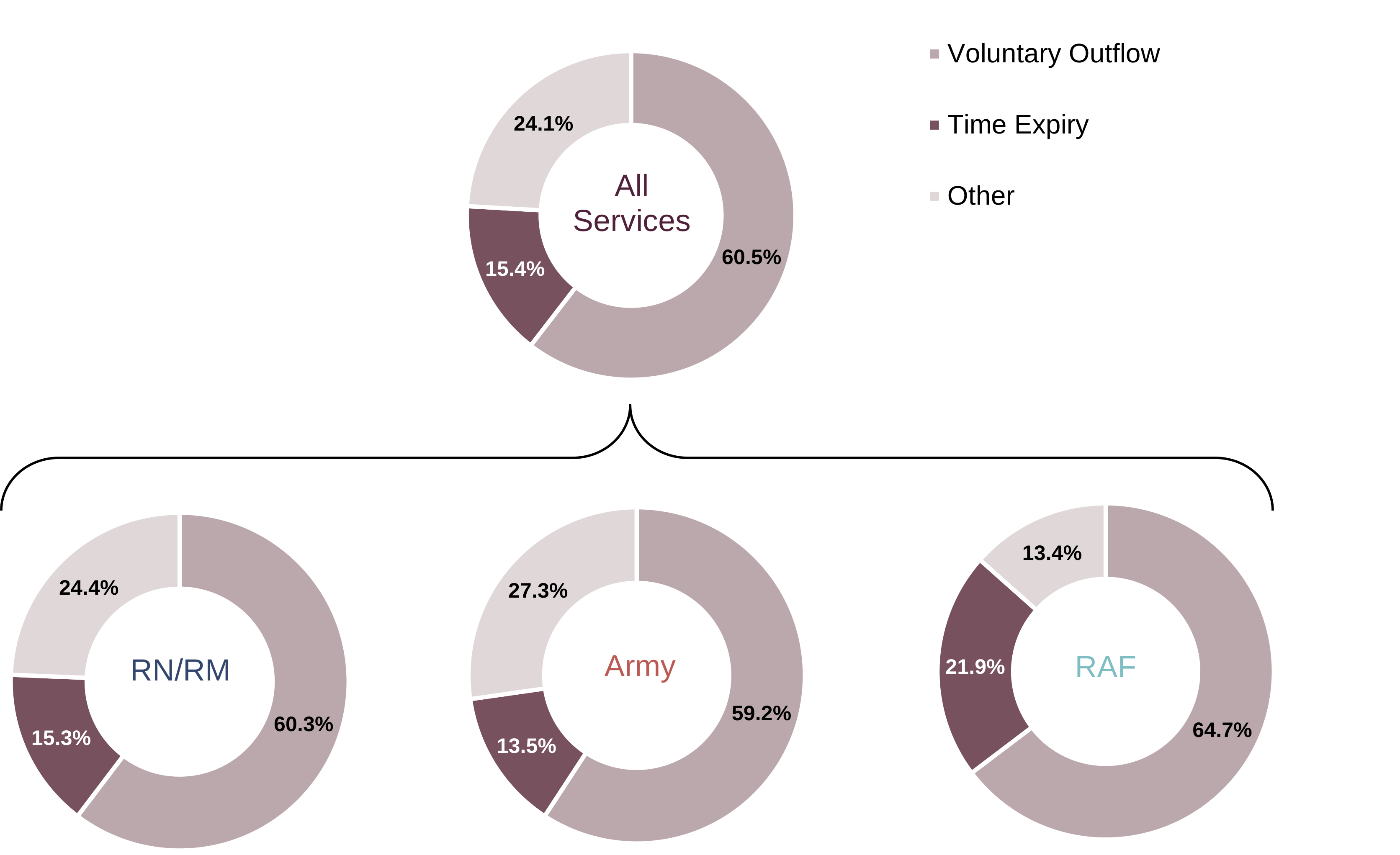
Across all Services, VO was the most common reason for Outflow from the Trained (RN/RM and RAF) and Trade Trained (Army), accounting for 60.5 per cent of Outflow in the 12 months to 31 December 2025 (See Figure 4).
-
In the 12 months to 31 December 2025, 6,330 personnel left through VO. The VO rate was 5.2 per cent. The VO Rate for the RN/RM was 5.1 per cent, for the Army it was 5.5 per cent, and for the RAF it was 4.4 per cent.
-
In the 12 months to 31 December 2025, the VO rate amongst Other Ranks and Officers was 5.4 per cent and 4.3 per cent, respectively.
There is no single reason why personnel leave on Voluntary Outflow, but the personnel who completed the Armed Forces Continuous Attitude Survey indicated reasons for leaving the Armed Forces included the impact of Service life on family and personal life and opportunities outside the UK Armed Forces.
Figure 4: Outflow of Trained (RN/RM and RAF) and Trade Trained (Army) UK Regulars by exit reason (12 months to 31 December 2025)
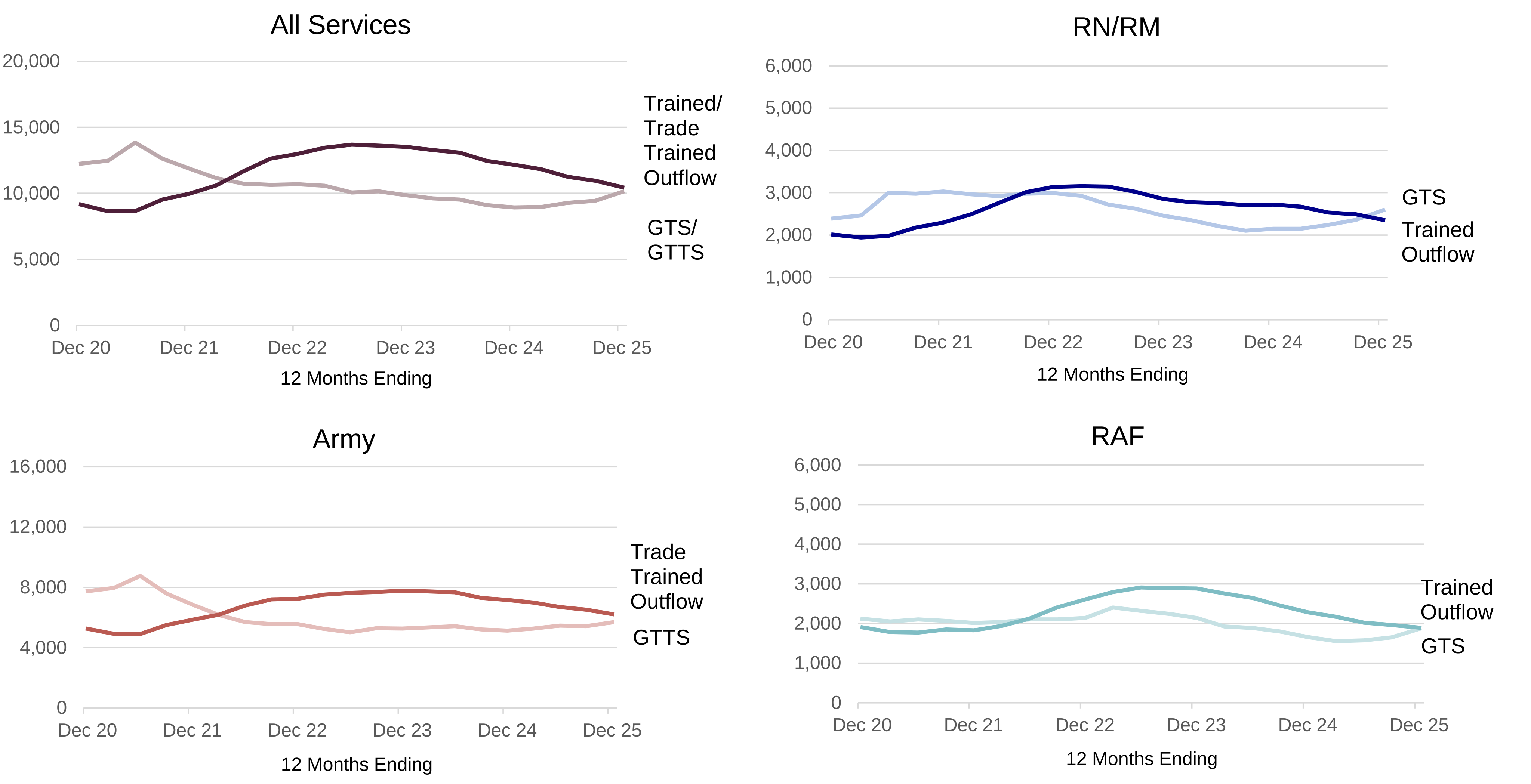
Gains to Trained Strength (GTS) figures comprise all Regular personnel who complete Phase 2 Training and those that enter directly into the Phase 2 Trained Strength. It excludes those returning to the Phase 2 Trained Strength from Long Term Absence (LTA).
Trained Outflow figures show Phase 2 Trained Outflow from UK Regular Forces, including personnel leaving the Services, deaths, and recalled Reservists on release. They do not include promotion from Other Ranks to Officers or flows between Services.
Gains to Trained Strength and Trained Outflow
In the 12 months to 31 December 2025, the number of personnel joining the Trained (RN/RM and RAF) and Trade Trained (Army) UK Regular Forces was 360 lower than the number leaving. This represents a net loss to the Phase 2 Trained population of the UK Armed Forces. The overall Full-Time Trained/Trade Trained Strength at 1 January 2026 (after accounting for other flows such as promotion from Other Ranks to Officers or flows between Services) was 600 lower than at 1 January 2025.
- The number of Trained (RN/RM and RAF) and Trade Trained (Army) direct entrants from the 12 months to 31 December 2024 to the 12 months to 31 December 2025 remained consistent at 570.
- 9,550 Personnel completed Phase 2 Training in the 12 months to 31 December 2025. This has increased by 14.1 per cent when compared to the previous 12 month period (8,370).
- The Gains to Trained Strength for the RN/RM increased by 20.2 per cent, Army Gains to Trade Trained Strength increased by 10.3 per cent, and RAF gains increased by 12.6 per cent compared to the previous 12 month period.
- Trained Outflow from the RN/RM decreased by 13.3 per cent, Army Trade Trained Outflow decreased by 13.2 per cent, and RAF Trained Outflow decreased by 16.8 per cent compared to the previous 12 month period.
GTS/GTTS and Trained Outflow has been converging over the past year. Whilst RN/RM FTTS has increased, Army FTTTS and RAF FTTS have decreased compared to 1 January 2025 (see table 2 above). However, it is worth noting that that FTTS/FTTTS has increased across all three Services compared to 1 October 2025.
Figure 5: GTS/GTTS and Outflow from the UK Trained Regular Forces 12 month ending across the UK Armed Forces from 1 January 2021 - 31 December 2025
7. Future Reserves 2020 (FR20) Programme Monitoring
Future Reserves 2020 includes Volunteer Reserves who are mobilised, High Readiness Reserves (HRR), Volunteer Reserves serving on Full-time Reserve Service (FTRS) and Additional Duties Commitment (ADC). Sponsored Reserves who provide a more cost-effective solution than Volunteer Reserves are also included in the Army Reserve FR20.
Following consultation on changes to the Army Trained Strength definition and the removal of the FR20 Intake targets, the MOD released Future Reserves 2020 Trained Strength growth profiles in a Written Ministerial Statement on 8 November 2016. Reporting of the growth of the Reserves were based on Trained Strength profiles only.
Following initial plans to freeze FR20 data at 1 April 2022, extensive consultation with internal stakeholders within MOD has identified an ongoing need to publish FR20 statistics until further notice.
7.1 Future Reserves 2020 Strength
Progress against FR20 population Trained Strength targets were reported in Table 6a of the Excel tables. The total Trained and Untrained Strength of the Tri-Service Future Reserves 2020 at 1 January 2026 was 32,090, an increase of 50 personnel or 0.1 per cent since 1 January 2025.
7.2 Maritime Reserve
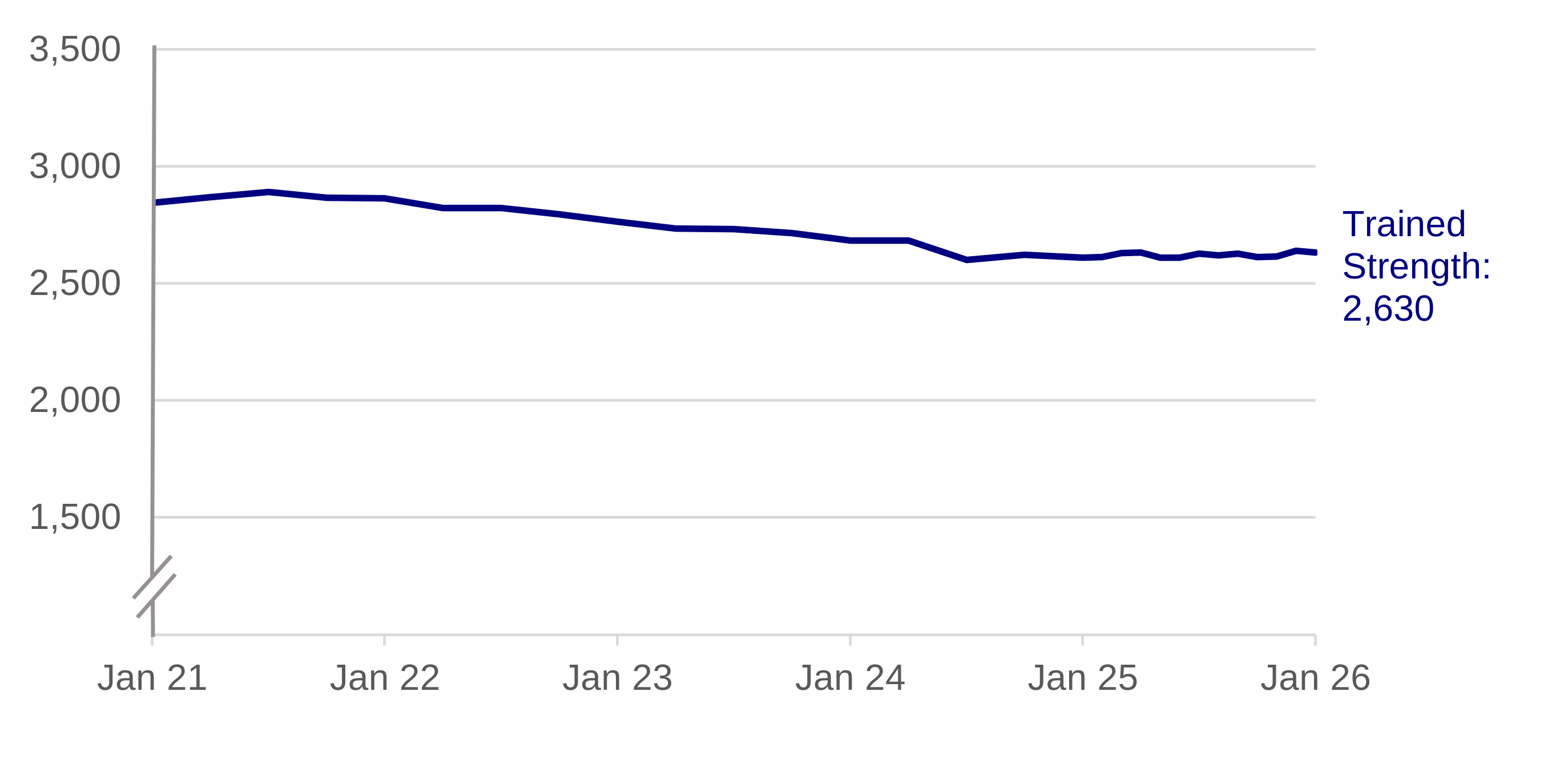
Figure 6 shows that the Maritime Reserve Trained Strength was 2,630 at 1 January 2026. This is an increase of 20 personnel (0.8 per cent) since 1 January 2025.
The Maritime Reserve total Strength at 1 January 2026 was 3,200. This is a decrease of 20 personnel (0.7 per cent) since 1 January 2025.
Figure 6: Maritime Reserve Trained Strength
7.3 Army Reserve
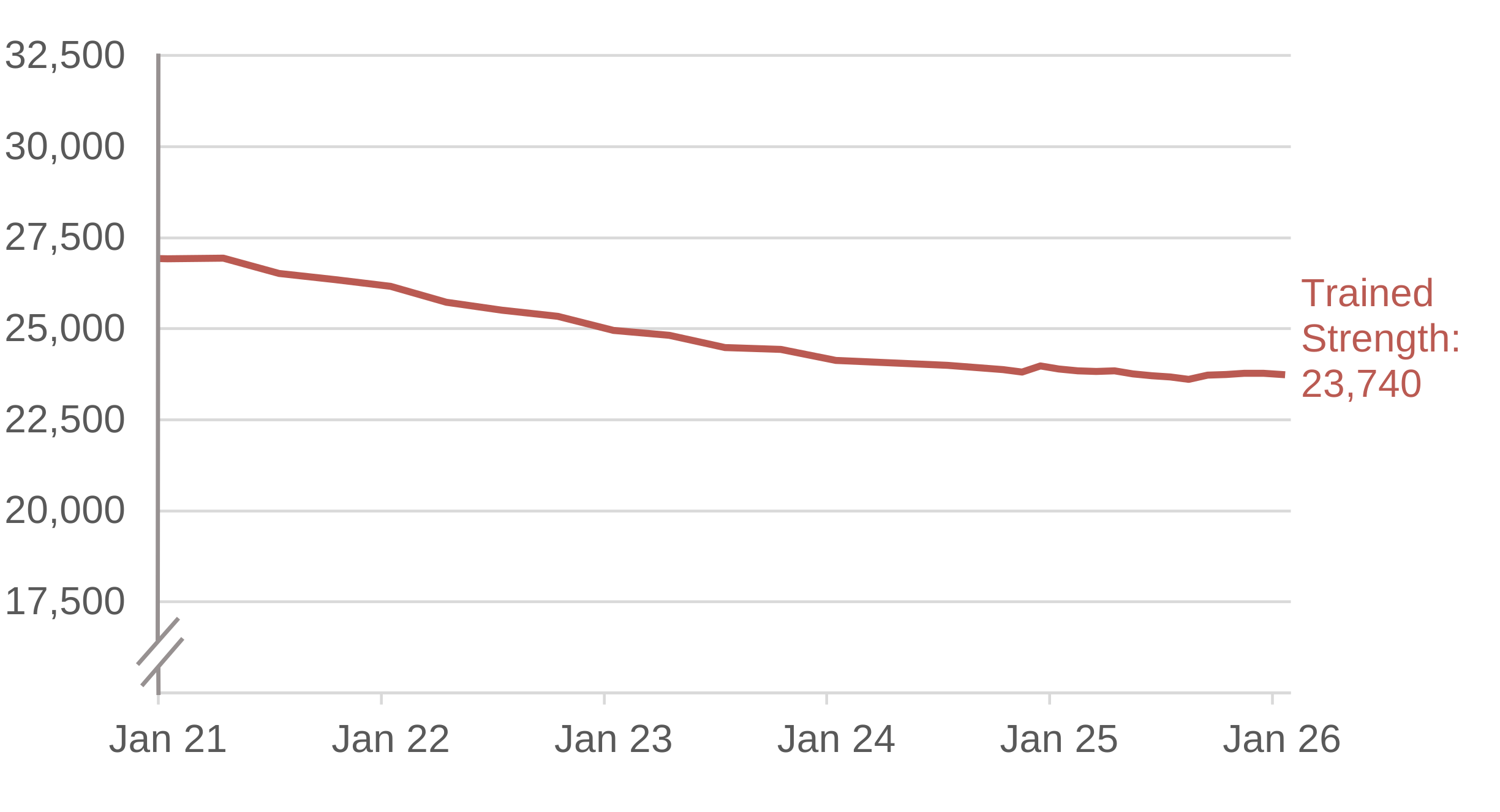
Figure 7 shows that the Army Reserve Trained Strength was 23,740, at 1 January 2026. This is a decrease of 160 personnel (0.6 per cent) since 1 January 2025.
The Army Reserve total Strength at 1 October 2025 was 25,840. This is an increase of 20 personnel (0.1 per cent) since 1 January 2025.
Figure 7: Army Reserve Trained Strength
7.4 RAF Reserve
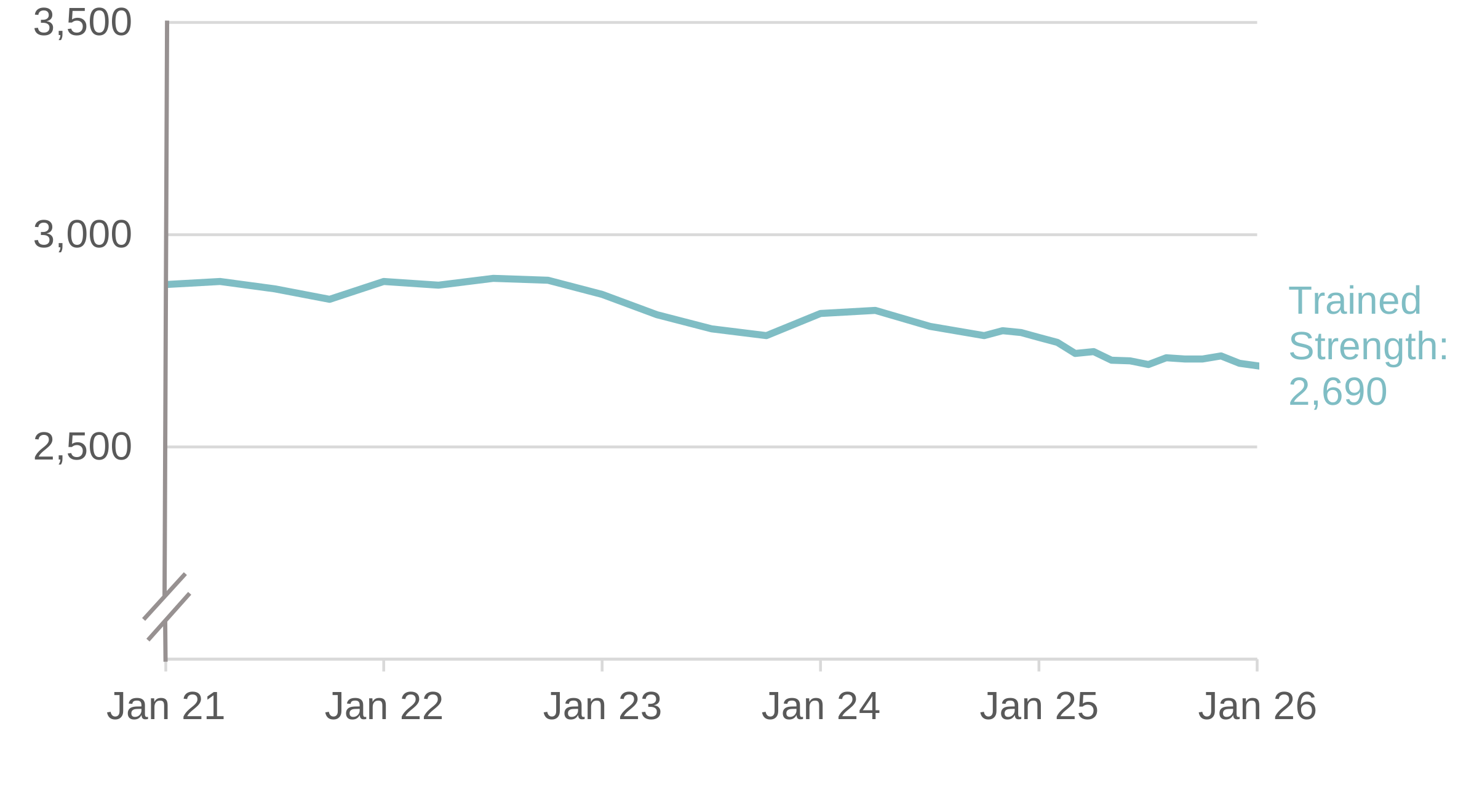
Figure 8 shows that, at 1 January 2026, the RAF Reserve Trained Strength was 2,690. This is a decrease of 70 personnel (2.4 per cent) since 1 January 2025.
The RAF Reserve total Strength at 1 January 2026 was 3,060. This is an increase of 50 personnel (1.6 per cent) since 1 January 2025.
Figure 8: RAF Reserve Trained Strength
7.5 FR20 Intake and Outflow statistics
Intake and Outflow statistics report how many people have left or joined the Trained or Untrained Strengths. As well as leavers and new recruits, this can include personnel transferring to or from the Regular Forces, other Reserve populations, or Reserve re-joiners.
The rates for both Outflow and Intake represent the proportion they form of the average FR20 Strength for the period.
The Intake rate of the 12-month average FR20 Strength for each Reserve Service in the 12 months ending 31 December 2025 is as follows:
- The Maritime Reserve total Intake was 16.1 per cent, remaining the same since the 12 months to 31 December 2024.
- The Army Reserve total Intake was 11.9 per cent, an increase of 1.6 percentage points since the 12 months to 31 December 2024.
- The RAF Reserves total Intake was 15.7 per cent, an increase of 0.1 percentage points since the 12 months to 31 December 2024.
Figure 9: Intake rate to the FR20 Reserves over rolling 12-month periods ending from 1 January 2021 - 31 December 2025 by Reserve Service
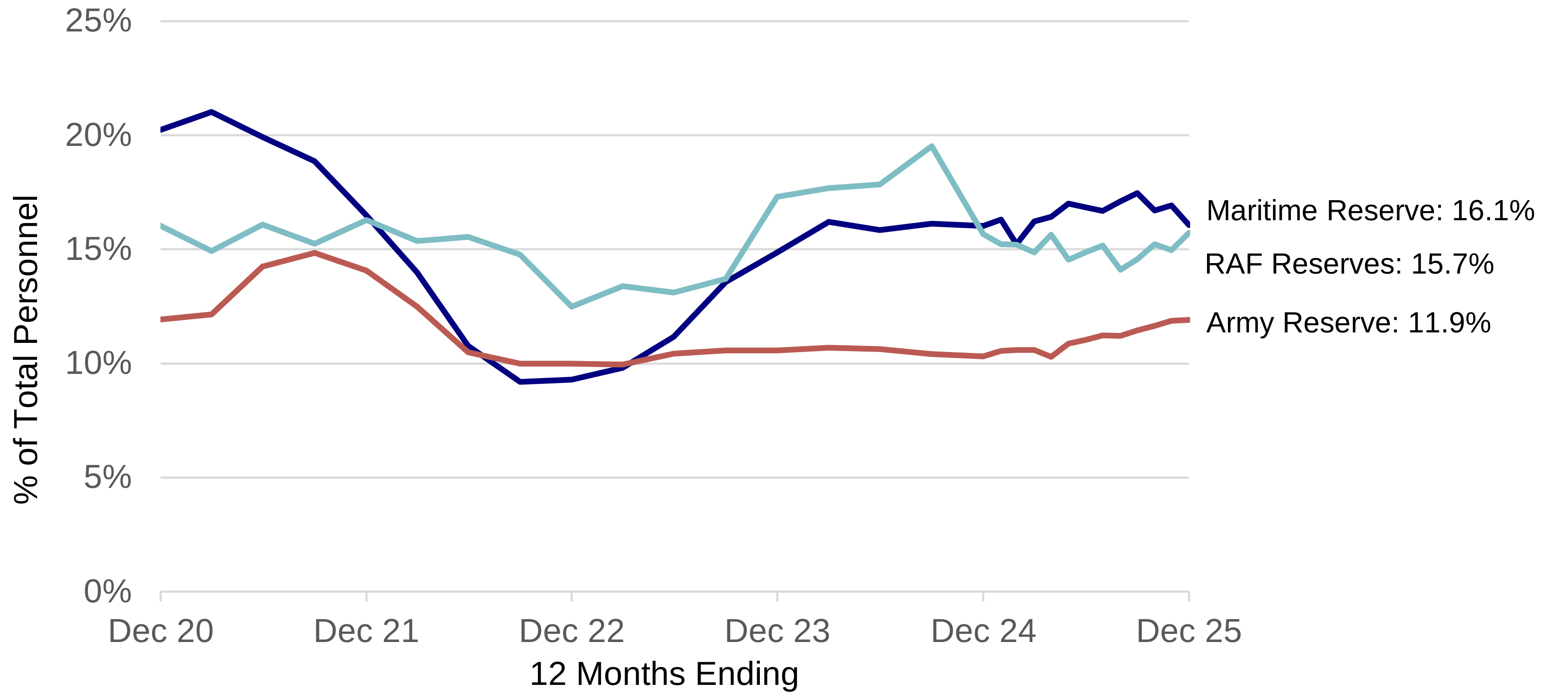
The Intake rate to the Maritime Reserves has decreased, the Army and the RAF FR20 Intake rate has increased since last quarter
The FR20 Outflow rate in each Reserve Service in the 12 months ending 31 December 2025 is as follows:
- The Maritime Reserve total Outflow was 16.7 per cent, a decrease of 2.1 percentage points since the 12 months to 31 December 2024.
- The Army Reserve total Outflow was 11.8 per cent, a decrease of 0.4 percentage points since the 12 months to 31 December 2024.
- The RAF Reserve total Outflow was 14.1 per cent, a decrease of 2.2 percentage points since the 12 months to 31 December 2024.
Figure 10: Outflow rate from the FR20 Reserves over rolling 12-month periods ending from 1 January 2021 - 31 December 2025 by Reserve Service
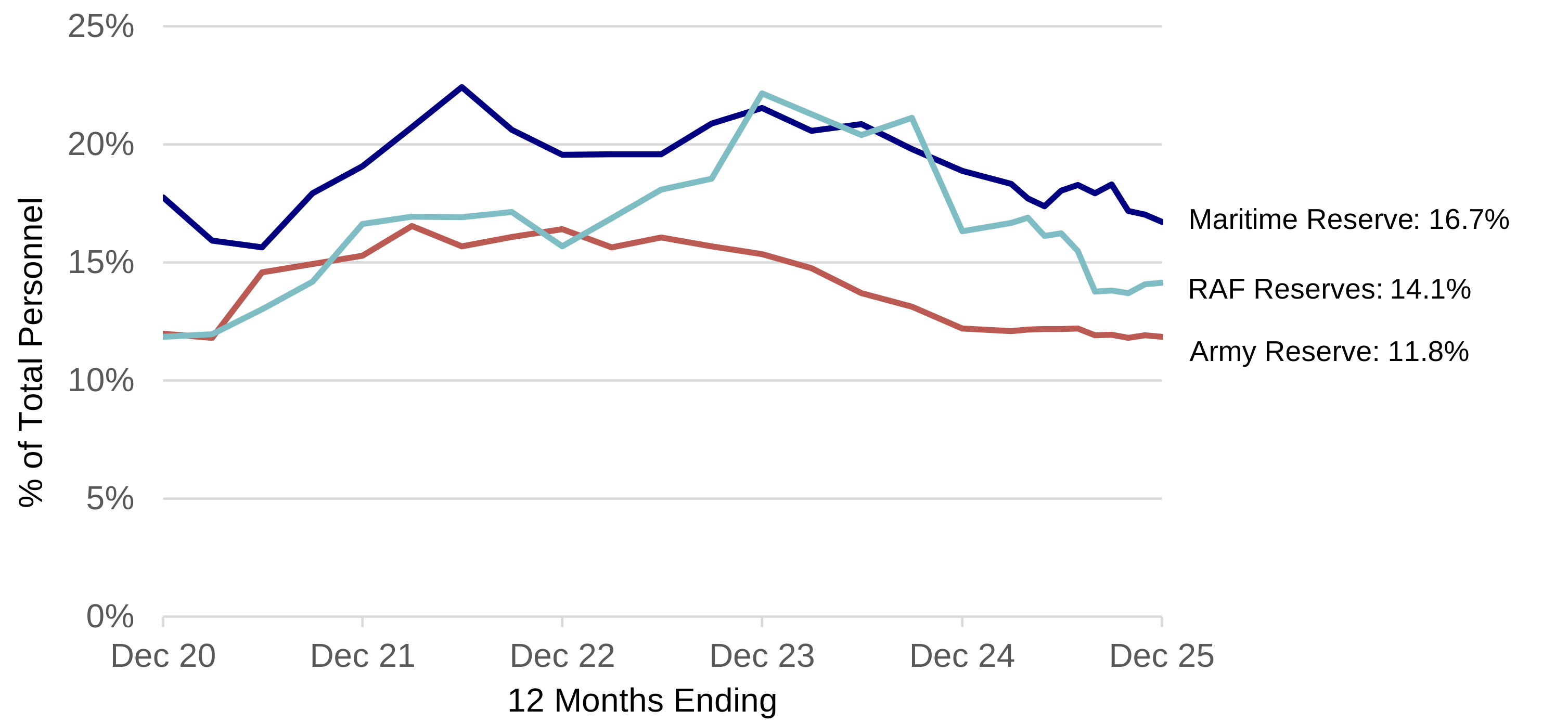
The Outflow rate from the Maritime and Army Reserves has decreased since last quarter, whilst the RAF FR20 Outflow rate has increased.
Figure 11: Intake to and Outflow from the FR20 Reserves over rolling 12-month periods ending from 1 January 2021 - 31 December 2025
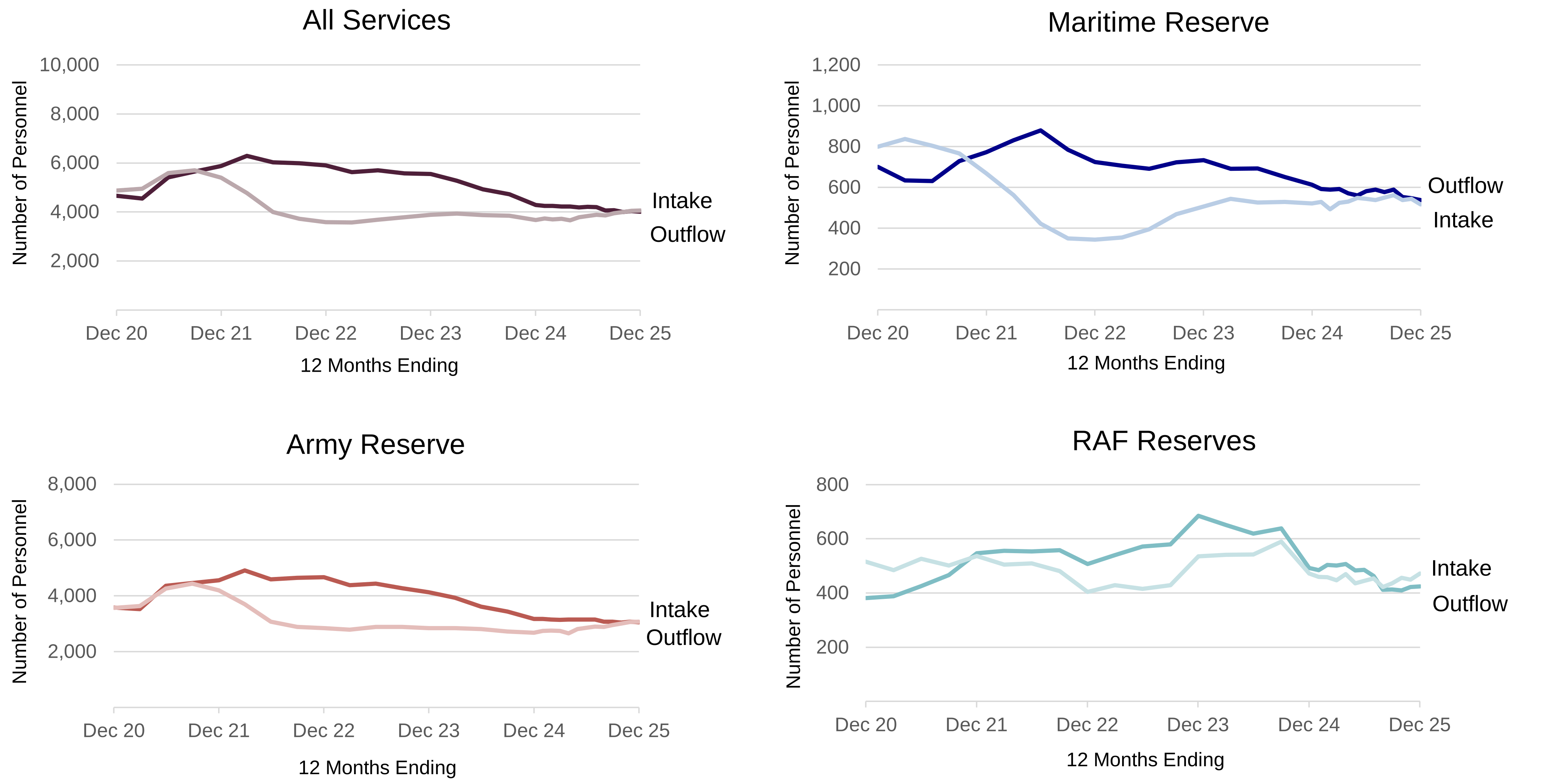
As at the 31 December 2025, the Intake and Outflow trendlines are nearly identical for the Army and Maritime FR20 Reserves. For the RAF FR20 Reserves, Intake is greater than Outflow.
8. Separated Service
Separated Service concerns personnel who are serving away from their usual place of duty or are unable to enjoy leisure at their normal place of duty or residence at place of duty.
Individual Harmony is the freedom to enjoy leisure at the normal place of duty or residence at place of duty; this includes leave and adventurous training.
Separated Service measures absence from normal place of duty. The time an individual experiences separated Service is compared against each Service’s “Individual Harmony” guidelines to ensure a balance between duty and leisure for all Service personnel.
A breach of individual harmony guidelines occurs when Service personnel experience separated Service for longer than the period outlined in the individual harmony guidelines, which are based on the structures and organisation of that Service. The guidelines are measured over a 36 month period and the limits are:
- 660 days away for the RN/RM
- 498 days away for the Army
- 498 days away for the RAF (was 468 days prior to 1 April 2021)
Using 1 January 2024 as an example, the formula for the breach rate is as follows:
- Count the number of Trained/Trade Trained UK Regular personnel breaching in the 36 months ending to 31 December 2023
- Divide this by the Trained UK Regular Strength at 1 January 2024
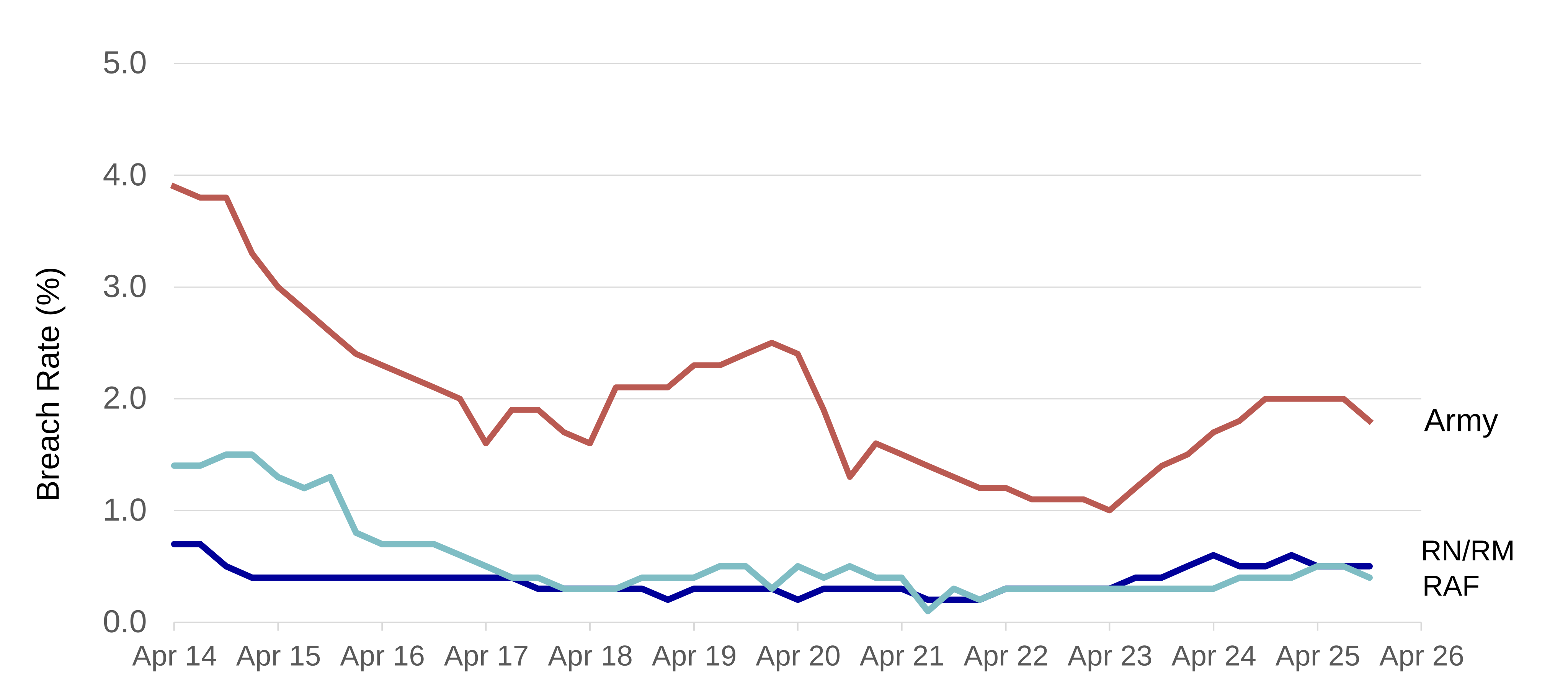
The percentage breaching harmony has remained stable for the RN/RM (0.5 per cent) and the RAF (0.4 per cent), whilst decreasing for the Army (1.8 per cent) at 1 October 2025 compared to the previous quarter.
Separated Service data can be found in Table 10 of the accompanying Excel tables.
Figure 12: Percentage of UK Regular Forces Breaching Harmony (1 April 2014 - 30 September 2025)
9. Applications to the UK Armed Forces
The figures in this publication include applications to the UK Regular and Volunteer Reserve Forces. They are broken down by Service, and by Officers and Other Ranks.
NOTE: Applications numbers cannot be added together across the Services to show total UK Armed Forces applications due to differences in definitions.
Figure 13: Applications to the RN/RM split by UK Regular Forces and Volunteer Reserves
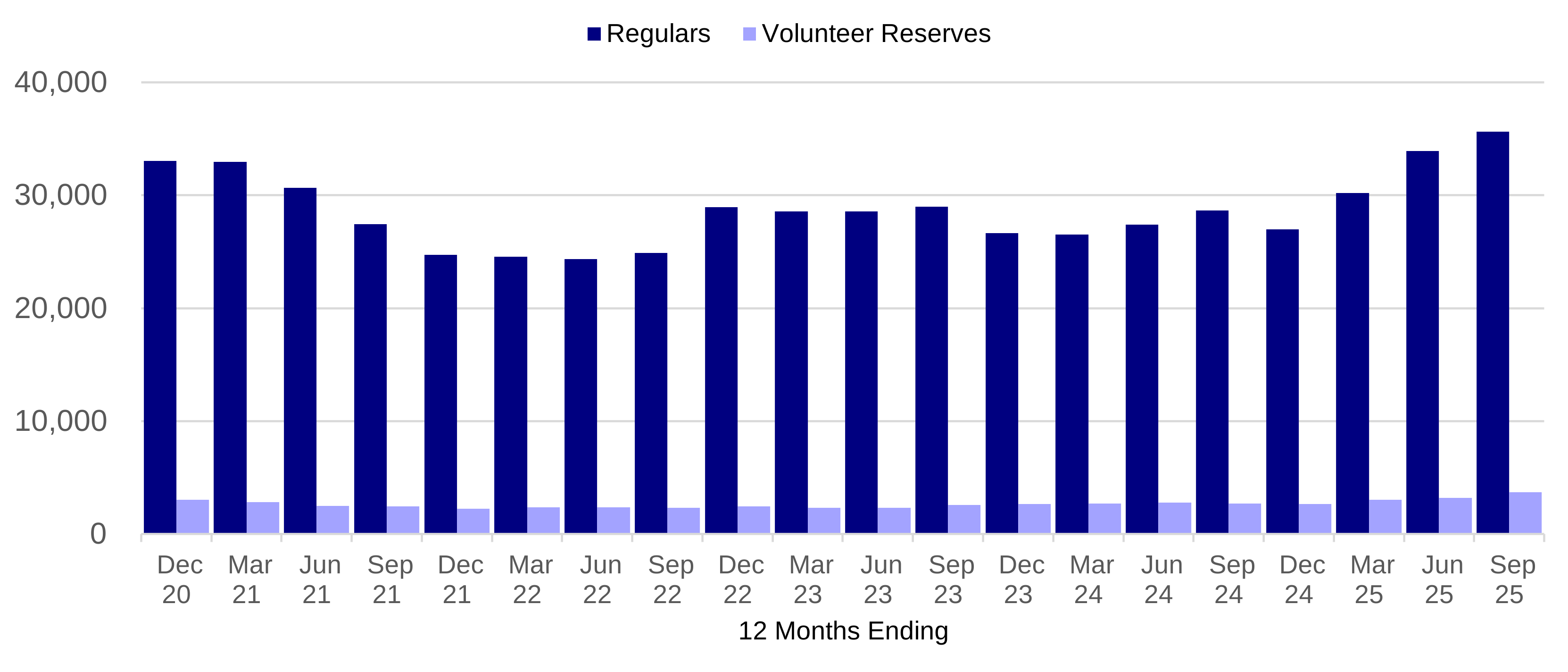
Figures from 12 months ending 30 June 2019 to the 12 months ending 31 December 2021 define an application as an online application submitted by an individual and accepted by DRS. Figures from the 12 months ending 31 December 2021 onwards define an application as an online application submitted by an individual and accepted by RITS. The number of applications to the RN/RM Regular Forces in the 12 months to 30 September 2025 is 35,660 (a provisional figure), which is an increase of 24.3 per cent compared to the 12 months to 30 September 2024 (28,680). Over the same period, applications to the Volunteer Reserves have increased from 2,710 to a provisional estimate of 3,690 (35.9 per cent).
Please note Royal Navy/Royal Marines applications data for 31 March 2025, 30 June 2025, and 30 September 2025 are provisional and subject to change. Therefore, caution is advised when comparing to past figures. We are currently investigating the source data, and these early estimates will be replaced with more complete and validated final data once available.
Figure 14: Applications to the Army split by UK Regular Forces and Volunteer Reserves
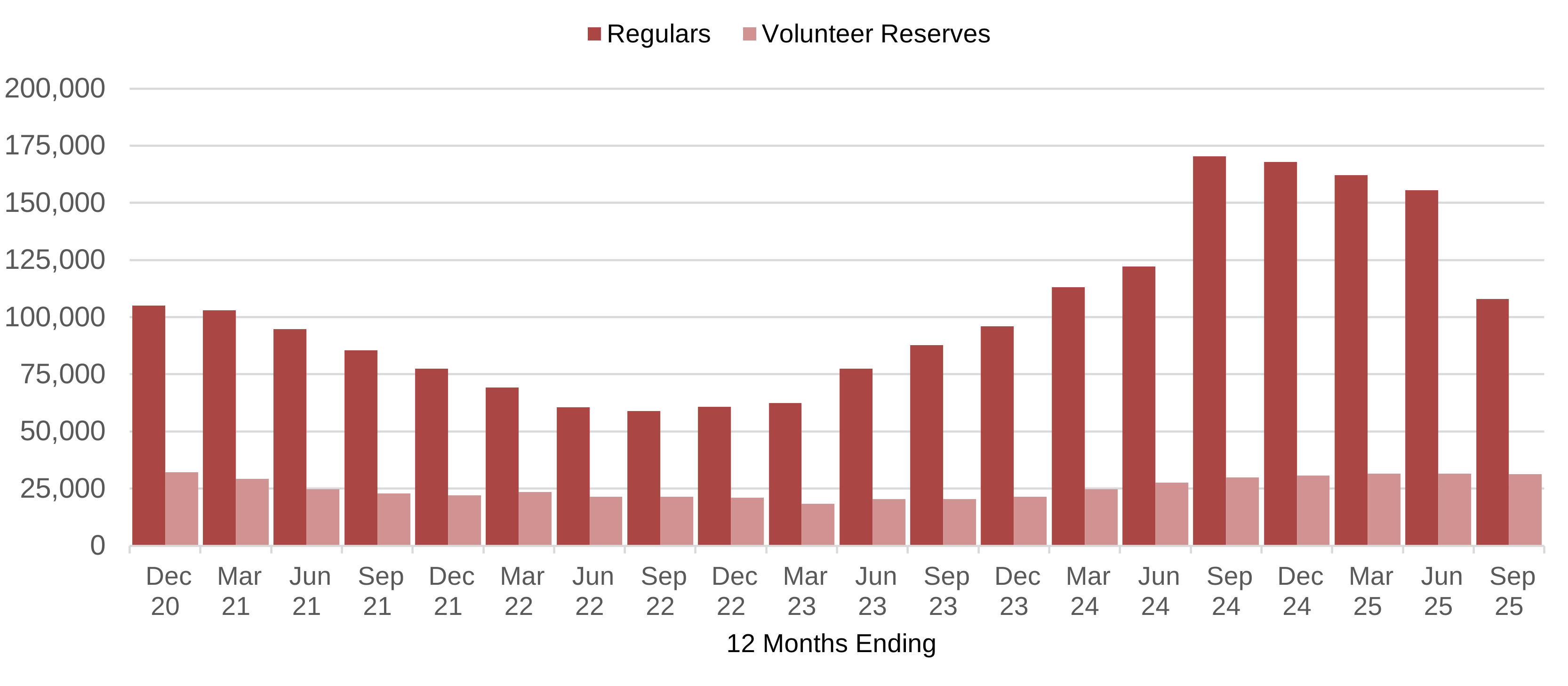
Figures from 12 months ending 30 June 2019 onwards define an application as an online application submitted by an individual and accepted by DRS.
From 1 April 2023 onwards, there has been an amendment in the criteria for extracting the Army applications data from the recruitment system. Therefore, the figures from 1 April 2023 differ in definition, to those captured prior. This amendment is primarily based on the population the candidate initially applied for and the population they are currently in within the pipeline.
The number of applications to the British Army Regular Forces in the 12 months to 30 September 2025 was 108,020, a decrease of 36.6 per cent compared to the 12 months to 30 September 2024 (170,380). Over the same period, applications to the Volunteer Reserves have increased from 29,800 to 31,380 (5.3 per cent).
Commonwealth (CW) applicants are included in the number of applications. The Commonwealth entry numbers are closely controlled. Applications may be refused if no Commonwealth headroom is available. These applicants will then be withdrawn from the pipeline but the application number will still be counted in the overall volume of applications received.
For a one-week period in August 2024, Commonwealth applications to certain trades were opened up which resulted in a huge spike in CW applications. This surge resulted in 41 per cent of Army Regular Other Ranks applications during financial year 2024/25 coming from CW nationalities. Due to limits on CW Intake, increases in these types of applications are unlikely to affect the overall Intake performance. Additionally, UK and Irish Regular Other Ranks applications during financial year 2024/25 increased by 16 per cent when compared to the previous year, 87,330 for financial year 2024/25 compared to 75,520 in financial year 2023/24.
In the first three months of this financial year, UK and Irish applications were 8 per cent lower compared to the same stage last year. There were 20,550 UK and Irish applications in the first three months of financial year 2025/26 compared to 22,230 in financial year 2024/25.
Figure 15: Applications to the RAF split by UK Regular Forces and Volunteer Reserves
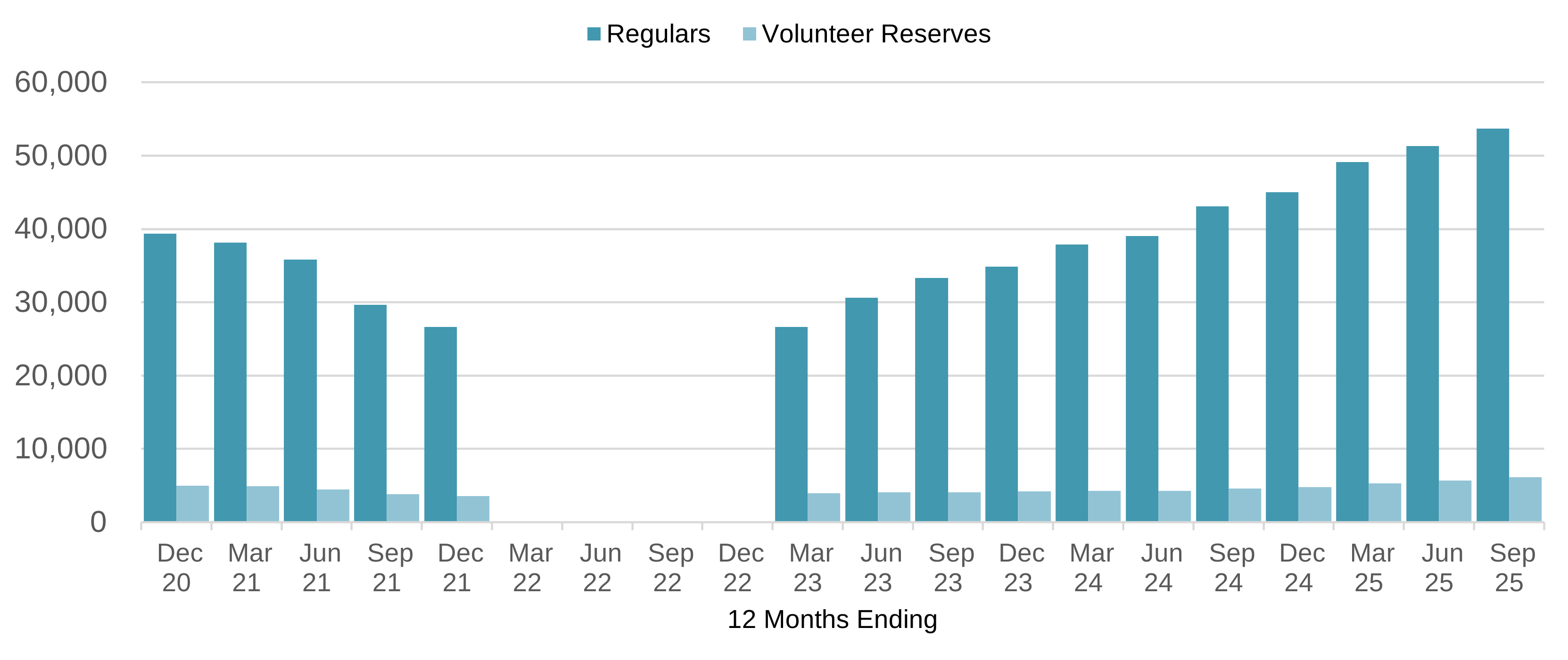
Figures from 12 months ending 30 June 2019 to the 12 months ending 31 December 2021 define an application as an online application submitted by an individual and accepted by DRS. DRS closed in December 2021. In transitioning to the RITS system the Royal Navy continued to receive applications whilst the RAF ceased activity until the new recruiting system was operational, hence the break in the series for RAF data. The RITS system was in use from March 2022 and so the first full 12 months of data available for RAF is the period ending March 2023. Therefore, figures from the 12 months ending 31 March 2023 onwards define an application as an online application submitted by an individual and accepted by RITS.
Note that the RITS system was unavailable for online applications for the period 26 September to 4 October 2023, due to system updates. The increase in RAF applications since the introduction of DRS (12 months ending 30 June 2019), is due to the previous recruitment system having a separate frontend, this was used to assist the initial application processing team in filtering out RAF ineligible applications and non-productive enquiries prior to an official application being recorded.
The number of applications to the RAF Regular Forces in the 12 months to 30 September 2025 was 53,680, an increase of 24.6 per cent compared to the 12 months to 30 September 2024 (43,090). Over the same period, applications to the Volunteer Reserves have increased from 4,580 to 6,170 (34.8 per cent).
Please note whilst application counts for each Service are based on online applications submitted by an individual and accepted by the Service’s applications system, work is ongoing to verify that application processes and definitions are consistent, and we would recommend that numbers should not be aggregated to show UK Armed Forces totals (hence separate tables and graphs are provided).
The number of applications received does not directly relate to Intake figures, since:
- The figures above relate to the number of applications received and not the number of applicants, as one applicant may submit several applications;
- For successful applicants who accept an offer to join the Services, there is a substantial processing time between their application being received and the applicant joining the Services. For example, the 12 months ending Intake figures for 31 December 25 are not comparable with the number of applications received in the same year, as the numbers apply to different cohorts of people;
- Applications will not result in Intake if, for example, they are withdrawn by the applicant during the recruitment process, rejected by the Services, or if an offer to join the Services is declined by the applicant. See below for further information.
There is a break in the time series between 30 September 2017 and 30 June 2019 due to the change in recruiting systems from the Training Administration and Financial Management Information System (TAFMIS) to Defence Recruitment System (DRS) and due to the need to ensure consistency of the start date for reintroduced data between the single Services.
For the Royal Navy/Royal Marines (RN/RM) and the Royal Air Force (RAF), Defence Recruitment System (DRS) closed in December 2021, the change over to the new application system, called Recruitment IT System (RITS) resulted in a loss of the system for 10-12 weeks. For the RN/RM, the change over to the new application system may have resulted in some applications being double counted. For RAF only, the applications being taken forward were migrated to the new system, and therefore there is a break in the time series where data is unavailable. Army continue to use DRS, however experienced a temporary loss of the application system from mid-March 2022 to late May 2022, which resulted in 10 weeks of applications lost (Army estimates are between 10,000-15,000 applications) which, when set against the backdrop of the national economic picture and challenging recruiting market for the public-sector, has had a real impact upon the recruiting pipeline.
Applications that do not result in Intake
The main causes of applicant failure (specifically, no offer to join the Services given) include:
- Failing security clearance;
- Failing the medical scrutiny;
- Not having the required residency;
- Not achieving fitness entry standards;
- Not achieving the required recruiting test score for the desired branch/Trade;
- Applicants withdraw for their own reasons (such as, change of mind) during the process.
The main causes of application failure (specifically, the applicant declines an offer to join):
- Applicants may have submitted other applications for employment (including multiple applications to join the UK Armed Forces) and accept another offer;
- Applications may be submitted with no intention to join (for example, to satisfy the requirements of job seeking).
There is a reporting lag of one quarter meaning 30 September 2025 applications data have been provided in this SPS edition.
10. Policy Background
The main factors affecting decisions about the size of the UK Armed Forces required by the MOD to achieve success in its military tasks include:
- An assessment of current and future threats to UK national security;
- The need for contingent / reactive capability – the requirement to be able to respond immediately to domestic or international crisis;
- Current operational and international obligations (such as, NATO, UN);
- Changes in technology, the introduction of new equipment and restructuring that leads to equipment becoming obsolete or surplus to requirements;
- The need to deliver against the military tasks as efficiently as possible, maintaining a balanced, affordable defence budget.
Service personnel statistics in previous versions of this publication are reported against the 2015 Strategic Defence and Security Review (SDSR), released in November 2015. Prior to SDSR 2015, publications reported against the planned Future Force 2020, as set out in the SDSR 2010 which planned to reduce the size of the UK Armed Forces.
10.1 Army Trained Strength
On 29 June 2016, the MOD announced that the Army planned to use Regular and Reserve Phase 1 Trained personnel in response to crises within the UK. Following this, the term ‘Trained Strength’ would include all Army personnel Trained in the core function of their Service (specifically, those who have completed Phase 1 Training). The MOD held a public consultation between 11 July and 21 August 2016 on the changes and the resultant impact they will have on this publication. A consultation response was published on 7 October 2016. The changes outlined in the consultation and response have been incorporated into this publication from the 1 October 2016 edition onwards.
From the 1 October 2016 edition, Army personnel who have completed Phase 1 Training and above, are considered Trained personnel. This change enabled the Army to meet the SDSR 15 commitment to improve support to UK resilience. This affects Army figures and Tri-Service totals in some of the accompanying Excel tables, specifically in tables: 3a, 3e, 5a, 5b, 5c, 5d, 5e, 6a, 6b, 7a, 7b and 7c. Terminology has also been updated in Excel tables 3c and 4. The Trained Strength definition for the Royal Navy, RAF, Maritime Reserve and RAF Reserves has not changed, reflecting the requirement for their personnel to complete Phase 2 Training to be able to fulfil the core function of their respective Services.
Army personnel who have completed both Phase 1 and Phase 2 Training are now called ‘Trade Trained’. This population aligns with the old definition of Trained personnel, therefore maintaining the continuity of the statistical time series. The Army have undertaken a review of training requirements and Royal Engineers Other Ranks personnel joining from 1 July 2019 will become Trade Trained after Initial Trade Training (ITT) and will join the Full-time Trade Trained Strength (FTTTS), and therefore we may see a change in the trend.
10.2 Full-Time UK Armed Forces personnel
In order to meet the personnel reduction targets set out in SDSR 2010, the Three Month Exercise (3ME) and Army 2020 (A2020), a redundancy programme coupled with adjusted recruiting (Intake) and contract extensions, were set. The aforementioned redundancy programme is now complete.
On 23 November 2015, MOD published the National Security Strategy and Strategic Defence and Security Review 2015. SDSR 2015 outlined plans to uplift the size of the UK Regular Armed Forces, setting targets for a Strength of 82,000 for the Army, and increasing the Royal Navy/Royal Marines and Royal Air Force by a total of 700 personnel. The SDSR 2015 Defence Key Facts booklet announced new targets for 2020 for each of the Services.
10.3 Future Reserves 2020 (FR20) Programme
The Future Reserves 2020 (FR20) programme aimed to increase the size of the Reserve Forces. Further information on the growth of the Reserves can be found in the Policy Background section of previous Monthly Service personnel statistics publications.
As a result of the changes to Army Trained Strength (referred to above) and their impact on the Army Reserve, the MOD released a Written Ministerial Statement containing revised Future Reserves 2020 (FR20) Strength growth profiles on 8 November 2016. Reporting of the growth of the Reserves will be based on Strength profiles only.
There has been no formal announcement of new targets beyond 31 March 2019. However, the Ministry of Defence’s recruitment campaign is a long-term programme.
10.4 Reserves Forces 2030 (RF30) Programme
The Reserves Forces 2030 (RF30) Review does not include a target for additional personnel numbers beyond those in the Future Reserves 2020 (FR20) programme.
RF30 builds on the work carried out by FR20; the RF30 Review offers 18 recommendations grouped into four key areas in which the Reserves will need to continue to adapt in order to develop their utility. These are: redefining the Reserves’ relationship with society; expanding the role of the Reserves; unlocking the potential of reservists; and transforming support to the Reserves.
The Ministry of Defence has established an implementation programme to consider the RF30 recommendations. A formal response, or responses, to the RF30 Review will follow the RF30 implementation programme’s detailed analysis of the recommendations.
11. Further Information
Accredited Official Statistics publication
Accredited Official Statistics are called National Statistics in the Statistics and Registration Service Act 2007. These Accredited Official Statistics were independently reviewed by the Office for Statistics Regulation in June 2013. They comply with the standards of trustworthiness, quality and value in the Code of Practice for Statistics and should be labelled ‘Accredited Official Statistics’. Accreditation can be broadly interpreted to mean that the statistics:
- meet identified user needs;
- are well explained and readily accessible;
- are produced according to sound methods; and
- are managed impartially and objectively in the public interest.
Further information on the accreditation process can be found here: Accredited Official Statistics.
Once statistics have been designated as Accredited Official Statistics it is a statutory requirement that the Code of Practice shall continue to be observed. Further details about how this report has been developed since its confirmation as an Accredited Official Statistic can be found in the Background Quality Report.
Our statistical practice is regulated by the Office for Statistics Regulation (OSR). OSR sets the standards of trustworthiness, quality and value in the Code of Practice for Statistics that all producers of official statistics should adhere to.
You are welcome to contact us directly with any comments about how we meet these standards. Alternatively, you can contact OSR by emailing regulation@statistics.gov.uk or via the OSR website.
11.1 Rounding
All figures in this publication have been rounded to the nearest 10, though numbers ending in a “5” have been rounded to the nearest multiple of 20 to prevent the systematic bias caused by always rounding numbers upwards. For example; a value of “25” would be rounded down to “20” and a value of “15” would be rounded up to “20”. Additionally, totals and sub-totals are rounded separately and so may not equal the sums of their rounded parts.
Percentages are calculated from unrounded data and presented to the nearest integer or to one decimal place.
Due to percentages being rounded to the nearest integer or to one decimal place, sub-totals don’t always add up to 100 per cent.
The MOD Disclosure Control and Rounding policy is published on GOV.UK and we have applied this policy to the statistics in the accompanying Excel tables. The policy is available here.
11.2 Revisions
There are no revisions in the 1 January 2026 edition of the SPS.
11.3 Symbols
| Symbol | Description |
|---|---|
| [b] | Break in time series |
| [z] | not applicable |
| [x] | not available |
| [c] | 5 or fewer |
| [p] | Provisional |
| [e] | Estimate |
| [r] | Revised |
| [rp] | Revised but still provisional |
11.4 Contact Us
Analysis Tri-Service welcome feedback on our statistical products. If you have any comments or questions about this publication or about our statistics in general, you can contact us as follows:
Email: Analysis-Tri-Service@mod.gov.uk
If you wish to correspond by mail, our postal address is:
Analysis (Tri-Service)
Ministry of Defence, Main Building
Floor 3 Zone M
Whitehall
London
SW1A 2HB
For general MOD enquiries, please call: 020 7218 9000
11.5 Subscribe to Updates
Would you like to be added to our contact list, so that we can inform you about updates to these statistics and consult you if we are thinking of making changes? Subscribe to updates by emailing Analysis Tri-Service.
11.6 Freedom of Information requests
If you require information which is not available within this or other available publications, you may wish to submit a Request for Information to the Ministry of Defence under the Freedom of Information Act 2000. See guidance on how to make an FOI request.
Other contact points within the Ministry of Defence for Statistics are listed below.
Analysis People Cost Modelling:
Email: analysis-people-cost-modelling@mod.gov.uk
Defence Expenditure Analysis:
Email: DefStrat-Econ-ESES-PQFOI@mod.gov.uk
Naval Service Workforce:
Email: Analysis-Navy@mod.gov.uk
Army Workforce:
Email: defstrat-stat-army-enquiries@mod.uk
RAF Workforce:
Email: Analysis-Air@mod.uk
Tri-service Workforce:
Email: Analysis-Tri-Service@mod.gov.uk
Civilian Workforce:
Email: Analysis-Civilian-Enquiries@mod.gov.uk
Health Information:
Email: Analysis-Health-PQ-FOI@mod.gov.uk