2025 UK greenhouse gas emissions: provisional figures - statistical release
Published 2 April 2026

© Crown copyright 2026
This publication is licensed under the terms of the Open Government Licence v3.0 except where otherwise stated. To view this licence, visit nationalarchives.gov.uk/doc/open-government-licence/version/3 or write to the Information Policy Team, The National Archives, Kew, London TW9 4DU, or email: psi@nationalarchives.gov.uk.
Where we have identified any third party copyright information you will need to obtain permission from the copyright holders concerned.
This publication is available at https://www.gov.uk/government/statistics/provisional-uk-greenhouse-gas-emissions-statistics-2025/2025-uk-greenhouse-gas-emissions-provisional-figures-statistical-release
This publication provides provisional estimates of 2025 UK territorial greenhouse gas emissions, meaning emissions that occur within UK borders. Emissions are presented in carbon dioxide equivalent units (CO2e) throughout this statistical release. These estimates give an early indication of emissions in 2025 and are subject to revision when final estimates are published in February 2027. They also include estimates of quarterly emissions, impacts of external temperature changes, and UK-based international aviation and shipping emissions.
Key findings
- In 2025, total UK net territorial greenhouse gas emissions are provisionally estimated to be 367 million tonnes of carbon dioxide equivalent (MtCO2e), a decrease of 2% (7 MtCO2e) from 2024 and 54% (424 MtCO2e) from 1990.
- Carbon dioxide made up around 78% of the 2025 total.
- Decreased blast furnace use in the industry sector and decreased coal use in the electricity supply sector caused the largest emissions reductions in 2025.
- Industry sector emissions decreased by 12% (5 MtCO2e), largely due to blast furnace closures in the iron and steel industry and decreased gas use across industries.
- Domestic transport sector emissions increased by 2% (3 MtCO2e), largely due to increased petrol and diesel use in road transport.
- Fuel supply sector emissions decreased by 5% (2 MtCO2e) in 2025, due to decreased emissions from oil and gas supply.
- Emissions from the buildings and product uses sector decreased by 2% (1 MtCO2e), due to decreased heating use across residential, commercial and public sector buildings.
- Emissions from the electricity supply sector fell by 1% (0.3 MtCO2e) as a result of coal emissions in the electricity supply sector falling to 0 in 2025, due to the closure of the UK’s last coal powered station in September 2024.
- In 2025, 31% of net greenhouse gas emissions in the UK were from domestic transport. 22% of emissions were from the buildings and product uses sector, 13% were from agriculture, 11% from industry, 10% from electricity supply, 7% from fuel supply, 6% from waste and 0.1% of emissions were from Land use, land use change and forestry (LULUCF).
Figure 1: UK territorial greenhouse gas emissions, 1990-2025
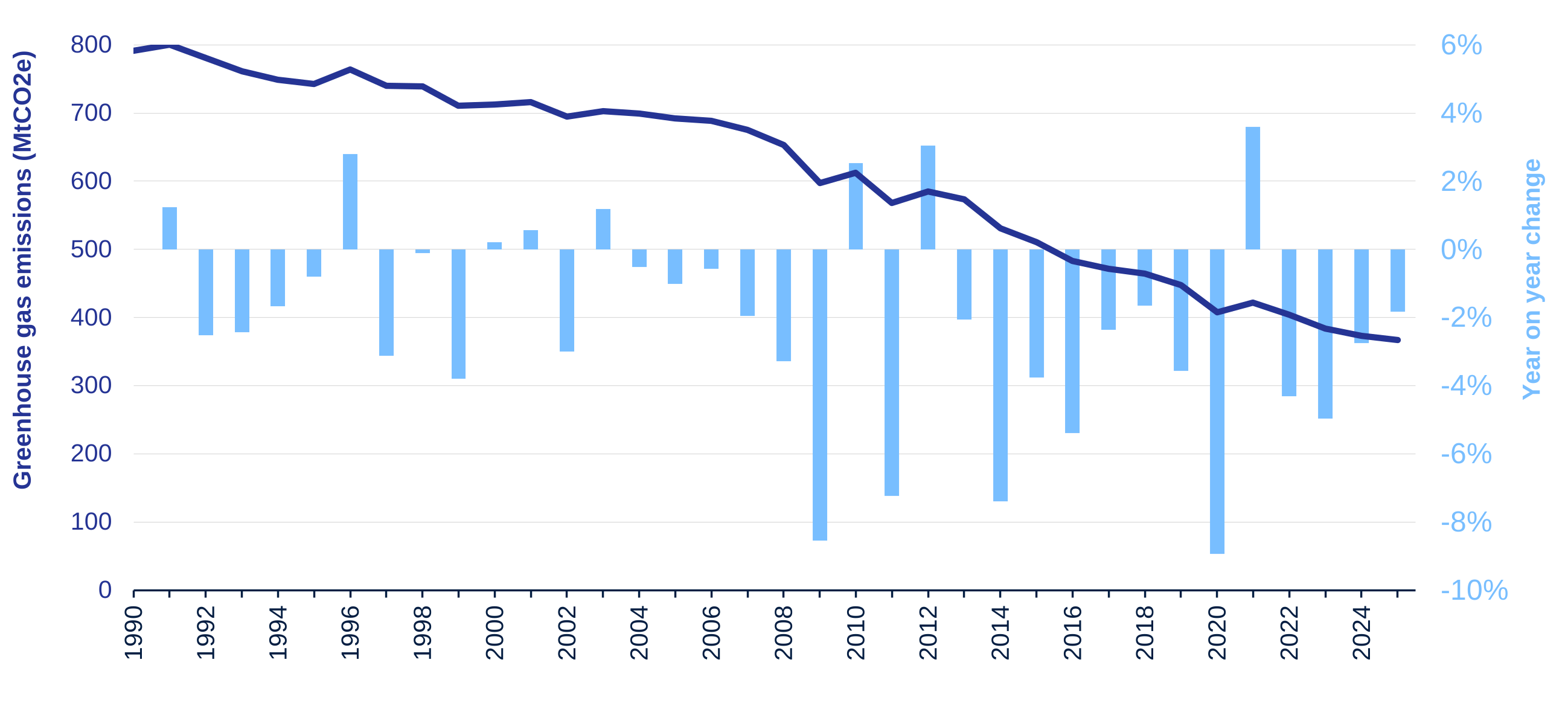
Figure 2: Changes in greenhouse gas emissions by sector, 1990-2025, 2024-2025
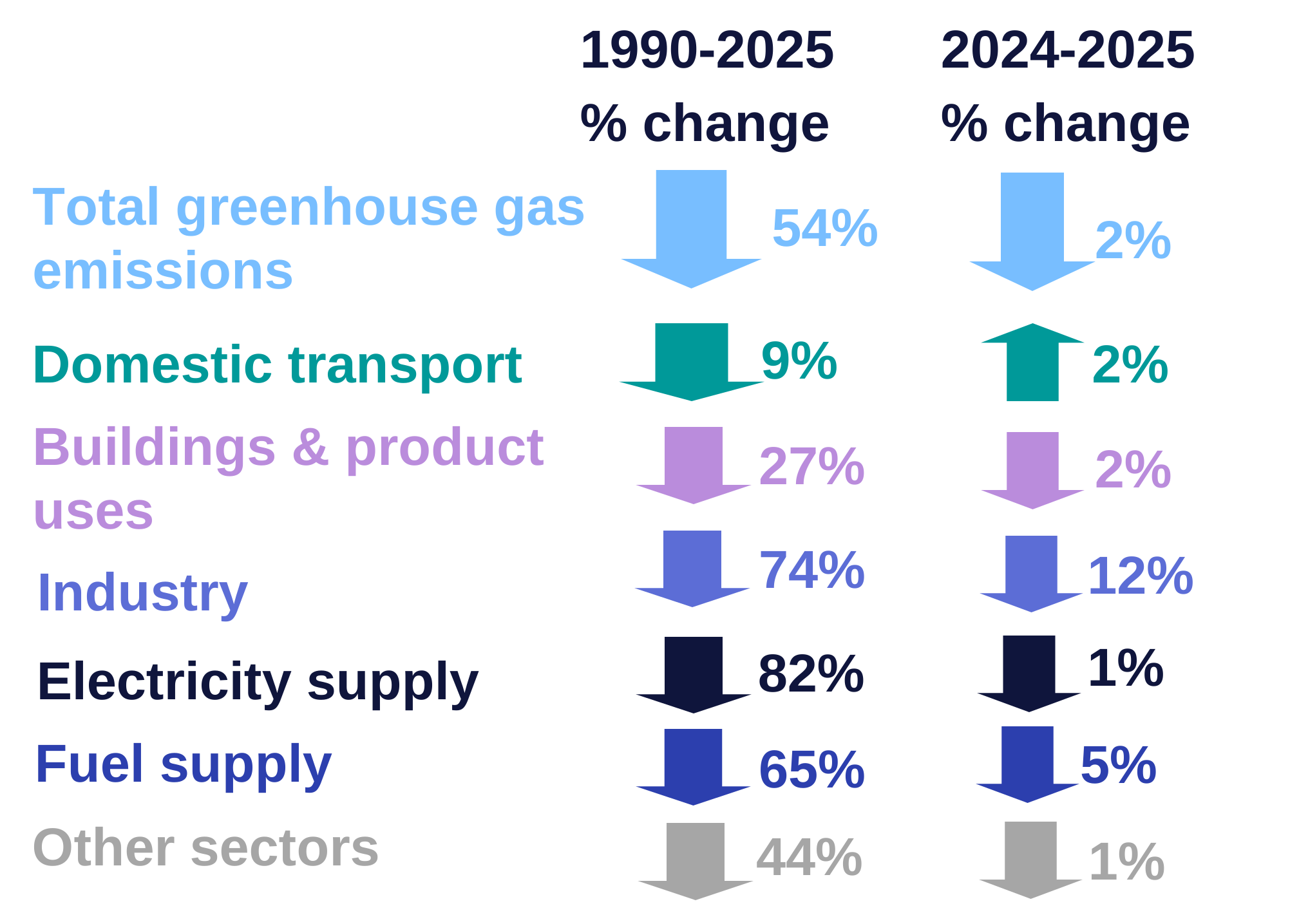
Note: ‘Other sectors’ are the agriculture, waste, and LULUCF sectors. Estimated emissions in 2025 for these sectors are largely derived from projections.
Between 1990 and 2025, emissions decreased by 54%. The largest factor behind this long-term decrease was the change in the mix of fuels being used for electricity generation, with a shift away first from coal to gas in the 1990s, and more recently to renewable energy sources. This was combined with lower electricity demand, owing to greater efficiency resulting from improvements in technology and a decline in the relative importance of energy intensive industries. Overall energy consumption is provisionally estimated to have decreased by 25% since 1990, and if this figure is adjusted to allow for the effect of temperature, there was a 26% decrease over this period[footnote 1],[footnote 2].
Figure 3: Actual and temperature adjusted greenhouse gas emissions, UK, Q1 2009-Q4 2025 (MtCO2e)
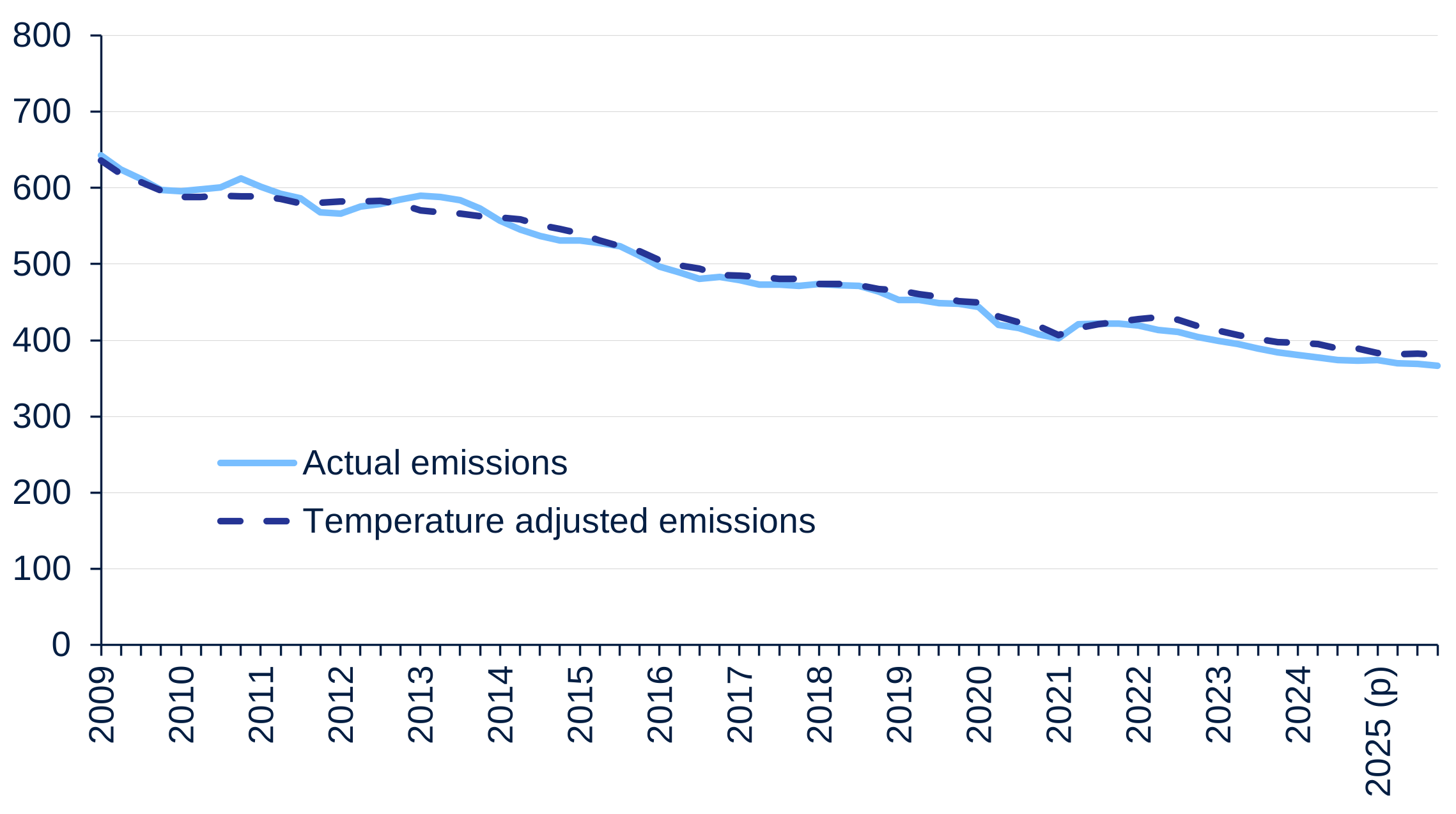
As shown in Figure 3, temperature adjusted emissions show a similar overall trend to actual emissions. Over the most recent ten-year period, temperature adjusted emissions decreased by 26%, similar to the 28% fall in actual emissions over this period. Temperature adjusted emissions decreased by 2.1% in 2025 when compared to 2024, slightly more than the 1.8% fall in actual emissions over the same period.
Introduction
This publication provides provisional annual and quarterly estimates of UK territorial greenhouse gas emissions for 2025, including estimates of carbon dioxide and total emissions by source sector. It also provides estimates of temperature adjusted emissions, which give an idea of overall trends in emissions without fluctuations due to changes in external temperature, and UK-based international aviation and shipping emissions. More information about the underlying methodology for the provisional emissions statistics can be found in the methodology summary published alongside this statistical release.
Data for 1990-2024 are consistent with the annual emissions presented in the 2024 final UK greenhouse gas emissions statistics publication. Data for 2025 emissions are provisional and do not follow the same full methodology. Energy use accounts for a large majority of UK emissions. Most of these emissions are estimated based on provisional energy statistics published at the same time as this statistical release by the Department for Energy Security and Net Zero (DESNZ) in the quarterly Energy Trends publication. A small proportion of emissions related to energy use are assumed to remain the same as in 2024 as data from which to produce estimates for them is not available at the time of publication.
Most non-energy use emissions are based on a simple approach which assumes that the changes in emissions for each gas in each category between 2024 and 2025 were in line with the corresponding percentage change in emissions from 2024 and 2025 in the Energy and Emissions Projections: 2024 to 2050 published by DESNZ. Like the energy use emissions, a small number of non-energy use emissions are held constant from the previous year in the provisional estimates. This is because these emissions are not separated from energy use emissions in the proxy projections.
Energy use emissions are allocated to individual quarters within each year in proportion to the quarterly energy statistics. Otherwise, emissions are assumed to be spread evenly over the year.
There are uncertainties associated with all estimates of emissions. Although for any given year considerable uncertainties may surround the emissions estimates for a gas, trends over time are likely to be much more reliable. For more information on uncertainties in emissions estimates, see the 2024 final UK greenhouse gas emissions statistics.
The estimates present emissions on a “territorial” basis, so only include emissions which occur within UK borders. They therefore exclude emissions from UK businesses and residents that occur abroad, including from international aviation and shipping (although these are reported separately), and any emissions embedded within the supply chain of manufactured goods and services imported into the UK (while including emissions that occur in the UK resulting from exported goods and services).
UK territorial greenhouse gas emissions account for less than 1% of the global total, based on a range of estimates produced by the UN, the International Energy Agency and the World Resources Institute amongst others.
Two additional approaches to estimating UK emissions are also published and the Office for National Statistics (ONS) has published an article that compares these different measures of UK emissions in more detail. The alternative measures are:
- ONS publishes emissions on a “residence” basis in the UK Environmental Accounts. These statistics cover emissions caused by UK residents and businesses whether in the UK or abroad, but exclude emissions within the UK which can be attributed to overseas residents and businesses.
- The Department for Environment, Food and Rural Affairs (Defra) publishes the UK carbon footprint. These statistics present emissions on a “consumption” basis, covering emissions associated with the consumption of goods and services by households in the UK. They include estimates of emissions associated with each stage of the supply chain for those goods and services, regardless of where they occur, while excluding emissions occurring in the UK that are associated with the consumption of goods and services by households outside the UK.
These estimates cover seven gases: carbon dioxide (CO2), methane (CH4), nitrous oxide (N2O), hydrofluorocarbons (HFCs), perfluorocarbons (PFCs), sulphur hexafluoride (SF6) and nitrogen trifluoride (NF3). The last four gases are collectively referred to as fluorinated gases or F gases. In accordance with international reporting requirements, emissions from each of the gases is weighted by its global warming potential (GWP)[footnote 3], so that total emissions can be reported on a consistent basis. The GWP for each gas is defined as its warming influence relative to that of carbon dioxide over a 100-year period. Emissions are then presented in carbon dioxide equivalent units (CO2e).
Carbon dioxide is reported in terms of net emissions, which means total emissions minus total removals of carbon dioxide from the atmosphere by carbon sinks. Carbon sinks are defined by the United Nations Framework Convention on Climate Change (UNFCCC) as “any process, activity or mechanism which removes a greenhouse gas, an aerosol or a precursor of a greenhouse gas from the atmosphere”[footnote 4].
The sector breakdowns in this publication and accompanying tables are based on Territorial Emissions Statistics (TES) sectors and present emissions by source, where emissions and removals are typically allocated to the sector in which they are emitted or removed from the atmosphere. Full TES sector descriptions can be found in the Technical Information section of this statistical release.
These statistics give policy makers and other users an initial steer as to the trend in emissions between 2024 and 2025, helping to form an initial assessment of the extent to which the UK is on track to meet targets. For information on UK emissions targets and progress towards them, see the 2024 final UK greenhouse gas emissions statistics.
See the final sections of this report for technical information (e.g. methodology, sector definitions) and further information (e.g. future updates, related publications, revisions policy) about these statistics.
2025 provisional greenhouse gas emissions by sector
In the data tables accompanying this publication, Table 1a shows annual greenhouse gas emissions by source sector and Table 1b shows annual CO2 emissions by source sector. Tables 2a and 2b show greenhouse gas and CO2 emissions totals respectively for individual quarters, and tables 3a and 3b the moving annual totals. Temperature adjusted totals are also shown in each table.
In 2025, 31% of net greenhouse gas emissions in the UK were from domestic transport. 22% of emissions were from the buildings and product uses sector, 13% were from agriculture, 11% from industry, 10% from electricity supply, 7% from fuel supply, 6% from waste, and 0.1% of emissions were from Land use, land use change and forestry (LULUCF).
Figure 4: Greenhouse gas emissions by TES sector, UK, 2025 (%), Table 1a
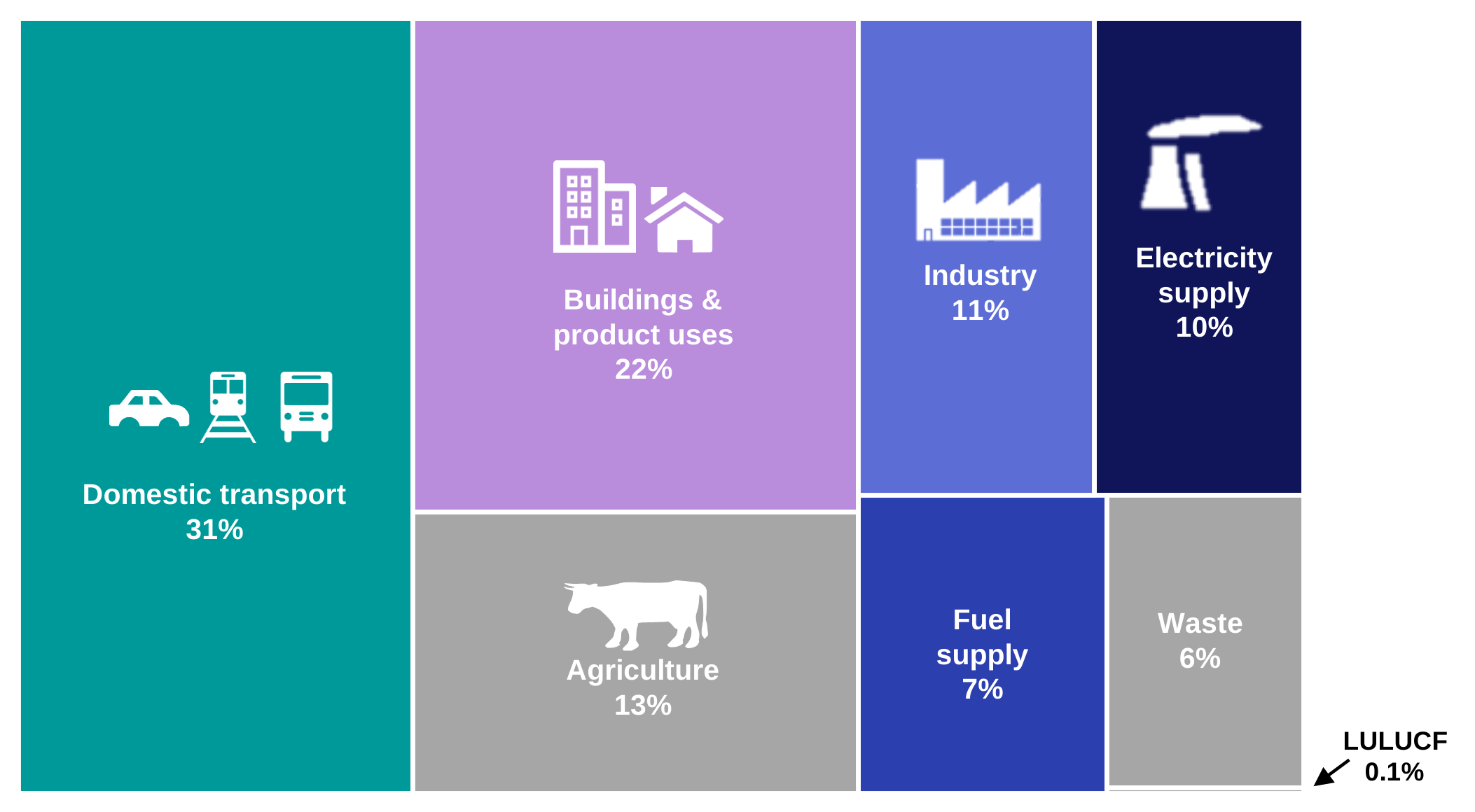
Note: Estimates of agriculture, waste, and land use, land use change and forestry (LULUCF) sector emissions for 2025 are largely derived from projections.
The next sections break down provisional emissions estimates by sector.
Electricity supply
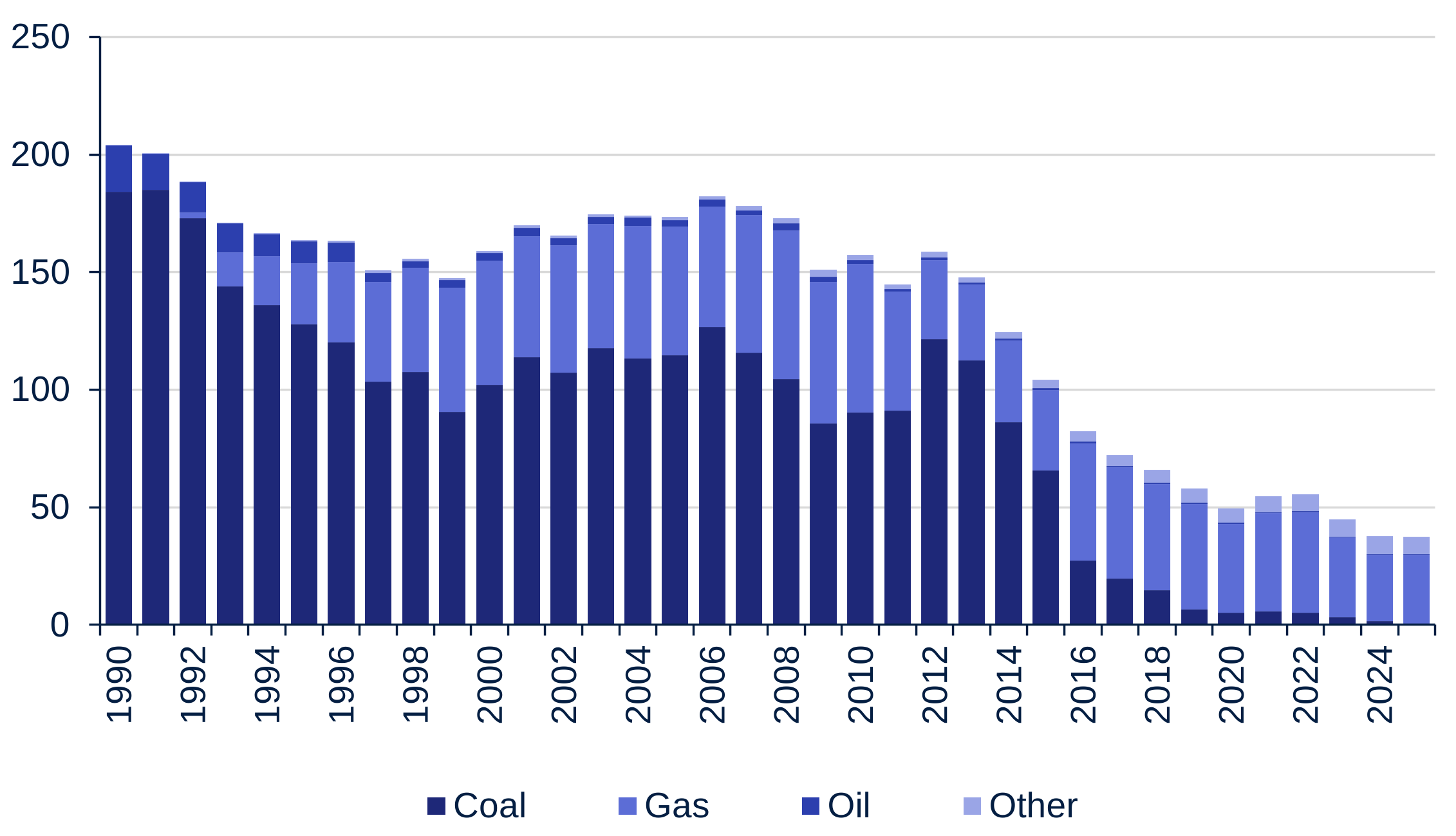
The electricity supply sector consists of emissions from the combustion of fuels in electricity generation from power stations. It is estimated to have been responsible for 10% of emissions in 2025, with carbon dioxide accounting for 98% of emissions for this sector. There was a 1% fall in emissions from the electricity supply sector between 2024 and 2025. This was largely due coal emissions in the electricity supply sector falling to 0 in 2025, due to the closure of the UK’s last coal powered station in September 2024. There was a slight increase in total demand for electricity in 2025, with total electricity generation 2% higher than in 2024 and net imports falling 11% compared to the record high in 2024. Overall, electricity supply sector emissions from gas use increased by 5% in 2025 when compared to 2024. This was offset by renewable generation reaching a record share of 52% of total generation.
Figure 5: Greenhouse gas emissions from electricity supply, UK, 1990-2025 (MtCO2e), Table 4a
Note: 2025 estimates are provisional.
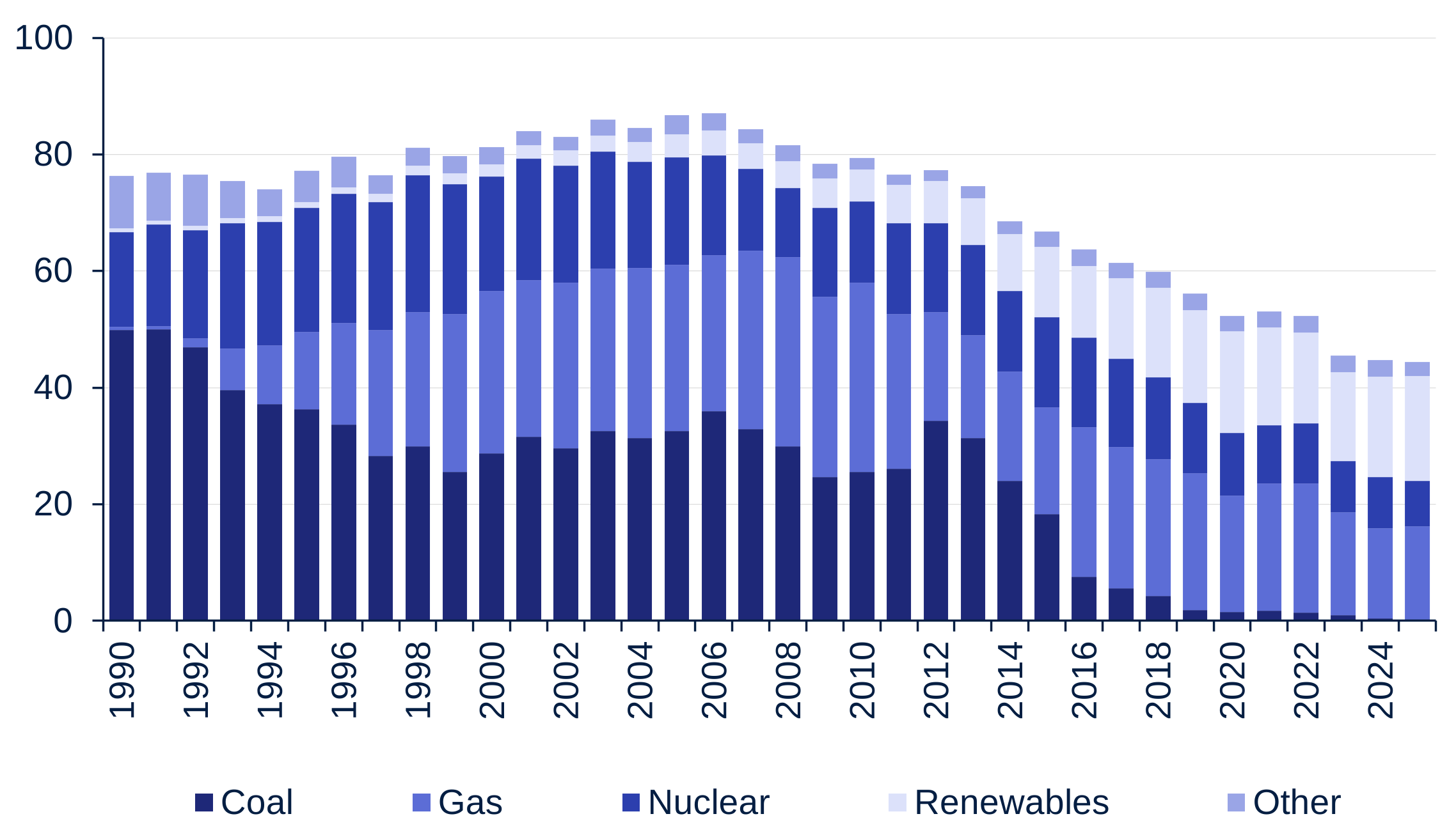
Between 1990 and 2025, electricity supply sector emissions decreased by 82%. The long-term decrease in electricity supply sector emissions has mainly resulted from changes in the mix of fuels being used for electricity generation with a switch from coal to natural gas and growth in the use of renewable energy sources, combined with greater efficiency resulting from improvements in technology and a decline in the relative importance of energy intensive industries. In 2025, coal did not account for any fuel used for electricity generation, compared to accounting for 65% in 1990. Nuclear and renewables, which are low carbon energy sources, accounted for a record high 65% of fuel used for electricity generation in 2025, up from 22% in 1990[footnote 5].
Figure 6: Fuel used for electricity generation, UK, 1990-2025 (Million tonnes of oil equivalent (Mtoe))
Source: Table 5.1.1, Digest of UK Energy Statistics (DUKES) 2025 and Table 5.1, Energy Trends March 2026 Excel data tables
Notes: 1. Figure 6 shows different fuel groupings to Figure 5 as not all fuels produce direct emissions
2. 2025 estimates are provisional.
Fuel supply
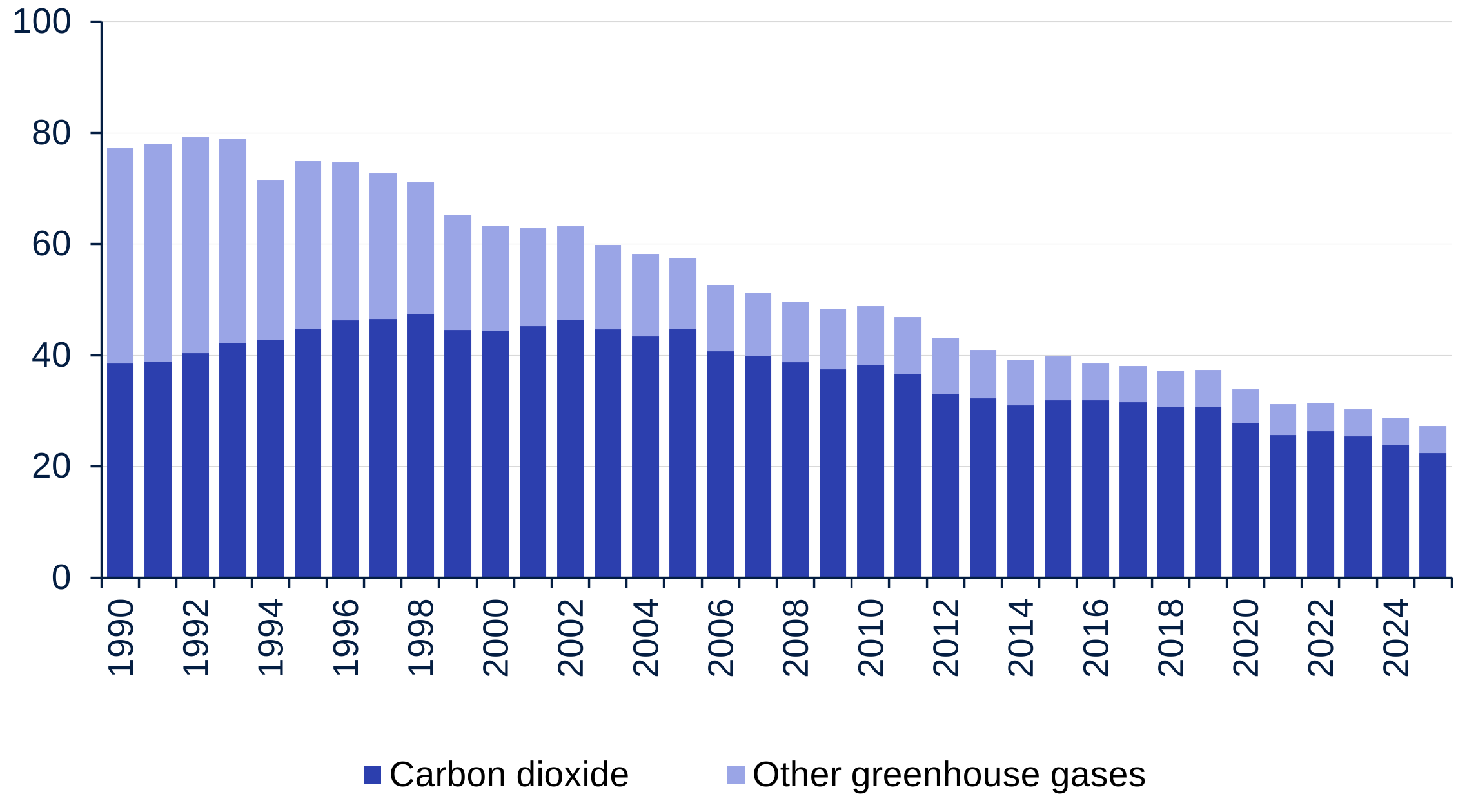
The fuel supply sector consists of emissions that arise during the production and supply of fuels, for example from the combustion of fuels in oil refineries and at oil and gas platforms, the flaring and venting of gas from oil and gas facilities, leakages from the gas network and methane emissions from coal mining. Fuel supply accounted for 7% of emissions in 2025, most of which were from oil and gas supply. Carbon dioxide accounted for 82% of emissions for this sector.
Fuel supply sector emissions decreased by 5% between 2024 and 2025, largely due to a reduction in oil and gas supply combustion. Since 1990, fuel supply emissions have decreased by 65%.
The long-term decline in emissions from the fuel supply sector has been a result of lower domestic production of coal. Deep-mined coal production has declined steadily over the period, with the last large deep mines all closing in 2015.
Figure 7: Greenhouse gas emissions from fuel supply, UK, 1990-2025 (MtCO2e), Table 1a and 1b
Note: 2025 estimates are provisional.
Domestic transport
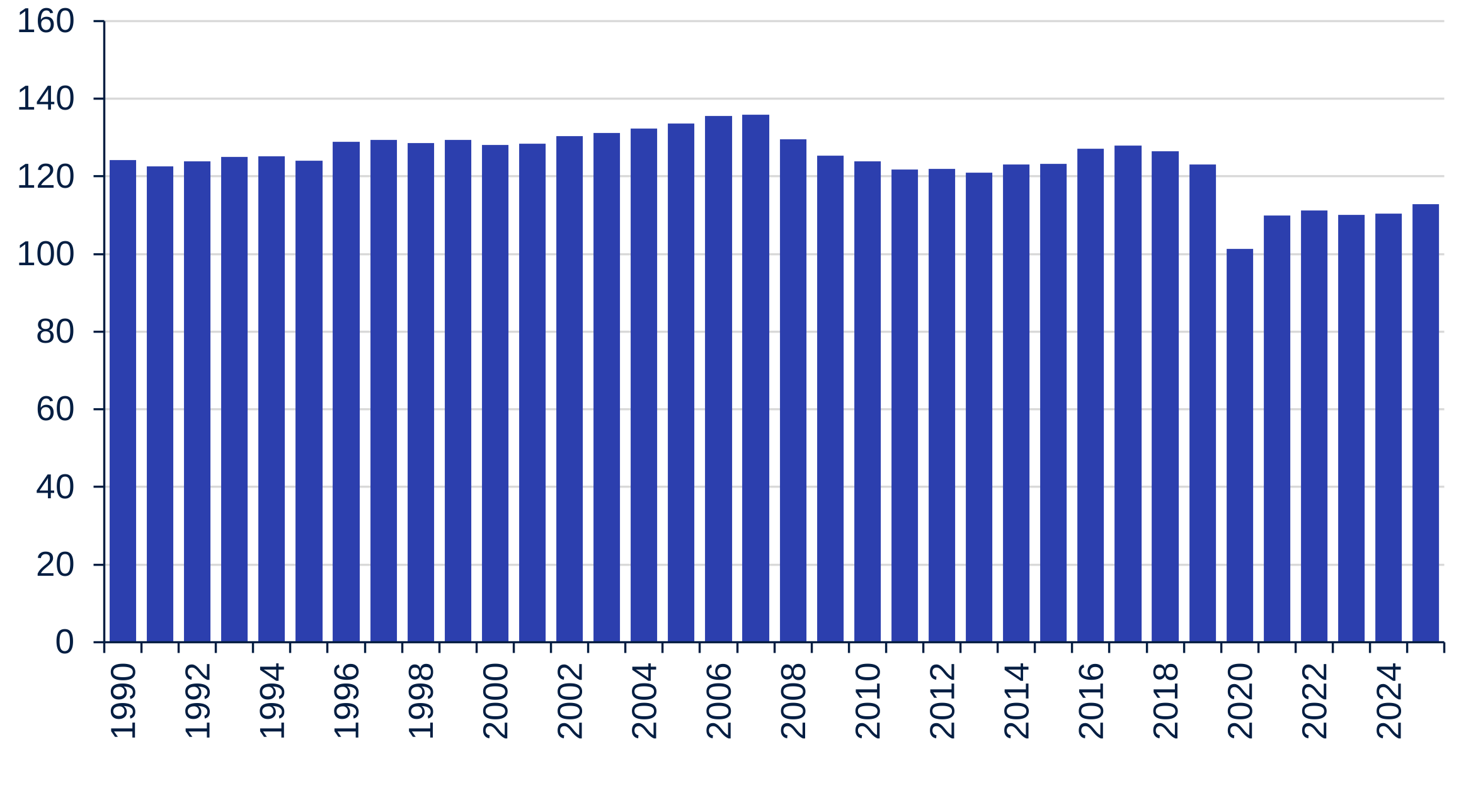
The domestic transport sector consists of emissions from road vehicles, domestic aviation and shipping (including military), fishing vessels, and railways. It does not include emissions from international aviation or shipping. In 2025, domestic transport accounted for 31% of all emissions, with carbon dioxide accounting for 98% of emissions for this sector. The main source of emissions from this sector is the use of petrol and diesel in road vehicles.
Domestic transport sector emissions increased by 2% between 2024 and 2025, largely due to increased petrol and diesel use in road transport[footnote 6].
Between 1990 and 2025, domestic transport sector emissions have decreased by 9%. Primarily as a result of a continual growth in vehicle kilometres travelled on roads[footnote 7], domestic transport emissions grew to a peak in 2007, 9% higher than in 1990. Since then, up until the COVID-19 pandemic, emissions from this sector had fallen to around 1990 levels, driven mainly by improvements in new car fuel efficiency[footnote 8], and lower traffic growth following the 2008/2009 recession. Domestic transport sector emissions continue to remain below levels seen prior to the COVID-19 pandemic. In 2025, domestic transport sector emissions are estimated to be 8% lower than in 2019, the last pre-pandemic year.
Figure 8: Greenhouse gas emissions from domestic transport, UK, 1990-2025 (MtCO2e), Table 1a
Note: 2025 estimates are provisional.
Buildings and product uses
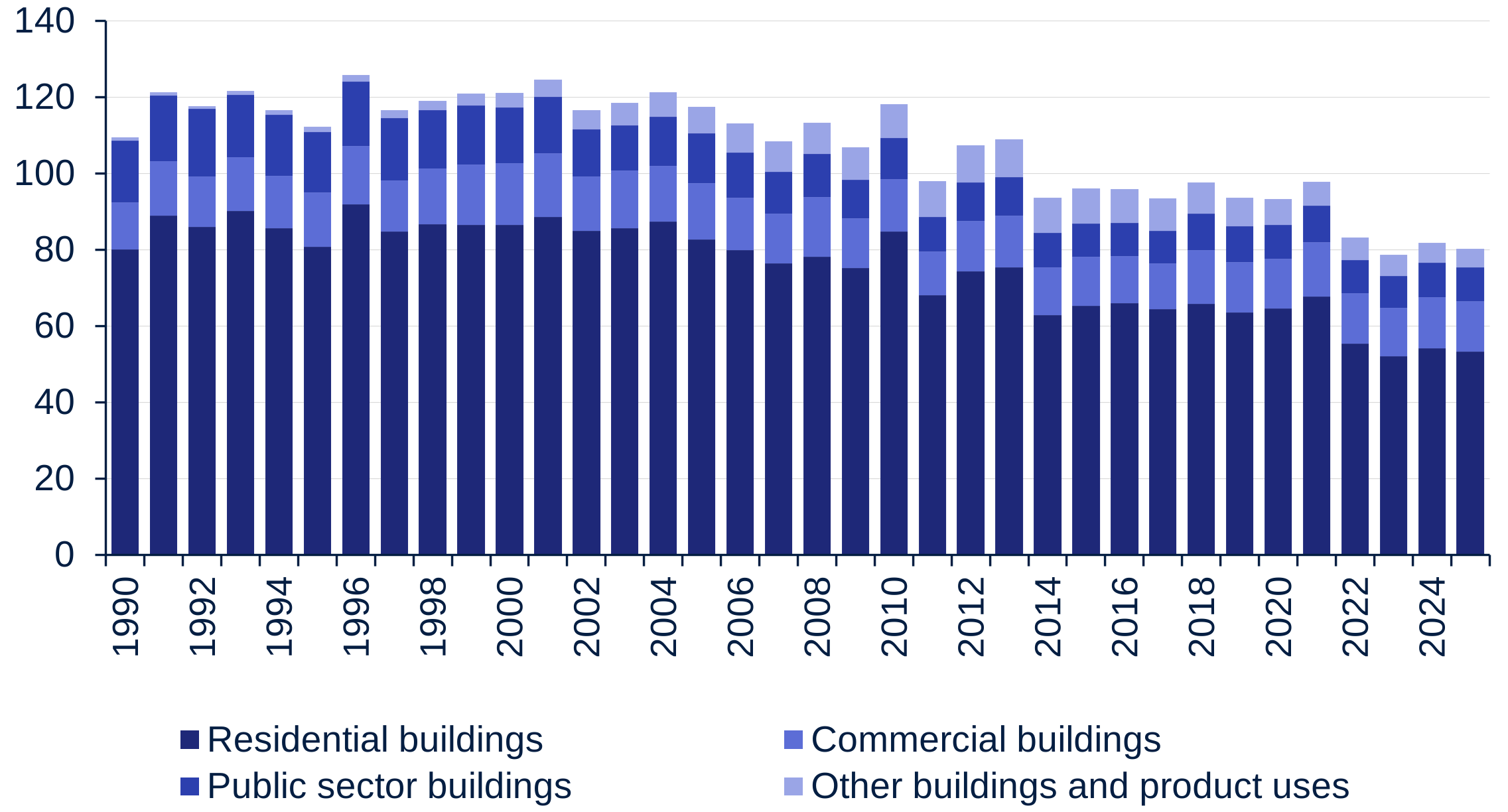
The buildings and product uses sector consists primarily of emissions from fuel combustion in buildings, largely from the use of natural gas and other fuels for heating and cooking. It also includes emissions that directly arise from the use of products such as refrigeration and air conditioning, garden machinery, anaesthetics, metered dose inhalers and aerosols. In 2025, it is estimated to have been responsible for 22% of emissions. Of these emissions, 66% were from fuel combustion in residential buildings, 16% in commercial buildings, 11% in public sector buildings with the remaining 6% from other buildings and product uses.
It should be noted that the sector breakdowns in these estimates present emissions by source, whereby emissions and removals are typically allocated to the sector in which they are emitted or removed from the atmosphere. Therefore, emissions related to electricity use in buildings, including electricity use for heating, are attributed to power stations and are therefore included in the electricity supply sector rather than the buildings and product uses sector.
There was a 2% fall in emissions from the buildings and product uses sector between 2024 and 2025. Between 1990 and 2025, buildings and product uses sector emissions have decreased by 27%. Emissions from buildings are influenced by external temperatures, with colder temperatures driving higher emissions due to increased use of heating. Overall, temperatures in 2025 (similar to other recent years) were 0.9 degrees Celsius higher than the 30-year long term mean, keeping buildings emissions down relative to earlier years[footnote 9].
Variations in temperature did have some impact on the trend in buildings emissions from 2024 to 2025. The annual average number of heating degree days[footnote 10] was similar across the two years, but by quarter, were higher in the first quarter and lower in the rest of the year. Therefore, emissions from buildings and product uses were higher in the first quarter of 2025 compared to the same period in 2024. This was outweighed by lower emissions from this sector in the remaining three quarters of 2025 compared to the previous year, leading to an overall decrease in annual emissions.
Figure 9: Territorial greenhouse gas emissions from buildings and product uses, UK, 1990-2025 (MtCO2e), Table 1a
Note: 2025 estimates are provisional.
Residential buildings
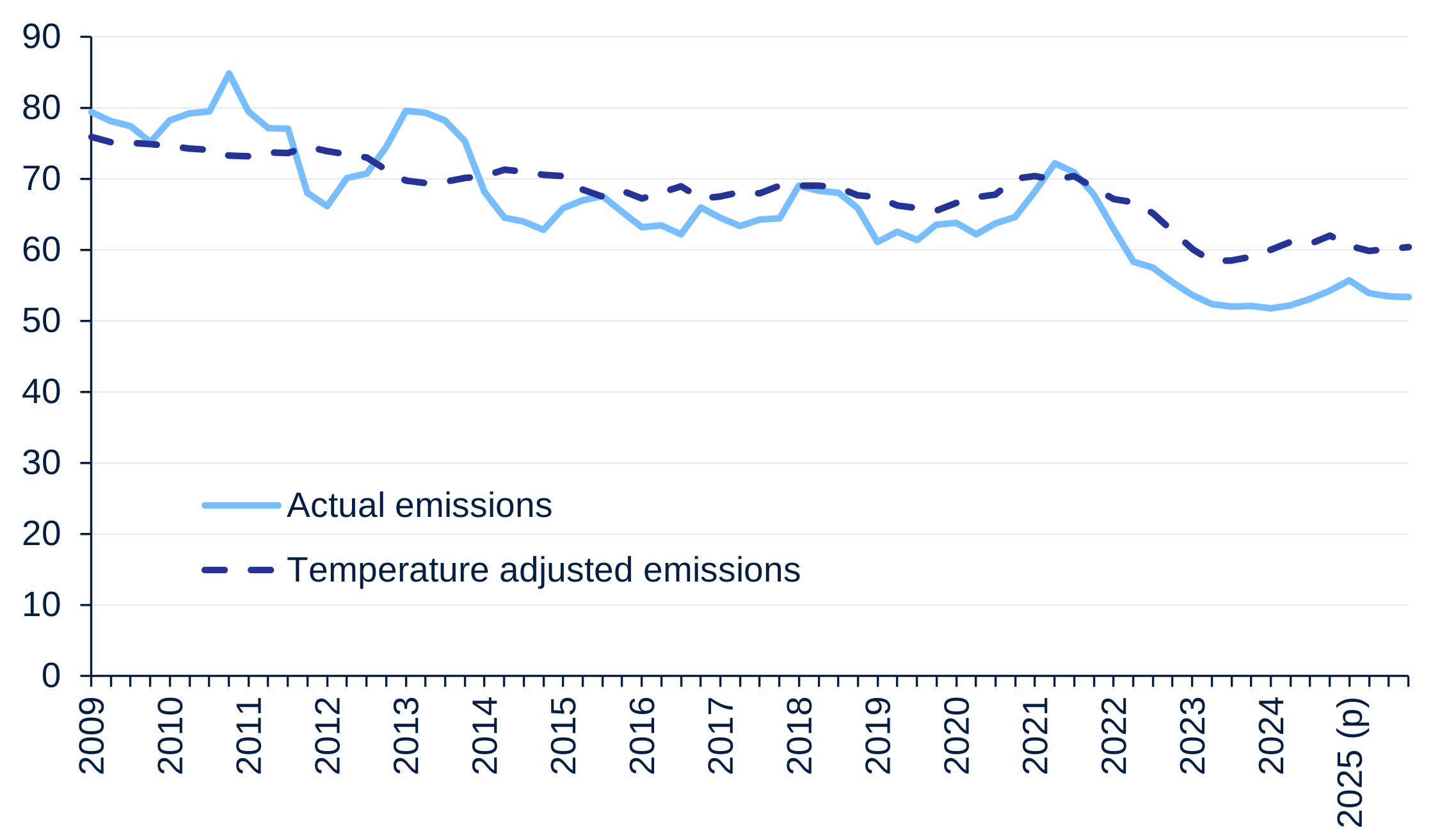
The main source of emissions from residential buildings is the use of gas for heating and cooking. Emissions from residential buildings are estimated to have decreased by 2% in 2025 when compared to 2024. Since 1990, emissions from residential buildings have decreased by 33%.
As shown in Figure 10, emissions from residential buildings fluctuate reflecting year-on-year variation in weather conditions. Above average temperatures and fewer heating degree days since 2022 have kept residential buildings emissions down relative to earlier years. Annual heating degree days were similar in 2025 to 2024, but by quarter, were higher in the first quarter of the year and lower in the later three quarters. Therefore, actual emissions from residential buildings increased in the first quarter of the year compared to 2024 and decreased in the remaining quarters of the year. If weather conditions for both 2024 and 2025 had followed long-term trends, there would have been a decrease of 2% in residential buildings emissions as modelled adjusted for temperature.
Figure 10: Actual and temperature adjusted greenhouse gas emissions from residential buildings, UK, Q1 2009-Q4 2025 (MtCO2e), Table 3a
Note: 2025 estimates are provisional.
Commercial buildings
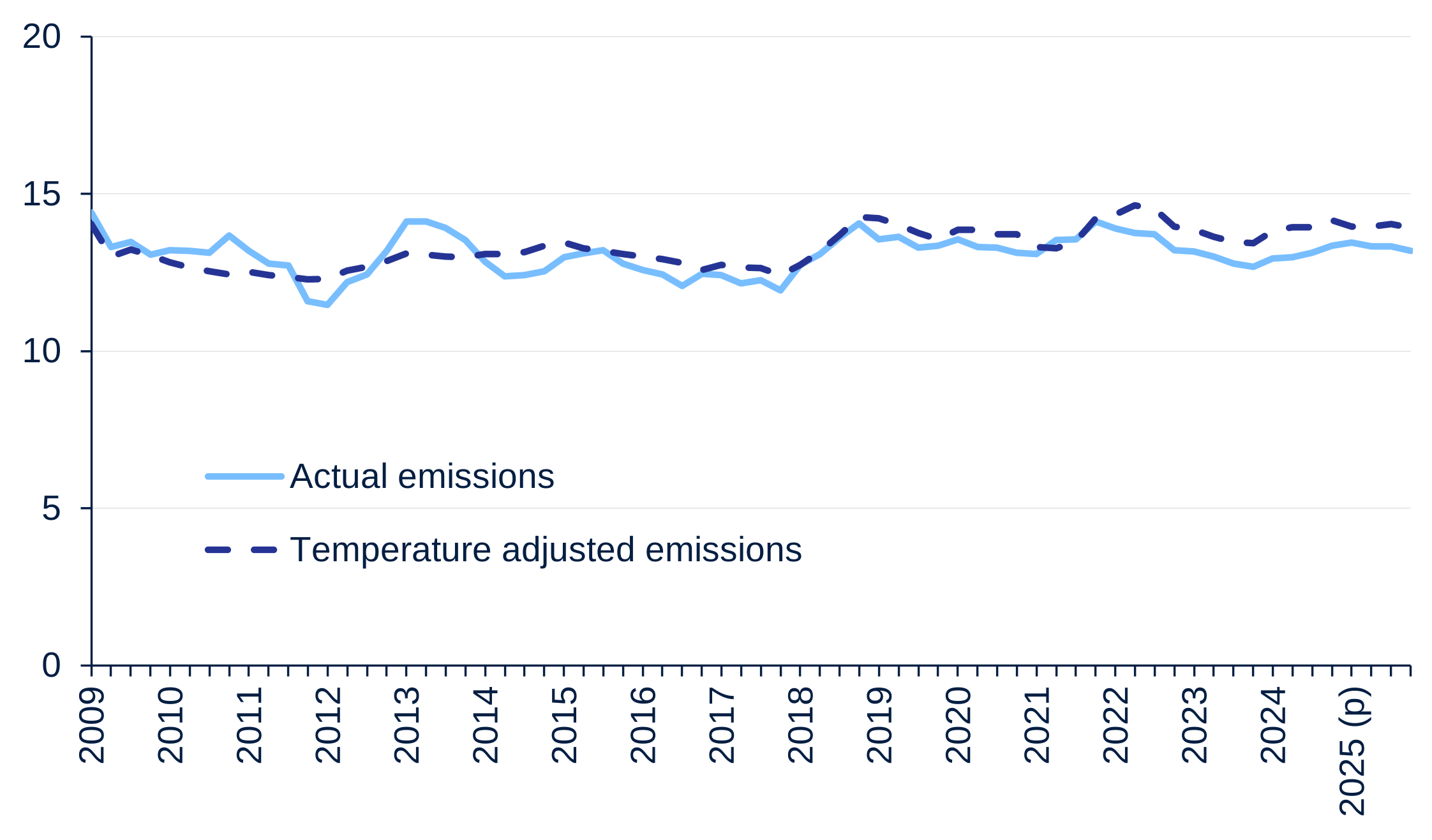
The main source of emissions from commercial buildings is the use of gas for heating. Emissions from commercial buildings are estimated to have decreased by 1% in 2025 when compared to 2024. Since 1990, emissions from commercial buildings have increased by 6%. As shown in Figure 11, emissions from commercial buildings see some fluctuations due to year-on-year variation in weather conditions, but these are less pronounced than fluctuations for residential buildings.
Figure 11: Actual and temperature adjusted greenhouse gas emissions from commercial buildings, UK, Q1 2009-Q4 2025 (MtCO2e), Table 3a
Note: 2025 estimates are provisional.
Public sector buildings
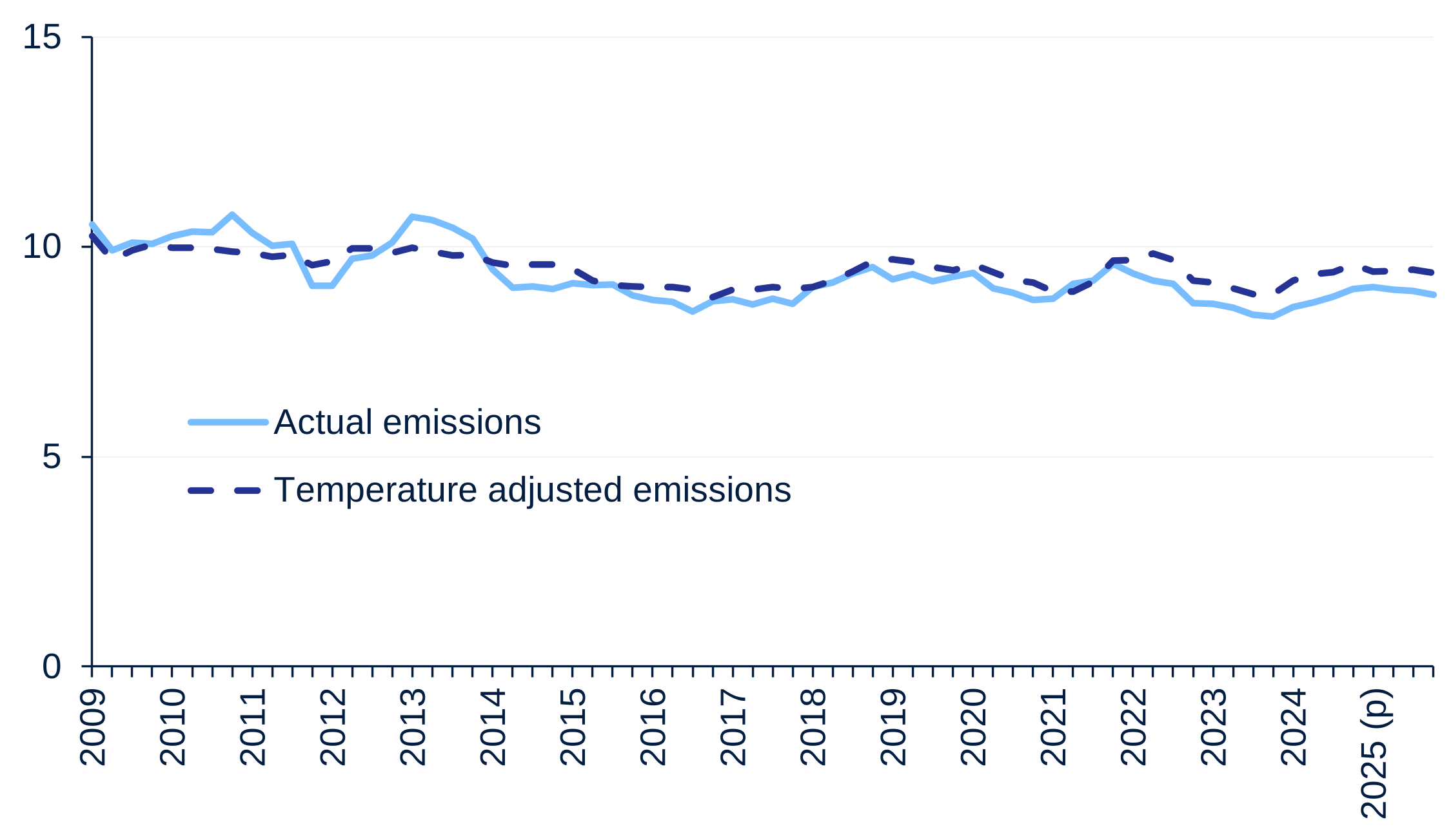
The main source of emissions from public sector buildings is the use of gas for heating. Emissions from public sector buildings are estimated to have decreased by 2% in 2025 when compared to 2024. Since 1990, emissions from public sector buildings have decreased by 45%. As shown in Figure 12, emissions from public sector buildings see some fluctuations due to year-on-year variation in weather conditions, but these are less pronounced than fluctuations for residential buildings.
Figure 12: Actual and temperature adjusted greenhouse gas emissions from public sector buildings, UK, Q1 2009-Q4 2025 (MtCO2e), Table 3a
Note: 2025 estimates are provisional.
Industry
The industry sector includes emissions from fuel combustion at industrial sites and in industrial machinery. It also includes emissions resulting from industrial processes and emissions of F gases from industrial uses such as in refrigeration systems. The industry sector is estimated to have been responsible for 11% of emissions in 2025, with carbon dioxide emissions accounting for 97% of these emissions.
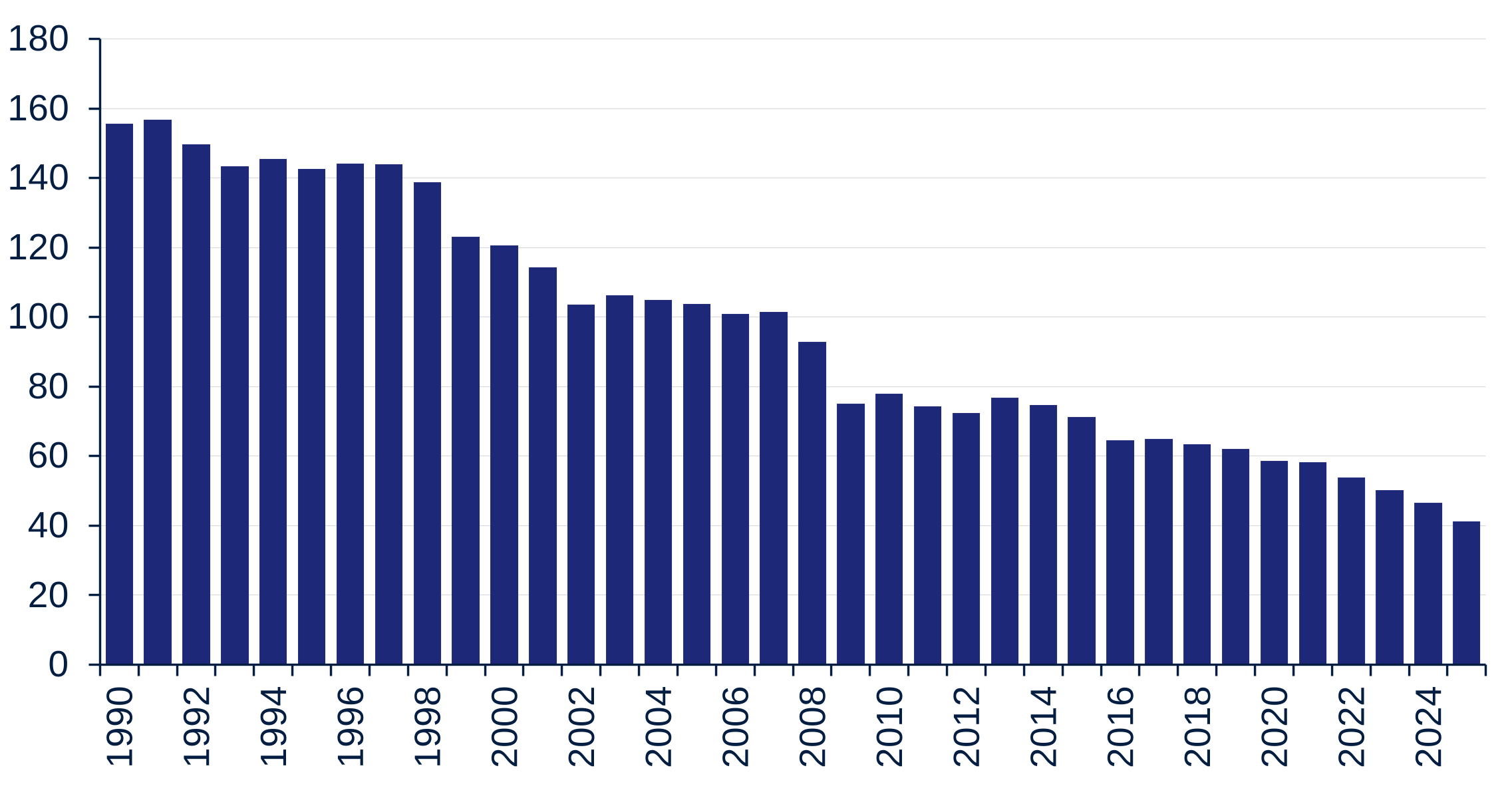
Between 2024 and 2025, there was a 12% fall in emissions from the industry sector, largely due to blast furnace closures in the iron and steel industry and reduced gas use across industries. Since 1990, emissions from the industry sector have decreased by 74%.
Figure 13: Greenhouse gas emissions from the industry sector, UK, 1990-2025 (MtCO2e)
Note: 2025 estimates are provisional.
Other sectors
Most emissions from the agriculture, waste and LULUCF sectors, as well as for the other buildings and product uses subsector are not related to energy use. Therefore, provisional estimates for the majority of emissions from these sectors cannot be derived from provisional energy statistics. Instead, non-energy use emissions are largely assumed to have changed in line with latest projections[footnote 11]. Provisional estimates indicate that, between 2024 and 2025, emissions from agriculture, waste and LULUCF sectors fell by 1% (1 MtCO2e).
2025 provisional greenhouse gas emissions by fuel type
In the data tables accompanying this publication, Table 4a shows annual greenhouse gas emissions by sector and fuel type and Table 4b shows annual CO2 emissions by sector and fuel type.
The combustion of fuel releases both energy and emissions. Emissions released by the production of one unit of power depend on the type of fuel that is burned. For example, since coal has a higher carbon content than gas, more carbon dioxide emissions result from burning one tonne of coal to generate a unit of power than from one tonne of gas.
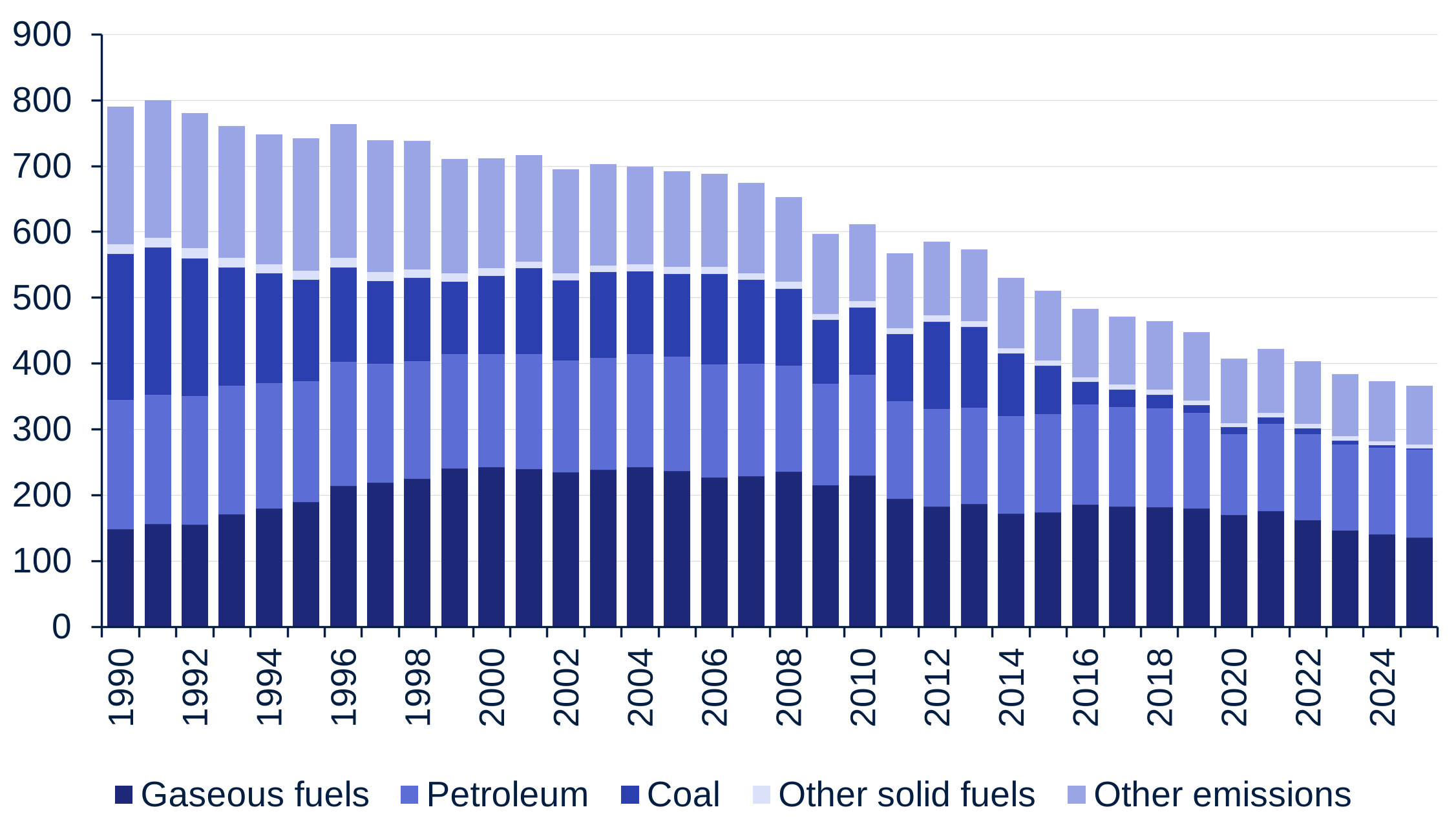
In 2025, use of gaseous fuels and petroleum each accounted for 37% of all greenhouse gas emissions. Natural gas is the most prominent gaseous fuel used in the UK; it is used for heat and electricity generation. Meanwhile, most petroleum use occurs in road vehicles. Coal use accounted for 1% of emissions, whereas other solid fuel use accounted for 2%. Other emissions not related to fuel use accounted for the remaining 24% of emissions.
The largest absolute change in emissions in 2025 was from the use of gas, down 4% (5 MtCO2e) when compared to 2024, largely as a result of decreased gas use for industry that outweighed an increase in gas use for electricity supply. However, the largest percentage change in emissions in 2025 was from the use of coal, down 47% (2 MtCO2e) when compared to 2024. The reduction in coal use emissions is largely due to the end of use in electricity supply and reduced use in industry. Petroleum use emissions were up 2% (2 MtCO2e) in 2025 when compared to 2024, largely as a result of increased petrol and diesel use in passenger cars. Other solid fuel use emissions were down 13% (1 MtCO2e) in 2025 when compared to 2024.
Between 1990 and 2025, emissions decreased by 54%. The largest factor behind this long-term decrease was the change in the mix of fuels being used for electricity generation, with a shift away first from coal to gas in the 1990s, and more recently to renewable energy sources. Since 1990, emissions from coal use have decreased by 99%. Over the same period, gas and petroleum use emissions have decreased by 9% and 32% respectively, but have increased as a share of UK emissions since emissions from other sources have fallen more quickly.
Figure 14: Greenhouse gas emissions by type of fuel, 1990-2025 (MtCO2e), Table 4a
Note: 2025 estimates are provisional.
2025 temperature adjusted greenhouse gas emissions
In the data tables accompanying this publication, tables 1a and 1b show temperature adjusted annual greenhouse gas and CO2 emissions respectively. Quarterly temperature adjusted totals are shown in tables 2a and 2b. Temperature adjusted moving annual totals are shown tables 3a and 3b.
The provisional statistics include estimates of emissions had temperatures in each year aligned with the 30-year long-term average between 1991 and 2020. These apply a temperature adjustment to some quarterly energy use emissions to estimate what the trend in emissions would have been without the impact of differences in external temperatures. When temperatures are lower there is greater use of natural gas and electricity for heating buildings, so the buildings and product uses sector typically sees the largest deviations between actual and temperature adjusted emissions.
Table A compares actual and temperature adjusted emissions by sector in 2024 and 2025, based on the estimated historical impacts of temperatures on emissions. There was a similar total year-on-year trend between actual and temperature adjusted emissions in 2025 compared to 2024, indicating that variations in temperature were not a significant factor driver of the annual trend in emissions between the years.
Average temperatures and heating degree days in 2025 were similar to those in 2024, remaining above the 30-year long-term averages, as with recent years since 2022. This has kept buildings emissions down in these years. Therefore, actual emissions in 2025 are estimated to be 4% (14 MtCO2e) lower than emissions modelled where temperatures had been in line with the long-term average.
Table A: Actual and temperature adjusted greenhouse gas emissions by sector, Table 1a
UK, 2024-2025, MtCO2e
| TES Sector | 2024 | 2025 | 2024-2025 percentage change | 2024 (Temperature adjusted) | 2025 (Temperature adjusted) | 2024-2025 percentage change (Temperature adjusted) |
|---|---|---|---|---|---|---|
| Electricity supply | 37.7 | 37.4 | -0.7% | 42.2 | 41.6 | -1.6% |
| Fuel supply | 28.8 | 27.3 | -5.3% | 28.8 | 27.3 | -5.3% |
| Domestic transport | 110.4 | 112.9 | 2.3% | 110.4 | 112.9 | 2.3% |
| Buildings and product uses | 81.8 | 80.4 | -1.7% | 90.9 | 88.7 | -2.5% |
| Industry | 46.5 | 41.1 | -11.6% | 48.2 | 42.7 | -11.5% |
| Other sectors | 68.3 | 67.5 | -1.1% | 68.3 | 67.5 | -1.1% |
| Total | 373.4 | 366.6 | -1.8% | 388.8 | 380.6 | -2.1% |
2025 provisional greenhouse gas emissions by quarter
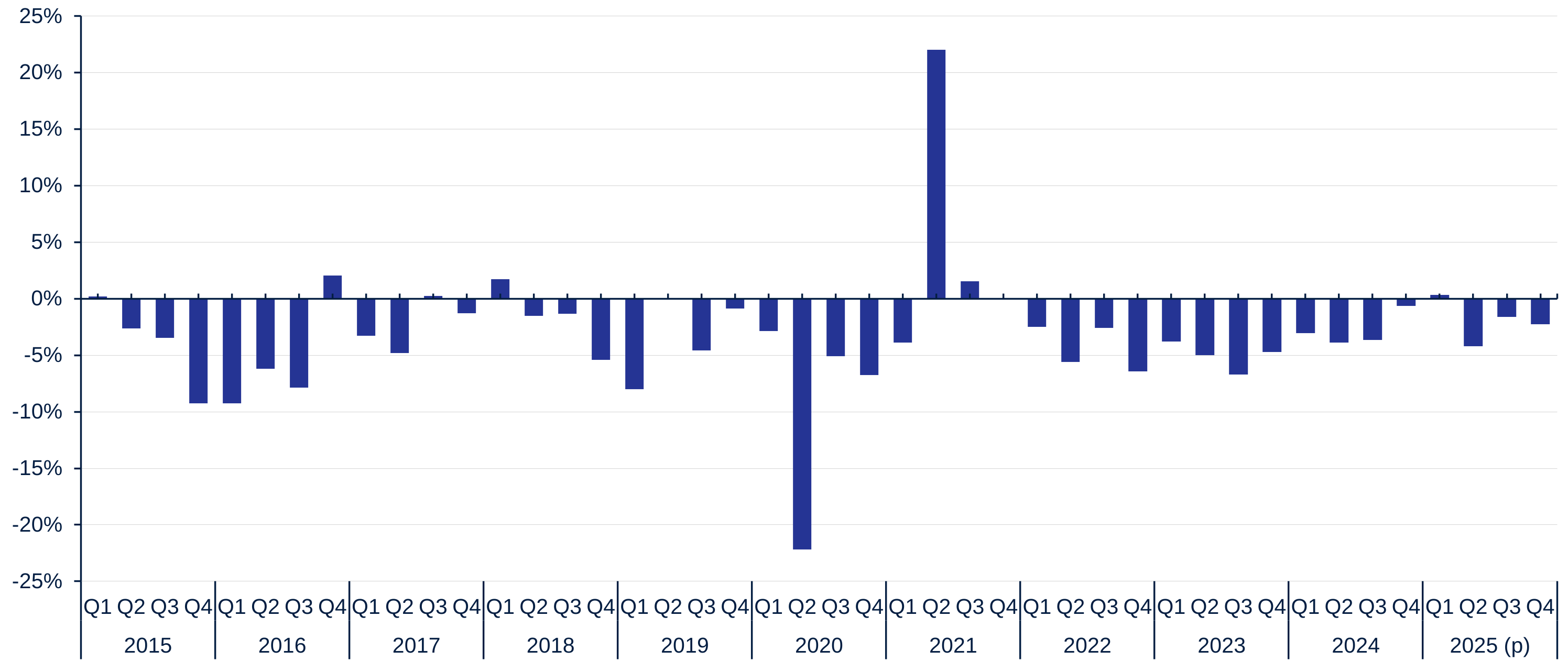
Figure 15: Percentage change in quarterly greenhouse gas emissions from previous year, UK, Q1 2015-Q4 2025, Table 2a
Note: 2025 estimates are provisional.
Changes in emissions in 2025 when compared to the year before varied throughout the year, as did the drivers behind these. Heating degree days were higher in the first quarter and lower in the remaining quarters of 2025 when compared to 2024. This caused some variation in the trend in quarterly emissions between the two years. Emissions in quarter 1 were up 0.3% in 2025 compared to the same quarter in 2024, due to increased emissions from the buildings and product uses sector. Emissions were down in the remaining 3 quarters of 2025 compared to the same periods of 2024.
There was a 0.3% increase in emissions in first quarter of 2025 when compared to the same period in 2024. This was primarily driven by a 5% increase in buildings and product uses emissions, the majority of which were from residential buildings, and a 7% increase in emissions from electricity supply. These outweighed a 13% decrease in emissions from industry.
The second quarter of 2025 saw a 4% fall in emissions when compared to the same period in 2024. The largest driver of this was a 14% decrease in buildings and product uses emissions, followed by a 17% decrease in industry sector emissions.
The third and fourth quarters of 2025 each saw 2% decreases in emissions compared to the respective periods in 2024. For quarter 3, this was largely driven by a 10% decrease in the industry sector, whilst reduced emissions in quarter 4 resulted from a 10% decrease in electricity supply emissions compared to the same period in 2024.
2025 provisional greenhouse gas emissions from international aviation and shipping
In the data tables accompanying this publication, Table 5 shows greenhouse gas emissions arising from use of fuels from UK international aviation and shipping bunkers.
Emissions from international aviation and shipping can be estimated from refuelling from bunkers[footnote 12] at UK airports and ports, whether by UK or non-UK operators. Under the reporting guidelines agreed by the UNFCCC, these emissions are not included in the UK emissions total that is submitted to the UNFCCC but are reported as memo items in national greenhouse gas inventories. However, it is important to note that whether emissions from refuelling at UK-based international aviation and shipping can be used as an accurate estimate of UK international aviation and shipping emissions will depend on what assumptions are being made about how to allocate international aviation and shipping emissions to different countries.
In line with international reporting requirements, the UK 2030 and 2035 emissions reduction targets under the Paris Agreement (known as the UK’s Nationally Determined Contribution) do not include emissions from international aviation and shipping. Instead, Parties to the UNFCCC are required to act to limit or reduce emissions from international services working through the International Civil Aviation Organization (ICAO) and International Maritime Organization (IMO), the international organisations responsible for formulating policies and setting targets for reducing emissions from international aviation and shipping respectively[footnote 13],[footnote 14].
However, in 2021 the UK government set the Sixth Carbon Budget (covering 2033-37) to include the UK share of international aviation and shipping emissions, as recommended by the Climate Change Committee. This is the first time emissions from international aviation and shipping will be included in UK domestic carbon budget targets.
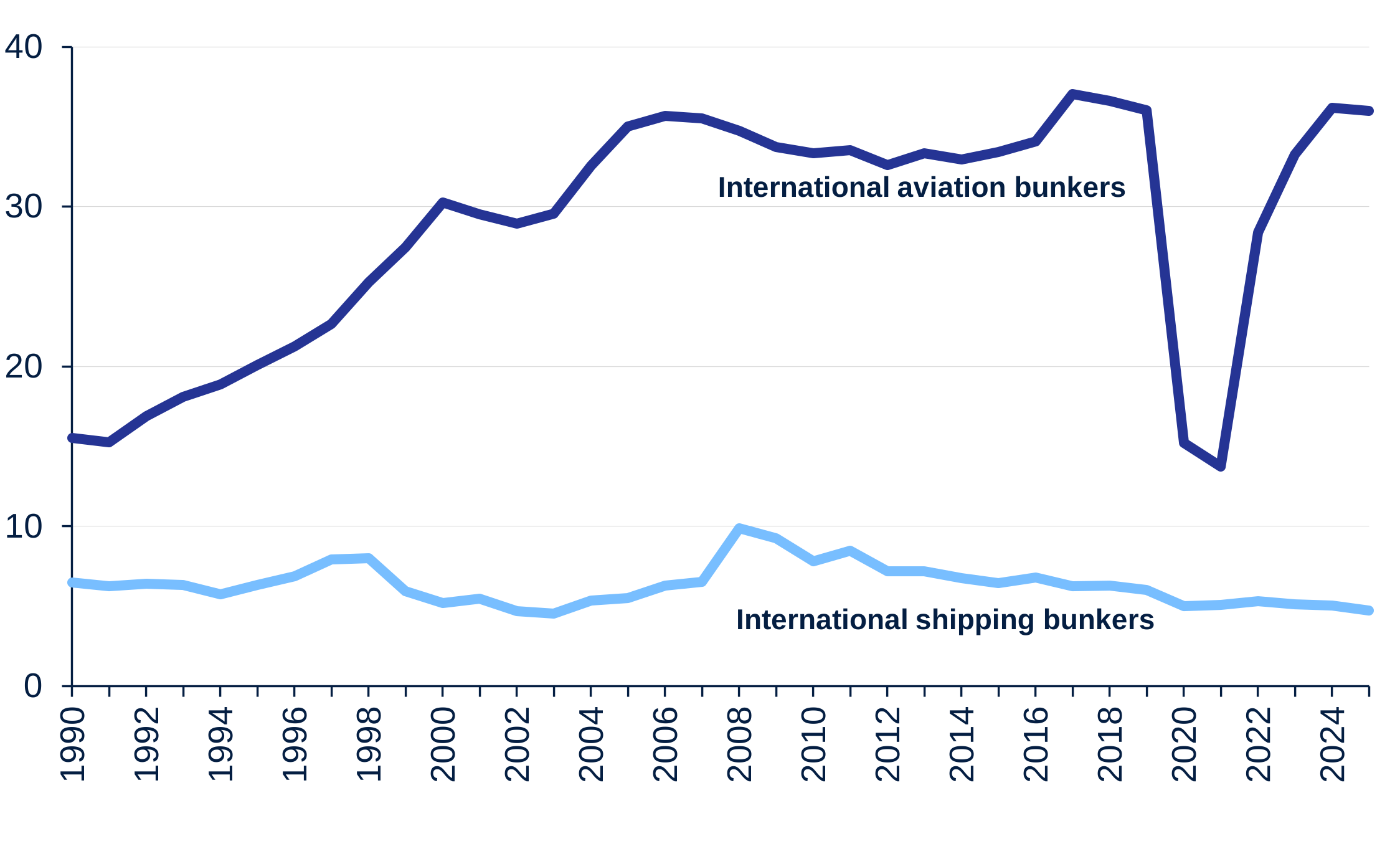
International aviation bunker emissions decreased by 1% (0.2 MtCO2e) between 2024 and 2025, and were 0.1% lower than in 2019, the most recent pre-pandemic year. Emissions from international aviation bunkers have more than doubled since 2021 due to a recovery in air traffic following the COVID-19 pandemic. Between 1990 and 2006, emissions from UK international aviation fuel use more than doubled. After 2006, emissions fell slightly and then increased again, reaching a peak in 2017. High altitude aviation has a greater greenhouse effect due to the formation of persistent condensation trails (contrails) over and above that of carbon dioxide emissions from fuel alone, but this is not reflected in these estimates.
International shipping bunker emissions decreased by 6% (0.3 MtCO2e) between 2024 and 2025, and were 21% lower than in 2019, the most recent pre-pandemic year. UK international shipping fuel use emissions did not see as pronounced a fall in 2020 when compared to aviation but they remain at a lower level than before the COVID-19 pandemic following the fall in shipping traffic that has occurred since. Between 1990 and 2025, emissions from UK shipping bunkers have fluctuated and had been around their 1990 level pre-pandemic.
Figure 16: Greenhouse gas emissions from UK-based international aviation and shipping bunkers, 1990-2025 (MtCO2e), Table 5
Note: 2025 estimates are provisional.
Accompanying tables
The following tables are available in Excel format on the UK territorial greenhouse gas emissions statistics collection page on GOV.UK:
| Table 1a | UK annual territorial greenhouse gas emissions, including temperature adjusted greenhouse gas emissions and breakdowns by source sector |
| Table 1b | UK annual territorial carbon dioxide emissions, including temperature adjusted carbon dioxide emissions and breakdowns by source sector |
| Table 2a | UK territorial greenhouse gas emissions for individual quarters, including temperature adjusted greenhouse gas emissions and breakdowns by source sector |
| Table 2b | UK territorial carbon dioxide emissions for individual quarters, including temperature adjusted carbon dioxide emissions and breakdowns by source sector |
| Table 3a | UK territorial greenhouse gas emissions annual totals to the end of each quarter, including temperature adjusted greenhouse gas emissions and breakdowns by source sector |
| Table 3b | UK territorial carbon dioxide emissions annual totals to the end of each quarter, including temperature adjusted carbon dioxide emissions and breakdowns by source sector |
| Table 4a | UK territorial greenhouse gas emissions by source sector and fuel type |
| Table 4b | UK territorial carbon dioxide emissions by source sector and fuel type |
| Table 5 | Estimated greenhouse gas emissions, arising from the use of fuels from UK international aviation and shipping bunkers |
Technical information
Methodology for producing the provisional emissions estimates
Data for 1990-2024 are consistent with the annual emissions presented in the 2024 final UK greenhouse gas emissions statistics publication. Data for 2025 emissions are provisional and do not follow the same full methodology. Energy use accounts for a large majority of UK emissions. Most of these emissions are estimated based on provisional energy statistics published at the same time as this statistical release by DESNZ in the quarterly Energy Trends publication. A small proportion of emissions related to energy use are assumed to remain the same as in 2024 as data from which to produce estimates for them is not available at the time of publication.
Most non-energy use emissions are based on a simple approach which assumes that the changes in emissions for each gas in each category between 2024 and 2025 were in line with the corresponding percentage change in emissions from 2024 to 2025 in the Energy and Emissions Projections: 2024 to 2050 published by DESNZ. Like the energy use emissions, a small number of non-energy use emissions are held constant from the previous year in the provisional estimates. This is because these emissions are not separated from energy use emissions in the proxy projections.
Energy use emissions are allocated to individual quarters within each year in proportion to the quarterly energy statistics. Otherwise, emissions are assumed to be spread evenly over the year.
Temperature adjustments are applied to certain activities and fuel types to remove the effect of external temperatures. The adjustments are determined by the relationships between emissions and the average number of heating degree days in each quarter and the deviations in heating degree days from the long-term average. More information on heating degree days and temperatures can be found in Energy Trends.
Further details of how these statistics have been estimated can be found alongside this statistical release in a separate methodology summary.
TES sectors
The TES sectors are defined as follows:
| Sector | Description |
|---|---|
| Electricity supply | Emissions from power stations for electricity generation, including incinerators generating energy from waste. Excludes emissions from organisations generating their own electricity (autogeneration) even when exported to the electricity grid. These emissions are instead included in the sector in which they occur. |
| Fuel supply | Emissions from the supply of fuels, e.g. oil, gas and coal. Includes activities such as extraction, production, venting, flaring, processing (e.g. oil refining) and distribution. Excludes emissions from coke production which are instead included in the industry sector as coke is primarily used in the iron and steel industry. |
| Domestic transport | Emissions from road vehicles, domestic aviation and shipping (including military), fishing vessels, and railways. Also includes emissions from transport related mobile machinery (e.g. at airports and ports) and F gases from mobile air conditioning and refrigeration. International aviation and shipping emissions are not included in the national total, though are reported separately. |
| Buildings and product uses | Emissions from fuel combustion in residential, public, and commercial buildings, largely for heating. Also includes emissions from house and garden mobile machinery, anaesthetics, F gases from air conditioning, refrigeration, heat pumps, aerosols as well as other product uses. Excludes emissions from industrial buildings which are instead included in the industry sector. |
| Industry | Emissions from fuel combustion in the manufacturing and construction industries, industrial processes, and F gases from industrial refrigeration. Emissions from coke production are included in this sector as coke is primarily used in the iron and steel industry. Includes emissions from organisations generating their own electricity and heat (autogeneration) even when exported to the electricity grid or used in heat networks. |
| Agriculture | Emissions from agricultural machinery and fuel combustion, livestock (enteric fermentation and manure management) and agricultural soils (excluding carbon stock changes which are included in the LULUCF sector). |
| Waste | Emissions from the treatment and disposal of waste, such as landfill, composting, incineration without energy recovery and wastewater handling. Excludes emissions from incinerators generating energy from waste as these are reported in the electricity supply sector. |
| Land use, land use change and forestry (LULUCF) | Net carbon dioxide emissions from carbon stock changes from forestland, cropland, grassland, wetlands, settlements and harvested wood products. Other greenhouse gas emissions from drainage (excl. croplands and intensive grasslands) and rewetting of soils, nitrogen mineralisation associated with loss and gain of soil organic matter, and fires. As carbon stock changes are included in this sector, carbon dioxide emissions of biogenic origin (e.g. burning biomass for energy) are excluded from other sectors to avoid double counting of emissions. |
These high-level sectors are made up of several more detailed sectors, which largely follow the definitions set out by the Intergovernmental Panel on Climate Change (IPCC)[footnote 15], and which are used in international reporting tables that are submitted to the UNFCCC every year. It is important to note that sectoral estimates presented in this statistical release are based on provisional energy data and are subject to change. The sectoral breakdown is given mainly for information, and is included in the publication for completeness, but sectoral estimates are more uncertain than the overall total.
Further information
Future updates to these statistics
On Thursday 25 June 2026 DESNZ will publish estimates of greenhouse gas emissions for UK local authorities and regions for 2024.
On Thursday 25 June 2026 DESNZ will also publish estimates of 1990-2024 UK territorial emissions by Standard Industrial Classification (SIC).
Final estimates of UK greenhouse gas emissions for 2025 will be published in February 2027, with a summary of any planned methodology changes published in advance of that in January 2027.
Provisional UK greenhouse gas emissions estimates for 2026 will be published in March 2027.
Related publications
- The UK National Inventory Document (NID) for 1990-2024 will be submitted to the United Nations Framework Convention on Climate Change (UNFCCC) by 15 April 2026. The report will contain national territorial greenhouse gas emissions estimates for 1990-2024 and descriptions of the methods used to produce the estimates. Previous UK submissions to the UNFCCC can be found on the National Atmospheric Emissions Inventory (NAEI) website.
- The background quality report provides a summary of quality issues relating to statistics on UK territorial greenhouse gas emissions.
- DESNZ also publishes UK territorial emissions projections based on assumptions of future emission reduction policies, economic growth, fossil fuel prices, electricity generation costs, UK population and other key variables.
- Further information about the Kyoto Protocol and the Paris Agreement can be found on the UNFCCC website.
- Estimates of territorial greenhouse gas emissions in the four countries of the UK are published on the NAEI website and for local authority areas on GOV.UK. In both cases estimates of emissions in 2024 will be published in June 2026.
- ONS publishes emissions on a residence basis in the UK Environmental Accounts. These statistics cover emissions caused by UK residents and businesses whether in the UK or abroad, but exclude emissions within the UK which can be attributed to overseas residents and businesses.
- Defra publishes the UK carbon footprint. These statistics present emissions on a consumption basis, covering emissions associated with the consumption of goods and services by households in the UK. They include estimates of emissions associated with each stage of the supply chain for those goods and services, regardless of where they occur, while excluding emissions occurring in the UK that are associated with the consumption of goods and services by households outside the UK.
- The latest UK energy statistics, including revisions to earlier years data, can be found in the Digest of UK Energy Statistics and the Energy Trends quarterly bulletin produced by the DESNZ. Any enquiries about the UK energy statistics should be sent to Energy.Stats@energysecurity.gov.uk.
- Detailed UK temperature data can be found on both the Met Office website and the weather statistics collection page on the GOV.UK website.
Revisions policy
The DESNZ statistical revisions policy sets out the revisions policy for these statistics, which has been developed in accordance with the UK Statistics Authority Code of Practice for Statistics. Emissions estimates for 2025 are provisional and are based on provisional UK energy statistics as well as projections. They will be revised when the final 2025 estimates are published in February 2027. The full time series going back to 1990 will also be revised at this time in line with any methodology changes made to the UK Greenhouse Gas Inventory.
Uses of these statistics
The provisional estimates are not used for any formal reporting of performance against UK emissions reduction targets, as this requires final estimates based on the UK Greenhouse Gas Inventory. However, these statistics give policy makers and other users an initial steer as to the trend in emissions between 2024 and 2025, helping to form an initial assessment of the extent to which the UK is on track to meet targets. For information on UK emissions targets and progress towards them, see the 2024 final UK greenhouse gas emissions statistics.
User engagement
Users are encouraged to provide comments and feedback on how these statistics are used and how well they meet user needs. Comments on any issues relating to this statistical release are welcomed and should be sent to GreenhouseGas.Statistics@energysecurity.gov.uk The DESNZ statement on statistical public engagement and data standards sets out the department’s commitments on public engagement and data standards as outlined by the Code of Practice for Statistics.
Accredited Official Statistics designation
Accredited Official Statistics are called National Statistics in the Statistics and Registration Service Act 2007. These Accredited Official Statistics were independently reviewed by the Office for Statistics Regulation (OSR) in June 2014 and had their accreditation reviewed in September 2018. They comply with the standards of trustworthiness, quality and value in the Code of Practice for Statistics and should be labelled Accredited Official Statistics. Our statistical practice is regulated by the OSR. OSR sets the standards of trustworthiness, quality and value in the Code of Practice for Statistics that all producers of official statistics should adhere to. You are welcome to contact us by emailing Greenhousegas.Statistics@energysecurity.gov.uk with any comments about how we meet these standards. Alternatively, you can contact OSR by emailing Regulation@statistics.gov.uk or via the OSR website.
Pre-release access to statistics
Some ministers and officials receive access to these statistics up to 24 hours before release. Details of the arrangements for doing this and a list of the ministers and officials that receive pre-release access to these statistics can be found in the DESNZ statement of compliance with the Pre-Release Access to Official Statistics Order 2008.
Contact
Responsible statistician: Antonia Ren
Email: GreenhouseGas.Statistics@energysecurity.gov.uk
Media enquiries: 020 7215 1000
Public enquiries: 07743 194032
-
Digest of UK Energy Statistics (DUKES), Table 1.1.2 Availability and consumption of primary fuels and equivalents (energy supplied basis), 1970 to 2024, DESNZ: https://www.gov.uk/government/statistics/energy-chapter-1-digest-of-united-kingdom-energy-statistics-dukes ↩
-
Energy Trends, Table 1.2 UK total energy, Inland energy consumption: primary fuel input basis, DESNZ: https://www.gov.uk/government/statistics/total-energy-section-1-energy-trends ↩
-
The global warming potentials (GWPs) used are from table 8.A.1 (without climate-carbon feedback) of Working Group 1 of the IPCC Fifth Assessment Report: Climate Change 2013 and summarised in Table 6.4 in the Excel tables in the 2024 final UK greenhouse gas emissions statistics ↩
-
United Nations Framework Convention on Climate Change: https://unfccc.int/process-and-meetings/what-is-the-united-nations-framework-convention-on-climate-change ↩
-
Energy Trends, Table 5.1 Fuel used in electricity generation and electricity supplied, DESNZ: https://www.gov.uk/government/statistics/electricity-section-5-energy-trends ↩
-
Energy Trends, Table 3.4 Supply and use of petroleum products, DESNZ: https://www.gov.uk/government/statistics/oil-and-oil-products-section-3-energy-trends ↩
-
Transport Statistics Great Britain, Roads and traffic (TSGB07), Table TSGB0702 (TRA0201) Road traffic (vehicle kilometres) by vehicle type in Great Britain, annual from 1949, Department for Transport: https://www.gov.uk/government/statistical-data-sets/tsgb07 ↩
-
Transport Statistics Great Britain, Energy and environment (TSGB03), Table TSGB0303 (ENV0103) Average new car fuel consumption, in Great Britain, annual from 1997, Department for Transport: https://www.gov.uk/government/statistical-data-sets/tsgb03 ↩
-
Energy Trends, Table 7.1 Average temperatures and heating degree days and deviations from the long term mean, DESNZ: https://www.gov.uk/government/statistics/energy-trends-section-7-weather ↩
-
Heating degree days measure how often temperatures fell below a base temperature of 15.5°C to indicate expected demand for building heating. ↩
-
Energy and Emissions Projections: 2024 to 2050, DESNZ: https://www.gov.uk/government/publications/energy-and-emissions-projections-2024-to-2050 ↩
-
A large container or compartment that stores fuel for ships or aircraft. ↩
-
More information on ICAO strategies for reducing international aviation emissions: https://www.icao.int/environmental-protection/Pages/default.aspx ↩
-
More information on IMO strategies for reducing international shipping emissions: https://www.imo.org/en/OurWork/Environment/Pages/2023-IMO-Strategy-on-Reduction-of-GHG-Emissions-from-Ships.aspx ↩