Personal Incomes Statistics 2023 to 2024: Commentary
Published 29 April 2026

© Crown copyright 2026
This publication is licensed under the terms of the Open Government Licence v3.0 except where otherwise stated. To view this licence, visit nationalarchives.gov.uk/doc/open-government-licence/version/3 or write to the Information Policy Team, The National Archives, Kew, London TW9 4DU, or email: psi@nationalarchives.gov.uk.
Where we have identified any third party copyright information you will need to obtain permission from the copyright holders concerned.
This publication is available at https://www.gov.uk/government/statistics/personal-incomes-statistics-for-the-tax-year-2023-to-2024/personal-incomes-statistics-2023-to-2024-commentary
1. Introduction
About this publication
Statistics about personal incomes are assessed using the annual Survey of Personal Incomes (SPI). The SPI is based on information held by HM Revenue and Customs (HMRC) on individuals who could be liable to United Kingdom (UK) Income Tax. It is carried out annually by HMRC and covers income assessable to tax for each tax year.
Most tables in this statistics release exclude individuals who are not taxpayers unless otherwise stated. This can occur for a number of reasons, for example if they have no Income Tax liability due to their deductions, reliefs and personal allowances exceeding their total income, or if their income is below the Personal Allowance. Figures cover the United Kingdom and tax year 2023 to 2024 unless stated otherwise. The SPI is compiled to provide information to the public, Members of Parliament, other Government Departments, companies, and organisations. It is a quantified evidence base from which to cost proposed changes to tax rates, personal allowances and other tax reliefs for Treasury Ministers. It is used to inform policy decisions within HMRC, the Treasury and the Devolved Administrations, as well as for tax modelling and forecasting purposes. In addition, it is used to provide summary information for the National Accounts that are prepared by the Office for National Statistics.
Supporting documents to the SPI annual publication are:
-
accompanying Accredited Official Statistics Tables 3.1 to 3.11 and the geography tables, Tables 3.12 to 3.15a by tax year.
-
summary statistics for Personal Incomes Statistics for the tax year 2023 to 2024
-
supporting documentation on the methodology used to produce these statistics is available Personal Incomes Statistics for the tax year 2023 to 2024: Supporting Documentation
Throughout this summary, individual figures have been rounded independently to 3 significant figures and percentages to one decimal place, unless stated otherwise. Therefore, the sum of component items may not necessarily add to the totals shown.
2. Table 3.1 and 3.1a - Percentile points for total income before and after tax, for tax year ending 2014 to tax year ending 2024
Individuals who are not taxpayers are not included in Table 3.1 and Table 3.1a.
Figure 1: Total income before tax at selected percentiles
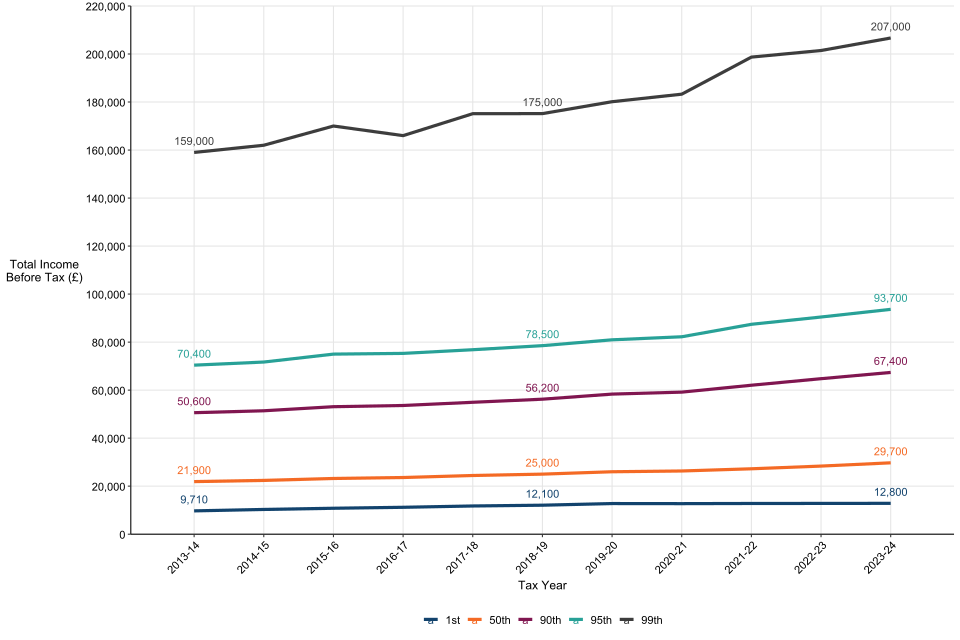
Line chart showing yearly total income before tax at selected percentiles for the last 10 tax years
Source: Survey of Personal Incomes for tax year 2023 to 2024, Table 3.1
Income levels at all percentiles have generally increased each year from the tax year ending 1993 to the tax year ending 2024.
The median income before tax increased to £29,700 in the tax year ending 2024, a 4.8% increase on the previous tax year median income of £28,400. Over the 10 year period between the tax years ending 2014 and 2024, the median income before tax increased from £21,900 to £29,700.
The income level of the 99th percentile increased from £201,000 in the tax year ending 2023 to £207,000 in the tax year ending 2024. Over the 10 year period between the tax years ending 2014 and 2024, the income level of the 99th percentile increased from £159,000 to £207,000.
For those at the 1st percentile, income has increased over the same period, from £9,710 to £12,800. However, as the statistics include only taxpayers, at this end of the income distribution, the increase is largely a result of the increase in the Personal Allowance for Income Tax which increased from £9,440 to £12,570 over the same period.
Note: comparisons over time may be affected by changes in methodology. Notably, there was a revision to the grossing factors in the 2018 to 2019 publication, which is discussed in the commentary and supporting documentation for that tax year. For information on other changes, please refer to the supporting documentation for each year for detailed information or the background quality report for a summary of the most notable methodological changes over time.
Figure 2: Percentile points of total income before tax for the last 3 tax years
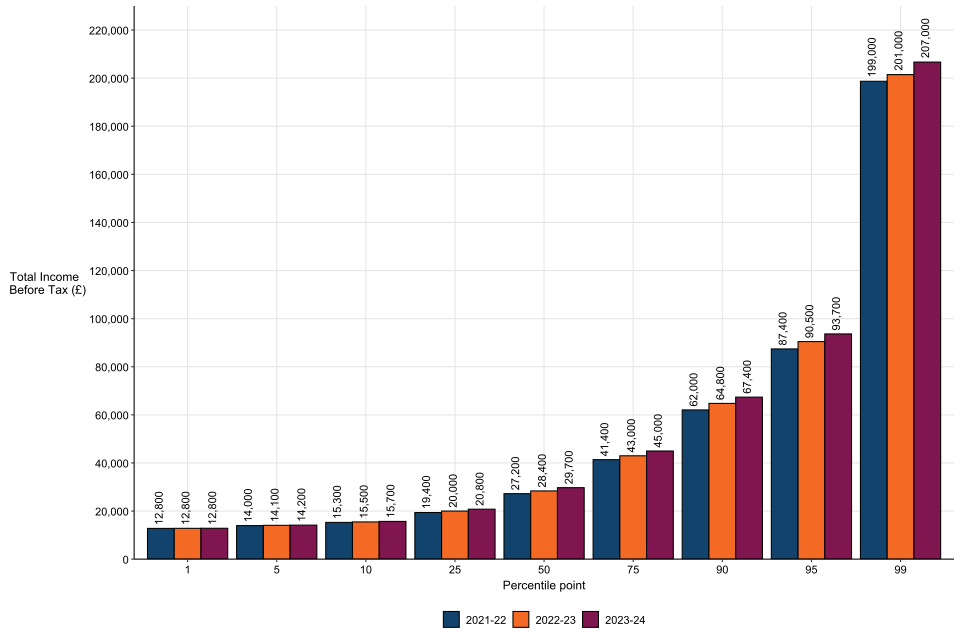
Column chart showing percentile points of total income before tax for the last 3 tax years
Source: Survey of Personal Incomes for tax year 2023 to 2024, Table 3.1 and Table 3.1a
Figure 2 shows that in the tax year 2023 to 2024, 10% of taxpayers had an income before tax of less than £15,700. At the upper end of the distribution, 10% of taxpayers had an income before tax of more than £67,400.
3. Table 3.2 - Distribution of median and mean income and tax, by age range and sex, tax year 2023 to 2024
The data presented in Table 3.2 relates to total income for the tax year and comprises of employment, profit and pension income plus property, interest, dividend and other income. The survey has no information on hours worked or alternative working patterns, for example, part-time work.
Figure 3: Number of taxpayers and median income before tax by age and sex
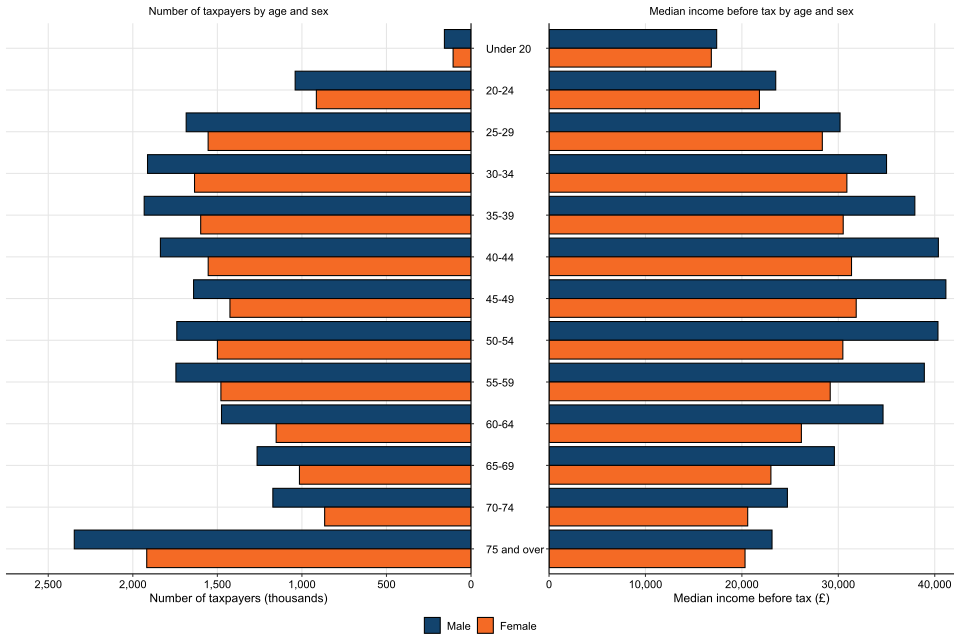
Bar chart showing number of taxpayers and median income before tax by age and sex
Source: Survey of Personal Incomes for tax year 2023 to 2024, Table 3.2
Figure 3 shows that there were more male than female taxpayers in every age range and males had higher median income throughout.
The number of working age taxpayers peaks at the 35-39 age range for males (at 1.93 million) and at the 30-34 age range for females (at 1.64 million).
The proportion of taxpayers in the 75 and over range continues to increase, reflecting the UK’s ageing population. 11.6% of taxpayers were in the 75 and over age range in the tax year 2023 to 2024, compared to 10.5% of taxpayers in the tax year 2022 to 2023.
The median income across all age groups was £32,600 for males and £26,700 for females. The highest median income was found in the 45-49 age range (£41,200) for males and in the 45-49 age range (£31,900) for females.
4. Table 3.3 - Distribution of total income before and after tax by sex, tax year 2023 to 2024
Table 3.3 provides estimates of taxpayer numbers, amounts of total income and of total tax liabilities by sex and range of total income (before and after tax).
Figure 4: Total income before tax and total tax by sex and range of income (lower limit)
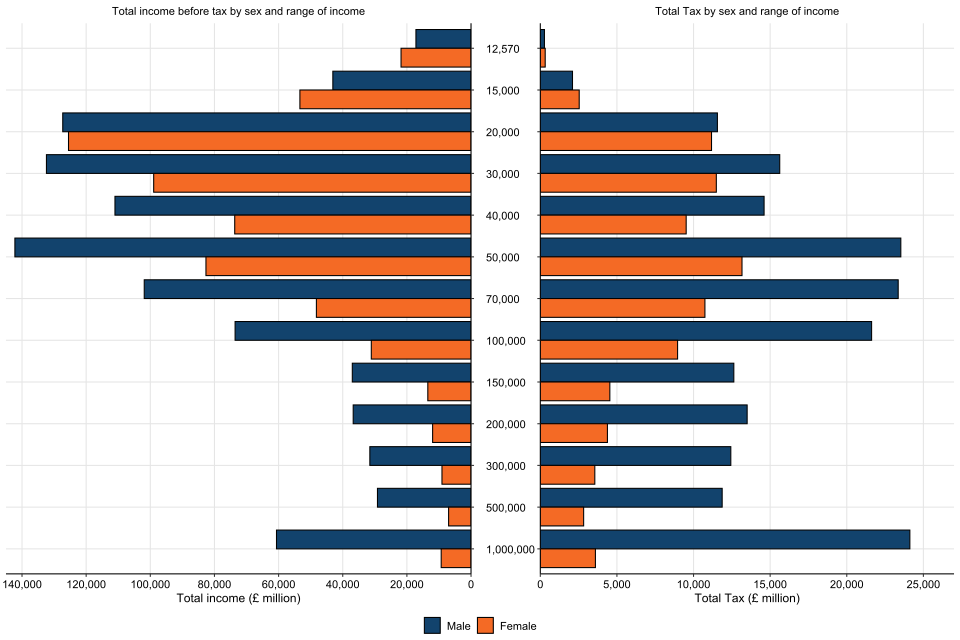
Bar chart showing total income before tax and total tax by sex and range of income
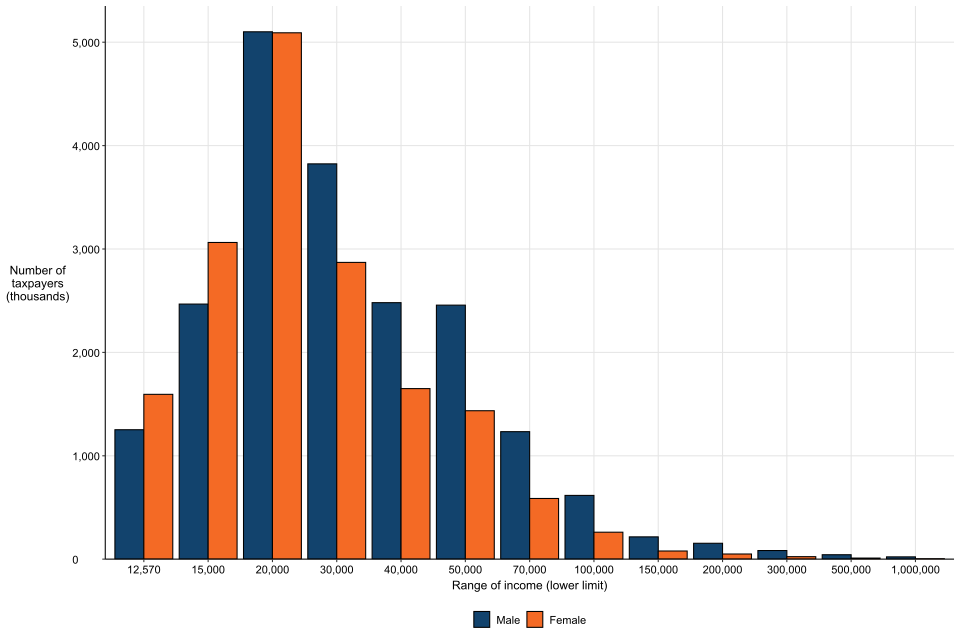
Figure 5: Number of taxpayers (thousands) by sex and range of income
Column chart showing number of taxpayers (thousands) by sex and range of income
Source: Survey of Personal Incomes for tax year 2023 to 2024, Table 3.3
Around one-fifth of taxpayers (7.28 million, 19.8%) have total income over £50,000 but these taxpayers account for almost half of total income (£726 billion, 47.4%) and an even greater proportion of total tax (£195 billion, 71.1%). More information on percentile shares of total income and tax are given in Table 3.1.
5. Table 3.4 - Income Tax liabilities of “savers”, basic, higher and additional rate taxpayers, by largest source of income, tax year 2023 to 2024
Table 3.4 categorises taxpayers by their highest marginal rate of Income Tax, range of total income and largest source of income, showing the number of taxpayers and amount of tax. An individual’s marginal tax rate is the proportion of an extra pound of income that would be paid in Income Tax, which depends on their total taxable income and its composition.
This table can include individuals liable to tax at the additional rate, but whose income is below the £150,000 threshold for additional rate due to the Pension Tax Charge, which occurs when a taxpayer makes contributions to their pension above the annual (or lifetime) threshold for tax relief.
Devolved Income Tax
Income Tax due on non-savings/non-dividend (NSND) income is devolved to Scotland and Wales. As different tax regimes apply to Scottish and Welsh taxpayers, compared to taxpayers in the rest of the UK, some individuals may be liable to a different marginal tax rate depending on where they are liable to Income Tax. More information is available in the supporting documentation .
For Table 3.4, individuals who are classed as Scottish taxpayers and have total taxable NSND income in the starter, basic or intermediate rates for Scottish taxpayers (but no total taxable income above the UK basic rate limit) are classified as a basic rate taxpayer within this publication, or as Income Tax payers below the higher rate. A Scottish Income Tax payer with only savings and/or dividend income within this band (and no total taxable income above the UK basic rate limit) is also classified as a basic rate Income Tax payer.
Individuals who are classed as Scottish taxpayers and have total taxable NSND income in the higher or additional rates (which have different rates to the rest of the UK) are grouped with the equivalent higher and additional rate taxpayers in all other regions. Any remaining cases with positive total taxable income lying at or below the UK government’s basic rate limit (or Scottish basic rate limit for Scottish Income Tax payers) are classified as either savers rate or basic rate Income Tax payers according to the composition of their total taxable income. Individuals with any taxable earnings (NSND income) are classified as basic rate Income Tax payers, while those with solely taxable dividends or taxable savings income exceeding the starting rate limit are classified as “savers” rate Income Tax payers. From the 2015 to 2016 tax year the savings rate below the starting rate limit for savings income was changed to zero and therefore individuals with savings income below the starting rate limit for savings are no longer Income Tax payers.
As the Welsh rates of Income Tax do not currently diverge from the UK Income Tax system, they are classified in line with taxpayers in the rest of the UK and resulting tax liability calculation is the same. Therefore, the tax bands that are applied to all taxpayers in this table are savers rates, basic, higher and additional rates. Please refer to the Income Tax liabilities statistics publication for further details of how the tax liability calculations are performed. A link to this publication can be found here: Income Tax Liabilities Statistics
From the tax year 2020 to 2021 the Personal Incomes Statistics are compiled using the tax liabilities based on the tax regime in which individuals are liable to tax, rather than their residential postcode. Please see the supporting documentation for additional information.
Table 3.4 summary
Most taxpayers (29.4 million, 80.1%) are basic rate taxpayers and account for £82.0 billion (29.9%) of tax. Higher rate taxpayers (5.76 million, 15.7%) account for £87.6 billion (32.0%) of tax. Additional rate taxpayers (0.9 million, 2.4%) account for £103.0 billion (37.7%) of tax.
The number of additional rate taxpayers increased by 324,000 (56.8%) between the tax years 2022 to 2023 and 2023 to 2024 to 893,000. Income Tax liabilities of additional rate taxpayers increased by £19.9 billion (23.9%) to £103 billion. The reduction in the additional rate threshold in April 2023 increased the number of taxpayers paying the additional rate, as individuals with incomes between £125,140 and £150,000 were reclassified from the higher‑rate band. As a result, the additional rate share of total tax increased from 34.0% to 37.7% and the higher rate share decreased from 34.7% to 32.0%.
The number of higher rate taxpayers increased by 654,000 (12.8%) between the tax years 2022 to 2023 and 2023 to 2024 to 5.76 million with an increase of £2.59 billion (3.0%) of tax to £87.6 billion. The increase in the number of higher rate taxpayers is likely to be due to the unchanged higher rate threshold, remaining at £50,270, and increases in income (largely from employment) resulting in more taxpayers being brought into the higher rate of tax. The growth in tax liability due to higher rate taxpayers is also partly due to the tapering of the Personal Allowance remaining unchanged at £100,000.
There was an increase in the number of basic rate taxpayers of 1.15 million (4.1%) and the overall number of taxpayers increased by 2.17 million (6.3%). This is likely driven by the Personal Allowance remaining unchanged at £12,570 alongside rising incomes, which has increased the amount of income taxed at the basic rate and brought more individuals into paying Income Tax.
For the 2023 to 2024 tax year, there has also been a revision in the sampling methodology for recipients of the state pension in the SPI. This methodological change has added up to an estimated 196,000 taxpaying state pensioners across the total distribution, with the majority being basic rate taxpayers. Please see the supporting documentation for further details.
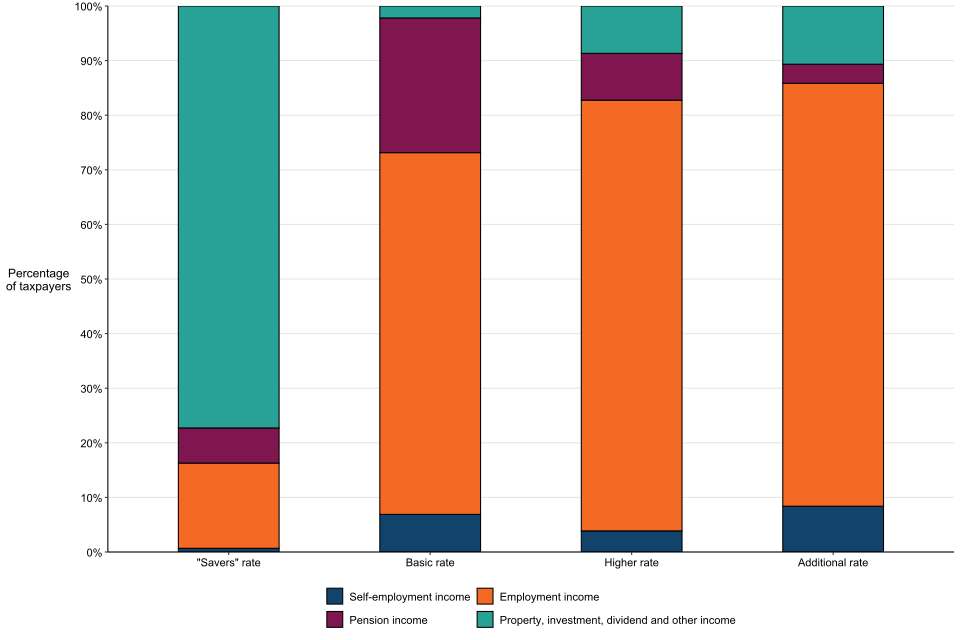
Figure 6: Taxpayers by their largest source of income, percentages in each marginal rate band
Column chart showing taxpayers by their largest source of income, percentages in each marginal rate band
Source: Survey of Personal Incomes for tax year 2023 to 2024, Table 3.4
Figure 6 shows that employment income is the largest source of income for taxpayers in the basic, higher and additional rates. For most taxpayers liable at the starting rate for savings income (or “savers” rate), income from the property, interest, dividend and other income category was their largest source.
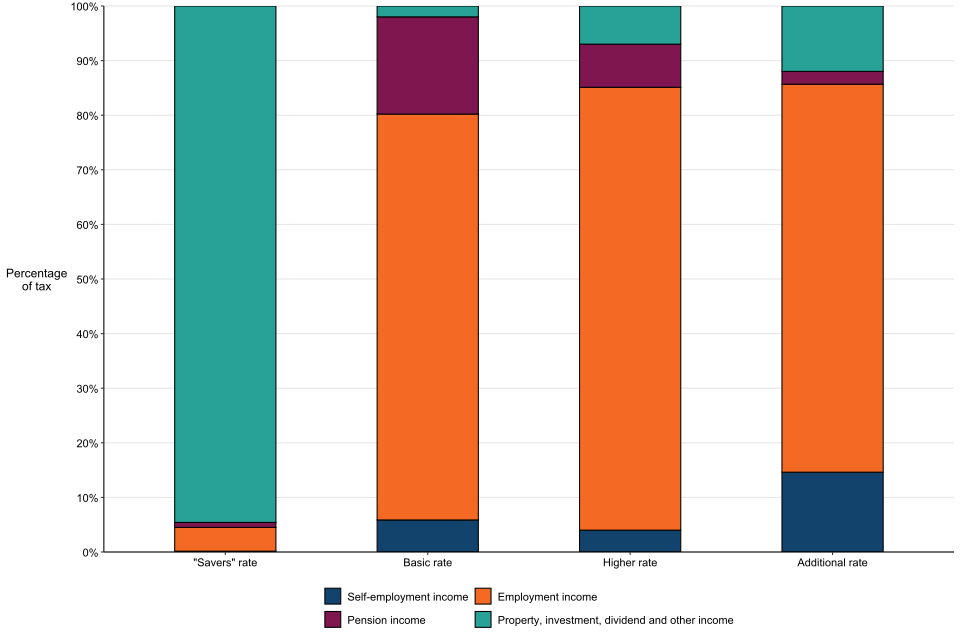
Figure 7: Income tax from taxpayers by their largest source of income, percentages in each marginal rate band
Column chart showing Income tax from taxpayers by their largest source of income, percentages in each marginal rate band
Source: Survey of Personal Incomes for tax year 2023 to 2024, Table 3.4
Figure 7 shows that the proportion of tax from individuals whose largest source of income was from self-employment was larger than average among additional rate taxpayers. Individuals whose largest source of income was from Pensions accounted for a larger than average proportion of tax among basic rate taxpayers. At the starting rate for savings income (or “savers” rate), almost all of the tax came from those with property, interest, dividend and other income as their largest source of income.
6. Table 3.5 - Income and deductions, tax year 2023 to 2024
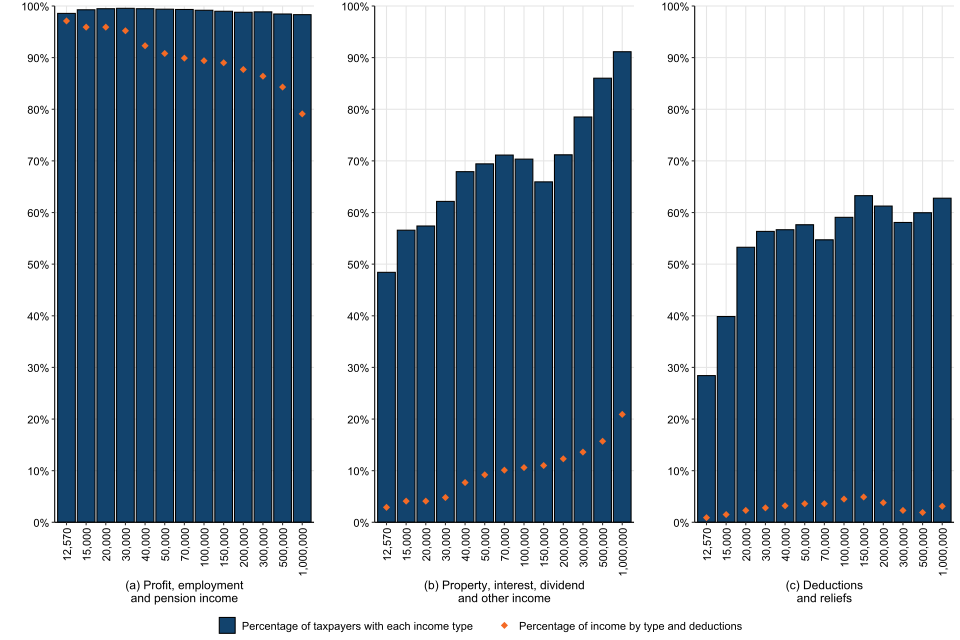
Table 3.5 shows, for ranges of total income, how total income comprises employment, profit and pension income plus property, interest, dividend and other income, the levels of deductions and reliefs and personal allowances set against that income, the Income Tax arising and the amount of income after tax. The table also shows the ratio of tax liabilities to total income as the average rate of tax, the share of total income in each income range and the percentage of total income that arises from (a) profit, employment and pension income, (b) property, interest, dividend and other income and (c) sheltered by deductions and reliefs.
Figure 8: Percentage of taxpayers with each income type by range of total income (lower limit) and percentage of income by type and deductions
Column chart showing percentage of taxpayers with each income type by range of total income and percentage of income by type and deductions
Source: Survey of Personal Incomes for tax year 2023 to 2024, Table 3.5
Almost all taxpayers had some profit, employment and pension income in (a). The proportion of taxpayers with property, interest, dividend and other income increases as income rises, from 48.4% in the lowest income range to 91.1% for incomes above £1 million in (b). The proportion with deductions is relatively stable for income ranges above £20,000, ranging from 53.3% to 63.3%. However, this proportion decreases as income falls for income ranges below £20,000, to 28.4% in the lowest income range in (c).
Employment, profit, and pension income, the largest component of total income, generally accounted for a decreasing share as total income increased in (a). Property, interest, dividend and other income generally accounted for a higher proportion of total income among the highest income ranges compared to the lower ranges in (b). The proportion of total income affected by deductions and reliefs was small, at 3.0% on average; 1.5% or less for incomes under £20,000 and 3.1% in the highest income range in (c).
From tax year ending 2011 the Personal Allowance is reduced by £1 for every £2 of taxable income over £100,000 until fully withdrawn. There are also some taxpayers who are not entitled to a Personal Allowance due to residence/ domicile rules or who choose not to receive it and are taxed on the remittance basis. Finally, the tax charge will include the liability arising from recovery of excess pension relief.
7. Table 3.6 - Profit, employment and pension income, tax year 2023 to 2024
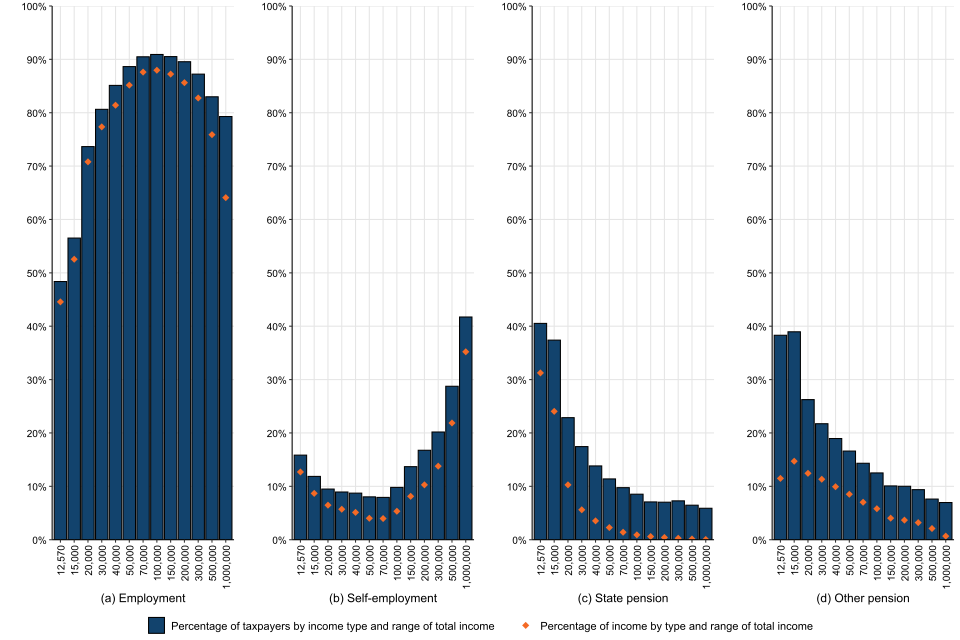
Table 3.6 presents the (a) employment, (b) total profit (self-employment income), (c) state pension and (d) other pension income for taxpayers in each range of total income, the level, average amount and percentage share by type of income along with the percentage of total profit, employment and pension income in each total income range. This table does not include property, interest, dividend and other income. Note that as taxpayers can have more than one type of income in this table, the proportions in Figure 9 can sum to more than 100%.
Figure 9: Percentage of taxpayers and income, by type and range of total income (lower limit)
Column chart showing percentage of taxpayers and income, by type and range of total income (lower limit)
Source: Survey of Personal Incomes for tax year 2023 to 2024, Table 3.6
Figure 9 shows that in all income ranges, taxpayers with employment, self-employment profits and pension income are most likely to have employment income, ranging from 48.4% to 90.9% in (a). The proportion of taxpayers with self-employment income decreases as income rises for incomes under £70,000 but rises with income for ranges above £70,000 to reach around 41.7% for incomes of £1 million and above in (b).
21.9% of taxpayers presented in Figure 9 have state pension income and 25.2% have other pension income in (c, d), with the numbers peaking at 40.5% and 39.0% respectively for income ranges below £20,000 and decreasing steadily as income increases. This highlights the position of state pensioners and others with pension income within the overall taxpayer income distribution (taxpayers in the lower income ranges are more likely to have pension income).
For the 2023 to 2024 tax year, there has also been a revision in in the treatment of recipients of the state pension in the SPI. This methodological change has added an estimated 196,000 taxpaying state pensioners across the total distribution, with the majority being basic rate taxpayers. Please see the supporting documentation for further details.
Employment income accounts for the largest share of income in each income range. Pensions (National Insurance / state pension and all other pensions) account for notable shares of the overall amount where total income is between £12,570 and £30,000. For total income above £1 million the self-employment share is at 35.2%. The self-employment share is at its lowest at around the £70,000 to £100,000 income level at 4.0%.
8. Table 3.7 - Property, interest, dividend and other income, tax year 2023 to 2024
Table 3.7 presents information about 4 types of income (a) property; (b) interest from banks and building societies; (c) dividends and (d) other income for taxpayers in each range of total income. For each range of total income it shows: the level and average amount of income by type; the distribution of total income from property, interest, dividends and other income; and the percentage share of total income from property, interest, dividends and other income that each income type comprises.
There was strong growth in total income from property, banks and building societies, dividends and other income in the tax year 2023 to 2024. Total income increased by 17.2% from £107 billion to £125 billion compared to the previous tax year.
Interest received from banks and building societies was the dominant driver of growth. The number of taxpayers with savings interest increased by 28.4% from 15.3 million to 19.6 million, whilst the total amount of savings interest increased by 219%, from £5.75 billion to £18.3 billion. Both the total amount of savings interest received by taxpayers and mean amount of savings interest received increased in every income band.
This increase can be explained by higher interest rates and interest swap rates, which were at the highest during the 2023 to 24 tax year, feeding through into taxable savings income. Higher returns on savings have also made ISAs (Cash, Stocks and Shares, Lifetime) an attractive way to reduce Income Tax liabilities on savings. For more information, please see the Annual savings statistics.
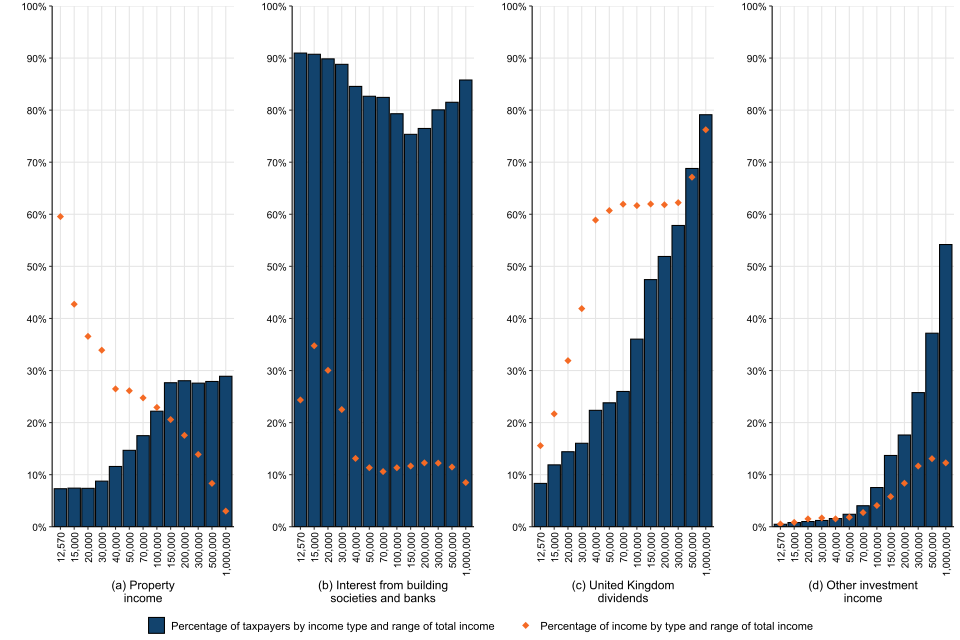
Figure 10 looks at only taxpayers with property, interest, dividends, or other income. The proportions can sum to more than 100% because taxpayers can have more than one type of income.
Figure 10 (a) shows that the proportion of taxpayers with property income is less than 12% for ranges of total income below £50,000. However, this proportion rises as income increases, then is broadly stable around 28% at incomes at and above £150,000.
Figure 10 (b) shows that the proportion of taxpayers with income from interest is more than 75% across all ranges of total income.
Figure 10 (c) shows that taxpayers in high total income bands are more likely to have dividend income than those in lower total income bands. Across income ranges below £30,000, fewer than 15% of taxpayers in any given income band have dividend income, compared to 79.1% of taxpayers with over £1 million total income.
Figure 10 (d) shows it is relatively rare for taxpayers with total income below £70,000 to have other income. However, for total income ranges between £500,000 and £1 million and over £1 million, 37.2% and 54.2% of taxpayers respectively have other income.
Figure 10: Percentage of taxpayers and percentage of (a) property, (b) interest, (c) dividend and (d) other income by income type and range of total income (lower limit)
Column chart showing percentage of taxpayers who have deductions and reliefs, and percentage of all deductions and reliefs by type and range of total income (lower limit)
Source: Survey of Personal Incomes for tax year 2023 to 2024, Table 3.7
Figure 10 also shows the percentage share of total income from property, interest, dividends and other income that each income type comprises. For example, for taxpayers in the total income range £12,570 to £15,000, 59.6% of property, interest, dividends and other income is from property, around 24.3% from interest, around 15.6% from dividends and a negligible amount from other income.
In (a), property income declines as a share of total income from property, interest, dividends and other income from just under 59.6% at the lowest income band to around 3.0% for total incomes of £1 million or more.
In (b), interest accounts for around 24% to 35% of total income from property, interest, dividends and other income in the lowest income bands, below £20,000. However, it falls to around 8.5% for total incomes of £1 million or more.
The number of taxpayers with income from banks and building societies increased from 15.3 million to 19.6 million. The amount of interest from banks and building societies increased from £5.75 billion to £18.3 billion. This is likely due to the large increases in interest rates seen between 2022 to 2023 and 2023 to 2024. The Bank of England base rate, which influences the rates banks pay individuals on their savings, increased from 0.75% to 4.25% during the tax year 2022 to 2023. Interest rates remained at a high level across the 2023 to 2024 tax year, changing from 4.25% to 5.25% across the tax year.
In (c), when considering income ranges above £40,000, dividends account on average for around 63.6% of income from property, interest, dividends and other income. For income ranges below £40,000, dividends make up around 27.8% on average.
The number of taxpayers with dividend income increased by 2.0% from 4.01 million in the tax year 2022 to 2023 to 4.09 million in 2023 to 2024. Income from dividends increased by 1.9% over the same period, from £70.5 billion in the tax year 2022 to 2023 to £71.8 billion in 2023 to 2024. The rise in dividend income is largely driven by an increase in the amount of dividend income reported by taxpayers in the lowest income band (incomes between £12,570 and £15,000). From April 2023, the tax-free dividend allowance was reduced from £2,000 to £1,000. This may have contributed to an increase in the number of taxpayers with dividend income, especially those with relatively small dividend amounts.
Dividends continue to be the largest source of property, savings, dividends and other income for taxpayers with high total income but is a declining share. For individuals with more than £1m total income, dividends comprised 85.3% of total income from property, bank and building society interest, dividends and other income in the tax year 2022 to 2023. This proportion fell to 76.2% in the tax year 2023 to 2024, largely due to the strong growth of income earned from banks and building societies.
9. Table 3.8 - Deductions and reliefs, tax year 2023 to 2024
Table 3.8 shows the size and relative importance of each relief type by income range and the share of total deductions and reliefs that arise in each total income range.
Deductions and reliefs are the amounts deducted from total income, along with personal allowances, to arrive at the amount of taxable income subject to an Income Tax charge. This includes amounts for contributions to ‘Net Pay’ and ‘Relief at Source’ pensions, and a variety of other deductions and reliefs including charitable giving and loss relief etc.
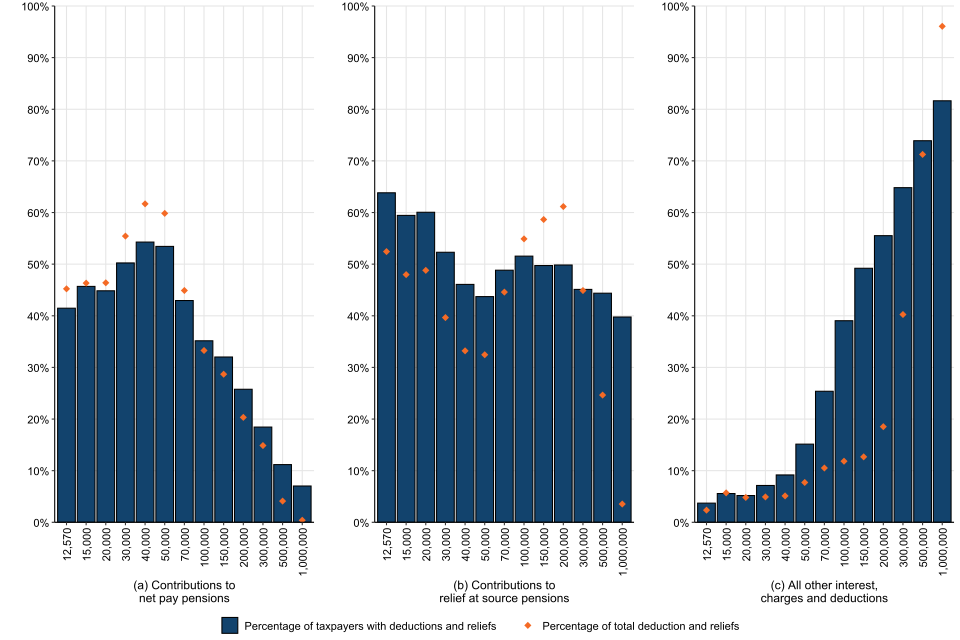
Figure 11: Percentage of taxpayers who have deductions and reliefs, and percentage of all deductions and reliefs by type and range of total income (lower limit)
Column chart showing percentage of taxpayers who have deductions and reliefs, and percentage of all deductions and reliefs by type and range of total income (lower limit)
Source: Survey of Personal Incomes for tax year 2023 to 2024, Table 3.8
Figure 11 provides analysis of the taxpayers who have deductions and reliefs only. The chart shows the proportion of all taxpayers with deductions and reliefs who claim each type of deduction or relief. It also shows the share of total deductions and reliefs accounted for by each type.
In (a), across all ranges of total income, between 7.0% and 54.3% of the taxpayers in this group have reliefs for contributions to Net Pay pensions. The likelihood of having such a relief exceeds 41.5% where total income is below £70,000. Where total income is above £70,000 the likelihood of having such a relief decreases as income increases.
In (b), taxpayers with deductions only, the proportion of those with Relief at Source pension contributions peaks at 63.8% for those in the income range starting at £12,570 and is the lowest at 39.8% for those with incomes over £1 million.
In (c), the proportion of taxpayers with reliefs for other interest, charges and deductions is at most 9.2% in income ranges under £50,000. However, for incomes over £50,000 the proportion rises steeply alongside income and reaches a high of 81.6% for total incomes of £1 million and higher.
Note that taxpayers may have more than one relief type, so the proportions can sum to more than 100%.
In figure 11 (a), contributions to Net Pay pensions account for between 0.4% to 61.7% of all deductions and reliefs, depending on total income. They exceed 45.2% of all deductions and reliefs where total income is less than £70,000 but fall to 20.3% and below where total income exceeds £200,000.
In figure 11 (b), contributions to Relief at Source pensions account for around 3.5% to 61.2% of all deductions and reliefs, again depending on total income. They exceed 44.6% in income ranges from £70,000 to £500,000. For incomes in the range starting at £500,000, they only account for around 24.6% of total deductions and reliefs, falling to just 3.5% for income above £1 million.
In figure 11 (c), for total income below £200,000, other deductions and reliefs account for at most 12.7% of total deductions and reliefs which tails off to around 2.4% at lower income ranges. For higher incomes, such reliefs account for an increasing share as income rises, rising sharply and peaking at 96.1% for incomes over £1 million.
The number of taxpayers making contributions to Relief at Source pensions increased to 10.1 million in the tax year 2023 to 2024 from 10.0 million in 2022 to 2023. The total value of contributions increased to £19.1 billion from £16.9 billion.
The number of taxpayers making contributions to Net Pay pensions increased to 8.86 million in the tax year 2023 to 2024 from 8.59 million in 2022 to 2023. The amount of contributions increased to £20.8 billion from £19.0 billion over the same period.
10. Table 3.9 - Self-employment income assessable to tax, 2023 to 2024
Sources of income for individuals by range and industry
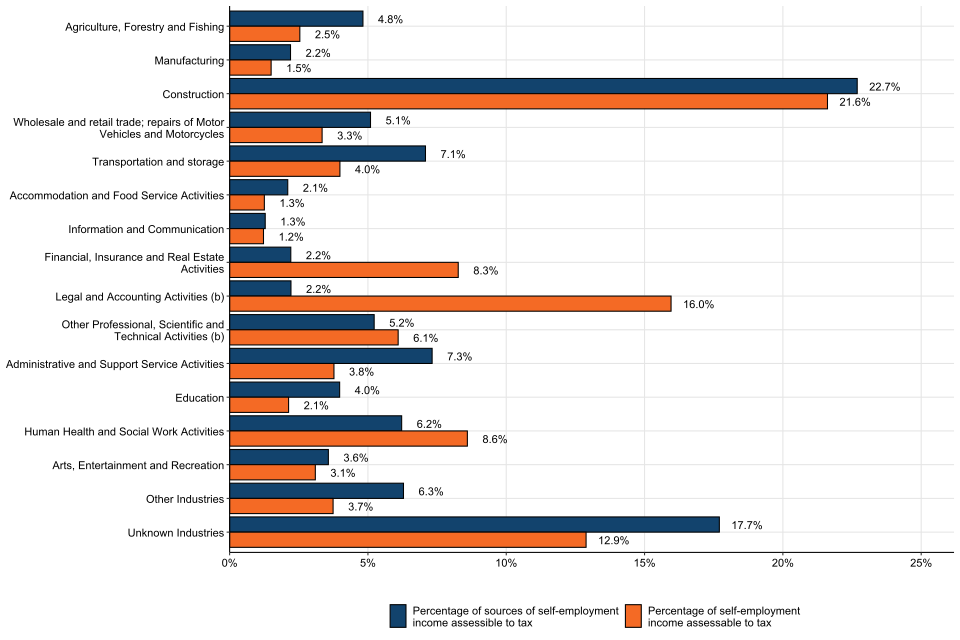
The sources of all individuals with self-employment income in the survey, whether taxpayers or not, are included in this table. Therefore, figures will not match those presented outside of Tables 3.9 and 3.10 that are based on taxpayers only. The figure shows the proportion of sources and profit by industry group based on Standard Industry Classification (SIC) 2007. The supporting documentation shows the composition of each category in the table.
An individual may have several instances of self-employment income from activity both as a sole trader and as a partner in a partnership. Therefore, an individual may have 2 or more sources of self-employed income. Where there are multiple instances as a sole trader, one instance is designated the primary source and all other instances are amalgamated into a single secondary source. Similarly, for multiple instances of partner income, one instance is designated the primary source and all other instances are amalgamated into a single secondary source. Where multiple instances exist, the secondary source record contains the sum of income amounts and is allocated to the industry of the most notable of those secondary sources. Consequently, the table may count up to 4 sources of self-employment income for each individual. The number of individuals underlying this table is shown in Table 3.10.
Income from self-employment (sole trade and partner) is assigned to an industry using the business text descriptions supplied on self-assessment returns. Where the description provided is missing or not distinct enough it is not always possible to allocate income to a particular SIC code and the industry is classified as unknown.
Table 3.9 shows that there were 5.62 million self-employment sources, accounting for £118 billion profit. The loss-making sources are shown in the zero range of self-employment income.
This table shows that the industry which accounts for the highest share of sources and profit is the Construction industry with 22.7% of all sources and 21.6% of all profits. Legal and Accounting Activities (b) and Finance, Insurance and Real Estate Activities each account for a notably higher proportion of total profit than number of sources, indicating higher than average profits when compared to other industries.
The largest increase in self-employment income in the tax year 2023 to 2024 was in the Information & Communication industry (8.8%). Conversely, the largest decrease was in the Financial, Insurance and Real Estate Activities industry (18.4%).
Figure 12: Self-employment income sources and percentage of self-employment income assessable to tax
Bar chart showing self-employment income sources and percentage of self-employment income assessable to tax
Source: Survey of Personal Incomes for tax year 2023 to 2024, Table 3.9
11. Table 3.10 - Income of individuals with self-employment sources, tax year 2023 to 2024
By range of self-employment income and source
Table 3.10 sets out information about self-employment income for individuals whether they are taxpayers or not. It shows, for ranges of self-employment income, the composition of total income, average total income and the proportion of total income that is accounted for by self-employment income.
The sources of all individuals with self-employment income in the survey, whether taxpayers or not, are included in this table. Therefore, figures will not match those presented outside of Tables 3.9 and 3.10 that are based on taxpayers only.
The number of individuals with at least one self-employment income source decreased by 0.6% in the tax year 2023 to 2024 from 5.37 million to 5.34 million, of which 3.67 million are taxpayers (Table 3.6).
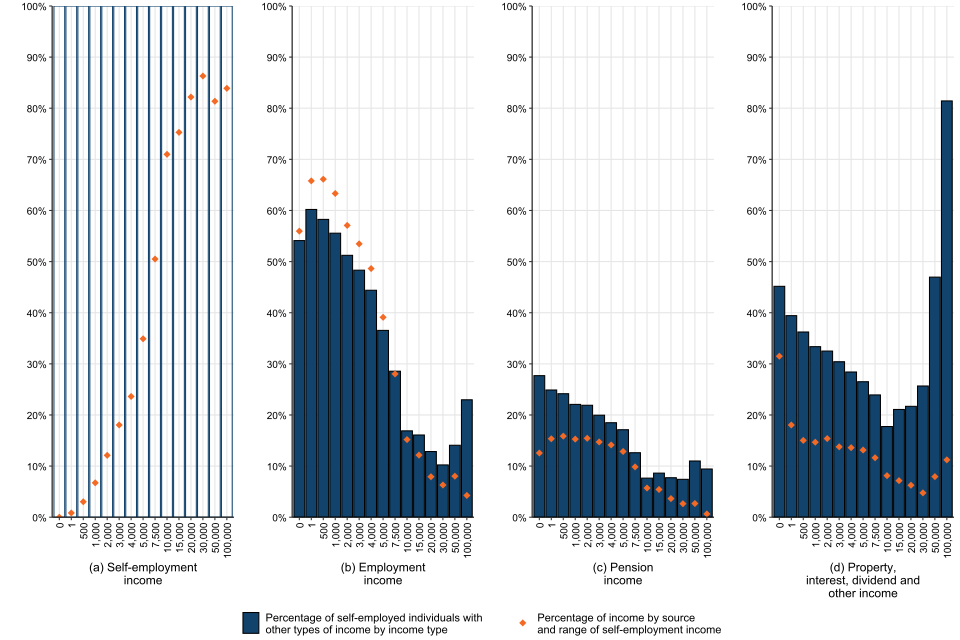
Figure 13: Income from self-employed individuals with other income sources by type and range of total income (lower limit)
Column chart showing income from self-employed individuals with other income sources by type and range of total income (lower limit)
Source: Survey of Personal Incomes for tax year 2023 to 2024, Table 3.10
Figure 13 looks at the forms of income received by those with some self-employment income.
The proportion of self-employed individuals with employment income varies between 10.2% and 60.2%. Over half of individuals receiving profits below £3,000 or who are loss making also receive employment income. Individuals in receipt of larger profits from self-employment are less likely to receive employment income.
The proportion of self-employed individuals with pension income is 21.9% or more for profit levels under £3,000 and fluctuates between around 7.4% and 11.0% for higher income ranges (above £10,000).
The proportion of individuals with property, dividend and other income is at 32.5% or higher in the lowest profit ranges (below £3,000) but falls to about 23.9% for profits from £7,500 and under £10,000, then rises with income to 81.4% where profits are £100,000 or more.
For individuals with self-employment income of £7,500 or more, their self-employment income is the largest income type, and it constitutes 50.5% to 86.3% of total income. At lower profit levels, the proportion of total income accounted for by employment income predominates and peaks at 66.1%.
12. Table 3.11 - Income and tax, by sex, region and country, tax year 2023 to 2024
Table 3.11 shows the sources of income that comprise total income and tax for taxpayers in each total income band by sex, region and country.
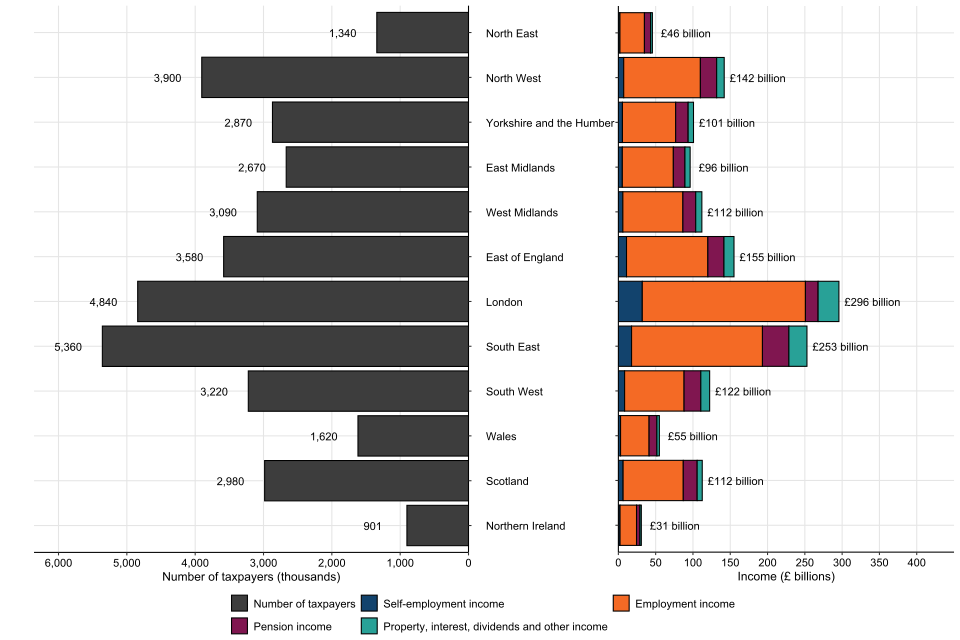
Figure 14: Number of taxpayers and type of income by region/country
Bar chart showing number of taxpayers and type of income by region/country
Source: Survey of Personal Incomes for tax year 2023 to 2024, Table 3.11.
Figure 14 shows that London had the highest amount of total income (£296 billion), followed by the South East (£253 billion). Northern Ireland had the lowest total income (£30.8 billion).
Figure 14 shows that the South East had the highest number of taxpayers (5.36 million), followed by London (4.84 million). Northern Ireland had the lowest number of taxpayers (0.9 million).
13. Table 3.12 - Income and tax for individuals of pension age, by sex, region and country, tax year 2023 to 2024
Taxpayers of pension age are those over the State Pension Age (SPA), which for the purposes of these statistics is aged 66 for females and males as at 5 April 2024.
There were 8.16 million taxpayers of pension age for the tax year 2023 to 2024; of these 55.6% are male and 44.4% are female. (Table 3.12)
The number of taxpayers of pension age increased by 1.02 million (14.4%) since the previous tax year. This increase is likely to be driven by demographic change, as the size of the pension age population has grown, alongside rising incomes among individuals of pension age. They account for 22.2% of all taxpayers and 16.2% of total income.
For the 2023 to 2024 tax year, there has also been a revision in the sampling methodology for recipients of the state pension in the SPI. This methodological change has added up to an estimated 196,000 taxpaying state pensioners across the total distribution, with the majority being basic rate taxpayers. This accounts for up to 19.2% of the increase in the number of taxpayers of pension age. Please see the supporting documentation for further details.
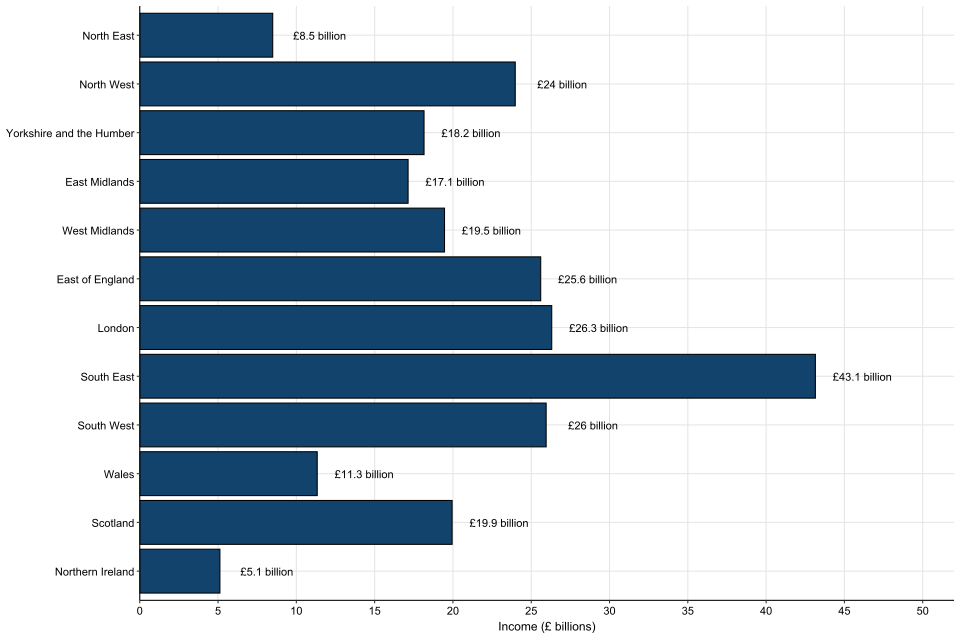
The South East has the highest number of taxpayers of pension age and the largest amount of total income (1.25 million and £43.1 billion respectively). Northern Ireland has the fewest taxpayers of pension age and the lowest amount of total income (177,000 and £5.12 billion respectively) (Table 3.12).
Figure 15: Total income of taxpayers of pension age by region
Bar chart showing the number of taxpayers of pension age and total income
Source: Survey of Personal Incomes for tax year 2023 to 2024, Table 3.12.
14. Tables 3.13 to 3.15a - Income and tax by county, borough, district, unitary authority and parliamentary constituency, tax year 2023 to 2024
Income by county and region
The highest regional mean and median value for total income, £61,200 and £35,700 respectively, are found in London. The lowest regional mean and median value for total income, £34,100 and £27,500 respectively, are found in the North East.
The county with the highest mean and median value of total income was Surrey at £62,600 and £37,100 respectively. The lowest county mean and median value for total income £33,500 and £27,200 respectively, are found in South Yorkshire. (Table 3.13)
Income by borough and district or unitary authority
The highest mean value of total income was estimated in Kensington and Chelsea (£209,000) while the highest median value was in the City of London (£70,000). The lowest mean value of total income was Blackpool UA at £28,700 and the lowest median value of total income was Blackpool UA at £24,500. (Table 3.14)
Income by parliamentary constituency
The parliamentary constituency with the highest mean value of total income was Kensington and Bayswater (£188,000) while the highest median value was estimated in the Cities of London and Westminster (£51,100). The parliamentary constituency with lowest mean value of total income was Bradford West, (£27,800). The lowest median value was in Bradford West (£23,600). (Table 3.15)
Proportion of taxpayers at marginal tax rates within the UK and the regions
Table 1: Proportion of taxpayers at marginal tax rates within the UK and the regions
| Region | Savers & Basic Rate | Higher Rate | Additional Rate |
|---|---|---|---|
| UK | 82% | 16% | 2% |
| North East | 88% | 11% | 1% |
| North West | 86% | 13% | 1% |
| Yorkshire and the Humber | 87% | 12% | 1% |
| East Midlands | 86% | 13% | 1% |
| West Midlands | 86% | 13% | 1% |
| East of England | 80% | 17% | 3% |
| London | 71% | 23% | 6% |
| South East | 77% | 19% | 4% |
| South West | 85% | 14% | 2% |
| Northern Ireland | 89% | 10% | 1% |
| Scotland | 79% | 20% | 1% |
| Wales | 88% | 11% | 1% |
As shown in the table above, London has the lowest proportion of Savers and Basic rate taxpayers (71%) and the highest proportion of Higher rate (23%) and Additional rate (6%) taxpayers compared to other regions. Northern Ireland has the highest proportion of Savers and Basic rate taxpayers (89%) and the lowest proportion of Higher rate taxpayers (10%), while Wales has the lowest proportion of Additional rate taxpayers (1%), compared to other regions. (Table 3.14)
Percentile income by region
Table 2: Percentile income by region
| Percentile income | Before tax: highest region | Before tax: lowest region | After tax: highest region | After tax: lowest region |
|---|---|---|---|---|
| 1st | South East | Wales | South East | Wales |
| 50th | London | North East | London | North East |
| 95th | London | Wales | London | Wales |
| 99th | London | Wales | London | Wales |
Table 2 summarises which regions have the highest and lowest incomes at selected percentiles of the income distribution, before and after tax.
Before tax, London and the South East have the highest incomes at the percentiles shown, whilst Wales and the North East have the lowest incomes.
After tax, the overall region pattern remains the same, with London and the South East continuing to record the highest incomes at the percentiles shown, while Wales and the North East continue to have the lowest incomes. (Table 3.14)
These values from tables 3.13 to 3.15 are sample based estimates; confidence intervals at the 95% level are available. For more information on estimates and measures of precision see the supporting documentation
15. Related publications
Income Tax liabilities
HMRC also produce statistics on Income Tax liabilities. Use these to find out detailed breakdowns of the number of people paying Income Tax and the distribution of Income Tax liabilities across taxpayers and tax bands.
PAYE Real Time Information (RTI) Statistics
Earnings and employment statistics of pay rolled employees and their pay from HM Revenue and Customs’ (HMRC’s) Pay As You Earn (PAYE) Real Time Information (RTI) data. This is a joint release between HMRC and the Office for National Statistics (ONS).
ONS guide to sources of data on income and earnings
This guide outlines the different data sources and outputs that feed into the analysis of income and earnings within the UK. It explains important information for each data source, including what data are available and the sources’ main uses, strengths and limitations.
Government Statistic Service (GSS) interactive tool
The GSS has also produced a tool to browse income and earnings official statistics and can be found at the following link: GSS Income and Earnings interactive tool.
16. Contact Information
If you have any queries regarding this publication, please use the contact information below to get in touch.
Statistical contact: D Ali, spi.enquiries@hmrc.gov.uk
Media contact: HMRC Press Office, news.desk@hmrc.gov.uk
Website: Personal Income Statistics
Frequency: Published annually
Publication date: April 2026
Next publication date: February/March 2027