Personal Incomes Statistics 2023 to 2024: Summary Statistics
Published 29 April 2026

© Crown copyright 2026
This publication is licensed under the terms of the Open Government Licence v3.0 except where otherwise stated. To view this licence, visit nationalarchives.gov.uk/doc/open-government-licence/version/3 or write to the Information Policy Team, The National Archives, Kew, London TW9 4DU, or email: psi@nationalarchives.gov.uk.
Where we have identified any third party copyright information you will need to obtain permission from the copyright holders concerned.
This publication is available at https://www.gov.uk/government/statistics/personal-incomes-statistics-for-the-tax-year-2023-to-2024/personal-incomes-statistics-2023-to-2024-summary-statistics
1. Introduction
About this publication
The Survey of Personal Incomes (SPI) is based on information held by HM Revenue and Customs (HMRC) on individuals who could be liable to United Kingdom (UK) Income Tax. It is carried out annually by HMRC and covers income assessable to tax for each tax year.
Most tables in this statistics release exclude individuals who are not taxpayers. This can occur for a number of reasons, for example if they have no Income Tax liability due to their deductions, reliefs and personal allowances exceeding their total income, or if their income is below the Personal Allowance. Figures cover the United Kingdom and tax year 2023 to 2024 unless stated otherwise.
The SPI is compiled to provide information to the public, Members of Parliament, other Government Departments, companies, and organisations. It is a quantified evidence base from which to cost proposed changes to tax rates, personal allowances and other tax reliefs for Treasury Ministers. It is used to inform policy decisions within HMRC, the Treasury and the Devolved Administrations, as well as for tax modelling and forecasting purposes. In addition, it is used to provide summary information for the National Accounts that are prepared by the Office for National Statistics.
Supporting documents to the SPI annual publication are:
-
accompanying Accredited Official Statistics Tables 3.1 to 3.11 and the geography tables, Tables 3.12 to 3.15a by tax year.
-
supporting documentation on the methodology used to produce these statistics is available on our website for the tax year 2023 to 2024,Personal Incomes Statistics 2023 to 2024: Supporting Documentation - GOV.UK
Throughout this summary, individual figures have been rounded independently to 3 significant figures and percentages to one decimal place, unless stated otherwise. Therefore, the sum of component items may not necessarily add to the totals shown.
2. Taxpayer numbers
-
there were 36.7 million taxpayers in the tax year 2023 to 2024, of those 19.9 million were male and 16.7 million female (Table 3.2 and Table 3.3)
-
this represents an increase of 2.17 million taxpayers since the 2022 to 2023 tax year
-
the number of male taxpayers increased by 4.6%, while the number of female taxpayers increased by 8.4% since the 2022 to 2023 tax year
3. Total income breakdown
-
the total income before tax received by taxpayers in the tax year 2023 to 2024 was £1.53 trillion (Table 3.3)
-
this is 9.8% higher than the total income reported in the previous tax year
Figure 1: Amount of income in the tax year ending 2024 and percentage change since tax year ending 2023 (Table 3.5 and Table 3.6)
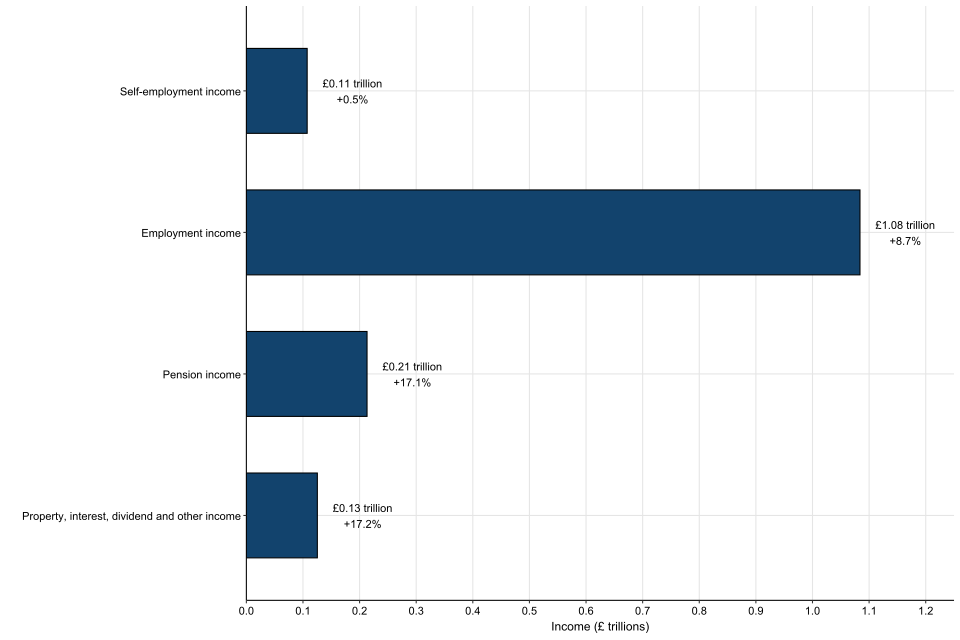
Bar chart showing amount of income in the tax year ending 2024 and percentage change since tax year ending 2023
Table 1: Amount of income in the tax year ending 2024 and percentage change since tax year ending 2023 (Table 3.5 and Table 3.6)
| Type of income | Amount of income in trillions | Percentage change since tax year ending 2023 |
|---|---|---|
| Self-employment | £0.11 | +0.5% |
| Employment | £1.08 | +8.7% |
| Pension | £0.21 | +17.1% |
| Property, interest, dividend and other | £0.13 | +17.2% |
Source: Survey of Personal Incomes for tax year 2023 to 2024, Table 3.5 and Table 3.6
Figure 2: Proportion of income by type
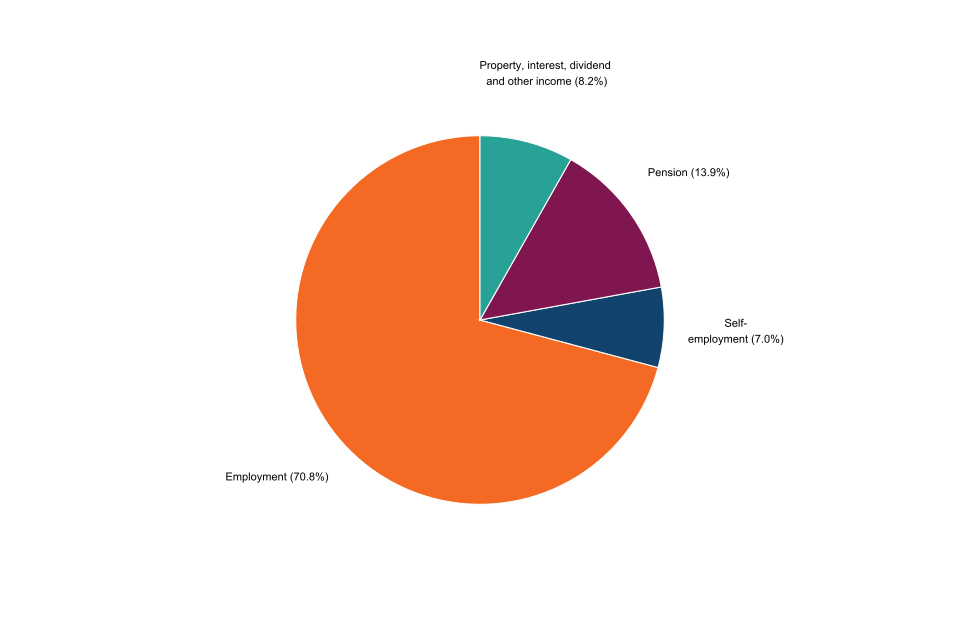
Pie chart showing the proportion of income by type of income
-
there were increases in all types of income over the tax year 2023 to 2024, with increases of 0.5% for self-employment income, 8.7% for employment income, 17.1% for pension income and 17.2% for property, interest, dividend and other income (Table 3.5 and Table 3.6)
-
the increase in pension income is likely to reflect the effect of frozen tax thresholds bringing a greater share of pension income into the tax base, alongside longer term demographic trends, rather than changes in typical pension values. For the 2023 to 2024 tax year, there has also been a revision in the sampling methodology for recipients of the state pension in the SPI, adding up to an estimated 196,000 taxpaying state pensioners across the total distribution, with the majority being basic rate taxpayers. However, this methodological change accounts for only a small proportion of the increase. Please see the supporting documentation for further details
-
the increase in property, interest, dividend and other income is likely to be driven largely by higher interest income from banks and building societies, reflecting increases in interest rates over the period. This type of income is typically more responsive to short-term economic conditions than employment income, contributing to the larger observed increase
-
employment income accounts for the largest proportion of total income at 70.8%
-
pension income is 13.9% of total income
-
property, interest, dividend and other income accounts for 8.2% of total income
-
self-employment income accounts for the smallest proportion of total income at 7.0% of total income
4. Income Tax liabilities breakdown by tax rate
-
Income Tax liabilities for tax year 2023 to 2024 were £274 billion (Table 3.4)
-
total Income Tax liabilities increased by around £29.1 billion (11.9%) compared to the previous tax year
Figure 3: The breakdown of Income Tax by the number of taxpayers and estimated tax liability for each marginal rate of tax
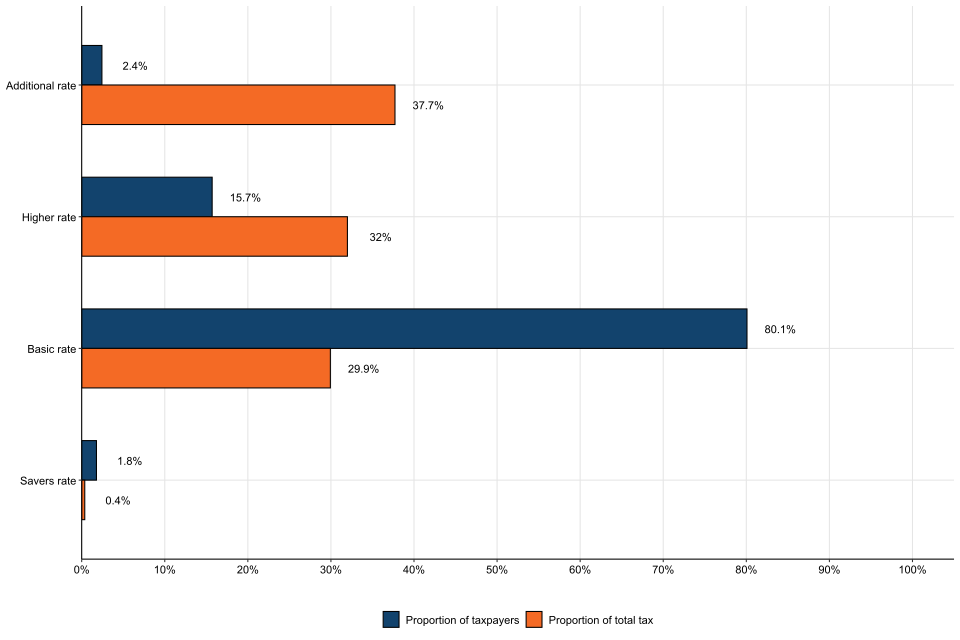
Bar chart showing the breakdown of Income Tax by the number of taxpayers and estimated tax liability for each marginal rate of tax
Table 2: The breakdown of Income Tax by the number of taxpayers and estimated tax liability for each marginal rate of tax
| Tax Rate | Number in millions | Percentage of taxpayers | Percentage of total tax |
|---|---|---|---|
| Additional rate | 0.9 million | 2.4% | 37.7% |
| Higher rate | 5.8 million | 15.7% | 32.0% |
| Basic rate | 29.4 million | 80.1% | 29.9% |
| Savers rate | 0.7 million | 1.8% | 0.4% |
Source: Survey of Personal Incomes for tax year 2023 to 2024, Table 3.4
-
there were 0.9 million additional rate taxpayers who accounted for 2.4% of taxpayers and 37.7% of total tax
-
there were 5.8 million higher rate taxpayers who accounted for 15.7% of taxpayers and 32.0% of total tax
-
there were 29.4 million basic rate taxpayers who accounted for 80.1% of taxpayers and 29.9% of total tax
-
there were 0.7 million savers rate taxpayers who accounted for 1.8% of taxpayers and 0.4% of total tax
5. Total income by region/country
-
the region with the highest number of taxpayers was again the South East region with around 5.36 million (14.6%) of the total figure (Table 3.11)
-
the largest percentage change in the number of taxpayers across the UK was in West Midlands (7.4%) which saw an increase of 213,000 taxpayers (Table 3.11)
-
the smallest percentage change in the number of taxpayers across the UK was in North East (5.2%), which saw an increase of 66,200 taxpayers (Table 3.11)
-
the region with the highest amount of total income was London, which saw an increase of around £26.1 billion since the tax year ending 2023 and reached £296 billion, however its share of total income was stable at around 19.3% (Table 3.11)
Figure 4: Number of taxpayers and type of income by region/country
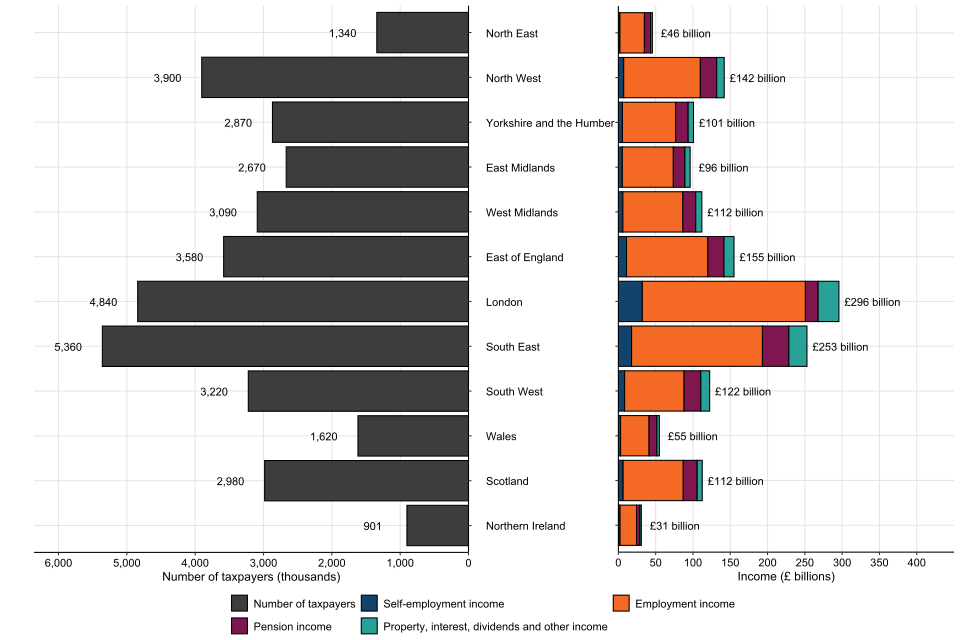
Bar chart showing Number of taxpayers and type of income by Region/Country
Source: Survey of Personal Incomes for tax year 2023 to 2024, Table 3.11
6. Contact Information
If you have any queries regarding this publication, please use the contact information below to get in touch.
Statistical contact: D Ali, spi.enquiries@hmrc.gov.uk
Media contact: HMRC Press Office, news.desk@hmrc.gov.uk
Website: Personal Income Statistics
Frequency: Published annually
Coverage: United Kingdom Theme: The Economy
Publication date: April 2026
Next publication date: February/March 2027