How many Indefinite Leave (Settlement and EUSS settled status) grants have been issued in the UK?
Published 27 August 2026

© Crown copyright 2026
This publication is licensed under the terms of the Open Government Licence v3.0 except where otherwise stated. To view this licence, visit nationalarchives.gov.uk/doc/open-government-licence/version/3 or write to the Information Policy Team, The National Archives, Kew, London TW9 4DU, or email: psi@nationalarchives.gov.uk.
Where we have identified any third party copyright information you will need to obtain permission from the copyright holders concerned.
This publication is available at https://www.gov.uk/government/statistics/immigration-system-statistics-year-ending-june-2026/how-many-indefinite-leave-settlement-and-euss-settled-status-grants-have-been-issued-in-the-uk
Back to ‘Immigration system statistics, year ending June 2026’ contents page
This release goes up to the year ending (YE) June 2026. The “year ending” period includes the 12 months up to and including the YE month. For example, YE June 2026 includes the 12 months between 1 July 2025 and 30 June 2026. All comparisons are with the YE June 2025 (unless indicated otherwise).
This chapter was previously part of “How many Indefinite Leave to Remain (Settlement and EUSS settled status) and Citizenship grants have been issued in the UK?”
From the YE June 2026 publication, citizenship statistics are presented in a separate chapter from indefinite leave statistics, see How many Citizenship grants have been issued in the UK?. This change has been introduced to improve the clarity of reporting by reflecting citizenship as a distinct stage of the migration journey. The change affects the structure of the publication only and does not affect the underlying statistics, which remain unchanged.
1. Indefinite Leave
Indefinite Leave is an immigration status that allows a person to live, work and study in the UK without any time limit on their stay.
Indefinite Leave to Enter or Remain (ILE/ILR) is also known as ‘settlement’. Most settlement grants are typically issued to individuals who have completed the required qualifying period on an eligible immigration route and meet the relevant eligibility criteria. Indefinite Leave is also granted to individuals under the EU Settlement Scheme (EUSS), where it is referred to as ‘settled status’.
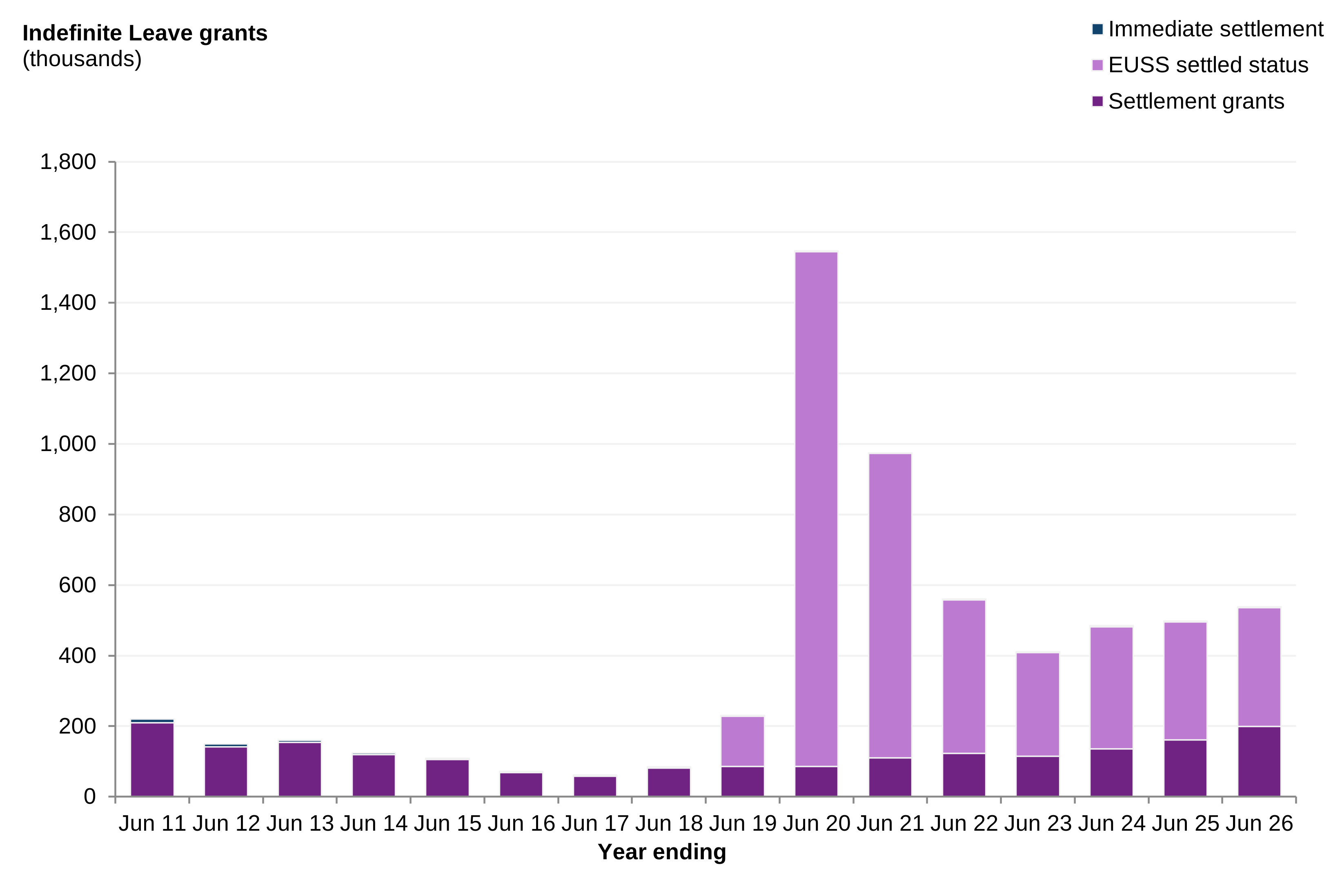
Indefinite leave grant volumes have been strongly influenced by the introduction and rollout of the EUSS. EUSS settled status grants peaked in 2020 and, although volumes have fallen substantially since then, they have remained relatively stable in more recent years, averaging just over 300,000 grants per year, between 2023 and 2026.
Since the introduction of EUSS, other immigration routes have accounted for a comparatively small proportion of indefinite leave grants. As EUSS volumes have stabilised and settlement grants have continued to increase, settlement has accounted for a growing proportion of all indefinite leave grants, particularly over the last 2 years.
In the YE June 2026, there were a total of 537,698 grants of indefinite leave, an 8% increase from the YE June 2025. Of these, 63% (336,229) were settled status grants under the EUSS. 37% (199,628) were settlement grants under other immigration routes, and fewer than 1% were immediate settlement (family) grants.
Table 1: Number of grants issued for Settlement, EUSS settled status and Immediate settlement, YE June 2017 to YE June 2026
| Year ending June | Settlement | EUSS settled status | Immediate settlement (Family) | Total |
|---|---|---|---|---|
| 2017 | 58,262 | z | 2,801 | 61,063 |
| 2018 | 81,585 | z | 2,675 | 84,260 |
| 2019 | 86,079 | 141,657 | 2,420 | 230,156 |
| 2020 | 85,591 | 1,459,894 | 1,853 | 1,547,338 |
| 2021 | 110,421 | 862,459 | 1,726 | 974,606 |
| 2022 | 122,715 | 435,568 | 1,596 | 559,879 |
| 2023 | 115,294 | 293,003 | 2,390 | 410,687 |
| 2024 | 135,765 | 345,990 | 3,023 | 484,778 |
| 2025 | 161,585 | 333,718 | 2,774 | 498,077 |
| 2026 | 199,628 | 336,229 | 1,841 | 537,698 |
Source: Table EUSS_QTR, EU Settlement Scheme summary tables, YE June 2026, Settlement dataset - Se_D02 and Entry Clearance dataset - Vis_D02.
Notes:
- EUSS was launched on 28 August 2018 and became fully operational on 30 March 2019. The total for grants of settled status includes 115,770 automated EUSS settled status grants, of which 36,510 are included in the YE June 2025 figure and 78,210 are included in YE June 2026. Since the introduction of the automation programme, an additional 1,060 automated grants have been issued, in which a decision date could not be identified within the administrative data.
- z = not applicable
- For the latest reporting year (YE June 2026), the settled status grant totals presented in tables EUSS_D02 and EUSS_D03 differ slightly because they are derived from different data extracts. These differences are confined to the final month of the reporting period. Throughout this section, the YE June 2026 settled status total has been taken from table EUSS_D03, as this aligns with the published breakdown by application type provided by the Home Office.
Figure 1: Grants of Indefinite Leave in the UK, YE June 2011 to YE June 2026
Source: Table EUSS_QTR, EU Settlement Scheme summary tables, YE June 2026, Settlement dataset - Se_D02 and Entry Clearance dataset - Vis_D02.
2. Settlement
‘Settlement’ is the general term for being granted indefinite leave to enter or remain (ILE/ILR) in the UK. It gives people the right to stay in the UK permanently and, where eligible, apply for citizenship.
This section primarily focuses on indefinite leave to remain (ILR), which is generally granted to people already living in the UK after completing a qualifying period of residence. Individuals may be granted indefinite leave to enter (ILE), providing settlement on entry to the UK. These grants are presented separately within the Immediate Settlement (Family) subsection of Section 2.
Statistics on the EUSS are reported separately in Section 3 due to the distinct rights, conditions and legislative framework of the route. The number of people granted settlement each year will reflect the number of migrants coming to the UK in earlier years, and the policies regarding the qualifying period required to live in the UK before becoming eligible.
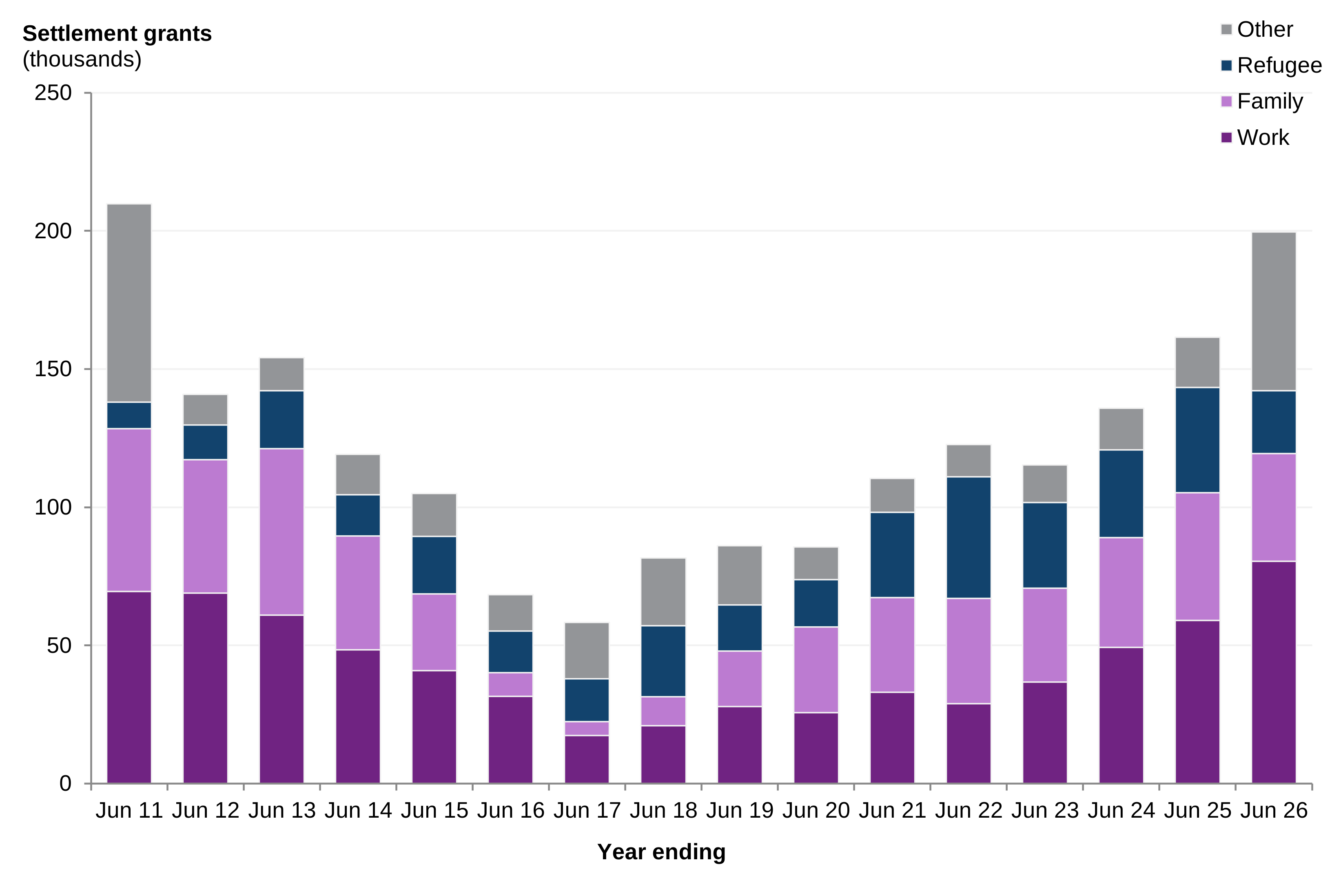
Settlement grants in the YE June 2026 were at the highest level since 2011, reflecting an increased number of grants to Work and British Nationals (Overseas) (BN(O)) visa holders.
Figure 2: Grants of ‘settlement’ (excluding immediate settlement) in the UK, by leave type 1,2,3, YE June 2011 to YE June 2026
Source: Settlement - Se_D02
Notes:
- ‘Leave type’ relates to type of leave to remain in the UK held immediately prior to being granted ‘settlement’.
- The category ‘Other’ includes grants based on Long Residence, Private Life, BN(O) routes and grants on a discretionary basis. It also includes a small number of cases where the category of leave immediately prior to the grant of settlement has not been recorded.
- The ‘Refugee’ category refers to individuals granted ‘settlement’ in the UK following a period of residence after being recognised as refugees, or those granted exceptional leave, humanitarian protection, or discretionary leave.
In the YE June 2026, there were 199,628 settlement grants, up 24% from the 161,585 issued in the YE June 2025 and the highest annual total since the YE June 2011. As shown in Figure 2, grants have generally increased since the YE June 2017, largely reflecting higher numbers of individuals who previously held leave on Work routes being granted settlement. In the YE June 2026, settlement granted to individuals whose most recent leave was on a work route, increased by 36% to 80,409. Work remained the most common category of leave type held immediately before settlement.
Settlement grants to individuals whose most recent grant of leave was in the ‘Other’ category more than tripled, increasing from 18,183 in the YE June 2025 to 57,433 in the YE June 2026. This increase primarily reflected grants to BN(O) visa holders, rising from 587 to 38,373. Introduced in January 2021, the BN(O) route has now reached the point where many of the earliest cohorts entering the UK on the route have completed the qualifying period of continuous residence required for settlement.
In contrast settlement granted to individuals with Refugee status (or other protection-based leave) declined by 40% to 22,799 in YE June 2026. This reflects lower numbers of protection grants made in 2020, when disruption during the COVID 19 pandemic led to fewer decisions.
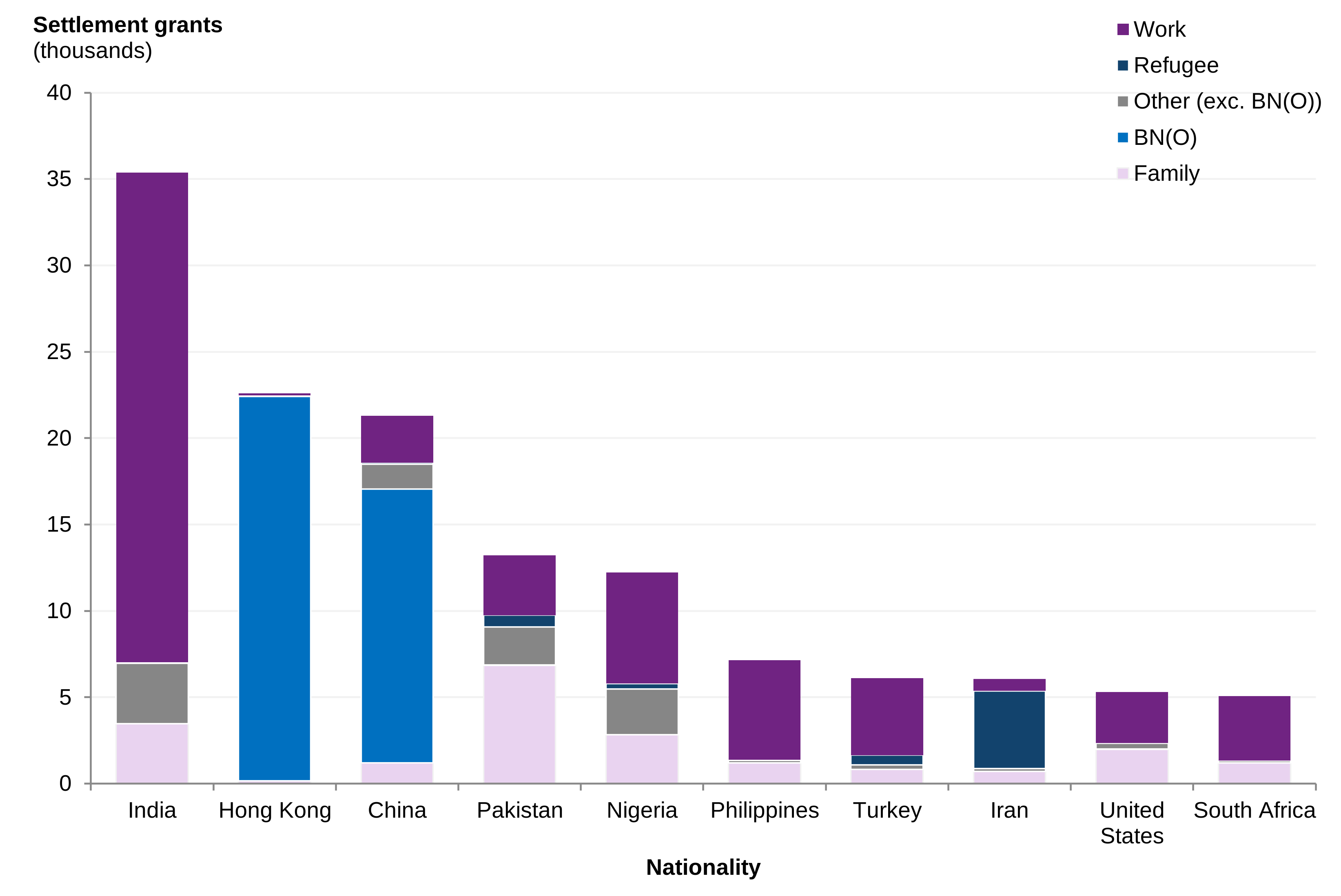
Figure 3: Grants of ‘settlement’ (excluding immediate settlement) in the UK, by leave type and nationality, YE June 2026 1,2,3
Source: Settlement - Se_D02
Notes:
- ‘Leave type’ relates to type of leave to remain in the UK held immediately prior to being granted ‘settlement’.
- The category ‘Other (exc. BN(O))’ includes grants based on Long Residence, Private Life, and grants on a discretionary basis. It also includes a small number of cases where the category of leave immediately prior to the grant of settlement has not been recorded.
- The ‘Refugee’ category refers to individuals granted ‘settlement’ in the UK following a period of residence after being recognised as refugees or those granted exceptional leave, humanitarian protection, or discretionary leave.
In the YE June 2026, Indian nationals remained the largest nationality group granted settlement, with grants (35,384) increasing by 51% compared with the previous year. This mainly reflected the growing number of Indian nationals who entered the UK on work routes in recent years and have since completed the qualifying period of continuous residence required for settlement.
Settlement grants to Hong Kong nationals have been recorded throughout the time series, but at comparatively low levels until the YE June 2026, when they became the second largest nationality group granted settlement (22,593). Settlement grants to Chinese nationals also almost quadrupled, increasing from 5,570 in the YE June 2025 to 21,300 in the YE June 2026. Together, these increases represented a large cohort of BN(O) visa holders completing the qualifying period of continuous residence required for settlement following the route’s introduction in 2021.
Immediate settlement (Family)
Individuals may be granted indefinite leave to enter (ILE), also known as immediate settlement, under a Family route, typically where an applicant is applying from outside the UK based on their relationship to a person who is already settled in the UK or is a British citizen, with the intention of settling in the UK. In the YE June 2026, there were 1,841 immediate settlement grants, a 34% decrease from the YE June 2025. Most (84%) were issued to children.
Further information about immediate settlement can be found in the ‘Why do people come to the UK – Family?’ topic, and table Vis_D02, Entry Clearance dataset.
3. EU Settlement Scheme
The EUSS enables EU, other European Economic Area (EEA) and Swiss citizens who were resident in the UK before the end of the post-EU exit transition period at 11pm on 31 December 2020, as well as their family members, to obtain permission to remain in the UK. The scheme was launched on 28 August 2018 and became fully operational on 30 March 2019.
The deadline for most people to apply to the EUSS was 30 June 2021, but certain family members can apply after that to join an EU, other EEA or Swiss citizen in the UK. The deadline for joining family members is generally 3 months after their arrival. In both cases, late applications may be accepted where there are reasonable grounds for the delay.
Individuals who were resident in the UK by 31 December 2020 but had not yet lived here for 5 years are generally granted pre-settled status (leave to enter or remain). Pre-settled status may also be granted to joining family members. Individuals granted pre-settled status can apply for settled status once they have completed the relevant qualifying period of residence, usually 5 years. There is no deadline for such applications. Further data on pre-settled status grants can also be found in the EUSS data tables. More information on the scheme can be found on the EU Settlement Scheme webpage.
3.1 Overview
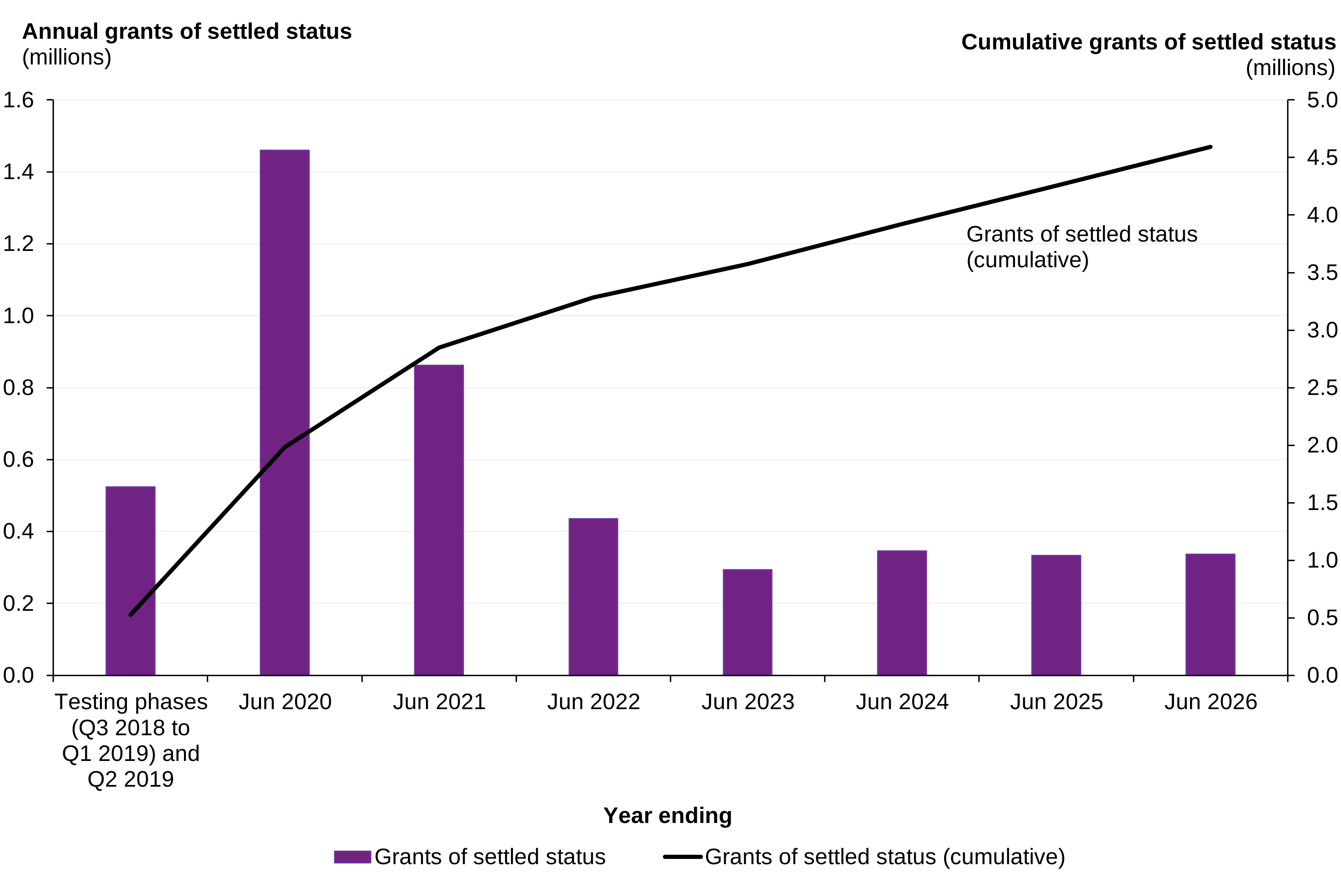
Since the scheme was launched in 2018, just under 4.6 million settled status grants have been issued.
Nearly two-thirds (62%) of settled status grants were issued before the 30 June 2021 application deadline. Since then, annual grant volumes have fallen and, from the YE June 2023, have remained broadly stable at just over 300,000 per year. Comparisons with periods from January 2025 onwards should be interpreted in the context of the introduction of automated grants of settled status, which are included in the published totals alongside grants following an application.
There were 336,229 settled status grants in the YE June 2026, with most granted to individuals previously holding pre-settled status. From January 2025, some pre-settled status holders meeting relevant criteria may be granted settled status automatically, without submitting a further application. These are reported as automated grants of settled status and are included in the total.
Figure 4: Total number of EUSS settled status grants, 28 August 2018 to 30 June 2026
Source: Table EUSS_QTR, EU Settlement Scheme summary tables, YE June 2026
Notes:
- For the latest reporting year (YE June 2026), the settled status grant totals presented in tables EUSS_D02 and EUSS_D03 differ slightly because they are derived from different data extracts. These differences are confined to the final month of the reporting period. Throughout this section, the YE June 2026 settled status total has been taken from table EUSS_D03, as this aligns with the published breakdown by application type provided by the Home Office.
3.2 What types of application have been granted settled status since the 30 June 2021 deadline?
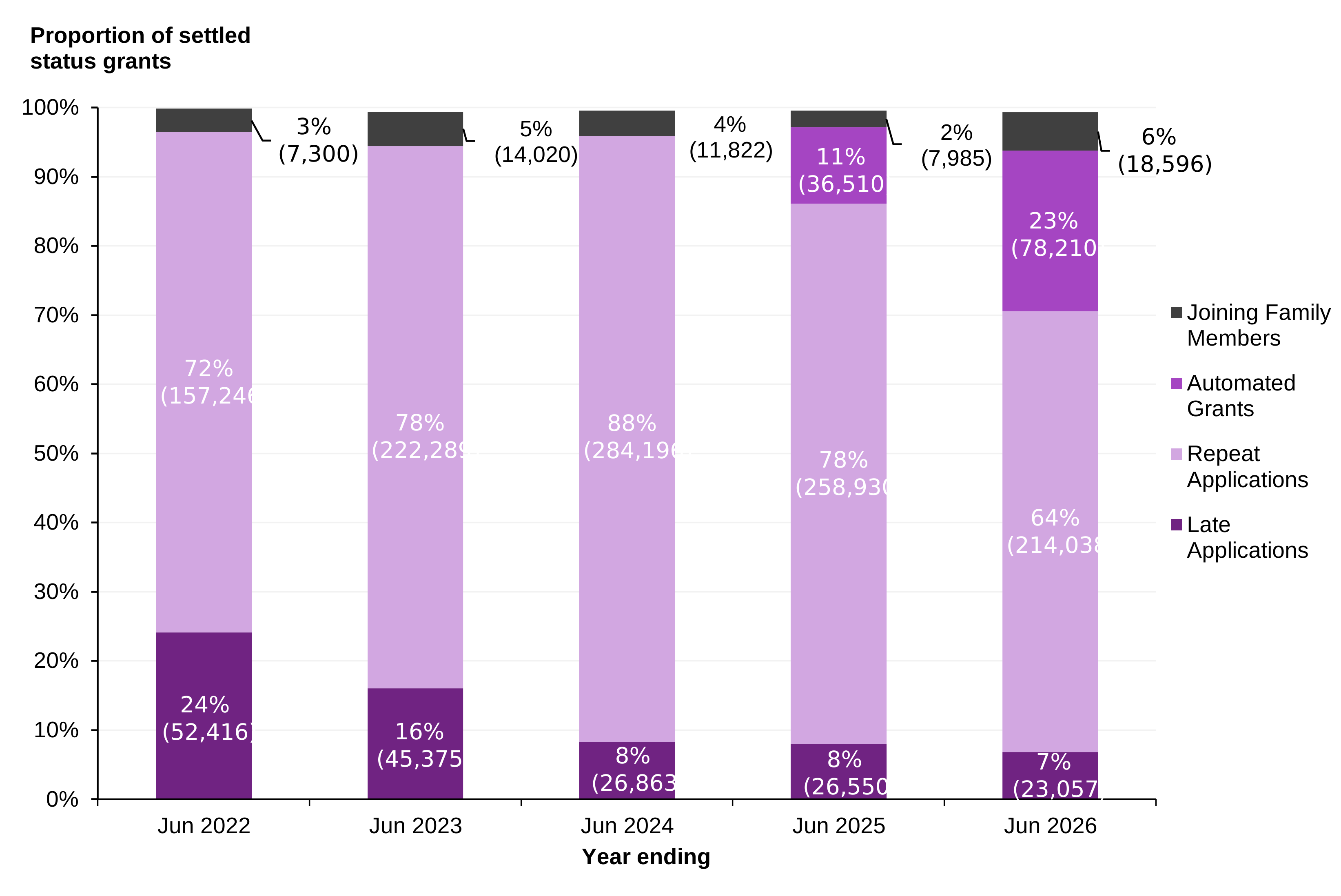
Figure 5: Total proportion of EUSS settled status grants by application type, YE June 2022 to YE June 2026
Source: Joining family members, Repeat applications and Late applications - Table EUSS_POST_30_JUNE, EU Settlement Scheme summary tables, YE June 2026
Notes:
- Derivative rights conclusions consistently account for less than 1% of annual settled status grants. As a result, they are not visually distinguishable within the stacked bar chart and are too small to support meaningful data labels.
- Automated grants exclude 1,060 applicants for whom a decision date could not be identified within the administrative data.
- Automated grants are a subset of the data presented in Table EUSS_RA_01 – EUSS_RA_04) of the EU Settlement Scheme summary tables, YE June 2026.
- For the latest reporting year (YE June 2026), the settled status grant totals presented in tables EUSS_D02 and EUSS_D03 differ slightly because they are derived from different data extracts. These differences are confined to the final month of the reporting period. Throughout this section, the YE June 2026 settled status total has been taken from table EUSS_D03, as this aligns with the published breakdown by application type provided by the Home Office.
The deadline to apply to the EUSS, for those who were resident in the UK by the end of the EU exit transition period (31 December 2020), was 30 June 2021. Certain applications can be made beyond the 30 June 2021 deadline. Since that date, there have been over 1.5 million grants of settled status, predominantly issued to those holding pre-settled status.
Repeat applications
In the YE June 2026, 214,038 settled status grants were issued to repeat applicants (individuals who have applied to the scheme more than once), a fall of 17% from the YE June 2025. Most grants categorised as ‘repeat applications’ are issued to people switching from pre-settled status to settled status. In part, the fall in repeat applications for settled status reflects the introduction of EUSS automation, where some eligible pre-settled status holders may be granted settled status automatically, without needing to submit a further application.
Automated grants of settled status
From January 2025, pre-settled status holders meeting relevant criteria may be granted settled status automatically, without submitting a further application. These are reported as automated grants of settled status.
In the YE June 2026, there have been an estimated 78,210 automated grants of settled status. Since the introduction of automated grants, an estimated 115,770 individuals have been granted settled status automatically.
Joining family members
Close family members are eligible to apply to the EUSS as the relevant family member of an EU, other EEA, or Swiss citizen who was resident in the UK before the end of the transition period (and who generally holds EUSS status), provided the relationship existed on 31 December 2020 (unless the person is a child, and born or adopted since then) and the relationship continues to exist at the date of application.
In the YE June 2026, there were 18,596 grants of settled status to joining family members, more than double the number granted in the previous year (7,985) and were the highest total since the 30 June 2021 application deadline.
This increase reflects higher numbers of joining family members who were granted pre-settled status in 2021 and have subsequently become eligible for settled status. Further information regarding joining family members can be found in the EUSS section of the Immigration System Statistics user guide.
Late applications
Late applications may be accepted where there are reasonable grounds for a delay in applying. This includes some applicants who have made a repeat application post-deadline and subsequently gained pre-settled or settled status. In the YE June 2026, 23,057 late applications resulted in a grant of settled status, a fall of 13% compared to the YE June 2025. However, decisions made in the YE June 2026 will also include applications submitted in earlier years.
Derivative Rights
This refers to applicants who did not qualify for a right of residence under the Free Movement Directive but may have had a right to reside in the UK under other provisions of EU law prior to the end of the transition period.
In the YE June 2026, there were 2,328 settled status grants issued to individuals with a derivative right to reside in the UK, a 61% increase compared with the YE June 2025. This increase is consistent with more individuals becoming eligible to apply for settled status after completing the required qualifying period of continuous residence following the end of the EU exit transition period on 31 December 2020. Further information regarding derivative rights can be found in the EUSS section of the Immigration system statistics user guide and the EUSS data tables.
3.3 How many pre-settled status holders have transitioned to settled status since the scheme began?
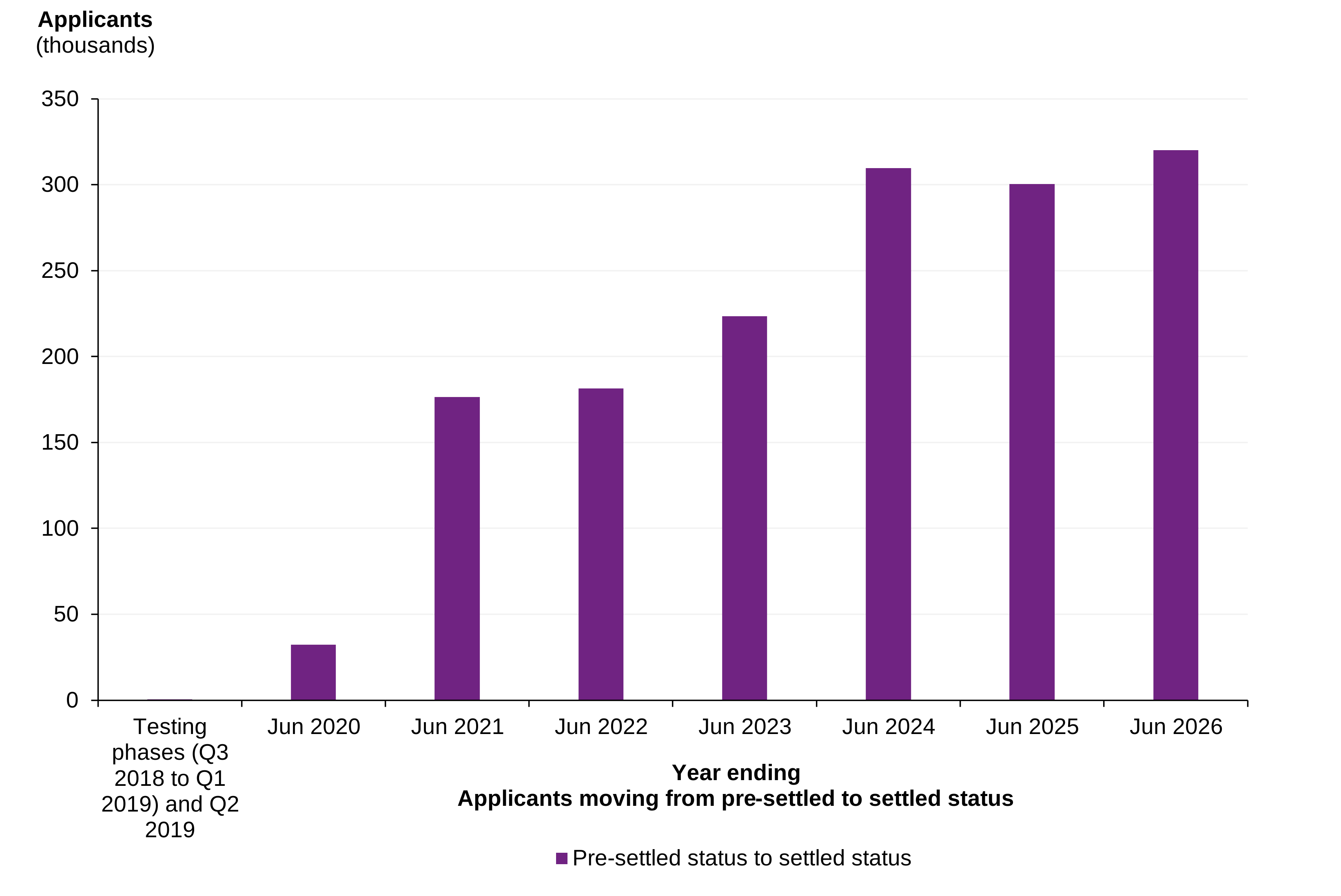
Figure 6: Applicants transitioning from EUSS pre-settled to settled status, 28 August 2018 to 30 June 2026
Source: Table EUSS_QTR, EU Settlement Scheme summary tables, YE June 2026
Figure 6 shows that an estimated 1.5 million individuals have transitioned from pre-settled to settled status since the scheme began. This includes individuals who have applied for settled status and those who have been automatically converted without an application. Transitions from pre‑settled to settled status have generally risen since the scheme’s launch.
As of 30 June 2026, an estimated 1.2 million people held pre-settled status, though this figure does not necessarily reflect the current resident population, as some may have left the UK. For further information, refer to the ‘Note on the difference between ONS population estimates by nationality and Home Office EU Settlement Scheme statistics’
4. About these statistics
The underlying casework systems on which this data is based are undergoing a process of change and therefore the published numbers may change in future quarters. In some cases, data will be unavailable. For more information see section 2.7 of the user guide.
Indefinite leave to enter or remain can be granted to individuals, subject to immigration control, to allow them to live, work, study and travel into and out of the UK without restriction. To be granted indefinite leave to remain, individuals generally must have lived in the UK for a certain length of time in a qualifying category. Those granted indefinite leave to enter or remain can access state benefits and register their UK-born children as British citizens. It does not entitle the individual to a British passport (which requires British citizenship) or to vote in a general election (which requires British, Commonwealth, or Irish Republic citizenship).
4.1 Settlement
Settlement is the general term for a person being granted indefinite leave to enter or remain (ILE/ILR) in the UK. It applies across a range of immigration routes, including Work, Family, Protection and Long Residence, and means the individual no longer has time limits on their stay, can access services on the same basis as British citizens, and may be eligible to apply for citizenship. In Section 2, settlement under the EUSS is excluded, as the EUSS operates as a distinct route with its own rights, instead, allotted its own focus in Section 3.
The statistics in this section show the number of grants of indefinite leave to enter or remain in the UK. They take account of the outcomes of reconsiderations and appeals.
Refugee Family Reunion
Although Refugee Family Reunion grants are recorded under the ‘Family’ category in the entry clearance data tables, see - Why do people come to the UK - Family?; individuals granted settlement who previously held leave under this route are categorised under refugee or protection-based settlement.
4.2 EU Settlement Scheme
Since May 2022, EUSS statistics have been classified as Official Statistics. Most figures are unrounded, except for estimated repeat applicants.
The publication includes all EUSS decisions from 28 August 2018 to 30 June 2026, including those of repeat applications, as individuals move from pre-settled to settled status. Each decision is recorded separately, as casework systems do not contain a single identifier to track individuals across multiple applications. Probabilistic data matching has been developed to estimate the total number of unique applicants and their outcomes.
While most applicants are EU, other EEA, or Swiss nationals, some non-EEA national family members are also included. Applications may also be made by eligible individuals living outside the UK, and individuals may still hold EUSS status despite having left the UK. Therefore, these figures are not directly comparable with UK resident population estimates, which do not reflect migration intentions.
Provisional data on 115,770 automated grants of settled status up to 30 June 2026 is included in the topic narrative and charts but is not yet included in the published data tables. Work is ongoing to integrate these grants into future versions of the tables. Where the Home Office is unable to grant settled status automatically, pre-settled status is automatically extended. Following a pre-settled status extension, the Home Office has begun to identify those who no longer meet the requirements due to excess absences from the United Kingdom and curtail their status. Statistics relating to these processes will be published as soon as possible on GOV.UK.
Information of EUSS applicants’ sex has been added to summary tables EUSS_02, EUSS_04, Local Authority table EUSS_LA_02 and the detailed data tables EUSS_D01, EUSS_D02 and EUSS_D03.
5. Data tables
Data referred to here can be found in the following tables:
- Settlement summary tables
- Detailed settlement datasets
- Entry clearance summary tables
- Entry clearance datasets
- EU Settlement Scheme – summary tables
- EU Settlement Scheme – local authority summary tables
- EU Settlement Scheme – detailed tables
We welcome your feedback
If you have any comments or suggestions for the development of this report, please provide feedback by emailing MigrationStatsEnquiries@homeoffice.gov.uk. Please include the words ‘PUBLICATION FEEDBACK’ in the subject of your email.
We’re always looking to improve the accessibility of our documents. If you find any problems or have any feedback relating to accessibility, please email us.
See Section 6 of the ‘About this release’ section for more details.