How many Citizenship grants have been issued in the UK?
Published 27 August 2026

© Crown copyright 2026
This publication is licensed under the terms of the Open Government Licence v3.0 except where otherwise stated. To view this licence, visit nationalarchives.gov.uk/doc/open-government-licence/version/3 or write to the Information Policy Team, The National Archives, Kew, London TW9 4DU, or email: psi@nationalarchives.gov.uk.
Where we have identified any third party copyright information you will need to obtain permission from the copyright holders concerned.
This publication is available at https://www.gov.uk/government/statistics/immigration-system-statistics-year-ending-june-2026/how-many-citizenship-grants-have-been-issued-in-the-uk
Back to ‘Immigration system statistics, year ending June 2026’ contents page
This release goes up to the year ending (YE) June 2026. The “year ending” period includes the 12 months up to and including the YE month. For example, YE June 2026 includes the 12 months between 1 July 2025 and 30 June 2026. All comparisons are with the YE June 2025 (unless indicated otherwise).
This chapter was previously part of “How many Indefinite Leave to Remain (Settlement and EUSS settled status) and Citizenship grants have been issued in the UK?”
From the YE June 2026 publication, citizenship statistics are presented in a separate chapter from indefinite leave statistics. This presentational change has been introduced to improve the clarity of reporting by reflecting citizenship as a distinct stage of the migration journey. The change affects the structure of the publication only and does not affect the underlying statistics.
1. Citizenship
People with British citizenship have the right to live and work in the UK without any immigration control and can apply for a British passport. British citizenship is defined by the British Nationality Act 1981. People may be eligible for British citizenship (or ‘naturalisation’) for several reasons. Further details on the eligibility to apply for British citizenship can be found on GOV.UK.
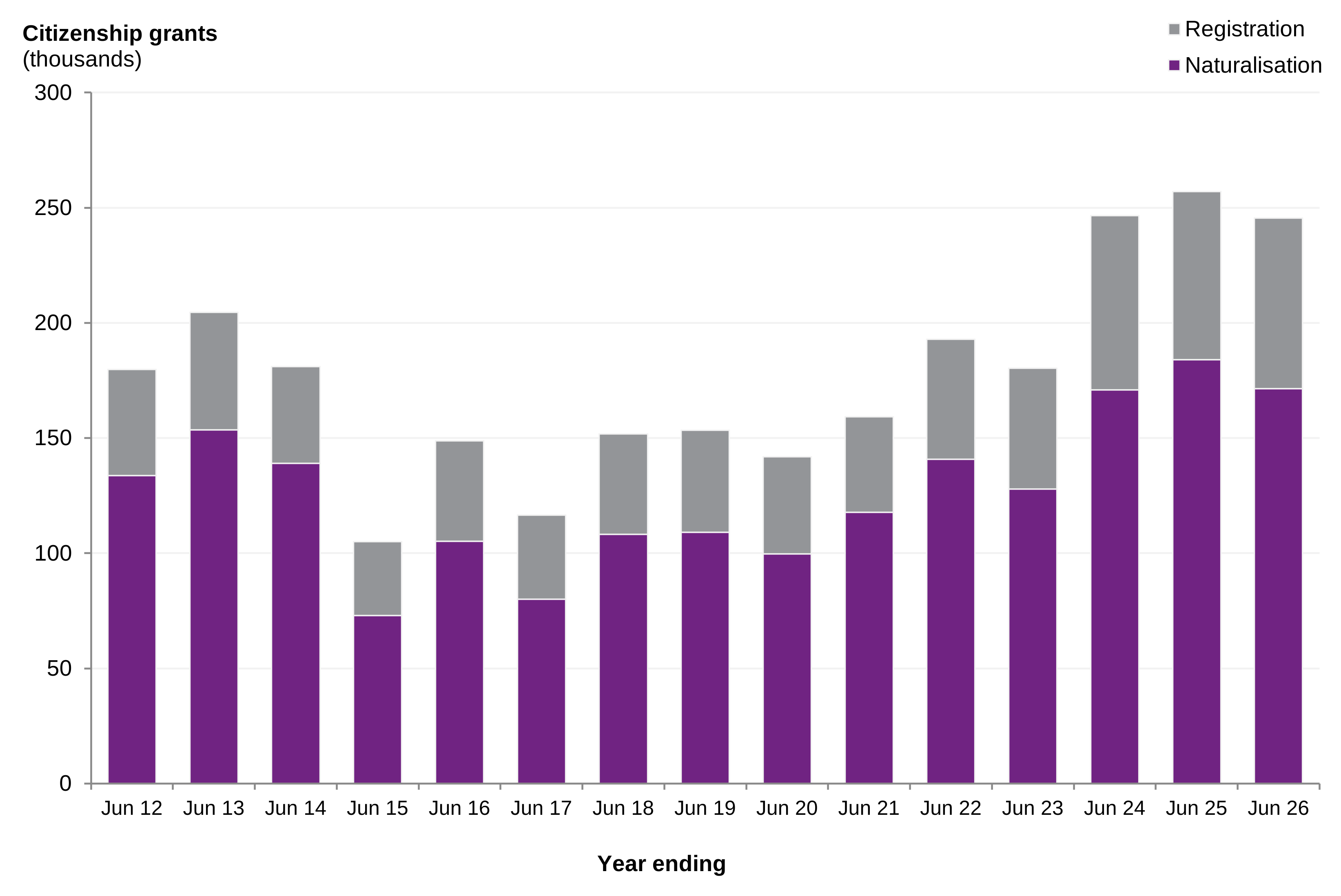
British citizenship grants in the YE June 2026 were slightly lower than the record levels observed in the previous year.
Figure 1: Grants of citizenship in the UK, by application type, YE June 2012 to YE June 2026
Source: Citizenship detailed datasets - Cit_D02
In the YE June 2026, there were 245,520 grants of British citizenship, a small decrease of 4% from the previous year, but levels remained high relative to those observed across the available time series (since 2005).
There were 171,435 grants of citizenship through naturalisation, a decrease of 7% compared with the YE June 2025. Despite this decline, the latest annual figure remains over 45% higher than the average annual number of grants observed in the decade preceding 2020 (2010 to 2019). The longer-term increase reflects higher numbers of individuals granted indefinite leave, who subsequently went on to apply for British citizenship.
Naturalisation is the process by which a non-British adult may acquire British citizenship following a qualifying period of lawful residence in the UK, after being granted indefinite leave. This includes individuals who have been granted settled status under the EU Settlement Scheme.
In the YE June 2026, there were 74,085 grants of British citizenship through registration, remaining broadly stable compared with the YE June 2025 (up 1%).
Registration enables individuals to acquire British citizenship through either a legal entitlement or a discretionary process. It is most used by children and by individuals with a qualifying connection to the United Kingdom or its overseas territories.
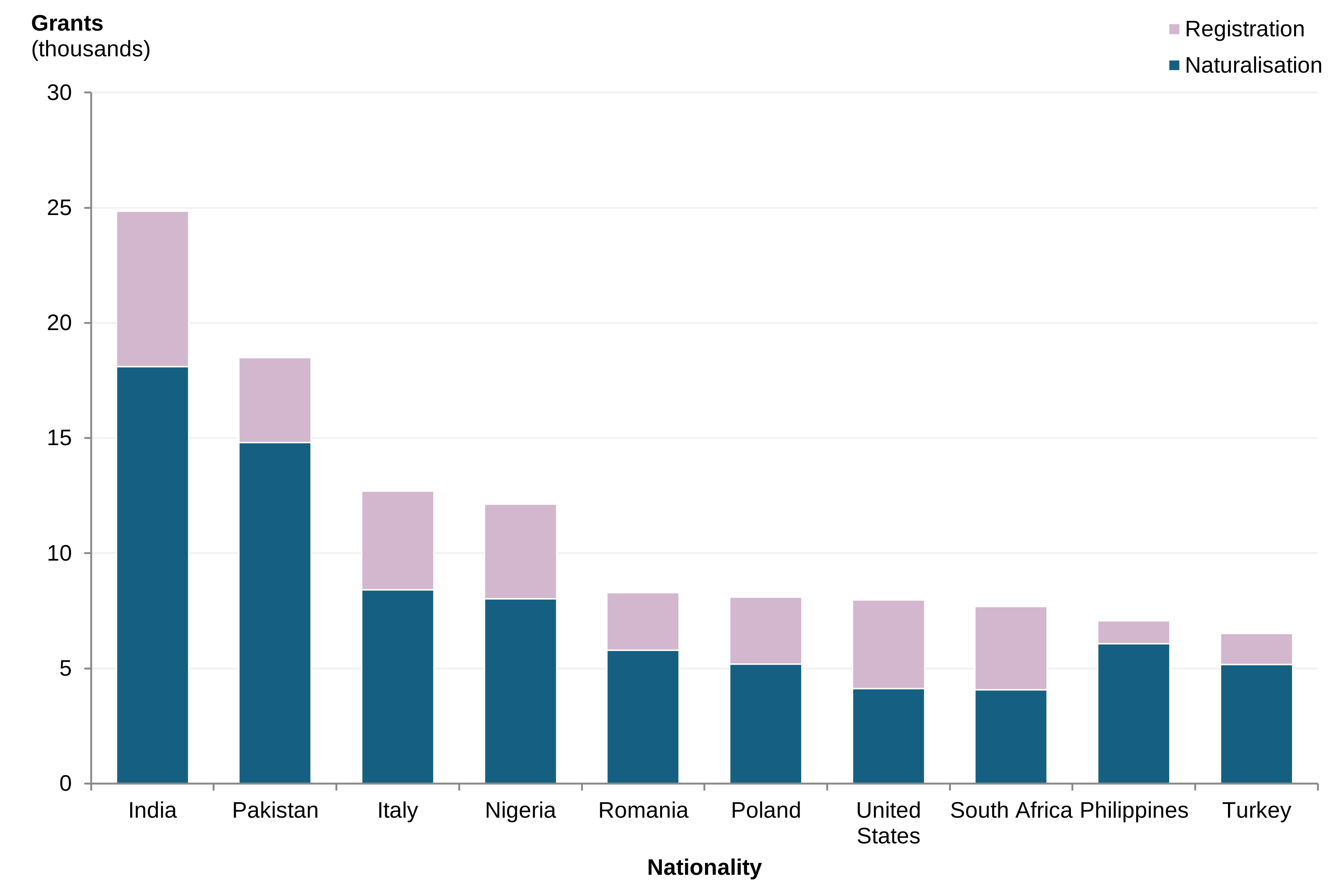
Figure 2: Top 10 nationalities for citizenship grants, by application type group, YE June 2026
Source: Citizenship detailed datasets - Cit_D02
Indian (24,851) and Pakistani (18,489) nationals were the two largest nationality groups granted British citizenship in the YE June 2026. These nationalities have consistently accounted for the highest numbers of British citizenship grants throughout the available time series (since 2005).
Although a proportion of grants to both nationality groups relate to the registration of existing British citizenship rights, most were acquired through naturalisation. This reflects longstanding migration and settlement patterns. Indian nationals have consistently been among the largest nationality groups granted settlement, predominantly following periods of residence on work-related immigration routes. Pakistani nationals have likewise received high volumes of settlement grants, typically following a combination of work-related and family-based migration. The high numbers of British citizenship grants to both nationality groups reflect individuals who had previously obtained settlement and subsequently met the statutory requirements to naturalise as British citizens.
Among EU nationals, Italians were the most frequently granted British citizenship in the YE June 2026, with 12,698 grants. Together with Romanian (8,285) and Polish (8,092) nationals, Italians accounted for the 3 largest EU nationality groups granted British citizenship during the year. This is consistent with trends observed under the EU Settlement Scheme (EUSS), where Italian, Romanian and Polish nationals have been among the largest nationality groups granted settled status since the scheme opened in 2018, providing a pathway for many eligible individuals to subsequently naturalise as British citizens.
2. About these statistics
The underlying casework systems on which this data is based are undergoing a process of change and therefore the published numbers may change in future quarters. In some cases, data will be unavailable. For more information see section 2.7 of the user guide.
British citizens can live and work in the UK free of any immigration controls. They can apply for a British passport, register to vote in all forms of election and referenda, and share in all the other rights and responsibilities of their status. If someone is not already a British citizen based on where and when they were born, or their parents’ circumstances, they can apply to become one.
Naturalisation and Registration are legal processes through which an individual can become a British citizen and obtain the same rights and privileges as someone who was born a British national. Dual citizenship (also known as dual nationality) is allowed in the UK. This means people can be both a British citizen and a citizen of other countries. Further details on these legal processes can be found in the user guide.
The statistics in this section show the number of applications and grants for British citizenship.
2.1. Upcoming changes to citizenship statistics
From the November 2026 edition of the Immigration statistics quarterly release due for publication on 26 November 2026, the following changes will be introduced:
Discontinuation of Cit_D03 – British citizenship ceremonies attended
The Home Office will formally discontinue publication of table Cit_D03: British citizenship ceremonies attended, from the November 2026 edition of this release. Statistics on the number of British citizenship ceremonies attended have not been published since 2021 because of quality concerns with the underlying administrative data.
For more information, please see section 10.2 of the User guide to Home Office Immigration system statistics (user guide). Feedback on this change can be submitted to MigrationStatsEnquiries@homeoffice.gov.uk.
Expanded citizenship statistics
Within detailed table Cit_D02, the Home Office will reintroduce the application type breakdowns, which provide further detail on the grounds for which an applicant has applied for, and been granted, citizenship. This follows improvements in data availability and quality.
Age breakdowns will also be reintroduced into the existing datasets using the latest available information. These changes will provide users with greater insight into the different routes through which British citizenship is acquired.
3. Data tables
Data referred to here can be found in the following tables:
We welcome your feedback
If you have any comments or suggestions for the development of this report, please provide feedback by emailing MigrationStatsEnquiries@homeoffice.gov.uk. Please include the words ‘PUBLICATION FEEDBACK’ in the subject of your email.
We’re always looking to improve the accessibility of our documents. If you find any problems or have any feedback relating to accessibility, please email us.
See Section 6 of the ‘About this release’ section for more details.