Local authority housing stock condition modelling, 2024 - main report
Published 25 June 2026
Applies to England

© Crown copyright 2026
This publication is licensed under the terms of the Open Government Licence v3.0 except where otherwise stated. To view this licence, visit nationalarchives.gov.uk/doc/open-government-licence/version/3 or write to the Information Policy Team, The National Archives, Kew, London TW9 4DU, or email: psi@nationalarchives.gov.uk.
Where we have identified any third party copyright information you will need to obtain permission from the copyright holders concerned.
This publication is available at https://www.gov.uk/government/statistics/english-housing-survey-local-authority-housing-stock-condition-modelling-2024/local-authority-housing-stock-condition-modelling-2024-main-report
Introduction
This Official Statistics in Development series provides sub-regional estimates of housing stock condition. Specifically, modelled estimates of the number and proportion of occupied homes that are deemed non-decent according to the Decent Homes Standard, have Category 1 hazards, or have a problem with damp in each local authority, by tenure and dwelling type.
The models used to produce these estimates were developed using the 2023-24 English Housing Survey (EHS) housing stock data. The methodology uses EHS findings on household and dwelling characteristics, known to be associated with housing quality at a national level, to predict housing quality for each local authority in England. More detail on the modelling methodology is provided later in this release.
EHS data used in this publication comes from full inspections of dwellings between April 2023 and March 2025. The data used in this report was produced by Tad Nowak and Tom Gregory at BRE in collaboration with NatCen Social Research and MHCLG. The responsible analysts and authors of this report are Alistair Rice and Sam Offler, Data, Analysis, Statistics and Surveys Division, MHCLG.
These statistics have been developed in response to a growing interest in housing quality. We will continue to develop these metrics to support the needs of users and welcome any feedback on this release to ehs@communities.gov.uk.
Advice for users
Local authority level modelled data reported here is household weighted. This approach counts the number of households in occupied properties, which may be more than one (if multiple households occupy the same property). We refer to these as ‘homes’.
Regional and national level data reported here to provide contextual information is dwelling weighted. This approach counts the number of properties, independent of how many households are resident there. We refer to these as ‘dwellings’.
We expect differences in the modelled data in this publication and the self-reported data from social sector landlords in related publications. This is because the data are collected for different reasons, and are subject to uncertainty, often leading to differences in reported levels of poor quality housing. Users should consider differences in methodological approaches when making comparisons.
We do not recommend that users directly compare estimates for individual local authorities from this release with published data from previous years due to data and methodological considerations, which prevent the use of statistical testing to determine whether changes are significant. For more detail, see How the data should be used and Modelling methodology.
Further details on the various published statistics covering housing quality are outlined in a statistical coherence article.
Main findings
-
Across both rented tenures, the highest rates of non-decency were in homes in local authorities in the South West, coastal areas of the South East, the Midlands and Yorkshire and the Humber. Failing the Decent Homes Standard on multiple criteria was less common in London than other regions.
-
London, and those areas of the Midlands and the South that are geographically closest to London, had the lowest rates of homes with Category 1 hazards. In the private rented sector, hazards relating to falls were more common in Yorkshire and the Humber than in most other regions.
-
Rented households in local authorities in the North East and the East of England showed the lowest rates of homes with damp, whereas many local authorities across the Midlands and North had high rates of homes with damp in the private rented sector. London boroughs also had high rates of rented homes with damp, with boroughs in central London the most likely.
-
Across England, homes in areas with higher rainfall were slightly more likely to have damp than homes in areas with lower rainfall, though trends for specific types of damp differed by tenure.
-
In local authorities in Yorkshire and the Humber and the Midlands, terraced dwellings had higher rates of non-decency, Category 1 hazards and damp compared to other regions. Conversely, in local authorities in the South West and coastal areas of the South and East, detached dwellings had higher rates of non-decency and Category 1 hazards compared to other regions.
1. The Decent Homes Standard and Category 1 hazards
1.1 Introduction
Approximately 15% of homes in England were non-decent in 2024, 8% had a HHSRS Category 1 hazard, and 6% had a problem with damp[footnote 1].
At the local authority level, the modelled data shows variation in housing conditions across England, with 89% of local authorities having less than 20% of homes predicted to be non-decent. Similarly, in 72% of local authority areas, less than 10% of homes are estimated to have a HHSRS Category 1 hazard. In almost all (97%) of local authorities, less than 10% of homes are estimated to have damp.
Table 1. Number of local authorities with levels of non-decency, Category 1 hazards and damp
| Thresholds | Non-decent | HHSRS Category 1 hazard | Damp |
|---|---|---|---|
| Less than 5% | 0 | 34 | 117 |
| 5 to 9.9% | 25 | 179 | 171 |
| 10 to 14.9% | 139 | 72 | 7 |
| 15 to 19.9% | 100 | 10 | 1 |
| 20 to 24.9%+ | 28 | 0 | 0 |
| 25% or more | 4 | 1 | 0 |
1.2 Decent Homes Standard
For a dwelling to be considered ‘decent’ under the Decent Homes Standard it must:
-
meet the statutory minimum standard for housing (the Housing Health and Safety System (HHSRS) since April 2006), homes which contain a Category 1 hazard under the HHSRS are considered non-decent
-
be in a reasonable state of repair
-
have reasonably modern facilities and services
-
provide a reasonable degree of thermal comfort
The Decent Homes Standard (DHS) was introduced as a regulatory standard in the social rented sector in 2006. In the owner occupied and private rented sectors, the DHS is not a regulatory standard, though it is tracked through the EHS. Regulatory standards in the private rented sector are currently assessed against the existing Housing Health and Rating System (HHSRS), i.e. Criterion A of the DHS.
On 28 January 2026, the government announced a new Decent Homes Standard to apply to both rented sectors from 2035. Failure rates for dwellings under this new standard for 2023 have been published as part of an EHS Briefing. This report presents data on the existing Decent Homes Standard.
In 2024, 15% of all dwellings in England were non-decent[footnote 2].
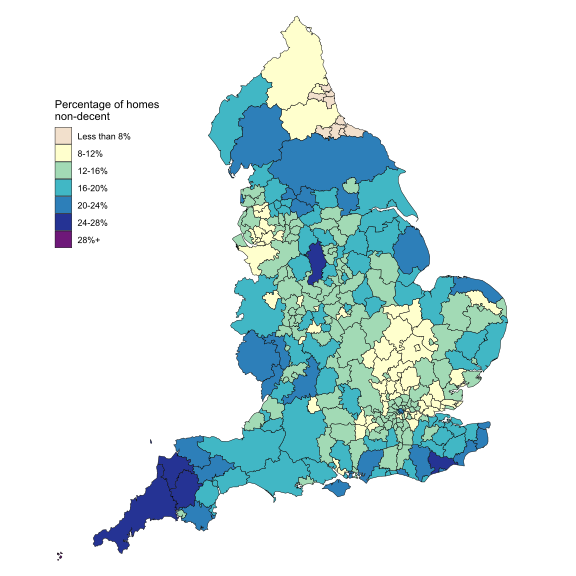
Non-decent homes were spread across England. Local authority areas containing a consistently high proportion of non-decent homes were most likely to be located in the South West peninsula, coastal areas of the South East, East of England and the East Midlands, on the Welsh border, much of Yorkshire and the Humber, as well as in the more northern areas of the North West.
The lowest levels of non-decency were seen in the North East and areas north of London such as Cambridgeshire and Peterborough, Hertfordshire, and Bedfordshire. Additionally, low levels of non-decency were seen in Cheshire and nearby areas of the North West.
Figure 1.1. Proportion of non-decent homes by local authority in England, 2024
Tenure
The proportion of non-decent dwellings varied by tenure. In 2024, 22% of private rented sector dwellings were non-decent. This was higher than in the owner-occupied sector (15%) and the social rented sector (10%).
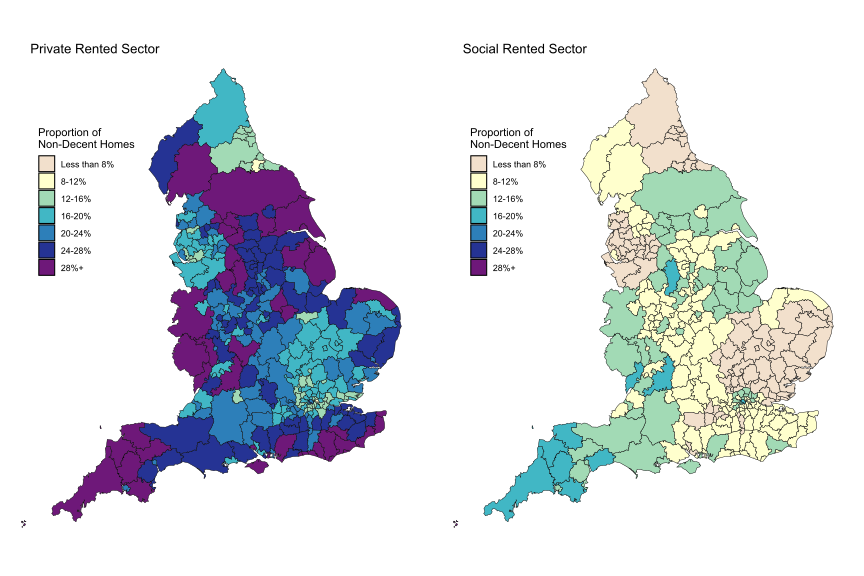
Both rented tenures showed similar distributions of non-decency across England. In the private rented sector, high levels of non-decency were observed in local authorities in the South West peninsula, on the Welsh border, in coastal areas in the South East and the East of England, as well as much of Yorkshire and the Humber and the East Midlands.
In the social rented sector, non-decency was overall less prevalent compared to the private rented sector. Nonetheless, some local authorities in the South West, both in the peninsula and in Gloucestershire in the north of the region, were modelled as having over 16% of their homes non-decent. Other local authorities in the West Midlands, East Midlands and Yorkshire and the Humber had non-decency rates between 12% and 16%. Local authorities across the North West, North East and East of England had comparatively lower rates of non-decency in the social rented sector.
Figure 1.2. Proportion of non-decent rented homes by local authority, 2024
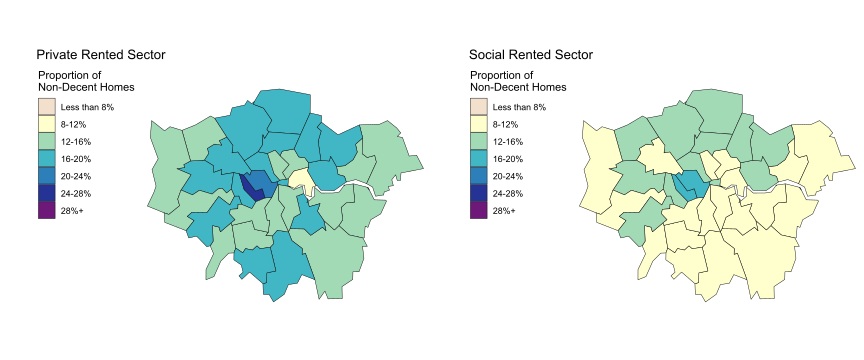
In London, non-decency in both rented sectors tended to be higher in boroughs in the North of the city.
Figure 1.3. Proportion of non-decent rented homes by London boroughs, 2024
Failing on more than one criterion
Dwellings are considered non-decent if they fail on any of the four possible criteria of the Decent Homes Standard. In 2024, 3% of all dwellings in England failed on multiple criteria. This was higher for private rented (4%) and owner occupied (3%) dwellings than for social rented dwellings (1%)[footnote 3].
Considering all dwellings, failing on multiple criteria was significantly less common in London (1%) than all other regions excluding the North East (2% to 5%) (Annex Table 2.1).
1.3 HHSRS Category 1 hazards
The HHSRS is a risk-based assessment that identifies hazards in dwellings and evaluates their potential effects on the health and safety of occupants and their visitors, particularly vulnerable people. The most serious hazards are called Category 1 hazards and, where these exist in a home, it fails to meet the statutory minimum standard for housing in England. A dwelling will fail the Decent Homes Standard if it has one or more HHSRS Category 1 hazard.
In 2024, 8% of all dwellings in England had a Category 1 hazard.
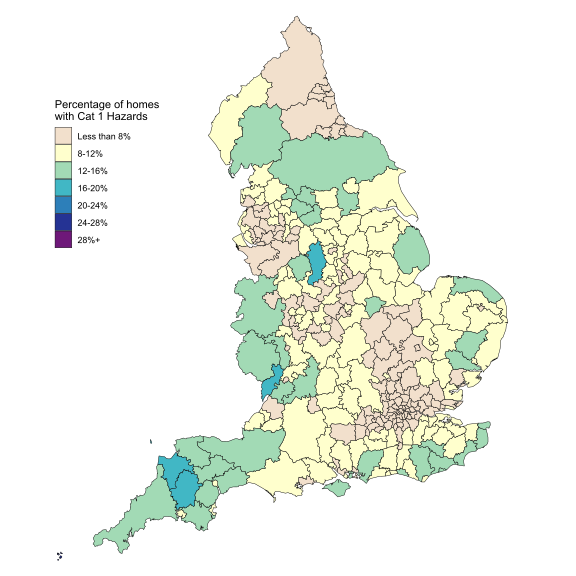
London, and areas of the Midlands and the South that are geographically closest to London, had the lowest rates of homes with Category 1 hazards in 2024. Additionally, there was a low prevalence of homes with Category 1 hazards in the North East and local authorities in the southern part of the North West. Other regions across the country showed higher rates of homes with Category 1 hazards.
Figure 1.4. Proportion of dwellings with Category 1 hazards by local authority in England, 2024
Failing with or without Category 1 hazards
Having a Category 1 hazard was the most common reason for a dwelling failing the Decent Homes Standard in 2024 - 9% of all dwellings had a Category 1 hazard and 15% of dwellings were non-decent.
In 2024, 6% of dwellings failed the Decent Homes Standard on Category 1 hazards only, 3% failed on Category 1 hazards as well as other criteria, and the remaining 7% failed on other criteria only (Annex Table 2.2).
This distribution varied by region. Dwellings in Yorkshire and the Humber were more likely to fail on Category 1 hazards only (9%) than any other region, and dwellings in the South West were more likely to fail on Category 1 hazards and at least one other criterion (5%) than all other regions (1-3%) apart from the South East and North West.
Tenure
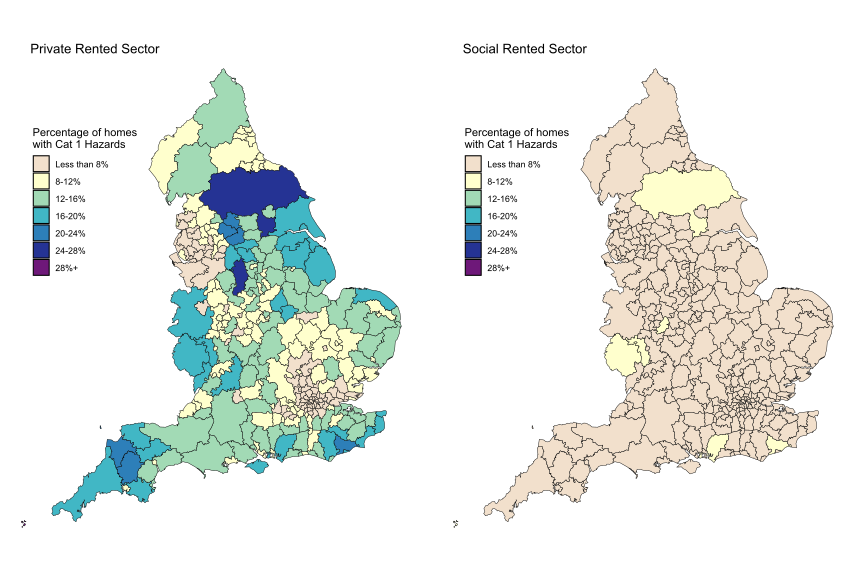
In 2024, 5% of social rented dwellings had HHSRS Category 1 hazards, compared to 10% of private rented dwellings and 9% of owner occupied dwellings.
In the private rented sector, the prevalence of Category 1 hazards generally mirrored the regional trend for non-decency.
In the North, there was variation in the prevalence of Category 1 hazards, with higher prevalence for local authorities in Yorkshire and the Humber and parts of the East Midlands, but lower rates for the southern area of the North West.
In the South, Category 1 hazards were also more prevalent in the South West peninsula, local authorities on the Welsh border and various coastal local authorities in the South East, with lower rates in London and surrounding areas.
Across England as a whole, within the social rented sector, only a few local authorities across various regions had Category 1 hazards in more than 8% of their homes.
Figure 1.5. Proportion of rented homes with Category 1 hazards by local authority, 2024
Types of Category 1 hazards
In 2024, the most common Category 1 hazards found across all dwellings were falls on stairs (4%), excess cold (2%), falls on the level (1%), falls between levels (1%) and damp (1%)[footnote 4]. Hazards relating to falls of any type[footnote 5] were more common in Yorkshire and the Humber in the private rented sector (12%) than in most other regions.
Figure 1.6. Falls hazards in the private rented sector by region, 2024
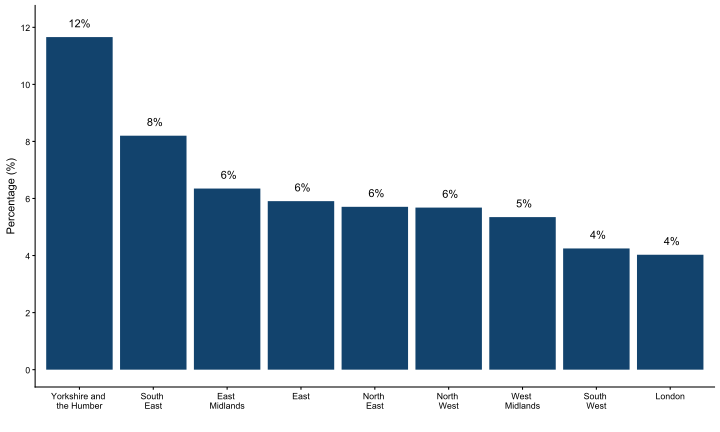
Base: all dwellings
Note: underlying data are presented in Annex Table 2.3
Source: English Housing Survey, dwelling sample
2. Damp
2.1 Damp by local authority
In the English Housing Survey, a home is considered to have damp, or a problem with damp, if the surveyor records damp that is significant enough to be taken into consideration when making a HHSRS assessment. Therefore, minor issues of damp are not recorded.
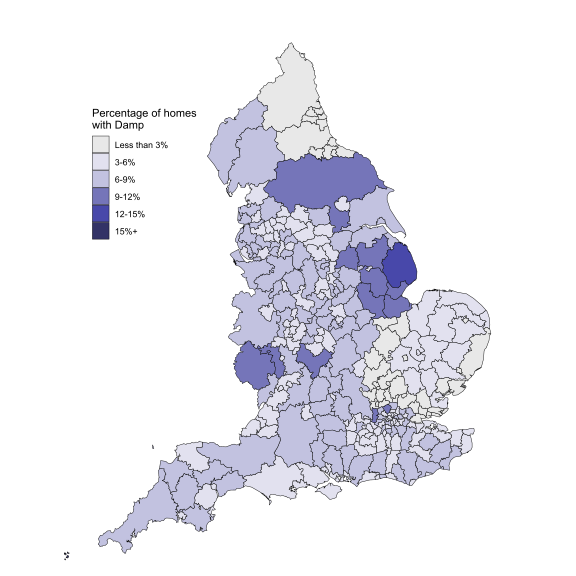
In 2024, 5% of all dwellings in England had a problem with damp. Local authorities in the East of England and the North East tended to have a smaller proportion of homes with damp, in contrast to local authorities across the rest of the country, particularly those in the West Midlands, East Midlands and Yorkshire and the Humber.
Figure 2.1. Proportion of homes with damp by local authority, 2024
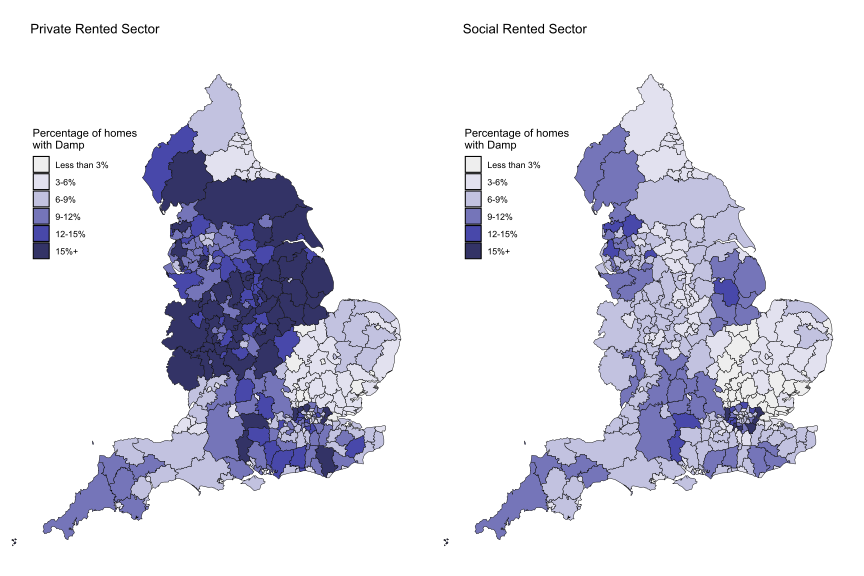
In 2024, 10% of private rented sector dwellings had a problem with damp, higher than 7% of social rented sector dwellings and 4% of owner occupied dwellings.
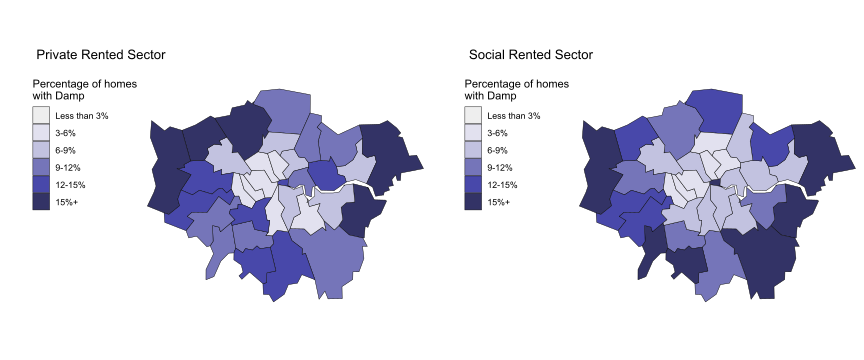
In the private rented sector, homes were more likely to have a problem with damp across Yorkshire and the Humber, the West Midlands, and East Midlands, as well as parts of the South East and North West. In the social rented sector, the highest proportions of homes with damp were present in London boroughs, with regions such as the North East and the East of England showing the lowest levels.
Figure 2.2. Proportion of rented homes with damp by local authority, 2024
For rented households in London, boroughs in central London had a lower proportion of homes with damp compared to other boroughs.
Figure 2.3. Proportion of rented homes with damp by London borough, 2024
2.2 Types of damp by region
A dwelling is considered to have a problem with damp if it either has penetrating damp, rising damp, or serious levels of condensation. In 2024, serious condensation was more prevalent in homes (3%) than penetrating damp (2%) and rising damp (1%)[footnote 6].
Each type of damp has different causes. Condensation occurs when moisture generated inside the home is unable to escape, and cools and condenses onto colder parts of the building, such as window frames or walls. Conversely, penetrating and rising damp, are caused by moisture that enters the home from external sources such as the outside environment or leaking pipes[footnote 7].
Here, we define a penetrating or rising damp as ‘externally driven damp’ and serious condensation as ‘internally driven damp’. Both externally driven and internally driven damp can be caused by a range of defects in the property.
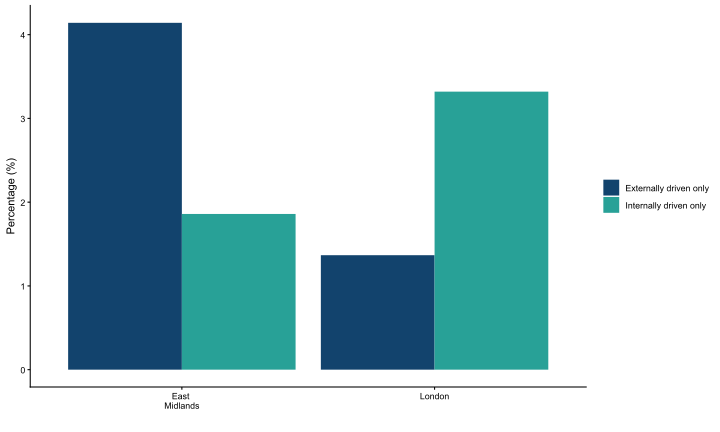
In 2024, 2% of dwellings experienced externally driven damp only and a further 2% of dwellings faced internally driven damp only. An additional 1% of dwellings experienced both internally and externally driven damp (Annex Table 2.4).
Dwellings in the East Midlands (4%) had a higher likelihood of experiencing externally driven damp only than other regions (1-3%). Within the East Midlands, this was also higher than the proportion of dwellings experiencing internally driven damp only (2%)
Conversely, dwellings in London were more likely to have internally driven damp only than externally driven damp only (3% vs 1%). No statistically significant differences were observed in other regions.
Figure 2.4. Types of damp by region, 2024
Base: all dwellings
Note: underlying data are presented in Annex Table 2.4
Source: English Housing Survey, full dwelling sample
2.3 Rainfall and damp
Weather conditions, such as amounts of rainfall experienced, are known to vary across the country. This section provides insight on whether geographical variation in weather conditions may underlie geographical variation in homes experiencing damp.
Where there are defects on external elements, rainfall can directly enter a home and lead to penetrating damp. If a damp-proof course is absent or in disrepair, ground saturation following rainfall can cause rising damp as groundwater moves upwards through vertical capillary movement. Furthermore, the ventilation of moist air inside a dwelling may be less effective under conditions of higher external humidity.
To assess the relationship between external moisture and housing conditions, we compared recent levels of rainfall experienced by homes with the presence of different types of damp as observed through the English Housing Survey. Homes in areas with higher rainfall were slightly more likely to have a problem with damp, though trends for specific types of damp differed by tenure.
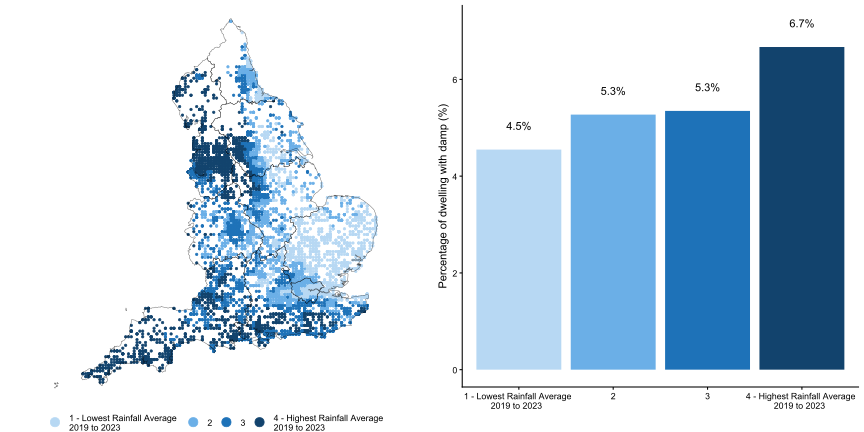
Dwellings observed through the English Housing Survey were assigned a quartile for the amount of rainfall they received from 2019 to 2023 through linking to UK Climate Projections data from the Met Office via the postcode of the dwelling[footnote 8]. For example, the 25% of observed dwellings whose postcode area received the most annual rainfall from 2019 to 2023 inclusive were designated as in the upper (4th) quartile for rainfall.
Rainfall in England from 2019 to 2023 was highest for dwellings in the South West and North West, as well as parts of the South East, and more central parts of the East Midlands and Yorkshire and the Humber. Lower rainfall was experienced by dwellings in the East of England, an area where local authority areas tended to have lower proportions of homes with a problem with damp.
Dwellings in the highest rainfall quartile (7%) were slightly more likely than dwellings in the lowest rainfall quartile to have a problem with damp (5%). (Annex Table 2.5, Figure 2.5).
Figure 2.5. Regional profile of rainfall (2019-2023) and dwellings with damp by rainfall quartile, 2024
Base: all dwellings
Note: underlying data are presented in Annex Table 2.5
Source: English Housing Survey, full dwelling sample, UK Climate Projections Data
The three types of damp showed different associations with levels of rainfall. Across all dwellings, penetrating damp and rising damp were lowest (2% and 1%) in dwellings in the lowest rainfall quartile, and highest (3% and 2%) in dwellings in the highest rainfall quartile. Levels of serious condensation were statistically similar between dwellings in the highest and lowest rainfall quartiles.
These national trends will be primarily driven by areas with a higher number of homes such as urban centres or geographically large rural local authorities. Modelled estimates where damp of any type was present in more than 10% of homes in 2024 tended to be local authorities with a comparatively small number of dwellings (Figure 2.1). These areas would have a limited influence on national trends.
The partial geographic correlation between areas with high rainfall and areas where homes are modelled as more likely to have damp indicates that while hygrothermal conditions could be a contributing factor to the presence of damp, other factors such as tenure could be more influential.
In each individual tenure, there were different relationships between types of damp and levels of rainfall (Annex Table 2.5). For example, in the private rented sector, levels of penetrating damp were related to rainfall amount whereas in the social rented sector, levels of serious condensation were related to rainfall amount. This suggests a more complex relationship between rainfall and the presence of damp, with further confounding variables likely to be impacting findings.
3. Dwelling types
The most common dwelling types in England in 2024 were terraced houses (28%) and semi-detached houses (25%), followed by flats (22%), detached houses (18%) and bungalows (8%)[footnote 9].
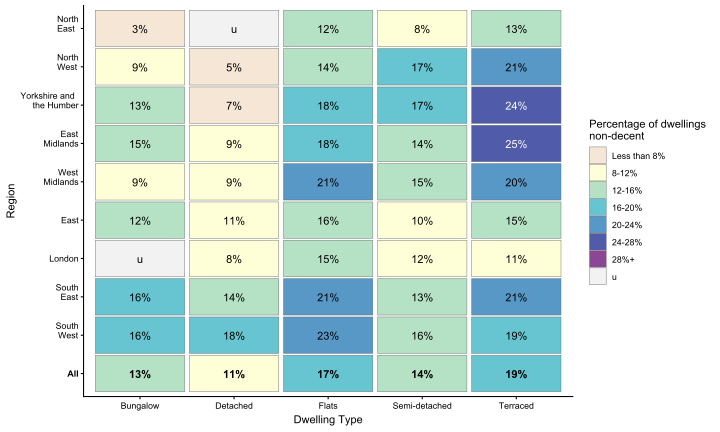
In 2024, the likelihood of a dwelling being non-decent varied both regionally and by dwelling type (Annex Table 2.6, Figure 3.1).
Figure 3.1. Variation in non-decency by dwelling type and region, 2024
Base: all dwellings
Notes:
- underlying data are presented in Annex Table 2.6
- ‘u’ indicates where sample sizes are too small to report
Source: English Housing Survey, dwelling sample
3.1 Terraced dwellings
Terraced dwellings, which made up 28% of dwellings in England in 2024, were more likely to be non-decent (19%) than detached dwellings (11%), semi-detached dwellings (14%) and bungalows (13%) (Annex Table 2.6).
Terraced dwellings were most likely to be non-decent in the East Midlands (25%) and Yorkshire and the Humber (24%) and least likely in London (11%) and the North East (13%). This trend was also seen for damp, with higher rates in the East Midlands (11%) and Yorkshire and the Humber (12%) than regions such as London (5%), the East of England (4%) and the North East (3%).
For multiple local authorities in the East Midlands and Yorkshire and the Humber, more than 28% of terraced homes were non-decent and more than 12% of terraced homes had damp.
Figure 3.2. Proportion of non-decent terraced homes, and terraced homes with a problem with damp by local authority, 2024
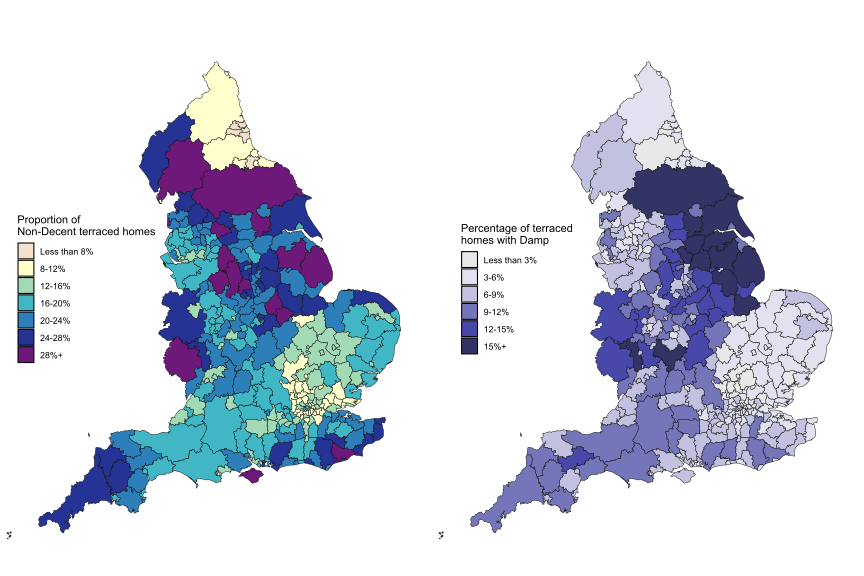
Furthermore, in Yorkshire and the Humber, terraced dwellings also had high rates of Category 1 hazards (18%), higher than all other regions (5-13%) except the East Midlands (16%) and West Midlands (14%).
3.2 Flats
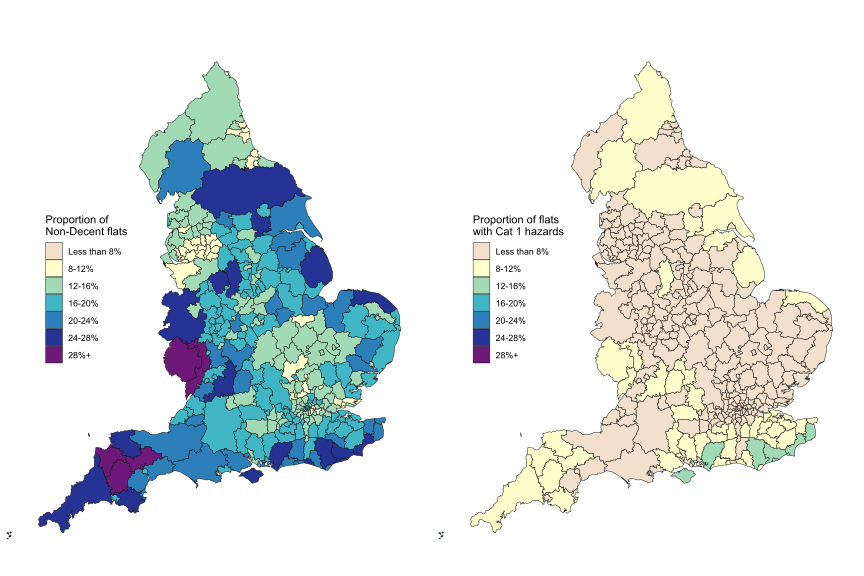
Flats made up 22% of dwellings in England in 2024. They were most likely to be non-decent in the South West (23%), South East (21%) and the West Midlands (21%) compared to other regions (Annex Table 2.6).
Similar to terraced housing, flats were more likely to be non-decent (17%) compared to most other dwelling types (11-14%). In contrast, flats were less likely to contain Category 1 hazards than all other dwelling types (6% vs 8-12%). This indicates that failures on Criterion A are not the primary driver of failures of the Decent Homes Standard for flats.
For flats across England, many local authorities across England were modelled as having non-decency rates higher than 16%, with the exception of local authorities in the North West, North East and central areas of the South of England. However, very few local authorities had rates of Category 1 hazards for flats higher than 12% and these local authorities were concentrated in coastal areas of the South East.
Figure 3.3. Proportion of non-decent flats, and flats with Category 1 hazards by local authority, 2024
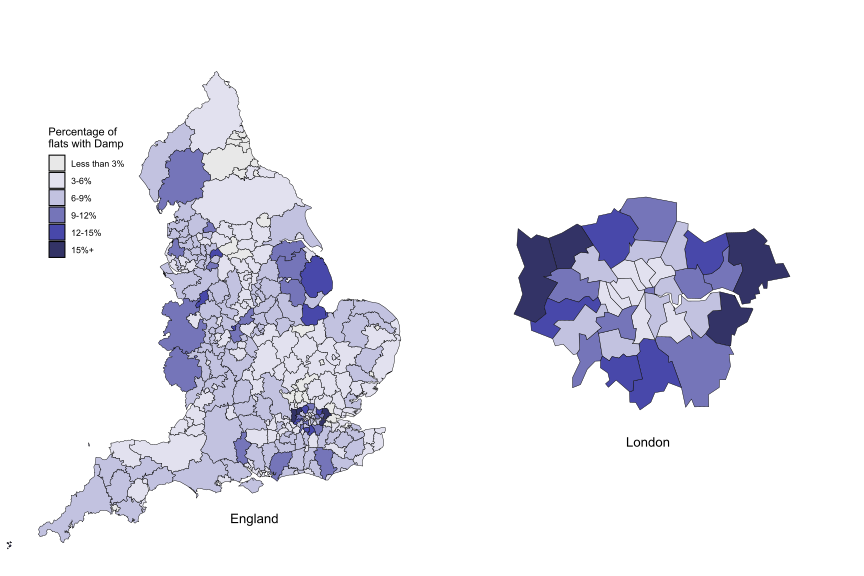
For flats, the highest levels of damp were present in local authorities within London, as well as parts of the Midlands. Within London, boroughs in central London had a lower proportion of flats with damp compared to boroughs further out.
Figure 3.4. Proportion of flats with damp by local authority, 2024
3.3 Detached dwellings
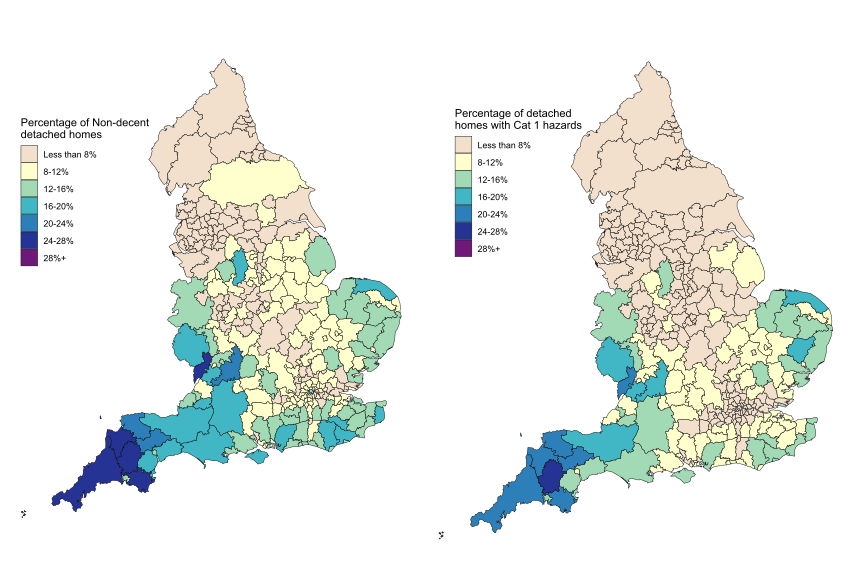
For detached dwellings, modelled estimates for the proportion of homes with Category 1 hazards were similar to modelled estimates for homes failing the Decent Homes Standard, both geographically and in scale. This trend was most prominent in the South West.
Detached dwellings, which made up 18% of dwellings in 2024, were more likely to be non-decent in the South West (18%) than all regions excluding the South East and London. Category 1 hazards were present in 15% of detached dwellings in the South West, with many local authorities in the region modelled as having Category 1 hazards in over 20% of their detached dwellings (Figure 3.5).
Figure 3.5. Proportion of non-decent detached dwellings, and detached dwellings with Category 1 hazards by local authority, 2024
4. Uncertainty
Modelled estimates are subject to uncertainty. This section provides further information on the degree to which we can quantify this uncertainty.
4.1 Confidence intervals
The methodology used to produce this data is unable to take advantage of statistical testing to identify whether apparent differences between local authorities are representative of real differences. However, we can assess whether a local authority’s modelled rate of non-decency, Category 1 hazards or damp is particularly high or low compared to its region as a whole.
The EHS can quantify uncertainty at the regional and national level through 95% confidence intervals. For example, the proportion of homes in the East of England that were non-decent in 2024 was 12%, with a 95% confidence interval ranging from 10% to 14% (Annex Table 1.10). This means that if we were to run the EHS one hundred times, we would expect the proportion of non-decent homes to be within that range in ninety five of those cases.
Annex Tables 1.10, 1.11 and 1.12 contain estimates and 95% confidence intervals for all regions, by dwelling type and tenure. For any individual local authority, its modelled estimates from Annex Tables 1.1 to 1.9 can be compared against the relevant confidence interval to determine whether the modelled estimate is above, below, or similar to the regional average.
- If the modelled estimate is within the relevant 95% confidence interval, we define this as being similar to the regional average. In this case, our modelling has not identified any characteristics of that local authority that suggests its housing quality to be markedly different from that of the region as a whole.
- We define a local authority as having a modelled estimate above the regional average where this value is higher than the upper bound of the 95% confidence interval, or as having a modelled estimate below the regional average where this value is lower than the lower bound of the 95% confidence interval. In these cases, our modelling has identified characteristics of the local authority which suggests that its housing quality is much better or worse than the region as a whole.
This approach does not represent true statistical testing, and users should consider further data to corroborate any findings. Outside of this approach, we do not recommend that users directly compare estimates between local authorities, either within or between years.
As an example, in Figure 4.1 below, non-decency rates for local authorities in the South East (all homes, all tenures) are shown. In 2024, the English Housing Survey found that 16% of homes in the South East were non-decent, with a 95% confidence interval of 15% to 18% (Annex Table 1.10). Local authorities in East Sussex and the South coast of Kent, had modelled rates of non-decency that were higher than the upper bound of 18% (dark pink) whereas local authorities in Buckinghamshire, east Berkshire, North Surrey and North Hampshire had modelled rates of non-decency in the region (turquoise) that were less than the lower bound of 15%.
Figure 4.1. Local authorities in the South East with modelled non-decency values outside the 95% confidence interval for the region
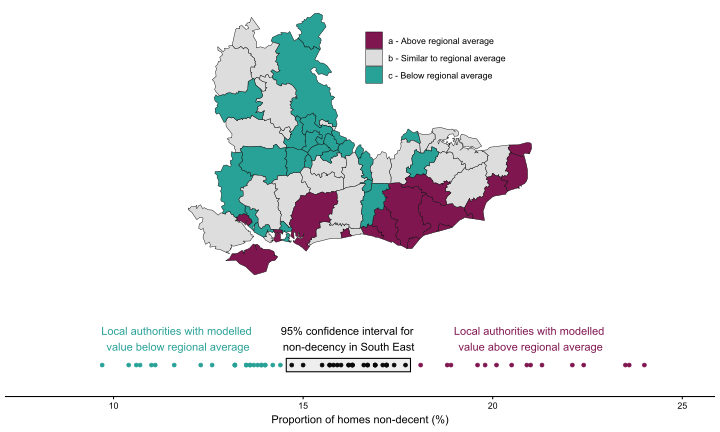
Maps for all nine government office regions, including information on whether each local authority was modelled as having a proportion of non-decent homes above, below, or similar to the regional average are published alongside this report.
4.2 Input variables
The model used here relies on specific input variables, chosen because they are available at the sub-regional level and have been found to be predictive of poor housing quality at the national level.
The EHS found that a wide range of dwelling and household characteristics are associated with housing quality[footnote 10], though this model only includes variables that were found to substantively contribute to final model predictions, i.e. housing quality is most sensitive to these variables. These variables are listed in full in the Technical Notes of this report.
Primary modelling predictors, identified as those that affected modelled estimates to a larger degree than other predictors, were:
- Local authorities that had higher proportions of homes built before 1919, and lower proportions built after 1980, tended to have higher modelled estimates across all housing quality metrics. A lack of central heating was predictive of non-decency and Category 1 hazards, and above average proportions of uninsulated cavity walls were predictive of damp.
- Two criteria of the Decent Homes Standard, the presence of Category 1 hazards (Criterion A) or the presence of disrepair (Criterion B) were themselves key predictors for the presence of damp.
- A higher share of homes being in the private rented sector was predictive of non-decency and damp, whereas higher levels of Category 1 hazards were associated with local authorities where the private sector as a whole, both rented and owner, was a larger proportion of homes.
- Additionally, all models were highly dependent on household composition variables. For non-decency, these were the rural Mosaic demographic groups of ‘Country Living’ and ‘Rural Reality’ and for Category 1 hazards, these were Mosaic demographic groups representing families with dependent children, particularly ‘Aspiring Homemakers’. Further, homes having a problem with damp was associated with the presence of children in the household.
The above relationships between these attributes and poor housing quality, which are observed at the national level, may not necessarily hold true for individual local authorities. Each estimate contains unquantifiable uncertainty as there may be more important factors in specific localities which would cause the true rate of poor housing quality to differ from our modelled estimates.
Users are recommended to consider these modelled estimates alongside local level data and intelligence. For example, if an individual local authority contained many old dwellings that had a low rate of non-decency due to recent remediation projects, the model would likely estimate a higher rate of non-decency that was actually present.
Furthermore, Census data from 2021 is used for some of the input variables. More timely sub-regional data may differ from 2021, affecting the accuracy of modelled estimates.
5. Technical notes
5.1 Summary
Official Statistics in Development are defined in the Code of Practice for Statistics as “newly developed or innovative official statistics undergoing evaluation” and were previously called ‘experimental statistics’. They are published to involve users and stakeholders in their development and to build in quality at an early stage.
These statistics are modelled from the English Housing Survey (EHS), which provides robust regional and national data (based on physical inspections of properties, undertaken by qualified surveyors). Application of the model requires specific local area data on a variety of demographic and socio-economic factors. Ideally, EHS data would be used directly to model at the local level. This is not possible, however, because of the relatively small sample used for the survey, which does not give sufficient coverage for each of the 296 Local Authorities, and certainly not for the individual Census Output Areas (COAs) within them. Instead, EHS data has been used to create a model which can then be applied to a national (dwelling level) dataset.
It should be noted, however, that small areas which are atypical in condition, may not be identified by the model. It is therefore essential, wherever possible, to compare the modelled results to local data.
See details on Official Statistics sources that publish statistics on housing quality metrics.
The Department will continue to consider how these statistics should be developed and updated going forward, including in light of feedback received on this statistical release. Our assumption at this stage is that they will be published annually.
We welcome feedback on the data, especially where the modelled estimates do not align with other local authority level data and/or intelligence on housing quality. Please send any comments to EHS@communities.gov.uk.
5.2 Definitions
For a dwelling to be considered “decent” under the Decent Homes Standard, it must:
- Meet the statutory minimum standard for housing (the Housing Health and Safety Rating System (HHSRS). Homes which contain a Category 1 hazard under the HHSRS are considered non-decent
- Be in a reasonable state of repair
- Have reasonably modern facilities and services
- Provide a reasonable degree of thermal comfort
The Housing Health and Safety Rating System (HHSRS) is a risk-based assessment that identifies hazards in dwellings and evaluates their potential effects on the health and safety of occupants and their visitors, particularly vulnerable people. The most serious hazards are called Category 1 hazards and where these exist in a home, it fails to meet the statutory minimum standard for housing in England.
A home is considered to have damp, or a problem with damp, if damp is significant enough to be taken into consideration when making a HHSRS assessment. Therefore, minor issues of damp are not considered. For further detail, see information on housing quality.
5.3 How the data should be used
How the data should be used
- To show local authorities where housing quality might be poorer/worse than average.
- To examine how housing quality might vary by tenure and dwelling type
- To indicate the likely scale of the “problem”, i.e., by estimating the number of non-decent homes in each local authority
- To use alongside other local level data and/or intelligence to develop an understanding of housing condition.
How the data should not be used
- To identify vacant homes in poor condition (only occupied homes are included)
- As a replacement for survey data at the local authority level. The Local Authority Housing Statistics data collection contains self-reported stock condition data regarding local authority stock. The Private Registered Provider Social Housing Stock and Rents in England publication contains self-reported stock condition data regarding private registered provider stock
- To estimate all dwelling stock by tenure at a local authority level
- To estimate the number of dwellings where HHSRS Category 1 Hazards, non-decent conditions or damp have emerged or been remedied
- To compare effectiveness of local authority enforcement performance, including comparisons between years
5.4 Modelling methodology
Data available
For each local authority, estimates are available for:
- Total number of non-decent dwellings, the number of dwellings with Category 1 hazards, and the number of dwellings with a problem with damp
- Non-Decent dwellings, dwellings with a Category 1 hazard, and dwellings with a problem with damp by tenure
- Non-Decent dwellings, dwellings with a Category 1 hazard, and dwellings with a problem with damp by dwelling type
The key datasets contributing to the modelling process were:
- Combined year 2023 and 2024 EHS dwelling and household data
- 2025 Experian dwelling-level data
-
Lodged EPC data to March 2025
-
2021 Census demographic data
- April 2024 Local Authority / Unitary Authority geography
Decent Homes and Category 1 Hazards (HHSRS)
The 2024 sub-regional Decent Homes model and HHSRS model are based on national data drawn from the EHS combined 2023 and 2024 dataset. Application of the models requires specific local area data on a variety of demographic and socio-economic factors, which are derived from the 2021 Census small area datasets and 2025 Experian dwelling-level data.
A large number of independent variables are individually tested against the binary Decent Homes indicator to determine which have the highest coefficient of determination, i.e. which are most sensitive in predicting the Decent Homes outcome. The variables are then grouped according to this coefficient and an iterative selection is made by running logistic regression on a developing group of these variables, with those least likely to contribute to final model predictions being dropped at each stage. The final set of variables contributing to the model is dependent on the results of this regression testing.
Decent Homes Input Variables
The 2024 decent homes model is based on the following twelve variables, derived from the public and commercial sources listed above:
- Dwelling age – pre-1919, 1919 to 1944, 1945 to 1980, post-1980 (Experian)
- Predominant age of dwelling per postcode area – 8 bands (Experian)
- Mosaic household classifications by postcode – 15 socio-economic groups as detailed in the Mosaic guide[footnote 11] (Experian)
- Proportion of centrally-heated dwellings per COA (2021 Census)
- Tenure – owner occupied, private rented, social rented (Experian)
- Predominant type of dwelling per postcode area – 5 categories (Experian)
- Government Office Region (2024 EHS and Experian)
- Dwelling type – terraced, semi-detached, detached, bungalow, flat (2024 BRE dwelling model)
- Proportion of converted flats per COA (2021 Census)
- Household composition – 6 bands (Experian)
- Proportion of households containing a full-time employee per COA (2021 Census)
In addition to the regression modelling, the national set of lodged EPC data covering around 70% of the dwelling-level dataset is used to model the thermal comfort criterion as closely as possible.
Of the 12 input variables listed above and used to predict the likelihood of each dwelling failing the Decent Homes Standard, several have consistently been used in each Local Authority Stock Condition Modelling report since 2019. These tend to be the strongest predictors, driving the estimates of non-decency per dwelling and across each local area.
For non-decency, the strongest predictors included dwelling age, both at a dwelling level and when accounting for the predominant age band per postcode area, certain Mosaic household categories, the level of central heating ownership and the tenure of each dwelling.
Attributes of local authorities such as higher levels of the oldest, pre-1919 housing stock and household demographics that are more often found in rural areas (particularly the Mosaic groups ‘Country Living’ and ‘Rural Reality’) were the most likely to contribute to prediction of a high level of non-decency. Similarly, a higher proportion of dwellings in the private rented sector and areas with relatively low proportions of central heating were associated with greater estimates of non-decency. Attributes of local authorities that typically lowered the overall estimate of non-decency included a higher proportion of post-1980 housing stock and social rented housing.
For example, both the South West and Yorkshire and the Humber, contain a high level of homes built before 1919, in the private rented sector, and lacking central heating, driving their higher rates of non-decency. Further, the South West has a high proportion of the Mosaic groups ‘Country Living’ and ‘Rural Reality’. In contrast, the North East had lower proportions of older homes, privately rented homes and homes lacking central heating, driving its lower rates of non-decency.
HHSRS Input Variables
The 2024 HHSRS final predictive model is based on the following eight variables, derived from the public and commercial sources listed above:
- Dwelling age – pre-1919, 1919 to 1944, 1945 to 1980, post-1980 (Experian)
- Predominant age of dwelling per postcode area – 8 bands (Experian)
- Mosaic household classifications by postcode – 15 socio-economic groups as detailed in the Mosaic guide (Experian)
- Proportion of centrally-heated dwellings per COA (2021 Census)
- Tenure – owner occupied, private rented, social rented (Experian)
- Government Office Region (2024 EHS and Experian)
- Proportion of households containing a full-time employee per COA (2021 Census)
- Proportion of households containing a married couple with no children per COA (2021 Census)
- Household composition – 6 bands (Experian)
- Proportion of households of white ethnicity per COA (2021 Census)
In addition to the regression modelling, the national set of lodged EPC data covering around 70% of the dwelling-level dataset is used to model the excess cold hazard as closely as possible, identifying additional cases that may have a Category 1 hazard.
Of the 8 input variables listed above and used to predict the likelihood of each dwelling having a Category 1 hazard, several have consistently been used in each Local Authority Stock Condition Modelling reports, since 2019. These tend to be the strongest predictors, driving the estimates of Category 1 hazards per dwelling and across each local area.
For the presence of Category 1 hazards, the strongest predictors included construction date, both at a dwelling level and when accounting for the predominant age band per postcode area, certain Mosaic household categories, the level of central heating ownership and the tenure of each dwelling.
Attributes of local authorities such as higher levels of the oldest, pre-1919 housing stock and household demographics associated with families with dependent children (particularly the Mosaic group ‘Aspiring Homemakers’) were the most likely to contribute to prediction of a high level of Category 1 hazards. Similarly, a higher proportion of dwellings in the private sector (both rented and occupied) and areas with relatively low proportions of central heating were associated with greater estimates of Category 1 hazards. Attributes of local authorities that typically lowered the overall estimate of Category 1 hazards included a higher proportion of post-1980 housing stock and social rented housing.
For example, the South West had the highest proportion of dwellings with Category 1 hazards in 2024, associated with its high prevalence of the Mosaic group ‘Aspiring Homemakers’ and a high proportion of homes which were privately rented or built before 1919. Similarly, Yorkshire and the Humber had above average proportions of homes built before 1945 and homes in the private rented sector, as well as a higher than average use of non-central heating. In contrast, the North East had a lower proportion of dwellings built before 1919, in the private rented sector or lacking central heating, driving its lower proportion of homes with Category 1 hazards.
Damp
This is the second EHS Local Authority Data report to estimate sub-regional levels of homes with damp problems, alongside established reports focussing on Decent Homes and HHSRS hazards. A home is considered to exhibit damp problems if one or more rooms are found with either penetrating damp, rising damp, or serious condensation.
The methodology used is broadly consistent with similar sub-regional reports on Decent Homes and HHSRS and is provided at English Local Authority (LA) level. These data report on the estimated number and proportion of dwellings which exhibit damp problems, by LA. They also provide this data disaggregated by tenure and by dwelling type.
The methodology for the damp model includes some developments beyond previous models to help deal with the smaller level of unweighted EHS surveys contributing to damp data, than those contributing to the Decent Homes or HHSRS models. These developments are summarised below.
The sub-regional damp modelling is based on national data drawn from the English Housing Survey (EHS) to produce 2024 sub-regional statistics. These are based on the 2023 and 2024 combined years EHS derived damp indicators.
The SPSS statistical regression method used in previous sub-regional modelling was again used for the 2024 HHSRS and Decent Homes predictive element. However, an alternative method using the CatBoost machine learning algorithm was used for the damp model. This is due to the relatively small sample of EHS surveys identified as having damp problems (5.5% of the combined EHS sample), which are used to train the model.
In addition, the damp model used key indicators developed within the BRE dwelling level stock model as potential independent variables in the regression stage, alongside established Experian and Census variables.
These independent variables are run through numerous feature engineering stages, to remove highly correlated variables and eliminating variables with 50% or more missing values. In addition, any features with unique values or very low variance are also eliminated. The remaining features are checked for overall correlation.
The 2024 damp model is based on the following ten variables, derived from the
public and commercial sources listed above:
- HHSRS dwelling level indicator (BRE stock model)
- Disrepair dwelling level indicator (BRE stock model)
- Dwelling age – pre-1919, 1919 to 1944, 1945 to 1980, post-1980 (Experian)
- EPC SAP rating band (BRE stock model and EPC surveys)
- Presence of uninsulated cavity wall construction (BRE stock model)
- Tenure – owner occupied, private rented, social rented (Experian)
- Excess cold (BRE stock model and EPC surveys)
- Index of Multiple Deprivation decile (MHCLG statistics)
- HHSRS Category 2 level hazard indicator (BRE stock model)
- Households with children indicator (Experian)
Of the 10 input variables listed above and used to predict the likelihood of each home having damp, several have been used in both this Local Authority Stock Condition Modelling report, and for 2023. These tend to be the strongest predictors, driving the estimates of damp across each local area.
For damp, the modelled presence of HHSRS hazards or disrepair were identified as key predictors. Other strong drivers were high proportions of older dwellings and those in the private rented sector, along with above average proportions of uninsulated cavity walls.
For example, the East Midlands, London, the North West and Yorkshire and the Humber were measured in 2024 as having over 6% of homes with damp. The latter three regions all had high proportions of dwellings built before 1919 and privately rented homes. The same regions, with the exception of London, had high proportions of Category 1 hazards and above average failure rates on disrepair. Lower incidences of damp were measured in the East of England and the North East, which have lower proportions of private rented and pre-1919 dwellings, and below average incidence of Category 1 hazards and non-centrally heated homes.
Producing Modelled Estimates
For non-decency and Category 1 hazards, the coefficients for each category of the final models’ independent variables are run to give the predicted likelihood for each dwelling in each area to be non-decent or have a Category 1 hazard. A further coefficient is included where the EPC data predicts that a dwelling falls below the thermal comfort measure (meaning it is non-decent) or has excess cold (meaning it has a Category 1 hazard).
These likelihoods are then combined to produce the total number and proportion of non-decent dwellings and dwellings with a Category 1 hazard at COA level. This is run separately for each region using a multiplying factor calculated from the modelled and published regional Decent Homes proportions applied to each COA non-decent total, thus ensuring that the regional proportions from the model are consistent with the EHS analysis (household weighted).
Due to geographical differences between the 2021 Census and other national data used in the modelling, a small number of COAs do not have Decent Homes or HHSRS data. These gaps are filled by identifying COAs with complete data, which shared identical or very similar characteristics to the missing cases. Census data is used for this comparison as it records proportions of particular characteristics rather than discrete categories, and so the process can more accurately match pairs of COAs.
Training of the damp model involved two stages. The first included all the collected variables across several models, using different configurations and parameters, with the best performing configuration selected. The second stage included only the most relevant variables and re-running the model with the best performing parameters and configuration.
Following this selection process the most relevant variables are run through a CatBoost machine learning classifier which outputs propensity results, classifying how likely a dwelling is to exhibit damp problems. This is converted into a binary indicator determining whether the property fails the damp criteria. The binary indicator is aggregated to Local Authority level and the proportions of damp homes are standardised to ensure they match reported EHS regional totals when aggregated per region.
To provide consistency between the modelled dwelling and housing quality numbers and the EHS regional figures, an adjustment is made in which small incremental changes are made randomly at COA level, until the totals of all homes, non-decent homes, homes with Category 1 hazards and homes with damp are consistent with regional totals (household weighted). The adjusted figures are re-checked against the published totals before the data is aggregated to Local Authority and regional level.
Further validation is applied to ensure the proportion of non-decent homes, homes with a Category 1 hazard, and homes with damp in each COA is within an expected range, and that regional totals are consistent at each level of aggregation. Finally, a level of consolidation is applied between the dwelling type and tenure totals stated by the model and those from grossed EHS data. Although these will follow a similar pattern, they will not precisely match since the key objective of the model is to estimate the different proportions of non-decent homes, homes with Category 1 hazards and homes with damp between local areas in the first instance. Any attempt to then standardise the precise numbers of homes by dwelling type and tenure as stated by EHS data (rather than sub-totals from the dwelling level dataset) would lead to a recalculation of these proportions, thereby losing the geographic pattern established by the regression model.
5.5 Related data
English Housing Survey
The English Housing Survey is a continuous national survey commissioned by the Ministry of Housing, Communities and Local Government (MHCLG). It collects information about people’s housing circumstances and the condition and energy efficiency of housing in England. It provides robust regional and national data on housing quality, based on physical inspections of properties, undertaken by a qualified surveyor. National Statistics publications from the English Housing Survey, on housing quality can be found here:
- Data on dwelling condition and safety
- English Housing Survey 2024 to 2025: headline findings on housing quality and energy efficiency
- English Housing Survey 2023 to 2024: drivers and impacts of housing quality
Energy Performance Certificate (EPC) data
Based on certificates held on the Energy Performance of Buildings Register, these Energy Performance of Buildings Certificates statistics present information about the energy efficiency of domestic and non-domestic buildings in England and Wales that have been constructed, sold, or let since 2008, and of larger public authority buildings recorded since 2008. For the modelled estimates of housing quality, this data was used to model the thermal comfort criteria of the Decent Homes Standard, the Excess Cold hazard in the HHSRS Category 1 hazard model, and the prevalence of damp.
There is a strong relationship between energy efficiency and housing quality, and most homes with poor energy efficiency do not meet the Decent Homes Standard.
Experian data
The modelling is supported by Experian household level data which provides an up-to-date portfolio of address, geographic and demographic data, which is used to inform BRE’s stock modelling estimates. Information on dwelling age, household composition, tenure and dwelling type have informed the likelihoods used in the Decent Homes and HHSRS Category 1 hazard models and helped to estimate the number of dwellings failing to meet each indicator.
2021 Census demographic data
During the regression analysis stage of this modelling, the 2021 Census data at COA level, was used to help identify demographic categories that were most likely to contribute to estimates of these housing quality indicators. The data were further used to provide a baseline position for the estimated number of dwellings in each local area, which were then refined through consolidation with recent data from EHS and other central government sources.
Welsh Housing Conditions Survey
The Welsh Housing Conditions Survey collects information about the condition and energy efficiency of all types of housing in Wales.
Scottish House Condition Survey
The Scottish House Condition Survey contains statistics on house condition, based on an annual survey sample of around 3,000 dwellings.
Northern Ireland Housing Statistics
The Northern Ireland Housing Statistics report contains information and statistics relating to the condition of homes in Northern Ireland.
5.6 Additional notes
Actual numbers of homes by Local Authority, tenure and dwelling type are indicative and based on the outputs from the modelling methodology described above.
As such, totals and the numbers of homes which are non-decent, have Category 1 hazards, or with damp problems, whether explicitly stated or inferred, should be viewed as an approximate measure of relative size against other Local Authorities, but should not be treated as surveyed totals.
The proportions of homes have been consistently modelled across the local areas as described above, and are indicative of their relative levels, but are not based on a surveyed total of such homes.
-
Modelled estimates in this release use a household weighting, whereas data published in English Housing Survey reports uses a dwelling weighting. This can lead to differences in reported proportions, especially where sample sizes are small. ↩
-
English Housing Survey 2024 to 2025: headline findings on housing quality and energy efficiency. ↩
-
Chapters for English Housing Survey 2024 to 2025: Headline findings on housing quality and energy efficiency. ↩
-
Chapters for English Housing Survey 2024 to 2025: Headline findings on housing quality and energy efficiency. ↩
-
Includes falls on stairs, falls on the level, falls between levels, and falls associated with baths. ↩
-
Understanding and addressing the health risks of damp and mould in the home. ↩
-
Welcome to UKCP. Annual rainfall (mm), 2019 to 2023, postcodes matched to nearest point on 5km grid. ↩
-
English Housing Survey 2024 to 2025: headline findings on demographics and household resilience. ↩
-
English Housing Survey 2023 to 2024: drivers and impacts of housing quality. ↩