Chapter 1: Housing quality
Published 29 January 2026
Applies to England

© Crown copyright 2026
This publication is licensed under the terms of the Open Government Licence v3.0 except where otherwise stated. To view this licence, visit nationalarchives.gov.uk/doc/open-government-licence/version/3 or write to the Information Policy Team, The National Archives, Kew, London TW9 4DU, or email: psi@nationalarchives.gov.uk.
Where we have identified any third party copyright information you will need to obtain permission from the copyright holders concerned.
This publication is available at https://www.gov.uk/government/statistics/chapters-for-english-housing-survey-2024-to-2025-headline-findings-on-housing-quality-and-energy-efficiency/chapter-1-housing-quality
Introduction
This chapter begins by presenting the number of bedrooms available to households and levels of overcrowding and under-occupation, followed by an assessment of EHS housing quality measures: decent homes, Housing Health and Safety Rating System (HHSRS) and damp by tenure. It ends by discussing the presence of a working smoke alarm, the household frequency of testing smoke alarms, and whether dwellings with or without a solid fuel appliance have a carbon monoxide detector.
For a summary of main findings in this report as a whole, please see the Introduction and Main Findings page.
Bedrooms available to households
Compared to pre-pandemic data (in 2019-20), there was a decrease in the number of bedrooms available to rented sector households, alongside a decrease in the mean household size.
In the private rented sector, 21% of households in 2024-25 had one bedroom, 41% had two bedrooms and 38% had three or more bedrooms. This distribution was similar to 2023-24, though compared to 2019-20, there was an increase in the proportion with one bedroom (from 18% to 21%) and a concurrent decrease in the proportion with three or more bedrooms (from 44% to 38%), Annex Table 1.1.
The social rented sector saw a similar trend. The proportion of households who had one bedroom increased from 28% in 2019-20 to 31% in 2023-24 and remained stable into 2024-25 (32%).
While bedroom counts in the social rented sector as a whole have remained similar to 2023-24, there was an increase in the proportion of local authority homes with three or more bedrooms from 32% in 2023-24 to 36% in 2024-25. This was a reversal of the fall in proportion that occurred from 38% in 2019-20 to 32% in 2023-24.
There was also a change for owner occupied households from 2019-20 to 2024-25. A small proportion (3%) of households had one bedroom in 2019-20 which rose to 4% in 2024-25, Figure 1.1. A statistically significant rise occurred for both dwellings owned outright (2% to 3%) and those owned with a mortgage (3% to 4%).
Figure 1.1: Households with one bedroom, by tenure, 2019-20 and 2024-25

Base: all households
Note: underlying data are presented in Annex Table 1.1
Source: English Housing Survey, full household sample
Compared to pre-pandemic times, the mean household size also decreased from 2.4 to 2.2, Annex Table 1.3, English Housing Survey 2024-25 Headline Findings on Demographics and Household Resilience.
Overcrowding and under-occupation
Levels of overcrowding and under-occupation are measured using the bedroom standard (see glossary for more detail). This is the difference between the number of bedrooms needed to avoid undesirable sharing (given the number, ages and relationship of the household members) and the number of bedrooms available to the household.
Since the number of overcrowded households included in each survey year is too small to enable reliable overcrowding estimates for any single year, data from the three most recent survey years (2024-25, 2023-24 and 2022-23) were combined to produce the overcrowding estimates in this section. Care should be taken in interpreting individual year-on-year changes.
The overall rate of overcrowding in England in 2024-25 was 3%, with approximately 824,000 households living in overcrowded conditions. This is similar to 2021-22, three years ago, where around 732,000 households were overcrowded (3%), Annex Table 1.2.
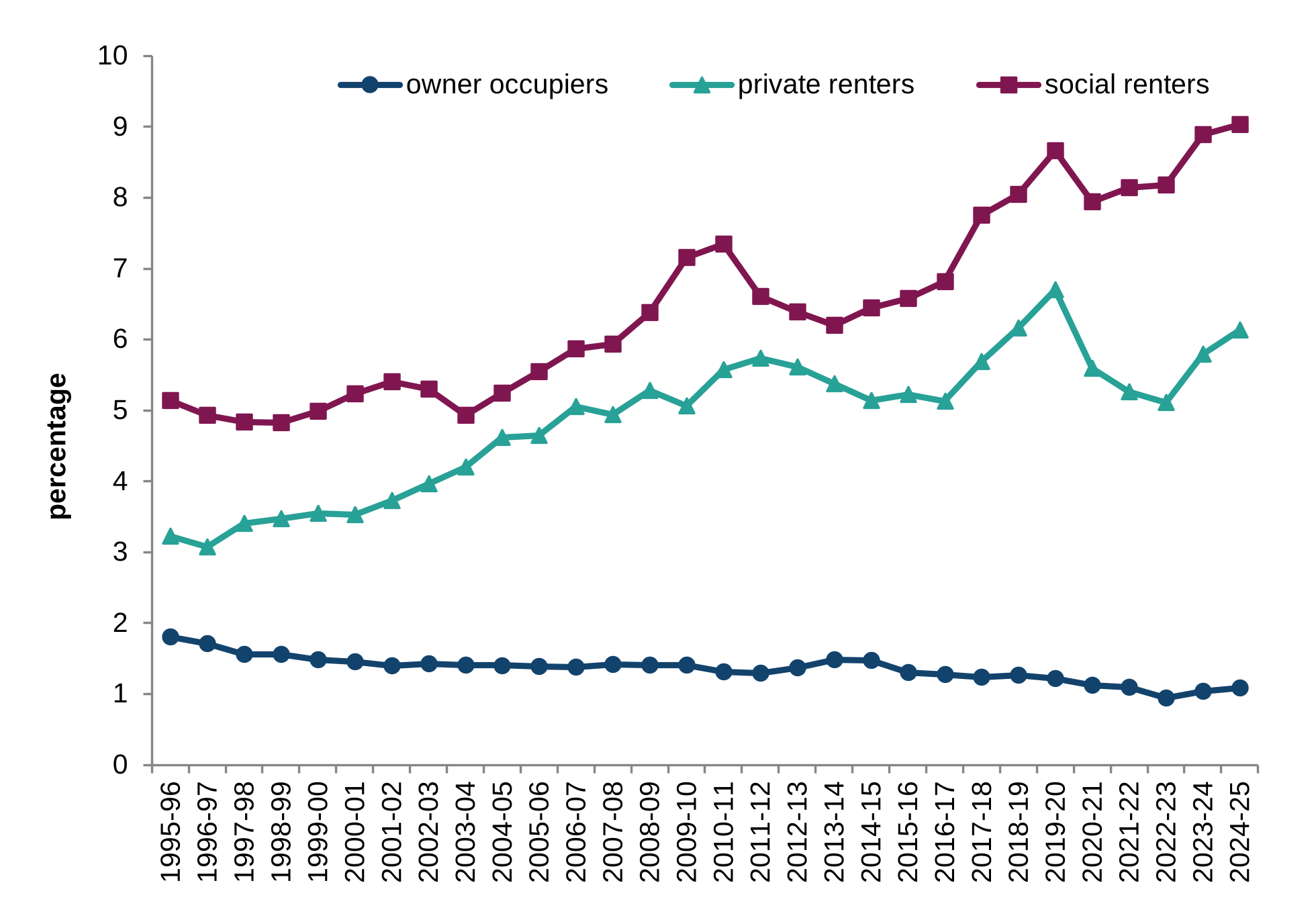
Overcrowding was more prevalent in the rented sectors than for owner occupiers. In 2024-25, 1% of owner occupiers (173,000 households) were overcrowded compared with 9% of social renters (365,000) and 6% of private renters (286,000). Social rented households were more likely to be overcrowded than private rented.
Overcrowding has increased over the last ten years in the social rented sector, affecting 6% of households in 2014-15 and 9% in 2024-25, and in the private rented sector, affecting 5% of households in 2014-15 and 6% in 2024-25. In the owner occupied sector, there has been a small decrease in the proportion of households being overcrowded in the last ten years from 1.5% of households in 2014-15 to 1.1% of households in 2024-25, Figure 1.2.
Figure 1.2: Overcrowding, by tenure, 1995-96 to 2024-25
Base: all households
Notes:
1) data are based on three year averages, which are the average of the three years up to and including the labelled date
2) underlying data are presented in Annex Table 1.2
Sources:
1995-96 to 2007-08: Survey of English Housing
2008-09 onwards: English Housing Survey, full household sample
The overall rate of under-occupation in England in 2024-25 was 40%, with around 10.0 million households living in under-occupied homes, Annex Table 1.3.
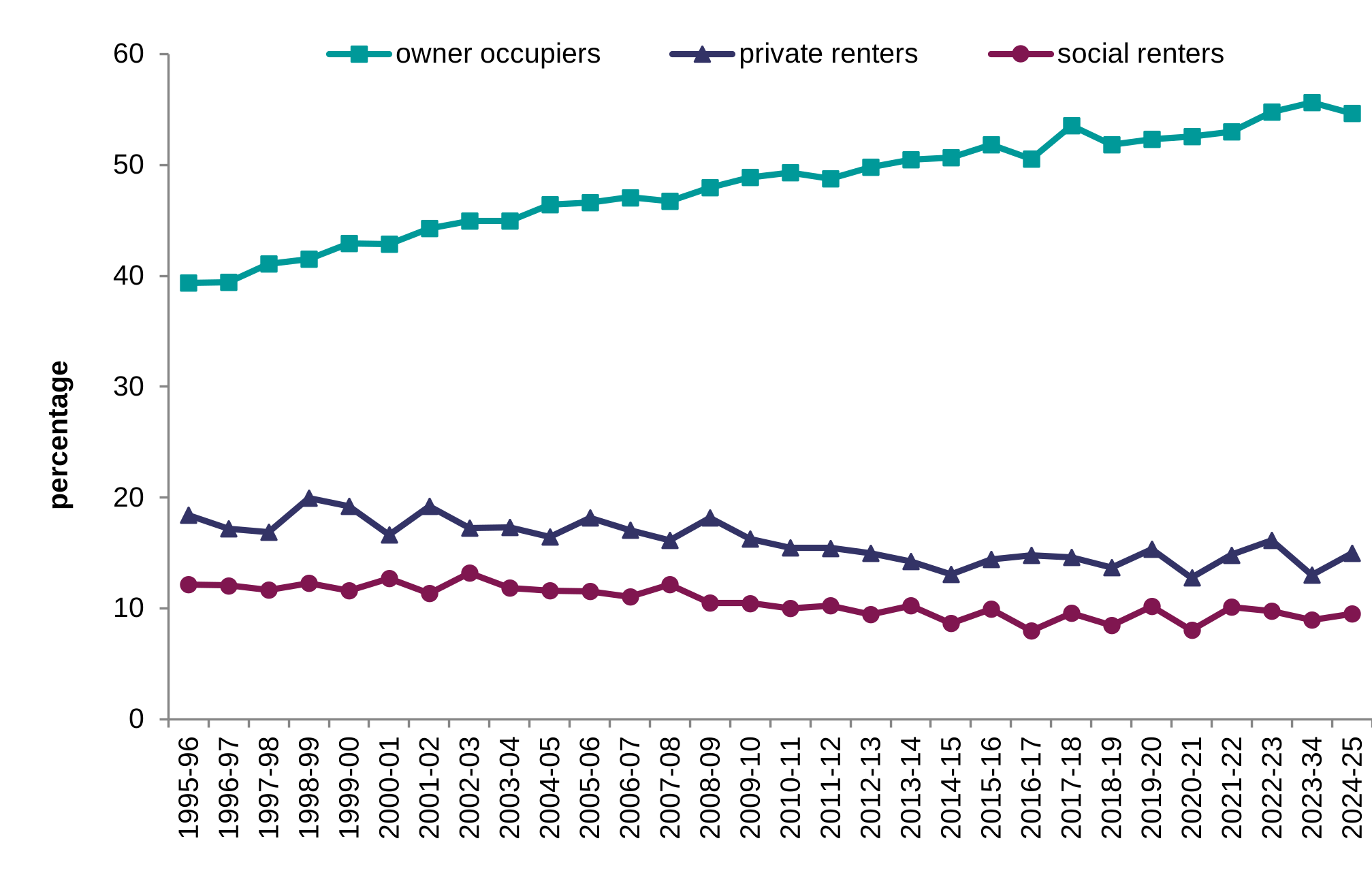
Under-occupation was much more prevalent among owner occupiers than in the rented sectors. Over half (55%) of owner occupied households (8.9 million households) were under-occupied in 2024-25, compared with 15% of private rented (705,000) and 10% of social rented (389,000) households.
Compared to ten years ago, there was an increase in under-occupation in the owner occupied sector from 51% in 2014-15 to 55% in 2024-25. No statistically significant changes occurred in either rented sector, Figure 1.3.
Figure 1.3: Under-occupation, by tenure, 1995-96 to 2024-25
Base: all households
Note: underlying data are presented in Annex Table 1.3
Sources:
1995-96 to 2007-08: Survey of English Housing
2008-09 onwards: English Housing Survey, full household sample
Dwelling quality and condition
Data from 2024 was not impacted by the COVID-19 pandemic, during which surveyors were unable to undertake full surveys of dwellings. During the pandemic, a more limited ‘external plus’ approach was taken to the physical survey, and detailed assessments of housing quality variables were not possible (for more information see the EHS Technical Reports). Housing quality measures modelled during the COVID-19 period (2020 and 2021) were for occupied dwellings only and, in 2022, a hybrid variable that combined actual measured data from 2022-23 with modelled data from 2021-22, which included vacant dwellings, was used. Comparisons made between 2024 and pandemic years (2020-2022) should be considered with caution. Where appropriate, we have made additional comparisons with pre-pandemic data (2019).
Decent Homes
For a dwelling to be considered ‘decent’ under the Decent Homes Standard it must:
-
meet the statutory minimum standard for housing (the Housing Health and Safety System (HHSRS) since April 2006), homes which contain a Category 1 hazard under the HHSRS are considered non-decent
-
be in a reasonable state of repair
-
have reasonably modern facilities and services
-
provide a reasonable degree of thermal comfort
The Decent Homes Standard (DHS) was introduced as a regulatory standard in the social rented sector in 2006. In the owner occupied and private rented sector, the DHS is not a regulatory standard, though it is tracked through the EHS. Regulatory standards in the private rented sector are assessed against the existing Housing Health and Rating System (HHSRS), i.e. Criterion A of the DHS.
On 28 January 2026, the government announced a new Decent Homes Standard to apply to both rented sectors from 2035. Failure rates for dwellings under this new standard for 2023 have been published as part of an EHS Briefing. This report presents data on the existing Decent Homes Standard.
In 2024, 15% or 4.0 million dwellings failed to meet the Decent Homes Standard, similar to 2023, but lower than in 2019 (17%), Annex Table 1.4.
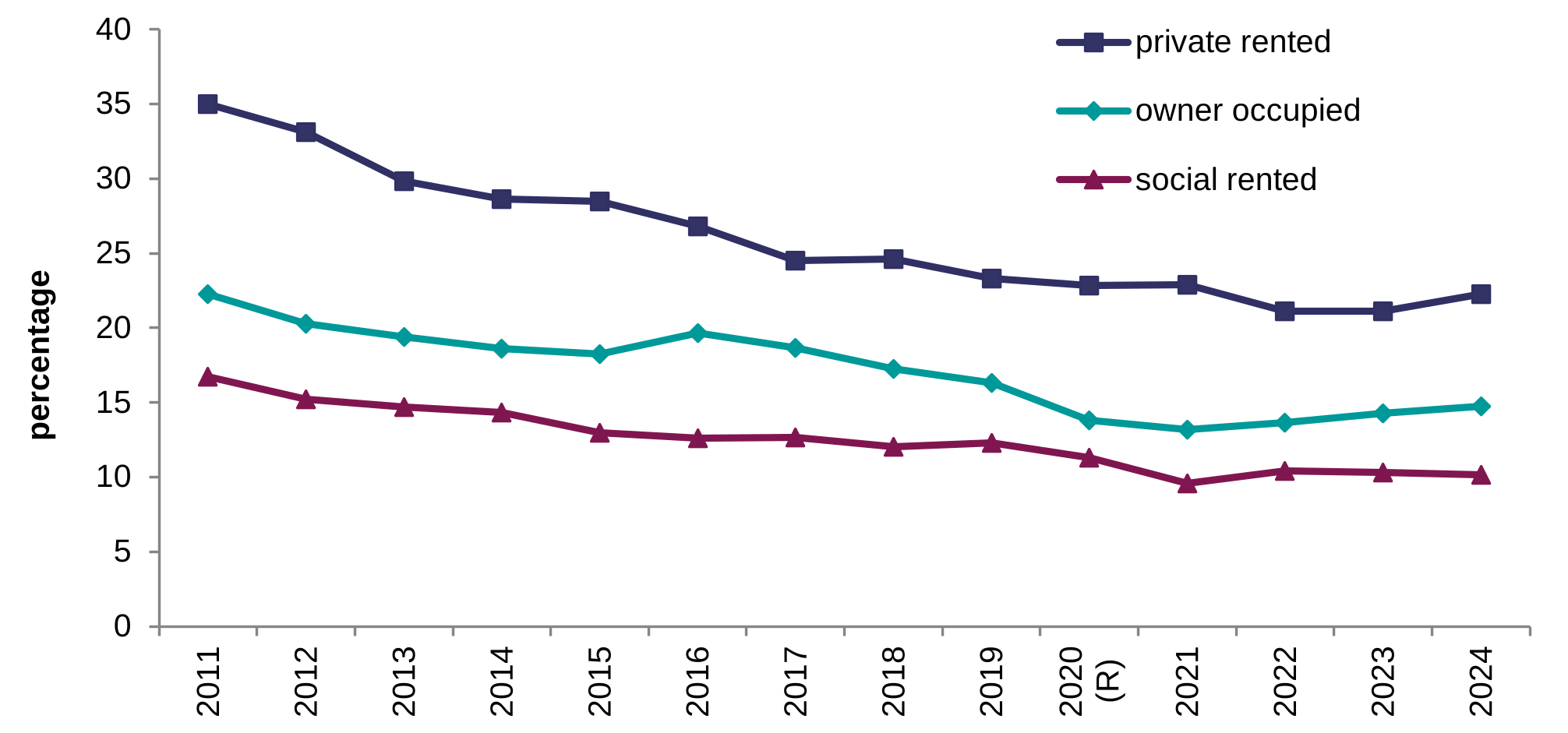
As in previous years, the private rented sector had the highest proportion of non-decent dwellings (22%), while the social rented sector had the lowest (10%). Among owner occupied dwellings, 15% failed to meet the Decent Homes Standard, similar to 2023, Figure 1.4.
Over the last ten years, a decrease in the prevalence of non-decency occurred across all tenures. Since 2014, the proportion of private rented sector dwellings considered non-decent decreased from 29% to 22%, in the owner occupied sector from 19% to 15%, and in the social rented sector from 14% to 10%.
Between 2011 and 2019, there was a notable reduction in the prevalence of non-decent dwellings across all tenures. From 2019 to 2024, the proportion of non-decent dwellings in the private rented sector remained stable. In both 2019 and 2024, 1.1 million private rented sector dwellings were non-decent (the apparent drop from 23% in 2019 to 22% in 2024 was statistically insignificant).
Conversely, there were decreases in the owner occupied sector (from 16% to 15%) and the social rented sector (from 12% to 10%) from 2019 to 2024. More recently, there has been a small rise in the proportion of non-decent owner occupied homes from a low of 13% in 2021 to 15% in 2024, however, 2021 data is based on modelling rather than observed housing quality, and therefore this comparison should be treated with caution.
Figure 1.4: Non-decent homes, by tenure, 2011 to 2024
Base: 2011-2019 and 2022-2024 all dwellings; 2020-2021, occupied dwellings
Notes:
1) 2020 and 2021 figures are estimated based on dwelling level modelled data
2) 2020 were revised from extrapolated to dwelling modelled data and marked with an (R)
3) underlying data are presented in Annex Table 1.4
Sources:
2011-2019: English Housing Survey, dwelling sample
2020-2021: English Housing Survey, modelled data based on occupied dwelling sample
2022: English Housing survey dwelling sample, modelled and observed data based on all dwellings
2023 onwards: English Housing Survey, dwelling sample
Local Authority Housing Statistics (LAHS), published alongside this report, show that local authorities report 9% of their homes did not meet the Decent Homes Standard on 31 March 2025. The LAHS figures show a lower proportion of non-decent homes for multiple reasons. Firstly, only the properties that local authorities have been made aware of (e.g. after a property is vacated or if the tenant raises an issue) are included in the count. Additionally, LAHS represents dwellings as of 31 March, so will not include dwellings identified and then remediated during the year, compared to the English Housing Survey which assesses dwellings year-round. Cases where tenants have refused improvement work are also excluded in LAHS figures.
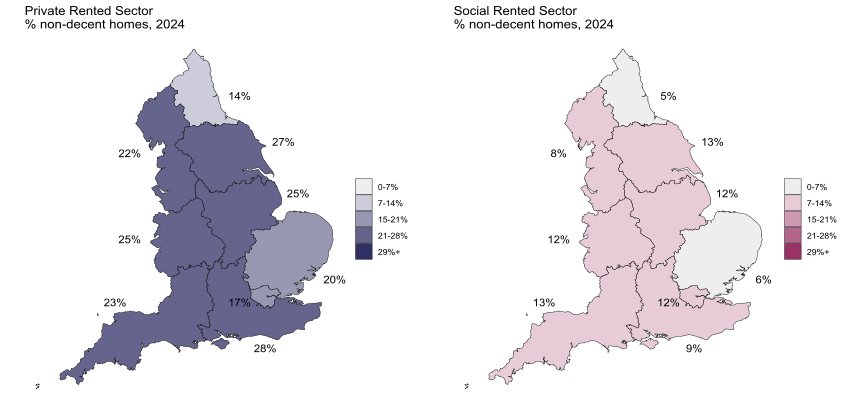
The EHS shows there is significant variation in housing quality across England. In the owner occupied sector, the North East had a significantly lower rate of non-decent dwellings (9%) compared to other regions (15-18%) except the East Midlands, London and East of England (12-14%).
Similarly in the private rented sector, dwellings in the North East (14%) were less likely to be non-decent than other regions (23% to 28%), with the exception of the North West (22%), East of England (20%) and London (17%).
In the social rented sector, the North East also had the lowest rate of non-decency (5%), significantly lower than all other regions (9% to 13%) with the exception of the East of England and the North West (6 to 8%), Figure 1.5.
In all regions except London, rates of non-decency were higher in the private rented sector than the social rented sector.
Figure 1.5: Non-decent homes, by region, 2024
Base: all dwellings
Note: underlying data are presented in Annex Table 1.5
Source: English Housing Survey, dwelling sample
At the national level, levels of non-decency have remained similar from 2022 (English Housing Survey 2022 to 2023: housing quality and condition - GOV.UK, Annex Table 4.1) to 2024 (both 15%), though statistically significant changes have occurred in individual regions.
In the North West, there was a decrease in the proportion of non-decent homes (from 19% to 16%), driven by decreases in non-decency for housing associations (from 10% to 6%) and private rented sector dwellings (from 32% to 22%).
Conversely, in the South East, there was an increase in the proportion of non-decent homes (from 11% to 17%), driven by increases in non-decency in owner occupied (from 10% to 16%) and private rented sector dwellings (from 18% to 28%).
Figure 1.6: Statistically significant changes in the proportion of non-decent dwellings, 2022 to 2024

Base: all dwellings
Note: underlying data are presented in Annex Table 1.5
Source: English Housing Survey, dwelling sample
Housing Health and Safety Rating System (HHSRS)
The HHSRS is a risk-based assessment that identifies hazards in dwellings and evaluates their potential effects on the health and safety of occupants and their visitors, particularly vulnerable people, e.g. children or older people. The most serious hazards are called Category 1 hazards and, where these exist in a home, it fails to meet the statutory minimum standard for housing in England.
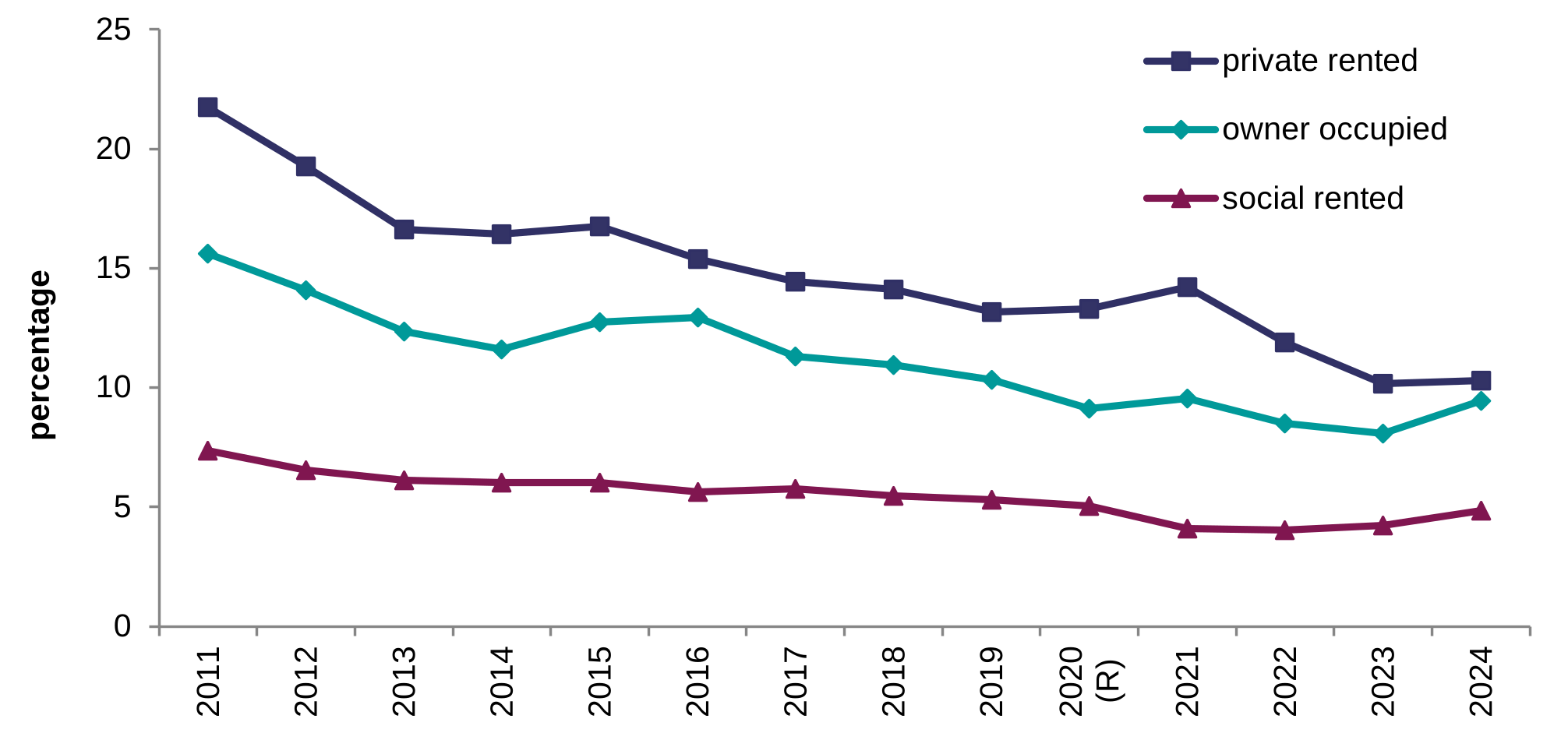
In 2024, 9% or 2.3 million dwellings in England had a HHSRS Category 1 hazard, statistically similar to 2022 (8%) though lower than in 2019 (10%). These hazards were more prevalent in private rented (10%) and owner occupied dwellings (9%) than in social rented dwellings (5%). Within the social rented sector, local authority dwellings (6%) were more likely to have a Category 1 hazard than housing association dwellings (4%), Annex Table 1.6 and Figure 1.7.
In 2022, private rented sector dwellings were more likely to have a Category 1 hazard (12%) than owner occupied dwellings (9%). In 2024, this difference was no longer present (9-10%)
Figure 1.7: Homes with Category 1 hazards, by tenure, 2011 to 2024
Base: 2011-2019 and 2022-2024 all dwellings; 2020-2021 occupied dwellings
Notes:
1) 2020 and 2021 figures are estimated based on dwelling level modelled data
2) 2020 figures were revised from extrapolated to dwelling modelled data and marked with an (R)
3) underlying data are presented in Annex Table 1.6
Sources:
2011-2019: English Housing Survey, dwelling sample
2020-2021: English Housing Survey, modelled data based on occupied dwelling sample
2022: English Housing survey dwelling sample, modelled and observed data based on all dwellings
2023 onwards: English Housing Survey, dwelling sample
A dwelling with a Category 1 hazard automatically fails the minimum standard part of the Decent Homes Standard. However, not all non-decent dwellings contain a hazard, since they may fail on other DHS criteria regarding disrepair, modern facilities and thermal comfort.
In the private rented sector, both failures on the minimum standard (10%) and thermal comfort (9%) were higher than on disrepair (6%) or modern facilities (2%). In the social rented sector, failures on the minimum standard (5%) were more common than failures on disrepair (2%), modern facilities (1%) and thermal comfort (3%). This trend occurred for both local authority and housing association dwellings, Annex Table 1.7.
In the owner occupied sector, more dwellings failed on the minimum standard (9%) than on disrepair (3%), modern facilities (1%) and thermal comfort (5%).
The owner occupied sector is split into homes owned outright, those owned with a mortgage and those that are vacant. Vacant owner occupied dwellings, i.e. those that are not currently occupied, were more likely to fail all criteria. For example, 33% of vacant owner occupied dwellings failed the minimum standard, higher than those owned with a mortgage (8%) or owned outright (9%).
Dwellings can also fail the standard on multiple criteria. Vacant owner occupied homes (24%) were more likely to fail on multiple criteria than homes owned outright (3%) or owned with a mortgage (2%). Across tenure, 1% of social rented dwellings failed on multiple criteria, lower than owner occupied (3%) and private rented dwellings (4%), Annex Table 1.7.
The most common Category 1 hazards found across all dwellings were falls on stairs (4%), excess cold (2%), falls on the level (1%), falls between levels (1%) and damp (1%), Annex Table 1.8.
The proportion of dwellings in the social rented sector with a falls on stairs hazard (1%) was significantly lower than in the owner occupied (4%) and private rented sectors (5%). This trend was similarly observed for excess cold, where 0.3% of social rented sector dwellings had this hazard, lower than in owner occupied (3%) and private rented (3%) dwellings.
Dwellings owned with a mortgage were less likely to have a falls between levels hazard (0.6%) than dwellings owned outright (1.3%). Vacant owner occupied homes were more likely to have an excess cold hazard (20%) than dwellings owned with a mortgage (2%) or owned outright (3%).
In 2024, 3% of private rented sector dwellings (125,000) had more than one Category 1 hazard. This was higher than in owner occupied dwellings (2%, 267,000) and social rented dwellings (1%, 23,000).
Damp
In the English Housing Survey, a home is considered to have damp, or a problem with damp, if the surveyor records damp that is significant enough to be taken into consideration when making their HHSRS assessments. Therefore, minor issues of damp are not recorded.
Comparisons with inter-pandemic years should be considered with caution, as modelled data was used from 2020 to 2022.
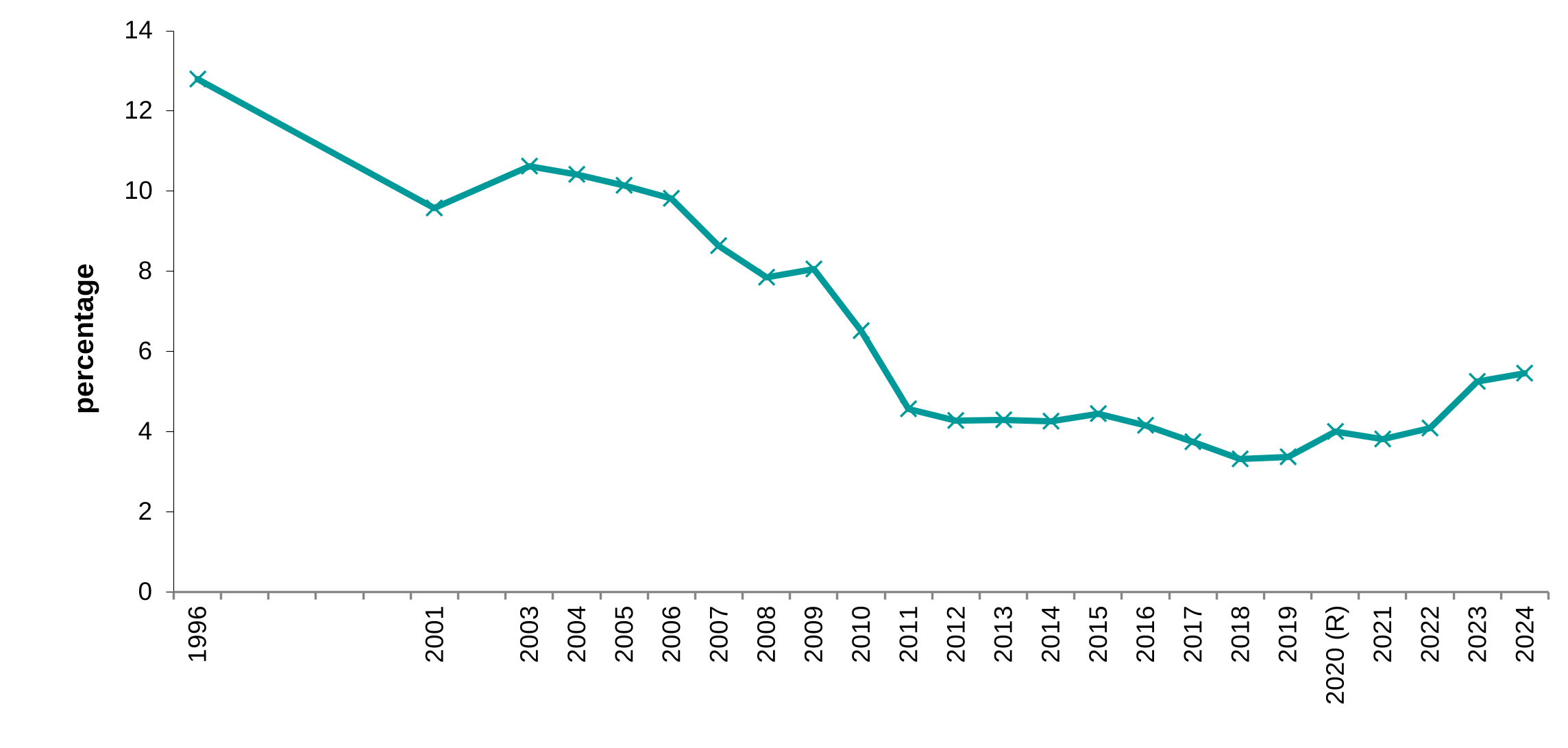
In 2024, 5% or 1.4 million dwellings had a problem with damp, an increase on the 4% in modelled data in both 2021 and 2022, Annex Table 1.9.
Between 1996 and 2011, there was a sizable reduction in the prevalence of all dwellings with damp problems, however, incidences of damp increased since 2019, Annex Table 1.9 and Figure 1.7. While this goes against the general trend of housing quality improvement, it is not necessarily surprising.
Analysis using the definition of the new Decent Homes Standard indicates that rented sector dwellings deteriorated in quality in some ways between 2019 and 2023, including increases in levels of damp, in contrast to observed improvements in housing quality under the existing Decent Homes Standard. The updated scope of the new standard captures housing quality elements not included in the existing standard, such as removing age criteria, to reveal worsening conditions the existing standard does not capture.
Remediation of damp over the COVID-19 pandemic was possibly slowed, since work could not be done under social distancing restrictions. 2024 data indicate these levels of damp have persisted.
The English Housing Survey 2023 to 2024: Drivers and Impacts of Housing Quality Report observed higher levels of damp in dwellings that were in disrepair or poor condition. This link was particularly strong where there were less common disrepair issues such as inadequate ventilation, e.g. 1% of dwellings had inadequate ventilation, of which 60% had a problem with damp.
Increasing energy costs over this time period may have also made it more difficult for households to effectively heat dwellings, a known driver of serious condensation alongside poor ventilation. The English Housing Survey 2023 to 2024: Drivers and Impacts of Housing Quality Report observed that homes where households reported they were unable to keep comfortably warm in winter, or where households had reduced heating or limited energy use in response to rising energy prices, were more likely to have a problem with damp.
Figure 1.8: Damp problems, 1996 to 2024
Base: 1996-2019 and 2022-2024 all dwellings; 2020-2021 occupied dwellings
Notes:
1) 2020 and 2021 figures are estimated based on dwelling level modelled data
2) 2020 have been revised from extrapolated to dwelling modelled data and marked with an (R)
3) underlying data are presented in Annex Table 1.9
Sources:
1996-2007: English House Condition Survey, dwelling sample
2010-2019: English Housing Survey, dwelling sample
2020-2021: English Housing Survey, modelled data based on occupied dwelling sample
2022: English Housing survey dwelling sample, modelled and observed data based on all dwellings
2023 onwards: English Housing Survey, dwelling sample
Damp problems were more prevalent in private rented dwellings, with 10% of dwellings having a problem in 2024, compared to 7% of social rented dwellings and 4% of owner occupied dwellings. Local authority dwellings (8%) were more likely to have a problem with damp than housing association dwellings (6%), and dwellings owned with a mortgage (4%) were more likely than those owned outright (3%), Annex Table 1.10.
For owner occupied (2% to 4%) and social rented sector (5% to 7%) dwellings, this was a significant increase from 2022 to 2024. The apparent rise in the private rented sector (9% in 2022, 10% in 2024) was not statistically significant.
In 2024, serious condensation was more prevalent in homes (3%) than penetrating damp (2%) and rising damp (1%). Since 2019, there has been an increase in rising damp from 1.0% to 1.5%, an increase in penetrating damp from 1% to 2% and an increase in serious condensation/mould from 2% to 3%.
In 2024, the proportion of dwellings with serious condensation was highest in the social rented sector (5%) and private rented sector (6%), with lower prevalence in the owner occupied sector (2%). Within the social rented sector, local authority dwellings were just as likely to have serious condensation as housing association dwellings (5-6%).
In the private rented sector, the proportion of dwellings with penetrating damp and rising damp (4% and 3% respectively) was higher than in the owner occupier sector (2% and 1% respectively) and social rented sector (2% and 1% respectively), Figure 1.9.
Within the social rented sector, local authority dwellings were more likely to have a problem with penetrating damp (3%) than housing association dwellings (2%).
A small proportion of dwellings had multiple problems with damp, i.e. two or more of condensation, penetrating damp or rising damp. Private rented sector dwellings (2.9%) were more likely to have multiple types of damp compared to the social rented sector (1.2%), which was also higher than in the owner occupied sector (0.7%).
Figure 1.9: Type of damp problems in dwellings by tenure, 2024

Base: all dwellings
Note: underlying data are presented in Annex Table 1.10
Source: English Housing Survey, dwelling sample
As a part of the interview for the English Housing Survey, respondents were asked about common problems that people may experience in their homes. In 2024, similar to 2023, 30% of households reported their home had problems with condensation, damp or mould.
Households in the private rented sector (46%) were more likely to mention this than the owner occupied (22%) or social rented sector (41%).
In the social rented sector, 41% of households reported a problem. This was higher for local authority dwellings (44%) than housing association dwellings (38%).
In the owner occupied sector, 22% of households reported a problem. This was higher for homes owned with a mortgage (28%) than homes owned outright (17%). Self-reported trends mirrored those observed by physical EHS surveyors.
Levels of self-reported damp are substantially higher than levels of damp recorded by surveyors. This is likely to be for several reasons. Households may have reported problems with condensation, damp or mould during the EHS interview where these issues were present at lower levels (they were not significant enough to be taken into consideration in a HHSRS assessment), or in rooms rarely or never used by the household. Additionally, damp, condensation and mould can be seasonal and transient, and therefore not necessarily observed at the time of an EHS physical survey, if issues were not present on the day or time the surveyor visited. Finally, the self-reported damp measure is a subjective rather than objective measure, and there will inevitably be differences in the level or type of damp that households consider problematic.
Across all tenures, 13% of households who mentioned having a problem with condensation, damp or mould lived in a dwelling where surveyors observed a problem with damp, 3% with multiple problems with damp, and 2% where a Category 1 hazard level of damp was present, Annex Table 1.11.
Presence of a problem with condensation, damp or mould in the EHS interview may be driven by how a household uses and occupies their home in addition to the physical structure of the dwelling. From 2017 to 2019, the Energy Follow-Up Survey sampled respondents from the EHS to collect further detailed information on heating, hot water and appliances. The report found links between both the physical elements of dwellings and the socio-economic characteristics of the households and the likelihood of households reporting they had a problem with damp. This suggests variation and complexity in the reasons a household may report a problem within the EHS interview.
Smoke alarms
In 2024-25, 93% of households reported having at least one working smoke alarm, higher than in 2023-24 (92%). The proportion of households reporting they have working smoke alarms varied by tenure. Social renters were most likely to report having at least one working smoke alarm (97%), compared with 93% of private renters. Owner occupiers had the lowest likelihood of reporting having a working smoke alarm, though this was still reported by nearly all households (92%), Annex Table 1.12 and Figure 1.10.
In 2024-25, a greater proportion of private rented sector households reported having a working smoke alarm (93%) compared to 2023-24 (91%), though this was similar to 2022-23 (93%). Over the last ten years, the proportion of households with a working smoke alarm increased across all tenures.
Figure 1.10: Households with at least one working smoke alarm, by tenure, 2008-09 to 2024-25

Base: all households
Notes:
1) data was not collected in 2009-10
2) data are as reported by the householder
3) underlying data are presented in Annex Table 1.12
Source: English Housing Survey, full household sample
While the proportion of households with smoke alarms increased over the last decade, nearly a quarter of households (24%) reported they had never tested their smoke alarm in 2024-25, similar to 2023-24, Annex Table 1.13. (Smoke alarms have previously been explored in more detail in the 2014-15 Smoke Alarms in English Homes Report).
In 2024-25, 29% of private renters, 29% of social renters and 22% of owner occupiers reported they had never tested their smoke alarm.
Carbon monoxide detectors
In 2024, 62% of all dwellings had a carbon monoxide alarm, up from 60% in 2023, Annex Table 1.14.
Dwellings with a solid fuel burning appliance, such as a coal fire or wood burning stove, were more likely (66%) to have a carbon monoxide alarm than dwellings with no solid fuel appliance (61%).
In the owner occupied sector, there was an increase in the proportion of dwellings with a carbon monoxide detector from 58% in 2023 to 60% in 2024. Similarly, in the social rented sector, there was an increase from 69% to 75%.
From October 2015, private sector landlords have been required to install a carbon monoxide alarm in any room containing a solid fuel burning appliance. They were also required to ensure the alarm was working at the beginning of each new tenancy.
In 2024, 52% of private rented sector dwellings with a solid fuel appliance had a carbon monoxide alarm, this was lower than in 2023 (65%). In terms of tenure comparison, this was lower than in the social rented sector (82%) and owner occupied sector (68%).