Introduction and key findings
Published 29 January 2026
Applies to England

© Crown copyright 2026
This publication is licensed under the terms of the Open Government Licence v3.0 except where otherwise stated. To view this licence, visit nationalarchives.gov.uk/doc/open-government-licence/version/3 or write to the Information Policy Team, The National Archives, Kew, London TW9 4DU, or email: psi@nationalarchives.gov.uk.
Where we have identified any third party copyright information you will need to obtain permission from the copyright holders concerned.
This publication is available at https://www.gov.uk/government/statistics/chapters-for-english-housing-survey-2024-to-2025-headline-findings-on-housing-quality-and-energy-efficiency/introduction-and-key-findings
Introduction
The English Housing Survey (EHS) is a national survey of people’s housing circumstances and the condition and energy efficiency of housing in England. It is a repeated cross-sectional survey that pairs a household interview with a physical inspection of the home. It is an Accredited Official statistic (previously known as a National statistic), and is one of the longest standing government surveys, first run in 1967.
To support timely and relevant reporting, the usual EHS Headline report has been split into two releases. This report is the second publication of findings from the 2024-25 survey and focuses on housing quality and energy efficiency. The first report was published in December 2025 and focused on household demographics, dwelling characteristics, and financial resilience.
The headline findings will be followed up with a series of more detailed topic reports in the spring and summer of 2026.
Background to the English Housing Survey 2024-25 household and 2024 physical data
The interview fieldwork for the 2024-25 data was carried out from end of March 2024 to March 2025, and the physical survey data was collected over a slightly longer timeframe, from March 2023 to March 2025. During this time, households were faced with rising inflation, including higher interest rates, as well as increases in the cost of energy and other necessities. Renovating and remediating homes also grew more expensive during this period, due to disruptions in the supply chain over the pandemic, as well as increased costs of materials and labour shortages.
Over the longer term, EHS data continue to show improvements to both the energy efficiency and quality of English homes. This is particularly marked in recent years, in the case of energy efficiency, where the overall mean SAP score has increased over the past decade, along with the proportion of homes in EER bands A-C.
On the quality side, we continue to see long term improvements in the proportion of homes that fail the existing Decent Homes Standard, though progress is more mixed on other metrics – levels of dangerous damp and mould continue to be high post-pandemic, and levels of overcrowding in the rented sectors have increased significantly compared to ten years ago. We have also seen changes to the regional pattern of housing quality, with a higher proportion of homes failing the Standard in the South East, compared with two years ago.
Taken together, the findings show that while we are making progress towards targets on energy efficiency and quality, we are only recently beginning to understand the legacy of the COVID-19 pandemic on English homes. While the methodology has returned to business-as-usual, our data and analysis show lingering effects of this period on the quality and energy efficiency of our dwellings, as well as our relationship to our homes.
This report
This report contains headline findings on housing quality and energy efficiency. It is split into two chapters.
The first chapter focuses on housing quality and condition, including decency, safety and damp. Rates of overcrowding and under-occupation by tenure are also examined.
The second chapter covers energy efficiency, heating and insulation. It also looks at smart meters, electricity payment methods, subjective overheating and the cost to improve dwellings to an energy efficiency rating of band C.
Throughout the report, data are referred to as either 2024-25 or 2024. The interview fieldwork relates to households and presents data for ‘2024-25’. Fieldwork was carried out from March 2024 to March 2025, inclusive, and the terminology reflects this. Sections relating to physical dwellings presents figures for ‘2024’. Fieldwork was carried out over two years between March 2023 and March 2025, and the data is weighted to a midpoint of April 2024. Dwellings refer to the physical accommodation that may be shared by several households and can be either occupied or vacant.
This is the second publication of findings from the 2024-25 survey, the first report was published in December 2025 and focused on household demographics, dwelling characteristics, and financial resilience. The headline findings will be followed up with a series of more detailed topic reports in the spring and summer of 2026.
Key findings
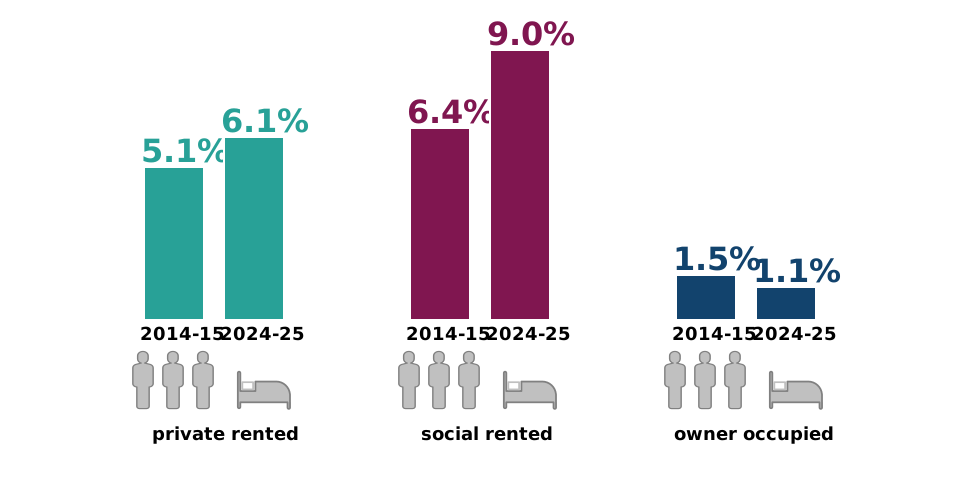
In 2024-25, 3% of households were overcrowded and 40% were under-occupied, according to the bedroom standard. Overcrowding has risen over the last decade in both the social rented sector from 6% to 9% of households, and in the private rented sector from 5% to 6% of households. Alongside, there was an increase in rates of under-occupation, and decreases in overcrowding, in the owner occupied sector.
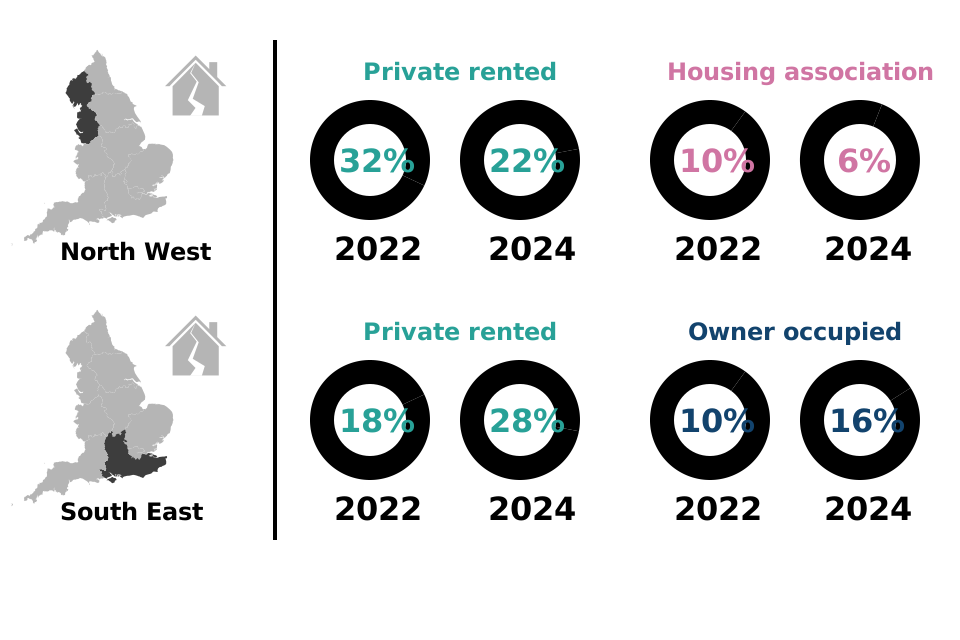
There were 4.0 million dwellings (15%) that failed to meet the current Decent Homes Standard in 2024, similar to 2022. Compared to 2022, there were decreases in the proportion of dwellings failing the standard in housing association and private rented sector dwellings in the North West, and increases in the owner occupied and private rented sector dwellings in the South East.
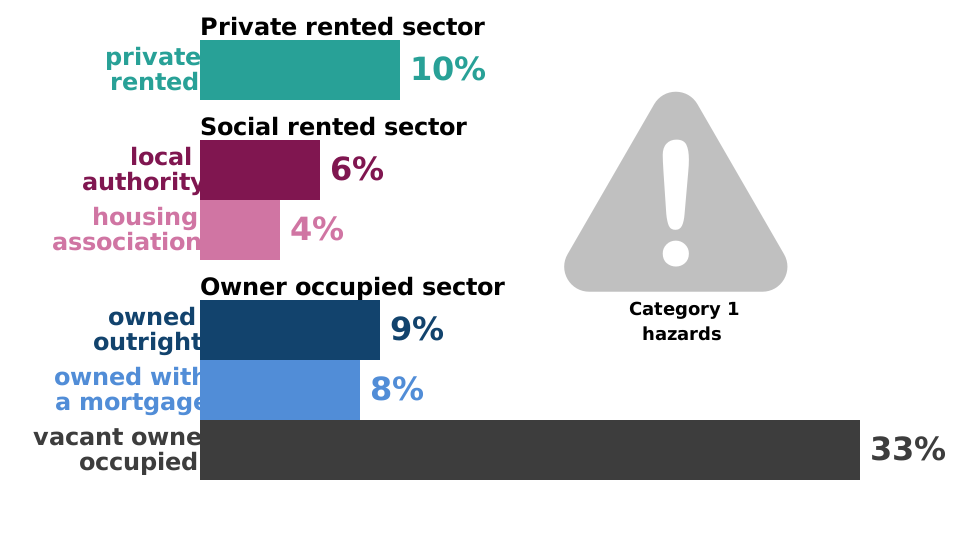
There were 2.3 million dwellings (9%) that had a HHSRS Category 1 hazard in 2024, similar to 2022. Private rented and owner occupied dwellings were equally likely to contain hazards (9-10%), though two years ago, owner occupied dwellings were less likely than private rented dwellings (9% vs 12%).
In the social rented sector, local authority dwellings (6%) were more likely than housing association dwellings (4%) to have hazards. In the owner occupied sector, vacant owner occupied dwellings (33%) were much more likely to contain hazards than those owned with a mortgage (8%) or owned outright (9%).
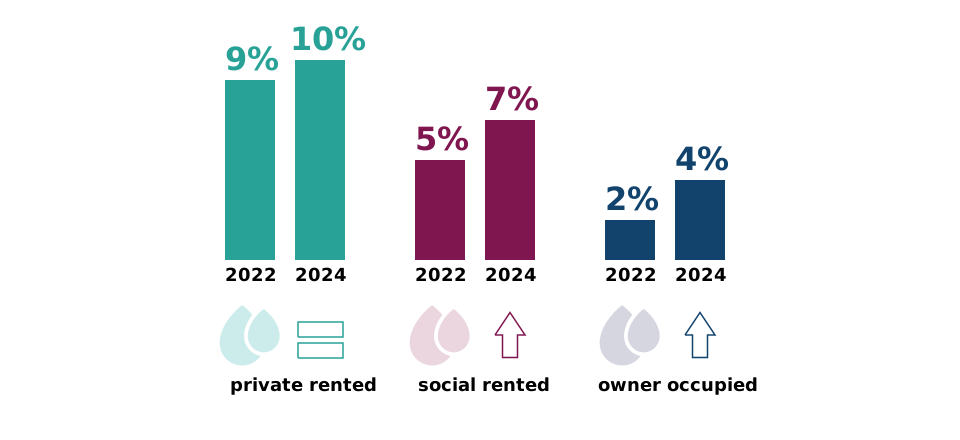
There were 1.4 million dwellings (5%) that had a problem with damp in 2024, an increase compared to 2022. Damp was more prevalent in the private rented sector (10%) than in the owner occupied (4%) and social rented sectors (7%). Local authority dwellings were more likely to have a problem with damp (8%) than housing association dwellings (6%). Since 2022, there have been statistically significant increases in damp in the owner occupied and social rented sectors.
Damp was also more common in homes owned with a mortgage (4%) than those owned outright (3%). The most common form of damp was severe condensation (3%), which was more prevalent than rising damp (1%) or penetrating damp (2%).
Overall, the energy efficiency of the English housing stock continued to improve. In the last decade, the proportion of homes in the highest energy efficiency bands A to C increased from 26% in 2014 to over half of all dwellings (56%) in 2024, while the proportion within the lowest bands of E to G decreased (23% to 9%).
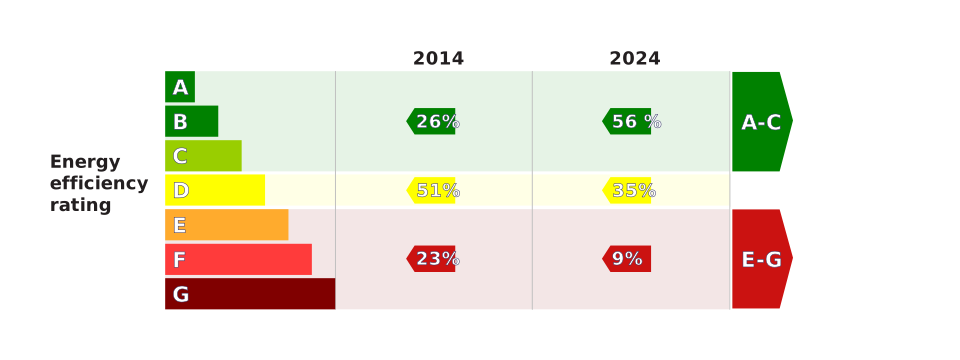
Over the last ten years, the proportion of dwellings with an energy efficiency rating of band D has continually decreased. However, in the last two years, the proportion decreased substantially (43% in 2022 to 35% in 2024), with a corresponding increase in dwellings rated band C (45% in 2022 to 52% in 2024). The pattern of energy efficiency varied by tenure.
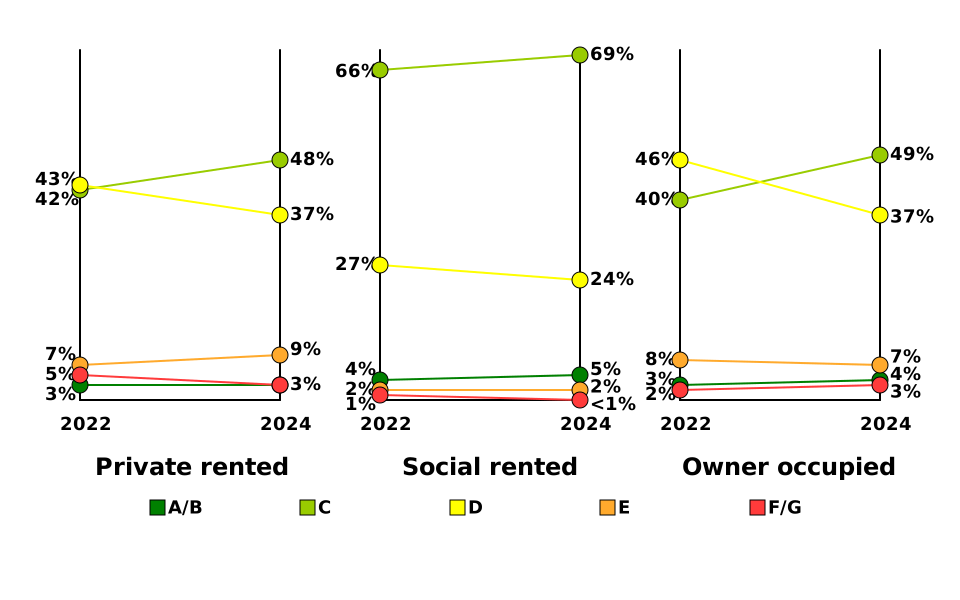
In 2024, the estimated average cost to improve dwellings to at least an energy efficiency band C was £7,480 across all tenures, with owner occupied dwellings costing the most and social rented homes costing the least.

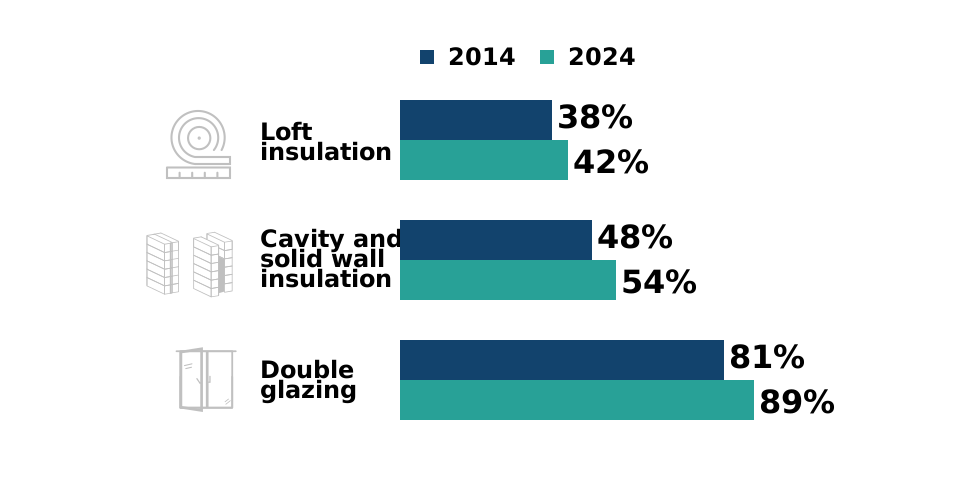
Rates of loft and wall insulation increased over the last ten years. Around 42% of all dwellings had loft insultation (over 200mm thickness), an increase from 38% in 2014. Just over half (54%) of all dwellings had cavity or solid wall insulation (up from 48% in 2014) and 89% of all homes had full double glazing, up from 81% of homes in 2014.
Acknowledgements and further queries
Each year the English Housing Survey relies on the contributions of many people and organisations. The Ministry of Housing, Communities and Local Government (MHCLG) would particularly like to thank the following people and organisations without whom the 2024-25 survey and this report would not have been possible: all the households who gave up their time to take part in the survey, NatCen Social Research, the Building Research Establishment (BRE) and CADS Housing Surveys.
This report was produced by the Housing Evidence, Research and Surveys Team at MHCLG. If you have any queries about it, would like any further information or have suggestions for analyses you would like to see included in future EHS reports, please contact ehs@communities.gov.uk.
The responsible analyst for this report is: Chauncey Glass, Data, Analysis, Statistics and Surveys Division, MHCLG. Contact via ehs@communities.gov.uk.