Warm Homes Plan (HTML)
Updated 18 March 2026

© Crown copyright 2026
This publication is licensed under the terms of the Open Government Licence v3.0 except where otherwise stated. To view this licence, visit nationalarchives.gov.uk/doc/open-government-licence/version/3 or write to the Information Policy Team, The National Archives, Kew, London TW9 4DU, or email: psi@nationalarchives.gov.uk.
Where we have identified any third party copyright information you will need to obtain permission from the copyright holders concerned.
This publication is available at https://www.gov.uk/government/publications/warm-homes-plan/warm-homes-plan-html
Ministerial foreword
The driving purpose of the government is to tackle the affordability crisis that scars Britain. Families are struggling with energy bills that are too high and we are determined to do everything we can to bring them down. That is why we have taken an average of £150 of costs off people’s energy bills from April 2026 and expanded the £150 Warm Home Discount (WHD) to a total of 6 million families this winter.
The Warm Homes Plan takes the next step – delivering the biggest public investment in home upgrades in British history to cut bills, tackle fuel poverty, create good jobs and get us off the rollercoaster of international fossil fuel markets. It is clearer than ever that the future is cheap, clean, homegrown power. As Britain takes back control with record investment in renewables and nuclear, this is our plan to bring the benefits of clean power to people in their homes as quickly as we can.
Every family deserves the security of a home they can afford to heat. It is a scandal that this is out of reach for so many in our country and that millions of families suffer the injustice of living in fuel poverty. We know installing technologies like solar, batteries, heat pumps and insulation can save families hundreds of pounds a year on their bills, while protecting them from fossil fuel shocks. We are already seeing record demand for these technologies and the government is determined to spread the benefits of them much more widely, so that every family can access them, not just the wealthiest.
The Warm Homes Plan will deliver £15 billion of public investment to upgrade up to 5 million homes and lift up to a million families out of fuel poverty by 2030. It includes an offer for everyone: with grants and loans to make it easier than ever for homeowners to install heat pumps, solar panels and batteries; direct support for home upgrades for those on low incomes and in fuel poverty; and new rules to ensure landlords invest in upgrades to cut bills for renters and social tenants.
Alongside the steps we are taking to make electricity cheaper and break down the barriers to home upgrades, this historic investment will help millions seize the benefits of electrification. And as we upgrade existing homes, we will ensure new homes are built with solar and clean heating installed as standard – a common-sense policy which has long been demanded by the public. All this will accelerate Britain’s solar rooftop revolution, which could triple the current number of homes generating their own energy and cutting their bills with solar panels by 2030.
We are committed to ensuring this national rollout helps answer the question so many people have about where the good jobs of the future will come from. That is why we are establishing a new taskforce with the Trades Union Congress (TUC) to help workers access the 180,000 new jobs our plan will support, while investing in British manufacturing and setting a new aim of at least 70% of the heat pumps we install being made here in the UK.
Taken together, this is a landmark plan to make the British people better off, secure our energy independence and tackle the climate crisis. We look forward to working with industry, trade unions, mayors, local authorities and all parts of the sector to deliver on it over the months and years ahead.
The Rt Hon Ed Miliband MP,
Secretary of State for Energy Security and Net Zero
Executive summary
The affordability crisis is the number one issue facing Britain. That is why this government is taking action to drive down energy bills for good. In the 2025 Autumn Budget we took an average of £150 of costs off energy bills from April 2026, helping millions of families across Great Britain save on their bills. However, to ensure bills fall further and for good, we need to do more.
That is why we are launching the Warm Homes Plan – the biggest ever public investment to upgrade British homes and cut bills.
The Prime Minister’s mission to make Britain a clean energy superpower is about delivering cheap, secure, homegrown clean energy. This means transforming our power system, and it means ensuring every household can take advantage of clean energy in their own home for lower bills and greater control.
Solar panels, insulation, batteries, and heat pumps can all save families hundreds of pounds a year. Home upgrades are therefore one of the quickest and best ways to cut the cost of living permanently. We want every household in Britain, regardless of circumstance, to have access to these transformative technologies.
The Warm Homes Plan will cut bills, with an offer for every household, whether they own their home, rent privately, or live in social housing. We will help upgrade 5 million homes by 2030, through direct support for those on low incomes and in fuel poverty, grants and innovative low- and zero-interest finance available to all, and new rules to ensure that tenants in both the private and social rented sectors have lower bills and warmer, more comfortable homes. And by investing now, we will leverage private finance, drive down installation costs, and help create an affordable and self-sustaining market over time.
-
For a homeowner, this means grant support to upgrade to clean heating, or low-cost finance to cover the upfront cost of a solar or battery installation, and the chance to cut their energy costs even further by taking advantage of a new flexible tariff to use energy when it’s cheapest.
-
For a household in fuel poverty, it means bills hundreds of pounds lower after direct support from our capital investment programmes delivered with local authorities.
-
For social housing residents, it means upgrades to entire streets at the same time, lowering bills and improving warmth and comfort for whole neighbourhoods.
-
For a family moving into a new build home, it means enjoying the benefits of solar panels, high levels of energy efficiency, and clean heating as standard.
-
And for a private tenant, it means saving money, with a better insulated, warmer home without the damp and mould issues that so many face today.
The Warm Homes Plan will tackle fuel poverty, helping up to one million households out of fuel poverty by 2030 through public investment and new minimum energy efficiency standards for private and social landlords. With this plan and our choice to expand the WHD to almost 3 million additional households in need this winter, this government is taking decisive action to drive down fuel poverty.
The Warm Homes Plan will create good jobs across the country, with 180,000 additional high-quality, well-paid, future-proofed jobs in energy efficiency and clean heating by 2030. Our plan will unlock £38 billion in total investment across the Parliament, and with additional funding for skills, innovation and UK manufacturing, we will ensure that British workers and businesses reap the benefits.
The Warm Homes Plan will deliver energy security and help address the climate crisis, by helping households free themselves from exposure to the volatile international fossil fuel markets that have caused so much damage since Russia’s invasion of Ukraine. Clean power and electrification in the home – through solar panels, batteries and clean heat, underpinned by our action to make electricity cheaper and more flexible – will swap our reliance on fossil fuels for clean, homegrown power that we control.
Homes and buildings are responsible for around one fifth of UK emissions. Upgrading them and switching to clean energy is one of the most important things we can do to combat climate change. At the same time, the Warm Homes Plan will help people adapt to the changes that are already impacting the UK, by supporting adaptation measures that keep buildings cool in the summer as well as warm and dry in the winter.
The case for change and our vision for UK homes (Chapters 1 and 2)
These chapters outline the overwhelming case for action, to bring down the cost of living, improve our energy security, cut fuel poverty and the associated impacts it has on our nation’s health and wellbeing, and address the climate crisis.
In response to this urgent case, the chapters set out our new approach and vision for cheap, clean power in the home. We will upgrade homes and make support available for every kind of household, deliver significant capital investment across the country in partnership with mayors and local authorities, and focus on electrification as well as energy efficiency for lower bills and energy security.
Our offer to consumers (Chapter 3)
This chapter sets out our offer for consumers, and the details of our historic £15 billion public investment. This includes:
-
£5 billion for low-income schemes[footnote 1]
-
£2 billion for consumer loans
-
£2.7 billion for the Boiler Upgrade Scheme
-
£1.1 billion for Heat Networks
-
£2.7 billion innovative finance through the Warm Homes Fund to invest in home upgrades
-
£1.5 billion other funding for Warm Homes Plan Programmes and Devolved Administrations
All eligible households[footnote 2] in England and Wales can benefit from the expanded Boiler Upgrade Scheme (BUS), funded with £2.7 billion to 2030, alongside a new zero and low-interest loan offer, backed with an initial £2 billion of government support and delivered in partnership with the private sector. We are also streamlining the process for people to access home upgrades by working with industry to speed up installations and will consult on further planning flexibilities.
Government finance will come from a new Warm Homes Fund designed to support the entire home upgrade supply chain with loans and investments to bring down costs and scale up deployment of solar panels, batteries, heat pumps and other technologies, and help local authorities and social landlords make their upgrade programmes go further. The Warm Homes Fund will have a total of £5 billion in financial transactions to deploy. This includes £1.7 billion already allocated to low- and zero-interest consumer loans (supported by £300 million of capital investment) plus £0.6 billion of low-income funding. The residual £2.7 billion from the Fund will be available as innovative finance for investments in and loans to the home upgrade sector.
Low-income and fuel poor households will benefit from around £5 billion investment to 2030, with £4.4 billion in direct capital grants backed by an initial £600 million from the Warm Homes Fund. We will deliver initially through the existing Warm Homes Social Housing Fund (WH:SHF) and Local Grant (WH:LG), before consolidating and integrating our investment into a single scheme for low-income households.
Finally, the chapter also confirms the new minimum energy efficiency standards that privately rented properties will need to meet by 2030, sets out our proposals for the social rented sector, and confirms our plans to implement the Future Homes Standard (FHS) in Q1 2026 so that all new homes are built fit for the future.
How we will deliver at scale (Chapter 4)
Delivering the Warm Homes Plan requires a step change in how we approach home upgrades. This chapter sets out our plans to develop a new Warm Homes Agency (WHA) to co-ordinate and oversee the delivery of the major effort that delivering millions of home upgrades will entail, not just in this Parliament but in the years to follow. As well as taking on new functions, it will streamline and consolidate existing organisations previously involved in delivering home upgrades across government and the regulator, Ofgem.
The new agency will support households who want to upgrade with information, support, backed by a reformed system of comprehensive and robust consumer protection. We know that growing the private market and encouraging innovation at the same time as delivering public investment at greater scale than ever before will only be possible if consumers have the confidence and support they need.
The chapter also sets out the measures we will take to co-ordinate and deliver at a local level via the WHA, local authorities, and also other relevant actors, including Distribution Network Operators who will be essential to ensuring both that we make the most of the opportunities millions of homes running on clean, flexible energy will bring to the wider energy system, and that our grid keeps pace with the rate of change.
Unlocking the potential of district heating (Chapter 5)
Heat networks will play a crucial role in lowering bills and delivering energy security to homes and businesses in densely populated urban areas, or in places near to accessible heat sources which can be tapped into – for example data centres and industrial sites which generate excess heat. This chapter sets out the action we are taking to support heat network investment, including by investing £1 billion across this Parliament and introducing heat network zoning, to help local government develop an attractive infrastructure pipeline to draw in private investment and create good jobs in their towns and cities.
Growth, jobs, and innovation (Chapter 6)
This chapter sets out the steps we are taking to ensure that our investment creates high-quality, well-paid jobs and that we ensure existing highly skilled workers in energy efficiency and clean heating are positioned to benefit first from the transition, which our modelling suggests could support up to 180,000 new jobs across the UK.
To do this, we are establishing a new Workforce Taskforce in partnership with the TUC. This will be a part of the policy making process, ensuring we have the right support in place for new entrants and existing workers alike, and that the new jobs we create have good working conditions and attract a diverse workforce.
The chapter also gives details of the significant support we are giving to the UK’s manufacturing sector. We are already the largest producers of residential gas boilers in Europe and the fourth largest producers of air conditioning units, meaning we have an exceptional skills and capital base to expand into clean heating technologies. We are setting a new ambition for at least 70% of heat pumps installed in the UK to be manufactured here by 2035, building on our proud record of boiler manufacture. To support this, the government will triple its investment in heat pump manufacturing to £90 million, alongside considerable investments in skills and training across the entire supply chain.
Chapter 1: The case for change
The case for change is clear:
- Our current dependence on volatile and expensive fossil fuels is bad for energy bills, energy security, fuel poverty and climate change.
- The solution is cheap, clean power in the home, through solar panels, battery storage, and clean heat, alongside energy efficiency.
- But today too many people are shut out from accessing the benefits of home upgrades and clean energy.
Energy insecurity and the cost of living
The Russian invasion of Ukraine in 2022 demonstrated how exposed the UK is to international energy price shocks. As 86% of households in England use a natural gas-fired main heating system – far higher than comparable countries in Europe – the impact of the war has been severe. The energy price cap for a typical household soared from £1,277 in winter 2021-22 to over £4,000 by the start of 2023.[footnote 3] The support issued in response came at a cost of £42 billion to the Exchequer.[footnote 4] Gas prices remain well above historic levels, contributing significantly to the ongoing cost-of-living crisis for many households.[footnote 5] In the first quarter of 2025, households owed over £4 billion in debt to energy suppliers.[footnote 6]
The scale of the UK’s energy price crisis exposed a structural vulnerability: our deep dependence on global fossil fuel markets we don’t control and the depth of UK households’ exposure. Years of inconsistent policy and underinvestment in upgrades have left much of the housing stock unprepared for the future and many households with high running costs from technologies like direct electric and storage heaters. A lack of clear direction on heating electrification has contributed to the UK having the lowest heat pump deployment rate in Europe.[footnote 7] The crisis underscored the urgent need to reduce our exposure to volatile energy prices at the household level by investing in energy efficiency, clean heat, and smart technologies to take advantage of clean, homegrown renewable energy.
Figure 1: Source of heating in homes[footnote 8]
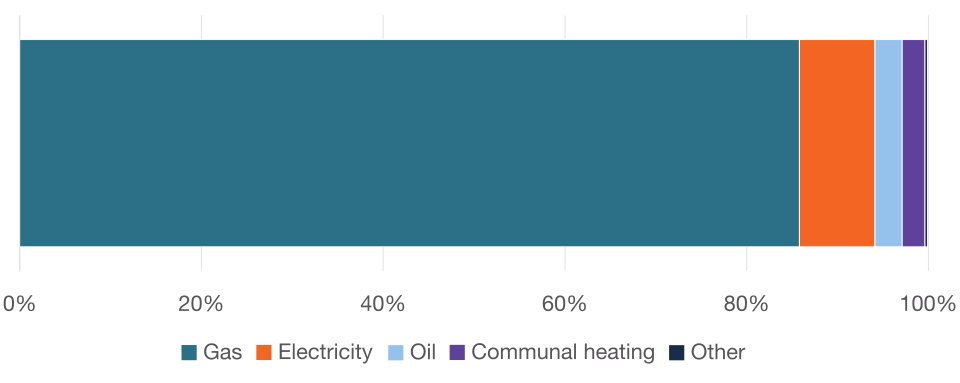
Description of Figure 1: Bar Chart representing the share of fuel type used in domestic heating in England, showing an 85.8% share for gas heating, 8.3% for electricity, 3% for oil, 2.5% for communcal heating, and 0.3% for other heating types including biomass and solid fuels. Data derived from the English Housing Survey 2023 to 2024.
Fuel poverty and its impacts on the nation’s health and health inequalities
Living in a cold home significantly affects mental and physical health. It can increase the risk of developing or worsening respiratory and cardiovascular disease. It also contributes to the risk of death from heart attack, stroke, hypothermia, and infection, including pneumonia. Cutting back on energy use and underheating can also lead to cold homes and the development of damp and mould, which is linked to a range of potential health risks. In 2021, Building Research Establishment (BRE) research found that the NHS was spending an estimated £900 million annually on treating illnesses associated with living in cold or damp housing.[footnote 9] This figure covers only first year treatment costs and does not include the associated long-term economic impact to the NHS and social care. In the UK, children miss more school days due to illnesses from living in damp, cold and mouldy homes than any EU member state, with rates over 80% higher than the EU average.[footnote 10]
People living in fuel poverty are far likelier to face these health impacts from living in a cold home. 2.7 million households live in fuel poverty, including 1 in 5 private renters, and 943,000 thousand families with dependent children[footnote 11]. Fuel poverty also exposes regional disparities, with households in Yorkshire & the Humber and the West Midlands more likely to live in fuel poverty than households in the South East of England (Figure 2). That is why this government has expanded the WHD, a £150 energy discount paid in winter, to almost 3 million more households, taking the total to nearly 6 million. But fuel poverty is a structural problem, with home upgrades one of the best long-term solutions.
Figure 2: Proportion of fuel poor households, 2024, by region (England)[footnote 12]
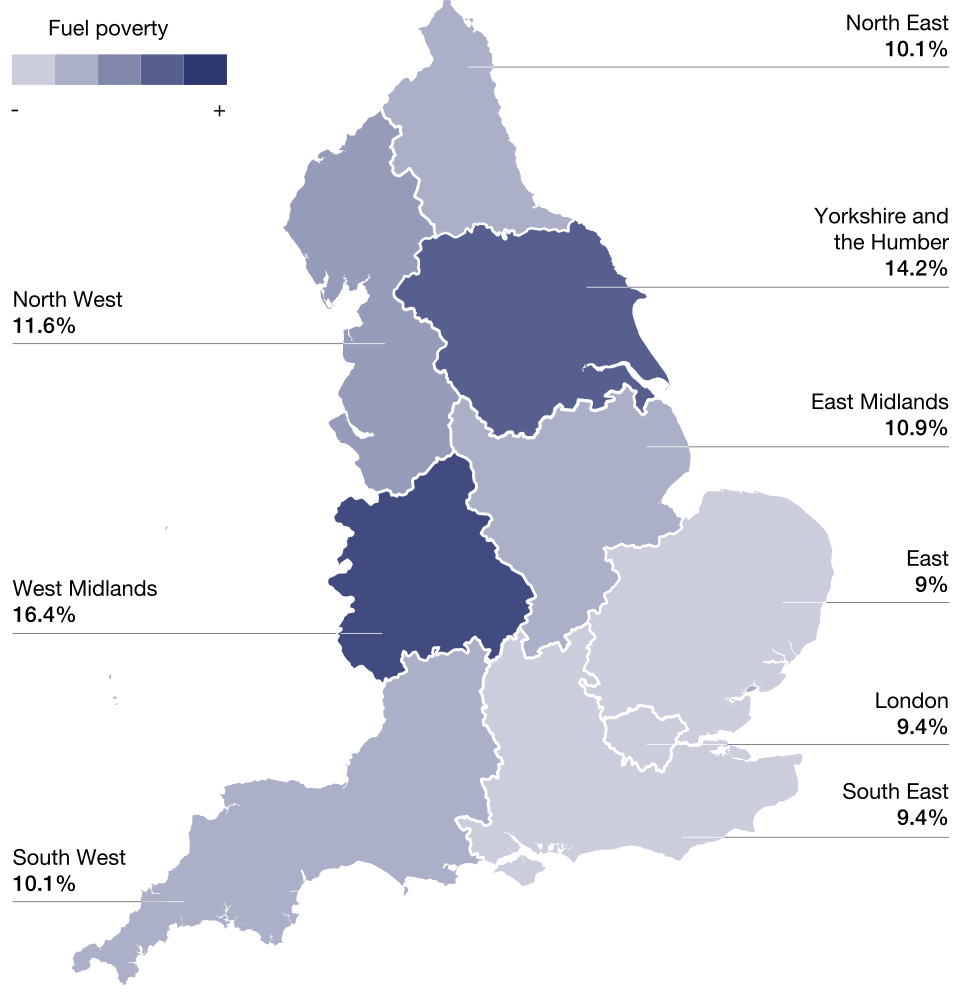
Description of Figure 2: Geographic map of England showing the percentage of households in fuel poverty grouped by region. North East England 10.1%. North West England 11.6%, Yorkshire and Humber 14.2%, East Midlands 10.9%, West Midlands 16.4%, East of England 9.0%, Greater London 9.4%, South East England 9.4%. South West England 10.1%. The overall proportion of fuel poor households in the England is 11.0%, and all data was measured using the LILEE (Low Income Low Energy Efficiency metric) in 2024.
Our national over-reliance on fossil fuels is also exposing us to other negative health impacts. Gas boilers in particular are worsening external air quality. A recent study has shown that since the introduction of the Low Emission Zones for road transport in London, space heating has overtaken transport as the biggest source of nitrous oxide pollution in London.[footnote 13] Electrifying households can help deliver these wider health benefits.
Climate change
Climate change is already having an impact on the UK. We are increasingly at risk of extreme weather events, including regular flash flooding and wildfires. All 10 of the country’s warmest years on record occurred since 2001. In 2022 record temperatures exceeding 40°C were reached and the summer of 2025 is now the hottest on record in the UK.[footnote 14]
Whilst the UK has made real progress in some areas, such as electricity generation, reducing greenhouse gas emissions in the buildings sector has been slower. As of 2024, building sector direct emissions were responsible for approximately 21% of the UK’s territorial greenhouse gas emissions. They have reduced by nearly 30% in 1990 compared to 82% in the electricity supply sector. Of these building emissions, around 66% are produced from the use of fossil fuels for space heating and hot water in residential buildings.[footnote 15]
Our buildings are not currently built to deal with record summer temperatures and some are at significant risk of overheating.[footnote 16] This can pose health risks for those most vulnerable to overheating, including older people, young children, and those with long-term conditions, placing additional pressure on the NHS.
Figure 3: UK greenhouse gas emissions by sector, 2024[footnote 17]
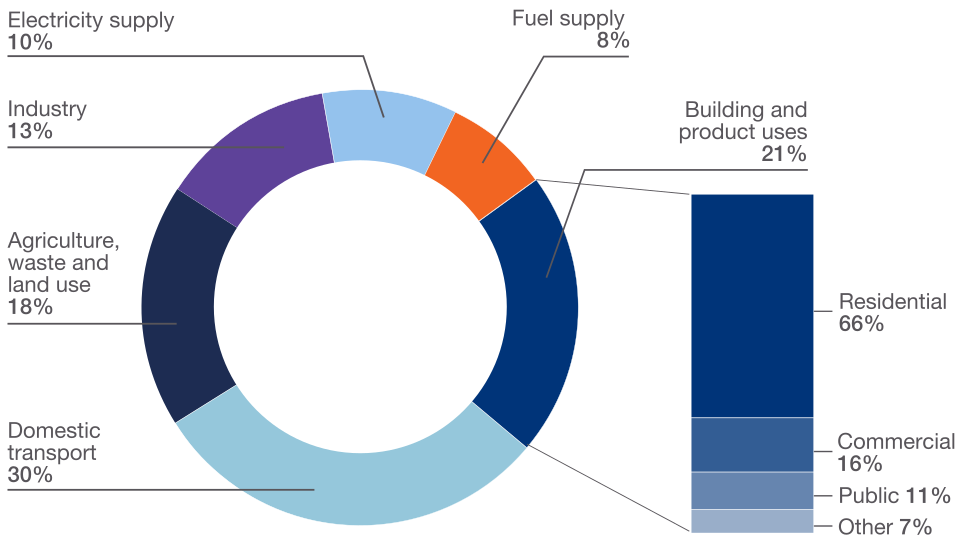
Description of Figure 3: Pie chart showing the proportion of greenhouse gas emissions in the UK divided by sector in July 2025. Domestic transport 30%, Agriculture, Waste and land use 18%, Industry 13%, Electricity Supply 10%, Fuel Supply 8%, Building and product uses 21%. Of the 21% share attributable to the buildings sector, a bar chart annotation shows a further breakdown of this sector as Residential 66%, Commercial 16%, Public 11% and other 7%.
Figure 4: Building sector emissions by property type since 1990[footnote 18]
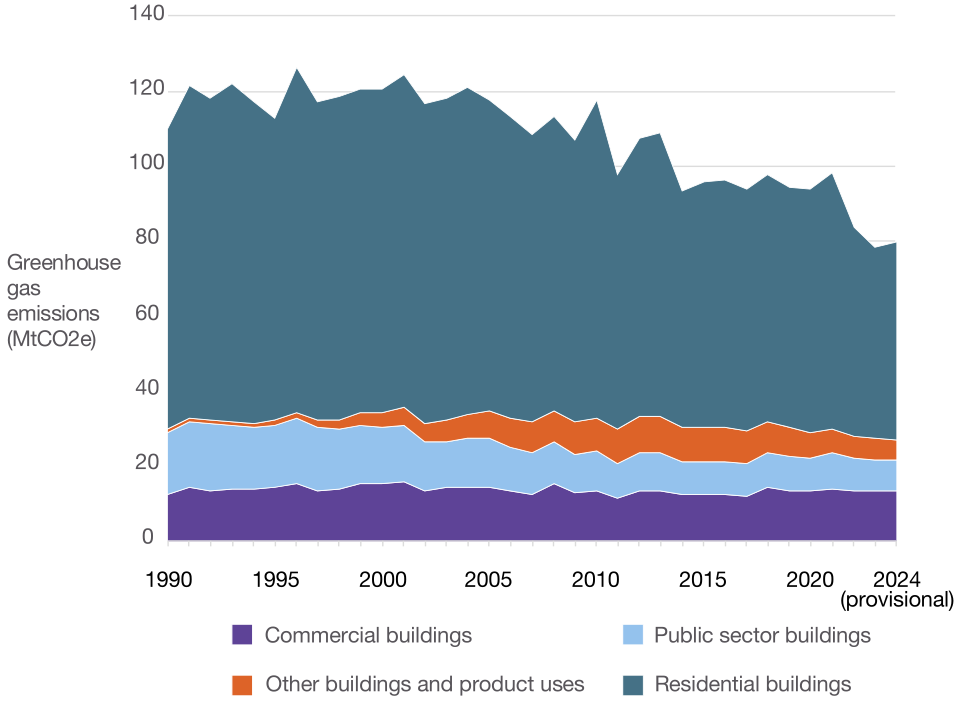
Description of Figure 4: Time series chart of the changing quantities of greenhouse emissions in Megatonnes of Carbon dioxide equivalents per year, from different building sectors, between 1990 and 2024. The emissions from commercial buildings have been relatively stable throughout, at between 12 to 14 megatonnes carbon dioxide equivalent per year. Residential emissions have trended down from around 120 to 80 megatonnes of carbon dioxide equivalents per year, with public sector buildings showing a similar trend at lower overall emission levels, dropping from around 17 to 10 megatonnes of carbon dioxide equivalents per year. The emissions from Other Buildings and product uses grew from 1 to 10 megatonnes carbon dioxide equivalents per year between 1990 and 2014, before declining to present levels of around 5 megatonnes carbon dioxide equivalents per year.
Lack of access to home upgrades
Clean energy technologies like solar panels, domestic batteries and clean heat, alongside targeted energy efficiency improvements, are the best long-term solution to these problems. Electrification in the home is the key to lower bills and energy security. But for too many households, home upgrades are out of reach.
High upfront costs and regulatory barriers can get in the way of adoption of clean energy technologies. Relative gas and electricity prices are an important additional factor in heat pump adoption, but the unequal distribution of some costs on energy bills across electricity and gas has tilted the playing field away from clean heat, even though heat pumps can be over 3 times more efficient than boilers. This unequal distribution also means that households running storage heaters or inefficient direct electric heating, who are often deep in fuel poverty, pay an unfair price to heat their homes.
Home upgrades will remain out of reach for too many households, particularly those on low and middle incomes, without action to address these barriers.
This government took important steps to address costs at the 2025 Budget. An average of £150 of costs off people’s energy bills from April 2026. This will make electricity bills cheaper for all and especially so for those with traditional, much less efficient forms of electric heating, who will benefit the most from these changes. This is a major step towards our commitment to lower bills. As announced at the Budget, we will do more to further target cost reductions on electricity bills (see Chapter 3).
As well as reducing running costs, it is also important to tackle upfront costs. The upfront costs of technologies such as solar have fallen in the last decade, and the cost of heat pump installations under the BUS is falling over time. But we need to drive down costs further, support new finance offers, and provide direct support where needed. That is why our plan focuses on providing an offer for every household, including the expanded, universal BUS, and a new facility to deliver low- and zero-interest finance, for other measures.
Upgrading homes and buildings can also be needlessly time consuming, complex and confusing. Processes for approvals and grid connections from Distribution Network Operators vary and can cause lengthy delays to installation. Where required, seeking planning permission adds time and cost to the process. Meanwhile, finding a trusted installer can add further delays while the installation process itself can take several weeks. Finding the right information and advice to make decisions confidently and having assurance that if something goes wrong a robust consumer protection regime will step in, are essential. That is why making the process easier for consumers, and ensuring support and protection is always in place, is central to our plans.
Chapter 2: Our vision for UK homes
- Our vision is for every household in Britain to have the opportunity to benefit from clean energy technology in their home
- We will harness the power of rooftop solar, battery storage, clean heat and energy efficiency to save millions of households hundreds of pounds on their bills
- By 2030 we will:
- Triple the number of homes with solar today by deploying panels on the rooftops of up to 3 million more homes
- Deliver over 450,000 heat pump installations per year
- Upgrade up to 5 million homes in total
Cheap, clean power in the home
Our mission to make Britain a clean energy superpower presents a generational opportunity to power British buildings with homegrown, clean energy. Through the Warm Homes Plan, the government will invest £15 billion over this Parliament to cut energy bills, and upgrade up to 5 million homes and support up to 180,000 additional jobs by 2030, and reduce greenhouse gas emissions from our buildings.
Figure 5: Homes reached by government policies, July 2024 to December 2030[footnote 19]
| Homes reached | Up to 5m |
|---|---|
| WHP Schemes | Up to 1.7m |
| PRS MEES | Up to 1.6m |
| SRS MEES | Up to 1.3m |
| New build | Up to 0.5m |
To make the nation’s homes fit for the future, the government will prioritise rooftop solar, clean heating, energy storage, and flexibility in our investment programmes, alongside fabric and adaptation measures. These technologies will cut energy bills, reduce fuel poverty, improve health outcomes, lower greenhouse gas emissions and deliver a more efficient and more secure energy system. The exact technology mix installed will vary, as every home is different, and as innovation occurs.
Every home is different, and we will empower consumers to choose home upgrades that suit their needs. From low-cost insulation to integrated systems like solar PV and battery storage, each pathway offers potential for significant energy bill reductions. By supporting informed consumer choice, government can deliver lasting financial benefits to households across the UK.
Illustrative example of potential bill savings by housing archetype
Integrating generation, storage and flexibility technologies with heat pumps can unlock even greater energy bill savings for households, even before interventions to reduce the costs of electricity. Building on the Cost Optimal Domestic Electrification (CODE) study, we have estimated the potential bill savings for typical terraced, semi-detached and detached housing archetypes. Our analysis, based on average energy prices for 2024, suggests that households that adopt a heat pump, solar Photovoltaic (PV) and a battery could save up to £550 a year on their energy bill, compared to a gas boiler.
Figure 6: Potential annual energy bill savings by archetype[footnote 20]
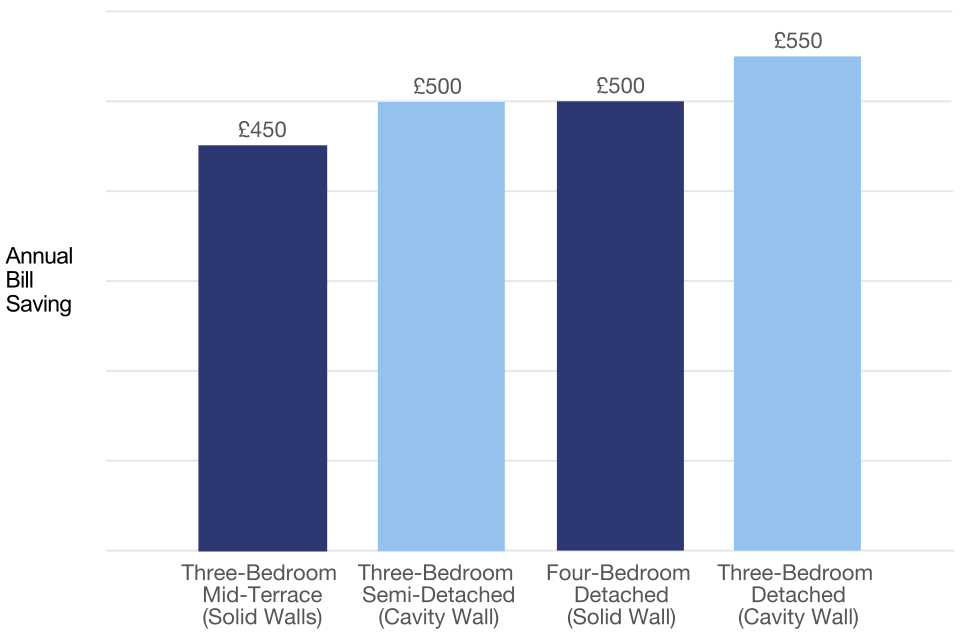
Description of Figure 6: A bar chart showing the potential energy bill savings for households adopting a package of heat pump, solar photovoltaic installation and electric battery storage, ranging from £450 to £550 dependent upon the size of the property and the type of insulation.
Time-of-use tariffs could enable even greater bill savings. Our analysis suggests those who switch to a time-of-use tariff and set up their battery to charge during off-peak hours could save up to an additional £300, though potential savings will vary according to housing archetype and circumstance.[footnote 21]
Clean heat for warmer homes and lower bills
This government has already taken major steps to increase the uptake of heat pumps. We have removed unnecessary planning rules, like the 1-metre rule which prevented too many installations, expanded the BUS to a wider range of technologies, and taken action to make electricity cheaper. This Plan goes further on all fronts, as well as setting ambitious new targets to support domestic manufacturing so that the UK can lead in the production of clean heating appliances.
Figure 7: Number of UK heat pump sales annually[footnote 22]
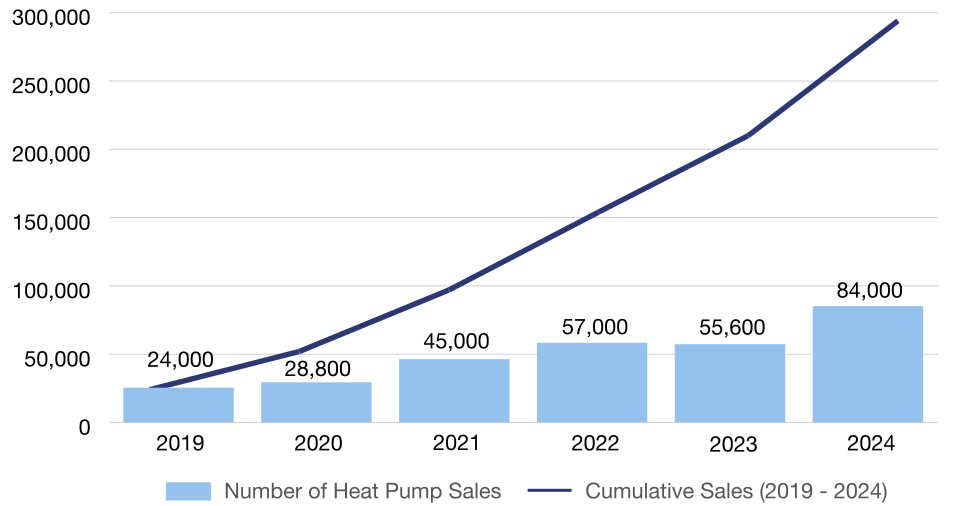
Description of Figure 7: Chart displaying the trajectory for heat pump sales from 2019 to 2024, showing a rise in sales year on year from 24,485 in 2019 to 84,407, with a cumulative total of almost 300 000 installations between 2019 and 2024.
As the chart above shows, heat pump sales have been trending upwards in the UK since 2019. The UK was the fastest growing heat pump market in Europe in 2024. This growth has continued into 2025, with a 40% increase in BUS-supported installations in the year to November 2025 compared to the preceding 12 months.[footnote 23] Consumer satisfaction is extremely high, with 90-95% of property owners that had their heat pump installed under the government’s BUS satisfied with their heating system.[footnote 24]
Heat pumps will be the best and cheapest form of electrified heating for the majority of our homes. Multiple large-scale trials and experience from comparable countries worldwide have shown that these technologies can be deployed in almost all building types.[footnote 25] Three of the countries with the coldest climates in Europe – Norway, Finland and Sweden – currently have the highest heat pump deployment rates, with all 3 having over 49 heat pumps for every 100 households.[footnote 26]
Our aim is that by 2030 the heat pump market will have expanded to over 450,000 annual installations, as heat pumps increasingly become the desirable and natural choice for households replacing an existing heating system at the end of its life, and as the FHS and Future Buildings Standard (FBS) ensure that new homes and buildings have low-carbon heating as standard.
Consumer choice is at the heart of the Warm Homes Plan. Air source heat pumps are currently the most commonly installed clean heating technology in the UK, but other technologies can be well suited to the diverse needs of different homes.[footnote 27] Our schemes already support the installation of some of these other types of heating, including ground source heat pumps and shared ground loop systems, water source heat pumps in heat networks and storage heaters. We have also recently confirmed that we will begin providing BUS grants for heat batteries and air-to-air heat pumps. We will continue to encourage innovation, with new innovation funding and a commitment to work to bring new, highly efficient products into government schemes as quickly as possible. We have also recently published a consultation to expand our understanding of alternative clean heating technologies, exploring the role they could play in heat decarbonisation and their benefits to consumers.
Communal clean heating technologies, such as heat networks, can deliver even more efficient electrified heating to consumers. For those living in denser locations like city centres, the best option is likely to be a heat network. These can use heat pumps and remove the need for hot water cylinders in flats. As these supply multiple dwellings, their scale enables them to use heat pumps combined with renewable heat sources even more cost effectively than for an individual house. Heat networks are already well-established in the UK and elsewhere. In Denmark, for example, where the housing stock is similar to the UK’s, heat networks supply heat to 66% of all households.[footnote 28] At their largest scale, district heat networks bring significant benefits to densely populated areas. This includes reducing the scale of electrification upgrades, with government modelling suggesting that heat networks could save between £5 billion and £7 billion in avoided distribution network upgrades.
Low-carbon heat networks will therefore play a significant role, in the right settings, in electrifying the heating of our buildings. They are anticipated to be supplying about a fifth of the total building heat demand in 2050. This means achieving a nearer term target of more than doubling the amount of heat demand met via heat networks to 7% by 2035.
For a small minority of homes, characteristics such as age, availability of indoor and outdoor space, planning requirements, lease restrictions, heritage status and rurality, may mean that other technologies will be more suitable.
Case study: Kensa and Thurrock Council – decarbonising tower blocks in Chadwell Saint Mary, Essex
Heat networks are a communal way of delivering affordable, low-carbon heat whilst boosting energy security. In 2023, Thurrock Council and Kensa replaced inefficient night storage heaters in nearly 300 council flats in Chadwell St Mary with compact heat pumps and heat batteries, supported by government funding. Different heat network models like this are helping communities transition away from fossil fuels while creating local benefits.
Prior to installation many of the residents living in Chadwell St Mary experienced fuel poverty and poor living conditions due to ineffective heating. As one resident stated:
It was awful, really. It (the heat) would last just until early evening, and then it’s cold again. It was expensive to heat everywhere; I had quite a damp issue – you’ve got the black mould coming through.
Given the space constraints of the flats, an ambient heat network was used by placing a small water source heat pump inside each flat. Using shared ground loop technology, the heat network circulates water from 109 boreholes drilled 200m deep in the car park. These circulate water to capture low-temperature ground heat (~10°C), which is upgraded by the heat pumps to 55°C for radiators and hot water via heat batteries.
This has resulted in immediate savings for residents. For every unit of electricity the heat pump uses (and the resident pays for), 2 free units of heat are taken from the ground. In effect the residents only pay for a third of the heat they use in their homes. Moving from a night storage heaters to heat pumps reduces running costs by an estimated 60%.[footnote 29]
Residents are really feeling the benefits:
I can put the heating on when I want, and you can turn it up and down – you can have it as hot as you want it, and it’s cheaper. And it’s neater as well, so it’s saving me probably 25 to 30 pounds a week sometimes… I’d say to other councils, it’s a really good idea…like for us to save money. It’s just economic for tenants.
Installing the new heating systems at Chadwell St Mary is expected to provide over 70% reduction in carbon emissions. Over the life cycle of this installation, the total emissions saving of the heat pumps is projected to be 7,080 tons of CO2.
Rural communities
There are 30 million homes in Great Britain, with 5.2 million considered to be in rural locations. Around ~3.1 million rural homes are on the gas grid. Of the remaining 2.2 million, 1.4 million use fossil fuels for heating including oil, Liquid Petroleum Gas (LPG) and solid fuel, and 0.7 million use electric heating.[footnote 30] Rural homes have a more diverse mix of typologies than homes in urban and suburban areas, with a greater proportion of detached houses and bungalows, but fewer flats. They are typically older and larger. Similar to suburban homes, the majority of rural homes are built with cavity walls, however there is a higher proportion of homes built with alternative wall types.
This government is committed to ensuring that all homes are able to benefit from home upgrades, and that is why the Warm Homes Plan supports a range measures and technologies to suit the variety of homes across the country. To support households experiencing fuel poverty the WH:LG provides support in both on and off gas grid areas in England for low-income households living in homes with an Energy Performance Certificate (EPC) rating below band C. The government has also provided support through the WH:SHF for social housing in rural areas including Shropshire, South Cambridgeshire, North Kesteven and South Holland.
The vast majority of rural homes are suitable for a heat pump. As of November, 50% of BUS grants have been paid to properties in rural areas and 39% to homes off the gas grid. For rural homes receiving a BUS grant, 96% were for air source heat pumps, 3% for ground source heat pumps and 1% for biomass boilers.[footnote 31]
Innovation is making heat pumps increasingly suitable for rural and coastal conditions. For example, high temperature heat pumps using different refrigerants such as propane can provide thermal comfort in leakier homes more efficiently; and manufacturers are providing specific models able to withstand coastal conditions.
For the minority of rural homes less suitable to heat pumps, there are a range of alternative solutions including heat batteries and biomass solutions. On 18 November 2025 we launched a consultation to explore these and other alternative heating technologies. The consultation will remain open until 10 February 2026.[footnote 32]
The Warm Homes Fund will also provide government support for zero and low-interest consumer finance to help homeowners upgrade their homes and install solar panels, batteries, heat pumps and other technologies.
Unleashing the rooftop solar revolution
Rooftop solar will play a vital role in the Warm Homes Plan as one of the best technologies to help consumers save money. By enabling consumers to generate their own electricity for self-consumption, or to sell back to the grid through the Smart Export Guarantee (SEG), rooftop solar will be central to cutting energy bills. The Solar Roadmap, published in June 2025, called for a ‘rooftop revolution’ – deploying solar PV on homes and buildings to cut bills, improve energy security and create thousands of highly skilled jobs across the country.[footnote 33] Rooftop solar on homes will make a significant contribution to the ambition of 45 – 47GW of solar by 2030 as set out in the Clean Power Action Plan. As shown in the graph below, many consumers are already experiencing the benefits of solar power, with over 1.6 million domestic installations in the UK.
Figure 8: Microgeneration Certification Scheme (MCS) domestic solar photovoltaics deployment since 2010 (UK)[footnote 34]
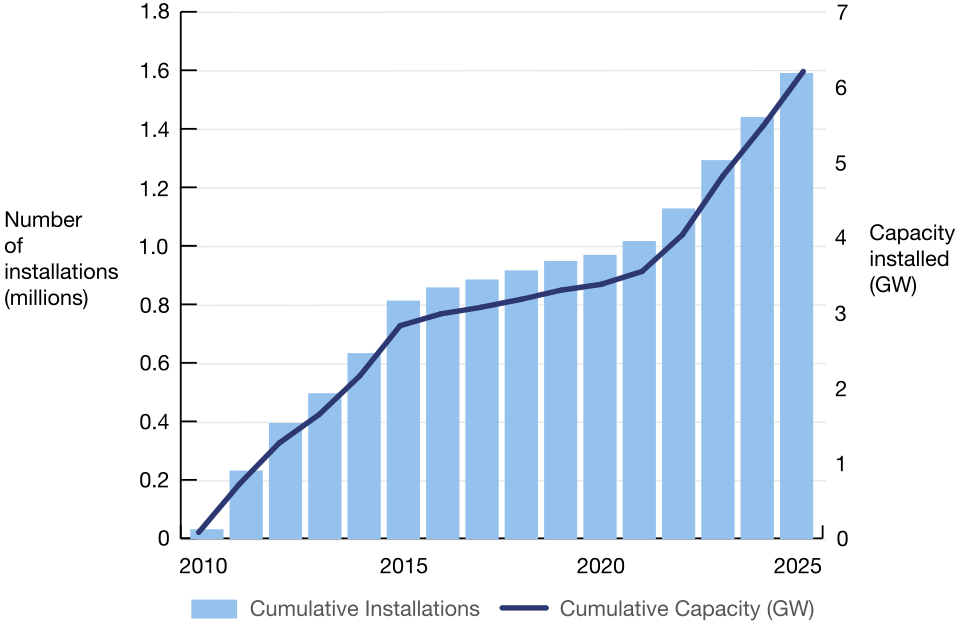
Description of Figure 8: A bar and line chart showing UK deployment of solar photovoltaic generation deployment between 2010 and 2025, in number of installations and the cumulative capacity (in gigawatts) of those installations. In 2025, a cumulative total of more than 1.5 million installations is providing around 6 gigawatt hours of generation capacity.
We must go further to ensure that the benefits of rooftop solar are felt in homes across the country. The policies in this plan will ensure low-income and middle-income households and those in the private and social rented sectors can access the benefits of this technology. Our capital investment will deliver home upgrades to fuel poor households that will focus on installing rooftop solar alongside insulation, clean heat and home batteries. And a new mass market, no interest or low-interest consumer loan offer will support rooftop solar alongside home batteries and heat pumps, so that the transformative benefits of solar power are available to all.
The government welcomes the additional consumer offers being developed by mayoral strategic authorities to extend the solar revolution to as many rooftops as possible. The government will provide support to build the know-how of social housing landlords in leveraging private investment to install these technologies. We will also look to use our new Warm Homes Fund to help local authorities and housing associations go further. In addition, Crown Commercial Service and Great British Energy are testing approaches to aggregating demand for these technologies to drive down unit costs for both social housing landlords and the public sector estate.
Taken together, the measures in the Warm Homes Plan could put solar panels on the roofs of up to 3 million more homes by 2030.[footnote 35] This is in addition to homes that respond to the current market by adding solar to their rooftops. Combined, this could result in twice as many installations over the next 5 years than in the past 15, which would mean trebling the number of homes with rooftop solar today by 2030.
Home of the future
Illustration of some of the technologies that will deliver warmer, cheaper, and cleaner homes.



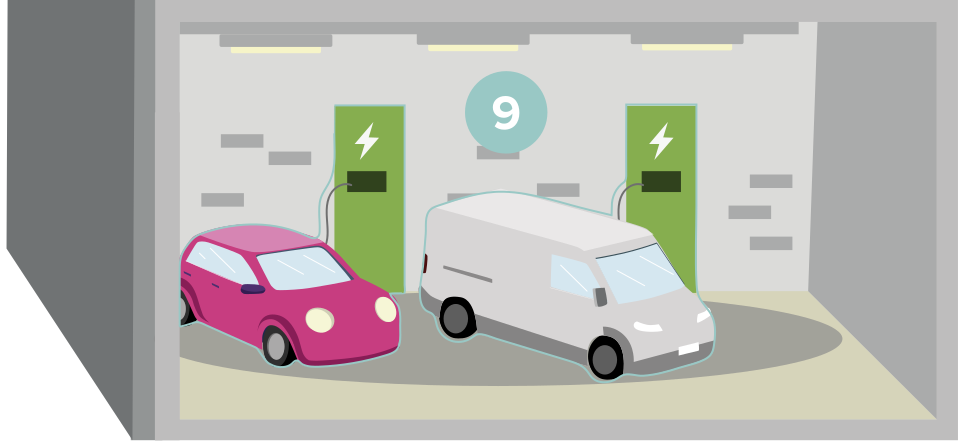
Description of infographic: The Home of the future infographic, demonstrating residential semi-detatched properties, a mixed use low rise building with commercial and residential spaces. Technologies and their possible location on the properties are shown including Heat pumps, domestic electric battery storage, solar photovoltaic panels, reflective window films, window shutters, loft insulation, smart meters and electric appliances. Electric vehicles are shown in an underground parking garage recharging, and a person is portrayed using a home energy management system on their smartphone.
Embracing energy storage and consumer-led flexibility
Energy storage can help consumers make more of the energy they generate themselves and use energy from the grid when it is cheapest. Technologies such as home batteries, heat batteries and storage heaters can be charged when properties are generating energy or when the cost of energy on the grid is lower and used to avoid peak energy prices. This consumer-led flexibility will allow people to take control of their energy usage, saving them money, while shifting demand to times when energy is abundant, as set out in our Clean Flexibility Roadmap.[footnote 36] MCS accredited the installation of over 18,000 batteries in existing homes in 2024 and we will build on this work to ensure that everyone can benefit from the savings available from consumer-led flexibility.
Figure 9: MCS home electrical battery installations and capacity in existing properties since September 2023 (UK)[footnote 37]
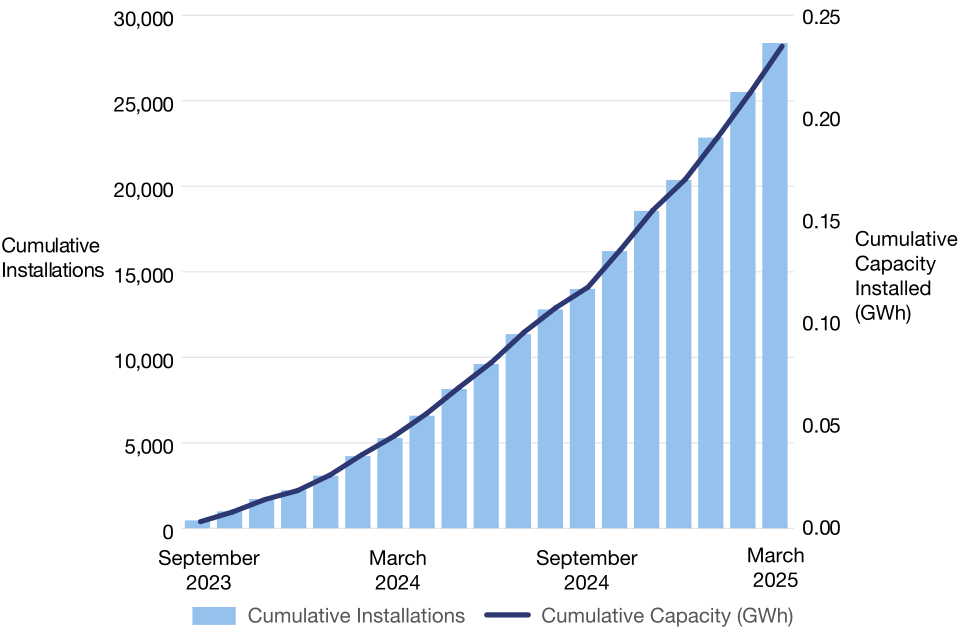
Description of Figure 9: A bar and line chart showing UK deployment of MCS certified Home Battery Installations between September 2023 and March 2025, in number of installations and the cumulative capacity (in gigawatts) of those installations. In March 2025, a cumulative total of more than 28 000 installations was providing around 0.24 gigawatt hours of generation capacity, rising from less than 1000 installations in September 2023.
Smart technology and a digitalised energy system will further empower consumers. Smart meters, smart appliances and time-of-use tariffs will enable households to optimise their energy use in real time, reducing their bills by using energy when it is cheaper during low-demand periods. Many smart meters are also used to record the export of electricity, for example from solar PV and home batteries, at times of high demand.
This transformation is already underway. At the end of September 2025, over 40 million smart and advanced meters were in homes and small businesses across Great Britain, and 70% of all energy meters are now smart or advanced.[footnote 38] Government is consulting on proposals to lay secondary legislation, intended to come into effect in 2027, requiring that heat pumps and electric heating appliances in scope have smart functionality, in line with regulations that already apply to electric vehicle chargers.
For those on heat networks, this flexibility will be automatically included in the service they receive, requiring no additional action by consumers. Through their ability to generate heat more efficiently, and to operate flexibly through fuel-switching and thermal storage, heat networks are a vital part of taking a more efficient, whole-system approach to heat.
Case study: A home fit for the future
Richard and Margaret, a retired couple living in Mickleover, Derby, moved into their new home in 2020. Despite its existing energy efficiency, they were determined to go further. Motivated by both environmental concerns and rising living costs, they chose to invest in sustainable upgrades that would reduce their monthly outgoings and future-proof their property.
I have an obligation to my grandchildren to reduce my carbon emissions,
Richard explained, highlighting the personal values driving their decisions.
In 2021, they installed solar panels and a battery system, enabling them to generate, store and export electricity.
Your savings can disappear when you spend them on things that don’t add value to your house … we needed to reduce our monthly outgoings,
Richard noted.
In 2025, they took advantage of the BUS to install an air source heat pump. Despite initial concerns about affordability and installation logistics, the process was smooth. “The entire installation process was excellent. I was kept informed every step of the way and all my queries were dealt with swiftly,” said Richard, praising the professionalism of the installation team.
Now living fully electric, the couple enjoy a low-maintenance system that runs itself. “I don’t need to do anything!” Richard remarked, noting the ease of use and the satisfaction of seeing credit on his energy bill from solar exports.
With significant savings thanks to being able to disconnect from gas, the couple are confident in the long-term benefits of switching to a heat pump, with solar and a battery. “It’s a no brainer in terms of an investment in my property,” he concluded. “If you want to reduce bills and be greener, it’s a great choice.”
Upgrading buildings for year-round performance
Fabric insulation measures, when installed with appropriate ventilation, remain a cornerstone of energy efficiency. They help reduce damp and mould, improve thermal comfort, lower the risk of underheating and reduce heating costs. By the end of 2024, an estimated 71% of British dwellings had cavity wall insulation and a further 10% had solid wall insulation, reflecting significant progress, but also highlighting the opportunity to go further.[footnote 39]
Many homes, particularly those at risk of fuel poverty, stand to benefit from low-cost fabric upgrades. Through the WH:LG and WH:SHF, the government is supporting improvements such as double glazing, draught proofing, heating controls, and wall and loft insulation – tailored to the specific needs of each building. Through applying minimum energy efficiency standards to the private and social rented sectors, over 1 million homes could receive fabric measures by 2030, to ensure homes are warmer, healthier and more affordable to heat. We will continue to deliver through the WH:LG and WH:SHF before integrating these schemes into a combined offer for all low-income households. We will say more about our plans for this by Spring 2026.
Some insulation measures, particularly solid wall insulation, have become less viable in recent years following supply chain cost increases. Alternative technologies—such as rooftop solar and home batteries—are likely to offer significantly more cost-effective routes to reducing energy bills and maintaining thermal comfort. The government will therefore prioritise fabric measures that deliver strong value for money and support the efficient operation of clean heating systems. Solid wall insulation has also been found to be much more likely to be non-compliant with relevant regulations than other measures, and can cause problems including damp and mould in homes if left unresolved. We have put in place stricter rules around consumer protection while we reform the overall regime, and we have announced that the Energy Company Obligation (ECO), which was the source of the majority of poor-quality installations, will be coming to an end. We will continue to work with industry to ensure that any poor-quality work attributed to ECO is put right, at no cost to the consumer.
The government is overhauling the system of standards and protections for energy efficiency and solar and battery installations. This will ensure that consumers have confidence in measures to keep their homes warm and comfortable. We will strengthen and simplify the system to ensure that installations are high quality, supporting our aim to deliver year-round comfort in buildings across the UK.
Building upgrades must deliver year-round comfort, not just winter warmth. As climate risks intensify, integrating adaptation into home upgrade policy is essential to mitigate overheating and other climate-related impacts. We are consulting on a new methodology for assessing building fabric performance within Energy Performance Certificates (EPCs), which we propose, for the first time can provide insight on overheating risk.[footnote 40]
Over the course of this Parliament, we will look to embed the most appropriate and cost-effective passive cooling measures into funding schemes targeting low-income households and social housing. We will also develop tailored consumer advice to support informed choices. In all homes, priority should be given to installing low-cost, low-regret interventions such as internal blinds, external shutters, reflective window films, and cooler building materials. These measures enhance thermal comfort during hot weather and, when paired with active cooling, help mitigate energy bill increases – particularly for vulnerable households and buildings most at risk.
We also support active cooling via air-to-air heat pumps as recently confirmed in the expansion of the BUS. These offer reversible operation for both heating and cooling – supporting low-carbon comfort in all seasons.
The government is exploring how to set stronger objectives for climate adaptation, to improve preparedness for the impacts of climate change. This will support an ambitious and impactful fourth National Adaptation Programme, due in 2028. These objectives will be based on an agreed planning assumption of a minimum climate scenario and timeframe. Defra has written to the Climate Change Committee to request guidance on a minimum climate scenario and timeframe. The Committee responded in October 2025. The government is considering this advice before setting the common planning assumption, against which objectives should be developed. Further research is underway to develop robust metrics and indicators for tracking work on building stock adaptation. This includes evaluating the impacts of home upgrade measures and assessing the cost-effectiveness of adaptation solutions to reduce overheating across the UK’s diverse housing landscape.
Adaptation
As global temperatures rise, our buildings will need to become more resilient to extreme temperatures to manage risks to health and well-being from overheating and heat stress. This could also result in a significant increase in active cooling demand.[footnote 41] Active cooling can be a valuable tool to fight overheating, but we will need to manage its impacts because it could increase pressure on the energy system and create new costs.[footnote 42] [footnote 43] This is one reason why investment in our electricity networks through the Clean Power Action Plan, and greater co-ordination with electricity networks on home upgrades, is so important.
Passive cooling measures, including solar shading, shutters, reflective window coatings and cooler building materials can significantly reduce energy demand and avoid unnecessary costs, including when combined with active cooling when needed.[footnote 44] This is because passive cooling measures reduce the internal temperature - creating a more comfortable internal environment – and help active cooling measures like fans, reversible air-to-air heat pumps or air conditioning to work more efficiently.[footnote 45]
Research shows that the buildings most vulnerable to overheating are urban, high-density flats, particularly high-rise flats[footnote 46],[footnote 47] and terraced houses in denser urban locations. As the density of housing reduces, so does vulnerability to overheating risk, with homes in less urban areas much less vulnerable. The research has identified a correlation between the groups most vulnerable to heat stress and those people more likely to live in the property types most at risk of overheating.[footnote 48]
Over the course of this Parliament, we will seek to incorporate passive cooling measures within our capital funded schemes focused on improving the homes of fuel poor consumers and social housing. We have also taken steps to allow consumers to benefit from clean heat technologies that can also provide active cooling functionality where necessary. We will prioritise higher impact, lower cost and lower regret measures to ensure the best value for money. We will also explore how to improve consumer advice and information so that those households who wish to act themselves can do so.
As a signatory to the Global Cooling Pledge, the UK is committed to pursuing sustainable cooling solutions to meet future cooling needs.[footnote 49] We will publish the UK Cooling Outlook in 2026 to consolidate evidence, identify opportunities and future evidence needs to pursue sustainable and efficient cooling and refrigeration.
Case study: London flat shading study[footnote 50]
A research-led monitoring project in Camden, London, investigated passive cooling strategies in a mid-rise, single-aspect apartment – typical of many UK homes most vulnerable to overheating. Recently converted from offices, the apartment lacked cross-ventilation and was highly prone to summer heat stress. During peak summer, bedroom temperatures reached 47.5°C when outdoor temperatures peaked at 28°C. Heat stress was also observed in cooler months.
The study assessed internal and external aluminium venetian blinds, high-performance fabric blinds, and a night-time window opening strategy.
External shading combined with night-time ventilation eliminated overheating risk entirely, reducing indoor temperatures by 11–18°C. Internal blinds alone reduced temperatures by 9–13°C. While external shading was most effective, internal shading still delivered nearly three-quarters of the cooling benefit.
This academic study demonstrated the real-world effectiveness of low-cost, scalable adaptation measures. Though the London study did not assess costs, a Manchester study estimated shading adaptations to cost £300–£2,500 depending on type and installation.[footnote 51]
These measures offer immediate thermal comfort improvements with minimal disruption, making them ideal for retrofitting existing the housing stock. Their versatility – available in various bespoke designs, materials, and configurations – allows tailoring to different building types and architectural styles.
Chapter 3: Our offer to consumers
Our consumer offer includes:
- Access to help with home upgrades for all households:
- Universal grant support for households to switch to clean heat through the BUS, with expanded choice over the range of technologies available
- New low- and zero-interest consumer loans, to help more households meet the upfront costs of improving their homes
- Tailored home upgrade packages for low-income households, including solar, batteries, suitable insulation and clean heat, which could save households hundreds of pounds a year on their energy bills
- Taking an average £150 of costs off people’s energy bills from April 2026 to make electricity cheaper for all
- Standing up for renters, with new energy efficiency standards across both the private and social rented sectors, that will drive down fuel poverty and ensure tenants benefit from cheaper bills and more comfortable homes
Our analysis, based on example housing archetypes, demonstrates how our consumer offer aims to save households hundreds of pounds on their annual energy bills. We project that:
- A social rented 2-bedroom semi-detached home which gets insulation and solar panels could save £350 on their annual energy bill through the WH:SHF.
- An owner-occupier home, with average gas and electricity consumption, could save £130 on their annual energy bill through upgrading to a heat pump under a scheme like the BUS and by adopting a time-of-use tariff.
- A privately rented 3-bedroom end-terraced home which gets insulation and solar panels could save £410 on their annual energy bill through the Private Rented Sector Minimum Energy Efficiency Standards.
- An owner-occupier 3-bedroom mid-terraced home which gets solar panels and a battery could save £450 on their annual energy bill through the Consumer Loans.
- A high use electric storage heated household will save £442 through our actions to make electricity cheaper.
- Radically simplifying the consumer journey so that the experience of a heat pump installation is comparable to that of a fossil fuel boiler.
We want all households to be able to upgrade their homes, regardless of circumstance. This means direct support for those in fuel poverty and those on low-incomes, universal grants and loans for homeowners, and new standards to protect renters, all underpinned by action to make electricity cheaper. This combination of grant, finance and regulatory support will build a mass market for upgrades and drive down costs over time.
Our £15 billion package, including an additional £1.5 billion announced at the Budget, is the largest ever public investment in home upgrades. The table below shows how we intend to allocate this funding:
Warm Homes Plan funding allocations (£ millions)
| 2025/26 | 2026/27 | 2027/28 | 2028/29 | 2029/30 | Total | |
|---|---|---|---|---|---|---|
| Low-income homes grants | 462 | 960 | 1,000 | 1,000 | 1,000 | 4,422 |
| Boiler Upgrade Scheme (BUS) | 295 | 400 | 600 | 683 | 709 | 2,687 |
| Heat Networks | 215 | 212 | 212 | 212 | 212 | 1,063 |
| Warm Homes Fund (WHF) | - | - | - | - | - | 5,300 |
| Of which: Consumer loan |
- | - | - | - | - | 2,000 |
| Of which: Low income |
- | - | - | - | - | 600 |
| Other programmes | - | - | - | - | - | 428 |
| Total funding, inc. Barnett Consequentials | - | - | - | - | - | 15,000 |
| Of which: for low income |
- | - | - | - | - | 5,022 |
Notes:
- The low-income homes line includes funding for the WH:SHF and WH:LG. There is additional funding for WH:SHF in 2026/27 taking the total to £754 million. Further detail about the deployment of low-income homes funding for all tenures in 2027/28 and beyond, as well as the devolution implications for the whole period will be set out in Spring 2026.
- The BUS line includes funding for the Heat Pump Ready grant (up to £30 million between 2026/27 and 2029/30).
- The Warm Homes Fund will use the £5 billion Financial Transactions allocated to the Warm Homes Plan at the Spending Review.
- The Consumer Loan funding comprises £300 million CDEL alongside £1700 million CDEL FT.
- The Other Programmes line includes underspend from elsewhere in DESNZ to support an orderly closure of ECO, funding for delivery transformation and the WHA, consumer advice and information, delivery of MEES, heat network zoning, and other smaller programmes including on rooftop solar.
- The Heat Pump Investment Accelerator Competition (HPIAC) will be supported by separate departmental funding within DESNZ.
- ‘Barnett consequentials’ refers to adjustments to the funding of devolved administrations in Scotland, Wales, and Northern Ireland, based on Warm Homes Plan spending in England.
Alongside the Budget and our record £15 billion investment in the Warm Homes Plan, we took the decision to bring supplier obligations to a close, as these did not represent strong value for money. The Great British Insulation Scheme (GBIS) will end as planned on 31 March 2026. DESNZ has consulted on extending ECO4 by 9 months, ending on 31 December 2026, without any increased delivery targets or impacts on consumer bills. This will allow additional time for remediation of non-compliant installations, to support an orderly closure of the scheme.
Universal support for upgrading homes
We are providing universal grant support for the switch to clean heat through the BUS. All eligible households in England and Wales can benefit and funding will expand each year out to 2029/30, totalling around £2.7 billion over the period. This could help around 400,000 more households and small businesses cut their bills by moving to clean heat. Since launching in 2022 the BUS has delivered over £485 million in grants and supported approximately 70,100 heat pump installations. The increase in heat pump grant values to £7,500 in 2023 led to a significant and sustained increase in demand. In 2025, up to the end of November, 28,418 BUS grants were paid. This is 37% more than the same period in 2024. October 2025 was the month with the highest number of grants paid since the BUS began. Satisfaction rates are very high with 90-95% of property owners satisfied with their BUS-funded heating system. Most commonly, property owners reported a decrease in their energy bills[footnote 52].
We are also expanding consumer choice about the range of technologies available. The BUS will continue to provide grants of £7,500 towards the upfront cost of installing hydronic heat pumps to eligible applicants in England and Wales. It will also provide new £2,500 grants towards the cost of installing air-to-air heat pumps and heat batteries for central heating. Air-to-air heat pumps can be particularly suitable in smaller properties, cheaper to install than a hydronic heat pump and able to provide cooling. Heat batteries can use time-of-use tariffs to reduce running costs, do not require outside space, and can be cheaper to install than heat pumps in some circumstances. The BUS provides £5,000 grants for biomass boilers for whole house heating and hot water, where strict rules require verified installation in a rural area and certification showing emissions are minimised. The scheme is also helping to encourage multi-technology systems that combine heat pumps with solar and batteries, which can result in very low running costs.
The success of the BUS is reflected in the progress of a heat pump market that is continuing to develop and mature. The heating industry is pivoting towards the installation of heat pumps, with the entry of innovative new players to the market and major appliance manufacturers offering incentives to installers for heat pump installations. We are supporting the UK manufacturing industry to cement its place as a major supplier of clean heat technologies domestically and internationally, with new funding for heat pump manufacturing investment, by tripling the Heat Pump Investment Accelerator Competition to £90 million. Similarly, some of our largest electricity suppliers are competing to offer the lowest-cost offering to heat pump households, with many now offering specialist discount electricity tariffs.
We also want to make it easier for households to make the switch. This means ensuring that each stage of the consumer journey is as seamless as possible, with consistently high-quality installations and consumer protections. To help, we are removing the need for a new Energy Performance Certificate under the BUS. Working with industry, our goal is to enable a standard heat pump installation replacing an old fossil fuel system to be completed within 3 days of the installer and consumer agreeing a final quote.
Our early steps are already paying off; the UK was one of the fastest growing heat pump markets in Europe in 2024. There were a record 84,000 sales in 2024[footnote 53] and an annual growth rate of 50%[footnote 54]. The market will continue to grow strongly with increased funding, cheaper electricity, and with the FHS and the FBS ensuring that new homes and buildings have low-carbon heating as standard. Overall, our aim is that by 2030, the UK will reach over 450,000 annual heat pump installations.
As the market for clean heat expands, the upfront cost of heat pump installation will fall significantly. Since the BUS was launched in 2022, there has already been an 11% real terms reduction in installation costs.[footnote 55] Our landmark investment of £15 billion and long-term signals will help these costs to fall further, and we will keep the grant level and eligibility of BUS funding under review. The Heat Pump Investment Accelerator Competition will support UK-based manufacturing, including products tailored to UK markets, to help reduce the installed cost of heat pumps. The Clean Heat Market Mechanism (CHMM) will continue to provide the UK’s heating industry with the confidence and incentive to invest in innovation.
We have seen innovation in heat pump purchase options, with the growth of new low-cost loans and subscriptions. This includes some 0% finance offers, where the cost of the installation is spread out over time, green mortgages offering cashback to homeowners making improvements, and competition between installers to offer consumers the most affordable heat pump. We will continue to encourage the growth of innovative financial products that can be accessed alongside BUS funding, and work with industry and regulators to develop the market in subscription-type consumer offers.
However, more needs to be done to continue to lower the cost to consumers. We are challenging industry to find new ways to bring down costs and bring forward the next generation of products that will be quicker, cheaper and easier to install in more and more UK homes, and are expanding our innovation funding and committing to working with innovative companies to bring new products into our support schemes more quickly than before, to keep expanding consumer choice.
Alongside rising funding for the BUS, we will allocate up to £5 billion for a new Warm Homes Fund (WHF) to make investments in and loans to the home upgrade sector. We intend to use around £600 million of the facility to target low-income households.
As a first investment, working with the finance industry, we intend to allocate up to £1.7 billion of the facility to new low- and zero-interest consumer loans, to help more households meet the upfront costs of improving their homes. This funding would be made available to lenders who apply to participate in the scheme and be combined with up to £300 million of other government funding to lower the cost of loans for consumers. Our vision for low-interest and zero-interest consumer loans is to make a range of low-cost finance solutions available for homeowners. The scheme could be used to fund the installation of a single technology or package of measures. This includes solar panels and batteries, facilitating immediate electricity bill savings, and heat pump installations, combined with the BUS grant. We will work with the finance industry to develop a range of products suitable for different consumers and different technologies. For example, some people may wish to increase their mortgage whilst other people may wish to take out a separate loan. All products will be supported by government funding to significantly lower the cost of the loans for consumers.
We are aiming for the scheme to roll out in phases, expanding over time. With this significant new offer of support, homeowners across GB should be able to benefit from low-cost finance. We will work alongside the devolved administrations, mayoral authorities and others on how best to deliver this. We will set out further details of the scheme’s eligibility later this year. This approach would allow us to test different approaches and expand the scheme in response to demand. This could entail, for example, widening the range of measures available, potentially including the necessary upgrades to connect to a heat network; and exploring how tenants could benefit through landlords accessing the scheme. Learning from previous government programmes, as we further develop the proposed scheme we will prioritise making sure that the offer for consumers is straightforward and the scheme is simple to navigate. The scheme will also benefit from the robust consumer protection improvements being rolled out across the sector and detailed below. Funding for this scheme is subject to further approval processes and engagement with the sector.
We will launch a Call for Evidence early in 2026 to identify where else in the market the WHF can deliver the greatest impact, for example in supporting private and social landlords, investors or supply chains, alongside homeowners. We will also gather information on which financial mechanisms could be most effective. For example, we are keen to consider whether the facility could be used to support loans, equity investment, subscription or ‘energy as a service’ models, or bulk purchasing. Finally, we will seek input on different delivery models for the WHF, including a potential role for public finance institutions such as Great British Energy or the National Wealth Fund, or other partners. We will engage with a wide range of private and public financial institutions, investors, local authorities, and community and industry stakeholders. The box below gives examples of ways the WHF could support the delivery of home upgrades.
Potential WHF investments
-
Loans or equity for local authorities and housing associations: Targeted finance could unlock large-scale programmes to upgrade homes with solar panels, batteries, heat pumps and insulation, particularly where private finance is less accessible. This could mirror existing government support for local authority housing delivery, enabling councils and housing providers to lead on decarbonisation at scale.
-
Bulk purchasing and aggregated procurement: Investment in collective buying schemes could reduce equipment and installation costs through economies of scale. This could build on long-standing examples such as Solar Together, which enabled thousands of households to access solar panels at lower cost, and could be extended to heat pumps, batteries, and insulation materials.
-
Developing the Energy-as-a-Service market: Support for subscription-based models, where a third-party provider installs, owns, and operates energy systems on behalf of the customer, could accelerate uptake. Consumers would benefit from predictable monthly fees and reduced upfront costs, while providers could scale innovative business models proven in markets such as the United States of America (USA) and Denmark.
-
Supply chain and skills investment: Equity or loan finance could strengthen UK manufacturing capacity for low-carbon technologies and support training programmes for installers. This would help address bottlenecks in supply and labour, ensuring the sector can meet rising demand.
-
Community energy and cooperative models: Investment could support local energy cooperatives or community-led home upgrade schemes, enabling groups of households to share infrastructure such as solar arrays or battery storage, and to benefit collectively from lower costs and improved resilience.
In addition to the proposed low-interest consumer loans scheme and the Warm Homes Fund, we will also establish a Strategic Partnership with the green home finance sector to help build and diversify the range of green financing options available from the broader market. This will allow government and lenders to agree a common set of goals and activities to deliver longer-term market-wide change, as finance is a vital long-term enabler of a self-sustaining mass market for home upgrades. The Partnership will investigate and prioritise further innovative financing models, tackle scaling challenges, and increase public awareness of the commercial financial tools that can support them to upgrade their homes.
For owner-occupiers, the Green Home Finance Accelerator has already successfully piloted innovative approaches to financing solar PV and home battery installations. For example, one consortium trialled the installation of over one hundred ‘solar-as-a-service’ solar PV and battery systems, across England and Wales, at no upfront cost to homeowners. Capital costs were funded through monthly subscription fees that are designed to be lower than previous energy bills.[footnote 56] The government welcomes the efforts being made across all tenure types, for example consumer offers being developed by the mayoral strategic authorities, to extend the solar revolution to as many rooftops as possible. For example, GMCA has a long experience of running group-buying schemes achieving large cost reductions for consumers. Building on lessons learned, GMCA is developing a revised offer working with solar PV installers on its Net Zero Housing Retrofit Framework agreement. These include group buying discounts of up to 15% (on a street/neighbourhood level), 2-way cash incentives for referrals and discounts on multi-technology purchases.[footnote 57]
The government is also considering how ongoing reform of the Consumer Credit Act 1974 (CCA) could help support growth and innovation in the green home finance market while maintaining robust consumer protection. Stakeholders have highlighted a number of concerns about how the Act may impact green finance products. The government published its Phase 1 consultation, which identified green finance as an important cross-cutting theme, on 19 May 2025, and will set out its position on CCA reform in due course.[footnote 58] The government will continue to engage with the green finance sector, including through the Strategic Partnership, to consider their views throughout the process.
The installation of certain energy-saving materials will also continue to qualify for the temporary zero rate of VAT until 31 March 2027.[footnote 59] Eligible technologies include air source, ground source and water source heat pumps, and associated ancillary measures such as hot water tanks. Also eligible are solar panels and electrical storage batteries in residential accommodation and charity buildings, as well as biomass boilers for whole house heating and hot water.
Support for low-income households
Low-income consumers will benefit from over £5 billion of investment in home upgrades by 2030. As shown in the table above, this comprises over £4.4 billion grant funding plus £600 million from the Warm Homes Fund which we intend to target at low-income households.
Low-income grant funding will be delivered initially through the government’s WH:SHF and WH:LG. Our commitment last year of £1.3 billion for the WH:SHF Wave 3 has been more than matched by the sector, meaning over £2.6 billion is currently in delivery to support social housing tenants reduce bills. Wave 3 of the programme will continue to support social housing tenants with upgrades, targeting properties with EPC ratings of D to G, with additional funding in 2026/27. In addition, the NWF has guaranteed up to £1.65 billion of lending for social housing upgrades.[footnote 60]
From 2027/28 onwards, we intend to integrate the WH:SHF and the WH:LG into a single low-income capital scheme which will shift toward area-based delivery, learning the lessons from previous schemes. Planning and delivering at the local level also means taking a more deliberate approach to how home upgrades align with the wider energy network. We aim to build on the experience of local authorities and other partners, whilst aligning with network needs and capacity. This means looking at how we can best utilise DNOs’ position to coordinate delivery with local authorities and align with delivery of Regional Energy Strategy Plans (RESPS), Local Area Energy Plans (LAEPS), and other forms of energy planning where they exist. A joined-up systems approach will be more targeted and deliverable and develop more mature approaches to delivering at scale, supporting progress towards fuel poverty and emissions reduction goals. We will say more about the evolution of low-income schemes in Spring 2026.
Our low-income schemes will support a range of measures, in particular solar PV, batteries, cost effective insulation where necessary, and smart controls. As well as heat pumps for individual homes, support also extends to heat pumps with shared ground loops. These can be an option for buildings with limited space for individual air source heat pumps.
Case study: Warmth, health, and savings: Upgrades to Anita’s home
Anita, a 68-year-old retired resident in Grimsby, has lived in her home for over 55 years. As part of Lincolnshire Housing Partnership’s and DESNZ funded Social Housing Decarbonisation Fund (SHDF) Wave 2.1 project, her property received external wall insulation, new windows, and improved ventilation.
Before the upgrades, Anita described her home as “like an ice box,” with condensation streaming down the windows and black mould on the walls. She recalled needing “2 quilts on and everything in my bedroom” during winter due to the cold, which worsened her asthma.
After the upgrade, Anita noticed a dramatic improvement in warmth and her physical health: “Now… I’m warm in bed at night,” she said, adding that her windows are no longer wet in the mornings and she only needs one quilt. Crucially, it’s also reduced Anita’s bills: “the electric hasn’t gone up at all. In fact, it’s gone down”.
Friends and family were impressed by the upgrades, with Anita sharing, “They are all so jealous – they wish they had it done before!” She now encourages others to take up the opportunity: “Definitely have it done… It’s not just for show. There’s a reason for it.” Reflecting on the wider impact of her upgrades on the environment, she added, “It’s not so much for me, but for the future –for them.”
Case study: Deborah’s home upgrade story
Deborah, 55 lives in Broadland, Norfolk. Her home was upgraded using DESNZ funding, delivered by Broadland District Council and Saffron Housing Trust. The work included an air source heat pump, loft insulation, and external wall insulation, replacing costly and inefficient electric storage heaters.
Deborah moved into the property knowing the upgrades were planned: “If they weren’t, I probably wouldn’t have taken the property…”
The new heating system has made a big difference. “It’s so easy – you just leave it on. I’ve had no problems,” she said. “It’s warm in here, but the radiators… they kick in when needed and go off again.” She added, “I’m a light sleeper and it [the sound of the system working] doesn’t wake me up – it’s a really nice system and financially better.”
Deborah’s energy bills have dropped from £400 a month to around £150 a month, even with added appliances and constant hot water. “I feel blessed. I’m on a small income and live by myself, so every penny matters.” She supports greener living and encourages others to embrace energy upgrades: “There are so many advantages… it’s instant, cost-saving, and better for the carbon footprint. It’s all positive.”
Ministry of Defence: The Defence Housing Strategy
In parallel to the Warm Homes Plan, the Ministry of Defence has published a new Defence Housing Strategy. This is the biggest change to Defence housing in half a century. It charts a course to upgrade the military’s ageing and inefficient housing stock to provide warmer homes and lower bills for service personnel and their families.
Around half of the 47,000 military family homes have an EPC rating of D or below. Many were built in the 1950s and 1960s and are inefficient and expensive to run. A legacy of years of neglect and underfunding to improve and update the estate has meant that too many service families are now living in substandard homes.
The Defence Housing Strategy builds on the Defence Secretary’s announcement in January 2025 outlining the landmark buy-back of the military family estate to return these homes to the public sector.
The Strategic Defence Review allocated an additional £1.5 billion to improve the military housing offer which will be used to start improving insulation and upgrading homes to low-carbon heat sources to give families greater control over their energy usage to drive down bills.
In October 2025 Great British Energy extended the solar scheme to include the Ministry of Defence, with funding announced which will see technologies such as solar panels and micro-wind turbines deployed across a range of military sites, including remote training ground and equipment stations, allowing energy bill savings to be redirected towards vital defence spending.
DESNZ and MoD will continue to work together on our shared agenda to upgrade and improve the country’s housing stock, delivering warmer, more efficient and cheaper-to-run homes for all.
Standing up for renters
Households in the Private Rented Sector (PRS) are the most likely of all tenures to live in fuel poverty. There are approximately 4.7 million PRS households across England,[footnote 61] and private renters make up 36.3% of the fuel poor population.[footnote 62] Most private renters are subject to landlord decisions on energy efficiency measures, and the tenure has the lowest average EPC rating compared to social housing and owner-occupied housing. For tenants in substandard accommodation, the impacts can be severe. Research in 2023 from Citizens Advice[footnote 63] found that more than 1.6 million children were living in privately rented accommodation in cold, damp or mouldy homes, risking health problems. Although the 4.1 million households in England in the Social Rented Sector (SRS) are more likely to live in a home with an EPC of C or above,[footnote 64] they also have lower median incomes and are more likely to be in fuel poverty relative to the overall housing stock.[footnote 65]
We are standing up for renters by setting new energy efficiency standards across both the PRS and SRS[footnote 66] to ensure that tenants benefit from cheaper bills and more comfortable homes. As part of the private rented sector enhancements, landlords will need to upgrade their properties to meet EPC Band C across 2 metrics by October 2030, unless their property has a valid exemption. We anticipate that this will lift hundreds of thousands of households out of fuel poverty by 2030.
These proposals include reasonable exemptions. Landlords will be able to choose between the smart or heat metrics, to choose what will work best for their property, and the spending cap will be limited to £10,000, with an average predicted cost of around half of that. Properties which will meet EPC C before October 2029 will be considered compliant with the regulations until that EPC expires, even after new EPCs are introduced. We are also introducing a low-value property exemption, which will lower the spending cap where £10,000 would represent 10% or more of a property’s value.
We are also consulting on the band boundaries for new Energy Performance Certificates in England and Wales, giving greater clarity on the sorts of upgrades that renters can expect to see. The proposals include fabric, heating and energy systems measures, such as solar PV and home batteries and smart technologies.
A range of financing options will continue to be available to landlords to ensure homes are compliant with new regulations. BUS grants will remain available to landlords and will be helpful in achieving EPC Band C on the standard set against the heating system metric. Personal investments can be eligible as an allowable expense and can be tax deductible, further enhancing the commercial case for landlords to improve their properties. We are also announcing that landlords can start upgrading homes immediately as improvements made from October 2025 will count towards the property’s cost cap in 2030, and EPCs commissioned in their current format will count towards compliance until they expire.
We have consulted on introducing MEES at EPC C or equivalent to the social rented sector for the first time. This is especially important to the 2030 fuel poverty target and social housing residents being able to afford to heat their homes. This regulation combined with the WH:SHF will see further improvements for millions of social housing residents and increase certainty so that providers can plan and invest in their current stock, and in building new homes.
Successful implementation of MEES in the social rented sector would lead to warmer homes less prone to damp and mould, with associated health benefits. These new standards are part of wider reforms of the SRS, with the Decent Homes Standard (DHS) and Awaab’s Law aiming to ensure all social tenants have safe, warm and decent homes. We are committed to implementing Awaab’s Law and the DHS into the PRS. We have consulted on the updated DHS between 2 July and 12 September 2025, and proposed that it is brought into force for the PRS in either 2035 or 2037. We will consult on timescales for implementing Awaab’s Law to the PRS in due course.
Case study: A pioneering rooftop solar project in Hackney
Hackney Council, through its energy services arm Hackney Light and Power, has launched a pioneering rooftop solar project to deliver cleaner, cheaper energy directly to council tenants. In partnership with Emergent Energy, the pilot involves installing 4,000 solar panels across 27 apartment blocks, generating 1 megawatt of electricity – enough to meet up to 20% of the blocks’ energy needs. Up to 750 households can now benefit from discounted electricity bills, with savings of up to 15% compared to market rates.
Funded by nearly £2 million of council investment, after initial backing from the Greater London Assembly (GLA), the goal of the project is to be self-financing, with costs recovered through electricity sales to residents who sign up and exports. This is achieved using an innovative microgrid arrangement to supply solar energy directly to individual flats, which was developed by Emergent with support from Ofgem.
The scheme aims to reduce carbon emissions, tackle fuel poverty, boost EPC ratings and create local green jobs, while demonstrating a scalable model for clean energy in social housing.
Emergent Energy believes the model could be scaled across 5.4 million flats across England and Wales – including 2 million social housing units – potentially generating 6.75GW of solar power and unlocking £13.5 billion in clean energy investment.
Building new homes fit for the future
This government is committed to building 1.5 million new homes to help tackle the housing crisis and ensure that working families have access to the decent, affordable housing they deserve. New homeowners have the right to expect that houses built today will be fit for the future. That is why we will publish the Future Homes and Buildings Standards consultation response, including the standards’ full specification, and we intend to lay the associated regulations in Q1 2026. We have confirmed that under these standards, new homes will have low-carbon heating, high levels of energy efficiency and solar panels by default. For buyers of new homes this will mean lower bills, control over their energy use, and greater comfort. This is good news for consumers, and it will drive demand and give market certainty for clean heat, solar and other energy efficiency technologies – supporting the industries needed to make warmer homes and buildings a reality and boosting our domestic clean heat manufacturing champions.
Making electricity cheaper
Our ambition is to ensure that clean heat is the most attractive and natural option for people when they come to upgrade or replace their heating system. That means driving down upfront costs, helping with financing and grants, and ensuring that everyone can reap the financial benefits with cheaper electricity and smart tariffs. Expanding our home upgrade policies to include generation and storage technologies is part of this, as we know that clean heat in combination with these technologies can offer huge savings. We are rolling out smart meters to ensure everyone can access money-saving flexible tariffs alongside their clean heat systems. We are pushing the industry to go further still on improving efficiency of systems. And most importantly, we are taking action to make electricity cheaper.
At the Budget, the government took action to cut the cost of living and announced plans to take an average £150 of costs off people’s energy bills from April 2026. This is on top of extending the £150 WHD to a further 2.7 million of the poorest households with almost 6 million households now eligible for the discount.
We removed some policy costs from electricity bills to help consumers and because we recognise that some energy system costs falling disproportionately on electricity bills has led to an unfair distortion in relative gas and electricity prices. This distortion tilted the playing field away from electrification and disguised the efficiency of clean heating technologies. This was a principled decision, to pay for more of the historic costs of our energy system transition that still fell on bills through public spending instead. This change makes the distribution of costs fairer – including for those with traditional forms of electric heating – and supports households in adopting clean heating solutions. Ofgem are also reviewing cost recovery more widely in their Energy System Cost Allocation and Recovery Review.
The Budget took unprecedented steps to reduce electricity costs in a way that drove down costs for all households. Households with electric heating benefited even further. An average heat pump user can expect to see savings of over £200 from April and a high use electric storage heated household will save £442.[footnote 67]
Driving efficiency and lowering bills
- While heat pumps are already around 3 times more efficient than gas boilers, we are confident the UK supply chain can go much further. This is particularly the case as existing technology and installations are adapted to the UK housing stock, and market participants specialise. A range of further actions will help drive up efficiency and further reduce running costs:
- a. The government has consulted already on raising product standards for space heating. Proposals include rescaling the energy efficiency label for space heating equipment, amending the existing energy label to an A-G labelling scale that will drive further innovation in heat pump efficiency, helping to reduce bills.
- b. The Heat Training Grant and Apprenticeship Schemes are increasing access to installer training, ensuring that more people can easily access well trained installers with the right skills.
- c. The Energy Smart Appliance (ESA) Regulations will be introduced to Parliament in early 2026 and will require new heat pumps and certain other electric heating appliances to be sold with smart functionality, which customers can choose to activate to access cheaper deals. And we have recently published a consultation to help increase awareness of consumer-led flexibility and its benefits.[footnote 68]
- We want to ensure that everyone can reap the benefits of smart meters, including the savings offered by flexible tariffs. We are working with Ofgem who have consulted on proposals to introduce Guaranteed Standards of Performance relating to smart metering, including where appointments are not offered within 6 weeks of request in all parts of Great Britain. These would see consumers receive automatic compensation where certain standards are not met. Additionally, we will explore opportunities to ensure smart meters are encouraged alongside low-carbon technologies, to maximise the benefits seen from the moment of installation. Advice on the benefits of smart meters is provided to recipients of home upgrade measures, and low-carbon technology grants and we will continue to explore further opportunities to maximise the co-benefits of smart meters.
Improving the consumer journey
Straightforward installation
Our ambition is to radically simplify the consumer journey so that a heat pump installation is comparable to that for fossil fuel boilers. Working with industry, our goal is to enable standard heat pump installations which are replacing old fossil fuel systems to be completed within 3 days of the installer and consumer agreeing a final quote. For more complex properties requiring grid connection upgrade works, or with unusually large heat loss, we will aim to make processes considerably simpler and more predictable.
This government is proactively tackling planning and other regulatory frameworks to support investment and growth, and this applies to the installation of clean heat and other technologies to cut bills in the home. We have already taken action to amend and remove planning rules and will continue to explore further changes to lower people’s energy bills.
Research shows that 22% of owner-occupiers who were unlikely to install low-carbon heating cite the hassle as an important reason.[footnote 69] Many consumers are worried about changes they would need to make to their home, and the lack of available advice and inconsistent information can make it harder for consumers to understand what to expect from an install.
We will invest up to a further £30 million in the Heat Pump Ready programme, on top of the £42 million invested so far. Since its inception, the Heat Pump Ready Progamme has laid the groundwork for significant advances in heat pump innovation through developing smaller and more efficient heat pump appliances, streamlining the consumer journey and increasing affordability and consumer satisfaction. This additional funding will enable us to go further to help bring down costs and installation time.[footnote 70] Innovations in technology and industry practice are bringing down the timescale of a heat pump installation, but we want to do more to support the commercialisation of these innovative products and bring them to the market as soon as possible. Innovations such as the use of quality preliminary survey and design tools can help to simplify the survey and design stages, whilst minimising the number of changes required in a property (for example, by ensuring compatibility with existing micro-bore pipework) and reducing the size and footprint of hot water storage and heat emitters.
We are also taking action to increase the number of installers available so that building owners can quickly find the right one. More information on our approach to increasing the clean heating and retrofit workforce can be found in Chapter 6. We will continue to work closely with industry to agree collective action to reduce or remove remaining barriers to smooth, quick heat pump installations.
We will remove the need to obtain a new Energy Performance Certificate under the BUS, as set out in our recent consultation response.[footnote 71] This will take time and cost out of installing a heat pump under the BUS for households that would otherwise have to obtain or update an EPC.
The government’s ambition is that consumers can install a heat pump in almost all houses without needing to submit a planning application and that the small minority that do (such as listed buildings) can navigate the process easily and quickly. The permitted development right for air source heat pumps in England was updated in May 2025 to provide more flexibility for appropriate installations, meaning fewer households will need to submit a planning application. In 2026, the Ministry for Homes, Communities and Local Government (MHCLG) and DESNZ will consult on further permitted development rights for air source heat pumps, building on the changes that came into force in May 2025. And we will continue to explore how planning policy and guidance can clarify expectations where the submission of a planning application may still be required.
Changes to the 1 metre rule
The government amended the permitted development right for air source heat pumps in England to provide more flexibility, allowing more households, particularly those with less outdoor space, to install an air source heat pump without needing to submit a planning application. The changes enable heat pumps to be installed within 1m of the property boundary, increase the size limit of the heat pump from 0.6m3 to 1.5m3 for houses, double the number of heat pumps permitted (from 1 to 2) for detached properties, and allow the installation of air source heat pumps that can be used for cooling as well as heating, meaning air-to-air heat pumps can also benefit from the permitted development right.
These changes were informed by an independent review of air source heat pump noise emissions, permitted development guidance and regulations (which indicated that heat pumps are generally quiet and noise complaints are rare) and through public consultation. Since updates to the air source heat pump permitted development right in England, some heat pump installers have seen a significant reduction in the proportion of customers needing to submit a planning application, with Aira reporting a reduction from 30-40% to just 5-10%.
An important element in the permitted development regime is noise, and the heat pump industry has taken significant strides in recent years to reduce noise emissions from heat pumps. They are now generally very quiet and have negligible sound levels similar to a fridge but outside the home. All air source heat pumps installed under a permitted development right must comply with the MCS sound calculation and noise limit (MCS 020 a).[footnote 72] However, there is some evidence that the sound calculation may be overly conservative and overstates the estimated sound level of the heat pump. We welcome Nesta and The MCS Foundation’s commissioning of research to explore this further. To ensure that the sound calculation is as accurate as possible, and that households are not having to unnecessarily submit a planning application, as research and evidence becomes available, MCS will review and update the sound calculation accordingly.
The government is currently consulting on a new National Planning Policy Framework (NPPF) that includes clearer, ‘rules based’ policies for decision-making and plan-making, designed to make planning policy easier to use and underpin the delivery of faster and simpler local plans. The consultation includes policies on securing clean energy.
Heritage and traditional buildings
The UK has the oldest housing stock in Europe, and traditionally constructed buildings (those built before 1919) account for 21% of domestic and 32% of non-domestic buildings in England.[footnote 73]
Retrofitting our historic buildings will present challenges. Specific skills can be needed, and upgrades may need to be adapted to suit the aesthetic to the property, as well as additional permissions in some cases.[footnote 74] Historic England has recently provided guidance on the kinds of retrofit interventions that may be appropriate for traditional buildings and on the planning permissions that may be needed in each case.[footnote 75]
However, such buildings are not as difficult to decarbonise as sometimes perceived. The majority of homes in this category can be retrofitted without any major issues. For example, 14% of BUS applicants lived in homes built pre 1900, and 6% were in homes built from 1900-1929 (BUS Evaluation 2025 Interim Report, published alongside this plan). The Electrification of Heat Demonstration project also showed that heat pumps can work effectively in UK homes from all historic periods.[footnote 76]
Historic England advocates taking a whole-building approach which is a systematic process for devising and implementing suitable, coordinated, balanced, and well-integrated solutions.[footnote 77] This approach is based on understanding the building and how it performs, the historic significance of the building, including its setting, and prioritising interventions that are proportionate, effective and sustainable.
Historic England has produced a range of technical advice and guidance on climate change mitigation and adaptation for resilience, including energy efficiency, retrofit, and Net Zero[footnote 78]
Most flats and some houses in England are leasehold,[footnote 79] and in some cases, it will be possible for leaseholders to install clean heating systems within the terms of their lease. Installations have been possible in legally complex buildings, such as those with a mix of freehold and leasehold properties and multi-tenure buildings. However, many leaseholders still must gain permission from the freeholder, and sometimes other leaseholders, while other leases mean responsibility will fall to the freeholder to arrange installation.
The Leasehold and Freehold Reform Act 2024 makes it easier and cheaper for more leaseholders to buy their freehold or take over the management of their building.[footnote 80] We recognise leasehold ownership introduces an additional layer of complexity and over this Parliament we will work with relevant organisations on how to remove these remaining barriers to the installation of clean heat and other measures.
Case study: Decarbonising Oxford Trinity College’s Jackson Building
In 2024, Trinity College Oxford launched a major decarbonisation project for the Grade II listed Jackson Building, a 57-bed student accommodation block dating from the 1870s. Previously heated by an old gas boiler, the building consumed around 425,000 kWh/year – equal to 87 tonnes of CO₂ – making it the estate’s largest gas user.
With support from Oxford City Council and funding from DESNZ, the college implemented fabric upgrades to enable a switch to ground source heat pumps. Key improvements which included a new central heating system, secondary glazing, and loft insulation, were completed in February 2025. The heat pumps fit neatly into the existing boiler room, and the restored gardens housing 22 170-metre boreholes and associated pipework “look better than ever,” preserving the building’s original character.
The Trinity College Jackson Building now serves as a model for how complex, historic institutions can adopt sustainable practices without compromising architectural heritage.
Case study: Net Zero terraced streets, Rossendale[footnote 81]
Rossendale Valley Energy (RVE) is pioneering a community-led approach to decarbonising traditional terraced homes in Rossendale, Lancashire. The Net Zero Terrace Streets initiative is designed to tackle energy affordability and carbon emissions in older housing stock, with a replicable model that can be scaled across similar communities.
In Rossendale, around 40% of homes are traditional stone terraces – compact ‘two up, two down’ properties with limited outdoor space. These homes, often opening directly onto the street with small backyards connected by shared alleyways, present unique challenges for retrofit, particularly for installing air source heat pumps (ASHPs). Heating costs in these properties are 18% higher than the average for homes in England and Wales, and fuel poverty affects 15.3% of households – above the national average of 13.4%. With around 30% of Lancashire’s terraced homes privately rented, any solution must be multi-tenure.
To address these issues, RVE is piloting a 3-home demonstrator to refine a street-by-street whole-system retrofit model that is open to all tenures. The approach integrates improvements to building fabric, shared ground source heat pump infrastructure, smart hot water tanks, rooftop solar panels, and battery storage. By linking homes through a shared ground loop and installing compact internal heat pumps, the system overcomes space constraints while delivering efficient heating.
Community based smart energy systems allow households to manage their energy use in line with cheaper tariffs, while rooftop solar helps reduce costs. Local energy clubs are being established to run the smart system and community-owned renewable energy projects, with any surplus reinvested into the community to address the ‘spark gap’. Importantly, the model is designed to be fair, affordable and accessible, with no upfront costs for residents. Instead, costs are recovered through a standing charge or subscription, managed by a non-profit structure.
Early results show the potential to reduce energy bills and peak electricity demand by up to 80% compared to electric boilers. The project has already gained national recognition, winning the Energy Innovation Award in 2024 and receiving further accolades in 2025 for its low-carbon breakthroughs.
Net Zero Terrace Streets demonstrates how targeted, community-based innovation can unlock decarbonisation in challenging housing types – delivering warmer homes, lower bills, and a fairer energy future.
Network connections
Network companies must be ready to support rapid, low-hassle installation of new technologies. Most homes can install a heat pump without needing an upgrade to their electricity network connection. However, heat pump installations can be delayed and this delay can range from a few days to a few months, waiting for connection approval from DNOs. Where upgrades are required to the home’s connection, the installation can be delayed then further ranging from a couple of weeks to months.
The department is working with Ofgem, DNOs, manufacturers, installers and the wider industry to improve the connection process for heat pumps. For typical homes that do not require DNO upgrades, our ambition is that 80% of applications will be automatically approved or approved within 24 hours where a manual assessment is needed. For homes needing upgrades, we want to develop a system where smaller upgrades (for example, fuse changes and/or cut outs) are completed within 5 days and even sooner in the case of a distressed purchase, such as in winter or for vulnerable households. Where upgrades are more straightforward (like fuse changes), the simplest solution for households is for heat pump installers to make the upgrades themselves. We strongly support industry’s efforts to make it easier for heat pump installers to connect heat pumps to the network without DNO intervention, including implementing changes that innovation projects have shown can accelerate heat pump installations.[footnote 82] For more complex cases such as unlooping and cable upgrades, we want to radically bring down connection times. This will involve DNOs, local authorities, government and residents addressing barriers together. We are working closely with Ofgem on its end-to-end review of connections[footnote 83] and the upcoming price control,[footnote 84] both of which will include measures to improve connection service and timelines for heat pump customers.
We are working together with DNOs and Ofgem to accelerate proactive approaches to unlooping properties which share electricity supply cables with their neighbours (an estimated 14% of UK homes). Homes on looped connections have lower available capacity, which can prevent them from safely installing heat pumps or other low-carbon technologies. Our ambition is for the DNOs to expand upon and implement existing trials of proactive unlooping now and to follow the example of those that are already running successful programmes. For the next electricity distribution price control period (ED3) from 2028 to 2033, we expect all DNOs to have ambitious, evidence-based programmes of proactive unlooping, ready for large-scale rollout and effectively targeted at properties that will electrify sooner.
We are working with Ofgem to improve data on connection times and upgrade delivery. We will explore whether Ofgem’s existing annual reporting mechanisms, such as the Regulatory Reporting Pack (RRP), can be enhanced to capture more granular, consistent data. This will help benchmark best practices and guide future improvements.
Chapter 4: How we will deliver at scale
To deliver a major shift in getting upgrades to consumers, we are:
- Creating a new Warm Homes Agency to lead home upgrades
- Planning for strategic, area-based coordination to ensure we make the most of opportunities and that our grid keeps pace with the rate of change required
- Simplifying the consumer protection system for consumer and installers and ensuring it commands public confidence
- Providing impartial advice and clear information on home upgrades to consumers in partnership with the private sector and third party advice sector
The Warm Homes Agency
The UK’s buildings decarbonisation and energy efficiency landscape is complex. It has developed over several decades, shaped by a series of different government policies and schemes, and delivered by a range of administrative bodies. Too often, we have seen inefficient schemes, fragmented and piecemeal oversight and confusion for families who want to upgrade their homes.
The scale and pace of change required now needs a more coordinated and effective delivery model. We need to grow the private market and encourage innovation, while also delivering at greater scale and co-ordinating more actors at a local level, including networks. This government recognises that to unlock demand, stimulate investment, and accelerate delivery, we must also reform the consumer protection system and strengthen consumer support and advice.
That is why we will establish a Warm Homes Agency (WHA) – a dedicated public body to support the delivery of the Warm Homes Plan, and guide consumers through the transition.
Subject to agreement with the devolved governments, the WHA will work at both a national across the UK and at a local level. The Warm Homes Agency will consolidate our existing delivery landscape. Salix (an existing non-departmental public body) will close and its functions, alongside some from within DESNZ and relevant roles in Ofgem, will be brought together into a single executive agency. In this way it will take on delivery of some of our existing schemes as well as creating new roles and functions, and there will be no net increase in the number of arm’s length bodies (ALBs), in line with the government’s overall objective to rationalise delivery bodies and bring control closer to government.
We are overhauling the regulatory system to ensure each organisation is focused on its core mission and to ensure the system is stronger and much more effective. Government is reviewing the scope and remit of Ofgem, who currently administer several buildings decarbonisation schemes. The WHA will provide a vehicle to drive operational efficiencies and better outcomes for consumers and taxpayers.
The Agency will have a critical role in place-based delivery. Many strategic and local authorities are already pursuing bold agendas to drive forward the retrofit and decarbonisation of their building stock, delivering warm and affordable homes for communities. The WHA will seek to build on this good practice in local delivery, showcasing excellence and enabling up skilling across all areas. It will play a pivotal role in supporting local partnerships, convening, facilitating and supporting where necessary to build capacity in local government, to enable delivery to be successfully planned and led at a local level.
The Agency will support consumers through their home decarbonisation journey. It will seek to simplify and streamline the consumer experience whilst providing a trusted source of advice and support. It will play a pivotal role in improving consumer awareness and engagement, building on existing government campaigns and advice services. It will deliver an enhanced digital-first advice and information platform, acting as a national spine for consumer advice. This service will provide impartial, high-quality information on energy efficiency and clean heating measures (ensuring consumers benefit from innovation), funding eligibility, trusted installers, and options available to support retrofit changes. It will support all tenure types and consumers on their home upgrade journey. DESNZ is committed to collaborating with existing providers of statutory consumer advice to ensure that the development of the Agency supports a seamless and cohesive experience for consumers.
In addition to supporting the consumer, the WHA, alongside government, will play a critical role in helping businesses and their workers play their part in delivering our goals. This will help ensure workers and firms in the energy efficiency and clean heating supply chain thrive as the country switches to low-carbon heating. The new Agency will work with installers, manufacturers, retrofit companies and Trade Unions to help existing heating engineers transition, providing information and support on training requirements, government initiatives (such as the Heat Training Grant) and how to access them, and analysing trends in market demand.
The Agency will learn from successful international examples of buildings decarbonisation and strengthen the UK’s position as a global leader in the transition to net zero. Many European countries have adopted more centralised, coordinated delivery models to support both householders and retrofit companies and their workers – via an effective public-private partnership model. Countries like Ireland, which established the Sustainable Energy Authority of Ireland and published a national retrofit plan in 2022, are already making remarkable strides in driving heat pump uptake and strengthening the supply chain. We will learn from international experience and adopt the most effective ideas to accelerate our own progress.
A strong data and intelligence function will underpin the WHA’s operations. The agency will, in time, harness artificial intelligence and advanced analytics to assess market trends, identify delivery bottlenecks, and optimise scheme performance. Potential opportunities could include: (i) pooling data sets such as EPC ratings, property types, fuel poverty indicators and thermal imaging to identify homes or local areas most in need of retrofit; (ii) using data from across the supply chain to understand delivery challenges and share best practice (iii) using historic data from all relevant schemes to identify fraud trends for use in risk-based compliance regimes.
The WHA will also work with partners to share relevant data, ensuring support and guidance reaches those who need it most and in the most impactful and cost-effective way. The WHA will use its data, analytics and position in the market to encourage and support innovation in relevant technology and service models – helping to identify gaps and opportunities that could provide positive consumer benefits.
DESNZ will continue to work with the Department for Health and Social Care on implementing the Warm Homes Plan, strengthening collaboration with local government and the NHS. The WHA, through its work delivering the Warm Homes Plan, will support wider government objectives to improve health and reduce health inequalities, by promoting delivery of decarbonisation schemes that will support vulnerable health groups.
We will further develop the specifications for the functions that the Agency will deliver, summarised above, during 2026. The scope and scaling of these functions will take account of what is required to meet the objectives of the Warm Homes Plan, the services that are already in place, and will be subject to normal approval processes. We look forward to working with key partners in this sector to ensure the Agency’s design and services build on lessons learned and can support the necessary step change in retrofit delivery rates; providing support and protection to consumers in line with our ambitions set out in this Warm Homes Plan.
Strategic area-based coordination
As electrification and the rollout of clean technologies across Great Britain accelerate, we need significant planning of, and investment in, our networks to ensure that they can keep pace. Solar and batteries will make it easier for people to use electricity more flexibly, when it is cheaper, and ease pressure on the network. Better co-ordination of network infrastructure upgrades and domestic electrification will make the transition to clean heat and other clean technologies smoother, while maximising benefits for the system as a whole and reducing costs.
DNOs will therefore need to work in close partnership with mayoral strategic authorities and local authorities, as well as other key regional stakeholders. This year, Ofgem intends to consult on approaches that could strengthen the role played by DNOs in enabling and delivering the transition. A strengthened role for DNOs could help ensure a planned, efficient rollout of electrified homes and associated network investments.
Delivering the transition to electrification will bring significant benefits to local areas across the country. Local authorities and mayoral strategic authorities, with their understanding of their housing stock, communities and local supply chains, will be the critical actors in planning a transition that delivers for their local areas. Many LAs have, or are developing, Net Zero targets and strategies, plans for local regeneration and skills, statutory responsibilities for improving health and health inequalities[footnote 85] and in some instances, local energy plans. Local government is also well placed to attract private sector investment that might not otherwise be obtained, thanks to their ability to coordinate public and private stakeholders, use local project and infrastructure knowledge, and support the development of local supply chains with new and upskilled jobs.
Beyond strategic authorities, local authorities, and DNOs, energy suppliers, housing associations, gas distribution network operators, community energy groups, and other local stakeholders will play an important role. Successful partnerships between these groups already exist. For example, Bristol Community Energy Network help households reduce energy consumption through engagement using thermal cameras, South East London Community Energy (SELCE) have set up energy cafes for homeowners to discuss the energy efficiency of their homes, and Carbon Copy in Greater Manchester help households design projects (such as installing a heat pump), procure contractors, oversee quality assurance and offer impartial and expert advice.
A strategic, area-based approach to planning and coordination of home upgrades could identify and deliver optimal solutions tailored to local energy and housing needs. It could unlock efficiencies and bring together Regional Energy Spatial Plans (RESPs), Local Area Energy Plans (LAEPs), targeted support for low-income households, and mapping future energy demand to identify grid upgrade requirements. In the longer term, this joined-up approach could support broader outcomes, including improved health, regeneration, and the local deployment of renewable energy through Great British Energy’s offer.
Partnership working will also support the implementation of heat network zoning in England, and the establishment of local Zone Coordination Bodies (ZCBs) will help to lay the groundwork for a more place-based approach to heat. Zoning gives local government greater certainty on where district heat networks will be the cheapest option in their area, and the tools to designate and drive these zones into delivery. In October 2024 we announced funding for 6 towns and cities to develop these areas as part of our work to prepare for heat network zoning[footnote 86] and 6 areas have subsequently launched procurement for delivery partners, with more to follow. We have already invested in Zoning Implementation Support in the Local Net Zero Hubs to help prepare them for the transition to heat network zoning.
Case study: Better Homes Leeds project[footnote 87]
Leeds City Council (LCC) is tackling one of its biggest climate challenges - housing emissions, which account for 27% of the city’s total. With a net zero ambition and a diverse housing stock of 360,000 homes (including 54,000 council-owned homes and 75,000 inefficient Victorian-era properties), LCC is pioneering a neighbourhood-scale retrofit approach.
Between 2016–2018, LCC retrofitted 180 homes in Holbeck using £4.5 million from multiple sources. The mixed-tenure area (70% private rental, 20% council, 10% owner-occupied) required deep community engagement. Landlords contributed 25% of costs, while residents paid 0 – 25% based on income. As a result of this, the energy efficiency of the homes was improved from an average EPC rating of band E/D to band C/B leading to savings in heating costs and improved comfort for residents. The success led to a second phase, retrofitting 150 more homes with over 90% uptake.
To scale city-wide, LCC estimates a £5.4 billion investment is needed – beyond public funding capacity. Holbeck’s success was driven by phased delivery, and a visible community presence. Now, LCC is zoning the city to prioritise retrofit areas using tenure, typology, and solar potential data. To scale up retrofit city-wide, LCC estimates a £5.4 billion investment will be needed, requiring a wide range of public and private funding sources.
Beyond emissions cuts, Leeds’ approach fosters social cohesion, affordable warmth and economic growth. As Cllr Rafique, Executive Member for Climate, Energy, Environment and Greenspaces, Leeds City Council notes: “This broad approach can be transformative and long lasting. Amongst feedback received from residents has been that “their home feels warmer now” and their house is “beautiful from the outside and inside””.
Case study: West Midlands Combined Authority’s Net Zero Neighbourhoods demonstrator programme
The West Midlands Combined Authority (WMCA), in collaboration with its 7 constituent local authorities and partners across the public, private, and academic sectors, is delivering a Net Zero Neighbourhoods demonstrator programme. This initiative trials a place-based approach to the energy transition, aiming to generate the data necessary to unlock private sector investment and drive regional clean growth.
The programme was developed by WMCA and expanded under the DESNZ Local Net Zero Accelerator (LNZA), which supports locally led green growth backed by private finance. With LNZA development funding and investment via the Buildings Retrofit Pilot, WMCA is developing 6 additional Net Zero Neighbourhoods. In phase one, the goal is to retrofit a minimum of 350 homes across pilot sites. Building on learnings from this phase–covering engagement, co-design and monitoring of holistic outcomes (including emissions and bill savings) – WMCA will look to scale its reach with support from private sector investment.
WMCA’s approach centres around 4 pillars: domestic retrofits, local clean energy generation, improved green spaces, and enhanced low-carbon and active travel options.
All interventions are co-designed with residents to ensure local needs shape decarbonisation efforts. By working collaboratively with local authorities and communities, WMCA aims to establish a blended finance model for retrofit delivery by 2028.
George Simms, Head of Net Zero Homes and Communities at WMCA, commented:
We believe a place-based approach is the most effective and equitable way of delivering a clean energy transition. When change is shaped around the needs of our communities, this generates a level of engagement that is essential for attracting the finance we need to build on public sector investment and create greater scale. Partnership working with our local authorities, third sector organisations, the private sector and communities can ensure that the benefits of the transition are seen where they are needed most.
DESNZ will therefore look at how we can best utilise DNOs position to work with local authorities, supported by the WHA, and align to delivery of RESPs, LAEPs and other forms of energy planning where they exist. The government will work closely with stakeolders, including industry, consumer groups, local government, DNOs, energy suppliers, Ofgem and other local partners to trial an approach where DNOs coordinate area-based delivery, in a way that complements their core business. This will incorporate lessons from past schemes, especially in relation to shortcomings in quality and consumer protection, as well as building on experience and best practices. We will set out more details in Spring 2026.
We will also provide more details in the Local Power Plan about how community energy groups and public sector organisations can support, and be supported to, deliver more renewable power generation. We will consider, for example, how Great British Energy and the Warm Homes Agency could work together, alongside local government, to deliver whole place-based solutions. Bringing other Public Finance Institutions, such as the NWF, together with commercial and private investors to scale up investment could help deliver solutions that work for local communities and speak to their needs.
Improving quality and consumer protection
High-quality installations and strong consumer protections are essential for consumers when they choose to upgrade homes. Work carried out in consumers’ homes should be done right first time, with clear installer accountability and easy access to redress in the rare cases where it does go wrong.
Done correctly, home upgrades are the best tool we have to fight fuel poverty and lower bills. Fortunately, the vast majority of installations of most clean energy technologies and wider home upgrades are completed to a good quality.
However, this is not always the case and in the case of the ECO4 supplier obligation programme, which has now been discontinued, unacceptably high levels of non-compliance were found in the installation of solid wall insulation in particular. The system of oversight for retrofit measures installed under supplier obligations which this government inherited have not met these standards, which is why we committed to a fundamental overhaul of the system. We have made important early steps towards strengthening the system, but we are clear that we must go further.
Without assurance that work undertaken in their home will be of high quality, with routes to redress for defective measures, consumers will not have the confidence to make upgrades to their homes.
In January 2025 the government announced it would review the system of standards, oversight and protections for energy efficiency and microgeneration installations (such as heat pumps, solar panels and batteries). Meanwhile, we are addressing the failure of external wall insulation installations under ECO4 and GBIS through a commitment to audit all homes, and support remediation where needed.
Our first priority is to deliver a system of consumer protections that is simple for consumers and installers to navigate. The existing system of protections is too complicated and relies on a large number of organisations, often with overlapping roles and responsibilities. These include scheme providers, certification bodies, consumer codes and competent person schemes.
This fragmented landscape is hard for consumers to understand and makes it more difficult for them to obtain redress when work is defective. Parts of the system have worked well – for example the MCS consumer outreach on the BUS consistently having a 95% consumer satisfaction rating. MCS reforms currently underway will see them take on clear responsibility for resolving any issues consumers face, whilst increasing oversight of and reducing red tape for installers. This will enable them to become even more effective in performing their consumer protection role.
The patchwork nature of the current system also places significant burdens on installers. It requires certification and registration with a range of quality assurance bodies, increasing administrative burden and cost, without always delivering the oversight and support to ensure installations are completed right first time.
The consumer protection system
All building work in England must comply with Building Regulations, which are the responsibility of local authority building control and the Building Safety Regulator (BSR). The devolved governments have responsibility for Building Regulations in their jurisdictions. Some oversight organisations within the system, including TrustMark and MCS, operate across different nations in the United Kingdom.
There are other standards and safeguards currently in place for home upgrades under government schemes:
-
For energy efficiency measures under DESNZ schemes, installers must be certified to Publicly Available Specification (PAS) 2030. Installations must be compliant with PAS 2035. Installers must also be TrustMark registered (or equivalent) and join a relevant certification body. Under the PAS 2035 process, the retrofit designer must ensure that all chosen products are fit for purpose and comply with Building Regulations. They do this using product standards certifications, manufacturer data sheets, or product markings.
-
For microgeneration installations under DESNZ schemes, installers must hold MCS certification (or equivalent for solar panel and battery installations). These installations must meet the relevant MCS installation standard. In addition MCS produces product standards for most microgeneration technologies (such as heat pumps or solar panels). Over 276,000 MCS certified products were installed in 2025. MCS installers must also be a member of a consumer code (although this will change as a consequence of MCS reforms).
Many retrofit installations are carried out by installers who are permitted to self-certify their work under a competent person scheme (CPS) to comply with the Building Regulations. CPS Operators are required to audit scheme registrants to ensure work is carried out to the correct standard.
| Retrofit (government scheme) | Retrofit (outside government scheme) | |
|---|---|---|
| Building Regulations | Legal requirement to comply with building regulations | Legal requirement to comply with building regulations |
| Installer to be MCS certified / TrustMark accredited | Required | Not required (but recommended) |
| Work to meet MCS standards / PAS 2030/2035 | Required | Not required (but recommended) |
| Competent Person Scheme (to allow installer to self-certify against Building Regulations) | Not required but many installations are self-certified in practice – the alternative is resource intensive for planning / building control in local authorities | Not required but many installations are self-certified in practice – the alternative is resource intensive for planning / building control in local authorities |
To simplify the system for consumers and installers, we will consult on options to reduce the number of certification bodies operating in the energy efficiency and microgeneration space. We know that competition between certification bodies causes confusion for customers, with consumers lacking insufficient clarity on where to turn for advice and redress between the different organisations. This fragmented system does not support the high standards customers deserve. This proposal will give consumers more straightforward access to support, building trust in the system. We have already taken action to reduce duplication: since May 2025 installers can only be certified with one body for each energy efficiency measure type (as has always been the case for microgeneration), closing opportunities for an installer to potentially avoid audits on the quality of work.
Our second priority is a system that will deliver work right the first time. The lack of a clear line of accountability to a strong oversight body has allowed poorly performing installers to carry out sub-standard work, especially for insulation measures. As the example of solid wall insulation under ECO4 shows, the system does not always provide consumers with effective redress, enable decisive action against non-compliance or hold poor-quality installers to account.
We will change the current, failed protections system to one that can command public confidence. We will consult this year on options for bringing the oversight of energy efficiency and microgeneration installations for government schemes under closer government control and the role of the WHA. This would put consumers at the forefront of our approach and ensure they feel confident in the system and can benefit from vital measures to cut bills.
Our third priority is delivering clear redress pathways in the rare circumstances where something does go wrong. Clearer redress pathways will be made possible by a simplified system with stronger oversight and clear access points to raise concerns and secure resolutions. Consumers must be able to trust that, in the rare cases where work goes wrong, this will be corrected quickly and at no personal expense. We will also be looking closely at the approach to financial protection for home upgrades, strengthening support for consumers by building on the current system which ensures all work under government schemes is covered by a suitable guarantee.
The government’s Retrofit System Reform Advisory Panel, set up in July 2025, will continue to support us to develop and test these proposals.
While we work on these reforms, we are taking steps to strengthen the existing oversight system. We have already taken immediate action in the consumer energy efficiency retrofit sector to strengthen oversight. High-risk installers were suspended, rules have been tightened to ensure companies cannot avoid oversight by registering with multiple certification bodies at the same time, and we have worked directly with TrustMark to make changes, including the introduction of a new Memorandum of Understanding between TrustMark and DESNZ, regular formal engagement with Certification Bodies and the appointment of a new DESNZ observer role on the TrustMark Board. We are also working closely with TrustMark to support their delivery of audits to all households that received external wall insulation under ECO4 and GBIS so that faulty work can be identified and fixed.
In the microgeneration sector, we are working with MCS to strengthen government oversight. This includes signing a Memorandum of Understanding with MCS and the appointment of a DESNZ observer on the MCS Service Company Board. Government is also closely monitoring the implementation of the redeveloped MCS scheme, which aims to improve consumer protections, while streamlining the process for installers. This includes centralising complaints management within MCS, extending the BUS customer service outreach programme to all MCS installations, and increasing the use of data analytics to increase oversight and monitoring of installers.
We have introduced additional safety standards for more general application with regards to domestic battery storage systems. For instance, a Publicly Available Specification – PAS 63100: Protection against fire of battery energy storage systems for use in dwellings – was released in 2024 to define fire safety requirements for installers of domestic batteries in the United Kingdom.
We recently published our government response to the consultation on certification requirements for clean heat schemes, which sets out the intention to mandate MCS as the sole certification scheme for clean heat measures (which were previously required to be certified by MCS or equivalent) under BUS, WH:SHF and WH:LG, and to remove the option for multiple certification schemes to certify installations.
Beyond this, we will work with the MHCLG and the BSR on wider reforms to the building safety system to achieve our shared objectives to simplify the system and strengthen oversight. In response to recommendations from the Grenfell Inquiry, MHCLG has announced plans to create a Single Construction Regulator to oversee all building work. This regulatory system will incentivise responsible behaviour from system actors, with trusted businesses and professionals benefitting and poor performers putting consumers at risk facing clear consequences. Consumers will benefit from a simplified system of building oversight, with clearer lines of accountability and transparency.
These reforms will ensure that retrofit installations benefit from stronger oversight and clearer accountability in this system. In addition, reforms to competent person schemes and their conditions of authorisation will drive up installation quality in the nearer term.
Findings of the National Audit Office (NAO) Review
Following identification of faulty solid wall insulation installations under ECO4 and GBIS, the NAO carried out a review of the prevalence and root causes of poor-quality energy efficiency installations under ECO4 and GBIS. The NAO review found that the system created by government to oversee ECO4 and GBIS installations was overly complex, with unclear and fragmented roles, responsibilities, and accountabilities. The NAO recommended that the consumer protection and quality assurance system should be reformed to empower consumers, clarify roles and responsibilities across the system, and improve government oversight and accountability. We are working to address these recommendations within our proposed system reforms.
Supporting consumers with faulty installations
Statistically representative audits carried out on solid wall insulation installations under ECO4 and GBIS have found very high levels of non-compliance for external wall insulation in particular. 92% of external wall insulation installations were found to have at least one major technical non-compliance, which will compromise the effectiveness of the insulation, while a further 6% had at least one non-compliance that posed a potential risk to health and safety. This is an unacceptable level of non-compliance, and we have committed to offer audits to every household with external wall insulation installed under these 2 schemes, at no cost to the consumer. The original installer is responsible for putting right any issues found with their work, and no household should be asked to pay any money to put things right.
Advice and information
From 2027 our new WHA will offer impartial advice and clear information on home upgrades to consumers – online and by phone – so they can make informed decisions with confidence. We will consider how to integrate this with local advice services, thereby better targeting harder-to-reach communities and homes. A national phoneline will continue to support those consumers that require additional assistance or more specialised help. We are also developing a single online access point to provide information and advice on home upgrades. This will link consumers to trusted installers, options for finance and access to government support.
A host of non-governmental and commercial consumer advice bodies help consumers understand their rights and opportunities when making changes to their homes. Organisations like Citizen’s Advice, National Energy Action, MoneySavingExpert, local authorities, and community energy groups all have a role to play in supporting consumers. We know that while information is available, many consumers still struggle to understand where to go for help and our government advice and information service will provide free and impartial recommendations.
We want to engage in a public conversation on these changes. We will work in partnership with the private sector and third party advice sector to provide consistent messaging and promote the benefits of home upgrades in a neutral and evidence-based way. On 3 December we published our Energising Britain plan, which explains how the government is empowering individuals and communities to benefit from the clean energy transition.
Unlocking clean tech: EPCs and smart meters
DESNZ will address the remaining barriers to unlocking the scale of clean technology delivery envisaged in this plan. We are consulting on proposals to change Energy Performance Certificate metrics to make them fit for purpose in supporting the transition to electrification. EPCs to date have not been well calibrated to recognising the benefits of clean heating, such as heat pumps, despite the associated bill savings and considerable carbon emissions reductions. Reforming EPCs will better allow landlords and consumers to make the right choices for them when upgrading their home.
We are improving the information available to homeowners, prospective buyers and tenants on EPCs. Our new reformed EPC certificates will meet the concerns and provide consumers with clear and accurate information about the most appropriate measures in their specific circumstances, and will also signpost to further information through gov.uk to ensure a joined-up approach to advice.
In addition to reforming EPC metrics, the Home Energy Model (HEM) is being developed to replace the Standard Assessment Procedure (SAP) for generating EPCs, which will address several of SAP’s limitations. HEM will be able to model new technologies faster, as well as more accurately reflect the benefits of smart technologies.
To allow consumers to take control of their energy use, as well as maximising the benefits of other low-carbon technologies, we are committed to ensuring that all consumers can benefit from the use of smart meters. Recognising their importance in enabling the flexibility needed to deliver Clean Power 2030, we will continue to explore ways to support and encourage smart meter installations alongside other low-carbon technologies. This will include assessing opportunities to engage with consumers who are installing low-carbon technologies.
In August 2025, the government consulted on the proposed new framework to ensure energy suppliers continue installing smart meters, and ensuring a high level of service for consumers with smart meters already installed. Responses are being analysed currently. In parallel Ofgem have recently consulted on the introduction of Guaranteed Standards of Performance for smart metering. One of their proposals is to ensure energy suppliers offer an appointment for smart meter installation to take place within 6 weeks of the request or compensate the consumer where this is not possible. We have supported Ofgem in the development of these proposals which will allow consumers to more quickly access the benefits of smart metering, time-of-use tariffs and flexible settlement schemes.
Data from smart meters could play an important role in helping deliver warmer homes at the lowest possible cost. When combined with temperature data, smart meter usage data can be used to measure the in-use performance of homes. Collectively known as Smart Meter Enabled Thermal Efficiency Ratings (SMETERs), these tools can make the real thermal performance of homes visible in ways that have not before been possible. They can be used to help tailor fabric and clean heat retrofit measures installed in homes, identify hidden defects for remediation and drive installation quality. The government will continue to support their development and explore applications under the Warm Homes Plan. Work is underway to establish a quality assurance system to support their use, including a validation system for assessing the accuracy of commercial SMETER solutions, and we are consulting on how they can be incorporated into the framework for assessing the Energy Performance of Buildings (EPB).
Hydrogen and biomethane
Our Warm Homes Plan concentrates on proven electric technologies that can be deployed now at scale across the country. We will consult in due course on our assessment of whether hydrogen should have any role in heating our homes in the future. As hydrogen is not yet a proven technology for home heating, a role would come later and likely be limited.
Biomethane is currently used to decarbonise by blending it into the gas grid. Biomethane is a flexible fuel and its optimal role in the energy system will evolve over time. It will be important to encourage biomethane’s use in high-value end uses, for example those with few other options to decarbonise. In the long-term this could mean more biomethane being used to decarbonise heat in industrial processes which are challenging to electrify and may not have access to hydrogen infrastructure and playing a role in low-carbon dispatchable power. DESNZ plans to consult on a future biomethane policy framework in Spring 2026, building on the current Green Gas Support Scheme.
Devolution considerations
Scotland, Wales and Northern Ireland each have unique devolution settlements. The age, tenure, type and size of building stock varies across different parts of the UK, both for housing and non-domestic buildings.[footnote 88] To ensure the bill savings from the transition to clean energy technologies are felt in all parts of the country, the different needs and approaches of Scotland, Wales and Northern Ireland will need to be recognised and it will be essential for the UK government to continue to work closely with the devolved governments.
Collaboration between the governments of the UK is supported by the Net Zero, Energy and Climate Change Inter-Ministerial Group (IMG). The IMG aims to support the decarbonisation of the UK economy, the successful delivery of the UK’s domestic targets, and international climate commitments. Regular and ad hoc engagement is also ongoing with devolved governments at official and ministerial level, in support of the UK government’s wider warm homes objectives. We will continue to use these forums to ensure a successful delivery of the Warm Homes Plan.
As well as working collaboratively on the policies set out within this strategy, each of the devolved governments has their own set of policies and fund their own programmes and schemes.
The Scottish Government’s Home Energy Scotland Grant and Loan Scheme supports people to install heat pumps and energy efficiency measures and connect to heat networks. Through the scheme, homeowners can get a grant of up to £7,500 for both heat pumps and energy efficiency measures with additional funding available as an interest free loan as well as a remote rural uplift of £1,500 to each of the grants. In 2024-25, the wider Home Energy Scotland Advice Service helped households achieve lifetime carbon savings of over half a million tonnes of carbon dioxide. To support those in fuel poverty, the Scottish Government’s Warmer Homes Scotland programme offers support for energy efficiency measures worth £10,000 or more. In 2024-25 alone 7,334 households were supported through the programme, with an average annual energy bill saving of £466 per household. Through our Social Housing Net Zero Heat fund we estimate that we will support registered social landlords to install measures, including clean heating systems and energy efficiency measures, in 2,300 homes.
The Welsh Government offers free energy efficiency improvements to eligible owner-occupied households through the Warm Homes Nest scheme. Nest is available for those on low incomes with a home energy performance certificate of E or below (or D with eligible health conditions) and provides insulation, solar panels and heat pumps, to help lower energy bills and improve health and wellbeing. Up to the end of March 2024, the Welsh Government had invested more than £479 million to improve home energy efficiency through Nest. Over 82,000 households had benefitted from measures in their homes and 210,800 with free energy efficiency advice. In addition the Green Homes Wales scheme provides grant funding for retrofit assessments and interest-free loans for measures such as heat pumps, insulation and solar PV to owner-occupiers, while the Optimised Retrofit Programme funds social landlords to upgrade energy efficiency in social housing.
The Northern Ireland Sustainable Energy Programme (NISEP) provides grants to homeowners and private tenants to install energy efficiency measures including heat pumps and insulation. NISEP schemes have consistently reduced energy consumption and carbon emissions across Northern Ireland, with priority given to low-income households and fully funded options for vulnerable customers. The Affordable Warmth Scheme also provides grants for energy efficiency improvements, specifically for low-income private renters and owner-occupiers. The new Warm Healthy Homes Scheme is currently under development and will replace the current Affordable Warmth Scheme when it ends. The new scheme will offer a range of energy efficiency measures including insulation, ventilation and heating systems with a phased approach to low-carbon heat and other renewable technologies. The Northern Ireland Housing Executive has also been improving the energy efficiency of its social housing stock, including low-carbon whole-house retrofit pilot schemes, external wall and cavity wall insulation programmes and heating and fabric improvements to its homes.
Individual net zero targets have also been set in legislation by the devolved governments, and each of the devolved governments have developed their own strategies that will contribute to the UK meeting its net zero emissions targets. These are explained below.[footnote 89]
Scotland
Devolved powers in Scotland include those relating to housing policy, heat networks and building controls and reduction of greenhouse gas emissions and promoting energy efficiency. Reserved powers include those relating to energy markets, prices and consumer protection policy.[footnote 90] Scotland has a legal target to reduce emissions to zero by 2045, which was introduced in the Climate Change (Emissions Reduction Targets) (Scotland) Act 2019.[footnote 91] The Scottish Government also introduced a framework of 5-year carbon budgets in 2024.
Scotland’s 2021 Heat in Buildings Strategy[footnote 92] sets out the pathway to meeting these targets by reducing greenhouse gas emissions from homes, workplaces, and community buildings, while addressing fuel poverty and aligning with Scotland’s 2021 Fuel Poverty Strategy.[footnote 93] It included a commitment to create a Green Heat Finance Taskforce to develop innovative financial solutions for building owners. This has since been established and published 2 reports.
The Scottish Government published its Draft Climate Change Plan 2026 – 2040 in 2025.[footnote 94] It will also publish a Heat in Buildings Strategy and Delivery Plan by the end of 2026, with more detail on the pathway for heat decarbonisation, setting out the actions that Ministers intend or consider should be taken to ensure that the decarbonisation target is met.
Wales
Devolved powers in Wales include planning control for buildings and the ability to provide support and funding schemes to help deliver low-carbon heat. Electricity supply and market pricing mechanisms are non-devolved powers.[footnote 95]
Legislation has been passed in Wales to require greenhouse gas emissions be reduced to zero by 2050. It also requires that a series of carbon budgets are met in the run up to 2050, which each set a limit to carbon emissions within a 5-year period – the first of these ran from 2016 – 2020. This statutory framework is set out in the Environment (Wales) Act 2016, which mandates the setting and delivery of carbon budgets, and is complemented by the Well-being of Future Generations (Wales) Act 2015. The latter requires that all decarbonisation policies, including those for residential buildings, advance the well-being of Wales across economic, social, environmental, and cultural domains, ensuring a holistic, integrated approach to meeting climate targets and wider government objectives.
The 2024 Heat strategy for Wales and its associated Action Plan set out the pathway to meet these targets, and to reach a net zero public sector by 2030. The strategy encompasses decarbonisation across sectors including homes, industry, businesses, public sector offices, and an enabling framework covering the public engagement, skills and grid infrastructure needed for the transition to low-carbon heat. The Welsh Government has also published a Plan to Tackle Fuel Poverty between 2021-2035. This sets out 4 objectives, including one to improve the thermal and energy efficiency of lower-income homes in the owner-occupier and private rented sector, reducing energy bills and harmful greenhouse gas emissions.
Northern Ireland
As a high-level overview, powers relating to housing policy, environmental issues and planning are transferred (devolved) in Northern Ireland. Powers relating to energy policy are also largely transferred (devolved).
The Climate Change Act (Northern Ireland) 2022 requires greenhouse gas emissions in Northern Ireland to be reduced to net zero by 2050, along with interim targets for 2030 and 2040, and a series of 5-year carbon budgets beginning from 2023.[footnote 96]
The 2021 Northern Ireland Energy Strategy sets out the roadmap to reducing emissions significantly by 2030 as part of the longer-term pathway to 2050. It sets targets to deliver energy savings of 25% from buildings and industry and meet at least 70% of electricity consumption from a diverse mix of renewable sources by 2030. This was subsequently increased to 80% by the Climate Change Act (Northern Ireland) 2022. Northern Ireland’s 2025 Energy Strategy Action Plan[footnote 97] sets out the strategic priorities for 2025 in line with the 2021 strategy.
The Northern Ireland executive published a Housing Supply Strategy in 2024, with one of its 5 objectives being a fair path to low-carbon housing. It has also recently consulted on a new Fuel Poverty Strategy which sets out 3 objectives – to make homes more energy efficient, collaborate and build capacity, and protect consumers.
Chapter 5: Unlocking the potential of district heating
We are unlocking the potential of low-carbon heat networks by:
- Setting a target to more than double the amount of heat demand met via heat networks in England to 7% (27TWh) by 2035 with them expected to provide a fifth of all heat by 2050.
- Providing the tools to build more heat networks in the right places by introducing heat network zoning in 2026.
- Driving investment through the Green Heat Network Fund with £195 million/year to 2029/30 and mobilising the National Wealth Fund.
- Exploring all options to enable low-carbon heat networks to compete fairly with their gas equivalent.
- Ensuring existing customers get the fairest deal, commencing our regulatory framework in January 2026 and extending our Heat Network Efficiency Scheme (HNES) with £15million/year to 2029/30.
Our plan for heat networks
Heat networks are place-based solutions which can provide the lowest-cost, low-carbon heat for consumers in the right settings. By linking densely populated areas to shared sources of heat, they can save significant costs for those in larger buildings, compared to an individual option.
Many buildings such as apartment blocks, hospitals, and university campuses already share heat in this way, and they are a proven scalable technology, capable of supplying whole streets or – as demonstrated in Europe – even entire cities. They are well suited to multi-occupancy buildings which tend to be lower income on average, and our support to grow the sector will ensure that households in these buildings have the option of cheaper clean heat in the future.
What is a heat network?

Heat networks produce heat centrally and distribute it within buildings and across communities and through a network of insulated pipes. The consumer controls the temperature in their home or building with a Heat Interface Unit, which is typically smaller than a standard gas boiler. In many locations this is more affordable and efficient than everyone generating their own heat and hot water.
Heat networks are scalable, which means they can operate within one building, serving flats and offices, or very large – serving entire cities. Most UK heat networks are of the first type and are referred to as communal heat networks. Many people living in flats will already be connected to this type of system, perhaps without even realising it.
Larger heat networks are especially promising, as they can achieve profound efficiency savings through economies of scale. Campus heat networks (heating multiple buildings within one site) or district heat networks (heating multiple buildings across a town) can serve a range of customers at once, including public buildings, shops, offices, hospitals, universities, and homes.
Crucially, heat networks can use sources of heat that would otherwise not be available to consumers. For example, by using larger, commercial-grade heat pumps, drawing heat from the ground, from watercourses, or even from surplus heat generated by industry or infrastructure. They can also access high temperature sources directly, such as geothermal, nuclear, or energy from waste.
Heat networks are prevalent in some countries, such as in Scandinavia, or in dense cities such as New York. They are one of the most cost-effective ways of providing secure, reliable, and affordable heat to consumers and help us end our reliance on fossil fuels while cutting customer bills.
As well as offering a cheaper solution for dense or constrained sites, heat networks deliver several additional benefits:
-
Lower electricity system costs and enhanced energy security: Heat networks can bring down the overall cost of electrifying our economy, saving money for all billpayers. By accessing larger sources of heat, and operating at higher efficiencies than individual systems, they could save billions for Great Britain in the long run; with an estimated £5 to 7 billion in electricity distribution network savings alone.[footnote 98] The smart operation of flexible heat networks would help save even more.
-
Community infrastructure and local jobs: Heat networks enable communities to benefit from their local assets like rivers, manufacturing clusters, and historic industries like mines. Heat recovered from these can serve local public services like hospitals or schools, as well as residents. As long-term assets, heat networks drive investment in local jobs and regeneration and can use many of the skills developed in fossil fuel industries, contributing to a just transition.
-
Resilient and future-proof: As an adaptable technology which can operate using multiple sources of energy, heat networks are a low-regrets, resilient option for the future. Upgrading a central heat source is simpler than changing it for each individual building.
-
Climate adaptation: Heat networks can provide active cooling as well as heating, and 10% of current heat networks already do this in some form.[footnote 99] This may be especially valuable for urban high-density buildings, or where different customers want hot water and cooling at the same time.
To date, we have not maximised heat network potential. Worse, some consumers have been stuck on unregulated, under invested and inefficient systems. Through the regulations and investment set out in this plan, we intend to reverse this and seek to ensure that everyone who would save money with a heat network connection can get one.
Case study: Leeds pipes: Powering homes and growing local jobs
Heat networks keep jobs local. They are place-based community infrastructure creating local opportunity and growth whilst playing a key role in the just transition from fossil fuel industries in towns and cities.
The Leeds PIPES heat network project is a city-wide scheme providing over 4,000 residential properties and 29 non-residential buildings with heat and hot water generated by burning non-recyclable waste. Since work began in 2018 Leeds City Council and Vital Energi have installed 30km of pipework, created 430 green jobs and 30 new apprenticeships. Half of all labour has been hired locally, and 60% of the scheme’s budget has been spent within Leeds and the surrounding area.
Ciaran, a Quantity Surveying Degree Apprentice, reflected on how valuable his experiences had been so far:
During my 3-month placement working on Leeds PIPES, I gained so much valuable knowledge and experience about working on heat networks.
I had the opportunity to work alongside experienced engineers, learning firsthand about system design, installation, and operation. From working on admin and technical tasks to heading out to different plantrooms alongside the installation team, the placement gave me a deeper appreciation of how heat networks contribute to energy efficiency and reducing carbon emissions.
It was inspiring to be part of a project that’s making a real difference in Leeds and making an impact across the country!
Our ambition for heat network growth
By 2050, we expect to see low-carbon heat networks meeting around a fifth of all heating demand. This is based on government’s assessment of buildings which could get cheaper heat this way, and reflects our desire to ensure we are supporting the lowest-cost, low-carbon solution. Around 12.4 TWh of heat is currently provided by registered heat networks in England, and they represent 3% of overall UK heat demand.[footnote 100]
Heat networks are likely to serve a larger proportion of the local demand in our towns and cities, particularly for public and commercial buildings. In London and Manchester for instance, we estimate over 50% of heat demand could be best met by district heat networks. Already in London, almost three-quarters of new properties since 2019 have had heat networks installed.[footnote 101]
Heat networks will be part of our offer for low-income households. They are well suited to multi-occupancy buildings and homes with limited internal and external space,[footnote 102] and they can be a leading option for housing associations and other providers, who can coordinate cheaper, cleaner heat for their residents.
To drive action over the next decade, we are setting a target to more than double the amount of heat demand met via heat networks in England by 2035, to at least 7% (27 TWh). This is roughly equivalent to 3.75 million flats. Doubling the size of the heat network sector in 10 years will confirm the UK as one of the fastest growing markets for heat networks in Europe. We will act on this target now by:
-
Supporting at least 10 of the biggest English towns and cities to establish their heat network zones soon after heat network zoning regulations go live, with further zones to follow.[footnote 103]
-
Providing further support through the Green Heat Network Fund (GHNF) for the construction and expansion of low-carbon heat networks, with funding of £195 million/year.
-
Offering substantial investment through the NWF, including for those schemes in the Advanced Zoning Programme.
Scotland’s existing statutory target to deliver at least 7 TWh of combined supply of thermal energy through heat networks by 2035 will complement this, as will delivery in Wales and Northern Ireland through their devolved powers.
Phases of delivery
Growth at this scale will need to be phased. This is especially the case for city-scale district heat networks, which are large infrastructure projects and take time to develop.
Figure 10: Stages of growth for English heat networks to 2050
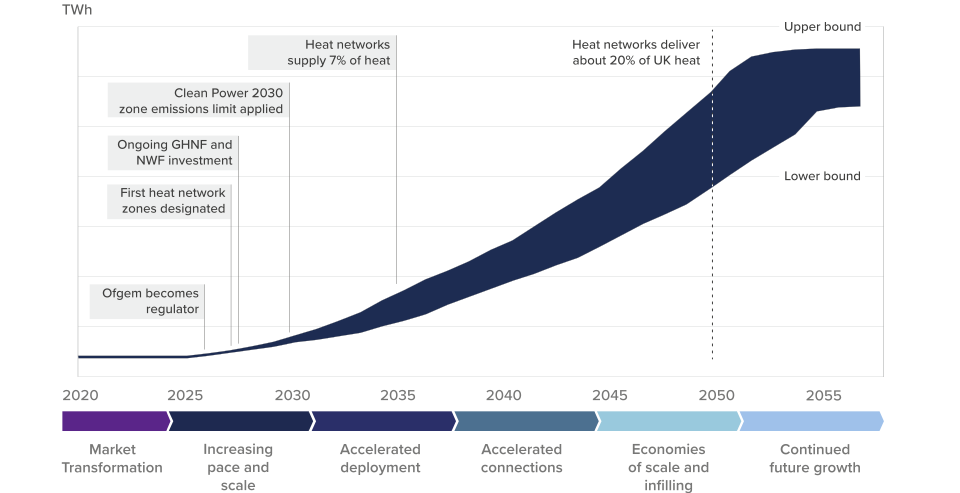
Description of Figure 10: The projected stages of growth for English Heat Networks to 2050, showing the present capacity of around 10 terawatt hours, and rising to between 50 and 65 terawatt hours in 2050. The chart includes upper and lower bounds of the projection, and milestones implementation of the market factors up to 2035.
Building on our new regulatory framework, our actions this Parliament will ensure we are delivering the next phases of heat networks, as part of a long-term growth strategy:
- Increasing pace and scale (c. 2025-2030): to get the biggest district heat network opportunities in England underway, low-carbon heat must compete with gas on cost and pivotal anchor buildings must connect. Heat network zoning will be introduced from 2026, and we will support at least 10 of the biggest English towns and cities to establish their heat network zones soon after, with further zones to follow.
The NWF will play an important role alongside the GHNF, initially through finance options offered for strategically important projects to reduce risk for developers and private investors and thereby increase ambition. We will pilot methods to support places where networked heat can make the most sense, such as in terraces and low-rise flats. The Future Homes and Buildings Standards will further drive activity in the new build sector, supported by local planning policies like the London Plan, and district heating will offer a cheap, green option for New Towns.
Market regulations to protect consumers will be in force, with technical standards phased-in over time. Our Heat Networks Efficiency Scheme will continue to support older networks to upgrade. And we will explore all options to enable green heat networks to offer heat at a price that is competitive with gas boilers.
Case study: Chilton Woods
Heat networks are often the lowest-cost low-carbon heating options for consumers in densely populated places and may be the only clean heat option for some space-constrained buildings such as high rises. But this doesn’t mean that they can’t be the greenest and cheapest option for some low-density and rural areas too – as demonstrated by the Chilton Woods Community Heat Hub, Taylor Wimpey’s Westland Heath development led by the GTC and Metropolitan.
The UK’s first low-rise, low-density heat network in a suburban family home setting started delivering heat in 2025, and will supply up to 950 new homes, a primary school, a community centre and several shops across this rural low-density development in Suffolk. GTC are now constructing a further 7 Community Heat Hubs that will supply over 9,500 homes once fully constructed. This model provides centralised heat generation using large heat pumps, electric boilers and thermal storage.
Stephen, Group Technical Director at Taylor Wimpey, highlighted the potential future applications for a similar project:
This innovative approach offers the opportunity to provide community heating to other types of residential developments, including family homes.
Heat and hot water are delivered into homes through a site network of underground insulated pipes.
Community Heat Hubs remove the need for individual boilers or air source heat pumps to be installed in every home and help to address grid capacity issues, using the thermal stores to flatten the site’s grid demand. This significantly lowers a site’s overall peak demand as well as reducing consumer bills by up to 15%.
Andrew White, Managing Director, Metropolitan.
As 2 Chilton Woods Community Heat Hub customers put it:
When we moved into our new home, we went in, and it was lovely. It was lovely and toasty and the floor was lovely and warm.
What I like most about our heating in our new home, it’s economical, it’s eco-friendly and I think it’s the way forward.
-
Accelerated deployment (2030-2035). Our target of 7% (27 TWh) by 2035 will continue to be driven by urban district heat networks across England, and we will see the application of lessons learnt from the first heat network zones. A growing sector will see heat network developers confident to take on greater levels of financing debt as proportion of capital to reduce the total cost of capital. As a result, we expect the role of blended and alternative finance will grow during this period. Heat network products in the new build and communal network markets will become increasingly standardised, as the implementation of technical standards supports growth in the UK supply chain. This, alongside the authorisation requirements owned by Ofgem, will increase standards in the in-building service market, with some consolidation likely.
-
Large-scale, accelerated connections (2035-2040): There will be rapid growth in customer connections as earlier heat networks expand and complete construction. This growth will continue to build confidence in the market, attract new entrants and reduce development costs. Interest in smaller scale zones will grow, heat network connections will become faster and cheaper as transactions increase. Established heat networks will offer opportunities for heat source developers to supply lower-cost heat, building system resilience, and for infrastructure providers like gas distribution networks to leverage their underground energy expertise, providing new opportunities for the existing skilled workforce. We will explore opportunities for the repurposing of existing gas grid assets, knowledge or capabilities, where this can further bring down costs for consumers.
-
Economies of scale and infilling (2040-2050): By the 2040s, a mature market will provide new connections in all zones, with heat networks expanding outside these zones through retrofit innovations. Existing networks will be fully decarbonised as fossil fuels for peaking are gradually replaced and alternative fuels become mainstream. Long-term growth of heat networks will be driven by low prices and high resilience.
Growing the heat network market
The public and private sector will need to work together to overcome barriers to building more heat networks, faster and at greater scale. Our approach is based on 5 interconnected pillars:
| High public trust in heat networks | Lower bills and competitive prices | Growing supply chains and skills | Access to clean, flexible sources of heat | Local certainty through Zoning |
|---|---|---|---|---|
| Starting with a foundation of consumer trust in a well-regulated heat network market, including robust consumer protections, high technical standards, and clear consumer journeys. | Lowering the average cost of heat from a heat networks, including through investment support, rebalanced fuel prices, and protecting against excess profits. | Growing a strong market which can deliver heat network projects faster, with a clear pipeline for suppliers, open business practices, and targeted support on skills.[footnote 104] | Supporting the lowest-carbon growth, by enabling the use of surplus heat, faster grid connections, and maximising the opportunity of Clean Power 2030. | Ensuring developers, investors and local authorities have the certainty they need to plan bigger more-ambitious projects, with strong governance and clear routes to market. |
High public trust
Our plan for growth has an uncompromising focus on achieving the best outcome for end users, to boost consumer confidence by conveying the same level of protections as in the gas and electricity market.
Although existing heat network consumers reported slightly higher levels of satisfaction on average than those not on a heat network,[footnote 105] a small number experience poor outcomes, due to their networks having been poorly built or maintained. The Heat Network Market Framework is therefore introducing new protections for families and businesses, mandating minimum technical standards that heat networks must meet, and seeking to ensure continuity of supply in the case of operator insolvency. The first of the new consumer protections were introduced in April 2025: including an Energy Ombudsman-led consumer redress scheme and access to Consumer Advocacy services. These are provided by Consumer Scotland and Citizens Advice in England and Wales.
Ofgem, as the new heat network regulator, will have powers phased in from early 2026 to investigate unfair pricing, and we will introduce measures to seek to ensure the supply of heat to customers is maintained. Heat network operators will have to comply with Authorisation Conditions to ensure increased protections for vulnerable customers, improved billing transparency, and debt management practices, amongst other things.
If you live on a heat network and are experiencing problems, you now have support
Consumers have a clear route to addressing problems with their heat network today. As of 2025, free advice is available from Citizens Advice (and Energy Advice in Scotland). If problems are raised and not fixed, or you are not satisfied with the response, you can now also make a formal complaint to the Energy Ombudsman. And you will have additional protections if your heat network is independently registered with the Heat Trust. Details on all of these are available online.
From January 2026, we are going further. Consumers and businesses connected to a heat network will receive greater protection, with Ofgem as the regulator as part of our new heat network regulatory framework. Our aim is to ensure that heat networks consumers receive comparable outcomes to those in gas and electricity markets. If you are on a heat network, you should be confident that:
Your supplier will be required to be transparent in how they handle complaints and issue bills. They will need to understand vulnerable consumers’ needs by maintaining a priority service register, and new debt recovery rules will protect the most vulnerable people from disconnection. Guaranteed Standards of Performance will incentivise heat networks to minimise any outages, and in future, compensation may be paid where specific standards are not met, including in relation to unplanned interruptions.
Your supplier will be expected to abide by new rules on financial monitoring and resilience to protect against going out of business. Ofgem will monitor this and in the event a heat network goes out of business without someone to take on the network, the government may decide to use a Special Administration Regime to keep the network running in the event that a commercial solution is not readily available.
Your supplier will be subject to a requirement to calculate prices fairly. As Ofgem collects more data from the sector about bills, they will apply benchmarks of what is considered a fair price for the type of network and consumer, addressing cases of extremely high prices as a priority.
In the coming years, consumers on new networks can be confident that their networks meet new government standards of technical performance, operation and maintenance from the day they move in.
Consumers will see a reduction in outages, improved reliability and the installation of meters to help monitor heat consumption. In the long run, these new standards will mean that all heat network consumers will be able to benefit from heating and hot water delivered efficiently with lower carbon emissions and reduced bills.
The Market Framework will also introduce mandatory minimum technical standards for heat networks underpinned by an assurance scheme (Heat Networks Technical Assurance Scheme). The government will be consulting on the scheme this year, and it will commence in 2027 once policy proposals have been finalised. This will give consumers who buy a property on a heat network even greater confidence that they will achieve comfort levels at an affordable cost, and in turn support investor confidence.
To support financial resilience in the sector, Ofgem will set Authorisation Conditions that heat networks must comply with. These will include conditions around financial management and continuity of supply, amongst others. These will be accompanied with the introduction of a Heat Networks Special Administration Regime which will provide the option of a backstop to ensure a critical supply is maintained in the event that a commercial solution to insolvency cannot easily be found. This will include rules around transfer of assets to a new operator or supplier, and grant the Secretary of State the power to determine how the costs of the regime will be recovered.
These changes will ensure that new heat networks are built to a good standard, and investors are clear on what service customers can expect. Most existing consumers can be confident of receiving a high-quality, affordable service from their heat network which will only improve with these changes. Some currently experiencing poorer outcomes in terms of price and service from older networks where problems that have not yet been addressed may require high levels of investment and more work to improve. We are therefore continuing to fund the HNES with £15 million/year in 27/28 to improve outcomes for these consumers faster.
As new local heat infrastructure grows, we will ensure benefits extend beyond connected customers to the wider community. We already require projects supported by the GHNF to ensure that government investment brings longer term market benefits, and under heat network zoning we will go further by embedding social value outcomes when developers are selected. This will include outcomes on local skills, employment and training, health and wellbeing, integrated communities, and environmental improvements.
Competitive heat prices
We are committed to supporting heat networks where they are the lowest-cost low-carbon option. The government recognises the need to consider both the upfront costs of installing new low-carbon heat networks and the long-term running costs for buildings connected to them.
The GHNF exists to support the construction and expansion of low-carbon heat networks, by driving greater levels of private capital into the sector. To ensure that this growth continues, we are today committing to further capital support under GHNF, with funding of £195 million/year during this spending review period.
Alongside the GHNF, we see a growing role in the coming period for blended and alternative finance for heat networks. In particular, the NWF will play an increasingly important role in heat network investment, including helping to mobilise greater flows of private capital into the sector.
Big strides can be made to reduce costs through supply-chain growth and innovation, greater access to cheaper heat sources, and the certainty and standardisation provided through zoning (set out below). Going further to reduce electricity prices will be needed for heat networks to reach their full potential. As detailed in the Carbon Budget Growth and Delivery Plan, the government will continue to examine how best to support households and businesses with energy costs. We intend to consult on options to reduce costs and make electrification an economically rational choice for a wider range of businesses and organisations.
We will continue to work with industry to explore other ways to lower costs. Investors in UK heat networks should be certain of a stable, long-term investment environment, and we will therefore work with the industry to identify risks and opportunities.
Finally, whilst we expect heat networks to develop where they can offer the lowest-cost, low-carbon heat, we will also ensure that consumers are protected and put first so that heat networks always mean lower bills than the alternative. As part of the regulations commencing in 2026, our fair pricing framework will improve pricing transparency in the sector and give Ofgem specific powers to protect consumers.
Supply chain capacity
The UK heat network sector has grown significantly over the past decade, but to meet future demand and ensure costs reduce, the supply chain must expand. Fundamental to growing this market capacity will be clear, sustained demand signals. The heat network zoning authority will support towns and cities in collating and publishing a national pipeline of opportunities, updated annually, and the Heat Network Exchange website will give all market entrants sight of new opportunities.
We will also work to deal with the barriers to new market entrants to increase competitiveness in the sector. For example, using the Market Transformation Commitments within the Green Heat Network Fund to require applicants to adopt open procurement principles, and share data with the supply chain wherever possible.
Heat network zoning will increase standardisation and make heat networks an even more attractive sector to work in. Our proposed Installation and Maintenance licences will unlock development for heat networks by granting them similar rights and powers as other key utilities. This will be supported by the skills and innovation initiatives in Chapter 6.
Better access to low-carbon heat sources
Through zoning, we will introduce a requirement for heat sources to connect to heat networks, and grant access to their developers and operators. It will take time before the use of surplus heat is mainstreamed in England – but it is a critical part of our nation’s future energy security. Government will provide further guidance on this use of zoning powers and ensure that it is used proportionately.
From 2030, we will also introduce a carbon limit for heat networks within zones to drive sector decarbonisation, alongside phased-in technical standards to raise operational efficiency, to ensure this growth is green.
Heat networks’ ability to use non-electric sources of heat (such as biomass or energy-from-waste), as well as higher temperature ambient heat sources (such as rivers or subsurface ground heat) is part of the benefit they offer to the wider energy system. Through this, heat networks can offer a solution for constrained new build sites which struggle to access a quick or affordable network connection, supporting the government’s housebuilding targets. Heat network zoning will operate alongside wider energy governance, such as Regional Energy Strategic Planning, to ensure that heat networks develop in areas which avoid investment in unnecessary grid upgrades.
As well as keeping overall electricity demand low, heat networks will help us make the most of the clean power system we are building through their greater flexibility, using fuel-switching and large-scale thermal storage to generate heat during lower-cost, lower-carbon periods. Through the Clean Flexibility Roadmap, we have committed to supporting heat networks to maximise the flexibility they can offer the grid. Through better integration with electricity networks, including greater use of commercial time-of-use tariffs, flexible heat networks can help consumers get a better deal.
Where heat networks develop alongside other infrastructure, there are opportunities for impressive carbon and cost savings. Heat networks will enable the capture of recoverable heat from data centres for instance, allowing industries like AI to grow more sustainably and further benefit local communities. The Old Oak and Park Royal Development Corporation in North-West London is being supported by our Green Heat Network Fund to co-locate a heat network and datacentre, supplying heat to 10,000 new homes and 250,000m2 of commercial space, whilst reducing the emissions associated with data infrastructure.
Local certainty through zoning
Map of indicative heat network zones in England, showing Coventry (illustrative)
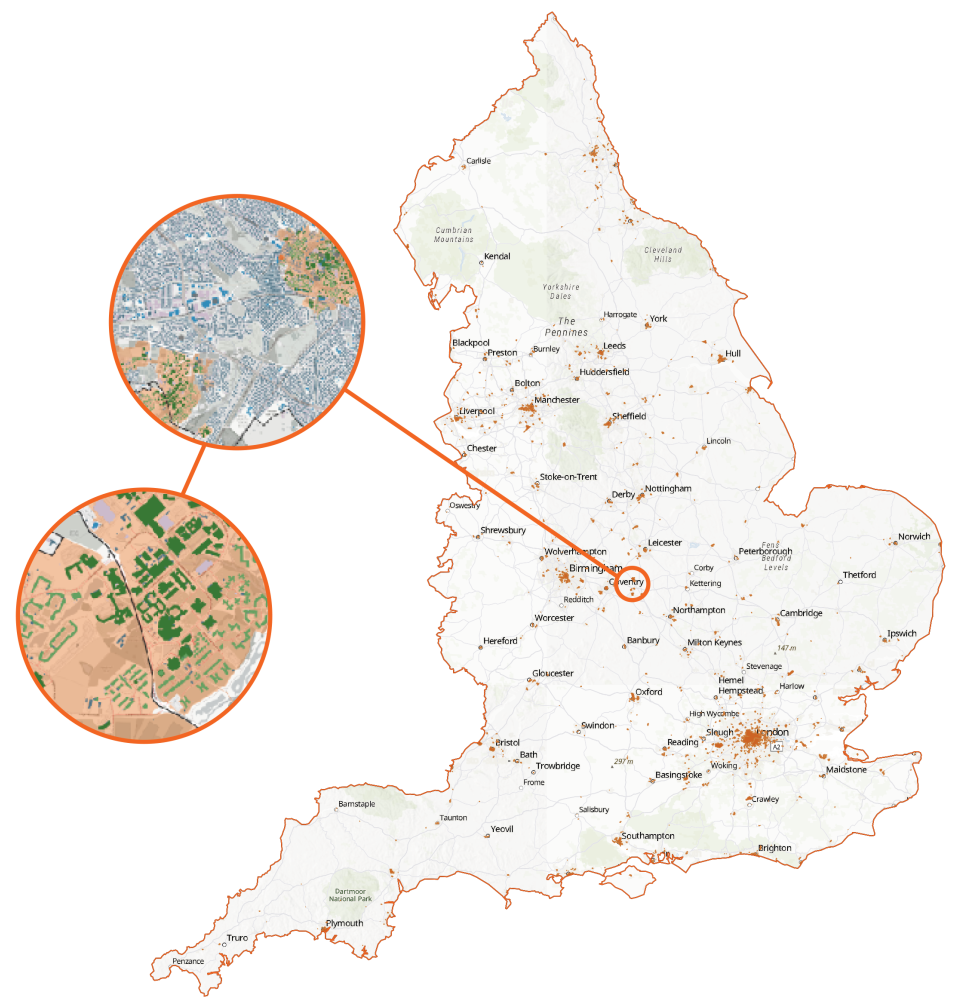
Description of figure: Map of indicative heat network zones in England, mostly centred around urban areas, with an inset image showing Conventry.
Heat network zoning will fundamentally transform the development of new heat networks in England. By designating geographic zones where heat networks are projected to be the most affordable solution, it will give consumers certainty about the best option for their building, and give developers the certainty to invest in new construction.
Heat network zoning will establish new governance for heat networks at the national and local level and grant new powers to local communities to accelerate their development. The WHA will be designated as the national heat network zoning authority to provide standards, oversight, and coordination, and be responsible for publishing a national pipeline of heat network infrastructure.
At the local level, we will empower Zone Coordination Bodies (ZCBs) to manage zone designation and developer appointments, and to monitor delivery. This will mean granting of powers to local areas, and supporting sufficient capacity for them to lead on development within their town or city. To build local capacity before then, the Advanced Zoning Programme has worked with 21 towns and cities, and provided phased-in skills and roles to support early development work.
Through heat network zoning, local authorities will be empowered so that certain types of existing non-domestic buildings, new domestic buildings and sources of heat can be connected to a heat network, but only where it is certain to be the most affordable option for them. This will include new buildings, non-domestic buildings above a certain size, and buildings that are already communally heated.
Zoning will provide the certainty to unlock faster development of new buildings whilst ensuring their owners get longer-term cheap heat. District heating is likely to be an excellent opportunity for New Towns, where utilities can be installed together, and zoning will support the role of the New Towns Taskforce.
Our aim is to support at least 10 of the biggest heat network zones into designation as soon as the regulations take effect. Zoning will come into force in 2026, and details of the policy have been set out alongside this Warm Homes Plan. We will publish a map of indicative zones across England this year before regulations go live, as part of our new zoning digital service.
Greater Manchester heat network zoning
Greater Manchester’s Five-Year Environment Plan (2025–2030)[footnote 106] aims to deliver at least 90 GWh of heat annually through low-carbon heat networks by 2030, supporting the Greater Manchester Strategy (2025–2035). Heat network zoning could enable the decarbonisation of a major share of the region’s space heating and hot water.
Since the government launched its heat network programme, the GMCA has worked closely with central government to accelerate progress. Four schemes, in Trafford, Stockport, Oldham, and Bolton, are backed by the Advanced Zoning Programme, with tenders expected by February 2026. Another 6 projects are in development.
GMCA’s ambitions go beyond environmental benefits. Heat networks are seen as a driver of social and economic transformation: stimulating investment in local supply chains, creating secure, high-quality jobs, and attracting skilled workers. They also aim to reduce fuel poverty, improve public spaces, and strengthen communities. GMCA’s Heat Network Vision and Social Value Toolkit[footnote 107] outline clear strategies to achieve these goals.
Andy Burnham (Mayor of Greater Manchester) said: “Greater Manchester was a pioneer of the industrial revolution. We can now drive the green industrial revolution too. By setting out our systemic approach, we are sending a clear signal that Greater Manchester is the place for businesses to develop and grow as we embrace the opportunities from the race to net zero. We offer a supportive ecosystem for new business partners to work alongside local government, industry and academia to accelerate delivery of net zero solutions.”
Chapter 6: A plan for growth, jobs, and innovation
Our plan will deliver growth to our economy, good jobs for our communities, and opportunities for innovation.
- The number of jobs supported in energy efficiency and clean heating is projected to increase from 60,000 in 2023, to up to 240,000 in 2030
- Through the Warm Homes Plan Taskforce, in partnership with the TUC, we will support workers to transition to high-quality roles in low-carbon sectors in partnership with unions, industry and civil society
- Building on our proud record as one of the leading manufacturers of heating appliances in Europe, our ambition is to ensure that by 2035 70% of the heat pumps installed in the UK are made in the UK. To support this, we have allocated up to £90 million of funding across 2027-28 to 2029-30 as part of the Heat Pump Investment Accelerator Competition
- We are allocating £7 million per annum to the Heat Training Grant from 2026 to 2029 and continuing support for fabric and solar installation under the Warm Homes Skills Programme
With world-class capabilities in high-value manufacturing and a highly skilled heating, energy and construction workforce, the UK is uniquely positioned to lead the global transition to clean energy and large-scale building upgrades. We are determined to support and build on the proud achievements of the hundreds of thousands of workers who have kept the nation warm for decades.
We will also learn and take inspiration from the legacy of national infrastructure transformation that took place between 1968 and 1977, when British workers successfully converted around 14 million homes and businesses from town gas to natural gas, demonstrating the scale and speed at which the UK can deliver.[footnote 108]
Currently, the UK is Europe’s largest producer of residential gas boilers, and we have over 150,000 domestic oil and gas heating engineers.[footnote 109] We are committed to planning the transition to heat pump installation so that it works for existing workers in the boiler industry.
Our Warm Homes Plan will support these workers and the wider sectors with funding for the skills needed for a long and successful career in the manufacture and installation of clean heat and other clean energy technologies, ensuring they benefit first from the growth of these industries. We will partner with workers and unions to ensure that job quality is at the heart of the UK’s clean energy transition.
The home upgrade and retrofit sector is diverse, with some large organisations and workforces alongside a great number of microbusinesses and Small and Medium-sized Enterprises (SMEs), many of which, to date, have remained focused on conventional repair and maintenance work.
The Warm Homes Plan represents £15 billion of government investment driving domestic demand for clean heat, low-carbon technologies, and fabric insulation: a great business opportunity.
Through targeted regulation – such as the FHS and new Minimum Energy Efficiency Standards in the private and social rented sectors – we will drive significant further market growth in the uptake of energy efficiency and low-carbon measures. The CHMM provides the UK’s heating industry with the confidence and incentive to invest in the clean heat transition and puts UK manufacturers in a strong position to maintain our leading position in the manufacture of heating appliances. To accelerate this shift, we are announcing an investment of £140 million to strengthen supply chains, drive innovation, support workforce training and create high-quality jobs across the UK. Investment in the manufacturing and deployment of low-carbon technologies will have significant spillover benefits for innovation and skills across the country.
We will also drive a growing pipeline of new low-carbon heat networks across England through our heat network zoning programme, and by making project information more accessible through the GHNF.
Working in partnership with local Jobcentre Plus (and the future Jobs and Careers Service in England), local authorities and devolved administrations, our approach will drive regional jobs growth and boost local supply chains within communities across the UK. Our partnership model will allow local authorities to decide what works best for their local area, and this will allow them to upskill their workforce accordingly.
Supporting the supply chain in the transition from supplier obligations to public funding
We recognise that the ending of the supplier obligation delivery model will cause disruption to the retrofit supply chain in the short term. We are committed to supporting the affected workforce and supply chain to access the opportunities presented by the commitments and funding committed in the Warm Homes Plan, in particular the additional £1.5 billion allocated at the Budget.
We will use the procurement regime for all new capital funding made available from April 2026 to support the workforce affected by the closure of ECO, and will seek to agree new conditions with public grant recipients requiring them to procure from the ECO supply chain in order to access the additional ‘top-up’ funding allocated at the Budget. We will work collaboratively with the wider retrofit market, housing associations and local authorities to ensure this regime works for all parties.
The work to guide the transition from ECO to public funding will be overseen by a ministerially led working group, comprised of local authorities, social housing providers, and supply change representatives like the National Home Decarbonisation Group (NHDG). Working with the wider supply chain, including tier 1 contractors who represent the majority of suppliers working directly with housing associations and local authorities, we will coordinate action to support the ECO supply chain through sub-contracting and assist companies working on both ECO and capital schemes to secure additional work on the latter.
Creating good quality jobs
Over time, our Warm Homes Plan is projected to increase the number of jobs supported in energy efficiency and clean heating from 60,000 in 2023, to up to 240,000 in 2030.[footnote 110] These jobs will be spread across the whole of the UK and cover a range of retrofit and manufacturing professions – from heat pump, insulation, solar PV and battery installers, to retrofit coordinators, to low-carbon and energy efficiency manufacturers. Figure 18 below, outlines the expected demand across our key sectors.
Figure 11: Total jobs supported in 2030 by subsector[footnote 111]
| Sub-Sector | Jobs Supported in 2030 |
|---|---|
| Domestic Energy Efficiency and Smart Technologies | 198,000 |
| Non-Domestic Energy Efficiency | 8,000 |
| Heat Pumps | 18,000 |
| Heat Networks | 18,000 |
| Total | 240,000 |
As well as supporting jobs across a range of sectors and professions, the Warm Homes Plan will support job opportunities in each UK region. Our analysis in Figure 12 below shows the potential demand for direct jobs in 2030 across the UK regions. Further indirect jobs, including those involved in manufacturing, will also be supported, but these are not captured in the regional analysis.
Figure 12: Direct jobs in 2030 by region[footnote 112]
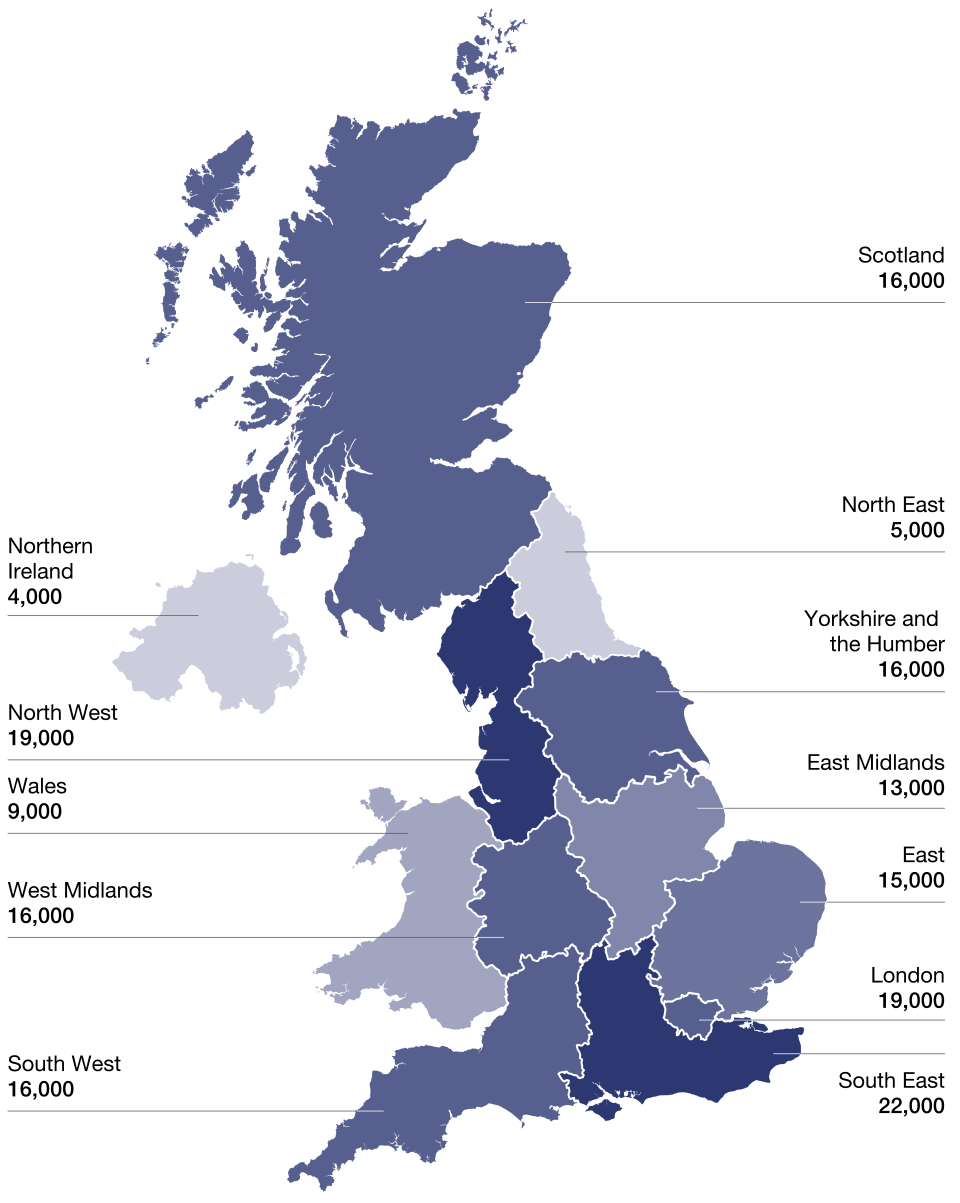
Description of Figure 12: Geographic map of the UK showing the number of direct jobs by region. North East England 5,000. North West England 19,000, Yorkshire and Humber 16,000, East Midlands 13,000, West Midlands 16,000, East of England 15,000, Greater London 19,000, South East England 22,000, South West England 16,000, Wales 9,000, Scotland 16,000, Northern Ireland 4,000.
The jobs supported by our Warm Homes Plan will be high-quality, well-paying and future-proofed. We are working closely with industry, local authorities, and unions to ensure that government policy is designed with the goal of supporting a fair workforce transition at its core.
As set out in the October 2025 Clean Energy Jobs Plan, we are setting up a taskforce in partnership with the TUC, to facilitate the creation and growth of a diverse, skilled and resilient workforce to meet the demand generated by these initiatives, with a crucial role for trade unions.
This taskforce will help workers transition to new, high-quality low-carbon jobs, ensuring that no one is left behind and that the UK can fully harness this opportunity. Its objective, working alongside other government missions and initiatives, is to create good, well-paid roles in the low-carbon heating and home upgrade sectors to deliver on our ambition of upgrading up to 5 million homes by 2030. The taskforce will concentrate on aligning regional skills and jobs supply with the demand for home upgrades, and it will work to build a robust and flexible talent pipeline – made up of multi-skilled workers and jobseekers – through the national skills system and standards.
In addition, we will ensure that our priorities including fair work, skills and sustainable supply chain requirements are considered by default in commercial contracts and grants, where it is feasible and appropriate to do so. This aims to ensure that there is a greater focus by suppliers and grant recipients on supporting longer-term commitments in areas such as skills and the creation of good-quality jobs when delivering goods and services through public funding.
To ensure the benefits of these commitments are felt across every tier of the home upgrade supply chain, there will be an expectation on suppliers and grant recipients to work with their supply chains to actively fulfil outcomes and regularly report on success. We will further consider ways to maximise the uptake of SMEs, Voluntary, Community and Social Enterprises (VCSEs) and microbusinesses in upcoming schemes; alongside considering the potential to stimulate additional outcomes through use of relevant aspects of the government’s social value model. We will work with the taskforce to ensure the design of future procurement and grant funding schemes support the transition to high-quality, low-carbon jobs and are designed to support organisations of all sizes.
We are also working across government and with industry to avoid unnecessary competition for skilled workers and maximise the benefits of investment across sectors. The Construction Skills Mission Board is an industry-led group, and chaired by an industry representative. Officials representing 5 supporting departments (the Department for Work and Pensions, Ministry of Housing, Communities and Local Government, Department for Business and Trade, Department for Education, and the Department for Energy Security and Net Zero) will observe the meetings, with ministers joining when necessary. The Board, consisting of Chief Executive Officers (CEOs), sector leaders, small business representatives, training bodies and a union representative is working collaboratively with sector representative bodies to develop and deliver a comprehensive skills action plan to be published in the new year that can create an additional 100,000 construction workers per year by the end of the Parliament. It is also working on creating the right conditions for growth and investment.
Supporting the construction sector’s growth as a whole, rather than shifting resources from one area to another, will be critical in meeting these missions. To this end, the government announced an investment of over £625 million for construction skills in March 2025, and we will continue to work closely with the sector to support workforce and supply chain growth. We are also working closely with the Department for Work and Pensions and the Department for Education to increase retrofit-specific training provision through the interventions supported through this additional funding.
In September 2025, the government announced new courses and qualifications that will be eligible for the High Value Courses Premium (HVCP) from 2026/2027 and the Free Courses for Jobs (FCJ) programme. HVCP will support important Level 2 National Vocational Qualification (NVQ) retrofit courses in Thermal Insulation and Installing and Maintaining Air Conditioning and Heat Pump Systems alongside continuing to support existing NVQ Level 3 retrofit courses such as the Level 3 Diploma in Insulation and Building Treatments. The government has announced a £20 million expansion of FCJ for construction courses. Level 2 Diplomas in Refrigeration, Air Conditioning and Heat Pump Systems are now eligible, alongside other traditional construction trades that act as an entry point into retrofit work, such as dry lining, stonemasonry and plastering. This expansion will improve the awareness, availability and accessibility of retrofit training pathways nationwide.
In August 2025, the first Construction Technical Excellence Colleges (CTECs) were confirmed. A CTEC will be established in every region of England, ensuring equitable access to high-quality training opportunities for learners across the country. We will work closely with the Department for Work and Pensions and the Department for Education to support retrofit training provision through new CTECs.
Furthermore, in collaboration with the Construction Skills Mission Board, other government departments and industry training boards, we aim to raise awareness of retrofit training pathways and careers within the construction sector, by assembling information about roles, training pathways and accreditation requirements in one place. This includes integrating retrofit resources within digital platforms recognised by, and accessible to, the construction sector and improving careers information, advice and guidance available to young people. We will work closely with the Construction Industry Training Board (CITB) to integrate retrofit careers resources and job opportunities within their Go Construct Careers platform, where appropriate to do so.
Case study: Stories from the heat pump factory floor
Information courtesy of E3G and Vaillant as part of a wider case study on clean heat jobs.[footnote 113]
With over 150 years’ experience in the production of heating systems, Vaillant are helping drive the transition to a low-carbon future at their Belper manufacturing facility. In March 2025 Vaillant opened a new £40 million manufacturing plant, adding 200 jobs to the local economy in Derby.
Stephen has worked here for 20 years. As a ‘lead hand’, he’s responsible for the smooth running of the factory floor. He’s also a union rep, representing factory employees in meetings with senior leadership. In 2021, Vaillant sought his views on plans to invest millions in the future of the business. In 2021, Vaillant sought his views on plans to invest millions in the future of the business. Their plan would transform an existing warehouse into a state-of-the-art heat pump manufacturing line, making Vaillant the first boiler manufacturer to make heat pumps in Great Britain. Working with Community Union, Vaillant developed a strategy to offer existing production staff training to work in the new facility. This puts Vaillant in a strong position to benefit from a growing UK heat pump market.
Growing the home upgrade workforce
Heat pumps
There are currently around 10,000 trained and active heat pump installers in the market today. Many of these installers continue to work on gas boilers, alongside their growing heat pump customer base, resulting in approximately 4000 full time equivalent (FTE) installers. To keep pace with future heat pump demand, the workforce would need to increase to approximately 12,000 FTE installers by 2030, which represents a three-fold increase. Far more heat pump installers will need to be trained beyond the expected 12,000 FTE, as heat pump engineers work on a range of technologies and carry out a several duties in addition to the core installation process (for example, a heat pump engineer may also spend time on boiler maintenance, business administration and in sales).
Our Heat Training Grant provides grants of up to £500 for existing heating engineers to train to install heat pumps in England. The scheme is open to certified heating and hot water installation professionals who are employed as sole traders and in SMEs in England. Since its launch in July 2023, the Heat Training Grant has supported over 8900 heat pump training courses and an additional £5 million funding was provided across heat pumps and heat networks for this financial year.
Following the success of the Heat Training Grant in driving the take-up of heat pump training amongst small businesses and sole traders, we will increase funding for the grant in England to £7 million per annum over the next 3 years, until March 2029. This will continue to support existing heating engineers in training to become heat pump installers and will support an increased range of training opportunities in heat networks.
We recognise the need to increase the number of trainees who successfully transition into active heat pump installer roles. To address this, we are collaborating with industry and training providers to deliver more practical, hands-on installation training, alongside design and sales modules. This approach is aimed at building confidence, enhancing technical and customer-facing skills, and allowing individuals to pursue long-term careers in the clean heat sector.
Case study: Georgia’s clean heat apprenticeship journey
Clean heat apprenticeships offer a powerful route into a meaningful, future-focused career – combining hands-on experience with structured learning in a growing industry.
Like many young people, Georgia wasn’t entirely sure which career path to take. It was during the Covid lockdown that she discovered a talent for practical tasks and problem-solving, after helping her mum’s partner with redecorating and property work. That hands-on experience sparked her interest in the clean heat industry and led her to pursue the Low Carbon Heating Technician Apprenticeship.
Motivated by the chance to build new skills and contribute to a greener future, Georgia chose the apprenticeship route. She joined Your Energy Your Way (YEYW), drawn by the company’s values, its commitment to diversity and encouraging more women into the clean heat sector. Since joining, she’s worked alongside inspiring and supportive colleagues who push her to give her best every day.
Georgia said of her experience in the sector so far:
My first year has been a great learning experience…I work on different homes every day, and because each one is unique, I’ve had plenty of opportunities to learn new skills and solve a lot of different challenges. Over the past year, I’ve gained a lot of confidence, developed my skill set, and learned how valuable apprenticeships are for combining practical experience with structured learning.
Looking ahead, Georgia sees her apprenticeship as a springboard for long-term career growth, aiming to progress into more senior and specialist roles within the industry. Georgia’s experience shows that clean heat apprenticeships not only open doors to rewarding careers but also empower individuals of all backgrounds to play a direct role in the UK’s transition to clean heat.
Along with upskilling existing heating engineers, we will also work to bring new entrants into the workforce. The Low Carbon Heating Technician Apprenticeship was launched in Autumn 2023, and the 3-year course aims to provide younger people with the opportunity to train in the installation of low-carbon heating and hot water systems. We will continue working closely with Skills England to increase uptake of the apprenticeship among young people.
Case study: Equipped for the future: Harry’s low-carbon heating apprenticeship
Harry, 18, is a third-year low carbon heating apprentice from Derby. One of the first cohort of Vaillant’s Low Carbon Heating Technician Apprenticeship, Harry was keen to pursue a hands-on career that would equip him for future demands.
Harry first became aware of low-carbon solutions after a conversation with his dad. He said:
It was my dad that first introduced me to low-carbon appliances like solar panels and heat pumps. He said that low-carbon homes were going to be the future, and that was what sparked my interest in exploring the low-carbon heating technician apprenticeship.
When it comes to work life balance, Harry has been able to manage his one day at Derby College, together with 3 days on site, and a final day at Vaillant’s UK Head office in Belper where he’s able to dedicate the day to low-carbon training.
The course structure has been great, the days are busy, but I feel like I’m always learning. And being able to earn while I learn has been a real bonus.
Reflecting on his time so far on the course, Harry can see the progress he has made:
Now in my final year, I can’t believe how much I’ve learnt. The course is more than just an apprenticeship; it’s given me so many skills I know I’ll be able to use throughout my career… From brickwork to advanced electrics and plastering, the course has been brilliant…I’m learning the whole package from installation of a heat pump right through to wiring it up, so when I’m out on site I’m confident in my abilities.
Looking ahead, Harry is proud of his achievements so far, but one day would like to become a service engineer at Vaillant or even start out on his own as an installer.
The course has given me a skillset I know I’ll use for life, and I’m excited to put it into practice and play my part in helping to install low-carbon heating solutions for homeowners across the UK.
Beyond investing in skills training, we want to harness installers as critical contributors to the transition. Householders rightly trust tradespeople as a source of advice and information.[footnote 114] Therefore, it is vital that installers have trust and confidence in clean heat technologies and feel confident recommending them to consumers. We are working with installers to help build understanding around the future of heat pump deployment, increase knowledge of government funding schemes like the BUS, and showcase the benefits of installing heat pumps. We will develop, share and disseminate materials in collaboration with industry partners.
In partnership with industry, we are delivering a ‘dual quotes’ pilot, which will encourage installers with the suitable skillset and knowledge to offer consumers a quote for a heat pump when changing or replacing a heating system. We will guide industry partners in identifying suitable cohorts, so that consumers in the pilot are offered heat pump quotes that are comparable to boilers on upfront costs.
We will monitor the results of the pilot and work closely with industry to gather evidence on take up. This is with a view to making dual quotes the new industry norm, with boiler installers offering a clean heat quote by default.
In tandem, we are also working to reduce the barriers installers face when entering the clean heat market and installing heat pumps. We are working closely with the MCS on their skills test, which will make it easier to register as a certified installer and deliver heat pumps under government schemes. We are also closely monitoring the MCS scheme reforms, which are designed to reduce costs and bureaucracy for installers and concentrate instead on installation quality.
Heat networks
The UK heat network supply chain must expand and reduce costs if we are to achieve our heat network ambitions. As large infrastructure, the sector can provide fulfilling careers across a wide range of service sectors, such as legal and commercial professionals, to construction companies and specialist pipe welders. Meeting our deployment targets for heat networks would support an estimated 18,000 jobs by 2030.
To ensure that the supply chain can support the anticipated growth, we need to build depth in our national capabilities to deliver larger, lower-carbon district networks, whilst upskilling existing staff to meet incoming technical standards. This will involve improving access to standardised training, attracting people from different communities and increasing entry routes which provide clear progression for skilled heat network professionals.
The Heat Training Grant therefore supports the upskilling of heat network professionals in addition to existing heating engineers. Training covers design, construction, operation, maintenance, metering, and billing, and the Grant has encouraged training providers to develop and grow the number of opportunities. For heat networks, support is targeted to all within the sector. Since its launch in July 2023, it has provided over 6,000 training opportunities and – as outlined above – we will be extending the scheme until 2029 to grow and improve the training available.
Case study: Gateshead District Energy Scheme
Heat Networks play a vital role in energy security by capturing and reusing waste heat from sources like industry, data centres, rivers, geothermal – and in Gateshead’s case, mine water.
Launched in 2017, the Gateshead District Energy Scheme is a local authority-owned initiative now harnessing heat from flooded coal mines via large-scale heat pumps powered by solar energy. It’s the UK’s first and largest mine water district heat network and has been supported by government funding, including the Green Heat Network Fund (GHNF).
To date, 645 homes and 24 buildings – including The Glasshouse and Baltic Arts Centre – are connected. Expansion plans include the town centre, Queen Elizabeth Hospital, thousands more homes, schools, and healthcare sites.
The scheme currently reduces emissions by 20% compared to gas boilers, with further savings expected as more users switch to mine water heat. Consumers also benefit from at least 5% lower heating bills than market gas tariffs.
Belinda, Energy Services Manager at Gateshead Council, has praised the role of the heat network in supporting former mining communities:
As someone who comes from a mining background … it really feels like me and the team are carrying on the strong mining history of the north to a new cleaner, greener generation… being able to support them [historical mining communities] to live in warm, safe homes, whilst saving carbon and money off their bills makes all the difference; giving back to the people who built the communities, from the mines up.
Belinda was also keen to highlight the career opportunities within the heat network industry, especially for those switching careers:
Often, from the outside, it can be seen as a technical and engineering field, and whilst there will always be a need for this expertise, there is a place for all skillsets in the heat network industry.
Energy efficiency
A robust, competent supply chain also remains essential to deliver energy efficiency schemes, tackle fuel poverty and support the implementation of Minimum Energy Efficiency Standards. We are working to support the supply chain for fabric and solar PV installers and retrofit professionals, where there are significant opportunities to deliver growth and opportunities at a local level.
In June 2025 we published the Solar Roadmap, which sets out the emerging opportunities in solar supply chains which the UK can capture, and outlines the actions needed to develop resilient and sustainable solar supply chains that are, crucially, free from forced labour.
In April 2025, we launched the Warm Homes Skills Programme, an England-wide open grant competition for training providers and further education colleges to secure funding towards the delivery of subsidised retrofit training. The first phase of the competition, administered by the Midlands Net Zero Hub, has made available up to £8 million to a range of suppliers to deliver accredited training for fabric and solar PV installation and retrofit professional roles, alongside entry-level retrofit awareness courses for those new to the sector. The programme aims to directly scale up the retrofit and energy efficiency sector to meet existing and emerging skills gaps, supporting the delivery of the Department’s energy efficiency schemes. Subject to continued successful delivery rates and spending decisions for 2026-27, further funding will be made available in Phase 2 to extend the programme to July 2027 with the aim of supporting skills needs within government-funded energy efficiency schemes.
In addition to work with the Department for Work and Pensions and Department for Education to bolster retrofit-specific training provision, we are working with industry to develop retrofit apprenticeships to support the next generation entering low-carbon roles, including level 2 and level 3 insulation installation apprenticeships. In July 2025, the level 2 apprenticeship was approved for delivery by Skills England, and we expect the level 3 apprenticeships to be ready for delivery in early 2026. From 16th September 2025, responsibility for apprenticeships, adult further education, skills, training and careers, and Skills England, moved from the Department for Education to the Department for Work and Pensions.
We are aware that prospective installers and retrofit professionals often face barriers related to training and accreditation when attempting to enter the retrofit workforce and deliver fabric insulation within government-funded energy efficiency schemes. The PAS standard has created named roles that do not currently exist in the able-to-pay sector (such as, retrofit coordinators) and require specific qualifications. Defining competence solely by the attainment of a formal qualification can act as a barrier for existing workers moving into government-funded work. In reviewing the PAS standard, we will consider how the definition of competence for PAS roles could be broadened beyond qualifications, without compromising on safety and quality, to better align to the dutyholder and competency regime set out under the Building Safety Act 2022 and the construction industry’s wider position on competence where skills, knowledge, experience and behaviour are holistically assessed. This approach may enable more workers in the Repair, Maintenance and Improvement sector to deliver public-funded retrofit work.
We are aware that local co-ordination issues between grant recipients, employers and the skills system often hinders supply chain growth. Some proactive small and mid-size contractors like Quantum Training, B4Box and Re:Gen[footnote 115] have recognised the growth constraints of local skills shortages and have diversified into industry-led skills training in core competencies, whilst simultaneously developing partnerships with local SMEs and supply chain partners to help them grow. By effectively co-ordinating with local SMEs and the skills system they have experienced sustainable growth, and we are committed to facilitating the conditions that enable more organisations to follow this purpose-driven approach in line with the initiatives outlined in this chapter.
Case study: Building futures through retrofit: Libby’s journey with B4Box
B4Box are a Greater Manchester based SME who undertake retrofit projects alongside general building repair and maintenance works. To help address the skills gaps and grow its own retrofit capacity, B4Box developed an innovative purpose-led business model, that integrates both retrofit delivery and training provision at no extra cost to clients.
B4Box’s training model aims to address the coordination between employers and the skills system. The training is designed by their knowledge of delivering retrofit projects and is delivered alongside live projects, allowing operatives to bridge the gap between theory and practice. This is particularly useful for the development of employees who are new to retrofit, whether from associated building trades or new entrants to the sector altogether.
One recent new entrant to retrofit is Libby, who had struggled at school because of caring responsibilities that she had taken on despite her young age. After leaving school, Libby found herself without work. Through B4Box, Libby undertook a Skills Bootcamp in Construction Multi-Skills for Building and Retrofit. After successfully achieving her qualification, Libby was recruited into full-time retrofit work with B4Box, where she achieved a Level 3 qualification in Energy Efficiency measures for Older Buildings.
Libby is passionate about the impact her work will have:
I’m excited about the future of construction and feel privileged to be part of that change towards green skills. I loved learning about different types of retrofitting, so I can help upgrade homes in my local community to meet the challenges of reducing energy use, climate change, and decarbonisation.
Boosting British manufacturing and innovation
We want British companies to be at the forefront of this transition. That’s why our Modern Industrial Strategy identified heat pumps as a key Clean Energy Industry.[footnote 116] With potentially one of the largest domestic markets in Europe, a skilled domestic heating workforce, and an undersupply in the global market relative to projected demand, there is significant opportunity for the UK’s manufacturing base to expand and export to the world.[footnote 117] The investments and certainty provided by the Warm Homes Plan will help deliver on this potential.
The UK is the largest producer of residential gas boilers in Europe, and the fourth largest producer of air conditioning systems.[footnote 118] Given the technological similarities of these systems to heat pumps, this puts us in a strong position to seize the opportunity of the energy transition, and to achieve a strong competitive advantage in the manufacturing of low-carbon technologies.
Heat pump sales are, in fact, already growing rapidly in the UK. In 2024, approximately 84,000 heat pumps were sold in the UK, representing a 50% increase on 2023 and the highest growth rate in Europe[footnote 119],[footnote 120]. Heat network deployment will drive additional growth for large-scale heat pumps.
However, we have become too reliant on foreign manufacturing of low-carbon heating: we estimate that around 30-40% of heat pumps in UK households are currently manufactured in the UK, and our ambition is to ensure that this number rises to 70% (broadly mirroring the share of residential gas boilers that are domestically produced).[footnote 121] By stimulating the domestic demand for low-carbon technologies, we are providing the market certainty that UK companies need, and delivering on our Modern Industrial Strategy. This will make the UK an exciting place to invest, and will drive productivity and wages, cementing its position as a global leader in the clean energy manufacturing sector.
That is why, among other things, the government has introduced the Clean Heat Market Mechanism (CHMM), to provide the UK’s world-leading heating industry with the incentive to invest in developing the heat pump market. By providing a framework for firms to invest with confidence in building out and scaling up British supply chains for heat pumps, the CHMM can support higher levels of innovation, competition and consumer choice, helping to deliver ever-improving products, consumer journeys, and affordability.
Alongside our capital support schemes and to further support market investment in British manufacturing and innovation, we have increased the funding available for the second round of the Heat Pump Investment Accelerator Competition to £90 million. This follows the £9.3 million that we have already invested in the UK heat pump manufacturing supply chain through the programme, which is aimed at kickstarting a homegrown heat pump industry to boost the UK’s energy security and support hundreds of low-carbon jobs. This could increase UK manufacturing of heat pumps by several hundreds of thousands of units a year. The second round will provide funding from April 2027 through to March 2030 and we expect to open the bid window for applications in early 2026.
Case study: Ideal Heating expands UK manufacturing
Ideal Heating is accelerating the UK’s transition to low-carbon heating with a major expansion of its British manufacturing operations, supported by £5.2 million in government funding through the HPIAC. Matched by £6.8 million in private investment by Ideal Heating and sister business Gledhill, the total £12 million project is boosting domestic production of heat pumps and creating new jobs in manufacturing, engineering, product design and development, and Research & Development.
At its Hull site, where Ideal Heating employs around 800 people, the company is scaling up to produce 115,000 air source heat pumps and indoor controls annually by 2030. In Blackpool, Gledhill – a significant employer in the area – is set to manufacture 120,000 pre-plumbed hot water cylinders each year. This expansion is part of a broader £60 million investment programme, which includes a new £19 million UK Technology Centre at the Hull site focused on research and development to bring further innovation in low-carbon heating.
Ideal Heating’s Expert Academy training arm is also creating hundreds of skilled jobs by training and reskilling gas engineers and apprentices to support the UK’s clean heating transition. By expanding heat pump production and building workforce expertise, Ideal is helping to grow the UK economy and making energy-efficient homes more accessible and affordable across the country.
Ideal Heating Chief Operations Officer, Jason Speedy, said:
As a UK heating industry market leader, we’re excited to be working with the government to jointly invest in large-scale heat pump manufacturing. This is a built-in-Britain partnership which will give a major boost to UK manufacturing, creating new jobs and opportunities at our Hull and Blackpool sites. It will play a critical role in accelerating the growth of the domestic heat pump industry, as well as stimulating innovation in heating technologies and supporting increased adoption of low-carbon solutions.
We want to see all parts of the clean heating appliance market growing to reach their full potential, and the continued iteration of products to meet the needs of UK homes.
The government will continue to support improved product innovation for British companies, which will play an important role in making installations easier and more efficient for consumers. This will be complemented by our policy framework that will create the foundations necessary for innovation in the private sector. The recent confirmation that BUS grants will be provided for heat batteries and air-to-air heat pumps exemplifies how innovative products developed by the private sector can be brought to market quickly through our support schemes.
Innovation is not confined to physical products and appliances. It has a vital role to play in the sphere of consumer advice and information, making it easier and quicker for households to find solutions suitable for their home and be put in touch with local installers to fit them. In doing so it can radically simplify the consumer journey to clean heating, reaching a far greater number of households in the process.
Mixergy’s Making Efficient Systems around Heat Pumps (MESH) Project
A successful project that came out of the Heat Pump Ready programme is Mixergy’s Making Efficient Systems around Heat Pumps project, or MESH. This project has designed a heat pump system that takes up less internal space, which is at a premium for smaller homes, by consolidating the central heating buffer vessel and hot water cylinder into a single tank. By optimising component integration and sizing, this product has the potential to reduce the cost of the hydraulic components of the system by circa 30% (subject to sufficient production volumes being achieved) by minimising part count and streamlining the installation process, Furthermore, initial field testing of the MESH system in 10 properties has demonstrated reductions in operational costs by around 20% compared to standard heat pump systems, due to increased energy efficiency of the system and component design (for example, the cylinder’s design reducing short cycling and making use of excess thermal energy) and an automated control strategy that optimises operation with internal and external temperatures, heat loss and a time-of-use tariff.[footnote 122]
Heatly
The Heat Pump Ready programme has also stimulated innovation in the provision of consumer advice and information. For example, the Heatly web-based platform was developed and commercialised through the programme. The platform is due to be fully launched in 2026 and will simplify the process of selecting, installing and operating a heat pump for both heating engineers and consumers. It has the potential to reduce the amount of time taken to carry out a home survey from 4 hours to 15 minutes, generating cost savings and efficiencies which can be passed onto consumers. The project has grown to over 30 staff members at their Leeds base in the north of England, and has attracted significant interest from external investors, displaying the potential for innovation in green technologies to create jobs and stimulate growth, as well as smoothing the consumer journey and facilitating cheaper and more efficient home upgrades.
Recognising the vital role that innovation will play in the transition to low-carbon heating, we will provide an extension of up to £30 million to the Heat Pump Ready programme, funded directly from the £15 billion of investment in the Warm Homes Plan, drawing a clear link between innovation and our support schemes. Through this funding, we will go further to both develop the technology and ensure the innovation is tested and trialled in homes so that the real-world impact is understood, creating future opportunities for innovative solutions to access support through our schemes.
Case study: Thermoelectric Conversion Systems Ltd – 2-stage heat pump with greywater energy recovery
Thermoelectric Conversion Systems (TCS) Ltd has developed a range of compact, highly efficient air source and water source heat pumps (ASHP / WSHP) using Peltier technology, supported by grant funding from Stream 2 of the Heat Pump Ready Programme. The first to the market is the ’Hummingbird’, rated at 5kW thermal / 3kW electrical, as an air source heat pump (ASHP) or water source heat pump (WSHP).
According to their website, the TCS heat pump models have a coefficient of performance (CoP) that varies with load and temperature difference. Starting values can be over 10, making them highly efficient, especially when heating hot water tanks. The system can recover heat from used household water – such as from showers and sinks – and combines it with an air or ground loop for flexible energy use. “These heat pumps are a building component for a very flexible grid,” said Dr Andrew Knox, Technical Director at TCS. “We can also selectively extract heat from hot parts in the building, providing both cooling and a massive CoP for the tank heating.”
The unit operating range is −20°C to +75°C, has a continuously variable power output and can be controlled on a time period of seconds. The unit includes Legionella control and is surprisingly compact – small enough to fit in a kitchen cupboard. It connects into a standard electrical ring main circuit and can be installed in as little as 3 hours. The system requires minimal maintenance and can provide cooling functionality, depending on the installation.
Various prototypes of the family of models have been refined to deliver from 5kW (Hummingbird) & 8kW (Sunbird)) to larger units with a capacity of over 30kW. Early installations have received positive industry feedback. The system’s lack of mechanical parts makes it very quiet, significantly smaller than traditional boilers and suitable for a wide range of properties with limited space. There is very strong interest from housing associations, building firms, and local authorities.
TCS is now scaling up production and has a target capacity of 100,000 units annually by 2030. “I wish we could go faster,” added Dr Knox, “but this is already a significant challenge.”
DESNZ hopes innovations like this will accelerate low-carbon heating adoption by offering compact, efficient, and easy-to-install solutions that tackle key barriers to heat pump uptake.
Innovate UK are also working with a cohort of innovative UK companies to develop solutions for upgrading British buildings, supporting these companies to overcome barriers to their growth. They are focusing on facilitating data, technology and process innovation to reduce the costs of home upgrades, create faster routes for solutions to be scaled out, and to speed up delivery.
We know that new innovative technologies can provide clean heating solutions and deliver low running costs in the future. Therefore, we will look to remove barriers that companies face when gathering the relevant approvals and certifications to allow their innovative product to access government grant-funded retrofit programmes. We will set up a pilot retrofit panel which will signpost innovative companies towards certification routes and support government policy in facilitating innovation. This panel will interface with a UKRI-proposed ‘sherpa’, an allocated organisation who will support the selected company to successfully navigate the process to approval. We are committed to working with innovators to bring their products to market and scale as quickly as possible, including through government grant schemes. Learnings from the ‘sherpa’ and panel will help us to do this.
Innovation also has a role to play in reducing the impact of our upgrades on the embodied carbon of our buildings. Government is currently conducting research to have a greater understanding of and transparency in embodied carbon emissions of products. We will consult on how to consider embodied carbon emissions in our approach to growing the market for low-carbon industrial products this year, to drive innovation in reducing embodied carbon of retrofit materials.
Whole life carbon: Best practice
Whole Life Carbon represents the sum of the operational emissions (from energy consumption) and the embodied emissions (from materials, transport, construction process, refrigerant use, replacements, and end-of-life) of a project. By 2035, it is estimated that embodied carbon will account for approximately 50% of Built Environment emissions.
Upgrading up to 5 million homes by 2030 will require a significant quantity of retrofit materials, including insulation, heat pumps, hot water tanks, radiators, piping, solar PV and batteries – all of which will have embodied emissions associated with them. The Warm Homes Plan aims to ensure 70% of heat pumps in UK households are manufactured in the UK by 2035, which will reduce the embodied emissions of heat pumps.
Quantifying emissions and using this in decision making sets a demand-side expectation for low-carbon, circular materials and products, thereby growing the market, creating jobs, and opportunities for innovation.
Measuring emissions:
There has been significant uptake of Whole Life Carbon Assessments in the UK, with 20% of local authorities mentioning them in their local plans or planning documents.[footnote 123] Despite this, the availability and quality of data for building services is still relatively low due to their complexity.
To reduce the carbon intensity of the products used in construction and retrofits the government has launched a technical consultation on growing the market for low-carbon industrial products (such as cement and steel) by setting voluntary standards for embodied emissions reporting.
Best practice for larger retrofit projects include undertaking Whole Life Carbon assessments in accordance with RICS Professional Statement v2 aligned with EN 15978,[footnote 124] and procuring products with Environmental Product Declarations (EPDs) aligned with EN 15804. For smaller projects, the use of benchmarks or simplified assessments (like CIBSE TM 65) are recommended to determine the carbon payback of a retrofit measure.
Circular economy:
Incentivising retrofits of existing buildings and structures (where appropriate), as opposed to demolition and new construction, could dramatically reduce the construction sector’s whole life carbon and material footprint. The forthcoming circular economy strategy will set out a roadmap for the built environment sector supporting reuse, repair and recycling and the use of low-carbon products.
This all fundamentally adds value to the overall economy. The spillover benefits can spur growth in adjacent sectors, and innovation in the home upgrade sector can lead to better health, social and environmental outcomes. We estimate that £38 billion will be invested in total over this Parliament, including £15 billion from government through the Warm Homes Plan settlement with match funding by local authorities and backed by investments from the NWF.[footnote 125] In the long-term, this will create jobs, strengthen public finances and improve living standards across the country.
Warm Homes Plan at a glance
Lowering bills
£2.7 billion in grants and £2 billion in low-interest loans – a universal offer on heat pumps, solar panels, batteries and more.
Increasing the Boiler Upgrade Scheme (offering up to £7,500 for qualifying heat pump installations) to £2.7 billion and expanding consumer choices with grants for air-to-air heat pumps which heat and cool homes, and innovative technology like heat batteries.
£5 billion in a new Warm Homes Fund – in addition to the consumer loan, the Fund will aim to support British businesses, innovation and drive down the costs for all.
The measures announced at the budget reduce costs for electricity consumers. Households with electric heating will benefit even further. An average heat pump user can expect to see savings of over £200 from April and a high use electric storage heated household will save £442.
Ensuring every new home is fit for the future with solar panels, high levels of energy efficiency and clean heat by default with the Future Homes Standard.
Put solar panels on the roofs of up to 3 million homes by 2030, and expand the market for heat pumps to over 450,000 installations a year by 2030.
Working with industry to simplify heat pump installation, targeting install times of no more than 3 days from point of consumer signature.
Launching a new Warm Homes Agency to support consumers, work with local delivery partners, and co-ordinate the transition.
Reforming EPCs so they are more useful and accurately reflect and reward home electrification and requiring smart functionality in all clean heat technologies.
Simplifying and strengthening the consumer protection regime for home upgrades, bringing the system under closer government control.
Regulating heat networks for the first time to ensure current and future heat network customers receive fair prices and fair treatment.
Cutting fuel poverty
Helping lift a million households out of fuel poverty through our interventions in the Warm Homes Plan.
£5 billion of support for low-income households, delivering home upgrades in partnership with mayors and local authorities, matched with extra investment from social housing providers.
Supporting around 6 million low-income households with the £150 Warm Home Discount.
Standing up for tenants with new minimum energy efficiency standards (MEES) to benefit private renters in England and Wales, and proposals for new standards for social renters in England.
Delivering good jobs and growth across the country
£15 billion total public investment in the Warm Homes Plan, as part of total investment of £38 billion this Parliament.
Supporting 180,000 additional high-quality jobs throughout the UK in the energy efficiency and clean heating and launching a new jobs taskforce with the Trades Union Congress to ensure our public investment supports high quality jobs, with good wages, job stability and other fair work conditions.
New target for 70% of heat pumps sold in the UK to be made in the UK, backing domestic manufacturing with a record £90 million in investment grants, tripling available support.
Additional £30 million funding to ensure British companies continue to lead the way in innovation and a commitment to work with innovators to bring new products into our grant schemes as soon as they’re ready.
Increasing the Heat Training Grant to up to £21 million to support existing heating engineers upskill, alongside an £8 million Warm Homes Skills Programme for other qualifications in solar. panels, insulation, and assessment.
£1 billion to cities and urban areas to invest in heat networks creating 18,000 jobs in 2030 and represent a £60 billion industry in the UK by 2050.
-
£0.6 billion of low-income funding and £1.7 billion of consumer loan funding are financial transactions drawn from the wider Warm Homes Fund. ↩
-
Except social housing which is covered by the Social Housing Fund ↩
-
National Audit Office (2024) ‘Energy bills support: an update’ ↩
-
Office for Budget Responsibility (2023) ‘The cost of the government’s energy support policies’
Note: £42 billion includes the Energy Price Guarantee, The Energy Bill Relief Scheme and the Energy Bills Support Scheme ↩
-
House of Commons Library (2025) ‘Gas and electricity prices during the ‘energy crisis’ and beyond’ ↩
-
Ofgem, Debt and arrears indicators ↩
-
Grantham Institute – Climate Change and the Environment (2022) ‘Decarbonising Buildings: Insights from across Europe Market Data - European Heat Pump Association’ ↩
-
MHCLG (2025) ‘English Housing Survey 2023 to 2024’, Heating by dwelling characteristics.
Note: The data are based on the 2022/23 and 2023/24 surveys. ‘other’ category includes biomass and solid (which includes coal, smokeless fuel, anthracite nuts and anthracite grains). ↩
-
BRE (2021) ‘The Cost of Poor Housing in England’ ↩
-
Daniel Gehrt (2021) ‘Impacts of the indoor environment in our homes and schools on child health: A novel analysis using the EU-SILC Database’ ↩
-
Source: DESNZ (2025) ‘Annual fuel poverty statistics report: 2025’.
Note: Fuel poverty is measured using the LILEE (Low Income Low Energy Efficiency) metric. ↩
-
Fuel poverty detailed tables 2025 (2024 data). Fuel poverty is measured using the LILEE (Low Income Low Energy Efficiency) metric. ↩
-
Samuel J. Cliff and others (2025) ‘Evidence of Heating-Dominated Urban NOx Emissions’, Environmental Science & Technology, 2025, 59 (9), 4399-4408 ↩
-
State of the UK climate in 2024, International Journal of Climatology, Met Office Seasonal Assessment – Summer 2025. ↩
-
DESNZ (2025) ‘2024 provisional UK territorial greenhouse gas emissions statistics’ ↩
-
UK Health Security Agency (UKHSA) has estimated there have been 10,000 excess deaths caused by summer heatwaves since 2020 (UKHSA) ‘Heat mortality monitoring reports’ ↩
-
Provisional 2024 UK territorial greenhouse gas emissions statistics. Note: Emissions reported by sector on a source basis. Emissions from electricity and fuel supply are allocated their own sectors rather than where the electricity and fuels are used. ↩
-
Source: Provisional UK greenhouse gas emissions statistics, 2024, Table 1: Territorial greenhouse gas emissions by source sector, in million tonnes carbon dioxide equivalent (MtCO2e), UK 1990-2024. Note: Emissions from buildings and product uses on a source basis. Emissions from electricity and other fuel supply for consumption in buildings are not included. ↩
-
DESNZ internal analysis. Provisional estimates subject to change to reflect changes to policy design. Estimates reflect the geographical scope of individual policies. The homes upgraded through Private Rented Sector MEES takes account of an adjustment to avoid double counting homes where a heat pump is installed and assumed to take advantage of the BUS grant. These homes have only been included in the WHP schemes total. ↩
-
Source: Internal DESNZ Analysis based on DESNZ (2021) ‘Cost Optimal Domestic Electrification (CODE) – GOV.UK’.
Notes:
(1) Analysis assumes that households adopting a heat pump will no longer pay the gas standing charge. Households which continue to use gas, such as in cooking appliances, would experience a lower bill saving. The costs associated with disconnecting from the gas grid have not been considered here.
(2) The modelled solar PV installation is equivalent to 4kW of PV panels, and the battery is equivalent to 4kWh of storage. Savings will vary depending on the capacity of installations.
(3) Figures based on average UK energy prices for 2024 ↩
-
Figures based on average energy prices for 2024, for a household in Yorkshire. Time-of-use tariff assumed to offer 8 hours of electricity at off-peak rate, 13 hours at standard rate and 3 hours at peak rate. The analysis assumes households only charge their battery during off-peak hours and does not assume they significantly change their heating pattern to maximise savings. Prices may not be representative of future years or tariffs. Savings will vary depending on archetype. ↩
-
Source: HPA U Heat Pump Statistics. Notes: These Heat Pump Association ( HPA) UK sales figures refer to hydronic heat pumps, and have also been adjusted to exclude the ‘Other’ and ’Domestic Hot Water’ heat pumps. Figures represent the number of sales, which may differ from the number of heat pumps installed. ↩
-
DESNZ (2025) ‘Boiler Upgrade Scheme statistics: November 2025’ ↩
-
DESNZ (2025) ‘Evaluation of the Boiler Upgrade Scheme (BUS): 2025 report’. 90% figure is from the Boiler Upgrade Scheme evaluation and is based on satisfaction after one heating system of use. 95% figure is from a Microgeneration Certification Scheme (MCS) administered survey of BUS installations. ↩
-
Electrification of Heat Demonstration Project – Energy Systems Catapult ↩
-
European Heat Pump Association (2025) ‘Market data – European Heat Pump Association’. Specifically, Norway has 63.2, Finland has 49.6, and Sweden has 29.9 heat pumps per 100 households. ↩
-
The MCS Data Dashboard. ↩
-
DBDH, District Heating in Denmark, Efficient & Clean Energy; 67% of the UK’s housing was built prior to 1971, compared to 62% in Denmark; for further evidence of the similarities between the British and Danish housing stock, see: HBF (2023) ‘Housing Horizons: Examining UK housing stock in an international context’. ↩
-
The 60% figure assumes heat demand in property remains the same before and after installation, while pre-installation running costs use ECO7 tariffs with 70% of heat/HW provided on the ‘night rate’ and 30% on the peak rate. Post installation running costs use standard price-cap tariff rates. ↩
-
These estimates are based on the National Building Model for the GB housing stock using data from the English Housing Survey (2016-2017), Scottish Housing Survey (2018) and the Welsh Housing Conditions Survey (2018). The rurality classification is based on one used in the English Housing Survey, where surveyors classify areas by assessing the surroundings and assigning a code from city/town centre through suburban and village to rural. The same approach was applied when mapping dwellings in Scotland and Wales. ↩
-
DESNZ (2025) ‘Boiler Upgrade Scheme statistics: November 2025’ ↩
-
DESNZ (2025) ‘Exploring the role of alternative clean heating solutions’ ↩
-
DESNZ (2025) ‘UK Solar Roadmap 2025’ p.23. ↩
-
Source: Solar photovoltaics deployment publication (2025), Table 1. Note: Includes Installations that are recorded as being on domestic properties by the MCS or OFGEM in the Central FiTs Register (CFR). 2025 installations include installations up to October 2025 ↩
-
Note: Internal DESNZ analysis, subject to revisions to reflect evolving policy decisions. Geographic coverage is at the level of each policy. ↩
-
DESNZ (2025) ‘Clean flexibility roadmap’ ↩
-
Source: MCS certified domestic battery installation statistics (2025) Note: This chart only includes installations which are MCS accredited and is therefore an underrepresentation of total installations. MCS accredited battery installations have been increasing. This may be due to an increase in the number of battery installations being registered by MCS, an increase in the number of batteries being installed, or both. ↩
-
DESNZ (2025) ‘Smart meters in Great Britain, quarterly update September 2025’ ↩
-
Household Energy Efficiency Statistical release, 2025. 71% of dwellings with cavity walls had cavity insulation, 10% of dwellings with solid walls had solid wall insulation. ↩
-
DESNZ (2025) ‘The Home Energy Model: Energy Performance Certificates consultation’ ↩
-
BEIS (2021) ‘Cooling in the UK’. Though we anticipate that the overall future summer peak demand for cooling would be lower than the winter peak demand for heating, during a heat wave event peak demand could be significantly higher than in an average summer week, particularly in urban areas. Both the total annual cooling demand and the summer peak demand may be significantly reduced through effective policy intervention. ↩
-
National Energy System Operator (2025) ‘Future Energy Scenarios 2025: Pathways to Net Zero’ ↩
-
SP Electricity North West (2025) CoolDown Alpha project ↩
-
DESNZ Internal Analysis based on DESNZ (2021) ‘Cost Optimal Domestic Electrification (CODE)’ ↩
-
BEIS (2021) ‘Cooling in the UK’ ↩
-
DESNZ (2025) ‘Assessing the future heating and cooling needs of the UK housing stock’ ↩
-
DESNZ (2024) ‘Energy Follow-Up Survey (EFUS) overheating in homes’ ↩
-
DESNZ (2025) ‘Assessing the future heating and cooling needs of the UK housing stock’ ↩
-
Information courtesy of research by Dr Zoe De Grussa, co-funded by British Blind and Shutter Association and London South Bank University: ‘A London Residential Retrofit Case Study: Evaluating passive mitigation methods of reducing risk to overheating through the use of solar shading combined with night-time ventilation’ ↩
-
DESNZ (2025) ‘Heat vulnerability assessment and adaptation of urban buildings: a Manchester case study’ ↩
-
DESNZ (2026) ‘Evaluation of the Boiler Upgrade Scheme: 2025 report’. 90% figure is from the Boiler Upgrade Scheme evaluation and is based on satisfaction after one heating system of use. 95% figure is from an unpublished MCS-administered survey of Boiler Upgrade Scheme installations. ↩
-
Source: HPA U Heat Pump Statistics. Notes: These HPA UK sales figures refer to hydronic heat pumps, and have also been adjusted to exclude the ‘Other’ and ’Domestic Hot Water’ heat pumps. Figures represent the number of sales, which may differ from the number of heat pumps installed. ↩
-
Based on the decrease in the median cost of BUS installations in 2022/23 compared to 2024/25, published in the ‘Boiler Upgrade Scheme monthly statistics’ (Table A1.3). Costs have been adjusted for inflation using the Office for National Statistics Consumer Price Index. Whilst median installed capacity has been falling (from 10kW in 2022 Quarter 2 to 8kW in 2025 Quarter 1, Table Q1,1), we have also seen real term falls in the median costs across all the individual capacity bands presented in Table A1.3. ↩
-
Green Home Finance Accelerator: Pilot Phase projects - GOV.UK ↩
-
HM Treasury (2025) ‘Consultation on Consumer Credit Act 1974 (CCA) Reform’ ↩
-
For further information see: Energy-saving materials and heating equipment (VAT Notice 708/6) - GOV.UK ↩
-
NWF (2025) ‘Financing growth, powering change: National Wealth Fund Impact Report 2025’ ↩
-
Source: English Housing Survey 2023 to 2024 headline findings on demographics and household resilience ↩
-
Source: Fuel Poverty Statistics: Fuel poverty detailed tables 2025: Detailed Table 19 ↩
-
Citizens Advice (2023) ‘Damp, cold and full of mould’ ↩
-
Source: ‘English Housing Survey 2023 to 2024 headline findings on household quality and energy efficiency’, Annex tables AT1.1 and AT2.2. ↩
-
Source: Fuel Poverty Statistics, Supplementary Table 12 ↩
-
SRS proposals are subject to final consultation response from the Ministry of Housing, Communities and Local Government (MHCLG). ↩
-
DESNZ Analysis. An illustration of what an average consumer could achieve with a high performing heat pump – see Technical Annex for further detail. ↩
-
DESNZ (2025) ‘Consumer-led flexibility: consumer engagement’. The government aims to publish a response to this consultation in early 2026. ↩
-
DESNZ (2024) ‘Public Attitudes Tracker: Winter 2024’ ↩
-
DESNZ (2025) ‘Boiler Upgrade Scheme and certification requirements for clean heat schemes: consultation response’ ↩
-
MCS (2025) ‘Air Source Heat Pump Sound Calculation (For Permitted Development Installations) (MCS 020 a) ISSUE 1.1 )’ ↩
-
Listed buildings are buildings of special architectural or historic interest with legal protection – the record of each listed building is hosted on the National Heritage List for England. A Conservation Area is an area of special architectural or historic interest, the character, appearance or setting of which it is desirable to preserve or enhance. Conservation Areas are normally designated by the local planning authority. ↩
-
DLUHC, DCMS & DESNZ (2024) ‘Adapting historic homes for energy efficiency: a review of the barriers’ ↩
-
Historic England (2024) ‘Historic England Advice Note 18 – Adapting Historic Buildings for Energy and Carbon Efficiency’ ↩
-
Energy Systems Catapult Electrification of Heat Demonstration Project ↩
-
Historic England (2024) ‘Whole Building Approach for Historic Buildings’ ↩
-
Historic England (2024) ‘Energy Efficiency and Retrofit in Historic Buildings’ ↩
-
MHCLG (2025) ‘Leasehold dwellings, 2023 to 2024’ ↩
-
UK Parliament (2025)’Leasehold reform in England and Wales: What’s happening and when?’ ↩
-
See, for example, Ofgem’s preliminary Strategic Direction Statement which endorses reforms to the Safe Isolation Provider role as an option, so more parties can become accredited to safely isolate a home’s supply to install a heat pump, and highlights UKPN’s trial of third party fuse upgrades Ofgem Preliminary Strategic Direction Statement for industry codes ↩
-
Ofgem (2025) ‘Connections end-to-end review: updated proposals and next steps’ ↩
-
The Sector Specific Methodology Consultation for the next distribution price control closed on 3 December. Ofgem (2025) ‘Sector specific methodology consultation: electricity distribution price control (ED3)’ ↩
-
MHCLG (2024) ‘English Devolution White Paper’ ↩
-
DESNZ (2024) ‘Six towns and cities to pilot clean heating innovation’ ↩
-
3ci ‘Leeds’ bundle of retrofit interventions for multi-tenure neighbourhoods’ ↩
-
Office for National Statistics Housing in England and Wales ↩
-
Further information on the devolution of powers to Scotland, Wales and Northern Ireland can be found here: ‘Devolution: Guidance for civil servants’ ↩
-
Scottish Parliament Devolved and Reserved Powers ↩
-
Climate Change (Emissions Reduction Targets) (Scotland) Act 2019 ↩
-
Scottish Government (2021) ‘Heat in Buildings Strategy’ ↩
-
Scottish Government (2021) ‘Tackling fuel poverty in Scotland: a strategic approach’ ↩
-
Scottish Government (2025) ‘Draft Climate Change Plan 2026-2049’ ↩
-
Welsh Government (2024) ‘Heat strategy for Wales’ – pages 5, 71 ↩
-
Northern Ireland Executive (2025) ‘Energy Strategy– The path to Net Zero Energy Action Plan 2025’ ↩
-
Source: DESNZ modelling: cumulative estimated savings to consumers by 2050 from avoided upgrades to the electricity distribution network, from achieving the higher heat networks deployment scenario compared to the low deployment scenario outlined in this plan, in 2023 undiscounted prices. Does not include savings from avoided generation or transmission network upgrades, nor the additional potential savings from heat networks operating flexibly. ↩
-
DESNZ (2023) ‘Heat Networks registered under Heat Networks (Metering and Billing) Regulations: January 2019-Decemeber 2022 (UK)’ Table 1.2c ↩
-
DESNZ (2023) ‘Heat Networks registered under Heat Networks (Metering and Billing) Regulations: January 2019-Decemeber 2022 (UK)’ Table 1.4b ↩
-
ONS (2024) ‘Energy efficiency of housing in England and Wales: 2024’ ↩
-
Heat networks Consumers and Operators Survey. A higher proportion of heat network customers today are classed as low-income. ↩
-
DESNZ (2024) ‘Six towns and cities to pilot clean heating innovation’ ↩
-
Set out in chapter 6. ↩
-
DESNZ (2023) ‘Heat Network Consumer and Operator Survey (2022)’ ↩
-
GMCA (2025) ‘Greater Manchester Five-Year Environment Plan 2025–2030’ ↩
-
GMCA (2025) ‘Environment Heat Networks’ ↩
-
Rapid Transition Alliance (2020) ‘The Great Switch – lessons from when 14 million homes and businesses changed fuel in less than a decade’ ↩
-
Gas Safe Register (2024) ‘Gas Safe Register At a Glance Report 2023/24’ ↩
-
Internal DESNZ Analysis – see Technical Annex for further detail. Note: 2030 coincides with an expected peak in insulation installations due to the Private Rented Sector Minimum Energy Efficiency Standards. 60,000 FTE jobs in 2023 reflects activity related to government energy efficiency and clean heating schemes and regulations, and does not count the workforce involved in installing gas and oil boilers today. 240,000 FTE jobs in 2030 also only reflects activity relating to government energy efficiency and clean heating schemes and regulations. ↩
-
Source: Internal DESNZ Analysis.
Notes:
(1) Includes both direct jobs (those involved with the installation, operation and maintenance of technologies) and indirect jobs (intermediary jobs in the supply chain such as manufacturing).
(2) Domestic Energy Efficiency and Smart Technologies includes the jobs supported by installation of fabric measures, solar PV and batteries. 2030 coincides with an expected peak in insulation installations due to the Private Rented Sector Minimum Energy Efficiency Standards.
(3) The Heat Pump subsector includes both domestic and non-domestic heat pumps
(4) Numbers do not add to total due to rounding. ↩
-
Source: Internal DESNZ Analysis. Note: Direct jobs include those involved in deployment, installation and operation. Assumes equivalent action in Devolved Administrations. ↩
-
E3G (2024) ‘Case study: Stories from the heat pump factory floor’ ↩
-
In the Winter 2024 DESNZ Public Attitudes Tracker, the most trusted source of advice on which heating system to install was a tradesperson (44% of people). ↩
-
Green Skills Training Solutions – Quantum Training. B4Box Training – providing construction and skills training. RE:GEN Academy, North East Skills & Construction Training ↩
-
DBT (2025) ‘The UK’s Modern Industrial Strategy’ ↩
-
IPPR (2024) ‘The heatwave: Unlocking the economic potential of UK heat pump manufacturing’ ↩
-
IPPR (2024) ‘The heatwave: Unlocking the economic potential of UK heat pump manufacturing’ ↩
-
Source: HPA U Heat Pump Statistics. Notes: These HPA UK sales figures refer to hydronic heat pumps, and have also been adjusted to exclude the ‘Other’ and ’Domestic Hot Water’ heat pumps. Figures represent the number of sales, which may differ from the number of heat pumps installed. ↩
-
Heat Pump Association statistics and BSRIA UK Boiler Market Report 106981/62 (2025). ↩
-
Mixergy Ltd ‘Technology Innovation: Making Efficient Systems around Heat-pumps (MESH)’ ↩
-
Graham M, Gillot C, Hincks S, Tingley D (2025). Embodied carbon and the circular economy: analysing UK planning systems and policy ↩
-
RICS (2024). Whole Life Carbon Assessment for the Built Environment. ↩
-
Source: Internal DESNZ Analysis. ’Over this Parliament’ refers to the years 2025-2029. ↩