Supporting employers to recruit disabled people and people with health conditions
Updated 17 September 2026

© Crown copyright 2026
This publication is licensed under the terms of the Open Government Licence v3.0 except where otherwise stated. To view this licence, visit nationalarchives.gov.uk/doc/open-government-licence/version/3 or write to the Information Policy Team, The National Archives, Kew, London TW9 4DU, or email: psi@nationalarchives.gov.uk.
Where we have identified any third party copyright information you will need to obtain permission from the copyright holders concerned.
This publication is available at https://www.gov.uk/government/publications/supporting-employers-to-recruit-disabled-people-and-people-with-health-conditions/supporting-employers-to-recruit-disabled-people-and-people-with-health-conditions
Rapid Evidence Assessment
September 2026
DWP research report no. 143
A report of research carried out by the Institute of Employment Studies on behalf of the Department for Work and Pensions. Views expressed in this report are not necessarily those of the Department for Work and Pensions or any other government department.
Crown copyright 2026.
You may re-use this information (not including logos) free of charge in any format or medium, under the terms of the Open Government Licence. To view this licence, visit www.nationalarchives.gov.uk
or write to
Information Policy Team
The National Archives
Kew
London
TW9 4DU
or email psi@nationalarchives.gov.uk.
This document/publication is also available on our website
If you would like to know more about DWP research, email socialresearch@dwp.gov.uk
First published September 2026.
ISBN 978-1-80786-050-9
Executive summary
Introduction
This report presents findings from a Rapid Evidence Assessment (REA) on how to support employers to recruit disabled people and people with health conditions. It provides insights for practitioners working with employers to deliver active labour market programmes (ALMPs), such as Connect to Work and WorkWell. It includes a series of practical recommendations for ALMP practitioners and employers, alongside two case studies of interventions seeking to improve the inclusivity of recruitment for disabled people and people with health conditions:
-
interactive recruitment training videos to increase knowledge about blindness and low vision (Case study 1)
-
using artificial intelligence (AI) to reduce bias in recruitment decisions (Case study 2)
Learning from this review can inform local delivery of employment support programmes and employer engagement approaches.
Research question
How can employers be supported to recruit disabled people and people with health conditions?
Scope
The review covered evaluations of employer recruitment practices and ALMP interventions in England, Scotland, Wales, Northern Ireland or other high-income Organisation for Economic Co-operation and Development (OECD) countries. The evaluations:
-
had a focus on inclusive recruitment practices that aim to increase recruitment of disabled people and/or people with health conditions, enablers of inclusive recruitment practice, and actions to support employers to adopt inclusive recruitment approaches
-
explored the attainment of individual outcomes, employer outcomes or effective practice
-
were impact studies, process studies and studies highlighting ‘what works’ elements of a programme or intervention
-
were published between January 1997 and April 2026
The review focused on evidencing how to implement and support inclusive recruitment practices, rather than the business case supporting ‘why’ employers should do this.
Availability and strength of evidence
The evidence base for this review was limited in both coverage of the research questions and strength. There were only 15 moderate or high-quality studies in the core evidence base and limited UK- specific evidence.
-
The strongest evidence relates to interventions that improve employer knowledge, awareness, attitudes and stated intent to hire. There is limited evidence that these approaches directly lead to an increase in the recruitment of disabled people and people with health conditions.
-
Evidence is uneven about the effectiveness of approaches across employer types and contexts. Approaches in larger employers are better represented in the evidence base than in small and medium sized enterprises (SMEs). There is little evidence on how approaches and the outcomes vary by sector, geography or economic context (e.g. in buoyant labour markets or recession).
-
High-quality evidence on how ALMP practitioners can most effectively support employers to recruit inclusively is limited.
-
The review therefore identifies promising approaches and plausible mechanisms of change, but there are important gaps in understanding what works, for whom and in what contexts to support employers to recruit disabled people and people with health conditions.
See the Technical Report for definitions of evidence type and standard.
Key findings
Enablers of inclusive recruitment practices
Evaluation evidence suggests that employers are more likely to undertake inclusive recruitment practices when they have specific tools, access to external support and senior leadership commitment. The evidence here was of high and moderate quality, detailing causal (recruitment tools) and influencing factors (access to support and senior leadership commitment) as shown in Figure 1. Evidence highlighting the role of employer knowledge and communication with potential employees on inclusive recruitment practices was rated indicative – moderate, meaning the evidence is suggestive and cannot be directly linked to outcomes. Employers’ understanding of any business benefits of a diverse workforce was not apparent in the evidence as influencing the likelihood of adopting inclusive recruitment practices. Instead reservations around hiring disabled people and those with health conditions were identified as a barrier to inclusive recruitment practices.
Figure 1 Enablers of inclusive recruitment – evidence standards
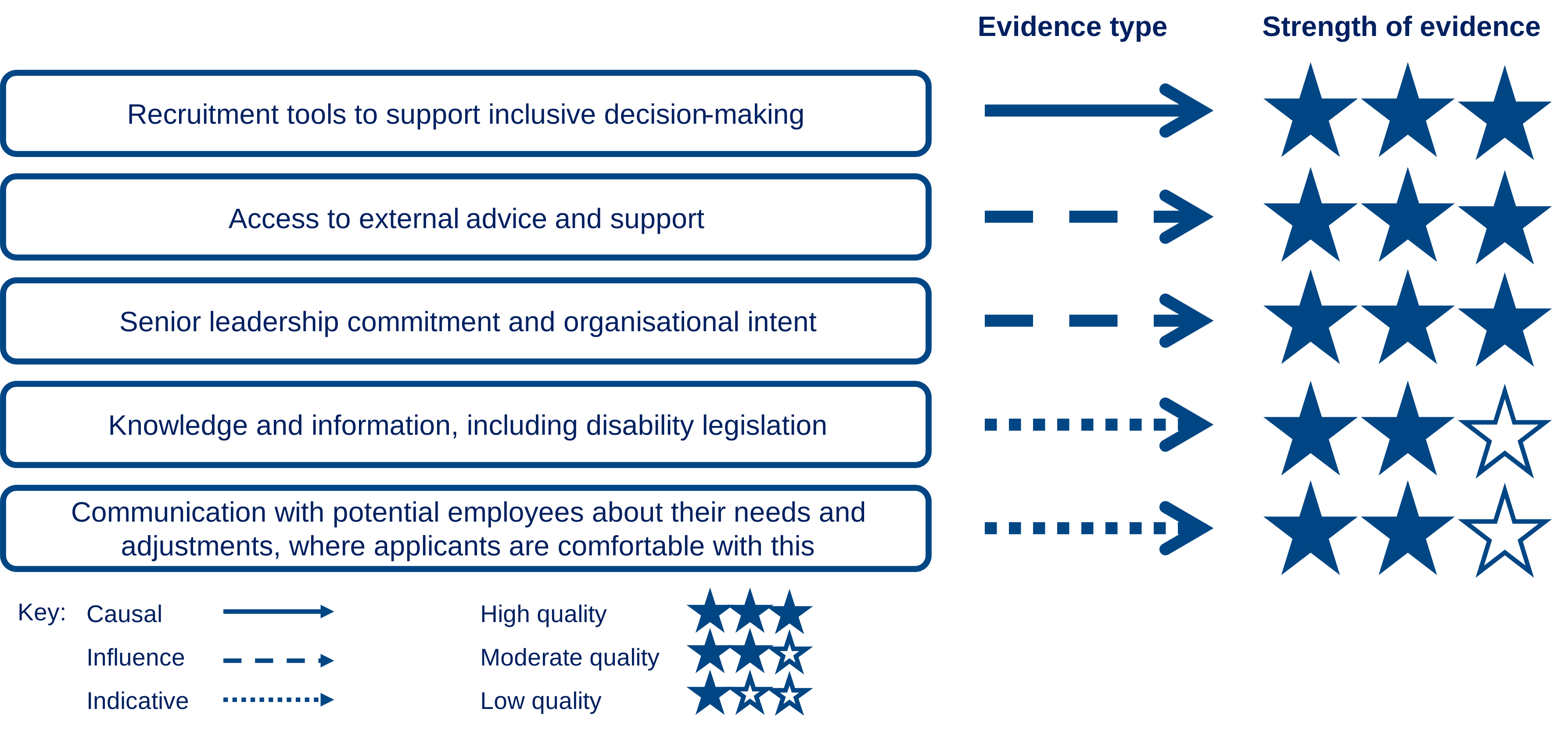
Figure 1 shows enablers of inclusive recruitment by evidence type and strength of evidence.
Recruitment tools to support inclusive decision-making; Evidence type: causal; Strength of evidence: high quality.
Access to external advice and support; Evidence type: influence; Strength of evidence: high quality.
Senior leadership commitment and organisational intent; Evidence type: influence; Strength of evidence: high quality.
Knowledge and information, including disability legislation; Evidence type: indicative; Strength of evidence: moderate quality.
Communication with potential employees about their needs and adjustments, where applicants are comfortable with this; Evidence type: indicative; Strength of evidence: moderate quality.
Source: Institute for Employment Studies, 2026.
Inclusive recruitment practices
The most promising employer recruitment practices identified in this evidence review are practical and introduce structure to the recruitment process. This includes:
-
training recruitment managers and staff to increase their knowledge, build skills and change behaviours (see Case study 1: Interactive Training Video)
-
suppressing or removing identifying information during recruitment
-
standardised behavioural interviews for all candidates
-
using objective criteria for recruitment
-
using AI to mitigate negative disability bias among recruiting managers and improve transparency in decision-making and candidate selection (see Case study 2: Using Generative AI)
While there is high and moderate quality evidence that these approaches can mitigate negative disability bias and improve transparency in recruitment (see Figure 2), the evidence does not show that these approaches lead to an increase in recruitment of disabled people and those with health conditions. Since evidence on variation by sector, geography and local economy was limited, local adaptation should be guided by employer size, sector skill needs, and the availability of local support services.
Figure 2 Inclusive recruitment practices – evidence standards
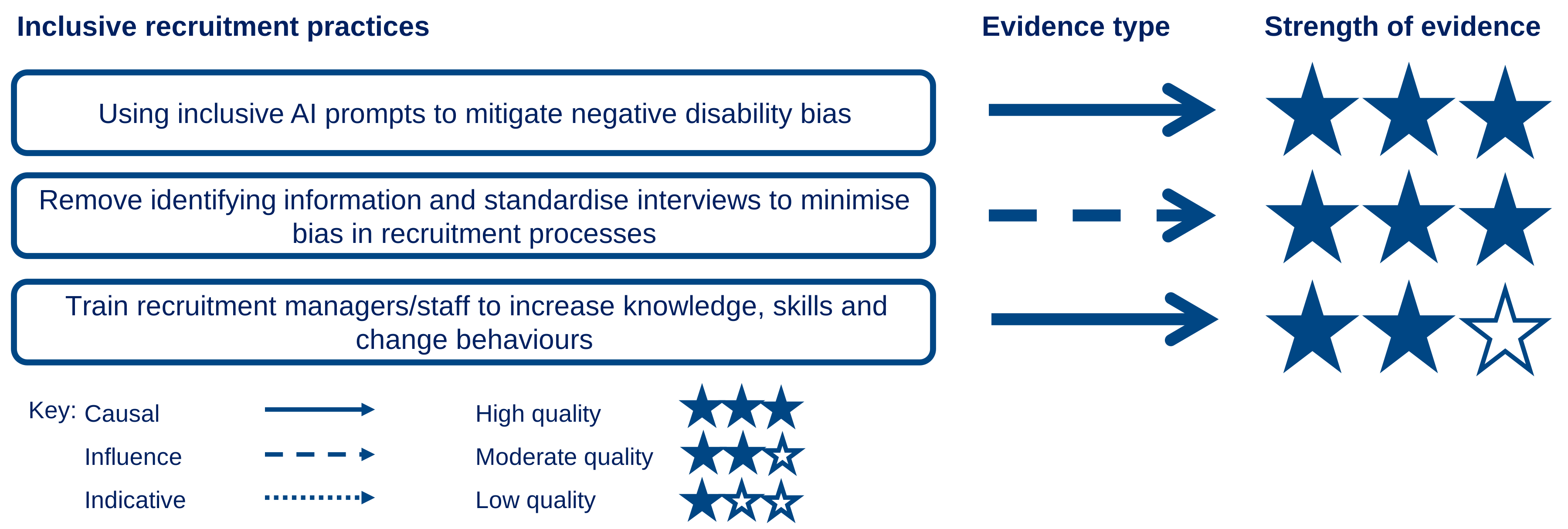
Figure 2 shows inclusive recruitment practices by evidence type and strength of evidence.
Using inclusive AI prompts to mitigate negative disability bias; Evidence type: causal; Strength of evidence: high quality.
Remove identifying information and standardise interviews to minimise bias in recruitment processes; Evidence type: influence; Strength of evidence: high quality.
Train recruitment managers/staff to increase knowledge, skills and change behaviours; Evidence type: causal; Strength of evidence: moderate quality.
Source: Institute for Employment Studies, 2026.
The role of ALMP practitioners
ALMP practitioners can support employers to recruit disabled people and people with health conditions by combining practical information and recruitment process support. These include:
-
providing guidance on schemes and tools, such as Access to Work, Disability Confident and Health Adjustment Passports
-
providing advice and guidance to support employers to make job adverts and recruitment processes more accessible by using inclusive language, communicating employer flexibility and accommodations clearly, and where they are used, using AI tools positively and responsibly during recruitment
-
acting as intermediaries between employers and participants. Practitioners can identify suitable opportunities and match these with participants’ capabilities, support needs and work preferences. This brokerage role is particularly important where employers have limited experience of recruiting disabled people or people with health conditions, or where employers lack dedicated Human Resource (HR) capacity
These findings are practical, focused on ‘how’ ALMP practitioners can support employers. The review did not seek evidence on the business case for a diverse workforce, and it did not uncover robust evidence on how to position the ALMP support offer to employers. The evidence here was rated indicative – moderate, meaning the evidence is suggestive and cannot be directly linked to outcomes (see Figure 3 below).
Figure 3 The role of ALMP practitioners – evidence standards
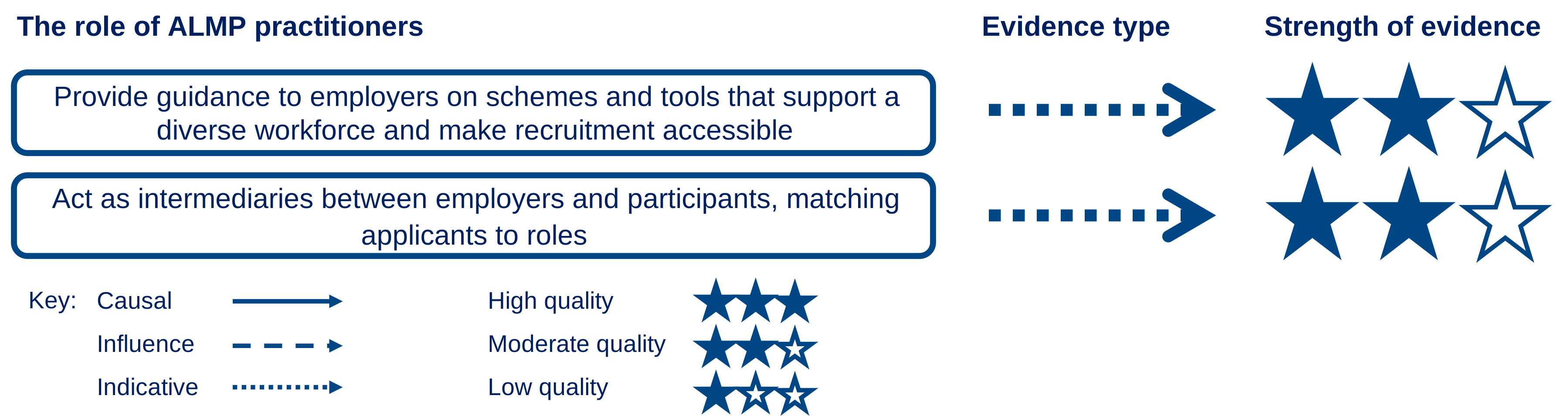
Figure 3 shows the role of ALMP practitioners by evidence type and strength of evidence.
Provide guidance to employers on schemes and tools that support a diverse workforce and make recruitment accessible; Evidence type: indicative; Strength of evidence: moderate quality.
Act as intermediaries between employers and participants, matching applicants to roles; Evidence type: indicative; Strength of evidence: moderate quality.
Source: Institute for Employment Studies, 2026.
Recommendations
The full report contains detailed practical recommendations for employers and ALMP practitioners about how to support the recruitment of disabled people and people with health conditions (Table 1).
Working with employers, ALMP practitioners should support and encourage them to:
-
use structured recruitment processes that reduce scope for bias, including clear job-relevant criteria, consistent interview questions or tasks and objective scoring
-
embed targeted disability-specific training for hiring managers and others involved in recruitment, focused on practical recruitment decisions and challenging assumptions and biases
-
use AI tools only where they support fair, transparent and accountable decision-making, with safeguards focused on job-relevant inclusive criteria and human judgement
-
use job adverts, job descriptions and recruitment materials that use inclusive and accessible language, communicate flexible working where appropriate, and state clearly that in-work accommodations are available
-
identify and understand the business needs and support senior leaders and HR decision-makers to understand the benefits of having a diverse workforce and reflect disability inclusion in recruitment strategy and organisational priorities
ALMP practitioners should:
-
build employer confidence by providing clear, practical information on disability legislation, reasonable adjustments, workplace accommodations and available support, such as Access to Work, Disability Confident and Health Adjustment Passports
-
set out the support they can offer employers, particularly SMEs clearly, which may include guidance, practical templates and job brokerage support to reduce the perceived risk and make accommodations feel manageable
Authors
This report was written by researchers from the Institute for Employment Studies.
Olivia Garner, Lorraine Lanceley, Rosie Gloster, Arundhati Dave, Billy Campbell, Claudia Plowden Roberts, and Dom Hewitt.
Acknowledgements
The authors are indebted to Josh Meakings and Marie Stobbart at the Department for Work and Pensions (DWP). Our thanks also go to the Steering Group, which has included DWP staff Jane Mansour, James Halse, Hatti Archer, Mark Langdon, Peter Weller, Tanya Powell, Tony Wilson, Nicolas Warrington, Robin Wood, Ismay MacDonald, Nadya Al-Hamdani, Charlotte Harris, Martin Sweeney (Cabinet Office), Francesca Lace (ESRC UKRI), Svetlana Batrakova (NHS England), Chris Attwood (MHCLG), John Ford (QMUL), Fliss Miller and Andy Williams (EMCCA) who have provided guidance and feedback.
Thank you also to the expert advisers Dr Fernanda Aguilar Perez (Royal Society for Public Health), members of the user panel for their valuable insights that shaped the drafting of this review. Thanks to Elizabeth Gerard (L&W) for their advice, guidance and review of this report and to IES staff Dom Hewitt, Zofia Bajorek and Abi Clark for their support with literature searching and sifting, and to Megan Streb at What Works Centre for Local Economic Growth for her support in raising awareness among MSA staff of this and other evidence review user panels.
1. Introduction
A quarter (25%) of working age adults are disabled (DWP, 2026b), yet only 53% of disabled people in the UK are in employment, compared to 83% of non-disabled people (DWP, 2026c). To reduce ill-health related economic inactivity and close the disability employment gap, UK policy uses active labour market policy (ALMPs) programmes, such as Connect to Work and WorkWell, to support disabled people and people with health conditions move closer to and into employment. These programmes aim to improve connections between people looking for work and employers, for example by identifying and tailoring suitable job opportunities, coordinating workplace accommodations, and sharing employee support plans to ensure a smooth transition into work.
To inform employers and staff delivering ALMPs, this Rapid Evidence Assessment (REA) summarises the evidence about how to support employers to recruit disabled people and people with health conditions.
About the Labour Market Evidence Programme
The Department for Work and Pensions (DWP) commissioned the Institute for Employment Studies, in partnership with Learning and Work Institute, to deliver evidence reviews and practical resources on key labour market issues to inform staff in Mayoral Strategic Authorities (MSAs), Local Authority Connect to Work Clusters and Integrated Care Boards (ICBs).
The programme aims to support local policy makers to better understand what works in improving labour market outcomes for out-of-work and in-work individuals. There are three strands within the Labour Market Evidence Programme (LMEP): a user consultation, a series of evidence reviews and a lessons learned phase. The LMEP is guided by a DWP steering group and expert advisors.
This REA is one of several reviews published as part of the LMEP. This REA was informed by consultation with a user panel and feedback from expert advisors. Each evidence review will be accompanied by a range of dissemination outputs, such as webinars and briefing papers, to support local stakeholders.
Research questions
This REA focuses on the following key research questions, designed in partnership with DWP, the programme’s steering group and the LMEP’s expert advisors.
How can employers be supported to recruit disabled people and people with health conditions?
1. Enablers of inclusive recruitment:
-
what enables employers, particularly SMEs, to increase their recruitment of disabled people and people with health conditions?
-
do these enablers differ by sector and/or employer size?
-
what are the main barriers employers face that influence their ability or willingness to recruit disabled people and those with health conditions, and how can they be overcome?
2. Effective inclusive recruitment strategies:
-
what are the most effective ways for employers, particularly SMEs, to recruit disabled people and people with health conditions?
-
how does this differ by sector, employer size, local economy?
3. The role of the ALMP practitioner:
-
what information and interventions can be provided by ALMP practitioners to employers to support the recruitment of disabled people and people with health conditions?
-
is there evidence of other ways employers can be supported?
Scope
The review covered evaluations of employer recruitment practices and ALMP interventions in England, Scotland, Wales, Northern Ireland or other high-income Organisation for Economic Co-operation and Development (OECD) countries including the (United States) US, countries in Europe, Australia, Japan, Korea, New Zealand, with:
-
inclusive recruitment practices at the point of job entry, enablers of inclusive recruitment practices, ways to support employers to adopt inclusive approaches, or
-
a focus on the attainment of individual outcomes such as job entry, employer outcomes such as openness to hiring inclusively, or increase in the number of disabled people in the workforce, with recommendations and considerations for future employment practice
-
impact studies, process studies and studies highlighting ‘what works’ elements of a programme or intervention
-
an evaluation published between January 1997 and June 2026, to incorporate changes to ALMPs since 1997 and the introduction of New Deal programmes
These criteria were selected to ensure that findings could provide practical evidence for local employment support delivery. It focuses on employer recruitment practices and employer-facing ALMP activity at the point of job entry, because these are most directly relevant to programmes such as Connect to Work. The scope includes evidence on promising practice from the UK and comparable high-income OECD countries to ensure the most comparable labour markets, employer systems and policy contexts were prioritised.
The review does not cover how to support disabled people and those with health conditions into employment, nor how to retain them in work once employed, as these topics are the focus of two other reviews being conducted in 2026 as part of the Labour Market Evidence Programme. It was also decided not to include employer incentives, such as wage subsidies, in the scope of this review.
Methodological overview
The evidence review was undertaken in May and June 2026. Searches were conducted across a range of sources, including sources of ‘grey literature’ (non-academic publications) and academic databases. See the accompanying technical report for a full list of sites searched. In addition to these results, studies were identified through a call for evidence.
The search strategy for this review involved creating a broad search string used on various databases. This was adapted to meet the requirements of different search engines. Search results that appeared relevant based on the report title and abstract were uploaded into Covidence, a document management software commonly used for evidence reviews.
A multi-stage sifting process using the inclusion and exclusion criteria was then applied:
-
initial searches returned 510 studies that were screened for inclusion based on their title, abstract and summary. A further 8 studies were shared through the call for evidence
-
75 studies progressed to a quality of evidence assessment using tools appropriate to their methodologies (see the Technical Report for full explanation)
-
44 primary research studies were quality assessed using the Youth Endowment Fund Evidence Quality Assessment (YEF-EQA) criteria
-
31 systematic reviews and rapid evidence reviews were quality assessed using the Critical Appraisal Skills Programme (CASP) systematic review checklist
-
through the assessment, the methodology of all studies was given a score of high, moderate, low, or very low
-
-
the papers whose methodologies scored high or moderate were then subject to a full text screen against the inclusion criteria for the review. Papers were marked by two researchers as ‘include’, ‘maybe’ or ‘exclude’ based on the inclusion criteria and moderated
-
15 moderate and high-quality studies remained after full-text screening against the inclusion criteria. These 15 studies form the evidence base of this report
About the reports identified and limitations
Included studies
The review prioritised high and moderate-quality studies, accepting a smaller evidence base in exchange for greater confidence in the included evidence. Six studies were assessed as high-quality and nine papers as moderate quality. It should be noted that the strength of evidence scores do not reflect the extent to which the evaluation reports address the review’s research questions. As such, a ‘high’ scoring report may not address the review’s research questions in detail, while a ‘low’ scoring report might.
The review and extraction of the evidence from the selected reports considered:
-
the extent to which the reports included information relevant to the research questions, both directly and indirectly
-
the extent to which the authors considered the intervention to be effective and why
Limitations
There are several limitations to the available evidence base:
-
high-quality evaluations of HR practices and recruitment practices are not common
-
employer engagement, while a common element in employment support programmes, tends not to be an explicit focus in evaluations
-
there is little nuance in the evidence base to understand variation in what works to support employers to recruit disabled people and those with health conditions based on different needs
The search strategy was necessarily limited:
-
the Expert Advisors, and knowledge of key academic databases informed the main databases and sources to be searched. The evidence on this topic spans multiple disciplines, such as public health, social policy and HR management, meaning the evidence is dispersed across several databases. These were prioritised based on coverage (see the Technical Report)
-
the search string returned a workable volume of studies to sift. This meant search strings tailored to each individual research question were not necessary
The quality threshold for the review has been set as high as possible based on a steer from expert advisors and user panels that the REA should draw on good quality evidence. Including lower quality studies would have provided more examples in answer to the research questions, but confidence in the findings would have been lower.
2. Findings: Enablers of inclusive recruitment
This section explores the enablers of inclusive recruitment. High-quality evidence on the enablers for employers to recruit disabled people and people with health conditions included two systematic reviews, two studies based on employer surveys and one literature review.
Key findings
-
There is high and moderate quality evidence that senior leadership commitment and organisational intent underpin openness to inclusive recruitment. When employers perceive organisational value, understand disability legislation and how to make accommodations, and can access practical support, their intent to hire disabled people and those with health conditions increases.
-
Larger employers are more likely than small and medium-sized employers (SMEs) to have formal HR systems, diversity strategies and resources to implement inclusive practices.
-
Information gaps are often greatest in smaller firms, which in combination with limited capacity and concerns about the potential costs of employing a disabled person are barriers to inclusive recruitment. The evidence shows that these barriers are not permanent. With support to build leadership commitment, employers can and do become more open to hiring inclusively.
-
For SMEs, the most important enablers of openness to inclusive recruitment are low-burden practical guidance, access to trusted external advice, clear information on accommodations and available support, and recruitment tools that reduce uncertainty and perceived risk.
-
There was no evidence on the effect of local labour market conditions, and very limited evidence on the effect of sectoral differences on the enablers of inclusive recruitment.
Accommodations is used in this report as an umbrella term referring to any change to a job or recruitment process that supports the effective inclusion of disabled people or those with health conditions. It includes reasonable adjustments, which are a legal duty.
Enablers of inclusive hiring
At the heart of employer behaviour is capability. Employers who understand disability legislation, know how to make accommodations, and feel familiar with legal frameworks, are more open to recruiting disabled people and those with health conditions. Larger employers tend to have higher commitment to hiring disabled people because they have more knowledge and better inclusion of disability in diversity efforts (Chan and others 2010).
Knowledge and information
Self-reported knowledge of disability legislation and accommodations is associated with employer commitment to hiring disabled people (Chan and others 2010). However, employer knowledge and awareness of legislation on its own is not sufficient to create change in practice. Awareness of legislation and proactive organisational change, through senior leadership buy-in and culture change, is needed alongside it. A systematic review (Clayton and others 2012) of anti-discrimination legislation and workplace adjustments found that the introduction of anti-discrimination legislation in the UK did not lead to improvement in employment rates at the population level for people reporting limiting long-standing illness. Awareness of anti-discrimination legislation was higher amongst larger employers, public sector and voluntary organisations and those already employing disabled people. The studies reported low levels of awareness of the UK’s Disability Discrimination Act’s (1995) main provision – making reasonable adjustments for disabled employees. This suggests that even where there is awareness of the legislative intent overall, how to implement it in practice needs to be supported.
There is evidence that ongoing knowledge sharing and training can reduce organisational barriers to employing disabled people. Following information sharing and staff, one employer survey (Erikson and others 2013) found that fewer employers cited barriers over time, such as lack of supervisor knowledge of accommodations, and negative attitudes and stereotypes. However, the pace of change suggests that information sharing, and knowledge building of the legal underpinning needs to be ongoing.
Leadership and organisational intent
Recruitment of disabled people is more likely where disability is embedded in diversity strategies and supported by senior leaders. Influencing senior decision-makers, those who ultimately shape organisational priorities and norms, is key in enabling recruitment for this group (Barrington and others 2014, Chan and others 2010, Erikson and others 2013). Similarly, employers are more engaged when they see a clear alignment between disability inclusion and their organisational mission or values (van Os 2025).
A US-based study (Gasper and others 2020) identified having measurable goals for hiring disabled people as the strongest predictor of organisations reporting hiring a disabled person in the past 12 months, out of different recruitment strategies, although it did not say whether these goals and progress towards them were publicly reported. Organisations with these goals were about 3.2 times more likely to have reported hiring a disabled person in the past 12 months than those without such goals. Measurable goals and monitoring disability data make disability an objective priority and encourage accountability (Barrington and others 2014). Larger employers are more likely to measure disability data such as tracking the number of disabled employees and have measurable goals for hiring disabled people (Gasper and others 2020).
A survey of employers (Gasper and others 2020) found senior leaders perceived hiring disabled people created a positive image for customers, prospective employees, and increased the pool of qualified candidates. Senior leaders from companies that recruited disabled people were more likely to cite increasing morale and productivity as benefits than those from companies not recruiting disabled people. In interviews with employers, further benefits cited included disabled employees bringing in new perspectives, increasing soft skills of other employees and disabled employees’ loyalty to the organisation.
Communication
Employers value honest conversations with potential employees about needs and accommodations (Ingold and others 2017). These experiences make disability less abstract, helping to replace assumptions with practical understanding.
Hiring tools
There is emerging evidence that tools and innovations can support more inclusive decision-making. While still developing, the use of inclusion‐focussed generative AI points to ways of supporting employers where the confidence and decision-making capability of recruiting managers or uncertainty might otherwise lead to risk-averse decisions (see case study 2 in Chapter 3 below).
External support
Employers are more open to recruiting disabled people and those with health conditions when they can draw on advice and ongoing support from external providers. Rehabilitation professionals and advisory services can have an important role in helping employers navigate accommodations and workplace accommodations with confidence (Chan and others 2010). Employers working in partnership with organisations supporting disabled people were 3.2 times more likely to have reported hiring a disabled person, in a US study (Gasper and others 2020). However, it is not clear in the study what types of supporting organisations these were.
Employer engagement with ALMPs does not always translate into inclusive recruitment. One study in the UK and Denmark (Ingold and Valizade 2017) found that ALMPs marginally increased employers’ probability of recruiting long-term unemployed people in both countries and lone parents and disabled people in Denmark, the effect was not sufficiently strong to offset the negative impact of employers’ selection criteria. In Denmark, ALMP practitioners increased employer recruitment of specific groups when they were information providers and made employers aware of suitable candidates. The study concluded that stronger employer engagement, better preparing of candidates for recruitment and engaging in more two-way dialogue with employers is needed if ALMP providers are to meaningfully support employers to increase their recruitment from disadvantaged groups, including disabled people.
Common barriers to inclusive practice
The evidence shows that employers, particularly SMEs, often operate with limited information, which increases their resistance to hiring disabled people and those with health conditions.
Information gaps
A recurring theme across the evidence is that recruiting employers often feel underinformed. This includes:
-
limited understanding of disability legislation and suitable accommodations
-
uncertainty about how to manage disclosure
-
lack of awareness about financial support for accommodations
-
uncertainty about where to access specialist advice and support
Many managers do not have recent training on disability legislation, leading to outdated knowledge (Ingold and Stuart 2014, Zhao and others 2025).
Negative perceptions
Negative attitudes may also influence hiring decisions. A study of small business leaders’ perceptions and biases in employing disabled people found employers held negative stereotypes, including assumptions about disabled people having lower productivity or higher dependency (Goodman and others 2024). Employers may also be reluctant to recruit individuals with long periods out of work, viewing them as higher risk than applicants with more recent work history (Department for Work and Pensions 2026).
There is a persistent perception issue around candidate supply. One US-based survey (Erikson and others 2013) found that over half of employers believe that qualified applicants are not likely to be disabled people. This perception may discourage employers from actively seeking disabled candidates. UK and Denmark employers tended to have fixed views on the types of roles suitable for disabled candidates and the suitability of physical workplaces. In the same study employers also felt that the welfare system pushed individuals into work before they were work-ready (Ingold and others 2017). There is a strong sense of perceived risk of hiring disabled people, with employers worrying about getting things wrong, making inappropriate adjustments, or facing legal consequences (Gasper and others 2020).
Experience of SMEs
Negative bias and perception of risk when recruiting disabled people and those with health conditions is more common amongst SMEs (Goodman and others 2024). They are less likely to have knowledge and experience of onboarding and supporting disabled employees. Smaller businesses may not have HR departments and may take an informal approach to HR management. Capacity constraints are a key risk factor for SMEs and hiring someone requiring accommodations can be seen as requiring more time, coordination, and management.
A survey of HR professionals in largely US-based organisations (Erikson and others 2013) found that larger organisations tend to implement more disability inclusive HR practices compared with smaller organisations. Some sector difference was also found, with professional industries (including professional, scientific and technical services, finance, insurance, information, real estate, and management companies) implementing fewer disability inclusive recruitment practices compared to other industries.
3. Findings: Inclusive recruitment strategies: Effective employer approaches
This section explores effective approaches for employers to recruit disabled people and people with health conditions. There are interventions that influence staff attitudes towards inclusive recruitment, but whether these approaches increase the recruitment of disabled people and those with health conditions is not evidenced.
Key findings
-
The most promising inclusive recruitment approaches are practical and structured, including disability-specific training for hiring managers and adaptations to recruitment processes that reduce scope for bias.
-
Training can improve knowledge, awareness, attitudes and stated intent to hire disabled people and people with health conditions, but there is limited evidence that it leads directly to changes in hiring outcomes.
-
Structured recruitment practices, such as clear job-relevant criteria, standardised interviews, objective scoring and removing identifying information during screening, are associated with inclusive recruitment practices. Accessible recruitment processes, including accessible interview locations and online application systems, are associated with a higher likelihood of employers reporting that they have hired a disabled person.
-
Inclusion-focused generative AI shows promise in reducing disability bias and improving transparency in hiring decisions, but evidence is early and experimental, and AI should support rather than replace human judgement.
-
There is more evidence on larger organisations implementing inclusive recruitment strategies than SMEs.
-
Evidence on variation by sector, geography and local economy remains limited.
Training interventions
Training interventions aim to change employee knowledge, skills and behaviours during the recruitment process. A meta-review of diversity interventions found that diversity training was associated with changes in measures of staff knowledge, awareness, attitudes and intended behaviours. However, evidence that diversity training changed behaviour and hiring and job-related outcomes was limited, including for disabled applicants and those with health conditions (Zhao and others 2025).
Case study 1 illustrates evidence of improved awareness and intention to recruit but does not explore whether this resulted in changes in practice. It provides an example from the US (McDonnall and others 2026) of an interactive training video (IV) for hiring managers. The IV aimed to reduce bias in the recruitment process, by increasing the knowledge of hiring managers, changing their attitudes and openness to hiring blind people or those with low vision. Using a self-assessment survey measure before and directly after the video, the IV increased self-reported measures of knowledge and stated intentions to hire diversely.
Although this study cannot necessarily be extrapolated to other types of disability or health conditions, it provides evidence of how workplace training interventions can increase awareness and understanding of disabled people and specific health conditions and positively change attitudes.
The intervention offers several implications for policy and practice. Employers could embed disability-specific video training within learning and development programmes and require hiring personnel to complete the training before recruitment processes. Such an approach has the potential to address knowledge and awareness gaps in staff in a cost-effective and scalable manner. However, further evidence is needed to establish whether this approach then has a direct effect on hiring outcomes.
Case study 1: Interactive recruitment training videos
Two interactive training interventions increased trainees’ knowledge about blindness and low vision, improved their knowledge of how people who are blind or have low vision perform work tasks and increased their intent to hire from this group.
Study 2 involved 63 people making hiring decisions in their organisation, recruited from local businesses, professional and civic organisations, and the authors’ university. Study 1 supports the findings from Study 2 and involved 157 management students. This group was considered to be future hiring managers, so findings should be interpreted in that context.
The Interactive Video (IV) began with an introduction video with key information about people who are blind or have low vision (lasting 7-14 minutes depending on viewer selections). The IV consisted of 117 individual videos, each ranging in length from 30 seconds to 5 minutes, with many videos between 1 to 3 minutes. Videos were presented by people who are blind or have low vision to provide exposure to this group, Learners could select questions from three topic areas, enabling the learner to tailor the training to their interests. These were: employment-related questions, general questions about blindness and low vision, and non-employment related personal questions about everyday life that were designed to address curiosity about blindness and low-vision. In both studies, participants spent between 30 and 40 minutes viewing the IV, depending on viewer selections and how long they took to compete the pre-test.
In study 2, with people who make hiring decisions in their organisation, participants were allocated either the full IV or an IV about neurodiversity in the workplace.
Participants completed survey questions before and after the training. The questions measured:
-
participants’ general knowledge about blindness and low vision
-
knowledge about how people who are blind or have low vision complete work tasks
-
explicit attitudes toward people who are blind or have low vision as employees (through using an Employer Attitudes Toward Blind Employees Scale)
-
attitudes regarding the competence of people who are blind or have low vision (through an Implicit Association Test – Blind/Visually Impaired), and
-
intent to hire. Intent to hire was measured with a question that asks participants to assume a qualified person with vision loss had applied to their company, and indicate likelihood for statements, such as “I am ready to hire an individual who is blind or has low vision.” Ratings were on a seven-point scale, from 0 (Unlikely) to 6 (Likely), across three items, for a possible range of zero to 21
In study 1 with management students, participants were allocated to one of three interventions:
(1) the full interactive video (IV)
(2) limited IV, which excluded the material on the third topic area on personal questions
(3) a control IV with video topics related to general human resources management and workplace issues
In both studies, participants who viewed the IV showed greater improvements in knowledge, stated attitudes and intent to hire someone who is blind or has low vision than participants in the control condition. On average, participants went from being moderately likely to hire to more likely to hire someone who is blind or has low vision. In the control groups there was no significant change in intent to hire.
For study 1, improvements were retained at a three-month follow-up. Knowledge and attitude scores fell slightly over time but remained significantly higher than baseline. Study 2 did not include a three-month follow-up.
In study 1, improvements in the outcome measures were similar for the (1) full IV and (2) limited IV conditions. This suggests that the opportunity to view answers to personal questions about blindness does not result in greater improvements in attitudes and intent to hire.
The recruitment process
Another group of evidenced interventions and approaches aims to reduce bias during the recruitment process for disabled people and those with health conditions.
How vacancies are advertised is important when considering the likelihood of bias in the recruitment process. One study found that when employers engage actively in recruiting disabled people, for example through targeted outreach and advertising, and engagement with disability employment networks, the likelihood of hiring a disabled person increases (Gasper and others 2020). However, the study found that the increase in employment for disabled people was only in medium and large companies, with no significant change for small companies.
The individual steps in the recruitment and selection process can also be reviewed for inclusivity. A high-quality systematic meta-review (Zhao and others 2025) found that most interventions seeking to de-bias selection procedures were associated with outcomes promoting diversity in recruitment. Interventions relating to recruitment included:
-
supressing or removing identifying information during recruitment
-
standardised behavioural interviews for all candidates
-
using objective criteria for recruitment
These strategies were associated with promoting diversity in recruitment but were generalised across several diversity dimensions, particularly gender, rather than focused solely on disabled people and those with health conditions.
Employer strategies focused on making application processes more accessible were also identified in a US-based study (Gasper and others 2020) as being associated with a significantly increased likelihood of employers having hired a disabled person during the previous 12 months. A strategy already implemented by most employers was having accessible interview locations, and this was associated with employers being approximately 2.6 times more likely to have hired a disabled person. Employers with self-reported accessible online application systems, for example, online systems accessible to blind and low vision applicants, were 60% more likely to have hired a disabled person, and only around a third of employers implemented this strategy.
AI is emerging as part of the recruitment process. Case study 2 (Yang 2026) illustrates an inclusion-focused generative AI tool, designed to support human decision-making in hiring, by mitigating negative disability bias among recruiting managers. The evaluation found that the AI tool effectively mitigated bias compared to using standard generative AI in recruitment. Use of the model also improved transparency in decision-making and candidate selection.
The example suggests that AI tools used in recruitment can help to mitigate bias when they embed prompts that reflect diversity values and are used to support bias auditing through transparent decision records. Employers could use these tools alongside structured interviews and other measures, such as removing identifying information, to create a more inclusive recruitment process. The effective use of AI will depend on organisational investment in tools, training and support. Also, AI capabilities and applications are evolving rapidly, meaning the opportunities available to practitioners are likely to change significantly over time.
Case study 2: Inclusion-focused generative AI
An Australian study conducted by Yang in 2026 tested whether inclusion-focused generative AI, based on OpenAI’s GPT-4, could reduce disability bias in recruitment decisions, based on diversity, fairness and inclusion principles.
The study was conducted as a randomised controlled experiment, where participants were allocated to one of four treatment conditions, in a hiring simulation experiment. The study participants were 238 experienced HR professionals from a range of industries including engineering, healthcare and IT.
The intervention group were provided with an inclusion-focused generative AI tool with structured, fairness‐oriented prompts that reminded them to focus on job‐relevant competencies and inclusive evaluation criteria throughout the hiring task.
The control group used a standard generative AI tool that was focussed on technical competencies without explicitly addressing bias.
Participants were asked to select a candidate to hire; the intervention group selected a significantly higher proportion of disabled applicants compared with the control group. The generative AI tool helped hiring managers make hiring decisions based on competencies and relevant qualifications and reduce negative disability bias.
The prompts used are provided in appendix C.
The study suggests that inclusive AI design can have a role supporting recruitment by structuring decisions, clarifying criteria and making reasoning more auditable. However, there are also risks of using AI in recruitment that need to be explored, and employees should undergo training to ensure AI is used safely and to support rather than replace human decision-making. The study was conducted in controlled laboratory conditions, so may not reflect real-world hiring conditions. Nevertheless, it represents an emerging area of practice to build on.
4. Findings: The role of ALMP practitioners
ALMP practitioners have an important role in supporting employers to recruit disabled people and those with health conditions with confidence. Their direct work with both people out of work and employers puts them in a unique position to advocate for their participants, and to educate employers about how to recruit disabled people and those with health conditions and employ a diverse workforce.
Through a range of approaches, ALMP practitioners can seek to influence employers’ approaches to recruitment to support employment outcomes for disabled people and those with health conditions. However, the evidence base does not yet show clearly which practitioner activities have the greatest impact on recruitment outcomes, and which approaches to target to best align to employer capacity.
Key findings
-
ALMP practitioners can have an important intermediary role between employers and participants, helping employers understand how to recruit disabled people and people with health conditions and supporting participants to access suitable opportunities.
-
The evidence base on practitioner activity is limited. There is little robust evidence on which activities have the greatest impact on recruitment outcomes. Further evidence is needed on whether practitioner approaches work differently for SMEs, sectors and local labour markets.
-
Practitioners can support employer engagement by framing inclusive recruitment in ways that resonate with employers, including access to suitable candidates, practical recruitment support, financial value and links to wider regional support services.
-
A key practitioner role is providing clear information on schemes and tools such as Access to Work, Disability Confident and Health Adjustment Passports, alongside guidance on reasonable adjustments and accessible recruitment practice.
-
Practitioners can help challenge negative assumptions and build employer confidence by sharing evidence, programme learning and success stories from employers and participants.
-
Practitioners should encourage employers to adopt inclusive recruitment practices, including accessible job adverts, clear communication about flexibility and accommodations, structured selection processes and responsible use of AI where relevant.
Employers as partners
ALMPs focus both on supporting people into work alongside meeting employer needs, reflecting the important enabling role employers can have in the recruitment of disabled people and those with health conditions (Barrington and others 2014, Ingold and Stuart 2014). Recognising and communicating the value to employers of inclusive recruitment has the opportunity to increase employer buy-in to ALMPs, enabling greater alignment of support provision to employer needs and outcomes for participants.
Evidence from a Dutch study suggests ALMP practitioners should engage employers through proactive outreach, using language and rationale for engagement that resonates with employers. This rationale includes the financial value of the service for employers, having access to quality candidates receiving tailored support, and being linked into regional support services (van Os 2025). ALMP practitioners should encourage employers to take a strategic approach to selecting and engaging with ALMP support and should work with employers to map their recruitment support needs against their capability and motivation. This would reduce ad-hoc decision-making and help ensure that support meets both employer and applicant needs. These recommendations are from a Dutch study (van Os 2025) of employers using support when recruiting disabled people, including working with public employment services for hiring. However, employer decisions about which support organisations to engage and when were often ad-hoc, based on convenience, rather than aligned to business strategy. Employers in the study viewed public employment support as more financially attractive than private sector recruitment partners as it was free to use and supported employers to access to candidates who were receiving social security payments. However, it could also be more complicated for employers to work with due to regional differences in practice.
Information provision
To enable effective recruitment of disabled people and people with health conditions, the evidence suggests ALMP practitioners should ensure that employers they work with are aware of schemes and subsidies available to employers when hiring from these populations (van Os 2025, Department for Work and Pensions 2026). ALMP practitioners are well placed to provide information and guidance for employers on the following schemes:
-
Access to Work: Provides employers a one-off grant to help fund practical support for disabled employees and those with health conditions to enable them to work or manage their health condition/disability, or fund communication support at interview. Evaluations of Access to Work have highlighted its important role in supporting the recruitment of disabled workers, although stakeholders have cautioned about long wait lists and slow responses to applications and claims (Holland and others 2026)
-
Disability Confident: A government-certified accreditation awarded to organisations that commit to recruiting and retaining disabled people and those with health conditions through embedding inclusive practice. However, an evaluation of the Disability Confident scheme found minimal measurable impact on employment outcomes or workplace experiences for disabled people, where overall effectiveness is inconsistent among employers (Holland and others 2026)
-
Health Adjustment Passport: A personal, portable document that sets out the health details, reasonable adjustments and in-work support required by disabled people and those with health conditions
Changing employer mindsets
Negative perceptions of the absence rates and productivity of disabled people and those with health conditions are a prominent factor discouraging employers from recruiting from these populations. ALMP practitioners should ensure they effectively use evidence to communicate the benefits of employing a diverse workforce (including those referenced in section 2 such as perceptions of increasing morale, bringing in new perspectives, and increasing soft skills of other employees) and dispel negative perceptions held by employers (Ingold and others 2017).
Evidence could come from two key sources. Firstly, published research and evaluation can provide a robust evidence base to ground discussions and embed confidence in practitioners’ ability to nudge employers’ views. Secondly, practitioners could share success stories of what their programme has delivered. This could be from the perspective of either businesses they have helped to recruit or people they have helped move into good work.
Encouraging changes to recruitment practices
UK ALMP practitioners could require more of employers who engage with their services, particularly in buoyant labour markets, recognising the perceived value in recruiting via ALMP when compared to private recruiters, as noted earlier. In research (Ingold and Valizade 2017) comparing Danish and UK ALMPs, researchers found that in Denmark, recruitment from ALMPs was positively associated with the likelihood of hiring disabled people, but this was not shown in the UK data.
Employers may not be aware of the effectiveness of different recruitment strategies, with a US-based study finding a mismatch between the practices commonly implemented and those identified as effective (Gasper and others 2020). For example, referencing non-discrimination and equal opportunity policies in job announcements were commonly implemented but were not significantly associated with hiring a disabled person. ALMP practitioners have a role in encouraging employers to use strategies identified as effective.
Requirements might include support to employers to ensure job adverts communicate accessible and inclusive working practices and organisational values. This may include:
-
providing information on available flexible working arrangements, where appropriate (Holland and others 2026)
-
using inclusive, accessible language
-
stating a commitment to adaptations throughout the recruitment process where required
Ahead of applying for a role, disabled people and those with health conditions will review a job advert and organisational profile to form a judgement as to how inclusive an employer may be. It is important, therefore, that employers ensure job adverts demonstrate their commitment to inclusive recruitment practices and an accessible workplace.
Evidence from the US shows that disabled people tend to be more interested in wider job benefits, including health benefits and accommodations, as well as the headline salary, so ALMP practitioners should encourage employers to ensure wider benefits are part of job adverts (Barrington and others 2014). Additionally, practitioners should encourage employers to use AI responsibly during recruitment processes. This should include recommending fairness prompts in AI hiring tools to ensure efficiencies are not disproportionately affecting disabled people and those with health conditions (Yang 2026).
Job brokerage and matching
ALMP practitioners should be active matchmakers between their employer network and the participants they support. To enable this, practitioners should seek to broker opportunities for their participants (Ingold and Valizade 2017). This should be done with an understanding of individual employer contexts, including their size, industry and skill needs. This will provide employers with confidence that the referrals align with their needs and support their engagement.
5. Conclusions
This chapter sets out what is known with reasonable confidence about how to support employers to recruit disabled people and people with health conditions, and practice that is promising but unproven. There are several evidence gaps which are outlined, followed by implications for the LMEP and the future WWCLES.
Best evidenced findings
The evidence base for this review was limited in both coverage of the research questions and strength, however:
-
there is high-quality evidence that leadership commitment and access to external support and advice can improve employer confidence, openness and stated intent to recruit inclusively
-
there is moderate quality evidence indicating a link between employer knowledge of disability legislation and reasonable adjustments, communication with potential employees about their needs, and an employer’s commitment to inclusive recruitment practices
-
larger employers are better represented in the evidence and are more likely to have capacity such as formal HR systems, diversity strategies and resources to implement inclusive recruitment approaches
The review identifies promising approaches and plausible mechanisms of change, but there are gaps in understanding what works, for whom and in what contexts to support employers to recruit disabled people and people with health conditions.
What is promising but needs more evidence
The following areas show promise but need further evaluation to evidence the research questions more directly:
-
disability-specific training can improve knowledge, attitudes and stated intent to hire, but it is not yet evidenced whether these approaches directly lead to an increase in the recruitment of disabled people and people with health conditions
-
anonymised screening, standardised interviews, objective scoring and clear job-relevant criteria are associated with fairer recruitment, but much of the evidence is general diversity evidence rather than disability-specific
-
accessible job adverts and recruitment materials are likely to widen the pool of candidates applying for positions, but there is limited evidence linking these to increased recruitment of disabled people and people with health conditions
-
there is limited evidence that advertising flexible positions leads to an increase in the recruitment of disabled people and people with health conditions
-
early experimental evidence suggests AI can help to reduce disability bias and improve transparency if used appropriately, but it has only been tested in controlled conditions
-
ALMP practitioners can plausibly help employers by providing information, challenging misconceptions, brokering roles and supporting employers, but evidence is limited on which activities make the most difference to the recruitment of disabled people and people with health conditions
Evidence gaps
Based on the agreed research questions and quality standards for this review, there were gaps in the evidence, which are outlined below.
Enablers of inclusive recruitment
-
There was no evidence on how local labour market conditions affect the enablers of inclusive recruitment, and limited evidence on sector-specific conditions shape employer willingness or ability to recruit inclusively. There is limited robust evidence on what works best to enable SMEs to recruit inclusively.
-
Evidence is needed to move beyond changes to employer openness, knowledge, confidence or intent to hire, towards examining whether enablers led to change in the recruitment of disabled people and people with health conditions.
Effective inclusive recruitment strategies
-
There was a lack of robust evidence on the effectiveness of adapted and innovative recruitment methods, including recruitment fairs where employers and applicants can meet in non-interview environments, taster days and work trials, and their impact on hiring outcomes. User panel members who were consulted for this review shared recent examples of these types of recruitment activities which are yet to be evaluated.
-
Limited disability or health condition specific evidence on recruitment processes such as anonymised screening, standardised interviews and objective scoring.
-
Limited evidence from SMEs contexts, so it is unclear how well approaches work for smaller employers.
-
Limited evidence on how effective interventions are in different sectors and labour market conditions, such as recession.
-
Inclusion-focused generative AI shows promise in reducing disability bias and improving transparency, but the evidence is still developing and based on controlled conditions rather than real-world hiring.
The role of ALMP practitioners
Good quality evidence showing how ALMP practitioners can most effectively provide information and interventions to employers, to support them to recruit disabled people and those with health conditions, was relatively limited. More research in this area should explore:
-
how ALMP practitioners can most effectively support employers to recruit inclusively, for example by sharing information on the benefits of having a diverse workforce, or by offering a specific package of support to the employer
-
which practitioner activities are most effective
-
how responsibilities should be shared between employer engagement staff and participant-facing advisers
-
whether approaches work differently for SMEs
-
at what stage in the employer engagement process, regardless of the size of the employer, practitioners should support employers to make their recruitment practices more inclusive
Implications for the LMEP
The review highlights several opportunities for the Labour Market Evidence Programme (LMEP).
To support employers and ALMP practitioners, the LMEP could translate promising approaches into practical tools, practitioner guidance and peer learning. The suitability of these dissemination formats will be assessed with the User Panel for this research. For example:
-
producing a summary document of this research report with succinct evidenced adaptions to the recruitment process to support recruitment of disabled people and those with health conditions, focusing on what employers can do. This would aid discussions between employment support providers and employers, and could include signposting resources on reasonable adjustments, Access to Work, Disability Confident and Health Adjustment Passports
-
produce information sheets, or share existing information, on key disability legislation and training sources. This builds on the study from the U.S. which found self-reported knowledge of disability legislation and accommodations was one of the strongest predictors of commitment to hiring disabled people (Chan and others, 2010)
-
share promising practice through webinars and/or peer learning sessions to discuss examples of effective employer engagement and inclusive recruitment practice. This is useful because the current evidence base is thin and practical knowledge appears to sit locally, as discussed by user panel members who were consulted for this review
-
share findings from this research at events promoting inclusive employment practices
Implications for the WWCLES
The future What Works Centre for Local Employment Support (WWCLES) could have an important evidence-building role and further opportunity to build capability in employers. There is no evidence on whether interventions aiming to support recruitment of disabled people and those with health conditions lead to improved outcomes. Key evidence gaps are:
-
more studies are needed that track applications, interviews, job offers and job starts from disabled people and those with health conditions following employer inclusive recruitment interventions, moving from short-term changes in knowledge or attitudes to longer-term changes in employer behaviour. For example, evidence directly linking flexible-working advertisements to increased recruitment of disabled people is limited. While government guidance, inclusive recruitment research, and studies of disabled workers’ experiences consistently suggest that advertising flexible, remote, and hybrid working arrangements can widen applicant pools and make roles more attractive to disabled people and those with health conditions, this is not well evidenced in practice
-
building the evidence base to explore any differences in how to support employers to be inclusive for varied disabilities and health conditions
-
there is limited evidence on which activities undertaken by ALMP practitioners make the most difference to outcomes
-
SMEs are identified as facing particular barriers to recruiting inclusively, such as a lack of capacity, but there is little robust evidence of what works best for them
-
there is limited evidence about what works to support inclusive recruitment in different sectors and local labour market contexts
-
a further piece of work is needed to summarise existing evidence about why employers should seek a diverse workforce, highlighting the business benefits, costs, savings or productivity effects of inclusive recruitment for disabled people and people with health conditions. The user panel for this review highlighted the importance of wanting to better understand and communicate to employers the evidenced benefits of a diverse workforce. This review also highlights this in terms of the need to address information gaps and negative bias
-
inclusion-focused AI may help reduce bias, but evidence is early and largely experimental. There is a need for more evidence on the risks, accessibility and effects on disabled applicants of the use of AI in recruitment
-
practical resources about how to engage employers, build their confidence to recruit diversely, and challenge misconceptions. This could include low-burden resources specifically for SMEs such as concise templates and checklists that could make recruitment of disabled people and those with health conditions feel manageable for smaller employers
6. Recommendations
This section provides practical recommendations for employers and ALMP practitioners in employer-facing roles such as those delivering Connect to Work, WorkWell and Trailblazer programmes. The recommendations aim to support inclusive recruitment of disabled people and those with health conditions. The recommendations in Table 1 are presented in order of the strength of existing evidence, starting with those that have the best-evidenced support.
For employers, the best evidence points to using structured and objective selection methods, building hiring staff capability, and using AI only where it supports fair and transparent decision-making. For employer-facing ALMP practitioners, such as those delivering WorkWell, Connect to Work and Trailblazer programmes, the evidence points to having an intermediary role in supporting employers to use structured recruitment processes and signposting supporting resources.
Table 1: Practical recommendations for supporting employers to recruit disabled people and people with health conditions
| Evidence issue | Recommendation | Who to action |
|---|---|---|
| Recruitment bias and inconsistent selection processes | Use structured recruitment processes that reduce scope for bias. This includes clear job-relevant criteria, consistent interview questions or tasks, objective scoring, and where appropriate, suppressing identifying information during screening. Check that each stage does not disadvantage disabled applicants or people with health conditions. | Employers, with ALMP practitioner support |
| Limited capability among hiring managers | Embed targeted disability-specific training for hiring managers and others involved in recruitment. Training should focus on practical recruitment decisions, reasonable adjustments and challenging assumptions about capability. Where possible, require training completion before recruitment begin. | Employers |
| Use of AI in recruitment may reinforce or reduce bias | Use AI tools where they support fair, transparent and accountable decision-making. Employers could use AI prompts that focus on ascertaining match to job-relevant criteria, support inclusive evaluation and auditable reasoning. AI should not be used as a substitute for human judgement, with recruiting managers retaining decision-making responsibility. ALMP practitioners should provide signposting to training and resources to support use of such tools in a way to reduce bias rather than reinforce it. | Employers, with ALMP practitioner support |
| Job adverts may not signal inclusion or flexibility | Review job adverts, job descriptions and recruitment materials so they use inclusive and accessible language, communicate available flexible working arrangements where appropriate, and state clearly the accommodations available throughout the recruitment process and beyond. | Employers, with ALMP practitioner support |
| Lack of senior leadership commitment | Understand and identify business needs, and engage senior leaders and HR decision-makers in discussions about disability inclusion, equality, diversity and inclusion strategy, and the organisational value of widening recruitment. This should include helping employers connect disability inclusion to their wider diversity strategy, organisational mission and workforce priorities, and encouraging them to set measurable goals and monitor progress on recruiting disabled people and people with health conditions. | Employers, with ALMP practitioner support |
| Employer confidence and knowledge gaps | Raise awareness of available clear, practical information and training on disability legislation, reasonable adjustments, workplace accommodations and available support. Guidance should be low-burden and focused on what employers need to do in recruitment. The evidence suggests this is particularly important for SMEs for whom guidance should be concise and provided through practical templates and brokerage support. Support should reduce perceived risk by discussion of adjustments, candidate matching and in-work support. | ALMP practitioners |
| Uncertainty about support schemes and tools | Act as a clear source of guidance on relevant schemes and tools, including Access to Work, Disability Confident and Health Adjustment Passports. Practitioners should explain how these can support recruitment and help employers understand when and how to use them. | ALMP practitioners |
7. Bibliography
-
Barrington, L., Bruyère, S.M. and Waelder, M. (2014) ‘Employer practices in improving employment outcomes for people with disabilities: a transdisciplinary and employer-inclusive research approach’, Rehabilitation Research, Policy, and Education, 28(4) 208–224
-
Chan, F., Strauser, D., Maher, P., Lee, E.-J., Jones, R. and Johnson, E.T. (2010) ‘Demand-side factors related to employment of people with disabilities: a survey of employers in the Midwest region of the United States’, Journal of Occupational Rehabilitation, 20(4), 412–419
-
Clayton, S., Barr, B., Nylen, L., Burström, B., Thielen, K., Diderichsen, F., Dahl, E. and Whitehead, M. (2012) ‘Effectiveness of return-to-work interventions for disabled people: a systematic review of government initiatives focused on changing the behaviour of employers’, European Journal of Public Health, 22(3), 434–439
-
Department for Work and Pensions (2026) ‘International comparisons of disability benefits and disability employment’, London: Department for Work and Pensions
-
Department for Work and Pensions (2026b) Accredited official statistics: Family Resources Survey: financial year 2023 to 2024
-
Department for Work and Pensions (2026c) Official Statistics: The employment of disabled people 2025
-
Erickson, W.A., von Schrader, S., Bruyère, S.M. and VanLooy, S.A. (2013) ‘The employment environment: employer perspectives, policies and practices regarding the employment of persons with disabilities’, Rehabilitation Counseling Bulletin, 57(4), 195–208
-
Gasper, J., Palan, M. and Muz, B. (2020) ‘Survey of employer policies on the employment of people with disabilities: final report’, Chief Evaluation Office, U.S. Department of Labor
-
Goodman, N., Deane, S., Hyseni, F., Soffer, M., Shaheen, G. and Blanck, P. (2024) ‘Perceptions and bias of small business leaders in employing people with different types of disabilities’, Journal of Occupational Rehabilitation, 34(2), 359–372
-
Holland, P., Carson, C., Florisson, R., Collins, A., Martin, A. and Winstanley, J. (2026) Breaking down barriers: How remote and hybrid work can support disabled workers. Lancaster: Lancaster University Work Foundation. For Nuffield Foundation.
-
Ingold, J. and Stuart, M. (2015) ‘The demand-side of active labour market policies: a regional study of employer engagement in the Work Programme’, Journal of Social Policy, 44(3), 443–462
-
Ingold, J. and Valizade, D. (2017) ‘Employers’ recruitment of disadvantaged groups: exploring the effect of active labour market programme agencies as labour market intermediaries’, Human Resource Management Journal, 27(4), 530–547
-
Ingold, J., Sarkar, M., Valizade, D., Garcia, R. and Scholz, F. (2017) ‘Employer engagement in active labour market programmes in the UK and Denmark: final report’, Centre for Employment Relations, Innovation and Change, University of Leeds
-
McDonnall, M.C., Antonelli, K. and Marett, E.G. (2026) ‘Improving knowledge and attitudes via an interactive video: a randomized controlled trial’, Rehabilitation Psychology, 71(2), 295–306
-
van Os, L.S. (2025) ‘Enabling (dis)ability at work: employer engagement in hiring and retaining workers with disabilities, including its contributions to employability’, Utrecht: Utrecht University
-
Yang, M.M. (2026) ‘Mitigating disability bias in hiring: the role of inclusion-focused generative AI in complex HR decisions’, Human Resource Management Journal
-
Zhao, K., Hsieh, W., Faulkner, N. and Smith, L. (2025) ‘A systematic meta-review of organizational diversity and inclusion interventions and their associated outcomes’, Equality, Diversity and Inclusion: An International Journal, 44(9), 53–71