Country policy and information note: humanitarian situation in Gaza, Palestine, September 2026 (accessible version)
Updated 2 October 2026

© Crown copyright 2026
This publication is licensed under the terms of the Open Government Licence v3.0 except where otherwise stated. To view this licence, visit nationalarchives.gov.uk/doc/open-government-licence/version/3 or write to the Information Policy Team, The National Archives, Kew, London TW9 4DU, or email: psi@nationalarchives.gov.uk.
Where we have identified any third party copyright information you will need to obtain permission from the copyright holders concerned.
This publication is available at https://www.gov.uk/government/publications/palestine-country-policy-and-information-notes/country-policy-and-information-note-humanitarian-situation-in-gaza-palestine-september-2026-accessible-version
Version 5.0, September 2026
Executive summary
With a population of approximately 2.1 million, the Gaza Strip was already one of the world’s most densely populated places prior to the most recent period of conflict, which began on 7 October 2023. Since an October 2025 ceasefire agreement, up to 65% of Gazan territory has been under control of the Israeli military, resulting in a population density 2 to 3 times higher than its pre-conflict figure.
Gaza’s already-fragile economy and high levels of unemployment significantly worsened due to the conflict and almost 100% of the population now lives in poverty and requires humanitarian assistance. This is despite the ceasefire agreement, which took effect on 10 October 2025.
During the conflict, between 77% and 92% of Gaza’s residential units were damaged or destroyed. Up to 90% of the population continues to be displaced, living in overcrowded and sub-standard conditions. An accumulation of human waste in residential areas is attracting rodents and causing disease, particularly in children.
The food production and market infrastructure in Gaza collapsed due to the conflict. Most Gazans do not have access to the survival threshold of safe water and at least 59% of Gazans (1.2 million people) are experiencing acute food insecurity, at crisis level or worse. Food items on the market are unaffordable for most Gazans, rendering them reliant on food aid.
During the conflict, over 1,800 health facilities were completely or partially destroyed. Hospitals that continue to function do so under emergency conditions, without sufficient fuel, and with a severe medication shortage. Most Gazans remain without sufficient access to healthcare, and 20,000 patients need medical evacuation.
The aid effort continues to fall significantly short of meeting even basic survival needs. Insufficient aid is entering Gaza via the few border crossings, which are intermittently closed. Some essential goods are classified outside the scope of humanitarian aid and are denied entry or significantly delayed. Additional barriers to aid distribution include fuel shortages, road damage and debris, a lack of storage and distribution facilities, funding limitations, and ongoing security issues which have caused the loss of life to aid workers of a level described by the UN High Commissioner for Human Rights as ‘unprecedented’. There are also reports of Hamas diverting supplies arriving into Gaza, to sell to civilians at inflated prices.
The general humanitarian situation in Gaza is so severe that there are substantial grounds for believing there is a real risk of serious harm because conditions amount to torture or inhuman or degrading treatment as defined in paragraphs 339C and 339CA(iii) of the Immigration Rules/Article 3 of the European Convention on Human Rights (ECHR).
Internal relocation is unlikely to be reasonable due to the overall shortfall of the arrival and distribution of humanitarian aid, the overcrowding and resulting extremely poor conditions in areas where aid is more easily distributed, and due to the moving boundary of the areas under Israeli military control and the surrounding buffer zone.
Where a claim is refused, it is unlikely to be certifiable as ‘clearly unfounded’ under section 94 of the Nationality, Immigration and Asylum Act 2002.
Each case must be considered on its individual facts. The onus is on the person to demonstrate they face persecution or serious harm.
Assessment
Section updated: 25 September 2026
About the assessment
This section considers relevant evidence – including country information, refugee and human rights law and policy, and case law – to assess whether, in general:
-
the humanitarian situation is so severe that there are substantial grounds for believing that there is a real risk of serious harm because conditions amount to inhuman or degrading treatment as within paragraphs 339C and 339CA(iii) of the Immigration Rules/Article 3 of the European Convention on Human Rights
-
internal relocation is possible to avoid serious harm
-
if refused, a claim is likely or not to be certified as ‘clearly unfounded’ under section 94 of the Nationality, Immigration and Asylum Act 2002.
Each case must be considered on its individual facts.
For details on how CPIT makes its assessments, gathers and presents country information, its research methodology and disclaimers and explainers on coverage, source selection, maps, translations and the use of Artificial Intelligence (AI) in developing CPIT products, see About country policy and information notes.
Points to note
Some COI sources cited in this note refer to Gaza as an Occupied Palestinian Territory (OPT). It should be noted, however, that on 21 September 2025, the UK made an announcement of its recognition of Palestine as a state. Therefore, all CPIT references in this note refer to ‘Palestine’. However, it should also be noted that Palestine is not universally recognised as a state and, as such, some COI sources may continue to refer to Palestine as an OPT. COI references remain as published.
It should also be noted that the sources cited within this document use a variety of terms to refer to the Gaza Strip in its entirety, including ‘Gaza’ and ‘the Strip’. The term ‘Gaza’ is also used by some sources to refer specifically to Gaza City, or the Gaza governorate. Such terms should therefore be read and considered within their wider context.
Palestinian refugees in Gaza who were receiving protection and/or assistance from the United Nations Relief and Works Agency for Palestine Refugees in the Near East (UNRWA) are excluded from the protection of the Refugee Convention under Article 1D unless such protection has ceased for any reason.
Exclusion under Article 1D of the Refugee Convention does not automatically exclude a person from humanitarian protection. Whether a person is entitled to humanitarian protection will depend on the facts of the case. For general guidance, see the Asylum Instruction on Humanitarian Protection.
This note must be considered alongside the Asylum Instruction on Article 1D of the Refugee Convention: Palestinian refugees assisted by the United Nations Relief and Works Agency (UNRWA), which provides details on how to consider asylum claims made by Palestinians whose habitual place of residence is Palestine, Jordan, Lebanon, or Syria (see also, Exclusion).
1. Material facts, credibility and other checks
1.1.1 Decision makers must:
-
assess credibility (see the Asylum Instructions on Assessing Credibility and Refugee Status and Humanitarian Protection
-
check if there has been a previous application for a UK visa or another form of leave. Asylum applications matched to visas should be investigated prior to the asylum interview (see the Asylum Instruction on Visa Matches, Asylum Claims from UK Visa Applicants)
-
consider making an international biometric data-sharing check, when one has not already been undertaken (see Biometric data-sharing process (Migration 5 biometric data-sharing process))
-
consider language analysis testing, where available, in cases where there are doubts surrounding a person’s claimed place of origin (see the Asylum Instruction on Language Analysis).
Official – sensitive: Not for disclosure – Start of section
The information on this page has been removed as it is restricted for internal Home Office use.
Official – sensitive: Not for disclosure – End of section
2. Exclusion
2.1 General approach to exclusion
2.1.1 Decision makers must consider whether there are serious reasons to apply one (or more) of the exclusion clauses. Each case must be considered on its individual facts.
2.2 Applicability of Article 1D of the Refugee Convention
2.2.1 Article 1D of the Refugee Convention is one of the exclusion clauses in the Refugee Convention. It excludes persons receiving protection or assistance from organs or agencies of the United Nations (other than UNHCR) from the Refugee Convention. However, its overall purpose is to ensure the continuing protection of Palestinian refugees until their position is settled in accordance with relevant United Nations General Assembly resolutions.
2.2.2 Palestinian refugees in the Gaza Strip who were previously assisted by the United Nations Relief and Works Agency for Palestine Refugees in the Near East (UNRWA) and continue to be eligible for such assistance but who seek asylum outside the area of UNRWA operation are excluded from the scope of the Refugee Convention unless they can show that UNRWA assistance or protection has ceased for any reason. This includes where a person ceases to receive protection or assistance beyond their control or independent of their volition.
2.2.3 A Palestinian eligible for UNRWA protection or assistance and previously registered with UNRWA, or (though not registered) in receipt of UNRWA protection or assistance, is not entitled to Refugee Convention refugee status simply by leaving the UNRWA areas of operation and claiming asylum elsewhere.
2.2.4 Situations where UNRWA protection or assistance may cease beyond the person’s control, or not of their own volition, may include the following circumstances:
-
where there is a threat to life, physical integrity or security or freedom, or other serious protection related reasons
-
situations such as armed conflict or other situations of serious violence, unrest and insecurity, or events seriously disturbing public order
-
more individualised threats or protection risks such as sexual and/or gender-based violence, human trafficking and exploitation, torture, inhuman or degrading treatment or punishment, severe discrimination
-
arbitrary arrest or detention
2.2.5 Additionally, practical legal and/or safety barriers to accessing UNRWA assistance may mean that UNRWA assistance is in practice no longer available and may include:
-
being unable to access UNRWA assistance because of long-term border closures, roadblocks or closed transport routes
-
absence of documentation to travel to, or transit, or to re-enter and reside, or where the authorities in the receiving country refuse their re-admission or the renewal of their travel documents
-
serious dangers such as minefields, factional fighting, shifting war fronts, banditry or a real risk of other forms of violence or exploitation
2.2.6 In the non-binding case of SN and LN v Zamestnik-predsedatel na Darzhavna agentsia za bezhantsite (Directive 2011/95/EU – Person registered with UNRWA), heard on 11 January 2024 and promulgated on 13 June 2024, the Court of Justice of the European Union (CJEU) considered whether, within the meaning of EU Directive 2011/95, UNRWA protection or assistance has ceased when UNRWA finds itself unable to ensure dignified living conditions for the person registered with, or eligible for assistance from, UNRWA, for whatever reason, including by reason of the general situation prevailing in an UNRWA area of operation.
2.2.7 The CJEU held in SN and LN that UNRWA assistance must be considered to have ceased in an UNRWA area of operation when:
‘… (i) that body [UNRWA] finds itself unable, for whatever reason, including by reason of the general situation in the sector of that body’s area of operations, in which that stateless person had his or her habitual residence, to ensure to that stateless person, taking into account, where applicable, his or her state of vulnerability, dignified living conditions, consistent with its mission, without him or her being required to demonstrate that he or she is specifically targeted by that general situation by reason of elements specific to his or her personal situation, and
‘(ii) that stateless person of Palestinian origin would find himself or herself, if he or she were to return to that sector, in a state of serious insecurity, taking into account, where applicable, his or her state of vulnerability, since the administrative and judicial authorities are required to carry out an individual assessment of each application for international protection based on that provision, within the framework of which the age of the person concerned may be relevant.’ (Closing paragraph 2)
2.2.8 In summary, the CJEU held in SN and LN that UNRWA’s assistance or protection must be considered to have ceased to a person registered with UNRWA, or eligible for UNRWA assistance, when UNRWA is no longer able to provide, within its relevant area of operation: dignified living conditions, and minimum security conditions.
2.2.9 The CJEU also held in SN and LN that the assessment of whether UNRWA’s protection or assistance has ceased in the relevant UNRWA area of operation should take into consideration the period of time from which the person left the UNRWA area of operation until the time of the protection determination.
2.2.10 While the UK is not bound by the CJEU determination in SN and LN, the judgement provides helpful guidance on factors to be taken into consideration within an assessment of whether UNRWA protection or assistance has ceased for any reason within the meaning of Article 1D of the Refugee Convention. As such, decision makers should take the CJEU judgement of SN and LN into account when making this assessment.
2.2.11 Palestinians resident in Gaza who were not receiving or eligible to receive protection or assistance from UNRWA are not excluded under Article 1D. These cases should be considered on their merits under the Refugee Convention unless there are serious reasons for considering whether one (or more) of the other exclusion clauses is applicable. Each case must be considered on its individual facts and merits.
2.2.12 Further guidance on handling Palestinians assisted by UNRWA is set out in the Asylum Instruction on Article 1D of the Refugee Convention: Palestinian refugees assisted by the United Nations Relief and Works Agency (UNRWA) (see also Points to note).
2.3 Exclusion under Article 1F of the Refugee Convention
2.3.1 There are a number of armed groups operating in Gaza, including (but not limited to) the military wings of Palestinian groups such as Hamas (Harakat al-Muqawama al-Islamiya, “Islamic Resistance Movement”) and the Palestinian Islamic Jihad (PIJ). Some of these groups may be involved in terrorist activities (several are proscribed under the UK Terrorism Act 2000, see Proscribed terrorist groups or organisations) or are responsible for serious human rights abuses in the Gaza Strip as well as in neighbouring countries such as Israel and other areas of Palestine.
2.3.2 If there are serious reasons for considering that the person has been involved with these groups, then decision makers must consider whether any of the exclusion clauses under Article 1F are applicable.
2.3.3 If the person is excluded from the Refugee Convention under Article 1F, they will also be excluded from a grant of humanitarian protection, which has a wider range of exclusions than refugee status.
2.3.4 For guidance on exclusion and restricted leave, see the Asylum Instruction on Exclusion under Articles 1F and 33(2) of the Refugee Convention, Humanitarian Protection and the instruction on Restricted Leave.
Official – sensitive: Not for disclosure – Start of section
The information on this page has been removed as it is restricted for internal Home Office use.
Official – sensitive: Not for disclosure – End of section
3. Convention reason(s)
3.1.1 A severe humanitarian situation does not in itself give rise to a well-founded fear of persecution for a Refugee Convention reason.
3.1.2 In the absence of a link to one of the 5 Refugee Convention grounds necessary to be recognised as a refugee, the question is whether the person will face a real risk of serious harm in order to qualify for Humanitarian Protection (HP).
3.1.3 However, before considering whether a person requires protection because of the general humanitarian situation, decision makers must consider if the person faces persecution for a Refugee Convention reason. Where the person qualifies for protection under the Refugee Convention, decision makers do not need to consider if there are substantial grounds for believing the person faces a real risk of serious harm meriting a grant of HP.
3.1.4 For further guidance on the 5 Refugee Convention grounds, see the Asylum Instruction, Assessing Credibility and Refugee Status. For guidance on HP see the Asylum Instruction, Humanitarian Protection.
4. Risk
4.1.1 The general humanitarian situation in Gaza is so severe that there are substantial grounds for believing that there is a real risk of serious harm because conditions amount to torture or inhuman or degrading treatment as defined in paragraphs 339C and 339CA(iii) of the Immigration Rules/Article 3 of the European Convention on Human Rights (ECHR). Each case must be considered on its individual facts.
4.1.2 With a population of approximately 2.1 to 2.2 million, the Gaza Strip was already one of the world’s most densely populated places prior to the most recent period of conflict, which began on 7 October 2023. Since the October 2025 ceasefire agreement, however, between 54% and 65% of Gazan territory has been under control of the Israeli military, resulting in a population density 2 to 3 times higher than its pre-conflict figure (see Geography and demography).
4.1.3 Gaza’s economy contracted to approximately 18% of its pre-conflict size by October 2025, while unemployment rates rose from approximately 45%, already among the highest in the world, to approximately 78% as of December 2025. Sources report, 9 months into the ceasefire, that any significant recovery of the economy and livelihoods is yet to begin. In late July 2026, the World Food Programme reported a further ‘collapse’ of the economy and a rise in the unemployment rate, to 81%. The number of Gazans living in poverty increased from approximately 64% pre-conflict to almost 100% by May 2024, which prevailed as of July 2026. Sources also report between 90% and 100% of the population continues to require humanitarian assistance despite the October 2025 ceasefire, while humanitarian needs continue to be described as ‘unprecedented’ and ‘dire’ (see Socio-economic situation, Poverty and People in need (PIN)).
4.1.4 By October 2025, sources report between 77% and 92% of Gaza’s (c.320,000 and 372,000) housing/residential units have been damaged or destroyed. The conflict caused the displacement of up to 90% of the population, who have mostly remained displaced since the ceasefire. Shelter needs are mostly unmet, living conditions are overcrowded and substandard, and the situation is intermittently worsened by weather events such as the cold of winter, the high temperatures of the summer, and flooding caused by heavy rains impacting makeshift shelters which include tents. Most displacement sites are on privately owned land and 93% have no formal tenure. According to the UN Human Rights Council, women, children, people with disabilities and older people are disproportionately affected by the loss of housing and displacement, including the resulting homelessness (see Shelter and non-food items (NFI)).
4.1.5 Most of Gaza’s wastewater treatment plants and sewage pumping stations were rendered inoperable by the conflict. While access to water, sanitation and hygiene (WASH) facilities has improved since the ceasefire, access to safe water continues to be limited, and most Gazans do not have access to sufficient water and sanitation. A global NGO reported water production in Gaza of approximately 6 litres per person per day in July 2026, which it stated was 40% of its pre-conflict level of production and significantly below the WHO’s recommended minimum of 15 litres per person per day (and its absolute survival threshold of 7.5 litres pppd used in emergency planning). Furthermore, UNICEF reported in its mid-year 2026 analysis, that 70% of families are unable to access 6 litres per person per day. The accumulation of human waste in residential areas, which approximately 60% of the population is reportedly exposed to, is attracting pests and rodents. Despite a pest control campaign, this, and the other WASH issues in the Gaza Strip, are resulting in diseases, particularly in children, including skin diseases and infections, diarrhoea, and hepatitis A. The Norwegian Refugee Council reports that children, older people, people with chronic illnesses, and women and girls face high risks of the adverse affects of the WASH issues in the Gaza Strip (see Water, sanitation and hygiene (WASH)).
4.1.6 The conflict resulted in the collapse of the food production and market infrastructure. As of October 2025, more than 95% of agriculture infrastructure was destroyed and 96% of cropland could no longer be cultivated, due to damage and/or inaccessibility. The Integrated Food Security Phase Classification (IPC), which had declared famine in the Gaza governorate in August 2025, no longer classified any area of Gaza as being in famine by December 2025. It did, however, consider this progress to be extremely fragile, with approximately 77% of the population (1.6 million Gazans) continuing to face high levels of acute food insecurity. By July 2026, the IPC classified 59% of the population (over 1.2 million Gazans) as facing crisis or worse conditions, including 10% of the population (212,000 people) in emergency conditions, with all five governorates classified as being in the crisis phase. While the price of food items, which skyrocketed during the conflict, has decreased again since the ceasefire, they remain higher than pre-conflict prices such that food items continue to be unaffordable for most Gazans, rendering them reliant on food aid (see Food security).
4.1.7 Children are among the most impacted and vulnerable people in Gaza; more than 58,000 children lost one or both parents and virtually all children are reported to require mental health and psychosocial support due to the conflict. As of early 2026, approximately 100,000 children remained acutely malnourished, 10 children had died due to freezing temperatures during a winter in makeshift shelters, and child injuries and fatalities due to climbing on moving trucks to obtain supplies were reported in 11 Rafah and Khan Younis locations. As of June 2026, children continued to be at direct risk of dehydration and waterborne disease due to the WASH situation and there were repeated reports of children being bitten by rodents while they slept. More children aged 6 months to 5 years (3,000) were admitted for malnutrition treatment in June 2026 than were in May 2026 (2,800), and 70% of children still do not reach minimum dietary diversity. An estimated 728,000 school-aged children have missed more than 2 years of formal schooling while more than 97% of schools and almost all university buildings were damaged or destroyed. While access to education has improved in recent months, as of July 2026, over 637,000 children still had no sustained access to in-person learning according to a collective of actors working in the education sector, led by UNICEF and Save the Children, and security-related incidents in temporary education settings continue to occur despite the ceasefire (see Children and Education).
4.1.8 During the conflict, over 1,800 health facilities in the Gaza Strip were completely or partially destroyed, over 43,000 Gazans sustained life-changing injuries, and, as of February 2026, more than 6,000 amputation cases had been reported. While the number of functioning health services has increased since the October 2025 ceasefire, many hospitals operate under permanent emergency conditions, without sufficient fuel or medicines. Most of the population remains without sufficient access to healthcare. A non-profit Palestinian research institution reported that as of 7 July 2026, none of Gaza’s hospitals were fully functional, 20 were partially functional, and 17 were non-functioning. A global NGO reported there to be c.43% fewer hospital beds (2,000) post-conflict compared with pre-conflict (3,500). Shortages of essential medical supplies continue to hamper non-contagious disease services. Diabetes and hypertension patients, who numbered 80,000 and 110,000 respectively, have no medicine available to them, while 47% of essential medicines, and 64% of cancer medicines, were also at ‘zero stock’, according to the mentioned research institution. According to the UN Office for the Coordination of Humanitarian Affairs (OCHA), a total of 2,107 patients were medically evacuated from the Gaza Strip for treatment abroad between January 2026 and 28 July 2026. However, sources report that 1,400 patients died between May 2024 and March 2026 while awaiting medical evacuation, and that a further 20,000 Gazans remain in need of medical evacuation. Over 1,700 health workers have been killed as of 29 July 2026 (see Health and healthcare).
4.1.9 The United Nations Relief and Works Agency for Palestine Refugees in the Near East (UNRWA) remained the largest provider of humanitarian assistance in Gaza despite funding difficulties and several announcements by UNRWA that it was no longer able to provide humanitarian assistance (see the previous version of this CPIN (v4.0, November 2024). However, amendments to Israeli legislation, effective from January and December 2025, effectively banned UNRWA activities on Israeli territory, severed contact between Israeli government staff and UNRWA, and prohibited authorised suppliers of essential utilities from providing services to UNRWA (or people acting on its behalf), among other provisions. Despite this, approximately 11,000 UNRWA personnel already inside the Gaza Strip have continued to provide humanitarian assistance to its population including emergency shelter, healthcare, psychosocial support, education, and WASH services. While UNRWA had pre-positioned supplies outside of Gaza, none of it has entered the Strip since 2 March 2025 and its flour and food parcels inside Gaza ran out ‘several months’ before July 2026 (see UN Relief and Works Agency for Palestine Refugees in the Near East (UNRWA)).
4.1.10 Other UN agencies, several States, NGOs, and multiple international organisations, as well as local communities and Palestinian civil society organisations have all undertaken humanitarian aid operations in Gaza. New Israeli regulations for international NGOs, which became effective on 1 January 2026, resulted in the suspension of 37 humanitarian organisations. While suspended organisations were no longer able to bring in aid from outside Gaza, they were able to continue their work using supplies obtained from within Gaza. While Israel insisted that the affected organisations made a minimal impact, a humanitarian news agency reported the dismantling of the aid system. As of late July 2026, 393 UNRWA/UNRWA-affiliated, and 203 non-UNRWA aid workers, had been killed since the start of the hostilities (see Other aid agencies and United Nations Relief and Works Agency for Palestine Refugees in the Near East (UNRWA)).
4.1.11 The entry of humanitarian aid into the Gaza Strip has, overall, increased significantly since the October 2025 ceasefire. However, the number of aid trucks entering Gaza fluctuates significantly, and sources state that the aid effort continues to fall significantly short of meeting even basic survival needs. The few border crossings are intermittently closed. At the time of writing, only one crossing point (Kerem Shalom) has been operational since late May 2026. Some essential goods are classified outside the scope of humanitarian aid and are denied entry or significantly delayed. Additional barriers to the distribution of aid include fuel shortages, road damage and debris, a lack of storage and distribution facilities, funding limitations, and ongoing security issues which have caused the loss of life to aid workers of a level described by the UN High Commissioner for Human Rights as ‘unprecedented’. There are also reports of Hamas diverting arriving supplies in the Gaza Strip, to sell to civilians at inflated prices (see Access to humanitarian aid).
4.1.12 In the country guidance case of HS (Palestinian – return to Gaza) Palestinian Territories CG [2011] UKUT 124 (IAC), heard on the 15 and 16 December 2009, 22 and 23 February 2010, and 10 June 2010, and promulgated 11 April 2011, the Upper Tribunal (UT) considered, amongst other matters, whether the general situation in Gaza amounted to a breach of Article 3 of the ECHR. The UT looked at a wide range of evidence primarily covering events in 2008 and 2009 after the Israeli blockade had begun and large-scale conflict occurred during ‘Operation Cast Lead’. The hostilities led to thousands of casualties as well as substantial damage to infrastructure, economic activity and public services (see paras 186 to 214).
4.1.13 On the basis of the evidence before it, the UT held in HS that:
‘Our assessment of the background evidence is that it clearly shows a harsh state of affairs in Gaza which reflects a deterioration beyond the situation prior to the Operation Cast Lead hostilities. The infrastructure of Gaza is significantly depleted, and there are problems of access to electricity and clean water and there are limits on the amount of products that are brought into the territory. We do not seek to undervalue the level of difficulty that the appellants in this case, and indeed other residents of Gaza, face in the territory. But we consider that the tests set out in the Refugee Convention as applied in the case law and under Article 3 are set at a level of risk which is higher than that which would be experienced by the appellant and her family in this case on return …
‘As regards the general socio-economic and humanitarian situation in Gaza, there is on the whole common ground in the evidence provided by both sides, although some of the evidence on the part of the Secretary of State indicates some small level of improvement in various respects. There has to be shown to be a severe deprivation with denial of shelter, food and the most basic necessities of life for the appeal to succeed. It is relevant to note … that to succeed in a claim for protection based on poor socio-economic or dire humanitarian living conditions under … Article 15 of the Qualification Directive or Article 3, the circumstances would have to be extremely unusual … The appellant and her family have relatives in Gaza, and, even if they are unable to accommodate them, they have friends also, and there is a good deal of humanitarian aid … It is necessary to bear in mind the reduced levels of violence, and the fact that basic goods are, to a limited extent, being imported into Gaza whether with Israeli assistance or as a consequence of being brought in through the tunnels, and though the situation is a serious one, we do not consider that it crosses the Article 3 or Refugee Convention threshold…
‘The conditions in Gaza are not such as to amount to persecution or breach of the human rights of returnees or place them in need of international protection’ (paragraphs 222, 224 and 225(6)).
4.1.14 However, a subsequent determination by the Court of Appeal (EWCA) in the case of MI (Palestine) v Secretary of State for the Home Department [2018] EWCA Civ 1782, heard on 19 July 2018, promulgated on 31 July 2018, considering arguments about the Article 3 threshold following the European Court of Human Rights case of Sufi and Elmi v. The United Kingdom - 8319/07 [2011] ECHR 1045 (28 June 2011) held that it is:
‘… sufficiently arguable that the conditions in Gaza are and were attributable to the direct and indirect actions of the parties to the conflict within the meaning of [282] of Sufi & Elmi and that there was an element of intentionality if that is a necessary ingredient before the approach in that case will be adopted …. Whether the case is one to which the Sufi & Elmi approach should apply will be a matter for that [UT] to decide.
‘Finally, our attention was drawn to the fact that the Country Guidance in HS not only pre-dates the decision in Sufi & Elmi but is also dealing with the position as it was up to 2010, some years before the 2014 military operation with its serious impact on the population and the infrastructure. Counsel suggested that perhaps a new Country Guidance case on Gaza should be considered. Ultimately that is a matter for the Upper Tribunal, not this Court, although I can see the sense of the suggestion given that, on any view the Country Guidance in HS is somewhat out of date.’ (paras 32 to 34)
4.1.15 At the time of writing, there has not been a CG case on Gaza since HS. However, humanitarian conditions in Gaza have significantly and durably deteriorated since HS was promulgated. The country information in this note indicates that there are ‘very strong grounds supported by cogent evidence’ to depart from these findings.
4.1.16 For further guidance on assessing risk, see the Asylum Instruction on Assessing Credibility and Refugee Status and, for guidance on HP see the Asylum Instruction, Humanitarian Protection.
5. Protection
5.1.1 The state is not able to provide protection against a breach of Article 3 because of general humanitarian conditions if this occurs in individual cases.
5.1.2 For further guidance on assessing state protection, see the Asylum Instruction on Assessing Credibility and Refugee Status.
6. Internal relocation
6.1.1 While the level of need and access to humanitarian aid have varied geographically across the Gaza Strip since the October 2025 ceasefire, internal relocation is unlikely to be reasonable due to the overall shortfall of the arrival and distribution of humanitarian aid, the overcrowding and extremely poor conditions as a result in areas where humanitarian aid is more easily distributed, and due to the moving boundary of the areas under Israeli military control and the surrounding buffer zone.
6.1.2 For further guidance on internal relocation and factors to consider, see the Asylum Instruction on Assessing Credibility and Refugee Status.
7. Certification
7.1.1 Where a claim is refused, it is unlikely to be certifiable as ‘clearly unfounded’ under section 94 of the Nationality, Immigration and Asylum Act 2002.
7.1.2 Each case must be considered on its individual facts.
7.1.3 For further guidance on certification, see Certification of Protection and Human Rights claims under section 94 of the Nationality, Immigration and Asylum Act 2002 (clearly unfounded claims).
Country information
About the country information
The COI provides the basis for the assessment and the executive summary. Decision makers must use relevant COI as the evidential basis for decisions.
The cut-off date for COI included in this note is 31 July 2026.
For details on how CPIT gathers and presents country information, its research methodology and disclaimers and explainers on coverage, source selection, maps, translations and the use of Artificial Intelligence (AI) in developing CPIT products, see About country policy and information notes.
8. Geography and demography
8.1 Territorial control of the Gaza Strip
8.1.1 For historical information about the geography and demography of the Gaza Strip before the conflict started on 7 October 2023, see the previous version of this CPIN (v4.0, November 2024).
8.1.2 On 17 April 2026, Inter Press Service (IPS), ‘a global non-profit, non-governmental news agency’[footnote 1], published a report which noted that, ‘… the “yellow line”, [is] a line of demarcation that divides the Palestinian-controlled areas of Gaza and the Israeli-controlled areas.’[footnote 2]
8.1.3 On 20 April 2026, The World Bank Group published a ‘Rapid Damage and Needs Assessment’ (RDNA) report with the European Union (EU) and the UN, providing an assessment of ‘… the physical, social, economic, and human impacts of the conflict in the Gaza Strip incurred between October 2023 and October 2025’[footnote 3] (the joint World Bank Group, EU, and UN RDNA report). The report, which cited various sources, stated: ‘Gaza has been reduced to a fraction of its pre-conflict size …’[footnote 4]
8.1.4 In April 2026, the Danish Refugee Council (DRC), Norwegian Refugee Council (NRC), OXFAM, Refugees International (RI), and Save the Children published a joint report entitled ‘Humanitarian Scorecard; Six Months In, Gaza Ceasefire is Failing’ (the April 2026 DRC et al joint report). The report, which offered an assessment of humanitarian organisations on the ground in Gaza against the US-led 20-point Gaza peace plan [a US set of proposals with the aim of bringing the conflict in Gaza to an end[footnote 5], officially known as the ‘Comprehensive Plan to End the Gaza Conflict’[footnote 6]] and the UN Security Council Resolution 2803 [which endorses the Comprehensive Plan to End the Gaza Conflict[footnote 7]], and which cited various sources, stated:
‘Nearly the entire population is now confined to less than 50 percent of Gaza, as over 50 percent of the territory — demarcated by the “Yellow Line” — remains under Israeli military control and largely off-limits to civilians. The “Yellow Line” effectively bisects large areas of Khan Younis, Rafah, Gaza City, and North Gaza, preventing families from returning to their homes or accessing private property. In the absence of clear timelines or guarantees for return, this sustained restriction raises serious concerns about the risk of permanent displacement and the forcible transfer of the population, though forced displacement outside of Gaza or forced evacuation orders have not yet occurred.’[footnote 8]
8.1.5 The same DRC et al report also stated:
‘A Haaretz [an Israeli daily newspaper[footnote 9]] investigation finds that what was initially presented as a temporary ceasefire boundary — the “Yellow Line” — is increasingly becoming a de facto permanent border inside Gaza. Rather than preparing for withdrawal, the Israeli military has expanded and entrenched its presence, constructing at least seven new outposts since late 2025, bringing the total to over 30 positions across Gaza. Satellite imagery shows significant infrastructure development, including paved bases, communications systems, and a growing physical barrier stretching more than 17 kilometers. The line currently leaves roughly 54 percent of Gaza under Israeli control, with further encroachment reducing Palestinian-held territory even more …
‘The Yellow Line also seems to move … [for example, there was] the recent expansion of the Israeli-militarised zone of control …
‘… The areas surrounding the Yellow Line have effectively become active combat zones …’[footnote 10]
8.1.6 On 18 March 2026, the UN Relief and Works Agency for Palestine Refugees in the Near East (UNRWA) published situation report #213, covering updates for 11 to 17 March 2026 on the ‘Humanitarian Crisis in the Occupied Palestinian Territory (the Gaza Strip and the occupied West Bank, including East Jerusalem)’. The report referred to an ‘Orange Line’ which it described as, ‘… a buffer area near the “Yellow Line” of Israeli control where the authorities require coordinated movements for humanitarian operations.’[footnote 11] See also Map and, for more information about humanitarian operations, see Humanitarian aid.
8.1.7 An article published by Human Rights Watch (HRW) on 19 May 2026 stated: ‘Since the ceasefire [which began on 10 October 2025[footnote 12]], Israeli forces have moved the “Yellow Line,” the agreed limit of Israeli territorial control inside Gaza, westward beyond its agreed boundaries. They have established at least 32 outposts and [are] constructing what appears to be a permanent or long-term ground barrier, according to satellite imagery analysis published by Haaretz.’[footnote 13] CPIT was unable to access the Haaretz article which provided the mentioned satellite imagery analysis.
8.1.8 An article published by Al Jazeera, a ‘news organisation funded in part by the Qatari government’[footnote 14], on 3 June 2026 stated:
‘An investigation by Al Jazeera’s Open Source Unit, analysing satellite data up to May 2026, has identified 40 distinct Israeli military outposts entrenched within Gaza. Crucially, the analysis proves that eight of these bases were constructed entirely from scratch after the October 2025 truce went into effect, with one site still undergoing active construction.
‘… Israeli forces have pulled back to the “Yellow Line”, which refers to the buffer and military zones comprising some 60 percent of the enclave’s territory.’[footnote 15]
8.1.9 A ‘Humanitarian Situation Report’ published on 26 June 2026 by the UN Office for the Coordination of Humanitarian Affairs (OCHA) stated: ‘Access-restricted areas in Gaza now take up 65 per cent of the land; most of them are off limits for residents …’[footnote 16]
8.1.10 An article published on 1 July 2026 by The New Humanitarian (TNH), ‘an institutionally-independent news agency focusing on crises and advocating for improving humanitarian response’[footnote 17], noted that the area of the Gaza Strip directly under Israeli control increased from 54% when the ceasefire agreement was made in October 2025, to approximately 65%[footnote 18].
8.2 Map
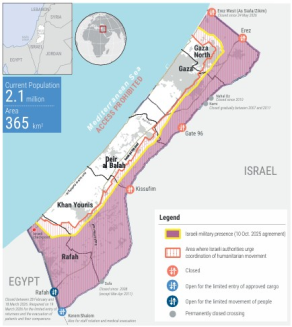
8.2.1 The below map, showing the Gaza Strip as of 29 July 2026, including the status of its points of entry/exit and the presence of the Israeli military inside the Gaza Strip, was published by OCHA in its ‘Reported impact snapshot’ of 31 July 2026, which cited various sources[footnote 19] (Note: this map does not reflect the UK government’s view of any boundaries and is used for illustrative purposes only):
8.3 Population density
8.3.1 The April 2026 DRC et al joint report stated: ‘Gaza’s 2.1 million people are now confined to less than half the territory they previously inhabited, many living in tents or damaged buildings …’[footnote 20]
8.3.2 An opinion piece written by Dr Javid Abdelmoneim, the International President of Médecins Sans Frontières (MSF), was published by MSF on 19 July 2026, and updated on 20 July 2026. The article stated: ‘As the [yellow] line moves westward, it compresses more than two million people into just one-third of the Strip … It produces conditions of extreme overcrowding …’[footnote 21]
8.3.3 On 24 July 2026, the UK edition of The Conversation, ‘an independent source of news analysis and informed comment written by academic experts, working with professional journalists’[footnote 22], published an article which stated: ‘Even before the war [which began on 7 October 2023], Gaza was one of the world’s most densely populated territories. Roughly 2.2 million people lived within just 365 square kilometres, making it the fifth most densely populated territory globally. With the current population estimated at around 2.05 million, reducing the accessible territory to only 30% of the Strip would more than triple population density to nearly 19,000 people per square kilometre.’[footnote 23]
8.3.4 With approximately 65% of the Gaza Strip under the control of Israel as of July 2026[footnote 24] [footnote 25] (see also Territorial control of the Gaza Strip), its approximately 2.1 million population[footnote 26] was, as of July 2026, residing in a land area of approximately 128 square kilometres (35% of the Gaza Strip’s 365 square kilometres[footnote 27]), giving an average population density of over 16,400 people per square kilometre.
8.3.5 An article published by The Straits Times, a Singaporean English-language daily newspaper[footnote 28], on 21 July 2026 noted the most densely populated area of the Gaza Strip to be Khan Younis, in south Gaza, where, a UNICEF spokesperson stated, ‘[f]amilies are sheltering almost on top of each other’[footnote 29].
8.3.6 An article published by Al Jazeera on 22 July 2026 stated: ‘The … head of media for the Gaza municipality, told Al Jazeera that municipal teams can no longer access nearly half of Gaza City, including Shujayea, eastern Tuffah, Zeitoun and parts of Daraj … [resulting in] more than half of the city’s 950,000 residents [being] crammed into a fraction of its original space …’[footnote 30]
9. Socio-economic situation
9.1 Basic indicators
9.1.1
| Population | 2,114,301 (mid-2025 est.)[footnote 31] |
| Life expectancy at birth | 69 years (2024 est. – note: this data is for the Gaza Strip and the West Bank combined)[footnote 32], 75.5 years (Gaza Strip only, pre-war est.)[footnote 33], 40.6 years (Gaza Strip only, est. during first 12 months of the conflict which began on 7 October 2023)[footnote 34] |
| Maternal mortality ratio (deaths per 100,000 live births) | 24 (2023 est. – note: this data is for the Gaza Strip and the West Bank combined)[footnote 35] |
| Infant mortality rate (per 1,000 live births) | 17 (2024 est. – note this data is for the Gaza Strip and the West Bank combined)[footnote 36] |
| Poverty (population living below poverty line) | 63.7% (2023 pre-conflict est.)[footnote 37] [footnote 38] - poverty line set at approximately New Israeli Shekels (NIS) 2,717 (approx. £669 GBP[footnote 39]) and the extreme poverty line at NIS 2,170 (approx. £535 GBP[footnote 40])[footnote 41]. As a result of the conflict, it was reported that almost every Gazan lived in poverty[footnote 42]/multidimensional poverty (‘[a]n index that measures the percentage of households in a country deprived along three dimensions –monetary poverty, education, and basic infrastructure services – to capture a more complete picture of poverty’[footnote 43])[footnote 44] [footnote 45] |
| Literacy rate (age 15 and older) | 98% (2023 est. for the Gaza Strip[footnote 46], 2024 est. for the Gaza Strip and the West Bank combined[footnote 47]) |
| Mean years of schooling (age 15 and older) | 11.5 (2023 est., subsequent data was not made available due to the conflict in the Gaza Strip that began on 7 October 2023, see Education for further information)[footnote 48] |
9.2 Economy
9.2.1 On 21 December 2025, the Palestinian Central Bureau of Statistics (PCBS) and Palestine Monetary Authority (PMA) published a joint press release, ‘The Performance of the Palestinian Economy for 2025, and Economic Forecasts for 2026’. The press release stated: ‘During 2025, [gross domestic product, the ‘total market value of the goods and services produced by a country’s economy during a specified period of time’[footnote 49]] GDP recorded a sharp decline in [the] Gaza Strip, reaching 84% compared to 2023 … in 2025 compared to 2024, GDP in [the] Gaza Strip continued to contract, where if further declined by 8.7% …’[footnote 50]
9.2.2 The same press release also referred to, ‘[a] complete collapse of all economic activities in [the] Gaza Strip during 2025 compared to 2023 … despite their increase compared to 2024.’[footnote 51]
9.2.3 On 24 February 2026, The New Arab (TNA), a London-based ‘English-language news and current affairs website’ covering the Middle East and North Africa (MENA) region[footnote 52], published an article about proposals to introduce a cryptocurrency to the Gaza Strip. Providing background on the state of Gaza’s economy, the article stated:
‘Gaza’s economy [which was already described pre-war (in August 2023), by UNRWA, as ‘devastated’ and ‘fragile’[footnote 53]] has been devastated by over two years of … war with its economy experiencing a near-total collapse in 2024 … basic economic activity coming to a near-halt, and inflation rates surging to new heights. Around 80 percent of the Gaza Strip’s infrastructure was damaged or destroyed, including schools, banks, telecommunications, factories, and more. Additionally, Israel stopped allowing cash to enter Gaza early in October 2023 after the start of the war, further squeezing Gaza’s economic activity … [A]lso … countless ATM machines [were destroyed] during the war, making cash even less accessible.’[footnote 54]
9.2.4 The European Training Foundation (ETF), ‘the EU’s agency supporting countries surrounding the European Union to reform their education, training and labour market systems’[footnote 55], published a report entitled ‘Education and Employment in Gaza: Facts and Figures – February 2026 update’. The report, which cited various sources, stated: ‘The financial sector experienced severe disruption. Approximately 98% of bank branches closed. Cash shortages became acute. Digital payment systems expanded out of necessity, but liquidity remained extremely limited. Government revenues collapsed, and many public employees went unpaid.’[footnote 56]
9.2.5 The joint World Bank Group, EU and UN RDNA report stated:
‘Around US$22.7 billion [approximately £16.85 billion GBP[footnote 57]] of economic losses have been incurred due to the conflict. Given that the economic impact of the conflict on the sectors will continue to be felt until substantial recovery is made, these losses include loss estimates projected up to three years in the future … The Gaza economy has incurred unprecedented losses as a consequence of the recent conflict … Bottom-up sector specific assessments estimate total damages to Gaza’s capital stock at US$35.2 billion [approximately £26.13 billion GBP[footnote 58]] as of October 9, 2025, the date of the ceasefire agreement.’[footnote 59]
It should be noted that the RDNA report defined ‘damages’ as, ‘… the total or partial destruction of physical assets, calculated based on damage caused by the conflict compared to pre-crisis conditions. The damage is assessed in physical units (e.g., square meters of housing) and is monetized based on the cost of replacement at pre-crisis prices.’[footnote 60]
9.2.6 The same RDNA report also stated:
‘Economic activity in Gaza was extremely constrained in the last two years, with limited ceasefire-related improvements in 2025 insufficient to reverse widespread economic paralysis … In 2025, economic activity picked up very modestly during the first and fourth quarters, primarily due to the presence of a ceasefire for much of these periods, although episodes of destruction persisted. This resulted in an estimated increase in Gaza’s real GDP exceeding 30 percent ([year-on-year] y-o-y) in 2025, largely reflecting a low base effect after the historic contraction of the previous year, rather than any meaningful recovery in economic activity. Most sectors remained largely inactive through 2025, with only minimal activity observed in wholesale and retail trade as well as a narrow set of public services.’[footnote 61]
9.2.7 The RDNA report added: ‘Gaza’s economy has been reduced to around 18 percent of its pre-conflict size, in real terms. Its share of the overall Palestinian economy declined from 17 percent before the conflict to less than 4 percent currently, even though Gaza hosts more than 40 percent of the Palestinian population. Gaza’s real GDP per capita is expected to have declined to around USD200 [approximately £147 GBP[footnote 62]] by the end of 2025. This is currently the lowest in the World Bank’s database …’[footnote 63]
9.2.8 An OCHA humanitarian situation report for 5 June 2026, published on 6 June 2026, stated: ‘Over the past two weeks, violence, military operations, and movement restrictions … are [increasingly] placing strain on an already fragile economy, as disrupted markets, rising living costs, and declining household incomes make it harder for people to meet their basic needs.’[footnote 64]
9.2.9 On 23 July 2026, the Food and Agriculture Organization of the United Nations (FAO) published a joint news release about food security and child nutrition in Gaza, by the FAO, the UN Children’s Fund (UNICEF), and the UN’s World Food Programme (WFP). The joint news release stated that: ‘While any significant recovery of … broader economic activity has yet to begin … [c]ommunities are showing considerable resourcefulness in restarting small-scale economic activity wherever conditions allow. However, this can only go so far without the removal of restrictions on what enters the Strip.’[footnote 65] For more information about restrictions on what enters the Gaza Strip, see Humanitarian aid.
9.2.10 On 27 July 2026, the WFP published a report entitled ‘WFP Palestine Food Security Analysis - Market Monitor - Palestine, July 2026’. The report, which cited various sources, indicated that as of July 2026, Gaza was experiencing a ‘further collapse’ of its economy[footnote 66].
9.2.11 The same WFP report also stated: ‘Gaza [Consumer Price Inflation] CPI [‘the rate at which the prices of goods and services bought by households rise or fall. It is estimated by using price indices’[footnote 67]] witnessed a decrease by 1.9 percent in June 2026 compared to May. It also witnessed a decrease by 62.8 percent compared to June 2025. On the other hand, it remained higher than pre-crisis levels (September 2023) by 169.4 percent.’[footnote 68]
9.3 Employment
9.3.1 The December 2025 PCBS and PMA joint press release noted that in the Gaza Strip, in 2025, the labour force participation rate was 38% (which it stated was ‘… partly due to individuals attempts to engage in any form of work or seek alternative livelihood opportunities’[footnote 69]), while the unemployment rate reached 78%[footnote 70].
9.3.2 An article published on 19 January 2026 by TNH stated:
‘… [H]umanitarian work has become one of the last remaining sources of income. Thousands of families depend directly on these organisations for survival.
‘Field staff, administrators, mental health professionals, drivers, logistics workers, and low-paid volunteers rely on humanitarian employment in a context where no alternative livelihoods exist. Suspension on the ability numerous humanitarian organisations to operate in the Gaza Strip, see [Humanitarian aid] means loss of income, inability to provide for one’s family, and forced descent into extreme poverty.
‘There is no alternative labour market …’[footnote 71]
9.3.3 The joint World Bank Group, EU, and UN RDNA report stated:
‘Nearly three-quarters of Gaza’s pre-conflict employed population lost their jobs, resulting in an employment to-population ratio of 9.3 percent in the Strip. … Over 80 percent of employees in Gaza were unable to work due to extensive workplace destruction, roadblocks, and transportation disruptions, as well as on-site challenges such as power outages or supply shortages. Employment in Gaza is concentrated in public administration, including social security (29.7 percent), and retail trade (33 percent). More than 60 percent of workers have been displaced to shelters, camps, or informal settlements due to conflict-related destruction.
‘… [Additionally, t]he progressive tightening of restrictions on movement and trade has … reduced income and increased unemployment, resulting in a heavy reliance on humanitarian aid.’[footnote 72]
9.3.4 The RDNA report also stated:
‘The labor market and employment landscape in the Gaza Strip was already extremely fragile before the current war … Unemployment rates in pre-conflict Gaza Strip were some of the highest in the world, at 45.1 percent (67.7 percent for women and 39.2 percent for men) …
‘Damage to crucial labor market infrastructure amounted to US$16.8 million [approximately £12.47 million GBP[footnote 73]], but this figure masks the vast costs of intangible assets lost to the labor market. The destruction includes nearly all labor market infrastructure — ministry buildings, regional employment services, technical and vocational education and training (TVET) schools, and the offices of trade unions and employers’ representatives …
‘… The widespread loss of income sources has left families with no means to meet basic needs, creating a severe humanitarian crisis. As people lost their jobs and income streams, the ability to afford food and shelter has become out of reach for many. While most of the losses were driven by the conflict’s impact on men, women were also severely affected, experiencing significant employment and income losses. Their pre-conflict low levels of labor market participation have further exacerbated their disadvantaged position. While public sector employment initially remained stable (albeit with substantial income losses due to partial pay), … [an] increase in employment losses in comparison to the February 2025 [Interim Rapid Damage and Needs Assessment] IRDNA is largely driven by a faltering of public sector employment. The largest cumulative employment losses remain in the private sector, where the vast scale of destruction means that enterprises have lost most of their productive capital, hindering a swift recovery of employment during reconstruction. Skills atrophy will pose an additional challenge, not least among the many young people whose learning or early work experience was interrupted due to the conflict. The functioning of labor market institutions is also severely hampered.’[footnote 74]
9.3.5 The RDNA report added that, ‘… Gaza’s real income per capita currently represents only 5 percent of the West Bank’s [despite Gaza hosting more than 40 percent of the Palestinian population, see paragraph 9.2.7].’[footnote 75]
9.3.6 An article published on 20 March 2026 by the Institute for War & Peace Reporting (IWPR), a charitable/ not-for-profit organisation in which ‘senior journalists, specialists and business professionals … focus … on finance, development and other areas’[footnote 76], stated there was, ‘… widespread unemployment and no stable income …’[footnote 77]
9.3.7 The April 2026 DRC et al joint report stated: ‘The fact that Israeli-controlled areas are essentially the breadbasket of Gaza … severely threatens … livelihoods for Palestinians.’[footnote 78]
9.3.8 The FAO, UNICEF and WFP joint news release, published on 23 July 2026 noted that as of that date, any significant recovery of ‘livelihoods’ had yet to begin[footnote 79].
9.3.9 The July 2026 WFP food security analysis report noted that as of July 2026, the Gaza Strip had an unemployment rate of 81% and noted that, ‘[f]ormal employment [had] nearly vanished.’[footnote 80]
10. Humanitarian situation
10.1 People in need (PIN)
10.1.1 On 18 November 2025, IPS published an article which stated: ‘Roughly one month into the ceasefire … [d]espite the UN recording considerable improvement in the humanitarian situation of Gaza, conditions remain dire, with famine and disease remaining imminent threats for most Gazans.’[footnote 81]
10.1.2 On 8 December 2025, Humanitarian Action, a platform produced by OCHA which ‘provides a comprehensive overview of the humanitarian landscape’[footnote 82] published its ‘Global Humanitarian Overview 2026’ which stated: ‘The entire population of Gaza, estimated at 2.1 million people, requires humanitarian assistance.’[footnote 83]
10.1.3 On 16 December 2025, OCHA published its ‘Flash Appeal: Occupied Palestinian Territory 2026’ which also noted there were 2.1 million people in need in the Gaza Strip[footnote 84], representing the entire population of the Gaza Strip (see Population density). CPIT has been unable to find a more recent official estimate of the number of people in need in the Gaza Strip in the sources consulted (see Bibliography).
10.1.4 On 19 December 2025, the WFP published an article which stated: ‘Humanitarian needs remain staggering, with current assistance addressing only the most basic survival requirements.’[footnote 85]
10.1.5 An article published by Sky News on 30 December 2025 stated: ‘Shaina Low, from the … Norwegian Refugee Council, said: ‘“Despite the ceasefire, the needs in Gaza are enormous.” …’[footnote 86]
10.1.6 An article published on 3 January 2026 by America Magazine, a Catholic news magazine[footnote 87], stated: ‘A joint statement by 10 foreign ministers was released on Dec. 30 [2025], in which they warned of a “catastrophic” and “renewed deterioration of the humanitarian situation” in Gaza.’[footnote 88]
10.1.7 An article published on 27 January 2026 by the UN stated: ‘UN Spokesperson Stéphane Dujarric described the situation as still “dire” for hundreds of thousands of families across the Strip who remain in urgent need.’[footnote 89]
10.1.8 On 5 February 2026, HelpAge International, ‘a global non-profit organisation that works to improve the lives of older people around the world’[footnote 90], published a report entitled ‘Pushed Beyond Their Limits: The survival of older people in Gaza’. The report, which cited various sources, stated:
‘The severity of the humanitarian crisis in Gaza has reached an unprecedented level … large-scale military operations … caused extensive destruction of civilian infrastructure, including healthcare facilities, and widespread displacement, loss of livelihoods, and severely constrained humanitarian access. These impacts, compounded by a long-standing blockade, have led to the near-total collapse of food systems, health services, water and sanitation infrastructure, and social support networks.’[footnote 91]
10.1.9 The same HelpAge International report stated: ‘While the crisis affects the entire civilian population of Gaza, older people face distinct and compounding risks.’[footnote 92]
10.1.10 On 11 February 2026, IPS published an article entitled ‘Fragile Progress in Gaza Humanitarian Response Undermined by Rampant Insecurity’ which stated: ‘The UN has … stressed that living conditions remain especially dire for displaced communities across Gaza.’[footnote 93]
10.1.11 Citing Amjad al-Shawa, Director of the Palestinian NGO Network (PNGO), ‘a coordination framework for the NGO sector in Palestine’[footnote 94], the March 2026 IWPR article stated: ‘“Around 90 per cent of people in Gaza now rely on humanitarian assistance,” …’[footnote 95]
10.1.12 On 27 July 2026, the IPS published an article which stated: ‘UN agencies continue to warn that violence, funding gaps, and access restrictions have created an unprecedented need …’[footnote 96]
10.1.13 In its ‘Humanitarian situation update’ of 31 July 2026, which covered the period from 20 to 26 July 2026 for the Gaza Strip, OCHA stated: ‘The humanitarian situation in Gaza remains dire.’[footnote 97]
10.2 Shelter and non-food items (NFI)
10.2.1 The joint World Bank Group, EU, and UN RDNA report estimated that up to October 2025, the housing sector both incurred the most damages of all sectors in respect of monetary value, at $18.0 billion USD (approximately £13.36 billion GBP[footnote 98]) (51% of total damages of $35.2 billion USD (approximately £26.13 billion GBP[footnote 99])), and was the sector with the highest recovery and reconstruction needs, estimated at $16.2 billion USD (approximately £12.02 billion GBP[footnote 100]) (of a total of $71.4 billion USD (approximately £53 billion GBP[footnote 101]))[footnote 102].
10.2.2 The RDNA report also stated:
‘Before the most recent crisis, Gaza was estimated to have roughly 485,361 housing units yet supply remained far below demand because of restricted land availability, high congestion, and weak land administration systems …
‘The recent conflict has generated catastrophic destruction of the housing stock. Approximately 371,888 homes — equivalent to 76.6 percent of all units — have been directly affected, with apartments accounting for 77 percent of damaged dwellings, including housing units and apartments in the Palestine refugee camps. Nearly 84.6 percent of the total impacted units have been destroyed. Gaza Governorate alone accounts for around 34.5 percent of the total estimated US$18.01 billion [approximately £13.37 billion GBP[footnote 103]] in housing damages, with Gaza City, Khan Younis, and Jabaliya [in the North Gaza governorate] among the worst-affected locations. The damage cost of housing units in Palestine refugee camps constitutes nearly 10 percent of the total damage cost. This destruction compounds the ongoing mass displacement crisis, with more than 1.2 million people — 60 percent of Gaza’s population — rendered without homes forced to live in informal, overcrowded, and unsafe displacement sites, significantly heightening the risks faced by vulnerable groups.’[footnote 104]
10.2.3 On 30 October 2025, OCHA published ‘Humanitarian Situation Update #336’ which stated: ‘Shelter needs remain largely unmet, especially in northern Gaza, where many people are staying in severely damaged buildings at risk of collapse.’[footnote 105]
10.2.4 The Global Humanitarian Overview 2026, published by Humanitarian Action on 8 December 2025, stated: ‘Following repeated displacement, loss of essential shelter items and the destruction of 92 per cent of housing units, as of October 2025, an estimated 1.5 million people need emergency shelter supplies. Most displaced households live in substandard conditions and lack adequate protection, privacy, and materials to ensure safety and dignity.’[footnote 106]
10.2.5 The OCHA 2026 flash appeal, published on 16 December 2025, noted that it was targeting 1.5 million people in the Gaza Strip in relation to shelter needs[footnote 107], which represents approximately 71% of its population.
10.2.6 The December 2025 WFP article stated: ‘Since the [October 2025] ceasefire, more than 730,000 people have been displaced, many living in makeshift shelters and are heavily reliant on humanitarian assistance.’[footnote 108]
10.2.7 Quoting Lucia Elmi, UNICEF Director of Emergency Operations, the December 2025 WFP article also stated: ‘“… [W]inter is bringing increasing suffering to displaced people huddling in makeshift shelters …”’[footnote 109]
10.2.8 On 14 January 2026, OCHA published ‘Humanitarian Situation Update #353’ which stated: ‘Heavy rains and flooding have rendered thousands of tents uninhabitable and placed nearly 800,000 people, almost 40 percent of the population, in flood-prone sites at heightened risk.’[footnote 110]
10.2.9 A UN article published on 17 January 2026 stated: ‘Ms. Cherevko [from OCHA] said that … harsh winter storms have … reversed gains made on the humanitarian front “because no amount of tents or tarpaulins can replace repairing people’s homes”.’[footnote 111]
10.2.10 On 26 February 2026, the UN Human Rights Council (HRC) published a report of the Special Rapporteur on housing in the Gaza Strip and several other conflict-inflicted locations around the globe. The report, which cited various sources, stated:
‘Between October 2023 and October 2025, estimates indicate that at least 92 percent of Gaza’s housing units were either fully destroyed or damaged; over 90 percent of the population was displaced; and more than 86 percent of Gaza’s territory was placed under displacement orders or incorporated into Israeli-militarized zones …
‘… Women, children, persons with disabilities and older persons have been disproportionately affected by the loss of housing and displacement, including the resulting homelessness.’[footnote 112]
10.2.11 The OCHA humanitarian situation report of 27 March 2026 stated: ‘In Gaza, repeated rainstorms and a recent airstrike have destroyed and damaged shelters, as most people remain in displacement sites where living conditions are dire due to overcrowding, water and sewage accumulation, and inadequate access to basic necessities like drinking water, soap, lighting, safe cooking fuel and shelter materials.’[footnote 113]
10.2.12 The April 2026 DRC et al joint report noted that most of the population was unable to access affordable shelter. It stated: ‘At least 1.7 million people remain in displacement sites, with many sheltering in deteriorating tents, lacking sanitation and repeatedly subject to flooding.’[footnote 114]
10.2.13 On 24 June 2026, the Site Management Cluster (SMC) Palestine, the coordination body responsible for site management, including assistance and protection delivery, in humanitarian displacement settings[footnote 115], published a report entitled ‘Gaza Displacement Site Verification Assessment: Baseline Findings for May 2026 Humanitarian Planning and Coordination’. The report stated:
‘Despite relative improvements following the October 2025 ceasefire, conditions in displacement sites remain dire. At least 59,000 shelters (24 per cent) accommodate more than eight people, while 7,700 households (around 38,500 individuals) reported sleeping outdoors without any shelter.
‘… Nearly two-thirds of sites (64 per cent) experience rainwater accumulation, while half lack any visible drainage. Forty-five per cent of sites report fire hazards near shelters. Rodent infestations, sewage in streets, and accumulated solid waste are present in 81 per cent, 60 per cent, and 56 percent of sites, respectively, contributing to the spread of disease. Sites affected by rainwater accumulation report urgent medical cases in nine in ten sites compared to fewer than two in three without standing water, and also show substantially higher rates of severe skin disease, respiratory illness, and diarrhoea. Fewer than one in ten sites has communal lighting, leaving over 1.5 million people without any after-dark safety infrastructure.
‘… Ninety-three per cent of sites have no formal tenure: 62 per cent rely on verbal permission only and 31 per cent have no known permission at all. Displaced residents in one in ten non-UNRWA sites reported active threats or pressure to vacate. Most sites are located on privately owned land, resulting in a risk of secondary displacement from within displacement sites, directly undermining stability. Tenure insecurity also enables exploitation before eviction: Female-headed and elderly-headed households, who have less capacity to negotiate with landowners or resist informal payment demands, are disproportionately exposed to these risks.’[footnote 116]
10.2.14 In June 2026, the Palestine Shelter Cluster, the Palestinian arm of ‘an Inter-Agency Standing Committee (IASC) coordination mechanism that supports people affected by disasters and internally displaced people affected by conflict with the means to live in safe, dignified and appropriate shelter’[footnote 117], published a ‘National Response Strategy 2026 – 2027’ report which stated: ‘An estimated 1.9 million people, approximately 90 percent of the population, remain displaced. The Shelter Cluster’s multisource damage mapping (January 2026) identifies 320,181 damaged housing units affecting 1,696,959 people, representing around 78 percent of all structures and 60 percent of the pre-war housing stock.’[footnote 118]
10.2.15 A press release published by the Norwegian Refugee Council (NRC) on 18 June 2026 stated:
‘Across Gaza, around 170,000 households, equivalent to nearly one million people, live in tents. Another 5,000 households sleep outdoors, while 52,000 households live in overcrowded shelters. This month, 850,000 people still lack emergency shelter items such as plastic sheeting, plywood, and rope …
‘Summer heat will only sharpen the risks families face, with daytime temperatures reaching 34.5C in the warmest month and the number of hot days with temperature recording 35C or higher expected to increase.
‘… Children, older people and those with chronic illnesses face higher risks of heat stress, dehydration, respiratory distress, and disease. Women and girls face greater danger in overcrowded sites where poor lighting, lack of privacy and unsafe sanitation deepen fear and exposure.’[footnote 119]
10.2.16 The July 2026 WFP food security analysis report stated: ‘Most non-food items price [sic] continued to be lower in the first half of July [2026] compared to September 2025 (pre ceasefire). However, most prices remain much higher than pre-conflict (September 2023) levels, particularly for cooking gas and fuel.’[footnote 120]
10.2.17 Citing information provided by the Shelter Cluster, the OCHA snapshot published on 31 July 2026 stated: ‘1.4 million people (~70% of the population) [were] estimated to require dignified shelter support, including 850,000 people in need of emergency shelter.’[footnote 121] For further shelter-related statistics, covering the periods both pre and post the October 2025 ceasefire, see the undated OCHA Publications webpage where near-weekly reported impact snapshots have been published.
10.3 Water, sanitation and hygiene (WASH)
10.3.1 The joint World Bank Group, EU, and UN RDNA report stated:
‘Since the onset of the conflict in October 2023 [and as of October 2025], the WASH sector has experienced widespread devastation, with estimated damages of US$1.7 billion [approximately £1.26 billion GBP[footnote 122]] and approximately 88 percent of above-ground assets and 76 percent of underground networks partially or fully damaged. All six wastewater treatment plants are non functional, centralized wastewater treatment has completely halted, and 70 percent of sewage pumping stations are inoperable. One of the three main seawater desalination plants and two of three bulk water supply connections are non-functional, severely constraining the Gaza Strip’s largest sources of safe water. Stormwater infrastructure has also been heavily impacted, with 88 percent of pumping stations damaged and basins increasingly contaminated with untreated sewage. Remote sensing-based damage assessments indicate that, while portions of underground networks may remain physically intact, their usability will depend on extensive field verification and hydraulic modeling once access permits.
‘… The destruction of WASH services has had severe human and cross-sectoral impacts. Only a small fraction of the population now has access to piped drinking water, while the absence of wastewater treatment and solid waste services has sharply increased risks of waterborne disease, flooding, and environmental contamination. Women and girls face disproportionate burdens related to domestic water use, with hundreds of thousands lacking adequate supplies and privacy. Health facilities, displacement sites, schools, commercial locations, and agricultural lands are operating under critical WASH constraints, undermining health outcomes, protection, and human dignity.’[footnote 123]
10.3.2 On 11 December 2025, OCHA published ‘Humanitarian Situation Update #347’ which stated: ‘Access to water has improved in Gaza owing to repairs to critical infrastructure and a near-doubling of water trucking by the UN and its partners.’[footnote 124]
10.3.3 The OCHA 2026 flash appeal, published on 16 December 2025, noted that it was targeting 1.4 million people in the Gaza Strip in relation to WASH needs[footnote 125], which represents approximately 67% of its population.
10.3.4 On 12 February 2026, OCHA published ‘Humanitarian Situation Update #357’ which stated: ‘Access to water and sanitation facilities has improved since the ceasefire agreement, but water quality remains unsafe, contributing to rising cases of diarrhoea and hepatitis A, particularly among children.’[footnote 126]
10.3.5 On 16 February 2026, OCHA published ‘Gaza Humanitarian Response, Situation Report No. 67’, covering the situation as of 11 February 2026 which stated:
‘For the first time since October 2023, [the UN Development Programme] UNDP has been approved to and has begun to remove solid waste from the Firas Market improvised dumping site in Gaza city, where over 300,000 cubic metres have accumulated since municipal crews lost access to Gaza’s main landfill in Juhr ad Dik, near the Israeli perimeter fence. This process is expected to take six months and is part of ongoing efforts to improve environmental conditions and public health. Teams are moving the waste to a newly identified temporary dump site that meets environmental standards. Located in Abu Jarad, south of Gaza city, it covers roughly 75,000 square metres and is designed to receive both accumulated and daily waste flows.’[footnote 127]
10.3.6 The April 2026 DRC et al joint report noted that most of the population remained without access to sufficient water and sanitation[footnote 128].
10.3.7 The May 2026 HRW article stated: ‘The head of Doctors Without Borders in Gaza told Haaretz that as the [yellow] line moves west see [Territorial control of the Gaza Strip for more information], it is swallowing up water points …’[footnote 129]
10.3.8 The OCHA humanitarian situation report for 5 June 2026, published on 6 June 2026, stated:
‘Access to safe water is limited, and solid waste is accumulating in residential areas. This is attracting pests and rodents that contaminate food and living spaces and increase cases of illness, particularly among children. … [A] recent rollout of a pest control campaign is a critical step, but its successful implementation depends on sustained entry of supplies.
‘… Access to water in Gaza is limited to begin with. Information collected in March [2026] indicates that most households are unable to meet the minimum needs of 6 litres of water for drinking and cooking per person per day. UNICEF warns that, for families in Gaza, water shortages mean a daily trade-off between drinking, hygiene and disease prevention. Partners leading on water report that the overall water production in Gaza dropped by about 20 per cent in May [2026] compared with two months earlier [March 2026], largely due to shortages of chemicals and spare parts.’[footnote 130]
10.3.9 The OCHA humanitarian situation report for 12 June 2026, published on 13 June 2026, stated: ‘In Gaza, over 70 per cent of people rely on trucked water, but funding gaps are putting this supply at risk … [Also, w]hile some 2,000 sites have been treated for pests since mid-May [2026], skin diseases and infections continue to rise owing to limited access to safe water, sanitation and treatment, and access to landfills remaining restricted, causing continuous accumulation of waste in populated areas.’[footnote 131]
10.3.10 On 3 July 2026, Action for Humanity, a global non-governmental organisation (NGO) providing humanitarian aid in over 14 countries[footnote 132], published a report entitled ‘Under-capacity and out of time; 1,000 Days of limited aid access and humanitarian disaster in Gaza’. The report, which cited various sources, stated: ‘Water production in Gaza has fallen dramatically to around 40% of pre-October 2023 levels, leaving only around six litres per person per day. This is not only far below the [World Health Organization’s] WHO’s recommended minimum of 15 litres per person per day, but also below the absolute survival threshold of 7.5 litres per person per day used in emergency planning.’[footnote 133]
10.3.11 The OCHA humanitarian situation update for 16 July 2026, published on 17 July 2026, stated: ‘Engine oil shortages continue to disrupt essential water and sanitation services, increasing the risk of sewage overflows and public health hazards.’[footnote 134]
10.3.12 On 17 July 2026, UNICEF published a ‘Humanitarian Situation Update: Mid-Year 2026 Analysis of the Response to the Needs of Children’ which stated:
-
‘In the WASH sector, conditions remain critical. An estimated 82 per cent of families are water insecure, and up to 70 per cent cannot access 6 litres per person per day – far below minimum emergency standards …
-
‘Nearly 90 per cent of water and sanitation infrastructure has been damaged or destroyed. Limited latrine access, unsafe disposal practices, and disrupted sludge management compromise infection prevention and control, increase the risk of healthcare-related infections, the growing presence of rats and other disease vectors, and contribute to widespread environmental contamination.’[footnote 135]
10.3.13 Citing various sources, the July 2026 article published by The Conversation stated: ‘The destruction of water, sanitation and waste infrastructure has left around 60% of the population exposed to sewage or human waste. More than 900,000 people live amid accumulated garbage that fuels rodent infestations and disease outbreaks … People in tents report being bitten by rats.’[footnote 136]
10.3.14 Citing a ‘telephone-based Light-Touch Monitoring survey’ conducted by the WASH Cluster, a ‘… coordinated partnership … led by UNICEF … and … open to actors working in the humanitarian WASH sector across international organizations, United Nations agencies, international non-governmental organizations, academic institutes, and donors’[footnote 137], between 3 and 10 June 2026, the OCHA snapshot published on 31 July 2026 stated:
-
‘84% of assessed households (in Gaza, Deir al Balah and Khan Younis) faced moderate to high levels of water insecurity in the 30 days prior to early June [2026].
-
‘45% of assessed households had total water access below minimum humanitarian standards (15L/person/day), including 63% below minimum for drinking water (6L/person/day).
-
‘86% of assessed households reported facing challenges in accessing safe and clean sanitation facilities.
-
‘97% of key informants reported that householders are facing barriers to accessing hygiene and non-food items, primarily due to insufficient distributions and high cost of items when available on the market.
-
‘43% of assessed households reported solid waste accumulation in their vicinity, and 52% observed sewage/sludge near their shelters.
-
‘64% of assessed households reported cases of skin diseases in the 30 days prior to early June [2026].
-
‘82% of assessed households reported availability of soap at their shelters.’[footnote 138]
The snapshot included a note which stated that the above ‘[f]indings are not statistically representative of the population.’[footnote 139] CPIT was unable to access the survey findings of the WASH Cluster directly. For further WASH-related statistics, covering the periods both pre and post the October 2025 ceasefire, see the undated OCHA Publications webpage where near-weekly reported impact snapshots have been published.
10.3.15 See also Health and healthcare.
10.4 Poverty
10.4.1 On 23 May 2024, the World Bank published an update on the ‘Impacts of the Conflict in the Middle East on the Palestinian Economy’ which, citing various sources, stated: ‘New results from the 2023 household survey show that poverty was increasing already before the conflict. The latest nationally representative data … is from the [Palestinian Expenditure and Consumption Survey] PECS survey conducted in 2023. Before the start of the current conflict … poverty rates were around… 63.7 percent [in Gaza] … As a result of the conflict [which began on 7 October 2023], nearly every Gazan now [May 2024] lives in poverty - at least over the short term …’[footnote 140]
10.4.2 The December 2025 PCBS and PMA joint press release stated that, ‘[prior to the conflict in the Gaza Strip] … poverty rates … exceeded 63%, with the poverty line in Palestine set at approximately [New Israeli Shekels] NIS 2,717 [approximately £669 GBP[footnote 141]] and the extreme poverty line at about NIS 2,170 [approximately £535 GBP[footnote 142]].’[footnote 143]
10.4.3 The joint World Bank Group, EU, and UN RDNA report, published in April 2026, stated:
‘Prior to the escalation in October 2023, social protection was already a critical lifeline, especially in the Gaza Strip where poverty stood at 63.7% …
‘Since October 2023, multidimensional poverty see [Basic indicators for a definition] has increased dramatically, affecting nearly the entire population of the Gaza Strip. Massive displacement, disrupted markets, and widespread livelihood collapse have increased dependence on assistance, while the population faces compounded vulnerabilities from trauma, malnutrition, disability, family separation, and heightened protection risks, particularly for children, women, persons with disabilities, and female-headed households.’[footnote 144]
10.4.4 The July 2026 WFP food security analysis report noted the poverty level in the Gaza Strip to be 100%, stating ‘Poverty levels reached a peak compared to [the] pre-conflict [poverty levels of] 64%’.[footnote 145]
10.5 Food security
10.5.1 The joint World Bank Group, EU and UN RDNA report stated, that as of October 2025:
‘The conflict has resulted in the collapse of the food production and market infrastructure; damages are estimated at US$1.44 billion [approximately £1.07 billion GBP[footnote 146]]. More than 95 percent of agriculture infrastructure including cropland, orchards, greenhouses, nurseries, irrigation networks and wells, agricultural roads, storage and processing facilities, markets and bakeries, solar installations, fisheries assets, and landing-site infrastructure have been destroyed. In addition, 96 percent of cropland was damaged, inaccessible, or both, with only a small share remaining cultivable even after ceasefire-related access changes — and on which currently most of the population is residing in displacement. This structural collapse has effectively halted agriculture at scale, disrupted value chains across crops, livestock, and fisheries, and fragmented formal markets, pushing traders into informal channels and forcing many households, particularly women and children, to revert to subsistence-level coping strategies.’[footnote 147]
10.5.2 The RDNA report also stated:
‘Prices in Gaza have experienced exceptional fluctuations over the last two years. Consumer price inflation (CPI) increased by 238 percent y-o-y in 2024, driven by food and transport costs. After the first ceasefire started in January 2025, and the increase in the amounts of aid supplies and food allowed into Gaza, CPI registered a decline for two consecutive months. With the end of the ceasefire in March 2025, hostilities resumed, and restrictions were reimposed on the movement of goods through commercial crossings. As a result, prices skyrocketed again until the recent ceasefire took effect in October 2025, when prices started going down.’[footnote 148]
10.5.3 On 20 November 2025, TNH published an article entitled ‘Hobbled by obstruction and uncertainty: Gaza’s post-ceasefire aid response’ which stated:
‘Inside Gaza, Palestinians say slightly more food is available, but the situation has not improved nearly as much as they had hoped since the 10 October [2025] truce … Fresh fruit and vegetables are rare and expensive. Legumes are available, but dairy, eggs, or other sources of protein are scarce … For many, communal soup kitchens remain a primary source of food and water … Families who spoke with The New Humanitarian described days that still revolve around securing food and water.’[footnote 149]
10.5.4 The Global Humanitarian Overview 2026, published by Humanitarian Action on 8 December 2025, stated: ‘With famine confirmed in the Gaza governorate in August [2025] through the Integrated Food Security Phase Classification (IPC) analysis, notwithstanding some recent improvements, concerns persist regarding the protracted and profound nature of the food security and nutrition crisis in Gaza, the collapse of food security and nutrition systems and near-total destruction of the local food production system.’[footnote 150]
10.5.5 The OCHA 2026 flash appeal, published on 16 December 2025, noted that it was targeting 2.1 million people in the Gaza Strip (the entire population), in relation to food security needs[footnote 151].
10.5.6 The December 2025 WFP article stated:
‘FAO, UNICEF, WFP and WHO say hunger, malnutrition, disease and the scale of agricultural destruction remain alarmingly high … The latest Integrated Food Security Phase Classification (IPC) analysis for Gaza confirms that no areas of the Strip are currently classified in famine following the October [2025] ceasefire and improved humanitarian and commercial access. [However, t]his welcome progress remains extremely fragile as the population continues to struggle with massive infrastructure destruction and collapsed livelihoods and local food production, given restrictions on humanitarian operations.
‘Without sustained, large-scale expansion of food, livelihood, agriculture and health assistance, together with increased commercial inflows, hundreds of thousands of people could rapidly slip back into famine, the Food and Agriculture Organization of the United Nations (FAO), UNICEF, the World Food Programme (WFP), and the World Health Organization (WHO) warned today.
‘According to the new IPC report, at least 1.6 million people - or 77 per cent of the population – are still facing high levels of acute food insecurity in the Gaza Strip …
‘While the ceasefire has improved some deliveries of food, animal feed, basic supplies and essential commercial imports into Gaza, leading to an improvement in access to food for some households, most families are still grappling with severe shortages …
‘… Even though markets are now better stocked with nutritious food following the improved flow of humanitarian and commercial deliveries see [Humanitarian aid], vulnerable families, especially those with children, cannot afford to buy it. Nutrition-rich foods, particularly proteins, remain scarce and prohibitively expensive, leaving 79 percent of households unable to buy food or have access to clean water …
‘… [Additionally,] “Gaza’s farmers, herders and fishers are ready to restart food production, but they cannot do so without immediate access to basic supplies and funding,” said Rein Paulsen, Director of FAO’s Office of Emergencies and Resilience.’[footnote 152]
10.5.7 The March 2026 IWPR article stated:
‘The crisis, humanitarian workers warn, is no longer just about the availability of food but also about its quality.
‘[The International Network for Aid, Relief and Assistance’s] INARA’s Abu Sharkh explained that even when goods entered Gaza through commercial channels, they were not only often nutritionally inadequate but sold at prices far beyond what most families can afford.
‘… [M]any households are effectively excluded from the [food] market altogether.
‘“We are talking about two million people who have endured prolonged hunger,” Abu Sharkh said. “Recovery is not easy, especially for children, pregnant and breastfeeding women, and the elderly.”
‘In conversations with displaced families across Gaza, particularly during Ramadan, Abu Sharkh said she repeatedly heard the same reality: complete dependence on charity kitchens.
‘“Many families told us that without these kitchens, they would not have a main meal at all,” she said.’[footnote 153]
10.5.8 The OCHA humanitarian situation report of 2 April 2026 stated: ‘In Gaza, cooking gas shortages undermine the operation of community kitchens and force nearly one in two families to use unsafe waste burning for cooking.’[footnote 154]
10.5.9 On 23 July 2026, the Integrated Food Security Phase Classification (IPC) Global Initiative, ‘an innovative multi-stakeholder global initiative aimed at enhancing food security and nutrition analysis to inform decisions’[footnote 155] published an acute food insecurity situation report, covering the period from 16 April 2026 to 30 June 2026, with projections covering the period from 1 July 2026 to 31 December 2026. The report stated: ‘Since the October 2025 ceasefire, large-scale assistance has driven improvements in food security and nutrition conditions across the Gaza Strip; however needs remain high. Between mid-April and 30 June 2026, over 1.2 million people (59 percent of the population) faced Crisis or worse conditions (IPC Phase 3 or above), including 212,000 people [10%] in Emergency (IPC Phase 4). All five governorates are classified in Crisis (IPC Phase 3).’[footnote 156] The same report noted that the other 41% of the Gazan population were classified as being in IPC Phase 2 (Stressed) between mid-April and 30 June 2026[footnote 157].
10.5.10 The FAO, UNICEF and WFP joint news release, published on 23 July 2026, stated:
‘… [T]he United Nations cautioned that the progress, driven largely by expanded access to humanitarian food, nutrition, agricultural and health assistance, remains fragile … [A]gencies warned that families in Gaza are still struggling to meet basic needs and improvements could be reversed quickly without sustained humanitarian aid, private sector reactivation, funding, and investment in recovery … Despite … gains, food rations remain insufficient in quantity, quality and dietary diversity. Compounding the problem, commercial imports of fresh produce and proteins are inconsistent.’[footnote 158]
10.5.11 The July 2026 WFP food security analysis report stated:
‘In the Gaza Strip, markets have continued to show a marked improvement compared to the situation before the October 2025 ceasefire, and also compared to the general situation before the Iranian crisis [the international conflict in Iran which began on 28 February 2026[footnote 159]]. The availability and prices of food items improved in June and the first half of July [2026] compared to May and April [2026]. Despite this improvement, most prices remain higher than their levels before the October 2023 crisis, and the fluctuating entry of trucks and the severe shortages of fuel and cooking gas entering the Gaza Strip continue to pose a significant problem.’[footnote 160]
10.5.12 The same WFP analysis report referred to a food security survey, stating:
‘… [I]n the Gaza Strip … 45 percent of households surveyed reported going to bed hungry at least once in the 30 days preceding the survey, with 6 percent experiencing this more than ten times. 46 percent of households surveyed reported completely running out of food at home, with 22 percent experiencing this more than ten times. Additionally, almost 3 percent reported going an entire day without eating at least once during the same period.’[footnote 161] The report, however, did not specify the survey size, the methodology used, nor the date of the survey (though it did indicate that it reflected the situation as of mid-July 2026). CPIT was unable to find any further information about the survey in the sources consulted (see Bibliography).
10.5.13 The July 2026 WFP report added: ‘Food CPI … witnessed a decrease in Gaza by 2 percent in June 2026 compared to May [2026], and an even larger decrease compared to June 2025 by 84 percent. However, it remained higher than pre-crisis levels (September 2023) by 102.2%.’[footnote 162]
10.5.14 For further statistics on food security and nutrition, covering the periods both pre and post the October 2025 ceasefire, see the undated OCHA Publications webpage where near-weekly reported impact snapshots have been published.
10.6 Children
10.6.1 On 2 February 2024, UNICEF published a press briefing in Geneva from its State of Palestine Chief of Communication, Jonathan Crickx, which stated: ‘”Before this war, UNICEF was considering that more than 500,000 children were already in need of Mental Health and Psychosocial support [MHPSS] in the Gaza Strip. Today, we estimate that almost all children are in need of MHPSS, more than 1 million children.’[footnote 163]
10.6.2 The OCHA Humanitarian Response Situation Report No. 67, covering the situation as of 11 February 2026 and published on 16 February 2026, stated:
‘In January [2026], 89,855 children under five were screened for malnutrition. Of these, 4,435 [approximately 5%] received treatment, including the 3,565 [approximately 4%] diagnosed with moderate acute malnutrition and the 870 [approximately 1%] diagnosed with sever acute malnutrition.
‘… Partners identified 11 locations in Rafah and Khan Younis where children climb onto moving trucks to obtain supplies, leading to injuries and reported fatalities. This behaviour is driven by poverty, food insecurity, trauma, limited access to education, and gaps in aid distribution. These factors place children at high risk of accidents, exploitation, and harmful coping mechanisms.’[footnote 164]
10.6.3 The joint World Bank Group, EU, and UN RDNA report stated, that as of October 2025: ‘Women and children have borne an immense share of direct and indirect impact of the conflict … [I]t has been estimated that virtually 100 percent of children require mental health and psychosocial support.’[footnote 165]
10.6.4 The RDNA report also stated:
‘Children have lost two years of schooling, facing trauma and severe setbacks in cognitive, emotional, and social development. More than 58,000 children have lost one or both parents, and many will return to school with significant mental health needs, malnutrition, and new disabilities requiring specific support. Vulnerability to exploitation, child labor, and early marriage have increased … Over 60 per cent of youth show signs of moderate to severe anxiety, fear, and loss of hope for the future … adolescents are increasingly assuming adult survival roles, with 42 per cent reporting excessive household responsibilities. Beyond its immediate health impacts, this widespread psychosocial distress undermines learning, wellbeing, and future labour-market participation.’[footnote 166]
10.6.5 The Global Humanitarian Overview 2026, published by Humanitarian Action on 8 December 2025, stated: ‘Children have been profoundly affected [by the conflict in Gaza]; acute malnutrition among children under five more than doubled in August 2025 compared to September 2024, with 132,000 expected to suffer through mid-2026.’[footnote 167]
10.6.6 The December 2025 WFP article stated: ‘Children under five … remain among the most vulnerable [in the Gaza Strip], facing worryingly high levels of malnutrition despite recent improvements … No children are reaching minimum dietary diversity, and two-thirds experience severe food poverty, consuming only one to two food groups.’[footnote 168]
10.6.7 On 26 January 2026, the UN published an article entitled ‘Gaza ceasefire improves aid access, but children still face deadly conditions’ which stated:
‘… “[T]he situation … remains extremely precarious and deadly for many children,” said Mr. Chaiban [UNICEF Deputy Executive Director, Humanitarian Action and Supply Operations].
‘“… Despite the progress with food security,100,000 children remain acutely malnourished and require long term care. 1.3 million people, many of them children, are in urgent need of proper shelter.”
‘Families are shivering in fabric tents and bombed-out buildings amid freezing temperatures that have killed at least 10 children this winter season.’[footnote 169]
10.6.8 The UN article published on 27 January 2026 stated: ‘Despite a modest increase in humanitarian assistance, the situation in Gaza remains “dire”, with children among the hardest hit by shortages of shelter, basic services and education, the United Nations said on Tuesday [27 January 2026].’[footnote 170]
10.6.9 Regarding the rodent and insect infestations referred to in the early June 2026 OCHA humanitarian situation report (see paragraph 10.3.8), the report stated: ‘Reports highlight repeated cases of children being bitten during sleep …’[footnote 171]
10.6.10 UNICEF’s mid-year review stated:
‘Across the Gaza Strip, children’s lives continue to be shaped by the combined effects of displacement, access restrictions, and the progressive collapse of essential services.
‘Daily survival for children is increasingly determined by access: families struggle to secure sufficient water, while sanitation systems remain overwhelmed, and waste continues to accumulate in and around living spaces. This exposes children to contaminated environments, increases disease risks, and further limits safe areas for play, learning, and development.
‘The consequences are most severe for vulnerable groups, including infants, children at risk of malnutrition, pregnant women, and children with disabilities, who depend heavily on continuous access to basic services to survive and stay healthy.’[footnote 172]
10.6.11 The UNICEF mid-year review also noted that due to the WASH situation in the Gaza Strip (see paragraph 10.3.12), children were ‘… at direct risk of dehydration and waterborne disease.’[footnote 173]
10.6.12 The FAO, UNICEF and WFP joint news release stated: ‘“Acute malnutrition has fallen, but many children are still going hungry, and some children may never fully recover from prolonged lack of proper nutrition,” said UNICEF Executive Director Catherine Russell.’[footnote 174]
10.6.13 Citing information from the Nutrition Cluster, a collective which ‘exists to connect actors at national, regional, and global levels to save lives and improve the nutrition status of people affected by humanitarian emergencies’[footnote 175], the OCHA snapshot published on 31 July 2026 stated:
-
‘>3,000 children aged 6-59 months were admitted for malnutrition treatment in June [2026], compared with >2,800 in May 2026. This includes over 400 with Severe Acute Malnutrition in June compared with over 350 in May.
-
‘30% of infants and young children under two years achieve minimum dietary diversity.
-
‘7.2% of pregnant and breastfeeding women found to be acutely malnourished.
-
‘12.2% of infants and young children under five affected by stunting, indicating prolonged nutritional deprivation.’[footnote 176]
For further children-related statistics, covering the periods both pre and post the October 2025 ceasefire, see the undated OCHA Publications webpage where near-weekly reported impact snapshots have been published.
10.6.14 The OCHA humanitarian situation report of 31 July 2026 stated:
‘Throughout the Gaza Strip, children remain exposed to severe and compounding protection risks, including hostilities, stray gunfire, explosive remnants of war, unsafe shelter, water, sanitation and hygiene (WASH) conditions, disease outbreaks, family separation, school dropout, child labour, early marriage, neglect, violence and heightened risks of gender-based violence and sexual exploitation and abuse for adolescent girls …
‘Recent discussions that Site Management partners led with children in 24 displacement sites hosting more than 11,300 families (over 54,600 people) highlighted the impact of poor lighting on children. Participants said it undermines their safety when accessing sanitation facilities at night, limits their ability to study, and contributes to broader protection concerns within crowded displacement environments.’[footnote 177]
10.7 Education
10.7.1 The joint World Bank Group, EU, and UN RDNA report stated that as of October 2025: ‘728,000 school-aged children and youth have been out of formal schooling for more than two years, and at least 792 teachers and school personnel have been killed. Formal education for children with disabilities has been almost entirely suspended.’[footnote 178]
10.7.2 The RDNA report also stated:
‘Damages to education facilities are estimated at US$1.08 billion [approximately £801.54 million GBP[footnote 179]], with more than 1,300 buildings destroyed and more than 880 partially damaged. Service delivery has collapsed as over half of all facilities were destroyed, most of the remainder are partially damaged, and undamaged buildings are largely unusable because they shelter displaced families. Universities were hit particularly hard, with nearly all buildings destroyed. Infrastructure, equipment, learning materials, and education records have been lost, and the deaths and injuries of trained educators have created a severe capacity gap. Recovery will require extensive reconstruction, replacement of specialized facilities, and long-term investments to rebuild teaching capacity and restore safe learning environments.
‘… The collapse of Gaza’s education system has deprived an entire generation of learning, safety, and stability.’[footnote 180]
10.7.3 On 4 November 2025, UNICEF published an article entitled ‘After Two Years of War: Gaza’s Education System on the Brink of Collapse’ which stated: ‘Gaza’s education system stands on the brink of collapse. More than 97 percent of schools have been damaged or destroyed, and 91.8 percent of all education facilities will require either full reconstruction or major rehabilitation to become functional again. Most of the 658,000 school age children have had limited access to face to face learning for over two academic years.’[footnote 181]
10.7.4 The OCHA 2026 flash appeal, published on 16 December 2025, noted that it was targeting 745.2 thousand people in the Gaza Strip in relation to education needs[footnote 182] (approximately 35% of its total population).
10.7.5 On 5 January 2026, OCHA published an infographic, showing the Gaza humanitarian response during month 2 of the October 2025 ceasefire in Gaza (11 November to 10 December 2025, shown in orange and the top bar), compared with month 1 (11 October to 10 November 2025, shown in dark blue and the middle bar) and the month prior to the ceasefire (11 September to 10 October 2025, shown in pale blue and the bottom bar), and the impact this had on some specific sectors within the Gaza Strip, including the education sector. The below bar chart shows the numbers of children accessing education via temporary learning spaces, the numbers of active temporary learning spaces, and the numbers of children reached through recreational activities for each of the said time periods[footnote 183]:
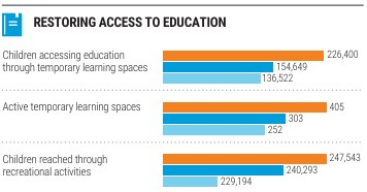
10.7.6 The UN article published on 27 January 2026 stated: ‘About 60 per cent of school-aged children have no access to in-person learning …’[footnote 184]
10.7.7 An article published on 27 January 2026 by Al Monitor, a media outlet that focuses on the Middle East[footnote 185], stated:
‘Children in Gaza have faced an unprecedented assault on the education system, as well as restrictions on the entry of some aid materials, including school books and pencils, meaning teachers had to make do with limited resources, while children tried to study at night in tents without lights, [UNICEF spokesperson, James] Elder said. During the conflict some children missed out on education altogether …
‘At least 97% of schools sustained some level of damage, according to the most recent satellite assessment by the U.N. in July [2025].’[footnote 186]
10.7.8 The ETF February 2026 update on education and employment stated:
‘Even when some learning has been provided remotely or in temporary settings, the effectiveness is limited by factors such as lack of electricity, internet, and the trauma/hunger affecting the ability of children to concentrate … The long-term implications include reduced literacy, weaker skills acquisition, and diminished economic prospects for an entire cohort.
‘… Temporary measures, including tent-based classrooms, learning kits, and radio instruction, provide limited educational continuity but do not replace structured schooling. Large class sizes, shortages of materials, and the absence of standard curricula and examinations limit quality even further.’[footnote 187]
10.7.9 The UN published the highlights of a briefing delivered on 21 July 2026 by Stephane Dujarric, the Spokesperson for the UN Secretary-General, Antonio Gutuerres, in which he stated: ‘According to our partners supporting education, some 26 education-related incidents have been reported since the beginning of the year [2026, therefore after the October 2025 ceasefire].’[footnote 188] While the briefing did not expand upon what it meant by ‘incidents’, it did provide one example of a teacher who was injured after reportedly having been shot by a bullet fired by Israeli forces while she was working inside a temporary learning space[footnote 189].
10.7.10 Citing information provided by the Education Cluster, a collective of actors working in the education sector, led by UNICEF and Save the Children[footnote 190], the OCHA snapshot published on 31 July 2026 stated:
-
‘637,475 school-aged children without sustained access to formal, in-person education.
-
‘127,500 kindergarten-aged children without access to early childhood education.
-
‘~93% of school buildings (526 out of 564) will require full reconstruction or major rehabilitation to be functional again, as of 11 October 2025.’[footnote 191]
10.7.11 Citing information from the Ministry of Education, the same OCHA snapshot also noted that more than 63 university buildings have been destroyed[footnote 192]. For further education-related statistics, covering the periods both pre and post the October 2025 ceasefire, see the undated OCHA Publications webpage where near-weekly reported impact snapshots have been published.
10.8 Health and healthcare
10.8.1 The joint World Bank Group, EU, and UN RDNA report estimated the health sector to have incurred $1.39 billion USD (approximately £1.03 billion GBP[footnote 193]) worth of damages and to have $10 billion USD (£7.42 billion GBP[footnote 194]) worth of recovery and reconstruction needs (as of October 2025)[footnote 195].
10.8.2 The RDNA report also stated:
‘… 1,825 [health] facilities [have been] partially or completely destroyed. Hospitals account for the largest share at over US$829.6 million [approximately £615.57 million GBP[footnote 196]], followed by extensive losses across primary healthcare centers, clinics, pharmacies, and laboratories. Gaza municipality recorded the highest damages, leaving the remaining hospitals overwhelmed and primary care severely constrained. Despite the deployment of field hospitals, mobile clinics, and temporary structures, shortages of supplies, fuel, and staff continue to impede essential care, including trauma management, sexual and reproductive health, chronic disease treatment, and malnutrition services. Limited diagnostic capacity and restricted medical evacuations further exacerbate unmet health needs across the Strip.
‘… [M]ental health services, safe spaces, and community support systems have largely collapsed, while providers are themselves affected by trauma …
‘The collapse of the Gaza Strip’s health system — overburdened by mass casualties, displacement, and widespread infrastructure destruction — has sharply reduced access to essential services and worsened living conditions. Overcrowded shelters and severe shortages of clean water, sanitation, food, fuel, and medical supplies have triggered disease outbreaks, rising malnutrition, untreated trauma, and widespread psychological distress. Fourteen percent of the health workforce has been lost. Maternal health risks remain high for 55,000 pregnant women, and acute malnutrition among children under five reached 86,000 cases in December 2025. Vulnerable groups, including women, older people, and persons with disabilities, face heightened barriers to care. More than 42,000 people require long-term rehabilitation, increasing household financial burdens, and reducing productivity.’[footnote 197]
10.8.3 On 23 October 2025, OCHA published ‘Humanitarian Situation Update #334’ which stated: ‘Two years of hostilities have more than doubled the need for mental health care in the Gaza Strip, from around 485,000 to over one million people, according to the World Health Organization … [Also, o]n 22 October [2025], the first medical evacuation from Gaza since 29 September [2025] was facilitated by the World Health Organization, with 41 patients and 145 companions exiting via Kerem Shalom/Karem Abu Salem crossing see [Map].’[footnote 198]
10.8.4 The Global Humanitarian Overview 2026, published by Humanitarian Action on 8 December 2025, stated: ‘The health system is stretched far beyond capacity: sixty-two percent of hospitals were non-functional while the remaining facilities were overwhelmed or operating without adequate staff, fuel, or medical supplies. Nearly 42,000 Palestinians have sustained life-changing injuries, one in four are children, and more than 5,000 have undergone amputations.’[footnote 199]
10.8.5 The OCHA 2026 flash appeal, published on 16 December 2025, noted that it was targeting 2.1 million people in the Gaza Strip (the entire population), in relation to health needs[footnote 200].
10.8.6 The January 2026 OCHA infographic included the below bar chart, showing the percentage of functioning hospitals (fully or partially) and primary health care facilities by the end of month 2 of the October 2025 ceasefire in Gaza (11 November to 10 December 2025, shown in orange and the top bar ), compared with month 1 (11 October to 10 November 2025, shown in dark blue and the middle bar) and the month prior to the ceasefire (11 September to 10 October 2025, shown in pale blue and the bottom bar)[footnote 201]:
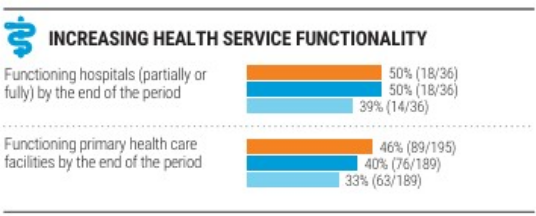
10.8.7 The UN article published on 17 January 2026 stated that, ‘… despite humanitarians re-opening or establishing dozens of health service points, less than 40 per cent of healthcare facilities in Gaza are operational …’[footnote 202]
10.8.8 The January 2026 TNH article stated that, ‘… hospitals are operating under permanent emergency conditions without sufficient fuel or medicine …’[footnote 203]
10.8.9 On 21 January 2026, Middle East Eye (MEE), ‘an independently funded digital news organisation covering stories from the Middle East and North Africa’[footnote 204], published an article about an unidentified mutated virus which it said was rapidly spreading across the Gaza Strip. The article stated:
‘“Gaza is facing an unprecedented humanitarian and health crisis …” said Mohammed Abu Salmiya, director of al-Shifa Medical Complex in Gaza City … Emergency admissions have risen by around 200 percent, with most patients suffering respiratory infections, high fever, severe weight loss and joint pain,” said Abu Salmiya. Severe pneumonia cases have forced thousands into the hospital, some into intensive care. Deaths have also been recorded … Thousands of families with sick children now wait for hours in clinics and hospital corridors. Most cannot afford private care, increasing both their suffering and the risk of further infection.’[footnote 205]
10.8.10 The February 2026 IPS article stated: ‘Healthcare needs are … overwhelming, as a steady influx of injuries and disease is compounded by the near-total collapse of Gaza’s health system.’[footnote 206]
10.8.11 The OCHA Humanitarian Response Situation Report No. 67, covering the situation as of 11 February 2026 and published on 16 February 2026, stated:
‘As of 9 February [2026], 246 health service points were functioning across the Gaza Strip, 234 of them only partially, including 19 hospitals, 12 field hospitals, 102 primary health centres, and 113 medical points. On 5 February, one hospital resumed operations in Gaza city, bringing the total number of hospitals in the Gaza governorate to 13, while no hospitals are operational in North Gaza.
‘… Access to assistive devices and rehabilitation services is similarly limited. The UN and partners could only take into Gaza some 300 prostheses since December 2025, despite more than 6,000 amputation cases reported, and existing stocks at the Artificial Limbs and Polio Center (ALPC) and ICRC facilities are expected to last just three months. The UN and partners have not been able to take in any new prosthetics or orthotics materials since the ceasefire entered into effect.’[footnote 207]
10.8.12 On 23 March 2026, MEE published an article about Palestinians in the Gaza Strip who have died while awaiting medical evacuation, which stated:
‘Only 490 patients were evacuated during the entire month of February [2026], which [Zaher al-] Wahidi [the director of the Palestinian health ministry’s information department] describes as a “negligible” number of people. “We need to evacuate 400 daily, and at least 200 at the minimum, which would end the file of patients and wounded within six months,” the director said.
‘Restrictions on medical evacuations have also intensified in recent days amid the Israeli-US war on Iran, with Israel closing the crossing on 28 February [2026]. Last week, operations were resumed, but remained under strict limitations. No more than 24 patients, along with their companions, have been evacuated since the crossing reopened on 19 March [2026].
‘Patients are exposed to various problems, the health director said, including complications in lengthy and arduous travel procedures … Wahidi noted that more than 1,400 patients out of 20,000 have died since 7 May, 2024 as a result … [of evacuation restrictions].’[footnote 208]
10.8.13 The April 2026 DRC et al joint report noted that most of the population remained without sufficient access to healthcare[footnote 209].
10.8.14 The May 2026 HRW article noted that as the yellow line moves further west (see The changing geography of Gaza), it is ‘swallowing up’ health facilities[footnote 210].
10.8.15 On 30 June 2026, BJPsych Open, a peer-reviewed journal published by Cambridge University Press on behalf of the Royal College of Psychiatrists[footnote 211], published a service evaluation of mental health provision in Gaza covering the period October 2023 to January 2026, drawing on Ministry of Health Mental Health Department records, field observations by WHO fieldworkers, and Mental Health and Psychosocial Support (MHPSS) Technical Working Group coordination data and facility assessments[footnote 212]. An abstract of the evaluation stated:
‘Gaza’s sole functional psychiatric hospital (39-bed capacity, 2,200 annual emergency presentations, 719 annual admissions pre-conflict) sustained structural damage, rendering it non-operational since November 2023. A replacement psychiatric hospital that was planned before the war and was due to open in 2024 sustained damage before activation. All six governmental Community Mental Health Centres (serving approximately 100,000 annual service users) were destroyed (during April 2024 – 2025).
‘Workforce capacity declined critically: over 10 mental health professionals were confirmed killed, with only three Board-certified practicing psychiatrists remaining in Gaza (two more projected upon completion of the current training cohort in 2026). Pre-war, there was a single Board-certified child and adolescent psychiatrist, currently unable to practice within Gaza. Multiple NGO facilities sustained destruction or damage. Psychotropic medication supply chains were severely disrupted following the destruction of the WHO’s pharmaceutical warehouse. Health information infrastructure, including electronic medical record systems and referral pathways, became non-functional …’[footnote 213]
10.8.16 The July 2026 Action for Humanity report stated: ‘The health system has been severely degraded, with only around 2,000 hospital beds remaining operational compared to 3,500 before the conflict, and fewer than half of hospitals functioning even partially.’[footnote 214]
10.8.17 On 7 July 2026, The Institute for Palestine Studies (IfPS), an independent non-profit research institution established in 1963[footnote 215], published key statistics on the impact of the conflict on the health sector in the Gaza Strip. The published statistics, which cited its own research as well as figures provided by the Health Cluster [a collective of humanitarian health partners ‘to strengthen the coordination, quality, and impact of health responses in humanitarian emergencies’[footnote 216]] and the Palestinian Ministry of Health/Gaza, stated that since the start of the conflict (October 2023) and as of 7 July 2026, 9 hospitals in the Gaza Strip had been completely destroyed and 25 hospitals partially destroyed, while no hospitals in Gaza were fully functional, 20 were partially functional, and 17 hospitals were non-functioning[footnote 217]. Regarding medicines, it noted that 47% of essential medicines, and 64% of cancer medicines, were at ‘zero stock’, while 80,000 diabetes patients, and 110,000 hypertension patients, did not have medicines available to them, and 20,000 patients needed medical evacuation for treatment abroad[footnote 218]. It additionally reported 2.142 million cases of infectious diseases (which include cases where people have had multiple infectious diseases), as well as a health sector impacted by over 1,250 deaths and over 360 detentions of members of its workforce (the latter figure including 269 freed detainees)[footnote 219].
10.8.18 The July 2026 article published by The Straits Times reported a surge in cases of chickenpox, a highly contagious disease, in the months prior to publication, with over 9,300 suspected cases, mainly in Khan Younis in the south of the Gaza Strip. The article stated that,
‘… a dermatologist with the Palestinian Red Crescent Society, said a lack of space to isolate patients is fuelling the spread … in Gaza’s camps, he said, separating the sick from the healthy is virtually impossible.
‘… International aid organisations have repeatedly warned that medical supplies remain grossly inadequate.
‘“Chickenpox is one part of it, but there’s also respiratory infections, watery diarrhoea, we’ve now got more than half of households reporting skin diseases, fleas, lice, scabies,” said [UNICEF spokesperson, Louise] Wateridge.’[footnote 220]
10.8.19 An OCHA humanitarian situation update for 23 July 2026, published on 25 July 2026, stated: ‘In Gaza, deteriorating sexual and reproductive health conditions are placing pregnant women at growing risk: in the first half of 2026, nearly 4,000 miscarriage cases were recorded, severe maternal morbidity reached 82 cases per 1,000 deliveries, and more than 57 per cent of pregnant women were anemic.’[footnote 221]
10.8.20 The OCHA snapshot published on 31 July 2026 noted that as of 29 July 2026, over 1,700 health workers had been killed since the start of the hostilities in the Gaza Strip[footnote 222]. The snapshot noted that some of the fatalities were also counted as aid worker fatalities (see paragraphs 11.1.13 and 11.2.20)[footnote 223], however, it did not provide any figures (estimated or actual) regarding how many fatalities were double-counted.
10.8.21 The same OCHA snapshot included the below graphics, showing, respectively, the functionality of health services in the Gaza Strip (including hospitals, field hospitals, primary healthcare centres (PHCs), medical points, ambulance centres, emergency centres and mobile clinics) and the numbers of medical evacuations from the Gaza Strip to have taken place for each month between the start of January and 28 July 2026[footnote 224]:
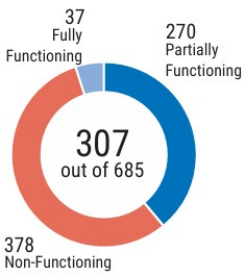
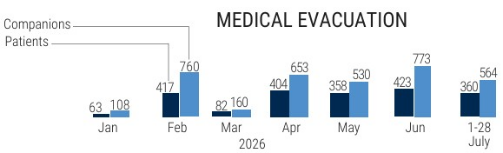
For further health-related statistics, covering the periods both pre and post the October 2025 ceasefire, see the undated OCHA Publications webpage where near-weekly reported impact snapshots have been published.
10.8.22 The OCHA humanitarian situation report of 31 July 2026 stated:
‘Shortages of essential medical supplies continue to hamper non-communicable disease services, while infectious diseases remain widespread due to overcrowding in displacement sites and poor water, hygiene and sanitation conditions.
‘… Between 19 and 25 July [2026], according to the Health Cluster, acute respiratory infections remained the leading reported condition, amounting to 43.2 per cent of all communicable diseases, followed by acute watery diarrhea (22 per cent), underscoring persistent risks associated with overcrowding and inadequate WASH conditions. Skin diseases continued to represent a significant burden, with ectoparasitic infestations accounting for 18.9 per cent of cases, impetigo showing an upward trend (10.8 per cent), and chickenpox continuing to decline (4.9 per cent).’[footnote 225]
11. Humanitarian aid
11.1 United Nations Relief and Works Agency for Palestine Refugees in the Near East (UNRWA)
11.1.1 The IPS article, published on 18 November 2025, stated:
‘… [Commissioner-General of UNRWA, Philippe] Lazzarini informed reporters on November [2025] that UNRWA has been a lifeline for Gaza since the beginning of this crisis. Over the past two years, UNRWA has supported over 15 million primary health consultations, providing over 14,000 consultations on average on a daily basis.
‘UNRWA has also been instrumental in keeping the water system in the enclave from collapsing, with Lazzarini stating that roughly “40 percent of clean water is thanks to the work of (UNRWA’s) engineer(s) on the ground.” Furthermore, UNRWA has supported more than 48,000 children across 96 UNRWA schools five days a week, alongside bringing online education back to about 300,000 children.
‘“I do believe that we are and remain an extraordinary asset at the disposal of the international community, especially for securing critical services for the population of Gaza and any effort in stabilization and success,” said Lazzarini. “The main challenge is that we need to safeguard the operational space of the agency in Gaza. That’s challenge number one, to acknowledge that the agency is a vital key partner and an invaluable asset to the international community to help consolidate the ceasefire and ensure a successful recovery.”’[footnote 226]
11.1.2 The November 2025 TNH article stated: ‘UNRWA, the largest aid provider in the region and a pillar of the response, has been unable to bring goods into Gaza since it was banned by Israeli authorities in January [2025]; it continues to operate inside Gaza.’[footnote 227]
11.1.3 On 29 January 2026, the Library of Congress, the main research arm of the US Congress[footnote 228], published an article entitled ‘Israel: Law to Cease UNRWA Activities Amended’ which, citing various sources, stated:
‘On December 29, 2025, the Knesset (Israel’s parliament) passed an amendment to the Law to Cease UNRWA’s Activities, 5785-2024 (the law), clarifying Israel’s prohibition on the activities of the United Nations Relief and Works Agency for Palestine Activities (UNRWA).
‘Enacted in 2024, the law declared the immediate expiration of a provisional agreement between UNRWA and the government of Israel, which was entered into by an exchange of letters on June 14, 1967 (1967 provisional agreement). The law further banned all UNRWA activities and services on Israeli territory and severed all contacts between Israeli government employees and UNRWA [thereby curtailing its activities in the Gaza Strip[footnote 229]] beginning on January 30, 2025.
‘The new amendment law, effective December 31, 2025, prohibits authorized suppliers of essential utilities from providing services to UNRWA or people acting on its behalf. It also authorizes state or local authorities, under certain conditions, to take possession of land held by UNRWA or anyone operating on its behalf. The amendment law further declares that UNRWA and its staff and assets no longer enjoy privileges and protections previously extended under Israeli law.
‘… In addition to canceling all permits or benefits granted to UNRWA, the amendment law prohibits the supply of electricity, gas, water, and telecommunication and financial services to any person acting on behalf of UNRWA.’[footnote 230]
11.1.4 On 9 February 2026, UNRWA published its ‘Occupied Palestinian Territory Flash Appeal 2026: Summary’ which stated: ‘Around 11,500 Palestinian UNRWA personnel - many themselves displaced – continue to provide life-saving assistance at scale to the Gaza Strip’s entire population in need. The Agency runs the Gaza Strip’s largest collective emergency shelter network, remains the largest humanitarian primary health care provider, and sustains WASH and education services for most of the population.’[footnote 231]
11.1.5 The February 2026 IPS article stated: ‘According to Jonathan Fowler, Senior Communications Manager of … UNRWA … the agency previously operated 22 [healthcare] clinics operating across the Gaza strip before the war, which has now fallen to just six … Despite numerous access and security constraints, UNRWA aims to assist approximately 15,000 patients each day …’[footnote 232]
11.1.6 On 10 March 2026, The New Arab published an article which stated:
‘The head of the UN agency for Palestinian refugees [Philippe Lazzarini] on Monday [9 March 2026] rejected Israel’s assertion that other organisations could replace it in Gaza, insisting that only a Palestinian state “institution” could take over … UNRWA is “continuing to operate in Gaza …”, Lazzarini said.
‘The agency said Sunday [8 March 2026] that since January [2026] it had “delivered food assistance to the entire population of the Gaza Strip”. It also carried out “over 412,000 health consultations and reached more than half a million people with shelter and non-food items”.
‘… Lazzarini stressed the Israeli ban meant the agency was facing “serious operational challenges”, and warned that agency staff “feel much more vulnerable” without the ability to coordinate with the Israeli military.
‘UN agencies and other aid organisations have repeatedly said that UNRWA could not be replaced. The agency is also the main provider of basic public services in Gaza, including education and social services for registered refugees.
‘… Lazzarini acknowledged that if the only objective is to “bring trucks into Gaza” to address the humanitarian crisis caused by the war, others could step in.
‘But he insisted that UNRWA’s role was far broader.’[footnote 233]
11.1.7 The April 2026 IPS article stated: ‘Humanitarian movement remains severely constrained, with all UNRWA staff banned from accessing the entire Occupied Palestinian Territory since March 2025. The agency, which has long acted as a critical lifeline for Palestinians, has pre-positioned food parcels, flour, and shelter supplies at Gaza’s borders, which could help hundreds of thousands of Gazans.’[footnote 234]
11.1.8 The same IPS article also stated: ‘UNRWA is currently supporting over 67,000 displaced individuals across 83 collective emergency shelters, with over 11,000 personnel providing lifesaving care. UNRWA, in collaboration with WHO, the United Nations Children’s Fund (UNICEF), and Palestine’s Ministry of Health, reached almost 2,100 children under three years of age with vaccinations between April 5 and 9 [2026].’[footnote 235]
11.1.9 UNRWA published a webpage about the pledging conference it held on 30 June 2026 which stated:
‘As of 31 May 2026, [UNRWA] funding levels remain critically low across all funding portals … [T]he Flash Appeal for the Occupied Palestinian Territory [Gaza and the West Bank] also remains severely underfunded, with only 4 per cent (US$ 51 million [approximately £38.5 million GBP[footnote 236]]) of pledges confirmed to date, of which US$ 46 million [approximately £34.7 million GBP[footnote 237]] has been received. Even if forecasted contributions of US$ 77 million [approximately £58.1 million GBP[footnote 238]] materialise, total coverage would reach only approximately 6 per cent of requirements … If the Agency does not receive adequate resources, it would put in jeopardy its ability to continue to deliver critical services …’[footnote 239]
11.1.10 On 1 July 2026, UNRWA published situation report #228, covering updates for 24 to 30 June 2026 on the ‘Humanitarian Crisis in the Occupied Palestinian Territory (the Gaza Strip and the occupied West Bank, including East Jerusalem)’ which stated that, ‘… 126 UNRWA installations are currently located in areas where access has been restricted (i.e. behind the so-called “Yellow Line” see [Territorial control of the Gaza Strip] and “Orange Line” [see paragraph 8.1.6] of military control implemented by the Israeli authorities).’[footnote 240]
11.1.11 UNRWA situation report #231, published on 30 July 2026 and covering updates for 15 to 28 July 2026, included the below infographic on the UNRWA response in the Gaza Strip since October 2023 and particularly in late July 2026[footnote 241]:
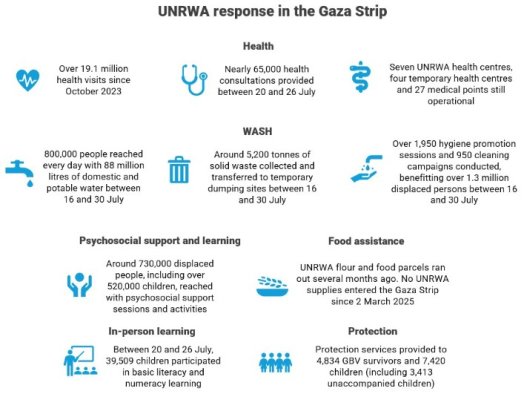
11.1.12 The same UNRWA situation report stated:
-
‘UNRWA continues to monitor the movement of displaced persons and displacement sites. A total of 116 UNRWA collective emergency shelters host 76,000 internally displaced persons and are currently considered active.
-
‘… Around 11,000 Palestinian UNRWA personnel continue to provide services and assistance to people in the Gaza Strip …
-
‘All UNRWA international staff are prevented from entering the Occupied Palestinian Territory … [including] the Gaza Strip … This follows the implementation of laws passed by the Israeli parliament on 28 October 2024 [which came into effect on 29 January 2025[footnote 242]] … The Israeli authorities have not granted the Agency’s international staff visas or permits to enter the Occupied Palestinian Territory, including the Gaza Strip, since the end of January 2025.
-
‘Since March 2025, the Israeli authorities have been blocking UNRWA from directly bringing humanitarian personnel and aid into the Gaza Strip. Despite the huge needs on the ground, UNRWA was therefore unable to distribute the aid it had pre-positioned outside Gaza, which included enough food parcels, flour, and shelter supplies for hundreds of thousands of people.
-
‘… Since the beginning of the war and up to 27 July [2026], 996 incidents impacting UNRWA premises and the people inside them have been reported. 312 (or nearly all) UNRWA installations have been impacted by armed conflict-related incidents, some of them multiple times …’[footnote 243]
11.1.13 UNRWA situation report #231 also stated: ‘UNRWA has recorded 393 colleagues killed in Gaza since the start of the war (311 UNRWA personnel and 82 persons who were supporting UNRWA) [20 of whom were killed while on duty[footnote 244]], up to 29 July [2026].’[footnote 245] For details of non-UNRWA aid worker fatalities during the hostilities, see paragraph 11.2.20. For further statistics on the number of fatalities of aid workers, covering the periods both pre and post the October 2025 ceasefire, see the undated OCHA Publications webpage where near-weekly reported impact snapshots have been published.
11.2 Other aid agencies
11.2.1 On November 2025, the UN General Assembly published a note by the Secretary-General to the advisory opinion of the International Court of Justice (ICJ) on the obligations of Israel to entities with a humanitarian presence in the Gaza Strip. The note stated:
‘[N]umerous United Nations entities operate in the Occupied Palestinian Territory, see [Points to note] OPT under various mandates and play a key role in providing essential supplies and basic humanitarian and development aid to the Palestinian civilian population. These include OCHA; the Office of the High Commissioner for Human Rights (OHCHR); UNICEF; United Nations Development Programme (UNDP); the United Nations Entity for Gender Equality and the Empowerment of Women (UN Women); the United Nations Human Settlements Programme (UN-Habitat); the United Nations Mine Action Service of the Department of Peace Operations (UNMAS); the United Nations Office for Project Services (UNOPS); the United Nations Office on Drugs and Crime (UNODC); the United Nations Fund for Population Activities (UNFPA); the United Nations Special Coordinator for the Middle East Process (UNSCO); the WFP.
‘… Several States and non-governmental organizations have undertaken humanitarian operations in the OPT. The States include Belgium, Brazil, Colombia, France, Jordan, Norway, Qatar, Russia, Saudi Arabia, South Africa and Türkiye. Many of these States maintain that their humanitarian aid efforts to the OPT have been severely hampered by Israel’s restrictions on aid access.
‘In addition, the Observer State of Palestine identified several international organizations operating in the OPT, including the Food and Agriculture Organization (FAO); the International Fund for Agricultural Development (IFAD); the International Labour Organization (ILO); the International Trade Center (ITC); the UN Department of Safety and Security (UNDSS); the UNDP; the UN Educational, Scientific and Cultural Organization (UNESCO); the UN Environment Program (UNEP); the UN Industrial Development Organization (UNIDO); the OHCHR; the UN Register of Damage Caused by the Construction of the Wall in the Occupied Palestinian Territory; the UN Special Coordinator for the Middle East Peace Process; UN Trade and Development; the WHO; Acted; Action Against Hunger, ACF; Action Aid Australia ⎯ Palestine; Alianza Por La Solidaridad; ANERA; CARE International; Caritas Jerusalem; Catholic Relief Services; CESVI; Cooperazione Internazionale Sud Sud; Dan Church Aid/Norwegian Church Aid; the Danish Refugee Council; Diakonie Katastrophenhilfe; Global Communities; Humanity & Inclusion; International Medical Corps; the International Rescue Committee; the Lutheran World Federation; Médecins sans Frontières; Medical Aid for Palestinians; Mercy Corps; Middle East Children’s Alliance; the Norwegian Aid Committee; Norwegian People’s Aid; the Norwegian Refugee Council; Oxfam; Première Urgence Internationale; Project HOPE; Relief International; Save the Children; Solidarités International; Swiss Church Aid; Terre des Hommes; The Centre for Mind-Body Medicine; War Child; War Child Holland; We World-GVC.’[footnote 246]
11.2.2 The November 2025 TNH article stated:
‘A parallel aid system that emerged earlier in the war and that circumvents the traditional UN-led response is … apparently being given preference [by Israeli authorities], with food and some tents being delivered to people in Gaza directly from third countries – notably Egypt and the United Arab Emirates.
‘To receive food and other aid through this system, families provide ID numbers and family details to community leaders, who submit lists to committees working with these countries.
‘… Israeli authorities have allowed these countries to deliver significantly more tents than organisations working through the UN-coordinated system.
‘At this point, essentially anything getting into Gaza is helpful, aid workers said. “We’re at a point of desperation, where winter is coming and people need shelter,” a third aid worker said.
‘But at the same time, some expressed concern about increasing deliveries of aid through a parallel system which, they noted, is largely opaque to the UN and other aid groups and lacks a clear commitment to humanitarian principles.’[footnote 247]
11.2.3 An article published by BBC News on 30 December 2025, which was updated on 31 December 2025, stated:
‘Israel is to revoke the licences of 37 international non-governmental organisations (INGOs) working in Gaza and the occupied West Bank, saying they failed to meet requirements under new registration rules.
‘ActionAid, International Rescue Committee, Médecins Sans Frontières and Norwegian Refugee Council are among the aid agencies which will have their licences suspended on 1 January [2026], with their operations to end within 60 days.
Israel said they had, among other things, failed to hand over “complete” personal details of their staff …
‘The move was condemned by 10 countries, which said the rules would have a severe impact on access to essential services.
‘… The Humanitarian Country Team of the Occupied Palestinian Territory - a forum that brings together UN agencies and more than 200 local and international NGOs … has said INGOs run or support most of Gaza’s field hospitals and primary healthcare centres, emergency shelter responses, water and sanitation services, nutrition stabilisation centres for children with acute malnutrition, and critical mine action activities.
‘… Israel’s ministry of diaspora affairs, which oversees registration applications, said … new measures would not affect the flow of humanitarian assistance to Gaza.
‘… Israeli military body Cogat, which controls Gaza’s crossings and co-ordinates aid deliveries, meanwhile said the INGOs facing suspension “did not bring aid into Gaza throughout the current ceasefire”, which began 11 weeks ago [in October 2025]. It added that “even in the past their combined contribution amounted to only about 1% of the total aid volume”
‘… Fewer than 15% of the INGOs providing humanitarian assistance to Gaza were found to be in violation of the new regulatory framework, it [the Israeli diaspora affairs ministry] added.’[footnote 248]
11.2.4 For a full list of the 37 humanitarian organisations whose operations in Gaza were suspended as of 1 January 2026, see an article entitled List of aid groups working in Gaza that Israel is suspending, published on 30 December 2025 by AP News, an independent US-based global media outlet[footnote 249].
11.2.5 The January 2026 TNH article stated:
‘… [H]umanitarian organisations were not auxiliary actors. They were the last remaining structure preventing complete societal breakdown. Suspending the work of such a large number of organisations effectively dismantles what remains of Gaza’s fragile life-support system, not because these organisations were sufficient but because they were performing functions no other actor could. They provided food to the vast majority of Gaza’s population, medical care to those without access to hospitals, and minimal stability in an environment where the basic support structures for everyday life have been erased.’[footnote 250]
11.2.6 The same TNH article also stated: ‘The organisations that have been suspended represent nearly every established and credible aid group that has been involved in the humanitarian response in Gaza over more than two years – from Médecins Sans Frontières and Mercy Corps to World Vision and the Danish Refugee Council.’[footnote 251]
11.2.7 The America Magazine article of 3 January 2026 stated: ‘While the [suspended] organizations will not be able to bring in aid from outside Gaza, they still can continue with their work using supplies obtained from within Gaza.’[footnote 252]
11.2.8 The 26 January 2026 UN article stated:
‘… [T]wo agencies [UNICEF and WFP] have brought more than 10,000 trucks of aid into Gaza since the 10 October [2025] truce between Israel and Hamas, representing some 80 per cent of all humanitarian cargo.
‘… UNICEF and partners have provided more than 1.6 million people with clean drinking water and distributed blankets and winter clothes to 700,000. They have also restored essential life-saving paediatric intensive care services at embattled Al Shifa Hospital in Gaza City.
‘The second round of a Gaza-wide “catch-up campaign” for routine childhood vaccinations is currently underway, while another 72 UNICEF-supported nutrition facilities have been established, bringing the total to 196.
‘… WFP has also scaled up massively over the past 100 days, said Mr. Skau [WFP Deputy Executive Director], speaking from Rome. Teams have reached more than a million people every month with full rations for the first time since the war began.
‘They are “serving 400,000 hot meals every day and delivering school snacks to some 230,000 children in 250 temporary learning centres,” in addition to operating hundreds of distribution points and some 20 warehouses.
‘Other humanitarian organizations are bringing in tents, blankets, mattresses and other essentials thanks to WFP’s shared logistics services.
‘The agency is also helping to facilitate more regular aid convoys and is expanding common storage facilities so that more aid can be positioned closer to the population. It has also ramped up cash support to roughly 60,000 households.
‘… UNICEF and partners are supporting over 250,000 children to resume learning – a critical element to mental health and psychosocial support for more than 700,000 students who have been out of school for two years.’[footnote 253]
11.2.9 The January 2026 Al-Monitor article stated:
‘The U.N. children’s agency [UNICEF] said on Tuesday [27 January 2026] it had for the first time in two-and-a-half years been able to deliver school kits with learning materials into Gaza after they were previously blocked … UNICEF is scaling up its education to support half of children of school age - around 336,000 - with learning support. Teaching will mainly happen in tents, [UNICEF spokesperson, James] Elder said, due to widespread devastation of school buildings in the enclave during the war …
‘… The bulk of the learning spaces supported by UNICEF will be in central and southern areas of the enclave, as it remains difficult to operate in the north, parts of which were badly destroyed in the final months of the conflict, Elder said.’[footnote 254]
11.2.10 On 28 January 2026, OCHA published a ‘Briefing by OCHA Spokesperson, Olga Cherevko, to Gaza-based journalists’ which stated:
‘The UN and our humanitarian partners continue to ramp up humanitarian response alongside other actors, including Member States, despite numerous impediments that stand in the way of our efforts.
‘Since the ceasefire [which took effect on 10 October 2025], we have:
-
‘Brought nearly 200,000 metric tons of aid into Gaza
-
‘Delivered food assistance to over a million people every month, as well as hot meals to 1.6 million people daily
-
‘Re-opened dozens of health points
-
‘Established hundreds of temporary learning spaces
‘We are doing everything possible to reach people in need, but our gains are fragile, and the gap between needs and what can be delivered safely and consistently remains vast.’[footnote 255]
11.2.11 The February 2026 HelpAge International report stated: ‘In … [a] highly constrained environment, local communities and Palestinian civil society organisations were not only the first to respond but have remained the backbone of the humanitarian response throughout the crisis. They have sustained life-saving assistance despite extreme restrictions, logistical barriers, and the harsh reality of living through the conflict themselves.’[footnote 256]
11.2.12 Between the ceasefire agreement made between Israel and Hamas on 10 October 2025 and 27 February 2026, OCHA published regular humanitarian response updates (published on a near-daily basis as ‘Gaza Humanitarian Response Situation Reports’ between 21 October 2025 and 30 December 2025, then decreasing in frequency), providing detailed information about the humanitarian response in Gaza under the ceasefire arrangements. See the undated OCHA Publications webpage for humanitarian response updates for information relating to specific dates or time periods.
11.2.13 On 30 March 2026, MSF published a statement which stated:
‘We have taken the unprecedented step of petitioning to the [Israeli] High Court with a coalition of [18 other] humanitarian organisations, after Israeli authorities ordered us to cease operations in Palestine by the end of February [2026] under revised registration rules imposed by Israel, threatening to cut Palestinians off from essential humanitarian aid … Since 1 January [2026], Israel has entirely blocked MSF from bringing any supplies or international staff into Gaza. On 26 February [2026], all international staff had to leave Gaza … MSF’s medical programmes are already facing shortages in Gaza.’[footnote 257]
11.2.14 On 3 April 2026, a medical adviser for MSF wrote in an article that MSF had,
‘… not been able to bring in any supplies since 1 January 2026.
‘… a critical shortage in our stock of non-communicable disease (NCD) medication … including medications for diabetes, hypertension, thyroid gland, asthma and other respiratory diseases … jeopardise our ability to provide essential care for chronic diseases. We have already had to stop accepting new patients to our NCD services, limiting the provision of care and the dispensing of medicine only to our existing group of patients. This shortage in proper care will inevitably lead to preventable deaths among patients suffering from chronic diseases.
‘… [M]alfunctioning equipment can mean having to postpone or suspend surgeries. These delays and suspensions can have severe consequences for patients and their recovery process, even leading to a disability or the worsening of a disability. Currently, we are completely dependent on the equipment that we already have inside Gaza, which has been used for a long time. Due to the high need and strain, we are seeing more malfunctioning equipment.
‘Our teams are working hard to continue providing care, but they are under immense strain. Our teams’ dedication and last-resort solutions cannot replace a stable and unhindered entry of supplies.’[footnote 258]
11.2.15 The April 2026 IPS article stated: ‘WHO and its partners have … been facilitating dozens of medical evacuations through the Rafah border crossing and providing access to medical care, food, water, and psychosocial services to returning Gazans.’[footnote 259]
11.2.16 On 21 May 2026, The Times of Israel published an article which stated:
‘The High Court of Justice ruled unanimously on Wednesday [20 May 2026] against a petition by an association of 19 international aid organizations against new security regulations imposed by the government [see paragraphs 11.2.3 to 11.2.5 and 11.2.13], asserting that state agencies are entitled to require strict security checks to ensure foreign organizations are not connected to terror groups.
‘… The court gave the organizations whose licenses were revoked 30 days to comply with the new security screening regulations, which require them to file a raft of documentation about their organizations and operations, including a list of all foreign and Palestinian employees, as well as those workers’ passports and personal identification numbers.
‘… [T]he NGOs say that compliance will expose local employees to potential retaliation, undermine the principle of humanitarian neutrality and violate European data protection law.
‘… The banned organizations say that they collectively support or implement more than half of all food assistance in Gaza, 60 percent of field hospital operations, and all inpatient treatment for children suffering severe acute malnutrition.’[footnote 260]
11.2.17 UNICEF’s 2026 mid-year review stated:
‘In the first six months of 2026, UNICEF and its partners continued to deliver life-saving assistance across the Gaza Strip despite significant operational constraints: More than 1.15 million people accessed safe drinking water through emergency water trucking, while 516,000 people gained access to sanitation services. Across the health sector, 487,000 children and women accessed primary health care services, and 11,019 small and sick newborns received specialised inpatient newborn care.
‘UNICEF and its partners also helped protect children’s nutritional well-being, screening and treating 19,425 children for acute malnutrition and providing infant and young child feeding counselling to 163,000 caregivers. Meanwhile, 266,000 children accessed formal or non-formal education opportunities, helping restore learning and a sense of normalcy amid ongoing upheaval.
‘… In addition, 298,000 people received humanitarian cash assistance, helping families meet urgent needs and cope with increasingly difficult living conditions.
‘These achievements demonstrate that, even under extremely challenging conditions, humanitarian action remains possible. Sustaining these gains will depend on continued access, and adequate funding.’[footnote 261]
11.2.18 The same UNICEF review stated: ‘UNICEF’s Humanitarian Action for Children (HAC) appeal for 2026 [which covers both the Gaza Strip and the West Bank[footnote 262]] requires US$ 707.8 million [approximately £534.9 million GBP[footnote 263]] to meet the urgent needs of children and their families in 2026. As of now, 40 per cent of the appeal is funded. UNICEF urgently requires an additional US$ 421.7 million [£318.7 million GBP[footnote 264]] in 2026 to scale up life-saving assistance.’[footnote 265]
11.2.19 The briefing delivered on 21 July 2026 by the Spokesperson for the UN Secretary-General, Antonio Gutuerres stated:
‘Despite persistent insecurity issues and despite severe operational constraints, our humanitarian partners are continuing to restore and expand access to basic education wherever possible, after more than two years of prolonged disruption to learning.
‘During the first half of this year [2026], our partners helped 435,000 pre-primary and school-aged children, including approximately 9,300 children with disabilities, get access to structured learning through 610 temporary learning spaces. Around 344,000 children also received essential learning and teaching materials.
‘Our partners also supported 11,000 teachers and education personnel through initiatives focused on education in emergencies, disability-inclusive programming, quality learning and safe learning environments.
‘… Since October 2023, 12,700 patients, including 6,163 children, have been evacuated abroad to more than 30 countries for treatment.’[footnote 266]
11.2.20 The OCHA snapshot published on 31 July 2026 noted that as of 29 July 2026, 203 aid workers (outside of UNRWA), had been killed since the start of the hostilities in the Gaza Strip, including 9 from the UN and other personnel contracted by the UN (non-UNRWA), 135 from NGOs or international NGOs, 4 from the International Committee of the Red Cross, and 55 from the Palestine Red Crescent Society[footnote 267]. For details of UNRWA aid worker fatalities during the hostilities, see paragraph 11.1.13. For further statistics on the number of fatalities of aid workers, covering the periods both pre and post the October 2025 ceasefire, see the undated OCHA Publications webpage where near-weekly reported impact snapshots have been published.
11.3 Access to humanitarian aid
11.3.1 An undated learning toolkit, published by the NRC stated:
‘Humanitarian access is normally defined as humanitarian actors’ ability to reach affected populations as well as people’s ability to access assistance and protection. It is important to remember that humanitarian access is a dual concept as there can often be a greater focus on humanitarian actors’ ability to access populations with less attention given to peoples’ access to services.
‘People’s access considers the extent to which affected populations can reach humanitarian services in a safe and dignified manner. This should be considered jointly with the extent to which humanitarian actors can reach the affected populations to assess, plan, implement, deliver, and monitor aid in a principled manner.’[footnote 268]
11.3.2 An undated OCHA webpage entitled ‘Considerations for the delivery of humanitarian aid during a ceasefire in Gaza’ referred to a target of 600 trucks entering Gaza per day, 350 with commercial goods (that need to be dispatched throughout Gaza), 150 with UN and INGO supplies, and 100 with items collected by the Red Crescent societies and/or bilateral member state donations, ‘… in order to enable a meaningful humanitarian response.’[footnote 269]
11.3.3 On 3 June 2026, MSF published an article entitled ‘Violence and killings at Gaza’s food distribution points leave survivors suffering one year on’, which stated:
‘One year ago [in June 2025], the so-called Gaza Humanitarian Foundation (GHF) started operating militarised food distribution points across the Gaza Strip, Palestine, replacing the UN-coordinated aid distribution system. The GHF, run by Israel with financial support from the United States (US) and other allies, closed within six months, as its related violence killed and injured thousands …
‘… The GHF was established to deliver food assistance to people in Gaza, following months of Israel’s total blockade, replacing some 400 existing aid sites. The four GHF sites became operational in late May 2025 and were “secured” by private American armed contractors, with the Israeli forces maintaining control over the wider perimeter.
‘Between June and October 2025, MSF teams recorded at least 32 deaths and treated 1,885 patients for injuries at MSF’s Al-Attar and Al-Mawasi healthcare centres in Khan Younis.’[footnote 270]
11.3.4 On 12 November 2025, OCHA published ‘Humanitarian Situation Update #340’ which stated: ‘Israeli authorities announced the reopening of Zikim crossing for humanitarian cargo after a two-month closure.’[footnote 271]
11.3.5 ‘Humanitarian Situation Update #338’, published by OCHA on 6 November 2025, noted that educational supplies and red meat were deemed to fall outside the scope of humanitarian aid and therefore rejected for entry into Gaza[footnote 272]. Similarly, the November 2025 TNH article noted that the following essential goods were either being denied entry or were facing significant delays: tents; medical equipment; bottles for baby formula; equipment to repair water mains, pesticides to control rodents, syringes and fridges (required for a children’s vaccination campaign); and most education and mental health-related goods[footnote 273].
11.3.6 The same TNH article stated: ‘According to US plans, a new Civil-Military Coordination Center (CMCC), led by the American military, is supposed to take over coordinating with aid groups from COGAT, the Israeli military body currently in that role … [However,] Israeli officials continue to call the shots at the CMCC and have not meaningfully reduced any of the barriers to humanitarian work in Gaza, several aid workers said.’[footnote 274]
11.3.7 The TNH article also stated:
‘The vast majority of cargo entering is food …
‘… Rather than aid, Israeli authorities are privileging commercial trucks. But the uneven supply is heavy on carbs, packaged foods, and sweets, and light on nutrition.
‘… Despite the shortages and obstruction, aid workers say they have been able to make progress increasing access to basic necessities and vital services – including water, healthcare, and bakeries – in some areas.
‘… What is being allowed in – some medical supplies, nutrition items, jerry cans for fetching water, blankets, and winter clothes – favours quick fixes over long-term repairs, aid workers said.’[footnote 275]
11.3.8 The November 2025 note by the Secretary-General on the advisory opinion of the ICJ stated that there are ‘… credible, well-documented reports from United Nations agencies, humanitarian organizations and journalists on the ground, which indicate that trucks carrying substantial quantities of humanitarian supplies remain stalled at Gaza’s borders due to the absence of functioning distribution mechanisms or to the poor state of the infrastructure required to ensure aid reaches the civilian population.’[footnote 276]
11.3.9 The same report of the Secretary-General stated: ‘Recent reports suggest that, although substantial quantities of food and humanitarian supplies have been permitted entry into the Gaza Strip, they have not reached the civilian population. Allegedly, Hamas has been diverting these supplies, reselling them to civilians at exorbitant prices. Additionally, there are indications that large volumes of aid remain undistributed and are deteriorating rapidly due to the harsh desert climate.’[footnote 277]
11.3.10 The Global Humanitarian Overview 2026, published by Humanitarian Action on 8 December 2025, stated: ‘In Gaza, insecurity has rendered large areas unreachable. Despite the ongoing [October 2025] ceasefire, the daily volume of humanitarian cargo entering Gaza continues to dwindle, in part due to unpredictable clearance processes and delays. As of late November [2025], access to northern crossings remains denied, while humanitarian cargo is being de-prioritized at other crossings …’[footnote 278]
11.3.11 The January 2026 OCHA infographic included the below bar chart showing the numbers of truck movements and collections, for UN-coordinated trucks, during month 2 of the October 2025 ceasefire in Gaza (11 November to 10 December 2025, shown in orange and the top bar), compared with month 1 (11 October to 10 November 2025, shown in dark blue and the middle bar) and the month prior to the ceasefire (11 September to 10 October 2025, shown in pale blue and the bottom bar)[footnote 279]:
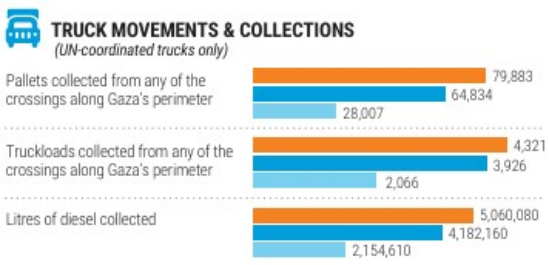
11.3.12 See the OCHA infographic of 5 January 2026 for some sector-specific visual summaries of the humanitarian response during month 2 of the October 2025 ceasefire in Gaza, compared with month 1 and the month prior to the ceasefire.
11.3.13 Regarding new INGO registration regulations, a statement by the Humanitarian Country Team of the OPT, published by OCHA on 17 December 2025, stated:
‘While some INGOs have been registered under the new system, these INGOs represent only a fraction of the response in Gaza and are nowhere near the number required just to meet immediate and basic needs. The ongoing re-registration process and other arbitrary hindrances to humanitarian operations have left millions of dollars’ worth of essential supplies - including food, medical items, hygiene materials, and shelter assistance - stuck outside of Gaza and unable to reach people in need.’[footnote 280]
11.3.14 The OCHA humanitarian situation update of 14 January 2026 stated:
‘Humanitarian aid entry has nearly tripled since the [October 2025] ceasefire, but damaged roads, limited storage capacity and restricted materials continue to impede effective delivery, response quality and durability, and longer-term response. Improved food deliveries have enabled monthly food rations with full coverage of minimum caloric needs for the first time since October 2023 and a 70-per-cent increase in meal and bread production over the past three months.’[footnote 281] Referring to OCHA’s report of the tripling of aid entries since the October 2025 ceasefire, the Swedish Migration Agency stated (in a report of 16 March 2026, published in Swedish and translated by CPIT into English using a free online translation tool) that, ‘… the humanitarian situation is still very fragile because the aid [deliveries] only covers basic survival needs, according to the UN.’[footnote 282]
11.3.15 The article published by the UN on 17 January 2026 stated:
‘Since the ceasefire between Israel and Hamas, humanitarians have brought in over 165,000 metric tonnes of assistance into Gaza. They also repaired roads, rehabilitated hospitals, cleared rubble, and re-opened aid distribution points … During the first two months of the truce alone, over 1.3 million people received food packages, and over 1.5 million hot meals were prepared and delivered to people in need across Gaza, thus improving food security.’[footnote 283]
11.3.16 The 26 January 2026 UN article stated: ‘Although more aid is entering Gaza, quantities are not yet sufficient to meet the immense needs.’[footnote 284]
11.3.17 The January 2026 briefing by the OCHA Spokesperson stated:
‘Aid organizations are facing severe limitations. Urgently needed supplies, including some medical items, tools to repair homes, machinery to clear rubble and spare parts remain heavily restricted. Telecommunications disruptions further complicate coordination and emergency response.
‘Damage to roads, warehouses, water systems and health facilities is limiting our ability to store, distribute and deliver assistance where it is most needed.
‘Coordination requirements, explosive ordnance and damaged infrastructure limit access to many areas. We are still struggling to reach the most vulnerable communities, particularly in areas close to where military operations continue.’[footnote 285]
11.3.18 The February 2026 HelpAge International report stated:
‘The operating environment for humanitarian actors in Gaza is severely restricted, with administrative and bureaucratic impediments limiting or disrupting the movement of goods and humanitarian personnel, critically impacting access to protection and assistance for the civilian population. Recent deregistration of INGOs will further limit humanitarian access and obstruct the provision of assistance. For older people, these restrictions are particularly challenging, given the critical importance of uninterrupted access to healthcare, medication, and other essential services.’[footnote 286]
11.3.19 The February 2026 IPS article stated: ‘UN figures indicate that “capacity and funding constraints” have limited humanitarian support to only roughly 40 percent of the remaining functional 970 displacement sites across Gaza.’[footnote 287]
11.3.20 The OCHA Humanitarian Response Situation Report No. 67, covering the situation as of 11 February 2026 and published on 16 February 2026, stated:
‘Overall, between the announcement of the ceasefire on 10 October 2025 and 11 February 2026, at least 293,188 pallets of humanitarian cargo were offloaded, and 295,505 pallets were collected from the various [Gaza] crossings. Some 1,532 pallets, less than one per cent of all collected aid, were intercepted during transit within Gaza. The above data does not include bilateral donations and the commercial sector.
‘… With Rafah closed for cargo and Nitzana closed to UN and international NGOs since 1 January [2026], truck movements from Egypt continue to be routed from Egyptian Rafah to Kerem Shalom. However, humanitarian partners have continued to face high return rates through this route.
‘… Based on the latest reports by Shelter Cluster partners, the current aid pipeline includes about 14,000 tents, 110,000 tarpaulins, and 1.5 million NFIs. However, pipeline bottlenecks – including customs and donation‑number requirements, long advance notifications for items deemed “dual-use,” repackaging rules, repeated re‑submissions, and registration issues affecting international NGOs continue to delay or block the movement of relief items, limiting both planning and response capacity.’[footnote 288]
11.3.21 The February 2026 report of the Special Rapporteur on housing stated: ‘Restrictions on entry of aid including winterization materials have continued despite the [October 2025] cease fire … Entry of shelter materials has largely remained blocked since 2 March 2025 despite a commitment to allow them under the ceasefire agreements of January and October 2025.’[footnote 289]
11.3.22 The March 2026 IWPR article stated:
‘The status of Gaza’s crossings has long been unstable. Following the October 2025 ceasefire, crossings were only partially reopened, with Kerem Abu Salem the main entry point for aid. Access remained heavily restricted and limited to specific categories of goods. The Rafah crossing [which was closed since May 2024[footnote 290]], meanwhile, saw only limited reopening [in early February 2026[footnote 291] [footnote 292]], primarily for the movement of people - particularly patients - rather than the entry of humanitarian supplies.
‘Immediately after the Iran war began [on 28 February 2026], crossings into Gaza once again closed.
‘“During the first days of the escalation with Iran, no goods or aid entered Gaza at all,” explained Yusra Abu Sharkh, Gaza programme coordinator at the International Network for Aid, Relief and Assistance (INARA).
‘After several days, Kerem Abu Salem [crossing] was partially reopened to allow what was described as the gradual entry of aid. Yet access has remained highly restricted and inconsistent, with humanitarian agencies warning that the supplies allowed in fall far short of the population’s needs.
‘Rafah has continued to operate in a limited capacity, largely restricted to the movement of people, further increasing Gaza’s reliance on Kerem Abu Salem as the primary gateway for aid.
‘“The impact of the Iran war has been immediate on the ground, as reduced access and increased restrictions have intensified an already fragile humanitarian situation,” said Amjad al-Shawa, Director of the Palestinian NGO Network.
‘He noted that the number of trucks carrying aid and commercial goods entering Gaza dropped sharply in February and early March [2026], falling by around 50 per cent compared with January [2026].
‘“What entered Gaza was only about 200 trucks per day — less than one-third of what the population needs,” al-Shawa says.
‘… Even this limited flow of aid has become increasingly uncertain.
‘“There was already a severe deficit,” al-Shawa says. “Then the situation deteriorated further. On some days, only 80 trucks were allowed to enter.”’[footnote 293]
11.3.23 The same IWPR article also stated: ‘“The available fuel inside Gaza is not enough to sustain essential services,” Abu Sharkh said … Many organisations have already been forced to concentrate their operations in areas that are easier to reach, leaving some of the most vulnerable with even less support.’[footnote 294]
11.3.24 The OCHA humanitarian situation report of 2 April 2026 stated: ‘Aid workers continue providing supplies and services in the Gaza Strip … but restrictions remain and needs often outpace available resources.’[footnote 295]
11.3.25 The April 2026 DRC et al joint report stated:
‘While restrictions on commercial access have been partially relaxed, humanitarian access remains severely constrained, and markets remain volatile. Much of what enters through commercial channels is neither sufficient nor appropriate to meet large-scale humanitarian needs …. In recent weeks, conditions have deteriorated further amid regional escalation, including the U.S.-Israel-led war with Iran [which began on 28 February 2026], with crossings repeatedly shut and medical evacuations stalled. During the first two weeks of March 2026, trucks entering Gaza declined by 80 percent, and the price of basic goods increased dramatically — fueling renewed fears of hunger.
‘… While full food rations were provided in January 2026 to 1.6 million people, reductions in aid entering Gaza and stock depletions meant humanitarian organizations were only able to provide half rations in February and March [2026], covering only 50 percent of caloric needs. This lack of sufficient and sustained food access perpetuates a malnutrition crisis in Gaza.’[footnote 296]
11.3.26 The same DRC et al report used a three-tier grading system against indicators set out by the US-led 20-point Gaza peace plan and the UN Security Council Resolution 2803 [see paragraph 8.1.4], in which ‘… green means full or significant progress and earns 2 points, yellow means partial or inconsistent implementation and earns 1 point, and red means non-compliance, significant delays, or backtracking and earns 0 points.’[footnote 297] DRC et al gave all 5 indicators in the ‘Humanitarian aid access’ category a red (0 points) grading[footnote 298].
11.3.27 The DRC et al joint report also noted that the moving of the ‘yellow line’ (see Territorial control of the Gaza Strip), ‘… seems to … interfere with plans for humanitarian assistance and recovery.’[footnote 299]
11.3.28 Citing Volker Turk, the UN High Commissioner for Human Rights, the April 2026 IPS article stated: ‘“The number of … humanitarian personnel killed in Gaza [see paragraphs 11.1.13 and 11.2.20] is unprecedented, and further compounds civilian harm as it makes … responding to its humanitarian implications life-threatening,” …’[footnote 300]
11.3.29 The same article also stated: ‘Following nearly 40 days of closure, the critical Zikim crossing reopened in early April [2026], allowing nutritional and health supplies to reach northern Gaza directly.’[footnote 301]
11.3.30 With regard to the ability to physically move humanitarian aid around the Gaza Strip, the joint World Bank Group, EU, and UN RDNA report referred to there having been a ‘… widespread destruction of roads, bridges, vehicles, and transport facilities.’[footnote 302] The report noted that, according to an (unverified) AI-assisted assessment of satellite imagery, 74% of the total length of the road network inside the Gaza Strip was destroyed, and a further 13% damaged. The report added: ‘Damage is most severe in North Gaza and Rafah, where nearly nine out of 10 roads are impassable.’[footnote 303]
11.3.31 The May 2026 HRW article stated:
‘Trucks entering in the following weeks [after the closing of the crossings into the Gaza Strip, on 28 February 2026] fell from a weekly average of 4,200 to just 590, based on US military coordination figures reported by Haaretz. The Kerem Shalom crossing partially reopened on March 3 [2026], following reported US pressure, and Kerem Shalom and Zikim remain the only operational entry points for humanitarian and commercial goods … Commercial trucks have started entering Gaza again in larger numbers, with 789 private trucks crossing between May 4 and 10 [2026], according to OCHA. But total deliveries remain below pre-February 28 [2026] levels and far short of what Gaza’s population needs.’[footnote 304]
11.3.32 The same HRW article also stated:
‘In its May 15 [2026] report, the Board of Peace said that aid distributed by UN agencies and partners increased by over 70 percent during the reporting period compared to pre-ceasefire levels, and that “basic food needs have been stabilized for the first time since 2023.” The Board’s headline figures leave out that aid volumes have fallen since early 2026, have not recovered to where they were before the US and Israel-Iran war began in late February [2026], and have never reached the minimum the UN says is needed.’[footnote 305]
11.3.33 The OCHA humanitarian situation report for 5 June 2026, published on 6 June 2026, stated: ‘Zikim crossing closed for two weeks; all aid convoys are being rerouted to Kerem Shalom – the last remaining cargo crossing – through a newly established checkpoint that is congested, slowing down the collection of critical supplies into Gaza. Funding shortfalls are forcing humanitarian partners in Gaza to scale down or suspend certain critical services … [Also, s]trikes are affecting humanitarian … assets.’[footnote 306]
11.3.34 The OCHA humanitarian situation report for 26 June 2026, published on the same date, stated: ‘Access-restricted areas see [Territorial control of the Gaza Strip] in Gaza now take up 65 per cent of the land … for humanitarian organizations, all of them require coordination procedures to access; sea access remains prohibited … Notwithstanding restrictions and funding shortfalls, relief efforts continue at scale across all sectors.’[footnote 307]
11.3.35 The July 2026 Action for Humanity report stated that, ‘… the amount of humanitarian assistance actually reaching people in Gaza has remained persistently and structurally below minimum survival levels.’[footnote 308]
11.3.36 The Action for Humanity report also stated:
‘Action For Humanity has analysed humanitarian truck movements into Gaza over a 1,000-day period (8 October 2023 – 3 July 2026), using UN OCHA reporting and the UN 2720 Mechanism (a UN-established system that coordinates, verifies, tracks and facilitates the clearance of humanitarian aid shipments into Gaza to improve transparency, prioritisation and delivery to civilians) data. At the time of analysis, and due to the frequency with which data is released, publicly available records covered 995 of those 1,000 days, ending with the update on 28 June 2026.
‘Across this period, an average of 76 humanitarian aid trucks entered Gaza each day. This is around half of the minimum humanitarian benchmark of 150 [see paragraph 11.3.2]. On 87% of days (869), aid volumes fell below this threshold. There were more days in which no aid entered Gaza than days in which the minimum threshold was met.
‘It is important to note that these figures measure trucks once they have entered Gaza, not whether aid ultimately reached families. Delays, damaged infrastructure, movement restrictions and operational constraints mean the amount of assistance reaching civilians is often significantly lower than entry figures alone suggest.
‘… It is important to note that humanitarian truck movements are an imperfect measure of humanitarian access. “Trucks” do not capture the quantity or type of assistance carried, whether supplies reach civilians after crossing into Gaza, or the functioning of markets and essential services. However, truck movements remain the principal operational indicator used by the UN and humanitarian agencies to monitor humanitarian access into Gaza and are therefore the most consistent measure available over time. They should not be interpreted as a measure of the goods required to sustain a population, but as an indicator of emergency access under crisis conditions.’[footnote 309]
11.3.37 The same report included the following bar chart, showing the estimated number of trucks to have entered Gaza each day between 8 October 2023 and 28 June 2026, and the same data in a pie chart, showing the percentage of days on which the UN’s minimum 150 target was reached versus those on which no trucks entered Gaza, as well as those in between, grouped into multiples of 50 trucks entering Gaza on a given day. It should be noted that ‘The dataset records humanitarian aid trucks reported as collected within Gaza after crossing the border. It excludes fuel tankers, commercial goods trucks, Red Crescent and bilateral assistance trucks, and other non-humanitarian vehicle movements as these categories were not reported consistently across the full 1,000-day period … Where only monthly totals were publicly available (January, February and May 2026), a daily average was calculated by dividing the reported monthly total by the number of days in the reporting.’[footnote 310]:
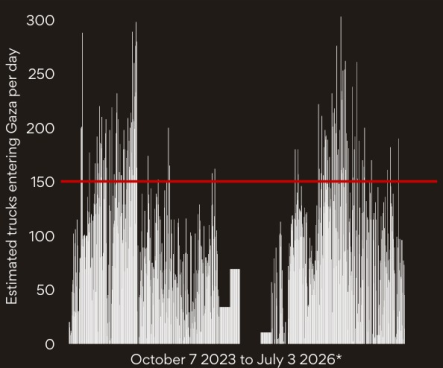
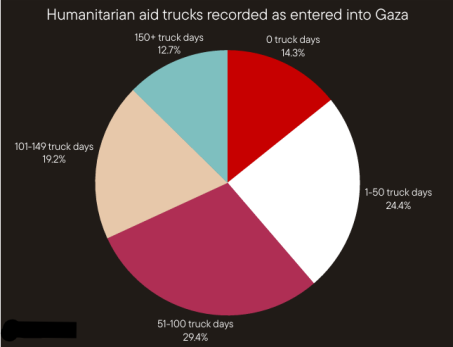
11.3.38 The Action for Humanity report also stated that, ‘… the 150-humanitarian truck benchmark [see paragraph 11.3.2] should not be considered a target for recovery or normal life. It is the minimum level of humanitarian assistance required in this emergency.’[footnote 311]
11.3.39 UNICEF’s mid-year review stated: ‘Access restrictions and operational constraints continue to disrupt humanitarian delivery, with only 280 out of 633 UNICEF aid trucks (44 per cent) from Egypt able to offload during May and June 2026 … Restricted humanitarian access remains a major constraint to sustaining life-saving services for children and their families.’[footnote 312]
11.3.40 An IPS article, published on 27 July 2026, stated: ‘As of now [late July 2026], only one crossing, the Kerem Shalom/Abu Salem crossing in the south of Gaza, remains open for humanitarian assistance.’[footnote 313]
11.3.41 The same IPS article also noted that the level of need in the Gaza Strip ‘… continues to outpace what can be delivered in terms of water, healthcare, education, and shelter.’[footnote 314]
11.3.42 The July 2026 WFP food security analysis report stated:
‘After witnessing noticeable decreases in March and April [2026] … the numbers of commercial and humanitarian trucks entering the Gaza Strip continued to improve in June and the first half of July [2026]. According to data from the Gaza Chamber of Commerce for the commercial trucks, and from the UN27270 [sic, this should read UN2720, a mechanism which ‘enables humanitarian partners to register on an integrated application portal and database where all planned aid consignments intended for Gaza are tracked’[footnote 315]] for the humanitarian trucks; a total of 5104 trucks entered in May [2026], 4707 trucks in June [2026, of which 1,481 were humanitarian trucks[footnote 316]], and 2808 so far in [the first half of] July [2026], compared to only 3464 trucks in March [2026].’[footnote 317]
11.3.43 For the UN2720 Monitoring & Tracking Dashboard (which has monitored and verified humanitarian consignments into the Gaza Strip since 19 May 2025[footnote 318]), and for infographics showing monthly overviews, see The UN2720 Mechanism for Gaza, published by UN Ops.
11.3.44 The OCHA snapshot published on 31 July 2026 included the below graphic, showing the numbers of humanitarian ‘missions’ requiring coordination with the Israeli authorities for each month between the start of January and 28 July 2026, and the numbers of those that were facilitated, impeded, denied and withdrawn[footnote 319]:
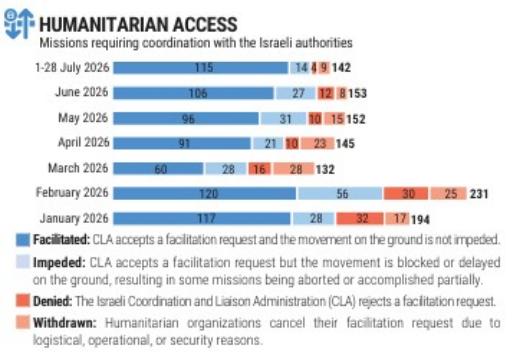
11.3.45 For further statistics on humanitarian access, covering the periods both pre and post the October 2025 ceasefire, see the undated OCHA Publications webpage where near-weekly reported impact snapshots have been published.
11.3.46 The OCHA humanitarian situation update of 31 July 2026 stated:
‘… [T]he humanitarian community’s ability to respond remains constrained by Israeli access restrictions into and within Gaza as well as funding shortfalls.
‘… More than two months following the closure of the Zikim Crossing in northern Gaza on 24 May [2026], Kerem Shalom remains the only operational crossing point into Gaza.
‘Items that the Israeli authorities classify as having “dual use” are more difficult to secure approval for and bring in. Even when cleared, offloading items classified as such at Kerem Shalom remains limited to one day per week, creating significant bottlenecks that delay humanitarian assistance, disrupt supply pipelines, and constrain preparedness for the upcoming winter season …’[footnote 320]
Terms of Reference
The ‘Terms of Reference’ are the main topics and issues relevant to the scope of this note and provides the framework for the country information. In this note, they were:
-
socio-economic indicators, including statistics on life expectancy, literacy, school enrolment, poverty rates, levels of malnutrition
-
socio-economic situation, including access and availability to:
-
food
-
water for drinking and washing
-
accommodation and shelter
-
employment
-
healthcare – physical and mental
-
education
-
support providers, including government and international and domestic non-government organisations
-
variation of conditions by location and/or group
-
whether government is purposely withholding or not delivering support services, if so to which areas/groups
-
-
internally displaced persons (IDPs) – numbers, trends and location
Bibliography
Sources cited
Action for Humanity,
About Us (Our Story), no date. Accessed: 30 July 2026
Under-capacity and out of time; 1,000 Days of limited aid access and humanitarian disaster in Gaza - occupied Palestinian territory, 3 July 2026. Accessed: 30 July 2026
Al Jazeera,
‘Creeping death’: Israel weaponises ‘Yellow Line’ to annex Gaza, 22 July 2026. Accessed: 22 September 2026
Here’s the full text of Trump’s 20-point plan to end Israel’s war on Gaza, 29 September 2025. Accessed: 26 August 2026
Israel is building more military posts in Gaza, satellite imagery shows, 3 June 2026. Accessed 22 September 2026
Al-Monitor,
About Us, no date. Accessed: 20 August 2026
School materials enter Gaza after being blocked for two years, UN agency says, 27 January 2026. Accessed: 20 August 2026
America Magazine,
Israel bans dozens of aid groups from Gaza, including Caritas, drawing condemnation, 3 January 2026. Accessed: 6 August 2026
2024 Impact Report, no date. Accessed: 6 August 2026
Associated Press (AP) News,
About Us, no date. Accessed: 6 August 2026
List of aid groups working in Gaza that Israel is suspending, 30 December 2025. Accessed: 6 August 2026
BBC News,
In maps: Attacks across the Middle East, 28 February 2026, updated 23 March 2026. Accessed: 21 August 2026
Israel to bar 37 aid groups as UK and EU warn of severe impact in Gaza, 30 December 2025, updated 31 December 2025. Accessed: 20 August 2026
What happens next in Gaza ceasefire plan after hostage release?, 9 October 2025, updated 14 October 2025. Accessed: 21 August 2026
BJPsych Open,
About this journal, no date. Accessed: 23 September 2026
Structural Collapse of Mental Health Service Provision in Gaza: A Service Evaluation Under Active Conflict, 30 June 2026. Accessed: 23 September 2026
Bondarenko, Peter, Encyclopaedia Britannica, Gross domestic product, 5 August 2026. Accessed: 19 August 2026
Chatham House, What is Security Council Resolution 2803, and what does it mean for the Trump Gaza plan?, 21 November 2025. Accessed: 26 August 2026
Danish Refugee Council (DRC), Norwegian Refugee Council (NRC), OXFAM, Refugees International (RI), and Save the Children (DRC et al), Humanitarian Scorecard; Six Months In, Gaza Ceasefire is Failing, April 2026. Accessed: 3 August 2026
Ecoi.net,
Source description: Inter Press Service (IPS), 20 January 2020. Accessed: 3 August 2026
Source description: The New Humanitarian (formerly IRIN News) (TNH), 2 September 2021. Accessed: 6 August 2026
European Training Foundation (ETF),
About us, no date. Accessed: 23 September 2026
Education and employment in Gaza: Facts and Figures - February 2026 Update, 2026. Accessed: 23 September 2026
Food and Agriculture Organization of the United Nations (FAO), UNICEF, and UN World Food Programme (WFP), Food security and child nutrition crises persist in Gaza despite fragile gains due to increased humanitarian assistance and commercial traffic, 23 July 2026. Accessed: 5 August 2026
Global Education Cluster (GEC), About Us, no date. Accessed: 21 August 2026
Global Health Cluster (GHC), About us, no date. Accessed: 24 August 2026
Global Nutrition Cluster (GNC), About us, no date. Accessed: 21 August 2026
Global Shelter Cluster (GSC), About Us, no date. Accessed: 21 August 2026
Global WASH Cluster (GWC), About Us, no date. Accessed: 21 August 2026
Haaretz, About Haaretz, no date. Accessed: 3 August 2026
HelpAge International,
About us, no date. Accessed: 6 August 2026
Pushed Beyond Their Limits: The survival of older people in Gaza, 5 February 2026. Accessed: 6 August 2026
Humanitarian Action,
About Humanitarian Action, no date. Accessed: 18 August 2026
Global Humanitarian Overview 2026, 8 December 2025. Accessed: 18 August 2026
Human Rights Watch (HRW), Gaza: Israel Curbs Aid, Kills Civilians During Ceasefire, 19 May 2026. Accessed: 31 July 2026
Integrated Food Security Phase Classification (IPC) Global Initiative,
Gaza Strip: Acute Food Insecurity Situation for 16 April - 30 June 2026 and Projection for 1 July - 31 December 2026, 23 July 2026. Accessed: 5 August 2026
IPC Overview and Classification System, no date. Accessed: 5 August 2026
Inter Press Service (IPS),
Fragile Progress in Gaza Humanitarian Response Undermined by Rampant Insecurity, 11 February 2026. Accessed: 6 August 2026
Gaza Crisis Deepens as Aid Restrictions and Ongoing Strikes Strain Humanitarian Operations, 17 April 2026. Accessed: 3 August 2026
Ongoing Need for Humanitarian Assistance in the Occupied Palestinian Territory, 27 July 2026. Accessed: 5 August 2026
UNRWA Continues Operations in Gaza Amid Ongoing Insecurity and Shortages of Essential Services, 18 November 2026. Accessed: 7 August 2026
Institute for Palestine Studies (IfPS),
About IPS, no date. Accessed: 4 August 2026
Documenting the Targeting and Destruction of the Health Sector in the Gaza Strip, 7 July 2026. Accessed: 4 August 2026
Institute for War & Peace Reporting (IWPR),
Iran War Deepens Gaza Crisis, 20 March 2026. Accessed: 3 August 2026
About, no date. Accessed: 3 August 2026
Library of Congress,
About the Library of Congress, no date. Accessed: 20 August 2026
Israel: Law to Cease UNRWA Activities Amended, 29 January 2026. Accessed: 20 August 2026
Médecins Sans Frontières (MSF),
Gaza: Israeli entry restrictions cause critical shortage of medical supplies, 3 April 2026. Accessed: 4 August 2026
MSF reaffirms decision to challenge Israel’s ban on 37 NGOs from operating in Palestine, 30 March 2026. Accessed: 24 September 2026
The number one health issue in Palestine is the Israeli occupation, 19 July 2026, updated 20 July 2026. Accessed: 5 August 2026
Violence and killings at Gaza’s food distribution points leave survivors suffering one year on, 3 June 2026. Accessed: 31 July 2026
Middle East Eye (MEE)
About us, no date. Accessed: 24 August 2026
Gaza: Up to 10 Palestinians die daily due to Israeli restrictions on medical evacuations, 23 March 2026. Accessed: 24 August 2026
They survived the bombs, but not the virus: Fatal illness spreads in Gaza, 21 January 2026. Accessed: 6 August 2026
National Library and Archives Board (NLB), The Straits Times, no date. Accessed: 24 August 2026
Norwegian Refugee Council (NRC),
Gaza: Israel’s shelter restrictions force nearly a million people to endure summer heat in tents, 18 June 2026. Accessed: 23 September 2026
Principled humanitarian access, no date. Accessed: 25 August 2026
Office for National Statistics (ONS), Consumer price inflation, UK: September 2025, 22 October 2025. Accessed: 23 September 2026
Palestine Shelter Cluster, National Response Strategy 2026 – 2027, June 2026. Accessed: 7 August 2026
Palestinian Central Bureau of Statistics (PCBS),
Estimated Population in the Palestine Mid-Year by Governorate,1997-2026, 26 May 2021, updated on unknown date. Accessed: 5 August 2026
Literacy Rate of Persons (15 Years and Over) in Gaza Strip by Age Group and Sex, 1995, 1997, 2000-2023, 30 July 2026. Accessed: 6 August 2026
Mean Years of Schooling for Persons (15 years and above) by Region and Sex for Years 2000-2025, 30 July 2026. Accessed: 6 August 2026
PCBS and Palestine Monetary Authority (PMA), The Performance of the Palestinian Economy for 2025, and Economic Forecasts for 2026, 21 December 2025. Accessed: 5 August 2026
Palestinian NGO Network (PNGO), Our Mission and Vision, no date. Accessed: 21 August 2026
Reuters, Israel closes crossings into Gaza Strip, including for humanitarian aid workers, Israeli government agency says, 28 February 2026. Accessed: 3 August 2026
Site Management Cluster (SMC) Palestine, Gaza Displacement Site Verification Assessment: Baseline Findings for May 2026 Humanitarian Planning and Coordination, 24 June 2026. Accessed: 30 July 2026
Sky News, Israel suspends 37 aid organisations from operating in Gaza, 30 December 2025. Accessed: 6 August 2026
Swedish Migration Agency, Palestine; The situation in Gaza during the ceasefire’ (translated into English), 16 March 2026. Accessed: 19 August 2026
The Conversation,
As Israel prepares for October election the government is accelerating its land grab in the West Bank and Gaza, 24 July 2026. Accessed: 19 August 2026
Who we are, no date. Accessed: 19 August 2026
The Lancet, Life expectancy losses in the Gaza Strip during the period October, 2023, to September, 2024, 8 February 2025. Accessed: 5 August 2026
The New Arab (TNA),
About Us, no date. Accessed: 18 August 2026
‘Board of Peace’ mulling ‘stablecoin’ to help with Gaza’s post-war economy, technocrats to propose Hamas disarmament plan, 24 February 2026. Accessed: 18 August 2026
UNRWA chief rejects Israel’s claim to replace Gaza agency, says only Palestinian state can take over, 10 March 2026, updated 11 March 2026. Accessed: 25 August 2026
The New Humanitarian (TNH),
Hobbled by obstruction and uncertainty: Gaza’s post-ceasefire aid response, 20 November 2025. Accessed: 7 August 2026
Israel’s campaign of erasure: The demolition of eastern Gaza, 1 July 2026. Accessed: 17 August 2026
Israel’s suspension of Gaza aid NGOs will have deadly consequences, 19 January 2026. Accessed: 6 August 2026
The Straits Times, ‘All these rashes’: Chickenpox surges in Gaza’s overcrowded, filthy camps, 21 July 2026. Accessed: 24 August 2026
The Times of Israel,
High Court nixes NGOs’ petition against new security regulations on aid, 21 May 2026. Accessed: 24 September 2026
Knesset passes law blocking provision of electricity and water to UNRWA facilities, 29 December 2025. Accessed: 20 August 2026
UN,
Gaza ceasefire improves aid access, but children still face deadly conditions, 26 January 2026. Accessed: 6 August 2026
Gaza humanitarian crisis ‘far from being over,’ UN aid coordination office warns, 17 January 2026. Accessed: 20 August 2026
Highlights of the Noon Briefing by Stephane Dujarric Spokesperson for Secretary-General, Antonio Gutuerres, 21 July 2026. Accessed: 5 August 2026
UN says Gaza crisis remains dire, children hardest hit, 27 January 2026. Accessed: 20 August 2026
UN General Assembly, Advisory opinion of the International Court of Justice on the obligations of Israel in relation to the presence and activities of the United Nations, other international organizations and third States in and in relation to the Occupied Palestinian Territory; Note by the Secretary-General; Addendum [A/80/502/ADD.1], 20 November 2025. Accessed: 10 August 2026
UN Human Rights Council (HRC), Domicide: Mass destruction of housing and civilian infrastructure in Gaza, Myanmar, Sudan and Ukraine; Report of the Special Rapporteur on adequate housing as a component of the right to an adequate standard of living and on the right to nondiscrimination in this context, Balakrishnan Rajagopal [A/HCR/61/43/Add.3], 26 February 2026. Accessed: 4 August 2026
UNICEF,
After Two Years of War: Gaza’s Education System on the Brink of Collapse, 4 November 2025. Accessed: 4 August 2026
Humanitarian Situation Update: Mid-Year 2026 Analysis of the Response to the Needs of Children, 17 July 2026. Accessed: 5 August 2026
State of Palestine Appeal, Humanitarian Action for Children, no date. Accessed: 24 September 2026
Stories of loss and grief: At least 17,000 children are estimated to be unaccompanied or separated from their parents in the Gaza Strip, 2 February 2024. Accessed: 4 August 2026
UN Office for the Coordination of Humanitarian Affairs (OCHA),
Briefing by OCHA Spokesperson, Olga Cherevko, to Gaza-based journalists, 28 January 2026. Accessed: 20 August 2026
Considerations for the delivery of humanitarian aid during a ceasefire in Gaza (Section 2), no date. Accessed: 27 August 2026
Flash Appeal: Occupied Palestinian Territory 2026 (page 3), 16 December 2025. Accessed: 21 August 2026
Gaza Humanitarian Response, Situation Report No. 67, 16 February 2026. Accessed: 23 September 2026
Humanitarian Situation Report - 12 June 2026, 13 June 2026. Accessed: 20 August 2026
Humanitarian Situation Report - 16 July 2026, 17 July 2026. Accessed: 20 August 2026
Humanitarian Situation Report - 2 April 2026, 2 April 2026. Accessed: 20 August 2026
Humanitarian Situation Report - 23 July 2026, 25 July 2026. Accessed: 20 August 2026
Humanitarian Situation Report - 26 June 2026, 26 June 2026. Accessed: 17 August 2026
Humanitarian Situation Report - 27 March 2026, 27 March 2026. Accessed: 27 March 2026
Humanitarian Situation Report - 31 July 2026, 31 July 2026. Accessed: 10 August 2026
Humanitarian Situation Report - 5 June 2026, 6 June 2026. Accessed: 20 August 2026
Humanitarian Situation Update #334 – Gaza Strip, 23 October 2025. Accessed: 20 August 2026
Humanitarian Situation Update #336 – Gaza Strip, 30 October 2025. Accessed: 20 August 2026
Humanitarian Situation Update #338 – Gaza Strip, 6 November 2025. Accessed: 20 August 2026
Humanitarian Situation Update #340 – Gaza Strip, 12 November 2025. Accessed: 20 August 2026
Humanitarian Situation Update #344 - Gaza Strip, 27 November 2025. Accessed: 20 August 2026
Humanitarian Situation Update #347 - Gaza Strip, 11 December 2025. Accessed: 20 August 2026
Humanitarian Situation Update #353 - Gaza Strip, 14 January 2026. Accessed: 19 August 2026
Humanitarian Situation Update #357 – Gaza Strip, 12 February 2026. Accessed: 20 August 2026
Infographic: Humanitarian response by the UN and humanitarian partners during the second month of the October 2025 ceasefire, 5 January 2026. Accessed: 20 August 2026
Publications, no date. Accessed: 20 August 2026
Reported impact snapshot - Gaza Strip (29 July 2026), 31 July 2026. Accessed: 7 August 2026
UN agencies and NGOs call for immediate lifting of impediments to humanitarian access and NGO operations in the Occupied Palestinian Territory, 17 December 2025. Accessed: 20 August 2026
UN Ops,
The UN2720 Mechanism for Gaza, no date. Accessed: 26 August 2026
UN2720 Monitoring & Tracking Dashboard, no date. Accessed: 26 August 2026
UN Relief and Works Agency for Palestine Refugees in the Near East (UNRWA),
UNRWA Occupied Palestinian Territory Flash Appeal 2026: Summary, 9 February 2026. Accessed: 25 August 2026
UNRWA Pledging Conference – 30 June 2026, no date. Accessed: 24 September 2026
UNRWA Situation Report #213 on the Humanitarian Crisis in the Gaza Strip and the Occupied West Bank, including East Jerusalem, 18 March 2026. Accessed: 25 August 2026
UNRWA Situation Report #228 on the Humanitarian Crisis in the Gaza Strip and the Occupied West Bank, including East Jerusalem, 1 July 2026. Accessed: 25 August 2026
UNRWA Situation Report #231 on the Humanitarian Crisis in the Gaza Strip and the Occupied West Bank, including East Jerusalem, 30 July 2026. Accessed: 24 August 2026
Where we work, updated August 2023. Accessed: 26 August 2026
UN World Food Programme (WFP),
UN agencies welcome news that famine has been pushed back in the Gaza Strip, but warn fragile gains could be reversed without increased and sustained support, 19 December 2025. Accessed: 3 August 2026
WFP Palestine Food Security Analysis - Market Monitor - Palestine, July 2026, 27 July 2026. Accessed: 7 August 2026
World Bank Group,
Impacts of the Conflict in the Middle East on the Palestinian Economy – May 2024 Update, 23 May 2024. Accessed: 6 August 2024
Life expectancy at birth, total (years) – West Bank and Gaza, no date. Accessed: 5 August 2026
Multidimensional Poverty Measure, last updated April 2024. Accessed: 18 August 2026
Rapid Damage and Needs Assessment, Gaza Strip, April 2026. Accessed: 4 August 2026
World Bank Group, EU and UN, Gaza Strip: Rapid Damage and Needs Assessment, 20 April 2026. Accessed: 4 August 2026
World Bank Group, UNESCO Institute for Statistics Literacy rate, adult total (% of people ages 15 and above) – West Bank and Gaza, no date. Accessed: 6 August 2026
World Bank Group, WHO, UNICEF, UN Population Fund (UNFPA), Number of maternal deaths – West Bank and Gaza, no date. Accessed: 6 August 2026
World Bank Group, WHO, UNICEF, UN Population Division, Mortality rate, infant (per 1,000 live births) – West Bank and Gaza, no date. Accessed: 6 August 2026
XE.com,
Currency Converter – Israeli Shekels to British Pounds, no date. Accessed: 6 August 2026
Currency Converter – US Dollars to British Pounds, no date. Accessed: 6 and 19 August, and 24 September 2026
Sources consulted but not cited
ACAPS (formerly Assessment Capacities Project), Impact of winter storms in Gaza and the West Bank, 5 February 2026. Accessed: 7 August 2026
Amnesty International,
Israel/Occupied Palestinian Territory: Post-ceasefire: Israel’s genocide in the occupied Gaza Strip continues [MDE 15/0527/2025], 27 November 2025. Accessed: 7 August 2026
Israel/OPT: Older people in Gaza suffering overlooked health crisis amid Israel’s ongoing blockade of aid and medicines – new research, 5 February 2026. Accessed: 6 August 2026
Israel’s genocide in Gaza inflicts compounded harms on women and girls, 10 March 2026. Accessed: 4 August 2026
‘Utterly preventable’ Gaza flood tragedy must mobilize global action to end Israel’s genocide, 17 December 2025. Accessed: 7 August 2026
Austrian Federal Office for Immigration and Asylum, COI unit, Brief information from the state documentation; Palestinian Territories - Gaza Strip; Humanitarian situation (English translation), 12 June 2026. Accessed: 19 August 2026
European Union Agency for Asylum (EUAA), COI Query - Occupied Palestinian Territory, Jordan, Lebanon, UNRWA’s ability to fulfil its mandate across its areas of operation [Q16-2026], 15 April 2026. Accessed: 24 August 2026
Inter Press Service (IPS), UN Warns Gaza’s Fragile Improvement Could Reverse Without Sustained Aid and Access, 23 December 2025. Accessed: 7 August 2026
Palestinian Central Bureau of Statistics (PCBS), Consumer Prices Index during 2025, 14 January 2026. Accessed: 5 August 2026
Reuters, Slow movement at Gaza border after Israel reopens Rafah crossing, 2 February 2026. Accessed: 3 August 2026
The New Humanitarian (TNH), The war in Gaza didn’t end. It only changed tempo, 11 November 2025. Accessed: 7 August 2026
UN, Israel: Ban on 37 aid groups makes life unbearable for genocide survivors in Palestine, say UN experts, 15 January 2026. Accessed: 6 August 2026
UN General Assembly, UN General Assembly: Advisory opinion of the International Court of Justice on the obligations of Israel in relation to the presence and activities of the United Nations, other international organizations and third States in and in relation to the Occupied Palestinian Territory: Note by the Secretary-General [A/80/502], 22 October 2025. Accessed: 10 August 2026
UN Office for the Coordination of Humanitarian Affairs (OCHA),
Humanitarian Situation Report - 1 May 2026, 2 May 2026. Accessed: 20 August 2026
Humanitarian Situation Report - 10 July 2026, 11 July 2026. Accessed: 20 August 2026
Humanitarian Situation Report - 15 May 2026, 15 May 2026. Accessed: 20 August 2026
Humanitarian Situation Report - 19 June 2026, 20 June 2026. Accessed: 20 August 2026
Humanitarian Situation Report - 19 March 2026, 19 March 2026. Accessed: 20 August 2026
Humanitarian Situation Report - 25 May 2026, 25 May 2026. Accessed: 20 August 2026
Humanitarian Situation Report - 3 July 2026, 4 July 2026. Accessed: 20 August 2026
Humanitarian Situation Update #345 - Gaza Strip, 4 December 2025. Accessed: 20 August 2026
UN Relief and Works Agency for Palestine Refugees in the Near East (UNRWA), UNRWA Situation Report #227 on the Humanitarian Crisis in the Occupied Palestinian Territory (the Gaza Strip and the occupied West Bank, including East Jerusalem), 25 June 2026. Accessed: 30 July 2026
UN Women - UN Entity for Gender Equality and the Empowerment of Women, Remarks by UN Women Chief of Humanitarian Action Sofia Calltorp following her visit to Gaza, 25 November 2025. Accessed: 7 August 2026
Version control and feedback
Clearance
Below is information on when this note was cleared:
-
version 5.0
-
valid from 29 September 2026
Official – sensitive: Not for disclosure – Start of section
The information on this page has been removed as it is restricted for internal Home Office use.
Official – sensitive: Not for disclosure – End of section
Changes from last version of this note
Updated COI and assessment.
Feedback to the Home Office
We welcome feedback on how to improve our products. If you would like to comment on this note, please email the cipu@homeoffice.gov.uk.
Independent Advisory Group on Country Information
The Independent Advisory Group on Country Information (IAGCI) was set up in March 2009 by the Independent Chief Inspector of Borders and Immigration to support them in reviewing the efficiency, effectiveness and consistency of approach of COI produced by the Home Office.
The IAGCI welcomes feedback on the Home Office’s COI material. It is not the function of the IAGCI to endorse any Home Office material, procedures or policy. The IAGCI may be contacted at:
Independent Advisory Group on Country Information
Independent Chief Inspector of Borders and Immigration
3rd Floor
28 Kirby Street
London
EC1N 8TE
Email: chiefinspector@icibi.gov.uk
Information about the IAGCI’s work and a list of the documents which have been reviewed by the IAGCI can be found on the Independent Chief Inspector’s pages of the gov.uk website.
-
Ecoi.net, Source description: Inter Press Service (IPS), 20 January 2020 ↩
-
IPS, Gaza Crisis Deepens …, 17 April 2026 ↩
-
World Bank Group, Rapid Damage and Needs Assessment, Gaza Strip, April 2026 ↩
-
World Bank Group, EU and UN, … Rapid Damage and Needs Assessment (page 51), 20 April 2026 ↩
-
Al Jazeera, … the full text of Trump’s 20-point plan to end Israel’s war on Gaza, 29 September 2025 ↩
-
Chatham House, What is Security Council Resolution 2803 …?, 21 November 2025 ↩
-
Chatham House, What is Security Council Resolution 2803 …?, 21 November 2025 ↩
-
DRC et al, Humanitarian Scorecard; Six Months In, Gaza Ceasefire is Failing (page 21), April 2026 ↩
-
Haaretz, About Haaretz, no date ↩
-
DRC et al, Humanitarian Scorecard; Six Months In, Gaza Ceasefire … (pages 21, 22), April 2026 ↩
-
UNRWA, UNRWA Situation Report #213 on the Humanitarian Crisis in … Gaza …, 18 March 2026 ↩
-
BBC News, What happens next in Gaza ceasefire …, 9 October 2025, updated 14 October 2025 ↩
-
HRW, Gaza: Israel Curbs Aid, Kills Civilians During Ceasefire, 19 May 2026 ↩
-
Al Jazeera, Israel is building more military posts in Gaza, satellite imagery shows, 3 June 2026 ↩
-
OCHA, Humanitarian Situation Report - 26 June 2026, 26 June 2026 ↩
-
Ecoi.net, Source description: The New Humanitarian … (TNH), 2 September 2021 ↩
-
TNH, Israel’s campaign of erasure: The demolition of eastern Gaza, 1 July 2026 ↩
-
OCHA, Reported impact snapshot - Gaza Strip (29 July 2026), 31 July 2026 ↩
-
DRC et al, Humanitarian Scorecard; Six Months In, Gaza Ceasefire is Failing (page 21), April 2026 ↩
-
MSF, The number one health issue in Palestine …, 19 July 2026, updated 20 July 2026 ↩
-
The Conversation, Who we are, no date ↩
-
The Conversation, As Israel prepares for October election …, 24 July 2026 ↩
-
OCHA, Humanitarian Situation Report - 26 June 2026, 26 June 2026 ↩
-
TNH, Israel’s campaign of erasure: The demolition of eastern Gaza, 1 July 2026 ↩
-
OCHA, Reported impact snapshot - Gaza Strip (29 July 2026), 31 July 2026 ↩
-
OCHA, Reported impact snapshot - Gaza Strip (29 July 2026), 31 July 2026 ↩
-
NLB, The Straits Times, no date ↩
-
The Straits Times, … Chickenpox surges in Gaza’s overcrowded, filthy camps, 21 July 2026 ↩
-
Al Jazeera, ‘Creeping death’: Israel weaponises ‘Yellow Line’ to annex Gaza, 22 July 2026 ↩
-
PCBS, Estimated Population in the Palestine Mid-Year …, 26 May 2021, updated on unknown date ↩
-
World Bank Group, Life expectancy at birth, total (years) – West Bank and Gaza, no date ↩
-
The Lancet, Life expectancy losses in the Gaza Strip … (Findings), 8 February 2025 ↩
-
The Lancet, Life expectancy losses in the Gaza Strip … (Findings), 8 February 2025 ↩
-
World Bank Group, WHO, UNICEF, UNFPA, … maternal deaths – West Bank and Gaza, no date ↩
-
World Bank Group, WHO, UNICEF, UN Population Division, Mortality rate, infant …, no date ↩
-
World Bank Group, Impacts of the Conflict … Economy … Update (page 12), 23 May 2024 ↩
-
World Bank Group, EU and UN, … Damage and Needs Assessment (page 26), 20 April 2026 ↩
-
XE.com, Currency Converter – Israeli Shekels to British Pounds, 6 August 2026 ↩
-
XE.com, Currency Converter – Israeli Shekels to British Pounds, 6 August 2026 ↩
-
PCBS and PMA, … the Palestinian Economy for 2025 … (page 3), 21 December 2025 ↩
-
World Bank Group, Impacts of the Conflict … Economy … Update (page 12), 23 May 2024 ↩
-
World Bank Group, Multidimensional Poverty Measure, last updated April 2024 ↩
-
OCHA, Humanitarian Situation Update #344 - Gaza Strip, 27 November 2025 ↩
-
World Bank Group, EU and UN, … Damage and Needs Assessment (page 26), 20 April 2026 ↩
-
PCBS, Literacy Rate of Persons (15 Years and Over) in Gaza Strip …, 30 July 2026 ↩
-
World Bank Group, UNESCO Institute for Statistics Literacy rate, adult total …, no date ↩
-
PCBS, Mean Years of Schooling for Persons (15 years and above) …, 30 July 2026 ↩
-
Bondarenko, Peter, Encyclopaedia Britannica, Gross domestic product, 5 August 2026 ↩
-
PCBS and PMA, … the Palestinian Economy for 2025 … (page 1), 21 December 2025 ↩
-
PCBS and PMA, … the Palestinian Economy for 2025 … (page 2), 21 December 2025 ↩
-
UNRWA, Where we work (Gaza Strip), updated August 2023 ↩
-
TNA, ‘Board of Peace’ mulling ‘stablecoin’ to help with … post-war economy …, 24 February 2026 ↩
-
ETF, Education and employment in Gaza: Facts and Figures - February 2026 … (page 11), 2026 ↩
-
XE.com, Currency Converter – US Dollars to British Pounds, 6 August 2026 ↩
-
XE.com, Currency Converter – US Dollars to British Pounds, 6 August 2026 ↩
-
World Bank Group, EU and UN, … Damage and Needs Assessment (pages 8, 9, 12), 20 April 2026 ↩
-
World Bank Group, EU and UN, … Damage and Needs Assessment (page 58), 20 April 2026 ↩
-
World Bank Group, EU and UN, … Damage and Needs Assessment (page 12), 20 April 2026 ↩
-
XE.com, Currency Converter – US Dollars to British Pounds, 19 August 2026 ↩
-
World Bank Group, EU and UN, … Damage and Needs Assessment (page 14), 20 April 2026 ↩
-
OCHA, Humanitarian Situation Report - 5 June 2026, 6 June 2026 ↩
-
FAO, UNICEF and WFP, Food security and child nutrition crises persist …, 23 July 2026 ↩
-
WFP, WFP Palestine Food Security Analysis - Market Monitor … (page 3), 27 July 2026 ↩
-
ONS, Consumer price inflation, UK: September 2025 (page 18), 22 October 2025 ↩
-
WFP, WFP Palestine Food Security Analysis - Market Monitor … (page 1), 27 July 2026 ↩
-
PCBS and PMA, … the Palestinian Economy for 2025 … (page 3), 21 December 2025 ↩
-
PCBS and PMA, … the Palestinian Economy for 2025 … (page 3), 21 December 2025 ↩
-
TNH, Israel’s suspension of Gaza aid NGOs will have deadly consequences, 19 January 2026 ↩
-
World Bank Group, EU and UN, … Damage and Needs Assessment (pages 12, 14), 20 April 2026 ↩
-
XE.com, Currency Converter – US Dollars to British Pounds, 6 August 2026 ↩
-
World Bank Group, EU and UN, … Damage and Needs Assessment (pages 49, 50), 20 April 2026 ↩
-
World Bank Group, EU and UN, … Damage and Needs Assessment (page 51), 20 April 2026 ↩
-
IWPR, Iran War Deepens Gaza Crisis, 20 March 2026 ↩
-
DRC et al, Humanitarian Scorecard; Six Months In, Gaza Ceasefire is Failing (page 21), April 2026 ↩
-
FAO, UNICEF and WFP, Food security and child nutrition crises persist …, 23 July 2026 ↩
-
WFP, WFP Palestine Food Security Analysis - Market Monitor … (page 3), 27 July 2026 ↩
-
IPS, UNRWA Continues Operations in Gaza …, 18 November 2026 ↩
-
Humanitarian Action, About Humanitarian Action, no date ↩
-
Humanitarian Action, Global Humanitarian Overview 2026, 8 December 2025 ↩
-
OCHA, Flash Appeal: Occupied Palestinian Territory 2026 (page 3), 16 December 2025 ↩
-
WFP, UN agencies welcome news that famine has been pushed back …, 19 December 2025 ↩
-
Sky News, Israel suspends 37 aid organisations from operating in Gaza, 30 December 2025 ↩
-
America Magazine, 2024 Impact Report (page 3), no date ↩
-
America Magazine, Israel bans dozens of aid groups from Gaza …, 3 January 2026 ↩
-
UN, UN says Gaza crisis remains dire, children hardest hit, 27 January 2026 ↩
-
HelpAge International, Pushed Beyond Their Limits … (pages 6 to 7), 5 February 2026 ↩
-
HelpAge International, Pushed Beyond Their Limits … (page 3), 5 February 2026 ↩
-
IPS, Fragile Progress in Gaza Humanitarian Response Undermined …, 11 February 2026 ↩
-
PNGO, Our Mission and Vision, no date ↩
-
IWPR, Iran War Deepens Gaza Crisis, 20 March 2026 ↩
-
IPS, Ongoing Need for Humanitarian Assistance in the Occupied Palestinian Territory, 27 July 2026 ↩
-
OCHA, Humanitarian Situation Report - 31 July 2026, 31 July 2026 ↩
-
XE.com, Currency Converter – US Dollars to British Pounds, 6 August 2026 ↩
-
XE.com, Currency Converter – US Dollars to British Pounds, 6 August 2026 ↩
-
XE.com, Currency Converter – US Dollars to British Pounds, 6 August 2026 ↩
-
XE.com, Currency Converter – US Dollars to British Pounds, 6 August 2026 ↩
-
World Bank Group, EU and UN, … Damage and Needs Assessment (pages 8, 9), 20 April 2026 ↩
-
XE.com, Currency Converter – US Dollars to British Pounds, 6 August 2026 ↩
-
World Bank Group, EU and UN, … Damage and Needs Assessment (page 22), 20 April 2026 ↩
-
OCHA, Humanitarian Situation Update #336 – Gaza Strip, 30 October 2025 ↩
-
Humanitarian Action, Global Humanitarian Overview 2026, 8 December 2025 ↩
-
OCHA, Flash Appeal: Occupied Palestinian Territory 2026 (page 3), 16 December 2025 ↩
-
WFP, UN agencies welcome news that famine has been pushed back …, 19 December 2025 ↩
-
WFP, UN agencies welcome news that famine has been pushed back …, 19 December 2025 ↩
-
OCHA, Humanitarian Situation Update #353 - Gaza Strip, 14 January 2026 ↩
-
UN, Gaza humanitarian crisis ‘far from being over,’ …, 17 January 2026 ↩
-
HRC, … Mass destruction of housing and civilian … (paragraphs 8 and 25), 26 February 2026 ↩
-
OCHA, Humanitarian Situation Report - 27 March 2026, 27 March 2026 ↩
-
DRC et al, Humanitarian Scorecard; Six Months In, Gaza Ceasefire is Failing (page 2), April 2026 ↩
-
SMC Palestine, Gaza Displacement Site Verification Assessment … (page vi), 24 June 2026 ↩
-
SMC Palestine, Gaza Displacement Site Verification Assessment … (page viii to ix), 24 June 2026 ↩
-
Palestine Shelter Cluster, National Response Strategy 2026 – 2027, June 2026 ↩
-
NRC, … nearly a million people to endure summer heat in tents, 18 June 2026 ↩
-
WFP, WFP Palestine Food Security Analysis - Market Monitor … (page 11), 27 July 2026 ↩
-
OCHA, Reported impact snapshot - Gaza Strip (29 July 2026), 31 July 2026 ↩
-
XE.com, Currency Converter – US Dollars to British Pounds, 6 August 2026 ↩
-
World Bank Group, EU and UN, … Damage and Needs Assessment (page 39), 20 April 2026 ↩
-
OCHA, Humanitarian Situation Update #347 - Gaza Strip, 11 December 2025 ↩
-
OCHA, Flash Appeal: Occupied Palestinian Territory 2026 (page 3), 16 December 2025 ↩
-
OCHA, Humanitarian Situation Update #357 – Gaza Strip, 12 February 2026 ↩
-
OCHA, Gaza Humanitarian Response, Situation Report No. 67 (page 3), 16 February 2026 ↩
-
DRC et al, Humanitarian Scorecard; Six Months In, Gaza Ceasefire is Failing (page 2), April 2026 ↩
-
HRW, Gaza: Israel Curbs Aid, Kills Civilians During Ceasefire, 19 May 2026 ↩
-
OCHA, Humanitarian Situation Report - 5 June 2026, 6 June 2026 ↩
-
OCHA, Humanitarian Situation Report - 12 June 2026, 13 June 2026 ↩
-
Action for Humanity, Under-capacity and out of time … (page 6), 3 July 2026 ↩
-
OCHA, Humanitarian Situation Report - 16 July 2026, 17 July 2026 ↩
-
UNICEF, Humanitarian Situation Update: Mid-Year 2026 Analysis …, 17 July 2026 ↩
-
The Conversation, As Israel prepares for October election …, 24 July 2026 ↩
-
OCHA, Reported impact snapshot - Gaza Strip (29 July 2026), 31 July 2026 ↩
-
OCHA, Reported impact snapshot - Gaza Strip (29 July 2026), 31 July 2026 ↩
-
World Bank Group, Impacts of the Conflict … Economy … Update (page 12), 23 May 2024 ↩
-
XE.com, Currency Converter – Israeli Shekels to British Pounds, 6 August 2026 ↩
-
XE.com, Currency Converter – Israeli Shekels to British Pounds, 6 August 2026 ↩
-
PCBS and PMA, … the Palestinian Economy for 2025 … (page 3), 21 December 2025 ↩
-
World Bank Group, EU and UN, … Damage and Needs Assessment (page 26), 20 April 2026 ↩
-
WFP, WFP Palestine Food Security Analysis - Market Monitor … (page 3), 27 July 2026 ↩
-
XE.com, Currency Converter – US Dollars to British Pounds, 6 August 2026 ↩
-
World Bank Group, EU and UN, … Damage and Needs Assessment (page 44), 20 April 2026 ↩
-
World Bank Group, EU and UN, … Damage and Needs Assessment (page 52), 20 April 2026 ↩
-
TNH, Hobbled by obstruction and uncertainty: Gaza’s post-ceasefire aid …, 20 November 2025 ↩
-
Humanitarian Action, Global Humanitarian Overview 2026, 8 December 2025 ↩
-
OCHA, Flash Appeal: Occupied Palestinian Territory 2026 (page 3), 16 December 2025 ↩
-
WFP, UN agencies welcome news that famine has been pushed back …, 19 December 2025 ↩
-
IWPR, Iran War Deepens Gaza Crisis, 20 March 2026 ↩
-
OCHA, Humanitarian Situation Report - 2 April 2026, 2 April 2026 ↩
-
IPC, IPC Overview and Classification System, no date ↩
-
IPC, … Acute Food Insecurity Situation for 16 April - 30 June 2026 …, 23 July 2026 ↩
-
IPC, … Acute Food Insecurity Situation for 16 April - 30 June 2026 …, 23 July 2026 ↩
-
FAO, UNICEF and WFP, Food security and child nutrition crises persist …, 23 July 2026 ↩
-
BBC News, In maps: Attacks across the Middle East, 28 February 2026, updated 23 March 2026 ↩
-
WFP, WFP Palestine Food Security Analysis - Market Monitor … (page 3), 27 July 2026 ↩
-
WFP, WFP Palestine Food Security Analysis - Market Monitor … (page 12), 27 July 2026 ↩
-
WFP, WFP Palestine Food Security Analysis - Market Monitor … (page 1), 27 July 2026 ↩
-
UNICEF, Stories of loss and grief: At least 17,000 children …, 2 February 2024 ↩
-
OCHA, Gaza Humanitarian Response, Situation Report No. 67 (pages 3 and 4), 16 February 2026 ↩
-
World Bank Group, EU and UN, … Damage and Needs Assessment (page 11), 20 April 2026 ↩
-
World Bank Group, EU and UN, … Damage and Needs Assessment (pages 26, 28), 20 April 2026 ↩
-
Humanitarian Action, Global Humanitarian Overview 2026, 8 December 2025 ↩
-
WFP, UN agencies welcome news that famine has been pushed back …, 19 December 2025 ↩
-
UN, Gaza ceasefire improves aid access, but children still face deadly conditions, 26 January 2026 ↩
-
UN, UN says Gaza crisis remains dire, children hardest hit, 27 January 2026 ↩
-
OCHA, Humanitarian Situation Report - 5 June 2026, 6 June 2026 ↩
-
UNICEF, Humanitarian Situation Update: Mid-Year 2026 Analysis …, 17 July 2026 ↩
-
UNICEF, Humanitarian Situation Update: Mid-Year 2026 Analysis …, 17 July 2026 ↩
-
FAO, UNICEF and WFP, Food security and child nutrition crises persist …, 23 July 2026 ↩
-
OCHA, Reported impact snapshot - Gaza Strip (29 July 2026), 31 July 2026 ↩
-
OCHA, Humanitarian Situation Report - 31 July 2026, 31 July 2026 ↩
-
World Bank Group, EU and UN, … Damage and Needs Assessment (page 11), 20 April 2026 ↩
-
XE.com, Currency Converter – US Dollars to British Pounds, 6 August 2026 ↩
-
World Bank Group, EU and UN, … Damage and Needs Assessment (pages 24, 26), 20 April 2026 ↩
-
UNICEF, … Gaza’s Education System on the Brink of Collapse, 4 November 2025 ↩
-
OCHA, Flash Appeal: Occupied Palestinian Territory 2026 (page 3), 16 December 2025 ↩
-
OCHA, Infographic: Humanitarian response … second month of the … ceasefire, 5 January 2026 ↩
-
UN, UN says Gaza crisis remains dire, children hardest hit, 27 January 2026 ↩
-
Al-Monitor, School materials enter Gaza after being blocked for two years …, 27 January 2026 ↩
-
ETF, Education and employment in Gaza … February 2026 … (pages 8 and 9), 2026 ↩
-
UN, Highlights of the Noon Briefing by Stephane Dujarric …, 21 July 2026 ↩
-
UN, Highlights of the Noon Briefing by Stephane Dujarric …, 21 July 2026 ↩
-
OCHA, Reported impact snapshot - Gaza Strip (29 July 2026), 31 July 2026 ↩
-
OCHA, Reported impact snapshot - Gaza Strip (29 July 2026), 31 July 2026 ↩
-
XE.com, Currency Converter – US Dollars to British Pounds, 6 August 2026 ↩
-
XE.com, Currency Converter – US Dollars to British Pounds, 6 August 2026 ↩
-
World Bank Group, EU and UN, … Damage and Needs Assessment (pages 8, 9), 20 April 2026 ↩
-
XE.com, Currency Converter – US Dollars to British Pounds, 6 August 2026 ↩
-
World Bank Group, EU and UN, … Damage and Needs Assessment (page 28), 20 April 2026 ↩
-
OCHA, Humanitarian Situation Update #334 – Gaza Strip, 23 October 2025 ↩
-
Humanitarian Action, Global Humanitarian Overview 2026, 8 December 2025 ↩
-
OCHA, Flash Appeal: Occupied Palestinian Territory 2026 (page 3), 16 December 2025 ↩
-
OCHA, Infographic: Humanitarian response … second month of the … ceasefire, 5 January 2026 ↩
-
UN, Gaza humanitarian crisis ‘far from being over,’ …, 17 January 2026 ↩
-
TNH, Israel’s suspension of Gaza aid NGOs will have deadly consequences, 19 January 2026 ↩
-
MEE, They survived the bombs, but not the virus: Fatal illness spreads in Gaza, 21 January 2026 ↩
-
IPS, Fragile Progress in Gaza Humanitarian Response Undermined …, 11 February 2026 ↩
-
OCHA, Gaza Humanitarian Response, Situation Report No. 67 (pages 2 to 3), 16 February 2026 ↩
-
MEE, Gaza: Up to 10 Palestinians die daily …, 23 March 2026 ↩
-
DRC et al, Humanitarian Scorecard; Six Months In, Gaza Ceasefire is Failing (page 2), April 2026 ↩
-
HRW, Gaza: Israel Curbs Aid, Kills Civilians During Ceasefire, 19 May 2026 ↩
-
BJPsych Open, About this journal, no date ↩
-
BJPsych Open, Structural Collapse of Mental Health Service … (Methods), 30 June 2026 ↩
-
BJPsych Open, Structural Collapse of Mental Health Service Provision … (Results), 30 June 2026 ↩
-
Action for Humanity, Under-capacity and out of time … (page 6), 3 July 2026 ↩
-
IfPS, Documenting the … Destruction of the Health Sector in the Gaza Strip, 7 July 2026 ↩
-
IfPS, Documenting the … Destruction of the Health Sector in the Gaza Strip, 7 July 2026 ↩
-
IfPS, Documenting the … Destruction of the Health Sector in the Gaza Strip, 7 July 2026 ↩
-
The Straits Times, … Chickenpox surges in Gaza’s overcrowded, filthy camps, 21 July 2026 ↩
-
OCHA, Humanitarian Situation Report - 23 July 2026, 25 July 2026 ↩
-
OCHA, Reported impact snapshot - Gaza Strip (29 July 2026), 31 July 2026 ↩
-
OCHA, Reported impact snapshot - Gaza Strip (29 July 2026), 31 July 2026 ↩
-
OCHA, Reported impact snapshot - Gaza Strip (29 July 2026), 31 July 2026 ↩
-
OCHA, Humanitarian Situation Report - 31 July 2026, 31 July 2026 ↩
-
IPS, UNRWA Continues Operations in Gaza …, 18 November 2026 ↩
-
TNH, Hobbled by obstruction and uncertainty: Gaza’s post-ceasefire aid …, 20 November 2025 ↩
-
Library of Congress, About the Library of Congress, no date ↩
-
The Times of Israel, Knesset passes law blocking provision of …, 29 December 2025 ↩
-
Library of Congress, Israel: Law to Cease UNRWA Activities Amended, 29 January 2026 ↩
-
UNRWA, UNRWA Occupied Palestinian Territory Flash Appeal 2026: Summary, 9 February 2026 ↩
-
IPS, Fragile Progress in Gaza Humanitarian Response Undermined …, 11 February 2026 ↩
-
TNA, UNRWA chief rejects Israel’s claim to replace …, 10 March 2026, updated 11 March 2026 ↩
-
IPS, Gaza Crisis Deepens …, 17 April 2026 ↩
-
IPS, Gaza Crisis Deepens …, 17 April 2026 ↩
-
XE.com, Currency Converter – US Dollars to British Pounds, 24 September 2026 ↩
-
XE.com, Currency Converter – US Dollars to British Pounds, 24 September 2026 ↩
-
XE.com, Currency Converter – US Dollars to British Pounds, 24 September 2026 ↩
-
UNRWA, UNRWA Pledging Conference – 30 June 2026, no date ↩
-
UNRWA, UNRWA Situation Report #228 on the Humanitarian Crisis in … Gaza …, 1 July 2026 ↩
-
UNRWA, UNRWA Situation Report #231 on the Humanitarian Crisis in … Gaza …, 30 July 2026 ↩
-
UNRWA, UNRWA Situation Report #231 on the Humanitarian Crisis … (footnote 3), 30 July 2026 ↩
-
UNRWA, UNRWA Situation Report #231 on the Humanitarian Crisis in … Gaza …, 30 July 2026 ↩
-
UNRWA, UNRWA Situation Report #231 on the Humanitarian Crisis … (footnote 2), 30 July 2026 ↩
-
UNRWA, UNRWA Situation Report #231 on the Humanitarian Crisis in … Gaza …, 30 July 2026 ↩
-
UN General Assembly, … Secretary-General … (paragraphs 38, 40, 41), 20 November 2025 ↩
-
TNH, Hobbled by obstruction and uncertainty: Gaza’s post-ceasefire aid …, 20 November 2025 ↩
-
BBC News, Israel to bar 37 aid groups …, 30 December 2025, updated 31 December 2025 ↩
-
TNH, Israel’s suspension of Gaza aid NGOs will have deadly consequences, 19 January 2026 ↩
-
TNH, Israel’s suspension of Gaza aid NGOs will have deadly consequences, 19 January 2026 ↩
-
America Magazine, Israel bans dozens of aid groups from Gaza …, 3 January 2026 ↩
-
UN, Gaza ceasefire improves aid access, but children still face deadly conditions, 26 January 2026 ↩
-
Al-Monitor, School materials enter Gaza after being blocked for two years …, 27 January 2026 ↩
-
OCHA, Briefing by OCHA Spokesperson, Olga Cherevko …, 28 January 2026 ↩
-
HelpAge International, Pushed Beyond Their Limits … (page 8), 5 February 2026 ↩
-
MSF, MSF reaffirms decision to challenge Israel’s ban on 37 NGOs …, 30 March 2026 ↩
-
MSF, Gaza: Israeli entry restrictions cause critical shortage of medical supplies, 3 April 2026 ↩
-
IPS, Gaza Crisis Deepens …, 17 April 2026 ↩
-
The Times of Israel, High Court nixes NGOs’ petition against new … regulations …, 21 May 2026 ↩
-
UNICEF, Humanitarian Situation Update: Mid-Year 2026 Analysis …, 17 July 2026 ↩
-
UNICEF, State of Palestine Appeal, Humanitarian Action for Children, no date ↩
-
XE.com, Currency Converter – US Dollars to British Pounds, 24 September 2026 ↩
-
XE.com, Currency Converter – US Dollars to British Pounds, 24 September 2026 ↩
-
UNICEF, Humanitarian Situation Update: Mid-Year 2026 Analysis …, 17 July 2026 ↩
-
UN, Highlights of the Noon Briefing by Stephane Dujarric …, 21 July 2026 ↩
-
OCHA, Reported impact snapshot - Gaza Strip (29 July 2026), 31 July 2026 ↩
-
NRC, Principled humanitarian access, no date ↩
-
OCHA, Considerations for the delivery of humanitarian aid during ceasefire … (Section 2), no date ↩
-
MSF, Violence and killings at Gaza’s food distribution points …, 3 June 2026 ↩
-
OCHA, Humanitarian Situation Update #340 – Gaza Strip, 12 November 2025 ↩
-
OCHA, Humanitarian Situation Update #338 – Gaza Strip, 6 November 2025 ↩
-
TNH, Hobbled by obstruction and uncertainty: Gaza’s post-ceasefire aid …, 20 November 2025 ↩
-
TNH, Hobbled by obstruction and uncertainty: Gaza’s post-ceasefire aid …, 20 November 2025 ↩
-
TNH, Hobbled by obstruction and uncertainty: Gaza’s post-ceasefire aid …, 20 November 2025 ↩
-
UN General Assembly, … Note by the Secretary-General … (paragraph 29), 20 November 2025 ↩
-
UN General Assembly, … Note by the Secretary-General … (paragraph 97), 20 November 2025 ↩
-
Humanitarian Action, Global Humanitarian Overview 2026, 8 December 2025 ↩
-
OCHA, Infographic: Humanitarian response … second month of the … ceasefire, 5 January 2026 ↩
-
OCHA, UN agencies and NGOs call for immediate lifting of impediments …, 17 December 2025 ↩
-
OCHA, Humanitarian Situation Update #353 - Gaza Strip, 14 January 2026 ↩
-
Swedish Migration Agency, … Gaza during the ceasefire (English translation), 16 March 2026 ↩
-
UN, Gaza humanitarian crisis ‘far from being over,’ …, 17 January 2026 ↩
-
UN, Gaza ceasefire improves aid access, but children still face deadly conditions, 26 January 2026 ↩
-
OCHA, Briefing by OCHA Spokesperson, Olga Cherevko …, 28 January 2026 ↩
-
HelpAge International, Pushed Beyond Their Limits … (page 8), 5 February 2026 ↩
-
IPS, Fragile Progress in Gaza Humanitarian Response Undermined …, 11 February 2026 ↩
-
OCHA, … Humanitarian Response, Situation Report No. 67 (pages 1, 2 and 3), 16 February 2026 ↩
-
HRC, … Mass destruction of housing and civilian … (paragraph 22), 26 February 2026 ↩
-
MEE, Gaza: Up to 10 Palestinians die daily …, 23 March 2026 ↩
-
OCHA, Humanitarian Situation Update #357 – Gaza Strip, 12 February 2026 ↩
-
Reuters, Israel closes crossings into Gaza Strip, including for humanitarian …, 28 February 2026 ↩
-
IWPR, Iran War Deepens Gaza Crisis, 20 March 2026 ↩
-
IWPR, Iran War Deepens Gaza Crisis, 20 March 2026 ↩
-
OCHA, Humanitarian Situation Report - 2 April 2026, 2 April 2026 ↩
-
DRC et al, Humanitarian Scorecard; Six Months In, Gaza Ceasefire … (pages 2, 3, 14), April 2026 ↩
-
DRC et al, Humanitarian Scorecard; Six Months In, Gaza Ceasefire is Failing (page 4), April 2026 ↩
-
DRC et al, Humanitarian Scorecard; Six Months In, Gaza Ceasefire … (pages 6 to 8), April 2026 ↩
-
DRC et al, Humanitarian Scorecard; Six Months In, Gaza Ceasefire is Failing (page 22), April 2026 ↩
-
IPS, Gaza Crisis Deepens …, 17 April 2026 ↩
-
IPS, Gaza Crisis Deepens …, 17 April 2026 ↩
-
World Bank Group, EU and UN, … Damage and Needs Assessment (page 36), 20 April 2026 ↩
-
World Bank Group, EU and UN, … Damage and Needs Assessment (page 36), 20 April 2026 ↩
-
HRW, Gaza: Israel Curbs Aid, Kills Civilians During Ceasefire, 19 May 2026 ↩
-
HRW, Gaza: Israel Curbs Aid, Kills Civilians During Ceasefire, 19 May 2026 ↩
-
OCHA, Humanitarian Situation Report - 5 June 2026, 6 June 2026 ↩
-
OCHA, Humanitarian Situation Report - 26 June 2026, 26 June 2026 ↩
-
Action for Humanity, Under-capacity and out of time … (page 2), 3 July 2026 ↩
-
Action for Humanity, Under-capacity and out of time … (pages 3 and 5), 3 July 2026 ↩
-
Action for Humanity, Under-capacity and out of time … (pages 4 and 5), 3 July 2026 ↩
-
Action for Humanity, Under-capacity and out of time … (page 2), 3 July 2026 ↩
-
UNICEF, Humanitarian Situation Update: Mid-Year 2026 Analysis …, 17 July 2026 ↩
-
IPS, Ongoing Need for Humanitarian Assistance …, 27 July 2026 ↩
-
IPS, Ongoing Need for Humanitarian Assistance …, 27 July 2026 ↩
-
UN Ops, The UN2720 Mechanism for Gaza, no date ↩
-
WFP, WFP Palestine Food Security Analysis - Market Monitor … (page 3), 27 July 2026 ↩
-
WFP, WFP Palestine Food Security Analysis - Market Monitor … (page 1), 27 July 2026 ↩
-
UN Ops, UN2720 Monitoring & Tracking Dashboard, no date ↩
-
OCHA, Reported impact snapshot - Gaza Strip (29 July 2026), 31 July 2026 ↩
-
OCHA, Humanitarian Situation Report - 31 July 2026, 31 July 2026 ↩