UK Clinical Research Delivery key performance indicators: data to November 2025
Updated 21 January 2026

© Crown copyright 2026
This publication is licensed under the terms of the Open Government Licence v3.0 except where otherwise stated. To view this licence, visit nationalarchives.gov.uk/doc/open-government-licence/version/3 or write to the Information Policy Team, The National Archives, Kew, London TW9 4DU, or email: psi@nationalarchives.gov.uk.
Where we have identified any third party copyright information you will need to obtain permission from the copyright holders concerned.
This publication is available at https://www.gov.uk/government/statistics/uk-clinical-research-delivery-key-performance-indicators-data-to-november-2025/uk-clinical-research-delivery-key-performance-indicators-report
Background
Overview
The UK government is committed to establishing the UK as a world leader in delivering clinical research. This ambition is set out in the 10 Year Health Plan for England and the Life Sciences Sector Plan. The aim is to:
- drive global investment in the life sciences
- accelerate the development of treatments for the future
- improve health outcomes for all
The Department of Health and Social Care (DHSC) is working in partnership with stakeholders to deliver the UK Clinical Research Delivery (UKCRD) programme, which is designed to create a faster, more efficient, more accessible and more innovative clinical research delivery system.
The UKCRD key performance indicators (KPIs) report brings together data from the National Institute for Health and Care Research (NIHR) and the Medicines and Healthcare products Regulatory Agency (MHRA) to monitor the delivery of globally competitive clinical research across the UK.
The report predominately measures the performance of studies held on the NIHR Research Delivery Network’s (RDN) Central Portfolio Management System (CPMS).
The indicators have been published since January 2024 on the UKCRD programme website and were developed with input from stakeholders from across the clinical research system, including the NHS, industry, charities, academia, regulators and public contributors. They measure trends in the speed and predictability of regulatory and study set-up times, delivery of research to time and target, and volume of clinical research activity.
The indicators apply across the UK and implementation is overseen by DHSC, the devolved governments and the NHS, as part of the UKCRD programme.
This version of the UKCRD KPIs report supersedes previous editions published on the UKCRD programme website.
The report is published monthly, alongside supplementary data tables that provide further breakdowns.
Data sources
The data for indicator 1 is provided by MHRA and the data for indicators 2 to 9 is provided by NIHR.
Except for indicators 1, 4 and 9, the report measures the performance of studies held on the CPMS. The CPMS includes studies in England that are held on the RDN Portfolio, as well as studies from the devolved governments that are either part of the RDN Portfolio or uploaded as non-portfolio studies.
Data coverage
The data in this report measures the performance of a specific subset of studies in the UK, predominantly those on the CPMS. They do not capture the performance of the entire clinical research system.
Although the indicators apply UK-wide, the reporting of several of them does not currently include data from all 4 nations. Indicators that are reported UK-wide now may not have been in the past. Details of the geographical coverage of each indicator are provided in this report, and more detailed information can be found in the methodology, see below. Work is ongoing with devolved governments to bring their data into this reporting.
The scope and remit of RDN and its previous iterations have changed over time, as have the ways in which data has been collected and studies classified. Caution should be taken when making comparisons of CPMS data across time.
Data in this report is categorised into 3 distinct clinical research study types, as follows:
- commercial contract studies: studies sponsored and fully funded by the life sciences industry
- commercial collaborative studies: studies funded, wholly or in part, by the life sciences industry and sponsored by a combination of life sciences industry and non-commercial organisations. These studies were previously included under the non-commercial category, but are now disaggregated to more accurately reflect the scope of commercial research activity. Commercial collaborative studies are supported in the same way as non-commercial studies, including provision of support costs and excess treatment costs through NIHR RDN and the NHS
- non-commercial studies: studies sponsored and wholly funded by one or more non-commercial organisations, including medical research charities, universities and public funders, such as NIHR and UK Research and Innovation.
A further breakdown of the data by observational and interventional studies is provided in the accompanying data tables.
Data quality
For most indicators, the quality of the data reported is dependent on the accuracy, timeliness and completeness of its entry into the CPMS and local portfolio management systems by sponsors and research sites.
Many of the data fields relevant to the indicators are not mandatory and are sometimes incomplete.
Delays may occur with sponsors and sites entering their data, meaning figures reported for recent months may be incomplete. Data is updated retrospectively in future reports as further information becomes available.
Short-term fluctuations in the data are not always reliable indicators of changes in performance. Users are encouraged to focus on longer-term trends (for example, over 6 or 12 months) for a more accurate view of system performance. Work is ongoing to improve the completeness and timeliness of data collection.
The time period presented in this report varies by indicator and depends on when data became complete.
Methodology
For a full explanation of data sources, data coverage, calculation methods and data quality, please refer to the methodology. Details for each indicator are provided in this report.
Any changes to the scope and methodology of an indicator in this report will be highlighted in the methodology.
Key performance indicators overview
Table A: overview of KPIs
| Indicator number | Indicator description | Latest figure | Target |
|---|---|---|---|
| 1 | Proportion of studies receiving combined review approval within 60 days (or 90 days for advanced therapy investigational medicinal product (ATIMP) studies) | 98% | More than or equal to 99% |
| 2 | Proportion of commercial contract studies opening to recruitment within 60 days of Health Research Authority (HRA) approval letter or equivalent process used by the devolved governments | 42% | 90% |
| 3 | Proportion of commercial contract studies recruiting first participant within 30 days of opening to recruitment | 53% | 90% |
| 4 | Proportion of NHS trusts in England who accept the local price generated as part of the national contract value review (NCVR) process for late-phase commercial contract studies without further negotiation following agreement of the resource required by the lead site | 100% | 100% |
| 5 | Proportion of open studies on track, delivering recruitment to time and target | 83% | 80% |
| 6 | Average monthly recruitment to all studies is maintained at high levels when compared to the pre-pandemic baseline | 88,481 participants | No target |
| 7 | Average monthly recruitment to all commercial contract studies to be monitored in support of the ambition to double and double again from the pre-pandemic baseline | 3,838 participants | No target |
| 8 | Proportion of studies open to recruitment or suspended | 82% | More than or equal to 80% |
| 9 | Be Part of Research monthly registrations | 11,237 participants | No target |
In 2023, UKCRD KPI reporting set specific targets for indicators 1 to 5 and 8, but not for indicators 6, 7 or 9.
Study set-up timelines
Indicator 1: proportion of studies receiving combined review approval within 60 days (or 90 days for ATIMP studies)
This indicator measures the percentage of approved initial clinical trial authorisation applications in the UK that received their combined review decision within 60 calendar days, or within 90 days for ATIMPs, of regulatory submission each month. It is designed to assess the efficiency and predictability of the combined review process.
Combined review is the way approval is sought for new clinical trials of investigational medicinal products and combined medicine and device trials. It is jointly conducted by MHRA and a research ethics committee (REC).
The clock starts on the date an initial clinical trial authorisation application is submitted to the Integrated Research Application System. If the applicant has chosen not to attend the first available REC meeting, the start date is set 2 weeks prior to the selected REC meeting. The clock stops on the date when joint approval is issued by MHRA and REC on the initial clinical trial authorisation application.
We are specifically measuring the time taken for MHRA and REC to complete their joint assessments of an application. This includes the time taken both to conduct the initial combined assessment and to issue the joint decision following receipt of the applicant’s response to a request for further information (RFI). It does not include the time taken by the applicant to respond to any RFI following the initial combined assessment. This means the clock stops once the applicant has been sent a RFI and starts again once a complete response has been submitted.
This indicator groups studies by the month they received combined review approval.
The target is for more than or equal to 99% of approved studies to receive combined review approval within 60 days (or 90 days for ATIMP studies).
Table 1.1: percentage of approved studies that received combined review approval within 60 days in latest month (or 90 days for ATIMP studies) in October 2025
| Study type | Percentage of approved studies that received combined review approval within 60 days (or 90 days for ATIMP studies) | Target |
|---|---|---|
| All | 98% | More than or equal to 99% |
Table 1.2: percentage of approved studies that received combined review approval within 60 days (or 90 days for ATIMP studies) in the last 12 months
| Combined review approval month | Percentage of approved studies that received combined review approval within 60 days (or 90 days for ATIMP studies) | Number of approved studies that received combined review approval within 60 days (or 90 days for ATIMP studies) | Number of studies that received combined review approval |
|---|---|---|---|
| November 2024 | 98% | 61 | 62 |
| December 2024 | 96% | 52 | 54 |
| January 2025 | 92% | 58 | 63 |
| February 2025 | 100% | 64 | 64 |
| March 2025 | 98% | 57 | 58 |
| April 2025 | 100% | 66 | 66 |
| May 2025 | 96% | 66 | 69 |
| June 2025 | 98% | 65 | 66 |
| July 2025 | 97% | 74 | 76 |
| August 2025 | 98% | 63 | 64 |
| September 2025 | 100% | 63 | 63 |
| October 2025 | 98% | 91 | 93 |
Indicator 2: proportion of commercial contract studies opening to recruitment within 60 days of HRA approval letter or equivalent process used by the devolved governments
This indicator measures the percentage of commercial contract studies on the CPMS that opened to recruitment within 60 calendar days of receiving HRA approval or equivalent process used by the devolved governments each month. It is designed to assess the efficiency and predictability of study set-up processes.
The indicator is intended to apply UK-wide and currently includes data from studies in England and, so far as is possible, the devolved governments. Work is ongoing to incorporate further data from devolved governments.
The clock starts on the date a study receives regulatory approval. The clock stops on the date a sponsor confirms the study is ready to start recruiting participants in at least one site.
Studies are grouped by the month they received regulatory approval. Only studies that have recorded opening to recruitment are included in the indicator calculation. Studies that have not yet opened to recruitment, or have not recorded doing so, are excluded from the calculation. These studies are reported in the not yet opened to recruitment column.
The target is for 90% of commercial contract studies to open to recruitment within 60 days of receiving regulatory approval.
The latest time period reported is 6 months prior to the report’s publication month. This is to allow sufficient time for most studies to open to recruitment, whether within 60 days or not, and to enter their data. At this point, a more complete picture is available, though changes may continue to occur. Figures for all months are subject to change and will be revised in future reports as more information becomes available.
Table 2.1: percentage of commercial contract studies that opened to recruitment within 60 days of receiving regulatory approval in May 2025
| Study type | Percentage of studies that opened to recruitment within 60 days of regulatory approval | Target |
|---|---|---|
| Commercial contract | 42% | 90% |
Table 2.2: opening to recruitment performance by study type in May 2025
| Study type | Percentage of studies that opened to recruitment within 60 days of regulatory approval | Number of studies that opened to recruitment within 60 days of regulatory approval | Number of studies that opened to recruitment | Average number of days taken for studies to open to recruitment following regulatory approval | Number of approved studies that have not yet opened to recruitment, or have not recorded doing so |
|---|---|---|---|---|---|
| Commercial contract | 42% | 14 | 33 | 79 | 8 |
| Commercial collaborative | 0% | 0 | 5 | 75 | 4 |
| Non-commercial | 56% | 35 | 62 | 74 | 15 |
Table 2.3: opening to recruitment performance of commercial contract studies by study regulatory approval month
| Study regulatory approval month | Percentage of studies that opened to recruitment within 60 days of regulatory approval | Number of studies that opened to recruitment within 60 days of regulatory approval | Number of studies that opened to recruitment | Average number of days taken for studies to open to recruitment following regulatory approval | Number of approved studies that have not yet opened to recruitment, or have not recorded doing so |
|---|---|---|---|---|---|
| June 2024 | 17% | 8 | 46 | 121 | 1 |
| July 2024 | 24% | 12 | 50 | 132 | 1 |
| August 2024 | 30% | 16 | 54 | 113 | 1 |
| September 2024 | 26% | 12 | 47 | 107 | 0 |
| October 2024 | 36% | 19 | 53 | 104 | 1 |
| November 2024 | 37% | 20 | 54 | 91 | 0 |
| December 2024 | 34% | 17 | 50 | 100 | 5 |
| January 2025 | 38% | 15 | 39 | 94 | 4 |
| February 2025 | 27% | 10 | 37 | 98 | 3 |
| March 2025 | 45% | 19 | 42 | 78 | 11 |
| April 2025 | 29% | 11 | 38 | 99 | 13 |
| May 2025 | 42% | 14 | 33 | 79 | 8 |
Table 2.4: opening to recruitment performance of commercial contract studies by study regulatory approval year
| Study regulatory approval year | Percentage of studies that opened to recruitment within 60 days of regulatory approval | Number of studies that opened to recruitment within 60 days of regulatory approval | Number of studies that opened to recruitment | Average number of days taken for studies to open to recruitment following regulatory approval | Number of approved studies that have not yet opened to recruitment, or have not recorded doing so |
|---|---|---|---|---|---|
| 2017 | 53% | 335 | 630 | 90 | 0 |
| 2018 | 49% | 318 | 653 | 87 | 0 |
| 2019 | 47% | 317 | 671 | 121 | 0 |
| 2020 | 21% | 124 | 580 | 191 | 2 |
| 2021 | 24% | 168 | 692 | 159 | 2 |
| 2022 | 24% | 148 | 622 | 154 | 3 |
| 2023 | 33% | 213 | 650 | 122 | 7 |
| 2024 | 27% | 161 | 603 | 118 | 16 |
Chart 2.1: percentage of commercial contract studies on the CPMS that opened to recruitment within 60 days of regulatory approval
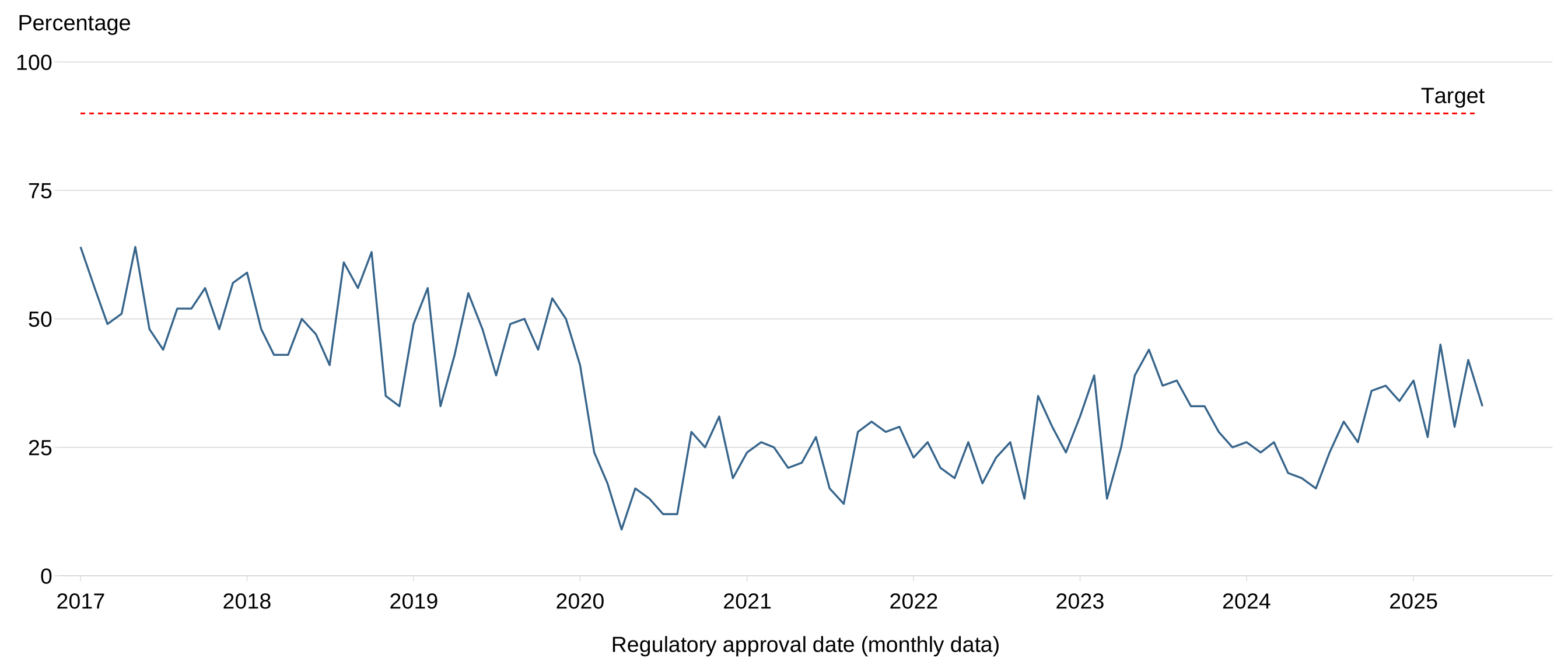
Chart 2.2: average number of days taken for commercial contract studies on the RDN CPMS to open to recruitment following regulatory approval by regulatory approval
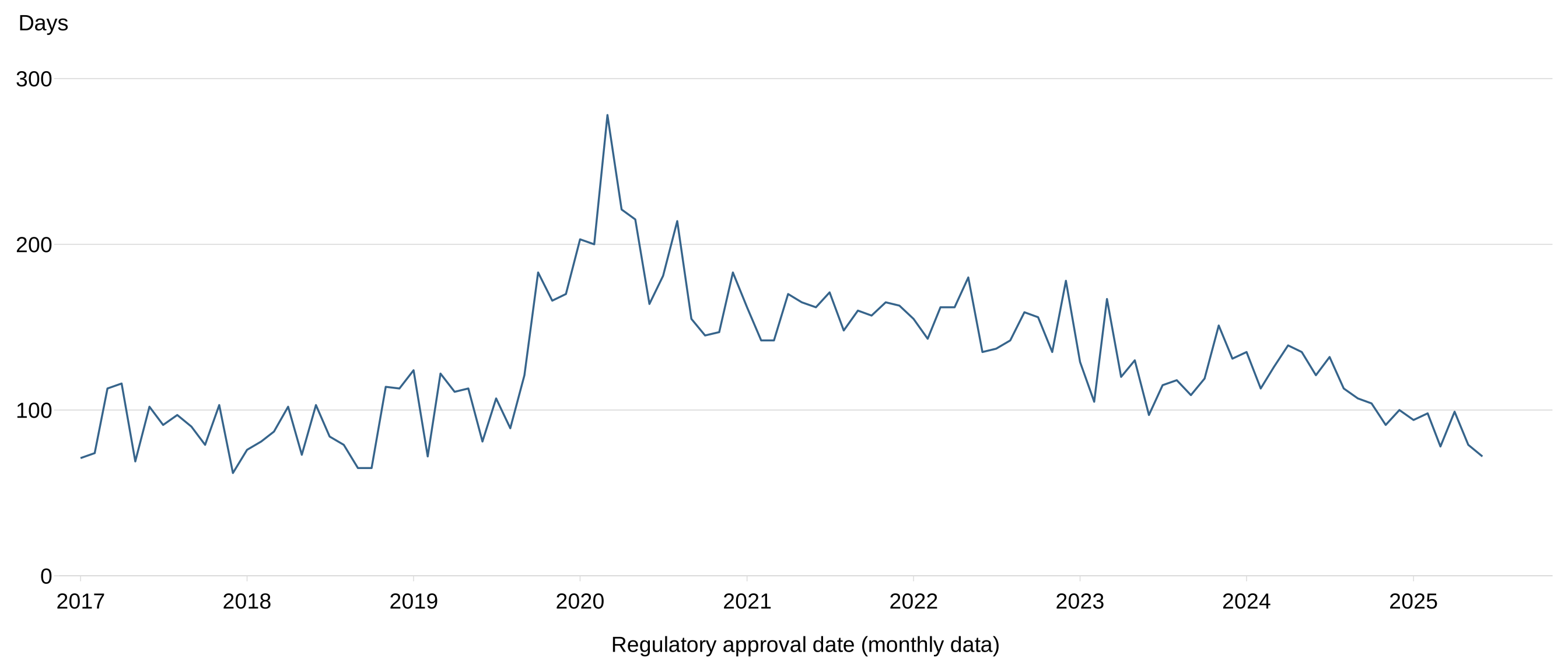
Chart 2.1 shows the percentage of commercial contract studies on the CPMS that opened to recruitment within 60 days of regulatory approval per month.
Since 2017, the percentage of studies opening to recruitment within 60 days has been consistently below the current KPI target of 90%.
During the COVID-19 pandemic, the performance of commercial contract studies dropped as the system re-prioritised its focus towards COVID-19 research.
Following the pandemic, there was an increase in the percentage of studies opening to recruitment within 60 days, though performance remained lower than pre-pandemic levels.
Data on the average time taken for studies to open to recruitment shows a similar trend, as chart 2.2 shows. Since 2017, the average number of days taken for commercial contract studies to open to recruitment has been consistently higher than 60 days.
Indicator 3: proportion of commercial contract studies recruiting first participant within 30 days of opening to recruitment
This indicator measures the percentage of commercial contract studies on the CPMS that recruited their first participant within 30 calendar days of opening to recruitment each month. It is designed to assess the efficiency and predictability of study set-up processes.
The indicator is intended to apply UK-wide and currently includes data from studies and sites in England and, so far as is possible, the devolved governments. Work is ongoing to incorporate further data from devolved governments.
The clock starts on the date a sponsor confirms the study is ready to start recruiting participants in at least one site. The clock stops on the date the first study participant is recruited.
Studies are grouped by the month they opened to recruitment. Only studies that have reported recruiting their first participant are included in the indicator calculation. Studies that have not yet recruited their first participant, or have not recorded doing so, are excluded from the calculation. These studies are reported in the not yet recruited first participant column.
Studies where recruitment of first participant is not expected within 30 days of opening to recruitment in the study milestone plan (that is rare disease and other low recruitment studies) are excluded from the report.
The target is for 90% of commercial contract studies to recruit their first participant within 30 days of opening to recruitment.
The latest time period reported is 6 months prior to the report’s publication month. This is to allow sufficient time for most studies to have recruited their first participant, whether within 30 days or not, and to enter their data. At this point, a more complete picture is available, though changes may continue to occur. Figures for all months are subject to change and will be revised in future reports as more information becomes available.
Table 3.1: percentage of commercial contract studies that recruited their first participant within 30 days of opening to recruitment in May 2025
| Study type | Percentage of studies that recruited their first participant within 30 days of opening to recruitment | Target |
|---|---|---|
| Commercial contract | 53% | 90% |
Table 3.2: first participant recruitment performance by study type in May 2025
| Study type | Percentage of studies that recruited their first participant within 30 days of opening to recruitment | Number of studies that recruited their first participant within 30 days of opening to recruitment | Number of studies that recruited a first participant | Average number of days taken for studies to recruit their first participant from opening to recruitment | Number of open studies that have not yet recruited a first participant, or have not recorded doing so |
|---|---|---|---|---|---|
| Commercial contract | 53% | 10 | 19 | 49 | 3 |
| Commercial collaborative | 83% | 5 | 6 | 28 | 2 |
| Non-commercial | 55% | 26 | 47 | 41 | 16 |
Table 3.3: first participant recruitment performance of commercial contract studies by study opening to recruitment month
| Study opening to recruitment month | Percentage of studies that recruited their first participant within 30 days of opening to recruitment | Number of studies that recruited their first participant within 30 days of opening to recruitment | Number of studies that recruited a first participant | Average number of days taken for studies to recruit their first participant from opening to recruitment | Number of open studies that have not yet recruited a first participant, or have not recorded doing so |
|---|---|---|---|---|---|
| June 2024 | 50% | 10 | 20 | 47 | 0 |
| July 2024 | 53% | 16 | 30 | 41 | 1 |
| August 2024 | 50% | 9 | 18 | 52 | 1 |
| September 2024 | 48% | 10 | 21 | 79 | 1 |
| October 2024 | 46% | 12 | 26 | 54 | 3 |
| November 2024 | 52% | 12 | 23 | 64 | 0 |
| December 2024 | 35% | 8 | 23 | 71 | 1 |
| January 2025 | 69% | 11 | 16 | 24 | 5 |
| February 2025 | 41% | 11 | 27 | 58 | 2 |
| March 2025 | 50% | 12 | 24 | 37 | 0 |
| April 2025 | 47% | 8 | 17 | 35 | 4 |
| May 2025 | 53% | 10 | 19 | 49 | 3 |
Table 3.4: first participant recruitment performance of commercial contract studies by study opening to recruitment year
| Study opening to recruitment year | Percentage of studies that recruited their first participant within 30 days of opening to recruitment | Number of studies that recruited their first participant within 30 days of opening to recruitment | Number of studies that recruited a first participant | Average number of days taken for studies to recruit their first participant from opening to recruitment | Number of open studies that have not yet recruited a first participant, or have not recorded doing so |
|---|---|---|---|---|---|
| 2017 | 50% | 104 | 208 | 48 | 18 |
| 2018 | 52% | 127 | 242 | 47 | 14 |
| 2019 | 54% | 111 | 205 | 62 | 20 |
| 2020 | 53% | 67 | 126 | 66 | 16 |
| 2021 | 53% | 81 | 154 | 60 | 24 |
| 2022 | 44% | 84 | 190 | 70 | 33 |
| 2023 | 47% | 102 | 216 | 54 | 27 |
| 2024 | 49% | 126 | 259 | 55 | 23 |
Chart 3.1: percentage of commercial contract studies on the CPMS that recruited their first participant within 30 days of opening to recruitment
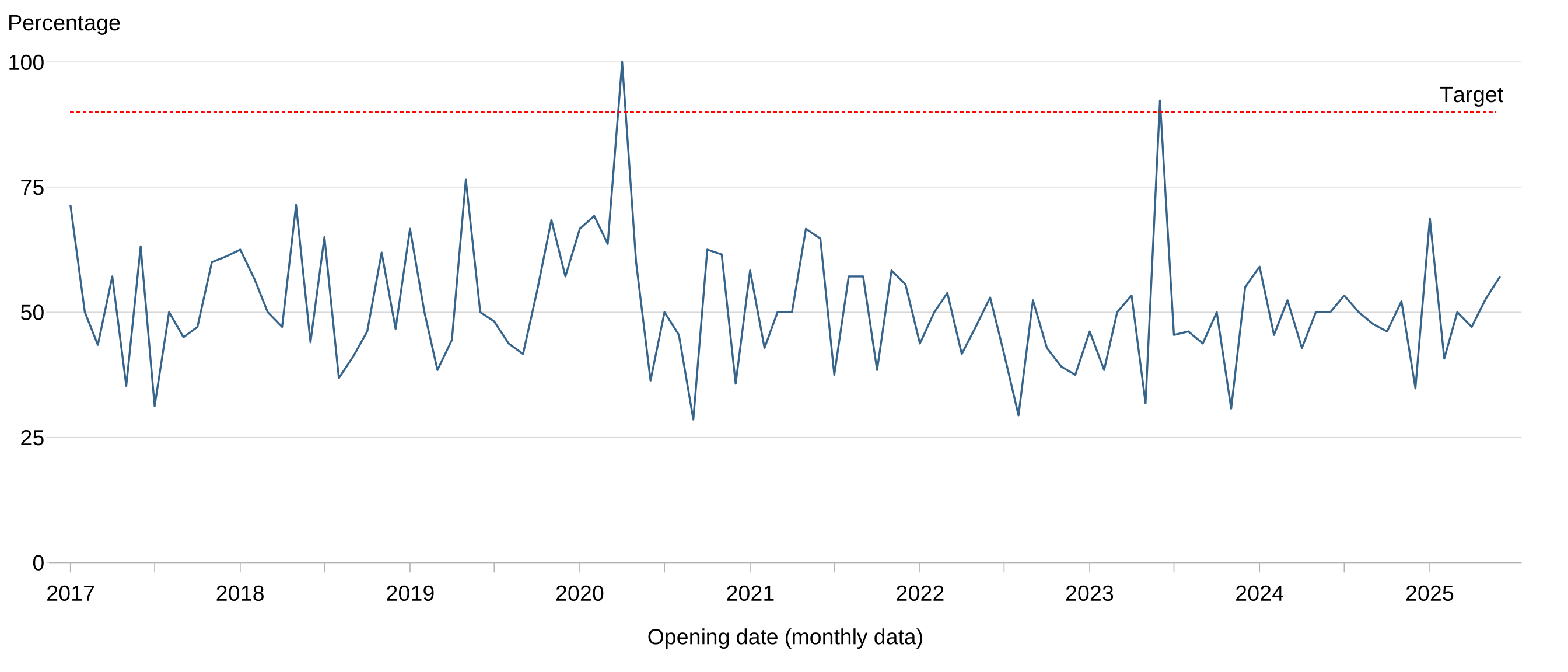
Chart 3.2: average number of days taken for commercial contract studies on the RDN CPMS to recruit their first participant from opening to recruitment
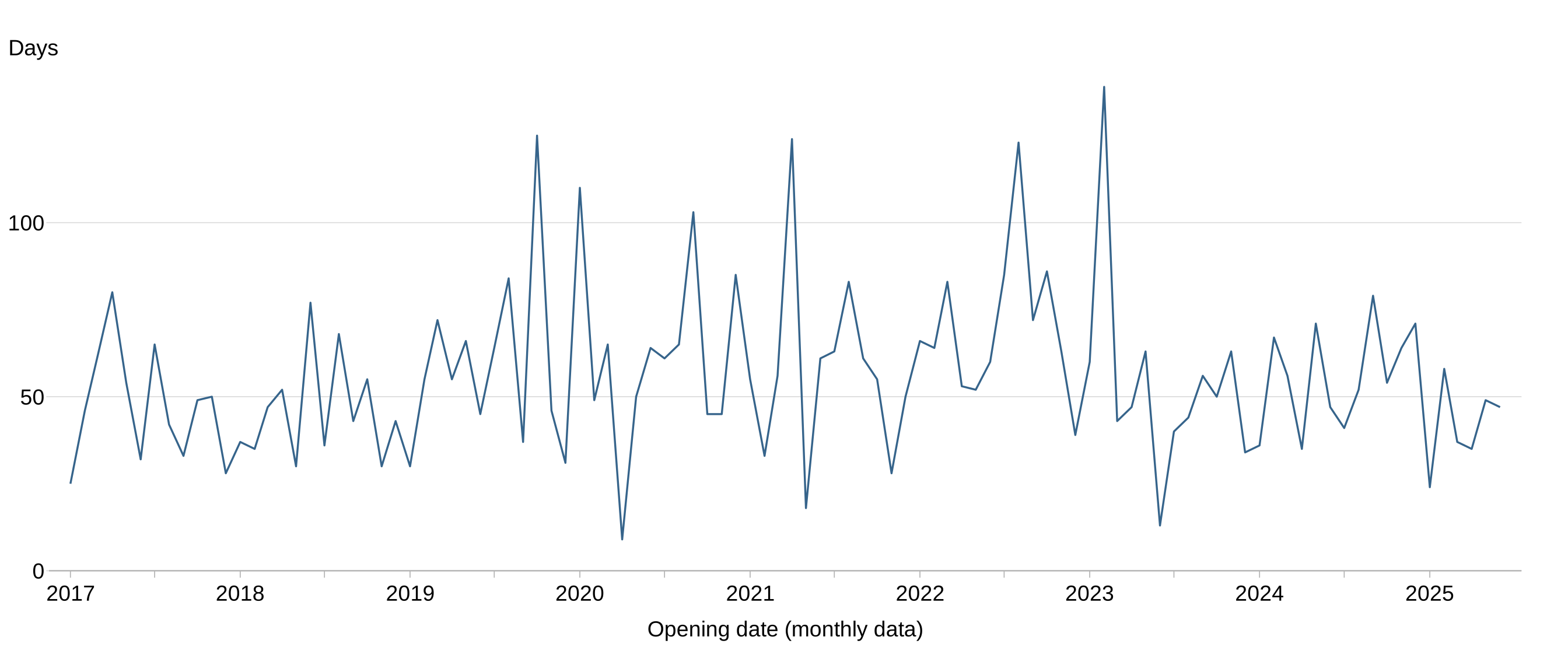
Chart 3.1 shows the percentage of commercial contract studies on the CPMS that recruited their first participant within 30 days of opening to recruitment per month.
Since 2017, the percentage of studies recruiting their first participant within 30 days has been consistently below the current KPI target of 90%.
Data on the average time taken for studies to recruit their first participant shows a similar trend, as seen in chart 3.2. Since 2017, the average number of days taken for commercial contract studies to recruit their first participant has been consistently higher than 30 days.
Contracting and delivery
Indicator 4: proportion of NHS trusts in England who accept the local price generated as part of the NCVR process for late-phase commercial contract studies without further negotiation following agreement of the resource required by the lead site
NCVR is the UK-wide, standardised approach to costing for commercial contract research taking place in NHS organisations.
This indicator shows the percentage of NHS trusts in England who accept the local price generated by the interactive costing tool as part of the NCVR process for late-phase commercial contract studies without further negotiation following agreement of the resource required by the lead site.
The target is for 100% of NHS trusts in England to accept the local price generated as part of the NCVR process for late-phase commercial contract studies. This target has been achieved. The aim now is to maintain this performance as all phases of commercial contract research are brought into the process.
This indicator is no longer updated as it has been achieved and will not regress.
Table 4.1: percentage of NHS trusts in England who accept the local price generated as part of the NCVR process for late-phase commercial contract studies
| Study type | Percentage | Target |
|---|---|---|
| Late-phase commercial contract | 100% | 100% |
Indicator 5: proportion of open studies on track, delivering recruitment to time and target
This indicator measures the percentage of open studies in the UK on the CPMS that are delivering recruitment to time and target each month. It is designed to assess the efficiency and predictability of study delivery.
‘Time and target’ is a measure of whether a study’s recruitment is on track compared with expectation. It is calculated using CPMS data and sponsor feedback. Data from the CPMS is used to make an initial assessment to determine whether a study’s recruitment is on track or not. Studies that have fallen significantly below expectations are flagged to sponsors to review on a quarterly basis. Sponsors can then provide their assessment of whether a study is on track or not.
Up until October 2025, this indicator measured the performance of studies using data from English sites only. Since November 2025, this indicator has included data from sites in the devolved governments to report UK-wide performance.
The target is for 80% of all studies to deliver recruitment to time and target.
There is a lag between activity taking place at a study site and data being entered. This means data reported for a particular month may not be completely up to date. The data is not updated retrospectively in future reports.
Table 5.1: percentage of studies recruiting to time and target in November 2025
| Study type | Percentage of studies recruiting to time and target | Target |
|---|---|---|
| All | 83% | 80% |
Table 5.2: percentage of studies recruiting to time and target in November 2025, by study type
| Study type | Percentage of studies recruiting to time and target | Number of open studies |
|---|---|---|
| Commercial contract | 80% | 1,111 |
| Commercial collaborative | 83% | 361 |
| Non-commercial | 84% | 2,767 |
Table 5.3: percentage of studies recruiting to time and target by month and study type
| Month | All | Commercial contract | Commercial collaborative | Non-commercial |
|---|---|---|---|---|
| December 2024 | 84% | 80% | 84% | 85% |
| January 2025 | 83% | 78% | 83% | 85% |
| February 2025 | 84% | 78% | 84% | 86% |
| March 2025 | 83% | 77% | 86% | 86% |
| April 2025 | 84% | 78% | 86% | 86% |
| May 2025 | 83% | 77% | 86% | 85% |
| June 2025 | 82% | 76% | 86% | 85% |
| July 2025 | 84% | 77% | 86% | 86% |
| August 2025 | 83% | 78% | 85% | 85% |
| September 2025 | 83% | 79% | 86% | 85% |
| October 2025 | 83% | 80% | 84% | 84% |
| November 2025 | 83% | 80% | 83% | 84% |
Chart 5.1: percentage of studies on the CPMS recruiting to time and target by month and study type
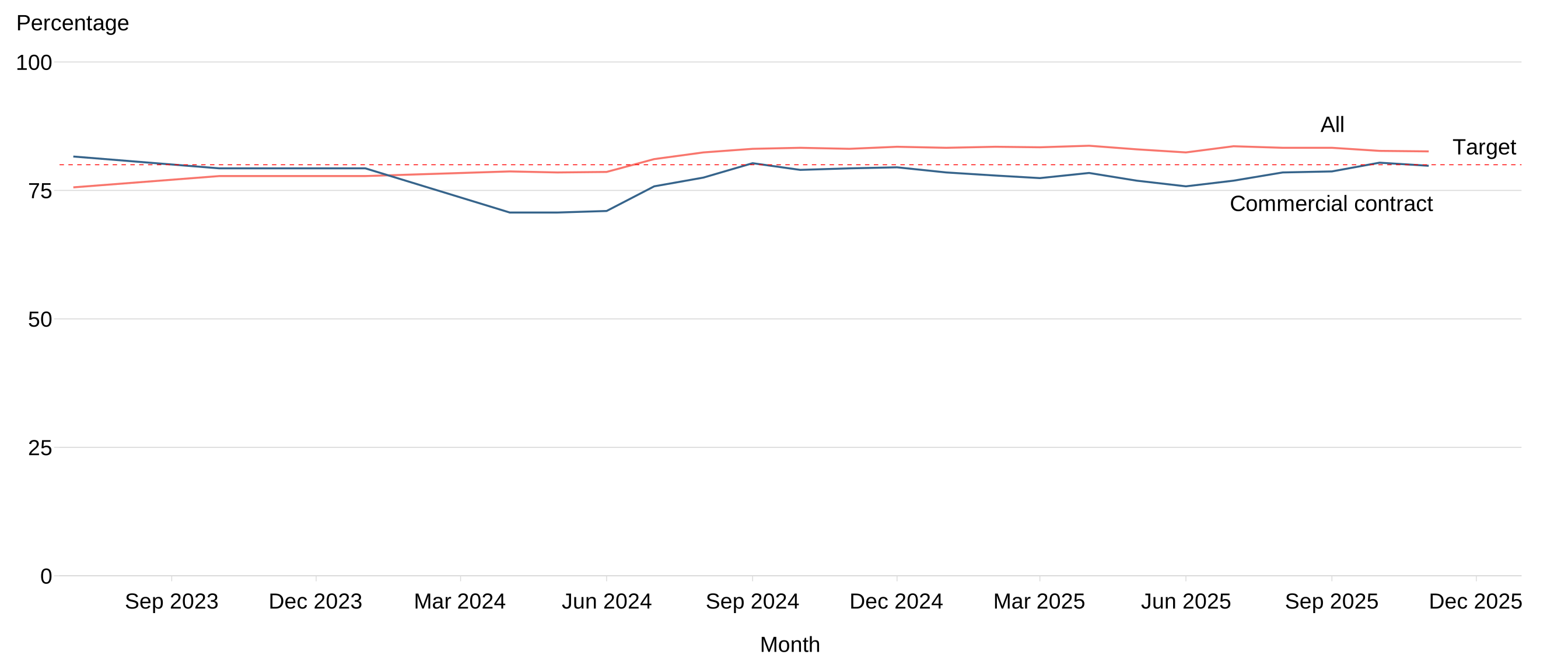
Chart 5.1 shows the percentage of open studies on the CPMS recruiting to time and target per month, by study type.
Since July 2023, overall recruitment to time and target has improved, with the percentage of all studies on the CPMS recruiting to time and target regularly meeting or exceeding the KPI target of 80% each month.
Recruitment to studies
Indicator 6: average monthly recruitment to all studies is maintained at high levels when compared to the pre-pandemic baseline
This indicator measures the average (mean) number of participants recruited per month over the last 12 months to all studies in the UK that are held on the CPMS. It is designed to track the volume of clinical research activity taking place in the UK. The data presents a 12-month rolling average to account for seasonality.
The pre-COVID-19 baseline has been calculated as the average monthly recruitment to studies between January 2016 and December 2019.
There is a lag between activity taking place at a study site and data being entered. This means the figures reported are subject to change. Data, including the baseline calculation, is updated retrospectively in future reports as further information becomes available.
Tables showing historic recruitment data and recruitment data broken down by study type are reported under indicator 7.
Table 6.1: average number of participants recruited per month over the last 12 months as of September 2025
| Study type | Average number of participants recruited per month over the last 12 months | Pre-COVID-19 baseline |
|---|---|---|
| All | 88,481 | 69,200 |
Indicator 7: average monthly recruitment to all commercial contract studies to be monitored in support of the ambition to double and double again from the pre-pandemic baseline
This indicator has the same methodology and notes as indicator 6, except it only applies to commercial contract studies.
The pre-COVID-19 baselines for each study type have been calculated as the average monthly recruitment to studies between January 2016 and December 2019, inclusive. These breakdowns may not add up to the main baseline due to rounding.
Data broken down by further study types is also presented.
Table 7.1: average number of participants recruited per month over the last 12 months to commercial contract studies as of September 2025
| Study type | Average number of participants recruited per month over the last 12 months | Pre-COVID-19 baseline |
|---|---|---|
| Commercial contract | 3,838 | 3,900 |
Table 7.2: average number of participants recruited per month over the last 12 months as of September 2025, by study type
| Study type | Average number of participants recruited per month over the last 12 months | Pre-COVID-19 baseline |
|---|---|---|
| Commercial contract | 3,838 | 3,900 |
| Commercial collaborative | 7,788 | 7,500 |
| Non-commercial | 76,856 | 57,900 |
Table 7.3: average number of participants recruited per month, by year and study type
| Year | All | Commercial contract | Commercial collaborative | Non-commercial |
|---|---|---|---|---|
| 2016 | 57,696 | 3,144 | 5,953 | 48,598 |
| 2017 | 68,692 | 4,529 | 5,964 | 58,199 |
| 2018 | 77,514 | 4,368 | 8,737 | 64,408 |
| 2019 | 72,958 | 3,358 | 9,234 | 60,366 |
| 2020 | 156,029 | 3,242 | 6,627 | 146,161 |
| 2021 | 150,735 | 2,915 | 9,320 | 138,500 |
| 2022 | 92,335 | 3,027 | 9,531 | 79,777 |
| 2023 | 92,774 | 10,220 | 9,848 | 72,706 |
| 2024 | 100,928 | 9,705 | 10,252 | 80,971 |
Chart 7.1: number of participants recruited to studies on the CPMS by month and study type
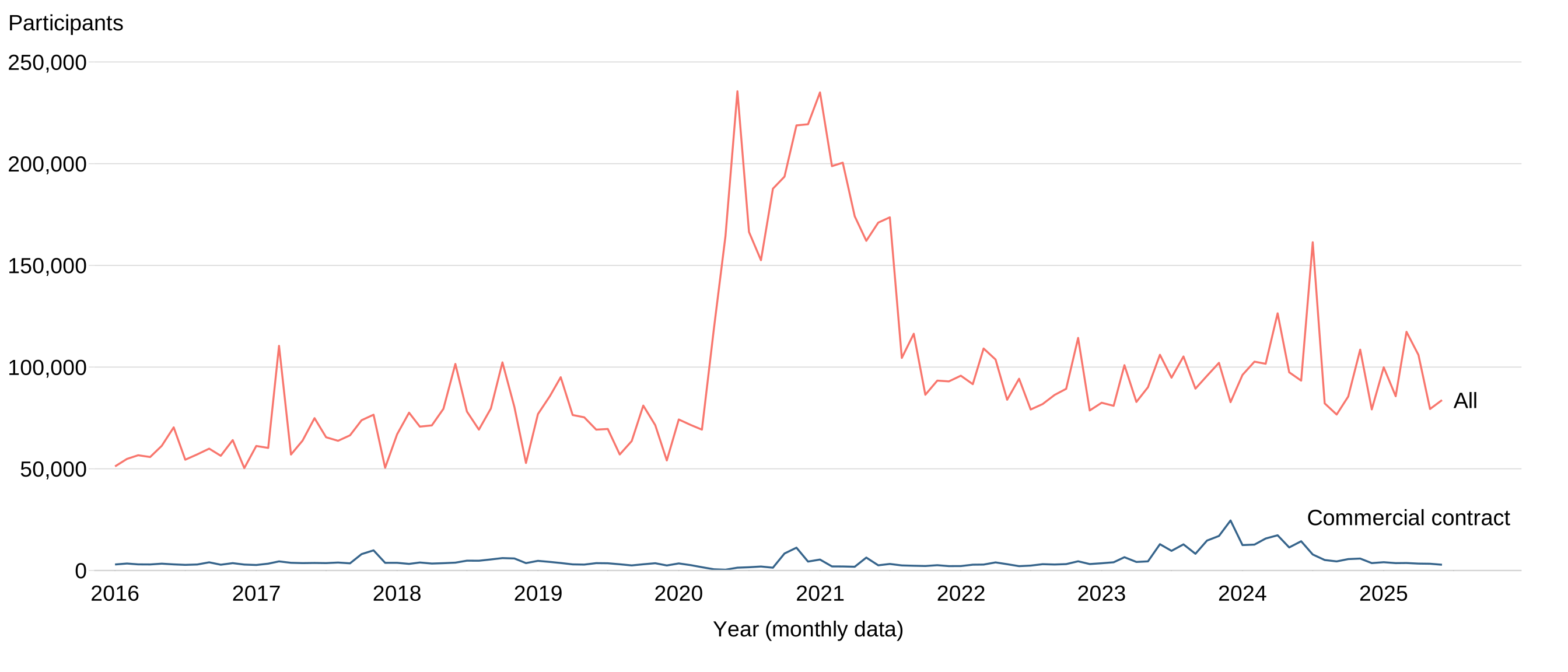
Chart 7.2: number of participants recruited to commercial contract studies on the CPMS by month and study type
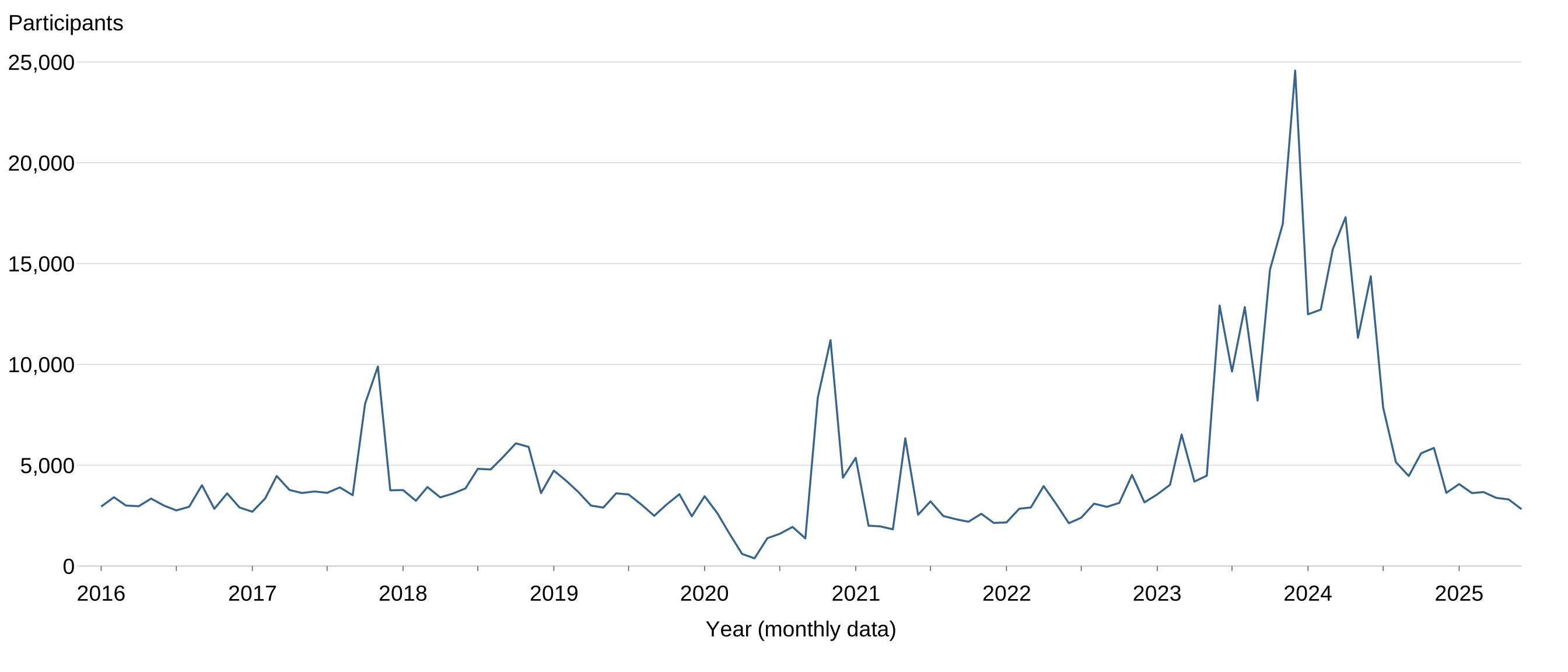
Chart 7.1 shows the number of participants recruited per month to studies on the RDN CPMS since 2016, by study type. Chart 7.2 shows the same data but only for commercial contract studies, to present the detail.
Since 2016, most recruitment to studies on the CPMS has been to non-commercial studies.
There was a significant increase in recruitment to non-commercial studies and a slight drop in recruitment to commercial contract studies between 2020 and 2022, as the clinical research delivery system re-prioritised its resources to respond to the COVID-19 pandemic.
Participation in commercial contract studies increased significantly in 2023 and 2024, primarily due to increased recruitment to several very large observational studies.
Commercial contract studies recruit, on average, fewer participants per study than non-commercial studies. This is probably due to them comprising a higher proportion of more complex, interventional studies. For data on the respective volumes of commercial and non-commercial studies, see indicator 8 below.
Status of studies
Indicator 8: proportion of studies open to recruitment or suspended
This indicator measures the percentage of studies in the UK on the CPMS that are classed as either open or suspended each month.
The aim is for approximately 80% of all studies on the CPMS to be classed as open or suspended each month, with no more than approximately 20% of studies classed as in set-up.
Data on the number of new studies added to the CPMS is also presented.
There is a lag between activity taking place at a study site and data being entered. This means data reported for a particular month may not be completely up to date.
For tables 8.1 to 8.3, the data is not updated retrospectively in future reports. Data in tables 8.4 and 8.5, and chart 8.1, is updated retrospectively as further information becomes available.
Table 8.1: percentage of studies classed as open or suspended in November 2025
| Study type | Percentage of studies classed as open or suspended | Target |
|---|---|---|
| All | 82% | More than or equal to 80% |
Table 8.2: percentage of studies classed as open or suspended in November 2025, by study type
| Study type | Percentage of studies classed as open or suspended | Number of studies in set-up | Number of studies open | Number of studies suspended | Total number of studies |
|---|---|---|---|---|---|
| Commercial contract | 71% | 489 | 1,182 | 36 | 1,707 |
| Commercial collaborative | 89% | 49 | 379 | 21 | 449 |
| Non-commercial | 86% | 478 | 2,932 | 115 | 3,525 |
Table 8.3: percentage of studies classed as open or suspended by month and study type
| Month | All | Commercial contract | Commercial collaborative | Non-commercial |
|---|---|---|---|---|
| December 2024 | 82% | 69% | 91% | 87% |
| January 2025 | 82% | 70% | 91% | 88% |
| February 2025 | 83% | 70% | 91% | 88% |
| March 2025 | 83% | 71% | 89% | 88% |
| April 2025 | 83% | 72% | 90% | 88% |
| May 2025 | 83% | 71% | 90% | 87% |
| June 2025 | 82% | 70% | 89% | 87% |
| July 2025 | 83% | 72% | 89% | 88% |
| August 2025 | 82% | 71% | 88% | 87% |
| September 2025 | 81% | 69% | 89% | 86% |
| October 2025 | 82% | 70% | 89% | 86% |
| November 2025 | 82% | 71% | 89% | 86% |
Table 8.4: number of new studies added to the CPMS by month and study type
| Month | All | Commercial contract | Commercial collaborative | Non-commercial |
|---|---|---|---|---|
| November 2024 | 158 | 65 | 9 | 84 |
| December 2024 | 118 | 45 | 3 | 70 |
| January 2025 | 154 | 52 | 10 | 92 |
| February 2025 | 139 | 49 | 13 | 77 |
| March 2025 | 146 | 49 | 14 | 83 |
| April 2025 | 130 | 49 | 3 | 78 |
| May 2025 | 161 | 59 | 10 | 92 |
| June 2025 | 160 | 69 | 6 | 85 |
| July 2025 | 207 | 82 | 9 | 116 |
| August 2025 | 161 | 65 | 5 | 91 |
| September 2025 | 183 | 70 | 9 | 104 |
| October 2025 | 134 | 57 | 5 | 72 |
Table 8.5: number of new studies added to the CPMS by year and study type
| Year | All | Commercial contract | Commercial collaborative | Non-commercial |
|---|---|---|---|---|
| 2016 | 2,076 | 651 | 196 | 1,229 |
| 2017 | 2,311 | 667 | 260 | 1,384 |
| 2018 | 2,440 | 665 | 286 | 1,489 |
| 2019 | 2,246 | 630 | 254 | 1,362 |
| 2020 | 1,771 | 569 | 196 | 1.006 |
| 2021 | 2,190 | 713 | 207 | 1,270 |
| 2022 | 2,021 | 738 | 156 | 1,127 |
| 2023 | 2,001 | 743 | 157 | 1,101 |
| 2024 | 1,853 | 695 | 118 | 1,040 |
Chart 8.1: number of new studies added to the CPMS by month and study type
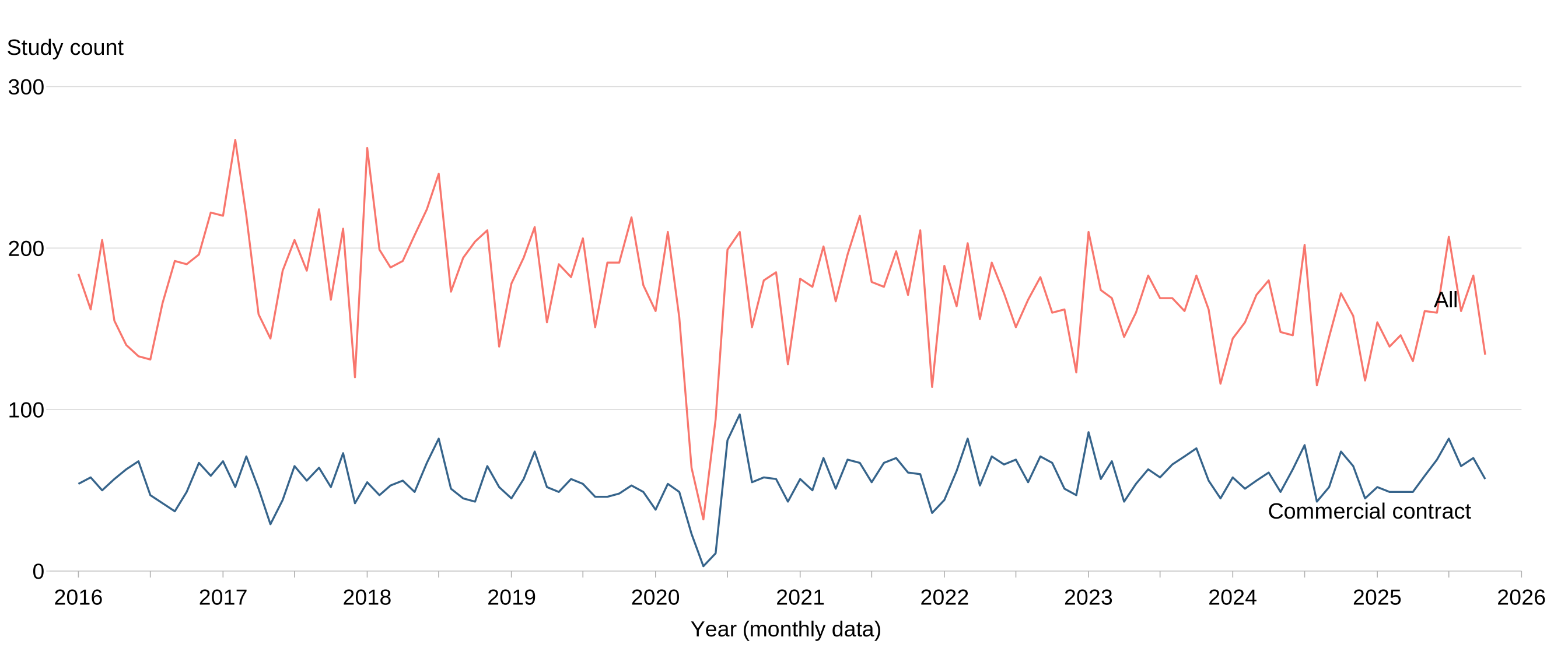
Chart 8.1 shows the number of new studies added to the CPMS per month since 2016, by study type.
Since 2016, approximately one-third of new studies added to the CPMS have been commercial contract studies.
The number of new studies added to the CPMS has been stable across time.
Be Part of Research
Indicator 9: Be Part of Research monthly registrations
This indicator reports the number of participants in the UK who have registered with the Be Part of Research (BPoR) service.
BPoR is an online platform provided by NIHR to promote participation in health and social care research. The service enables users to search for relevant studies and register their interest, making it easier for people to find and take part in health and care research that is relevant to them.
There is a lag between information entered by participants and data being collated for the report. This means that figures reported for recent months may be incomplete, and figures for all months are subject to change. Data is updated retrospectively in future reports as further information becomes available.
Table 9.1: number of participants registered to the BPoR service
| Month | Registrations to BPoR | Cumulative total registrations to BPoR since June 2022 |
|---|---|---|
| November 2025 | 11,237 | 676,951 |
Chart 9.1: cumulative number of participants registered to the BPoR service since June 2022
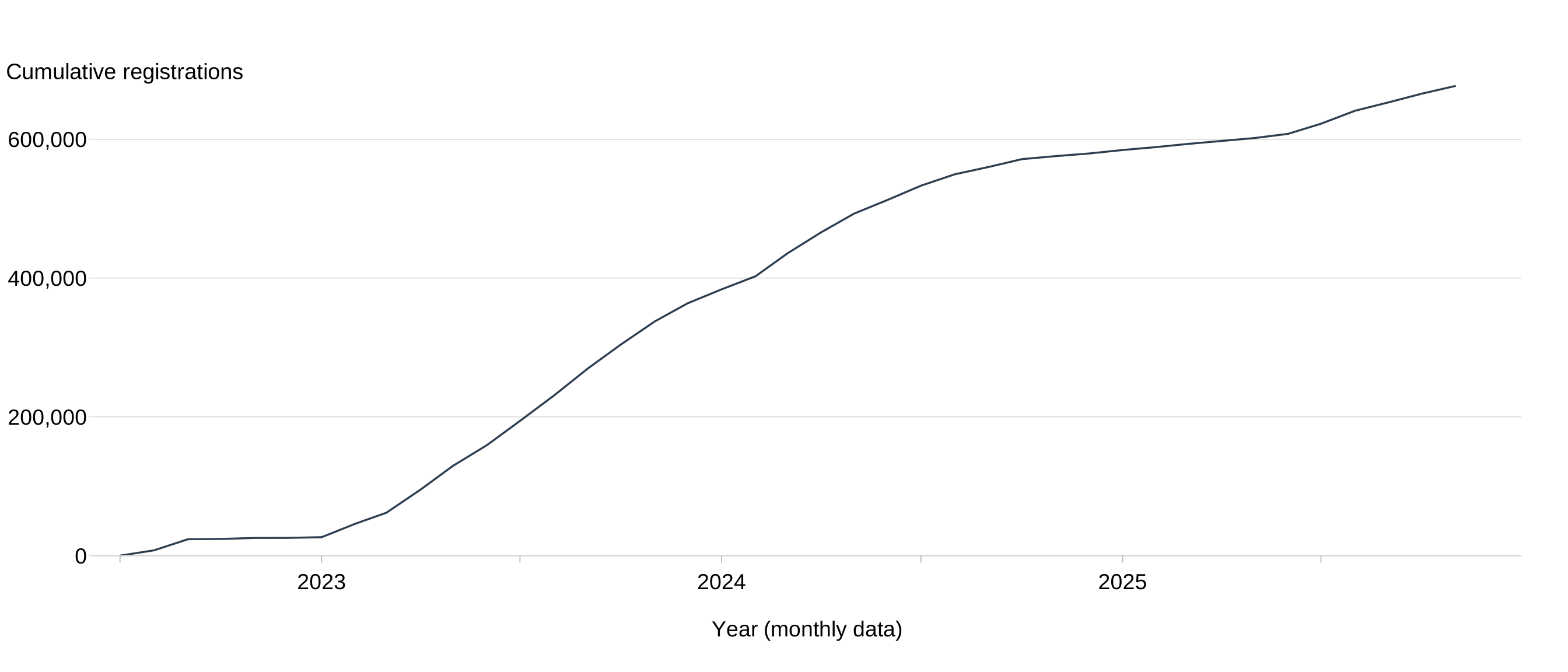
Chart 9.1 shows the cumulative number of participants who have signed up to the BPoR service since June 2022.
Between February 2023 and spring 2024, there was an increase in the number of new registrations to BPoR, following the service being promoted on the homepage of the NHS App.
From summer 2024, the rate of new registrations to BPoR started to slow its growth. Growth slowed further after promotion of BPoR was removed from the NHS App in October 2024.
On 7 July 2025, BPoR was reinstated to the homepage of the NHS App as part of a national campaign to increase participation.