Adult substance misuse treatment statistics 2024 to 2025: report
Published 4 December 2025
Applies to England

© Crown copyright 2025
This publication is licensed under the terms of the Open Government Licence v3.0 except where otherwise stated. To view this licence, visit nationalarchives.gov.uk/doc/open-government-licence/version/3 or write to the Information Policy Team, The National Archives, Kew, London TW9 4DU, or email: psi@nationalarchives.gov.uk.
Where we have identified any third party copyright information you will need to obtain permission from the copyright holders concerned.
This publication is available at https://www.gov.uk/government/statistics/substance-misuse-treatment-for-adults-statistics-2024-to-2025/adult-substance-misuse-treatment-statistics-2024-to-2025-report
Summary
Trends in treatment numbers
There were 329,646 adults aged 18 and over in contact with drug and alcohol treatment services between April 2024 and March 2025. This is a 6% rise compared to the previous year (310,863) and the highest number of adults in treatment since reporting began.
The number of adults entering treatment in 2024 to 2025 was 169,542, which is higher than the previous 2 years’ figures (137,749 in 2022 to 2023 and 158,991 in 2023 to 2024). The number of people entering treatment was relatively stable from 2016 to 2017 up to 2021 to 2022 but has increased year on year since then.
Trends in substance use: all adults in treatment
The number of people in each substance group grew in 2024 to 2025.
Just over two-fifths (42%) of adults in treatment were there for problems with opiates. Despite a decrease in the proportion of people in this group over time (down 6 percentage points from 48% in 2022 to 2023), it remains the largest substance group, with 138,255 people.
The proportion of adults in treatment for non-opiates (non-opiates and alcohol and non-opiates alone) has grown from 21% in 2020 to 2021 to 28% this year.
You can find more information about what the different substance groups are in the ‘People in treatment: substance, sex, age’ section.
People in treatment for alcohol alone make up the second largest group (30%) of adults in treatment. The proportion of people in this group has remained relatively stable at 30% since 2022 to 2023, despite the number of people in this group growing from 86,257 to 99,955.
Trends in substance use, new entrants to treatment
After an increase in 2022 to 2023, the proportion of adults entering treatment for problems with crack cocaine use remained the same as last year (19%, or 32,399 people).
The proportion of adults starting treatment for powder cocaine problems increased by one percentage point (from 19% to 20%) and is now the highest proportion since reporting began.
The proportion of new entrants to treatment with cannabis problems has climbed steadily since 2022 to 2023, with the proportion of this group growing by 1.3 percentage points in that period (from 20.9% to 22.2%). The number of new entrants with benzodiazepine problems increased from 3,872 in 2023 to 2024 to 4,161 this year, although the proportion relative to all new entrants remains stable (2.4% in 2023 to 2024, 2.5% in 2024 to 2025).
There was an increase in the proportion of adults entering treatment in 2024 to 2025 with ketamine problems (from 2.3% in 2023 to 2024 to 3.2% this year). The number of ketamine users starting treatment (5,365) is now over 12 times higher than it was in 2014 to 2015, when the number was 426.
Housing
One-fifth (21%) of people starting treatment had no home of their own when data was recorded. Forty-one per cent of people starting treatment with opiate problems had no home of their own, the highest proportion among the 4 substance groups.
Almost 1 in 10 people (9%) starting treatment said they had a risk of homelessness in the next 8 weeks. The proportion for people with opiate problems was twice as high (18%). For people with alcohol problems only, this proportion was 5%.
People starting treatment for problems with psychoactive substances (mainly synthetic cannabinoids) were most likely to report a risk of homelessness, with nearly a third (32%) saying they could be made homeless in the next 8 weeks.
Mental ill health
Almost three-quarters (74%, or 124,763) of adults starting treatment said they had a mental health treatment need. This is a similar proportion to the previous year (72%).
Over 7 out of 10 new starters in all substance groups reported a mental health treatment need. This need varied by substance group, ranging from 71% in the opiate group to 79% of the non-opiate and alcohol group.
Treatment exits and deaths in treatment
There were 152,067 people who exited the drug and alcohol treatment system in 2024 to 2025. Nearly half (46%) of those that left had successfully completed their treatment, free from dependence, which is slightly lower than the previous year (47%).
The total number of people who died while in contact with treatment services in 2024 to 2025 was 4,273, or 1.3% of all adults in treatment. This is the same proportion of deaths of all adults in treatment as reported last year.
People with opiate problems accounted for nearly two-thirds (63%) of these deaths, and the alcohol only group accounted for 28%.
Smoking among people in treatment
Across all substance groups, over 48,000 people (44%) said they had smoked tobacco in the 28 days before starting treatment in 2024 to 2025. This was substantially higher than the smoking rate of the general adult population in England, where 12.2% of men and 8.7% of women smoke. This was reported in the 2024 edition of the Office for National Statistics’ (ONS) Smoking habits in the UK and its constituent countries.
Despite these high levels of smoking, only 4% of people were recorded as having been offered referrals for smoking cessation interventions. This proportion is the same as the proportion recorded in 2023 to 2024.
People in treatment: substance, sex, age
Overview
This National Drug Treatment Monitoring System (NDTMS) statistics report presents information on adults (aged 18 and over) who were receiving help in England for problems with drugs and alcohol in the year between 1 April 2024 and 31 March 2025.
Many people experience difficulties with, and receive treatment for, both drugs and alcohol. While they often share many similarities, they also have clear differences, so this report divides people in treatment into 4 substance groups:
-
opiate: people who are dependent on or have problems with opiates, mainly heroin
-
non-opiate: people who have problems with non-opiate drugs only, such as cannabis, crack and ecstasy
-
non-opiate and alcohol: people who have problems with both non-opiate drugs and alcohol
-
alcohol only: people who have problems with alcohol but do not have problems with any other substances
Figure 1: how people are classified into substance reporting group

Figure 1 shows how people are classified into a substance reporting group after entering treatment and undergoing initial assessment.
People with an opiate problem are placed in the ‘opiate’ substance group regardless of whether other substances are also problematic. For all other individuals, they are categorised as ‘non-opiate only’, ‘non-opiate and alcohol’ or ‘alcohol only’.
Question 1: Does the person have problems with opiates?
Yes: person is classified into the opiate substance group.
No: go to question 2.
Question 2: Does the person have a problem with non-opiate drugs?
Yes: go to question 3.
No: go to question 4.
Question 3: Does the person have problems with alcohol?
Yes: person is classified into non-opiate and alcohol substance group.
No: person is classified into non-opiate only substance group.
Question 4: Does the person have problems with alcohol?
Yes: person is classified into alcohol only substance group.
Substance use, sex and age of people in treatment
Figure 2: breakdown of people in treatment by sex and substance group

There were 329,646 adults in contact with drug and alcohol treatment services between 1 April 2024 and 31 March 2025.
| Substance group | Men | Women | Total |
|---|---|---|---|
| Opiate | 100,418 (72.6%) | 37,837 (27.4%) | 138,255 (42%) |
| Non-opiate only | 30,111 (68.9%) | 13,567 (31.1%) | 43,678 (13%) |
| Non-opiate and alcohol | 34,066 (71.3%) | 13,692 (28.7%) | 47,758 (15%) |
| Alcohol only | 60,080 (60,1%) | 39,875 (39.9%) | 99,955 (30%) |
| Total | 224,675 (68.2%) | 104,971 (31.8%) | 329,646 (100%) |
Just under half of all adults (42%) received treatment for problems with opiates. A further 28% had problems with other drugs, and over a quarter (30%) had problems with alcohol only. These proportions were similar to previous years, and you can find more detailed information on trends in the ‘Trends over time’ section.
More than two-thirds of people in treatment were men and less than one-third were women (68% men to 32% women). This proportion varies greatly by substance group. For the drug groupings, men made up just over two-thirds (opiate 73%, non-opiate only 69%, non-opiate and alcohol 71%). But in the alcohol only group the divide is smaller with men making up 60% and women 40%.
Problem substances for people in treatment
Figure 3: substances by group for people in treatment (count of problem substances reported)
| Substance group | Opiate | Non-opiate only | Non-opiate and alcohol | Alcohol only | Total |
|---|---|---|---|---|---|
| Opiates (not crack cocaine) | 65,166 | 0 | 0 | 0 | 65,166 |
| Both opiates and crack cocaine | 73,089 | 0 | 0 | 0 | 73,089 |
| Crack cocaine (not opiates) | 0 | 6,520 | 5,763 | 0 | 12,283 |
| Cannabis | 22,256 | 23,433 | 22,665 | 0 | 68,354 |
| Cocaine | 8,366 | 16,938 | 26,452 | 0 | 51,756 |
| Alcohol | 23,180 | 0 | 47,758 | 99,955 | 170,893 |
Figure 3 shows a breakdown of the substances that people in treatment in 2024 to 2025 reported using, split into the 4 substance groups. Up to 3 substances can be recorded at the start of treatment, so one person could be counted for several substances in their substance group. For example, somebody who uses cocaine, cannabis and alcohol, would appear in the non-opiate and alcohol group for these 3 substances.
Nearly half of all adults in treatment (46%) said they had a problem with opiates, crack or both substances. Opiates were the most frequently reported drug used among people in treatment: 42% reported using opiates, with slightly more people using opiates along with crack (22%) compared to opiates alone (20%). Use of crack without opiates was much less common (4%).
More than half (52%) of people said they had problems with alcohol, with most of these being in the alcohol only group. Over one-fifth of adults in treatment (21%) said they had problems with cannabis, most commonly this was alongside opiates. Cocaine (non-crack) use was reported by 16% of people, the largest proportion of whom were in the non-opiate and alcohol substance group.
You can find a more detailed breakdown of reported substances in the data tables that accompany this report.
Age groups
Figure 4: age of people in treatment
| Age group | Opiate | Non-opiate only | Non-opiate and alcohol | Alcohol only | Total |
|---|---|---|---|---|---|
| 18 | 114 | 1,258 | 752 | 336 | 2,460 |
| 19 | 128 | 1,184 | 722 | 358 | 2,392 |
| 20 to 24 | 1,685 | 7,056 | 4,613 | 2,699 | 16,053 |
| 25 to 29 | 4,667 | 7,951 | 6,545 | 4,906 | 24,069 |
| 30 to 34 | 11,110 | 8,073 | 8,585 | 8,696 | 36,464 |
| 35 to 39 | 19,807 | 6,967 | 8,884 | 12,513 | 48,171 |
| 40 to 44 | 29,078 | 4,596 | 6,920 | 14,140 | 54,734 |
| 45 to 49 | 27,589 | 2,826 | 4,493 | 13,593 | 48,501 |
| 50 to 54 | 21,707 | 1,870 | 3,118 | 14,137 | 40,832 |
| 55 to 59 | 13,318 | 1,123 | 2,022 | 12,331 | 28,794 |
| 60 to 64 | 6,073 | 496 | 832 | 8,880 | 16,281 |
| 65 to 69 | 2,082 | 164 | 201 | 4,288 | 6,735 |
| 70+ | 897 | 114 | 71 | 3,078 | 4,160 |
Figure 4 shows the age groups of people in treatment in 2024 to 2025. Although the age groups as a proportion of those in treatment are similar to previous years, the treatment population has continued to get older, with 29% of those in treatment aged 50 or over, compared to 12% in 2009 to 2010.
Three-fifths of people in treatment (61%) were aged 40 years and over (compared to 51% in 2016 to 2017), with:
- 16.6% of people in the 40 to 44 age group
- 14.7% of people in the 45 to 49 age group
- 12.4% of people in the 50 to 54 age group
- 8.7% of people in the 55 to 59 age group
- 8.2% of people aged 60 and over
Less than 10% of people in treatment for either opiates or for alcohol only were aged 29 years and under (5% for opiates and 8% for alcohol only). Across all substance groups there were:
- 7.3% of people in the 25 to 29 age group
- 4.9% of people in the 20 to 24 age group
- 1.5% of people aged 18 or 19
The median age of people in treatment in the 4 substance groups ranged from 47 for the alcohol only group to 32 for non-opiates only. People in treatment for opiates had a median age of 45.
A large proportion of opiate users in treatment first used heroin more than 20 years ago. In 2024 to 2025, 62% said they first used heroin before 2001 and only 16% first used heroin since 2011.
You can find a detailed breakdown of age statistics in the data tables that accompany this report.
People starting treatment: substances, age and referral source
Substances reported by people starting treatment
Figure 5: substances by group for people starting treatment in 2024 to 2025 (count of problem substances reported)
| Substance | Opiate | Non-opiate only | Non-opiate and alcohol | Alcohol only | Total |
|---|---|---|---|---|---|
| Opiates (not crack cocaine) | 14,607 | 0 | 0 | 0 | 14,607 |
| Both opiates and crack cocaine | 23,954 | 0 | 0 | 0 | 23,954 |
| Crack cocaine (not opiates) | 0 | 4,660 | 3,785 | 0 | 8,445 |
| Cannabis | 5,862 | 16,869 | 14,924 | 0 | 37,655 |
| Cocaine | 2,703 | 12,438 | 18,471 | 0 | 33,612 |
| Alcohol | 6,333 | 0 | 32,449 | 66,875 | 105,657 |
In 2024 to 2025, 169,542 people started treatment for drug and alcohol problems. This is where a person started a new treatment journey, either for the first time or returning to treatment having had a break of over 21 days.
Of the people starting treatment:
- 62% said they had a problem with alcohol
- 23% said they had a problem with opiates
- 19% said they had a problem with crack cocaine
- 22% said they had a problem with cannabis
- 20% said they had a problem with (non-crack) cocaine
Of the people who said they had a problem with alcohol, nearly two-thirds (63%, or 66,875) said it was their only problem substance.
Figure 5 shows the number of people starting treatment who reported problems with each substance, separated into the 4 substance groups. Most people with alcohol problems were in the alcohol only group. However, alcohol was the third most frequently reported substance in the opiate group after opiates and crack cocaine.
In the non-opiate and alcohol group, cocaine was the second most frequently reported drug, followed closely by cannabis. Cannabis was the most frequently reported drug in the non-opiate substance group, followed by cocaine.
The proportion of adults starting treatment for powder cocaine problems increased by one percentage point (from 19% to 20%) and is now the highest proportion since reporting began.
The number of people starting treatment with cannabis problems also increased this year, with the proportion of this group growing by 0.8 percentage points (21.4% to 22.2%).
The number of new entrants with benzodiazepine problems increased from 3,872 in 2023 to 2024 to 4,161 this year, although the proportion relative to all people entering treatment was stable (2.4% in 2023 to 2024, 2.5% in 2024 to 2025).
There was also an increase in the proportion of adults entering treatment in 2024 to 2025 with ketamine problems (from 2.3% in 2023 to 2024 to 3.2% this year). The number of ketamine users starting treatment (5,365) is now over 12 times higher than it was in 2014 to 2015, when the number was 426.
There was also a small rise in methamphetamine treatment numbers this year (from 826 last year to 968), which has been increasing gradually since reporting began in 2005 to 2006.
You can find more information on the breakdown of club drugs by substance group in the data tables that accompany this report.
Age of people starting treatment
Figure 6: people starting treatment by age
| Age group | Opiate | Non-opiate only | Non-opiate and alcohol | Alcohol only | Total |
|---|---|---|---|---|---|
| 18 to 19 | 152 | 1,781 | 1,003 | 511 | 3,447 |
| 20 to 24 | 958 | 5,282 | 3,296 | 1,966 | 11,502 |
| 25 to 29 | 2,352 | 5,923 | 4,648 | 3,486 | 16,409 |
| 30 to 34 | 4,878 | 5,839 | 6,010 | 6,087 | 22,814 |
| 35 to 39 | 7,315 | 5,043 | 6,050 | 8,479 | 26,887 |
| 40 to 44 | 8,338 | 3,300 | 4,630 | 9,450 | 25,718 |
| 45 to 49 | 6,558 | 1,932 | 2,914 | 8,975 | 20,379 |
| 50 to 54 | 4,283 | 1,298 | 1,989 | 9,166 | 16,736 |
| 55 to 59 | 2,301 | 747 | 1,235 | 7,951 | 12,234 |
| 60 to 64 | 981 | 334 | 501 | 5,793 | 7,609 |
| 65+ | 445 | 178 | 173 | 5,011 | 5,807 |
Figure 6 shows the number of people starting treatment in each age group, separated into the 4 substance groups.
The most common age group was 35 to 39, with 26,887 people starting treatment. This was followed by the 40 to 44 age group, with 25,718 people, then the 30 to 34 age group with 22,814 people. Within these 3 groups, the alcohol only substance group was the largest, the same as last year.
Over half of people starting treatment (52%) were aged 40 years and over. Of those aged 55 years and over, 73% said they had problems with alcohol only.
The non-opiate only and non-opiate and alcohol groups had the largest proportion of people aged 29 years and under starting treatment, at 41% and 28% respectively.
Referral sources
Figure 7: referral sources for people starting treatment in 2024 to 2025
| Substance group | Self, family and friends | Health and social care | Criminal justice | Substance misuse service | Other | Total |
|---|---|---|---|---|---|---|
| Opiate | 49% | 9% | 31% | 7% | 4% | 100% |
| Non-opiate only | 55% | 21% | 15% | 3% | 6% | 100% |
| Non-opiate and alcohol | 55% | 22% | 14% | 3% | 5% | 100% |
| Alcohol only | 57% | 28% | 7% | 3% | 4% | 100% |
Of the people starting treatment in 2024 to 2025, 55% self-referred (which may be following advice from a healthcare professional) or were referred by family and friends. This was the most common referral source in all 4 substance groups.
Referral from health and social care was the second most common referral source and made up 22% overall. This includes referrals from GPs, which accounted for 6% of all referrals. This proportion was higher in the alcohol only group at 9%. Hospitals made up 5% of all referrals, while 4% of referrals came from social services. Referrals from healthcare varied between the individual substance groups. Only 9% of opiate referrals came from healthcare compared to 28% of alcohol only referrals.
Collectively, referrals from the criminal justice system made up 15% of people starting treatment in 2024 to 2025. But there was a big difference between substance groups, with 31% of opiate referrals coming from the criminal justice system compared to just 7% for those with only alcohol problems. Prison referrals accounted for 7% of all referrals.
You can find a further breakdown of these referral groups in the data tables that accompany this report.
Housing
Figure 8: housing categories of people starting treatment in 2024 to 2025
| Substance group | Owns home | Rented home | No home of their own | Other | Total |
|---|---|---|---|---|---|
| Opiate | 3.7% | 34.0% | 40.9% | 21.4% | 100% |
| Non-opiate only | 7.1% | 44.8% | 18.3% | 29.8% | 100% |
| Non-opiate and alcohol | 8.5% | 46.3% | 21.2% | 24.0% | 100% |
| Alcohol only | 27.7% | 46.0% | 11.2% | 15.1% | 100% |
Figure 8 shows the proportions of people starting treatment by the category of housing they are living in, separated into the 4 substance groups.
Around 1 in 6 people (15%, or 24,534) starting treatment said they owned their own home. The highest proportion of these were found in the alcohol only group with 28%, while all other substance groups were under 10%.
A further 43% were renting from a private or a social landlord. Only 34% of people with opiate problems rented from a private or social landlord, whereas the proportions in all other substance groups were close to half (45% to 46%).
One-fifth (21%) had no home of their own, which included people who were:
- living with friends or family as a short-term guest or ‘sofa surfing’ (9%)
- in temporary housing or supported accommodation (6%)
- living on the streets (3%)
Forty-one per cent of people starting treatment with opiate problems had no home of their own, the highest proportion among the 4 substance groups, and 10% were living on the streets.
A further 21% of people starting treatment were living in other situations, including long term supported accommodation or living with friends and family permanently.
Figure 9: risk of homelessness in the next 8 weeks for all substance groups and psychoactive substances, starting treatment in 2024 to 2025
| Substance group | Risk of homelessness in the next 8 weeks |
|---|---|
| Opiate | 18.1% |
| Non-opiate only | 7.5% |
| Non-opiate and alcohol | 9.1% |
| Alcohol only | 5.0% |
| Psychoactive substances | 31.7% |
| All | 9.2% |
Figure 9 shows the proportions of people starting treatment who were at risk of being made homeless in the next 8 weeks, separated into the 4 substance groups.
Over 1 in 12 people (9%) starting treatment were at risk of homelessness. This risk was higher for people with opiate problems (18%) and lower for people with alcohol problems only (5%).
People starting treatment with problems with psychoactive substances (often synthetic cannabinoids) were most likely to report a risk of homelessness, with over a third (32%) saying they could be made homeless in the next 8 weeks.
Mental health
Almost three-quarters (74%, or 124,763) of adults starting treatment said they had a mental health treatment need. When looking at the 4 substance groups, the proportions of people reporting a mental health need were:
- 71% of people in the opiate group
- 73% of people in the non-opiate only group
- 79% of people in the non-opiate and alcohol group
- 73% of people in the alcohol only group
Over one-fifth (22%) of people who had a mental health need were not receiving any treatment to meet this need.
Of those receiving mental health treatment:
- 65% received it in a primary care setting, such as a GP surgery
- 21% were engaged with the local community mental health services
- 3% were engaged with NHS talking therapies for anxiety and depression
- 2% received National Institute for Health and Care Excellence recommended psychosocial interventions provided for the treatment of a mental health problem in drug or alcohol services
- 2% had an identified space in a health-based place of safety for mental health crises
Injecting status
Figure 10: injecting status of people starting treatment in 2024 to 2025
| Substance group | Currently injecting | Previously injected | Not currently injecting, unknown previous | Never injected | Total |
|---|---|---|---|---|---|
| Opiate | 16% | 33% | 0.9% | 50% | 100% |
| Non-opiate only | 2% | 5% | 0.6% | 92% | 100% |
| Non-opiate and alcohol | 1% | 6% | 0.6% | 92% | 100% |
| Alcohol only | 0.4% | 2% | 0.6% | 97% | 100% |
Fifteen per cent of all people starting treatment were currently injecting or had previously injected drugs. This is much higher for people with opiate problems, with 16% currently injecting and 33% having previously injected. In the other substance groups, over 90% of people had never injected drugs. In the non-opiate only and non-opiate and alcohol groups, 6% said they had previously injected.
Only very small numbers outside of the opiate substance group were currently injecting with just 2% of people in the non-opiate only group, and 1% of the non-opiate and alcohol group. Only 2% of people with alcohol only problems had previously injected drugs.
Parental status and safeguarding children
Figure 11: parental status of people starting treatment in 2024 to 2025
| Parental status | Percentage of people starting treatment |
|---|---|
| Not a parent and not in contact with children | 68% |
| Parent not with children | 13% |
| Other contact living with children | 2% |
| Parent living with children | 17% |
In 2024 to 2025, 19% (31,821) of people starting treatment were living with children aged 17 and under, either their own or someone else’s. A further 13% were parents who were not living with their children. This was highest among men in treatment for non-opiates and alcohol, where 19% were parents who were not living with their children.
Twenty-seven per cent of women reported either being a parent or living with a child when they started treatment, compared to 15% of men.
Where people in treatment live with a child, the average number of children for each household was 1.8.
The total number of children living with people starting treatment was 58,315. This includes children who live with parents who are in treatment, and those who are living with someone in treatment who is not their parent.
Figure 12: types of early help that children received
| Help received or contact with children’s social care | Children receiving early help or in contact with children’s social care |
|---|---|
| Early help | 22% |
| Child in need | 24% |
| Child protection plan | 40% |
| Looked after child | 19% |
| Other support service | 17% |
Thirty-two per cent of people starting treatment who were parents had children receiving early help. Early help services provide support to children and their families as soon as problems emerge.
Figure 12 shows the types of early help that these children were receiving. The children of people starting treatment can receive more than one type of early help.
Thirteen per cent of people starting treatment who were parents had a child with a child protection plan, and this figure was highest in the non-opiate group, at 19%.
Smoking
Figure 13: smoking rates at the start of treatment
| Substance group | Women | Men |
|---|---|---|
| Opiate | 54% | 55% |
| Non-opiate only | 48% | 47% |
| Non-opiate and alcohol | 52% | 53% |
| Alcohol only | 32% | 33% |
| General population | 8.7% | 12.2% |
Over 48,000 people (44%) said they had smoked tobacco in the 28 days before starting treatment. This is based on information collected at the start of treatment and a 6-month review using the treatment outcomes profile (TOP), which is part of a set of outcome monitoring forms. You can find TOP in the adult community combined review forms on the NDTMS data collection resources webpage.
Across all substance groups, men and women reported smoking at similar levels. In all cases, the level of smoking was much higher than the general adult smoking rate in England. The rate for men is 12.2% and for women is 8.7%, as outlined in the ONS data set ’Smoking habits in the UK and its constituent countries’.
Despite these high levels of smoking, only 4% of people were recorded as having been offered referrals for smoking cessation interventions. This proportion is the same as the proportion recorded in 2023 to 2024.
Treatment interventions
Settings where people received treatment
Almost all (more than 99%) people in treatment received some form of structured treatment. You can find a definition of structured treatment in the NDTMS community adult business definitions on the ’NDTMS data collection resources’ webpage.
Of the people that did receive structured treatment:
- 99% received community-based treatment
- 4% received treatment in a primary care setting
- 4% received treatment in an inpatient setting
- 2% received treatment in a residential setting
Figure 14: breakdown of settings where people’s treatment took place
| Setting | Prescribing | Psychosocial |
|---|---|---|
| Community | 94% | 98% |
| Primary care | 9% | 2% |
| Inpatient unit | 7% | 3% |
| Residential | 1% | 2% |
We have excluded settings where proportions were less than 1%. These are not included in figure 14, but the information is available in the data tables that accompany this report.
Type of treatment received
Figure 15: breakdown of type of treatment that people received
| Substance group | Prescribing | Psychosocial |
|---|---|---|
| Opiate | 93% | 99% |
| Non-opiate only | 5% | 100% |
| Non-opiate and alcohol | 13% | 100% |
| Alcohol only | 18% | 100% |
Figure 15 shows the breakdown of the main type of intervention received, either prescribing or psychosocial interventions, by people in treatment for the 4 substance groups.
Over 99% of people received a psychosocial intervention while 47% received at least one prescribing intervention.
Of the number of people receiving prescribing interventions:
- 83% were in the opiate group
- 11% were in the alcohol only group
- 4% were in the non-opiate and alcohol group
- 1% were in the non-opiate only group
Of the people starting treatment, 99% did so within 3 weeks of being referred to treatment.
Programme interventions
Individual placement and support (IPS) is a specialist intervention to help people find and stay in work. At the end of 2024 to 2025, IPS was available in 90 local authorities. A total of 10,810 people in treatment received IPS this year.
Starting in 2023 to 2024, we reported on the numbers of people receiving the rough sleeping drug and alcohol treatment grant (RSDATG). Some people in treatment receive support from services funded by the RSDATG. It funds targeted treatment and support for people sleeping rough or at risk of sleeping rough.
The RSDATG started in 2020 to 2021, and at the end of 2024 to 2025 it funded services in 83 local authorities. The ability to record RSDATG interventions in NDTMS was introduced at the start of 2022 to 2023, to capture information on people receiving support from RSDATG teams. A total of 15,943 people in treatment received support from RSDATG teams this year.
You can find more information on the numbers of people receiving IPS and RSDATG in table 8.6 in the data tables that accompany this report.
Treatment outcomes
Treatment exits
A total of 152,067 people left drug and alcohol treatment in 2024 to 2025.
Of the people who left treatment, 46% completed their treatment successfully and were discharged as ‘treatment completed’. The alcohol only group had the highest rate of treatment completed at 58%. This was followed by the non-opiate group (49%) and the non-opiate and alcohol group (46%). The opiate only group had a completion rate of 23%.
Over a third (37%) of people dropped out or left treatment without completing it. The remaining 17% of exits included:
- 11% who left due to unsuccessful transfers between services or to treatment in prison
- 2% who declined treatment
- 3% who died while in treatment
Time taken to successfully complete treatment
On average (mean), people who completed treatment successfully did so within a year of starting treatment (312 days).
The average time in treatment for people with opiate problems who completed treatment successfully was over 3 years (1,227 days) and around 6 months for the other substance groups (165 days for non-opiate only, 210 days for non-opiate and alcohol and 205 days for alcohol only).
Deaths in treatment
Every year, people die while they are in an alcohol and drug treatment programme, but these deaths might not be alcohol or drug related.
The total number of people who died while in contact with treatment services in 2024 to 2025 was 4,273, or 1.3% of all adults in treatment. Compared to 2023 to 2024, this is a 6% increase in the number of deaths (from 4,022) and is the same proportion of people in treatment dying as last year.
People with opiate problems accounted for nearly two-thirds (63%) of these deaths, and the alcohol only group accounted for 28%.
Drug use is a significant cause of premature death in England, as shown by the ONS data set Deaths related to drug poisoning by local authority. In England, the number of deaths from drug misuse registered in 2024 was 3,438, which is the highest level since records began.
ONS data on deaths related to drug poisoning by date of occurrence in England and Wales shows that rates of drug misuse deaths continue to be higher among people born in the 1970s, with the highest rate in those aged 40 to 49. Among men, there were 112 drug poisoning deaths per million in 2023 (3,041 registered deaths), compared with 51.7 deaths per million among women (1,483 deaths).
Alcohol use is a significant cause of premature death in England, as ONS alcohol-specific deaths data shows. In England, the number of alcohol-specific deaths registered in 2023 was 8,276, a rise of 29.7% since 2019.
Self-reported outcomes: substance use
Figure 16: change in self-reported number of days of substance use between start of treatment and 6-month review
| Substance | Baseline | Review |
|---|---|---|
| Opiate use (adults in treatment for opiates without crack) | 23.5 days | 6.6 days |
| Opiate use (adults in treatment for opiates and crack) | 21.7 days | 10.5 days |
| Crack cocaine use (adults in treatment for crack cocaine) | 15.2 days | 7.7 days |
| Alcohol use (adults in treatment for alcohol only) | 20.9 days | 11.9 days |
NDTMS collects information about the outcomes for people who use drug and alcohol treatment services. This includes the TOP monitoring form, which measures change and progress in important areas of their lives.
People in treatment for opiate problems reported a fall in the number of days they used opiates. When they started treatment, they reported an average of 23.5 days using opiates in the previous 28 days. At their 6-month treatment review, this number had fallen to 6.6 days.
The alcohol only group reported a fall in the number of days that they used alcohol. When they started treatment, they reported an average of 20.9 days drinking in the previous 28 days. At their 6-month review, this number had fallen to 11.9 days.
Self-reported outcomes: education, employment and injecting
Figure 17: change in self-reported injecting, employment and education between start of treatment and 6-month review
| Category | Baseline | Review |
|---|---|---|
| Education (all adults in treatment) | 11.0 days | 10.5 days |
| Employment (all adults in treatment) | 17.9 days | 18.0 days |
| Injecting (opiate) | 19.5 days | 7.4 days |
For people in education at the start of treatment and at their 6-month review, the average number of days that they reported being in education fell from 11.0 at the start to 10.5 at the review.
For people in employment at the start of treatment and at their 6-month review, the average number of days they were in employment in the last 28 days increased. This rose from 17.9 days at the start of treatment to 18.0 days at their review.
For people with opiate problems who were injecting at the start of treatment, the average number of days of injecting dropped from 19.5 days per month at the start of treatment to 7.4 days per month at the 6-month review.
Trends over time
Adults in treatment
Figure 18: trends in the numbers of people in treatment by substance group between 2005 to 2006 and 2024 to 2025
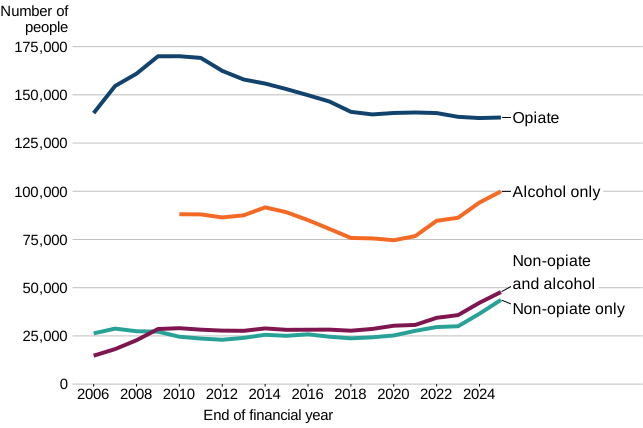
The overall number of people in treatment (329,646) increased by 6% since last year and is the highest number of people in treatment since reporting began.
The non-opiate only group saw the highest proportional rise of all the substance groups, with a 20% increase (7,151), with the non-opiate and alcohol group increasing by 13% (5,560). The non-opiate groups combined had over double the number of people in treatment in 2005 to 2006. In contrast, the opiate group only increased by 0.2% since 2023 to 2024.
The number of people in treatment who said they had a problem with alcohol only are shown from 2009 to 2010 onwards when national alcohol treatment data collection started.
You can find these trends over time on the NDTMS website using the ViewIt tool. You can choose to display either England or local authority level data, as well as split the data by substance, sex and age groups.
People leaving treatment
Figure 19: trends in people successfully completing treatment as a proportion of exits in the year between 2005 to 2006 and 2024 to 2025
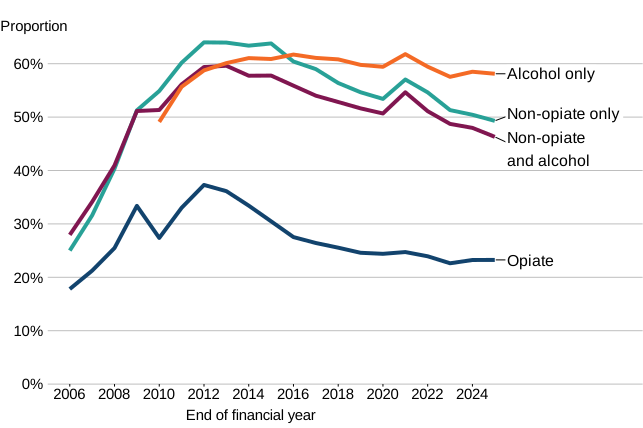
The percentage of people leaving treatment free of dependence remained stable in 2024 to 2025 at 46%. This overall proportion is comparable with the proportions in the previous years since 2015 to 2016 (50.5%). There were decreases in both the non-opiate and the alcohol only groups’ successful completion rate, and a slight increase in the opiate group, but all fluctuation was within 2 percentage points.
Trends in substance use
Figure 20: trends of people starting treatment with opiate and/or crack problems between 2005 to 2006 and 2024 to 2025
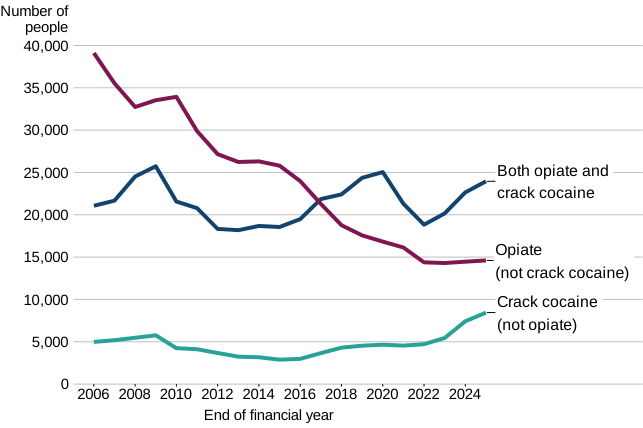
The proportion of adults entering treatment for problems with crack cocaine use remained the same as last year (19%, or 32,399 people), as did the proportion of people who are using crack with opiates (14%) and those who are using crack without opiates (5%).
The number of people starting treatment for psychoactive substances (1,126 this year) increased by 0.1 percentage points, after declining by 0.2 percentage points in 2022 to 2023.
There was an increase in the proportion of adults entering treatment in 2024 to 2025 with ketamine problems (from 2.3% in 2023 to 2024 to 3.2% this year). The number of ketamine users starting treatment (5,365) is now over 12 times higher than it was in 2014 to 2015, when the number was 426.
The number of people with methamphetamine problems also rose, reaching 968 compared to 131 in 2011 to 2012.
You can find more detailed data on the drugs people had problems with in the data tables that accompany this report.
Deaths in treatment
Figure 21: trends in deaths of people while in treatment between 2005 to 2006 and 2024 to 2025

The number of people dying while in contact with treatment services has increased from 711 deaths in 2005 to 2006 to 4,273 deaths this year, which is 2.5 times higher than in 2009 to 2010 (when NDTMS started collecting data on deaths in alcohol treatment).
The total number of people who died while in treatment in 2024 to 2025 was 4,273, or 1.3% of all adults in treatment. This is the same proportion of deaths in treatment compared to last year. The increase in 2020 to 2021 from 1.1% to 1.4% was the largest rise in the proportion of people dying in treatment since NDTMS data has been collected.
Deaths in treatment by substance
Figure 22: percentages of deaths while in treatment between 2005 to 2006 and 2024 to 2025
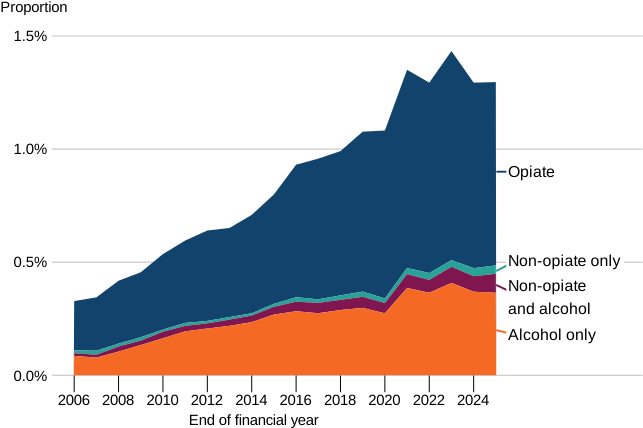
Figure 22 shows deaths as a proportion of total numbers of people in treatment, broken down by substance group. Since 2006, people in treatment for opiates have consistently made up the majority of people who die while in treatment. People in treatment for alcohol only are consistently the second largest group, with the other groups having fewer people dying while in treatment.
From 2005 to 2006 the rate of people dying while in treatment has risen from 0.33% to 1.3% this year.
A 20-year analysis
People in treatment
Figure 23: most recent status of all people in treatment between 2005 to 2006 and 2024 to 2025
| Status | People in treatment between 2005 to 2006 and 2024 to 2025 |
|---|---|
| Still in treatment 31 March 2025 | 13% |
| Left and not completed treatment | 40% |
| Completed treatment and not returned | 47% |
In the 20 years of treatment data starting from 2005 to 2006, there has been a total of 1,267,775 people in contact with drug and alcohol treatment services. By 31 March 2025:
- 165,153 (13%) were still engaged in treatment
- 507,222 (40%) had left before they completed their treatment and had not returned
- 595,400 (47%) had completed their treatment and not returned
Treatment journeys
Figure 24: number of previous journeys for people still in treatment at the end of 2024 to 2025
| Treatment journeys | People still in treatment at the end of 2024 to 2025 |
|---|---|
| More than 4 journeys since first starting treatment | 52,116 |
| 4 journeys since first starting treatment | 17,125 |
| 3 journeys since first starting treatment | 23,042 |
| 2 journeys since first starting treatment | 30,738 |
| Continuous journey | 42,132 |
Of the people still in treatment at the end of March 2025:
- around a third (32%) have had more than 4 treatment journeys
- over a quarter (26%) have been in treatment continuously since their treatment started and 60% of those started treatment in 2024 to 2025
- nearly three-quarters (71%) have been in treatment for 5 years or more
You can find more information on the methodology of this analysis in the NDTMS annual statistics quality and methodology document.
Background and policy context
Background to the data
This report presents statistics on the availability and effectiveness of alcohol and drug treatment in England and the profile of people accessing this treatment.
The statistics in this publication come from analysis of NDTMS.
NDTMS collects data from about 600 sites providing structured substance misuse interventions, covering every local authority in England. Treatment centres returning data include:
- community-based drug and alcohol services
- specialist outpatient services
- GP surgeries
- residential rehabilitation centres
- inpatient units
The data collected includes information on the demographics and personal circumstances of people receiving treatment, as well as details of the interventions delivered and their outcomes.
You can find more details on the methodology used in the report in the Quality and methodology document in the ‘Annual publications for NDTMS’ section on the NDTMS website.
Alcohol and drug treatment statistics reports for previous years can be found in the Office of Health Improvement and Disparities’ (OHID) Alcohol and drug misuse and treatment statistics collection.
OHID and the UK Health Security Agency have produced updated prevalence estimates of opiate and/or crack cocaine users in England for 2016 to 2017, 2018 to 2019 and 2019 to 2020 using a revised methodology. You can see the data tables for each year and read more about the revised methodology at Opiate and crack cocaine use: prevalence estimates 2016 to 2020.
Alcohol prevalence estimates from 2015 to 2016 up to 2019 to 2020 are available in Alcohol dependence prevalence in England.
The effect of the COVID-19 pandemic
The COVID-19 pandemic may have affected trend data in this report. In 2020 to 2021, most services had to restrict face-to-face contact, which affected the types of interventions that service users received.
Policy context
Alcohol and drug treatment in England is commissioned by local authorities using the public health grant. They are responsible for assessing local need for treatment and commissioning a range of services and interventions to meet that need.
Public health grants to local authorities: 2024 to 2025 makes it clear that:
A local authority must, in using the grant: have regard to the need to improve the take up of, and outcomes from, its drug and alcohol misuse treatment services, based on an assessment of local need and a plan which has been developed with local health and criminal justice partners.
OHID works with local authorities and provides them with bespoke data, guidance, tools and other support to help them commission services more effectively.
Guidance for alcohol and drug treatment is available in the Alcohol and drug misuse prevention and treatment guidance collection.
A wide range of NDTMS data is available on the NDTMS website, including some data reports that are only available to local authority commissioners (with a username and password).
Enquiries or feedback
If you have any enquiries or feedback about these statistics, please email evidenceapplicationteam@dhsc.gov.uk.