National Energy Efficiency Data Framework (NEED) report: Summary of analysis 2026 (accessible webpage)
Published 11 June 2026

© Crown copyright 2026
This publication is licensed under the terms of the Open Government Licence v3.0 except where otherwise stated. To view this licence, visit nationalarchives.gov.uk/doc/open-government-licence/version/3 or write to the Information Policy Team, The National Archives, Kew, London TW9 4DU, or email: psi@nationalarchives.gov.uk.
Where we have identified any third party copyright information you will need to obtain permission from the copyright holders concerned.
This publication is available at https://www.gov.uk/government/statistics/national-energy-efficiency-data-framework-need-report-summary-of-analysis-2026/national-energy-efficiency-data-framework-need-report-summary-of-analysis-2026-accessible-webpage
This report presents analysis of domestic energy consumption using the latest version of the National Energy Efficiency Data-Framework (NEED).
Key findings
- Following record falls in median gas consumption between 2021 and 2022, there was a slight rebound between 2022 and 2024 (3% in England and Wales, 2% in Scotland) but not for electricity (no change for England and Wales and down 2% for Scotland). Both gas and electricity consumption remained substantially lower than in 2021, across all property, household and area characteristics. In England and Wales, the overall reductions between 2021 and 2024 were 13% for gas and 9% for electricity. The equivalent reductions for Scotland were 13% and 12% respectively.
- Median domestic electricity and gas consumption is higher for larger properties (as measured by floor area) and increases with adult occupancy.
- Both median domestic electricity and gas consumption are lower among more energy efficient properties (as measured by the Energy Performance Certificate (EPC) rating).
- Newer properties consume less gas, including on a per square metre basis, particularly those built since 2000. Electricity consumption does not vary by age of property in the same way, except in more recent years whereby median electricity consumption in 2024 was 9% lower for properties built in England and Wales in 2023 than for those built in 2010. The equivalent reduction in new-build consumption for gas was 8%.
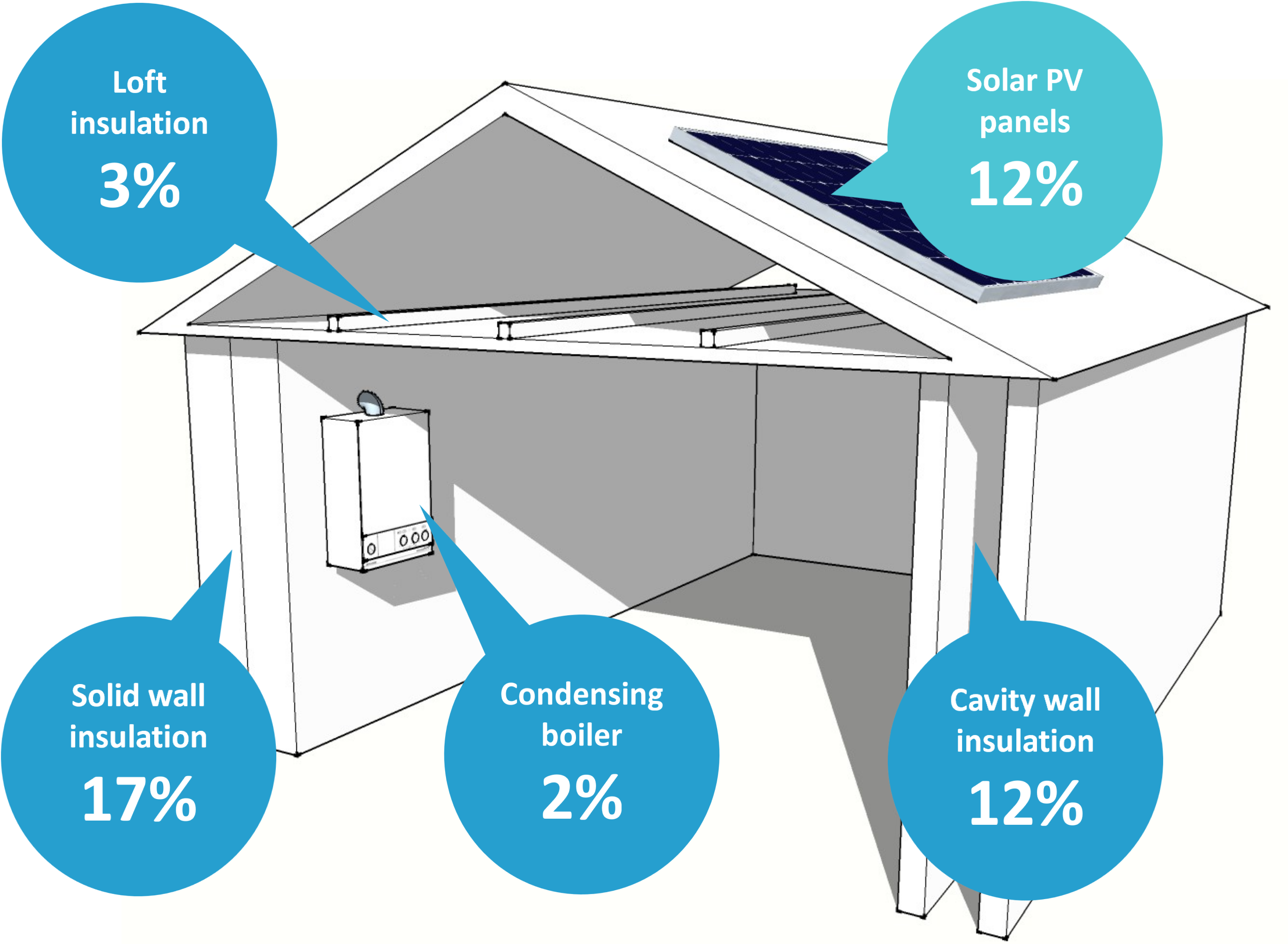
- Estimated consumption savings in 2024 from energy efficiency measures installed in 2023 in England and Wales are shown below. While the gas savings from solid and cavity wall insulation are sustained in the 5 years after installation, the savings from loft insulation and new boilers are around a tenth lower in the fifth year after installation, than in the first year.
1. Introduction
The Domestic NEED is a linked dataset which matches meter level electricity and gas consumption data to domestic properties in Great Britain. It also brings together various datasets which provide information on domestic properties and the households that live in them. Domestic NEED provides insight on how household energy consumption varies by property and household characteristics; and the consumption savings resulting from installation of energy efficiency measures. As such, it is a key part of the evidence base used within and beyond government.
Within the Department for Energy Security and Net Zero (DESNZ), these data are used to develop, monitor and evaluate energy policies for government energy efficiency schemes. Beyond government, NEED is used by a variety of stakeholders, such as academics, local authorities, and other organisations. Uses vary, but they include using NEED data to look at trends in specific areas, and supporting analysis on housing, energy efficiency and net zero.
This publication only covers domestic properties. Non-domestic consumption is analysed in the Non-Domestic NEED publication.
Summary of documents and tables in NEED 2026
This report presents key findings from the latest version of Domestic NEED. Chapter 2 presents evidence on how domestic gas and electricity consumption vary by different property and household characteristics. Chapter 3 presents estimates of the impact of the most common energy efficiency measures on household energy consumption. As well as the estimated savings in the first year after the installation of the given measure, estimates of how these savings change in subsequent years are also provided.
Published alongside this report are the following tables and documents:
- Consumption data tables – gas and electricity consumption estimates for different property attributes and household characteristics.
- Impact of measures data tables – estimated consumption savings arising from installation of different energy efficiency measures.
- Annex A: What is Domestic NEED? – an introductory overview of the NEED framework.
- Annex B: Overview of data tables – a list of all the published tables and their contents.
- Annex C: Comparisons with other Sources – a summary of comparisons of NEED outputs with other data sources for quality assurance purposes.
- Annex D: Methodology Note – details of how the estimates of domestic electricity and gas consumption by property attributes and household characteristics are produced. It also sets out how the estimates of the impact of energy efficiency measures are derived.
What you need to know about these statistics
Consumption estimates: Properties and coverage
Properties included in the consumption estimates
These statistics represent gross household gas and electricity consumption from the grid. They do not take into account any electricity generated on-site at a domestic property (for example, from solar panels) or any electricity it exports to the grid.
Only houses and flats are included. Other types of domestic property, such as caravans and house boats, are excluded.
The statistics on household gas consumption represent gas consuming properties. Only households (to which gas meters could be matched) with a recorded annual gas consumption in the range of 100 to 50,000 kWh (kilowatt hours) have been included. For electricity, only households (to which electricity meters could be matched) with a recorded annual electricity consumption in the range of 100 to 25,000 kWh are included.
Geographic coverage of the consumption estimates
The consumption estimates for England and Wales are based on England alone for the years 2005 – 2010, Wales is included in all subsequent years. Consumption estimates for Scotland are available for the years 2011 onwards.
Electricity and gas consumption data
Consumption years and weather correction
For gas, from 2018 onwards the consumption year covers the period mid-May to mid-May, for example 2024 covers mid-May 2024 to mid-May 2025. Prior to 2018 the period associated with gas years varies (see Annex D: Methodology Note). For electricity, the consumption years cover the period February to January (for example 2024 covers February 2024 to January 2025).
As gas is predominantly a heating fuel, its use depends heavily on the weather. Because of this, gas consumption for each household has been adjusted for differences in temperature and wind speed in each year (‘weather correction’). This allows for a like-for-like comparison of gas consumption over time. As electricity is used less often as a heating fuel, electricity consumption is less affected by the weather, so this data has not been weather corrected.
Breaks in gas time series
The summer of 2017 saw the implementation of new gas meter point management and settlement processes, which changed the period of gas consumption covered by the 2016 data and the way that this was collected. Due to this, a large proportion of meters which had not reported for some time had their annual consumption figures updated in the 2017 gas consumption figures.
This large update led to an increase in the total gas consumption reported in 2017. With the majority of gas meters now providing timely meter readings, the figures from 2017 onwards are a more accurate reflection of gas consumption. Further details are contained in Annex D: Methodology Note.
2. Domestic energy consumption
This chapter presents a summary of how domestic gas and electricity consumption vary by property and household characteristics, showing trends in median gas and electricity consumption between 2005 and 2024. No attempt is made to control for relationships between characteristics, or for characteristics not captured in the Domestic NEED dataset.
The analysis presented in this chapter is based on median gas and electricity consumption. This is generally a better indicator of typical consumption than the mean, as the mean can be influenced by a relatively small number of high-consuming households that are not representative of the population as a whole.
NEED and Subnational Consumption estimates
The Domestic NEED consumption statistics differ from those published in the Subnational electricity and gas consumption report as summarised below[footnote 1].
| Subnational Consumption | Domestic NEED Consumption |
|---|---|
| Primarily seeks to provide geographical breakdowns of total gas and electricity consumption, broken down by domestic and non-domestic meters. | Primarily seeks to provide analysis on typical domestic consumption, broken down by property and household characteristics. |
| The summary report focuses on mean statistics, as these aggregate transparently across subnational geographies. | The summary report focuses on median statistics, as these are more relevant to typical consumption patterns. |
| Based on all meters (aside from a few non-domestic gas meters which are disclosive) which are classified as domestic or non-domestic based on meter profile and consumption. | Based on domestic properties to which electricity and gas meters could be matched. The HM Revenue & Customs (HMRC) Council Tax Database is used as the population of all domestic properties in England and Wales, while Ordnance Survey’s AddressBase data is used for Scotland. |
| Consumption is provided for Great Britain as a whole and for a range of geographies from countries/regions down to postcodes. | The dataset used for the population and characteristics of all domestic properties differs between England and Wales (HMRC) and Scotland (AddressBase and Experian). The categories used differ between these datasets which is why separate analysis is provided for England and Wales, and Scotland. |
Domestic energy consumption in England and Wales
In 2024, median domestic gas consumption in England and Wales was 10,000 kWh and the median domestic electricity consumption was 2,500 kWh. There were decreases in both median gas and electricity consumption between 2023 and 2024 (1 and 3% respectively).
Table 2.1: Annual domestic gas and electricity consumption summary, England and Wales, 2024
All consumption values are in kWh and are rounded to the nearest 100 kWh
| Properties (millions) | Mean | Standard Deviation | Lower Quartile | Median | Upper Quartile | |
|---|---|---|---|---|---|---|
| Gas | 18.9 | 11,200 | 6,800 | 6,500 | 10,000 | 14,400 |
| Electricity | 23.5 | 3,300 | 2,800 | 1,600 | 2,500 | 4,100 |
Figure 2.1 shows median domestic gas and electricity consumption in England and Wales (the years 2005 to 2010 cover England only) over time. Following the record (since 2005) year on year falls in median gas and electricity consumption between 2021 and 2022 (likely related to elevated retail energy prices as well as the generally higher cost of living), there was a slight rebound for gas between 2022 and 2024, while electricity consumption remained flat.
In 2024, median consumption remained substantially lower than in 2021 by 13% for gas and 9% for electricity. There were similar reductions in median gas and electricity consumption across all property, household and area characteristics.
Figure 2.1: Trends in median annual domestic gas and electricity consumption, England and Wales, 2005 to 2024.
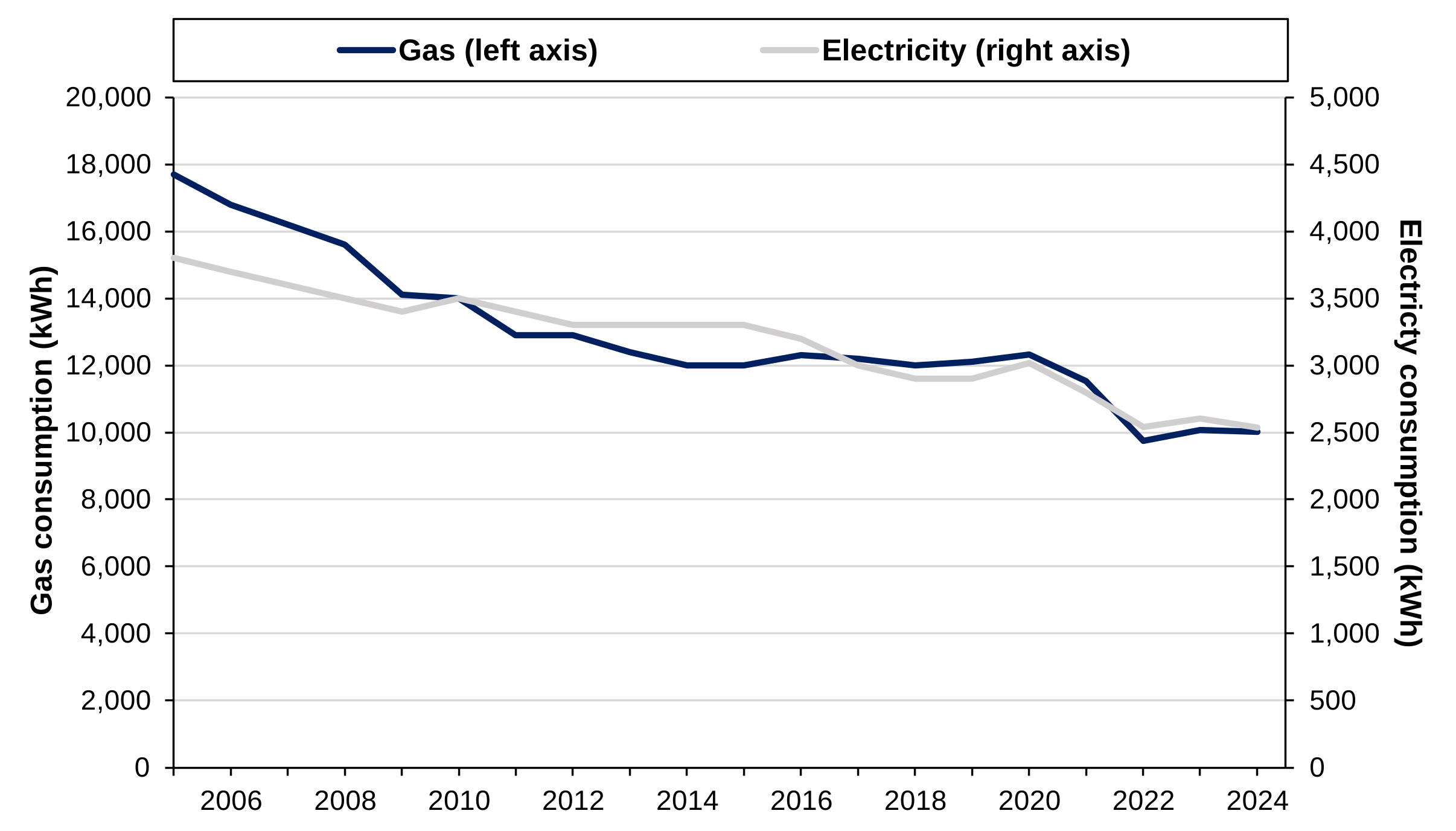
Over the longer term, median gas consumption was 43% lower in 2024 than in 2005. Median electricity consumption decreased by 33% over the same period. There has been an overall reduction in median gas and electricity consumption since 2005 across all property, household and area characteristics.
Domestic consumption by floor area and adult occupancy
Floor area data
Data on floor area (for England and Wales) are taken from (HMRC)[footnote 2] Council Tax Database. While for houses[footnote 3] the floor area includes the entire floor area for the house (Reduced Cover Area), the floor area for flats only includes the Effective Floor Area, which excludes bathrooms, WCs, showers and lobby areas. Therefore, in this report, any comparisons made of average gas consumption on a per square metre of floor area basis exclude flats.
Figure 2.2 shows that consumption increases with property floor area. Floor area impacts gas consumption more strongly than electricity consumption because gas is mostly used for space heating and space heating demands are higher for larger properties. Figure 2.2 also shows that both gas and electricity consumption increase with adult occupancy[footnote 4].
Figure 2.2: Median annual domestic gas and electricity consumption in 2024, by floor area and adult occupancy, England and Wales.
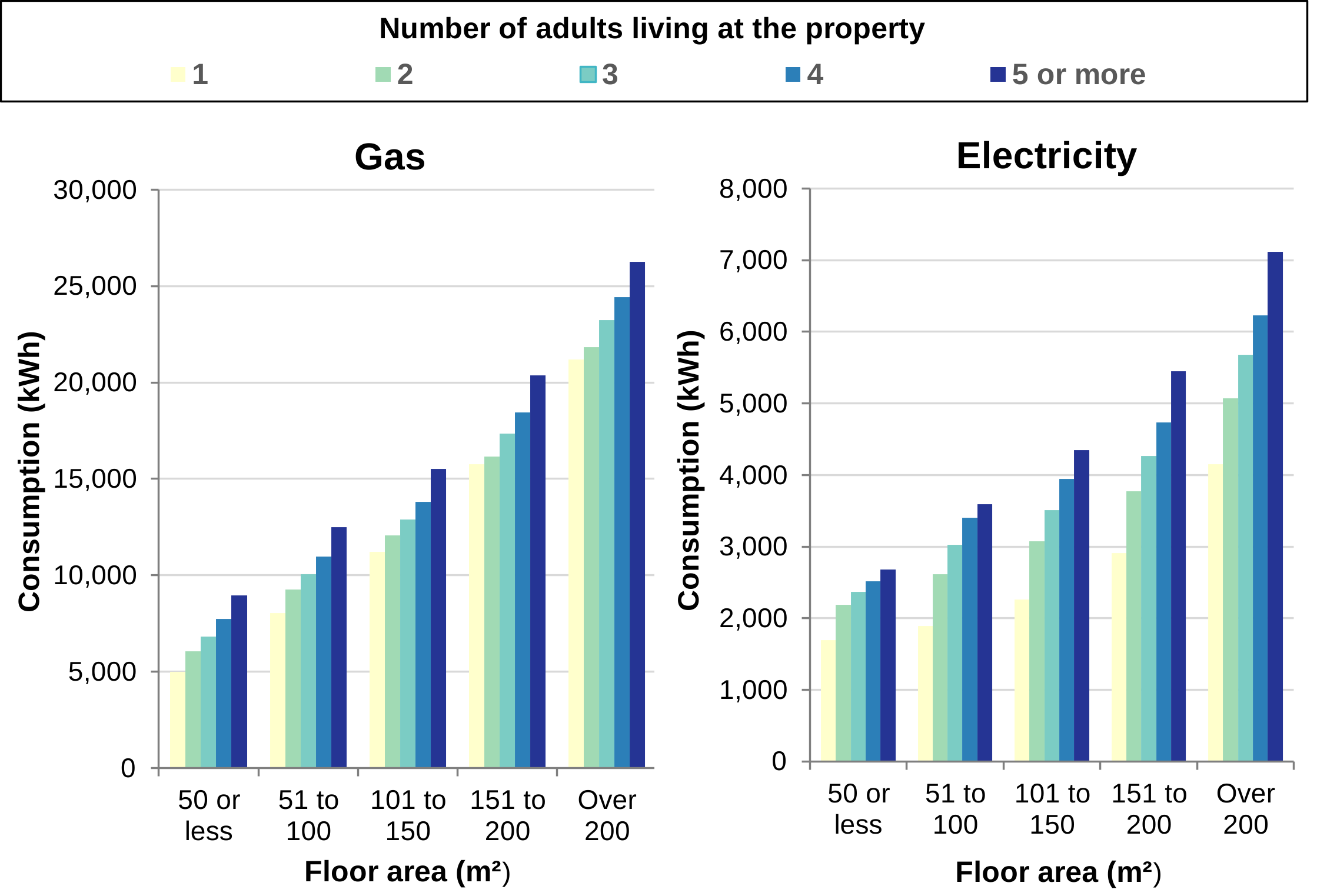
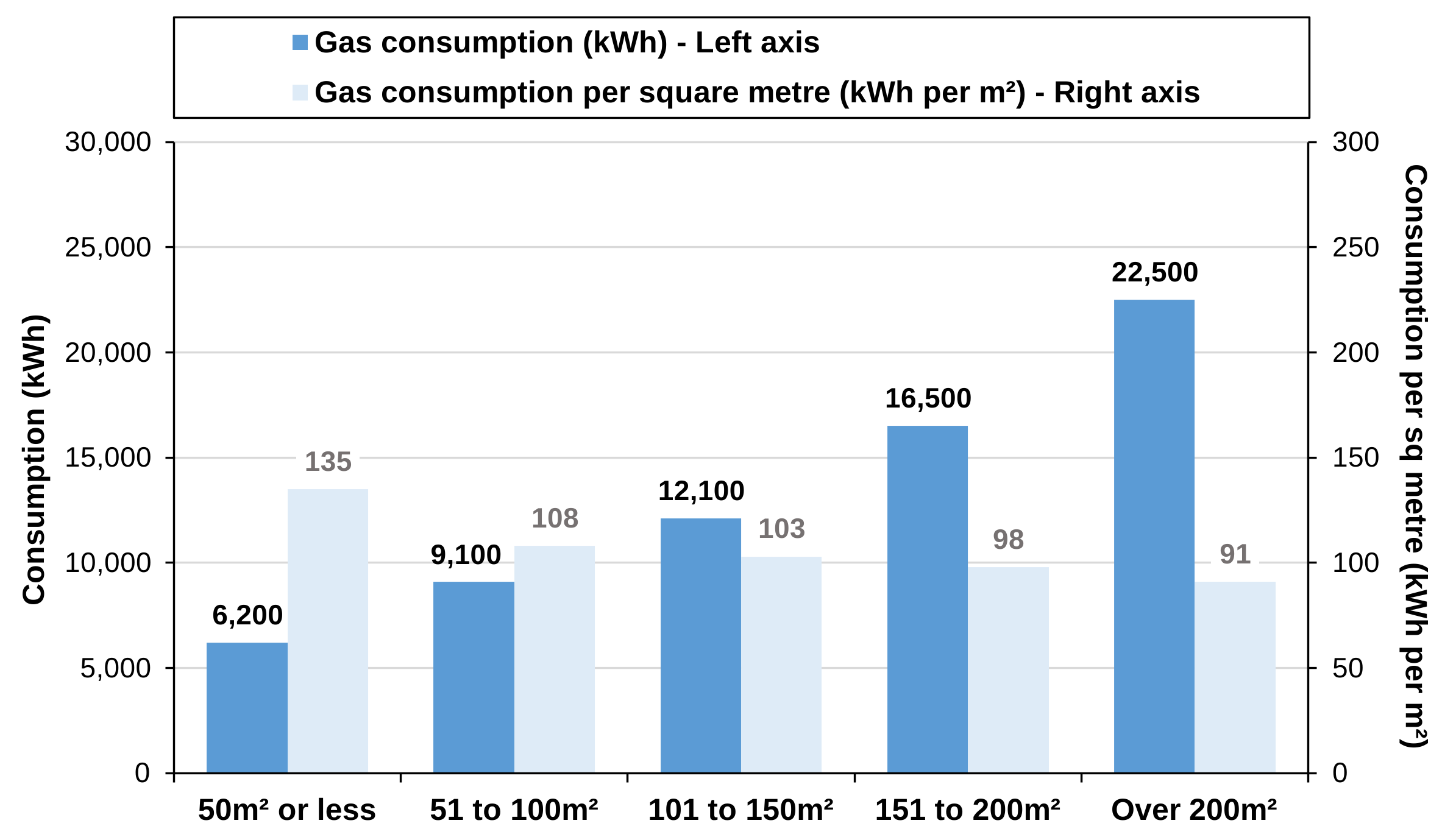
Figure 2.3 shows Median gas consumption and Median gas consumption per square metre for houses by floor area band (flats are excluded here for reasons discussed in ‘Floor area data’ above). Among the very smallest properties (those with floor areas of 50m2 or less) there is a higher median gas consumption per square metre. This is likely, in part, to be reflecting the non-heating uses of domestic gas, such as cooking and hot water, which may not increase in proportion to the size of the property.
However, the vast majority (around 90%) of gas-consuming houses are in the ‘51 to 100 m2’ or ‘100 to 150 m2’ bands, both of which have a similar median consumption of around 105 kWh per m2 in 2024.
Figure 2.3: Median annual domestic gas consumption in 2024, per property and per square metre, by floor area, for houses in England and Wales.
Domestic consumption by Energy Performance Certificate (EPC) Rating
EPC ratings provide an assessment of the intrinsic energy efficiency of a property (based on the physical characteristics of the property). EPC ratings range from A to G, where A represents the most efficient properties and G represents the least efficient. As properties do not require a new EPC rating if they have already had an EPC assessment carried out less than 10 years ago, EPC ratings may not provide an up-to-date picture of the current energy efficiency of each property.
It is also worth noting around a third of domestic properties in England and Wales do not have an EPC rating, such as owner-occupied properties which have not been sold since EPC ratings came into use, and such properties are not included here.
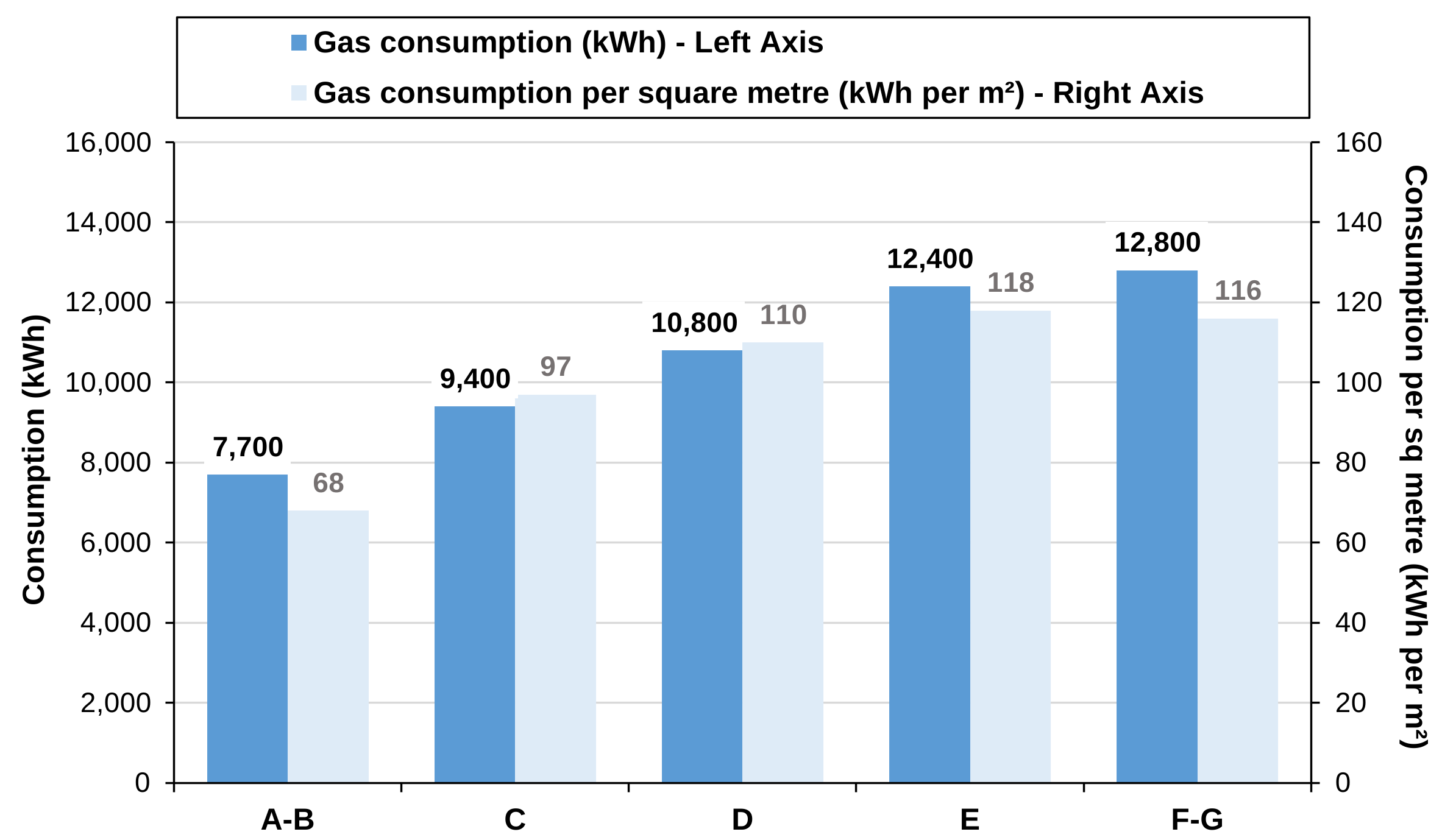
Figure 2.4 shows Median gas consumption and Median gas consumption per square metre by EPC rating for houses. This illustrates that more energy efficient houses (as measured by the EPC rating) tend to have lower gas consumption, even after adjusting for the floor area of the property.
Figure 2.4: Median annual domestic gas consumption in 2024, per property and per square metre, by EPC Rating, for houses in England and Wales.
Domestic consumption by property age
In general, newer properties tend to have lower gas consumption (see Figure 2.5), as they tend to have higher quality insulation, with building regulations becoming more rigorous over time. Among gas consuming properties with an Energy Performance Certificate, around a quarter of those built before 1945 have the highest EPC ratings A to C, compared to around 95% among properties built from 2000 onwards. The trend of newer properties having lower consumption persists when adjusting for the floor area of houses.
Figure 2.5: Median annual domestic gas consumption in 2024, per property and per square metre, by year of property build, for houses in England and Wales.
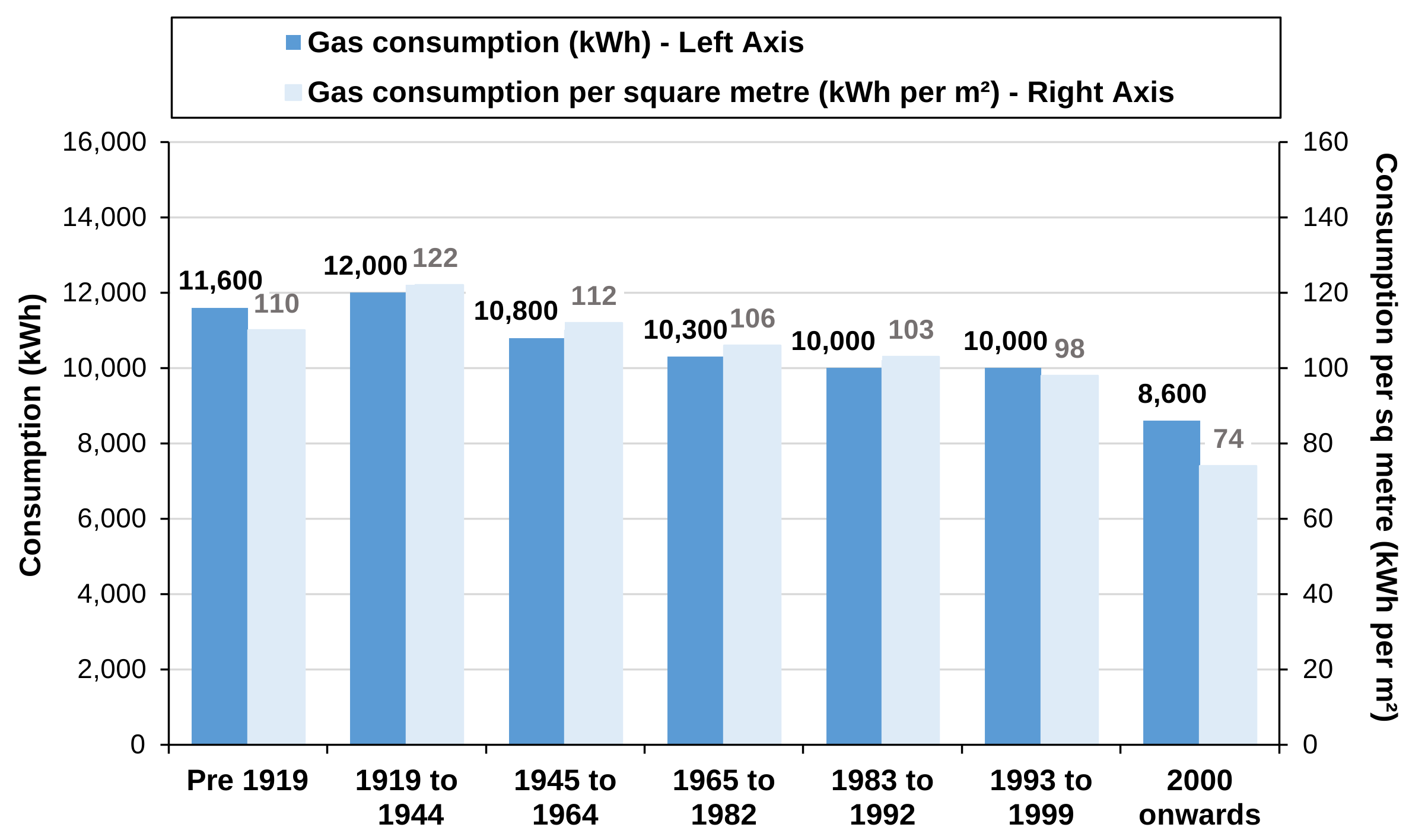
Figure 2.6 shows a trend of reducing gas consumption for all properties since 2005, across all property ages, with newer properties consistently consuming less gas than older properties. For electricity (see figure 2.7) we see the same overall trend of reducing consumption over time, but consumption does not seem to differ systematically by property age. This is likely to be because electricity is only used for space heating in a minority of properties; in England, 8% of dwellings[footnote 5] in 2023 used electricity as their main fuel type.
Figure 2.6: Median annual domestic gas consumption over time, by year of property build, England and Wales, 2005 to 2024.
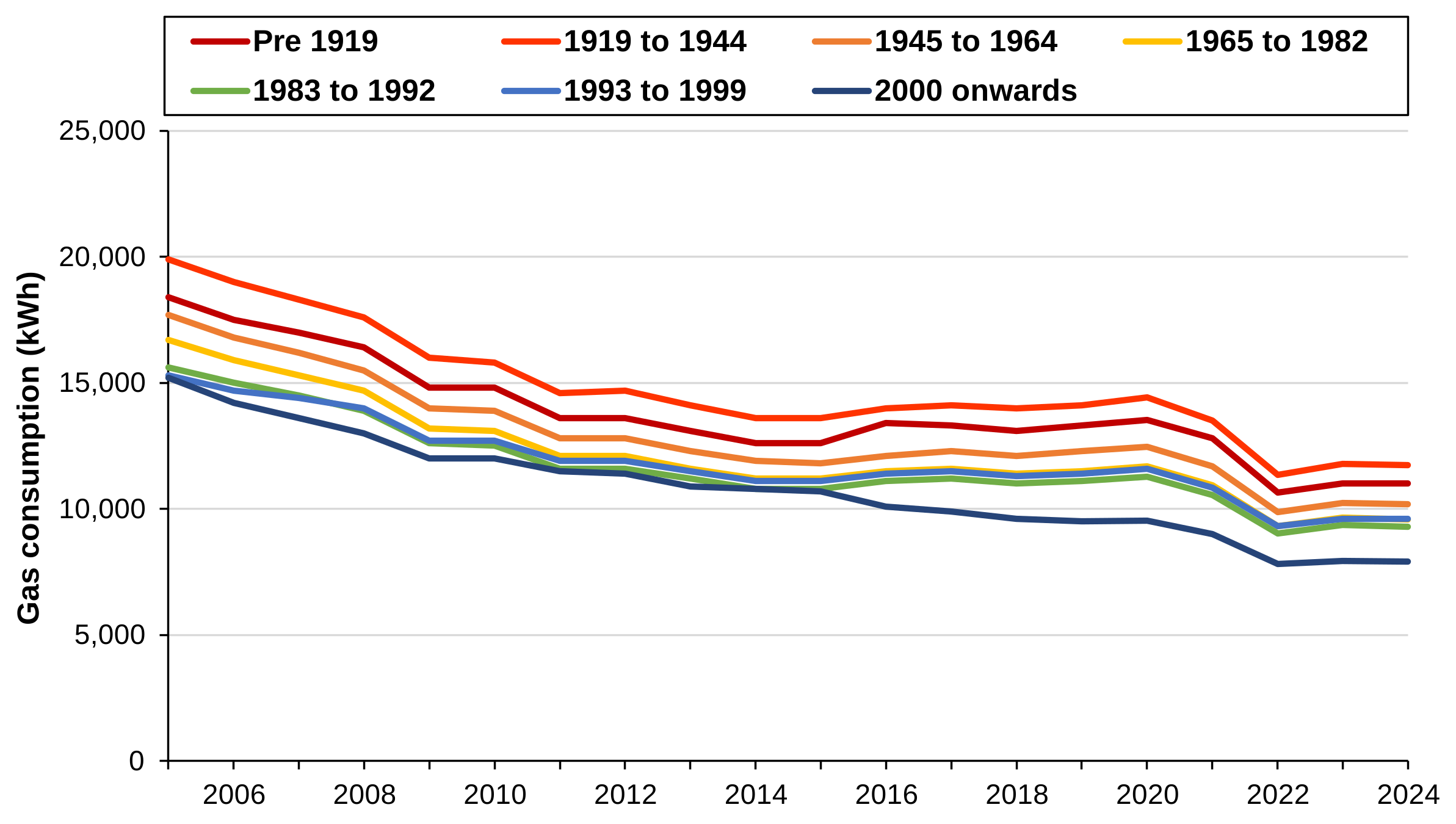
Figure 2.7: Median annual domestic electricity consumption over time by year of property build, England and Wales, 2005 to 2024.
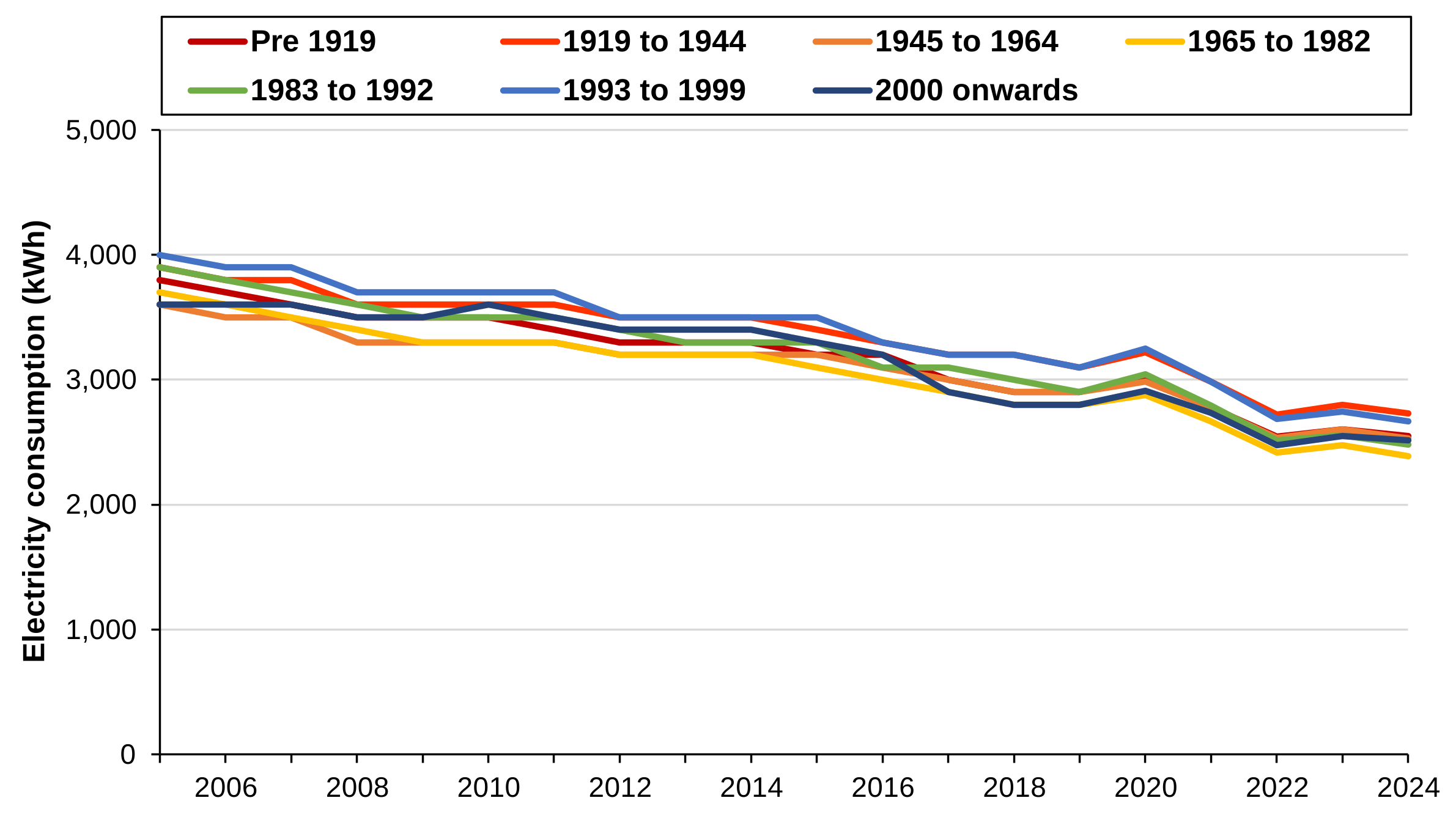
While in general, median electricity consumption has not varied systematically with property age (see figure 2.7), there is some evidence of reducing electricity consumption with successive waves of new builds in more recent years. Figure 2.8 shows 2024 consumption for properties built between 2010 and 2023, by the year the property was built. Properties built in 2023 have a median electricity consumption 9%lower than those built in 2010.
For gas, the overall trend of consumption decreasing with successive waves of new builds appears to be continuing in recent years with gas-consuming properties built in 2023 having a median gas consumption 8% lower than those built in 2010.
Figure 2.8: Median annual domestic gas and electricity consumption in 2024 by the year that the property was built, for properties built since 2010, England and Wales.
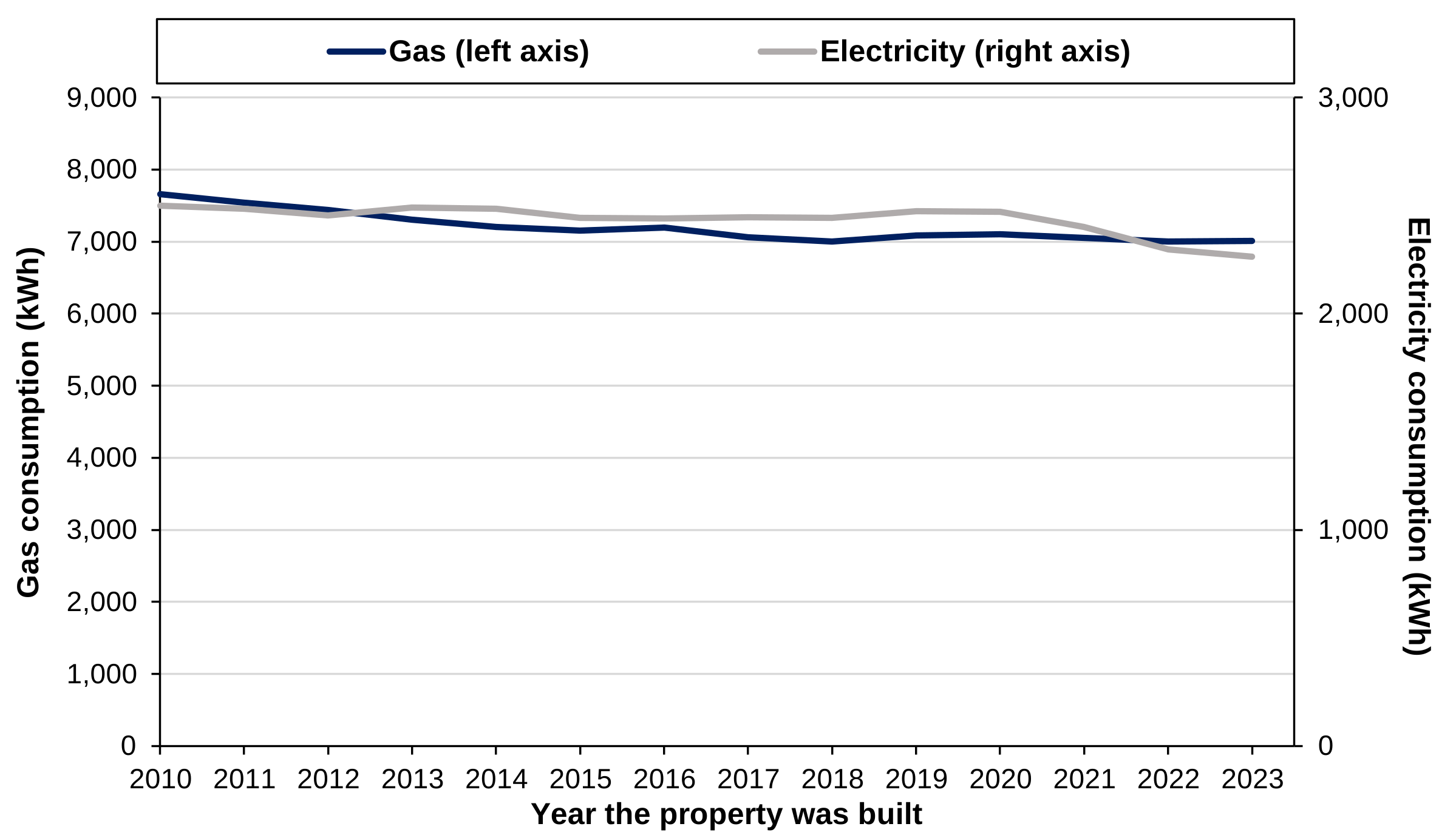
For houses, median gas and electricity consumption (in 2024) was lower (16 and 18% respectively) in properties built in 2023 than those built in 2010. While for flats, median gas and electricity consumption was higher (1 and 7% respectively) in properties built in 2023 compared to those built in 2010.
Domestic consumption by property type
Figure 2.9: Median annual domestic gas consumption over time by property type, England and Wales, 2005 to 2024.
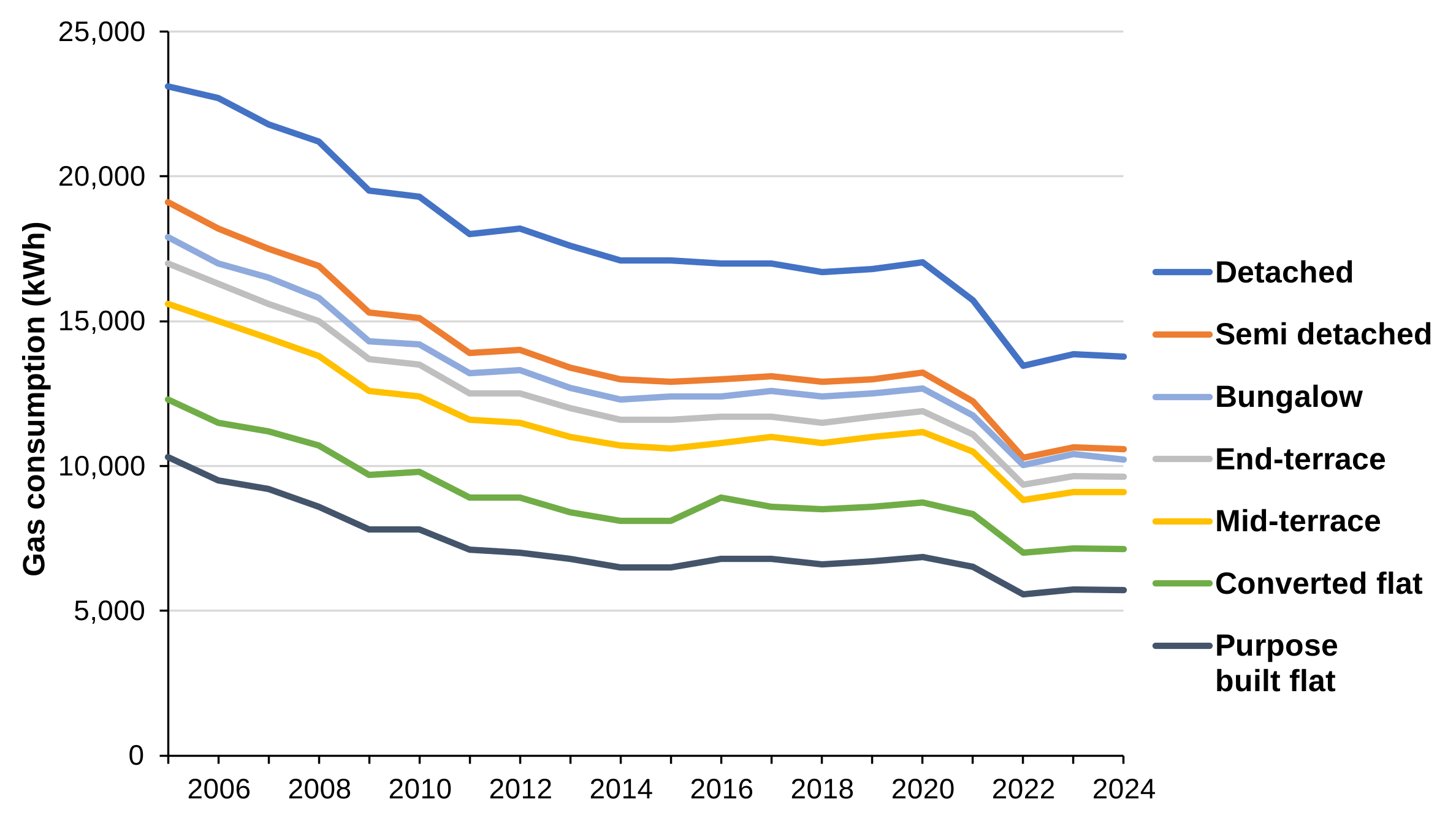
Figure 2.10: Median annual domestic electricity consumption over time by property type, England and Wales, 2005 to 2024.
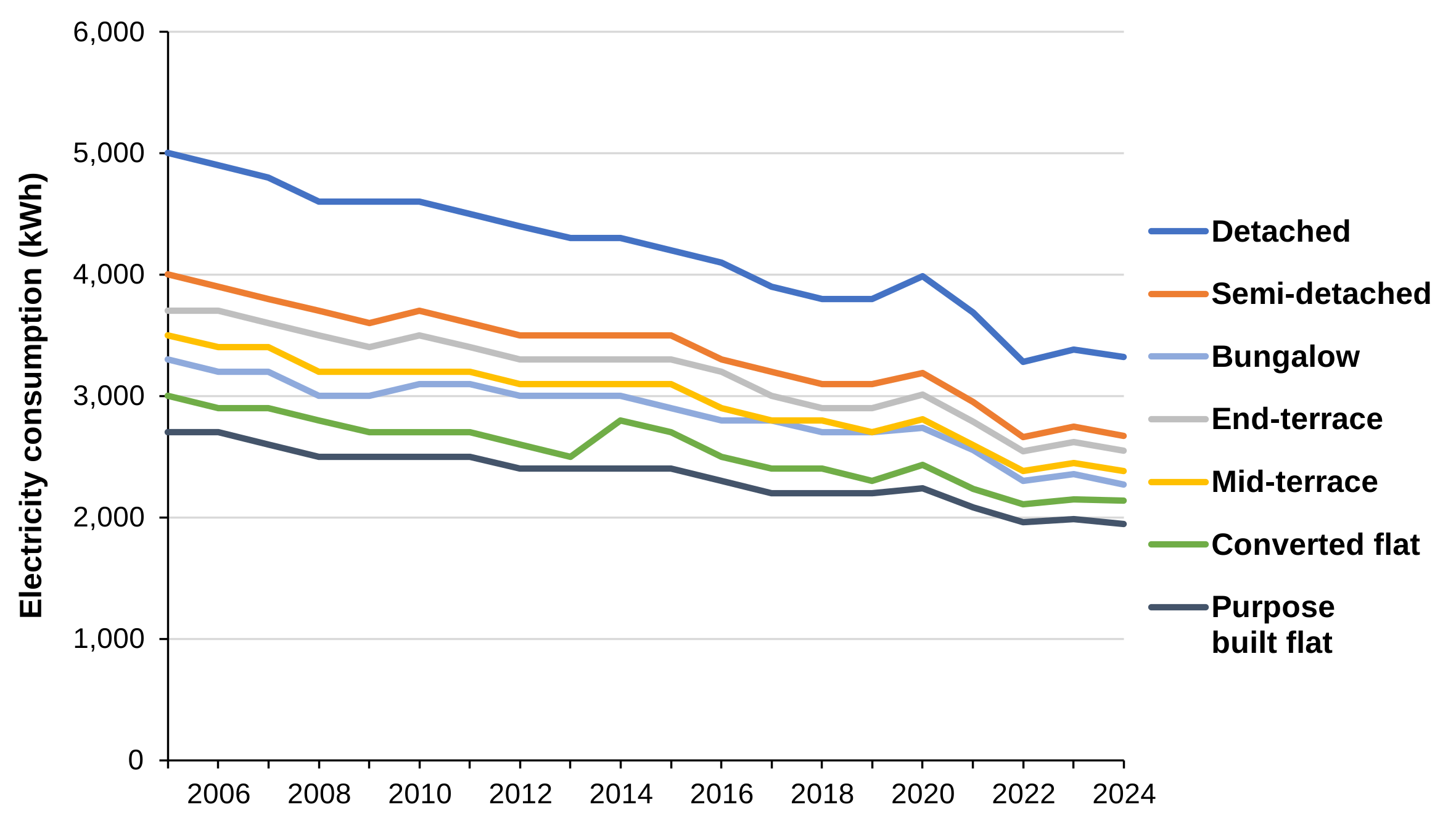
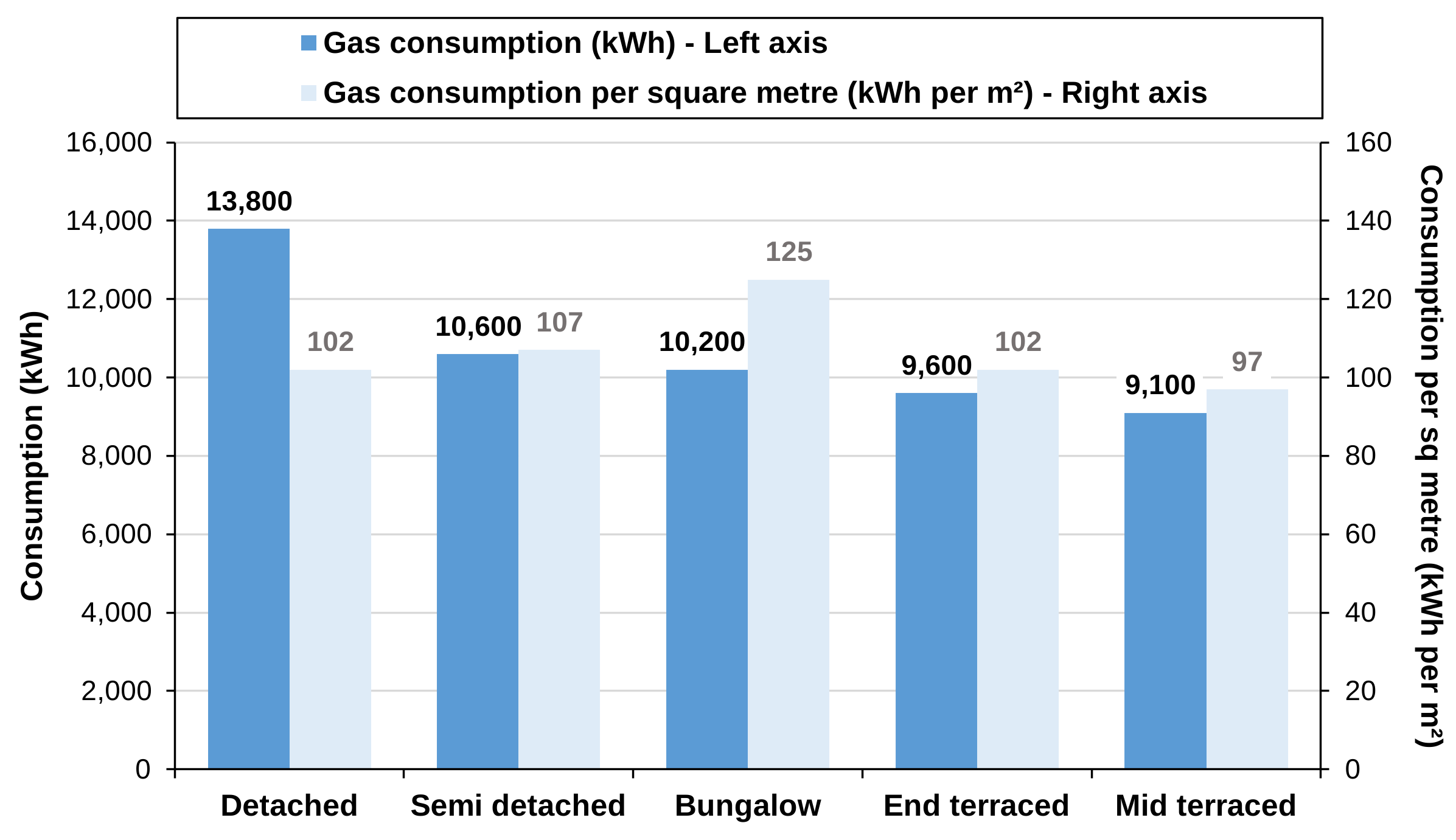
Figure 2.11: Median annual domestic gas consumption in 2024, per property and per square metre, by property type, for houses in England and Wales.
There are similar trends of reducing median gas and electricity consumption across all property types (see figures 2.9 and 2.10). In 2024, median gas consumption was 43% lower than in 2005, and median electricity consumption was 33% lower, with similar reductions seen across all property types.
Figure 2.11 shows median gas consumption per property and per square metre by property type (excluding flats). Key things to note are:
- Detached houses have the highest gas and electricity consumption of all property types as they tend to be larger than other houses, but on a per square metre basis they have a similar gas consumption to other types of houses (with the exception of bungalows).
- Bungalows have a notably higher gas consumption per square metre than other types of houses. This suggests that bungalows are the least energy efficient type of house. This assessment is corroborated by EPC data, where available, which shows a lower proportion of bungalows having the highest EPC ratings (A-C) than any other type of property (including flats). Around a third of EPC rated bungalows have EPC ratings A-C compared to almost half for all other types of houses.
With flats generally being the smallest properties, they tend to have the lowest gas and electricity consumption.
Domestic consumption by household income
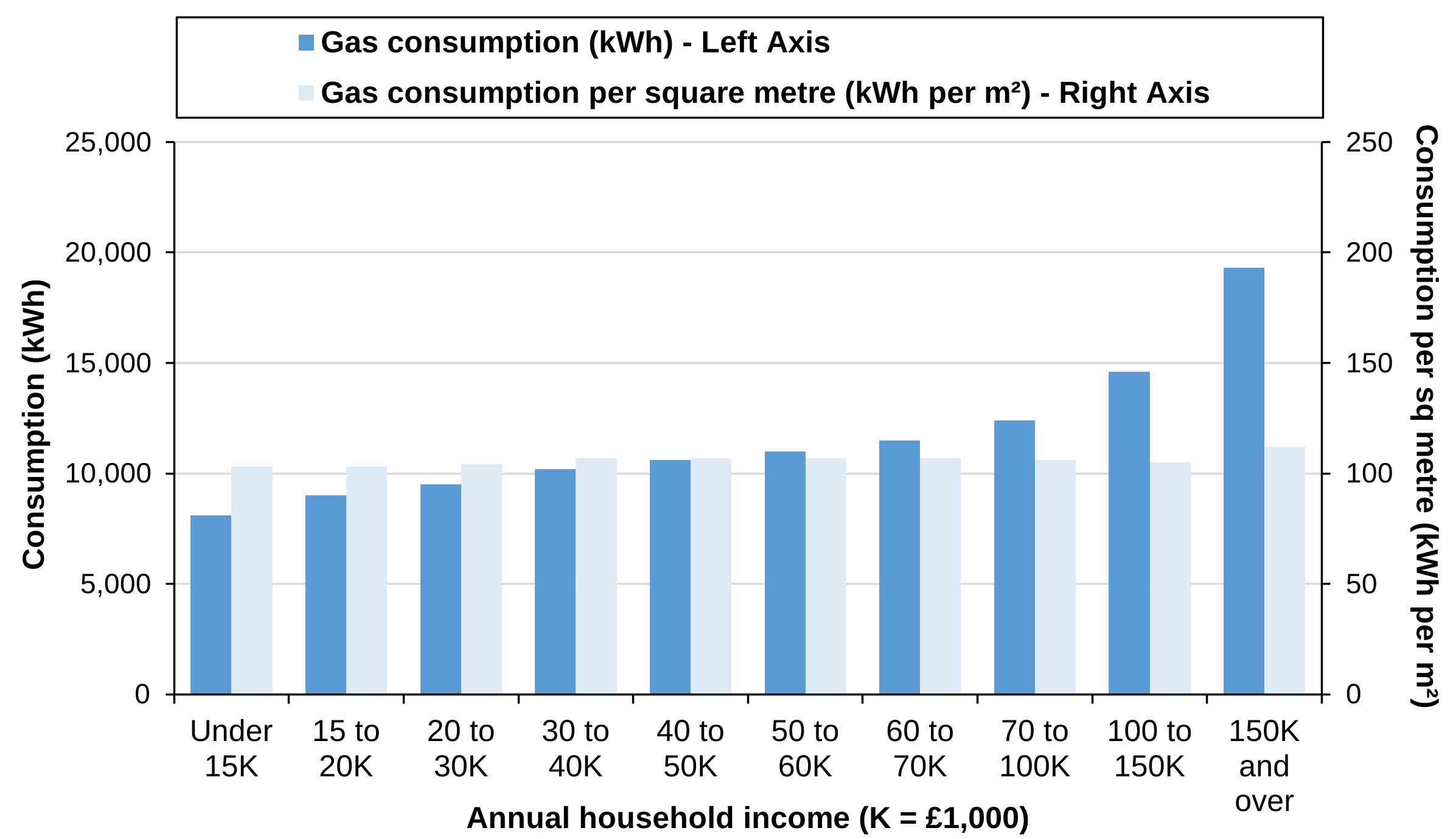
Median domestic gas consumption increases with household income[footnote 6]. Figure 2.12 shows Median gas consumption and Median gas consumption per square metre by household income (excluding flats) in 2024. Although households with greater incomes tend to consume more gas overall, on a per square metre basis households across all income bands consume a similar amount of gas (just over 100 kWh per m2). So, the higher consumption for households with greater earnings can mostly be attributed to the larger size of the properties that they live in. A similar pattern is seen when comparing median gas consumption across different Index of Multiple Deprivation quintiles.
Figure 2.12: Median annual domestic gas consumption in 2024, per property and per square metre, by annual household income, for houses in England and Wales.
Domestic consumption by tenure
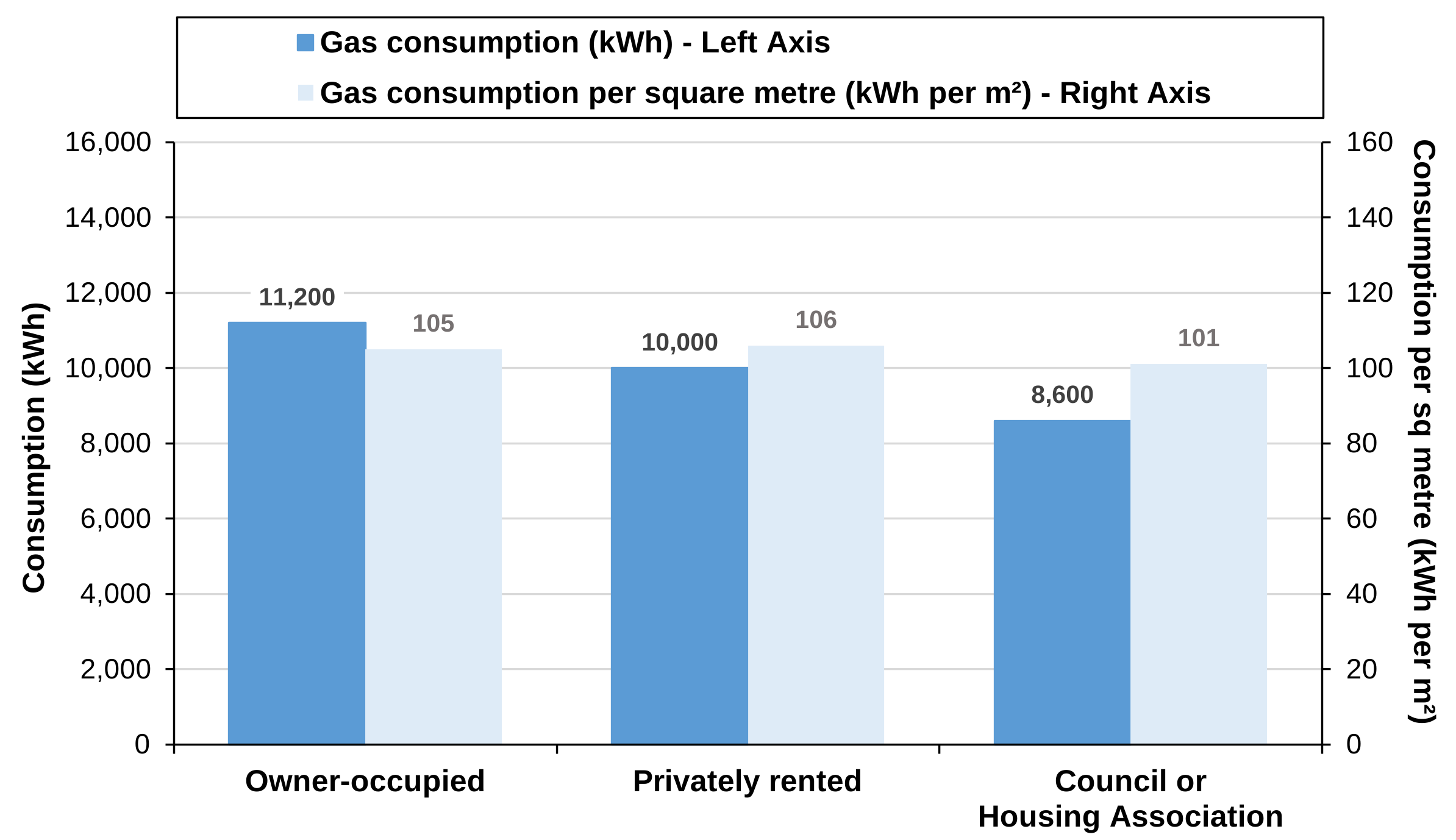
Figure 2.13 shows Median gas consumption and Median gas consumption per square metre by tenure[footnote 7] (excluding flats). While there are differences in overall consumption by tenure, on a per square metre basis households across all tenure types consume a similar amount of gas. This means that the differences by tenure can largely be explained by the differences in property size.
Below the broad impact of property size, we see that Council or Housing Association houses have a slightly lower gas consumption per square metre than houses in other tenure types. Looking at the EPC ratings of Council or Housing Association houses, around two-thirds have the highest EPC ratings A-C, compared to around 40% of houses in other tenure types.
Figure 2.13: Median annual domestic gas consumption in 2024, per property and per square metre, by tenure, for houses in England and Wales.
Domestic energy consumption in Scotland
In 2024, the median domestic gas consumption in Scotland was 10,600 kWh and the median domestic electricity consumption was 2,400 kWh. There were decreases in both median gas and electricity consumption between 2023 and 2024 (1 and 2% respectively).
Table 2.2: Annual domestic gas and electricity consumption summary, Scotland, 2024.
All consumption values are in kWh and are rounded to the nearest 100 kWh
| Properties (millions) | Mean | Standard Deviation | Lower Quartile | Median | Upper Quartile | |
|---|---|---|---|---|---|---|
| Gas | 1.7 | 11,800 | 7,200 | 6,900 | 10,600 | 15,200 |
| Electricity | 2.3 | 3,300 | 2,900 | 1,500 | 2,400 | 3,900 |
Figure 2.14 shows median domestic gas and electricity consumption in Scotland over time. Following the record (since 2011) year on year falls in median gas and electricity consumption between 2021 and 2022 (likely related to elevated retail energy prices as well as the generally higher cost of living), there was a slight rebound for gas (a 2% increase) but no rebound for electricity consumption (a 2% decrease), between 2022 and 2024.
Figure 2.14: Trends in median annual domestic gas and electricity consumption, Scotland, 2011 to 2024.
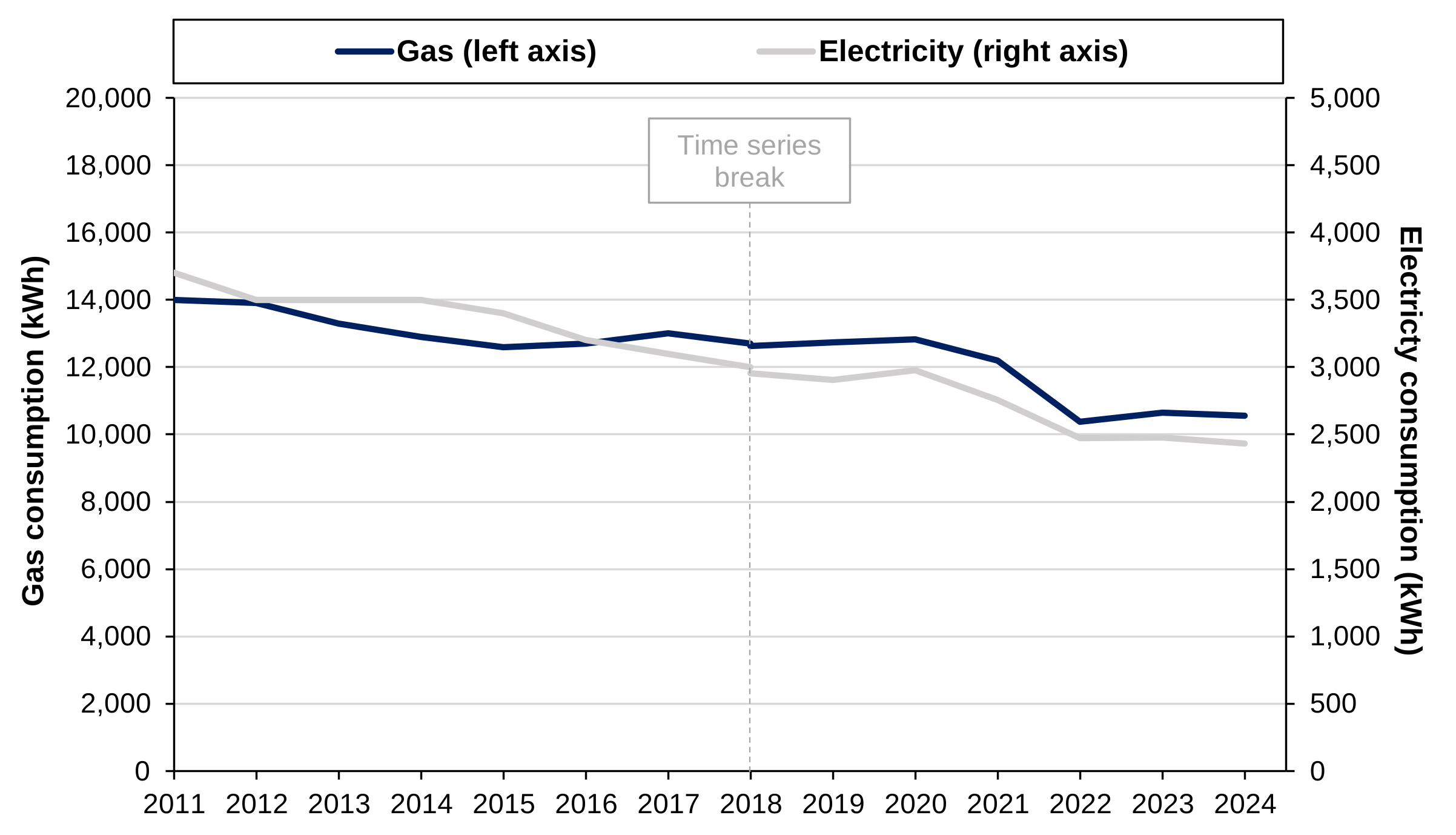
Over the longer term, median gas consumption was 25% lower in 2024 than in 2011. Median electricity consumption decreased by 34% over the same period. There has been a reduction in median consumption since 2011 across the various property, household and area characteristics for which breakdowns are provided for Scotland.
Figure 2.15: Median annual gas consumption over time by property type, Scotland, 2011 to 2024.
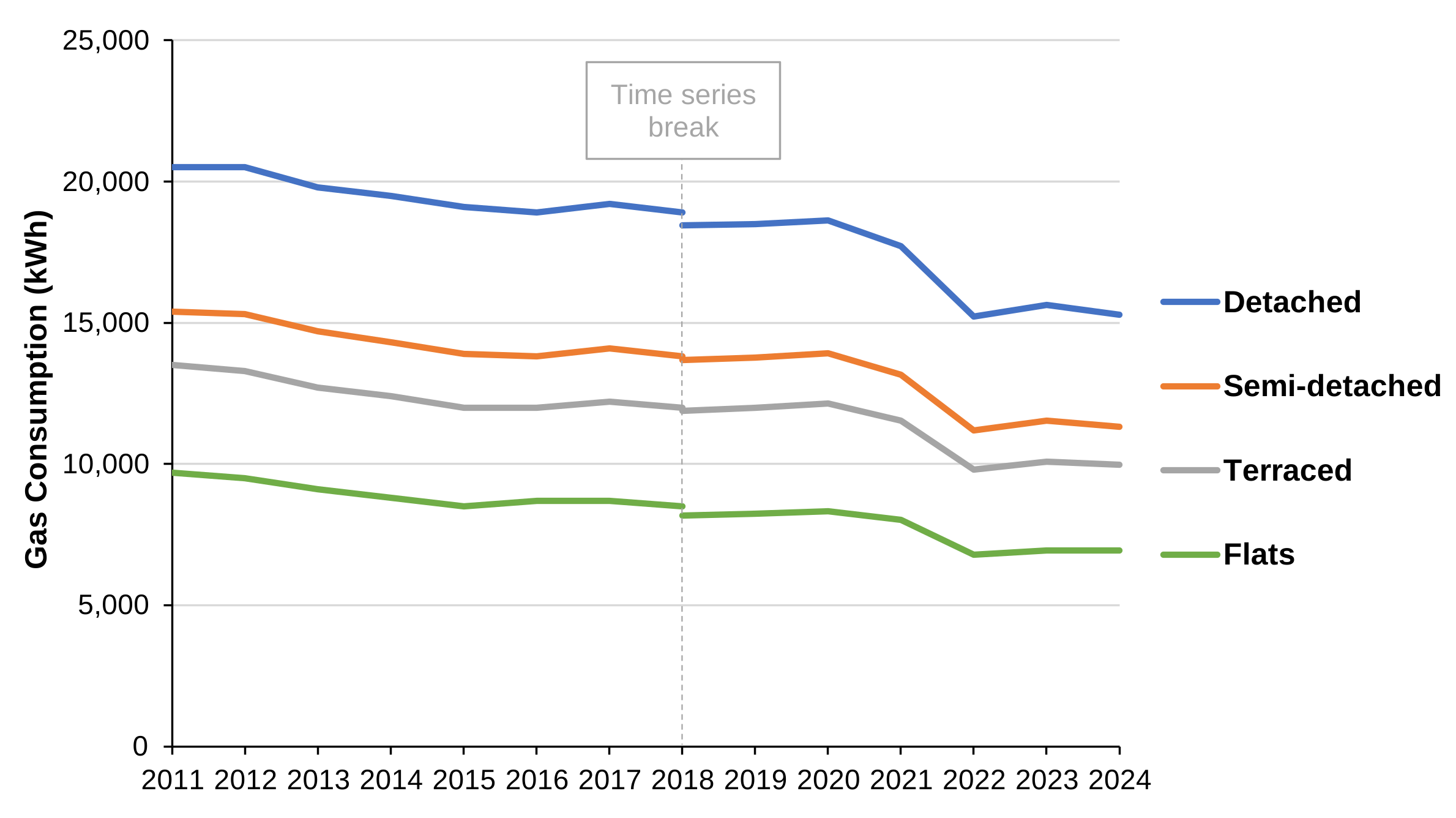
Figure 2.16: Median annual electricity consumption over time by property type, Scotland, 2011 to 2024.
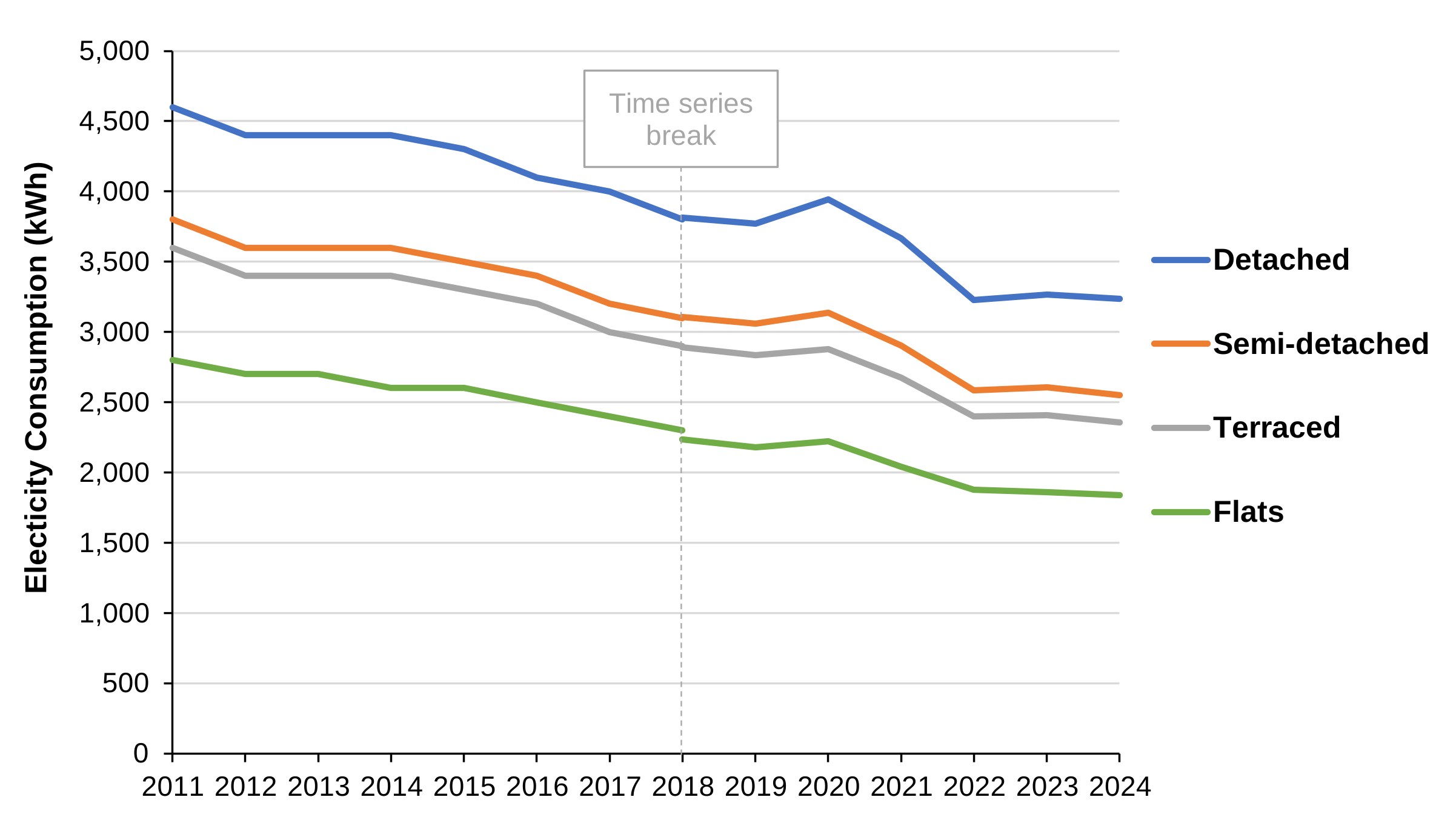
In Scotland there are similar trends in median gas and electricity consumption across property types as England and Wales. Flats, which tend to be the smallest, have the lowest median consumption, while detached houses, which are typically the largest, have the highest median consumption.
Domestic consumption in new builds
There appears to be a reduction in electricity consumption between successive waves of new builds in Scotland in recent years. Figure 2.17 shows 2024 consumption for properties built between 2015 and 2023, by the year the property was built. Median electricity consumption in 2024 was 20% lower in properties built in 2023 compared to those built in 2015.
By contrast, gas consumption appears to be relatively stable with successive waves of new builds with gas-consuming properties built in 2023 using 2% more gas can those built in 2015.
Figure 2.17: Median annual domestic gas and electricity consumption in 2024 by the year that the property was built, for properties built since 2015, Scotland.

For houses, median electricity consumption (in 2024) was 21% lower in properties built in 2023 than in those built in 2015, while for flats, median consumption was 2% higher. The reduction for houses can partly be explained by an increasing proportion of new houses in Scotland being built with Solar PV (around 10% in 2015, rising to around 80% in 2023[footnote 8].
3. Impact of energy efficiency measures
This chapter presents estimates of the impact of installing energy efficiency measures[footnote 9] on gas consumption for properties in England and Wales, and separately for Scotland.
The analysis compares:
- gas consumption changes in properties which had energy efficiency measures installed (the intervention group), before and after the measure was installed with;
- the change in consumption over the same period for similar properties which have not had any measure installed the year before, the year after or during the year of installation (the comparator group)
This method is also applied to solar photovoltaics (PV), with corresponding comparisons of electricity consumption. For more details on how the impact of energy efficiency measures estimates are derived, please see Annex D: Methodology Note.
Note that this analysis mainly makes use of data on measures installed under government schemes, with the Energy Company Obligation (ECO) scheme accounting for around 80% of such measures installed during the period mid-May 2023 to mid-May 2024, which is the time period that the latest NEED impact of measures estimates refer to. A full list of government schemes included in NEED analysis can be found in Annex A: What is Domestic NEED?. Besides data on measures installed under government schemes the other sources of data used are the Gas Safe Register (which provides data on all boiler installations in England and Wales, but not all installations in Scotland) and the MCS Accreditation data (used for solar PV installations).
The headline estimates refer to energy savings in 2024 from energy efficiency measures installed in 2023. The key energy efficiency measures included in this analysis are:
- condensing boiler (gas savings)
- solid wall insulation (gas savings)
- cavity wall insulation (gas savings)
- loft insulation (gas savings)
- solar PV (electricity savings)
Not all properties where a measure has been installed are included in the analysis. The properties excluded are:
- flats, due to issues with matching these meters to properties. This is because including flats with the wrong meter point readings matched to them may result in inaccurate estimates
- where the consumption estimates are extreme compared to the previous year or are thought to be imputed
All figures in this chapter are weighted, meaning that savings have been adjusted to be representative of the complete housing stock (excluding flats) rather than just the properties which have had the measure installed in the year under consideration. For more information on the methodology and weighting, see Annex D: Methodology Note.
Uncertainty in estimated savings
The savings estimates for each measure vary from year to year and should be considered indicative rather than precise. There are several factors that are likely to contribute to variations in estimated savings from one year to the next:
Methodology and data
While the fundamental methodological approach used for the impact of measures estimates has remained consistent since the creation of NEED, refinements have been made over time. The sensitivity of the estimates to these changes has not been fully assessed and therefore variation seen in estimates may in part be a result of methodological changes. Comparisons between the results published in different years should therefore be treated with caution.
Measures installed outside of government schemes are mostly ‘hidden’ from this methodology. Properties in our comparator group having energy measures installed which are not known about can lead to savings being underestimated.
Unknown information about the installations or property
The quality or size of installations may vary between years. For example, trends in the size and quality of solar panels being installed will impact the estimated savings.
The attributes of the property may vary between years. For example, property extensions will likely increase consumption and could be made alongside installation of energy efficiency measures, masking the savings benefit of those measures.
The performance of a measure can vary by the brand or subtype of measure. For example, while cavity wall insulation is considered to be a single class of intervention, there are several types of cavity fill (PDF, 162KB), notably bead and mineral wool, which may have different impacts.
Unknown information about the household
The results may be different for early adopters of novel measures because this self-selecting population may have a different energy consumption pattern to other consumers.
Any variation between the treated populations which is not available in the data cannot be controlled for, for example, age of residents and the number of children in the home.
Changes in energy consumption behaviour which follow the installation of an energy efficiency measure and may also vary over time and between different types of household. An example is when a household chooses to heat their home to a higher temperature following installation of a measure; this is a known phenomenon referred to as comfort taking.
Comfort taking
A known phenomenon when properties become more energy efficient is comfort taking. Rather than heating their home to the same temperature after the installation of the measure as before it, the resident takes advantage of the more efficient home by heating it more frequently and/or to a higher temperature (‘taking comfort’). The impact of measures analysis presented here is based on metered savings and these will also reflect any extra consumption due to comfort taking. Therefore, the consumption savings presented here may be lower than expected based on energy efficiency considerations alone. A comfort taking evidence review published by DESNZ includes further information on what comfort taking is, characteristics of households who comfort take, and the main drivers and motivations to comfort take.
A similar effect can be expected with the installation of solar PV. The installation of solar PV should result in less electricity being drawn from the grid (which is detectable in NEED). However, this fall in electricity use from the grid may be partially offset by the household changing their consumption habits to use more electricity following the installation of a solar PV measure. Therefore, the grid-consumption savings following the installation of a solar PV measure may be lower than expected based on solar PV generation capacity alone.
Impact of measures installed in England and Wales
Savings in the first year following installation
Figure 3.1 shows the median savings in 2024 from measures installed in 2023. This is based on properties which had the given measure installed and no record of any other measures being installed in the year before, during or in the year after the installation, as far as recorded in Domestic NEED. Solid wall insulation has the highest median gas savings (17%). The median is regarded as a more appropriate measure of typical savings as a small number of extreme values for individual properties (which are not representative of the rest) can distort the mean.
Figure 3.1: Median gas savings in 2024 for measures installed in 2023, England and Wales (electricity savings are shown for Solar PV).
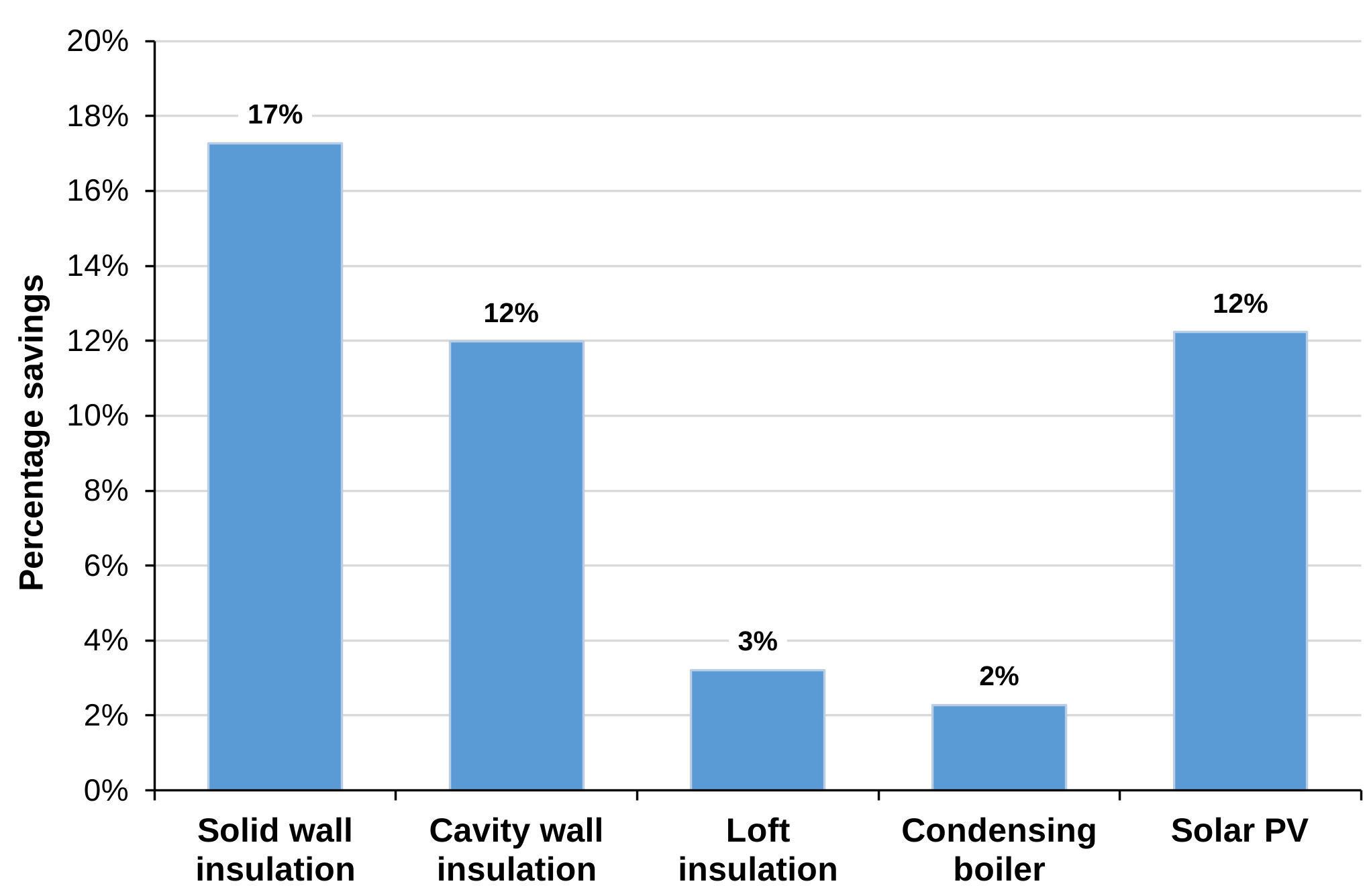
Estimated median savings in 2024 are also provided for combinations of measures, where a large enough number of properties installed a particular combination of measures in 2023. The combination of Solid wall and Loft insulation yielded an estimated median gas saving of 14%.
Estimated savings are also provided by household and property characteristics. There is considerable variability in these estimates between years, likely reflecting low sample sizes. There is generally no indication of systematic differences in savings between different types of properties or households.
The median savings from the main energy efficiency measures installed in previous years have been recalculated using the latest data and methodology (as used for 2023 installations). The resulting estimates are presented in Figure 3.2.
Figure 3.2: Median gas savings from energy efficiency measures in the first year after installation, by year of installation, England and Wales, 2011 to 2023 (electricity savings are shown for Solar PV).
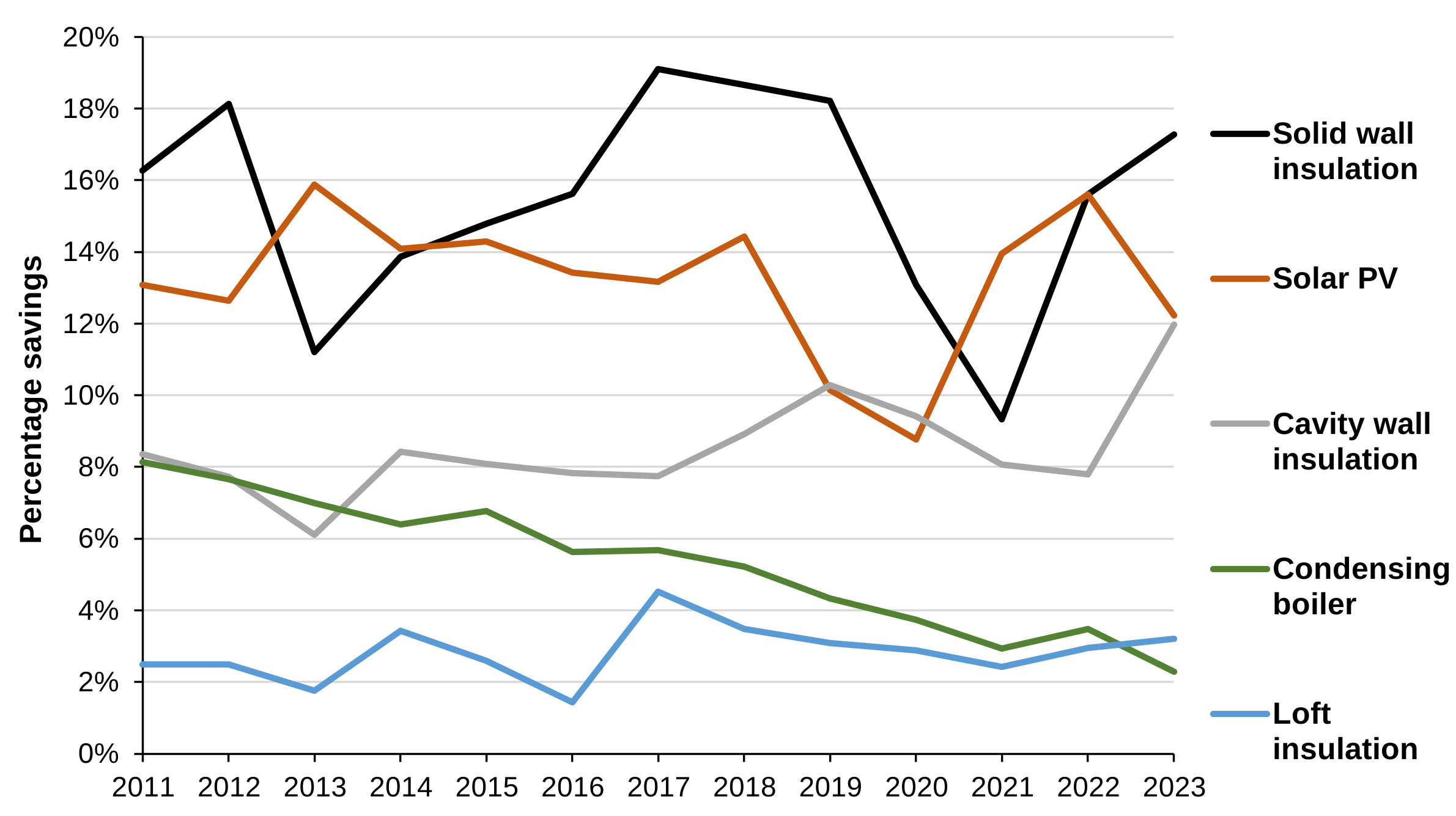
In general, the trends over time appear fairly volatile, likely reflecting the low sample sizes on which these estimates are based. Solid wall insulation has consistently shown the highest gas savings while loft insulation has consistently shown the lowest gas savings of the five measures reported in figure 3.2.
For installations of new condensing boilers, (for which there are larger samples size) there is a relatively smooth trend. The downward nature of this trend needs careful interpretation. Each year’s installations of a new condensing boilers do result in savings (relative to the old boilers replaced). However, typical savings appear to have decreased over time. This suggests that the gains in efficiency of the replacement boilers relative to those being replaced have narrowed over time.
Savings in the years following installation
Estimates of savings over time for measures installed in each year between 2011 and 2018 are published alongside this report in the table “Impact of measures in years following installation”. The method used for these estimates was the same as that used for the other impact of measures analyses. The difference is that, instead of comparing the year before installation (Year -1) to the year after (Year +1), the year before installation is also compared to further years moving forward from Year +1 (Year +2, Year +3, and so on). This is to estimate how savings change over time. More details on this can be found in Annex D: Methodology Note.
Figure 3.3: Median annual percentage gas savings (electricity savings for Solar PV), in the 9 years following installation, relative to savings in Year 1, averaged over the installation years 2011 to 2015, England and Wales.
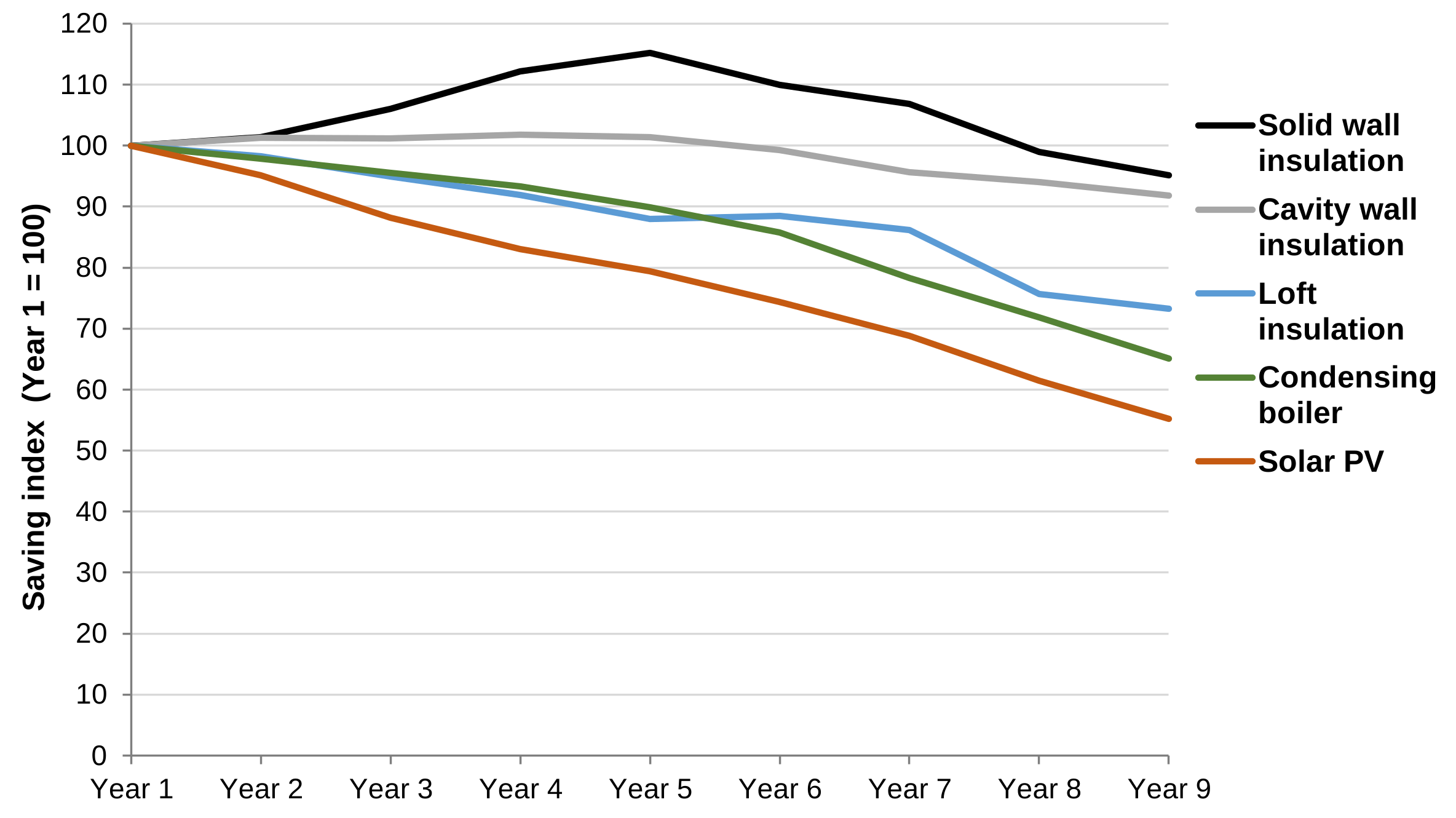
The gas savings from solid and cavity wall insulation[footnote 10] appear to be sustained in the 5 years following installation (see figure 3.3), while the savings from loft insulation and new condensing boilers decreased by around a tenth between Year 1 and Year 5 after installation. While this may indicate the physical degradation of these measures over time, other possible reasons for this reduction in savings may include increased comfort taking or other factors not included in this analysis.
The electricity savings from solar PV declined by around a fifth between Year 1 and Year 5 after installation. Degradation of a solar PV panel is likely to be below 1% per year; however, this can be expected to vary between solar PV installations[footnote 11]. It is therefore likely that, in this case, the reduction in metered savings over time is too large to be attributed to physical degradation of the measure alone and is likely to be due to other factors. This may include residents taking advantage of the energy generated on-site and increasing their overall electricity use, or other factors not captured by this analysis.
Impact of measures installed in Scotland
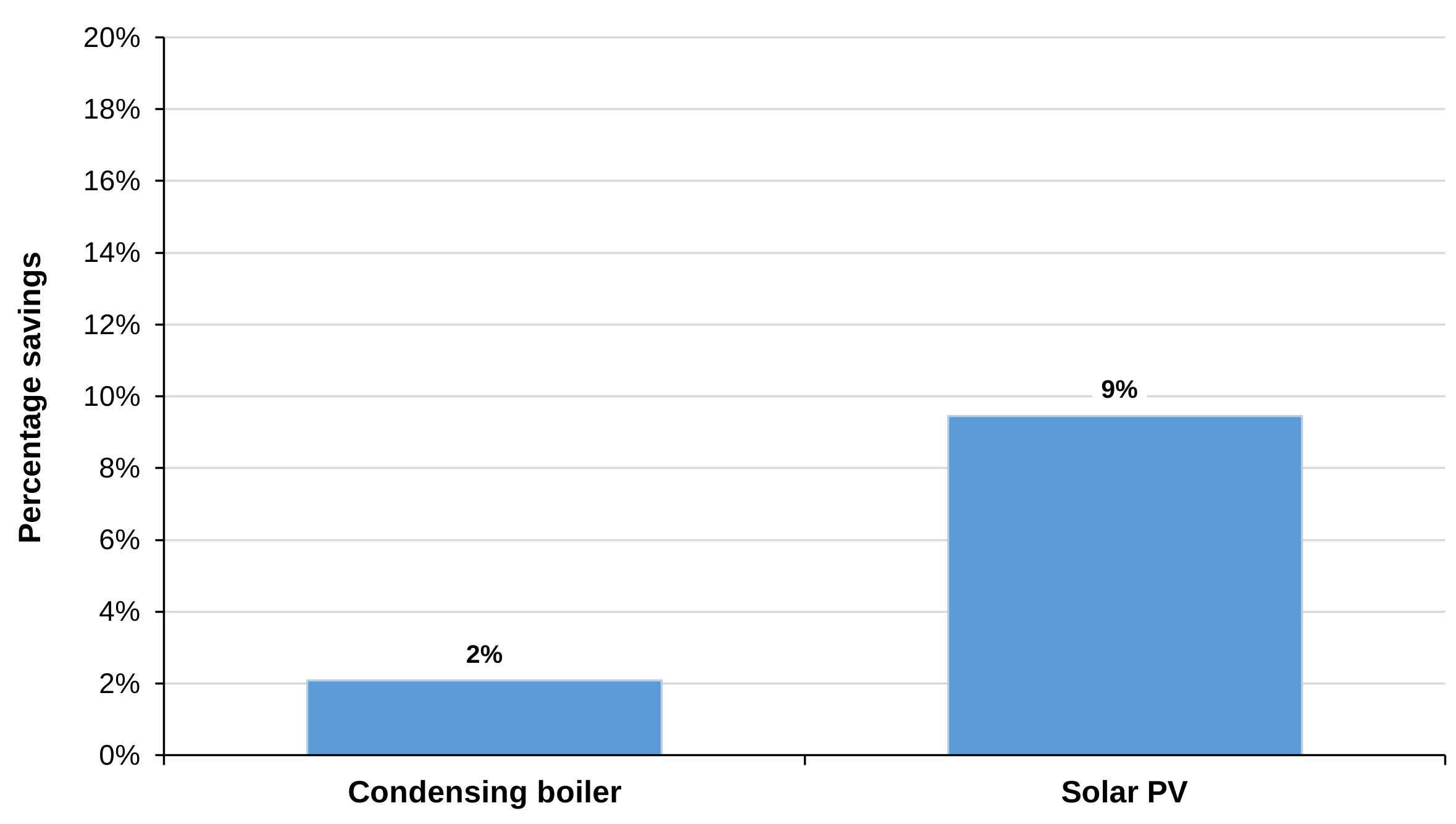
Savings estimates are also provided for Scotland where there is sufficient data (see figure 3.4). Apart from different sources of information being used for the property characteristics used in the analysis[footnote 12], the method for Scottish properties is identical to that used for properties in England and Wales.
Estimated savings in 2024 from measures installed in 2023 were:
- new condensing boilers resulted in an estimated median gas saving of 2%
- solar PV resulted in an estimated median electricity saving of 9%
Figure 3.4: Median gas savings in 2024 for measures installed in 2023, Scotland (electricity savings are shown for Solar PV).
4. Further Information
Supporting data tables
Data tables are available as part of this publication:
Access to data
Domestic NEED provides a valuable resource, and the team recognises potential uses beyond the projects currently taking place. There is published guidance which outlines routes for individuals or organisations to access property level data. Samples of anonymised record-level data are also made available.
Future updates to these statistics
The next release of these statistics, covering 2025 data, is planned for publication in June 2027. Subnational consumption statistics for 2025 will next be published in December 2026.
Related statistics
Non-domestic National Energy Efficiency Data-Framework: Statistics on the metered energy consumption of non-domestic buildings in England and Wales by sector, building size and occupying business size.
Subnational electricity consumption statistics: Summary statistics of domestic and non-domestic electricity consumption at different geographic levels from local authority to postcode.
Subnational gas consumption statistics: Summary statistics of domestic and non-domestic gas consumption at different geographic levels from local authority to postcode.
Subnational total final energy consumption statistics: Summary statistics of domestic and non-domestic consumption of all fuels by local authority.
Boiler Upgrade Scheme statistics: Statistics monitoring the uptake of the Boiler Upgrade Scheme (BUS).
Household energy efficiency statistics: Statistics on installations of energy efficiency measures under the ECO, and previous schemes such as the Green Deal.
Great British Insulation Scheme: Statistics on installations of energy efficiency measures under the Great British Insulation Scheme (GBIS).
Green Homes Grant and Home Upgrade Grant statistics: Statistics on installations of energy efficiency measures under the Green Homes Grant Local Authority Delivery (LAD) and Home Upgrade Grant (HUG) schemes.
Social Housing Decarbonisation Fund statistics: Statistics on installations of energy efficiency measures under the Social Housing Decarbonisation Fund (SHDF) scheme.
Warm Homes: Local Grant statistics: Statistics on installations of energy efficiency measures via the Warm Homes: Local Grant scheme in England.
Warm Homes: Social Housing Fund statistics: Statistics on installations of energy efficiency measures via the Warm Homes: Social Housing Fund scheme in England.
Solar photovoltaics deployment statistics: Statistics on deployment of all solar photovoltaic capacity in the United Kingdom.
Heat Pump Deployment statistics: Statistics on the number of heat pumps installed in the United Kingdom.
Revisions policy
The DESNZ statistics revisions policy sets out the revisions policy for these statistics, which has been developed in accordance with the UK Statistics Authority Code of Practice for Statistics.
User engagement
Users are encouraged to provide comments and feedback on how these statistics are used and how well they meet user needs. Comments on any issues relating to this statistical release are welcomed and should be sent to energyefficiency.stats@energysecurity.gov.uk.
The Department’s statement on standards for official statistics published by DESNZ sets out the department’s commitments on public engagement and data standards as outlined by the Code of Practice for Statistics.
Official Statistics designation
Accredited Official Statistics status means that our statistics meet the highest standards of trustworthiness, quality, and public value, and it is our responsibility to maintain compliance with these standards.
The continued designation of these statistics as Accredited Official Statistics was confirmed in September 2018 following a compliance check by the Office for Statistics Regulation. The statistics last underwent a full assessment against the Code of Practice for Statistics in 2014.
Pre-release access to statistics
Some ministers and officials receive access to these statistics up to 24 hours before release. Details of the arrangements for doing this and a list of the ministers and officials that receive pre-release access to these statistics can be found in the DESNZ statistics release policy with the Pre-Release Access to Official Statistics Order 2008.
-
Formerly the Valuation Office Agency (VOA) which became part of HM Revenue & Customs in April 2026. ↩
-
Throughout this report, data related to ‘houses’ includes the following HMRC property types: detached, semi-detached, bungalow, end-terraced and mid-terraced. These represent 75% of properties in England and Wales as at 31st March 2025. ↩
-
Number of adults is modelled data purchased from Experian. ↩
-
English Housing Survey data on energy performance, heating and insulation (Table DA6101: heating - dwellings). ↩
-
Household income is modelled data purchased from Experian. ↩
-
Tenure is modelled data purchased from Experian. ↩
-
Based on the new-build inspections in the Scotland EPC data. ↩
-
Apart from solar PV, the impact of measures analysis is presented for measures installed between mid-May 2023 and mid-May 2024, as the savings are based on comparing 2022 (before installation) and 2024 (after installation) gas years. For Solar PV the analysis refers to installations made during the months February 2023 to January 2024 as the savings are based on comparing the 2022 and 2024 electricity years. ↩
-
Savings for solid and cavity wall insulation appear to increase in the years after installation. It is not clear why this is case, but it may be partly due to statistical variation in savings estimates particularly for solid wall insulation for which sample sizes are small. ↩
-
For example, Compendium of photovoltaic degradation rates, Jordan et al., 2016. ↩
-
For Scotland, property characteristics are taken from a combination of data taken from Ordnance Survey’s AddressBase and Experian data (which is modelled). For England and Wales, the equivalent information is taken from HMRC data that is updated annually. ↩