HIV testing, PrEP, new HIV diagnoses and care outcomes for people accessing HIV services: 2026 report
Updated 26 November 2026

© Crown copyright 2026
This publication is licensed under the terms of the Open Government Licence v3.0 except where otherwise stated. To view this licence, visit nationalarchives.gov.uk/doc/open-government-licence/version/3 or write to the Information Policy Team, The National Archives, Kew, London TW9 4DU, or email: psi@nationalarchives.gov.uk.
Where we have identified any third party copyright information you will need to obtain permission from the copyright holders concerned.
This publication is available at https://www.gov.uk/government/statistics/hiv-annual-data/hiv-testing-prep-new-hiv-diagnoses-and-care-outcomes-for-people-accessing-hiv-services-2026-report
The annual HIV official statistics data release covers data to the end of December 2025.
This report is accompanied by data tables and slide sets, as well as the Sexual and Reproductive Health Profiles, which provide further breakdowns of the data. The profiles will be published on 1 December 2026.
This report provides the latest HIV surveillance data including an overview of trends in HIV testing in sexual health services (SHSs) (as testing in other settings is reported in the HIV monitoring and evaluation framework reports), HIV pre-exposure prophylaxis (PrEP), HIV post-exposure prophylaxis (PEP), new HIV diagnoses, late HIV diagnoses, mortality and the care outcomes for people accessing HIV care.
Most trend comparisons presented in the report cover the latest 5-year period, with analyses focusing primarily on changes since the previous year. Where appropriate, analyses may also incorporate data from earlier years. Population breakdowns focus on England with more complete data for Scotland and Wales published by Public Health Scotland and Public Health Wales, respectively. Northern Ireland data for 2025 was not available for this report.
During 2024 and 2025, the UK Health Security Agency (UKHSA) conducted a stakeholder review of the language used in its annual HIV official statistics. Based on feedback from a wide range of stakeholders, including the British Association for Sexual Health and HIV (BASHH), the British HIV Association (BHIVA), people living with HIV, and organisations across the voluntary and community sector, UKHSA proposed several terminology changes. These included revisions to terms relating to new HIV diagnoses, probable route of exposure, sexual orientation and gender identity.
Following further engagement with stakeholders in 2026, UKHSA further clarified the definitions of gender identity, sexual orientation and probable route of HIV exposure to improve clarity and inclusivity. Further details on the clarifications are provided in the Appendix.
In this report, gay, bisexual and all men who have sex with men are referred to as gay and bisexual men. Women who have acquired HIV through sex with men will be referred to as heterosexual women, however, this does not necessarily reflect women’s sexual orientation and includes any women (including bisexual, gay, lesbian or queer women) who might have acquired HIV through sex with men.
Alongside overall trends, we also present data for 5 adult population groups outlined in the HIV Action Plan for England 2025 to 2030 for which inequalities in progress towards ending HIV transmission have been observed. The 5 adult population groups (full inclusion criteria in Appendix) include:
- ethnic minority gay, bisexual and all men who have sex with men or ethnic minority people who acquired HIV through sex between men (abbreviated as ethnic minority gay and bisexual men)
- White gay, bisexual and all men who have sex with men or White people who acquired HIV through sex between men (abbreviated as White gay and bisexual men)
- Black African heterosexual men or Black African men who acquired HIV through sex with women (abbreviated as Black African heterosexual men)
- Black African heterosexual or bisexual women or Black African women who acquired HIV through sex with men (abbreviated as Black African heterosexual women)
- other ethnic minority heterosexual adults or other ethnic minority men and women who acquired HIV through sex between men and women (not including Black African heterosexuals)
Main points
HIV testing in sexual health services
The main findings are:
- between 2024 and 2025, the number of people tested in SHSs increased by 2%, from 1,319,333 to 1,346,107
- between 2024 and 2025 the proportion of people testing positive decreased from 0.10% to 0.08%
- in 2025, among the 5 adult population groups, ethnic minority gay and bisexual men had the highest proportion of people testing positive at 0.39% compared to 0.14% for White gay and bisexual men
- while there were increases in the total number of Black African heterosexual men and women testing, test positivity declined in both groups between 2024 and 2025 (0.30 to 0.20% and 0.43 to 0.32% respectively)
- test positivity in people identified through partner notification (PN) was 5%, leading to 15 new diagnoses among gay and bisexual men, and 23 new diagnoses among heterosexual men and women
HIV pre-exposure prophylaxis and post-exposure prophylaxis
The revised HIV PrEP need definition was applied to all individuals, regardless of gender identity or sexual orientation. Individuals were defined as having a PrEP need if they met at least one of the following criteria recorded in GUMCAD:
- being found eligible for PrEP or using PrEP either on the attendance date or within the last 12 months
- being diagnosed with gonorrhoea and or infectious syphilis either on the attendance date or within the last 12 months
- having 5 or more recent sexual partners in the last 3 months (see Appendix for further details)
The revised definition has been applied retrospectively and has resulted in an increase in the estimated number of heterosexuals with HIV PrEP need.
The main findings are:
- the number of SHS attendees with a PrEP need increased by 4% between 2024 (174,493) and 2025 (180,848)
- of the 180,848 SHS attendees with a PrEP need in 2025, PrEP uptake was 66% (120,159)
- the number of people with PrEP uptake among people with PrEP need increased by 8% between 2024 (111,427) and 2025 (120,159)
- PrEP uptake among people with a PrEP need was highest among White and ethnic minority gay and bisexual men (82% respectively) compared to uptake among Black African heterosexual women (29%), Black African heterosexual men (18%), and other ethnic minority heterosexuals (19%) in 2025
- between 2024 and 2025, the greatest proportional increases in PEP use were in Black African heterosexual women (36%, 191 to 260) and men (18%, 203 to 240), but use remained greatest in White gay and bisexual men (6%, 2,992 to 3,168)
New HIV diagnoses
Data presented for new HIV diagnoses excludes people diagnosed with HIV before continuing care in England.
The main findings are:
- there were 2,823 new HIV diagnoses in the UK in 2025, a 9% decrease from 3,117 diagnoses in 2024, while in England, new HIV diagnoses decreased by 7% from 2,789 in 2024 to 2,604 in 2025
- diagnoses among all men decreased by 4% (1,816 to 1,751) between 2024 and 2025 with diagnoses among all women decreasing by 12% (968 to 850)
- whilst new HIV diagnoses among adult ethnic minority gay and bisexual men increased by 13% (286 to 322) between 2024 and 2025, they decreased by 11% (467 to 416) among White gay and bisexual men
- between 2024 and 2025, new HIV diagnoses decreased by 23% (274 to 210) among adult Black African heterosexual men and by 18% (434 to 358) among adult Black African heterosexual women
- among other ethnic minority heterosexual adults, new HIV diagnoses decreased slightly by 3% (309 to 299) between 2024 and 2025
- between April 2022 and December 2025, 1,244 people were newly diagnosed with HIV at 78 emergency departments (EDs) in England, 6% of all new diagnoses in 2022 were a result of ED opt-out testing and increasing to 16% in 2025
Late HIV diagnoses and mortality
Data presented for late HIV diagnoses excludes people diagnosed before continuing their HIV care in England.
The main findings are:
- the number of late diagnoses (definition in Appendix) among people newly diagnosed in England with a CD4 count reported within 91 days of diagnosis decreased by 10% from 975 in 2024 to 877 in 2025
- the proportion diagnosed late was 43% (877 of 2,060) in 2025, remaining unchanged from 2024 (43%, 975 of 2,256), this proportion was highest among heterosexual men (54%) compared to gay and bisexual men (28%)
- the number of late HIV diagnoses between 2024 and 2025 increased by 14% (70 to 80) among ethnic minority gay and bisexual men but decreased by 22% (130 to 102) among White gay and bisexual men
- in 2024, adults diagnosed late with HIV in England were 4 times more likely to die within a year of diagnosis compared to adults diagnosed promptly
- there was a 6% decrease in the number of deaths due to all-cause mortality in England between 2024 and 2025 (from 702 to 660)
- while there was an increase in all-cause deaths among Black African heterosexual men in England between 2024 and 2025 (from 49 to 69), the number of deaths among the other 4 adult population groups declined
Outcomes of people living with diagnosed HIV and accessing HIV care
The main findings are:
- it is provisionally estimated that in 2025, 95.2% (95% credible interval 93.6% to 96.2%) of all people living with HIV in England were diagnosed, with 94.5% of adults diagnosed receiving treatment (104,359 of 110,500, 95% credible interval 109,300 to 111,600) and 98.2% of adults on treatment having suppressed viral loads
- of all people accessing HIV care in England in 2025 (106,115), the 5 adult population groups accounted for the majority (79%) of individuals and were comprised of 34,271 White gay and bisexual men, 20,430 Black African heterosexual women, 10,309 other ethnic minority heterosexuals, 9,409 Black African heterosexual men, and 9,102 ethnic minority gay and bisexual men
- the cohort of people living with HIV and accessing care is ageing with over half (54%, 56,970 of 106,115) aged 50 years and over in 2025
- treatment coverage in adults accessing care in England remained high in 2025 at 99% (104,539 of 105,995)
- in 2025, 93% (1,230 of 1,325) of people aged between 15 and 24 years were virally suppressed, with the proportion suppressed increasing with age and highest among people aged 65 years and over (99%, 11,654 of 11,742)
HIV testing in sexual health services
HIV testing is an important component of prevention and is undertaken in various settings such as SHSs, EDs, primary and secondary care, and community settings. This section describes HIV testing undertaken in SHSs in England. Data relating to testing in other settings will be published in the HIV Action Plan monitoring and evaluation framework report.
The number of people tested across all SHSs increased by 2% from 1,319,333 in 2024 to 1,346,107 in 2025, while the proportion testing positive decreased from 0.10% to 0.08%.
Between 2024 and 2025, the number of people tested in specialist SHSs (providing Level 3 STI-related care) increased by 0.69% (760,168 to 765,416). In the same period, in non-specialist services (Level 2 STI-related care, excluding online providers), the number of people tested increased by 0.25%, from 16,983 to 17,024. The steepest rise was observed in non-specialist online testing services which increased by 4%, with the number of people tested increasing from 542,182 in 2024 to 563,667 in 2025.
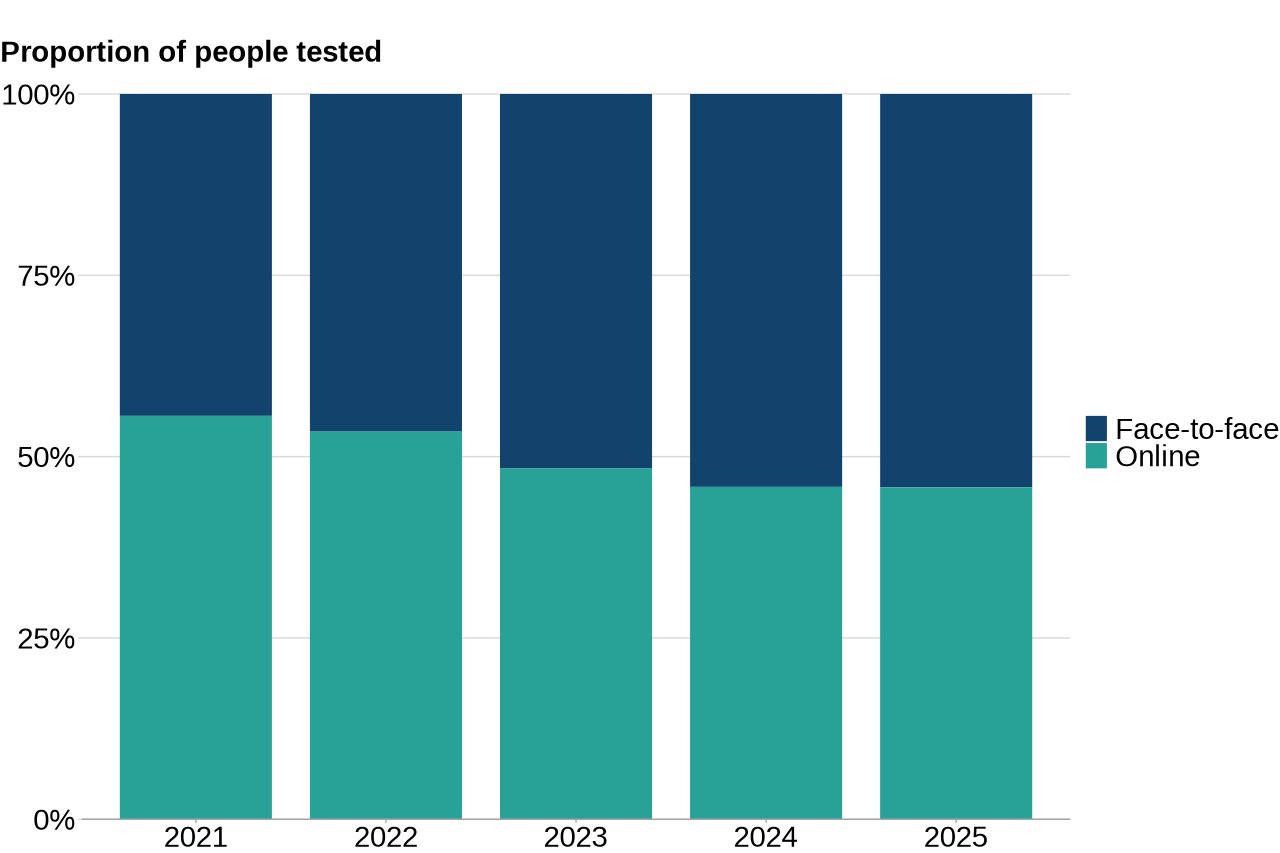
Overall, in 2025, 45% (609,765 of 1,346,107) of all people who tested for HIV at SHSs used a self-sampling test ordered online (of which 46,098 were from specialist SHSs and 563,667 from non-specialist online testing services), rather than receiving a test in person at a SHS (Figure 1). This proportion remains unchanged from 45% in 2024 (597,370 of 1,319,333).
Figure 1. Proportion of people tested for HIV at all SHSs by consultation medium [note 1], England, 2021 to 2025
Source: data from routine returns to the GUMCAD STI Surveillance System (see the accompanying data tables HIV testing in England).
Note 1: the face-to-face category includes people who had a face-to-face and online testing attendance in the same year at the same SHS (0.30%, 3,990 of 1,346,107 had both a face-to-face and online testing attendance in 2025).
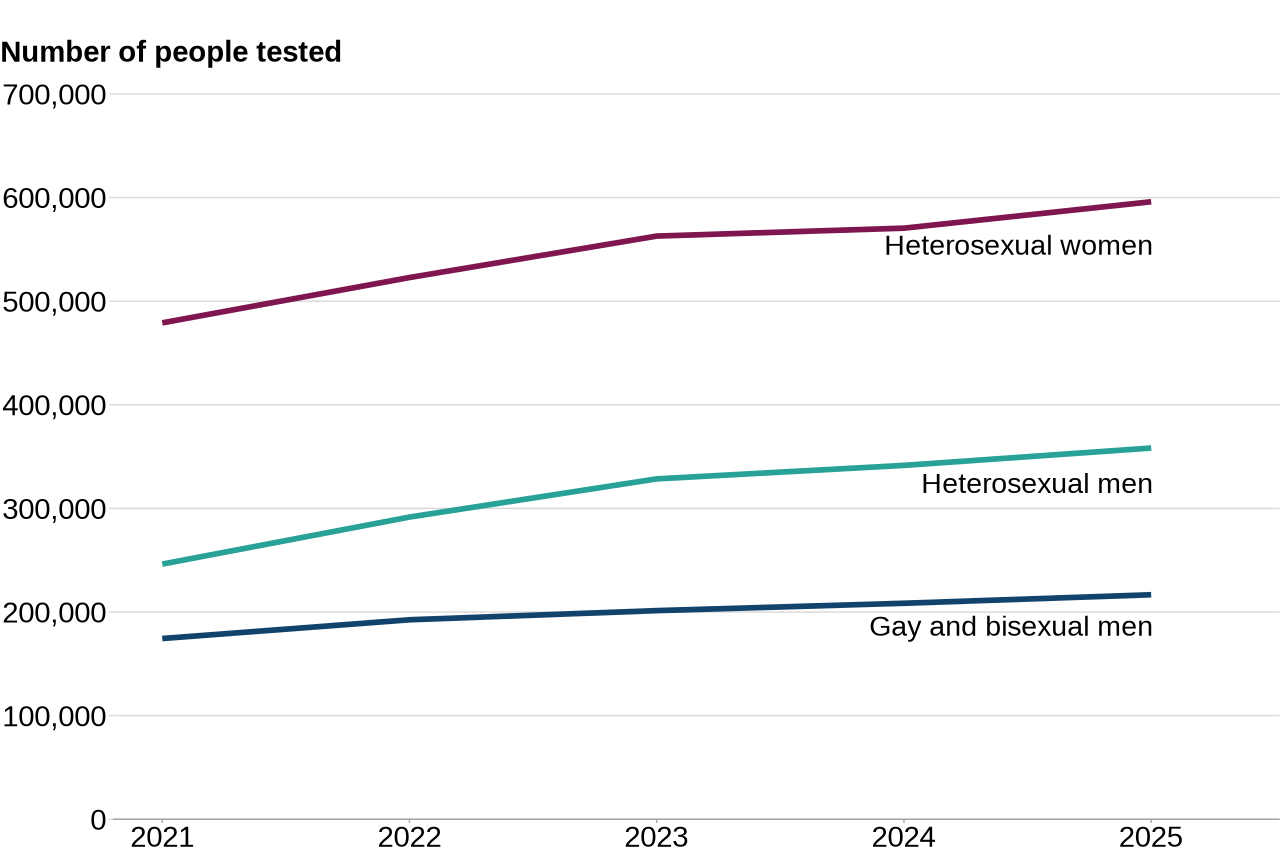
In SHSs, 216,693 gay and bisexual men had an HIV test in 2025, a 4% increase from 2024 (208,462). Among heterosexual women, 595,995 had a test in 2025, an increase of 4% from 2024 (570,504). The number of heterosexual men having a test increased to 358,300 in 2025, a 5% increase from 2024 (341,556) (Figure 2).
Figure 2. Number of attendees tested for HIV at all SHSs by gender identity and sexual orientation, England, 2021 to 2025
Source: data from routine returns to the GUMCAD STI Surveillance System (see the accompanying data tables HIV testing in England).
Whilst there was a rise in the number of gay and bisexual men testing, HIV test positivity showed little change (0.23% in 2024 and 0.21% in 2025. Nevertheless, the proportion testing positive in 2025 was 3 times higher in gay and bisexual men than in heterosexual men (0.21% versus 0.07%).
Between 2024 and 2025, HIV testing among gay and bisexual men living in London decreased by 1% (97,921 to 96,646). Meanwhile outside London, the number of gay and bisexual men testing increased by 11% (106,343 to 117,633). In 2025, HIV test positivity among gay and bisexual men living in London and outside London was similar (0.22% versus 0.19%).
Among heterosexual women in England, HIV test positivity remained stable, 0.05% (311 of 570,504) in 2024 and 0.05% (271 of 595,995) in 2025. Among heterosexual men, HIV test positivity also remained relatively unchanged, 0.08% (283 of 341,556) in 2024 and 0.07% (244 of 358,300) in 2025.
Among heterosexual men in London, testing decreased by 2%, from 124,321 in 2024 to 121,446 in 2025, compared to an 11% increase outside London, from 210,556 to 232,787. HIV test positivity among heterosexual men in 2025 was 0.07% in both London (79 of 121,446) and outside London (155 of 232,787).
Among heterosexual women living in London, testing decreased by 4% between 2024 and 2025, from 203,155 to 194,174. HIV test positivity among heterosexual women was also similar in London (0.04%, 73 of 194,174) and outside London (0.05%, 194 of 395,301) in 2025.
The number of Black African heterosexuals tested increased from 73,537 in 2024 to 81,795 in 2025, while HIV test positivity decreased from 0.37% (272 of 73,537) to 0.27% (217 of 81,795), suggesting a potential decrease in transmission. Among White heterosexuals, the number of people tested and HIV test positivity remained stable, with 612,527 people tested and a test positivity of 0.02% (139 of 612,527) in 2024 compared with 627,334 people tested and a test positivity of 0.02% (125 of 627,344) in 2025.
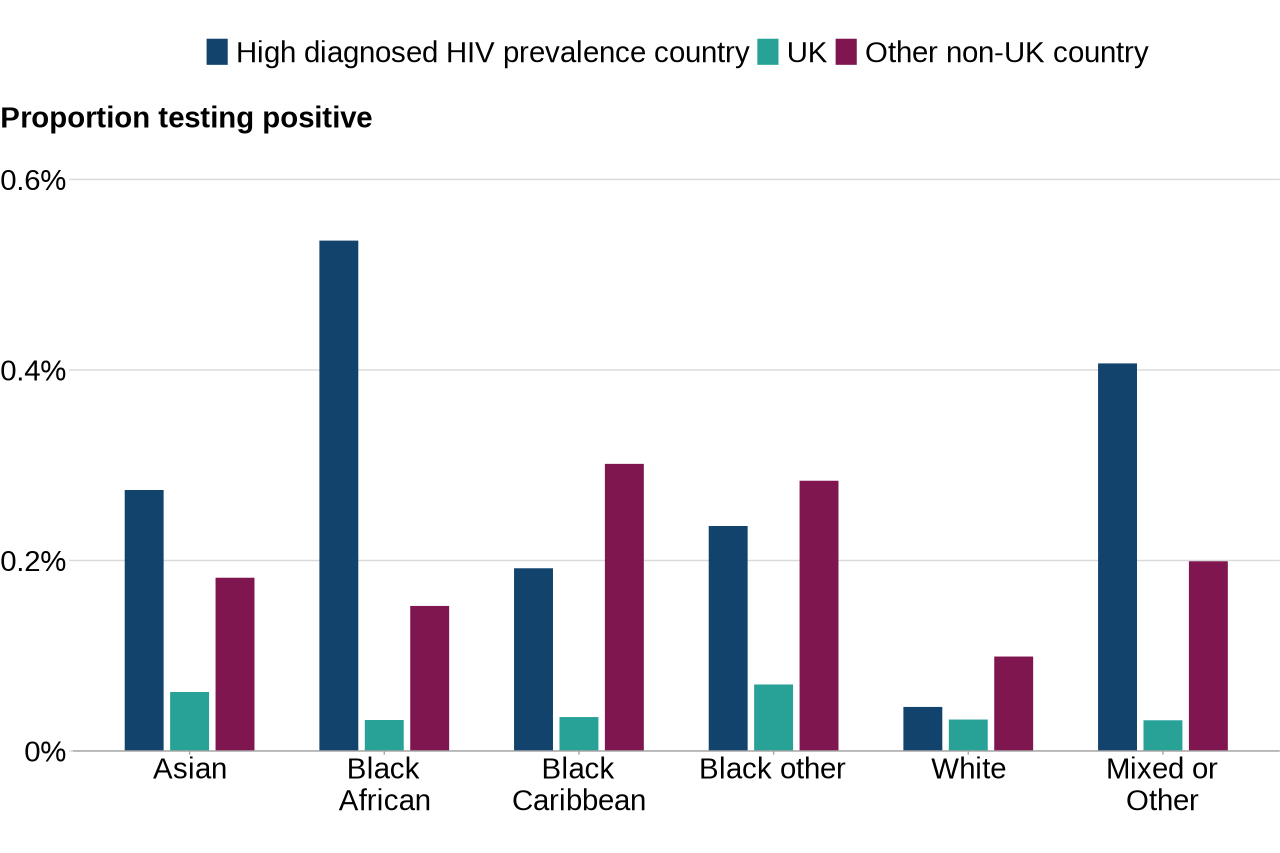
In 2025, HIV test positivity in all SHSs in England was higher for individuals born in high HIV prevalence countries (0.43%, 301 of 69,270) compared to other non-UK countries (0.14%, 331 of 228,599. Among people of Black African ethnicity born in high HIV prevalence countries, the test positivity was 0.54% (234 of 43,485), compared with 0.03% (11 of 33,770) among people of Black African ethnicity born in the UK (Figure 3).
Figure 3. Proportion testing HIV positive by country of birth and ethnicity [note 2], England, 2025
Source: data from routine returns to the GUMCAD STI Surveillance System (see the accompanying data tables HIV testing in England).
Note 2: the disaggregated White (White British and White other) and Asian (Indian, Pakistani or Bangladeshi and any other Asian) ethnic categories have been combined, as trends observed were similar whether separated or combined.
HIV testing among the 5 adult population groups
Between 2024 and 2025, the largest proportional increase in testing within the 5 adult population groups was among Black African heterosexual men (11%, 33,630 to 37,449) and Black African heterosexual women (11%, 39,891 to 44,318). This compares with a 3% proportional increase (from 155,925 to 160,112) in testing among White gay and bisexual men, 7% (46,197 to 49,401) increase among ethnic minority gay and bisexual men and 7% (198,513 to 211,771) increase among other ethnic minority heterosexual adults.
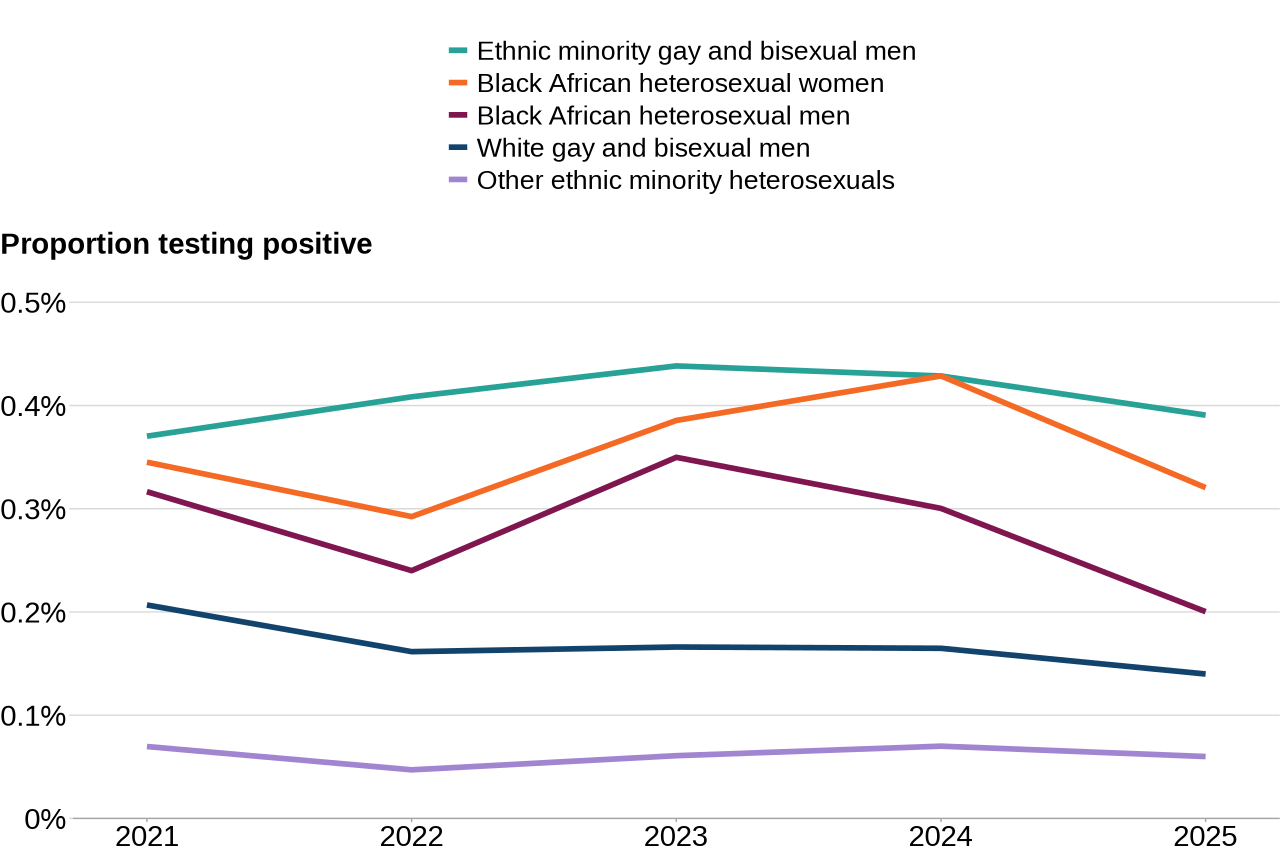
In 2025, within these groups, HIV test positivity was highest among ethnic minority gay and bisexual men (0.39%, 193 of 49,401), followed by Black African heterosexual women (0.32%, 142 of 44,318), Black African heterosexual men (0.20%, 75 of 37,449), White gay and bisexual men (0.14%, 224 of 160,112) and other ethnic minority heterosexual adults (0.06%, 127 of 211,711). Compared with 2024, the proportion testing positive in 2025 fell from 0.30% to 0.20% among Black African heterosexual men, from 0.43% to 0.32% among Black African heterosexual women, from 0.43% to 0.39% among other ethnic minority gay and bisexual men and remained similar among White gay and bisexual men (0.16% to 0.14%) and other ethnic minority heterosexuals (0.07% to 0.06%) (Figure 4).
Figure 4. Proportion testing HIV positive among 5 adult population groups, England, 2021 to 2025
Source: data from routine returns to the GUMCAD STI Surveillance System (see the accompanying data tables HIV testing in England).
HIV testing rate
HIV testing rate in all SHSs in England increased by 2% between 2024 and 2025 (2,799 to 2,841 per 100,000 population). In 2025, the testing rate was highest among gay and bisexual men (55,502 per 100,000 population) and lowest among heterosexual men (2,086 per 100,000 population). Among women, the testing rate in 2025 among gay and lesbian women who exclusively have sex with women was 4,106 per 100,000 and 3,278 per 100,000 among heterosexual women.
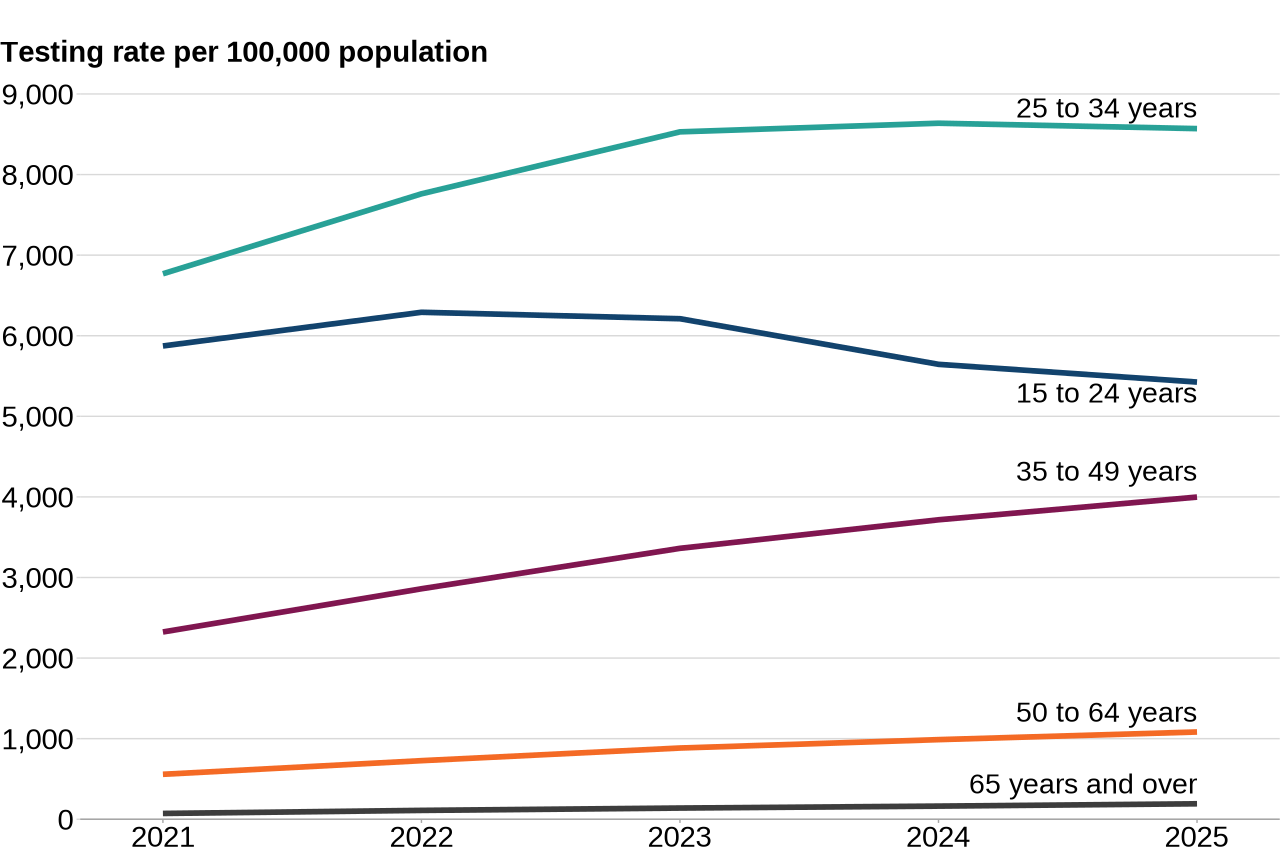
Between 2024 and 2025, there was a 4% decrease in the testing rate in people aged 15 to 24 years from 5,645 to 5,425 (per 100,000 population) while testing rate in people aged 25 to 34 years remained stable (0.8% decline, 8,637 to 8,570 per 100,000 population) (Figure 5). In contrast there was a continued increase from previous years in the HIV testing rate among all other age groups between 2024 and 2025: 8% (3,716 to 3,998) in people aged 35 to 49 years, 10% (988 to 1,083) in people aged 50 to 64 years, and 18% (163 to 192) in people aged 65 years and over.
Figure 5. HIV testing rate at all SHSs by age group, England, 2021 to 2025
Source: data from routine returns to the GUMCAD STI Surveillance System (see the accompanying data tables HIV testing in England).
HIV testing uptake
Overall, three-quarters of attendees at specialist SHSs in England who were offered an HIV test took a test in 2025 (77%, 765,416 of 998,416). Trends in test uptake by gender and sexual orientation have remained stable between 2021 and 2025, with 96% (133,741 of 138,792) gay and bisexual men in specialist SHSs accepting testing when offered a test in 2025. This compares with an 86% (209,231 of 242,506) test uptake among heterosexual men in 2025. Test uptake remains lower in heterosexual women, with a 65% (301,805 of 461,355) uptake in 2025.
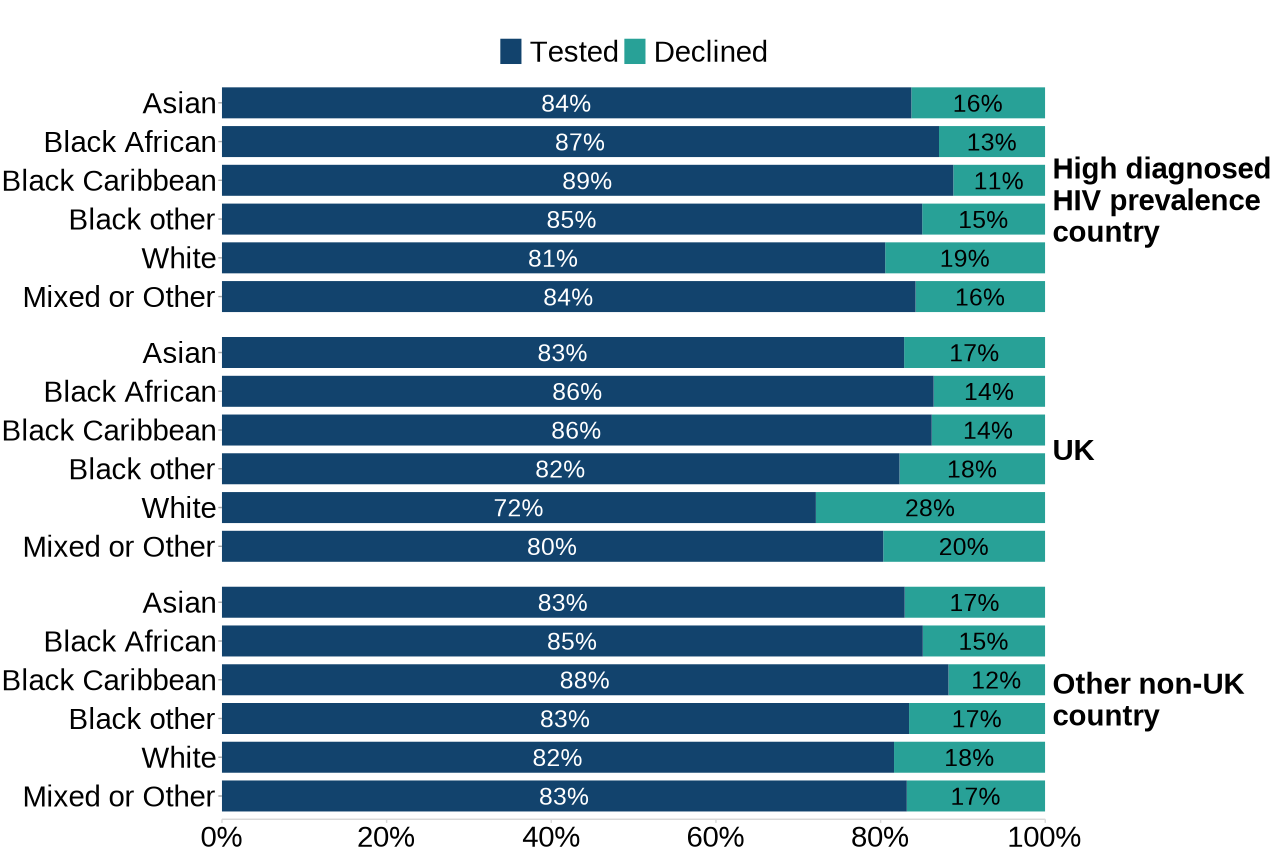
In 2025, test uptake was lower among UK-born individuals across all ethnic groups compared to people born in high HIV prevalence countries or other non-UK countries. Among individuals born in the UK, test uptake was highest among people of Black African (86%, 14,068 of 16,274) and Black Caribbean ethnicities (86%, 19,110 of 22,167) (Figure 6). In contrast, uptake was lowest among individuals of White ethnicity born in the UK, with 72% (359,250 of 497,992) accepting a test. This reflects that the uptake of testing in heterosexual White men and women born in the UK (83% and 60% respectively) tends to be lower than among other ethnic groups.
Among individuals born in high HIV prevalence countries, test uptake was highest among people of Black Caribbean ethnicity at 89% (4,226 of 4,756), followed closely by people of Black African ethnicity at 87% (30,610 of 35,147). The lowest uptake in this group was among individuals of White ethnicity, with 81% (3,134 of 3,885) accepting a test.
For individuals born outside the UK in countries not classified as high HIV prevalence countries, in 2025, test uptake was highest among people of Black Caribbean ethnicity at 88% (2,057 of 2,332), followed by Black African ethnicity at 85% (7,770 of 9,128). Test uptake was lowest among individuals of White ethnicities in this group in 2025, with 82% (72,667 of 89,043) accepting a test.
Figure 6. HIV testing uptake at specialist SHSs by country of birth and ethnicity [note 3], England, 2025
Source: data from routine returns to the GUMCAD STI Surveillance System (see the accompanying data tables HIV testing in England).
Note 3: the disaggregated White (White British and White other) and Asian (Indian, Pakistani or Bangladeshi and any other Asian) ethnic categories have been combined, as trends observed were similar whether separated or combined.
Partner notification
PN refers to the process by which people potentially exposed to HIV through sexual, injecting drug use (IDU) or other relevant contact with someone living with HIV are identified and offered HIV testing. This offers an effective way to identify previously undiagnosed HIV infection, as well as to reduce onward transmission through PEP and uptake of PrEP.
In 2025, 1,028 people were reported by specialist SHSs as a contact following PN, a 5% increase from 980 in 2024. Of these people, 87% (891 of 1,028) took an HIV test, of whom 5% (46 of 891) were newly diagnosed with HIV in 2025.
By gender and sexual orientation, the largest group of people who were reported as attending following PN in 2025 were gay and bisexual men (32%, 334 of 1,028), followed by heterosexual men (27%, 282 of 1,028), and heterosexual women (27%, 273 of 1,028). Gay and bisexual men accounted for the largest number of new diagnoses among contacts (33%, 15 of 46), followed by heterosexual men (28%, 13 of 46) and heterosexual women (22%, 10 of 46).
Of the 1,028 people who attended following PN, 60% (617) belonged to 1 of the 5 adult population groups. Of the 617 individuals, about a third were White gay and bisexual men (34%, 210 of 617), followed by other ethnic minority heterosexual adults (23%, 140 of 617), ethnic minority gay and bisexual men (17%, 108 of 617), Black African heterosexual men (14%, 87 of 617) and Black African heterosexual women (12%, 72 of 617). White gay and bisexual men and ethnic minority gay and bisexual men accounted for the largest number of new diagnoses among contacts in 2025, both with 15% (7 of 46). This was followed by Black African heterosexual men (11%, 5 of 46), Black African heterosexual women (7%, 3 of 46) and other ethnic minority heterosexual adults (7%, 3 of 46).
HIV pre-exposure prophylaxis
HIV PrEP is an important component of prevention strategies, involving the recommendation of antiretroviral medication to people tested HIV negative to significantly reduce the risk of HIV acquisition.
PrEP uptake
In 2025, 1,361,878 people attending specialist SHSs tested HIV negative, excluding those seeking reproductive care only. This represented a 2% decrease from 1,393,965 in 2024. Of these, 180,848 were defined as having a PrEP need, a 3.6% increase from 174,493 in 2024. Among people with a PrEP need, PrEP uptake was 66.4% (120,159 of 180,848) in 2025, a slight increase from 64% (111,427 of 174,493) in 2024.
After stakeholder feedback, the PrEP need definition was revised in 2026 with the change applied retrospectively to all years of data in this report to facilitate comparisons of trends over time. While this revision in definition does not affect the absolute number of people taking PrEP, it changes the denominator used to calculate PrEP uptake proportions and therefore affects the reported uptake proportions. The change in PrEP need definition resulted in an increase in PrEP need and a concomitant decrease in PrEP uptake in some population groups. Further information on the revised definition and its implications is provided in the Appendix and the quality and methodology information (QMI) report.
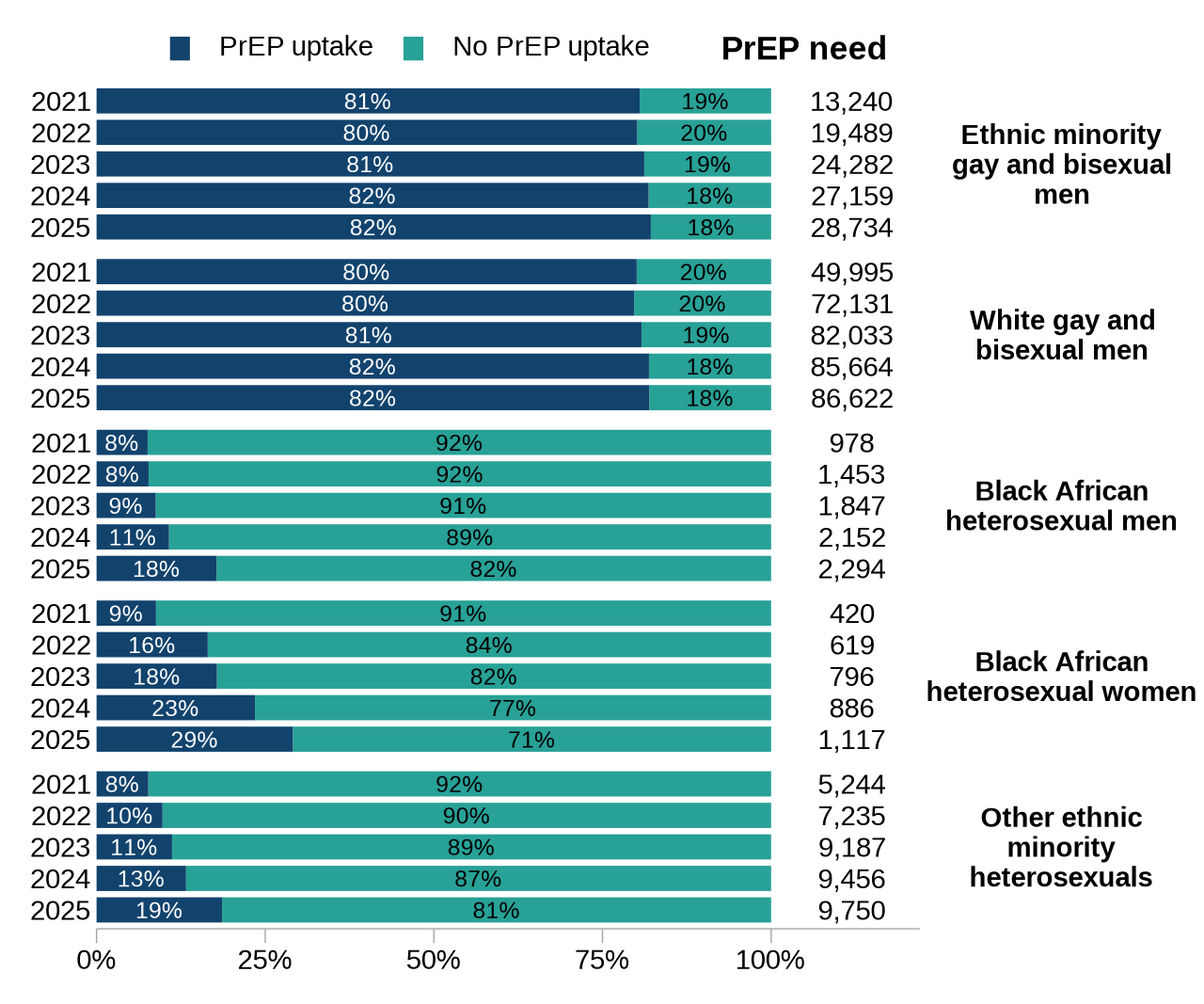
Figure 7 shows that number of people with a PrEP need and PrEP uptake continued to increase across all 5 adult population groups. Between 2021 and 2025 PrEP uptake among gay and bisexual men remained consistently high, increasing from 81% (10, 659 of 13,240) to 82% (23,610 of 28,734) among ethnic minority gay and bisexual men and from 80% (40,029 of 49,995) to 82% (70,975 of 86,622) among White gay and bisexual men. PrEP uptake increased substantially among heterosexual populations over the same period, particularly among Black African women 9% (37 of 420) to 29% (325 of 1,117), Black African men 8% (74 of 978) to 18% (408 of 2,294) and other ethnic minority heterosexual people 8% (402 of 5,244) to 19% (1,814 of 9,750).
Data on online PrEP provision was first reported to GUMCAD in 2025. In 2025, 6,248 people had PrEP uptake through online services, with the majority (64.7%) reported in London (4,042 of 6,248), followed by 14.6% in the South West (911 of 6,248) and 10.1% in the South East (630 of 6,248). Most people with online PrEP uptake were men (87.2%, 5,450 of 6,248), specifically gay and bisexual men (77.8%, 4,864 of 6,248).
Figure 7. PrEP uptake status, among people defined as having a PrEP need by 5 adult population groups, England, 2021 to 2025
Source: data from routine returns to the GUMCAD STI Surveillance (see the accompanying data tables HIV pre-exposure prophylaxis (PrEP) need and use in England).
HIV post-exposure prophylaxis
HIV PEP is a short course of antiretroviral medication taken after potential exposure to HIV to prevent infection from becoming established and so prevent HIV transmission. In the UK guideline for the use of PEP, it is recommended following sexual, occupational or other exposures such as IDU, when transmission risk is deemed to be significant.
In 2025, 9,146 individuals received HIV PEP at SHSs, an 8% increase from 8,465 in 2024. Between 2024 and 2025, PEP provision increased by 8% (1,181 to 1,275) among heterosexual women, by 17% (1,158 to 1,359) among heterosexual men and by 4% (5,002 to 5,217) among gay and bisexual men.
Among the 5 adult population groups, PEP provision in 2025 was highest among White gay and bisexual men, with 3,168 individuals receiving PEP, a 6% increase from 2,992 in 2024. This was followed by ethnic minority gay and bisexual men, with 1,741 individuals receiving PEP in 2025, representing a 0.5% increase from 1,733 in 2024. PEP provision among Black African heterosexual men increased by 18%, from 203 in 2024 to 240 in 2025, while Black African heterosexual women showed the largest increase during the same period, increasing by 36% from 191 to 260 individuals. Among other ethnic minority heterosexual adults, 758 individuals received PEP in 2025, a 17% increase from 648 in 2024.
New HIV diagnoses
Data presented for new HIV diagnoses excludes people diagnosed with HIV before continuing care in England.
In 2025, there were 2,823 new HIV diagnoses in the UK, a 9% decrease from 3,117 diagnoses in 2024. In England, 2,604 people were newly diagnosed with HIV in 2025, a 7% decrease from 2,789 diagnoses in 2024.
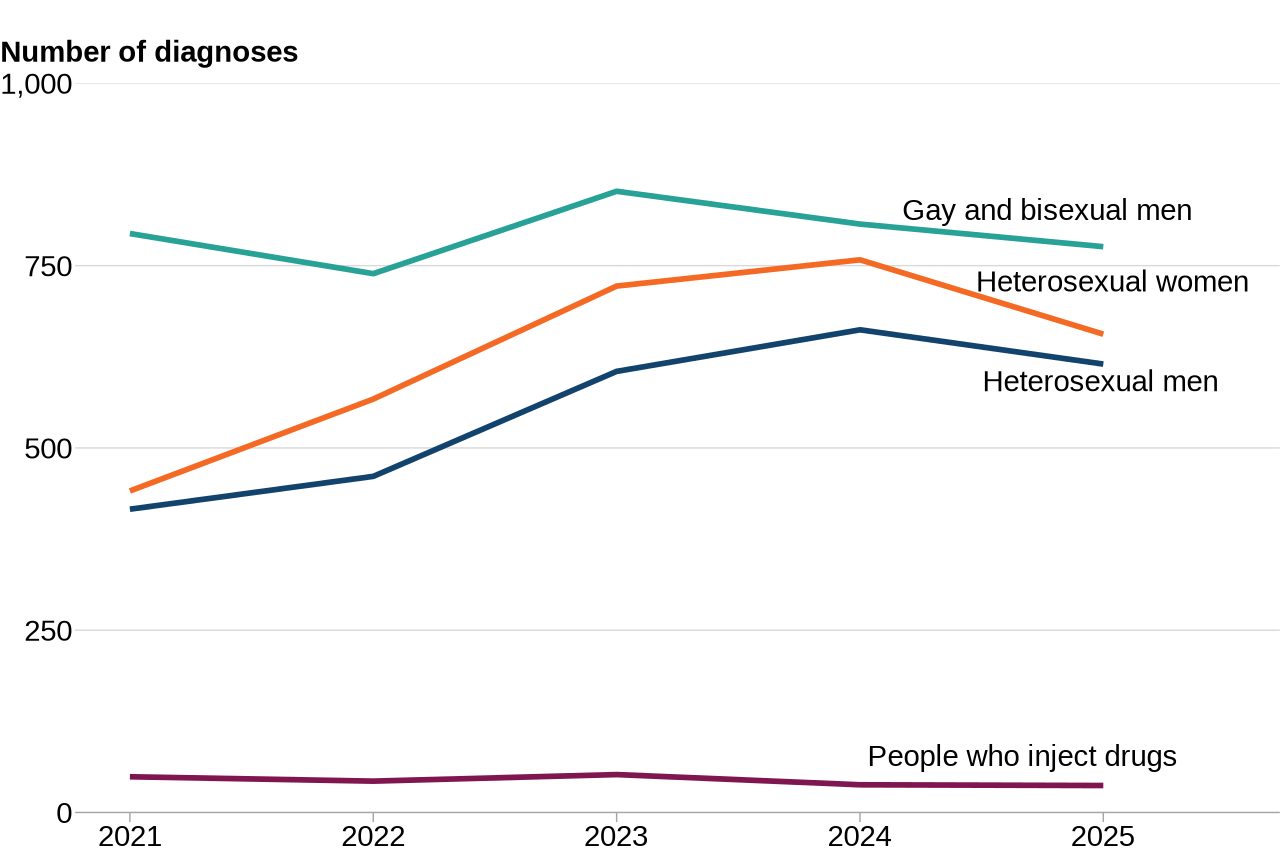
In 2025, gay and bisexual men accounted for 30% (776 of 2,604) of all new HIV diagnoses in England. This compared to 49% (1,271) diagnoses among the heterosexual population, 24% (615) among heterosexual men and 25% (656) among heterosexual women (Figure 8). Diagnoses among all men decreased by 4% (1,816 to 1,751) between 2024 and 2025 with diagnoses among all women decreasing by 12% (968 to 850).
In 2025, people who had likely acquired HIV through:
- IDU accounted for 1% (37) of all new HIV diagnoses (Figure 8)
- vertical transmission accounted for 1% (33) (88% of the infants were born abroad)
- other exposure routes (including contaminated blood products and healthcare-related contact) accounted for a further 1% (19)
- an undetermined exposure or diagnoses where probable route of exposure was not stated accounted for 18% (468)
There were 11 new HIV diagnoses among trans people in 2025 in England compared to 15 in 2024. There were fewer than 5 people newly diagnosed who were non-binary or gender diverse in 2025.
Figure 8. New HIV diagnoses by probable route of exposure, England, 2021 to 2025
Source: data from routine returns to the HIV and AIDS New Diagnoses and Deaths Database (HANDD) (see the accompanying data tables HIV diagnoses, AIDS, deaths and people in care in England).
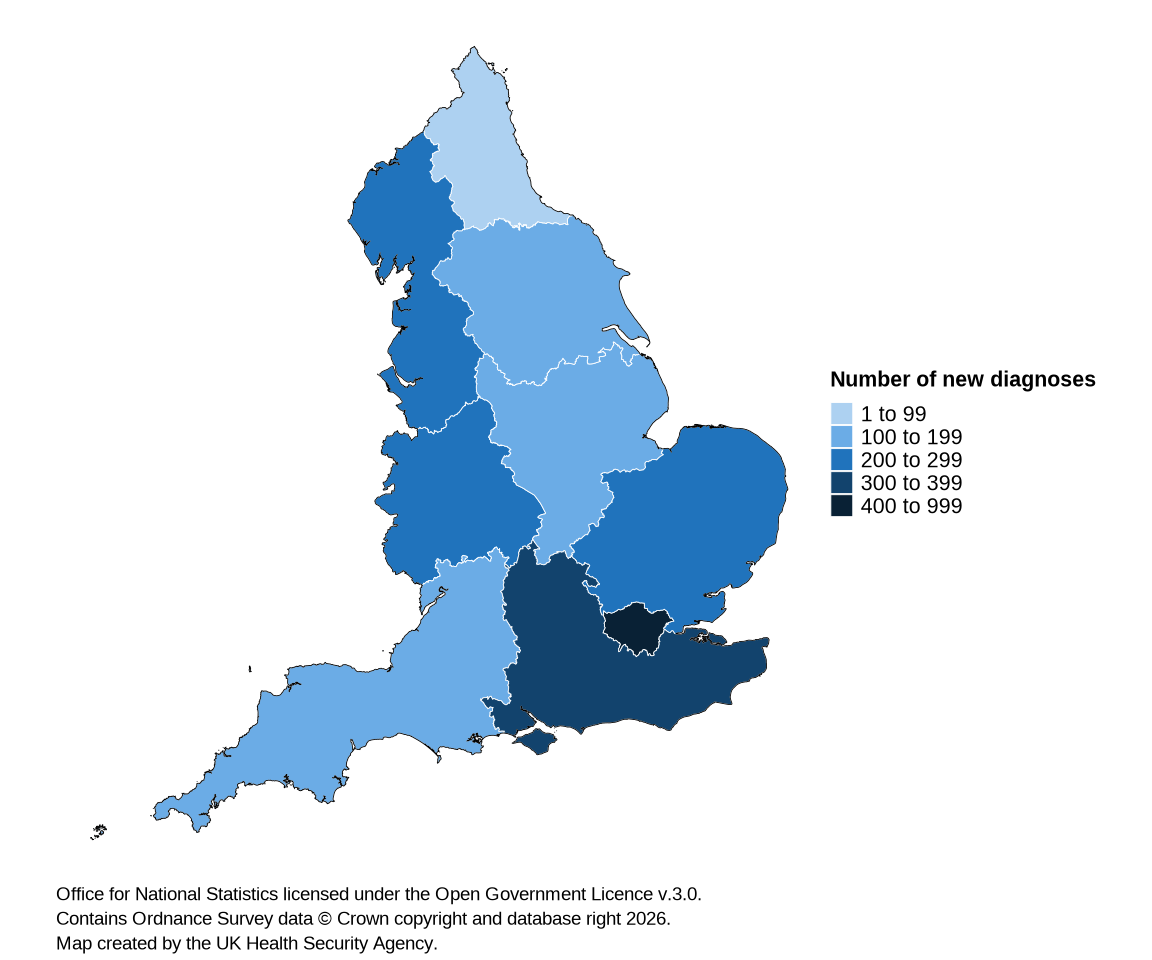
Over the past 10 years, the number of new diagnoses among people living outside London has exceeded the number living in London. Compared with 2024, HIV diagnoses have declined across all UKHSA regions of residence in England, with the exception of the North West, where new diagnoses increased slightly by 1% from 283 to 287 in 2025. As in 2024, London observed the highest number of new diagnoses (934) in 2025 while the North East recorded the lowest number of new diagnoses (68) (Figure 9).
Figure 9. Number of new HIV diagnoses by region of residence, England, 2025
Source: data from routine returns to HANDD (see the accompanying data tables HIV diagnoses, AIDS, deaths and people in care in England).
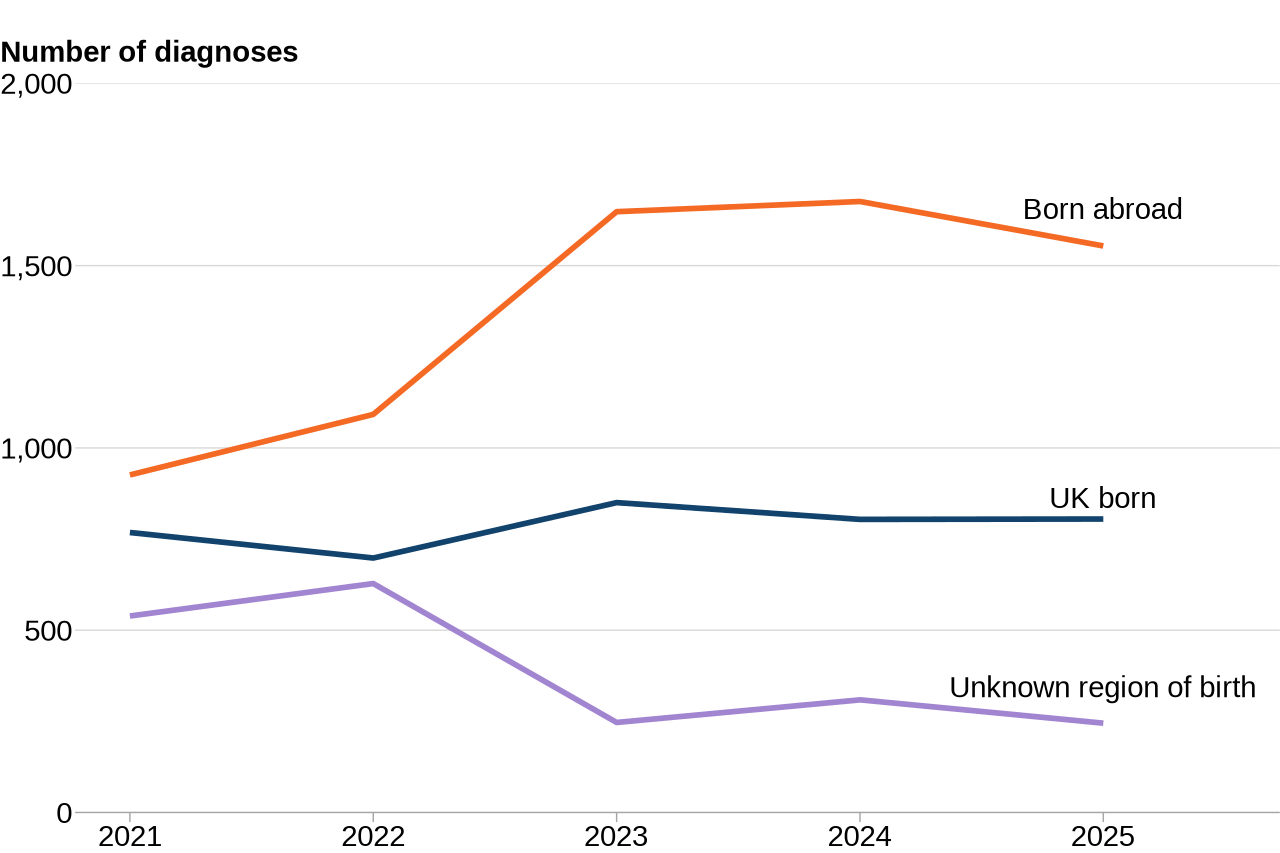
In 2025, 31% (805 of 2,604) of people newly diagnosed with HIV in England were born in the UK and 60% (1,554 of 2,604) were born abroad. Region of birth was not provided for 245 (9%) people newly diagnosed in 2025.
New HIV diagnoses among UK born individuals increased overall by 5% between 2021 and 2025 (768 to 805) and remained stable in 2024 and 2025 (804 to 805). Among people born abroad, new diagnoses increased overall by 68% between 2021 and 2025 (926 to 1,554) however decreased by 7% (1,676 to 1,554) between 2024 and 2025 (Figure 10).
Figure 10. New HIV diagnoses by birth in the UK or outside the UK, England, 2021 to 2025
Source: data from routine returns to HANDD (see the accompanying data tables HIV diagnoses, AIDS, deaths and people in care in England).
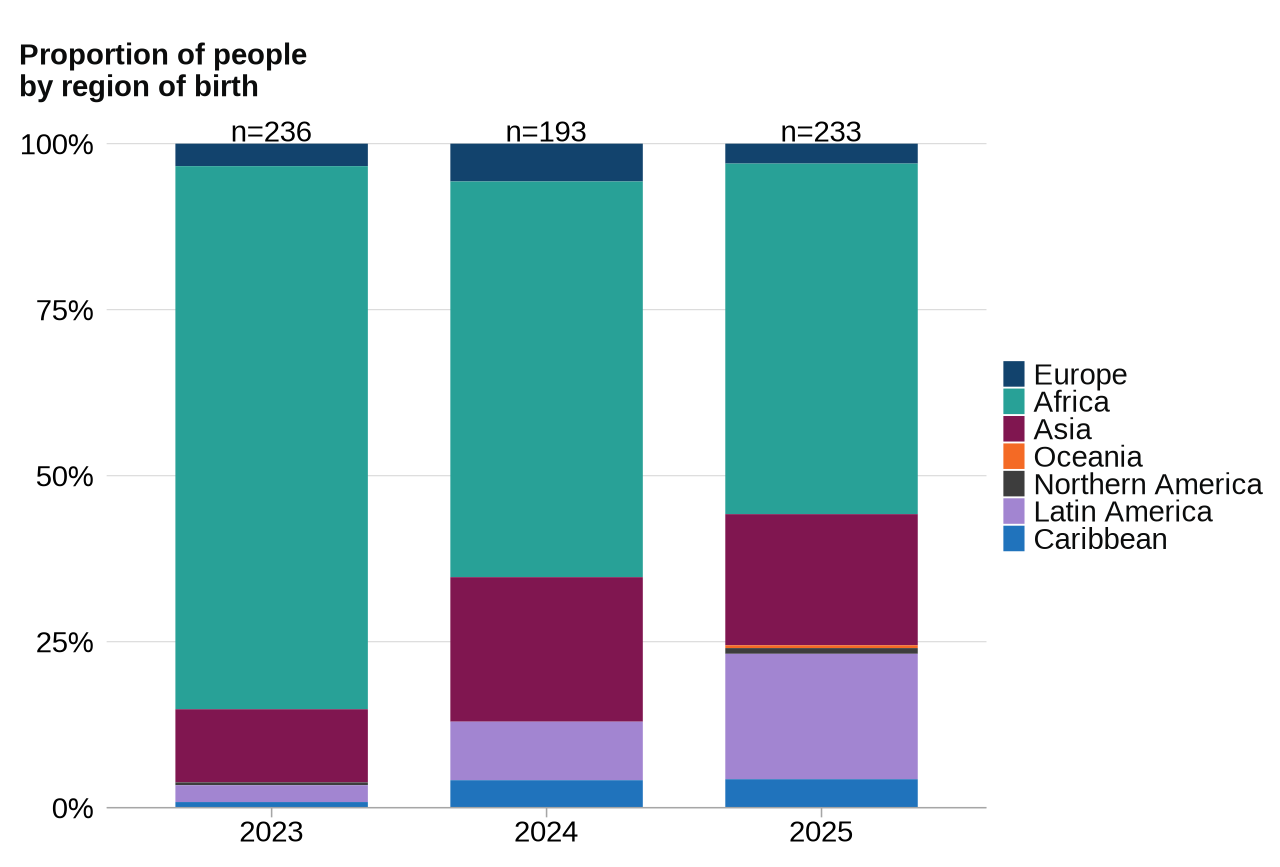
Among people born abroad and newly diagnosed with HIV in England in 2025 (1,554), 43% (662 of 1,554) had arrived in England between 2023 and 2025 (Figure 11). Year of arrival was unknown for 12% (194) of people born abroad and newly diagnosed in 2025.
Of the 233 people born abroad and newly diagnosed with HIV in 2025 who arrived in England in 2025, 53% (123) were born in Africa, 20% (46) were born in Asia, 19% (44) were born in Latin America, 4% (10) were born in the Caribbean, 3% (7) were born in rest of Europe and less than 1% were born elsewhere. Of the people born in Latin America and newly diagnosed in 2025, 19% (44 of 233) arrived in England in 2025 while 9% (17 of 193) arrived in 2024 (Figure 11).
Figure 11. Proportion of new HIV diagnoses in 2025 in people born abroad by region of birth and year of arrival, England [note 4]
Source: data from routine returns to HANDD.
Note 4: most of the new HIV diagnoses shown (of people newly diagnosed in 2025) reflect years of arrival in England between 2023 and 2025, as included within the figure, but a remaining 45% reported a year of arrival prior to 2023. Year of arrival was unknown for 12% of the individuals born abroad and newly diagnosed in 2025. The numbers above the bars indicate the total number (n=) of people newly diagnosed with HIV in England in 2025 who were born abroad and arrived in England in the corresponding year.
New HIV diagnoses among gay and bisexual men
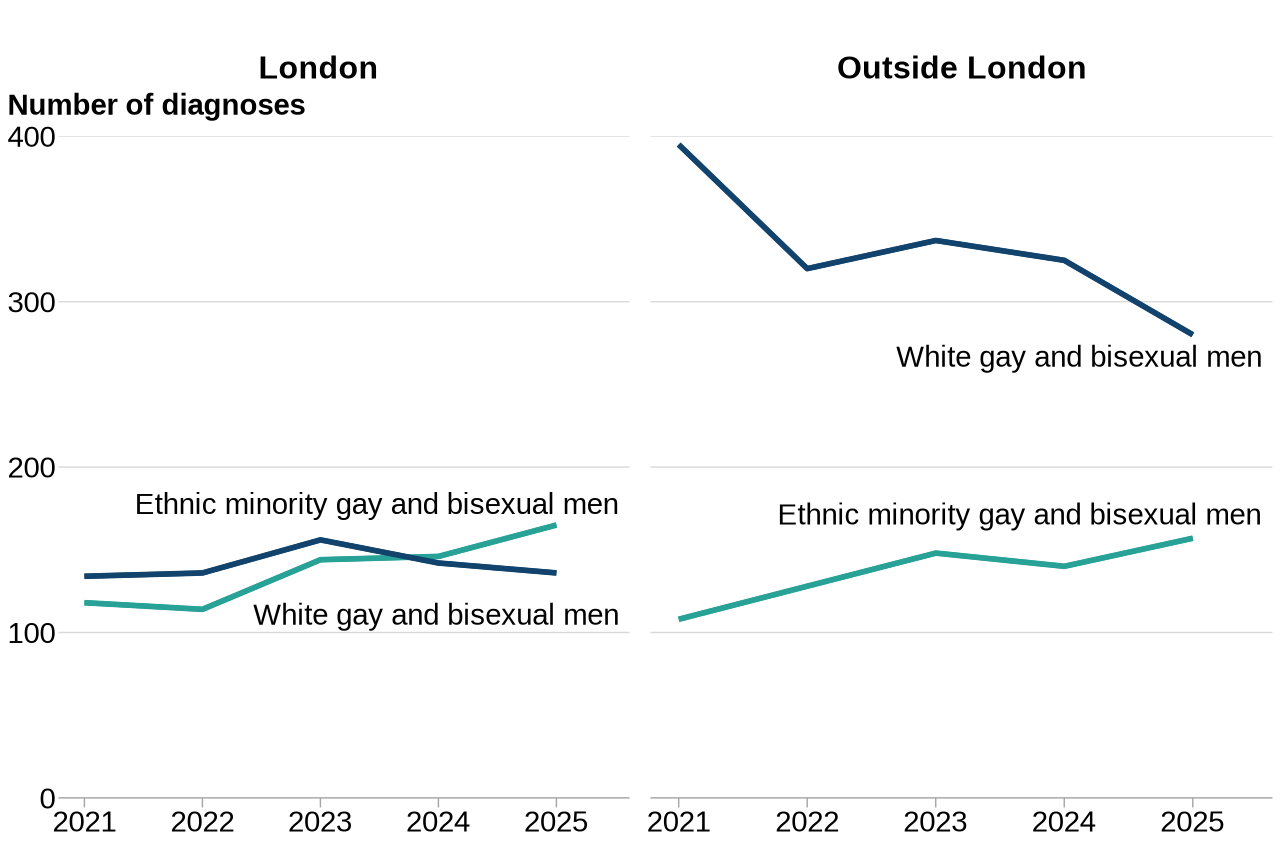
In England, the number of new HIV diagnoses among gay and bisexual men decreased by 4% (807 to 776) between 2024 and 2025 (Figure 8). Whilst diagnoses among gay and bisexual men living in London rose slightly by 2% (315 to 322) between 2024 and 2025, diagnoses decreased by 8% (492 to 454) among men living outside London.
Between 2024 and 2025, new HIV diagnoses among ethnic minority gay and bisexual men increased by 13% (146 to 165) among men living in London and by 12% (140 to 157) among men living outside London. In contrast, new HIV diagnoses among White gay and bisexual men declined between 2024 and 2025, by 4% (142 to 136) among men living in London and by 14% (325 to 280) among men living outside London. Between 2021 and 2023, new HIV diagnoses among gay and bisexual men living in London were higher among White men than among ethnic minority men. By 2024, however, new diagnoses among ethnic minority gay and bisexual men living in London surpassed those among White gay and bisexual men (Figure 12).
Figure 12. New HIV diagnoses among White and ethnic minority gay and bisexual men living in London and outside London, England, 2021 to 2025
Source: data from routine returns to HANDD (see the accompanying data tables HIV diagnoses, AIDS, deaths and people in care in England).
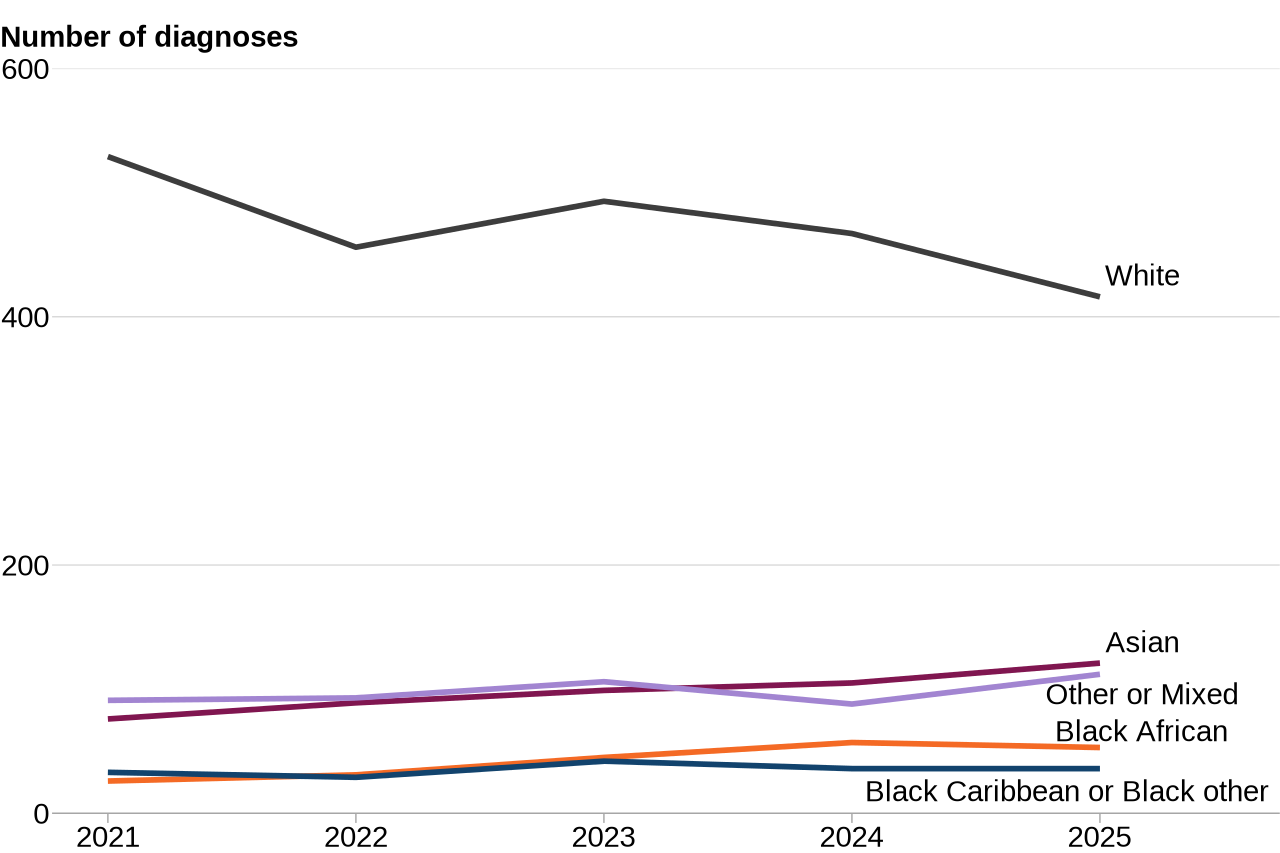
New HIV diagnoses decreased by 11% (from 467 in 2024 to 416 in 2025) among White gay and bisexual men (Figure 13). Ethnic minority men constituted 41% (322 of 776) of HIV diagnoses among gay and bisexual men in 2025 compared to 35% (286 of 807) in 2024.
New HIV diagnoses among ethnic minority gay men increased as follows between 2024 and 2025: Black other (43%, 14 to 20), Other or Mixed (27%, 88 to 112) and Asian (15%, 105 to 121) ethnicity. There were decreases in new HIV diagnoses between 2024 and 2025 among ethnic minority gay and bisexual men of Black African (7%, 57 to 53) and Black Caribbean ethnicity (27%, 22 to 16) (Figure 13). Ethnicity was unknown for 5% (38) gay and bisexual men newly diagnosed in 2025.
Figure 13. New HIV diagnoses among gay and bisexual men by ethnicity, England, 2021 to 2025
Source: data from routine returns to HANDD (see the accompanying data tables HIV diagnoses, AIDS, deaths and people in care in England).
Over half of gay and bisexual men newly diagnosed in England in 2025 were born abroad (52%, 401 of 776), an increase from 34% (268 of 794) in 2021 and 47% (379 of 807) in 2024. In 2025, of gay and bisexual men newly diagnosed and born abroad, 16% (124 of 776) were born in Asia, 13% (100 of 776) were born in rest of Europe, 10% were born in Latin America (79 of 776), 9% (72 of 776) were born in Africa and 2% (14 of 776) in the Caribbean. 2% of the men were born elsewhere and region of birth was unknown for 2% of the men.
Of the ethnic minority gay and bisexual men newly diagnosed in England in 2025, 78% (252 of 322) were born abroad with 46% of those born abroad (115 of 252) born in Asia. Of the ethnic minority gay and bisexual men born abroad and newly diagnosed in 2025, 26% (65 of 252) also arrived in England in 2025.
There was an overall decrease in new diagnoses across all age groups among gay and bisexual men living in England between 2024 and 2025, with the largest decreases among men aged 65 years and over (30%, 27 to 19). However, diagnoses increased by 19% among only those aged 25 to 34 years, between 2024 and 2025 living in London (from 128 to 152).
New HIV diagnoses among heterosexuals
Among heterosexuals, new HIV diagnoses decreased by 10% (1,420 to 1,271) between 2024 and 2025. New diagnoses among heterosexual men decreased by 7% (662 to 615) between 2024 and 2025 and diagnoses among heterosexual women decreased by 13% (758 to 656) (Figure 8).
Of the heterosexual men newly diagnosed in 2025, 34% (209 of 615) were born in the UK and 63% (386 of 615) were born abroad, with region of birth unknown for 3% of these men. Among heterosexual women, 20% (131 of 656) were born in the UK and 77% (503 of 656) were born abroad, with region of birth unknown for 3% of these women.
Of the 1,271 heterosexuals newly diagnosed in 2025, 52% (666) were born in Africa, 27% (340) were born in the UK, 7% (94) were born elsewhere in Europe, 6% (78) were born in Asia, 2% (27) were born in the Caribbean, 1% (18) were born in Latin America, less than 1% were born elsewhere, and 3% (42) had unknown region of birth. Among heterosexuals diagnosed in 2025 who were born abroad where year of arrival was known, 26% (232 of 889) also arrived in England either in 2024 or 2025.
Between 2024 and 2025, new HIV diagnoses among heterosexual men increased among men of White ethnicity (27%, 169 to 215), men of Other or Mixed ethnicity (13%, 53 to 60) and men of Black other ethnicity (9%, 22 to 24). There were decreases in diagnoses among heterosexual men of Black African ethnicity (23%, 274 to 210), Black Caribbean ethnicity (12%, 26 to 23), and Asian ethnicity (16%, 62 to 52).
Among heterosexual women, new HIV diagnoses between 2024 and 2025 increased among women of White ethnicity (9%, 114 to 124), Black other ethnicity (15%, 26 to 30), Other or Mixed ethnicity (16%, 56 to 65) and Black Caribbean ethnicity (20%, 20 to 24). Decreases were seen in new HIV diagnoses among heterosexual women of Black African ethnicity (18%, 434 to 358), and Asian ethnicity (52%, 44 to 21).
New HIV diagnoses among the 5 adult population groups
Among all 5 adult population groups, new HIV diagnoses decreased between 2024 and 2025 for all apart from ethnic minority gay and bisexual men.
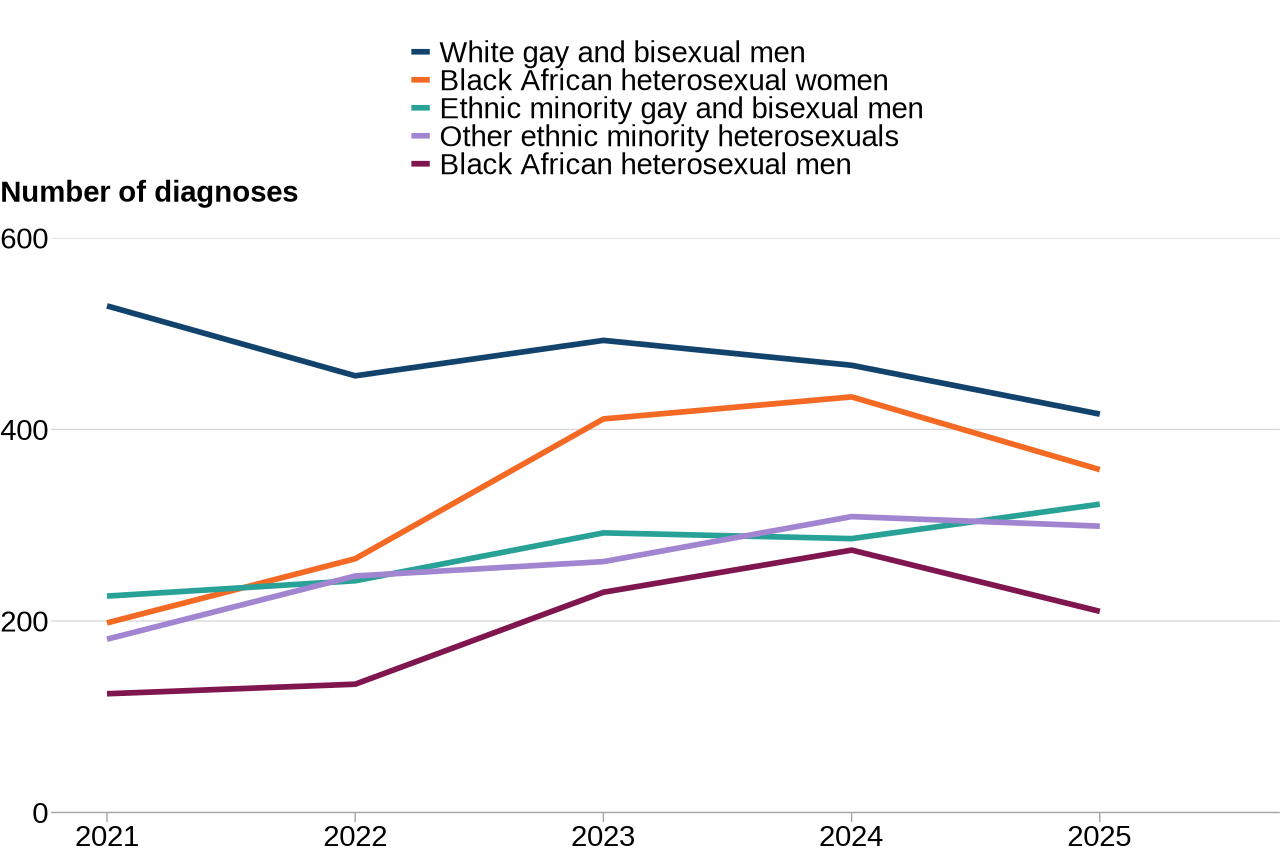
The decrease was steepest for Black African heterosexual men (23%) from 274 in 2024 to 210 in 2025, followed by Black African heterosexual women (18%) from 434 in 2024 to 358 in 2025, White gay and bisexual men (11%) from 467 in 2024 to 416 in 2025 and other ethnic minority heterosexual adults (3%) from 309 in 2024 to 299 in 2025, (Figure 14).
Among ethnic minority gay and bisexual men, a 13% increase was observed from 286 in 2024 to 322 in 2025 (Figure 14).
Figure 14. New HIV diagnoses among 5 adult population groups, England, 2021 to 2025
Source: data from routine returns to HANDD (see the accompanying data tables HIV diagnoses, AIDS, deaths and people in care in England).
Impact of emergency department opt-out testing on new HIV diagnoses
NHS England has implemented a programme of opt-out testing for bloodborne viruses (BBVs) in 89 EDs across England. This began in April 2022 with 34 sites located primarily in areas with a very high diagnosed prevalence of HIV, before being expanded to a second wave of 44 EDs located in areas with a high diagnosed prevalence of HIV in 2024. A third wave of 9 sites was implemented in April 2025, however, these sites are not represented in the data below.
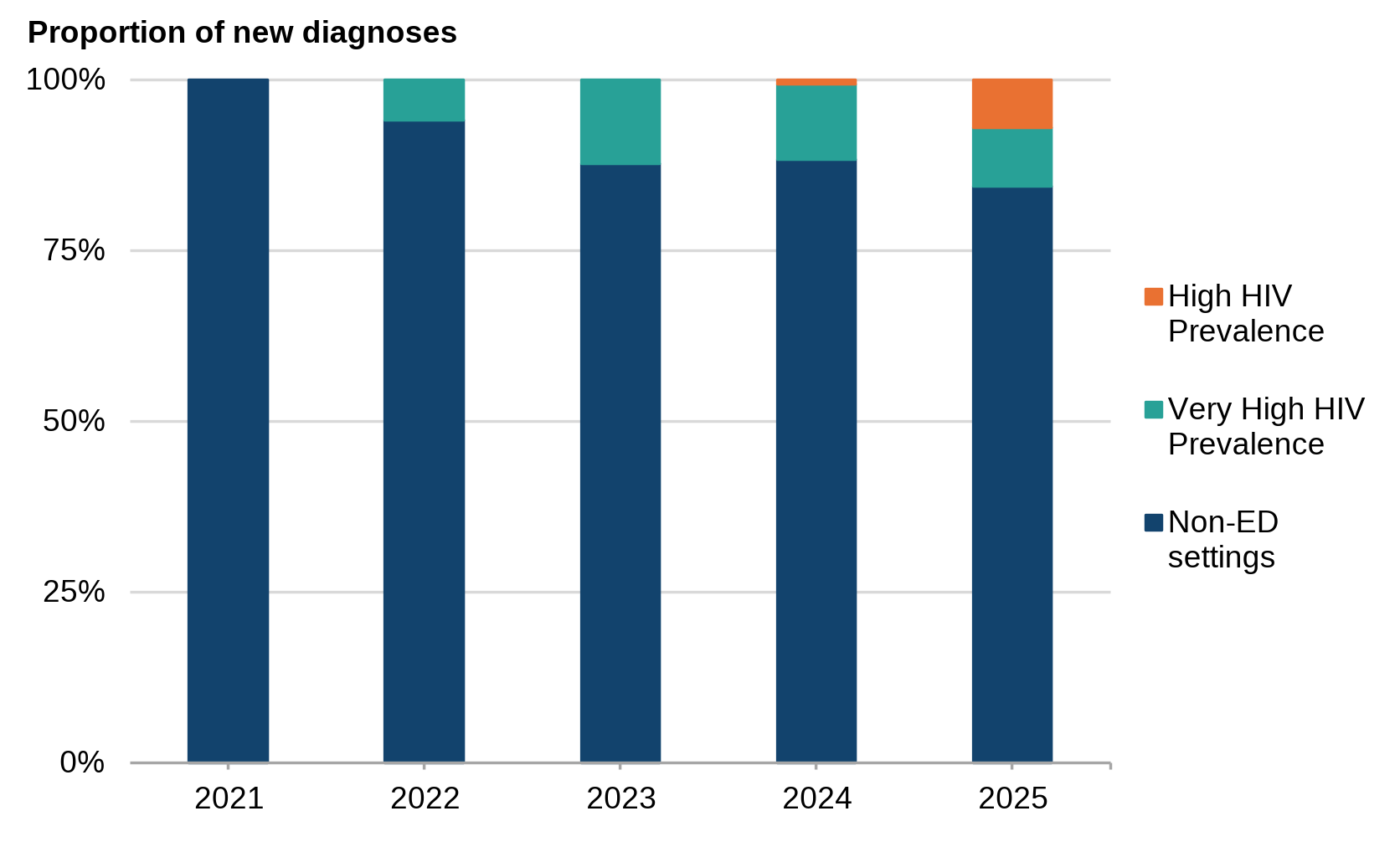
Between April 2022 and December 2025 at 78 EDs in the first and second waves, 1,244 people were newly diagnosed with HIV, with 146 in 2022, 344 in 2023, 337 in 2024 and 417 in 2025. In 2022, 6% of all new HIV diagnoses were as a result of ED opt-out testing, with 12% in 2023 and 2024 respectively and increasing to 16% in 2025. As more ED sites went live with opt-out testing across 2024 and 2025 as part of Wave 2, the proportion of all new HIV diagnoses identified within areas of high prevalence increased from 1% in 2024 to 7% in 2025 (Figure 15a).
Compared to 2024, after excluding people diagnosed by the Programme, new diagnoses in 2025 decreased by 4% (737 to 707) among gay and bisexual men, by 15% (593 to 507) among heterosexual men and 19% (690 to 558) among heterosexual women.
Figure 15a. Proportion of new HIV diagnoses in ED and non-ED testing settings [note 5], England, 2021 to 2025
Source: data from routine returns to HANDD excluding ED opt-out data for 78 Sentinel Surveillance of Bloodborne Virus (SSBBV) sites.
Note 5: data only includes matched records between SSBBV and HANDD or HIV and AIDS Reporting System (HARS), therefore, HIV diagnoses due to ED opt-out testing are likely underestimated. Further information can be found in the ED evaluation report.
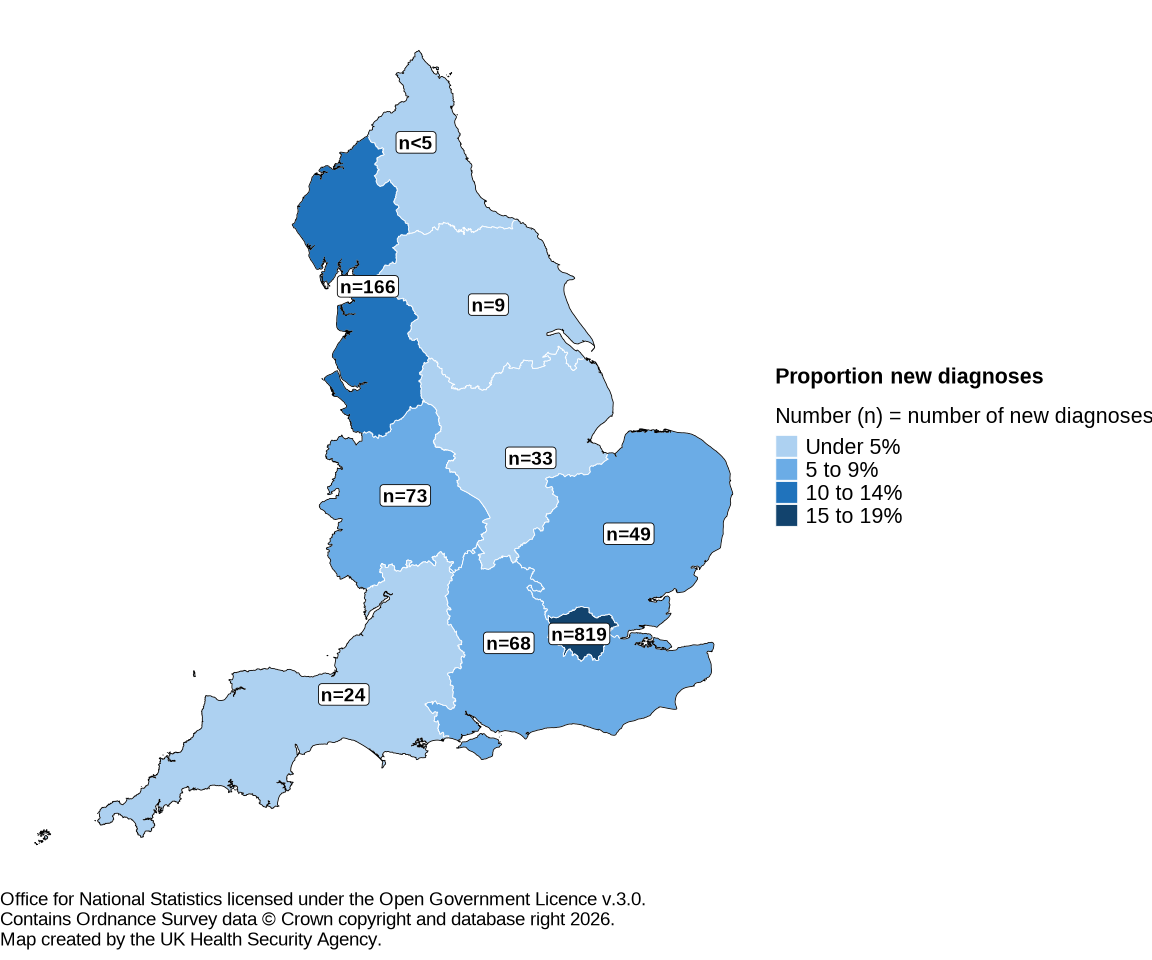
Since the rollout of ED opt-out testing in Wave 1 sites in April 2022 and in Wave 2 sites in July 2024, London saw the highest proportion of new diagnoses (20%) through the programme (Wave 1 and Wave 2) followed by the North West (15%) (Figure 15b).
Figure 15b. Proportion of new HIV diagnoses within ED testing settings [note 6], by region of residence in England, 2022 to 2025
Note 6: data only includes matched records between SSBBV and HANDD or HARS, therefore, HIV diagnoses due to ED opt-out testing are likely underestimated. Further information can be found in the ED evaluation report.
Late HIV diagnosis
A late HIV diagnosis is defined as having a CD4 count below 350 cells per cubic millimetre of blood within 91 days of diagnosis and no evidence of recently acquiring HIV (full definition of late HIV diagnosis in the Appendix).
Of the adults newly diagnosed with HIV in England, 79% (2,060 of 2,604) had a CD4 count reported within 91 days of diagnosis in 2025, compared to 81% (2,256 of 2,789) in 2024.
The number of late diagnoses among adults newly diagnosed in England with a CD4 count within 91 days of diagnosis decreased by 10% from 975 in 2024 to 877 in 2025 with the proportion of diagnoses made late remaining unchanged at 43% (975 of 2,256) in 2024 and in 2025 (877 of 2,060).
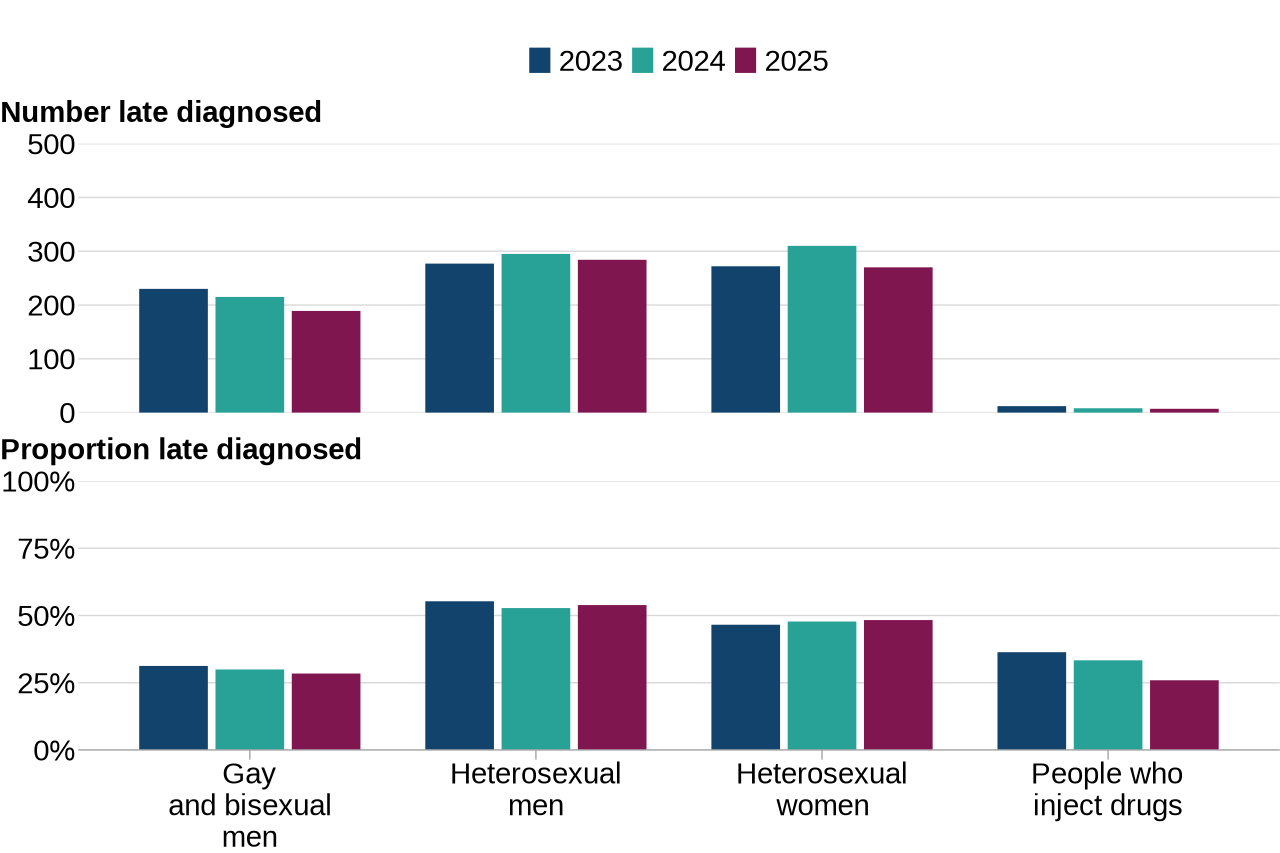
Between 2024 and 2025, the number of late diagnoses decreased across all probable routes of exposure, however the number and proportion of late diagnosed remained consistently highest in heterosexual men (54%, 284 of 527 in 2025) and women (48%, 270 of 559 in 2025). During the same period, the proportion of late diagnoses decreased among gay and bisexual men from 30% (215 of 718) to 28% (189 of 665) and people who inject drugs from 33% (8 of 24) to 26% (7 of 27) (Figure 16).
Figure 16. Number and proportion of people diagnosed late by probable route of exposure, England, 2023 to 2025
Source: data from routine returns to HANDD (see the accompanying data tables HIV diagnoses, AIDS, deaths and people in care in England).
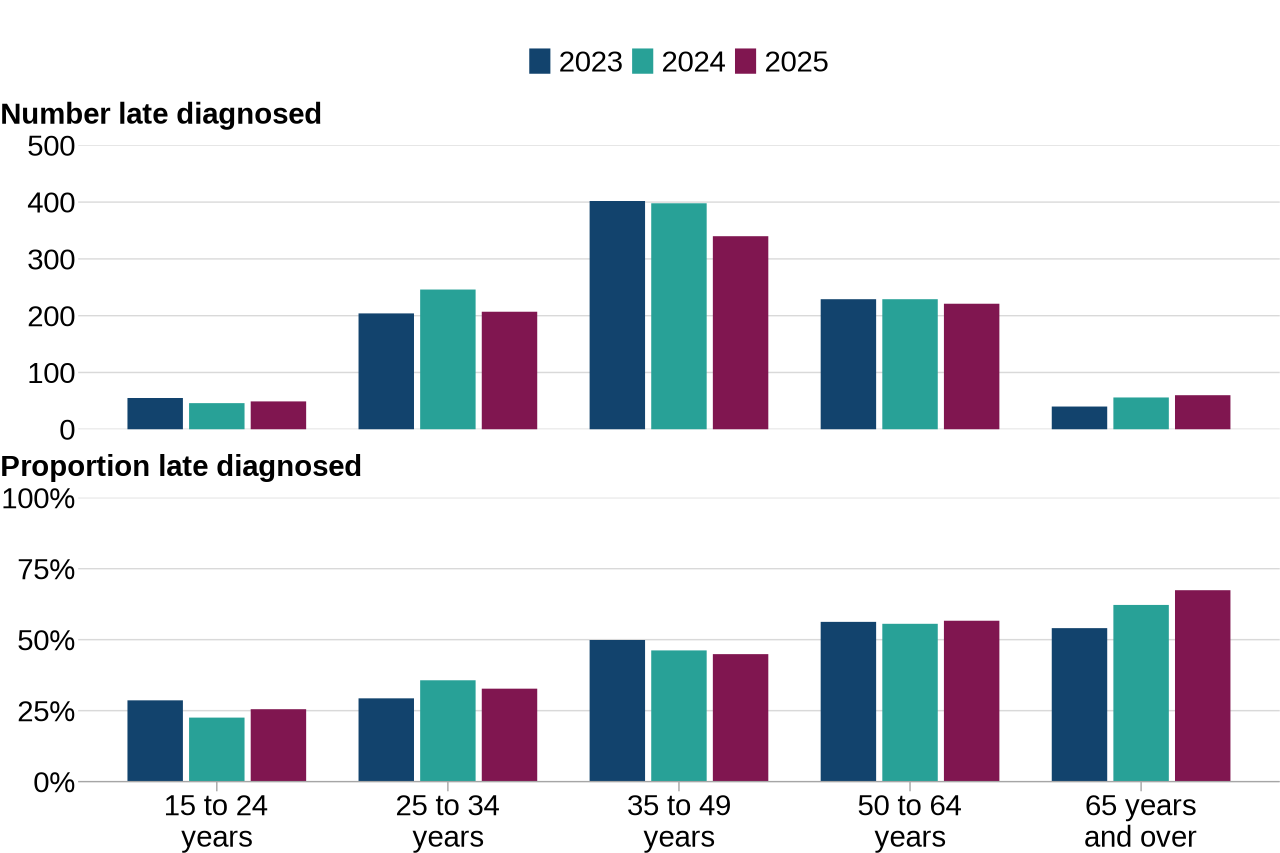
Both the number and proportion of late diagnoses between 2024 and 2025 increased among people aged 65 years and over from 62% (56 of 90) to 67% (60 of 89). The number and proportion of late diagnoses among people aged 15 to 24 years also increased in the same period from 23% (46 of 204) to 26% (49 of 192) (Figure 17).
Figure 17. Number and proportion of people diagnosed late by age at diagnosis, England, 2023 to 2025
Source: data from routine returns to HANDD (HIV diagnoses, AIDS, deaths and people in care in England of the accompanying data tables).
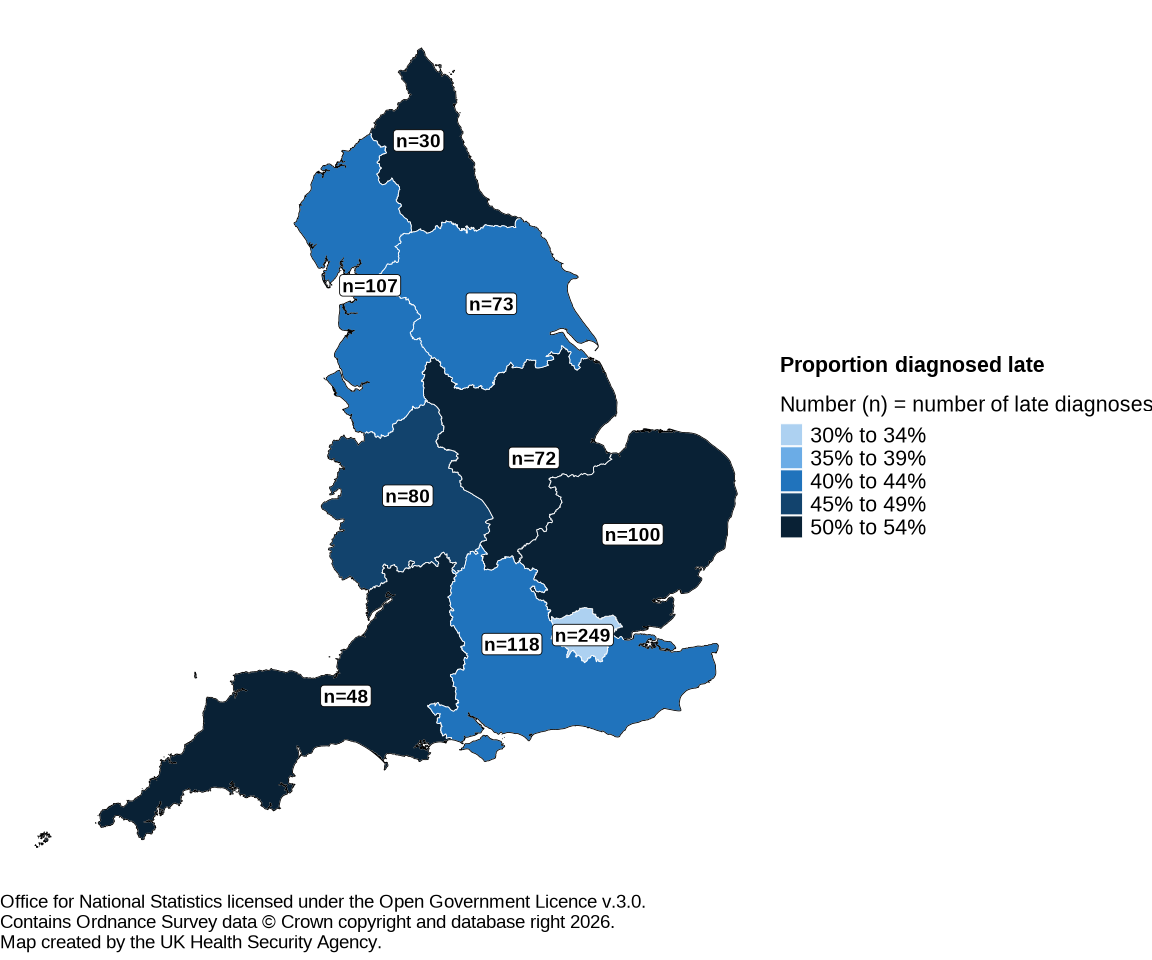
The proportion of late diagnoses decreased between 2024 and 2025 in London (37% to 34%), the South East (47% to 42%), and Yorkshire and Humber (50% to 43%), with London recording the lowest proportion in 2025. In contrast, proportions increased in the North West (40% to 44%), South West (45% to 50%), East Midlands (50% to 53%), and East of England, which had the highest proportion in 2025 (54%, 100 of 185), up from 48% (100 of 209) in 2024. Although the proportion of late diagnoses increased in most regions, the number of late diagnoses decreased across most areas, except in the North West (94 to 107) and East Midlands (69 to 72). London recorded the highest number of late diagnoses overall (249) in 2025 (Figure 18).
Figure 18. Number and proportion of adults diagnosed late by region of residence, England, 2025
Source: data from routine returns to HANDD (HIV diagnoses, AIDS, deaths and people in care in England of the accompanying data tables).
Late HIV diagnosis among the 5 adult population groups
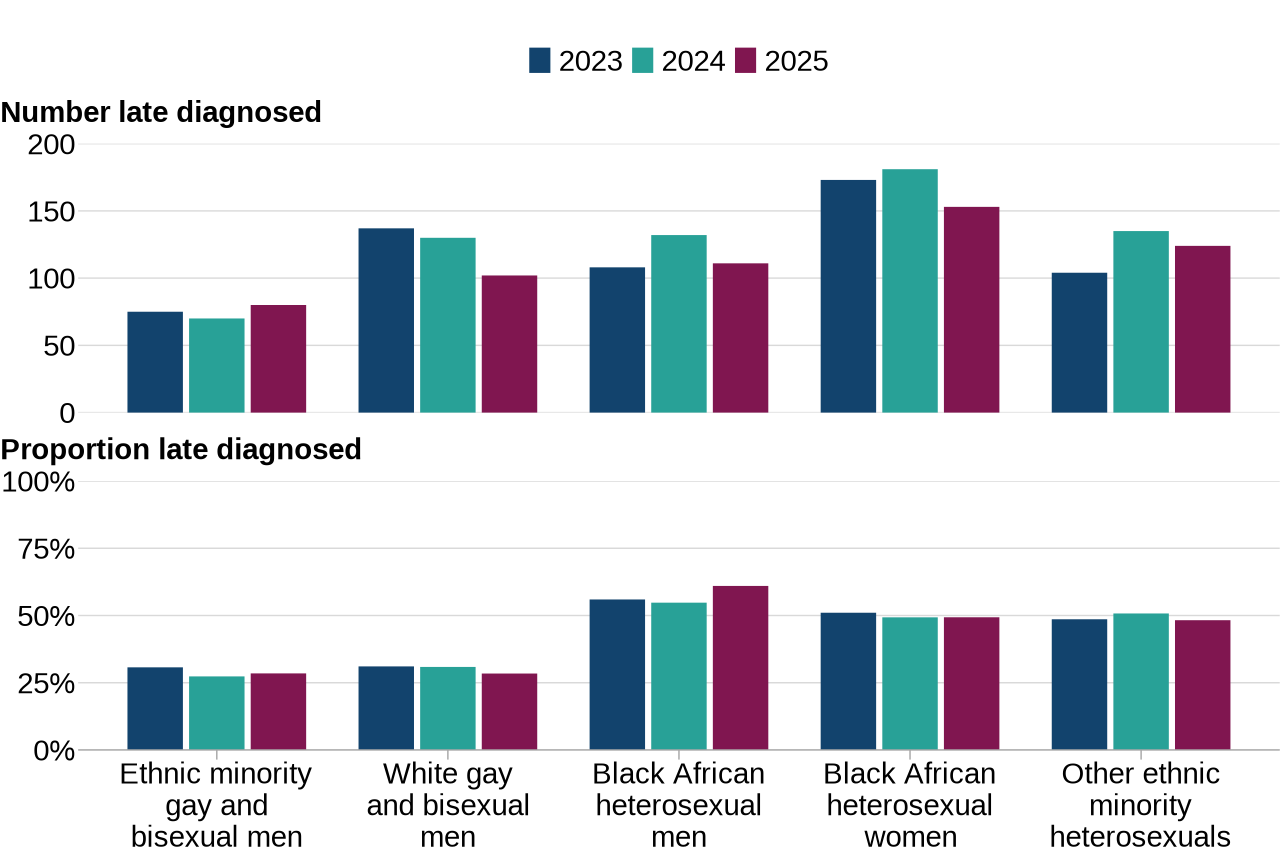
Since 2023, late HIV diagnoses among White gay and bisexual men have continued to decline, and in 2025 this group had one of the lowest numbers of late diagnoses among the 5 population groups (102), compared with Black African heterosexual women, who had the highest number (153). Among the 5 population groups, Black African heterosexual women have consistently had the highest number of late diagnoses since 2023 (Figure 19).
Between 2024 and 2025, late HIV diagnoses increased by 14% (from 70 to 80) among ethnic minority gay and bisexual men, despite this increase, this group had the lowest number of late diagnoses in 2025 compared with the other population groups. In contrast, late diagnoses declined in all other population groups: by 22% among White gay and bisexual men (from 130 to 102), 16% among Black African heterosexual men (from 132 to 111), 15% among Black African heterosexual women (from 181 to 153), and 8% among other ethnic minority heterosexual adults (from 135 to 124) (Figure 19).
Between 2024 and 2025, the proportion of late HIV diagnoses increased among Black African heterosexual men from 55% (132 of 241) to 61% (111 of 182) and slightly among ethnic minority gay and bisexual men from 27% (70 of 256) to 28% (80 of 281) (Figure 19).
Figure 19. Number and proportion of people diagnosed late by 5 adult population groups, England, 2023 to 2025
Source: data from routine returns to HANDD (HIV diagnoses, AIDS, deaths and people in care in England of the accompanying data tables).
One-year all-cause mortality rate among adults newly diagnosed with HIV
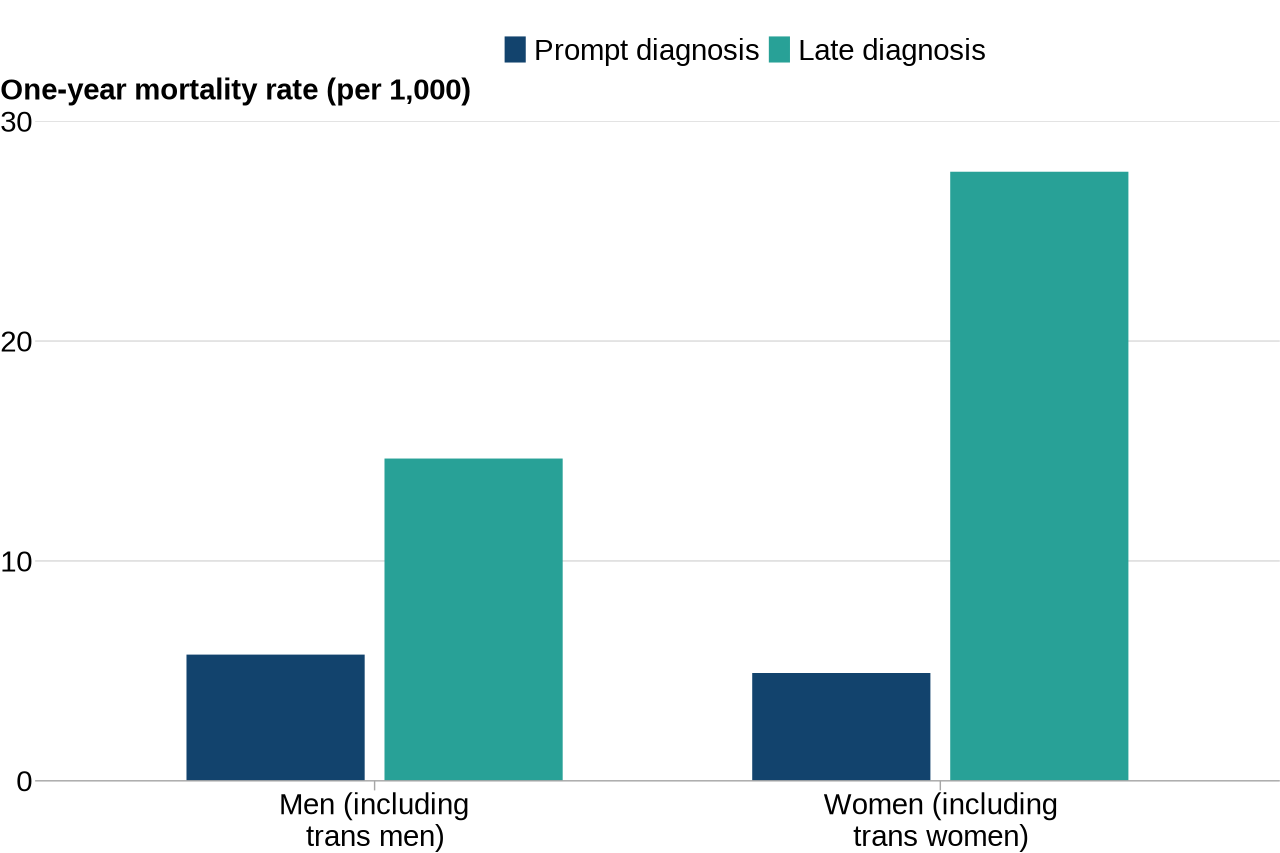
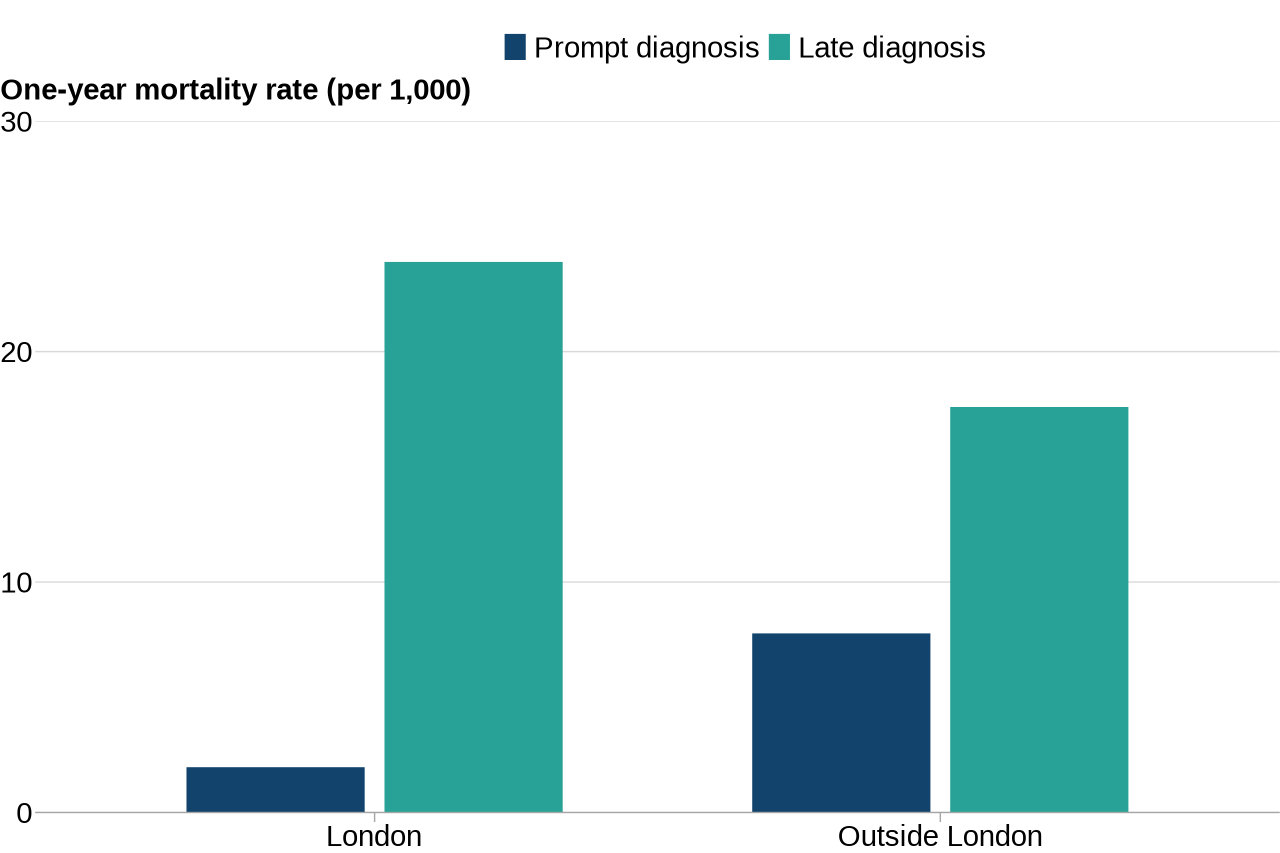
People diagnosed late in England in 2024 were 4 times more likely to die (deaths due to all-cause mortality) within a year of their diagnosis, compared to people diagnosed promptly.
Men diagnosed late in England in 2024 had a mortality rate of 15 deaths per 1,000 while women diagnosed late had a mortality rate of 28 deaths per 1,000 (Figure 20a). People living in London who were diagnosed late in 2024 had a mortality rate of 24 per 1,000, compared with a rate of 18 per 1,000 among those living outside London (Figure 20b).
Figure 20a. One-year all-cause mortality (per 1,000) among adults newly diagnosed with HIV, by diagnosis stage and gender identity, England, 2024
Source: data from routine returns to HANDD.
Figure 20b. One-year all-cause mortality (per 1,000) among adults newly diagnosed with HIV, by diagnosis stage and region of residence, England, 2024
Source: data from routine returns to HANDD.
People diagnosed with HIV before continuing care in England
Diagnoses among people diagnosed with HIV before continuing care in England do not reflect HIV acquired in England. As published in the paper ‘People diagnosed with HIV before continuing care in England are extremely unlikely to pass on HIV in England’, most people are rapidly linked to care shortly after their England arrival, ensuring good health outcomes and preventing onward HIV transmission.
There were 1,497 people diagnosed with HIV before continuing care in England in 2025, a 44% decrease from 2,675 in 2024 but a 50% increase relative to 999 people diagnosed with HIV before continuing care in England in 2021. Almost half, (46%, 691 of 1,497) arrived in England in 2025, 26% (395 of 1,497) arrived in 2024 and year of arrival was unknown for 10% (146 of 1,197) of the individuals.
Of the people diagnosed with HIV before continuing care in England in 2025, 28% (419 of 1,497) were living in London and 72% (1,078 of 1,497) were living outside London.
Provisional analyses indicate that in 2025, 93% (1,351 of 1,460) of adults in this population group were linked to care in England within one month (excluding individuals that died within one month of their diagnosis) of their England diagnosis and 95% (1,394 of 1,460) within 3 months (excluding individuals that died within 3 months of their diagnosis).
Of individuals diagnosed with HIV before continuing care in England in 2025 with at least one viral load available (1,446), provisional analyses indicate that 70% (1,011) had evidence of viral suppression within a month of their diagnosis and 84% (1,221) within 12 months of their diagnosis in England suggesting good access to treatment. This may include diagnoses made before 12 months of attendance follow-up data such as viral load counts have been collected and so is likely an underestimate of viral suppression in this group.
Of the 1,497 people diagnosed with HIV before continuing care in England in 2025, 56% (843) were born in Africa, 14% (204) were born in Asia, 12% (177) were born in Latin America, 6% (89) were born elsewhere in Europe, 5% (74) were born in the UK, 3% (41) were born in Northern America, 3% (43) had an unknown region of birth and 1% (20) were born in the Caribbean.
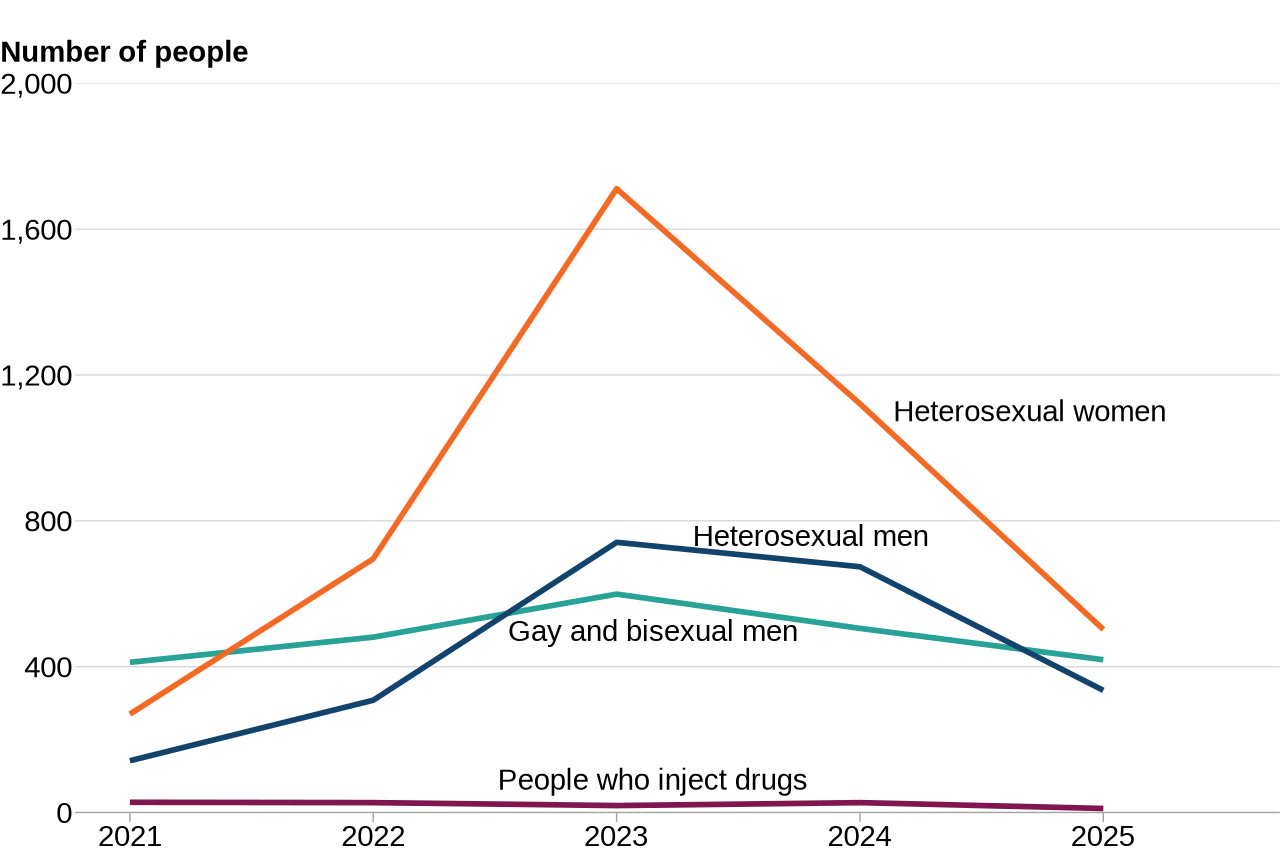
In 2025, of people diagnosed with HIV before continuing care in England, 34% were heterosexual women (55% decrease from 1,121 in 2024 to 502 in 2025), 22% were heterosexual men (50% decrease from 674 in 2024 to 335 in 2025) and 28% were gay and bisexual men (17% decrease from 505 in 2024 to 419 in 2025) (Figure 21).
Figure 21. People diagnosed with HIV before continuing care in England by probable route of exposure, England, 2021 to 2025
Source: data from routine returns to HANDD (see the accompanying data tables HIV diagnoses, AIDS, deaths and people in care in England).
Among the 1,497 people diagnosed with HIV before continuing care in England in 2025, 49% (737) were of Black African ethnicity, 16% (236) were of White ethnicity, 13% (197) were of Other or Mixed ethnicity, 10% (150) were of Asian ethnicity, 7% (111) had an unknown ethnicity, 3% (42) were of Black other ethnicity and 2% (24) were of Black Caribbean ethnicity.
Of the people diagnosed with HIV before continuing care in England in 2025 (where CD4 information was available), using the CD4 count taken within 91 days of their subsequent diagnosis in England, 17% (227 of 1,321) presented late and had a CD4 count below 350 cells per cubic millimetre of blood within 91 days of diagnosis. This compared to 16% (369 of 2,321) in 2024 and 15% (416 of 2,810) in 2023.
All HIV diagnoses
All HIV diagnoses refer to new HIV diagnoses made in England and in people diagnosed with HIV before continuing care in England.
There was a 25% reduction in all HIV diagnoses between 2024 and 2025 from 5,464 to 4,101. A major part of this was a 44% reduction (2,675 in 2024 to 1,497 in 2025) in people diagnosed with HIV before continuing care in England. Alongside this, diagnoses declined by 7% (2,789 to 2,604) in people newly diagnosed in England.
HIV care outcomes
People living with diagnosed HIV and accessing care
In 2025, there were 114,463 people accessing HIV care in the UK, a 2% increase from the 112,101 people accessing care in 2024 and a 25% increase from the 91,464 people accessing care in 2016. In 2025, there were 106,115 people accessing HIV care in England, a 2% increase from 104,033 in 2024 and a 26% increase from the 84,133 people accessing care in 2016.
Of all people accessing HIV care in England in 2025 (106,115), the 5 adult population groups accounted for the majority of individuals (83,521, 79%), comprising 34,271 (32%) White gay and bisexual men, 20,430 (19%) Black African heterosexual women, 10,309 (10%) other ethnic minority heterosexuals, 9,409 (9%) Black African heterosexual men, and 9,102 (9%) ethnic minority gay and bisexual men.
There were 552 (0.5%) trans and gender diverse people accessing HIV care in England in 2025, compared to 527 (0.5%) in 2024.
Between 2016 and 2025, the number of White gay and bisexual men accessing HIV care in England increased by 4% (32,926 to 34,271), representing the smallest increase across the 5 adult population groups. By comparison, the number increased by 49% among ethnic minority gay and bisexual men (6,113 to 9,102), by 33% among Black African heterosexual women (15,338 to 20,430), by 31% among Black African heterosexual men (7,201 to 9,409) and by 31% among other ethnic minority heterosexuals (7,880 to 10,309).
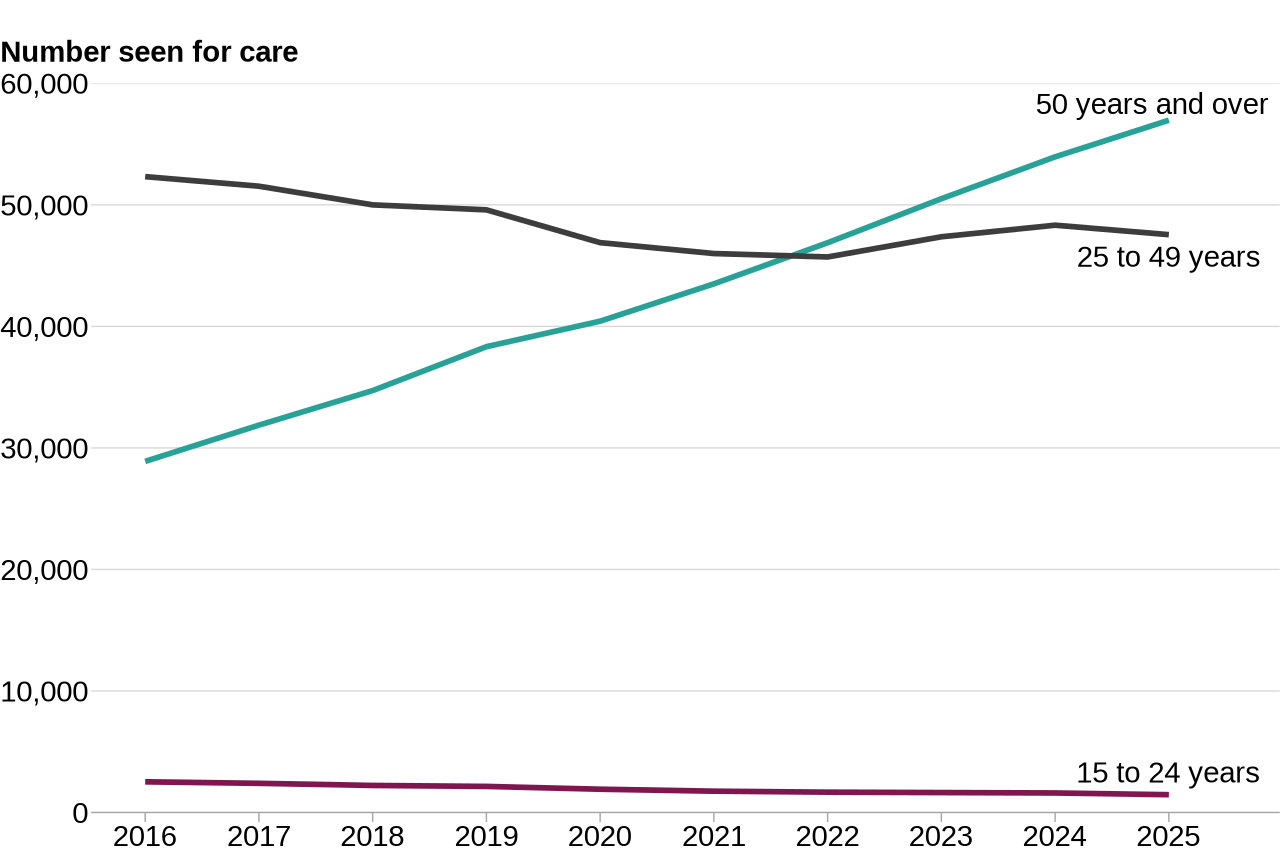
Of the 106,115 people accessing care in England in 2025, 44,650 (42%) were aged 50 to 64 years, 37,148 (35%) were aged 35 to 49 years, 12,320 (12%) were aged 65 years and over, 10,401 (10%) were aged 25 to 34 years, 1,464 (1%) were aged 15 to 24 years and 120 were aged under 15 years (age was unknown for 12 individuals). The cohort of people living with HIV and accessing care is aging with over half (54%, 56,970 of 106,115) aged 50 years and over in 2025 compared to 34% (28,896 of 84,133) in 2016 (Figure 22). Number of people aged 15 to 49 years has been decreasing steadily from 54,847 in 2016 to 49,013 in 2025.
Figure 22. Number of adults seen for HIV care by age, England, 2016 to 2025
Source: data from routine returns to HARS (see the accompanying data tables HIV diagnoses, AIDS, deaths and people in care in England).
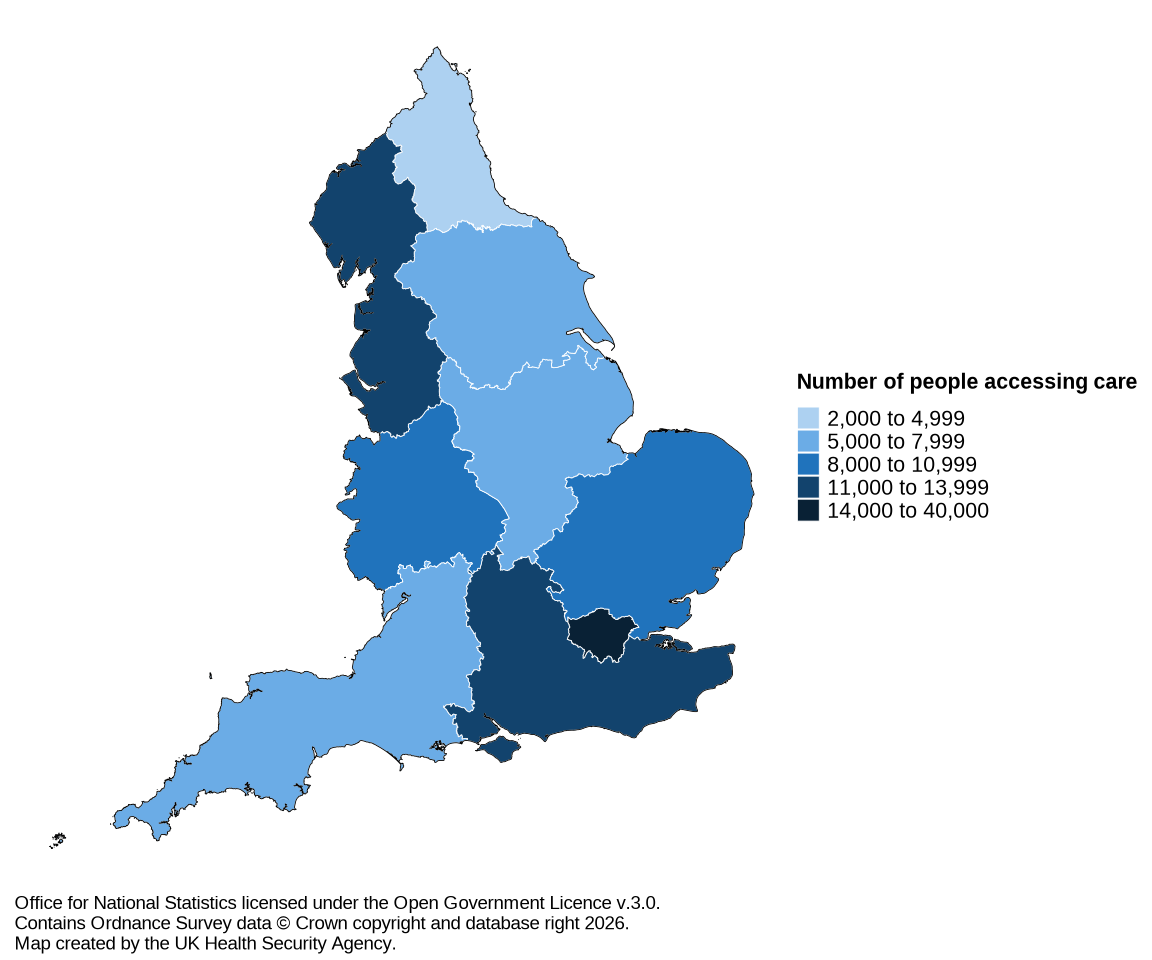
All regions in England saw an increase in the number of people accessing care between 2024 and 2025. In 2025, London accounted for the highest number of people accessing care (39,195), while the North East accounted for the lowest (2,668) (Figure 23). Relative increases were largely consistent across regions, with most recording growth of approximately 3% from 2024 to 2025. In contrast, London and the West Midlands experienced comparatively smaller increases of 1% and 2%, respectively.
Figure 23. Number of people accessing HIV care by region of residence, England, 2025
Source: data from routine returns to HARS (HIV diagnoses, AIDS, deaths and people in care in England of the accompanying data tables).
Treatment coverage in adults
Treatment coverage in adults accessing care in England remained high in 2025 at 99% (104,359 of 105,995) and the same as the treatment coverage in 2024 (99%, 102,954 of 103,896).
In 2025, treatment coverage was consistently high across all probable route of exposure groups (at 99%), with the lowest coverage seen among people with undetermined exposure (94%, 4,679 of 4,978), people who acquired HIV vertically (98%, 2,170 of 2,208) and people who were exposed through IDU (98%, 1,295 of 1,321).
By ethnicity, whilst people of White (48,071 of 48,544), Black African (33,580 of 34,033) and Asian (5,314 of 5,368) ethnicity each had a treatment coverage of 99% in 2025, people with an unknown ethnicity had a coverage of 94% (2,968 of 3,172). In 2025, people of Black Caribbean ethnicity (3,182 of 3,236), Black other ethnicity (3,183 of 3,251) and Other or Mixed ethnicity (8,241 of 8,391) all had a treatment coverage of 98%.
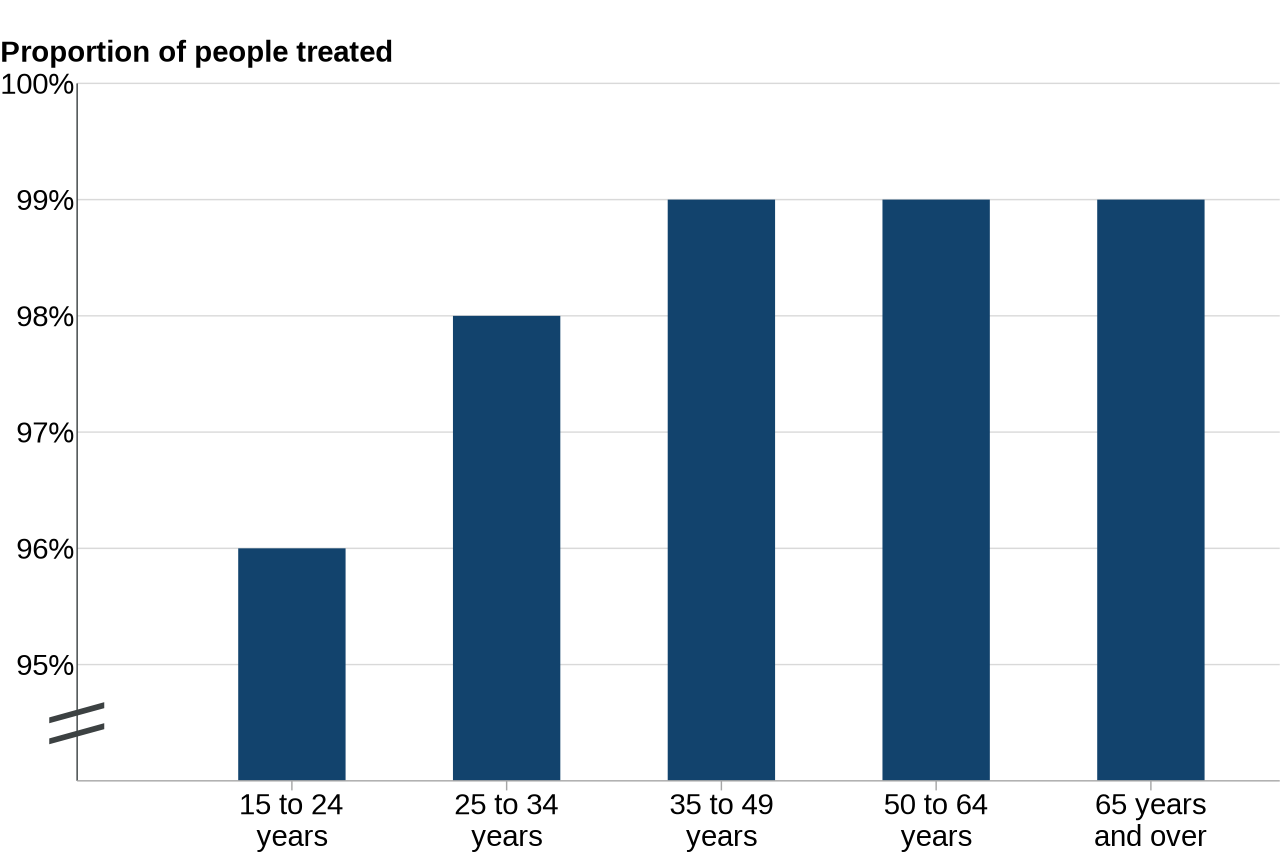
In 2025, treatment coverage was lowest among people aged 15 to 24 years at 96% (1,405 of 1,464) and people aged 25 to 34 years at 98% (10,174 of 10,401) (Figure 24) with the coverage being 99% among all other age groups.
Figure 24. Treatment status of adults seen for HIV care by age groups, England, 2025 (break shown with symbol in y-axis)
Source: data from routine returns to HARS (HIV diagnoses, AIDS, deaths and people in care in England of the accompanying data tables).
HIV viral load suppression
People living with HIV who are virally suppressed (defined as maintaining an undetectable viral load) cannot pass on the virus to sexual partners, even without using PrEP or condoms. This is known as Undetectable = Untransmittable (U = U).
The proportion of people receiving antiretroviral therapy (ART) who were virally suppressed (where reported) remained stable at 98% in 2024 (93,850 of 96,187) and 2025 (99,166 of 100,993). In 2025, viral suppression was equally high at 99% and 98% among gay and bisexual men (41,756 of 42,335) and heterosexuals (49,031 of 49,948) respectively, but lowest at 95% among people who inject drugs (1,162 of 1,221) and 94% among people who acquired HIV vertically (2,064 of 2,203).
Only 93% (1,230 of 1,325) of people aged between 15 and 24 years were virally suppressed in 2025, with the proportion suppressed increasing with age and highest among people aged 65 years and over (99%, 11,654 of 11,742).
All-cause mortality
Data on mortality among people living with HIV in the UK is collated by UKHSA from multiple sources, including the HARS, HANDD, Office for National Statistics (ONS), National HIV Mortality Review (NHMR), Survey of Prevalent HIV Infections Diagnosed (SOPHID), electronic Clinic HIV Reports (eCHR), electronic Laboratory Reporting System (eLab), and data provided by the devolved nations.
The total number of deaths due to all causes of mortality among people with HIV in the UK in 2025 was 784, with 660 of these occurring in England. In England, this represents a 6% decrease in the number of deaths from 702 in 2024. A decrease in deaths was observed overall between 2024 and 2025 among men and women, though there was a greater decrease for women (16% decrease from 185 in 2024 to 156 in 2025) than men (3% decrease from 517 in 2024 to 504 in 2025).
Deaths decreased in most ethnic groups in England in 2025. However, increases were observed among people of Black African ethnicity (153 in 2025 compared with 146 in 2024) and Black other ethnicity (15 compared with 12 in 2024) between 2024 and 2025, although the numbers were similar to those observed in 2023 (158 and 17 respectively). People of White ethnicity accounted for the highest number of deaths in 2025 (383).
In 2025, 58% of deaths among adults living with HIV in England who were diagnosed in the UK occurred in people who had received a late HIV diagnosis, similar to 2024 (55%). Among people who died in 2025 and were diagnosed late, 40% were living in London and the largest proportion were aged 50 to 64 years (45%), similar to the distribution observed in 2024 (48%).
All-cause mortality among 5 adult population groups
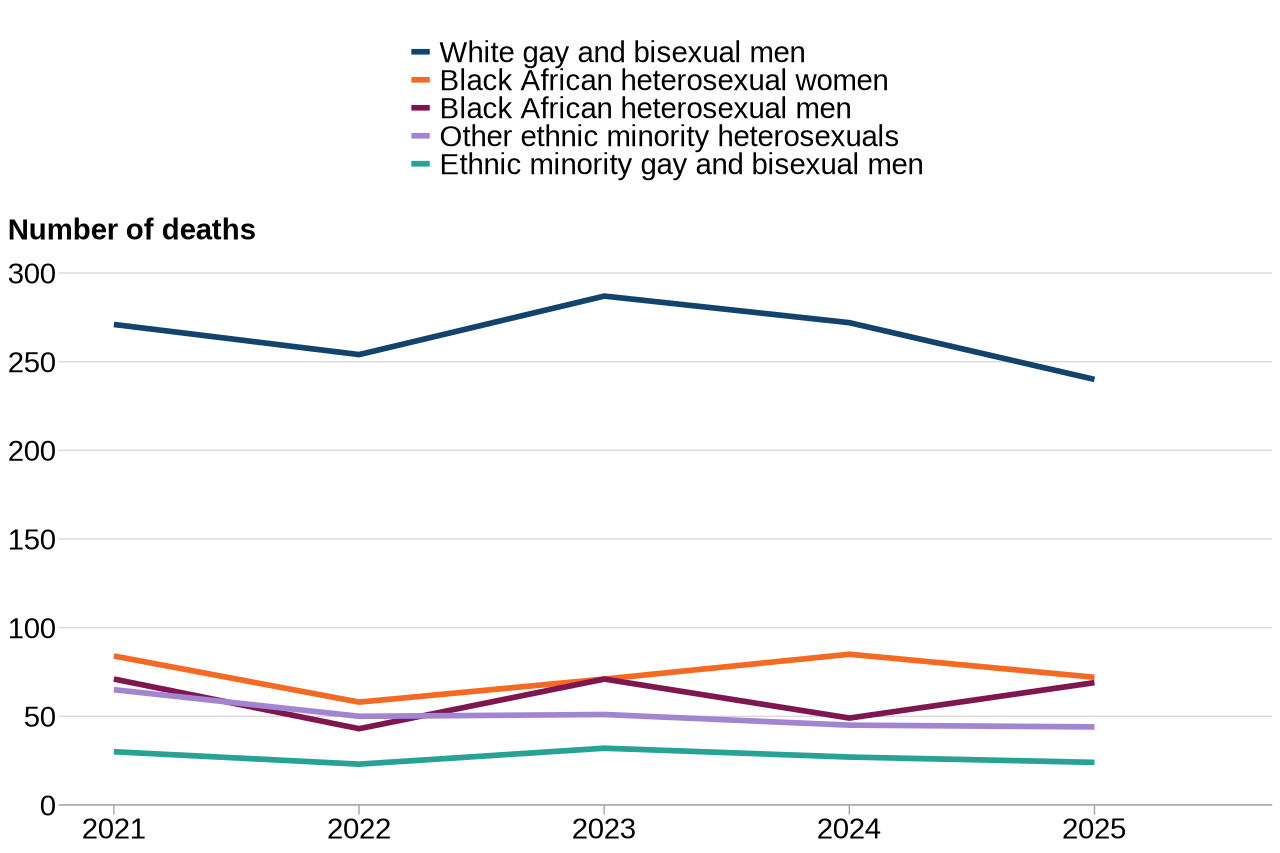
There was a 41% increase in all cause deaths among Black African heterosexual men in England from 49 in 2024 to 69 in 2025, returning to levels similar to those observed in 2023 (71). The number of deaths among other adult population groups declined between 2024 and 2025: 15% reduction (85 to 72) deaths among Black African heterosexual women, an 11% reduction (27 to 24) among ethnic minority gay and bisexual men, 2% reduction (45 to 44) among other ethnic minority heterosexuals, and a 12% reduction (272 to 240) among White gay and bisexual men (Figure 25).
Figure 25. All-cause mortality among 5 adult population groups, England, 2021 to 2025
Sources: data from HARS, HANDD, ONS and NHMR.
Among adult population groups, the lowest median age of death was 54 years for ethnic minority gay and bisexual men in 2025 (age range from 29 to 82 years). The highest median age of death in 2025 was 63 years, for White gay and bisexual men (age range from 27 to 93 years).
Analyses of AIDS-related mortality will be published in the HIV Action Plan monitoring and evaluation framework report.
Preliminary estimates of the UNAIDS 95-95-95 target
The number of people living with HIV in England, including people undiagnosed, is estimated from a Multi-Parameter Evidence Synthesis (MPES) model, which is fitted to Census, surveillance and survey-type prevalence data.
It is provisionally estimated that in 2025, 95.2% (95% credible interval 93.6% to 96.2%) of all people living with HIV in England were diagnosed, with 94.5% of adults diagnosed receiving treatment (104,359 of 110,500, 95% credible interval 109,300 to 111,600) and 98.2% of adults on treatment having suppressed viral loads. Refined estimates incorporating adjustments for missing information and for people not seen for care will be published in the forthcoming HIV Action Plan monitoring and evaluation framework report.
Data sources and methodology
Data sources
The report incorporates data from multiple sources, as outlined below.
GUMCAD
The GUMCAD STI Surveillance System is the mandatory surveillance system for STIs and collects data from all publicly commissioned SHSs in England. It is an electronic, pseudonymised and depersonalised data set. See further details on the development of the GUMCAD STI Surveillance System
HIV and AIDS Reporting System
HARS is a consultation-based, disaggregate data set which is submitted on a quarterly basis, and reported by all NHS-funded outpatient HIV service providers in England. Further details on HIV attendances data submitted to UKHSA for Scotland, Northern Ireland and Wales is detailed in the HIV surveillance systems webpage.
HIV and AIDS New Diagnoses Database
Reports of new HIV diagnoses, first AIDS diagnoses and deaths among people living with HIV are received from laboratories, SHSs, general practice and other services who do not submit data to HARS. Data in HARS including data submitted to UKHSA for Wales, Northern Ireland and Scotland is linked to HANDD data to create a UK database of new HIV diagnoses and deaths.
Children’s HIV and AIDS Reporting System
The Children’s HIV and AIDS Reporting System (CHARS), based at the Institute of Child Health, collects ongoing clinical and other health information on children living with HIV in England on behalf of NHS England who commission the system. Data from CHARS is sent to UKHSA once a year and linked to the HARS and HANDD data sets.
CD4 Surveillance Scheme
The CD4 Surveillance Scheme monitors immunosuppression among adults living with a diagnosed HIV infection in England, Wales and Northern Ireland. The CD4 Surveillance Scheme data is used to calculate late HIV diagnoses, access to HIV care and the clinical outcomes of people living with HIV.
Recent Infection Testing Algorithm programme
The Recent Infection Testing Algorithm (RITA) programme monitors the number of people who recently acquired HIV infection at the time of diagnosis. Specimens from individuals newly diagnosed with HIV are sent by participating laboratories to the UKHSA Virus reference department for recent infection testing using the Limiting Antigen (LAg) avidity assay. The results of this biomarker assay are then linked to reports of new HIV diagnoses in HANDD. RITA testing covers just over 1 in 3 new diagnoses in the UK.
Office for National Statistics mortality data
Once a year, ONS data is incorporated in the HANDD and HARS data sets. This data corresponds to ONS monthly reports of deaths in people with HIV as cause of death, provided by EDAP (Enterprise Data Analytics Platform), which manages UKHSA uses of ONS mortality data.
National HIV Mortality Review
MPES is a complex Bayesian statistical model that combines and triangulates multiple sources of data including census, surveillance and survey-type prevalence data to estimate HIV prevalence (diagnosed and undiagnosed). Information on exposure group sizes, numbers diagnosed and in care, HIV prevalence from prevalence surveys, and data on HIV testing in various groups is synthesised to estimate the number of persons living with undiagnosed HIV.
Sentinel Surveillance of Blood Borne Virus testing
SSBBV aims to gather information on testing for hepatitis C within sentinel laboratory services to inform local and national healthcare planning and help reduce incidence and prevalence. It has since been expanded to cover all regions and to include hepatitis B and A. Since 2010 hepatitis D and E have been included and in 2011 HIV and human T-lymphotropic virus type 1 testing were added.
UNAIDS AIDSinfo database
HIV prevalence data was obtained from the UNAIDS AIDSinfo database, which provides country-level HIV epidemiological estimates and programme data collected and modelled by UNAIDS in collaboration with national governments and partners. The database includes indicators such as adult HIV prevalence, people living with HIV, new infections, and AIDS-related deaths.
Data sources and comprehensive methodological information can be found in the QMI report.
Appendix
Language changes following stakeholder consultation in 2024 and 2025
Between 2024 and 2026, UKHSA engaged in a stakeholders’ review (including focus groups, workshops and a survey) on language used in the annual HIV official statistics. Following feedback from various stakeholders including the BASHH, BHIVA, people living with HIV and a wide range of voluntary and community sector organisations, UKHSA proposed changes, most notably on new HIV diagnoses, probable route of exposure, sexual orientation and gender identity. Terminology that was agreed with stakeholders was implemented in this report.
The following changes were implemented:
- reference to new HIV diagnoses only includes diagnoses first made in England (or the UK if referring to new HIV diagnoses in the UK) and excludes people diagnosed with HIV before continuing care in England
- people previously diagnosed abroad are now referred to as people diagnosed with HIV before continuing care in England
- all HIV diagnoses refer to new HIV diagnoses including people diagnosed with HIV before continuing care in England
- with reference to gender identity, sexual orientation and probable route of exposure, after clearly defining the groups, we simplified the abbreviations as follows in this report:
- for gay, bisexual and all men who have sex with men, the abbreviation is gay and bisexual men (instead of GBMSM or sex between men)
- for heterosexual men or men who acquired HIV through sex with women, we abbreviate as heterosexual men (instead of men exposed through sex with women)
- for heterosexual and bisexual women or women who acquired HIV through sex with men, we use heterosexual women (instead of women exposed through sex with men)
Additional clarity following further stakeholder review in 2026 can be found in the Gender, sexual orientation and HIV probable route of exposure reporting section below.
Gender identity
Gender identity reporting began in 2015 and is as reported to UKHSA by clinics. Gender identity refers to a person’s sense of their own gender whether male (men), female (women) or any other identity (such as non-binary). This may, or may not, be the same as their sex registered at birth. Cisgender refers to people whose gender identity is the same as their sex registered at birth. Gender diverse refers to people whose gender identity is non-binary or people who identify their gender in any other way. Transgender refers to people whose gender identity is not the same as their sex registered at birth.
Gender, sexual orientation and HIV probable route of exposure reporting
After additional stakeholder engagement in 2026, we further clarified our definitions of gender identity and HIV probable route of exposure to improve clarity and inclusivity.
Data presented in the HIV testing, PrEP, PEP and PN sections is derived from GUMCAD, which collects information on sexual orientation but does not capture probable route of HIV exposure. From the new HIV diagnoses section onwards, the report primarily uses data from the HIV surveillance systems (HARS and HANDD), which collect information on probable route of exposure but do not capture sexual orientation.
In terms of gender identity and sexual orientation:
- the terms ‘men’ and ‘women’ inclusively encompass transgender men and transgender women, respectively
- for the purpose of collecting information on HIV exposure, individuals in the ‘gay, bisexual and all men who have sex with men’ category are collectively grouped as ‘gay and bisexual men’
- We recognise that some men within the ‘gay, bisexual and all men who have sex with men’ group may not personally use these identity labels and may identify as heterosexual or in another way
- women in heterosexual and bisexual women categories are grouped under ‘heterosexual women’ to track instances where HIV was acquired through sexual contact with a man
- the ‘heterosexual women’ group encompasses women of diverse sexual orientations (bisexual, gay, lesbian, gay and queer women) who have had sex with men, HIV cannot be passed through sex between women
HIV probable route of exposure is recorded during clinical consultations. Routes of exposure relate to how HIV was acquired (which is, for the purpose of this report, primary consideration), and that can be different from how a person identifies. Probable route of exposure categories does not capture diversity of sexual behaviours. Because routes of exposure are not mutually exclusive, individuals may have multiple possible routes of exposure (for example, sex between men alongside heterosexual contact).
To ensure standardized reporting, hierarchies are applied to overlapping probable route of exposures:
- if a man reports sexual contact with both men and women or reports sexual contact with men alongside IDU, their probable route of exposure would be ‘sex between men’
- if a person reports IDU alongside sex between men and women, their probable route of exposure would be IDU
We acknowledge that current tracking mechanisms present distinct reporting challenges for transgender populations. We are actively conducting further consultations to improve data collection for trans individuals.
5 adult population groups
Five adult population groups were highlighted throughout this report as of interest due to relatively high rates of new HIV diagnoses that are continuing to either plateau or increase.
Adult population groups include:
- ethnic minority gay, bisexual men and all men who have sex with men or ethnic minority people who acquired HIV through sex between men (abbreviated as ethnic minority gay and bisexual men)
- White gay, bisexual and all men who have sex with men or White people who acquired HIV through sex between men (abbreviated as White gay and bisexual men)
- Black African heterosexual men or Black African men who acquired HIV through sex with women (abbreviated as Black African heterosexual men)
- Black African heterosexual women or Black African women who acquired HIV through sex with men (abbreviated as Black African heterosexual women)
- other ethnic minority heterosexual adults (not including Black African heterosexuals) (abbreviated as other ethnic minority heterosexuals)
The adult population group breakdowns only include individuals for whom ethnicity and probable route of exposure have been provided.
The ethnic minority gay and bisexual men group exclude men from White ethnic minorities and includes adult men of:
- Black African ethnicity
- Black Caribbean ethnicity
- Black other ethnicity
- Asian ethnicity
- other ethnicity or Mixed ethnic background
The White gay and bisexual men group include adult men of White British, White Irish and White other ethnicity.
The other ethnic minority heterosexuals group excludes heterosexuals from White ethnic minorities and Black African ethnic minorities.
Late diagnoses corrected for recent HIV acquisition
The definition of late HIV diagnosis currently used in England is a CD4 count below 350 cells per cubic millimetre of blood within 91 days of diagnosis, excluding people with evidence of recent HIV acquisition among adults. This evidence is either a negative test within the 24 months prior to their first positive HIV test, or the result of a RITA, which combines serological recency test results with clinical data. Late HIV diagnoses exclude people diagnosed before continuing their HIV care in England.
Viral suppression
This refers to people with a viral load count below or equal to 200 copies per millilitre.
Change in the PrEP need definition
PrEP need estimates were first published in 2022. Based on stakeholder feedback, the definition of PrEP need has since been revised, and data on PrEP need presented in this publication is based on the revised definition.
To aid interpretation and improve readability, the previous PrEP indicator of use (PrEP initiated or continued) has been renamed to PrEP uptake. The PrEP need identified indicator has been discontinued due to overlap with other PrEP indicators and stakeholder feedback highlighting confusion with its calculation and interpretation. Reporting now focuses on PrEP need and PrEP uptake, PrEP need identified will no longer be reported in official statistics publications.
Previous definition
Previously, PrEP need was defined using a combination of proxy clinical and behavioural indicators reported at attendance or in the 12 months prior. The criteria varied by gender identity and sexual orientation group and included the following:
- GUMCAD activity codes identifying individuals as eligible for PrEP, prescribed PrEP or receiving PrEP. This criterion was applied to all groups.
- Post-exposure prophylaxis following sexual exposure (PEPSE) was included as an indicator of sexual exposure associated with increased HIV acquisition risk and was applied to all groups.
- Being the contact of an index case diagnosed with HIV and/or syphilis identified through PN was included as an additional indicator across all groups.
- STI diagnoses among gay and bisexual men. For gay and bisexual men, the definition included diagnoses of syphilis, gonorrhoea, chlamydia, trichomoniasis, genital warts, non-specific genital infection, lymphogranuloma venereum, donovanosis and chancroid, irrespective of anatomical site.
- For heterosexual men and women, bacterial STI diagnoses were not included as a criterion in the previous definition of PrEP need.
Revised definition
The revised definition applies the same criteria across sexual orientation groups. An individual is identified as having PrEP need if they meet one or more of the following criteria:
- GUMCAD activity codes identifying individuals as eligible for PrEP, prescribed PrEP or receiving PrEP either on the attendance date or within the last 12 months.
- History of selected bacterial STIs: a current diagnosis of infectious syphilis (primary, secondary or early latent stages) or gonorrhoea or diagnosis within the last 12 months.
- Number of sexual partners: 5 or more sexual partners in the last 3 months.
The revised definition therefore differs from the previous definition both in the measures used to identify PrEP need and in their application across gender identity and sexual orientation groups. As a result, estimates produced using the revised definition are not directly comparable with estimates of PrEP need reported in previous publications. The revised definition has been applied to data for previous years reported and supersede previous publications.
Further information and contact details
Feedback and contact information
To provide any feedback or for any queries about this report, please contact harsqueries@ukhsa.gov.uk
Acknowledgements
Alison Brown, Amina Addow, Tobi Kolawole, Anne Presanis, Anu Fasanya, Ammi Shah, Aphrodite Niggebrugge, Catriona Harrison, Carole Kelly, Cuong Chau, Dana Ogaz, Daniela De Angelis, Debbie Mou, Eloise Cross, Ffion Doull, Grahame Davis, Hamish Mohammed, Helen Dwyer, James Lester, Janice Morgan, Joan Ekajeh, Kate Folkard, Katy Sinka, Kayleigh Bispham, Kedeen Okumu-Camerra, Livia Gautel, Martha Veitch, Mary Ramsay, Musa Chirikeni, Natasha Ratna, Neil Mackay, Paul Birrell, Peter Kirwan, Prarthana Narayanan, Ross Harris, Sarah Barnes, Sema Mandal, Shaun Bera, Shona Arora, Sonia Rafeeq, Tamara Đuretić, Temitope Omisore, Veronique Martin, Victoria Schoemig.
Suggested citation
Ammi Shah, Neil Mackay, Tobi Kolawole, Kedeen Okumu-Camerra, Helen Dwyer, Grahame Davis, Cuong Chau, Veronique Martin, James Lester, Alison Brown, Tamara Đuretić. HIV testing, PrEP, new HIV diagnoses and care outcomes for people accessing HIV services: 2026 report. The annual official statistics data release (data to end of December 2025). November 2026, UK Health Security Agency, London
Official statistics
Our statistical practice is regulated by the Office for Statistics Regulation (OSR). OSR sets the standards of trustworthiness, quality, and value in the Code of Practice for Statistics that all producers of official statistics should adhere to. You are welcome to contact us directly by emailing harsqueries@ukhsa.gov.uk with any comments about how we meet these standards. Alternatively, you can contact OSR by emailing regulation@statistics.gov.uk or via the OSR website.
UKHSA is committed to ensuring that these statistics comply with the Code of Practice for Statistics. This means users can have confidence in the people who produce UKHSA statistics because our statistics are robust, reliable, and accurate. Our statistics are regularly reviewed to ensure they support the needs of society for information.