Estimates of Residual Waste and Municipal Residual Waste in England
Updated 29 April 2026
Applies to England

© Crown copyright 2026
This publication is licensed under the terms of the Open Government Licence v3.0 except where otherwise stated. To view this licence, visit nationalarchives.gov.uk/doc/open-government-licence/version/3 or write to the Information Policy Team, The National Archives, Kew, London TW9 4DU, or email: psi@nationalarchives.gov.uk.
Where we have identified any third party copyright information you will need to obtain permission from the copyright holders concerned.
This publication is available at https://www.gov.uk/government/statistics/estimates-of-residual-waste-and-municipal-residual-waste-in-england/estimates-of-residual-waste-excluding-major-mineral-wastes-and-municipal-residual-waste-in-england
This release presents estimates of residual waste and municipal residual waste generated in England covering the calendar years 2019 to 2024 for four principal measures:
- residual waste
- residual waste excluding major mineral wastes
- municipal residual waste
- residual municipal food, plastic, paper and card, metal, and glass waste
The estimates of residual waste (excluding major mineral wastes) and municipal residual waste serve as indicators to track progress against both the long-term target to reduce residual waste (excluding major mineral wastes) laid out in The Environmental Targets (Residual Waste)(England) Regulations 2023 and set in compliance with the Environment Act 2021 and the interim residual waste targets announced in the 2025 Environmental Improvement Plan.
While there are no specific targets in the Environment Act 2021 or the Environmental Improvement Plan 2025 relating to the broader estimates of residual waste presented in this release, they are included to add context and to help give users a more comprehensive indication of how the amounts of residual waste in England are changing over time.
These figures are published as official statistics in development (formerly known as experimental statistics). We welcome user feedback through the contact details provided in this release.
For more information about what data is included in the residual waste measures, please refer to the methodology section of this release. A separate dataset for the estimates included in this release is available on the Estimates of Residual Waste and Municipal Residual Waste in England page of the GOV.UK website.
The impact of the coronavirus (COVID-19) pandemic on these statistics
The 2020 and 2021 calendar years were greatly affected by restrictions put in place to control the COVID-19 pandemic. The period from April to June 2020 saw the biggest impact to waste collections and commercial waste generation as local authorities and businesses acclimatised to and became used to working under national lockdown and COVID-19 pandemic conditions. These factors and others such as changes in household consumption, travel and leisure patterns may have contributed to the drop in residual waste observed in 2020 and the bounce back observed in 2021.
1. Key points
Residual waste
- In 2024, the estimated amount of residual waste in England was 58.4 million tonnes, representing a decrease of 0.5% from 2023 (58.7 million tonnes), and a decrease of 9.3% from 2019 (64.4 million tonnes).
- This estimate corresponds to 996 kilograms per person of residual waste, representing a decrease of 1.6% from 2023 (1,013 kilograms per person), and a decrease of 13% from 2019 (1,145 kilograms per person).
- Between 2019 and 2024, the estimated amount of residual waste sent to landfill decreased by 16.8% from 45.5 million tonnes to 37.8 million tonnes or from 808 kilograms per person to 645 kilograms per person (a decrease of 20.1%).
- Over the same period, the estimated amount of residual waste put through incineration (including Energy from Waste) increased by 16.9%, from 16.1 million tonnes to 18.9 million tonnes, or from 287 kilograms per person to 322 kilograms per person (an increase of 12.2%).
Residual waste excluding major mineral wastes
- In 2024, the estimated amount of residual waste excluding major mineral wastes in England was 31.4 million tonnes, representing a decrease of 2.6% from 2023 (32.2 million tonnes), and a decrease of 3% from 2019 (32.3 million tonnes).
- This estimate corresponds to 535 kilograms per person of residual waste excluding major mineral wastes, representing a decrease of 3.7% from 2023 (556 kilograms per person), and a decrease of 6.9% from 2019 (575 kilograms per person).
- Between 2019 and 2024, the estimated amount of residual waste excluding major mineral wastes sent to landfill decreased from 13.4 million tonnes to 10.8 million tonnes (a decrease of 19.2%), or from 238 kilograms per person to 184 kilograms per person (a decrease of 22.5%).
- Over the same period, the estimated amount of residual waste excluding major mineral wastes put through incineration (including Energy from Waste) increased by 17.0% from 16.1 million tonnes to 18.9 million tonnes, or from 287 kilograms per person to 322 kilograms per person (an increase of 12.2%).
Municipal residual waste
- In 2024, the estimated amount of municipal residual waste in England was 26.1 million tonnes, representing a decrease of 0.1% from 2023 (26.1 million tonnes), and a decrease of 1.1% from 2019 (26.4 million tonnes).
- This estimate corresponds to 445 kilograms per person of municipal residual waste in England in 2024, representing a decrease of 1.3% from 2023 (451 kilograms per person), and a decrease of 5.1% from 2019 (469 kilograms per person).
- Between 2019 and 2024, the estimated amount of municipal residual waste sent to landfill decreased by 23.3% from 9.9 million tonnes to 7.6 million tonnes, or from 176 kilograms per person to 130 kilograms per person (a decrease of 26.5%).
- Over the same period, the estimated amount of municipal residual waste put through incineration (including Energy from Waste) increased by 23.1% from 13.6 million tonnes to 16.8 million tonnes, or from 242 kilograms per person to 286 kilograms per person (an increase of 18.1%).
- The estimated amount of municipal residual waste sent outside the UK for energy recovery decreased by 39.6% from 2.8 million tonnes in 2019 to 1.7 million tonnes in 2024, or from 50 kilograms per person to 29 kilograms per person (a decrease of 42.0%).
Residual municipal food, plastic, paper and card, metal, and glass waste
- Material-specific breakdowns are estimates based on applying existing material composition split estimates to the annual residual municipal waste tonnages, so they share the same trend as each other and the total residual municipal waste figures.
2. Definition of residual waste
Waste that is not recycled or reused, including material that is too degraded or contaminated for these purposes, is termed residual waste. Residual waste, when collected from households or commercial businesses, is often termed ‘black bag’ or ‘black wheelie bin’ waste. It can originate from households and commercial businesses, but also from sectors such as construction and demolition; agriculture, forestry and fishing; mining and quarrying; and industry. It is typically treated by methods other than recycling or reuse.
For the purpose of this release, a treatment-based definition of residual waste is used, where residual waste generated in England means any waste originating in England that is:
- sent to landfill in the UK
- put through incineration in the UK
- used in energy recovery in the UK
- sent outside the UK for energy recovery
This means that only residual waste originating in England, regardless of where it is treated, is included in the estimates in this release, whereas waste treated in England that originated elsewhere is excluded. Ferrous metals removed from incinerator bottom ash, otherwise known as IBA metals, which have been put through incineration or used in energy recovery in England but are then sent for treatment other than landfill or incineration are also excluded from the estimates.
For the purpose of this release, waste put through incineration includes Energy from Waste (incineration with energy generation in the form of electricity and/or heat). Waste used in energy recovery other than conventional Energy from Waste is also included in the definition of residual waste. This includes any waste treatment (excluding anaerobic digestion) that generates energy such as electricity or heat or converts the waste into other energy products such as fuels and substitute natural gas. Though this end-of-life treatment is included in the definition of residual waste, waste treated through energy recovery other than conventional Energy from Waste is not included in the estimates in this release as data is not yet available.
Please refer to the methodology section of this release for further detail about the data sets and methodology used to obtain the estimates of residual waste.
3. Residual Waste
These residual waste estimates largely exclude waste from marine dredging activities and other mineral wastes from mining activities.
This measure of residual waste does not have any specific targets in the Environment Act 2021 or the Environmental Improvement Plan 2025. It is included here to add context and to help give users a more comprehensive indication of how the amounts of residual waste in England are changing over time.
3.1 Estimates of residual waste
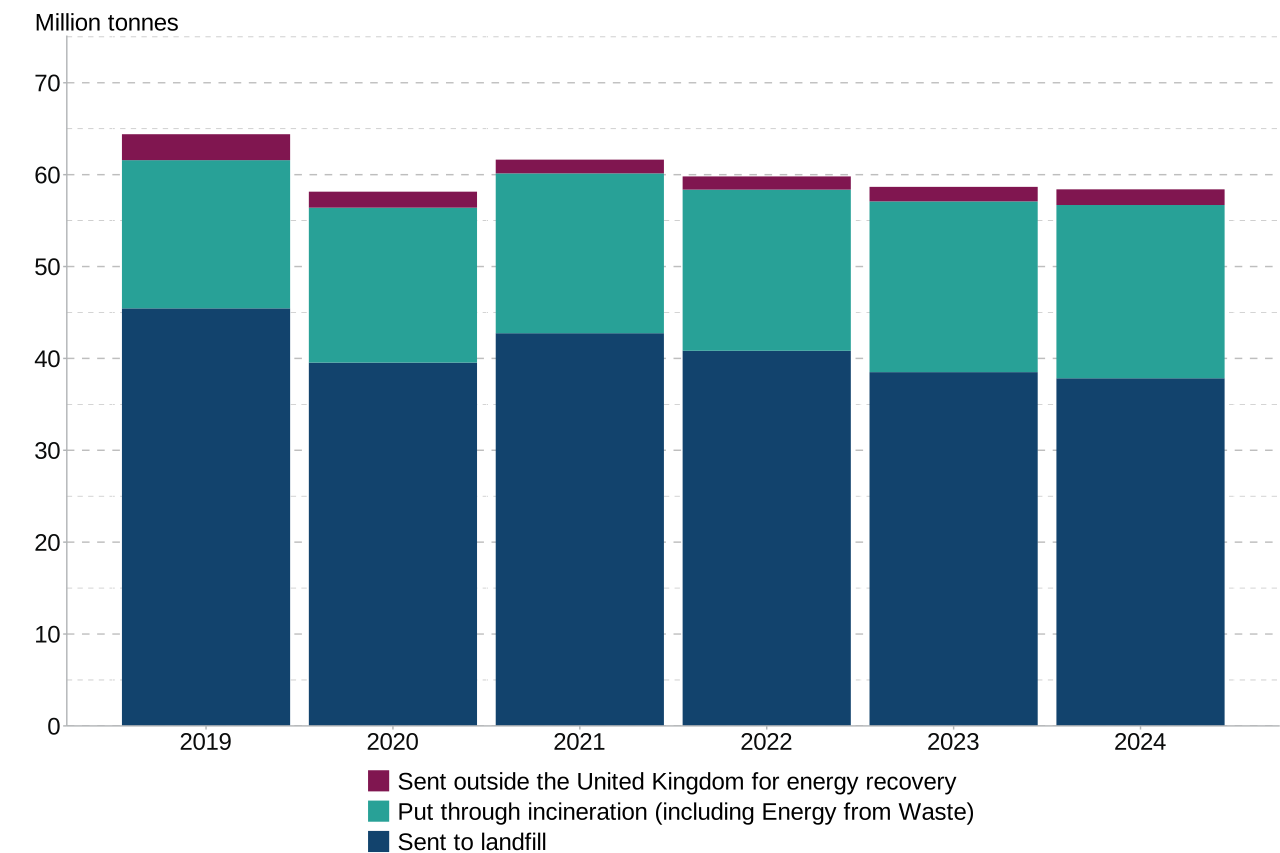
Table 1 and Figure 1 show the amounts of residual waste in England treated by each of the three available treatment methods from 2019 to 2024. Results are presented in million tonnes.
Table 1: Residual waste by treatment method, million tonnes, England, 2019 to 2024
| Year | Sent to landfill | Put through incineration (including Energy from Waste) | Sent outside the UK for energy recovery | Total |
|---|---|---|---|---|
| 2019 | 45.5 | 16.1 | 2.8 | 64.4 |
| 2020 | 39.5 | 16.9 | 1.7 | 58.1 |
| 2021 | 42.7 | 17.4 | 1.5 | 61.6 |
| 2022 | 40.8 | 17.5 | 1.4 | 59.8 |
| 2023 | 38.5 | 18.6 | 1.6 | 58.7 |
| 2024 | 37.8 | 18.9 | 1.7 | 58.4 |
| Change (2019 to 2024) | -16.8% | 16.9% | -39.6% | -9.3% |
| Change (2023 to 2024) | -1.7% | 1.5% | 8.0% | -0.5% |
Notes on Table 1:
- These residual waste estimates largely excluding waste from marine dredging activities and other mineral wastes from mining activities.
- Percentage changes are determined on un-rounded figures so may not exactly equal percentage changes determined on the rounded figures in this table.
Figure 1: Residual waste by treatment method, million tonnes, England, 2019 to 2024
Note on Figure 1:
- These residual waste estimates largely exclude waste from marine dredging activities and other mineral wastes from mining activities.
Download the data for Figure 1
In 2019, the total amount of residual waste in England was 64.4 million tonnes. It dipped in 2020, bounced back in 2021 and then fell steadily year-on-year to reach 58.4 million tonnes in 2024 (9.3% lower than in 2019 and 0.5% lower than in 2023).
Overall, residual waste sent to landfill followed a similar trend to the total residual waste measure, falling to 37.8 million tonnes in 2024 (16.8% lower than in 2019 and 1.7% lower than in 2023).
In contrast, residual waste put through incineration (including Energy from Waste) increased year-on-year to 18.9 million tonnes in 2024 (16.9% higher than in 2019 and 1.5% higher than in 2023).
The relatively small amount of residual waste sent outside the UK for energy recovery saw a sharp fall in 2020 followed by some fluctuation. It was 1.7 million tonnes in 2024, an overall decrease of 39.6% since 2019. These estimates for the tonnages of residual waste sent outside the UK for energy recovery are the same as those for both the equivalent residual waste excluding major mineral wastes and municipal residual waste measures, as all residual waste treated in this way is considered to originate from municipal sources.
4. Residual waste excluding major mineral wastes
This measure of residual waste excludes major mineral wastes (MMW). MMW are the predominant and largely inert wastes typically arising from the construction and demolition sector, such as concrete, bricks and sand, as well as soils and other mineral wastes from excavation and mining activities. Tonnages of waste classed as MMW are identified in the data through a set of List of Waste (LoW) codes.
These definitions of residual waste and MMW are consistent with the definitions used in The Environmental Targets (Residual Waste (England) Regulations 2023 for the long-term residual waste reduction target.
The long-term residual waste reduction target commits government to ensuring that by 31 December 2042, the total mass of residual waste excluding MMW in England does not exceed 287 kilograms per person.
This long-term target is underpinned by a suite of interim targets announced in the 2025 Environmental Improvement Plan. These include targets to ensure that by December 2030:
- the total mass of residual waste excluding MMW in the most recent full calendar year does not exceed 437 kilograms per person, and
- the total mass of residual waste excluding MMW in the most recent full calendar year does not exceed 25.5 million tonnes.
To achieve these two interim targets, the total mass of residual waste excluding MMW per person and in total should not exceed these figures in the 2029 calendar year.
4.1 Estimates of residual waste excluding major mineral wastes in tonnes
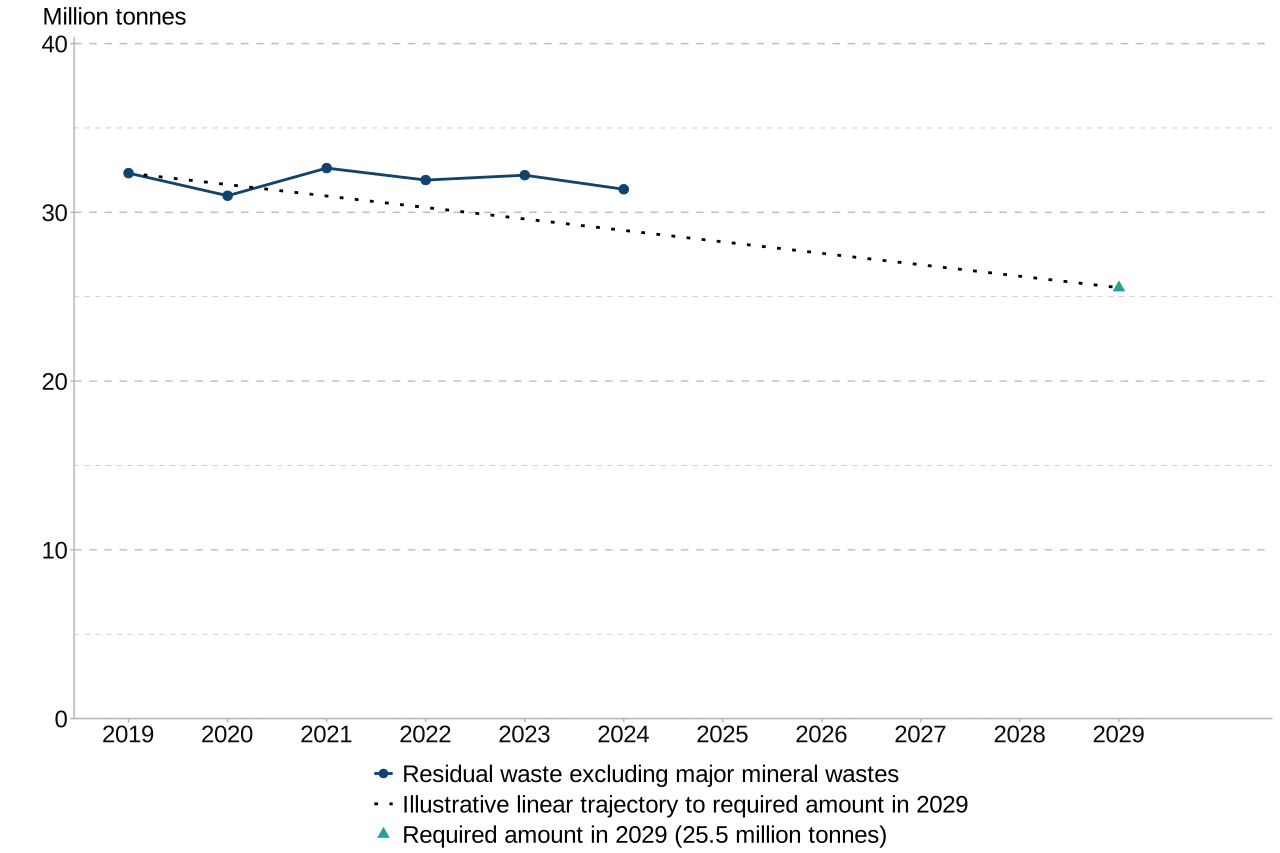
Figure 2 shows the amount of residual waste excluding MMW in million tonnes in England from 2019 to 2024. An illustrative linear trajectory to the amount of residual waste excluding MMW necessary in 2029 to achieve the interim target is also included.
Figure 2: Residual waste excluding major mineral wastes, million tonnes, England, 2019 to 2024
Notes on Figure 2:
- The total mass of residual waste excluding MMW required to achieve the interim target to reduce residual waste excluding MMW to no more than 25.5 million tonnes in the 2029 calendar year is shown by the point in 2029.
- The linear trajectory to the amount of residual waste excluding MMW necessary to meet the interim target in 2029 is illustrative only. It is not intended to be used to monitor progress towards the target.
Download the data for Figure 2
The total amount of residual waste excluding MMW in England fell in 2020 before bouncing back in 2021. Since then, it has shown a downward trend, falling to 31.4 million tonnes in 2024, 3.0% lower than in 2019 (32.3 million tonnes) and 2.6% lower than in 2023 (32.2 million tonnes).
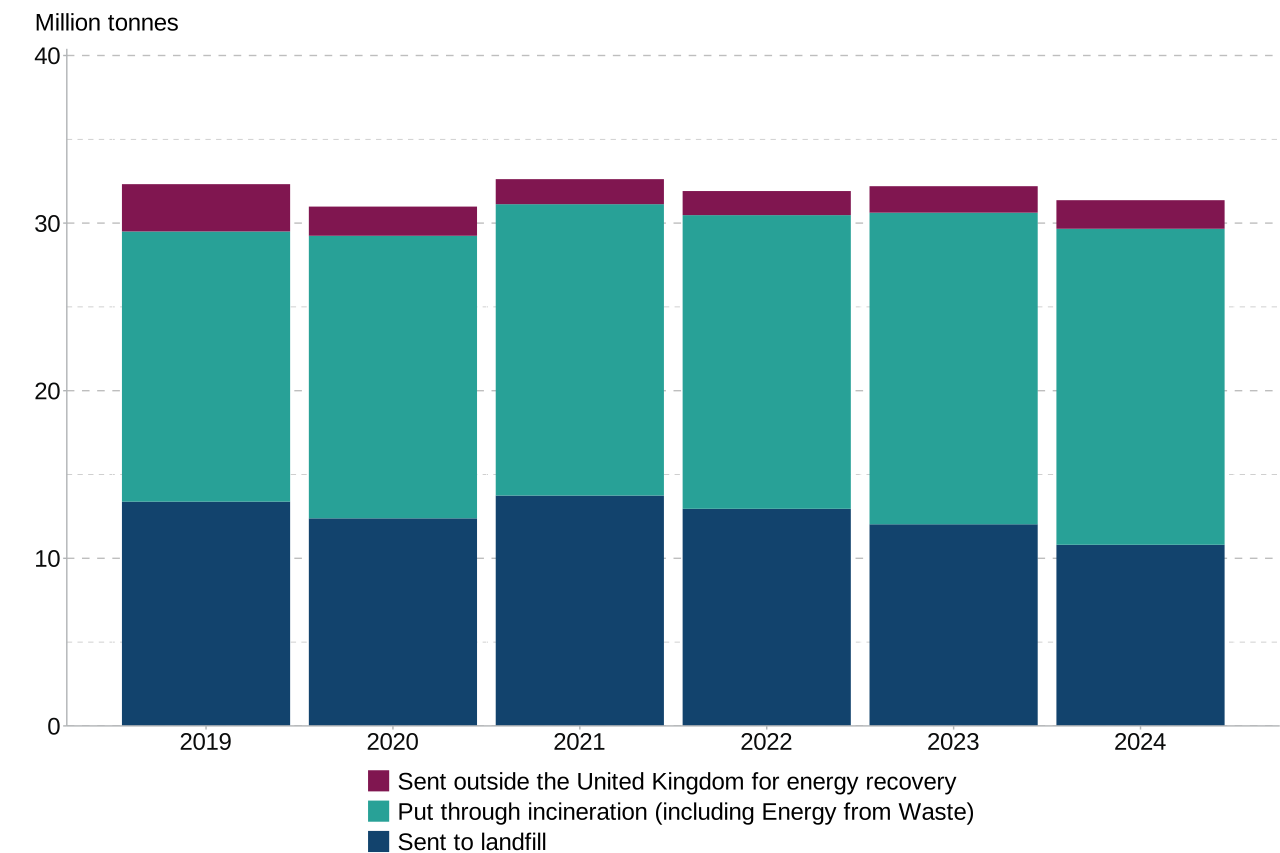
Table 2 and Figure 3 show the amount of residual waste excluding MMW in England treated by each of the three available treatment methods from 2019 to 2024. Results are presented in million tonnes.
Table 2: Residual waste excluding major mineral wastes by treatment method, million tonnes, England, 2019 to 2024
| Year | Sent to landfill | Put through incineration (including Energy from Waste) | Sent outside the UK for energy recovery | Total |
|---|---|---|---|---|
| 2019 | 13.4 | 16.1 | 2.8 | 32.3 |
| 2020 | 12.4 | 16.9 | 1.7 | 31.0 |
| 2021 | 13.7 | 17.4 | 1.5 | 32.6 |
| 2022 | 13.0 | 17.5 | 1.4 | 31.9 |
| 2023 | 12.0 | 18.6 | 1.6 | 32.2 |
| 2024 | 10.8 | 18.9 | 1.7 | 31.4 |
| Change (2019 to 2024) | -19.2% | 17.0% | -39.6% | -3.0% |
| Change (2023 to 2024) | -10.2% | 1.4% | 8.0% | -2.6% |
Note on Table 2:
- Percentage changes are determined on un-rounded figures so may not exactly equal percentage changes determined on the rounded figures in this table.
Figure 3: Residual waste excluding major mineral wastes by treatment method, million tonnes, England, 2019 to 2024
Download the data for Figure 3
Tonnages of residual waste excluding MMW in England sent to landfill followed a similar trend to the equivalent figures for total residual waste excluding MMW. Overall, the amount of residual waste excluding MMW sent to landfill fell to 10.8 million tonnes in 2024 (19.2% lower than in 2019 and 10.2% lower than in 2023).
In contrast, the amount put through incineration (including Energy from Waste) increased year-on-year to 18.9 million tonnes in 2024 (17.0% higher than in 2019 and 1.4% higher than in 2023).
4.2 Estimates of residual waste excluding major mineral wastes in kilograms per person
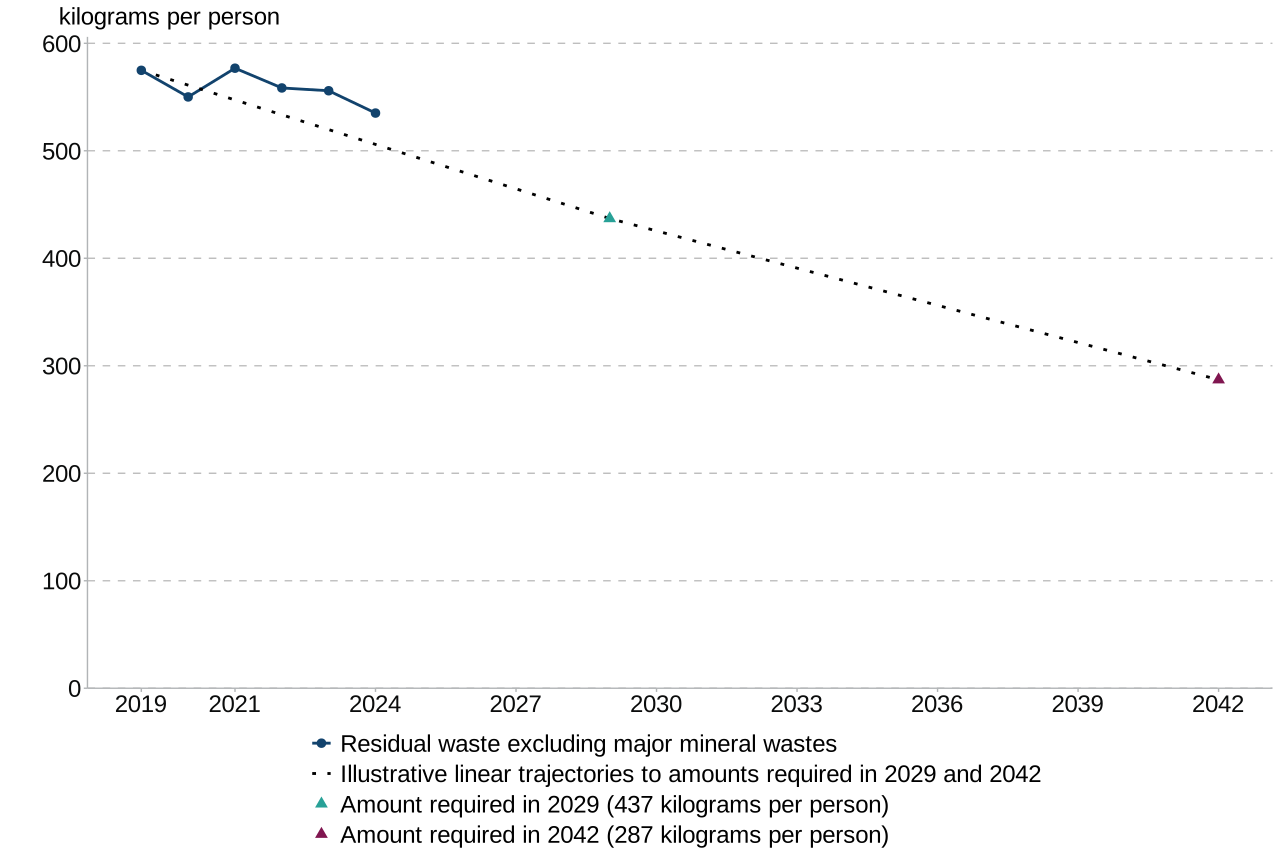
Figure 4 shows the amount of residual waste excluding MMW in England from 2019 to 2024 in kilograms per person. An illustrative linear trajectory to the amounts of residual waste excluding MMW necessary in 2029 and 2042 to achieve the interim and long-term targets is also included.
Figure 4: Residual waste excluding major mineral wastes, kilograms per person, England, 2019 to 2024
Notes on Figure 4:
- The total mass of residual waste excluding MMW required to achieve 1) the interim target to reduce residual waste excluding MMW to no more than 437 kilograms per person in the 2029 calendar year; and 2) the long-term target to reduce residual waste excluding MMW to no more than 287 kilograms per person in the 2042 calendar year are shown by the two points in 2029 and 2042, respectively.
- The linear trajectories to the amounts of residual waste excluding MMW necessary to meet the targets in 2029 and 2042 are illustrative only. They are not intended to be used to monitor progress towards these targets.
Download the data for Figure 4
The per-person figures for residual waste excluding MMW in England have followed a very similar trend to the overall tonnages, falling in 2020, bouncing back in 2021, and then falling year-on-year to 535 kilograms per person in 2024, 6.9% lower than in 2019 (575 kilograms per person) and 3.7% lower than in 2023 (556 kilograms per person). In percentage terms, the per-person figures have fallen at a greater rate than the equivalent total tonnage figures because of increases in the population of England over the same period.
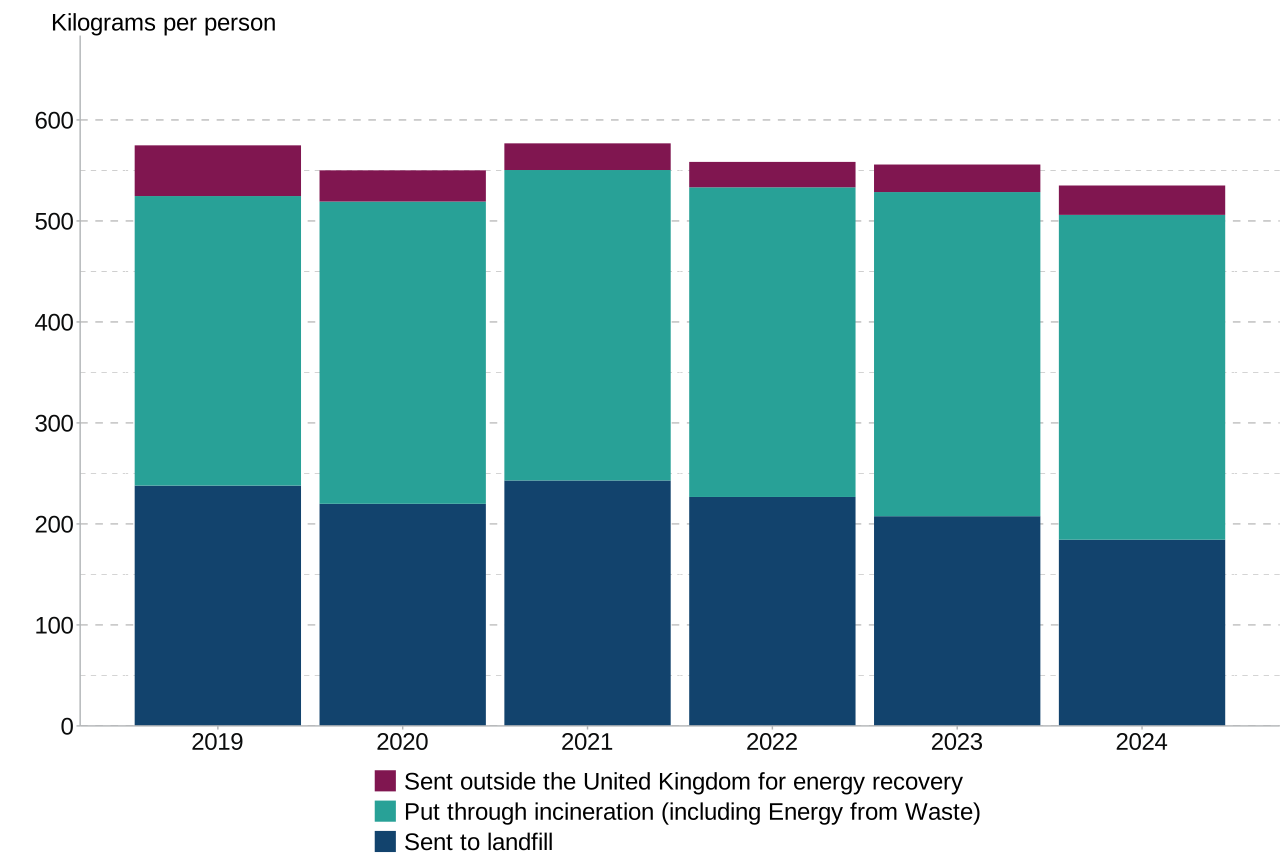
Table 3 and Figure 5 show the amount of residual waste excluding MMW in England treated by each of the three available treatment methods from 2019 to 2024. Results are presented in kilograms per person.
Table 3: Residual waste excluding major mineral waste by treatment method, kilograms per person, England, 2019 to 2024
| Year | Sent to landfill | Put through incineration (including Energy from Waste) | Sent outside the UK for energy recovery | Total |
|---|---|---|---|---|
| 2019 | 238 | 287 | 50 | 575 |
| 2020 | 220 | 299 | 31 | 550 |
| 2021 | 243 | 307 | 26 | 577 |
| 2022 | 227 | 307 | 25 | 558 |
| 2023 | 208 | 321 | 27 | 556 |
| 2024 | 184 | 322 | 29 | 535 |
| Change (2019 to 2024) | -22.5% | 12.2% | -42.0% | -6.9% |
| Change (2023 to 2024) | -11.2% | 0.2% | 6.7% | -3.7% |
Note on Table 3:
- Percentage changes are determined on un-rounded figures so may not exactly equal percentage changes determined on the rounded figures in this table.
Figure 5: Residual waste excluding major mineral wastes by treatment method, kilograms per person, England, 2019 to 2024
Download the data for Figure 5
Per-person figures for residual waste excluding MMW in England sent to landfill followed a similar trend to the equivalent figures for total residual waste excluding MMW, although the observed percentage changes were of a greater magnitude. Overall, the amount of residual waste excluding MMW sent to landfill fell to 184 kilograms per person in 2024 (22.5% lower than in 2019 and 11.2% lower than in 2023).
In contrast, residual waste excluding MMW put through incineration (including Energy from Waste) increased year-on-year to 322 kilograms per person in 2024 (12.2% higher than in 2019 and 0.2% higher than in 2023).
The relatively small amount of residual waste excluding MMW sent outside the UK for energy recovery fell sharply in 2020 and then showed some fluctuation. In 2024, it was 29 kilograms per person, an overall decrease of 42.0% since 2019. These per-person estimates of residual waste excluding MMW sent outside the UK for energy recovery are the same as those for the equivalent municipal residual waste measure, as all residual waste treated in this way is considered to originate from municipal sources.
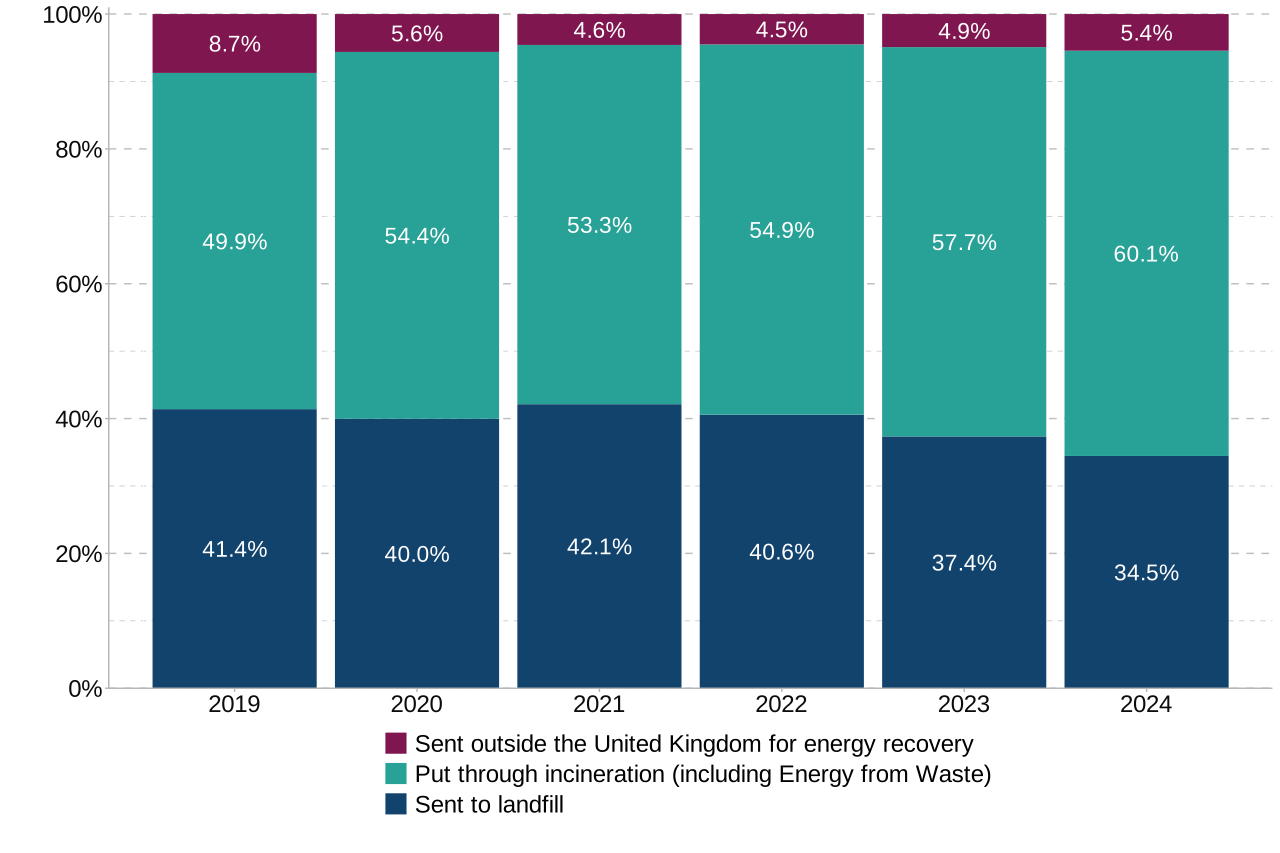
Figure 6 shows the corresponding proportions of the total amount of residual waste excluding MMW for each of the three available treatment methods between 2019 and 2024.
Figure 6: Residual waste excluding major mineral wastes by treatment method, proportion of total, England, 2019 to 2024
Note on Figure 6:
- Percentages may not add to exactly 100 due to rounding.
Download the data for Figure 6
The proportion of residual waste excluding MMW put through incineration has increased by 10.2 percentage points, from 49.9% of the total in 2019 to 60.1% in 2024. In contrast, while the proportion sent to landfill has shown some fluctuation, it has decreased overall from 41.4% of the total in 2019 to 34.5% in 2024. The proportion of residual waste excluding MMW sent outside the UK for energy recovery has increased slightly in recent years, but overall, it has also fallen.
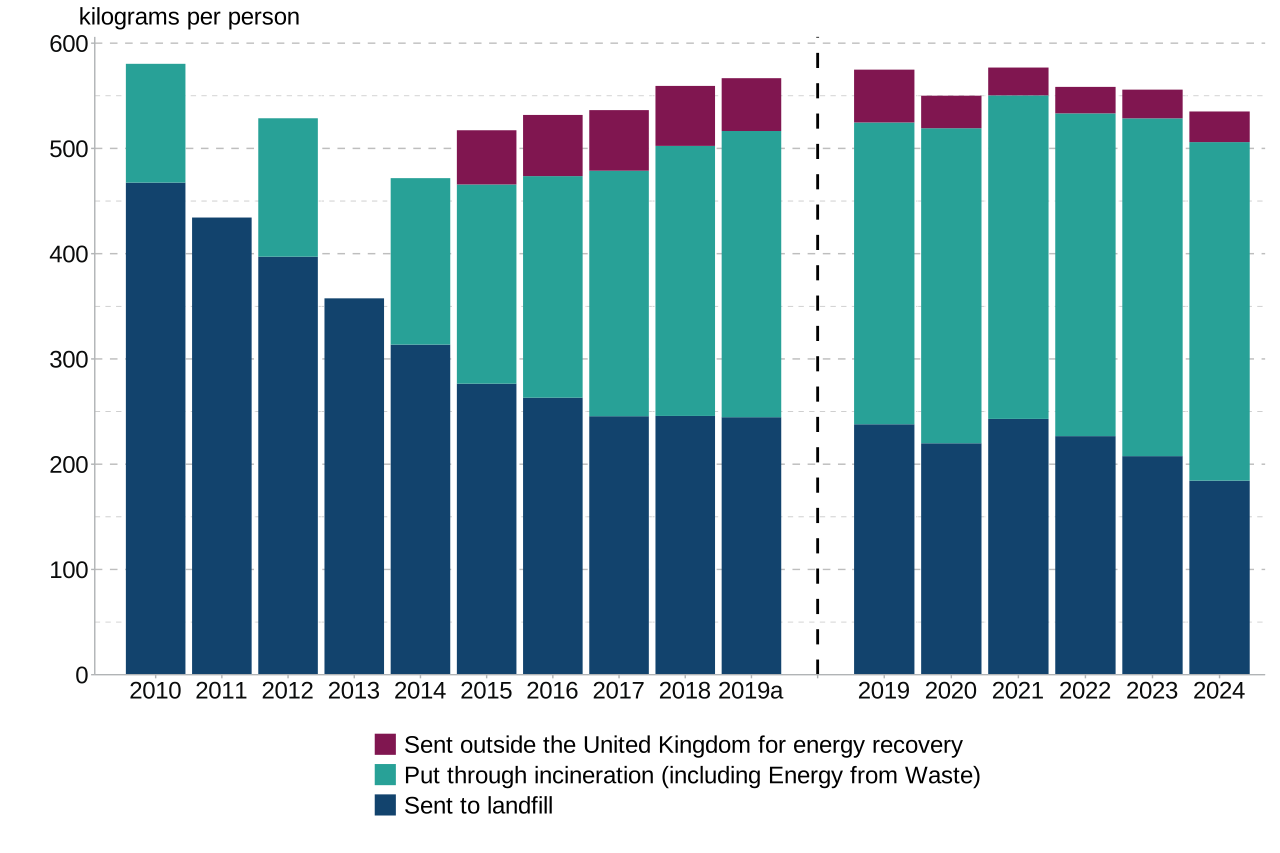
Figure 7 shows the amount of residual waste excluding MMW in England treated by each of the three available treatment methods from 2010 to 2024. Results are presented in kilograms per person, and they partially correspond to the J4 indicator in the Environmental Indicator Framework
While estimates for 2019 to 2024 serve as indicators of progress towards the residual waste reduction target as set out in the Environmental Targets (Residual Waste) (England) Regulations 2023, estimates for 2010 to 2019a are included in Figure 7 for context only and due to methodological differences, they are not directly comparable to the more recent data. These historic estimates do not account for the movement of residual waste into and out of England. They instead show the total amount of residual waste excluding MMW originating in the UK that is sent to landfill or put through incineration in England. They also do not subtract IBA metals that are sent for treatment other than landfill or incineration.
Figure 7: Residual waste excluding major mineral wastes by treatment method, kilograms per person, England, 2010 to 2024
Notes on Figure 7:
- There is a break in the time series in 2019. Data for the years 2010 to 2019a has not been derived from the same methodology that is used to obtain the estimates for the years 2019 to 2024. Estimates for the years 2019 to 2024 are indicators of progress towards the long-term residual waste reduction target for England as set out in the Environmental Targets (Residual Waste) (England) Regulations 2023. Comparisons between estimates prior to and after 2019 should be made with care.
- Prior to 2014, data on waste put through incineration was reported biennially so there is no incineration data available for the years 2011 and 2013.
- Prior to 2015, data on waste sent outside the UK for energy recovery included both waste originating in England and Wales so is not included in these figures.
Download the data for Figure 7
There were 8 kilograms per person, or about 460,000 tonnes, more residual waste excluding MMW in 2019 using the newer methodology that accounts for the movement of residual waste into and out of England and the exclusion of IBA metals. This was largely a result of more residual waste originating in England that is put through incineration outside of England compared to the amount of residual waste put through incineration in England that originated from elsewhere, and therefore increasing the amount of residual waste in scope of this measure.
Historically and using the old methodology, the amount of residual waste excluding MMW sent to landfill decreased by 47.7%, from 468 kilograms per person in 2010 to 245 kilograms per person in 2019. In contrast, the amount put through incineration more than doubled over the same period, from 113 kilograms per person in 2010 to 272 kilograms per person in 2019.
5. Municipal residual waste
Municipal waste includes both household waste and waste from other sources which is similar in nature and composition to household waste, including “household-like” waste generated by businesses. Tonnages of waste classed as municipal are similarly identified in the data through a set of LoW codes. Please refer to the methodology section of this release for further detail about the data and methodology used to obtain the estimates presented in this release.
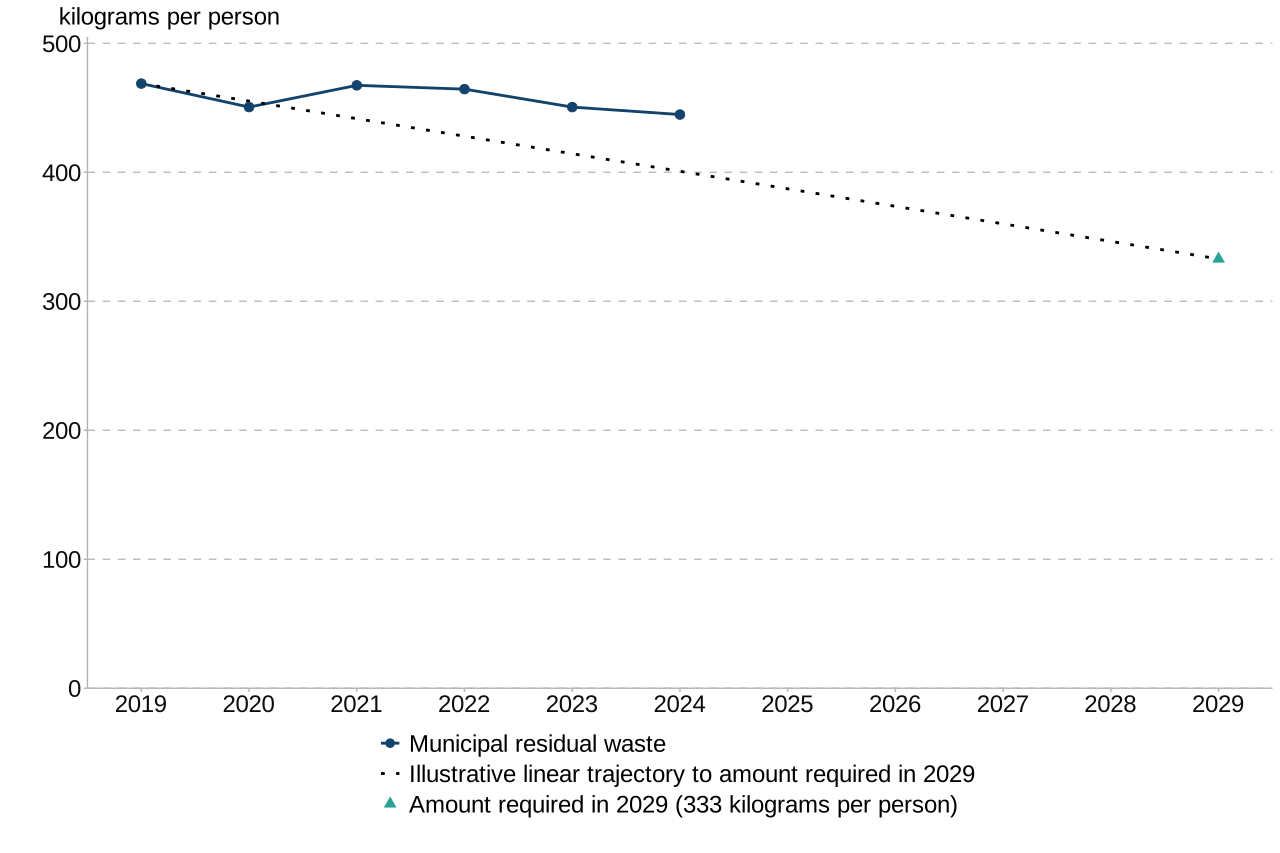
The 2025 Environmental Improvement Plan includes an interim target to ensure that, by December 2030, the total mass of municipal residual waste in the most recent full calendar year does not exceed 333 kilograms per person.
To achieve this interim target, the total mass of municipal residual waste per person should not exceed this figure in the 2029 calendar year.
5.1 Estimates of municipal residual waste in tonnes
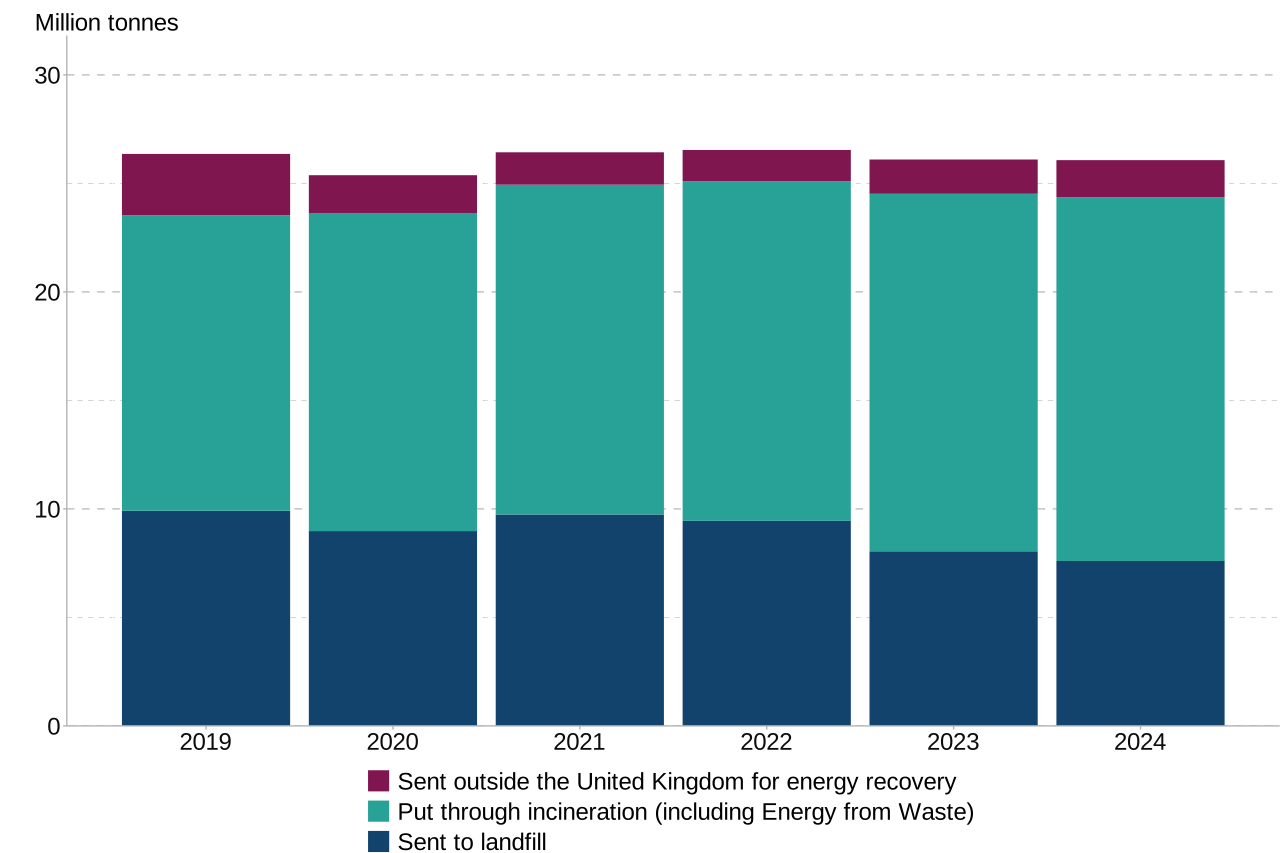
Table 4 and Figure 8 show the amount of municipal residual waste in tonnes in England from 2019 to 2024 by treatment method. Results are presented in million tonnes.
Table 4: Municipal residual waste by treatment method, million tonnes, England, 2019 to 2024
| Year | Sent to landfill | Put through incineration (including Energy from Waste) | Sent outside the UK for energy recovery | Total |
|---|---|---|---|---|
| 2019 | 9.9 | 13.6 | 2.8 | 26.4 |
| 2020 | 9.0 | 14.7 | 1.7 | 25.4 |
| 2021 | 9.7 | 15.2 | 1.5 | 26.4 |
| 2022 | 9.5 | 15.7 | 1.4 | 26.5 |
| 2023 | 8.0 | 16.5 | 1.6 | 26.1 |
| 2024 | 7.6 | 16.8 | 1.7 | 26.1 |
| Change (2019 to 2024) | -23.3% | 23.1% | -39.6% | -1.1% |
| Change (2023 to 2024) | -5.6% | 1.8% | 8.0% | -0.1% |
Note on Table 4:
- Percentage changes are determined on un-rounded figures so may not exactly equal percentage changes determined on the rounded figures in this table.
Figure 8: Municipal residual waste by treatment method, million tonnes, England, 2019 to 2024
Download the data for Figure 8
The total amount of municipal residual waste in England fell in 2020 before bouncing back in 2021. It has shown some fluctuation since then, but overall, it has fallen slightly from 26.4 million tonnes in 2019 to 26.1 million tonnes in 2024, a reduction of 1.1%.
The amount of municipal residual waste sent to landfill also fell in 2020 but then bounced back in 2021. Since then, it has been on a downward trajectory, with the largest decrease occurring in 2023 when it fell by 14.9%. The amount of municipal residual waste sent to landfill has fallen by 23.3% overall, from 9.9 million tonnes in 2019 to 7.6 million tonnes in 2024, and by 5.6% since 2023.
In contrast, the amount of municipal residual waste put through incineration has increased each year from 13.6 million tonnes in 2019 to 16.8 million tonnes in 2024, representing an overall increase of 23.1% since 2019 and 1.8% since 2023.
Estimates for the relatively small amount of municipal residual waste sent outside the UK for energy recovery are the same as those for both the equivalent residual waste and residual waste excluding MMW measures, as all the residual waste treated in this way is considered to originate from municipal sources.
5.2 Estimates of municipal residual waste in kilograms per person
Figure 9 shows the amount of municipal residual waste in England from 2019 to 2024 in kilograms per person together with an illustrative linear trajectory to the amount of municipal residual waste necessary in 2029 to achieve the interim target.
Figure 9: Municipal residual waste, kilograms per person, England, 2019 to 2024
Notes on Figure 9:
- The total mass of municipal residual waste (kilograms per person) required to achieve the interim target to reduce municipal residual waste to no more than 333 kilograms per person in the 2029 calendar year is shown by the point in 2029.
- The linear trajectory to the amount of municipal residual waste necessary to meet the interim target in 2029 is illustrative only. It is not intended to be used to monitor progress towards this target.
Download the data for Figure 9
The per-person figures for municipal residual waste in England fell in 2020 and bounced back in 2021. Since then, they have been on a downward trajectory, reaching 445 kilograms per person in 2024, 5.1% lower than in 2019 and 1.3% lower than in 2023. In percentage terms, the per-person figures have fallen at a greater rate than the equivalent total tonnage figures because of increases in the population of England over the same period.
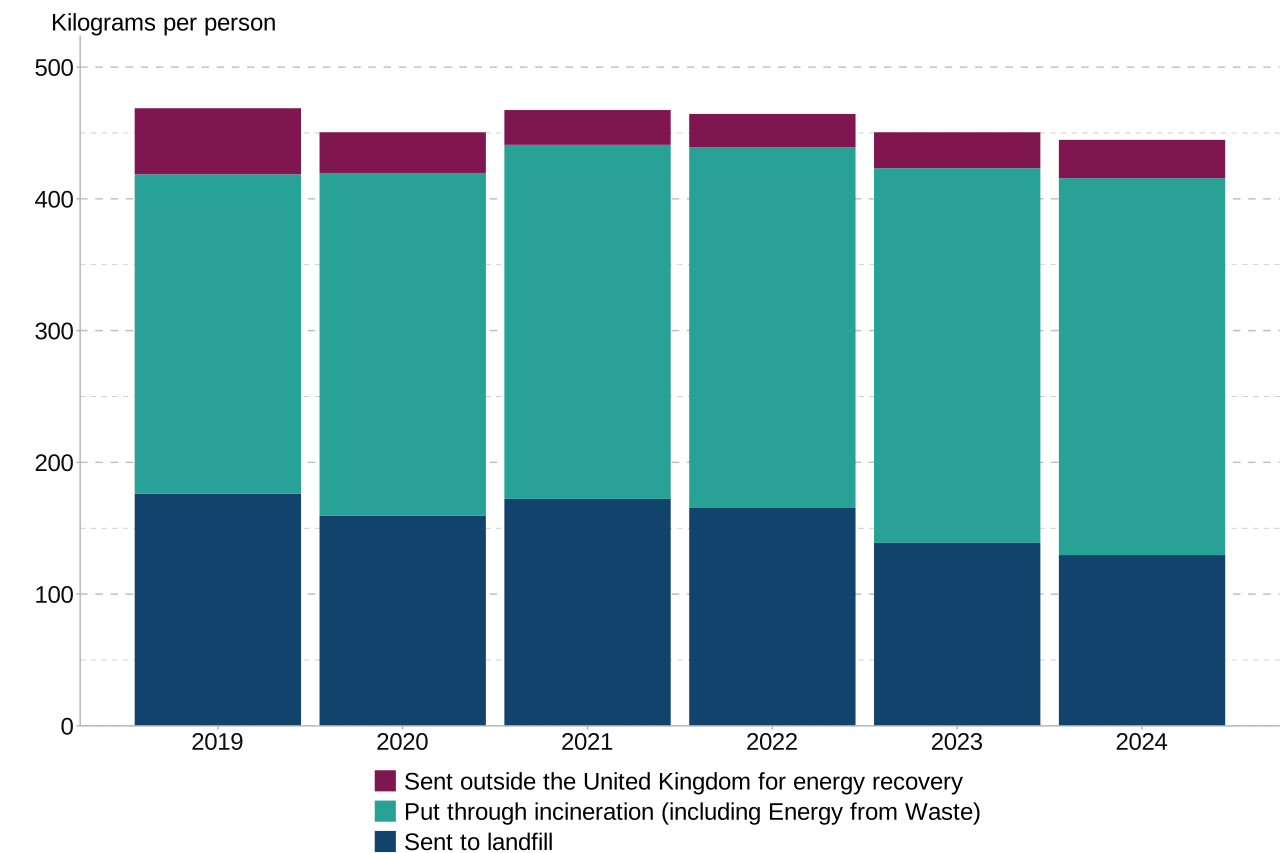
Table 5 and Figure 10 show the amount of municipal residual waste in England treated by each of the three available treatment methods from 2019 to 2024. Results are presented in kilograms per person.
Table 5: Municipal residual waste by treatment method, kilograms per person, England, 2019 to 2024
| Year | Sent to landfill | Put through incineration (including Energy from Waste) | Sent outside the UK for energy recovery | Total |
|---|---|---|---|---|
| 2019 | 176 | 242 | 50 | 469 |
| 2020 | 159 | 260 | 31 | 451 |
| 2021 | 172 | 269 | 26 | 467 |
| 2022 | 165 | 274 | 25 | 464 |
| 2023 | 139 | 284 | 27 | 451 |
| 2024 | 130 | 286 | 29 | 445 |
| Change (2019 to 2024) | -26.5% | 18.1% | -42.0% | -5.1% |
| Change (2023 to 2024) | -6.7% | 0.6% | 6.7% | -1.3% |
Note on Table 5:
- Percentage changes are determined on un-rounded figures so may not exactly equal percentage changes determined on the rounded figures in this table.
Figure 10: Municipal residual waste by treatment method, kilograms per person, England, 2019 to 2024
Download the data for Figure 10
The per-person estimates for municipal residual waste sent to landfill also fell in 2020 before bouncing back in 2021. Since then, they have fallen considerably, with the largest decrease occurring in 2023 when they fell by 15.7%. Overall, municipal residual waste sent to landfill has fallen by 26.5%, from 176 kilograms per person in 2019 to 130 kilograms per person in 2024, and by 6.7% since 2023.
In contrast, the amount of municipal residual waste put through incineration has increased each year from 242 kilograms per person in 2019 to 286 kilograms per person in 2024. This represents an increase of 18.1% since 2019 and a slight increase of 0.6% since 2023.
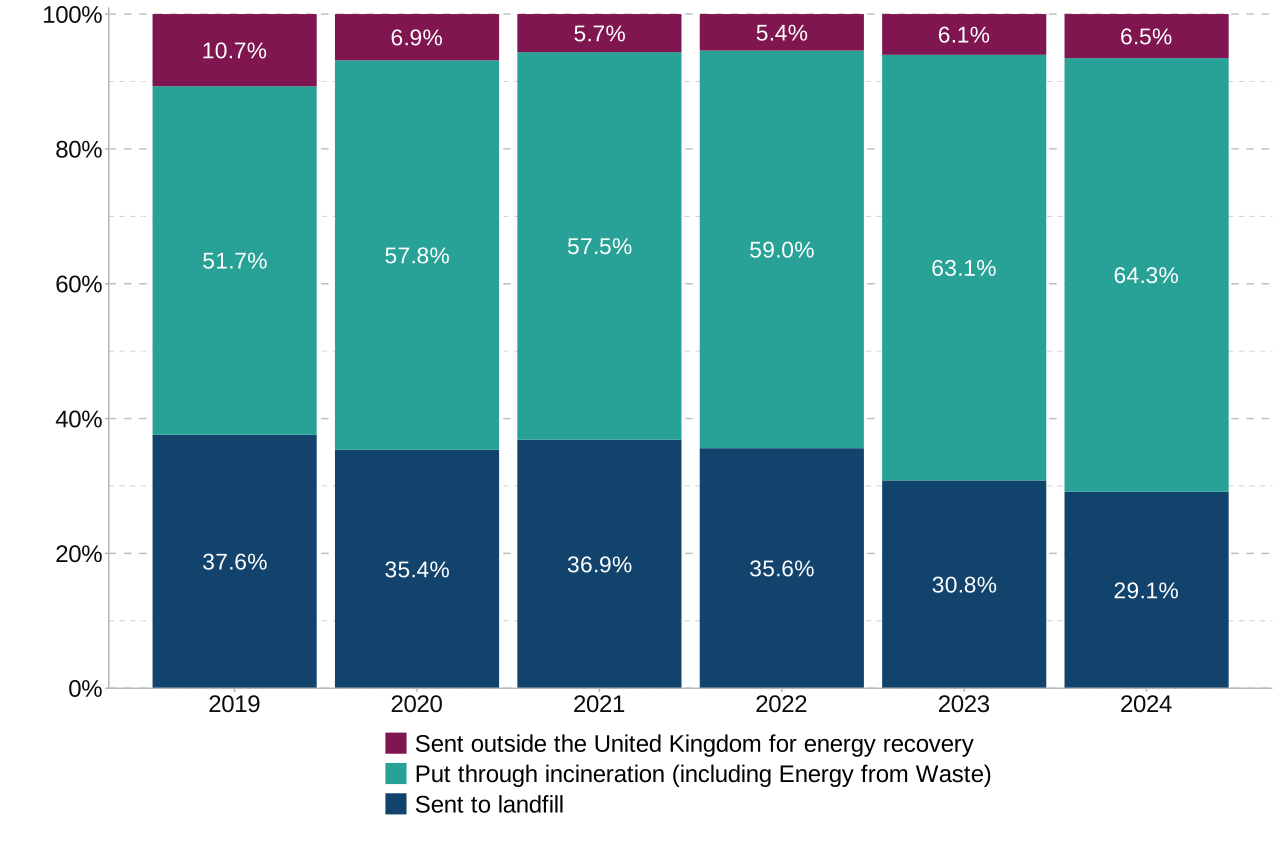
Figure 11 shows the corresponding proportions of the total amount of municipal residual waste for each of the three available treatment methods between 2019 and 2024.
Figure 11: Municipal residual waste by treatment method, proportion of total, England, 2019 to 2024
Note on Figure 11:
- Percentages may not add to exactly 100 due to rounding.
Download the data for Figure 11
The proportion of municipal residual waste put through incineration has increased by 12.6 percentage points, from 51.7% of the total in 2019 to 64.3% in 2024. In contrast, while the proportion sent to landfill has shown some fluctuation, it has decreased overall from 37.6% of the total in 2019 to 29.1% in 2024. The proportion of municipal residual waste sent outside the UK for energy recovery has also fallen over the same period. It initially fell from 10.7% of the total in 2019 to 5.4% in 2022, before increasing slightly in recent years to reach 6.5% of the total in 2024.
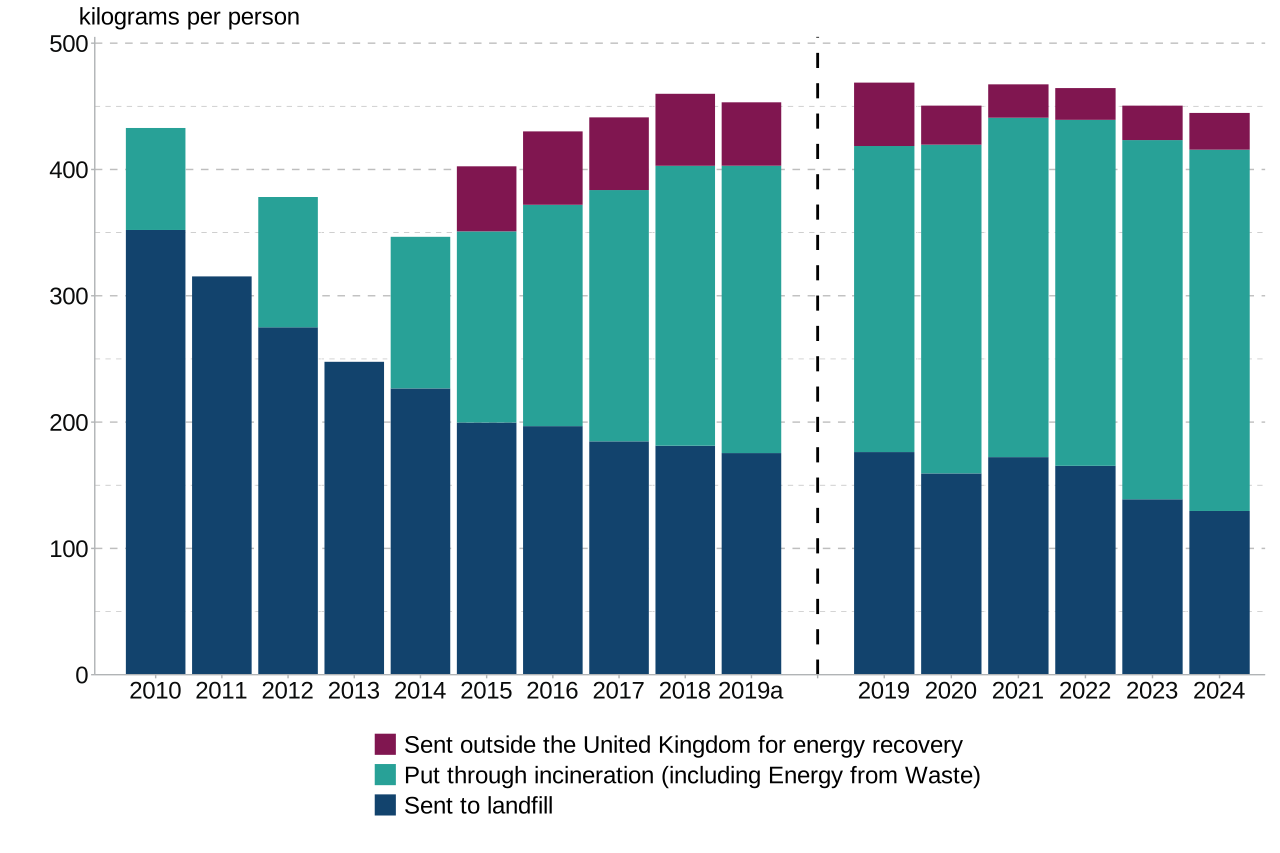
Figure 12 shows the amount of municipal residual waste in England treated by each of the three available treatment methods from 2010 to 2024. Results are presented in kilograms per person.
The estimates for 2010 to 2019a are included in Figure 12 for context only and due to methodological differences, they are not directly comparable to the more recent data. These historic estimates do not account for the movement of residual waste into and out of England. They instead show the total amount of residual waste excluding MMW originating in the UK that is sent to landfill or put through incineration in England. They also do not subtract IBA metals that are sent for treatment other than landfill or incineration.
Figure 12: Municipal residual waste by treatment method, kilograms per person, England, 2010 to 2024
Notes on Figure 12:
- There is a break in the time series in 2019. Data for the years 2010 to 2019a has not been derived from the same methodology that is used to obtain the estimates for the years 2019 to 2024. Estimates for the years 2019 to 2024 are indicators of long-term residual waste reduction target for England as set out in the Environmental Targets (Residual Waste) (England) Regulations 2023. Comparisons between estimates prior to and after 2019 should be made with care.
- Prior to 2014, data on waste put through incineration was reported biennially so there is no incineration data available for the years 2011 and 2013.
- Prior to 2015, data on waste sent outside the UK for energy recovery included both waste originating in England and Wales so is not included in these figures.
Download the data for Figure 12
There were 16 kilograms per person, or about 880,000 tonnes more municipal residual waste in 2019 using the newer methodology that accounts for the movement of residual waste into and out of England and the exclusion of IBA metals. This is largely a result of more municipal residual waste originating in England that is put through incineration outside of England compared to the amount of municipal residual waste put through incineration in England that originated from elsewhere.
Historically and using the old methodology, prior to 2019, the amount of municipal residual waste sent to landfill decreased from 352 kilograms per person in 2010 to 175 kilograms per person in 2019, a decrease of 50.2%. In contrast, the amount of municipal residual waste put through incineration almost tripled over the same period, from 81 kilograms per person in 2010 to 228 kilograms per person in 2019.
5.3 Material-specific estimates of municipal residual waste in kilograms per person
In addition to the three overall residual waste interim targets, the 2025 Environmental Improvement Plan also includes interim targets requiring reductions of material-specific municipal residual waste, including food, plastic, paper and card, metal, and glass, in kilograms per person. Specifically, the interim targets require that, by December 2030:
- the total mass of residual municipal food waste in the most recent full calendar year does not exceed 64 kilograms per person
- the total mass of residual municipal plastic waste in the most recent full calendar year does not exceed 42 kilograms per person
- the total mass of residual municipal paper and card waste in the most recent full calendar year does not exceed 74 kilograms per person
- the total mass of residual municipal metal waste in the most recent full calendar year does not exceed 10 kilograms per person
- the total mass of residual municipal glass waste in the most recent full calendar year does not exceed 7 kilograms per person
To achieve these interim targets, the total mass of municipal residual waste per person for each of these materials should not exceed the relevant target figures in the 2029 calendar year.
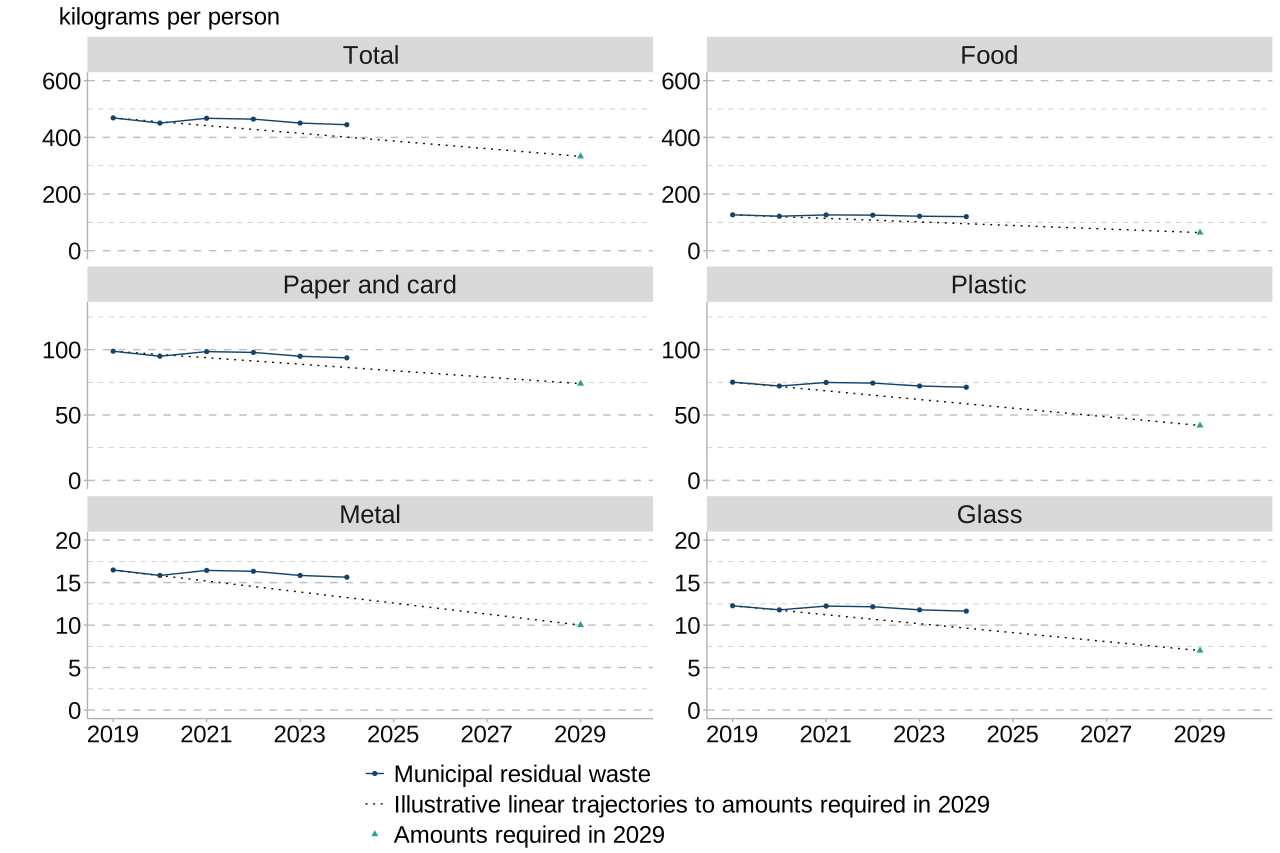
Table 6 and Figure 13 show estimates of the amount of municipal residual waste in England from 2019 to 2024 in kilograms per person for different material streams (food, paper and card, plastic, metal, and glass). The estimates of the amount of municipal residual waste for each material are made by applying estimates of the material composition of municipal residual waste to the total amount of municipal residual waste. Composition estimates are currently based on a synthesis of analyses using data from 2017, published by the Waste and Resources Action Programme(WRAP) in 2020. Please refer to the methodology section of this release for further details about how these estimates are obtained. Illustrative linear trajectories to the amount of municipal residual waste necessary to meet each material-specific interim target in 2029 are also included in Figure 13.
Table 6: Municipal residual waste by types of material, kilograms per person, England, 2019 to 2024
| Year | Total | Food | Paper and card | Plastic | Metal | Glass |
|---|---|---|---|---|---|---|
| 2019 | 469 | 127 | 99 | 75 | 16 | 12 |
| 2020 | 451 | 122 | 95 | 72 | 16 | 12 |
| 2021 | 467 | 126 | 98 | 75 | 16 | 12 |
| 2022 | 464 | 126 | 98 | 74 | 16 | 12 |
| 2023 | 451 | 122 | 95 | 72 | 16 | 12 |
| 2024 | 445 | 120 | 94 | 71 | 16 | 12 |
| Change (2019 to 2024) | -5.1% | -5.1% | -5.1% | -5.1% | -5.1% | -5.1% |
| Change (2023 to 2024) | -1.3% | -1.3% | -1.3% | -1.3% | -1.3% | -1.3% |
Note on Table 6:
- Percentage changes are determined on un-rounded figures so may not exactly equal percentage changes determined on the rounded figures in this table.
Figure 13: Municipal residual waste by types of material, kilograms per person, England, 2019 to 2024
Notes on Figure 13
- The mass of municipal residual waste required to achieve each material-specific interim target in the 2029 calendar year is shown by the point in 2029.
- The linear trajectories to the amount of municipal residual waste necessary to meet each material-specific interim target in 2029 are illustrative only. They are not intended to be used to monitor progress towards these targets.
- The sum of the estimates for each material will not equal the total estimate as the sum of the proportions of food, plastic, paper and card, metal, and glass in the municipal residual waste stream does not equal 100%.
Download the data for Figure 13
As a result of the methodology by which material-specific estimates of the amount of municipal residual waste are obtained, the year-on-year percentage changes shown in Figure 13 between 2019 and 2024 are identical for each material, as well as identical to the percentage changes in the total estimated amount of municipal residual waste.
6. Methodology
There is an accompanying methodology document that is provided alongside this release with further detail about the methodology used to obtain the estimates of residual waste presented in this release. A summary is provided below.
The estimates of residual waste in this release use a treatment-based definition of residual waste that includes waste originating in England that is:
- sent to landfill in the UK
- put through incineration in the UK
- used in energy recovery in the UK
- sent outside the UK for energy recovery
Not all residual waste that is treated through one of the above methods is included in the scope of the measures in this release. First, tonnages of waste defined as ‘major mineral wastes’ are excluded from the residual waste excluding MMW measure. Second, only tonnages of waste defined as ‘municipal’ waste are included in the municipal residual waste measure.
Tonnages of waste within the scope of the measures and for each of the above treatment methods are obtained using Environment Agency regulatory data on waste treatment, including Waste Data Interrogator, incinerator monitoring reports, and international waste shipments data. This means that for landfill and incineration (including energy recovery), the measures will only include tonnages sent to permitted facilities in England.
Table 7 shows a summary of how the datasets are used to obtain estimates for the measures of residual waste included in this release.
Table 7: Summary of the calculation method for the estimates of residual waste in this release
| Treatment methods |
Data source |
Included in estimate |
Excluded from estimate |
|---|---|---|---|
|
Sent to landfill |
Environment Agency: Waste Data Interrogator (waste received and removed) |
1) Waste sent to landfill in England 2) Waste originating from England sent to landfill in Northern Ireland, Scotland, Wales or outside the UK |
1) Waste sent to landfill in England originating from Northern Ireland, Scotland, Wales or outside the UK |
|
Put through incineration (including Energy from Waste) |
Environment Agency: Waste Data Interrogator (waste received and removed) Environment Agency: Incinerator monitoring reports |
1) Waste put through incineration in England 2) Waste originating from England put through incineration in Northern Ireland, Scotland, Wales or outside the UK |
1) Waste put through incineration in England that likely originated from Northern Ireland, Scotland, Wales or outside the UK 2) Ferrous metals removed from bottom ash sent for treatment other than landfill or incineration |
|
Sent outside the UK for energy recovery |
Environment Agency: International Waste Shipments exported from England |
1) Waste sent outside the UK for energy recovery |
Not applicable |
|
Other energy recovery |
Not currently included in estimates |
Not currently included in estimates |
Not currently included in estimates |
Note on Table 7:
- Where estimates are reported as kilograms per person, tonnages are first converted to kilograms and then the results are divided by the mid-year population estimates for England published by the Office for National Statistics.
7. Glossary of terms
Energy recovery: Facilities where the main purpose is generation of energy and formal R1 accreditation has been awarded. Facilities without R1 accreditation are reported as incineration (disposal) even if they produce some energy. Energy recovery also includes any waste treatment, excluding anaerobic digestion, which generates energy such as electricity or heat, or which converts the waste into other energy products such as fuels and substitute natural gas. Data on tonnages of waste used in energy recovery other than conventional Energy from Waste (incineration with energy generation in the form of electricity and/or heat) is not included in this release as it is not yet available.
Incineration: Disposal through the combustion of waste. This includes waste that has been processed into a refused derived fuel or solid recovered fuel. There may also be recovery of energy from the generation of heat and power. For this release, Energy from Waste (incineration with energy generation in the form of electricity and/or heat) is included in the tonnages of waste put through incineration.
Landfill: Waste disposed of at a landfill site. Landfill sites are often located in disused mines or quarries. In areas where they are limited or no ready-made voids exist, the practice of landraising is sometimes carried out, where waste is deposited above ground and the landscape is contoured.
Major mineral wastes (MMW): Major mineral wastes are the predominant and largely inert wastes typically arising from the construction and demolition sector, such as concrete, bricks and sand, as well as soils and other mineral wastes from excavation and mining activities.
Municipal waste: Municipal waste includes both household waste and waste from other sources which is similar in nature and composition to household waste, including “household-like” waste generated by businesses.
Refuse derived fuel (RDF): Material that is produced from waste, has undergone some sort of treatment process, and is intended for use as a fuel (Environment Agency, 2015). This is typically fuel produced by shredding and dehydrating municipal solid waste and consists largely of combustible components such as plastics and biodegradable waste.
Residual waste: Waste that is not reused or recycled, including material that is too degraded or contaminated for these purposes, is termed residual waste. Residual waste, when collected from households or commercial businesses, is often termed ‘black bag’ or ‘black wheelie bin’ waste. It can originate from households and commercial businesses, but also from sectors such as construction and demolition; agriculture, forestry and fishing; mining and quarrying; and industry. It is typically treated by methods other than recycling or reuse.
Solid recovered fuel (SRF): A waste-derived fuel distinguished from RDF in that it is produced to reach a specific quality standard.
8. What you need to know about this release
Our statistical practice is regulated by the Office for Statistics Regulation (OSR). The OSR sets the standards of trustworthiness, quality, and value in the Code of Practice for Statistics that all producers of official statistics should adhere to. You can read about how Official Statistics in Defra comply with these standards on the Defra Statistics website.
You are welcome to contact us directly with any comments about how we meet these standards using the contact details below. Alternatively, you can contact the OSR by emailing regulation@statistics.gov.uk or via the contact page of the OSR website.
8.1 Contact details
Responsible statistician: William Spanner
Email: WasteStatistics@Defra.gov.uk
Media enquiries: 0330 041 6560 (Defra Press Office) or refer to Defra’s media enquiries page.
8.2 Official statistics in development
Official statistics in development are produced under the guidance of the Head of Profession for Statistics. They are published to involve users and stakeholders at an early stage in assessing their suitability and quality. Official statistics in development were previously known as experimental statistics.
The assumptions and limitations in producing the estimates in this release are described in the methodology section of this release. In time, we expect it may be possible to mitigate these through the introduction of digital waste tracking and obtaining up-to-date estimates of some of the data-driven assumptions that are made, such as the material composition fractions of municipal waste. A non-exhaustive list of assumptions and limitations Defra will seek to reduce in time, and how they could be mitigated, includes:
- more robust data regarding the tonnages of waste moving between England, Wales, Scotland, and Northern Ireland following the introduction of digital waste tracking
- up-to-date estimates of the material composition of municipal residual waste, obtained through commissioned research
- improved estimates of the non-municipal proportion of the waste codes considered municipal waste for the purpose of the estimates presented in this release, particularly for the waste code 19 12 12, obtained through commissioned research
- improved estimates of the tonnages of ferrous metals removed from incinerator bottom ash following the introduction of digital waste tracking
- the inclusion of tonnages of residual waste that are used in other energy recovery (including fuel)
Defra will review the assumptions and limitations of the estimates of residual waste included in this release in future updates of this release.
8.3 Feedback
We welcome feedback on the data from all users including how and why the data is used. This helps us to understand the value of the statistics to external users. Please see our contact details section of this release.
8.4 Revisions policy
Defra will provide information about any revisions made to published information in this statistics release and the associated datasets. Revisions could occur for various reasons, including when data from third parties is unavailable or provisional at the time of publishing or if there are subsequent methodological improvements or refinements.