DWP Complaints Statistics to September 2025
Updated 12 January 2026

© Crown copyright 2026
This publication is licensed under the terms of the Open Government Licence v3.0 except where otherwise stated. To view this licence, visit nationalarchives.gov.uk/doc/open-government-licence/version/3 or write to the Information Policy Team, The National Archives, Kew, London TW9 4DU, or email: psi@nationalarchives.gov.uk.
Where we have identified any third party copyright information you will need to obtain permission from the copyright holders concerned.
This publication is available at https://www.gov.uk/government/statistics/dwp-complaints-statistics-to-september-2025/dwp-complaints-statistics-to-september-2025
1. Main Stories
For quarter ending September 2025 (July 2025 to September 2025):
- The Department for Work and Pensions (DWP) received 8,005 complaints, a 52% increase from quarter ending September 2024.
- Universal Credit received 4,005 complaints, an 82% increase from quarter ending September 2024.
- DWP closed 6,730 complaints, a 37% increase from quarter ending September 2024 – “You’ve got it wrong” and “You take too long” are the most common reasons for closed complaints.
- 4 out of 10 closed complaints were upheld or partly upheld by DWP.
- Universal Credit and Disability Services had the lowest rates of complaints being upheld, with around 3 out of 10 closed complaints upheld or partly upheld.
- Retirement Services had the highest rate of complaints being upheld, with around 7 out of 10 closed complaints upheld or partly upheld.
2. What you need to know
DWP operates a single-tier complaints service, which focuses on early resolution.
A customer can make a complaint if they are unhappy with the service provided by DWP, for example if:
- mistakes have been made
- there were unreasonable delays
- they feel they have been treated poorly
- they haven’t been kept informed
A complaint is defined as any expression of dissatisfaction about the service provided which is not resolved by operational staff as normal business.
DWP will not investigate complaints:
- about government policy or law
- that have already been investigated or are currently being investigated by the Independent Case Examiner or the Parliamentary and Health Service Ombudsman
- that are, or have been, subject to legal proceedings, including legal settlements
If a complainant is unhappy with the final response from DWP, they can ask the Independent Case Examiner (ICE), to investigate their complaint.
If a complainant doesn’t agree with the response from ICE, they can ask their MP (or any other MP) to send their complaint to the Parliamentary Ombudsman.
Further detail including a summary of the complaints journey is given in the background information and methodology note.
Published tables and data
A comprehensive set of detailed tables are available as part of this publication. The tables are referenced throughout this report, with time series data going back to quarter ending September 2020.
Quarter ending September 2020 only includes data from the month September 2020 as the Department moved to a single-tier complaints system as well as a new IT system in July 2020 meaning information recorded prior to this point may be unavailable or inconsistent. As such, we only have robust complaints data from September 2020.
3. Received Complaints
A received complaint is any complaint sent to the Department via official channels.
There were 8,005 complaints received by DWP in quarter ending September 2025
Figure 1: Number of complaints received by DWP per quarter, quarters ending September 2023 to September 2025
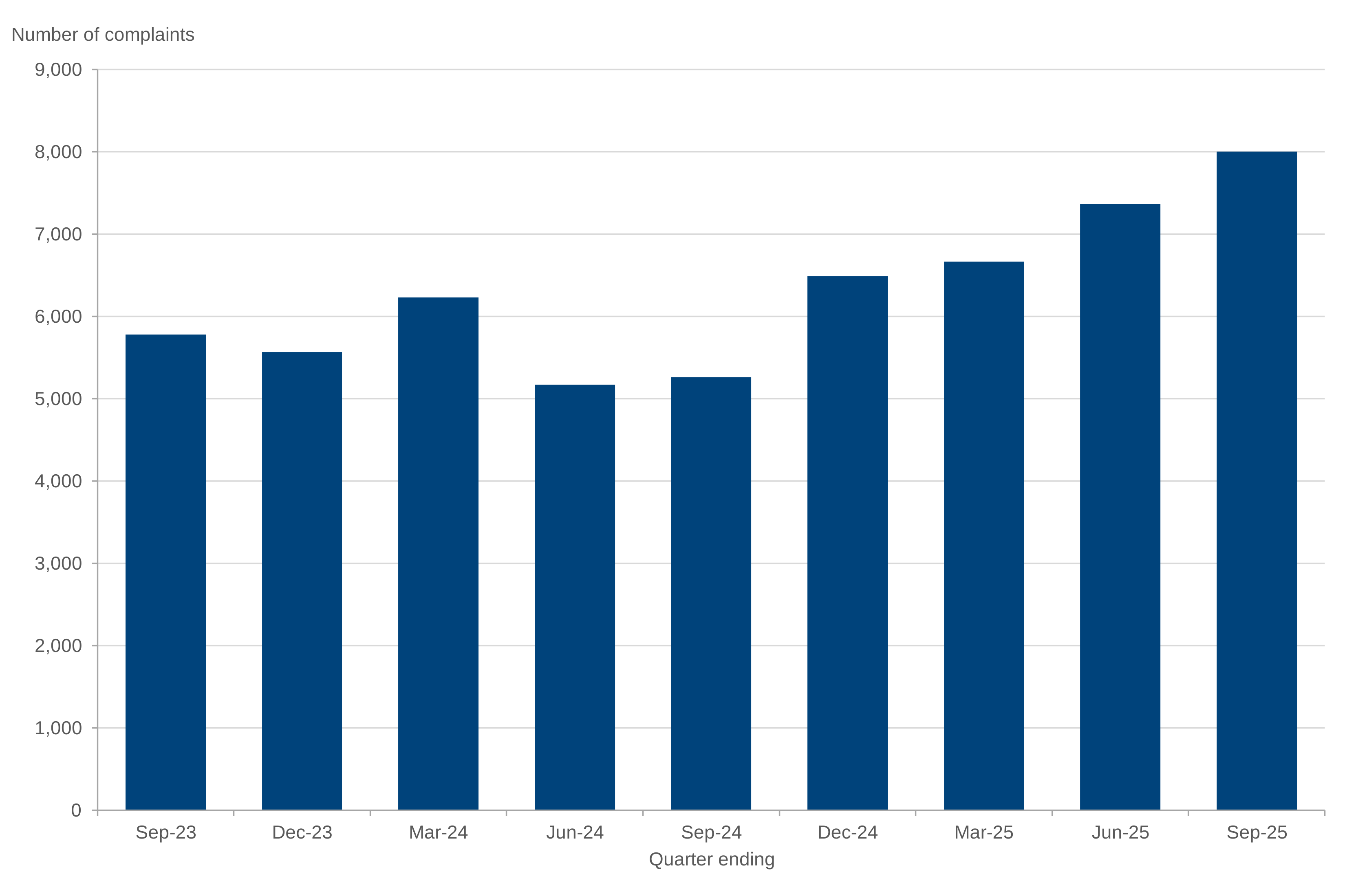
DWP received 8,005 complaints quarter ending September 2025. This is an increase of 9% from quarter ending June 2025, and an increase of 52% from quarter ending September 2024. The number of complaints about DWP services represent less than 1% of DWP’s customer base.
There was a markedly lower number of complaints from MPs which resulted in fewer complaints received for the quarters April 2024 to June 2024 and July 2024 to September 2024.
More information on the reason for a complaint can be found in section five.
See table 1 for full data.
Received complaints by DWP business area
DWP has six business areas which contain different DWP benefits. These business areas are:
- Retirement Services
- Universal Credit (UC)
- Working Age (excluding UC)
- Disability Services
- Child Maintenance Service
- Counter Fraud Compliance and Debt (CFCD)
More information on the individual business areas can be found in the background information and methodology note.
The number of complaints received by Universal Credit continues to increase
Figure 2: Number of complaints received by DWP business area per quarter, quarters ending September 2023 to September 2025
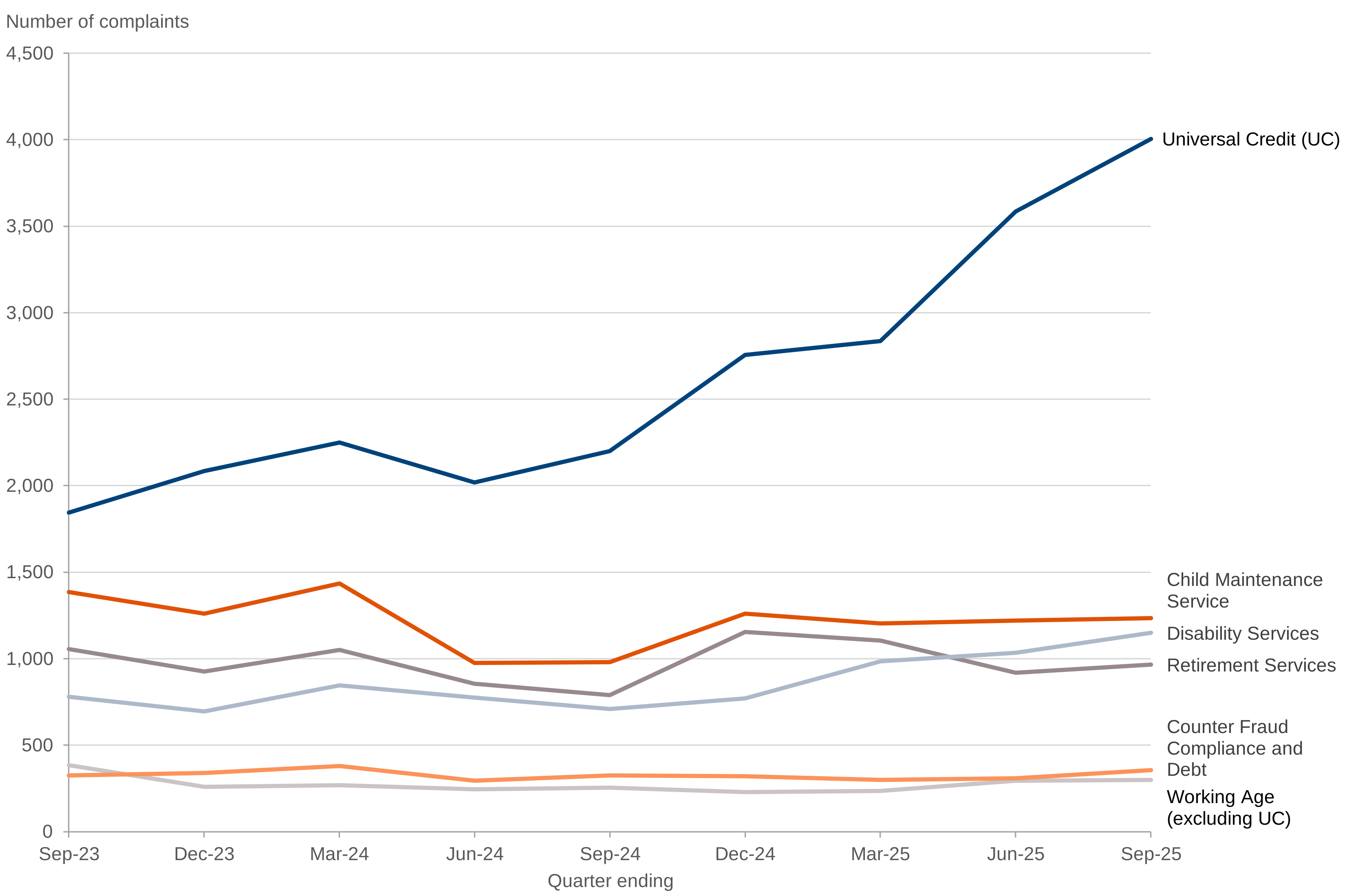
For quarter ending September 2025, Universal Credit received 4,005 complaints. This is up 12% from quarter ending June 2025, and 82% from the number of complaints received in quarter ending September 2024.
There are a range of different factors that may lead to a change in the number of complaints received. This can include increases in the caseload of a benefit, though you do not need to be in receipt of a DWP benefit to complain. In September 2025 there were 8.1 million people on Universal Credit, up from 7.1 million people on Universal Credit in September 2024. Find more information on the number of people on Universal Credit in Universal Credit statistics.
See table 1 for full data.
4. Closed Complaints
A closed complaint is a complaint that has been investigated by a DWP Complaint Resolution Manager (CRM) and a conclusion reached.
There were 6,730 complaints closed by DWP in quarter ending September 2025
Figure 3: Number of complaints closed by DWP per quarter, quarters ending September 2023 to September 2025
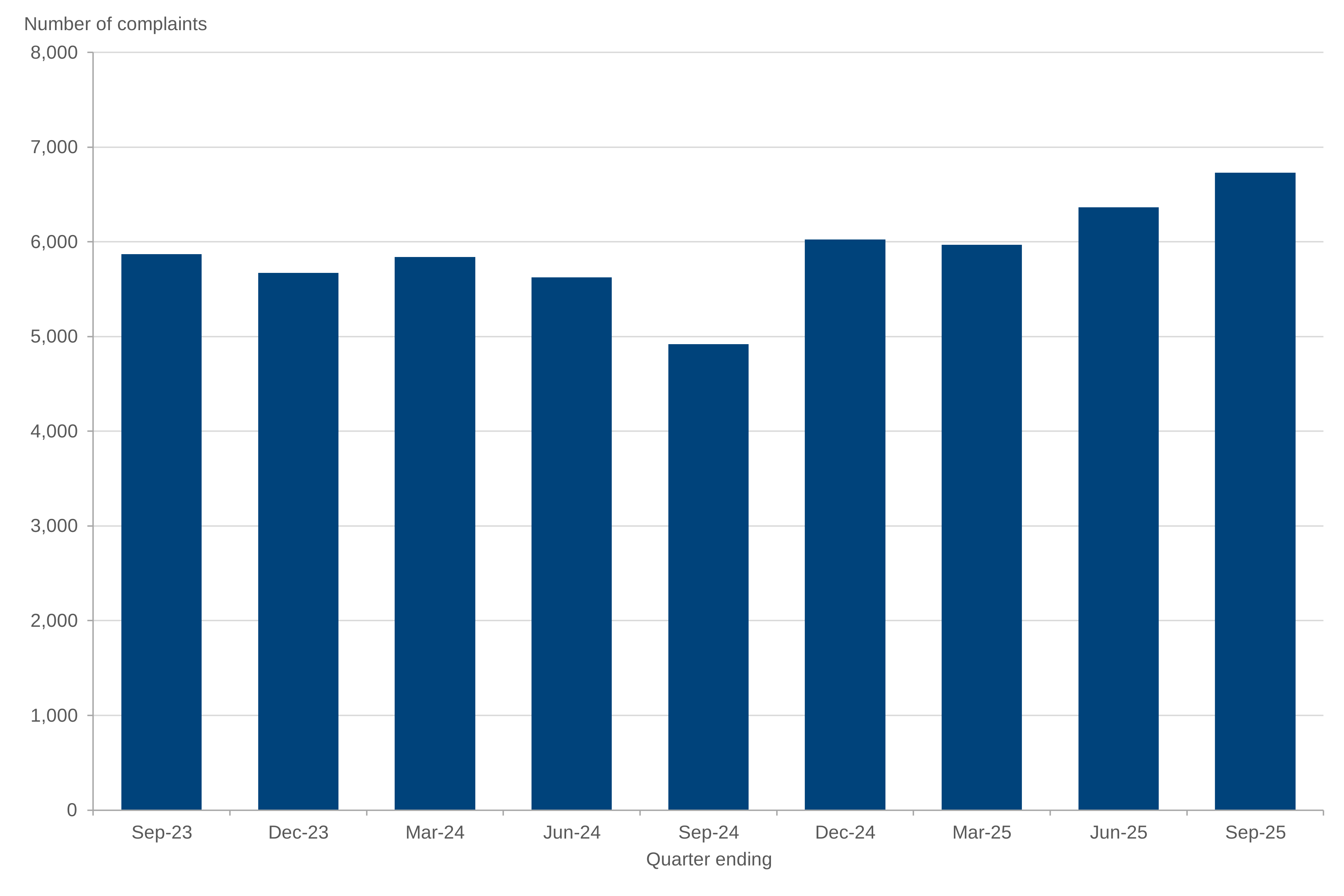
DWP closed 6,730 complaints quarter ending September 2025. This is an increase of 6% from quarter ending June 2025, and an increase of 37% from quarter ending September 2024.
The number of complaints closed are driven by patterns in the number of complaints received.
See table 2 for full data.
Closed complaints by DWP business area
Universal Credit closed 2,925 complaints in quarter ending September 2025
Figure 4: Number of complaints closed by DWP business area per quarter, quarters ending September 2023 to September 2025
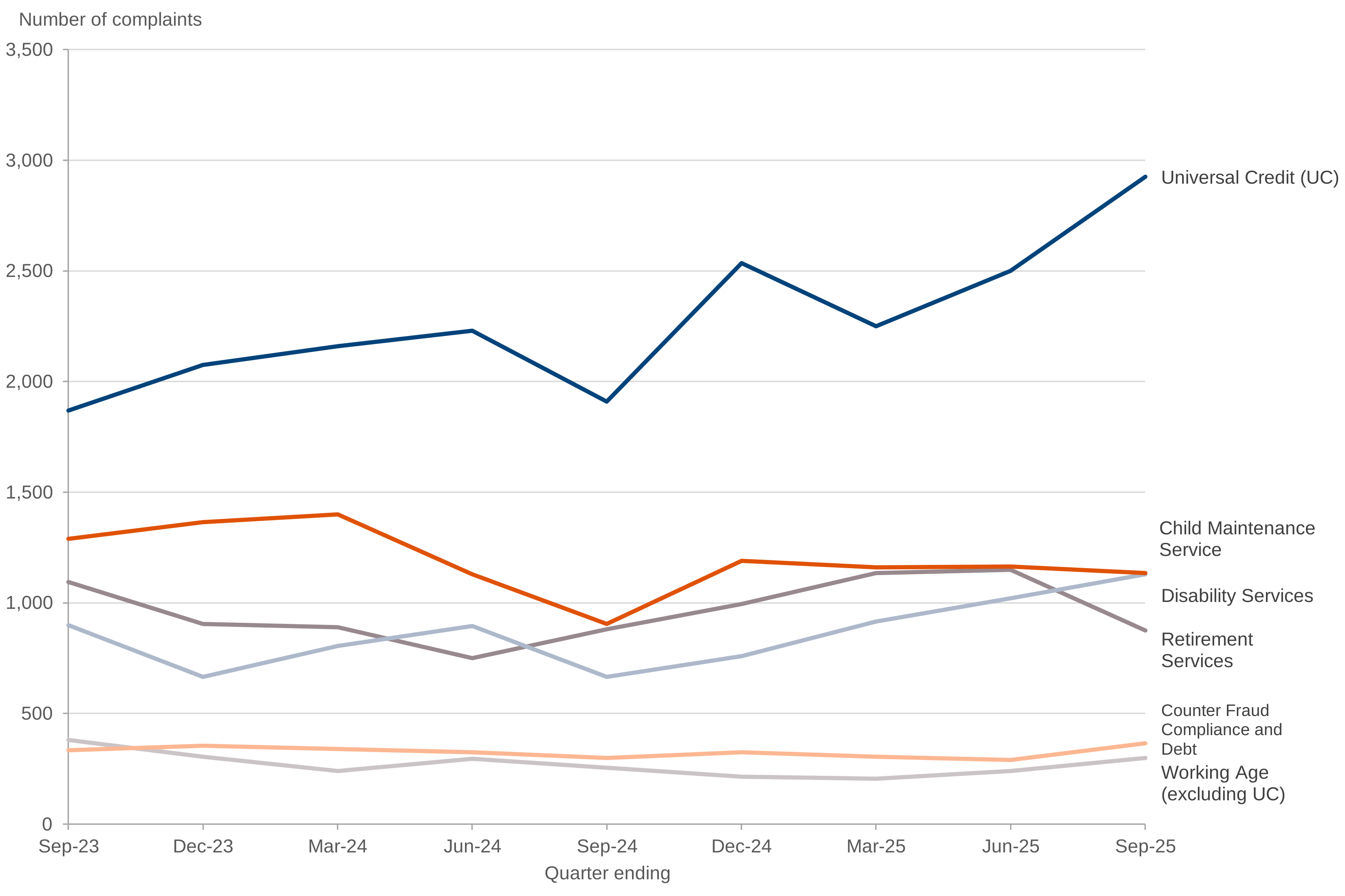
For quarter ending September 2025, Universal Credit closed 2,925 complaints. This is up 17% from quarter ending June 2025, and 53% from quarter ending September 2024.
See table 2 for full data.
5. Reasons for complaints
When a complaint is received, DWP staff assign one or more root causes to the complaint to describe the subject or subjects of the complaint. Root causes for a complaint are allocated at receipt but are only finalised when the complaint is closed. This is because the subject of a complaint can change as it is progressed and more information is gathered.
Parent texts are broader categories that are used to group root causes together. Where a complaint has more than one root cause attached, each relevant parent text is assigned. If more than one root cause is within the same parent text, it is counted once.
It is important to note that counts of parent texts are not a count of complaints as a complaint can have more than one parent text category.
More information on parent text categories can be found in the background information and methodology note.
‘You’ve got it wrong’ was the most common reason for a complaint in quarter ending September 2025
Figure 5: Count of parent text for closed complaints per quarter, quarters ending September 2023 to September 2025
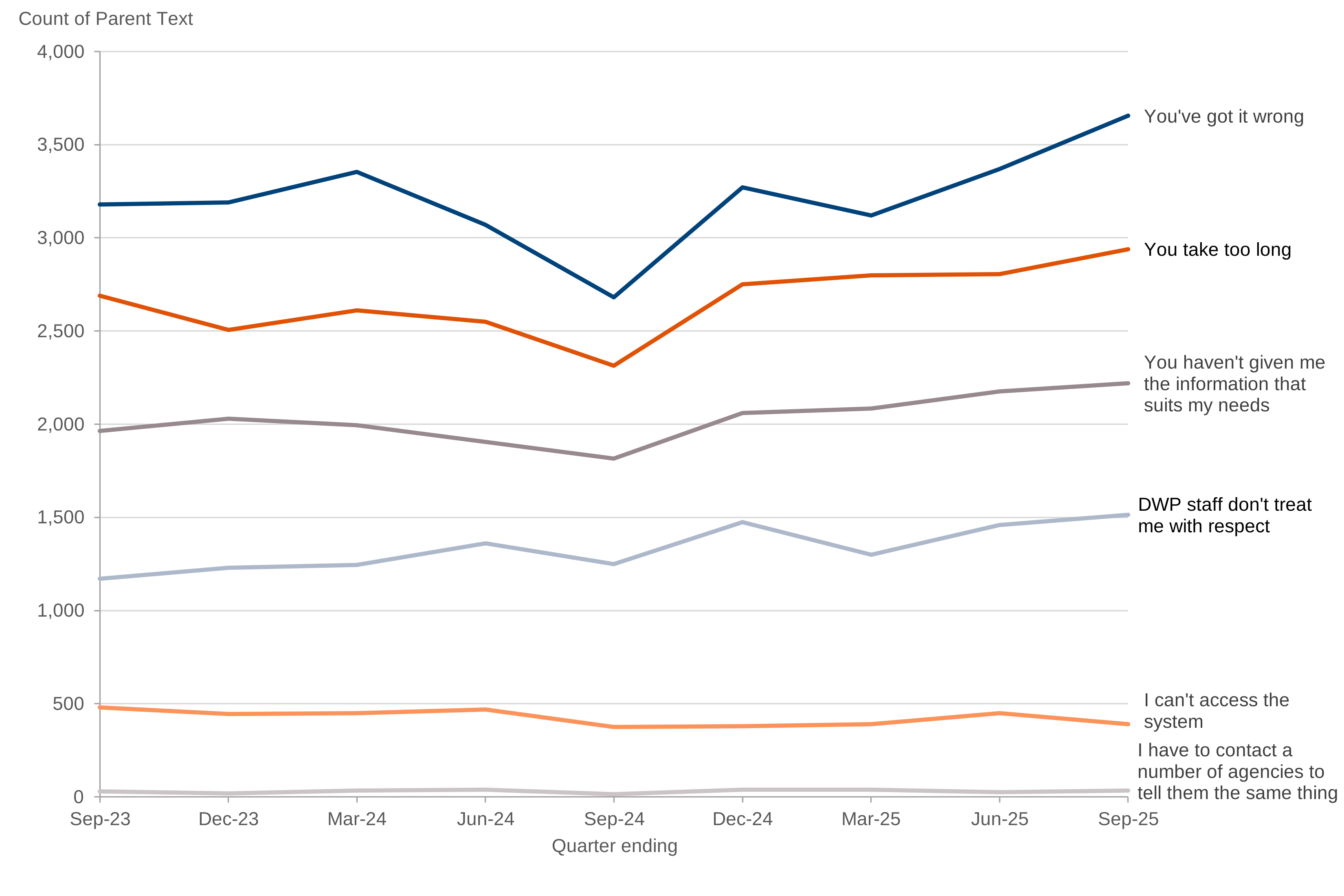
For quarter ending September 2025, the most common reason for a complaint was ‘You’ve got it wrong’ with 3,655 occurrences, an increase of 8% from quarter ending June 2025 and an increase of 37% from quarter ending September 2024.
The second most common reason for a complaint was ‘You take too long’ with 2,940 occurrences, increasing 5% from quarter ending June 2025 and 27% from quarter ending September 2024.
All parent text reasons saw an increase from quarter ending June 2025 to quarter ending September 2025 except for ‘I can’t access the system’, which decreased 13%.
‘You’ve got it wrong’ was the most common reason for a complaint for Child Maintenance Service, Universal Credit and Counter Fraud Compliance and Debt in quarter ending September 2025
Figure 6: Proportion of parent text for closed complaints by business area for quarter ending September 2025
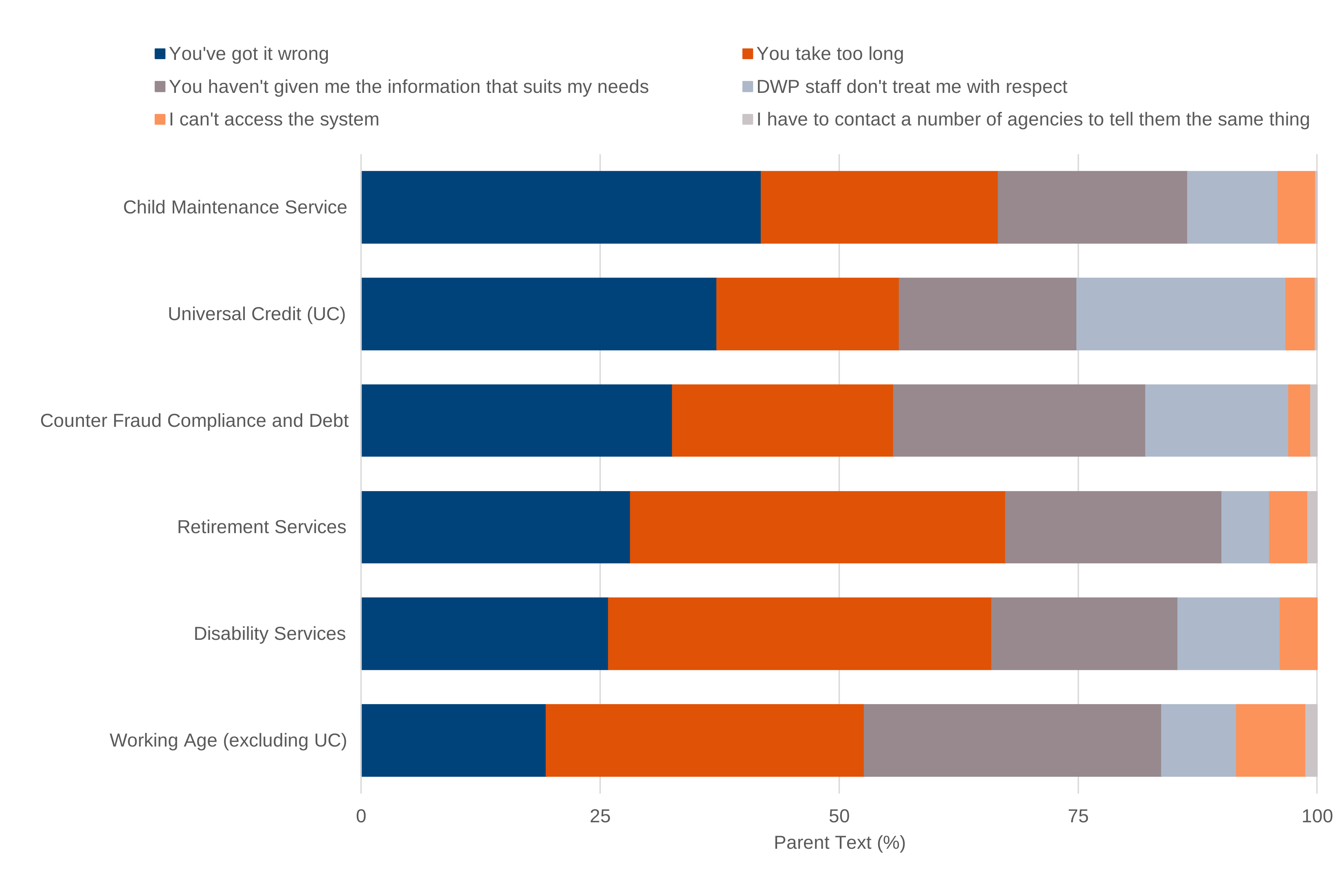
For quarter ending September 2025, ‘You’ve got it wrong’ was the most common reason for a closed complaint for Child Maintenance Service (42%), Universal Credit (37%) and CFCD (33%).
‘You take too long’ was the most common reason for a closed complaint for the business areas Disability Services (40%), Retirement Services (39%) and Working Age (excluding UC) (33%).
See table 3 for full data.
6. Complaint Outcomes
When a complaint is closed by a CRM there are three possible outcomes:
- upheld - the CRM has investigated the complaint and agrees that the service provided in each issue the complainant has raised was below the standard expected and redress is appropriate
- partly upheld - a complainant has raised more than one issue, the CRM has investigated and agrees that a poor service was provided in some, but not all, of the issues the complainant raised and applies redress to the issues upheld
- not upheld - the CRM has investigated the complaint and has decided that DWP did not provide a service below the standards that they expect
4 out of 10 closed complaints were upheld or partly upheld by DWP in quarter ending September 2025
Figure 7: Number of complaints closed and complaints upheld or partly upheld by DWP per quarter, quarters ending September 2023 to September 2025
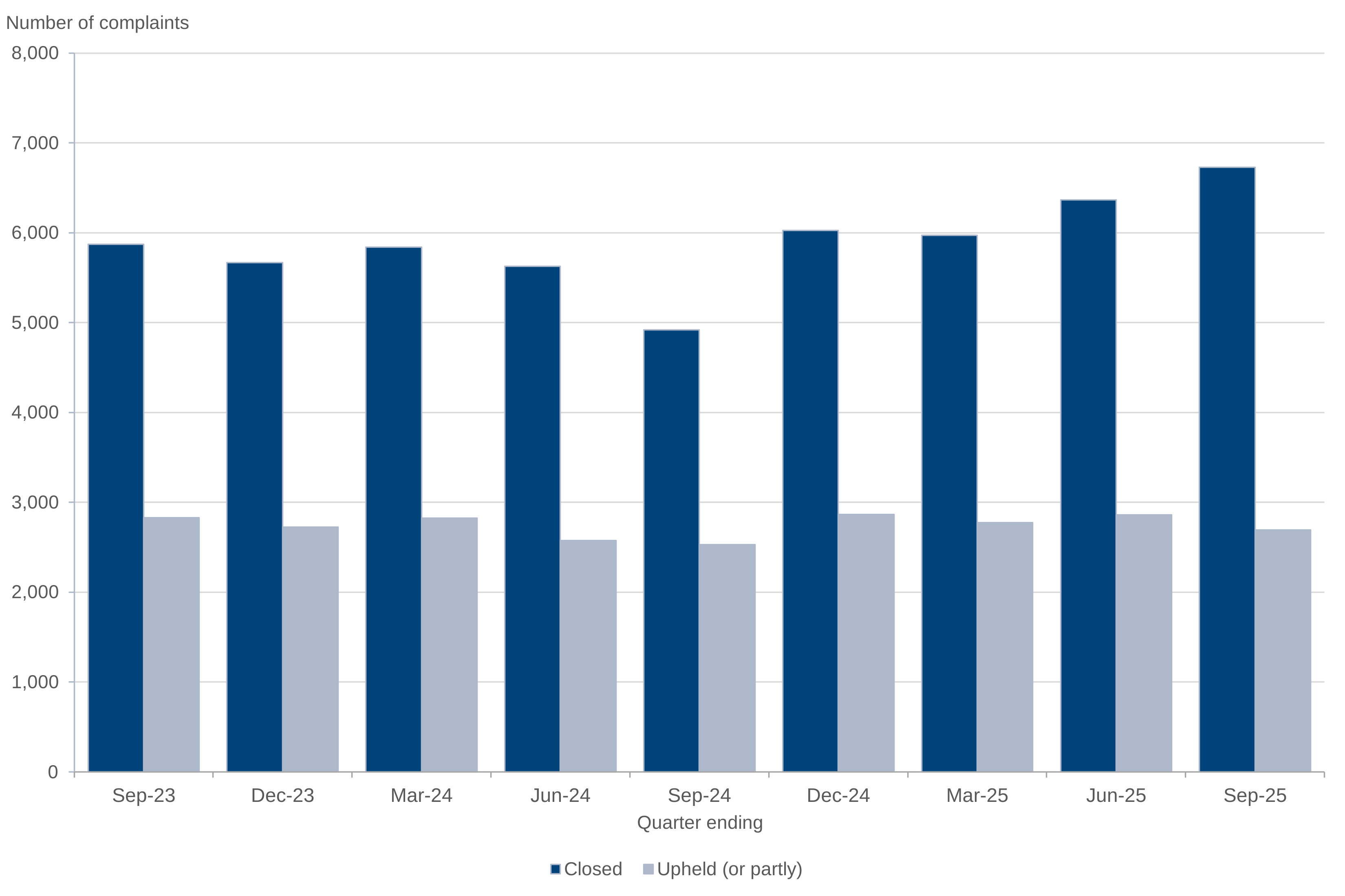
In quarter ending September 2025, 40% of complaints closed were upheld or partly upheld. This is an 11 percentage point decrease from the proportion of closed complaints upheld in the quarter ending September 2024 (51%).
See tables 4 and 5 for full data.
Complaint outcomes by DWP business area
Around 3 out of 10 closed complaints for Universal Credit and Disability Services were upheld or partly upheld in quarter ending September 2025
Figure 8: Proportion of closed complaints upheld or partly upheld by business area per quarter, quarters ending September 2023 to September 2025
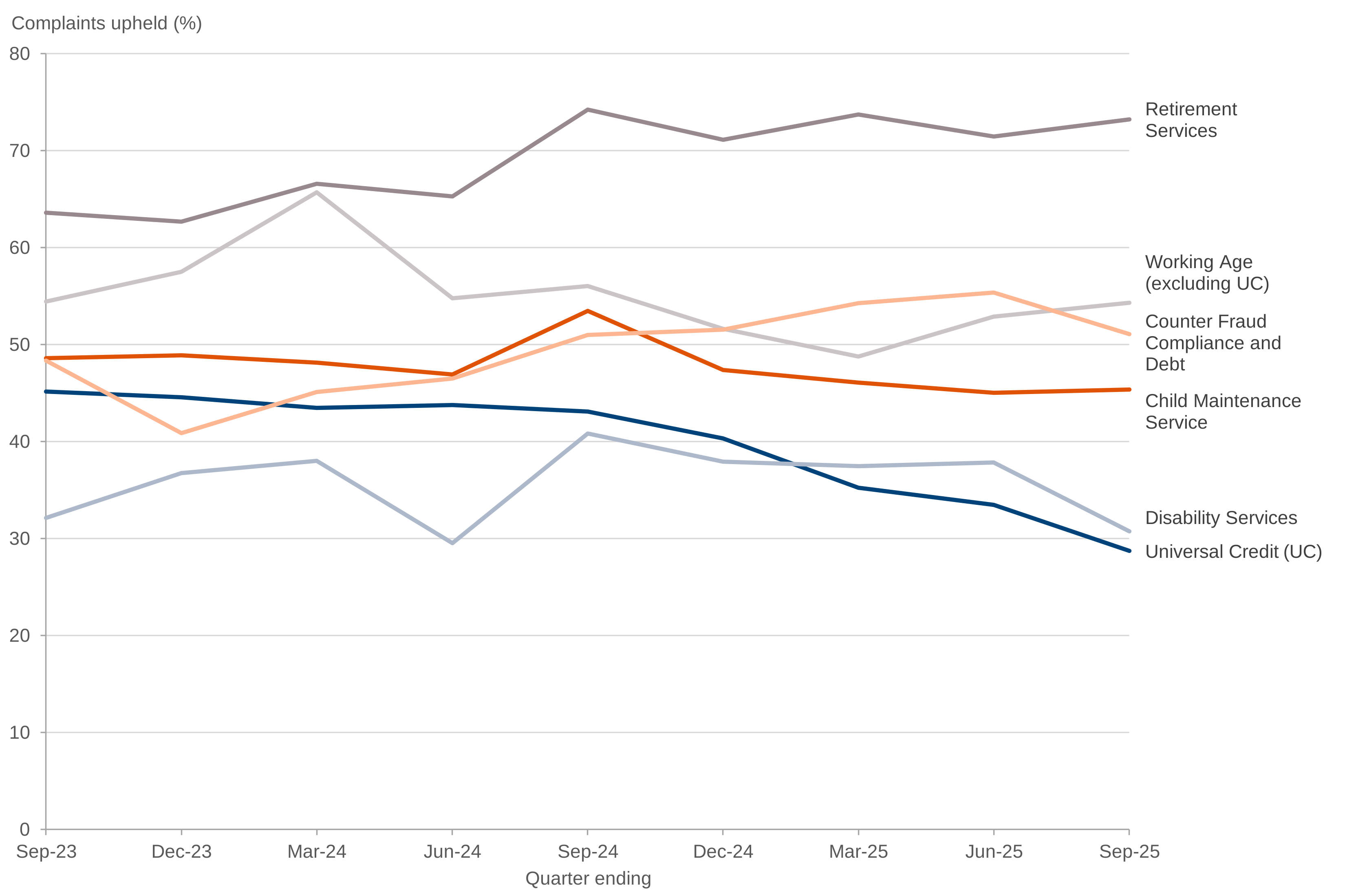
For the quarter ending September 2025, of the six DWP business areas, Universal Credit had the lowest proportion of closed complaints upheld or partly upheld, with 29% of closed complaints upheld or partly upheld. This is a 14 percentage point decrease from the quarter ending September 2024 (43%).
Disability Services had the second lowest proportion of closed complaints upheld or partly upheld, with 31% of closed complaints upheld or partly upheld in quarter ending September 2025, a 10 percentage point decrease from quarter ending September 2024 (41%).
Retirement Services had the highest proportion of closed complaints upheld or partly upheld, with 73% of closed complaints upheld or partly upheld. This has remained stable, with a one percentage point decrease from quarter ending September 2024 (74%).
See tables 4 and 5 for full data.
7. Independent Case Examiner
The Office of the Independent Case Examiner (ICE) provides an impartial review service for customers of DWP who remain dissatisfied having concluded DWP’s complaint process. ICE assesses new complaints (received) to determine eligibility and suitability (accepted) for investigation.
To access the service, complaints must concern maladministration, for example, service failure or delay, have been through DWP’s complaint process with customers signposted to ICE in the final response they receive from the relevant DWP business being complained about, within the past six months.
Complaints received about DWP by ICE
ICE received 2,645 complaints about DWP in quarter ending September 2025
Figure 9: Number of complaints received by ICE per quarter, quarters ending September 2023 to September 2025
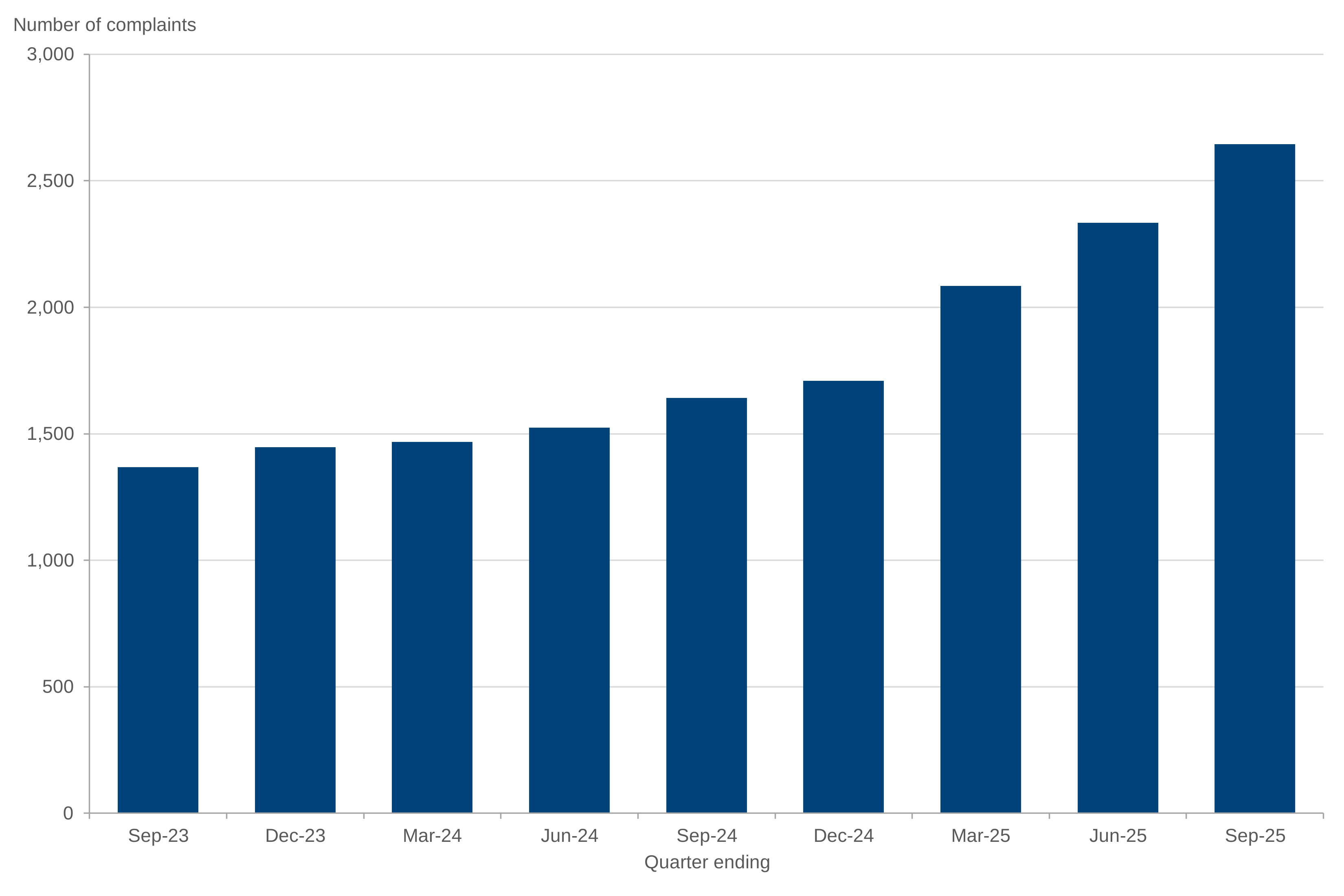
For quarter ending September 2025, ICE received 2,645 complaints. This is up 13% from quarter ending June 2025, and an increase of 61% from quarter ending September 2024.
Complaints received by ICE include early approaches. Early approaches are contacts from customers who have approached ICE before they have completed DWP’s own complaint process and received a final response. ICE can only accept a complaint if a final response has been issued from DWP.
See table 6 for full data.
Complaints accepted for investigation about DWP by ICE
ICE accepted 657 complaints for investigation in quarter ending September 2025
Figure 10: Number of complaints accepted by ICE per quarter, quarters ending September 2023 to September 2025
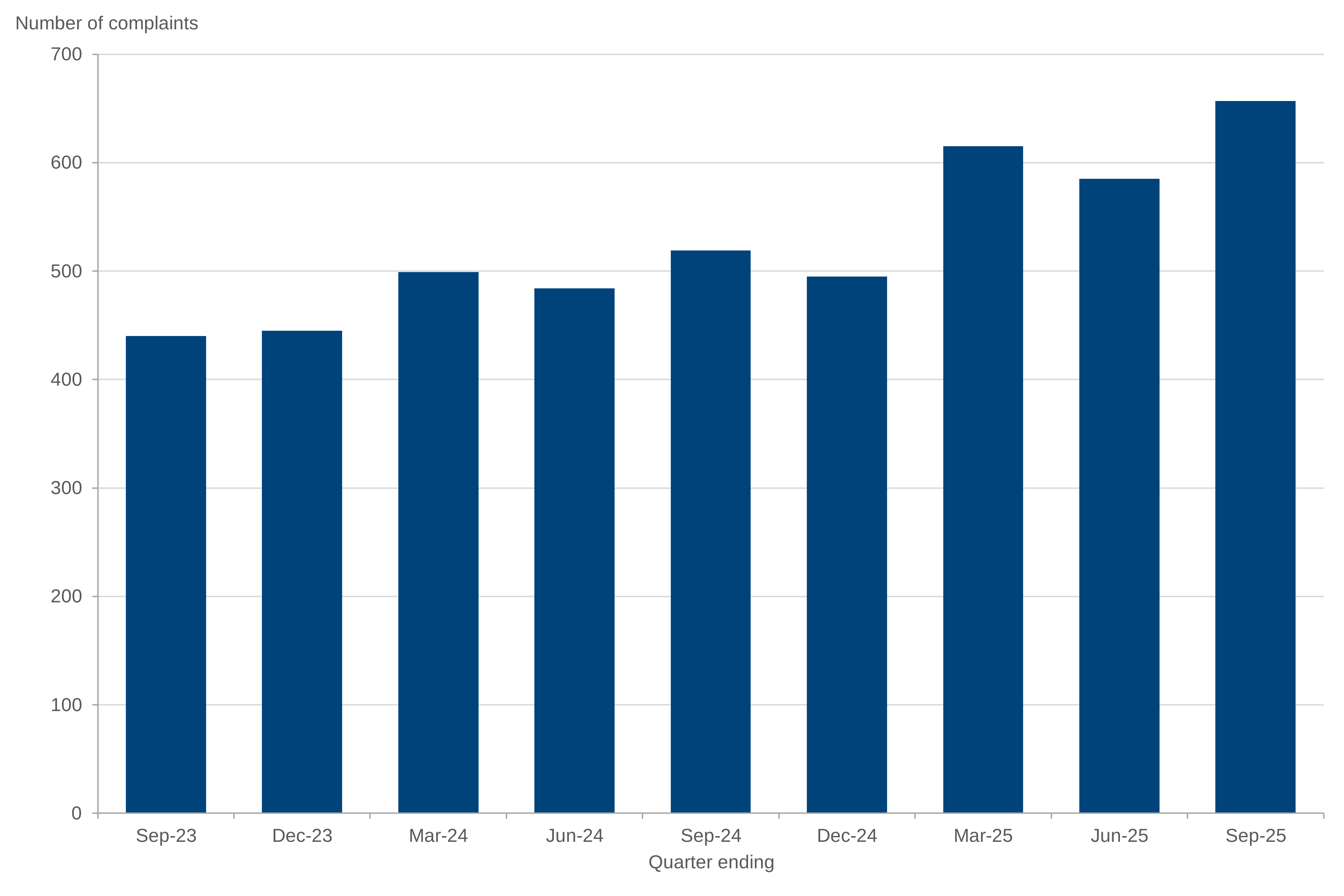
For quarter ending September 2025, ICE accepted 657 complaints. This is an increase of 12% from quarter ending June 2025, and 27% from quarter ending September 2024.
See table 7 for data.
8. About these statistics
Official Statistics in Development
Official Statistics in Development are Official Statistics that are undergoing a development; they may be new or existing statistics, and will be tested with users, in line with the standards of trustworthiness, quality, and value in the Code of Practice for Statistics. DWP will seek user feedback to inform the ongoing development of the statistics to enhance their public value.
These statistics are designated as Official Statistics in Development because this is a new publication. We welcome user comments on these statistics. Contact us by email at complaints.statistics@dwp.gov.uk.
Our statistical practice is regulated by the Office for Statistics Regulation (OSR). OSR sets the standards of trustworthiness, quality, and value in the Code of Practice for Statistics that all producers of official statistics should adhere to.
Where to find out more
Further outputs and data tables from analysis are available on the DWP Complaints statistics to September 2025 page, and in our Background information and methodology page .
Related Statistics
DWP complaints: Annual reports by the Independent Case Examiner which explains the Independent Case Examiner’s work on the complaints it receives.
Parliamentary and Health Service Ombudsman publishes annual data on the number of complaints they receive about DWP and the decisions they make on these complaints.
DWP Customer Experience Survey is a report that provides an overview of benefit customers’ satisfaction and experience of the service they received from DWP.
Rounding
Figures for DWP have been rounded to the nearest five. Figures may not sum due to rounding. Percentages are calculated using numbers prior to rounding and rounded to the nearest whole percentage point.
Figures for ICE have not been subject to rounding.
Contact information
Contact the DWP publication team by email: complaints.statistics@dwp.gov.uk
For media enquiries contact the DWP Press Office.
Feedback is welcome.
ISBN: 978-1-78659-909-4
The next edition will be in released in March 2026.