Benefit cap: number of households capped to August 2025
Published 16 December 2025

© Crown copyright 2025
This publication is licensed under the terms of the Open Government Licence v3.0 except where otherwise stated. To view this licence, visit nationalarchives.gov.uk/doc/open-government-licence/version/3 or write to the Information Policy Team, The National Archives, Kew, London TW9 4DU, or email: psi@nationalarchives.gov.uk.
Where we have identified any third party copyright information you will need to obtain permission from the copyright holders concerned.
This publication is available at https://www.gov.uk/government/statistics/benefit-cap-number-of-households-capped-to-august-2025/benefit-cap-number-of-households-capped-to-august-2025
This quarterly release of Benefit Cap Statistics covers data for Great Britain and is part of the Benefit Cap statistics collection. Data is available on Stat-Xplore.
The next release is scheduled for 24 March 2026.
Since the September 2025 release the narrative in this summary document now only focuses on benefit capped households on Universal Credit (UC) as working-age Housing Benefit (HB) households on the Benefit Cap have nearly all been moved to UC. There remains a small number of households (340 households in August 2025) that are capped on HB. Although a summary of HB households on the Benefit Cap is not provided in this summary document, data for HB and UC households on the Benefit Cap is available on Stat-Xplore.
From this release, geographies for Universal Credit use the Census Output Area 2021 (COA21). More information on the update to statistical geographies is provided in Changes to DWP statistical geographies in National and Official statistics. Geographies for Housing Benefit continue to use Census Output Area 2011 (COA11) and are planned to be updated to COA21 in a future release.
1. Main stories
All figures in this summary document refer to Benefit Cap on UC
- In total, 119,000 households had their benefit capped, almost all of which are capped on UC (340 households had their benefit capped on HB) at August 2025
On UC, in August 2025:
- the number of capped households is broadly stable compared with May 2025
- 82% of benefit capped households included children
- 1.7% of working age households claiming UC had their benefits capped, compared with 1.8% of households that had their benefit capped in May 2025
- The monthly average (mean) cap amount was £249, compared with £256 in May 2025.
On UC, between May 2025 and July 2025:
- 23,000 were newly capped
- 40,000 households off-flowed from the benefit cap
2. What you need to know
Universal Credit (UC) figures for the latest two years are revised to capture retrospective changes that may occur to UC claims. This is in line with our revisions methodology and means that historic figures published in this release may differ from already published figures.
The level of revision between previously published figures and the revised series varies across time periods, by geographical area and by other available breakdowns. However, more recent periods tend to be subject to a greater degree of revision than more historic ones.
The benefit cap is a limit on the total amount of benefit that most working age people can get and affects a number of benefits.
The amount of benefit a household receives is reduced to ensure claimants do not receive more than the cap limit. The benefit cap can be applied through either:
-
Universal Credit (UC)
-
Housing Benefit (HB)
The benefit cap was introduced in April 2013 and was initially applied to HB for working-age households. It also started to be applied to UC in April 2016. The majority of claims are now capped in UC, however, a small number of the working age population may still apply for HB. For more information, see who can get HB and completing the move to UC.
It is important to interpret the statistics provided on the Benefit Cap in the context of Benefit Cap levels and annual uprating of benefits. For the history of Benefit Cap levels refer to our background information and methodology document.
Benefit cap statistics are presented on a point in time basis for the second Thursday in the month. For UC payments this means that all assessment periods that are active on that date are assessed to be in that month. For example, any assessment period active on 8 May 2025 would be counted as being in May 2025, but any assessment period that ended before 8 May 2025, or started after the 8 May 2025 would not be counted as being in May 2025 for the purposes of these statistics. An assessment period covers 1 month.
Onflows are defined as households experiencing the benefit cap for the first time. Households that were previously capped and are returning to the benefit capped are not defined as an onflow.
Figures relating to on-flows, newly capped and off-flows refer to the total over the time period May 2025 to July 2025, captured on the 2nd Thursday of each month. These are a different time period to figures relating to remaining capped or returning to the cap that refer to the total over the time period June 2025 to August 2025 on the 2nd Thursday of the month. An earlier month is used due to the methodology to count off-flows being the month the household was last capped and on-flows being aligned to the off-flow period. Under this methodology it is not possible to know whether a household has off-flowed the Benefit Cap in August 2025 because the data for September 2025 is out of scope for this release.
This release is accompanied by statistical data tables. Full data, including all historic data, is available on Stat-Xplore.
More information on the background of the Benefit Cap and the methodology used in these statistics can be found in the background information and methodology document.
For readers requiring text descriptions of charts, the paragraphs that follow each chart provides a description of the main information from the chart.
3. The number of capped households in GB
Capped households are broadly stable in August 2025 compared with May 2025
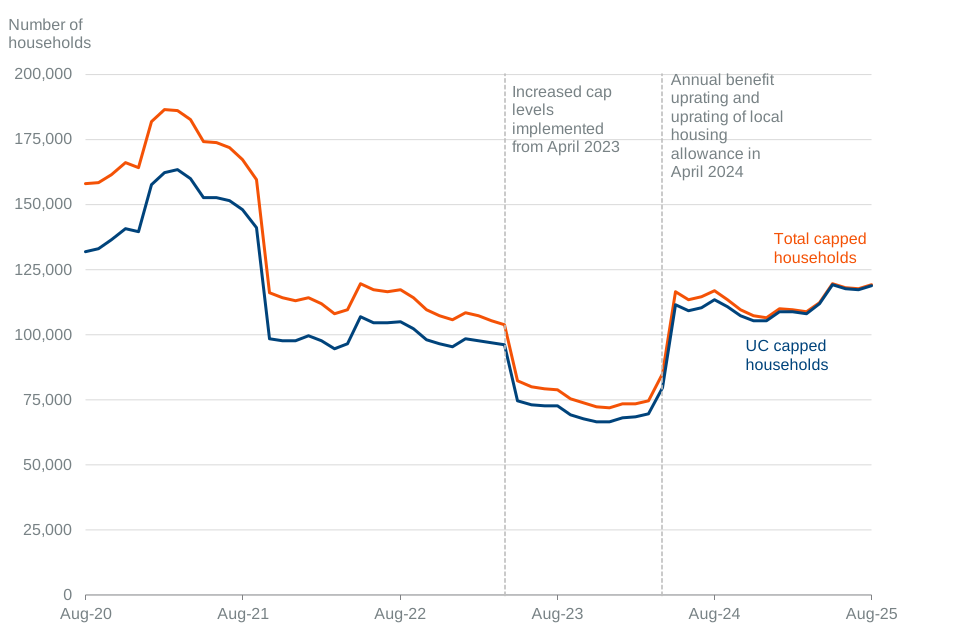
Figure 1: Monthly number of total and UC capped households, Great Britain, August 2020 to August 2025
Note: Total capped households includes UC and HB. For data on HB capped households please refer to Stat-Xplore.
Source: Benefit Cap HB point in time caseload and UC point in time caseload statistics, Stat Xplore
Figure 1 shows that nearly all households having their benefits capped are now capped in Universal Credit. A small proportion remain capped in Housing Benefit. For this reason, this summary will focus on capped households in UC as that will be representative of capped households as a whole.
The chart shows there were 119,000 households capped in UC in August 2025. This is broadly stable compared with May 2025. The number of households on the benefit cap increased from 108,000 in March 2025 to 119,000 in May 2025 which coincided with benefit uprating in April 2025.
Notable changes to the number of households being capped typically align with times when the benefit cap levels changes, or when benefits are uprated with no change to the benefit cap levels.
For example, when the benefit cap levels were increased in April 2023 the number of households being capped in Universal Credit fell by 21,000 households (22%) between April 2023 and May 2023 from 96,000 to 75,000.
When the benefit cap levels were unchanged in April 2024 and benefits were uprated, the number of households being capped on UC increased from 70,000 households to 112,000 households (60% increase) between March 2024 and May 2024. In addition to this, there were other changes to benefits at this time including an increase to the Local Housing Allowance to the 30th percentile of local market rents. This would have increased the amount of housing support households could potentially receive making them more likely to be affected by the Benefit Cap. The ‘Move to UC’ program was also ongoing at this time where some households would move from being capped on HB to being capped on UC.
Majority of households capped in May 2025 remain capped in August 2025
Figure 2: Movement of Benefit Cap households on Universal Credit on and off the Benefit Cap, Great Britain, May 2025 to August 2025
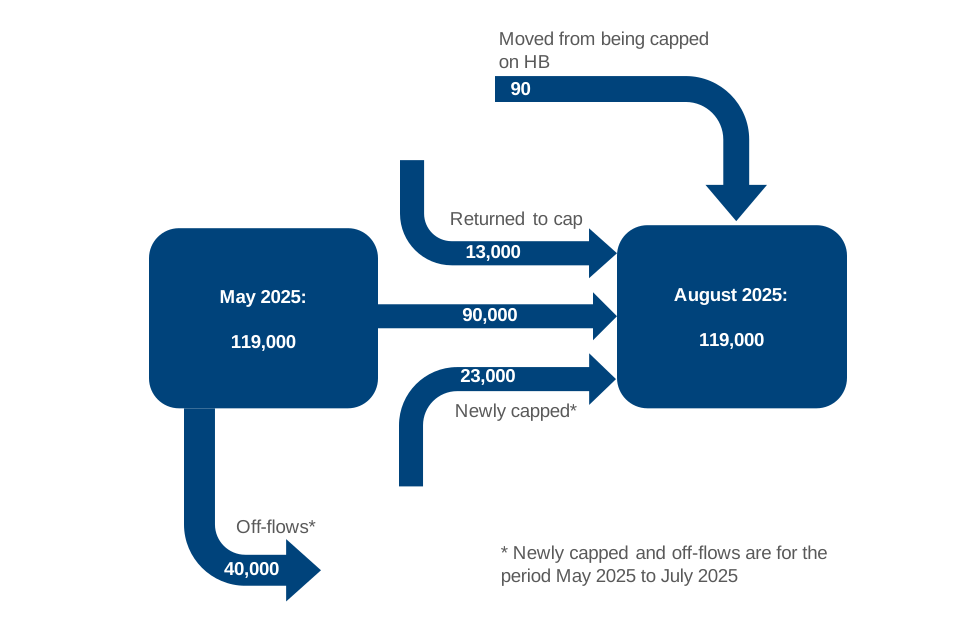
Note: Off-flows are households that were last capped between May and July. Newly capped are households that were capped for the first time between May and July. Returned to cap are households that were capped before May 2025, but not in May 2025, and are capped again in August 2025. July is used for off-flows as it is not known in the data for this release to August 2025, whether a household was capped in September 2025 and was last capped in August 2025.
Note: Figures in the flow chart may not sum, due to households which flow on and off the cap between quarters not being included in the quarterly totals.
Figure 2 is an infographic that shows of the 119,000 households being capped in UC in August 2025:
- 90,000 of these were on the benefit cap in May 2025
- 23,000 households started on the benefit cap for the first time between May and July
- 13,000 households are on the benefit cap having been capped before, but not at, May 2025
- 90 households moved from being capped in HB in May 2025 to UC and remain capped.
In addition, 40,000 households have moved off the benefit cap from May 2025 (were last capped between May and July).
23,000 households were newly capped in the latest quarter
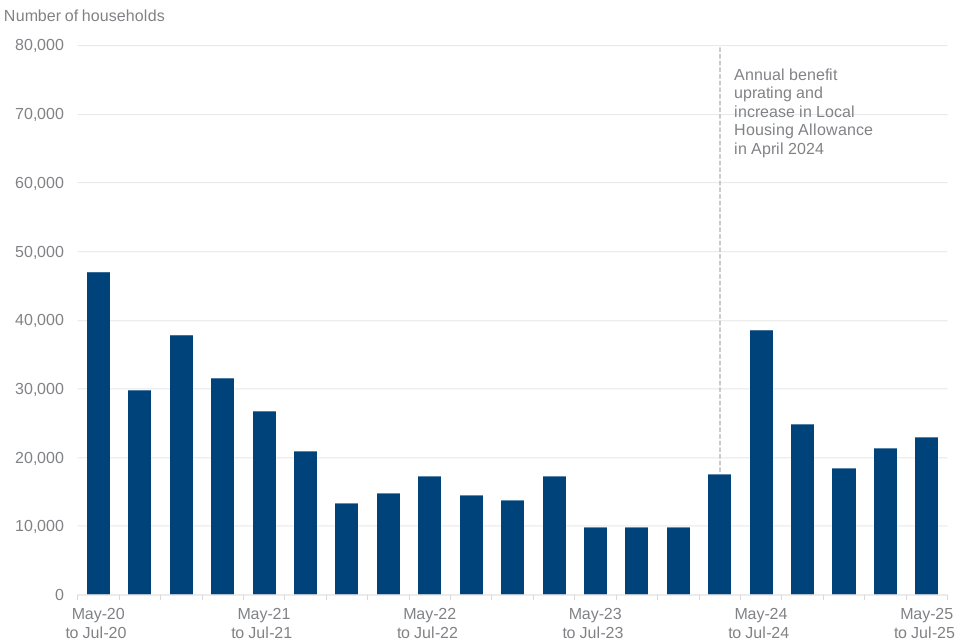
Figure 3: Quarterly total number of newly capped UC households, Great Britain, August 2020 (May to July 2020) to August 2025 (May to July 2025)
Source: Benefit Cap UC cumulative caseload statistics, Stat-Xplore
Figure 3 shows there were 23,000 households that had their benefits capped for the first time this quarter (May 2025 to July 2025). This is an increase from last quarter (February 2025 to April 2025) where 21,000 households were capped for the first time.
Note: Newly capped households are those that have their benefits capped for the very first time. For UC, this excludes off-flows from the HB cap who then immediately become capped under UC. Figures may refer to different time periods.
Higher number of households have off-flowed the Benefit Cap on UC in quarters since May 2024, compared with earlier quarters
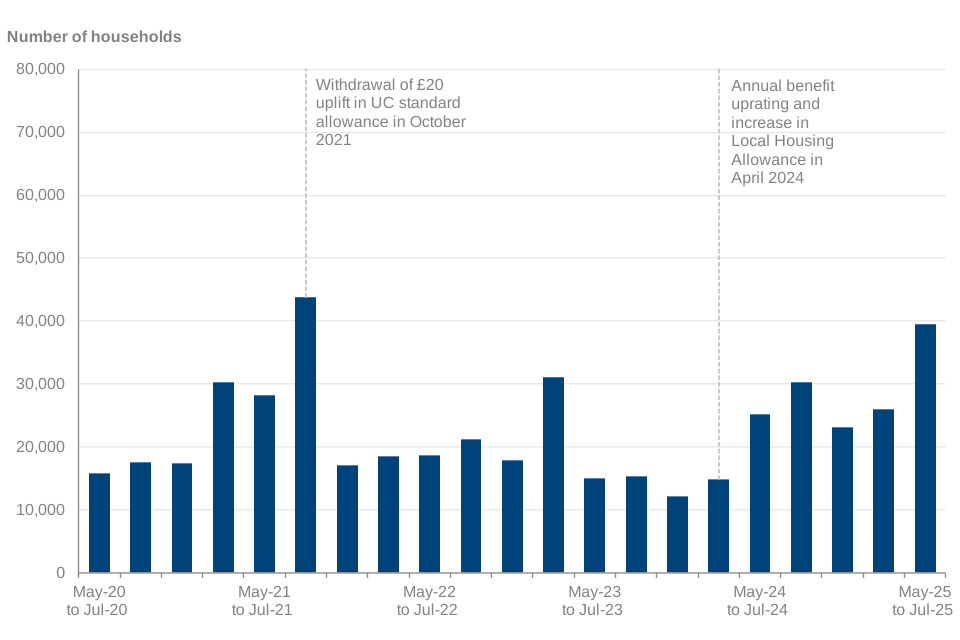
Figure 4: Quarterly total number of households that have flowed off the Benefit cap, August 2020 (May to July 2020) to August 2025 (May to July 2025)
Source: Benefit Cap HB cumulative and UC cumulative caseload statistics, Stat-Xplore
Off-flows are particularly subject to retrospection, and numbers for May, June and July 2025 should be regarded as provisional. A household may no longer be counted as an off-flow if they reappear on Benefit Cap data in the future and therefore will no longer be counted as an off-flow. Historic changes over the last 2 years show that it is expected that between 6,000 and 10,000 households in the most recent month reported (August 2025 in this release) return to the Benefit Cap during the following 3 months.
Figure 4 shows there were 40,000 households leaving the Benefit Cap in the quarter to August 2025. This is up from 26,000 households for the previous quarter ending May 2025.
Of these off-flows, 7,300 households (18%) were also on-flows during this quarter. This means that these households had their UC capped for the first time and left the cap during this quarter.
The highest number of UC off-flows in one-quarter was for the quarter to November 2021 when 44,000 claims flowed off the cap. During this period, in October 2021, the temporary £20 a week increase to UC introduced during the pandemic was withdrawn.
There was a higher number of off-flows in the quarter to May 2023 than there were in the previous quarters (31,000). This should be seen in the context of the increased benefit cap levels which were implemented from April 2023.
In the quarter to August 2025, 7% (2,900) of UC households that flowed off the cap left the cap due to having employment earnings at, or over, the employment earnings threshold. The remaining 93% (37,000) left due to other reasons; examples include a household’s benefit income has reduced under the cap levels, a household is in receipt of an exempting benefit, or a household is no longer claiming UC. This compares to 9% (2,400) of UC households that left due to earning over the earnings threshold, and 91% (24,000) leaving the cap due to other reasons, in the quarter to May 2025.
The employment earnings exemption threshold is subject to change each financial year. The earnings exemption threshold is £846 for the Financial Year Ending (FYE) 2026. Details of previous exemption threshold levels can be found in background information and methodology document.
Off-flow outcomes are shown as at the end of the quarter in which a household moved off the benefit cap, meaning the outcomes are fixed at that point, unless a household is capped again at a later date. More detail on the way off-flow outcomes are determined is included in the background information and methodology document.
4. Characteristics of capped households
There were 82% (97,000) of households that had their UC capped that included children at August 2025.
Of the households including children, capped at August 2025:
-
93% (90,000) had between 1 and 4 children
-
7% (7,000) had 5 or more children
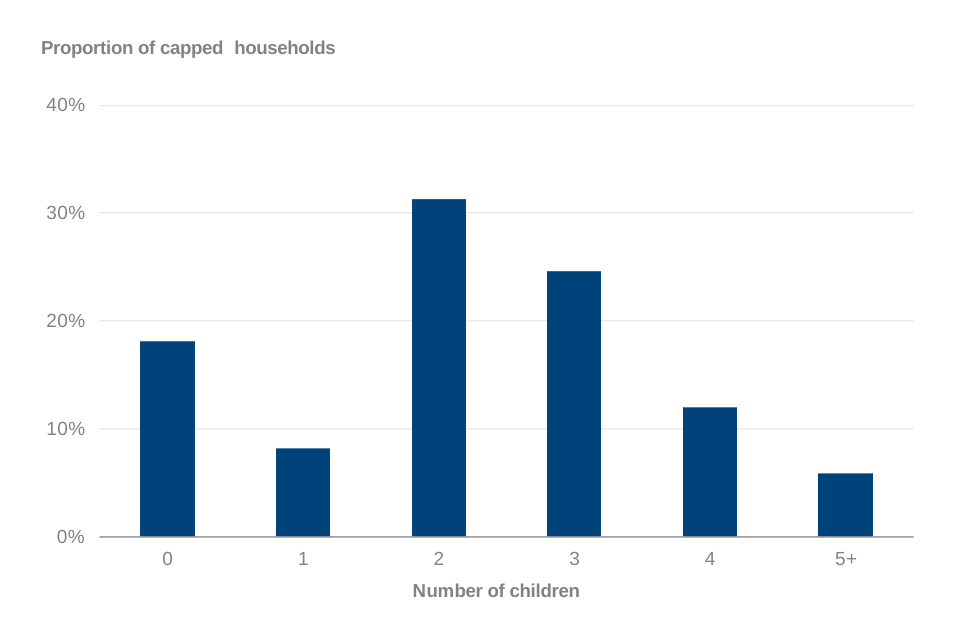
The most common family size for UC capped households is 2 children
Figure 5: Proportion of UC capped households by number of children, Great Britain, August 2025
Source: Benefit Cap, UC point in time caseload statistics, Stat Xplore
Figure 5 shows households with 2 or 3 children are the most common family sizes (31% and 25% respectively) for capped households in August 2025.
The least common family sizes are 5 or more children (6%) and 1 child (8%).
There were 18% of households capped in UC without children.
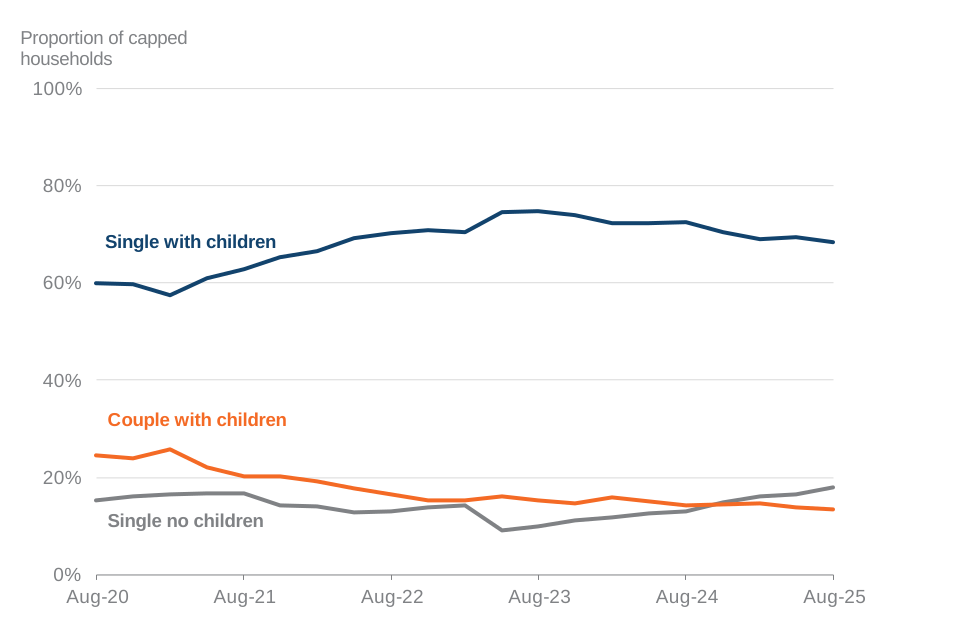
The majority of households that have their benefits capped are single parent households
Figure 6: Proportion of capped households by household type, Great Britain, August 2020 to August 2025
Source: Benefit Cap UC point in time caseload statistics, Stat Xplore
Note: This graph is plotted using quarterly point in time figures.
Figure 6 shows:
Single parent households have consistently accounted for the most households having their benefits capped since the beginning of the time series in May 2020.
68% of capped households were single parent families in August 2025. The proportion of benefit capped households that are single parent families have been gradually falling since the peak of 75% in August 2023.
The proportion of capped households that are single person households with no children have been gradually increasing from a low of 9% in May 2023 to 18% in August 2025. In November 2024 they became a greater proportion of capped households than couple households with children for the first time in the charted time series.
Couple households with children accounted for 13% of capped households in August 2025. This has been gradually falling since a peak of 26% in February 2021.
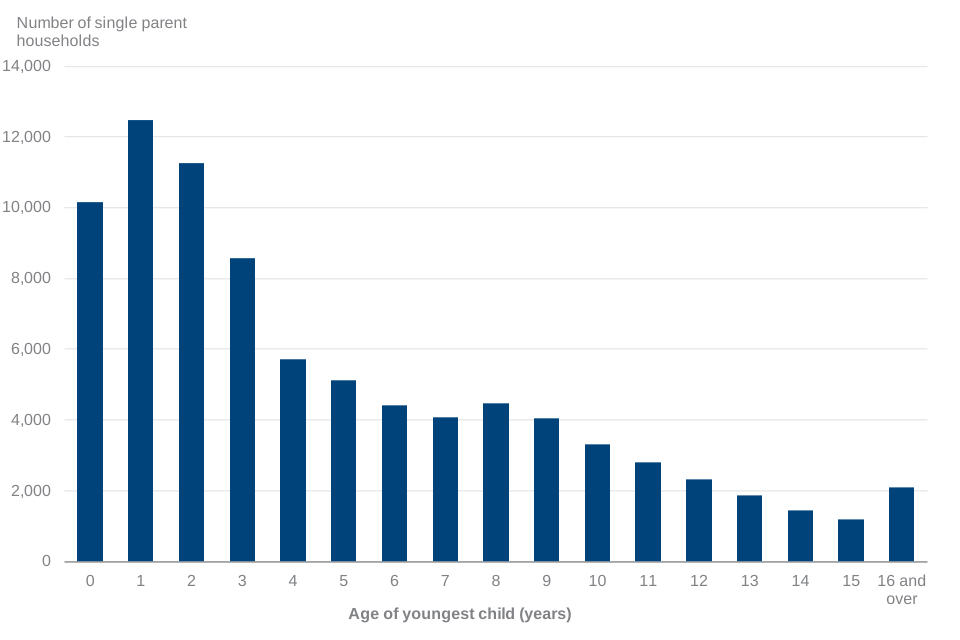
Over half of all single-parent households capped on UC have a youngest child under the age of 5 at August 2025
Figure 7: Number of capped UC single parent households by age of youngest child at August 2025.
Source: DWP Universal Credit Quarterly Statistics, DWP Housing Benefit Caseload Statistics.
Figure 7 shows:
Of single-parent UC capped households, 46,000 (59%) have at least one child aged under 5 years at August 2025. In the same month there were 22,000 (27%) of single-parent UC capped households having a child aged under 2 years.
Regional UC capped households
Figure 8: Proportion of UC households capped at Region and devolved administration level at August 2025
| Region | Percentage of UC households benefit capped |
|---|---|
| London | 3.6% |
| South East | 2.7% |
| East of England | 2.2% |
| West Midlands | 1.6% |
| South West | 1.4% |
| East Midlands | 1.1% |
| North West | 1.0% |
| Yorkshire and The Humber | 1.0% |
| Wales | 0.9% |
| North East | 0.7% |
| Scotland | 0.6% |
The proportion of households claiming UC that had their benefits capped at August 2025 was 1.7%, compared with 1.8% as at May 2025. The London region continues to have the highest proportion of UC households affected by the benefit cap, with 3.6% capped at August 2025, compared with 3.7% at May 2025.
At August 2025 Scotland remains the region with the lowest proportion of UC households capped at 0.6%.
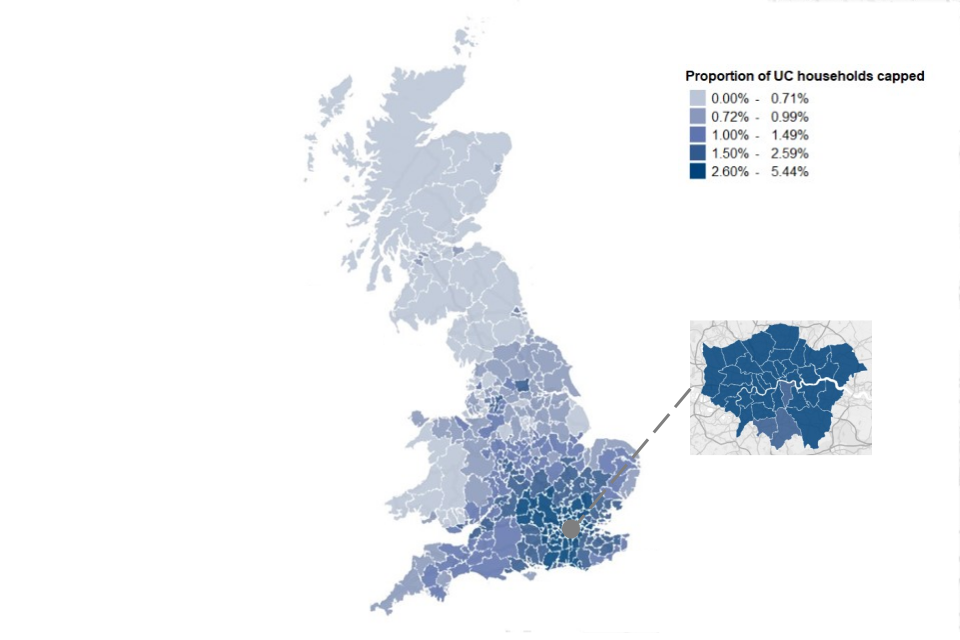
The proportion of UC claiming households that are capped is greatest in London and the South East local authorities
Figure 9: Proportion of UC households capped at Local Authority level at August 2025
Source: DWP Universal Credit Quarterly Statistics and Benefit Cap UC point in time caseload statistics. Stat-Xplore
Figure 9 is a map of Great Britain that shows:
Of the 10 Local Authorities (LAs) with the highest proportion of UC households having their benefits capped at August 2025; 5 of them are in the London region, 3 are in the South East region and 2 are in the East of England region.
Local authorities with highest proportion of capped UC households
| Local Authority | Region | Proportion of UC households capped |
|---|---|---|
| Watford | East of England | 5.4% |
| Barnet | London | 5.4% |
| Enfield | London | 5.4% |
| Hertsmere | East of England | 5.3% |
| Spelthorne | South East | 5.2% |
| Harrow | London | 5.2% |
| Elmbridge | South East | 5.2% |
| Haringey | London | 5.0% |
| Reading | South East | 4.9% |
| Brent | London | 4.8% |
5. The financial impact of being capped
The average monthly amount capped for UC has fallen at August 2025 when compared to May 2025
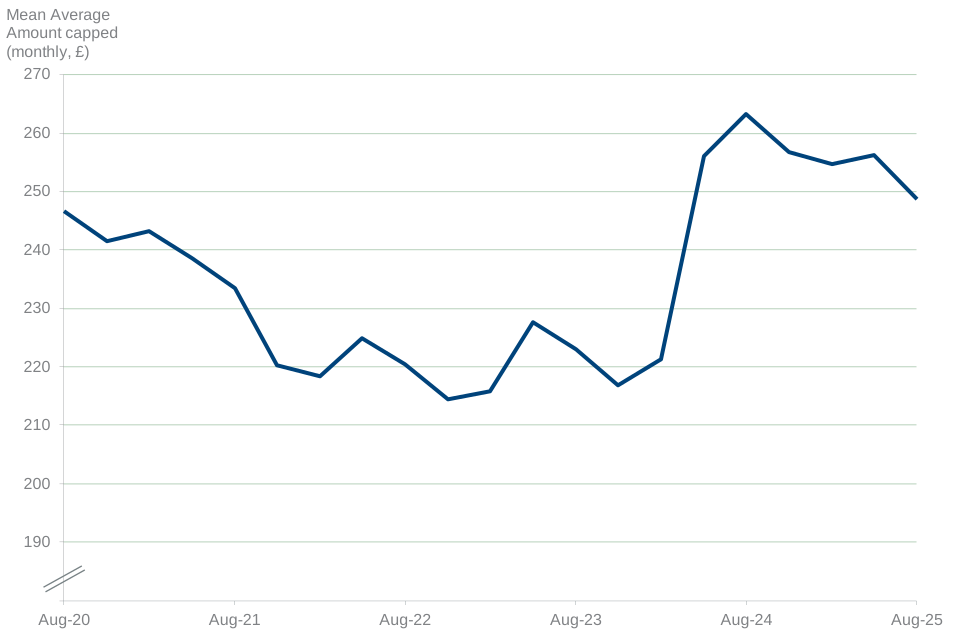
Figure 10: Average assessment period (monthly) capped amount for UC households from August 2020 to August 2025
Source: Benefit Cap UC point in time Statistics, Stat-Xplore
Note: This graph is plotted using quarterly point in time figures.
Figure 10 shows:
The monthly average (mean) amount that UC households are capped by is £249 at August 2025. This compares with a monthly average of £256 at May 2025.
Proportion of UC capped households by cap amount
The majority of capped households are capped by less than £200 for the monthly assessment period for August 2025:
- 55% (66,000) of households that had their UC capped were capped by £200 or less for the assessment period
- 25% (29,000) were capped by £200.01 to £400 for the assessment period
- 11% (13,000) were capped by £400.01 to £600 for the assessment period
- 5% (5,700) were capped by £600.01 to £800 for the assessment period
- 4% (4,700) were capped by more than £800 for the assessment period, including 1% (780) capped by more than £1,300 for the assessment period
6. About these statistics
Release schedule
The statistics are published quarterly in March, June, September, and December and are sourced from data originally collected via administrative systems. The dates for forthcoming releases are announced on the GOV.UK Statistics and Research release calendar.
Status of these statistics
These are official statistics. Our statistical practice is regulated by the Office for Statistics Regulation (OSR). OSR sets the standards of trustworthiness, quality and value in the Code of Practice for Statistics that all producers of official statistics should adhere to. You are welcome to contact us directly with any comments about how we meet these standards by emailing the statistical production team. Alternatively, you can contact OSR by emailing regulation@statistics.gov.uk or through the OSR website.
Rounding
Volumes and amounts have been rounded as detailed below. Sometimes figures are rounded differently where comparisons between figures are made based on different rounding precisions, or where the rounding of figures could potentially give a misleading picture of the statistics and trends. For more information, please see the Background Information and Methodology document.
Percentages are calculated using numbers prior to rounding and rounded to the nearest whole percentage point.
| Range | Rounded to the nearest | |
|---|---|---|
| 0 to 1,000 | 10 | |
| 1,001 to 10,000 | 100 | |
| 10,001 to 100,000 | 1,000 | |
| 100,001 to 1,000,000 | 10,000 | |
| 1,000,001 to 10,000,000 | 100,000 | |
| 10,000,001 to 100,000,000 | 1,000,000 |
Data sources
Data for UC is sourced from the administrative system called Universal Credit Full Service (UCFS). Before April 2019, Universal Credit was administered on UCFS and a separate system called Live Service. It is not possible to obtain benefit capped data from the Live Service system and the data before April 2019 is only for UC households administered on UCFS.
Note: UC statistics throughout this release refer to data from Universal Credit Full Service (UCFS) only. This is especially important to remember when looking at time series data.
Figures relating to households with their UC capped are subject to retrospection and may be revised for a 2 year period. For more information, see the Background Information and Methodology document.
The proportion capped figures have been calculated using working age HB and UC household figures obtained from Stat-Xplore. The total number of HB and UC capped households have been divided by the total number of working age households on HB and UC respectively to obtain these figures.
Where to find out more
Use Stat-Xplore to create your own tables and further breakdowns of these statistics.
Understand background Information and methodology about these statistics.
See older releases of these statistics.
Read more information on the benefit cap.
Related statistics
-
statistics for households who have their benefits capped in Northern Ireland
-
statistics on Local Authorities’ use of Discretionary Housing Payment funds
7. Contact details
We welcome feedback and suggestions for improvements.
For any queries or feedback on these statistics, please contact us at the email below. We are unable to assist with non-statistical queries.
Email: cbm.stats@dwp.gov.uk
Press enquiries should be directed to the DWP Press Office
ISBN: 978-1-78659-905-6