PM2.5 targets (PERT and AMCT)
Updated 30 June 2026

© Crown copyright 2026
This publication is licensed under the terms of the Open Government Licence v3.0 except where otherwise stated. To view this licence, visit nationalarchives.gov.uk/doc/open-government-licence/version/3 or write to the Information Policy Team, The National Archives, Kew, London TW9 4DU, or email: psi@nationalarchives.gov.uk.
Where we have identified any third party copyright information you will need to obtain permission from the copyright holders concerned.
This publication is available at https://www.gov.uk/government/statistics/air-quality-statistics/pm25-targets-pert-and-amct
Accredited Official Statistics
Air quality statistics in the UK, 1987 to 2025 - Summary
Updated 30th June 2026
1. Overview
The Environment Act 2021 established a new framework for environmental targets for England. The Environmental Targets (fine particulate matter) (England) Regulations (2023) set targets under this framework for the air pollutant most harmful to health – fine particulate matter (PM2.5). The two targets to be met by 2040 are:
-
Annual mean concentrations of PM2.5 to be 10 µg m-3 or lower
-
Population exposure to PM2.5 to be reduced by at least 35 per cent compared to 2018 levels
The two targets are designed to work together to drive actions that both reduce concentrations where it is highest and reduce the pollution that everyone in the country experiences.
Interim targets for 2030 were published in the Environmental Improvement Plan 2025.
Information on progress towards these targets is provided below. An overview of the targets themselves can be found here and evidence relating to development of the targets can be found here.
Progress towards both targets is assessed using measurements of PM2.5 concentration from the Automatic Urban and Rural Network (AURN). This is the UK’s highest quality network of air quality monitoring stations. The AURN is being expanded to support this assessment. Information on how PM2.5 is measured can be found on the UK standards for monitoring instruments page.
2. The annual mean concentration target
The annual mean concentration target (AMCT) requires that annual mean concentrations of PM2.5 are 10 µg m-3 or lower by 2040. Compliance is measured at all AURN monitoring stations in England, for more information on how the AMCT is calculated, see the methodology page
The annual mean concentration is the mean average of the concentration of PM2.5 measured at a particular monitoring station over the duration of a year. Annual mean concentrations can vary from year-to-year due to a range of factors, such as weather conditions and how much pollution is emitted to the air. A reduction in the maximum annual mean concentration measured, and a reduction in the number of locations above the AMCT, shows that concentrations are reducing in the areas where they are the highest.
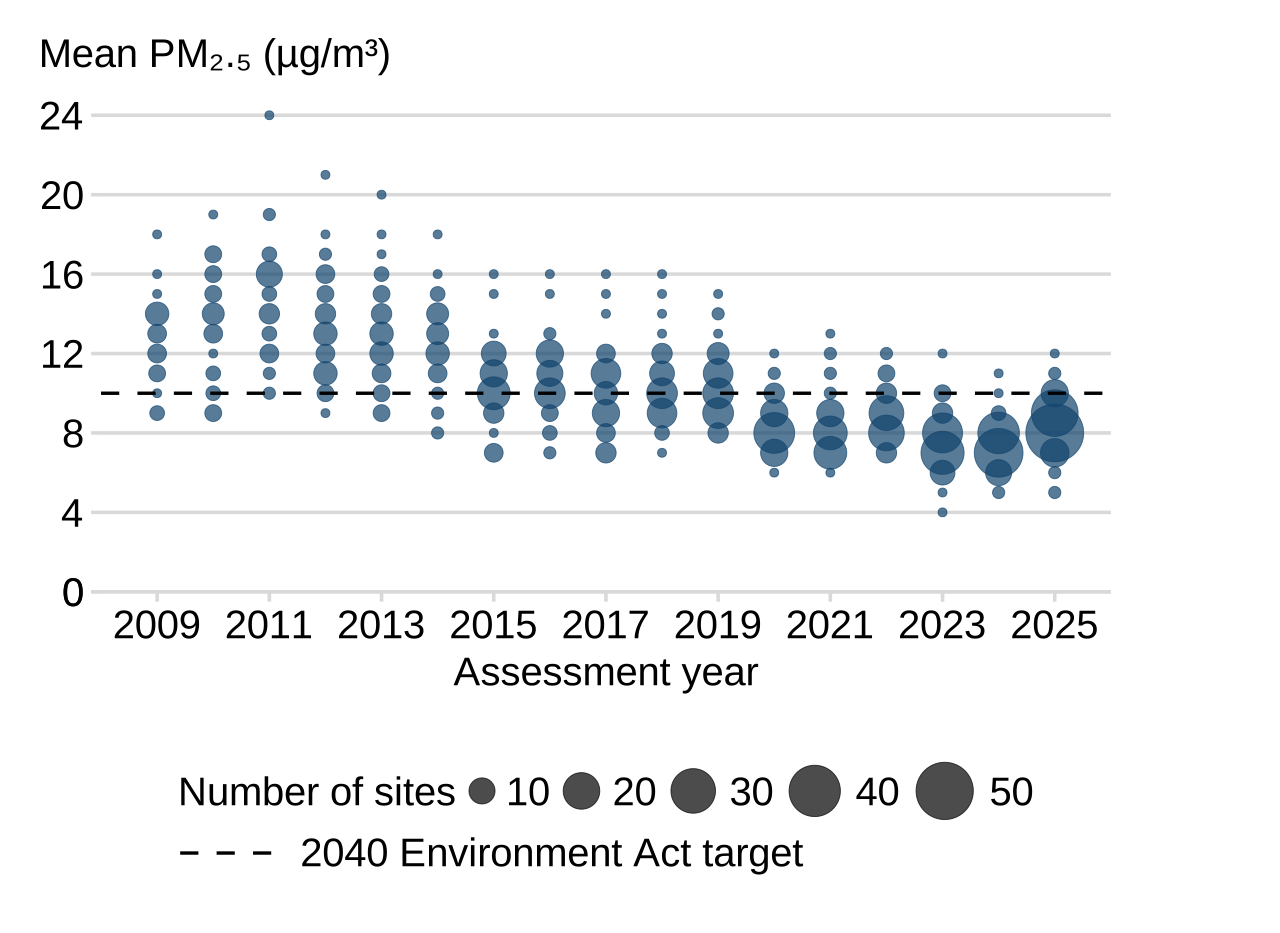
Figure 12a: The annual mean PM2.5 concentration measured at monitoring stations in England from 2009 to 2025.
Notes:
- Concentrations have been rounded to the nearest integer
Download the data for this chart in CSV format
In 2025, the highest measured annual mean concentration was 12 µg m-3 and 97 per cent of AURN monitoring stations in England which met the required data capture threshold (111 individual AURN stations) were equal to or below the 10 µg m-3 target. This is a 6 µg m-3 reduction in the highest annual mean concentrations over the 15 year period since 2009. In 2009, the highest annual average concentration was 18 µg m-3 and 11 per cent of stations were equal to or below the AMCT (3 individual AURN stations).
Concentrations have decreased from 2009 to 2025 at all monitoring stations. The distribution has also narrowed as the highest concentrations have reduced more than the average.
While the trends for each station vary, concentrations have been decreasing at the majority of monitoring stations over the last five years. The large decrease in the concentrations at most stations over the past five years is thought to be mainly due to decreases in both UK and European secondary PM2.5. Secondary PM2.5 refers to PM2.5 that has not been directly emitted but has formed in the atmosphere through the interaction of other air pollutants.
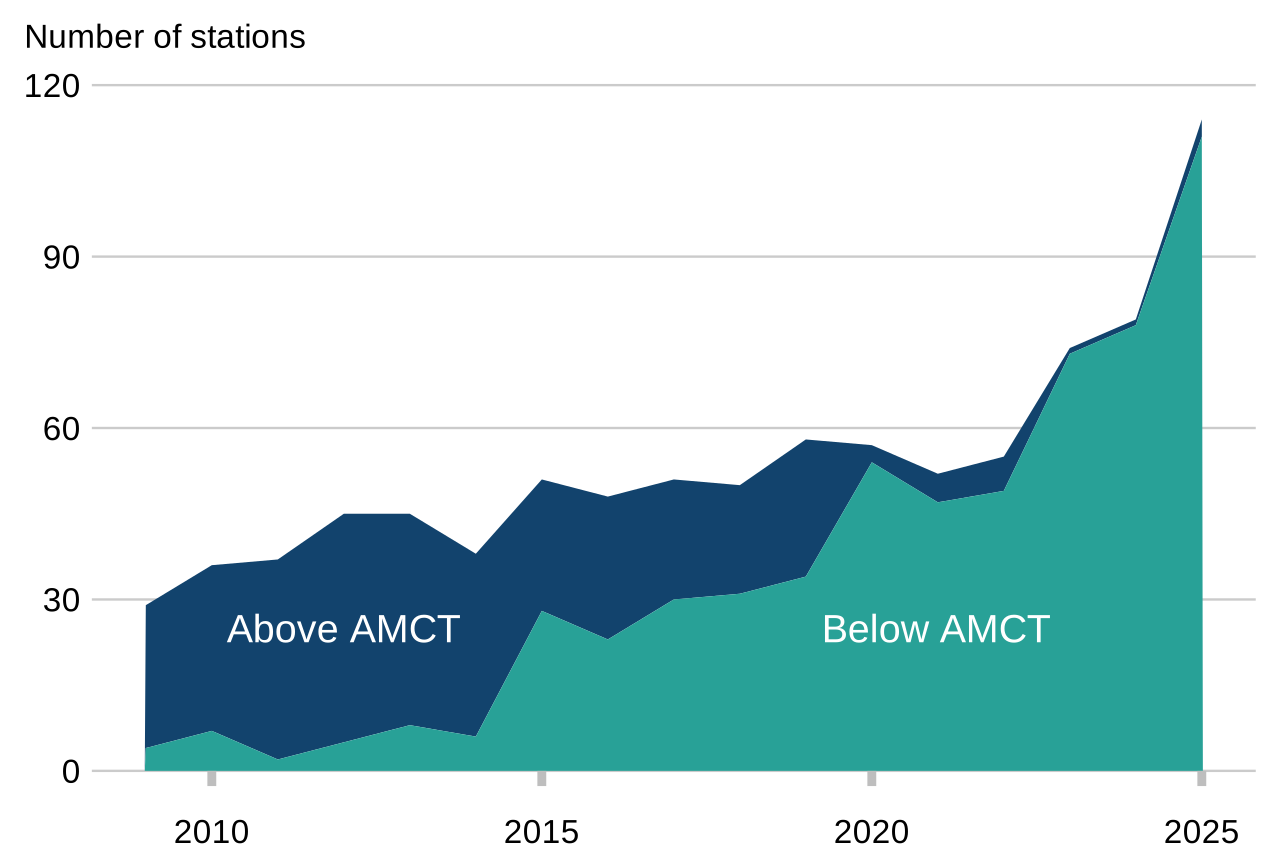
Figure 12b: Number of monitoring stations in England above and below the AMCT from 2009 to 2025.
Notes:
- ‘Above AMCT’ refers to annual mean concentrations above 10 µg m-3
Download the data for this chart in CSV format
The number of stations below the AMCT has been increasing over time. In 2025, three monitoring stations recorded concentrations above the AMCT (Camden Kerbside, Stanford-le-Hope and London Marylebone Road). More information about these monitoring stations can be found on the Get Air Pollution Data service. Concentrations monitored at most stations were higher in 2025 than in 2024. This may be in part due to the adverse effects of the weather conditions experienced in the spring of 2025. These weather conditions saw extensive high pressure over the UK in March 2025, which led to settled conditions for most of the month. These conditions would have resulted in less dispersion of PM2.5. In addition to this, March 2025 saw an unusual easterly wind direction which would likely have brought pollutants from mainland Europe – see Met Office report.
The number of PM2.5 monitoring stations in England is being increased as part of a network expansion programme which will affect these statistics over the next few years. There were 35 more stations used to assess progress in 2025 than in 2024, 114 met the inclusion criteria in 2025 up from 79 in 2024.
3. The population exposure reduction target
The population exposure reduction target (PERT) is a minimum percentage reduction in population exposure between the base year (2018) and the target deadline (2040). Population exposure is represented by the Population Exposure Indicator (PEI), calculated using measurements of annual mean concentration at representative monitoring stations. The monitoring stations used for assessment against the PERT are spread geographically across England, reflect population density, and are located in areas where concentrations are typical of where most people in that region live. Monitoring stations characterised as ‘urban background’ (and, in some instances, ‘suburban background’) meet these criteria. Other considerations, such as representing areas of deprivation, are also taken into account when establishing new stations.
The PEI is a three-year average to reduce interannual variability due to factors such as weather and other temporary external events and provide a more stable trend. Population exposure has an established link with health impacts, so a decrease in the PEI represents a reduction in the risk to the nation’s health from PM2.5.
The calculation approach incorporates a statistical method recommended by experts to account for the large change in the number of PM2.5 monitoring stations expected due to the ongoing expansion of the network. A direct comparison of the PEI in 2040 with 2018 may otherwise be influenced by network changes. The solution involves calculating yearly increments in PEI using the same cohort of monitoring stations, then summing the increments and comparing this with the base year PEI. The Air Quality Expert Group (AQEG) were engaged in the development of this approach.
4. PERT progress
As of 2025, population exposure has reduced by 26 per cent compared to 2018.
The PEI is shown for each year in table 1 below, measured in µg m-3. A third column shows the absolute change in PEI compared to the previous year. A fourth column then shows the cumulative change, i.e., the total change since 2018 (i.e. the PEI base year). The fifth column shows the total percentage change in PEI since 2018.
The base year population exposure index, PEIbase, has been calculated to be 10.09 µg m-3. In 2025, the PEI is 7.51 µg m-3, which represents a yearly change in PEI of -0.06 µg m-3. This represents a 26 per cent reduction since 2018 (-2.58 µg m-3).
Table 1:
| Year | PEI (µg m-3) | Yearly change in PEI (µg m-3) | Total change in PEI since 2018 (µg m-3) | Total change in PEI since 2018 (%) |
|---|---|---|---|---|
| 2019 | 10.02 | -0.07 | -0.07 | -1 |
| 2020 | 9.41 | -0.61 | -0.68 | -7 |
| 2021 | 8.68 | -0.73 | -1.41 | -14 |
| 2022 | 8.11 | -0.57 | -1.98 | -20 |
| 2023 | 7.86 | -0.25 | -2.23 | -22 |
| 2024 | 7.56 | -0.30 | -2.53 | -25 |
| 2025 | 7.51 | -0.06 | -2.58 | -26 |
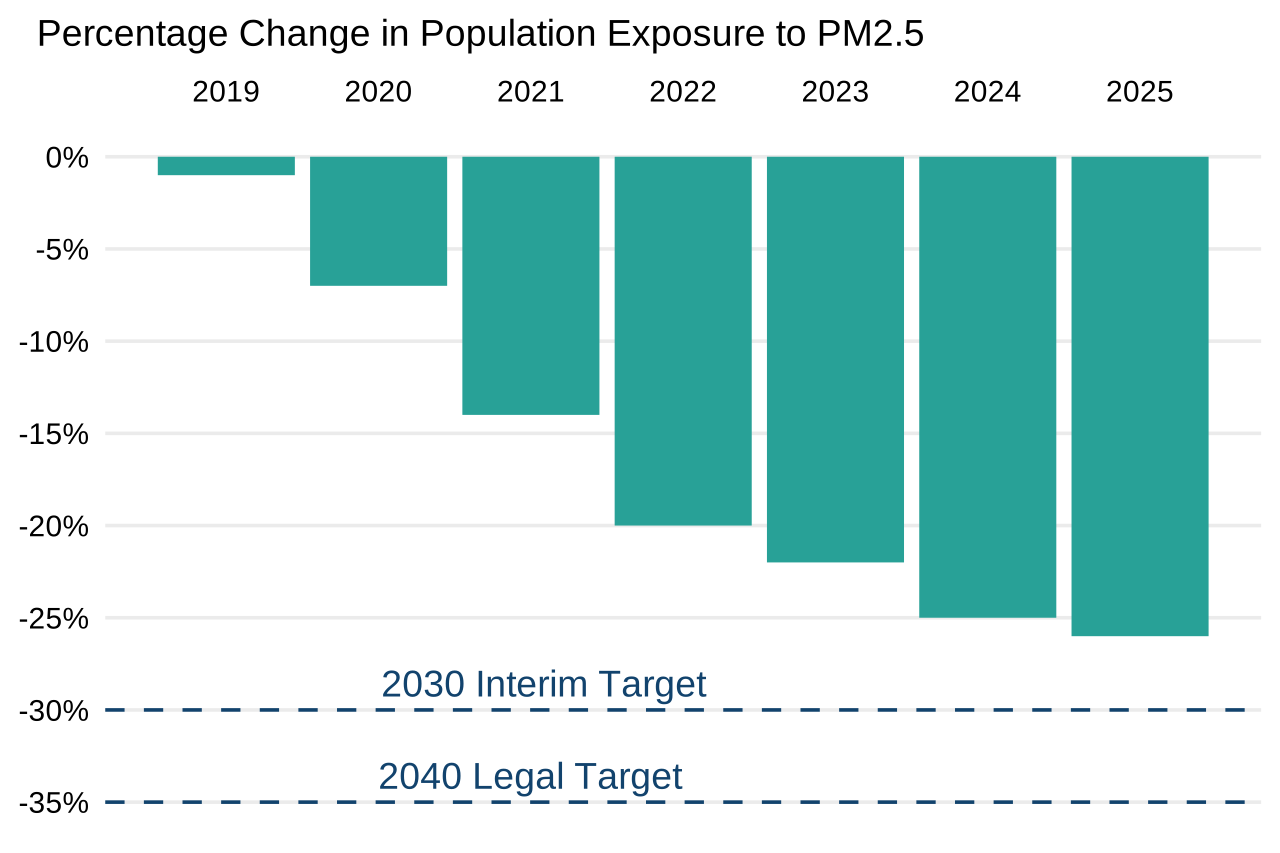
Progress is also shown in Figure 12c. Green bars represent decreases, showing that population exposure to PM2.5 has been decreasing since 2018. The dashed lines in the graph show the 2030 interim target of 30 per cent and the legally binding target of 35 per cent for 2040.
Figure 12c: Percentage change in population exposure to PM2.5 since 2018: 2019 to 2025
Notes
-
The ‘2030 Interim Target’ refers to the Interim PM2.5 Environment Act PERT set in the Environmental Improvement Plan published in 2025
-
The ‘2040 Legal Target’ refers to the Environment Act 2021 PERT set in The Environmental Targets (Fine Particulate Matter) (England) Regulations 2023.
Download the data for this chart in CSV format
The PM2.5 concentrations that people in England are exposed to are decreasing over time, as represented by a reduction in the PEI for each year from 2019 to 2025.
In 2025, the total change in the PEI was a 26 per cent reduction compared to the 2018 baseline year. This is an additional 1 per cent reduction since 2024.
As the PERT metric is based on a three-year average, there is less variation than is typically seen with annual concentrations.
Analysis commissioned by Defra (currently unpublished) suggests that the large decrease from 2020 onwards is likely due to decreases in both UK and European secondary PM2.5. The adverse weather conditions in spring 2025 also likely resulted in higher concentrations of PM than were recorded in 2024.
5. Sections in this release
Background to concentrations of air pollutants
Concentrations of nitrogen dioxide
Concentrations of particulate matter (PM10 and PM2.5)
Methodology for calculating progress towards the PM2.5 targets
Days with ‘Moderate’ or higher air pollution (includes sulphur dioxide)