Nitrogen dioxide (NO2)
Updated 30 June 2026

© Crown copyright 2026
This publication is licensed under the terms of the Open Government Licence v3.0 except where otherwise stated. To view this licence, visit nationalarchives.gov.uk/doc/open-government-licence/version/3 or write to the Information Policy Team, The National Archives, Kew, London TW9 4DU, or email: psi@nationalarchives.gov.uk.
Where we have identified any third party copyright information you will need to obtain permission from the copyright holders concerned.
This publication is available at https://www.gov.uk/government/statistics/air-quality-statistics/ntrogen-dioxide
Accredited Official Statistics
Air quality statistics in the UK, 1987 to 2025 - Nitrogen dioxide (NO2)
Updated 30th June 2026
1. Why measure NO2?
Nitrogen dioxide (NO2) is a gas that is mainly produced during the combustion of fossil fuels, along with nitric oxide (NO). NO2 can also be formed when NO reacts with certain gases in the atmosphere. These reactions take place very quickly and are reversible, so the two gases are referred to together as nitrogen oxides (NOx).
Short-term exposure to concentrations of NO2 can cause inflammation of the airways and increase susceptibility to respiratory infections and to allergens. NO2 can exacerbate the symptoms of those already suffering from lung or heart conditions. NO2 can also cause changes to the environment. Deposition of nitrogen to the environment both directly as a gas (dry deposition) and in precipitation (wet deposition) can change soil chemistry and affect biodiversity in sensitive habitats.
In addition, NOx are precursors for both the formation and degradation of ozone through complex reactions involving sunlight and other precursor pollutants. Ozone is a gas which is also damaging to human health and can trigger inflammation of the respiratory tract, eyes, nose and throat as well as asthma attacks. Moreover, ozone can have adverse effects on the environment through oxidative damage to vegetation, including crops.
The Air Quality Standards Regulations (2010) require that the annual mean concentration of NO2 must not exceed 40 µg/m3 and that there should be no more than 18 exceedances of the hourly mean limit value (concentrations above 200 µg/m3) in a single year.
2. Trends in concentrations of NO2 in the UK
2.1 Annual mean concentrations of NO2 in the UK, 1990 to 2025
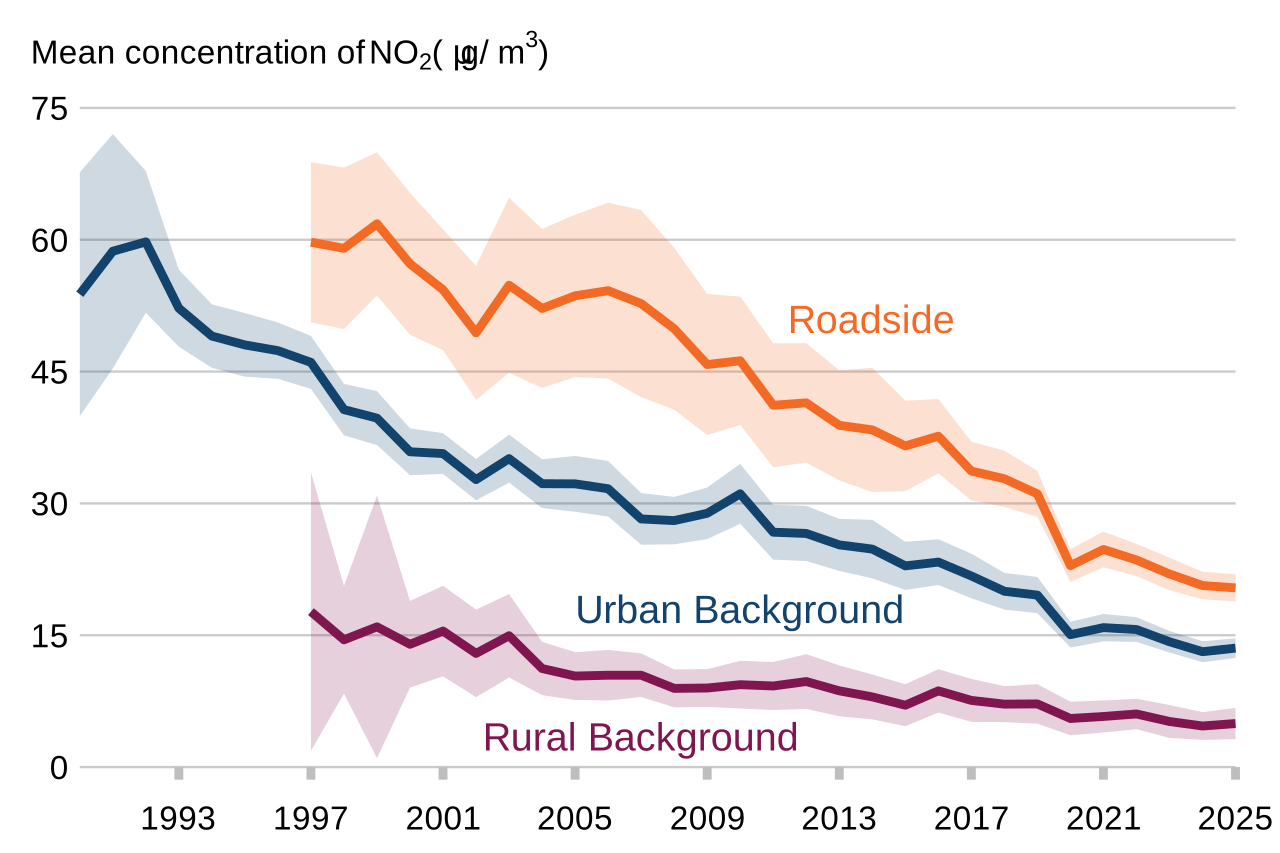
The NO2 index shows the annual mean, averaged over all included stations that had annual data capture greater than or equal to 75 per cent. The shaded areas represent the 95 per cent confidence interval for the annual mean concentration for roadside stations, urban background stations and rural background stations. The intervals narrow over time because of an increase in the number of monitoring stations and a reduction in the variation between annual means at monitoring stations for NO2. Annual means for individual stations can be found in the NO2 statistical tables which accompany this release.
Figure 1: Annual mean concentrations of NO2 in the UK, 1990 to 2025
Download the data for this chart in CSV format
Urban background NO2 pollution has reduced both in the long-term and in recent years. The annual mean concentration of NO2 at urban background stations has decreased over the time it has been monitored to 13.5 µg/m3 in 2025. This is an increase of 3 per cent since 2024.
Between 1992 and 2002 inclusive, the annual mean NO2 concentration at urban background stations rapidly decreased by an average of 2.7 µg/m3 each year. This reduction was observed at most monitoring stations across the UK and could be a consequence of the large reduction in emissions of nitrogen oxides over this time period in the UK and in Europe.
Between 2002 and 2006, the annual mean concentration fluctuated with no clear trend, and this was observed at most monitoring stations across the UK. Emissions of nitrogen oxides in the UK and Europe were still decreasing over this period, but these years also coincided with increased use of coal in power stations, and with the increasing popularity of new diesel cars (which produce greater nitrogen oxide emissions than petrol equivalents).
Between 2006 and 2019 inclusive, the annual mean NO2 concentration at urban background stations decreased by an average of 0.9 µg/m3 each year. Reductions in concentrations were observed at most monitoring stations across the UK. Emissions of nitrogen oxides in the UK and Europe have continued to decrease as newer road vehicles subject to stricter emission standards enter the fleet and power generation moves away from the use of coal, particularly in the UK.
In 2020, the annual mean NO2 concentration at urban background stations decreased by 4.5 µg/m3 (a decrease of 23 per cent) compared to 2019. It is likely that a reduction in traffic as a result of COVID-19 restrictions was a contributing factor to this relatively large decrease.
In 2021, concentrations showed an increase of 5 per cent from a low point in 2020. It is likely that the lifting of some COVID-19 restrictions in 2021 was a contributing factor to this increase. Between 2021 and 2025 concentrations have slowly decreased overall, despite the slight increase in 2025.
Roadside NO2 pollution has reduced in the long-term and in recent years, having been stable for most of the 2000s. The annual mean concentration of NO2 at the roadside has decreased over the time series to 20.4 µg/m3 in 2025. The annual mean NO2 concentration in 2025 was greater at roadside stations compared to urban background stations. This is most likely due to substantial emissions of nitrogen oxides from road transport sources, as the majority of concentrations at the roadside come from local transport sources.
For most of the 2000s, the annual mean NO2 concentration was relatively stable, likely as a result of the increased ownership of diesel-fuelled vehicles which historically emitted far more nitrogen oxides compared to equivalent petrol-fuelled vehicles. This may have offset the impact of reduced emissions from other sources.
Between 2006 and 2019 inclusive, the annual mean NO2 concentration at roadside stations decreased by an average of 1.8 µg/m3 each year. This reduction was observed at most long-running monitoring stations across the UK and could be a consequence of the large reduction in road transport emissions of NO2 over the same period in the UK, as newer vehicles subject to stricter emissions standards enter the transport fleet.
In 2020, the annual mean NO2 concentration at the roadside decreased by 8.2 µg/m3 (a decrease of 26 per cent). It is likely that a reduction in traffic as a result of COVID-19 restrictions was a contributing factor to this relatively large decrease.
From 2020 to 2022, the annual mean NO2 concentration at the roadside increased by 0.6 µg/m3, an increase of 3 per cent from 2020. This is likely a result of increased road traffic following the removal of lockdown restrictions. Despite this, in 2025 concentrations showed a decrease of 34 per cent compared to 2019 levels.
Rural background NO2 pollution has reduced at a gradual rate over time. The annual mean concentration of NO2 at rural background stations has shown a decrease of 72 per cent from 17.7 µg/m3 in 1997, to 5 µg/m3 in 2025. Since the start of the time series in 1997, the annual mean NO2 concentration at rural background stations has decreased by an average of 0.5 µg/m3 (or 3 per cent) each year. This reduction was observed at most monitoring stations across the UK; which could be a consequence of the large reduction in emissions of nitrogen oxides over the same period in the UK and in Europe.
3. Average hours spent in ‘Moderate’ or higher NO2 pollution
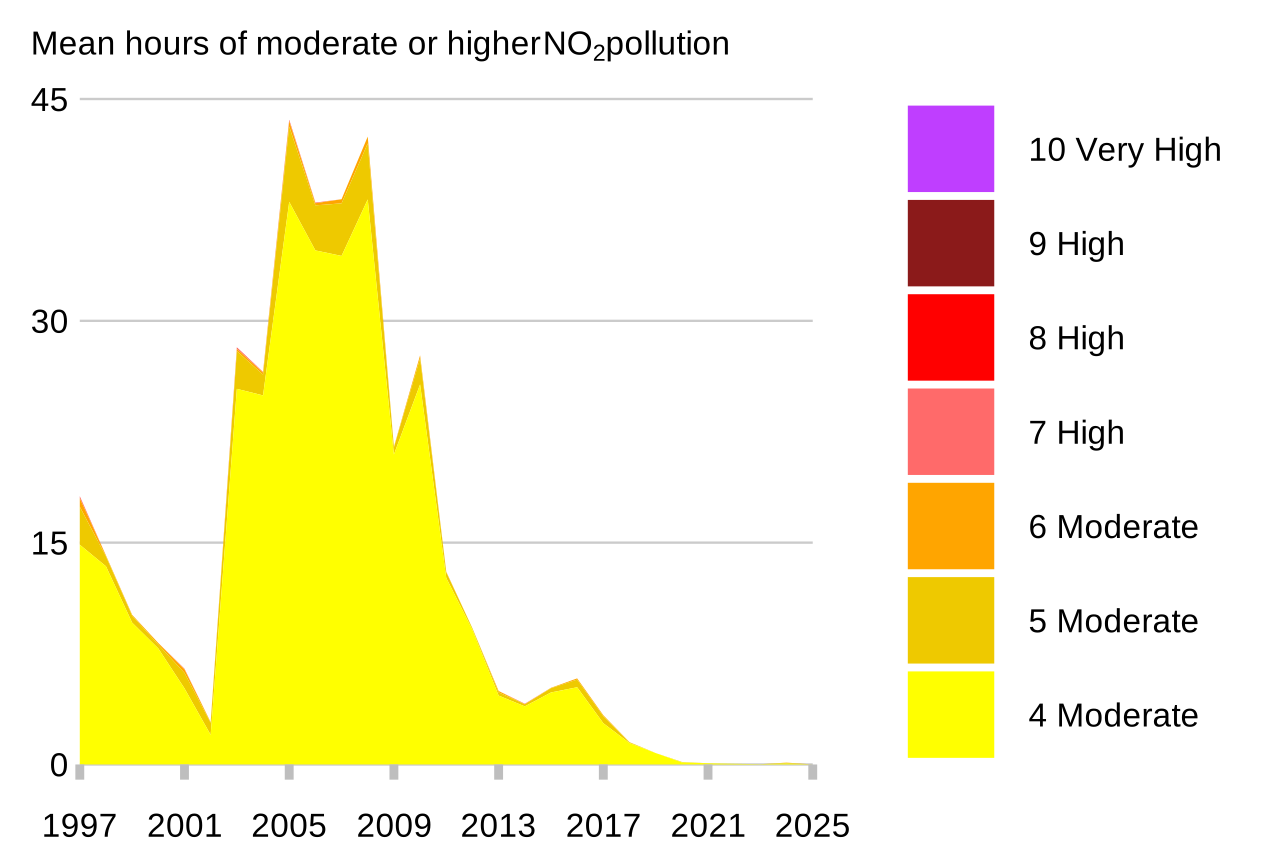
This metric measures the annual trend in the number of hours on average that concentrations are recorded at levels that may have impacts on human health. For NO2, ‘Moderate’ air pollution (which requires action by citizens who are vulnerable to the health impacts of air pollution) is triggered when the latest hourly mean concentration is greater than 200 µg/m3. Urban and rural background stations rarely record concentrations at these levels and NO2 pollution was low at all urban and rural background stations throughout 2025, so we have not included graphs for these station types. The coloured categories relate to the categories of the Daily Air Quality Index (see Table 20 in the statistical tables that accompany this release).
Figure 2: Mean hours when NO2 pollution was moderate or higher for roadside stations, 1997 to 2025
Download the data for this chart in CSV format
Roadside monitoring sites have recorded a decreasing trend in hours of ‘Moderate’ air pollution due to NO2 since 2008. 2025 had zero hours of ‘Moderate’ air pollution at any station for the first time since the beginning of the time series. This is a small decrease from 2024 when the mean at roadside stations was 0.1 hours.
For PM10 and PM2.5, ‘Moderate’ and higher air pollution has historically been experienced at many monitoring stations across the UK, but for NO2 ‘Moderate’ air pollution has been experienced by only a few particular stations. The overall trend follows the same trend as the London Marylebone Road monitoring station, which recorded a peak of 853 hours in the ‘Moderate’ or higher categories in 2005 and has recorded at most 1 hour in this category in each year since 2019.
‘Moderate’ NO2 pollution at the roadside is usually the consequence of a build-up of emissions of nitrogen oxides from transport sources, and the presence of street canyons or wind conditions preventing dispersion of pollutants. For example, the London Marylebone Road monitoring station is on a six-lane congested road surrounded by high-rise buildings in central London.
4. Temporal variations in concentrations of NO2 in the UK, 2025
4.1 Weekday variations
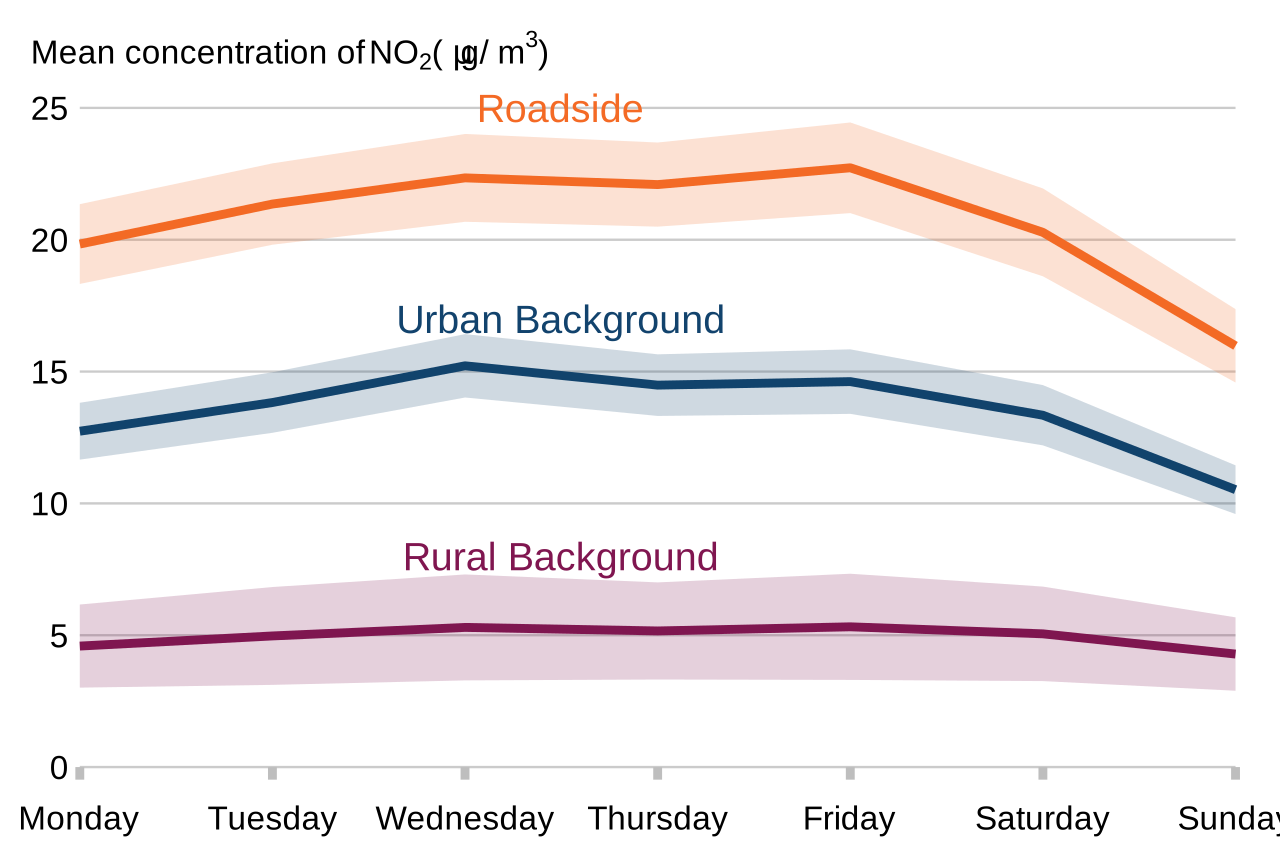
The NO2 index shows the weekday mean, averaged over all included stations that had data capture greater than or equal to 75 per cent for all instances of that weekday in a given year. The shaded areas represent the 95 per cent confidence interval for the weekday mean concentration for roadside stations, urban background stations and rural background stations.
Figure 3: Weekday mean NO2 concentration at roadside, urban background and rural background stations, 2025
Download the data for this chart in CSV format
NO2 concentrations tend to be lower at the weekend compared to during weekdays, particularly for roadside stations. This is likely to be primarily driven by less road traffic at the weekends. In 2025, the Monday-to-Friday mean concentration at roadside stations was 21.7 µg/m3, which was 20 per cent greater than the mean concentration at the weekend of 18.1 µg/m3.
4.2 Hourly variations
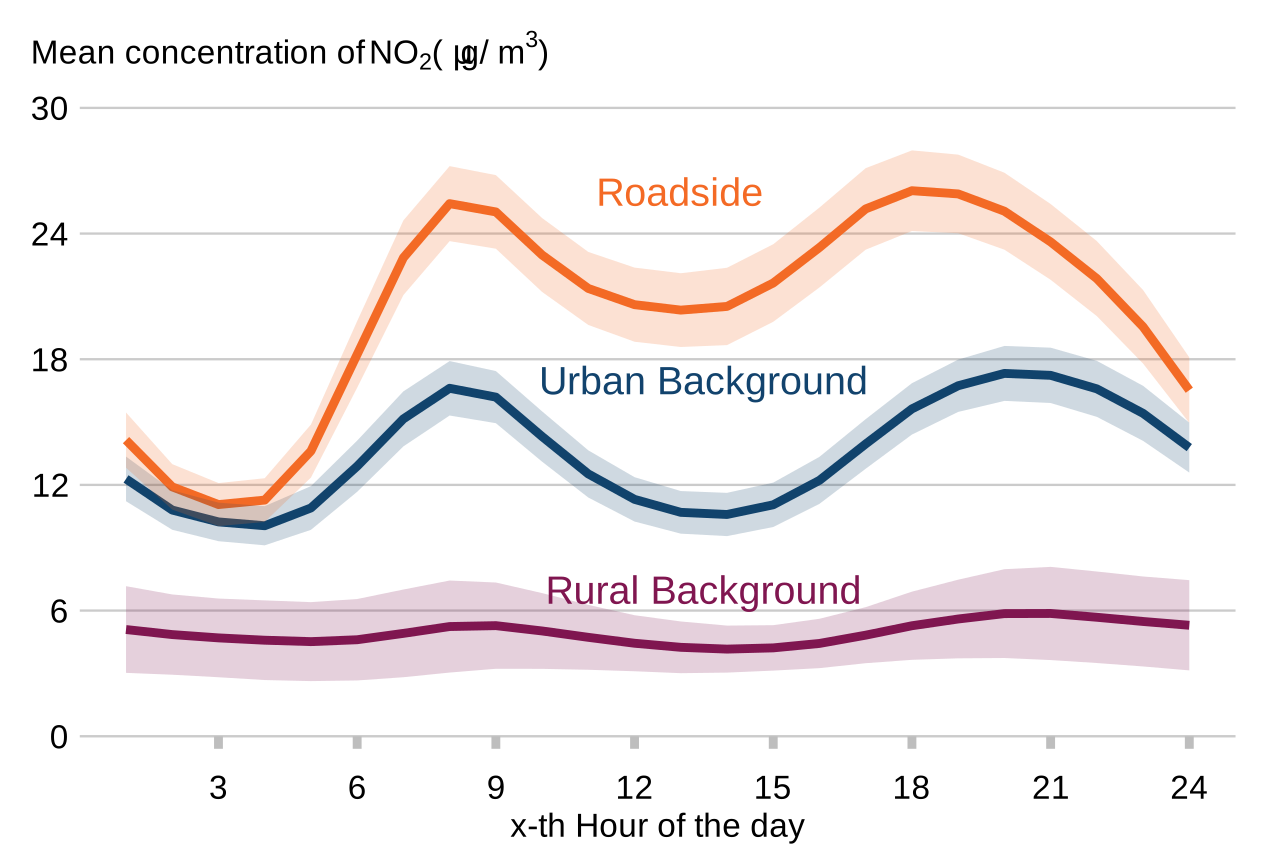
The NO2 index shows the hourly mean, averaged over all included stations that had data capture greater than or equal to 75 per cent for all instances of that hour in a given year. The shaded areas represent the 95 per cent confidence interval for the hourly mean concentration for roadside stations, urban background stations and rural background stations.
Figure 4: Hourly mean NO2 concentration at roadside, urban background and rural background stations, 2025
Download the data for this chart in CSV format
NO2 concentrations tend to be much greater during the morning and evening rush hour compared to other times of the day for roadside and urban background stations. This is most likely due to commuter traffic. This pattern of concentrations follows the distribution of road traffic by time of day, see Road traffic estimates in Great Britain, 2024.
5. Sections in this release
Background to concentrations of air pollutants
Concentrations of particulate matter (PM10 and PM2.5)
Methodology for calculating progress towards the PM2.5 targets
Days with ‘Moderate’ or higher air pollution (includes sulphur dioxide)